EP4407401B1 - Fernantriebssystem, fernantriebsendgerät und verfahren zum fernantrieb - Google Patents
Fernantriebssystem, fernantriebsendgerät und verfahren zum fernantrieb Download PDFInfo
- Publication number
- EP4407401B1 EP4407401B1 EP24150959.5A EP24150959A EP4407401B1 EP 4407401 B1 EP4407401 B1 EP 4407401B1 EP 24150959 A EP24150959 A EP 24150959A EP 4407401 B1 EP4407401 B1 EP 4407401B1
- Authority
- EP
- European Patent Office
- Prior art keywords
- remote driving
- situation
- vehicle
- remote
- initial check
- Prior art date
- Legal status (The legal status is an assumption and is not a legal conclusion. Google has not performed a legal analysis and makes no representation as to the accuracy of the status listed.)
- Active
Links
Images


Classifications
-
- G—PHYSICS
- G05—CONTROLLING; REGULATING
- G05D—SYSTEMS FOR CONTROLLING OR REGULATING NON-ELECTRIC VARIABLES
- G05D1/00—Control of position, course, altitude or attitude of land, water, air or space vehicles, e.g. using automatic pilots
- G05D1/20—Control system inputs
- G05D1/22—Command input arrangements
- G05D1/221—Remote-control arrangements
-
- G—PHYSICS
- G05—CONTROLLING; REGULATING
- G05B—CONTROL OR REGULATING SYSTEMS IN GENERAL; FUNCTIONAL ELEMENTS OF SUCH SYSTEMS; MONITORING OR TESTING ARRANGEMENTS FOR SUCH SYSTEMS OR ELEMENTS
- G05B19/00—Programme-control systems
- G05B19/02—Programme-control systems electric
- G05B19/04—Programme control other than numerical control, i.e. in sequence controllers or logic controllers
- G05B19/042—Programme control other than numerical control, i.e. in sequence controllers or logic controllers using digital processors
- G05B19/0423—Input/output
-
- G—PHYSICS
- G05—CONTROLLING; REGULATING
- G05D—SYSTEMS FOR CONTROLLING OR REGULATING NON-ELECTRIC VARIABLES
- G05D1/00—Control of position, course, altitude or attitude of land, water, air or space vehicles, e.g. using automatic pilots
- G05D1/20—Control system inputs
- G05D1/22—Command input arrangements
- G05D1/221—Remote-control arrangements
- G05D1/227—Handing over between remote control and on-board control; Handing over between remote control arrangements
-
- G—PHYSICS
- G01—MEASURING; TESTING
- G01W—METEOROLOGY
- G01W1/00—Meteorology
- G01W1/14—Rainfall or precipitation gauges
-
- G—PHYSICS
- G05—CONTROLLING; REGULATING
- G05D—SYSTEMS FOR CONTROLLING OR REGULATING NON-ELECTRIC VARIABLES
- G05D1/00—Control of position, course, altitude or attitude of land, water, air or space vehicles, e.g. using automatic pilots
- G05D1/20—Control system inputs
- G05D1/22—Command input arrangements
- G05D1/221—Remote-control arrangements
- G05D1/222—Remote-control arrangements operated by humans
-
- G—PHYSICS
- G05—CONTROLLING; REGULATING
- G05D—SYSTEMS FOR CONTROLLING OR REGULATING NON-ELECTRIC VARIABLES
- G05D1/00—Control of position, course, altitude or attitude of land, water, air or space vehicles, e.g. using automatic pilots
- G05D1/20—Control system inputs
- G05D1/22—Command input arrangements
- G05D1/221—Remote-control arrangements
- G05D1/222—Remote-control arrangements operated by humans
- G05D1/224—Output arrangements on the remote controller, e.g. displays, haptics or speakers
- G05D1/2244—Optic
- G05D1/2247—Optic providing the operator with simple or augmented images from one or more cameras
- G05D1/2249—Optic providing the operator with simple or augmented images from one or more cameras using augmented reality
-
- G—PHYSICS
- G05—CONTROLLING; REGULATING
- G05D—SYSTEMS FOR CONTROLLING OR REGULATING NON-ELECTRIC VARIABLES
- G05D1/00—Control of position, course, altitude or attitude of land, water, air or space vehicles, e.g. using automatic pilots
- G05D1/20—Control system inputs
- G05D1/24—Arrangements for determining position or orientation
- G05D1/247—Arrangements for determining position or orientation using signals provided by artificial sources external to the vehicle, e.g. navigation beacons
- G05D1/249—Arrangements for determining position or orientation using signals provided by artificial sources external to the vehicle, e.g. navigation beacons from positioning sensors located off-board the vehicle, e.g. from cameras
-
- G—PHYSICS
- G05—CONTROLLING; REGULATING
- G05D—SYSTEMS FOR CONTROLLING OR REGULATING NON-ELECTRIC VARIABLES
- G05D1/00—Control of position, course, altitude or attitude of land, water, air or space vehicles, e.g. using automatic pilots
- G05D1/60—Intended control result
- G05D1/606—Compensating for or utilising external environmental conditions, e.g. wind or water currents
-
- G—PHYSICS
- G05—CONTROLLING; REGULATING
- G05D—SYSTEMS FOR CONTROLLING OR REGULATING NON-ELECTRIC VARIABLES
- G05D1/00—Control of position, course, altitude or attitude of land, water, air or space vehicles, e.g. using automatic pilots
- G05D1/80—Arrangements for reacting to or preventing system or operator failure
- G05D1/86—Monitoring the performance of the system, e.g. alarm or diagnosis modules
-
- G—PHYSICS
- G06—COMPUTING OR CALCULATING; COUNTING
- G06V—IMAGE OR VIDEO RECOGNITION OR UNDERSTANDING
- G06V20/00—Scenes; Scene-specific elements
- G06V20/50—Context or environment of the image
- G06V20/52—Surveillance or monitoring of activities, e.g. for recognising suspicious objects
-
- G—PHYSICS
- G05—CONTROLLING; REGULATING
- G05B—CONTROL OR REGULATING SYSTEMS IN GENERAL; FUNCTIONAL ELEMENTS OF SUCH SYSTEMS; MONITORING OR TESTING ARRANGEMENTS FOR SUCH SYSTEMS OR ELEMENTS
- G05B2219/00—Program-control systems
- G05B2219/20—Pc systems
- G05B2219/23—Pc programming
- G05B2219/23051—Remote control, enter program remote, detachable programmer
-
- G—PHYSICS
- G05—CONTROLLING; REGULATING
- G05D—SYSTEMS FOR CONTROLLING OR REGULATING NON-ELECTRIC VARIABLES
- G05D2105/00—Specific applications of the controlled vehicles
- G05D2105/20—Specific applications of the controlled vehicles for transportation
-
- G—PHYSICS
- G05—CONTROLLING; REGULATING
- G05D—SYSTEMS FOR CONTROLLING OR REGULATING NON-ELECTRIC VARIABLES
- G05D2107/00—Specific environments of the controlled vehicles
- G05D2107/70—Industrial sites, e.g. warehouses or factories
-
- G—PHYSICS
- G05—CONTROLLING; REGULATING
- G05D—SYSTEMS FOR CONTROLLING OR REGULATING NON-ELECTRIC VARIABLES
- G05D2109/00—Types of controlled vehicles
- G05D2109/10—Land vehicles
-
- G—PHYSICS
- G06—COMPUTING OR CALCULATING; COUNTING
- G06V—IMAGE OR VIDEO RECOGNITION OR UNDERSTANDING
- G06V2201/00—Indexing scheme relating to image or video recognition or understanding
- G06V2201/08—Detecting or categorising vehicles
Definitions
- the present disclosure relates to a technique for performing remote driving of a vehicle.
- Patent Literature 1 discloses a vehicle control device. When a transition from one driving state to another driving state is scheduled, the vehicle control device performs notification of information relating to the transition of the driving state to an occupant and to other vehicles.
- the driving state includes manual driving, autonomous driving, and remote driving.
- WO 2021/160662 discloses a method performed by a first server communicatively connected to a network for supporting tele-operated driving of a vehicle.
- the method includes receiving a request from a tele-operated driving application client by the client device in the vehicle for tele- operated driving support.
- the client processes the request and sends a trigger request for teleoperated driving to the first server.
- This request includes a trigger and information for supporting a tele-operated driving event.
- the first server processes the request to identify a second server for providing support for the Tele-operated driving event, wherein the processing is based on parameters of the network for providing tele-operated driving support.
- the first server will set-up a tele-operated driving session between the second server and the application client.
- the first server may also predict whether a tele-operated driving event is likely in a future time period based on prediction information obtained from one or more of the vehicle, the second server, a network server, and a third party application server.
- US 2022/397895 A1 discloses an operator monitoring sensor which is a sensor for monitoring the state of a remote operator that performs remote control of an autonomous driving vehicle.
- Patent Literature 1 Japanese Laid-Open Patent Application No. JP-2021-018486
- a system for remotely driving a vehicle based on an operation amount input to a remote driving terminal by a remote operator is known.
- Such a system is sometimes referred to as a remote driving system.
- the remote driving system starts remote driving when a situation in which the vehicle requires the remote driving occurs. However, at this time, the remote driving system does not immediately start the remote driving.
- the remote driving system first performs an initial check for checking that the remote driving can be started.
- the remote driving system starts the remote driving only after obtaining a good result of the initial check. Therefore, in order to smoothly start the remote driving, it is required to finish the initial check early.
- An object of the present disclosure is to provide a technique for finishing an initial check early and starting remote driving smoothly in a remote driving system.
- the first aspect of the present disclosure relates to a remote driving system configured to perform remote driving of a vehicle based on an operation amount input to a remote driving terminal of the remote driving system by a remote operator.
- the remote driving system includes at least one processor
- a first situation is a situation in which the remote driving of the vehicle is required, and initial check is a process for checking that the remote driving terminal can start the remote driving, the at least one processor is configured to: detect a second situation showing a sign of the first situation; at the remote driving terminal, perform at least a part of the initial check before the first situation is detected in a case where the second situation is detected.
- the at least one processor starts the remote driving in a case where the first situation is detected wherein the initial check at the remote driving terminal includes at least checking communication establishment with the vehicle and the initial check at the remote driving terminal further includes steering position alignment between the vehicle and the remote driving terminal, and checking that an actuator of the vehicle operates in response to the operation amount transmitted to the vehicle.
- the third aspect of the present disclosure relates to a method for performing remote driving of a vehicle based on an operation amount input into a remote driving terminal by a remote operator.
- a first situation is a situation in which the remote driving of the vehicle is required.
- An initial check is a process for checking that the remote driving terminal can start the remote driving.
- the method includes detecting a second situation showing a sign of the first situation at the remote driving terminal, at the remote driving terminal, performing at least a part of the initial check before the first situation is detected in a case where the second situation is detected, and starting the remote driving in a case where the first situation is detected wherein the initial check at the remote driving terminal includes at least checking communication establishment with the vehicle and the initial check at the remote driving terminal further includes steering position alignment between the vehicle and the remote driving terminal, and checking that an actuator of the vehicle operates in response to the operation amount transmitted to the vehicle.
- a second situation showing a sign of a first situation in which remote driving of a vehicle is required is detected.
- the second situation is detected, at least a part of an initial check is performed before the first situation occurs.
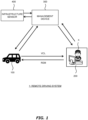
- Fig. 1 is a schematic diagram illustrating a configuration example of a remote driving system 1 according to the present embodiment.
- the remote driving system 1 includes a vehicle 100, a remote driving terminal 200, and a management device 300.
- the vehicle 100, the remote driving terminal 200, and the management device 300 can communicate with each other via a communication network.
- the vehicle 100 is a vehicle to be remotely driven by a remote operator X.
- the vehicle 100 may be an autonomous driving vehicle.
- the remote driving terminal 200 is a terminal device operated by the remote operator X when the remote operator X performs remote driving of the vehicle 100.
- the remote driving terminal 200 may be referred to as a remote cockpit.
- the management device 300 manages the remote driving system 1.
- the management device 300 is a management server on a cloud.
- the management device 300 may be composed of a plurality of servers which performs distributed processes.
- the remote driving system 1 may include an infrastructure sensor 400.
- the infrastructure sensor 400 includes an infrastructure camera.
- the infrastructure sensor 400 may further include a rainfall sensor or the like.
- the infrastructure sensor 400 is installed in an area where the vehicle 100 travels.
- the infrastructure sensor 400 and the management device 300 can communicate with each other via a communication network.
- the infrastructure sensor 400 may communicate with the vehicle 100 and the remote driving terminal 200 directly or via the management device 300.
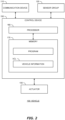
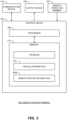
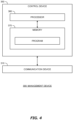
- Figs. 2 to 4 are block diagrams illustrating configuration examples of the vehicle 100, the remote driving terminal 200, and the management device 300, respectively.
- Fig. 2 illustrates a configuration example of the vehicle 100.
- the vehicle 100 includes a communication device 110, a sensor group 120, an actuator 130, and a control device 150.
- the vehicle 100 is equipped with an autonomous driving system and can perform autonomous driving.
- the communication device 110 communicates with the outside of the vehicle 100.
- the communication destination of the communication device 110 includes the remote driving terminal 200 and the management device 300.
- the sensor group 120 includes a recognition sensor, a vehicle state sensor, a position sensor, and the like.
- the recognition sensor recognizes (detects) a situation around the vehicle 100. Examples of the recognition sensor include an in-vehicle camera, a laser imaging detection and ranging (LIDAR), and a radar.
- the vehicle state sensor detects a state of the vehicle 100.
- the vehicle state sensor includes a speed sensor, an acceleration sensor, a yaw rate sensor, a steering angle sensor, a brake hydraulic pressure sensor, and the like.
- the position sensor detects a position and a direction of the vehicle 100.
- the position sensor includes, for example, a global navigation satellite system (GNSS) sensor.
- the sensor group 120 may further include a rainfall sensor.
- GNSS global navigation satellite system
- the actuator 130 includes a steering actuator, a drive actuator, and a brake actuator.
- the steering actuator steers the wheels.
- the steering actuator includes, for example, an electric power steering (EPS).
- EPS electric power steering
- the drive actuator is a power source which generates a driving force. Examples of the drive actuator include an engine, an electric motor, and an in-wheel motor.
- the brake actuator generates a braking force. For example, the brake actuator controls the brake hydraulic pressure to operate the brake.
- the control device 150 is a computer which controls the vehicle 100.
- the control device 150 includes at least one processor (processing circuitry) 160 (hereinafter, simply referred to as a processor 160) and at least one memory 170 (hereinafter, simply referred to as a memory 170).
- the processor 160 executes various processes.
- the processor 160 includes a central processing unit (CPU).
- the memory 170 stores various programs and various kinds of information necessary for processing by the processor 160. By the processor 160 executing the program stored in the memory 170, the function of the control device 150 is realized. Examples of the memory 170 include a volatile memory, a non-volatile memory, a hard disk drive (HDD), and a solid state drive (SSD).
- the control device 150 may include at least one electronic control unit (ECU).
- the control device 150 controls the actuator 130 to control traveling of the vehicle 100.
- the control device 150 acquires vehicle information VCL from the sensor group 120.
- the vehicle information VCL includes recognition sensor information showing a result of recognition by the recognition sensor, vehicle state information acquired from the vehicle state sensor, and position information acquired from the position sensor.
- the recognition sensor information includes an image captured by the in-vehicle camera.
- the vehicle state information includes speed information, acceleration information, steering angle information, brake hydraulic pressure information, and the like. They are acquired from the speed sensor, the acceleration sensor, the steering angle sensor, the brake hydraulic pressure sensor, and the like.
- the vehicle information VCL may further include highly accurate position information acquired by localization.
- the control device 150 can acquire highly accurate position information by performing the localization using map information and the recognition sensor information stored in the memory 170.
- the vehicle information VCL acquired by the control device 150 can be used for the autonomous driving or the remote driving of the vehicle 100.
- the control device 150 controls the autonomous driving of the vehicle 100 based on the vehicle information VCL. More specifically, the control device 150 generates a travel plan of the vehicle 100 based on the vehicle information VCL. Further, the control device 150 generates a target path necessary for the vehicle 100 to travel in accordance with the travel plan based on the vehicle information VCL.
- the target path is a gathering of target positions of the vehicle 100. The target path may be set to extend along the center of the lane. Then, the control device 150 controls traveling of the vehicle 100 such that the vehicle 100 follows the target path.
- the control device 150 can communicate via the communication device 110 and transmit the vehicle information VCL to the remote driving terminal 200 and the management device 300. At least while the remote driving of the vehicle 100 is performed, the vehicle information VCL is transmitted to the remote driving terminal 200.
- the vehicle information VCL transmitted to the remote driving terminal 200 is referred to by the remote operator X, and the remote driving is performed.
- Fig. 3 illustrates a configuration example of the remote driving terminal 200.
- the remote driving terminal 200 includes a communication device 210, an output device 220, a remote operation member 230, and a control device 250.
- the communication device 210 communicates with the vehicle 100 and the management device 300.
- the output device 220 outputs various kinds of information and presents the information to the remote operator X.
- the output device 220 includes a display device.
- the display device displays various kinds of information to the remote operator X.
- the output device 220 may include a speaker.
- the remote operation member 230 is a member operated by the remote operator X when the remote operator X remotely drives the vehicle 100.
- the remote operation member 230 includes, for example, a steering operation member, an accelerator pedal, a brake pedal, a direction indicator, and the like.
- the steering operation member is, for example, a steering wheel.
- the remote operation member 230 may include a touch panel, a button, or the like. An operation amount input by the remote operator X during the remote driving of the vehicle 100 is detected by a sensor installed in the remote operation member 230.
- the control device 250 controls the remote driving terminal 200.
- the control device 250 includes at least one processor (processing circuitry) 260 (hereinafter, simply referred to as a processor 260) and at least one memory 270 (hereinafter, simply referred to as a memory 270).
- the processor 260 executes various processes.
- the processor 260 includes a CPU.
- the memory 270 stores various programs and various kinds of information necessary for processing by the processor 260. By the processor 260 executing the program stored in the memory 270, the function of the control device 250 is realized. Examples of the memory 270 include a volatile memory, a non-volatile memory, an HDD, and an SSD.
- the control device 250 communicates with the vehicle 100 via the communication device 210.
- the control device 250 receives the vehicle information VCL transmitted from the vehicle 100.
- the control device 250 presents the vehicle information VCL to the remote operator X by displaying the vehicle information VCL including the image on the display device.
- the remote operator X can recognize the state of the vehicle 100, the situation around the vehicle 100, or the like based on the vehicle information VCL displayed on the display device.
- control device 250 may acquire infrastructure information detected by the infrastructure sensor 400 directly or via the management device 300.
- the infrastructure information acquired by the control device 250 may include, for example, an image acquired by the infrastructure camera capturing the vehicle 100 and the surroundings thereof.
- the acquired infrastructure information is displayed on the display device.
- the remote operator X may recognize the state of the vehicle 100, the situation around the vehicle 100, or the like by referring to the infrastructure information. By presenting the image captured by the infrastructure camera to the remote operator X in addition to the image captured by the in-vehicle camera, accuracy of the remote driving or usability for the remote operator X can be improved.
- the control device 250 generates remote driving information REM based on the operation amount input by the remote operator X.
- the remote driving information REM is information for controlling the vehicle 100 by the remote driving.
- the remote driving information REM includes the operation amount of the remote operation member 230 input by the remote operator X.
- the control device 250 transmits the remote driving information REM to the vehicle 100 as necessary.
- Fig. 4 illustrates a configuration example of the management device 300.
- the management device 300 includes a communication device 310 and a control device 350.
- the communication device 310 communicates with the vehicle 100, the remote driving terminal 200, and the infrastructure sensor 400.
- the control device 350 controls the management device 300.
- the control device 350 includes at least one processor (processing circuitry) 360 (hereinafter, simply referred to as a processor 360) and at least one memory 370 (hereinafter, simply referred to as a memory 370).
- the processor 360 executes various processes.
- the processor 360 includes a CPU.
- the memory 370 stores various programs and various kinds of information necessary for processing by the processor 360.
- the processor 360 executing the program stored in the memory 370, the function of the control device 350 is realized. Examples of the memory 370 include a volatile memory, a non-volatile memory, an HDD, and an SSD.
- the control device 350 communicates with the vehicle 100 and the remote driving terminal 200 via the communication device 310.
- the control device 350 communicates with the infrastructure sensor 400 via the communication device 310 as necessary to acquire the infrastructure information.
- the infrastructure information which the control device 350 acquires from the infrastructure sensor 400 includes the image captured by the infrastructure camera.
- the control device 350 may manage various kinds of information related to the remote driving of the vehicle 100.
- the control device 350 may acquire weather forecast information, traffic information of the area where the vehicle 100 travels, or the like and manage these pieces of information.
- the weather forecast information includes a forecast about future weather in the area where the vehicle 100 will travel.
- the weather forecast information may include information about current weather in the area where the vehicle 100 travels.
- the remote driving system 1 performs the remote driving of the vehicle 100 based on the operation amount input into the remote driving terminal 200 by the remote operator X.
- the remote driving system 1 detects a "first situation"
- the first situation is a situation in which the remote driving of the vehicle 100 is required.
- the management device 300 assigns a certain remote operator X from among a plurality of candidates to the vehicle 100.
- the management device 300 manages assignment relationship between the vehicle 100 and the remote operator X and provides information about the assignment relationship to the vehicle 100 and the remote driving terminal 200.
- the vehicle 100 and the remote driving terminal 200 which have received the information about the assignment relationship establish communication.
- the vehicle 100 and the remote driving terminal 200 transmit and receive information via the communication network.
- the communication between the vehicle 100 and the remote driving terminal 200 may be performed directly or via the management device 300.
- the vehicle 100 transmits the vehicle information VCL to the remote driving terminal 200.
- the remote driving terminal 200 receives the vehicle information VCL transmitted from the vehicle 100 and presents the vehicle information VCL to the remote operator X.
- the remote driving terminal 200 presents the vehicle information VCL by displaying the image on the display device of the output device 220.
- the remote operator X recognizes the situation around the vehicle 100 by viewing the displayed information and performs the remote driving of the vehicle 100 by operating the remote operation member 230.
- the control device 250 generates the remote driving information REM based on the operation amount of the remote operation member 230 input by the remote operator X. Then, the control device 250 transmits the remote driving information REM to the vehicle 100 via the communication device 210.
- the vehicle 100 receives the remote driving information REM transmitted from the remote driving terminal 200.
- the vehicle 100 controls traveling of the vehicle in accordance with the received remote driving information REM. In this way, the remote driving of the vehicle 100 is performed.
- the remote driving of the vehicle 100 is started by the remote driving system 1 when the first situation is detected.
- the remote driving cannot be always started immediately after the first situation is detected.
- an "initial check" needs to be performed for checking that the remote driving can be started.
- the remote driving system 1 starts the remote driving after checking that the remote driving can be started in accordance with the result of the initial check.
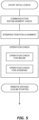
- Fig. 5 illustrates a specific example of the initial check.
- the initial check is performed at the remote driving terminal 200. As illustrated in Fig. 5 , the initial check includes several steps.
- "communication establishment check” is performed for checking that communication between the vehicle 100 and the remote driving terminal 200 is normally established. More specifically, in the communication establishment check, it is checked that the vehicle 100 and the remote driving terminal 200 assigned to this vehicle 100 are normally connected to each other and are in a communicable state. For example, the remote driving terminal 200 transmits a test signal for the communication establishment check to the vehicle 100. The test signal may be a ping. Then, when the remote driving terminal 200 normally receives a response signal transmitted from the vehicle 100 in response to the test signal, it is determined that the communication is normally established. When it is determined that the communication is normally established, it means that necessary information can be accurately transmitted and received between the vehicle 100 and the remote driving terminal 200.
- the steering position alignment means bringing a steering angle of the steering operation member of the remote driving terminal 200 in line with a steering angle of the vehicle 100.
- the steering angle of the vehicle 100 is a steering angle of a steering wheel of the vehicle 100.
- the steering angle of the vehicle 100 may be calculated from a steering angle of the wheels of the vehicle 100.
- Information about the steering angle of the steering wheel or the steering angle of the wheels of the vehicle 100 can be acquired from the vehicle information VCL transmitted from the vehicle 100 to the remote driving terminal 200.
- the steering angle of the steering operation member of the remote driving terminal 200 is detected by the sensor installed in the steering operation member.
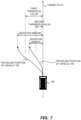
- Fig. 6 is a diagram illustrating an example of an image displayed on the display device of the remote driving terminal 200 when the steering position alignment is performed.
- a traveling trajectory 222 which is shown by solid lines, represents a traveling trajectory of the vehicle 100 calculated from the steering angle of the steering operation member of the remote driving terminal 200.
- the remote driving terminal 200 draws the traveling trajectories 221 and 222 such that they are superimposed on the image included in the vehicle information VCL. Then, the remote driving terminal 200 displays the image on which the travel trajectories 221 and 222 are superimposed on the display device.
- the steering position alignment means adjusting the steering angle of the steering operation member such that the two traveling trajectories 221 and 222 come into line with each other.
- the steering position alignment is performed by the remote operator X controlling the steering operation member such that the traveling trajectory 221 and the traveling trajectory 222 come into line with each other.
- the remote operator X uses a button or the like of the remote operation member 230 to input information indicating that the two trajectories come into contact with each other.
- the remote driving information REM can be transmitted from the remote driving terminal 200 to the vehicle 100.
- an operation check is performed.
- the operation check is for checking that the operation amount of the remote operator X transmitted to the vehicle 100 as the remote driving information REM is reflected in the operation of the actuator 130, that is, the actuator 130 operates in response to the operation amount of the remote operator X.
- the operation check includes an operation check for the brake and an operation check for the steering. Order of performing the operation check for the brake and performing the operation check for the steering is not limited.
- the operation check for the brake is for checking that the operation amount of the brake input into the brake pedal of the remote operation member 230 by the remote operator X is reflected in operation of the brake actuator of the vehicle 100.
- the remote driving terminal 200 transmits a test signal to the vehicle 100 for requesting the brake actuator to operate.
- the remote driving terminal 200 transmits the remote driving information REM including the operation amount of the brake pedal of the remote operation member 230 (test signal) to the vehicle 100.
- the brake hydraulic pressure is expected to change normally if the brake actuator operates normally in response to this test signal. Therefore, the remote driving terminal 200 receives the vehicle information VCL from the vehicle 100 and monitors information about the brake hydraulic pressure included in the vehicle information VCL. If the brake hydraulic pressure changes as expected in response to the transmission of the test signal, the remote driving terminal 200 determines that the brake actuator operates normally. If the brake actuator operates normally, the operation check for the brake is finished.
- the operation check for the steering is performed for checking that the operation amount input into the steering operation member of the remote operation member 230 by the remote operator X is reflected in operation of the steering actuator and the wheels of the vehicle 100 steers.
- the remote driving terminal 200 transmits a test signal to the vehicle 100 for requesting the steering actuator to operate.
- the remote driving terminal 200 transmits the remote driving information REM including the operation amount of the steering operation member of the remote operation member 230 (test signal) to the vehicle 100.
- the steering angle of the vehicle 100 is expected to change normally if the steering actuator operates normally in response to this test signal. Therefore, the remote driving terminal 200 receives the vehicle information VCL from the vehicle 100 and monitors the steering angle information included in the vehicle information VCL. If the steering angle of the vehicle 100 changes as expected in response to the transmission of the test signal, the remote driving terminal 200 determines that the steering actuator operates normally. If the steering actuator operates normally, the operation check for the steering is finished.
- the specific example of the initial check is described above.
- the remote driving system 1 performs the initial check exemplified in Fig. 5 before starting the remote driving. Then, the remote driving system 1 starts the remote driving after it is checked that the remote driving can be started as a result of the initial check. In other words, the remote driving system 1 cannot start the remote driving until the initial check is completed. Therefore, if it takes a long time from detecting the first situation to finishing the initial check, the time when the remote driving is started becomes late.
- the time from detecting the first situation to starting the remote driving is short.
- the remote driving of the vehicle 100 is required to be started rapidly depending on the state of the vehicle 100. For example, if the vehicle 100 stops in a railroad crossing or the like, the remote driving is required to be started rapidly. In order to start the remote driving rapidly, it is necessary to complete the initial check rapidly.
- the remote driving system 1 detects a "second situation".
- the second situation is a situation showing a sign of the first situation.
- the second situation is a situation showing that although the remote driving of the vehicle 100 is not required at the present time, it is likely to be required in the future.
- the remote driving system 1 performs at least a part of the initial check before the first situation is detected. By performing at least a part of the initial check before the first situation is detected, it is possible to shorten the time from detecting the first situation to finishing the initial check and to start the remote driving early.
- the management device 300 assigns a certain remote operator X from among a plurality of candidates to the vehicle 100.
- the management device 300 manages assignment relationship between the vehicle 100 and the remote operator X and provides information about the assignment relationship to the vehicle 100 and the remote driving terminal 200.
- the vehicle 100 and the remote driving terminal 200 which have received the information about the assignment relationship establish communication. Thereafter, the remote driving system 1 starts at least a part of the initial check.
- the first situation and the second situation may be detected by the vehicle 100 or may be detected by the management device 300. Further, the first situation and the second situation may be detected by the same entity, or each may be detected by the different entity.
- the first situation may be, for example, a situation in which a remote driving request (Request for Operation, RFO) is transmitted from the vehicle 100 to the management device 300.
- a remote driving request Request for Operation, RFO
- the remote driving request is transmitted from the vehicle 100 to the management device 300.
- the remote driving request may be transmitted from the vehicle 100 while the vehicle 100 is traveling or may be transmitted while the vehicle 100 is stopped.
- the remote driving system 1 may detect the first situation based on the infrastructure information acquired from the infrastructure sensor 400. For example, when an abnormal state of the vehicle 100 is detected from the image captured by the infrastructure camera of the infrastructure sensor 400, it is predicted that the vehicle 100 has difficulty in continuing the autonomous driving.
- the abnormal state of the vehicle 100 is a state in which the vehicle 100 travels with its body deviating from the lane beyond a threshold value.
- the abnormal state is a state in which the vehicle 100 is stopped although it should be traveling.
- the remote driving system 1 may detect the abnormal state of the vehicle 100 like these as the first situation.
- the remote driving system 1 may detect the second situation based on the infrastructure information acquired from the infrastructure sensor 400.
- the second situation may be a situation in which a sign state is detected from the image captured by the infrastructure camera of the infrastructure sensor 400.
- the sign state is, for example, a state in which the vehicle 100 is meandering.
- the sign state may be a state in which a vehicle speed of the vehicle 100 become extremely low. For example, when the vehicle 100 is meandering, a problem may have occurred in the control of the vehicle 100 and thus the remote driving of the vehicle 100 may be required in the future. Therefore, the second situation may be the state like these.
- the remote driving system 1 may detect the first situation and the second situation based on the weather in the area where the vehicle 100 travels. This is an example in a case where the vehicle 100 is the autonomous driving vehicle.
- the first situation may be a situation in which the rainfall in the area where the vehicle 100 travels is equal to or greater than a first threshold value.
- the first situation may be the situation like this.
- the remote driving system 1 can detect such a situation by the rainfall sensor of the infrastructure sensor 400 or the rainfall sensor of the sensor group 120.
- the remote driving system 1 may detect a situation showing that average rainfall in the area where the vehicle 100 travels is larger than the first threshold value as the first situation.
- the second situation may be a situation in which the rainfall in the area where the vehicle 100 travels is equal to or greater than a second threshold value and less than the first threshold value.
- the second threshold is smaller than the first threshold value.
- the remote driving system 1 may detect a situation showing that the average rainfall in the area in which the vehicle 100 travels is larger than the second threshold value as the second situation.
- the second situation may be a situation in which it is forecasted that it will start raining in the area where the vehicle 100 will travel. If such a situation is detected, the rainfall in the area where the vehicle 100 will travel is likely to become equal to or larger than the first threshold value in the future.
- the remote driving system 1 can acquire information about where the vehicle 100 will travel in the future from the vehicle information VCL. In addition, the forecast about rainfall can be acquired from the weather forecast information. The remote driving system 1 refers to these pieces of information and when it is forecasted that it will start raining in the area where the vehicle 100 will travel, detects this situation as the second situation.
- the remote driving system 1 may detect the first situation and the second situation based on deviation of the vehicle 100 from the target path while the vehicle 100 is controlled by the autonomous driving.
- the target path is a path to be followed by the vehicle 100 which is controlled by the autonomous driving.
- the remote driving system 1 may detect such a situation as the first situation.
- the remote driving system 1 may detect a situation in which the deviation amount becomes larger than a second threshold value as the second situation.
- the second threshold value is set to be smaller than the first threshold value.
- the autonomous driving system will restore the vehicle 100 to the target path thereafter, and it is not unconditionally necessary to make the remote driving system to start at the present time point.
- the deviation amount will further increase and exceed the first threshold value and the remote driving of the vehicle 100 will be required. Therefore, such a situation may be detected as the second situation.
- the deviation amount can also be referred to as a distance between the vehicle 100 and the target path.
- the remote driving system 1 can calculate the deviation amount by comparing the position of the vehicle 100 with the target path.
- the remote driving system 1 may acquire the position of the vehicle 100 from the position information of the vehicle 100 obtained from the vehicle information VCL or may acquire the position of the vehicle 100 from the image captured by the infrastructure camera of the infrastructure sensor 400. Information about the target path to be followed by the vehicle 100 can be acquired from the vehicle information VCL.
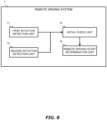
- Fig. 8 is a block diagram illustrating an example of a functional configuration of the remote driving system 1.
- the remote driving system 1 includes a first situation detection unit 11, a second situation detection unit 12, an initial check unit 13, and a remote driving start determination unit 14 as functional blocks.
- the first situation detection unit 11 detects the first situation.
- the first situation is a situation in which the remote driving of the vehicle 100 is required.
- a processing entity which realizes the first situation detection unit 11 may be the processor 160 of the vehicle 100 or may be the processor 360 of the management device 300.
- the processor 160 of the vehicle 100 may detect the first situation based on the information acquired from the sensor group 120.
- the processor 360 of the management device 300 may detect the first situation based on the information acquired from the infrastructure sensor 400.
- the first situation detection unit 11 transmits information showing that the first situation is detected to the initial check unit 13.
- the second situation detection unit 12 detects a second situation.
- the processing entity which realizes the second situation detection unit 12 may be the processor 160 or may be the processor 360.
- the processor 160 of the vehicle 100 may detect the second situation based on the weather forecast information acquired from the management device 300.
- the processor 360 of the management device 300 may detect the second situation from the information acquired from the infrastructure sensor 400.
- the second situation detection unit 12 transmits information showing that the second situation is detected to the initial check unit 13.
- the initial check unit 13 performs the initial check.
- the initial check unit 13 is realized by the processor 260 of the remote driving terminal 200.
- the initial check unit 13 performs the initial check when the first situation is detected based on the information transmitted from the first situation detection unit 11.
- the initial check unit 13 performs at least a part of the initial check before the first situation is detected in a case where the second situation is detected.
- the initial check unit 13 transmits the result of the initial check to the remote driving start determination unit 14.
- the remote driving start determination unit 14 determines whether to start the remote driving or not.
- a processing entity which realizes the remote driving start determination unit 14 may be the processor 160, may be the processor 260, or may be the processor 360. Alternatively, the remote driving start determination unit 14 may be realized by cooperation of these processors.
- the remote driving start determination unit 14 determines whether to start the remote driving or not based on the result of the initial check received from the initial check unit 13 and the information about the first situation received from the first situation detection unit 11. When the first situation is detected and the result of the initial check indicates that the remote driving can be started, the remote driving start determination unit 14 starts the remote driving of the vehicle 100.
- the remote driving start determination unit 14 does not start the remote driving if the first situation is not detected. That is, even if the initial check is completed before the first situation is detected, the remote driving is started after the first situation is detected.
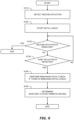
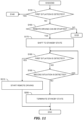
- Fig. 9 is a flowchart illustrating an example of processing performed by the remote driving system 1 in a case where the second situation is detected.
- Step S110 the remote driving system 1 detects the second situation.
- the process of Step S110 is executed by the second situation detection unit 12.
- the second situation is detected, communication between the vehicle 100 and the remote driving terminal 200 is established. Then, the processing proceeds to Step S120.
- Step S120 the remote driving system 1 starts the initial check.
- the remote driving system 1 can perform at least a part of the initial check before the first situation is detected.
- the process of Step S120 is executed by the initial check unit 13. After the initial check is started and at least a part of the initial check is performed, the processing proceeds to Step S125.
- Step S125 the remote driving system 1 determines whether the second situation is resolved before the first situation is detected or not. In a case where the second situation is resolved before the first situation is detected (Step S125; Yes), the remote driving system 1 terminates the initial check without starting the remote driving. In otherwise case (Step S125; No), the processing proceeds to Step S130.
- Step S130 the remote driving system 1 determines whether the first situation is detected or not.
- the process of Step S130 is executed by the first situation detection unit 11. If the first situation is detected (Step S130; Yes), the processing proceeds to Step S140. On the other hand, if the first situation is not detected (Step S130; No), the processing returns to Step S125. The initial check is continued during this process.
- Step S140 if there is a remaining initial check, that is, an initial check which is not finished yet, the remote driving system 1 performs it. After the initial check is finished, the processing proceeds to Step S150.
- the process of Step S140 is executed by the initial check unit 13. Since at least a part of the initial check has already been performed before Step S130, the remote driving system 1 should perform only the remaining initial check in Step S140. Therefore, the time until the process of Step S150 is started becomes shorter than that in a case where all the steps of the initial check are performed in Step S140.
- the initial check may be finished before Step S130. In this case, Step S140 is skipped and the processing proceeds to Step S150. Since Step S140 is skipped, necessary time until the process of Step S150 is started can be further shortened.
- Step S150 the remote driving system 1 determines whether to start the remote driving or not.
- the process of Step S150 is executed by the remote driving start determination unit 14.
- the remote driving system 1 starts the remote driving if the result of the initial check indicates that the remote driving can be started. After the process of Step S150 is performed, the processing ends.
- the processing illustrated in the flowchart of Fig. 9 is an example of processing in a case where the second situation is detected.
- the remote driving system 1 detects the first situation without detecting the second situation. For example, there is a case where it suddenly starts raining heavily in the area where the vehicle 100 travels although it has not forecasted that it rains according to the weather forecast information.
- the initial check is performed as usual in response to the detection of the first situation. Then, when it is checked that the remote driving can be started by the initial check, the remote driving is started.
- Fig. 10 is a time chart for explaining an effect of the processing performed by the remote driving system 1.
- An upper chart shows a case in a comparative example.
- An example 1 and an example 2 are examples of cases in which the second situation is detected by the remote driving system 1.
- the first situation is detected at time T3.
- the initial check is started in response to the detection of the first situation.
- the remote driving is started at time T5, which is the time when the initial check is finished.
- the remote driving system 1 detects the second situation at time T3 before time T1. Then, the remote driving system 1 starts the initial check in response to the detection of the second situation. Therefore, the initial check can be finished before the first situation is detected. Since the initial check is already completed, the remote driving system 1 can start the remote driving immediately after the first situation is detected at time T3.
- the second situation is detected at time T2, which is the time after time T1 but before time T3.
- the remote driving system 1 starts the initial check in response to the detection of the second situation.
- time T3 which is the time when the first situation is detected
- a part of the initial check has already been performed. Since a part of the initial check is already performed, the time from the detection of the first state to the completion of the remaining initial check becomes shorter than the time until the initial check is completed in the comparative example.
- the remote driving system 1 can start the remote driving at time T4, which is the time earlier than the time T5.
- the remote driving system 1 of the present embodiment in response to detection of the second situation, at least a part of the initial check is performed before the first situation is detected.
- the initial check can be finished early, and the time from when the remote driving is required to when the remote driving is started can be shortened.
- the remote driving can be smoothly started.
- the autonomous driving vehicle autonomously travels in a factory ground.
- the autonomous driving vehicle assembled in an assembly factory travels from the assembly factory to a yard by autonomously traveling along a predetermined route.
- One or more infrastructure cameras are installed on a road from the assembly factory to the yard. By using the infrastructure camera, the management device 300 of the remote driving system 1 can remotely monitor the autonomous driving vehicle that is autonomously traveling.
- the management device 300 can detect such a situation based on the information about the route stored in the memory 370 and the image captured by the infrastructure camera. At this time, at least a part of the initial check required for starting the remote driving has already been performed at the time when the deviation amount exceeds the second threshold value. Therefore, the remote driving system 1 can quickly start the remote driving.
- a "standby state” is defined as a state of the remote driving terminal 200.
- the remote driving system 1 starts the initial check when the second situation is detected. Then, when the initial check is finished before the first situation is detected and its result indicates that the remote driving can be started, the remote driving system 1 shifts the remote driving terminal 200 to the standby state.
- the standby state is a state indicating that preparation for the remote driving is completed at the remote driving terminal 200. In other words, the standby state is a state in which the remote driving can be started immediately after the first situation is detected.
- the standby state of the remote driving terminal 200 is terminated under a predetermined condition. Specifically, the remote driving system 1 terminates the standby state in a case where the second situation is resolved and the first situation is not detected.
- Fig. 11 is a flowchart illustrating an example of processing performed by the remote driving system 1 in the modification.
- the same processing as that in Fig. 9 is omitted.
- Processes before Step S125 is the same as that in the flowchart of Fig. 9 .
- Step S130 the remote driving system 1 determines whether the first situation is detected or not. If the first situation is detected (Step S130; Yes), the processing proceeds to Step S140 similarly to Fig. 9 . Processes after Step S140 is the same as that in Fig. 9 . On the other hand, if the first situation is not detected (Step S130; No), the processing proceeds to Step S160.
- Step S160 the remote driving system 1 determines whether the remote driving can be started or not based on the result of the initial check. If the result of the initial check indicates that the remote driving can be started (Step S160; Yes), the processing proceeds to Step S170. On the other hand, if the result of the initial check does not indicate that the remote driving can be started or if the initial check is not completed (Step S160; No), the processing returns to Step S125. The initial check is continued during this process.
- Step S170 the remote driving system 1 shifts the remote driving terminals 200 to the standby state.
- the standby state is a state indicating that preparation for the remote driving is completed. After the remote driving device 200 is shifted to the standby state, the processing proceeds to Step S180.
- Step S180 the remote driving system 1 determines whether the first situation is detected or not. If the first situation is detected (Step S180; Yes), the processing proceeds to Step S210. On the other hand, if the first situation is not detected (Step S180; No), the processing proceeds to Step S190.
- Step S210 the remote driving system 1 starts the remote driving of the vehicle 100.
- Step S210 since the remote driving terminal 200 is in the standby state, the remote driving system 1 can immediately start the remote driving without loss of time due to the initial check.
- Step S190 the remote driving system 1 determines whether the second situation is still detected or not. If the second situation is still detected (Step S190; Yes), the processing returns to Step S180. On the other hand, if the second situation becomes not detected (Step S190; No), the processing proceeds to Step S200.
- Step S200 the remote driving system 1 terminates the standby state of the remote driving terminals 200. After the standby state of the remote driving terminal 200 is terminated, the processing ends.
- the first situation is not necessarily detected thereafter.
- the second situation even if the deviation amount of the vehicle 100 from the target path exceeds the second threshold value, there is a possibility that the vehicle 100 thereafter returns to the target path normally if it is caused by a temporary disturbance of control or the like. In this case, the remote driving of the vehicle 100 becomes not required. Therefore, in the modification, in a case where the first situation is not detected and the second situation is resolved, the standby state of the remote driving terminal 200 is terminated without starting the remote driving of the vehicle 100. This makes it possible to reduce a processing load of the remote driving system 1 due to the remote driving terminal 200 being kept on standby even when the remote driving becomes not necessary. Further, it is possible to prevent the remote driving terminal 200 from continuing to hold the old result of the initial check.
Landscapes
- Engineering & Computer Science (AREA)
- Physics & Mathematics (AREA)
- General Physics & Mathematics (AREA)
- Automation & Control Theory (AREA)
- Remote Sensing (AREA)
- Radar, Positioning & Navigation (AREA)
- Aviation & Aerospace Engineering (AREA)
- Life Sciences & Earth Sciences (AREA)
- Environmental & Geological Engineering (AREA)
- Environmental Sciences (AREA)
- Ecology (AREA)
- Biodiversity & Conservation Biology (AREA)
- Atmospheric Sciences (AREA)
- Hydrology & Water Resources (AREA)
- Multimedia (AREA)
- Theoretical Computer Science (AREA)
- Traffic Control Systems (AREA)
- Valves And Accessory Devices For Braking Systems (AREA)
- Steering Control In Accordance With Driving Conditions (AREA)
- Control Of Driving Devices And Active Controlling Of Vehicle (AREA)
- Control Of Position, Course, Altitude, Or Attitude Of Moving Bodies (AREA)
Claims (9)
- Fernfahrsystem (1), das dazu konfiguriert ist, ein Fernfahren eines Fahrzeugs (100) auf Grundlage eines Betriebsbetrags, der in ein Fernfahrendgerät des Fernfahrsystems durch einen entfernten Bediener (X) eingegeben wird, wobei das Fernfahrsystem (1) wenigstens einen Prozessor (160, 260, 360) umfasst, wobei:eine erste Situation eine Situation ist, in der das Fernfahren des Fahrzeugs (100) erforderlich ist,eine anfängliche Prüfung ein Prozess zum Prüfen ist, ob das Fernfahrendgerät das Fernfahren starten kann, undder wenigstens eine Prozessor konfiguriert ist, zum:Erkennen einer zweiten Situation, die ein Zeichen der ersten Situation aufweist;an dem Fernfahrendgerät Durchführen wenigstens eines Teils der anfänglichen Prüfung, bevor die erste Situation in einem Fall erkannt wird, in dem die zweite Situation erkannt wird;Starten des Fernfahrens in einem Fall, in dem die erste Situation erkannt wird, undwobei die anfängliche Prüfung an dem Fernfahrendgerät wenigstens das Prüfen des Kommunikationsaufbaus mit dem Fahrzeug (100) beinhaltet und die anfängliche Prüfung an dem Fernfahrendgerät ferner eine Lenkpositionsausrichtung zwischen dem Fahrzeug (100) und dem Fernfahrendgerät und das Prüfen beinhaltet, dass ein Aktuator (130) des Fahrzeugs (100) als Reaktion auf den an das Fahrzeug (100) übertragenen Betriebsbetrag betrieben wird.
- Fernfahrsystem (1) nach Anspruch 1, wobei
der wenigstens eine Prozessor (160, 260, 360) ferner dazu konfiguriert ist, den Start des Fernfahrens in einem Fall zu unterlassen, in dem die zweite Situation gelöst wird, bevor die erste Situation erkannt wird. - Fernfahrsystem (1) nach Anspruch 1, wobei
der wenigstens eine Prozessor (160, 260, 360) konfiguriert ist, zum:Verschieben des Fernfahrendgeräts in einen Bereitschaftszustand, der anzeigt, dass die Vorbereitung für das Fernfahren abgeschlossen ist, wenn ein Ergebnis der anfänglichen Prüfung anzeigt, dass das Fernfahren gestartet werden kann; undBeenden des Bereitschaftszustands, ohne das Fernfahren in einem Fall zu starten, in dem der zweite Zustand nach der anfänglichen Prüfung gelöst wird und der erste Zustand nicht erkannt wird. - Fernfahrsystem (1) nach einem der Ansprüche 1 bis 3, wobei
der wenigstens eine Prozessor (160, 260, 360) ferner konfiguriert ist, zum:Erfassen von Infrastrukturinformationen, die ein von einer Infrastrukturkamera aufgenommenes Bild beinhalten, die in einem Bereich installiert ist, in dem sich das Fahrzeug (100) bewegt; undErkennen der zweiten Situation auf Grundlage der Infrastrukturinformationen. - Fernfahrsystem (1) nach Anspruch 4, wobei das Fernfahrsystem (1) eine Verwaltungsvorrichtung (300) umfasst, wobei
die erste Situation eine Situation ist, in der das Fahrzeug (100) eine Anforderung zum Starten des Fernfahrens an die Verwaltungsvorrichtung (300) überträgt. - Fernfahrsystem (1) nach einem der Ansprüche 1 bis 3, wobeidas Fahrzeug (100) ein autonom fahrendes Fahrzeug (100) ist, das durch autonomes Fahren gesteuert werden kann,der wenigstens eine Prozessor (160, 260, 360) ferner dazu konfiguriert ist, einen Abweichungsbetrag des Fahrzeugs (100) von einem Zielpfad zu erfassen,die erste Situation eine Situation ist, in der der Abweichungsbetrag einen ersten Schwellenwert überschreitet,die zweite Situation eine Situation ist, in der der Abweichungsbetrag einen zweiten Schwellenwert überschreitet, undder erste Schwellenwert größer ist als der zweite Schwellenwert.
- Fernfahrsystem (1) nach einem der Ansprüche 1 bis 3, wobeidas Fahrzeug (100) ein autonom fahrendes Fahrzeug (100) ist, das durch autonomes Fahren gesteuert werden kann,der wenigstens eine Prozessor (160, 260, 360) ferner dazu konfiguriert ist, Informationen über Niederschlag an einem Ort zu erfassen, an dem sich das Fahrzeug (100) bewegt,die erste Situation eine Situation ist, in der der Niederschlag gleich oder größer ist als ein erster Schwellenwert, unddie zweite Situation eine Situation ist, in der der Niederschlag gleich oder größer ist als ein zweiter Schwellenwert und weniger als der erste Schwellenwert.
- Fernfahrsystem (1) nach einem der Ansprüche 1 bis 3, wobeidas Fahrzeug (100) ein autonom fahrendes Fahrzeug (100) ist, das durch autonomes Fahren gesteuert werden kann,der wenigstens eine Prozessor (160, 260, 360) ferner dazu konfiguriert ist, Wettervorhersageinformationen zu erfassen, die eine Wettervorhersage beinhalten,die erste Situation eine Situation ist, in der der Niederschlag an einem Ort, an dem sich das Fahrzeug (100) bewegt, gleich oder größer ist als ein Schwellenwert ist, unddie zweite Situation eine Situation ist, in der gemäß der Wettervorhersage vorhergesagt wird, dass es an dem Ort, an dem das Fahrzeug (100) fährt, zu regnen beginnt.
- Verfahren zum Durchführen eines Fernfahrens eines Fahrzeugs (100) auf Grundlage eines Betriebsbetrags, der in ein Fernfahrendgerät des Fernfahrsystems durch einen entfernten Bediener (X) eingegeben wird, wobeieine erste Situation eine Situation ist, in der das Fernfahren des Fahrzeugs (100) erforderlich ist,eine anfängliche Prüfung ein Prozess zum Prüfen ist, ob das Fernfahrendgerät das Fernfahren starten kann, unddas Verfahren umfasst:Erkennen einer zweiten Situation, die ein Zeichen der ersten Situation aufweist;an dem Fernfahrendgerät Durchführen wenigstens eines Teils der anfänglichen Prüfung, bevor die erste Situation in einem Fall erkannt wird, in dem die zweite Situation erkannt wird;Starten des Fernfahrens in einem Fall, in dem die erste Situation erkannt wird, undwobei die anfängliche Prüfung an dem Fernfahrendgerät wenigstens das Prüfen des Kommunikationsaufbaus mit dem Fahrzeug (100) beinhaltet und die anfängliche Prüfung an dem Fernfahrendgerät ferner eine Lenkpositionsausrichtung zwischen dem Fahrzeug (100) und dem Fernfahrendgerät und das Prüfen beinhaltet, dass ein Aktuator (130) des Fahrzeugs (100) als Reaktion auf den an das Fahrzeug (100) übertragenen Betriebsbetrag betrieben wird.
Applications Claiming Priority (1)
| Application Number | Priority Date | Filing Date | Title |
|---|---|---|---|
| JP2023009601A JP7803291B2 (ja) | 2023-01-25 | 2023-01-25 | 遠隔運転システム、遠隔運転端末、及び遠隔運転のための方法 |
Publications (2)
| Publication Number | Publication Date |
|---|---|
| EP4407401A1 EP4407401A1 (de) | 2024-07-31 |
| EP4407401B1 true EP4407401B1 (de) | 2025-06-18 |
Family
ID=89536163
Family Applications (1)
| Application Number | Title | Priority Date | Filing Date |
|---|---|---|---|
| EP24150959.5A Active EP4407401B1 (de) | 2023-01-25 | 2024-01-09 | Fernantriebssystem, fernantriebsendgerät und verfahren zum fernantrieb |
Country Status (5)
| Country | Link |
|---|---|
| US (1) | US20240248480A1 (de) |
| EP (1) | EP4407401B1 (de) |
| JP (1) | JP7803291B2 (de) |
| KR (1) | KR20240117488A (de) |
| CN (1) | CN118393925A (de) |
Citations (1)
| Publication number | Priority date | Publication date | Assignee | Title |
|---|---|---|---|---|
| US20220397895A1 (en) * | 2021-06-09 | 2022-12-15 | Toyota Jidosha Kabushiki Kaisha | Vehicle remote control device, vehicle remote control system, vehicle remote control method, and vehicle remote control program |
Family Cites Families (8)
| Publication number | Priority date | Publication date | Assignee | Title |
|---|---|---|---|---|
| JP6451537B2 (ja) * | 2015-07-21 | 2019-01-16 | 株式会社デンソー | 運転支援制御装置 |
| CN109891472B (zh) * | 2016-11-09 | 2021-11-26 | 本田技研工业株式会社 | 车辆控制系统、车辆控制方法及存储介质 |
| JP6893140B2 (ja) * | 2017-07-20 | 2021-06-23 | パナソニック インテレクチュアル プロパティ コーポレーション オブ アメリカPanasonic Intellectual Property Corporation of America | 制御装置、制御方法、制御プログラム及び制御システム |
| US10437247B2 (en) * | 2017-08-10 | 2019-10-08 | Udelv Inc. | Multi-stage operation of autonomous vehicles |
| JP7200864B2 (ja) * | 2019-07-17 | 2023-01-10 | トヨタ自動車株式会社 | 車両制御装置 |
| EP4104465B1 (de) * | 2020-02-16 | 2024-01-31 | Telefonaktiebolaget LM ERICSSON (PUBL) | Telebetriebene fahrereignisvorhersage, adaption und auslösung |
| JP7384185B2 (ja) * | 2020-03-23 | 2023-11-21 | 株式会社デンソー | 情報提示制御装置 |
| JP7559677B2 (ja) * | 2021-06-09 | 2024-10-02 | トヨタ自動車株式会社 | 遠隔操作依頼装置、遠隔操作依頼システム、遠隔操作依頼方法、及び遠隔操作依頼プログラム |
-
2023
- 2023-01-25 JP JP2023009601A patent/JP7803291B2/ja active Active
-
2024
- 2024-01-09 EP EP24150959.5A patent/EP4407401B1/de active Active
- 2024-01-16 US US18/413,725 patent/US20240248480A1/en active Pending
- 2024-01-17 CN CN202410069714.1A patent/CN118393925A/zh active Pending
- 2024-01-23 KR KR1020240009889A patent/KR20240117488A/ko active Pending
Patent Citations (1)
| Publication number | Priority date | Publication date | Assignee | Title |
|---|---|---|---|---|
| US20220397895A1 (en) * | 2021-06-09 | 2022-12-15 | Toyota Jidosha Kabushiki Kaisha | Vehicle remote control device, vehicle remote control system, vehicle remote control method, and vehicle remote control program |
Also Published As
| Publication number | Publication date |
|---|---|
| KR20240117488A (ko) | 2024-08-01 |
| EP4407401A1 (de) | 2024-07-31 |
| CN118393925A (zh) | 2024-07-26 |
| US20240248480A1 (en) | 2024-07-25 |
| JP2024105060A (ja) | 2024-08-06 |
| JP7803291B2 (ja) | 2026-01-21 |
Similar Documents
| Publication | Publication Date | Title |
|---|---|---|
| CN114761300B (zh) | 驾驶控制方法及驾驶控制装置 | |
| US20190359226A1 (en) | Vehicle control system and control method | |
| US20200387153A1 (en) | Parking lot management system, parking lot management device, parking lot management method, and storage medium | |
| JP7052692B2 (ja) | 隊列走行システム | |
| US11285943B2 (en) | Vehicle control system and control method | |
| JP2018203006A (ja) | 車両制御システムおよび車両制御方法 | |
| CN107074282A (zh) | 用于运行车辆的方法和装置 | |
| US11397431B2 (en) | Remote driving request processing device | |
| US20200210731A1 (en) | Vehicle control system, vehicle control method, and storage medium | |
| CN116670004B (zh) | 车辆控制装置、车辆系统 | |
| CN111301406A (zh) | 驾驶辅助装置、驾驶辅助系统、驾驶辅助方法和程序 | |
| CN110691956A (zh) | 车辆控制装置 | |
| JP7192308B2 (ja) | 車両通信制御装置、車両通信制御システム、車両通信制御方法、および車両通信制御プログラム | |
| CN114684132B (zh) | 车辆控制装置、车辆控制方法以及计算机可读存储介质 | |
| JPWO2020123143A5 (de) | ||
| EP4407401B1 (de) | Fernantriebssystem, fernantriebsendgerät und verfahren zum fernantrieb | |
| JP2023030111A (ja) | 運転支援装置、運転支援方法、およびプログラム | |
| US20230132179A1 (en) | Tow management systems and methods for autonomous vehicles | |
| JP7179047B2 (ja) | 車両制御装置、車両制御方法、およびプログラム | |
| US20230356745A1 (en) | Map related information sharing for autonomous vehicles | |
| EP4407397B1 (de) | Fernantriebssystem, fernantriebsendgerät und verfahren zum fernantrieb | |
| US20230131387A1 (en) | Tow management systems and methods for autonomous vehicles | |
| CN116788250A (zh) | 机动车辅助的方法、用于引导机动车的方法、设备和存储介质 | |
| JP7429112B2 (ja) | 管制装置 | |
| CN114684187A (zh) | 车辆控制装置、车辆控制方法及存储介质 |
Legal Events
| Date | Code | Title | Description |
|---|---|---|---|
| PUAI | Public reference made under article 153(3) epc to a published international application that has entered the european phase |
Free format text: ORIGINAL CODE: 0009012 |
|
| STAA | Information on the status of an ep patent application or granted ep patent |
Free format text: STATUS: REQUEST FOR EXAMINATION WAS MADE |
|
| 17P | Request for examination filed |
Effective date: 20240109 |
|
| AK | Designated contracting states |
Kind code of ref document: A1 Designated state(s): AL AT BE BG CH CY CZ DE DK EE ES FI FR GB GR HR HU IE IS IT LI LT LU LV MC ME MK MT NL NO PL PT RO RS SE SI SK SM TR |
|
| RIC1 | Information provided on ipc code assigned before grant |
Ipc: G05D 1/227 20240101ALI20241105BHEP Ipc: G05D 1/249 20240101ALI20241105BHEP Ipc: G05D 1/224 20240101AFI20241105BHEP |
|
| STAA | Information on the status of an ep patent application or granted ep patent |
Free format text: STATUS: EXAMINATION IS IN PROGRESS |
|
| GRAP | Despatch of communication of intention to grant a patent |
Free format text: ORIGINAL CODE: EPIDOSNIGR1 |
|
| STAA | Information on the status of an ep patent application or granted ep patent |
Free format text: STATUS: GRANT OF PATENT IS INTENDED |
|
| 17Q | First examination report despatched |
Effective date: 20250131 |
|
| INTG | Intention to grant announced |
Effective date: 20250225 |
|
| GRAS | Grant fee paid |
Free format text: ORIGINAL CODE: EPIDOSNIGR3 |
|
| GRAA | (expected) grant |
Free format text: ORIGINAL CODE: 0009210 |
|
| STAA | Information on the status of an ep patent application or granted ep patent |
Free format text: STATUS: THE PATENT HAS BEEN GRANTED |
|
| AK | Designated contracting states |
Kind code of ref document: B1 Designated state(s): AL AT BE BG CH CY CZ DE DK EE ES FI FR GB GR HR HU IE IS IT LI LT LU LV MC ME MK MT NL NO PL PT RO RS SE SI SK SM TR |
|
| REG | Reference to a national code |
Ref country code: GB Ref legal event code: FG4D |
|
| REG | Reference to a national code |
Ref country code: CH Ref legal event code: EP |
|
| REG | Reference to a national code |
Ref country code: DE Ref legal event code: R096 Ref document number: 602024000200 Country of ref document: DE |
|
| REG | Reference to a national code |
Ref country code: CH Ref legal event code: EP |
|
| REG | Reference to a national code |
Ref country code: IE Ref legal event code: FG4D |
|
| PG25 | Lapsed in a contracting state [announced via postgrant information from national office to epo] |
Ref country code: FI Free format text: LAPSE BECAUSE OF FAILURE TO SUBMIT A TRANSLATION OF THE DESCRIPTION OR TO PAY THE FEE WITHIN THE PRESCRIBED TIME-LIMIT Effective date: 20250618 |
|
| REG | Reference to a national code |
Ref country code: LT Ref legal event code: MG9D |
|
| PG25 | Lapsed in a contracting state [announced via postgrant information from national office to epo] |
Ref country code: NO Free format text: LAPSE BECAUSE OF FAILURE TO SUBMIT A TRANSLATION OF THE DESCRIPTION OR TO PAY THE FEE WITHIN THE PRESCRIBED TIME-LIMIT Effective date: 20250918 Ref country code: GR Free format text: LAPSE BECAUSE OF FAILURE TO SUBMIT A TRANSLATION OF THE DESCRIPTION OR TO PAY THE FEE WITHIN THE PRESCRIBED TIME-LIMIT Effective date: 20250919 |
|
| PG25 | Lapsed in a contracting state [announced via postgrant information from national office to epo] |
Ref country code: BG Free format text: LAPSE BECAUSE OF FAILURE TO SUBMIT A TRANSLATION OF THE DESCRIPTION OR TO PAY THE FEE WITHIN THE PRESCRIBED TIME-LIMIT Effective date: 20250618 |
|
| PG25 | Lapsed in a contracting state [announced via postgrant information from national office to epo] |
Ref country code: HR Free format text: LAPSE BECAUSE OF FAILURE TO SUBMIT A TRANSLATION OF THE DESCRIPTION OR TO PAY THE FEE WITHIN THE PRESCRIBED TIME-LIMIT Effective date: 20250618 |
|
| PG25 | Lapsed in a contracting state [announced via postgrant information from national office to epo] |
Ref country code: RS Free format text: LAPSE BECAUSE OF FAILURE TO SUBMIT A TRANSLATION OF THE DESCRIPTION OR TO PAY THE FEE WITHIN THE PRESCRIBED TIME-LIMIT Effective date: 20250918 |
|
| REG | Reference to a national code |
Ref country code: NL Ref legal event code: MP Effective date: 20250618 |
|
| PG25 | Lapsed in a contracting state [announced via postgrant information from national office to epo] |
Ref country code: LV Free format text: LAPSE BECAUSE OF FAILURE TO SUBMIT A TRANSLATION OF THE DESCRIPTION OR TO PAY THE FEE WITHIN THE PRESCRIBED TIME-LIMIT Effective date: 20250618 |
|
| PG25 | Lapsed in a contracting state [announced via postgrant information from national office to epo] |
Ref country code: NL Free format text: LAPSE BECAUSE OF FAILURE TO SUBMIT A TRANSLATION OF THE DESCRIPTION OR TO PAY THE FEE WITHIN THE PRESCRIBED TIME-LIMIT Effective date: 20250618 |
|
| PG25 | Lapsed in a contracting state [announced via postgrant information from national office to epo] |
Ref country code: PT Free format text: LAPSE BECAUSE OF FAILURE TO SUBMIT A TRANSLATION OF THE DESCRIPTION OR TO PAY THE FEE WITHIN THE PRESCRIBED TIME-LIMIT Effective date: 20251020 |
|
| REG | Reference to a national code |
Ref country code: AT Ref legal event code: MK05 Ref document number: 1804773 Country of ref document: AT Kind code of ref document: T Effective date: 20250618 |
|
| PG25 | Lapsed in a contracting state [announced via postgrant information from national office to epo] |
Ref country code: IS Free format text: LAPSE BECAUSE OF FAILURE TO SUBMIT A TRANSLATION OF THE DESCRIPTION OR TO PAY THE FEE WITHIN THE PRESCRIBED TIME-LIMIT Effective date: 20251018 |
|
| PG25 | Lapsed in a contracting state [announced via postgrant information from national office to epo] |
Ref country code: AT Free format text: LAPSE BECAUSE OF FAILURE TO SUBMIT A TRANSLATION OF THE DESCRIPTION OR TO PAY THE FEE WITHIN THE PRESCRIBED TIME-LIMIT Effective date: 20250618 Ref country code: SM Free format text: LAPSE BECAUSE OF FAILURE TO SUBMIT A TRANSLATION OF THE DESCRIPTION OR TO PAY THE FEE WITHIN THE PRESCRIBED TIME-LIMIT Effective date: 20250618 |
|
| PGFP | Annual fee paid to national office [announced via postgrant information from national office to epo] |
Ref country code: FR Payment date: 20251128 Year of fee payment: 3 |
|
| PG25 | Lapsed in a contracting state [announced via postgrant information from national office to epo] |
Ref country code: CZ Free format text: LAPSE BECAUSE OF FAILURE TO SUBMIT A TRANSLATION OF THE DESCRIPTION OR TO PAY THE FEE WITHIN THE PRESCRIBED TIME-LIMIT Effective date: 20250618 |
|
| PG25 | Lapsed in a contracting state [announced via postgrant information from national office to epo] |
Ref country code: PL Free format text: LAPSE BECAUSE OF FAILURE TO SUBMIT A TRANSLATION OF THE DESCRIPTION OR TO PAY THE FEE WITHIN THE PRESCRIBED TIME-LIMIT Effective date: 20250618 |
|
| PG25 | Lapsed in a contracting state [announced via postgrant information from national office to epo] |
Ref country code: EE Free format text: LAPSE BECAUSE OF FAILURE TO SUBMIT A TRANSLATION OF THE DESCRIPTION OR TO PAY THE FEE WITHIN THE PRESCRIBED TIME-LIMIT Effective date: 20250618 |
|
| PG25 | Lapsed in a contracting state [announced via postgrant information from national office to epo] |
Ref country code: SK Free format text: LAPSE BECAUSE OF FAILURE TO SUBMIT A TRANSLATION OF THE DESCRIPTION OR TO PAY THE FEE WITHIN THE PRESCRIBED TIME-LIMIT Effective date: 20250618 |
|
| PG25 | Lapsed in a contracting state [announced via postgrant information from national office to epo] |
Ref country code: ES Free format text: LAPSE BECAUSE OF FAILURE TO SUBMIT A TRANSLATION OF THE DESCRIPTION OR TO PAY THE FEE WITHIN THE PRESCRIBED TIME-LIMIT Effective date: 20250618 |