EP4407093A1 - Gefärbte faser, gefärbtes faserteil, faserverstärkter verbundstoff, strukturteil und herstellungsverfahren - Google Patents
Gefärbte faser, gefärbtes faserteil, faserverstärkter verbundstoff, strukturteil und herstellungsverfahren Download PDFInfo
- Publication number
- EP4407093A1 EP4407093A1 EP22889210.5A EP22889210A EP4407093A1 EP 4407093 A1 EP4407093 A1 EP 4407093A1 EP 22889210 A EP22889210 A EP 22889210A EP 4407093 A1 EP4407093 A1 EP 4407093A1
- Authority
- EP
- European Patent Office
- Prior art keywords
- fiber
- colored
- pigment
- transparent inorganic
- composite material
- Prior art date
- Legal status (The legal status is an assumption and is not a legal conclusion. Google has not performed a legal analysis and makes no representation as to the accuracy of the status listed.)
- Pending
Links
- 239000000835 fiber Substances 0.000 title claims abstract description 351
- 239000000463 material Substances 0.000 title claims abstract description 80
- 239000003733 fiber-reinforced composite Substances 0.000 title claims abstract description 69
- 238000002360 preparation method Methods 0.000 title abstract description 18
- 239000000049 pigment Substances 0.000 claims abstract description 209
- 239000012784 inorganic fiber Substances 0.000 claims abstract description 173
- 238000000034 method Methods 0.000 claims abstract description 56
- 229920005989 resin Polymers 0.000 claims description 84
- 239000011347 resin Substances 0.000 claims description 84
- 239000011159 matrix material Substances 0.000 claims description 58
- 239000013306 transparent fiber Substances 0.000 claims description 41
- 239000002131 composite material Substances 0.000 claims description 32
- 239000004744 fabric Substances 0.000 claims description 32
- 239000003086 colorant Substances 0.000 claims description 29
- 230000002787 reinforcement Effects 0.000 claims description 26
- 238000012805 post-processing Methods 0.000 claims description 25
- 238000012545 processing Methods 0.000 claims description 24
- 239000000843 powder Substances 0.000 claims description 10
- 230000008569 process Effects 0.000 abstract description 14
- 239000002657 fibrous material Substances 0.000 abstract description 2
- 239000000243 solution Substances 0.000 description 89
- 239000003365 glass fiber Substances 0.000 description 41
- 238000004040 coloring Methods 0.000 description 21
- 238000010586 diagram Methods 0.000 description 14
- 238000001035 drying Methods 0.000 description 13
- 230000000694 effects Effects 0.000 description 11
- 238000007731 hot pressing Methods 0.000 description 10
- 238000007789 sealing Methods 0.000 description 10
- 239000002904 solvent Substances 0.000 description 10
- 238000009941 weaving Methods 0.000 description 10
- 238000000465 moulding Methods 0.000 description 9
- 238000001723 curing Methods 0.000 description 8
- 239000002994 raw material Substances 0.000 description 8
- 229920001187 thermosetting polymer Polymers 0.000 description 7
- 239000007788 liquid Substances 0.000 description 6
- 239000004417 polycarbonate Substances 0.000 description 6
- 239000007787 solid Substances 0.000 description 6
- 229920002803 thermoplastic polyurethane Polymers 0.000 description 6
- 229920005992 thermoplastic resin Polymers 0.000 description 6
- 238000005516 engineering process Methods 0.000 description 5
- 230000001788 irregular Effects 0.000 description 5
- 238000003754 machining Methods 0.000 description 5
- 238000004519 manufacturing process Methods 0.000 description 5
- 238000002156 mixing Methods 0.000 description 5
- 238000004804 winding Methods 0.000 description 5
- 239000011248 coating agent Substances 0.000 description 4
- 238000000576 coating method Methods 0.000 description 4
- 238000005260 corrosion Methods 0.000 description 4
- 230000007797 corrosion Effects 0.000 description 4
- 238000005520 cutting process Methods 0.000 description 4
- 238000011049 filling Methods 0.000 description 4
- 229920000515 polycarbonate Polymers 0.000 description 4
- 229920001225 polyester resin Polymers 0.000 description 4
- 239000004645 polyester resin Substances 0.000 description 4
- 239000000126 substance Substances 0.000 description 4
- VYPSYNLAJGMNEJ-UHFFFAOYSA-N Silicium dioxide Chemical compound O=[Si]=O VYPSYNLAJGMNEJ-UHFFFAOYSA-N 0.000 description 3
- 239000000654 additive Substances 0.000 description 3
- 230000000996 additive effect Effects 0.000 description 3
- 239000000203 mixture Substances 0.000 description 3
- KXGFMDJXCMQABM-UHFFFAOYSA-N 2-methoxy-6-methylphenol Chemical compound [CH]OC1=CC=CC([CH])=C1O KXGFMDJXCMQABM-UHFFFAOYSA-N 0.000 description 2
- RGHILYZRVFRRNK-UHFFFAOYSA-N anthracene-1,2-dione Chemical compound C1=CC=C2C=C(C(C(=O)C=C3)=O)C3=CC2=C1 RGHILYZRVFRRNK-UHFFFAOYSA-N 0.000 description 2
- 230000008859 change Effects 0.000 description 2
- 239000003795 chemical substances by application Substances 0.000 description 2
- 229920001971 elastomer Polymers 0.000 description 2
- 239000000806 elastomer Substances 0.000 description 2
- 239000003822 epoxy resin Substances 0.000 description 2
- 238000002074 melt spinning Methods 0.000 description 2
- 229910052751 metal Inorganic materials 0.000 description 2
- 239000002184 metal Substances 0.000 description 2
- VNWKTOKETHGBQD-UHFFFAOYSA-N methane Chemical compound C VNWKTOKETHGBQD-UHFFFAOYSA-N 0.000 description 2
- 229920001568 phenolic resin Polymers 0.000 description 2
- 239000005011 phenolic resin Substances 0.000 description 2
- 239000012994 photoredox catalyst Substances 0.000 description 2
- 229920000647 polyepoxide Polymers 0.000 description 2
- 239000011208 reinforced composite material Substances 0.000 description 2
- 230000000007 visual effect Effects 0.000 description 2
- HGUFODBRKLSHSI-UHFFFAOYSA-N 2,3,7,8-tetrachloro-dibenzo-p-dioxin Chemical compound O1C2=CC(Cl)=C(Cl)C=C2OC2=C1C=C(Cl)C(Cl)=C2 HGUFODBRKLSHSI-UHFFFAOYSA-N 0.000 description 1
- BTBUEUYNUDRHOZ-UHFFFAOYSA-N Borate Chemical compound [O-]B([O-])[O-] BTBUEUYNUDRHOZ-UHFFFAOYSA-N 0.000 description 1
- RYGMFSIKBFXOCR-UHFFFAOYSA-N Copper Chemical compound [Cu] RYGMFSIKBFXOCR-UHFFFAOYSA-N 0.000 description 1
- QPLDLSVMHZLSFG-UHFFFAOYSA-N Copper oxide Chemical compound [Cu]=O QPLDLSVMHZLSFG-UHFFFAOYSA-N 0.000 description 1
- 239000005751 Copper oxide Substances 0.000 description 1
- VGGSQFUCUMXWEO-UHFFFAOYSA-N Ethene Chemical class C=C VGGSQFUCUMXWEO-UHFFFAOYSA-N 0.000 description 1
- KRHYYFGTRYWZRS-UHFFFAOYSA-N Fluorane Chemical compound F KRHYYFGTRYWZRS-UHFFFAOYSA-N 0.000 description 1
- 235000000177 Indigofera tinctoria Nutrition 0.000 description 1
- BPQQTUXANYXVAA-UHFFFAOYSA-N Orthosilicate Chemical compound [O-][Si]([O-])([O-])[O-] BPQQTUXANYXVAA-UHFFFAOYSA-N 0.000 description 1
- 229910019142 PO4 Inorganic materials 0.000 description 1
- 239000002262 Schiff base Substances 0.000 description 1
- 150000004753 Schiff bases Chemical class 0.000 description 1
- 229910021607 Silver chloride Inorganic materials 0.000 description 1
- QAOWNCQODCNURD-UHFFFAOYSA-L Sulfate Chemical compound [O-]S([O-])(=O)=O QAOWNCQODCNURD-UHFFFAOYSA-L 0.000 description 1
- UCKMPCXJQFINFW-UHFFFAOYSA-N Sulphide Chemical compound [S-2] UCKMPCXJQFINFW-UHFFFAOYSA-N 0.000 description 1
- RTAQQCXQSZGOHL-UHFFFAOYSA-N Titanium Chemical compound [Ti] RTAQQCXQSZGOHL-UHFFFAOYSA-N 0.000 description 1
- VEUACKUBDLVUAC-UHFFFAOYSA-N [Na].[Ca] Chemical compound [Na].[Ca] VEUACKUBDLVUAC-UHFFFAOYSA-N 0.000 description 1
- CSDREXVUYHZDNP-UHFFFAOYSA-N alumanylidynesilicon Chemical compound [Al].[Si] CSDREXVUYHZDNP-UHFFFAOYSA-N 0.000 description 1
- 150000004982 aromatic amines Chemical class 0.000 description 1
- 125000003118 aryl group Chemical group 0.000 description 1
- DMLAVOWQYNRWNQ-UHFFFAOYSA-N azobenzene Chemical class C1=CC=CC=C1N=NC1=CC=CC=C1 DMLAVOWQYNRWNQ-UHFFFAOYSA-N 0.000 description 1
- 238000005452 bending Methods 0.000 description 1
- 239000000919 ceramic Substances 0.000 description 1
- ZCDOYSPFYFSLEW-UHFFFAOYSA-N chromate(2-) Chemical compound [O-][Cr]([O-])(=O)=O ZCDOYSPFYFSLEW-UHFFFAOYSA-N 0.000 description 1
- 229910052802 copper Inorganic materials 0.000 description 1
- 239000010949 copper Substances 0.000 description 1
- 229910000431 copper oxide Inorganic materials 0.000 description 1
- 239000007822 coupling agent Substances 0.000 description 1
- XLJMAIOERFSOGZ-UHFFFAOYSA-M cyanate Chemical compound [O-]C#N XLJMAIOERFSOGZ-UHFFFAOYSA-M 0.000 description 1
- 238000009826 distribution Methods 0.000 description 1
- 230000003631 expected effect Effects 0.000 description 1
- 239000011521 glass Substances 0.000 description 1
- PCHJSUWPFVWCPO-UHFFFAOYSA-N gold Chemical compound [Au] PCHJSUWPFVWCPO-UHFFFAOYSA-N 0.000 description 1
- 229910052737 gold Inorganic materials 0.000 description 1
- 239000010931 gold Substances 0.000 description 1
- 238000013007 heat curing Methods 0.000 description 1
- 229910000040 hydrogen fluoride Inorganic materials 0.000 description 1
- XLYOFNOQVPJJNP-UHFFFAOYSA-M hydroxide Chemical compound [OH-] XLYOFNOQVPJJNP-UHFFFAOYSA-M 0.000 description 1
- 230000006872 improvement Effects 0.000 description 1
- 229940097275 indigo Drugs 0.000 description 1
- COHYTHOBJLSHDF-UHFFFAOYSA-N indigo powder Natural products N1C2=CC=CC=C2C(=O)C1=C1C(=O)C2=CC=CC=C2N1 COHYTHOBJLSHDF-UHFFFAOYSA-N 0.000 description 1
- 238000001746 injection moulding Methods 0.000 description 1
- 239000004973 liquid crystal related substance Substances 0.000 description 1
- 230000004048 modification Effects 0.000 description 1
- 238000012986 modification Methods 0.000 description 1
- MEFBJEMVZONFCJ-UHFFFAOYSA-N molybdate Chemical compound [O-][Mo]([O-])(=O)=O MEFBJEMVZONFCJ-UHFFFAOYSA-N 0.000 description 1
- 239000002245 particle Substances 0.000 description 1
- NBIIXXVUZAFLBC-UHFFFAOYSA-K phosphate Chemical compound [O-]P([O-])([O-])=O NBIIXXVUZAFLBC-UHFFFAOYSA-K 0.000 description 1
- 239000010452 phosphate Substances 0.000 description 1
- IEQIEDJGQAUEQZ-UHFFFAOYSA-N phthalocyanine Chemical compound N1C(N=C2C3=CC=CC=C3C(N=C3C4=CC=CC=C4C(=N4)N3)=N2)=C(C=CC=C2)C2=C1N=C1C2=CC=CC=C2C4=N1 IEQIEDJGQAUEQZ-UHFFFAOYSA-N 0.000 description 1
- 230000036314 physical performance Effects 0.000 description 1
- 125000003367 polycyclic group Chemical group 0.000 description 1
- 229920000123 polythiophene Polymers 0.000 description 1
- 229910052709 silver Inorganic materials 0.000 description 1
- 239000004332 silver Substances 0.000 description 1
- ADZWSOLPGZMUMY-UHFFFAOYSA-M silver bromide Chemical compound [Ag]Br ADZWSOLPGZMUMY-UHFFFAOYSA-M 0.000 description 1
- HKZLPVFGJNLROG-UHFFFAOYSA-M silver monochloride Chemical compound [Cl-].[Ag+] HKZLPVFGJNLROG-UHFFFAOYSA-M 0.000 description 1
- -1 spiropyran Substances 0.000 description 1
- 238000001029 thermal curing Methods 0.000 description 1
- 239000010936 titanium Substances 0.000 description 1
- 229910052719 titanium Inorganic materials 0.000 description 1
- 238000001721 transfer moulding Methods 0.000 description 1
- 229910052720 vanadium Inorganic materials 0.000 description 1
- LEONUFNNVUYDNQ-UHFFFAOYSA-N vanadium atom Chemical compound [V] LEONUFNNVUYDNQ-UHFFFAOYSA-N 0.000 description 1
Images



Classifications
-
- C—CHEMISTRY; METALLURGY
- C08—ORGANIC MACROMOLECULAR COMPOUNDS; THEIR PREPARATION OR CHEMICAL WORKING-UP; COMPOSITIONS BASED THEREON
- C08J—WORKING-UP; GENERAL PROCESSES OF COMPOUNDING; AFTER-TREATMENT NOT COVERED BY SUBCLASSES C08B, C08C, C08F, C08G or C08H
- C08J5/00—Manufacture of articles or shaped materials containing macromolecular substances
- C08J5/04—Reinforcing macromolecular compounds with loose or coherent fibrous material
- C08J5/06—Reinforcing macromolecular compounds with loose or coherent fibrous material using pretreated fibrous materials
-
- C—CHEMISTRY; METALLURGY
- C03—GLASS; MINERAL OR SLAG WOOL
- C03C—CHEMICAL COMPOSITION OF GLASSES, GLAZES OR VITREOUS ENAMELS; SURFACE TREATMENT OF GLASS; SURFACE TREATMENT OF FIBRES OR FILAMENTS MADE FROM GLASS, MINERALS OR SLAGS; JOINING GLASS TO GLASS OR OTHER MATERIALS
- C03C25/00—Surface treatment of fibres or filaments made from glass, minerals or slags
- C03C25/10—Coating
- C03C25/465—Coatings containing composite materials
- C03C25/475—Coatings containing composite materials containing colouring agents
-
- C—CHEMISTRY; METALLURGY
- C08—ORGANIC MACROMOLECULAR COMPOUNDS; THEIR PREPARATION OR CHEMICAL WORKING-UP; COMPOSITIONS BASED THEREON
- C08J—WORKING-UP; GENERAL PROCESSES OF COMPOUNDING; AFTER-TREATMENT NOT COVERED BY SUBCLASSES C08B, C08C, C08F, C08G or C08H
- C08J5/00—Manufacture of articles or shaped materials containing macromolecular substances
- C08J5/04—Reinforcing macromolecular compounds with loose or coherent fibrous material
- C08J5/06—Reinforcing macromolecular compounds with loose or coherent fibrous material using pretreated fibrous materials
- C08J5/08—Reinforcing macromolecular compounds with loose or coherent fibrous material using pretreated fibrous materials glass fibres
-
- C—CHEMISTRY; METALLURGY
- C08—ORGANIC MACROMOLECULAR COMPOUNDS; THEIR PREPARATION OR CHEMICAL WORKING-UP; COMPOSITIONS BASED THEREON
- C08K—Use of inorganic or non-macromolecular organic substances as compounding ingredients
- C08K3/00—Use of inorganic substances as compounding ingredients
- C08K3/01—Use of inorganic substances as compounding ingredients characterized by their specific function
- C08K3/013—Fillers, pigments or reinforcing additives
-
- C—CHEMISTRY; METALLURGY
- C08—ORGANIC MACROMOLECULAR COMPOUNDS; THEIR PREPARATION OR CHEMICAL WORKING-UP; COMPOSITIONS BASED THEREON
- C08K—Use of inorganic or non-macromolecular organic substances as compounding ingredients
- C08K5/00—Use of organic ingredients
- C08K5/0008—Organic ingredients according to more than one of the "one dot" groups of C08K5/01 - C08K5/59
- C08K5/0041—Optical brightening agents, organic pigments
-
- C—CHEMISTRY; METALLURGY
- C08—ORGANIC MACROMOLECULAR COMPOUNDS; THEIR PREPARATION OR CHEMICAL WORKING-UP; COMPOSITIONS BASED THEREON
- C08K—Use of inorganic or non-macromolecular organic substances as compounding ingredients
- C08K7/00—Use of ingredients characterised by shape
- C08K7/02—Fibres or whiskers
- C08K7/04—Fibres or whiskers inorganic
- C08K7/14—Glass
-
- C—CHEMISTRY; METALLURGY
- C08—ORGANIC MACROMOLECULAR COMPOUNDS; THEIR PREPARATION OR CHEMICAL WORKING-UP; COMPOSITIONS BASED THEREON
- C08K—Use of inorganic or non-macromolecular organic substances as compounding ingredients
- C08K9/00—Use of pretreated ingredients
- C08K9/02—Ingredients treated with inorganic substances
-
- C—CHEMISTRY; METALLURGY
- C08—ORGANIC MACROMOLECULAR COMPOUNDS; THEIR PREPARATION OR CHEMICAL WORKING-UP; COMPOSITIONS BASED THEREON
- C08K—Use of inorganic or non-macromolecular organic substances as compounding ingredients
- C08K9/00—Use of pretreated ingredients
- C08K9/04—Ingredients treated with organic substances
-
- C—CHEMISTRY; METALLURGY
- C08—ORGANIC MACROMOLECULAR COMPOUNDS; THEIR PREPARATION OR CHEMICAL WORKING-UP; COMPOSITIONS BASED THEREON
- C08J—WORKING-UP; GENERAL PROCESSES OF COMPOUNDING; AFTER-TREATMENT NOT COVERED BY SUBCLASSES C08B, C08C, C08F, C08G or C08H
- C08J2300/00—Characterised by the use of unspecified polymers
-
- C—CHEMISTRY; METALLURGY
- C08—ORGANIC MACROMOLECULAR COMPOUNDS; THEIR PREPARATION OR CHEMICAL WORKING-UP; COMPOSITIONS BASED THEREON
- C08K—Use of inorganic or non-macromolecular organic substances as compounding ingredients
- C08K2201/00—Specific properties of additives
- C08K2201/002—Physical properties
- C08K2201/004—Additives being defined by their length
-
- C—CHEMISTRY; METALLURGY
- C08—ORGANIC MACROMOLECULAR COMPOUNDS; THEIR PREPARATION OR CHEMICAL WORKING-UP; COMPOSITIONS BASED THEREON
- C08K—Use of inorganic or non-macromolecular organic substances as compounding ingredients
- C08K7/00—Use of ingredients characterised by shape
- C08K7/02—Fibres or whiskers
- C08K7/04—Fibres or whiskers inorganic
-
- C—CHEMISTRY; METALLURGY
- C08—ORGANIC MACROMOLECULAR COMPOUNDS; THEIR PREPARATION OR CHEMICAL WORKING-UP; COMPOSITIONS BASED THEREON
- C08K—Use of inorganic or non-macromolecular organic substances as compounding ingredients
- C08K9/00—Use of pretreated ingredients
Definitions
- the present disclosure relates to the field of fiber materials, and in particular, to a colored fiber, a colored fiber part, a fiber reinforced composite material, a structural part, and a preparation method.
- a glass fiber is an inorganic fiber material, and has high mechanical strength, strong heat resistance, good corrosion resistance, and other advantages.
- a glass fiber reinforced composite material obtained based on the glass fiber also has excellent strength, and is widely used in various products that have both light weight and high strength requirements. As a user has an increasingly high requirement for a visual effect of a product appearance, a colored glass fiber has emerged, and the colored glass fiber is obtained by coloring a transparent glass fiber.
- the conventional technology provides the following methods for obtaining the colored glass fiber: blending color powder with a raw material for preparing a glass fiber, and integrally forming the colored glass fiber through melt spinning; and coating a colored layer on a surface of the glass fiber to obtain the colored glass fiber.
- the colored glass fiber is prepared by blending the color powder with the raw material for preparing the glass fiber
- blending costs are relatively high during production
- the colored glass fiber is prepared by coating the colored layer on the surface of the glass fiber
- the preparation difficulty is relatively high, and mechanical strength and heat resistance of the colored layer are usually lower than those of the glass fiber, and consequently the colored layer is easily worn in an application process of the colored glass fiber.
- the present disclosure provides a colored fiber, a colored fiber part, a fiber reinforced composite material, a structural part, and a preparation method, to resolve the foregoing technical problems.
- a colored fiber where the colored fiber includes a transparent inorganic fiber and a pigment, the transparent inorganic fiber is of a hollow structure, and the pigment is located inside a cavity of the transparent inorganic fiber.
- the pigment is arranged inside the cavity of the transparent inorganic fiber, and a color of the pigment can be transmitted from inside of the transparent inorganic fiber to outside of the transparent inorganic fiber and then observed, so that the transparent inorganic fiber is assigned a color. Because the pigment is transmitted through a transparent inorganic fiber body through the cavity of the transparent fiber, the color of the colored fiber is transparent. The pigment is protected by the transparent inorganic fiber and is not easily worn or damaged, which improves color stability of the colored fiber. In addition, a material of the transparent inorganic fiber is not affected by the pigment, so that the colored fiber has all advantages of the inorganic fiber.
- the pigment is arranged inside the cavity of the transparent inorganic fiber, so that a method for preparing the colored fiber is simple and easy to operate, and costs are relatively low.
- a process of adding the pigment to the transparent inorganic fiber is not excessively limited. This is not only suitable for mass preparation of the colored fiber, but also is highly advantageous for quick customization of a small batch of colored fibers of a specific color, so as to meet a customization requirement of fast iteration of a colored fiber product.
- a length of the colored fiber is greater than 10 mm. Further, the length of the colored fiber is greater than or equal to 5 cm, greater than or equal to 10 cm, greater than or equal to 20 cm, greater than or equal to 30 cm, greater than or equal to 40 cm, greater than or equal to 50 cm, greater than or equal to 60 cm, greater than or equal to 70 cm, greater than or equal to 80 cm, greater than or equal to 90 cm, greater than or equal to 100 cm, or the like.
- the pigment includes at least one of color powder, a temperature-sensitive color changing pigment, a photosensitive color changing pigment, or an electrochromic pigment.
- a part of the cavity of the transparent inorganic fiber does not include the pigment.
- the entire cavity of the transparent inorganic fiber is filled with the pigment.
- a colored fiber part is provided, where the colored fiber part includes a plurality of colored fibers connected to each other; and the colored fiber is any one of the foregoing colored fibers.
- the plurality of colored fibers are connected to each other to form the colored fiber part.
- a manner of connecting the plurality of colored fibers to each other is determined based on a structure of the colored fiber part.
- the manner of connecting the plurality of colored fibers to each other includes but is not limited to winding, weaving, or the like.
- the colored fiber part is a fiber yarn or a fiber fabric.
- At least some of the plurality of colored fibers of the colored fiber part have different colors. This case includes: the colors of some colored fibers are different (correspondingly, the colors of some colored fibers are the same); and the colors of all colored fibers are different.
- the plurality of colored fibers of the colored fiber part have a same color.
- a fiber reinforced composite material where the fiber reinforced composite material includes a resin matrix and a reinforcement, and the reinforcement is located inside the resin matrix; and the reinforcement includes any one of the foregoing colored fibers or colored fiber parts.
- the resin matrix may be thermosetting resin, or may be thermoplastic resin.
- the thermosetting resin includes but is not limited to epoxy resin, phenolic resin, unsaturated resin, and a curing agent corresponding to each of the foregoing optional resins.
- the thermoplastic resin includes but is not limited to polyester resin.
- the polyester resin includes but is not limited to polycarbonate (Polycarbonate, PC) and thermoplastic urethane (Thermoplastic Urethane, TPU) elastomer.
- the fiber reinforced composite material provided in this embodiment of the present disclosure not only has a specific color, but also can present various appearance effects.
- the fiber reinforced composite material obtains a fiber reinforcement effect, so that the fiber reinforced composite material has at least advantages such as light weight, high strength, and excellent chemical resistance, and has a much higher mechanical performance than that of the resin matrix.
- a structural part is provided, where the structural part is prepared by using the foregoing fiber reinforced composite material.
- the structural part includes but is not limited to a housing part, a mechanical part, a plate, and the like.
- the housing may be used in an electronic product (for example, a computer, a mobile phone, a sound box, or a camera), a home product, a vehicle product (for example, a car), a chemical equipment product, and the like;
- the mechanical part includes but is not limited to a screw, a clamp, a gear, a bearing, a sealing ring, and the like;
- the plate includes but is not limited to a flat plate, a wave plate, and a bent plate.
- a method for preparing a colored fiber includes: providing a pigment solution, where the pigment solution includes a pigment;
- the enabling the pigment solution to be inhaled into a cavity of the transparent inorganic fiber under pressure includes: applying negative pressure to the other end of the transparent inorganic fiber, and enabling the pigment solution to be inhaled into the cavity of the transparent inorganic fiber under the negative pressure.
- the fiber reinforced composite material is shown above;
- the preparing a colored fiber part includes:
- the enabling the pigment solution to be inhaled into cavities of the transparent inorganic fibers of the transparent fiber part under pressure includes: applying negative pressure to the other end of the transparent fiber part, and enabling the pigment solution to be inhaled into the cavities of the transparent inorganic fibers of the transparent fiber part under the negative pressure.
- the enabling the pigment solution to be inhaled into a cavity of a transparent inorganic fiber of the transparent fiber part under pressure includes: applying negative pressure to the other end of the transparent inorganic fiber of the second composite material intermediate, and enabling the pigment solution to be inhaled into the cavity of the transparent inorganic fiber under the negative pressure.
- a glass fiber is an inorganic fiber material, and has high mechanical strength, strong heat resistance, good corrosion resistance, and other advantages.
- a glass fiber reinforced composite material obtained based on the glass fiber also has excellent strength, and is widely used in various products that have both light weight and high strength requirements. As a user has an increasingly high requirement for a visual effect of a product appearance, a colored glass fiber has emerged, and the colored glass fiber is obtained by coloring a transparent glass fiber.
- the conventional technology mainly provides the following methods for obtaining the colored glass fiber: (1) blending color powder with a raw material for preparing a glass fiber, and integrally forming the colored glass fiber through melt spinning; and (2) coating a colored layer on a surface of the glass fiber to obtain the colored glass fiber.
- a raw material formula needs to be correspondingly customized for the colored glass fiber based on the target color.
- a process of customizing the raw material formula a plurality of rounds of iteration are required to achieve an expected effect, resulting in relatively high blending costs during production.
- a demand for colored fibers is very low, it means that a large quantity of glass raw materials are wasted, and production costs are higher. Consequently, this method cannot meet a customization requirement for fast iteration of colored fiber products.
- the colored glass fiber is prepared by coating the surface of the glass fiber with a colored layer, and it is relatively difficult to prepare the colored glass fiber (for example, in a process such as weaving, cutting, hot-pressing injection molding, or molding processing, the colored layer is easily worn, or the colored layer is easily damaged due to insufficient heat resistance), and mechanical strength and heat resistance of the colored layer are generally lower than those of a glass fiber, the colored layer is easily worn in application of the colored glass fiber.
- an appearance effect, mechanical toughness, temperature resistance, and a bonding force with the glass fiber of the colored layer need to be considered, which further increases the preparation difficulty.
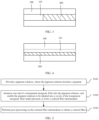
- an embodiment of the present disclosure provides a colored fiber 001.
- the colored fiber 001 includes a transparent inorganic fiber 100 and a pigment 200.
- the transparent inorganic fiber 100 is of a hollow structure, and the pigment 200 is located inside a cavity 101 of the transparent inorganic fiber 100.
- the transparent inorganic fiber 100 of a hollow structure in this embodiment of the present disclosure includes a transparent inorganic fiber body, and a cavity that extends in an axial direction of the inorganic fiber body and passes through two ends of the inorganic fiber body.
- the transparent inorganic fiber 100 applicable to this embodiment of the present disclosure includes but is not limited to a glass fiber or a ceramic fiber.
- the glass fiber may be a quartz glass fiber, a sodium-calcium glass fiber, or an aluminum-silicon glass fiber.
- the inorganic fibers of the two types of materials have high mechanical strength, strong heat resistance, good corrosion resistance, and other advantages.
- a fiber reinforced composite material obtained based on the inorganic fibers of the types of materials also has excellent strength, and can be widely used in various products that have both light weight and high strength requirements.
- the pigment 200 is arranged inside the cavity 101 of the transparent inorganic fiber 100, and a color of the pigment 200 can be transmitted from inside of the transparent inorganic fiber 100 to outside of the transparent inorganic fiber 100 and then observed, so that the transparent inorganic fiber 100 is assigned a color. Because the pigment 200 is transmitted through the transparent inorganic fiber body through the cavity 101 of the transparent fiber, the color of the colored fiber 001 is transparent. The pigment 200 is protected by the transparent inorganic fiber 100 and is not easily worn or damaged, which improves color stability of the colored fiber 001. In addition, a material of the transparent inorganic fiber 100 is not affected by the pigment 200, so that the colored fiber 001 has all advantages of the inorganic fiber.
- the pigment 200 is arranged inside the cavity 101 of the transparent inorganic fiber 100, so that a method for preparing the colored fiber 001 is simple and easy to operate, and costs are relatively low.
- a process of adding the pigment 200 to the transparent inorganic fiber 100 is not excessively limited. This is not only suitable for mass preparation of the colored fiber 001, but also is highly advantageous for quick customization of a small batch of colored fibers 001 of a specific color, so as to meet the customization requirement for fast iteration of colored fiber 001 products.
- sealing processing may be performed on two ends of the transparent inorganic fiber 100, to seal the cavity of the transparent inorganic fiber 100 and prevent the pigment 200 from leaking out of the transparent inorganic fiber 100.
- the two ends of the transparent inorganic fiber 100 may be sealed in an application process of the colored fiber 001, to prevent the pigment 200 from leaking out of the transparent inorganic fiber 100.
- the sealing processing includes but is not limited to: sealing by using cured resin.
- the colored fiber 001 in this embodiment of the present disclosure is a long fiber, also referred to as a continuous fiber, which is different from a short fiber.
- a long fiber also referred to as a continuous fiber, which is different from a short fiber.
- a length of the colored fiber 001 provided in this embodiment of the present disclosure in an axial direction of the colored fiber 001 is greater than 10 mm. Further, the length of the colored fiber 001 is greater than or equal to 2 cm, greater than or equal to 5 cm, greater than or equal to 10 cm, greater than or equal to 20 cm, greater than or equal to 30 cm, greater than or equal to 40 cm, greater than or equal to 50 cm, greater than or equal to 60 cm, greater than or equal to 70 cm, greater than or equal to 80 cm, greater than or equal to 90 cm, or greater than or equal to 100 cm, or the like.
- the pigment 200 in this embodiment of the present disclosure may have a plurality of types of colors, including conventional colors and unconventional colors.
- the conventional colors include but are not limited to red, green, yellow, orange, cyan, blue, purple, and black
- the unconventional colors include but are not limited to fluorescent red, fluorescent orange, fluorescent yellow, fluorescent green, gold, silver, and purple copper.
- only one pigment 200 may be arranged, so that the colored fiber 001 is presented in only one color; or two or more colors may be simultaneously arranged, for example, two or more different colors are sequentially presented in an axial direction of the colored fiber 001.
- the pigment 200 is in a solid form. In this way, during preparation of the colored fiber 001, the pigment 200 may be blended with a good solvent of the pigment 200 to form a pigment solution, and the pigment solution is arranged inside the cavity of the transparent inorganic fiber 100, and then the pigment 200 may be attached inside the cavity of the transparent inorganic fiber 100 through drying processing.
- the pigment 200 is in a liquid form. In this way, during preparation of the colored fiber 001, the pigment 200 may be directly used as the pigment solution, and the pigment solution is arranged inside the cavity 101 of the transparent inorganic fiber 100, and then the pigment 200 may be attached inside the cavity of the transparent inorganic fiber 100 through optional drying processing.
- the pigment 200 may be a pigment with a fixed color, or may be a pigment with a variable color under a specific condition.
- a type of the pigment 200 includes but is not limited to at least one of color powder, a temperature-sensitive color changing pigment, a photosensitive color changing pigment, or an electrochromic pigment.
- the color powder may be inorganic color powder (for example, oxide, chromate, sulfate, silicate, borate, molybdate, phosphate, vanadium, ferric cyanate, hydroxide, sulfide, or colored metal), or may be organic color powder (for example, a polycyclic pigment such as an azo pigment, a phthalocyanine pigment, anthracene quinone, indigo, quinolidine, or dioxine, or an aromatic methane pigment).
- organic color powder for example, a polycyclic pigment such as an azo pigment, a phthalocyanine pigment, anthracene quinone, indigo, quinolidine, or dioxine, or an aromatic methane pigment.
- the temperature-sensitive color changing pigment presents one color below a temperature-sensitive color changing basic temperature, and presents another color above the temperature-sensitive color changing basic temperature.
- the temperature-sensitive color changing basic temperature of the temperature-sensitive color changing pigment includes but is not limited to -5°C, 0°C, 5°C, 10°C, 16°C, 21°C, 31°C, 33°C, 38°C, 43°C, 45°C, 50°C, 65°C, 70°C, and the like.
- the temperature-sensitive color changing pigment includes but is not limited to fluorane, tri-methane, liquid crystal, spiropyran, Schiff base, and the like.
- the photosensitive color changing pigment can present different colors under different light intensity (for example, changing from colorless to colored, or changing from a color to another color).
- the photosensitive color changing pigment includes but is not limited to copper oxide, silver chloride, silver bromide, diaromatic ethylene derivatives, and azobenzene derivatives. These photosensitive color changing pigments have a good photosensitive color changing effect, color diversity, and other advantages.
- the electrochromic pigment includes but is not limited to viologen and derivatives thereof, anthracene quinone, metal titanium, aromatic amine, polypidoglyz, polythiophene, and the like.
- the entire cavity 101 of the transparent inorganic fiber 100 is filled with the pigment 200. That is, the pigment 200 forms a solid cylinder inside the cavity 101 of the transparent inorganic fiber 100.
- a structure and a size of the solid cylinder match a structure and a size of the cavity 101 of the transparent inorganic fiber 100, so that the solid cylinder and the cavity 101 are in close coordination.
- a part of the cavity 101 of the transparent inorganic fiber 100 does not include the pigment 200.
- the pigment 200 may be arranged in a part of the cavity 101 of the transparent inorganic fiber 100 in the following manner:
- a diameter (that is, an outer diameter) of the transparent inorganic fiber 100 is 5 ⁇ m to 20 ⁇ m, for example, 5 ⁇ m, 8 ⁇ m, 10 ⁇ m, 11 ⁇ m, 12 ⁇ m, 13 ⁇ m, 14 ⁇ m, 15 ⁇ m, 16 ⁇ m, 17 ⁇ m, 18 ⁇ m, 19 ⁇ m, or 20 ⁇ m.
- Hollowness of the transparent inorganic fiber 100 is greater than or equal to 30%, for example, greater than or equal to 40%, greater than or equal to 50%, greater than or equal to 60%, greater than or equal to 70%, or greater than or equal to 80%.
- the hollowness of the fiber is a proportion of an area of a hollow part (that is, a cavity part) on a cross section of a single transparent inorganic fiber 100 to a cross-sectional area of the transparent inorganic fiber 100.
- the colored fiber 001 provided in this embodiment of the present disclosure further includes an additive.
- the additive is configured to increase a bonding force between the pigment 200 and the inner wall of the cavity of the transparent inorganic fiber 100.
- the additive may be a coupling agent matching the pigment 200.
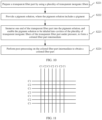
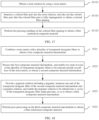
- a method for preparing a colored fiber is further provided, where the colored fiber is any colored fiber shown in the foregoing embodiments of the present disclosure. As shown in FIG. 5 , the method for preparing a colored fiber includes the following steps:
- Step S101 Provide a pigment solution, where the pigment solution includes a pigment.
- Step S102 Immerse one end of the transparent inorganic fiber into the pigment solution, and enable the pigment solution to be inhaled into a cavity of a transparent inorganic fiber under pressure, to form a colored fiber intermediate (refer to FIG. 6 , where a part A shows a transparent inorganic fiber 100, and a part B shows a colored fiber 001).
- Step S103 Perform post-processing on the colored fiber intermediate to obtain the colored fiber.
- composition of the pigment solution includes but is not limited to the following examples:
- the pigment is in a solid form.
- the pigment may be blended with a good solvent of the pigment to obtain a pigment solution.
- the good solvent is used to fully disperse the pigment in the pigment solution.
- a mass concentration of the pigment in the pigment solution is 10% to 90%, for example, 10%, 20%, 30%, 40%, 50%, 60%, 70%, 80%, or 90%.
- the mass concentration of the pigment in the pigment solution may be adjusted according to an expected color effect.
- the pigment is in a liquid form.
- the pigment is directly used as the pigment solution.
- the pigment in the liquid form may be diluted by using a solvent, to obtain different color effects.
- the pigment and curable resin are blended to form the pigment solution, and after the pigment solution is filled into the cavity of the transparent inorganic fiber, the curable resin is cured.
- a curing manner of the curable resin may be light curing or thermal curing.
- step S102 an opening end of the transparent inorganic fiber is immersed into the pigment solution, and the other opening end of the transparent inorganic fiber is not arranged inside the pigment solution, but is located outside the pigment solution, so that the pigment solution is inhaled into the cavity of the transparent inorganic fiber under pressure.
- This manner has good controllability, so that the pigment solution can be arranged in the cavity of the transparent inorganic fiber in various manners.
- the pressure comes from pressure generated by a siphon effect, that is, the pigment solution is automatically inhaled into the transparent inorganic fiber under the siphon effect.
- the pressure comes from externally applied pressure. The following describes an implementation of the foregoing externally applied pressure as an example.
- the enabling the pigment solution to be inhaled into the cavity of the transparent inorganic fiber under pressure includes: applying negative pressure to the other end of the transparent inorganic fiber, and enabling the pigment solution to be inhaled into the cavity of the transparent inorganic fiber under the negative pressure.
- Negative pressure is applied to the opening end of the transparent inorganic fiber arranged outside the pigment solution, so that the pigment solution can be quickly inhaled into the cavity of the transparent inorganic fiber.
- a filling amount and a filling position of the pigment solution in the cavity of the transparent inorganic fiber can be adjusted by changing a value of the negative pressure and duration of applying the negative pressure, so that arrangement of the pigment is more controllable and diversified arrangement manners are provided.
- the enabling the pigment solution to be inhaled into the cavity of the transparent inorganic fiber under pressure includes: arranging the pigment solution in a closed container, where one end of the transparent inorganic fiber passes through the closed container in a sealed manner and is immersed into the pigment solution, and the other end is located outside the closed container; and applying positive pressure to inside of the closed container, and enabling the pigment solution to be inhaled into the cavity of the transparent inorganic fiber under the positive pressure.
- Positive pressure is applied to the opening end of the transparent inorganic fiber that is arranged outside the pigment solution, so that the pigment solution can be quickly inhaled into the cavity of the transparent inorganic fiber.
- a filling amount and a filling position of the pigment solution in the cavity of the transparent inorganic fiber can be adjusted by changing a value of the positive pressure and duration of applying the positive pressure, so that arrangement of the pigment is more controllable and diversified arrangement manners are provided.
- step S103 post-processing is performed on the colored fiber intermediate to obtain the colored fiber.
- the post-processing manner is selected based on composition of the pigment solution. The following separately describes various post-processing manners as examples.
- the pigment solution includes a pigment in a solid form and a good solvent thereof
- the post-processing of the colored fiber intermediate includes: Drying processing is performed on the colored fiber intermediate.
- a temperature of the drying processing is enough to enable the good solvent of the pigment to quickly evaporate without affecting performance of the transparent inorganic fiber.
- the temperature of the drying processing is 30°C to 200°C, for example, 40°C, 45°C, 50°C, 55°C, 60°C, 65°C, 70°C, 75°C, 80°C, 90°C, 100°C, 110°C, 120°C, 130°C, 140°C, 150°C, 160°C, 170°C, or 180°C.
- a drying processing process may be performed, for example, in an oven.
- the pigment solution includes a pigment in a liquid form.
- the performing post-processing on the colored fiber intermediate includes: sealing the colored fiber intermediate, that is, sealing two opening ends of the transparent inorganic fiber through sealing processing, to prevent the pigment in the liquid form from leaking out of the transparent inorganic fiber.
- the pigment solution includes a pigment and a curable resin.
- the performing post-processing on the colored fiber intermediate includes: curing the curable resin in the colored fiber intermediate.
- the curing processing may be a heat curing processing manner or a light curing processing manner. Through the curing processing, not only the curable resin is fixed, but also the pigment is fixed in the curable resin.
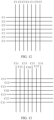
- a colored fiber part 002 is further provided. As shown in FIG. 7 or FIG. 8 , the colored fiber part 002 includes a plurality of colored fibers 001 that are connected to each other, where the colored fibers 001 are shown in any one of the foregoing embodiments of the present disclosure.
- the plurality of colored fibers may be provided in a form of a fiber bundle, that is, a plurality of colored fiber bundles are connected to each other to form the colored fiber part.
- Each fiber bundle includes nK colored fibers, where K represents a unit of 1000, and n may be, for example, an integer between 1 and 50.
- the fiber bundle may include 1K, 3K, 6K, or 12K colored fibers.
- a plurality of (for example, 2, 5, 10, 100, or more) colored fiber bundles are connected to each other to form the colored fiber part.
- a manner of connecting the plurality of colored fibers to each other is determined based on a structure of the colored fiber part.
- the manner of connecting the plurality of colored fibers to each other includes but is not limited to winding, weaving, or the like.
- the corresponding colored fiber part may be a fiber yarn, or may be a fiber fabric.
- the methods for preparing the colored fiber part include but are not limited to the following two manners:
- the method for preparing a colored fiber part includes the following steps.
- Step S211 Prepare colored fibers.
- a method for preparing the colored fibers refer to the foregoing method for preparing a colored fiber. Details are not described herein again.
- Step S212 Prepare a colored fiber part by using a plurality of colored fibers.
- a plurality of colored fibers are wound to form a colored fiber part in a yarn form, or a plurality of colored fibers are woven to form a colored fiber part in a fabric form.
- sealing processing may be performed on two ends of each colored fiber in advance; or after the colored fiber part is formed, sealing processing may be performed on two ends of each of the plurality of colored fibers in a unified manner.
- the method for preparing a colored fiber part includes the following steps.
- Step S221 Prepare a transparent fiber part by using a plurality of transparent fibers.
- the transparent fiber part is formed by connecting a plurality of (for example, 2, 5, 10, 100, or more) transparent inorganic fibers to each other. Because raw materials for preparation are transparent inorganic fibers, the transparent fiber part is also transparent.
- a manner of connecting the plurality of transparent inorganic fibers to each other is determined based on a structure of the transparent fiber part.
- the manner of connecting the plurality of transparent inorganic fibers to each other includes but is not limited to winding, weaving, or the like.
- Step S222 Provide a pigment solution, where the pigment solution includes a pigment.
- the pigment solution includes a pigment.
- Step S223 Immerse one end of the transparent fiber part into the pigment solution, and enable the pigment solution to be inhaled into cavities of the plurality of transparent inorganic fibers of the transparent fiber part under pressure, to form a colored fiber part intermediate.
- negative pressure is applied to the other end of the transparent fiber part (specifically, negative pressure is applied to opening ends that are of the plurality of transparent inorganic fibers and that are located outside the pigment solution), so that the pigment solution is inhaled into the cavities of the plurality of transparent fibers of the transparent fiber part under the negative pressure.
- Step S224 Perform post-processing on the colored fiber part intermediate to obtain the colored fiber part.
- a manner of performing post-processing on the colored fiber part intermediate refer to the foregoing manner of performing post-processing on the colored fiber intermediate.
- Forms of the colored fiber part in this embodiment of the present disclosure include but are not limited to a fiber yarn, a fiber fabric, and the like. The following separately describes the two structural forms as examples.
- the fiber yarn may be formed by connecting a plurality of colored fibers in a winding manner. Winding between the plurality of colored fibers is also referred to as twisting, where a twisting direction may be S twisting or Z twisting.
- FIG. 7 shows an example of a structure of a fiber yarn.
- a hollow rate of the fiber yarn is greater than or equal to 90%, which includes but is not limited to 90%, 91%, 92%, 93%, 94%, 95%, 96%, 97%, 98%, 99%, and the like.
- the hollow rate is a proportion of a quantity of transparent inorganic fibers that are included in the fiber yarn and have a hollow structure to a total quantity of all transparent inorganic fibers in the fiber yarn.
- a twist of the fiber yarn is 10 T/m to 50 T/m, for example, 50 T/m, where the twist of the fiber yarn is a quantity of twists in a unit length of the fiber yarn.
- a method for preparing a colored fiber yarn refers to FIG. 6 .
- One end of the transparent fiber yarn is immersed into a pigment solution, so that the pigment solution is inhaled into a cavity of a plurality of transparent inorganic fibers of the transparent fiber yarn under pressure, to form a colored fiber yarn intermediate.
- the colored fiber yarn intermediate is taken out and dried to obtain the colored fiber yarn.
- the fiber fabric includes a fiber cloth, a fiber ribbon, a unidirectional fiber fabric, a stereoscopic fiber fabric, or the like, and may be formed by connecting a plurality of colored fibers or a plurality of fiber yarns in a weaving manner.
- a common weaving manner may be used as a weaving manner of the fiber fabric.
- the weaving manner of the fiber fabric includes but is not limited to flat weaving, twill weaving, and the like.
- FIG. 8 shows an example of a structure of a fiber fabric.
- the fiber fabric is a fiber cloth, and a size of the fiber fabric may be shown as follows: a thickness is 0.2 mm to 0.8 mm, a width is 80 mm to 150 mm, and a length is 100 mm to 300 mm.
- a thickness is 0.5 mm
- the width is 100 mm
- the length is 200 mm.
- the colored fiber part provided in this embodiment of the present disclosure includes a plurality of colored fibers. In some examples, all fibers included in the colored fiber part are the colored fibers provided in this embodiment of the present disclosure. In some other examples, some of the fibers included in the colored fiber part is the colored fibers provided in this embodiment of the present disclosure.
- the plurality of colored fibers may be made to be in a same color, that is, only one color is presented.
- at least some colored fibers may be made to be in different colors. This case includes: the colors of some colored fibers are different (correspondingly, the colors of some colored fibers are the same); and the colors of all colored fibers are different.
- the colored fiber part is a fiber fabric, and includes a plurality of colored fibers (referred to as longitudinal colored fibers) that are sequentially distributed in a longitudinal direction and parallel to each other and a plurality of colored fibers (referred to as latitudinal colored fibers) that are sequentially distributed in a latitudinal direction and parallel to each other.
- longitudinal colored fibers a plurality of colored fibers
- latitudinal colored fibers referred to as latitudinal colored fibers
- At least some colored fibers have different colors.
- Implementations of the different colors include but are not limited to: performing alternate coloring by using a plurality of colors, performing irregular coloring by using a plurality of colors, performing regular coloring by using a plurality of colors to form a specific pattern, performing gradient coloring by using a plurality of colors, and the like. The following separately describes the implementations as examples.
- a method for preparing the colored fiber fabrics is as follows: Transparent inorganic fibers that need to be colored in the transparent fiber part are classified by a coloring manner, all types of transparent inorganic fibers are sequentially colored so that the transparent inorganic fibers have a specific color, and then the transparent inorganic fibers are dried to achieve a purpose of color fixing. After all types of transparent inorganic fibers are sequentially colored in the foregoing manner, a colored fiber fabric may be obtained.
- a fiber reinforced composite material 004 is provided.
- the fiber reinforced composite material 004 includes a resin matrix 003 and a reinforcement, and the reinforcement is located inside the resin matrix 003.
- the reinforcement includes any one of the foregoing colored fibers 001 or any one of the foregoing colored fiber parts 002 in the embodiments of the present disclosure.
- the reinforcement includes a plurality of colored fibers that do not have a connection relationship.
- the plurality of colored fibers may exist in a form of a fiber bundle.
- a plurality of fiber bundles are arranged according to a specific geometric pattern, and there is no connection relationship between the plurality of fiber bundles.
- the reinforcement includes a colored fiber part, where the colored fiber part is formed by connecting a plurality of colored fibers to each other as shown above.
- the fiber reinforced composite material provided in this embodiment of the present disclosure may include one layer of reinforcement, or may include a plurality of layers of reinforcements that are sequentially distributed at intervals. In a case in which a plurality of layers of reinforcements are included, a resin matrix exists between any two adjacent layers of reinforcements.
- the arrangement manners may be the same at all layers, may be the same at some layers, or may be different at all layers.
- the resin matrix may be thermosetting resin, or may be thermoplastic resin.
- the thermosetting resin includes but is not limited to epoxy resin, phenolic resin, unsaturated resin, and a curing agent corresponding to each of the foregoing optional resins.
- the thermoplastic resin includes but is not limited to polyester resin.
- the polyester resin includes but is not limited to polycarbonate (Polycarbonate, PC) and thermoplastic urethane (Thermoplastic Urethane, TPU) elastomer.
- a mass ratio of the reinforcement to the resin matrix is (0.1-25):1, for example, 0.5:1, 1:1, 5:1, 10:1, 15:1, 20:1, or 25:1.
- a fiber reinforced composite material obtained by combining a thermoplastic resin and a colored fiber part has high strength, excellent fatigue resistance, high impact toughness, excellent creep resistance, and other advantages.
- a fiber reinforced composite material obtained by combining a thermosetting resin and a colored fiber part has high strength, light weight, excellent corrosion resistance, excellent heat resistance, and other advantages.
- the fiber reinforced composite material provided in this embodiment of the present disclosure not only has a specific color, but also can present various appearance effects.
- the fiber reinforced composite material obtains a fiber reinforcement effect, so that the fiber reinforced composite material has at least advantages such as light weight, high strength, and excellent chemical resistance, and has a much higher mechanical performance than the resin matrix.
- a method for preparing a fiber reinforced composite material is provided, where the fiber reinforced composite material is any one of the foregoing fiber reinforced composite materials in the embodiments of the present disclosure.
- the method for preparing a fiber reinforced composite material may include the following two manners:
- the preparing a colored fiber part includes: preparing a transparent fiber part by using a plurality of transparent inorganic fibers; providing a pigment solution including a pigment; immersing one end of the transparent fiber part into the pigment solution, and enabling the pigment solution to be inhaled into cavities of the transparent inorganic fibers of the transparent fiber part under pressure, to form a cavity of a colored fiber part intermediate; and performing post-processing on the colored fiber part intermediate to obtain the colored fiber part.
- a manner of performing post-processing on the colored fiber part intermediate refer to the foregoing manner of performing post-processing on the colored fiber intermediate.
- the post-processing may be drying processing.
- the enabling the pigment solution to be inhaled into cavities of the transparent inorganic fibers of the transparent fiber part under pressure includes: applying negative pressure to the other end of the transparent fiber part, and enabling the pigment solution to be inhaled into the cavities of the transparent inorganic fibers of the transparent fiber part under the negative pressure; or applying positive pressure to a system in which the pigment solution is located, and enabling the pigment solution to be inhaled into the cavities of the transparent inorganic fibers of the transparent fiber part under the positive pressure.
- Step S312 Combine the colored fiber part as a reinforcement with a resin matrix to obtain the fiber reinforced composite material.
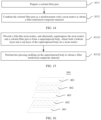
- an implementation of combining the colored fiber part and the resin matrix in step S312 includes the following steps: Step S3121: Provide a film-like resin matrix, and alternately superimpose the resin matrix and the colored fiber part to form a superimposed body. As shown in FIG. 16 , the film-like resin matrix 003 and the colored fiber part 002 are alternately superposed to form the superimposed body, where both a bottom layer and a top layer of the superimposed body are the resin matrix 003.
- a material of the resin matrix 003 may be thermoplastic resin, or may be thermosetting resin.
- a quantity of times of alternating between the resin matrix 003 and the colored fiber part 002 is adjusted based on a thickness of the fiber reinforced composite material, for example, the quantity of times of alternating is greater than or equal to 2.
- the colored fiber part is a fiber yarn
- a plurality of fiber yarns may be laid on a surface of the resin matrix in a specific arrangement manner.
- the plurality of fiber yarns are sequentially distributed in a longitudinal direction and a latitudinal direction.
- one or more fiber fabrics may be directly laid on the surface of the resin matrix.
- the resin matrix and the colored fiber part may be separately cut, so that sizes of the two cut parts meet a preparation requirement of a structural part, where the structural part is a product prepared by using the fiber reinforced composite material.
- the sizes of the resin matrix and the colored fiber part after cutting are slightly greater than a size of the structural part.
- Step S3122 Perform hot pressing molding on the superimposed body to obtain the fiber reinforced composite material.
- the superimposed body is obtained in step S3121.
- the hot pressing molding process may be performed in a hot pressing mold.
- a temperature and duration of the hot pressing molding are determined based on a specific material of the resin matrix, provided that the resin matrix can be effectively cured.
- a structural part may be prepared based on the prepared fiber reinforced composite material by using a computerized numerical control (Computerized Numerical Control, CNC) machining technology (referred to as CNC machining).
- CNC Computerized Numerical Control
- an implementation of combining the colored fiber part and the resin matrix in step S312 may further include the following steps:
- Step S3123 Obtain a resin solution by using the resin matrix: If the resin matrix is in a liquid form and has a proper viscosity, directly use the resin matrix; or if resin matrix has a high viscosity, dilute the resin matrix by using a good solvent thereof to obtain a resin solution with a proper viscosity.
- Step S3124 Immerse the colored fiber part into the resin solution, and take out the colored fiber part after the colored fiber part is fully impregnated, to obtain a colored fiber prepreg.
- the solvent in a corresponding colored fiber prepreg needs to be evaporated.
- a quantity of layers of the colored fiber prepreg is determined based on the thickness of the fiber reinforced composite material. For example, a plurality of colored fiber prepregs may be sequentially laminated to obtain a colored fiber prepreg with a target thickness. A quantity of laminated layers is adjusted based on the thickness of the fiber reinforced composite material, for example, the quantity of laminated layers is greater than or equal to 2.
- Step S3125 Perform hot pressing molding on the colored fiber prepreg to obtain the fiber reinforced composite material.
- the hot pressing molding process may be performed in a hot pressing mold.
- a temperature and duration of the hot pressing molding are determined based on a specific material of the resin matrix, provided that the resin matrix can be effectively cured.
- the colored fiber part is a fiber yarn
- a plurality of fiber yarns may be laid in a specific arrangement manner and impregnated in the resin solution.
- the plurality of fiber yarns are sequentially distributed in a longitudinal direction and a latitudinal direction.
- one or more fiber fabrics may be directly laid and impregnated in the resin solution.
- the colored fiber parts may be cut, so that a size of the colored fiber part obtained after cutting meets a preparation requirement of a structural part, where the structural part is a product prepared by using the fiber reinforced composite material.
- the size of the colored fiber part after cutting is slightly greater than a size of the structural part.
- a structural part may be prepared based on the prepared fiber reinforced composite material by using a CNC machining technology.
- the method for preparing a fiber reinforced composite material includes the following steps: Step S321: Combine a resin matrix and a plurality of transparent inorganic fibers to obtain a first composite material intermediate.
- Step S321 Combine a resin matrix and a plurality of transparent inorganic fibers to obtain a first composite material intermediate.
- the plurality of transparent inorganic fibers may exist in a form of a transparent fiber part, for example, a transparent fiber yarn or a transparent fiber cloth; or the plurality of transparent inorganic fibers may exist in a form of a fiber bundle, for example, a plurality of transparent fiber bundles are arranged according to a specific geometric pattern.
- Step S322 Process the first composite material intermediate, and enable two ends of each of the plurality of transparent inorganic fibers to be exposed outside an end face of the resin matrix, to obtain a second composite material intermediate.
- the resin matrix in the second composite material intermediate is a cured resin matrix obtained after hot pressing molding is performed on a raw-material resin matrix.
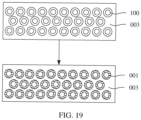
- the second composite material intermediate includes a resin matrix 003 and a plurality of transparent inorganic fibers 100.
- the first composite material intermediate may be processed by using a CNC machining process, so that two ends of the transparent fiber part are exposed outside the end face of the resin matrix.
- the two opening ends of the plurality of transparent inorganic fibers included in the transparent fiber part are located outside the end face of the resin matrix, instead of being sealed, and a size of the obtained second composite material intermediate needs to be greater than a size of a finally prepared structural part.
- Step S323 Provide a pigment solution including a pigment, immerse one end of the transparent inorganic fiber of the second composite material intermediate into the pigment solution, and enable the pigment solution to be inhaled into a cavity of the transparent inorganic fiber under pressure, so as to obtain a third composite material intermediate.
- the third composite material intermediate includes a resin matrix 003 and a reinforcement formed by a plurality of colored fibers 001.
- the enabling the pigment solution to be inhaled into a cavity of the transparent inorganic fiber under pressure includes: (1) applying negative pressure to the other end of the transparent inorganic fiber of the second composite material intermediate, and enabling the pigment solution to be inhaled into the cavity of the transparent inorganic fiber under the negative pressure; or (2) applying positive pressure to a system in which the pigment solution is located, and enabling the pigment solution to be inhaled into the cavity of the transparent inorganic fiber under the positive pressure.
- Step S324 Perform post-processing on the third composite material intermediate to obtain the fiber reinforced composite material.
- a manner of performing post-processing on the third composite material intermediate refer to the foregoing manner of performing post-processing on the colored fiber intermediate.
- the post-processing may be drying processing.
- the fiber reinforced composite material includes a plurality of colored fibers, where the plurality of colored fibers may exist in a form of a colored fiber part, for example, a colored fiber yarn or a colored fiber cloth; or the plurality of transparent inorganic fibers may exist in a form of a colored fiber bundle, for example, a plurality of colored fiber bundles are arranged according to a specific geometric pattern.
- post-processing performed on the third composite material intermediate is drying processing, and the drying processing may be drying processing at a set temperature.
- a drying temperature should be enough to enable the solvent in the pigment solution to be fully evaporated.
- a fiber reinforced composite material with richer color effects can be prepared.
- the method for preparing a fiber reinforced composite material of a specific color provided in this embodiment of the present disclosure has advantages such as a short manufacturing process, low costs, and high material performance stability.
- a structural part is further provided.
- the structural part is prepared by using the foregoing fiber reinforced composite material in the embodiments of the present disclosure.
- the structural part includes but is not limited to a housing part, a structural part, a plate, and the like.
- the housing may be used in an electronic product (for example, a computer, a mobile phone, a sound box, or a camera), a home product, a vehicle product (for example, a car), a chemical equipment product, and the like;
- the structural part includes but is not limited to a screw, a clamp, a gear, a bearing, a sealing ring, and the like;
- the plate includes but is not limited to a flat plate, a wave plate, and a bent plate.
- the methods for preparing a structural part include but are not limited to the following: (1) First preparing a fiber reinforced composite material according to the foregoing method, and then preparing a structural part by using a CNC machining process; (2) preparing, based on a colored fiber part and a resin matrix, a structural part by using a wet molding process; and (3) preparing, based on a colored fiber part and a resin matrix, a structural part by using a resin transfer molding process.
- a plurality of includes two or more, “each” means each in corresponding "a plurality of”, and “anyone” means any one in corresponding "a plurality of”.
Landscapes
- Chemical & Material Sciences (AREA)
- Chemical Kinetics & Catalysis (AREA)
- Materials Engineering (AREA)
- Engineering & Computer Science (AREA)
- Organic Chemistry (AREA)
- Health & Medical Sciences (AREA)
- Polymers & Plastics (AREA)
- Medicinal Chemistry (AREA)
- Manufacturing & Machinery (AREA)
- Life Sciences & Earth Sciences (AREA)
- General Life Sciences & Earth Sciences (AREA)
- Geochemistry & Mineralogy (AREA)
- General Chemical & Material Sciences (AREA)
- Composite Materials (AREA)
- Coloring (AREA)
Applications Claiming Priority (2)
| Application Number | Priority Date | Filing Date | Title |
|---|---|---|---|
| CN202111290526.4A CN116063708B (zh) | 2021-11-02 | 2021-11-02 | 有色纤维、有色纤维件、纤维增强复合材料、结构件及制备方法 |
| PCT/CN2022/128407 WO2023078185A1 (zh) | 2021-11-02 | 2022-10-28 | 有色纤维、有色纤维件、纤维增强复合材料、结构件及制备方法 |
Publications (2)
| Publication Number | Publication Date |
|---|---|
| EP4407093A1 true EP4407093A1 (de) | 2024-07-31 |
| EP4407093A4 EP4407093A4 (de) | 2025-03-19 |
Family
ID=86170400
Family Applications (1)
| Application Number | Title | Priority Date | Filing Date |
|---|---|---|---|
| EP22889210.5A Pending EP4407093A4 (de) | 2021-11-02 | 2022-10-28 | Gefärbte faser, gefärbtes faserteil, faserverstärkter verbundstoff, strukturteil und herstellungsverfahren |
Country Status (3)
| Country | Link |
|---|---|
| EP (1) | EP4407093A4 (de) |
| CN (1) | CN116063708B (de) |
| WO (1) | WO2023078185A1 (de) |
Families Citing this family (1)
| Publication number | Priority date | Publication date | Assignee | Title |
|---|---|---|---|---|
| CN121653922A (zh) * | 2024-09-12 | 2026-03-13 | 华为技术有限公司 | 纤维着色设备及纤维着色方法 |
Family Cites Families (13)
| Publication number | Priority date | Publication date | Assignee | Title |
|---|---|---|---|---|
| DE724063C (de) * | 1939-05-12 | 1942-08-17 | Kaiser Wilhelm Inst Fuer Silik | Verfahren zum Faerben von Hohlglasfaeden oder -fasern |
| US5561173A (en) * | 1990-06-19 | 1996-10-01 | Carolyn M. Dry | Self-repairing, reinforced matrix materials |
| JPH0597480A (ja) * | 1991-10-03 | 1993-04-20 | Showa Denko Kk | 無機繊維の着色方法及び着色した無機繊維 |
| BR0109088A (pt) * | 2000-03-10 | 2003-05-20 | Flow Focusing Inc | Métodos para a produção de fibra ótica por meio de focalização de lìquido de alta viscosidade |
| JP2005345829A (ja) * | 2004-06-03 | 2005-12-15 | Oji Paper Co Ltd | 表示用繊維素子、およびそれを用いた表示用繊維シート |
| CN103556481B (zh) * | 2013-10-24 | 2016-05-04 | 东华大学 | 一种聚丙烯腈中空纤维封装材料的制备方法 |
| CN103710964B (zh) * | 2013-12-18 | 2015-12-02 | 中国皮革和制鞋工业研究院 | 一种相变纤维的制备方法 |
| FR3015232B1 (fr) * | 2013-12-23 | 2016-01-08 | Oreal | Article de conditionnement comportant un enveloppe une composition colorante anhydre comprenant un colorant d'oxydation, utilisation et procede pour colorer les fibres keratiniques |
| JP6570104B2 (ja) * | 2014-12-26 | 2019-09-04 | 株式会社シマノ | 着色プリプレグ及び管状体 |
| CN111850718B (zh) * | 2019-04-30 | 2022-03-04 | 东华大学 | 复合色纤维、喷丝组件及其制备方法 |
| CN111851093A (zh) * | 2019-04-30 | 2020-10-30 | 东华大学 | 有色纤维、喷丝组件及其制备方法 |
| CN110205688B (zh) * | 2019-05-24 | 2020-07-10 | 华中科技大学 | 一种电热致变色纤维、其制备方法和应用 |
| CN110241608A (zh) * | 2019-07-16 | 2019-09-17 | 兰州大学 | 一种发光纤维及其制备方法与应用 |
-
2021
- 2021-11-02 CN CN202111290526.4A patent/CN116063708B/zh active Active
-
2022
- 2022-10-28 WO PCT/CN2022/128407 patent/WO2023078185A1/zh not_active Ceased
- 2022-10-28 EP EP22889210.5A patent/EP4407093A4/de active Pending
Also Published As
| Publication number | Publication date |
|---|---|
| WO2023078185A1 (zh) | 2023-05-11 |
| CN116063708B (zh) | 2026-03-20 |
| CN116063708A (zh) | 2023-05-05 |
| EP4407093A4 (de) | 2025-03-19 |
Similar Documents
| Publication | Publication Date | Title |
|---|---|---|
| Wang et al. | Thermochromic silks for temperature management and dynamic textile displays | |
| EP4407093A1 (de) | Gefärbte faser, gefärbtes faserteil, faserverstärkter verbundstoff, strukturteil und herstellungsverfahren | |
| CA2716359C (en) | Uncured composite rope including a plurality of different fiber materials | |
| CN105178878A (zh) | 一种纤维增强复合材料连续抽油杆及其制备装置和方法 | |
| CN106436377B (zh) | 一种反侦察伪装功能性无机颜料及无机印花涂料及面料 | |
| CN103833235A (zh) | 一种在线涂覆制备彩色玻璃纤维的方法 | |
| CN110435132A (zh) | 一种连续纤维增强复合材料的3d打印机及其打印方法 | |
| CN105605411B (zh) | 复合材料曲面结构单元和复合材料胞元点阵结构 | |
| CN105733186B (zh) | 着色预浸料坯和管状体 | |
| CN103319868A (zh) | 一种彩色透光玻璃钢 | |
| CN103709604B (zh) | 一种增强塑料杆及其生产装置和方法 | |
| KR20220104700A (ko) | 섬유 강화 열가소성 복합재 시트 및 그의 제조 방법 | |
| CN203651004U (zh) | 一种用于生产增强塑料杆的预成型装置 | |
| CN204009157U (zh) | 一种层绞式adss光缆 | |
| CN109535679A (zh) | 一种聚酯玻璃钢复合材料及其制备方法 | |
| WO2023087380A1 (zh) | 一种印花反光织物 | |
| CN2044658U (zh) | 玻璃钢空腹风机叶片 | |
| JP4692870B2 (ja) | 複合強化原糸を用いた板状の複合材料 | |
| Yin et al. | Intelligent reversible electrochromic flexible electronic fabric based on electronic ink microcapsules | |
| CN207611632U (zh) | 一种机载用光电复合缆 | |
| CN121755375A (zh) | 纤维增强复合材料的着色方法和着色装置 | |
| CN112824739A (zh) | 纤维增强热塑性复合材料及其制备方法 | |
| JP2005002181A (ja) | 着色布粘着テープおよびその製造方法 | |
| CN222073564U (zh) | 一种壳体及电子设备 | |
| CN217060581U (zh) | 一种光缆 |
Legal Events
| Date | Code | Title | Description |
|---|---|---|---|
| STAA | Information on the status of an ep patent application or granted ep patent |
Free format text: STATUS: THE INTERNATIONAL PUBLICATION HAS BEEN MADE |
|
| PUAI | Public reference made under article 153(3) epc to a published international application that has entered the european phase |
Free format text: ORIGINAL CODE: 0009012 |
|
| STAA | Information on the status of an ep patent application or granted ep patent |
Free format text: STATUS: REQUEST FOR EXAMINATION WAS MADE |
|
| 17P | Request for examination filed |
Effective date: 20240423 |
|
| AK | Designated contracting states |
Kind code of ref document: A1 Designated state(s): AL AT BE BG CH CY CZ DE DK EE ES FI FR GB GR HR HU IE IS IT LI LT LU LV MC ME MK MT NL NO PL PT RO RS SE SI SK SM TR |
|
| DAV | Request for validation of the european patent (deleted) | ||
| DAX | Request for extension of the european patent (deleted) | ||
| A4 | Supplementary search report drawn up and despatched |
Effective date: 20250214 |
|
| RIC1 | Information provided on ipc code assigned before grant |
Ipc: C03C 25/475 20180101ALI20250210BHEP Ipc: B42D 25/415 20140101ALI20250210BHEP Ipc: D06M 13/00 20060101ALI20250210BHEP Ipc: D06M 11/00 20060101ALI20250210BHEP Ipc: C08J 5/08 20060101ALI20250210BHEP Ipc: D06P 3/80 20060101AFI20250210BHEP |