EP4407028A1 - Verfahren zur herstellung modifizierter humaner induzierter pluripotenter stammzellen - Google Patents
Verfahren zur herstellung modifizierter humaner induzierter pluripotenter stammzellen Download PDFInfo
- Publication number
- EP4407028A1 EP4407028A1 EP21958400.0A EP21958400A EP4407028A1 EP 4407028 A1 EP4407028 A1 EP 4407028A1 EP 21958400 A EP21958400 A EP 21958400A EP 4407028 A1 EP4407028 A1 EP 4407028A1
- Authority
- EP
- European Patent Office
- Prior art keywords
- genes
- hla
- human ipscs
- crispr
- cas9 protein
- Prior art date
- Legal status (The legal status is an assumption and is not a legal conclusion. Google has not performed a legal analysis and makes no representation as to the accuracy of the status listed.)
- Pending
Links
Images


Classifications
-
- C—CHEMISTRY; METALLURGY
- C12—BIOCHEMISTRY; BEER; SPIRITS; WINE; VINEGAR; MICROBIOLOGY; ENZYMOLOGY; MUTATION OR GENETIC ENGINEERING
- C12N—MICROORGANISMS OR ENZYMES; COMPOSITIONS THEREOF; PROPAGATING, PRESERVING, OR MAINTAINING MICROORGANISMS; MUTATION OR GENETIC ENGINEERING; CULTURE MEDIA
- C12N15/00—Mutation or genetic engineering; DNA or RNA concerning genetic engineering, vectors, e.g. plasmids, or their isolation, preparation or purification; Use of hosts therefor
- C12N15/09—Recombinant DNA-technology
- C12N15/63—Introduction of foreign genetic material using vectors; Vectors; Use of hosts therefor; Regulation of expression
-
- C—CHEMISTRY; METALLURGY
- C12—BIOCHEMISTRY; BEER; SPIRITS; WINE; VINEGAR; MICROBIOLOGY; ENZYMOLOGY; MUTATION OR GENETIC ENGINEERING
- C12N—MICROORGANISMS OR ENZYMES; COMPOSITIONS THEREOF; PROPAGATING, PRESERVING, OR MAINTAINING MICROORGANISMS; MUTATION OR GENETIC ENGINEERING; CULTURE MEDIA
- C12N15/00—Mutation or genetic engineering; DNA or RNA concerning genetic engineering, vectors, e.g. plasmids, or their isolation, preparation or purification; Use of hosts therefor
- C12N15/09—Recombinant DNA-technology
- C12N15/87—Introduction of foreign genetic material using processes not otherwise provided for, e.g. co-transformation
- C12N15/90—Stable introduction of foreign DNA into chromosome
- C12N15/902—Stable introduction of foreign DNA into chromosome using homologous recombination
- C12N15/907—Stable introduction of foreign DNA into chromosome using homologous recombination in mammalian cells
-
- C—CHEMISTRY; METALLURGY
- C12—BIOCHEMISTRY; BEER; SPIRITS; WINE; VINEGAR; MICROBIOLOGY; ENZYMOLOGY; MUTATION OR GENETIC ENGINEERING
- C12N—MICROORGANISMS OR ENZYMES; COMPOSITIONS THEREOF; PROPAGATING, PRESERVING, OR MAINTAINING MICROORGANISMS; MUTATION OR GENETIC ENGINEERING; CULTURE MEDIA
- C12N13/00—Treatment of microorganisms or enzymes with electrical or wave energy, e.g. magnetism, sonic waves
-
- C—CHEMISTRY; METALLURGY
- C12—BIOCHEMISTRY; BEER; SPIRITS; WINE; VINEGAR; MICROBIOLOGY; ENZYMOLOGY; MUTATION OR GENETIC ENGINEERING
- C12N—MICROORGANISMS OR ENZYMES; COMPOSITIONS THEREOF; PROPAGATING, PRESERVING, OR MAINTAINING MICROORGANISMS; MUTATION OR GENETIC ENGINEERING; CULTURE MEDIA
- C12N15/00—Mutation or genetic engineering; DNA or RNA concerning genetic engineering, vectors, e.g. plasmids, or their isolation, preparation or purification; Use of hosts therefor
- C12N15/09—Recombinant DNA-technology
- C12N15/11—DNA or RNA fragments; Modified forms thereof; Non-coding nucleic acids having a biological activity
-
- C—CHEMISTRY; METALLURGY
- C12—BIOCHEMISTRY; BEER; SPIRITS; WINE; VINEGAR; MICROBIOLOGY; ENZYMOLOGY; MUTATION OR GENETIC ENGINEERING
- C12N—MICROORGANISMS OR ENZYMES; COMPOSITIONS THEREOF; PROPAGATING, PRESERVING, OR MAINTAINING MICROORGANISMS; MUTATION OR GENETIC ENGINEERING; CULTURE MEDIA
- C12N15/00—Mutation or genetic engineering; DNA or RNA concerning genetic engineering, vectors, e.g. plasmids, or their isolation, preparation or purification; Use of hosts therefor
- C12N15/09—Recombinant DNA-technology
- C12N15/11—DNA or RNA fragments; Modified forms thereof; Non-coding nucleic acids having a biological activity
- C12N15/113—Non-coding nucleic acids modulating the expression of genes, e.g. antisense oligonucleotides; Antisense DNA or RNA; Triplex- forming oligonucleotides; Catalytic nucleic acids, e.g. ribozymes; Nucleic acids used in co-suppression or gene silencing
-
- C—CHEMISTRY; METALLURGY
- C12—BIOCHEMISTRY; BEER; SPIRITS; WINE; VINEGAR; MICROBIOLOGY; ENZYMOLOGY; MUTATION OR GENETIC ENGINEERING
- C12N—MICROORGANISMS OR ENZYMES; COMPOSITIONS THEREOF; PROPAGATING, PRESERVING, OR MAINTAINING MICROORGANISMS; MUTATION OR GENETIC ENGINEERING; CULTURE MEDIA
- C12N5/00—Undifferentiated human, animal or plant cells, e.g. cell lines; Tissues; Cultivation or maintenance thereof; Culture media therefor
- C12N5/06—Animal cells or tissues; Human cells or tissues
- C12N5/0602—Vertebrate cells
- C12N5/0696—Artificially induced pluripotent stem cells, e.g. iPS
-
- C—CHEMISTRY; METALLURGY
- C12—BIOCHEMISTRY; BEER; SPIRITS; WINE; VINEGAR; MICROBIOLOGY; ENZYMOLOGY; MUTATION OR GENETIC ENGINEERING
- C12N—MICROORGANISMS OR ENZYMES; COMPOSITIONS THEREOF; PROPAGATING, PRESERVING, OR MAINTAINING MICROORGANISMS; MUTATION OR GENETIC ENGINEERING; CULTURE MEDIA
- C12N5/00—Undifferentiated human, animal or plant cells, e.g. cell lines; Tissues; Cultivation or maintenance thereof; Culture media therefor
- C12N5/10—Cells modified by introduction of foreign genetic material
-
- C—CHEMISTRY; METALLURGY
- C12—BIOCHEMISTRY; BEER; SPIRITS; WINE; VINEGAR; MICROBIOLOGY; ENZYMOLOGY; MUTATION OR GENETIC ENGINEERING
- C12N—MICROORGANISMS OR ENZYMES; COMPOSITIONS THEREOF; PROPAGATING, PRESERVING, OR MAINTAINING MICROORGANISMS; MUTATION OR GENETIC ENGINEERING; CULTURE MEDIA
- C12N9/00—Enzymes; Proenzymes; Compositions thereof; Processes for preparing, activating, inhibiting, separating or purifying enzymes
- C12N9/14—Hydrolases (3)
- C12N9/16—Hydrolases (3) acting on ester bonds (3.1)
- C12N9/22—Ribonucleases [RNase]; Deoxyribonucleases [DNase]
-
- C—CHEMISTRY; METALLURGY
- C12—BIOCHEMISTRY; BEER; SPIRITS; WINE; VINEGAR; MICROBIOLOGY; ENZYMOLOGY; MUTATION OR GENETIC ENGINEERING
- C12N—MICROORGANISMS OR ENZYMES; COMPOSITIONS THEREOF; PROPAGATING, PRESERVING, OR MAINTAINING MICROORGANISMS; MUTATION OR GENETIC ENGINEERING; CULTURE MEDIA
- C12N2310/00—Structure or type of the nucleic acid
- C12N2310/10—Type of nucleic acid
- C12N2310/20—Type of nucleic acid involving clustered regularly interspaced short palindromic repeats [CRISPR]
-
- C—CHEMISTRY; METALLURGY
- C12—BIOCHEMISTRY; BEER; SPIRITS; WINE; VINEGAR; MICROBIOLOGY; ENZYMOLOGY; MUTATION OR GENETIC ENGINEERING
- C12N—MICROORGANISMS OR ENZYMES; COMPOSITIONS THEREOF; PROPAGATING, PRESERVING, OR MAINTAINING MICROORGANISMS; MUTATION OR GENETIC ENGINEERING; CULTURE MEDIA
- C12N2510/00—Genetically modified cells
Definitions
- the present invention relates to a method for producing modified human induced pluripotent stem cells (iPSCs). More specifically, the present invention relates to a method for producing modified human iPSCs in which two or more target genes have been modified, modified human iPSCs, differentiated cells induced from the modified human iPSCs, and a kit for modifying two or more target genes in human iPSCs.
- iPSCs modified human induced pluripotent stem cells
- transplanted cell In a case of allogeneic transplantation in which a donor cell is transplanted into a recipient (patient) who is another person, the transplanted cell is rejected due to an immune reaction.
- MHC major histocompatibility complex
- HLA human leukocyte antigen
- HLAs are classified into Class I and Class II.
- Class I HLA protein is expressed in most cell types in a body.
- the Class 1 HLA protein has a function of forming a heterodimer with a ⁇ 2-microglobulin (B2M) to be expressed on a cell surface, and presenting a peptide with respect to a CD8-positive cytotoxic T cell to induce activation.
- B2M ⁇ 2-microglobulin
- the antigenic peptide presented is endogenous and has a length of 8 to 10 amino acids in many cases.
- the main six genes classified into Class I HLA are an HLA-A gene, an HLA-B gene, an HLA-C gene, an HLA-E gene, an HLA-F gene, and an HLA-G gene.
- many pseudogenes HLA-H, HLA-J, HLA-K, HLA-L, HLA-P, HLA-T, HLA-U, HLA-V, HLA-W, HLA-X, HLA-Y, and the like
- three genes, namely the HLA-A gene, the HLA-B gene, and the HLA-C gene have particularly high sequence diversity among individuals and play a major role in identifying self-cells and non-self-cells in transplantation immunity.
- Class II HLA protein is mainly expressed in immune cells such as macrophages, dendritic cells, activated T cells, and B cells.
- the Class II HLA protein has a function of forming a heterodimer with an ⁇ chain and a ⁇ chain, and presenting a peptide with respect to a CD4 helper T cell to induce activation.
- the antigenic peptide presented is exogenous and has a length of 15 to 24 amino acids in many cases.
- HLA-DR ⁇ chain: HLA-DRA, ⁇ chain: HLA-DRB
- HLA-DQ ⁇ chain: HLA-DQA1, ⁇ chain: HLA-DQB1
- HLA-DP ⁇ chain: HLA-DPPA1 or HLA-DPB2
- HLA-DMA HLA-DMA, HLA-DMB, HLA-DOA, and HLA-DOB
- HLA genes have sequence diversity, and are thus involved in recognition of self-cells and non-self-cells at the cellular level. HLA matching is also particularly important for reducing immune rejection during allogeneic transplantation. For example, in transplantation of hematopoietic stem cells, it is recommended to find and transplant from a donor in which antigenicities in both alleles of HLA-A, HLA-B, HLA-C, and HLA-DR, that is, alleles at a total of 8 loci, are as consistent as possible.
- pluripotent stem cells such as human induced pluripotent stem cells (iPSCs) and embryonic stem cells (ESCs) have pluripotency capable of being differentiated into various cell types
- iPSCs human induced pluripotent stem cells
- ESCs embryonic stem cells
- Patent Document 1 discloses cells in which a B2M gene required for presenting Class I HLA protein on the cell surface has been deleted.
- Non-Patent Document 1 Huaigeng Xu, et. al, Targeted Disruption of HLA Genes via CRISPR-Cas9 Generates iPSCs with Enhanced Immune Compatibility, Cell Stem Cell 24, 566-578, 2019 .
- HLA genes are present and many pseudogenes are included, and thus, there is a high degree of sequence homology between the HLA genes.
- target genes are present as described above, if genome editing of each gene is performed individually, time and effort taken for producing desired cells are increased.
- An object of the present invention is to provide a technique for producing modified human iPSCs in which two or more target genes have been modified.
- the present invention includes the following aspects.
- the present invention provides a method for producing modified human iPSCs in which two or more target genes have been modified, the production method including an introduction step of introducing CRISPR/Cas9 protein and a plurality of kinds of gRNAs for the two or more target genes into the human iPSCs.
- the modification of the target genes may be introduction of a mutation into the target genes or may be disruption of the target genes, but is preferably the disruption of the target genes.
- the two or more target genes can be appropriately selected depending on an intended purpose, but are, for example, genes selected from the group consisting of HLA-A genes, HLA-B genes, HLA-C genes, HLA-DR genes, and Class II major histocompatibility complex transactivator (CIITA) genes.
- the CIITA gene encodes a transcription factor that controls transcriptional activation of HLA Class II. Accordingly, cells in which the CIITA genes are disrupted do not express HLA class II protein, and have a reduced rejection reaction in a case where the cells are allogeneically transplanted into a recipient.
- NCBI accession number of a human CIITA gene is, for example, NM_000246.3, NM_001286402.1, NM_001286403.1.
- the human iPSCs to be subjected to modification of genes are preferably blood cell-derived iPSCs. Since the blood cell-derived iPSCs can be obtained from cells in the blood that can be collected in a minimally invasive manner, they can be prepared relatively easily.
- HLA-A genes or HLA-B genes in the human iPSCs to be subjected to modification of genes are preferably homozygous.
- both of the HLA-A genes and the HLA-B genes are heterozygous, in order to disrupt these genes, it is necessary to modify a total of four kinds of genes, that is two kinds of HLA-A genes and two kinds of HLA-B genes, for which a great deal of labor and creation time are required.
- the human iPSCs in which the HLA-A genes of the HLA-B genes are homozygous are used, labor and creation time taken for the modification of genes can be significantly reduced.
- both of the HLA-A genes and the HLA-B genes be homozygous since the labor and time required for the modification of genes can be reduced.
- haplotypes of the HLA-A genes include A24:02 and haplotypes of the HLA-B genes include B52:01.
- the HLA-A genes be homozygous and the haplotype of the HLA-A genes be A24:02.
- the HLA-B genes be homozygous and the haplotype of the HLA-B genes be B52:01.
- both of the HLA-A genes and the HLA-B genes be homozygous, the haplotype of the HLA-A genes be A24:02, and the haplotype of the HLA-B genes be B52:01.
- HLA-C genes are also preferably homozygous. In a case where the HLA-C genes remain, an attack by NK cells can be avoided. In addition, in a case where the HLA-C genes are homozygous, it is easier to match the HLA types to patients. In a case where the HLA-C genes are heterozygous, it is preferable to disrupt any one of the HLA-C genes.
- the haplotypes in which the HLA-A genes, the HLA-B genes, and the HLA-C genes are all homozygous are shown in Table 1 below, in descending order of frequencies in Japanese people.
- the descending order of the frequencies of the HLA-C genes from the highest frequency is shown in Table 1.
- human iPSCs in which HLA-A genes, HLA-B genes, and HLA-C genes are homozygous preferably have haplotypes of any of the following (i) to (iv), and particularly preferably have the haplotype of (i).
- HLA-DRB1 genes in the human iPSC to be subjected to modification of genes are preferably homozygous. In a case where the HLA-DRB1 genes are homozygous, it is easier to match the HLA types to patients.
- the introduction step of introducing the CRISPR/Cas9 protein and the gRNAs into the human iPSCs is preferably performed by an electroporation method.
- an electroporation method modified human iPSCs in which two or more target genes have been modified can be produced with high efficiency.
- CRISPR/Cas9 protein examples include those derived from Pseudomonas aeruginosa, Staphylococcus aureus, Streptococcus thermophilus, and Geobacillus stearothermophilus.
- a commercially available protein such as a product under a product name "Recombinant Cas9 Protein GMP grade" (Takara Bio Inc.) may be used.
- the gRNA is preferably a gRNA consisting of a base sequence set forth in SEQ ID NO: 1 and a gRNA consisting of a base sequence set forth in SEQ ID NO: 2.
- the HLA-A genes and the HLA-B genes are homozygous, the haplotype of the HLA-A genes is A24:02, and the haplotype of the HLA-B genes is B52:01.
- gRNA consisting of the base sequence set forth in SEQ ID NO: 1 a gRNA consisting of a base sequence in which one or several bases are deleted, substituted, or added at a 5' end of the base sequence set forth in SEQ ID NO: 1 can also be used.
- a gRNA consisting of the base sequence set forth in SEQ ID NO: 2 a gRNA consisting of a base sequence in which one or several bases are deleted, substituted, or added at a 5' end of the base sequence set forth in SEQ ID NO: 2 can also be used.
- the expression “one or several” may be, for example, 1 to 5, may be 1 to 4, may be 1 to 3, or may be 1 or 2.
- the gRNA consisting of a base sequence set forth in SEQ ID NO: 1 is a shared single-guide RNA (sgRNA) for both the HLA-A genes and the HLA-B genes.
- the sgRNA consisting of the base sequence set forth in SEQ ID NO: 1 can modify both the HLA-A genes having a haplotype of A24:02 and the HLA-B genes having a haplotype of B52:01.
- the gRNA consisting of the base sequence set forth in SEQ ID NO: 2 is an sgRNA for the C11TA gene.
- the CRISPR/Cas9 protein, the gRNAs, and the human iPSCs may be mixed in any order.
- the CRISPR/Cas9 protein and the human iPSCs may be mixed, and then the mixture is mixed with the gRNAs; the gRNAs and the human iPSCs are mixed, and then the mixture is mixed with the CRISPR/Cas9 protein; and the CRISPR/Cas9 protein and the gRNAs may be mixed, and then the mixture is mixed with the human iPSCs.
- a Cas9 protein-gRNA complex which is a complex of the CRISPR/Cas9 protein and the gRNA, can be formed and introduced into the human iPSCs in the form of a complex.
- RNP complex a Cas9 protein-gRNA complex
- modified human iPSCs can be produced with high efficiency by introducing CRISPR/Cas9 protein and gRNAs in the form of a complex.
- the mass ratio of the mass of the CRISPR/Cas9 protein to the total mass of the plurality of kinds of gRNAs is preferably 3:1 to 1:10, more preferably 3:1 to 1:5, and particularly preferably 2:1 to 1:5. In addition, it is preferable to introduce the same mass of each of the plurality of kinds of gRNAs.
- modified human iPSCs can be produced with high efficiency.
- the amount of the CRISPR/Cas9 protein to be introduced is preferably 1 to 50 ⁇ g per 1 ⁇ 10 5 to 3 ⁇ 10 6 cells of the human iPSCs.
- the amount of the CRISPR/Cas9 protein to be introduced into 3 ⁇ 10 5 cells of the human iPSCs may be 1 ⁇ g or more, may be 2 ⁇ g or more, may be 3 ⁇ g or more, or may be 4 ⁇ g or more.
- the amount of the CRISPR/Cas9 protein to be introduced into 3 ⁇ 10 5 cells of the human iPSCs is preferably 10 ⁇ g or less, more preferably 9 ⁇ g or less, still more preferably 7 ⁇ g or less, and particularly preferably 5 ⁇ g or less.
- the upper limit value and the lower limit value can be randomly combined.
- the amount of the CRISPR/Cas9 protein to be introduced into 1.5 ⁇ 10 6 cells of the human iPSCs may be 5 ⁇ g or more, may be 10 ⁇ g or more, may be 15 ⁇ g or more, or may be 20 ⁇ g or more.
- the amount of the CRISPR/Cas9 protein to be introduced into 1.5 ⁇ 10 6 cells of the human iPSCs is preferably 50 ⁇ g or less, more preferably 40 ⁇ g or less, still more preferably 30 ⁇ g or less, and particularly preferably 25 ⁇ g or less.
- the upper limit value and the lower limit value can be randomly combined. As will be described later in Examples, in a case where the CRISPR/Cas9 protein is excessively present with respect to the gRNAs, a knockout efficiency tends to be decreased.
- two or more target genes are genes selected from the group consisting of HLA-A genes, HLA-B genes, HLA-C genes, HLA-DR genes, and CIITA genes.
- modified human iPSCs can be produced with high efficiency even in a case where any two or more target genes other than these genes are modified.
- the present invention provides modified human iPSCs or differentiated cells induced from the modified human iPSCs, the cells having disrupted HLA-A genes, disrupted HLA-B genes, and disrupted CIITA genes, in which the disrupted HLA-A genes or the disrupted HLA-B genes are homozygous, haplotypes of the disrupted HLA-A genes include A24:02, and haplotypes of the disrupted HLA-B genes include B52:01.
- the HLA-A genes be homozygous and the haplotype of the HLA-A genes be A24:02.
- the HLA-B genes be homozygous and the haplotype of the HLA-B genes be B52:01.
- both of the HLA-A genes and the HLA-B genes be homozygous, the haplotype of the HLA-A genes be A24:02, and the haplotype of the HLA-B genes be B52:01.
- the present invention provides modified human iPSCs or differentiated cells induced from the modified human iPSCs, the cells including disrupted HLA-A genes, disrupted HLA-B genes, and disrupted C11TA genes, in which haplotypes of HLA-C genes include C12:02.
- a rejection reaction is reduced in a case where the cells are allogeneically transplanted into a recipient.
- the rejection reaction of the differentiated cells induced from the modified human iPSCs of the present embodiment is also reduced in a case where the cells are allogeneically transplanted into a recipient. Accordingly, these cells can be suitably used for cell therapy and regenerative medicines in which pluripotent stem cells are differentiated into various cells and then transplanted into patients.
- the haplotype of the HLA-A genes is A24:02
- the haplotype of the HLA-B genes is B52:01
- the frequencies of expression in Japanese people are high. Therefore, in a case of producing the modified human iPSCs of the present embodiment, it is relatively easy to obtain human iPSCs to be subjected to modification of genes.
- the HLA-A genes or the HLA-B genes are homozygous, or both the HLA-A genes and HLA-B genes are homozygous, effort and production time taken for the modification of genes can be significantly reduced.
- the human iPSCs to be subjected to modification of genes are preferably blood cell-derived iPSCs. Since the blood cell-derived iPSCs can be obtained from cells in the blood that can be collected in a minimally invasive manner, they can be prepared relatively easily.
- the expression "haplotypes of the disrupted HLA-A gene include A24:02 and haplotypes of the disrupted HLA-B gene include B52:01" means that although the HLA-A genes and the HLA-B genes are disrupted in a state for the HLA-A genes and the HLA-B genes unable to be expressed, the haplotypes of the HLA-A gene include A24:02 and the haplotypes of the HLA-B gene include B52:01.
- the HLA-C genes remain. As described above, an attack by NK cells can be avoided in a case where the HLA-C genes remain.
- the haplotypes of HLA-C gene preferably include C12:02.
- the HLA-C genes are preferably homozygous. In a case where the HLA-C genes are homozygous, it is easier to match the HLA types to patients. In a case where the HLA-C genes are heterozygous, it is preferable to disrupt any one of the HLA-C genes.
- the present invention provides a kit for modifying two or more target genes in human iPSCs by introducing into the human iPSCs, including CRISPR/Cas9 protein and a plurality of kinds of gRNAs for the two or more target genes.
- kit of the present embodiment it is possible to suitably carry out the above-described method for producing modified human iPSCs.
- the CRISPR/Cas9 protein is the same as described above.
- the two or more target genes can be appropriately selected depending on the purpose thereof, but examples thereof include genes selected from the group consisting of HLA-A genes, HLA-B genes, HLA-C genes, HLA-DR genes, and CIITA genes.
- HLA-A genes genes selected from the group consisting of HLA-A genes, HLA-B genes, HLA-C genes, HLA-DR genes, and CIITA genes.
- HLA-A genes genes selected from the group consisting of HLA-A genes, HLA-B genes, HLA-C genes, HLA-DR genes, and CIITA genes.
- the gRNA may be a gRNA consisting of a base sequence set forth in SEQ ID NO: 1 and a gRNA consisting of a base sequence set forth in SEQ ID NO: 2.
- the HLA-A genes and the HLA-B genes are homozygous, the haplotype of the HLA-A genes is A24:02, and the haplotype of the HLA-B genes is B52:01.
- gRNA consisting of the base sequence set forth in SEQ ID NO: 1 a gRNA consisting of a base sequence in which one or several bases are deleted, substituted, or added at a 5' end of the base sequence set forth in SEQ ID NO: 1 can also be used.
- a gRNA consisting of the base sequence set forth in SEQ ID NO: 2 a gRNA consisting of a base sequence in which one or several bases are deleted, substituted, or added at a 5' end of the base sequence set forth in SEQ ID NO: 2 can also be used.
- the expression “one or several” may be, for example, 1 to 5, may be 1 to 4, may be 1 to 3, or may be 1 or 2.
- the gRNA consisting of the base sequence set forth in SEQ ID NO: 1 is a common sgRNA for both the HLA-A genes and the HLA-B genes.
- the sgRNA consisting of the base sequence set forth in SEQ ID NO: 1 can modify both the HLA-A genes having a haplotype of A24:02 and the HLA-B genes having a haplotype of B52:01.
- the gRNA consisting of the base sequence set forth in SEQ ID NO: 2 is an sgRNA for the CIITA gene.
- the introduction of the CRISPR/Cas9 protein and the plurality of kinds of gRNAs into the human iPSCs be performed by an electroporation method.
- the mass ratio of the mass of the CRISPR/Cas9 protein to the total mass of the plurality of kinds of gRNAs is preferably 3:1 to 1:10, more preferably 3:1 to 1:5, and particularly preferably 2:1 to 1:5. In addition, it is preferable to introduce the same mass of each of the plurality of kinds of gRNAs.
- modified human iPSCs can be produced with high efficiency.
- the kit of the present embodiment is preferably used to introduce the CRISPR/Cas9 protein in an amount of 1 to 50 ⁇ g per 1 ⁇ 10 5 to 3 ⁇ 10 6 cells of the human iPSCs.
- the amount of the CRISPR/Cas9 protein to be introduced into 3 ⁇ 10 5 cells of the human iPSCs may be 1 ⁇ g or more, may be 2 ⁇ g or more, may be 3 ⁇ g or more, or may be 4 ⁇ g or more.
- the amount of the CRISPR/Cas9 protein to be introduced into 3 ⁇ 10 5 cells of the human iPSCs is preferably 10 ⁇ g or less, more preferably 9 ⁇ g or less, still more preferably 7 ⁇ g or less, and particularly preferably 5 ⁇ g or less.
- the upper limit value and the lower limit value can be randomly combined.
- the amount of the CRISPR/Cas9 protein to be introduced into 1.5 ⁇ 10 6 cells of the human iPSCs may be 5 ⁇ g or more, may be 10 ⁇ g or more, may be 15 ⁇ g or more, or may be 20 ⁇ g or more.
- the amount of the CRISPR/Cas9 protein to be introduced into 1.5 ⁇ 10 6 cells of the human iPSCs is preferably 50 ⁇ g or less, more preferably 40 ⁇ g or less, still more preferably 30 ⁇ g or less, and particularly preferably 25 ⁇ g or less.
- the upper limit value and the lower limit value can be randomly combined. As will be described later in Examples, in a case where the CRISPR/Cas9 protein is excessively present with respect to the gRNAs, a knockout efficiency tends to be decreased.
- the two or more target genes are genes selected from the group consisting of HLA-A genes, HLA-B genes, HLA-C genes, HLA-DR genes, and CIITA genes.
- modified human iPSCs can be produced with high efficiency even in a case where any two or more target genes other than these genes are modified.
- Modified human iPSCs in which HLA-A genes, HLA-B genes, and CIITA genes of human iPSCs were deleted were produced by a CRISPR/Cas9 genome editing technique. Here, the conditions for the genome editing were examined.
- HLA-A genes As the human iPSCs, a Ff-I14s04 line at passage number 14 was used.
- HLA-A genes As the human iPSCs, a Ff-I14s04 line at passage number 14 was used.
- HLA-A genes In the Ff-I14s04 line, HLA-A genes, HLA-B genes, and HLA-C genes are homozygous.
- the haplotype of the HLA-A genes is A24:02
- the haplotype of the HLA-B genes is B52:01
- the haplotype of the HLA-C genes is C12:02.
- CRISPR/Cas9 protein and two kinds of gRNAs were introduced into the Ff-I14s04 line by an electroporation method. Electroporation was carried out using 4D-Nucleofector TM (Lonza K. K.).
- HLA-A24-ex2g1 SEQ ID NO: 1
- CIITA-ex3g5 SEQ ID NO: 2
- a 20 ⁇ L strip and a 100 ⁇ L cuvette were used as containers used for the electroporation.
- the mass ratio of the CRISPR/Cas9 protein to the gRNAs was variously changed.
- the Ff-I14s04 line was released from the culture container. Subsequently, each of the cells was centrifuged at room temperature and 120 ⁇ g for 5 minutes, and the supernatant was removed.
- the cells were suspended in 20 ⁇ L of a P3 Primary Cell Solution (Lonza K. K.) and a supplement (Lonza K. K.).
- a 20 ⁇ L strip 3 ⁇ 10 5 cells per reaction were used.
- the 20 ⁇ L strip or the 100 ⁇ L cuvette was each set in a 4D-Nucleofector TM system (Lonza K. K.), a program CA-137 was selected, and electroporation was performed.
- a culture medium obtained by adding Y-27632 ( CAS number: 129830-38-2 ) to AK03N (Ajinomoto Healthy Supply Co., Inc.) was taken from a well in the incubator and added into the cuvette, and the entire amount of cells inside the cuvette was seeded in one well of a 6-well plate.
- the day on which the cells after electroporation were seeded was defined as Day 0, and the initial culture medium exchange was performed on Day 2.
- one passage culture was performed in order to stabilize the cell state. Passage was performed by adding one well for flow cytometric analysis.
- the cells were cryopreserved and the cells in a well for analysis were analyzed in the bulk state by flow cytometry.
- IFN- ⁇ 50 ng/mL was added to the culture medium of the iPSCs to perform a treatment for 48 hours, thereby inducing the expression of the HLA protein, and then stained with an anti-HLA-A2 antibody (product number: 740082, BD) to examine the expression of the HLA-A2 protein by flow cytometric analysis.
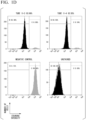
- FIGS. 1A to 1D are graphs showing the results of flow cytometry analysis on each of the cells electroporated with Tubes 1 to 11 in Table 1.
- each of the vertical axes indicates the number of cells
- each of the horizontal axes indicates the staining intensity with an anti-HLA-A2 antibody.
- the "Negative control” shows the results obtained from the Ff-I14s04 line which was not genome-edited
- "Unstained” shows the representative results of cells not stained with the anti-HLA-A2 antibody.
- Example IV As a result, under the conditions other than Example IV, an extremely high knockout efficiency of about 80% or more could be obtained in any of the cases.
- the knockout efficiencies in Example IV (Tubes 7 and 8) were lower than those in other Examples, and a reason therefor was considered to be that the amount of the Cas9 protein was larger than that of the added gRNAs. Therefore, it was considered that there is a possibility that the knockout efficiency is decreased in a case where a large amount of a free Cas9 protein is present during formation of the RNP complex. Based on these results, it was considered that a balance between the mixing amounts of the gRNAs and the Cas9 protein is important for the knockout efficiency. In addition, from the comparison between the case of using the 20 ⁇ L strip and the case of using the 100 ⁇ L cuvette, it was revealed that the shape of the cuvette does not affect the knockout efficiency.
Landscapes
- Health & Medical Sciences (AREA)
- Life Sciences & Earth Sciences (AREA)
- Engineering & Computer Science (AREA)
- Genetics & Genomics (AREA)
- Biomedical Technology (AREA)
- Chemical & Material Sciences (AREA)
- Organic Chemistry (AREA)
- Wood Science & Technology (AREA)
- Zoology (AREA)
- Bioinformatics & Cheminformatics (AREA)
- Biotechnology (AREA)
- General Engineering & Computer Science (AREA)
- Molecular Biology (AREA)
- Microbiology (AREA)
- Biochemistry (AREA)
- General Health & Medical Sciences (AREA)
- Plant Pathology (AREA)
- Biophysics (AREA)
- Physics & Mathematics (AREA)
- Cell Biology (AREA)
- Developmental Biology & Embryology (AREA)
- Transplantation (AREA)
- Medicinal Chemistry (AREA)
- Mycology (AREA)
- Micro-Organisms Or Cultivation Processes Thereof (AREA)
Applications Claiming Priority (1)
| Application Number | Priority Date | Filing Date | Title |
|---|---|---|---|
| PCT/JP2021/035047 WO2023047524A1 (ja) | 2021-09-24 | 2021-09-24 | 改変ヒト人工多能性幹細胞の製造方法 |
Publications (2)
| Publication Number | Publication Date |
|---|---|
| EP4407028A1 true EP4407028A1 (de) | 2024-07-31 |
| EP4407028A4 EP4407028A4 (de) | 2025-08-06 |
Family
ID=85719386
Family Applications (1)
| Application Number | Title | Priority Date | Filing Date |
|---|---|---|---|
| EP21958400.0A Pending EP4407028A4 (de) | 2021-09-24 | 2021-09-24 | Verfahren zur herstellung modifizierter humaner induzierter pluripotenter stammzellen |
Country Status (4)
| Country | Link |
|---|---|
| US (1) | US20240425886A1 (de) |
| EP (1) | EP4407028A4 (de) |
| JP (1) | JP7714667B2 (de) |
| WO (1) | WO2023047524A1 (de) |
Family Cites Families (2)
| Publication number | Priority date | Publication date | Assignee | Title |
|---|---|---|---|---|
| JP2014513948A (ja) | 2011-04-20 | 2014-06-19 | ザ ユニバーシティ オブ ワシントン スルー イッツ センター フォー コマーシャライゼーション | β2ミクログロブリン欠損細胞 |
| EP3754018A4 (de) * | 2018-02-16 | 2021-11-24 | Kyoto University | Verfahren zur herstellung einer schwach antigenen zelle |
-
2021
- 2021-09-24 EP EP21958400.0A patent/EP4407028A4/de active Pending
- 2021-09-24 WO PCT/JP2021/035047 patent/WO2023047524A1/ja not_active Ceased
- 2021-09-24 JP JP2023549249A patent/JP7714667B2/ja active Active
- 2021-09-24 US US18/690,083 patent/US20240425886A1/en active Pending
Also Published As
| Publication number | Publication date |
|---|---|
| US20240425886A1 (en) | 2024-12-26 |
| JPWO2023047524A1 (de) | 2023-03-30 |
| WO2023047524A1 (ja) | 2023-03-30 |
| JP7714667B2 (ja) | 2025-07-29 |
| EP4407028A4 (de) | 2025-08-06 |
Similar Documents
| Publication | Publication Date | Title |
|---|---|---|
| US20260125655A1 (en) | Method for producing low-antigenic cell | |
| US20240342297A1 (en) | Novel immunogenic peptides | |
| JP2002515756A (ja) | 選択されたリンパ球の生産方法 | |
| US20240425886A1 (en) | Method for producing modified human induced pluripotent stem cells | |
| JP2025109839A (ja) | トランスジェニックブタ、その作製方法と用途、およびヒト免疫系マウスの作製方法 | |
| CN102596209A (zh) | 含有短暂性存活ctl的医药品组合物 | |
| EP4306634A1 (de) | Verfahren zur herstellung von hypoimmunogenen retinapigmentepithelzellen | |
| CN114929866B (zh) | 基因改造巨核细胞、改造血小板和它们的制造方法 | |
| EP3100740A1 (de) | Zusammensetzung und verfahren zur ex-vivo-immunmodulation und/oder konservierung von organen, verfahren und verwendung | |
| Winterhalter | CRISPR/Cas9 based HLA reduction of T cells for universal T cell therapy | |
| KR20260032524A (ko) | 저면역원성의 범용성 유도만능줄기세포 | |
| WO2025219520A1 (en) | MODIFIED HUMAN T CELL WITH A REDUCED HLA-Ia REPERTOIRE AND METHOD OF PRODUCTION | |
| JP2023532645A (ja) | 免疫原性が減少した新規な移植用細胞 | |
| Oshiro et al. | CD3− Bone Marrow Cells Augment the Generation of Cytotoxic T Lymphocytes Showing a Preference for the X‐Chromosome Linked Gene Product of Stimulator Cells | |
| HK1235067A1 (en) | Novel immunogenic peptides | |
| HK1235067B (en) | Novel immunogenic peptides |
Legal Events
| Date | Code | Title | Description |
|---|---|---|---|
| STAA | Information on the status of an ep patent application or granted ep patent |
Free format text: STATUS: THE INTERNATIONAL PUBLICATION HAS BEEN MADE |
|
| PUAI | Public reference made under article 153(3) epc to a published international application that has entered the european phase |
Free format text: ORIGINAL CODE: 0009012 |
|
| STAA | Information on the status of an ep patent application or granted ep patent |
Free format text: STATUS: REQUEST FOR EXAMINATION WAS MADE |
|
| 17P | Request for examination filed |
Effective date: 20240304 |
|
| AK | Designated contracting states |
Kind code of ref document: A1 Designated state(s): AL AT BE BG CH CY CZ DE DK EE ES FI FR GB GR HR HU IE IS IT LI LT LU LV MC MK MT NL NO PL PT RO RS SE SI SK SM TR |
|
| DAV | Request for validation of the european patent (deleted) | ||
| DAX | Request for extension of the european patent (deleted) | ||
| A4 | Supplementary search report drawn up and despatched |
Effective date: 20250708 |
|
| RIC1 | Information provided on ipc code assigned before grant |
Ipc: C12N 15/09 20060101AFI20250702BHEP |
|
| STAA | Information on the status of an ep patent application or granted ep patent |
Free format text: STATUS: EXAMINATION IS IN PROGRESS |
|
| 17Q | First examination report despatched |
Effective date: 20251126 |