EP4406797A1 - Kollisionswarnsystem für ein fahrzeug - Google Patents
Kollisionswarnsystem für ein fahrzeug Download PDFInfo
- Publication number
- EP4406797A1 EP4406797A1 EP23153075.9A EP23153075A EP4406797A1 EP 4406797 A1 EP4406797 A1 EP 4406797A1 EP 23153075 A EP23153075 A EP 23153075A EP 4406797 A1 EP4406797 A1 EP 4406797A1
- Authority
- EP
- European Patent Office
- Prior art keywords
- pedestrian
- vehicle
- crosswalk
- collision warning
- warning system
- Prior art date
- Legal status (The legal status is an assumption and is not a legal conclusion. Google has not performed a legal analysis and makes no representation as to the accuracy of the status listed.)
- Granted
Links
Images


Classifications
-
- B—PERFORMING OPERATIONS; TRANSPORTING
- B60—VEHICLES IN GENERAL
- B60W—CONJOINT CONTROL OF VEHICLE SUB-UNITS OF DIFFERENT TYPE OR DIFFERENT FUNCTION; CONTROL SYSTEMS SPECIALLY ADAPTED FOR HYBRID VEHICLES; ROAD VEHICLE DRIVE CONTROL SYSTEMS FOR PURPOSES NOT RELATED TO THE CONTROL OF A PARTICULAR SUB-UNIT
- B60W30/00—Purposes of road vehicle drive control systems not related to the control of a particular sub-unit, e.g. of systems using conjoint control of vehicle sub-units
- B60W30/08—Active safety systems predicting or avoiding probable or impending collision or attempting to minimise its consequences
- B60W30/095—Predicting travel path or likelihood of collision
- B60W30/0956—Predicting travel path or likelihood of collision the prediction being responsive to traffic or environmental parameters
-
- B—PERFORMING OPERATIONS; TRANSPORTING
- B60—VEHICLES IN GENERAL
- B60Q—ARRANGEMENT OF SIGNALLING OR LIGHTING DEVICES, THE MOUNTING OR SUPPORTING THEREOF OR CIRCUITS THEREFOR, FOR VEHICLES IN GENERAL
- B60Q1/00—Arrangement of optical signalling or lighting devices, the mounting or supporting thereof or circuits therefor
- B60Q1/26—Arrangement of optical signalling or lighting devices, the mounting or supporting thereof or circuits therefor the devices being primarily intended to indicate the vehicle, or parts thereof, or to give signals, to other traffic
- B60Q1/50—Arrangement of optical signalling or lighting devices, the mounting or supporting thereof or circuits therefor the devices being primarily intended to indicate the vehicle, or parts thereof, or to give signals, to other traffic for indicating other intentions or conditions, e.g. request for waiting or overtaking
- B60Q1/525—Arrangement of optical signalling or lighting devices, the mounting or supporting thereof or circuits therefor the devices being primarily intended to indicate the vehicle, or parts thereof, or to give signals, to other traffic for indicating other intentions or conditions, e.g. request for waiting or overtaking automatically indicating risk of collision between vehicles in traffic or with pedestrians, e.g. after risk assessment using the vehicle sensor data
-
- G—PHYSICS
- G06—COMPUTING OR CALCULATING; COUNTING
- G06V—IMAGE OR VIDEO RECOGNITION OR UNDERSTANDING
- G06V20/00—Scenes; Scene-specific elements
- G06V20/50—Context or environment of the image
- G06V20/56—Context or environment of the image exterior to a vehicle by using sensors mounted on the vehicle
- G06V20/58—Recognition of moving objects or obstacles, e.g. vehicles or pedestrians; Recognition of traffic objects, e.g. traffic signs, traffic lights or roads
-
- G—PHYSICS
- G06—COMPUTING OR CALCULATING; COUNTING
- G06V—IMAGE OR VIDEO RECOGNITION OR UNDERSTANDING
- G06V20/00—Scenes; Scene-specific elements
- G06V20/50—Context or environment of the image
- G06V20/56—Context or environment of the image exterior to a vehicle by using sensors mounted on the vehicle
- G06V20/588—Recognition of the road, e.g. of lane markings; Recognition of the vehicle driving pattern in relation to the road
-
- G—PHYSICS
- G06—COMPUTING OR CALCULATING; COUNTING
- G06V—IMAGE OR VIDEO RECOGNITION OR UNDERSTANDING
- G06V40/00—Recognition of biometric, human-related or animal-related patterns in image or video data
- G06V40/10—Human or animal bodies, e.g. vehicle occupants or pedestrians; Body parts, e.g. hands
- G06V40/103—Static body considered as a whole, e.g. static pedestrian or occupant recognition
-
- G—PHYSICS
- G08—SIGNALLING
- G08G—TRAFFIC CONTROL SYSTEMS
- G08G1/00—Traffic control systems for road vehicles
- G08G1/16—Anti-collision systems
- G08G1/161—Decentralised systems, e.g. inter-vehicle communication
-
- G—PHYSICS
- G08—SIGNALLING
- G08G—TRAFFIC CONTROL SYSTEMS
- G08G1/00—Traffic control systems for road vehicles
- G08G1/16—Anti-collision systems
- G08G1/166—Anti-collision systems for active traffic, e.g. moving vehicles, pedestrians, bikes
-
- B—PERFORMING OPERATIONS; TRANSPORTING
- B60—VEHICLES IN GENERAL
- B60Q—ARRANGEMENT OF SIGNALLING OR LIGHTING DEVICES, THE MOUNTING OR SUPPORTING THEREOF OR CIRCUITS THEREFOR, FOR VEHICLES IN GENERAL
- B60Q2800/00—Features related to particular types of vehicles not otherwise provided for
- B60Q2800/10—Autonomous vehicles
-
- B—PERFORMING OPERATIONS; TRANSPORTING
- B60—VEHICLES IN GENERAL
- B60Q—ARRANGEMENT OF SIGNALLING OR LIGHTING DEVICES, THE MOUNTING OR SUPPORTING THEREOF OR CIRCUITS THEREFOR, FOR VEHICLES IN GENERAL
- B60Q5/00—Arrangement or adaptation of acoustic signal devices
- B60Q5/005—Arrangement or adaptation of acoustic signal devices automatically actuated
- B60Q5/006—Arrangement or adaptation of acoustic signal devices automatically actuated indicating risk of collision between vehicles or with pedestrians
-
- B—PERFORMING OPERATIONS; TRANSPORTING
- B60—VEHICLES IN GENERAL
- B60W—CONJOINT CONTROL OF VEHICLE SUB-UNITS OF DIFFERENT TYPE OR DIFFERENT FUNCTION; CONTROL SYSTEMS SPECIALLY ADAPTED FOR HYBRID VEHICLES; ROAD VEHICLE DRIVE CONTROL SYSTEMS FOR PURPOSES NOT RELATED TO THE CONTROL OF A PARTICULAR SUB-UNIT
- B60W2552/00—Input parameters relating to infrastructure
- B60W2552/53—Road markings, e.g. lane marker or crosswalk
-
- B—PERFORMING OPERATIONS; TRANSPORTING
- B60—VEHICLES IN GENERAL
- B60W—CONJOINT CONTROL OF VEHICLE SUB-UNITS OF DIFFERENT TYPE OR DIFFERENT FUNCTION; CONTROL SYSTEMS SPECIALLY ADAPTED FOR HYBRID VEHICLES; ROAD VEHICLE DRIVE CONTROL SYSTEMS FOR PURPOSES NOT RELATED TO THE CONTROL OF A PARTICULAR SUB-UNIT
- B60W2554/00—Input parameters relating to objects
- B60W2554/40—Dynamic objects, e.g. animals, windblown objects
- B60W2554/402—Type
- B60W2554/4029—Pedestrians
-
- B—PERFORMING OPERATIONS; TRANSPORTING
- B60—VEHICLES IN GENERAL
- B60W—CONJOINT CONTROL OF VEHICLE SUB-UNITS OF DIFFERENT TYPE OR DIFFERENT FUNCTION; CONTROL SYSTEMS SPECIALLY ADAPTED FOR HYBRID VEHICLES; ROAD VEHICLE DRIVE CONTROL SYSTEMS FOR PURPOSES NOT RELATED TO THE CONTROL OF A PARTICULAR SUB-UNIT
- B60W2554/00—Input parameters relating to objects
- B60W2554/40—Dynamic objects, e.g. animals, windblown objects
- B60W2554/404—Characteristics
- B60W2554/4041—Position
-
- B—PERFORMING OPERATIONS; TRANSPORTING
- B60—VEHICLES IN GENERAL
- B60W—CONJOINT CONTROL OF VEHICLE SUB-UNITS OF DIFFERENT TYPE OR DIFFERENT FUNCTION; CONTROL SYSTEMS SPECIALLY ADAPTED FOR HYBRID VEHICLES; ROAD VEHICLE DRIVE CONTROL SYSTEMS FOR PURPOSES NOT RELATED TO THE CONTROL OF A PARTICULAR SUB-UNIT
- B60W2554/00—Input parameters relating to objects
- B60W2554/40—Dynamic objects, e.g. animals, windblown objects
- B60W2554/404—Characteristics
- B60W2554/4042—Longitudinal speed
-
- B—PERFORMING OPERATIONS; TRANSPORTING
- B60—VEHICLES IN GENERAL
- B60W—CONJOINT CONTROL OF VEHICLE SUB-UNITS OF DIFFERENT TYPE OR DIFFERENT FUNCTION; CONTROL SYSTEMS SPECIALLY ADAPTED FOR HYBRID VEHICLES; ROAD VEHICLE DRIVE CONTROL SYSTEMS FOR PURPOSES NOT RELATED TO THE CONTROL OF A PARTICULAR SUB-UNIT
- B60W2554/00—Input parameters relating to objects
- B60W2554/40—Dynamic objects, e.g. animals, windblown objects
- B60W2554/404—Characteristics
- B60W2554/4045—Intention, e.g. lane change or imminent movement
Definitions
- the present disclosure relates to a collision warning system for a vehicle, a vehicle comprising such collision warning system, a collision warning method, and a computer program element for such collision warning system.
- Such collision warning system may be further improved, which facilitates an identification of pedestrian crossing a driving path of a vehicle at an early stage.
- a collision warning system for a vehicle.
- the collision warning system comprises an imaging sensor unit, an image processing unit and a control unit.
- the imaging sensor unit, the image processing unit and the control unit are arrangeable in a first vehicle.
- the imaging sensor unit is configured to generate pedestrian information data of at least one pedestrian standing at an imminent crosswalk.
- the image processing unit is configured to extract face data from the pedestrian information data and determine based on the face data, in which direction a face of the pedestrian is oriented.
- the control unit is configured to determine that the pedestrian will cross the imminent crosswalk, if the face of the pedestrian is oriented towards the imminent crosswalk.
- the collision warning system can recognize a pedestrian will cross a road at an early stage based on the pedestrian's gestures. Specifically, by analyzing the pedestrian's gestures, the collision warning system may alert not only the first vehicle, in other words host vehicle but also vehicles approaching the first vehicle and/or the pedestrian earlier. Accordingly, the vehicles can take countermeasures in good time and a dangerous situation such as a collision between the pedestrian and the first vehicle and/or the approaching vehicles can be avoided.
- the vehicle comprising the imaging sensor unit may be the host vehicle, which is the first vehicle. Additionally, an external imaging sensor unit may be also arranged on a driving path of the first vehicle.
- the imaging sensor unit may comprise one or more optical imaging sensor elements such as a camera.
- the imaging sensor unit may be configured to capture image data, in other words the pedestrian information data of at least one pedestrian standing at the upcoming crosswalk of the vehicle. In other words, the crosswalk may be situated towards a driving direction of the first vehicle and the pedestrian may stand at a border of the crosswalk at an image capturing timing.
- the pedestrian information data may comprise at least face data of the pedestrian standing at the imminent crosswalk.
- the imaging sensor unit may be also able to generate respective pedestrian information data comprising at least the face data of two or more pedestrians.
- the image processing unit may be also arranged in the first vehicle and configured to receive pedestrian information data comprising at least the face data of each pedestrian from the imaging sensor unit by a wireless and/or wired network element.
- the image processing unit may be able to recognize the face information of the pedestrian in the captured image data, who is standing at the imminent crosswalk.
- the image processing unit may apply an automatic landmark detection and face recognition for face images.
- the image processing unit may be able to determine a direction of the pedestrian's face. For instance, at least one pedestrian's face may be directed towards the first vehicle, away from the first vehicle, towards the crosswalk at which the pedestrian stands, away from the crosswalk, etc.
- the control unit may be an electronic control unit (ECU).
- the control unit may include, for example, one or more central processing units (CPUs), graphics processing units (GPUs) dedicated to performing calculations/transactions and/or other processing devices.
- CPUs central processing units
- GPUs graphics processing units
- the control unit may be able to communicate, control and/or retrieve information from the image processing unit via a wired or wireless connection.
- control unit may be able to determine based on such face direction information of the pedestrian received from the image processing unit, if the pedestrian wants to cross the crosswalk imminent to the first vehicle.
- control unit may be adapted to verify that the pedestrian will cross the imminent crosswalk, if the pedestrian's face is oriented the other side of the crosswalk.
- the control unit may be further configured to determine that the pedestrian does not want to cross the crosswalk, or just crossed if the pedestrian faces away from the crosswalk.
- the control unit may be also adapted to determine among several pedestrians that at least one pedestrian will cross the imminent crosswalk, if the face of at least one pedestrian is oriented towards the imminent crosswalk.
- control unit is configured to determine that the at least one pedestrian will cross the imminent crosswalk, if the face of the pedestrian is oriented towards the first vehicle.
- the control unit may be also adapted to verify that one or more pedestrians desire to cross the crosswalk imminent to the vehicle based on the face direction information of the pedestrian received from the image processing unit, if the face of at least one pedestrian is oriented towards the first vehicle.
- the image processing unit is configured to extract posture data from the pedestrian information data generated by the imaging sensor unit and determine based on the posture data, in which direction an arm of the pedestrian is oriented.
- the control unit is configured to determine that the pedestrian will cross the imminent crosswalk, if the arm of the pedestrian is stretched towards the imminent crosswalk.
- the imaging sensor unit may be adapted to generate the pedestrian information data comprising posture information of the pedestrian standing at the imminent crosswalk.
- the pedestrian information data may comprise the posture data in addition to the face data of the respective pedestrian.
- the posture data may contain information regarding a specific orientation of at least a part of a human body, such as arm, leg, torso, hand, foot, back, hip, etc.
- the image processing unit may be also configured to determine based on the posture data, in which direction a torso of the pedestrian is oriented.
- the control unit is configured to determine that the pedestrian will cross the imminent crosswalk, if the torso of the pedestrian is inclined towards the imminent crosswalk.
- the torso may be understood as a central or core part of the human's body, from which the head, neck, arm, leg, etc. extend.
- the image processing unit may apply, for instance human pose estimation method. Based on the posture data, the image processing unit may be able to determine a direction of at least the pedestrian's torso and/or arm. For instance, at least one pedestrian's torso may be slightly inclined towards the crosswalk, when the pedestrian stands at the crosswalk. Alternatively or additionally, pedestrian's leg, hand or foot may be stretched towards the crosswalk.
- the control unit may be able to determine based on such posture information of the pedestrian received from the image processing unit, if the pedestrian wants to cross the crosswalk imminent to the first vehicle.
- the control unit may be adapted to verify that the pedestrian will cross the imminent crosswalk, if the pedestrian's torso is at least slightly inclined towards the crosswalk.
- the control unit may be further configured to determine that the pedestrian will cross the crosswalk, if the pedestrian's arm, leg, hand or foot is stretched towards the crosswalk.
- the imaging sensor unit is further configured to generate pedestrian information data of at least one pedestrian crossing the imminent crosswalk.
- the imaging sensor unit may be configured to generate the pedestrian information data of the pedestrian not only standing at the border of the crosswalk but also crossing the crosswalk.
- the image processing unit may be configured to extract the face data and/or the posture data of the pedestrian crossing the imminent crosswalk. Additionally, the image processing unit may be also adapted to extract the pedestrian information regarding the a number of pedestrians standing at the border of the imminent crosswalk or crossing the crosswalk, size of the pedestrian, etc. from the pedestrian information data.
- the collision warning system further comprises an environment sensor unit.
- the environment sensor unit is arrangeable in the first vehicle and configured to generate operational information data of at least a second vehicle approaching the first vehicle.
- the environment sensor unit may comprise a plurality of sensor elements such as lidar sensor, radar sensor, ultrasonic sensor, imaging sensor or the like to capture surroundings of the vehicle and generate environmental monitoring data.
- the environmental monitoring data may comprise at least the operational information data of one or more vehicles approaching the first vehicle.
- the operational information data may comprise position, advancing direction, speed, size and type of the second vehicle.
- control unit may be configured to activate the environment sensor unit, when the control unit identifies a pedestrian will cross the imminent crosswalk, a pedestrian crossing the crosswalk, the first vehicle reduces its speed and/or stops for allowing the pedestrian to cross the crosswalk.
- control unit is configured to determine based on the operational information data of the second vehicle, if the first vehicle forms a blind spot zone hiding the at least one pedestrian to the second vehicle. If the first vehicle travels substantially in front of the second vehicle, the first vehicle may form the blind spot zone on the driving path to the second vehicle.
- the blind spot zone may be understood as an area around the first vehicle that cannot be directly seen by a driver of the second vehicle.
- control unit may be adapted to assess the operational information data of the second vehicle received from the environment sensor unit, if the first vehicle traveling ahead may hinder the second vehicle to monitor at least one pedestrian at the crosswalk.
- the environment sensor unit is configured to identify, if the second vehicle comprising at least one autonomous driving function.
- the control unit is configured to send pedestrian information data to the second vehicle via wireless network means, if the first vehicle forms the blind spot zone hiding the at least one pedestrian to the second vehicle.
- the environment sensor unit arranged at the first vehicle may be able to identify whether the second vehicle comprises an automated driving (AD) functionality or an advanced driver-assistance system (ADAS), which assisting the driver for propelling vehicle.
- the autonomous driving function may enable an autonomous driving from level 1 to level 5.
- the control unit may be also able to identify the autonomous driving function based on the operational information data of the second vehicle and/or a license plate of the second vehicle, which may contain such information.
- the control unit may be able to send pedestrian information data regarding the number, position and/or size of the pedestrians to the second vehicle over the air. Accordingly, the second vehicle may be informed about the pedestrians at the crosswalk and may reduce its speed or even stop driving to allow the pedestrians crossing the crosswalk even though the second vehicle does not detect the pedestrian due to the blind spot zone formed by the first vehicle.
- control unit is configured to determine crossing time of the at least one pedestrian. Based on the pedestrian information data of one or more pedestrian standing at or crossing the imminent crosswalk and optionally road information, which may be also monitored by the environment sensor unit, the control unit may be able to predict how long time the respective pedestrian requires to cross the crosswalk.
- the image processing unit is configured to determine, if the at least one pedestrian is a child, and the control unit is configured to increase the crossing time of the pedestrian in case of the child.
- the image processing unit may apply a human height estimation/classification method for identifying a pedestrian's age range. Accordingly, the image processing unit may be able to identify based on the pedestrian information data, if the captured pedestrian information data of a pedestrian corresponds to a child or an adult.
- control unit may be adapted to extend the predicted crossing time of the pedestrian to ensure enough time to cross the crosswalk, thus enhances traffic safety.
- control unit is configured to determine approaching time of the second vehicle to the imminent crosswalk. Based on the environmental monitoring data and/or the operational information data of the second vehicle generated by the environment sensor unit, the control unit may be adapted to estimate, how fast the second vehicle may reach the crosswalk imminent to the first vehicle and the second vehicle.
- control unit is configured to alert the at least one pedestrian about the second vehicle, if the approaching time of the second vehicle is shorter than the crossing time of the pedestrian.
- the control unit may be able to compare the approaching time of the second vehicle to the imminent crosswalk and the crossing time of the pedestrian. In case the approaching time is shorter than the crossing time, the control unit may be adapted to warn the pedestrian about the second vehicle by honking and/or blinking light to increase the pedestrian's attention.
- control unit may be also configured to alert the at least one pedestrian about the second vehicle, if the environment sensor unit of the first vehicle cannot identify the autonomous driving function of the second vehicle.
- control unit is configured to alert the second vehicle based on the operational information data of the second vehicle, if the second vehicle maintains its speed even though the approaching time of the second vehicle is shorter than the crossing time of the pedestrian.
- control unit may be adapted to continuously monitor the operational information data, particularly speed of the second vehicle.
- control unit may be adapted to inform the second vehicle about the pedestrian by honking and/or blinking light to increase the driver's attention of the second vehicle.
- a vehicle comprises a collision warning system as described above.
- the vehicle may comprise automated driving (AD) or advanced driver-assistance system (ADAS) functionalities assisting a user for propelling vehicle.
- AD automated driving
- ADAS advanced driver-assistance system
- a collision warning method is also presented.
- the method comprises, but not necessarily in this order,
- a computer program element is also presented.
- the computer program element is configured for a collision warning system as described above.
- the computer program element is adapted to perform the collision warning method as described above, when executed by a processing element.
- one or more computer storage media may be presented.
- the computer storage media is encoded with instructions, that when executed by a computer, cause the computer to perform the operations of the respective method as described above.
- the storage media may comprise internal to a computing device, such as a computer's SSD, or a removable device such as an external HDD or universal serial bus (USB) flash drive.
- a computing device such as a computer's SSD
- a removable device such as an external HDD or universal serial bus (USB) flash drive.
- USB universal serial bus
- storage media including magnetic tape, compact discs (CDs) and non-volatile memory (NVM) cards.
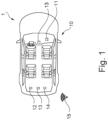
- Fig. 1 shows a vehicle 1 comprising a collision warning system 10.
- the vehicle 1 may comprise automated driving (AD) or advanced driver-assistance system (ADAS) functionalities assisting a user for propelling vehicle 1.
- AD automated driving
- ADAS advanced driver-assistance system
- the collision warning system 10 comprises an imaging sensor unit 11 and an image processing unit 12.
- the imaging sensor unit 11 and the image processing unit 12 are arranged in the vehicle 1, which is the first vehicle.
- the imaging sensor unit 11 is configured to generate pedestrian information data of at least one pedestrian 3 standing at an imminent crosswalk 4 or crossing the imminent crosswalk 4.
- the pedestrian information data comprises at least face data and posture data of the pedestrian 3.
- the image processing unit 12 is configured to extract the face data from the pedestrian information data and determine based on the face data, in which direction a face 31 of the pedestrian 3 is oriented.
- the image processing unit 12 is also configured to extract the posture data from the pedestrian information data and determine based on the posture data, in which direction a torso and/or arm 32 of the pedestrian 3 is oriented.
- the collision warning system 10 further comprises an environment sensor unit 13.
- the environment sensor unit 13 is also arranged in the first vehicle 1 and configured to generate operational information data of at least a second vehicle 2 approaching the first vehicle 1.
- the operational information may comprise position, advancing direction, speed, size and type of the second vehicle 2.
- the collision warning system 10 further comprises a control unit 14, which is also arranged in the first vehicle 1.
- the control unit 14 is configured to determine that the pedestrian 3 will cross the imminent crosswalk 4, if the face 31 of the pedestrian 3 is oriented towards the imminent crosswalk 4, as shown in Fig. 2 . Further, the control unit 14 is configured to determine that the pedestrian 3 does not want to cross the crosswalk 4, or just crossed if the pedestrian 3 faces away from the crosswalk 4, as shown in Fig. 3 .
- the control unit 14 is also configured to determine that the at least one pedestrian 3 will cross the imminent crosswalk 4, if the face 31 of the pedestrian 3 is oriented towards the first vehicle 1, as shown in Fig. 4 .
- the control unit 14 is further configured to determine that the pedestrian 3 will cross the imminent crosswalk 4, if the torso of the pedestrian 3 is inclined towards the imminent crosswalk 4 or the pedestrian's arm 32 is stretched towards the crosswalk 4, as shown in Fig. 5 .
- control unit 14 is configured to determine based on the operational information data of the second vehicle 2, if the first vehicle 1 forms a blind spot zone 5 hiding the at least one pedestrian 3 to the second vehicle 2. In such case, the control unit 14 is able to send pedestrian information data to the second vehicle 2 via wireless network means 15.
- the control unit 14 is configured to determine crossing time of the at least one pedestrian 3. As shown in Fig. 7 , the image processing unit 12 is configured to determine, if the at least one pedestrian 3 is a child, and the control unit 14 is configured to increase the crossing time of the pedestrian 3 in case of the child.
- the control unit 14 is also configured to determine approaching time of the second vehicle 2 to the imminent crosswalk 4. Further, the control unit 14 is configured to alert the at least one pedestrian 3 about the second vehicle 2, if the approaching time of the second vehicle 2 is shorter than the crossing time of the pedestrian 3. The control unit 14 is configured to alert the second vehicle 2 based on the operational information data of the second vehicle 2, if the second vehicle 2 maintains its speed even though the approaching time of the second vehicle 2 is shorter than the crossing time of the pedestrian 3.
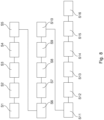
- Fig. 8 shows the collision warning method.
- the method steps may be performed not necessarily in this order: S1: generating pedestrian information data of at least one pedestrian 3 standing at an imminent crosswalk 4 or crossing the imminent crosswalk 4, the pedestrian information data comprising at least face data and posture data of the pedestrian 3; S2: extracting the face data and/or the posture data from the pedestrian information data; S3: generating operational information data of at least a second vehicle 2 approaching to a first vehicle 1, the operational information comprising position, advancing direction, speed, size and type of the second vehicle 2.
- S4 determining based on the face data, in which direction a face 31 of the pedestrian 3 is oriented;
- S5 determining that the pedestrian 3 will cross the imminent crosswalk 4, if the face 31 of the pedestrian 3 is oriented towards the imminent crosswalk 4;
- S6 determining based on the posture data, in which direction a torso and/or arm 32 of the pedestrian 3 is oriented;
- S7 determining that the pedestrian 3 will cross the imminent crosswalk 4, if the torso is inclined towards the imminent crosswalk 4;
- S8 determining based on the operational information data of the second vehicle 2, if the first vehicle 1 forms a blind spot zone hiding the at least one pedestrian 3 to the second vehicle 2;
- S9 identifying, if the second vehicle 2 comprising an autonomous driving function;
- S10 sending pedestrian information data to the second vehicle 2 via wireless network means 15;
- S11 determining crossing time of the at least one pedestrian 3;
- S12 determining, if the at least one pedestrian 3 is a child;
- S13 increasing the crossing time
Landscapes
- Engineering & Computer Science (AREA)
- Physics & Mathematics (AREA)
- General Physics & Mathematics (AREA)
- Multimedia (AREA)
- Theoretical Computer Science (AREA)
- Mechanical Engineering (AREA)
- Human Computer Interaction (AREA)
- Automation & Control Theory (AREA)
- Transportation (AREA)
- Traffic Control Systems (AREA)
Priority Applications (1)
| Application Number | Priority Date | Filing Date | Title |
|---|---|---|---|
| EP23153075.9A EP4406797B1 (de) | 2023-01-24 | 2023-01-24 | Kollisionswarnsystem für ein fahrzeug |
Applications Claiming Priority (1)
| Application Number | Priority Date | Filing Date | Title |
|---|---|---|---|
| EP23153075.9A EP4406797B1 (de) | 2023-01-24 | 2023-01-24 | Kollisionswarnsystem für ein fahrzeug |
Publications (2)
| Publication Number | Publication Date |
|---|---|
| EP4406797A1 true EP4406797A1 (de) | 2024-07-31 |
| EP4406797B1 EP4406797B1 (de) | 2025-12-03 |
Family
ID=85076201
Family Applications (1)
| Application Number | Title | Priority Date | Filing Date |
|---|---|---|---|
| EP23153075.9A Active EP4406797B1 (de) | 2023-01-24 | 2023-01-24 | Kollisionswarnsystem für ein fahrzeug |
Country Status (1)
| Country | Link |
|---|---|
| EP (1) | EP4406797B1 (de) |
Citations (8)
| Publication number | Priority date | Publication date | Assignee | Title |
|---|---|---|---|---|
| US20160121791A1 (en) * | 2013-05-31 | 2016-05-05 | Hitachi Automotive Systems ,Ltd. | Vehicle Danger Notification Control Apparatus |
| US20180151077A1 (en) * | 2016-11-29 | 2018-05-31 | Samsung Electronics Co., Ltd. | Method and apparatus for preventing collision between objects |
| US20190259283A1 (en) * | 2018-02-21 | 2019-08-22 | Hyundai Motor Company | Vehicle and method for controlling thereof |
| DE102018104270A1 (de) * | 2018-02-26 | 2019-08-29 | Connaught Electronics Ltd. | Verfahren zum Vorhersagen des Verhaltens mindestens eines Fußgängers |
| JP2020091614A (ja) * | 2018-12-05 | 2020-06-11 | 住友電気工業株式会社 | 情報提供システム、サーバ、移動端末、及びコンピュータプログラム |
| CN111845554A (zh) * | 2020-06-03 | 2020-10-30 | 北京中科慧眼科技有限公司 | 一种基于双目立体相机的行人碰撞预警方法和装置 |
| US20220171065A1 (en) * | 2019-09-30 | 2022-06-02 | Beijing Voyager Technology Co., Ltd. | Systems and methods for predicting a pedestrian movement trajectory |
| US20220355815A1 (en) * | 2021-05-05 | 2022-11-10 | Nissan North America, Inc. | Systems and methods of assisting vehicle navigation |
-
2023
- 2023-01-24 EP EP23153075.9A patent/EP4406797B1/de active Active
Patent Citations (8)
| Publication number | Priority date | Publication date | Assignee | Title |
|---|---|---|---|---|
| US20160121791A1 (en) * | 2013-05-31 | 2016-05-05 | Hitachi Automotive Systems ,Ltd. | Vehicle Danger Notification Control Apparatus |
| US20180151077A1 (en) * | 2016-11-29 | 2018-05-31 | Samsung Electronics Co., Ltd. | Method and apparatus for preventing collision between objects |
| US20190259283A1 (en) * | 2018-02-21 | 2019-08-22 | Hyundai Motor Company | Vehicle and method for controlling thereof |
| DE102018104270A1 (de) * | 2018-02-26 | 2019-08-29 | Connaught Electronics Ltd. | Verfahren zum Vorhersagen des Verhaltens mindestens eines Fußgängers |
| JP2020091614A (ja) * | 2018-12-05 | 2020-06-11 | 住友電気工業株式会社 | 情報提供システム、サーバ、移動端末、及びコンピュータプログラム |
| US20220171065A1 (en) * | 2019-09-30 | 2022-06-02 | Beijing Voyager Technology Co., Ltd. | Systems and methods for predicting a pedestrian movement trajectory |
| CN111845554A (zh) * | 2020-06-03 | 2020-10-30 | 北京中科慧眼科技有限公司 | 一种基于双目立体相机的行人碰撞预警方法和装置 |
| US20220355815A1 (en) * | 2021-05-05 | 2022-11-10 | Nissan North America, Inc. | Systems and methods of assisting vehicle navigation |
Also Published As
| Publication number | Publication date |
|---|---|
| EP4406797B1 (de) | 2025-12-03 |
Similar Documents
| Publication | Publication Date | Title |
|---|---|---|
| US12384401B2 (en) | Vehicular driving assist system with driver monitoring | |
| US11034294B2 (en) | Driving notification method and driving notification system | |
| CN112349144B (zh) | 一种基于单目视觉的车辆碰撞预警方法及系统 | |
| US10380438B2 (en) | System and method for vehicle control based on red color and green color detection | |
| US8903638B2 (en) | Warning method and system for detecting lane-changing condition of rear-approaching vehicles | |
| US20210309232A1 (en) | Driving assistance apparatus and data collection system | |
| CN108263324B (zh) | 基于姿势信息的行人检测和行人碰撞预防装置及方法 | |
| CN107924465A (zh) | 物体识别装置、物体识别方法以及物体识别程序 | |
| WO2018092265A1 (ja) | 運転支援装置および運転支援方法 | |
| CN107953827A (zh) | 一种车辆盲区预警方法及装置 | |
| CN102792314A (zh) | 交叉通行碰撞警报系统 | |
| CN103253263A (zh) | 障碍物检测及碰撞报警装置及其方法 | |
| US9460343B2 (en) | Method and system for proactively recognizing an action of a road user | |
| JP2004362586A (ja) | 車両用画像処理システム | |
| EP3456599B1 (de) | Überwachung von fahrern und der äusseren umgebung für fahrzeuge | |
| CN112622774B (zh) | 车辆及提供车辆周围信息的方法 | |
| JP2013186507A (ja) | 車両周辺監視装置 | |
| CN114987458B (zh) | 驾驶辅助装置、驾驶辅助方法以及记录介质 | |
| JP2000127849A (ja) | 車両用後側方監視装置 | |
| CN117087661A (zh) | 用于预测碰撞的车辆及车辆的操作方法 | |
| JP3952305B2 (ja) | 移動体周辺監視装置、移動体周辺監視方法、制御プログラムおよび可読記録媒体 | |
| US10580294B2 (en) | Photographic system for use on school buses | |
| CN117048630A (zh) | 用于响应紧急情况的方法和设备 | |
| KR102084329B1 (ko) | 차량 내 유아 모니터링 방법 및 시스템 | |
| EP4406797A1 (de) | Kollisionswarnsystem für ein fahrzeug |
Legal Events
| Date | Code | Title | Description |
|---|---|---|---|
| PUAI | Public reference made under article 153(3) epc to a published international application that has entered the european phase |
Free format text: ORIGINAL CODE: 0009012 |
|
| STAA | Information on the status of an ep patent application or granted ep patent |
Free format text: STATUS: REQUEST FOR EXAMINATION WAS MADE |
|
| 17P | Request for examination filed |
Effective date: 20231222 |
|
| AK | Designated contracting states |
Kind code of ref document: A1 Designated state(s): AL AT BE BG CH CY CZ DE DK EE ES FI FR GB GR HR HU IE IS IT LI LT LU LV MC ME MK MT NL NO PL PT RO RS SE SI SK SM TR |
|
| STAA | Information on the status of an ep patent application or granted ep patent |
Free format text: STATUS: EXAMINATION IS IN PROGRESS |
|
| 17Q | First examination report despatched |
Effective date: 20241106 |
|
| GRAP | Despatch of communication of intention to grant a patent |
Free format text: ORIGINAL CODE: EPIDOSNIGR1 |
|
| STAA | Information on the status of an ep patent application or granted ep patent |
Free format text: STATUS: GRANT OF PATENT IS INTENDED |
|
| INTG | Intention to grant announced |
Effective date: 20250520 |
|
| GRAJ | Information related to disapproval of communication of intention to grant by the applicant or resumption of examination proceedings by the epo deleted |
Free format text: ORIGINAL CODE: EPIDOSDIGR1 |
|
| STAA | Information on the status of an ep patent application or granted ep patent |
Free format text: STATUS: EXAMINATION IS IN PROGRESS |
|
| GRAP | Despatch of communication of intention to grant a patent |
Free format text: ORIGINAL CODE: EPIDOSNIGR1 |
|
| STAA | Information on the status of an ep patent application or granted ep patent |
Free format text: STATUS: GRANT OF PATENT IS INTENDED |
|
| INTC | Intention to grant announced (deleted) | ||
| INTG | Intention to grant announced |
Effective date: 20250818 |
|
| GRAS | Grant fee paid |
Free format text: ORIGINAL CODE: EPIDOSNIGR3 |
|
| GRAA | (expected) grant |
Free format text: ORIGINAL CODE: 0009210 |
|
| STAA | Information on the status of an ep patent application or granted ep patent |
Free format text: STATUS: THE PATENT HAS BEEN GRANTED |
|
| AK | Designated contracting states |
Kind code of ref document: B1 Designated state(s): AL AT BE BG CH CY CZ DE DK EE ES FI FR GB GR HR HU IE IS IT LI LT LU LV MC ME MK MT NL NO PL PT RO RS SE SI SK SM TR |
|
| REG | Reference to a national code |
Ref country code: CH Ref legal event code: F10 Free format text: ST27 STATUS EVENT CODE: U-0-0-F10-F00 (AS PROVIDED BY THE NATIONAL OFFICE) Effective date: 20251203 Ref country code: GB Ref legal event code: FG4D |
|
| REG | Reference to a national code |
Ref country code: DE Ref legal event code: R096 Ref document number: 602023009113 Country of ref document: DE |
|
| REG | Reference to a national code |
Ref country code: IE Ref legal event code: FG4D |
|
| P01 | Opt-out of the competence of the unified patent court (upc) registered |
Free format text: CASE NUMBER: UPC_APP_0014627_4406797/2025 Effective date: 20251125 |
|
| REG | Reference to a national code |
Ref country code: NL Ref legal event code: MP Effective date: 20251203 |
|
| PG25 | Lapsed in a contracting state [announced via postgrant information from national office to epo] |
Ref country code: ES Free format text: LAPSE BECAUSE OF FAILURE TO SUBMIT A TRANSLATION OF THE DESCRIPTION OR TO PAY THE FEE WITHIN THE PRESCRIBED TIME-LIMIT Effective date: 20251203 |
|
| REG | Reference to a national code |
Ref country code: LT Ref legal event code: MG9D |
|
| PG25 | Lapsed in a contracting state [announced via postgrant information from national office to epo] |
Ref country code: NO Free format text: LAPSE BECAUSE OF FAILURE TO SUBMIT A TRANSLATION OF THE DESCRIPTION OR TO PAY THE FEE WITHIN THE PRESCRIBED TIME-LIMIT Effective date: 20260303 |
|
| PGFP | Annual fee paid to national office [announced via postgrant information from national office to epo] |
Ref country code: DE Payment date: 20251217 Year of fee payment: 4 |
|
| PG25 | Lapsed in a contracting state [announced via postgrant information from national office to epo] |
Ref country code: FI Free format text: LAPSE BECAUSE OF FAILURE TO SUBMIT A TRANSLATION OF THE DESCRIPTION OR TO PAY THE FEE WITHIN THE PRESCRIBED TIME-LIMIT Effective date: 20251203 Ref country code: HR Free format text: LAPSE BECAUSE OF FAILURE TO SUBMIT A TRANSLATION OF THE DESCRIPTION OR TO PAY THE FEE WITHIN THE PRESCRIBED TIME-LIMIT Effective date: 20251203 |
|
| PGFP | Annual fee paid to national office [announced via postgrant information from national office to epo] |
Ref country code: AT Payment date: 20260301 Year of fee payment: 4 |
|
| PG25 | Lapsed in a contracting state [announced via postgrant information from national office to epo] |
Ref country code: RS Free format text: LAPSE BECAUSE OF FAILURE TO SUBMIT A TRANSLATION OF THE DESCRIPTION OR TO PAY THE FEE WITHIN THE PRESCRIBED TIME-LIMIT Effective date: 20260303 |
|
| PGFP | Annual fee paid to national office [announced via postgrant information from national office to epo] |
Ref country code: FR Payment date: 20260121 Year of fee payment: 4 |