EP4406549A2 - Vom menschen abgeleitete anti-huntingtin-(htt)-antikörper und verwendungen davon - Google Patents
Vom menschen abgeleitete anti-huntingtin-(htt)-antikörper und verwendungen davon Download PDFInfo
- Publication number
- EP4406549A2 EP4406549A2 EP24174406.9A EP24174406A EP4406549A2 EP 4406549 A2 EP4406549 A2 EP 4406549A2 EP 24174406 A EP24174406 A EP 24174406A EP 4406549 A2 EP4406549 A2 EP 4406549A2
- Authority
- EP
- European Patent Office
- Prior art keywords
- antibody
- htt
- amino acid
- region
- antibodies
- Prior art date
- Legal status (The legal status is an assumption and is not a legal conclusion. Google has not performed a legal analysis and makes no representation as to the accuracy of the status listed.)
- Pending
Links
Images























Classifications
-
- C—CHEMISTRY; METALLURGY
- C07—ORGANIC CHEMISTRY
- C07K—PEPTIDES
- C07K16/00—Immunoglobulins [IG], e.g. monoclonal or polyclonal antibodies
- C07K16/18—Immunoglobulins [IG], e.g. monoclonal or polyclonal antibodies against material from animals or humans
-
- A—HUMAN NECESSITIES
- A61—MEDICAL OR VETERINARY SCIENCE; HYGIENE
- A61K—PREPARATIONS FOR MEDICAL, DENTAL OR TOILETRY PURPOSES
- A61K39/00—Medicinal preparations containing antigens or antibodies
- A61K39/395—Antibodies; Immunoglobulins; Immune serum, e.g. antilymphocytic serum
- A61K39/39533—Antibodies; Immunoglobulins; Immune serum, e.g. antilymphocytic serum against materials from animals
- A61K39/3955—Antibodies; Immunoglobulins; Immune serum, e.g. antilymphocytic serum against materials from animals against proteinaceous materials, e.g. enzymes, hormones, lymphokines
-
- A—HUMAN NECESSITIES
- A61—MEDICAL OR VETERINARY SCIENCE; HYGIENE
- A61P—SPECIFIC THERAPEUTIC ACTIVITY OF CHEMICAL COMPOUNDS OR MEDICINAL PREPARATIONS
- A61P25/00—Drugs for disorders of the nervous system
- A61P25/14—Drugs for disorders of the nervous system for treating abnormal movements, e.g. chorea, dyskinesia
-
- A—HUMAN NECESSITIES
- A61—MEDICAL OR VETERINARY SCIENCE; HYGIENE
- A61P—SPECIFIC THERAPEUTIC ACTIVITY OF CHEMICAL COMPOUNDS OR MEDICINAL PREPARATIONS
- A61P25/00—Drugs for disorders of the nervous system
- A61P25/28—Drugs for disorders of the nervous system for treating neurodegenerative disorders of the central nervous system, e.g. nootropic agents, cognition enhancers, drugs for treating Alzheimer's disease or other forms of dementia
-
- C—CHEMISTRY; METALLURGY
- C07—ORGANIC CHEMISTRY
- C07K—PEPTIDES
- C07K14/00—Peptides having more than 20 amino acids; Gastrins; Somatostatins; Melanotropins; Derivatives thereof
- C07K14/435—Peptides having more than 20 amino acids; Gastrins; Somatostatins; Melanotropins; Derivatives thereof from animals; from humans
- C07K14/46—Peptides having more than 20 amino acids; Gastrins; Somatostatins; Melanotropins; Derivatives thereof from animals; from humans from vertebrates
- C07K14/47—Peptides having more than 20 amino acids; Gastrins; Somatostatins; Melanotropins; Derivatives thereof from animals; from humans from vertebrates from mammals
-
- C—CHEMISTRY; METALLURGY
- C12—BIOCHEMISTRY; BEER; SPIRITS; WINE; VINEGAR; MICROBIOLOGY; ENZYMOLOGY; MUTATION OR GENETIC ENGINEERING
- C12Q—MEASURING OR TESTING PROCESSES INVOLVING ENZYMES, NUCLEIC ACIDS OR MICROORGANISMS; COMPOSITIONS OR TEST PAPERS THEREFOR; PROCESSES OF PREPARING SUCH COMPOSITIONS; CONDITION-RESPONSIVE CONTROL IN MICROBIOLOGICAL OR ENZYMOLOGICAL PROCESSES
- C12Q1/00—Measuring or testing processes involving enzymes, nucleic acids or microorganisms; Compositions therefor; Processes of preparing such compositions
- C12Q1/68—Measuring or testing processes involving enzymes, nucleic acids or microorganisms; Compositions therefor; Processes of preparing such compositions involving nucleic acids
- C12Q1/6876—Nucleic acid products used in the analysis of nucleic acids, e.g. primers or probes
- C12Q1/6883—Nucleic acid products used in the analysis of nucleic acids, e.g. primers or probes for diseases caused by alterations of genetic material
-
- G—PHYSICS
- G01—MEASURING; TESTING
- G01N—INVESTIGATING OR ANALYSING MATERIALS BY DETERMINING THEIR CHEMICAL OR PHYSICAL PROPERTIES
- G01N33/00—Investigating or analysing materials by specific methods not covered by groups G01N1/00 - G01N31/00
- G01N33/48—Biological material, e.g. blood, urine; Haemocytometers
- G01N33/50—Chemical analysis of biological material, e.g. blood, urine; Testing involving biospecific ligand binding methods; Immunological testing
- G01N33/68—Chemical analysis of biological material, e.g. blood, urine; Testing involving biospecific ligand binding methods; Immunological testing involving proteins, peptides or amino acids
- G01N33/6893—Chemical analysis of biological material, e.g. blood, urine; Testing involving biospecific ligand binding methods; Immunological testing involving proteins, peptides or amino acids related to diseases not provided for elsewhere
- G01N33/6896—Neurological disorders, e.g. Alzheimer's disease
-
- A—HUMAN NECESSITIES
- A61—MEDICAL OR VETERINARY SCIENCE; HYGIENE
- A61K—PREPARATIONS FOR MEDICAL, DENTAL OR TOILETRY PURPOSES
- A61K39/00—Medicinal preparations containing antigens or antibodies
- A61K2039/505—Medicinal preparations containing antigens or antibodies comprising antibodies
-
- C—CHEMISTRY; METALLURGY
- C07—ORGANIC CHEMISTRY
- C07K—PEPTIDES
- C07K2317/00—Immunoglobulins specific features
- C07K2317/20—Immunoglobulins specific features characterized by taxonomic origin
- C07K2317/21—Immunoglobulins specific features characterized by taxonomic origin from primates, e.g. man
-
- C—CHEMISTRY; METALLURGY
- C07—ORGANIC CHEMISTRY
- C07K—PEPTIDES
- C07K2317/00—Immunoglobulins specific features
- C07K2317/20—Immunoglobulins specific features characterized by taxonomic origin
- C07K2317/24—Immunoglobulins specific features characterized by taxonomic origin containing regions, domains or residues from different species, e.g. chimeric, humanized or veneered
-
- C—CHEMISTRY; METALLURGY
- C07—ORGANIC CHEMISTRY
- C07K—PEPTIDES
- C07K2317/00—Immunoglobulins specific features
- C07K2317/30—Immunoglobulins specific features characterized by aspects of specificity or valency
- C07K2317/31—Immunoglobulins specific features characterized by aspects of specificity or valency multispecific
-
- C—CHEMISTRY; METALLURGY
- C07—ORGANIC CHEMISTRY
- C07K—PEPTIDES
- C07K2317/00—Immunoglobulins specific features
- C07K2317/30—Immunoglobulins specific features characterized by aspects of specificity or valency
- C07K2317/34—Identification of a linear epitope shorter than 20 amino acid residues or of a conformational epitope defined by amino acid residues
-
- C—CHEMISTRY; METALLURGY
- C07—ORGANIC CHEMISTRY
- C07K—PEPTIDES
- C07K2317/00—Immunoglobulins specific features
- C07K2317/50—Immunoglobulins specific features characterized by immunoglobulin fragments
- C07K2317/52—Constant or Fc region; Isotype
-
- C—CHEMISTRY; METALLURGY
- C07—ORGANIC CHEMISTRY
- C07K—PEPTIDES
- C07K2317/00—Immunoglobulins specific features
- C07K2317/50—Immunoglobulins specific features characterized by immunoglobulin fragments
- C07K2317/56—Immunoglobulins specific features characterized by immunoglobulin fragments variable (Fv) region, i.e. VH and/or VL
-
- C—CHEMISTRY; METALLURGY
- C07—ORGANIC CHEMISTRY
- C07K—PEPTIDES
- C07K2317/00—Immunoglobulins specific features
- C07K2317/50—Immunoglobulins specific features characterized by immunoglobulin fragments
- C07K2317/56—Immunoglobulins specific features characterized by immunoglobulin fragments variable (Fv) region, i.e. VH and/or VL
- C07K2317/565—Complementarity determining region [CDR]
-
- C—CHEMISTRY; METALLURGY
- C07—ORGANIC CHEMISTRY
- C07K—PEPTIDES
- C07K2317/00—Immunoglobulins specific features
- C07K2317/90—Immunoglobulins specific features characterized by (pharmaco)kinetic aspects or by stability of the immunoglobulin
- C07K2317/92—Affinity (KD), association rate (Ka), dissociation rate (Kd) or EC50 value
-
- C—CHEMISTRY; METALLURGY
- C07—ORGANIC CHEMISTRY
- C07K—PEPTIDES
- C07K2319/00—Fusion polypeptide
-
- C—CHEMISTRY; METALLURGY
- C07—ORGANIC CHEMISTRY
- C07K—PEPTIDES
- C07K2319/00—Fusion polypeptide
- C07K2319/30—Non-immunoglobulin-derived peptide or protein having an immunoglobulin constant or Fc region, or a fragment thereof, attached thereto
-
- C—CHEMISTRY; METALLURGY
- C12—BIOCHEMISTRY; BEER; SPIRITS; WINE; VINEGAR; MICROBIOLOGY; ENZYMOLOGY; MUTATION OR GENETIC ENGINEERING
- C12Q—MEASURING OR TESTING PROCESSES INVOLVING ENZYMES, NUCLEIC ACIDS OR MICROORGANISMS; COMPOSITIONS OR TEST PAPERS THEREFOR; PROCESSES OF PREPARING SUCH COMPOSITIONS; CONDITION-RESPONSIVE CONTROL IN MICROBIOLOGICAL OR ENZYMOLOGICAL PROCESSES
- C12Q2600/00—Oligonucleotides characterized by their use
- C12Q2600/158—Expression markers
-
- G—PHYSICS
- G01—MEASURING; TESTING
- G01N—INVESTIGATING OR ANALYSING MATERIALS BY DETERMINING THEIR CHEMICAL OR PHYSICAL PROPERTIES
- G01N2333/00—Assays involving biological materials from specific organisms or of a specific nature
- G01N2333/435—Assays involving biological materials from specific organisms or of a specific nature from animals; from humans
- G01N2333/46—Assays involving biological materials from specific organisms or of a specific nature from animals; from humans from vertebrates
- G01N2333/47—Assays involving proteins of known structure or function as defined in the subgroups
-
- G—PHYSICS
- G01—MEASURING; TESTING
- G01N—INVESTIGATING OR ANALYSING MATERIALS BY DETERMINING THEIR CHEMICAL OR PHYSICAL PROPERTIES
- G01N2800/00—Detection or diagnosis of diseases
- G01N2800/28—Neurological disorders
- G01N2800/2835—Movement disorders, e.g. Parkinson, Huntington, Tourette
Definitions
- the present invention generally relates to antibody-based therapy of Huntington's disease (HD) associated with Huntingtin (HTT).
- HD Huntington's disease
- HTT Huntingtin
- the present invention relates to novel molecules specifically binding to human HTT and/or antigens thereof, particularly human-derived antibodies as well as HTT-binding fragments, synthetic and biotechnological derivatives thereof, which are useful in the treatment of diseases and conditions induced by such pathogenic HTT isoforms.
- the present invention relates to pharmaceutical and diagnostic compositions comprising such HTT-binding molecules, antibodies and mimics thereof valuable both as a diagnostic tool to identify diseases and/or disorders associated with HTT aggregation and as a passive vaccination strategy for treating disorders related to diseases associated with HTT amyloidosis.
- Huntington's disease is an autosomal dominant neurological amyloidogenic disease. 5 to 10 individuals per 100,000 individuals are affected with this autosomal disease. However, the prevalence in the US is much higher, studies have shown that under 200,000 US individuals 50% have the risk of developing HD, in particular 30,000 patients are registered in the US while only 100,000 patients are registered worldwide.
- HD results from a trinucleotide CAG repeat expansion in the Huntingtin (HTT) gene, in particular in exon 1 of the HTT gene located on chromosome 4 ( MacDonald et al., Cell 72, (1993), 971-983 ), which is translated into a polyglutamine (polyQ) stretch in the HTT protein.
- HTT Huntingtin
- polyQ polyglutamine
- HTT misfolding and aggregation include involuntary movements, lack of motor coordination, depression, cognitive decline such as memory loss and/or dementia.
- Medicaments such as e.g. Xenazine ® (tetrabenazine, Lundbeck) a hexahydro-dimethoxy-benzoquinolizine derivative VMAT2 inhibitor had been designed for symptomatic treatment targeting involuntary muscle movements.
- RNA interference RNA interference
- siRNA directed against HTT gene in a HD mouse model R6/2
- R6/2 RNA interference
- siRNA directed against HTT gene in a HD mouse model was shown to inhibit mutant HTT gene expression, see e.g. Warby et al., Am. J. Hum Genet. 84 (2009), 351-366 and Olshina et al., Biological Chemistry 285 (2010), 21807-21816 .
- one limitation of this method lies in the difficulty to introduce sufficient amount of siRNA into the target cells or tissues as shown by e.g. Boudreau et al. (Brain Research 1338 (2010), 112-121 ).
- the present invention provides anti-huntingtin (HTT) antibodies and equivalent HTT-binding molecules for use in the prophylactic or therapeutic treatment of diseases and conditions associated with HTT amyloidosis. More specifically, therapeutically useful human-derived antibodies as well as HTT-binding fragments, synthetic and biotechnological derivatives thereof that recognize mutated and/or aggregated forms of HTT are provided.
- HTT anti-huntingtin
- experiments performed in accordance with the present invention were successful in the recombinant cloning and production of human-derived monoclonal HTT-specific antibodies which are specific for mutated and/or aggregated HTT species and/or fragments thereof.
- the human subjects being the source of the B cells from which the cDNA encoding the variable domain of human-derived monoclonal anti-HTT antibodies, respectively, have been isolated, were healthy donors.
- the source of the B cells from which the human-derived monoclonal anti-HTT antibodies and the cDNA encoding their variable domain, respectively, might be isolated are HD patients carrying trinucleotide CAG repeat expansion in the HTT gene and being either symptom-free or displaying an unusually slow progressing or stable disease course or alternatively displaying typical clinical features of Huntington's disease.
- the antibodies of the present invention are capable of attenuating dendritic spine loss, improve behavioral performance during task-specific training and enhance sensorimotor ability in a mouse model of HD. Therefore, it is prudent to expect that the human monoclonal anti-HTT antibodies of the present invention and derivatives thereof besides being non-immunogenic also exhibit a therapeutically beneficial effect in human.
- RNA interference RNA interference
- scFv single-chain antibody fragments
- IgG immunoglobulins
- scFv single-chain variable region fragment
- scFv-C4 comprising a lambda variable light (V L ) chain
- V L lambda variable light chain
- Khoshnan et al. was aiming at the development of intrabody-based therapeutics for HD and inter alia describe anti-huntingtin scFv antibodies derived from mouse monoclonal antibodies binding the epitopes polyglutamine (polyQ), polyproline (polyP), and anti-C terminus and their effects upon intracellular expression on mutant huntingtin aggregation and toxicity; see, e.g., Ko et al., Brain Research 56 (2001), 319-329 , Khoshnan et al., Proc. Nat. Acad. Sci 99 (2002), 1002-1007 and Legleiter et al., J. Biol. Chem.
- hMW9 human scFv antibody denoted “hMW9” is described to have been isolated from a human scFvs phage library using recombinant mutant huntingtin protein.
- hMW9 a "human" scFv antibody denoted “hMW9” is described to have been isolated from a human scFvs phage library using recombinant mutant huntingtin protein.
- mouse monoclonal derived scFv MWl, MW2, MW7 and MW8 no sequence data are provided for hMW9 which hitherto has also never been reported again.
- V L human light chain variable domain
- intrabodies reveal several limitations in-vivo such as their potential toxicity due to intracellular/intranuclear accumulation of intrabody-antigen complexes or the limited distribution of for example viral delivery into large brain volumes in humans; see, e.g., Butler et al., Prog. Neurobiol. 97 (2012), 190-204 and Sothwell et al., J. Neurosci. 29 (2009), 13589-13602 .
- a general drawback of intracellular approaches is the problem of addressing the antibody and its encoding vector DNA, respectively, to the desired cells and, if exogenously applied the inconvenient administration regimen, for example intrastriatal injections; see, e.g ., Snyder-Keller et al., Neuropathol. Exp. Neurol. 69 (2010), 1078-1085 .
- general concerns with respect to gene therapy and the use of viral vectors remain.
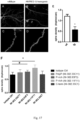
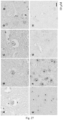
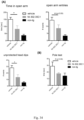
- the experiments performed in accordance with the present invention demonstrate for the first time that full-length IgG antibodies directed against different epitopes of huntingtin upon systemic administration can be successfully delivered to the brain (Example 24 and Figure 18 ) and that the antibodies of the present invention are capable of attenuating dendritic spine loss, improve behavioral performance during task-specific training and enhance sensorimotor ability in a mouse model of HD (Example 34 and Figure 34 ).
- the anti-HTT antibody or an HTT-binding fragment, synthetic or biotechnological derivative thereof is preferably of the IgG class, which as generally known and described herein comprises two identical variable heavy (V H ) chain polypeptides and two identical variable light (V L ) chain polypeptides, and a constant region and domain, respectively, i.e. at least one or all of the constant domains of the light chain (CL) and the heavy chain (CH1, CH2 or CH3).
- bivalent antibodies specific for Huntingtin and aggregated forms, fragments, peptides and derivatives thereof are provided suitable for use in the treatment or in in vivo diagnosis of huntingtin and disorders associated therewith, which are characterized by the presence of an immunoglobulin constant region.
- the immunoglobulin may be of any class such as IgG, IgM, IgA IgG, or IgE and corresponding immunoglobulin subclasses (isotypes), e.g., IgG1, IgG2, IgG3, IgG4, IgA1.
- the antibody is of the human IgG subtype.
- the human-derived antibodies of the present invention are characterized by comprising at least one or more CDR of human origin, i.e. being encoded by a cDNA derived from human memory B cells, and preferably wherein the V H and/or V L chain are of human memory B cell origin too.
- the constant region or any domain thereof if human may be of the same or different origin as the CDR(s) and the V H and/or V L chain, respectively.
- the antibody of the present invention includes the human-derived antibodies illustrated in the Examples as well as HTT-binding fragments, synthetic and biotechnological derivatives thereof.
- Vkappa light chain is of Vkappa origin.
- the anti-HTT-antibody, HTT-binding fragment, synthetic and biotechnological variant thereof binds to different regions of the HTT exon 1 protein which shows the "toxic" alteration as described above, i.e. the expanded, unstable trinucleotide repeat, as shown in the Examples.
- the antibody of the present invention recognizes a polyP-region, a polyQ/polyP-region, the P-rich-region, the C terminal-region or the N-terminal region of HTT exon 1 protein.
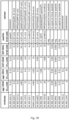
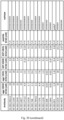
- the epitopes of the subject antibodies illustrated in the Examples are summarized in Figure 20 .
- HD occurs when the polyQ tract exceeds a threshold of 35-40 glutamine residues in length due to an aggregation of HTT. Accordingly, as shown in Example 3, aggregated and soluble HTT exon 1 proteins with 21, 35 or 49 polyQ repeats were generated and the binding of the identified antibodies tested.
- HDX the number of Qs
- HTT exon 1 with 21 polyQ repeats will be denoted HD21. Therefore, unless specifically indicated otherwise the term HTT means HTT exon1 and the soluble HTT refers to the corresponding GST-fusion proteins.
- the anti-HTT antibody or HTT-binding fragment, synthetic or biotechnological derivative thereof is capable of preferentially binding aggregated or misfolded forms of HTT.
- the aggregation of HDX proteins in terms of speed and seize increases with the number of Qs.
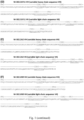
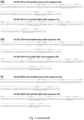
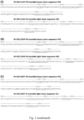
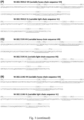
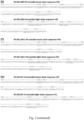
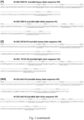
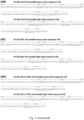
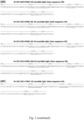
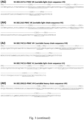
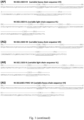
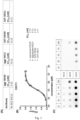
- the anti-HTT antibody or HTT-binding fragment, synthetic or biotechnological derivative thereof demonstrates the immunological binding characteristics of an antibody characterized by any one of the variable regions V H and/or V L as set forth in Fig. 1 .
- the variable region of the antibody comprises at least one complementarity determining region (CDR) of the V H and/or V L of the variable regions, i.e. pair of V H and V L chain as set forth in Fig. 1A to 1AU , wherein one or more amino acid substitutions are permitted as long as binding specificity of the resultant antibody compared to the subject antibody comprising the corresponding pair of V H and V L chain as set forth in Fig.
- CDR complementarity determining region
- 1A to 1AU as illustrated in the Examples, e.g . as summarized in Figure 20 remains unaffected in kind, i.e. epitope specificity and EC 50 values in the same order of magnitude for the indicated antigen, preferably in the range of at least 50%, more preferably 25% and most preferably at least 10% identical value.
- one, two or all three CDRs of the V H and V L chain contain at least one amino acid at a corresponding position which is conserved ( i.e.
- the subject antibodies which recognize the same type of HTT epitope, i.e. poly-P, P-rich, C-terminus or N-terminus.
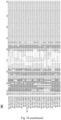
- sequence alignment of the subject antibodies reveals the predominant presence of one or two tyrosines (Y) in CDRH1; see Figure 36 . Similar conserved amino acid can be identified in the other CDRs as well.
- the anti-HTT antibody or HTT-binding fragment, synthetic or biotechnological derivative thereof is a bispecific antibody.
- the antibody of the present invention may be capable of recognizing at least two distinct epitopes either on the same or on different antigens.
- a first antigen-binding site i.e. variable domain may be specific for HTT and preferably comprises a variable region of any one of the subject antibodies illustrated in the appended Examples and Figures
- the second antigen-binding site may be specific for a different, preferably also neurotoxic protein and comprise a variable region of corresponding antibody.
- the anti-HTT antibody or HTT-binding fragment, synthetic or biotechnological derivative thereof is a bispecific antibody which is capable of binding HTT and a protein associated with a neurodegenerative disorder, in particular in the brain, preferably selected from the group consisting of ⁇ -synuclein, Tau, amyloid beta peptide, SOD1, C9orf72, and TDP-43; see, e.g., Blokhuis et al., Acta Neuropathol. 125 (2013), 777-794 .
- Bi- and multispecific antibodies can be generated by methods well known in the art, for example by chemical recombination of monoclonal immunoglobulin G1 fragments as described, e.g., by Brennan et al., Science. 229 (1985), 81-83 , or recombinant simultaneously co-expression of the appropriate heavy and light chain and corresponding pairing; see, e.g., Lewis et al., Nature Biotechnology 32 (2014), 191-198 ; for review see, e.g., Kontermann, mAbs 4 (2012), 182-197 and Kontermann and Brinkmann, Drug Discovery Today 20 (2015), 838-847 .
- the bi- or multi-specific antibody comprises at least a first and second antigen-binding site, i.e . variable domain specific for two distinct epitopes of HTT, preferably wherein one or both variable regions are derived from any one of the subject antibodies illustrated in the appended Examples and Figures, and as further described herein.
- the bispecific antibody of the present invention comprises two binding sites/domains of an antibody which recognizes a polyP-region, a polyQ/polyP-region, the P-rich-region, the C terminal-region, the N-terminal region or a conformational epitope of HTT exon 1 protein.
- the epitopes of the subject antibodies illustrated in the Examples are summarized in Figure 20 . Accordingly, in one embodiment the bispecific antibody of the present invention recognizes at least two different epitopes depicted in Figure 20 and has the combined binding specificities of the cognate subject antibody, respectively.
- the antigen-binding fragment of any one the subject antibodies disclosed herein can be a single chain Fv fragment, an F(ab') fragment, an F(ab) fragment, and an F(ab') 2 fragment, or any other antigen-binding fragment.
- the antibody or HTT-binding fragment, synthetic or biotechnological derivative thereof is a human IgG isotype antibody and comprises at least part of the constant region.
- the antibody is a chimeric human-rodent or rodentized antibody such as murine or murinized, rat or ratinized antibody, the rodent versions being particularly useful for diagnostic methods and studies in animals.
- the present invention relates to compositions comprising the antibody of the present invention or antigen-binding fragment, synthetic or biotechnological derivative thereof and to immunotherapeutic and immunodiagnostic methods using such compositions in the prevention, diagnosis or treatment of diseases and/or disorders associated with HTT amyloidosis, wherein an effective amount of the composition is administered to a patient in need thereof.
- the present invention also relates to polynucleotides encoding at least a variable region of an immunoglobulin chain of the antibody of the invention.
- said variable region comprises at least one complementarity determining region (CDR) of the V H and/or V L of the variable region as set forth in Fig. 1 .
- the polynucleotide is a cDNA.
- the present invention also encompasses vectors comprising said polynucleotides and host cells transformed therewith as well as their use for the production of an antibody and equivalent binding molecules which are specific for HTT and preferably are capable of binding mutated and/or aggregated HTT species or fragments thereof.
- Means and methods for the recombinant production of antibodies and mimics thereof as well as methods of screening for competing binding molecules, which may or may not be antibodies, are known in the art.
- the antibody of the present invention is a human antibody in the sense that application of said antibody is substantially free of an immune response directed against such antibody otherwise observed for chimeric and even humanized antibodies.
- the present invention also relates to the use of the cDNA, vector and host cell described herein and illustrated in the Examples for the production of an anti-HTT antibody, in particular human-derived anti-HTT antibody or a biotechnological derivative thereof.
- compositions and methods that can be used to identify HTT, in particular mutated and/or aggregated HTT species or fragments in vitro , e.g. in samples and/or in vivo.
- the disclosed anti-HTT antibodies and binding fragments thereof can be used to screen human blood, plasma, serum, saliva, peritoneal fluid, cerebrospinal fluid ("CSF"), and urine for the presence of HTT and/or mutated and/or aggregated HTT species or fragments thereof in samples, for example, by using ELISA-based or surface adapted assay.
- the present invention relates to a method of diagnosing or monitoring the progression of a disease and/or disorder related to mutated and/or aggregated HTT species or fragments thereof in a subject, the method comprising determining the presence of mutated, and/or aggregated HTT species or fragments in a sample from the subject to be diagnosed with at least one antibody of the present invention or an HTT-binding molecule and/or binding molecules for mutated and/or aggregated HTT species or fragments having substantially the same binding specificities of any one thereof, wherein the presence of mutated and/or aggregated HTT species or fragments is indicative of the disorder.
- the present invention also relates to a method of preparing a pharmaceutical composition for use in the treatment of a disorder associated with or caused by HTT aggregates, the method comprising:
- the anti-HTT antibodies and HTT-binding molecules comprising at least one CDR of an antibody of the present invention are provided for the preparation of a composition for in vivo detection (also called in vivo imaging) of or targeting a therapeutic and/or diagnostic agent to HTT, in particular mutated and/or aggregated HTT species or fragments in the human or animal body.
- the methods and compositions disclosed herein can aid in diseases and/or disorders associated with HTT aggregation or amyloidosis and characterized, e.g ., by the occurrence of aggregated forms of HTT and can be used to monitor disease progression and therapeutic efficacy of the therapy provided to the subject, for example in in vivo imaging related diagnostic methods.
- the in vivo detection (imaging) comprises scintigraphy, positron emission tomography (PET), single photon emission tomography (SPECT), near infrared (NIR) optical imaging or magnetic resonance imaging (MRI).
- the methods comprise administering an effective concentration of a preferably human antibody or antibody derivative to the subject where the antibody targets HTT or fragments thereof, preferably mutated and/or aggregated or misfolded HTT species or fragments thereof.
- the present invention provides a peptide having an epitope of HTT, preferably of mutated and/or aggregated HTT species or fragments thereof specifically recognized by an antibody of the present invention.
- Said peptide comprises or consists of an amino acid sequence as indicated below in the detailed description and in the Examples or a modified sequence thereof in which one or more amino acids are substituted, deleted and/or added.
- the present invention provides a method for diagnosing diseases and/or disorders associated with HTT amyloidosis in a subject, comprising a step of determining the presence of an antibody that binds to said peptide in a biological sample of said subject.
- the present invention generally relates to immunotherapy and non-invasive methods for the detection of diseases and/or disorders as well as conditions associated with the presence of pathologicoften mutant and/or aggregated forms of huntingtin (HTT). More specifically, the present invention relates to recombinant human-derived monoclonal antibodies and HTT-binding fragments, synthetic and biotechnological derivatives thereof, which have been generated based on sequence information obtained from selected human donor populations and are capable of binding to such HTT isoforms and antigens thereof.
- the recombinant human-derived monoclonal antibody of the present invention is advantageously characterized by specifically binding to mutated and/or aggregated HTT species and/or fragments thereof allowing a targeting for treatment and/or diagnosis of pathological altered HTT species. Due to their human derivation, the resulting recombinant antibodies of the present invention can be reasonably expected to be efficacious and safe as therapeutic agent, and highly specific as a diagnostic reagent for the detection of pathological HTT without giving false positives.
- the present invention relates to the human monoclonal antibody and any derivatives thereof described herein for use in the treatment of patients either alone or with other agents utilized for symptoms associated with HTT amyloidosis, wherein the antibody of the present invention and any of its derivatives is designed to be administered concomitantly with the agent suppressing side effects or sequentially before or after administration of the same.
- the anti-HTT antibody and HTT-binding fragment of the present invention are preferably substantially non-immunogenic in human.
- pharmaceutical compositions are provided comprising both a human monoclonal antibody of the present invention or any derivatives thereof and one or more drug utilized for symptoms associated with HTT amyloidosis.
- a or “an” entity refers to one or more of that entity; for example, “an antibody,” is understood to represent one or more antibodies.
- the terms “a” (or “an”), “one or more,” and “at least one” can be used interchangeably herein.
- HTT Huntingtin
- IT15 Huntington's disease
- HD Huntington's disease
- NG_009378.1; 4830 to 174286; NCBI RefSeqGene is large, spanning 180 kb and consisting of 67 exons.
- an N-terminal fragment of mutant HTT i.e. exon 1 protein of the HTT gene
- an expanded CAG repeat represents the "toxic" species of HTT which is sufficient to cause aggregation and a progressive neurological phenotype in transgenic mice; see, e.g., Mangiarini et al., Cell 87 (1996), 493-506 and Ross et al., Lancet Neurol. 10 (2011), 83-98 , DiFiglia et al, Science 277 (1997),1990-1993 , Gutebuch et al., J Neurosci 19(7) (1999), 2522-2534 .
- HTT specifically, generally, and collectively bind to HTT
- HTT refer to different forms the HTT including but not limited to the native form of HTT as well as other forms of HTT, e.g . pathologically altered HTT, such as mutated, misfolded and/or aggregated HTT.
- human-derived antibodies selective for full-length and/or fragments and/or mutated, misfolded and/or aggregated forms of HTT.
- HTT huntingtin
- HTT is also used to generally identify other conformers of HTT, for example, pathologically altered forms of HTT such as misfolded and/or aggregated forms of HTT.
- HTT in particular means HTT exon1 and the soluble HTT refers to the corresponding GST-fusion proteins.
- HTT is also used to refer collectively to all types and forms of HTT, such as mutated HTT. Added letters in front of the terms, e.g . HTT, are used to indicate the organism the particular ortholog is originating from, e.g. hHTT for human HTT or mHTT for murine origin.
- the anti-HTT antibodies disclosed herein specifically bind HTT and epitopes thereof and to various conformations of HTT and epitopes thereof.
- antibodies that specifically bind pathologically altered HTT species or fragments thereof such as mutated, misfolded, and/or aggregated forms of HTT or fragments thereof.
- pathologically mutated, misfolded, and/or aggregated/aggregates of HTT is used interchangeable to specifically refer to the aforementioned forms.
- the term (pathological) "aggregated forms" or “aggregates” as used herein describes the products of an accumulation or cluster formation due to HTT erroneous/pathological interaction with one another.
- aggregates, accumulations or cluster forms may be, substantially consist or consist of both HTT and/or HTT fragments and of non-fibrillar oligomers and/or fibrillar oligomers and fibrils thereof.
- reference to an antibody that "specifically binds”, “selectively binds", or “preferentially binds” HTT refers to an antibody that does not bind other unrelated proteins.
- a HTT antibody disclosed herein can bind HTT or an epitope thereof and show no binding above about 2 times background for other proteins.
- the antibody of the present invention does not substantially recognize unrelated amyloid-forming proteins selected from the group consisting of paired helical filament (PHF)-tau, TAU, alpha-synuclein, transactive response DNA binding protein 43 (TDP43), islet amyloid polypeptide (IAPP), transthyrethin (TTR), serum amyloid A (SAA); see Examples 8, 13, 18 and 31.
- PHF paired helical filament
- TAU alpha-synuclein
- TDP43 transactive response DNA binding protein 43
- IAPP islet amyloid polypeptide
- TTR transthyrethin
- SAA serum amyloid A
- An antibody that "specifically binds" or “selectively binds" a HTT conformer refers to an antibody that does not bind all conformations of HTT, i.e ., does not bind at least one other HTT conformer.
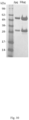
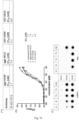
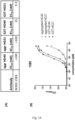
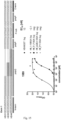
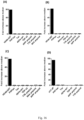
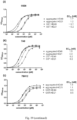
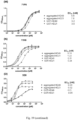
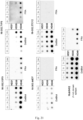
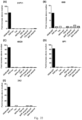
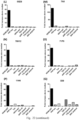
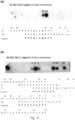
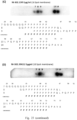
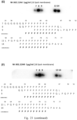
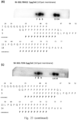
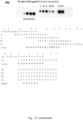
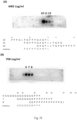
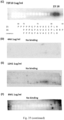
- the antibodies of the present invention specifically targets different regions of the HTT exon 1; see, e.g., Figs. 5 , 9 , 12 , 14 , 15 .
- the anti-HTT antibodies of the present invention may also be called "human auto-antibodies” or “human-derived antibodies” in order to emphasize that those antibodies were indeed expressed initially by the subjects and are not synthetic constructs generated, for example, by means of human immunoglobulin expressing phage libraries or xenogeneic antibodies generated in a transgenic animal expressing part of the human immunoglobulin repertoire which hitherto represented one common method for trying to provide human-like antibodies.
- the human-derived antibody of the present invention may be denoted synthetic, recombinant, and/or biotechnological in order distinguish it from human serum antibodies per se , which may be purified via protein A or affinity column.
- the antibodies of the present invention are derived from B cells or B memory cells from healthy human subjects with no signs of a disease showing the occurrence of, or related to misfolded/aggregated HTT and thus are, with a certain probability, capable of preventing a clinically manifest disease related to misfolded/aggregated HTT, or of diminishing the risk of the occurrence of the clinically manifest disease, or of delaying the onset or progression of the clinically manifest disease.
- the antibodies of the present invention also have already successfully gone through somatic maturation, i.e. the optimization with respect to selectivity and effectiveness in the high affinity binding to the target HTT molecules by means of somatic variation of the variable regions of the antibody.
- antibodies derived from cDNA library's or phage displays are artificial molecules such as a humanized antibody which is still of murine origin and thus foreign to the human body. Therefore the clinical utility and efficacy of the therapeutic antibodies can be limited by the production of anti-drug antibodies (ADAs), which can influence the efficacy and pharmacokinetics of the antibodies and sometimes lead to serious side effects, see e.g. Igawa et al., MAbs. 3 (2011), 243-252 .
- humanized antibodies or antibodies generated with recent human-antibody-generation technologies are in contrast to the human-derived antibodies such as those of the present invention prone to induce an antibody response and these human-like antibodies derived from e.g.
- phage display such as adalimumab have been reported to induce ADA production, see, e.g ., Mansour, Br. J. Ophthalmol 91 (2007), 274-276 and Igawa et al., MAbs. 3 (2011), 243-252 . Therefore, human-derived antibodies which are not prone to undesired immune response are more beneficial for the patient than artificial molecules derived from libraries or displays.
- peptide is understood to include the terms “polypeptide” and “protein” (which, at times, may be used interchangeably herein) within its meaning. Similarly, fragments of proteins and polypeptides are also contemplated and may be referred to herein as “peptides”. Nevertheless, the term “peptide” preferably denotes an amino acid polymer including at least 5 contiguous amino acids, preferably at least 10 contiguous amino acids, more preferably at least 15 contiguous amino acids, still more preferably at least 20 contiguous amino acids, and particularly preferred at least 25 contiguous amino acids. In addition, the peptide in accordance with present invention typically has no more than 100 contiguous amino acids, preferably less than 80 contiguous amino acids and more preferably less than 50 contiguous amino acids.
- polypeptide is intended to encompass a singular “polypeptide” as well as plural “polypeptides,” and refers to a molecule composed of monomers (amino acids) linearly linked by amide bonds (also known as peptide bonds).
- polypeptide refers to any chain or chains of two or more amino acids, and does not refer to a specific length of the product.
- peptides include “peptides,” “dipeptides,” “tripeptides, “oligopeptides,” “protein,” “amino acid chain,” or any other term used to refer to a chain or chains of two or more amino acids, and the term “polypeptide” may be used instead of, or interchangeably with any of these terms.
- polypeptide is also intended to refer to the products of post-expression modifications of the polypeptide, including without limitation glycosylation, acetylation, phosphorylation, amidation and derivatization by known protecting/blocking groups, proteolytic cleavage, or modification by non-naturally occurring amino acids.
- a polypeptide may be derived from a natural biological source or produced by recombinant technology, but is not necessarily translated from a designated nucleic acid sequence. It may be generated in any manner, including by chemical synthesis.
- a polypeptide of the invention may be of a size of about 3 or more, 5 or more, 10 or more, 20 or more, 25 or more, 50 or more, 75 or more, 100 or more, 200 or more, 500 or more, 1,000 or more, or 2,000 or more amino acids.
- Polypeptides may have a defined three-dimensional structure, although they do not necessarily have such structure. Polypeptides with a defined three-dimensional structure are referred to as folded, and polypeptides which do not possess a defined three-dimensional structure, but rather can adopt a large number of different conformations, and are referred to as unfolded.
- glycoprotein refers to a protein coupled to at least one carbohydrate moiety that is attached to the protein via an oxygen-containing or a nitrogen-containing side chain of an amino acid residue, e.g., a serine residue or an asparagine residue.
- an “isolated” polypeptide or a fragment, variant, or derivative thereof is intended a polypeptide that is not in its natural milieu. No particular level of purification is required.
- an isolated polypeptide can be removed from its native or natural environment.
- Recombinantly produced polypeptides and proteins expressed in host cells are considered isolated for purposed of the invention, as are native or recombinant polypeptides which have been separated, fractionated, or partially or substantially purified by any suitable technique.
- Recombinant peptides, polypeptides or proteins refer to peptides, polypeptides or proteins produced by recombinant DNA techniques, i.e . produced from cells, microbial or mammalian, transformed by an exogenous recombinant DNA expression construct encoding the fusion protein including the desired peptide.
- Proteins or peptides expressed in most bacterial cultures will typically be free of glycan.
- Proteins or polypeptides expressed in yeast may have a glycosylation pattern different from that expressed in mammalian cells.
- polypeptides of the present invention include fragments, derivatives, analogs or variants of the foregoing polypeptides and any combinations thereof as well.
- fragment include peptides and polypeptides having an amino acid sequence sufficiently similar to the amino acid sequence of the natural peptide.
- sufficiently similar means a first amino acid sequence that contains a sufficient or minimum number of identical or equivalent amino acid residues relative to a second amino acid sequence such that the first and second amino acid sequences have a common structural domain and/or common functional activity.
- amino acid sequences that comprise a common structural domain that is at least about 45%, at least about 50%, at least about 55%, at least about 60%, at least about 65%, at least about 70%, at least about 75%, at least about 80%, at least about 85%, at least about 90%, at least about 91%, at least about 92%, at least about 93%, at least about 94%, at least about 95%, at least about 96%, at least about 97%, at least about 98%, at least about 99%, or at least about 100%, identical are defined herein as sufficiently similar.
- variants will be sufficiently similar to the amino acid sequence of the preferred peptides of the present invention, in particular to HTT, variants, derivatives or analogs of either of them.
- variants generally retain the functional activity of the peptides of the present invention.
- variants include peptides that differ in amino acid sequence from the native and wt peptide, respectively, by way of one or more amino acid deletion(s), addition(s), and/or substitution(s). These may be naturally occurring variants as well as artificially designed ones.
- fragment when referring to antibodies or antibody polypeptides of the present invention include any polypeptides which retain at least some of the antigen-binding properties of the corresponding native binding molecule, antibody, or polypeptide. Fragments of polypeptides of the present invention include proteolytic fragments, as well as deletion fragments, in addition to specific antibody fragments discussed elsewhere herein. Variants of antibodies and antibody polypeptides of the present invention include fragments as described above, and also polypeptides with altered amino acid sequences due to amino acid substitutions, deletions, or insertions. Variants may occur naturally or be non-naturally occurring. Non-naturally occurring variants may be produced using art-known mutagenesis techniques.
- Variant polypeptides may comprise conservative or non-conservative amino acid substitutions, deletions or additions.
- Derivatives of HTT specific binding molecules e.g ., antibodies and antibody polypeptides of the present invention, are polypeptides which have been altered so as to exhibit additional features not found on the native polypeptide. Examples include fusion proteins.
- Variant polypeptides may also be referred to herein as "polypeptide analogs".
- a "derivative" of a binding molecule or fragment thereof, an antibody, or an antibody polypeptide refers to a subject polypeptide having one or more residues chemically derivatized by reaction of a functional side group.
- derivatives are those peptides which contain one or more naturally occurring amino acid derivatives of the twenty standard amino acids.
- 4-hydroxyproline may be substituted for proline
- 5-hydroxylysine may be substituted for lysine
- 3-methylhistidine may be substituted for histidine
- homoserine may be substituted for serine
- ornithine may be substituted for lysine.
- Similarity between two peptides is determined by comparing the amino acid sequence of one peptide to the sequence of a second peptide; see Example 35 as well as Fig. 36 .
- An amino acid of one peptide is similar to the corresponding amino acid of a second peptide if it is identical or a conservative amino acid substitution.
- Conservative substitutions include those described in Dayhoff, M.O., ed., The Atlas of Protein Sequence and Structure 5, National Biomedical Research Foundation, Washington, D.C. (1978 ), and in Argos, EMBO J. 8 (1989), 779-785 .
- amino acids belonging to one of the following groups represent conservative changes or substitutions: -Ala, Pro, Gly, Gln, Asn, Ser, Thr; -Cys, Ser, Tyr, Thr; -Val, Ile, Leu, Met, Ala, Phe; -Lys, Arg, His; -Phe, Tyr, Trp, His; and -Asp, Glu.
- Similarity between two polynucleotides is determined by comparing the nucleic acid sequence of one polynucleotide to the sequence of a polynucleotide.
- a nucleic acid of one polynucleotide is similar to the corresponding nucleic acid of a second polynucleotide if it is identical or, if the nucleic acid is part of a coding sequence, the respective triplet comprising the nucleic acid encodes for the same amino acid or for a conservative amino acid substitution.
- BLAST polynucleotide searches are performed with the BLASTn program.
- the "Max Target Sequences” box may be set to 100, the “Short queries” box may be ticked, the "Expect threshold” box may be set to 1000 and the “Word Size” box may be set to 7 as recommended for short sequences (less than 20 bases) on the NCBI webpage. For longer sequences the “Expect threshold” box may be set to 10 and the “Word Size” box may be set to 11.
- the "Match/mismatch Scores” may be set to 1,-2 and the "Gap Costs” box may be set to linear.
- the "Low complexity regions” box may not be ticked
- the "Species-specific repeats” box may not be ticked
- the "Mask for lookup table only” box may be ticked
- the "DUST Filter Settings” may be ticked
- the "Mask lower case letters” box may not be ticked.
- the “Search for short nearly exact matches” may be used in this respect, which provides most of the above indicated settings. Further information in this respect may be found in the "BLAST Program Selection Guide” published on the NCBI webpage.
- the "Max Target Sequences” box may be set to 100
- the "Short queries” box may be ticked
- the "Expect threshold” box may be set to 10
- the "Word Size” box may be set to "3”.
- the scoring parameters the "Matrix” box may be set to "BLOSUM62”
- the "Gap Costs” Box may be set to "Existence: 11 Extension: 1”
- the “Compositional adjustments” box may be set to "Conditional compositional score matrix adjustment”.
- the "Low complexity regions” box may not be ticked
- the "Mask for lookup table only” box may not be ticked and the "Mask lower case letters” box may not be ticked.
- polynucleotide is intended to encompass a singular nucleic acid as well as plural nucleic acids, and refers to an isolated nucleic acid molecule or construct, e.g ., messenger RNA (mRNA) or plasmid DNA (pDNA).
- a polynucleotide may comprise a conventional phosphodiester bond or a non-conventional bond (e.g ., an amide bond, such as found in peptide nucleic acids (PNA)).
- PNA peptide nucleic acids
- nucleic acid refers to any one or more nucleic acid segments, e.g ., DNA or RNA fragments, present in a polynucleotide.
- isolated nucleic acid or polynucleotide is intended a nucleic acid molecule, DNA or RNA, which has been removed from its native environment.
- a recombinant polynucleotide encoding an antibody contained in a vector is considered isolated for the purposes of the present invention.
- Further examples of an isolated polynucleotide include recombinant polynucleotides maintained in heterologous host cells or purified (partially or substantially) polynucleotides in solution.
- Isolated RNA molecules include in vivo or in vitro RNA transcripts of polynucleotides of the present invention.
- Isolated polynucleotides or nucleic acids according to the present invention further include such molecules produced synthetically.
- polynucleotide or a nucleic acid may be or may include a regulatory element such as a promoter, ribosome binding site, or a transcription terminator.
- a "coding region” is a portion of nucleic acid which consists of codons translated into amino acids. Although a “stop codon” (TAG, TGA, or TAA) is not translated into an amino acid, it may be considered to be part of a coding region, but any flanking sequences, for example promoters, ribosome binding sites, transcriptional terminators, introns, and the like, are not part of a coding region. Two or more coding regions of the present invention can be present in a single polynucleotide construct, e.g ., on a single vector, or in separate polynucleotide constructs, e.g ., on separate (different) vectors.
- any vector may contain a single coding region, or may comprise two or more coding regions, e.g ., a single vector may separately encode an immunoglobulin heavy chain variable region and an immunoglobulin light chain variable region.
- a vector, polynucleotide, or nucleic acid of the invention may encode heterologous coding regions, either fused or unfused to a nucleic acid encoding a binding molecule, an antibody, or fragment, variant, or derivative thereof.
- Heterologous coding regions include without limitation specialized elements or motifs, such as a secretory signal peptide or a heterologous functional domain.
- the polynucleotide or nucleic acid is DNA.
- a polynucleotide comprising a nucleic acid which encodes a polypeptide normally may include a promoter and/or other transcription or translation control elements operable associated with one or more coding regions.
- An operable association is when a coding region for a gene product, e.g ., a polypeptide, is associated with one or more regulatory sequences in such a way as to place expression of the gene product under the influence or control of the regulatory sequence(s).
- Two DNA fragments are "operable associated” or “operable linked” if induction of promoter function results in the transcription of mRNA encoding the desired gene product and if the nature of the linkage between the two DNA fragments does not interfere with the ability of the expression regulatory sequences to direct the expression of the gene product or interfere with the ability of the DNA template to be transcribed.
- a promoter region would be operable associated with a nucleic acid encoding a polypeptide if the promoter was capable of effecting transcription of that nucleic acid.
- the promoter may be a cell-specific promoter that directs substantial transcription of the DNA only in predetermined cells.
- transcription control elements besides a promoter, for example enhancers, operators, repressors, and transcription termination signals, can be operable associated with the polynucleotide to direct cell-specific transcription.
- Suitable promoters and other transcription control regions are disclosed herein.
- transcription control regions are known to those skilled in the art. These include, without limitation, transcription control regions which function in vertebrate cells, such as, but not limited to, promoter and enhancer segments from cytomegaloviruses (the immediate early promoter, in conjunction with intron-A), simian virus 40 (the early promoter), and retroviruses (such as Rous sarcoma virus).
- Other transcription control regions include those derived from vertebrate genes such as actin, heat shock protein, bovine growth hormone and rabbit ⁇ -globin, as well as other sequences capable of controlling gene expression in eukaryotic cells. Additional suitable transcription control regions include tissue-specific promoters and enhancers as well as lymphokine-inducible promoters ( e.g ., promoters inducible by interferons or interleukins).
- translation control elements include, but are not limited to ribosome binding sites, translation initiation and termination codons, and elements derived from picornaviruses (particularly an internal ribosome entry site, or IRES, also referred to as a CITE sequence).
- a polynucleotide of the present invention is RNA, for example, in the form of messenger RNA (mRNA).
- mRNA messenger RNA
- Polynucleotide and nucleic acid coding regions of the present invention may be associated with additional coding regions which encode secretory or signal peptides, which direct the secretion of a polypeptide encoded by a polynucleotide of the present invention.
- proteins secreted by mammalian cells have a signal peptide or secretory leader sequence which is cleaved from the mature protein once export of the growing protein chain across the rough endoplasmic reticulum has been initiated.
- polypeptides secreted by vertebrate cells generally have a signal peptide fused to the N-terminus of the polypeptide, which is cleaved from the complete or "full-length" polypeptide to produce a secreted or "mature" form of the polypeptide.
- the native signal peptide e.g ., an immunoglobulin heavy chain or light chain signal peptide is used, or a functional derivative of that sequence that retains the ability to direct the secretion of the polypeptide that is operable associated with it.
- a heterologous mammalian signal peptide, or a functional derivative thereof may be used.
- the wild-type leader sequence may be substituted with the leader sequence of human tissue plasminogen activator (TPA) or mouse ⁇ -glucuronidase.
- a "binding molecule” as used in the context of the present invention relates primarily to antibodies, and fragments thereof, but may also refer to other non-antibody molecules that bind to HTT including but not limited to hormones, receptors, ligands, ankyrins, major histocompatibility complex (MHC) molecules, chaperones such as heat shock proteins (HSPs) as well as cell-cell adhesion molecules such as members of the cadherin, intergrin, C-type lectin and immunoglobulin (Ig) superfamilies.
- HTT major histocompatibility complex
- HSPs heat shock proteins
- Ig immunoglobulin
- an antibody or immunoglobulin is a binding molecule which comprises at least the variable domain of a heavy chain, and normally comprises at least the variable domains of a heavy chain and a light chain.
- Basic immunoglobulin structures in vertebrate systems are relatively well understood; see, e.g ., Harlow et al., Antibodies: A Laboratory Manual, (Cold Spring Harbor Laboratory Press, 2nd ed. 1988 ).
- immunoglobulin comprises various broad classes of polypeptides that can be distinguished biochemically.
- heavy chains are classified as gamma, mu, alpha, delta, or epsilon, ( ⁇ , ⁇ , ⁇ , ⁇ , ⁇ ) with some subclasses among them ( e.g ., ⁇ 1- ⁇ 4). It is the nature of this chain that determines the "class" of the antibody as IgG, IgM, IgA IgG, or IgE, respectively.
- immunoglobulin subclasses e.g ., IgG1, IgG2, IgG3, IgG4, IgA1, etc. are well characterized and are known to confer functional specialization. Modified versions of each of these classes and isotypes are readily discernible to the skilled artisan in view of the instant disclosure and, accordingly, are within the scope of the instant invention. All immunoglobulin classes are clearly within the scope of the present invention, the following discussion will generally be directed to the IgG class of immunoglobulin molecules.
- IgG a standard immunoglobulin molecule comprises two identical light chain polypeptides of molecular weight approximately 23,000 Daltons, and two identical heavy chain polypeptides of molecular weight 53,000-70,000. The four chains are typically joined by disulfide bonds in a "Y" configuration wherein the light chains bracket the heavy chains starting at the mouth of the "Y" and continuing through the variable region.
- Light chains are classified as either kappa or lambda ( ⁇ , ⁇ ). Each heavy chain class may be bound with either a kappa or lambda light chain.
- the light and heavy chains are covalently bonded to each other, and the "tail" portions of the two heavy chains are bonded to each other by covalent disulfide linkages or non-covalent linkages when the immunoglobulins are generated either by hybridomas, B cells or genetically engineered host cells.
- the amino acid sequences run from an N-terminus at the forked ends of the Y configuration to the C-terminus at the bottom of each chain.
- variable domains of both the light (V L ) and heavy (V L ) chain portions determine antigen recognition and specificity.
- the constant domains of the light chain (CL) and the heavy chain (CH1, CH2 or CH3) confer important biological properties such as secretion, transplacental mobility, Fc receptor binding, complement binding, and the like.
- the numbering of the constant region domains increases as they become more distal from the antigen-binding site or amino-terminus of the antibody.
- the N-terminal portion is a variable region and at the C-terminal portion is a constant region; the CH3 and CL domains actually comprise the carboxy-terminus of the heavy and light chain, respectively.
- the variable region allows the antibody to selectively recognize and specifically bind epitopes on antigens. That is, the V L domain and V H domain, or subset of the complementarity determining regions (CDRs), of an antibody combine to form the variable region that defines a three dimensional antigen-binding site. This quaternary antibody structure forms the antigen-binding site present at the end of each arm of the Y. More specifically, the antigen-binding site is defined by three CDRs on each of the V H and V L chains. Any antibody or immunoglobulin fragment which contains sufficient structure to specifically bind to HTT is denoted herein interchangeably as a "binding fragment" or an "immunospecific fragment.”
- an antibody comprises six hypervariable regions, sometimes called “complementarity determining regions” or “CDRs” present in each antigen-binding domain, which are short, non-contiguous sequences of amino acids that are specifically positioned to form the antigen-binding domain as the antibody assumes its three dimensional configuration in an aqueous environment.
- CDRs complementarity determining regions
- the "CDRs” are flanked by four relatively conserved "framework” regions or "FRs” which show less inter-molecular variability.
- the framework regions largely adopt a ⁇ -sheet conformation and the CDRs form loops which connect, and in some cases form part of, the ⁇ -sheet structure.
- framework regions act to form a scaffold that provides for positioning the CDRs in correct orientation by inter-chain, non-covalent interactions.
- the antigen-binding domain formed by the positioned CDRs defines a surface complementary to the epitope on the immunoreactive antigen. This complementary surface promotes the non-covalent binding of the antibody to its cognate epitope.
- the amino acids comprising the CDRs and the framework regions, respectively can be readily identified for any given heavy or light chain variable region by one of ordinary skill in the art, since they have been precisely defined; see, " Sequences of Proteins of Immunological Interest," Kabat, E., et al., U.S. Department of Health and Human Services, (1983 ); and Chothia and Lesk, J. Mol. Biol., 196 (1987), 901-917 , which are incorporated herein by reference in their entireties.
- CDR complementarity determining region
- Kabat et al. also defined a numbering system for variable domain sequences that is applicable to any antibody.
- Kabat numbering refers to the numbering system set forth by Kabat et al., U.S. Dept. of Health and Human Services, "Sequence of Proteins of Immunological Interest” (1983 ).
- references to the numbering of specific amino acid residue positions in an antibody or antigen-binding fragment, variant, or derivative thereof of the present invention are according to the Kabat numbering system, which however is theoretical and may not equally apply to every antibody of the present invention. For example, depending on the position of the first CDR the following CDRs might be shifted in either direction.
- antibodies or antigen-binding fragments, immunospecific fragments, variants, or derivatives thereof of the invention include, but are not limited to, polyclonal, monoclonal, multispecific, human, humanized, primatized, murinized or chimeric antibodies, single chain antibodies, epitope-binding fragments, e.g ., Fab, Fab' and F(ab') 2 , Fd, Fvs, single-chain Fvs (scFv), single-chain antibodies, disulfide-linked Fvs (sdFv), fragments comprising either a V L or V H domain, fragments produced by a Fab expression library, and anti-idiotypic (anti-Id) antibodies (including, e.g ., anti-Id antibodies to antibodies disclosed herein).
- anti-Id antigen-binding fragments, immunospecific fragments, variants, or derivatives thereof of the invention
- Immunoglobulin or antibody molecules of the invention can be of any type (e.g., IgG, IgE, IgM, IgD, IgA, and IgY), class (e.g ., IgG1, IgG2, IgG3, IgG4, IgA1 and IgA2) or subclass of immunoglobulin molecule.
- the antibody of the present invention is not IgM or a derivative thereof with a pentavalent structure.
- IgMs are less useful than IgG and other bivalent antibodies or corresponding binding molecules since IgMs due to their pentavalent structure and lack of affinity maturation often show unspecific cross-reactivities and very low affinity.
- the antibody of the present invention is not a polyclonal antibody, i.e. it substantially consists of one particular antibody species rather than being a mixture obtained from a plasma immunoglobulin sample.
- Antibody fragments may comprise the variable region(s) alone or in combination with the entirety or a portion of the following: hinge region, CH1, CH2, and CH3 domains. Also included in the invention are HTT binding fragments which comprise any combination of variable region(s) with a hinge region, CH1, CH2, and CH3 domains.
- Antibodies or immunospecific fragments thereof of the present invention may be from any animal origin including birds and mammals.
- the antibodies are human, murine, donkey, rabbit, goat, guinea pig, camel, llama, horse, or chicken antibodies.
- the variable region may be condricthoid in origin ( e.g ., from sharks).
- the antibody of the present invention is a human-derived monoclonal antibody isolated from a human, wherein the B cell expressing the antibody is isolated from a human and in turn the antibody or preferably the cDNA encoding the variable domain and optionally the cDNA for the cognate constant domain.
- the framework region of the human antibody is aligned and adopted in accordance with the pertinent human germ line variable region sequences in the database; see, e.g ., Vbase (http://vbase.mrc-cpe.cam.ac.uk/) (http://www.vbase2.org/) hosted by the MRC Centre for Protein Engineering (Cambridge, UK).
- the human monoclonal antibody of the present invention is characterized by (i) being obtained using the human immune response rather than that of animal surrogates, i.e. the antibody has been generated in response to natural HTT in its relevant conformation in the human body, (ii) having protected the individual or is at least significant for the presence of HTT, and (iii) since the antibody is of human origin the risks of cross-reactivity against self-antigens is minimized.
- scFvs single chain antibody fragments
- human monoclonal antibody "human monoclonal autoantibody”, “human antibody” and the like are used to denote a HTT binding molecule which is of human origin, i.e. which has been isolated from a human cell such as a B cell or hybridoma thereof or the cDNA of which has been directly cloned from mRNA of a human cell, for example a human memory B cell.
- a human antibody is still “human”, i.e. human-derived even if amino acid substitutions are made in the antibody, e.g ., to improve binding characteristics.
- the human-derived antibodies of the present invention are characterized by comprising CDRs which have been seen by human body and therefore are substantially devoid of the risk of being immunogenic. Therefore, the antibody of the present invention may still be denoted human-derived if at least one, preferably two and most preferably all three CDRs of one or both the variable light and heavy chain of the antibody are derived from the human antibodies illustrated herein.
- the human-derived antibodies of the present invention comprises heterologous regions compared to the natural occurring antibodies, e.g . amino acid substitutions in the framework region, constant region exogenously fused to the variable region, different amino acids at the C- or N- terminal ends and the like.
- Antibodies derived from human immunoglobulin libraries or from animals transgenic for one or more human immunoglobulins and that do not express endogenous immunoglobulins, as described infra and, for example in, US patent no 5,939,598 by Kucherlapati et al. are denoted human-like antibodies in order distinguish them from truly human antibodies of the present invention.
- Fab and scFv fragments obtained from recombinant expression libraries as commonly used in the prior art can be considered as being artificial with all possible associated effects on immunogenicity and stability.
- the present invention provides isolated affinity-matured antibodies from selected human subjects, which are characterized by their therapeutic utility and their tolerance in man.
- rodentized antibody or “rodentized immunoglobulin” refers to an antibody comprising one or more CDRs from a human antibody of the present invention; and a human framework region that contains amino acid substitutions and/or deletions and/or insertions that are based on a rodent antibody sequence.
- rodents preferably sequences originating in mice and rats are used, wherein the antibodies comprising such sequences are referred to as “murinized” or “ratinized” respectively.
- the human immunoglobulin providing the CDRs is called the "parent” or “acceptor” and the rodent antibody providing the framework changes is called the "donor".
- Constant regions need not be present, but if they are, they are usually substantially identical to the rodent antibody constant regions, i.e. at least about 85 % to 90 %, preferably about 95 % or more identical.
- a full-length murinized human heavy or light chain immunoglobulin contains a mouse constant region, human CDRs, and a substantially human framework that has a number of "murinizing" amino acid substitutions.
- a "murinized antibody” is an antibody comprising a murinized variable light chain and/or a murinized variable heavy chain.
- a murinized antibody would not encompass a typical chimeric antibody, e.g ., because the entire variable region of a chimeric antibody is non-mouse.
- a modified antibody that has been "murinized” by the process of "murinization” binds to the same antigen as the parent antibody that provides the CDRs and is usually less immunogenic in mice, as compared to the parent antibody.
- the above explanations in respect of "murinized” antibodies apply analogously for "rodentized” antibodies, such as “ratinized antibodies”, wherein rat sequences are used instead of the murine.
- heavy chain portion includes amino acid sequences derived from an immunoglobulin heavy chain.
- a polypeptide comprising a heavy chain portion comprises at least one of: a CH1 domain, a hinge ( e.g ., upper, middle, and/or lower hinge region) domain, a CH2 domain, a CH3 domain, or a variant or fragment thereof.
- a binding polypeptide for use in the invention may comprise a polypeptide chain comprising a CH1 domain; a polypeptide chain comprising a CH1 domain, at least a portion of a hinge domain, and a CH2 domain; a polypeptide chain comprising a CH1 domain and a CH3 domain; a polypeptide chain comprising a CH1 domain, at least a portion of a hinge domain, and a CH3 domain, or a polypeptide chain comprising a CH1 domain, at least a portion of a hinge domain, a CH2 domain, and a CH3 domain.
- a polypeptide of the invention comprises a polypeptide chain comprising a CH3 domain.
- a binding polypeptide for use in the invention may lack at least a portion of a CH2 domain (e.g ., all or part of a CH2 domain).
- a CH2 domain e.g ., all or part of a CH2 domain.
- these domains e.g ., the heavy chain portions
- these domains may be modified such that they vary in amino acid sequence from the naturally occurring immunoglobulin molecule.
- the heavy chain portions of one polypeptide chain of a multimer are identical to those on a second polypeptide chain of the multimer.
- heavy chain portion-containing monomers of the invention are not identical.
- each monomer may comprise a different target binding site, forming, for example, a bispecific antibody or diabody.
- bispecific or bifunctional antibody molecule is an antibody molecule that has two different epitope/antigen binding sites, and accordingly has binding specificities for two different target epitopes. These two epitopes may be epitopes of the same antigen or of different antigens. In contrast thereto a "bivalent antibody” may have binding sites of identical antigenic specificity. Methods of making a bispecific antibody are known in the art, e.g .
- bispecific antibodies are based on the co-expression of two immunoglobulin heavy chain-light chain pairs, where the two heavy chains have different binding specificities. Because of the random assortment of heavy and light chains, a potential mixture often different antibody structures are produced of which only one has the desired binding specificity ( Milstein and Cuello, Nature 305 (1983), 537-540 ; Lanzavecchia and Scheidegger, Eur. J. Immunol. 17 (1987), 105-111 .
- variable domains with the desired binding specificities to heavy chain constant region including at least part of the hinge region, CH2 and CH3 regions.
- CH1 region containing the site necessary for light chain binding is present in at least one of the fusions.
- DNA encoding these fusions, and if desired the light chains are inserted into separate expression vectors and are then co-transfected into a suitable host organism. It is possible though to insert the coding sequences for two or all three chains into one expression vector.
- the antibodies, or antigen-binding fragments, variants, or derivatives thereof disclosed herein are composed of a single polypeptide chain such as scFvs and are to be expressed intracellularly (intrabodies) for potential in vivo therapeutic and diagnostic applications.
- the heavy chain portions of a binding polypeptide for use in the diagnostic and treatment methods disclosed herein may be derived from different immunoglobulin molecules.
- a heavy chain portion of a polypeptide may comprise a CH1 domain derived from an IgG1 molecule and a hinge region derived from an IgG3 molecule.
- a heavy chain portion can comprise a hinge region derived, in part, from an IgG1 molecule and, in part, from an IgG3 molecule.
- a heavy chain portion can comprise a chimeric hinge derived, in part, from an IgG1 molecule and, in part, from an IgG4 molecule.
- the term "light chain portion” includes amino acid sequences derived from an immunoglobulin light chain.
- the light chain portion comprises at least one of a V L or CL domain.
- the minimum size of a peptide or polypeptide epitope for an antibody is thought to be about four to five amino acids.
- Peptide or polypeptide epitopes preferably contain at least seven, more preferably at least nine and most preferably between at least about 15 to about 30 amino acids. Since a CDR can recognize an antigenic peptide or polypeptide in its tertiary form, the amino acids comprising an epitope need not be contiguous, and in some cases, may not even be on the same peptide chain.
- a peptide or polypeptide epitope recognized by antibodies of the present invention contains a sequence of at least 4, at least 5, at least 6, at least 7, more preferably at least 8, at least 9, at least 10, at least 15, at least 20, at least 25, or between about 15 to about 30 contiguous or non-contiguous amino acids of HTT, in particular of a N-terminal, polyP region, P-rich region or the C-terminal region of exon 1.
- binding or “specifically recognizing”, used interchangeably herein, it is generally meant that a binding molecule, e.g ., an antibody binds to an epitope via its antigen-binding domain, and that the binding entails some complementarity between the antigen-binding domain and the epitope.
- an antibody is said to "specifically bind” to an epitope when it binds to that epitope, via its antigen-binding domain more readily than it would bind to a random, unrelated epitope.
- the term “specificity” is used herein to qualify the relative affinity by which a certain antibody binds to a certain epitope.
- antibody “A” may be deemed to have a higher specificity for a given epitope than antibody "B,” or antibody “A” may be said to bind to epitope “C” with a higher specificity than it has for related epitope "D".
- immunological binding characteristics refers to the specificity, affinity, cross-reactivity, and other binding characteristics of an antibody.
- binding molecule e.g ., antibody specifically binds to an epitope more readily than it would bind to a related, similar, homologous, or analogous epitope.
- an antibody which "preferentially binds" to a given epitope would more likely bind to that epitope than to a related epitope, even though such an antibody may cross-react with the related epitope.
- a binding molecule e.g ., an antibody may be considered to bind a first epitope preferentially if it binds said first epitope with a dissociation constant (K D ) that is less than the antibody's K D for the second epitope.
- K D dissociation constant
- an antibody may be considered to bind a first antigen preferentially if it binds the first epitope with an affinity that is at least one order of magnitude less than the antibody's K D for the second epitope.
- an antibody may be considered to bind a first epitope preferentially if it binds the first epitope with an affinity that is at least two orders of magnitude less than the antibody's K D for the second epitope.
- a binding molecule e.g ., an antibody may be considered to bind a first epitope preferentially if it binds the first epitope with an off rate (k(off)) that is less than the antibody's k(off) for the second epitope.
- an antibody may be considered to bind a first epitope preferentially if it binds the first epitope with an affinity that is at least one order of magnitude less than the antibody's k(off) for the second epitope.
- an antibody may be considered to bind a first epitope preferentially if it binds the first epitope with an affinity that is at least two orders of magnitude less than the antibody's k(off) for the second epitope.
- a binding molecule e.g ., an antibody or antigen-binding fragment, variant, or derivative disclosed herein may be said to bind HTT or a fragment, variant or specific conformation thereof with an off rate (k(off)) of less than or equal to 5 ⁇ 10 -2 sec -1 , 10 -2 sec -1 , 5 ⁇ 10 -3 sec -1 or 10 -3 sec -1 .
- off rate k(off)
- an antibody of the invention may be said to bind HTT or a fragment, variant or specific conformation thereof with an off rate (k(off)) less than or equal to 5 ⁇ 10 -4 sec -1 , 10 -4 sec -1 , 5 ⁇ 10 -5 sec -1 , or 10 -5 sec -1 5 ⁇ 10 -6 sec -1 , 10 -6 sec -1 , 5 ⁇ 10 -7 sec -1 or 10 -7 sec -1 .
- off rate k(off)
- a binding molecule e.g ., an antibody or antigen-binding fragment, variant, or derivative disclosed herein may be said to bind HTT or a fragment, variant or specific conformation thereof with an on rate (k(on)) of greater than or equal to 10 3 M -1 sec -1 , 5 ⁇ 10 3 M -1 sec -1 , 10 4 M -1 sec -1 or 5 ⁇ 10 4 M -1 sec -1 .
- an antibody of the invention may be said to bind HTT or a fragment, variant or specific conformation thereof with an on rate (k(on)) greater than or equal to 10 5 M -1 sec -1 , 5 ⁇ 10 5 M -1 sec -1 , 10 6 M -1 sec -1 , or 5 ⁇ 10 6 M -1 sec -1 or 10 7 M -1 sec -1 .
- a binding molecule e.g ., an antibody is said to competitively inhibit binding of a reference antibody to a given epitope if it preferentially binds to that epitope to the extent that it blocks, to some degree, binding of the reference antibody to the epitope.
- Competitive inhibition may be determined by any method known in the art, for example, competition ELISA assays.
- An antibody may be said to competitively inhibit binding of the reference antibody to a given epitope by at least 90%, at least 80%, at least 70%, at least 60%, or at least 50%.
- the term "affinity” refers to a measure of the strength of the binding of an individual epitope with the CDR of a binding molecule, e.g ., an immunoglobulin molecule; s ee , e.g ., Harlow et al., Antibodies: A Laboratory Manual, Cold Spring Harbor Laboratory Press, 2nd ed. (1988) at pages 27-28 .
- the term “avidity” refers to the overall stability of the complex between a population of immunoglobulins and an antigen, that is, the functional combining strength of an immunoglobulin mixture with the antigen; see, e.g ., Harlow at pages 29-34.
- Avidity is related to both the affinity of individual immunoglobulin molecules in the population with specific epitopes, and also the valences of the immunoglobulins and the antigen.
- the interaction between a bivalent monoclonal antibody and an antigen with a highly repeating epitope structure, such as a polymer would be one of high avidity.
- the affinity or avidity of an antibody for an antigen can be determined experimentally using any suitable method; see, for example, Berzofsky et al., "Antibody-Antigen Interactions" In Fundamental Immunology, Paul, W. E., Ed., Raven Press New York, N Y (1984 ), Kuby, Janis Immunology, W. H.
- affinity and other antigen-binding parameters e.g ., K D , IC 50 , are preferably made with standardized solutions of antibody and antigen, and a standardized buffer.
- Binding molecules e.g ., antibodies or antigen-binding fragments, variants or derivatives thereof of the invention may also be described or specified in terms of their cross-reactivity.
- cross-reactivity refers to the ability of an antibody, specific for one antigen, to react with a second antigen; a measure of relatedness between two different antigenic substances.
- an antibody is cross reactive if it binds to an epitope other than the one that induced its formation.
- the cross reactive epitope generally contains many of the same complementary structural features as the inducing epitope, and in some cases, may actually fit better than the original.
- certain antibodies have some degree of cross-reactivity, in that they bind related, but non-identical epitopes, e.g ., epitopes with at least 95%, at least 90%, at least 85%, at least 80%, at least 75%, at least 70%, at least 65%, at least 60%, at least 55%, and at least 50% identity (as calculated using methods known in the art and described herein) to a reference epitope.
- epitopes e.g ., epitopes with at least 95%, at least 90%, at least 85%, at least 80%, at least 75%, at least 70%, at least 65%, at least 60%, at least 55%, and at least 50% identity (as calculated using methods known in the art and described herein) to a reference epitope.
- An antibody may be said to have little or no cross-reactivity if it does not bind epitopes with less than 95%, less than 90%, less than 85%, less than 80%, less than 75%, less than 70%, less than 65%, less than 60%, less than 55%, and less than 50% identity (as calculated using methods known in the art and described herein) to a reference epitope.
- An antibody may be deemed "highly specific" for a certain epitope, if it does not bind any other analog, ortholog, or homolog of that epitope.
- Binding molecules e.g ., antibodies or antigen-binding fragments, variants or derivatives thereof of the invention may also be described or specified in terms of their binding affinity to HTT and/or mutated, misfolded, and/or aggregated HTT species and/or fragments thereof.
- Preferred binding affinities include those with a dissociation constant or Kd less than 5 ⁇ 10 -2 M, 10 -2 M, 5 ⁇ 10 -3 M, 10 -3 M, 5 ⁇ 10 -4 M, 10 -4 M, 5 ⁇ 10 -5 M, 10 -5 M, 5 ⁇ 10 -6 M, 10 -6 M, 5 ⁇ 10 -7 M, 10 -7 M, 5 ⁇ 10 -8 M, 10 -8 M, 5 ⁇ 10 -9 M, 10 -9 M, 5 ⁇ 10 -10 M, 10 -10 M, 5 ⁇ 10 -11 M, 10 -11 M, 5 ⁇ 10 -12 M, 10 -12 M, 5 ⁇ 10 -13 M, 10 -13 M, 5 ⁇ 10 -14 M, 10 -14 M, 5 ⁇ 10 -15 M, or 10 -15 M.
- V H domain includes the amino terminal variable domain of an immunoglobulin heavy chain
- CH1 domain includes the first (most amino terminal) constant region domain of an immunoglobulin heavy chain.
- the CH1 domain is adjacent to the V H domain and is amino terminal to the hinge region of an immunoglobulin heavy chain molecule.
- CH2 domain includes the portion of a heavy chain molecule that extends, e.g ., from about residue 244 to residue 360 of an antibody using conventional numbering schemes (residues 244 to 360, Kabat numbering system; and residues 231-340, EU numbering system; see Kabat EA et al. op. cit ).
- the CH2 domain is unique in that it is not closely paired with another domain. Rather, two N-linked branched carbohydrate chains are interposed between the two CH2 domains of an intact native IgG molecule. It is also well documented that the CH3 domain extends from the CH2 domain to the C-terminal of the IgG molecule and comprises approximately 108 residues.
- Hinge region includes the portion of a heavy chain molecule that joins the CH1 domain to the CH2 domain. This hinge region comprises approximately 25 residues and is flexible, thus allowing the two N-terminal antigen-binding regions to move independently. Hinge regions can be subdivided into three distinct domains: upper, middle, and lower hinge domains; see Roux et al., J. Immunol. 161 (1998), 4083-4090 .
- disulfide bond includes the covalent bond formed between two sulfur atoms.
- the amino acid cysteine comprises a thiol group that can form a disulfide bond or bridge with a second thiol group.
- the CH1 and CL regions are linked by a disulfide bond and the two heavy chains are linked by two disulfide bonds at positions corresponding to 239 and 242 using the Kabat numbering system (position 226 or 229, EU numbering system).
- fusion refers to the joining together of two more elements or components, by whatever means including chemical conjugation or recombinant means.
- An "in-frame fusion” refers to the joining of two or more polynucleotide open reading frames (ORFs) to form a continuous longer ORF, in a manner that maintains the correct translational reading frame of the original ORFs.
- ORFs polynucleotide open reading frames
- a recombinant fusion protein is a single protein containing two or more segments that correspond to polypeptides encoded by the original ORFs (which segments are not normally so joined in nature).
- the segments may be physically or spatially separated by, for example, in-frame linker sequence.
- polynucleotides encoding the CDRs of an immunoglobulin variable region may be fused, in-frame, but be separated by a polynucleotide encoding at least one immunoglobulin framework region or additional CDR regions, as long as the "fused" CDRs are co-translated as part of a continuous polypeptide.
- expression refers to a process by which a gene produces a biochemical, for example, an RNA or polypeptide.
- the process includes any manifestation of the functional presence of the gene within the cell including, without limitation, gene knockdown as well as both transient expression and stable expression. It includes without limitation transcription of the gene into messenger RNA (mRNA), transfer RNA (tRNA), small hairpin RNA (shRNA), small interfering RNA (siRNA) or any other RNA product, and the translation of mRNA into polypeptide(s). If the final desired product is a biochemical, expression includes the creation of that biochemical and any precursors.
- mRNA messenger RNA
- tRNA transfer RNA
- shRNA small hairpin RNA
- siRNA small interfering RNA
- a gene product can be either a nucleic acid, e.g ., a messenger RNA produced by transcription of a gene, or a polypeptide which is translated from a transcript.
- Gene products described herein further include nucleic acids with post transcriptional modifications, e.g ., polyadenylation, or polypeptides with post translational modifications, e.g ., methylation, glycosylation, the addition of lipids, association with other protein subunits, proteolytic cleavage, and the like.
- sample refers to any biological material obtained from a subject or patient.
- a sample can comprise blood, peritoneal fluid, CSF, saliva or urine.
- a sample can comprise whole blood, blood plasma, blood serum, B cells enriched from blood samples, and cultured cells ( e.g ., B cells from a subject).
- a sample can also include a biopsy or tissue sample including neural tissue.
- a sample can comprise whole cells and/or a lysate of the cells.
- Blood samples can be collected by methods known in the art.
- the pellet can be resuspended by vortexing at 4°C in 200 ⁇ l buffer (20 mM Tris, pH.
- the suspension can be kept on ice for 20 min. with intermittent vortexing. After spinning at 15,000 x g for 5 min at about 4°C, aliquots of supernatant can be stored at about -70°C.
- disorder and “disease” are used interchangeably herein and comprise any undesired physiological change in a subject, an animal, an isolated organ, tissue or cell/cell culture.
- Huntington's disease is an autosomal dominant, progressive neurodegenerative disorder characterized by the expansion of a CAG trinucleotide repeat within the huntingtin (HTT) gene ( Huntington's Disease Collaborative Research Group, Cell 72(6) (1993), 971-983 ), wherein the pathogenic threshold of this expansion is approximately 37 repeats, whereas fewer repeats below this number do not result in pathogenesis, see e.g. Trottier et al., Nature 378(6555) (1995), 403-406 .
- HTT huntingtin
- the expansion of the CAG trinucleotide repeat results in an expanded polyglutamine (Poly-Gln, Poly-Q) tract in the amino terminus of the huntingtin protein (HTT), which is associated with the aggregation of HTT.
- HTT huntingtin protein
- flanking regions of the polyglutamine (Poly-Q) tract i.e. amino-terminal region consisting of an amphipathic alpha-helical targeting domain and the carboxy-terminal region characterized by two proline tracts (Poly-P region) and a leucine-proline-rich tract (P-rich region) seem to be critical in mediating the toxicity of the mutated HTT, see e.g. Caron et al., PNAS 110 (2013), 14610-14615 .
- the mechanism contributing to the pathological symptoms of HD such as hyperkinesia, hypokinesia, mental and movement disorders including disturbances of affect and the drive, lack of motor persistence, thoughtless and impulsive behavior, resignation and depression, disorders of visual information processing, subcortical dementia, loss of cognitive abilities, disorientation and paucity of speech, delusions, restlessness of the arms, legs, face, head and the trunk, choreic hyperkinesis, dysarthria, dysphagia, anarthria, dystonias, has not been elucidated so far.
- Possible mechanisms include but are not limited to a reduced flexibility of the hinge region due to the expanded Poly-Q tract of HTT as well as to proteases which lead to the formation of different HTT fragments due to the expanded Poly-Q tract.
- the antibodies of the present invention have been shown to be therapeutically effective in a HD mouse model, see e.g . Example 24 and Fig. 17 as well as Example 34 and Fig. 34 and in addition are capable of binding to HTT amyloids in tissue sections from HD patients, see e.g. Example 31 and Fig. 27-30 , the human-derived antibodies and biotechnological derivatives thereof are useful in both the treatment and diagnosis of HD and the above-mentioned symptoms.
- the antibodies of the present invention are used for preparation of a pharmaceutical or diagnostic composition for prophylactic and/or therapeutic treatment of HD, in particular HTT amyloidosis diseases and/or disorders, for monitoring disease progression and/or treatment response, and for the diagnosis of diseases associated with HTT amyloidosis.
- the terms “treat” or “treatment” refer to both therapeutic treatment and prophylactic or preventative measures, wherein the object is to prevent or slow down (lessen) an undesired physiological change or disorder, such as the development of cardiac deficiency.
- Beneficial or desired clinical results include, but are not limited to, alleviation of symptoms, diminishment of extent of disease, stabilized ( i.e ., not worsening) state of disease, delay or slowing of disease progression, amelioration or palliation of the disease state, and remission (whether partial or total), whether detectable or undetectable.
- Treatment can also mean prolonging survival as compared to expected survival if not receiving treatment.
- Those in need of treatment include those already with the condition or disorder as well as those prone to have the condition or disorder or those in which the manifestation of the condition or disorder is to be prevented.
- drug drugs
- medicine or “medicament” are used interchangeably herein and shall include but are not limited to all (A) articles, medicines and preparations for internal or external use, and any substance or mixture of substances intended to be used for diagnosis, cure, mitigation, treatment, or prevention of disease of either man or other animals; and (B) articles, medicines and preparations (other than food) intended to affect the structure or any function of the body of man or other animals; and (C) articles intended for use as a component of any article specified in clause (A) and (B).
- drug shall include the complete formula of the preparation intended for use in either man or other animals containing one or more "agents,” “compounds”, “substances” or “(chemical) compositions” as and in some other context also other pharmaceutically inactive excipients as fillers, disintegrants, lubricants, glidants, binders or ensuring easy transport, disintegration, disaggregation, dissolution and biological availability of the "drug,” “medicine,” or “medicament” at an intended target location within the body of man or other animals, e.g ., at the skin, in the stomach or the intestine.
- agent means, in a more particular context, but are not limited to all pharmacologically active agents, i.e . agents that induce a desired biological or pharmacological effect or are investigated or tested for the capability of inducing such a possible pharmacological effect by the methods of the present invention.
- subject or “individual” or “animal” or “patient” or “mammal” is meant any subject, particularly a mammalian subject, e.g ., a human patient, for whom diagnosis, prognosis, prevention, or therapy is desired.
- compositions of the present invention can be formulated according to methods well known in the art; see for example Remington: The Science and Practice of Pharmacy (2000) by the University of Sciences in Philadelphia, ISBN 0-683-306472 , Vaccine Protocols 2nd Edition by Robinson et al., Humana Press, Totowa, New Jersey, USA, 2003 ; Banga, Therapeutic Peptides and Proteins: Formulation, Processing, and Delivery Systems. 2nd Edition by Taylor and Francis. (2006), ISBN: 0-8493-1630-8 .
- suitable pharmaceutical carriers include phosphate buffered saline solutions, water, emulsions, such as oil/water emulsions, various types of wetting agents, sterile solutions etc.
- Compositions comprising such carriers can be formulated by well-known conventional methods. These pharmaceutical compositions can be administered to the subject at a suitable dose. Administration of the suitable compositions may be effected by different ways. Examples include administering a composition containing a pharmaceutically acceptable carrier via oral, intranasal, rectal, topical, intraperitoneal, intravenous, intramuscular, subcutaneous, subdermal, transdermal, intrathecal, and intracranial methods.
- Aerosol formulations such as nasal spray formulations include purified aqueous or other solutions of the active agent with preservative agents and isotonic agents. Such formulations are preferably adjusted to a pH and isotonic state compatible with the nasal mucous membranes.
- Pharmaceutical compositions for oral administration such as single domain antibody molecules (e.g ., "nanobodies TM ") etc. are also envisaged in the present invention.
- Such oral formulations may be in tablet, capsule, powder, liquid or semi-solid form.
- a tablet may comprise a solid carrier, such as gelatin or an adjuvant.
- Formulations for rectal or vaginal administration may be presented as a suppository with a suitable carrier; see also O'Hagan et al., Nature Reviews, Drug Discovery 2(9) (2003), 727-735 . Further guidance regarding formulations that are suitable for various types of administration can be found in Remington's Pharmaceutical Sciences, Mace Publishing Company, Philadelphia, PA, 17th ed. (1985 ) and corresponding updates. For a brief review of methods for drug delivery see Langer, Science 249 (1990), 1527-1533 .
- the present invention generally relates to human-derived anti-HTT antibodies and HTT-binding fragments thereof, which preferably demonstrate the immunological binding characteristics and/or biological properties as outlined for the antibodies illustrated in the Examples.
- human monoclonal antibodies specific for HTT were cloned from B cells of a pool of healthy human subjects.
- the human monoclonal anti-HTT antibodies might also be cloned from B cells of patients showing symptoms of a disease and/or disorder associated with HTT amyloidosis.
- antibodies present in the conditioned media of cultured human memory B cell were evaluated for their capacity to bind to HTT and to more than 10 other proteins including bovine serum albumin (BSA); see Examples 8, 13, 18, 31 and 33. Only the B-cell supernatants able to bind to the HTT protein but not to any of the other proteins in the screen were selected for further analysis, including determination of the antibody class and light chain subclass. The selected B-cells were then processed for antibody cloning.
- BSA bovine serum albumin
- this consisted in the extraction of messenger RNAs from the selected B-cells, retro-transcription by RT-PCR, amplification of the antibody-coding regions by PCR, cloning into plasmid vectors and sequencing. Selected human antibodies were then produced by recombinant expression in HEK293 or CHO cells and purification, and subsequently characterized for their capacity to bind human HTT protein. The combination of various tests, e.g .
- mouse chimeric antibodies were also generated on the basis of the variable domains of the human antibodies of the present invention.
- the present invention generally relates to recombinant human-derived monoclonal anti-HTT antibodies and HTT-binding fragments, synthetic and biotechnological derivatives and variants thereof.
- the antibody is capable of binding human HTT.
- the antibody specifically binds an epitope in a polyP-region of HTT, which comprises the amino acid sequence PPPPPPPP (NI-302.33C11; NI-302.44D7; NI-302.7A8; NI-302.3D8; NI-302.46C9) (SEQ ID Nos.
- amino acid sequence PPPPPP (NI-302.11H6, NI-302.18A1, NI-302.52C9 (SEQ ID Nos.: 157, 159, 160), amino acid sequence PPPPPPPPPPP (NI-302.74C11, NI-302.15F9, NI-302.39G12, NI-302.11A4, NI-302.22H9, NI-302.37C12, NI-302.55D8, NI-302.78H12, NI-302.71F6 (SEQ ID Nos.: 146, 147, 148, 149, 150, 152, 153, 155, 156), an epitope in the P-rich-region which comprises the amino acid sequence PQPPPQAQPL (NI-302.63F3 SEQ ID No.
- NI-302.64E5 SEQ ID No. 200 the amino acid sequence PPPQLPQPPP (NI-302.31F11, SEQ ID No. 141), the amino acid sequence QAQPLLPQPQPPPPP (NI-302.2A2; SEQ ID No. 142), or the amino acid sequence PPPQLPQPPPQAQPL (NI302.15D3; SEQ ID No. 143), an epitope in the C-terminal region which comprise the amino acid sequence PPGPAVAEEPLHRP (NI-302.35C1, SEQ ID No. 145) or PPPGPAVAEEPLH (NI-302.72F10, SEQ ID No.
- the present invention is directed to an anti-HTT antibody, or antigen-binding fragment, variant or biotechnological derivatives thereof, where the antibody specifically binds to the same epitope in a polyP-region of HTT as a reference antibody selected from the group consisting of NI-302.33C11, NI-302.74C11, NI-302.15F9, NI-302.39G12, NI-302.11A4, NI-302.22H9, NI-302.44D7, NI-302.37C12, NI-302.55D8, NI-302.7A8, 302.78H12, NI-302.71F6, NI-302.11H6, NI-302.3D8, NI-302.18A1, NI-302.8F1, NI-302.52C9, NI-302.46C9.
- a reference antibody selected from the group consisting of NI-302.33C11, NI-302.74C11, NI-302.15F9, NI-302.39G12, NI-302.11A4, NI-302.22H
- Epitope mapping identified a sequence within the polyP-region of human HTT including amino acids PPPPPPPPPPP (SEQ ID Nos.: 146, 147, 148, 149, 150, 152, 153, 155, 156) as the unique linear epitope recognized by antibodies NI-302.74C11, NI-302.15F9, NI-302.39G12, NI-302.11A4, NI-302.22H9, NI-302.37C12, NI-302.55D8, NI-302.78H12, NI-302.71F6 of this invention. Additionally, epitope mapping identified a sequence within the polyP-region of human HTT including amino acids PPPPPPPP (SEQ ID Nos.
- the antibody of the present invention is provided, wherein the antibody specifically binds to an epitope in a polyP-region of HTT, which comprises the amino acid sequence PPPPPPPPPPP (SEQ ID Nos.: 146, 147, 148, 149, 150, 152, 153, 155, 156), PPPPPPPP (SEQ ID Nos. 139, 151, 154, 158, 161), or PPPPPP (SEQ ID Nos.: 157, 159, 160).
- the present invention is directed to an anti-HTT antibody, or antigen-binding fragment, variant or biotechnological derivatives thereof, where the antibody specifically binds to the same epitope in the P-rich region of HTT as a reference antibody selected from the group consisting of NI-302.63F3, NI-302.31F11, NI-302.2A2, and NI-302.15D3.
- Epitope mapping identified a sequence within the P-rich-region of human HTT including amino acids PQPPPQAQPL (SEQ ID No. 140) as the unique linear epitope recognized by antibody NI-302.63F3 of this invention, PPPQLPQPPP (SEQ ID No.
- PPPQLPQPPP SEQ ID No. 141
- QAQPLLPQPQPPPPP SEQ ID No. 142
- PPPQLPQPPPQAQPL SEQ ID No. 143
- PQPPPQAQPL PQPPPQAQPL as the unique linear epitope recognized by antibody NI302.64E5.
- the antibody of the present invention is provided, wherein the antibody specifically binds to an epitope in the P-rich-region of HTT which comprises the amino acid sequence PQPPPQAQPL (SEQ ID No. 140), PPPQLPQPPP (SEQ ID No. 141), QAQPLLPQPQPPPPP (SEQ ID No. 142), PPPQLPQPPPQAQPL (SEQ ID No. 143).
- the present invention is directed to an anti-HTT antibody, or antigen-binding fragment, variant or biotechnological derivatives thereof, wherein the antibody specifically binds to the same epitope in the polyQ/polyP-region of HTT as reference antibody NI-302.7D8.
- Epitope mapping identified a sequence within the Q/P-rich-region of human HTT including amino acids QQQQQQPPP (SEQ ID No. 201) as the unique linear epitope recognized by antibody NI-302.7D8 of this invention.
- the antibody of the present invention is provided, wherein the antibody specifically binds to an epitope in in the polyQ/polyP-region of HTT which comprises the amino acid sequence QQQQQQPPP (SEQ ID No. 201)
- the present invention is directed to an anti-HTT antibody, or antigen-binding fragment, variant or biotechnological derivatives thereof, where the antibody specifically binds to the same epitope in the C-terminal region of HTT as a reference antibody selected from the group consisting of NI-302.35C1.
- Epitope mapping identified a sequence within the C-terminal region of human HTT including amino acids PPGPAVAEEPLHRP (SEQ ID No.
- the antibody of the present invention is provided, wherein the antibody specifically binds to an epitope in in the C-terminal region of HTT which comprises the amino acid sequence PPGPAVAEEPLHRP (SEQ ID No. 145).
- the present invention is directed to an anti-HTT antibody, or antigen-binding fragment, variant or biotechnological derivatives thereof, where the antibody specifically binds to the same epitope in the C-terminal region of HTT as reference antibody NI-302.72F10.
- Epitope mapping identified a sequence within the C-terminal region of human HTT including amino acids PPPGPAVAEEPLH (SEQ ID No. 202) as the unique linear epitope recognized by antibody NI-302.72F10 of this invention. Therefore, in one embodiment the antibody of the present invention is provided, wherein the antibody specifically binds to an epitope in in the C-terminal region of HTT which comprises the amino acid sequence PPPGPAVAEEPLH (SEQ ID No. 202).
- the present invention is directed to an anti-HTT antibody, or antigen-binding fragment, variant or biotechnological derivatives thereof, where the antibody specifically binds to the same epitope in the N-terminal region of HTT as reference antibody NI-302.15E8.
- Epitope mapping identified a sequence within the N-terminal region of human HTT including amino acids KAFESLKSFQ (SEQ ID No. 144) as the unique linear epitope recognized by antibody NI-302.15E8 of this invention. Therefore, in one embodiment the antibody of the present invention is provided, wherein the antibody specifically binds to an epitope in in the N-terminal region of HTT which comprises the amino acid sequence KAFESLKSFQ (SEQ ID No. 144).
- the present invention is directed to an anti-HTT antibody, or antigen-binding fragment, variant or biotechnological derivatives thereof, where the antibody specifically binds to the same epitope of HTT exon 1 as a reference antibody selected from the group consisting of NI-302.6N9, NI-302.4A6, NI-302.12H2 or NI-302.8M1 which have been shown not to bind to linear peptides of HTT exon 1 but aggregated HTT exon 1 proteins with 21 or 49 polyQ (HD21 and HD49) with high affinity and an EC 50 value in the subnanomolar range; see, e.g., Example 25 and Figure 20 for overview.
- the antibody of the present invention specifically binds aggregated forms of HTT, in particular protein aggregates derived from HTT exon 1 with an EC 50 value of below 1 nM, preferably below 0,1 nM and most preferably below 0,01 nM.
- the human monoclonal NI-302.33C11, NI-302.63F3, NI-302.35C1, NI-302.31F11, NI-302.6N9, NI-302.46C9, NI-302.8F1, NI-302.74C11, NI-302.15F9, NI-302.39G12, NI-302.11A4, NI-302.22H9, NI-302.44D7, NI-302.55D8, NI-302.7A8, NI-302.78H12, NI-302.71F6, NI-302.11H6, NI-302.3D8, and NI.302-64E5 and NI.302-72F10 anti-HTT antibodies of the present invention are preferably characterized in specifically binding to pathological mutated and/or aggregated HTT and to substantially smaller affinity recognizing HTT in the physiological form, see e.g .
- the present invention provides a set of human anti-HTT antibodies with binding properties particularly useful for diagnostic and therapeutic purposes.
- the present invention provides antibodies which are capable of specifically binding pathologically aggregated forms of HTT.
- the antibodies of the present invention which are capable to bind to a polyP-region or a P-rich region of HTT exon 1 may be also utilized in other applications.
- these antibodies are not limited to HTT but can also bind to other targets showing also a polyP-tract or a P-rich region.
- the antibody of the present invention exhibits the binding properties of the exemplary NI-302.33C11, NI-302.63F3, NI-302.35C1, NI.302-7D8 and NI.302-72F10 antibodies as described in the Examples.
- the anti-HTT antibody of the present invention preferentially recognizes pathologically altered HTT, such as mutated and/or aggregated HTT species and fragments thereof rather than physiological HTT.
- the antibody of the present invention does not substantially recognize physiological HTT species.
- the term "does not substantially recognize" when used in the present application to describe the binding affinity of a molecule of a group comprising an antibody, a fragment thereof or a binding molecule for a specific target molecule, antigen and/or conformation of the target molecule and/or antigen means that the molecule of the aforementioned group binds said molecule, antigen and/or conformation with a binding affinity which is at least 2-fold, 3-fold, 4-fold, 5-fold, 6-fold, 7-fold, 8-fold or 9-fold less than the binding affinity of the molecule of the aforementioned group for binding another molecule, antigen and/or conformation.
- KD dissociation constant
- the EC 50 on a specific assay as for example an ELISA assay that is used as a measure of the binding affinity.
- the term "does not substantially recognize" when used in the present application means that the molecule of the aforementioned group binds said molecule, antigen and/or conformation with a binding affinity which is at least or 10-fold, 20-fold, 50-fold, 100-fold, 1000-fold or 10000-fold less than the binding affinity of said molecule of the aforementioned group for binding to another molecule, antigen and/or conformation.
- HTT aggregation of HTT in HD is suggested to occur due to an extension of the poly-glutamine tract within the HTT exon 1.
- HD mainly occurs in patients having a threshold over the 35-40 glutamine residues in length in the HTT.
- aggregated and soluble construct of HTT exon 1 with 21, 35 or 49 polyQ repeats were generated in order to identify the utility of the anti-HTT-antibodies of the present invention to specifically bind to pathological altered HTT.
- HDX as used in the following describes the HTT constructs which were generated in accordance with Example 3. Particularly the X denotes the number of glutamine repeats (Qs), e.g. HTT exon 1 protein with 21 polyQ repeats will be denoted HD21.
- the anti-HTT antibody of the present invention in addition, or alternatively, binds to pathologically, disease causing and/or mutated and/or aggregated forms of human HTT.
- the binding affinities may be in the range as shown for the exemplary NI-302.33C11, NI-302.63F3, NI-302.35C1, NI-302.31F11, NI-302.6N9, NI-302.46C9, NI-302.8F1, NI-302.74C11, NI-302.15F9, NI-302.39G12, NI-302.11A4, NI-302.22H9, NI-302.44D7, NI-302.55D8, NI-302.7A8, NI-302.78H12, NI-302.71F6, NI-302.11H6, and NI-302.3D8 antibodies in Fig.
- EC 50 half maximal effective concentrations
- EC 50 half maximal effective concentrations of about 1 pM to 250 nM, preferably an EC 50 of about 25 pM to 50 nM, most preferably an EC 50 of about 0.05 nM to 30 nM for human aggregated HD49-HTT and aggregated recombinant HD49-HTT, or an EC 50 of about 0.05 nM to 5 nM for human aggregated HD21-HTT and aggregated recombinant HD21-HTT.
- the anti-HTT antibody, binding fragment or biotechnological derivative thereof has a binding affinity corresponding to an EC 50 value of ⁇ 20 nM, preferably ⁇ 10 nM and most preferably ⁇ 1 nM for binding aggregated HD49 HTT and/or of ⁇ 40 nM, preferably ⁇ 10 nM and most preferably ⁇ 1 nM for binding HD21 HTT; see Fig. 3 , 7 , 11 , 19 and 31 .
- HTT aggregation associated with the development of HD is most frequently associated with poly-glutamine (polyQ) tracts of > 35 repeats.
- polyQ poly-glutamine
- the anti-HTT antibodies described herein showed high binding efficiency to HD tracts with higher repetitions, see e.g. Examples 7, 13, 18, 31 and 33. Therefore, in one embodiment of the present invention the anti-HTT antibody, HTT-binding molecule, fragment, synthetic or biotechnological variant thereof binds to HTT with expanded poly-glutamine (Q) tract. In a preferred embodiment it binds to HTT with more than 35 repeats. In a particular preferred embodiment of the present invention, the antibody binds to HTT with expanded poly-glutamine (Q) tract consisting of 49 (HD49) repeats over 35 repeats (HD35) and more over 21 repeats (HD21).
- anti-HTT antibodies HTT-binding molecules, fragments, synthetic or biotechnological variants thereof binding to poly-glutamine (polyQ) tracts under 35 (HD35) are described. Therefore, in one embodiment of the present invention, the antibody, binding molecule or variants thereof binds to HTT showing "normal" polyQ tracts. In particular, the antibody is capable of binding to HTT with polyQ tracts ⁇ 35 repeats (HD35).
- Some antibodies are able to bind to a wide array of biomolecules, e.g., proteins.
- biomolecules e.g., proteins.
- the term specific is used herein to indicate that other biomolecules than HTT proteins or fragments thereof do not significantly bind to the antigen-binding molecule, e.g., one of the antibodies of the present invention.
- the level of binding to a biomolecule other than HTT results in a binding affinity which is at most only 20% or less, 10% or less, only 5% or less, only 2% or less or only 1% or less ( i.e. at least 5, 10, 20, 50 or 100 fold lower, or anything beyond that) of the affinity to HTT, respectively; see e.g., Fig. 20 .
- the anti-HTT antibody of the present invention binds preferentially to aggregated forms of HTT and/or fragments, derivatives, fibrils and/or oligomers thereof. In another embodiment the anti-HTT antibody of the present invention preferentially binds to both native HTT and pathologically mutated and/or aggregated forms of HTT.
- the anti-HTT antibody or HTT-binding fragment, synthetic or biotechnological derivative thereof is a bispecific antibody.
- the antibody of the present invention may be capable of recognizing at least two distinct epitopes either on the same or on different antigens; see also, supra.
- At least one binding site/domain of the bispecific antibody specifically recognizes an epitope in a polyP-region of HTT, which comprises the amino acid sequence PPPPPPPP (NI-302.33C11; NI-302.44D7; NI-302.7A8; NI-302.3D8; NI-302.46C9) (SEQ ID Nos.
- amino acid sequence PPPPPP (NI-302.11H6, NI-302.18A1, NI-302.52C9 (SEQ ID Nos.: 157, 159, 160), amino acid sequence PPPPPPPPPPP (NI-302.74C11, NI-302.15F9, NI-302.39G12, NI-302.11A4, NI-302.22H9, NI-302.37C12, NI-302.55D8, NI-302.78H12, NI-302.71F6 (SEQ ID Nos.: 146, 147, 148, 149, 150, 152, 153, 155, 156), an epitope in the P-rich-region which comprises the amino acid sequence PQPPPQAQPL (NI-302.63F3 SEQ ID No.
- NI-302.64E5 SEQ ID No. 200 the amino acid sequence PPPQLPQPPP (NI-302.31F11, SEQ ID No. 141), the amino acid sequence QAQPLLPQPQPPPPP (NI-302.2A2; SEQ ID No. 142), or the amino acid sequence PPPQLPQPPPQAQPL (NI302.15D3; SEQ ID No. 143), an epitope in the C-terminal region which comprise the amino acid sequence PPGPAVAEEPLHRP (NI-302.35C1, SEQ ID No. 145) or PPPGPAVAEEPLH (NI-302.72F10, SEQ ID No.
- the antibody of the present invention is useful for the treatment of Huntingtion's disease (HD) and symptoms thereof.
- intracellularly expressed antibodies have been described and considered as therapeutic tools in HD which perturb the HTT function, see e.g. Ali et al. in Neurobiology of Huntington's Disease: Applications to Drug Discovery, Lo et al., Chapter 10, CRC Press (2011 ).
- these intrabodies showed a positive effect on the aggregation and cell death induced by HTT in cell based assays, see e.g. Khoshnan et al., Proc Natl Acad Sci U S A. 99 (2002), 1002-1007
- the preferred method for the delivery of the therapeutic intrabodies to the brain is a viral vector-based gene therapy.
- the antibodies of the present invention have been shown to attenuate the dendritic spine density loss upon addition to the culture medium, i.e. extracellularly. Therefore, in contrast to the intrabodies described before, the antibodies of the present invention can be expected to be efficacious following therapeutically preferred administration routes. Accordingly, in one embodiment of the present invention the antibody is administrated by a subcutaneous injection ( s.c.
- intravenous injection i.v .
- intramuscular injection i.m .
- intraperitoneal i.p .
- intrathecal i.p .
- the radius of action is not limited to the intracellular expression of the antibody.
- the therapeutic utility of the antibodies of the present invention has been shown.
- the anti-HTT antibodies of the present invention are capable of attenuating the dendritic spine density loss. Therefore, in one embodiment of the present invention the ant-HTT antibody, the HTT-binding fragment, synthetic or biotechnological derivative thereof leads to an attenuation of spine density loss.
- Example 34 and Fig. 34 the therapeutic utility of the antibodies of the present invention has been demonstrated in Example 34 and Fig. 34 .
- the anti-HTT antibodies of the present invention improve behavioral recovery during task-specific training and enhance loco-motor ability. Therefore, in one embodiment of the present invention the ant-HTT antibody, the HTT-binding fragment, synthetic or biotechnological derivative thereof leads to an improvement of behavioral performance during task-specific training and enhancement of sensorimotor ability.
- the present invention is also drawn to an antibody, or antigen-binding fragment, variant or derivatives thereof, where the antibody comprises an antigen-binding domain identical to that of an antibody selected from the group consisting of NI-302.33C11, NI-302.63F3, NI-302.35C1, NI-302.31F11, NI-302.2A2, NI-302.6N9, NI-302.74C11, NI-302.15F9, NI-302.39G12, NI-302.11A4, NI-302.22H9, NI-302.44D7, NI-302.37C12, NI-302.55D8, NI-302.7A8, NI-302.78H12, NI-302.71F6, NI-302.11H6, NI-302.3D8, NI-302.18A1, NI-302.8F1, NI-302.52C9, NI-302.46C9, NI-302.15E8, NI-302.15D3, NI-302.64E5, NI-302.7D8, NI-302.72F10, NI-30
- the present invention further exemplifies several binding molecules, e.g., antibodies and binding fragments thereof, recognizing a polyP-region of HTT, which may be characterized by comprising in their variable region, e.g., binding domain at least one complementarity determining region (CDR) of the V H and/or V L variable region comprising any one of the amino acid sequences depicted in Fig. 1 .
- CDR complementarity determining region
- the corresponding nucleotide sequences encoding the above-identified variable regions are set forth in Table II below. Exemplary sets of CDRs of the above amino acid sequences of the V H and/or V L region are depicted in Fig. 1 .
- the antibody of the present invention or a HTT-binding fragment thereof comprising in its variable region at least one complementarity determining region (CDR) as depicted in Fig. 1 and/or one or more CDRs thereof comprising one or more amino acid substitutions.
- CDR complementarity determining region
- the present invention exemplifies several binding molecules, e.g., antibodies and binding fragments thereof, recognizing the P-rich region of HTT which may be characterized by comprising in their variable region, e.g., binding domain at least one complementarity determining region (CDR) of the V H and/or V L variable region comprising any one of the amino acid sequences depicted in Fig. 1 .
- CDR complementarity determining region
- the corresponding nucleotide sequences encoding the above-identified variable regions are set forth in Table III below. Exemplary sets of CDRs of the above amino acid sequences of the V H and/or V L region are depicted in Fig. 1 .
- the antibody of the present invention or a HTT-binding fragment thereof comprising in its variable region at least one complementarity determining region (CDR) as depicted in Fig. 1 and/or one or more CDRs thereof comprising one or more amino acid substitutions.
- CDR complementarity determining region
- the present invention in addition exemplifies several binding molecules, e.g., antibodies and binding fragments thereof, recognizing the C-terminal region of HTT which may be characterized by comprising in their variable region, e.g., binding domain at least one complementarity determining region (CDR) of the V H and/or V L variable region comprising any one of the amino acid sequences depicted in Fig. 1 .
- CDR complementarity determining region
- the corresponding nucleotide sequences encoding the above-identified variable regions are set forth in Table IV below. Exemplary sets of CDRs of the above amino acid sequences of the V H and/or V L region are depicted in Fig. 1 .
- the antibody of the present invention or a HTT-binding fragment thereof comprising in its variable region at least one complementarity determining region (CDR) as depicted in Fig. 1 and/or one or more CDRs thereof comprising one or more amino acid substitutions.
- CDR complementarity determining region
- the present invention exemplifies several binding molecules, e.g., antibodies and binding fragments thereof, recognizing the N-terminal-region of HTT which may be characterized by comprising in their variable region, e.g., binding domain at least one complementarity determining region (CDR) of the V H and/or V L variable region comprising any one of the amino acid sequences depicted in Fig. 1 .
- CDR complementarity determining region
- the corresponding nucleotide sequences encoding the above-identified variable regions are set forth in Table VI below. Exemplary sets of CDRs of the above amino acid sequences of the V H and/or V L region are depicted in Fig. 1 .
- the antibody of the present invention or a HTT-binding fragment thereof comprising in its variable region at least one complementarity determining region (CDR) as depicted in Fig. 1 and/or one or more CDRs thereof comprising one or more amino acid substitutions.
- CDR complementarity determining region
- the antibody of the present invention is any one of the antibodies comprising an amino acid sequence of the V H and/or V L region as depicted in Fig. 1 or a V H and/or V L region thereof comprising one or more amino acid substitutions.
- the antibody of the present invention is characterized by the preservation of the cognate pairing of the heavy and light chain as was present in the human B-cell.
- the anti-HTT antibody, HTT-binding fragment, synthetic or biotechnological variant thereof can be optimized to have appropriate binding affinity to the target and pharmacokinetic properties. Therefore, at least one amino acid in the CDR or variable region, which is prone to modifications selected from the group consisting of glycosylation, oxidation, deamination, peptide bond cleavage, iso-aspartate formation and/or unpaired cysteine is substituted by a mutated amino acid that lack such alteration or wherein at least one carbohydrate moiety is deleted or added chemically or enzymatically to the antibody. Examples for amino acid optimization can be found in Table VII, wherein antibodies showing primer-induced alterations are shown. Additional modification optimizing the antibody properties are described in Gavel et al., Protein Engineering 3 (1990), 433-442 and Helenius et al., Annu. Rev. Biochem. 73 (2004), 1019-1049 .
- the antibody of the present invention is an antibody or antigen-binding fragment, derivative or variant thereof, which competes for binding to HTT with at least one of the antibodies having the V H and/or V L region as depicted in Fig. 1 .
- the antibody with at least one antibody having the V H and/or V L region as depicted in Fig. 1 competing for binding to HTT may be further characterized in a dot blot assay and/or filter retardation, as described in Example 6, 13, 18, 31 and/or 32. Therefore, in one embodiment of the present invention the antibody binds to HTT, preferably to HTT with an expanded poly-Q tract consisting of 49 (HD49) repeats in a dot blot assay and/or filter retardation.
- HD49 49
- the anti-HTT antibody, HTT-binding fragment, synthetic or biotechnological derivative thereof does preferentially recognize mutated, aggregated and/or soluble forms of HTT over physiological HTT.
- the antibody of the present invention may be human, in particular for therapeutic applications.
- the antibody of the present invention is a rodent, rodentized or chimeric rodent-human antibody, preferably a murine, murinized or chimeric murine-human antibody or a rat, ratinized or chimeric rat-human antibody which are particularly useful for diagnostic methods and studies in animals.
- the antibody of the present invention is a chimeric rodent-human or a rodentized antibody.
- the chimeric antibody of the present invention i.e. comprising the variable domains of a human antibody and generic murine light and heavy constant domains bind with a high affinity to human HTT.
- the binding affinity of chimeric antibodies is similar to their human counterparts.
- the antibody of the present invention is provided by cultures of single or oligoclonal B-cells that are cultured and the supernatant of the culture which contains antibodies produced by said B-cells, is screened for presence and affinity of anti-HTT antibodies therein.
- the screening process comprises screening for binding to native monomeric, fibrillar or non-fibrillar aggregates like oligomers of hHTT derived from a synthetic full-length hHTT peptide or e.g. purified from human plasma or recombinant expression.
- the human monoclonal antibody of the present invention will recognize epitopes which are of particular pathological relevance and which might not be accessible or less immunogenic in case of immunization processes for the generation of, for example, mouse monoclonal antibodies and in vitro screening of phage display libraries, respectively. Accordingly, it is prudent to stipulate that the epitope of the human anti-HTT antibody of the present invention is unique and no other antibody which is capable of binding to the epitope recognized by the human monoclonal antibody of the present invention exists. A further indication for the uniqueness of the antibodies of the present invention is the fact that, as indicated in Figs.
- antibodies of the present invention bind epitopes that are specific for the mutated and/or aggregated forms of HTT, which as indicated above, are of particular pathological relevance and may not be obtainable by the usual processes for antibody generation, such as immunization or in vitro library screenings.
- the present invention also extends generally to anti-HTT antibodies and HTT-binding molecules which compete with the human monoclonal antibody of the present invention for specific binding to HTT.
- the present invention is more specifically directed to an antibody, or antigen-binding fragment, variant or derivatives thereof, where the antibody specifically binds to the same epitope in a polyP-region of HTT as a reference antibody selected from the group consisting of NI-302.33C11, NI-302.74C11, NI-302.15F9, NI-302.39G12, NI-302.11A4, NI-302.22H9, NI-302.44D7, NI-302.37C12, NI-302.55D8, NI-302.7A8, NI-302.71F6, NI-302.11H6, NI-302.3D8, NI-302.18A1, NI-302.8F1, NI-302.52C9, NI-302.78H12 and NI-302.46C9.
- the present invention is more specifically directed to an antibody, or antigen-binding fragment, variant or derivatives thereof, where the antibody specifically binds to the same epitope in the P-rich-region of HTT as a reference antibody selected from the group consisting of NI-302.63F3, NI-302.31F11, NI-302.2A2, NI-302.15D3 and/or NI-302.64E5.
- the present invention is directed to an antibody, or antigen-binding fragment, variant or derivatives thereof, which binds to the same epitope in the C-terminal-region of HTT as a reference antibody selected from the group consisting of NI-302.35C1 and/or NI.302-72F10.
- the present invention is directed to an antibody, or antigen-binding fragment, variant or derivatives thereof, which binds to the same epitope in the N-terminal-region of HTT as a reference antibody selected from the group consisting of NI-302.15E8.
- the present invention is directed to an antibody, or antigen-binding fragment, variant or derivatives thereof, which binds to the same epitope of HTT as a reference antibody selected from the group consisting of NI-302.6N9, NI-320.12H2, NI-302.8M1 and/or NI-302.4A6.
- the present invention is directed to an antibody, or antigen-binding fragment, variant or derivatives thereof, which binds to the same epitope of HTT as reference antibody NI-302.7D8.
- the present invention also extends generally to anti-HTT antibodies and HTT-binding molecules which compete with the human monoclonal antibody of the present invention for specific binding to mutated and/or aggregated HTT species or fragments thereof, as shown in Examples 7, 13, 18, 31 and 33 as well as Figs. 7 , 13 , 19 and 31 .
- the present invention is therefore, more specifically also directed to an antibody, or antigen-binding fragment, variant or derivatives thereof, where the antibody specifically binds to the same epitope in a polyP-region of mutated and/or aggregated HTT species or fragments thereof as a reference antibody selected from the group consisting of NI-302.74C11, NI-302.15F9, NI-302.39G12, NI-302.11A4, NI-302.22H9, NI-302.37C12, NI-302.55D8, NI-302.78H12, NI-302.71F6, NI-302.33C11, NI-302.44D7, NI-302.7A8, NI-302.3D8, NI-302.46C9, NI-302.11H6, NI-302.18A1, NI-302.52C9, and/or NI-302.8F1.
- a reference antibody selected from the group consisting of NI-302.74C11, NI-302.15F9, NI-302.39G12, NI-302.11
- the present invention is more specifically directed to an antibody, or antigen-binding fragment, variant or derivatives thereof, where the antibody specifically binds to the same epitope in the P-rich-region of mutated and/or aggregated HTT species or fragments thereof as a reference antibody selected from the group consisting of NI-302.63F3, NI-302.31F11, NI-302.2A2, NI-302.15D3 and/or NI-302.64E5.
- the present invention is directed to an antibody, or antigen-binding fragment, variant or derivatives thereof, which binds to the same epitope in the C-terminal-region of mutated and/or aggregated HTT species or fragments thereof as a reference antibody selected from the group consisting of NI-302.35C1 and/or NI.302-72F10.
- the present invention is directed to an antibody, or antigen-binding fragment, variant or derivatives thereof, which binds to the same epitope in the N-terminal-region of mutated and/or aggregated HTT species or fragments thereof as a reference antibody selected from the group consisting of NI-302.15E8.
- the present invention is directed to an antibody, or antigen-binding fragment, variant or derivatives thereof, which binds to the same epitope of HTT as a reference antibody selected from the group consisting of NI-302.6N9, NI-320.12H2, NI-302.8M1 and/or NI-302.4A6.
- the present invention is directed to an antibody, or antigen-binding fragment, variant or biotechnological derivative thereof, which binds to the same epitope of HTT as reference antibody NI-302.7D8.
- Competition between antibodies is determined by an assay in which the immunoglobulin under test inhibits specific binding of a reference antibody to a common antigen, such as HTT.
- a common antigen such as HTT.
- Numerous types of competitive binding assays are known, for example: solid phase direct or indirect radioimmunoassay (RIA), solid phase direct or indirect enzyme immunoassay (EIA), sandwich competition assay; see Stahli et al., Methods in Enzymology 9 (1983), 242-253 ; solid phase direct biotin-avidin EIA; see Kirkland et al., J. Immunol.
- such an assay involves the use of purified HTT or mutated and/or aggregated HTT, such as oligomers and/or fibrils thereof bound to a solid surface or cells bearing either of these, an unlabeled test immunoglobulin and a labeled reference immunoglobulin, i.e. the human monoclonal antibody of the present invention.
- Competitive inhibition is measured by determining the amount of label bound to the solid surface or cells in the presence of the test immunoglobulin. Usually the test immunoglobulin is present in excess.
- the competitive binding assay is performed under conditions as described for the ELISA assay in the appended Examples.
- Antibodies identified by competition assay include antibodies binding to the same epitope as the reference antibody and antibodies binding to an adjacent epitope sufficiently proximal to the epitope bound by the reference antibody for steric hindrance to occur. Usually, when a competing antibody is present in excess, it will inhibit specific binding of a reference antibody to a common antigen by at least 50% or 75%.
- the present invention is further drawn to an antibody, or antigen-binding fragment, variant or derivatives thereof, where the antibody competitively inhibits a reference antibody selected from the group consisting of NI-302.33C11, NI-302.63F3, NI-302.35C1, NI-302.31F11, NI-302.2A2, NI-302.6N9, NI-302.74C11, NI-302.15F9, NI-302.39G12, NI-302.11A4, NI-302.22H9, NI-302.44D7, NI-302.37C12, NI-302.55D8, NI-302.7A8, NI-302.78H12, NI-302.71F6, NI-302.11H6, NI-302.3D8, NI-302.18A1, NI-302.8F1, NI-302.52C9, NI-302.46C9, NI-302.15E8, NI-302.64E5, NI-302.7D8, NI-302.72F10, NI-302.12H2, NI-302.8M1 and
- the present invention is further drawn to an antibody, or antigen-binding fragment, variant or derivatives thereof, where the antibody competitively inhibits a reference antibody selected from the group consisting of NI-302.74C11, NI-302.15F9, NI-302.39G12, NI-302.11A4, NI-302.22H9, NI-302.37C12, NI-302.55D8, NI-302.78H12, NI-302.71F6, NI-302.33C11, NI-302.44D7, NI-302.7A8, NI-302.3D8, NI-302.46C9, NI-302.11H6, NI-302.18A1, NI-302.52C9, NI-302.8F1, NI-302.63F3, NI-302.31F11, NI-302.2A2, NI302.15D3, NI-302.35C1, NI-302.6N9, NI-302.7D8 and/or NI-302.72F10 from binding to mutated and/or aggregated HTT species or fragments thereof.
- the antibody, the binding of an antibody, binding fragment, synthetic or biotechnological variant thereof, to HTT, preferably to HTT with an expanded poly-Q tract consisting of 49 (HD49) repeats can be measured in a dot blot assay and/or filter retardation as described in the Examples, in particular in 7, 13, 18, 31 and/or 33.
- the present invention provides an isolated polypeptide comprising, consisting essentially of, or consisting of an immunoglobulin heavy chain variable region (V H ), where at least one of V H -CDRs of the heavy chain variable region or at least two of the V H -CDRs of the heavy chain variable region are at least 80%, 85%, 90% or 95% identical to reference heavy chain V H -CDR1, V H -CDR2 or V H -CDR3 amino acid sequences from the antibodies disclosed herein.
- V H immunoglobulin heavy chain variable region
- V H -CDR1, V H -CDR2 and V H -CDR3 regions of the V H are at least 80%, 85%, 90% or 95% identical to reference heavy chain V H -CDR1, V H -CDR2 and V H -CDR3 amino acid sequences from the antibodies disclosed herein.
- a heavy chain variable region of the invention has V H -CDR1, V H -CDR2 and V H -CDR3 polypeptide sequences related to the groups shown in Fig. 1 respectively. While Fig.
- V H -CDRs defined by the Kabat system other CDR definitions, e.g., V H -CDRs defined by the Chothia system, are also included in the present invention, and can be easily identified by a person of ordinary skill in the art using the data presented in Fig. 1 .
- the present invention provides an isolated polypeptide comprising, consisting essentially of, or consisting of an immunoglobulin heavy chain variable region (V H ) in which the V H -CDR1, V H -CDR2 and V H -CDR3 regions have polypeptide sequences which are identical to the V H -CDR1, V H -CDR2 and V H -CDR3 groups shown in Fig. 1 respectively.
- V H immunoglobulin heavy chain variable region
- the present invention provides an isolated polypeptide comprising, consisting essentially of, or consisting of an immunoglobulin heavy chain variable region (V H ) in which the V H -CDR1, V H -CDR2 and V H -CDR3 regions have polypeptide sequences which are identical to the V H -CDR1, V H -CDR2 and V H -CDR3 groups shown in Fig. 1 respectively, except for one, two, three, four, five, or six amino acid substitutions in any one V H -CDR. In certain embodiments the amino acid substitutions are conservative.
- V H immunoglobulin heavy chain variable region
- the present invention provides an isolated polypeptide comprising, consisting essentially of, or consisting of an immunoglobulin light chain variable region (V L ), where at least one of the V L -CDRs of the light chain variable region or at least two of the V L -CDRs of the light chain variable region are at least 80%, 85%, 90% or 95% identical to reference light chain V L -CDR1, V L -CDR2 or V L -CDR3 amino acid sequences from antibodies disclosed herein.
- V L immunoglobulin light chain variable region
- V L -CDR1, V L -CDR2 and V L -CDR3 regions of the V L are at least 80%, 85%, 90% or 95% identical to reference light chain V L -CDR1, V L -CDR2 and V L -CDR3 amino acid sequences from antibodies disclosed herein.
- a light chain variable region of the invention has V L -CDR1, V L -CDR2 and V L -CDR3 polypeptide sequences related to the polypeptides shown in Fig. 1 respectively. While Fig. 1 shows V L -CDRs defined by the Kabat system, other CDR definitions, e.g., V L -CDRs defined by the Chothia system, are also included in the present invention.
- the present invention provides an isolated polypeptide comprising, consisting essentially of, or consisting of an immunoglobulin light chain variable region (V L ) in which the V L -CDR1, V L -CDR2 and V L -CDR3 regions have polypeptide sequences which are identical to the V L -CDR1, V L -CDR2 and V L -CDR3 groups shown in Fig. 1 respectively.
- V L immunoglobulin light chain variable region
- the present invention provides an isolated polypeptide comprising, consisting essentially of, or consisting of an immunoglobulin light chain variable region (V L ) in which the V L -CDR1, V L -CDR2 and V L -CDR3 regions have polypeptide sequences which are identical to the V L -CDR1, V L -CDR2 and V L -CDR3 groups shown in Fig. 1 respectively, except for one, two, three, four, five, or six amino acid substitutions in any one V L -CDR. In certain embodiments the amino acid substitutions are conservative.
- an immunoglobulin or its encoding cDNA may be further modified.
- the method of the present invention comprises any one of the step(s) of producing a chimeric antibody, murinized antibody, single-chain antibody, Fab-fragment, bi-specific antibody, fusion antibody, labeled antibody or an analog of any one of those.
- Corresponding methods are known to the person skilled in the art and are described, e.g., in Harlow and Lane "Antibodies, A Laboratory Manual", CSH Press, Cold Spring Harbor (1988 ).
- xenogeneic antibodies Further sources of antibodies to be utilized in accordance with the present invention are so-called xenogeneic antibodies.
- the general principle for the production of xenogeneic antibodies such as human-like antibodies in mice is described in, e.g., international applications WO 91/10741 , WO 94/02602 , WO 96/34096 and WO 96/33735 .
- the antibody of the invention may exist in a variety of forms besides complete antibodies; including, for example, Fv, Fab and F(ab) 2 , as well as in single chains; see e.g. international application WO 88/09344 .
- the antibody of the present invention is provided, which is selected from the group consisting of a single chain Fv fragment (scFv), a F(ab') fragment, a F(ab) fragment, and a F(ab') 2 fragment.
- the antibodies of the present invention or their corresponding immunoglobulin chain(s) can be further modified using conventional techniques known in the art, for example, by using amino acid deletion(s), insertion(s), substitution(s), addition(s), and/or recombination(s) and/or any other modification(s) known in the art either alone or in combination.
- Methods for introducing such modifications in the DNA sequence underlying the amino acid sequence of an immunoglobulin chain are well known to the person skilled in the art; see, e.g., Sambrook, Molecular Cloning A Laboratory Manual, Cold Spring Harbor Laboratory (1989) N.Y . and Ausubel, Current Protocols in Molecular Biology, Green Publishing Associates and Wiley Interscience, N.Y. (1994 ).
- Modifications of the antibody of the invention include chemical and/or enzymatic derivatizations at one or more constituent amino acids, including side chain modifications, backbone modifications, and N- and C-terminal modifications including acetylation, hydroxylation, methylation, amidation, and the attachment of carbohydrate or lipid moieties, cofactors, and the like.
- the present invention encompasses the production of chimeric proteins which comprise the described antibody or some fragment thereof at the amino terminus fused to heterologous molecule such as an immunostimulatory ligand at the carboxyl terminus; see, e.g., international application WO 00/30680 for corresponding technical details.
- the antibodies of the present invention may also include additional modifications which optimize their therapeutic potential. These modifications comprise but are not limited to modifications to the amino acid sequence of the antibody (e.g., the variable regions) and post-translational modifications. Post-translational modifications (PTMs) are chemical modifications that play a key role in functional proteomics, because they regulate activity, localization and interaction with other cellular molecules such as proteins, nucleic acids, lipids, and cofactors.
- PTMs are chemical modifications that play a key role in functional proteomics, because they regulate activity, localization and interaction with other cellular molecules such as proteins, nucleic acids, lipids, and cofactors.
- the optimization of the antibodies may provide several advantages such as an improved stability during storage as well as pharmacokinetics and/or pharmacodynamics profile such as the in vivo or in vitro circulating time of the antibody, increased solubility, stability, increased affinity to the target, decreased off-rate, an improved effector function of the constant region (Fc region) and safety profile of the antibody, such as a decreased immunogenicity, or reduced susceptibility to posttranslational modifications, as shown e.g. in Igawa et al., MAbs 3 (2011), 243-52 .
- the anti-HTT antibody, HTT-binding fragment, synthetic or biotechnological variant thereof can be optimized, wherein at least one amino acid in the CDR or variable region, which is prone to modifications including but are not limited to acetylation, acylation, ADP-ribosylation, amidation, deamidation, covalent attachment of flavin, covalent attachment of a heme moiety, covalent attachment of a nucleotide or nucleotide derivative, covalent attachment of a lipid or lipid derivative, covalent attachment of phosphotidylinositol, cross-linking, cyclization, disulfide bond formation, isomerization, demethylation, formation of covalent cross-links, formation of cysteine, formation of pyroglutamate, formylation, ⁇ -carboxylation, glycosylation, GPI anchor formation, hydroxylation, hydrolysis, iodination, methylation, myristoylation, oxidation,
- Enzymol. 182 (1990), 626-646 ; Rattan et al., Ann. NY. Acad. Sei. 663 (1992) 48-62 ) is substituted by a mutated amino acid that lack such alteration or wherein at least one carbohydrate moiety is deleted or added chemically or enzymatically to the antibody.
- the modifications are selected from the group consisting of glycosylation, oxidation, deamination, peptide bond cleavage, iso-aspartate formation and/or unpaired cysteine. Additional modification that optimize the utility of the HTT-antibodies or binding molecules as a therapeutic agent are well known in the art and described e.g.
- the present invention encompasses peptides including those containing a binding molecule as described above, for example containing the CDR3 region of the variable region of any one of the mentioned antibodies, in particular CDR3 of the heavy chain since it has frequently been observed that heavy chain CDR3 (HCDR3) is the region having a greater degree of variability and a predominant participation in antigen-antibody interaction.
- peptides may easily be synthesized or produced by recombinant means to produce a binding agent useful according to the invention. Such methods are well known to those of ordinary skill in the art.
- Peptides can be synthesized for example, using automated peptide synthesizers which are commercially available.
- the peptides can also be produced by recombinant techniques by incorporating the DNA expressing the peptide into an expression vector and transforming cells with the expression vector to produce the peptide.
- the present invention relates to any binding molecule, e.g., an antibody or binding fragment thereof which is oriented towards the anti-HTT antibodies and/or antibodies capable of binding mutated and/or aggregated HTT species and/or fragments thereof of the present invention and displays the mentioned properties, i.e. which specifically recognizes HTT and/or mutated and/or aggregated HTT species and/or fragments thereof.
- binding molecule e.g., an antibody or binding fragment thereof which is oriented towards the anti-HTT antibodies and/or antibodies capable of binding mutated and/or aggregated HTT species and/or fragments thereof of the present invention and displays the mentioned properties, i.e. which specifically recognizes HTT and/or mutated and/or aggregated HTT species and/or fragments thereof.
- Such antibodies and binding molecules can be tested for their binding specificity and affinity by ELISA and immunohistochemistry as described herein, see, e.g., the Examples. These characteristics of the antibodies and binding molecules can be tested by Western Blot as well.
- the cells can be used as a source of rearranged heavy chain and light chain loci for subsequent expression and/or genetic manipulation.
- Rearranged antibody genes can be reverse transcribed from appropriate mRNAs to produce cDNA.
- the heavy chain constant region can be exchanged for that of a different isotype or eliminated altogether.
- the variable regions can be linked to encode single chain Fv regions. Multiple Fv regions can be linked to confer binding ability to more than one target or chimeric heavy and light chain combinations can be employed.
- the coding sequences including those that encode, at a minimum, the variable regions of the heavy and light chain, can be inserted into expression systems contained on vectors which can be transfected into standard recombinant host cells.
- host cells A variety of such host cells may be used; for efficient processing, however, mammalian cells are preferred.
- mammalian cell lines useful for this purpose include, but are not limited to, CHO cells, HEK 293 cells, or NSO cells.
- the production of the antibody or analog is then undertaken by culturing the modified recombinant host under culture conditions appropriate for the growth of the host cells and the expression of the coding sequences.
- the antibodies are then recovered by isolating them from the culture.
- the expression systems are preferably designed to include signal peptides so that the resulting antibodies are secreted into the medium; however, intracellular production is also possible.
- the present invention also relates to a polynucleotide encoding the antibody or equivalent binding molecule of the present invention, in case of the antibody preferably at least a variable region of an immunoglobulin chain of the antibody described above.
- said variable region encoded by the polynucleotide comprises at least one complementarity determining region (CDR) of the V H and/or V L of the variable region of the said antibody.
- variable domain of the antibody having the above-described variable domain can be used for the construction of other polypeptides or antibodies of desired specificity and biological function.
- present invention also encompasses polypeptides and antibodies comprising at least one CDR of the above-described variable domain and which advantageously have substantially the same or similar binding properties as the antibody described in the appended examples.
- binding affinity may be enhanced by making amino acid substitutions within the CDRs or within the hypervariable loops ( Chothia and Lesk, J. Mol. Biol.
- the present invention also relates to antibodies wherein one or more of the mentioned CDRs comprise one or more, preferably not more than two amino acid substitutions.
- the antibody of the invention comprises in one or both of its immunoglobulin chains two or all three CDRs of the variable regions as set forth in Fig. 1 .
- Binding molecules e.g., antibodies, or antigen-binding fragments, synthetic or biotechnological variants, or derivatives thereof of the invention, as known by those of ordinary skill in the art, can comprise a constant region which mediates one or more effector functions.
- binding of the C1 component of complement to an antibody constant region may activate the complement system.
- Activation of complement is important in the opsonization and lysis of cell pathogens. The activation of complement also stimulates the inflammatory response and may also be involved in autoimmune hypersensitivity.
- antibodies bind to receptors on various cells via the Fc region, with a Fc receptor binding site on the antibody Fc region binding to a Fc receptor (FcR) on a cell.
- FcR Fc receptor
- Fc receptors which are specific for different classes of antibody, including IgG (gamma receptors), IgE (epsilon receptors), IgA (alpha receptors) and IgM (mu receptors). Binding of antibody to Fc receptors on cell surfaces triggers a number of important and diverse biological responses including engulfment and destruction of antibody-coated particles, clearance of immune complexes, lysis of antibody-coated target cells by killer cells (called antibody-dependent cell-mediated cytotoxicity, or ADCC), release of inflammatory mediators, placental transfer and control of immunoglobulin production.
- ADCC antibody-dependent cell-mediated cytotoxicity
- certain embodiments of the present invention include an antibody, or antigen-binding fragment, variant, or derivative thereof, in which at least a fraction of one or more of the constant region domains has been deleted or otherwise altered so as to provide desired biochemical characteristics such as reduced effector functions, the ability to non-covalently dimerize, increased ability to localize at the site of HTT aggregation and deposition, reduced serum half-life, or increased serum half-life when compared with a whole, unaltered antibody of approximately the same immunogenicity.
- certain antibodies for use in the diagnostic and treatment methods described herein are domain deleted antibodies which comprise a polypeptide chain similar to an immunoglobulin heavy chain, but which lack at least a portion of one or more heavy chain domains.
- one entire domain of the constant region of the modified antibody will be deleted, for example, all or part of the CH2 domain will be deleted.
- certain antibodies for use in the diagnostic and treatment methods described herein have a constant region, e.g., an IgG heavy chain constant region, which is altered to eliminate glycosylation, referred to elsewhere herein as aglycosylated or "agly" antibodies.
- agly antibodies may be prepared enzymatically as well as by engineering the consensus glycosylation site(s) in the constant region. While not being bound by theory, it is believed that "agly” antibodies may have an improved safety and stability profile in vivo. Methods of producing aglycosylated antibodies, having desired effector function are found for example in international application WO 2005/018572 , which is incorporated by reference in its entirety.
- the Fc portion may be mutated to decrease effector function using techniques known in the art.
- the deletion or inactivation (through point mutations or other means) of a constant region domain may reduce Fc receptor binding of the circulating modified antibody thereby increasing HTT localization.
- constant region modifications consistent with the instant invention moderate complement binding and thus reduce the serum half-life and nonspecific association of a conjugated cytotoxin.
- modifications of the constant region may be used to modify disulfide linkages or oligosaccharide moieties that allow for enhanced localization due to increased antigen specificity or antibody flexibility.
- the resulting physiological profile, bioavailability and other biochemical effects of the modifications, such as HTT localization, biodistribution and serum half-life, may easily be measured and quantified using well know immunological techniques without undue experimentation.
- the Fc portion may be mutated or exchanged for alternative protein sequences to increase the cellular uptake of antibodies by way of example by enhancing receptor-mediated endocytosis of antibodies via Fc ⁇ receptors, LRP, or Thy1 receptors or by 'SuperAntibody Technology', which is said to enable antibodies to be shuttled into living cells without harming them ( Expert Opin. Biol. Ther. (2005), 237-241 ).
- the generation of fusion proteins of the antibody binding region and the cognate protein ligands of cell surface receptors or bi- or multi-specific antibodies with a specific sequences binding to HTT as well as a cell surface receptor may be engineered using techniques known in the art.
- the Fc portion may be mutated or exchanged for alternative protein sequences or the antibody may be chemically modified to increase its blood brain barrier penetration.
- Modified forms of antibodies, or antigen-binding fragments, variants, or derivatives thereof of the invention can be made from whole precursor or parent antibodies using techniques known in the art. Exemplary techniques are discussed in more detail herein. Antibodies, or antigen-binding fragments, variants, or derivatives thereof of the invention can be made or manufactured using techniques that are known in the art. In certain embodiments, antibody molecules or fragments thereof are "recombinantly produced", i.e., are produced using recombinant DNA technology. Exemplary techniques for making antibody molecules or fragments thereof are discussed in more detail elsewhere herein.
- Antibodies, or antigen-binding fragments, variants, or derivatives thereof of the invention also include derivatives that are modified, e.g., by the covalent attachment of any type of molecule to the antibody such that covalent attachment does not prevent the antibody from specifically binding to its cognate epitope.
- the antibody derivatives include antibodies that have been modified, e.g., by glycosylation, acetylation, pegylation, phosphorylation, amidation, derivatization by known protecting/blocking groups, proteolytic cleavage, linkage to a cellular ligand or other protein, etc. Any of numerous chemical modifications may be carried out by known techniques, including, but not limited to specific chemical cleavage, acetylation, formylation, metabolic synthesis of tunicamycin, etc. Additionally, the derivative may contain one or more non-classical amino acids.
- antibodies, or antigen-binding fragments, variants, or derivatives thereof of the invention will not elicit a deleterious immune response in the animal to be treated, e.g., in a human.
- binding molecules, e.g., antibodies, or antigen-binding fragments thereof of the invention are derived from a patient, e.g., a human patient, and are subsequently used in the same species from which they are derived, e.g., human, alleviating or minimizing the occurrence of deleterious immune responses.
- De-immunization can also be used to decrease the immunogenicity of an antibody.
- the term "de-immunization” includes alteration of an antibody to modify T cell epitopes; see, e.g., international applications WO 98/52976 and WO 00/34317 .
- V H and V L sequences from the starting antibody are analyzed and a human T cell epitope "map" from each V region showing the location of epitopes in relation to complementarity determining regions (CDRs) and other key residues within the sequence.
- CDRs complementarity determining regions
- V H and V L sequences are designed comprising combinations of amino acid substitutions and these sequences are subsequently incorporated into a range of binding polypeptides, e.g., HTT-specific antibodies or immunospecific fragments thereof for use in the diagnostic and treatment methods disclosed herein, which are then tested for function.
- HTT-specific antibodies or immunospecific fragments thereof for use in the diagnostic and treatment methods disclosed herein, which are then tested for function.
- Typically, between 12 and 24 variant antibodies are generated and tested.
- Complete heavy and light chain genes comprising modified V and human C regions are then cloned into expression vectors and the subsequent plasmids introduced into cell lines for the production of whole antibody. The antibodies are then compared in appropriate biochemical and biological assays, and the optimal variant is identified.
- Monoclonal antibodies can be prepared using a wide variety of techniques known in the art including the use of hybridoma, recombinant, and phage display technologies, or a combination thereof.
- monoclonal antibodies can be produced using hybridoma techniques including those known in the art and taught, for example, in Harlow et al., Antibodies: A Laboratory Manual, Cold Spring Harbor Laboratory Press, 2nd ed. (1988 ); Hammerling et al., in: Monoclonal Antibodies and T-Cell Hybridomas Elsevier, N.Y., 563-681 (1981 ), said references incorporated by reference in their entireties.
- the term "monoclonal antibody” as used herein is not limited to antibodies produced through hybridoma technology.
- the term “monoclonal antibody” refers to an antibody that is derived from a single clone, including any eukaryotic, prokaryotic, or phage clone, and not the method by which it is produced. Thus, the term “monoclonal antibody” is not limited to antibodies produced through hybridoma technology. In certain embodiments, antibodies of the present invention are derived from human B cells which have been immortalized via transformation with Epstein-Barr virus, as described herein.
- lymphocytes from a mammal e.g., B cells derived from a human subject as described herein
- an immortal tumor cell line e.g.,. a myeloma cell line
- hybrid cells or "hybridomas" which are both immortal and capable of producing the genetically coded antibody of the B cell.
- the resulting hybrids are segregated into single genetic strains by selection, dilution, and re-growth with each individual strain comprising specific genes for the formation of a single antibody. They produce antibodies, which are homogeneous against a desired antigen and, in reference to their pure genetic parentage, are termed "monoclonal".
- Hybridoma cells thus prepared are seeded and grown in a suitable culture medium that preferably contains one or more substances that inhibit the growth or survival of the unfused, parental myeloma cells.
- suitable culture medium that preferably contains one or more substances that inhibit the growth or survival of the unfused, parental myeloma cells.
- reagents, cell lines and media for the formation, selection and growth of hybridomas are commercially available from a number of sources and standardized protocols are well established.
- culture medium in which the hybridoma cells are growing is assayed for production of monoclonal antibodies against the desired antigen.
- the binding specificity of the monoclonal antibodies produced by hybridoma cells is determined by in vitro assays such as immunoprecipitation, radioimmunoassay (RIA) or enzyme-linked immunoabsorbent assay (ELISA) as described herein.
- RIA radioimmunoassay
- ELISA enzyme-linked immunoabsorbent assay
- the clones may be subcloned by limiting dilution procedures and grown by standard methods; see, e.g., Goding, Monoclonal Antibodies: Principles and Practice, Academic Press (1986), 59-103 .
- the monoclonal antibodies secreted by the subclones may be separated from culture medium, ascites fluid or serum by conventional purification procedures such as, for example, protein-A, hydroxylapatite chromatography, gel electrophoresis, dialysis or affinity chromatography.
- lymphocytes can be selected by micromanipulation and the variable genes isolated.
- peripheral blood mononuclear cells can be isolated from an immunized or naturally immune mammal, e.g., a human, and cultured for about 7 days in vitro. The cultures can be screened for specific IgGs that meet the screening criteria. Cells from positive wells can be isolated.
- Individual Ig-producing B cells can be isolated by FACS or by identifying them in a complement-mediated hemolytic plaque assay.
- Ig-producing B cells can be micromanipulated into a tube and the V H and V L genes can be amplified using, e.g., RT-PCR.
- the V H and V L genes can be cloned into an antibody expression vector and transfected into cells ( e.g., eukaryotic or prokaryotic cells) for expression.
- antibody-producing cell lines may be selected and cultured using techniques well known to the skilled artisan. Such techniques are described in a variety of laboratory manuals and primary publications. In this respect, techniques suitable for use in the invention as described below are described in Current Protocols in Immunology, Coligan et al., Eds., Green Publishing Associates and Wiley-Interscience, John Wiley and Sons, New York (1991 ) which is herein incorporated by reference in its entirety, including supplements.
- Antibody fragments that recognize specific epitopes may be generated by known techniques. For example, Fab and F(ab') 2 fragments may be produced recombinantly or by proteolytic cleavage of immunoglobulin molecules, using enzymes such as papain (to produce Fab fragments) or pepsin (to produce F(ab') 2 fragments). F(ab') 2 fragments contain the variable region, the light chain constant region and the CH1 domain of the heavy chain. Such fragments are sufficient for use, for example, in immunodiagnostic procedures involving coupling the immunospecific portions of immunoglobulins to detecting reagents such as radioisotopes.
- an antibody of the invention comprises at least one CDR of an antibody molecule. In another embodiment, an antibody of the invention comprises at least two CDRs from one or more antibody molecules. In another embodiment, an antibody of the invention comprises at least three CDRs from one or more antibody molecules. In another embodiment, an antibody of the invention comprises at least four CDRs from one or more antibody molecules. In another embodiment, an antibody of the invention comprises at least five CDRs from one or more antibody molecules. In another embodiment, an antibody of the invention comprises at least six CDRs from one or more antibody molecules. Exemplary antibody molecules comprising at least one CDR that can be included in the subject antibodies are described herein.
- Antibodies of the present invention can be produced by any method known in the art for the synthesis of antibodies, in particular, by chemical synthesis or preferably by recombinant expression techniques as described herein.
- an antibody, or antigen-binding fragment, variant, or derivative thereof of the invention comprises a synthetic constant region wherein one or more domains are partially or entirely deleted ("domain-deleted antibodies").
- compatible modified antibodies will comprise domain deleted constructs or variants wherein the entire CH2 domain has been removed ( ⁇ CH2 constructs).
- ⁇ CH2 constructs domain deleted constructs or variants wherein the entire CH2 domain has been removed
- a short connecting peptide may be substituted for the deleted domain to provide flexibility and freedom of movement for the variable region.
- Domain deleted constructs can be derived using a vector encoding an IgGi human constant domain, see, e.g., international applications WO 02/060955 and WO 02/096948A2 .
- This vector is engineered to delete the CH2 domain and provide a synthetic vector expressing a domain deleted IgGi constant region.
- antibodies, or antigen-binding fragments, variants, or derivatives thereof of the present invention are minibodies.
- Minibodies can be made using methods described in the art, see, e.g., US patent 5,837,821 or international application WO 94/09817 .
- an antibody, or antigen-binding fragment, variant, or derivative thereof of the invention comprises an immunoglobulin heavy chain having deletion or substitution of a few or even a single amino acid as long as it permits association between the monomeric subunits.
- the mutation of a single amino acid in selected areas of the CH2 domain may be enough to substantially reduce Fc binding and thereby increase HTT localization.
- Such partial deletions of the constant regions may improve selected characteristics of the antibody (serum half-life) while leaving other desirable functions associated with the subject constant region domain intact.
- the constant regions of the disclosed antibodies may be synthetic through the mutation or substitution of one or more amino acids that enhances the profile of the resulting construct. In this respect it may be possible to disrupt the activity provided by a conserved binding site (e.g. Fc binding) while substantially maintaining the configuration and immunogenic profile of the modified antibody.
- Yet other embodiments comprise the addition of one or more amino acids to the constant region to enhance desirable characteristics such as an effector function or provide for more cytotoxin or carbohydrate attachment. In such embodiments it may be desirable to insert or replicate specific sequences derived from selected constant region domains.
- the present invention also provides antibodies that comprise, consist essentially of, or consist of, variants (including derivatives) of antibody molecules (e.g., the V H regions and/or V L regions) described herein, which antibodies or fragments thereof immunospecifically bind to HTT.
- Standard techniques known to those of skill in the art can be used to introduce mutations in the nucleotide sequence encoding an antibody, including, but not limited to, site-directed mutagenesis and PCR-mediated mutagenesis which result in amino acid substitutions.
- the variants encode less than 50 amino acid substitutions, less than 40 amino acid substitutions, less than 30 amino acid substitutions, less than 25 amino acid substitutions, less than 20 amino acid substitutions, less than 15 amino acid substitutions, less than 10 amino acid substitutions, less than 5 amino acid substitutions, less than 4 amino acid substitutions, less than 3 amino acid substitutions, or less than 2 amino acid substitutions relative to the reference V H region, V H -CDR1, V H -CDR2, V H -CDR3, V L region, V L -CDR1, V L -CDR2, or V L -CDR3.
- a "conservative amino acid substitution” is one in which the amino acid residue is replaced with an amino acid residue having a side chain with a similar charge.
- Families of amino acid residues having side chains with similar charges have been defined in the art. These families include amino acids with basic side chains (e.g., lysine, arginine, histidine), acidic side chains (e.g., aspartic acid, glutamic acid), uncharged polar side chains (e.g., glycine, asparagine, glutamine, serine, threonine, tyrosine, cysteine), nonpolar side chains ( e.g., alanine, valine, leucine, isoleucine, proline, phenylalanine, methionine, tryptophan), beta-branched side chains ( e.g., threonine, valine, isoleucine) and aromatic side chains ( e.g., tyrosine, phenylalanine, tryptophan, histidine).
- amino acids with basic side chains e.g., lysine, arginine, histidine
- mutations can be introduced randomly along all or part of the coding sequence, such as by saturation mutagenesis, and the resultant mutants can be screened for biological activity to identify mutants that retain activity (e.g., the ability to bind HTT and/or mutated and/or aggregated HTT species and/or fragments thereof).
- mutations only in framework regions or only in CDR regions of an antibody molecule. Introduced mutations may be silent or neutral missense mutations, e.g., have no, or little, effect on an antibody's ability to bind antigen, indeed some such mutations do not alter the amino acid sequence whatsoever. These types of mutations may be useful to optimize codon usage, or improve a hybridoma's antibody production. Codon-optimized coding regions encoding antibodies of the present invention are disclosed elsewhere herein. Alternatively, non-neutral missense mutations may alter an antibody's ability to bind antigen.
- the encoded protein may routinely be expressed and the functional and/or biological activity of the encoded protein, (e.g., ability to immunospecifically bind at least one epitope of HTT and/or mutated and/or aggregated HTT species and/or fragments thereof) can be determined using techniques described herein or by routinely modifying techniques known in the art.
- a polynucleotide encoding an antibody, or antigen-binding fragment, variant, or derivative thereof can be composed of any polyribonucleotide or polydeoxribonucleotide, which may be unmodified RNA or DNA or modified RNA or DNA.
- a polynucleotide encoding an antibody, or antigen-binding fragment, variant, or derivative thereof can be composed of single- and double-stranded DNA, DNA that is a mixture of single- and double-stranded regions, single- and double-stranded RNA, and RNA that is mixture of single- and double-stranded regions, hybrid molecules comprising DNA and RNA that may be single-stranded or, more typically, double-stranded or a mixture of single-stranded and double-stranded regions.
- a polynucleotide encoding an antibody, or antigen-binding fragment, variant, or derivative thereof can be composed of triple-stranded regions comprising RNA or DNA or both RNA and DNA.
- a polynucleotide encoding an antibody, or antigen-binding fragment, variant, or derivative thereof may also contain one or more modified bases or DNA or RNA backbones modified for stability or for other reasons.
- Modified bases include, for example, tritylated bases and unusual bases such as inosine.
- polynucleotide embraces chemically, enzymatically, or metabolically modified forms.
- An isolated polynucleotide encoding a non-natural variant of a polypeptide derived from an immunoglobulin can be created by introducing one or more nucleotide substitutions, additions or deletions into the nucleotide sequence of the immunoglobulin such that one or more amino acid substitutions, additions or deletions are introduced into the encoded protein. Mutations may be introduced by standard techniques, such as site-directed mutagenesis and PCR-mediated mutagenesis. Preferably, conservative amino acid substitutions are made at one or more non-essential amino acid residues.
- RNA may be isolated from the original B cells, hybridoma cells or from other transformed cells by standard techniques, such as a guanidinium isothiocyanate extraction and precipitation followed by centrifugation or chromatography. Where desirable, mRNA may be isolated from total RNA by standard techniques such as chromatography on oligo dT cellulose. Suitable techniques are familiar in the art.
- cDNAs that encode the light and the heavy chains of the antibody may be made, either simultaneously or separately, using reverse transcriptase and DNA polymerase in accordance with well-known methods. PCR may be initiated by consensus constant region primers or by more specific primers based on the published heavy and light chain DNA and amino acid sequences.
- PCR also may be used to isolate DNA clones encoding the antibody light and heavy chains.
- the libraries may be screened by consensus primers or larger homologous probes, such as human constant region probes.
- DNA typically plasmid DNA
- DNA may be isolated from the cells using techniques known in the art, restriction mapped and sequenced in accordance with standard, well known techniques set forth in detail, e.g., in the foregoing references relating to recombinant DNA techniques.
- the DNA may be synthetic according to the present invention at any point during the isolation process or subsequent analysis.
- the present invention also relates to a polynucleotide encoding at least the binding domain or variable region of an immunoglobulin chain of the antibody of the present invention.
- the present invention provides an isolated polynucleotide comprising, consisting essentially of, or consisting of a nucleic acid encoding an immunoglobulin heavy chain variable region (V H ), where at least one of the CDRs of the heavy chain variable region or at least two of the V H -CDRs of the heavy chain variable region are at least 80%, 85%, 90%, or 95% identical to reference heavy chain V H -CDR1, V H -CDR2, or V H -CDR3 amino acid sequences from the antibodies disclosed herein.
- V H immunoglobulin heavy chain variable region
- V H -CDR1, V H -CDR2, or V H -CDR3 regions of the V H are at least 80%, 85%, 90%, or 95% identical to reference heavy chain V H -CDR1, V H -CDR2, and V H -CDR3 amino acid sequences from the antibodies disclosed herein.
- a heavy chain variable region of the invention has V H -CDR1, V H -CDR2, or V H -CDR3 polypeptide sequences related to the polypeptide sequences shown in Fig. 1 .
- the present invention provides an isolated polynucleotide comprising, consisting essentially of, or consisting of a nucleic acid encoding an immunoglobulin light chain variable region (V L ), where at least one of the V L -CDRs of the light chain variable region or at least two of the V L -CDRs of the light chain variable region are at least 80%, 85%, 90%, or 95% identical to reference light chain V L -CDR1, V L -CDR2, or V L -CDR3 amino acid sequences from the antibodies disclosed herein.
- V L immunoglobulin light chain variable region
- V L -CDR1, V L -CDR2, or V L -CDR3 regions of the V L are at least 80%, 85%, 90%, or 95% identical to reference light chain V L -CDR1, V L -CDR2, and V L -CDR3 amino acid sequences from the antibodies disclosed herein.
- a light chain variable region of the invention has V L -CDR1, V L -CDR2, or V L -CDR3 polypeptide sequences related to the polypeptide sequences shown in Fig. 1 .
- the present invention provides an isolated polynucleotide comprising, consisting essentially of, or consisting of a nucleic acid encoding an immunoglobulin heavy chain variable region (V H ) in which the V H -CDR1, V H -CDR2, and V H -CDR3 regions have polypeptide sequences which are identical to the V H -CDR1, V H -CDR2, and V H -CDR3 groups shown in Fig. 1 .
- V H immunoglobulin heavy chain variable region
- sequence identity between two polypeptides or two polynucleotides is determined by comparing the amino acid or nucleic acid sequence of one polypeptide or polynucleotide to the sequence of a second polypeptide or polynucleotide.
- sequence identity is determined by comparing the amino acid or nucleic acid sequence of one polypeptide or polynucleotide to the sequence of a second polypeptide or polynucleotide.
- whether any particular polypeptide is at least about 40%, 45%, 50%, 55%, 60%, 65%, 70%, 75%, 80%, 85%, 90%, or 95% identical to another polypeptide can be determined using methods and computer programs/software known in the art such as, but not limited to, the BESTFIT program (Wisconsin Sequence Analysis Package, Version 8 for Unix, Genetics Computer Group, University Research Park, 575 Science Drive, Madison, WI 53711).
- BESTFIT uses the local homology algorithm of Smith and Waterman, Advances in Applied Mathematics 2 (1981), 482-489 , to find the best segment of homology between two sequences.
- the parameters are set, of course, such that the percentage of identity is calculated over the full length of the reference polypeptide sequence and that gaps in homology of up to 5% of the total number of amino acids in the reference sequence are allowed.
- the polynucleotide comprises, consists essentially of, or consists of a nucleic acid having a polynucleotide sequence of the V H or V L region of an anti-HTT antibody and/or antibody recognizing a polyP-region in the HTT and/or mutated and/or aggregated HTT species and/or fragments thereof as depicted in and Table II.
- the polynucleotide comprises, consists essentially of, or consists of a nucleic acid having a polynucleotide sequence of the V H or V L region of an anti-HTT antibody and/or antibody recognizing the P-rich-region in the HTT and/or mutated and/or aggregated HTT species and/or fragments thereof as depicted in and Table III and/or further recognizing the C-terminal region in the HTT and/or mutated and/or aggregated HTT species and/or fragments thereof as depicted in and Table IV and/or further recognizing the Q/P-rich region of HTT and/or mutated and/or aggregated HTT species and/or fragments thereof as depicted in Table VII.
- the polynucleotide comprises, consists essentially of, or consists of a nucleic acid having a polynucleotide sequence of the V H or V L region of an anti-HTT antibody and/or antibody recognizing the HTT and/or mutated and/or aggregated HTT species and/or fragments thereof as depicted in and Table V.
- the polynucleotide comprises, consists essentially of, or consists of a nucleic acid having a polynucleotide sequence of the V H or V L region of an anti-HTT antibody and/or antibody recognizing the N-terminal region in the HTT and/or mutated and/or aggregated HTT species and/or fragments thereof as depicted in and Table VI.
- the polynucleotide comprises, consists essentially of, or consists of a nucleic acid having a polynucleotide sequence of the V H or V L region of an anti-HTT antibody and/or antibody recognizing the HTT and/or mutated and/or aggregated HTT species and/or fragments thereof as depicted in and Table V. Additionally or alternatively, in one embodiment the polynucleotide comprises, consists essentially of, or consists of a nucleic acid having a polynucleotide sequence of the V H or V L region of an anti-HTT antibody and/or antibody as depicted in and Table VIII.
- the polynucleotides encoding at least the variable domain of the light and/or heavy chain may encode the variable domain of both immunoglobulin chains or only one.
- the polynucleotide comprises, consists essentially of, or consists of a nucleic acid having a polynucleotide sequence of the V H and the V L region of an anti-HTT antibody and/or fragments thereof as depicted in Table II, III, IV, V, VI, VII or VIII.
- Table II Nucleotide sequences of the V H and V L region of antibodies recognizing an epitope of a polyP-region ofHTT. i.e exon 1 in aggregated form.
- V H variable heavy
- V L variable light
- V H and V L variable heavy (V H ) and variable light (V L ) chains NI-302.63F3- V H NI-302.63F3-V K NI-302.31F11- V H NI-302.31F11- V K NI-302.2A2- V H NI-302.2A2- V K NI-302.15D3- V H NI-302.15D3- V L NI-302.64E5- V H NI-302.64E5- V K Table IV: Nucleotide sequences of the V H and V L region of antibodies recognizing an epitope of the C-terminal region of HTT i.e exon 1 in aggregated form.
- V H and V L variable heavy chains
- V H and V L variable light chains
- V H and V L variable heavy chains
- V H and V L variable light chains
- Table V Nucleotide sequences of the V H and V L region of antibodies recognizing HTT species and/or fragments thereof.
- Antibody Nucleotide sequences of variable heavy (V H ) and variable light (V L ) chains NI-302.6N9- V H NI-302.6N9- V K NI-302.8F1- V H NI-302.8F1- V L NI-302.4A6- V H NI-302.4A6- V K NI-302.12H2- V H NI-302.12H2- V K NI-302.8M1- V H NI-302.8M1- V K
- Table VI Nucleotide sequences of the V H and V L region of antibodies an epitope of the N-terminal-region of HTT i.e exon 1 in aggregated form
- Antibody Nucleotide sequences of variable heavy (V H ) and variable light (V L ) chains NI-302.15E8- V H NI-302.15E8- V L
- Table VII Nucleotide sequences of the V H and V L region of antibodies recognizing an epitope of the Q/P-rich region of HTT, i.e
- the amino acid sequence at the N- and C-terminus of the heavy chain and light chains may potentially contain primer-induced alterations in FR1 and FR4, which however do not substantially affect the biological activity of the antibody.
- the nucleotide and amino acid sequences of the original clone can be aligned with and tuned in accordance with the pertinent human germ line variable region sequences in the database; see, e.g., Vbase2, as described above.
- the amino acid sequence of human antibodies are indicated in bold when N- and C-terminus amino acids are considered to potentially deviate from the consensus germ line sequence due to the PCR primer and thus have been replaced by primer-induced mutation correction (PIMC), see Table VI.
- PIMC primer-induced mutation correction
- the polynucleotide comprises, consists essentially of, or consists of a nucleic acid having a polynucleotide sequence of the VH and the VL region of an anti-HTT antibody and/or fragments thereof as depicted in Table VI.
- Table VIII Nucleotide sequences of the V H and V L region of antibodies recognizing HTT species and/or fragments thereof showing replacement by PIMC (bold).
- the present invention also includes fragments of the polynucleotides of the invention, as described elsewhere. Additionally polynucleotides which encode fusion polynucleotides, Fab fragments, and other derivatives, as described herein, are also contemplated by the invention. The polynucleotides may be produced or manufactured by any method known in the art.
- a polynucleotide encoding the antibody may be assembled from chemically synthesized oligonucleotides, e.g., as described in Kutmeier et al., BioTechniques 17 (1994), 242, which, briefly, involves the synthesis of overlapping oligonucleotides containing portions of the sequence encoding the antibody, annealing and ligating of those oligonucleotides, and then amplification of the ligated oligonucleotides by PCR.
- a polynucleotide encoding an antibody, or antigen-binding fragment, variant, or derivative thereof may be generated from nucleic acid from a suitable source. If a clone containing a nucleic acid encoding a particular antibody is not available, but the sequence of the antibody molecule is known, a nucleic acid encoding the antibody may be chemically synthesized or obtained from a suitable source (e.g., an antibody cDNA library, or a cDNA library generated from, or nucleic acid, preferably polyA + RNA, isolated from, any tissue or cells expressing the HTT-specific antibody, such as hybridoma cells selected to express an antibody) by PCR amplification using synthetic primers hybridizable to the 3' and 5' ends of the sequence or by cloning using an oligonucleotide probe specific for the particular gene sequence to identify, e.g., a cDNA clone from a cDNA library that encodes the antibody. Amp
- nucleotide sequence and corresponding amino acid sequence of the antibody, or antigen-binding fragment, variant, or derivative thereof may be manipulated using methods well known in the art for the manipulation of nucleotide sequences, e.g., recombinant DNA techniques, site directed mutagenesis, PCR, etc. (see, for example, the techniques described in Sambrook et al., Molecular Cloning, A Laboratory Manual, 2d Ed., Cold Spring Harbor Laboratory, Cold Spring Harbor, N.Y.
- the polynucleotides encoding the antibodies are typically inserted in an expression vector for introduction into host cells that may be used to produce the desired quantity of antibody.
- Recombinant expression of an antibody, or fragment, derivative, or analog thereof, e.g., a heavy or light chain of an antibody which binds to a target molecule is described herein.
- the vector for the production of the antibody molecule may be produced by recombinant DNA technology using techniques well known in the art.
- methods for preparing a protein by expressing a polynucleotide containing an antibody encoding nucleotide sequence are described herein. Methods which are well known to those skilled in the art can be used to construct expression vectors containing antibody coding sequences and appropriate transcriptional and translational control signals. These methods include, for example, in vitro recombinant DNA techniques, synthetic techniques, and in vivo genetic recombination.
- the invention thus, provides replicable vectors comprising a nucleotide sequence encoding an antibody molecule of the invention, or a heavy or light chain thereof, or a heavy or light chain variable domain, operable linked to a promoter.
- Such vectors may include the nucleotide sequence encoding the constant region of the antibody molecule ( see, e.g., international applications WO 86/05807 and WO 89/01036 ; and US patent no. 5,122,464 ) and the variable domain of the antibody may be cloned into such a vector for expression of the entire heavy or light chain.
- vectors used in accordance with the present invention as a vehicle for introducing into and expressing a desired gene in a host cell.
- vectors may easily be selected from the group consisting of plasmids, phages, viruses, and retroviruses.
- vectors compatible with the instant invention will comprise a selection marker, appropriate restriction sites to facilitate cloning of the desired gene and the ability to enter and/or replicate in eukaryotic or prokaryotic cells.
- numerous expression vector systems may be employed.
- one class of vector utilizes DNA elements which are derived from animal viruses such as bovine papilloma virus, polyoma virus, adenovirus, vaccinia virus, baculovirus, retroviruses (RSV, MMTV or MOMLV), or SV40 virus. Others involve the use of polycistronic systems with internal ribosome binding sites. Additionally, cells which have integrated the DNA into their chromosomes may be selected by introducing one or more markers which allow selection of transfected host cells. The marker may provide for prototrophy to an auxotrophic host, biocide resistance (e.g., antibiotics), or resistance to heavy metals such as copper.
- biocide resistance e.g., antibiotics
- the selectable marker gene can either be directly linked to the DNA sequences to be expressed, or introduced into the same cell by co-transformation. Additional elements may also be needed for optimal synthesis of mRNA. These elements may include signal sequences, splice signals, as well as transcriptional promoters, enhancers, and termination signals.
- the cloned variable region genes are inserted into an expression vector along with the heavy and light chain constant region genes (preferably human) as discussed above.
- this is accomplished using a proprietary expression vector of Biogen IDEC, Inc., referred to as NEOSPLA, and disclosed in US patent no. 6,159,730 .
- This vector contains the cytomegalovirus promoter/enhancer, the mouse beta globin major promoter, the SV40 origin of replication, the bovine growth hormone polyadenylation sequence, neomycin phosphotransferase exon 1 and exon 2, the dihydrofolate reductase gene, and leader sequence.
- This vector has been found to result in very high level expression of antibodies upon incorporation of variable and constant region genes, transfection in CHO cells, followed by selection in G418 containing medium and methotrexate amplification.
- any expression vector which is capable of eliciting expression in eukaryotic cells may be used in the present invention.
- Suitable vectors include, but are not limited to plasmids pcDNA3, pHCMV/Zeo, pCR3.1, pEF1/His, pIND/GS, pRc/HCMV2, pSV40/Zeo2, pTRACER-HCMV, pUB6/V5-His, pVAX1, and pZeoSV2 (available from Invitrogen, San Diego, CA), and plasmid pCI (available from Promega, Madison, WI).
- screening large numbers of transformed cells for those which express suitably high levels if immunoglobulin heavy and light chains is routine experimentation which can be carried out, for example, by robotic systems. Vector systems are also taught in US patent nos.
- the antibodies, or antigen-binding fragments, variants, or derivatives thereof of the invention may be expressed using polycistronic constructs such as those disclosed in US patent application publication no. 2003-0157641 A1 and incorporated herein in its entirety.
- polycistronic constructs such as those disclosed in US patent application publication no. 2003-0157641 A1 and incorporated herein in its entirety.
- multiple gene products of interest such as heavy and light chains of antibodies may be produced from a single polycistronic construct.
- These systems advantageously use an internal ribosome entry site (IRES) to provide relatively high levels of antibodies.
- IRES sequences are disclosed in US patent no. 6,193,980 which is also incorporated herein. Those skilled in the art will appreciate that such expression systems may be used to effectively produce the full range of antibodies disclosed in the instant application.
- the present invention provides a vector comprising the polynucleotide encoding at least the binding domain or variable region of an immunoglobulin chain of the antibody, optionally in combination with a polynucleotide that encodes the variable region of the other immunoglobulin chain of said binding molecule.
- the expression vector may be introduced into an appropriate host cell.
- Introduction of the plasmid into the host cell can be accomplished by various techniques well known to those of skill in the art. These include, but are not limited to, transfection including lipotransfection using, e.g., Fugene ® or lipofectamine, protoplast fusion, calcium phosphate precipitation, cell fusion with enveloped DNA, microinjection, and infection with intact virus.
- transfection including lipotransfection using, e.g., Fugene ® or lipofectamine, protoplast fusion, calcium phosphate precipitation, cell fusion with enveloped DNA, microinjection, and infection with intact virus.
- plasmid introduction into the host is via standard calcium phosphate coprecipitation method.
- the host cells harboring the expression construct are grown under conditions appropriate to the production of the light chains and heavy chains, and assayed for heavy and/or light chain protein synthesis.
- exemplary assay techniques include enzyme-linked immunosorbent assay (ELISA), radioimmunoassay (RIA), or fluorescence-activated cell sorter analysis (FACS), immunohistochemistry and the like.
- the expression vector is transferred to a host cell by conventional techniques and the transfected cells are then cultured by conventional techniques to produce an antibody for use in the methods described herein.
- the invention includes host cells comprising a polynucleotide encoding an antibody of the invention, or a heavy or light chain thereof, or at least the binding domain or variable region of an immunoglobulin thereof, which preferably are operable linked to a heterologous promoter.
- the invention also includes host cells comprising a vector, as defined hereinabove, comprising a polynucleotide encoding at least the binding domain or variable region of an immunoglobulin chain of the antibody, optionally in combination with a polynucleotide that encodes the variable region of the other immunoglobulin chain of said binding molecule.
- a single vector or vectors encoding both the heavy and light chains may be co-expressed in the host cell for expression of the entire immunoglobulin molecule, as detailed below.
- the host cell may be co-transfected with two expression vectors of the invention, the first vector encoding a heavy chain derived polypeptide and the second vector encoding a light chain derived polypeptide.
- the two vectors may contain identical selectable markers which enable equal expression of heavy and light chain polypeptides.
- a single vector may be used which encodes both heavy and light chain polypeptides.
- the light chain is advantageously placed before the heavy chain to avoid an excess of toxic free heavy chain; see Proudfoot, Nature 322 (1986), 52 ; Kohler, Proc. Natl. Acad. Sci. USA 77 (1980), 2197 .
- the coding sequences for the heavy and light chains may comprise cDNA or genomic DNA.
- host cells refers to cells which harbor vectors constructed using recombinant DNA techniques and encoding at least one heterologous gene.
- the terms “cell” and “cell culture” are used interchangeably to denote the source of antibody unless it is clearly specified otherwise.
- recovery of polypeptide from the “cells” may mean either from spun down whole cells, or from the cell culture containing both the medium and the suspended cells.
- host-expression vector systems may be utilized to express antibody molecules for use in the methods described herein.
- Such host-expression systems represent vehicles by which the coding sequences of interest may be produced and subsequently purified, but also represent cells which may, when transformed or transfected with the appropriate nucleotide coding sequences, express an antibody molecule of the invention in situ.
- microorganisms such as bacteria (e.g., Escherichia coli, Bacillus subtilis ) transformed with recombinant bacteriophage DNA, plasmid DNA or cosmid DNA expression vectors containing antibody coding sequences; yeast (e.g., Saccharomyces, Pichia ) transformed with recombinant yeast expression vectors containing antibody coding sequences; insect cell systems infected with recombinant virus expression vectors (e.g., baculovirus) containing antibody coding sequences; plant cell systems infected with recombinant virus expression vectors ( e.g., cauliflower mosaic virus, CaMV; tobacco mosaic virus, TMV) or transformed with recombinant plasmid expression vectors (e.g., Ti plasmid) containing antibody coding sequences; or mammalian cell systems (e.g., COS, CHO, NSO, BLK, 293, 3T3 cells) harboring
- bacterial cells such as E. coli, and more preferably, eukaryotic cells, especially for the expression of whole recombinant antibody molecule, are used for the expression of a recombinant antibody molecule.
- mammalian cells such as Chinese Hamster Ovary (CHO) cells
- CHO Chinese Hamster Ovary
- a vector such as the major intermediate early gene promoter element from human cytomegalovirus is an effective expression system for antibodies; see, e.g., Foecking et al., Gene 45 (1986), 101 ; Cockett et al., Bio/Technology 8 (1990), 2 .
- the host cell line used for protein expression is often of mammalian origin; those skilled in the art are credited with ability to preferentially determine particular host cell lines which are best suited for the desired gene product to be expressed therein.
- Exemplary host cell lines include, but are not limited to, CHO (Chinese Hamster Ovary), DG44 and DUXB11 (Chinese Hamster Ovary lines, DHFR minus), HELA (human cervical carcinoma), CVI (monkey kidney line), COS (a derivative of CVI with SV40 T antigen), VERY, BHK (baby hamster kidney), MDCK, WI38, R1610 (Chinese hamster fibroblast) BALBC/3T3 (mouse fibroblast), HAK (hamster kidney line), SP2/O (mouse myeloma), P3x63-Ag3.653 (mouse myeloma), BFA-1c1BPT (bovine endothelial cells), RAJI (human lymphocyte) and 2
- a host cell strain may be chosen which modulates the expression of the inserted sequences, or modifies and processes the gene product in the specific fashion desired. Such modifications (e.g., glycosylation) and processing (e.g., cleavage) of protein products may be important for the function of the protein.
- Different host cells have characteristic and specific mechanisms for the post-translational processing and modification of proteins and gene products. Appropriate cell lines or host systems can be chosen to ensure the correct modification and processing of the foreign protein expressed.
- eukaryotic host cells which possess the cellular machinery for proper processing of the primary transcript, glycosylation, and phosphorylation of the gene product may be used.
- cell lines which stably express the antibody molecule may be engineered.
- host cells can be transformed with DNA controlled by appropriate expression control elements (e.g., promoter, enhancer, sequences, transcription terminators, polyadenylation sites, etc.), and a selectable marker.
- appropriate expression control elements e.g., promoter, enhancer, sequences, transcription terminators, polyadenylation sites, etc.
- engineered cells may be allowed to grow for 1-2 days in an enriched media, and then are switched to a selective media.
- the selectable marker in the recombinant plasmid confers resistance to the selection and allows cells to stably integrate the plasmid into their chromosomes and grow to form foci which in turn can be cloned and expanded into cell lines.
- This method may advantageously be used to engineer cell lines which stably express the antibody molecule.
- a number of selection systems may be used, including but not limited to the herpes simplex virus thymidine kinase ( Wigler et al., Cell 11 (1977), 223 ), hypoxanthine-guanine phosphoribosyltransferase ( Szybalska and Szybalski, Proc. Natl. Acad. Sci. USA 48 (1992), 202 ), and adenine phosphoribosyltransferase ( Lowy et al., Cell 22 (1980), 817 ) genes can be employed in tk-, hgprt- or aprt-cells, respectively.
- anti-metabolite resistance can be used as the basis of selection for the following genes: dhfr, which confers resistance to methotrexate ( Wigler et al., Natl. Acad. Sci. USA 77 (1980), 357 ; O'Hare et al., Proc. Natl. Acad. Sci. USA 78 (1981), 1527 ); gpt, which confers resistance to mycophenolic acid ( Mulligan and Berg, Proc. Natl. Acad. Sci.
- the expression levels of an antibody molecule can be increased by vector amplification, for a review; see Bebbington and Hentschel, The use of vectors based on gene amplification for the expression of cloned genes in mammalian cells in DNA cloning, Academic Press, New York, Vol. 3. (1987 ).
- a marker in the vector system expressing antibody is amplifiable, increase in the level of inhibitor present in culture of host cell will increase the number of copies of the marker gene. Since the amplified region is associated with the antibody gene, production of the antibody will also increase; see Crouse et al., Mol. Cell. Biol. 3 (1983), 257 .
- tissue culture conditions include homogeneous suspension culture, e.g. in an airlift reactor or in a continuous stirrer reactor, or immobilized or entrapped cell culture, e.g. in hollow fibers, microcapsules, on agarose microbeads or ceramic cartridges.
- the solutions of polypeptides can be purified by the customary chromatography methods, for example gel filtration, ion-exchange chromatography, chromatography over DEAE-cellulose or (immuno-) affinity chromatography, e.g., after preferential biosynthesis of a synthetic hinge region polypeptide or prior to or subsequent to the HIC chromatography step described herein.
- customary chromatography methods for example gel filtration, ion-exchange chromatography, chromatography over DEAE-cellulose or (immuno-) affinity chromatography, e.g., after preferential biosynthesis of a synthetic hinge region polypeptide or prior to or subsequent to the HIC chromatography step described herein.
- Genes encoding antibodies, or antigen-binding fragments, variants or derivatives thereof of the invention can also be expressed in non-mammalian cells such as bacteria or insect or yeast or plant cells.
- Bacteria which readily take up nucleic acids include members of the enterobacteriaceae, such as strains of E. coli or Salmonella; Bacillaceae, such as B. subtilis; Pneumococcus; Streptococcus, and Haemophilus influenzae.
- the heterologous polypeptides typically become part of inclusion bodies.
- the heterologous polypeptides must be isolated, purified and then assembled into functional molecules. Where tetravalent forms of antibodies are desired, the subunits will then self-assemble into tetravalent antibodies; see, e.g., international application WO 02/096948 .
- a number of expression vectors may be advantageously selected depending upon the use intended for the antibody molecule being expressed.
- vectors which direct the expression of high levels of fusion protein products that are readily purified may be desirable.
- Such vectors include, but are not limited, to the E. coli expression vector pUR278 ( Ruther et al., EMBO J. 2 (1983), 1791 ), in which the antibody coding sequence may be ligated individually into the vector in frame with the lacZ coding region so that a fusion protein is produced; pIN vectors ( Inouye and Inouye, Nucleic Acids Res.
- pGEX vectors may also be used to express foreign polypeptides as fusion proteins with glutathione S-transferase (GST).
- GST glutathione S-transferase
- fusion proteins are soluble and can easily be purified from lysed cells by adsorption and binding to a matrix of glutathione-agarose beads followed by elution in the presence of free glutathione.
- the pGEX vectors are designed to include thrombin or factor Xa protease cleavage sites so that the cloned target gene product can be released from the GST moiety.
- eukaryotic microbes may also be used. Saccharomyces cerevisiae, or common baker's yeast, is the most commonly used among eukaryotic microorganisms although a number of other strains are commonly available, e.g., Pichiapastoris.
- Saccharomyces cerevisiae or common baker's yeast
- the plasmid YRp7 for example, ( Stinchcomb et al., Nature 282 (1979), 39 ; Kingsman et al., Gene 7 (1979), 141 ; Tschemper et al., Gene 10 (1980), 157 ) is commonly used.
- This plasmid already contains the TRP1 gene which provides a selection marker for a mutant strain of yeast lacking the ability to grow in tryptophan, for example ATCC No. 44076 or PEP4-1 (Jones, Genetics 85 (1977), 12).
- the presence of the trpl lesion as a characteristic of the yeast host cell genome then provides an effective environment for detecting transformation by growth in the absence of tryptophan.
- Autographa californica nuclear polyhedrosis virus (AcNPV) is typically used as a vector to express foreign genes.
- the virus grows in Spodoptera frugiperda cells.
- the antibody coding sequence may be cloned individually into non-essential regions (for example the polyhedrin gene) of the virus and placed under control of an AcNPV promoter (for example the polyhedrin promoter).
- the whole antibodies, their dimers, individual light and heavy chains, or other immunoglobulin forms of the present invention can be purified according to standard procedures of the art, including for example, by chromatography (e.g., ion exchange, affinity, particularly by affinity for the specific antigen after Protein A, and sizing column chromatography), centrifugation, differential solubility, e.g. ammonium sulfate precipitation, or by any other standard technique for the purification of proteins; see, e.g., Scopes, "Protein Purification", Springer Verlag, N.Y. (1982).
- the present invention also provides a method for preparing an anti-HTT antibody or an antibody recognizing mutated and/or aggregated HTT species and/or fragments thereof or immunoglobulin chain(s) thereof, said method comprising:
- the present invention also relates to an antibody or immunoglobulin chain(s) thereof encoded by a polynucleotide as defined hereinabove or obtainable by said method for preparing an anti-HTT antibody or an antibody recognizing mutated and/or aggregated HTT species and/or fragments thereof or immunoglobulin chain(s) thereof.
- the antibody polypeptide comprises an amino acid sequence or one or more moieties not normally associated with an antibody. Exemplary modifications are described in more detail below.
- a single-chain Fv antibody fragment of the invention may comprise a flexible linker sequence, or may be modified to add a functional moiety (e.g., PEG, a drug, a toxin, or a label such as a fluorescent, radioactive, enzyme, nuclear magnetic, heavy metal and the like)
- An antibody polypeptide of the invention may comprise, consist essentially of, or consist of a fusion protein.
- Fusion proteins are chimeric molecules which comprise, for example, an immunoglobulin HTT-binding domain with at least one target binding site, and at least one heterologous portion, i.e., a portion with which it is not naturally linked in nature.
- the amino acid sequences may normally exist in separate proteins that are brought together in the fusion polypeptide or they may normally exist in the same protein but are placed in a new arrangement in the fusion polypeptide. Fusion proteins may be created, for example, by chemical synthesis, or by creating and translating a polynucleotide in which the peptide regions are encoded in the desired relationship.
- heterologous as applied to a polynucleotide or a polypeptide, means that the polynucleotide or polypeptide is derived from a distinct entity from that of the rest of the entity to which it is being compared.
- a “heterologous polypeptide” to be fused to an antibody, or an antigen-binding fragment, variant, or analog thereof is derived from a non-immunoglobulin polypeptide of the same species, or an immunoglobulin or non-immunoglobulin polypeptide of a different species.
- antibodies, or antigen-binding fragments, variants, or derivatives thereof of the invention may further be recombinantly fused to a heterologous polypeptide at the N- or C-terminus or chemically conjugated (including covalent and non-covalent conjugations) to polypeptides or other compositions.
- antibodies may be recombinantly fused or conjugated to molecules useful as labels in detection assays and effector molecules such as heterologous polypeptides, drugs, radionuclides, or toxins; see, e.g., international applications WO 92/08495 ; WO 91/14438 ; WO 89/12624 ; US patent no. 5,314,995 ; and European patent application EP 0 396 387 .
- Antibodies, or antigen-binding fragments, variants, or derivatives thereof of the invention can be composed of amino acids joined to each other by peptide bonds or modified peptide bonds, i.e., peptide isosteres, and may contain amino acids other than the 20 gene-encoded amino acids.
- Antibodies may be modified by natural processes, such as posttranslational processing, or by chemical modification techniques which are well known in the art. Such modifications are well described in basic texts and in more detailed monographs, as well as in a voluminous research literature. Modifications can occur anywhere in the antibody, including the peptide backbone, the amino acid side-chains and the amino or carboxyl termini, or on moieties such as carbohydrates.
- Antibodies may be branched, for example, as a result of ubiquitination, and they may be cyclic, with or without branching. Cyclic, branched, and branched cyclic antibodies may result from posttranslational natural processes or may be made by synthetic methods.
- Modifications include acetylation, acylation, ADP-ribosylation, amidation, covalent attachment of flavin, covalent attachment of a heme moiety, covalent attachment of a nucleotide or nucleotide derivative, covalent attachment of a lipid or lipid derivative, covalent attachment of phosphatidylinositol, cross-linking, cyclization, disulfide bond formation, demethylation, formation of covalent cross-links, formation of cysteine, formation of pyroglutamate, formylation, gamma-carboxylation, glycosylation, GPI anchor formation, hydroxylation, iodination, methylation, myristoylation, oxidation, pegylation, proteolytic processing, phosphorylation, prenylation, racemization, selenoylation, sulfation, transfer-RNA mediated addition of amino acids to proteins such as arginylation, and ubiquitination; see, e.g.
- fusion proteins comprising an antibody, or antigen-binding fragment, variant, or derivative thereof, and a heterologous polypeptide.
- a fusion protein of the invention comprises, consists essentially of, or consists of, a polypeptide having the amino acid sequence of any one or more of the V H regions of an antibody of the invention or the amino acid sequence of any one or more of the V L regions of an antibody of the invention or fragments or variants thereof, and a heterologous polypeptide sequence.
- a fusion protein for use in the diagnostic and treatment methods disclosed herein comprises, consists essentially of, or consists of a polypeptide having the amino acid sequence of any one, two, three of the V H -CDRs of an antibody, or fragments, variants, or derivatives thereof, or the amino acid sequence of any one, two, three of the V L -CDRs of an antibody, or fragments, variants, or derivatives thereof, and a heterologous polypeptide sequence.
- the fusion protein comprises a polypeptide having the amino acid sequence of a V H -CDR3 of an antibody of the present invention, or fragment, derivative, or variant thereof, and a heterologous polypeptide sequence, which fusion protein specifically binds to HTT.
- a fusion protein comprises a polypeptide having the amino acid sequence of at least one V H region of an antibody of the invention and the amino acid sequence of at least one V L region of an antibody of the invention or fragments, derivatives or variants thereof, and a heterologous polypeptide sequence.
- the V H and V L regions of the fusion protein correspond to a single source antibody (or scFv or Fab fragment) which specifically binds HTT.
- a fusion protein for use in the diagnostic and treatment methods disclosed herein comprises a polypeptide having the amino acid sequence of any one, two, three, or more of the V H CDRs of an antibody and the amino acid sequence of any one, two, three, or more of the V L CDRs of an antibody, or fragments or variants thereof, and a heterologous polypeptide sequence.
- two, three, four, five, six, or more of the V H -CDR(s) or V L -CDR(s) correspond to single source antibody (or scFv or Fab fragment) of the invention. Nucleic acid molecules encoding these fusion proteins are also encompassed by the invention.
- Exemplary fusion proteins reported in the literature include fusions of the T cell receptor ( Gascoigne et al., Proc. Natl. Acad. Sci. USA 84 (1987), 2936-2940 ; CD4 ( Capon et al., Nature 337 (1989), 525-53 1 ; Traunecker et al., Nature 339 (1989), 68-70 ; Zettmeissl et al., DNA Cell Biol. USA 9 (1990), 347-353 ; and Byrn et al., Nature 344 (1990), 667-670 ); L-selectin (homing receptor) ( Watson et al., J. Cell. Biol.
- CD44 Aruffo et al., Cell 61 (1990), 1303-1313
- CD28 and B7 Linsley et al., J. Exp. Med. 173 (1991),721-730
- CTLA-4 Lisley et al., J. Exp. Med. 174 (1991), 561-569
- CD22 Stamenkovic et al., Cell 66 (1991), 1133-1144
- TNF receptor Ashkenazi et al., Proc. Natl. Acad. Sci.
- antibodies, or antigen-binding fragments, variants, or derivatives thereof of the invention may be fused to heterologous polypeptides to increase the in vivo half-life of the polypeptides or for use in immunoassays using methods known in the art.
- PEG can be conjugated to the antibodies of the invention to increase their half-life in vivo; see, e.g., Leong et al., Cytokine 16 (2001), 106-119 ; Adv. in Drug Deliv. Rev. 54 (2002), 531 ; or Weir et al., Biochem. Soc. Transactions 30 (2002), 512 .
- antibodies, or antigen-binding fragments, variants, or derivatives thereof of the invention can be fused to marker sequences, such as a peptide to facilitate their purification or detection.
- the marker amino acid sequence is a hexa-histidine peptide (HIS), such as the tag provided in a pQE vector (QIAGEN, Inc., 9259 Eton Avenue, Chatsworth, Calif., 91311), among others, many of which are commercially available.
- HIS hexa-histidine peptide
- pQE vector QIAGEN, Inc., 9259 Eton Avenue, Chatsworth, Calif., 91311
- hexa-histidine provides for convenient purification of the fusion protein.
- peptide tags useful for purification include, but are not limited to, the "HA” tag, which corresponds to an epitope derived from the influenza hemagglutinin protein ( Wilson et al., Cell 37 (1984), 767 ), GST, c-mycand the "flag” tag; see, e.g., Bill Brizzard, BioTechniques 44 (2008) 693-695 for a review of epitope tagging techniques, and Table 1 on page 694 therein listing the most common epitope tags usable in the present invention, the subject matter of which is hereby expressly incorporated by reference.
- the "HA” tag corresponds to an epitope derived from the influenza hemagglutinin protein ( Wilson et al., Cell 37 (1984), 767 ), GST, c-mycand the "flag” tag; see, e.g., Bill Brizzard, BioTechniques 44 (2008) 693-695 for a review of epitope tagging techniques, and Table 1 on page 694 therein
- Fusion proteins can be prepared using methods that are well known in the art; see for example US patent nos. 5,116,964 and 5,225,538 . The precise site at which the fusion is made may be selected empirically to optimize the secretion or binding characteristics of the fusion protein. DNA encoding the fusion protein is then transfected into a host cell for expression, which is performed as described hereinbefore.
- Antibodies of the present invention may be used in non-conjugated form or may be conjugated to at least one of a variety of molecules, e.g., to improve the therapeutic properties of the molecule, to facilitate target detection, or for imaging or therapy of the patient.
- Antibodies, or antigen-binding fragments, variants, or derivatives thereof of the invention can be labeled or conjugated either before or after purification, when purification is performed.
- antibodies, or antigen-binding fragments, variants, or derivatives thereof of the invention may be conjugated to therapeutic agents, prodrugs, peptides, proteins, enzymes, viruses, lipids, biological response modifiers, pharmaceutical agents, or PEG.
- Conjugates that are immunotoxins including conventional antibodies have been widely described in the art.
- the toxins may be coupled to the antibodies by conventional coupling techniques or immunotoxins containing protein toxin portions can be produced as fusion proteins.
- the antibodies of the present invention can be used in a corresponding way to obtain such immunotoxins. Illustrative of such immunotoxins are those described by Byers, Seminars Cell. Biol. 2 (1991), 59-70 and by Fanger, Immunol. Today 12 (1991), 51-54 .
- conjugates may also be assembled using a variety of techniques depending on the selected agent to be conjugated.
- conjugates with biotin are prepared, e.g., by reacting a HTT-binding polypeptide with an activated ester of biotin such as the biotin N-hydroxysuccinimide ester.
- conjugates with a fluorescent marker may be prepared in the presence of a coupling agent, e.g. those listed herein, or by reaction with an isothiocyanate, preferably fluorescein-isothiocyanate.
- Conjugates of the antibodies, or antigen-binding fragments, variants or derivatives thereof of the invention are prepared in an analogous manner.
- the present invention further encompasses antibodies, or antigen-binding fragments, variants, or derivatives thereof of the invention conjugated to a diagnostic or therapeutic agent.
- the antibodies can be used diagnostically to, for example, demonstrate presence of a HTT amyloidosis to indicate the risk of getting a disease or disorder associated with mutated and/or aggregated HTT, to monitor the development or progression of such a disease, i.e. a disease showing the occurrence of, or related to aggregated HTT, or as part of a clinical testing procedure to, e.g., determine the efficacy of a given treatment and/or prevention regimen.
- the present invention relates to an antibody, which is detectably labeled.
- the present invention relates to an antibody, which is attached to a drug. Detection can be facilitated by coupling the antibody, or antigen-binding fragment, variant, or derivative thereof to a detectable substance.
- the detectable substances or label may be in general an enzyme; a heavy metal, preferably gold; a dye, preferably a fluorescent or luminescent dye; or a radioactive label.
- detectable substances include various enzymes, prosthetic groups, fluorescent materials, luminescent materials, bioluminescent materials, radioactive materials, positron emitting metals using various positron emission tomographies, and nonradioactive paramagnetic metal ions; see, e.g., US patent no.
- suitable enzymes include horseradish peroxidase, alkaline phosphatase, beta-galactosidase, or acetylcholinesterase;
- suitable prosthetic group complexes include streptavidin/biotin and avidin/biotin;
- suitable fluorescent materials include umbelliferone, fluorescein, fluorescein isothiocyanate, rhodamine, dichlorotriazinylamine fluorescein, dansyl chloride or phycoerythrin;
- an example of a luminescent material includes luminol;
- bioluminescent materials include luciferase, luciferin, and aequorin;
- suitable radioactive material include 125 I, 131 I, 111 In or 99 Tc. Therefore, in one embodiment the present invention provides a detectably labeled antibody, wherein the detectable label is selected from the
- An antibody, or antigen-binding fragment, variant, or derivative thereof also can be detectably labeled by coupling it to a chemiluminescent compound.
- the presence of the chemiluminescent-tagged antibody is then determined by detecting the presence of luminescence that arises during the course of a chemical reaction.
- particularly useful chemiluminescent labeling compounds are luminol, isoluminol, theromatic acridinium ester, imidazole, acridinium salt and oxalate ester.
- an antibody, or antigen-binding fragment, variant, or derivative thereof can be detectably labeled is by linking the same to an enzyme and using the linked product in an enzyme immunoassay (EIA) ( Voller, A., “The Enzyme Linked Immunosorbent Assay (ELISA)” Microbiological Associates Quarterly Publication, Walkersville, Md., Diagnostic Horizons 2 (1978), 1-7 ); Voller et al., J. Clin. Pathol. 31 (1978), 507-520 ; Butler, Meth. Enzymol.
- EIA enzyme immunoassay
- the enzyme which is bound to the antibody, will react with an appropriate substrate, preferably a chromogenic substrate, in such a manner as to produce a chemical moiety which can be detected, for example, by spectrophotometric, fluorimetric or by visual means.
- Enzymes which can be used to detectably label the antibody include, but are not limited to, malate dehydrogenase, staphylococcal nuclease, delta-5-steroid isomerase, yeast alcohol dehydrogenase, alpha-glycerophosphate, dehydrogenase, triose phosphate isomerase, horseradish peroxidase, alkaline phosphatase, asparaginase, glucose oxidase, beta-galactosidase, ribonuclease, urease, catalase, glucose-6-phosphate dehydrogenase, glucoamylase and acetylcholinesterase. Additionally, the detection can be accomplished by colorimetric methods which employ a chromogenic substrate for the enzyme. Detection may also be accomplished by visual comparison of the extent of enzymatic reaction of a substrate in comparison with similarly prepared standards.
- Detection may also be accomplished using any of a variety of other immunoassays.
- a radioimmunoassay RIA
- the radioactive isotope can be detected by means including, but not limited to, a gamma counter, a scintillation counter, or autoradiography.
- An antibody, or antigen-binding fragment, variant, or derivative thereof can also be detectably labeled using fluorescence emitting metals such as 152 Eu, or others of the lanthanide series. These metals can be attached to the antibody using such metal chelating groups as diethylenetriaminepentacetic acid (DTPA) or ethylenediaminetetraacetic acid (EDTA).
- DTPA diethylenetriaminepentacetic acid
- EDTA ethylenediaminetetraacetic acid
- a moiety that enhances the stability or efficacy of a binding molecule e.g., a binding polypeptide, e.g., an antibody or immunospecific fragment thereof can be conjugated.
- a binding polypeptide e.g., an antibody or immunospecific fragment thereof
- PEG can be conjugated to the binding molecules of the invention to increase their half-life in vivo. Leong et al., Cytokine 16 (2001), 106 ; Adv. in Drug Deliv. Rev. 54 (2002), 531 ; or Weir et al., Biochem. Soc. Transactions 30 (2002), 512 .
- the present invention relates to compositions comprising the aforementioned HTT-binding molecule, e.g., antibody or antigen-binding fragment thereof of the present invention or derivative or variant thereof, or the polynucleotide, vector or cell of the invention as defined hereinbefore.
- the composition of the present invention is a pharmaceutical composition and further comprises a pharmaceutically acceptable carrier.
- the pharmaceutical composition of the present invention may comprise further agents such as interleukins or interferons depending on the intended use of the pharmaceutical composition.
- the additional agent may be selected from the group consisting of small organic molecules, anti-HTT antibodies, and combinations thereof.
- the present invention relates to the use of the HTT-binding molecule, e.g., antibody or antigen-binding fragment thereof of the present invention or of a binding molecule having substantially the same binding specificities of any one thereof, the polynucleotide, the vector or the cell of the present invention for the preparation of a pharmaceutical or diagnostic composition for prophylactic and therapeutic treatment of Huntington's disease (HD) and/or a disease or disorder associated with HTT and/or HTT amyloidosis, monitoring the progression of HD and/or a disease or disorder associated with HTT and/or HTT amyloidosis or a response to a HTT amyloidosis treatment in a subject or for determining a subject's risk for developing a disease or disorder associated with HTT.
- HD Huntington's disease
- a disease or disorder associated with HTT and/or HTT amyloidosis monitoring the progression of HD and/or a disease or disorder associated with HTT and/or HTT amyloidosis or
- the present invention relates to a method of treating a disease or disorder characterized by abnormal accumulation and/or deposition of HTT and/or aggregated and/or mutated HTT in affected systems and organs which method comprises administering to a subject in need thereof a therapeutically effective amount of any one of the afore-described HTT-binding molecules, antibodies, polynucleotides, vectors or cells of the instant invention.
- a particular advantage of the therapeutic approach of the present invention lies in the fact that the recombinant antibodies of the present invention are derived from B cells or memory B cells from healthy human subjects with no signs or symptoms of a disease, e.g. carrying an asymptomatic mutation and/or mutations, showing the occurrence of, or related to aggregated HTT and thus are, with a certain probability, capable of preventing a clinically manifest disease related to mutated and/or aggregated HTT, or of diminishing the risk of the occurrence of the clinically manifest disease or disorder, or of delaying the onset or progression of the clinically manifest disease or disorder.
- the antibodies of the present invention also have already successfully gone through somatic maturation, i.e. the optimization with respect to selectivity and effectiveness in the high affinity binding to the target HTT molecule by means of somatic variation of the variable regions of the antibody.
- the present invention also provides a pharmaceutical and diagnostic, respectively, pack or kit comprising one or more containers filled with one or more of the above described ingredients, e.g. anti-HTT antibody, binding fragment, derivative or variant thereof, polynucleotide, vector or cell of the present invention.
- Associated with such container(s) can be a notice in the form prescribed by a governmental agency regulating the manufacture, use or sale of pharmaceuticals or biological products, which notice reflects approval by the agency of manufacture, use or sale for human administration.
- the kit comprises reagents and/or instructions for use in appropriate diagnostic assays.
- the composition e.g.
- kit of the present invention is of course particularly suitable for the risk assessment, diagnosis, prevention and treatment of Huntington's disease and/or a disease or disorder which is accompanied with the presence of mutated and/or aggregated HTT, and in particular applicable for the treatment of disorders generally characterized by HTT amyloidosis.
- compositions of the present invention can be formulated according to methods well known in the art; see for example Remington: The Science and Practice of Pharmacy (2000) by the University of Sciences in Philadelphia, ISBN 0-683-306472 .
- suitable pharmaceutical carriers include phosphate buffered saline solutions, water, emulsions, such as oil/water emulsions, various types of wetting agents, sterile solutions etc.
- Compositions comprising such carriers can be formulated by well-known conventional methods. These pharmaceutical compositions can be administered to the subject at a suitable dose.
- compositions may be effected by different ways, e.g., by intravenous, intraperitoneal, subcutaneous, intramuscular, intranasal, topical or intradermal administration or spinal or brain delivery.
- Aerosol formulations such as nasal spray formulations include purified aqueous or other solutions of the active agent with preservative agents and isotonic agents. Such formulations are preferably adjusted to a pH and isotonic state compatible with the nasal mucous membranes.
- Formulations for rectal or vaginal administration may be presented as a suppository with a suitable carrier.
- dosage regimen will be determined by the attending physician and clinical factors. As is well known in the medical arts, dosages for any one patient depends upon many factors, including the patient's size, body surface area, age, the particular compound to be administered, sex, time and route of administration, general health, and other drugs being administered concurrently.
- a typical dose can be, for example, in the range of 0.001 to 1000 ⁇ g (or of nucleic acid for expression or for inhibition of expression in this range); however, doses below or above this exemplary range are envisioned, especially considering the aforementioned factors.
- the dosage can range, e.g., from about 0.0001 to 100 mg/kg, and more usually 0.01 to 5 mg/kg (e.g., 0.02 mg/kg, 0.25 mg/kg, 0.5 mg/kg, 0.75 mg/kg, 1 mg/kg, 2 mg/kg, etc.), of the host body weight.
- dosages can be 1 mg/kg body weight or 10 mg/kg body weight or within the range of 1-10 mg/kg, preferably at least 1 mg/kg.
- Doses intermediate in the above ranges are also intended to be within the scope of the invention.
- Subjects can be administered such doses daily, on alternative days, weekly or according to any other schedule determined by empirical analysis.
- An exemplary treatment entails administration in multiple dosages over a prolonged period, for example, of at least six months. Additional exemplary treatment regimens entail administration once per every two weeks or once a month or once every 3 to 6 months. Exemplary dosage schedules include 1-10 mg/kg or 15 mg/kg on consecutive days, 30 mg/kg on alternate days or 60 mg/kg weekly. In some methods, two or more monoclonal antibodies with different binding specificities are administered simultaneously, in which case the dosage of each antibody administered falls within the ranges indicated. Progress can be monitored by periodic assessment. Preparations for parenteral administration include sterile aqueous or non-aqueous solutions, suspensions, and emulsions.
- non-aqueous solvents examples include propylene glycol, polyethylene glycol, vegetable oils such as olive oil, and injectable organic esters such as ethyl oleate.
- Aqueous carriers include water, alcoholic/aqueous solutions, emulsions or suspensions, including saline, and buffered media.
- Parenteral vehicles include sodium chloride solution, Ringer's dextrose, dextrose and sodium chloride, lactated Ringer's, or fixed oils.
- Intravenous vehicles include fluid and nutrient replenishers, electrolyte replenishers (such as those based on Ringer's dextrose), and the like.
- Preservatives and other additives may also be present such as, for example, antimicrobials, antioxidants, chelating agents, and inert gases, and the like.
- the pharmaceutical composition of the invention may comprise further agents such as dopamine or psychopharmacologic drugs, depending on the intended use of the pharmaceutical composition.
- the pharmaceutical composition may be formulated as a vaccine, for example, if the pharmaceutical composition of the invention comprises an anti-HTT antibody or HTT-binding fragment, derivative or synthetic or biotechnological variant thereof for passive immunization.
- the pharmaceutical composition of the invention comprises an anti-HTT antibody or HTT-binding fragment, derivative or synthetic or biotechnological variant thereof for passive immunization.
- mutated and/or aggregated HTT species and/or fragments or derivatives thereof are a major trigger for HTT amyloidosis. Accordingly, it is prudent to expect that passive immunization with human anti-HTT antibodies and equivalent HTT-binding molecules of the present invention will help to circumvent several adverse effects of active immunization therapy concepts and lead to a reduced aggregation of HTT. Therefore, the present anti-HTT antibodies and their equivalents of the present invention will be particularly useful as a vaccine for the prevention or amelioration of diseases or disorders showing the presence of, or caused by aggregated HTT such as HD.
- rFab recombinant Fab
- scFvs single chain fragments
- the engineered fragments were able to (i) prevent amyloid fibrillization, (ii) disaggregate preformed Abetal-42 fibrils and (iii) inhibit Abetal-42 oligomer-mediated neurotoxicity in vitro as efficiently as the whole IgG molecule.
- the perceived advantages of using small Fab and scFv engineered antibody formats which lack the effector function include more efficient passage across the blood-brain barrier and minimizing the risk of triggering inflammatory side reactions.
- scFv and single-domain antibodies retain the binding specificity of full-length antibodies, they can be expressed as single genes and intracellularly in mammalian cells as intrabodies, with the potential for alteration of the folding, interactions, modifications, or subcellular localization of their targets; see for review, e.g., Miller and Messer, Molecular Therapy 12 (2005), 394-401 .
- co-administration or sequential administration of other antibodies useful for treating a disease, disorder, or symptoms related to the occurrence of mutated and/or aggregated HTT may be desirable.
- the additional antibody is comprised in the pharmaceutical composition of the present invention. Examples of antibodies which can be used to treat a subject include, but are not limited to, antibodies targeting CD33, SGLT2, IL-6, and IL-1.
- co-administration or sequential administration of other agents useful for treating a disease, disorder, or symptoms related to mutated and/or aggregated HTT may be desirable.
- the additional agent is comprised in the pharmaceutical composition of the present invention.
- agents which can be used to treat a subject include, but are not limited to: VMAT2 inhibitors targeting involuntary muscle movements such as Xenazine TM , anti-inflammatory agents such as diflusinal, corticosteroids, 2-(2,6-dichloranilino) phenylacetic acid (diclofenac), iso-butyl-propanoic-phenolic acid (ibuprofen); diuretics, Epigallocatechin gallate, Melphalan hydrochloride, dexamethasone, Bortezomib, Bortezomib-Melphalan, Bortezomib-dexamethasone, Melphalan-dexamethasone, Bortezomib-M
- NMDA-rezeptor antagonist memantine memantine
- acetylcholinesterase inhibitors e.g. Donepezil, HCI, Rivastigmine, Galantamine
- glutamat-antagonists and other nootropics blood pressure medication e.g. Dihydralazin, Methyldopa
- cytostatics glucocorticoides
- angiotensin-converting-enzyme (ACE) inhibitors e.g., anti-inflammatory agents or any combination thereof.
- a therapeutically effective dose or amount refers to that amount of the active ingredient sufficient to ameliorate the symptoms or condition.
- Therapeutic efficacy and toxicity of such compounds can be determined by standard pharmaceutical procedures in cell cultures or experimental animals, e.g., ED 50 (the dose therapeutically effective in 50% of the population) and LD 50 (the dose lethal to 50% of the population).
- the dose ratio between therapeutic and toxic effects is the therapeutic index, and it can be expressed as the ratio, LD 50 /ED 50 .
- the present invention encompasses any use of an HTT-binding molecule and/or fragments thereof comprising at least one CDR of the above described antibody, in particular for diagnosing and/or treatment of a disease or disorder related to mutated and/or aggregated HTT species and/or fragments thereof as mentioned above, such as HD and/or HTT amyloidosis.
- said binding molecule is an antibody of the present invention or an immunoglobulin chain thereof.
- the present invention relates to anti-idiotypic antibodies of any one of the mentioned antibodies described hereinbefore.
- antibodies or other binding molecules which bind to the unique antigenic peptide sequence located on an antibody's variable region near the antigen-binding site and are useful, e.g., for the detection of anti-HTT antibodies in a sample obtained from a subject.
- the present invention provides an antibody as defined hereinabove and below or a HTT-binding molecule having substantially the same binding specificities of any one thereof, the polynucleotide, the vector or the cell as defined herein or a pharmaceutical or diagnostic composition comprising any one thereof for use in prophylactic treatment, therapeutic treatment and/or monitoring the progression or a response to treatment of a disease or disorder related to HTT, preferably wherein the disorder is associated with HTT amyloidosis, such as Huntington's disease (HD).
- HD Huntington's disease
- the present invention relates to a diagnostic composition
- a diagnostic composition comprising any one of the above described HTT-binding molecules, antibodies, antigen-binding fragments, polynucleotides, vectors or cells of the invention and optionally suitable means for detection such as reagents conventionally used in immuno- or nucleic acid-based diagnostic methods.
- the antibodies of the invention are, for example, suited for use in immunoassays in which they can be utilized in liquid phase or bound to a solid phase carrier.
- Examples of immunoassays which can utilize the antibody of the invention are competitive and non-competitive immunoassays in either a direct or indirect format.
- immunoassays examples include the radioimmunoassay (RIA), the sandwich (immunometric assay), flow cytometry, and the Western blot assay.
- the antigens and antibodies of the invention can be bound to many different carriers and used to isolate cells specifically bound thereto.
- carriers include glass, polystyrene, polyvinyl chloride, polypropylene, polyethylene, polycarbonate, dextran, nylon, amyloses, natural and modified celluloses, polyacrylamides, agaroses, and magnetite.
- the nature of the carrier can be either soluble or insoluble for the purposes of the invention.
- the HTT-binding molecules in particular antibodies of the present invention may also be used in a method for the diagnosis of a disease or disorder in an individual by obtaining a body fluid sample from the tested individual which may be a blood sample, a plasma sample, a serum sample, a lymph sample or any other body fluid sample, such as a saliva or a urine sample and contacting the body fluid sample with an antibody of the instant invention under conditions enabling the formation of antibody-antigen complexes. The level of such complexes is then determined by methods known in the art, a level significantly higher than that formed in a control sample indicating the disease or disorder in the tested individual. In the same manner, the specific antigen bound by the antibodies of the invention may also be used.
- the present invention relates to an in vitro immunoassay comprising the binding molecule, e.g., antibody or antigen-binding fragment thereof of the invention.
- the HTT-binding molecules in particular antibodies of the present invention may also be used in a method for the diagnosis of a disease or disorder in an individual by obtaining a biopsy from the tested individual.
- the present invention also relates to means specifically designed for this purpose.
- an antibody-based array may be used, which is for example loaded with antibodies or equivalent antigen-binding molecules of the present invention which specifically recognize HTT.
- Design of microarray immunoassays is summarized in Kusnezow et al., Mol. Cell Proteomics 5 (2006), 1681-1696 .
- the present invention also relates to microarrays loaded with HTT-binding molecules identified in accordance with the present invention.
- the present invention relates to a method of diagnosing a disease or disorder related to mutated and/or aggregated HTT species and/or fragments thereof in a subject, the method comprising determining the presence of HTT and/or mutated and/or aggregated HTT in a sample from the subject to be diagnosed with at least one antibody of the present invention, a HTT-binding fragment thereof or an HTT-binding molecule having substantially the same binding specificities of any one thereof, wherein the presence of pathologically mutated and/or aggregated HTT is indicative for HD and/or HTT amyloidosis and an increase of the level of the pathologically mutated and/or aggregated HTT in comparison to the level of the physiological HTT is indicative for progression of HD and/or HTT amyloidosis in said subject.
- the subject to be diagnosed may be asymptomatic or preclinical for the disease.
- the control subject has a disease associated with mutated and/or aggregated HTT, e.g. Huntington's disease (HD), wherein a similarity between the level of pathologically mutated and/or aggregated HTT and the reference standard indicates that the subject to be diagnosed has a HTT amyloidosis or is at risk to develop a HTT amyloidosis.
- mutated and/or aggregated HTT e.g. Huntington's disease (HD)
- the control subject does not have a HTT amyloidosis, wherein a difference between the level of physiological HTT and/or of mutated and/or aggregated HTT and the reference standard indicates that the subj ect to be diagnosed has a HTT amyloidosis or is at risk to develop a HTT amyloidosis.
- the subject to be diagnosed and the control subject(s) are age-matched.
- the sample to be analyzed may be any body fluid suspected to contain pathologically mutated and/or aggregated HTT, for example a blood, blood plasma, blood serum, urine, peritoneal fluid, saliva or cerebral spinal fluid (CSF).
- the antibodies of the present invention can be used in detection of soluble and aggregated HTT utilizing e.g. a TR-FRET based duplex immunoassay as described in Baldo et al., Chem. Biol. 19(2) (2012), 264-275 which disclosure content, in particular the experimental procedures at pages 273-274, are incorporated herein.
- a TR-FRET based duplex immunoassay as described in Baldo et al., Chem. Biol. 19(2) (2012), 264-275 which disclosure content, in particular the experimental procedures at pages 273-274, are incorporated herein.
- the anti-HTT antibody can reduce extracellular spreading or transneuronal propagation of "toxic" HTT species, as shown by Pecho-Vriesling et al. Nat. Neurosci. (2014) doi:10.1038/nn.3761 for huntingtin or other proteins involved in neurodegeneration such as ⁇ -synuclein; see e.g. Guo et al., Nat Med. 20(2) (2014), 130-138 .
- the level of physiological HTT and/or of pathologically mutated and/or aggregated HTT may be assessed by any suitable method known in the art comprising, e.g., analyzing HTT by one or more techniques chosen from Western blot, immunoprecipitation, enzyme-linked immunosorbent assay (ELISA), radioimmunoassay (RIA), fluorescent activated cell sorting (FACS), two-dimensional gel electrophoresis, mass spectroscopy (MS), matrix-assisted laser desorption/ionization-time of flight-MS (MALDI-TOF), surface-enhanced laser desorption ionization-time of flight (SELDI-TOF), high performance liquid chromatography (HPLC), fast protein liquid chromatography (FPLC), multidimensional liquid chromatography (LC) followed by tandem mass spectrometry (MS/MS), and laser densitometry.
- said in vivo imaging of HTT comprises scintigraphy, positron emission tomography (PET), single photon emission tomography (
- an antibody of the present invention or a HTT-binding molecule having substantially the same binding specificities of any one thereof, the polynucleotide, the vector or the cell as defined hereinabove or a pharmaceutical or diagnostic composition comprising any one thereof is provided for use in prophylactic treatment, therapeutic treatment, and/or monitoring the progression or a response to treatment of a disease or disorder related to HTT.
- the present invention also relates to a method of diagnosing or monitoring the progression of a disease or disorder related to HTT (such as HTT amyloidosis) in a subject, the method comprising determining the presence of HTT in a sample from the subject to be diagnosed with at least one antibody of the present invention or a HTT-binding molecule having substantially the same binding specificities of any one thereof, wherein the presence of mutated, misfolded and/or aggregated HTT species or fragments thereof is indicative for the disease or disorder.
- HTT such as HTT amyloidosis
- said method of diagnosing or monitoring the progression of HTT amyloidosis in a subject comprising determining the presence of mutated and/or aggregated HTT and/or fragments thereof in a sample from the subject to be diagnosed with at least one antibody of the present invention or a HTT-binding molecule having substantially the same binding specificities of any one thereof, wherein the presence of mutated and/or aggregated HTT and/or fragment thereof is indicative of presymptomatic, prodromal or clinical HTT amyloidosis an increase of the level of HTT aggregates in comparison to the level of the physiological HTT or in comparison to a reference sample derived from a healthy control subject or a control sample from the same subject is indicative for progression of presymptomatic, prodromal or established HTT amyloidosis. It would be appreciated by any person skilled in the art that in one embodiment said method is used as well for the diagnosing or monitoring the progression of any other disease or disorder from the group of disorders related to HTT as defined hereinabove.
- the antibodies of the present invention may be used not only in vitro but in vivo as well, wherein besides diagnostic, therapeutic applications as well may be pursued.
- the present invention also relates to a HTT binding molecule comprising at least one CDR of an antibody of the present invention for the preparation of a composition for in vivo detection of or targeting a therapeutic and/or diagnostic agent to HTT in the human or animal body.
- Potential therapeutic and/or diagnostic agents may be chosen from the nonexhaustive enumerations of the therapeutic agents useful in treatment HTT amyloidosis and potential labels as indicated hereinbefore.
- the present invention provides said HTT binding molecule comprising at least one CDR of an antibody of the present invention, wherein said in vivo imaging comprises scintigraphy, positron emission tomography (PET), single photon emission tomography (SPECT), near infrared (NIR) optical imaging or magnetic resonance imaging (MRI).
- said HTT-binding molecule comprising at least one CDR of an antibody of the present invention, or said molecule for the preparation of a composition for the above specified in vivo imaging methods, for the use in the method of diagnosing or monitoring the progression of a disease or disorder related to HTT in a subject, as defined hereinabove.
- the present invention relates to peptides having an epitope of a polyP-rich region of HTT specifically recognized by any antibody of the present invention.
- such peptide comprises or consists of an amino acid sequence as indicated in SEQ ID Nos.: 146, 147, 148, 149, 150, 152, 153, 155, 156, 139, 151, 154, 158, 161, 157, 159, 160 as the unique linear epitope recognized by the antibody or a modified sequence thereof in which one or more amino acids are substituted, deleted and/or added, wherein the peptide is recognized by any antibody of the present invention, preferably by antibody NI-302.74C11, NI-302.15F9, NI-302.39G12, NI-302.11A4, NI-302.22H9, NI-302.37C12, NI-302.55D8, NI-302.78H12, NI-302.71F6, NI-302.33C11, NI-302.44D7,
- the present invention relates to peptides having an epitope of the P-rich-region of HTT specifically recognized by any antibody of the present invention.
- such peptide comprises or consists of an amino acid sequence as indicated in SEQ ID Nos. 140, 141, 142, 143, 200 as the unique linear epitope recognized by the antibody or a modified sequence thereof in which one or more amino acids are substituted, deleted and/or added, wherein the peptide is recognized by any antibody of the present invention, preferably by antibody NI-302.63F3, NI-302.31F11, NI-302.2A2, NI302.15D3 and/or NI-302.64E5.
- the present invention relates to peptides having an epitope of the C-terminal region of HTT specifically recognized by any antibody of the present invention.
- such peptide comprises or consists of an amino acid sequence as indicated in SEQ ID NO: 145 or SEQ ID NO: 202 as the unique linear epitope recognized by the antibody or a modified sequence thereof in which one or more amino acids are substituted, deleted and/or added, wherein the peptide is recognized by any antibody of the present invention, preferably by antibody NI-302.35C1 or NI-302.72F10.
- the present invention relates to peptides having an epitope of the N-terminal-region of HTT specifically recognized by any antibody of the present invention.
- such peptide comprises or consists of an amino acid sequence as indicated in SEQ ID NOs: 144 as the unique linear epitope recognized by the antibody or a modified sequence thereof in which one or more amino acids are substituted, deleted and/or added, wherein the peptide is recognized by any antibody of the present invention, preferably by antibody NI-302.15E8.
- the present invention relates to peptides having an epitope of the Q/P-rich-region of HTT specifically recognized by any antibody of the present invention.
- such peptide comprises or consists of an amino acid sequence as indicated in SEQ ID NO: 201 as the unique linear epitope recognized by the antibody or a modified sequence thereof in which one or more amino acids are substituted, deleted and/or added, wherein the peptide is recognized by any antibody of the present invention, preferably by antibody NI-302.7D8.
- the present invention relates to peptides having an epitope of HTT specifically recognized by any antibody of the present invention, preferably by antibody NI-302.6N9, NI-302.12H2, NI-302.8M1 and/or NI-302.4A6 in which one or more amino acids are substituted, deleted and/or added, wherein the peptide is recognized by any antibody of the present invention.
- such a peptide may be used for diagnosing or monitoring a disease or disorder related to mutated, misfolded and/or aggregated HTT species and/or fragments thereof in a subject, such as HD and/or HTT amyloidosis comprising a step of determining the presence of an antibody that binds to a peptide in a biological sample of said subject, and being used for diagnosis of such a disease in said subject by measuring the levels of antibodies which recognize the above described peptide of the present invention and comparing the measurements to the levels which are found in healthy subjects of comparable age and gender.
- the present invention relates to a method for diagnosing HTT amyloidosis indicative of presymptomatic or clinical HD in a subject, comprising a step of determining the presence of an antibody that binds to a peptide as defined above in a biological sample of said subject.
- an elevated level of measured antibodies specific for said peptide of the present invention is indicative for diagnosing in said subject presymptomatic or clinical HD or for diagnosing in said subject any other disease or disorder from the group of disorders related to HTT as defined hereinabove.
- the peptide of the present invention may be formulated in an array, a kit and composition, respectively, as described hereinbefore.
- the present invention also relates to a kit useful in the diagnosis or monitoring the progression of HD and/or HTT amyloidosis, said kit comprising at least one antibody of the present invention or a HTT-binding molecule having substantially the same binding specificities of any one thereof, the polynucleotide, the vector or the cell and/or the peptide as respectively defined hereinbefore, optionally with reagents and/or instructions for use.
- Human-derived antibodies targeting HTT and/or mutated and/or aggregated HTT species and/or fragments thereof were identified utilizing the method described in the international application WO 2008/081008 the disclosure content of which is incorporated herein by reference, with modifications.
- wild-type and mutant HTT proteins obtained by recombinant expression were used in both native and mutated-aggregated conformations for the identification of HTT-targeting antibodies.
- the mutated-aggregated conformations were produced in vitro, using a procedure similar to the one described in Example 3.
- variable regions of the above identified anti-HTT antibodies were determined on the basis of their mRNA sequences, see Fig. 1 .
- living B cells of selected non-immortalized memory B cell cultures were harvested.
- the mRNAs from cells producing selected anti-HTT antibodies were extracted and converted in cDNA, and the sequences encoding the antibody's variable regions were amplified by PCR, cloned into plasmid vectors and sequenced.
- a combination of primers representing all sequence families of the human immunoglobulin germline repertoire was used for the amplifications of leader peptides, V-segments and J-segments.
- the first round of amplification was performed using leader peptide-specific primers in 5'-end and constant region-specific primers in 3'-end ( Smith et al., Nat Protoc. 4 (2009), 372-384 ).
- the second round of amplification was performed using V-segment-specific primers at the 5'-end and J-segment-specific primers at the 3'-end.
- the second round amplification was performed using V-segment-specific primers at the 5'-end and a C-region-specific primer at the 3'-end ( Marks et al., Mol. Biol. 222 (1991), 581-597 ; de Haard et al., J. Biol. Chem. 26 (1999), 18218-18230 ).
- Heavy chain immunoglobulins were expressed by inserting the immunoglobulin heavy chain RT-PCR product in frame into a heavy chain expression vector bearing a signal peptide and the constant domains of human or mouse immunoglobulin gamma 1.
- Kappa light chain immunoglobulins were expressed by inserting the kappa light chain RT-PCR-product in frame into a light chain expression vector providing a signal peptide and the constant domain of human kappa light chain immunoglobulin.
- Lambda light chain immunoglobulins were expressed by inserting the lambda light chain RT-PCR-product in frame into a lambda light chain expression vector providing a signal peptide and the constant domain of human or mouse lambda light chain immunoglobulin.
- Functional recombinant monoclonal antibodies were obtained upon co-transfection into HEK 293 or CHO cells (or any other appropriate recipient cell line of human or mouse origin) of an Ig-heavy-chain expression vector and a kappa or lambda Ig-light-chain expression vector.
- Recombinant human monoclonal antibody was subsequently purified from the conditioned medium using a standard Protein A column purification.
- Recombinant human monoclonal antibody can produced in unlimited quantities using either transiently or stably transfected cells.
- Cell lines producing recombinant human monoclonal antibody can be established either by using the Ig-expression vectors directly or by re-cloning of Ig-variable regions into different expression vectors.
- Derivatives such as F(ab), F(ab)2 and scFv can also be generated from these Ig-variable regions.
- the framework and complementarity determining regions were determined by comparison with reference antibody sequences available in databases such as Abysis (http://www.bioinf.org.uk/abysis/) and http://www.imgt.org/, and annotated using the Kabat numbering scheme (http://www.bioinf.org.uk/abs/).
- Overnight bacterial cultures (37°C, 220rpm) were diluted 1:25 and expression was induced at an Absorption 600 of 0.5-0.6 for 4 hrs by addition of 1 mM IPTG (Sigma I1284) and further incubation at 36°C, 220 rpm.
- Cultures were grown in LB medium containing 100 ⁇ g/ml ampicillin at 37°C, for overnight cultures in addition with 1% glucose.
- Recombinant GST-HttExon1 proteins were purified by binding to glutathione agarose (Sigma G4510).
- the bacteria pellet was resuspended in 20-40ml of cold buffer 1 (50mM NaH2PO4, 5 mM Tris, 150 mM NaCl, 1 mM EDTA pH8, 5mg/ml final lysozyme, protease inhibitor complete (Roche)) were incubated for 60 min on ice, ultrasonicated, Triton-X100 added (0.1% final) and centrifuged for 90 min at 14'000g after incubation on ice for 5 min. Glutathione agarose was added to the supernatant, incubated for 2 hrs at 4°C, spun down for 10 min at 1000g and washed 2x with cold PBS after removal of the supernatant.
- cold buffer 1 50mM NaH2PO4, 5 mM Tris, 150 mM NaCl, 1 mM EDTA pH8, 5mg/ml final lysozyme, protease inhibitor complete (Roche)
- HD21 HD35 and HD49 protein aggregation kinetics filter retardation and dotblot analyses were performed.
- an aggregation reaction was performed as follows: Recombinant GST-HttExon1 proteins can be expressed and purified as a fusion protein. As soon as the GST tag is cleaved off from the fusion protein by the PreScission Protease (PP) the aggregation reaction of the huntingtin Exon1 protein starts immediately. Before the start of reactions the GST-HttExon1 proteins were centrifuged at 100'000g for 30 minutes. The cleared protein solution were diluted to 2 ⁇ M protein concentration in cold aggregation buffer (0.05 M Tris/HCL pH 7, 0.15 M NaCl, 1 mM EDTA) and 1 mM DTT and PreScission Protease (GE Healthcare) were added.
- cold aggregation buffer 0.05 M Tris/HCL pH 7, 0.15 M NaCl, 1 mM EDTA
- 1 mM DTT and PreScission Protease GE Healthcare
- the reaction was incubated at room temperature with rotating at 300rpm and the aggregation reactions were stopped by snap freezing at -80°C after the indicated time intervals. Aliquots of HD21, HD35 and HD49 aggregation reactions were subsequently removed after 1, 3, 5, 7 and 24 hrs of incubation time, respectively, snap frozen on dry ice and stored at -80°C.
- polyclonal HD-1 antibody detected HD21, HD35 and HD49 proteins irrespective of their aggregation state.
- the membrane was then removed from the chamber, briefly air-dried, blocked for 1h at RT in blocking buffer (5% milk, 0.1% Tween 20 in PBS buffer), incubated with polyclonal HD-1 antibody (1:5'000, Scherzinger et al., Cell 90 (1997), 549-558 ) and processed further as described above.
- blocking buffer 5% milk, 0.1% Tween 20 in PBS buffer
- HD49 proteins with an extended polyQ tract form insoluble aggregated as early as 3 hrs after cleavage of the GST tag, see Fig. 2C right side (FRA).
- Example 6 Binding affinity of anti-polyP domain NI-302.33C11 antibody utilizing direct ELISA and EC 50
- the EC 50 of human-derived HTT antibody NI-302.33C11 for aggregated and soluble HTT exon 1 proteins with 21 or 49 poly Q repeats was determined by direct ELISA with coating of the different preparations at 5 ⁇ g/ml concentration. As shown in Fig. 3A and B antibody NI-302.33C11 bound with similar high affinity to all four species including the pathologically aggregated HTT Exon1 HD49 with an EC50 of approximately 100 pM.
- Example 7 Binding selectivity of anti-HTT antibodies utilizing dot blot and filter retardation assay
- antibody NI-302.33C11 preferentially detects proteins of huntingtin with expanded polyQ tracts (HD49>>HD35>HD21). Furthermore, the signal intensity increased with increasing incubation times of the aggregation reactions of HD35 and HD49.
- Example 8 Binding specificity and selectivity of anti-HTT antibodies to unrelated aggregating protein targets utilizing direct ELISA
- NI-302.33C11 recombinant antibody binding to the polyP-region of HTT and not to unrelated aggregating protein targets direct ELISA was performed on 96 well microplates (Corning) coated with different target proteins at a concentration of 1-10 ⁇ g/ml in coating buffer (15 mM Na 2 CO 3 , 35 mM NaHCO 3 , pH 9.42). Non-specific binding sites were blocked for 1 h at RT with PBS/0.1% Tween ® -20 containing 2% BSA (Sigma-Aldrich, Buchs, Switzerland). NI-302.33C11 antibody was diluted to the indicated concentrations and incubated 1 h at RT. Binding was determined using donkey anti-human IgG Fcy-specific antibody conjugated with HRP followed by measurement of HRP activity in a standard colorimetric assay. Signals for target protein were calculated in fold increase above median.
- human-derived NI-302.33C11 binds specifically to HTT, i.e. aggregated HD49, with absent binding to the other unrelated protein targets including prominent amyloid-forming proteins, see Fig. 16A .
- HTT huntingtin
- NI-302.33C11 binding epitope is therefore predicted to be localized within HTT amino acids 35-PPPPPP-42 (SEQ ID No.: 139) and amino acids 63-PPPPPPPPPPP-72 (SEQ ID No.: 162).
- Example 10 Epitope mapping by direct ELISA binding to different Exon1 peptides of the HTT antibody NI-302.33C11
- 96 well microplates were coated with BSA-coupled synthetic peptides (Schafer-N, Denmark) of the N-terminal amino acid 1-19 (MATLEKLMKAFESLKSFQQ, SEQ ID No.: 93), the P-rich domain sequence (PPQLPQPPPQAQPLLPQPQPP, SEQ ID No.: 94), the polyP repeat sequence (PPPPPPPPP, SEQ ID No.: 95) or the 14 C-terminal amino acids (PPGPAVAEEPLHRP, SEQ ID No.: 96) or with the full lengths GST-HD49 Exon 1 protein at 5 ⁇ g/ml in coating buffer (15 mM Na 2 CO 3 , 35 mM NaHCO3, pH 9.42).
- Non-specific binding sites were blocked for 1 h at RT with PBS/0.1% Tween ® -20 containing 2% BSA (Sigma-Aldrich, Buchs, Switzerland). Primary antibodies were diluted to the indicated concentrations and incubated 1 h at RT. Binding was determined using donkey anti-human IgG Fcy-specific antibody conjugated with HRP, followed by measurement of HRP activity in a standard colorimetric assay and the EC 50 values were estimated by a non-linear regression using GraphPad Prism software (San Diego, USA).
- NI-302.33C11 bound with high affinity to the BSA-coupled polyP peptide as well as to full-length GST-HD49 with an equivalent EC 50 of 30 pM. This confirms the epitope mapping to the polyP sequence as shown in Example 9.
- Example 11 Assessment of the purity and integrity of recombinant human NI-302.33C11 anti-polyP domain antibody
- human NI-302.33C11 anti-polyP domain antibody was expressed by transient transfection of CHO-S cells and purified by protein A affinity purification on an ⁇ kta system. After PD-10 column desalting the antibody was formulated in PBS. Subsequently SDS-PAGE analysis was performed, wherein two and 10 ⁇ g of purified recombinant human NI-302.33C11 anti-polyP domain antibody were resolved under reducing conditions by gradient SDS-PAGE (NuPAGE 4-12% Bis-Tris gel; Invitrogen) followed by Coomassie staining (SimplyBlue SafeStain, Invitrogen).
- the SDS-PAGE analysis under reducing conditions of the recombinant human NI-302 anti-polyP domain lead antibody revealed two major bands corresponding to the antibody heavy and light chains at the expected size as shown in Fig. 6 , while no significant contaminations or proteolytic degradation products were detected.
- the B6.Cg-Tg(HDexon1)61Gpb/J transgenic mouse line ( Mangiarini et al., Cell 87 (1996), 493-506 ) is a well characterized mouse model for Huntington's Disease (HD). Starting at around 9 weeks of age, this animal model develops a progressive pathology characterized by intranuclear inclusions of huntingtin reminiscent of human Huntington's disease ( Naver et al., Neuroscience 122 (2003), 1049-1057 ).
- NI-302.33C11 revealed a very prominent staining of neuronal intranuclear inclusion pathology already at the lowest 1 nM concentration ( FIG. 27 [E-H]) consistent with the high affinity binding to huntingtin aggregates as determined by ELISA and dot blot analyses.
- the antibody stained in addition entire medium spiny neurons and produced a more generalized diffuse staining which was also detectable on nontransgenic brain sections.
- a certain degree of cross-reactivity cannot be excluded as the polyp epitope targeted by NI-302.33C11 was present also in numerous unrelated proteins ( Fig. 27 [F-H]).
- NI-302.63F3 binds with similar high affinity to all four species including the aggregated HTT Exon1 HD49 with an EC50 of approximately 200 to 400 pM Fig. 7 A and B . Accordingly, the human-derived HTT anti-P-rich domain antibody NI-302.63F3 targets an epitope exposed in aggregated as well as in an uncut, more linear structure of HTT Exon1 protein with high-affinity in the subnanomolar range.
- NI-302.63F3 On the dot blot, antibody NI-302.63F3 most prominently detected the HD49 protein with an expanded polyQ tract ( Fig. 7C , left side). In the filter retardation analysis NI-302.63F3 detected HD35 and HD49 aggregates that were retained on the 0.2 ⁇ m pore size membrane ( Fig. 7C , right side). These findings based on spotted protein preparations demonstrate that antibody NI-302.63F3 recognizes aggregated HTT conformations with pathogenic polyQ expansions.
- NI-302.63F3 binding epitope was therefore predicted to be localized within HTT amino acid sequence 43-(PPPQL)PQPPPQAQPL-57 (SEQ ID Nos.: 161 and 140).
- Example 15 Epitope mapping by direct ELISA binding to different Exon1 peptides of the HTT antibody NI-302.63F3
- NI-302.63F3 binds with high affinity to the BSA-coupled P-rich domain peptide as well as to full-length GST-HD49 with a similar EC 50 of 200 to 300 pM. This confirms the epitope mapping to the P-rich domain sequence as shown in Example 14.
- Example 16 Assessment of the purity and integrity of recombinant human NI-302.63F3 anti-P-rich domain antibody
- the human-derived NI-302.63F3 anti-P-rich domain antibody revealed a prominent and highly specific staining of neuronal intranuclear inclusion pathology at 1 and 50 nM concentration in the striatum and cortex of R6/1 transgenic animals consistent with the high affinity binding to HTT aggregates as determined by ELISA and dot blot analysis.
- the antibody NI-302.63F3 stained additionally weakly the entire nucleus of the medium spiny neurons.
- NI-302.35C1 binds with high affinity to all four species including the aggregated HTT Exon1 HD49 with an EC 50 of approximately 2.7 nM; see Fig. 11 A and B .
- NI-302.72F10 binds to all four species albeit with a different affinity than NI-302.35C1 (aggregated HD21>>GST-HD21>>aggregated HD49>>GST-HD49) ( Fig. 31 C ) which may be explained with the different epitopes recognized by both antibodies ( Fig. 20 ).
- the human-derived HTT anti-C-terminal domain antibodies NI-302.35C1 and NI-302.72F10 target an epitope exposed in aggregated as well as in soluble forms of HTT with low nanomolar affinity.
- antibody NI-302.35C1 preferentially detected constructs of HTT with expanded polyQ tracts (HD49>HD35>>HD21, Fig. 11C , left side). Furthermore, the signal intensity increases with increasing incubation times of the aggregation reactions of HD35 and HD49. Similarly, antibody NI-302.72F10 detected constructs of HTT with expanded polyQ tracts albeit with a different preference (HD35>>HD49>HD21) whereas the signal intensity increases with increasing incubation times of the aggregation reactions of HD35 only ( Fig. 32 C ).
- NI-302.35C1 detected HD35 and HD49 aggregates that were retained on the 0.2 ⁇ m pore size membrane ( Fig. 11 C , right side) whereas NI-302.72F10 detected HD35 aggregates only ( Fig. 32 C , right side).
- Example 19 Assessment of the binding epitope of the HTT antibody NI-302.35C1
- Example 20 Epitope mapping by direct ELISA binding to different Exon1 peptides of the C-terminal domain HTT antibody NI-302.35C1
- NI-302.35C1 binds with high affinity to the BSA-coupled C-terminal peptide as well as to full-length GST-HD49 with an EC 50 value of approximately 0.7 nM and 3.2 nM, respectively.
- This locates the epitope to the C-terminal region of HTT Exon1 sequence (71- PPGPAVAEEPLHRP-85, SEQ ID No: 96). If the same C-terminal peptide was coated directly to the plate only weak binding was observed (EC 50 >100nM, data not shown) suggesting that the presentation of the peptide coupled to BSA increases the binding to the epitope and might be an explanation why the epitope mapping by peptide scanning analysis as shown in Example 20 did not work.
- Example 21 Assessment of the purity and integrity of recombinant human NI-302.35C1 anti-P-rich domain antibody
- the human-derived NI-302.35C1 anti-C-terminal domain antibody revealed a prominent staining of neuronal intranuclear inclusion pathology at 5 and 50 nM concentration in striatum of R6/1 transgenic animals consistent with the high affinity binding to HTT aggregates as determined by ELISA and dot-blot analyses.
- Human-derived antibodies targeting distinct domains in HTT exon 1 were expressed by transient transfection of CHO-S cells and purified by protein A affinity purification on the ⁇ kta system. After PD-10 column desalting the antibodies were formulated in PBS. Endotoxin levels were confirmed to be ⁇ 10 EU/ml.
- Slices were cultured on Millicell culture plate inserts (0.4 ⁇ m, Millipore) in six-well plates containing 1 ml of culture medium (46% minimum essential medium Eagle with HEPES modification, 25% basal medium with Earle's modification, 25% heat-inactivated horse serum, 2 mM glutamine, 0.6% glucose, pH 7.2). Culture plates were kept at 37°C in a humidified atmosphere containing 5% CO2. Slices were kept in culture for 7 d before the experiments. Culture medium was exchanged every second or third day. On day 7 antibodies were added at a concentration of 10 ⁇ g/ml. On day 10 in vitro slice cultures were infected with Sindbis virus using a droplet method ( Shahani et al., J Neurosci.
- Example 24 Penetration of NI-302 antibodies in the brain of R6/1 animal model
- Tg(HDexon1)61Gpb/J transgenic mice harbor a 1.9 kb transgene which was isolated from a phage genomic clone derived from an Huntington's disease (HD) patient and contained the 5' end of the human huntingtin (HTT) gene. It was composed of approximately 1 kb of 5' UTR sequences, exon 1 (carrying expanded CAG repeats of ⁇ 1300 units) and the first 262 bp of intron 1.
- This construct was microinjected into single cell CBAxC57BL/6 embryos. Male founder R6 was bred to CBAxC57BL/6 females, producing several founder lines.
- mice from founder line R6/1 have the transgene integrated as a single intact copy which is ubiquitously expressed.
- Transgenic mice on a mixed CBAxC57BL/6 genetic background were backcrossed to C57BL/6J for more than 12 to generate the congenic strain B6.Cg-Tg(HDexon1)61Gpb/J.
- R6/1 transgenic mice exhibit a progressive neurological phenotype that mimics many of the features of HD, including choreiform-like movements, involuntary stereotypic movements, tremor, and epileptic seizures, as well as nonmovement disorder components, including unusual vocalization. They urinate frequently and exhibit loss of body weight and muscle bulk through the course of the disease. Neurologically they develop neuronal intranuclear inclusions (NII) which contain both the HTT and ubiquitin proteins. These NII have also been identified in human HD patients. The age of onset of HD symptoms is reported to occur between 15 and 21 weeks for this 6/1 line.
- NII neuronal intranuclear inclusions
- the study animals displayed the following properties and were identified by classical ear marking:
- B6.Cg-Tg(HDexon1)61Gpb/J transgenic mice were deeply anesthetized and transcardially perfused with cold phosphate-buffered saline through the left ventricle by mean of a peristaltic pump.
- the brain was dissected out and snap frozen on dry ice.
- the tissue samples were homogenized in 1:10 w/v DEA-Buffer (50mM NaCl, 0.2% DEA, protease inhibitor complete, Roche Diagnostics) with a hand-sonicator (Sartorius, Labsonic M). Samples were centrifuged for 30 minutes at 100'000 x g at 4°C and aliquots of the supernatant were stored at -80°C before analysis.
- NI-302.11F11 antibody plasma levels were determined using the corresponding recombinant antibody of known concentration as standard.
- 96 well microplates (Corning) were coated with donkey anti human IgG (709-005-149, Jackson Immunoresearch) at 1 ⁇ g/ml in 50mM carbonate coating buffer pH 9.6. Non-specific binding sites were blocked for 1 hr at RT with PBS/0.1% Tween ® -20 containing 2% BSA (Sigma, Buchs, Switzerland).
- Plasma samples were diluted 1:20'000 and 1:100'000, brain homogenates were diluted 1:5 and 1:50 and both were incubated 1 hr at RT together with the standard dilution curves. Binding was determined using the detection antibody anti human HRP (709-036-098, Jackson Immunoresearch), followed by measurement of HRP activity in a standard colorimetric assay. Concentrations of plasma and spinal cord samples were calculated based on the individual standard curve. Values shown in table 6-1 are average values of 2 independent ELISA experiments.
- Plasma and brain samples were obtained 2 days after a single intraperitoneal injection of 50 mg/kg of antibodies NI-302.31F11, NI-302.35C1 in R6/1 transgenic mice.
- Antibody levels in plasma and brain homogenates were determined by human sandwich IgG ELISA ( Fig. 18 A and B). The ratio of brain versus plasma drug levels was determined at 0.13 ⁇ 0.02% and 0.21 ⁇ 0.06% for human-derived antibodies NI-302.31F11 and NI-302.35C1, respectively.
- Fig. 19 The determined EC 50 for the different HTT species are shown in Fig. 19 as well as Fig. 31 (A, D-F) and summarized in Fig. 20 .
- Most human-derived antibodies bound with high affinity at subnanomolar or low nanomolar EC 50 .
- Some candidates such as NI-302.37C12, NI-302.55D8, NI-302.11A4, NI-302.22H9 or NI-302.64E5 seemed to have preferred binding to uncut GST-HTT protein, other antibodies such as NI-302.74C11, NI-302.71F6, NI-302.4A6, NI-302.12H2 or NI-302-8M1 showed high affinity binding with similar EC 50 -values to all HTT preparation in the ELISA assay.
- NI-302.15F9 showed about a 5-fold preference of HD49 vs. HD21 with EC 50 values in the range of 5 to 35nM.
- Antibody 33C11 served as control in this experiment ( Fig. 32
- a panel of high affinity recombinant HTT specific human antibodies was cloned from memory B-cells derived from healthy elderly human donor cohorts and recombinantly expressed and characterized. Additionally, a screening campaign for additional backup antibodies was initiated in a cohort of selected presymptomatic patients with Huntington's disease (HD) carrying different lengths CAG repeat expansions.
- HD Huntington's disease
- Example 9 To map the HTT epitope recognized by the newly identified human-derived antibodies epitope mapping with synthetic peptides was performed as described above in Example 9 ( Fig. 23 and Fig. 35 A , D-F ). Additionally, the half maximal effective concentration (EC 50 ) of the HTT antibodies to BSA-coupled peptide fragments of the HTT Exon 1 by direct ELISA with BSA-coupled Htt Exon1 domain peptides was determined as well as EC 50 determination were performed as described in Example 10.
- EC 50 half maximal effective concentration
- the identified human-derived anti-HTT antibodies revealed a prominent and highly specific staining of neuronal intranuclear inclusion pathology in the striatum and cortex of R6/1 transgenic animals, as also shown for the antibodies NI-302.33C11, NI-302.63F3, and NI-302.35C1, described above. These findings are consistent with the high affinity binding to HTT aggregates as determined by ELISA and dot blot analysis in Example 26.
- Tg(HDexon1)61Gpb/J transgenic mice harbor a 1.9 kb transgene which was isolated from a phage genomic clone derived from an HD patient and contained the 5' end of the human huntingtin (HTT) gene. It was composed of approximately 1 kb of 5' UTR sequences, exon 1 (carrying expanded CAG repeats of ⁇ 130 units) and the first 262 bp of intron 1. This construct was microinjected into single cell CBAxC57BL/6 embryos. Male founder R6 was bred to CBAxC57BL/6 females, producing several founder lines ( Mangiarini et al., Cell 87 (1996), 493-506 ).
- mice from founder line R6/1 have the transgene integrated as a single intact copy which is ubiquitously expressed.
- Transgenic mice on a mixed CBAxC57BL/6 genetic background were backcrossed to C57BL/6J for more than 12 to generate the congenic strain B6.Cg-Tg(HDexon1)61Gpb/J.
- R6/1 transgenic mice exhibit a progressive neurological phenotype that mimics many of the features of HD, including choreiform-like movements, involuntary stereotypic movements, tremor, and epileptic seizures, as well as nonmovement disorder components, including unusual vocalization. They urinate frequently and exhibit loss of body weight and muscle bulk through the course of the disease.
- NII neuronal intranuclear inclusions
- the B6C3-Tg(HD82Gln)81Dbo/J (N171-82Q) transgenic mouse line ( Schilling et al., Hum Mol Genet. 8(3) (1999), 397-407 ) is a well characterized mouse model for HD.
- B6C3-Tg(HD82Gln)81Dbo/J (N171- 82Q) transgenic mice expresses an N-terminally truncated human HTT cDNA that encodes 82 glutamines and encompasses the first 171 amino acids.
- the altered HTT cDNA is under control of a mouse prion protein promoter. Expression is observed in neurons of the central nervous system. Mice expressing this transgene appear normal at birth through 1-2 months.
- mice fail to gain weight, develop tremors, hypokinesis and lack coordination. They exhibit an abnormal gait and frequent hind limb clasping. Their life expectancy is 5-6 months. Studies using HTT antibodies indicated diffuse nuclear labeling and numerous immunoreactive nuclear inclusions in multiple neuron populations. Additionally neuritic damage was evident.
- N171-82Q transgenic mice obtained from Jackson Laboratories were expanded and longitudinally characterized with respect to behavior phenotype, longitudinal development of body weight, total brain weight at endstage, histopathological analysis and survival ( Fig. 26 ). These findings by in large were in line with published data and identified this mouse line additionally to the mouse line described in Example 29, as a suitable preclinical model for efficacy studies with human-derived NI-302 antibodies targeting aggregated HTT.
- the immunohistochemical analysis with the polyP-region binding antibody NI-302.33C11 showed a staining of neuronal intranuclear inclusions in cortical neurons of Huntington Disease patients ( FIG. 27 A-D ) at 50 nM and in striatal neurons of 270 day old, late disease stage B6.Cg-Tg(HDexon1)61Gpb/J) transgenic animals at 1 (E) and 5 nM (F) concentration, while no staining was detected in non-transgenic littermates (G), when the primary antibody was omitted during the staining (H) or if tissue of non-Huntington Disease controls was stained with 50 nM of NI-302.33C11.
- the P-rich-domain antibody NI-302.63F3 ( Fig. 28 ) and anti-C-terminal domain antibody NI-302.35C1 ( Fig. 29 ) showed within the immunohistochemical analysis with 50 nM of NI-302.63F3 or 100 nM of NI-302.35C1 a staining of neuronal intranuclear inclusions (A-C) and staining of some neurites (D) of cortical neurons of four different Huntington Disease patients (A-D). A staining could also be observed in the striatal neurons of 270 day old, late disease stage B6.Cg-Tg(HDexon1)61Gpb/J) transgenic animals at 1 (E) and 50 nM (F) concentration.
- NI-302.7D8 binds with similar high affinity to soluble GST-HD21 and aggregated HD21 with an EC 50 of approximately 50 to 100 nM albeit showing a preference to the elongated more pathogenic form of aggregated HD49 and soluble GST-HD49 with an EC 50 of 17 and 6 nM respectively ( Fig. 31 B )
- the human-derived HTT anti-poly Q/P domain antibody NI-302.7D8 targets an epitope exposed in aggregated as well as in an uncut, more linear structure of HTT Exon1 protein with high-affinity in the low nanomolar range.
- Example 32 Assessment of the binding epitope of the HTT antibodies NI-302-64E5, NI-302.7D8 and NI-302.72F10
- NI-302-64E5 To map the huntingtin epitope recognized by the NI-302-64E5, NI-302.7D8 and NI-302.72F10 human-derived antibody epitope mapping with synthetic peptides was performed as described above in Example 9.
- Figure 35 A shows a prominent binding of NI-302-64E5 to peptides number 10 to 12 indicating that the epitope recognized by this antibody is localized in the P-rich repeat domain of huntingtin.
- the NI-302.64E5 binding epitope is therefore predicted to be localized within HTT amino acids 48-PQPPPQAQPL-58 (SEQ ID No.: 200).
- Fig. 35 B prominent binding of NI-302.7D8 was observed to peptides number 6 to 8 indicating that the epitope recognized by this antibody is localized in the polyQ/polyP repeat domain of huntingtin.
- the NI-302.7D8 binding epitope is therefore predicted to be localized within HTT amino acids 28-QQQQQQPPP-37 (SEQ ID No.: 201).
- prominent binding of NI-302.72F10 was observed to peptides number 15 and 16 indicating that the epitope recognized by this antibody is localized at the anti-N-terminal domain of HTT ( Fig. 35 C ).
- the NI-302.72F10 binding epitope was therefore predicted to be localized within HTT amino acids 70-PPPGPAVAEEPLH-82 (SEQ ID No.: 202).
- NI-302.15E8 binds with higher affinity to non-aggregated GST-HD49 and GST-HD21 and less affinity to aggregated HD49 and HD21, see Fig. 14 A and B . Accordingly, the human-derived HTT anti-N-terminal domain antibody NI-302.15E8 target an epitope exposed in both aggregated as well as in soluble forms of HTT, albeit with a higher affinity to soluble forms of HTT.
- Example 33 Epitope mapping by direct ELISA binding to different Exon1 peptides of the HTT antibody NI-302.15E8
- NI-302.15E8 binds with high affinity to the first 19 BSA-coupled amino acids at the N-terminus as well as to full-length GST-HD49 with an EC 50 of approx. 0.1 or 15, respectively.
- Example 34 Impact of HTT antibody NI-302.35C1 on behavioral deficits in human HTT transgenic mice
- the groups of transgenic mice received intraperitoneal treatment of either 30mg/kg mouse chimeric NI-302.35C1 or vehicle starting at an age for 6-7 weeks until end stage phenotype of the mice between 7 to 9 months of age and the wild type mice were injected with the same volume of vehicle.
- the Elevated Plus Maze test was performed according to Naver et al., Neursoscience 122 (2003), 1049-1057 .
- the maze was elevated 50 cm above the floor.
- Four maze arms (30 cm x 5 cm) originated from a central platform forming a cross. Two of the arms located opposite each other were enclosed by 15 cm high walls (closed arms) while the other arms did not have any kind of screening (open arms).
- the test were performed at the beginning of the dark phase of the animals and the illumination on the open arm was in the range of 40lux.
- Each mouse was placed in the center of the Plus Maze facing an open arm. The experiment lasted for 5 min and was recorded with a videotracking system (VideoMot Software, TSE Systems).
- the maze was rinsed with water and dried with a paper towel. Subsequently the number of entries made into open and closed arms as well as the time spent in open and closed compartments were evaluated. An entry was defined as all four paws in one arm. The number of entries into the open arms and the time spent in the open arms are used as indices of open space-induced anxiety in mice.
- the pole test is used widely to assess basal ganglia-related movement disorders in mice; see, e.g. Matsuura et al. J. Neurosci. 73 (1997), 45-48 ; Sedelis et al. Behav Brain Res. 125 (2001), 109-125 , Fernagut et al., Neuroscience 116 (2003), 1123-1130 . Briefly, animals were placed head-up on top of a vertical wooden pole 50 cm long (1 cm in diameter). The base of the pole was placed in the home cage. When placed on the pole, animals orient themselves downward and descend the length of the pole back into their home cage. On the test day, animals received three trials, and the total time to descend (t-total) were measured. The results of the third trial of the day is shown in Fig. 24 B.
- NI-302.35C1 treated R6/1 animals spend less time in the open arms, entered the open arms less frequently and did less unprotected head dips on the open arm compared to vehicle treated R6/1 animals.
- the NI-302.35C1 treated R6/1 mice displayed a more anxious phenotype, comparable to the non-transgenic littermates.
- NI-302.35C1 treated R6/1 animal showed an improved performance in the pole test compared to vehicle treated R6/1 animals reaching levels similar to non-transgenic animals.
- the antibody NI-302.35C1 of the present invention has a beneficial impact on behavioral performance and motor-related tasks in human HTT transgenic mice.
- bispecific antibodies can be performed as generally described in Brennan; see supra.
- Starting material for producing bispecific antibodies are intact IgG anti-HTT antibodies of the present invention recognizing either a polyP-region, a polyQ/polyP-region, the P-rich-region, the C terminal-region or the N-terminal region of HTT exon 1 protein as described in the Examples and summarized in Figure 20 .
- the antibodies are treated with pepsin for three hours at 37 ° C treated in acetate buffer pH 4.0, to cleave the Fc portion of the antibody.
- the reaction is stopped by increasing the pH to 8 with Tris buffer.
- the solution is filled up with an equal volume of a mixture of 5, 5'-dithiobis-2-nitrobenzoic acid (DTNB) and incubated with thionitrobenzoate (TNB) for 20 hours at room temperature.
- DTNB 5, 5'-dithiobis-2-nitrobenzoic acid
- TNB thionitrobenzoate
- the molar ratio of the DTNB-TNB mixture is 20:30 being established by incubating a 40 mM DTNB solution with a 10 mM DTT solution for several minutes.
- bispecific HTT antibodies to soluble and aggregated HTT Exon1 proteins with 21 or 49 polyQ repeats
- EC 50 determination is performed as described in Example 6, supra.
- the bispecific HTT antibodies bind with high affinity to all four species including the aggregated HTT Exon1 HD49, equally targeted their respective epitopes exposed in aggregated as well as in soluble forms of HTT with low nanomolar affinity.
- filter retardation assay and dot blot as described in Example 7, supra, are performed.
- bispecific HTT antibodies preferentially detect constructs of HTT with expanded polyQ tracts. Furthermore, the signal intensity increases with increasing incubation times of the aggregation reactions of HD35 and HD49. In the filter retardation analysis bispecific HTT antibodies detect HD35 and HD49 aggregates that are retained on the 0.2 ⁇ m pore size membrane. Based on their dual specificity to HTT and the previous findings for the binding of the individual antibodies on membrane bound protein preparations it is expected that bispecific HTT antibodies preferentially target aggregated HTT conformations with pathogenic polyQ expansions. Furthermore, to determine the binding of bispecific anti-HTT antibodies to unrelated aggregating protein targets, direct ELISA is performed as described in Example 8, supra. In this context, bispecific anti-HTT antibodies bind specifically to HTT while a binding to unrelated proteins may not be shown.
Landscapes
- Health & Medical Sciences (AREA)
- Life Sciences & Earth Sciences (AREA)
- Chemical & Material Sciences (AREA)
- Engineering & Computer Science (AREA)
- Organic Chemistry (AREA)
- Biomedical Technology (AREA)
- Medicinal Chemistry (AREA)
- General Health & Medical Sciences (AREA)
- Molecular Biology (AREA)
- Immunology (AREA)
- Proteomics, Peptides & Aminoacids (AREA)
- Biochemistry (AREA)
- Neurology (AREA)
- Neurosurgery (AREA)
- Urology & Nephrology (AREA)
- Hematology (AREA)
- Genetics & Genomics (AREA)
- Bioinformatics & Cheminformatics (AREA)
- Biophysics (AREA)
- Microbiology (AREA)
- Analytical Chemistry (AREA)
- Pathology (AREA)
- Biotechnology (AREA)
- Physics & Mathematics (AREA)
- Pharmacology & Pharmacy (AREA)
- Animal Behavior & Ethology (AREA)
- Public Health (AREA)
- Veterinary Medicine (AREA)
- General Physics & Mathematics (AREA)
- Food Science & Technology (AREA)
- Cell Biology (AREA)
- Zoology (AREA)
- General Chemical & Material Sciences (AREA)
- Nuclear Medicine, Radiotherapy & Molecular Imaging (AREA)
- Chemical Kinetics & Catalysis (AREA)
- Gastroenterology & Hepatology (AREA)
- Toxicology (AREA)
- Epidemiology (AREA)
- Endocrinology (AREA)
- Mycology (AREA)
Applications Claiming Priority (3)
| Application Number | Priority Date | Filing Date | Title |
|---|---|---|---|
| EP14179004 | 2014-07-29 | ||
| PCT/EP2015/067327 WO2016016278A2 (en) | 2014-07-29 | 2015-07-29 | Human-derived anti-huntingtin (htt) antibodies and uses thereof |
| EP15742303.9A EP3174898A2 (de) | 2014-07-29 | 2015-07-29 | Vom menschen abgeleitete anti-huntingtin-(htt)-antikörper und verwendungen davon |
Related Parent Applications (1)
| Application Number | Title | Priority Date | Filing Date |
|---|---|---|---|
| EP15742303.9A Division EP3174898A2 (de) | 2014-07-29 | 2015-07-29 | Vom menschen abgeleitete anti-huntingtin-(htt)-antikörper und verwendungen davon |
Publications (2)
| Publication Number | Publication Date |
|---|---|
| EP4406549A2 true EP4406549A2 (de) | 2024-07-31 |
| EP4406549A3 EP4406549A3 (de) | 2025-01-08 |
Family
ID=51225442
Family Applications (2)
| Application Number | Title | Priority Date | Filing Date |
|---|---|---|---|
| EP15742303.9A Withdrawn EP3174898A2 (de) | 2014-07-29 | 2015-07-29 | Vom menschen abgeleitete anti-huntingtin-(htt)-antikörper und verwendungen davon |
| EP24174406.9A Pending EP4406549A3 (de) | 2014-07-29 | 2015-07-29 | Vom menschen abgeleitete anti-huntingtin-(htt)-antikörper und verwendungen davon |
Family Applications Before (1)
| Application Number | Title | Priority Date | Filing Date |
|---|---|---|---|
| EP15742303.9A Withdrawn EP3174898A2 (de) | 2014-07-29 | 2015-07-29 | Vom menschen abgeleitete anti-huntingtin-(htt)-antikörper und verwendungen davon |
Country Status (11)
| Country | Link |
|---|---|
| US (3) | US10556946B2 (de) |
| EP (2) | EP3174898A2 (de) |
| JP (3) | JP2017522886A (de) |
| KR (1) | KR102643395B1 (de) |
| CN (2) | CN113651887A (de) |
| AU (3) | AU2015295441B2 (de) |
| CA (1) | CA2954738A1 (de) |
| EA (1) | EA201790165A1 (de) |
| IL (2) | IL250180A0 (de) |
| MX (3) | MX391037B (de) |
| WO (1) | WO2016016278A2 (de) |
Families Citing this family (14)
| Publication number | Priority date | Publication date | Assignee | Title |
|---|---|---|---|---|
| HRP20140049T1 (hr) | 2007-01-05 | 2014-02-28 | University Of Zürich | Anti beta-amiloid antitijela i njihova upotreba |
| CA2954738A1 (en) * | 2014-07-29 | 2016-02-04 | Neurimmune Holding Ag | Human-derived anti-huntingtin (htt) antibodies and uses thereof |
| MA41115A (fr) | 2014-12-02 | 2017-10-10 | Biogen Int Neuroscience Gmbh | Procédé de traitement de la maladie d'alzheimer |
| CN118370815A (zh) | 2017-08-22 | 2024-07-23 | 渤健马萨诸塞州股份有限公司 | 含有抗β淀粉样蛋白抗体的药物组合物 |
| US11851487B2 (en) * | 2019-04-01 | 2023-12-26 | Rensselaer Polytechnic Institute | Methods and systems for detecting peptide aggregates |
| TW202110878A (zh) * | 2019-05-16 | 2021-03-16 | 法商賽諾菲公司 | 在神經系統中表現抗原結合蛋白 |
| WO2021071830A1 (en) | 2019-10-07 | 2021-04-15 | University Of Virginia Patent Foundation | Modulating lymphatic vessels in neurological disease |
| US20230067811A1 (en) | 2020-01-24 | 2023-03-02 | University Of Virginia Patent Foundation | Modulating lymphatic vessels in neurological disease |
| KR20230039734A (ko) | 2020-07-23 | 2023-03-21 | 오타이르 프로테나 리미티드 | 항-Aβ 항체 |
| CN111909265B (zh) * | 2020-08-25 | 2022-02-11 | 中国人民解放军军事科学院军事医学研究院 | 一种结合破伤风毒素重链c端结构域的人源抗体及应用 |
| EP4286406A4 (de) | 2021-01-29 | 2025-07-23 | Illimis Therapeutics Inc | Fusionsmolekül mit nicht-entzündlicher phagozytose-induzierender aktivität |
| WO2023099788A1 (en) | 2021-12-03 | 2023-06-08 | Neurimmune Ag | Novel potency assay for antibody-based drugs and useful means therefor |
| CN114334076B (zh) * | 2021-12-23 | 2025-03-21 | 华中科技大学 | 一种药食同源中药玉竹的重金属概率风险评估方法及系统 |
| WO2024121347A1 (en) * | 2022-12-07 | 2024-06-13 | Alchemab Therapeutics Ltd | Anti-huntingtin antibodies |
Citations (43)
| Publication number | Priority date | Publication date | Assignee | Title |
|---|---|---|---|---|
| WO1986005807A1 (en) | 1985-04-01 | 1986-10-09 | Celltech Limited | Transformed myeloma cell-line and a process for the expression of a gene coding for a eukaryotic polypeptide employing same |
| WO1987005330A1 (en) | 1986-03-07 | 1987-09-11 | Michel Louis Eugene Bergh | Method for enhancing glycoprotein stability |
| EP0239400A2 (de) | 1986-03-27 | 1987-09-30 | Medical Research Council | Rekombinante Antikörper und Verfahren zu deren Herstellung |
| US4741900A (en) | 1982-11-16 | 1988-05-03 | Cytogen Corporation | Antibody-metal ion complexes |
| WO1988009344A1 (en) | 1987-05-21 | 1988-12-01 | Creative Biomolecules, Inc. | Targeted multifunctional proteins |
| WO1989001036A1 (en) | 1987-07-23 | 1989-02-09 | Celltech Limited | Recombinant dna expression vectors |
| WO1989009622A1 (en) | 1988-04-15 | 1989-10-19 | Protein Design Labs, Inc. | Il-2 receptor-specific chimeric antibodies |
| WO1989012624A2 (en) | 1988-06-14 | 1989-12-28 | Cetus Corporation | Coupling agents and sterically hindered disulfide linked conjugates prepared therefrom |
| WO1990007861A1 (en) | 1988-12-28 | 1990-07-26 | Protein Design Labs, Inc. | CHIMERIC IMMUNOGLOBULINS SPECIFIC FOR p55 TAC PROTEIN OF THE IL-2 RECEPTOR |
| EP0396387A2 (de) | 1989-05-05 | 1990-11-07 | Research Development Foundation | Antikörper enthaltende Verabreichungssysteme für biologische verhaltensändernde Stoffe |
| WO1991010741A1 (en) | 1990-01-12 | 1991-07-25 | Cell Genesys, Inc. | Generation of xenogeneic antibodies |
| WO1991014438A1 (en) | 1990-03-20 | 1991-10-03 | The Trustees Of Columbia University In The City Of New York | Chimeric antibodies with receptor binding ligands in place of their constant region |
| US5116964A (en) | 1989-02-23 | 1992-05-26 | Genentech, Inc. | Hybrid immunoglobulins |
| WO1992008495A1 (en) | 1990-11-09 | 1992-05-29 | Abbott Biotech, Inc. | Cytokine immunoconjugates |
| US5122464A (en) | 1986-01-23 | 1992-06-16 | Celltech Limited, A British Company | Method for dominant selection in eucaryotic cells |
| US5225538A (en) | 1989-02-23 | 1993-07-06 | Genentech, Inc. | Lymphocyte homing receptor/immunoglobulin fusion proteins |
| WO1994002602A1 (en) | 1992-07-24 | 1994-02-03 | Cell Genesys, Inc. | Generation of xenogeneic antibodies |
| WO1994009817A1 (en) | 1992-11-04 | 1994-05-11 | City Of Hope | Novel antibody construct |
| US5314995A (en) | 1990-01-22 | 1994-05-24 | Oncogen | Therapeutic interleukin-2-antibody based fusion proteins |
| WO1996033735A1 (en) | 1995-04-27 | 1996-10-31 | Abgenix, Inc. | Human antibodies derived from immunized xenomice |
| WO1996034096A1 (en) | 1995-04-28 | 1996-10-31 | Abgenix, Inc. | Human antibodies derived from immunized xenomice |
| US5658570A (en) | 1991-07-25 | 1997-08-19 | Idec Pharmaceuticals Corporation | Recombinant antibodies for human therapy |
| US5736137A (en) | 1992-11-13 | 1998-04-07 | Idec Pharmaceuticals Corporation | Therapeutic application of chimeric and radiolabeled antibodies to human B lymphocyte restricted differentiation antigen for treatment of B cell lymphoma |
| WO1998052976A1 (en) | 1997-05-21 | 1998-11-26 | Biovation Limited | Method for the production of non-immunogenic proteins |
| US5892019A (en) | 1987-07-15 | 1999-04-06 | The United States Of America, As Represented By The Department Of Health And Human Services | Production of a single-gene-encoded immunoglobulin |
| WO2000030680A1 (en) | 1998-11-23 | 2000-06-02 | Idec Pharmaceuticals Corporation | Tumor antigen-specific antibody-gp39 chimeric protein constructs |
| WO2000034317A2 (en) | 1998-12-08 | 2000-06-15 | Biovation Limited | Method for reducing immunogenicity of proteins |
| US6159730A (en) | 1992-11-13 | 2000-12-12 | Idec Pharmaceutical Corporation | Impaired dominant selectable marker sequence and intronic insertion strategies for enhancement of expression of gene product and expression vector systems comprising same |
| US6193980B1 (en) | 1995-12-06 | 2001-02-27 | Cambridge University Technical Services, Limited | Replication defective herpes simplex virus comprising heterologous inserts |
| US6413777B1 (en) | 1997-03-14 | 2002-07-02 | Idec Pharmaceuticals Corp. | Method for integrating genes at specific sites in mammalian cells via homologous recombination and vectors for accomplishing the same |
| WO2002060955A2 (en) | 2001-01-29 | 2002-08-08 | Idec Pharmaceuticals Corporation | Modified antibodies and methods of use |
| US20020123057A1 (en) | 2000-11-17 | 2002-09-05 | University Of Rochester | In vitro methods of producing and identifying immunoglobulin molecules in eukaryotic cells |
| WO2002096948A2 (en) | 2001-01-29 | 2002-12-05 | Idec Pharmaceuticals Corporation | Engineered tetravalent antibodies and methods of use |
| US20030157641A1 (en) | 2001-11-16 | 2003-08-21 | Idec Pharmaceuticals Corporation | Polycistronic expression of antibodies |
| US20030232052A1 (en) | 2002-01-28 | 2003-12-18 | Ali Khoshnan | Antibodies that bind to an epitope on the Huntington's disease protein |
| WO2005018572A2 (en) | 2003-08-22 | 2005-03-03 | Biogen Idec Ma Inc. | Improved antibodies having altered effector function and methods for making the same |
| WO2005052002A2 (en) | 2003-11-20 | 2005-06-09 | Massachusetts Institute Of Technology | Single-domain antibodies and uses thereof |
| WO2008081008A1 (en) | 2007-01-05 | 2008-07-10 | University Of Zurich | Method of providing disease-specific binding molecules and targets |
| WO2010069603A1 (en) | 2008-12-19 | 2010-06-24 | Neurimmune Therapeutics Ag | Human anti-alpha-synuclein autoantibodies |
| WO2012049570A1 (en) | 2010-10-11 | 2012-04-19 | Panima Pharmaceuticals Ag | Human anti-tau antibodies |
| WO2012080518A1 (en) | 2010-12-17 | 2012-06-21 | Neurimmune Holding Ag | Human anti-sod1 antibodies |
| WO2012113775A1 (en) | 2011-02-21 | 2012-08-30 | University Of Zurich | Ankyrin g and modulators thereof for the treatment of neurodegenerative disorders |
| WO2013061163A2 (en) | 2011-10-28 | 2013-05-02 | Biogen Idec International Neuroscience Gmbh | Tdp-43 specific binding molecules |
Family Cites Families (13)
| Publication number | Priority date | Publication date | Assignee | Title |
|---|---|---|---|---|
| CA2116280A1 (en) | 1993-03-05 | 1994-09-06 | Marcy E. Macdonald | Huntingtin dna, protein and uses thereof |
| US6255455B1 (en) * | 1996-10-11 | 2001-07-03 | The Trustees Of The University Of Pennsylvania | Rh(D)-binding proteins and magnetically activated cell sorting method for production thereof |
| DE69834193T2 (de) | 1997-08-01 | 2007-04-19 | MAX-PLANCK-Gesellschaft zur Förderung der Wissenschaften e.V. | Verfahren zur bestimmung von amyloid-ähnlichen fibrillen oder proteinaggregaten |
| EP1204674A4 (de) * | 1999-07-27 | 2005-06-01 | Abgenix Inc | Methoden und verbindungen zur verhinderung von polypeptid-ansammlungen im zusammenhang mit neurologischen störungen |
| US7045290B2 (en) * | 2001-02-15 | 2006-05-16 | The University Of Chicago | Yeast screens for treatment of human disease |
| US7589189B2 (en) * | 2003-05-14 | 2009-09-15 | Japan Science And Technology Agency | Inhibition of the expression of huntingtin gene |
| US20090304590A1 (en) * | 2007-05-29 | 2009-12-10 | Wyeth | Therapeutic compositions and methods |
| US8022268B2 (en) * | 2007-06-11 | 2011-09-20 | The University Of Zurich | Transgenic animal model for alzheimer's disease |
| EP2734234A4 (de) * | 2011-07-20 | 2015-01-28 | Medimmune Ltd | Anti-cxcr4-antikörper und verwendungsverfahren dafür |
| CN111205369B (zh) * | 2013-05-29 | 2024-03-08 | 维拜昂公司 | 改变亨廷顿蛋白突变体降解的单链胞内抗体 |
| AU2015286606A1 (en) * | 2014-07-10 | 2017-01-12 | Affiris Ag | Substances and methods for the use in prevention and/or treatment in huntington's disease |
| CN107074925B (zh) * | 2014-07-10 | 2021-08-24 | 阿费里斯股份公司 | 用于预防和/或治疗亨廷顿氏病的物质和方法 |
| CA2954738A1 (en) * | 2014-07-29 | 2016-02-04 | Neurimmune Holding Ag | Human-derived anti-huntingtin (htt) antibodies and uses thereof |
-
2015
- 2015-07-29 CA CA2954738A patent/CA2954738A1/en active Pending
- 2015-07-29 JP JP2017504353A patent/JP2017522886A/ja active Pending
- 2015-07-29 AU AU2015295441A patent/AU2015295441B2/en active Active
- 2015-07-29 EP EP15742303.9A patent/EP3174898A2/de not_active Withdrawn
- 2015-07-29 WO PCT/EP2015/067327 patent/WO2016016278A2/en not_active Ceased
- 2015-07-29 CN CN202110774704.4A patent/CN113651887A/zh active Pending
- 2015-07-29 EA EA201790165A patent/EA201790165A1/ru unknown
- 2015-07-29 US US15/323,784 patent/US10556946B2/en active Active
- 2015-07-29 EP EP24174406.9A patent/EP4406549A3/de active Pending
- 2015-07-29 KR KR1020177005723A patent/KR102643395B1/ko active Active
- 2015-07-29 CN CN201580040265.7A patent/CN107074937B/zh active Active
- 2015-07-29 MX MX2017001285A patent/MX391037B/es unknown
-
2017
- 2017-01-18 IL IL250180A patent/IL250180A0/en unknown
- 2017-01-27 MX MX2022003704A patent/MX2022003704A/es unknown
- 2017-01-27 MX MX2022003706A patent/MX2022003706A/es unknown
-
2020
- 2020-02-07 US US16/784,645 patent/US11401325B2/en active Active
- 2020-06-02 JP JP2020096056A patent/JP7235939B2/ja active Active
- 2020-08-13 AU AU2020217427A patent/AU2020217427B2/en active Active
- 2020-08-16 IL IL276721A patent/IL276721A/en unknown
-
2022
- 2022-06-30 US US17/810,113 patent/US20220332808A1/en not_active Abandoned
-
2023
- 2023-01-19 JP JP2023006564A patent/JP7562168B2/ja active Active
-
2024
- 2024-01-17 AU AU2024200315A patent/AU2024200315A1/en active Pending
Patent Citations (45)
| Publication number | Priority date | Publication date | Assignee | Title |
|---|---|---|---|---|
| US4741900A (en) | 1982-11-16 | 1988-05-03 | Cytogen Corporation | Antibody-metal ion complexes |
| WO1986005807A1 (en) | 1985-04-01 | 1986-10-09 | Celltech Limited | Transformed myeloma cell-line and a process for the expression of a gene coding for a eukaryotic polypeptide employing same |
| US5122464A (en) | 1986-01-23 | 1992-06-16 | Celltech Limited, A British Company | Method for dominant selection in eucaryotic cells |
| WO1987005330A1 (en) | 1986-03-07 | 1987-09-11 | Michel Louis Eugene Bergh | Method for enhancing glycoprotein stability |
| EP0239400A2 (de) | 1986-03-27 | 1987-09-30 | Medical Research Council | Rekombinante Antikörper und Verfahren zu deren Herstellung |
| WO1988009344A1 (en) | 1987-05-21 | 1988-12-01 | Creative Biomolecules, Inc. | Targeted multifunctional proteins |
| US5892019A (en) | 1987-07-15 | 1999-04-06 | The United States Of America, As Represented By The Department Of Health And Human Services | Production of a single-gene-encoded immunoglobulin |
| WO1989001036A1 (en) | 1987-07-23 | 1989-02-09 | Celltech Limited | Recombinant dna expression vectors |
| WO1989009622A1 (en) | 1988-04-15 | 1989-10-19 | Protein Design Labs, Inc. | Il-2 receptor-specific chimeric antibodies |
| WO1989012624A2 (en) | 1988-06-14 | 1989-12-28 | Cetus Corporation | Coupling agents and sterically hindered disulfide linked conjugates prepared therefrom |
| WO1990007861A1 (en) | 1988-12-28 | 1990-07-26 | Protein Design Labs, Inc. | CHIMERIC IMMUNOGLOBULINS SPECIFIC FOR p55 TAC PROTEIN OF THE IL-2 RECEPTOR |
| US5225538A (en) | 1989-02-23 | 1993-07-06 | Genentech, Inc. | Lymphocyte homing receptor/immunoglobulin fusion proteins |
| US5116964A (en) | 1989-02-23 | 1992-05-26 | Genentech, Inc. | Hybrid immunoglobulins |
| EP0396387A2 (de) | 1989-05-05 | 1990-11-07 | Research Development Foundation | Antikörper enthaltende Verabreichungssysteme für biologische verhaltensändernde Stoffe |
| US5939598A (en) | 1990-01-12 | 1999-08-17 | Abgenix, Inc. | Method of making transgenic mice lacking endogenous heavy chains |
| WO1991010741A1 (en) | 1990-01-12 | 1991-07-25 | Cell Genesys, Inc. | Generation of xenogeneic antibodies |
| US5314995A (en) | 1990-01-22 | 1994-05-24 | Oncogen | Therapeutic interleukin-2-antibody based fusion proteins |
| WO1991014438A1 (en) | 1990-03-20 | 1991-10-03 | The Trustees Of Columbia University In The City Of New York | Chimeric antibodies with receptor binding ligands in place of their constant region |
| WO1992008495A1 (en) | 1990-11-09 | 1992-05-29 | Abbott Biotech, Inc. | Cytokine immunoconjugates |
| US5658570A (en) | 1991-07-25 | 1997-08-19 | Idec Pharmaceuticals Corporation | Recombinant antibodies for human therapy |
| WO1994002602A1 (en) | 1992-07-24 | 1994-02-03 | Cell Genesys, Inc. | Generation of xenogeneic antibodies |
| US5837821A (en) | 1992-11-04 | 1998-11-17 | City Of Hope | Antibody construct |
| WO1994009817A1 (en) | 1992-11-04 | 1994-05-11 | City Of Hope | Novel antibody construct |
| US5736137A (en) | 1992-11-13 | 1998-04-07 | Idec Pharmaceuticals Corporation | Therapeutic application of chimeric and radiolabeled antibodies to human B lymphocyte restricted differentiation antigen for treatment of B cell lymphoma |
| US6159730A (en) | 1992-11-13 | 2000-12-12 | Idec Pharmaceutical Corporation | Impaired dominant selectable marker sequence and intronic insertion strategies for enhancement of expression of gene product and expression vector systems comprising same |
| WO1996033735A1 (en) | 1995-04-27 | 1996-10-31 | Abgenix, Inc. | Human antibodies derived from immunized xenomice |
| WO1996034096A1 (en) | 1995-04-28 | 1996-10-31 | Abgenix, Inc. | Human antibodies derived from immunized xenomice |
| US6193980B1 (en) | 1995-12-06 | 2001-02-27 | Cambridge University Technical Services, Limited | Replication defective herpes simplex virus comprising heterologous inserts |
| US6413777B1 (en) | 1997-03-14 | 2002-07-02 | Idec Pharmaceuticals Corp. | Method for integrating genes at specific sites in mammalian cells via homologous recombination and vectors for accomplishing the same |
| WO1998052976A1 (en) | 1997-05-21 | 1998-11-26 | Biovation Limited | Method for the production of non-immunogenic proteins |
| WO2000030680A1 (en) | 1998-11-23 | 2000-06-02 | Idec Pharmaceuticals Corporation | Tumor antigen-specific antibody-gp39 chimeric protein constructs |
| WO2000034317A2 (en) | 1998-12-08 | 2000-06-15 | Biovation Limited | Method for reducing immunogenicity of proteins |
| US20020123057A1 (en) | 2000-11-17 | 2002-09-05 | University Of Rochester | In vitro methods of producing and identifying immunoglobulin molecules in eukaryotic cells |
| WO2002096948A2 (en) | 2001-01-29 | 2002-12-05 | Idec Pharmaceuticals Corporation | Engineered tetravalent antibodies and methods of use |
| WO2002060955A2 (en) | 2001-01-29 | 2002-08-08 | Idec Pharmaceuticals Corporation | Modified antibodies and methods of use |
| US20030157641A1 (en) | 2001-11-16 | 2003-08-21 | Idec Pharmaceuticals Corporation | Polycistronic expression of antibodies |
| US20030232052A1 (en) | 2002-01-28 | 2003-12-18 | Ali Khoshnan | Antibodies that bind to an epitope on the Huntington's disease protein |
| WO2005018572A2 (en) | 2003-08-22 | 2005-03-03 | Biogen Idec Ma Inc. | Improved antibodies having altered effector function and methods for making the same |
| WO2005052002A2 (en) | 2003-11-20 | 2005-06-09 | Massachusetts Institute Of Technology | Single-domain antibodies and uses thereof |
| WO2008081008A1 (en) | 2007-01-05 | 2008-07-10 | University Of Zurich | Method of providing disease-specific binding molecules and targets |
| WO2010069603A1 (en) | 2008-12-19 | 2010-06-24 | Neurimmune Therapeutics Ag | Human anti-alpha-synuclein autoantibodies |
| WO2012049570A1 (en) | 2010-10-11 | 2012-04-19 | Panima Pharmaceuticals Ag | Human anti-tau antibodies |
| WO2012080518A1 (en) | 2010-12-17 | 2012-06-21 | Neurimmune Holding Ag | Human anti-sod1 antibodies |
| WO2012113775A1 (en) | 2011-02-21 | 2012-08-30 | University Of Zurich | Ankyrin g and modulators thereof for the treatment of neurodegenerative disorders |
| WO2013061163A2 (en) | 2011-10-28 | 2013-05-02 | Biogen Idec International Neuroscience Gmbh | Tdp-43 specific binding molecules |
Non-Patent Citations (154)
| Title |
|---|
| "Current Protocols in Human Genetics", 1994, JOHN WILEY & SONS |
| "Enzyme Immunoassay", 1981, KGAKU SHOIN |
| "GenBank", Database accession no. ACA53373 |
| "Monoclonal Antibodies For Cancer Detection And Therapy", 1985, ACADEMIC PRESS, article "Analysis, Results, And Future Prospective Of The Therapeutic Use Of Radiolabeled Antibody In Cancer Therapy", pages: 303 - 16 |
| "Posttranslational Covalent Modification Of Proteins", 1983, ACADEMIC PRESS, pages: 1 - 12 |
| "Remington: The Science and Practice of Pharmacy", 2000, UNIVERSITY OF SCIENCES IN PHILADELPHIA |
| ADV. IN DRUG DELIV. REV, vol. 54, 2002, pages 531 |
| ADV. IN DRUG DELIV. REV., vol. 54, 2002, pages 531 |
| ALILO ET AL.: "Neurobiology of Huntington's Disease: Applications to Drug Discovery", 2011, CRC PRESS |
| ALTSCHUL ET AL., J. MOL. BIOL., vol. 215, 1990, pages 403 - 410 |
| APLIN ET AL., CRC CRIT. REV. BIOCHEM, vol. 22, 1981, pages 259 - 306 |
| ARGOS, EMBO J., vol. 8, 1989, pages 779 - 785 |
| ARNON ET AL.: "Monoclonal Antibodies And Cancer Therapy", 1985, ALAN R. LISS, INC., article "Monoclonal Antibodies For Immunotargeting Of Drugs In Cancer Therapy", pages: 243 - 56 |
| ARUFFO ET AL., CELL, vol. 61, 1990, pages 1303 - 1313 |
| ASHKENAZI ET AL., PROC. NATL. ACAD. SCI. USA, vol. 88, 1991, pages 10535 - 10539 |
| BALDO ET AL., CHEM. BIOL., vol. 19, no. 2, 2012, pages 264 - 275 |
| BILL BRIZZARD, BIOTECHNIQUES, vol. 44, 2008, pages 693 - 695 |
| BLOKHUIS ET AL., ACTA NEUROPATHOL, vol. 125, 2013, pages 777 - 794 |
| BOUDREAU ET AL., BRAIN RESEARCH, vol. 1338, 2010, pages 112 - 121 |
| BRENNAN ET AL., SCIENCE, vol. 229, 1985, pages 81 - 83 |
| BUTLER ET AL., PROG NEUROBIOL, vol. 97, 2012 |
| BUTLER ET AL., PROG. NEUROBIOL., vol. 97, 2012, pages 190 - 204 |
| BUTLER, METH. ENZYMOL., vol. 73, 1981, pages 482 - 523 |
| BYERS, SEMINARS CELL. BIOL, vol. 2, 1991, pages 59 - 70 |
| BYRN ET AL., NATURE, vol. 344, 1990, pages 667 - 670 |
| CAPUTO ET AL., ARCH. BIOCHEM. BIOPHYS., vol. 292, 1992, pages 199 - 205 |
| CAUGHEY ET AL., TRENDS CELL BIOL., vol. 7, 1997, pages 56 - 62 |
| CHEUNG ET AL., VIROLOGY, vol. 176, 1990, pages 546 - 552 |
| CHOTHIALESK, J. MOL. BIOL., vol. 196, 1987, pages 901 - 917 |
| COCKETT ET AL., BIO/TECHNOLOGY, vol. 8, 1990, pages 2 |
| COLBERRE-GARAPIN ET AL., J. MOL. BIOL., vol. 150, no. 1, 1981 |
| COLBY ET AL., PROC. NAT. ACAD. SCI., vol. 342, 2004, pages 901 - 912 |
| CROUSE ET AL., MOL. CELL. BIOL., vol. 3, 1983, pages 257 |
| DE HAARD ET AL., J. BIOL. CHEM., vol. 26, 1999, pages 18218 - 18230 |
| DIFIGLIA ET AL., SCIENCE, vol. 277, 1997, pages 1990 - 1993 |
| DOENECKE ET AL., LEUKEMIA, vol. 11, 1997, pages 1787 - 1792 |
| DRAGATSIS ET AL., NAT. GENE, vol. 26, 2000, pages 300 - 306 |
| EDGE ET AL., ANAL. BIOCHEM., vol. 118, 1981, pages 131 |
| FANGER, IMMUNOL. TODAY, vol. 12, 1991, pages 51 - 54 |
| FERNAGUT ET AL., NEUROSCIENCE, vol. 116, 2003, pages 1123 - 1130 |
| FOECKING ET AL., GENE, vol. 45, 1986, pages 101 |
| GASCOIGNE ET AL., PROC. NATL. ACAD. SCI. USA, vol. 84, 1987, pages 2936 - 2940 |
| GAUTHIER ET AL., CELL, vol. 118, 2004, pages 127 - 138 |
| GAVEL ET AL., PROTEIN ENGINEERING, vol. 3, 1990, pages 433 - 442 |
| GENTZ ET AL., PROC. NATL. ACAD. SCI. USA, vol. 86, 1989, pages 821 - 824 |
| GILLILAND ET AL., TISSUE ANTIGENS, vol. 47, 1996, pages 1 - 20 |
| GLENNIE ET AL., J. IMMUNOL., vol. 139, 1987, pages 2367 - 2375 |
| GOLDSPIEL ET AL., CLINICAL PHARMACY, vol. 12, 1993, pages 488 - 505 |
| GRUBE ET AL., J. IMMUNOL., vol. 152, 1994, pages 5368 - 5374 |
| GUO ET AL., NAT MED., vol. 20, no. 2, 2014, pages 130 - 138 |
| GUTEKUNST ET AL., J NEUROSCI, vol. 19, no. 7, 1999, pages 2522 - 2534 |
| HAKIMUDDIN ET AL., ARCH. BIOCHEM. BIOPHYS., vol. 259, 1987, pages 10 - 52 |
| HELENIUS ET AL., ANNU. REV. BIOCHEM., vol. 73, 2004, pages 1019 - 1049 |
| HELLSTROM ET AL.: "Controlled Drug Delivery", 1987, MARCEL DEKKER, INC., article "Antibodies For Drug Delivery", pages: 623 - 53 |
| HODGES ET AL., GENES BRAIN BEHAV., vol. 7, no. 3, 2008, pages 288 - 299 |
| IGAWA ET AL., MABS, vol. 3, 2011, pages 243 - 252 |
| INOUYEINOUYE, NUCLEIC ACIDS RES., vol. 13, 1985, pages 3101 - 3109 |
| JUNG ET AL., EUR. J. IMMUNOL, vol. 21, 1991, pages 2431 - 2435 |
| KARLINALTSCHUL, PROC. NATL. ACAD. SCI USA, vol. 90, 1993, pages 5873 - 5877 |
| KHOSHNAN ET AL., PROC NATL ACAD SCI U S A., vol. 99, 2002, pages 1002 - 1007 |
| KHOSHNAN ET AL., PROC. NAT. ACAD. SCI, vol. 99, 2002, pages 1002 - 1007 |
| KINGSMAN ET AL., GENE, vol. 7, 1979, pages 141 |
| KIRKLAND ET AL., J. IMMUNOL., vol. 137, 1986, pages 3614 - 3619 |
| KO ET AL., BRAIN RESEARCH, vol. 56, 2001, pages 319 - 329 |
| KOHLER ET AL., NATURE, vol. 256, 1975, pages 495 |
| KOHLER, PROC. NATL. ACAD. SCI. USA, vol. 77, 1980, pages 2197 |
| KONTERMANN, MABS, vol. 4, 2012, pages 182 - 197 |
| KONTERMANNBRINKMANN, DRUG DISCOVERY TODAY, vol. 20, 2015, pages 838 - 847 |
| KURUCZ ET AL., J. IMMUNOL., vol. 154, 1995, pages 4576 - 4582 |
| KUSNEZOW ET AL., MOL. CELL PROTEOMICS, vol. 5, 2006, pages 1681 - 1696 |
| KUTMEIER ET AL., BIOTECHNIQUES, vol. 17, 1994, pages 242 |
| KVAM ET AL., PLOS ONE, vol. 4, 2009, pages e5727 |
| LANGER, SCIENCE, vol. 249, 1990, pages 1527 - 1533 |
| LANZAVECCHIASCHEIDEGGER, EUR. J. IMMUNOL., vol. 17, 1987, pages 105 - 111 |
| LECERF ET AL., PROC. NAT. ACAD. SCI., vol. 98, 2001, pages 4764 - 4769 |
| LEGLEITER ET AL., J. BIOL. CHEM., vol. 284, 2009, pages 21647 - 21658 |
| LEGLEITER ET AL., JBC, vol. 285, no. 19, 2010, pages 14777 - 14790 |
| LEONG ET AL., CYTOKINE, vol. 16, 2001, pages 106 - 119 |
| LESSLAUER ET AL., EUR. J. IMMUNOL., vol. 27, 1991, pages 2883 - 2886 |
| LEWIS ET AL., NATURE BIOTECHNOLOGY, vol. 32, 2014, pages 191 - 198 |
| LINSLEY ET AL., J. EXP. MED., vol. 174, 1991, pages 1483 - 1489 |
| LOWY ET AL., CELL, vol. 22, 1980, pages 817 |
| MACDONALD ET AL., CELL, vol. 72, 1993, pages 971 - 983 |
| MALLENDERVOSS, J. BIOL. CHEM., vol. 269, 1994, pages 199 - 206 |
| MALMBORG, J. IMMUNOL. METHODS, vol. 183, 1995, pages 7 - 13 |
| MANGIARINI ET AL., CELL, vol. 87, 1996, pages 493 - 506 |
| MANSOUR, BR, J. OPHTHALMOL, vol. 91, 2007, pages 274 - 276 |
| MARKS ET AL., MOL. BIOL., vol. 222, 1991, pages 581 - 597 |
| MILLERMESSER, MOLECULAR THERAPY, vol. 12, 2005, pages 394 - 401 |
| MILSTEINCUELLO, NATURE, vol. 305, 1983, pages 537 - 540 |
| MOLDENHAUER ET AL., SCAND. J. IMMUNOL., vol. 32, 1990, pages 77 - 82 |
| MOREL ET AL., MOLEC. IMMUNO, vol. 25, 1988, pages 27 - 15 |
| MORGANANDERSON, ANN. REV. BIOCHEM., vol. 62, 1993, pages 191 - 217 |
| MULLER ET AL., EXPERT OPIN. BIOL. THER., 2005, pages 237 - 241 |
| MULLIGAN, SCIENCE, vol. 260, 1993, pages 926 - 932 |
| NAVER ET AL., NEURSOSCIENCE, vol. 122, 2003, pages 1049 - 1057 |
| NITTA ET AL., EUR. J. IMMUNOL., vol. 19, 1989, pages 1437 - 1441 |
| O'HAGAN ET AL., NATURE REVIEWS, DRUG DISCOVERY, vol. 2, no. 9, 2003, pages 727 - 735 |
| O'HARE ET AL., PROC. NATL. ACAD. SCI. USA, vol. 78, 1981, pages 2072 |
| OLSHINA ET AL., BIOLOGICAL CHEMISTRY, vol. 285, 2010, pages 21807 - 21816 |
| PECHO-VRIESLING ET AL., NAT. NEUROSCI., 2014 |
| POÇAS ET AL., HUM. MOL. GENET., vol. 24, 2015, pages 1898 - 1907 |
| POLE TEST IS USED WIDELY TO ASSESS BASAL GANGLIA-RELATED MOVEMENT DISORDERS IN MICE; SEE, E.G. MATSUURA ET AL.: "pole test is used widely to assess basal ganglia-related movement disorders in mice; see, e.g. Matsuura", J. NEUROSCI., vol. 73, 1997, pages 45 - 48 |
| PROUDFOOT, NATURE, vol. 322, 1986, pages 52 - 103 |
| RATTAN ET AL., ANN. NY ACAD. SCI., vol. 663, 1992, pages 48 - 62 |
| RATTAN ET AL., ANN. NY. ACAD. SEI., vol. 663, 1992, pages 48 - 62 |
| REN ET AL., NATURE CELL BIOL, vol. 11, no. 2, 2009, pages 219 - 225 |
| RIDGWAYGORMAN, J. CELL. BIOL., vol. 115, no. 1448, 1991 |
| RIECHMANN ET AL., NATURE, vol. 332, 1988, pages 323 - 327 |
| ROBERT ET AL., PROTEIN ENG. DES. SEL., 2008, pages 1741 - 0134 |
| ROSS ET AL., LANCET NEUROL, vol. 10, 2011, pages 83 - 98 |
| ROUX ET AL., J. IMMUNOL., vol. 161, 1998, pages 4083 - 4090 |
| RUTHER ET AL., EMBO J., vol. 2, 1983, pages 1791 |
| SAMBROOK ET AL., MOLECULAR CLONING, A LABORATORY MANUAL, 1990 |
| SANTERRE ET AL., GENE, vol. 30, 1984, pages 147 |
| SCHERZINGER ET AL., CELL, vol. 90, 1997, pages 549 - 558 |
| SCHIER, HUMAN ANTIBODIES HYBRIDOMAS, vol. 7, 1996, pages 97 - 105 |
| SCHILLING ET AL., HUM MOL GENET., vol. 8, no. 3, 1999, pages 397 - 407 |
| SEDELIS ET AL., BEHAV BRAIN RES., vol. 125, 2001, pages 109 - 125 |
| SEIFTER ET AL., METH. ENZYMO, vol. 182, 1990, pages 626 - 646 |
| SEIFTER ET AL., METH. ENZYMOL., vol. 182, 1990, pages 626 - 646 |
| SHAHANI ET AL., J NEUROSCI., vol. 31, 2006, pages 6103 - 6114 |
| SMITH ET AL., NAT PROTOC., vol. 4, 2009, pages 372 - 384 |
| SMITHWATERMAN, ADVANCES IN APPLIED MATHEMATICS, vol. 2, 1981, pages 482 - 489 |
| SNYDER-KELLER ET AL., NEUROPATHOL. EXP. NEUROL, vol. 69, 2010, pages 1078 - 1085 |
| SOTHWELL ET AL., J. NEUROSCI, vol. 29, 2009, pages 13589 - 13602 |
| STAHLI ET AL., METHODS IN ENZYMOLOGY, vol. 9, 1983, pages 242 - 253 |
| STAMENKOVIC ET AL., CELL, vol. 66, 1991, pages 1133 - 1144 |
| STANEK ET AL., HUMAN GENE THERAPY, vol. 25, 2014, pages 461 - 474 |
| STINCHCOMB ET AL., NATURE, vol. 282, 1979, pages 39 |
| STOPPINI ET AL., J NEUROSCI METHODS., vol. 37, no. 2, 1991, pages 173 - 82 |
| SZYBALSKASZYBALSKI, PROC. NATL. ACAD. SCI. USA, vol. 48, 1992, pages 202 |
| T. E. CREIGHTON: "Proteins - Structure And Molecular Properties", 1993, W. H. FREEMAN AND COMPANY |
| THORPE ET AL.: "Monoclonal Antibodies '84: Biological And Clinical Applications", 1985, article "Antibody Carriers Of Cytotoxic Agents In Cancer Therapy: A Review", pages: 475 - 506 |
| THORPE ET AL.: "The Preparation And Cytotoxic Properties Of Antibody-Toxin Conjugates", IMMUNOL. REV., vol. 62, 1982, pages 119 - 158, XP001179872, DOI: 10.1111/j.1600-065X.1982.tb00392.x |
| THOTAKURA ET AL., METH. ENZYMOL., vol. 138, 1987, pages 350 |
| TIB TECH, vol. 11, 1993, pages 155 - 215 |
| TOLSTOSHEV, ANN. REV. PHARMACOL. TOXICOL., vol. 32, 1993, pages 573 - 596 |
| TRAUNECKER ET AL., NATURE, vol. 339, 1989, pages 525 - 531 |
| TSCHEMPER ET AL., GENE, vol. 10, 1980, pages 157 |
| VAN HEEKESCHUSTER, J. BIOL. CHEM., vol. 24, 1989, pages 5503 - 5509 |
| VOLLER ET AL., J. CLIN. PATHOL., vol. 31, 1978, pages 507 - 520 |
| VOLLER, A: "The Enzyme Linked Immunosorbent Assay (ELISA", MICROBIOLOGICAL ASSOCIATES QUARTERLY PUBLICATION, WALKERSVILLE, MD., DIAGNOSTIC HORIZONS, vol. 2, 1978, pages 1 - 7 |
| WARBY ET AL., AM. J. HUM GENET, vol. 84, 2009, pages 351 - 366 |
| WATSON ET AL., J. CELL. BIOL., vol. 110, 1990, pages 2221 - 2229 |
| WATSON ET AL., NATURE, vol. 349, 1991, pages 164 - 167 |
| WEINTRAUB, B.: "Principles of Radioimmunoassays, Seventh Training Course on Radioligand Assay Techniques", THE ENDOCRINE SOCIETY, March 1986 (1986-03-01) |
| WEIR ET AL., BIOCHEM. SOC. TRANSACTIONS, vol. 30, 2002, pages 512 |
| WIGLER ET AL., CELL, vol. 11, 1977, pages 223 |
| WIGLER ET AL., NATL. ACAD. SCI. USA, vol. 77, 1980, pages 357 |
| WILSON ET AL., CELL, vol. 37, 1984, pages 767 |
| WUWU, BIOTHERAPY, vol. 3, 1991, pages 87 - 95 |
| ZETTMEISSL ET AL., DNA CELL BIOL. USA, vol. 9, 1990 |
| ZUCCATO ET AL., NAT. GENET, vol. 35, 2003, pages 76 - 83 |
Also Published As
Similar Documents
| Publication | Publication Date | Title |
|---|---|---|
| US20220332808A1 (en) | Human-derived anti-huntingtin (htt) antibodies and uses thereof | |
| US20250154235A1 (en) | Antibody-based therapy of transthyretin (ttr) amyloidosis and human-derived antibodies therefor | |
| US20240254256A1 (en) | Human Anti-SOD1 Antibodies | |
| US20240279361A1 (en) | Human-derived anti-dipeptide repeats (dprs) antibody | |
| NZ728372B2 (en) | Human-derived anti-huntingtin (htt) antibodies and uses thereof | |
| EA046697B1 (ru) | Происходящие от человека антитела к гентингтину (htt) и их применение |
Legal Events
| Date | Code | Title | Description |
|---|---|---|---|
| PUAI | Public reference made under article 153(3) epc to a published international application that has entered the european phase |
Free format text: ORIGINAL CODE: 0009012 |
|
| STAA | Information on the status of an ep patent application or granted ep patent |
Free format text: STATUS: THE APPLICATION HAS BEEN PUBLISHED |
|
| AC | Divisional application: reference to earlier application |
Ref document number: 3174898 Country of ref document: EP Kind code of ref document: P |
|
| AK | Designated contracting states |
Kind code of ref document: A2 Designated state(s): AL AT BE BG CH CY CZ DE DK EE ES FI FR GB GR HR HU IE IS IT LI LT LU LV MC MK MT NL NO PL PT RO RS SE SI SK SM TR |
|
| REG | Reference to a national code |
Ref country code: DE Ref legal event code: R079 Free format text: PREVIOUS MAIN CLASS: A61K0039000000 Ipc: C07K0016180000 |
|
| RIC1 | Information provided on ipc code assigned before grant |
Ipc: A61P 25/28 20060101ALI20240912BHEP Ipc: A61P 25/14 20060101ALI20240912BHEP Ipc: A61K 39/00 20060101ALI20240912BHEP Ipc: G01N 33/68 20060101ALI20240912BHEP Ipc: C07K 14/47 20060101ALI20240912BHEP Ipc: C07K 16/18 20060101AFI20240912BHEP |
|
| PUAL | Search report despatched |
Free format text: ORIGINAL CODE: 0009013 |
|
| AK | Designated contracting states |
Kind code of ref document: A3 Designated state(s): AL AT BE BG CH CY CZ DE DK EE ES FI FR GB GR HR HU IE IS IT LI LT LU LV MC MK MT NL NO PL PT RO RS SE SI SK SM TR |
|
| RIC1 | Information provided on ipc code assigned before grant |
Ipc: A61P 25/28 20060101ALI20241203BHEP Ipc: A61P 25/14 20060101ALI20241203BHEP Ipc: A61K 39/00 20060101ALI20241203BHEP Ipc: G01N 33/68 20060101ALI20241203BHEP Ipc: C07K 14/47 20060101ALI20241203BHEP Ipc: C07K 16/18 20060101AFI20241203BHEP |
|
| STAA | Information on the status of an ep patent application or granted ep patent |
Free format text: STATUS: REQUEST FOR EXAMINATION WAS MADE |
|
| 17P | Request for examination filed |
Effective date: 20250707 |