EP4403754A1 - Ventiltriebvorrichtung - Google Patents
Ventiltriebvorrichtung Download PDFInfo
- Publication number
- EP4403754A1 EP4403754A1 EP24151351.4A EP24151351A EP4403754A1 EP 4403754 A1 EP4403754 A1 EP 4403754A1 EP 24151351 A EP24151351 A EP 24151351A EP 4403754 A1 EP4403754 A1 EP 4403754A1
- Authority
- EP
- European Patent Office
- Prior art keywords
- actuating
- sensor
- contour
- sensors
- detection range
- Prior art date
- Legal status (The legal status is an assumption and is not a legal conclusion. Google has not performed a legal analysis and makes no representation as to the accuracy of the status listed.)
- Pending
Links
Images


Classifications
-
- F—MECHANICAL ENGINEERING; LIGHTING; HEATING; WEAPONS; BLASTING
- F01—MACHINES OR ENGINES IN GENERAL; ENGINE PLANTS IN GENERAL; STEAM ENGINES
- F01L—CYCLICALLY OPERATING VALVES FOR MACHINES OR ENGINES
- F01L1/00—Valve-gear or valve arrangements, e.g. lift-valve gear
- F01L1/02—Valve drive
- F01L1/04—Valve drive by means of cams, camshafts, cam discs, eccentrics or the like
- F01L1/047—Camshafts
-
- F—MECHANICAL ENGINEERING; LIGHTING; HEATING; WEAPONS; BLASTING
- F01—MACHINES OR ENGINES IN GENERAL; ENGINE PLANTS IN GENERAL; STEAM ENGINES
- F01L—CYCLICALLY OPERATING VALVES FOR MACHINES OR ENGINES
- F01L13/00—Modifications of valve-gear to facilitate reversing, braking, starting, changing compression ratio, or other specific operations
- F01L13/0015—Modifications of valve-gear to facilitate reversing, braking, starting, changing compression ratio, or other specific operations for optimising engine performances by modifying valve lift according to various working parameters, e.g. rotational speed, load, torque
- F01L13/0036—Modifications of valve-gear to facilitate reversing, braking, starting, changing compression ratio, or other specific operations for optimising engine performances by modifying valve lift according to various working parameters, e.g. rotational speed, load, torque the valves being driven by two or more cams with different shape, size or timing or a single cam profiled in axial and radial direction
-
- F—MECHANICAL ENGINEERING; LIGHTING; HEATING; WEAPONS; BLASTING
- F01—MACHINES OR ENGINES IN GENERAL; ENGINE PLANTS IN GENERAL; STEAM ENGINES
- F01L—CYCLICALLY OPERATING VALVES FOR MACHINES OR ENGINES
- F01L1/00—Valve-gear or valve arrangements, e.g. lift-valve gear
- F01L1/02—Valve drive
- F01L1/04—Valve drive by means of cams, camshafts, cam discs, eccentrics or the like
- F01L1/08—Shape of cams
-
- F—MECHANICAL ENGINEERING; LIGHTING; HEATING; WEAPONS; BLASTING
- F01—MACHINES OR ENGINES IN GENERAL; ENGINE PLANTS IN GENERAL; STEAM ENGINES
- F01L—CYCLICALLY OPERATING VALVES FOR MACHINES OR ENGINES
- F01L1/00—Valve-gear or valve arrangements, e.g. lift-valve gear
- F01L1/26—Valve-gear or valve arrangements, e.g. lift-valve gear characterised by the provision of two or more valves operated simultaneously by same transmitting-gear; peculiar to machines or engines with more than two lift-valves per cylinder
- F01L1/267—Valve-gear or valve arrangements, e.g. lift-valve gear characterised by the provision of two or more valves operated simultaneously by same transmitting-gear; peculiar to machines or engines with more than two lift-valves per cylinder with means for varying the timing or the lift of the valves
-
- F—MECHANICAL ENGINEERING; LIGHTING; HEATING; WEAPONS; BLASTING
- F01—MACHINES OR ENGINES IN GENERAL; ENGINE PLANTS IN GENERAL; STEAM ENGINES
- F01L—CYCLICALLY OPERATING VALVES FOR MACHINES OR ENGINES
- F01L13/00—Modifications of valve-gear to facilitate reversing, braking, starting, changing compression ratio, or other specific operations
-
- F—MECHANICAL ENGINEERING; LIGHTING; HEATING; WEAPONS; BLASTING
- F02—COMBUSTION ENGINES; HOT-GAS OR COMBUSTION-PRODUCT ENGINE PLANTS
- F02D—CONTROLLING COMBUSTION ENGINES
- F02D13/00—Controlling the engine output power by varying inlet or exhaust valve operating characteristics, e.g. timing
- F02D13/02—Controlling the engine output power by varying inlet or exhaust valve operating characteristics, e.g. timing during engine operation
-
- G—PHYSICS
- G01—MEASURING; TESTING
- G01D—MEASURING NOT SPECIALLY ADAPTED FOR A SPECIFIC VARIABLE; ARRANGEMENTS FOR MEASURING TWO OR MORE VARIABLES NOT COVERED IN A SINGLE OTHER SUBCLASS; TARIFF METERING APPARATUS; MEASURING OR TESTING NOT OTHERWISE PROVIDED FOR
- G01D5/00—Mechanical means for transferring the output of a sensing member; Means for converting the output of a sensing member to another variable where the form or nature of the sensing member does not constrain the means for converting; Transducers not specially adapted for a specific variable
- G01D5/12—Mechanical means for transferring the output of a sensing member; Means for converting the output of a sensing member to another variable where the form or nature of the sensing member does not constrain the means for converting; Transducers not specially adapted for a specific variable using electric or magnetic means
- G01D5/14—Mechanical means for transferring the output of a sensing member; Means for converting the output of a sensing member to another variable where the form or nature of the sensing member does not constrain the means for converting; Transducers not specially adapted for a specific variable using electric or magnetic means influencing the magnitude of a current or voltage
- G01D5/142—Mechanical means for transferring the output of a sensing member; Means for converting the output of a sensing member to another variable where the form or nature of the sensing member does not constrain the means for converting; Transducers not specially adapted for a specific variable using electric or magnetic means influencing the magnitude of a current or voltage using Hall-effect devices
-
- G—PHYSICS
- G01—MEASURING; TESTING
- G01D—MEASURING NOT SPECIALLY ADAPTED FOR A SPECIFIC VARIABLE; ARRANGEMENTS FOR MEASURING TWO OR MORE VARIABLES NOT COVERED IN A SINGLE OTHER SUBCLASS; TARIFF METERING APPARATUS; MEASURING OR TESTING NOT OTHERWISE PROVIDED FOR
- G01D5/00—Mechanical means for transferring the output of a sensing member; Means for converting the output of a sensing member to another variable where the form or nature of the sensing member does not constrain the means for converting; Transducers not specially adapted for a specific variable
- G01D5/12—Mechanical means for transferring the output of a sensing member; Means for converting the output of a sensing member to another variable where the form or nature of the sensing member does not constrain the means for converting; Transducers not specially adapted for a specific variable using electric or magnetic means
- G01D5/14—Mechanical means for transferring the output of a sensing member; Means for converting the output of a sensing member to another variable where the form or nature of the sensing member does not constrain the means for converting; Transducers not specially adapted for a specific variable using electric or magnetic means influencing the magnitude of a current or voltage
- G01D5/142—Mechanical means for transferring the output of a sensing member; Means for converting the output of a sensing member to another variable where the form or nature of the sensing member does not constrain the means for converting; Transducers not specially adapted for a specific variable using electric or magnetic means influencing the magnitude of a current or voltage using Hall-effect devices
- G01D5/145—Mechanical means for transferring the output of a sensing member; Means for converting the output of a sensing member to another variable where the form or nature of the sensing member does not constrain the means for converting; Transducers not specially adapted for a specific variable using electric or magnetic means influencing the magnitude of a current or voltage using Hall-effect devices influenced by the relative movement between the Hall device and magnetic fields
-
- F—MECHANICAL ENGINEERING; LIGHTING; HEATING; WEAPONS; BLASTING
- F01—MACHINES OR ENGINES IN GENERAL; ENGINE PLANTS IN GENERAL; STEAM ENGINES
- F01L—CYCLICALLY OPERATING VALVES FOR MACHINES OR ENGINES
- F01L1/00—Valve-gear or valve arrangements, e.g. lift-valve gear
- F01L1/34—Valve-gear or valve arrangements, e.g. lift-valve gear characterised by the provision of means for changing the timing of the valves without changing the duration of opening and without affecting the magnitude of the valve lift
- F01L1/344—Valve-gear or valve arrangements, e.g. lift-valve gear characterised by the provision of means for changing the timing of the valves without changing the duration of opening and without affecting the magnitude of the valve lift changing the angular relationship between crankshaft and camshaft, e.g. using helicoidal gear
- F01L1/34413—Valve-gear or valve arrangements, e.g. lift-valve gear characterised by the provision of means for changing the timing of the valves without changing the duration of opening and without affecting the magnitude of the valve lift changing the angular relationship between crankshaft and camshaft, e.g. using helicoidal gear using composite camshafts, e.g. with cams being able to move relative to the camshaft
-
- F—MECHANICAL ENGINEERING; LIGHTING; HEATING; WEAPONS; BLASTING
- F01—MACHINES OR ENGINES IN GENERAL; ENGINE PLANTS IN GENERAL; STEAM ENGINES
- F01L—CYCLICALLY OPERATING VALVES FOR MACHINES OR ENGINES
- F01L1/00—Valve-gear or valve arrangements, e.g. lift-valve gear
- F01L1/02—Valve drive
- F01L1/04—Valve drive by means of cams, camshafts, cam discs, eccentrics or the like
- F01L1/047—Camshafts
- F01L2001/0471—Assembled camshafts
- F01L2001/0473—Composite camshafts, e.g. with cams or cam sleeve being able to move relative to the inner camshaft or a cam adjusting rod
-
- F—MECHANICAL ENGINEERING; LIGHTING; HEATING; WEAPONS; BLASTING
- F01—MACHINES OR ENGINES IN GENERAL; ENGINE PLANTS IN GENERAL; STEAM ENGINES
- F01L—CYCLICALLY OPERATING VALVES FOR MACHINES OR ENGINES
- F01L13/00—Modifications of valve-gear to facilitate reversing, braking, starting, changing compression ratio, or other specific operations
- F01L13/0015—Modifications of valve-gear to facilitate reversing, braking, starting, changing compression ratio, or other specific operations for optimising engine performances by modifying valve lift according to various working parameters, e.g. rotational speed, load, torque
- F01L13/0036—Modifications of valve-gear to facilitate reversing, braking, starting, changing compression ratio, or other specific operations for optimising engine performances by modifying valve lift according to various working parameters, e.g. rotational speed, load, torque the valves being driven by two or more cams with different shape, size or timing or a single cam profiled in axial and radial direction
- F01L2013/0052—Modifications of valve-gear to facilitate reversing, braking, starting, changing compression ratio, or other specific operations for optimising engine performances by modifying valve lift according to various working parameters, e.g. rotational speed, load, torque the valves being driven by two or more cams with different shape, size or timing or a single cam profiled in axial and radial direction with cams provided on an axially slidable sleeve
-
- F—MECHANICAL ENGINEERING; LIGHTING; HEATING; WEAPONS; BLASTING
- F01—MACHINES OR ENGINES IN GENERAL; ENGINE PLANTS IN GENERAL; STEAM ENGINES
- F01L—CYCLICALLY OPERATING VALVES FOR MACHINES OR ENGINES
- F01L13/00—Modifications of valve-gear to facilitate reversing, braking, starting, changing compression ratio, or other specific operations
- F01L13/0015—Modifications of valve-gear to facilitate reversing, braking, starting, changing compression ratio, or other specific operations for optimising engine performances by modifying valve lift according to various working parameters, e.g. rotational speed, load, torque
- F01L2013/0078—Modifications of valve-gear to facilitate reversing, braking, starting, changing compression ratio, or other specific operations for optimising engine performances by modifying valve lift according to various working parameters, e.g. rotational speed, load, torque by modification of cam contact point by axially displacing the camshaft
-
- F—MECHANICAL ENGINEERING; LIGHTING; HEATING; WEAPONS; BLASTING
- F01—MACHINES OR ENGINES IN GENERAL; ENGINE PLANTS IN GENERAL; STEAM ENGINES
- F01L—CYCLICALLY OPERATING VALVES FOR MACHINES OR ENGINES
- F01L13/00—Modifications of valve-gear to facilitate reversing, braking, starting, changing compression ratio, or other specific operations
- F01L2013/11—Sensors for variable valve timing
-
- F—MECHANICAL ENGINEERING; LIGHTING; HEATING; WEAPONS; BLASTING
- F01—MACHINES OR ENGINES IN GENERAL; ENGINE PLANTS IN GENERAL; STEAM ENGINES
- F01L—CYCLICALLY OPERATING VALVES FOR MACHINES OR ENGINES
- F01L13/00—Modifications of valve-gear to facilitate reversing, braking, starting, changing compression ratio, or other specific operations
- F01L2013/11—Sensors for variable valve timing
- F01L2013/111—Camshafts position or phase
-
- F—MECHANICAL ENGINEERING; LIGHTING; HEATING; WEAPONS; BLASTING
- F01—MACHINES OR ENGINES IN GENERAL; ENGINE PLANTS IN GENERAL; STEAM ENGINES
- F01L—CYCLICALLY OPERATING VALVES FOR MACHINES OR ENGINES
- F01L2800/00—Methods of operation using a variable valve timing mechanism
- F01L2800/11—Fault detection, diagnosis
-
- F—MECHANICAL ENGINEERING; LIGHTING; HEATING; WEAPONS; BLASTING
- F01—MACHINES OR ENGINES IN GENERAL; ENGINE PLANTS IN GENERAL; STEAM ENGINES
- F01L—CYCLICALLY OPERATING VALVES FOR MACHINES OR ENGINES
- F01L2800/00—Methods of operation using a variable valve timing mechanism
- F01L2800/14—Determining a position, e.g. phase or lift
-
- F—MECHANICAL ENGINEERING; LIGHTING; HEATING; WEAPONS; BLASTING
- F01—MACHINES OR ENGINES IN GENERAL; ENGINE PLANTS IN GENERAL; STEAM ENGINES
- F01L—CYCLICALLY OPERATING VALVES FOR MACHINES OR ENGINES
- F01L2820/00—Details on specific features characterising valve gear arrangements
- F01L2820/04—Sensors
-
- F—MECHANICAL ENGINEERING; LIGHTING; HEATING; WEAPONS; BLASTING
- F01—MACHINES OR ENGINES IN GENERAL; ENGINE PLANTS IN GENERAL; STEAM ENGINES
- F01L—CYCLICALLY OPERATING VALVES FOR MACHINES OR ENGINES
- F01L2820/00—Details on specific features characterising valve gear arrangements
- F01L2820/04—Sensors
- F01L2820/041—Camshafts position or phase sensors
-
- F—MECHANICAL ENGINEERING; LIGHTING; HEATING; WEAPONS; BLASTING
- F01—MACHINES OR ENGINES IN GENERAL; ENGINE PLANTS IN GENERAL; STEAM ENGINES
- F01L—CYCLICALLY OPERATING VALVES FOR MACHINES OR ENGINES
- F01L7/00—Rotary or oscillatory slide valve-gear or valve arrangements
- F01L7/18—Component parts, details, or accessories not provided for in preceding subgroups of this group
Definitions
- the invention relates to a valve train device with at least one shaft, wherein a number of actuating contours for actuating at least one actuating means of a valve of an internal combustion engine are arranged in a rotationally fixed manner on the at least one shaft, wherein a sensor unit with a number of sensors is provided, wherein each sensor of the number of sensors has a spatial detection range for detecting a physical quantity.
- the invention further relates to an internal combustion engine with at least one valve and at least one valve train device and a motorcycle with an internal combustion engine.
- the invention relates to a method for determining the axial and/or rotational position of at least one actuating contour for actuating at least one actuating means of a valve of an internal combustion engine by means of a valve train device.
- Valve train devices with actuating contours in particular cams, which are axially displaceable and non-rotatably attached to a shaft (camshaft), are known from the prior art.
- actuating contours are arranged on a sliding piece in different axial areas, with the actuating contours differing from one another.
- one of the at least two actuating contours can be brought into engagement with an actuating means of an engine valve.
- actuating means of the engine valves can be actuated differently depending on the active actuating contour; in particular, two different actuating profiles can be realized depending on the phase angle.
- the engine valve When a first actuating contour is engaged, the engine valve can be opened further or for longer than when a second actuating contour is engaged. Only one actuating contour can be provided, whereby the actuating means of the engine valves is either actuated by the actuating contour or is not actuated at all.
- the publication EN 10 2011 056 833 A1 shows a valve train device for an internal combustion engine.
- the valve train device has a shaft and a first and a second sliding piece arranged on the shaft in a rotationally fixed and axially displaceable manner.
- a sensor wheel with a different number of tabs is arranged on the first sliding piece and on the second sliding piece.
- a sensor wheel with gaps is arranged on the shaft. Depending on the axial position of the sliding pieces, different tabs are inserted into the gaps.
- a sensor arranged above the sensor wheel with the gaps can determine the axial position of the first sliding piece and the second sliding piece without contact by evaluating the gap/tab pattern. This can advantageously be achieved with a single sensor.
- the radial position of the shaft can also be determined.
- the publication US 2014/0303873 A1 shows a valve train device for an internal combustion engine, which has a sliding piece with two actuation contours.
- two different sensor contours are arranged next to each other on the sliding piece, which are located in the detection range of a sensor.
- the sensor can determine which actuation contour is active.
- Another sensor on the shaft (camshaft) can determine the phase of the shaft relative to the crankshaft.
- Single-channel sensors with a separate mechanical contour on the sliding piece are also known, with which the position of the sliding piece can be detected.
- An object of the invention is to provide a space-saving and component-saving possibility for determining the rotational position and/or the axial position of actuating contours for actuating at least one actuating means of a valve of an internal combustion engine.
- At least one actuating contour of the number of actuating contours is arranged in at least one axial position at least partially in the spatial detection range of at least one sensor of the number of sensors.
- the at least one actuating contour is arranged in at least one axial position in the spatial detection range of at least one sensor, the presence of the actuating contour in the detection range of the at least one sensor can be detected. This allows conclusions to be drawn about the axial position of the at least one actuating contour.
- the shape of the actuation contour can be determined by analyzing the temporal progression of the physical quantity caused by the rotation of the actuation contour.
- Different shapes of the actuation contour can, for example, produce different pulse widths over time of a signal determined by the physical quantity.
- the rotational position of the actuating contour can also be determined, for example via the magnitude of the physical quantity, or the phase of the actuating contour relative to the crankshaft can be determined, for example via the temporal position of the pulses.
- the spatial detection range of the at least one sensor of the number of sensors is arranged in a limited axial area. This allows an axial position of the number of actuating contours to be deduced from the detection of the presence of an actuating contour in the detection range.
- the detection range can be more limited than the physically possible detection range.
- the spatial detection range of the at least one sensor of the number of sensors corresponds to the spatial area in which the presence of at least one actuation contour causes the measurement of the physical quantity above a certain threshold value.
- the determination of whether or not a threshold value has been exceeded can be carried out in particular in an evaluation unit.
- the number of sensors and/or actuation contours can be one, two or more.
- At least one sliding piece is mounted on the shaft so that it can be moved axially and is fixed against rotation, with the number of actuating contours being arranged on the at least one sliding piece.
- the actuating contours of the number of actuating contours are mounted so that they cannot be moved relative to one another.
- the shaft is mounted displaceably relative to the actuating means of the valve of an internal combustion engine and the number of actuating contours are preferably arranged directly on the shaft.
- each actuating contour of the number of actuating contours can rest in at least one axial position on at least one actuating means of the valve of the internal combustion engine.
- different actuating contours can actuate the actuating means, whereby a valve of the internal combustion engine can be operated in different ways.
- the senor unit is arranged in a fixed position relative to a cylinder head of an internal combustion engine.
- the sensor unit is arranged in a fixed position relative to a cylinder head of an internal combustion engine.
- the number of sensors are arranged on a common circuit board of the sensor unit and/or in a common housing of the sensor unit. This achieves a particularly compact and cost-effective design.
- the at least one actuating contour of the number of actuating contours is arranged in at least one axial position and at least one rotational position at a distance of less than 10 millimeters, preferably less than 5 millimeters and particularly preferably less than 2.5 millimeters, from at least one sensor of the number of sensors.
- the actuating contour is preferably in the detection range of this sensor. This distance can be A rotational position can be assumed in which a "nose" of the actuating contour is arranged facing the sensor.
- the at least one sensor of the number of sensors is designed as a contactless sensor.
- the physical quantity detected by the sensor can be, for example, an electromagnetic field, for example a magnetic field, an electric field or an electromagnetic wave.
- the at least one sensor of the number of sensors can be designed as a magnetic field sensor, in particular a Hall sensor, preferably wherein a magnetic field generated by the at least one actuating contour and/or influenced by the at least one actuating contour can be detected in the detection area by the at least one sensor.
- the presence and/or the shape and/or the rotational position and/or the phase of at least one actuation contour of the number of actuation contours in the detection range of a sensor of the number of sensors can be detectable by this sensor, in particular together with an evaluation unit.
- Detecting the "presence" of at least one actuation contour means determining whether an actuation contour is located in the detection area.
- a detection of the "shape" of at least one actuation contour allows a conclusion to be drawn as to which actuation contour is in the detection area.
- a detection of the "rotational position" of at least one actuation contour allows a conclusion to be drawn about the rotational position the actuating contour, in particular relative to the crankshaft. In particular, it can be a static rotational position.
- Phase refers to the phase of rotation of the (cam)shaft, for example in relation to the crankshaft.
- the at least one sensor can measure a physical quantity that changes depending on the presence and/or shape and/or rotational position and/or phase of the at least one actuating contour located in the detection area.
- a signal, preferably electrical, dependent on the physical quantity can be transmitted to an evaluation unit, wherein the signal, in particular the temporal course of the signal, can be evaluated by the evaluation unit.
- the evaluation unit can be configured to infer an axial position and/or a rotational position of the at least one actuating contour, preferably by evaluating a strength and/or pulse lengths of the signal.
- the presence of a certain signal strength in particular an average value or a maximum, can be used to infer the presence of an actuation contour in the detection area and thus the axial position of the actuation contour. It is also possible to infer a rotational position of the at least one actuation contour, since the strength can be greater or smaller depending on the rotational position.
- the shape of an actuation contour can be deduced using a pulse length of the signal, which can then be used to determine which actuation contour is located in the detection area.
- the pulse length can also be used to determine a phase the actuating contour, for example relative to the crankshaft.
- the axial distance between two sensors of the number of sensors is greater than the axial width of at least one actuation contour of the number of actuation contours. This creates a "dead area" between two detection areas. Due to the axial distance of at least one actuation contour, an actuation contour can be arranged between two detection areas without itself being detected.
- two actuation contours can be provided, so that a first actuation contour is arranged in the detection area of a sensor and a second actuation contour is arranged in the dead area.
- the axial distance between two sensors of the number of sensors is smaller than the axial width of two actuating contours of the number of actuating contours arranged next to one another.
- an evaluation unit of the sensor signals can output an error message if at least two, preferably both, sensors detect the presence of an actuating contour in their detection range.
- first axial position and a second axial position can be assumed relative to the sensor unit from the number of actuating contours.
- these first and second axial positions can be assumed during normal operation.
- An axial position in between can only be assumed in the event of a faulty functioning.
- At least one actuation contour of the number of actuation contours is arranged in the first axial position in the detection range of at least one sensor of the number of sensors and in the second axial position outside the detection range of this at least one sensor.
- the number of sensors includes a first sensor with a first detection range and a second sensor with a second detection range, in particular consists of these.
- the first sensor and the second sensor are arranged such that the first and the second detection range at least partially occupy different spatial areas. For example, the presence of an actuation contour can be detected in several areas.
- At least one actuation contour of the number of actuation contours in the first Axial position in the detection range of the first sensor and in the second axial position in the detection range of the second sensor is provided.
- the number of actuating devices comprises a first actuating device and a second actuating device. It is particularly preferred that the shape of the first actuating device is different from the shape of the second actuating device.
- the second actuating contour is arranged in the first axial position in the detection range of at least one sensor of the number of sensors and the first actuating contour is arranged in the second axial position in the detection range of this at least one sensor.
- the first actuating contour is arranged in the first axial position in the detection range of the first sensor and/or the second actuating contour is arranged in the first axial position outside the detection range of the second sensor.
- the second actuating contour in the second axial position is in the detection range of the second sensor and/or the first actuating contour in the second axial position is outside the detection range of the first sensor.
- the first sensor detects the presence of an actuating contour (the first), it can be concluded that the first axial position is present.
- the second sensor does not have to detect the presence of an actuating contour.
- the second sensor detects the presence of an actuating contour (the second), it can be concluded that the second axial position is present.
- the first sensor does not have to detect the presence of an actuating contour.
- both the first and the second sensor detect the presence of an actuating contour (the first or the second), an incorrect intermediate position exists and an error message can be issued and/or the motor can be stopped.
- the second actuating contour in the first axial position and/or the first actuating contour in the second axial position may rest on the at least one actuating means.
- the actuating means is arranged in an axial region between the two sensors, in particular their detection ranges.
- the active actuating contour which actuates the actuating means is therefore the actuating contour which is not currently located in a detection range.
- the Fig.1 shows a valve train device 1 with a sensor unit 5 and a sliding piece 3 in a perspective view.
- the sliding piece 3 has a serration 2 on the inside, by means of which the sliding piece 3 can be mounted on a shaft (or camshaft, not shown) in a rotationally fixed and axially displaceable manner.
- the sliding piece 3 has a number of confirmation contours 4, by means of which an actuating means 7 of a valve of an internal combustion engine can be confirmed.
- the actuating contours 4 are formed as a cam with a projection.
- two actuating contours 41, 42 are provided at a first end of the sliding piece 3, as shown in the Figures 2a to 6b is more clearly visible.
- another pair of actuating contours 10 is provided at the second end of the sliding piece 3.
- the actuating contours 4 can also be arranged directly on the shaft, in which case the shaft can be mounted so as to be axially displaceable.
- the actuating contour 4 can be moved axially, either with the sliding piece 3 or with the shaft.
- the sliding piece 3 has a switching gate 9, by means of which the sliding piece 3 can be displaced between two axial positions A1 and A2, for example by a switching pin (not shown).
- a sensor unit 5 is also shown.
- the sensor unit 5 is arranged next to the sliding piece 3 and has a number of sensors 6 on the side facing the sliding piece 3.
- the sensor unit 5 has a housing, wherein the number of sensors 6 are arranged in the housing.
- Appropriate, preferably electrical, connecting means connect the sensor unit 5, for example, to a central control unit of the vehicle with the internal combustion engine.
- At least one sensor 6 faces the actuating contours 4, 41, 42 so that they can be arranged in a detection area 8 of at least one sensor 6.
- the additional actuation contours 10 are not arranged in the detection area 8 of a sensor 6 and are not detected. Detection of the additional actuation contours 10 is not absolutely necessary, since the axial position A1, A2 of the sliding piece 3 can also be determined solely by detecting the actuation contours 4, 41, 42.
- the Fig. 2a shows a sectional view of the device in particular Fig.1 . It is clear from the section that the two actuating contours 41, 42 each have a different shape. The strength or phase of the actuation of an actuating means 7 (not shown) therefore differs depending on which actuating contour is active.
- the sensors 61, 62 are arranged on a common circuit board 11 and within a common housing 12.
- the Fig. 2b shows an alternative sectional view of the object from the Fig. 2a In this illustration, the shape of the actuating contour 41 is clearly visible.
- the actuating contour 10 located behind it is visible, which has the same shape as the actuating contour 42, which is not visible. This has a different shape than the cut actuating contour 41, in particular the radial extension is larger.
- the actuating contour 41 has the minimum distance from a sensor 61 which is arranged in the sensor unit 5.
- the actuating contour 41 lies in the detection range 81 of the sensor 61.
- the Fig.3 shows two axial positions A1 and A2 of the number of actuating contours 4 (and the sliding piece 3) relative to the sensor unit 5.
- the sensor unit 5 is preferably arranged stationary relative to a cylinder head of the internal combustion engine.
- the upper illustration shows the first axial position A1.
- the first actuating contour 41 and the first sensor 61 are arranged in a first axial region B1.
- the first actuating contour is thus in the detection range 81 of the sensor 61.
- the second actuating contour 42 is in a second axial region B2. No sensor is arranged in this axial region B2. In the second axial region B2 is an actuating means 7 (not shown in Fig.3 ) for actuating a valve of the internal combustion engine.
- the second actuating contour 42 thus rests on the actuating means 7 in the first axial position A1, at least in a certain rotational position.
- a third axial region B3 no actuation contour is arranged in the first axial position of the number of actuation contours 4.
- the sensor 62 which is arranged in this axial region B3, therefore does not detect any actuation contour 4.
- the lower illustration of the Fig.3 shows the second axial position A2.
- the first sensor 61 is arranged in the first axial region B1, whereby the first sensor 61 does not detect an actuating contour 4.
- the first actuating contour 41 is arranged in a second axial region B2. No sensor is arranged in this axial region B2. In the second axial region B2 an actuating means 7 (not shown in Fig.3 ) for actuating a valve of the internal combustion engine.
- the first actuating contour 41 thus rests on the actuating means 7 in the second axial position A2, at least in a certain rotational position.
- the second actuating contour 42 is arranged in a third axial region B3 in the second axial position A2.
- the sensor 62 which is arranged in this axial region B3, therefore detects the second actuating contour 42.
- the first actuation contour 41 can protrude into the detection area 81 of the first sensor 61 and the second actuation contour 42 can protrude into the detection area 82 of the second sensor 62. Both sensors 61, 62 can thus detect the presence of an actuation contour. If such a state is not only assumed during a short switching process, an incorrect position is present.
- the double detector signal can trigger an error message or the motor can be switched off automatically.
- the sensors 61, 62 are configured such that the spatial detection range 81, 82 is arranged in a limited axial section.
- the detection range 81 of the sensor 61 or the detection range 82 of the sensor 62 can include the axial range B1 or B3, respectively.
- the detection range 81 of the sensor 61 or the detection range 82 of the sensor 62 should not extend into the axial range B2.
- the detection range 81 of the sensor 61 and the detection range 82 of the sensor 62 are also limited, in particular such that at least one "nose" of the actuating contour 41 or 42 is detectable.
- the sensitivity of the sensors 61, 62 can be adapted to the respective dimensions, for example the minimum distance of the actuating contour to the sensor.
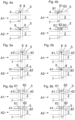
- the Figures 4a to 6b show schematic representations of different configurations of sensors 6, 61, 62 and actuation contours 4, 41, 42.
- the first axial position A1 is shown in the upper illustration and the second axial position A2 in the lower illustration.
- the axial areas B1 and B2 ( Figures 4a and 4b ) or the axial areas B1, B2 and B3 ( Figures 5a to 6b ) (for reasons of clarity, the reference numerals are not given).
- An actuating means 7 for actuating a valve of an internal combustion engine is shown schematically as a pentagon.
- Fig. 6a presents the situation of Fig.3 schematically.
- the Fig. 4a shows an actuating contour 4 and a sensor 6, wherein the sensor 6 and the actuating means 7 are arranged in a first axial region B1.
- the actuating contour 4 is arranged in the first axial region B1, whereby the actuating contour 4 is arranged in the detection area 8 of the sensor 6.
- the actuating contour 4 is active, i.e. it is in engagement with the actuating means 7.
- the actuating contour 4 is arranged in the second axial area B2. It is therefore neither detected by the sensor 6 nor is it active.
- the first axial position A1 is present. If no actuating contour 4 is detected, the second axial position A2 is present.
- the rotational position, phase and/or shape of the actuation contour can only be determined when the actuation contour is active.
- an additional sensor 62 is arranged in the second axial region B2. This allows the rotational position and/or shape of the actuating contour 4 to be determined in both axial positions A1 and A2. In addition, an incorrect intermediate position can be detected if both sensors 61, 62 detect the presence of an actuating contour 4.
- an actuating means 7 can be actuated in a first axial position A1 and not actuated in a second axial position A2.
- the valve is therefore not actuated in the second axial position A2 and remains permanently closed, for example.
- two actuation contours 41, 42 can be provided, which have a different shape from each other.
- the two actuation contours 41, 42 can be arranged directly next to each other. This is the situation in the Figures 5a to 6b , and also the Figures 1 to 3 .
- the first actuating contour 41 is arranged in a first axial region B1 and the second actuating contour 42 is arranged in a second axial region B2.
- the first actuating contour 41 is arranged in a second axial region B2 and the second actuating contour 42 is arranged in a third axial region B3.
- the second axial region B2 lies between the first and third axial regions B1, B3.
- the actuating means 7 is arranged in the central, second axial region B2, so that in the first axial position A1 the second actuating contour 42 is active and in the second axial position A2 the first actuating contour 41 is active.
- the Fig. 5a shows the situation with two actuating contours 41, 42 and a sensor 6.
- the sensor 6 is arranged in the second, central axial area B2.
- the active actuating contour 41, 42 is thus detected by the sensor 6.
- the senor 6 must be able to distinguish between the two actuation contours 41, 42 in order to determine the axial position A1 or A2. This can be done by evaluating the sensor signal, in particular by evaluating the pulse widths of the sensor signal. In principle, an incorrect intermediate position can also be detected, but such detection is based on complicated signal processing.
- the senor 6 is arranged in the first axial region B1.
- the sensor 6 detects the presence of the first actuating contour 41.
- the sensor does not detect an actuating contour 42. Determining the axial position A1, A2 is therefore easier.
- the disadvantage is that an incorrect intermediate position is difficult to detect and would require a complicated analysis of the signal.
- the detection is not redundant.
- the particularly preferred embodiment of the Fig. 6a therefore provides two sensors 61, 62, wherein the sensors are arranged at a distance from one another that is greater than the width of an actuating contour 41 or 42 and smaller than the width of both actuating contours 41 and 42.
- the first sensor 61 is arranged in the first axial region B1 and the second sensor 62 in the third axial region B2.
- the first sensor 61 detects an actuation contour 4 and the second sensor 62 does not detect an actuation contour 4, the first axial position A1 is present. If the first sensor 61 does not detect an actuation contour 4 and the second sensor 62 detects an actuation contour 4, the second axial position A2 is present.
- an incorrect intermediate position can be determined if both sensors 61, 62 detect an actuation contour 4.
- the Fig. 6b shows a further embodiment in which a first sensor 61 is arranged in a first axial region B1 and a second sensor 62 is arranged in a second axial region B2. Determining an incorrect intermediate position is not easily possible by a simple presence measurement.
Landscapes
- Engineering & Computer Science (AREA)
- Mechanical Engineering (AREA)
- General Engineering & Computer Science (AREA)
- Physics & Mathematics (AREA)
- General Physics & Mathematics (AREA)
- Chemical & Material Sciences (AREA)
- Combustion & Propulsion (AREA)
- Valve-Gear Or Valve Arrangements (AREA)
- Output Control And Ontrol Of Special Type Engine (AREA)
- Valve Device For Special Equipments (AREA)
- Measurement Of Length, Angles, Or The Like Using Electric Or Magnetic Means (AREA)
Abstract
Description
- Die Erfindung betrifft eine Ventiltriebvorrichtung mit mindestens einer Welle, wobei eine Anzahl an Betätigungskonturen zum Betätigen wenigstens eines Betätigungsmittels eines Ventils eines Verbrennungsmotors drehfest an der mindestens einen Welle angeordnet ist, wobei eine Sensoreinheit mit einer Anzahl an Sensoren vorgesehen ist, wobei jeder Sensor der Anzahl an Sensoren einen räumlichen Erfassungsbereich zur Erfassung einer physikalischen Größe aufweist. Die Erfindung betrifft weiterhin einen Verbrennungsmotor mit mindestens einem Ventil und mindestens eine Ventiltriebvorrichtung und ein Motorrad mit einem Verbrennungsmotor. Zudem betrifft die Erfindung ein Verfahren zum Bestimmen der Axial- und/oder Drehposition mindestens einer Betätigungskontur zum Betätigen wenigstens eines Betätigungsmittels eines Ventils eines Verbrennungsmotors mittels einer Ventiltriebvorrichtung.
- Aus dem Stand der Technik sind Ventiltriebvorrichtungen mit Betätigungskonturen, insbesondere Nocken, welche axial verschiebbar und drehfest an einer Welle (Nockenwelle) befestigt sind, bekannt. Typischerweise sind an einem Schiebestück mindestens zwei Betätigungskonturen in unterschiedlichen Axialbereichen angeordnet, wobei sich die Betätigungskonturen voneinander unterscheiden. Durch die axiale Verschiebung des Schiebestücks und den darauf angeordneten Betätigungskonturen kann eine der mindestens zwei Betätigungskonturen in Eingriff mit einem Betätigungsmittel eines Motorventils gebracht werden. Durch die verschiedenen Betätigungskonturen können Betätigungsmittel der Motorventile je nach aktiver Betätigungskontur verschieden betätigt werden, insbesondere können zwei verschiedene Betätigungsprofile in Abhängigkeit des Phasenwinkels realisiert werden.
- Beim Eingriff einer ersten Betätigungskontur kann das Motorventil weiter oder länger geöffnet werden als beim Eingriff mit einer zweiten Betätigungskontur. Es kann nur eine Betätigungskontur vorgesehen sein, wobei das Betätigungsmittel der Motorventile entweder von der Betätigungskontur betätigt wird oder gar nicht betätigt wird.
- Die Druckschrift
DE 10 2011 056 833 A1 zeigt eine Ventiltriebvorrichtung für einen Verbrennungsmotor. Die Ventiltriebvorrichtung weist eine Welle sowie ein erstes und ein zweites drehfest und axial verschiebbar auf der Welle angeordnetes Schiebestück auf. Auf dem ersten Schiebestück und auf dem zweiten Schiebestück sind jeweils ein Geberrad mit einer unterschiedlichen Anzahl an Laschen angeordnet. Auf der Welle ist ein Geberrad mit Lücken angeordnet. Je nach axialer Position der Schiebestücke sind unterschiedliche Laschen in die Lücken eingefahren. Ein über dem Geberrad mit den Lücken angeordneter Sensor kann durch Auswertung des Lücken-/Laschenmusters berührungslos die axiale Position des ersten Schiebestücks und des zweiten Schiebestücks bestimmen. Vorteilhafterweise kann das mit einem einzigen Sensor realisiert werden. Die radiale Position der Welle kann ebenfalls bestimmt werden. - Die Druckschrift
US 2014/0303873 A1 zeigt eine Ventiltriebvorrichtung für einen Verbrennungsmotor, welche ein Schiebestück mit zwei Betätigungskonturen aufweist. Am Schiebestück sind zudem zwei nebeneinander angeordnete, unterschiedliche Geberkonturen angeordnet, welche im Erfassungsbereich eines Sensors angeordnet sind. Der Sensor kann bestimmen, welche Betätigungskontur aktiv ist. Ein weiterer Sensor an der Welle (Nockenwelle) kann die Phase der Welle relativ zur Kurbelwelle bestimmen. - Bekannt sind auch einkanalige Sensoren mit separater mechanischer Kontur am Schiebestück, womit die Position des Schiebestücks detektiert werden kann.
- Nachteilig am Stand der Technik ist, dass Geberkonturen vorgesehen sein müssen oder eine separate mechanische Vorrichtung am Schiebestück notwendig ist. Insbesondere bei der Verwendung in Motorradmotoren ist das aufgrund des Platzmangels nicht immer möglich. Zudem sind viele Bauteile nötig, wodurch die Kosten steigen.
- Eine Aufgabe der Erfindung ist, eine platzsparende und bauteilsparende Möglichkeit zu schaffen, die Drehposition und/oder die Axialposition von Betätigungskonturen zum Betätigen wenigstens eines Betätigungsmittels eines Ventils einer Brennkraftmaschine zu bestimmen.
- Die Aufgabe wird durch die Ansprüche 1, 14, 15 und 16 gelöst.
- Erfindungsgemäß ist vorgesehen, dass mindestens eine Betätigungskontur der Anzahl an Betätigungskonturen in zumindest einer Axialposition zumindest teilweise im räumlichen Erfassungsbereich mindestens eines Sensors der Anzahl an Sensoren angeordnet ist.
- Dadurch, dass die mindestens eine Betätigungskontur in zumindest einer Axialposition im räumlichen Erfassungsbereich mindestens eines Sensors angeordnet ist, kann die Präsenz der Betätigungskontur im Erfassungsbereich des mindestens einen Sensors detektiert werden. Damit kann auf die Axialposition der mindestens einen Betätigungskontur rückgeschlossen werden.
- Zudem kann die Form der Betätigungskontur bestimmt werden, wenn der zeitliche Verlauf der physikalischen Größe, hervorgerufen durch die Rotation der Betätigungskontur, analysiert wird.
- Verschiedene Formen der Betätigungskontur können beispielswiese unterschiedliche Pulsweiten im zeitlichen Verlauf eine von der physikalische Größe bedingten Signals hervorrufen.
- Auch kann die Drehposition der Betätigungskontur bestimmt werden, beispielsweise über die Magnitude der physikalischen Größe, oder es kann die Phase der Betätigungskontur relativ zur Kurbelwelle bestimmt werden, beispielsweise über die zeitliche Lage der Pulse.
- Bevorzugt ist vorgesehen, dass der räumliche Erfassungsbereich des mindestens eines Sensors der Anzahl an Sensoren in einem begrenzten axialen Bereich angeordnet ist. Damit kann von der Detektion der Präsenz einer Betätigungskontur im Erfassungsbereich auf eine Axialposition der Anzahl der Betätigungskonturen rückgeschlossen werden.
- Der Erfassungsbereich kann begrenzter als der physikalisch mögliche Erfassungsbereich sein. Bevorzugt kann vorgesehen sein, dass der räumliche Erfassungsbereich des mindestens eines Sensors der Anzahl an Sensoren jenem räumlichen Bereich entspricht, in welchem die Präsenz mindestens einer Betätigungskontur die Messung der physikalischen Größe über einem bestimmten Schwellwert hervorruft. Die Bestimmung, ob ein Schwellwert überschritten ist oder nicht, kann insbesondere in einer Auswerteinheit erfolgen.
- Die Anzahl an Sensoren und/oder Betätigungskonturen kann eins, zwei oder größer sein.
- In einem bevorzugten Ausführungsbeispiel ist an der Welle mindestens ein Schiebestück axial verschiebbar und drehfest gelagert, wobei die Anzahl an Betätigungskonturen am mindestens einen Schiebestück angeordnet ist. Insbesondere sind die Betätigungskonturen der Anzahl der Betätigungskonturen untereinander nicht verschiebbar gelagert.
- Alternativ kann vorgesehen sein, dass die Welle gegenüber dem Betätigungsmittel des Ventils einer Brennkraftmaschine verschiebbar gelagert ist und die Anzahl an Betätigungskonturen vorzugsweise direkt auf der Welle angeordnet sind.
- In einem bevorzugten Ausführungsbeispiel kann jede Betätigungskontur der Anzahl an Betätigungskonturen in zumindest einer Axialposition am mindestens einen Betätigungsmittel des Ventils der Brennkraftmaschine anliegen. Durch das Einnehmen von unterschiedlichen Axialpositionen können unterschiedliche Betätigungskonturen das Betätigungsmittel betätigen, womit ein Ventil des Brennkraftmaschine auf unterschiedliche Art und Weise betrieben werden kann.
- Es ist bevorzugt vorgesehen, dass die Sensoreinheit ortsfest gegenüber einem Zylinderkopf einer Brennkraftmaschine angeordnet ist. Somit kann durch ein Verschieben der Anzahl an Betätigungskonturen jeweils eine unterschiedliche Betätigungskontur mit dem Betätigungsmittel in Eingriff gebracht werden.
- Es kann vorgesehen sein, dass die Anzahl an Sensoren auf einer gemeinsamen Platine der Sensoreinheit angeordnet sind und/oder in einem gemeinsamen Gehäuse der Sensoreinheit angeordnet sind. Damit wird eine besonders kompakte und kostengünstige Bauweise erzielt.
- In einem bevorzugten Ausführungsbeispiel ist die mindestens eine Betätigungskontur der Anzahl an Betätigungskonturen in zumindest einer Axialposition und zumindest einer Drehposition in einem Abstand von weniger als 10 Millimeter, vorzugsweise weniger als 5 Millimeter und besonders bevorzugt weniger als 2,5 Millimeter, von mindestens einem Sensor der Anzahl an Sensoren angeordnet. In dieser Position ist die Betätigungskontur bevorzugt im Erfassungsbereich dieses Sensors. Dieser Abstand kann in jener Drehposition eingenommen werden, in welcher eine "Nase" der Betätigungskontur dem Sensor zugewandt angeordnet ist.
- In einem bevorzugten Ausführungsbeispiel ist der mindestens eine Sensor der Anzahl an Sensoren als berührungsloser Sensor ausgebildet. Als physikalische Größe, welche vom Sensor erfasst wird, kommt beispielsweise ein elektromagnetisches Feld, beispielsweise ein Magnetfeld, ein elektrisches Feld oder eine elektromagnetische Welle infrage.
- Bevorzugt kann der mindestens eine Sensor der Anzahl an Sensoren als Magnetfeldsensor, insbesondere Hall-Sensor, ausgebildet sein, vorzugsweise wobei ein von der mindestens einen Betätigungskontur erzeugtes und/oder von der mindestens einen Betätigungskontur beeinflusstes Magnetfeld im Erfassungsbereich vom mindestens einen Sensor erfassbar ist.
- In einem bevorzugten Ausführungsbeispiel kann die Präsenz und/oder die Form und/oder die Drehposition und/oder die Phase mindestens einer Betätigungskontur der Anzahl an Betätigungskonturen im Erfassungsbereich eines Sensors der Anzahl an Sensoren von diesem Sensor, insbesondere zusammen mit einer Auswerteeinheit, detektierbar sein.
- Eine Detektion der "Präsenz" mindestens einer Betätigungskontur bedeutet die Bestimmung, ob eine Betätigungskontur im Erfassungsbereich angeordnet ist.
- Eine Detektion der "Form" mindestens einer Betätigungskontur lässt einen Rückschluss darauf zu, welche Betätigungskontur im Erfassungsbereich ist.
- Eine Detektion der "Drehposition" mindestens einer Betätigungskontur lässt einen Rückschluss auf die Drehposition der Betätigungskontur, insbesondere relativ zur Kurbelwelle, zu. Insbesondere kann es sich um eine statische Drehposition handeln.
- Mit "Phase" ist die Phase der Rotation der (Nocken-)Welle, beispielsweise in Relation zur Kurbelwelle, gemeint.
- Es kann vorgesehen sein, dass vom mindestens einen Sensor eine in Abhängigkeit der Präsenz und/oder Form und/oder Drehposition und/oder Phase der im Erfassungsbereich befindlichen mindestens einen Betätigungskontur veränderliche physikalische Größe messbar ist.
- Insbesondere ist vorgesehen, dass ein von der physikalischen Größe abhängiges, vorzugsweise elektrisches, Signal an eine Auswerteeinheit übermittelbar ist, wobei das Signal, insbesondere der zeitliche Verlauf des Signals, von der Auswerteeinheit auswertbar ist.
- Die Auswerteeinheit kann dazu konfiguriert sein, auf eine Axialposition und/oder eine Drehposition der mindestens einen Betätigungskontur rückzuschließen, vorzugsweise durch Auswerten von einer Stärke und/oder Pulslängen des Signals.
- Beispielsweise kann von einem Vorliegen einer bestimmten Stärke des Signals, insbesondere eines Mittelwerts oder eines Maximums, auf die Präsenz einer Betätigungskontur im Erfassungsbereich und damit auf die Axialposition der Betätigungskontur geschlossen werden. Auch kann auf eine Drehposition der mindestens einen Betätigungskontur rückgeschlossen werden, da die Stärke je nach Drehposition größer oder kleiner sein kann.
- Beispielsweise kann mittels einer Pulslänge des Signals auf die Form einer Betätigungskontur rückgeschlossen werden, damit kann bestimmt werden, welche Betätigungskontur im Erfassungsbereich angeordnet ist. Auch kann mittels der Pulslänge auf eine Phase der Betätigungskontur, beispielsweise relativ zur Kurbelwelle, rückgeschlossen werden.
- In einem besonders bevorzugten Ausführungsbeispiel ist der axiale Abstand zwischen zwei Sensoren der Anzahl an Sensoren größer als die axiale Breite mindestens einer Betätigungskontur der Anzahl an Betätigungskonturen. Damit wird ein "toter Bereich" zwischen zwei Erfassungsbereichen geschaffen. Durch den axialen Abstand von mindestens einer Betätigungskontur kann eine Betätigungskontur zwischen zwei Erfassungsbereichen angeordnet sein, ohne selbst erfasst zu werden.
- Insbesondere können in einer solchen Situation zwei Betätigungskonturen vorgesehen sein, sodass eine erste Betätigungskontur im Erfassungsbereich eines Sensors angeordnet ist und eine zweite Betätigungskontur im toten Bereich angeordnet ist.
- Zusätzlich oder alternativ kann vorgesehen sein, dass der axiale Abstand zwischen zwei Sensoren der Anzahl an Sensoren kleiner als die axiale Breite zweier nebeneinander angeordneter Betätigungskonturen der Anzahl an Betätigungskonturen ist.
- Im toten Bereich zwischen den zwei Erfassungsbereichen haben damit nicht zwei Betätigungskonturen Platz.
- Es kann vorgesehen sein, dass von einer Auswerteeinheit der Sensorsignale eine Fehlermeldung ausgebbar ist, wenn mindestens zwei, vorzugsweise beide, Sensoren die Präsenz einer Betätigungskontur in ihrem Erfassungsbereich detektieren.
- Dies ist insbesondere dann vorteilhaft, wenn zwei nebeneinander angeordnete Betätigungskonturen vorgesehen sind, wobei die Erfassungsbereiche zweier Sensoren einen Abstand von weniger als die axiale Breite beider Betätigungskonturen groß ist. Dann gibt es eine fehlerhafte Zwischenposition, bei welcher jeweils eine Betätigungskontur zumindest teilweise in einem Erfassungsbereich angeordnet ist. In so einer Zwischenposition detektieren beide Sensoren die Präsenz einer Betätigungskontur in ihrem Erfassungsbereich.
- Es ist besonders bevorzugt vorgesehen, dass von der Anzahl an Betätigungskonturen eine erste Axialposition und eine zweite Axialposition relativ zur Sensoreinheit einnehmbar ist. Insbesondere ist diese erste und zweite Axialposition im Normalbetrieb einnehmbar. Nur bei einer fehlerhaften Funktionsweise kann eine Axialposition dazwischen eingenommen werden.
- In einem Ausführungsbeispiel ist vorgesehen, dass mindestens eine Betätigungskontur der Anzahl an Betätigungskonturen in der ersten Axialposition im Erfassungsbereich mindestens eines Sensors der Anzahl an Sensoren und in der zweiten Axialposition außerhalb des Erfassungsbereichs dieses mindestens einen Sensors angeordnet ist. Durch die Bestimmung der Präsenz der mindestens einen Betätigungskontur im Erfassungsbereich kann auf die Axialposition geschlossen werden.
- Es ist besonders bevorzugt vorgesehen, dass die Anzahl der Sensoren einen ersten Sensor mit einem ersten Erfassungsbereich und einen zweiten Sensor mit einem zweiten Erfassungsbereich umfasst, insbesondere aus diesen besteht. Dabei ist insbesondere vorgesehen, dass der erste Sensor und der zweite Sensor so angeordnet sind, dass der erste und der zweite Erfassungsbereich zumindest teilweise verschiedene räumliche Bereiche einnehmen. So kann beispielsweise die Präsenz einer Betätigungskontur in mehreren Bereichen detektiert werden.
- In einem möglichen Ausführungsbeispiel ist mindestens eine Betätigungskontur der Anzahl an Betätigungskonturen in der ersten Axialposition im Erfassungsbereich des ersten Sensors und in der zweiten Axialposition im Erfassungsbereich des zweiten Sensors angeordnet.
- In einem bevorzugten Ausführungsbeispiel umfasst die Anzahl an Betätigungsvorrichtungen eine erste Betätigungsvorrichtung und eine zweite Betätigungsvorrichtung. Es ist dabei besonders bevorzugt vorgesehen, dass die Form der ersten Betätigungsvorrichtung von der Form der zweiten Betätigungsvorrichtung verschieden ist.
- In einem möglichen Ausführungsbeispiel sind die zweite Betätigungskontur in der ersten Axialposition im Erfassungsbereich mindestens eines Sensors der Anzahl an Sensoren angeordnet und die erste Betätigungskontur in der zweiten Axialposition im Erfassungsbereich dieses mindestens einen Sensors angeordnet.
- In einem besonders bevorzugten Ausführungsbeispiel ist die erste Betätigungskontur in der ersten Axialposition im Erfassungsbereich des ersten Sensors angeordnet und/oder die zweite Betätigungskontur in der ersten Axialposition außerhalb des Erfassungsbereichs des zweiten Sensors.
- Zudem oder alternativ kann vorgesehen sein, dass die zweite Betätigungskontur in der zweiten Axialposition im Erfassungsbereich des zweiten Sensors ist und/oder die erste Betätigungskontur in der zweiten Axialposition außerhalb des Erfassungsbereichs des ersten Sensors ist.
- Detektiert der erste Sensor die Präsenz einer Betätigungskontur (der ersten), kann daraus geschlossen werden, dass die erste Axialposition vorliegt. Zudem kann vorgesehen sein, dass für die Bestimmung, dass die erste Axialposition vorliegt, der zweite Sensor die Präsenz keiner Betätigungskontur detektieren muss.
- Detektiert der zweite Sensor die Präsenz einer Betätigungskontur (der zweiten), kann darauf geschlossen werden, dass die zweite Axialposition vorliegt. Zudem kann vorgesehen sein, dass für die Bestimmung, dass die zweite Axialposition vorliegt, der erste Sensor die Präsenz keiner Betätigungskontur detektieren muss.
- Detektiert sowohl der erste als auch der zweite Sensor die Präsenz einer Betätigungskontur (der ersten bzw. der zweiten), liegt eine fehlerhafte Zwischenposition vor und es kann eine Fehlermeldung ausgegeben werden und/oder der Motor gestoppt werden.
- Es kann, insbesondere im Kontext der vorangehenden Absätze, in der ersten Axialposition die zweite Betätigungskontur und/oder in der zweiten Axialposition die erste Betätigungskontur am mindestens einen Betätigungsmittel anliegen.
- Insbesondere ist das Betätigungsmittel in einem axialen Bereich zwischen den beiden Sensoren, insbesondere ihrer Erfassungsbereiche, angeordnet. Die aktive Betätigungskontur, welche das Betätigungsmittel betätigt, ist damit jene Betätigungskontur, welche gerade nicht in einem Erfassungsbereich befindlich ist.
- In einem erfindungsgemäßen Verfahren zum Bestimmen der Axial- und/oder Drehposition mindestens einer Betätigungskontur zum Betätigen wenigstens eines Betätigungsmittels eines Ventils einer Brennkraftmaschine mittels einer Ventiltriebvorrichtung, insbesondere nach einem der vorhergehenden Ansprüche, sind die folgenden Verfahrensschritten vorgesehen:
- Detektieren mindestens einer physikalischen Größe, insbesondere eines Magnetfelds, durch mindestens einen Sensor einer Anzahl an Sensoren, wobei die mindestens eine physikalische Größe von der im räumlichen Erfassungsbereich des mindestens einen Sensors befindlichen Betätigungskontur, insbesondere von deren Präsenz, Form, Phase und/oder Drehposition, beeinflusst wird,
- der mindestens eine Sensor gibt ein, vorzugsweise elektrisches, Signal in Abhängigkeit der mindestens einen detektierten physikalischen Größe an eine Auswerteeinheit ab,
- das Signal, vorzugsweise eine Stärke und/oder mindestens eine Pulslänge des Signals, wird von der Auswerteeinheit ausgewertet,
- es wird auf die Axial- und/oder Drehposition und/oder Phase der mindestens einen Betätigungskontur rückgeschlossen.
- Weitere Ausführungsbeispiel und Details sind den Figuren zu entnehmen. Dabei zeigen:
- Fig. 1
- Ventiltriebvorrichtung mit einer Sensoreinheit und einem Schiebestück in perspektivischer Darstellung
- Fig. 2a
- Ventiltriebvorrichtung mit einer Sensoreinheit mit zwei Sensoren und einem Schiebestück mit zwei Betätigungskonturen in einer Schnittdarstellung
- Fig. 2b
- Ventiltriebvorrichtung aus
Fig. 2a in einer alternativen Schnittdarstellung - Fig. 3
- Ventiltriebvorrichtung mit einer Sensoreinheit mit zwei Sensoren und einem Schiebestück mit zwei Betätigungskonturen in einer ersten und einer zweiten Axialposition
- Fig. 4a
- Schematische Darstellung einer Ventiltriebvorrichtung mit einer Betätigungskontur und einem Sensor
- Fig. 4b
- Schematische Darstellung einer Ventiltriebvorrichtung mit einer Betätigungskontur und zwei Sensoren
- Fig. 5a
- Schematische Darstellung einer Ventiltriebvorrichtung mit zwei Betätigungskonturen und einem zentralen Sensor
- Fig. 5b
- Schematische Darstellung einer Ventiltriebvorrichtung mit zwei Betätigungskonturen und einem dezentralen Sensor
- Fig. 6a
- Schematische Darstellung einer Ventiltriebvorrichtung mit zwei Betätigungskonturen und zwei beabstandeten Sensoren
- Fig. 6b
- Schematische Darstellung einer Ventiltriebvorrichtung mit zwei Betätigungskonturen und zwei dezentralen Sensoren
- Die
Fig. 1 zeigt eine Ventiltriebvorrichtung 1 mit einer Sensoreinheit 5 und einem Schiebestück 3 in perspektivischer Darstellung. - Das Schiebestück 3 weist an der Innenseite eine Kerbverzahnung 2 auf, mittels welche das Schiebestück 3 drehfest und axial verschiebbar auf einer Welle (oder Nockenwelle, nicht dargestellt) gelagert werden kann.
- Das Schiebestück 3 weist eine Anzahl an Bestätigungskonturen 4 auf, mittels welcher ein Betätigungsmittel 7 eines Ventils einer Brennkraftmaschine bestätigt werden kann. Insbesondere ist sind die Betätigungskonturen 4 als Nocke mit einem Vorsprung ausgeformt.
- Insbesondere sind zwei Betätigungskonturen 41, 42 an einem ersten Ende des Schiebstücks 3 vorgesehen, wie in den
Figuren 2a bis 6b besser ersichtlich ist. Zudem ist ein weiteres Paar an Betätigungskonturen 10 am zweiten Ende des Schiebestücks 3 vorgesehen. - Anstatt auf einem Schiebestück 3 wie in
Fig. 1 können die Betätigungskonturen 4 prinzipiell auch auf der Welle direkt angeordnet sein, wobei dann die Welle axial verschiebbar gelagert sein kann. - In beiden Fällen kann die Betätigungskontur 4 axial verschoben werden, entweder mit dem Schiebestück 3 oder mit der Welle.
- Das Schiebestück 3 weist eine Schaltkulisse 9 auf, mittels welcher das Schiebestück 3 beispielsweise von einem nicht gezeigten Schaltstift zwischen zwei Axialpositionen A1 und A2 verschiebbar ist.
- In
Fig. 1 ist zudem eine Sensoreinheit 5 gezeigt. Die Sensoreinheit 5 ist neben dem Schiebestück 3 angeordnet und weist an der dem Schiebestück 3 zugewandten Seite eine Anzahl an Sensoren 6 auf. Die Sensoreinheit 5 weist ein Gehäuse auf, wobei die Anzahl an Sensoren 6 im Gehäuse angeordnet sind. Entsprechende, vorzugsweise elektrische, Verbindungsmittel verbinden die Sensoreinheit 5 beispielsweise mit einer zentralen Steuereinheit des Fahrzeugs mit der Brennkraftmaschine. - Insbesondere ist mindestens ein Sensor 6 den Betätigungskonturen 4, 41, 42 zugewandt, sodass diese in einem Erfassungsbereich 8 mindestens eines Sensors 6 angeordnet sein können.
- Die weiteren Betätigungskonturen 10 sind nicht im Erfassungsbereich 8 eines Sensors 6 angeordnet und werden nicht detektiert. Eine Erfassung der weiteren Betätigungskonturen 10 ist nicht unbedingt notwendig, da die Axialposition A1, A2 des Schiebestücks 3 auch allein mittels der Detektion der Betätigungskonturen 4, 41, 42 erfolgen kann.
- Die
Fig. 2a zeigt eine Schnittdarstellung insbesondere der Vorrichtung ausFig. 1 . Es ist aus dem Schnitt ersichtlich, dass die beiden Betätigungskonturen 41, 42 jeweils eine unterschiedliche Form aufweisen. Die Stärke oder Phase der Betätigung eines nicht gezeigten Betätigungsmittels 7 unterscheiden sich daher, je nachdem welche Betätigungskontur aktiv ist. - In der Sensoreinheit sind zwei Sensoren 6, einer erster Sensor 61 und ein zweiter Sensor 62, angeordnet. Die Sensoren 61, 62 sind auf einer gemeinsamen Platine 11 und innerhalb eines gemeinsamen Gehäuses 12 angeordnet.
- Die
Fig. 2b zeigt eine alternative Schnittdarstellung des Gegenstands aus derFig. 2a . In dieser Darstellung ist die Form der Betätigungskontur 41 gut ersichtlich. - Zudem ist die dahinter liegenden Betätigungskontur 10 ersichtlich, welche die gleiche Form wie die nicht ersichtliche Betätigungskontur 42 hat. Diese hat eine von der geschnittenen Betätigungskontur 41 verschiedene Form, insbesondere ist die radiale Ausdehnung größer.
- Die Betätigungskontur 41 weist in dieser Drehposition den minimalen Abstand von einem Sensor 61 auf, welcher in der Sensoreinheit 5 angeordnet ist.
- Aufgrund der gleichen axialen Anordnung liegt die Betätigungskontur 41 im Erfassungsbereich 81 des Sensors 61.
- Die
Fig. 3 zeigt zwei Axialpositionen A1 und A2 der Anzahl an Betätigungskonturen 4 (und des Schiebestücks 3) relativ zur Sensoreinheit 5. Die Sensoreinheit 5 ist vorzugsweise ortsfest zu einem Zylinderkopf der Brennkraftmaschine angeordnet. - Die obere Darstellung zeigt die erste Axialposition A1.
- Die erste Betätigungskontur 41 und der erste Sensor 61 sind in einem ersten Axialbereich B1 angeordnet. Damit ist die erste Betätigungskontur im Erfassungsbereich 81 des Sensors 61.
- Die zweite Betätigungskontur 42 ist in einem zweiten Axialbereich B2. In diesem Axialbereich B2 ist kein Sensor angeordnet. Im zweiten Axialbereich B2 ist ein Betätigungsmittel 7 (nicht gezeigt in
Fig. 3 ) zum Betätigen eines Ventils der Brennkraftmaschine angeordnet. - Im eingebauten Zustand liegt die zweite Betätigungskontur 42 damit in der ersten Axialposition A1 am Betätigungsmittel 7 an, zumindest in einer bestimmten Drehposition.
- In einem dritten Axialbereich B3 ist in der ersten Axialposition der Anzahl an Betätigungskonturen 4 keine Betätigungskontur angeordnet. Der Sensor 62, welche in diesem Axialbereich B3 angeordnet ist, detektiert daher keine Betätigungskontur 4.
- Die erste Axialposition A1 ist folgend zusammengefasst:
- die zweite Betätigungskontur 42 ist die aktive Betätigungskontur, welche in Kontakt mit dem Betätigungsmittel 7 steht,
- der erste Sensor 61 detektiert die Präsenz, und gegebenenfalls die Form, Phase und/oder Drehposition, des ersten Betätigungskontur 41,
- der zweite Sensor 62 detektiert keine Betätigungskontur 4.
- Die untere Darstellung der
Fig. 3 zeigt die zweite Axialposition A2. - Der erste Sensor 61 ist im ersten Axialbereich B1 angeordnet, womit der erste Sensor 61 keine Betätigungskontur 4 detektiert.
- Die erste Betätigungskontur 41 ist in einem zweiten Axialbereich B2 angeordnet. In diesem Axialbereich B2 ist kein Sensor angeordnet. Im zweiten Axialbereich B2 ist ein Betätigungsmittel 7 (nicht gezeigt in
Fig. 3 ) zum Betätigen eines Ventils der Brennkraftmaschine angeordnet. - Im eingebauten Zustand liegt die erste Betätigungskontur 41 damit in der zweiten Axialposition A2 am Betätigungsmittel 7 an, zumindest in einer bestimmten Drehposition.
- In einem dritten Axialbereich B3 ist in der zweiten Axialposition A2 die zweite Betätigungskontur 42 angeordnet. Der Sensor 62, welcher in diesem Axialbereich B3 angeordnet ist, detektiert daher die zweite Betätigungskontur 42.
- Die zweite Axialposition A2 ist folgend zusammengefasst:
- die erste Betätigungskontur 41 ist die aktive Betätigungskontur, welche in Kontakt mit dem Betätigungsmittel 7 steht,
- der zweite Sensor 62 detektiert die Präsenz, und gegebenenfalls die Form, Phase und/oder Drehposition, des zweiten Betätigungskontur 42,
- der erste Sensor 61 detektiert keine Betätigungskontur 4.
- Im Prinzip würde zur Bestimmung der Axialposition A1, A2 nur einer der Sensoren 61, 62 ausreichen. Durch die Ausführung mit zwei Sensoren wird eine Redundanz geschaffen.
- In einer nicht dargestellte Zwischenposition zwischen der ersten Axialposition A1 und der zweiten Axialposition A2 kann die erste Betätigungskontur 41 in den Erfassungsbereich 81 des ersten Sensors 61 ragen und die zweite Betätigungskontur 42 in den Erfassungsbereich 82 des zweiten Sensors 62 ragen. Somit können beide Sensoren 61, 62 die Präsenz einer Betätigungskontur detektieren. Sollte ein solcher Zustand nicht nur bei einem kurzen Schaltprozess eingenommen werden, liegt eine Fehlposition vor. Durch das zweifache Detektorsignal kann eine Fehlermeldung getriggert werden, oder es kann der Motor automatisch abgestellt werden.
- Die Sensoren 61, 62 sind so konfiguriert, dass der räumliche Erfassungsbereich 81, 82 in einem begrenzten axialen Abschnitt angeordnet ist.
- Beispielsweise kann der Erfassungsbereich 81 des Sensors 61 oder der Erfassungsbereich 82 des Sensors 62 den Axialbereich B1 bzw. B3 umfassen. Insbesondere sollte der Erfassungsbereich 81 des Sensors 61 oder der Erfassungsbereich 82 des Sensors 62 nicht in den Axialbereich B2 ragen.
- In radialer Richtung ist der Erfassungsbereich 81 des Sensors 61 und der Erfassungsbereich 82 des Sensors 62 ebenfalls begrenzt, insbesondere so, dass zumindest eine "Nase" der Betätigungskontur 41 bzw. 42 detektierbar ist.
- Die Sensibilität der Sensoren 61, 62 kann an die jeweiligen Dimensionen, beispielsweise den Minimalabstand der Betätigungskontur zum Sensor, angepasst werden.
- Die
Figuren 4a bis 6b zeigen schematische Darstellungen verschiedener Konfigurationen von Sensoren 6, 61, 62 und Betätigungskonturen 4, 41, 42. Es ist jeweils die erste Axialposition A1 in der oberen Darstellung und die zweite Axialposition A2 in der unteren Darstellung gezeigt. Mittels strichpunktierter Linien sind die Axialbereiche B1 und B2 (Figuren 4a und 4b ) oder die Axialbereiche B1, B2 und B3 (Figuren 5a bis 6b ) dargestellt (aus Gründen der Übersichtlichkeit sind die Bezugszeichen nicht angegeben). Ein Betätigungsmittel 7 zum Betätigen eines Ventils einer Brennkraftmaschine ist schematisch als Pentagon dargestellt. - Die Konfiguration in
Fig. 6a stellt die Situation derFig. 3 schematisch dar. - Die
Fig. 4a zeigt eine Betätigungskontur 4 und einen Sensor 6, wobei der Sensor 6 und das Betätigungsmittel 7 in einem ersten Axialbereich B1 angeordnet sind. - In der ersten Axialposition A1 ist die Betätigungskontur 4 im ersten Axialbereich B1 angeordnet, womit die Betätigungskontur 4 im Erfassungsbereich 8 des Sensors 6 angeordnet ist. Die Betätigungskontur 4 ist aktiv, steht also mit dem Betätigungsmittel 7 in Eingriff.
- In der zweiten Axialposition A2 ist die Betätigungskontur 4 im zweiten Axialbereich B2 angeordnet. Sie wird daher weder vom Sensor 6 erfasst, noch ist sie aktiv.
- Wird eine Betätigungskontur 4 von Sensor 6 detektiert, liegt die erste Axialposition A1 vor. Wird keine Betätigungskontur 4 detektiert, liegt die zweite Axialposition A2 vor.
- Die Drehposition, Phase und/oder Form der Betätigungskontur kann nur dann bestimmt werden, wenn die Betätigungskontur aktiv ist.
- In
Fig. 4b ist ein zusätzlicher Sensor 62 im zweiten Axialbereich B2 angeordnet. Damit kann die Drehposition und/oder Form der Betätigungskontur 4 in beiden Axialpositionen A1 und A2 bestimmt werden. Zudem kann eine fehlerhafte Zwischenstellung detektiert werden, wenn beide Sensoren 61, 62 die Präsenz eines Betätigungskontur 4 erfassen. - Mit einer verschiebbaren Betätigungskontur 4 kann ein Betätigungsmittel 7 in einer ersten Axialposition A1 betätigt werden und in einer zweiten Axialposition A2 nicht betätigt werden. Das Ventil wird demnach in der zweiten Axialposition A2 nicht betätigt, und bleibt beispielsweise permanent geschlossen.
- Typischerweise ist eine unterschiedliche Betätigung des Ventils erwünscht. Hierzu können zwei Betätigungskonturen 41, 42 vorgesehen sein, welche eine voneinander verschiedene Form aufweisen. Die zwei Betätigungskonturen 41, 42 können direkt nebeneinander angeordnet sein. Das ist die Situation in den
Figuren 5a bis 6b , und auch denFiguren 1 bis 3 . - In den
Figuren 5a bis 6b ist in der ersten Axialposition A1 die erste Betätigungskontur 41 in einem ersten Axialbereich B1 angeordnet und die zweite Betätigungskontur 42 in einem zweiten Axialbereich B2 angeordnet. In der zweiten Axialposition A2 ist die erste Betätigungskontur 41 in einem zweiten Axialbereich B2 angeordnet und die zweite Betätigungskontur 42 in einem dritten Axialbereich B3 angeordnet. Der zweite Axialbereich B2 liegt zwischen dem ersten und dem dritten Axialbereich B1, B3. - Das Betätigungsmittel 7 ist im zentralen, zweiten Axialbereich B2 angeordnet, sodass in der ersten Axialstellung A1 die zweite Betätigungskontur 42 aktiv ist und in der zweiten Axialstellung A2 die erste Betätigungskontur 41 aktiv ist.
- Die
Fig. 5a zeigt die Situation mit zwei Betätigungskonturen 41, 42 und einem Sensor 6. Der Sensor 6 ist im zweiten, zentralen Axialbereich B2 angeordnet. Es wird damit jeweils die aktive Betätigungskontur 41, 42 vom Sensor 6 erfasst. - In dieser Konfiguration muss der Sensor 6 zwischen den beiden Betätigungskonturen 41, 42 unterscheiden können, um die Axialposition A1 oder A2 zu bestimmen. Das kann mittels einer Auswertung des Sensorsignals erfolgen, insbesondere mittels einer Auswertung der Pulsweiten des Sensorsignals. Eine fehlerhafte Zwischenposition kann im Prinzip auch detektiert werden, eine solch Detektion beruht jedoch auf komplizierter Signalverarbeitung.
- Vorteilhaft ist, die Bestimmung der Axialposition A1, A2 von der Erfassung der Präsenz einer Betätigungskontur 41, 42 abhängig zu machen, und nicht etwa deren Form.
- In die
Fig. 5b ist der Sensor 6 dazu im ersten Axialbereich B1 angeordnet. In der ersten Axialposition A1 erfasst der Sensor 6 die Präsenz der ersten Betätigungskontur 41. In der zweiten Axialposition A2 erfasst der Sensor keine Betätigungskontur 42. Die Bestimmung der Axialposition A1, A2 ist damit einfacher. - Nachteilig ist, dass eine fehlerhafte Zwischenposition nur schwer detektierbar ist und eine komplizierte Analyse des Signals erfordern würde. Zudem ist die Erfassung nicht redundant.
- Das besonders bevorzugte Ausführungsbeispiel der
Fig. 6a sieht demnach zwei Sensoren 61, 62 vor, wobei die Sensoren mit einem Abstand zueinander angeordnet sind, der größer als die Breite einer Betätigungskontur 41 oder 42 und kleiner als die Breite beider Betätigungskonturen 41 und 42 ist. Insbesondere ist der erste Sensor 61 im ersten Axialbereich B1 und der zweite Sensor 62 im dritten Axialbereich B2 angeordnet. - Es gelten die Ausführungen, die zu
Fig. 3 gemacht wurden. Mit dieser Sensoranordnung ist eine redundante Bestimmung der Axialposition A1, A2 auf Basis einer Präsenzbestimmung von Betätigungselementen möglich. Zudem wird die Detektion einer fehlerhaften Zwischenposition auf Basis einer Präsenzbestimmung von Betätigungselementen möglich. - Erfasst der erste Sensor 61 eine Betätigungskontur 4 und erfasst der zweite Sensor 62 keine Betätigungskontur 4 liegt die erste Axialposition A1 vor. Erfasst der erste Sensor 61 keine Betätigungskontur 4 und erfasst der zweite Sensor 62 eine Betätigungskontur 4 liegt die zweite Axialposition A2 vor.
- Optional kann eine fehlerhafte Zwischenposition bestimmt werden, wenn beide Sensoren 61, 62 eine Betätigungskontur 4 erfassen.
- Die
Fig. 6b zeigt ein weiteres Ausführungsbeispiel, bei welchem ein erster Sensor 61 in einem ersten Axialbereich B1 angeordnet ist und ein zweiter Sensor 62 in einem zweiten Axialbereich B2 angeordnet ist. Eine Bestimmung einer fehlerhaften Zwischenposition ist nicht ohne Weiteres durch eine einfache Präsenzmessung möglich. -
- 1
- Ventiltriebvorrichtung
- 2
- Kerbverzahnung
- 3
- Schiebestück
- 4
- Betätigungskontur
41 erste Betätigungskontur
42 zweite Betätigungskontur - 5
- Sensoreinheit
- 6
- Sensor
61 erster Sensor
62 zweiter Sensor - 7
- Betätigungsmittel
- 8
- Erfassungsbereich
81 Erfassungsbereich des ersten Sensors
82 Erfassungsbereich des zweiten Sensors - 9
- Schaltkulisse
- 10
- nicht erfassbare Bestätigungskontur
- 11
- Platine
- 12
- Gehäuse
- A1
- erste Axialposition
- A2
- zweite Axialposition
- B1
- erster Axialbereich
- B2
- zweiter Axialbereich
- B3
- dritter Axialbereich
Claims (16)
- Ventiltriebvorrichtung (1) mit mindestens einer Welle, wobei eine Anzahl an Betätigungskonturen (4) zum Betätigen wenigstens eines Betätigungsmittels (7) eines Ventils eines Verbrennungsmotors drehfest an der mindestens einen Welle angeordnet ist, wobei eine Sensoreinheit (5) mit einer Anzahl an Sensoren (6) vorgesehen ist, wobei jeder Sensor (6) der Anzahl an Sensoren (6) einen räumlichen Erfassungsbereich (8) zur Erfassung einer physikalischen Größe aufweist, dadurch gekennzeichnet, dass mindestens eine Betätigungskontur (4) der Anzahl an Betätigungskonturen (4) in zumindest einer Axialposition (A1, A2) zumindest teilweise im räumlichen Erfassungsbereich (8) mindestens eines Sensors (6) der Anzahl an Sensoren (6) angeordnet ist.
- Ventiltriebvorrichtung (1) nach dem vorhergehenden Anspruch, wobei der räumliche Erfassungsbereich (8) des mindestens eines Sensors (6) der Anzahl an Sensoren (6)- in einem begrenzten axialen Bereich angeordnet ist, und/oder- jenem räumlichen Bereich entspricht, in welchem die Präsenz mindestens einer Betätigungskontur (4) die Messung der physikalischen Größe über einem bestimmten Schwellwert hervorruft.
- Ventiltriebvorrichtung (1) nach einem der vorhergehenden Ansprüche, wobei- an der Welle mindestens ein Schiebestück (3) axial verschiebbar und drehfest gelagert ist, wobei die Anzahl an Betätigungskonturen (4) am mindestens einen Schiebestück (3) angeordnet ist, und/oder- die Welle gegenüber dem Betätigungsmittel (7) des Ventils eines Verbrennungsmotors verschiebbar gelagert ist und die Anzahl an Betätigungskonturen (4) vorzugsweise direkt auf der Welle angeordnet sind.
- Ventiltriebvorrichtung (1) nach einem der vorhergehenden Ansprüche, wobei- die Sensoreinheit (5) ortsfest gegenüber einem Zylinderkopf des Verbrennungsmotors angeordnet ist, und/oder- die Anzahl an Sensoren (6) auf einer gemeinsamen Platine (11) der Sensoreinheit (5) angeordnet sind und/oder in einem gemeinsamen Gehäuse (12) der Sensoreinheit (5) angeordnet sind, und/oder- der mindestens eine Sensor (6) der Anzahl an Sensoren (6) als berührungsloser Sensor ausgebildet ist und/oder wobei der mindestens eine Sensor (6) der Anzahl an Sensoren (6) als Magnetfeldsensor, insbesondere Hall-Sensor, ausgebildet ist, vorzugsweise wobei ein von der mindestens einen Betätigungskontur (4) erzeugtes und/oder von der mindestens einen Betätigungskontur (4) beeinflusstes Magnetfeld im Erfassungsbereich (8) vom mindestens einen Sensor (6) erfassbar ist.
- Ventiltriebvorrichtung (1) nach einem der vorhergehenden Ansprüche, wobei- die Präsenz, Form, die Drehposition und/oder die Phase mindestens einer Betätigungskontur (4) der Anzahl an Betätigungskonturen (4) im Erfassungsbereich (8) eines Sensors (6) der Anzahl an Sensoren (6) von diesem Sensor (6), insbesondere zusammen mit einer Auswerteeinheit, detektierbar ist, und/oder- vom mindestens einen Sensor (6) eine in Abhängigkeit der Präsenz, Form, Phase und/oder Drehposition der im Erfassungsbereich (8) befindlichen mindestens einen Betätigungskontur (4) veränderliche physikalische Größe messbar ist.
- Ventiltriebvorrichtung (1) nach einem der vorhergehenden Ansprüche, wobei ein von der physikalischen Größe abhängiges, vorzugsweise elektrisches, Signal an eine Auswerteeinheit übermittelbar ist, wobei das Signal, insbesondere der zeitliche Verlauf des Signals, von der Auswerteeinheit auswertbar ist, und/oder eine Auswerteeinheit dazu konfiguriert ist, auf eine Axialposition (A1, A2) und/oder eine Drehposition und/oder eine Phase der mindestens einen Betätigungskontur (4) rückzuschließen, vorzugsweise durch Auswerten von einer Stärke und/oder Pulslängen des Signals der Anzahl an Sensoren (6).
- Ventiltriebvorrichtung (1) nach einem der vorhergehenden Ansprüche, wobei der axiale Abstand zwischen zwei Sensoren (6) der Anzahl an Sensoren (6) größer als die axiale Breite mindestens einer, insbesondere genau einer, Betätigungskontur (4) der Anzahl an Betätigungskonturen (4) und/oder kleiner als die axiale Breite zweier nebeneinander angeordneter Betätigungskonturen (4) der Anzahl an Betätigungskonturen (4) ist, wobei insbesondere zwei Betätigungskonturen (4) vorgesehen sind.
- Ventiltriebvorrichtung (1) nach einem der vorhergehenden Ansprüche, wobei von der Anzahl an Betätigungskonturen (4) eine erste Axialposition (A1) und eine zweite Axialposition (A2) relativ zur Sensoreinheit (5) einnehmbar ist.
- Ventiltriebvorrichtung (1) nach dem vorhergehenden Anspruch, wobei mindestens eine Betätigungskontur (4) der Anzahl an Betätigungskonturen (4) in der ersten Axialposition (A1) im Erfassungsbereich (8) mindestens eines Sensors (6) der Anzahl an Sensoren (6) und in der zweiten Axialposition (A2) außerhalb des Erfassungsbereichs (8) dieses mindestens einen Sensors (6) angeordnet ist (Fig. 4a, auch Figs. 5b, 6a, 6b).
- Ventiltriebvorrichtung (1) nach Anspruch 8 und 9, wobei mindestens eine Betätigungskontur (4) der Anzahl an Betätigungskonturen (4) in der ersten Axialposition (A1) im Erfassungsbereich (81) des ersten Sensors (61) und in der zweiten Axialposition (A2) im Erfassungsbereich (82) des zweiten Sensors (62) angeordnet ist (Fig. 4b, auch Fig. 6b, Umgehungslösung).
- Ventiltriebvorrichtung (1) nach einem der vorhergehenden Ansprüche, wobei die Anzahl an Betätigungsvorrichtungen (4) eine erste Betätigungsvorrichtung (41) und eine zweite Betätigungsvorrichtung (42) umfasst, vorzugsweise wobei die Form der ersten Betätigungsvorrichtung (41) von der Form der zweiten Betätigungsvorrichtung (42) verschieden ist.
- Ventiltriebvorrichtung (1) nach Anspruch 8 und 11, wobei die zweite Betätigungskontur (42) in der ersten Axialposition (A1) im Erfassungsbereich (8) mindestens eines Sensors (6) der Anzahl an Sensoren (6) angeordnet ist und wobei die erste Betätigungskontur (41) in der zweiten Axialposition (A2) im Erfassungsbereich (8) dieses mindestens einen Sensors (6) angeordnet ist (Fig. 5a, Umgehungslösung).
- Ventiltriebvorrichtung (1) nach Anspruch 8 und 11, wobei die Anzahl der Sensoren (6) einen ersten Sensor (61) mit einem ersten Erfassungsbereich (81) und einen zweiten Sensor (62) mit einem zweiten Erfassungsbereich (82) umfasst, insbesondere aus diesen besteht, vorzugsweise wobei der erste Sensor (61) und der zweite Sensor (62) so angeordnet sind, dass der erste Erfassungsbereich (81) und der zweite Erfassungsbereich (82) zumindest teilweise verschiedene räumliche Bereiche einnehmen, und insbesondere nicht überlappen, und wobei- die erste Betätigungskontur (41) in der ersten Axialposition (A1) im Erfassungsbereich (81) des ersten Sensors (61) angeordnet ist und/oder die zweite Betätigungskontur (42) in der ersten Axialposition (A1) außerhalb des Erfassungsbereichs (82) des zweiten Sensors (62) angeordnet ist, und/oder- die zweite Betätigungskontur (42) in der zweiten Axialposition (A2) im Erfassungsbereich (82) des zweiten Sensors (62) ist und/oder die erste Betätigungskontur (41) in der zweiten Axialposition (A2) außerhalb des Erfassungsbereichs (81) des ersten Sensors (61) ist (Fig. 6a) .
- Verbrennungsmotor umfassend mindestens ein Ventil und mindestens eine Ventiltriebvorrichtung nach einem der vorhergehenden Ansprüche, wobei das mindestens eine Ventil von der mindestens einen Ventiltriebvorrichtung, insbesondere mit dem mindestens einen Betätigungsmittel (7), betätigbar ist.
- Motorrad mit einem Verbrennungsmotor nach dem vorhergehenden Anspruch.
- Verfahren zum Bestimmen der Axial- und/oder Drehposition mindestens einer Betätigungskontur (4) zum Betätigen wenigstens eines Betätigungsmittels (7) eines Ventils eines Verbrennungsmotors mittels einer Ventiltriebvorrichtung (1), insbesondere nach einem der vorhergehenden Ansprüche, mit den folgenden Verfahrensschritten:- Detektieren mindestens einer physikalischen Größe, insbesondere eines Magnetfelds, durch mindestens einen Sensor (6) einer Anzahl an Sensoren (6), wobei die mindestens eine physikalische Größe von der im räumlichen Erfassungsbereich (8) des mindestens einen Sensors (6) befindlichen Betätigungskontur (4), insbesondere von deren Präsenz, Form, Phase und/oder Drehposition, beeinflusst wird,- der mindestens eine Sensor (6) gibt ein, vorzugsweise elektrisches, Signal in Abhängigkeit der mindestens einen detektierten physikalischen Größe an eine Auswerteeinheit ab,- das Signal, vorzugsweise eine Stärke und/oder mindestens eine Pulslänge des Signals, wird von der Auswerteeinheit ausgewertet,- es wird auf die Axial- und/oder Drehposition der mindestens einen Betätigungskontur (4) rückgeschlossen.
Applications Claiming Priority (1)
| Application Number | Priority Date | Filing Date | Title |
|---|---|---|---|
| ATA50025/2023A AT526912A1 (de) | 2023-01-19 | 2023-01-19 | Ventiltriebvorrichtung |
Publications (1)
| Publication Number | Publication Date |
|---|---|
| EP4403754A1 true EP4403754A1 (de) | 2024-07-24 |
Family
ID=89618997
Family Applications (1)
| Application Number | Title | Priority Date | Filing Date |
|---|---|---|---|
| EP24151351.4A Pending EP4403754A1 (de) | 2023-01-19 | 2024-01-11 | Ventiltriebvorrichtung |
Country Status (4)
| Country | Link |
|---|---|
| US (1) | US12180862B2 (de) |
| EP (1) | EP4403754A1 (de) |
| JP (1) | JP7766119B2 (de) |
| AT (1) | AT526912A1 (de) |
Citations (8)
| Publication number | Priority date | Publication date | Assignee | Title |
|---|---|---|---|---|
| DE102010012470A1 (de) * | 2010-03-24 | 2011-09-29 | Schaeffler Technologies Gmbh & Co. Kg | Ventiltrieb einer Brennkraftmaschine |
| DE102011056833A1 (de) | 2011-12-21 | 2013-06-27 | Dr. Ing. H.C. F. Porsche Aktiengesellschaft | Ventiltriebvorrichtung für eine Brennkraftmaschine |
| US20140303873A1 (en) | 2013-04-05 | 2014-10-09 | Ford Global Technologies, Llc | Position detection for lobe switching camshaft system |
| WO2017069101A1 (ja) * | 2015-10-19 | 2017-04-27 | いすゞ自動車株式会社 | 可変動弁機構 |
| DE102018104422A1 (de) * | 2017-03-07 | 2018-09-13 | GM Global Technology Operations LLC | Tonnenpositionsbestimmung für eine schiebenockenwelle |
| DE102017216752A1 (de) * | 2017-09-21 | 2019-03-21 | Mahle International Gmbh | Ventiltrieb für eine Brennkraftmaschine |
| DE102021107325A1 (de) * | 2020-03-31 | 2021-09-30 | Honda Motor Co., Ltd. | Verbrennungsmotor |
| CN215057629U (zh) * | 2021-06-30 | 2021-12-07 | 温州大学 | 一种带有凸轮轴位置传感器的fsc双缸发动机 |
Family Cites Families (9)
| Publication number | Priority date | Publication date | Assignee | Title |
|---|---|---|---|---|
| JP3244715B2 (ja) * | 1991-03-15 | 2002-01-07 | ヤマハ発動機株式会社 | エンジンの気筒判別センサ配置構造 |
| JP2006348914A (ja) * | 2005-06-20 | 2006-12-28 | Yamaha Motor Co Ltd | エンジンのカムシャフトの位相角の判別装置 |
| JP6003242B2 (ja) * | 2012-05-31 | 2016-10-05 | スズキ株式会社 | 内燃機関の制御装置 |
| DE102013210487A1 (de) * | 2013-06-06 | 2014-12-24 | Schaeffler Technologies Gmbh & Co. Kg | Schiebenockensystem mit Positionserkennung |
| US10480444B2 (en) * | 2017-05-24 | 2019-11-19 | GM Global Technology Operations LLC | Three step cam defaulting strategy for engine position sensors |
| JP7040980B2 (ja) * | 2018-03-29 | 2022-03-23 | 本田技研工業株式会社 | 内燃機関のセンサ取付構造 |
| DE102019106365A1 (de) * | 2019-03-13 | 2020-09-17 | Eto Magnetic Gmbh | Elektromagnetische Stellanordnung |
| US10961879B1 (en) * | 2019-09-09 | 2021-03-30 | GM Global Technology Operations LLC | Sensor assembly for a sliding camshaft of a motor vehicle |
| US10954869B1 (en) * | 2020-02-18 | 2021-03-23 | Ford Global Technologies, Llc | System and method to reduce engine hydrocarbon emissions |
-
2023
- 2023-01-19 AT ATA50025/2023A patent/AT526912A1/de unknown
-
2024
- 2024-01-11 EP EP24151351.4A patent/EP4403754A1/de active Pending
- 2024-01-17 US US18/415,051 patent/US12180862B2/en active Active
- 2024-01-18 JP JP2024006255A patent/JP7766119B2/ja active Active
Patent Citations (8)
| Publication number | Priority date | Publication date | Assignee | Title |
|---|---|---|---|---|
| DE102010012470A1 (de) * | 2010-03-24 | 2011-09-29 | Schaeffler Technologies Gmbh & Co. Kg | Ventiltrieb einer Brennkraftmaschine |
| DE102011056833A1 (de) | 2011-12-21 | 2013-06-27 | Dr. Ing. H.C. F. Porsche Aktiengesellschaft | Ventiltriebvorrichtung für eine Brennkraftmaschine |
| US20140303873A1 (en) | 2013-04-05 | 2014-10-09 | Ford Global Technologies, Llc | Position detection for lobe switching camshaft system |
| WO2017069101A1 (ja) * | 2015-10-19 | 2017-04-27 | いすゞ自動車株式会社 | 可変動弁機構 |
| DE102018104422A1 (de) * | 2017-03-07 | 2018-09-13 | GM Global Technology Operations LLC | Tonnenpositionsbestimmung für eine schiebenockenwelle |
| DE102017216752A1 (de) * | 2017-09-21 | 2019-03-21 | Mahle International Gmbh | Ventiltrieb für eine Brennkraftmaschine |
| DE102021107325A1 (de) * | 2020-03-31 | 2021-09-30 | Honda Motor Co., Ltd. | Verbrennungsmotor |
| CN215057629U (zh) * | 2021-06-30 | 2021-12-07 | 温州大学 | 一种带有凸轮轴位置传感器的fsc双缸发动机 |
Also Published As
| Publication number | Publication date |
|---|---|
| US20240247599A1 (en) | 2024-07-25 |
| JP7766119B2 (ja) | 2025-11-07 |
| JP2024102845A (ja) | 2024-07-31 |
| AT526912A1 (de) | 2024-08-15 |
| US12180862B2 (en) | 2024-12-31 |
Similar Documents
| Publication | Publication Date | Title |
|---|---|---|
| EP2791625B1 (de) | Sensorvorrichtung und verfahren zur positionserfassung sowie magnetelement für die sensorvorrichtung | |
| EP3775785A1 (de) | Vorrichtung zur bestimmung einer position eines sich bewegenden teils und verfahren zu deren betrieb | |
| WO2001000462A1 (de) | Vorrichtung zur positionserkennung eines beweglichen glieds in einem bei fahrzeugen anwendbaren verschluss | |
| DE102011056833A1 (de) | Ventiltriebvorrichtung für eine Brennkraftmaschine | |
| DE102017118566A1 (de) | Erfassungssystem zur Detektion einer Betätigung bei einer Griffvorrichtung eines Fahrzeuges | |
| EP1828525A1 (de) | Klemmschutzeinrichtung f]r fahrzeuge | |
| DE102011001625A1 (de) | Brennkraftmaschine | |
| EP4403754A1 (de) | Ventiltriebvorrichtung | |
| DE102004030362B4 (de) | Vorrichtung zum gesteuerten Arretieren einer sicherheitsrelevanten Einrichtung, wie beispielweise einer Schutztür oder dergleichen | |
| EP1108837A2 (de) | Elektromotorischer Stellantrieb für ein Kraftfahrzeugschloss | |
| DE10138342A1 (de) | Vorrichtung zum Überwachen einer Schließposition zweier relativ zueinander beweglicher Teile, insbesondere zur Verwendung als berührungsloser Türkontaktschalter | |
| EP2379915B1 (de) | Vorrichtung zur lageerkennung eines beweglichen schaltelements | |
| EP3227149B1 (de) | Lenkungsverriegelungsvorrichtung für ein fahrzeug | |
| DE19756475A1 (de) | Bedienhebel und Verfahren zum Betreiben des Bedienhebels | |
| DE102015013075B4 (de) | Verfahren zum Überprüfen eines Ventiltriebs für eine Brennkraftmaschine sowie entsprechender Ventiltrieb | |
| EP4194720A1 (de) | Verriegelungseinheit | |
| DE102009008756A1 (de) | Ventileinheit | |
| DE10159293A1 (de) | Vorrichtung zur Betätigung eines Schließsystems an einer Tür, einer Klappe oder dgl., insbesondere bei einem Fahrzeug | |
| DE102005021890A1 (de) | Bedienvorrichtung und Verfahren zur Auswertung einer Bedienvorrichtung | |
| EP4323727B1 (de) | Elektromagnetisches hubmesssystem, magnethalter sowie verwendung eines elektromagnetischen hubmesssystems | |
| DE102017216752A1 (de) | Ventiltrieb für eine Brennkraftmaschine | |
| EP2656364B1 (de) | Schaltvorrichtung mit schaltzustandserkennung | |
| DE102017209889B4 (de) | Schaltanordnung und Verfahren zur Bestimmung der Schaltstellung eines elektromagnetisch betätigten Schaltelements mit mehreren Schaltpositionen | |
| DE102020105488B4 (de) | Verstellvorrichtung für ein Kraftfahrzeug | |
| DE102020105496B4 (de) | Verstellvorrichtung für ein Kraftfahrzeug |
Legal Events
| Date | Code | Title | Description |
|---|---|---|---|
| PUAI | Public reference made under article 153(3) epc to a published international application that has entered the european phase |
Free format text: ORIGINAL CODE: 0009012 |
|
| STAA | Information on the status of an ep patent application or granted ep patent |
Free format text: STATUS: THE APPLICATION HAS BEEN PUBLISHED |
|
| AK | Designated contracting states |
Kind code of ref document: A1 Designated state(s): AL AT BE BG CH CY CZ DE DK EE ES FI FR GB GR HR HU IE IS IT LI LT LU LV MC ME MK MT NL NO PL PT RO RS SE SI SK SM TR |
|
| STAA | Information on the status of an ep patent application or granted ep patent |
Free format text: STATUS: REQUEST FOR EXAMINATION WAS MADE |
|
| 17P | Request for examination filed |
Effective date: 20240806 |
|
| RBV | Designated contracting states (corrected) |
Designated state(s): AL AT BE BG CH CY CZ DE DK EE ES FI FR GB GR HR HU IE IS IT LI LT LU LV MC ME MK MT NL NO PL PT RO RS SE SI SK SM TR |
|
| STAA | Information on the status of an ep patent application or granted ep patent |
Free format text: STATUS: EXAMINATION IS IN PROGRESS |
|
| 17Q | First examination report despatched |
Effective date: 20251218 |