EP4403537A1 - Infiltrationsgebundener cvd-diamant für reaktionsgebundenen diamant und sic-verbundstoff - Google Patents
Infiltrationsgebundener cvd-diamant für reaktionsgebundenen diamant und sic-verbundstoff Download PDFInfo
- Publication number
- EP4403537A1 EP4403537A1 EP24152806.6A EP24152806A EP4403537A1 EP 4403537 A1 EP4403537 A1 EP 4403537A1 EP 24152806 A EP24152806 A EP 24152806A EP 4403537 A1 EP4403537 A1 EP 4403537A1
- Authority
- EP
- European Patent Office
- Prior art keywords
- diamond
- layer
- ceramic
- silicon carbide
- bonded
- Prior art date
- Legal status (The legal status is an assumption and is not a legal conclusion. Google has not performed a legal analysis and makes no representation as to the accuracy of the status listed.)
- Pending
Links
- 229910003460 diamond Inorganic materials 0.000 title claims abstract description 174
- 239000010432 diamond Substances 0.000 title claims abstract description 174
- 239000002131 composite material Substances 0.000 title claims abstract description 99
- 230000008595 infiltration Effects 0.000 title abstract description 4
- 238000001764 infiltration Methods 0.000 title abstract description 4
- 238000006243 chemical reaction Methods 0.000 title description 6
- 239000000919 ceramic Substances 0.000 claims abstract description 124
- 229910010271 silicon carbide Inorganic materials 0.000 claims abstract description 49
- 229910052710 silicon Inorganic materials 0.000 claims abstract description 45
- 239000010703 silicon Substances 0.000 claims abstract description 45
- 239000002245 particle Substances 0.000 claims abstract description 44
- 238000000034 method Methods 0.000 claims abstract description 39
- HBMJWWWQQXIZIP-UHFFFAOYSA-N silicon carbide Chemical compound [Si+]#[C-] HBMJWWWQQXIZIP-UHFFFAOYSA-N 0.000 claims abstract description 29
- 239000011159 matrix material Substances 0.000 claims abstract description 22
- 229910052799 carbon Inorganic materials 0.000 claims description 21
- OKTJSMMVPCPJKN-UHFFFAOYSA-N Carbon Chemical compound [C] OKTJSMMVPCPJKN-UHFFFAOYSA-N 0.000 claims description 20
- 239000011230 binding agent Substances 0.000 claims description 14
- XUIMIQQOPSSXEZ-UHFFFAOYSA-N Silicon Chemical compound [Si] XUIMIQQOPSSXEZ-UHFFFAOYSA-N 0.000 abstract description 39
- 239000000463 material Substances 0.000 description 7
- 238000005219 brazing Methods 0.000 description 5
- 150000001875 compounds Chemical class 0.000 description 5
- 230000015572 biosynthetic process Effects 0.000 description 4
- 238000005229 chemical vapour deposition Methods 0.000 description 4
- 239000012535 impurity Substances 0.000 description 3
- 238000004519 manufacturing process Methods 0.000 description 3
- 238000001816 cooling Methods 0.000 description 2
- 230000003287 optical effect Effects 0.000 description 2
- 230000035484 reaction time Effects 0.000 description 2
- XAGFODPZIPBFFR-UHFFFAOYSA-N aluminium Chemical compound [Al] XAGFODPZIPBFFR-UHFFFAOYSA-N 0.000 description 1
- 229910052782 aluminium Inorganic materials 0.000 description 1
- 238000010000 carbonizing Methods 0.000 description 1
- 239000002826 coolant Substances 0.000 description 1
- 230000007797 corrosion Effects 0.000 description 1
- 238000005260 corrosion Methods 0.000 description 1
- 238000005520 cutting process Methods 0.000 description 1
- 230000007123 defense Effects 0.000 description 1
- 239000008367 deionised water Substances 0.000 description 1
- 229910021641 deionized water Inorganic materials 0.000 description 1
- 230000001419 dependent effect Effects 0.000 description 1
- 238000010304 firing Methods 0.000 description 1
- 239000012530 fluid Substances 0.000 description 1
- 230000017525 heat dissipation Effects 0.000 description 1
- 239000013529 heat transfer fluid Substances 0.000 description 1
- 238000010438 heat treatment Methods 0.000 description 1
- 238000003754 machining Methods 0.000 description 1
- 238000002844 melting Methods 0.000 description 1
- 230000008018 melting Effects 0.000 description 1
- 239000011148 porous material Substances 0.000 description 1
- 230000001681 protective effect Effects 0.000 description 1
- 239000011226 reinforced ceramic Substances 0.000 description 1
- 230000000284 resting effect Effects 0.000 description 1
- 238000004062 sedimentation Methods 0.000 description 1
- 239000004065 semiconductor Substances 0.000 description 1
- 238000000926 separation method Methods 0.000 description 1
- 238000007569 slipcasting Methods 0.000 description 1
- 239000000126 substance Substances 0.000 description 1
- 239000000758 substrate Substances 0.000 description 1
- 238000005382 thermal cycling Methods 0.000 description 1
- XLYOFNOQVPJJNP-UHFFFAOYSA-N water Chemical compound O XLYOFNOQVPJJNP-UHFFFAOYSA-N 0.000 description 1
Images




Classifications
-
- C—CHEMISTRY; METALLURGY
- C04—CEMENTS; CONCRETE; ARTIFICIAL STONE; CERAMICS; REFRACTORIES
- C04B—LIME, MAGNESIA; SLAG; CEMENTS; COMPOSITIONS THEREOF, e.g. MORTARS, CONCRETE OR LIKE BUILDING MATERIALS; ARTIFICIAL STONE; CERAMICS; REFRACTORIES; TREATMENT OF NATURAL STONE
- C04B37/00—Joining burned ceramic articles with other burned ceramic articles or other articles by heating
- C04B37/003—Joining burned ceramic articles with other burned ceramic articles or other articles by heating by means of an interlayer consisting of a combination of materials selected from glass, or ceramic material with metals, metal oxides or metal salts
-
- C—CHEMISTRY; METALLURGY
- C04—CEMENTS; CONCRETE; ARTIFICIAL STONE; CERAMICS; REFRACTORIES
- C04B—LIME, MAGNESIA; SLAG; CEMENTS; COMPOSITIONS THEREOF, e.g. MORTARS, CONCRETE OR LIKE BUILDING MATERIALS; ARTIFICIAL STONE; CERAMICS; REFRACTORIES; TREATMENT OF NATURAL STONE
- C04B41/00—After-treatment of mortars, concrete, artificial stone or ceramics; Treatment of natural stone
- C04B41/009—After-treatment of mortars, concrete, artificial stone or ceramics; Treatment of natural stone characterised by the material treated
-
- C—CHEMISTRY; METALLURGY
- C23—COATING METALLIC MATERIAL; COATING MATERIAL WITH METALLIC MATERIAL; CHEMICAL SURFACE TREATMENT; DIFFUSION TREATMENT OF METALLIC MATERIAL; COATING BY VACUUM EVAPORATION, BY SPUTTERING, BY ION IMPLANTATION OR BY CHEMICAL VAPOUR DEPOSITION, IN GENERAL; INHIBITING CORROSION OF METALLIC MATERIAL OR INCRUSTATION IN GENERAL
- C23C—COATING METALLIC MATERIAL; COATING MATERIAL WITH METALLIC MATERIAL; SURFACE TREATMENT OF METALLIC MATERIAL BY DIFFUSION INTO THE SURFACE, BY CHEMICAL CONVERSION OR SUBSTITUTION; COATING BY VACUUM EVAPORATION, BY SPUTTERING, BY ION IMPLANTATION OR BY CHEMICAL VAPOUR DEPOSITION, IN GENERAL
- C23C16/00—Chemical coating by decomposition of gaseous compounds, without leaving reaction products of surface material in the coating, i.e. chemical vapour deposition [CVD] processes
- C23C16/02—Pretreatment of the material to be coated
- C23C16/0272—Deposition of sub-layers, e.g. to promote the adhesion of the main coating
-
- B—PERFORMING OPERATIONS; TRANSPORTING
- B32—LAYERED PRODUCTS
- B32B—LAYERED PRODUCTS, i.e. PRODUCTS BUILT-UP OF STRATA OF FLAT OR NON-FLAT, e.g. CELLULAR OR HONEYCOMB, FORM
- B32B7/00—Layered products characterised by the relation between layers; Layered products characterised by the relative orientation of features between layers, or by the relative values of a measurable parameter between layers, i.e. products comprising layers having different physical, chemical or physicochemical properties; Layered products characterised by the interconnection of layers
- B32B7/04—Interconnection of layers
- B32B7/12—Interconnection of layers using interposed adhesives or interposed materials with bonding properties
-
- B—PERFORMING OPERATIONS; TRANSPORTING
- B32—LAYERED PRODUCTS
- B32B—LAYERED PRODUCTS, i.e. PRODUCTS BUILT-UP OF STRATA OF FLAT OR NON-FLAT, e.g. CELLULAR OR HONEYCOMB, FORM
- B32B9/00—Layered products comprising a layer of a particular substance not covered by groups B32B11/00 - B32B29/00
- B32B9/005—Layered products comprising a layer of a particular substance not covered by groups B32B11/00 - B32B29/00 comprising one layer of ceramic material, e.g. porcelain, ceramic tile
- B32B9/007—Layered products comprising a layer of a particular substance not covered by groups B32B11/00 - B32B29/00 comprising one layer of ceramic material, e.g. porcelain, ceramic tile comprising carbon, e.g. graphite, composite carbon
-
- C—CHEMISTRY; METALLURGY
- C04—CEMENTS; CONCRETE; ARTIFICIAL STONE; CERAMICS; REFRACTORIES
- C04B—LIME, MAGNESIA; SLAG; CEMENTS; COMPOSITIONS THEREOF, e.g. MORTARS, CONCRETE OR LIKE BUILDING MATERIALS; ARTIFICIAL STONE; CERAMICS; REFRACTORIES; TREATMENT OF NATURAL STONE
- C04B35/00—Shaped ceramic products characterised by their composition; Ceramics compositions; Processing powders of inorganic compounds preparatory to the manufacturing of ceramic products
- C04B35/515—Shaped ceramic products characterised by their composition; Ceramics compositions; Processing powders of inorganic compounds preparatory to the manufacturing of ceramic products based on non-oxide ceramics
- C04B35/56—Shaped ceramic products characterised by their composition; Ceramics compositions; Processing powders of inorganic compounds preparatory to the manufacturing of ceramic products based on non-oxide ceramics based on carbides or oxycarbides
- C04B35/565—Shaped ceramic products characterised by their composition; Ceramics compositions; Processing powders of inorganic compounds preparatory to the manufacturing of ceramic products based on non-oxide ceramics based on carbides or oxycarbides based on silicon carbide
-
- C—CHEMISTRY; METALLURGY
- C04—CEMENTS; CONCRETE; ARTIFICIAL STONE; CERAMICS; REFRACTORIES
- C04B—LIME, MAGNESIA; SLAG; CEMENTS; COMPOSITIONS THEREOF, e.g. MORTARS, CONCRETE OR LIKE BUILDING MATERIALS; ARTIFICIAL STONE; CERAMICS; REFRACTORIES; TREATMENT OF NATURAL STONE
- C04B35/00—Shaped ceramic products characterised by their composition; Ceramics compositions; Processing powders of inorganic compounds preparatory to the manufacturing of ceramic products
- C04B35/515—Shaped ceramic products characterised by their composition; Ceramics compositions; Processing powders of inorganic compounds preparatory to the manufacturing of ceramic products based on non-oxide ceramics
- C04B35/56—Shaped ceramic products characterised by their composition; Ceramics compositions; Processing powders of inorganic compounds preparatory to the manufacturing of ceramic products based on non-oxide ceramics based on carbides or oxycarbides
- C04B35/565—Shaped ceramic products characterised by their composition; Ceramics compositions; Processing powders of inorganic compounds preparatory to the manufacturing of ceramic products based on non-oxide ceramics based on carbides or oxycarbides based on silicon carbide
- C04B35/573—Shaped ceramic products characterised by their composition; Ceramics compositions; Processing powders of inorganic compounds preparatory to the manufacturing of ceramic products based on non-oxide ceramics based on carbides or oxycarbides based on silicon carbide obtained by reaction sintering or recrystallisation
-
- C—CHEMISTRY; METALLURGY
- C04—CEMENTS; CONCRETE; ARTIFICIAL STONE; CERAMICS; REFRACTORIES
- C04B—LIME, MAGNESIA; SLAG; CEMENTS; COMPOSITIONS THEREOF, e.g. MORTARS, CONCRETE OR LIKE BUILDING MATERIALS; ARTIFICIAL STONE; CERAMICS; REFRACTORIES; TREATMENT OF NATURAL STONE
- C04B37/00—Joining burned ceramic articles with other burned ceramic articles or other articles by heating
- C04B37/001—Joining burned ceramic articles with other burned ceramic articles or other articles by heating directly with other burned ceramic articles
-
- C—CHEMISTRY; METALLURGY
- C04—CEMENTS; CONCRETE; ARTIFICIAL STONE; CERAMICS; REFRACTORIES
- C04B—LIME, MAGNESIA; SLAG; CEMENTS; COMPOSITIONS THEREOF, e.g. MORTARS, CONCRETE OR LIKE BUILDING MATERIALS; ARTIFICIAL STONE; CERAMICS; REFRACTORIES; TREATMENT OF NATURAL STONE
- C04B37/00—Joining burned ceramic articles with other burned ceramic articles or other articles by heating
- C04B37/003—Joining burned ceramic articles with other burned ceramic articles or other articles by heating by means of an interlayer consisting of a combination of materials selected from glass, or ceramic material with metals, metal oxides or metal salts
- C04B37/005—Joining burned ceramic articles with other burned ceramic articles or other articles by heating by means of an interlayer consisting of a combination of materials selected from glass, or ceramic material with metals, metal oxides or metal salts consisting of glass or ceramic material
-
- C—CHEMISTRY; METALLURGY
- C04—CEMENTS; CONCRETE; ARTIFICIAL STONE; CERAMICS; REFRACTORIES
- C04B—LIME, MAGNESIA; SLAG; CEMENTS; COMPOSITIONS THEREOF, e.g. MORTARS, CONCRETE OR LIKE BUILDING MATERIALS; ARTIFICIAL STONE; CERAMICS; REFRACTORIES; TREATMENT OF NATURAL STONE
- C04B41/00—After-treatment of mortars, concrete, artificial stone or ceramics; Treatment of natural stone
- C04B41/45—Coating or impregnating, e.g. injection in masonry, partial coating of green or fired ceramics, organic coating compositions for adhering together two concrete elements
- C04B41/4505—Coating or impregnating, e.g. injection in masonry, partial coating of green or fired ceramics, organic coating compositions for adhering together two concrete elements characterised by the method of application
- C04B41/4523—Coating or impregnating, e.g. injection in masonry, partial coating of green or fired ceramics, organic coating compositions for adhering together two concrete elements characterised by the method of application applied from the molten state ; Thermal spraying, e.g. plasma spraying
-
- C—CHEMISTRY; METALLURGY
- C04—CEMENTS; CONCRETE; ARTIFICIAL STONE; CERAMICS; REFRACTORIES
- C04B—LIME, MAGNESIA; SLAG; CEMENTS; COMPOSITIONS THEREOF, e.g. MORTARS, CONCRETE OR LIKE BUILDING MATERIALS; ARTIFICIAL STONE; CERAMICS; REFRACTORIES; TREATMENT OF NATURAL STONE
- C04B41/00—After-treatment of mortars, concrete, artificial stone or ceramics; Treatment of natural stone
- C04B41/45—Coating or impregnating, e.g. injection in masonry, partial coating of green or fired ceramics, organic coating compositions for adhering together two concrete elements
- C04B41/50—Coating or impregnating, e.g. injection in masonry, partial coating of green or fired ceramics, organic coating compositions for adhering together two concrete elements with inorganic materials
- C04B41/5001—Coating or impregnating, e.g. injection in masonry, partial coating of green or fired ceramics, organic coating compositions for adhering together two concrete elements with inorganic materials with carbon or carbonisable materials
- C04B41/5002—Diamond
-
- C—CHEMISTRY; METALLURGY
- C04—CEMENTS; CONCRETE; ARTIFICIAL STONE; CERAMICS; REFRACTORIES
- C04B—LIME, MAGNESIA; SLAG; CEMENTS; COMPOSITIONS THEREOF, e.g. MORTARS, CONCRETE OR LIKE BUILDING MATERIALS; ARTIFICIAL STONE; CERAMICS; REFRACTORIES; TREATMENT OF NATURAL STONE
- C04B41/00—After-treatment of mortars, concrete, artificial stone or ceramics; Treatment of natural stone
- C04B41/45—Coating or impregnating, e.g. injection in masonry, partial coating of green or fired ceramics, organic coating compositions for adhering together two concrete elements
- C04B41/50—Coating or impregnating, e.g. injection in masonry, partial coating of green or fired ceramics, organic coating compositions for adhering together two concrete elements with inorganic materials
- C04B41/5053—Coating or impregnating, e.g. injection in masonry, partial coating of green or fired ceramics, organic coating compositions for adhering together two concrete elements with inorganic materials non-oxide ceramics
- C04B41/5057—Carbides
- C04B41/5059—Silicon carbide
-
- C—CHEMISTRY; METALLURGY
- C04—CEMENTS; CONCRETE; ARTIFICIAL STONE; CERAMICS; REFRACTORIES
- C04B—LIME, MAGNESIA; SLAG; CEMENTS; COMPOSITIONS THEREOF, e.g. MORTARS, CONCRETE OR LIKE BUILDING MATERIALS; ARTIFICIAL STONE; CERAMICS; REFRACTORIES; TREATMENT OF NATURAL STONE
- C04B41/00—After-treatment of mortars, concrete, artificial stone or ceramics; Treatment of natural stone
- C04B41/45—Coating or impregnating, e.g. injection in masonry, partial coating of green or fired ceramics, organic coating compositions for adhering together two concrete elements
- C04B41/50—Coating or impregnating, e.g. injection in masonry, partial coating of green or fired ceramics, organic coating compositions for adhering together two concrete elements with inorganic materials
- C04B41/5093—Coating or impregnating, e.g. injection in masonry, partial coating of green or fired ceramics, organic coating compositions for adhering together two concrete elements with inorganic materials with elements other than metals or carbon
- C04B41/5096—Silicon
-
- C—CHEMISTRY; METALLURGY
- C04—CEMENTS; CONCRETE; ARTIFICIAL STONE; CERAMICS; REFRACTORIES
- C04B—LIME, MAGNESIA; SLAG; CEMENTS; COMPOSITIONS THEREOF, e.g. MORTARS, CONCRETE OR LIKE BUILDING MATERIALS; ARTIFICIAL STONE; CERAMICS; REFRACTORIES; TREATMENT OF NATURAL STONE
- C04B41/00—After-treatment of mortars, concrete, artificial stone or ceramics; Treatment of natural stone
- C04B41/80—After-treatment of mortars, concrete, artificial stone or ceramics; Treatment of natural stone of only ceramics
- C04B41/81—Coating or impregnation
- C04B41/85—Coating or impregnation with inorganic materials
- C04B41/87—Ceramics
-
- C—CHEMISTRY; METALLURGY
- C23—COATING METALLIC MATERIAL; COATING MATERIAL WITH METALLIC MATERIAL; CHEMICAL SURFACE TREATMENT; DIFFUSION TREATMENT OF METALLIC MATERIAL; COATING BY VACUUM EVAPORATION, BY SPUTTERING, BY ION IMPLANTATION OR BY CHEMICAL VAPOUR DEPOSITION, IN GENERAL; INHIBITING CORROSION OF METALLIC MATERIAL OR INCRUSTATION IN GENERAL
- C23C—COATING METALLIC MATERIAL; COATING MATERIAL WITH METALLIC MATERIAL; SURFACE TREATMENT OF METALLIC MATERIAL BY DIFFUSION INTO THE SURFACE, BY CHEMICAL CONVERSION OR SUBSTITUTION; COATING BY VACUUM EVAPORATION, BY SPUTTERING, BY ION IMPLANTATION OR BY CHEMICAL VAPOUR DEPOSITION, IN GENERAL
- C23C16/00—Chemical coating by decomposition of gaseous compounds, without leaving reaction products of surface material in the coating, i.e. chemical vapour deposition [CVD] processes
- C23C16/22—Chemical coating by decomposition of gaseous compounds, without leaving reaction products of surface material in the coating, i.e. chemical vapour deposition [CVD] processes characterised by the deposition of inorganic material, other than metallic material
- C23C16/26—Deposition of carbon only
- C23C16/27—Diamond only
-
- C—CHEMISTRY; METALLURGY
- C23—COATING METALLIC MATERIAL; COATING MATERIAL WITH METALLIC MATERIAL; CHEMICAL SURFACE TREATMENT; DIFFUSION TREATMENT OF METALLIC MATERIAL; COATING BY VACUUM EVAPORATION, BY SPUTTERING, BY ION IMPLANTATION OR BY CHEMICAL VAPOUR DEPOSITION, IN GENERAL; INHIBITING CORROSION OF METALLIC MATERIAL OR INCRUSTATION IN GENERAL
- C23C—COATING METALLIC MATERIAL; COATING MATERIAL WITH METALLIC MATERIAL; SURFACE TREATMENT OF METALLIC MATERIAL BY DIFFUSION INTO THE SURFACE, BY CHEMICAL CONVERSION OR SUBSTITUTION; COATING BY VACUUM EVAPORATION, BY SPUTTERING, BY ION IMPLANTATION OR BY CHEMICAL VAPOUR DEPOSITION, IN GENERAL
- C23C16/00—Chemical coating by decomposition of gaseous compounds, without leaving reaction products of surface material in the coating, i.e. chemical vapour deposition [CVD] processes
- C23C16/56—After-treatment
-
- C—CHEMISTRY; METALLURGY
- C04—CEMENTS; CONCRETE; ARTIFICIAL STONE; CERAMICS; REFRACTORIES
- C04B—LIME, MAGNESIA; SLAG; CEMENTS; COMPOSITIONS THEREOF, e.g. MORTARS, CONCRETE OR LIKE BUILDING MATERIALS; ARTIFICIAL STONE; CERAMICS; REFRACTORIES; TREATMENT OF NATURAL STONE
- C04B2235/00—Aspects relating to ceramic starting mixtures or sintered ceramic products
- C04B2235/02—Composition of constituents of the starting material or of secondary phases of the final product
- C04B2235/30—Constituents and secondary phases not being of a fibrous nature
- C04B2235/42—Non metallic elements added as constituents or additives, e.g. sulfur, phosphor, selenium or tellurium
- C04B2235/422—Carbon
- C04B2235/427—Diamond
-
- C—CHEMISTRY; METALLURGY
- C04—CEMENTS; CONCRETE; ARTIFICIAL STONE; CERAMICS; REFRACTORIES
- C04B—LIME, MAGNESIA; SLAG; CEMENTS; COMPOSITIONS THEREOF, e.g. MORTARS, CONCRETE OR LIKE BUILDING MATERIALS; ARTIFICIAL STONE; CERAMICS; REFRACTORIES; TREATMENT OF NATURAL STONE
- C04B2237/00—Aspects relating to ceramic laminates or to joining of ceramic articles with other articles by heating
- C04B2237/02—Aspects relating to interlayers, e.g. used to join ceramic articles with other articles by heating
- C04B2237/04—Ceramic interlayers
- C04B2237/08—Non-oxidic interlayers
- C04B2237/083—Carbide interlayers, e.g. silicon carbide interlayers
-
- C—CHEMISTRY; METALLURGY
- C04—CEMENTS; CONCRETE; ARTIFICIAL STONE; CERAMICS; REFRACTORIES
- C04B—LIME, MAGNESIA; SLAG; CEMENTS; COMPOSITIONS THEREOF, e.g. MORTARS, CONCRETE OR LIKE BUILDING MATERIALS; ARTIFICIAL STONE; CERAMICS; REFRACTORIES; TREATMENT OF NATURAL STONE
- C04B2237/00—Aspects relating to ceramic laminates or to joining of ceramic articles with other articles by heating
- C04B2237/30—Composition of layers of ceramic laminates or of ceramic or metallic articles to be joined by heating, e.g. Si substrates
- C04B2237/32—Ceramic
- C04B2237/36—Non-oxidic
-
- C—CHEMISTRY; METALLURGY
- C04—CEMENTS; CONCRETE; ARTIFICIAL STONE; CERAMICS; REFRACTORIES
- C04B—LIME, MAGNESIA; SLAG; CEMENTS; COMPOSITIONS THEREOF, e.g. MORTARS, CONCRETE OR LIKE BUILDING MATERIALS; ARTIFICIAL STONE; CERAMICS; REFRACTORIES; TREATMENT OF NATURAL STONE
- C04B2237/00—Aspects relating to ceramic laminates or to joining of ceramic articles with other articles by heating
- C04B2237/30—Composition of layers of ceramic laminates or of ceramic or metallic articles to be joined by heating, e.g. Si substrates
- C04B2237/32—Ceramic
- C04B2237/36—Non-oxidic
- C04B2237/363—Carbon
-
- C—CHEMISTRY; METALLURGY
- C04—CEMENTS; CONCRETE; ARTIFICIAL STONE; CERAMICS; REFRACTORIES
- C04B—LIME, MAGNESIA; SLAG; CEMENTS; COMPOSITIONS THEREOF, e.g. MORTARS, CONCRETE OR LIKE BUILDING MATERIALS; ARTIFICIAL STONE; CERAMICS; REFRACTORIES; TREATMENT OF NATURAL STONE
- C04B2237/00—Aspects relating to ceramic laminates or to joining of ceramic articles with other articles by heating
- C04B2237/30—Composition of layers of ceramic laminates or of ceramic or metallic articles to be joined by heating, e.g. Si substrates
- C04B2237/32—Ceramic
- C04B2237/36—Non-oxidic
- C04B2237/365—Silicon carbide
-
- C—CHEMISTRY; METALLURGY
- C04—CEMENTS; CONCRETE; ARTIFICIAL STONE; CERAMICS; REFRACTORIES
- C04B—LIME, MAGNESIA; SLAG; CEMENTS; COMPOSITIONS THEREOF, e.g. MORTARS, CONCRETE OR LIKE BUILDING MATERIALS; ARTIFICIAL STONE; CERAMICS; REFRACTORIES; TREATMENT OF NATURAL STONE
- C04B2237/00—Aspects relating to ceramic laminates or to joining of ceramic articles with other articles by heating
- C04B2237/50—Processing aspects relating to ceramic laminates or to the joining of ceramic articles with other articles by heating
- C04B2237/56—Using constraining layers before or during sintering
- C04B2237/568—Using constraining layers before or during sintering made of non-oxide ceramics
-
- C—CHEMISTRY; METALLURGY
- C04—CEMENTS; CONCRETE; ARTIFICIAL STONE; CERAMICS; REFRACTORIES
- C04B—LIME, MAGNESIA; SLAG; CEMENTS; COMPOSITIONS THEREOF, e.g. MORTARS, CONCRETE OR LIKE BUILDING MATERIALS; ARTIFICIAL STONE; CERAMICS; REFRACTORIES; TREATMENT OF NATURAL STONE
- C04B2237/00—Aspects relating to ceramic laminates or to joining of ceramic articles with other articles by heating
- C04B2237/50—Processing aspects relating to ceramic laminates or to the joining of ceramic articles with other articles by heating
- C04B2237/60—Forming at the joining interface or in the joining layer specific reaction phases or zones, e.g. diffusion of reactive species from the interlayer to the substrate or from a substrate to the joining interface, carbide forming at the joining interface
-
- C—CHEMISTRY; METALLURGY
- C04—CEMENTS; CONCRETE; ARTIFICIAL STONE; CERAMICS; REFRACTORIES
- C04B—LIME, MAGNESIA; SLAG; CEMENTS; COMPOSITIONS THEREOF, e.g. MORTARS, CONCRETE OR LIKE BUILDING MATERIALS; ARTIFICIAL STONE; CERAMICS; REFRACTORIES; TREATMENT OF NATURAL STONE
- C04B2237/00—Aspects relating to ceramic laminates or to joining of ceramic articles with other articles by heating
- C04B2237/50—Processing aspects relating to ceramic laminates or to the joining of ceramic articles with other articles by heating
- C04B2237/61—Joining two substrates of which at least one is porous by infiltrating the porous substrate with a liquid, such as a molten metal, causing bonding of the two substrates, e.g. joining two porous carbon substrates by infiltrating with molten silicon
Definitions
- the present disclosure relates to bonded diamond composites and methods of bonding a diamond film layer to a ceramic composite layer.
- Diamond is one of the hardest materials known and has excellent properties for use in industrial and optical environments. However, in order to successfully use diamond materials in such environments, diamond particles and diamond films must be mounted and bonded to surfaces.
- brazing compounds for example, 4047-F Temper Aluminum.
- Such brazing compounds can be melted and resolidified between the diamond film to hold the film to the surface.
- typical brazing compounds are limited in their thermal cycling range because they typically have different coefficients of thermal expansion from the diamond film and/or mounting surface or will liquify at higher temperatures. Such properties will result in a stressed bond and/or failure.
- bonded diamond composites including a ceramic composite layer, a diamond film layer, and a silicon carbide bonding layer bonding the diamond film layer to the ceramic composite layer.
- a ceramic composite layer comprises a plurality of diamond particles bonded together with a matrix comprising silicon carbide.
- a matrix is connected to the silicon carbide bonding layer.
- a silicon carbide of a matrix is bonded to the silicon carbide bonding layer.
- diamond particles have a median particle diameter (D50) of from about 10 microns to about 120 microns.
- the ceramic composite layer includes from about 50% to about 75 by volume of the diamond particles.
- a silicon carbide bonding layer is from about 20 microns to about 200 micrometers average thickness as measured between the ceramic composite layer and the diamond film layer.
- a silicon carbide bonding layer includes less than 10% by volume of residual elemental silicon.
- a ceramic composite layer comprises a plurality of diamond particles bonded together with a matrix comprising silicon carbide.
- a reacting step converts at least a portion of the diamond film layer into the silicon carbide bonding layer.
- a ceramic preform comprises a carbon containing binder and the reacting step converts at least a portion of the carbon containing binder into silicon carbide.
- a ceramic preform further comprises silicon carbide prior to exposing and reacting steps.
- a reacting step is performed under a vacuum and at an elevated temperature, where pressure is less than about 110 Pascals, absolute, and the elevated temperature is greater than about 1680K.
- disclosed methods include drawing the molten silicon through the diamond preform towards the diamond film through a capillary action.
- the exposing step comprising placing the ceramic preform on a preform feeder medium and contacting the preform feeder medium with the molten silicon.
- a reacting step is completed for a time period sufficient to convert substantially all of the carbon binder to silicon carbide.
- the time period is from about 30 minutes to about 10 hours.
- the method utilizes diamond particles that have a median particle diameter (D50) of from about 10 microns to about 120 microns.
- a ceramic composite layer comprises from about 50% to about 75% by volume of the diamond particle.
- the disclosed methods produce a silicon carbide bonding layer that is between about 20 microns to about 200 microns average thickness as measured between the ceramic composite layer and the diamond film layer.
- each of the ceramic composite layer and the silicon carbide bonding layer comprises less than about 10% by volume of residual elemental silicon.
- the diamond film layer utilized in disclosed methods has a thickness from about 500 microns to about 2300 microns.
- bonded diamond composites Disclosed herein are bonded diamond composites and methods of making the same that provide advantageous thermal properties as compared to those in the prior art.
- FIGS. 1 and 2 show an example bonded diamond composite 100.
- Fig. 1 shows a schematic representation of an example bonded diamond composite 100, not drawn to scale. While FIG. 2 shows a scanning electron microscopic image (to scale) of a cross-section of an example bonded diamond composite 100, FIG. 2 only shows a magnified portion of the entire example bonded diamond composite 100.
- the bonded diamond composite 100 includes, for example, a ceramic composite layer 110, a diamond film layer 130, and a bonding layer 120 bonding the diamond film layer 130 to the ceramic composite layer 110.
- the diamond film layer 130 may be any diamond film known in the art, for example a diamond film grown through the use of chemical vapor deposition (CVD) processes. However other processes may also be used. Further, the orientation of the diamond lattice within the film, and the thickness of the diamond film can be varied based on the intended use of the bonded diamond composite 100. For example, some applications such as high energy lasers may require thicker diamond films as compared to applications with lower power density requirements.
- the diamond film layer (prior to formation of the bonded diamond composite 100 and discussed below as un-bonded diamond film 530) need only be thick enough prior to formation such that diamond film layer 130 remaining after formation of the diamond composite 100 is sufficiently thick for the intended application.
- Ceramic composite layer 110 may include, for example, a plurality of diamond particles 112 within a ceramic matrix 114. Ceramic composite layer 110 may also be referred to as a diamond reinforced ceramic matrix. Ceramic matrix 114 may be, for example, mostly silicon carbide, or in another example, substantially all silicon carbide. Some additional trace materials, such as elemental silicon and common silicon impurities may be included in the ceramic matrix 114, which may result from impurities and/or unreacted silicon.
- the diamond particles 112 may include, for example, diamond particles having a median particle diameter (D50) of about 65 microns.
- some diamond particles 112 may be a diameter that is larger than 65 microns or smaller than 65 microns, but the median of those diamond particles for a D50 of about 65 microns would be about 65 microns. Other diamond particle sizes may also be used. For example, diamond particles 112 having a D50 of from about 10 microns to about 120 microns.
- the ceramic composite layer 110 may include, from about 30% to about 70% by volume of diamond particles 112. In an example, the ceramic composite layer 110 may include about 50% by volume of diamond particles 112.
- Bonding layer 120 is a ceramic bonding layer bonding the diamond film layer 130 to the ceramic composite layer 110. Bonding layer 120 is both bonded to diamond film layer 130 and to the ceramic composite layer 110, thus attaching diamond film layer 130 to the diamond particles 112 and/or the ceramic matrix 114. Bonding layer 120 may be formed of the same material as ceramic matrix 114. Bonding layer 120 may be, for example, formed of silicon carbide and may be integrated with and/or bonded to a silicon carbide contained within the ceramic matrix 114 forming a strong adhesion to the ceramic composite layer 110. Bonding layer 120 is also bonded to diamond film layer 130 through ceramic - diamond bonding, for example, silicon-carbide to carbon bonding.
- Bonding layer 120 may be, for example, mostly silicon carbide, or in another example substantially all silicon carbide. Some additional trace materials, such as residual silicon 122 may be included in the bonding layer 120, which may result from impurities and/or unreacted silicon. In one example, the bonding layer contains less than 10% by volume of residual silicon. In another example, the bonding layer contains less than 5% by volume of residual silicon. In another example, the bonding layer contains less than 3% by volume of residual silicon. In another example, the bonding layer contains less than 1% by volume of residual silicon.
- the thickness of the bonding layer 120 i.e., the distance between the ceramic composite layer 110 and the diamond film layer 130, can vary depending on the application need. For example, a thinner bonding layer 120 may be used when higher heat transfer from the diamond film layer 130 and the ceramic composite layer 110 is preferred, whereas a thicker bonding layer 120 may be used when higher bonding strength between the diamond film layer 130 and the ceramic composite layer 110 is required.
- the bonding layer 120 comprises silicon carbide and has an average thickness of from about 20 microns to about 200 microns as measured between the ceramic composite layer 110 and the diamond film layer 130.
- the bonding layer 120 may have a thickness of from about 40 microns to about 140 microns, from about 60 microns to about 120 microns, or from about 80 microns to about 100 microns.
- Bonded diamond composite 600 may be the same or similar to bonded diamond composite 100 described with reference to FIGS. 1 and 2 and characteristics described with reference to bonded diamond composite 100 are equally applicable to bonded diamond composite 600.
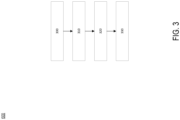
- a diamond film 430 is provided along with a ceramic preform 410 as shown in FIG. 4 .
- the diamond film 430 may be similar to diamond film 130, except that diamond film 430 has not yet been reacted / bonded to the ceramic composite layer 110 and thus may be incrementally thicker than diamond film 130 ( FIGS. 1 and 2 ) or resulting diamond film 630 ( FIG. 6 ).
- diamond film 430 may be a CVD grown diamond film.
- the growth side surface of the diamond film 430 is oriented toward the ceramic preform 410, which may be advantageous to the typically increased relative roughness of the growth side as compared to opposite (substrate) side of a CVD grown diamond film, which may contribute to better adhesion and formation of the bonding layer.
- the growth side surface of the diamond film 430 may also be polished or lapped prior to further processing.
- Ceramic preform 410 may be ceramic preforms known in the art, for example those described in US Patent 8,474,362 ("the ⁇ 362 patent"), which is incorporated by reference herein in its entirety. Ceramic preform 410 may include, for example, a plurality of diamond particles (for example diamond particles 112 ( FIGS 1-2 )) held together with a carbon comprising binder. The plurality of diamond particles may be the same or similar plurality of diamond particles 112 discussed with reference to FIGS. 1 and 2 because the diamond particles within the ceramic preform 410 will ultimately become the diamond particles within bonded diamond composite 600, but exist in ceramic preform 410 prior to further processing.
- a plurality of diamond particles for example diamond particles 112 ( FIGS 1-2 )
- the plurality of diamond particles may be the same or similar plurality of diamond particles 112 discussed with reference to FIGS. 1 and 2 because the diamond particles within the ceramic preform 410 will ultimately become the diamond particles within bonded diamond composite 600, but exist in ceramic preform 410 prior to further processing.
- the diamond particles within the ceramic preform 410 may include, for example, diamond particles having a D50 of about 75 microns. In other examples, the ceramic preform 410 may include diamond particles having a D50 of from about 10 microns to about 120 microns.
- the ceramic preform 410 may include, from about 0% to about 75% by volume of diamond particles 112. For example, the ceramic preform 410 may include about 50% by volume of diamond particles. With the remainder being carbon comprising binder and air in the nature of porous voids.
- the porosity be any porosity to provide adequate capillary draw of molten silicon. In one example, the ceramic preform 410 has a porosity of from about 20% to about 25%.
- the carbon comprising binder may be any carbon based binder known in the art for making ceramic preforms.
- the binder should have sufficient carbon content such that upon further processing, e.g., the reacting step discussed below, the carbon reacts with the molten silicon to form the silicon carbide within the ceramic matrix 114.
- the ceramic preform 410 may, in one example, further include silicon carbide prior to the reacting step. That is, when forming the ceramic preform 410 an amount of silicon carbide may be included. For example, from between about 0 and about 75 percent by volume silicon carbide in the ceramic preform 410.
- the diamond film layer 430 is placed on the ceramic preform 410 as shown in FIG. 5 .
- pressure may be applied to the top of diamond film layer 430, i.e., on the opposite side of the diamond film layer 430 from the ceramic preform, to maintain the position of the diamond film layer 430 on the ceramic preform during follow-on steps.
- a weight (not shown) may be used to supply such pressure.
- the diamond film layer 430, together with the ceramic preform 410, may be placed in a furnace 540 to control the temperature of the follow-on reactions, discussed below.
- the ceramic preform 410 is exposed to molten silicon 522, for example within the furnace 540 at a temperature above the melting temperature of silicon for the relevant pressure, i.e., above about [1,410°C] at atmospheric pressure.
- the furnace 540 may also be a vacuum furnace that is capable of drawing a vacuum below atmospheric pressure, which may aid transporting the molten silicon 522 through the ceramic preform.
- a pressure less than about 110 Pascals may be applied to furnace 540, where about 101,325 Pascals represents atmospheric pressure and thus 110 Pascals is a reduced absolute pressure compared to atmospheric pressure.
- a porous preform feeder medium 550 may optionally be used, and optionally sacrificed at completion.
- the preform feeder medium 550 may be made of any material that is capable of wicking or transferring the molten silicon 550 through capillary action to the ceramic preform.
- the preform feeder medium 550 may be arranged in such a way that the feeder medium 550 is resting in the molten silicon bath at temperature, with the ceramic preform 410 and the diamond film layer 430 thereon.
- the molten silicon 522 contacts the preform feeder medium and is wicked through the preform feeder medium 550 to the ceramic preform 410 through capillary action.
- the ceramic preform 410 likewise wicks the molten silicon 522 throughout the ceramic preform 410 and also to the diamond film layer 430 at the interface 432 between the diamond film layer 430 and the ceramic preform 410. Put differently, the molten silicon infiltrates the ceramic preform to the diamond film layer 430.
- the molten silicon 522 which is infiltrated throughout the pores of the ceramic preform 410 and at the interface 432, reacts with the carbon within the ceramic preform 410 and the carbon at the interface 432 of the diamond film layer 130.
- the molten silicon 522 and the carbon in the preform 410 react to form a ceramic matrix similar to that described above with respect to ceramic matrix 114, for example, the molten silicon 522 and the carbon in the preform 410 react to form silicon carbide. Further, some of the molten silicon 522 may also react with the surface of the diamond particles within the ceramic preform 410 to also form silicon carbide.
- the molten silicon 522 also reacts with diamond film layer 430 at interface 432, thus converting a portion of the carbon at the surface of the diamond film layer 430 into silicon carbide. Since diamond is a form of dense carbon, it can react with silicon used in the infiltration process to form a silicon carbide interface. As shown in FIG. 6 , the result is a bonded diamond composite 600 having a diamond film layer 630, a ceramic composite layer 610, and a bonding layer 620. Bonded diamond composite 600, diamond film layer 630, ceramic composite layer 610, and bonding layer 620, are each respectively similar to bonded diamond composite 100, diamond film layer 130, ceramic composite layer 110, and bonding layer 120 of FIGS. 1-2 , and the features and methods of making are equally applicable to both, respectively.
- the length of the reaction time will depend on a number of factors, including the temperature, pressure, and desired thickness of the bonding layer 620. For example, a higher temperature will decrease the amount of reaction time required to form bonding layer 620, while a lower pressure will decrease the temperature required for the reaction. Further, a longer reaction will result in a thicker bonding layer 620. In one example, at a pressure of about 13 Pascals and a temperature of 1780K, a bonding layer 620 having an average thickness of about 100 ⁇ m was reacted for about 4 hours.
- the bonding layer 620 is bonded to the diamond film layer 630 and bonded / integrated into the ceramic matrix of ceramic matrix of ceramic composite layer 610 forming a strong bond of the diamond film layer 630 to the ceramic composite layer 610.
- some amount of unreacted residual silicon (e.g., residual silicon 122 shown in FIG. 2 ) may be present in the bonding layer 620 and/or the ceramic matrix of ceramic composite layer 610. While a certain amount of residual silicon will not materially impact bonding strength of the resulting bonded diamond composite, such residual silicon can optionally be reduced by adding finer diamond in the initial ceramic preform 410.
- the furnace 540 may be cooled to room temperature, and pressure equalized if under vacuum, and the bonded diamond composite 600 may be removed from the preform feeder medium 550.
- the resulting composite e.g., bonded diamond composite 100 or bonded diamond composite 600
- industrial applications low friction/high wear resistance seals; dry seals impingement surfaces; and cutting tools
- semiconductor applications dry wafer chucks; wafer chucks with internal cooling; and electrostatic chucks
- thermal management heat sinks for lasers; heat sinks for mirrors; high power electrical heat sinks.
- the diamond film layers 130, 630 also have similar thermal expansion properties (coefficient of thermal expansion) as the ceramic composite layers 110,610, and the bonding layers 620, 620. Thus, when subjected to heat, there is relatively little stress put on the bonds due to differences in thermal expansion.
- the bond between diamond film layers 130, 630 and ceramic composite layers 110,610 is also hermetic, and thus, channels and holes opened into the back of the ceramic composite layers 110,610 and or diamond film layers 130,630 are also feasible. This allows for maximum thermal heat dissipation where required. Potential applications include structures that need extreme wear surfaces, low friction surfaces, heat sinks, and structures that require high thermal stability.
- the bonded diamond composites 100, 600 provide for a shorter and simpler manufacturing process, a lower thermal resistance interface, higher temperature capability interface, and a chemically inert interface for applications in which a reactive cooling medium may be used, for example deionized water.
- a reactive cooling medium for example deionized water.
- FIG. 7 is an example bonded diamond composite 100 that includes flow channels 150 in the ceramic composite layer 110 for providing a heat transfer fluid (for either cooling or heating the diamond layer 130).
- the flow channels 150 may be formed according to typical ceramic shape forming methods. For example, they can be molded in with any of the number of preform manufacturing methods, e.g. sedimentation, slip casting, etc.
- the ceramic composite layer 110 may also be added by machining them after the binder burnout firing, for example the carbonizing steps described in the ⁇ 362 patent, but before the thermal process described with reference to step 320.
- Such configurations allow direct contact between any fluid within the flow channels 150 and the diamond layer 130 without the disadvantages related to corrosion of the prior art brazing compounds.
Landscapes
- Chemical & Material Sciences (AREA)
- Engineering & Computer Science (AREA)
- Ceramic Engineering (AREA)
- Materials Engineering (AREA)
- Organic Chemistry (AREA)
- Structural Engineering (AREA)
- Inorganic Chemistry (AREA)
- Chemical Kinetics & Catalysis (AREA)
- General Chemical & Material Sciences (AREA)
- Mechanical Engineering (AREA)
- Metallurgy (AREA)
- Manufacturing & Machinery (AREA)
- Physics & Mathematics (AREA)
- Plasma & Fusion (AREA)
- Ceramic Products (AREA)
Applications Claiming Priority (1)
| Application Number | Priority Date | Filing Date | Title |
|---|---|---|---|
| US18/158,333 US20240247366A1 (en) | 2023-01-23 | 2023-01-23 | Infiltration bonded cvd diamond to reaction bonded diamond + sic composite |
Publications (1)
| Publication Number | Publication Date |
|---|---|
| EP4403537A1 true EP4403537A1 (de) | 2024-07-24 |
Family
ID=89662030
Family Applications (1)
| Application Number | Title | Priority Date | Filing Date |
|---|---|---|---|
| EP24152806.6A Pending EP4403537A1 (de) | 2023-01-23 | 2024-01-19 | Infiltrationsgebundener cvd-diamant für reaktionsgebundenen diamant und sic-verbundstoff |
Country Status (4)
| Country | Link |
|---|---|
| US (1) | US20240247366A1 (de) |
| EP (1) | EP4403537A1 (de) |
| JP (1) | JP2024104295A (de) |
| KR (1) | KR20240116980A (de) |
Cited By (1)
| Publication number | Priority date | Publication date | Assignee | Title |
|---|---|---|---|---|
| EP4635934A1 (de) * | 2024-04-18 | 2025-10-22 | II-VI Delaware, Inc. | Reaktionsgebundener sic-diamant-(rbsic-diamant)-verbundstoff mit bearbeitbaren merkmalen |
Citations (4)
| Publication number | Priority date | Publication date | Assignee | Title |
|---|---|---|---|---|
| EP1019337B1 (de) * | 1997-09-05 | 2002-09-25 | Frenton Limited | Verfahren zur herstellung eines diamant-siliciumcarbid-siliciumkomposits und ein nach diesem verfahren hergestelltes komposit |
| DE102007063517B3 (de) * | 2007-12-21 | 2009-01-22 | Fraunhofer-Gesellschaft zur Förderung der angewandten Forschung e.V. | Verfahren zur Herstellung von Bauteilen mit einer Verschleißschutzbeschichtung, ein so hergestelltes Bauteil sowie dessen Verwendung |
| US8474362B1 (en) | 2007-11-20 | 2013-07-02 | M Cubed Technologies, Inc. | Diamond-reinforced composite materials and articles, and methods for making same |
| US20220227676A1 (en) * | 2021-01-19 | 2022-07-21 | ll-VI Delaware, Inc | Silicon carbide body with localized diamond reinforcement |
-
2023
- 2023-01-23 US US18/158,333 patent/US20240247366A1/en active Pending
-
2024
- 2024-01-19 EP EP24152806.6A patent/EP4403537A1/de active Pending
- 2024-01-19 JP JP2024006544A patent/JP2024104295A/ja active Pending
- 2024-01-19 KR KR1020240008749A patent/KR20240116980A/ko active Pending
Patent Citations (4)
| Publication number | Priority date | Publication date | Assignee | Title |
|---|---|---|---|---|
| EP1019337B1 (de) * | 1997-09-05 | 2002-09-25 | Frenton Limited | Verfahren zur herstellung eines diamant-siliciumcarbid-siliciumkomposits und ein nach diesem verfahren hergestelltes komposit |
| US8474362B1 (en) | 2007-11-20 | 2013-07-02 | M Cubed Technologies, Inc. | Diamond-reinforced composite materials and articles, and methods for making same |
| DE102007063517B3 (de) * | 2007-12-21 | 2009-01-22 | Fraunhofer-Gesellschaft zur Förderung der angewandten Forschung e.V. | Verfahren zur Herstellung von Bauteilen mit einer Verschleißschutzbeschichtung, ein so hergestelltes Bauteil sowie dessen Verwendung |
| US20220227676A1 (en) * | 2021-01-19 | 2022-07-21 | ll-VI Delaware, Inc | Silicon carbide body with localized diamond reinforcement |
Cited By (1)
| Publication number | Priority date | Publication date | Assignee | Title |
|---|---|---|---|---|
| EP4635934A1 (de) * | 2024-04-18 | 2025-10-22 | II-VI Delaware, Inc. | Reaktionsgebundener sic-diamant-(rbsic-diamant)-verbundstoff mit bearbeitbaren merkmalen |
Also Published As
| Publication number | Publication date |
|---|---|
| KR20240116980A (ko) | 2024-07-30 |
| US20240247366A1 (en) | 2024-07-25 |
| JP2024104295A (ja) | 2024-08-02 |
Similar Documents
| Publication | Publication Date | Title |
|---|---|---|
| US11584694B2 (en) | Silicon carbide body with localized diamond reinforcement | |
| CA2462451C (en) | Sintered diamond having high thermal conductivity and method for producing the same and heat sink employing it | |
| US7169465B1 (en) | Low expansion metal-ceramic composite bodies, and methods for making same | |
| CN104884411B (zh) | 接合体及其制造方法 | |
| KR20170106659A (ko) | 금속 본딩된 보호 층을 갖는 기판 지지 조립체 | |
| EP4403537A1 (de) | Infiltrationsgebundener cvd-diamant für reaktionsgebundenen diamant und sic-verbundstoff | |
| CA2009600A1 (en) | Metal-ceramic structure with intermediate high temperature reaction barrier layer | |
| KR101411955B1 (ko) | 이종접합 냉각구조체 및 그 제조방법 | |
| US7244034B1 (en) | Low CTE metal-ceramic composite articles, and methods for making same | |
| US20030035891A1 (en) | Joining method for high-purity ceramic parts | |
| EP1238755B1 (de) | Wafer poliermaschinentisch, wafer polierverfahren und halbleiterschleife herstellungsverfahren | |
| US6355340B1 (en) | Low expansion metal matrix composites | |
| JP2003309232A (ja) | ヒートシンク | |
| EP1542280A1 (de) | Glied fur ein halbleiterbauelement | |
| CN102143926A (zh) | 利用难熔钎焊组装碳部件的方法 | |
| JPH09129793A (ja) | 半導体パッケージ用の熱伝プレート | |
| US6713198B2 (en) | Ceramic laminated article, a method of producing the same and a ceramic laminate | |
| JP3574583B2 (ja) | 放熱材及びその製造方法 | |
| JPH0967685A (ja) | プラズマエッチング用平行平板電極 | |
| JP7534119B2 (ja) | SiC被覆黒鉛部材の接合体及びその製造方法 | |
| KR20110010230A (ko) | 탄화규소 접합체 및 그 제조 방법 | |
| KR100730526B1 (ko) | 고순도 세라믹스 부품의 접합방법 | |
| JP2021091565A (ja) | 複合材料及び複合材料の製造方法 | |
| JP2025147878A (ja) | 基板保持部材及びセラミックスサセプタ | |
| KR20130072012A (ko) | 소결체, 서셉터 및 이의 제조 방법 |
Legal Events
| Date | Code | Title | Description |
|---|---|---|---|
| PUAI | Public reference made under article 153(3) epc to a published international application that has entered the european phase |
Free format text: ORIGINAL CODE: 0009012 |
|
| STAA | Information on the status of an ep patent application or granted ep patent |
Free format text: STATUS: THE APPLICATION HAS BEEN PUBLISHED |
|
| AK | Designated contracting states |
Kind code of ref document: A1 Designated state(s): AL AT BE BG CH CY CZ DE DK EE ES FI FR GB GR HR HU IE IS IT LI LT LU LV MC ME MK MT NL NO PL PT RO RS SE SI SK SM TR |
|
| P01 | Opt-out of the competence of the unified patent court (upc) registered |
Free format text: CASE NUMBER: APP_44782/2024 Effective date: 20240801 |
|
| STAA | Information on the status of an ep patent application or granted ep patent |
Free format text: STATUS: REQUEST FOR EXAMINATION WAS MADE |
|
| 17P | Request for examination filed |
Effective date: 20250123 |