EP4401387A2 - Computerimplementiertes system und verfahren zur verbreitung und kommunikation von daten in einem netzwerk wie etwa einem blockchain-netzwerk - Google Patents
Computerimplementiertes system und verfahren zur verbreitung und kommunikation von daten in einem netzwerk wie etwa einem blockchain-netzwerk Download PDFInfo
- Publication number
- EP4401387A2 EP4401387A2 EP24179397.5A EP24179397A EP4401387A2 EP 4401387 A2 EP4401387 A2 EP 4401387A2 EP 24179397 A EP24179397 A EP 24179397A EP 4401387 A2 EP4401387 A2 EP 4401387A2
- Authority
- EP
- European Patent Office
- Prior art keywords
- nodes
- node
- network
- data packet
- processor
- Prior art date
- Legal status (The legal status is an assumption and is not a legal conclusion. Google has not performed a legal analysis and makes no representation as to the accuracy of the status listed.)
- Granted
Links
Images



Classifications
-
- H—ELECTRICITY
- H04—ELECTRIC COMMUNICATION TECHNIQUE
- H04L—TRANSMISSION OF DIGITAL INFORMATION, e.g. TELEGRAPHIC COMMUNICATION
- H04L67/00—Network arrangements or protocols for supporting network services or applications
- H04L67/01—Protocols
- H04L67/10—Protocols in which an application is distributed across nodes in the network
- H04L67/104—Peer-to-peer [P2P] networks
-
- G—PHYSICS
- G06—COMPUTING OR CALCULATING; COUNTING
- G06Q—INFORMATION AND COMMUNICATION TECHNOLOGY [ICT] SPECIALLY ADAPTED FOR ADMINISTRATIVE, COMMERCIAL, FINANCIAL, MANAGERIAL OR SUPERVISORY PURPOSES; SYSTEMS OR METHODS SPECIALLY ADAPTED FOR ADMINISTRATIVE, COMMERCIAL, FINANCIAL, MANAGERIAL OR SUPERVISORY PURPOSES, NOT OTHERWISE PROVIDED FOR
- G06Q20/00—Payment architectures, schemes or protocols
- G06Q20/04—Payment circuits
- G06Q20/06—Private payment circuits, e.g. involving electronic currency used among participants of a common payment scheme
- G06Q20/065—Private payment circuits, e.g. involving electronic currency used among participants of a common payment scheme using e-cash
-
- H—ELECTRICITY
- H04—ELECTRIC COMMUNICATION TECHNIQUE
- H04L—TRANSMISSION OF DIGITAL INFORMATION, e.g. TELEGRAPHIC COMMUNICATION
- H04L45/00—Routing or path finding of packets in data switching networks
- H04L45/16—Multipoint routing
-
- H—ELECTRICITY
- H04—ELECTRIC COMMUNICATION TECHNIQUE
- H04L—TRANSMISSION OF DIGITAL INFORMATION, e.g. TELEGRAPHIC COMMUNICATION
- H04L63/00—Network architectures or network communication protocols for network security
- H04L63/14—Network architectures or network communication protocols for network security for detecting or protecting against malicious traffic
- H04L63/1441—Countermeasures against malicious traffic
-
- H—ELECTRICITY
- H04—ELECTRIC COMMUNICATION TECHNIQUE
- H04L—TRANSMISSION OF DIGITAL INFORMATION, e.g. TELEGRAPHIC COMMUNICATION
- H04L67/00—Network arrangements or protocols for supporting network services or applications
- H04L67/01—Protocols
- H04L67/10—Protocols in which an application is distributed across nodes in the network
- H04L67/104—Peer-to-peer [P2P] networks
- H04L67/1074—Peer-to-peer [P2P] networks for supporting data block transmission mechanisms
- H04L67/1078—Resource delivery mechanisms
- H04L67/108—Resource delivery mechanisms characterised by resources being split in blocks or fragments
-
- H—ELECTRICITY
- H04—ELECTRIC COMMUNICATION TECHNIQUE
- H04L—TRANSMISSION OF DIGITAL INFORMATION, e.g. TELEGRAPHIC COMMUNICATION
- H04L9/00—Cryptographic mechanisms or cryptographic arrangements for secret or secure communications; Network security protocols
- H04L9/06—Cryptographic mechanisms or cryptographic arrangements for secret or secure communications; Network security protocols the encryption apparatus using shift registers or memories for block-wise or stream coding, e.g. DES systems or RC4; Hash functions; Pseudorandom sequence generators
- H04L9/0643—Hash functions, e.g. MD5, SHA, HMAC or f9 MAC
-
- H—ELECTRICITY
- H04—ELECTRIC COMMUNICATION TECHNIQUE
- H04L—TRANSMISSION OF DIGITAL INFORMATION, e.g. TELEGRAPHIC COMMUNICATION
- H04L9/00—Cryptographic mechanisms or cryptographic arrangements for secret or secure communications; Network security protocols
- H04L9/32—Cryptographic mechanisms or cryptographic arrangements for secret or secure communications; Network security protocols including means for verifying the identity or authority of a user of the system or for message authentication, e.g. authorization, entity authentication, data integrity or data verification, non-repudiation, key authentication or verification of credentials
- H04L9/3236—Cryptographic mechanisms or cryptographic arrangements for secret or secure communications; Network security protocols including means for verifying the identity or authority of a user of the system or for message authentication, e.g. authorization, entity authentication, data integrity or data verification, non-repudiation, key authentication or verification of credentials using cryptographic hash functions
-
- H—ELECTRICITY
- H04—ELECTRIC COMMUNICATION TECHNIQUE
- H04L—TRANSMISSION OF DIGITAL INFORMATION, e.g. TELEGRAPHIC COMMUNICATION
- H04L9/00—Cryptographic mechanisms or cryptographic arrangements for secret or secure communications; Network security protocols
- H04L9/32—Cryptographic mechanisms or cryptographic arrangements for secret or secure communications; Network security protocols including means for verifying the identity or authority of a user of the system or for message authentication, e.g. authorization, entity authentication, data integrity or data verification, non-repudiation, key authentication or verification of credentials
- H04L9/3297—Cryptographic mechanisms or cryptographic arrangements for secret or secure communications; Network security protocols including means for verifying the identity or authority of a user of the system or for message authentication, e.g. authorization, entity authentication, data integrity or data verification, non-repudiation, key authentication or verification of credentials involving time stamps, e.g. generation of time stamps
-
- H—ELECTRICITY
- H04—ELECTRIC COMMUNICATION TECHNIQUE
- H04L—TRANSMISSION OF DIGITAL INFORMATION, e.g. TELEGRAPHIC COMMUNICATION
- H04L9/00—Cryptographic mechanisms or cryptographic arrangements for secret or secure communications; Network security protocols
- H04L9/40—Network security protocols
-
- H—ELECTRICITY
- H04—ELECTRIC COMMUNICATION TECHNIQUE
- H04L—TRANSMISSION OF DIGITAL INFORMATION, e.g. TELEGRAPHIC COMMUNICATION
- H04L9/00—Cryptographic mechanisms or cryptographic arrangements for secret or secure communications; Network security protocols
- H04L9/50—Cryptographic mechanisms or cryptographic arrangements for secret or secure communications; Network security protocols using hash chains, e.g. blockchains or hash trees
Definitions
- a blockchain is a consensus-based, electronic ledger which is implemented as a computer-based decentralised, distributed system made up of blocks which in turn are made up of transactions.
- Each transaction is a data structure that encodes the transfer of control of a digital asset between participants in the blockchain system, and includes at least one input and at least one output.
- Each block contains a hash of the previous block to that blocks become chained together to create a permanent, unalterable record of all transactions which have been written to the blockchain since its inception.
- Transactions contain small programs known as scripts embedded into their inputs and outputs, which specify how and by whom the outputs of the transactions can be accessed. On the Bitcoin platform, these scripts are written using a stack-based scripting language.
- a transaction In order for a transaction to be written to the blockchain, it is incorporated into a block by a node (a "miner” or “mining node”) that is designed to collect transactions and form them into blocks. The miner then attempts to complete a "proof of work” with respect to the node. Miners throughout the blockchain network compete to be the first to assemble a block of transactions and complete the associated proof of work for that block. The successful miner adds its confirmed block to the blockchain and the block is propagated through the network so that other nodes that maintain a copy of the blockchain can update their records. Those nodes receiving a block also "validate" that block and all the transactions in it to ensure it complies with the formal requirements of the protocol.
- IP Internet Protocol
- de-anonymization attacks such as IP traffic analysis, conducted on a blockchain-based network may enable interested third-parties to monitor transactions submitted by users on the network and use publicly available information to link the transactions to their sources, for example, by linking user's public keys with their IP addresses.
- Traffic analysis is particularly problematic for a blockchain-based network, which relies on propagation of transactions by and between network nodes.
- Each node in the network that receives a transaction validates the transaction and subsequently sends it to peer nodes.
- a node will send an "INV" message containing a list of transactions to a peer node and receive a "GETDATA” response message selecting some subset of the transactions advertised in the "INV” message.
- the node then sends the requested transactions to the peer node. This process is carried out with respect to each peer node to which the node is connected.
- An attacker may intercept and analyse data that is transmitted when transactions are propagated in the network, and ultimately gain information which can be used to link sources and destinations of transactions.
- the first time period has a predefined length.
- the triggering condition comprises expiry of a predetermined duration since a time of generation of the at least one data packet of the first type by the node.
- the mode of data propagation for a neighbouring node is arbitrarily selected between a first mode and a second mode, where in the first mode, the data packet is relayed to an arbitrarily selected subset of nodes that are connected to the neighbouring node; and in the second mode, the data packet is relayed to all nodes connected to the neighbouring node.
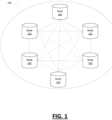
- Nodes 102 of the blockchain network 100 are coupled to one another using suitable communication technologies which may include wired and wireless communication technologies.
- suitable communication technologies which may include wired and wireless communication technologies.
- the blockchain network 100 is implemented at least partly over the Internet, and some of the nodes 102 may be located in geographically dispersed locations.
- Nodes 102 maintain a global ledger of all transactions on the blockchain, grouped into blocks, each of which contains a hash of the previous block in the chain.
- the global ledger is a distributed ledger and each node 102 may store a complete copy or a partial copy of the global ledger. Transactions by a node 102 affecting the global ledger are verified by other nodes 102 so that the validity of the global ledger is maintained.
- the details of implementing and operating a blockchain network such as one using the Bitcoin protocol, will be appreciated by those ordinarily skilled in the art.
- Nodes 102 can fulfil numerous different functions, from network routing to wallet services, to maintain a robust and secure decentralized public ledger.
- "Full nodes” contain a complete and up-to-date copy of the blockchain, and can therefore verify any transactions (spent or unspent) on the public ledger.
- "Lightweight nodes” (or SPV) maintain a subset of the blockchain and can verify transactions using a “simplified payment verification” technique. Lightweight nodes only download the headers of blocks, and not the transactions within each block. These nodes therefore rely on peers to verify their transactions.
- “Mining nodes”, which can be full or lightweight nodes are responsible for validating transactions and creating new blocks on the blockchain.
- TCP/IP Transmission Control Protocol
- one or more of the nodes may be capable of implementing the DMP.
- one or more of the nodes of the network may be able to relay its received data packets to its entry nodes by participating in the DMP.
- a participating node may, for example, select between a random differential relay process and a standard diffusion process, for propagating a particular data packet.
- the nodes of the network may elect to participate in the DMP, joining the protocol either via a decentralized manner or through inclusion in a group of participating nodes assembled by a central authority.
- a participating node will relay its output network packets according to the DMP.
- the node may forward the received data packet according to a mode of propagation that is selected for that node, using the rules stipulated by the DMP.
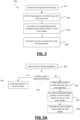
- FIG. 5 shows, in flowchart form, an example process 500 for propagating data packets in a network.
- the process 500 is implemented by a node of, for example, a blockchain network, such as network 100.
- a node may be understood, in this context, to refer to a mining node, full node, validator node, or other type of discrete blockchain node in the blockchain network.
- the node is a computing device with network connection(s), computing resources, and executing software implementing the blockchain protocol.
- the length of time may vary based on parameters such as average connection times, average number of transactions received per unit of time, or the node's centrality (i.e. the number of incoming connections to the node) within the network.
- the node may only be permitted to accumulate data packets of the first type, and therefore may be prevented from transmitting any data packets of the first type for the duration of time period T.
- the node arbitrarily selects a subset of its entry nodes to which different sets of the collected data packets will be forwarded. More specifically, for each data packet in the set of collected data packets, the node arbitrarily selects two or more of its entry nodes (i.e. neighbouring nodes, with which the node has outgoing connections), and assigns the data packet to the selected entry nodes. For example, the entry nodes may be selected randomly.
- the node may, in some implementations, query the network to obtain fresh addresses of its peers. In the Bitcoin network, the node may query one or more database source names (DSN) embedded in Bitcoin Core, BitcoinJ, or other blockchain protocol, and maintained by Bitcoin (or other blockchain) community members.
- DSN database source names
- the node will get one or more DSN records showing the IP addresses of available full nodes which may accept incoming connections.
- a decentralized version of peer discovery may be implemented by having peers send "ADDR" messages containing their IP addresses and port numbers to a new node that joins the network.
- one or more of the nodes in a network may maintain a table or other data structure tracking its assignment of each collected data packet to an entry node that the data packet should be relayed to.
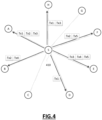
- FIG. 4 shows an example of transactions relay for source node 410 in the random differential propagation stage of the DMP in a blockchain network.
- Table 1 is an example assignment of the collected transactions, Tx1-Tx5, to the entry nodes of source node 410.
- the entry nodes are indicated as nodes A, B, C, D, E, F, G, and H.
- the source node 410 relays each transaction to at least two entry nodes, and multiple transactions can be relayed via the same node.
- Each node receiving a transaction from source node 410 then randomly selects a mode of propagation/diffusion to use in forwarding the received transaction to one or more of its peer nodes (if any).
- an entry node that receives a transaction selects, on a random basis, between relaying the transaction according to the standard diffusion process or the random differential propagation process.
- the choice between the two options is random.
- the two diffusion processes alternate probabilistically, i.e. there is not a clear separation between the random differential propagation stage and the standard diffusion stage.
- the random selection by an entry node of the diffusion mode may involve receiving, from the source node, a message in addition to the relayed data packet.
- the entry node may then generate a random value (e.g. random number), append it to the received message, and hash the result, for example, using SHA-256.
- the entry node can then check the hash value and subsequently obtain the diffusion mode based on predetermined rules regarding the hash value (e.g. if the final character of the hash is a digit, select the random differential propagation as mode of diffusion).
- the selection of the diffusion mode can be done using any randomized process (e.g. random number generator), where the probability of selecting one of the modes may be greater than that of selecting the other of the modes, depending on factors such as number of incoming and/or outgoing connections, average number of data packets received per unit of time, etc.
- the random selection of the mode of propagation by a relaying node may be weighted.
- different probabilities may be assigned to each of the two or more modes of propagation (i.e. random differential propagation, standard diffusion, etc.) so that the probabilities reflect the proportional significance of anonymity and speed of data propagation. For example, a higher predefined probability may be associated with the random differential propagation mode for the nodes of a particular network, reflecting a proportionally greater emphasis on preserving anonymity of the propagated data.
- the relay node forwards the data packet to all of its entry nodes in operation 554.
- the selection of propagation mode is between two possible options; this example is not limiting and in other examples, there may be three or more possible modes of propagation. If, in the method 500 the selected mode is random differential propagation, the relay node performs the steps 556, 558 and 560 which correspond to the operations 504, 506 and 508 of FIG. 5 .
- FIG. 6 shows, in flowchart form, an example process 600 for propagating data packets in a network.
- the process 600 may be implemented at a blockchain node having a plurality of incoming and outgoing connections to other nodes of a blockchain network.
- Operations 602, 604, 606 and 610 of process 600 correspond to operations 502, 504, 506 and 508 of process 500, respectively.
- the node determines whether a triggering condition has been met, prior to transmitting a collected data packet to its assigned entry node in operation 610. In particular, the transmitting of the data packet is performed in response to detecting that a suitable triggering condition has been satisfied. When the triggering condition has not been met, the node continues to collect data packets of the first type without relaying any of said data packets to its entry / peer nodes.
- a triggering condition may be employed to direct the node to collect a sufficient number of incoming data packets and/or to collect incoming data packets for a sufficient amount of time.
- the triggering condition may be the expiry of a predetermined duration since the time of generation of the at least one data packet of the first type by the node in operation 602. That is, the node may be designed to monitor and collect incoming data packets (e.g. transactions) for a predetermined period of time that begins when the node generates a data packet of the same type, before any of said data packets are propagated by the node.
- This condition may be useful in trying to ensure that a data packet that is generated by the node is propagated after having collected more data packets of the same type that can be simultaneously broadcasted, thereby rendering it difficult for an attacker to correctly identify the node as the source of the generated data packet.
- the triggering condition may be the expiry of a predetermined duration since the time of receipt of a first of the at least one incoming data packet of the first type from the node's peers. That is, the node may be designed to monitor and collect incoming data packets for a predetermined period of time that begins when a first of such incoming data packets is received. This condition may be useful in trying to ensure that more data packets, either data packets generated by the node itself or received from other peers, are collected by the node prior to any broadcast to the rest of the network.
- the triggering condition may be the number of collected data packets during the first time period reaching a threshold number.
- the node may be designed to monitor and collect incoming data packets until the earlier of the expiry of the first time period or a predetermined threshold number of data packets being collected by the node.
- the node 700 includes a processor 702, which may include one or more microprocessors, application specific integrated chips (ASICs), microcontrollers, or similar computer processing devices.
- the node 700 further includes memory 704, which may include persistent and non-persistent memory, to store values, variables, and in some instances processor-executable program instructions, and a network interface 706 to provide network connectivity over wired or wireless networks.
- the node 700 includes a processor-executable blockchain application 708 containing processor-executable instructions that, when executed, cause the processor 702 to carry out one or more of the functions or operations described herein.
- any module, routine, process, thread, application, or other software component implementing the described method/process for configuring the blockchain node may be realized using standard computer programming techniques and languages.
- the present application is not limited to particular processors, computer languages, computer programming conventions, data structures, or other such implementation details.
Landscapes
- Engineering & Computer Science (AREA)
- Computer Security & Cryptography (AREA)
- Signal Processing (AREA)
- Computer Networks & Wireless Communication (AREA)
- Business, Economics & Management (AREA)
- Accounting & Taxation (AREA)
- Theoretical Computer Science (AREA)
- General Physics & Mathematics (AREA)
- General Business, Economics & Management (AREA)
- Physics & Mathematics (AREA)
- Strategic Management (AREA)
- Finance (AREA)
- Computer Hardware Design (AREA)
- Computing Systems (AREA)
- General Engineering & Computer Science (AREA)
- Power Engineering (AREA)
- Data Exchanges In Wide-Area Networks (AREA)
- Computer And Data Communications (AREA)
- Financial Or Insurance-Related Operations Such As Payment And Settlement (AREA)
Applications Claiming Priority (4)
| Application Number | Priority Date | Filing Date | Title |
|---|---|---|---|
| GBGB1719654.4A GB201719654D0 (en) | 2017-11-27 | 2017-11-27 | Computer-implemented system and method |
| EP18808516.1A EP3718285B1 (de) | 2017-11-27 | 2018-11-19 | Computerimplementiertes system und verfahren zur ausbreitung und übertragung von daten in einem netzwerk wie einem blockchain-netzwerk |
| EP22168913.6A EP4054117B1 (de) | 2017-11-27 | 2018-11-19 | Computerimplementiertes system und verfahren zur ausbreitung und übertragung von daten in einem netzwerk wie einem blockchain-netzwerk |
| PCT/IB2018/059092 WO2019102334A1 (en) | 2017-11-27 | 2018-11-19 | Computer-implemented system and method for propagation and communication of data in a network such as a blockchain network |
Related Parent Applications (3)
| Application Number | Title | Priority Date | Filing Date |
|---|---|---|---|
| EP18808516.1A Division EP3718285B1 (de) | 2017-11-27 | 2018-11-19 | Computerimplementiertes system und verfahren zur ausbreitung und übertragung von daten in einem netzwerk wie einem blockchain-netzwerk |
| EP22168913.6A Division-Into EP4054117B1 (de) | 2017-11-27 | 2018-11-19 | Computerimplementiertes system und verfahren zur ausbreitung und übertragung von daten in einem netzwerk wie einem blockchain-netzwerk |
| EP22168913.6A Division EP4054117B1 (de) | 2017-11-27 | 2018-11-19 | Computerimplementiertes system und verfahren zur ausbreitung und übertragung von daten in einem netzwerk wie einem blockchain-netzwerk |
Publications (3)
| Publication Number | Publication Date |
|---|---|
| EP4401387A2 true EP4401387A2 (de) | 2024-07-17 |
| EP4401387A3 EP4401387A3 (de) | 2024-10-16 |
| EP4401387B1 EP4401387B1 (de) | 2025-11-12 |
Family
ID=60950589
Family Applications (3)
| Application Number | Title | Priority Date | Filing Date |
|---|---|---|---|
| EP18808516.1A Active EP3718285B1 (de) | 2017-11-27 | 2018-11-19 | Computerimplementiertes system und verfahren zur ausbreitung und übertragung von daten in einem netzwerk wie einem blockchain-netzwerk |
| EP24179397.5A Active EP4401387B1 (de) | 2017-11-27 | 2018-11-19 | Computerimplementiertes system und verfahren zur verbreitung und kommunikation von daten in einem netzwerk wie etwa einem blockchain-netzwerk |
| EP22168913.6A Active EP4054117B1 (de) | 2017-11-27 | 2018-11-19 | Computerimplementiertes system und verfahren zur ausbreitung und übertragung von daten in einem netzwerk wie einem blockchain-netzwerk |
Family Applications Before (1)
| Application Number | Title | Priority Date | Filing Date |
|---|---|---|---|
| EP18808516.1A Active EP3718285B1 (de) | 2017-11-27 | 2018-11-19 | Computerimplementiertes system und verfahren zur ausbreitung und übertragung von daten in einem netzwerk wie einem blockchain-netzwerk |
Family Applications After (1)
| Application Number | Title | Priority Date | Filing Date |
|---|---|---|---|
| EP22168913.6A Active EP4054117B1 (de) | 2017-11-27 | 2018-11-19 | Computerimplementiertes system und verfahren zur ausbreitung und übertragung von daten in einem netzwerk wie einem blockchain-netzwerk |
Country Status (9)
| Country | Link |
|---|---|
| US (3) | US11245757B2 (de) |
| EP (3) | EP3718285B1 (de) |
| JP (3) | JP2021504783A (de) |
| KR (2) | KR102519197B1 (de) |
| CN (2) | CN118400381A (de) |
| GB (1) | GB201719654D0 (de) |
| SG (1) | SG11202004652WA (de) |
| WO (1) | WO2019102334A1 (de) |
| ZA (1) | ZA202002623B (de) |
Families Citing this family (13)
| Publication number | Priority date | Publication date | Assignee | Title |
|---|---|---|---|---|
| GB201802347D0 (en) * | 2018-02-13 | 2018-03-28 | Nchain Holdings Ltd | Computer-implemented system and method |
| GB201804479D0 (en) * | 2018-03-21 | 2018-05-02 | Nchain Holdings Ltd | Computer-implemented system and method |
| CN108696589B (zh) * | 2018-05-14 | 2022-04-08 | 百度在线网络技术(北京)有限公司 | 区块链数据传输方法、装置、设备和存储介质 |
| GB201807835D0 (en) * | 2018-05-15 | 2018-06-27 | Nchain Holdings Ltd | Computer-implemented system and method |
| IL272861B2 (en) * | 2020-02-23 | 2024-03-01 | Cognyte Tech Israel Ltd | System and Method for Cryptocurrency Networks |
| CN112102079B (zh) * | 2020-08-07 | 2024-05-17 | 柳州市蓝海数链科技有限公司 | 业务数据的处理方法、装置、计算机设备及存储介质 |
| CN112102078B (zh) * | 2020-08-07 | 2024-05-21 | 柳州市蓝海数链科技有限公司 | 区块链共识计算方法、装置、计算机设备及存储介质 |
| JP7420287B2 (ja) * | 2021-01-07 | 2024-01-23 | 日本電信電話株式会社 | 情報処理装置、隣接ノード選択方法及びプログラム |
| JP7048039B1 (ja) * | 2021-01-15 | 2022-04-05 | 株式会社アクセル | 決済システム、決済装置、決済方法及び決済プログラム |
| US11902426B2 (en) * | 2021-06-26 | 2024-02-13 | Ceremorphic, Inc. | Efficient storage of blockchain in embedded device |
| US11651110B2 (en) * | 2021-07-08 | 2023-05-16 | Dell Products, L.P. | Hardware device mutual authentication system and method for a baseboard management controller (BMC) |
| CN115174573B (zh) * | 2022-06-30 | 2024-02-02 | 蚂蚁区块链科技(上海)有限公司 | 区块链系统中的数据广播方法、节点和区块链系统 |
| CN116545608B (zh) * | 2023-05-15 | 2024-06-04 | 合肥工业大学 | 基于熟人免疫策略的区块传播方法和系统 |
Family Cites Families (33)
| Publication number | Priority date | Publication date | Assignee | Title |
|---|---|---|---|---|
| US7086199B2 (en) | 2002-08-06 | 2006-08-08 | Canino Thomas L | Automatic liquid delivery system with time-delay release mechanism |
| KR100922976B1 (ko) * | 2002-09-19 | 2009-10-22 | 삼성전자주식회사 | 이동통신 시스템에서 전송률 제어 장치 및 방법 |
| US20070009102A1 (en) | 2005-07-07 | 2007-01-11 | Weibo Gong | Secure keystream transmission methods for wireless communication systems |
| KR100717962B1 (ko) * | 2005-07-15 | 2007-05-14 | 전자부품연구원 | 다수의 노드를 포함하는 무선 네트워크 시스템에서의데이터 전송 제어 방법 및 이를 이용한 센서 네트워크시스템 및 기록 매체 |
| US7593376B2 (en) * | 2005-12-07 | 2009-09-22 | Motorola, Inc. | Method and apparatus for broadcast in an ad hoc network using elected broadcast relay nodes |
| CN101207557B (zh) * | 2006-12-19 | 2012-03-07 | 中兴通讯股份有限公司 | 无线传感器网络中数据分发的系统及方法 |
| US20090061871A1 (en) * | 2007-08-29 | 2009-03-05 | Motorola, Inc. | Base station neighbor list optimization |
| CN102026329B (zh) * | 2009-09-10 | 2013-10-30 | 富士通株式会社 | 无线通信网络及其自适应择路通信方法 |
| JP4948610B2 (ja) * | 2010-02-04 | 2012-06-06 | 株式会社エヌ・ティ・ティ・ドコモ | 通信制御装置及びプログラム |
| US20120050025A1 (en) | 2010-08-26 | 2012-03-01 | Hoeffel James J | Vehicle steering assist system and method of operation |
| JP5361001B2 (ja) * | 2010-08-30 | 2013-12-04 | 日本電信電話株式会社 | 経路制御装置、経路制御方法、およびプログラム |
| CN102158864B (zh) * | 2011-04-15 | 2013-07-24 | 北京航空航天大学 | 一种基于可靠性的移动Ad Hoc网络自适应安全路由方法 |
| US20120297405A1 (en) * | 2011-05-17 | 2012-11-22 | Splendorstream, Llc | Efficiently distributing video content using a combination of a peer-to-peer network and a content distribution network |
| US8898327B2 (en) | 2011-10-05 | 2014-11-25 | Peerialism AB | Method and device for arranging peers in a live streaming P2P network |
| JP5573917B2 (ja) * | 2012-10-18 | 2014-08-20 | 三菱電機株式会社 | 通信方法 |
| US9674251B2 (en) * | 2013-06-17 | 2017-06-06 | Qualcomm Incorporated | Mediating content delivery via one or more services |
| US20150195189A1 (en) * | 2014-01-07 | 2015-07-09 | Alcatel Lucent Usa, Inc. | Multiple tree routed selective randomized load balancing |
| KR102233371B1 (ko) * | 2014-06-24 | 2021-03-29 | 삼성전자주식회사 | 멀티캐스트 네트워크에서의 릴레이 방법 및 장치 |
| US9668238B1 (en) * | 2014-10-02 | 2017-05-30 | Sprint Spectrum L.P. | Multicast file delivery |
| KR20160109126A (ko) * | 2015-03-10 | 2016-09-21 | 한국전자통신연구원 | 다중 전송경로 환경에서 네트워크 코딩을 이용한 데이터 송수신 장치 |
| US10362106B2 (en) | 2015-07-21 | 2019-07-23 | Cisco Technology, Inc. | Adaptive gossip protocol |
| JP6567683B2 (ja) * | 2015-10-16 | 2019-08-28 | 国立大学法人東北大学 | 情報処理システム、情報処理装置、情報処理方法、及び、プログラム |
| WO2017109140A1 (en) | 2015-12-22 | 2017-06-29 | Bigchaindb Gmbh | Decentralized, tamper-resistant, asset-oriented database system and method of recording a transaction |
| WO2017199807A1 (ja) * | 2016-05-19 | 2017-11-23 | 日本電信電話株式会社 | センサ中継装置およびセンサ中継システム |
| CN106102048B (zh) * | 2016-06-03 | 2019-06-04 | 上海理工大学 | 一种物联网中传感器发出数据包安全传输到基站的方法 |
| CN106656784B (zh) * | 2016-10-14 | 2020-01-21 | 中国银联股份有限公司 | 用于区块链网络的数据流传播系统及方法 |
| JP6199518B1 (ja) | 2017-03-23 | 2017-09-20 | 株式会社bitFlyer | プライベートノード、プライベートノードにおける処理方法、及びそのためのプログラム |
| GB201709219D0 (en) * | 2017-06-09 | 2017-07-26 | Nchain Holdings Ltd | Computer-implemented system and method |
| GB201709848D0 (en) * | 2017-06-20 | 2017-08-02 | Nchain Holdings Ltd | Computer-implemented system and method |
| CN107172615B (zh) * | 2017-07-25 | 2019-11-05 | 中国信息安全测评中心 | 一种网络节点的数据传输方法、装置、网络节点及系统 |
| US10929823B2 (en) * | 2017-09-12 | 2021-02-23 | Northwestern University | Peer auditing in a blockchain distribution network |
| US10477543B2 (en) * | 2017-09-27 | 2019-11-12 | Trellisware Technologies, Inc. | Methods and systems for improved communication in multi-hop networks |
| GB201802347D0 (en) * | 2018-02-13 | 2018-03-28 | Nchain Holdings Ltd | Computer-implemented system and method |
-
2017
- 2017-11-27 GB GBGB1719654.4A patent/GB201719654D0/en not_active Ceased
-
2018
- 2018-11-19 SG SG11202004652WA patent/SG11202004652WA/en unknown
- 2018-11-19 KR KR1020207016019A patent/KR102519197B1/ko active Active
- 2018-11-19 EP EP18808516.1A patent/EP3718285B1/de active Active
- 2018-11-19 KR KR1020237011374A patent/KR102710899B1/ko active Active
- 2018-11-19 CN CN202410651510.9A patent/CN118400381A/zh active Pending
- 2018-11-19 JP JP2020526117A patent/JP2021504783A/ja active Pending
- 2018-11-19 EP EP24179397.5A patent/EP4401387B1/de active Active
- 2018-11-19 CN CN201880076559.9A patent/CN111406396B/zh active Active
- 2018-11-19 WO PCT/IB2018/059092 patent/WO2019102334A1/en not_active Ceased
- 2018-11-19 EP EP22168913.6A patent/EP4054117B1/de active Active
- 2018-11-19 US US16/767,559 patent/US11245757B2/en active Active
-
2020
- 2020-05-11 ZA ZA2020/02623A patent/ZA202002623B/en unknown
-
2022
- 2022-02-03 US US17/592,387 patent/US11743328B2/en active Active
-
2023
- 2023-07-12 US US18/221,338 patent/US12381947B2/en active Active
- 2023-10-25 JP JP2023182910A patent/JP2023175020A/ja active Pending
-
2025
- 2025-03-17 JP JP2025041982A patent/JP2025089326A/ja active Pending
Also Published As
| Publication number | Publication date |
|---|---|
| US11743328B2 (en) | 2023-08-29 |
| JP2021504783A (ja) | 2021-02-15 |
| CN111406396B (zh) | 2024-06-14 |
| JP2023175020A (ja) | 2023-12-08 |
| KR102710899B1 (ko) | 2024-09-30 |
| US20200389519A1 (en) | 2020-12-10 |
| SG11202004652WA (en) | 2020-06-29 |
| US20220232068A1 (en) | 2022-07-21 |
| GB201719654D0 (en) | 2018-01-10 |
| EP4054117A1 (de) | 2022-09-07 |
| KR20230048468A (ko) | 2023-04-11 |
| WO2019102334A1 (en) | 2019-05-31 |
| EP4054117B1 (de) | 2024-07-17 |
| ZA202002623B (en) | 2023-04-26 |
| EP4401387B1 (de) | 2025-11-12 |
| US20240015211A1 (en) | 2024-01-11 |
| EP4401387A3 (de) | 2024-10-16 |
| EP3718285B1 (de) | 2022-05-25 |
| US12381947B2 (en) | 2025-08-05 |
| JP2025089326A (ja) | 2025-06-12 |
| US11245757B2 (en) | 2022-02-08 |
| KR20200089687A (ko) | 2020-07-27 |
| EP3718285A1 (de) | 2020-10-07 |
| KR102519197B1 (ko) | 2023-04-06 |
| CN118400381A (zh) | 2024-07-26 |
| CN111406396A (zh) | 2020-07-10 |
Similar Documents
| Publication | Publication Date | Title |
|---|---|---|
| US12381947B2 (en) | Computer-implemented system and method for propagation and communication of data in a network such as a blockchain network | |
| US11863422B2 (en) | Blockchain-based systems and methods for propagating data in a network | |
| US12273354B2 (en) | Systems and methods for random differential relay and network coding | |
| HK40080406A (en) | Computer-implemented system and method for propagation and communication of data in a network such as a blockchain network | |
| HK40031067B (en) | Computer-implemented system and method for propagation and communication of data in a network such as a blockchain network | |
| HK40031067A (en) | Computer-implemented system and method for propagation and communication of data in a network such as a blockchain network |
Legal Events
| Date | Code | Title | Description |
|---|---|---|---|
| PUAI | Public reference made under article 153(3) epc to a published international application that has entered the european phase |
Free format text: ORIGINAL CODE: 0009012 |
|
| STAA | Information on the status of an ep patent application or granted ep patent |
Free format text: STATUS: THE APPLICATION HAS BEEN PUBLISHED |
|
| AC | Divisional application: reference to earlier application |
Ref document number: 3718285 Country of ref document: EP Kind code of ref document: P Ref document number: 4054117 Country of ref document: EP Kind code of ref document: P |
|
| AK | Designated contracting states |
Kind code of ref document: A2 Designated state(s): AL AT BE BG CH CY CZ DE DK EE ES FI FR GB GR HR HU IE IS IT LI LT LU LV MC MK MT NL NO PL PT RO RS SE SI SK SM TR |
|
| REG | Reference to a national code |
Ref country code: DE Free format text: PREVIOUS MAIN CLASS: H04L0067107400 Ref country code: DE Ref legal event code: R079 Ref document number: 602018087234 Country of ref document: DE Free format text: PREVIOUS MAIN CLASS: H04L0067107400 Ipc: H04L0009320000 |
|
| PUAL | Search report despatched |
Free format text: ORIGINAL CODE: 0009013 |
|
| AK | Designated contracting states |
Kind code of ref document: A3 Designated state(s): AL AT BE BG CH CY CZ DE DK EE ES FI FR GB GR HR HU IE IS IT LI LT LU LV MC MK MT NL NO PL PT RO RS SE SI SK SM TR |
|
| RIC1 | Information provided on ipc code assigned before grant |
Ipc: H04L 67/1074 20220101ALI20240906BHEP Ipc: H04L 67/104 20220101ALI20240906BHEP Ipc: H04L 9/00 20220101ALI20240906BHEP Ipc: G06Q 20/06 20120101ALI20240906BHEP Ipc: H04L 9/32 20060101AFI20240906BHEP |
|
| P01 | Opt-out of the competence of the unified patent court (upc) registered |
Free format text: CASE NUMBER: APP_58670/2024 Effective date: 20241028 |
|
| STAA | Information on the status of an ep patent application or granted ep patent |
Free format text: STATUS: REQUEST FOR EXAMINATION WAS MADE |
|
| 17P | Request for examination filed |
Effective date: 20241223 |
|
| GRAP | Despatch of communication of intention to grant a patent |
Free format text: ORIGINAL CODE: EPIDOSNIGR1 |
|
| STAA | Information on the status of an ep patent application or granted ep patent |
Free format text: STATUS: GRANT OF PATENT IS INTENDED |
|
| INTG | Intention to grant announced |
Effective date: 20250613 |
|
| RIC1 | Information provided on ipc code assigned before grant |
Ipc: H04L 9/32 20060101AFI20250605BHEP Ipc: G06Q 20/06 20120101ALI20250605BHEP Ipc: H04L 9/00 20220101ALI20250605BHEP Ipc: H04L 67/104 20220101ALI20250605BHEP Ipc: H04L 67/1074 20220101ALI20250605BHEP |
|
| GRAS | Grant fee paid |
Free format text: ORIGINAL CODE: EPIDOSNIGR3 |
|
| GRAA | (expected) grant |
Free format text: ORIGINAL CODE: 0009210 |
|
| STAA | Information on the status of an ep patent application or granted ep patent |
Free format text: STATUS: THE PATENT HAS BEEN GRANTED |
|
| AC | Divisional application: reference to earlier application |
Ref document number: 4054117 Country of ref document: EP Kind code of ref document: P Ref document number: 3718285 Country of ref document: EP Kind code of ref document: P |
|
| AK | Designated contracting states |
Kind code of ref document: B1 Designated state(s): AL AT BE BG CH CY CZ DE DK EE ES FI FR GB GR HR HU IE IS IT LI LT LU LV MC MK MT NL NO PL PT RO RS SE SI SK SM TR |
|
| REG | Reference to a national code |
Ref country code: CH Ref legal event code: F10 Free format text: ST27 STATUS EVENT CODE: U-0-0-F10-F00 (AS PROVIDED BY THE NATIONAL OFFICE) Effective date: 20251112 Ref country code: GB Ref legal event code: FG4D |
|
| REG | Reference to a national code |
Ref country code: DE Ref legal event code: R096 Ref document number: 602018087234 Country of ref document: DE |
|
| REG | Reference to a national code |
Ref country code: IE Ref legal event code: FG4D |
|
| PGFP | Annual fee paid to national office [announced via postgrant information from national office to epo] |
Ref country code: FR Payment date: 20251128 Year of fee payment: 8 |
|
| REG | Reference to a national code |
Ref country code: NL Ref legal event code: MP Effective date: 20251112 |
|
| PGFP | Annual fee paid to national office [announced via postgrant information from national office to epo] |
Ref country code: GB Payment date: 20260112 Year of fee payment: 8 |
|
| PG25 | Lapsed in a contracting state [announced via postgrant information from national office to epo] |
Ref country code: ES Free format text: LAPSE BECAUSE OF FAILURE TO SUBMIT A TRANSLATION OF THE DESCRIPTION OR TO PAY THE FEE WITHIN THE PRESCRIBED TIME-LIMIT Effective date: 20251112 |
|
| REG | Reference to a national code |
Ref country code: LT Ref legal event code: MG9D |
|
| PG25 | Lapsed in a contracting state [announced via postgrant information from national office to epo] |
Ref country code: NO Free format text: LAPSE BECAUSE OF FAILURE TO SUBMIT A TRANSLATION OF THE DESCRIPTION OR TO PAY THE FEE WITHIN THE PRESCRIBED TIME-LIMIT Effective date: 20260212 |
|
| PGFP | Annual fee paid to national office [announced via postgrant information from national office to epo] |
Ref country code: DE Payment date: 20260102 Year of fee payment: 8 |
|
| PG25 | Lapsed in a contracting state [announced via postgrant information from national office to epo] |
Ref country code: AT Free format text: LAPSE BECAUSE OF FAILURE TO SUBMIT A TRANSLATION OF THE DESCRIPTION OR TO PAY THE FEE WITHIN THE PRESCRIBED TIME-LIMIT Effective date: 20251112 Ref country code: HR Free format text: LAPSE BECAUSE OF FAILURE TO SUBMIT A TRANSLATION OF THE DESCRIPTION OR TO PAY THE FEE WITHIN THE PRESCRIBED TIME-LIMIT Effective date: 20251112 Ref country code: FI Free format text: LAPSE BECAUSE OF FAILURE TO SUBMIT A TRANSLATION OF THE DESCRIPTION OR TO PAY THE FEE WITHIN THE PRESCRIBED TIME-LIMIT Effective date: 20251112 |
|
| REG | Reference to a national code |
Ref country code: AT Ref legal event code: MK05 Ref document number: 1857738 Country of ref document: AT Kind code of ref document: T Effective date: 20251112 |
|
| PG25 | Lapsed in a contracting state [announced via postgrant information from national office to epo] |
Ref country code: NL Free format text: LAPSE BECAUSE OF FAILURE TO SUBMIT A TRANSLATION OF THE DESCRIPTION OR TO PAY THE FEE WITHIN THE PRESCRIBED TIME-LIMIT Effective date: 20251112 |
|
| PG25 | Lapsed in a contracting state [announced via postgrant information from national office to epo] |
Ref country code: RS Free format text: LAPSE BECAUSE OF FAILURE TO SUBMIT A TRANSLATION OF THE DESCRIPTION OR TO PAY THE FEE WITHIN THE PRESCRIBED TIME-LIMIT Effective date: 20260212 |
|
| PG25 | Lapsed in a contracting state [announced via postgrant information from national office to epo] |
Ref country code: IS Free format text: LAPSE BECAUSE OF FAILURE TO SUBMIT A TRANSLATION OF THE DESCRIPTION OR TO PAY THE FEE WITHIN THE PRESCRIBED TIME-LIMIT Effective date: 20260312 |