EP4397380A1 - Elektronische vorrichtung und wearable-vorrichtung mit funktion zur messung des übungsumfangs und betriebsverfahren dafür - Google Patents
Elektronische vorrichtung und wearable-vorrichtung mit funktion zur messung des übungsumfangs und betriebsverfahren dafür Download PDFInfo
- Publication number
- EP4397380A1 EP4397380A1 EP23819968.1A EP23819968A EP4397380A1 EP 4397380 A1 EP4397380 A1 EP 4397380A1 EP 23819968 A EP23819968 A EP 23819968A EP 4397380 A1 EP4397380 A1 EP 4397380A1
- Authority
- EP
- European Patent Office
- Prior art keywords
- exercise
- user
- electronic device
- wearable device
- exercise amount
- Prior art date
- Legal status (The legal status is an assumption and is not a legal conclusion. Google has not performed a legal analysis and makes no representation as to the accuracy of the status listed.)
- Pending
Links
Images









Classifications
-
- A—HUMAN NECESSITIES
- A63—SPORTS; GAMES; AMUSEMENTS
- A63B—APPARATUS FOR PHYSICAL TRAINING, GYMNASTICS, SWIMMING, CLIMBING, OR FENCING; BALL GAMES; TRAINING EQUIPMENT
- A63B24/00—Electric or electronic controls for exercising apparatus of preceding groups; Controlling or monitoring of exercises, sportive games, training or athletic performances
- A63B24/0062—Monitoring athletic performances, e.g. for determining the work of a user on an exercise apparatus, the completed jogging or cycling distance
-
- A—HUMAN NECESSITIES
- A61—MEDICAL OR VETERINARY SCIENCE; HYGIENE
- A61B—DIAGNOSIS; SURGERY; IDENTIFICATION
- A61B5/00—Measuring for diagnostic purposes; Identification of persons
- A61B5/103—Measuring devices for testing the shape, pattern, colour, size or movement of the body or parts thereof, for diagnostic purposes
- A61B5/11—Measuring movement of the entire body or parts thereof, e.g. head or hand tremor or mobility of a limb
- A61B5/1118—Determining activity level
-
- A—HUMAN NECESSITIES
- A63—SPORTS; GAMES; AMUSEMENTS
- A63B—APPARATUS FOR PHYSICAL TRAINING, GYMNASTICS, SWIMMING, CLIMBING, OR FENCING; BALL GAMES; TRAINING EQUIPMENT
- A63B24/00—Electric or electronic controls for exercising apparatus of preceding groups; Controlling or monitoring of exercises, sportive games, training or athletic performances
-
- A—HUMAN NECESSITIES
- A63—SPORTS; GAMES; AMUSEMENTS
- A63B—APPARATUS FOR PHYSICAL TRAINING, GYMNASTICS, SWIMMING, CLIMBING, OR FENCING; BALL GAMES; TRAINING EQUIPMENT
- A63B24/00—Electric or electronic controls for exercising apparatus of preceding groups; Controlling or monitoring of exercises, sportive games, training or athletic performances
- A63B24/0003—Analysing the course of a movement or motion sequences during an exercise or trainings sequence, e.g. swing for golf or tennis
- A63B24/0006—Computerised comparison for qualitative assessment of motion sequences or the course of a movement
-
- A—HUMAN NECESSITIES
- A63—SPORTS; GAMES; AMUSEMENTS
- A63B—APPARATUS FOR PHYSICAL TRAINING, GYMNASTICS, SWIMMING, CLIMBING, OR FENCING; BALL GAMES; TRAINING EQUIPMENT
- A63B24/00—Electric or electronic controls for exercising apparatus of preceding groups; Controlling or monitoring of exercises, sportive games, training or athletic performances
- A63B24/0087—Electric or electronic controls for exercising apparatus of groups A63B21/00 - A63B23/00, e.g. controlling load
-
- A—HUMAN NECESSITIES
- A63—SPORTS; GAMES; AMUSEMENTS
- A63B—APPARATUS FOR PHYSICAL TRAINING, GYMNASTICS, SWIMMING, CLIMBING, OR FENCING; BALL GAMES; TRAINING EQUIPMENT
- A63B71/00—Games or sports accessories not covered in groups A63B1/00 - A63B69/00
- A63B71/06—Indicating or scoring devices for games or players, or for other sports activities
-
- A—HUMAN NECESSITIES
- A63—SPORTS; GAMES; AMUSEMENTS
- A63B—APPARATUS FOR PHYSICAL TRAINING, GYMNASTICS, SWIMMING, CLIMBING, OR FENCING; BALL GAMES; TRAINING EQUIPMENT
- A63B71/00—Games or sports accessories not covered in groups A63B1/00 - A63B69/00
- A63B71/06—Indicating or scoring devices for games or players, or for other sports activities
- A63B71/0619—Displays, user interfaces and indicating devices, specially adapted for sport equipment, e.g. display mounted on treadmills
- A63B71/0622—Visual, audio or audio-visual systems for entertaining, instructing or motivating the user
-
- G—PHYSICS
- G06—COMPUTING OR CALCULATING; COUNTING
- G06F—ELECTRIC DIGITAL DATA PROCESSING
- G06F1/00—Details not covered by groups G06F3/00 - G06F13/00 and G06F21/00
- G06F1/16—Constructional details or arrangements
-
- G—PHYSICS
- G06—COMPUTING OR CALCULATING; COUNTING
- G06F—ELECTRIC DIGITAL DATA PROCESSING
- G06F3/00—Input arrangements for transferring data to be processed into a form capable of being handled by the computer; Output arrangements for transferring data from processing unit to output unit, e.g. interface arrangements
- G06F3/01—Input arrangements or combined input and output arrangements for interaction between user and computer
- G06F3/048—Interaction techniques based on graphical user interfaces [GUI]
- G06F3/0481—Interaction techniques based on graphical user interfaces [GUI] based on specific properties of the displayed interaction object or a metaphor-based environment, e.g. interaction with desktop elements like windows or icons, or assisted by a cursor's changing behaviour or appearance
- G06F3/04817—Interaction techniques based on graphical user interfaces [GUI] based on specific properties of the displayed interaction object or a metaphor-based environment, e.g. interaction with desktop elements like windows or icons, or assisted by a cursor's changing behaviour or appearance using icons
-
- G—PHYSICS
- G06—COMPUTING OR CALCULATING; COUNTING
- G06F—ELECTRIC DIGITAL DATA PROCESSING
- G06F3/00—Input arrangements for transferring data to be processed into a form capable of being handled by the computer; Output arrangements for transferring data from processing unit to output unit, e.g. interface arrangements
- G06F3/01—Input arrangements or combined input and output arrangements for interaction between user and computer
- G06F3/048—Interaction techniques based on graphical user interfaces [GUI]
- G06F3/0481—Interaction techniques based on graphical user interfaces [GUI] based on specific properties of the displayed interaction object or a metaphor-based environment, e.g. interaction with desktop elements like windows or icons, or assisted by a cursor's changing behaviour or appearance
- G06F3/0482—Interaction with lists of selectable items, e.g. menus
-
- G—PHYSICS
- G06—COMPUTING OR CALCULATING; COUNTING
- G06F—ELECTRIC DIGITAL DATA PROCESSING
- G06F3/00—Input arrangements for transferring data to be processed into a form capable of being handled by the computer; Output arrangements for transferring data from processing unit to output unit, e.g. interface arrangements
- G06F3/01—Input arrangements or combined input and output arrangements for interaction between user and computer
- G06F3/048—Interaction techniques based on graphical user interfaces [GUI]
- G06F3/0484—Interaction techniques based on graphical user interfaces [GUI] for the control of specific functions or operations, e.g. selecting or manipulating an object, an image or a displayed text element, setting a parameter value or selecting a range
- G06F3/04842—Selection of displayed objects or displayed text elements
-
- G—PHYSICS
- G16—INFORMATION AND COMMUNICATION TECHNOLOGY [ICT] SPECIALLY ADAPTED FOR SPECIFIC APPLICATION FIELDS
- G16H—HEALTHCARE INFORMATICS, i.e. INFORMATION AND COMMUNICATION TECHNOLOGY [ICT] SPECIALLY ADAPTED FOR THE HANDLING OR PROCESSING OF MEDICAL OR HEALTHCARE DATA
- G16H20/00—ICT specially adapted for therapies or health-improving plans, e.g. for handling prescriptions, for steering therapy or for monitoring patient compliance
- G16H20/30—ICT specially adapted for therapies or health-improving plans, e.g. for handling prescriptions, for steering therapy or for monitoring patient compliance relating to physical therapies or activities, e.g. physiotherapy, acupressure or exercising
-
- G—PHYSICS
- G16—INFORMATION AND COMMUNICATION TECHNOLOGY [ICT] SPECIALLY ADAPTED FOR SPECIFIC APPLICATION FIELDS
- G16H—HEALTHCARE INFORMATICS, i.e. INFORMATION AND COMMUNICATION TECHNOLOGY [ICT] SPECIALLY ADAPTED FOR THE HANDLING OR PROCESSING OF MEDICAL OR HEALTHCARE DATA
- G16H40/00—ICT specially adapted for the management or administration of healthcare resources or facilities; ICT specially adapted for the management or operation of medical equipment or devices
- G16H40/60—ICT specially adapted for the management or administration of healthcare resources or facilities; ICT specially adapted for the management or operation of medical equipment or devices for the operation of medical equipment or devices
- G16H40/63—ICT specially adapted for the management or administration of healthcare resources or facilities; ICT specially adapted for the management or operation of medical equipment or devices for the operation of medical equipment or devices for local operation
-
- G—PHYSICS
- G16—INFORMATION AND COMMUNICATION TECHNOLOGY [ICT] SPECIALLY ADAPTED FOR SPECIFIC APPLICATION FIELDS
- G16H—HEALTHCARE INFORMATICS, i.e. INFORMATION AND COMMUNICATION TECHNOLOGY [ICT] SPECIALLY ADAPTED FOR THE HANDLING OR PROCESSING OF MEDICAL OR HEALTHCARE DATA
- G16H50/00—ICT specially adapted for medical diagnosis, medical simulation or medical data mining; ICT specially adapted for detecting, monitoring or modelling epidemics or pandemics
- G16H50/20—ICT specially adapted for medical diagnosis, medical simulation or medical data mining; ICT specially adapted for detecting, monitoring or modelling epidemics or pandemics for computer-aided diagnosis, e.g. based on medical expert systems
-
- G—PHYSICS
- G16—INFORMATION AND COMMUNICATION TECHNOLOGY [ICT] SPECIALLY ADAPTED FOR SPECIFIC APPLICATION FIELDS
- G16H—HEALTHCARE INFORMATICS, i.e. INFORMATION AND COMMUNICATION TECHNOLOGY [ICT] SPECIALLY ADAPTED FOR THE HANDLING OR PROCESSING OF MEDICAL OR HEALTHCARE DATA
- G16H50/00—ICT specially adapted for medical diagnosis, medical simulation or medical data mining; ICT specially adapted for detecting, monitoring or modelling epidemics or pandemics
- G16H50/30—ICT specially adapted for medical diagnosis, medical simulation or medical data mining; ICT specially adapted for detecting, monitoring or modelling epidemics or pandemics for calculating health indices; for individual health risk assessment
-
- A—HUMAN NECESSITIES
- A63—SPORTS; GAMES; AMUSEMENTS
- A63B—APPARATUS FOR PHYSICAL TRAINING, GYMNASTICS, SWIMMING, CLIMBING, OR FENCING; BALL GAMES; TRAINING EQUIPMENT
- A63B24/00—Electric or electronic controls for exercising apparatus of preceding groups; Controlling or monitoring of exercises, sportive games, training or athletic performances
- A63B24/0062—Monitoring athletic performances, e.g. for determining the work of a user on an exercise apparatus, the completed jogging or cycling distance
- A63B2024/0065—Evaluating the fitness, e.g. fitness level or fitness index
-
- A—HUMAN NECESSITIES
- A63—SPORTS; GAMES; AMUSEMENTS
- A63B—APPARATUS FOR PHYSICAL TRAINING, GYMNASTICS, SWIMMING, CLIMBING, OR FENCING; BALL GAMES; TRAINING EQUIPMENT
- A63B2220/00—Measuring of physical parameters relating to sporting activity
- A63B2220/80—Special sensors, transducers or devices therefor
- A63B2220/83—Special sensors, transducers or devices therefor characterised by the position of the sensor
- A63B2220/836—Sensors arranged on the body of the user
Definitions
- a walking assistance device may generally be used to assist, with a walking exercise for rehabilitation for example, a user who has a hard time walking by themselves due to some reasons, for example, diseases or accidents, and/or for exercise purposes.
- a walking assistance device may be worn on a body of a user to provide the user with the power needed for the user to walk and/or assist the user with walking in a normal walking pattern.
- the wearable device may further include a control module, comprising control circuitry, configured to control the driving module based on the selected exercise intensity in the setting data.
- the control module may control the communication module to transmit the sensor data to the electronic device to allow the electronic device to estimate an exercise amount of the user based on the sensor data and the selected exercise intensity, generate an exercise activity indicator including at least one graphic indicator for indicating the estimated exercise amount, and output a GUI in which the exercise activity indicator is displayed.
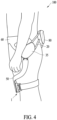
- a wearable device 100 may be a device that is worn on a body of a user 110 to assist the user 110 in walking (and/or gait), doing an exercise, and/or working more readily.
- the wearable device 100 may be used to measure a physical ability (e.g., a walking ability, and an exercise ability) of the user 110.
- the term "wearable device” used herein may be replaced with a “wearable robot,” “walking assistance device,” or “an exercise assistance device.”
- the user 110 may be a human or an animal, but examples of which are not limited thereto.
- the wearable device 100 may be worn on the body of the user to assist the user with their movement in a walking assistance mode.
- the wearable device 100 may be worn on legs of the user to generate an assistance force for assisting the user with a movement of the legs and assist the user in walking.
- a plurality of exercise modes may be databased and stored in the electronic device 210 and/or the server 230.
- the electronic device 210 and/or the server 230 may generate a plurality of exercise programs based on various pieces of information about the user and recommend, to the user, a target exercise program among the plurality of exercise programs in consideration of an exercise goal of the user or an exercise performance state of the user.
- the electronic device 210 and/or the server 230 may determine the target exercise program to be recommended to the user based on at least one of an exercise goal, an exercise history, or an exercise performance result of the user. Accordingly, even when doing an exercise every day under the same exercise goal, the user may be recommended a new exercise program, and the user may thus feel as if they perform a different exercise than before by performing the new exercise program.
- the sensor module may further include, for example, at least one of a position sensor, a temperature sensor, a biosignal sensor, or a proximity sensor.
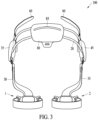
- the driving modules 35 and 45 may generate an external force (or torque) to be applied to the body of the user based on the control signal generated by the control module.
- the driving modules 35 and 45 may generate an assistance force or a resistance force to be applied to the legs of the user.
- the driving modules 35 and 45 may include a first driving module 45 disposed at a position corresponding to a position of a right hip joint of the user and a second driving module 35 disposed at a position corresponding to a position of a left hip joint of the user.
- the first driving module 45 may include a first actuator and a first joint member
- the second driving module 35 may include a second actuator and a second joint member.
- the first joint member and the second joint member may receive power from the first actuator and the second actuator, respectively, and may apply an external force to the body of the user based on the received power.
- the first joint member and the second joint member may be disposed at corresponding positions of joint portions of the user, respectively.
- One side of the first joint member may be connected to the first actuator, and the other side thereof may be connected to a first leg support frame 55.
- the first joint member may be rotated by the power received from the first actuator.
- An encoder or a Hall sensor that may operate as the angle sensor for measuring a rotation angle (corresponding to a joint angle of the user) of the first joint member may be disposed on one side of the first joint member.
- One side of the second joint member may be connected to the second actuator, and the other side thereof may be connected to a second leg support frame 50.
- the second joint member may be rotated by the power received from the second actuator.
- An encoder or a Hall sensor that may operate as the angle sensor for measuring a rotation angle (corresponding to a joint angle of the user) of the second joint member may be disposed on one side of the second joint member.
- the first actuator may be disposed in a lateral direction of the first joint member
- the second actuator may be disposed in a lateral direction of the second joint member.
- a rotation axis of the first actuator and a rotation axis of the first joint member may be disposed to be separate from each other
- a rotation axis of the second actuator and a rotation axis of the second joint member may also be disposed to be separate from each other.
- each actuator and each joint member may share a rotation axis.
- each actuator may be disposed to be separate from each joint member.
- the driving modules 35 and 45 may further include a power transmission module (not shown) configured to transmit power from the respective actuators to the respective joint members.
- the power transmission module may be a rotary body (e.g., a gear), or a longitudinal member (e.g., a wire, a cable, a string, a spring, a belt, or a chain).
- a rotary body e.g., a gear
- a longitudinal member e.g., a wire, a cable, a string, a spring, a belt, or a chain.
- the leg support frames 50 and 55 may push or pull the thighs of the user.
- the leg support frames 50 and 55 may extend in a longitudinal direction of the thighs of the user.
- the leg support frames 50 and 55 may be bent to wrap at least a portion of the circumference of the thighs of the user.
- the leg support frames 50 and 55 may include the first leg support frame 55 for supporting the right leg of the user and the second leg support frame 50 for supporting the left leg of the user.
- the thigh fasteners 1 and 2 may be connected to the leg support frames 50 and 55 and may fix the leg support frames 50 and 55 to the thighs of the user.
- the thigh fasteners 1 and 2 may include a first thigh fastener 2 for fixing the first leg support frame 55 to the right thigh of the user, and a second thigh fastener 1 for fixing the second leg support frame 50 to the left thigh of the user.
- the first thigh fastener 2 may include a first cover, a first fastening frame, and a first strap.
- the second thigh fastener 1 may include a second cover, a second fastening frame, and a second strap.
- the first cover and the second cover may apply torque generated by the driving modules 35 and 45 to the thighs of the user.
- the first cover and the second cover may be disposed on one side of the thighs of the user to push or pull the thighs of the user.
- the first cover and the second cover may be disposed on a front surface of the thighs of the user.
- the first cover and the second cover may be disposed along a circumferential direction of the thighs of the user.
- the first cover and the second cover may extend to both sides around the other ends of the leg support frames 50 and 55 and may include curved surfaces corresponding to the thighs of the user.
- One ends of the first cover and the second cover may be connected to corresponding fastening frames, and the other ends thereof may be connected to corresponding straps.
- first fastening frame and the second fastening frame may be disposed to surround at least a portion of the circumference of the thighs of the user to prevent or reduce the chance of the thighs of the user from escaping from the leg support frames 50 and 55.
- the first fastening frame may have a fastening structure that connects the first cover and the first strap
- the second fastening frame may have a fastening structure that connects the second cover and the second strap.
- the first strap may surround a remaining portion of the circumference of the right thigh of the user that is not covered by the first cover and the first fastening frame
- the second strap may surround a remaining portion of the circumference of the left thigh of the user that is not covered by the second cover and the second fastening frame.
- the first strap and the second strap may each include, for example, an elastic material (e.g., a band).
- the wearable device 100 may be controlled by a control system 500.
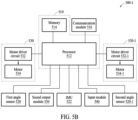
- the control system 500 may include a control module 510, a communication module 516, a sensor module 520, a driving module 530, an input module 540, and a sound output module 550.
- at least one of these components e.g., the sound output module 550
- at least one other component e.g., the lighting unit 85 of FIG. 3 ) may be added to the control system 500.
- a driving module (e.g., a driving module 530-1) of a control system 500-1 may include a plurality of (e.g., two or more) motor driver circuits (e.g., motor driver circuits 532 and 532-1) and motors (e.g., motors 534 and 534-1).
- the driving module 530 including the motor driver circuit 532 and the motor 534 may correspond to the first driving module 45 of FIG. 3
- the driving module 530-1 including the motor driver circuit 532-1 and the motor 534-1 may correspond to the second driving module 35 of FIG. 3 .
- the following description of each of the motor driver circuit 532 and the motor 534 may also be applied to the motor driver circuit 532-1 and the motor 534-1 shown in FIG. 5B .
- the sensor module 520 may include a sensor circuit including at least one sensor.
- the sensor module 520 may include sensor data including movement information of a user or movement information of the wearable device 100.
- the sensor module 520 may transmit the obtained sensor data to the control module 510.
- the sensor module 520 may include an IMU 522 and an angle sensor (e.g., a first angle sensor 520 and a second angle sensor 520-1), as shown in FIG. 5B .
- the input module 540 may receive a command or data to be used by a component (e.g., a processor 512) of the wearable device 100 from the outside (e.g., the user) of the wearable device 100.
- the input module 540 may include an input component circuit.
- the input module 540 may include, for example, a key (e.g., a button) or a touchscreen.
- the sound output module 550 may output a sound signal to the outside of the wearable device 100.
- the sound output module 550 may include a speaker that reproduces a guide voice for an audible notification of a guide sound signal (e.g., a driving start sound, a motion error notification sound, or an exercise start notification sound), music content, or specific information (e.g., exercise result information and physical ability evaluation information).
- control system 500 may further include a battery (not shown) for supplying power to each component of the wearable device 100.
- the wearable device 100 may convert power of the battery according to an operating voltage of each component of the wearable device 100 and supply the converted power to each component.
- a target exercise amount to be achieved by the user through an exercise corresponding to a target exercise amount to be achieved by the user through an exercise
- a second graphic element e.g., a second graphic element 1364 in Figs. 13-14
- an exercise amount achievement estimate that is achieved by the user doing the exercise without the selected exercise intensity being applied
- a third graphic element e.g., a third graphic element 1366 in Figs. 13-14
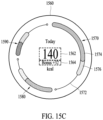
- the exercise activity indicator provided through the electronic device 210 will be described in more detail below with reference to FIGS. 13 to 15C .
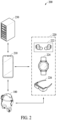
- the wearable device 100 may communicate with the electronic device 210.
- the electronic device 210 may be a user terminal of a user who uses the wearable device 100, or a dedicated controller for the wearable device 100.
- the wearable device 100 and the electronic device 210 may be connected to each other through short-range wireless communication (e.g., Bluetooth communication or Wi-Fi communication).
- the electronic device 210 may execute an application for checking a state of the wearable device 100 or controlling or operating the wearable device 100.
- an application for checking a state of the wearable device 100 or controlling or operating the wearable device 100.
- a screen of a user interface (UI) for controlling an operation of the wearable device 100 or determining an operation mode of the wearable device 100 may be displayed on a display 212 of the electronic device 210.
- the UI may be a graphical user interface (GUI), for example.
- GUI graphical user interface
- FIG. 7 is a diagram illustrating an example configuration of an electronic device according to an example embodiment.
- the processor 710 may control at least one other component (e.g., a hardware or software component) of the electronic device 210 and may perform various types of data processing or computation. According to an example embodiment, as at least a part of data processing or computation, the processor 710 may store instructions or data received from another component (e.g., the communication module 730 comprising communication circuitry) in the memory 720, process the instructions or data stored in the memory 720, and store resulting data in the memory 720.
- another component e.g., the communication module 730 comprising communication circuitry
- the memory 720 may store various pieces of data used by at least one component (e.g., the processor 710 and/or the communication module 730) of the electronic device 210.
- the data may include, for example, input data or output data for a program (e.g., an application) and instructions related thereto.
- the memory 720 may include at least one instruction executable by the processor 710.
- the memory 720 may include a volatile memory or a non-volatile memory.
- the communication module 730 may support the establishment of a direct (e.g., wired) communication channel or a wireless communication channel between the electronic device 210 and another electronic device (e.g., the wearable device 100, the other wearable device 220, and/or the server 230 as shown in Fig. 2 for example), and support the communication via the established communication channel.
- the communication module 730 may include a communication circuit for performing a communication function.
- the communication module 730 may include at least one communication processor (CP) that is operable independently of the processor 710 (e.g., an AP) and support direct (e.g., wired) communication or wireless communication.
- CP communication processor
- the processor 710 may provide a personalized target exercise amount for the user.
- the personalized target exercise amount may be determined based on user profile information of the user.
- the personalized target exercise amount may be provided to the user through a screen (e.g., a screen 1010 of FIG. 10 ) of a GUI.
- the personalized target exercise amount may be represented as a ratio between target exercise amounts for respective types of exercise the user attempts to do. For example, a ratio among a target exercise amount for a muscle strengthening exercise, a target exercise amount for an aerobic exercise, and a target exercise amount for a balance exercise may be determined according to a type of exercise the user intends to perform.
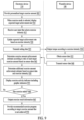
- the user may select an exercise intensity to be applied to an exercise they attempt to perform through the GUI, and the processor 710 may estimate at least one of an additional exercise amount achievement estimate of the user by the selected exercise intensity or a calorie consumption estimate of the user by the selected exercise intensity, based on an exercise mode (e.g., lunge, squat, running, or walking) selected by the user and the exercise intensity selected by the user.
- the display module 740 may output information about at least one of the additional exercise amount achievement estimate or the calorie consumption estimate. The information about at least one of the additional exercise amount achievement estimate or the calorie consumption estimate may be provided through one screen of the GUI.
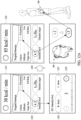
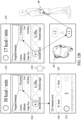
- the processor 710 may generate an exercise activity indicator (e.g., an exercise activity indicator 1350 of FIG. 13 ) including one or more graphic indicators (e.g., graphic indicators 1360, 1370, and 1380 of FIG. 13 ) for indicating an estimated exercise amount.
- the display module 740 may output a GUI on which the exercise activity indicator is displayed.
- the one or more graphic indicators may include a first graphic element corresponding to a target exercise amount to be achieved by the user through the exercise, a second graphic element corresponding to an exercise amount achievement estimate that is achieved when the user does the exercise without applying the selected exercise intensity, and a third graphic element corresponding to an additional exercise amount achievement estimate that is achieved when the user does the exercise by applying the selected exercise intensity.
- the exercise activity indicator provided through one screen of the GUI may include at least one of a graphic indicator (e.g., a graphic indicator 1360 of FIG. 13 ) corresponding to a muscle strengthening exercise amount to be achieved during the exercise of the user, a graphic indicator (e.g., a graphic indicator 1370) corresponding to an aerobic exercise amount to be achieved during the exercise of the user, or a graphic indicator (e.g., a graphic indicator 1380) corresponding to a balance exercise amount to be achieved during the exercise.
- a graphic indicator e.g., a graphic indicator 1360 of FIG. 13
- a graphic indicator 1370 corresponding to an aerobic exercise amount to be achieved during the exercise of the user
- a graphic indicator e.g., a graphic indicator 1380
- a target exercise amount ratio of the muscle strengthening exercise, a target exercise amount ratio of the aerobic exercise, and a target exercise amount ratio of the balance exercise for the squat exercise are 20%, 40%, and 40%, respectively
- the target exercise amount ratio of the muscle strengthening exercise, the target exercise amount ratio of the aerobic exercise, and the target exercise amount ratio of the balance exercise for the squat exercise may be updated to 40%, 30%, and 30%, respectively, when the user selects a second exercise intensity that is higher than the first exercise intensity and performs the squat exercise according to the selected second exercise intensity.
- the updating of the target exercise amount ratio according to the exercise intensity may be performed based on the DB.
- the electronic device 210 may recommend, to the user, an exercise intensity that is suitable for an exercise mode (or an exercise program) selected by the user or a physical characteristic of the user.
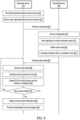
- the electronic device 210 may transmit, to the wearable device 100, setting data on the exercise intensity selected by the user input.
- the electronic device 210 and the wearable device 100 may be connected to each other through a network.
- the setting data may be transmitted as being included in a control command for instructing the wearable device 100 to operate in an exercise assistance mode.
- the wearable device 100 may receive the setting data from the electronic device 210.
- the wearable device 100 may start operating in the exercise assistance mode.
- the wearable device 100 may apply a resistance force or an assistance force to the body of the user during the exercise according to what the user selects.
- the first graphic element and the second graphic element may be displayed as overlaid with each other, and the first graphic element and the third graphic element may be displayed as overlaid with each other.
- the third graphic element may be displayed as starting from an end point of the second graphic element.
- the total target exercise amount to be achieved within the predetermined period of time may indicate, for example, a target calorie amount required to be consumed by the user on a weekly basis, and the electronic device 210 may distribute a target exercise amount to each of the muscle strengthening exercise, the aerobic exercise, and the balance exercise based on the target calorie amount.
- operations performed by the module, the program, or another component may be carried out sequentially, in parallel, repeatedly, or heuristically, or one or more of the operations may be executed in a different order or omitted, or one or more other operations may be added.
Landscapes
- Engineering & Computer Science (AREA)
- Health & Medical Sciences (AREA)
- General Health & Medical Sciences (AREA)
- Physical Education & Sports Medicine (AREA)
- Theoretical Computer Science (AREA)
- Medical Informatics (AREA)
- General Engineering & Computer Science (AREA)
- Public Health (AREA)
- Biomedical Technology (AREA)
- Human Computer Interaction (AREA)
- Physics & Mathematics (AREA)
- Epidemiology (AREA)
- Life Sciences & Earth Sciences (AREA)
- General Physics & Mathematics (AREA)
- Primary Health Care (AREA)
- Pathology (AREA)
- Data Mining & Analysis (AREA)
- Databases & Information Systems (AREA)
- Biophysics (AREA)
- Multimedia (AREA)
- Physiology (AREA)
- General Business, Economics & Management (AREA)
- Business, Economics & Management (AREA)
- Dentistry (AREA)
- Oral & Maxillofacial Surgery (AREA)
- Heart & Thoracic Surgery (AREA)
- Molecular Biology (AREA)
- Surgery (AREA)
- Animal Behavior & Ethology (AREA)
- Veterinary Medicine (AREA)
- Rehabilitation Tools (AREA)
- Measurement Of The Respiration, Hearing Ability, Form, And Blood Characteristics Of Living Organisms (AREA)
Applications Claiming Priority (3)
| Application Number | Priority Date | Filing Date | Title |
|---|---|---|---|
| KR20220070952 | 2022-06-10 | ||
| KR1020220125733A KR20230171361A (ko) | 2022-06-10 | 2022-09-30 | 운동량 측정 기능을 제공하는 전자 장치 및 웨어러블 장치,이들의 동작 방법 |
| PCT/KR2023/004383 WO2023239030A1 (ko) | 2022-06-10 | 2023-03-31 | 운동량 측정 기능을 제공하는 전자 장치 및 웨어러블 장치,이들의 동작 방법 |
Publications (2)
| Publication Number | Publication Date |
|---|---|
| EP4397380A1 true EP4397380A1 (de) | 2024-07-10 |
| EP4397380A4 EP4397380A4 (de) | 2025-08-13 |
Family
ID=89078026
Family Applications (1)
| Application Number | Title | Priority Date | Filing Date |
|---|---|---|---|
| EP23819968.1A Pending EP4397380A4 (de) | 2022-06-10 | 2023-03-31 | Elektronische vorrichtung und wearable-vorrichtung mit funktion zur messung des übungsumfangs und betriebsverfahren dafür |
Country Status (3)
| Country | Link |
|---|---|
| US (1) | US12515101B2 (de) |
| EP (1) | EP4397380A4 (de) |
| CN (1) | CN119300895A (de) |
Families Citing this family (4)
| Publication number | Priority date | Publication date | Assignee | Title |
|---|---|---|---|---|
| USD762671S1 (en) * | 2015-03-06 | 2016-08-02 | Apple Inc. | Display screen or portion thereof with animated graphical user interface |
| USD1099108S1 (en) * | 2020-11-13 | 2025-10-21 | Capital One Services, Llc | Mobile electronic device having a display screen with a graphical user interface |
| US20240402880A1 (en) * | 2023-06-04 | 2024-12-05 | Apple Inc. | Methods and user interfaces for managing and accessing workout content |
| USD1117274S1 (en) * | 2025-02-12 | 2026-03-10 | Nelson A. Cicchitto | Display screen or portion thereof with animated graphical user interface |
Family Cites Families (42)
| Publication number | Priority date | Publication date | Assignee | Title |
|---|---|---|---|---|
| US6648798B2 (en) * | 2000-05-02 | 2003-11-18 | Sewoo System Co., Ltd. | Concentric control system for exercise apparatuses and method thereof |
| FI6796U1 (fi) * | 2004-06-16 | 2005-09-26 | Firstbeat Technologies Oy | Järjestelmä fysiologisen tilan seuraamiseksi ja ennakoimiseksi fyysisen rasituksen alaisuudessa |
| FI20065147A7 (fi) * | 2006-03-03 | 2006-03-03 | Firstbeat Technologies Oy | Järjestelmä ja menetelmä harjoittelun ohjaamiseksi |
| US7662065B1 (en) * | 2006-09-01 | 2010-02-16 | Dp Technologies, Inc. | Method and apparatus to provide daily goals in accordance with historical data |
| US7771320B2 (en) * | 2006-09-07 | 2010-08-10 | Nike, Inc. | Athletic performance sensing and/or tracking systems and methods |
| US8235724B2 (en) | 2006-09-21 | 2012-08-07 | Apple Inc. | Dynamically adaptive scheduling system |
| US7840346B2 (en) * | 2006-11-02 | 2010-11-23 | Nokia Corporation | Real time performance comparison |
| WO2008101085A2 (en) * | 2007-02-14 | 2008-08-21 | Nike, Inc. | Collection and display of athletic information |
| CN105107185B (zh) * | 2009-04-27 | 2018-12-14 | 耐克创新有限合伙公司 | 用于生成训练计划和音乐播放列表的设备 |
| KR101085053B1 (ko) | 2009-10-22 | 2011-11-21 | 아주대학교산학협력단 | 사용자 맞춤형 운동 추천 방법 및 이를 적용한 휴대용 단말기 |
| US9392941B2 (en) * | 2010-07-14 | 2016-07-19 | Adidas Ag | Fitness monitoring methods, systems, and program products, and applications thereof |
| US10039970B2 (en) * | 2010-07-14 | 2018-08-07 | Adidas Ag | Location-aware fitness monitoring methods, systems, and program products, and applications thereof |
| US9011292B2 (en) * | 2010-11-01 | 2015-04-21 | Nike, Inc. | Wearable device assembly having athletic functionality |
| KR101379666B1 (ko) | 2012-07-31 | 2014-04-01 | 한국생산기술연구원 | 유산소 운동기구 운동부하의 설정 및 설정된 운동부하에 따라 운동하는 운동자의 에너지 소모량 측정 장치 및 방법 |
| US20140073486A1 (en) * | 2012-09-04 | 2014-03-13 | Bobo Analytics, Inc. | Systems, devices and methods for continuous heart rate monitoring and interpretation |
| KR101907089B1 (ko) * | 2012-11-16 | 2018-10-11 | 삼성전자주식회사 | 젖산 역치 추정 장치 및 방법 |
| US20150250417A1 (en) * | 2013-08-19 | 2015-09-10 | bOMDIC Inc. | Stamina monitoring method and device |
| EP3043875B1 (de) * | 2013-09-11 | 2019-11-06 | Firstbeat Technologies OY | Verfahren zur bestimmung einer physiologischen reaktion eines körpers auf körperliche übungen zur beurteilung der bereitschaft und zur bereitstellung von feedback sowie system zur umsetzung des verfahrens |
| WO2015088863A2 (en) * | 2013-12-09 | 2015-06-18 | President And Fellows Of Harvard College | Assistive flexible suits, flexible suit systems, and methods for making and control thereof to assist human mobility |
| KR102238330B1 (ko) * | 2014-05-16 | 2021-04-09 | 엘지전자 주식회사 | 디스플레이 장치 및 그의 동작 방법 |
| EP3129907A2 (de) * | 2014-09-02 | 2017-02-15 | Apple Inc. | Körperliche aktivität und trainingsmonitor |
| US10478708B2 (en) * | 2014-09-29 | 2019-11-19 | Pulson, Inc. | Coordinating musculoskeletal and cardiovascular hemodynamics |
| US20170165525A1 (en) * | 2014-10-16 | 2017-06-15 | Manuel Eduardo Tellez | Adrenaline Junkie |
| KR20160063126A (ko) * | 2014-11-26 | 2016-06-03 | 삼성전자주식회사 | 운동 정보 제공 방법과 이를 지원하는 전자 장치 |
| KR20170002035A (ko) | 2015-06-29 | 2017-01-06 | 엘지전자 주식회사 | 휴대용 기기 및 그의 체력 평가 방법 |
| KR102133933B1 (ko) * | 2015-07-27 | 2020-07-21 | 삼성전자주식회사 | 보행 보조 방법 및 이를 수행하는 장치 |
| KR20170083829A (ko) | 2016-01-11 | 2017-07-19 | 한화테크윈 주식회사 | 보행 보조 로봇 |
| DK201770423A1 (en) * | 2016-06-11 | 2018-01-15 | Apple Inc | Activity and workout updates |
| US10565897B2 (en) * | 2017-02-17 | 2020-02-18 | Mindful Projects, LLC | Quantitative diet tracking and analysis systems and devices |
| US11224782B2 (en) | 2017-06-04 | 2022-01-18 | Apple Inc. | Physical activity monitoring and motivating with an electronic device |
| JP6933101B2 (ja) * | 2017-11-17 | 2021-09-08 | トヨタ自動車株式会社 | 歩行評価装置、歩行訓練システムおよび歩行評価方法 |
| KR102002290B1 (ko) | 2018-02-23 | 2019-07-23 | 주식회사 네오펙트 | 재활 훈련을 제공하는 방법, 사용자 단말 및 컴퓨터 프로그램 |
| US11771355B2 (en) * | 2019-02-19 | 2023-10-03 | Firstbeat Analytics Oy | Methods and apparatus for analyzing and providing feedback of training effects, primary exercise benefits, training status, balance between training intensities and an automatic feedback system and apparatus for guiding future training |
| US11253749B2 (en) * | 2019-10-29 | 2022-02-22 | Reliance Capital Advisors Llc | Ideal target weight training recommendation system and method |
| KR102771801B1 (ko) | 2019-11-04 | 2025-02-26 | 삼성전자주식회사 | 웨어러블 장치 및 그 웨어러블 장치에 의해 수행되는 운동 지원 방법 |
| DK202070613A1 (en) * | 2020-02-14 | 2021-10-15 | Apple Inc | User interfaces for workout content |
| US11918850B2 (en) * | 2020-03-05 | 2024-03-05 | HLFIP Holding, Inc. | Stationary exercise bike for use in a correctional facility |
| KR20210128564A (ko) | 2020-04-16 | 2021-10-27 | 한국과학기술원 | 홈트레이닝 시스템 |
| EP3923215A1 (de) * | 2020-06-10 | 2021-12-15 | Firstbeat Analytics OY | Verfahren, vorrichtung und computerprogrammprodukt zur bereitstellung einer nächsten trainingsempfehlung |
| US20220004167A1 (en) * | 2020-07-02 | 2022-01-06 | X Development Llc | Exosuit historical data |
| US20240206825A1 (en) * | 2021-05-07 | 2024-06-27 | Nec Corporation | Estimation device, estimation system, estimation method, and storage medium |
| US20230211206A1 (en) * | 2022-01-06 | 2023-07-06 | Garmin International, Inc. | Wearable electronic device for stamina determination and prediction |
-
2023
- 2023-03-31 EP EP23819968.1A patent/EP4397380A4/de active Pending
- 2023-03-31 CN CN202380044102.0A patent/CN119300895A/zh active Pending
- 2023-08-23 US US18/454,325 patent/US12515101B2/en active Active
Also Published As
| Publication number | Publication date |
|---|---|
| US20230398407A1 (en) | 2023-12-14 |
| CN119300895A (zh) | 2025-01-10 |
| EP4397380A4 (de) | 2025-08-13 |
| US12515101B2 (en) | 2026-01-06 |
Similar Documents
| Publication | Publication Date | Title |
|---|---|---|
| US12515101B2 (en) | Electronic device and wearable device for providing function for measuring amount of exercise and operation methods thereof | |
| US20240350036A1 (en) | Method for estimating walking index of user and electronic device and wearable device for performing same | |
| KR102814708B1 (ko) | 웨어러블 장치와 전자 장치 간의 인터랙션 방법 및 이를 수행하는 웨어러블 장치 및 전자 장치 | |
| KR20230103949A (ko) | 사용자의 보행 지표를 추정하는 방법 및 이를 수행하는 전자 장치 및 웨어러블 장치 | |
| US20230398031A1 (en) | Wearable device and electronic device for providing exercise posture evaluation information of user and operation methods thereof | |
| KR20230171361A (ko) | 운동량 측정 기능을 제공하는 전자 장치 및 웨어러블 장치,이들의 동작 방법 | |
| KR102625749B1 (ko) | 사용자의 보행 지표를 추정하는 방법 및 이를 수행하는 전자 장치 및 웨어러블 장치 | |
| KR20250050429A (ko) | 운동 보조 장치를 이용한 다양한 운동 경험을 제공하는 전자 장치, 웨어러블 장치 및 운동 보조 장치를 제어하는 제어 방법 | |
| KR20240008771A (ko) | 착용 감지 기능을 제공하는 웨어러블 장치 및 웨어러블 장치의 동작 방법 | |
| KR20240088508A (ko) | 운동 보조 장치 | |
| US20250213417A1 (en) | Control method for reducing power consumption of wearable device, and wearable device performing same | |
| US20250231731A1 (en) | Method for interaction between wearable device and electronic device, and wearable device and electronic device performing same | |
| US20250221879A1 (en) | Zero setting method for wearable device, and wearable device and electronic device performing same | |
| US20260066083A1 (en) | Message output method and electronic device for performing samemethod | |
| US20260069923A1 (en) | Wearable device and electronic device for providing customized exercise coaching function and operating method thereof | |
| US20250009588A1 (en) | Haptic feedback control method of controlling haptic feedback of wearable device, wearable device and electronic device for performing the same | |
| US12521599B2 (en) | Wearable device for providing lighting function and operating method thereof | |
| US20240252381A1 (en) | Method of correcting walking posture of user and wearable device performing the method | |
| US20250205104A1 (en) | Method for detecting connection of fastening frame, and electronic device performing method | |
| US20250076383A1 (en) | Method of determining state of three-phase motor and electronic device for performing the method | |
| US20240148594A1 (en) | Method for controlling wearable apparatus for user safety and wearable apparatus performing the same | |
| US20240009061A1 (en) | Wearable device for providing wear detection function and operation method thereof | |
| US20240278059A1 (en) | Wearable device and operating method thereof | |
| US20250221875A1 (en) | Wearable device and method for controlling same device | |
| KR20230170541A (ko) | 사용자의 운동 동작 평가 정보를 제공하는 전자 장치 및 웨어러블 장치,이들의 동작 방법 |
Legal Events
| Date | Code | Title | Description |
|---|---|---|---|
| STAA | Information on the status of an ep patent application or granted ep patent |
Free format text: STATUS: THE INTERNATIONAL PUBLICATION HAS BEEN MADE |
|
| PUAI | Public reference made under article 153(3) epc to a published international application that has entered the european phase |
Free format text: ORIGINAL CODE: 0009012 |
|
| STAA | Information on the status of an ep patent application or granted ep patent |
Free format text: STATUS: REQUEST FOR EXAMINATION WAS MADE |
|
| 17P | Request for examination filed |
Effective date: 20240404 |
|
| AK | Designated contracting states |
Kind code of ref document: A1 Designated state(s): AL AT BE BG CH CY CZ DE DK EE ES FI FR GB GR HR HU IE IS IT LI LT LU LV MC ME MK MT NL NO PL PT RO RS SE SI SK SM TR |
|
| RIC1 | Information provided on ipc code assigned before grant |
Ipc: G06F 3/04842 20220101ALI20250414BHEP Ipc: G06F 3/0482 20130101ALI20250414BHEP Ipc: G06F 3/04817 20220101ALI20250414BHEP Ipc: G06F 1/16 20060101ALI20250414BHEP Ipc: A63B 24/00 20060101ALI20250414BHEP Ipc: A63B 71/06 20060101AFI20250414BHEP |
|
| A4 | Supplementary search report drawn up and despatched |
Effective date: 20250714 |
|
| RIC1 | Information provided on ipc code assigned before grant |
Ipc: A63B 71/06 20060101AFI20250708BHEP Ipc: A63B 24/00 20060101ALI20250708BHEP Ipc: G06F 1/16 20060101ALI20250708BHEP Ipc: G06F 3/04817 20220101ALI20250708BHEP Ipc: G06F 3/0482 20130101ALI20250708BHEP Ipc: G06F 3/04842 20220101ALI20250708BHEP |
|
| DAV | Request for validation of the european patent (deleted) | ||
| DAX | Request for extension of the european patent (deleted) |