EP4388375B1 - Assembly of an object having a stacked construction of a plurality of components - Google Patents
Assembly of an object having a stacked construction of a plurality of components Download PDFInfo
- Publication number
- EP4388375B1 EP4388375B1 EP22754503.5A EP22754503A EP4388375B1 EP 4388375 B1 EP4388375 B1 EP 4388375B1 EP 22754503 A EP22754503 A EP 22754503A EP 4388375 B1 EP4388375 B1 EP 4388375B1
- Authority
- EP
- European Patent Office
- Prior art keywords
- component
- controller
- imaging device
- image
- alignment feature
- Prior art date
- Legal status (The legal status is an assumption and is not a legal conclusion. Google has not performed a legal analysis and makes no representation as to the accuracy of the status listed.)
- Active
Links
Images


Classifications
-
- B—PERFORMING OPERATIONS; TRANSPORTING
- B25—HAND TOOLS; PORTABLE POWER-DRIVEN TOOLS; MANIPULATORS
- B25J—MANIPULATORS; CHAMBERS PROVIDED WITH MANIPULATION DEVICES
- B25J9/00—Program-controlled manipulators
- B25J9/02—Program-controlled manipulators characterised by movement of the arms, e.g. cartesian coordinate type
- B25J9/023—Cartesian coordinate type
- B25J9/026—Gantry-type
-
- B—PERFORMING OPERATIONS; TRANSPORTING
- B25—HAND TOOLS; PORTABLE POWER-DRIVEN TOOLS; MANIPULATORS
- B25J—MANIPULATORS; CHAMBERS PROVIDED WITH MANIPULATION DEVICES
- B25J9/00—Program-controlled manipulators
- B25J9/16—Program controls
- B25J9/1694—Program controls characterised by use of sensors other than normal servo-feedback from position, speed or acceleration sensors, perception control, multi-sensor controlled systems, sensor fusion
- B25J9/1697—Vision controlled systems
-
- G—PHYSICS
- G05—CONTROLLING; REGULATING
- G05B—CONTROL OR REGULATING SYSTEMS IN GENERAL; FUNCTIONAL ELEMENTS OF SUCH SYSTEMS; MONITORING OR TESTING ARRANGEMENTS FOR SUCH SYSTEMS OR ELEMENTS
- G05B19/00—Program-control systems
- G05B19/02—Program-control systems electric
- G05B19/18—Numerical control [NC], i.e. automatically operating machines, in particular machine tools, e.g. in a manufacturing environment, so as to execute positioning, movement or co-ordinated operations by means of program data in numerical form
- G05B19/402—Numerical control [NC], i.e. automatically operating machines, in particular machine tools, e.g. in a manufacturing environment, so as to execute positioning, movement or co-ordinated operations by means of program data in numerical form characterised by control arrangements for positioning, e.g. centring a tool relative to a hole in the workpiece, additional detection means to correct position
-
- G—PHYSICS
- G06—COMPUTING OR CALCULATING; COUNTING
- G06T—IMAGE DATA PROCESSING OR GENERATION, IN GENERAL
- G06T7/00—Image analysis
- G06T7/0002—Inspection of images, e.g. flaw detection
- G06T7/0004—Industrial image inspection
- G06T7/001—Industrial image inspection using an image reference approach
-
- G—PHYSICS
- G06—COMPUTING OR CALCULATING; COUNTING
- G06T—IMAGE DATA PROCESSING OR GENERATION, IN GENERAL
- G06T7/00—Image analysis
- G06T7/70—Determining position or orientation of objects or cameras
- G06T7/73—Determining position or orientation of objects or cameras using feature-based methods
- G06T7/74—Determining position or orientation of objects or cameras using feature-based methods involving reference images or patches
-
- H—ELECTRICITY
- H01—ELECTRIC ELEMENTS
- H01M—PROCESSES OR MEANS, e.g. BATTERIES, FOR THE DIRECT CONVERSION OF CHEMICAL ENERGY INTO ELECTRICAL ENERGY
- H01M10/00—Secondary cells; Manufacture thereof
- H01M10/04—Construction or manufacture in general
- H01M10/0404—Machines for assembling batteries
-
- H—ELECTRICITY
- H01—ELECTRIC ELEMENTS
- H01M—PROCESSES OR MEANS, e.g. BATTERIES, FOR THE DIRECT CONVERSION OF CHEMICAL ENERGY INTO ELECTRICAL ENERGY
- H01M10/00—Secondary cells; Manufacture thereof
- H01M10/04—Construction or manufacture in general
- H01M10/0422—Cells or battery with cylindrical casing
-
- H—ELECTRICITY
- H01—ELECTRIC ELEMENTS
- H01M—PROCESSES OR MEANS, e.g. BATTERIES, FOR THE DIRECT CONVERSION OF CHEMICAL ENERGY INTO ELECTRICAL ENERGY
- H01M10/00—Secondary cells; Manufacture thereof
- H01M10/04—Construction or manufacture in general
- H01M10/0422—Cells or battery with cylindrical casing
- H01M10/0427—Button cells
-
- H—ELECTRICITY
- H01—ELECTRIC ELEMENTS
- H01M—PROCESSES OR MEANS, e.g. BATTERIES, FOR THE DIRECT CONVERSION OF CHEMICAL ENERGY INTO ELECTRICAL ENERGY
- H01M10/00—Secondary cells; Manufacture thereof
- H01M10/04—Construction or manufacture in general
- H01M10/0436—Small-sized flat cells or batteries for portable equipment
-
- H—ELECTRICITY
- H01—ELECTRIC ELEMENTS
- H01M—PROCESSES OR MEANS, e.g. BATTERIES, FOR THE DIRECT CONVERSION OF CHEMICAL ENERGY INTO ELECTRICAL ENERGY
- H01M10/00—Secondary cells; Manufacture thereof
- H01M10/04—Construction or manufacture in general
- H01M10/0481—Compression means other than compression means for stacks of electrodes and separators
-
- G—PHYSICS
- G05—CONTROLLING; REGULATING
- G05B—CONTROL OR REGULATING SYSTEMS IN GENERAL; FUNCTIONAL ELEMENTS OF SUCH SYSTEMS; MONITORING OR TESTING ARRANGEMENTS FOR SUCH SYSTEMS OR ELEMENTS
- G05B2219/00—Program-control systems
- G05B2219/30—Nc systems
- G05B2219/37—Measurements
- G05B2219/37554—Two camera, or tiltable camera to detect different surfaces of the object
-
- G—PHYSICS
- G05—CONTROLLING; REGULATING
- G05B—CONTROL OR REGULATING SYSTEMS IN GENERAL; FUNCTIONAL ELEMENTS OF SUCH SYSTEMS; MONITORING OR TESTING ARRANGEMENTS FOR SUCH SYSTEMS OR ELEMENTS
- G05B2219/00—Program-control systems
- G05B2219/30—Nc systems
- G05B2219/40—Robotics, robotics mapping to robotics vision
- G05B2219/40066—Stack and align identical layers, laminates, electronic substrate layers
-
- G—PHYSICS
- G05—CONTROLLING; REGULATING
- G05B—CONTROL OR REGULATING SYSTEMS IN GENERAL; FUNCTIONAL ELEMENTS OF SUCH SYSTEMS; MONITORING OR TESTING ARRANGEMENTS FOR SUCH SYSTEMS OR ELEMENTS
- G05B2219/00—Program-control systems
- G05B2219/30—Nc systems
- G05B2219/49—Nc machine tool, till multiple
- G05B2219/49112—Compensation alignment of cylindrical workpiece
-
- G—PHYSICS
- G05—CONTROLLING; REGULATING
- G05B—CONTROL OR REGULATING SYSTEMS IN GENERAL; FUNCTIONAL ELEMENTS OF SUCH SYSTEMS; MONITORING OR TESTING ARRANGEMENTS FOR SUCH SYSTEMS OR ELEMENTS
- G05B2219/00—Program-control systems
- G05B2219/30—Nc systems
- G05B2219/49—Nc machine tool, till multiple
- G05B2219/49113—Align elements like hole and drill, centering tool, probe, workpiece
-
- G—PHYSICS
- G06—COMPUTING OR CALCULATING; COUNTING
- G06T—IMAGE DATA PROCESSING OR GENERATION, IN GENERAL
- G06T2207/00—Indexing scheme for image analysis or image enhancement
- G06T2207/30—Subject of image; Context of image processing
- G06T2207/30108—Industrial image inspection
Definitions
- the invention relates to an apparatus for assembling an object having a stacked construction of a plurality of components and to a method of performing an assembly operation for assembling components of an object having a stacked construction of a plurality of components.
- This invention is preferably applicable, but not limited to, disc-shaped objects, such as disc-shaped electrochemical cells.
- US 2014/253720 A1 discloses a system and method for aligning a first work piece with an underlying second work piece in the presence of occlusion by the first work piece of critical alignment features of the second work piece.
- an apparatus for assembling an object having a stacked construction of a plurality of components comprising:
- the coordination of the component holder and the first and second imaging devices by the controller enables the apparatus of the invention to carry out an assembly operation that includes both position alignment and position validation of the stacked components. This is made possible by the provision of the upward-facing first imaging device and the downward-facing second imaging device in the apparatus of the invention. As a result, the axial alignment of the components of the assembled object and the consistency of the assembly process can be assured without requiring operator supervision and intervention. This is not only beneficial for assembling objects with high numbers of components and/or different types of components but also advantageous for an automated assembly operation involving assembly of multiple objects.
- the assembly operation is applicable to the assembly of two or more components in sequence. It will be further understood that the position alignment and position validation of the assembly operation may be performed for some or all of the components of the object.
- each imaging device may be any device capable of capturing a still or moving image of an object.
- a non-limiting example of each imaging device is a camera.
- the assembly operation involves aligning and validating the position of a component on top of another component.
- the assembly operation may also involve alignment and validation of a position of the first component of the object placed in the assembly zone followed by alignment and validation of a second component on top of the first component.
- the controller may be programmed to selectively coordinate the component holder and the first and second imaging devices to carry out the assembly operation for assembling components of the object in which:
- the controller may be programmed to apply an alignment correction to the placement of a subsequent component in the assembly zone if an offset position of the component in the assembly zone is detected by the controller.
- the controller is capable of detecting the offset position of the placed component and making the necessary correction for the placement of the next component, without having to restart the entire assembly operation.
- the controller may be programmed to selectively position and control the second imaging device to capture an overhead image of the assembly zone after each component is placed in the assembly zone, and the controller may be programmed to selectively analyse the overhead images of the assembly zone to measure an axial alignment between stacked components in the assembly zone.
- the apparatus of the invention is further capable of assessing the alignment between the stacked components as part of a quality check.
- each overhead image is captured from the same position and perspective so that the components' positions become absolute to one another from this point of reference.
- each reference alignment feature may be a central point of the component.
- a different type of reference alignment feature may be used depending on the type, size or shape of the object and the type, size or shape of the component.
- the controller may be programmed to selectively assign coordinates to each identified reference alignment feature, and the controller may be programmed to selectively use the coordinates as reference values for component placement and component position validation.
- the coordinates may be assigned with reference to one or more known or pre-defined reference frames or points associated with one or more parts of the apparatus or with an object external to the apparatus. If the or each reference frame or point is associated with one or more parts of the apparatus, a calibration process may be carried out to confirm and/or adjust the position of the or each part before the assembly operation.
- the coordination of the component holder and the first and second imaging devices in the assembly operation may involve movement and repositioning of one, some or all of the component holder and the first and second imaging devices, non-limiting examples of which are described as follows and in this specification.
- the apparatus may further include a movable structure.
- the movable structure may be, for example, a movable stage.
- the movable structure may be configured to be movable in one, two or three axes.
- the apparatus may include an actuator for causing movement of the movable structure. The movement of the movable structure may be automatically or manually controlled.
- the first imaging device may be mounted on or attached to the movable structure.
- the controller may be programmed to selectively actuate the movable structure to position the first imaging device beneath the component holder.
- the assembly zone may be mounted on or attached to the movable structure.
- the controller may be programmed to selectively actuate the movable structure to position the assembly zone beneath the component holder.
- the controller may be programmed to selectively actuate the movable structure to position the assembly zone beneath the second imaging device.
- the apparatus may further include a force actuator for performing a pressing operation to apply a pressing load to a component.
- the controller may be programmed to selectively actuate the movable structure to position the assembly zone in the vicinity of (e.g. beneath) the force actuator to permit the force actuator to perform the pressing operation.
- the position alignment and the position validation by the assembly operation ensures that the stacked components are properly aligned prior to the pressing operation, thus reducing material wastage and costs arising from rejection of low-quality pressed stacked components.
- the force actuator may be, for example, a crimping actuator for performing a crimping operation.
- the apparatus may further include a component storage area, such as a component tray.
- the component storage area may be mounted on or attached to the movable structure.
- the controller may be programmed to selectively actuate the movable structure to position the component storage area beneath the component holder.
- the controller may be programmed to selectively perform image processing on the captured image during the reference alignment feature identification.
- the image processing may employ one or more image processing techniques and functions in order to improve the accuracy and/or speed of the reference alignment feature identification. This is particularly beneficial when the assembly operation is an automated operation.
- the image processing may include, but is not limited to: image smoothing using a Gaussian blur function; Canny edge detection; and/or feature extraction using a Hough transformation.
- the controller may be programmed to perform the image processing on the captured image at a first resolution followed by performing the image processing on the captured image at a second, higher resolution during the reference alignment feature identification.
- the performance of the image processing on the captured image at the first, lower resolution can be used to identify a target region for the reference alignment feature identification, followed by the performance of the image processing on the identified target region of the captured image at the second, higher resolution to more accurately identify the reference alignment feature and reduce overall image processing time.
- the controller may be programmed to perform image analysis on the captured image to detect a defect level of the component.
- the performance of the image analysis may be integrated into the assembly operation.
- the ability to detect defects in the component not only improves the quality of the final assembled object but also can reduce material wastage and operating costs, especially for an automated assembly operation.
- the image analysis can be performed in different ways to detect a defect level of the component, non-limiting examples of which are described as follows and in this specification.
- the image analysis may include using the identified reference alignment feature, such as its coordinates, to define a region of the component for analysis.
- the controller may be programmed to provide an indication when the detected defect level of the component exceeds a pre-defined defect threshold.
- the pre-defined defect threshold may be an operator-defined defect threshold.
- the indication may be, but is not limited to, an audio signal, a visual signal, an electronic data entry or a combination thereof.
- the pre-defined defect threshold may relate to, but is not limited to, a shape of the defect, a size of the defect, a position of the defect, a colour of the defect and/or a contrast of the defect with respect to its surroundings.
- the controller may be programmed to record and store position data for the component placed in the assembly zone.
- the stored position data may be used to assist the alignment of a subsequent component placed in the assembly zone, or also may be used in a post-assembly assessment of the quality of the object.
- the object may be a disc-shaped object, such as a disc-shaped electrochemical cell.
- a disc-shaped electrochemical cell is a coin cell.
- the apparatus of the invention may include an electrolyte dosing device that is operable to dispense a controlled dose of electrolyte during the assembly operation so that the stacked construction of the plurality of components contains the dispensed dose of electrolyte.
- the component holder may be configured in different ways to temporarily hold a component.
- the component holder may be configured to, in use, hold the component using vacuum suction.
- a method of performing an assembly operation for assembling components of an object having a stacked construction of a plurality of components comprising the steps of:
- the method of the invention may include the steps of:
- the method of the invention may include the step of applying an alignment correction to the placement of a subsequent component in the assembly zone if an offset position of the component in the assembly zone is detected.
- the method of the invention may include the steps of: by the second imaging device, capturing an overhead image of the assembly zone after each component is placed in the assembly zone; and analysing the overhead images of the assembly zone to measure an axial alignment between stacked components in the assembly zone.
- each overhead image is captured from the same position and perspective so that the components' positions become absolute to one another from this point of reference.
- each reference alignment feature may be a central point of the component.
- the method of the invention may include the steps of: assigning coordinates to each identified reference alignment feature; and using the coordinates as reference values for component placement and component position validation.
- the method of the invention may include the step of providing a movable structure.
- the method of the invention may include the step of actuating the movable structure to position the first imaging device beneath the component holder.
- the method of the invention may include the step of actuating the movable structure to position the assembly zone beneath the component holder.
- the method of the invention may include the step of actuating the movable structure to position the assembly zone beneath the second imaging device.
- the method of the invention may include the step of, by a force actuator, performing a pressing operation to apply a pressing load to a component.
- the method of the invention may include the step of actuating the movable structure to position the assembly zone in the vicinity of (e.g. beneath) the force actuator to permit the force actuator to perform the pressing operation.
- the method of the invention may include the step of providing a component storage area.
- the method of the invention may include the step of actuating the movable structure to position the component storage area beneath the component holder.
- the method of the invention may include the step of performing image processing on the captured image during the reference alignment feature identification.
- the image processing may include, but is not limited to: image smoothing using a Gaussian blur function; Canny edge detection; and/or feature extraction using a Hough transformation.
- the method of the invention may include the step of performing the image processing on the captured image at a first resolution followed by performing the image processing on the captured image at a second, higher resolution during the reference alignment feature identification.
- the method of the invention may include the step of performing image analysis on the captured image to detect a defect level of the component.
- the image analysis may include using the identified reference alignment feature, such as its coordinates, to define a region of the component for analysis.
- the method of the invention may include the step of providing an indication when the detected defect level of the component exceeds an operator-defined defect threshold.
- the method of the invention may include the step of recording and storing position data for the component placed in the assembly zone.
- the object may be a disc-shaped object, such as a disc-shaped electrochemical cell.
- the method of the invention may include the step of dispensing a controlled dose of electrolyte during the assembly operation so that the stacked construction of the plurality of components contains the dispensed dose of electrolyte.
- the component holder may be configured to, in use, hold the component using vacuum suction.
- an electrochemical coin cell also known as a coin battery, a watch battery or a button cell
- the following description applies mutatis mutandis to the assembly of any object having a stacked construction of a plurality of components, particularly disc-shaped objects.
- Electrochemical coin cells are built for research and development of electrochemical energy storage devices. Specifically, new energy storage device materials are evaluated by manufacturing electrochemical coin cells.
- an electrochemical coin cell may be manufactured by using the new material as the anode and a conventional material as the cathode.
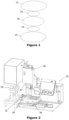
- components of a coin cell include a casing 10,12, an anode 14, a separator 16 and a cathode 18.
- Figure 1 shows an example coin cell.
- the casing 10,12 is usually formed of two casing parts 10,12 that can be attached and sealed to each other to enclose the other components 14,16,18 of the coin cell.
- An electrolyte is added inside the casing 10,12 prior to sealing.
- the electrochemical coin cell may include one or more additional components such as a spring, a spacer, a reference electrode, a gasket and so on.
- the electrochemical coin cell may be manufactured by hand or using an automated assembly system.
- the components of the coin cell can be easily misplaced, leading to misalignment of components. In such an event, the coin cell will fail prematurely and thereby exhibit a poor performance that provides misleading information about the new energy storage device material and the testing process.
- conventional automated systems have limited precision in their ability to place and align the coin cell's components, typically with +/- 500 ⁇ m deviation in component alignment, especially when one or more components are nonplanar, deformed or misshapen.
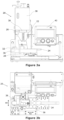
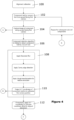
- FIG. 2 , 3a and 3b An apparatus according to an embodiment of the invention is shown in Figures 2 , 3a and 3b and is designated generally by the reference numeral 20.
- the apparatus 20 is for stacking a plurality of components to assemble an electrochemical coin cell (referred to hereon as a coin cell).
- the apparatus 20 comprises a component holder 22, a component storage area 24, an electrolyte dosing device 26, a first imaging device 28, a second imaging device 30, an assembly zone 32, a sealing device 34, a movable stage 36, a housing 38 and a controller 40.
- the component holder 22 is in the form of a vacuum tool 22 for picking up, holding and placing a component using vacuum suction.
- the vacuum tool 22 may include a vacuum source or may be connected to an external vacuum source.
- the vacuum tool 22 may be actuatable to move along a vertical axis to perform the picking and placing actions.
- the component storage area 24 is in the form of a component tray 24 for storing components of the coin cell.
- the vacuum tool 22 is operable to pick up a component from the component tray 24.
- the electrolyte dosing device 26 is preferably in the form of a pipette 26 but may be any device capable of dispensing a controlled dose of electrolyte.
- the pipette is configured for manual operation but may be configured for automated operation in other embodiments.
- the first and second imaging devices are in the form of first and second cameras 28,30.
- the first camera 28 is oriented so that its lens is facing an upward direction.
- the second camera 30 is oriented so that its lens is facing a downward direction.
- the assembly zone 32 is in the form of a build pad that defines a build area 32 on which the components may be stacked to assemble the coin cell.
- the sealing device 34 is in the form of a crimping actuator for performing a crimping operation by applying a pressing load to the components stacked on the build pad.
- the crimping actuator may be, for example, a hydraulic press.
- the component tray 24, the first camera 28 and the build pad are mounted on the movable stage 36.
- the stage 36 is actuatable to move in two horizontal axes 42,44 (referred to hereon as the X-axis and Y-axis), where each axis 42,44 is parallel with a surface on which the apparatus 20 rests.
- the stage 36 is horizontally movable in two axes 42,44 beneath the housing 38 to adjust a position of each of the component tray, the first camera 28 and the build pad relative to the housing 38, and the stage 36 is further movable to position the build pad beneath the crimping actuator.
- the pipette, the second camera 30 and the vacuum tool 22 are mounted in the housing 38 that is arranged over the stage 36.
- the housing 38 is actuatable to move along a vertical axis (referred to hereon as the Z-axis). In use, when the stage 36 is beneath the housing 38, the housing 38 is vertically movable to approach the stage 36 or withdraw from the stage 36.
- the controller 40 is programmed to selectively control the actuation of the stage 36 and the housing 38 to move along their respective axes.
- the actuation of the stage 36 and the housing 38 may be carried out using direct-drive mechanisms, motorised micro-positioning systems or any other positioning system.
- the controller 40 is also programmed to control operation of the vacuum tool 22 and the first and second cameras 28,30.
- the controller 40 may include a processor and memory including computer program code to carry out its functions.
- the controller 40 may be, may include, may communicate with or may form part of one or more of an electronic device, a portable electronic device, a portable telecommunications device, a microprocessor, a mobile phone, a personal digital assistant, a tablet, a phablet, a desktop computer, a laptop computer, a server, a cloud computing network, a smartphone, a smartwatch, smart eyewear, and a module for one or more of the same.
- references to a memory or a processor may encompass a plurality of memories or processors.
- the apparatus 20 of Figure 2 enables position alignment and position validation of the coin cell's components during the assembly of the coin cell.
- the configuration of the parts of the apparatus 20 of Figure 2 enables comparison and quantification of the positions of the components during the assembly process to ensure that the coin cell's components are aligned, or substantially aligned, to produce a high quality coin cell.
- the assembly of the coin cell involves the use of the apparatus 20 to stack the coin cell's components on the build pad, dose an amount of electrolyte into the coin cell using the pipette, and seal the coin cell using the crimping actuator.
- an alignment calibration step (Step 100) is carried out to ensure alignment between:
- the alignment calibration step may be carried out by using the first camera 28 to image the vacuum tool 22, using the second camera 30 to image the build pad and the component tray 24, and using the first and second cameras 28,30 to image each other.
- the calibration step is not required to be carried out at the start of each assembly operation. It may be that the calibration step is only carried out after a fixed number of assembly operations is completed, after a fixed period of time has lapsed and/or when a finished coin cell is assessed as not meeting quality requirements. The calibration step may also be carried out following a maintenance or repair of the apparatus 20.
- the stage 36 is actuated to position the component tray 24 beneath the vacuum tool 22.
- the vacuum tool 22 is operated to pick up a first component in the form of a bottom casing part from the component tray 24.
- the stage 36 is then actuated to position the first camera 28 beneath the vacuum tool 22 so that the first component is held over the first camera 28 in the middle of the object focal plane of the first camera 28 (Step 102). This may require actuation of the housing 38 to move the vacuum tool 22 towards or away from the first camera 28.
- the first camera 28 is operated to capture an image of a bottom side of the first component (Step 104). Illumination of the first component may be provided by ambient lighting and/or by a lighting device.
- the controller 40 then initiates a component detection algorithm to identify a reference alignment feature of the first component for subsequent placement of the first component on the build pad (Step 106).
- the reference alignment feature is the central point of the first component.
- the controller 40 performs image processing on the captured image of the bottom side of the first component by: applying image smoothing using a Gaussian blur; then edge detection using Canny edge detection; and then feature extraction using a Hough transformation (Step 108).
- the output of the image processing by the controller 40 is the central point of the first component in X-Y coordinates relative to the calibrated position of the first camera 28 (Step 110).
- the output X-Y coordinates of the first component from the image processing is then used to position the placement of the first component on the build pad.
- the controller 40 may apply a coordinate offset correction if it is determined that the output X-Y coordinates of the first component would result in an incorrect placement on the build pad, in which case the placement of the first component on the build pad is carried out using corrected X-Y coordinates (Step 112).
- the output X-Y coordinates (or the corrected X-Y coordinates as the case may be) is used by the controller 40 to control the actuation of the stage 36 to position the stage 36 beneath the vacuum tool 22 in order to place the first component in a target position on the build pad, preferably with the central point of the first component aligned with a central position on the build pad (Step 114).
- the stage 36 is then actuated to be positioned directly beneath the second camera 30 so that the first component is located beneath the second camera 30 in the middle of the object focal plane of the second camera 30 (Step 116). This may require actuation of the housing 38 to move the second camera 30 towards or away from the build pad.
- the second camera 30 is operated to capture an image of a top side of the first component (Step 118). Illumination of the first component may be provided by ambient lighting and/or by a lighting device.
- the controller 40 then initiates a component detection algorithm to identify a reference alignment feature, namely the central point, of the first component placed on the build pad (Step 120).
- the controller 40 performs image processing on the captured image of the top side of the first component by: applying image smoothing using a Gaussian blur; then edge detection using Canny edge detection; and then feature extraction using a Hough transformation (Step 122).
- the output of the image processing by the controller 40 is the central point of the first component in X-Y coordinates relative to the calibrated position of the second camera 30 (Step 124).
- the image processing may be carried out on the captured image at low resolution to first identify a target region for identifying the central point, followed by image processing on the identified target region of the captured image at high resolution to pinpoint the location of the central point. This has the effect of improving the accuracy and speed of the central point identification.
- Steps 102 to 124 are then stacked on top of the first component one at a time by repeating Steps 102 to 124, which is described as follows.
- the stage 36 is actuated to position the component tray 24 beneath the vacuum tool 22.
- the vacuum tool 22 is operated to pick up a second component in the form of an anode from the component tray 24.
- the stage 36 is then actuated to position the first camera 28 beneath the vacuum tool 22 so that the second component is held over the first camera 28 in the middle of the object focal plane of the first camera 28 (Step 102). This may require actuation of the housing 38 to move the vacuum tool 22 towards or away from the first camera 28.
- the first camera 28 is operated to capture an image of a bottom side of the second component (Step 104). Illumination of the second component may be provided by ambient lighting and/or by a lighting device.
- the controller 40 then initiates a component detection algorithm to identify a reference alignment feature of the second component for subsequent placement of the second component on the build pad (Step 106).
- the reference alignment feature is the central point of the second component.
- the controller 40 performs image processing on the captured image of the bottom side of the second component by: applying image smoothing using a Gaussian blur; then edge detection using Canny edge detection; and then feature extraction using a Hough transformation (Step 108).
- the output of the image processing by the controller 40 is the central point of the second component in X-Y coordinates relative to the calibrated position of the first camera 28 (Step 110).
- the output X-Y coordinates of the second component from the image processing is then used to position the placement of the second component on the build pad.
- the controller 40 may apply a coordinate offset correction if it is determined that the output X-Y coordinates of the second component would result in an incorrect placement on the build pad, in which case the placement of the second component on the build pad is carried out using corrected X-Y coordinates (Step 112).
- the output X-Y coordinates (or the corrected X-Y coordinates as the case may be) is used by the controller 40 to control the actuation of the stage 36 to position the stage 36 beneath the vacuum tool 22 in order to place the second component in a target position on the first component in the build area 32, preferably with the central point of the second component aligned with a central position of the build pad and the central point of the first component (Step 114).
- the stage 36 is then actuated to be positioned directly beneath the second camera 30 so that the second component is located beneath the second camera 30 in the middle of the object focal plane of the second camera 30 (Step 116). This may require actuation of the housing 38 to move the second camera 30 towards or away from the build pad.
- the second camera 30 is operated to capture an image of a top side of the second component (Step 118). Illumination of the second component may be provided by ambient lighting and/or by a lighting device.
- the controller 40 then initiates a component detection algorithm to identify a reference alignment feature, namely the central point, of the second component placed on the build pad (Step 120).
- the controller 40 performs image processing on the captured image of the top side of the second component by: applying image smoothing using a Gaussian blur; then edge detection using Canny edge detection; and then feature extraction using a Hough transformation (Step 122).
- the output of the image processing by the controller 40 is the central point of the second component in X-Y coordinates relative to the calibrated position of the second camera 30 (Step 124).
- Steps 102 to 124 may be repeated for stacking further components on the anode and the bottom casing part already placed on the build pad.
- the electrolyte is added into the coin cell at some point during the assembly operation before the top casing part is added to the stack of components.
- the addition of the electrolyte into the coin cell is carried out by actuating the stage 36 to position the build pad beneath the pipette and adding a controlled dose of electrolyte to the stack of components on the build pad.
- the manufacture of the coin cell is completed by actuating the stage 36 to position the build pad beneath the hydraulic press so that the hydraulic press may apply a pressing load to the stacked components to perform a crimping and sealing operation in order to produce the coin cell.
- the assembly operation may additionally include a position compensation step to eliminate or minimise misalignment between the components.
- the controller 40 may be programmed to apply an alignment correction to the placement of a subsequent component in the build area 32 if an offset position of the component on the build pad is detected by the controller 40.
- the assembly operation may include an optional image analysis step by the controller 40 to assess coating quality of a selected component, such as coating uniformity. This may include the controller 40 performing brightness analysis of the captured images of the selected component.
- the controller 40 carries out a validation of a position of each component in the build area 32 based on the identified central point of each component (Step 126).
- the validation process may include measuring the axial alignment between the components.
- overhead images of the build pad are captured by the second camera 30 after each component is placed in the build pad. Since the overhead images are captured from the same position and perspective, it becomes possible for the controller 40 to analyse the overhead images to measure a distance between the stacked components in the X-Y plane. This may be used to quantify the axial alignment between the stacked components as part of a build quality analysis and validation process.
- the axial alignment measurement is preferably based on the distance between the central points of the components.
- the controller 40 may record and store information for the assembled coin cell (Step 128).
- the stored information may include position data for each component placed in the build area 32.
- the stored position data may be used to assist the alignment of a subsequent component placed in the build area 32, or also may be used in a post-assembly assessment of the quality of the object.
- the stored position data may include the output X-Y coordinates of each component and/or the axial alignment data from the position validation process.
- the position data may be used as a variable metric for subsequent evaluation of the performance of the coin cell.
- the inventor has found that the assembly operation carried out by the apparatus 20 of Figure 2 enables consistent axial alignment between components with a separation of less than 20 ⁇ m in comparison to conventional assembly operations that produce axial alignment between components with a separation of greater than 500 ⁇ m.
- Coin cells with poor axial alignment i.e. a separation of greater than 500 microns, lead to premature cell failure.
- coin cells with good axial alignment i.e. a separation of less than 20 microns, lead to long-lasting cells.
- the controller 40 may be programmed to prioritise axial alignment between certain components of the coin cell. In order of priority from highest to lowest, the controller 40 may be programmed to prioritise the axial alignment of the anode and the cathode, followed by the separator, and finally followed by the other coin cell components.
- the configuration of the apparatus 20 of the invention therefore enables an automated coin cell production system to accurately place coin cell components, validate their placement and quantify their axial alignment.
- This in turn enables the invention to address the problems of: accurately building electrochemical cells with misshapen components (e.g. wavy or curved electrodes); accurately placing misshapen components (e.g. wavy or curved electrodes) with the highest degree of axial alignment; and quantifying the axial alignment between components.
- misshapen components e.g. wavy or curved electrodes
- misshapen components e.g. wavy or curved electrodes
- the component alignment facilitated by the assembly operation and the stored position data for the coin cell enables a user to evaluate the performance of the electrodes and cell components (e.g. separator and casing) for electrochemical cells with:
- An optional defect detection process involving image analysis by the controller 40 may be integrated into the assembly operation.
- An example defect detection process for each component is described as follows with reference to Figure 5 .
- Step 104 environmental lighting is applied using a lighting device to induce overexposure of defective parts of the component (Step 130).
- the total defective area of the component is then calculated as follows, using the captured images from the first and second cameras 28,30 and using output X-Y coordinates of the central point relative to the calibrated positions of the first and second cameras 28,30 (Step 132):
- the calculated total defective area of the component is then recorded, and the controller 40 provides an indication in the form of a flag if the total defective area exceeds an operator-defined defect threshold (Step 134).
- the provision of the upward-facing first camera 28 and the downward-facing second camera 30 enables a more complete defect evaluation of the coin cell and its components, particularly the top and bottom sides of the anode and the cathode.
- Non-limiting examples of component defects include; a cracked component; a bent component; a folded component; an incomplete component; and a torn component.
- An incomplete component has one or more missing component sections in comparison to a complete component.
- the defect data is then stored as part of the stored information for the assembled coin cell (Step 128).
Landscapes
- Engineering & Computer Science (AREA)
- Manufacturing & Machinery (AREA)
- Chemical & Material Sciences (AREA)
- Chemical Kinetics & Catalysis (AREA)
- Electrochemistry (AREA)
- General Chemical & Material Sciences (AREA)
- Physics & Mathematics (AREA)
- General Physics & Mathematics (AREA)
- Computer Vision & Pattern Recognition (AREA)
- Theoretical Computer Science (AREA)
- Human Computer Interaction (AREA)
- Automation & Control Theory (AREA)
- Robotics (AREA)
- Mechanical Engineering (AREA)
- Quality & Reliability (AREA)
- Image Processing (AREA)
- Automatic Assembly (AREA)
- Length Measuring Devices By Optical Means (AREA)
Description
- The invention relates to an apparatus for assembling an object having a stacked construction of a plurality of components and to a method of performing an assembly operation for assembling components of an object having a stacked construction of a plurality of components. This invention is preferably applicable, but not limited to, disc-shaped objects, such as disc-shaped electrochemical cells.
- It is known to automate the assembly of objects, such as coin cells, which involves stacking components.
-
US 2014/253720 A1 discloses a system and method for aligning a first work piece with an underlying second work piece in the presence of occlusion by the first work piece of critical alignment features of the second work piece. - According to a first aspect of the invention, there is provided an apparatus for assembling an object having a stacked construction of a plurality of components, the apparatus comprising:
- a component holder for selectively holding and placing a component;
- an assembly zone in which the object may be assembled;
- first and second imaging devices, the first imaging device positioned to face in an upward direction, the second imaging device positioned to face in a downward direction; and
- a controller programmed to selectively coordinate the component holder and the first and second imaging devices to carry out an assembly operation for assembling components of the object in which:
- the component holder holds a component over the first imaging device;
- the first imaging device captures an image of the component;
- the controller identifies a first reference alignment feature of the component from the image captured by the first imaging device;
- the component holder places the component on top of another component in the assembly zone based on the identified first reference alignment feature of the component;
- the second imaging device captures an overhead image of the component on top of the other component;
- the controller identifies a second reference alignment feature of the component from the image captured by the second imaging device;
- the controller validates a position of the component in the assembly zone based on the identified second reference alignment feature of the component.
- The coordination of the component holder and the first and second imaging devices by the controller enables the apparatus of the invention to carry out an assembly operation that includes both position alignment and position validation of the stacked components. This is made possible by the provision of the upward-facing first imaging device and the downward-facing second imaging device in the apparatus of the invention. As a result, the axial alignment of the components of the assembled object and the consistency of the assembly process can be assured without requiring operator supervision and intervention. This is not only beneficial for assembling objects with high numbers of components and/or different types of components but also advantageous for an automated assembly operation involving assembly of multiple objects.
- It will be understood that the assembly operation is applicable to the assembly of two or more components in sequence. It will be further understood that the position alignment and position validation of the assembly operation may be performed for some or all of the components of the object.
- It will be further understood that each imaging device may be any device capable of capturing a still or moving image of an object. A non-limiting example of each imaging device is a camera.
- As described above, the assembly operation involves aligning and validating the position of a component on top of another component. The assembly operation may also involve alignment and validation of a position of the first component of the object placed in the assembly zone followed by alignment and validation of a second component on top of the first component. In embodiments of the invention, the controller may be programmed to selectively coordinate the component holder and the first and second imaging devices to carry out the assembly operation for assembling components of the object in which:
- the component holder holds a first component over the first imaging device;
- the first imaging device captures an image of the first component;
- the controller identifies a first reference alignment feature of the first component from the image captured by the first imaging device;
- the component holder places the first component in the assembly zone based on the identified first reference alignment feature of the first component;
- the second imaging device captures an overhead image of the first component in the assembly zone;
- the controller identifies a second reference alignment feature of the first component from the image captured by the second imaging device;
- the controller validates a position of the first component in the assembly zone based on the identified second reference alignment feature of the first component.
- In further embodiments of the invention, the controller may be programmed to apply an alignment correction to the placement of a subsequent component in the assembly zone if an offset position of the component in the assembly zone is detected by the controller. Thus, in the event of component misplacement or misalignment, the controller is capable of detecting the offset position of the placed component and making the necessary correction for the placement of the next component, without having to restart the entire assembly operation.
- Optionally the controller may be programmed to selectively position and control the second imaging device to capture an overhead image of the assembly zone after each component is placed in the assembly zone, and the controller may be programmed to selectively analyse the overhead images of the assembly zone to measure an axial alignment between stacked components in the assembly zone. In this way the apparatus of the invention is further capable of assessing the alignment between the stacked components as part of a quality check. Preferably each overhead image is captured from the same position and perspective so that the components' positions become absolute to one another from this point of reference.
- In still further embodiments of the invention, each reference alignment feature may be a central point of the component. However, it will be appreciated that a different type of reference alignment feature may be used depending on the type, size or shape of the object and the type, size or shape of the component.
- The controller may be programmed to selectively assign coordinates to each identified reference alignment feature, and the controller may be programmed to selectively use the coordinates as reference values for component placement and component position validation. The coordinates may be assigned with reference to one or more known or pre-defined reference frames or points associated with one or more parts of the apparatus or with an object external to the apparatus. If the or each reference frame or point is associated with one or more parts of the apparatus, a calibration process may be carried out to confirm and/or adjust the position of the or each part before the assembly operation.
- The coordination of the component holder and the first and second imaging devices in the assembly operation may involve movement and repositioning of one, some or all of the component holder and the first and second imaging devices, non-limiting examples of which are described as follows and in this specification.
- In a non-limiting embodiment of the invention, the apparatus may further include a movable structure. The movable structure may be, for example, a movable stage. The movable structure may be configured to be movable in one, two or three axes. The apparatus may include an actuator for causing movement of the movable structure. The movement of the movable structure may be automatically or manually controlled.
- The first imaging device may be mounted on or attached to the movable structure. The controller may be programmed to selectively actuate the movable structure to position the first imaging device beneath the component holder.
- The assembly zone may be mounted on or attached to the movable structure. The controller may be programmed to selectively actuate the movable structure to position the assembly zone beneath the component holder. The controller may be programmed to selectively actuate the movable structure to position the assembly zone beneath the second imaging device.
- The apparatus may further include a force actuator for performing a pressing operation to apply a pressing load to a component. The controller may be programmed to selectively actuate the movable structure to position the assembly zone in the vicinity of (e.g. beneath) the force actuator to permit the force actuator to perform the pressing operation. The position alignment and the position validation by the assembly operation ensures that the stacked components are properly aligned prior to the pressing operation, thus reducing material wastage and costs arising from rejection of low-quality pressed stacked components.
- The force actuator may be, for example, a crimping actuator for performing a crimping operation.
- The apparatus may further include a component storage area, such as a component tray. The component storage area may be mounted on or attached to the movable structure. The controller may be programmed to selectively actuate the movable structure to position the component storage area beneath the component holder.
- In embodiments of the invention, the controller may be programmed to selectively perform image processing on the captured image during the reference alignment feature identification. The image processing may employ one or more image processing techniques and functions in order to improve the accuracy and/or speed of the reference alignment feature identification. This is particularly beneficial when the assembly operation is an automated operation. The image processing may include, but is not limited to: image smoothing using a Gaussian blur function; Canny edge detection; and/or feature extraction using a Hough transformation.
- The controller may be programmed to perform the image processing on the captured image at a first resolution followed by performing the image processing on the captured image at a second, higher resolution during the reference alignment feature identification. The performance of the image processing on the captured image at the first, lower resolution can be used to identify a target region for the reference alignment feature identification, followed by the performance of the image processing on the identified target region of the captured image at the second, higher resolution to more accurately identify the reference alignment feature and reduce overall image processing time.
- The controller may be programmed to perform image analysis on the captured image to detect a defect level of the component. The performance of the image analysis may be integrated into the assembly operation. The ability to detect defects in the component not only improves the quality of the final assembled object but also can reduce material wastage and operating costs, especially for an automated assembly operation.
- The image analysis can be performed in different ways to detect a defect level of the component, non-limiting examples of which are described as follows and in this specification. The image analysis may include using the identified reference alignment feature, such as its coordinates, to define a region of the component for analysis. The controller may be programmed to provide an indication when the detected defect level of the component exceeds a pre-defined defect threshold. The pre-defined defect threshold may be an operator-defined defect threshold. The indication may be, but is not limited to, an audio signal, a visual signal, an electronic data entry or a combination thereof.
- The pre-defined defect threshold may relate to, but is not limited to, a shape of the defect, a size of the defect, a position of the defect, a colour of the defect and/or a contrast of the defect with respect to its surroundings.
- The controller may be programmed to record and store position data for the component placed in the assembly zone. The stored position data may be used to assist the alignment of a subsequent component placed in the assembly zone, or also may be used in a post-assembly assessment of the quality of the object.
- In further embodiments of the invention, the object may be a disc-shaped object, such as a disc-shaped electrochemical cell. A non-limiting example of a disc-shaped electrochemical cell is a coin cell.
- The apparatus of the invention may include an electrolyte dosing device that is operable to dispense a controlled dose of electrolyte during the assembly operation so that the stacked construction of the plurality of components contains the dispensed dose of electrolyte.
- The component holder may be configured in different ways to temporarily hold a component. For example, the component holder may be configured to, in use, hold the component using vacuum suction.
- According to a second aspect of the invention, there is provided a method of performing an assembly operation for assembling components of an object having a stacked construction of a plurality of components, the method comprising the steps of:
- holding the component over a first imaging device positioned to face in an upward direction;
- by the first imaging device, capturing an image of the component;
- identifying a first reference alignment feature of the component from the image captured by the first imaging device;
- placing the component on top of another component in an assembly zone based on the identified first reference alignment feature of the component;
- by a second imaging device positioned to face in a downward direction, capturing an overhead image of the component on top of the other component;
- identifying a second reference alignment feature of the component from the image captured by the second imaging device;
- validating a position of the component in the assembly zone based on the identified second reference alignment feature of the component.
- The features and advantages of the first aspect of the invention and its embodiments apply mutatis mutandis to the second aspect of the invention and its embodiments.
- The method of the invention may include the steps of:
- holding a first component over the first imaging device;
- by the first imaging device, capturing an image of the first component;
- identifying a first reference alignment feature of the first component from the image captured by the first imaging device;
- placing the first component in the assembly zone based on the identified first reference alignment feature of the first component;
- by the second imaging device, capturing an image of the first component in the assembly zone;
- identifying a second reference alignment feature of the first component from the image captured by the second imaging device;
- validating a position of the first component in the assembly zone based on the identified second reference alignment feature of the first component.
- The method of the invention may include the step of applying an alignment correction to the placement of a subsequent component in the assembly zone if an offset position of the component in the assembly zone is detected.
- The method of the invention may include the steps of: by the second imaging device, capturing an overhead image of the assembly zone after each component is placed in the assembly zone; and analysing the overhead images of the assembly zone to measure an axial alignment between stacked components in the assembly zone. Preferably each overhead image is captured from the same position and perspective so that the components' positions become absolute to one another from this point of reference.
- In the method of the invention, each reference alignment feature may be a central point of the component.
- The method of the invention may include the steps of: assigning coordinates to each identified reference alignment feature; and using the coordinates as reference values for component placement and component position validation.
- The method of the invention may include the step of providing a movable structure.
- When the first imaging device is mounted on or attached to the movable structure, the method of the invention may include the step of actuating the movable structure to position the first imaging device beneath the component holder.
- When the assembly zone is mounted on or attached to the movable structure, the method of the invention may include the step of actuating the movable structure to position the assembly zone beneath the component holder.
- When the assembly zone is mounted on or attached to the movable structure, the method of the invention may include the step of actuating the movable structure to position the assembly zone beneath the second imaging device.
- The method of the invention may include the step of, by a force actuator, performing a pressing operation to apply a pressing load to a component. When the assembly zone is mounted on or attached to the movable structure, the method of the invention may include the step of actuating the movable structure to position the assembly zone in the vicinity of (e.g. beneath) the force actuator to permit the force actuator to perform the pressing operation.
- The method of the invention may include the step of providing a component storage area. When the component storage area is mounted on or attached to the movable structure, the method of the invention may include the step of actuating the movable structure to position the component storage area beneath the component holder.
- The method of the invention may include the step of performing image processing on the captured image during the reference alignment feature identification. In the method of the invention, the image processing may include, but is not limited to: image smoothing using a Gaussian blur function; Canny edge detection; and/or feature extraction using a Hough transformation. The method of the invention may include the step of performing the image processing on the captured image at a first resolution followed by performing the image processing on the captured image at a second, higher resolution during the reference alignment feature identification.
- The method of the invention may include the step of performing image analysis on the captured image to detect a defect level of the component. In the method of the invention, the image analysis may include using the identified reference alignment feature, such as its coordinates, to define a region of the component for analysis. The method of the invention may include the step of providing an indication when the detected defect level of the component exceeds an operator-defined defect threshold.
- The method of the invention may include the step of recording and storing position data for the component placed in the assembly zone.
- In the method of the invention, the object may be a disc-shaped object, such as a disc-shaped electrochemical cell.
- The method of the invention may include the step of dispensing a controlled dose of electrolyte during the assembly operation so that the stacked construction of the plurality of components contains the dispensed dose of electrolyte.
- In the method of the invention, the component holder may be configured to, in use, hold the component using vacuum suction.
- It will be appreciated that the use of the terms "first" and "second", and the like, in this patent specification is merely intended to help distinguish between similar features and is not intended to indicate the relative importance of one feature over another feature, unless otherwise specified.
- Preferred embodiments of the invention will now be described, by way of non-limiting examples, with reference to the accompanying drawings in which:
-
Figure 1 shows an exploded view of an example of a coin cell; -
Figure 2 shows an apparatus according to an embodiment of the invention; -
Figures 3a and 3b show front and top views of the apparatus ofFigure 2 ; -
Figure 4 shows a flowchart illustrating an assembly operation of the apparatus ofFigure 2 ; and -
Figure 5 shows a flowchart illustrating a defect detection process of the assembly operation ofFigure 4 . - The figures are not necessarily to scale, and certain features and certain views of the figures may be shown exaggerated in scale or in schematic form in the interests of clarity and conciseness.
- The following embodiments of the invention are described with reference to the assembly of an electrochemical coin cell (also known as a coin battery, a watch battery or a button cell) but it will be appreciated that the following description applies mutatis mutandis to the assembly of any object having a stacked construction of a plurality of components, particularly disc-shaped objects.
- Electrochemical coin cells are built for research and development of electrochemical energy storage devices. Specifically, new energy storage device materials are evaluated by manufacturing electrochemical coin cells. For example, an electrochemical coin cell may be manufactured by using the new material as the anode and a conventional material as the cathode.
- Typically components of a coin cell include a
casing anode 14, aseparator 16 and acathode 18.Figure 1 shows an example coin cell. Thecasing casing parts other components casing - The electrochemical coin cell may be manufactured by hand or using an automated assembly system. When building the coin cell by hand, the components of the coin cell can be easily misplaced, leading to misalignment of components. In such an event, the coin cell will fail prematurely and thereby exhibit a poor performance that provides misleading information about the new energy storage device material and the testing process. On the other hand, conventional automated systems have limited precision in their ability to place and align the coin cell's components, typically with +/- 500 µm deviation in component alignment, especially when one or more components are nonplanar, deformed or misshapen.
- An apparatus according to an embodiment of the invention is shown in
Figures 2 ,3a and 3b and is designated generally by thereference numeral 20. Theapparatus 20 is for stacking a plurality of components to assemble an electrochemical coin cell (referred to hereon as a coin cell). - The
apparatus 20 comprises acomponent holder 22, acomponent storage area 24, anelectrolyte dosing device 26, afirst imaging device 28, asecond imaging device 30, anassembly zone 32, a sealingdevice 34, amovable stage 36, ahousing 38 and acontroller 40. - The
component holder 22 is in the form of avacuum tool 22 for picking up, holding and placing a component using vacuum suction. Thevacuum tool 22 may include a vacuum source or may be connected to an external vacuum source. Thevacuum tool 22 may be actuatable to move along a vertical axis to perform the picking and placing actions. - The
component storage area 24 is in the form of acomponent tray 24 for storing components of the coin cell. In use, thevacuum tool 22 is operable to pick up a component from thecomponent tray 24. - The
electrolyte dosing device 26 is preferably in the form of apipette 26 but may be any device capable of dispensing a controlled dose of electrolyte. In the embodiment shown, the pipette is configured for manual operation but may be configured for automated operation in other embodiments. - The first and second imaging devices are in the form of first and
second cameras first camera 28 is oriented so that its lens is facing an upward direction. Thesecond camera 30 is oriented so that its lens is facing a downward direction. - The
assembly zone 32 is in the form of a build pad that defines abuild area 32 on which the components may be stacked to assemble the coin cell. - The sealing
device 34 is in the form of a crimping actuator for performing a crimping operation by applying a pressing load to the components stacked on the build pad. The crimping actuator may be, for example, a hydraulic press. - The
component tray 24, thefirst camera 28 and the build pad are mounted on themovable stage 36. Thestage 36 is actuatable to move in twohorizontal axes 42,44 (referred to hereon as the X-axis and Y-axis), where eachaxis apparatus 20 rests. In use, thestage 36 is horizontally movable in twoaxes housing 38 to adjust a position of each of the component tray, thefirst camera 28 and the build pad relative to thehousing 38, and thestage 36 is further movable to position the build pad beneath the crimping actuator. - The pipette, the
second camera 30 and thevacuum tool 22 are mounted in thehousing 38 that is arranged over thestage 36. Thehousing 38 is actuatable to move along a vertical axis (referred to hereon as the Z-axis). In use, when thestage 36 is beneath thehousing 38, thehousing 38 is vertically movable to approach thestage 36 or withdraw from thestage 36. - The
controller 40 is programmed to selectively control the actuation of thestage 36 and thehousing 38 to move along their respective axes. The actuation of thestage 36 and thehousing 38 may be carried out using direct-drive mechanisms, motorised micro-positioning systems or any other positioning system. Thecontroller 40 is also programmed to control operation of thevacuum tool 22 and the first andsecond cameras - The
controller 40 may include a processor and memory including computer program code to carry out its functions. Thecontroller 40 may be, may include, may communicate with or may form part of one or more of an electronic device, a portable electronic device, a portable telecommunications device, a microprocessor, a mobile phone, a personal digital assistant, a tablet, a phablet, a desktop computer, a laptop computer, a server, a cloud computing network, a smartphone, a smartwatch, smart eyewear, and a module for one or more of the same. It will be appreciated that references to a memory or a processor may encompass a plurality of memories or processors. - The
apparatus 20 ofFigure 2 enables position alignment and position validation of the coin cell's components during the assembly of the coin cell. In particular, the configuration of the parts of theapparatus 20 ofFigure 2 enables comparison and quantification of the positions of the components during the assembly process to ensure that the coin cell's components are aligned, or substantially aligned, to produce a high quality coin cell. - Operation of the
apparatus 20 ofFigure 2 to carry out an assembly operation is described as follows with reference to the flow chart ofFigure 4 . It will be appreciated that the assembly operation described below and in the flowchart ofFigure 4 is non-limiting. In other embodiments, the assembly operation of the invention may include fewer or more steps within the scope of the claims. - The assembly of the coin cell involves the use of the
apparatus 20 to stack the coin cell's components on the build pad, dose an amount of electrolyte into the coin cell using the pipette, and seal the coin cell using the crimping actuator. - As an initial step, an alignment calibration step (Step 100) is carried out to ensure alignment between:
- the first and
second cameras - the
first camera 28 and thevacuum tool 22 when thefirst camera 28 is positioned beneath thevacuum tool 22; - the
second camera 30 and the build pad when the build pad is positioned beneath thesecond camera 30; - the
second camera 30 and thecomponent tray 24 when thecomponent tray 24 is beneath thesecond camera 30. - The alignment calibration step may be carried out by using the
first camera 28 to image thevacuum tool 22, using thesecond camera 30 to image the build pad and thecomponent tray 24, and using the first andsecond cameras - The calibration step is not required to be carried out at the start of each assembly operation. It may be that the calibration step is only carried out after a fixed number of assembly operations is completed, after a fixed period of time has lapsed and/or when a finished coin cell is assessed as not meeting quality requirements. The calibration step may also be carried out following a maintenance or repair of the
apparatus 20. - The
stage 36 is actuated to position thecomponent tray 24 beneath thevacuum tool 22. Thevacuum tool 22 is operated to pick up a first component in the form of a bottom casing part from thecomponent tray 24. Thestage 36 is then actuated to position thefirst camera 28 beneath thevacuum tool 22 so that the first component is held over thefirst camera 28 in the middle of the object focal plane of the first camera 28 (Step 102). This may require actuation of thehousing 38 to move thevacuum tool 22 towards or away from thefirst camera 28. - The
first camera 28 is operated to capture an image of a bottom side of the first component (Step 104). Illumination of the first component may be provided by ambient lighting and/or by a lighting device. - The
controller 40 then initiates a component detection algorithm to identify a reference alignment feature of the first component for subsequent placement of the first component on the build pad (Step 106). In this case, the reference alignment feature is the central point of the first component. To identify the central point of the first component, thecontroller 40 performs image processing on the captured image of the bottom side of the first component by: applying image smoothing using a Gaussian blur; then edge detection using Canny edge detection; and then feature extraction using a Hough transformation (Step 108). The output of the image processing by thecontroller 40 is the central point of the first component in X-Y coordinates relative to the calibrated position of the first camera 28 (Step 110). - The output X-Y coordinates of the first component from the image processing is then used to position the placement of the first component on the build pad. The
controller 40 may apply a coordinate offset correction if it is determined that the output X-Y coordinates of the first component would result in an incorrect placement on the build pad, in which case the placement of the first component on the build pad is carried out using corrected X-Y coordinates (Step 112). The output X-Y coordinates (or the corrected X-Y coordinates as the case may be) is used by thecontroller 40 to control the actuation of thestage 36 to position thestage 36 beneath thevacuum tool 22 in order to place the first component in a target position on the build pad, preferably with the central point of the first component aligned with a central position on the build pad (Step 114). - After the placement of the first component, the
stage 36 is then actuated to be positioned directly beneath thesecond camera 30 so that the first component is located beneath thesecond camera 30 in the middle of the object focal plane of the second camera 30 (Step 116). This may require actuation of thehousing 38 to move thesecond camera 30 towards or away from the build pad. - The
second camera 30 is operated to capture an image of a top side of the first component (Step 118). Illumination of the first component may be provided by ambient lighting and/or by a lighting device. - The
controller 40 then initiates a component detection algorithm to identify a reference alignment feature, namely the central point, of the first component placed on the build pad (Step 120). To identify the central point of the first component, thecontroller 40 performs image processing on the captured image of the top side of the first component by: applying image smoothing using a Gaussian blur; then edge detection using Canny edge detection; and then feature extraction using a Hough transformation (Step 122). The output of the image processing by thecontroller 40 is the central point of the first component in X-Y coordinates relative to the calibrated position of the second camera 30 (Step 124). - Optionally, during the central point identification by the
controller 40, the image processing may be carried out on the captured image at low resolution to first identify a target region for identifying the central point, followed by image processing on the identified target region of the captured image at high resolution to pinpoint the location of the central point. This has the effect of improving the accuracy and speed of the central point identification. - After the first component is placed on the build pad, additional components are then stacked on top of the first component one at a time by repeating
Steps 102 to 124, which is described as follows. - The
stage 36 is actuated to position thecomponent tray 24 beneath thevacuum tool 22. Thevacuum tool 22 is operated to pick up a second component in the form of an anode from thecomponent tray 24. Thestage 36 is then actuated to position thefirst camera 28 beneath thevacuum tool 22 so that the second component is held over thefirst camera 28 in the middle of the object focal plane of the first camera 28 (Step 102). This may require actuation of thehousing 38 to move thevacuum tool 22 towards or away from thefirst camera 28. - The
first camera 28 is operated to capture an image of a bottom side of the second component (Step 104). Illumination of the second component may be provided by ambient lighting and/or by a lighting device. - The
controller 40 then initiates a component detection algorithm to identify a reference alignment feature of the second component for subsequent placement of the second component on the build pad (Step 106). In this case, the reference alignment feature is the central point of the second component. To identify the central point of the second component, thecontroller 40 performs image processing on the captured image of the bottom side of the second component by: applying image smoothing using a Gaussian blur; then edge detection using Canny edge detection; and then feature extraction using a Hough transformation (Step 108). The output of the image processing by thecontroller 40 is the central point of the second component in X-Y coordinates relative to the calibrated position of the first camera 28 (Step 110). - The output X-Y coordinates of the second component from the image processing is then used to position the placement of the second component on the build pad. The
controller 40 may apply a coordinate offset correction if it is determined that the output X-Y coordinates of the second component would result in an incorrect placement on the build pad, in which case the placement of the second component on the build pad is carried out using corrected X-Y coordinates (Step 112). The output X-Y coordinates (or the corrected X-Y coordinates as the case may be) is used by thecontroller 40 to control the actuation of thestage 36 to position thestage 36 beneath thevacuum tool 22 in order to place the second component in a target position on the first component in thebuild area 32, preferably with the central point of the second component aligned with a central position of the build pad and the central point of the first component (Step 114). - After the placement of the second component, the
stage 36 is then actuated to be positioned directly beneath thesecond camera 30 so that the second component is located beneath thesecond camera 30 in the middle of the object focal plane of the second camera 30 (Step 116). This may require actuation of thehousing 38 to move thesecond camera 30 towards or away from the build pad. - The
second camera 30 is operated to capture an image of a top side of the second component (Step 118). Illumination of the second component may be provided by ambient lighting and/or by a lighting device. - The
controller 40 then initiates a component detection algorithm to identify a reference alignment feature, namely the central point, of the second component placed on the build pad (Step 120). To identify the central point of the second component, thecontroller 40 performs image processing on the captured image of the top side of the second component by: applying image smoothing using a Gaussian blur; then edge detection using Canny edge detection; and then feature extraction using a Hough transformation (Step 122). The output of the image processing by thecontroller 40 is the central point of the second component in X-Y coordinates relative to the calibrated position of the second camera 30 (Step 124). - The
above Steps 102 to 124 may be repeated for stacking further components on the anode and the bottom casing part already placed on the build pad. - The electrolyte is added into the coin cell at some point during the assembly operation before the top casing part is added to the stack of components. The addition of the electrolyte into the coin cell is carried out by actuating the
stage 36 to position the build pad beneath the pipette and adding a controlled dose of electrolyte to the stack of components on the build pad. - The manufacture of the coin cell is completed by actuating the
stage 36 to position the build pad beneath the hydraulic press so that the hydraulic press may apply a pressing load to the stacked components to perform a crimping and sealing operation in order to produce the coin cell. - The assembly operation may additionally include a position compensation step to eliminate or minimise misalignment between the components. Specifically, the
controller 40 may be programmed to apply an alignment correction to the placement of a subsequent component in thebuild area 32 if an offset position of the component on the build pad is detected by thecontroller 40. - The assembly operation may include an optional image analysis step by the
controller 40 to assess coating quality of a selected component, such as coating uniformity. This may include thecontroller 40 performing brightness analysis of the captured images of the selected component. - During the assembly operation, after all of the coin cell components are stacked on the build pad, the
controller 40 carries out a validation of a position of each component in thebuild area 32 based on the identified central point of each component (Step 126). The validation process may include measuring the axial alignment between the components. During the assembly operation, overhead images of the build pad are captured by thesecond camera 30 after each component is placed in the build pad. Since the overhead images are captured from the same position and perspective, it becomes possible for thecontroller 40 to analyse the overhead images to measure a distance between the stacked components in the X-Y plane. This may be used to quantify the axial alignment between the stacked components as part of a build quality analysis and validation process. The axial alignment measurement is preferably based on the distance between the central points of the components. - During the assembly operation, the
controller 40 may record and store information for the assembled coin cell (Step 128). The stored information may include position data for each component placed in thebuild area 32. The stored position data may be used to assist the alignment of a subsequent component placed in thebuild area 32, or also may be used in a post-assembly assessment of the quality of the object. The stored position data may include the output X-Y coordinates of each component and/or the axial alignment data from the position validation process. The position data may be used as a variable metric for subsequent evaluation of the performance of the coin cell. - The inventor has found that the assembly operation carried out by the
apparatus 20 ofFigure 2 enables consistent axial alignment between components with a separation of less than 20 µm in comparison to conventional assembly operations that produce axial alignment between components with a separation of greater than 500 µm. Coin cells with poor axial alignment, i.e. a separation of greater than 500 microns, lead to premature cell failure. On the other hand coin cells with good axial alignment, i.e. a separation of less than 20 microns, lead to long-lasting cells. - Preferably good axial alignment is achieved between all of the stacked components. However, to meet manufacturing requirements, the
controller 40 may be programmed to prioritise axial alignment between certain components of the coin cell. In order of priority from highest to lowest, thecontroller 40 may be programmed to prioritise the axial alignment of the anode and the cathode, followed by the separator, and finally followed by the other coin cell components. - The configuration of the
apparatus 20 of the invention therefore enables an automated coin cell production system to accurately place coin cell components, validate their placement and quantify their axial alignment. This in turn enables the invention to address the problems of: accurately building electrochemical cells with misshapen components (e.g. wavy or curved electrodes); accurately placing misshapen components (e.g. wavy or curved electrodes) with the highest degree of axial alignment; and quantifying the axial alignment between components. Furthermore, the component alignment facilitated by the assembly operation and the stored position data for the coin cell enables a user to evaluate the performance of the electrodes and cell components (e.g. separator and casing) for electrochemical cells with: - more consistent results;
- results that more accurately reflect the optimal performance of the cell configuration;
- validation of component alignment in cell configuration.
- An optional defect detection process involving image analysis by the
controller 40 may be integrated into the assembly operation. An example defect detection process for each component is described as follows with reference toFigure 5 . - After
Step 104, environmental lighting is applied using a lighting device to induce overexposure of defective parts of the component (Step 130). - The total defective area of the component is then calculated as follows, using the captured images from the first and
second cameras second cameras 28,30 (Step 132): - Extreme coordinate transformation is used to isolate the component.
- A polar warping function is applied to convert a radial image to a linearised image in order to remove an outer area. A reverse polar warping function is then applied to convert the linearised image back to a radial image that now omits non-essential background information.
- Binary threshold analysis is applied to the image of the isolated component to further isolate overexposed defective areas.
- Contour detection is applied to the isolated overexposed defective areas.
- The total defective area of the component is quantified by evaluating contour chain length and chain quantity.
- The calculated total defective area of the component is then recorded, and the
controller 40 provides an indication in the form of a flag if the total defective area exceeds an operator-defined defect threshold (Step 134). The provision of the upward-facingfirst camera 28 and the downward-facingsecond camera 30 enables a more complete defect evaluation of the coin cell and its components, particularly the top and bottom sides of the anode and the cathode. - The nature of the defect is classified using, for example, defective area shape detection from contour data in combination with defect radial position and radial boxing (Step 136). Non-limiting examples of component defects include; a cracked component; a bent component; a folded component; an incomplete component; and a torn component. An incomplete component has one or more missing component sections in comparison to a complete component. The defect data is then stored as part of the stored information for the assembled coin cell (Step 128).
- The listing or discussion of an apparently prior published document or apparently prior published information in this specification should not necessarily be taken as an acknowledgement that the document or information is part of the state of the art or is common general knowledge.
Claims (15)
- An apparatus (20) for assembling an object having a stacked construction of a plurality of components, the apparatus comprising:a component holder (22) for selectively holding and placing a component;an assembly zone (32) in which the object may be assembled;first and second imaging devices (28,30), the first imaging device (28) positioned to face in an upward direction, the second imaging device (30) positioned to face in a downward direction; anda controller (40) programmed to selectively coordinate the component holder (22) and the first and second imaging devices (28,30) to carry out an assembly operation for assembling components of the object in which:the component holder (22) holds a component over the first imaging device (28,30);the first imaging device (28) captures an image of the component;the controller (40) identifies a first reference alignment feature of the component from the image captured by the first imaging device (28);the component holder (22) places the component on top of another component in the assembly zone (32) based on the identified first reference alignment feature of the component;the second imaging device (30) captures an overhead image of the component on top of the other component;the controller (40) identifies a second reference alignment feature of the component from the image captured by the second imaging device (30);the controller (40) validates a position of the component in the assembly zone (32) based on the identified second reference alignment feature of the component.
- An apparatus (20) according to Claim 1 wherein the controller (40) is programmed to selectively coordinate the component holder (22) and the first and second imaging devices (28,30) to carry out the assembly operation for assembling components of the object in which:the component holder (22) holds a first component of the components of the object over the first imaging device (28);the first imaging device (28) captures an image of the first component;the controller (40) identifies a first reference alignment feature of the first component from the image captured by the first imaging device (28);the component holder (22) places the first component in the assembly zone (32) based on the identified first reference alignment feature of the first component;the second imaging device (30) captures an overhead image of the first component in the assembly zone (32);the controller (40) identifies a second reference alignment feature of the first component from the image captured by the second imaging device (30);the controller (40) validates a position of the first component in the assembly zone (32) based on the identified second reference alignment feature of the first component.
- An apparatus (20) according to any one of the preceding claims wherein the controller (40) is programmed to apply an alignment correction to the placement of a subsequent component in the assembly zone (32) if an offset position of the component in the assembly zone (32) is detected by the controller (40).
- An apparatus (20) according to any one of the preceding claims wherein the controller is programmed to selectively position and control the second imaging device (30) to capture an overhead image of the assembly zone (32) after each component is placed in the assembly zone (32), and wherein the controller (40) is programmed to selectively analyse the overhead images of the assembly zone (32) to measure an axial alignment between stacked components in the assembly zone (32).
- An apparatus (20) according to any one of the preceding claims wherein each reference alignment feature is a central point of the component.
- An apparatus (20) according to any one of the preceding claims wherein the controller (40) is programmed to selectively assign coordinates to each identified reference alignment feature, and wherein the controller (40) is programmed to selectively use the coordinates as reference values for component placement and component position validation.
- An apparatus (20) according to any one of the preceding claims further including a movable structure (36), the first imaging device (28) mounted on or attached to the movable structure (36), wherein the controller (40) is programmed to selectively actuate the movable structure (36) to position the first imaging device (28) beneath the component holder (22).
- An apparatus (20) according to any one of Claims 1 to 6 further including a movable structure (36), the assembly zone (32) mounted on or attached to the movable structure (36), wherein the controller (40) is programmed to selectively actuate the movable structure (36) to position the assembly zone (32) beneath the component holder (22).
- An apparatus (20) according to any one of Claims 1 to 6 further including a movable structure (36), the assembly zone (32) mounted on or attached to the movable structure (36), wherein the controller (40) is programmed to selectively actuate the movable structure to position the assembly zone (32) beneath the second imaging device (30).
- An apparatus (20) according to any one of Claims 1 to 6 further including a movable structure (36) and a force actuator (34), the assembly zone (32) mounted on or attached to the movable structure (36), the force actuator (34) for performing a pressing operation to apply a pressing load to a component, wherein the controller (40) is programmed to selectively actuate the movable structure (36) to position the assembly zone (32) in the vicinity of the force actuator (34) to permit the force actuator to perform the pressing operation.
- An apparatus (20) according to any one of Claims 1 to 6 further including a movable structure (36) and a component storage area (24), the component storage area (24) mounted on or attached to the movable structure (36), wherein the controller (40) is programmed to selectively actuate the movable structure (36) to position the component storage area (24) beneath the component holder (22).
- An apparatus (20) according to any one of the preceding claims wherein the controller (40) is programmed to selectively perform image processing on the captured image during the reference alignment feature identification,
preferably wherein:the image processing includes at least one of: image smoothing using a Gaussian blur function; Canny edge detection; and feature extraction using a Hough transformation, and/orthe controller is programmed to perform the image processing on the captured image at a first resolution followed by performing the image processing on the captured image at a second, higher resolution during the reference alignment feature identification. - An apparatus according to any one of the preceding claims wherein the controller is programmed to perform image analysis on the captured image to detect a defect level of the component, preferably wherein the image analysis includes using the identified reference alignment feature to define a region of the component for analysis.
- An apparatus according to any one of the preceding claims wherein the object is a disc-shaped electrochemical cell.
- A method of performing an assembly operation for assembling components of an object having a stacked construction of a plurality of components, the method comprising the steps of:holding a component over a first imaging device (28) positioned to face in an upward direction;by the first imaging device (28), capturing an image of the component;identifying a first reference alignment feature of the component from the image captured by the first imaging device (28);placing the component on top of another component in an assembly zone (32) based on the identified first reference alignment feature of the component;by a second imaging device (30) positioned to face in a downward direction, capturing an overhead image of the component on top of the other component;identifying a second reference alignment feature of the component from the image captured by the second imaging device (30);validating a position of the component in the assembly zone (32) based on the identified second reference alignment feature of the component.
Applications Claiming Priority (2)
| Application Number | Priority Date | Filing Date | Title |
|---|---|---|---|
| GB2111729.6A GB2604197B (en) | 2021-08-16 | 2021-08-16 | Assembly of an object having a stacked construction of a plurality of components |
| PCT/GB2022/052078 WO2023021271A1 (en) | 2021-08-16 | 2022-08-10 | Assembly of an object having a stacked construction of a plurality of components |
Publications (3)
| Publication Number | Publication Date |
|---|---|
| EP4388375A1 EP4388375A1 (en) | 2024-06-26 |
| EP4388375B1 true EP4388375B1 (en) | 2025-01-01 |
| EP4388375C0 EP4388375C0 (en) | 2025-01-01 |
Family
ID=77859911
Family Applications (1)
| Application Number | Title | Priority Date | Filing Date |
|---|---|---|---|
| EP22754503.5A Active EP4388375B1 (en) | 2021-08-16 | 2022-08-10 | Assembly of an object having a stacked construction of a plurality of components |
Country Status (7)
| Country | Link |
|---|---|
| US (1) | US20240363886A1 (en) |
| EP (1) | EP4388375B1 (en) |
| CA (1) | CA3229356A1 (en) |
| ES (1) | ES3022760T3 (en) |
| GB (1) | GB2604197B (en) |
| PL (1) | PL4388375T3 (en) |
| WO (1) | WO2023021271A1 (en) |
Family Cites Families (7)
| Publication number | Priority date | Publication date | Assignee | Title |
|---|---|---|---|---|
| KR100255358B1 (en) * | 1997-12-27 | 2000-05-01 | 배문한 | Bipolar battery |
| JP2007173063A (en) * | 2005-12-22 | 2007-07-05 | Matsushita Electric Ind Co Ltd | Method for manufacturing flat battery and apparatus for manufacturing the same |
| CN103153553B (en) * | 2010-08-27 | 2016-04-06 | Abb研究有限公司 | Vision guide alignment system and method |
| US9447532B2 (en) * | 2014-01-23 | 2016-09-20 | Nike, Inc. | Automated assembly and stitching of shoe parts |
| US10477154B2 (en) * | 2013-03-07 | 2019-11-12 | Cognex Corporation | System and method for aligning two work pieces with a vision system in the presence of occlusion |
| JP6930517B2 (en) * | 2018-12-21 | 2021-09-01 | オムロン株式会社 | Alignment device |
| EP3930964A1 (en) * | 2019-02-27 | 2022-01-05 | ABB Schweiz AG | Method and system for robotic assembly |
-
2021
- 2021-08-16 GB GB2111729.6A patent/GB2604197B/en active Active
-
2022
- 2022-08-10 US US18/683,723 patent/US20240363886A1/en active Pending
- 2022-08-10 EP EP22754503.5A patent/EP4388375B1/en active Active
- 2022-08-10 PL PL22754503.5T patent/PL4388375T3/en unknown
- 2022-08-10 ES ES22754503T patent/ES3022760T3/en active Active
- 2022-08-10 WO PCT/GB2022/052078 patent/WO2023021271A1/en not_active Ceased
- 2022-08-10 CA CA3229356A patent/CA3229356A1/en active Pending
Also Published As
| Publication number | Publication date |
|---|---|
| CA3229356A1 (en) | 2023-02-23 |
| ES3022760T3 (en) | 2025-05-29 |
| EP4388375A1 (en) | 2024-06-26 |
| PL4388375T3 (en) | 2025-08-18 |
| WO2023021271A1 (en) | 2023-02-23 |
| GB2604197B (en) | 2023-09-06 |
| EP4388375C0 (en) | 2025-01-01 |
| GB202111729D0 (en) | 2021-09-29 |
| US20240363886A1 (en) | 2024-10-31 |
| GB2604197A (en) | 2022-08-31 |
Similar Documents
| Publication | Publication Date | Title |
|---|---|---|
| CN112053326B (en) | Cell alignment detection method, system, device and equipment | |
| EP4156317A1 (en) | Roll map for electrode coating process, roll map creation method, and roll map creation system | |
| CN109358064B (en) | Full-function detection method, equipment, medium and system for pole piece production and winding defects | |
| CN111161208A (en) | Image detection method and device | |
| CN118758945A (en) | Industrial product quality inspection system and method based on machine vision | |
| CN115222728A (en) | Screen detection method, device and computer equipment based on vision technology | |
| CN113588668A (en) | Lug metal leakage detection method and system based on machine vision | |
| CN117589770A (en) | PCB patch board detection method, device, equipment and medium | |
| KR101469158B1 (en) | Detecting device of camera lense module and detecting method thereof | |
| CN111486787A (en) | Test positioning method and test positioning system | |
| US20240363886A1 (en) | Assembly of an object having a stacked construction of a plurality of components | |
| KR101367193B1 (en) | Inspection method for horizontality and pressure of collet | |
| CN116758088A (en) | Chip detection method for Ball Grid Array (BGA) ball mounting and ball mounting system | |
| CN118671078B (en) | New energy battery packing detection method, device, electronic equipment and storage medium | |
| CN108230385A (en) | One camera motion detection superelevation lamination, ultra-thin cigarette-brand quantitative approach and device | |
| CN120873966A (en) | PCB defect recognition method and system based on image recognition | |
| CN222461302U (en) | Burr detection device and pelleter | |
| CN118510259A (en) | Self-adaptive chip mounting method and device, electronic equipment and storage medium | |
| CN115876803B (en) | A method and system for detecting defects after coating of milling cutters based on variable magnification microscopy | |
| CN121068590A (en) | Detection system and method for cell clamping needle | |
| CN117788412A (en) | PCB defect detection method based on AOI | |
| CN108344387A (en) | Pressure type assembles automatic test approach and automatic checkout system | |
| CN114445349A (en) | Dispensing detection method, dispensing detection device and dispensing system | |
| CN210864816U (en) | Visual sensor operating condition testing arrangement | |
| CN110245441B (en) | Method and device for assembling backlight module and electronic equipment |
Legal Events
| Date | Code | Title | Description |
|---|---|---|---|
| STAA | Information on the status of an ep patent application or granted ep patent |
Free format text: STATUS: UNKNOWN |
|
| STAA | Information on the status of an ep patent application or granted ep patent |
Free format text: STATUS: THE INTERNATIONAL PUBLICATION HAS BEEN MADE |
|
| PUAI | Public reference made under article 153(3) epc to a published international application that has entered the european phase |
Free format text: ORIGINAL CODE: 0009012 |
|
| STAA | Information on the status of an ep patent application or granted ep patent |
Free format text: STATUS: REQUEST FOR EXAMINATION WAS MADE |
|
| 17P | Request for examination filed |
Effective date: 20240304 |
|
| AK | Designated contracting states |
Kind code of ref document: A1 Designated state(s): AL AT BE BG CH CY CZ DE DK EE ES FI FR GB GR HR HU IE IS IT LI LT LU LV MC MK MT NL NO PL PT RO RS SE SI SK SM TR |
|
| GRAP | Despatch of communication of intention to grant a patent |
Free format text: ORIGINAL CODE: EPIDOSNIGR1 |
|
| STAA | Information on the status of an ep patent application or granted ep patent |
Free format text: STATUS: GRANT OF PATENT IS INTENDED |
|
| DAV | Request for validation of the european patent (deleted) | ||
| DAX | Request for extension of the european patent (deleted) | ||
| INTG | Intention to grant announced |
Effective date: 20240731 |
|
| GRAS | Grant fee paid |
Free format text: ORIGINAL CODE: EPIDOSNIGR3 |
|
| GRAA | (expected) grant |
Free format text: ORIGINAL CODE: 0009210 |
|
| STAA | Information on the status of an ep patent application or granted ep patent |
Free format text: STATUS: THE PATENT HAS BEEN GRANTED |
|
| AK | Designated contracting states |
Kind code of ref document: B1 Designated state(s): AL AT BE BG CH CY CZ DE DK EE ES FI FR GB GR HR HU IE IS IT LI LT LU LV MC MK MT NL NO PL PT RO RS SE SI SK SM TR |
|
| REG | Reference to a national code |
Ref country code: GB Ref legal event code: FG4D |
|
| REG | Reference to a national code |
Ref country code: CH Ref legal event code: EP |
|
| REG | Reference to a national code |
Ref country code: DE Ref legal event code: R096 Ref document number: 602022009414 Country of ref document: DE |
|
| REG | Reference to a national code |
Ref country code: IE Ref legal event code: FG4D |
|
| U01 | Request for unitary effect filed |
Effective date: 20250131 |
|
| U07 | Unitary effect registered |
Designated state(s): AT BE BG DE DK EE FI FR IT LT LU LV MT NL PT RO SE SI Effective date: 20250212 |
|
| REG | Reference to a national code |
Ref country code: ES Ref legal event code: FG2A Ref document number: 3022760 Country of ref document: ES Kind code of ref document: T3 Effective date: 20250529 |
|
| PG25 | Lapsed in a contracting state [announced via postgrant information from national office to epo] |
Ref country code: IS Free format text: LAPSE BECAUSE OF FAILURE TO SUBMIT A TRANSLATION OF THE DESCRIPTION OR TO PAY THE FEE WITHIN THE PRESCRIBED TIME-LIMIT Effective date: 20250501 Ref country code: NO Free format text: LAPSE BECAUSE OF FAILURE TO SUBMIT A TRANSLATION OF THE DESCRIPTION OR TO PAY THE FEE WITHIN THE PRESCRIBED TIME-LIMIT Effective date: 20250401 |
|
| PG25 | Lapsed in a contracting state [announced via postgrant information from national office to epo] |
Ref country code: HR Free format text: LAPSE BECAUSE OF FAILURE TO SUBMIT A TRANSLATION OF THE DESCRIPTION OR TO PAY THE FEE WITHIN THE PRESCRIBED TIME-LIMIT Effective date: 20250101 |
|
| PG25 | Lapsed in a contracting state [announced via postgrant information from national office to epo] |
Ref country code: GR Free format text: LAPSE BECAUSE OF FAILURE TO SUBMIT A TRANSLATION OF THE DESCRIPTION OR TO PAY THE FEE WITHIN THE PRESCRIBED TIME-LIMIT Effective date: 20250402 |
|
| U20 | Renewal fee for the european patent with unitary effect paid |
Year of fee payment: 4 Effective date: 20250814 |
|
| PG25 | Lapsed in a contracting state [announced via postgrant information from national office to epo] |
Ref country code: SM Free format text: LAPSE BECAUSE OF FAILURE TO SUBMIT A TRANSLATION OF THE DESCRIPTION OR TO PAY THE FEE WITHIN THE PRESCRIBED TIME-LIMIT Effective date: 20250101 |
|
| PGFP | Annual fee paid to national office [announced via postgrant information from national office to epo] |
Ref country code: TR Payment date: 20250811 Year of fee payment: 4 |
|
| PGFP | Annual fee paid to national office [announced via postgrant information from national office to epo] |
Ref country code: CZ Payment date: 20250812 Year of fee payment: 4 |
|
| PG25 | Lapsed in a contracting state [announced via postgrant information from national office to epo] |
Ref country code: SK Free format text: LAPSE BECAUSE OF FAILURE TO SUBMIT A TRANSLATION OF THE DESCRIPTION OR TO PAY THE FEE WITHIN THE PRESCRIBED TIME-LIMIT Effective date: 20250101 |
|
| PLBE | No opposition filed within time limit |
Free format text: ORIGINAL CODE: 0009261 |
|
| STAA | Information on the status of an ep patent application or granted ep patent |
Free format text: STATUS: NO OPPOSITION FILED WITHIN TIME LIMIT |
|
| REG | Reference to a national code |
Ref country code: CH Ref legal event code: L10 Free format text: ST27 STATUS EVENT CODE: U-0-0-L10-L00 (AS PROVIDED BY THE NATIONAL OFFICE) Effective date: 20251112 |
|
| 26N | No opposition filed |
Effective date: 20251002 |
|
| PGFP | Annual fee paid to national office [announced via postgrant information from national office to epo] |
Ref country code: PL Payment date: 20250811 Year of fee payment: 4 |
|
| PGFP | Annual fee paid to national office [announced via postgrant information from national office to epo] |
Ref country code: ES Payment date: 20251119 Year of fee payment: 4 |
|
| REG | Reference to a national code |
Ref country code: CH Ref legal event code: H13 Free format text: ST27 STATUS EVENT CODE: U-0-0-H10-H13 (AS PROVIDED BY THE NATIONAL OFFICE) Effective date: 20260324 |
|
| PG25 | Lapsed in a contracting state [announced via postgrant information from national office to epo] |
Ref country code: MC Free format text: LAPSE BECAUSE OF FAILURE TO SUBMIT A TRANSLATION OF THE DESCRIPTION OR TO PAY THE FEE WITHIN THE PRESCRIBED TIME-LIMIT Effective date: 20250101 |
|
| PG25 | Lapsed in a contracting state [announced via postgrant information from national office to epo] |
Ref country code: CH Free format text: LAPSE BECAUSE OF NON-PAYMENT OF DUE FEES Effective date: 20250831 |