EP4388375B1 - Anordnung eines objekts mit einem gestapelten aufbau aus mehreren komponenten - Google Patents
Anordnung eines objekts mit einem gestapelten aufbau aus mehreren komponenten Download PDFInfo
- Publication number
- EP4388375B1 EP4388375B1 EP22754503.5A EP22754503A EP4388375B1 EP 4388375 B1 EP4388375 B1 EP 4388375B1 EP 22754503 A EP22754503 A EP 22754503A EP 4388375 B1 EP4388375 B1 EP 4388375B1
- Authority
- EP
- European Patent Office
- Prior art keywords
- component
- controller
- imaging device
- image
- alignment feature
- Prior art date
- Legal status (The legal status is an assumption and is not a legal conclusion. Google has not performed a legal analysis and makes no representation as to the accuracy of the status listed.)
- Active
Links
Images


Classifications
-
- B—PERFORMING OPERATIONS; TRANSPORTING
- B25—HAND TOOLS; PORTABLE POWER-DRIVEN TOOLS; MANIPULATORS
- B25J—MANIPULATORS; CHAMBERS PROVIDED WITH MANIPULATION DEVICES
- B25J9/00—Program-controlled manipulators
- B25J9/02—Program-controlled manipulators characterised by movement of the arms, e.g. cartesian coordinate type
- B25J9/023—Cartesian coordinate type
- B25J9/026—Gantry-type
-
- B—PERFORMING OPERATIONS; TRANSPORTING
- B25—HAND TOOLS; PORTABLE POWER-DRIVEN TOOLS; MANIPULATORS
- B25J—MANIPULATORS; CHAMBERS PROVIDED WITH MANIPULATION DEVICES
- B25J9/00—Program-controlled manipulators
- B25J9/16—Program controls
- B25J9/1694—Program controls characterised by use of sensors other than normal servo-feedback from position, speed or acceleration sensors, perception control, multi-sensor controlled systems, sensor fusion
- B25J9/1697—Vision controlled systems
-
- G—PHYSICS
- G05—CONTROLLING; REGULATING
- G05B—CONTROL OR REGULATING SYSTEMS IN GENERAL; FUNCTIONAL ELEMENTS OF SUCH SYSTEMS; MONITORING OR TESTING ARRANGEMENTS FOR SUCH SYSTEMS OR ELEMENTS
- G05B19/00—Program-control systems
- G05B19/02—Program-control systems electric
- G05B19/18—Numerical control [NC], i.e. automatically operating machines, in particular machine tools, e.g. in a manufacturing environment, so as to execute positioning, movement or co-ordinated operations by means of program data in numerical form
- G05B19/402—Numerical control [NC], i.e. automatically operating machines, in particular machine tools, e.g. in a manufacturing environment, so as to execute positioning, movement or co-ordinated operations by means of program data in numerical form characterised by control arrangements for positioning, e.g. centring a tool relative to a hole in the workpiece, additional detection means to correct position
-
- G—PHYSICS
- G06—COMPUTING OR CALCULATING; COUNTING
- G06T—IMAGE DATA PROCESSING OR GENERATION, IN GENERAL
- G06T7/00—Image analysis
- G06T7/0002—Inspection of images, e.g. flaw detection
- G06T7/0004—Industrial image inspection
- G06T7/001—Industrial image inspection using an image reference approach
-
- G—PHYSICS
- G06—COMPUTING OR CALCULATING; COUNTING
- G06T—IMAGE DATA PROCESSING OR GENERATION, IN GENERAL
- G06T7/00—Image analysis
- G06T7/70—Determining position or orientation of objects or cameras
- G06T7/73—Determining position or orientation of objects or cameras using feature-based methods
- G06T7/74—Determining position or orientation of objects or cameras using feature-based methods involving reference images or patches
-
- H—ELECTRICITY
- H01—ELECTRIC ELEMENTS
- H01M—PROCESSES OR MEANS, e.g. BATTERIES, FOR THE DIRECT CONVERSION OF CHEMICAL ENERGY INTO ELECTRICAL ENERGY
- H01M10/00—Secondary cells; Manufacture thereof
- H01M10/04—Construction or manufacture in general
- H01M10/0404—Machines for assembling batteries
-
- H—ELECTRICITY
- H01—ELECTRIC ELEMENTS
- H01M—PROCESSES OR MEANS, e.g. BATTERIES, FOR THE DIRECT CONVERSION OF CHEMICAL ENERGY INTO ELECTRICAL ENERGY
- H01M10/00—Secondary cells; Manufacture thereof
- H01M10/04—Construction or manufacture in general
- H01M10/0422—Cells or battery with cylindrical casing
-
- H—ELECTRICITY
- H01—ELECTRIC ELEMENTS
- H01M—PROCESSES OR MEANS, e.g. BATTERIES, FOR THE DIRECT CONVERSION OF CHEMICAL ENERGY INTO ELECTRICAL ENERGY
- H01M10/00—Secondary cells; Manufacture thereof
- H01M10/04—Construction or manufacture in general
- H01M10/0422—Cells or battery with cylindrical casing
- H01M10/0427—Button cells
-
- H—ELECTRICITY
- H01—ELECTRIC ELEMENTS
- H01M—PROCESSES OR MEANS, e.g. BATTERIES, FOR THE DIRECT CONVERSION OF CHEMICAL ENERGY INTO ELECTRICAL ENERGY
- H01M10/00—Secondary cells; Manufacture thereof
- H01M10/04—Construction or manufacture in general
- H01M10/0436—Small-sized flat cells or batteries for portable equipment
-
- H—ELECTRICITY
- H01—ELECTRIC ELEMENTS
- H01M—PROCESSES OR MEANS, e.g. BATTERIES, FOR THE DIRECT CONVERSION OF CHEMICAL ENERGY INTO ELECTRICAL ENERGY
- H01M10/00—Secondary cells; Manufacture thereof
- H01M10/04—Construction or manufacture in general
- H01M10/0481—Compression means other than compression means for stacks of electrodes and separators
-
- G—PHYSICS
- G05—CONTROLLING; REGULATING
- G05B—CONTROL OR REGULATING SYSTEMS IN GENERAL; FUNCTIONAL ELEMENTS OF SUCH SYSTEMS; MONITORING OR TESTING ARRANGEMENTS FOR SUCH SYSTEMS OR ELEMENTS
- G05B2219/00—Program-control systems
- G05B2219/30—Nc systems
- G05B2219/37—Measurements
- G05B2219/37554—Two camera, or tiltable camera to detect different surfaces of the object
-
- G—PHYSICS
- G05—CONTROLLING; REGULATING
- G05B—CONTROL OR REGULATING SYSTEMS IN GENERAL; FUNCTIONAL ELEMENTS OF SUCH SYSTEMS; MONITORING OR TESTING ARRANGEMENTS FOR SUCH SYSTEMS OR ELEMENTS
- G05B2219/00—Program-control systems
- G05B2219/30—Nc systems
- G05B2219/40—Robotics, robotics mapping to robotics vision
- G05B2219/40066—Stack and align identical layers, laminates, electronic substrate layers
-
- G—PHYSICS
- G05—CONTROLLING; REGULATING
- G05B—CONTROL OR REGULATING SYSTEMS IN GENERAL; FUNCTIONAL ELEMENTS OF SUCH SYSTEMS; MONITORING OR TESTING ARRANGEMENTS FOR SUCH SYSTEMS OR ELEMENTS
- G05B2219/00—Program-control systems
- G05B2219/30—Nc systems
- G05B2219/49—Nc machine tool, till multiple
- G05B2219/49112—Compensation alignment of cylindrical workpiece
-
- G—PHYSICS
- G05—CONTROLLING; REGULATING
- G05B—CONTROL OR REGULATING SYSTEMS IN GENERAL; FUNCTIONAL ELEMENTS OF SUCH SYSTEMS; MONITORING OR TESTING ARRANGEMENTS FOR SUCH SYSTEMS OR ELEMENTS
- G05B2219/00—Program-control systems
- G05B2219/30—Nc systems
- G05B2219/49—Nc machine tool, till multiple
- G05B2219/49113—Align elements like hole and drill, centering tool, probe, workpiece
-
- G—PHYSICS
- G06—COMPUTING OR CALCULATING; COUNTING
- G06T—IMAGE DATA PROCESSING OR GENERATION, IN GENERAL
- G06T2207/00—Indexing scheme for image analysis or image enhancement
- G06T2207/30—Subject of image; Context of image processing
- G06T2207/30108—Industrial image inspection
Definitions
- the invention relates to an apparatus for assembling an object having a stacked construction of a plurality of components and to a method of performing an assembly operation for assembling components of an object having a stacked construction of a plurality of components.
- This invention is preferably applicable, but not limited to, disc-shaped objects, such as disc-shaped electrochemical cells.
- US 2014/253720 A1 discloses a system and method for aligning a first work piece with an underlying second work piece in the presence of occlusion by the first work piece of critical alignment features of the second work piece.
- an apparatus for assembling an object having a stacked construction of a plurality of components comprising:
- the coordination of the component holder and the first and second imaging devices by the controller enables the apparatus of the invention to carry out an assembly operation that includes both position alignment and position validation of the stacked components. This is made possible by the provision of the upward-facing first imaging device and the downward-facing second imaging device in the apparatus of the invention. As a result, the axial alignment of the components of the assembled object and the consistency of the assembly process can be assured without requiring operator supervision and intervention. This is not only beneficial for assembling objects with high numbers of components and/or different types of components but also advantageous for an automated assembly operation involving assembly of multiple objects.
- the assembly operation is applicable to the assembly of two or more components in sequence. It will be further understood that the position alignment and position validation of the assembly operation may be performed for some or all of the components of the object.
- each imaging device may be any device capable of capturing a still or moving image of an object.
- a non-limiting example of each imaging device is a camera.
- the assembly operation involves aligning and validating the position of a component on top of another component.
- the assembly operation may also involve alignment and validation of a position of the first component of the object placed in the assembly zone followed by alignment and validation of a second component on top of the first component.
- the controller may be programmed to selectively coordinate the component holder and the first and second imaging devices to carry out the assembly operation for assembling components of the object in which:
- the controller may be programmed to apply an alignment correction to the placement of a subsequent component in the assembly zone if an offset position of the component in the assembly zone is detected by the controller.
- the controller is capable of detecting the offset position of the placed component and making the necessary correction for the placement of the next component, without having to restart the entire assembly operation.
- the controller may be programmed to selectively position and control the second imaging device to capture an overhead image of the assembly zone after each component is placed in the assembly zone, and the controller may be programmed to selectively analyse the overhead images of the assembly zone to measure an axial alignment between stacked components in the assembly zone.
- the apparatus of the invention is further capable of assessing the alignment between the stacked components as part of a quality check.
- each overhead image is captured from the same position and perspective so that the components' positions become absolute to one another from this point of reference.
- each reference alignment feature may be a central point of the component.
- a different type of reference alignment feature may be used depending on the type, size or shape of the object and the type, size or shape of the component.
- the controller may be programmed to selectively assign coordinates to each identified reference alignment feature, and the controller may be programmed to selectively use the coordinates as reference values for component placement and component position validation.
- the coordinates may be assigned with reference to one or more known or pre-defined reference frames or points associated with one or more parts of the apparatus or with an object external to the apparatus. If the or each reference frame or point is associated with one or more parts of the apparatus, a calibration process may be carried out to confirm and/or adjust the position of the or each part before the assembly operation.
- the coordination of the component holder and the first and second imaging devices in the assembly operation may involve movement and repositioning of one, some or all of the component holder and the first and second imaging devices, non-limiting examples of which are described as follows and in this specification.
- the apparatus may further include a movable structure.
- the movable structure may be, for example, a movable stage.
- the movable structure may be configured to be movable in one, two or three axes.
- the apparatus may include an actuator for causing movement of the movable structure. The movement of the movable structure may be automatically or manually controlled.
- the first imaging device may be mounted on or attached to the movable structure.
- the controller may be programmed to selectively actuate the movable structure to position the first imaging device beneath the component holder.
- the assembly zone may be mounted on or attached to the movable structure.
- the controller may be programmed to selectively actuate the movable structure to position the assembly zone beneath the component holder.
- the controller may be programmed to selectively actuate the movable structure to position the assembly zone beneath the second imaging device.
- the apparatus may further include a force actuator for performing a pressing operation to apply a pressing load to a component.
- the controller may be programmed to selectively actuate the movable structure to position the assembly zone in the vicinity of (e.g. beneath) the force actuator to permit the force actuator to perform the pressing operation.
- the position alignment and the position validation by the assembly operation ensures that the stacked components are properly aligned prior to the pressing operation, thus reducing material wastage and costs arising from rejection of low-quality pressed stacked components.
- the force actuator may be, for example, a crimping actuator for performing a crimping operation.
- the apparatus may further include a component storage area, such as a component tray.
- the component storage area may be mounted on or attached to the movable structure.
- the controller may be programmed to selectively actuate the movable structure to position the component storage area beneath the component holder.
- the controller may be programmed to selectively perform image processing on the captured image during the reference alignment feature identification.
- the image processing may employ one or more image processing techniques and functions in order to improve the accuracy and/or speed of the reference alignment feature identification. This is particularly beneficial when the assembly operation is an automated operation.
- the image processing may include, but is not limited to: image smoothing using a Gaussian blur function; Canny edge detection; and/or feature extraction using a Hough transformation.
- the controller may be programmed to perform the image processing on the captured image at a first resolution followed by performing the image processing on the captured image at a second, higher resolution during the reference alignment feature identification.
- the performance of the image processing on the captured image at the first, lower resolution can be used to identify a target region for the reference alignment feature identification, followed by the performance of the image processing on the identified target region of the captured image at the second, higher resolution to more accurately identify the reference alignment feature and reduce overall image processing time.
- the controller may be programmed to perform image analysis on the captured image to detect a defect level of the component.
- the performance of the image analysis may be integrated into the assembly operation.
- the ability to detect defects in the component not only improves the quality of the final assembled object but also can reduce material wastage and operating costs, especially for an automated assembly operation.
- the image analysis can be performed in different ways to detect a defect level of the component, non-limiting examples of which are described as follows and in this specification.
- the image analysis may include using the identified reference alignment feature, such as its coordinates, to define a region of the component for analysis.
- the controller may be programmed to provide an indication when the detected defect level of the component exceeds a pre-defined defect threshold.
- the pre-defined defect threshold may be an operator-defined defect threshold.
- the indication may be, but is not limited to, an audio signal, a visual signal, an electronic data entry or a combination thereof.
- the pre-defined defect threshold may relate to, but is not limited to, a shape of the defect, a size of the defect, a position of the defect, a colour of the defect and/or a contrast of the defect with respect to its surroundings.
- the controller may be programmed to record and store position data for the component placed in the assembly zone.
- the stored position data may be used to assist the alignment of a subsequent component placed in the assembly zone, or also may be used in a post-assembly assessment of the quality of the object.
- the object may be a disc-shaped object, such as a disc-shaped electrochemical cell.
- a disc-shaped electrochemical cell is a coin cell.
- the apparatus of the invention may include an electrolyte dosing device that is operable to dispense a controlled dose of electrolyte during the assembly operation so that the stacked construction of the plurality of components contains the dispensed dose of electrolyte.
- the component holder may be configured in different ways to temporarily hold a component.
- the component holder may be configured to, in use, hold the component using vacuum suction.
- a method of performing an assembly operation for assembling components of an object having a stacked construction of a plurality of components comprising the steps of:
- the method of the invention may include the steps of:
- the method of the invention may include the step of applying an alignment correction to the placement of a subsequent component in the assembly zone if an offset position of the component in the assembly zone is detected.
- the method of the invention may include the steps of: by the second imaging device, capturing an overhead image of the assembly zone after each component is placed in the assembly zone; and analysing the overhead images of the assembly zone to measure an axial alignment between stacked components in the assembly zone.
- each overhead image is captured from the same position and perspective so that the components' positions become absolute to one another from this point of reference.
- each reference alignment feature may be a central point of the component.
- the method of the invention may include the steps of: assigning coordinates to each identified reference alignment feature; and using the coordinates as reference values for component placement and component position validation.
- the method of the invention may include the step of providing a movable structure.
- the method of the invention may include the step of actuating the movable structure to position the first imaging device beneath the component holder.
- the method of the invention may include the step of actuating the movable structure to position the assembly zone beneath the component holder.
- the method of the invention may include the step of actuating the movable structure to position the assembly zone beneath the second imaging device.
- the method of the invention may include the step of, by a force actuator, performing a pressing operation to apply a pressing load to a component.
- the method of the invention may include the step of actuating the movable structure to position the assembly zone in the vicinity of (e.g. beneath) the force actuator to permit the force actuator to perform the pressing operation.
- the method of the invention may include the step of providing a component storage area.
- the method of the invention may include the step of actuating the movable structure to position the component storage area beneath the component holder.
- the method of the invention may include the step of performing image processing on the captured image during the reference alignment feature identification.
- the image processing may include, but is not limited to: image smoothing using a Gaussian blur function; Canny edge detection; and/or feature extraction using a Hough transformation.
- the method of the invention may include the step of performing the image processing on the captured image at a first resolution followed by performing the image processing on the captured image at a second, higher resolution during the reference alignment feature identification.
- the method of the invention may include the step of performing image analysis on the captured image to detect a defect level of the component.
- the image analysis may include using the identified reference alignment feature, such as its coordinates, to define a region of the component for analysis.
- the method of the invention may include the step of providing an indication when the detected defect level of the component exceeds an operator-defined defect threshold.
- the method of the invention may include the step of recording and storing position data for the component placed in the assembly zone.
- the object may be a disc-shaped object, such as a disc-shaped electrochemical cell.
- the method of the invention may include the step of dispensing a controlled dose of electrolyte during the assembly operation so that the stacked construction of the plurality of components contains the dispensed dose of electrolyte.
- the component holder may be configured to, in use, hold the component using vacuum suction.
- an electrochemical coin cell also known as a coin battery, a watch battery or a button cell
- the following description applies mutatis mutandis to the assembly of any object having a stacked construction of a plurality of components, particularly disc-shaped objects.
- Electrochemical coin cells are built for research and development of electrochemical energy storage devices. Specifically, new energy storage device materials are evaluated by manufacturing electrochemical coin cells.
- an electrochemical coin cell may be manufactured by using the new material as the anode and a conventional material as the cathode.
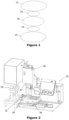
- components of a coin cell include a casing 10,12, an anode 14, a separator 16 and a cathode 18.
- Figure 1 shows an example coin cell.
- the casing 10,12 is usually formed of two casing parts 10,12 that can be attached and sealed to each other to enclose the other components 14,16,18 of the coin cell.
- An electrolyte is added inside the casing 10,12 prior to sealing.
- the electrochemical coin cell may include one or more additional components such as a spring, a spacer, a reference electrode, a gasket and so on.
- the electrochemical coin cell may be manufactured by hand or using an automated assembly system.
- the components of the coin cell can be easily misplaced, leading to misalignment of components. In such an event, the coin cell will fail prematurely and thereby exhibit a poor performance that provides misleading information about the new energy storage device material and the testing process.
- conventional automated systems have limited precision in their ability to place and align the coin cell's components, typically with +/- 500 ⁇ m deviation in component alignment, especially when one or more components are nonplanar, deformed or misshapen.
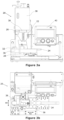
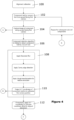
- FIG. 2 , 3a and 3b An apparatus according to an embodiment of the invention is shown in Figures 2 , 3a and 3b and is designated generally by the reference numeral 20.
- the apparatus 20 is for stacking a plurality of components to assemble an electrochemical coin cell (referred to hereon as a coin cell).
- the apparatus 20 comprises a component holder 22, a component storage area 24, an electrolyte dosing device 26, a first imaging device 28, a second imaging device 30, an assembly zone 32, a sealing device 34, a movable stage 36, a housing 38 and a controller 40.
- the component holder 22 is in the form of a vacuum tool 22 for picking up, holding and placing a component using vacuum suction.
- the vacuum tool 22 may include a vacuum source or may be connected to an external vacuum source.
- the vacuum tool 22 may be actuatable to move along a vertical axis to perform the picking and placing actions.
- the component storage area 24 is in the form of a component tray 24 for storing components of the coin cell.
- the vacuum tool 22 is operable to pick up a component from the component tray 24.
- the electrolyte dosing device 26 is preferably in the form of a pipette 26 but may be any device capable of dispensing a controlled dose of electrolyte.
- the pipette is configured for manual operation but may be configured for automated operation in other embodiments.
- the first and second imaging devices are in the form of first and second cameras 28,30.
- the first camera 28 is oriented so that its lens is facing an upward direction.
- the second camera 30 is oriented so that its lens is facing a downward direction.
- the assembly zone 32 is in the form of a build pad that defines a build area 32 on which the components may be stacked to assemble the coin cell.
- the sealing device 34 is in the form of a crimping actuator for performing a crimping operation by applying a pressing load to the components stacked on the build pad.
- the crimping actuator may be, for example, a hydraulic press.
- the component tray 24, the first camera 28 and the build pad are mounted on the movable stage 36.
- the stage 36 is actuatable to move in two horizontal axes 42,44 (referred to hereon as the X-axis and Y-axis), where each axis 42,44 is parallel with a surface on which the apparatus 20 rests.
- the stage 36 is horizontally movable in two axes 42,44 beneath the housing 38 to adjust a position of each of the component tray, the first camera 28 and the build pad relative to the housing 38, and the stage 36 is further movable to position the build pad beneath the crimping actuator.
- the pipette, the second camera 30 and the vacuum tool 22 are mounted in the housing 38 that is arranged over the stage 36.
- the housing 38 is actuatable to move along a vertical axis (referred to hereon as the Z-axis). In use, when the stage 36 is beneath the housing 38, the housing 38 is vertically movable to approach the stage 36 or withdraw from the stage 36.
- the controller 40 is programmed to selectively control the actuation of the stage 36 and the housing 38 to move along their respective axes.
- the actuation of the stage 36 and the housing 38 may be carried out using direct-drive mechanisms, motorised micro-positioning systems or any other positioning system.
- the controller 40 is also programmed to control operation of the vacuum tool 22 and the first and second cameras 28,30.
- the controller 40 may include a processor and memory including computer program code to carry out its functions.
- the controller 40 may be, may include, may communicate with or may form part of one or more of an electronic device, a portable electronic device, a portable telecommunications device, a microprocessor, a mobile phone, a personal digital assistant, a tablet, a phablet, a desktop computer, a laptop computer, a server, a cloud computing network, a smartphone, a smartwatch, smart eyewear, and a module for one or more of the same.
- references to a memory or a processor may encompass a plurality of memories or processors.
- the apparatus 20 of Figure 2 enables position alignment and position validation of the coin cell's components during the assembly of the coin cell.
- the configuration of the parts of the apparatus 20 of Figure 2 enables comparison and quantification of the positions of the components during the assembly process to ensure that the coin cell's components are aligned, or substantially aligned, to produce a high quality coin cell.
- the assembly of the coin cell involves the use of the apparatus 20 to stack the coin cell's components on the build pad, dose an amount of electrolyte into the coin cell using the pipette, and seal the coin cell using the crimping actuator.
- an alignment calibration step (Step 100) is carried out to ensure alignment between:
- the alignment calibration step may be carried out by using the first camera 28 to image the vacuum tool 22, using the second camera 30 to image the build pad and the component tray 24, and using the first and second cameras 28,30 to image each other.
- the calibration step is not required to be carried out at the start of each assembly operation. It may be that the calibration step is only carried out after a fixed number of assembly operations is completed, after a fixed period of time has lapsed and/or when a finished coin cell is assessed as not meeting quality requirements. The calibration step may also be carried out following a maintenance or repair of the apparatus 20.
- the stage 36 is actuated to position the component tray 24 beneath the vacuum tool 22.
- the vacuum tool 22 is operated to pick up a first component in the form of a bottom casing part from the component tray 24.
- the stage 36 is then actuated to position the first camera 28 beneath the vacuum tool 22 so that the first component is held over the first camera 28 in the middle of the object focal plane of the first camera 28 (Step 102). This may require actuation of the housing 38 to move the vacuum tool 22 towards or away from the first camera 28.
- the first camera 28 is operated to capture an image of a bottom side of the first component (Step 104). Illumination of the first component may be provided by ambient lighting and/or by a lighting device.
- the controller 40 then initiates a component detection algorithm to identify a reference alignment feature of the first component for subsequent placement of the first component on the build pad (Step 106).
- the reference alignment feature is the central point of the first component.
- the controller 40 performs image processing on the captured image of the bottom side of the first component by: applying image smoothing using a Gaussian blur; then edge detection using Canny edge detection; and then feature extraction using a Hough transformation (Step 108).
- the output of the image processing by the controller 40 is the central point of the first component in X-Y coordinates relative to the calibrated position of the first camera 28 (Step 110).
- the output X-Y coordinates of the first component from the image processing is then used to position the placement of the first component on the build pad.
- the controller 40 may apply a coordinate offset correction if it is determined that the output X-Y coordinates of the first component would result in an incorrect placement on the build pad, in which case the placement of the first component on the build pad is carried out using corrected X-Y coordinates (Step 112).
- the output X-Y coordinates (or the corrected X-Y coordinates as the case may be) is used by the controller 40 to control the actuation of the stage 36 to position the stage 36 beneath the vacuum tool 22 in order to place the first component in a target position on the build pad, preferably with the central point of the first component aligned with a central position on the build pad (Step 114).
- the stage 36 is then actuated to be positioned directly beneath the second camera 30 so that the first component is located beneath the second camera 30 in the middle of the object focal plane of the second camera 30 (Step 116). This may require actuation of the housing 38 to move the second camera 30 towards or away from the build pad.
- the second camera 30 is operated to capture an image of a top side of the first component (Step 118). Illumination of the first component may be provided by ambient lighting and/or by a lighting device.
- the controller 40 then initiates a component detection algorithm to identify a reference alignment feature, namely the central point, of the first component placed on the build pad (Step 120).
- the controller 40 performs image processing on the captured image of the top side of the first component by: applying image smoothing using a Gaussian blur; then edge detection using Canny edge detection; and then feature extraction using a Hough transformation (Step 122).
- the output of the image processing by the controller 40 is the central point of the first component in X-Y coordinates relative to the calibrated position of the second camera 30 (Step 124).
- the image processing may be carried out on the captured image at low resolution to first identify a target region for identifying the central point, followed by image processing on the identified target region of the captured image at high resolution to pinpoint the location of the central point. This has the effect of improving the accuracy and speed of the central point identification.
- Steps 102 to 124 are then stacked on top of the first component one at a time by repeating Steps 102 to 124, which is described as follows.
- the stage 36 is actuated to position the component tray 24 beneath the vacuum tool 22.
- the vacuum tool 22 is operated to pick up a second component in the form of an anode from the component tray 24.
- the stage 36 is then actuated to position the first camera 28 beneath the vacuum tool 22 so that the second component is held over the first camera 28 in the middle of the object focal plane of the first camera 28 (Step 102). This may require actuation of the housing 38 to move the vacuum tool 22 towards or away from the first camera 28.
- the first camera 28 is operated to capture an image of a bottom side of the second component (Step 104). Illumination of the second component may be provided by ambient lighting and/or by a lighting device.
- the controller 40 then initiates a component detection algorithm to identify a reference alignment feature of the second component for subsequent placement of the second component on the build pad (Step 106).
- the reference alignment feature is the central point of the second component.
- the controller 40 performs image processing on the captured image of the bottom side of the second component by: applying image smoothing using a Gaussian blur; then edge detection using Canny edge detection; and then feature extraction using a Hough transformation (Step 108).
- the output of the image processing by the controller 40 is the central point of the second component in X-Y coordinates relative to the calibrated position of the first camera 28 (Step 110).
- the output X-Y coordinates of the second component from the image processing is then used to position the placement of the second component on the build pad.
- the controller 40 may apply a coordinate offset correction if it is determined that the output X-Y coordinates of the second component would result in an incorrect placement on the build pad, in which case the placement of the second component on the build pad is carried out using corrected X-Y coordinates (Step 112).
- the output X-Y coordinates (or the corrected X-Y coordinates as the case may be) is used by the controller 40 to control the actuation of the stage 36 to position the stage 36 beneath the vacuum tool 22 in order to place the second component in a target position on the first component in the build area 32, preferably with the central point of the second component aligned with a central position of the build pad and the central point of the first component (Step 114).
- the stage 36 is then actuated to be positioned directly beneath the second camera 30 so that the second component is located beneath the second camera 30 in the middle of the object focal plane of the second camera 30 (Step 116). This may require actuation of the housing 38 to move the second camera 30 towards or away from the build pad.
- the second camera 30 is operated to capture an image of a top side of the second component (Step 118). Illumination of the second component may be provided by ambient lighting and/or by a lighting device.
- the controller 40 then initiates a component detection algorithm to identify a reference alignment feature, namely the central point, of the second component placed on the build pad (Step 120).
- the controller 40 performs image processing on the captured image of the top side of the second component by: applying image smoothing using a Gaussian blur; then edge detection using Canny edge detection; and then feature extraction using a Hough transformation (Step 122).
- the output of the image processing by the controller 40 is the central point of the second component in X-Y coordinates relative to the calibrated position of the second camera 30 (Step 124).
- Steps 102 to 124 may be repeated for stacking further components on the anode and the bottom casing part already placed on the build pad.
- the electrolyte is added into the coin cell at some point during the assembly operation before the top casing part is added to the stack of components.
- the addition of the electrolyte into the coin cell is carried out by actuating the stage 36 to position the build pad beneath the pipette and adding a controlled dose of electrolyte to the stack of components on the build pad.
- the manufacture of the coin cell is completed by actuating the stage 36 to position the build pad beneath the hydraulic press so that the hydraulic press may apply a pressing load to the stacked components to perform a crimping and sealing operation in order to produce the coin cell.
- the assembly operation may additionally include a position compensation step to eliminate or minimise misalignment between the components.
- the controller 40 may be programmed to apply an alignment correction to the placement of a subsequent component in the build area 32 if an offset position of the component on the build pad is detected by the controller 40.
- the assembly operation may include an optional image analysis step by the controller 40 to assess coating quality of a selected component, such as coating uniformity. This may include the controller 40 performing brightness analysis of the captured images of the selected component.
- the controller 40 carries out a validation of a position of each component in the build area 32 based on the identified central point of each component (Step 126).
- the validation process may include measuring the axial alignment between the components.
- overhead images of the build pad are captured by the second camera 30 after each component is placed in the build pad. Since the overhead images are captured from the same position and perspective, it becomes possible for the controller 40 to analyse the overhead images to measure a distance between the stacked components in the X-Y plane. This may be used to quantify the axial alignment between the stacked components as part of a build quality analysis and validation process.
- the axial alignment measurement is preferably based on the distance between the central points of the components.
- the controller 40 may record and store information for the assembled coin cell (Step 128).
- the stored information may include position data for each component placed in the build area 32.
- the stored position data may be used to assist the alignment of a subsequent component placed in the build area 32, or also may be used in a post-assembly assessment of the quality of the object.
- the stored position data may include the output X-Y coordinates of each component and/or the axial alignment data from the position validation process.
- the position data may be used as a variable metric for subsequent evaluation of the performance of the coin cell.
- the inventor has found that the assembly operation carried out by the apparatus 20 of Figure 2 enables consistent axial alignment between components with a separation of less than 20 ⁇ m in comparison to conventional assembly operations that produce axial alignment between components with a separation of greater than 500 ⁇ m.
- Coin cells with poor axial alignment i.e. a separation of greater than 500 microns, lead to premature cell failure.
- coin cells with good axial alignment i.e. a separation of less than 20 microns, lead to long-lasting cells.
- the controller 40 may be programmed to prioritise axial alignment between certain components of the coin cell. In order of priority from highest to lowest, the controller 40 may be programmed to prioritise the axial alignment of the anode and the cathode, followed by the separator, and finally followed by the other coin cell components.
- the configuration of the apparatus 20 of the invention therefore enables an automated coin cell production system to accurately place coin cell components, validate their placement and quantify their axial alignment.
- This in turn enables the invention to address the problems of: accurately building electrochemical cells with misshapen components (e.g. wavy or curved electrodes); accurately placing misshapen components (e.g. wavy or curved electrodes) with the highest degree of axial alignment; and quantifying the axial alignment between components.
- misshapen components e.g. wavy or curved electrodes
- misshapen components e.g. wavy or curved electrodes
- the component alignment facilitated by the assembly operation and the stored position data for the coin cell enables a user to evaluate the performance of the electrodes and cell components (e.g. separator and casing) for electrochemical cells with:
- An optional defect detection process involving image analysis by the controller 40 may be integrated into the assembly operation.
- An example defect detection process for each component is described as follows with reference to Figure 5 .
- Step 104 environmental lighting is applied using a lighting device to induce overexposure of defective parts of the component (Step 130).
- the total defective area of the component is then calculated as follows, using the captured images from the first and second cameras 28,30 and using output X-Y coordinates of the central point relative to the calibrated positions of the first and second cameras 28,30 (Step 132):
- the calculated total defective area of the component is then recorded, and the controller 40 provides an indication in the form of a flag if the total defective area exceeds an operator-defined defect threshold (Step 134).
- the provision of the upward-facing first camera 28 and the downward-facing second camera 30 enables a more complete defect evaluation of the coin cell and its components, particularly the top and bottom sides of the anode and the cathode.
- Non-limiting examples of component defects include; a cracked component; a bent component; a folded component; an incomplete component; and a torn component.
- An incomplete component has one or more missing component sections in comparison to a complete component.
- the defect data is then stored as part of the stored information for the assembled coin cell (Step 128).
Landscapes
- Engineering & Computer Science (AREA)
- Manufacturing & Machinery (AREA)
- Chemical & Material Sciences (AREA)
- Chemical Kinetics & Catalysis (AREA)
- Electrochemistry (AREA)
- General Chemical & Material Sciences (AREA)
- Physics & Mathematics (AREA)
- General Physics & Mathematics (AREA)
- Computer Vision & Pattern Recognition (AREA)
- Theoretical Computer Science (AREA)
- Human Computer Interaction (AREA)
- Automation & Control Theory (AREA)
- Robotics (AREA)
- Mechanical Engineering (AREA)
- Quality & Reliability (AREA)
- Image Processing (AREA)
- Automatic Assembly (AREA)
- Length Measuring Devices By Optical Means (AREA)
Claims (15)
- Vorrichtung (20) zum Zusammenbauen eines Objekts mit einer gestapelten Konstruktion aus einer Vielzahl von Komponenten, wobei die Vorrichtung Folgendes umfasst:einen Komponentenhalter (22) zum selektiven Halten und Platzieren einer Komponente;eine Montagezone (32), in der das Objekt zusammengebaut werden kann;erste und zweite Abbildungsgeräte (28,30), wobei das erste Abbildungsgerät (28) so positioniert ist, dass es nach oben zeigt, und das zweite Abbildungsgerät (30) so positioniert ist, dass es nach unten zeigt; undeine Steuerung (40), die so programmiert ist, dass sie den Komponentenhalter (22) und das erste und zweite Abbildungsgerät (28,30) selektiv koordiniert, um einen Montagevorgang zum Zusammenbauen von Komponenten des Objekts auszuführen, bei dem:der Komponentenhalter (22) eine Komponente über das erste Abbildungsgerät (28,30) hält;das erste Abbildungsgerät (28) ein Bild der Komponente aufnimmt;die Steuerung (40) ein erstes Referenzausrichtungsmerkmal der Komponente aus dem von dem ersten Abbildungsgerät (28) aufgenommenen Bild identifiziert;der Komponentenhalter (22) die Komponente auf der Grundlage des identifizierten ersten Referenzausrichtungsmerkmals der Komponente auf einer anderen Komponente in der Montagezone (32) platziert;das zweite Abbildungsgerät (30) ein Draufsichtbild der Komponente auf der anderen Komponente aufnimmt;die Steuerung (40) ein zweites Referenzausrichtungsmerkmal der Komponente aus dem von dem zweiten Abbildungsgerät (30) aufgenommenen Bild identifiziert;die Steuerung (40) eine Position der Komponente in der Montagezone (32) basierend auf dem identifizierten zweiten Referenzausrichtungsmerkmal der Komponente validiert.
- Vorrichtung (20) nach Anspruch 1, wobei die Steuerung (40) so programmiert ist, dass sie den Komponentenhalter (22) und das erste und zweite Abbildungsgerät (28, 30) selektiv koordiniert, um den Montagevorgang zum Zusammenbauen von Komponenten des Objekts auszuführen, wobei:der Komponentenhalter (22) eine erste Komponente der Komponenten des Objekts über das erste Abbildungsgerät (28) hält;das erste Abbildungsgerät (28) ein Bild der ersten Komponente aufnimmt;die Steuerung (40) ein erstes Referenzausrichtungsmerkmal der ersten Komponente aus dem vom ersten Abbildungsgerät (28) aufgenommenen Bild identifiziert;der Komponentenhalter (22) die erste Komponente in der Montagezone (32) basierend auf dem identifizierten ersten Referenzausrichtungsmerkmal der ersten Komponente platziert;das zweite Abbildungsgerät (30) ein Draufsichtbild der ersten Komponente in der Montagezone (32) aufnimmt;die Steuerung (40) ein zweites Referenzausrichtungsmerkmal der ersten Komponente aus dem vom zweiten Abbildungsgerät (30) aufgenommenen Bild identifiziert;die Steuerung (40) eine Position der ersten Komponente in der Montagezone (32) basierend auf dem identifizierten zweiten Referenzausrichtungsmerkmal der ersten Komponente validiert.
- Vorrichtung (20) nach einem der vorhergehenden Ansprüche, wobei die Steuerung (40) so programmiert ist, dass sie bei der Platzierung einer nachfolgenden Komponente in der Montagezone (32) eine Ausrichtungskorrektur vornimmt, wenn die Steuerung (40) eine versetzte Position der Komponente in der Montagezone (32) erkennt.
- Vorrichtung (20) nach einem der vorhergehenden Ansprüche, wobei die Steuerung dazu programmiert ist, das zweite Abbildungsgerät (30) selektiv zu positionieren und zu steuern, um ein Draufsichtbild der Montagezone (32) aufzunehmen, nachdem jede Komponente in der Montagezone (32) platziert wurde, und wobei die Steuerung (40) dazu programmiert ist, die Draufsichtbilder der Montagezone (32) selektiv zu analysieren, um eine axiale Ausrichtung zwischen gestapelten Komponenten in der Montagezone (32) zu messen.
- Vorrichtung (20) nach einem der vorhergehenden Ansprüche, wobei jedes Referenzausrichtungsmerkmal ein zentraler Punkt der Komponente ist.
- Vorrichtung (20) nach einem der vorhergehenden Ansprüche, wobei die Steuerung (40) so programmiert ist, dass sie jedem identifizierten Referenzausrichtungsmerkmal selektiv Koordinaten zuweist, und wobei die Steuerung (40) so programmiert ist, dass sie die Koordinaten selektiv als Referenzwerte für die Komponentenplatzierung und die Komponentenpositionsvalidierung verwendet.
- Vorrichtung (20) nach einem der vorhergehenden Ansprüche, ferner umfassend eine bewegliche Struktur (36), wobei das erste Abbildungsgerät (28) auf der beweglichen Struktur (36) montiert oder an dieser befestigt ist, wobei die Steuerung (40) dazu programmiert ist, die bewegliche Struktur (36) selektiv zu betätigen, um das erste Abbildungsgerät (28) unterhalb des Komponentenhalters (22) zu positionieren.
- Vorrichtung (20) nach einem der Ansprüche 1 bis 6, ferner umfassend eine bewegliche Struktur (36), wobei die Montagezone (32) auf der beweglichen Struktur (36) montiert oder an dieser befestigt ist, wobei die Steuerung (40) dazu programmiert ist, die bewegliche Struktur (36) selektiv zu betätigen, um die Montagezone (32) unterhalb des Komponentenhalters (22) zu positionieren.
- Vorrichtung (20) nach einem der Ansprüche 1 bis 6, ferner umfassend eine bewegliche Struktur (36), wobei die Montagezone (32) auf der beweglichen Struktur (36) montiert oder an dieser befestigt ist, wobei die Steuerung (40) dazu programmiert ist, die bewegliche Struktur selektiv zu betätigen, um die Montagezone (32) unterhalb des zweiten Abbildungsgeräts (30) zu positionieren.
- Vorrichtung (20) nach einem der Ansprüche 1 bis 6, ferner umfassend eine bewegliche Struktur (36) und einen Kraftaktuator (34), wobei die Montagezone (32) auf der beweglichen Struktur (36) montiert oder an dieser befestigt ist, und der Kraftaktuator (34) zum Durchführen eines Pressvorgangs zum Aufbringen einer Presslast auf eine Komponente dient, wobei die Steuerung (40) zum selektiven Betätigen der beweglichen Struktur (36) programmiert ist, um die Montagezone (32) in der Nähe des Kraftaktuators (34) zu positionieren, damit der Kraftaktuator den Pressvorgang durchführen kann.
- Vorrichtung (20) nach einem der Ansprüche 1 bis 6, ferner umfassend eine bewegliche Struktur (36) und einen Komponentenlagerbereich (24), wobei der Komponentenlagerbereich (24) auf der beweglichen Struktur (36) montiert oder an dieser befestigt ist, wobei die Steuerung (40) dazu programmiert ist, die bewegliche Struktur (36) selektiv zu betätigen, um den Komponentenlagerbereich (24) unterhalb des Komponentenhalters (22) zu positionieren.
- Vorrichtung (20) nach einem der vorhergehenden Ansprüche, wobei die Steuerung (40) so programmiert ist, dass sie während der Identifizierung des Referenzausrichtungsmerkmals selektiv eine Bildverarbeitung des aufgenommenen Bilds durchführt, vorzugsweise wobei:die Bildverarbeitung mindestens eines der folgenden Elemente umfasst: Bildglättung mithilfe einer Gaußschen Unschärfefunktion; Canny-Kantenerkennung; und Merkmalsextraktion mithilfe einer Hough-Transformation, und/oderdie Steuerung so programmiert ist, dass sie während der Identifizierung des Referenzausrichtungsmerkmals die Bildverarbeitung des aufgenommenen Bilds in einer ersten Auflösung durchführt, gefolgt von der Bildverarbeitung des aufgenommenen Bilds in einer zweiten, höheren Auflösung.
- Vorrichtung nach einem der vorhergehenden Ansprüche, wobei die Steuerung dazu programmiert ist, eine Bildanalyse des aufgenommenen Bildes durchzuführen, um einen Defektgrad der Komponente zu erkennen, wobei die Bildanalyse vorzugsweise die Verwendung des identifizierten Referenzausrichtungsmerkmals umfasst, um einen Bereich der Komponente für die Analyse zu definieren.
- Vorrichtung nach einem der vorhergehenden Ansprüche, wobei das Objekt eine scheibenförmige elektrochemische Zelle ist.
- Verfahren zum Durchführen eines Montagevorgangs zum Zusammenbauen von Komponenten eines Objekts mit einer gestapelten Konstruktion aus einer Vielzahl von Komponenten, wobei das Verfahren die folgenden Schritte umfasst:Halten einer Komponente über ein erstes Abbildungsgerät (28), das so positioniert ist, dass es nach oben zeigt;Aufnehmen eines Bilds der Komponente durch das erste Abbildungsgerät (28);Identifizieren eines ersten Referenzausrichtungsmerkmals der Komponente aus dem von dem ersten Abbildungsgerät (28) aufgenommenen Bild;Platzieren der Komponente auf einer anderen Komponente in einer Montagezone (32) basierend auf dem identifizierten ersten Referenzausrichtungsmerkmal der Komponente;Aufnehmen eines Draufsichtbilds der Komponente auf der anderen Komponente durch ein zweites Abbildungsgerät (30), die so positioniert ist, dass sie nach unten zeigt;Identifizieren eines zweiten Referenzausrichtungsmerkmals der Komponente aus dem von dem zweiten Abbildungsgerät (30) aufgenommenen Bild;Validieren einer Position der Komponente in der Montagezone (32) basierend auf dem identifizierten zweiten Referenzausrichtungsmerkmal der Komponente.
Applications Claiming Priority (2)
| Application Number | Priority Date | Filing Date | Title |
|---|---|---|---|
| GB2111729.6A GB2604197B (en) | 2021-08-16 | 2021-08-16 | Assembly of an object having a stacked construction of a plurality of components |
| PCT/GB2022/052078 WO2023021271A1 (en) | 2021-08-16 | 2022-08-10 | Assembly of an object having a stacked construction of a plurality of components |
Publications (3)
| Publication Number | Publication Date |
|---|---|
| EP4388375A1 EP4388375A1 (de) | 2024-06-26 |
| EP4388375B1 true EP4388375B1 (de) | 2025-01-01 |
| EP4388375C0 EP4388375C0 (de) | 2025-01-01 |
Family
ID=77859911
Family Applications (1)
| Application Number | Title | Priority Date | Filing Date |
|---|---|---|---|
| EP22754503.5A Active EP4388375B1 (de) | 2021-08-16 | 2022-08-10 | Anordnung eines objekts mit einem gestapelten aufbau aus mehreren komponenten |
Country Status (7)
| Country | Link |
|---|---|
| US (1) | US20240363886A1 (de) |
| EP (1) | EP4388375B1 (de) |
| CA (1) | CA3229356A1 (de) |
| ES (1) | ES3022760T3 (de) |
| GB (1) | GB2604197B (de) |
| PL (1) | PL4388375T3 (de) |
| WO (1) | WO2023021271A1 (de) |
Family Cites Families (7)
| Publication number | Priority date | Publication date | Assignee | Title |
|---|---|---|---|---|
| KR100255358B1 (ko) * | 1997-12-27 | 2000-05-01 | 배문한 | 쌍극전지 |
| JP2007173063A (ja) * | 2005-12-22 | 2007-07-05 | Matsushita Electric Ind Co Ltd | 扁平形電池の製造方法およびその製造装置 |
| CN103153553B (zh) * | 2010-08-27 | 2016-04-06 | Abb研究有限公司 | 视觉引导对准系统和方法 |
| US9447532B2 (en) * | 2014-01-23 | 2016-09-20 | Nike, Inc. | Automated assembly and stitching of shoe parts |
| US10477154B2 (en) * | 2013-03-07 | 2019-11-12 | Cognex Corporation | System and method for aligning two work pieces with a vision system in the presence of occlusion |
| JP6930517B2 (ja) * | 2018-12-21 | 2021-09-01 | オムロン株式会社 | 位置合わせ装置 |
| EP3930964A1 (de) * | 2019-02-27 | 2022-01-05 | ABB Schweiz AG | Verfahren und system zur robotermontage |
-
2021
- 2021-08-16 GB GB2111729.6A patent/GB2604197B/en active Active
-
2022
- 2022-08-10 US US18/683,723 patent/US20240363886A1/en active Pending
- 2022-08-10 EP EP22754503.5A patent/EP4388375B1/de active Active
- 2022-08-10 PL PL22754503.5T patent/PL4388375T3/pl unknown
- 2022-08-10 ES ES22754503T patent/ES3022760T3/es active Active
- 2022-08-10 WO PCT/GB2022/052078 patent/WO2023021271A1/en not_active Ceased
- 2022-08-10 CA CA3229356A patent/CA3229356A1/en active Pending
Also Published As
| Publication number | Publication date |
|---|---|
| CA3229356A1 (en) | 2023-02-23 |
| ES3022760T3 (en) | 2025-05-29 |
| EP4388375A1 (de) | 2024-06-26 |
| PL4388375T3 (pl) | 2025-08-18 |
| WO2023021271A1 (en) | 2023-02-23 |
| GB2604197B (en) | 2023-09-06 |
| EP4388375C0 (de) | 2025-01-01 |
| GB202111729D0 (en) | 2021-09-29 |
| US20240363886A1 (en) | 2024-10-31 |
| GB2604197A (en) | 2022-08-31 |
Similar Documents
| Publication | Publication Date | Title |
|---|---|---|
| CN112053326B (zh) | 电芯对齐度检测方法、系统、装置和设备 | |
| EP4156317A1 (de) | Rollkarte für elektrodenbeschichtungsverfahren, rollkartenerzeugungsverfahren und rollkartenerzeugungssystem | |
| CN109358064B (zh) | 极片制片卷绕缺陷全功能检测方法、设备、介质及系统 | |
| CN111161208A (zh) | 图像检测方法和装置 | |
| CN118758945A (zh) | 一种基于机器视觉的工业产品质量检测系统及方法 | |
| CN115222728A (zh) | 基于视觉技术的屏幕检测方法、装置和计算机设备 | |
| CN113588668A (zh) | 一种基于机器视觉的极耳漏金属检测方法及检测系统 | |
| CN117589770A (zh) | Pcb贴片板检测方法、装置、设备及介质 | |
| KR101469158B1 (ko) | 카메라 렌즈 모듈 검사장치 및 그에 따른 검사방법 | |
| CN111486787A (zh) | 一种测试定位方法以及测试定位系统 | |
| US20240363886A1 (en) | Assembly of an object having a stacked construction of a plurality of components | |
| KR101367193B1 (ko) | 콜렛의 수평도 및 압력 검사 방법 | |
| CN116758088A (zh) | 一种bga植球的芯片检测方法及植球系统 | |
| CN118671078B (zh) | 新能源电芯打包检测方法、装置、电子设备和存储介质 | |
| CN108230385A (zh) | 单相机运动检测超高叠层、超薄烟标数量方法及装置 | |
| CN120873966A (zh) | 基于图像识别的pcb线路板缺陷识别方法及系统 | |
| CN222461302U (zh) | 毛刺检测装置及制片设备 | |
| CN118510259A (zh) | 自适应芯片贴片方法、装置、电子设备及存储介质 | |
| CN115876803B (zh) | 一种基于变倍显微的铣刀涂层后缺陷检测方法与系统 | |
| CN121068590A (zh) | 电芯夹针的检测系统和方法 | |
| CN117788412A (zh) | 一种基于aoi的pcb板缺陷检测方法 | |
| CN108344387A (zh) | 压力式装配自动测试方法和自动检测系统 | |
| CN114445349A (zh) | 点胶检测方法、点胶检测装置及点胶系统 | |
| CN210864816U (zh) | 一种视觉传感器工作状态测试装置 | |
| CN110245441B (zh) | 一种组装背光模组的方法、装置及电子设备 |
Legal Events
| Date | Code | Title | Description |
|---|---|---|---|
| STAA | Information on the status of an ep patent application or granted ep patent |
Free format text: STATUS: UNKNOWN |
|
| STAA | Information on the status of an ep patent application or granted ep patent |
Free format text: STATUS: THE INTERNATIONAL PUBLICATION HAS BEEN MADE |
|
| PUAI | Public reference made under article 153(3) epc to a published international application that has entered the european phase |
Free format text: ORIGINAL CODE: 0009012 |
|
| STAA | Information on the status of an ep patent application or granted ep patent |
Free format text: STATUS: REQUEST FOR EXAMINATION WAS MADE |
|
| 17P | Request for examination filed |
Effective date: 20240304 |
|
| AK | Designated contracting states |
Kind code of ref document: A1 Designated state(s): AL AT BE BG CH CY CZ DE DK EE ES FI FR GB GR HR HU IE IS IT LI LT LU LV MC MK MT NL NO PL PT RO RS SE SI SK SM TR |
|
| GRAP | Despatch of communication of intention to grant a patent |
Free format text: ORIGINAL CODE: EPIDOSNIGR1 |
|
| STAA | Information on the status of an ep patent application or granted ep patent |
Free format text: STATUS: GRANT OF PATENT IS INTENDED |
|
| DAV | Request for validation of the european patent (deleted) | ||
| DAX | Request for extension of the european patent (deleted) | ||
| INTG | Intention to grant announced |
Effective date: 20240731 |
|
| GRAS | Grant fee paid |
Free format text: ORIGINAL CODE: EPIDOSNIGR3 |
|
| GRAA | (expected) grant |
Free format text: ORIGINAL CODE: 0009210 |
|
| STAA | Information on the status of an ep patent application or granted ep patent |
Free format text: STATUS: THE PATENT HAS BEEN GRANTED |
|
| AK | Designated contracting states |
Kind code of ref document: B1 Designated state(s): AL AT BE BG CH CY CZ DE DK EE ES FI FR GB GR HR HU IE IS IT LI LT LU LV MC MK MT NL NO PL PT RO RS SE SI SK SM TR |
|
| REG | Reference to a national code |
Ref country code: GB Ref legal event code: FG4D |
|
| REG | Reference to a national code |
Ref country code: CH Ref legal event code: EP |
|
| REG | Reference to a national code |
Ref country code: DE Ref legal event code: R096 Ref document number: 602022009414 Country of ref document: DE |
|
| REG | Reference to a national code |
Ref country code: IE Ref legal event code: FG4D |
|
| U01 | Request for unitary effect filed |
Effective date: 20250131 |
|
| U07 | Unitary effect registered |
Designated state(s): AT BE BG DE DK EE FI FR IT LT LU LV MT NL PT RO SE SI Effective date: 20250212 |
|
| REG | Reference to a national code |
Ref country code: ES Ref legal event code: FG2A Ref document number: 3022760 Country of ref document: ES Kind code of ref document: T3 Effective date: 20250529 |
|
| PG25 | Lapsed in a contracting state [announced via postgrant information from national office to epo] |
Ref country code: IS Free format text: LAPSE BECAUSE OF FAILURE TO SUBMIT A TRANSLATION OF THE DESCRIPTION OR TO PAY THE FEE WITHIN THE PRESCRIBED TIME-LIMIT Effective date: 20250501 Ref country code: NO Free format text: LAPSE BECAUSE OF FAILURE TO SUBMIT A TRANSLATION OF THE DESCRIPTION OR TO PAY THE FEE WITHIN THE PRESCRIBED TIME-LIMIT Effective date: 20250401 |
|
| PG25 | Lapsed in a contracting state [announced via postgrant information from national office to epo] |
Ref country code: HR Free format text: LAPSE BECAUSE OF FAILURE TO SUBMIT A TRANSLATION OF THE DESCRIPTION OR TO PAY THE FEE WITHIN THE PRESCRIBED TIME-LIMIT Effective date: 20250101 |
|
| PG25 | Lapsed in a contracting state [announced via postgrant information from national office to epo] |
Ref country code: GR Free format text: LAPSE BECAUSE OF FAILURE TO SUBMIT A TRANSLATION OF THE DESCRIPTION OR TO PAY THE FEE WITHIN THE PRESCRIBED TIME-LIMIT Effective date: 20250402 |
|
| U20 | Renewal fee for the european patent with unitary effect paid |
Year of fee payment: 4 Effective date: 20250814 |
|
| PG25 | Lapsed in a contracting state [announced via postgrant information from national office to epo] |
Ref country code: SM Free format text: LAPSE BECAUSE OF FAILURE TO SUBMIT A TRANSLATION OF THE DESCRIPTION OR TO PAY THE FEE WITHIN THE PRESCRIBED TIME-LIMIT Effective date: 20250101 |
|
| PGFP | Annual fee paid to national office [announced via postgrant information from national office to epo] |
Ref country code: TR Payment date: 20250811 Year of fee payment: 4 |
|
| PGFP | Annual fee paid to national office [announced via postgrant information from national office to epo] |
Ref country code: CZ Payment date: 20250812 Year of fee payment: 4 |
|
| PG25 | Lapsed in a contracting state [announced via postgrant information from national office to epo] |
Ref country code: SK Free format text: LAPSE BECAUSE OF FAILURE TO SUBMIT A TRANSLATION OF THE DESCRIPTION OR TO PAY THE FEE WITHIN THE PRESCRIBED TIME-LIMIT Effective date: 20250101 |
|
| PLBE | No opposition filed within time limit |
Free format text: ORIGINAL CODE: 0009261 |
|
| STAA | Information on the status of an ep patent application or granted ep patent |
Free format text: STATUS: NO OPPOSITION FILED WITHIN TIME LIMIT |
|
| REG | Reference to a national code |
Ref country code: CH Ref legal event code: L10 Free format text: ST27 STATUS EVENT CODE: U-0-0-L10-L00 (AS PROVIDED BY THE NATIONAL OFFICE) Effective date: 20251112 |
|
| 26N | No opposition filed |
Effective date: 20251002 |
|
| PGFP | Annual fee paid to national office [announced via postgrant information from national office to epo] |
Ref country code: PL Payment date: 20250811 Year of fee payment: 4 |
|
| PGFP | Annual fee paid to national office [announced via postgrant information from national office to epo] |
Ref country code: ES Payment date: 20251119 Year of fee payment: 4 |
|
| REG | Reference to a national code |
Ref country code: CH Ref legal event code: H13 Free format text: ST27 STATUS EVENT CODE: U-0-0-H10-H13 (AS PROVIDED BY THE NATIONAL OFFICE) Effective date: 20260324 |
|
| PG25 | Lapsed in a contracting state [announced via postgrant information from national office to epo] |
Ref country code: MC Free format text: LAPSE BECAUSE OF FAILURE TO SUBMIT A TRANSLATION OF THE DESCRIPTION OR TO PAY THE FEE WITHIN THE PRESCRIBED TIME-LIMIT Effective date: 20250101 |
|
| PG25 | Lapsed in a contracting state [announced via postgrant information from national office to epo] |
Ref country code: CH Free format text: LAPSE BECAUSE OF NON-PAYMENT OF DUE FEES Effective date: 20250831 |