EP4375092B1 - Reifendruckventilbaugruppe und gruppe mit reifendruckventilbaugruppen - Google Patents
Reifendruckventilbaugruppe und gruppe mit reifendruckventilbaugruppen Download PDFInfo
- Publication number
- EP4375092B1 EP4375092B1 EP22209281.9A EP22209281A EP4375092B1 EP 4375092 B1 EP4375092 B1 EP 4375092B1 EP 22209281 A EP22209281 A EP 22209281A EP 4375092 B1 EP4375092 B1 EP 4375092B1
- Authority
- EP
- European Patent Office
- Prior art keywords
- valve
- control
- tire pressure
- tire
- housing
- Prior art date
- Legal status (The legal status is an assumption and is not a legal conclusion. Google has not performed a legal analysis and makes no representation as to the accuracy of the status listed.)
- Active
Links
Images




Classifications
-
- B—PERFORMING OPERATIONS; TRANSPORTING
- B60—VEHICLES IN GENERAL
- B60C—VEHICLE TYRES; TYRE INFLATION; TYRE CHANGING; CONNECTING VALVES TO INFLATABLE ELASTIC BODIES IN GENERAL; DEVICES OR ARRANGEMENTS RELATED TO TYRES
- B60C23/00—Devices for measuring, signalling, controlling, or distributing tyre pressure or temperature, specially adapted for mounting on vehicles; Arrangement of tyre inflating devices on vehicles, e.g. of pumps or of tanks; Tyre cooling arrangements
- B60C23/001—Devices for manually or automatically controlling or distributing tyre pressure whilst the vehicle is moving
- B60C23/003—Devices for manually or automatically controlling or distributing tyre pressure whilst the vehicle is moving comprising rotational joints between vehicle-mounted pressure sources and the tyres
- B60C23/00309—Devices for manually or automatically controlling or distributing tyre pressure whilst the vehicle is moving comprising rotational joints between vehicle-mounted pressure sources and the tyres characterised by the location of the components, e.g. valves, sealings, conduits or sensors
- B60C23/00318—Devices for manually or automatically controlling or distributing tyre pressure whilst the vehicle is moving comprising rotational joints between vehicle-mounted pressure sources and the tyres characterised by the location of the components, e.g. valves, sealings, conduits or sensors on the wheels or the hubs
-
- B—PERFORMING OPERATIONS; TRANSPORTING
- B60—VEHICLES IN GENERAL
- B60C—VEHICLE TYRES; TYRE INFLATION; TYRE CHANGING; CONNECTING VALVES TO INFLATABLE ELASTIC BODIES IN GENERAL; DEVICES OR ARRANGEMENTS RELATED TO TYRES
- B60C23/00—Devices for measuring, signalling, controlling, or distributing tyre pressure or temperature, specially adapted for mounting on vehicles; Arrangement of tyre inflating devices on vehicles, e.g. of pumps or of tanks; Tyre cooling arrangements
- B60C23/001—Devices for manually or automatically controlling or distributing tyre pressure whilst the vehicle is moving
- B60C23/003—Devices for manually or automatically controlling or distributing tyre pressure whilst the vehicle is moving comprising rotational joints between vehicle-mounted pressure sources and the tyres
- B60C23/00354—Details of valves
-
- B—PERFORMING OPERATIONS; TRANSPORTING
- B60—VEHICLES IN GENERAL
- B60C—VEHICLE TYRES; TYRE INFLATION; TYRE CHANGING; CONNECTING VALVES TO INFLATABLE ELASTIC BODIES IN GENERAL; DEVICES OR ARRANGEMENTS RELATED TO TYRES
- B60C23/00—Devices for measuring, signalling, controlling, or distributing tyre pressure or temperature, specially adapted for mounting on vehicles; Arrangement of tyre inflating devices on vehicles, e.g. of pumps or of tanks; Tyre cooling arrangements
- B60C23/001—Devices for manually or automatically controlling or distributing tyre pressure whilst the vehicle is moving
- B60C23/003—Devices for manually or automatically controlling or distributing tyre pressure whilst the vehicle is moving comprising rotational joints between vehicle-mounted pressure sources and the tyres
- B60C23/00372—Devices for manually or automatically controlling or distributing tyre pressure whilst the vehicle is moving comprising rotational joints between vehicle-mounted pressure sources and the tyres characterised by fluid diagrams
-
- F—MECHANICAL ENGINEERING; LIGHTING; HEATING; WEAPONS; BLASTING
- F16—ENGINEERING ELEMENTS AND UNITS; GENERAL MEASURES FOR PRODUCING AND MAINTAINING EFFECTIVE FUNCTIONING OF MACHINES OR INSTALLATIONS; THERMAL INSULATION IN GENERAL
- F16K—VALVES; TAPS; COCKS; ACTUATING-FLOATS; DEVICES FOR VENTING OR AERATING
- F16K15/00—Check valves
- F16K15/20—Check valves specially designed for inflatable bodies, e.g. tyres
- F16K15/207—Check valves specially designed for inflatable bodies, e.g. tyres and combined with other valves, e.g. safety valves
-
- F—MECHANICAL ENGINEERING; LIGHTING; HEATING; WEAPONS; BLASTING
- F16—ENGINEERING ELEMENTS AND UNITS; GENERAL MEASURES FOR PRODUCING AND MAINTAINING EFFECTIVE FUNCTIONING OF MACHINES OR INSTALLATIONS; THERMAL INSULATION IN GENERAL
- F16K—VALVES; TAPS; COCKS; ACTUATING-FLOATS; DEVICES FOR VENTING OR AERATING
- F16K31/00—Actuating devices; Operating means; Releasing devices
- F16K31/12—Actuating devices; Operating means; Releasing devices actuated by fluid
- F16K31/122—Actuating devices; Operating means; Releasing devices actuated by fluid the fluid acting on a piston
-
- B—PERFORMING OPERATIONS; TRANSPORTING
- B60—VEHICLES IN GENERAL
- B60C—VEHICLE TYRES; TYRE INFLATION; TYRE CHANGING; CONNECTING VALVES TO INFLATABLE ELASTIC BODIES IN GENERAL; DEVICES OR ARRANGEMENTS RELATED TO TYRES
- B60C2200/00—Tyres specially adapted for particular applications
- B60C2200/08—Tyres specially adapted for particular applications for agricultural vehicles
Definitions
- tire pressure control systems (which are also referred to as tire pressure control systems below) are used to bring about and maintain the desired pressure in the tires.
- the tire pressure control systems have tire pressure valve assemblies that rotate with the tire, in particular those mounted on a rim, via which the tire is locked in a locked position, pressure is supplied to the tire in a ventilated position, and the tire is ventilated in a vented position.
- the supply circuit provides the compressed air for filling the tire, while the control circuit is used to supply a control pressure in order to transfer the tire pressure valve assembly to the different switching states.
- Single-circuit tire pressure control systems are also known in which the compressed air in the single circuit is used on the one hand to supply the tire pressure valve assembly with compressed air and thus to fill the tire, while on the other hand the pressure level in the circuit is used as control pressure to switch the tire pressure valve assembly to the different switching states.
- the compressed air supply of the tire pressure control system is arranged fixed to the vehicle and any pneumatic components for preparing the pressures in at least one circuit are also arranged fixed to the vehicle, the two circuits of the dual-circuit tire pressure control system or the one circuit of the single-circuit tire pressure control system are connected to the tire pressure valve assembly and the rim of the tire via a rotary union that allows relative rotation.
- the tire pressure control system can also be used to specifically change the pressure in the tires. This is advantageous, for example, for changing the pressure depending on the condition of the road surface, for example for a On hard and smooth roads, a higher pressure can be used in the tire than on rougher and/or softer surfaces, for example on a gravel road or a road with sand or arable soil.
- DE 2 141 087 A1 discloses a single-circuit tire pressure control system in which the pressure in the single circuit can be set via a valve that is manually operated using a handle and can be set to a ventilation position, a blocking position and a venting position depending on the position of the handle.
- the circuit is connected to an associated vehicle wheel via a rotary union.
- the handle of the adjustment valve is moved from the venting position to the ventilation position, which opens the valve device held on the rim in such a way that compressed air from the circuit passes into the tire.
- the handle is returned to its original position, which vents the circuit. In the venting position, the valve device blocks the tire.
- the adjustment valve is manually moved to the ventilation position again, which then leads to the tire being vented into the atmosphere through the valve device on the wheel.
- the adjustment valve can also be designed as a stepped valve, which vents the circuit in one switching position, generates a minimum tire pressure in the circuit in one switching position and generates a maximum tire pressure in the circuit in one switching position.
- WO 2008/068599 A2 discloses an electronic single-circuit tire pressure control system in which all tires can be connected to a central line, which can be connected to a compressor and/or a compressed air tank to increase the pressure in the tires and can be connected to the atmosphere to vent the tires.
- a central line which can be connected to a compressor and/or a compressed air tank to increase the pressure in the tires and can be connected to the atmosphere to vent the tires.
- an electronically controlled inflating and deflating valve is arranged upstream of each tire, while on the tire side of the rotary union, an electromagnetically controlled shut-off valve is arranged. In the shut-off position of the shut-off valve, a pressure that has been created in the tire is maintained, while in the open position of the shut-off valve, depending on The tire can be inflated or vented depending on the switching position of the vehicle-side inflation and deflation valve.
- an electronic control device communicates wirelessly with a pressure sensor arranged in a tire.
- the only circuit for operating a valve device assigned to the vehicle wheel is vented here to block the valve device and thus maintain the pressure in the tire.
- a first pressure is electronically introduced into the circuit, while to transfer the valve device to a venting position, a second pressure is introduced into the circuit, which is greater than the first pressure.
- EP 2 308 698 B1 which represents the closest prior art, an electronically controlled single-circuit tire pressure control system in which the valve device is blocked for a low pressure below a threshold value, the valve device is transferred to a venting position for a first pressure in the circuit, and the valve device is transferred to a venting position for a second pressure in the circuit which is greater than the first pressure.
- EP 1 435 302 A1 discloses a basically closed single-circuit vehicle tire pressure control system that can be filled by using a compressor to suck in air from the environment via a filter.
- the compressor conveys the air to a storage container on the one hand and to a central line via a central 3/2-way valve on the other.
- the central line branches off to the commercial vehicle's tires via branch lines.
- a 3/2-way axle valve and a tire valve designed as a 2/2-way shut-off valve are arranged upstream of the assigned tire.
- the 3/2-way axle valves are attached to the vehicle frame, while the tire valves are held on the vehicle wheel and rotate with it.
- the 3/2-way axle valve and the tire valve are connected to one another via a connecting line running through a rotary union, with the compressed air in the connecting line being used both as the supply pressure for the tire valve and as the pneumatic control pressure of the tire valve. If the pressure in the reservoir is greater than the pressure in the tire, the tire can be filled without operating the compressor.
- the compressed air from the reservoir is further compressed by the compressor and fed to at least one tire for filling.
- the tire can be connected to a suction side of the compressor, in which case the compressed air sucked out of the tire by the compressor can either be supplied to the reservoir while being compressed by the compressor or can be vented into the atmosphere.
- a unit inside the tire rotates with the vehicle wheel and has a tire valve and a throttle, a pressure sensor, a temperature sensor and a transmitter.
- the transmitter can be used to transmit a pressure signal and/or temperature signal by radio to a receiver of an electronic control unit that controls the vehicle tire pressure control system.
- WO 2017/116628 A1 relates to a dual-circuit agricultural vehicle tire pressure control system, which is intended to enable a large-volume tire of a tractor to be quickly inflated and vented when switching between driving across a field on the one hand and driving on a road on the other (and vice versa).
- the tractor has a compressor, by means of which a main reservoir and several auxiliary reservoirs can be filled.
- a supply line of the agricultural vehicle tire pressure control system can be supplied with compressed air either from the main reservoir or the auxiliary reservoirs.
- the supply line branches into branch lines, each of which is connected to an associated tire.
- Automatically actuated ventilation valves are arranged in the branch lines, and a vent valve is connected to each of these, which enables the tires to be inflated and vented.
- a pressure sensor detects the pressure in the main reservoir. Furthermore, the vehicle wheels can each have pressure sensors, which detect the pressure in the tire. The pressure signal is transmitted wirelessly.
- the ventilation and venting valves are arranged in front of a rotary union of the vehicle wheel. Pneumatically controlled ventilation valves are arranged between the rotary unions and the interior of the tire, which are connected to two separate pneumatic paths of the rotary unions, via which a supply pressure on the one hand and a control pressure on the other hand are transmitted to the pneumatically controlled ventilation valve.
- the pneumatically controlled ventilation valve integrated in the vehicle wheel is designed as a 2/2-way valve or shut-off valve, so that in an open position it enables ventilation and venting through the ventilation and venting valves held on the vehicle frame, while the pneumatically controlled ventilation valve shuts off the interior of the tire in the shut-off position.
- the ventilation valve and the venting valve arranged in the branch line can be designed as solenoid valves. Instead of separately designed ventilation and venting valves, a 3/3-way valve can also be used, which has a blocking position, a ventilation position and a venting position.
- the pneumatic control circuit for controlling the blocking valves integrated in the vehicle wheel is in WO 2017/116628 A1 neither further described nor illustrated.
- Filling of at least one tire is carried out according to WO 2017/116628 A1 by first enabling rapid filling by connecting at least one tire to the main reservoir and the auxiliary reservoirs. Once pressure equalization has taken place, the pressure in the tire can be increased further by shutting off the auxiliary reservoirs from the compressor and increasing the pressure in at least one tire by operating the compressor via the main reservoir.
- the tires are vented directly into the environment through the vent valves. In addition to controlling the valves via an electronic control device, the user can also control them manually.
- EP 0 365 953 A2 relates to a tire pressure control system for an off-road vehicle, in which a rapid change in the pressure in a tire is also to be made possible for a change between driving on the road and driving in deep terrain.
- the pressure of a reservoir is converted via a relay valve, which is controlled via fine control valves and 3/2 solenoid valves, into a pressure in an output-side supply line, which corresponds either to the tire pressure for operation on a road or the tire pressure for operation in deep terrain.
- the supply line is connected via an inlet of a shuttle valve, a wheel shut-off valve designed as a ventilation valve, a rotary union and a quick-release valve and a downstream wheel control valve in the form of a pneumatically controlled shut-off valve connected to a tire.
- the quick-release valve and the wheel control valve rotate with the vehicle wheel.
- the wheel control valve can be opened by a pressure pulse on the supply line and closed by a closing pressure in a control line at any time and at any pressure level.
- the pressure in the control line is set by an electronically controlled closing pressure valve.
- the closing pressure valve can be electrically operated by the driver and an electronic control device.
- the control line also runs through the rotary union.
- EP 0 365 953 A2 proposes to arrange a double pressure switch downstream of the relay valve, the two switching points of which are below the set pressure values for driving on the road and in low terrain by a sufficient safety margin.
- EP 3 354 488 A1 discloses a dual-circuit tire pressure control system for an off-road vehicle, in which shut-off valves arranged upstream of the tires and rotating with the vehicle wheels are supplied with both a supply pressure and a pneumatic control pressure via rotary unions.
- the control pressure is set by a central solenoid valve for all tires, while the supply pressure for tires assigned to an axle can be set individually via independent solenoid valves.
- EP 3 354 488 A1 proposes to use electronically controlled 2/2-way valves instead of shut-off valves rotating with the vehicle wheels, whereby in this case the supply pressure on the one hand and an electrical control signal on the other hand are transmitted via the rotary union.
- the invention relates to a single-circuit tire pressure valve assembly having a control and supply channel and a tire pressure valve.
- the tire pressure valve has a control inlet which is connected to the control and supply channel via a branch and a control branch. Furthermore, the tire pressure valve has a supply inlet which is connected to the control and supply channel via the branch and a supply branch. The tire pressure valve also has a vent outlet and a tire connection.
- the tire pressure valve closes off the tire connection so that the compressed air volume in the tire is kept constant.
- the tire pressure valve also has a second switching position. In the second switching position, the tire pressure valve connects the tire connection to the vent outlet. This allows compressed air from the tire to be fed to the vent.
- the tire pressure valve also has a third switching position. In the third switching position, the tire pressure valve connects the tire connection with the supply inlet, whereby compressed air can be supplied from the supply inlet to the tire.
- the tire pressure valve has a switching characteristic such that the first switching position is adopted when the pressure at the control and supply channel is at least temporarily lower than the first threshold value. However, if the pressure at the control and supply channel is higher than the first threshold value and lower than a second threshold value, the tire pressure valve is transferred from the first switching position to the second switching position. Finally, if the pressure at the control and supply channel is higher than the second threshold value, the tire pressure valve is transferred from the first switching position or the second switching position to the third switching position.
- the tire pressure valve assembly and the tire pressure valve used can generally be manufactured in accordance with the publication mentioned above EP 2 308 698 B1 be trained.
- the invention is based in particular on the finding that pressure fluctuations in the control and supply channel of the tire pressure valve assembly can lead to undesirable changes in the switching positions of the tire pressure valve, which can then lead to undesirable ventilation, venting or blocking of the tire, which can, for example, delay a ventilation or venting process of the tire or can lead to undesirable traction conditions of the tire and/or undesirable dynamic driving conditions of the vehicle.
- the tire pressure valve assembly has a self-holding function.
- a self-holding function is understood to be a function that ensures that a switching position that has been brought about by a switching pressure on the control and supply channel is also maintained when the pressure on the control and supply channel falls below the switching pressure briefly, for a predetermined period of time or permanently.
- the self-holding function can be such that the switching position is maintained as long as the pressure is below the switching pressure by a predetermined pressure range.
- the self-holding function according to the invention is a passive self-holding function, so that it is not brought about directly by means of electronic control, but by the Pressure conditions on and in the tire pressure valve assembly, in particular on the control inlet and the supply inlet of the tire pressure valve and/or the control and supply channel. It is possible that the tire pressure valve assembly as a whole is designed as a passive valve, so that it has no electronic control unit, no electronic control connection and no solenoid valves.
- the self-holding function is ensured by a self-holding valve.
- the self-holding valve ensures that after the tire pressure valve is transferred to the third switching position, the third switching position is also maintained if the pressure in the control and supply channel temporarily falls below the second control value (but possibly by a maximum of a predetermined pressure range).
- the self-holding valve contains a self-holding valve body that ensures the passive self-holding function.
- the branch in the tire pressure valve assembly via which the control and supply channel is connected on the one hand to the control branch and on the other hand to the supply branch, can be arranged at any point in the tire pressure valve assembly, in particular in the control and supply channel.
- the branch is integrated into the self-holding valve body of the self-holding valve, so that the self-holding valve body is used multifunctionally.
- the self-holding valve body interacts with a self-holding valve seat.
- the self-holding valve body rests against the self-holding valve seat, which shuts off the self-holding valve.
- the control and supply channel is connected to the supply inlet of the tire pressure valve exclusively via a supply branch running through the self-holding valve body.
- the self-holding valve body and the self-holding valve seat form a bypass cross-section.
- the control and supply channel is connected to the supply inlet of the tire pressure valve via the supply branch running through the self-holding valve body.
- the pressure applied to the control and supply channel in the closed position of the self-holding valve acts on a first control surface of the self-holding valve body.
- the pressure applied to the control and supply channel in the open position of the self-holding valve acts on a second control surface.
- the first control surface is smaller than the second control surface.
- the self-holding valve is connected to both a control branch and a supply branch.
- the control branch can be permanently connected to a vent via a throttle.
- a shut-off valve volume flow is supplied to the control branch via the self-holding valve. This shut-off valve volume flow is then greater than the volume flow vented from the control branch via the throttle.
- the pressure built up in the control branch can be used to switch the tire pressure valve to the second switching position.
- the shut-off valve volume flow is reduced in such a way that the shut-off valve volume flow is smaller than the volume flow vented via the throttle. In this way, the pressure reduced in the control branch can contribute to switching the tire pressure valve to the third switching position.
- the self-holding valve body is used for an additional purpose:
- the self-holding valve body of the self-holding valve interacts with the self-holding valve seat on the one hand in order to block or release the bypass cross-section.
- the self-holding valve body also interacts with a check valve seat of the check valve in the control branch.
- This multifunctionality of the self-holding valve body can ensure that the blocking and release of the bypass cross-section is necessarily linked to the switching position of a valve connected to the self-holding valve body and the
- the shut-off valve is preferably responsible for releasing and shutting off the previously mentioned shut-off valve volume flow.
- FIG. 1 For a structural design of the tire pressure valve, it has a vent valve and an overflow valve.
- the vent valve ensures that the tire connection and thus the tire are vented.
- the overflow valve preferably has an opening or overflow pressure for which the overflow valve is opened.
- the vent valve In the tire pressure valve, the vent valve is arranged upstream of the vent outlet, while the overflow valve is arranged upstream of the tire connection.
- the valve bodies of the vent valve on the one hand and the overflow valve on the other hand are not independent of each other. Rather, for a proposal of the invention, they can be mechanically coupled to each other (at least over a partial stroke).
- the overflow valve cannot be opened exclusively by means of the pressures applied to the overflow valve. Rather, the overflow valve can also be "pushed open” mechanically by the valve body of the vent valve.
- the overflow valve can even be opened if no pressure is applied to the supply inlet, but only a control piston actuating the vent valve opens the vent valve and the overflow valve via the mechanical coupling. This enables the tire pressure valve assembly to be in the venting position.
- the valve body of the vent valve in the tire pressure valve can be actuated via a control piston.
- the control piston is then subjected to the control pressure at the control inlet.
- the valve body of the vent valve is preferably subjected to the pressure on the inlet side of the overflow valve in the opposite direction to the effect of the control pressure on the control piston.
- the tire pressure valve has a housing.
- the housing has the control inlet, the vent outlet, the supply inlet and the tire connection as well as a valve chamber.
- the overflow valve is arranged with its overflow valve body in the housing. The overflow valve separates into a blocked position of the overflow valve body, the valve body is separated from the tire connection so that the pressure in the tire is kept constant. In contrast, when the overflow valve body is in an open position, the overflow valve connects the valve chamber to the tire connection. Depending on whether the valve chamber is then connected to the vent outlet or the supply inlet, the tire can then be vented or ventilated in this open position of the overflow valve body.
- the vent valve with its vent valve body is also arranged in the housing.
- the vent valve In a vent position of the vent valve body, the vent valve connects the valve chamber to the vent outlet.
- the vent valve separates the valve chamber from the vent outlet.
- the control piston is also arranged in the housing.
- the control piston can be firmly connected to the vent valve body or be an integral part of it.
- the control piston is mechanically coupled to the overflow valve body in such a way that, depending on the pressure at the control inlet and the pressure in the valve chamber, the overflow valve body can be moved from the blocking position to the opening position.
- the previously explained mechanical coupling of the control piston or vent valve body with the overflow valve body can be permanent, i.e. over the entire stroke of the valve body of the tire pressure valve.
- this coupling takes place with a clearance such that the mechanical coupling is only brought about when the control piston and the vent valve body have completed a partial stroke.
- this partial stroke corresponds to the stroke of the tire pressure valve from the first switching position to the second switching position.
- a further aspect of the invention is devoted to the coupling of the tire pressure valve with other pneumatic components of the tire pressure valve assembly.
- the tire pressure valve is basically arranged separately from the other components and is connected to them via pneumatic lines.
- the tire pressure valve is flanged to at least one other component, whereby the flange connection can then also be used to pneumatically connect the tire pressure valve to the flanged component.
- the housing of the tire pressure valve forms a sealing and mounting surface in the area surrounding the supply inlet and/or the control inlet. This can, for example, have a circular cross-section, in particular cylindrical with a diameter or stepped with different diameters.
- the sealing and mounting surface can form sealing areas, which can be designed, for example, as circumferential sealing grooves, in which sealing rings can then be arranged on both sides of the supply inlet or control inlet for sealing.
- the tire pressure control valve can be mounted via the sealing and mounting surface, sealed with a sealing and mounting eye of a connection housing of another component of the tire pressure valve assembly.
- the connection housing with the sealing and mounting eye is plugged onto the cylindrical sealing and mounting surface of the tire pressure valve housing so that it surrounds the sealing and mounting surface with the sealing areas. This can therefore be done by axially joining the connection housing to the sealing and mounting surface in the direction of the longitudinal axis of the cylindrical sealing and mounting surface. If the joined position is then secured against disassembly in an opposite axial direction, a particularly simple, leak-proof and reliable unit is formed from the tire pressure valve and the connection housing of the other pneumatic component.
- control piston is supported by a control piston spring.
- the spring base of the control piston spring that is not supported on the control piston can be supported on the housing of the tire pressure valve. It is also possible, however, for a housing insert to be inserted into an interior space or inner bore of the housing, on which the control piston spring can then be supported.
- the control piston spring preferably acts on the control piston in a direction opposite to the pressure applied to the control piston at the control inlet.
- the housing insert prefferably forms a vent valve seat for the vent valve.
- the vent valve body of the vent valve can then come into contact with this vent valve seat of the housing insert in the blocked position of the vent valve, providing a seal.
- overflow valve body is supported by an overflow valve spring, in which case a spring base point of the overflow valve spring can be supported on the housing.
- the control inlet can be formed directly from a control connection to which a control line can be connected, for example using basically known fittings.
- the control inlet has a connection thread, which is preferably designed as an internal thread.
- a coupling housing can then be screwed onto the connection thread.
- This coupling housing can then form the control connection, which enables the connection to a control line.
- the coupling housing can also form a sealing and mounting surface, which can then (as previously explained) be mounted with a sealing and mounting eye of a connection housing.
- the structural design and geometry of the tire pressure valve assembly and its individual components there are many possibilities within the scope of the invention for the structural design and geometry of the tire pressure valve assembly and its individual components.
- the tire pressure valve assembly it is possible for the tire pressure valve assembly to have a housing with a continuous or divided interior in which the individual valve elements can be spatially distributed.
- An elongated tire pressure valve assembly is also possible in which individual components and valve elements are arranged next to one another.
- the branch, the control branch, the supply branch and the tire pressure valve form a housing ring in the tire pressure valve assembly.
- This housing ring extends around a through-hole.
- the housing ring can, for example, be roughly rectangular or square.
- the supply inlet and the branch can be arranged in the area of a leg or a corner.
- the supply branch then extends from the branch in the housing ring in one direction, while the control branch extends from the branch in another direction.
- the supply branch on the one hand and the control branch on the other are then united by the tire pressure valve, which can extend along one leg of the housing ring.
- the housing ring can consist of partial housings, each of which then forms a leg of the rectangular housing ring. It is also possible for the tire pressure valve forming one leg of the housing ring to have sealing and mounting surfaces in the area of the associated corners of the housing ring, via which the housing of the tire pressure valve is then connected to the sealing and mounting eyes of the connection or partial housings that are connected to the respective corner.
- a check valve opening in the direction of the tire pressure valve is arranged in the supply branch.
- This check valve can increase operational safety by preventing an undesired transfer of compressed air in the supply branch to the valve chamber and/or any backflow in the opposite direction is prevented in the blocking position of the check valve.
- the sealing and mounting surface of the tire pressure valve housing is received under sealing by a sealing and mounting eye of the connection housing through which the supply branch extends.
- a coupling housing can be screwed into the connection thread of the control inlet.
- This coupling housing can then have a sealing and mounting surface which is received under sealing by a sealing and mounting eye of a connection housing.
- the control branch extends through the connection housing, the sealing and mounting eye of the connection housing, the sealing and mounting surface of the tire pressure valve housing and the control inlet.
- connection via the interaction between sealing and mounting surfaces and sealing and mounting eyes can also be used for a special proposal of the invention in that the control branch housing has two sealing and mounting eyes that are part of the control branch.
- the sealing and mounting surface of the coupling housing screwed into the connection thread of the control inlet of the tire pressure valve can be accommodated in a sealing and mounting eye of a connection housing.
- a sealing and mounting surface of another housing, in particular a housing of the self-holding valve and/or the shut-off valve is accommodated in the other sealing and mounting eye of the connection housing.
- a further solution to the problem underlying the invention is a group of tire pressure valve assemblies.
- the group of tire pressure valve assemblies has two subgroups: A first subgroup of the tire pressure valve assemblies is designed as a single circuit. In contrast, the second subgroup of the tire pressure valve assemblies is designed as a double circuit.
- Such groups with two subgroups of the tire pressure valve assemblies can, for example, be manufactured and offered by a manufacturer in order to offer single-circuit and double-circuit tire pressure valve assemblies to the same or different customers. It is also possible that such different subgroups are available to customers and vehicle manufacturers or Trailer manufacturers can equip their vehicles or trailers with a single-circuit or dual-circuit tire pressure control system as required.
- the tire pressure valve assemblies of the two subgroups have identical tire pressure valves, with the formation of either the single-circuit tire pressure valve assembly or the dual-circuit tire pressure valve assembly then being a combination with various other pneumatic components in order to ensure single-circuit or dual-circuit.
- the interfaces of the identical tire pressure valve are designed in such a way that pneumatic and mechanical coupling with these different components is possible. This coupling is preferably carried out by the previously explained connection of at least one sealing and mounting surface of the tire pressure valve with at least one sealing and mounting eye of at least one connection housing of a component.
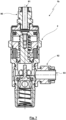
- Fig. 1 shows a tire pressure valve assembly 1 with a tire pressure valve 2.
- the tire pressure valve assembly 1 is designed as a single circuit and has a control and supply connection 3, which can be connected to a control and supply line, in particular via a basically known fitting, wherein this control and supply line is then connected to a rotary feedthrough that enables the control and supply pressure to pass from the vehicle to the vehicle wheel.
- the pressure at the control and supply connection 3 is specified on the vehicle side by suitable valve devices with an associated compressed air preparation device and a compressor and/or a storage container, wherein the different pressures described below at the control and supply connection 3 for changing the operating position of the tire pressure valve assembly 1 can be specified by these valve devices.
- the tire pressure valve assembly 1 has a tire connection 4, which can be screwed directly into a rim of a vehicle wheel, wherein the tire connection 4 can open directly or indirectly into the tire of the vehicle wheel.
- the tire pressure valve assembly 1 has an overflow valve 5 and a vent valve 6, which are arranged in pneumatic series between the control and supply connection 3 and the tire connection 4.
- overflow valve 5 In the schematic representation in Fig. 1 The overflow function of the overflow valve 5 is symbolized by the fact that the pressure at the control and supply connection 3 is fed to an overflow function control inlet 7 via the dashed line.
- An overflow valve spring 8 acts on the overflow valve 5 in opposition to the effect of the pressure at the overflow function control inlet 7.
- a threshold value which is determined by the stiffness and possible preload of the overflow valve spring 8 and the Control surface on which the pressure at the overflow function control inlet 7 acts is specified, the overflow valve 5 is switched from the Fig. 1 effective first operating position to the second operating position.
- the overflow valve 5 connects the control and supply connection 3 to a vent 9a, with a throttle 10 arranged upstream of the vent 9a.
- a further throttle 11 which is only effective in the first operating position, is integrated into the vent valve 5.
- the vent valve 5 connects the control and supply connection 3 to an inlet of the vent valve 6.
- the vent valve 6 has a control inlet 12.
- the control inlet In the first operating position of the overflow valve 5, the control inlet is connected to the line between the overflow valve 5 and the throttle 10, which is connected to the vent 9a.
- the vent valve 6 In contrast to the pressure on the vent valve 6 from the control inlet 12, the vent valve 6 is acted upon by a vent valve spring 13.
- the switching of the vent valve 6 takes place from the position shown in Fig. 1 effective first operating position into the second operating position.
- the second threshold value depends on the area of a control piston on which the pressure at the control inlet 12 acts, and the stiffness and any preload of the vent valve spring 13.
- the vent valve 6 connects the overflow valve 5, i.e.
- the control and supply connection 3 with the tire connection 4, wherein in the first operating position a check valve 14 of the vent valve 6 is effective, which opens in the direction of the tire connection 4.
- the vent valve 6 connects the tire connection 4 to a vent 9b.
- the operation of the tire pressure valve assembly 1 according to Fig. 1 is as follows: If the pressure at the control and supply connection 3 is lower than the first threshold value, the tire pressure valve assembly 1 is in the operating position according to Fig. 1 . Both the overflow valve 5 and the vent valve 6 are in the first switching position. This means that the tire connection 4 is blocked by the check valve 14 of the vent valve 6. In this way, the pressure in the tire can be maintained.
- the control and supply connection 3 is connected to the vent 9a via the throttles 11, 10, which leads to a low leakage flow.
- the pressure applied to the control inlet 12 is not high enough to switch the vent valve 6 to the second switching position. The tire is thus blocked.
- the overflow valve 5 does not switch over.
- the increase in pressure at the control inlet 12 of the vent valve 6 causes the vent valve 6 to switch from the first switching position to the second switching position.
- the tire connection 4 and thus the tire are connected to the vent 9b via the vent valve 6. The pressure in the tire is reduced in this way.
- the overflow valve 5 switches over, while the control inlet 12 is vented via the throttle 10 and the vent 9a.
- the vent valve 6 thus assumes its first operating position (possibly with a delay specified by the throttle 10).
- the control and supply connection 3 is then in its second operating position via the overflow valve 5 and the vent valve 6 is connected to the tire connection 4 via the check valve 14. This results in the tire being filled, with an associated increase in the pressure in the tire.
- the first threshold value may be in the range of 2 bar to 4 bar, while the second threshold value may be in the range of 4 bar to 6 bar.
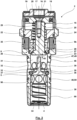
- Fig. 2 shows a structural design of a tire pressure valve 2 in a longitudinal section.
- the tire pressure valve 2 has a multi-part housing 15.
- the housing 15 has a control inlet 16, in the area of which a connecting thread 17 is provided.
- the connecting thread 17 opens into a control chamber 18, which is delimited by a control piston 19 that is slidably guided in the housing 15.
- the control piston 19 is firmly connected to a vent valve body 20, which is done by screwing it with a screw 21 in the embodiment shown.
- a housing insert 22 is inserted into an interior of the housing 15.
- the housing insert 22 is axially caught between a shoulder 23 of a housing part 24 forming the continuous interior and a housing cover 25 screwed into an internal thread of the housing part 24, which forms the control inlet 16 and the connection thread 17.
- the housing insert 22 has a continuous recess through which the vent valve body 20 extends.
- the vent valve body 20 has an extension which forms a vent valve plate 26.
- vent valve plate 26 comes to rest against a vent valve seat 28 formed by the housing insert 22 in the associated end region, in a sealed manner, in particular as a result of a sealing ring 27 held by the vent valve plate 26.
- a pre-stressed vent valve spring 29 is caught between the underside of the control piston 19 and a further shoulder of the housing insert 22.
- Both the housing insert 22 and the housing part 24 have radial recesses or bores which are connected to one another and to the environment which forms the vent 9b via a vent silencer 30 (which is also referred to as a "silencer", which can be ring-shaped and/or can be arranged in an annular chamber between the housing insert 22 and the housing part 24).
- a valve chamber 31 is located below the vent valve body 20.
- a supply inlet 32 opens into the valve chamber 31. If the vent valve body 20 is in the switching position in which the vent valve plate 26 is arranged at a distance from the vent valve seat 28 and thus releases a transfer cross-section, the valve chamber 31 is connected to the vent 9b.
- the valve chamber 31 is also limited by the overflow valve 5.
- the overflow valve 5 has an overflow valve body 33.
- An overflow valve spring 34 acts on an overflow valve plate 35 of the overflow valve body 33 in the direction of an overflow valve seat 36, opposite to the effect of the pressure in the valve chamber 31, which acts on the back of the overflow valve plate 35.
- the overflow valve 5 is closed by the overflow valve spring 34, since the overflow valve plate 35 rests against the overflow valve seat 36 in a sealed manner, in particular with the interposition of a sealing ring 37 held on the overflow valve plate 35 or the overflow valve seat 36. If, however, the overflow valve 5 is transferred to the switching position in which the overflow valve plate 35 is arranged at a distance from the overflow valve seat 36, the transfer cross-section thus provided provides a pneumatic connection between the valve chamber 31 and the tire connection 4.
- the overflow valve body 33 has a guide sleeve 38 on the side facing away from the valve chamber 31.
- the guide sleeve 38 is slidably guided in an inner bore of the housing part 24.
- the guide sleeve 38 also serves to accommodate the overflow valve spring 34.
- the guide sleeve 38 has transverse bores 96 through which compressed air can flow from the transfer cross section of the overflow valve 5 to the tire connection 4.
- the overflow valve body 33 has an extension 39 that extends from the overflow valve plate 35 into the interior of the valve chamber 31.
- One end face of the extension 39 is arranged at a distance 40 from the end face of the vent valve body 20, in particular the vent valve plate 26.
- a possible mode of operation with appropriate design of the valve and control surfaces as well as the preloads and stiffnesses of the different springs of the tire pressure valve 2 is as follows: If the pressure at the control inlet 16 and/or the supply inlet 32 is below a first threshold value, the vent valve spring 29 holds the vent valve 6 in the closed position and the overflow valve spring 34 holds the overflow valve 5 in the closed position. Thus, compressed air present at the supply inlet 32 can neither be vented via the vent 9b nor reach the tire connection 4 to increase the pressure in the tire. Rather, the tire is shut off via the tire pressure valve 4.
- the pressure acting on the control inlet 16 causes the control piston 19 to move the vent valve 6 into its venting position.
- the movement of the vent valve body 20 eliminates the gap 40 and the vent valve body 20 exerts an opening force component on the overflow valve body 33 with its front face.
- a pressure in the valve chamber 31 can act on the overflow valve plate 35 and generate a second opening force component. The superposition of the two opening force components then leads to the opening of the overflow valve 5. Compressed air can therefore flow from the tire connection 4 via the open overflow valve 5 and the open vent valve 6 to the vent 9b.
- the overflow valve 5 is opened at least partially mechanically by the venting valve 6, while in order to bring about the ventilating position of the tire pressure valve 2, the latter is opened purely pneumatically by the pressure acting on the overflow valve 5.
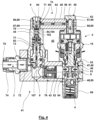
- Fig. 3 to 5 show the use of the tire pressure valve 2 according to Fig. 2 in a single-circuit tire pressure valve assembly 1a.
- the tire pressure valve assembly 1a has a housing ring 41, which is rectangular or square here and has a through-hole 42.
- the housing ring 41 has the housing 15 of the tire pressure valve 2, a connection housing 43, a self-holding valve housing 44 and a further connection housing 45, each forming a leg of the rectangular housing ring 41 and in this order in Fig. 3 Connect each other clockwise.
- the outer surface of the housing 15 has a cylindrical sealing and mounting surface 46 in the area surrounding the supply inlet 32.
- the sealing and mounting surface 46 can have circumferential grooves 47, 48 on both sides of the supply inlet 32, in which sealing rings 49, 50 are arranged.
- connection housing 43 has a through hole that forms a sealing and mounting eye 51.
- the sealing and mounting surface 46 of the housing 15 is accommodated in the sealing and mounting eye 51 of the connection housing 43 in a precise and sealed manner, whereby compressed air (with a seal to the outside) can pass from the supply inlet 32 to an interior space 52 of the connection housing 43 (and vice versa).
- the position of the connection housing 43 mounted in this way on the housing 15 is secured by the connection housing 43 being caught between a shoulder 53 of the housing part 24 and a locking ring 54 held on the outer surface of the lower end region of the housing part 24.
- a coupling housing 55 is screwed into the connection thread 17 of the housing cover 25.
- the coupling housing 55 has (basically corresponding to the connection area between the housing 15 and the connection housing 43) a sealing and mounting surface 56 with grooves 57, 58 and seals 59, 60.
- connection housing 45 has (basically corresponding to the connection housing 43) a sealing and mounting eye 61.
- the sealing and mounting surface 56 is accommodated in the sealing and mounting eye 61 (with sealing to the outside) so that compressed air can pass under sealing between the control inlet 16 and a longitudinal channel 62.
- the mounted position of the connection housing 45 on the housing 15 is secured by the fact that the connection housing 45 is pressed against a front side of the housing cover 25 by an extension 63 and thus in the area of the Sealing and mounting eye 61, the connection housing 45 is caught between the extension 63 and the front side of the housing cover 25.
- connection housing 45 In the other end area, the longitudinal channel 62 of the connection housing 45 opens into another sealing and mounting eye 64 of the connection housing 45.
- a sealing and mounting surface 65 of the self-holding valve housing 44 with associated grooves 66, 67 and sealing rings 68, 69 is accommodated in the sealing and mounting eye 64.
- the assembled position is secured by the connection housing 45 being caught in the area of the sealing and mounting eye 64 between a shoulder 70 of the self-holding valve housing 44 and a locking ring 71 held at the end of the self-holding valve housing 44.
- the self-holding valve housing 44 is screwed into an internal thread of the connection housing 43.
- connection housing 43 In the end area facing away from the tire pressure valve 2, the connection housing 43 has an internal thread 72 into which a connection piece 73 is screwed in under sealing.
- the connection piece 73 is designed to be suitable for connecting a control and supply line 88 using conventional, known connection technologies.
- the connection is formed with a screw cap 74 that can be screwed onto the connection piece 73.
- the control and supply line 88 can then be clamped and clamped between a sleeve-shaped extension, possibly with an elastically deformable clamping nose 75, and the screw cap 74.
- connection housing 43 connects the supply inlet 32 of the tire pressure valve 2 with the control and supply connection 3.
- a check valve 76 is arranged that opens in the direction of the supply inlet 32.
- a self-holding valve body 77 extends in the self-holding valve housing 44 and the connection housing 43.
- the inlet side of the check valve 76 is connected via a supply branch 78 of the self-holding valve body 77 is connected to the control and supply connection 3.
- the self-holding valve body 77 is displaceable under the action of a self-holding valve spring 79 depending on the pressure acting in the interior 52 on the inlet side of the check valve 76 and acting on the front side of the self-holding valve body 77.
- the self-holding valve spring 79 presses the self-holding valve body 77 (if necessary with a sealing ring 80 arranged in a groove) against a self-holding valve seat 81 formed here by the connection housing 43. In this case, the transfer from the control and supply connection 3 to the interior 52 of the connection housing 43 is only possible via the supply branch 78.
- the self-holding valve body 77 can be moved away from the self-holding valve seat 81 while increasing the load on the self-holding valve spring 79, whereby a bypass cross-section 101 is formed and the bypass cross-section 101 provides a bypass to the supply branch 78 for the passage of compressed air from the control and supply connection 3 to the interior space 52.
- the supply branch 78 has a branch 82, in the area of which a control branch section 83 branches off.
- the control branch section 83 creates a connection through the self-holding valve body 77 to the sealing and mounting surface 65, via which the control branch section 83 is connected to the longitudinal channel 62 (and via this to the control inlet 16).
- the control and supply pressure at the control and supply connection 3 passes through a control and supply channel 97 to the branch 82, in the area of which a branch is made on the one hand to a supply branch 98 and on the other hand to a control branch 99.
- the supply branch 98 and the control branch 99 extend from the branch 82 in opposite circumferential directions.
- the supply branch 98 extends through the connection housing 43, while the control branch extends through the self-holding valve housing 44 and the connection housing 45.
- the supply branch 98 connects the branch 82 to the supply inlet 32 of the tire pressure valve 2.
- the control branch 99 connects the branch 82 to the control inlet 16 of the tire pressure valve 2.
- the self-holding valve body 77 and the self-holding valve seat 81 form a self-holding valve 100.
- the supply branch 98 is connected exclusively via the supply branch 78 and the branch 82 and via these to the control and supply channel 97.
- the self-holding valve 100 creates a bypass cross-section 101, via which an additional connection of the supply branch 98 to the control and supply channel 97 is created.
- the self-holding valve body 77 forms a closing body 102 in the end region facing away from the self-holding valve seat 81. If the self-holding valve body 77 is moved away from the self-holding valve seat 81, the closing body 102 comes to rest against a shut-off valve seat 84 in a sealed manner.
- the shut-off valve seat 84 is formed by a shoulder of the self-holding valve housing 44, possibly with a sealing ring. In this way, the self-holding valve body 77 forms a shut-off valve 103 with the closing body 102 and the shut-off valve seat 84.
- the shut-off valve 103 opens the control branch 99 so that a transfer from the branch 82 via the supply branch 78 and the longitudinal channel 62 to the control inlet 16 is possible.
- the check valve 103 in the blocking position blocks the control branch 99 by blocking the connection between the branch 82 and the longitudinal channel 62.
- the blocking position of the check valve 103 corresponds to the opening position of the self-holding valve 103, while the opening position of the check valve 103 corresponds to the closing position of the self-holding valve 103.
- the control branch 99 Downstream of the shut-off valve 103, the control branch 99 is connected to a vent 9 via a throttle 85.
- the throttle 85 is dimensioned such that when the shut-off valve 103 is open, more compressed air flows from the branch 82 into the longitudinal channel. 62 and is discharged via the throttle 85, whereby a pressure can be built up at the control inlet 16. If, however, the shut-off valve 103 assumes its shut-off position, the control inlet 16 is vented via the throttle 85 to the vent 9.
- the self-holding valve body 77, the self-holding valve spring 79 and the self-holding valve seat 81 form a self-holding valve 100. If the self-holding valve 100 assumes the closed position (cf. Fig. 3 ), the pressure on the output side of the self-holding valve 100 in the supply branch 98 acts on an end face of the self-holding valve body 77, which is limited by the sealing contact with the self-holding valve seat 81, in particular with the sealing ring 80. This end face forms a first control surface 107.
- the pressure in the control branch 99 acts on an enlarged end face of the self-holding valve body 77, which for the exemplary embodiment shown is limited by the outer diameter of the seals 104, via which the self-holding valve body 77 is guided relative to the self-holding valve housing 44.
- This enlarged end face forms a second control surface 108.
- the enlarged effective area of the pressure means that this opening or self-holding position is maintained even when the pressure in the supply branch 98 drops.
- the blocking position of the shut-off valve 103 is maintained in the opening or self-holding position of the self-holding valve 100.
- the compressed air enters the control branch 99 from the branch 82 through the control branch section 83, which extends through the self-holding valve body 77 and through radial bores 105 of the self-holding valve body 77 and an annular gap 106 between the closing body 102 and the self-holding valve housing 44 past the shut-off valve seat 84 to the longitudinal channel 82.
- Fig. 3 shows the tire pressure valve assembly 1a in the blocking position in which the tire connection 4 is blocked.
- the tire pressure valve assembly 1a assumes this blocking position when the pressure at the control and supply connection 3 is below a first threshold value.
- the self-holding valve body 77 rests against the self-holding valve seat 81 in a sealed manner, so that the compressed air can only reach the interior 52 of the connection housing 43 via the supply branch 78.
- the check valve 76 is closed, which can be ensured by a check valve spring that forces the check valve 76 into the closed position and/or by the pressure on the output side of the check valve.
- the blocking valve 103 is in the open position, so that compressed air can be supplied from the control and supply channel via the branch 82, the control branch section 83 and the longitudinal channel 62 to the control chamber 18 of the tire pressure valve 2.
- the pressure in the control branch 99 and thus at the control inlet 16 is not sufficient (also as a result of the venting via the throttle 85) to open the vent valve 6.
- the pressure in the valve chamber 31 is also not sufficient to open the overflow valve 5.
- the tire pressure valve assembly is switched from the blocking position according to Fig. 3 into the venting position according to Fig. 4 .
- the self-holding valve 100 is still in the closed position, which means that the shut-off valve 103 is in the open position.
- the increase in pressure in the control chamber 18 allows the control piston 19 to move the venting valve 6 into the venting position.
- the distance 40 is reduced to zero and an opening force is transmitted to the extension 39 of the overflow valve body 33 via the front side of the venting valve body 20.
- the overflow valve 5 is moved into the open position.
- the tire connection 4 can thus be vented via the vent 9.
- the check valve 76 is blocked in this case.
- the check valve 76 opens. Furthermore, the pressure acting on the front of the self-holding valve body 77 causes the self-holding valve body 77 to be moved away from the self-holding valve seat 81. The movement of the self-holding valve body 77 away from the self-holding valve seat 81 simultaneously causes the shut-off valve 103 to shut off the connection of the control branch section 83 to the longitudinal channel 62.
- the longitudinal channel 62 is connected to the vent 9 via the throttle 85, so that as a result of the previously explained shut-off of the control branch section 83, the longitudinal channel 62 and thus the control chamber 18 are vented.
- control surface 107/108 on which the pressure acts on the front side of the self-holding valve body 77, in the closed position of the self-holding valve body 77, in which it rests against the self-holding valve seat 81 ( Fig. 3 and 4 ) is smaller than in the position of the self-holding valve body 77 in which it is arranged at a distance from the self-holding valve seat 81 ( Fig. 5 ).
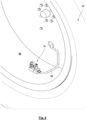
- Fig. 6 shows the assembly of the tire pressure valve assembly 1a on a rim 86 of a vehicle wheel 87.
- a common control and supply line 88 is connected to the control and supply connection 3. It is possible that the housing 15 of the tire pressure valve 2 has an external thread 89 in the area of the tire connection 4, with the tire pressure valve 2 and thus the tire pressure valve assembly 1a is screwed directly into an internal thread of the rim 86.
- Fig. 7 shows an application of the same tire pressure valve 2 in a dual-circuit tire pressure valve assembly 1b.
- a coupling housing 90 is screwed into the connection thread 17 of the housing cover 27, which is designed differently from the coupling housing 55:
- the coupling housing has a direct control connection 91.
- a connection housing 92 which is connected to the sealing and mounting surface 46 of the tire pressure valve 2, is also designed differently from the connection housing 43:
- the connection housing 92 only has a supply connection 93.
- Fig. 8 shows the assembly of the dual-circuit tire pressure valve assembly 1b according to Fig. 7 on a rim 86 of a vehicle wheel 87.
- a control line 94 is connected to the control connection 91, while a supply line 95 is connected to the supply connection 93.
- the tire pressure valve assembly 1b can be screwed to the rim 86 via the external thread 89.
- the housing 15 is conical in the area of the external thread 89.
- a sealing agent such as a sealing paste can be used.
- the interior space 52 prefferably has a throttled vent 9 on the inlet side of the check valve 76.
- This throttled vent can be used for venting if the check valve 76 has an undesirable leakage in its closed position.
- the valve chamber 31 can also be connected to a throttled vent 9.
Landscapes
- Engineering & Computer Science (AREA)
- Mechanical Engineering (AREA)
- General Engineering & Computer Science (AREA)
- Tires In General (AREA)
Description
- In Nutzfahrzeugen dienen Reifendruckregelanlagen (worunter im Folgenden auch Reifendrucksteueranlagen subsummiert werden) der Herbeiführung und Aufrechterhaltung des gewünschten Drucks in den Reifen. Die Reifendruckregelanlagen verfügen zu diesem Zweck über mit dem Reifen rotierende, insbesondere an einer Felge montierte Reifendruckventilbaugruppen, über die in einer Sperrstellung der Reifen abgesperrt wird, in einer Belüftungsstellung dem Reifen Druck zugeführt wird und in einer Entlüftungsstellung der Reifen entlüftet wird. Für die Versorgung der Reifendruckventilbaugruppe mit Druckluft und die Ansteuerung der Reifendruckventilbaugruppe zur Herbeiführung der unterschiedlichen Schaltstellungen ist es bekannt, in einer zweikreisigen Reifendruckregelanlage die Reifendruckventilbaugruppe mit einem Steuerkreis und einem Versorgungskreis zu verbinden. Der Versorgungskreis stellt dabei die Druckluft zum Befüllen des Reifens zur Verfügung, während der Steuerkreis der Zufuhr eines Steuerdruckes dient, um die Reifendruckventilbaugruppe in die unterschiedlichen Schaltzustände zu überführen. Bekannt sind auch einkreisige Reifendruckregelanlagen, bei denen die Druckluft in dem einzigen Kreis einerseits der Versorgung der Reifendruckventilbaugruppe mit Druckluft und damit dem Befüllen des Reifens dient, während andererseits die Druckhöhe in dem Kreis als Steuerdruck zur Umschaltung der Reifendruckventilbaugruppe in die unterschiedlichen Schaltzustände genutzt wird. Da die Druckluftversorgung der Reifendruckregelanlage fahrzeugfest angeordnet ist und auch etwaige pneumatische Komponenten zur Aufbereitung der Drücke in dem mindestens einen Kreis fahrzeugfest angeordnet sind, sind die beiden Kreise der zweikreisigen Reifendruckregelanlage oder der eine Kreis der einkreisigen Reifendruckregelanlage über eine relative Verdrehung ermöglichende Drehdurchführung mit der Reifendruckventilbaugruppe und der Felge des Reifens verbunden. Mit der Reifendruckregelanlage kann auch gezielt eine Veränderung des Druckes in den Reifen erfolgen. Dies ist beispielsweise vorteilhaft für die Veränderung des Druckes je nach Beschaffenheit der Fahrbahn, wobei beispielsweise für eine harte und glatte Fahrbahn ein höherer Druck in dem Reifen genutzt werden kann als bei einem raueren und/oder weicheren Untergrund, beispielsweise auf einer Schotterstraße oder einer Straße mit Sand oder einem Ackerboden.
-
DE 2 141 087 A1 offenbart eine einkreisige Reifendruckregelanlage, bei der der Druck in dem einzigen Kreis über ein manuell mittels eines Handgriffes betätigtes Ventil vorgegeben werden kann, welches je nach Stellung des Handgriffes in eine Belüftungsstellung, Sperrstellung und Entlüftungsstellung gebracht werden kann. Der Kreis ist über eine Drehdurchführung mit einem zugeordneten Fahrzeugrad verbunden. Zum Füllen eines Reifens wird der Handgriff des Einstellventils aus der Entlüftungsstellung in die Belüftungsstellung überführt, womit die an der Felge gehaltene Ventileinrichtung derart geöffnet wird, dass Druckluft aus dem Kreis in den Reifen gelangt. Nach Beendigung des Füllvorganges des Fahrzeugreifens wird der Handgriff in seine Ausgangslage zurückgestellt, womit der Kreis entlüftet wird. In der Entlüftungsstellung sperrt die Ventileinrichtung den Reifen ab. Da in diesem Fall der Kreis drucklos ist, sind die Dichtungen der Drehdurchführung mit keinem Druck beaufschlagt, was zu einer geringen Reibung und einem geringen Verschleiß führt. Soll dann (bspw. nach einem Entladen des Fahrzeuges oder bei einem Wechsel von einer harten Straßenunterlage auf ein Gelände mit weichem Boden) der Reifendruck gesenkt werden, wird das Einstellventil nochmals manuell in die Belüftungsstellung gebracht, was dann zur Entlüftung des Reifens in die Atmosphäre durch die radseitige Ventileinrichtung führt. Das Einstellventil kann auch als gestuftes Ventil ausgebildet sein, welches in einer Schaltstellung den Kreis entlüftet, in einer Schaltstellung einen Reifen-Mindestdruck in dem Kreis erzeugt sowie in einer Schaltstellung einen Reifen-Höchstdruck in dem Kreis erzeugt. -
WO 2008/068599 A2 offenbart eine elektronische einkreisige Reifendruckregelanlage, in der sämtliche Reifen mit einer Zentralleitung verbunden werden können, die zum Erhöhen des Druck in den Reifen mit einem Kompressor und/oder einem Druckluftbehälter verbunden werden kann sowie zum Entlüften der Reifen mit der Atmosphäre verbunden werden kann. Fahrzeugseitig von der Drehdurchführung ist jedem Reifen ein elektronisch gesteuertes Be- und Entlüftungsventil vorgeordnet, während reifenseitig der Drehdurchführung ein elektromagnetisch gesteuertes Sperrventil angeordnet ist. In der Sperrstellung des Sperrventils wird ein einmal herbeigeführter Druck in dem Reifen aufrecht erhalten, während in der Durchlassstellung des Sperrventils je nach Schaltstellung des fahrzeugseitigen Be- und Entlüftungsventils eine Be- oder Entlüftung des Reifens erfolgen kann. - In der elektronischen Reifendruckregelanlage gemäß
DE 10 2007 036 201 A1 kommuniziert eine elektronische Steuereinrichtung drahtlos mit einem in einem Reifen angeordneten Drucksensor. Der einzige Kreis zum Betrieb einer dem Fahrzeugrad zugeordneten Ventileinrichtung wird hier zum Sperren der Ventileinrichtung und damit Aufrechterhaltung des Drucks in dem Reifen entlüftet. Zum Überführen der Ventileinrichtung in eine Belüftungsstellung wird in den Kreis elektronisch ein erster Druck eingesteuert, während zum Überführen der Ventileinrichtung in eine Entlüftungsstellung ein zweiter Druck in den Kreis eingesteuert wird, der größer ist als der erste Druck. - Hingegen offenbart die Druckschrift
EP 2 308 698 B1 , die den nächstliegenden Stand der Technik bildet, eine elektronisch gesteuerte einkreisige Reifendruckregelanlage, bei der für einen niedrigen Druck unterhalb eines Schwellwertes die Ventileinrichtung gesperrt ist, für einen ersten Druck in dem Kreis die Ventileinrichtung in eine Entlüftungsstellung überführt wird und für einen zweiten Druck in dem Kreis, der größer ist als der erste Druck, die Ventileinrichtung in eine Belüftungsstellung überführt wird. - An Agrarfahrzeug-Reifendrucksteueranlagen werden insbesondere die folgenden Anforderungen gestellt:
- Eine Agrarfahrzeug-Reifendrucksteueranlage soll einen vorbestimmten Druck in mindestens einem Reifen aufrechterhalten. Dies kann ein Absperren der pneumatischen Verbindung zu dem Reifen durch die Agrarfahrzeug-Reifendrucksteueranlage erfordern. Die Agrarfahrzeug-Reifendrucksteueranlage kann des Weiteren für eine etwaige schleichende Leckage in dem Reifen ein Belüften zum Nachfüllen vornehmen. Bei einer Erwärmung der Luft in dem Reifen kann des Weiteren zum Konstanthalten des Drucks in demselben eine Entlüftung des Reifens durch die Agrarfahrzeug-Reifendrucksteueranlage erforderlich sein. Möglich ist auch, dass abhängig von der Beladung des Agrarfahrzeugs eine beladungsabhängige Druckänderung durch die Agrarfahrzeug-Reifendrucksteueranlage kompensiert werden muss.
- Agrarfahrzeug-Reifendrucksteueranlagen können eingesetzt werden, um durch Modifikation des Drucks in dem Reifen Betriebsbedingungen des Agrarfahrzeugs und insbesondere den Kontaktbedingungen des Reifens mit dem Boden Rechnung tragen. So ist es beispielsweise bekannt, einen Druck in einem Reifen über eine Agrarfahrzeug-Reifendrucksteueranlage zu reduzieren, wenn sich ein unerwünschter Schlupf des Reifens gegenüber dem Boden ergibt. Möglich ist auch, dass bei der Erkennung einer unerwünschten Neigung des Agrarfahrzeugs (da beispielsweise das Agrarfahrzeug auf einem unebenen Boden oder an einem Hang steht) durch Veränderung der Drücke an Reifen einer Achse oder einer Fahrzeugseite der Schrägstellung des Agrarfahrzeugs entgegengewirkt wird.
DE 10 2011 085 040 A1 offenbart ein Agrar-Zugfahrzeug mit einer Agrarfahrzeug-Reifendrucksteueranlage, bei der der Reifendruck in Abhängigkeit von einem Schlupf der Reifen auf dem Boden geregelt wird. Alternativ oder zusätzlich kann die Regelung für den Druck des Reifens in Abhängigkeit von der Zugkraft des Agrar-Zugfahrzeugs und/oder der Arbeitstiefe eines Werkzeugs oder Anbaugeräts des Agrar-Zugfahrzeugs erfolgen. Ergänzende, in die Regelung des Drucks des Reifens einfließende Regelungskriterien können die Fahrgeschwindigkeit sein, eine Eingabe des Fahrers, die Reifenart, die Bodenart, die Bodenbeschaffenheit und/oder die Achslastverteilung. - Bewegt sich das Agrarfahrzeug im öffentlichen Straßenverkehr, bedingen ein niedriger Kraftfahrzeugverbrauch, Vorschriften des Herstellers und gesetzliche Vorgaben und die dynamische Fahrstabilität einen verhältnismäßig hohen Druck in den Reifen. Hingegen kann bei dem Überfahren eines Ackerbodens durch das Agrarfahrzeug ein verringerter Druck in den Reifen gewünscht sein, um die Kontaktfläche des Reifens mit dem Ackerboden zu vergrößern, womit sich verringerte Flächenpressungen für die Anpressung des Reifens an den Ackerboden ergeben, die die Gefahr einer unerwünschten Verdichtung des Ackerbodens zumindest mindert. Bei einem Wechsel des Betriebs des Agrarfahrzeugs von der Fahrt im Straßenverkehr zu der Fahrt über einen Ackerboden (und umgekehrt) muss die Agrarfahrzeug-Reifendrucksteueranlage die erforderlichen Druckänderungen in den Reifen gewährleisten
-
EP 1 435 302 A1 offenbart eine grundsätzlich geschlossene einkreisige Fahrzeug-Reifendrucksteueranlage, die befüllt werden kann, indem mittels eines Kompressors Luft aus der Umgebung über einen Filter angesaugt wird. Der Kompressor fördert dabei die Luft einerseits zu einem Vorratsbehälter und andererseits über ein zentrales 3/2-Wegeventil zu einer Zentralleitung. - Die Zentralleitung verzweigt über Zweigleitungen zu den Reifen des Nutzfahrzeugs. In den Zweigleitungen ist jeweils ein 3/2-Wege-Achsventil und ein als 2/2-Wege-Sperrventil ausgebildetes Reifenventil dem zugeordneten Reifen vorgeordnet. Hierbei sind die 3/2-Wege-Achsventile am Fahrzeugrahmen befestigt, während die Reifenventile an dem Fahrzeugrad gehalten sind und mit diesem rotieren. Das 3/2-Wege-Achsventil und das Reifenventil sind über eine Drehdurchführung verlaufende Verbindungsleitung miteinander verbunden, wobei die Druckluft in der Verbindungsleitung sowohl als Versorgungsdruck für das Reifenventil als auch als pneumatischer Steuerdruck des Reifenventils verwendet wird. Ist der Druck in dem Vorratsbehälter größer als der Druck in dem Reifen, kann ohne Betrieb des Kompressors eine Befüllung des Reifens erfolgen. Andernfalls wird die Druckluft aus dem Vorratsbehälter über den Kompressor weiter verdichtet und zur Befüllung mindestens einem Reifen zugeführt. Schließlich ist auch eine Befüllung eines Reifens möglich, indem dem Reifen aus der Umgebung angesaugte und mittels des Kompressors verdichtete Druckluft zugeführt wird. Hingegen kann für eine Entlüftung eines Reifens der Reifen mit einer Saugseite des Kompressors verbunden werden, wobei in diesem Fall die von dem Kompressor aus dem Reifen abgesaugte Druckluft entweder unter Verdichtung durch den Kompressor dem Vorratsbehälter zugeführt werden kann oder in die Atmosphäre entlüftet werden kann. Mit dem Fahrzeugrad rotiert eine reifeninnere Einheit, die neben dem Reifenventil und einer Drossel einen Drucksensor, einen Temperatursensor und eine Sendeeinrichtung aufweist. Mittels der Sendeeinrichtung kann per Funk ein Drucksignal und/oder Temperatursignal an eine Empfangseinrichtung einer elektronischen Steuereinheit übertragen werden, die die Fahrzeug-Reifendrucksteueranlage steuert.
-
WO 2017/116628 A1 betrifft eine zweikreisige Agrarfahrzeug-Reifendrucksteueranlage, die ein schnelles Be- und Entlüften eines großvolumigen Reifens eines Traktors für einen Wechsel von einer Fahrt über eine Ackerfläche einerseits und einer Fahrt auf einer Straße andererseits (und umgekehrt) ermöglichen soll. Der Traktor verfügt über einen Kompressor, mittels dessen ein Haupt-Vorratsbehälter und mehrere Hilfs-Vorratsbehälter befüllt werden können. Eine Versorgungsleitung der Agrarfahrzeug-Reifendrucksteueranlage kann wahlweise aus dem Haupt-Vorratsbehälter oder den Hilfs-Vorratsbehältern mit Druckluft versorgt werden. Die Versorgungsleitung verzweigt in Zweigleitungen, die jeweils mit einem zugeordneten Reifen verbunden sind. In den Zweigleitungen sind jeweils automatisch betätigbare Belüftungsventile angeordnet und an diese ist jeweils ein Entlüftungsventil angeschlossen, wodurch eine Be- und Entlüftung der Reifen möglich ist. Ein Drucksensor erfasst den Druck in dem Haupt-Vorratsbehälter. Des Weiteren können die Fahrzeugräder jeweils Drucksensoren aufweisen, die den Druck in dem Reifen erfassen. Eine Übertragung des Drucksignals erfolgt drahtlos. Die Be- und Entlüftungsventile sind vor einer Drehdurchführung des Fahrzeugrades angeordnet. Zwischen die Drehdurchführungen und den Innenraum des Reifens sind pneumatisch gesteuerte Belüftungsventile zwischengeordnet, die mit zwei separaten pneumatischen Pfaden der Drehdurchführungen verbunden sind, über die einerseits ein Versorgungsdruck und andererseits ein Steuerdruck an das pneumatisch gesteuerte Belüftungsventil übertragen werden. Das in das Fahrzeugrad integrierte pneumatisch gesteuerte Belüftungsventil ist hierbei als 2/2-Wegeventil oder Sperrventil ausgestaltet, sodass dieses in einer Öffnungsstellung die Belüftung und Entlüftung durch die an dem Fahrzeugrahmen gehaltenen Be- und Entlüftungsventile ermöglicht, während das pneumatisch gesteuerte Belüftungsventil in der Sperrstellung den Innenraum des Reifens absperrt. Das in der Zweigleitung angeordnete Belüftungsventil und das Entlüftungsventil können als Magnetventile ausgebildet sein. Anstelle separat ausgebildeter Be- und Entlüftungsventile kann auch ein 3/3-Wegeventil eingesetzt sein, welches eine Sperrstellung, eine Belüftungsstellung und eine Entlüftungsstellung aufweist. Der pneumatische Steuerkreis zur Ansteuerung der in das Fahrzeugrad integrierten Sperrventile ist inWO 2017/116628 A1 weder weiter beschrieben noch dargestellt. Ein Befüllen mindestens eines Reifens erfolgt gemäßWO 2017/116628 A1 , indem zunächst ein schnelles Befüllen ermöglicht wird, indem der mindestens eine Reifen mit dem Haupt-Vorratsbehälter und den Hilfsvorratsbehältern verbunden wird. Ist ein Druckausgleich erfolgt, kann eine weitere Druckerhöhung in dem Reifen erfolgen, indem die Hilfs-Vorratsbehälter gegenüber dem Kompressor abgesperrt werden und durch Betrieb des Kompressors über den Haupt-Vorratsbehälter der Druck in dem mindestens einen Reifen erhöht wird. Eine Entlüftung der Reifen erfolgt durch die Entlüftungsventile unmittelbar in die Umgebung. Neben der Steuerung der Ventile über eine elektronische Steuereinrichtung kann auch eine manuelle Steuerung durch den Benutzer erfolgen. -
EP 0 365 953 A2 betrifft eine Reifendrucksteueranlage für eine geländegängiges Fahrzeug, bei welchem ebenfalls eine schnelle Veränderung des Drucks in einem Reifen für einen Wechsel zwischen der Fahrt auf der Straße und der Fahrt in tiefem Gelände ermöglicht werden soll. In der Reifendrucksteueranlage wird der Druck eines Vorratsbehälters über ein Relaisventil, welches über Feinregelventile und 3/2-Magnetventile angesteuert wird, umgewandelt in einen Druck in einer ausgangsseitigen Versorgungsleitung, der entweder dem Reifendruck für den Betrieb auf einer Straße oder dem Reifendruck für einen Betrieb in tiefem Gelände entspricht. Die Versorgungsleitung ist über einen Eingang eines Wechselventils, ein Radabsperrventil in Ausgestaltung als Be- und Entlüftungsventil, eine Drehdurchführung und ein Schnelllöseventil und ein nachgeschaltetes Radsteuerventil in Ausgestaltung als pneumatisch gesteuertes Sperrventil mit einem Reifen verbunden. Das Schnelllöseventil und das Radsteuerventil rotieren mit dem Fahrzeugrad. Das Radsteuerventil kann einerseits über einen Druckimpuls auf der Versorgungsleitung geöffnet werden und andererseits über einen Schließdruck in einer Steuerleitung zu jedem beliebigen Zeitpunkt und bei jeder beliebigen Druckhöhe geschlossen werden. Der Druck in der Steuerleitung wird dabei mittels eines elektronisch gesteuerten Schließdruckventils vorgegeben. Das Schließdruckventil kann vom Fahrzeugführer und einer elektronische Steuereinrichtung elektrisch betätigt werden. Die Steuerleitung verläuft ebenfalls über die Drehdurchführung. Um zu vermeiden, dass bei der Reifendrucksteueranlage der Druck in dem Reifen den Sollwert nicht oder nur sehr langsam erreicht (beispielsweise weil der zu befüllende Reifen einen Defekt hat oder weil die Kompressorleistung nicht ausreicht), ein Schließdruck-Signal des Schließdruckventils sehr spät erzeugt würde oder ganz ausbleiben würde mit der Folge, dass an der Drehdurchführung ständig ein Druck anstehen würde und die Dichtungen der Drehdurchführung schnell verschleißen, schlägtEP 0 365 953 A2 vor, dem Relaisventil einen Doppeldruckschalter nachzuordnen, dessen beide Schaltpunkte um eine ausreichende Sicherheitsmarge unter den Sollwerten des Drucks für die Fahrt auf der Straße und in tiefem Gelände liegen. Sind die Druckwerte des Doppeldruckschalters erreicht, wird eine Zeitverzögerung aktiviert, nach deren Ablauf das Schließdruckventil zwangsweise betätigt wird, was die Schließung des Radsteuerventils zur Folge hat und damit auch die Entlüftung der Versorgungsleitung und die Entlastung der Drehdurchführung. -
EP 3 354 488 A1 offenbart eine zweikreisige Reifendrucksteueranlage für ein Offroad-Fahrzeug, bei der den Reifen vorgeordnete und mit den Fahrzeugrädern rotierende Sperrventile über Drehdurchführungen sowohl mit einem Versorgungsdruck als auch mit einem pneumatischen Steuerdruck beaufschlagt werden. Hierbei wird der Steuerdruck durch ein zentrales Magnetventil für sämtliche Reifen vorgegeben, während über unabhängige Magnetventile der Versorgungsdruck für einer Achse zugeordnete Reifen individuell vorgegeben werden kann. Alternativ schlägtEP 3 354 488 A1 vor, als mit den Fahrzeugrädern rotierende Sperrventile elektronisch gesteuerte 2/2-Wegeventile einzusetzen, wobei in diesem Fall über die Drehdurchführung einerseits der Versorgungsdruck und andererseits ein elektrisches Steuersignal übertragen werden. - Weiterer Stand der Technik ist insbesondere aus den Druckschriften
DE 10 2014 007281 A1 ,WO 2022/035497 A1 ,JP H05 246218 A EP 3 904 126 A1 ,EP 1 051 302 B1 ,EP 3 703 321 B1 undEP 3 401 129 B1 bekannt. - Der Erfindung liegt die Aufgabe zugrunde, eine Reifendruckventilbaugruppe und eine Gruppe von Reifendruckventilbaugruppen vorzuschlagen, die
- eine multifunktionale Verwendung von Komponenten ermöglicht und/oder
- zu einer Erhöhung der Betriebssicherheit führt und/oder
- verringerte Anforderungen an die Gewährleistung und Aufrechterhaltung der erforderlichen Umschaltdrücke ermöglicht und/oder
- eine Vereinfachung und/oder Verbesserung der konstruktiven Gestaltung ermöglicht.
- Die Aufgabe der Erfindung wird erfindungsgemäß mit den Merkmalen der unabhängigen Patentansprüche gelöst. Weitere bevorzugte erfindungsgemäße Ausgestaltungen sind den abhängigen Patentansprüchen zu entnehmen.
- Die Erfindung betrifft eine einkreisige Reifendruckventilbaugruppe, die einen Steuer- und Versorgungskanal und ein Reifendruckventil aufweist.
- Das Reifendruckventil weist einen Steuereinlass auf, der über eine Verzweigung und einen Steuerzweig mit dem Steuer- und Versorgungskanal verbunden ist. Des weiteren weist das Reifendruckventil einen Versorgungseinlass auf, der über die Verzweigung und einen Versorgungszweig mit dem Steuer- und Versorgungskanal verbunden ist. Das Reifendruckventil weist auch einen Entlüftungsauslass und einen Reifenanschluss auf.
- In einer ersten Schaltstellung sperrt das Reifendruckventil den Reifenanschluss ab, so dass das Druckluftvolumen in den Reifen konstant gehalten wird. Das Reifendruckventil weist auch eine zweite Schaltstellung auf. In der zweiten Schaltstellung verbindet das Reifendruckventil den Reifenanschluss mit dem Entlüftungsauslass. Somit kann Druckluft aus dem Reifen der Entlüftung zugeführt werden. Das Reifendruckventil verfügt des weiteren über eine dritte Schaltstellung. In der dritten Schaltstellung verbindet das Reifendruckventil den Reifenanschluss mit dem Versorgungseinlass, womit Druckluft von dem Versorgungseinlass dem Reifen zugeführt werden kann.
- Das Reifendruckventil verfügt über eine Schaltcharakteristik derart, das bei einem zumindest temporären Druck an dem Steuer- und Versorgungskanal, der kleiner ist als erster Schwellwert, die erste Schaltstellung eingenommen wird. Ist hingegen der Druck an dem Steuer- und Versorgungskanal größer als der erste Schwellwert und kleiner als ein zweiter Schwellwert, wird das Reifendruckventil von der ersten Schaltstellung in die zweite Schaltstellung überführt. Ist schließlich der Druck an dem Steuer- und Versorgungskanal größer als der zweite Schwellwert, wird das Reifendruckventil von der ersten Schaltstellung oder der zweiten Schaltstellung in die dritte Schaltstellung überführt.
- Insoweit kann die Reifendruckventilbaugruppe und das hierbei eingesetzte Reifendruckventil grundsätzlich entsprechend der eingangs genannten Druckschrift
EP 2 308 698 B1 ausgebildet sein. - Die Erfindung beruht insbesondere auf der Erkenntnis, dass Druckschwankungen an dem Steuer-und Versorgungskanal der Reifendruckventilbaugruppe zu unerwünschten Veränderungen der Schaltstellungen des Reifendruckventils führen können, die dann zu einem unerwünschten Belüften, Entlüften oder Absperren des Reifens führen können, was bspw. einen Be- oder Entlüftungsvorgang des Reifens verzögern kann oder zu unerwünschten Traktionsverhältnissen des Reifens und/oder unerwünschten dynamischen Fahrzuständen des Fahrzeugs führen kann.
- Erfindungsgemäß wird vorgeschlagen, dass die Reifendruckventilbaugruppe eine Selbsthaltefunktion aufweist. Als Selbsthaltefunktion wird dabei eine Funktion verstanden, die gewährleistet, dass eine Schaltstellung, die durch einen Schaltdruck an dem Steuer- und Versorgungskanal herbeigeführt worden ist, auch aufrechterhalten wird, wenn der Druck an dem Steuer- und Versorgungskanal kurzzeitig, für eine vorbestimmte Zeitspanne oder auch dauerhaft unter den Schaltdruck fällt. Hierbei kann die Selbsthaltefunktion derart sein, dass die Schaltstellung aufrechterhalten wird, solange der Druck um eine vorgegebenen Druckspanne unterhalb des Schaltdrucks liegt.
- Die erfindungsgemäße Selbsthaltefunktion ist dabei eine passive Selbsthaltefunktion, so dass diese nicht unmittelbar mittels elektronischer Steuerung herbeigeführt wird, sondern durch die Druckverhältnisse an und in der Reifendruckventilbaugruppe, insbesondere an dem Steuereinlass und dem Versorgungseinlass des Reifendruckventils und/oder dem Steuer- und Versorgungskanal. Möglich ist dabei, dass die Reifendruckventilbaugruppe insgesamt als passives Ventil ausgebildet ist, so dass diese keine elektronische Steuereinheit, keinen elektronischen Steueranschluss und keine Magnetventile aufweist.
- Erfindungsgemäß wird die Selbsthaltefunktion durch ein Selbsthalteventil gewährleistet. Das Selbsthalteventil trägt dabei dafür Sorge, dass nach Überführung des Reifendruckventils in dritte Schaltstellung die dritte Schaltstellung auch beibehalten wird, wenn der Druck an dem Steuer- und Versorgungskanal temporär unter den zweiten Stellwert (aber u. U. maximal um eine vorgegebenen Druckspanne) fällt.
- Für die Art der Ausgestaltung des in der Reifendruckventilbaugruppe enthaltenen Selbsthalteventils gibt es im Rahmen der Erfindung vielfältige Möglichkeiten. Für eine konstruktive Ausgestaltung weist das Selbsthalteventil einen Selbsthalteventilkörper auf, der die passive Selbsthaltefunktion gewährleistet.
- Die Verzweigung in der Reifendruckventilbaugruppe, über die der Steuer- und Versorgungskanal einerseits mit dem Steuerzweig und andererseits mit dem Versorgungszweig verbunden ist, kann an beliebiger Stelle der Reifendruckventilbaugruppe, insbesondere in dem Steuer- und Versorgungskanal angeordnet sein. Für einen Vorschlag ist die Verzweigung in den Selbsthalteventilkörper des Selbsthalteventils integriert, so dass der Selbsthalteventilkörper multifunktional eingesetzt ist.
- Möglich ist im Rahmen der Erfindung, dass der Selbsthalteventilkörper mit einem Selbsthalteventilsitz zusammenwirkt. In einer Schließstellung des Selbsthalteventils liegt der Selbsthalteventilkörper an dem Selbsthalteventilsitz an, womit eine Absperrung des Selbsthalteventils erfolgt. In diesem Fall ist der Steuer- und Versorgungskanal ausschließlich über einen durch den Selbsthalteventilkörper verlaufenden Versorgungsteilzweig mit dem Versorgungseinlass des Reifendruckventils verbunden. Hingegen bilden der Selbsthalteventilkörper und der Selbsthalteventilsitz in der Öffnungsstellung des Selbsthalteventils einen Bypassquerschnitt aus. In der Öffnungsstellung des Selbsthalteventils kommt somit zu der Verbindung des Steuer-und Versorgungskanals über den durch den Selbsthalteventilkörper verlaufenden Versorgungsteilzweig mit dem Versorgungseinlass des Reifendruckventils eine zusätzliche Verbindung des Steuer- und Versorgungskanals über den Bypassquerschnitt mit dem Versorgungseinlass des Reifendruckventils hinzu. Auf diese Weise können in der Selbsthalteventil-Öffnungsstellung und damit in der Belüftungsstellung der Reifendruckventilbaugruppe vergrößerte Strömungsquerschnitt zum schnellen Befüllen des Reifens bereitgestellt werden.
- Gemäß einem Vorschlag wirkt der an dem Steuer- und Versorgungskanal anliegenden Druck in der Schließstellung des Selbsthalteventils auf eine erste Steuerfläche des Selbsthalteventilkörpers ein. Hingegen wirkt der an dem Steuer- und Versorgungskanal anliegende Druck in der Öffnungsstellung des Selbsthalteventils auf eine zweite Steuerfläche ein. Dabei ist die erste Steuerfläche kleiner als die zweite Steuerfläche. Auf diese Weise kann die Selbsthaltefunktion in der Art einer Hysterese bereitgestellt werden.
- Für eine erfindungsgemäße Ausgestaltung der Reifendruckventilbaugruppe ist das Selbsthalteventil sowohl mit einem Steuerzweig als auch mit einem Versorgungszweig verbunden. Dabei kann der Steuerzweig permanent über eine Drossel mit einer Entlüftung verbunden sein. In dem Steuerzweig wird in der Öffnungsstellung eines Sperrventils über das Selbsthalteventil dem Steuerzweig ein Sperrventil-Volumenstrom zugeführt. Dieser Sperrventil-Volumenstrom ist dann größer als der von dem Steuerzweig über die Drossel entlüftete Volumenstrom. Dies hat zur Folge, dass der in dem Steuerzweig aufgebaute Druck zur Umschaltung des Reifendruckventils in die zweite Schaltstellung genutzt werden kann. Hingegen wird in dem Steuerzweig in der Schließstellung des Sperrventils der Sperrventil-Volumenstrom derart reduziert, dass der Sperrventil-Volumenstrom kleiner ist als der über die Drossel entlüftete Volumenstrom. Auf diese Weise kann der in dem Steuerzweig reduzierte Druck zur Umschaltung des Reifendruckventils in die dritte Schaltstellung beitragen.
- Für einen weiteren Vorschlag der Erfindung ist der Selbsthalteventilkörper zusätzlich zu einem weiteren Zweck eingesetzt: In diesem Fall tritt der Selbsthalteventilkörper des Selbsthalteventils einerseits mit dem Selbsthalteventilsitz in Wechselwirkung, um den Bypassquerschnitt zu sperren bzw. freizugeben. Andererseits tritt der Selbsthalteventilkörper auch mit einem Sperrventilsitz des Sperrventils in dem Steuerzweig in Wechselwirkung. Durch diese Multifunktionalität des Selbsthalteventilkörpers kann gewährleistet werden, dass zwingend die Sperrung und Freigabe des Bypassquerschnittes mit der Schaltstellung eines mit dem Selbsthalteventilkörper und dem Sperrventilsitz gebildeten Sperrventils korreliert. Hierbei ist das Sperrventil vorzugsweise für die Freigabe und Absperrung des zuvor genannten Sperrventil-Volumenstroms verantwortlich.
- Weitere Ausgestaltungen der Erfindung betreffen die besondere Gestaltung des in der Reifendruckventilbaugruppe eingesetzten Reifendruckventils:
Für eine konstruktive Ausgestaltung des Reifendruckventils verfügt dieses über ein Entlüftungsventil und ein Überströmventil. Das Entlüftungsventil gewährleistet dabei die Entlüftung des Reifenanschlusses und damit des Reifens. Das Überströmventil weist vorzugsweise einen Öffnungs- oder Überströmdruck auf, für den das Überströmventil geöffnet wird. In dem Reifendruckventil ist das Entlüftungsventil dem Entlüftungsauslass vorgeordnet, während dem Reifenanschluss das Überströmventil vorgeordnet ist. - Vorzugsweise sind die Ventilkörper des Entlüftungsventils einerseits und des Überströmventils andererseits nicht unabhängig voneinander. Vielmehr können diesen für einen Vorschlag der Erfindung (zumindest über einen Teilhub) mechanisch miteinander gekoppelt sein. Dies ermöglicht, dass die Öffnung des Überströmventils nicht ausschließlich mittels der an dem Überströmventil anliegenden Drücken herbeigeführt werden kann. Vielmehr kann das Überströmventil auch mechanisch durch den Ventilkörper des Entlüftungsventils "aufgestoßen" werden. Im Extremfall kann das Überströmventil sogar geöffnet werden, wenn kein Druck auf den Versorgungseinlass aufgebracht wird, sondern lediglich ein das Entlüftungsventil betätigender Steuerkolben das Entlüftungsventil und über die mechanische Kopplung das Überströmventil öffnet. Dies ermöglicht die Entlüftungsstellung der Reifendruckventilbaugruppe.
- Gemäß einem Vorschlag der Erfindung ist in dem Reifendruckventil der Ventilkörper des Entlüftungsventils über einen Steuerkolben betätigbar. Der Steuerkolben wird dann mit dem Steuerdruck an dem Steuereinlass beaufschlagt. Vorzugsweise ist der Ventilkörper des Entlüftungsventils entgegengesetzt zu der Wirkung des Steuerdrucks an dem Steuerkolben von dem Druck auf der Eingangsseite des Überströmventils beaufschlagt.
- Für eine konstruktive Ausgestaltung des erfindungsgemäßen Reifendruckventils verfügt dieses über eine Gehäuse. Das Gehäuse weist den Steuereinlass, den Entlüftungsauslass, den Versorgungseinlass und den Reifenanschluss sowie eine Ventilkammer auf. Das Überströmventil ist mit seinem Überströmventilkörper in dem Gehäuse angeordnet. Das Überströmventil trennt in einer Sperrstellung des Überströmventilkörpers die Ventilkörper von dem Reifenanschluss, so dass der Druck in dem Reifen konstant gehalten wird. Hingegen verbindet das Überströmventil in einer Öffnungsstellung des Überströmventilkörpers die Ventilkammer mit dem Reifenanschluss. Je nachdem, ob die Ventilkammer dann mit dem Entlüftungsauslass oder dem Versorgungseinlass verbunden ist, kann in dieser Öffnungsstellung des Überströmventilkörpers dann die Entlüftung oder Belüftung des Reifens erfolgen. Für diese konstruktive Ausgestaltung ist auch das Entlüftungsventil mit seinem Entlüftungsventilkörper in dem Gehäuse angeordnet. In einer Entlüftungsstellung des Entlüftungsventilkörpers verbindet das Entlüftungsventil die Ventilkammer mit dem Entlüftungsauslass. Hingegen trennt das Entlüftungsventil in einer Sperrstellung des Entlüftungsventilkörpers die Ventilkammer von dem Entlüftungsauslass. In dem Gehäuse ist auch der Steuerkolben angeordnet. Der Steuerkolben kann dabei fest mit dem Entlüftungsventilkörper verbunden sein oder integraler Bestandteil desselben sein. Der Steuerkolben ist mechanisch derart mit dem Überströmventilkörper gekoppelt, dass in Abhängigkeit von dem Druck an dem Steuereinlass und dem Druck in der Ventilkammer der Überströmventilkörper aus der Sperrstellung in die Öffnungsstellung überführt werden kann.
- Die zuvor erläuterte mechanische Kopplung des Steuerkolbens oder Entlüftungsventilkörpers mit dem Überströmventilkörper kann dabei permanent, also über den gesamten Hub der Ventilkörper des Reifendruckventils bestehen. Vorzugsweise erfolgt diese Kopplung aber mit einem Spiel derart, dass die mechanische Kopplung erst dann herbeigeführt wird, wenn der Steuerkolben und der Entlüftungsventilkörper einen Teilhub ausgeführt haben. Vorzugsweise entspricht dieser Teilhub dem Hub des Reifendruckventils von der ersten Schaltstellung in die zweite Schaltstellung.
- Ein weiterer Aspekt der Erfindung widmet sich der Kopplung des Reifendruckventils mit anderen pneumatischen Komponenten der Reifendruckventilbaugruppe. Möglich ist dabei, dass das Reifendruckventil grundsätzlich separat von den anderen Komponenten angeordnet ist und über pneumatische Leitungen mit diesen verbunden ist. Möglich ist auch, dass das Reifendruckventil an mindestens eine andere Komponente angeflanscht ist, wobei mittels der Flanschverbindung dann auch eine pneumatische Verbindung des Reifendruckventils mit der angeflanschten Komponente erfolgen kann. Für einen besonderen Vorschlag der Erfindung bildet das Gehäuse des Reifendruckventils im Umgebungsbereich des Versorgungseinlasses und/oder des Steuereinlasses eine Dicht- und Montagefläche aus. Diese kann beispielsweise einen kreisförmigen Querschnitt aufweisen, insbesondere zylindrisch mit einem Durchmesser oder abgestuft mit unterschiedlichen Durchmessern ausgebildet sein. Die Dicht- und Montagefläche kann dabei Dichtbereiche ausbilden, die beispielsweise als umlaufenden Dichtnuten ausgebildet sein kann, in denen auf beiden Seiten von dem Versorgungseinlass oder Steuereinlass dann Dichtringe zur Abdichtung angeordnet sein können. Über die Dicht- und Montagefläche kann das Reifendruckregelventil unter Abdichtung mit einem Dicht- und Montagauge eines Anschlussgehäuses einer anderen Komponente der Reifendruckventilbaugruppe montiert werden. Im einfachsten Fall wird das Anschlussgehäuse mit dem Dicht- und Montageauge so auf die zylindrische Dicht- und Montagefläche des Gehäuses des Reifendruckventils aufgesteckt, dass dieses die Dicht- und Montagefläche mit den Dichtbereichen umgibt. Dies kann somit durch axiales Fügen des Anschlussgehäuses auf die Dicht- und Montagefläche in Richtung der Längsachse der zylindrischen Dicht- und Montagefläche erfolgen. Erfolgt dann eine Sicherung der gefügten Stellung gegenüber einer Demontage in eine entgegensetzte axiale Richtung, ist eine besonders einfache, die Dichtigkeit gewährleistende und zuverlässige Einheit aus dem Reifendruckventil und dem Anschlussgehäuse der anderen pneumatischen Komponente gebildet.
- Für eine weitere Ausgestaltung des Reifendruckventils ist der Steuerkolben über einer Steuerkolbenfeder abgestützt. Hierbei kann der nicht an dem Steuerkolben abgestützte Federfußpunkt der Steuerkolbenfeder an dem Gehäuse des Reifendruckventils abgestützt sein. Möglich ist aber auch, dass in einen Innenraum oder Innenbohrung des Gehäuses ein Gehäuseeinsatz eingesetzt ist, an dem dann die Steuerkolbenfeder abgestützt sein kann. Die Steuerkolbenfeder beaufschlagt dabei vorzugsweise den Steuerkolben in eine Richtung entgegengesetzt zur Beaufschlagung des Steuerkolbens mit dem Druck an dem Steuereinlass.
- Möglich ist hierbei, dass der Gehäuseeinsatz multifunktional genutzt ist, indem dieser zusätzlich zu der Abstützung des Federfußpunktes der Steuerkolbenfeder auch einen Entlüftungsventilsitz des Entlüftungsventils ausbildet. An diesem Entlüftungsventilsitz des Gehäuseeinsatzes kann dann der Entlüftungsventilkörper des Entlüftungsventils in der Sperrstellung des Entlüftungsventils unter Abdichtung zur Anlage kommen.
- Möglich ist auch, dass der Überströmventilkörper über eine Überströmventilfeder abgestützt ist, wobei dann eine Federfußpunkt der Überströmventilfeder an dem Gehäuse abgestützt sein kann.
- Für die Gestaltung des Steuereinlasses gibt es vielfältige Möglichkeiten. So kann der Steuereinlass unmittelbar von einem Steueranschluss ausgebildet sein, an den eine Steuerleitung angeschlossen werden kann, beispielsweise unter Einsatz grundsätzlich bekannter Fittinge. Für einen Vorschlag der Erfindung verfügt der Steuereinlass über ein Anschlussgewinde, welches vorzugsweise als Innengewinde ausgebildet ist. An das Anschlussgewinde kann dann ein Koppelgehäuse angeschraubt werden. Dieses Koppelgehäuse kann dann den Steueranschluss bilden, der die Verbindung mit einer Steuerleitung ermöglicht. Andererseits kann das Koppelgehäuse auch eine Dicht- und Montagefläche ausbilden, welche dann (wie zuvor erläutert) mit einem Dicht- und Montageauge eines Anschlussgehäuses montiert werden kann.
- Für die konstruktive Gestaltung und Geometrie der Reifendruckventilbaugruppe und der einzelnen Komponenten derselben gibt es im Rahme der Erfindung vielfältige Möglichkeiten. So ist beispielsweise möglich, dass die Reifendruckventilbaugruppe ein Gehäuse mit einem durchgehenden oder unterteilten Innenraum aufweist, in dem die einzelnen Ventilelement räumlich verteilt sein können. Möglich ist auch eine langgestreckte Reifendruckventilbaugruppe, in der einzelne Komponenten und Ventilelemente nebeneinander angeordnet sind. Für einen besonderen Vorschlag der Erfindung bilden in der Reifendruckventilbaugruppe die Verzweigung, der Steuerzweig, der Versorgungszweig und das Reifendruckventil einen Gehäusering. Dieser Gehäusering erstreckt sich um eine Durchgangsausnehmung. Der Gehäusering kann beispielsweise in grober Näherung rechteckig oder quadratisch ausgebildet sein. In diesem Fall können im Bereich eines Schenkels oder einer Ecke der Versorgungeingang und die Verzweigung angeordnet sein. Von der Verzweigung erstreckt sich dann der Versorgungszweig in dem Gehäusering in eine Richtung, während der Steuerzweig sich von der Verzweigung in eine andere Richtung erstreckt. Eine Vereinigung des Versorgungszweigs einerseits und des Steuerzweigs andererseits erfolgt dann durch das Reifendruckventil, welches sich entlang eines Schenkels des Gehäuserings erstrecken kann. Um lediglich ein Beispiel für die konstruktive Gestaltung des Gehäuserings zu nennen, kann der Gehäusering aus Teilgehäusen bestehen, die dann jeweils einen Schenkel des rechteckigen Gehäuserings bilden. Möglich ist dabei auch, dass das einen Schenkel des Gehäuserings ausbildende Reifendruckventil im Bereich der zugeordneten Ecken des Gehäuserings jeweils über Dicht- und Montageflächen verfügt, über die das Gehäuse des Reifendruckventils dann mit Dicht- und Montageaugen der Anschluss- oder Teilgehäuse, die an die jeweilige Ecke anschließen, verbunden ist.
- Für eine weiteren Vorschlag der Erfindung ist in dem Versorgungszweig eine in Richtung des Reifendruckventils öffnendes Rückschlagventil angeordnet. Dieses Rückschlagventil kann die Betriebssicherheit erhöhen, indem eine unerwünschter Übertritt von Druckluft in dem Versorgungszweig zu der Ventilkammer und/oder eine etwaige Rückströmung in entgegengesetzte Richtung in der Sperrstellung des Rückschlagventil unterbunden wird.
- Für einen weiteren Vorschlag ist in einer Reifendruckventilbaugruppe die Dicht- und Montagefläche des Gehäuses des Reifendruckventils unter Abdichtung von einem Dicht- und Montageauge des Anschlussgehäuses aufgenommen, durch welches sich der Versorgungszweig erstreckt. Alternativ oder kumulativ kann in das Anschlussgewinde des Steuereinlasses ein Koppelgehäuse eingeschraubt sein. Dieses Koppelgehäuse kann dann eine Dicht- und Montagefläche aufweisen, die unter Abdichtung von einem Dicht- und Montagauge eines Anschlussgehäuses aufgenommen ist. In diesem Fall erstreckt sich der Steuerzweig durch das Anschlussgehäuse, das Dicht- und Montageauge des Anschlussgehäuses, die Dicht- und Montagefläche des Gehäuses des Reifendruckventils und den Steuereinlass.
- Die Verbindung über die Wechselwirkung zwischen Dicht- und Montageflächen und Dicht- und Montageaugen kann für einen besonderen Vorschlag der Erfindung auch genutzt werden, indem das Steuerzweiggehäuse zwei Dicht- und Montageaugen aufweist, die Bestandteil des Steuerzweiges sind. In diesem Fall kann die Dicht- und Montagefläche des in das Anschlussgewinde des Steuereinlasses des Reifendruckventils eingeschraubten Koppelgehäuses in einem Dicht- und Montageauge eines Anschlussgehäuses aufgenommen sein. Hingegen ist in dem anderen Dicht- und Montageauge des Anschlussgehäuses eine Dicht- und Montagefläche eines weiteren Gehäuses, insbesondere ein Gehäuse des Selbsthalteventils und/oder des Sperrventils, aufgenommen.
- Eine weitere Lösung der der Erfindung zugrunde liegenden Aufgabe stellt eine Gruppe von Reifendruckventilbaugruppen dar. Die Gruppe der Reifendruckventilbaugruppen verfügt über zwei Teilgruppen:
Eine erste Teilgruppe der Reifendruckventilbaugruppen ist einkreisig ausgebildet. Hingegen ist die zweite Teilgruppe der Reifendruckventilbaugruppen zweikreisig ausgebildet. Derartige Gruppen mit zwei Teilgruppen der Reifendruckventilbaugruppen können beispielsweise von einem Hersteller hergestellt und angeboten werden, um gleichen oder unterschiedlichen Abnehmern einkreisige und zweikreisige Reifendruckventilbaugruppen anzubieten. Möglich ist auch, dass derartige unterschiedliche Teilgruppen bei Kunden und Fahrzeugherstellern oder Anhängerherstellern eingesetzt werden zur bedarfsgerechten Ausstattung der Fahrzeuge oder Anhänger mit einer einkreisigen oder zweikreisigen Reifendruckregelanlage. - Erfindungsgemäß wird vorgeschlagen, dass die Reifendruckventilbaugruppen der beiden Teilgruppen baugleiche Reifendruckventile aufweisen, wobei dann die Bildung entweder der einkreisigen Reifendruckventilbaugruppe oder der zweikreisigen Reifendruckventilbaugruppe eine Kombination mit unterschiedlichen weiteren pneumatischen Komponenten erfolgt, um die Einkreisigkeit oder Zweikreisigkeit zu gewährleisten. Hierbei sind die Schnittstellen des baugleichen Reifendruckventils so ausgestaltet, dass die pneumatische und mechanische Kopplung mit diesen unterschiedlichen Komponenten möglich ist. Vorzugsweise erfolgt diese Kopplung durch die zuvor erläuterte Verbindung mindestens einer Dicht- und Montagefläche des Reifendruckventils mit mindestens einem Dicht- und Montageauge mindestens eines Anschlussgehäuses einer Komponente.
- Vorteilhafte Weiterbildungen der Erfindung ergeben sich aus den Patentansprüchen, der Beschreibung und den Zeichnungen.
- Die in der Beschreibung genannten Vorteile von Merkmalen und von Kombinationen mehrerer Merkmale sind lediglich beispielhaft und können alternativ oder kumulativ zur Wirkung kommen, ohne dass die Vorteile zwingend von erfindungsgemäßen Ausführungsformen erzielt werden müssen.
- Hinsichtlich des Offenbarungsgehalts - nicht des Schutzbereichs - der ursprünglichen Anmeldungsunterlagen und des Patents gilt Folgendes: Weitere Merkmale sind den Zeichnungen - insbesondere den dargestellten Geometrien und den relativen Abmessungen mehrerer Bauteile zueinander sowie deren relativer Anordnung und Wirkverbindung - zu entnehmen. Die Kombination von Merkmalen unterschiedlicher Ausführungsformen der Erfindung oder von Merkmalen unterschiedlicher Patentansprüche ist ebenfalls abweichend von den gewählten Rückbeziehungen der Patentansprüche möglich und wird hiermit angeregt. Dies betrifft auch solche Merkmale, die in separaten Zeichnungen dargestellt sind oder bei deren Beschreibung genannt werden. Diese Merkmale können auch mit Merkmalen unterschiedlicher Patentansprüche kombiniert werden. Ebenso können in den Patentansprüchen aufgeführte Merkmale für weitere Ausführungsformen der Erfindung entfallen, was aber nicht für die unabhängigen Patentansprüche des erteilten Patents gilt.
- Die in den Patentansprüchen und der Beschreibung genannten Merkmale sind bezüglich ihrer Anzahl so zu verstehen, dass genau diese Anzahl oder eine größere Anzahl als die genannte Anzahl vorhanden ist, ohne dass es einer expliziten Verwendung des Adverbs "mindestens" bedarf. Wenn also beispielsweise von einem Element die Rede ist, ist dies so zu verstehen, dass genau ein Element, zwei Elemente oder mehr Elemente vorhanden sind. Die in den Patentansprüchen angeführten Merkmale können durch weitere Merkmale ergänzt werden oder die einzigen Merkmale sein, die der Gegenstand des jeweiligen Patentanspruchs aufweist.
- Die in den Patentansprüchen enthaltenen Bezugszeichen stellen keine Beschränkung des Umfangs der durch die Patentansprüche geschützten Gegenstände dar. Sie dienen lediglich dem Zweck, die Patentansprüche leichter verständlich zu machen.
- Im Folgenden wird die Erfindung anhand in den Figuren dargestellter bevorzugter Ausführungsbeispiele weiter erläutert und beschrieben.
- Fig. 1
- zeigt schematisch eine einkreisige Reifendruckventilbaugruppe mit einem Reifendruckventil.
- Fig. 2
- zeigt in einem Längsschnitt eine konstruktive Ausgestaltung eines Reifendruckventils.
- Fig. 3
- zeigt eine geschnittene Darstellung eines Reifendruckventils gemäß
Fig. 2 in einer einkreisigen Reifendruckventilbaugruppe, wobei sich die Reifendruckventilbaugruppe in einer Sperrstellung befindet. - Fig. 4
- zeigt die Reifendruckventilbaugruppe gemäß
Fig. 3 in einer Entlüftungsstellung. - Fig. 5
- zeigt die Reifendruckventilbaugruppe gemäß
Fig. 3 und4 in einer Belüftungsstellung. - Fig. 6
- zeigt in einer räumlichen Darstellung die Anordnung der Reifendruckventilbaugruppe gemäß
Fig. 3 bis 5 an einer Felge eines Fahrzeugrades. - Fig. 7
- zeigt den Einsatz des Reifendruckventils gemäß
Fig. 2 in einer zweikreisigen Reifendruckventilbaugruppe. - Fig. 8
- zeigt in einer räumlichen Darstellung die Anordnung der zweikreisigen Reifendruckventilbaugruppe gemäß
Fig. 7 an einer Felge eines Fahrzeugrades. -
Fig. 1 zeigt eine Reifendruckventilbaugruppe 1 mit einem Reifendruckventil 2. Die Reifendruckventilbaugruppe 1 ist einkreisig ausgebildet und verfügt über einen Steuer- und Versorgungsanschluss 3, der, insbesondere über einen grundsätzlich bekannten Fitting, mit einem Steuer- und Versorgungsleitung verbindbar ist, wobei diese Steuer- und Versorgungsleitung dann mit einer Drehdurchführung verbunden ist, die den Übertritt des Steuer- und Versorgungsdrucks von dem Fahrzeug zu dem Fahrzeugrad ermöglicht. Der Druck an dem Steuer- und Versorgungsanschluss 3 wird fahrzeugseitig durch geeignete Ventileinrichtungen mit zugeordneter Druckluftaufbereitungseinrichtung und einem Kompressor und/oder einem Vorratsbehälter vorgegeben, wobei die im Folgenden noch beschriebenen unterschiedlichen Drücke an dem Steuer- und Versorgungsanschluss 3 zur Veränderung der Betriebsstellung der Reifendruckventilbaugruppe 1 durch diese Ventileinrichtungen vorgegeben werden kann. - Des Weiteren verfügt die Reifendruckventilbaugruppe 1 über einen Reifenanschluss 4, der unmittelbar in eine Felge eines Fahrzeugrades eingeschraubt sein kann, wobei der Reifenanschluss 4 unmittelbar oder mittelbar in den Reifen des Fahrzeugrades münden kann.
- Die Reifendruckventilbaugruppe 1 verfügt über ein Überströmventil 5 und ein Entlüftungsventil 6, die hier in pneumatischer Reihenschaltung zwischen den Steuer- und Versorgungsanschluss 3 und den Reifenanschluss 4 zwischengeordnet sind.
- In der schematischen Darstellung in
Fig. 1 ist die Überströmfunktion des Überströmventils 5 dadurch symbolisiert, dass einem Überströmfunktion-Steuereinlass 7 der Druck an dem Steuer-und Versorgungsanschluss 3 über die gestrichelte Leitung zugeführt wird. Entgegengesetzt zu der Wirkung des Drucks an dem Überströmfunktion-Steuereinlass 7 wirkt auf dass Überströmventil 5 eine Überströmventilfeder 8. Für einen Druck unterhalb eines Schwellwertes, der durch die Steifigkeit und etwaige Vorspannung der Überströmventilfeder 8 und der Steuerfläche, auf die der Druck an dem Überströmfunktion-Steuereinlass 7 wirkt, vorgegeben wird, erfolgt eine Umschaltung des Überströmventils 5 aus der inFig. 1 wirksamen ersten Betriebsstellung in die zweite Betriebsstellung. In der ersten Betriebsstellung des Überströmventils 5 verbindet das Überströmventil 5 den Steuer- und Versorgungsanschluss 3 mit einer Entlüftung 9a, wobei der Entlüftung 9a eine Drossel 10 vorgeordnet ist. Eine weitere Drossel 11, die nur in der ersten Betriebsstellung wirksam wird, ist in das Entlüftungsventil 5 integriert. Hingegen verbindet das Entlüftungsventil 5 in der zweiten Betriebsstellung den Steuer- und Versorgungsanschluss 3 mit einem Eingang des Entlüftungsventils 6. - Das Entlüftungsventil 6 verfügt über einen Steuereinlass 12. Der Steuereinlass ist in der ersten Betriebsstellung des Überströmventils 5 mit der mit der Entlüftung 9a verbundenen Leitung zwischen dem Überströmventil 5 und der Drossel 10 verbunden. Entgegengesetzt zu der Beaufschlagung des Entlüftungsventils 6 durch den Druck an dem Steuereinlass 12 ist das Entlüftungsventil 6 durch eine Entlüftungsventilfeder 13 beaufschlagt. Für einen Umschaltdruck an dem Steuereinlass 12, der größer ist als ein zweiter Schwellwert, erfolgt die Umschaltung des Entlüftungsventils 6 aus der in
Fig. 1 wirksamen ersten Betriebsstellung in die zweite Betriebsstellung. Hierbei hängt der zweite Schwellwert ab von der Fläche eines Steuerkolbens, auf den der Druck an dem Steuereinlass 12 einwirkt, und der Steifigkeit und einer etwaigen Vorspannung der Entlüftungsventilfeder 13. In der ersten Betriebsstellung verbindet das Entlüftungsventil 6 das Überströmventil 5, also in der zweiten Betriebsstellung des Überströmventils 5 den Steuer- und Versorgungsanschluss 3, mit dem Reifenanschluss 4, wobei in der ersten Betriebsstellung ein Rückschlagventil 14 des Entlüftungsventils 6 wirksam ist, welches in Richtung des Reifenanschlusses 4 öffnet. In der zweiten Betriebsstellung verbindet das Entlüftungsventil 6 den Reifenanschluss 4 mit einer Entlüftung 9b. - Die Funktionsweise der Reifendruckventilbaugruppe 1 gemäß
Fig. 1 ist wie folgt:
Liegt an dem Steuer- und Versorgungsanschluss 3 ein Druck an, der kleiner ist als der erste Schwellwert, befindet sich die Reifendruckventilbaugruppe 1 in der Betriebsstellung gemäßFig. 1 . Sowohl das Überströmventil 5 als auch das Entlüftungsventil 6 befinden sich in der ersten Schaltstellung. Dies hat zur Folge, dass der Reifenanschluss 4 durch das Rückschlagventil 14 des Entlüftungsventils 6 abgesperrt ist. Auf diese Weise kann der Druck in dem Reifen gehalten werden. Für diese Betriebsstellung ist der Steuer- und Versorgungsanschluss 3 über die Drosseln 11, 10 mit der Entlüftung 9a verbunden, was zu einem geringen Leckagestrom führt. Der an dem Steuereinlass 12 anliegende Druck ist nicht groß genug, um das Entlüftungsventil 6 in die zweite Schaltstellung umzuschalten. Der Reifen ist somit abgesperrt. - Wird der Druck an dem Steuer- und Versorgungsanschluss 3 so erhöht, dass dieser größer ist als der erste Schwellwert, kommt es noch nicht zur Umschaltung des Überströmventils 5. Allerdings führt die Druckerhöhung an dem Steuereinlass 12 des Entlüftungsventils 6 dazu, dass das Entlüftungsventil 6 von der ersten Schaltstellung in die zweite Schaltstellung umgeschaltet wird. Der Reifenanschluss 4 und damit der Reifen wird über das Entlüftungsventil 6 mit der Entlüftung 9b verbunden. Der Druck in dem Reifen wird auf diese Weise verringert.
- Wird der Druck an dem Steuer- und Versorgungsanschluss 3 weiter erhöht, sodass dieser größer ist als der zweite Schwellwert, kommt es zur Umschaltung des Überströmventils 5, während der Steuereinlass 12 über die Drossel 10 und die Entlüftung 9a entlüftet wird. Somit nimmt (u. U. mit einer durch die Drossel 10 vorgegebenen Verzögerung) das Entlüftungsventil 6 seine erste Betriebsstellung ein. Der Steuer- und Versorgungsanschluss 3 ist dann über das Überströmventil 5 in seiner zweiten Betriebsstellung und das Entlüftungsventil 6 mit dem Rückschlagventil 14 mit dem Reifenanschluss 4 verbunden. Es kommt somit zu einer Befüllung des Reifens mit einer damit einhergehenden Erhöhung des Drucks in dem Reifen.
- Um lediglich einige die Erfindung nicht beschränkende Beispiele zu nennen, kann der erste Schwellwert im Bereich von 2 bar bis 4 bar liegen, während der zweite Schwellwert im Bereich von 4 bar bis 6 bar liegen kann.
-
Fig. 2 zeigt eine konstruktive Ausgestaltung eines Reifendruckventils 2 in einem Längsschnitt. Das Reifendruckventil 2 verfügt über ein mehrteiliges Gehäuse 15. Das Gehäuse 15 weist einen Steuereinlass 16 auf, im Bereich dessen ein Anschlussgewinde 17 vorgesehen ist. Das Anschlussgewinde 17 mündet in einen Steuerraum 18, der von einem verschieblich in dem Gehäuse 15 geführten Steuerkolben 19 begrenzt ist. Der Steuerkolben 19 ist mit einem Entlüftungsventilkörper 20 fest verbunden, was für das dargestellte Ausführungsbeispiel mittels eines Verschraubens durch eine Schraube 21 erfolgt. - In einen Innenraum des Gehäuses 15 ist für das dargestellte Ausführungsbeispiel ein Gehäuseeinsatz 22 eingesetzt. Der Gehäuseeinsatz 22 ist axial gefangen zwischen einem Absatz 23 eines den durchgehenden Innenraum ausbildenden Gehäuseteils 24 und einen in ein Innengewinde des Gehäuseteils 24 eingeschraubten Gehäusedeckel 25, der den Steuereinlass 16 und das Anschlussgewinde 17 ausbildet. Der Gehäuseeinsatz 22 verfügt über eine durchgehende Ausnehmung, durch die sich der Entlüftungsventilkörper 20 erstreckt. In dem dem Steuerkolben 17 abgewandten Endbereich besitzt der Entlüftungsventilkörper 20 eine Erweiterung, die einen Entlüftungsventilteller 26 bildet. In der in
Fig. 2 wirksamen Schließstellung des Entlüftungsventils 6 kommt der Entlüftungsventilteller 26 unter Abdichtung, insbesondere infolge eines von dem Entlüftungsventilteller 26 gehaltenen Dichtrings 27, zur Anlage an einen von dem Gehäuseeinsatz 22 in dem zugeordneten Endbereich ausgebildeten Entlüftungsventilsitz 28. Zwischen der Unterseite des Steuerkolbens 19 und einem weiteren Absatz des Gehäuseeinsatzes 22 ist eine vorgespannte Entlüftungsventilfeder 29 gefangen. Sowohl der Gehäuseeinsatz 22 als auch das Gehäuseteil 24 weisen radiale Ausnehmungen oder Bohrungen auf, die über einen Entlüftungsschalldämpfer 30 (der auch als "Silencer" bezeichnet wird, der ringförmig ausgebildet sein kann und/oder in einer Ringkammer zwischen dem Gehäuseeinsatz 22 und dem Gehäuseteil 24 angeordnet sein kann) miteinander und mit der Umgebung, die die Entlüftung 9b bildet, verbunden. - Unterhalb des Entlüftungsventilkörpers 20 befindet sich eine Ventilkammer 31. In die Ventilkammer 31 mündet ein Versorgungseinlass 32. Befindet sich der Entlüftungsventilkörper 20 in der Schaltstellung, in der der Entlüftungsventilteller 26 beanstandet von dem Entlüftungsventilsitz 28 angeordnet ist und somit einen Übertrittsquerschnitt freigibt, ist die Ventilkammer 31 mit der Entlüftung 9b verbunden.
- Die Ventilkammer 31 wird auch durch das Überströmventil 5 begrenzt. Das Überströmventil 5 verfügt über einen Überströmventilkörper 33. Durch eine Überströmventilfeder 34 wird ein Überströmventilteller 35 des Überströmventilkörpers 33 entgegengesetzt zu der Wirkung des Drucks in der Ventilkammer 31, der auf die Rückseite des Überströmventiltellers 35 wirkt, in Richtung eines Überströmventilsitzes 36 beaufschlagt. In der in
Fig. 2 wirksamen Schaltstellung ist in Folge dieser Beaufschlagung durch die Überströmventilfeder 34 das Überströmventil 5 geschlossen, da der Überströmventilteller 35 unter Abdichtung, insbesondere unter Zwischenordnung eines an dem Überströmventilteller 35 oder dem Überströmventilsitz 36 gehaltenen Dichtrings 37, an dem Überströmventilsitz 36 anliegt. Wird hingegen das Überströmventil 5 in die Schaltstellung überführt, in der der Überströmventilteller 35 beabstandet von dem Überströmventilsitz 36 angeordnet ist, stellt der so bereitgestellte Übertrittsquerschnitt eine pneumatische Verbindung zwischen der Ventilkammer 31 und dem Reifenanschluss 4 bereit. - Für das dargestellte Ausführungsbeispiel verfügt der Überströmventilkörper 33 auf der der Ventilkammer 31 abgewandten Seite über eine Führungshülse 38. Die Führungshülse 38 ist gleitend in einer Innenbohrung des Gehäuseteils 24 geführt. Des Weiteren dient die Führungshülse 38 der Aufnahme der Überströmventilfeder 34. Die Führungshülse 38 weist Querbohrungen 96auf, über die Druckluft von dem Übertrittsquerschnitt des Überströmventils 5 zu dem Reifenanschluss 4 überströmen kann. Der Überströmventilkörper 33 verfügt über einen Fortsatz 39, der sich von dem Überströmventilteller 35 in das Innere der Ventilkammer 31 erstreckt. Eine Stirnseite des Fortsatzes 39 ist mit einem Abstand 40 beabstandet von der Stirnseite des Entlüftungsventilkörpers 20, insbesondere dem Entlüftungsventilteller 26, angeordnet.
- Eine mögliche Funktionsweise bei entsprechender Auslegung der Ventil- und Steuerflächen sowie der Vorspannungen und der Steifigkeiten der unterschiedlichen Federn des Reifendruckventils 2 ist wie folgt:
Ist der Druck an dem Steuereinlass 16 und/oder dem Versorgungseinlass 32 unterhalb eines ersten Schwellwertes, hält die Entlüftungsventilfeder 29 das Entlüftungsventil 6 in der Schließstellung und die Überströmventilfeder 34 hält das Überströmventil 5 in der Schließstellung. Somit kann an dem Versorgungseinlass 32 anliegende Druckluft weder über die Entlüftung 9b entlüftet werden noch zur Erhöhung des Drucks in dem Reifen zu dem Reifenanschluss 4 gelangen. Vielmehr ist über das Reifendruckventil 4 der Reifen abgesperrt. - Kommt es zu einer Erhöhung des Drucks an dem Steuereinlass 16, so dass der Druck größer ist als der erste Schwellwert, aber kleiner als der zweite Schwellwert, führt der an dem Steuereinlass 16 wirkenden Druck dazu, dass der Steuerkolben 19 das Entlüftungsventil 6 in seine Entlüftungsstellung überführt. Die Bewegung des Entlüftungsventilkörpers 20 führt zur Beseitigung des Abstandes 40 und der Entlüftungsventilkörper 20 übt mit seiner Stirnfläche eine Öffnungskraftkomponente auf den Überströmventilkörper 33 aus. Zusätzlich kann ein Druck in der Ventilkammer 31 auf den Überströmventilteller 35 wirken und eine zweite Öffnungskraftkomponente erzeugen. Die Überlagerung der beiden Öffnungskraftkomponenten führt dann zur Öffnung des Überströmventils 5. Somit kann Druckluft von dem Reifenanschluss 4 über das geöffnete Überströmventil 5 und das geöffnete Entlüftungsventil 6 zu den Entlüftung 9b strömen.
- Liegt hingegen an dem Steuereinlass 16 kein Druck an und an dem Versorgungseinlass 32 ein Druck an, der größer ist als der zweite Schwellwert, führt dies dazu, dass das Entlüftungsventil 6 durch die Entlüftungsventilfeder 29 in die Sperrstellung überführt wird, während der Druck an dem Versorgungseinlass 32 eine Öffnungskraft an dem Überströmventilteller 35 hervorruft, die ausreichend ist, um das Überströmventil 5 zu öffnen. Dies hat zur Folge, dass Druckluft von dem Versorgungseinlass 32 über das geöffnete Überströmventil 5 zu dem Reifenanschluss 4 strömen kann, womit eine Befüllung des Reifens erfolgt.
- Somit wird zur Herbeiführung der Entlüftungsstellung des Reifendruckventils 2 das Überströmventil 5 zumindest teilweise mechanisch durch das Entlüftungsventil 6 geöffnet, während dieses zur Herbeiführung der Belüftungsstellung des Reifendruckventils 2 rein pneumatisch durch den das Überströmventil 5 beaufschlagenden Druck geöffnet wird.
-
Fig. 3 bis 5 zeigen die Verwendung des Reifendruckventils 2 gemäßFig. 2 in einer einkreisigen Reifendruckventilbaugruppe 1a. Die Reifendruckventilbaugruppe 1a verfügt über einen Gehäusering 41, der hier rechteckig oder quadratisch ausgebildet ist und eine Durchgangsausnehmung 42 aufweist. Der Gehäusering 41 weist das Gehäuse 15 des Reifendruckventils 2, ein Anschlussgehäuse 43, ein Selbsthalteventilgehäuse 44 und ein weiteres Anschlussgehäuse 45 auf, die jeweils einen Schenkel des rechteckigen Gehäuserings 41 ausbilden und in dieser Reihenfolge inFig. 3 im Uhrzeigersinn aneinander anschließen. - Um die Verbindung des Anschlussgehäuses 43 an das Gehäuse 15 zu ermöglichen, weist die Mantelfläche des Gehäuses 15 im Umgebungsbereich des Versorgungseinlasses 32 eine zylindrische Dicht- und Montagefläche 46 auf. Die Dicht- und Montagefläche 46 kann beidseits des Versorgungseinlasses 32 umlaufende Nuten 47, 48 aufweisen, in denen Dichtringe 49, 50 angeordnet sind.
- Das Anschlussgehäuse 43 verfügt über eine Durchgangsbohrung, die ein Dicht- und Montageauge 51 ausbildet. In dem Dicht- und Montageauge 51 des Anschlussgehäuses 43 findet passgenau und unter Abdichtung die Dicht- und Montagefläche 46 des Gehäuses 15 Aufnahme, womit Druckluft (unter Abdichtung nach außen) von dem Versorgungseinlass 32 zu einem Innenraum 52 des Anschlussgehäuses 43 (und umgekehrt) gelangen kann. Die derart montierte Stellung des Anschlussgehäuses 43 an dem Gehäuse 15 ist dadurch gesichert, dass das Anschlussgehäuse 43 zwischen einem Absatz 53 des Gehäuseteils 24 und einem an der Außenfläche des unteren Endbereichs des Gehäuseteils 24 gehaltenen Sicherungsring 54 gefangen ist.
- In das Anschlussgewinde 17 des Gehäusedeckels 25 ist ein Koppelgehäuse 55 eingeschraubt. Das Koppelgehäuse 55 weist (grundsätzlich entsprechend dem Verbindungsbereich zwischen dem Gehäuse 15 und dem Anschlussgehäuse 43) eine Dicht- und Montagefläche 56 mit Nuten 57, 58 und Dichtungen 59, 60 auf.
- Das Anschlussgehäuse 45 verfügt (grundsätzlich entsprechend dem Anschlussgehäuse 43) über ein Dicht- und Montageauge 61. In dem Dicht- und Montageauge 61 ist (unter Abdichtung nach außen) die Dicht- und Montagefläche 56 aufgenommen, so dass Druckluft unter Abdichtung zwischen dem Steuereinlass 16 und einem Längskanal 62 übertreten kann. Die montierte Stellung des Anschlussgehäuses 45 an dem Gehäuse 15 ist dadurch gesichert, dass das Anschlussgehäuse 45 durch eine Erweiterung 63 gegen eine Stirnseite des Gehäusedeckels 25 gedrückt wird und somit im Bereich des Dicht- und Montageauges 61 das Anschlussgehäuse 45 zwischen der Erweiterung 63 und der Stirnseite des Gehäusedeckels 25 gefangen ist.
- In dem anderen Endbereich mündet der Längskanal 62 des Anschlussgehäuses 45 in ein weiteres Dicht- und Montageauge 64 des Anschlussgehäuses 45. In dem Dicht- und Montageauge 64 ist eine Dicht- und Montagefläche 65 des Selbsthalteventilgehäuses 44 mit zugeordneten Nuten 66, 67 und Dichtringen 68, 69 aufgenommen. Die montierte Stellung ist dadurch gesichert, dass das Anschlussgehäuse 45 im Bereich des Dicht- und Montageauges 64 gefangen ist zwischen einem Absatz 70 des Selbsthalteventilgehäuses 44 und einem endseitig an dem Selbsthalteventilgehäuse 44 gehaltenen Sicherungsring 71.
- In dem anderen Endbereich ist das Selbsthalteventilgehäuse 44 in ein Innengewinde des Anschlussgehäuses 43 eingeschraubt.
- In dem dem Reifendruckventil 2 abgewandten Endbereich verfügt das Anschlussgehäuse 43 über ein Innengewinde 72, in welches unter Abdichtung ein Anschlussstutzen 73 eingeschraubt ist. Der Anschlussstutzen 73 ist geeignet zum Anschluss einer Steuer- und Versorgungsleitung 88 ausgebildet unter Einsatz herkömmlicher, an sich bekannter Verbindungstechnologien. Für das dargestellte Ausführungsbeispiel ist die Verbindung mit einer Schraubkappe 74 gebildet, die auf den Anschlussstutzten 73 aufgeschraubt werden kann. Zwischen einem hülsenförmigen Fortsatz, unter Umständen mit einer elastisch verformbaren Klemmnase 75, und der Schraubkappe 74 kann dann die Steuer- und Versorgungsleitung 88 eingespannt und verklemmt werden.
- Der Innenraum 52 des Anschlussgehäuses 43 verbindet den Versorgungseinlass 32 des Reifendruckventils 2 mit dem Steuer- und Versorgungsanschluss 3. Allerdings ist in diesem Pfad einerseits ein in Richtung des Versorgungseinlasses 32 öffnendes Rückschlagventil 76 angeordnet. Des weiteren erstreckt sich in dem Selbsthalteventilgehäuse 44 und dem Anschlussgehäuse 43 ein Selbsthalteventilkörper 77. Die Eingangsseite des Rückschlagventils 76 ist über einen Versorgungsteilzweig 78 des Selbsthalteventilkörpers 77 mit dem Steuer- und Versorgungsanschluss 3 verbunden.
- Der Selbsthalteventilkörper 77 ist unter Beaufschlagung einer Selbsthalteventilfeder 79 je nach der in dem Innenraum 52 eingangsseitig des Rückschlagventils 76 wirkenden und auf die Stirnseite des Selbsthalteventilkörpers 77 wirkenden Druck verschieblich. Für kleine Drücke, die auf die Stirnseite des Selbsthalteventilkörpers 77 wirken, drückt die Selbsthalteventilfeder 79 den Selbsthalteventilkörper 77 (ggf. mit einem in einer Nut angeordneten Dichtring 80) gegen einen hier von dem Anschlussgehäuse 43 ausgebildeten Selbsthalteventilsitz 81. In diesem Fall ist der Übertritt von dem Steuer- und Versorgungsanschluss 3 zu dem Innenraum 52 des Anschlussgehäuses 43 nur über den Versorgungsteilzweig 78 möglich. Hingegen kann bei einem größeren Druck, der auf die Stirnseite des Selbsthalteventilkörpers 77 wirkt, der Selbsthalteventilkörper 77 von dem Selbsthalteventilsitz 81 unter Erhöhung der Beaufschlagung der Selbsthalteventilfeder 79 weg bewegt werden, womit ein Bypassquerschnitt 101 gebildet ist und der Bypassquerschnitt 101 einen Bypass zu dem Versorgungsteilzweig 78 für den Übertritt von Druckluft von dem Steuer- und Versorgungsanschluss 3 zu dem Innenraum 52 bereitstellt.
- Der Versorgungsteilzweig 78 verfügt über eine Verzweigung 82, im Bereich welcher ein Steuerzweigabschnitt 83 abzweigt. Der Steuerzweigabschnitt 83 schafft durch den Selbsthalteventilkörper 77 hindurch eine Verbindung zu der Dicht- und Montagefläche 65, über die der Steuerzweigabschnitt 83 mit dem Längskanal 62 (und darüber mit dem Steuereinlass 16) verbunden ist.
- In der Reifendruckventilbaugruppe 1a gelangt der Steuer- und Versorgungsdruck an dem Steuer- und Versorgungsanschluss 3 über einen Steuer- und Versorgungskanal 97 zu der Verzweigung 82, im Bereich welcher eine Verzweigung einerseits zu einem Versorgungszweig 98 und andererseits einem Steuerzweig 99 erfolgt. In dem Gehäusering 41 erstrecken sich von der Verzweigung 82 der Versorgungszweig 98 und der Steuerzweig 99 in entgegengesetzte Umfangsrichtungen. Für das dargestellte Ausführungsbeispiel erstreckt sich der Versorgungszweig 98 durch das Anschlussgehäuse 43, während sich der Steuerzweig durch das Selbsthalteventilgehäuse 44 und das Anschlussgehäuse 45 erstreckt. Der Versorgungszweig 98 verbindet die Verzweigung 82 mit dem Versorgungseinlass 32 des Reifendruckventils 2. Der Steuerzweig 99 verbindet die Verzweigung 82 mit dem Steuereinlass 16 des Reifendruckventils 2.
- Der Selbsthalteventilkörper 77 und der Selbsthalteventilsitz 81 bilden ein Selbsthalteventil 100. In der Schließstellung des Selbsthalteventils 100 ist der Versorgungszweig 98 ausschließlich über den Versorgungsteilzweig 78 und die Verzweigung 82 und über diese mit dem Steuer- und Versorgungskanal 97 verbunden. Hingegen schafft das Selbsthalteventil 100 in der Öffnungsstellung einen Bypassquerschnitt 101, über den eine zusätzliche Verbindung des Versorgungszweigs 98 mit dem Steuer- und Versorgungskanal 97 geschaffen ist.
- Der Selbsthalteventilkörper 77 bildet in dem dem Selbsthalteventilsitz 81 abgewandten Endbereich einen Schließkörper 102 aus. Wird der Selbsthalteventilkörper 77 von dem Selbsthalteventilsitz 81 weg bewegt, kommt der Schließkörper 102 unter Abdichtung zur Anlage an einen Sperrventilsitz 84. Für das dargestellte Ausführungsbeispiel ist der Sperrventilsitz 84 von einem Absatz des Selbsthalteventilgehäuses 44, ggf. mit einem Dichtring, ausgebildet. Auf diese Weise bildet der Selbsthalteventilkörper 77 mit dem Schließkörper 102 und dem Sperrventilsitz 84 ein Sperrventil 103 aus. In der Öffnungsstellung öffnet das Sperrventil 103 den Steuerzweig 99, so dass ein Übertritt von der Verzweigung 82 über den Versorgungsteilzweig 78 und den Längskanal 62 zu dem Steuereinlass 16 möglich ist. Hingegen sperrt das Sperrventil 103 in der Sperrstellung den Steuerzweig 99 ab, indem die Verbindung zwischen der Verzweigung 82 und dem Längskanal 62 abgesperrt wird. Hierbei entspricht die Sperrstellung des Sperrventils 103 der Öffnungsstellung des Selbsthalteventils 103, während die Öffnungsstellung des Sperrventils 103 der Schließstellung des Selbsthalteventils 103 entspricht.
- Stromabwärts des Sperrventils 103 ist der Steuerzweig 99 über eine Drossel 85 mit einer Entlüftung 9 verbunden. Hierbei ist die Drossel 85 derart dimensioniert, dass bei geöffnetem Sperrventil 103 von der Verzweigung 82 mehr Druckluft in den Längskanal 62 gelangt als über die Drossel 85 abgeführt wird, womit ein Druck an dem Steuereinlass 16 aufgebaut werden kann. Nimmt hingegen das Sperrventil 103 seine Sperrstellung ein, erfolgt die Entlüftung des Steuereinlasses 16 über die Drossel 85 zu der Entlüftung 9.
- Der Selbsthalteventilkörper 77, die Selbsthalteventilfeder 79 und der Selbsthalteventilsitz 81 bilden ein Selbsthalteventil 100. Nimmt das Selbsthalteventil 100 die Schließstellung ein (vgl.
Fig. 3 ), wirkt der Druck ausgangsseitig des Selbsthalteventils 100 in den Versorgungszweig 98 auf eine Stirnfläche des Selbsthalteventilkörpers 77, die durch den dichtenden Kontakt mit dem Selbsthalteventilsitz 81, insbesondere mit dem Dichtring 80, begrenzt ist. Diese Stirnfläche bildet eine erste Steuerfläche 107. Nimmt hingegen das Selbsthalteventil 100 seine Selbsthalte- oder Öffnungsstellung ein, wirkt der Druck in dem Steuerzweig 99 auf eine vergrößerte Stirnfläche des Selbsthalteventilkörpers 77, die für das dargestellte Ausführungsbeispiel durch den Außendurchmesser der Dichtungen 104 begrenzt ist, über die der Selbsthalteventilkörper 77 gegenüber dem Selbsthalteventilgehäuse 44 geführt ist. Diese vergrößerte Stirnfläche bildet eine zweite Steuerfläche 108. Die vergrößerte Wirkfläche des Drucks führt dazu, dass diese Öffnungs- oder Selbsthaltestellung auch dann beibehalten wird, wenn der Druck in dem Versorgungszweig 98 abfällt. Gleichzeitig wird in der Öffnungs- oder Selbsthaltestellung des Selbsthalteventils 100 die Sperrstellung des Sperrventils 103 aufrecht erhalten. - In den Steuerzweig 99 gelangt die Druckluft bei geöffnetem Sperrventil 103 von der Verzweigung 82 durch den Steuerzweigabschnitt 83, der sich durch den Selbsthalteventilkörper 77 hindurch erstreckt und durch radiale Bohrungen 105 des Selbsthalteventilkörpers 77 sowie einen Ringspalt 106 zwischen dem Schließkörper 102 und dem Selbsthalteventilgehäuse 44 vorbei an dem Sperrventilsitz 84 zu dem Längskanal 82.
- Die Funktion der einkreisigen Reifendruckventilbaugruppe 1a mit dem Reifendruckventil 2 gemäß
Fig. 2 wird nun auf Grundlage der unterschiedlichen Betriebsstellungen gemäßFig. 3 bis 5 erläutert. -
Fig. 3 zeigt die Reifendruckventilbaugruppe 1a in der Sperrstellung, in der der Reifenanschluss 4 abgesperrt ist. Diese Sperrstellung nimmt die Reifendruckventilbaugruppe 1a an, wenn der Druck an dem Steuer- und Versorgungsanschluss 3 unterhalb eines ersten Schwellwertes liegt. In diesem Zustand liegt der Selbsthalteventilkörper 77 unter Abdichtung an dem Selbsthalteventilsitz 81 an, so dass die Druckluft ausschließlich über den Versorgungsteilzweig 78 in den Innenraum 52 des Anschlussgehäuses 43 gelangen kann. Das Rückschlagventil 76 ist geschlossen, was durch einen das Rückschlagventil 76 in die Schließstellung beaufschlagende Rückschlagventilfeder und/oder durch den auf der Ausgangsseite des Rückschlagventils anliegenden Druck gewährleistet sein kann. Das Sperrventil 103 ist in der Öffnungsstellung, so dass Druckluft von dem Steuer- und Versorgungskanal über die Verzweigung 82, den Steuerzweigabschnitt 83 und den Längskanal 62 der Steuerkammer 18 des Reifendruckventils 2 zugeführt werden kann. Der Druck in dem Steuerzweig 99 und damit an dem Steuereinlass 16 ist aber (auch infolge der Entlüftung über die Drossel 85) nicht ausreichend, um das Entlüftungsventil 6 zu öffnen. Auch der in der Ventilkammer 31 anliegende Druck ist nicht ausreichend, um das Überströmventil 5 zu öffnen. - Wird der Druck an dem Steuer- und Versorgungsanschluss 3 so erhöht, dass dieser größer ist als der erste Schwellwert, aber kleiner als der zweite Schwellwert, erfolgt eine Umschaltung der Reifendruckventilbaugruppe aus der Sperrstellung gemäß
Fig. 3 in die Entlüftungsstellung gemäßFig. 4 . In der Entlüftungsstellung befindet sich weiterhin das Selbsthalteventil 100 in der Schließstellung, womit das Sperrventil 103 in der Öffnungsstellung ist. Durch die Druckerhöhung in der Steuerkammer 18 kann der Steuerkolben 19 das Entlüftungsventil 6 in die Entlüftungsstellung überführen. Während dieser Öffnungsbewegung des Entlüftungsventils 6 verringert sich der Abstand 40 auf Null und über die Stirnseite des Entlüftungsventilkörpers 20 erfolgt die Übertragung einer Öffnungskraft auf den Fortsatz 39 des Überströmventilkörpers 33. Infolge dieser Öffnungskraft wird das Überströmventil 5 in die Öffnungsstellung überführt. Es kann somit die Entlüftung des Reifenanschlusses 4 über die Entlüftung 9 erfolgen. Das Rückschlagventil 76 ist hierbei abgesperrt. - Wird der Druck an dem Steuer- und Versorgungsanschluss 3 so erhöht, dass dieser größer ist als ein zweiter Schwellwert, kommt es zu einer Öffnung des Rückschlagventils 76. Des weiteren führt der stirnseitig auf den Selbsthalteventilkörper 77 wirkenden Druck dazu, dass der Selbsthalteventilkörper 77 von dem Selbsthalteventilsitz 81 wegbewegt wird. Die Bewegung des Selbsthalteventilkörpers 77 weg von dem Selbsthalteventilsitz 81 führt gleichzeitig dazu, dass das Sperrventil 103 die Verbindung des Steuerzweigabschnitts 83 mit dem Längskanal 62 abgesperrt. Der Längskanal 62 ist über die Drossel 85 mit der Entlüftung 9 verbunden, so dass infolge der zuvor erläuterten Absperrung des Steuerzweigabschnitts 83 eine Entlüftung des Längskanals 62 und damit der Steuerkammer 18 erfolgt. Dies hat zur Folge, dass sich infolge der Beaufschlagung durch die Entlüftungsventilfeder 29 der Steuerkolben 19 so bewegt, dass das Entlüftungsventil 6 in seine Sperrstellung überführt wird. In der Betriebsstellung gemäß
Fig. 5 kann Druckluft über den Bypassquerschnitt 101 zwischen dem Selbsthalteventilkörper 77 und dem Selbsthalteventilsitz 81 den Innenraum 52 mit der Öffnung des Rückschlagventils 76 durchströmen und über den Versorgungseinlass 32 und das geöffnete Überströmventil 5 zu dem Reifenanschluss 4 strömen. - Zu erkennen ist in den Figuren, dass die Steuerfläche 107/108, auf die der Druck stirnseitig auf den Selbsthalteventilkörper 77 wirkt, in der Schließstellung des Selbsthalteventilkörpers 77, in der dieser an dem Selbsthalteventilsitz 81 anliegt (
Fig. 3 und4 ) kleiner ist als in der Stellung des Selbsthalteventilkörpers 77, in der dieser beabstandet von dem Selbsthalteventilsitz 81 angeordnet ist (Fig. 5 ). Dies hat zur Folge, dass auch dann, wenn auf diese Stirnseite nach der Bewegung des Selbsthalteventilkörpers 77 in die Öffnungsstellung ein kleinerer Druck wirkt, diese Öffnungsstellung aufrecht erhalten bleibt, womit auch weiterhin eine Befüllung des Reifenanschlusses 4 erfolgen kann. Hiermit wird somit eine Selbsthaltefunktion herbeigeführt. -
Fig. 6 zeigt die Montage der Reifendruckventilbaugruppe 1a an eine Felge 86 eines Fahrzeugrades 87. Für diese einkreisige Ausgestaltung der Reifendruckventilbaugruppe 1a ist eine gemeinsame Steuer- und Versorgungsleitung 88 an den Steuer- und Versorgungsanschluss 3 angeschlossen. Möglich ist, dass das Gehäuse 15 des Reifendruckventils 2 im Bereich des Reifenanschlusses 4 eine Außengewinde 89 aufweist, mit dem das Reifendruckventil 2 und damit die Reifendruckventilbaugruppe 1a unmittelbar in ein Innengewinde der Felge 86 eingeschraubt ist. -
Fig. 7 zeigt einen Einsatz desselben Reifendruckventils 2 in einer zweikreisigen Reifendruckventilbaugruppe 1b. In diesem Fall ist in das Anschlussgewinde 17 des Gehäusedeckels 27 ein Koppelgehäuse 90 eingeschraubt, welches abweichend zu dem Koppelgehäuse 55 ausgebildet ist: In diesem Fall verfügt das Koppelgehäuse unmittelbar über einen Steueranschluss 91. Auch ein Anschlussgehäuse 92, welches mit der Dicht- und Montagefläche 46 des Reifendruckventils 2 verbunden ist, ist abweichend zu dem Anschlussgehäuse 43 ausgebildet: In diesem Fall verfügt das Anschlussgehäuse 92 lediglich über einen Versorgungsanschluss 93. -
Fig. 8 zeigt die Montage der zweikreisigen Reifendruckventilbaugruppe 1b gemäßFig. 7 an einer Felge 86 eines Fahrzeugrades 87. An den Steueranschluss 91 ist eine Steuerleitung 94 angeschlossen, während an den Versorgungsanschluss 93 eine Versorgungsleitung 95 angeschlossen ist. Auch in diesem Fall kann die Reifendruckventilbaugruppe 1b über das Außengewinde 89 mit der Felge 86 verschraubt sein. - Möglich ist, dass das Gehäuse 15 im Bereich des Außengewindes 89 konisch ausgebildet ist. Bei dem Einschrauben des Außengewindes 89 kann ein Dichtmittel wie eine Dichtpaste verwendet werden.
- Optional möglich ist, dass der Innenraum 52 eingangsseitig des Rückschlagventils 76 eine gedrosselte Entlüftung 9 aufweist. Diese gedrosselte Entlüftung kann zu einer Entlüftung genutzt werden, wenn das Rückschlagventil 76 in seiner Schließstellung eine unerwünschte Leckage aufweist.
- Auch die Ventilkammer 31 kann mit einer gedrosselten Entlüftung 9 verbunden sein.
-
- 1
- Reifendruckventilbaugruppe
- 2
- Reifendruckventil
- 3
- Steuer- und Versorgungsanschluss
- 4
- Reifenanschluss
- 5
- Überströmventil
- 6
- Entlüftungsventil
- 7
- Überströmfunktion-Steuereinlass
- 8
- Überströmventilfeder
- 9
- Entlüftung
- 10
- Drossel
- 11
- Drossel
- 12
- Steuereinlass
- 13
- Entlüftungsventilfeder
- 14
- Rückschlagventil
- 15
- Gehäuse
- 16
- Steuereinlass
- 17
- Anschlussgewinde
- 18
- Steuerraum
- 19
- Steuerkolben
- 20
- Entlüftungsventilkörper
- 21
- Schraube
- 22
- Gehäuseeinsatz
- 23
- Absatz
- 24
- Gehäuseteil
- 25
- Gehäusedeckel
- 26
- Entlüftungsventilteller
- 27
- Dichtring
- 28
- Entlüftungsventilsitz
- 29
- Entlüftungsventilfeder
- 30
- Entlüftungsschalldämpfer
- 31
- Ventilkammer
- 32
- Versorgungseinlass
- 33
- Überströmventilkörper
- 34
- Überströmventilfeder
- 35
- Überströmventilteller
- 36
- Überströmventilsitz
- 37
- Dichtring
- 38
- Führungshülse
- 39
- Fortsatz
- 40
- Abstand
- 41
- Gehäusering
- 42
- Durchgangsausnehmung
- 43
- Anschlussgehäuse
- 44
- Selbsthalteventilgehäuse
- 45
- Anschlussgehäuse
- 46
- Dicht- und Montagefläche
- 47
- Nut
- 48
- Nut
- 49
- Dichtring
- 50
- Dichtring
- 51
- Dicht- und Montageauge
- 52
- Innenraum
- 53
- Absatz
- 54
- Sicherungsring
- 55
- Koppelgehäuse
- 56
- Dicht- und Montagefläche
- 57
- Nut
- 58
- Nut
- 59
- Dichtring
- 60
- Dichtring
- 61
- Dicht- und Montageauge
- 62
- Längskanal
- 63
- Erweiterung
- 64
- Dicht- und Montageauge
- 65
- Dicht- und Montagefläche
- 66
- Nut
- 67
- Nut
- 68
- Dichtring
- 69
- Dichtring
- 70
- Absatz
- 71
- Sicherungsring
- 72
- Innengewinde
- 73
- Anschlussstutzen
- 74
- Schraubkappe
- 75
- Klemmnase
- 76
- Rückschlagventil
- 77
- Selbsthalteventilkörper
- 78
- Versorgungsteilzweig
- 79
- Selbsthalteventilfeder
- 80
- Dichtring
- 81
- Selbsthalteventilsitz
- 82
- Verzweigung
- 83
- Steuerzweigabschnitt
- 84
- Sperrventilsitz
- 85
- Drossel
- 86
- Felge
- 87
- Fahrzeugrad
- 88
- Steuer- und Versorgungsleitung
- 89
- Aussengewinde
- 90
- Koppelgehäuse
- 91
- Steueranschluss
- 92
- Anschlussgehäuse
- 93
- Versorgungsanschluss
- 94
- Steuerleitung
- 95
- Versorgungsleitung
- 96
- Querbohrung
- 97
- Steuer- und Versorgungskanal
- 98
- Versorgungszweig
- 99
- Steuerzweig
- 100
- Selbsthalteventil
- 101
- Bypassquerschnitt
- 102
- Schließkörper
- 103
- Sperrventil
- 104
- Dichtung
- 105
- radiale Bohrung
- 106
- Ringspalt
Claims (15)
- Einkreisige Reifendruckventilbaugruppe (1) mit einem Steuer- und Versorgungskanal (97) und einem Reifendruckventil (2) mit einem Steuereinlass (16), der über eine Verzweigung (82) und einen Steuerzweig (99) mit dem Steuer- und Versorgungskanal (97) verbunden ist, einem Versorgungseinlass (32), der über die Verzweigung (82) und einen Versorgungszweig (98) mit dem Steuer- und Versorgungskanal (97) verbunden ist, einer Entlüftung (9) und einem Reifenanschluss (4), wobeia) das Reifendruckventil (2) in einer ersten Schaltstellung den Reifenanschluss (4) sperrt,b) das Reifendruckventil (2) in einer zweiten Schaltstellung den Reifenanschluss (4) mit der Entlüftung (9) verbindet,c) das Reifendruckventil (2) in einer dritten Schaltstellung den Reifenanschluss (4) mit dem Versorgungseinlass (32) verbindet,d) das Reifendruckventil (2) bei einem zumindest temporären Druck in dem Steuer- und Versorgungskanal (97),dadurch gekennzeichnet, dass- der kleiner ist als ein erster Schwellwert, die erste Schaltstellung einnimmt,- der größer ist als der erste Schwellwert und kleiner ist als ein zweiter Schwellwert, von der ersten Schaltstellung in die zweite Schaltstellung überführt wird und- der größer ist als der zweite Schwellwert, von der ersten Schaltstellung oder der zweiten Schaltstellung in die dritte Schaltstellung überführt wird,
ein Selbsthalteventil (100) vorhanden ist, welches eine passive Selbsthaltefunktion derart aufweist, dass nach Überführung des Reifendruckventils (2) in die dritte Schaltstellung die dritte Schaltstellung auch beibehalten wird, wenn der Druck an dem Steuer- und Versorgungskanal (97) temporär unter den zweiten Schwellwert fällt. - Reifendruckventilbaugruppe (1) nach Anspruch 1, dadurch gekennzeichnet, dass das Selbsthalteventil (100) einen Selbsthalteventilkörper (77) aufweist, der die passive Selbsthaltefunktion gewährleistet.
- Reifendruckventilbaugruppe (1) nach Anspruch 2, dadurch gekennzeichnet, dass die Verzweigung (82) in den Selbsthalteventilkörper (77) integriert ist.
- Reifendruckventilbaugruppe (1) nach Anspruch 2 oder 3, dadurch gekennzeichnet, dass der Selbsthalteventilkörper (77) mit einem Selbsthalteventilsitz (81) zusammenwirkt, wobeia) in einer Schließstellung des Selbsthalteventils (100) der Selbsthalteventilkörper (77) an dem Selbsthalteventilsitz (81) anliegt und der Steuer- und Versorgungskanal (97) ausschließlich über einen durch den Selbsthalteventilkörper (77) verlaufenden Versorgungsteilzweig mit dem Versorgungseinlass (32) des Reifendruckventils (2) verbunden ist undb) in einer Öffnungsstellung des Selbsthalteventils (100) der Selbsthalteventilkörper (77) und der Selbsthalteventilsitz (81) einen Bypassquerschnitt (101) ausbilden und der Steuer-und Versorgungskanal (97) sowohl über den durch den Selbsthalteventilkörper (77) verlaufenden Versorgungsteilzweig (78) als auch über den Bypassquerschnitt (101) mit dem Versorgungseinlass (32) des Reifendruckventils (2) verbunden ist.
- Reifendruckventilbaugruppe (1) nach einem der Ansprüche 2 bis 4, dadurch gekennzeichnet, dass der an dem Steuer- und Versorgungskanal (97) anliegende Druck in einer Schließstellung des Selbsthalteventils (100) auf eine erste Steuerfläche (107) wirkt und in einer Öffnungsstellung des Selbsthalteventils (100) auf eine zweite Steuerfläche (108) wirkt, wobei die erste Steuerfläche (107) kleiner ist als die zweite Steuerfläche (108).
- Reifendruckventilbaugruppe (1) nach einem der vorhergehenden Ansprüche, dadurch gekennzeichnet, dass Selbsthalteventil (100) sowohl mit einem Steuerzweig (99) als auch mit einem Versorgungszweig (98) verbunden ist,
wobei insbesondere der Steuerzweig (99) permanent über eine Drossel (85) mit einer Entlüftung (9) verbunden ist und in dem Steuerzweig (99)- in einer Öffnungsstellung eines Sperrventils (103) über das Selbsthalteventil (100) dem Steuerzweig (99) ein Sperrventil-Volumenstrom zugeführt wird, der größer ist als der von dem Steuerzweig (99) über die Drossel (5) entlüftete Volumenstrom, wobei der dadurch in dem Steuerzweig (99) aufgebaute Druck zur Umschaltung des Reifendruckventils (2) in die zweite Schaltstellung beiträgt, und- in einer Schließstellung des Sperrventils (103) der Sperrventil-Volumenstrom derart reduziert wird, dass der Sperrventil-Volumenstrom kleiner ist als der über die Drossel (85) entlüftete Volumenstrom, wobei der dadurch in dem Steuerzweig (99) reduzierte Druck zur Umschaltung des Reifendruckventils (2) in die dritte Schaltstellung beiträgt. - Reifendruckventilbaugruppe (1) nach Anspruch 6 in Rückbeziehung auf Anspruch 4, dadurch gekennzeichnet, dass der oder ein Selbsthalteventilkörper (77)a) sowohl mit dem Selbsthalteventilsitz (81) des Selbsthalteventils (100) zur Sperrung und Freigabe des Bypassquerschnitts (101)b) als auch mit einem Sperrventilsitz (84) des Sperrventils (103) des Steuerzweigs (99) in Wechselwirkung tritt.
- Reifendruckventilbaugruppe (1) nach einem der vorhergehenden Ansprüche, dadurch gekennzeichnet, dass in dem Reifendruckventil (2)a) der Entlüftung (9) ein Entlüftungsventil (6) vorgeordnet ist undb) dem Reifenanschluss (4) ein Überströmventil (5) vorgeordnet ist,c) wobei vorzugsweise Ventilkörper (20, 33) des Entlüftungsventils (6) und des Überströmventils (5) zumindest über einen Teilhub mechanisch miteinander gekoppelt sind.
- Reifendruckventilbaugruppe (1) nach Anspruch 8, dadurch gekennzeichnet, dass in dem Reifendruckventil (4) der Entlüftungsventilkörper (20) des Entlüftungsventils (6) über einen Steuerkolben (19) betätigbar ist, der mit dem Steuerdruck an dem Steuereinlass (16) beaufschlagt ist, wobei vorzugsweise der Entlüftungsventilkörper (20) des Entlüftungsventils (6) entgegengesetzt zu der Wirkung des Steuerdrucks an dem Steuerkolben (19) von dem Druck auf der Eingangsseite des Überströmventils (5) beaufschlagt ist.
- Reifendruckventilbaugruppe (1) nach Anspruch 9, dadurch gekennzeichnet, dassa) das Reifendruckventil (2) ein Gehäuse (15) aufweist, welches den Steuereinlass (16), die Entlüftung (9), den Versorgungseinlass (32) und den Reifenanschluss (4) und eine Ventilkammer (31) aufweist,b) wobei das Überströmventil (6) mit dem Überströmventilkörper (33) in dem Gehäuse (15) angeordnet ist,c) das Überströmventil (6) in einer Sperrstellung des Überströmventilkörpers (33) die Ventilkammer (31) von dem Reifenanschluss (4) trennt und in einer Öffnungsstellung des Überströmventilkörpers (33) die Ventilkammer (31) mit dem Reifenanschluss (4) verbindet,d) das Entlüftungsventil (6) mit dem Entlüftungsventilkörper (20) in dem Gehäuse (15) angeordnet ist, wobei das Entlüftungsventil (6) in einer Entlüftungsstellung des Entlüftungsventilkörpers (20) die Ventilkammer (31) mit der Entlüftung (9) verbindet und in einer Sperrstellung des Entlüftungsventilkörpers (20) die Ventilkammer (31) von der Entlüftung (9) trennt,e) der Steuerkolben (19) in dem Gehäuse (15) angeordnet ist, wobei der Steuerkolben (19) mechanisch derart mit dem Überströmventilkörper (33) gekoppelt ist, dass in Abhängigkeit von dem Druck an dem Steuereinlass (16) und/oder dem Druck in der Ventilkammer (31) der Überströmventilkörper (33) aus der Sperrstellung in die Öffnungsstellung überführt werden kann.
- Reifendruckventilbaugruppe (1) nach einem der vorhergehenden Ansprüche, dadurch gekennzeichnet, dass in dem Reifendruckventil (2) das Gehäuse (15) im Umgebungsbereich des Versorgungseinlasses (32) und/oder des Steuereinlasses (16) eine Dicht- und Montagefläche (46; 56) ausbildet, über die das Reifendruckregelventil (2) unter Abdichtung mit einem Dicht- und Montageauge (51; 61) eines Anschlussgehäuses (43; 45) montierbar ist.
- Reifendruckventilbaugruppe (1) nach einem der vorhergehenden Ansprüche, dadurch gekennzeichnet, dass die Verzweigung (82), der Steuerzweig (99), der Versorgungszweig (98) und das Reifendruckventil (2) einen Gehäusering (41) bilden.
- Reifendruckventilbaugruppe (1) nach einem der vorhergehenden Ansprüche, dadurch gekennzeichnet, dass in dem Versorgungszweig (98) ein in Richtung des Reifendruckventils (2) öffnendes Rückschlagventil (76) angeordnet ist.
- Reifendruckventilbaugruppe (1) nach einem der vorhergehenden Ansprüche, dadurch gekennzeichnet, dassa) eine Dicht- und Montagefläche (46) des Gehäuses (15) des Reifendruckventils (2) unter Abdichtung von einem Dicht- und Montageauge (51) eines Anschlussgehäuses (43) aufgenommen ist, durch welches sich der Versorgungszweig (98) erstreckt, und/oderb) in ein Anschlussgewinde (17) des Steuereinlasses (16) ein Koppelgehäuse (55) eingeschraubt ist, welches eine Dicht- und Montagefläche (56) aufweist, die unter Abdichtung von einem Dicht- und Montageauge (61) eines Anschlussgehäuses (45) aufgenommen ist, wobei sich der Steuerzweig (99) durch das Anschlussgehäuse (45) und die Dicht- und Montagefläche (56) zu dem Steuereinlass (16) erstreckt,wobei vorzugsweise das Anschlussgehäuse (45) zwei Dicht- und Montageaugen (61; 64) aufweist, die Teil des Steuerzweigs (99) sind, wobei die Dicht- und Montagefläche (56) des Koppelgehäuses (55) in einem ersten Dicht- und Montageauge (61) des Anschlussgehäuses (45) aufgenommen ist und in einem zweiten Dicht- und Montageauge (64) des Anschlussgehäuses (45) eine Dicht- und Montagefläche (65) eines Selbsthalteventilgehäuses (44) aufgenommen ist, welches das Selbsthalteventil (100) beinhaltet.
- Gruppe mit Reifendruckventilbaugruppen (1a, 1b) mita) einer ersten Teilgruppe von Reifendruckventilbaugruppen (1a) nach einem der vorhergehenden Ansprüche, die einkreisig ausgebildet sind, undb) einer zweiten Teilgruppe von Reifendruckventilbaugruppen (1b), die zweikreisig ausgebildet sind,wobei die Reifendruckventilbaugruppen (1a) der ersten Teilgruppe und die Reifendruckventilbaugruppen (1b) der zweiten Teilgruppe baugleiche Reifendruckventile (2) aufweisen.
Priority Applications (1)
| Application Number | Priority Date | Filing Date | Title |
|---|---|---|---|
| EP22209281.9A EP4375092B1 (de) | 2022-11-24 | 2022-11-24 | Reifendruckventilbaugruppe und gruppe mit reifendruckventilbaugruppen |
Applications Claiming Priority (1)
| Application Number | Priority Date | Filing Date | Title |
|---|---|---|---|
| EP22209281.9A EP4375092B1 (de) | 2022-11-24 | 2022-11-24 | Reifendruckventilbaugruppe und gruppe mit reifendruckventilbaugruppen |
Publications (2)
| Publication Number | Publication Date |
|---|---|
| EP4375092A1 EP4375092A1 (de) | 2024-05-29 |
| EP4375092B1 true EP4375092B1 (de) | 2024-12-04 |
Family
ID=84361863
Family Applications (1)
| Application Number | Title | Priority Date | Filing Date |
|---|---|---|---|
| EP22209281.9A Active EP4375092B1 (de) | 2022-11-24 | 2022-11-24 | Reifendruckventilbaugruppe und gruppe mit reifendruckventilbaugruppen |
Country Status (1)
| Country | Link |
|---|---|
| EP (1) | EP4375092B1 (de) |
Families Citing this family (2)
| Publication number | Priority date | Publication date | Assignee | Title |
|---|---|---|---|---|
| DE102024209969A1 (de) * | 2024-10-15 | 2026-04-16 | Zf Cv Systems Global Gmbh | Pneumatisches Radventil |
| CN119844611A (zh) * | 2025-02-21 | 2025-04-18 | 盐城瑞德石化机械有限公司 | 一种精确控制的低扭矩孔板节流阀 |
Family Cites Families (16)
| Publication number | Priority date | Publication date | Assignee | Title |
|---|---|---|---|---|
| DE2141087A1 (de) | 1971-08-17 | 1973-02-22 | Knorr Bremse Gmbh | Einstellvorrichtung fuer den luftdruck in reifen von kraftfahrzeugen |
| DE3836105A1 (de) | 1988-10-22 | 1990-04-26 | Goeppner Kaiserslautern Eisen | Reifendruckregelanlage fuer gelaendegaengige kraftfahrzeuge |
| JP2964766B2 (ja) * | 1992-03-07 | 1999-10-18 | 株式会社デンソー | タイヤ圧調整弁 |
| DE19804249A1 (de) | 1998-02-04 | 1999-08-05 | Deere & Co | Vorrichtung und Verfahren zur Einstellung des Reifendrucks an einem Fahrzeug |
| EP1435302A1 (de) | 2003-01-01 | 2004-07-07 | WABCO GmbH & CO. OHG | Reifendruck-Regeleinrichtung |
| JP4232821B2 (ja) | 2006-12-06 | 2009-03-04 | トヨタ自動車株式会社 | 空気圧制御システムおよび空気圧制御装置 |
| DE102007036201B4 (de) | 2007-08-02 | 2021-06-02 | Michel Maquaire | Freilaufventil für Fahrzeuge mit Kontrolle des Reifenfülldrucks |
| DE102009048750A1 (de) | 2009-10-08 | 2011-04-14 | Claas Industrietechnik Gmbh | Reifendruck-Regelanlage und Ventilbaugruppe dafür |
| DE102011085040A1 (de) | 2011-10-21 | 2013-04-25 | Deere & Company | Landwirtschaftliches Fahrzeug |
| DE102014007281A1 (de) * | 2014-05-20 | 2015-11-26 | Erich Schürmann | Reifendruckverstellanlage für einkanalige Drehdurchführungen |
| US10953707B2 (en) | 2015-12-29 | 2021-03-23 | Bridgestone Americas Tire Operations, Llc | Air distribution system for rapid tire inflation |
| DE102017000842A1 (de) | 2017-01-31 | 2018-08-02 | Wabco Gmbh | Reifendruckregulierungsanlage |
| PL3401129T3 (pl) | 2017-05-12 | 2019-12-31 | Reinhold Schulte | Urządzenie do zapewniania ciśnienia w oponach |
| CN109818867B (zh) | 2017-11-21 | 2020-10-27 | 华为技术有限公司 | 一种配置方法及装置 |
| IT202000009313A1 (it) | 2020-04-28 | 2021-10-28 | Cnh Ind Italia Spa | Circuito di controllo pressione di uno pneumatico a bordo veicolo |
| US12522029B2 (en) * | 2020-08-12 | 2026-01-13 | Parker-Hannifin Corporation | Wheel valve assembly for tire inflation/deflation system |
-
2022
- 2022-11-24 EP EP22209281.9A patent/EP4375092B1/de active Active
Also Published As
| Publication number | Publication date |
|---|---|
| EP4375092A1 (de) | 2024-05-29 |
Similar Documents
| Publication | Publication Date | Title |
|---|---|---|
| EP2697079B1 (de) | Vorrichtung zur anpassung des reifendrucks während der fahrt | |
| DE60104970T2 (de) | Druckgesteuerte Dreiwegeventilvorrichtung | |
| EP2426021B1 (de) | Parkventil für einen Nutzfahrzeug-Anhänger | |
| DE102007008156B4 (de) | Luftfederungseinrichtung mit ausschließlich druckmittelbetätigten Steuerventilen und einer Höhenbegrenzungseinrichtung | |
| DE102011051503B4 (de) | Luftfederungsanlage für ein Nutzfahrzeug | |
| EP2393680B1 (de) | Niveauregelventil mit druckbelasteter ventilscheibe | |
| EP4375092B1 (de) | Reifendruckventilbaugruppe und gruppe mit reifendruckventilbaugruppen | |
| EP2058187B1 (de) | Feststellbremsventil für eine Steueranlage für Kraftfahrzeug- Anhänger mit Betriebsbremse, Feststellbremse und Luftfederung | |
| WO2011029495A1 (de) | Relaisventileinrichtung | |
| DE2640150A1 (de) | Umkehrbremsventil und zugehoerige bremsanlage | |
| DE102005017590B3 (de) | Umschaltventil für Anlagen mit einem Niveauregelventil zum gesteuerten Konstanthalten der Höhe eines Kraftfahrzeugs | |
| DE102012107203A1 (de) | Pneumatische Bremseinrichtung eines Fahrzeugs mit vom Parkbremsventil zwangsgesteuerter Interlock-Einrichtung | |
| DE3434884A1 (de) | Schutzsystem fuer eine kraftfahrzeug-druckluftanlage | |
| DE4327764C2 (de) | Luftfederungsanlage | |
| DE102008062073B4 (de) | Reifendruckregelsystem und Verfahren zur Reifendruckregelung | |
| EP3401129B1 (de) | Reifen-druckbeaufschlagungseinrichtung | |
| EP3730321B1 (de) | Agrarfahrzeug-reifendrucksteueranlage | |
| DE69014487T2 (de) | Druckluftbremsanlage. | |
| EP2393679B1 (de) | Niveauregelventil mit je einem anschluss für luftfederbälge der rechten und der linken seite | |
| EP2897821A1 (de) | Luftfederanordnung mit integriertem steuerventil | |
| DE10158065B4 (de) | Redundanzdruck-Umschaltventil für elektronisch-pneumatische Bremsanlage | |
| EP2754916B1 (de) | Luftfedereinheit für eine Luftfederanlage eines Fahrzeugs | |
| EP3049294B1 (de) | Elektronisch-pneumatische bremsanlage, beispielsweise für einen lastkraftwagen oder lastzug | |
| DE102012005384B4 (de) | Mit einem Rad oder einer Achse eines Fahrzeugs mitdrehende Radventileinrichtung | |
| DE10302444B4 (de) | Radlagerung für ein Fahrzeugrad |
Legal Events
| Date | Code | Title | Description |
|---|---|---|---|
| PUAI | Public reference made under article 153(3) epc to a published international application that has entered the european phase |
Free format text: ORIGINAL CODE: 0009012 |
|
| STAA | Information on the status of an ep patent application or granted ep patent |
Free format text: STATUS: REQUEST FOR EXAMINATION WAS MADE |
|
| 17P | Request for examination filed |
Effective date: 20230726 |
|
| AK | Designated contracting states |
Kind code of ref document: A1 Designated state(s): AL AT BE BG CH CY CZ DE DK EE ES FI FR GB GR HR HU IE IS IT LI LT LU LV MC ME MK MT NL NO PL PT RO RS SE SI SK SM TR |
|
| GRAP | Despatch of communication of intention to grant a patent |
Free format text: ORIGINAL CODE: EPIDOSNIGR1 |
|
| STAA | Information on the status of an ep patent application or granted ep patent |
Free format text: STATUS: GRANT OF PATENT IS INTENDED |
|
| RIC1 | Information provided on ipc code assigned before grant |
Ipc: F16K 15/20 20060101ALI20240613BHEP Ipc: F16K 31/122 20060101ALI20240613BHEP Ipc: B60C 23/00 20060101AFI20240613BHEP |
|
| INTG | Intention to grant announced |
Effective date: 20240710 |
|
| GRAS | Grant fee paid |
Free format text: ORIGINAL CODE: EPIDOSNIGR3 |
|
| GRAA | (expected) grant |
Free format text: ORIGINAL CODE: 0009210 |
|
| STAA | Information on the status of an ep patent application or granted ep patent |
Free format text: STATUS: THE PATENT HAS BEEN GRANTED |
|
| AK | Designated contracting states |
Kind code of ref document: B1 Designated state(s): AL AT BE BG CH CY CZ DE DK EE ES FI FR GB GR HR HU IE IS IT LI LT LU LV MC ME MK MT NL NO PL PT RO RS SE SI SK SM TR |
|
| REG | Reference to a national code |
Ref country code: CH Ref legal event code: EP |
|
| REG | Reference to a national code |
Ref country code: DE Ref legal event code: R096 Ref document number: 502022002305 Country of ref document: DE |
|
| REG | Reference to a national code |
Ref country code: IE Ref legal event code: FG4D Free format text: LANGUAGE OF EP DOCUMENT: GERMAN |
|
| REG | Reference to a national code |
Ref country code: LT Ref legal event code: MG9D |
|
| REG | Reference to a national code |
Ref country code: NL Ref legal event code: MP Effective date: 20241204 |
|
| PG25 | Lapsed in a contracting state [announced via postgrant information from national office to epo] |
Ref country code: HR Free format text: LAPSE BECAUSE OF FAILURE TO SUBMIT A TRANSLATION OF THE DESCRIPTION OR TO PAY THE FEE WITHIN THE PRESCRIBED TIME-LIMIT Effective date: 20241204 |
|
| PG25 | Lapsed in a contracting state [announced via postgrant information from national office to epo] |
Ref country code: FI Free format text: LAPSE BECAUSE OF FAILURE TO SUBMIT A TRANSLATION OF THE DESCRIPTION OR TO PAY THE FEE WITHIN THE PRESCRIBED TIME-LIMIT Effective date: 20241204 |
|
| PG25 | Lapsed in a contracting state [announced via postgrant information from national office to epo] |
Ref country code: BG Free format text: LAPSE BECAUSE OF FAILURE TO SUBMIT A TRANSLATION OF THE DESCRIPTION OR TO PAY THE FEE WITHIN THE PRESCRIBED TIME-LIMIT Effective date: 20241204 |
|
| PG25 | Lapsed in a contracting state [announced via postgrant information from national office to epo] |
Ref country code: ES Free format text: LAPSE BECAUSE OF FAILURE TO SUBMIT A TRANSLATION OF THE DESCRIPTION OR TO PAY THE FEE WITHIN THE PRESCRIBED TIME-LIMIT Effective date: 20241204 |
|
| PG25 | Lapsed in a contracting state [announced via postgrant information from national office to epo] |
Ref country code: NO Free format text: LAPSE BECAUSE OF FAILURE TO SUBMIT A TRANSLATION OF THE DESCRIPTION OR TO PAY THE FEE WITHIN THE PRESCRIBED TIME-LIMIT Effective date: 20250304 |
|
| PG25 | Lapsed in a contracting state [announced via postgrant information from national office to epo] |
Ref country code: LV Free format text: LAPSE BECAUSE OF FAILURE TO SUBMIT A TRANSLATION OF THE DESCRIPTION OR TO PAY THE FEE WITHIN THE PRESCRIBED TIME-LIMIT Effective date: 20241204 Ref country code: GR Free format text: LAPSE BECAUSE OF FAILURE TO SUBMIT A TRANSLATION OF THE DESCRIPTION OR TO PAY THE FEE WITHIN THE PRESCRIBED TIME-LIMIT Effective date: 20250305 |
|
| PG25 | Lapsed in a contracting state [announced via postgrant information from national office to epo] |
Ref country code: RS Free format text: LAPSE BECAUSE OF FAILURE TO SUBMIT A TRANSLATION OF THE DESCRIPTION OR TO PAY THE FEE WITHIN THE PRESCRIBED TIME-LIMIT Effective date: 20250304 |
|
| PG25 | Lapsed in a contracting state [announced via postgrant information from national office to epo] |
Ref country code: NL Free format text: LAPSE BECAUSE OF FAILURE TO SUBMIT A TRANSLATION OF THE DESCRIPTION OR TO PAY THE FEE WITHIN THE PRESCRIBED TIME-LIMIT Effective date: 20241204 |
|
| PG25 | Lapsed in a contracting state [announced via postgrant information from national office to epo] |
Ref country code: SM Free format text: LAPSE BECAUSE OF FAILURE TO SUBMIT A TRANSLATION OF THE DESCRIPTION OR TO PAY THE FEE WITHIN THE PRESCRIBED TIME-LIMIT Effective date: 20241204 |
|
| PG25 | Lapsed in a contracting state [announced via postgrant information from national office to epo] |
Ref country code: PL Free format text: LAPSE BECAUSE OF FAILURE TO SUBMIT A TRANSLATION OF THE DESCRIPTION OR TO PAY THE FEE WITHIN THE PRESCRIBED TIME-LIMIT Effective date: 20241204 |
|
| PG25 | Lapsed in a contracting state [announced via postgrant information from national office to epo] |
Ref country code: IS Free format text: LAPSE BECAUSE OF FAILURE TO SUBMIT A TRANSLATION OF THE DESCRIPTION OR TO PAY THE FEE WITHIN THE PRESCRIBED TIME-LIMIT Effective date: 20250404 |
|
| PG25 | Lapsed in a contracting state [announced via postgrant information from national office to epo] |
Ref country code: PT Free format text: LAPSE BECAUSE OF FAILURE TO SUBMIT A TRANSLATION OF THE DESCRIPTION OR TO PAY THE FEE WITHIN THE PRESCRIBED TIME-LIMIT Effective date: 20250404 |
|
| PG25 | Lapsed in a contracting state [announced via postgrant information from national office to epo] |
Ref country code: EE Free format text: LAPSE BECAUSE OF FAILURE TO SUBMIT A TRANSLATION OF THE DESCRIPTION OR TO PAY THE FEE WITHIN THE PRESCRIBED TIME-LIMIT Effective date: 20241204 |
|
| PG25 | Lapsed in a contracting state [announced via postgrant information from national office to epo] |
Ref country code: RO Free format text: LAPSE BECAUSE OF FAILURE TO SUBMIT A TRANSLATION OF THE DESCRIPTION OR TO PAY THE FEE WITHIN THE PRESCRIBED TIME-LIMIT Effective date: 20241204 |
|
| PG25 | Lapsed in a contracting state [announced via postgrant information from national office to epo] |
Ref country code: SK Free format text: LAPSE BECAUSE OF FAILURE TO SUBMIT A TRANSLATION OF THE DESCRIPTION OR TO PAY THE FEE WITHIN THE PRESCRIBED TIME-LIMIT Effective date: 20241204 |
|
| PG25 | Lapsed in a contracting state [announced via postgrant information from national office to epo] |
Ref country code: CZ Free format text: LAPSE BECAUSE OF FAILURE TO SUBMIT A TRANSLATION OF THE DESCRIPTION OR TO PAY THE FEE WITHIN THE PRESCRIBED TIME-LIMIT Effective date: 20241204 |
|
| PG25 | Lapsed in a contracting state [announced via postgrant information from national office to epo] |
Ref country code: IT Free format text: LAPSE BECAUSE OF FAILURE TO SUBMIT A TRANSLATION OF THE DESCRIPTION OR TO PAY THE FEE WITHIN THE PRESCRIBED TIME-LIMIT Effective date: 20241204 |
|
| REG | Reference to a national code |
Ref country code: DE Ref legal event code: R097 Ref document number: 502022002305 Country of ref document: DE |
|
| PG25 | Lapsed in a contracting state [announced via postgrant information from national office to epo] |
Ref country code: SE Free format text: LAPSE BECAUSE OF FAILURE TO SUBMIT A TRANSLATION OF THE DESCRIPTION OR TO PAY THE FEE WITHIN THE PRESCRIBED TIME-LIMIT Effective date: 20241204 |
|
| PG25 | Lapsed in a contracting state [announced via postgrant information from national office to epo] |
Ref country code: DK Free format text: LAPSE BECAUSE OF FAILURE TO SUBMIT A TRANSLATION OF THE DESCRIPTION OR TO PAY THE FEE WITHIN THE PRESCRIBED TIME-LIMIT Effective date: 20241204 |
|
| PLBE | No opposition filed within time limit |
Free format text: ORIGINAL CODE: 0009261 |
|
| STAA | Information on the status of an ep patent application or granted ep patent |
Free format text: STATUS: NO OPPOSITION FILED WITHIN TIME LIMIT |
|
| 26N | No opposition filed |
Effective date: 20250905 |
|
| PGFP | Annual fee paid to national office [announced via postgrant information from national office to epo] |
Ref country code: AT Payment date: 20260113 Year of fee payment: 4 |