EP4373817B1 - Substituted pyrazine-2-carboxamides as hpk1 inhibitors for the treatment of cancer - Google Patents
Substituted pyrazine-2-carboxamides as hpk1 inhibitors for the treatment of cancer Download PDFInfo
- Publication number
- EP4373817B1 EP4373817B1 EP22754791.6A EP22754791A EP4373817B1 EP 4373817 B1 EP4373817 B1 EP 4373817B1 EP 22754791 A EP22754791 A EP 22754791A EP 4373817 B1 EP4373817 B1 EP 4373817B1
- Authority
- EP
- European Patent Office
- Prior art keywords
- pyrazine
- carboxamide
- pyridin
- methylimidazo
- methylamino
- Prior art date
- Legal status (The legal status is an assumption and is not a legal conclusion. Google has not performed a legal analysis and makes no representation as to the accuracy of the status listed.)
- Active
Links
Images










Classifications
-
- A—HUMAN NECESSITIES
- A61—MEDICAL OR VETERINARY SCIENCE; HYGIENE
- A61K—PREPARATIONS FOR MEDICAL, DENTAL OR TOILETRY PURPOSES
- A61K31/00—Medicinal preparations containing organic active ingredients
- A61K31/33—Heterocyclic compounds
- A61K31/395—Heterocyclic compounds having nitrogen as a ring hetero atom, e.g. guanethidine or rifamycins
- A61K31/535—Heterocyclic compounds having nitrogen as a ring hetero atom, e.g. guanethidine or rifamycins having six-membered rings with at least one nitrogen and one oxygen as the ring hetero atoms, e.g. 1,2-oxazines
- A61K31/5375—1,4-Oxazines, e.g. morpholine
- A61K31/5377—1,4-Oxazines, e.g. morpholine not condensed and containing further heterocyclic rings, e.g. timolol
-
- A—HUMAN NECESSITIES
- A61—MEDICAL OR VETERINARY SCIENCE; HYGIENE
- A61K—PREPARATIONS FOR MEDICAL, DENTAL OR TOILETRY PURPOSES
- A61K31/00—Medicinal preparations containing organic active ingredients
- A61K31/33—Heterocyclic compounds
- A61K31/395—Heterocyclic compounds having nitrogen as a ring hetero atom, e.g. guanethidine or rifamycins
- A61K31/495—Heterocyclic compounds having nitrogen as a ring hetero atom, e.g. guanethidine or rifamycins having six-membered rings with two or more nitrogen atoms as the only ring heteroatoms, e.g. piperazine or tetrazines
- A61K31/4965—Non-condensed pyrazines
- A61K31/497—Non-condensed pyrazines containing further heterocyclic rings
-
- A—HUMAN NECESSITIES
- A61—MEDICAL OR VETERINARY SCIENCE; HYGIENE
- A61K—PREPARATIONS FOR MEDICAL, DENTAL OR TOILETRY PURPOSES
- A61K31/00—Medicinal preparations containing organic active ingredients
- A61K31/33—Heterocyclic compounds
- A61K31/395—Heterocyclic compounds having nitrogen as a ring hetero atom, e.g. guanethidine or rifamycins
- A61K31/54—Heterocyclic compounds having nitrogen as a ring hetero atom, e.g. guanethidine or rifamycins having six-membered rings with at least one nitrogen and one sulfur as the ring hetero atoms, e.g. sulthiame
- A61K31/541—Non-condensed thiazines containing further heterocyclic rings
-
- A—HUMAN NECESSITIES
- A61—MEDICAL OR VETERINARY SCIENCE; HYGIENE
- A61P—SPECIFIC THERAPEUTIC ACTIVITY OF CHEMICAL COMPOUNDS OR MEDICINAL PREPARATIONS
- A61P35/00—Antineoplastic agents
-
- C—CHEMISTRY; METALLURGY
- C07—ORGANIC CHEMISTRY
- C07D—HETEROCYCLIC COMPOUNDS
- C07D401/00—Heterocyclic compounds containing two or more hetero rings, having nitrogen atoms as the only ring hetero atoms, at least one ring being a six-membered ring with only one nitrogen atom
- C07D401/14—Heterocyclic compounds containing two or more hetero rings, having nitrogen atoms as the only ring hetero atoms, at least one ring being a six-membered ring with only one nitrogen atom containing three or more hetero rings
-
- C—CHEMISTRY; METALLURGY
- C07—ORGANIC CHEMISTRY
- C07D—HETEROCYCLIC COMPOUNDS
- C07D403/00—Heterocyclic compounds containing two or more hetero rings, having nitrogen atoms as the only ring hetero atoms, not provided for by group C07D401/00
- C07D403/02—Heterocyclic compounds containing two or more hetero rings, having nitrogen atoms as the only ring hetero atoms, not provided for by group C07D401/00 containing two hetero rings
- C07D403/04—Heterocyclic compounds containing two or more hetero rings, having nitrogen atoms as the only ring hetero atoms, not provided for by group C07D401/00 containing two hetero rings directly linked by a ring-member-to-ring-member bond
-
- C—CHEMISTRY; METALLURGY
- C07—ORGANIC CHEMISTRY
- C07D—HETEROCYCLIC COMPOUNDS
- C07D403/00—Heterocyclic compounds containing two or more hetero rings, having nitrogen atoms as the only ring hetero atoms, not provided for by group C07D401/00
- C07D403/14—Heterocyclic compounds containing two or more hetero rings, having nitrogen atoms as the only ring hetero atoms, not provided for by group C07D401/00 containing three or more hetero rings
-
- C—CHEMISTRY; METALLURGY
- C07—ORGANIC CHEMISTRY
- C07D—HETEROCYCLIC COMPOUNDS
- C07D405/00—Heterocyclic compounds containing both one or more hetero rings having oxygen atoms as the only ring hetero atoms, and one or more rings having nitrogen as the only ring hetero atom
- C07D405/14—Heterocyclic compounds containing both one or more hetero rings having oxygen atoms as the only ring hetero atoms, and one or more rings having nitrogen as the only ring hetero atom containing three or more hetero rings
-
- C—CHEMISTRY; METALLURGY
- C07—ORGANIC CHEMISTRY
- C07D—HETEROCYCLIC COMPOUNDS
- C07D409/00—Heterocyclic compounds containing two or more hetero rings, at least one ring having sulfur atoms as the only ring hetero atoms
- C07D409/14—Heterocyclic compounds containing two or more hetero rings, at least one ring having sulfur atoms as the only ring hetero atoms containing three or more hetero rings
-
- C—CHEMISTRY; METALLURGY
- C07—ORGANIC CHEMISTRY
- C07D—HETEROCYCLIC COMPOUNDS
- C07D413/00—Heterocyclic compounds containing two or more hetero rings, at least one ring having nitrogen and oxygen atoms as the only ring hetero atoms
- C07D413/14—Heterocyclic compounds containing two or more hetero rings, at least one ring having nitrogen and oxygen atoms as the only ring hetero atoms containing three or more hetero rings
-
- C—CHEMISTRY; METALLURGY
- C07—ORGANIC CHEMISTRY
- C07D—HETEROCYCLIC COMPOUNDS
- C07D417/00—Heterocyclic compounds containing two or more hetero rings, at least one ring having nitrogen and sulfur atoms as the only ring hetero atoms, not provided for by group C07D415/00
- C07D417/02—Heterocyclic compounds containing two or more hetero rings, at least one ring having nitrogen and sulfur atoms as the only ring hetero atoms, not provided for by group C07D415/00 containing two hetero rings
- C07D417/04—Heterocyclic compounds containing two or more hetero rings, at least one ring having nitrogen and sulfur atoms as the only ring hetero atoms, not provided for by group C07D415/00 containing two hetero rings directly linked by a ring-member-to-ring-member bond
-
- C—CHEMISTRY; METALLURGY
- C07—ORGANIC CHEMISTRY
- C07D—HETEROCYCLIC COMPOUNDS
- C07D471/00—Heterocyclic compounds containing nitrogen atoms as the only ring hetero atoms in the condensed system, at least one ring being a six-membered ring with one nitrogen atom, not provided for by groups C07D451/00 - C07D463/00
- C07D471/02—Heterocyclic compounds containing nitrogen atoms as the only ring hetero atoms in the condensed system, at least one ring being a six-membered ring with one nitrogen atom, not provided for by groups C07D451/00 - C07D463/00 in which the condensed system contains two hetero rings
- C07D471/04—Ortho-condensed systems
-
- C—CHEMISTRY; METALLURGY
- C07—ORGANIC CHEMISTRY
- C07D—HETEROCYCLIC COMPOUNDS
- C07D487/00—Heterocyclic compounds containing nitrogen atoms as the only ring hetero atoms in the condensed system, not provided for by groups C07D451/00 - C07D477/00
- C07D487/02—Heterocyclic compounds containing nitrogen atoms as the only ring hetero atoms in the condensed system, not provided for by groups C07D451/00 - C07D477/00 in which the condensed system contains two hetero rings
- C07D487/04—Ortho-condensed systems
-
- C—CHEMISTRY; METALLURGY
- C07—ORGANIC CHEMISTRY
- C07D—HETEROCYCLIC COMPOUNDS
- C07D519/00—Heterocyclic compounds containing more than one system of two or more relevant hetero rings condensed among themselves or condensed with a common carbocyclic ring system not provided for in groups C07D453/00 or C07D455/00
Definitions
- the technical field relates to certain substituted pyrazine 2-carboxamides of Formula (I), and pharmaceutically acceptable salts thereof, together with compositions containing them and their use in therapy.
- the compounds of Formula (I) are inhibitors of hematopoietic progenitor kinase 1 (HPK1) and are thereby particularly useful in the treatment or amelioration of abnormal cell proliferative disorders such as cancer. Any mention of methods of treatment in the following text are to be understood as compounds for use in such methods.
- T cells are critical in the cancer immunity cycle ( Nature, 541 (2017), 321-330 ; Nature Reviews Immunology, 20, (2020), 651-668 ); they are the effector cells which recognize and kill tumour cells.
- T cells are driven to exhaustion in the tumour microenvironment by chronic exposure to antigen and become non-functional. Additionally, suppressive signals in the tumour such as PGE2, TGF ⁇ , adenosine, etc. hamper the function of these cells. Therapies that enhance T cell function and rescue the function of exhausted T cells therefore result in improved tumour control.
- HPK1 hematopoietic progenitor kinase 1
- mitogen activated protein kinase 1 MAP4K1 a Ste20-related serine/threonine kinase that is expressed only in hematopoietic cells acts as a negative regulator of T cell signalling and tumouricidal cytokine production.
- HPK1 phosphorylates its target SLP76 at Ser376 causing SLP76 to associate with 14-3-3 which results in disassociation of the LAT signalosome ( J. Cell Biol., 195 (2011), 839-853 ; Nat. Immunol., 8 (2007), 84-91 ) and thus restricts T cell activation ( J. Exp.
- HPK1 Loss of HPK1 or inactive kinase (kinase dead) causes enhanced activation of T cells resulting in increased cytokine secretion and proliferation ( Nat Immunol., 8. (2007), 84-91 ; Cell Reports, 25 (2016), 80-94 ).
- HPK1 can also inhibit T cell signalling in response to immunosuppressive prostaglandin E2 (PGE2) through protein kinase A (PKA) ( Blood, 101 (2003), 3687-89 ; J. Biol. Chem., 282 (2007), 34693-99 ; Cancer Immunol. Immunother., 59 (2010), 419-29 ).
- PGE2 immunosuppressive prostaglandin E2
- PKA protein kinase A
- HPK1 protein contains an N-terminal kinase domain, which is the regulatory domain containing the ATP binding site amino acids 23-46 ( EMBO J., 15, 1996, 7013-25 ).
- the intermediate domain has proline-rich motifs with binding sites for SH3-containing proteins such as Crkl, Grb2 and HIP-55 which suggests a scaffolding function.
- the Citron homology domain is at the C-terminal which may act as a regulatory domain in molecular interactions including T cell adhesion.
- LCK and ZAP70 induce HPK1 Tyr-379 phosphorylation and kinase activation ( Oncogene, 20 (2001), 1703-14 ; Immunity, 12 (2000), 399-408 ; J. Biol. Chem., 276 (2001), 45207-16 .
- Essential adapters for T cell (SLP76) and B cell (BLNK) signalling have been reported to bind to activated HPK1 aiding in blockade of downstream signalling in both T and B cells ( J. Biol. Chem., 276 (2001), 18908-14 ).
- HPK1 inhibitor could be used as a therapeutic in multiple cancer indications.
- HPK1 hematopoietic progenitor kinase 1
- the compounds of Formula (I) are inhibitors of HPK1.
- the compounds of Formula (I) can be used as a medicament, in particular for disorders, disease or conditions responsive to inhibition of HPK1, and more specifically cancer.
- a pharmaceutical formulation comprising a therapeutically effective amount of a compound of Formula (I), or a pharmaceutically acceptable salt of a compound of Formula (I), and a pharmaceutically acceptable diluent, excipient and/or inert carrier.
- a pharmaceutical formulation comprising a compound of Formula (I), or a pharmaceutically acceptable salt of a compound of Formula (I), for use in the treatment of a condition where inhibition of HPK1 would be beneficial.
- administration of a compound of Formula (I), or a pharmaceutically acceptable salt of a compound of Formula (I) results in a reduction in levels of activity of HPK1 in a mammal, particularly a human.
- the compounds of Formula (I) herein exemplified have an IC 50 of less than 100 nmol/L for HPK1 in enzymatic activity assays.
- the compounds of Formula (I) also display promising pharmacological profiles by separating desired and undesired effects in vivo.
- C 1-4 means a carbon group having 1, 2, 3 or 4 carbon atoms.
- C 1-3 means a carbon group having 1, 2 or 3 carbon atoms.
- C 1-2 means a carbon group having 1 or 2 carbon atoms.
- alkyl includes both straight and branched chain alkyl groups and may be, but is not limited to, methyl, ethyl, n-propyl, i-propyl, n-butyl, sec-butyl, iso-butyl or tert-butyl.
- aryl means an aromatic or partially aromatic group having 6 to 10 carbon atoms such as for example phenyl or naphtyl.
- heteroaryl means a mono- or bicyclic aromatic or partially aromatic ring with 5 to 10 atoms and containing one or more heteroatoms independently selected from nitrogen, oxygen or sulphur.
- (5- to 6-membered)heteroaryl means an aromatic ring with 5 to 6 atoms and containing one or more heteroatoms independently selected from nitrogen, oxygen or sulphur.
- (6-membered)heteroaryl means an aromatic ring with 6 atoms and containing one or more heteroatoms independently selected from nitrogen, oxygen or sulphur.
- (6-membered)heteroaryl means for example 2-pyridone.
- (5-membered)heteroaryl means an aromatic ring with 5 atoms and containing one or more heteroatoms independently selected from nitrogen, oxygen or sulphur.
- heterocycloalkyl means a partially or completely saturated monocyclic, bicyclic or bridged hydrocarbon ring system with 4 to 10 atoms and wherein at least one of the ring carbon atoms is replaced with a heteroatom independently selected from nitrogen, oxygen or sulphur.
- (5- to 8-membered)heterocycloalkyl means a partially or completely saturated monocyclic, bicyclic or bridged hydrocarbon ring system containing a total of 5 or 6 ring atoms, wherein at least one of the ring carbon atoms is replaced with a heteroatom independently selected from nitrogen, oxygen or sulphur.
- (5- to 6-membered)heterocycloalkyl means a partially or completely saturated monocyclic, bicyclic or bridged hydrocarbon ring system containing a total of 5 or 6 ring atoms, wherein at least one of the ring carbon atoms is replaced with a heteroatom independently selected from nitrogen, oxygen or sulphur.
- (7-membered)heterocycloalkyl means a partially or completely saturated monocyclic, bicyclic or bridged hydrocarbon ring system containing a total of 7 ring atoms, wherein at least one of the ring carbon atoms is replaced with a heteroatom independently selected from nitrogen, oxygen or sulphur.
- (6-membered)heterocycloalkyl means a partially or completely saturated monocyclic, bicyclic or bridged hydrocarbon ring system containing a total of 6 ring atoms, wherein at least one of the ring carbon atoms is replaced with a heteroatom independently selected from nitrogen, oxygen or sulphur.
- heterocycloalkyl substituents may be attached via a nitrogen atom having the appropriate valences, or via any ring carbon atom.
- a pharmaceutically acceptable moiety e.g. a salt, dosage form, or excipient
- a pharmaceutically acceptable moiety has one or more benefits that outweigh any deleterious effect that the moiety may have. Deleterious effects may include, for example, excessive toxicity, irritation, allergic response, and other problems and complications.
- X 1 , X 2 and X 3 are independently selected from C R 5 or N, with the provisos that when X 1 is N, X 3 is C R 5 and when X 3 is N, X 1 is C R 5 .
- X 1 , X 2 and X 3 are C R 5 .
- X 2 is N
- X 1 and X 3 are C R 5 .
- X 1 and X 2 are N, X 2 is C R 5 .
- X 2 and X 3 are N, X 1 is C R 5 .
- R 5 is independently selected from H, F, Cl and C 1-2 alkyl, wherein said C 1-2 alkyl is substituted by 0, 1, 2 or 3 substituents independently selected from F, CN, NH 2 and OC 1-2 alkyl, wherein said OC 1-2 alkyl is substituted by 0, 1, 2 or 3 substituents independently selected from F and Cl.
- R 1 is cyclopropyl or C 1-3 alkyl, wherein said C 1-3 alkyl is substituted by 0, 1, 2 or 3 F.
- R 1 is cyclopropyl or C 1-2 alkyl, wherein said C 1-2 alkyl is substituted by 0, 1, 2 or 3 F.
- R 1 is cyclopropyl or CH 3 .
- R 1 is cyclopropyl
- R 1 is CH 3 .
- R 1 is CH 2 F.
- R 1 is CHF 2 .
- R 1 is CF 3 .
- R 2 is H, NH 2 or C 1-2 alkyl, wherein said C 1-2 alkyl is substituted by 0, 1, 2 or 3 F.
- R 2 is NH 2 .
- R 2 is C 1-2 alkyl, wherein said C 1-2 alkyl is substituted by 0, 1, 2 or 3 F.
- R 2 is CH 3 .
- R 2 is CH 2 F.
- R 2 is CHF 2 .
- R 2 is CF 3 .
- R 2 is H.
- R 3 is selected from H, R 6 , O R 6 , NH R 6 , Cl, CN, CCH, NH 2 , SCH 3 , cyclopropyl, cyclobutyl, NH((5- to 6-membered)heteroaryl containing 1 or 2 N), NH(C 1 - 2 alkyl)N(CH 3 ) 2 , oxetan-3-yl, NH-cyclopropyl and O-cyclopropyl.
- R 3 is selected from R 6 , O R 6 , NH R 6 and cyclopropyl.
- R 3 is selected from R 6 , NH R 6 and cyclopropyl.
- R 6 is C 1-4 alkyl, wherein said C 1-4 alkyl is substituted by 0, 1, 2 or 3 F, O(C 1-2 alkyl) and 0 or 1 substituents selected from OH, CN, N(CH 3 ) 2 and (4- to 5-membered)heterocycloalkyl containing one O.
- R 3 is selected from C 1-4 alkyl, wherein said C 1-4 alkyl is substituted by 0, 1, 2 or 3 F.
- R 3 is selected from C 1-2 alkyl, wherein said C 1-2 alkyl is substituted by 0, 1, 2 or 3 F.
- R 3 is CH 3 .
- R 3 is CH 2 F.
- R 3 is CHF 2 .
- R 3 is CF 3 .
- R 3 is cyclopropyl
- R 3 is NHC 1-4 alkyl, wherein said C 1-4 alkyl is substituted by 0, 1, 2 or 3 F.
- R 3 is NHC 1-2 alkyl, wherein said C 1-2 alkyl is substituted by 0, 1, 2 or 3 F.
- R 3 is NHCH 3 .
- R 3 is NHCH 2 F.
- R 3 is NHCHF 2 .
- R 3 is NHCF 3 .
- R 4 is selected from aryl or heteroaryl, wherein said aryl or heteroaryl is substituted by 0, 1, 2, 3 or 4 substituents independently selected from F, Cl and R 6 , and 0, 1 or 2 substituents independently selected from NH 2 , CN, O R 6 , R 7 , R 8 , R 9 , O R 8 , OCH 2 R 8 ,
- R 6 is C 1-4 alkyl, wherein said C 1-4 alkyl is substituted by 0, 1, 2 or 3 F, O(C 1-2 alkyl) and 0 or 1 substituents selected from OH, CN, N(CH 3 ) 2 and (4- to 5-membered)heterocycloalkyl containing one O.
- R 7 is selected from NH-cyclopropyl, [dimethyl(oxo)- ⁇ 6 -sulfanylidene]amino, (C 1-4 alkyl)sulfonimidoyl, SO 2 CH 3 , OSO 2 CH 3 , C(CH 3 ) 2 SO 2 CH 3 , SO 2 NHCH 3 , SO 2 N(CH 3 ) 2 , morpholine-4-sulfonyl, 4-methylpiperazine-sulfonyl, morpholinyl, CCCH 3 , cyclopropyl, wherein said cyclopropyl is substituted by 0 or 1 substituents selected from F, CN, OH or SO 2 CH 3 , cyclobutyl, wherein said cyclobutyl is substituted by 0 or 1 OH, and imidazolyl, wherein said imidazolyl is substituted by 0 or 1 R 11 .
- R 8 is selected from SO 2 CH 3 or heterocycloalkyl, wherein said heterocycloalkyl is substituted by 0, 1, 2, 3 or 4 substituents independently selected from F, Cl, R 6 and O R 6 , and 0, 1 or 2 substituents independently selected from cyclopropyl, OH, C(O)CH 2 OH, 4-methylpiperazinyl, C(O)CH 3 and C(O)N(CH 3 ) 2 .
- R 9 is selected from OR 10 , N( R 10 ) 2 , N R 11 (CH 2 ) 2 N(CH 3 ) 2 , -(CH 2 ) 2 (5- to 6-membered)heterocycloalkyl, wherein said (5- to 6-membered)heterocycloalkyl is substituted by 0 or 1 substituents selected from R 11 , -O(CH 2 ) 2 (5- to 6-membered)heterocycloalkyl, wherein said (5- to 6-membered)heterocycloalkyl is substituted by 0 or 1 substituents selected from R 11 and azetinyl substituted by 0 or 1 substituents selected from N(CH 3 ) 2 and C(O)C H 3;
- R 10 is independently selected from H and C 1-2 alkyl, wherein said C 1-2 alkyl is substituted by 0, 1, 2 or 3 substituents independently selected from F, CN, NH 2 and OC 1-2 alkyl, wherein said C 1-2 alkyl is substituted by 0, 1, 2 or 3 substituents independently selected from F and Cl; and
- R 11 is C 1-3 alkyl, wherein said C 1-3 alkyl is substituted by 0, 1, 2 or 3 F and 0 or 1 cyclopropyl.
- R 4 is selected from aryl, wherein said aryl is substituted by 0, 1, 2, 3 or 4 substituents independently selected from F, Cl and R 6 , and 0, 1 or 2 substituents independently selected from NH 2 , CN, O R 6 , R 7 , R 8 , R 9 , O R 8 , OCH 2 R 8 , C(O) R 8 , C(O)CH 3 , C(O)NHCH 3 , CH 2 C(O)NHCH 3 , C(CH 3 ) 2 R 8 , CH(CH 3 ) R 8 and CH 2 R 8 .
- R 4 is selected from phenyl, wherein said phenyl is substituted by 0, 1, 2, 3 or 4 substituents independently selected from F, Cl and R 6 , and 0, 1 or 2 substituents independently selected from NH 2 , CN, O R 6 , R 7 , R 8 , R 9 , O R 8 , OCH 2 R 8 , C(O) R 8 , C(O)CH 3 , C(O)NHCH 3 , CH 2 C(O)NHCH 3 , C(CH 3 ) 2 R 8 , CH(CH 3 ) R 8 and CH 2 R 8 .
- R 4 is selected from phenyl, wherein said phenyl is substituted by 0, 1, 2 or 3 substituents independently selected from F, Cl and R 6 , and 0, 1 or 2 substituents independently selected from NH 2 , CN, O R 6 , R 7 , R 8 , R 9 , O R 8 , OCH 2 R 8 , C(O) R 8 , C(O)CH 3 , C(O)NHCH 3 , CH 2 C(O)NHCH 3 , C(CH 3 ) 2 R 8 , CH(CH 3 ) R 8 and CH 2 R 8 .
- R 4 is selected from phenyl, wherein said phenyl is substituted by 0, 1 or 2 substituents independently selected from F, Cl and R 6 , and 0, 1 or 2 substituents independently selected from NH 2 , CN, O R 6 , R 7 , R 8 , R 9 , O R 8 , OCH 2 R 8 , C(O) R 8 , C(O)CH 3 , C(O)NHCH 3 , CH 2 C(O)NHCH 3 , C(CH 3 ) 2 R 8 , CH(CH 3 ) R 8 and CH 2 R 8 .
- R 4 is selected from phenyl, wherein said phenyl is substituted by 0 or 1 substituent selected from F, Cl and R 6 , and 0, 1 or 2 substituents independently selected from NH 2 , CN, O R 6 , R 7 , R 8 , R 9 , O R 8 , OCH 2 R 8 , C(O) R 8 , C(O)CH 3 , C(O)NHCH 3 , CH 2 C(O)NHCH 3 , C(CH 3 ) 2 R 8 , CH(CH 3 ) R 8 and CH 2 R 8 .
- R 4 is selected from phenyl, wherein said phenyl is substituted by 0 or 1 substituent selected from F, Cl and R 6 , and a substituent selected from NH 2 , CN, O R 6 , R 7 , R 8 , R 9 , O R 8 , OCH 2 R 8 , C(O) R 8 , C(O)CH 3 , C(O)NHCH 3 , CH 2 C(O)NHCH 3 , C(CH 3 ) 2 R 8 , CH(CH 3 ) R 8 and CH 2 R 8 .
- R 4 is selected from phenyl, wherein said phenyl is substituted by a substituent selected from NH 2 , CN, O R 6 , R 7 , R 8 , R 9 , O R 8 , OCH 2 R 8 , C(O) R 8 , C(O)CH 3 , C(O)NHCH 3 , CH 2 C(O)NHCH 3 , C(CH 3 ) 2 R 8 , CH(CH 3 ) R 8 and CH 2 R 8 .
- R 4 is selected from phenyl, wherein said phenyl is substituted by 0 or 1 substituent selected from F, Cl and R 6 , and a substituent selected from O R 6 , R 7 , R 8 , R 9 , O R 8 , OCH 2 R 8 , O R 8 , OCH 2 R 8 and CH 2 R 8 .
- R 4 is selected from phenyl, wherein said phenyl is substituted by 0 or 1 substituent selected from F, Cl and R 6 , and a substituent selected from heterocycloalkyl, wherein said heterocycloalkyl is substituted by 0, 1, 2, 3 or 4 substituents independently selected from F, Cl, R 6 and O R 6 , and 0, 1 or 2 substituents independently selected from cyclopropyl, C(O)CH 3 and C(O)N(CH 3 ) 2 .
- R 4 is selected from phenyl, wherein said phenyl is substituted by 0 or 1 substituent selected from F, Cl and R 6 , and a substituent selected from (6-membered)heterocycloalkyl, wherein said (6-membered)heterocycloalkyl is substituted by 0, 1, 2, 3 or 4 substituents independently selected from F, Cl, R 6 and O R 6 , and 0, 1 or 2 substituents independently selected from cyclopropyl, C(O)CH 3 and C(O)N(CH 3 ) 2 .
- R 4 is selected from phenyl, wherein said phenyl is substituted by 0 or 1 substituent selected from F, Cl and R 6 , and a substituent selected from (6-membered)heterocycloalkyl, wherein said (6-membered)heterocycloalkyl is substituted by 0, 1 or 2 substituents independently selected from F, Cl, R 6 and O R 6 , and 0, 1 or 2 substituents independently selected from cyclopropyl, C(O)CH 3 and C(O)N(CH 3 ) 2 .
- R 4 is selected from phenyl, wherein said phenyl is substituted by 0 or 1 substituent selected from F, Cl and R 6 , and a substituent selected from (6-membered)heterocycloalkyl, wherein said (6-membered)heterocycloalkyl is substituted by 0, 1 or 2 substituents independently selected from F, Cl, R 6 and O R 6 , and 0 or 1 substituent selected from cyclopropyl, C(O)CH 3 and C(O)N(CH 3 ) 2 .
- R 4 is selected from phenyl, wherein said phenyl is substituted by 0 or 1 substituent selected from F, Cl and R 6 , and a substituent selected from morpholinyl, wherein said morpholinyl is substituted by 0, 1 or 2 substituents independently selected from F, Cl, R 6 and O R 6 , and 0 or 1 substituent selected from cyclopropyl, C(O)CH 3 and C(O)N(CH 3 ) 2 .
- R 4 is selected from phenyl, wherein said phenyl is substituted by 0 or 1 substituent selected from F, Cl and R 6 , and a substituent selected from morpholinyl, wherein said morpholinyl is substituted by 0, 1 or 2 substituents independently selected from F, Cl, R 6 and O R 6 .
- R 4 is selected from phenyl, wherein said phenyl is substituted by 0 or 1 substituent selected from F, Cl and R 6 , and a substituent selected from CH 2 heterocycloalkyl, wherein said heterocycloalkyl is substituted by 0, 1, 2, 3 or 4 substituents independently selected from F, Cl, R 6 and O R 6 , and 0, 1 or 2 substituents independently selected from cyclopropyl, C(O)CH 3 and C(O)N(CH 3 ) 2 .
- R 4 is selected from phenyl, wherein said phenyl is substituted by 0 or 1 substituent selected from F, Cl and R 6 , and a substituent selected from CH 2 (5- to 8-membered)heterocycloalkyl, wherein said (5- to 8-membered)heterocycloalkyl is substituted by 0, 1, 2, 3 or 4 substituents independently selected from F, Cl, R 6 and O R 6 , and 0, 1 or 2 substituents independently selected from cyclopropyl, C(O)CH 3 and C(O)N(CH 3 ) 2 .
- R 4 is selected from phenyl, wherein said phenyl is substituted by 0 or 1 substituent selected from F, Cl and R 6 , and a substituent selected from CH 2 (6-membered)heterocycloalkyl, wherein said (6-membered)heterocycloalkyl is substituted by 0, 1, 2, 3 or 4 substituents independently selected from F, Cl, R 6 and O R 6 , and 0, 1 or 2 substituents independently selected from cyclopropyl, C(O)CH 3 and C(O)N(CH 3 ) 2 .
- R 4 is selected from phenyl, wherein said phenyl is substituted by 0 or 1 substituent selected from F, Cl and R 6 , and a substituent selected from CH 2 (6-membered)heterocycloalkyl, wherein said (6-membered)heterocycloalkyl is substituted by 0, 1, 2, 3 or 4 substituents independently selected from F, Cl, R 6 and O R 6 .
- R 4 is selected from phenyl, wherein said phenyl is substituted by 0 or 1 substituent selected from F, Cl and R 6 , and a substituent selected from CH 2 (6-membered)heterocycloalkyl, wherein said (6-membered)heterocycloalkyl is substituted by 0, 1 or 2 substituents independently selected from F, Cl, R 6 and O R 6 .
- R 4 is selected from phenyl, wherein said phenyl is substituted by 0 or 1 substituent selected from F, Cl and R 6 , and a substituent selected from CH 2 (7-membered)heterocycloalkyl, wherein said (7-membered)heterocycloalkyl is substituted by 0, 1, 2, 3 or 4 substituents independently selected from F, Cl, R 6 and O R 6 , and 0, 1 or 2 substituents independently selected from cyclopropyl, C(O)CH 3 and C(O)N(CH 3 ) 2 .
- R 4 is selected from phenyl, wherein said phenyl is substituted by 0 or 1 substituent selected from F, Cl and R 6 , and a substituent selected from CH 2 (7-membered)heterocycloalkyl, wherein said (7-membered)heterocycloalkyl is substituted by 0, 1, 2, 3 or 4 substituents independently selected from F, Cl, R 6 and O R 6 .
- R 4 is selected from phenyl, wherein said phenyl is substituted by 0 or 1 substituent selected from F, Cl and R 6 , and a substituent selected from CH 2 (7-membered)heterocycloalkyl, wherein said (7-membered)heterocycloalkyl is substituted by 0, 1 or 2 substituents independently selected from F, Cl, R 6 and O R 6 .
- R 4 is selected from heteroaryl, wherein said heteroaryl is substituted by 0, 1, 2, 3 or 4 substituents independently selected from F, Cl and R 6 , and 0, 1 or 2 substituents independently selected from NH 2 , CN, O R 6 , R 7 , R 8 , R 9 , O R 8 , OCH 2 R 8 , C(O) R 8 , C(O)CH 3 , C(O)NHCH 3 , CH 2 C(O)NHCH 3 , C(CH 3 ) 2 R 8 , CH(CH 3 ) R 8 and CH 2 R 8 .
- R 4 is selected from (6-membered)heteroaryl, wherein said (6-membered)heteroaryl is substituted by 0, 1, 2, 3 or 4 substituents independently selected from F, Cl and R 6 , and 0, 1 or 2 substituents independently selected from NH 2 , CN, O R 6 , R 7 , R 8 , R 9 , O R 8 , OCH 2 R 8 , C(O) R 8 , C(O)CH 3 , C(O)NHCH 3 , CH 2 C(O)NHCH 3 , C(CH 3 ) 2 R 8 , CH(CH 3 ) R 8 and CH 2 R 8 .
- R 4 is selected from (6-membered)heteroaryl, wherein said (6-membered)heteroaryl is substituted by 0, 1 or 2 substituents independently selected from F, Cl and R 6 , and 0, 1 or 2 substituents independently selected from NH 2 , CN, O R 6 , R 7 , R 8 , R 9 , O R 8 , OCH 2 R 8 , C(O) R 8 , C(O)CH 3 , C(O)NHCH 3 , CH 2 C(O)NHCH 3 , C(CH 3 ) 2 R 8 , CH(CH 3 ) R 8 and CH 2 R 8 .
- R 4 is selected from (6-membered)heteroaryl, wherein said (6-membered)heteroaryl is substituted by 0, 1 or 2 substituents independently selected from F, Cl and R 6 , and 0 or 1 substituent selected from NH 2 , CN, O R 6 , R 7 , R 8 , R 9 , O R 8 , OCH 2 R 8 , C(O) R 8 , C(O)CH 3 , C(O)NHCH 3 , CH 2 C(O)NHCH 3 , C(CH 3 ) 2 R 8 , CH(CH 3 ) R 8 and CH 2 R 8 .
- R 4 is selected from (6-membered)heteroaryl, wherein said (6-membered)heteroaryl is substituted by 0, 1 or 2 substituents independently selected from F, Cl and R 6 , and 0 or 1 substituent selected from O R 6 , R 7 , R 8 , R 9 , O R 8 , OCH 2 R 8 , C(O) R 8 and CH 2 R 8 .
- R 4 is selected from (6-membered)heteroaryl, wherein said (6-membered)heteroaryl is substituted by 0, 1 or 2 substituents independently selected from F, Cl and R 6 , and 0 or 1 substituent selected from R 8 and CH 2 R 8 .
- R 4 is selected from (6-membered)heteroaryl, wherein said (6-membered)heteroaryl is substituted by 0, 1 or 2 substituents independently selected from F, Cl and R 6 , and 0 or 1 substituent selected from (5- to 8-membered)heterocycloalkyl and CH 2 (5-to 8-membered)heterocycloalkyl.
- R 4 is selected from (6-membered)heteroaryl, wherein said (6-membered)heteroaryl is substituted by 0, 1 or 2 substituents independently selected from F, Cl and R 6 , and 0 or 1 substituent selected from (6-membered)heterocycloalkyl and CH 2 (6-membered)heterocycloalkyl.
- R 4 is selected from (5-membered)heteroaryl, wherein said (5-membered)heteroaryl is substituted by 0, 1 or 2 substituents independently selected from F, Cl and R 6 , and 0, 1 or 2 substituents independently selected from NH 2 , CN, O R 6 , R 7 , R 8 , R 9 , O R 8 , OCH 2 R 8 , C(O) R 8 , C(O)CH 3 , C(O)NHCH 3 , CH 2 C(O)NHCH 3 , C(CH 3 ) 2 R 8 , CH(CH 3 ) R 8 and CH 2 R 8 .
- R 4 is selected from (5-membered)heteroaryl, wherein said (5-membered)heteroaryl is substituted by 0, 1 or 2 substituents independently selected from F, Cl and R 6 , and 0 or 1 substituent selected from NH 2 , CN, O R 6 , R 7 , R 8 , R 9 , O R 8 , OCH 2 R 8 , C(O) R 8 , C(O)CH 3 , C(O)NHCH 3 , CH 2 C(O)NHCH 3 , C(CH 3 ) 2 R 8 , CH(CH 3 ) R 8 and CH 2 R 8 .
- R 4 is selected from (5-membered)heteroaryl, wherein said (5-membered)heteroaryl is substituted by 0, 1 or 2 substituents independently selected from F, Cl and R 6 , and 0 or 1 substituent selected from O R 6 , R 7 , R 8 , R 9 , O R 8 , OCH 2 R 8 , C(O) R 8 and CH 2 R 8 .
- R 4 is selected from (5-membered)heteroaryl, wherein said (5-membered)heteroaryl is substituted by 0, 1 or 2 substituents independently selected from F, Cl and R 6 , and 0 or 1 substituent selected from R 8 and CH 2 R 8 .
- R 4 is selected from (5-membered)heteroaryl, wherein said (5-membered)heteroaryl is substituted by 0, 1 or 2 substituents independently selected from F, Cl and R 6 , and 0 or 1 substituent selected from (5- to 8-membered)heterocycloalkyl and CH 2 (5-to 8-membered)heterocycloalkyl.
- R 4 is selected from (5-membered)heteroaryl, wherein said (5-membered)heteroaryl is substituted by 0, 1 or 2 substituents independently selected from F, Cl and R 6 , and 0 or 1 substituent selected from (6-membered)heterocycloalkyl and CH 2 (6-membered)heterocycloalkyl.
- R 4 is selected from (5-membered)heteroaryl, wherein said (5-membered)heteroaryl is substituted by 0, 1 or 2 substituents independently selected from F, Cl and R 6 , and 0 or 1 substituent selected from R 7 .
- R 4 is pyrazolyl, wherein said pyrazolyl is substituted by 0, 1 or 2 substituents independently selected from F, Cl and R 6 , and 0 or 1 substituent selected from R 7 .
- R 4 is 1 H -pyrazol-4-yl, wherein said 1 H -pyrazol-4-yl is substituted by 0, 1 or 2 substituents independently selected from F, Cl and R 6 , and 0 or 1 substituent selected from R 7 .
- R 4 is 1 H -pyrazol-4-yl, wherein said 1 H -pyrazol-4-yl is substituted by 0, 1 or 2 substituents independently selected from F, Cl and R 6 .
- R 4 is 1 H -pyrazol-4-yl, wherein said 1 H -pyrazol-4-yl is substituted by 0, 1 or 2 substituents independently selected from R 6 .
- R 5 is independently selected from H, F, Cl and C 1-2 alkyl, wherein said C 1-2 alkyl is substituted by 0, 1, 2 or 3 substituents independently selected from F, CN, NH 2 and OC 1-2 alkyl, wherein said OC 1-2 alkyl is substituted by 0, 1, 2 or 3 substituents independently selected from F and Cl.
- R 5 is H.
- R 5 is C 1-2 alkyl, wherein said C 1-2 alkyl is substituted by 0, 1, 2 or 3 substituents independently selected from F, CN, NH 2 and OC 1-2 alkyl, wherein said OC 1-2 alkyl is substituted by 0, 1, 2 or 3 substituents independently selected from F and Cl.
- R 5 is C 1-2 alkyl, wherein said C 1-2 alkyl is substituted by 0, 1, 2 or 3 substituents independently selected from F.
- R 5 is CH 3 .
- R 5 is CH 2 F.
- R 5 is CHF 2 .
- R 5 is CF 3 .
- R 6 is C 1-4 alkyl, wherein said C 1-4 alkyl is substituted by 0, 1, 2 or 3 F, O(C 1-2 alkyl) and 0 or 1 substituents selected from OH, CN, N(CH 3 ) 2 and (4- to 5-membered)heterocycloalkyl containing one O.
- R 6 is C 1-4 alkyl, wherein said C 1-4 alkyl is substituted by 0, 1, 2 or 3 F and 0 or 1 substituents selected from OH, CN, N(CH 3 ) 2 and (4- to 5-membered)heterocycloalkyl containing one O.
- R 6 is C 1-4 alkyl, wherein said C 1-4 alkyl is substituted by 0, 1, 2 or 3 F and 0 or 1 substituents selected from OH, CN and N(CH 3 ) 2 .
- R 6 is C 1-4 alkyl, wherein said C 1-4 alkyl is substituted by 0, 1, 2 or 3 F.
- R 6 is C 1-2 alkyl, wherein said C 1-2 alkyl is substituted by 0, 1, 2 or 3 F.
- R 7 is selected from NH-cyclopropyl, [dimethyl(oxo)- ⁇ 6 -sulfanylidene]amino, (C 1-4 alkyl)sulfonimidoyl, SO 2 CH 3 , OSO 2 CH 3 , C(CH 3 ) 2 SO 2 CH 3 , SO 2 NHCH 3 , SO 2 N(CH 3 ) 2 , morpholine-4-sulfonyl, 4-methylpiperazine-sulfonyl, morpholinyl, CCCH 3 , cyclopropyl, wherein said cyclopropyl is substituted by 0 or 1 substituents selected from F, CN, OH or SO 2 CH 3 , cyclobutyl, wherein said cyclobutyl is substituted by 0 or 1 OH, and imidazolyl, wherein said imidazolyl is substituted by 0 or 1 R 11 .
- R 7 is selected from cyclopropyl, wherein said cyclopropyl is substituted by 0 or 1 substituents selected from F, CN, OH or SO 2 CH 3 , and cyclobutyl, wherein said cyclobutyl is substituted by 0 or 1 OH.
- R 7 is selected from cyclopropyl, wherein said cyclopropyl is substituted by 0 or 1 substituents selected from F, CN, OH or SO 2 CH 3 .
- R 7 is selected from cyclobutyl, wherein said cyclobutyl is substituted by 0 or 1 OH.
- R 8 is selected from SO 2 CH 3 or heterocycloalkyl, wherein said heterocycloalkyl is substituted by 0, 1, 2, 3 or 4 substituents independently selected from F, Cl, R 6 and O R 6 , and 0, 1 or 2 substituents independently selected from cyclopropyl, OH, C(O)CH 2 OH, 4-methylpiperazinyl, C(O)CH 3 and C(O)N(CH 3 ) 2 .
- R 8 is selected from (5- to 8-membered)heterocycloalkyl, wherein said heterocycloalkyl is substituted by 0, 1, 2, 3 or 4 substituents independently selected from F, Cl, R 6 and O R 6 , and 0, 1 or 2 substituents independently selected from cyclopropyl, OH, C(O)CH 2 OH, 4-methylpiperazinyl, C(O)CH 3 and C(O)N(CH 3 ) 2 .
- R 8 is selected from (5- to 6-membered)heterocycloalkyl, wherein said heterocycloalkyl is substituted by 0, 1, 2, 3 or 4 substituents independently selected from F, Cl, R 6 and O R 6 , and 0, 1 or 2 substituents independently selected from cyclopropyl, OH, C(O)CH 2 OH, 4-methylpiperazinyl, C(O)CH 3 and C(O)N(CH 3 ) 2 .
- R 8 is selected from (6-membered)heterocycloalkyl, wherein said heterocycloalkyl is substituted by 0, 1, 2, 3 or 4 substituents independently selected from F, Cl, R 6 and O R 6 , and 0, 1 or 2 substituents independently selected from c cyclopropyl, OH, C(O)CH 2 OH, 4-methylpiperazinyl, C(O)CH 3 and C(O)N(CH 3 ) 2 .
- R 8 is selected from (5-membered)heterocycloalkyl, wherein said heterocycloalkyl is substituted by 0, 1, 2, 3 or 4 substituents independently selected from F, Cl, R 6 and O R 6 , and 0, 1 or 2 substituents independently selected from cyclopropyl, OH, C(O)CH 2 OH, 4-methylpiperazinyl, C(O)CH 3 and C(O)N(CH 3 ) 2 .
- R 9 is selected from O R 10 , N( R 10 ) 2 , N R 11 (CH 2 ) 2 N(CH 3 ) 2 , -(CH 2 ) 2 ( 5 -to 6-membered)heterocycloalkyl, wherein said (5- to 6-membered)heterocycloalkyl is substituted by 0 or 1 substituents selected from R 11 , -O(CH 2 ) 2 (5- to 6-membered)heterocycloalkyl, wherein said (5- to 6-membered)heterocycloalkyl is substituted by 0 or 1 substituents selected from R 11 and azetinyl substituted by 0 or 1 substituents selected from N(CH 3 ) 2 and C(O)CH 3 .
- R 9 is selected from -(CH 2 ) 2 (5- to 6-membered)heterocycloalkyl, wherein said (5- to 6-membered)heterocycloalkyl is substituted by 0 or 1 substituents selected from R 11 .
- R 9 is selected from -O(CH 2 ) 2 (5- to 6-membered)heterocycloalkyl, wherein said (5- to 6-membered)heterocycloalkyl is substituted by 0 or 1 substituents selected from R 11 and azetinyl substituted by 0 or 1 substituents selected from N(CH 3 ) 2 and C(O)CH 3 .
- R 10 is independently selected from H and C 1-2 alkyl, wherein said C 1-2 alkyl is substituted by 0, 1, 2 or 3 substituents independently selected from F, CN, NH 2 and OC 1-2 alkyl, wherein said C 1-2 alkyl is substituted by 0, 1, 2 or 3 substituents independently selected from F and Cl.
- R 10 is H.
- R 10 is independently selected from C 1-2 alkyl, wherein said C 1-2 alkyl is substituted by 0, 1, 2 or 3 substituents independently selected from F, CN, NH 2 and OC 1-2 alkyl, wherein said C 1-2 alkyl is substituted by 0, 1, 2 or 3 substituents independently selected from F and Cl.
- R 10 is independently selected from C 1-2 alkyl, wherein said C 1-2 alkyl is substituted by 0, 1, 2 or 3 substituents independently selected from F, CN, and NH 2 .
- R 10 is independently selected from C 1-2 alkyl, wherein said C 1-2 alkyl is substituted by 0, 1, 2 or 3 substituents independently selected from F.
- the compound of Formula (I) is selected from:
- Another embodiment is a product obtainable by any of the processes or examples disclosed herein.
- the compounds of Formula (I) and their pharmaceutically acceptable salts are useful because they possess pharmacological activity as inhibitors of hematopoietic progenitor kinase 1 (HPK1) and are thereby particularly useful in the treatment or amelioration of abnormal cell proliferative disorders such as cancer.
- HPK1 hematopoietic progenitor kinase 1
- the compounds of Formula (I) are inhibitors of HPK1.
- the compounds of Formula (I) can be used as a medicament, in particular for disorders, disease or conditions responsive to inhibition of HPK1, and more specifically cancer.
- a pharmaceutical formulation comprising a compound of Formula (I), or a pharmaceutically acceptable salt of a compound of Formula (I), for use in the treatment of a condition where inhibition of HPK1 would be beneficial.
- administration of a compound of Formula (I), or a pharmaceutically acceptable salt of a compound of Formula (I) results in a reduction in levels of activity of HPK1 in a mammal, particularly a human.
- the dosage administered will, of course, vary with the compound employed, the mode of administration and the treatment desired. However, in general, satisfactory results are obtained when the compounds are administered at a dosage of the solid form of between 1 mg and 2000 mg per day.
- the compounds of Formula (I), and pharmaceutically acceptable derivatives thereof may be used on their own, or in the form of appropriate pharmaceutical compositions in which the compound or derivative is in admixture with a pharmaceutically acceptable adjuvant, diluent or carrier.
- a pharmaceutical composition comprising a novel compound of Formula (I), or a pharmaceutically acceptable salt thereof, in admixture with a pharmaceutically acceptable adjuvant, diluent or carrier.
- Administration may be by, but is not limited to, enteral (including oral, sublingual or rectal), intranasal, inhalation, intravenous, topical or other parenteral routes.
- the pharmaceutical composition preferably comprises less than 80% and more preferably less than 50% of a compound of Formula (I), or a pharmaceutically acceptable salt thereof.
- the compounds of Formula (I) or pharmaceutically acceptable salts thereof are believed to be useful in the prevention or treatment of disorders, disease or conditions responsive to inhibition of HPK1, and more specifically cancer.
- treatment includes therapeutic and/or prophylactic treatment.
- a “therapeutically effective amount” is an amount sufficient to reduce or completely alleviate symptoms or other detrimental effects of the disorder, cure the disorder, reverse, completely stop, or slow the progress of the disorder or reduce the risk of the disorder getting worse.
- the compounds described herein have the advantage that they may be more efficacious, be less toxic, be more selective, be more potent, produce fewer side effects, be more easily absorbed, and/or have a better pharmacokinetic profile (e.g. higher oral bioavailability and/or lower clearance), than compounds known in the prior art.
- the compounds of Formula (I), or a pharmaceutically acceptable salt thereof, may also be administered in conjunction with other compounds used for the treatment of the above conditions.
- a combination therapy wherein a compound of Formula (I), or a pharmaceutically acceptable salt thereof, and a second active ingredient are administered concurrently, sequentially or in admixture, for the treatment of one or more of the conditions listed above.
- a combination may be used in combination with one or more further active ingredients.
- a compound of Formula (I), or a pharmaceutically acceptable salt thereof could be used in combination with check point blockade PD-(L)1 axis or with CTLA4 in efforts to expand response rates to check point blockade.
- Primary or secondary resistance to check point blockade may be potential indications for a compound of Formula (I), or a pharmaceutically acceptable salt thereof. Additional combinations may include radiation, chemotherapy, surgery, tumour targeted agents or other immune targeted agents.
- the compounds of Formula (I) or pharmaceutically acceptable salts thereof and the other active ingredients may be administered in a single composition, completely separate compositions, or a combination thereof. It also is contemplated that the active ingredients may be administered concurrently, simultaneously, sequentially, or separately.
- the particular composition(s) and dosing frequency(ies) of the combination therapy will depend on a variety of factors, including, for example, the route of administration, the condition being treated, the species of the patient, any potential interactions between the active ingredients when combined into a single composition, any interactions between the active ingredients when they are administered to the animal patient, and various other factors known to physicians (in the context of human patients), veterinarians (in the context of non-human patients), and others skilled in the art.
- a method of treatment of a condition where inhibition of HPK1 is required comprises administration of a therapeutically effective amount of a compound of Formula (I) to a person suffering from, or susceptible to, such a condition.
- the compounds of Formula (I) will normally be administered via the oral, topical, parenteral, intravenous, intramuscular, subcutaneous or in other injectable ways, buccal, rectal, vaginal, transdermal and/or nasal route and/or via inhalation, in the form of pharmaceutical preparations comprising the active ingredient or a pharmaceutically acceptable salt thereof, in a pharmaceutically acceptable dosage form.
- the compositions may be administered at varying doses. Conventional procedures for the selection and preparation of suitable pharmaceutical formulations are described in, for example, Pharmaceuticals - The Science of Dosage Form Designs, M. E. Aulton, Churchill Livingstone, 2nd Ed. 2002 .
- Suitable daily doses of the compounds of Formula (I) in therapeutical treatment of humans are about 0.0001-100 mg/kg body weight, preferably 0.01-10 mg/kg body weight.
- Oral formulations are preferred, particularly tablets or capsules which may be formulated by methods known to those skilled in the art to provide doses of the active compound in the range of 0.007 mg to 700 mg.
- the optimum dosage and frequency of administration will depend on the particular condition being treated and its severity; the species of the patient; the age, sex, size and weight, diet, and general physical condition of the particular patient; brain/body weight ratio; other medication the patient may be taking; the route of administration; the formulation; and various other factors known to physicians and others skilled in the art.
- a pharmaceutical formulation comprising a compound of Formula (I), or pharmaceutically acceptable derivatives thereof, in admixture with a pharmaceutically acceptable adjuvant, diluent and/or carrier.
- the compounds of Formula (I) may be present in the pharmaceutical formulation in a concentration from 0.1 to 99.5%, such as from 0.5 to 95%, by weight of the total formulation.
- a further embodiment encompasses pharmaceutically acceptable salts of the compounds of Formula (I).
- a salt of a compound of Formula (I) may be advantageous due to one or more of its chemical or physical properties, such as stability in differing temperatures and humidities, or a desirable solubility in H 2 O, oil, or other solvent.
- a salt may be used to aid in the isolation or purification of the compound.
- the salt is pharmaceutically acceptable.
- a pharmaceutically acceptable moiety e.g. a salt, dosage form, or excipient
- a pharmaceutically acceptable moiety has one or more benefits that outweigh any deleterious effect that the moiety may have. Deleterious effects may include, for example, excessive toxicity, irritation, allergic response, and other problems and complications.
- pharmaceutically acceptable salts include, but are not limited to, inorganic or organic acid addition salts.
- an acid co-former is a solid at r.t. and there is no or only partial proton transfer between the compound of Formula (I) and such an acid co-former, a co-crystal of the co-former and compound of Formula (I) may result rather than a salt. All such co-crystal forms of the compound of Formula (I) are encompassed herein.
- certain compounds of Formula (I) may exist as racemates and racemic mixtures, single enantiomers, individual diastereomers and diastereomeric mixtures.
- Certain compounds of Formula (I) may also contain linkages (e.g. carbon-carbon bonds, carbon-nitrogen bonds such as amide bonds) wherein bond rotation is restricted about that particular linkage, e.g. restriction resulting from the presence of a ring bond or double bond.
- linkages e.g. carbon-carbon bonds, carbon-nitrogen bonds such as amide bonds
- Stereoisomers may be separated using conventional techniques, e.g. chromatography or fractional crystallization, or the stereoisomers may be made by stereoselective synthesis.
- the compounds of Formula (I) encompass any isotopically-labelled (or "radio-labelled") derivatives of a compound of Formula (I).
- a derivative is a derivative of a compound of Formula (I) wherein one or more atoms are replaced by an atom having an atomic mass or mass number different from the atomic mass or mass number typically found in nature.
- isotopes examples include 2 H (also written as "D" for deuterium).
- HPK1, GLK, and LCK IC 50 assays Activity of purified N-terminal GST-tagged, recombinant, human HPK1, GLK, and LCK enzymes expressed in insect cells (HPK1: amino acids 1-346, ThermoFisher Scientific, #PV6356, Carlsbad, CA; GLK: amino acids 1-380, ThermoFisher Scientific, #PV6351, Carlsbad, CA; LCK: full length, Abcam, #ab79626, Cambridge, MA) was determined in-vitro using ADP-Glo Max Assay (Promega, #V7002, Madison, WI), a luminescent ADP detection assay, by quantifying the amount of ADP produced in a kinase reaction.
- HPK1 amino acids 1-346, ThermoFisher Scientific, #PV6356, Carlsbad, CA
- GLK amino acids 1-380, ThermoFisher Scientific, #PV6351, Carlsbad, CA
- LCK full
- the luminescent signal generated is proportional to the ADP concentration produced in a kinase assay in the presence and absence of the compound(s) and is correlated with the kinase activity.
- Two microlitres ( ⁇ l) of enzyme mix consisting of 10 nM HPK1, 30 nM GLK, or 2 nM LCK in 1x reaction buffer (50 mM HEPES (pH7.2), 1 mM DL-Dithiothreitol (DTT), 0.005% (vol/vol) Brij35, 20 mM MgCl2) was spotted into Greiner 384-well low volume plate with 0.1 ⁇ l of compound, which was dosed at 100, 31.25, 12.5, 3.19, 1, 0.32, 0.1, 0.032, 0.01 and 0.003 ⁇ M of final test concentrations and preincubated for 30 minutes at room temperature.
- Enzymatic reactions were initiated with 2 ⁇ l of peptide substrate/ATP mix (for HPK1: 10 ⁇ M LRRKtide (RLGRDKYKTLRQIRQ-amide; Cambridge Research Biochemicals, Billingham, UK), 30 ⁇ M ATP; for GLK: 14 ⁇ M LRRKtide, 60 ⁇ M ATP; for LCK: 100 ⁇ M LCKtide (EQEDEDEPEGIYGVLE-amide; Intonation, Boston, MA), 50 ⁇ M ATP) in 1x reaction buffer and incubated at room temperature for 60 minutes. 4 ⁇ l ADP-Glo Reagent was added to terminate the reactions and deplete the remaining ATP and incubated at room temperature for 60 minutes.
- ADP-Glo Max Detection Reagent 8 ⁇ l ADP-Glo Max Detection Reagent was added to simultaneously convert ADP to ATP and incubated at room temperature for 60 minutes. The newly synthesized ATP is converted to light using a luciferase/luciferin reaction. Luminescence was read by PHERAstar FSX plate reader (BMG LABTECH, Cary, NC) and the data was captured by PHERAstar FSX MARS data analysis software. IC 50 values were processed using GeneData Screener (GeneData AG, Basel, Switzerland).
- Cryo-preserved human CD3+ T cells are recovered in warm T cell media overnight. Recovered T cells are seeded at 70000 cells per well in a 384-well Black/Clear Round Bottom Ultra-Low Attachment Spheroid Microplate (Corning 3830). Compounds in a assay ready 384-well plate (Greiner 781280) are added to the seeded T cells using a Bravo liquid handler. T cells are then left in a humidified incubator at 37°C for 1 hour. At the end of incubation, the cells are transferred to a 384-well flat bottom plate (Greiner 781090) coated with anti-CD3 antibody (5ug/mL anti-CD3 in PBS, overnight incubation at 4 °C).
- Anti-CD28 antibody in T cell media is also added to the cells by Bravo liquid handler at 5ug/mL or 1ug/mL in a donor dependent manner. T cells are then incubated in a humidified incubator at 37°C for 4 hours. Cell culture supernatant is collected using a Bravo liquid handler in a v-bottom 384 well plate (Greiner 781280) after the 4-hour incubation. IL2 is detected using a IL2 MultiCyt ® QBeads ® kit on an iQue Screener flow cytometer (Sartorius). Briefly, capture beads are diluted by 50x in the supplied capture bead diluent.
- 10ul per well diluted capture beads is added to each well of a v-bottom 384 well plate (Greiner 781280) using a ThermoFisher multichannel pipette.
- a ThermoFisher multichannel pipette Using a Bravo liquid handler, 10ul cell culture supernatant is transferred to the v-bottom plate with diluted capture beads. The plate is then sealed in foil and incubate at room temperature on a plate shaker set to 900rpm for 1 hour. At the end of incubation, 10 ⁇ L per well of the supplied detection reagent is added to the wells using a ThermoFisher multichannel pipette.
- iQue Screener flow cytometer uses pre-configured analysis template supplied with the IL2 MultiCyt ® QBeads ® kit to detect IL2 in each sample wells.
- IC 50 /EC 50 values for the Example compounds are set forth in Table 1 herein below.
- Table 1 Example No. HPK1 IC 50 ( ⁇ M) GLK IC 50 ( ⁇ M) LCK IC 50 ( ⁇ M) 1 0.031 1.664 5.135 2 ⁇ 0.005 0.158 19.788 3 ⁇ 0.003 0.154 3.836 4 ⁇ 0.004 0.154 24.221 5 ⁇ 0.003 0.149 3.902 6 ⁇ 0.003 0.089 4.336 7 ⁇ 0.003 0.057 3.077 8 ⁇ 0.003 0.023 0.781 9 0.006 0.459 18.339 10 ⁇ 0.003 0.216 2.504 11 ⁇ 0.006 0.173 2.479 12 ⁇ 0.003 0.133 > 100.000 13 0.007 0.442 2.328 14 ⁇ 0.004 0.277 1.025 15 ⁇ 0.003 0.079 1.236 16 ⁇ 0.003 0.086 10.256 17 ⁇ 0.004 0.258 14.037 18 ⁇ 0.003 0.171 1.286 19 ⁇ 0.004 0.570 >100.000 20
- Evaporation of organic solvent was carried out using a rotary evaporator under reduced pressure (4.5 - 30 mmHg) with a bath temperature of up to 60 degrees Celsius.
- Microwave reactions were conducted in a Biotage Initiator or Emrys Optimizer, using Biotage microwave vials.
- Silica gel chromatography was performed on Biotage Selekt, Biotage Isolera, or Teledyne ISCO Combiflash Companion automated purification instruments, using Biotage Sfar, Biotage SNAP, Agela Claricep, RediSep Rf Gold Silica, or Buchi FlashPure columns, in sizes ranging from 5 g to 300 g as appropriate.
- Reverse phase chromatography was performed on Biotage Selekt, Biotage Isolera, Teledyne ISCO Combiflash Companion, or Agela Technologies automated purification instruments, using Biotage Sfar C18 Duo, RediSep Rf C18, or RediSep Rf Gold C18 columns, in sizes ranging from 5 g to 300 g as appropriate.
- MDAP purification was carried out on an Agilent 1260 Infinity II (autosampler, DAD, quaternary pump, and isocratic pumps) and Agilent 1290 Infinity II (preparative pump and fraction collector) with an Agilent InfinityLab LC/MSD. Columns and gradients are specified in the examples.
- Preparative HPLC purification was carried out on a Waters FractionLynx system fitted with an Acquity QDa Mass Detector, or an instrument comprising a Waters 2545, 2767, and 2489, fitted with QDa or SQ Detector 2 ESCi mass spectrometers. Columns and gradients are specified in the examples.
- Ion exchange chromatography was performed using Waters PoraPak Rxn CX cartridges.
- the column used was Waters Acquity HSS T3, 1.8 micron, 2.1 mm x 30 mm; for base analysis the column used was Waters Acquity BEH C18, 1.7 micron, 2.1 mm x 30mm; or 2) Shimadzu LCMS-2020 with electrospray ionization in positive ion detection mode with 20ADXR pump, SIL-20ACXR autosampler, CTO-20AC column oven, M20A PDA detector and LCMS 2020 MS detector, using one of three conditions: a) Halo C18 column (2.0 micron, 3 mm x30 mm) in combination with a gradient (5-100% B in 1.2 minutes) of water and formic acid (0.1%) (A) and acetonitrile and formic acid (0.1%) (B) at a flow rate of 1.5 mL/min; b) Halo C18 column (2.0 micron, 3 mm x 30 mm) in combination with a gradient (5-100% B in 1.2 minutes) of water and trifluor
- Photoredox chemistry was carried out using a 34 W Kessil H150 blue LED lamp (440 nm) as light source, in a HepatoChem EvoluChem TM PhotoRedOx reaction apparatus.
- Optical rotation data were taken on a Jasco P-2000 polarimeter, using a 100 mm path length, 0.40 w/v% solutions of compound in DMSO, with the sodium D line (589 nm), at 25 degrees Celsius.
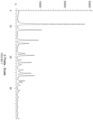
- Samples were mounted on single silicon crystal (SSC) wafer mounts and powder X-ray diffraction was recorded with a PANalytical X'Pert PRO (reflection geometry, wavelength of X-rays 1.5418 ⁇ nickel-filtered Cu radiation, Voltage 45 kV, filament emission 40 mA). Automatic variable divergence and anti scatter slits were used and the samples were rotated during measurement. Samples were scanned from 2 - 50 °2Theta or 2 - 40 °2Theta using a 0.013° step width and between 44 and 233 seconds count time using a PIXCEL detector (active length 3.35 °2Theta).
- SSC single silicon crystal
- an X-ray powder diffraction pattern may be obtained which has one or more measurement errors depending on measurement conditions (such as equipment, sample preparation or machine used).
- intensities in an X-ray powder diffraction pattern may fluctuate depending on measurement conditions and sample preparation.
- persons skilled in the art of X-ray powder diffraction will realise that the relative intensities of peaks may vary according to the orientation of the sample under test and on the type and setting of the instrument used.
- the position of reflections can be affected by the precise height at which the sample sits in the diffractometer and the zero calibration of the diffractometer.
- the surface planarity of the sample may also have a small effect.
- a measurement error of a diffraction angle in an X-ray powder diffractogram may be approximately plus or minus 0.1° 2-theta, and such a degree of a measurement error should be taken into account when considering the X-ray powder diffraction data.
- intensities might fluctuate depending on experimental conditions and sample preparation (e.g. preferred orientation).
- the following definitions have been used for the relative intensity (%): 81 - 100%, vs (very strong); 41 - 80%, str (strong); 21 - 40%, med (medium); 10 - 20%, w (weak); 1 - 9%, vw (very weak).
- Iron powder (61.3 g, 1.10 mol) was added to a solution of 3-bromo-N-methyl-2-nitro-aniline (25.4 g, 110 mmol) and ammonium chloride (58.8 g, 1.10 mol) in methanol (146 mL). The resulting suspension was stirred at 60 °C for 2 hours. The reaction mixture was then concentrated. The resulting residue was partitioned between ethyl acetate and a saturated aqueous potassium carbonate solution. The organic layer was dried over magnesium sulfate, filtered, and concentrated.
- PdCl 2 (dppf) (5.20 g, 7.11 mmol) was added to a suspension of potassium acetate (13.95 g, 142.1 mmol), 4-bromo-1-methyl-benzimidazole (10.00 g, 47.38 mmol), and bis(pinacolato)diboron (24.06 g, 94.76 mmol) in dioxane (400 mL). The resulting mixture was stirred at 100°C for 3 days. The reaction was then concentrated.
- Dichlorobis(tricyclohexylphosphine)palladium(II) (418 mg, 0.570 mmol) was added to a suspension of 7-bromo-3-methyl-3H-imidazo[4,5-c]pyridine (600 mg, 2.83 mmol), bis(pinacolato)diboron (2.16 g, 8.49 mmol), and potassium acetate (833 mg, 8.49 mmol) in toluene (2 mL) under nitrogen. The resulting mixture was stirred at 100 °C for 16 hours. The reaction was then concentrated.
- Triethylamine (0.141 mL, 1.01 mmol) was added to a solution of methyl 3,6-dibromopyrazine-2-carboxylate (100 mg, 0.34 mmol) and 4-morpholinoaniline (60 mg, 0.34 mmol) in MeOH (10 mL) at 25 °C. The resulting mixture was stirred at 70 °C for 16 hours. The solvent was then removed under reduced pressure.
- 1,1'-Bis(di-tert-butylphosphino)ferrocene palladium dichloride 35 mg, 0.050 mmol was added to (1-methylbenzimidazol-4-yl)boronic acid (186 mg, 1.06 mmol), 6-bromo-3-((4-morpholinophenyl)amino)pyrazine-2-carboxamide (200 mg, 0.53 mmol) and potassium carbonate (219 mg, 1.59 mmol) in 1,4-dioxane (8 mL) and water (2 mL) at 25 °C under nitrogen. The resulting mixture was stirred at 100 °C for 4 hours. The solvent was removed under reduced pressure.
- 1,4-dioxane (30 mL) was added to a mixture of methyl 3-amino-5-methyl-6-(1-methylbenzimidazol-4-yl)pyrazine-2-carboxylate (1.18 g, 3.98 mmol), 4-(4-bromophenyl)morpholine (0.963 g, 3.98 mmol), BrettPhos Pd G3 (0.721 g, 0.800 mmol) and cesium carbonate (3.89 g, 11.9 mmol). The resulting mixture was degassed and purged with nitrogen three times, then stirred at 100 °C for 7 hours. The reaction mixture was then treated with water and the resulting precipitate was filtered, washed with water, and dried under vacuum.
- Methyl 3-amino-5,6-dichloropyrazine-2-carboxylate (10 g, 45 mmol) and potassium carbonate (18.7 g, 135 mmol) were suspended in MeOH (175 mL). The resulting suspension was stirred at 25 °C for 16 hours. The solvent was removed under reduced pressure and the resulting residue was suspended in water (400 mL). The resulting suspension was stirred vigorously at 25 °C for 2 hours.
- 1,4-dioxane (10 mL) was added to a mixture of (1-methylbenzimidazol-4-yl)boronic acid (480 mg, 2.73 mmol), methyl 3-amino-6-chloro-5-[2-(dimethylamino)ethoxy]pyrazine-2-carboxylate (500 mg, 1.82 mmol), CsF (829 mg, 5.46 mmol), and PdCl 2 (dppf)-DCM adduct (223 mg, 0.27 mmol). The resulting mixture was stirred at 100 °C for 2 hours. The solvent was then removed under reduced pressure.
- 1,4-Dioxane (18 mL) was added to a mixture of methyl 3-amino-5-[2-(dimethylamino)ethoxy]-6-(1-methylbenzimidazol-4-yl)pyrazine-2-carboxylate (170 mg, 0.46 mmol), 4-(4-bromophenyl)morpholine (220 mg, 0.92 mmol), BrettPhos Pd G3 (62 mg, 0.070 mmol), and cesium carbonate (449 mg, 1.38 mmol). The resulting mixture was stirred at 25 °C for 8 hours. The solvent was removed under reduced pressure.
- Triethylamine (0.061 mL, 0.43 mmol) was added to a suspension of 5-[2-(dimethylamino)ethoxy]-6-(1-methylbenzimidazol-4-yl)-3-(4-morpholinoanilino)pyrazine-2-carboxylic acid (75 mg, 0.14 mmol), ammonium chloride (47 mg, 0.87 mmol), and HATU (72 mg, 0.19 mmol) in DMF (5 mL). The resulting mixture was stirred at 25 °C for 2 hours. The solvent was then removed under reduced pressure.
- Potassium cyclopropyltrifluoroborate (0.800 g, 5.40 mmol) was added to a suspension of methyl 3-amino-5,6-dichloro-pyrazine-2-carboxylate (1.00 g, 4.50 mmol), palladium(II) acetate (0.15 g, 0.68 mmol), cataCXium A (0.484 g, 1.35 mmol) and cesium carbonate (2.93 g, 9.01 mmol) in water (1.5 mL) and toluene (15 mL). The resulting mixture was stirred at 100 °C for 10 hours. The solvent was then removed under reduced pressure.
- 4-(4-Bromophenyl)morpholine (313 mg, 1.29 mmol) was added to a suspension of methyl 3-amino-5-cyclopropyl-6-(1-methylbenzimidazol-4-yl)pyrazine-2-carboxylate (380 mg, 1.18 mmol), cesium carbonate (766 mg, 2.35 mmol) and Brettphos Pd G3 (107 mg, 0.120 mmol) in 1,4-dioxane (4 mL). The resulting mixture was stirred at 100 °C for 12 hours. The solvent was then removed under reduced pressure.
- Methyl 3-amino-5-methyl-6-(3-methylimidazo[4,5-c]pyridin-7-yl)pyrazine-2-carboxylate (280 mg, 0.94 mmol) was added to a suspension of 4-(4-bromophenyl)morpholine (227 mg, 0.940 mmol), cesium carbonate (612 mg, 1.88 mmol) and Brettphos Pd G3 (170 mg, 0.19 mmol) in 1,4-dioxane (15 mL). The resulting mixture was stirred at 100 °C for 16 hours. The solvent was removed under reduced pressure.
- DIPEA (10.0 mL, 57.3 mmol) was added to a solution of methyl 6-chloro-3-fluoro-5-(methylamino)pyrazine-2-carboxylate (8.53 g, 38.8 mmol) and 4-morpholinoaniline (7.3 g, 41 mmol) in DMF (30 mL). The reaction was stirred at 100 °C for 90 minutes. The reaction was then cooled to room temperature and quenched with water (300 mL).
- Methyl 6-chloro-5-(methylamino)-3-(4-morpholinoanilino)pyrazine-2-carboxylate (1.50 g, 3.97 mmol)
- 1-methyl-4-(4,4,5,5-tetramethyl-1,3,2-dioxaborolan-2-yl)benzimidazole (1.63 g, 69 wt%, 4.37 mmol)
- Pd(dppf)Cl 2 (0.29 g, 0.40 mmol)
- cesium fluoride (1.81 g, 11.9 mmol) were combined in a microwave vial, which was then evacuated and backfilled three times with nitrogen.
- MeOH (15 mL) was added and the reaction was stirred at 100 °C for 8 hours in a Biotage microwave reactor. The reaction was then concentrated, loaded onto Celite, and purified by silica gel chromatography, using 0-10% MeOH-DCM as eluent and 0-1% ammonia as modifier, to afford a yellow-brown solid. This material was suspended in MeOH (40 mL), stirred at 40 °C for 30 minutes, and left to stand for 1 hour.
- Lithium hydroxide monohydrate (2.64 g, 63.0 mmol) was added to a suspension of methyl 5-(methylamino)-6-(1-methylbenzimidazol-4-yl)-3-(4-morpholinoanilino)pyrazine-2-carboxylate (2.98 g, 6.30 mmol) in water (16 mL) and MeOH (16 mL). The resulting mixture was stirred at 100 °C for 90 minutes in a Biotage microwave reactor. The reaction was allowed to cool to room temperature, diluted with water (70 mL), and concentrated to a volume of 40 mL, then filtered and rinsed with water.
- DIPEA (7.00 mL, 40.1 mmol) was added to a suspension of 5-(methylamino)-6-(1-methylbenzimidazol-4-yl)-3-(4-morpholinoanilino)pyrazine-2-carboxylic acid, ditrifluoroacetate (5.52 g, 8.05 mmol), ammonium chloride (5.16 g, 96.6 mmol), and HATU (4.59 g, 12.1 mmol) in DMF (60 mL). The resulting mixture was stirred at 25 °C for 3 hours. The reaction was then diluted with saturated aqueous sodium bicarbonate (60 mL) and water (200 mL).
- Trifluoromethanesulfonic anhydride (21.4 mL, 126.4 mmol) was added dropwise to a suspension of methyl 5-chloro-6-(methylamino)-2-oxo-1H-pyrazine-3-carboxylate (25.0 g, 115 mmol) and DIPEA (40.0 mL, 230 mmol) in DCM (500 mL) at 0 °C. The resulting mixture was stirred at 0 °C for 30 min. The reaction was then concentrated. The resulting solid was used in the next step without further purification.
- the resulting mixture was stirred at 80 °C for 2 h. The reaction was then allowed to cool to room temperature, diluted with water (500 mL), and filtered. The filter cake was dried under vacuum. The resulting solid was used in the next step without further purification.
- DIPEA 69.4 mL, 397 mmol
- 5-(methylamino)-6-(3-methylimidazo[4,5-c]pyridin-7-yl)-3-(4-morpholinoanilino)pyrazine-2-carboxylic acid 30.5 g, 66.2 mmol
- ammonium chloride 14.17 g, 264.9 mmol
- HATU 50.40 g, 132.5 mmol
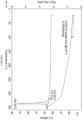
- Form A was further analyzed by thermal techniques. DSC analysis indicated that Form A starts to de-solvate with an onset at 29 °C and a peak at 54 °C, followed by a several thermal events from 190 °C to 290 °C. TGA indicated that Form A exhibits a mass loss of about 1.3 % upon heating from about 25 °C to about 100 °C. A representative DSC/TGA thermogram of Form A is shown in Figure 2 .
- the filter cake consisting of form A was suspended in 99.5% EtOH (750 mL) and treated with 20 mg seed crystals of Form F 5-(methylamino)-6-(3-methylimidazo[4,5-c]pyridin-7-yl)-3-(4-morpholinoanilino)pyrazine-2-carboxamide (obtainable by placing 3-5 mg of form A in a TGA or DSC pan, heating to 300°C at a rate of 10°C/minute and then cooled down to the room temperature.) The resulting suspension was stirred at room temperature for 16 hours, then filtered.
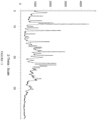
- Peaks characteristic for Example 8 form F °2-theta Relative intensity 8.4 vw 9.3 vs 11.2 m 14.5 m 15.6 w 18.8 w 19.4 m 20.9 vw 21.7 m 22.4 vw 24.1 w 24.8 vw 25.2 m 26.0 m 27.6 w 28.1 vw 29.1 vw 30.8 vw 31.3 vw 33.0 vw
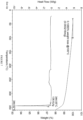
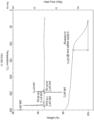
- Form F was further analyzed by thermal techniques. DSC analysis indicated that Form F has a melting/decomposition temperature with an onset at 334 °C and a peak at 338 °C. TGA indicated that Form F exhibits a mass loss of about 0.5 % upon heating from about 25 °C to about 100 °C. A representative DSC/TGA thermogram of Form F is shown in Figure 4 .
- Example 8 - Form F Single crystals of Form F were obtained from evaporation of the EtOH solution. Single crystal structure analysis confirmed that Form F is an anhydrous form.
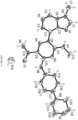
- the molecular structure of Example 8 - Form F is shown in Figure 5 .
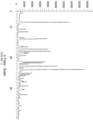
- Peaks characteristic for Example 8 form G °2-theta Relative intensity 9.7 s 10.3 w 12.6 m 12.9 vw 14.2 s 15.8 vw 16.1 w 18.6 w 19.0 m 19.7 s 22.0 w 22.5 w 22.8 m 23.5 vw 25.2 vs 26.0 vw 27.0 m 27.5 vw 28.9 m 32.4 vw
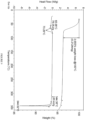
- Form G was further analyzed by thermal techniques. DSC analysis indicated that Form G has a melting/decomposition temperature with an onset at 344 °C and a peak at 345 °C. TGA indicated that Form G exhibits a mass loss of about 0.1 % upon heating from about 25 °C to about 100 °C. A representative DSC/TGA thermogram of Form G is shown in Figure 7 .
- Peaks characteristic for Example 8 form I °2-theta Relative intensity 8.3 m 8.9 m 12.5 s 14.6 vs 15.7 w 18.3 w 19.9 m 20.2 m 21.2 m 21.4 m 22.6 s 23.2 w 23.5 m 24.2 m 25.1 w 25.5 m 26.0 s 26.4 w 28.0 s 32.6 w
- Form I was further analyzed by thermal techniques. DSC analysis indicated that Form I starts to de-solvate with an onset at 66 °C and a peak at 73 °C, followed by has a melting/decomposition temperature with an onset at 344 °C and a peak at 245 °C. TGA indicated that Form I exhibits a mass loss of about 3.7 % upon heating from about 25 °C to about 100 °C. A representative DSC/TGA thermogram of Form I is shown in Figure 9 .
- Aqueous sodium methanethiolate, 21 wt% (22 mL, 66 mmol) was added to a suspension of methyl 3-amino-5,6-dichloro-pyrazine-2-carboxylate (10 g, 45 mmol) in THF (100 mL).
- the resulting suspension was stirred at 25 °C for 3 hours.
- the reaction was then concentrated to one-sixth the original volume.
- DIPEA 0.253 mL, 1.45 mmol
- 6-(1-methylbenzimidazol-4-yl)-5-methylsulfanyl-3-(4-morpholinoanilino)pyrazine-2-carboxylic acid 115 mg, 0.24 mmol
- ammonium chloride 51.6 mg, 0.97 mmol
- HATU 184 mg, 0.48 mmol
- (2S)-1-Aminopropan-2-ol (77 mg, 1.02 mmol) was added to a suspension of 6-(1-methylbenzimidazol-4-yl)-5-methylsulfinyl-3-[4-(4-oxidomorpholin-4-ium-4-yl)anilino]pyrazine-2-carboxamide (26 mg, 0.051 mmol) in n-butanol (1 mL). The resulting mixture was stirred at 140 °C for 20 minutes in a Biotage microwave reactor. The reaction was then concentrated. The resulting residue was partitioned between DCM and water. The layers were separated, and the organic layer was dried over magnesium sulfate, filtered, and concentrated.
- 2,2,2-Trifluoroethanamine (101 mg, 1.02 mmol) was added to a suspension of 6-(1-methylbenzimidazol-4-yl)-5-methylsulfinyl-3-[4-(4-oxidomorpholin-4-ium-4-yl)anilino]pyrazine-2-carboxamide (26 mg, 0.051 mmol) in n-butanol (1 mL).
- the resulting mixture was stirred at 140 °C for 20 minutes in a Biotage microwave reactor. The reaction was then concentrated and the resulting residue was partitioned between DCM and H2O. The layers were separated and the organic layer was dried over magnesium sulfate, filtered, and concentrated.
- 2,2-Difluoroethanamine (83 mg, 1.0 mmol) was added to a suspension of 6-(1-methylbenzimidazol-4-yl)-5-methylsulfinyl-3-[4-(4-oxidomorpholin-4-ium-4-yl)anilino]pyrazine-2-carboxamide (26 mg, 0.051 mmol) in n-butanol (1 mL).
- the resulting mixture was stirred at 140 °C for 20 minutes in a Biotage microwave reactor. was heated at 140oc for 20 m. The reaction was then concentrated and the resulting residue was partitioned between DCM and H 2 O. The layers were separated and the organic layer was dried over magnesium sulfate, filtered, and concentrated.
- N',N'-Dimethylethane-1,2-diamine (90 mg, 1.0 mmol) was added to a suspension of 4-(4-((3-carbamoyl-5-(1-methyl-1H-benzo[d]imidazol-4-yl)-6-(methylsulfinyl)pyrazin-2-yl)amino)phenyl)morpholine 4-oxide (26 mg, 0.051 mmol) in n-butanol (1 mL). The resulting mixture was stirred at 140 °C for 20 minutes in a Biotage microwave reactor. The reaction was then concentrated and the resulting residue was partitioned between DCM and H 2 O.
- Prop-2-yn-1-amine (0.071 mL, 1.1 mmol) was added to a suspension of 6-(1-methylbenzimidazol-4-yl)-5-methylsulfinyl-3-[4-(4-oxidomorpholin-4-ium-4-yl)anilino]pyrazine-2-carboxamide (28 mg, 0.060 mmol) in 1,4-dioxane (1 mL). The resulting mixture was stirred at 110 °C for 30 minutes. The reaction was then concentrated.
- Potassium carbonate (0.12 g, 0.88 mmol) was added to a suspension of (2R)-2-fluoropropan-1-amine hydrochloride (0.066 g, 0.58 mmol) and 6-(1-methylbenzimidazol-4-yl)-5-methylsulfinyl-3-[4-(4-oxidomorpholin-4-ium-4-yl)anilino]pyrazine-2-carboxamide (0.042 g, 0.08 mmol) in dioxane (1.5 mL). The resulting mixture was stirred at 110 °C for 30 minutes. The reaction was then quenched with water and extracted with DCM. The organic layer was concentrated.
- Potassium carbonate (0.120 g, 0.88 mmol) was added to a suspension of (2 S )-2-fluoropropan-1-amine hydrochloride (0.047 g, 0.41 mmol) and 6-(1-methylbenzimidazol-4-yl)-5-methylsulfinyl-3-[4-(4-oxidomorpholin-4-ium-4-yl)anilino]pyrazine-2-carboxamide (0.042 g, 0.080 mmol) in dioxane (1.5 mL). The resulting mixture was stirred at 110 °C for 30 minutes. The reaction was then quenched with water and extracted with DCM. The organic layer was concentrated.
- Oxetan-3-ylmethanamine (36 mg, 0.41 mmol) was added to a solution of 6-(1-methylbenzimidazol-4-yl)-5-methylsulfinyl-3-[4-(4-oxidomorpholin-4-ium-4-yl)anilino]pyrazine-2-carboxamide (35 mg, 0.070 mmol) in DMF (690 ⁇ L). The resulting mixture was stirred at 25 C for 16 hours. The reaction was then quenched with sodium hydrogen sulfite (36 mg, 0.34 mmol) and stirred at 25 C for 1 hour.
- Tricyclohexylphosphonium tetrafluoroborate (136 mg, 0.370 mmol) was added to a mixture of methyl 3-amino-6-chloro-5-(2-triisopropylsilylethynyl)pyrazine-2-carboxylate (680 mg, 1.85 mmol), (1-methylbenzimidazol-4-yl)boronic acid (650 mg, 3.70 mmol), potassium phosphate (785 mg, 3.70 mmol), and PCy 3 Pd G3 (240 mg, 0.370 mmol) in 1,4-dioxane/H 2 O (20 mL) under nitrogen. The resulting mixture was stirred at 100 °C for 16 hours. The reaction was then concentrated.
- Methyl 3-amino-5,6-dichloro-pyrazine-2-carboxylate 500 mg, 2.25 mmol was added to a mixture of bis(dibenzylideneacetone)palladium (129 mg, 0.230 mmol), DPEPhos (243 mg, 0.450 mmol) and [1,3-bis(2,6-diisopropylphenyl)imidazolidin-2-ylidene]-(difluoromethyl)silver (1.24 g, 2.25 mmol) in toluene (30 mL) under nitrogen. The resulting solution was stirred at 80 °C for 18 hours. The reaction was then concentrated.
- Pd(dppf)Cl 2 (123 mg, 0.170 mmol) was added to a mixture of methyl 3-amino-5-chloro-6-(difluoromethyl)pyrazine-2-carboxylate (400 mg, 1.68 mmol), (1-methylbenzimidazol-4-yl)boronic acid (296 mg, 1.68 mmol), and cesium fluoride (511 mg, 3.37 mmol) in 1,4-dioxane (20 mL) under nitrogen. The resulting mixture was stirred at 100 °C for 16 hours. The reaction was then filtered through Celite. The filtrate was then concentrated.
- Methyl 5-[(4-methoxyphenyl)methoxy]-6-(1-methylbenzimidazol-4-yl)-3-(4-morpholinoanilino)pyrazine-2-carboxylate (1.8 g, 3.10 mmol) was added to a mixture of TFA (5 mL) and DCM (20 mL). The resulting mixture was stirred at 25 °C for 1 hour. The reaction was then concentrated.
- Phosphoryl trichloride (5.00 mL, 53.7 mmol) was added to methyl 5-hydroxy-6-(1-methylbenzimidazol-4-yl)-3-(4-morpholinoanilino)pyrazine-2-carboxylate (0.30 g, 0.65 mmol). The resulting mixture was stirred at 100 °C for 16 hours. The reaction was then concentrated. The resulting residue was redissolved in EtOAc and washed sequentially with saturated aqueous sodium bicarbonate and brine. The organic layer was dried over sodium sulfate, filtered, and concentrated.
- Methyl 3-amino-5,6-dichloro-pyrazine-2-carboxylate 500 mg, 2.25 mmol
- 4,4'-di-tert-butyl-2,2'-bipyridine 60 mg, 0.23 mmol
- Ir(dFCF 3 ppy) 2 (dtbbpy) hexafluorophosphate 25 mg, 0.020 mmol
- NiCl 2 diglyme 50 mg, 0.23 mmol
- t-BuXPhos Pd G3 (0.133 g, 0.170 mmol) was added to a suspension of ethyl 3-amino-6-chloro-5-ethoxy-pyrazine-2-carboxylate (0.410 g, 1.67 mmol), 4-(4-bromophenyl)morpholine (0.808 g, 3.34 mmol), t -BuXPhos (0.071 g, 0.17 mmol), and sodium tert-butoxide (0.321 g, 3.34 mmol) in THF (16 mL) under nitrogen. The resulting mixture was stirred at 40 °C for 3 hours. The reaction was then diluted with water and extracted with EtOAc.
- Triethylamine (0.727 mL, 5.22 mmol) was added to a mixture of 6-chloro-5-ethoxy-3-(4-morpholinoanilino)pyrazine-2-carboxylic acid (0.494 g, 1.30 mmol), ammonium chloride (0.349 g, 6.52 mmol), and HATU (0.744 g, 1.96 mmol) in DMF (10 mL). The resulting mixture was stirred at room temperature for 3.5 hours. The reaction was then diluted with saturated aqueous sodium bicarbonate and water.
- Ethyl 3-ethoxy-3-imino-propanoate hydrochloride (5.00 g, 25.6 mmol) was added to 2 M ethanolic ammonia (40 mL, 80 mmol) at 0 °C. The reaction mixture was stirred at 0 °C for 30 minutes at 25 °C for 3.5 hours. A solution of sodium nitrite (1.94 g, 28.1 mmol) in water (8 mL) was added. 6 N aqueous HCl (15 mL, 90 mmol) was added. The resulting mixture was stirred at 25 °C overnight. The reaction was then concentrated to one-third volume, diluted with water, and neutralized with saturated aqueous sodium bicarbonate.
- N-Bromosuccinimide (0.338 g, 1.90 mmol) was added to a solution of 1:1 ethyl 3-amino-5-(trifluoromethyl)pyrazine-2-carboxylate and ethyl 3-amino-6-(trifluoromethyl)pyrazine-2-carboxylate (0.446 g, 1.90 mmol) in acetonitrile (15 mL). The reaction was stirred at 80°C for 2 hours. The reaction was then concentrated.
- DIPEA (0.026 mL, 0.15 mmol) was added to a mixture of 6-(3-methylimidazo[4,5-c]pyridin-7-yl)-3-(4-morpholinoanilino)-5-(trifluoromethyl)pyrazine-2-carboxylic acid (0.025 g, 0.050 mmol), ammonium chloride (0.013 g, 0.25 mmol), HATU (0.029 g, 0.080 mmol) in DMF (0.80 mL). The resulting mixture was stirred at 25 C for 2 hours. The reaction was then treated with saturated aqueous sodium bicarbonate and extracted with 5:1 DCM-IPA. The organic layer was concentrated.
- Methyl 6-chloro-5-methylsulfanyl-3-(4-morpholinoanilino)pyrazine-2-carboxylate (1.50 g, 3.80 mmol), Pd(dppf)Cl 2 (0.278 g, 0.380 mmol), and cesium fluoride (1.73 g, 11.4 mmol) were combined in a separate multineck flask, which was evacuated and backfilled three times with nitrogen.
- the borylation mixture was added via syringe.
- the resulting mixture and the reaction was stirred at 100 °C for 3 hours.
- the reaction was then allowed to cool to room temperature, diluted with water (150 mL), and extracted three times with 3:1 DCM/IPA (50 mL each).
- the reaction was then allowed to cool to room temperature, treated with sodium bisulfite (82 mg, 0.79 mmol), and stirred for 10 minutes. Additional sodium bisulfite (82 mg, 0.79 mmol) was added and the resulting mixture was stirred for 1 hour.
- the reaction was then diluted with water (40 mL) and extracted three times with 3:1 DCM/IPA (25 mL each). The combined organics were dried over magnesium sulfate, filtered, and concentrated. The resulting residue was purified by silica gel chromatography, using 0-10% MeOH-DCM as eluent and 0-1% ammonia as modifier, to afford a red solid.
- CataCXium A (17 mg, 0.050 mmol), cataCXium A Pd G3 (34 mg, 0.050 mmol), 7-bromo-3-methyl-imidazo[4,5-c]pyridine (100 mg, 0.47 mmol), potassium acetate (139 mg, 1.41 mmol), and bis(pinacolato)diboron (240 mg, 0.94 mmol) were combined in a microwave vial, which was evacuated and backfilled three times with nitrogen. DMF (3 mL) was added. The resulting mixture was stirred at 80 °C for 20 hours. The reaction was then allowed to cool to room temperature and set aside.
- CataCXium A Pd G2 (17 mg, 0.03 mmol) was added to a suspension of bis(pinacolato)diboron (129 mg, 0.510 mmol), methyl 6-bromo-3-(4-morpholinoanilino)pyrazine-2-carboxylate (100 mg, 0.25 mmol), potassium acetate (75 mg, 0.76 mmol), and bis(1-adamantyl)-butyl-phosphonium tetrafluoroborate (11 mg, 0.030 mmol) in DMF (10 mL) under nitrogen. The resulting mixture was stirred at 80 °C for 16 hours. The reaction was then allowed to cool to room temperature and set aside.
- 6-Chloro-5-methoxy-3-(4-morpholinoanilino)pyrazine-2-carboxamide (137 mg, 0.380 mmol), Pd(dppf)Cl 2 dichloromethane adduct (31 mg, 0.040 mmol), and cesium fluoride (172 mg, 1.13 mmol) were combined in a microwave vial, which was evacuated and backfilled three times with nitrogen.
- the borylation reaction mixture was added to the vial via syringe. The resulting mixture was stirred at 100 °C for 4 hours. The reaction was allowed to cool to room temperature, diluted with water (40 mL), and filtered.
- the filter cake was purified by reverse phase chromatography, using 0-50% MeCN-H 2 O as eluent and 0.1% trifluoroacetic acid as modifier, to afford an orange residue.
- the aqueous filtrate was diluted with saturated aqueous sodium bicarbonate (20 mL) and extracted three times with 3:1 DCM/IPA (30 mL each). The combined organic layers were concentrated.
- the resulting residue was purified by reverse phase chromatography using 0-50% MeCN-H 2 O as eluent and 0.1% trifluoroacetic acid as modifier, to afford an orange residue.
- Methyl 6-chloro-5-cyclopropyl-3-(4-morpholinoanilino)pyrazine-2-carboxylate (107 mg, 0.270 mmol), 2-(3-methylimidazo[4,5-c]pyridin-7-yl)-1,3,6,2-dioxazaborocane (99 mg, 82 wt%, 0.33 mmol), Pd(dppf)Cl 2 (23 mg, 0.030 mmol), and CsF (125 mg, 0.820 mmol) were combined in a microwave vial, which was evacuated and backfilled three times with nitrogen. MeOH (1.7 mL) was added and the resulting mixture was stirred at 100 °C for 2 hours in a Biotage microwave reactor.
- the filtrate was concentrated to a red solid and recombined with the filtercake, which was dissolved in DCM (60 mL) and washed once with saturated aqueous sodium thiosulfate (50 mL) and three times with saturated aqueous sodium bicarbonate (25 mL each). The organic layer was then dried over magnesium sulfate, filtered, and concentrated to afford a red solid, which was divided into two portions. One portion was purified by silica gel chromatography using 0-40% EtOAc-hexanes as eluent to afford methyl 3-amino-6-bromopyrazine-2-carboxylate (1.33 g, 18%) as an off-white solid.
- TFA (0.66 mL, 8.6 mmol) was added to a suspension of methyl 3-amino-6-bromo-pyrazine-2-carboxylate (1.00 g, 4.31 mmol) and zinc difluoromethanesulfinate (2.55 g, 8.62 mmol) in DCM (10 mL) and water (4 mL). 70 wt% aqueous tert-butyl hydroperoxide (1.80 mL, 13.1 mmol) was added dropwise to the reaction mixture. The reaction mixture was stirred at 25 °C for 16 hours.
- Phosphoryl trichloride (6.00 mL, 64.4 mmol) was added to 1-methyl-1,5-dihydro-4H-imidazo[4,5-d]pyridazin-4-one (0.210 g, 1.40 mmol). The reaction mixture was stirred at 100 °C for 5.5 hours. The reaction mixture was then concentrated. The residue was treated with ice-water, basified with saturated aqueous sodium bicarbonate, and extracted with 5:1 DCM/IPA.
- 1,4-Dioxane (1.5 mL) was added to a mixture of bis(pinacolato)diboron (0.040 g, 0.16 mmol), 6-bromo-5-methyl-3-(4-morpholinoanilino)pyrazine-2-carboxamide (0.052 g, 0.13 mmol), PdCl 2 (dppf) (9.70 mg, 0.01 mmol), and potassium acetate (0.026 g, 0.27 mmol). The resulting mixture was evacuated and backfilled with nitrogen, then stirred at 80 °C for 3 hours. The reaction was allowed to cool to room temperature and set aside.
- Triethyl orthoformate (10 mL, 60 mmol) was added to 5-chloro-N3-methyl-pyridazine-3,4-diamine (0.333 g, 2.10 mmol). The resulting mixture was stirred at 150 °C for 90 minutes. The reaction was then concentrated. The resulting residue was treated with saturated aqueous sodium bicarbonate, then extracted three times with 5:1 DCM/IPA.
- 6-chloro-5-(methylamino)-3-(4-morpholinoanilino)pyrazine-2-carboxamide (0.050 g, 0.14 mmol), Pd(dppf)Cl 2 DCM adduct (10 mg, 0.01 mmol), and cesium fluoride (0.063 g, 0.41 mmol) were combined in a microwave vial, which was evacuated and backfilled three times with nitrogen.
- the borylation mixture was added via syringe.
- the resuliting mixture was stirred at 100 °C for 1 hour in a Biotage microwave reactor. The reaction was allowed to cool to room temperature, then treated with saturated aqueous sodium bicarbonate.
- 1,1-Diethoxy-N,N-dimethyl-methanamine (7.43 g, 50.5 mmol) was added to a solution of 7-bromo-3H-imidazo[4,5-c]pyridine (2.00 g, 10.1 mmol) in DMF (30 mL). The resulting mixture was stirred at 80 °C for 4 hours.
- CataCXium A Pd G2 (236 mg, 0.350 mmol) was added to a mixture of cataCXium A tetrafluoroborate (158 mg, 0.350 mmol), 7-bromo-3-ethyl-imidazo[4,5-c]pyridine (400 mg, 1.77 mmol), bis(pinacolato)diboron (1.35 g, 5.31 mmol), and potassium acetate (521 mg, 5.31 mmol) in DMF (16 mL) under nitrogen. The resulting mixture was stirred at 80 °C for 16 hours. The reaction was then allowed to cool to room temperature and set aside.
- Methyl 3-amino-6-chloro-5-(methylamino)pyrazine-2-carboxylate (383 mg, 1.77 mmol), cesium fluoride (806 mg, 5.31 mmol), and PdCl 2 (dppf) (194 mg, 0.27 mmol) were combined in a microwave vial, which was evacuated and backfilled three times with nitrogen. The borylation mixture was added via syringe. The resulting mixture was stirred at 100 °C for 2 hours.
- the resulting residue was purified by flash silica chromatography, using 0-10% MeOH-DCM as eluent, to afford a mixture of 2 regio-isomers.
- the isomers were separated by preparative HPLC, using a 5 micron, 30 mm x 100 mm XSelect CSH C18 OBD column, 20-40% MeCN-H 2 O as eluent, and 0.1% ammonium hydroxide as modifier, to afford 7-bromo-3-cyclopropyl-imidazo[4,5-c]pyridine (0.085 g, 12%).
- 6-chloro-5-(methylamino)-3-(4-morpholinoanilino)pyrazine-2-carboxamide (0.050 g, 0.14 mmol), PdCl 2 (dppf) (10 mg, 0.01 mmol), and cesium fluoride (0.063 g, 0.41 mmol) were combined in a microwave vial, which was evacuated and backfilled with nitrogen three times. The borylation mixture was added. The resulting mixture was stirred at 100 °C for 1 hour in a Biotage microwave reactor. The reaction was then concentrated. The resulting residue was purified by flash silica chromatography, using 0-10% MeOH-DCM as eluent.
- the resulting residue was purified by silica gel chromatography, using 0 to 15% MeOH-DCM as eluent.
- the resulting material was further purified by chiral SFC, using a 5 micron, 4.6 x 100 mm ChiralPak OD column, using isocratic 20% MeOH-sCO 2 as eluent, and 0.2% ammonium hydroxide as modifier, to afford 7-bromo-3-(difluoromethyl)-3H-imidazo[4,5-c]pyridine (0.050 g, 7.4% yield) as a yellow solid.
- the resulting material was further purified by reverse phase C18 chromatography, using 0 to 30% MeCN-water as eluent, and 0.1% formic acid as modifier, to afford 6-[3-(difluoromethyl)imidazo[4,5-c]pyridin-7-yl]-5-(methylamino)-3-(4-morpholinoanilino)pyrazine-2-carboxamide (0.030 g, 33% yield) as an orange solid.
- 6-Chloro-5-(methylamino)-3-(4-morpholinoanilino)pyrazine-2-carboxamide (0.050 g, 0.14 mmol), PdCl 2 (dppf) (10 mg, 0.01 mmol), and cesium fluoride (0.063 g, 0.41 mmol) were combined in a microwave vial, which was evacuated and backfilled three times with nitrogen.
- the borylation mixture was added.
- the resulting mixture was stirred at 100 °C for 1 hour in a Biotage microwave reactor.
- the reaction was then concentrated.
- the resulting residue was purified by flash silica chromatography, using 0-5% MeOH-DCM as eluent.
- the product was further purified by reverse phase C18 flash chromatography, using 0-45% MeCN-H 2 O as eluent, and 0.1% formic acid as modifier, to afford 6-(7-cyano-1-methyl-benzimidazol-4-yl)-5-(methylamino)-3-(4-morpholinoanilino)pyrazine-2-carboxamide (6.0 mg, 9.0%) as a yellow solid.
- 2,5-Dibromopyridine-3,4-diamine (5.00 g, 18.7 mmol) and bis(triphenylphosphine)palladium(II) chloride (1.32 g, 1.87 mmol) were combined in a multineck flask, which was evacuated and backfilled three times with nitrogen. 1,4-dioxane (10 mL) was added. Dimethylzinc (13 mL, 26 mmol) was added as a 2 M solution in toluene. The reaction was stirred at 80 °C for 60 hours. The reaction was allowed to cool to room temperature, then quenched with water (50 mL), extracted once with EtOAc (30 mL) and twice with 3:1 DCM/IPA (20 mL each).
- Triethyl orthoformate (15 mL, 90.1 mmol) was added to crude 5-bromo-N3,2-dimethylpyridine-3,4-diamine (0.875 g, 4.05 mmol). The resulting suspension was stirred at 145 °C for 40 minutes. The reaction was then concentrated.
- 6-Chloro-5-(methylamino)-3-(4-morpholinoanilino)pyrazine-2-carboxamide (0.050 g, 0.14 mmol), PdCl 2 (dppf) (10 mg, 0.01 mmol), and cesium fluoride (0.063 g, 0.41 mmol) were combined in a microwave vial, which was evacuated and backfilled three times with nitrogen. The borylation mixture was added. The resulting mixture was stirred at 100 °C for 1 hour in a Biotage microwave reactor. The reaction was then concentrated. The resulting residue was purified by silica gel chromatography, using 0-10% MeOH-DCM as eluent. The resulting material was further purified by alumina chromatography, using 0-5% MeOH-DCM as eluent.
- Pd(OAc) 2 (0.071 g, 0.32 mmol) was added to a mixture of 1-bromo-2-fluoro-4-iodo-3-methyl-benzene (1.00 g, 3.18 mmol), morpholine (0.553 g, 6.35 mmol), rac-BINAP (0.198 g, 0.320 mmol), and potassium tert-butoxide (1.07 g, 9.53 mmol) in toluene (15 mL) under nitrogen. The resulting mixture was stirred at 100 °C for 2 hours. The reaction was then concentrated.
- 1,2,3,4-Tetrafluoro-5-nitrobenzene (1.00 g, 5.13 mmol) was added to a solution of DIPEA (0.179 mL, 1.03 mmol), morpholine (0.0890 g, 1.03 mmol) in acetonitrile (10 mL). The resulting mixture was stirred at room temperatre for 1 hour. The reaction was then concentrated. The resulting residue was purified by silica gel chromatography, using 0-5% DCM-(1:10 EtOAc/petroleum ether) as eluent, to afford 4-(2,3,6-trifluoro-4-nitrophenyl)morpholine (0.200 g, 15%) as a yellow solid.
- 2,3,5-Trifluoro-4-morpholinoaniline 70 mg, 0.30 mmol was added to a mixture of bromotrimethylsilane (0.059 mL, 0.45 mmol), tert-butyl nitrite (47 mg, 0.45 mmol) in dibromomethane (1.00 mL, 14.3 mmol) under nitrogen. The resulting mixture was stirred at 25 C for 16 hours. The reaction was then concentrated.
- N-Chlorosuccinimide (66 mg, 0.49 mmol) was added to a suspension of methyl 3-(3-chloro-4-morpholino-anilino)-5-(methylamino)-6-(1-methylbenzimidazol-4-yl)pyrazine-2-carboxylate (150 mg, 0.33 mmol) in MeCN (2 mL). The reaction was stirred at 82 °C for 20 hours. The reaction was then concentrated. The resulting residue was purified by silica gel chromatography, using 0-5% MeOH-DCM as eluent and 0-0.5% ammonia as modifier, to afford a yellow solid.
Landscapes
- Chemical & Material Sciences (AREA)
- Organic Chemistry (AREA)
- Health & Medical Sciences (AREA)
- General Health & Medical Sciences (AREA)
- Pharmacology & Pharmacy (AREA)
- Life Sciences & Earth Sciences (AREA)
- Animal Behavior & Ethology (AREA)
- Medicinal Chemistry (AREA)
- Public Health (AREA)
- Veterinary Medicine (AREA)
- Epidemiology (AREA)
- Chemical Kinetics & Catalysis (AREA)
- General Chemical & Material Sciences (AREA)
- Nuclear Medicine, Radiotherapy & Molecular Imaging (AREA)
- Pharmaceuticals Containing Other Organic And Inorganic Compounds (AREA)
- Nitrogen Condensed Heterocyclic Rings (AREA)
Applications Claiming Priority (2)
| Application Number | Priority Date | Filing Date | Title |
|---|---|---|---|
| US202163223633P | 2021-07-20 | 2021-07-20 | |
| PCT/EP2022/070137 WO2023001794A1 (en) | 2021-07-20 | 2022-07-19 | Substituted pyrazine-2-carboxamides as hpk1 inhibitors for the treatment of cancer |
Publications (2)
| Publication Number | Publication Date |
|---|---|
| EP4373817A1 EP4373817A1 (en) | 2024-05-29 |
| EP4373817B1 true EP4373817B1 (en) | 2025-05-21 |
Family
ID=82932501
Family Applications (1)
| Application Number | Title | Priority Date | Filing Date |
|---|---|---|---|
| EP22754791.6A Active EP4373817B1 (en) | 2021-07-20 | 2022-07-19 | Substituted pyrazine-2-carboxamides as hpk1 inhibitors for the treatment of cancer |
Country Status (9)
| Country | Link |
|---|---|
| US (1) | US20240374606A1 (https=) |
| EP (1) | EP4373817B1 (https=) |
| JP (1) | JP7851393B2 (https=) |
| CN (1) | CN117693503A (https=) |
| AR (1) | AR126500A1 (https=) |
| ES (1) | ES3036245T3 (https=) |
| TW (1) | TW202321239A (https=) |
| UY (1) | UY39865A (https=) |
| WO (1) | WO2023001794A1 (https=) |
Families Citing this family (3)
| Publication number | Priority date | Publication date | Assignee | Title |
|---|---|---|---|---|
| CN117402161A (zh) | 2022-07-06 | 2024-01-16 | 上海科恩泰生物医药科技有限公司 | 一种具有fgfr抑制作用的亚砜亚胺类化合物、包含其的药物组合物及其用途 |
| US20260092074A1 (en) * | 2022-09-23 | 2026-04-02 | Guangzhou Vinnocent Pharmaceutical Limited | Annelated Pyridines as Steroidogenesis Inhibitors, Preparation Method and Use Thereof |
| WO2024240242A1 (zh) * | 2023-05-25 | 2024-11-28 | 正大天晴药业集团股份有限公司 | 含有酰胺取代的芳香环的化合物、其药物组合物及用途 |
Family Cites Families (49)
| Publication number | Priority date | Publication date | Assignee | Title |
|---|---|---|---|---|
| WO2000076980A1 (en) | 1999-06-10 | 2000-12-21 | Yamanouchi Pharmaceutical Co., Ltd. | Novel nitrogen-contaiing heterocyclic derivatives or salts thereof |
| PL377215A1 (pl) * | 2002-10-17 | 2006-01-23 | Amgen Inc. | Pochodne benzimidazolu oraz ich zastosowanie w charakterze ligandów receptora waniloidowego |
| MA42456B1 (fr) | 2015-06-25 | 2021-06-30 | Univ Health Network | Inhibiteurs de hpk1 et leurs procédés d'utilisation |
| US20180072741A1 (en) | 2016-09-09 | 2018-03-15 | Incyte Corporation | Pyrazolopyrimidine compounds and uses thereof |
| US10280164B2 (en) | 2016-09-09 | 2019-05-07 | Incyte Corporation | Pyrazolopyridone compounds and uses thereof |
| CN115819417A (zh) | 2016-09-09 | 2023-03-21 | 因赛特公司 | 作为hpk1调节剂的吡唑并吡啶衍生物及其用于治疗癌症的用途 |
| WO2018049214A1 (en) | 2016-09-09 | 2018-03-15 | Incyte Corporation | Pyrazolopyridine derivatives as hpk1 modulators and uses thereof for the treatment of cancer |
| US10793467B2 (en) | 2016-10-07 | 2020-10-06 | Nihon Yamamura Glass Co., Ltd. | Crystallized glass sealing material |
| WO2018081531A2 (en) | 2016-10-28 | 2018-05-03 | Ariad Pharmaceuticals, Inc. | Methods for human t-cell activation |
| WO2018102366A1 (en) | 2016-11-30 | 2018-06-07 | Ariad Pharmaceuticals, Inc. | Anilinopyrimidines as haematopoietic progenitor kinase 1 (hpk1) inhibitors |
| WO2018152220A1 (en) | 2017-02-15 | 2018-08-23 | Incyte Corporation | Pyrazolopyridine compounds and uses thereof |
| CN110402248B (zh) | 2017-03-15 | 2023-01-06 | 豪夫迈·罗氏有限公司 | 作为hpk1抑制剂的氮杂吲哚类 |
| EP3601259B1 (en) | 2017-03-30 | 2022-02-23 | F. Hoffmann-La Roche AG | Isoquinolines as inhibitors of hpk1 |
| EP3638669A1 (en) | 2017-06-13 | 2020-04-22 | Bayer Pharma Aktiengesellschaft | Substituted pyrrolopyridine-derivatives |
| EP3638670B1 (en) | 2017-06-13 | 2021-07-21 | Bayer Pharma Aktiengesellschaft | Substituted pyrrolopyridine-derivatives as map4k1 modulators for the treatment of cancer diseases |
| WO2018228925A1 (en) | 2017-06-13 | 2018-12-20 | Bayer Pharma Aktiengesellschaft | Substituted pyrrolopyridine-derivatives |
| CA3070013A1 (en) | 2017-07-18 | 2019-01-24 | Bayer Pharma Aktiengesellschaft | Substituted pyrrolopyridine-derivatives |
| CN111163780A (zh) | 2017-07-18 | 2020-05-15 | 诺维逊生物股份有限公司 | 作为腺苷拮抗剂的杂环化合物 |
| EP3679414A4 (en) | 2017-09-08 | 2021-05-05 | Commscope Technologies LLC | HEAT DISSIPATING ENCLOSURE |
| EP3707138B1 (en) | 2017-11-06 | 2022-07-13 | Bristol-Myers Squibb Company | Isofuranone compounds useful as hpk1 inhibitors |
| EP3755703B1 (en) | 2018-02-20 | 2022-05-04 | Incyte Corporation | N-(phenyl)-2-(phenyl)pyrimidine-4-carboxamide derivatives and related compounds as hpk1 inhibitors for treating cancer |
| US10752635B2 (en) | 2018-02-20 | 2020-08-25 | Incyte Corporation | Indazole compounds and uses thereof |
| US10745388B2 (en) | 2018-02-20 | 2020-08-18 | Incyte Corporation | Indazole compounds and uses thereof |
| US11299473B2 (en) | 2018-04-13 | 2022-04-12 | Incyte Corporation | Benzimidazole and indole compounds and uses thereof |
| WO2019206049A1 (en) | 2018-04-25 | 2019-10-31 | Zhuhai Yufan Biotechnologies Co., Ltd | Hpk1 inhibitors, preparation method and application thereof |
| CN112243439A (zh) | 2018-06-13 | 2021-01-19 | 百济神州有限公司 | 作为hpk1抑制剂的吡咯并[2,3-b]吡啶或吡咯并[2,3-b]吡嗪及其用途 |
| TW202019905A (zh) | 2018-07-24 | 2020-06-01 | 瑞士商赫孚孟拉羅股份公司 | 異喹啉化合物及其用途 |
| TW202012405A (zh) | 2018-07-24 | 2020-04-01 | 瑞士商赫孚孟拉羅股份公司 | 萘啶化合物及其用途 |
| CN113015526A (zh) | 2018-09-19 | 2021-06-22 | 豪夫迈·罗氏有限公司 | 螺环2,3-二氢-7-氮杂吲哚化合物及其用途 |
| EP3856724A1 (en) | 2018-09-30 | 2021-08-04 | F. Hoffmann-La Roche AG | Cinnoline compounds and for the treatment of hpk1-dependent disorders such as cancer |
| TW202024053A (zh) | 2018-10-02 | 2020-07-01 | 美商建南德克公司 | 異喹啉化合物及其用途 |
| WO2020072695A1 (en) | 2018-10-03 | 2020-04-09 | Genentech, Inc. | 8-aminoisoquinoline compounds and uses thereof |
| WO2020070332A1 (en) | 2018-10-05 | 2020-04-09 | Ichnos Sciences S.A. | Oxindole compounds for use as map4k1 inhibitors |
| US11203591B2 (en) | 2018-10-31 | 2021-12-21 | Gilead Sciences, Inc. | Substituted 6-azabenzimidazole compounds |
| WO2020092528A1 (en) | 2018-10-31 | 2020-05-07 | Gilead Sciences, Inc. | Substituted 6-azabenzimidazole compounds having hpk1 inhibitory activity |
| US11142525B2 (en) | 2018-11-15 | 2021-10-12 | Pfizer Inc. | Azalactam compounds as HPK1 inhibitors |
| WO2020103896A1 (en) | 2018-11-22 | 2020-05-28 | Beigene, Ltd. | Pyrrolo[2,3-b]pyridines as hpk1 inhibitor and uses thereof |
| WO2020120257A1 (en) | 2018-12-11 | 2020-06-18 | Bayer Aktiengesellschaft | Substituted pyrrolopyridine-derivatives |
| US12486264B2 (en) | 2019-03-26 | 2025-12-02 | Janssen Pharmaceutica Nv | Bicyclic HPK1 inhibitors |
| US12492194B2 (en) | 2019-03-26 | 2025-12-09 | Janssen Pharmaceutica Nv | HPK1 inhibitors |
| JP7503851B2 (ja) | 2019-05-06 | 2024-06-21 | アイカーン スクール オブ メディスン アット マウント シナイ | Hpk1の分解剤としてのヘテロ二官能性化合物 |
| EP3972695A1 (en) | 2019-05-23 | 2022-03-30 | Gilead Sciences, Inc. | Substituted exo-methylene-oxindoles which are hpk1/map4k1 inhibitors |
| MA56462A (fr) | 2019-07-04 | 2022-05-11 | Qilu Regor Therapeutics Inc | Inhibiteurs de hpk1 et leurs utilisations |
| TWI848141B (zh) | 2019-07-04 | 2024-07-11 | 英屬開曼群島商百濟神州有限公司 | 及其用途 |
| US12459958B2 (en) | 2019-07-17 | 2025-11-04 | Beone Medicines I Gmbh | Tricyclic compounds as HPK1 inhibitor and the use thereof |
| BR112022002059A2 (pt) | 2019-08-06 | 2022-06-07 | Incyte Corp | Formas sólidas de um inibidor de hpk1 |
| WO2021032148A1 (en) | 2019-08-21 | 2021-02-25 | Beigene, Ltd. | Aminopyrazine compounds as hpk1 inhibitor and the use thereof |
| MX2022002877A (es) | 2019-09-13 | 2022-08-08 | Nimbus Saturn Inc | Antagonistas de cinasa progenitora hematopoyetica 1 (hpk1) y sus usos. |
| AU2021284676A1 (en) | 2020-06-01 | 2023-02-02 | Wigen Biomedicine Technology (shanghai) Co., Ltd. | New pyrazine compound |
-
2022
- 2022-07-19 TW TW111126946A patent/TW202321239A/zh unknown
- 2022-07-19 US US18/580,664 patent/US20240374606A1/en active Pending
- 2022-07-19 EP EP22754791.6A patent/EP4373817B1/en active Active
- 2022-07-19 CN CN202280049292.0A patent/CN117693503A/zh active Pending
- 2022-07-19 JP JP2024502652A patent/JP7851393B2/ja active Active
- 2022-07-19 ES ES22754791T patent/ES3036245T3/es active Active
- 2022-07-19 WO PCT/EP2022/070137 patent/WO2023001794A1/en not_active Ceased
- 2022-07-20 AR ARP220101895A patent/AR126500A1/es unknown
- 2022-07-20 UY UY0001039865A patent/UY39865A/es unknown
Also Published As
| Publication number | Publication date |
|---|---|
| EP4373817A1 (en) | 2024-05-29 |
| CN117693503A (zh) | 2024-03-12 |
| US20240374606A1 (en) | 2024-11-14 |
| UY39865A (es) | 2023-01-31 |
| JP2024527623A (ja) | 2024-07-25 |
| JP7851393B2 (ja) | 2026-04-24 |
| WO2023001794A1 (en) | 2023-01-26 |
| TW202321239A (zh) | 2023-06-01 |
| AR126500A1 (es) | 2023-10-18 |
| ES3036245T3 (en) | 2025-09-18 |
Similar Documents
| Publication | Publication Date | Title |
|---|---|---|
| EP3138842B1 (en) | Polyfluorinated compounds acting as bruton's tyrosine kinase inhibitors | |
| JP7721501B2 (ja) | Cd38の阻害剤としてのヘテロ二環式アミド | |
| EP3166608B1 (en) | Aminopyridazinone compounds as protein kinase inhibitors | |
| EP3746424B1 (en) | Erbb/btk inhibitors | |
| EP3478687B1 (en) | Pyrazolopyrimidine derivatives as kinase inhibitor | |
| EP2758402B1 (en) | Pyrrolopyrimidine and purine derivatives | |
| EP3130592B1 (en) | Analogues of 4h-pyrazolo[1,5- ]benzimidazole compound as parp inhibitors | |
| EP2691399B1 (en) | Thiazolopyrimidine compounds | |
| EP4606803A1 (en) | Kras g12d degradation agent, and preparation method and use therefor | |
| EP4373817B1 (en) | Substituted pyrazine-2-carboxamides as hpk1 inhibitors for the treatment of cancer | |
| EP3083617B1 (en) | Isochromene derivatives as phosphoinositide 3-kinases inhibitors | |
| EP4129996A1 (en) | Novel aminopyrimidine egfr inhibitor | |
| EP3386992B1 (en) | Inhibitors of bruton's tyrosine kinase and methods of their use | |
| EP3360878A1 (en) | Azetidine derivative, preparation method therefor, and use thereof | |
| EP3336084A1 (en) | 6-(5-hydroxy-1h-pyrazol-1-yl)nicotinamide derivatives and their use as phd inhibitors | |
| EP4137484A1 (en) | Tricyclic compounds as egfr inhibitors | |
| EP4450501A1 (en) | Cdk9 inhibitor and use thereof | |
| EP3495359A1 (en) | Flap modulators | |
| EP4288426B1 (en) | Quinoxaline derivatives and uses thereof | |
| EP3892278B1 (en) | Cycloalkane-1,3-diamine derivative | |
| EP4592283A1 (en) | Cyclin-dependent kinase 7 inhibitors | |
| EP4667467A1 (en) | Protac degraders of mllt1 and/or mllt3 | |
| HK40109818A (en) | Erbb/btk inhibitors | |
| HK40104947B (en) | Quinoxaline derivatives and uses thereof | |
| HK40104947A (en) | Quinoxaline derivatives and uses thereof |
Legal Events
| Date | Code | Title | Description |
|---|---|---|---|
| STAA | Information on the status of an ep patent application or granted ep patent |
Free format text: STATUS: UNKNOWN |
|
| STAA | Information on the status of an ep patent application or granted ep patent |
Free format text: STATUS: THE INTERNATIONAL PUBLICATION HAS BEEN MADE |
|
| PUAI | Public reference made under article 153(3) epc to a published international application that has entered the european phase |
Free format text: ORIGINAL CODE: 0009012 |
|
| STAA | Information on the status of an ep patent application or granted ep patent |
Free format text: STATUS: REQUEST FOR EXAMINATION WAS MADE |
|
| 17P | Request for examination filed |
Effective date: 20240220 |
|
| AK | Designated contracting states |
Kind code of ref document: A1 Designated state(s): AL AT BE BG CH CY CZ DE DK EE ES FI FR GB GR HR HU IE IS IT LI LT LU LV MC MK MT NL NO PL PT RO RS SE SI SK SM TR |
|
| P01 | Opt-out of the competence of the unified patent court (upc) registered |
Free format text: CASE NUMBER: APP_42119/2024 Effective date: 20240716 |
|
| DAV | Request for validation of the european patent (deleted) | ||
| DAX | Request for extension of the european patent (deleted) | ||
| REG | Reference to a national code |
Ref country code: HK Ref legal event code: DE Ref document number: 40111633 Country of ref document: HK |
|
| GRAP | Despatch of communication of intention to grant a patent |
Free format text: ORIGINAL CODE: EPIDOSNIGR1 |
|
| STAA | Information on the status of an ep patent application or granted ep patent |
Free format text: STATUS: GRANT OF PATENT IS INTENDED |
|
| GRAS | Grant fee paid |
Free format text: ORIGINAL CODE: EPIDOSNIGR3 |
|
| INTG | Intention to grant announced |
Effective date: 20250314 |
|
| GRAA | (expected) grant |
Free format text: ORIGINAL CODE: 0009210 |
|
| STAA | Information on the status of an ep patent application or granted ep patent |
Free format text: STATUS: THE PATENT HAS BEEN GRANTED |
|
| AK | Designated contracting states |
Kind code of ref document: B1 Designated state(s): AL AT BE BG CH CY CZ DE DK EE ES FI FR GB GR HR HU IE IS IT LI LT LU LV MC MK MT NL NO PL PT RO RS SE SI SK SM TR |
|
| REG | Reference to a national code |
Ref country code: GB Ref legal event code: FG4D |
|
| REG | Reference to a national code |
Ref country code: CH Ref legal event code: EP |
|
| REG | Reference to a national code |
Ref country code: DE Ref legal event code: R096 Ref document number: 602022015001 Country of ref document: DE |
|
| REG | Reference to a national code |
Ref country code: IE Ref legal event code: FG4D |
|
| REG | Reference to a national code |
Ref country code: SE Ref legal event code: TRGR |
|
| REG | Reference to a national code |
Ref country code: NL Ref legal event code: FP |
|
| PGFP | Annual fee paid to national office [announced via postgrant information from national office to epo] |
Ref country code: NL Payment date: 20250617 Year of fee payment: 4 |
|
| PGFP | Annual fee paid to national office [announced via postgrant information from national office to epo] |
Ref country code: FR Payment date: 20250522 Year of fee payment: 4 |
|
| PGFP | Annual fee paid to national office [announced via postgrant information from national office to epo] |
Ref country code: SE Payment date: 20250526 Year of fee payment: 4 |
|
| REG | Reference to a national code |
Ref country code: ES Ref legal event code: FG2A Ref document number: 3036245 Country of ref document: ES Kind code of ref document: T3 Effective date: 20250918 |
|
| PG25 | Lapsed in a contracting state [announced via postgrant information from national office to epo] |
Ref country code: FI Free format text: LAPSE BECAUSE OF FAILURE TO SUBMIT A TRANSLATION OF THE DESCRIPTION OR TO PAY THE FEE WITHIN THE PRESCRIBED TIME-LIMIT Effective date: 20250521 Ref country code: PT Free format text: LAPSE BECAUSE OF FAILURE TO SUBMIT A TRANSLATION OF THE DESCRIPTION OR TO PAY THE FEE WITHIN THE PRESCRIBED TIME-LIMIT Effective date: 20250922 |
|
| PGFP | Annual fee paid to national office [announced via postgrant information from national office to epo] |
Ref country code: ES Payment date: 20250805 Year of fee payment: 4 |
|
| PGFP | Annual fee paid to national office [announced via postgrant information from national office to epo] |
Ref country code: DE Payment date: 20250522 Year of fee payment: 4 |
|
| REG | Reference to a national code |
Ref country code: LT Ref legal event code: MG9D |
|
| PG25 | Lapsed in a contracting state [announced via postgrant information from national office to epo] |
Ref country code: GR Free format text: LAPSE BECAUSE OF FAILURE TO SUBMIT A TRANSLATION OF THE DESCRIPTION OR TO PAY THE FEE WITHIN THE PRESCRIBED TIME-LIMIT Effective date: 20250822 Ref country code: NO Free format text: LAPSE BECAUSE OF FAILURE TO SUBMIT A TRANSLATION OF THE DESCRIPTION OR TO PAY THE FEE WITHIN THE PRESCRIBED TIME-LIMIT Effective date: 20250821 |
|
| PG25 | Lapsed in a contracting state [announced via postgrant information from national office to epo] |
Ref country code: PL Free format text: LAPSE BECAUSE OF FAILURE TO SUBMIT A TRANSLATION OF THE DESCRIPTION OR TO PAY THE FEE WITHIN THE PRESCRIBED TIME-LIMIT Effective date: 20250521 |
|
| PGFP | Annual fee paid to national office [announced via postgrant information from national office to epo] |
Ref country code: IT Payment date: 20250731 Year of fee payment: 4 |
|
| PG25 | Lapsed in a contracting state [announced via postgrant information from national office to epo] |
Ref country code: BG Free format text: LAPSE BECAUSE OF FAILURE TO SUBMIT A TRANSLATION OF THE DESCRIPTION OR TO PAY THE FEE WITHIN THE PRESCRIBED TIME-LIMIT Effective date: 20250521 |
|
| PG25 | Lapsed in a contracting state [announced via postgrant information from national office to epo] |
Ref country code: HR Free format text: LAPSE BECAUSE OF FAILURE TO SUBMIT A TRANSLATION OF THE DESCRIPTION OR TO PAY THE FEE WITHIN THE PRESCRIBED TIME-LIMIT Effective date: 20250521 |
|
| PGFP | Annual fee paid to national office [announced via postgrant information from national office to epo] |
Ref country code: CH Payment date: 20250801 Year of fee payment: 4 |
|
| PG25 | Lapsed in a contracting state [announced via postgrant information from national office to epo] |
Ref country code: RS Free format text: LAPSE BECAUSE OF FAILURE TO SUBMIT A TRANSLATION OF THE DESCRIPTION OR TO PAY THE FEE WITHIN THE PRESCRIBED TIME-LIMIT Effective date: 20250821 |
|
| PG25 | Lapsed in a contracting state [announced via postgrant information from national office to epo] |
Ref country code: IS Free format text: LAPSE BECAUSE OF FAILURE TO SUBMIT A TRANSLATION OF THE DESCRIPTION OR TO PAY THE FEE WITHIN THE PRESCRIBED TIME-LIMIT Effective date: 20250921 |
|
| PG25 | Lapsed in a contracting state [announced via postgrant information from national office to epo] |
Ref country code: LV Free format text: LAPSE BECAUSE OF FAILURE TO SUBMIT A TRANSLATION OF THE DESCRIPTION OR TO PAY THE FEE WITHIN THE PRESCRIBED TIME-LIMIT Effective date: 20250521 |
|
| REG | Reference to a national code |
Ref country code: AT Ref legal event code: MK05 Ref document number: 1796684 Country of ref document: AT Kind code of ref document: T Effective date: 20250521 |
|
| PG25 | Lapsed in a contracting state [announced via postgrant information from national office to epo] |
Ref country code: DK Free format text: LAPSE BECAUSE OF FAILURE TO SUBMIT A TRANSLATION OF THE DESCRIPTION OR TO PAY THE FEE WITHIN THE PRESCRIBED TIME-LIMIT Effective date: 20250521 Ref country code: SM Free format text: LAPSE BECAUSE OF FAILURE TO SUBMIT A TRANSLATION OF THE DESCRIPTION OR TO PAY THE FEE WITHIN THE PRESCRIBED TIME-LIMIT Effective date: 20250521 Ref country code: AT Free format text: LAPSE BECAUSE OF FAILURE TO SUBMIT A TRANSLATION OF THE DESCRIPTION OR TO PAY THE FEE WITHIN THE PRESCRIBED TIME-LIMIT Effective date: 20250521 |
|
| PG25 | Lapsed in a contracting state [announced via postgrant information from national office to epo] |
Ref country code: CZ Free format text: LAPSE BECAUSE OF FAILURE TO SUBMIT A TRANSLATION OF THE DESCRIPTION OR TO PAY THE FEE WITHIN THE PRESCRIBED TIME-LIMIT Effective date: 20250521 |
|
| PG25 | Lapsed in a contracting state [announced via postgrant information from national office to epo] |
Ref country code: EE Free format text: LAPSE BECAUSE OF FAILURE TO SUBMIT A TRANSLATION OF THE DESCRIPTION OR TO PAY THE FEE WITHIN THE PRESCRIBED TIME-LIMIT Effective date: 20250521 |
|
| PG25 | Lapsed in a contracting state [announced via postgrant information from national office to epo] |
Ref country code: SK Free format text: LAPSE BECAUSE OF FAILURE TO SUBMIT A TRANSLATION OF THE DESCRIPTION OR TO PAY THE FEE WITHIN THE PRESCRIBED TIME-LIMIT Effective date: 20250521 |
|
| REG | Reference to a national code |
Ref country code: DE Ref legal event code: R097 Ref document number: 602022015001 Country of ref document: DE |
|
| PG25 | Lapsed in a contracting state [announced via postgrant information from national office to epo] |
Ref country code: RO Free format text: LAPSE BECAUSE OF FAILURE TO SUBMIT A TRANSLATION OF THE DESCRIPTION OR TO PAY THE FEE WITHIN THE PRESCRIBED TIME-LIMIT Effective date: 20250521 |
|
| PG25 | Lapsed in a contracting state [announced via postgrant information from national office to epo] |
Ref country code: LU Free format text: LAPSE BECAUSE OF NON-PAYMENT OF DUE FEES Effective date: 20250719 |
|
| REG | Reference to a national code |
Ref country code: BE Ref legal event code: MM Effective date: 20250731 |
|
| PLBE | No opposition filed within time limit |
Free format text: ORIGINAL CODE: 0009261 |
|
| STAA | Information on the status of an ep patent application or granted ep patent |
Free format text: STATUS: NO OPPOSITION FILED WITHIN TIME LIMIT |
|
| REG | Reference to a national code |
Ref country code: CH Ref legal event code: L10 Free format text: ST27 STATUS EVENT CODE: U-0-0-L10-L00 (AS PROVIDED BY THE NATIONAL OFFICE) Effective date: 20260402 |
|
| PGFP | Annual fee paid to national office [announced via postgrant information from national office to epo] |
Ref country code: AT Payment date: 20260410 Year of fee payment: 4 |
|
| PG25 | Lapsed in a contracting state [announced via postgrant information from national office to epo] |
Ref country code: BE Free format text: LAPSE BECAUSE OF NON-PAYMENT OF DUE FEES Effective date: 20250731 |
|
| 26N | No opposition filed |
Effective date: 20260224 |