EP4359279B1 - Verfahren zum betrieb eines fahrzeuges - Google Patents
Verfahren zum betrieb eines fahrzeuges Download PDFInfo
- Publication number
- EP4359279B1 EP4359279B1 EP22730229.6A EP22730229A EP4359279B1 EP 4359279 B1 EP4359279 B1 EP 4359279B1 EP 22730229 A EP22730229 A EP 22730229A EP 4359279 B1 EP4359279 B1 EP 4359279B1
- Authority
- EP
- European Patent Office
- Prior art keywords
- vehicle
- following vehicle
- following
- distance
- output
- Prior art date
- Legal status (The legal status is an assumption and is not a legal conclusion. Google has not performed a legal analysis and makes no representation as to the accuracy of the status listed.)
- Active
Links
Images

Classifications
-
- B—PERFORMING OPERATIONS; TRANSPORTING
- B60—VEHICLES IN GENERAL
- B60W—CONJOINT CONTROL OF VEHICLE SUB-UNITS OF DIFFERENT TYPE OR DIFFERENT FUNCTION; CONTROL SYSTEMS SPECIALLY ADAPTED FOR HYBRID VEHICLES; ROAD VEHICLE DRIVE CONTROL SYSTEMS FOR PURPOSES NOT RELATED TO THE CONTROL OF A PARTICULAR SUB-UNIT
- B60W60/00—Drive control systems specially adapted for autonomous road vehicles
- B60W60/005—Handover processes
- B60W60/0053—Handover processes from vehicle to occupant
-
- B—PERFORMING OPERATIONS; TRANSPORTING
- B60—VEHICLES IN GENERAL
- B60Q—ARRANGEMENT OF SIGNALLING OR LIGHTING DEVICES, THE MOUNTING OR SUPPORTING THEREOF OR CIRCUITS THEREFOR, FOR VEHICLES IN GENERAL
- B60Q1/00—Arrangement of optical signalling or lighting devices, the mounting or supporting thereof or circuits therefor
- B60Q1/26—Arrangement of optical signalling or lighting devices, the mounting or supporting thereof or circuits therefor the devices being primarily intended to indicate the vehicle, or parts thereof, or to give signals, to other traffic
- B60Q1/50—Arrangement of optical signalling or lighting devices, the mounting or supporting thereof or circuits therefor the devices being primarily intended to indicate the vehicle, or parts thereof, or to give signals, to other traffic for indicating other intentions or conditions, e.g. request for waiting or overtaking
- B60Q1/503—Arrangement of optical signalling or lighting devices, the mounting or supporting thereof or circuits therefor the devices being primarily intended to indicate the vehicle, or parts thereof, or to give signals, to other traffic for indicating other intentions or conditions, e.g. request for waiting or overtaking using luminous text or symbol displays in or on the vehicle, e.g. static text
- B60Q1/5035—Arrangement of optical signalling or lighting devices, the mounting or supporting thereof or circuits therefor the devices being primarily intended to indicate the vehicle, or parts thereof, or to give signals, to other traffic for indicating other intentions or conditions, e.g. request for waiting or overtaking using luminous text or symbol displays in or on the vehicle, e.g. static text electronic displays
- B60Q1/5037—Arrangement of optical signalling or lighting devices, the mounting or supporting thereof or circuits therefor the devices being primarily intended to indicate the vehicle, or parts thereof, or to give signals, to other traffic for indicating other intentions or conditions, e.g. request for waiting or overtaking using luminous text or symbol displays in or on the vehicle, e.g. static text electronic displays the display content changing automatically, e.g. depending on traffic situation
-
- B—PERFORMING OPERATIONS; TRANSPORTING
- B60—VEHICLES IN GENERAL
- B60Q—ARRANGEMENT OF SIGNALLING OR LIGHTING DEVICES, THE MOUNTING OR SUPPORTING THEREOF OR CIRCUITS THEREFOR, FOR VEHICLES IN GENERAL
- B60Q1/00—Arrangement of optical signalling or lighting devices, the mounting or supporting thereof or circuits therefor
- B60Q1/26—Arrangement of optical signalling or lighting devices, the mounting or supporting thereof or circuits therefor the devices being primarily intended to indicate the vehicle, or parts thereof, or to give signals, to other traffic
- B60Q1/50—Arrangement of optical signalling or lighting devices, the mounting or supporting thereof or circuits therefor the devices being primarily intended to indicate the vehicle, or parts thereof, or to give signals, to other traffic for indicating other intentions or conditions, e.g. request for waiting or overtaking
- B60Q1/525—Arrangement of optical signalling or lighting devices, the mounting or supporting thereof or circuits therefor the devices being primarily intended to indicate the vehicle, or parts thereof, or to give signals, to other traffic for indicating other intentions or conditions, e.g. request for waiting or overtaking automatically indicating risk of collision between vehicles in traffic or with pedestrians, e.g. after risk assessment using the vehicle sensor data
- B60Q1/535—Arrangement of optical signalling or lighting devices, the mounting or supporting thereof or circuits therefor the devices being primarily intended to indicate the vehicle, or parts thereof, or to give signals, to other traffic for indicating other intentions or conditions, e.g. request for waiting or overtaking automatically indicating risk of collision between vehicles in traffic or with pedestrians, e.g. after risk assessment using the vehicle sensor data to prevent rear-end collisions, e.g. by indicating safety distance at the rear of the vehicle
-
- B—PERFORMING OPERATIONS; TRANSPORTING
- B60—VEHICLES IN GENERAL
- B60W—CONJOINT CONTROL OF VEHICLE SUB-UNITS OF DIFFERENT TYPE OR DIFFERENT FUNCTION; CONTROL SYSTEMS SPECIALLY ADAPTED FOR HYBRID VEHICLES; ROAD VEHICLE DRIVE CONTROL SYSTEMS FOR PURPOSES NOT RELATED TO THE CONTROL OF A PARTICULAR SUB-UNIT
- B60W30/00—Purposes of road vehicle drive control systems not related to the control of a particular sub-unit, e.g. of systems using conjoint control of vehicle sub-units
- B60W30/10—Path keeping
- B60W30/12—Lane keeping
-
- B—PERFORMING OPERATIONS; TRANSPORTING
- B60—VEHICLES IN GENERAL
- B60W—CONJOINT CONTROL OF VEHICLE SUB-UNITS OF DIFFERENT TYPE OR DIFFERENT FUNCTION; CONTROL SYSTEMS SPECIALLY ADAPTED FOR HYBRID VEHICLES; ROAD VEHICLE DRIVE CONTROL SYSTEMS FOR PURPOSES NOT RELATED TO THE CONTROL OF A PARTICULAR SUB-UNIT
- B60W30/00—Purposes of road vehicle drive control systems not related to the control of a particular sub-unit, e.g. of systems using conjoint control of vehicle sub-units
- B60W30/14—Adaptive cruise control
- B60W30/143—Speed control
-
- B—PERFORMING OPERATIONS; TRANSPORTING
- B60—VEHICLES IN GENERAL
- B60W—CONJOINT CONTROL OF VEHICLE SUB-UNITS OF DIFFERENT TYPE OR DIFFERENT FUNCTION; CONTROL SYSTEMS SPECIALLY ADAPTED FOR HYBRID VEHICLES; ROAD VEHICLE DRIVE CONTROL SYSTEMS FOR PURPOSES NOT RELATED TO THE CONTROL OF A PARTICULAR SUB-UNIT
- B60W40/00—Estimation or calculation of non-directly measurable driving parameters for road vehicle drive control systems not related to the control of a particular sub unit, e.g. by using mathematical models
- B60W40/02—Estimation or calculation of non-directly measurable driving parameters for road vehicle drive control systems not related to the control of a particular sub unit, e.g. by using mathematical models related to ambient conditions
-
- B—PERFORMING OPERATIONS; TRANSPORTING
- B60—VEHICLES IN GENERAL
- B60W—CONJOINT CONTROL OF VEHICLE SUB-UNITS OF DIFFERENT TYPE OR DIFFERENT FUNCTION; CONTROL SYSTEMS SPECIALLY ADAPTED FOR HYBRID VEHICLES; ROAD VEHICLE DRIVE CONTROL SYSTEMS FOR PURPOSES NOT RELATED TO THE CONTROL OF A PARTICULAR SUB-UNIT
- B60W50/00—Details of control systems for road vehicle drive control not related to the control of a particular sub-unit, e.g. process diagnostic or vehicle driver interfaces
-
- G—PHYSICS
- G08—SIGNALLING
- G08G—TRAFFIC CONTROL SYSTEMS
- G08G1/00—Traffic control systems for road vehicles
- G08G1/16—Anti-collision systems
- G08G1/161—Decentralised systems, e.g. inter-vehicle communication
-
- G—PHYSICS
- G08—SIGNALLING
- G08G—TRAFFIC CONTROL SYSTEMS
- G08G1/00—Traffic control systems for road vehicles
- G08G1/16—Anti-collision systems
- G08G1/166—Anti-collision systems for active traffic, e.g. moving vehicles, pedestrians, bikes
-
- B—PERFORMING OPERATIONS; TRANSPORTING
- B60—VEHICLES IN GENERAL
- B60W—CONJOINT CONTROL OF VEHICLE SUB-UNITS OF DIFFERENT TYPE OR DIFFERENT FUNCTION; CONTROL SYSTEMS SPECIALLY ADAPTED FOR HYBRID VEHICLES; ROAD VEHICLE DRIVE CONTROL SYSTEMS FOR PURPOSES NOT RELATED TO THE CONTROL OF A PARTICULAR SUB-UNIT
- B60W50/00—Details of control systems for road vehicle drive control not related to the control of a particular sub-unit, e.g. process diagnostic or vehicle driver interfaces
- B60W2050/0062—Adapting control system settings
- B60W2050/007—Switching between manual and automatic parameter input, and vice versa
- B60W2050/0072—Controller asks driver to take over
-
- B—PERFORMING OPERATIONS; TRANSPORTING
- B60—VEHICLES IN GENERAL
- B60W—CONJOINT CONTROL OF VEHICLE SUB-UNITS OF DIFFERENT TYPE OR DIFFERENT FUNCTION; CONTROL SYSTEMS SPECIALLY ADAPTED FOR HYBRID VEHICLES; ROAD VEHICLE DRIVE CONTROL SYSTEMS FOR PURPOSES NOT RELATED TO THE CONTROL OF A PARTICULAR SUB-UNIT
- B60W2420/00—Indexing codes relating to the type of sensors based on the principle of their operation
- B60W2420/40—Photo, light or radio wave sensitive means, e.g. infrared sensors
- B60W2420/403—Image sensing, e.g. optical camera
-
- B—PERFORMING OPERATIONS; TRANSPORTING
- B60—VEHICLES IN GENERAL
- B60W—CONJOINT CONTROL OF VEHICLE SUB-UNITS OF DIFFERENT TYPE OR DIFFERENT FUNCTION; CONTROL SYSTEMS SPECIALLY ADAPTED FOR HYBRID VEHICLES; ROAD VEHICLE DRIVE CONTROL SYSTEMS FOR PURPOSES NOT RELATED TO THE CONTROL OF A PARTICULAR SUB-UNIT
- B60W2420/00—Indexing codes relating to the type of sensors based on the principle of their operation
- B60W2420/40—Photo, light or radio wave sensitive means, e.g. infrared sensors
- B60W2420/408—Radar; Laser, e.g. lidar
-
- B—PERFORMING OPERATIONS; TRANSPORTING
- B60—VEHICLES IN GENERAL
- B60W—CONJOINT CONTROL OF VEHICLE SUB-UNITS OF DIFFERENT TYPE OR DIFFERENT FUNCTION; CONTROL SYSTEMS SPECIALLY ADAPTED FOR HYBRID VEHICLES; ROAD VEHICLE DRIVE CONTROL SYSTEMS FOR PURPOSES NOT RELATED TO THE CONTROL OF A PARTICULAR SUB-UNIT
- B60W2520/00—Input parameters relating to overall vehicle dynamics
- B60W2520/10—Longitudinal speed
-
- B—PERFORMING OPERATIONS; TRANSPORTING
- B60—VEHICLES IN GENERAL
- B60W—CONJOINT CONTROL OF VEHICLE SUB-UNITS OF DIFFERENT TYPE OR DIFFERENT FUNCTION; CONTROL SYSTEMS SPECIALLY ADAPTED FOR HYBRID VEHICLES; ROAD VEHICLE DRIVE CONTROL SYSTEMS FOR PURPOSES NOT RELATED TO THE CONTROL OF A PARTICULAR SUB-UNIT
- B60W2554/00—Input parameters relating to objects
- B60W2554/80—Spatial relation or speed relative to objects
- B60W2554/802—Longitudinal distance
-
- B—PERFORMING OPERATIONS; TRANSPORTING
- B60—VEHICLES IN GENERAL
- B60W—CONJOINT CONTROL OF VEHICLE SUB-UNITS OF DIFFERENT TYPE OR DIFFERENT FUNCTION; CONTROL SYSTEMS SPECIALLY ADAPTED FOR HYBRID VEHICLES; ROAD VEHICLE DRIVE CONTROL SYSTEMS FOR PURPOSES NOT RELATED TO THE CONTROL OF A PARTICULAR SUB-UNIT
- B60W2555/00—Input parameters relating to exterior conditions, not covered by groups B60W2552/00, B60W2554/00
- B60W2555/60—Traffic rules, e.g. speed limits or right of way
-
- B—PERFORMING OPERATIONS; TRANSPORTING
- B60—VEHICLES IN GENERAL
- B60W—CONJOINT CONTROL OF VEHICLE SUB-UNITS OF DIFFERENT TYPE OR DIFFERENT FUNCTION; CONTROL SYSTEMS SPECIALLY ADAPTED FOR HYBRID VEHICLES; ROAD VEHICLE DRIVE CONTROL SYSTEMS FOR PURPOSES NOT RELATED TO THE CONTROL OF A PARTICULAR SUB-UNIT
- B60W2556/00—Input parameters relating to data
- B60W2556/45—External transmission of data to or from the vehicle
- B60W2556/65—Data transmitted between vehicles
-
- B—PERFORMING OPERATIONS; TRANSPORTING
- B60—VEHICLES IN GENERAL
- B60W—CONJOINT CONTROL OF VEHICLE SUB-UNITS OF DIFFERENT TYPE OR DIFFERENT FUNCTION; CONTROL SYSTEMS SPECIALLY ADAPTED FOR HYBRID VEHICLES; ROAD VEHICLE DRIVE CONTROL SYSTEMS FOR PURPOSES NOT RELATED TO THE CONTROL OF A PARTICULAR SUB-UNIT
- B60W2720/00—Output or target parameters relating to overall vehicle dynamics
- B60W2720/10—Longitudinal speed
Definitions
- the invention relates to a method for operating a vehicle in automated driving mode according to the preamble of patent claim 1.
- a control system for controlling an autonomous or automated vehicle wherein the control system has a first control device based on artificial intelligence and a second control device based on deterministic calculation rules, and wherein a criticality of a driving situation is determined and, depending on the determined criticality, a switchover from the first control device to the second control device is carried out.
- a control unit of a vehicle and a method for protecting the vehicle from a rear-end collision are known.
- the vehicle has an emergency braking function configured to automatically initiate emergency braking of the vehicle.
- the method provides that the control unit determines that there is an increased probability of automatic emergency braking.
- at least one warning signal is generated to prompt a following vehicle to maintain a sufficiently high safety distance from the vehicle.
- the DE 103 28 755 A1 A system for preventing a following vehicle from maintaining an insufficient distance from a vehicle in front, in particular a motor vehicle.
- the vehicle in front has a device for determining the distance to the following vehicle and for determining the relative speed with respect to the following vehicle. Based on the determined distance and the relative speed, a minimum distance is determined. If the minimum distance is not maintained, measures are taken to prevent a further reduction in the distance in order to avoid a possible rear-end collision.
- the invention is based on the object of specifying a method for operating a vehicle in automated driving mode.
- a method for operating a vehicle in automated driving mode provides, according to the invention, for continuously monitoring the rear area of the vehicle. If a following vehicle is detected to be critically approaching the vehicle, a warning is issued to the following vehicle. If the following vehicle continues to approach the vehicle critically after a predefined period of time, a takeover request regarding a driving task is issued to a vehicle user of the vehicle.
- the procedure represents a method for preemptively alerting the following vehicle to maintain an adequate distance from the vehicle, allowing the distance to the vehicle to be increased and thus giving the driver of the following vehicle the opportunity to react to an unexpected braking maneuver by the vehicle, for example, due to an incorrectly detected obstacle, a so-called false object or ghost object.
- the procedure thus provides additional protection against a collision with the following vehicle due to improper braking by the vehicle operating in automated driving mode.
- the distance between the two vehicles in particular a safety distance that enables the following vehicle to react to an emergency braking maneuver, is speed-dependent, since the braking distance of the following vehicle increases with increasing driving speed.
- the vehicle's current driving speed is reduced by a predefined value until the critical proximity between the following vehicle and the vehicle no longer exists. For example, no takeover occurs because the vehicle is driverless or a vehicle user is unable to perform the driving task manually, for example, due to an emergency.
- the vehicle is controlled after the expiry of the additional time period in such a way that it is in a right-hand edge area within its lane in the case of right-hand traffic or in a left-hand edge area in the case of left-hand traffic. edge area within its lane.
- the vehicle continues its automated driving operation at the reduced speed. This process is therefore carried out if the takeover request is not complied with and the vehicle reduces its driving speed by the specified value.
- the vehicle drives to a right or left lane marking and reduces its driving speed so that the following vehicle is signaled to overtake the vehicle and the following vehicle can therefore no longer approach the vehicle critically. The following vehicle then no longer poses a rear-end risk for the vehicle if the latter initiates abrupt braking, in particular due to an incorrectly detected object.
- the warning to the following vehicle can be output as a text message on a display unit located at the rear of the vehicle.
- the text message includes a request to increase the distance between the following vehicle and the vehicle.
- the warning is issued to the following vehicle via vehicle-to-vehicle communication. This makes it possible for the driver of the following vehicle to be warned directly, i.e., the warning is issued directly to the driver of the following vehicle. The warning is thus addressed directly to the driver of the following vehicle.
- the time period before the takeover request is issued in the vehicle is at least 30 seconds. This means that the takeover request is issued at the earliest 30 seconds after the warning is issued to the following vehicle or in the following vehicle. The following vehicle is thus given at least 30 seconds, which is sufficient time, to react to the vehicle's warning and increase the distance from the automated vehicle.
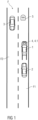
- Figure 1 shows a road section F with two opposing lanes F1, F2.
- Vehicle 1 is traveling in automated driving mode in a right-hand lane F1, and vehicle 2 is following vehicle 1.
- An oncoming vehicle 3 is traveling in a left-hand lane F2.
- the vehicle 1 has an assistance system for automated driving, whereby the vehicle 1, in particular the assistance system, fully performs a driving task so that a vehicle user can pursue another activity during automated driving.
- the assistance system comprises an environmental sensor system with a number of detection units arranged in and/or on the vehicle 1, at least one of which is designed as a sensor system 4 and includes a camera 4.1.
- the sensor system 4 in the form of the camera 4.1 is arranged in or on the vehicle 1 such that a detection area (not shown in detail) is directed in front of the vehicle 1 and thus a region of the road section F ahead of the vehicle 1 is detected.
- a control unit of the environmental sensors determines the criticality of a current situation, particularly with regard to a detected obstacle. Depending on the determined criticality, particularly if it exceeds a predetermined threshold, a braking process of vehicle 1 is initiated, for example, to reduce the risk of collision between vehicle 1 and the obstacle.
- a false object 5 i.e., a so-called ghost object
- Such a false object is an object and thus an obstacle that is detected by the sensor system 4 but does not exist in reality.
- Such a false object 5 leads to an incorrectly initiated braking process in the automated driving mode of the vehicle 1. This means that the vehicle 1 initiates a braking process, e.g., an emergency braking, without an externally comprehensible reason.
- Such a rear-end collision can be avoided by maintaining a sufficiently large distance between vehicle 1 and the following vehicle 2.
- vehicle 1 driving in automated mode it is not possible to directly set a sufficiently large distance to the following vehicle 2, since distance control is implemented by the following vehicle 2.
- Figure 2 shows a road section F with two opposing lanes F1, F2, with vehicle 1 driving in automated driving mode on the right lane F1 and a following vehicle 2 driving behind vehicle 1, which is critically approaching vehicle 1 from behind.
- the environmental sensor system comprises at least one detection unit, for example a radar-based detection unit, which monitors a rear area of the vehicle, i.e. an area behind the vehicle 1, at least during the automated driving operation of the vehicle 1.
- a radar-based detection unit which monitors a rear area of the vehicle, i.e. an area behind the vehicle 1, at least during the automated driving operation of the vehicle 1.
- a distance a 1 and thus a time gap t 1 is determined, which the following vehicle 2 usually needs to avoid a rear-end collision if the Vehicle 1 initiates an improper braking maneuver due to the detection of a false object 5.
- This distance a 1 and the time gap t 1 can be speed-dependent, in particular.
- the vehicle 1 issues a warning to the following vehicle 2.
- the vehicle's warning W is output to the following vehicle 2 by means of a displayed text message.
- a display unit 6 is arranged in the rear area of the vehicle 1.
- the text message contains a request to increase the current distance a 2 of the following vehicle 2 from the vehicle 1 if the distance a 1 and thus the time gap t 1 are exceeded.
- the warning W is transmitted to the following vehicle 2 via vehicle-to-vehicle communication and output there.
- a driver of the following vehicle 2 is thereby warned directly, in particular via an active safety assistance system.
- vehicle 1 reduces its current driving speed by a specified value. This signals the following vehicle 2 to overtake vehicle 1, taking into account at least one oncoming traffic.
- vehicle 1 can position itself in the area of a right-hand lane marking M within its lane F1 and continue its automated driving operation there at the reduced speed. By positioning itself in the area of the right-hand lane marking M and at the reduced speed, the following vehicle 2 is prompted to perform an overtaking maneuver without endangering other road users.
- vehicle 1 positions itself centrally in relation to its right lane F1 and increases the current driving speed to a driving speed permissible for automated driving operation, in particular to a driving speed applicable to the section of road.
Landscapes
- Engineering & Computer Science (AREA)
- Mechanical Engineering (AREA)
- Automation & Control Theory (AREA)
- Transportation (AREA)
- Human Computer Interaction (AREA)
- Physics & Mathematics (AREA)
- General Physics & Mathematics (AREA)
- Mathematical Physics (AREA)
- Traffic Control Systems (AREA)
- Control Of Driving Devices And Active Controlling Of Vehicle (AREA)
Description
- Die Erfindung betrifft ein Verfahren zum Betrieb eines Fahrzeuges im automatisierten Fahrbetrieb gemäß dem Oberbegriff des Patentanspruchs 1.
- Ein derartiges Verfahren ist aus der
US 2019/389 487 A1 bekannt. Bei diesem bekannten Verfahren wird ein Fahrzeugrückraum eines automatisiert fahrenden Fahrzeugs überwacht und ermittelt, ob ein Abstand zu einem nachfolgenden Fahrzeug ausreicht, um dem nachfolgenden Fahrzeug ein sicheres Anhalten zu ermöglichen. Wenn das nicht der Fall ist, wird ein entsprechender Hinweis an einen Fahrer des Fahrzeugs und an das nachfolgende Fahrzeug ausgegeben. - Aus der
DE 10 2018 222 720 A1 ein Steuerungssystem zur Steuerung eines autonomen oder automatisierten Fahrzeugs bekannt, wobei das Steuerungssystem eine auf einer künstlichen Intelligenz basierende erste Steuerungsvorrichtung und eine auf deterministischen Berechnungsvorschriften basierende zweite Steuerungsvorrichtung aufweist und wobei eine Kritikalität einer Fahrsituation bestimmt wird und in Abhängigkeit der bestimmten Kritikalität eine Umschaltung von der ersten Steuerungsvorrichtung auf die zweite Steuerungsvorrichtung vorgenommen wird. - Aus der
EP 3 552 901 A2 ist ein Verfahren zum Betreiben eines Fahrzeugs in einem automatisierten Fahrbetrieb bekannt, wobei vorgesehen ist, dass ein Fahrer des Fahrzeugs bei Detektion bestimmter Ereignisse zur Übernahme der Fahraufgabe aufgefordert wird, und dass ein Minimal-Risiko-Manöver gefahren wird, falls der Fahrer die Fahraufgabe nicht übernimmt. - Aus der
DE 10 2018 204 572 A1 sind eine Steuereinheit eines Fahrzeuges und ein Verfahren zum Schutz des Fahrzeuges vor einem Auffahrunfall bekannt. Das Fahrzeug weist eine Notbremsfunktion auf, die eingerichtet ist, automatisch eine Notbremsung des Fahrzeuges zu bewirken. Das Verfahren sieht vor, dass mittels der Steuereinheit bestimmt wird, dass eine erhöhte Wahrscheinlichkeit für ein automatisches Auslösen einer Notbremsung besteht. In Reaktion darauf wird zumindest ein Warnsignal generiert, um ein Folgefahrzeug zu veranlassen, einen ausreichend hohen Sicherheitsabstand zu dem Fahrzeug einzuhalten. - Darüber hinaus beschreibt die
DE 103 28 755 A1 ein System zur Vermeidung eines zu geringen Abstandes von einem Folgefahrzeug zu einem vorausfahrenden Fahrzeug, insbesondere einem Kraftfahrzeug. Dazu ist vorgesehen, dass das vorausfahrende Fahrzeug eine Einrichtung zur Ermittlung des Abstandes zum Folgefahrzeug und zur Ermittlung der Relativgeschwindigkeit in Bezug auf das Folgefahrzeug aufweist, und dass auf Grundlage des ermittelten Abstandes und der Relativgeschwindigkeit ein Mindestabstand ermittelt wird und bei Unterschreiten des Mindestabstandes Maßnahmen zur Vermeidung einer weiteren Verringerung des Abstandes durchgeführt werden, zwecks Vermeidung eines möglichen Auffahrunfalles. - Der Erfindung liegt die Aufgabe zugrunde, ein Verfahren zum Betrieb eines Fahrzeuges im automatisierten Fahrbetrieb anzugeben.
- Die Aufgabe wird erfindungsgemäß durch ein Verfahren gelöst, welches die in Anspruch 1 angegebenen Merkmale aufweist.
- Vorteilhafte Ausgestaltungen der Erfindung sind Gegenstand der Unteransprüche.
- Ein Verfahren zum Betrieb eines Fahrzeuges im automatisierten Fahrbetrieb sieht erfindungsgemäß vor, dass ein Fahrzeugrückraum des Fahrzeuges kontinuierlich überwacht wird. Im Fall einer erfassten kritischen Annäherung eines nachfolgenden Fahrzeuges an das Fahrzeug wird ein Warnhinweis an das nachfolgende Fahrzeug ausgegeben und im Fall, dass sich das nachfolgende Fahrzeug nach einer vorgebbaren Zeitdauer dem Fahrzeug weiterhin kritisch nähert, eine Übernahmeaufforderung in Bezug auf eine Fahraufgabe an einen Fahrzeugnutzer des Fahrzeuges ausgegeben wird.
- Durch Anwendung des Verfahrens kann das Risiko eines Unfalles zwischen dem Fahrzeug und dem nachfolgenden Fahrzeug verringert werden.
- Das Verfahren stellt eine Methode dar, das nachfolgende Fahrzeug präventiv auf einen adäquaten Abstand zu dem Fahrzeug hinzuweisen, so dass der Abstand zu dem Fahrzeug erhöht werden kann und ein Fahrer des nachfolgenden Fahrzeuges somit die Möglichkeit hat, auf ein unerwartetes Bremsmanöver des Fahrzeuges, beispielsweise wegen eines fehlerhaft detektierten Hindernisses, eines sogenannten Falschobjektes oder Geisterobjektes, zu reagieren. Das Verfahren stellt also eine zusätzliche Absicherung vor einer Kollision mit dem nachfolgenden Fahrzeug aufgrund einer Falschbremsung des im automatisierten Fahrbetrieb fahrenden Fahrzeuges dar.
- Der Abstand zwischen den beiden Fahrzeugen, insbesondere ein Sicherheitsabstand, der es ermöglicht, dass das nachfolgende Fahrzeug auf eine Notbremsung des Fahrzeuges reagieren kann, ist dabei geschwindigkeitsabhängig, da sich ein Bremsweg des nachfolgenden Fahrzeuges bei zunehmender Fahrgeschwindigkeit erhöht.
- Wird das Verfahren angewendet, kann die Akzeptanz gegenüber dem automatisierten Fahrbetrieb von Fahrzeugen, welche gegebenenfalls Unzulänglichkeiten aufweisen, gesteigert werden.
- In einer Ausführung des Verfahrens wird im Fall, dass eine Übernahme der Fahraufgabe nach einer vorgebbaren weiteren Zeitdauer nicht erfolgt ist, eine momentane Fahrgeschwindigkeit des Fahrzeuges um einen vorgebbaren Wert verringert, bis die kritische Annäherung zwischen dem nachfolgenden Fahrzeug und dem Fahrzeug nicht mehr besteht. Beispielsweise erfolgt keine Übernahme, da das Fahrzeug fahrerlos fährt oder ein Fahrzeugnutzer, beispielsweise aufgrund eines Notfalles, nicht in der Lage ist, die Fahraufgabe manuell auszuführen.
- Das Fahrzeug verringert seine Fahrgeschwindigkeit insbesondere, um dem nachfolgenden Fahrzeug dadurch ein Angebot zu signalisieren, das Fahrzeug zu überholen oder nochmals darauf hinzuweisen, dass sich das nachfolgende Fahrzeug dem Fahrzeug kritisch angenähert hat und so nicht in der Lage ist, auf einen abrupten Bremsvorgang des Fahrzeuges zu reagieren. Durch Verringerung der Geschwindigkeit kann weiterhin insbesondere auch eine Gefahr der Erfassung von Geisterzielen verringert werden.
- In einer weiteren möglichen Ausführung des Verfahrens wird das Fahrzeug nach Ablauf der weiteren Zeitdauer derart gesteuert, dass dieses sich bei Rechtsverkehr in einem rechten Randbereich innerhalb seiner Fahrspur oder bei Linksverkehr in einem linken Randbereich innerhalb seiner Fahrspur einordnet. Insbesondere führt das Fahrzeug dabei seinen automatisierten Fahrbetrieb mit der verringerten Fahrgeschwindigkeit fort. Dieser Vorgang wird also durchgeführt, wenn der Übernahmeaufforderung nicht Folge geleistet wird und das Fahrzeug seine Fahrgeschwindigkeit um den vorgegebenen Wert verringert. Insbesondere fährt das Fahrzeug an eine rechte bzw. linke Fahrspurmarkierung und verringert seine Fahrgeschwindigkeit, so dass dem nachfolgenden Fahrzeug signalisiert wird, das Fahrzeug zu überholen, und sich das nachfolgende Fahrzeug dem Fahrzeug somit nicht mehr kritisch annähern kann. Das nachfolgende Fahrzeug stellt dann also kein Auffahrrisiko mehr für das Fahrzeug dar, wenn dieses, insbesondere aufgrund eines fehlerfassten Objektes, eine abrupte Bremsung einleitet.
- Der Warnhinweis an das nachfolgende Fahrzeug kann in einer Weiterbildung des Fahrzeuges als Textnachricht auf einer heckseitig angeordneten Anzeigeeinheit des Fahrzeuges ausgegeben werden. Insbesondere umfasst die Textnachricht eine Bitte, den Abstand des nachfolgenden Fahrzeuges zu dem Fahrzeug zu vergrößern.
- In einer alternativen oder zusätzlichen Ausführungsform wird der Warnhinweis mittels einer Fahrzeug-zu-Fahrzeugkommunikation an das nachfolgende Fahrzeug ausgegeben. Dadurch ist es möglich, dass der Fahrer des nachfolgenden Fahrzeuges direkt bewarnt wird, d. h. der Warnhinweis direkt an den Fahrer des nachfolgenden Fahrzeuges ausgegeben wird. Der Warnhinweis ist somit direkt an den Fahrer des nachfolgenden Fahrzeuges adressiert.
- In einer weiteren Ausführung des Verfahrens beträgt die Zeitdauer, bevor die Übernahmeaufforderung in dem Fahrzeug ausgegeben wird, mindestens 30 Sekunden. D. h., dass die Ausgabe der Übernahmeforderung frühestens 30 Sekunden nachdem der Warnhinweis an das nachfolgende Fahrzeug oder in dem nachfolgenden Fahrzeug ausgegeben wird, erfolgt. Dem nachfolgenden Fahrzeug werden also mindestens 30 Sekunden und somit eine ausreichende Zeitdauer zur Verfügung gestellt, auf den Warnhinweis des Fahrzeuges zu reagieren und den Abstand zu dem automatisiert fahrenden Fahrzeug zu erhöhen.
- Ausführungsbeispiele der Erfindung werden im Folgenden anhand einer Zeichnung näher erläutert.
- Dabei zeigen:
- Fig. 1
- schematisch einen Fahrbahnabschnitt mit zwei gegenläufigen Fahrspuren, einem automatisiert fahrenden Fahrzeug, einem nachfolgenden Fahrzeug, einem entgegenkommenden Fahrzeug und einem Geisterobjekt und
- Fig. 2
- schematisch einen Fahrbahnabschnitt mit zwei gegenläufigen Fahrspuren, dem automatisiert fahrenden Fahrzeug, dem nachfolgenden Fahrzeug und dem Geisterobjekt bei Anwendung eines Verfahrens zur Verringerung einer Auffahrkollision.
- Einander entsprechende Teile sind in allen Figuren mit den gleichen Bezugszeichen versehen.
-
Figur 1 zeigt einen Fahrbahnabschnitt F mit zwei gegenläufigen Fahrspuren F1, F2. Auf einer rechten Fahrspur F1 fährt ein Fahrzeug 1 im automatisierten Fahrbetrieb und ein dem Fahrzeug 1 nachfolgendes Fahrzeug 2. Auf einer linken Fahrspur F2 befindet sich ein entgegenkommendes Fahrzeug 3. - Das Fahrzeug 1 verfügt über ein Assistenzsystem zum automatisierten Fahrbetrieb, wobei das Fahrzeug 1, insbesondere das Assistenzsystem, vollumfänglich eine Fahraufgabe ausführt, so dass ein Fahrzeugnutzer während des automatisierten Fahrbetriebes einer anderen Tätigkeit nachgehen kann.
- Das Assistenzsystem umfasst eine Umgebungssensorik mit einer Anzahl von im und/oder am Fahrzeug 1 angeordneten Erfassungseinheiten, von denen zumindest ein als Sensorsystem 4 ausgeführt ist und eine Kamera 4.1 umfasst. Das Sensorsystem 4 in Form der Kamera 4.1 ist derart in oder an dem Fahrzeug 1 angeordnet, dass ein nicht näher gezeigter Erfassungsbereich vor das Fahrzeug 1 gerichtet ist und somit ein Bereich des dem Fahrzeug 1 vorausliegenden Fahrbahnabschnittes F erfasst wird.
- Anhand erfasster Signale der Umgebungssensorik und somit auch der Kamera 4.1 werden Hindernisse in einer Umgebung des Fahrzeuges 1 detektiert. Mittels einer Steuereinheit der Umgebungssensorik wird eine Kritikalität einer vorliegenden Situation, insbesondere in Bezug auf ein erfasstes Hindernis, ermittelt. In Abhängigkeit der ermittelten Kritikalität, insbesondere wenn diese eine vorgegebene Schwelle überschreitet, wird ein Bremsvorgang des Fahrzeuges 1 eingeleitet, um beispielsweise ein Kollisionsrisiko für das Fahrzeug 1 und das Hindernis zu verringern.
- Mitunter kann eine Situation eintreten, dass mittels des Sensorsystems 4 ein Falschobjekt 5, d. h. ein sogenanntes Geisterobjekt, detektiert wird. Bei einem solchen Falschobjekt handelt es sich um ein Objekt und somit um ein Hindernis, welches von dem Sensorsystem 4 erfasst wird, aber in der Realität nicht existiert. Ein solches Falschobjekt 5 führt im automatisierten Fahrbetrieb des Fahrzeuges 1 zu einem falsch eingeleiteten Bremsvorgang. D. h., dass das Fahrzeug 1 ohne einen von außen nachvollziehbaren Grund einen Bremsvorgang, z. B. eine Notbremsung, einleitet.
- Ein solch eingeleiteter Bremsvorgang auf ein Falschobjekt 5, ein sogenannter Falsch-Positiv-Fehler, kann zu einem Auffahrunfall zwischen dem Fahrzeug 1 und dem nachfolgenden Fahrzeug 2 führen. Insbesondere besteht das Risiko eines Auffahrunfalles, wenn das nachfolgende Fahrzeug keinen ausreichend großen Abstand zu dem Fahrzeug 1 hält, sich diesem also kritisch annähert.
- Mit einem ausreichend großen Abstand zwischen dem Fahrzeug 1 und dem nachfolgenden Fahrzeug 2 kann ein solcher Auffahrunfall vermieden werden. Für das im automatisierten Fahrbetrieb fahrende Fahrzeug 1 ist nicht direkt möglich, den ausreichend großen Abstand zu dem nachfolgenden Fahrzeug 2 einzustellen, da eine Abstandsregelung durch das nachfolgende Fahrzeug 2 realisiert wird.
- Um dennoch das Risiko eines solchen auf einem unzureichenden Abstand zwischen dem Fahrzeug 1 und dem nachfolgenden Fahrzeug 2 basierenden Auffahrunfall erheblich zu verringern, ist ein im Folgenden beschriebenes Verfahren vorgesehen.
-
Figur 2 zeigt einen Fahrbahnabschnitt F mit zwei gegenläufigen Fahrspuren F1, F2, wobei auf der rechten Fahrspur F1 das Fahrzeug 1 im automatisierten Fahrbetrieb fährt und sich hinter dem Fahrzeug 1 ein nachfolgendes Fahrzeug 2 fährt, welches sich dem Fahrzeug 1 kritisch von hinten nähert. - Die Umgebungssensorik umfasst zumindest eine Erfassungseinheit, beispielsweise eine radarbasierte Erfassungseinheit, die zumindest während des automatisierten Fahrbetriebes des Fahrzeuges 1 einen Fahrzeugrückraum, d. h. einen Bereich hinter dem Fahrzeug 1, überwacht.
- Wird das nachfolgende Fahrzeug 2 anhand erfasster Signale der Umgebungssensorik detektiert, wird ein Abstand a1 und somit eine Zeitlücke t1 ermittelt, die das nachfolgende Fahrzeug 2 zur Vermeidung eines Auffahrunfalles üblicherweise benötigt, wenn das Fahrzeug 1 aufgrund eines erfassten Falschobjektes 5, eine Falschbremsung einleitet. Dieser Abstand a1 und die Zeitlücke t1 können insbesondere geschwindigkeitsabhängig sein.
- Hat sich das nachfolgende Fahrzeug 2 dem Fahrzeug 1 derart kritisch genähert, so dass ein weiterer Abstand a2 und eine weitere Zeitlücke t2 nicht ausreichend sind, dass ein Auffahrunfall zwischen dem nachfolgenden Fahrzeug 2 und dem Fahrzeug 1 bei einer von diesem eingeleiteten Falschbremsung wegen eines erfassten Falschobjektes 5 unvermeidbar ist, wird von dem Fahrzeug 1 ein Warnhinweis an das nachfolgende Fahrzeug 2 ausgegeben.
- In einer Ausführung wird der Warnhinweis W des Fahrzeuges an das nachfolgende Fahrzeug 2 mittels einer angezeigten Textnachricht ausgegeben. Dazu ist im Heckbereich des Fahrzeuges 1 eine Anzeigeeinheit 6 angeordnet. Insbesondere beinhaltet die Textnachricht eine Bitte, den momentanen weiteren Abstand a2 des nachfolgenden Fahrzeuges 2 zu dem Fahrzeug 1 zu vergrößern, wenn der Abstand a1 und somit die Zeitlücke t1 unterschritten werden.
- Alternativ oder zusätzlich wird der Warnhinweis W mittels einer Fahrzeug-zu-Fahrzeugkommunikation an das nachfolgende Fahrzeug 2 übermittelt und in diesem ausgegeben. Ein Fahrer des nachfolgenden Fahrzeuges 2 wird hierdurch direkt, insbesondere über ein Assistenzsystem zur aktiven Sicherheit, bewarnt.
- Nähert sich das nachfolgende Fahrzeug 2 dem Fahrzeug 1 weiterhin kritisch, wobei der Abstand a1 und die Zeitlücke t1 unterschritten werden, wird nach einer vorgebbaren Zeitdauer von beispielsweise 30 Sekunden, eine Übernahmeaufforderung in dem Fahrzeug 1 ausgegeben, so dass ein Fahrzeugnutzer des Fahrzeuges 1 eine Fahraufgabe des Fahrzeuges 1 manuell ausführt.
- Ist die Übernahme der Fahraufgabe nach Ablauf einer weiteren Zeitdauer nicht erfolgt, beispielsweise weil sich in dem Fahrzeug 1 kein Fahrzeugnutzer befindet oder der Fahrzeugnutzer aufgrund eines Notfalles die Fahraufgabe nicht ausführen kann, verringert das Fahrzeug 1 seine momentane Fahrgeschwindigkeit um einen vorgegebenen Wert. Dadurch wird dem nachfolgenden Fahrzeug 2 signalisiert, das Fahrzeug 1 unter Berücksichtigung zumindest eines Gegenverkehrs zu überholen.
- Zusätzlich kann vorgesehen sein, dass das Fahrzeug 1 nach Ablauf der weiteren Zeitdauer sich im Bereich einer rechten Fahrspurmarkierung M innerhalb seiner Fahrspur F1 einordnet und seinen automatisierten Fahrbetrieb dort mit der verringerten Fahrgeschwindigkeit fortsetzt. Durch die Einordnung im Bereich der rechten Fahrspurmarkierung M und der verringerten Fahrgeschwindigkeit wird das nachfolgende Fahrzeug 2 dazu aufgefordert, einen Überholvorgang durchzuführen, ohne weitere Verkehrsteilnehmer zu gefährden.
- Hat das nachfolgende Fahrzeug 2 das Fahrzeug 1 überholt oder den weiteren Abstand a2 mindestens auf den Abstand a1 erhöht, positioniert sich das Fahrzeug 1 in Bezug auf seine rechte Fahrspur F1 mittig und erhöht die momentane Fahrgeschwindigkeit auf einen für den automatisierten Fahrbetrieb zulässige Fahrgeschwindigkeit, insbesondere auf eine für den Fahrbahnabschnitt geltende Fahrgeschwindigkeit.
Claims (6)
- Verfahren zum Betrieb eines Fahrzeuges (1) im automatisierten Fahrbetrieb, wobei- ein Fahrzeugrückraum des Fahrzeuges (1) kontinuierlich überwacht wird,- im Fall einer erfassten kritischen Annäherung eines nachfolgenden Fahrzeuges (2) an das Fahrzeug (1) ein Warnhinweis (W) an das nachfolgende Fahrzeug (2) ausgegeben wirddadurch gekennzeichnet,- dass im Fall, dass sich das nachfolgende Fahrzeug (2) nach einer vorgebbaren Zeitdauer dem Fahrzeug (1) weiterhin kritisch nähert, eine Übernahmeaufforderung in Bezug auf eine Fahraufgabe an einen Fahrzeugnutzer des Fahrzeuges (1) ausgegeben wird.
- Verfahren nach Anspruch 1,
dadurch gekennzeichnet, dass im Fall, dass eine Übernahme der Fahraufgabe nach einer vorgebbaren weiteren Zeitdauer nicht erfolgt ist, eine momentane Fahrgeschwindigkeit des Fahrzeuges (1) um einen vorgebbaren Wert verringert wird, bis die kritische Annäherung zwischen dem nachfolgenden Fahrzeug (2) und dem Fahrzeug (1) nicht mehr besteht - Verfahren nach Anspruch 2,
dadurch gekennzeichnet, dass das Fahrzeug (1) nach Ablauf der weiteren Zeitdauer derart gesteuert wird, dass dieses sich bei Rechtsverkehr in einem rechten Randbereich innerhalb seiner Fahrspur (F1) oder bei Linksverkehr in einem linken Randbereich innerhalb seiner Fahrspur (F2) einordnet. - Verfahren nach einem der vorhergehenden Ansprüche,
dadurch gekennzeichnet, dass der Warnhinweis (W) an das nachfolgende Fahrzeug (2) als Textnachricht auf einer heckseitig angeordneten Anzeigeeinheit (6) des Fahrzeuges (1) ausgegeben wird. - Verfahren nach einem der vorhergehenden Ansprüche,
dadurch gekennzeichnet, dass der Warnhinweis (W) mittels einer Fahrzeug-zu-Fahrzeugkommunikation an das nachfolgende Fahrzeug (2) übertragen wird. - Verfahren nach einem der vorhergehenden Ansprüche,
dadurch gekennzeichnet, dass die Zeitdauer, bevor die Übernahmeaufforderung in dem Fahrzeug (1) ausgegeben wird, mindestens 30 Sekunden beträgt.
Applications Claiming Priority (2)
| Application Number | Priority Date | Filing Date | Title |
|---|---|---|---|
| DE102021003284.5A DE102021003284A1 (de) | 2021-06-25 | 2021-06-25 | Verfahren zum Betrieb eines Fahrzeuges |
| PCT/EP2022/063939 WO2022268425A1 (de) | 2021-06-25 | 2022-05-23 | Verfahren zum betrieb eines fahrzeuges |
Publications (3)
| Publication Number | Publication Date |
|---|---|
| EP4359279A1 EP4359279A1 (de) | 2024-05-01 |
| EP4359279B1 true EP4359279B1 (de) | 2025-03-12 |
| EP4359279C0 EP4359279C0 (de) | 2025-03-12 |
Family
ID=82021186
Family Applications (1)
| Application Number | Title | Priority Date | Filing Date |
|---|---|---|---|
| EP22730229.6A Active EP4359279B1 (de) | 2021-06-25 | 2022-05-23 | Verfahren zum betrieb eines fahrzeuges |
Country Status (7)
| Country | Link |
|---|---|
| US (1) | US20240300545A1 (de) |
| EP (1) | EP4359279B1 (de) |
| JP (1) | JP7714702B2 (de) |
| KR (1) | KR20240007206A (de) |
| CN (1) | CN117545673A (de) |
| DE (1) | DE102021003284A1 (de) |
| WO (1) | WO2022268425A1 (de) |
Families Citing this family (2)
| Publication number | Priority date | Publication date | Assignee | Title |
|---|---|---|---|---|
| DE102024117842A1 (de) * | 2024-06-25 | 2026-01-08 | Bayerische Motoren Werke Aktiengesellschaft | Verfahren und Vorrichtung zur Reduzierung der Ziel-Geschwindigkeit eines Geschwindigkeitsreglers |
| DE102024124762A1 (de) * | 2024-08-29 | 2026-03-05 | Bayerische Motoren Werke Aktiengesellschaft | Verfahren und Verarbeitungseinrichtung zur Steuerung einer automatisierten Fahrfunktion |
Family Cites Families (14)
| Publication number | Priority date | Publication date | Assignee | Title |
|---|---|---|---|---|
| DE10328755A1 (de) | 2002-07-05 | 2004-07-15 | Continental Teves Ag & Co. Ohg | System zur Vermeidung von Auffahrunfällen |
| JP3928512B2 (ja) | 2002-07-26 | 2007-06-13 | 日産自動車株式会社 | 先行車追従制御装置 |
| JP2010271906A (ja) | 2009-05-21 | 2010-12-02 | Kenwood Corp | 車両の運転支援装置 |
| US9327693B2 (en) * | 2013-04-10 | 2016-05-03 | Magna Electronics Inc. | Rear collision avoidance system for vehicle |
| JP2018188030A (ja) | 2017-05-09 | 2018-11-29 | アルパイン株式会社 | 運転支援システム |
| DE102017217603B3 (de) * | 2017-10-04 | 2019-03-21 | Volkswagen Aktiengesellschaft | Verfahren zum Betreiben eines Assistenzsystems für ein Kraftfahrzeug und Kraftfahrzeug |
| DE102018204572A1 (de) | 2018-03-26 | 2019-09-26 | Bayerische Motoren Werke Aktiengesellschaft | Steuereinheit und Verfahren zur Vermeidung von Auffahrunfällen |
| EP3552901B1 (de) * | 2018-04-11 | 2025-07-02 | Hyundai Motor Company | Vorrichtung und verfahren zur bereitstellung einer sicherheitsstrategie in einem fahrzeug |
| US20190389487A1 (en) * | 2018-06-22 | 2019-12-26 | Byton North America Corporation | Tailgating alert system in vehicles |
| JP7163152B2 (ja) | 2018-11-28 | 2022-10-31 | 京セラ株式会社 | 画像処理装置、撮像装置、移動体及び画像処理方法 |
| DE102018222720B4 (de) * | 2018-12-21 | 2022-01-05 | Continental Teves Ag & Co. Ohg | Überwachung von auf neuronalen Netzwerken basierten Fahrfunktionen |
| JP7104651B2 (ja) | 2019-03-29 | 2022-07-21 | 本田技研工業株式会社 | 車両制御システム |
| JP2021033505A (ja) | 2019-08-21 | 2021-03-01 | 株式会社デンソーテン | 運転支援装置、運転支援システムおよび運転支援方法 |
| JP7272257B2 (ja) | 2019-12-19 | 2023-05-12 | トヨタ自動車株式会社 | 車両制御装置 |
-
2021
- 2021-06-25 DE DE102021003284.5A patent/DE102021003284A1/de active Pending
-
2022
- 2022-05-23 JP JP2023579090A patent/JP7714702B2/ja active Active
- 2022-05-23 EP EP22730229.6A patent/EP4359279B1/de active Active
- 2022-05-23 KR KR1020237042274A patent/KR20240007206A/ko active Pending
- 2022-05-23 CN CN202280043653.0A patent/CN117545673A/zh active Pending
- 2022-05-23 US US18/573,522 patent/US20240300545A1/en active Pending
- 2022-05-23 WO PCT/EP2022/063939 patent/WO2022268425A1/de not_active Ceased
Also Published As
| Publication number | Publication date |
|---|---|
| JP2024524241A (ja) | 2024-07-05 |
| CN117545673A (zh) | 2024-02-09 |
| KR20240007206A (ko) | 2024-01-16 |
| EP4359279A1 (de) | 2024-05-01 |
| JP7714702B2 (ja) | 2025-07-29 |
| DE102021003284A1 (de) | 2022-12-29 |
| US20240300545A1 (en) | 2024-09-12 |
| WO2022268425A1 (de) | 2022-12-29 |
| EP4359279C0 (de) | 2025-03-12 |
Similar Documents
| Publication | Publication Date | Title |
|---|---|---|
| EP3250426B1 (de) | Verfahren und vorrichtung zum betreiben eines fahrzeugs | |
| EP1037760B1 (de) | Verfahren zur regelung von geschwindigkeit und abstand bei überholvorgängen | |
| EP3322625B1 (de) | Vorausschauende steuerung eines kraftfahrzeugs | |
| EP3003768B1 (de) | Notfallassistenz ohne aktivierte querführungsunterstützung | |
| EP2314490B1 (de) | Verfahren zur Steuerung des Betriebs eines vollautomatischen, zur unabhängigen Fahrzeugführung ausgebildeten Fahrerassistenzsystems eines Kraftfahrzeugs und Kraftfahrzeug | |
| EP3003767B1 (de) | Notfallassistenz zur fahrzeugführung | |
| WO2012052084A1 (de) | Verfahren zum betreiben einer bremsassistenzvorrichtung und bremsassistenzvorrichtung für ein fahrzeug | |
| DE102016205661B4 (de) | Verfahren zum Vermeiden einer Kollision und Fahrzeug | |
| EP4096955B1 (de) | Verfahren zum betrieb eines assistenzsystems | |
| DE102018130243A1 (de) | Erweitertes Szenario für Autobahnassistenten | |
| DE102013021813B4 (de) | Fahrerassistenzsystem mit adaptiver Reaktionsschwelle | |
| EP4359279B1 (de) | Verfahren zum betrieb eines fahrzeuges | |
| DE102021201541A1 (de) | Fahrerassistenzsystem mit Fehlerbehandlungseinheit für Fahrmodus für freihändiges Fahren | |
| DE102018108276A1 (de) | Fahrunterstützungssystem mit Spurwechselvorschlag | |
| EP1531112B1 (de) | Fahrerassistenzsystem zur Unterstützung der Spurhaltung eines Kraftfahrzeuges | |
| EP1531113A2 (de) | Fahrerassistenzsystem zur Unterstützung der Spurhaltung eines Kraftfahrzeugs und Vorrichtung zum Betreiben des Fahrerassistenzsystems | |
| DE102019113509A1 (de) | Verwendung einer Drohne zum sicheren Einfahren eines automatisierten Fahrzeugs auf eine Straße | |
| DE102018220752B3 (de) | Verfahren, computerprogramm und vorrichtung zur bewertung der kritikalität einer menschlichen steuerungsmöglichkeit eines fahrzeugs, das über ein automatisiertes steuerungssystem verfügt | |
| EP4256548B1 (de) | Verfahren zum betrieb eines automatisiert fahrenden fahrzeuges | |
| DE102019000060B4 (de) | Steuern eines Fahrzeugs unter Verwendung eines Steuerungssystems | |
| EP4688522A1 (de) | Verfahren zur durchführung eines automatisierten überholmanövers eines fahrzeuges | |
| DE102007053705B4 (de) | Trajektorienschätzung für Abbiegemanöver | |
| DE102022107443B4 (de) | Verfahren zum Betreiben eines Kraftfahrzeugs, in dem zwei Fahrerassistenzsysteme aktiviert sind | |
| WO2026046591A1 (de) | Verfahren und verarbeitungseinrichtung zur steuerung einer automatisierten fahrfunktion | |
| DE102017210866A1 (de) | Verfahren und Vorrichtung zum Betreiben eines Kraftfahrzeugs |
Legal Events
| Date | Code | Title | Description |
|---|---|---|---|
| STAA | Information on the status of an ep patent application or granted ep patent |
Free format text: STATUS: UNKNOWN |
|
| STAA | Information on the status of an ep patent application or granted ep patent |
Free format text: STATUS: THE INTERNATIONAL PUBLICATION HAS BEEN MADE |
|
| PUAI | Public reference made under article 153(3) epc to a published international application that has entered the european phase |
Free format text: ORIGINAL CODE: 0009012 |
|
| STAA | Information on the status of an ep patent application or granted ep patent |
Free format text: STATUS: REQUEST FOR EXAMINATION WAS MADE |
|
| 17P | Request for examination filed |
Effective date: 20231130 |
|
| AK | Designated contracting states |
Kind code of ref document: A1 Designated state(s): AL AT BE BG CH CY CZ DE DK EE ES FI FR GB GR HR HU IE IS IT LI LT LU LV MC MK MT NL NO PL PT RO RS SE SI SK SM TR |
|
| DAV | Request for validation of the european patent (deleted) | ||
| DAX | Request for extension of the european patent (deleted) | ||
| GRAP | Despatch of communication of intention to grant a patent |
Free format text: ORIGINAL CODE: EPIDOSNIGR1 |
|
| STAA | Information on the status of an ep patent application or granted ep patent |
Free format text: STATUS: GRANT OF PATENT IS INTENDED |
|
| RIC1 | Information provided on ipc code assigned before grant |
Ipc: G08G 1/16 20060101ALI20241104BHEP Ipc: B60W 30/14 20060101ALI20241104BHEP Ipc: B60Q 1/50 20060101ALI20241104BHEP Ipc: B60W 60/00 20200101ALI20241104BHEP Ipc: B60W 50/00 20060101AFI20241104BHEP |
|
| INTG | Intention to grant announced |
Effective date: 20241122 |
|
| GRAS | Grant fee paid |
Free format text: ORIGINAL CODE: EPIDOSNIGR3 |
|
| GRAA | (expected) grant |
Free format text: ORIGINAL CODE: 0009210 |
|
| STAA | Information on the status of an ep patent application or granted ep patent |
Free format text: STATUS: THE PATENT HAS BEEN GRANTED |
|
| AK | Designated contracting states |
Kind code of ref document: B1 Designated state(s): AL AT BE BG CH CY CZ DE DK EE ES FI FR GB GR HR HU IE IS IT LI LT LU LV MC MK MT NL NO PL PT RO RS SE SI SK SM TR |
|
| REG | Reference to a national code |
Ref country code: GB Ref legal event code: FG4D Free format text: NOT ENGLISH |
|
| REG | Reference to a national code |
Ref country code: CH Ref legal event code: EP |
|
| REG | Reference to a national code |
Ref country code: DE Ref legal event code: R096 Ref document number: 502022003197 Country of ref document: DE |
|
| REG | Reference to a national code |
Ref country code: IE Ref legal event code: FG4D Free format text: LANGUAGE OF EP DOCUMENT: GERMAN |
|
| U01 | Request for unitary effect filed |
Effective date: 20250402 |
|
| U07 | Unitary effect registered |
Designated state(s): AT BE BG DE DK EE FI FR IT LT LU LV MT NL PT RO SE SI Effective date: 20250410 |
|
| U20 | Renewal fee for the european patent with unitary effect paid |
Year of fee payment: 4 Effective date: 20250526 |
|
| PG25 | Lapsed in a contracting state [announced via postgrant information from national office to epo] |
Ref country code: RS Free format text: LAPSE BECAUSE OF FAILURE TO SUBMIT A TRANSLATION OF THE DESCRIPTION OR TO PAY THE FEE WITHIN THE PRESCRIBED TIME-LIMIT Effective date: 20250612 |
|
| PG25 | Lapsed in a contracting state [announced via postgrant information from national office to epo] |
Ref country code: ES Free format text: LAPSE BECAUSE OF FAILURE TO SUBMIT A TRANSLATION OF THE DESCRIPTION OR TO PAY THE FEE WITHIN THE PRESCRIBED TIME-LIMIT Effective date: 20250312 |
|
| PG25 | Lapsed in a contracting state [announced via postgrant information from national office to epo] |
Ref country code: NO Free format text: LAPSE BECAUSE OF FAILURE TO SUBMIT A TRANSLATION OF THE DESCRIPTION OR TO PAY THE FEE WITHIN THE PRESCRIBED TIME-LIMIT Effective date: 20250612 |
|
| PG25 | Lapsed in a contracting state [announced via postgrant information from national office to epo] |
Ref country code: HR Free format text: LAPSE BECAUSE OF FAILURE TO SUBMIT A TRANSLATION OF THE DESCRIPTION OR TO PAY THE FEE WITHIN THE PRESCRIBED TIME-LIMIT Effective date: 20250312 |
|
| PG25 | Lapsed in a contracting state [announced via postgrant information from national office to epo] |
Ref country code: GR Free format text: LAPSE BECAUSE OF FAILURE TO SUBMIT A TRANSLATION OF THE DESCRIPTION OR TO PAY THE FEE WITHIN THE PRESCRIBED TIME-LIMIT Effective date: 20250613 |
|
| PG25 | Lapsed in a contracting state [announced via postgrant information from national office to epo] |
Ref country code: SM Free format text: LAPSE BECAUSE OF FAILURE TO SUBMIT A TRANSLATION OF THE DESCRIPTION OR TO PAY THE FEE WITHIN THE PRESCRIBED TIME-LIMIT Effective date: 20250312 |
|
| PG25 | Lapsed in a contracting state [announced via postgrant information from national office to epo] |
Ref country code: PL Free format text: LAPSE BECAUSE OF FAILURE TO SUBMIT A TRANSLATION OF THE DESCRIPTION OR TO PAY THE FEE WITHIN THE PRESCRIBED TIME-LIMIT Effective date: 20250312 |
|
| PG25 | Lapsed in a contracting state [announced via postgrant information from national office to epo] |
Ref country code: CZ Free format text: LAPSE BECAUSE OF FAILURE TO SUBMIT A TRANSLATION OF THE DESCRIPTION OR TO PAY THE FEE WITHIN THE PRESCRIBED TIME-LIMIT Effective date: 20250312 |
|
| PG25 | Lapsed in a contracting state [announced via postgrant information from national office to epo] |
Ref country code: SK Free format text: LAPSE BECAUSE OF FAILURE TO SUBMIT A TRANSLATION OF THE DESCRIPTION OR TO PAY THE FEE WITHIN THE PRESCRIBED TIME-LIMIT Effective date: 20250312 |
|
| PG25 | Lapsed in a contracting state [announced via postgrant information from national office to epo] |
Ref country code: IS Free format text: LAPSE BECAUSE OF FAILURE TO SUBMIT A TRANSLATION OF THE DESCRIPTION OR TO PAY THE FEE WITHIN THE PRESCRIBED TIME-LIMIT Effective date: 20250712 |
|
| REG | Reference to a national code |
Ref country code: CH Ref legal event code: H13 Free format text: ST27 STATUS EVENT CODE: U-0-0-H10-H13 (AS PROVIDED BY THE NATIONAL OFFICE) Effective date: 20251223 |
|
| PLBE | No opposition filed within time limit |
Free format text: ORIGINAL CODE: 0009261 |
|
| STAA | Information on the status of an ep patent application or granted ep patent |
Free format text: STATUS: NO OPPOSITION FILED WITHIN TIME LIMIT |
|
| PG25 | Lapsed in a contracting state [announced via postgrant information from national office to epo] |
Ref country code: CH Free format text: LAPSE BECAUSE OF NON-PAYMENT OF DUE FEES Effective date: 20250531 |
|
| REG | Reference to a national code |
Ref country code: CH Ref legal event code: L10 Free format text: ST27 STATUS EVENT CODE: U-0-0-L10-L00 (AS PROVIDED BY THE NATIONAL OFFICE) Effective date: 20260121 |
|
| PG25 | Lapsed in a contracting state [announced via postgrant information from national office to epo] |
Ref country code: MC Free format text: LAPSE BECAUSE OF FAILURE TO SUBMIT A TRANSLATION OF THE DESCRIPTION OR TO PAY THE FEE WITHIN THE PRESCRIBED TIME-LIMIT Effective date: 20250312 |
|
| 26N | No opposition filed |
Effective date: 20251215 |
|
| PG25 | Lapsed in a contracting state [announced via postgrant information from national office to epo] |
Ref country code: IE Free format text: LAPSE BECAUSE OF NON-PAYMENT OF DUE FEES Effective date: 20250523 |