EP4358355A1 - Energiespeichermodul und energiespeichersystem - Google Patents
Energiespeichermodul und energiespeichersystem Download PDFInfo
- Publication number
- EP4358355A1 EP4358355A1 EP23200851.6A EP23200851A EP4358355A1 EP 4358355 A1 EP4358355 A1 EP 4358355A1 EP 23200851 A EP23200851 A EP 23200851A EP 4358355 A1 EP4358355 A1 EP 4358355A1
- Authority
- EP
- European Patent Office
- Prior art keywords
- terminal
- current
- voltage
- energy storage
- converter
- Prior art date
- Legal status (The legal status is an assumption and is not a legal conclusion. Google has not performed a legal analysis and makes no representation as to the accuracy of the status listed.)
- Pending
Links
Images






Classifications
-
- H—ELECTRICITY
- H02—GENERATION; CONVERSION OR DISTRIBUTION OF ELECTRIC POWER
- H02J—ELECTRIC POWER NETWORKS; CIRCUIT ARRANGEMENTS OR SYSTEMS FOR SUPPLYING OR DISTRIBUTING ELECTRIC POWER; SYSTEMS FOR STORING ELECTRIC ENERGY
- H02J7/00—Circuit arrangements for charging or discharging batteries or for supplying loads from batteries
- H02J7/60—Circuit arrangements for charging or discharging batteries or for supplying loads from batteries including safety or protection arrangements
-
- H—ELECTRICITY
- H02—GENERATION; CONVERSION OR DISTRIBUTION OF ELECTRIC POWER
- H02J—ELECTRIC POWER NETWORKS; CIRCUIT ARRANGEMENTS OR SYSTEMS FOR SUPPLYING OR DISTRIBUTING ELECTRIC POWER; SYSTEMS FOR STORING ELECTRIC ENERGY
- H02J7/00—Circuit arrangements for charging or discharging batteries or for supplying loads from batteries
- H02J7/90—Regulation of charging or discharging current or voltage
- H02J7/94—Regulation of charging or discharging current or voltage in response to battery current
-
- H—ELECTRICITY
- H02—GENERATION; CONVERSION OR DISTRIBUTION OF ELECTRIC POWER
- H02J—ELECTRIC POWER NETWORKS; CIRCUIT ARRANGEMENTS OR SYSTEMS FOR SUPPLYING OR DISTRIBUTING ELECTRIC POWER; SYSTEMS FOR STORING ELECTRIC ENERGY
- H02J7/00—Circuit arrangements for charging or discharging batteries or for supplying loads from batteries
- H02J7/34—Parallel operation in networks using both storage and other DC sources, e.g. providing buffering
- H02J7/345—Parallel operation in networks using both storage and other DC sources, e.g. providing buffering using capacitors as storage or buffering devices
-
- H—ELECTRICITY
- H02—GENERATION; CONVERSION OR DISTRIBUTION OF ELECTRIC POWER
- H02J—ELECTRIC POWER NETWORKS; CIRCUIT ARRANGEMENTS OR SYSTEMS FOR SUPPLYING OR DISTRIBUTING ELECTRIC POWER; SYSTEMS FOR STORING ELECTRIC ENERGY
- H02J7/00—Circuit arrangements for charging or discharging batteries or for supplying loads from batteries
- H02J7/50—Circuit arrangements for charging or discharging batteries or for supplying loads from batteries acting upon multiple batteries simultaneously or sequentially
-
- H—ELECTRICITY
- H02—GENERATION; CONVERSION OR DISTRIBUTION OF ELECTRIC POWER
- H02M—APPARATUS FOR CONVERSION BETWEEN AC AND AC, BETWEEN AC AND DC, OR BETWEEN DC AND DC, AND FOR USE WITH MAINS OR SIMILAR POWER SUPPLY SYSTEMS; CONVERSION OF DC OR AC INPUT POWER INTO SURGE OUTPUT POWER; CONTROL OR REGULATION THEREOF
- H02M1/00—Details of apparatus for conversion
- H02M1/0048—Circuits or arrangements for reducing losses
-
- H—ELECTRICITY
- H02—GENERATION; CONVERSION OR DISTRIBUTION OF ELECTRIC POWER
- H02M—APPARATUS FOR CONVERSION BETWEEN AC AND AC, BETWEEN AC AND DC, OR BETWEEN DC AND DC, AND FOR USE WITH MAINS OR SIMILAR POWER SUPPLY SYSTEMS; CONVERSION OF DC OR AC INPUT POWER INTO SURGE OUTPUT POWER; CONTROL OR REGULATION THEREOF
- H02M1/00—Details of apparatus for conversion
- H02M1/0048—Circuits or arrangements for reducing losses
- H02M1/0054—Transistor switching losses
- H02M1/0058—Transistor switching losses by employing soft switching techniques, i.e. commutation of transistors when applied voltage is zero or when current flow is zero
-
- H—ELECTRICITY
- H02—GENERATION; CONVERSION OR DISTRIBUTION OF ELECTRIC POWER
- H02M—APPARATUS FOR CONVERSION BETWEEN AC AND AC, BETWEEN AC AND DC, OR BETWEEN DC AND DC, AND FOR USE WITH MAINS OR SIMILAR POWER SUPPLY SYSTEMS; CONVERSION OF DC OR AC INPUT POWER INTO SURGE OUTPUT POWER; CONTROL OR REGULATION THEREOF
- H02M1/00—Details of apparatus for conversion
- H02M1/0067—Converter structures employing plural converter units, other than for parallel operation of the units on a single load
-
- H—ELECTRICITY
- H02—GENERATION; CONVERSION OR DISTRIBUTION OF ELECTRIC POWER
- H02M—APPARATUS FOR CONVERSION BETWEEN AC AND AC, BETWEEN AC AND DC, OR BETWEEN DC AND DC, AND FOR USE WITH MAINS OR SIMILAR POWER SUPPLY SYSTEMS; CONVERSION OF DC OR AC INPUT POWER INTO SURGE OUTPUT POWER; CONTROL OR REGULATION THEREOF
- H02M1/00—Details of apparatus for conversion
- H02M1/0067—Converter structures employing plural converter units, other than for parallel operation of the units on a single load
- H02M1/0077—Plural converter units whose outputs are connected in series
-
- H—ELECTRICITY
- H02—GENERATION; CONVERSION OR DISTRIBUTION OF ELECTRIC POWER
- H02M—APPARATUS FOR CONVERSION BETWEEN AC AND AC, BETWEEN AC AND DC, OR BETWEEN DC AND DC, AND FOR USE WITH MAINS OR SIMILAR POWER SUPPLY SYSTEMS; CONVERSION OF DC OR AC INPUT POWER INTO SURGE OUTPUT POWER; CONTROL OR REGULATION THEREOF
- H02M1/00—Details of apparatus for conversion
- H02M1/0095—Hybrid converter topologies, e.g. NPC mixed with flying capacitor, thyristor converter mixed with MMC or charge pump mixed with buck
-
- H—ELECTRICITY
- H02—GENERATION; CONVERSION OR DISTRIBUTION OF ELECTRIC POWER
- H02M—APPARATUS FOR CONVERSION BETWEEN AC AND AC, BETWEEN AC AND DC, OR BETWEEN DC AND DC, AND FOR USE WITH MAINS OR SIMILAR POWER SUPPLY SYSTEMS; CONVERSION OF DC OR AC INPUT POWER INTO SURGE OUTPUT POWER; CONTROL OR REGULATION THEREOF
- H02M3/00—Conversion of DC power input into DC power output
- H02M3/01—Resonant DC/DC converters
-
- H—ELECTRICITY
- H02—GENERATION; CONVERSION OR DISTRIBUTION OF ELECTRIC POWER
- H02M—APPARATUS FOR CONVERSION BETWEEN AC AND AC, BETWEEN AC AND DC, OR BETWEEN DC AND DC, AND FOR USE WITH MAINS OR SIMILAR POWER SUPPLY SYSTEMS; CONVERSION OF DC OR AC INPUT POWER INTO SURGE OUTPUT POWER; CONTROL OR REGULATION THEREOF
- H02M3/00—Conversion of DC power input into DC power output
- H02M3/02—Conversion of DC power input into DC power output without intermediate conversion into AC
- H02M3/04—Conversion of DC power input into DC power output without intermediate conversion into AC by static converters
- H02M3/06—Conversion of DC power input into DC power output without intermediate conversion into AC by static converters using resistors or capacitors, e.g. potential divider
- H02M3/07—Conversion of DC power input into DC power output without intermediate conversion into AC by static converters using resistors or capacitors, e.g. potential divider using capacitors charged and discharged alternately by semiconductor devices with control electrode, e.g. charge pumps
-
- H—ELECTRICITY
- H02—GENERATION; CONVERSION OR DISTRIBUTION OF ELECTRIC POWER
- H02M—APPARATUS FOR CONVERSION BETWEEN AC AND AC, BETWEEN AC AND DC, OR BETWEEN DC AND DC, AND FOR USE WITH MAINS OR SIMILAR POWER SUPPLY SYSTEMS; CONVERSION OF DC OR AC INPUT POWER INTO SURGE OUTPUT POWER; CONTROL OR REGULATION THEREOF
- H02M3/00—Conversion of DC power input into DC power output
- H02M3/22—Conversion of DC power input into DC power output with intermediate conversion into AC
- H02M3/24—Conversion of DC power input into DC power output with intermediate conversion into AC by static converters
- H02M3/28—Conversion of DC power input into DC power output with intermediate conversion into AC by static converters using discharge tubes with control electrode or semiconductor devices with control electrode to produce the intermediate AC
- H02M3/325—Conversion of DC power input into DC power output with intermediate conversion into AC by static converters using discharge tubes with control electrode or semiconductor devices with control electrode to produce the intermediate AC using devices of a triode or a transistor type requiring continuous application of a control signal
- H02M3/335—Conversion of DC power input into DC power output with intermediate conversion into AC by static converters using discharge tubes with control electrode or semiconductor devices with control electrode to produce the intermediate AC using devices of a triode or a transistor type requiring continuous application of a control signal using semiconductor devices only
- H02M3/33569—Conversion of DC power input into DC power output with intermediate conversion into AC by static converters using discharge tubes with control electrode or semiconductor devices with control electrode to produce the intermediate AC using devices of a triode or a transistor type requiring continuous application of a control signal using semiconductor devices only having several active switching elements
- H02M3/33571—Half-bridge at primary side of an isolation transformer
-
- H—ELECTRICITY
- H02—GENERATION; CONVERSION OR DISTRIBUTION OF ELECTRIC POWER
- H02M—APPARATUS FOR CONVERSION BETWEEN AC AND AC, BETWEEN AC AND DC, OR BETWEEN DC AND DC, AND FOR USE WITH MAINS OR SIMILAR POWER SUPPLY SYSTEMS; CONVERSION OF DC OR AC INPUT POWER INTO SURGE OUTPUT POWER; CONTROL OR REGULATION THEREOF
- H02M3/00—Conversion of DC power input into DC power output
- H02M3/22—Conversion of DC power input into DC power output with intermediate conversion into AC
- H02M3/24—Conversion of DC power input into DC power output with intermediate conversion into AC by static converters
- H02M3/28—Conversion of DC power input into DC power output with intermediate conversion into AC by static converters using discharge tubes with control electrode or semiconductor devices with control electrode to produce the intermediate AC
- H02M3/325—Conversion of DC power input into DC power output with intermediate conversion into AC by static converters using discharge tubes with control electrode or semiconductor devices with control electrode to produce the intermediate AC using devices of a triode or a transistor type requiring continuous application of a control signal
- H02M3/335—Conversion of DC power input into DC power output with intermediate conversion into AC by static converters using discharge tubes with control electrode or semiconductor devices with control electrode to produce the intermediate AC using devices of a triode or a transistor type requiring continuous application of a control signal using semiconductor devices only
- H02M3/33569—Conversion of DC power input into DC power output with intermediate conversion into AC by static converters using discharge tubes with control electrode or semiconductor devices with control electrode to produce the intermediate AC using devices of a triode or a transistor type requiring continuous application of a control signal using semiconductor devices only having several active switching elements
- H02M3/33573—Full-bridge at primary side of an isolation transformer
-
- H—ELECTRICITY
- H02—GENERATION; CONVERSION OR DISTRIBUTION OF ELECTRIC POWER
- H02M—APPARATUS FOR CONVERSION BETWEEN AC AND AC, BETWEEN AC AND DC, OR BETWEEN DC AND DC, AND FOR USE WITH MAINS OR SIMILAR POWER SUPPLY SYSTEMS; CONVERSION OF DC OR AC INPUT POWER INTO SURGE OUTPUT POWER; CONTROL OR REGULATION THEREOF
- H02M3/00—Conversion of DC power input into DC power output
- H02M3/22—Conversion of DC power input into DC power output with intermediate conversion into AC
- H02M3/24—Conversion of DC power input into DC power output with intermediate conversion into AC by static converters
- H02M3/28—Conversion of DC power input into DC power output with intermediate conversion into AC by static converters using discharge tubes with control electrode or semiconductor devices with control electrode to produce the intermediate AC
- H02M3/325—Conversion of DC power input into DC power output with intermediate conversion into AC by static converters using discharge tubes with control electrode or semiconductor devices with control electrode to produce the intermediate AC using devices of a triode or a transistor type requiring continuous application of a control signal
- H02M3/335—Conversion of DC power input into DC power output with intermediate conversion into AC by static converters using discharge tubes with control electrode or semiconductor devices with control electrode to produce the intermediate AC using devices of a triode or a transistor type requiring continuous application of a control signal using semiconductor devices only
- H02M3/33569—Conversion of DC power input into DC power output with intermediate conversion into AC by static converters using discharge tubes with control electrode or semiconductor devices with control electrode to produce the intermediate AC using devices of a triode or a transistor type requiring continuous application of a control signal using semiconductor devices only having several active switching elements
- H02M3/33576—Conversion of DC power input into DC power output with intermediate conversion into AC by static converters using discharge tubes with control electrode or semiconductor devices with control electrode to produce the intermediate AC using devices of a triode or a transistor type requiring continuous application of a control signal using semiconductor devices only having several active switching elements having at least one active switching element at the secondary side of an isolation transformer
- H02M3/33584—Bidirectional converters
-
- H—ELECTRICITY
- H02—GENERATION; CONVERSION OR DISTRIBUTION OF ELECTRIC POWER
- H02J—ELECTRIC POWER NETWORKS; CIRCUIT ARRANGEMENTS OR SYSTEMS FOR SUPPLYING OR DISTRIBUTING ELECTRIC POWER; SYSTEMS FOR STORING ELECTRIC ENERGY
- H02J2207/00—Details of circuit arrangements for charging or discharging batteries or supplying loads from batteries
- H02J2207/20—Charging or discharging characterised by the power electronics converter
-
- H—ELECTRICITY
- H02—GENERATION; CONVERSION OR DISTRIBUTION OF ELECTRIC POWER
- H02M—APPARATUS FOR CONVERSION BETWEEN AC AND AC, BETWEEN AC AND DC, OR BETWEEN DC AND DC, AND FOR USE WITH MAINS OR SIMILAR POWER SUPPLY SYSTEMS; CONVERSION OF DC OR AC INPUT POWER INTO SURGE OUTPUT POWER; CONTROL OR REGULATION THEREOF
- H02M1/00—Details of apparatus for conversion
- H02M1/0045—Converters combining the concepts of switch-mode regulation and linear regulation, e.g. linear pre-regulator to switching converter, linear and switching converter in parallel, same converter or same transistor operating either in linear or switching mode
-
- Y—GENERAL TAGGING OF NEW TECHNOLOGICAL DEVELOPMENTS; GENERAL TAGGING OF CROSS-SECTIONAL TECHNOLOGIES SPANNING OVER SEVERAL SECTIONS OF THE IPC; TECHNICAL SUBJECTS COVERED BY FORMER USPC CROSS-REFERENCE ART COLLECTIONS [XRACs] AND DIGESTS
- Y02—TECHNOLOGIES OR APPLICATIONS FOR MITIGATION OR ADAPTATION AGAINST CLIMATE CHANGE
- Y02T—CLIMATE CHANGE MITIGATION TECHNOLOGIES RELATED TO TRANSPORTATION
- Y02T10/00—Road transport of goods or passengers
- Y02T10/60—Other road transportation technologies with climate change mitigation effect
- Y02T10/70—Energy storage systems for electromobility, e.g. batteries
Definitions
- the present disclosure relates to a field of energy storage, and more particularly to an energy storage module and an energy storage system.
- Energy storage systems have broad application prospects, including rail transit, electric power, new energy, electric vehicles and highpower transmission.
- a plurality of battery packs in the energy storage system are electrically coupled to a DC bus at the same time.
- the voltage difference between the plurality of battery packs will cause a circulating current between the battery packs. Consequently, the power loss increases, and the lifespans of the battery packs reduce.
- the energy storage system is usually equipped with a full-power DC converter.
- the full-power DC converter is electrically coupled to the DC bus.
- the full-power DC converter the electric energy provided by the battery pack is converted into a regulated DC voltage.
- the regulated DC voltage is provided to the DC bus.
- the positive input terminal and the negative input terminal of the full-power converter are respectively coupled to the two terminals of the battery pack.
- the positive output terminal and the negative output terminal of the full-power converter are respectively coupled to the two terminals of the DC bus. Consequently, the electric energy provided by the battery pack is converted.
- the connecting method and the controlling method of the full-power converter the power loss of the energy storage system is high.
- the power of the full-power DC converter is 100kW.
- the conversion efficiency of the full-power DC converter is 99%, its power loss is 1kW. The higher power losses in energy storage system results in higher product cost, lower performance and lower reliability.
- the present disclosure provides an energy storage module.
- the energy storage module includes the series compensation DC conversion device.
- the first conduction terminal of the series compensation DC conversion device is electrically connected with the positive bus connection terminal and the negative bus connection terminal, or the first conduction terminal of the series compensation DC conversion device is electrically connected with the battery positive terminal and the battery negative terminal of the first battery pack.
- the second conduction terminal of the series compensation DC conversion device is electrically connected with two terminals of the capacitor.
- the four-quadrant DC/DC of the series compensation DC conversion device converter controls the capacitor to generate the compensation voltage. According to the compensation voltage, the voltage between the battery positive terminal and the battery negative terminal of the first battery pack is compensated, or a current flowing through the first battery pack is adjusted to a set value.
- the value of the compensation voltage may be positive or negative according to the technology of the present disclosure. Consequently, the power loss is reduced, and the operating efficiency is enhanced.
- the compensation voltage across the capacitor is relatively lower than the voltage across the two terminals of the first battery pack.
- the conversion power used by the series compensation DC conversion device is relatively lower.
- the current flowing through the battery pack is adjusted to the set value under control of the series compensation DC conversion device. That is, the charging current or the discharging current of the battery pack is controlled to lie within a reasonable range of a charge/discharge curve. Consequently, the battery pack can be rapidly charged or discharged, and the lifespan of the battery pack can be extended.
- an energy storage module includes a capacitor, a bus connection part, a first battery pack and a series compensation DC conversion device.
- the bus connection part includes a positive bus connection terminal and a negative bus connection terminal.
- the first battery pack is electrically coupled between the positive bus connection terminal and the negative bus connection terminal.
- the first battery pack includes a battery positive terminal and a battery negative terminal.
- the series compensation DC conversion device includes a first conduction terminal, a second conduction terminal, a bidirectional isolation-type converter and a four-quadrant DC/DC converter.
- the first conduction terminal includes a first positive terminal and a first negative terminal.
- the second conduction terminal includes a second positive terminal and a second negative terminal.
- the first positive terminal and the first negative terminal are respectively connected with the positive bus connection terminal and the negative bus connection terminal, or the first positive terminal and the first negative terminal are respectively connected with the battery positive terminal and the battery negative terminal.
- the second positive terminal and the second negative terminal are respectively connected with two terminals of the capacitor.
- the bidirectional isolation-type converter is electrically connected with the first conduction terminal.
- the four-quadrant DC/DC converter is electrically connected between the bidirectional isolation-type converter and the second conduction terminal.
- the four-quadrant DC/DC converter controls the capacitor to generate a compensation voltage to compensate a voltage between the battery positive terminal and the battery negative terminal of the first battery pack, or the four-quadrant DC/DC converter adjusts a current flowing through the first battery pack to a set value.
- the capacitor is electrically coupled between the positive bus connection terminal and the battery positive terminal, or electrically coupled between the negative bus connection terminal and the battery negative terminal.
- an energy storage system includes a power conversion device and a plurality of energy storage modules.
- the power conversion device includes a power positive terminal and a power negative terminal.
- Each of the plurality of energy storage modules includes a capacitor, a bus connection part, a first battery pack and a series compensation DC conversion device.
- the bus connection part includes a positive bus connection terminal and a negative bus connection terminal.
- the positive bus connection terminal is electrically connected with the power positive terminal.
- the negative bus connection terminal is electrically connected with the power negative terminal.
- the first battery pack is electrically coupled between the positive bus connection terminal and the negative bus connection terminal.
- the first battery pack includes a battery positive terminal and a battery negative terminal.
- the series compensation DC conversion device includes a first conduction terminal, a second conduction terminal, a bidirectional isolation-type converter and a four-quadrant DC/DC converter.
- the first conduction terminal includes a first positive terminal and a first negative terminal.
- the second conduction terminal includes a second positive terminal and a second negative terminal.
- the first positive terminal and the first negative terminal are respectively connected with the positive bus connection terminal and the negative bus connection terminal, or the first positive terminal and the first negative terminal are respectively connected with the battery positive terminal and the battery negative terminal.
- the second positive terminal and the second negative terminal are respectively connected with two terminals of the capacitor.
- the bidirectional isolation-type converter is electrically connected with the first conduction terminal.
- the four-quadrant DC/DC converter is electrically connected between the bidirectional isolation-type converter and the second conduction terminal.
- the four-quadrant DC/DC converter controls the capacitor to generate a compensation voltage to compensate a voltage between the battery positive terminal and the battery negative terminal of the first battery pack, or the four-quadrant DC/DC converter adjusts a current flowing through the first battery pack to a set value.
- the capacitor electrically is coupled between the positive bus connection terminal and the battery positive terminal, or electrically coupled between the negative bus connection terminal and the battery negative terminal.
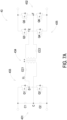
- FIG. 1A is a schematic circuit diagram illustrating an energy storage module according to a first embodiment of the present disclosure.
- FIG. 1B is a schematic circuit diagram illustrating a series compensation DC conversion device of the energy storage module.
- the energy storage module 1 includes a bus connection part 2, a first battery pack 3, a capacitor Cb and a series compensation DC conversion device 4.
- the bus connection part 2 includes a positive bus connection terminal 21 and a negative bus connection terminal 22.
- the energy storage module 1 is connected with a DC bus (not shown) through the positive bus connection terminal 21 and the negative bus connection terminal 22 of the bus connection part 2.
- the first battery pack 3 is electrically coupled between the positive bus connection terminal 21 and the negative bus connection terminal 22 of the bus connection part 2.
- the first battery pack 3 includes a battery positive terminal 31, a battery negative terminal 32 and a plurality of batteries 33.
- the plurality of batteries 33 are serially connected between the battery positive terminal 31 and the battery negative terminal 32.
- the first battery pack 3 provides a discharging electric energy to the DC bus through the battery positive terminal 31 and the battery negative terminal 32.
- the first battery pack 3 receives a charging electric energy from the DC bus through the battery positive terminal 31 and the battery negative terminal 32.
- the capacitor Cb is electrically coupled between the positive bus connection terminal 21 and the battery positive terminal 31.
- the series compensation DC conversion device 4 includes a first conduction terminal 41, a second conduction terminal 42, a bidirectional isolation-type converter 43 and a four-quadrant DC/DC converter 44.
- the first conduction terminal 41 includes a first positive terminal 411 and a first negative terminal 412.
- the first positive terminal 411 is electrically connected with the battery positive terminal 31 of the first battery pack 3.
- the first negative terminal 412 is electrically connected with the battery negative terminal 32 of the first battery pack 3.
- the second conduction terminal 42 includes a second positive terminal 421 and a second negative terminal 422.
- the second positive terminal 421 and the second negative terminal 422 are electrically connected with two terminals of the capacitor Cb, respectively.
- the voltage across the capacitor Cb is controlled by the series compensation DC conversion device 4.
- the second positive terminal 421 is electrically connected with the positive terminal of the capacitor Cb
- the second negative terminal 422 is electrically connected with the negative terminal of the capacitor Cb.
- the second positive terminal 421 is electrically connected with the battery positive terminal 31 of the first battery pack 3
- the second negative terminal 422 is electrically connected with the positive bus connection terminal 21 of the bus connection part 2.
- the second positive terminal 421 is electrically connected with the positive terminal of the capacitor Cb, and the second negative terminal 422 is electrically connected with the negative terminal of the capacitor Cb.
- the second positive terminal 421 is electrically connected with the positive bus connection terminal 21 of the bus connection part 2, and the second negative terminal 422 is electrically connected with the battery positive terminal 31 of the first battery pack 3.
- the first conduction terminal 41 is a high voltage side of the series compensation DC conversion device 4, and the second conduction terminal 42 is a low voltage side of the series compensation DC conversion device 4.
- the compensation voltage across the capacitor Cb is relatively lower than the voltage across the two terminals of the first battery pack 3.
- the conversion power used by the series compensation DC conversion device 4 is relatively lower. Consequently, the power loss of the energy storage module 1 of the present disclosure is reduced.
- the bidirectional isolation-type converter 43 is electrically connected with the first positive terminal 411 and the first negative terminal 412 of the first conduction terminal 41.
- the four-quadrant DC/DC converter 44 is electrically connected between the bidirectional isolation-type converter 43 and the second conduction terminal 42.
- the second conduction terminal 42 is electrically connected with the two terminals of the capacitor Cb.
- the capacitor Cb is electrically connected between the positive bus connection terminal 21 of the bus connection part 2 and the battery positive terminal 31 of the first battery pack 3.
- the discharging electric energy from the first battery pack 3 is received by the bidirectional isolation-type converter 43 and converted into a transition electric energy by the bidirectional isolation-type converter 43.
- the bidirectional isolation-type converter 43 provides the transition electric energy
- the compensation voltage across the capacitor Cb is generated under control of the four-quadrant DC/DC converter 44 according to the transition electric energy. Consequently, the voltage between the battery positive terminal 31 and the battery negative terminal 32 of the first battery pack 3 is compensated according to the compensation voltage.
- the value of the compensation voltage may be positive or negative. That is, the direction of the compensation voltage across the two terminals of the capacitor Cb and the direction of the voltage across the two terminals of the first battery pack 3 are identical or different.
- the bidirectional isolation-type converter 43 provides the transition electric energy
- the current flowing through the first battery pack 3 is adjusted to a set value by the four-quadrant DC/DC converter 44 according to the transition electric energy.
- the discharging electric energy from the bus connection part 2 is received by the four-quadrant DC/DC converter 44 and converted into a transition electric energy by the four-quadrant DC/DC converter 44. Then, the transition electric energy is transmitted from the four-quadrant DC/DC converter 44 to the first battery pack 3 through the bidirectional isolation-type converter 43.
- the compensation voltage across the capacitor Cb is generated under control of the four-quadrant DC/DC converter 44 according to the discharging electric energy from the bus connection part 2. Consequently, the voltage between the battery positive terminal 31 and the battery negative terminal 32 of the first battery pack 3 is compensated according to the compensation voltage.
- the value of the compensation voltage may be positive or negative.
- the direction of the compensation voltage across the two terminals of the capacitor Cb and the direction of the voltage across the two terminals of the first battery pack 3 are identical or different.
- the current flowing through the first battery pack 3 is adjusted to the set value by the four-quadrant DC/DC converter 44 according to the discharging electric energy from the bus connection part 2.
- the current flowing through the first battery pack 3 is adjusted to the set value by the four-quadrant DC/DC converter 44 according to the transition electric energy from the bidirectional isolation-type converter 43 or the discharging electric energy from the bus connection part 2.
- the current I2 flowing through the first conduction terminal 41 and the current I3 flowing through the second conduction terminal 42 are controlled by the four-quadrant DC/DC converter 44 to make the current I1 flowing through the first battery pack 3 be equal to the set value.
- FIG. 1B the current I2 flowing through the first conduction terminal 41 and the current I3 flowing through the second conduction terminal 42 are controlled by the four-quadrant DC/DC converter 44 to make the current I1 flowing through the first battery pack 3 be equal to the set value.
- the first battery pack 3 (or the energy storage module) is in the charging mode and the compensation voltage is positive, the current I2 flows through the first conduction terminal 41, the current 13 flows through the second conduction terminal 42, and the current I1 flows through the first battery pack 3.
- the capacitor Cb is in the steady state, the branch voltage of the capacitor Cb is not changed, and no DC current flows through the branch of the capacitor Cb.
- the sum of the current I2 flowing through the first conduction terminal 41 and the current I3 flowing through the second conduction terminal 42 is equal to the current I1 flowing through the first battery pack 3.
- the installation positions of the bidirectional isolation-type converter 43 and the four-quadrant DC/DC converter 44 are specially designed, the first conduction terminal 41 and the second conduction terminal 42 of the series compensation DC conversion device 4 are isolated from each other. Consequently, during the operation of the series compensation DC conversion device 4, the short circuit between the two terminals of the first battery pack 3 (i.e., the battery positive terminal 31 and the battery negative terminal 32) and the short circuit between the two terminals of the bus connection part 2 (i.e., the positive bus connection terminal 21 and the negative bus connection terminal 22) will be avoided.
- the energy storage module 1 includes the series compensation DC conversion device 4.
- the first conduction terminal 41 of the series compensation DC conversion device 4 is electrically connected with the battery positive terminal 31 and the battery negative terminal 32 of the first battery pack 3.
- the second conduction terminal 42 of the series compensation DC conversion device 4 is electrically connected with the two terminals of the capacitor Cb.
- the compensation voltage across the capacitor Cb is generated under control of the four-quadrant DC/DC converter 44 of the series compensation DC conversion device 4, and the voltage between the battery positive terminal 31 and the battery negative terminal 32 of the first battery pack 3 is compensated according to the compensation voltage.
- the current flowing through the first battery pack 3 is adjusted to the set value by the four-quadrant DC/DC converter 44.
- the compensation voltage across the capacitor Cb is lower than the voltage across the two terminals of the first battery pack according to the energy storage module of the present disclosure.
- the conversion power used by the series compensation DC conversion device 4 is relatively lower. Consequently, when the connecting method and the controlling method of the energy storage module of the present disclosure are used, the power loss and the conversion power are reduced. Consequently, the overall performance and the reliability of the energy storage module are enhanced.
- the compensation voltage generated by the four-quadrant DC/DC converter 44 of the series compensation DC conversion device 4 is about 100V.
- the conversion efficiency of the series compensation DC conversion device 4 is 96%, its power loss is 0.4kW.
- the power loss of the conventional energy storage system using the full-power converter is 1kW.
- the power loss of the energy storage module 1 of the present disclosure is reduced. Consequently, the overall performance and the reliability of the energy storage module 1 are further enhanced.
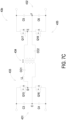
- FIG. 2A is a schematic circuit diagram illustrating the associated currents of the energy storage module as shown in FIG. 1A in the charging mode when the compensation voltage is positive.
- FIG. 2B is a schematic circuit diagram illustrating the associated currents of the energy storage module as shown in FIG. 1A in the charging mode when the compensation voltage is negative.
- FIG. 2C is a schematic circuit diagram illustrating the associated currents of the energy storage module as shown in FIG. 1A in the discharging mode when the compensation voltage is positive.
- FIG. 2A is a schematic circuit diagram illustrating the associated currents of the energy storage module as shown in FIG. 1A in the charging mode when the compensation voltage is positive.
- 2D is a schematic circuit diagram illustrating the associated currents of the energy storage module as shown in FIG. 1A in the discharging mode when the compensation voltage is negative.
- I1 represents the current flowing through the first battery pack 3
- I2 represents the current flowing through the first conduction terminal 41 of the series compensation DC conversion device 4
- I3 represents the current flowing through the second conduction terminal 42 of the series compensation DC conversion device 4.
- the capacitor Cb is in the steady state, the branch voltage of the capacitor Cb is not changed, and no DC current flows through the branch of the capacitor Cb.
- the energy storage module 1 (or the first battery pack 3) is in the charging mode, and the compensation voltage of the capacitor Cb controlled by the four-quadrant DC/DC converter 44 is positive.
- the current I1 flowing through the first battery pack 3 is equal to the sum of the current I2 flowing through the first conduction terminal 41 and the current I3 flowing through the second conduction terminal 42.
- the voltage of the DC bus is equal to the sum of the supply voltage from the first battery pack 3 and the compensation voltage of the capacitor Cb. That is, the direction of the voltage between the battery positive terminal 31 and the battery negative terminal 32 of the first battery pack 3 and the direction of the compensation voltage of the capacitor Cb are identical.
- the energy storage module 1 (or the first battery pack 3) is in the charging mode, and the compensation voltage of the capacitor Cb controlled by the four-quadrant DC/DC converter 44 is negative.
- the current I1 flowing through the first battery pack 3 is equal to the current 13 flowing through the second conduction terminal 42 minus the current I2 flowing through the first conduction terminal 41.
- the voltage of the DC bus is equal to the supply voltage from the first battery pack 3 minus the compensation voltage of the capacitor Cb. That is, the direction of the voltage between the battery positive terminal 31 and the battery negative terminal 32 of the first battery pack 3 and the direction of the compensation voltage of the capacitor Cb are opposite.
- the energy storage module 1 (or the first battery pack 3) is in the discharging mode, and the compensation voltage of the capacitor Cb controlled by the four-quadrant DC/DC converter 44 is positive.
- the current I1 flowing through the first battery pack 3 is equal to the sum of the current I2 flowing through the first conduction terminal 41 and the current I3 flowing through the second conduction terminal 42.
- the voltage of the DC bus is equal to the sum of the supply voltage from the first battery pack 3 and the compensation voltage of the capacitor Cb. That is, the direction of the voltage between the battery positive terminal 31 and the battery negative terminal 32 of the first battery pack 3 and the direction of the compensation voltage of the capacitor Cb are identical.
- the energy storage module 1 (or the first battery pack 3) is in the discharging mode, and the compensation voltage of the capacitor Cb controlled by the four-quadrant DC/DC converter 44 is negative.
- the current I1 flowing through the first battery pack 3 is equal to the current I3 flowing through the second conduction terminal 42 minus the current I2 flowing through the first conduction terminal 41.
- the voltage of the DC bus is equal to the supply voltage from the first battery pack 3 minus the compensation voltage of the capacitor Cb. That is, the direction of the voltage between the battery positive terminal 31 and the battery negative terminal 32 of the first battery pack 3 and the direction of the compensation voltage of the capacitor Cb are opposite.
- the series compensation DC conversion device 4 further includes a control unit 5.
- the control unit 5 is electrically connected with the four-quadrant DC/DC converter 44. Under control of the control unit 5, the four-quadrant DC/DC converter 44 generates the compensation voltage on the capacitor Cb, or the current I1 flowing through the first battery pack 3 is adjusted to the set value.
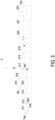
- FIG. 3 is a control flow diagram of the four-quadrant DC/DC converter in the series compensation DC conversion device of the energy storage module as shown in FIG. 1A .
- the control unit 5 receives a current command Isp from an external host (not shown). According to the current command Isp, the control unit 5 controls switching element 520 in the four-quadrant DC/DC converter 44.
- the control unit 5 receives a voltage command Vsp from the external host. According to the voltage command Vsp, the control unit 5 controls the switching element 520 in the four-quadrant DC/DC converter 44.
- the control unit 5 includes a first ramp controller 511, a first comparator 512, a first proportional controller 513, a first amplitude limiter 514, a second ramp controller 515, a selector 516, a second comparator 517, a second proportional controller 518 and a second amplitude limiter 519.
- the second ramp controller 515 receives the current command Isp from the external host.
- the current command Isp is converted into a current ramp given value by the second ramp controller 515.
- the second ramp controller 515 is used for avoiding the step response of the current command Isp.
- the selector 516 receives the current ramp given value from the second ramp controller 515.
- the second comparator 517 receives the current ramp given value from the selector 516, the current I2 flowing through the first conduction terminal 41 and the current I3 flowing through the second conduction terminal 42.
- the current I2 flowing through the first conduction terminal 41 and the current I3 flowing through the second conduction terminal 4 are compared with the current ramp given value by the second comparator 517. Consequently, a comparison current Ierr is generated.
- the second proportional controller 518 receives and calculates the comparison current Ierr.
- the second amplitude limiter 519 receives the calculated comparison current Ierr from the second proportional controller 518 and limits the amplitude of the calculated comparison current Ierr. Consequently, a duty cycle d is obtained.
- the on/off states of the switching element 520 in the four-quadrant DC/DC converter 44 are controlled to adjust the current flowing through an inductor 521 and control the sum of the current I2 flowing through the first conduction terminal 41 and the current I3 flowing through the second conduction terminal 42 to be the set value. That is, the current I1 flowing through the first battery pack 3 is equal to the set value.
- the set value for example is the current command Isp.
- the switching element 520 is the switching element in the four-quadrant DC/DC converter 44.
- the inductor 521 is the inductor in the four-quadrant DC/DC converter 44.
- the inductor is the first conversion inductor L1 as shown in FIGS. 8A and 8B . The installation and connection of the switching element and the inductor in the four-quadrant DC/DC converter 44 will be described later.
- the first ramp controller 511 receives the voltage command Vsp from the external host.
- the voltage command Vsp is converted into a voltage ramp given value by the first ramp controller 511.
- the first ramp controller 511 is used for avoiding the step response of the voltage command Vsp.
- the first comparator 512 receives the voltage ramp given value from the first ramp controller 511 and a compensation voltage Vcb from an output terminal of the control unit 5.
- the voltage ramp given value and the compensation voltage Vcb are compared with each other by the first comparator 512. Consequently, an error voltage Verr is generated.
- the first proportional controller 513 calculates and generates a given current according to the error voltage Verr.
- the first amplitude limiter 514 limits the amplitude of the given current.
- the selector 516 receives the limited given current from the first amplitude limiter 514.
- the second comparator 517 receives the limited given current from the selector 516, the current I2 flowing through the first conduction terminal 41 and the current I3 flowing through the second conduction terminal 42.
- the current I2 flowing through the first conduction terminal 41 and the current I3 flowing through the second conduction terminal 4 are compared with the limited given current by the second comparator 517. Consequently, a comparison current Ierr is generated.
- the second proportional controller 518 receives and calculates the comparison current Ierr.
- the second amplitude limiter 519 receives the calculated comparison current Ierr from the second proportional controller 518 and limits the amplitude of the calculated comparison current Ierr. Consequently, a duty cycle d is obtained. According to the duty cycle d, the on/off states of the switching element 520 in the four-quadrant DC/DC converter 44 are controlled to adjust the current flowing through the inductor 521 and generate the compensation voltage Vcb on the capacitor Cb by the four-quadrant DC/DC converter 44.
- the compensation voltage Vcb for example is the voltage command Vsp.
- the switching element 520 is the switching element in the four-quadrant DC/DC converter 44.
- the inductor 521 is the inductor in the four-quadrant DC/DC converter 44.
- the inductor is the first conversion inductor L1 as shown in FIGS. 8A and 8B
- the capacitor 522 is the capacitor Cb. The installation and connection of the switching elements, the inductor and the capacitor will be described later.
- FIG. 4A is a schematic circuit diagram illustrating an energy storage module according to a second embodiment of the present disclosure.
- FIG. 4B is a schematic circuit diagram illustrating a series compensation DC conversion device of the energy storage module.
- the first conduction terminal 41 of the energy storage module 1a of this embodiment is electrically connected with the bus connection part 2.
- the first positive terminal 411 of the first conduction terminal 41 is electrically connected with the positive bus connection terminal 21 of the bus connection part 2
- the first negative terminal 412 of the first conduction terminal 41 is electrically connected with the negative bus connection terminal 22 of the bus connection part 2.
- the charging current or the discharging current of the first battery pack 3 is equal to the current flowing through the second conduction terminal 42 of the series compensation DC conversion device 4. Moreover, the current flowing through the second conduction terminal 42 is controlled by the four-quadrant DC/DC converter 44 to make the current flowing through the first battery pack 3 be equal to a set value.
- the compensation voltage across the capacitor Cb is generated under control of the four-quadrant DC/DC converter 44. The value of the compensation voltage may be positive or negative.
- the second comparator 517 receives the current I3 through the second conduction terminal 42 of the series compensation DC conversion device 4 under control of the control unit 5.
- the current I3 flowing through the second conduction terminal 42 of the series compensation DC conversion device 4 is compared with the current ramp given value by the second comparator 517. Consequently, a comparison current Ierr is generated.
- the second proportional controller 518 receives and calculates the comparison current Ierr.
- the second amplitude limiter 519 receives the calculated comparison current Ierr from the second proportional controller 518 and limits the amplitude of the calculated comparison current Ierr. Consequently, a duty cycle d is obtained.
- the on/off states of the switching element 520 of the four-quadrant DC/DC converter 44 are controlled to adjust the current flowing through the inductor 521 and control the current I3 flowing through the second conduction terminal 42 of the series compensation DC conversion device 4 to be a set value. That is, the current I1 flowing through the first battery pack 3 is adjusted to equal to a set value.
- the set value is the current command Isp.
- the second comparator 517 receives the current I3 flowing through the second conduction terminal 42 of the series compensation DC conversion device 4 under control of the control unit 5.
- the current I3 flowing through the second conduction terminal 42 of the series compensation DC conversion device 4 is compared with the limited given current from the first amplitude limiter 514 by the second comparator 517. Consequently, a comparison current Ierr is generated.
- the second proportional controller 518 receives and calculates the comparison current Ierr.
- the second amplitude limiter 519 receives the calculated comparison current Ierr from the second proportional controller 518 and limits the amplitude of the calculated comparison current Ierr.
- a duty cycle d is obtained.
- the on/off states of the switching element 520 of the four-quadrant DC/DC converter 44 are controlled to adjust the current flowing through an inductor 521, and generate the compensation voltage Vcb of the capacitor Cb by the four-quadrant DC/DC converter 44.
- FIG. 5 is a schematic circuit diagram illustrating an energy storage module according to a third embodiment of the present disclosure.
- the capacitor Cb of the energy storage module 1b of this embodiment is electrically connected between the negative bus connection terminal 22 of the bus connection part 2 and the battery negative terminal 32 of the first battery pack 3.
- the second positive terminal 421 and the second negative terminal 422 of the second conduction terminal 42 of the series compensation DC conversion device 4 are electrically connected with the two terminals of the capacitor Cb, respectively.
- the second positive terminal 421 is electrically connected with the battery negative terminal 32 of the first battery pack 3
- the second negative terminal 422 is electrically connected with the negative bus connection terminal 22 of the bus connection part 2.
- the current flowing through the first conduction terminal 41 and the current flowing through the second conduction terminal 42 are controlled by the four-quadrant DC/DC converter 44 to adjust the current flowing through the first battery pack 3 to be the set value.
- the compensation voltage across the capacitor Cb is generated under control of the four-quadrant DC/DC converter 44, and the value of compensation voltage may be positive or negative.
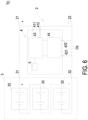
- FIG. 6 is a schematic circuit diagram illustrating an energy storage module according to a fourth embodiment of the present disclosure.
- the first conduction terminal 41 of the energy storage module 1c of this embodiment is electrically connected with the bus connection part 2. That is, the first positive terminal 411 of the first conduction terminal 41 is electrically connected with the positive bus connection terminal 21 of the bus connection part 2, and the first negative terminal 412 of the first conduction terminal 41 is electrically connected with the negative bus connection terminal 22 of the bus connection part 2.
- the capacitor Cb of the energy storage module 1c of this embodiment is electrically connected between the negative bus connection terminal 22 of the bus connection part 2 and the battery negative terminal 32 of the first battery pack 3.
- the charging current or the discharging current of the first battery pack 3 is equal to the current flowing through the second conduction terminal 42 of the series compensation DC conversion device 4.
- the second positive terminal 421 and the second negative terminal 422 of the second conduction terminal 42 of the series compensation DC conversion device 4 are electrically connected with the two terminals of the capacitor Cb, respectively.
- the second positive terminal 421 is electrically connected with the battery negative terminal 32 of the first battery pack 3
- the second negative terminal 422 is electrically connected with the negative bus connection terminal 22 of the bus connection part 2.
- the current flowing through the second conduction terminal 42 is controlled by the four-quadrant DC/DC converter 44 to adjust the current flowing through the first battery pack 3 to be the set value.
- the compensation voltage across the capacitor Cb is generated under control of the four-quadrant DC/DC converter 44, and the value of compensation voltage may be positive or negative.
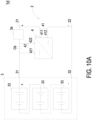
- FIG. 10A is a schematic circuit diagram illustrating an energy storage module according to a fifth embodiment of the present disclosure.
- the energy storage module 1d of this embodiment further includes a second battery pack 3a.
- the constituent of the second battery pack 3a is similar to that of the first battery pack 3, and not redundantly described herein.
- the second battery pack 3a is electrically connected between the capacitor Cb and the positive bus connection terminal 21.
- the compensation voltage across the capacitor Cb is generated under control of the four-quadrant DC/DC converter 44.
- the voltage of the first battery pack 3 and the voltage of the second battery pack 3a are compensated according to the compensation voltage.
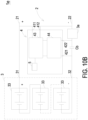
- FIG. 10B is a schematic circuit diagram illustrating an energy storage module according to a sixth embodiment of the present disclosure.
- the energy storage module 1e of this embodiment further includes a second battery pack 3a.
- the constituent of the second battery pack 3a is similar to that of the first battery pack 3, and not redundantly described herein.
- the second battery pack 3a is electrically connected between the capacitor Cb and the negative bus connection terminal 22.
- the compensation voltage across the capacitor Cb is generated under control of the four-quadrant DC/DC converter 44.
- the voltage of the first battery pack 3 and the voltage of the second battery pack 3a are compensated according to the compensation voltage.
- FIG. 7A is a schematic circuit diagram illustrating a first exemplary circuitry topology of the bidirectional isolation-type converter in the series compensation DC conversion device of the energy storage module as shown in FIG. 1A .
- the bidirectional isolation-type converter 43 is a CLLC conversion circuit.
- the bidirectional isolation-type converter 43 includes a first terminal 431, a second terminal 432, a primary circuit 433, a transformer 434 and a secondary current 435.
- the CLLC conversion circuit is a bidirectional LLC circuit for achieving the soft switch function. Consequently, the switching loss of the switches in the bidirectional isolation-type converter 43 can be reduced.
- the first terminal 431 of the bidirectional isolation-type converter 43 is electrically connected with the first conduction terminal 41 of the series compensation DC conversion device 4, and the second terminal 432 of the bidirectional isolation-type converter 43 is electrically connected with the four-quadrant DC/DC converter 44.
- the first terminal 431 of the bidirectional isolation-type converter 43 is electrically connected with the four-quadrant DC/DC converter 44, and the second terminal 432 of the bidirectional isolation-type converter 43 is electrically connected with the first conduction terminal 41 of the series compensation DC conversion device 4.
- the primary circuit 433 is a half-bridge conversion circuit.
- the primary circuit 433 includes two primary capacitors C1 and C2, two primary switches Q1 and Q2, a resonant inductor LL and a first resonant capacitor CC1.
- the two primary capacitors C1 and C2 are connected in series to collaboratively form a third bridge arm.
- a connection node between the two primary capacitors C1 and C2 is a third node C.
- the third node C is electrically connected with the second terminal of the primary winding of the transformer 434.
- the two primary switches Q1 and Q2 are connected in series to collaboratively form a fourth bridge arm.
- the fourth bridge arm and the third bridge arm are connected with each other in parallel.
- a connection node between the two primary switches Q1 and Q2 is a fourth node D.
- the resonant inductor LL and the first resonant capacitor CC1 are serially connected between the fourth node D and the first terminal of the primary winding of the transformer 434.
- the secondary circuit 435 for example is a full-bridge conversion circuit.
- the secondary circuit 435 includes four secondary switches Q3, Q4, Q5, Q6 and a second resonant capacitor CC2.
- the two secondary switches Q3 and Q4 are connected to collaboratively form a fifth bridge arm.
- a connection node between the two secondary switches Q3 and Q4 is a fifth node E.
- the fifth node E is electrically connected with the first terminal of the secondary winding of the transformer 434.
- the two secondary windings Q5 and Q6 are connected in series to collaboratively form a sixth bridge arm.
- the sixth bridge arm and the fifth bridge arm are connected with each other in parallel.
- a connection node between the two secondary windings Q5 and Q6 is a sixth node F.
- the second resonant capacitor CC2 is electrically connected between the sixth node F and the second terminal of the secondary winding of the transformer 434.
- the voltage transformation ratio in the first terminal 431 and the second terminal 432 of the bidirectional isolation-type converter 43 is nearly fixed.
- the switching frequency of the bidirectional isolation-type converter 43 is in the range between 90% and 110% of the resonant frequency of the first resonant capacitor CC1, the second resonant capacitor CC2 and the resonant inductor LL.
- the switching frequency of the bidirectional isolation-type converter 43 is equal to the resonant frequency of the first resonant capacitor CC1, the second resonant capacitor CC2 and the resonant inductor LL. Consequently, the constant frequency control function of the bidirectional isolation-type converter 43 can be achieved.
- the examples of the primary circuit 433 and the secondary current 435 are not restricted.
- the primary circuit 433 is a full-bridge conversion circuit
- the secondary current 435 is a half-bridge conversion circuit.
- FIG. 7B is a schematic circuit diagram illustrating a second exemplary circuitry topology of the bidirectional isolation-type converter in the series compensation DC conversion device of the energy storage module as shown in FIG. 1A .
- the circuitry topology of the primary circuit 433 of the bidirectional isolation-type converter 43a in this embodiment is distinguished from the circuitry topology of the primary circuit 433 of FIG. 7A .
- the primary circuit 433 of the bidirectional isolation-type converter 43a includes four primary switches Q7, Q8, Q9 and Q10.
- the two primary switches Q7 and Q8 are connected in series to collaboratively form the third bridge arm.
- the two primary switches Q9 and Q10 are connected in series to collaboratively form the fourth bridge arm.
- the secondary circuit 435 of the bidirectional isolation-type converter 43a includes four secondary switches Q11, Q12, Q13 and Q14.
- the two four secondary switches Q11 and Q12 are connected in series to collaboratively form the fifth bridge arm.
- the two four secondary switches Q13 and Q14 are connected in series to collaboratively form the sixth bridge arm.
- the operations of the secondary switches Q11, Q12, Q13 and Q14 are similar to the operations of the secondary switches Q3, Q4, Q5 and Q6 in the secondary circuit 435 of the bidirectional isolation-type converter 43 as shown in FIG. 7A , and not redundantly described herein.
- FIG. 7C is a schematic circuit diagram illustrating a third exemplary circuitry topology of the bidirectional isolation-type converter in the series compensation DC conversion device of the energy storage module as shown in FIG. 1A .
- the circuitry topology of the secondary circuit 435 of the bidirectional isolation-type converter 43b in this embodiment is distinguished from the circuitry topology of the secondary circuit 435 of FIG. 7A .
- the secondary circuit 435 of the bidirectional isolation-type converter 43b includes two secondary switches Q17 and Q18 and two secondary capacitors C5 and C6.
- the two secondary switches Q17 and Q18 are connected in series to collaboratively form the fifth bridge arm.
- the two secondary capacitors C5 and C6 are connected in series to collaboratively form the sixth bridge arm.
- the primary circuit 433 of the bidirectional isolation-type converter 43b includes two primary capacitors C3 and C4 and two primary switches Q15 and Q16.
- the two primary capacitors C3 and C4 are connected in series to collaboratively form the third bridge arm.
- the two primary switches Q15 and Q16 are connected in series to collaboratively form the fourth bridge arm.
- the operations of the secondary capacitors C3, C4 and the primary switches Q15, Q16 are similar to the operations of the secondary capacitors C1, C2 and the primary switches Q1, Q2 in the secondary circuit 435 of the bidirectional isolation-type converter 43 as shown in FIG. 7A , and not redundantly described herein.
- FIG. 8A is a schematic circuit diagram illustrating a first exemplary circuitry topology of the four-quadrant DC/DC converter in the series compensation DC conversion device of the energy storage module as shown in FIG. 1A .
- the four-quadrant DC/DC converter 44 includes a first terminal 441, a second terminal 442, four switches (i.e., a first switch S1, a second switch S2, a third switch S3 and a fourth switch S4) and a first conversion inductor L1.
- the first terminal 441 of the four-quadrant DC/DC converter 44 is electrically connected with the bidirectional isolation-type converter 43.
- the positive terminal of the second terminal 442 of the four-quadrant DC/DC converter 44 is electrically connected with the second positive terminal 421 of the second conduction terminal 42 of the series compensation DC conversion device 4.
- the negative terminal of the second terminal 442 of the four-quadrant DC/DC converter 44 is electrically connected with the second negative terminal 422 of the second conduction terminal 42 of the series compensation DC conversion device 4.
- the two switches S1 and S2 are connected in series to collaboratively form a first bridge arm. A connection node between the two switches S 1 and S2 is a first node A.
- the first conversion inductor L1 is electrically connected between the first node A and the positive terminal of the second terminal 442 of the four-quadrant DC/DC converter 44.
- the first conversion inductor L1 is electrically connected between the first node A and the second positive terminal 421 of the second conduction terminal 42.
- the two switches S3 and S4 are connected in series to collaboratively form a second bridge arm.
- a connection node between the two switches S3 and S4 is the second node B.
- the second node B is electrically connected with the negative terminal of the second terminal 442 of the four-quadrant DC/DC converter 44.
- the four-quadrant DC/DC converter 44 further includes a conversion capacitor Ct.
- the conversion capacitor Ct is electrically connected between the positive terminal and the negative terminal of the second terminal 442 of the four-quadrant DC/DC converter 44.
- the function of the conversion capacitor Ct is achieved by the capacitor Cb of FIG.
- the capacitor Cb is integrated into the four-quadrant DC/DC convert 44.
- the four-quadrant DC/DC converter of the energy storage module is a parallel-connected structure of a plurality of four-quadrant DC/DC converters 44 as shown in FIG. 8A .
- FIG. 8B is a schematic circuit diagram illustrating a second exemplary circuitry topology of the four-quadrant DC/DC converter in the series compensation DC conversion device of the energy storage module as shown in FIG. 1A .
- the four-quadrant DC/DC converter 44a of this embodiment further includes a second conversion inductor L2.
- the second conversion inductor L2 is electrically connected between the second node B and the negative terminal of the second terminal 442 of the four-quadrant DC/DC converter 44 (i.e., the second conversion inductor L2 is electrically connected between the second node B and the second negative terminal 422).
- the four-quadrant DC/DC converter of the energy storage module is a parallel-connected structure of a plurality of four-quadrant DC/DC converters 44a as shown in FIG. 8B .
- the first conversion inductor L1 is electrically connected between the first node A and the negative terminal of the second terminal 442. That is, the first conversion inductor L1 is electrically connected between the first node A and the second negative terminal 422 of the second conduction terminal 42.
- the second conversion inductor L2 is electrically connected between the second node B and the positive terminal of the second terminal 442. That is, the second conversion inductor L2 is electrically connected between the second node B and the second positive terminal 421 of the second conduction terminal 42.
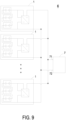
- FIG. 9 is a schematic circuit diagram illustrating an energy storage system according to an embodiment of the present disclosure.
- the energy storage system 6 includes a power conversion device 7 and a plurality of energy storage modules. Each of the plurality of energy storage modules have the circuitry topology of the energy storage module in any of the above embodiments.
- the energy storage system 6 includes the power conversion device 7 and a plurality of energy storage modules 1 of the first embodiment.
- the power conversion device 7 has a power positive terminal 71 and a power negative terminal 72.
- the positive bus connection terminal 21 of the bus connection part 2 in each energy storage module 1 is electrically connected with the power positive terminal 71.
- the negative bus connection terminal 22 of the bus connection part 2 in each energy storage module 1 is electrically connected with the power negative terminal 72.
- the voltage across the two terminals of the first battery pack are compensated. Consequently, the voltages of the plurality of energy storage modules connected with the DC bus will be substantially consistent. Due to the special design of the energy storage module, the charging/discharging efficiency of the energy storage system 6 will be enhanced, and the circulating current between different energy storage modules will be avoided.
- the energy storage module includes the series compensation DC conversion device.
- the first conduction terminal of the series compensation DC conversion device is electrically connected with the positive bus connection terminal and the negative bus connection terminal, or the first conduction terminal of the series compensation DC conversion device is electrically connected with the battery positive terminal and the battery negative terminal of the first battery pack.
- the second conduction terminal of the series compensation DC conversion device is electrically connected with two terminals of the capacitor.
- the four-quadrant DC/DC of the series compensation DC conversion device converter controls the capacitor to generate the compensation voltage. According to the compensation voltage, the voltage between the battery positive terminal and the battery negative terminal of the first battery pack is compensated, or a current flowing through the first battery pack is adjusted to a set value.
- the value of the compensation voltage may be positive or negative according to the technology of the present disclosure. Consequently, the power loss is reduced, and the operating efficiency is enhanced.
- the compensation voltage across the capacitor is relatively lower than the voltage across the two terminals of the first battery pack.
- the conversion power used by the series compensation DC conversion device is relatively lower.
- the current flowing through the battery pack is adjusted to the set value under control of the series compensation DC conversion device. That is, the charging current or the discharging current of the battery pack is controlled to lie within a reasonable range of a charge/discharge curve. Consequently, the battery pack can be rapidly charged or discharged, and the lifespan of the battery pack can be extended.
Landscapes
- Engineering & Computer Science (AREA)
- Power Engineering (AREA)
- Charge And Discharge Circuits For Batteries Or The Like (AREA)
- Dc-Dc Converters (AREA)
Applications Claiming Priority (1)
| Application Number | Priority Date | Filing Date | Title |
|---|---|---|---|
| CN202211295176.5A CN115719986A (zh) | 2022-10-21 | 2022-10-21 | 储能模组及储能系统 |
Publications (1)
| Publication Number | Publication Date |
|---|---|
| EP4358355A1 true EP4358355A1 (de) | 2024-04-24 |
Family
ID=85254563
Family Applications (1)
| Application Number | Title | Priority Date | Filing Date |
|---|---|---|---|
| EP23200851.6A Pending EP4358355A1 (de) | 2022-10-21 | 2023-09-29 | Energiespeichermodul und energiespeichersystem |
Country Status (5)
| Country | Link |
|---|---|
| US (1) | US20240235238A9 (de) |
| EP (1) | EP4358355A1 (de) |
| JP (1) | JP7557025B2 (de) |
| CN (1) | CN115719986A (de) |
| TW (1) | TWI875136B (de) |
Families Citing this family (4)
| Publication number | Priority date | Publication date | Assignee | Title |
|---|---|---|---|---|
| EP4383496A1 (de) * | 2022-12-08 | 2024-06-12 | Hitachi Energy Ltd | Energiespeichersystem für ein gleichstromübertragungssystem und verfahren zum energieaustausch mit einer gleichstromübertragung |
| JP2025012900A (ja) * | 2023-07-14 | 2025-01-24 | 株式会社Soken | 電力供給システム、制御装置、及び制御プログラム |
| CN116722747B (zh) * | 2023-08-09 | 2023-12-08 | 常熟理工学院 | 一种电能转换系统及其控制方法 |
| CN119315838B (zh) * | 2024-09-27 | 2025-10-28 | 潜润电子科技(苏州)有限公司 | 一种电池增压电路及方法 |
Citations (2)
| Publication number | Priority date | Publication date | Assignee | Title |
|---|---|---|---|---|
| US20120286569A1 (en) * | 2009-07-31 | 2012-11-15 | Ulf Pischke | Circuit system for a vehicle electrical system |
| US20180152115A1 (en) * | 2016-11-25 | 2018-05-31 | Delta Electronics, Inc. | Power conversion device and power converting method |
Family Cites Families (9)
| Publication number | Priority date | Publication date | Assignee | Title |
|---|---|---|---|---|
| CN104426157B (zh) * | 2013-09-10 | 2017-04-19 | 台达电子企业管理(上海)有限公司 | 储能模块以及储能装置 |
| TWI571029B (zh) * | 2015-10-28 | 2017-02-11 | 茂達電子股份有限公司 | 補償電路及使用其的儲能裝置 |
| CN108054922B (zh) * | 2017-12-29 | 2024-01-09 | 深圳青铜剑科技股份有限公司 | 一种燃料电池直流-直流变换器及其控制方法 |
| SG11202011091QA (en) | 2018-05-10 | 2020-12-30 | Toshiba Kk | Dc transformation system |
| US12308673B2 (en) | 2019-03-21 | 2025-05-20 | Hefei Gotion High-Tech Power Energy Co., Ltd. | Active equalizer circuit, battery management system, and power supply system |
| CN110460080B (zh) * | 2019-09-10 | 2021-07-06 | 国网四川省电力公司电力科学研究院 | 一种电压补偿型电池储能变换器及其控制方法 |
| US11233456B2 (en) * | 2019-09-30 | 2022-01-25 | Semiconductor Components Industries, Llc | Methods and systems of operating power converters |
| CN112994133A (zh) * | 2019-12-17 | 2021-06-18 | 西安西电高压开关有限责任公司 | 一种储能电池接口装置 |
| CN214045118U (zh) * | 2020-12-16 | 2021-08-24 | 深圳市普兰斯通科技有限公司 | 通过h桥补偿电路进行功率控制的电池储能结构 |
-
2022
- 2022-10-21 CN CN202211295176.5A patent/CN115719986A/zh active Pending
-
2023
- 2023-08-17 TW TW112130975A patent/TWI875136B/zh active
- 2023-08-21 JP JP2023134270A patent/JP7557025B2/ja active Active
- 2023-08-31 US US18/240,482 patent/US20240235238A9/en active Pending
- 2023-09-29 EP EP23200851.6A patent/EP4358355A1/de active Pending
Patent Citations (2)
| Publication number | Priority date | Publication date | Assignee | Title |
|---|---|---|---|---|
| US20120286569A1 (en) * | 2009-07-31 | 2012-11-15 | Ulf Pischke | Circuit system for a vehicle electrical system |
| US20180152115A1 (en) * | 2016-11-25 | 2018-05-31 | Delta Electronics, Inc. | Power conversion device and power converting method |
Also Published As
| Publication number | Publication date |
|---|---|
| US20240136841A1 (en) | 2024-04-25 |
| JP2024061615A (ja) | 2024-05-07 |
| TWI875136B (zh) | 2025-03-01 |
| US20240235238A9 (en) | 2024-07-11 |
| TW202418708A (zh) | 2024-05-01 |
| JP7557025B2 (ja) | 2024-09-26 |
| CN115719986A (zh) | 2023-02-28 |
Similar Documents
| Publication | Publication Date | Title |
|---|---|---|
| EP4358355A1 (de) | Energiespeichermodul und energiespeichersystem | |
| US7049711B2 (en) | Uninterruptible power system | |
| US20200212817A1 (en) | On-board charging/discharging system | |
| CN111478408A (zh) | 三桥臂拓扑装置、控制方法、以及不间断电源系统 | |
| CN103141019A (zh) | 包括要并联或串联连接的dc电源的dc-dc变换器 | |
| Singh et al. | An improved two-stage non-isolated converter for on-board plug-in hybrid EV battery charger | |
| US12485783B2 (en) | Converter and power conversion system for converting power of auxiliary battery using OBC | |
| WO2021232749A1 (zh) | 三桥臂拓扑装置及不间断电源系统 | |
| CN115362610A (zh) | 具有多个lvdc输出的sst系统 | |
| US20240239219A1 (en) | Vehicle, and energy conversion device and discharging method therefor | |
| EP4231493A1 (de) | Ladevorrichtung und fahrzeug | |
| EP4583385A1 (de) | Bidirektionaler gleichstromwandler, energiespeichervorrichtung und steuerungsverfahren dafür | |
| US20250158518A1 (en) | Bidirectional resonant converter | |
| WO2023226364A1 (zh) | 一种充电装置及充电控制方法 | |
| CN111525676A (zh) | 直流输出不断电电源供应器 | |
| CN119420005A (zh) | 一种两级三电平高压电池充放电装置及控制方法 | |
| US20240258801A1 (en) | Charging and balancing batteries | |
| KR102403092B1 (ko) | 3상 캐스케이드 멀티레벨 계통 연계형 에너지 저장 시스템 제어장치 | |
| CN215772576U (zh) | 一种电池装置和供电系统 | |
| JP2024090514A (ja) | コンバータ及び双方向コンバータ | |
| CN116032127A (zh) | 电动汽车及其中的电源变换器 | |
| CN111130198B (zh) | 一种电动汽车的充电系统及方法 | |
| CN112583091B (zh) | 车载充电系统及具有其的车辆 | |
| Bakeer et al. | Comparison of (N+ 1) Redundancy and Fault Tolerance Approaches in Single-Stage Series-Connected Isolated MVAC to LVDC Converters | |
| KR20220094661A (ko) | 인덕터 전류 감지 기반 절연형 dc-dc 컨버터 |
Legal Events
| Date | Code | Title | Description |
|---|---|---|---|
| PUAI | Public reference made under article 153(3) epc to a published international application that has entered the european phase |
Free format text: ORIGINAL CODE: 0009012 |
|
| STAA | Information on the status of an ep patent application or granted ep patent |
Free format text: STATUS: THE APPLICATION HAS BEEN PUBLISHED |
|
| AK | Designated contracting states |
Kind code of ref document: A1 Designated state(s): AL AT BE BG CH CY CZ DE DK EE ES FI FR GB GR HR HU IE IS IT LI LT LU LV MC ME MK MT NL NO PL PT RO RS SE SI SK SM TR |
|
| STAA | Information on the status of an ep patent application or granted ep patent |
Free format text: STATUS: REQUEST FOR EXAMINATION WAS MADE |
|
| 17P | Request for examination filed |
Effective date: 20241017 |
|
| RBV | Designated contracting states (corrected) |
Designated state(s): AL AT BE BG CH CY CZ DE DK EE ES FI FR GB GR HR HU IE IS IT LI LT LU LV MC ME MK MT NL NO PL PT RO RS SE SI SK SM TR |