EP4354058B1 - Heizverfahren und kühl- und gefriervorrichtung - Google Patents
Heizverfahren und kühl- und gefriervorrichtung Download PDFInfo
- Publication number
- EP4354058B1 EP4354058B1 EP22847907.7A EP22847907A EP4354058B1 EP 4354058 B1 EP4354058 B1 EP 4354058B1 EP 22847907 A EP22847907 A EP 22847907A EP 4354058 B1 EP4354058 B1 EP 4354058B1
- Authority
- EP
- European Patent Office
- Prior art keywords
- heating
- heating unit
- electromagnetic wave
- unit
- controlling
- Prior art date
- Legal status (The legal status is an assumption and is not a legal conclusion. Google has not performed a legal analysis and makes no representation as to the accuracy of the status listed.)
- Active
Links
Images



Classifications
-
- F—MECHANICAL ENGINEERING; LIGHTING; HEATING; WEAPONS; BLASTING
- F25—REFRIGERATION OR COOLING; COMBINED HEATING AND REFRIGERATION SYSTEMS; HEAT PUMP SYSTEMS; MANUFACTURE OR STORAGE OF ICE; LIQUEFACTION SOLIDIFICATION OF GASES
- F25D—REFRIGERATORS; COLD ROOMS; ICE-BOXES; COOLING OR FREEZING APPARATUS NOT OTHERWISE PROVIDED FOR
- F25D31/00—Other cooling or freezing apparatus
- F25D31/005—Combined cooling and heating devices
-
- A—HUMAN NECESSITIES
- A23—FOODS OR FOODSTUFFS; TREATMENT THEREOF, NOT COVERED BY OTHER CLASSES
- A23B—PRESERVATION OF FOODS, FOODSTUFFS OR NON-ALCOHOLIC BEVERAGES; CHEMICAL RIPENING OF FRUIT OR VEGETABLES
- A23B2/00—Preservation of foods or foodstuffs, in general
- A23B2/80—Freezing; Subsequent thawing; Cooling
- A23B2/82—Thawing subsequent to freezing
-
- H—ELECTRICITY
- H05—ELECTRIC TECHNIQUES NOT OTHERWISE PROVIDED FOR
- H05B—ELECTRIC HEATING; ELECTRIC LIGHT SOURCES NOT OTHERWISE PROVIDED FOR; CIRCUIT ARRANGEMENTS FOR ELECTRIC LIGHT SOURCES, IN GENERAL
- H05B6/00—Heating by electric, magnetic or electromagnetic fields
- H05B6/46—Dielectric heating
- H05B6/48—Circuits
- H05B6/50—Circuits for monitoring or control
-
- H—ELECTRICITY
- H05—ELECTRIC TECHNIQUES NOT OTHERWISE PROVIDED FOR
- H05B—ELECTRIC HEATING; ELECTRIC LIGHT SOURCES NOT OTHERWISE PROVIDED FOR; CIRCUIT ARRANGEMENTS FOR ELECTRIC LIGHT SOURCES, IN GENERAL
- H05B6/00—Heating by electric, magnetic or electromagnetic fields
- H05B6/46—Dielectric heating
- H05B6/62—Apparatus for specific applications
-
- H—ELECTRICITY
- H05—ELECTRIC TECHNIQUES NOT OTHERWISE PROVIDED FOR
- H05B—ELECTRIC HEATING; ELECTRIC LIGHT SOURCES NOT OTHERWISE PROVIDED FOR; CIRCUIT ARRANGEMENTS FOR ELECTRIC LIGHT SOURCES, IN GENERAL
- H05B6/00—Heating by electric, magnetic or electromagnetic fields
- H05B6/64—Heating using microwaves
- H05B6/66—Circuits
- H05B6/68—Circuits for monitoring or control
Definitions
- the present invention relates to the technical field of food processing, and more particularly relates to a heating method and a refrigerating and freezing apparatus having a heating unit.
- electromagnetic wave heating units are usually used to thaw the food.
- Thawing food with the electromagnetic wave heating units is not only fast and efficient, but also reduces the loss of nutrients in the food.
- thawing is generally performed based on heating parameters input by a user, or heating parameters are automatically confirmed for thawing according to the food parameters (weight, temperature, size, etc.) detected by a detection device, which either places too high requirements on the user, or increases the production cost of a heating unit, cannot realize precise thawing of food, and leads to the poor quality of the thawed food and even the need of multiple thawing.
- CN 108 153 182 B and CN 109 000 419 A disclose respectively a heating method and a refrigerating apparatus according to the prior art.
- An object of a first aspect of the present invention is to provide a heating method to overcome at least one of technical defects in the prior art.
- a further object of the first aspect of the present invention is to prevent an object to be processed from being overheated.
- Another further object of the first aspect of the present invention is to reduce energy consumption.
- An object of a second aspect of the present invention to provide a refrigerating and freezing apparatus having a heating unit.
- a heating method including the features of claim 1.
- the heating unit includes the electromagnetic wave generation module for generating the electromagnetic wave signal, and the cavity capacitor which is electrically connected to the electromagnetic wave generation module and used for accommodating the object to be processed; prior to the step of controlling the heating unit to operate, the heating method further includes:
- the heating unit is arranged in a storage compartment of a refrigerating and freezing apparatus,
- the heating method further includes: if the door body of the heating unit opens or closes after the heating unit suspends heating, controlling the heating unit to terminate the heating procedure.
- the heating unit is arranged in the storage compartment of the refrigerating and freezing apparatus, and a door of the refrigerating and freezing apparatus is provided with an interactive unit; prior to the step of controlling the heating unit to operate, the heating method further includes: if the door body of the heating unit opens or closes during an opening and closing process of the door corresponding to the storage compartment, activating the interactive unit after the door corresponding to the storage compartment is closed, so as to receive a heating command.
- the heating unit is arranged in the storage compartment of the refrigerating and freezing apparatus, and prior to the step of controlling the heating unit to operate, the heating method further includes:
- the heating method further includes:
- the door body of the heating unit determining that the object to be processed is taken out; and/or after a preset interval time passes since the heating completion condition is met, executing the step of if the object to be processed is taken out, receiving another heating command again.
- a refrigerating and freezing apparatus including:
- the inventors of the present application creatively realize that during the heating process of food, food parameters such as temperature difference between the inside and outside of the food, shape and size of the food, and dielectric properties of the food will all change. If the heating parameters are re-determined by the same method as the initial heating after heating is stopped, a great error may be caused, resulting in excessive heating of the food. According to the present invention, by recording the most recent heating parameter before the heating unit stops heating, and continuing to perform heating according to the recorded heating parameter after heating is resumed, a control process is simplified, and the phenomenon that the object to be processed is overheated according to the re-determined heating parameters is avoided, so that the heating time is shortened, and unnecessary energy consumption is reduced.
- the present invention determines the initial heating parameter of the heating unit based on the configuration of the impedance matching module or the frequency of the electromagnetic wave signal. Compared with directly measuring the food parameters of the object to be processed, the present invention saves the cost of additional arrangement of a measuring device, tolerates the errors of the measurement device, obtains feature parameters with higher accuracy, and thus achieves excellent heating effects
- the present invention supplies power to the heating unit, activates the interactive unit, and suspends or terminates the thawing procedure; thus, not only does it not require additional arrangement of a sensing device, which reduces the production cost and energy consumption of the refrigerating and freezing apparatus on the whole, but electromagnetic wave leakage can also be effectively reduced or even avoided, thereby eliminating adverse effects on user health, and improving user experience.
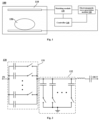
- FIG. 1 is a schematic structural diagram of a heating unit 100 according to an embodiment of the present invention.
- the heating unit 100 may include a cavity capacitor 110, an electromagnetic wave generation module 120, and a controller 140.
- the cavity capacitor 110 may include a cavity 111 for accommodating an object 150 to be processed, and a radiation electrode plate disposed in the cavity 111.
- a receiving electrode plate may also be disposed in the cavity 111 to form a capacitor with the radiation electrode plate.
- the cavity 111 may be made of metal to serve as a receiving electrode plate for formation of a capacitor together with the radiation electrode plate.
- the cavity capacitor 110 may further include a door body 112 for closing an access opening of the cavity 111 to reduce leakage of electromagnetic waves.
- the electromagnetic wave generation module 120 may be configured to generate an electromagnetic wave signal and be electrically connected to the radiation electrode plate of the cavity capacitor 110, so as to generate the electromagnetic waves within the cavity capacitor 110, thereby heating the object 150 to be processed in the cavity capacitor 110.
- the processing unit may be configured to control the heating unit 100 to operate to heat the object 150 to be processed; when a heating suspension condition is met, a current heating parameter of the heating unit 100 is recorded, and the heating unit 100 is controlled to stop operating; and when a heating continuation condition is met, the heating unit 100 is controlled to continue operating according to the recorded heating parameter.
- the inventors of the present application creatively realize that during the heating process of food, food parameters such as temperature difference between the inside and outside of the food, shape and size of the food, and dielectric properties of the food will all change. If the heating parameters are re-determined by the same method as the initial heating after heating is stopped, a great error may be caused, resulting in excessive heating of the food.
- the heating unit 100 records the most recent heating parameter before the heating unit 100 stops heating, and heating is continued according to the recorded heating parameter after heating is resumed, which not only simplifies a control process, but also avoids the phenomenon that the object 150 to be processed is overheated according to the re-determined heating parameters, so that the heating time is shortened, and unnecessary energy consumption is reduced.
- the initial heating parameter includes at least one of heating power, and a termination threshold for terminating a heating procedure.
- the termination threshold may be a total heating time, a change threshold of a dielectric coefficient, and the like.
- the heating unit 100 further includes an impedance matching module 130.
- the impedance matching module 130 may be connected in series between the electromagnetic wave generation module 120 and the cavity capacitor 110 or connected in parallel at both ends of the cavity capacitor 110, and is configured to adjust a load impedance of the electromagnetic wave generation module 120 by adjusting its own impedance, so as to achieve load matching and improve heating efficiency.
- the processing unit is further configured to determine an initial heating parameter according to the configuration of the impedance matching module 130 prior to the step of controlling the heating unit 100 to operate. That is, by adjusting the configuration of the impedance matching module 130, a reflected wave power returning to the electromagnetic wave generation module 120 is reduced; and the initial heating parameter of the heating unit 100 is determined according to the configuration of the impedance matching module 130, so as to reduce sensing devices, and realize precise heating of the object 150 to be processed.
- the processing unit controls the electromagnetic wave generation module 120 to generate an electromagnetic wave signal with a preset initial power, adjust the configuration of the impedance matching module 130, determine the configuration of the impedance matching module 130 that achieves a minimum reflected wave power returning to the electromagnetic wave generation module 120, and determine the initial heating parameter according to the configuration of the impedance matching module 130 with the minimum reflected wave power.
- the preset initial power may be 10-20W, for example, 10W, 15W or 20W, so as to reduce the impact on the object 150 to be processed, and save energy.
- the heating unit 100 may also include a directional coupler connected in series between the cavity capacitor 110 and the electromagnetic wave generation module 120 for monitoring the reflected wave power returning to the electromagnetic wave generation module 120 in real time.
- the impedance matching module 130 may include multiple matching branches that can be switched on and off independently.
- the processing unit may be further configured to determine the initial heating parameter according to the on-off combination numbers of the multiple matching branches, so as to shorten the time for determining the initial heating parameter.
- the storage unit may store a preset comparison table, which records a corresponding relation between the on-off combination numbers and the initial heating parameters.
- the processing unit may be configured to match, according to the preset comparison table, the corresponding initial heating parameter based on the on-off combination number that realizes the minimum reflected wave power.
- FIG. 2 is a schematic circuit diagram of the impedance matching module 130 in FIG. 1 .
- the impedance matching module 130 may include a first matching unit 131 connected in series between the electromagnetic wave generation module 120 and the cavity capacitor 110, and a second matching unit 132, one end of which is electrically connected between the first matching unit 131 and the cavity capacitor 110, and the other end thereof is grounded.
- the first matching unit 131 and the second matching unit 132 may respectively include a plurality of matching branches connected in parallel, and each of the matching branches includes a fixed capacitor and a switch, so as to improve the reliability and adjustable range of the impedance matching module 130 while simplifying a circuit.
- the capacitance values of the plurality of fixed capacitors of the first matching unit 131 and the second matching unit 132 may not be equal.
- the electromagnetic wave generation module 120 may include a frequency source, a power amplifier, and a voltage-controlled oscillator for adjusting an output frequency of the frequency source (a frequency of the electromagnetic wave signal).
- the processing unit may be further configured to determine the initial heating parameter according to the frequency of the electromagnetic wave signal prior to the step of controlling the heating unit 100 to operate. That is, by adjusting the frequency of the electromagnetic wave signal, the reflected wave power returning to the electromagnetic wave generation module 120 is reduced; and the initial heating parameter of the heating unit 100 is determined according to the frequency of the electromagnetic wave signal, so as to reduce the sensing devices, and realize precise heating of the object 150 to be processed.
- the processing unit may control the electromagnetic wave generation module 120 to generate an electromagnetic wave signal with a preset initial power, adjust the frequency of the electromagnetic wave signal, determine the frequency of the electromagnetic wave signal that achieves the minimum reflected wave power returning to the electromagnetic wave generation module 120, and determine the initial heating parameter according to the frequency of the electromagnetic wave signal with the minimum reflected wave power.
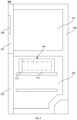
- FIG. 3 is a schematic cross-sectional view of a refrigerating and freezing apparatus 200 according to an embodiment of the present invention.
- the present invention also provides a refrigerating and freezing apparatus 200.
- the refrigerating and freezing apparatus 200 may include a box body 210, in which at least one storage compartment is defined, a door configured to open and close the at least one storage compartment, a refrigeration system that provides cooling capacity to the at least one storage compartment, and a controller 140.
- the cavity capacitor 110 of the heating unit 100 may be arranged in a storage compartment; and a part of the controller 140 may be located within the cavity capacitor 110, and is mainly configured to control the operation of the electromagnetic wave generation module 120, the impedance matching module 130, and other devices, and the other part of the controller is located in a compressor compartment or top of the box body 210, and is mainly configured to control the operation of the refrigeration system.
- the at least one storage compartment may include a refrigerating compartment 211 and a freezing compartment 212 arranged below the refrigerating compartment 211.
- At least one door may include a refrigerator door 221 for opening and closing the refrigerating compartment 211, and a freezer door 222 for opening and closing the freezing compartment 212.
- the cavity capacitor 110 may be arranged in the freezing compartment 212 to facilitate a user picking and placing the object 150 to be processed.
- the refrigerating and freezing apparatus 200 of the present invention will be described in detail below by taking the arrangement of the cavity capacitor 110 in the freezing compartment 212 as an example.
- the heating suspension condition may include that the freezer door 222 is opened.
- the heating continuation condition may include that the freezer door 222 is closed, and the door body 112 does not open or close during the opening and closing of the freezer door 222. That is, in a heating process, if the freezer door 222 is opened, the processing unit controls the electromagnetic wave generation module 120 to stop working, so as to reduce or even eliminate the impact of electromagnetic waves on a user; and if the freezer door 222 is closed and the door body 112 does not open or close in this process, the processing unit controls the electromagnetic wave generation module 120 to continue working according to the recorded heating parameter, so as to prevent the object 150 to be processed from being overheated.
- the processing unit may be further configured to control the heating unit 100 to terminate the heating procedure if the door body 112 of the heating unit 100 opens or closes after the heating unit 100 suspends heating, that is, to control the electromagnetic wave generation module 120 to stop working, so as to avoid the phenomenon that the electromagnetic wave generation module 120 is damaged due to heating of a cavity when a user takes out the object 150 to be processed.
- the refrigerating and freezing apparatus 200 may also include an interactive unit 230 for receiving a heating command.
- the interactive unit 230 may be located at one of the doors, e.g., the refrigerator door 221 located on the upper side.
- the processing unit may be configured to activate the interactive unit 230 after the freezer door 222 is closed if the door body 112 opens or closes during the opening and closing process of the freezer door 222, and then to receive the heating command, so as to save electric energy and reduce the waiting time of the user.
- the processing unit may be configured to supply power to the heating unit 100 when the freezer door 222 is opened, so as to save electric energy and quickly start heating.
- the heating unit 100 may further include a power supply module configured to receive mains power and supply power to the electromagnetic wave generation module 120 and the electrical devices in the cavity capacitor 110.
- the supplying power to the heating unit 100 refers to providing electric energy to the power supply module.
- the processing unit is further configured to stop supplying power to the heating unit 100 in the case that no heating command is received within a preset standby time from the time when the freezer door 222 is closed, so as to save electric energy.
- the processing unit may be configured to control the heating unit 100 to terminate the heating procedure when a heating completion condition is satisfied, and to receive a heating command again when the object 150 to be processed is taken out, so as to prevent the object 150 to be processed from being repeatedly heated.
- the heating completion condition may be that the corresponding parameters reach termination thresholds, for example, the heating time of the object 150 to be processed reaches the total heating time, and the change rate of the dielectric coefficient of the object 150 to be processed decreases to less than or equal to the change threshold.
- the processing unit may be configured to determine that the object 150 to be processed is taken out when the door body 112 is opened, so as to reduce detection devices.
- the processing unit may be configured to receive a heating command again after a preset interval time passes since the heating completion condition is satisfied, so as to prevent the electromagnetic wave generation module 120 from overheating for a long time and extend the service life of the electromagnetic wave generation module 120.
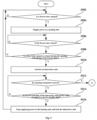
- FIG. 4 is a schematic flow chart of a heating method according to an embodiment of the present invention.
- the heating method performed by the controller 140 of any of the above-mentioned embodiments of the present invention may include the following steps:
- heating method by recording the most recent heating parameter before the heating unit 100 stops heating, and continuing to perform heating according to the recorded heating parameter after heating is resumed, a control process is simplified, and the phenomenon that the object 150 to be processed is overheated according to re-determined heating parameter is avoided, so that the heating time is shortened, and unnecessary energy consumption is reduced.
- the heating suspension condition may include that a door corresponding to a cavity capacitor 110 is opened.
- the heating continuation condition may include that the door corresponding to the cavity capacitor 110 is closed, and a door body 112 does not open or close during the opening and closing of the door. That is, in a heating process, if the door corresponding to the cavity capacitor 110 is opened, the processing unit controls an electromagnetic wave generation module 120 to stop working, so as to reduce or even eliminate the influence of electromagnetic waves on a user; and if the door corresponding to the cavity capacitor 110 is closed and the door body 112 does not open or close during this process, the processing unit controls the electromagnetic wave generation module 120 to continue working according to the recorded heating parameter, so as to avoid the object 150 to be processed being excessively heated.
- the heating method may also include the following steps: if the door body 112 opens or closes after the heating unit 100 suspends heating, controlling the heating unit 100 to terminate the heating procedure, so as to avoid the phenomenon that the electromagnetic wave generation module 120 is damaged due to heating of a cavity when a user takes out the object 150 to be processed.
- the heating method may also include: if the door body 112 opens and closes during the opening and closing process of the door corresponding to the cavity capacitor 110, activating an interactive unit 230 after the door corresponding to the cavity capacitor 110 is closed, and further receiving a heating command, so as to save electric energy and reduce the waiting time of the user.
- the heating method may also include:
- the heating method may also include:
- the heating method may also include:
- the termination threshold may be a total heating time, a change threshold of a dielectric coefficient, and the like.
- the heating method may also include:
- the door body 112 of the heating unit 100 is opened, it is determined that the object 150 to be processed is taken out, so as to reduce detection devices.
- the step of if the object 150 to be processed is taken out, receiving a heating command again is performed, so as to prevent the electromagnetic wave generation module 120 from overheating for a long time and extend the service life of the electromagnetic wave generation module 120.
- a refrigerating and freezing apparatus 200 provided by the present invention will be described in detail below by taking an example in which the cavity capacitor 110 is arranged in the freezing compartment 212 of the refrigerating and freezing apparatus 200 and the initial heating parameter includes heating power and total heating time.
- FIG. 5 is a part of a schematic detailed flow diagram of a heating method according to an embodiment of the present invention
- FIG. 6 is another part of a schematic detailed flow diagram of a heating method according to an embodiment of the present invention (where "Y” represents “yes", and “N” represents “no”).
- "Y” represents “yes", and “N” represents “no”
- "A" represents a continuation point. Because the method is relatively complicated, and there is difficulty in illustration by a single figure, it is represented in FIG. 5 and FIG. 6 , connected by a continuation mark, which can be understood by those skilled in the art.
- the heating method provided by the present invention may include following detailed steps:
- FIG. 7 is a schematic flow chart of determining an initial heating parameter based on the configuration of the impedance matching module 130.
- determining the initial heating parameter based on the configuration of the impedance matching module 130 may specifically include the following steps:
- FIG. 8 is a schematic flow chart of determining an initial heating parameter based on the frequency of an electromagnetic wave signal.
- determining the initial heating parameter based on the frequency of the electromagnetic wave signal may specifically include the following steps:
Landscapes
- Engineering & Computer Science (AREA)
- Physics & Mathematics (AREA)
- Chemical & Material Sciences (AREA)
- Electromagnetism (AREA)
- Combustion & Propulsion (AREA)
- General Engineering & Computer Science (AREA)
- Thermal Sciences (AREA)
- Mechanical Engineering (AREA)
- Life Sciences & Earth Sciences (AREA)
- Zoology (AREA)
- Polymers & Plastics (AREA)
- Food Science & Technology (AREA)
- Wood Science & Technology (AREA)
- Control Of High-Frequency Heating Circuits (AREA)
Claims (9)
- Heizverfahren, umfassend:Steuern (S402) einer Heizeinheit (100) zum Betrieb, um ein zu verarbeitendes Objekt (150) zu erhitzen;Aufzeichnen (S404) eines aktuellen Heizparameters der Heizeinheit (100) und Steuern der Heizeinheit (100), um den Betrieb zu stoppen, wenn eine Heizsuspensionsbedingung erfüllt ist; undSteuern (S406) der Heizeinheit (100), um den Betrieb gemäß dem aufgezeichneten Heizparameter fortzusetzen, wenn eine Heizfortsetzungsbedingung erfüllt ist; dadurch gekennzeichnet, dassdie Heizeinheit (100) ein elektromagnetisches Wellenerzeugungsmodul (120) zum Erzeugen eines elektromagnetischen Wellensignals, einen Hohlraumkondensator zur Aufnahme des zu verarbeitenden Objekts (150), ein Impedanzanpassungsmodul (130) umfasst, das zwischen dem elektromagnetischen Wellenerzeugungsmodul (120) und dem Hohlraumkondensator in Reihe geschaltet oder an beiden Enden des Hohlraumkondensators parallel geschaltet ist; vor dem Schritt des Steuerns (S402) der Heizeinheit (100) zum Betrieb, das Heizverfahren ferner umfasst:Anpassen der Konfiguration des Impedanzanpassungsmoduls (130) zur Reduzierung einer reflektierten Wellenleistung, die zum elektromagnetischen Wellenerzeugungsmodul (120) zurückkehrt; undBestimmen eines anfänglichen Heizparameters der Heizeinheit (100) basierend auf der Konfiguration des Impedanzanpassungsmoduls (130), wobeider anfängliche Heizparameter mindestens eine der Heizleistung und eine Abbruchschwelle für die Beendigung eines Heizvorgangs umfasst;Bestimmen eines anfänglichen Heizparameters der Heizeinheit (100) basierend auf der Konfiguration des Impedanzanpassungsmoduls (130) umfasst:Steuern (S702) des elektromagnetischen Wellenerzeugungsmoduls (120) zum Erzeugen eines elektromagnetischen Wellensignals mit einer voreingestellten Anfangsleistung;Anpassen (S704) der Konfiguration des Anpassungsmoduls (130) und Bestimmen der Konfiguration des Impedanzanpassungsmoduls (130), das eine minimale reflektierte Wellenleistung erreicht;Bestimmen (S706) des anfänglichen Heizparameters gemäß der Konfiguration des Impedanzanpassungsmoduls (130), das die minimale reflektierte Wellenleistung erreicht.
- Heizverfahren nach Anspruch 1, wobei die Heizeinheit (100) ein elektromagnetisches Wellenerzeugungsmodul (120) zum Erzeugen eines elektromagnetischen Wellensignals und einen Hohlraumkondensator umfasst, der mit dem elektromagnetischen Wellenerzeugungsmodul (120) elektrisch verbunden ist und zur Aufnahme des zu verarbeitenden Objekts (150) dient; vor dem Schritt des Steuerns (S402) der Heizeinheit (100) zum Betrieb, das Heizverfahren ferner umfasst:Anpassen der Frequenz des elektromagnetischen Wellensignals zur Reduzierung einer reflektierten Wellenleistung, die zum elektromagnetischen Wellenerzeugungsmodul (120) zurückkehrt; undBestimmen eines anfänglichen Heizparameters der Heizeinheit (100) basierend auf der Frequenz des elektromagnetischen Wellensignals, wobeider anfängliche Heizparameter mindestens eine der Heizleistung und eine Abbruchschwelle für die Beendigung eines Heizvorgangs umfasst.
- Heizverfahren nach einem der Ansprüche 1 bis 2, wobei die Heizeinheit (100) in einem Speicherraum einer Kühl- und Gefriervorrichtung angeordnet ist,wobei die Heizsuspensionsbedingung das Öffnen einer dem Speicherraum entsprechenden Tür umfasst, undwobei die Heizfortsetzungsbedingung umfasst, dass eine dem Speicherraum entsprechende Tür geschlossen ist und ein Türkörper der Heizeinheit (100) sich während des Öffnens und Schließens der Tür nicht öffnet oder schließt.
- Heizverfahren gemäß Anspruch 3, ferner umfassend:
Steuern der Heizeinheit (100), um einen Heizvorgang zu beenden, wenn sich der Türkörper der Heizeinheit (100) öffnet oder schließt, nachdem die Heizeinheit (100) das Heizen angehalten hat. - Heizverfahren nach einem der Ansprüche 1 bis 4, wobei die Heizeinheit (100) in einem Speicherraum einer Kühl- und Gefriervorrichtung angeordnet ist, und wobei eine Tür der Kühl- und Gefriervorrichtung mit einer Interaktionseinheit versehen ist; vor dem Schritt des Steuerns der Heizeinheit (100) zum Betrieb, das Heizverfahren ferner umfasst:
Aktivieren der Interaktionseinheit, nachdem die dem Speicherraum entsprechende Tür geschlossen wurde, um einen Heizbefehl zu empfangen, wenn ein Türkörper der Heizeinheit (100) während des Öffnungs- und Schließvorgangs der dem Speicherraum entsprechenden Tür geöffnet oder geschlossen wird. - Heizverfahren nach einem der Ansprüche 1 bis 5, wobei die Heizeinheit (100) in einem Speicherraum einer Kühl- und Gefriervorrichtung angeordnet ist, und vor dem Schritt des Steuerns der Heizeinheit (100) zum Betrieb, das Heizverfahren ferner umfasst:Zuführen von Strom an die Heizeinheit (100), wenn eine dem Speicherraum entsprechende Tür geöffnet ist; undStoppen der Stromversorgung an die Heizeinheit (100), wenn innerhalb einer voreingestellten Wartezeit ab dem Zeitpunkt, zu dem die dem Speicherraum entsprechende Tür geschlossen wird, keine Heizanweisung empfangen wird.
- Heizverfahren nach einem der Ansprüche 1 bis 6, wobei vor dem Schritt des Steuerns der Heizeinheit (100) zum Betrieb, das Heizverfahren ferner umfasst:Steuern der Heizeinheit (100), um einen Heizvorgang zu beenden, wenn eine Heizbeendigungsbedingung erfüllt ist; underneutes Empfangen eines weiteren Heizbefehls, wenn das zu verarbeitende Objekt (150) entnommen wird.
- Heizverfahren gemäß Anspruch 7, wobeiBestimmen, dass das zu verarbeitende Objekt (150) entnommen wird, wenn ein Türkörper der Heizeinheit (100) geöffnet ist; und/oderAusführen des Schrittes des erneuten Empfangens eines weiteren Heizbefehls, wenn das zu verarbeitende Objekt (150) entnommen wird, nachdem ein voreingestelltes Intervall abgelaufen ist, da die Heizbeendigungsbedingung erfüllt ist.
- Kühl- und Gefriervorrichtung (200), umfassend:einen Kofferkörper (210), in dem mindestens ein Speicherraum definiert ist;mindestens eine Tür, die zum Öffnen und Schließen des mindestens einen Speicherraums ausgebildet ist;eine Heizeinheit (100), die konfiguriert ist, um ein zu verarbeitendes Objekt (150) zu erhitzen;Steuerung (140), die konfiguriert ist, um das Heizverfahren nach einem der Ansprüche 1 bis 8 durchzuführen
Applications Claiming Priority (2)
| Application Number | Priority Date | Filing Date | Title |
|---|---|---|---|
| CN202110859060.9A CN115682615A (zh) | 2021-07-28 | 2021-07-28 | 加热方法及冷藏冷冻装置 |
| PCT/CN2022/088793 WO2023005289A1 (zh) | 2021-07-28 | 2022-04-24 | 加热方法及冷藏冷冻装置 |
Publications (3)
| Publication Number | Publication Date |
|---|---|
| EP4354058A1 EP4354058A1 (de) | 2024-04-17 |
| EP4354058A4 EP4354058A4 (de) | 2024-09-11 |
| EP4354058B1 true EP4354058B1 (de) | 2025-05-14 |
Family
ID=85059182
Family Applications (1)
| Application Number | Title | Priority Date | Filing Date |
|---|---|---|---|
| EP22847907.7A Active EP4354058B1 (de) | 2021-07-28 | 2022-04-24 | Heizverfahren und kühl- und gefriervorrichtung |
Country Status (5)
| Country | Link |
|---|---|
| US (1) | US20240318903A1 (de) |
| EP (1) | EP4354058B1 (de) |
| JP (1) | JP7802150B2 (de) |
| CN (1) | CN115682615A (de) |
| WO (1) | WO2023005289A1 (de) |
Family Cites Families (15)
| Publication number | Priority date | Publication date | Assignee | Title |
|---|---|---|---|---|
| JPH01123987A (ja) * | 1987-11-09 | 1989-05-16 | Matsushita Refrig Co Ltd | 高周波加熱装置付冷蔵庫 |
| JP2004340471A (ja) | 2003-05-15 | 2004-12-02 | Matsushita Electric Ind Co Ltd | 高周波加熱装置 |
| JP2010140839A (ja) | 2008-12-15 | 2010-06-24 | Panasonic Corp | マイクロ波処理装置 |
| CN101940351B (zh) * | 2009-07-10 | 2013-09-25 | 乐金电子(天津)电器有限公司 | 微波炉的食物解冻方法 |
| JP2013167422A (ja) | 2012-02-16 | 2013-08-29 | Sharp Corp | 加熱調理器及び電気機器 |
| US20150118368A1 (en) * | 2013-10-24 | 2015-04-30 | Ching-Chuan Lin | Method for executing heating according property of food |
| US10602573B2 (en) * | 2016-11-18 | 2020-03-24 | Nxp Usa, Inc. | Establishing RF excitation signal parameters in a solid-state heating apparatus |
| CN108153182B (zh) * | 2016-12-06 | 2020-07-14 | 佛山市顺德区美的电热电器制造有限公司 | 烹饪设备启停方法、装置以及烹饪设备 |
| CN109000419B (zh) * | 2017-06-06 | 2020-06-23 | 青岛海尔股份有限公司 | 解冻装置及具有该解冻装置的冰箱 |
| US10785834B2 (en) * | 2017-12-15 | 2020-09-22 | Nxp Usa, Inc. | Radio frequency heating and defrosting apparatus with in-cavity shunt capacitor |
| WO2019202953A1 (ja) * | 2018-04-18 | 2019-10-24 | パナソニックIpマネジメント株式会社 | 冷蔵庫 |
| US10952289B2 (en) * | 2018-09-10 | 2021-03-16 | Nxp Usa, Inc. | Defrosting apparatus with mass estimation and methods of operation thereof |
| CN209893782U (zh) * | 2019-01-30 | 2020-01-03 | 青岛海尔特种电冰箱有限公司 | 冷藏冷冻装置 |
| CN213273345U (zh) * | 2020-06-29 | 2021-05-25 | 青岛海尔特种电冰箱有限公司 | 冷藏冷冻装置 |
| CN112799446B (zh) * | 2020-12-31 | 2022-04-08 | 杭州老板电器股份有限公司 | 自动化烹饪方法、装置及电子设备 |
-
2021
- 2021-07-28 CN CN202110859060.9A patent/CN115682615A/zh active Pending
-
2022
- 2022-04-24 US US18/580,209 patent/US20240318903A1/en active Pending
- 2022-04-24 EP EP22847907.7A patent/EP4354058B1/de active Active
- 2022-04-24 WO PCT/CN2022/088793 patent/WO2023005289A1/zh not_active Ceased
- 2022-04-24 JP JP2024504217A patent/JP7802150B2/ja active Active
Also Published As
| Publication number | Publication date |
|---|---|
| CN115682615A (zh) | 2023-02-03 |
| JP2024527895A (ja) | 2024-07-26 |
| EP4354058A4 (de) | 2024-09-11 |
| US20240318903A1 (en) | 2024-09-26 |
| EP4354058A1 (de) | 2024-04-17 |
| WO2023005289A1 (zh) | 2023-02-02 |
| JP7802150B2 (ja) | 2026-01-19 |
Similar Documents
| Publication | Publication Date | Title |
|---|---|---|
| KR102196228B1 (ko) | Rf 가열 시스템에서의 해동 동작을 위한 장치 및 방법 | |
| CN107688118B (zh) | 用于检测解冻操作完成的设备和方法 | |
| AU2020214406B2 (en) | Heating device and refrigerator having same | |
| CN209893783U (zh) | 加热装置及具有该加热装置的冰箱 | |
| CN109000407A (zh) | 冰箱 | |
| CN109000397A (zh) | 用于解冻装置的解冻方法 | |
| CN111854278B (zh) | 用于冷藏冷冻装置的解冻方法及冷藏冷冻装置 | |
| CN109000402A (zh) | 冰箱 | |
| CN109000419A (zh) | 解冻装置及具有该解冻装置的冰箱 | |
| EP3902376B1 (de) | System zur erzeugung elektromagnetischer wellen und heizgerät mit einem system zur erzeugung elektromagnetischer wellen | |
| CN109000417A (zh) | 解冻装置及具有该解冻装置的冰箱 | |
| CN109000418A (zh) | 解冻装置及具有该解冻装置的冰箱 | |
| WO2018223938A1 (zh) | 用于解冻装置的解冻方法 | |
| EP4354058A1 (de) | Heizverfahren und kühl- und gefriervorrichtung | |
| US12130075B2 (en) | Refrigerator comprising a dielectric heating mechanism | |
| CN110553461A (zh) | 解冻控制方法、装置及冰箱 | |
| CN209251648U (zh) | 一种采用开关匹配模块的解冻装置 | |
| CN109000406A (zh) | 冰箱 | |
| CN109000408A (zh) | 冰箱 | |
| EP3910272B1 (de) | Heizgerät und kühlschrank | |
| EP3908082B1 (de) | System zur erzeugung elektromagnetischer wellen und heizvorrichtung damit | |
| US20220252339A1 (en) | Refrigerator | |
| CN109000420A (zh) | 解冻装置及具有该解冻装置的冰箱 | |
| CN109000409A (zh) | 解冻装置及具有该解冻装置的冰箱 | |
| CN109000410A (zh) | 冰箱 |
Legal Events
| Date | Code | Title | Description |
|---|---|---|---|
| STAA | Information on the status of an ep patent application or granted ep patent |
Free format text: STATUS: THE INTERNATIONAL PUBLICATION HAS BEEN MADE |
|
| PUAI | Public reference made under article 153(3) epc to a published international application that has entered the european phase |
Free format text: ORIGINAL CODE: 0009012 |
|
| STAA | Information on the status of an ep patent application or granted ep patent |
Free format text: STATUS: REQUEST FOR EXAMINATION WAS MADE |
|
| 17P | Request for examination filed |
Effective date: 20240109 |
|
| AK | Designated contracting states |
Kind code of ref document: A1 Designated state(s): AL AT BE BG CH CY CZ DE DK EE ES FI FR GB GR HR HU IE IS IT LI LT LU LV MC MK MT NL NO PL PT RO RS SE SI SK SM TR |
|
| REG | Reference to a national code |
Ref country code: DE Ipc: H05B0006500000 Ref country code: DE Ref legal event code: R079 Ref document number: 602022014784 Country of ref document: DE Free format text: PREVIOUS MAIN CLASS: F25D0029000000 Ipc: H05B0006500000 |
|
| STAA | Information on the status of an ep patent application or granted ep patent |
Free format text: STATUS: EXAMINATION IS IN PROGRESS |
|
| A4 | Supplementary search report drawn up and despatched |
Effective date: 20240812 |
|
| RIC1 | Information provided on ipc code assigned before grant |
Ipc: A23L 3/365 20060101ALI20240806BHEP Ipc: F25D 23/10 20060101ALI20240806BHEP Ipc: F25D 29/00 20060101ALI20240806BHEP Ipc: H05B 6/68 20060101ALI20240806BHEP Ipc: H05B 6/62 20060101ALI20240806BHEP Ipc: H05B 6/50 20060101AFI20240806BHEP |
|
| 17Q | First examination report despatched |
Effective date: 20240823 |
|
| DAV | Request for validation of the european patent (deleted) | ||
| DAX | Request for extension of the european patent (deleted) | ||
| GRAP | Despatch of communication of intention to grant a patent |
Free format text: ORIGINAL CODE: EPIDOSNIGR1 |
|
| STAA | Information on the status of an ep patent application or granted ep patent |
Free format text: STATUS: GRANT OF PATENT IS INTENDED |
|
| RIC1 | Information provided on ipc code assigned before grant |
Ipc: F25D 23/10 20060101ALI20250121BHEP Ipc: F25D 29/00 20060101ALI20250121BHEP Ipc: H05B 6/68 20060101ALI20250121BHEP Ipc: H05B 6/62 20060101ALI20250121BHEP Ipc: H05B 6/50 20060101AFI20250121BHEP |
|
| INTG | Intention to grant announced |
Effective date: 20250212 |
|
| GRAS | Grant fee paid |
Free format text: ORIGINAL CODE: EPIDOSNIGR3 |
|
| GRAA | (expected) grant |
Free format text: ORIGINAL CODE: 0009210 |
|
| STAA | Information on the status of an ep patent application or granted ep patent |
Free format text: STATUS: THE PATENT HAS BEEN GRANTED |
|
| AK | Designated contracting states |
Kind code of ref document: B1 Designated state(s): AL AT BE BG CH CY CZ DE DK EE ES FI FR GB GR HR HU IE IS IT LI LT LU LV MC MK MT NL NO PL PT RO RS SE SI SK SM TR |
|
| REG | Reference to a national code |
Ref country code: GB Ref legal event code: FG4D |
|
| REG | Reference to a national code |
Ref country code: CH Ref legal event code: EP |
|
| REG | Reference to a national code |
Ref country code: IE Ref legal event code: FG4D |
|
| REG | Reference to a national code |
Ref country code: DE Ref legal event code: R096 Ref document number: 602022014784 Country of ref document: DE |
|
| REG | Reference to a national code |
Ref country code: NL Ref legal event code: MP Effective date: 20250514 |
|
| PG25 | Lapsed in a contracting state [announced via postgrant information from national office to epo] |
Ref country code: PT Free format text: LAPSE BECAUSE OF FAILURE TO SUBMIT A TRANSLATION OF THE DESCRIPTION OR TO PAY THE FEE WITHIN THE PRESCRIBED TIME-LIMIT Effective date: 20250915 Ref country code: FI Free format text: LAPSE BECAUSE OF FAILURE TO SUBMIT A TRANSLATION OF THE DESCRIPTION OR TO PAY THE FEE WITHIN THE PRESCRIBED TIME-LIMIT Effective date: 20250514 Ref country code: ES Free format text: LAPSE BECAUSE OF FAILURE TO SUBMIT A TRANSLATION OF THE DESCRIPTION OR TO PAY THE FEE WITHIN THE PRESCRIBED TIME-LIMIT Effective date: 20250514 |
|
| REG | Reference to a national code |
Ref country code: LT Ref legal event code: MG9D |
|
| PG25 | Lapsed in a contracting state [announced via postgrant information from national office to epo] |
Ref country code: NO Free format text: LAPSE BECAUSE OF FAILURE TO SUBMIT A TRANSLATION OF THE DESCRIPTION OR TO PAY THE FEE WITHIN THE PRESCRIBED TIME-LIMIT Effective date: 20250814 Ref country code: GR Free format text: LAPSE BECAUSE OF FAILURE TO SUBMIT A TRANSLATION OF THE DESCRIPTION OR TO PAY THE FEE WITHIN THE PRESCRIBED TIME-LIMIT Effective date: 20250815 |
|
| PG25 | Lapsed in a contracting state [announced via postgrant information from national office to epo] |
Ref country code: NL Free format text: LAPSE BECAUSE OF FAILURE TO SUBMIT A TRANSLATION OF THE DESCRIPTION OR TO PAY THE FEE WITHIN THE PRESCRIBED TIME-LIMIT Effective date: 20250514 Ref country code: PL Free format text: LAPSE BECAUSE OF FAILURE TO SUBMIT A TRANSLATION OF THE DESCRIPTION OR TO PAY THE FEE WITHIN THE PRESCRIBED TIME-LIMIT Effective date: 20250514 |
|
| REG | Reference to a national code |
Ref country code: AT Ref legal event code: MK05 Ref document number: 1795905 Country of ref document: AT Kind code of ref document: T Effective date: 20250514 |
|
| PG25 | Lapsed in a contracting state [announced via postgrant information from national office to epo] |
Ref country code: BG Free format text: LAPSE BECAUSE OF FAILURE TO SUBMIT A TRANSLATION OF THE DESCRIPTION OR TO PAY THE FEE WITHIN THE PRESCRIBED TIME-LIMIT Effective date: 20250514 |
|
| PG25 | Lapsed in a contracting state [announced via postgrant information from national office to epo] |
Ref country code: HR Free format text: LAPSE BECAUSE OF FAILURE TO SUBMIT A TRANSLATION OF THE DESCRIPTION OR TO PAY THE FEE WITHIN THE PRESCRIBED TIME-LIMIT Effective date: 20250514 |
|
| PG25 | Lapsed in a contracting state [announced via postgrant information from national office to epo] |
Ref country code: AT Free format text: LAPSE BECAUSE OF FAILURE TO SUBMIT A TRANSLATION OF THE DESCRIPTION OR TO PAY THE FEE WITHIN THE PRESCRIBED TIME-LIMIT Effective date: 20250514 |
|
| PG25 | Lapsed in a contracting state [announced via postgrant information from national office to epo] |
Ref country code: RS Free format text: LAPSE BECAUSE OF FAILURE TO SUBMIT A TRANSLATION OF THE DESCRIPTION OR TO PAY THE FEE WITHIN THE PRESCRIBED TIME-LIMIT Effective date: 20250814 |
|
| PG25 | Lapsed in a contracting state [announced via postgrant information from national office to epo] |
Ref country code: IS Free format text: LAPSE BECAUSE OF FAILURE TO SUBMIT A TRANSLATION OF THE DESCRIPTION OR TO PAY THE FEE WITHIN THE PRESCRIBED TIME-LIMIT Effective date: 20250914 |
|
| PG25 | Lapsed in a contracting state [announced via postgrant information from national office to epo] |
Ref country code: LV Free format text: LAPSE BECAUSE OF FAILURE TO SUBMIT A TRANSLATION OF THE DESCRIPTION OR TO PAY THE FEE WITHIN THE PRESCRIBED TIME-LIMIT Effective date: 20250514 |
|
| PG25 | Lapsed in a contracting state [announced via postgrant information from national office to epo] |
Ref country code: DK Free format text: LAPSE BECAUSE OF FAILURE TO SUBMIT A TRANSLATION OF THE DESCRIPTION OR TO PAY THE FEE WITHIN THE PRESCRIBED TIME-LIMIT Effective date: 20250514 Ref country code: SM Free format text: LAPSE BECAUSE OF FAILURE TO SUBMIT A TRANSLATION OF THE DESCRIPTION OR TO PAY THE FEE WITHIN THE PRESCRIBED TIME-LIMIT Effective date: 20250514 |
|
| PG25 | Lapsed in a contracting state [announced via postgrant information from national office to epo] |
Ref country code: CZ Free format text: LAPSE BECAUSE OF FAILURE TO SUBMIT A TRANSLATION OF THE DESCRIPTION OR TO PAY THE FEE WITHIN THE PRESCRIBED TIME-LIMIT Effective date: 20250514 |
|
| PG25 | Lapsed in a contracting state [announced via postgrant information from national office to epo] |
Ref country code: EE Free format text: LAPSE BECAUSE OF FAILURE TO SUBMIT A TRANSLATION OF THE DESCRIPTION OR TO PAY THE FEE WITHIN THE PRESCRIBED TIME-LIMIT Effective date: 20250514 |
|
| PG25 | Lapsed in a contracting state [announced via postgrant information from national office to epo] |
Ref country code: SK Free format text: LAPSE BECAUSE OF FAILURE TO SUBMIT A TRANSLATION OF THE DESCRIPTION OR TO PAY THE FEE WITHIN THE PRESCRIBED TIME-LIMIT Effective date: 20250514 |
|
| PG25 | Lapsed in a contracting state [announced via postgrant information from national office to epo] |
Ref country code: IT Free format text: LAPSE BECAUSE OF FAILURE TO SUBMIT A TRANSLATION OF THE DESCRIPTION OR TO PAY THE FEE WITHIN THE PRESCRIBED TIME-LIMIT Effective date: 20250514 |
|
| REG | Reference to a national code |
Ref country code: DE Ref legal event code: R097 Ref document number: 602022014784 Country of ref document: DE |
|
| PLBE | No opposition filed within time limit |
Free format text: ORIGINAL CODE: 0009261 |
|
| STAA | Information on the status of an ep patent application or granted ep patent |
Free format text: STATUS: NO OPPOSITION FILED WITHIN TIME LIMIT |
|
| REG | Reference to a national code |
Ref country code: CH Ref legal event code: L10 Free format text: ST27 STATUS EVENT CODE: U-0-0-L10-L00 (AS PROVIDED BY THE NATIONAL OFFICE) Effective date: 20260325 |
|
| 26N | No opposition filed |
Effective date: 20260217 |