EP4347247B1 - Nonwoven fabrics suitable for medical applications - Google Patents
Nonwoven fabrics suitable for medical applications Download PDFInfo
- Publication number
- EP4347247B1 EP4347247B1 EP22740762.4A EP22740762A EP4347247B1 EP 4347247 B1 EP4347247 B1 EP 4347247B1 EP 22740762 A EP22740762 A EP 22740762A EP 4347247 B1 EP4347247 B1 EP 4347247B1
- Authority
- EP
- European Patent Office
- Prior art keywords
- fibers
- following
- nonwoven fabric
- spunbond layer
- continuous fibers
- Prior art date
- Legal status (The legal status is an assumption and is not a legal conclusion. Google has not performed a legal analysis and makes no representation as to the accuracy of the status listed.)
- Active
Links
Images

Classifications
-
- B—PERFORMING OPERATIONS; TRANSPORTING
- B32—LAYERED PRODUCTS
- B32B—LAYERED PRODUCTS, i.e. PRODUCTS BUILT-UP OF STRATA OF FLAT OR NON-FLAT, e.g. CELLULAR OR HONEYCOMB, FORM
- B32B5/00—Layered products characterised by the non- homogeneity or physical structure, i.e. comprising a fibrous, filamentary, particulate or foam layer; Layered products characterised by having a layer differing constitutionally or physically in different parts
- B32B5/02—Layered products characterised by the non- homogeneity or physical structure, i.e. comprising a fibrous, filamentary, particulate or foam layer; Layered products characterised by having a layer differing constitutionally or physically in different parts characterised by structural features of a fibrous or filamentary layer
- B32B5/022—Non-woven fabric
-
- B—PERFORMING OPERATIONS; TRANSPORTING
- B32—LAYERED PRODUCTS
- B32B—LAYERED PRODUCTS, i.e. PRODUCTS BUILT-UP OF STRATA OF FLAT OR NON-FLAT, e.g. CELLULAR OR HONEYCOMB, FORM
- B32B5/00—Layered products characterised by the non- homogeneity or physical structure, i.e. comprising a fibrous, filamentary, particulate or foam layer; Layered products characterised by having a layer differing constitutionally or physically in different parts
- B32B5/22—Layered products characterised by the non- homogeneity or physical structure, i.e. comprising a fibrous, filamentary, particulate or foam layer; Layered products characterised by having a layer differing constitutionally or physically in different parts characterised by the presence of two or more layers which are next to each other and are fibrous, filamentary, formed of particles or foamed
- B32B5/24—Layered products characterised by the non- homogeneity or physical structure, i.e. comprising a fibrous, filamentary, particulate or foam layer; Layered products characterised by having a layer differing constitutionally or physically in different parts characterised by the presence of two or more layers which are next to each other and are fibrous, filamentary, formed of particles or foamed one layer being a fibrous or filamentary layer
- B32B5/26—Layered products characterised by the non- homogeneity or physical structure, i.e. comprising a fibrous, filamentary, particulate or foam layer; Layered products characterised by having a layer differing constitutionally or physically in different parts characterised by the presence of two or more layers which are next to each other and are fibrous, filamentary, formed of particles or foamed one layer being a fibrous or filamentary layer another layer next to it also being fibrous or filamentary
-
- B—PERFORMING OPERATIONS; TRANSPORTING
- B32—LAYERED PRODUCTS
- B32B—LAYERED PRODUCTS, i.e. PRODUCTS BUILT-UP OF STRATA OF FLAT OR NON-FLAT, e.g. CELLULAR OR HONEYCOMB, FORM
- B32B5/00—Layered products characterised by the non- homogeneity or physical structure, i.e. comprising a fibrous, filamentary, particulate or foam layer; Layered products characterised by having a layer differing constitutionally or physically in different parts
- B32B5/22—Layered products characterised by the non- homogeneity or physical structure, i.e. comprising a fibrous, filamentary, particulate or foam layer; Layered products characterised by having a layer differing constitutionally or physically in different parts characterised by the presence of two or more layers which are next to each other and are fibrous, filamentary, formed of particles or foamed
- B32B5/24—Layered products characterised by the non- homogeneity or physical structure, i.e. comprising a fibrous, filamentary, particulate or foam layer; Layered products characterised by having a layer differing constitutionally or physically in different parts characterised by the presence of two or more layers which are next to each other and are fibrous, filamentary, formed of particles or foamed one layer being a fibrous or filamentary layer
- B32B5/26—Layered products characterised by the non- homogeneity or physical structure, i.e. comprising a fibrous, filamentary, particulate or foam layer; Layered products characterised by having a layer differing constitutionally or physically in different parts characterised by the presence of two or more layers which are next to each other and are fibrous, filamentary, formed of particles or foamed one layer being a fibrous or filamentary layer another layer next to it also being fibrous or filamentary
- B32B5/265—Layered products characterised by the non- homogeneity or physical structure, i.e. comprising a fibrous, filamentary, particulate or foam layer; Layered products characterised by having a layer differing constitutionally or physically in different parts characterised by the presence of two or more layers which are next to each other and are fibrous, filamentary, formed of particles or foamed one layer being a fibrous or filamentary layer another layer next to it also being fibrous or filamentary characterised by one fibrous or filamentary layer being a non-woven fabric layer
- B32B5/266—Layered products characterised by the non- homogeneity or physical structure, i.e. comprising a fibrous, filamentary, particulate or foam layer; Layered products characterised by having a layer differing constitutionally or physically in different parts characterised by the presence of two or more layers which are next to each other and are fibrous, filamentary, formed of particles or foamed one layer being a fibrous or filamentary layer another layer next to it also being fibrous or filamentary characterised by one fibrous or filamentary layer being a non-woven fabric layer next to one or more non-woven fabric layers
- B32B5/267—Layered products characterised by the non- homogeneity or physical structure, i.e. comprising a fibrous, filamentary, particulate or foam layer; Layered products characterised by having a layer differing constitutionally or physically in different parts characterised by the presence of two or more layers which are next to each other and are fibrous, filamentary, formed of particles or foamed one layer being a fibrous or filamentary layer another layer next to it also being fibrous or filamentary characterised by one fibrous or filamentary layer being a non-woven fabric layer next to one or more non-woven fabric layers characterised by at least one non-woven fabric layer that is a spunbonded fabric
-
- D—TEXTILES; PAPER
- D04—BRAIDING; LACE-MAKING; KNITTING; TRIMMINGS; NON-WOVEN FABRICS
- D04H—MAKING TEXTILE FABRICS, e.g. FROM FIBRES OR FILAMENTARY MATERIAL; FABRICS MADE BY SUCH PROCESSES OR APPARATUS, e.g. FELTS, NON-WOVEN FABRICS; COTTON-WOOL; WADDING ; NON-WOVEN FABRICS FROM STAPLE FIBRES, FILAMENTS OR YARNS, BONDED WITH AT LEAST ONE WEB-LIKE MATERIAL DURING THEIR CONSOLIDATION
- D04H1/00—Non-woven fabrics formed wholly or mainly of staple fibres or like relatively short fibres
- D04H1/40—Non-woven fabrics formed wholly or mainly of staple fibres or like relatively short fibres from fleeces or layers composed of fibres without existing or potential cohesive properties
- D04H1/54—Non-woven fabrics formed wholly or mainly of staple fibres or like relatively short fibres from fleeces or layers composed of fibres without existing or potential cohesive properties by welding together the fibres, e.g. by partially melting or dissolving
- D04H1/559—Non-woven fabrics formed wholly or mainly of staple fibres or like relatively short fibres from fleeces or layers composed of fibres without existing or potential cohesive properties by welding together the fibres, e.g. by partially melting or dissolving the fibres being within layered webs
-
- D—TEXTILES; PAPER
- D04—BRAIDING; LACE-MAKING; KNITTING; TRIMMINGS; NON-WOVEN FABRICS
- D04H—MAKING TEXTILE FABRICS, e.g. FROM FIBRES OR FILAMENTARY MATERIAL; FABRICS MADE BY SUCH PROCESSES OR APPARATUS, e.g. FELTS, NON-WOVEN FABRICS; COTTON-WOOL; WADDING ; NON-WOVEN FABRICS FROM STAPLE FIBRES, FILAMENTS OR YARNS, BONDED WITH AT LEAST ONE WEB-LIKE MATERIAL DURING THEIR CONSOLIDATION
- D04H3/00—Non-woven fabrics formed wholly or mainly of yarns or like filamentary material of substantial length
- D04H3/018—Non-woven fabrics formed wholly or mainly of yarns or like filamentary material of substantial length characterised by the shape
-
- D—TEXTILES; PAPER
- D04—BRAIDING; LACE-MAKING; KNITTING; TRIMMINGS; NON-WOVEN FABRICS
- D04H—MAKING TEXTILE FABRICS, e.g. FROM FIBRES OR FILAMENTARY MATERIAL; FABRICS MADE BY SUCH PROCESSES OR APPARATUS, e.g. FELTS, NON-WOVEN FABRICS; COTTON-WOOL; WADDING ; NON-WOVEN FABRICS FROM STAPLE FIBRES, FILAMENTS OR YARNS, BONDED WITH AT LEAST ONE WEB-LIKE MATERIAL DURING THEIR CONSOLIDATION
- D04H3/00—Non-woven fabrics formed wholly or mainly of yarns or like filamentary material of substantial length
- D04H3/08—Non-woven fabrics formed wholly or mainly of yarns or like filamentary material of substantial length characterised by the method of strengthening or consolidating
- D04H3/14—Non-woven fabrics formed wholly or mainly of yarns or like filamentary material of substantial length characterised by the method of strengthening or consolidating with bonds between thermoplastic yarns or filaments produced by welding
-
- D—TEXTILES; PAPER
- D04—BRAIDING; LACE-MAKING; KNITTING; TRIMMINGS; NON-WOVEN FABRICS
- D04H—MAKING TEXTILE FABRICS, e.g. FROM FIBRES OR FILAMENTARY MATERIAL; FABRICS MADE BY SUCH PROCESSES OR APPARATUS, e.g. FELTS, NON-WOVEN FABRICS; COTTON-WOOL; WADDING ; NON-WOVEN FABRICS FROM STAPLE FIBRES, FILAMENTS OR YARNS, BONDED WITH AT LEAST ONE WEB-LIKE MATERIAL DURING THEIR CONSOLIDATION
- D04H3/00—Non-woven fabrics formed wholly or mainly of yarns or like filamentary material of substantial length
- D04H3/08—Non-woven fabrics formed wholly or mainly of yarns or like filamentary material of substantial length characterised by the method of strengthening or consolidating
- D04H3/14—Non-woven fabrics formed wholly or mainly of yarns or like filamentary material of substantial length characterised by the method of strengthening or consolidating with bonds between thermoplastic yarns or filaments produced by welding
- D04H3/147—Composite yarns or filaments
-
- B—PERFORMING OPERATIONS; TRANSPORTING
- B32—LAYERED PRODUCTS
- B32B—LAYERED PRODUCTS, i.e. PRODUCTS BUILT-UP OF STRATA OF FLAT OR NON-FLAT, e.g. CELLULAR OR HONEYCOMB, FORM
- B32B2262/00—Composition or structural features of fibres which form a fibrous or filamentary layer or are present as additives
- B32B2262/02—Synthetic macromolecular fibres
- B32B2262/0253—Polyolefin fibres
-
- B—PERFORMING OPERATIONS; TRANSPORTING
- B32—LAYERED PRODUCTS
- B32B—LAYERED PRODUCTS, i.e. PRODUCTS BUILT-UP OF STRATA OF FLAT OR NON-FLAT, e.g. CELLULAR OR HONEYCOMB, FORM
- B32B2262/00—Composition or structural features of fibres which form a fibrous or filamentary layer or are present as additives
- B32B2262/12—Conjugate fibres, e.g. core/sheath or side-by-side
- B32B2262/124—Non-woven fabric
-
- B—PERFORMING OPERATIONS; TRANSPORTING
- B32—LAYERED PRODUCTS
- B32B—LAYERED PRODUCTS, i.e. PRODUCTS BUILT-UP OF STRATA OF FLAT OR NON-FLAT, e.g. CELLULAR OR HONEYCOMB, FORM
- B32B2535/00—Medical equipment, e.g. bandage, prostheses or catheter
Definitions
- the presently-disclosed invention relates generally to nonwoven fabrics that provide desirable barrier properties suitable for a variety of medical applications, while also providing a level of bulkiness and/or softness desired from a user.
- the presently-disclosed invention also provides methods of manufacturing such nonwoven fabrics, as well as protective articles (e.g., garments) including such nonwoven fabrics.
- Clean air suits are typically used to minimize the spread of infective agents to patients, surgical sites, and equipment by, for example, prevention of dispersal of bacterial-carrying scales from the operating room staff. As such, clean air suits help prevent postoperative surgical-site infections. Overall, clean air suits have been demonstrated to contribute to reduction of infection risks.
- meltblown fibers such as a spunbond-meltblown-spunbond (SMS) structure as they provide adequate barrier properties and tensile strength per BS EN13795:2019 Part 2.
- SMS spunbond-meltblown-spunbond
- Reusable cotton fabric has also been used to produce clean air suits due to comfortability (cottony feeling). These materials, however, typically fail to meet required barrier properties, such as Microbial penetration -Dry per EN ISO 22612, which is defined as a key attribute in EN13795:2019 Part 2.
- EP3521469A1 also relates to nonwoven fabrics.
- the present invention provides a nonwoven fabric in accordance with claim 1. Preferred embodiments are defined in claims 2 to 9. Further, the present invention provides a method of forming a nonwoven fabric in accordance with claim 10 and a protective article in accordance with claim 11.
- polymer or “polymeric” shall also include polymers made from various catalyst systems including, without limitation, the Ziegler-Natta catalyst system and the metallocene/single-site catalyst system.
- polymer or “polymeric” shall also include, in according to certain embodiments of the invention, polymers produced by fermentation process or biosourced.
- the respective polymer components can be present in ratios (by volume or my mass) of from about 85:15 to about 15:85.
- Ratios of approximately 50:50 (by volume or mass) may be desirable in accordance with certain embodiments of the invention; however, the particular ratios employed can vary as desired, such as at most about any of the following: 85:15, 80:20, 75:25, 70:30, 65:35, 60:40, 55:45 and 50:50 by volume or mass and/or at least about any of the following: 50:50, 45:55, 40:60, 35:65, 30:70, 25:75, 20:80, and 15:85 by volume or mass.
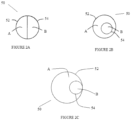
- the multicomponent fibers may comprise a first component comprising a first polymeric composition and a second component comprising a second polymeric composition, in which the first polymeric composition is different than the second polymeric composition.
- the first polymeric composition may comprise a first polyolefin composition and the second polymeric composition may comprise a second polyolefin composition.
- the first polyolefin composition may comprise a first polypropylene or blend of polypropylenes and the second polyolefin composition may comprise a second polypropylene and/or a second polyethylene, in which the first polypropylene or blend of polypropylenes has, for example, a melt flow rate that is less than 50 g/10 min.
- the first polypropylene or blend of polypropylenes may have a lower degree of crystallinity than the second polypropylene and/or a second polyethylene.
- the first polymeric composition and the second polymeric composition can be selected so that the multi-component fibers develop one or more crimps therein without additional application of heat either in the diffuser section just after the draw unit but before laydown, once the draw force is relaxed, and/or post-treatments such as after fiber lay down and web formation.
- the polymeric compositions may comprise polymers that are different from one another in that they have disparate stress or elastic recovery properties, crystallization rates, and/or melt viscosities.
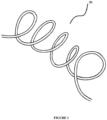
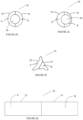
- multi-component fibers can form or have crimped fiber portions having a helically-shaped crimp in a single continuous direction.
- one polymeric composition may be substantially and continuously located on the inside of the helix formed by the crimped nature of the fiber.
- the first polymeric composition of the first component may comprise a first MFR from about 10 g/10 min to less than 150 g/10 min, such as at most about any of the following: 150, 125, 100, 80, 60, 50, 48, 46, 44, 42, 40, 38, 36, 35, 34, 32, and 30 g/10 min and/or at least about any of the following: 10, 12, 15, 18, 20, 22, 24, 25, 26, 28, 30, 32, 34, and 35 g/10 min.
- the second polymeric composition of the second component may comprise a second MFR from about 20 g/10 min to about 150 g/10 min, such as at most about any of the following: 150, 125, 100, 80, 60, 50, 48, 46, 44, 42, 40, 38, 36, 35, 34, 32, and 30 g/10 min and/or at least about any of the following: 20, 22, 24, 25, 26, 28, 30, 32, 34, and 35 g/10 min.
- the difference in the MFR between the first polymeric composition and the second polymeric composition may comprise from about 8 g/10 min to about 100 g/10 min, such as at most about any of the following: 100, 80, 60, 50, 40, 30, 28, 26, 25, 24, 22, 20, 18, 16, 15, 14, 12, 10, and 8 g/10 min and/or at least about any of the following: 8, 10, 12, 14, 15, and 20 g/10 min.
- the first polyolefin composition may comprise a blend of polyolefin fractions or components (e.g., polypropylene fraction A and a different polypropylene fraction or a copolymer containing propylene units fraction B that are mixed to provide a polypropylene-based blend).
- polypropylene fraction A e.g., polypropylene fraction A and a different polypropylene fraction or a copolymer containing propylene units fraction B that are mixed to provide a polypropylene-based blend.
- the first polyolefin composition may comprise a blend of a polyolefin fraction A and a polyolefin fraction or a copolymer containing propylene units fraction B, wherein the polyolefin fraction A accounts for more than 50% by weight of the first polyolefin composition and has a polyolefin fraction A-MFR (e.g., a low MFR relative to that of polyolefin fraction B) being less than a polyolefin fraction B-MFR of the polyolefin fraction B.
- A-MFR e.g., a low MFR relative to that of polyolefin fraction B
- the first polyolefin composition has a MFR-Ratio between the polyolefin fraction B-MFR (e.g., the higher MFR material of the two) and the polyolefin fraction A-MFR (e.g., the lower MFR material of the two) from about 15:1 to about 100:1, such as at most about any of the following: 100:1, 90:1, 80:1, 75:1, 70:1, 65:1, 60:1, 55:1, 50:1, 45:1, and 40:1 and/or at least about any of the following: 15:1, 18:1, 20:1, 22:1, 24:1, 25:1, 26:1, 28:1, 30:1, 32:1, 34:1, 35:1, and 40:1.
- the polyolefin fraction B (e.g., the higher MFR material of the two) comprises from about 0.5% by weight to about 20% by weight of the first polyolefin composition, such as at most about any of the following: 20, 18, 16, 15, 14, 12, 10, 8, and 6% by weight of the first polyolefin composition and/or at least about any of the following: 0.5, .075, 1, 2, 3, 4, 5, 6, 7, 8, 9, and 10% by weight of the first polyolefin composition.
- certain embodiments in accordance with the invention may comprise multicomponent fibers in which the first component and the second are formed from the same base polymeric material (e.g., same polypropylene - low MFR polypropylene) with the only difference being the addition of a high MFR polymer or a copolymer containing propylene units (e.g., high MFR polypropylene or copolymers as disclosed herein) to the first component such that the MFR of the first component is larger than the MFR of the second component.
- base polymeric material e.g., same polypropylene - low MFR polypropylene
- propylene units e.g., high MFR polypropylene or copolymers as disclosed herein
- the high MFR polymer (e.g., high MFR polypropylene as disclosed herein) may comprise the polyolefin fraction B and the base layer having the notably lower MFR may comprise polyolefin fraction A.
- the first component may be formed from the blend of polyolefin fraction A and polyolefin fraction B, while the second component may be formed from polyolefin fraction B.
- the only difference between the first component and the second component may be the addition of the polyolefin fraction B to the first component.
- the first component may be formed from the blend of polyolefin fraction A and polyolefin fraction B while the second component may be formed from a polyethylene or polypropylene in "neat” or unmodified form.
- the multicomponent fibers in accordance with certain embodiments of the invention may comprise a mass or volume ratio between the first component and the second component ranging from about 85:15 to about 15:85 (by volume or mass), such as at most about any of the following: 85:15, 80:20, 75:25, 70:30, 65:35, 60:40, 55:45 and 50:50 by volume or mass and/or at least about any of the following: 50:50, 45:55, 40:60, 35:65, 30:70, 25:75, 20:80, and 15:85 by volume or mass.
- the average free crimp percentage may be ascertained by determining the free crimp length of the fibers in question with an Instron 5565 equipped with a 2.5N load cell.
- free or unstretched fiber bundles may be placed into clamps of the machine.
- the free crimp length can be measured at the point where the load (e.g., 2.5 N load cell) on the fiber bundle becomes constant.
- the following parameters are used to determine the free crimp length: (i) Record the Approximate free fibers bundle weight in grams (e.g., xxx g ⁇ 0.002 grams); (ii) Record the Unstretched bundle length in inches; (iii) Set the Gauge Length (i.e., the distance or gap between the clamps holding the bundle of fibers) of the Inston to 1 inch; and (iv) Set the Crosshead Speed to 2.4 inches / minute.
- the free crimp length of the fibers in question may then be ascertained by recording the extension length of the fibers at the point where the load becomes constant (i.e., the fibers are fully extended).
- the one or more aliphatic chains may each independently comprise from at least about any of the following: 1, 5, 10, 15, 16, 17, 18, 19, 20, 21, 22, 23, 24, and 25 carbon atoms and/or at most about 30, 29, 28, 27, 26, 25, 20, and 15 carbon atoms (e.g., about 15 to about 25 carbon atoms, about 20 to 30 carbon atoms, etc.).
- the slip agent may comprise an amide including an unsaturated aliphatic chain having one or more elements or unsaturation.
- An element of unsaturation corresponds to two fewer hydrogen atoms than in the saturated formula. For example, a single double bound accounts for one element of unsaturation, while a triple bond would account for two elements of unsaturation.
- the slip agent includes an unsaturated aliphatic chain comprising from about 1 to about 10 elements of unsaturation (e.g., 1, 2, 3, 4, 5, 6, 7, 8, 9, or 10 elements of saturation).
- the slip agent may comprise a combination of a greater amount of, for example, stearamide and a lesser amount of, for example, erucamide.
- the combination of the greater amount of stearamide and the lesser amount of erucamide may comprise from about 25 to about 40 weight percent erucamide and from about 60 to about 75 weight percent stearamide.
- the first plurality of crimped continuous fibers may comprise from 0 to about 5 wt.% of the slip agent, such as at least about any of the following: 0, 0.2, 0.4, 0.5, 0.6, 0.8, 1, 1.2, 1.4, 1.5, 1.6, 1.8, and 2 wt.%, and/or at most about any of the following: 5, 4.8, 4.5, 4.2, 4, 3.8, 3.5, 3.2, 3, 2.8, 2.5, 2.2, and 2 wt.%.
- the slip agent such as at least about any of the following: 0, 0.2, 0.4, 0.5, 0.6, 0.8, 1, 1.2, 1.4, 1.5, 1.6, 1.8, and 2 wt.%, and/or at most about any of the following: 5, 4.8, 4.5, 4.2, 4, 3.8, 3.5, 3.2, 3, 2.8, 2.5, 2.2, and 2 wt.%.
- the third plurality of crimped continuous fibers may comprise from 0 to about 5 wt.% of the slip agent, such as at least about any of the following: 0, 0.2, 0.4, 0.5, 0.6, 0.8, 1, 1.2, 1.4, 1.5, 1.6, 1.8, and 2 wt.%, and/or at most about any of the following: 5, 4.8, 4.5, 4.2, 4, 3.8, 3.5, 3.2, 3, 2.8, 2.5, 2.2, and 2 wt.%.
- the first spunbond layer, the second spunbond layer, the third spunbond layer, or any combination thereof may include a hydrophilic additive and/or an antistatic additive.
- the plurality of fibers forming any of the layers of the nonwoven fabric may include one or more hydrophilic additives and/or one or more antistatic additives incorporated within the body (e.g., within the melt that was spun to form the fibers) of the fibers and/or topically applied to the outer surfaces of the fibers.
- a hydrophilic additive and/or an antistatic additive may be dispersed throughout at least a portion of a body portion of the first plurality of crimped continuous fibers, the second plurality of crimped continuous fibers, the third plurality of crimped continuous fibers, or any combination thereof.
- a hydrophilic additive and/or an antistatic additive may be topically located on at least a portion of an outer surface of the first plurality of crimped continuous fibers, the second plurality of crimped continuous fibers, the third plurality of crimped continuous fibers, or any combination thereof.
- the first spunbond layer, the second spunbond layer, the third spunbond layer, or any combination thereof may include an antistatic treatment.
- the antistatic treatment for example, may be required for some fabrics to prevent sparking or dust particles building up on the surface of the fabric.
- antistatic additive(s) may be blended and extruded with polymer (hot melt) forming the plurality of the fibers forming the first spunbond layer, the second spunbond layer, the third spunbond layer, or any combination thereof.
- the antistatic additive may comprise a topical surfactant applied onto at least one surface of the fabric.
- the antistatic additive is not necessarily limited, but may include a nonionic(polyethylene glycol fatty acid ester, fatty acid diethanolamides), anionic(alcohol sulfuric acid ester salt), cationic(quaternary ammonium compounds), and an amphoteric surfactant.
- the first spunbond layer may comprise from about 0 to about 5 wt.% of the antistatic additive, such as at least about any of the following: 0, 0.1, 0.3, 0.5, 0.8, 1, 1.2, 1.4, 1.6, 1.8, 2, 2.2, 2.4, and 2.6 wt.% of the antistatic additive, and/or at most about any of the following: 5, 4.5, 4, 3.5, 3, and 2.6 wt.% of the antistatic additive.
- the antistatic additive such as at least about any of the following: 0, 0.1, 0.3, 0.5, 0.8, 1, 1.2, 1.4, 1.6, 1.8, 2, 2.2, 2.4, and 2.6 wt.% of the antistatic additive, and/or at most about any of the following: 5, 4.5, 4, 3.5, 3, and 2.6 wt.% of the antistatic additive.
- the second spunbond layer may comprise from about 0 to about 5 wt.% of the antistatic additive, such as at least about any of the following: 0, 0.1, 0.3, 0.5, 0.8, 1, 1.2, 1.4, 1.6, 1.8, 2, 2.2, 2.4, and 2.6 wt.% of the antistatic additive, and/or at most about any of the following: 5, 4.5, 4, 3.5, 3, and 2.6 wt.% of the antistatic additive.
- the third spunbond layer may comprise from about 0 to about 5 wt.% of the antistatic additive, such as at least about any of the following: 0, 0.1, 0.3, 0.5, 0.8, 1, 1.2, 1.4, 1.6, 1.8, 2, 2.2, 2.4, and 2.6 wt.% of the antistatic additive, and/or at most about any of the following: 5, 4.5, 4, 3.5, 3, and 2.6 wt.% of the antistatic additive.
- the first spunbond layer may include a larger amount of the antistatic additive then the third spunbond layer.
- the nonwoven fabric may be formed entirely from a plurality of spunbond layers, such as from about 2 to about 10 spunbond layers (e.g., 3, 4, 5, 6, 7, 8, and 9 spunbond layers). As noted above, for instance, the nonwoven fabric may be devoid of meltblown fibers and/or sub-micron fibers.
- the nonwoven fabric may have a machine direction (MD) tensile strength from about 50 to about 150 N/5cm, such as at least about any of the following: 50, 55, 60, 65, 70, 75, 80, 85, and 90 N/5cm, and/or at most about any of the following: 150, 145, 140, 135, 130, 125, 120, 115, 110, 105, 100, 95, and 90 N/5cm.
- MD machine direction
- the nonwoven fabric may have a cross direction (CD) tensile strength from about 25 to about 85 N/5cm, such as at least about any of the following: 25, 30, 32, 35, 38, 40, 42, 45, 48, and 50 N/5cm, and/or at most about any of the following: 85, 80, 75, 70, 65, 60, 55, and 50 N/5cm.
- CD cross direction
- the nonwoven fabric may have a MD elongation of from about 20 to about 180%, such as at least about any of the following: 20, 30, 40, 50, 60, 70, 75, 80, 85, and 90%, and/or at most about any of the following: 180, 175, 170, 165, 160, 155, 150, 145, 140, 135, 130, 125, 120, 115, 110, 105, 100, 95, and 90%.
- the nonwoven fabric may have a CD elongation of from about 20 to about 180%, such as at least about any of the following: 20, 30, 40, 50, 60, 70, 75, 80, 90, 100, 110, and 115%, and/or at most about any of the following: 180, 170, 160, 150, 140, 130, 125, 120, and 115%.
- the nonwoven fabric in accordance with certain embodiments of the invention, may have a thickness in a z-direction that is perpendicular to the CD and the MD of the nonwoven fabric, in which the thickness may be from about 0.3 to about 3 mm at 0.2 kPa, such as at least about any of the following: 0.3, 0.4, 0.5, 0.6, 0.7, and 0.8 mm at 0.2 kPa, and/or at most about 3, 2.8, 2.6, 2.5, 2.2, 2, 1.8, 1.6, 1.5, 1.4, 1.3, 1.2, 1.1, 1, 0.9, and 0.8 mm at 0.2 kPa (e.g., from 0.3 to 1.5 mm at 0.2 kPa).
- the nonwoven fabric may have an air permeability of from about 40 to about 600 cfm, such as at least about any of the following: 40, 60, 80, 100, 120, 140, 150, 160, 170, 180, 190, 200, 210, 220, 230, 240, and 250 and/or at most about 600, 570, 540, 510, 480, 450, 420, 400, 390, 380, 360, 350, 330, 320, 300, 290, 280, 270, 260, and 250 cfm.
- the nonwoven fabric may have a hydrostatic head from about 15 bar to about 30 mbar determined according to AATCC 127, such as at least about any of the following: 15, 16, 18, 20, 22, and 25 mbar, and/or at most about any of the following: 30, 28, 26, 25 mbar.
- the nonwoven fabric may have a hydrostatic head to basis weight ratio from about 0.3 to about 0.7 (mbar/gsm), such as at least about any of the following: 0.3, 0.32, .34, 0.36, 0.38, 0.4, 0.42, 0.44, 0.46, 0.48, and 0.5 (mbar/gsm), and/or at most about any of the following: 0.7, 0.68, 0.66, 0.64, 0.62, 0.6, 0.58, 0.56, 0.54, 0.52, and 0.5 (mbar/gsm), wherein the hydrostatic head is determined according to AATCC 127.
- the nonwoven fabric may have a Compress Average Rigidity (CAR) from about 300 to about 650 (gf/cm 2 )/mm, such as at least about any of the following: 300, 320, 350, 380, 400, 420, 440, 460, 480, 500, 520, and 540 (gf/cm 2 )/mm, and/or at most about any of the following: 650, 640, 620, 600, 580, 560, and 540 (gf/cm 2 )/mm.
- CAR Compress Average Rigidity
- the nonwoven fabric may have a Recovery Average Rigidity (RAR) from about 500 to about 1200 (gf/cm 2 )/mm, such as at least about any of the following: 500, 520, 550, 580, 600, 620, 650, 680, 700, 720, 740, 760, 780, 800, 820, 840, 860, 880, and 900 (gf/cm 2 )/mm, and/or at most about any of the following: 1200, 1150, 1100, 1050, 1000, 950, and 900 (gf/cm 2 )/mm.
- RAR Recovery Average Rigidity
- the nonwoven fabric may have a first ratio of the CAR in (gf/cm 2 )/mm to the RAR in (gf/cm 2 )/mm from about 55 to about 90, such as about 55, 58, 60, 62, 64, 65, 68, and 70, and/or at most about any of the following: 90, 88, 85, 82, 80, 78, 75, 72 and 70.
- the nonwoven fabric may have a Bending Average Rigidity in the CD (BARCD)from about 10 to about 50 gf*mm/rad, such as at least about any of the following: 10, 12, 15, 18, 20, 22, 24, 25, 26, 28, 30, 32, 34, 35, 36, and 38 gf*mm/rad, and/or at most about any of the following: 50, 48, 46, 45, 44, 42, 40, and 38 gf*mm/rad.
- BARCD Bending Average Rigidity in the CD
- the nonwoven fabric may have a Bending Average Rigidity in the MD (BARMD) from about 30 to about 110 gf*mm/rad, such as at least about any of the following: 30, 35, 40, 45, 50, 55, 60, 65, 70, 75, 80, and 85 gf*mm/rad, and/or at most about any of the following: 110, 105, 100, 95, 90, and 85 gf*mm/rad.
- BARMD Bending Average Rigidity in the MD
- the nonwoven fabric may have a Bending Average Rigidity Factor per Basis Weight (BRAF) from about 0.8 gf*mm/rad per gsm to about 1.5 gf*mm/rad per gsm determined by Formula (1): BARCD + BARMD / 2 / BW , wherein BARCD and BARMD are defined above and BW is the basis weight for the nonwoven fabric.
- BRAF Bending Average Rigidity Factor per Basis Weight
- the nonwoven fabric may optionally include one or more layers of staple fibers and/or cellulosic fibers (e.g., rayon, pulp, cotton, etc.).
- the nonwoven fabric may be devoid of staple fibers, cellulosic fibers, or both.
- the invention provides a method of forming a nonwoven fabric, as described and disclosed herein.
- the method comprises providing or forming a first spunbond layer comprising a first plurality of crimped continuous fibers, providing or forming a second spunbond layer comprising a second plurality of crimped continuous fibers, and providing or forming a third spunbond layer comprising a third plurality of crimped continuous fibers.
- the method may also comprise locating the second spunbond layer directly or indirectly between the first spunbond layer and the third spunbond layer.
- the method also comprises a step or steps of bonding or consolidating the first spunbond layer, the second spunbond layer, and the third spunbond layer together to form the nonwoven fabric, wherein the nonwoven fabric has a thickness of at least 0.3 mm and hydrostatic head of at least 15 mbar.
- the plurality of individual and separate bonding sites may define a bonded area.
- the bonded area may comprise from about 1 to about 30%, such as at least about any of the following: 1, 2, 3, 5, 8, 10, 12, 15, 18, and 20%, and/or at most about any of the following: 30, 28, 25, 22, and 20%.
- the method may comprise treating the first spunbond layer, the second spunbond layer, the third spunbond layer, or any combination thereof with one or more slip agents as disclosed above and/or one or more antistatic additives as disclosed above.
- the method may comprise forming a first polymeric melt including a first antistatic additive and/or a first slip agent, and meltspinning the first plurality of crimped continuous fibers, wherein the first plurality of crimped continuous fibers may be self-crimping in nature or crimpable in nature via a post-laydown crimping operation (e.g., thermally-induced crimping and/or mechanically formed crimps).
- the method may comprise forming a second polymeric melt including a second antistatic additive and/or a second slip agent, and meltspinning the second plurality of crimped continuous fibers, wherein the second plurality of crimped continuous fibers may be self-crimping in nature or crimpable in nature via a post-laydown crimping operation.
- the method may comprise forming a third polymeric melt including a third antistatic additive and/or a third slip agent, and meltspinning the third plurality of crimped continuous fibers, wherein the third plurality of crimped continuous fibers may be self-crimping in nature or crimpable in nature via a post-laydown crimping operation (e.g., thermally-inducing the formation of crimps and/or mechanically forming crimps).
- a post-laydown crimping operation e.g., thermally-inducing the formation of crimps and/or mechanically forming crimps.
- the step of treating the first spunbond layer, the second spunbond layer, the third spunbond layer, or any combination thereof with one or more antistatic additives and/or one or more slip agents may comprise topically applying the one or more antistatic additives and/or the one or more slip agents to the outer surfaces of the fibers being treated.
- the method may comprise topically applying the antistatic additive and/or the slip agent to the first spunbond layer, the second spunbond layer, the third spunbond layer, or any combination thereof.
- the method may comprise subjecting the first spunbond layer, the second spunbond layer, the third spunbond layer, or any combination thereof to a post-laydown crimping operation (e.g., mechanical and/or thermal crimping operation to impart the plurality of crimped portions to the fibers being processed).
- a post-laydown crimping operation e.g., mechanical and/or thermal crimping operation to impart the plurality of crimped portions to the fibers being processed.
- a second nonwoven fabric was made in the same manner as the foregoing nonwoven fabric, with the exception that the total basis weight of the nonwoven fabric was 50 gsm. This nonwoven fabric was subjected to a variety of tests to evaluate several physical properties of the nonwoven fabric. A comparative nonwoven fabric was also tested to provide a side-by-side comparison.
- the comparative nonwoven fabric was a commercially available spunbond having a basis weight of 49 gsm.
- the comparative nonwoven fabric was a mono-spunbond produced by blending polypropylene resins, polyolefin-based random copolymer resins, and slip additives to deliver softness.
Landscapes
- Engineering & Computer Science (AREA)
- Textile Engineering (AREA)
- Nonwoven Fabrics (AREA)
- Laminated Bodies (AREA)
Priority Applications (1)
| Application Number | Priority Date | Filing Date | Title |
|---|---|---|---|
| EP25181070.1A EP4592439A3 (en) | 2021-06-04 | 2022-06-02 | Nonwoven fabrics suitable for medical applications |
Applications Claiming Priority (2)
| Application Number | Priority Date | Filing Date | Title |
|---|---|---|---|
| US202163197063P | 2021-06-04 | 2021-06-04 | |
| PCT/CN2022/096902 WO2022253321A1 (en) | 2021-06-04 | 2022-06-02 | Nonwoven fabrics suitable for medical applications |
Related Child Applications (2)
| Application Number | Title | Priority Date | Filing Date |
|---|---|---|---|
| EP25181070.1A Division EP4592439A3 (en) | 2021-06-04 | 2022-06-02 | Nonwoven fabrics suitable for medical applications |
| EP25181070.1A Division-Into EP4592439A3 (en) | 2021-06-04 | 2022-06-02 | Nonwoven fabrics suitable for medical applications |
Publications (2)
| Publication Number | Publication Date |
|---|---|
| EP4347247A1 EP4347247A1 (en) | 2024-04-10 |
| EP4347247B1 true EP4347247B1 (en) | 2025-07-09 |
Family
ID=82492782
Family Applications (2)
| Application Number | Title | Priority Date | Filing Date |
|---|---|---|---|
| EP22740762.4A Active EP4347247B1 (en) | 2021-06-04 | 2022-06-02 | Nonwoven fabrics suitable for medical applications |
| EP25181070.1A Pending EP4592439A3 (en) | 2021-06-04 | 2022-06-02 | Nonwoven fabrics suitable for medical applications |
Family Applications After (1)
| Application Number | Title | Priority Date | Filing Date |
|---|---|---|---|
| EP25181070.1A Pending EP4592439A3 (en) | 2021-06-04 | 2022-06-02 | Nonwoven fabrics suitable for medical applications |
Country Status (9)
| Country | Link |
|---|---|
| US (1) | US12576611B2 (pl) |
| EP (2) | EP4347247B1 (pl) |
| JP (1) | JP2024520747A (pl) |
| CN (1) | CN117440887A (pl) |
| DK (1) | DK4347247T3 (pl) |
| ES (1) | ES3039036T3 (pl) |
| FI (1) | FI4347247T3 (pl) |
| PL (1) | PL4347247T3 (pl) |
| WO (1) | WO2022253321A1 (pl) |
Families Citing this family (1)
| Publication number | Priority date | Publication date | Assignee | Title |
|---|---|---|---|---|
| CN120556204A (zh) * | 2024-02-27 | 2025-08-29 | 南海南新无纺布有限公司 | 非织造织物 |
Family Cites Families (28)
| Publication number | Priority date | Publication date | Assignee | Title |
|---|---|---|---|---|
| ZA92308B (en) | 1991-09-11 | 1992-10-28 | Kimberly Clark Co | Thin absorbent article having rapid uptake of liquid |
| US5342338A (en) | 1993-06-11 | 1994-08-30 | The Procter & Gamble Company | Disposable absorbent article for low-viscosity fecal material |
| JPH09117470A (ja) | 1995-10-27 | 1997-05-06 | Chisso Corp | 吸収性物品 |
| DE69714832T2 (de) | 1996-12-04 | 2003-05-28 | Fibertech Group Inc., Landisville | Absorbierende Artikel mit verbesserter Trennschicht |
| US6454989B1 (en) | 1998-11-12 | 2002-09-24 | Kimberly-Clark Worldwide, Inc. | Process of making a crimped multicomponent fiber web |
| JP3851737B2 (ja) | 1999-01-21 | 2006-11-29 | ユニ・チャーム株式会社 | 体液処理用吸収性物品 |
| US6632386B2 (en) * | 2000-12-22 | 2003-10-14 | Kimberly-Clark Worldwide, Inc. | In-line heat treatment of homofilament crimp fibers |
| JP4146192B2 (ja) | 2001-09-11 | 2008-09-03 | ユニ・チャーム株式会社 | 吸収性物品 |
| JP2004008325A (ja) | 2002-06-04 | 2004-01-15 | Toray Ind Inc | おむつ |
| US20040019340A1 (en) | 2002-07-23 | 2004-01-29 | Tredegar Film Products Corporation | Absorbent article having a surface energy gradient between the topsheet and the acquisition distribution layer |
| ES2768286T3 (es) | 2009-04-30 | 2020-06-22 | Attends Healthcare Ab | Artículo absorbente |
| CN102115954B (zh) * | 2010-12-27 | 2013-05-15 | 杨丽娜 | 一种高阻隔无纺布复合材料及其制造方法和专用设备 |
| US8426671B2 (en) | 2011-02-11 | 2013-04-23 | Polymer Group, Inc. | Liquid management layer for personal care absorbent articles |
| JP5885954B2 (ja) | 2011-07-29 | 2016-03-16 | ユニ・チャーム株式会社 | 芯材の製造方法 |
| WO2015159978A1 (ja) | 2014-04-18 | 2015-10-22 | ダイワボウホールディングス株式会社 | 吸収性物品用複合短繊維、その製造方法、吸収性物品用熱接着不織布、吸収性物品用表面シート及び吸収性物品 |
| EP2952166A1 (en) | 2014-06-03 | 2015-12-09 | The Procter and Gamble Company | Absorbent element for disposable absorbent articles having an integrated acquisition layer |
| JP2017531531A (ja) | 2014-10-24 | 2017-10-26 | ビーエーエスエフ ソシエタス・ヨーロピアBasf Se | 流体吸収性物品 |
| US12226181B2 (en) | 2015-01-16 | 2025-02-18 | Avintiv Specialty Materials Inc. | Absorbent composite comprising a hydroentangled nonwoven |
| PL3054042T5 (pl) * | 2015-02-04 | 2023-03-13 | Reifenhäuser GmbH & Co. KG Maschinenfabrik | Sposób wytwarzania laminatu i laminat |
| WO2017198336A1 (en) * | 2016-05-18 | 2017-11-23 | Fibertex Personal Care A/S | Nonwoven laminate fabric comprising meltblown and spundbond layers |
| US10767296B2 (en) | 2016-12-14 | 2020-09-08 | Pfnonwovens Llc | Multi-denier hydraulically treated nonwoven fabrics and method of making the same |
| CN110958867B (zh) | 2017-07-19 | 2022-10-21 | 贝里国际公司 | 吸收性复合物 |
| US11091861B2 (en) * | 2018-01-31 | 2021-08-17 | Fibertex Personal Care A/S | Spunbonded nonwoven with crimped fine fibers |
| EP3521496B1 (de) | 2018-01-31 | 2020-04-01 | Reifenhäuser GmbH & Co. KG Maschinenfabrik | Spinnvlieslaminat und verfahren zur erzeugung eines spinnvlieslaminates |
| DE102019107771A1 (de) * | 2019-03-26 | 2020-10-01 | Reifenhäuser GmbH & Co. KG Maschinenfabrik | Verfahren zur Herstellung eines Vlieslaminates und Vlieslaminat |
| US12558273B2 (en) * | 2019-09-20 | 2026-02-24 | Allegiance Corporation | Breathable absorbent article |
| US12408715B2 (en) * | 2020-04-13 | 2025-09-09 | Kimberly-Clark Worldwide, Inc. | Protective fabric and garments made therefrom |
| PL4036297T3 (pl) | 2021-02-01 | 2024-08-12 | Reifenhäuser GmbH & Co. KG Maschinenfabrik | Laminat włókniny typu spunbond i sposób wytwarzania laminatu włókniny typu spunbond |
-
2022
- 2022-06-01 US US17/829,728 patent/US12576611B2/en active Active
- 2022-06-02 WO PCT/CN2022/096902 patent/WO2022253321A1/en not_active Ceased
- 2022-06-02 EP EP22740762.4A patent/EP4347247B1/en active Active
- 2022-06-02 FI FIEP22740762.4T patent/FI4347247T3/fi active
- 2022-06-02 EP EP25181070.1A patent/EP4592439A3/en active Pending
- 2022-06-02 PL PL22740762.4T patent/PL4347247T3/pl unknown
- 2022-06-02 DK DK22740762.4T patent/DK4347247T3/da active
- 2022-06-02 JP JP2023575347A patent/JP2024520747A/ja active Pending
- 2022-06-02 CN CN202280039294.1A patent/CN117440887A/zh active Pending
- 2022-06-02 ES ES22740762T patent/ES3039036T3/es active Active
Also Published As
| Publication number | Publication date |
|---|---|
| JP2024520747A (ja) | 2024-05-24 |
| US20220388271A1 (en) | 2022-12-08 |
| DK4347247T3 (da) | 2025-08-18 |
| FI4347247T3 (fi) | 2025-08-25 |
| EP4592439A2 (en) | 2025-07-30 |
| ES3039036T3 (en) | 2025-10-16 |
| EP4347247A1 (en) | 2024-04-10 |
| US12576611B2 (en) | 2026-03-17 |
| WO2022253321A1 (en) | 2022-12-08 |
| CN117440887A (zh) | 2024-01-23 |
| EP4592439A3 (en) | 2025-08-13 |
| PL4347247T3 (pl) | 2025-12-15 |
Similar Documents
| Publication | Publication Date | Title |
|---|---|---|
| EP1745167B1 (en) | Improved nonwoven fabric and fibers | |
| US9994982B2 (en) | Extensible nonwoven fabric | |
| EP1369518B1 (en) | Non-woven fabrics of wind-shrink fiber and laminates thereof | |
| DK2677074T3 (en) | SPIN-BOND NON-WOVEN FABRICS | |
| MXPA06008389A (es) | Tramas de tela no tejida extensibles y suaves que contienen fibras con velocidad de flujo de fusion alta. | |
| CN101495692A (zh) | 柔软和可延展的聚丙烯基纺粘无纺织物 | |
| JP2016507012A (ja) | 捲縮した2成分又は多成分繊維から成るバット | |
| JP2020158948A (ja) | 不織布積層体を製造するための方法および不織布積層体 | |
| KR20220147129A (ko) | 층상 부직포 텍스타일 | |
| US20250179701A1 (en) | High loft nonwoven fabrics | |
| EP1931512A1 (en) | Nonwoven fabric, articles including nonwoven fabrics, and methods of making nonwoven fabrics | |
| EP4592439A2 (en) | Nonwoven fabrics suitable for medical applications | |
| US20240368813A1 (en) | Nonwoven fabric and method of forming the same | |
| JP2002146631A (ja) | ポリオレフィン系繊維とこれを用いた不織布及び吸収性物品 | |
| JP3017507B2 (ja) | 積層不織布 | |
| EP3749517B1 (en) | Lofty nonwoven fabrics | |
| HK40103080A (zh) | 适用於医疗应用的非织造织物 | |
| WO2025180393A1 (en) | Nonwoven fabrics | |
| US20240003065A1 (en) | Zoned Spinneret and High Loft Nonwoven Fabrics | |
| WO2025215422A2 (en) | Nonwoven fabric and method of forming the same | |
| HK40044025B (en) | Lofty nonwoven fabrics | |
| HK40044025A (en) | Lofty nonwoven fabrics |
Legal Events
| Date | Code | Title | Description |
|---|---|---|---|
| STAA | Information on the status of an ep patent application or granted ep patent |
Free format text: STATUS: UNKNOWN |
|
| STAA | Information on the status of an ep patent application or granted ep patent |
Free format text: STATUS: THE INTERNATIONAL PUBLICATION HAS BEEN MADE |
|
| PUAI | Public reference made under article 153(3) epc to a published international application that has entered the european phase |
Free format text: ORIGINAL CODE: 0009012 |
|
| STAA | Information on the status of an ep patent application or granted ep patent |
Free format text: STATUS: REQUEST FOR EXAMINATION WAS MADE |
|
| 17P | Request for examination filed |
Effective date: 20240103 |
|
| AK | Designated contracting states |
Kind code of ref document: A1 Designated state(s): AL AT BE BG CH CY CZ DE DK EE ES FI FR GB GR HR HU IE IS IT LI LT LU LV MC MK MT NL NO PL PT RO RS SE SI SK SM TR |
|
| RAV | Requested validation state of the european patent: fee paid |
Extension state: MA Effective date: 20240103 |
|
| STAA | Information on the status of an ep patent application or granted ep patent |
Free format text: STATUS: EXAMINATION IS IN PROGRESS |
|
| 17Q | First examination report despatched |
Effective date: 20240920 |
|
| GRAP | Despatch of communication of intention to grant a patent |
Free format text: ORIGINAL CODE: EPIDOSNIGR1 |
|
| STAA | Information on the status of an ep patent application or granted ep patent |
Free format text: STATUS: GRANT OF PATENT IS INTENDED |
|
| RIC1 | Information provided on ipc code assigned before grant |
Ipc: D04H 3/018 20120101ALI20250115BHEP Ipc: D04H 3/147 20120101ALI20250115BHEP Ipc: B32B 5/02 20060101ALI20250115BHEP Ipc: B32B 5/26 20060101AFI20250115BHEP |
|
| RAP3 | Party data changed (applicant data changed or rights of an application transferred) |
Owner name: NANHAI NANXIN NON-WOVEN CO. LTD. |
|
| INTG | Intention to grant announced |
Effective date: 20250129 |
|
| GRAS | Grant fee paid |
Free format text: ORIGINAL CODE: EPIDOSNIGR3 |
|
| GRAA | (expected) grant |
Free format text: ORIGINAL CODE: 0009210 |
|
| STAA | Information on the status of an ep patent application or granted ep patent |
Free format text: STATUS: THE PATENT HAS BEEN GRANTED |
|
| AK | Designated contracting states |
Kind code of ref document: B1 Designated state(s): AL AT BE BG CH CY CZ DE DK EE ES FI FR GB GR HR HU IE IS IT LI LT LU LV MC MK MT NL NO PL PT RO RS SE SI SK SM TR |
|
| P01 | Opt-out of the competence of the unified patent court (upc) registered |
Free format text: CASE NUMBER: APP_26167/2025 Effective date: 20250603 |
|
| REG | Reference to a national code |
Ref country code: GB Ref legal event code: FG4D |
|
| REG | Reference to a national code |
Ref country code: CH Ref legal event code: EP |
|
| REG | Reference to a national code |
Ref country code: IE Ref legal event code: FG4D |
|
| REG | Reference to a national code |
Ref country code: DE Ref legal event code: R096 Ref document number: 602022017369 Country of ref document: DE |
|
| REG | Reference to a national code |
Ref country code: SE Ref legal event code: TRGR |
|
| REG | Reference to a national code |
Ref country code: DK Ref legal event code: T3 Effective date: 20250807 |
|
| REG | Reference to a national code |
Ref country code: FI Ref legal event code: FGE |
|
| REG | Reference to a national code |
Ref country code: ES Ref legal event code: FG2A Ref document number: 3039036 Country of ref document: ES Kind code of ref document: T3 Effective date: 20251016 |
|
| REG | Reference to a national code |
Ref country code: NL Ref legal event code: MP Effective date: 20250709 |
|
| PG25 | Lapsed in a contracting state [announced via postgrant information from national office to epo] |
Ref country code: PT Free format text: LAPSE BECAUSE OF FAILURE TO SUBMIT A TRANSLATION OF THE DESCRIPTION OR TO PAY THE FEE WITHIN THE PRESCRIBED TIME-LIMIT Effective date: 20251110 |
|
| REG | Reference to a national code |
Ref country code: GR Ref legal event code: EP Ref document number: 20250401992 Country of ref document: GR Effective date: 20251112 |
|
| PG25 | Lapsed in a contracting state [announced via postgrant information from national office to epo] |
Ref country code: NL Free format text: LAPSE BECAUSE OF FAILURE TO SUBMIT A TRANSLATION OF THE DESCRIPTION OR TO PAY THE FEE WITHIN THE PRESCRIBED TIME-LIMIT Effective date: 20250709 |
|
| REG | Reference to a national code |
Ref country code: AT Ref legal event code: MK05 Ref document number: 1811513 Country of ref document: AT Kind code of ref document: T Effective date: 20250709 |
|
| PG25 | Lapsed in a contracting state [announced via postgrant information from national office to epo] |
Ref country code: IS Free format text: LAPSE BECAUSE OF FAILURE TO SUBMIT A TRANSLATION OF THE DESCRIPTION OR TO PAY THE FEE WITHIN THE PRESCRIBED TIME-LIMIT Effective date: 20251109 |
|
| PG25 | Lapsed in a contracting state [announced via postgrant information from national office to epo] |
Ref country code: NO Free format text: LAPSE BECAUSE OF FAILURE TO SUBMIT A TRANSLATION OF THE DESCRIPTION OR TO PAY THE FEE WITHIN THE PRESCRIBED TIME-LIMIT Effective date: 20251009 |
|
| REG | Reference to a national code |
Ref country code: LT Ref legal event code: MG9D |
|
| PG25 | Lapsed in a contracting state [announced via postgrant information from national office to epo] |
Ref country code: AT Free format text: LAPSE BECAUSE OF FAILURE TO SUBMIT A TRANSLATION OF THE DESCRIPTION OR TO PAY THE FEE WITHIN THE PRESCRIBED TIME-LIMIT Effective date: 20250709 |
|
| PG25 | Lapsed in a contracting state [announced via postgrant information from national office to epo] |
Ref country code: HR Free format text: LAPSE BECAUSE OF FAILURE TO SUBMIT A TRANSLATION OF THE DESCRIPTION OR TO PAY THE FEE WITHIN THE PRESCRIBED TIME-LIMIT Effective date: 20250709 |
|
| PG25 | Lapsed in a contracting state [announced via postgrant information from national office to epo] |
Ref country code: LV Free format text: LAPSE BECAUSE OF FAILURE TO SUBMIT A TRANSLATION OF THE DESCRIPTION OR TO PAY THE FEE WITHIN THE PRESCRIBED TIME-LIMIT Effective date: 20250709 |
|
| PG25 | Lapsed in a contracting state [announced via postgrant information from national office to epo] |
Ref country code: BG Free format text: LAPSE BECAUSE OF FAILURE TO SUBMIT A TRANSLATION OF THE DESCRIPTION OR TO PAY THE FEE WITHIN THE PRESCRIBED TIME-LIMIT Effective date: 20250709 |
|
| PG25 | Lapsed in a contracting state [announced via postgrant information from national office to epo] |
Ref country code: RS Free format text: LAPSE BECAUSE OF FAILURE TO SUBMIT A TRANSLATION OF THE DESCRIPTION OR TO PAY THE FEE WITHIN THE PRESCRIBED TIME-LIMIT Effective date: 20251009 |
|
| PG25 | Lapsed in a contracting state [announced via postgrant information from national office to epo] |
Ref country code: SM Free format text: LAPSE BECAUSE OF FAILURE TO SUBMIT A TRANSLATION OF THE DESCRIPTION OR TO PAY THE FEE WITHIN THE PRESCRIBED TIME-LIMIT Effective date: 20250709 |
|
| VS25 | Lapsed in a validation state [announced via postgrant information from nat. office to epo] |
Ref country code: MA Free format text: LAPSE BECAUSE OF FAILURE TO SUBMIT A TRANSLATION OF THE DESCRIPTION OR TO PAY THE FEE WITHIN THE PRESCRIBED TIME-LIMIT Effective date: 20250709 |
|
| PG25 | Lapsed in a contracting state [announced via postgrant information from national office to epo] |
Ref country code: SK Free format text: LAPSE BECAUSE OF FAILURE TO SUBMIT A TRANSLATION OF THE DESCRIPTION OR TO PAY THE FEE WITHIN THE PRESCRIBED TIME-LIMIT Effective date: 20250709 Ref country code: EE Free format text: LAPSE BECAUSE OF FAILURE TO SUBMIT A TRANSLATION OF THE DESCRIPTION OR TO PAY THE FEE WITHIN THE PRESCRIBED TIME-LIMIT Effective date: 20250709 |
|
| PLBE | No opposition filed within time limit |
Free format text: ORIGINAL CODE: 0009261 |
|
| STAA | Information on the status of an ep patent application or granted ep patent |
Free format text: STATUS: NO OPPOSITION FILED WITHIN TIME LIMIT |