EP4344015A2 - Batteriepacklade- und -entladeschutzsystem - Google Patents
Batteriepacklade- und -entladeschutzsystem Download PDFInfo
- Publication number
- EP4344015A2 EP4344015A2 EP24157233.8A EP24157233A EP4344015A2 EP 4344015 A2 EP4344015 A2 EP 4344015A2 EP 24157233 A EP24157233 A EP 24157233A EP 4344015 A2 EP4344015 A2 EP 4344015A2
- Authority
- EP
- European Patent Office
- Prior art keywords
- battery pack
- circuit
- power
- switch
- mcu
- Prior art date
- Legal status (The legal status is an assumption and is not a legal conclusion. Google has not performed a legal analysis and makes no representation as to the accuracy of the status listed.)
- Pending
Links
Images

Classifications
-
- H—ELECTRICITY
- H02—GENERATION; CONVERSION OR DISTRIBUTION OF ELECTRIC POWER
- H02J—ELECTRIC POWER NETWORKS; CIRCUIT ARRANGEMENTS OR SYSTEMS FOR SUPPLYING OR DISTRIBUTING ELECTRIC POWER; SYSTEMS FOR STORING ELECTRIC ENERGY
- H02J7/00—Circuit arrangements for charging or discharging batteries or for supplying loads from batteries
- H02J7/60—Circuit arrangements for charging or discharging batteries or for supplying loads from batteries including safety or protection arrangements
- H02J7/63—Circuit arrangements for charging or discharging batteries or for supplying loads from batteries including safety or protection arrangements against overdischarge
-
- H—ELECTRICITY
- H02—GENERATION; CONVERSION OR DISTRIBUTION OF ELECTRIC POWER
- H02J—ELECTRIC POWER NETWORKS; CIRCUIT ARRANGEMENTS OR SYSTEMS FOR SUPPLYING OR DISTRIBUTING ELECTRIC POWER; SYSTEMS FOR STORING ELECTRIC ENERGY
- H02J7/00—Circuit arrangements for charging or discharging batteries or for supplying loads from batteries
- H02J7/60—Circuit arrangements for charging or discharging batteries or for supplying loads from batteries including safety or protection arrangements
- H02J7/663—Circuit arrangements for charging or discharging batteries or for supplying loads from batteries including safety or protection arrangements using battery or load disconnect circuits
-
- H—ELECTRICITY
- H02—GENERATION; CONVERSION OR DISTRIBUTION OF ELECTRIC POWER
- H02J—ELECTRIC POWER NETWORKS; CIRCUIT ARRANGEMENTS OR SYSTEMS FOR SUPPLYING OR DISTRIBUTING ELECTRIC POWER; SYSTEMS FOR STORING ELECTRIC ENERGY
- H02J7/00—Circuit arrangements for charging or discharging batteries or for supplying loads from batteries
- H02J7/60—Circuit arrangements for charging or discharging batteries or for supplying loads from batteries including safety or protection arrangements
- H02J7/685—Circuit arrangements for charging or discharging batteries or for supplying loads from batteries including safety or protection arrangements using connection detecting circuits
-
- H—ELECTRICITY
- H02—GENERATION; CONVERSION OR DISTRIBUTION OF ELECTRIC POWER
- H02J—ELECTRIC POWER NETWORKS; CIRCUIT ARRANGEMENTS OR SYSTEMS FOR SUPPLYING OR DISTRIBUTING ELECTRIC POWER; SYSTEMS FOR STORING ELECTRIC ENERGY
- H02J7/00—Circuit arrangements for charging or discharging batteries or for supplying loads from batteries
- H02J7/865—Battery or charger load switching, e.g. concurrent charging and load supply
-
- H—ELECTRICITY
- H02—GENERATION; CONVERSION OR DISTRIBUTION OF ELECTRIC POWER
- H02J—ELECTRIC POWER NETWORKS; CIRCUIT ARRANGEMENTS OR SYSTEMS FOR SUPPLYING OR DISTRIBUTING ELECTRIC POWER; SYSTEMS FOR STORING ELECTRIC ENERGY
- H02J2207/00—Details of circuit arrangements for charging or discharging batteries or supplying loads from batteries
- H02J2207/10—Control circuit supply, e.g. means for supplying power to the control circuit
-
- Y—GENERAL TAGGING OF NEW TECHNOLOGICAL DEVELOPMENTS; GENERAL TAGGING OF CROSS-SECTIONAL TECHNOLOGIES SPANNING OVER SEVERAL SECTIONS OF THE IPC; TECHNICAL SUBJECTS COVERED BY FORMER USPC CROSS-REFERENCE ART COLLECTIONS [XRACs] AND DIGESTS
- Y02—TECHNOLOGIES OR APPLICATIONS FOR MITIGATION OR ADAPTATION AGAINST CLIMATE CHANGE
- Y02E—REDUCTION OF GREENHOUSE GAS [GHG] EMISSIONS, RELATED TO ENERGY GENERATION, TRANSMISSION OR DISTRIBUTION
- Y02E60/00—Enabling technologies; Technologies with a potential or indirect contribution to GHG emissions mitigation
- Y02E60/10—Energy storage using batteries
Definitions
- the invention relates to a battery pack, in particular to a battery pack charging and discharging protection method.
- Direct single-wire communication has the following disadvantages: firstly, the charger wakes up and communicates with the battery pack through the single-wire communication port, and as long as the wake-up signal exists, the battery pack cannot be shut down and powered off autonomously, supposing that a battery pack has been discharged and needs to be charged, and the charger cannot be provide charging current due to a fault, at this time, the battery pack has been awakened in a self-consumption state, and cannot be shut down autonomously, which will result in that the battery pack will be discharged for a long time until depleted; secondly, when the battery pack is discharging during matching a tool, if the tool fails and the wake-up signal cannot be turned off, the battery pack remains in working mode, which will cause the battery to over discharge for a long time.
- the objective of the present disclosure is to provide a battery pack charging and discharging protection system, which adopts single-wire compatible communication and coupled wake-up mode to achieve the autonomous power-off of the battery pack in time to avoiding over-discharge of the battery caused by the long-term self-consumption of the battery pack.
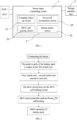
- the present disclosure provides a battery pack charging and discharging protection system comprising a battery pack and a power input controlling circuit connected with the battery pack, a voltage regulator unit connected to the power input controlling circuit, a charging and discharging protection unit, the charging and discharging protection unit comprising a coupling wake-up circuit connected with the power input controlling circuit and configured to drive the voltage regulator unit to complete the power-on of the MCU self-locking circuit, a MCU self-locking circuit configured to autonomous power-off the MCU self-locking circuit, a power-off acceleration circuit connected with the coupling wake-up circuit and configured to detect the voltage of the voltage regulator unit to control a close of wake-up signals of the coupling wake-up circuit; and a button detection circuit.
- the power input controlling circuit comprises a first switch unit and a second switch unit
- the power-off acceleration circuit comprises a first acceleration module and a second acceleration module arranged in parallel
- the first acceleration module has one end thereof connected to the voltage regulator unit and the other end connected to the MCU self-locking circuit to completely turn off the first switch unit and complete the power-off of the battery pack.
- the first acceleration module comprises a first MOS switch QA3, an RC parallel circuit connected to the first MOS switch QA3 and an acceleration resistor.
- the acceleration resistor has one end thereof connected to the drain of the first MOS switch and the other end connected to the MCU self-locking circuit, so as to realize the rapid discharge of the first switch unit.
- the RC parallel circuit has one end thereof connected to the gate of the first MOS switch and the other end connected to the source of the first MOS switch, so as to remain the first MOS switch in a turn-on state when the output voltage of the voltage regulator unit is lower than the driving voltage and completely turn off the first switch unit to complete the power-off of the battery pack.
- the second acceleration module has one end thereof connected with the voltage regulator unit and the other end connected with the MCU self-locking circuit, so as to turn off the discharge loop of the first switch unit when the battery pack is normally powered on.
- the MCU self-locking circuit comprises an MCU microcontroller, a Power EN power enable terminal connected to the MCU microcontroller, and a resistor and a capacitor connected to the Power EN power enable terminal, and wherein the MCU microcontroller is used to detect an operation state of the battery pack and the charger and/or the electricity system connected with the battery pack and to realize the autonomous power-off of the battery pack.
- the coupling wake-up circuit is connected between the power input controlling circuit and the MCU self-locking circuit, and comprises a switch coupling wake-up circuit for manually waking up the battery pack, a single-wire communication coupling circuit for waking up the battery pack during the charging process.
- the switch coupling wake-up circuit comprises a first switch coupling wake-up circuit and a second switch coupling wake-up circuit that are turned on by a button, and wherein when the first switch coupling wake-up circuit and the second switch coupling wake-up circuit are turned on by the button, a positive pole of the battery pack is coupled to the first switch unit to turn on the first switch unit together with the second switch unit, and drives the voltage regulator unit to ensure a stable operation of the battery pack.
- the switch button detect circuit divides the voltage of the battery pack and transmits the divided voltage to the MCU self-locking circuit through the voltage regulator unit when the button between the first switch coupling wake-up circuit and the second switch coupling wake-up circuit is turned on, and the MCU self-locking circuit detects the duration time of the high level of the button to send a power-down instruction.
- the battery pack charge and discharge protection system of the present disclosure adopts single-wire compatible communication and coupled wake-up mode to achieve the autonomous power-off of the battery pack in time, avoiding over-discharge of the battery caused by the long-term self-consumption of the battery pack.
- it can detect the charger and/or the electricity system connected to the battery pack, and complete autonomous power-off when the charger and/or the electricity system are abnormal, which effectively improves the safety and the service life of the battery pack, and can be applied to high voltage output environment, and has the advantages of fast response speed and high reliability.
- a battery pack charging and discharging protection system of the present disclosure which comprises a battery pack (not labeled) and power input controlling circuit 1 connected with the battery pack.
- the battery pack charging and discharging protection system also comprises a voltage regulator unit 2 connected within the power input controlling circuit 1 and a charging and discharging protection unit 3.
- the power input controlling circuit 1 is connected to a positive electrode of the battery pack for connecting to a charger (not shown) and/or an electrical system (not shown).
- the power input controlling circuit 1 includes a first switch unit 11 and a second switch unit 12.
- the first switch unit 11 includes a MOS switch QA1 and a discharge circuit 111 arranged in parallel with the MOS switch QA1.
- the MOS switch QA1 is an N-channel MOS switch.
- One end of the discharge circuit 111 is connected to the gate of the MOS switch QA1, and the other end is connected to the source of the MOS switch QA1 to discharge the MOS switch QA1 and turn off the MOS switch QA1.
- the discharge circuit 111 is grounded and includes a diode DA10, a resistor RA10, and a capacitor CA2 arranged in parallel.
- the discharge circuit 111 can also have other forms of discharge structure, and it is only necessary to ensure that the discharge circuit 111 can complete the discharge of the MOS switch QA1.
- the second switch unit 12 is connected in series with the first switch unit 11, which connects to the voltage input VIN of the power input controlling circuit 1, and controls the power input controlling circuit 1 to turn off.
- the second switch unit 12 includes a MOS switch QA2, a diode DA4 connected in parallel with the MOS switch QA2, and a resistor RA3.
- the MOS switch QA2 is a P-channel MOS switch. One end of the diode DA4 and the resistor RA3 is connected to the source of the MOS switch QA2, and the other end is connected to the gate of the MOS switch QA2, and the drain of the MOS switch QA1 of the first switch unit 11 is also connected to the gate of the MOS switch QA2.
- the drain of the MOS switch QA2 is connected to the voltage input VIN of the voltage regulation of the power input controlling circuit 1 before the voltage regulation, so that the second switch unit 12 ensures the normal use of the power input controlling circuit 1 while controls the shutdown of the power input controlling circuit 1 at the same time.
- the MOS switch QA1 is an N-channel MOS switch and the MOS switch QA2 is a P-channel MOS switch.
- the selection of the MOS switch QA1 and the MOS switch QA2 can be selected according to actual needs, which is not limited here.
- the voltage regulator unit 2 is connected to a distal end of the voltage input VIN so as to ensure a stable voltage output when the power input controlling circuit 1 is connected to a system using power supply.
- the voltage regulator unit 2 is a Low Dropout Regulator (LDO).
- the low dropout regulator is a 5V low dropout regulator to further ensure that the voltage output by the power input controlling circuit 1 is stable and meets the electricity requirements of the system.
- the charging and discharging protection unit 3 is connected to the power input controlling circuit 1 and includes a coupling wake-up circuit 31, a button detection circuit 32, an MCU self-locking circuit 33 and a power-off acceleration circuit 34.
- the coupling wake-up circuit 31 is used to drive the voltage regulator unit 2, complete the power-on of the MCU self-locking circuit 33, and ensure the stable operation of the battery pack.
- the coupling wake-up circuit 31 is connected between the power input controlling circuit 1 and the MCU self-locking circuit 33, and includes a switch coupling wake-up circuit 311 for manually waking up the battery pack and a single-wire communication coupling circuit 312 for waking up the battery pack during the charging process thereof.
- the switch coupling wake-up circuit 311 includes a first switch coupling wake-up circuit (not labeled) and a second switch coupling wake-up circuit (not labeled) that are controlled by a button.
- the first switch coupling wake-up circuit is connected to the input of the power input controlling circuit 1
- the second switch coupling wake-up circuit is connected to the MCU self-locking circuit 33, and when the first switch coupling wake-up circuit and the second switch coupling wake-up circuit are turned on by the button, the positive pole of the battery pack is coupled to the gate of the MOS switch QA1 of the first switch unit 11 to turn on the first switch unit 11 and the second switch unit 12, and further drives the voltage regulator unit 2 to ensure stable operation of the battery pack, and at the same time enables the MCU self-locking circuit 33 to complete power-on initialization.
- the single-wire communication coupling circuit 312 is connected to the second switch coupling wake-up circuit, and is connected to the MCU self-locking circuit 33 and the power-down acceleration circuit 34 through the second switch coupling wake-up circuit, and is further connected to the power input controlling circuit 1 for waking-up the battery pack when the battery pack is connected to an external power source for charging.
- the single-wire communication coupling circuit 312 includes a ground terminal, a resistor DA7, and a capacitor CA11. In such a way, when the battery pack is connected to the charger, the single-wire communication interface of the single-wire communication coupling circuit 312 can be pulled up by the internal voltage of the charger and coupled to the gate of the MOS switch QA1 through the capacitor CA11 to control the on/off of the MOS switch QA1 to further control the on/off of the second switch unit 12.
- the positive output of the battery pack passes through the second switch unit 12 and reaches the voltage input terminal VIN of the power input control circuit 1, and drives the voltage regulator unit 2 connected to the voltage input terminal VIN, so that the MCU self-locking circuit 33 completes a self-locking operation and ensures the stable operation of the battery pack.
- the single-wire communication coupling circuit 312 of the present disclosure can also delay the wake-up of the battery pack. Specifically, when the battery pack is awakened by the single-wire communication coupling circuit 312, the MCU self-locking circuit 33 is firstly turned off, at this time, the single-wire communication interface of the single-wire communication coupling circuit 312 is pulled up by the internal voltage of the charger. The voltage in the single-wire communication coupling circuit 312 is greater than the maximum threshold voltage of the MOS switch QA1 and lasts for a certain period of time to control the MCU self-locking circuit 33 self-locking delay to ensure that there is enough time to wake up the battery pack and keep the battery pack working normally.
- the MCU self-locking circuit 33 is used to detect the operating conditions of the battery pack and the charger and/or the electric system connected to the battery pack and realizes autonomous power-off of the battery pack.
- the MCU self-locking circuit 33 includes an MCU microcontroller (not shown), a power enable terminal (Power EN) connected to the MCU microcontroller, and a resistor RA9 and a diode DA8 connected to the Power EN.
- the voltage regulator unit 2 connects to the I/O interface (not shown) of the MCU microcontroller.
- the voltage regulator unit 2 regulates the output voltage to the I/O interface of the MCU microcontroller.
- the MCU microcontroller starts to calculate the high-level duration time when the button is turned on and determines whether the battery pack needs to be autonomously power-down according to the high-level duration time.
- the regulated output voltage of the voltage regulator unit 2 is 5V.
- the MCU microcontroller executes an autonomous power-down instruction, and completes the power-down of the battery pack by pulling down the power enable terminal of the Power EN power supply.
- the autonomous control of power-down of the battery pack through the MCU self-locking circuit 33 is realized.
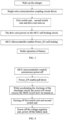
- the power-down acceleration circuit 34 is used to detect the voltage value of the voltage regulator unit 2 and control the wake-up signal of the coupled wake-up circuit 2 to close, so as to ensure the realization of autonomous power-down of the MCU self-locking circuit 33. Specifically, when the autonomous power-off of the battery pack is controlled by the MCU self-locking circuit 33, the MCU microcontroller pulls down the power enable of Power EN. At this time, the capacitor CA2 of the discharge circuit 111 is discharged via the resistor RA10, so that the voltage of the MOS switch QA1 drops down to the threshold voltage.
- the MOS switch QA1 will be reopened and the battery pack will be re-powered, which will cause the autonomous power-off of the battery pack to be failed under the control of the MCU self-locking circuit 33. Therefore, the battery pack is always in a discharged state which causes the battery pack to be over-discharged.
- the arrangement of the power-off acceleration circuit 34 can ensure the correct realization of the autonomous power-off of the MCU self-locking circuit 33 when there is a signal on the COM port of the single-wire communication coupling circuit 312, so as to avoid the occurrence of over-discharge of the battery pack.
- the power-off acceleration circuit 34 includes a first acceleration module 341 and a second acceleration module 342 arranged in parallel.
- the first acceleration module 341 has one end thereof connected to the voltage regulator unit 2 and the other end connected to the MCU self-locking circuit 33, so as to completely turn off the first switch unit 11 and complete the power-off of the battery pack.
- the first acceleration module 341 includes a first MOS switch QA3, an RC parallel circuit 343 connected to the first MOS switch QA3, and an acceleration resistor RA8.
- the RC parallel circuit 343 has one end thereof connected to the gate of the first MOS switch QA3 and the other end connected to the source of the first MOS switch QA3, so as to remain the first MOS switch QA3 in a turn-on state when the output voltage of the voltage regulator unit 2 is lower than the driving voltage. And, the first switch unit 11 is completely turned off to complete the power-off of the battery pack.
- the acceleration resistor RA8 has one end thereof connected to the drain of the first MOS switch QA3 and the other end connected to the MCU self-locking circuit 33, so as to realize the rapid discharging of the first switch unit 11. Specifically, when the MCU microcontroller detects a serious fault in the charger or the electric system, the MCU microcontroller executes an autonomous power-off command by pulling down the power enable terminal (Power EN) and controls the second acceleration module 342 to turn off and the first MOS switch QA3 to turn on.
- Power EN power enable terminal
- the capacitor CA2 of the first switch unit 11 is quickly discharged through the accelerating resistor RA8, and when the output voltage of the resistor RA19 and the capacitor CA13 of the RC parallel circuit 343 is lower than the driving voltage/not exists, it is ensured that the first MOS switch QA3 remains on for a period of time to ensure that the MOS switch QA1 is completely turned off and complete the power off of the battery pack.
- the driving voltage is 5V
- the acceleration resistance RA8 is 1K ⁇
- the resistance RA19 is 1M ⁇
- the capacitance CA13 is luF.
- the second acceleration module 342 has one end thereof connected to the voltage regulator unit 2 and the other end connected to the MCU self-locking circuit 33 to turn off the discharge loop 111 of the first switch unit 11 when the battery pack is normally powered on.
- the second acceleration module 342 includes a second MOS switch QA4 and a resistor RA18 connected to the gate of the first MOS switch QA3.
- the second MOS switch QA4 can be used for turning off the RC parallel circuit 343 of the first MOS switch QA3 during a normal power-on operation of the system, so as to extend the shutdown time and ensure the normal power-off of the battery pack.
- the battery pack charging and discharging protection system of the present disclosure is provided with a charging and discharging protection unit 3 including the coupling wake-up circuit 31, the button detection circuit 32, the MCU self-locking circuit 33, and the power-off acceleration circuit 34, which can quickly and effectively detects the faults of the battery pack and the charger and/or power system connected with the battery pack, and can also controls the autonomous power-off of the battery pack through the MCU self-locking circuit 33, so as to effectively solves the problem of the over-discharge of the battery pack caused by the battery pack cannot be powered off normally in the prior art; at the same time, the arrangement of the single-wire communication coupling circuit 312 enables the battery pack to be automatically awakened when the charger is connected on the one hand, and on the other hand, it can also extend the self-locking time of the MCU self-locking circuit 33 to ensure the normal power-on and power-off of the battery pack.
- the battery pack charging and discharging protection system of the present disclosure adopts single-wire compatible communication and coupled wake-up mode to achieve the autonomous power-off of the battery pack in time, avoiding over-discharge of the battery caused by the long-term self-consumption of the battery pack.
- it can detect the charger and/or the electricity system connected to the battery pack, and complete autonomous power-off when the charger and/or the electricity system are abnormal, which effectively improves the safety and the service life of the battery pack, and can be applied to high voltage output environment, and has the advantages of fast response speed and high reliability.
- a battery pack charging and discharging protection system comprising: a battery pack and a power input controlling circuit 1 connected with the battery pack; a voltage regulator unit 2 connected to the power input controlling circuit 1, wherein the system further comprises a charging and discharging protection unit 3, the charging and discharging protection unit 3 comprising: a MCU self-locking circuit 33 configured to control the on/off of the battery pack comprising a MCU; a coupling wake-up circuit 31 connected with the power input controlling circuit 1 and configured to drive the voltage regulator unit 2 to complete the power-on of the MCU self-locking circuit 33; a power-off acceleration circuit 34 connected with the coupling wake-up circuit 31 and configured to detect the voltage of the voltage regulator unit 2 to control a close of wake-up signals of the coupling wake-up circuit 31; a button detect circuit 32 connected with the MCU for detecting a signal actuated by an operator.
- the power input controlling circuit 1 comprises a first switch unit 11 and a second switch unit 12
- the power-off acceleration circuit 34 comprises a first acceleration module 341 and a second acceleration module 342 arranged in parallel
- the first acceleration module 341 has one end thereof connected to the voltage regulator unit 2 and the other end connected to the MCU self-locking circuit 33 to completely turn off the first switch unit 11 and complete the power-off of the battery pack.
- the first acceleration module 341 comprises a first MOS switch QA3, an RC parallel circuit 343 connected to the first MOS switch QA3 and an acceleration resistor RA8.
- the battery pack charging and discharging protection system according to above embodiment, wherein the acceleration resistor RA8 has one end thereof connected to the drain of the first MOS switch QA3 and the other end connected to the MCU self-locking circuit 33.
- the RC parallel circuit 343 has one end thereof connected to the gate of the first MOS switch QA3 and the other end connected to the source of the first MOS switch QA3, so as to remain the first MOS switch QA3 in a turn-on state when the output voltage of the voltage regulator unit 2 is lower than the driving voltage and completely turn off the first switch unit 11 to complete the power-off of the battery pack.
- the battery pack charging and discharging protection system according to above embodiment, wherein the second acceleration module 342 has one end thereof connected with the voltage regulator unit 2 and the other end connected with the MCU self-locking circuit 33, so as to turn off the discharge loop of the first switch unit 11 when the battery pack is normally powered on.
- the MCU self-locking circuit 33 comprises a power enable terminal connected to the MCU, and a resistor and a capacitor connected to the power enable terminal, and wherein the MCU is used to detect an operation state of the battery pack and the charger and/or the electricity system connected with the battery pack and to realize the autonomous power-off of the battery pack.
- the coupling wake-up circuit 31 is connected between the power input controlling circuit 1 and the MCU self-locking circuit 33, and comprises a switch coupling wake-up circuit 311 for manually waking up the battery pack, a single-wire communication coupling circuit 312 for waking up the battery pack during the charging process.
- the switch coupling wake-up circuit 311 comprises a first switch coupling wake-up circuit and a second switch coupling wake-up circuit that are turned on by a button, and wherein when the first switch coupling wake-up circuit and the second switch coupling wake-up circuit are turned on by the button, a positive pole of the battery pack is coupled to the first switch unit 11 to turn on the first switch unit 11 together with the second switch unit 12, and drives the voltage regulator unit 2 to ensure a stable operation of the battery pack.
- the button detect circuit 32 divides the voltage of the battery pack and transmits the divided voltage to the MCU self-locking circuit 33 through the voltage regulator unit 2 when the button between the first switch coupling wake-up circuit and the second switch coupling wake-up circuit is turned on, and the MCU self-locking circuit 33 detects the duration time of the high level of the button to send a power-down instruction.
Landscapes
- Engineering & Computer Science (AREA)
- Power Engineering (AREA)
- Charge And Discharge Circuits For Batteries Or The Like (AREA)
- Secondary Cells (AREA)
Applications Claiming Priority (2)
| Application Number | Priority Date | Filing Date | Title |
|---|---|---|---|
| CN201911119542.XA CN110797946B (zh) | 2019-11-15 | 2019-11-15 | 电池包充放电保护系统 |
| EP20207832.5A EP3823130B1 (de) | 2019-11-15 | 2020-11-16 | Batteriepacklade- und entladeschutzsystem |
Related Parent Applications (1)
| Application Number | Title | Priority Date | Filing Date |
|---|---|---|---|
| EP20207832.5A Division EP3823130B1 (de) | 2019-11-15 | 2020-11-16 | Batteriepacklade- und entladeschutzsystem |
Publications (2)
| Publication Number | Publication Date |
|---|---|
| EP4344015A2 true EP4344015A2 (de) | 2024-03-27 |
| EP4344015A3 EP4344015A3 (de) | 2024-07-10 |
Family
ID=69445023
Family Applications (2)
| Application Number | Title | Priority Date | Filing Date |
|---|---|---|---|
| EP20207832.5A Active EP3823130B1 (de) | 2019-11-15 | 2020-11-16 | Batteriepacklade- und entladeschutzsystem |
| EP24157233.8A Pending EP4344015A3 (de) | 2019-11-15 | 2020-11-16 | Batteriepacklade- und -entladeschutzsystem |
Family Applications Before (1)
| Application Number | Title | Priority Date | Filing Date |
|---|---|---|---|
| EP20207832.5A Active EP3823130B1 (de) | 2019-11-15 | 2020-11-16 | Batteriepacklade- und entladeschutzsystem |
Country Status (3)
| Country | Link |
|---|---|
| US (1) | US11721986B2 (de) |
| EP (2) | EP3823130B1 (de) |
| CN (1) | CN110797946B (de) |
Families Citing this family (6)
| Publication number | Priority date | Publication date | Assignee | Title |
|---|---|---|---|---|
| CN111459555B (zh) * | 2020-03-10 | 2024-05-31 | 大唐微电子技术有限公司 | 一种休眠方法和装置 |
| CN111682615A (zh) * | 2020-06-18 | 2020-09-18 | 格力博(江苏)股份有限公司 | 充电控制电路、充电装置及充电系统 |
| CN111934394B (zh) * | 2020-09-14 | 2020-12-29 | 苏州赛芯电子科技有限公司 | 锂电池上电自恢复保护控制电路、保护电路和保护装置 |
| CN113489089B (zh) * | 2021-06-22 | 2024-03-12 | 格力博(江苏)股份有限公司 | 一种唤醒系统、电池包、充放电组合及电池包唤醒方法 |
| CN114530925A (zh) * | 2021-12-14 | 2022-05-24 | 航天长峰朝阳电源有限公司 | 一种智能ups电源供电无主电后备电断电自锁电路 |
| CN117175724A (zh) * | 2023-07-28 | 2023-12-05 | 华为数字能源技术有限公司 | 储能系统 |
Family Cites Families (17)
| Publication number | Priority date | Publication date | Assignee | Title |
|---|---|---|---|---|
| JP3670522B2 (ja) * | 1999-07-30 | 2005-07-13 | 富士通株式会社 | バッテリパック |
| DE10349092B4 (de) * | 2003-10-22 | 2020-06-18 | Atmel Corp. | Integrierte Schaltungsanordnung zum Erkennen und Ausgeben von Steuersignalen |
| US8890482B2 (en) * | 2009-01-14 | 2014-11-18 | Mitsumi Electric Co., Ltd. | Protection monitoring circuit and battery pack |
| JP5523116B2 (ja) * | 2009-01-28 | 2014-06-18 | 京セラ株式会社 | 電子機器、電源状態通知方法及び電源状態通知プログラム |
| JP5208149B2 (ja) * | 2009-04-09 | 2013-06-12 | パナソニック株式会社 | 保護回路、及び電池パック |
| EP3699617B1 (de) | 2011-10-07 | 2024-02-07 | Hitachi Astemo, Ltd. | Batterieüberwachungsgerät und batterieüberwachungssystem |
| JP6530586B2 (ja) * | 2013-12-06 | 2019-06-12 | ミツミ電機株式会社 | 2次保護ic、2次保護icの制御方法、保護モジュール、及び電池パック |
| US9768625B2 (en) | 2014-07-04 | 2017-09-19 | Makita Corporation | Battery pack, and method for controlling the same |
| CN106410897B (zh) * | 2016-10-12 | 2019-02-15 | 常州市派腾电子技术服务有限公司 | 电子烟及其电源结构 |
| KR102308656B1 (ko) * | 2017-01-24 | 2021-10-01 | 삼성에스디아이 주식회사 | 배터리 팩, 배터리 팩의 관리 방법, 및 배터리 팩을 포함하는 차량 |
| CN207442815U (zh) * | 2017-11-13 | 2018-06-01 | 上海唯淼电子科技有限公司 | 一种利用自锁电路和电容蓄能进行开关控制的电路 |
| CN207896684U (zh) | 2017-12-15 | 2018-09-21 | 浙江卡尔特汽车科技有限公司 | 一种脉冲激活和休眠电路 |
| DE102018107474B4 (de) * | 2018-03-28 | 2022-05-12 | Semikron Elektronik Gmbh & Co. Kg | Steuereinrichtung für einen Leistungshalbleiterschalter |
| CN109120037A (zh) * | 2018-09-18 | 2019-01-01 | 深圳和而泰智能控制股份有限公司 | 一种电池管理方法、电路、电池包及电动工具 |
| CN209149116U (zh) | 2018-11-23 | 2019-07-23 | 浙江零跑科技有限公司 | 一种低功耗任意按键唤醒电路 |
| CN109683054B (zh) * | 2018-12-25 | 2022-03-22 | 格力博(江苏)股份有限公司 | 电池包电压采集线束线序诊断装置及方法 |
| CN109591603A (zh) * | 2019-01-04 | 2019-04-09 | 北京长城华冠汽车科技股份有限公司 | 电动汽车及其碰撞后的控制方法和系统 |
-
2019
- 2019-11-15 CN CN201911119542.XA patent/CN110797946B/zh active Active
-
2020
- 2020-11-13 US US17/098,322 patent/US11721986B2/en active Active
- 2020-11-16 EP EP20207832.5A patent/EP3823130B1/de active Active
- 2020-11-16 EP EP24157233.8A patent/EP4344015A3/de active Pending
Also Published As
| Publication number | Publication date |
|---|---|
| CN110797946B (zh) | 2023-12-01 |
| EP4344015A3 (de) | 2024-07-10 |
| EP3823130B1 (de) | 2024-02-14 |
| EP3823130A1 (de) | 2021-05-19 |
| CN110797946A (zh) | 2020-02-14 |
| US20210152007A1 (en) | 2021-05-20 |
| EP3823130C0 (de) | 2024-02-14 |
| US11721986B2 (en) | 2023-08-08 |
Similar Documents
| Publication | Publication Date | Title |
|---|---|---|
| EP3823130B1 (de) | Batteriepacklade- und entladeschutzsystem | |
| JP6517333B2 (ja) | 電気自動車用のステアリングパワーシステム及びそれを制御する方法 | |
| CN100568662C (zh) | 电池组、电池保护处理装置及其控制方法 | |
| CN103699200B (zh) | 一种关机控制电路及电子产品 | |
| KR20180087014A (ko) | 배터리 팩, 배터리 팩의 관리 방법, 및 배터리 팩을 포함하는 차량 | |
| CN113937865A (zh) | 一种电池管理系统及供电系统 | |
| EP4333250A1 (de) | Batterieverwaltungsschaltung, batterieanordnung und elektrowerkzeugsystem | |
| CN103457314B (zh) | 一种开关型单节锂电池充电和升压放电控制芯片 | |
| JP3252302U (ja) | エネルギー貯蔵装置 | |
| CN110995077A (zh) | 一种电池供电马达恒压输出控制装置及控制方法 | |
| WO2017117400A1 (en) | Modular battery system | |
| CN115224772A (zh) | 供电控制方法、供电控制系统以及电梯系统 | |
| CN205753470U (zh) | 一种智能开关控制器蓄电池的保护及活化电路 | |
| TWI491143B (zh) | 再生能源供電系統及其具蓄電池保護功能之電源供應裝置與控制方法 | |
| KR102244124B1 (ko) | 스위칭 디바이스를 제어하기 위한 시스템 | |
| CN117895632A (zh) | 功率变换器的控制方法及电力设备 | |
| CN204304540U (zh) | 一种用于为输电线路检测设备供电的电源系统 | |
| CN205724978U (zh) | 充电控制系统及具备该系统的可充电式电动设备 | |
| US12388283B1 (en) | Charging system and emergency start device | |
| CN102437608A (zh) | Ups供电系统及内置有该系统的磁盘阵列 | |
| CN211180588U (zh) | 应用于洁面工具的控制电路 | |
| CN120691526A (zh) | 储能电池系统的bms自断电控制方法 |
Legal Events
| Date | Code | Title | Description |
|---|---|---|---|
| PUAI | Public reference made under article 153(3) epc to a published international application that has entered the european phase |
Free format text: ORIGINAL CODE: 0009012 |
|
| STAA | Information on the status of an ep patent application or granted ep patent |
Free format text: STATUS: THE APPLICATION HAS BEEN PUBLISHED |
|
| AC | Divisional application: reference to earlier application |
Ref document number: 3823130 Country of ref document: EP Kind code of ref document: P |
|
| AK | Designated contracting states |
Kind code of ref document: A2 Designated state(s): AL AT BE BG CH CY CZ DE DK EE ES FI FR GB GR HR HU IE IS IT LI LT LU LV MC MK MT NL NO PL PT RO RS SE SI SK SM TR |
|
| PUAL | Search report despatched |
Free format text: ORIGINAL CODE: 0009013 |
|
| AK | Designated contracting states |
Kind code of ref document: A3 Designated state(s): AL AT BE BG CH CY CZ DE DK EE ES FI FR GB GR HR HU IE IS IT LI LT LU LV MC MK MT NL NO PL PT RO RS SE SI SK SM TR |
|
| RIC1 | Information provided on ipc code assigned before grant |
Ipc: H02J 7/00 20060101AFI20240605BHEP |
|
| STAA | Information on the status of an ep patent application or granted ep patent |
Free format text: STATUS: REQUEST FOR EXAMINATION WAS MADE |
|
| 17P | Request for examination filed |
Effective date: 20250107 |