EP4341539B1 - Leitungselement für eine flüssigkeitsgekühlte komponente eines verbrennungsmotors - Google Patents
Leitungselement für eine flüssigkeitsgekühlte komponente eines verbrennungsmotors Download PDFInfo
- Publication number
- EP4341539B1 EP4341539B1 EP22718986.7A EP22718986A EP4341539B1 EP 4341539 B1 EP4341539 B1 EP 4341539B1 EP 22718986 A EP22718986 A EP 22718986A EP 4341539 B1 EP4341539 B1 EP 4341539B1
- Authority
- EP
- European Patent Office
- Prior art keywords
- line
- component
- combustion engine
- internal combustion
- bypass connection
- Prior art date
- Legal status (The legal status is an assumption and is not a legal conclusion. Google has not performed a legal analysis and makes no representation as to the accuracy of the status listed.)
- Active
Links
Images
Classifications
-
- F—MECHANICAL ENGINEERING; LIGHTING; HEATING; WEAPONS; BLASTING
- F01—MACHINES OR ENGINES IN GENERAL; ENGINE PLANTS IN GENERAL; STEAM ENGINES
- F01P—COOLING OF MACHINES OR ENGINES IN GENERAL; COOLING OF INTERNAL-COMBUSTION ENGINES
- F01P11/00—Component parts, details, or accessories not provided for in, or of interest apart from, groups F01P1/00 - F01P9/00
- F01P11/04—Arrangements of liquid pipes or hoses
-
- F—MECHANICAL ENGINEERING; LIGHTING; HEATING; WEAPONS; BLASTING
- F01—MACHINES OR ENGINES IN GENERAL; ENGINE PLANTS IN GENERAL; STEAM ENGINES
- F01P—COOLING OF MACHINES OR ENGINES IN GENERAL; COOLING OF INTERNAL-COMBUSTION ENGINES
- F01P3/00—Liquid cooling
- F01P3/12—Arrangements for cooling other engine or machine parts
-
- F—MECHANICAL ENGINEERING; LIGHTING; HEATING; WEAPONS; BLASTING
- F01—MACHINES OR ENGINES IN GENERAL; ENGINE PLANTS IN GENERAL; STEAM ENGINES
- F01P—COOLING OF MACHINES OR ENGINES IN GENERAL; COOLING OF INTERNAL-COMBUSTION ENGINES
- F01P3/00—Liquid cooling
- F01P3/20—Cooling circuits not specific to a single part of engine or machine
-
- F—MECHANICAL ENGINEERING; LIGHTING; HEATING; WEAPONS; BLASTING
- F01—MACHINES OR ENGINES IN GENERAL; ENGINE PLANTS IN GENERAL; STEAM ENGINES
- F01P—COOLING OF MACHINES OR ENGINES IN GENERAL; COOLING OF INTERNAL-COMBUSTION ENGINES
- F01P7/00—Controlling of coolant flow
- F01P7/14—Controlling of coolant flow the coolant being liquid
-
- F—MECHANICAL ENGINEERING; LIGHTING; HEATING; WEAPONS; BLASTING
- F01—MACHINES OR ENGINES IN GENERAL; ENGINE PLANTS IN GENERAL; STEAM ENGINES
- F01P—COOLING OF MACHINES OR ENGINES IN GENERAL; COOLING OF INTERNAL-COMBUSTION ENGINES
- F01P7/00—Controlling of coolant flow
- F01P7/14—Controlling of coolant flow the coolant being liquid
- F01P2007/143—Controlling of coolant flow the coolant being liquid using restrictions
-
- F—MECHANICAL ENGINEERING; LIGHTING; HEATING; WEAPONS; BLASTING
- F01—MACHINES OR ENGINES IN GENERAL; ENGINE PLANTS IN GENERAL; STEAM ENGINES
- F01P—COOLING OF MACHINES OR ENGINES IN GENERAL; COOLING OF INTERNAL-COMBUSTION ENGINES
- F01P2060/00—Cooling circuits using auxiliaries
- F01P2060/04—Lubricant cooler
-
- F—MECHANICAL ENGINEERING; LIGHTING; HEATING; WEAPONS; BLASTING
- F01—MACHINES OR ENGINES IN GENERAL; ENGINE PLANTS IN GENERAL; STEAM ENGINES
- F01P—COOLING OF MACHINES OR ENGINES IN GENERAL; COOLING OF INTERNAL-COMBUSTION ENGINES
- F01P2060/00—Cooling circuits using auxiliaries
- F01P2060/12—Turbo charger
-
- F—MECHANICAL ENGINEERING; LIGHTING; HEATING; WEAPONS; BLASTING
- F02—COMBUSTION ENGINES; HOT-GAS OR COMBUSTION-PRODUCT ENGINE PLANTS
- F02B—INTERNAL-COMBUSTION PISTON ENGINES; COMBUSTION ENGINES IN GENERAL
- F02B39/00—Component parts, details, or accessories relating to, driven charging or scavenging pumps, not provided for in groups F02B33/00 - F02B37/00
- F02B39/005—Cooling of pump drives
-
- Y—GENERAL TAGGING OF NEW TECHNOLOGICAL DEVELOPMENTS; GENERAL TAGGING OF CROSS-SECTIONAL TECHNOLOGIES SPANNING OVER SEVERAL SECTIONS OF THE IPC; TECHNICAL SUBJECTS COVERED BY FORMER USPC CROSS-REFERENCE ART COLLECTIONS [XRACs] AND DIGESTS
- Y02—TECHNOLOGIES OR APPLICATIONS FOR MITIGATION OR ADAPTATION AGAINST CLIMATE CHANGE
- Y02T—CLIMATE CHANGE MITIGATION TECHNOLOGIES RELATED TO TRANSPORTATION
- Y02T10/00—Road transport of goods or passengers
- Y02T10/10—Internal combustion engine [ICE] based vehicles
- Y02T10/12—Improving ICE efficiencies
Definitions
- the disclosure relates to a line element for a liquid-cooled component of an internal combustion engine, comprising a supply line for supplying coolant to the component and a discharge line for discharging coolant from the component.
- DE102012205850B4 discloses an intercooler cooling fluid circuit coupled to and in fluid communication with a turbocharger of an internal combustion engine for circulating a flow of cooling fluid to the turbocharger for cooling the turbocharger.
- a turbocharger cooling control valve controls fluid flow between the turbocharger and an intercooler.
- the turbocharger cooling control valve directs the flow of cooling fluid to the intercooler when the engine is running and directs the flow of cooling fluid to the turbocharger when the engine is not running.
- the vehicle uses an intercooler pump to circulate the cooling fluid to both the intercooler when the vehicle is running and the turbocharger when the vehicle is not running.
- a passive conduit element is to be provided which can be connected to a component without active control elements such as valves and which allows a part of a coolant flow to be bypassed by the component.
- a line element for a liquid-cooled component of an internal combustion engine, comprising a supply line for supplying coolant to the component and a discharge line for discharging coolant from the component, wherein the component has an internal coolant path having an inlet which is fluidly connectable to the supply line and an outlet which is fluidly connectable to the discharge line, and wherein the supply line is also connected to the discharge line via a bypass connection.
- the component is a bearing housing of a compressor, in particular a bearing housing of a compressor of a turbocharger.
- the internal coolant path can run in a bearing housing of the compressor.
- the line element can be constructed in one piece or in multiple pieces.
- the line element can have connections for the fluid-conducting connection of flexible or rigid line sections.
- the fluid-conducting connection can be formed by a pipe connection with corresponding seals with respect to interconnected elements.
- the pipe connection can have valves and branches.
- a fluid-conducting connection exists when fluids can be conducted from one element to the next element. Water, in particular cooling water with antifreeze, can be used as the cooling liquid.
- bypass connection is formed as a recess in the component between the inlet and the outlet, wherein a common seal is provided which seals the inlet, the outlet and the recess from the environment.
- bypass connection By locating the bypass connection in the component, such as the turbocharger's bearing housing, only minimal changes compared to a conventional connection are required to implement the claimed design. Only a recess needs to be cast or milled into the component or bearing housing.
- bypass connection is designed as a recess in the line element in a flange for the mechanical and fluid-conducting connection of the supply line to the inlet and the discharge line to the outlet, wherein a common seal is provided which seals the flange and the bypass connection with respect to the component.
- bypass connection is designed as a line section which is arranged upstream of the supply line and downstream of the discharge line in the line element.
- the line section is a pipe connection between the sections of the line element from which the supply or discharge line to the component extends.
- the pipe connection can be rigid or flexible.
- the pipe connection can be dimensioned to achieve a specific ratio of a flow rate through the component in relation to the flow rate through the pipe connection. Both the component and the pipe connection therefore act as a throttle, rather than an orifice. Accordingly, the volume flow passed through them depends only on a constant and the pressure difference between the supply line and the discharge line. According to the disclosure, the aim is to ensure that the majority of coolant flows past the component so that the component can be connected in series with the line section with components and coolers that require a much higher volume flow of coolant.
- a flow resistance of the bypass connection is lower than a flow resistance of the internal coolant path of the component.
- the flow resistance of the bypass connection for fluids with a density and viscosity such as cooling water is 2 to 4 times, in particular 2.5 to 3.5 times lower than the flow resistance of the internal coolant path of the component.
- the line element is arranged downstream of an oil cooler, wherein the oil cooler is designed to exchange a heat flow between engine oil from the internal combustion engine and the cooling liquid.
- a single cooling line can be used to cool both the oil cooler and the turbocharger.
- the oil cooler has a lower flow resistance than the turbocharger.
- a heat flow is exchanged between the cooling water and the engine oil.
- a water pump is provided downstream of the oil cooler for conveying coolant through the oil cooler, the line element and the component.
- the turbocharger can be cooled even after the combustion engine has been running.
- Engine oil aging can also be slowed if the accumulated heat in the combustion engine is dissipated after operation.
- the coolant flow rate can be controlled based on the actual cooling requirements of the oil cooler and turbocharger. If the engine oil temperature exceeds a threshold, the pump's flow rate can be increased. If the engine oil is still cold, no coolant flow rate may be necessary at all.
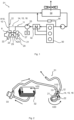
- FIG. 1 shows a schematic of a coolant circuit of an internal combustion engine 30.
- the coolant circuit has a branch which runs in a manner not shown through the internal combustion engine 30 or the engine block (not shown in detail).
- the internal combustion engine 30 transfers waste heat to a cooling medium which circulates in the coolant circuit and can be released into the environment in a cooler 34.
- the cooling medium is often pumped through the cooler and the internal combustion engine 30 by a water pump (not shown).
- the water pump always runs when the internal combustion engine is in operation, even when the cooling medium is still cold.
- a switchable bypass 35 is provided which can be opened depending on the temperature.
- the bypass is frequently referred to as a thermostat. If the cooling medium is not yet at operating temperature, it circulates in the engine block and is thus brought to the required operating temperature more quickly.
- a turbocharger 20 is arranged downstream of an oil cooler 32, wherein in the oil cooler 32 a heat flow is exchanged between engine oil from the internal combustion engine 30 and the cooling liquid.
- an additional electric water pump 33 is provided for pumping coolant through the oil cooler 32 and a bearing housing of a turbocharger 20.
- a line element 10 is connected to the turbocharger 20, comprising a supply line 11 for supplying coolant to the bearing housing 29 and a discharge line 12 for discharging coolant from the bearing housing.
- An integrated cooling circuit 23 is provided in the bearing housing, which has an inlet 21 that is fluidly connected to the supply line 11 and an outlet 22 that is fluidly connected to the discharge line 12.
- the supply line 11 is also fluidly connected to the discharge line 12 via a bypass connection 14, 15, 16.
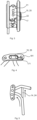
- a first embodiment of a bypass line 15 is shown in Figure 3 shown in detail.
- a recess 25 is provided in the bearing housing of the turbocharger 20. The recess connects the inlet 21 to the outlet 22.
- FIG. 4 A second embodiment of a bypass line 16 is shown in Figure 4 shown in detail.
- the supply line 11 is connected to the discharge line 12 via a recess 26 in the line element.
- FIG. 5 A third embodiment of a bypass line 14 is shown in Figure 5 shown in detail.
- a bypass is created by providing a pipe connection 24 between the supply line 11 and the discharge line 12.
- bypass lines 14, 15, and 16 The purpose of the respective bypass lines 14, 15, and 16 is to use the same line section for cooling the turbocharger 20 as for the oil cooler 32.
- the volume flow V32 flowing through the oil cooler 32 would be too high to be passed through the bearing housing 29, since the cooling circuit 23 in the bearing housing 29 is jagged and has curves that increase flow resistance. Therefore, excess cooling medium can be passed past the turbocharger 20 through the bypass connection.
- bypass connection 15 can be formed as a recess 25 in the bearing housing of the turbocharger 20 between the inlet 11 and the outlet 12, wherein a common seal 17 is provided which seals the inlet 11, the outlet 12 and the recess 25 from the environment.
- the line element 10 can be fastened to the bearing housing above the recess 25 via a flange (not shown), wherein the inlet 11 and the supply line 21 as well as the outlet 12 and the discharge line 12 are fluidly connected to one another.
- a corresponding flange is in Figure 5 shown, however, in connection with a bypass connection, which is provided as a pipe connection 24 between the supply line 11 and the discharge line 12.
- a bypass connection 14 is shown in the Figure 3 shown embodiment, since here the recess 25 already forms a bypass.
- bypass connection 16 can be designed as a recess 26 in the line element 10 in a flange 181 for the mechanical and fluid-conducting connection of the supply line 11 to the inlet 21 and of the discharge line 12 to the outlet 22, wherein a common seal 171 is provided which seals the flange 181 and the bypass connection 16 with respect to the bearing housing 29.
- FIG. 5 shows that the bypass connection 14 can be designed as a pipe connection 24, which is arranged upstream of the supply line 11 and downstream of the discharge line 12 in the line element 10.
- the bypass connections 14, 15, 16 have a flow resistance K10 that is lower than the flow resistance K20 of the inner coolant path 23 of the bearing housing.
- the bypass connections 14, 15, and 16 can also be combined to cumulatively have a correspondingly lower flow resistance than the inner coolant path 23. It is intended that the flow resistance K10 of the bypass connection 14, 15, 16 for fluids with a density and viscosity such as cooling water is 2 to 4 times, in particular 2.5 to 3.5 times lower than the flow resistance K20 of the inner coolant path 23 of the bearing housing.
- the volume flow V10, V20 through the bypass connection 14, 15, 16 or the cooling circuit 23 results from the product of the pressure difference between the supply line and the discharge line and the respective flow resistance K10 or K20.
Landscapes
- Engineering & Computer Science (AREA)
- Chemical & Material Sciences (AREA)
- Combustion & Propulsion (AREA)
- Mechanical Engineering (AREA)
- General Engineering & Computer Science (AREA)
- Supercharger (AREA)
Description
- Die Offenbarung betrifft ein Leitungselement für eine flüssigkeitsgekühlte Komponente eines Verbrennungsmotors, mit einer Zuleitung zur Zuführung von Kühlflüssigkeit an die Komponente und einer Ableitung zur Abführung von Kühlflüssigkeit aus der Komponente.
DE102012205850B4 offenbart einen Zwischenkühler-Kühlfluidkreislauf, der mit einem Turbolader eines Verbrennungsmotors gekoppelt ist und mit diesem in Fluidkommunikation steht, um eine Kühlfluidströmung an den Turbolader zur Kühlung des Turboladers umzuwälzen. Ein Turbolader-Kühlungssteuerventil steuert eine Fluidströmung zwischen dem Turbolader und einem Zwischenkühler. Das Turbolader-Kühlungssteuerventil lenkt die Strömung des Kühlfluides an den Zwischenkühler, wenn der Motor läuft, und lenkt die Strömung von Kühlfluid an den Turbolader, wenn der Motor nicht läuft. Das Fahrzeug verwendet eine Zwischenkühlerpumpe zum Umwälzen des Kühlfluides an sowohl den Zwischenkühler, wenn das Fahrzeug läuft, als auch den Turbolader, wenn das Fahrzeug nicht läuft. - Aus dem Stand der Technik sind die
DE69100088T2 und dieEP 2 878 786 A1 bekannt. - Gemäß der vorliegenden Offenbarung soll ein passives Leitungselement angegeben werden, das ohne aktive Steuerungselemente wie zum Beispiel Ventile an einer Komponente anschließbar ist, und das es ermöglicht, einen Teil eines Kühlmittelstroms an der Komponente vorbeizuleiten.
- Ein entsprechendes Leitungselement ist in Anspruch 1 angegeben. Die Unteransprüche bilden vorteilhafte Weiterbildungen der Offenbarung aus. Die Unteransprüche können in technologisch sinnvoller Weise miteinander kombiniert werden. Die Beschreibung, insbesondere im Zusammenhang mit den Figuren, charakterisiert und spezifiziert die Offenbarung zusätzlich.
- Vorgesehen ist demgemäß ein Leitungselement für eine flüssigkeitsgekühlte Komponente eines Verbrennungsmotors, mit einer Zuleitung zur Zuführung von Kühlflüssigkeit an die Komponente und einer Ableitung zur Abführung von Kühlflüssigkeit aus der Komponente, wobei die Komponente einen inneren Kühlmittelpfad aufweist, der einen Einlass aufweist, der fluidleitend mit der Zuleitung verbindbar ist, und einen Auslass, der fluidleitend mit der Ableitung verbindbar ist, und wobei die Zuleitung außerdem über eine Bypassverbindung mit der Ableitung verbunden ist.
- Bei der Komponente handelt es sich um ein Lagergehäuse eines Verdichters, insbesondere um ein Lagergehäuse eines Verdichters eines Turboladers. Der innere Kühlmittelpfad kann in einem Lagergehäuse des Verdichters verlaufen. Das Leitungselement kann einstückig oder mehrstückig aufgebaut sein. Das Leitungselement kann Anbindungen zur fluidleitenden Anbindung von flexiblen oder starren Leitungsabschnitten aufweisen. Die fluidleitende Verbindung kann durch eine Rohranbindung mit entsprechenden Abdichtungen gegenüber miteinander verbundenen Elementen gebildet sein. Die Rohranbindung kann Ventile und Abzweigungen aufweisen. Eine fluidleitende Verbindung ist gegeben, wenn Fluide von einem Element in das nächste Element geleitet werden können. Als Kühlflüssigkeit kann Wasser, insbesondere Kühlwasser mit einem Frostschutz verwendet werden.
- In einer Ausgestaltung ist vorgesehen, dass die Bypassverbindung als Aussparung in der Komponente zwischen dem Einlass und dem Auslass gebildet ist, wobei eine gemeinsame Dichtung vorgesehen ist, welche den Einlass, den Auslass und die Aussparung gegenüber der Umgebung abdichten.
- Indem die Bypassverbindung in der Komponente, beispielsweise dem Lagergehäuse des Turboladers angeordnet wird, ist zur Umsetzung der anspruchsgemäßen Ausführung nur eine minimale Änderung gegenüber einem konventionellen Anschluss notwendig. Es muss lediglich eine Aussparung in die Komponente bzw. in das Lagergehäuse eingegossen oder eingefräst werden.
- In einer Ausgestaltung ist vorgesehen, dass die Bypassverbindung als Aussparung in dem Leitungselement in einem Flansch zur mechanischen und fluidleitenden Anbindung der Zuleitung an den Einlass sowie der Ableitung an den Auslass ausgebildet ist, wobei eine gemeinsame Dichtung vorgesehen ist, welche den Flansch und die Bypassverbindung gegenüber der Komponente abdichten.
- Hierdurch werden bei vielen Anwendungen, in denen bisher ein einstückiges Leitungselement verwendet wurde, an der Komponente gar keine Änderungen nötig. Lediglich das Leitungselement muss im Bereich der Zu- und Ableitung geändert werden.
- In einer Ausgestaltung ist vorgesehen, dass die Bypassverbindung als Leitungsabschnitt ausgebildet ist, der stromaufwärts von der Zuleitung und stromabwärts von der Ableitung in dem Leitungselement angeordnet ist.
- Der Leitungsabschnitt ist eine Rohrverbindung zwischen den Abschnitten des Leitungselements, von denen sich die Zu- bzw. Ableitung zu der Komponente erstreckt. Die Rohrverbindung kann starr oder flexibel sein. Die Rohrverbindung kann zur Erreichung eines bestimmten Verhältnisses einer Durchflussrate durch die Komponente in Bezug auf die Durchflussrate durch die Rohrverbindung dimensioniert sein. Sowohl die Komponente als auch die Rohrverbindung wirken also Drossel, weniger als Blende. Demnach hängt der über sie geleitet Volumenstrom nur von einer Konstante und der Druckdifferenz zwischen der Zuleitung und der Ableitung ab. Offenbarungsgemäß soll erreicht werden, dass ein überwiegender Anteil an Kühlmittel an der Komponente vorbei fließt, damit die Komponente mit dem Leitungsabschnitt in Reihe geschaltet werden kann mit Komponenten und Kühlern, die einen vielfach höheren Volumenstrom an Kühlmedium benötigen.
- In einer Ausgestaltung ist daher vorgesehen, dass ein Strömungswiderstand der Bypassverbindung geringer ist als ein Strömungswiderstand des inneren Kühlmittelpfads der Komponente.
- In einer weiteren Ausgestaltung ist vorgesehen, dass der Strömungswiderstand der Bypassverbindung für Fluide mit einer Dichte und Viskosität, wie sie Kühlwasser aufweist, 2- bis 4-mal, insbesondere 2,5 bis 3,5-mal geringer ist als der Strömungswiderstand des inneren Kühlmittelpfads der Komponente.
- In einer Ausgestaltung ist vorgesehen, dass das Leitungselement stromabwärts von einem Ölkühler angeordnet ist, wobei der Ölkühler dazu ausgestaltet ist, einen Wärmestrom zwischen Motoröl aus dem Verbrennungsmotor mit der Kühlflüssigkeit auszutauschen.
- Bei dieser Ausgestaltung kann ein Strang einer Kühlleitung verwendet werden, um sowohl den Ölkühler als auch den Turbolader zu kühlen. Der Ölkühler weist einen geringeren Strömungswiderstand auf als der Turbolader. Im Ölkühler wird ein Wärmestrom zwischen dem Kühlwasser und dem Motoröl ausgetauscht. Durch die Verwendung des Leitungselements mit der Bypassverbindung können der Turbolader und der Ölkühler hintereinander in dem Strang einer Kühlleitung angeordnet werden.
- In einer Ausgestaltung ist vorgesehen, dass stromabwärts von dem Ölkühler eine Wasserpumpe zur Förderung von Kühlflüssigkeit durch den Ölkühler, das Leitungselement und die Komponente vorgesehen ist.
- Der Turbolader kann zur Vermeidung von Verkokungen auch nach dem Betrieb des Verbrennungsmotors noch gekühlt werden. Auch eine Alterung des Motoröls kann verlangsamt werden, wenn die Stauhitze im Verbrennungsmotor nach dessen Betrieb abgeführt wird. Im Betrieb wiederum kann ein Volumenstrom an Kühlmittel anhand des tatsächlichen Kühlbedarfs des Ölkühlers und des Turboladers gesteuert werden. Wenn die Temperatur des Motoröls einen Schwellenwert überschreitet, kann die Förderleistung der Pumpe erhöht werden. Wenn das Motoröl noch kalt ist, ist eventuell gar kein Volumenstrom an Kühlmittel notwendig.
- Die hierin beschriebenen Zeichnungen dienen nur zu Veranschaulichungszwecken und sollen den Umfang der vorliegenden Offenbarung in keiner Weise einschränken. Es zeigen:
-
Fig. 1 : schematisch einen Verbrennungsmotor mit einem Kühlmittelsystem, das einen Kühlmittelseitenstrang aufweist, der von dem Motorblock des Verbrennungsmotors durch einen Ölkühler und ein Lagergehäuse eines Turboladers verläuft, wobei der Kühlmittelseitenstrang unabhängig von einem Hauptkühlkreislauf des Verbrennungsmotors betrieben werden kann und bedarfsgerecht gesteuert werden kann, also in Abhängigkeit von dem Kühlungsbedarf an dem Ölkühler und dem Turbolader, -
Fig. 2 : schematisch einen Kühlmittelsystemabschnitt für einen Verbrennungsmotor, mit einer elektrischen Zusatzpumpe, die Kühlmittel aus einem inneren Kühlmittelpfad im Verbrennungsmotor durch einen Ölkühler und einen inneren Kühlmittelpfad in einem Lagergehäuse eines Turboladers fördert, -
Fig. 3 : ein Lagergehäuse eines Turboladers, die zu einer Bypassverbindung korrespondiert, wobei in dem Lagergehäuse in einer Dichtfläche eine Aussparung in der Komponente zwischen dem Einlass und dem Auslass gebildet ist, -
Fig. 4 : ein Leitungselement zur Zuführung von Kühlwasser an ein Lagergehäuse eines Turboladers, wobei eine Aussparung zwischen einem Flansch zur Anbindung der Zuleitung an den Einlass und einem Flansch zur fluidleitenden Anbindung der Ableitung an den Auslass ausgebildet ist, und -
Fig. 5 : einen Leitungsabschnitt zur Zuführung von Kühlwasser an ein Lagergehäuse eines Turboladers, wobei eine Bypassverbindung als Leitungsabschnitt ausgebildet ist, der stromaufwärts von der Zuleitung und stromabwärts von der Ableitung in dem Leitungselement angeordnet ist. - Die folgende Beschreibung ist dem Wesen nach lediglich veranschaulichend. Der Klarheit halber sind in den Zeichnungen zur Bezeichnung ähnlicher Elemente dieselben Bezugszeichen verwendet. Die Zeichnungen sind zumindest teilweise schematisch. Es können weitere, nicht dargestellte Elemente wie Ventile, Steuerelemente, Verdichter, Pumpen und Leitungen vorgesehen sein, die die vorhandenen Elemente ergänzen. Die Verwendung des Singular in Bezug auf die Ventile ist nicht so aufzufassen, dass tatsächlich nur ein Ventil an der entsprechenden Position vorgesehen sein muss.
-
Figur 1 zeigt schematisch einen Kühlmittelkreislauf eines Verbrennungsmotors 30. Der Kühlmittelkreislauf weist einen Strang auf, der in nicht dargestellter Weise durch den Verbrennungsmotor 30 bzw. den nicht näher dargestellten Motorblock verläuft. Im Betrieb gibt der Verbrennungsmotor 30 Abwärme an ein Kühlmedium ab, das in dem Kühlmittelkreislauf zirkuliert und in einem Kühler 34 an die Umgebung abgegeben werden kann. Das Kühlmedium wird vielfach durch eine nicht dargestellte Wasserpumpe durch den Kühler und den Verbrennungsmotor 30 gefördert. Die Wasserpumpe läuft im Betrieb des Verbrennungsmotors immer mit, selbst wenn das Kühlmedium noch kalt ist. Vielfach ist ein schaltbarer Bypass 35 vorgesehen, der temperaturabhängig geöffnet werden kann. Der Bypass wird häufig als Thermostat bezeichnet. Wenn das Kühlmedium noch nicht auf Betriebstemperatur ist, zirkuliert es in dem Motorblock und wird somit schneller auf die notwendige Betriebstemperatur gebracht. - In einer Strömungsrichtung des Kühlmittels aus dem Verbrennungsmotor 30 betrachtet ist stromabwärts von einem Ölkühler 32 ein Turbolader 20 angeordnet, wobei in dem Ölkühler 32 ein Wärmestrom zwischen Motoröl aus dem Verbrennungsmotor 30 und der Kühlflüssigkeit ausgetauscht wird.
- Stromabwärts von dem Ölkühler 32 wiederum ist eine zusätzliche elektrische Wasserpumpe 33 zur Förderung von Kühlflüssigkeit durch den Ölkühler 32 und ein Lagergehäuse eines Turboladers 20 vorgesehen.
- An dem Turbolader 20 ist zu diesem Zweck ein Leitungselement 10 angeschlossen, mit einer Zuleitung 11 zur Zuführung von Kühlflüssigkeit an das Lagergehäuse 29 und einer Ableitung 12 zur Abführung von Kühlflüssigkeit aus dem Lagergehäuse. In dem Lagergehäuse ist ein integrierter, Kühlkreislauf 23 vorgesehen, der einen Einlass 21 aufweist, der fluidleitend mit der Zuleitung 11 verbindbar ist, und einem Auslass 22, der fluidleitend mit der Ableitung 12 verbindbar ist. Die Zuleitung 11 ist außerdem über eine Bypassverbindung 14,15, 16 fluidleitend mit der Ableitung 12 verbunden.
- Eine erste Ausführungsform einer Bypassleitung 15 ist in
Figur 3 im Detail dargestellt. Bei der ersten Ausführungsform der Bypassleitung 15 ist eine Aussparung 25 im Lagergehäuse des Turboladers 20 vorgesehen. Durch die Aussparung ist der Einlass 21 mit dem Auslass 22 verbunden. - Eine zweite Ausführungsform einer Bypassleitung 16 ist in
Figur 4 im Detail gezeigt. Hier ist über eine Aussparung 26 im Leitungselement die Zuleitung 11 mit der Ableitung 12 verbunden. - Eine dritte Ausführungsform einer Bypassleitung 14 ist in
Figur 5 im Detail dargestellt. Hier wird ein Bypass geschaffen, indem eine Rohrverbindung 24 zwischen der Zuleitung 11 und der Ableitung 12 vorgesehen wird. - Der Zweck der jeweiligen Bypassleitungen 14, 15, und 16 ist dabei, ein und denselben Leitungsabschnitt für die Kühlung des Turboladers 20 zu verwenden, wie für den Ölkühler 32. An sich wäre der Volumenstrom V32, der durch den Ölkühler 32 fließt, zu hoch, um durch das Lagergehäuse 29 geleitet werden zu können, da der Kühlkreislauf 23 in dem Lagergehäuse 29 zerklüftet ist und Kurven aufweist, die den Strömungswiderstand erhöhen. Deshalb kann überschüssiges Kühlmedium an dem Turbolader 20 vorbei durch die Bypassverbindung geleitet werden.
- Wie gesagt zeigt
Figur 3 , dass die Bypassverbindung 15 als Aussparung 25 in dem Lagergehäuse des Turboladers 20 zwischen dem Einlass 11 und dem Auslass 12 gebildet sein kann, wobei eine gemeinsame Dichtung 17 vorgesehen ist, welche den Einlass 11, den Auslass 12 und die Aussparung 25 gegenüber der Umgebung abdichten. Über einen nicht dargestellten Flansch kann das Leitungselement 10 über der Aussparung 25 mit dem Lagergehäuse befestigt werden, wobei der Einlass 11 und die Zuleitung 21 sowie der Auslass 12 und die Ableitung 12 fluidleitend miteinander verbunden werden. - Ein entsprechender Flansch ist in
Figur 5 dargestellt, allerdings im Zusammenhang mit einem Bypassverbindung, die als Rohrverbindung 24 zwischen der Zuleitung 11 und der Ableitung 12 vorgesehen ist. Eine solche Bypassverbindung 14 ist in dem inFigur 3 gezeigten Ausführungsbeispiel nicht vorgesehen, da hier bereits die Aussparung 25 einen Bypass bildet. - Wie gesagt zeigt
Figur 4 , dass die Bypassverbindung 16 als Aussparung 26 in dem Leitungselement 10 in einem Flansch 181 zur mechanischen und fluidleitenden Anbindung der Zuleitung 11 an den Einlass 21 sowie der Ableitung 12 an den Auslass 22 ausgebildet sein kann, wobei eine gemeinsame Dichtung 171 vorgesehen ist, welche den Flansch 181 und die Bypassverbindung 16 gegenüber dem Lagergehäuse 29 abdichten. -
Figur 5 zeigt, dass die Bypassverbindung 14 als Rohrverbindung 24 ausgebildet sein kann, der stromaufwärts von der Zuleitung 11 und stromabwärts von der Ableitung 12 in dem Leitungselement 10 angeordnet ist. - Die Bypassverbindungen 14, 15,16 weisen einen Strömungswiderstand K10 auf, der geringer ist als der Strömungswiderstand K20 des inneren Kühlmittelpfads 23 des Lagergehäuses. Die Bypassverbindungen 14, 15 und 16 können auch kombiniert werden, um kumuliert den entsprechend geringeren Strömungswiderstand aufzuweisen, als der innere Kühlmittelpfad 23. Es ist vorgesehen, dass der Strömungswiderstand K10 der Bypassverbindung 14, 15, 16 für Fluide mit einer Dichte und Viskosität, wie sie Kühlwasser aufweist, 2 bis 4mal, insbesondere 2,5 bis 3,5-mal geringer ist als der Strömungswiderstand K20 des inneren Kühlmittelpfads 23 des Lagergehäuses. Der Volumenstrom V10, V20 durch die Bypassverbindung 14, 15, 16 bzw. den Kühlkreislauf 23 ergibt sich aus dem Produkt zwischen der Druckdifferenz zwischen der Zuleitung und der Ableitung und dem jeweiligen Strömungswiderstand K10 bzw. K20.
-
- 6
- Verdichter
- 10
- Leitungselement
- 11
- Zuleitung
- 12
- Ableitung
- 14
- Bypassverbindung
- 15
- Bypassverbindung
- 16
- Bypassverbindung
- 17
- Dichtung
- 20
- Turbolader
- 21
- Einlass
- 22
- Auslass
- 23
- Kühlmittelpfad
- 24
- Rohrverbindung
- 25
- Aussparung
- 26
- Aussparung
- 29
- Lagergehäuse
- 30
- Verbrennungsmotor
- 31
- Kühlkreislauf
- 32
- Ölkühler
- 33
- zusätzliche Wasserpumpe
- 171
- Dichtung
- 181
- Flansch
- K10
- Strömungswiderstand
- K20
- Strömungswiderstand
- M
- Motor
- V10
- Volumenstrom
- V20
- Volumenstrom
- V32
- Volumenstrom
Claims (10)
- Leitungselement (10) für eine flüssigkeitsgekühlte Komponente eines Verbrennungsmotors (30), mit einer Zuleitung (11) zur Zuführung von Kühlflüssigkeit an die Komponente und einer Ableitung (12) zur Abführung von Kühlflüssigkeit aus der Komponente, wobei die Komponente einen inneren Kühlmittelpfad (23) aufweist, der einen Einlass (21) aufweist, der fluidleitend mit der Zuleitung (11) verbindbar ist, und einen Auslass (22), der fluidleitend mit der Ableitung (12) verbindbar ist, und wobei die Zuleitung (11) außerdem über eine Bypassverbindung (14, 15, 16) fluidleitend mit der Ableitung (12) verbunden ist, dadurch gekennzeichnet, dass die Komponente (10) ein Lagergehäuse (29) eines Verdichters (6) zur Verdichtung von Luft und zur Leitung von Luft an den Verbrennungsmotor (30) ist.
- Lagergehäuse (29) eines Verdichters (6) zur Verdichtung von Luft und zur Leitung von Luft an den Verbrennungsmotor (30), welches zu einem Leitungselement (10) nach Anspruch 1 korrespondiert, wobei die Bypassverbindung (15) als Aussparung (25) in dem Lagergehäuse (29) zwischen dem Einlass (11) und dem Auslass (12) gebildet ist, wobei eine gemeinsame Dichtung (17) vorgesehen ist, welche den Einlass (11), den Auslass (12) und die Aussparung (25) gegenüber der Umgebung abdichten.
- Leitungselement (10) nach Anspruch 1, wobei die Bypassverbindung (16) als Aussparung (26) in dem Leitungselement (10) in einem Flansch (181) zur mechanischen und fluidleitenden Anbindung der Zuleitung (11) an den Einlass (21) sowie der Ableitung (12) an den Auslass (22) ausgebildet ist, wobei eine gemeinsame Dichtung (171) vorgesehen ist, welche den Flansch (181) und die Bypassverbindung (16) gegenüber der Komponente abdichten.
- Leitungselement (10) nach einem der Ansprüche 1 oder 3, wobei die Bypassverbindung (14) als Rohrverbindung (24) ausgebildet ist, die stromaufwärts von der Zuleitung (11) und stromabwärts von der Ableitung (12) in dem Leitungselement (10) angeordnet ist.
- Leitungselement (10) nach einem oder mehreren der Ansprüche 1, 3 oder 4, wobei ein Strömungswiderstand (K10) der Bypassverbindung (14, 15, 16) geringer ist als ein Strömungswiderstand (K20) des inneren Kühlmittelpfads (23) der Komponente.
- Leitungselement (10) nach Anspruch 5, wobei der Strömungswiderstand (K10) der Bypassverbindung (14, 15, 16) für Fluide mit einer Dichte und Viskosität, wie sie Kühlwasser aufweist, 2 bis 4mal, insbesondere 2,5 bis 3,5-mal geringer ist als der Strömungswiderstand (K20) des inneren Kühlmittelpfads (23) der Komponente.
- Leitungselement nach Anspruch 6, wobei die Komponente eine Turbine (27) aufweist, durch die im Betrieb des Verbrennungsmotors (30) Abgas leitbar ist, das die Turbine (27) antreibt, wobei die Turbine (27) über eine im Lagergehäuse (29) gelagerte Welle mit dem Verdichter (6) verbunden ist.
- Verwendung eines Leitungselements (10) nach einem der Ansprüche 1 oder 3 bis 7, in einem mit Flüssigkeit betriebenen Kühlkreislauf (31) an einem Verbrennungsmotor (30).
- Verwendung eines Leitungselements (10) an einem Verbrennungsmotor (30) entsprechend Anspruch 8, wobei das Leitungselement (10) stromabwärts von einem Ölkühler (32) angeordnet ist, wobei der Ölkühler (32) dazu ausgestaltet ist, einen Wärmestrom zwischen Motoröl aus dem Verbrennungsmotor (30) und der Kühlflüssigkeit auszutauschen.
- Verwendung eines Leitungselements (10) entsprechend Anspruch 9, wobei stromabwärts von dem Ölkühler (32) eine zusätzliche elektrisch betriebene Wasserpumpe (33) zur Förderung von Kühlflüssigkeit durch den Ölkühler (32), das Leitungselement (10) und die Komponente vorgesehen ist.
Applications Claiming Priority (2)
| Application Number | Priority Date | Filing Date | Title |
|---|---|---|---|
| DE102021205021.2A DE102021205021A1 (de) | 2021-05-18 | 2021-05-18 | Leitungselement für eine flüssigkeitsgekühlte Komponente eines Verbrennungsmotors |
| PCT/EP2022/058525 WO2022242948A1 (de) | 2021-05-18 | 2022-03-31 | Leitungselement für eine flüssigkeitsgekühlte komponente eines verbrennungsmotors |
Publications (2)
| Publication Number | Publication Date |
|---|---|
| EP4341539A1 EP4341539A1 (de) | 2024-03-27 |
| EP4341539B1 true EP4341539B1 (de) | 2025-04-23 |
Family
ID=81387293
Family Applications (1)
| Application Number | Title | Priority Date | Filing Date |
|---|---|---|---|
| EP22718986.7A Active EP4341539B1 (de) | 2021-05-18 | 2022-03-31 | Leitungselement für eine flüssigkeitsgekühlte komponente eines verbrennungsmotors |
Country Status (5)
| Country | Link |
|---|---|
| US (1) | US12116923B2 (de) |
| EP (1) | EP4341539B1 (de) |
| CN (1) | CN117441058A (de) |
| DE (1) | DE102021205021A1 (de) |
| WO (1) | WO2022242948A1 (de) |
Family Cites Families (15)
| Publication number | Priority date | Publication date | Assignee | Title |
|---|---|---|---|---|
| FR2659127B1 (fr) | 1990-03-05 | 1992-07-03 | Peugeot | Raccord a quatre voies de forme compacte et son utilisation sur le circuit de refroidissement d'un vehicule automobile. |
| JP3783904B2 (ja) * | 1998-08-31 | 2006-06-07 | スズキ株式会社 | 過給機付エンジンの冷却装置 |
| JP4151610B2 (ja) | 2004-05-19 | 2008-09-17 | トヨタ自動車株式会社 | 冷却装置を備えたモータアシストターボ過給機 |
| GB0423804D0 (en) | 2004-10-27 | 2004-12-01 | Ford Global Tech Llc | Engine cooling system |
| EP2100013B1 (de) | 2006-10-27 | 2015-01-14 | Teklas Kaucuk Sanayi Ve Ticaret Anonim Sirketi | Mehrwege-verteilungsverbinderelement für kühlkreise |
| DE102009012252A1 (de) * | 2009-03-07 | 2010-09-09 | Bayerische Motoren Werke Aktiengesellschaft | Abgasturbolader |
| US8784036B2 (en) * | 2010-07-01 | 2014-07-22 | William E. Woollenweber | Air-cooled turbocharger with optional internal pressure relief valve |
| US8689555B2 (en) | 2011-04-14 | 2014-04-08 | GM Global Technology Operations LLC | System and method for cooling a turbocharger |
| JP5912313B2 (ja) | 2011-06-30 | 2016-04-27 | 三菱重工業株式会社 | ターボチャージャ用ベアリングハウジングの冷却構造 |
| DE112013003619T5 (de) | 2012-08-20 | 2015-04-23 | Borgwarner Inc. | Wärme-Kaltstartsystem mit Multifunktionsventil |
| KR101526719B1 (ko) * | 2013-11-27 | 2015-06-05 | 현대자동차주식회사 | 터보차저용 냉각수 순환장치 |
| WO2015138182A1 (en) | 2014-03-11 | 2015-09-17 | Borgwarner Inc. | Connection for media lines on an exhaust-gas turbocharger |
| US10215080B2 (en) | 2016-11-01 | 2019-02-26 | Ford Global Technologies, Llc | Systems and methods for rapid engine coolant warmup |
| US10196960B2 (en) | 2017-03-09 | 2019-02-05 | GM Global Technology Operations LLC | Cooling system having variable coolant flow paths for exhaust gas recirculation system |
| US10508587B2 (en) | 2017-07-28 | 2019-12-17 | GM Global Technology Operations LLC | Controlling coolant fluid in a vehicle cooling system using a secondary coolant pump |
-
2021
- 2021-05-18 DE DE102021205021.2A patent/DE102021205021A1/de not_active Withdrawn
-
2022
- 2022-03-31 WO PCT/EP2022/058525 patent/WO2022242948A1/de not_active Ceased
- 2022-03-31 US US18/559,746 patent/US12116923B2/en active Active
- 2022-03-31 EP EP22718986.7A patent/EP4341539B1/de active Active
- 2022-03-31 CN CN202280036004.8A patent/CN117441058A/zh active Pending
Also Published As
| Publication number | Publication date |
|---|---|
| CN117441058A (zh) | 2024-01-23 |
| US12116923B2 (en) | 2024-10-15 |
| DE102021205021A1 (de) | 2022-11-24 |
| EP4341539A1 (de) | 2024-03-27 |
| WO2022242948A1 (de) | 2022-11-24 |
| US20240247607A1 (en) | 2024-07-25 |
Similar Documents
| Publication | Publication Date | Title |
|---|---|---|
| EP3881414B1 (de) | Elektromotor | |
| WO2008058578A1 (de) | Kühlsystem mit einem antriebsmotor und einer hydrodynamischen maschine | |
| DE102012200562A1 (de) | Motorsystem | |
| EP1623101A2 (de) | Kreislauf zur k hlung von ladeluft und verfahren zum betreib en eines derartigen kreislaufs | |
| EP4388199A1 (de) | Mehrstufiger, elektrisch antreibbarer kompressor | |
| EP2951066B1 (de) | Kühlkreislauf für ein kraftfahrzeug mit einem hydrodynamischen retarder | |
| DE102019112500B4 (de) | Kühlmitteldruckregelsystem | |
| DE112021008056T5 (de) | Elektroantrieb für ein Fahrzeug | |
| EP4341539B1 (de) | Leitungselement für eine flüssigkeitsgekühlte komponente eines verbrennungsmotors | |
| DE102023002149A1 (de) | Elektrische Antriebseinrichtung für ein Kraftfahrzeug, insbesondere für einen Kraftwagen | |
| DE112015002176B4 (de) | Kühlvorrichtung eines Hybridfahrzeugs | |
| DE102022113567A1 (de) | Kühlsystem für eine elektrische Traktionsmaschine für ein Kraftfahrzeug | |
| DE10139315A1 (de) | Kühlsystem für einen Verbrennungsmotor | |
| DE102016008834A1 (de) | Kraftfahrzeugkühlung und Verfahren zum Kühlen eines Abgasturboladers im Stillstand des Kraftfahrzeugs | |
| EP0794326A1 (de) | Antriebseinheit mit einem Motor und einem Retarder | |
| DE102022125586B4 (de) | Kühlsystem für eine elektrische Traktionsmaschine für ein Kraftfahrzeug | |
| DE102010009290B4 (de) | Kühlmittelkreislauf für eine Brennkraftmaschine mit Abgasrückführung | |
| DE102008013675B4 (de) | Innere Gestaltung des Gehäuses einer Kühlmittelpumpe mit mehreren Auslasskanälen | |
| DE102005048019A1 (de) | Verfahren zur Ölversorgung eines Flugzeugtriebwerks | |
| DE19846737A1 (de) | Elektrisch betreibbares Pumpelement zum Einsatz in einem Kühlsystem sowie Wärmetauscher eines Kühlsystems | |
| AT526122B1 (de) | Wärmetauscheranordnung mit wirbelstromumlenkung | |
| DE102020130553B3 (de) | Pumpenvorrichtung für einen Kühlkreislauf eines Verbrennungsmotors eines Nutz- oder Kraftfahrzeuges | |
| DE102004018675A1 (de) | Kühlsystem einer Brennkraftmaschine und Brennkraftmaschine | |
| DE102024000595A1 (de) | Elektrische Antriebseinrichtung für ein Kraftfahrzeug, insbesondere für einen Kraftwagen, sowie Verfahren zum Betreiben einer solchen elektrischen Antriebseinrichtung | |
| DE102023203544A1 (de) | Fluidkreislauf einer antriebseinheit, antriebseinheit, flugzeug |
Legal Events
| Date | Code | Title | Description |
|---|---|---|---|
| STAA | Information on the status of an ep patent application or granted ep patent |
Free format text: STATUS: UNKNOWN |
|
| STAA | Information on the status of an ep patent application or granted ep patent |
Free format text: STATUS: THE INTERNATIONAL PUBLICATION HAS BEEN MADE |
|
| PUAI | Public reference made under article 153(3) epc to a published international application that has entered the european phase |
Free format text: ORIGINAL CODE: 0009012 |
|
| STAA | Information on the status of an ep patent application or granted ep patent |
Free format text: STATUS: REQUEST FOR EXAMINATION WAS MADE |
|
| 17P | Request for examination filed |
Effective date: 20231016 |
|
| AK | Designated contracting states |
Kind code of ref document: A1 Designated state(s): AL AT BE BG CH CY CZ DE DK EE ES FI FR GB GR HR HU IE IS IT LI LT LU LV MC MK MT NL NO PL PT RO RS SE SI SK SM TR |
|
| DAV | Request for validation of the european patent (deleted) | ||
| DAX | Request for extension of the european patent (deleted) | ||
| GRAP | Despatch of communication of intention to grant a patent |
Free format text: ORIGINAL CODE: EPIDOSNIGR1 |
|
| STAA | Information on the status of an ep patent application or granted ep patent |
Free format text: STATUS: GRANT OF PATENT IS INTENDED |
|
| INTG | Intention to grant announced |
Effective date: 20241213 |
|
| GRAS | Grant fee paid |
Free format text: ORIGINAL CODE: EPIDOSNIGR3 |
|
| GRAA | (expected) grant |
Free format text: ORIGINAL CODE: 0009210 |
|
| STAA | Information on the status of an ep patent application or granted ep patent |
Free format text: STATUS: THE PATENT HAS BEEN GRANTED |
|
| AK | Designated contracting states |
Kind code of ref document: B1 Designated state(s): AL AT BE BG CH CY CZ DE DK EE ES FI FR GB GR HR HU IE IS IT LI LT LU LV MC MK MT NL NO PL PT RO RS SE SI SK SM TR |
|
| REG | Reference to a national code |
Ref country code: GB Ref legal event code: FG4D Free format text: NOT ENGLISH |
|
| REG | Reference to a national code |
Ref country code: CH Ref legal event code: EP |
|
| REG | Reference to a national code |
Ref country code: DE Ref legal event code: R096 Ref document number: 502022003683 Country of ref document: DE |
|
| REG | Reference to a national code |
Ref country code: IE Ref legal event code: FG4D Free format text: LANGUAGE OF EP DOCUMENT: GERMAN |
|
| REG | Reference to a national code |
Ref country code: DE Ref legal event code: R084 Ref document number: 502022003683 Country of ref document: DE |
|
| REG | Reference to a national code |
Ref country code: NL Ref legal event code: MP Effective date: 20250423 |
|
| PG25 | Lapsed in a contracting state [announced via postgrant information from national office to epo] |
Ref country code: NL Free format text: LAPSE BECAUSE OF FAILURE TO SUBMIT A TRANSLATION OF THE DESCRIPTION OR TO PAY THE FEE WITHIN THE PRESCRIBED TIME-LIMIT Effective date: 20250423 |
|
| PG25 | Lapsed in a contracting state [announced via postgrant information from national office to epo] |
Ref country code: FI Free format text: LAPSE BECAUSE OF FAILURE TO SUBMIT A TRANSLATION OF THE DESCRIPTION OR TO PAY THE FEE WITHIN THE PRESCRIBED TIME-LIMIT Effective date: 20250423 Ref country code: PT Free format text: LAPSE BECAUSE OF FAILURE TO SUBMIT A TRANSLATION OF THE DESCRIPTION OR TO PAY THE FEE WITHIN THE PRESCRIBED TIME-LIMIT Effective date: 20250825 Ref country code: ES Free format text: LAPSE BECAUSE OF FAILURE TO SUBMIT A TRANSLATION OF THE DESCRIPTION OR TO PAY THE FEE WITHIN THE PRESCRIBED TIME-LIMIT Effective date: 20250423 |
|
| REG | Reference to a national code |
Ref country code: LT Ref legal event code: MG9D |
|
| PG25 | Lapsed in a contracting state [announced via postgrant information from national office to epo] |
Ref country code: GR Free format text: LAPSE BECAUSE OF FAILURE TO SUBMIT A TRANSLATION OF THE DESCRIPTION OR TO PAY THE FEE WITHIN THE PRESCRIBED TIME-LIMIT Effective date: 20250724 Ref country code: NO Free format text: LAPSE BECAUSE OF FAILURE TO SUBMIT A TRANSLATION OF THE DESCRIPTION OR TO PAY THE FEE WITHIN THE PRESCRIBED TIME-LIMIT Effective date: 20250723 |
|
| PG25 | Lapsed in a contracting state [announced via postgrant information from national office to epo] |
Ref country code: PL Free format text: LAPSE BECAUSE OF FAILURE TO SUBMIT A TRANSLATION OF THE DESCRIPTION OR TO PAY THE FEE WITHIN THE PRESCRIBED TIME-LIMIT Effective date: 20250423 |
|
| PG25 | Lapsed in a contracting state [announced via postgrant information from national office to epo] |
Ref country code: BG Free format text: LAPSE BECAUSE OF FAILURE TO SUBMIT A TRANSLATION OF THE DESCRIPTION OR TO PAY THE FEE WITHIN THE PRESCRIBED TIME-LIMIT Effective date: 20250423 |
|
| PG25 | Lapsed in a contracting state [announced via postgrant information from national office to epo] |
Ref country code: HR Free format text: LAPSE BECAUSE OF FAILURE TO SUBMIT A TRANSLATION OF THE DESCRIPTION OR TO PAY THE FEE WITHIN THE PRESCRIBED TIME-LIMIT Effective date: 20250423 |
|
| PG25 | Lapsed in a contracting state [announced via postgrant information from national office to epo] |
Ref country code: RS Free format text: LAPSE BECAUSE OF FAILURE TO SUBMIT A TRANSLATION OF THE DESCRIPTION OR TO PAY THE FEE WITHIN THE PRESCRIBED TIME-LIMIT Effective date: 20250723 |
|
| PG25 | Lapsed in a contracting state [announced via postgrant information from national office to epo] |
Ref country code: IS Free format text: LAPSE BECAUSE OF FAILURE TO SUBMIT A TRANSLATION OF THE DESCRIPTION OR TO PAY THE FEE WITHIN THE PRESCRIBED TIME-LIMIT Effective date: 20250823 |
|
| PG25 | Lapsed in a contracting state [announced via postgrant information from national office to epo] |
Ref country code: LV Free format text: LAPSE BECAUSE OF FAILURE TO SUBMIT A TRANSLATION OF THE DESCRIPTION OR TO PAY THE FEE WITHIN THE PRESCRIBED TIME-LIMIT Effective date: 20250423 |
|
| PG25 | Lapsed in a contracting state [announced via postgrant information from national office to epo] |
Ref country code: DK Free format text: LAPSE BECAUSE OF FAILURE TO SUBMIT A TRANSLATION OF THE DESCRIPTION OR TO PAY THE FEE WITHIN THE PRESCRIBED TIME-LIMIT Effective date: 20250423 Ref country code: SM Free format text: LAPSE BECAUSE OF FAILURE TO SUBMIT A TRANSLATION OF THE DESCRIPTION OR TO PAY THE FEE WITHIN THE PRESCRIBED TIME-LIMIT Effective date: 20250423 |
|
| PG25 | Lapsed in a contracting state [announced via postgrant information from national office to epo] |
Ref country code: CZ Free format text: LAPSE BECAUSE OF FAILURE TO SUBMIT A TRANSLATION OF THE DESCRIPTION OR TO PAY THE FEE WITHIN THE PRESCRIBED TIME-LIMIT Effective date: 20250423 |
|
| PG25 | Lapsed in a contracting state [announced via postgrant information from national office to epo] |
Ref country code: EE Free format text: LAPSE BECAUSE OF FAILURE TO SUBMIT A TRANSLATION OF THE DESCRIPTION OR TO PAY THE FEE WITHIN THE PRESCRIBED TIME-LIMIT Effective date: 20250423 |
|
| REG | Reference to a national code |
Ref country code: DE Ref legal event code: R097 Ref document number: 502022003683 Country of ref document: DE |
|
| PG25 | Lapsed in a contracting state [announced via postgrant information from national office to epo] |
Ref country code: SK Free format text: LAPSE BECAUSE OF FAILURE TO SUBMIT A TRANSLATION OF THE DESCRIPTION OR TO PAY THE FEE WITHIN THE PRESCRIBED TIME-LIMIT Effective date: 20250423 |
|
| PG25 | Lapsed in a contracting state [announced via postgrant information from national office to epo] |
Ref country code: IT Free format text: LAPSE BECAUSE OF FAILURE TO SUBMIT A TRANSLATION OF THE DESCRIPTION OR TO PAY THE FEE WITHIN THE PRESCRIBED TIME-LIMIT Effective date: 20250423 |
|
| PLBE | No opposition filed within time limit |
Free format text: ORIGINAL CODE: 0009261 |
|
| STAA | Information on the status of an ep patent application or granted ep patent |
Free format text: STATUS: NO OPPOSITION FILED WITHIN TIME LIMIT |
|
| REG | Reference to a national code |
Ref country code: CH Ref legal event code: L10 Free format text: ST27 STATUS EVENT CODE: U-0-0-L10-L00 (AS PROVIDED BY THE NATIONAL OFFICE) Effective date: 20260304 |
|
| 26N | No opposition filed |
Effective date: 20260126 |
|
| PGFP | Annual fee paid to national office [announced via postgrant information from national office to epo] |
Ref country code: DE Payment date: 20260219 Year of fee payment: 5 |
|
| PGFP | Annual fee paid to national office [announced via postgrant information from national office to epo] |
Ref country code: FR Payment date: 20260219 Year of fee payment: 5 |