EP4337673B1 - Psd-95-inhibitoren und verwendungen davon - Google Patents
Psd-95-inhibitoren und verwendungen davon Download PDFInfo
- Publication number
- EP4337673B1 EP4337673B1 EP22728608.5A EP22728608A EP4337673B1 EP 4337673 B1 EP4337673 B1 EP 4337673B1 EP 22728608 A EP22728608 A EP 22728608A EP 4337673 B1 EP4337673 B1 EP 4337673B1
- Authority
- EP
- European Patent Office
- Prior art keywords
- seq
- arg
- psd
- cpp
- peg
- Prior art date
- Legal status (The legal status is an assumption and is not a legal conclusion. Google has not performed a legal analysis and makes no representation as to the accuracy of the status listed.)
- Active
Links
Images





Classifications
-
- C—CHEMISTRY; METALLURGY
- C07—ORGANIC CHEMISTRY
- C07K—PEPTIDES
- C07K14/00—Peptides having more than 20 amino acids; Gastrins; Somatostatins; Melanotropins; Derivatives thereof
- C07K14/435—Peptides having more than 20 amino acids; Gastrins; Somatostatins; Melanotropins; Derivatives thereof from animals; from humans
- C07K14/46—Peptides having more than 20 amino acids; Gastrins; Somatostatins; Melanotropins; Derivatives thereof from animals; from humans from vertebrates
- C07K14/47—Peptides having more than 20 amino acids; Gastrins; Somatostatins; Melanotropins; Derivatives thereof from animals; from humans from vertebrates from mammals
-
- C—CHEMISTRY; METALLURGY
- C07—ORGANIC CHEMISTRY
- C07K—PEPTIDES
- C07K14/00—Peptides having more than 20 amino acids; Gastrins; Somatostatins; Melanotropins; Derivatives thereof
- C07K14/435—Peptides having more than 20 amino acids; Gastrins; Somatostatins; Melanotropins; Derivatives thereof from animals; from humans
- C07K14/46—Peptides having more than 20 amino acids; Gastrins; Somatostatins; Melanotropins; Derivatives thereof from animals; from humans from vertebrates
- C07K14/47—Peptides having more than 20 amino acids; Gastrins; Somatostatins; Melanotropins; Derivatives thereof from animals; from humans from vertebrates from mammals
- C07K14/4701—Peptides having more than 20 amino acids; Gastrins; Somatostatins; Melanotropins; Derivatives thereof from animals; from humans from vertebrates from mammals not used
- C07K14/4702—Regulators; Modulating activity
- C07K14/4703—Inhibitors; Suppressors
-
- A—HUMAN NECESSITIES
- A61—MEDICAL OR VETERINARY SCIENCE; HYGIENE
- A61K—PREPARATIONS FOR MEDICAL, DENTAL OR TOILETRY PURPOSES
- A61K47/00—Medicinal preparations characterised by the non-active ingredients used, e.g. carriers or inert additives; Targeting or modifying agents chemically bound to the active ingredient
- A61K47/50—Medicinal preparations characterised by the non-active ingredients used, e.g. carriers or inert additives; Targeting or modifying agents chemically bound to the active ingredient the non-active ingredient being chemically bound to the active ingredient, e.g. polymer-drug conjugates
- A61K47/51—Medicinal preparations characterised by the non-active ingredients used, e.g. carriers or inert additives; Targeting or modifying agents chemically bound to the active ingredient the non-active ingredient being chemically bound to the active ingredient, e.g. polymer-drug conjugates the non-active ingredient being a modifying agent
- A61K47/62—Medicinal preparations characterised by the non-active ingredients used, e.g. carriers or inert additives; Targeting or modifying agents chemically bound to the active ingredient the non-active ingredient being chemically bound to the active ingredient, e.g. polymer-drug conjugates the non-active ingredient being a modifying agent the modifying agent being a protein, peptide or polyamino acid
- A61K47/64—Drug-peptide, drug-protein or drug-polyamino acid conjugates, i.e. the modifying agent being a peptide, protein or polyamino acid which is covalently bonded or complexed to a therapeutically active agent
- A61K47/645—Polycationic or polyanionic oligopeptides, polypeptides or polyamino acids, e.g. polylysine, polyarginine, polyglutamic acid or peptide TAT
-
- A—HUMAN NECESSITIES
- A61—MEDICAL OR VETERINARY SCIENCE; HYGIENE
- A61P—SPECIFIC THERAPEUTIC ACTIVITY OF CHEMICAL COMPOUNDS OR MEDICINAL PREPARATIONS
- A61P9/00—Drugs for disorders of the cardiovascular system
- A61P9/10—Drugs for disorders of the cardiovascular system for treating ischaemic or atherosclerotic diseases, e.g. antianginal drugs, coronary vasodilators, drugs for myocardial infarction, retinopathy, cerebrovascula insufficiency, renal arteriosclerosis
-
- C—CHEMISTRY; METALLURGY
- C07—ORGANIC CHEMISTRY
- C07K—PEPTIDES
- C07K14/00—Peptides having more than 20 amino acids; Gastrins; Somatostatins; Melanotropins; Derivatives thereof
- C07K14/001—Peptides having more than 20 amino acids; Gastrins; Somatostatins; Melanotropins; Derivatives thereof by chemical synthesis
-
- C—CHEMISTRY; METALLURGY
- C07—ORGANIC CHEMISTRY
- C07K—PEPTIDES
- C07K7/00—Peptides having 5 to 20 amino acids in a fully defined sequence; Derivatives thereof
- C07K7/04—Linear peptides containing only normal peptide links
- C07K7/06—Linear peptides containing only normal peptide links having 5 to 11 amino acids
-
- A—HUMAN NECESSITIES
- A61—MEDICAL OR VETERINARY SCIENCE; HYGIENE
- A61K—PREPARATIONS FOR MEDICAL, DENTAL OR TOILETRY PURPOSES
- A61K38/00—Medicinal preparations containing peptides
-
- C—CHEMISTRY; METALLURGY
- C07—ORGANIC CHEMISTRY
- C07K—PEPTIDES
- C07K2319/00—Fusion polypeptide
- C07K2319/01—Fusion polypeptide containing a localisation/targetting motif
- C07K2319/10—Fusion polypeptide containing a localisation/targetting motif containing a tag for extracellular membrane crossing, e.g. TAT or VP22
Definitions
- the present invention relates to compounds capable of binding to the PDZ domains of PSD-95 and their medical use as inhibitors of protein-protein interaction mediated by PSD-95.
- PSD-95 is a scaffolding protein in neuronal synapses that interacts with N-methyl-D-aspartate (NMDA) receptors (Kornau et al. 1995) and neuronal nitric oxide synthase (nNOS) through its PSD-95/Discs-large/ZO-1 (PDZ) domains.
- NMDA N-methyl-D-aspartate
- nNOS neuronal nitric oxide synthase
- PSD-95 Discs-large/ZO-1
- PSD-95 is being explored as a drug target in acute ischemic stroke (AIS) and related ischemic conditions in the brain.
- the 20-mer peptide nerinetide (also known as Tat-NR2B9c or NA-1) was recently examined in a Phase 3 clinical trial ESCAPE-NA1 (Hill et al., 2020), which evaluated whether treatment with nerinetide, in addition to standard of care such as alteplase (tissue plasminogen activator, tPA), would improve clinical outcomes for patients with ischemic stroke and who were undergoing endovascular thrombectomy (Hill et al., 2020). A total of 1105 patients were included in the study, where 659 patients received tPA treatment, and 446 patients did not.
- nerinetide was not effective in patients receiving alteplase, in the group not receiving alteplase, nerinetide resulted in improved functional outcomes, reduced mortality, and reduced infarction volumes (Hill et al., 2020). It was recently demonstrated that the lack of effect in the tPA-treated group could be explained by a drug-drug interaction between nerinetide and tPA. Specifically, tPA generates plasmin, a serine protease which cleaves nerinetide (Mayor-Nunez et al. 2021). Thus, it is highly advantageous that a drug is compatible with administration of thrombolytic agents, which is standard of care for AIS.
- Nerinetide suffers from a relatively low affinity to the target PSD-95, which has prompted the design of dimeric compounds such as Tat-N-dimer and O-dimer, also known as UCCB01-144 (AB144) and UCCB01-125, respectively (Bach et al., 2009, 2012; WO 2010/004003 , WO 2012/156308 ; Kucharz et al., 2017).
- FP in vitro fluorescence polarization
- AB144 and UCCB01-125 due to their dimeric structures and bivalent properties, bind PDZ1 and PDZ2 of PSD-95 simultaneously, leading to a 500-1000-fold higher affinity towards PDZ1-2 ( K i values of 4.6 and 9.5 nM, respectively) relative to that of monomeric nerinetide (Bach et al., 2012).
- mice that underwent permanent middle cerebral artery occlusion (pMCAO) a single intravenous (i.v.) bolus injection of AB144 (3 nmol/g) given 30 min post-ischemia reduced the infarct volumes by 40% and 37% at 6 h and 48 h of the post-ischemic survival period, respectively, compared to the effect of saline (Bach et al., 2012). Furthermore, functional outcomes such as grip strength and rotarod performance were improved and thus correlated with reductions in infarct size. Under the same experimental conditions and dose (3 nmol/g), nerinetide did not show significant neuroprotective properties (Bach et al., 2012). Likewise, UCCB01-125 without the Tat moiety did not reach the brain and showed no neuroprotective properties (Bach et al., 2012).
- the present inventors have developed a series of novel compounds with high affinity for PSD-95. As compared to known PSD-95 inhibitors like nerinetide, the compounds of the present invention have improved cellular uptake and much higher plasmin stability. Thus, the compounds of the present invention are useful in the treatment of excitotoxic-related diseases such as AIS and SAH, and are compatible with standard of care, such as thrombolytic agents.
- the present invention relates to a PSD-95 inhibitor comprising:
- the present invention relates to a compound of the invention for use as a medicament.
- the present invention relates to a compound of the invention for use in treating, preventing, reducing and/or delaying development of an excitotoxic-related disease such as stroke, for example selected from acute ischemic stroke and subarachnoid hemorrhage.
- an excitotoxic-related disease such as stroke, for example selected from acute ischemic stroke and subarachnoid hemorrhage.
- the present invention relates to a method for manufacturing a compound of the invention.
- Amide bond The term 'amide bond' as used herein is a chemical bond formed by a reaction between a carboxylic acid and an amine (and concomitant elimination of water). Where the reaction is between two amino acid residues, the bond formed as a result of the reaction is known as a peptide linkage (peptide bond).
- composition comprising compound X, may comprise compound X and optionally additional compounds.
- dimer refers to two identical or non-identical chemical moieties associated by chemical or physical interaction.
- the dimer can be a homodimer such as two identical chemical moieties linked by a linker.
- the dimer may also be a heterodimer such as two different chemical moieties linked by a linker.
- An example of a dimer is a PSD-95 inhibitor of the present invention which is a compound comprising two peptides that are covalently linked by means of a linker, wherein the peptides are capable of binding to, or interacting with, PDZ1 and PDZ2 domains of PSD-95 simultaneously.
- Dipeptide The term 'dipeptide' as used herein refers to two natural or non-natural amino acids linked by a peptide bond.
- fatty acid typically refers to a carboxylic acid with a long aliphatic carbon chain, which can be either saturated or unsaturated.
- the fatty acid can be selected from Short-chain fatty acids (SCFA), Medium-chain fatty acids (MCFA), Long-chain fatty acids (LCFA) and Very long chain fatty acids (VLCFA).
- SCFA Short-chain fatty acids
- MCFA Medium-chain fatty acids
- VLCFA Very long chain fatty acids
- Short-chain fatty acids are fatty acids with aliphatic tails of fewer than six carbons (i.e. butyric acid).
- Medium-chain fatty acids are fatty acids with aliphatic tails of 6-12 carbons, which can form medium-chain triglycerides.
- LCFA Long-chain fatty acids
- VLCFA Very long chain fatty acids
- the fatty acid of the present invention can be any suitable fatty acid or fatty acid derivative known by those of skill in the art.
- Non-proteinogenic amino acids also referred to as non-coded, non-standard or non-natural amino acids are amino acids which are not encoded by the genetic code.
- a non-exhaustive list of non-proteinogenic amino acids include ⁇ -aminobutyric acid, L-3-(2-naphthyl)alanine, L-2,3-diaminopropionic acid, ⁇ -amino-n-butyric acid, norvaline, norleucine, isoleucine, alloisoleucine, tert-leucine, ⁇ -amino-n-heptanoic acid, pipecolic acid, ⁇ , ⁇ -diaminopropionic acid, ⁇ , ⁇ -diaminobutyric acid, ornithine, allothreonine, homocysteine, homoserine, ⁇ -alanine, ⁇ -amino-n-butyric acid, ⁇ -aminoisobutyric acid
- Proteinogenic amino acids also referred to as natural amino acids, include alanine, cysteine, selenocysteine, aspartic acid, glutamic acid, phenylalanine, glycine, histidine, isoleucine, lysine, leucine, methionine, asparagine, proline, pyrrolysine, glutamine, arginine, serine, threonine, valine, tryptophan and tyrosine.
- Capital letter abbreviations indicate L-amino acids, whereas lower case letter abbreviations indicate D-amino acids.
- PDZ Postsynaptic density protein-95 (PSD-95), D rosophila homologue discs large tumor suppressor (DIgA), Zonula occludens-1 protein (zo-1).
- PSD-95 The term 'PSD-95' as used herein refers to postsynaptic density protein-95.
- PSD-95 inhibitor refers to a compound that binds to PDZ1, PDZ2, or both PDZ1 and PDZ2 of PSD-95 and inhibits the protein-protein interactions facilitated by these PDZ domains in a cell.
- An example of an interaction that is inhibited by a PSD-95 inhibitor is the ternary complex formation between nNOS, PSD-95 and the NMDA receptor.
- the present invention concerns a PSD-95 inhibitor comprising a first peptide (P 1 ) linked to a Cell Penetrating Peptide (CPP).
- P 1 is linked to the CPP via a linker.
- the compound further comprises a second peptide (P 2 ).
- the CPP is linked to P 1 and P 2 via the linker.
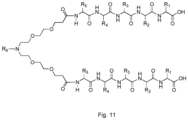
- the CPP is linked to the linker via its C-terminal, and P 1 and P 2 are conjugated to a linker via their N-termini, and the compound has the following general structure of Formula (I):
- the compound of the present invention comprises a first peptide (P 1 ) and a second peptide (P 2 ), wherein both P 1 and P 2 are able to simultaneously bind to the PDZ1 and PDZ2 domains of PSD-95, i.e. the compound is a dimeric PSD-95 inhibitor.
- P 1 is a peptide comprising or consisting of the amino acid sequence X 2 TX 3 V (SEQ ID NO: 53), wherein
- the compound of the present invention comprises:
- the compound comprises a first peptide (P 1 ) comprising or consisting of the amino acid sequence X 2 TX 3 V (SEQ ID NO: 53), wherein
- P 1 comprises or consists of the sequence X 1 X 2 TX 3 V (SEQ ID NO: 54), wherein
- P 1 comprises or consists of IETDV (SEQ ID NO: 1). In one embodiment, P 1 comprises or consists of KETLV (SEQ ID NO: 2). In one embodiment, P 1 comprises or consists of KETTV (SEQ ID NO: 3). In one embodiment, P 1 comprises or consists of KETVV (SEQ ID NO: 4). In one embodiment, P 1 comprises or consists of KETRV (SEQ ID NO: 5). In one embodiment, P 1 comprises or consists of ISTDV (SEQ ID NO: 6). In one embodiment, P 1 comprises or consists of VETVV (SEQ ID NO: 7).
- P 1 consists of 4 to 10 amino acid residues, such as 5 amino acid residues, such as 6 amino acid residues.
- the amino acid residues in excess of the amino acid residues given in SEQ ID NO: 53 or SEQ ID NO: 54 may be proteinogenic or non-proteinogenic amino acids.
- P 2 comprises or consists of the sequence X 4 X 5 TX 6 V (SEQ ID NO: 56), wherein
- the term 'linker' as used herein refers to one or more atoms forming a connection from one chemical entity to another.
- the 'linker' referred to herein may join the two PDZ-domain binding peptides P 1 and P 2 by forming a link to each of their N-termini.
- Various linkers are known in the art.
- the linker may for example be a chemical linker or a peptide linker, or a combination thereof.
- the linker comprises an active functional group, such as an electrophilic or nucleophilic functional group, which can be used to attach the linker to each peptide.
- the linker comprises one or more polyethylene glycol (PEG) units.
- PEG is a polymer of ethylene glycol having the chemical formula C 2n H 4n+2 O n+1 , and the repeating structure: where n is an integer.
- At least one oxygen atom of one of the PEG units is replaced with a nitrogen atom to give N PEG.
- the term 'ethylene glycol moiety' as used herein refers to the structural unit that constitutes a PEG or N PEG linker.
- the linker comprises one or more PEG units wherein at least one oxygen atom of one of the PEG units is replaced with a nitrogen atom to give NPEG.
- the linker comprises one or more PEG units wherein at least one oxygen atom of one of the PEG units is replaced with a nitrogen atom to give NPEG, and wherein the CPP is linked to the nitrogen atom of the linker by an amide bond.
- linkage of the CPP to the nitrogen of the linker comprising a N PEG unit may be mediated via a spacer group, where a suitable spacer group can for example be any amino acid(s); short alkane chains or short PEG/ N PEG chains.
- the linker comprises a N PEG unit and the CPP is linked to the nitrogen atom of the linker by an amide bond.
- the compound has the general structure of Formula (III): wherein
- p q. In one embodiment, p > q. In one embodiment, p ⁇ q. In one embodiment, the sum of p and q is an integer between 1 and 20. In one embodiment, p is an integer selected from 0, 1, 2, 3, 4, 5, 6, 7, 8, 9 and 10. In one embodiment, p is an integer of 0 to 4. In one embodiment, q is an integer selected from 0, 1, 2, 3, 4, 5, 6, 7, 8, 9 and 10. In one embodiment, q is an integer of 0 to 4. In one embodiment, the total number of ethylene glycol moieties p + q is between 2 and 12, such as 2, such as 4, such as 6, such as 8, such as 10, such as 12. In one embodiment, the total number of ethylene glycol moieties p + q is 4. In one embodiment, p is 2 and q is 2.
- the compound has the general structure of Formula (XXV): wherein
- the compound is of Formula (XXVI) wherein X a is -O- and P 1 and P 2 are KETLV (SEQ ID NO: 2), thus forming compound 2, i.e. O PEG 4 -(KETLV) 2 .
- the compound is of Formula (XXVI) wherein X a is -O- and P 1 and P 2 are KETTV (SEQ ID NO: 3), thus forming compound 3, i.e. O PEG 4 -(KETTV) 2 .
- the compound is of Formula (XXVI) wherein X a is -O- and P 1 and P 2 are KETVV (SEQ ID NO: 4), thus forming compound 4, i.e. O PEG 4 -(KETVV) 2 .
- the compound is of Formula (XXVI) wherein X a is -O- and P 1 and P 2 are KETRV (SEQ ID NO: 5), thus forming compound 5, i.e. O PEG 4 -(KETRV) 2 .
- the compound is of Formula (XXVI) wherein X a is -O- and P 1 and P 2 are ISTDV (SEQ ID NO: 6), thus forming compound 6, i.e. O PEG 4 -(ISTDV) 2 .
- the compound is of Formula (XXVI) wherein X a is -O- and P 1 and P 2 are VETVV (SEQ ID NO: 7), thus forming compound 7, i.e. O PEG 4 -(VETVV) 2 .
- the compound has the general structure of Formula (V): wherein
- R 1 through R 5 are amino acid side-chains of the peptides X 1 X 2 TX 3 V (SEQ ID NO: 54) and X 4 X 5 TX 6 V (SEQ ID NO: 56), and R 6 represents a CPP-tag as described herein.
- the CPP is a poly-L-arginine peptide (poly-Arg) consisting of 3 to 9 L-arginine residues.
- poly-Arg poly-L-arginine peptide
- the compound has the following general structure of Formula (II): wherein poly-Arg, linker, P 1 and P 2 are as defined herein.
- the N-terminal of the poly-Arg is optionally modified, such as optionally acetylated.
- the CPP is poly-Arg consisting of 3 to 9 L-arginine residues and the linker is a PEG linker comprising a N PEG unit, and the CPP is linked to the nitrogen atom of the linker by an amide bond.
- the compound has the general structure of Formula (IV): wherein
- the compound has the general structure of Formula (VII): wherein poly-Arg, P 1 and P 2 are as defined herein.
- the compound has the general structure of Formula (VI): wherein
- the compound has the general structure of Formula (VIII): wherein poly-Arg, X 1 , X 2 , X 3 , X 4 , X 5 , and X 6 are as defined herein.
- compound is selected from the group consisting of formulas (X) to (XVI):
- the compound has the general structure of CPP- N PEG 4 -(P 1 )(P 2 ), i.e. the compound is of formula (XXVIII): and CPP, P 1 and P 2 are as defined in table 2, wherein the compound is selected from the group consisting of compounds 23-39, 44-57, and 60-75. Table 2. Exemplified compounds of the invention.
- the compounds of the present invention can be comprised in a pharmaceutical composition.
- Formulation of a compound of the present invention into pharmaceutical compositions is well known in the art, and is further described in Gennaro (ed.), 2000, Remington: The Science and Practice of Pharmacy, 20th ed., Lippincott, Williams & Wilkins (2000 ); and Ansel et al., 1999, Pharmaceutical Dosage Forms and Drug Delivery Systems, 7th ed., Lippincott Williams & Wilkins Publishers .
- PSD-95 Since PSD-95 is located intracellularly, it is essential for any drug targeting PSD-95 to efficiently cross the cell membrane.
- the cellular chloroalkane penetration assay may be used (Peraro et al. 2018). This assay takes advantage of a modified haloalkane dehalogenase designed to covalently bind chloroalkane (CA) molecules.
- a HeLa cell line expressing a fusion protein comprising a HaloTag, a green fluorescent protein (GFP) and a mitochondria-targeting peptide is used to report cytosolic delivery.
- the general format of the CAPA is a pulse-chase assay (Deprey & Kritzer, 2020).
- Cells expressing the HaloTag enzyme are incubated with CA-tagged peptides. When these CA-peptides penetrate the cell membrane and reach the cytosol, they will bind to and react with the HaloTag ( pulse step ) .
- the cells are incubated with a CA-tagged dye that quantitatively penetrates the cell membrane and reacts with remaining unreacted HaloTag sites ( chase step ) .
- Flow cytometry is used to measure the fluorescence intensity of the cells and the measured fluorescence is inversely proportional to the amount of CA-peptides that reach the penetrated the cells and can thus be used to assess cytosolic delivery.
- the obtained data is commonly expressed as CP 50 values, the concentration at which 50% cell penetration is observed.
- the CP 50 value of a compound may be measured as described in example 4.
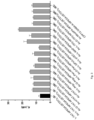
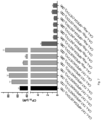
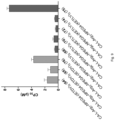
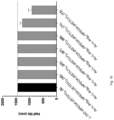
- Example 4 shows that the cellular uptake of described compounds greatly depend on the employed CPP, measuring CP 50 values ranging from 86.1 ⁇ M (compound 22) to 0.68 ⁇ M (compound 30) ( Fig. 7 ). Further, the cellular uptake efficiency for N PEG 4 (IETDV) 2 conjugated to a range of CPP-tags (SEQ ID NO 8 to 22) resulted in an unpredictable range of CP 50 values ( Fig. 8 ).
- the compound has a CP 50 value of no more than 250 ⁇ M, such as no more than 200 ⁇ M, such as no more than 150 ⁇ M, such as no more than 100 ⁇ M, such as no more than 80 ⁇ M, such as no more than 70 ⁇ M, such as no more than 60 ⁇ M, such as no more than 50 ⁇ M, such as no more than 40 ⁇ M, such as no more than 30 ⁇ M, such as no more than 20 ⁇ M, such as no more than 15 ⁇ M, such as no more than 10 ⁇ M, such as no more than 5 ⁇ M.
- the compound has a CP 50 value of no more than 60 ⁇ M.
- Ischemic stroke (also referred to as 'brain ischemia' or 'cerebral ischemia') is usually caused by a blockage in an artery that supplies blood to the brain.
- the blockage reduces the blood flow and oxygen to the brain, leading to damage or death of brain cells.
- the blockage of the blood vessels can be removed using a range of mechanical devices, or using "clot busting agents" which are delivered intravenously or intra-arterially.
- clot busting agents Tissue plasminogen factor (tPA), which generates plasmin from plasminogen.
- recombinant tPA's are alteplase, reteplase and tenecteplase, and other thrombolytic drugs that break down clots include streptokinase, urokinase and desmotaplase.
- the compounds of the present invention are administered to subjects receiving tPA or a recombinant tPA, which is the standard-of-care for AIS.
- the in vitro plasmin stability of compounds of the present invention were determined in example 3.
- the compound has a half-life in the plasmin stability assay described in example 3 of at least 10 min in the presence pf plasmin, such as at least 30 min, such as at least 1 h, such as at least 2 h, such as at least 3 h, such as at least 4 h, such as at least 5 h, such as at least 6 h, such as at least 7 h, such as at least 8 h, such as at least 9 h, such as at least 10 h, such as at least 15 h, such as at least 20 h, such as at least 30 h.
- the compounds of the present invention have an affinity for the PDZ1-2 of PSD-95 in the nanomolar range, making them highly potent inhibitors.
- the affinity of the for the PDZ1-2 of PSD-95 is a critical factor in reducing the threshold concentration of drug needed to attain a therapeutic effect, which is particularly important when the drug must cross the blood brain barrier (BBB) to reach its target, since the BBB will tend to limit the accumulation of drug concentration at the target.
- BBB blood brain barrier
- the compound of the present invention is a dimeric PSD-95 inhibitor binding to PDZ1 and PDZ2 simultaneously, which may account for their high affinity for these domains.
- the obtained affinities towards PDZ1-2 of PSD-95 for compounds of the present invention are in the low nanomolar range and similar to L-TAT- N PEG 4 (IETDV) 2 .
- PSD-95 The PDZ1 and PDZ2 domains of PSD-95 interact with several proteins including the simultaneous binding of the NMDA-type of ionotropic glutamate receptors and the nitric oxide (NO) producing enzyme nNOS.
- NMDA receptors are the principal mediators of excitotoxicity, i.e. glutamate-mediated neurotoxicity, which is implicated in neurodegenerative diseases and acute brain injuries.
- PSD-95 simultaneously binds the NMDA receptor, primarily GluN2A and GluN2B subunits, and nNOS via PDZ1 and PDZ2, respectively.
- Activation of the NMDA receptor causes influx of calcium ions, which activates nNOS thereby leading to NO generation.
- PSD-95 mediates a specific association between NMDA receptor activation and NO production, which can be detrimental for the cells if sustained for a longer period, and is a key facilitator of glutamate-mediated neurotoxicity.
- Inhibition of the ternary complex of nNOS/PSD-95/NMDA receptor interaction by targeting PSD-95 is known to prevent ischemic brain damage in mice, by impairing the functional link between calcium ion entry and NO production, while the physiological function, such as ion-flux and pro-survival signaling pathways of the NMDA receptor remains intact.
- Specific inhibition of excitotoxicity can be obtained by perturbing the intracellular nNOS/PSD-95/NMDA receptor complex using PSD-95 inhibitors.
- the compounds of the present invention are PSD-95 inhibitors and are thus able to inhibit excitotoxicity.
- the compounds of the present invention are useful in treating a variety of diseases, particularly neurological diseases, and especially diseases mediated in part by excitotoxity.
- diseases and conditions include stroke, epilepsy, hypoxia, traumatic injury to the CNS not associated with stroke such as traumatic brain injury and spinal cord injury, other cerebral ischemia, Alzheimer's disease and Parkinson's disease.
- the present invention relates to a compound of the invention for use in reducing and/or protecting against a damaging effect of excitotoxicity.
- the compound is for use in reducing the damaging effect of stroke.
- the compound is for use in treating a damaging effect of acute ischemic stroke.
- the compound is for use in treating a damaging effect of subarachnoid hemorrhage.
- stroke is a general term that refers to conditions caused by the occlusion or hemorrhage of one or more blood vessels supplying the brain, leading to cell death.
- Ischemic stroke refers to stroke caused by an occlusion of one or more blood vessels supplying the brain.
- Types of ischemic stroke include, e.g., embolic stroke, cardioembolic stroke, thrombotic stroke, large vessel thrombosis, lacunar infarction, artery-artery stroke and cryptogenic stroke.
- Cerebral ischemia is a condition in which a blockage in an artery restricts the delivery of oxygen-rich blood to the brain, resulting in damage to brain tissue. Cerebral ischemia is sometimes called brain ischemia or cerebrovascular ischemia.
- Hemorrhagic stroke refers to stroke caused by hemorrhage of one or more blood vessels supplying the brain.
- Types of hemorrhagic stroke include, e.g., subdural stroke, intraparenchymal stroke, epidural stroke and subarachnoid stroke.
- the disease treatable by the compound of the present invention is ischemic or traumatic injury of the CNS
- the present invention relates to a compound of the invention for use in inhibiting ischemic damage from neurosurgery.
- said neurosurgery is diagnostic angiography of the brain or endovascular surgery to treat an aneurysm.
- the compound is compound 8 (AB144), and said compound is administered in combination with a plasminogen activator, for example tPA.
- a plasminogen activator for example tPA.
- the reperfusion therapy is mechanical reperfusion including surgery.
- Surgeries performed may be minimally-invasive endovascular procedures.
- mechanical reperfusion devices there are intra-arterial catheters, balloons, stents, and various clot retrieval devices.
- the compound is administered in combination with a thrombolytic agent, and the compound and the thrombolytic agent are administered simultaneously, sequentially or separately to the subject.
- the present invention relates to a compound of the invention for use in treating a damaging effect of ischemia on the central nervous system in a subject having or at risk of ischemia, wherein reperfusion therapy is performed on the subject, and the compound and reperfusion therapy treat a damaging effect of the ischemia on the central nervous system of the subject.
- the treatment further comprises administering a thrombolytic agent simultaneously, sequentially or separately to the subject.
- the present invention relates to a kit of parts comprising at least two separate unit dosage forms (A) and (B), wherein
- kit of parts as defined herein is for use in the treatment of a damaging effect of ischemia on the central nervous system, wherein (A) and (B) are administered simultaneously, sequentially or separately to the subject.
- the present invention relates to a compound of the invention for use in treating a damaging effect of subarachnoid hemorrhage.
- subarachnoid hemorrhage refers to a hemorrhage state in a subarachnoid cavity.
- PSD-95 Other neurological diseases treatable by the compounds of the present invention not known to be associated with excitotoxicity include anxiety and pain.
- Dimeric ligands targeting PSD-95 are under pre-clinical/clinical evaluation as a treatment for chronic pain and ischemic stroke ( Andreasen et al., Neuropharmacol, 2013, 67, 193-200 ; Bach et al, PNAS USA, 2012, 109, 3317-3322 ).
- the subject as referred to herein is a mammal, such as a human.
- the compounds of the present invention may be manufactured by a method comprising the general steps of:
- the compounds are manufactured by a method comprising the general steps of:
- the compounds of the present invention are synthesized as described below.
- Ns-NPEG diacid linker Ns-NPEG diacid linker
- the solid-phase procedure typically starts by loading a solid support useful for solid-phase peptide synthesis, such as 2-chlorotrityl chloride resin, with Fmoc-NH-PEG-CH 2 CH 2 COOH, using appropriate organic solvent for the specific resin (e.g. DCM, DMF , ACN, THF) and a base (e.g. DIPEA, DBU, collidine, NMM)
- a solid support useful for solid-phase peptide synthesis such as 2-chlorotrityl chloride resin
- Fmoc-NH-PEG-CH 2 CH 2 COOH an organic solvent for the specific resin
- a base e.g. DIPEA, DBU, collidine, NMM
- the Fmoc group can be removed by base (e.g. piperidine, dimethylamine, morpholine, piperazine, dicyclohexylamine, DMAP) in appropriate solvent (e.g. DMF , DCM, ACN, THF).
- base e.g. piperidine, dimethylamine, morpholine, piperazine, dicyclohexylamine, DMAP
- appropriate solvent e.g. DMF , DCM, ACN, THF.
- Ortho-nitrobenzenesulfonyl chloride can be coupled to the free amine using base (e.g. DIPEA, DBU, collidine, NMM) and appropriate solvent (e.g. THF , DCM) to get Ns-NH-PEG-CH 2 CH 2 COO-Resin.
- base e.g. DIPEA, DBU, collidine, NMM
- appropriate solvent e.g. THF , DCM
- the second part of the linker product can be connected to the resin-bound linker-part by the use of Mitsunobu-chemistry.
- Resin is treated with triphenylphosphine, HO-PEG-CH 2 CH 2 COO t Bu, solvent, and ester- or amide reagents of azodicarboxylic acid (e.g. diisopropyl azodicarboxylate, DIAD; diethyl azodicarboxylate, DEAD; 1,1'-(Azodicarbonyl)-dipiperidine, ADDP).
- DIAD diisopropyl azodicarboxylate
- DEAD diethyl azodicarboxylate
- ADDP 1,1'-(Azodicarbonyl)-dipiperidine
- the final Ns- N PEG diacid linker is obtained by treating the resin with acid, such as trifluoroacetic acid (TFA).
- acid such as trifluoroacetic acid (TFA).
- the solution-phase procedure can be performed by protection of the amine group of NH 2 -PEG-CH 2 CH 2 COO t Bu with Ns, followed by Mitsunobu chemistry in solution using triphenylphosphine and DIAD, DEAD, or ADDP, or similar reagents, HO-PEG-CH 2 CH 2 COO t Bu, and appropriate solvent (THF, DCM).
- TFA Trigger Activated Fatty acid
- Peptide synthesis The peptide sequence is synthesized by Fmoc-based solid-phase peptide synthesis using a solid support, such as 2-chlorotrityl chloride resin or Wang resin, Fmoc-protected amino acids, base, coupling reagents (e.g.
- HBTU [ N,N,N',N'- Tetramethyl- O -(1 H -benzotriazol-1-yl)uronium hexafluorophosphate], O -(7-azabenzotriazol-1-yl)- N , N , N ', N '-tetramethyluronium hexafluorophosphate [HATU], PyBOB, DIC/HOBt) and solvents.
- activated ester of Fmoc-protected amino acids e.g. pentafluorophenyl, succinimide
- the Fmoc-deprotected resin-bound peptide is dimerized with the Ns-NPEG diacid linker by an on-resin dimerization process by repetitive treatments of the resin with the Ns- N PEG diacid linker in sub-stoichiometric amounts (e.g. 1/6), base, coupling reagent, and appropriate solvents (e.g. DMF, DCM, THF).
- appropriate solvents e.g. DMF, DCM, THF.
- activated ester of the Ns-NPEG linker can be used.
- the dimerization process can also be formed in solution using either the activated ester (e.g. pentafluorophenyl, succinimide) of the Ns-NPEG linker together with 1-Hydroxy-7-azabenzotriazole (HOAt) or Hydroxybenzotriazole (HOBt) and appropriate side chain-protected peptide (e.g. tert-butyl) in solvent (e.g. ACN, DMF, DCM, THF).
- dimerization in solution can be performed using the Ns- N PEG diacid linker, coupling reagents (e.g. HBTU, HATU etc), base and solvents.
- Ns-group is removed by mercaptoethanol and 1,8-diazabicyclo[5.4.0]undec-7-ene (DBU) or by sodium thiophenolate.
- DBU 1,8-diazabicyclo[5.4.0]undec-7-ene
- Attachment of a CPP to the NH moiety of the N PEG linker of the linker-dimer conjugate First, an amino acid is coupled to the NH moiety of the NPEG linker, and subsequently the CPP is synthesized following standard (manual/automated) Fmoc SPPS on resin.
- Ester protection groups can be removed by stirring the cleaved products in aqueous base (e.g. NaOH, LiOH) and acetonitrile followed by acidification with TFA or HCl.
- aqueous base e.g. NaOH, LiOH
- acetonitrile followed by acidification with TFA or HCl.
- the final compound of the present invention is obtained by lyophilization and purification by HPLC or similar chromatographic methods.
- the synthesis of the compounds of the present invention is performed as outlined in example 1.
- the resin bound compounds 2 to 7 ( O PEG 4 -KETLV , O PEG 4 -KETTV, O PEG 4 -KETVV, O PEG 4 -KETRV, O PEG 4 -ISTDV and O PEG 4 -VETVV) were synthesized as previously described: Bach et al., Angew. Chem. Int. Ed., 2009, 48, 9685 .
- N PEG 4 -IETDV, N PEG 4 -KETLV, N PEG 4 -KETTV, N PEG 4 -KETVV, N PEG 4 -KETRV, N PEG 4 -ISTDV and N PEG 4 -VETVV were synthesized as previously described by Bach et al, Proc. Natl. Acad. Sci. USA, 2012, 109, 3317 .
- the first C-terminus amino acid (Fmoc-Ala-OH, Fmoc-L-Arg(Pbf)-OH, Fmoc-D-Arg(Pbf)-OH, Fmoc-Asp(OAII)-OH, Fmoc-L-Lys(Boc)-OH, Fmoc-D-Lys(Boc)-OH, Fmoc-L-Lys(Ns)-OH, Fmoc-L-Phe-OH, Fmoc-D-Phe-OH, , Fmoc-L-Ser(tBu)-OH) of the linear CPPs (L-TAT, DTAT, mTAT, riTAT, polyR, D-polyR, L-Pen, D-Pen, L-pVEC, L-MAP, L-DPV3, L-TP2, D-TP2, MiniAp4, CPP12) was coupled manually to the nitrogen of the N PEG4 linker three
- the cyclic CPP (MiniAp4 and CPP12) containing peptides were treated with 20 eq. PhSiH 3 and 0.2 eq. Pd(PPh 3 ) 4 in dichloromethane (DCM) under nitrogen for 2 ⁇ 15 min to remove allyl and alloc protecting groups.
- the resin was washed with DCM followed by dimethylformamide (DMF).
- the cyclization reaction between the side chains of Asp/Dap and or C-terminus of Glu and N-terminus of Phe was performed by treatment of the peptide with 2 eq. (benzotriazol-1-yloxy)tripyrrolidinophosphonium hexafluorophosphate (PyBOP) and 2 eq.
- the synthesis, as described above, can also be conducted at 40 mmol or up to 100 mmol scale resulting multi-gram preparation of the peptide compounds reported herein.
- the peptide compounds described herein exhibited excelled solubility properties reaching 25 mg/mL concentrations and higher.
- the binding affinity of the compounds 1 to 75 to PDZ1-2 of PSD-95 was measured using an in vitro fluorescent polarization (FP) assay as described by Bach et al., Proc. Natl. Acad. Sci. USA, 2012, 109, 3317 .
- FP fluorescent polarization
- Binding affinities ( K i ), presented as mean ⁇ SEM, for dimeric ligands fused to L-TAT and L-Arg 9 ( Figure 2).
- Compound Ligand CPP CPP sequence K i [nM] 8 N PEG 4 -(IETDV) 2 L-TAT YGRKKRRQRRR- 7.2 ⁇ 1,5 9 N PEG 4 -(IETDV) 2 L-TAT Ac-YGRKKRRQRRR- 12.5 ⁇ 1,1 11 N PEG 4 -(KETLV) 2 L-TAT Ac-YGRKKRRQRRR- 5.4 ⁇ 0,9 13 N PEG 4 -(KETTV) 2 L-TAT Ac-YGRKKRRQRRR- 6.5 ⁇ 0,7 15 N PEG 4 -(KETVV) 2 L-TAT Ac-YGRKKRRQRRR- 2.1 ⁇ 0,2 17 N PEG 4 -(KETRV) 2 L-TAT Ac-YGRKKRRQRR- 6.6 ⁇ 0,6
- the in vitro plasmin stability of the compounds 8 to 62 was determined by incubating 100 ⁇ M of ligand in phosphate buffered saline (PBS) supplemented with plasmin (5 ug/mL) at 37 °C for 0-1440 minutes. At selected time points during the incubation, the ligands were extracted from 80 ⁇ L of assay matrix by treatment with 80 ⁇ L of 50% acetonitrile (ACN). The samples were filtered and analysed by UPLC to determine the amount of ligand remaining. LC-MS analysis was performed to confirm ligand integrity and identify cleavage sites.
- PBS phosphate buffered saline
- ACN acetonitrile
- the membrane permeability of compounds 10 to 75 was determined in HeLa cells stably expressing HaloGFP exclusively located in the cytosol. Cells were seeded at a density of 40.000 cells/well one day prior to the experiment. After the growth media was aspirated and replaced by 100 ⁇ L of Opti-MEM, 25 ⁇ L of a prepared serial dilution of the ligand in Opti-MEM was added to the cells (constant DMSO concentration), and the plate was incubated for 4 h at 37 °C and 5% CO 2 . The contents of the wells were aspirated, and cells were washed with fresh Opti-MEM for 15 min.
Landscapes
- Health & Medical Sciences (AREA)
- Life Sciences & Earth Sciences (AREA)
- Chemical & Material Sciences (AREA)
- Engineering & Computer Science (AREA)
- Bioinformatics & Cheminformatics (AREA)
- Proteomics, Peptides & Aminoacids (AREA)
- General Health & Medical Sciences (AREA)
- Medicinal Chemistry (AREA)
- Organic Chemistry (AREA)
- Molecular Biology (AREA)
- Pharmacology & Pharmacy (AREA)
- Animal Behavior & Ethology (AREA)
- Public Health (AREA)
- Veterinary Medicine (AREA)
- Epidemiology (AREA)
- Genetics & Genomics (AREA)
- Biophysics (AREA)
- Biochemistry (AREA)
- Gastroenterology & Hepatology (AREA)
- Chemical Kinetics & Catalysis (AREA)
- General Chemical & Material Sciences (AREA)
- Vascular Medicine (AREA)
- Zoology (AREA)
- Cardiology (AREA)
- Heart & Thoracic Surgery (AREA)
- Urology & Nephrology (AREA)
- Toxicology (AREA)
- Nuclear Medicine, Radiotherapy & Molecular Imaging (AREA)
- Immunology (AREA)
- Medicines That Contain Protein Lipid Enzymes And Other Medicines (AREA)
- Peptides Or Proteins (AREA)
- Pharmaceuticals Containing Other Organic And Inorganic Compounds (AREA)
- Pyridine Compounds (AREA)
- Medicinal Preparation (AREA)
Claims (15)
- PSD-95-Inhibitor, umfassend:i. ein erstes Peptid (P1), umfassend oder bestehend aus der Aminosäuresequenz X2TX3V (SEQ ID NO: 53), wobeiX2 ausgewählt ist aus der Gruppe, bestehend aus E und S;X3 ausgewählt ist aus der Gruppe, bestehend aus L, T, V, R und D;ii. ein zweites Peptid (P2), umfassend oder bestehend aus der Aminosäuresequenz X5TX6V (SEQ ID NO: 55), wobeiX5 ausgewählt ist aus der Gruppe, bestehend aus E und S;X6 ausgewählt ist aus der Gruppe, bestehend aus L, T, V, R und D; undiii. ein zellpenetrierendes Peptid (CPP), ausgewählt aus der Gruppe, bestehend aus:a) einem Poly-L-Arginin-Peptid (Poly-Arg) bestehend aus 3 bis 9 L-Argininresten;b) yGrkkrrqrrr (SEQ ID NO: 9, D-TAT);c) RQIKIWFQNRRMKWKK (SEQ ID NO: 14, L-Pen);d) rqikiwfqnrrmkwkk (SEQ ID NO: 15, D-Pen);e) RKKRRRESRKKRRRES (SEQ ID NO: 17, L-DPV3);f) LLIILRRRIRKQAHAHSK (SEQ ID NO: 18, L-pVEC);g) KLALKLALKALKAALKLA (SEQ ID NO: 16, L-MAP);h) PLIYLRLLRGQF (SEQ ID NO: 19, L-TP2);i) |(Dap)KAPETALD| (SEQ ID NO: 21, MiniAp4); undj) |Ff(Nal2)RrRrQ|GABA-K (SEQ ID NO: 22, CPP12),wobei das CPP über sein C-Terminus mit einem Linker verknüpft ist und P1 und P2 über ihre N-Termini mit dem Linker konjugiert sind und der PSD-95-Inhibitor die allgemeine Struktur der Formel (I) aufweist:
 oder ein pharmazeutisch verträgliches Salz davon.
 - PSD-95-Inhibitor nach Anspruch 1, wobei P1 die Sequenz X1X2TX3V (SEQ ID NO: 54) umfasst oder daraus besteht, wobeiX1 ausgewählt ist aus der Gruppe, bestehend aus K, V und I;X2 ausgewählt ist aus der Gruppe, bestehend aus E und S; undX3 ausgewählt ist aus der Gruppe, bestehend aus L, T, V, R und D;und wobei P2 die Sequenz X4X5TX6V (SEQ ID NO: 56) umfasst oder daraus besteht, wobeiX4 ausgewählt ist aus der Gruppe, bestehend aus K, V und I;X5 ausgewählt ist aus der Gruppe, bestehend aus E und S; undX6 ausgewählt ist aus der Gruppe, bestehend aus L, T, V, R und D.
- PSD-95-Inhibitor nach einem der vorhergehenden Ansprüche, wobei P1 und/oder P2 aus 4 bis 10 Aminosäureresten bestehen, wie z. B. 5 Aminosäureresten.
- PSD-95-Inhibitor nach einem der vorhergehenden Ansprüche, wobei X3 und X6 ausgewählt sind aus der Gruppe, bestehend aus L, T, V und R.
- PSD-95-Inhibitor nach einem der vorhergehenden Ansprüche, wobei der Linker eine oder mehrere PEG-Einheiten umfasst, wobei mindestens ein Sauerstoffatom einer der PEG-Einheiten durch ein Stickstoffatom ersetzt ist, um NPEG zu ergeben, und wobei das CPP durch eine Amidbindung an das Stickstoffatom des Linkers gebunden ist und der PSD-95-Inhibitor die allgemeine Struktur der Formel (III) aufweist:
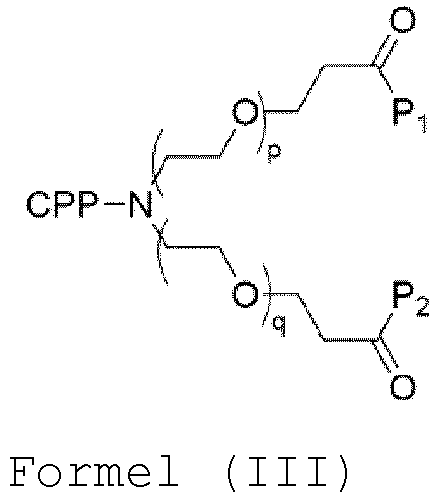 p eine Ganzzahl 0 bis 10 ist; undq eine Ganzzahl 0 bis 10 ist.
 - PSD-95-Inhibitor nach einem der vorhergehenden Ansprüche, wobei P1 und P2 aus der Aminosäuresequenz KETLV (SEQ ID NO: 2), KETTV (SEQ ID NO: 3), KETVV (SEQ ID NO: 4), KETRV (SEQ ID NO: 5), ISTDV (SEQ ID NO: 6) oder VETVV (SEQ ID NO: 7) bestehen.
- PSD-95-Inhibitor nach einem der vorhergehenden Ansprüche, wobei der PSD-95-Inhibitor die allgemeine Struktur der Formel (VI) aufweist:
 X1 ausgewählt ist aus der Gruppe, bestehend aus K, V und I;X2 ausgewählt ist aus der Gruppe, bestehend aus E und S; undX3 ausgewählt ist aus der Gruppe, bestehend aus L, T, V, R und D.X4 ausgewählt ist aus der Gruppe, bestehend aus K, V und I;X5 ausgewählt ist aus der Gruppe, bestehend aus E und S;X6 ausgewählt ist aus der Gruppe, bestehend aus L, T, V, R und D.p eine Ganzzahl 0 bis 10 ist;q eine Ganzzahl 0 bis 10 ist; undPoly-Arg ein Poly-L-Arginin-Peptid bestehend aus 3 bis 9 L-Argininresten ist.
 - PSD-95-Inhibitor nach einem der vorhergehenden Ansprüche, wobei das CPP RRRRRRRRR (SEQ ID NO: 12), RRRRRRRR (SEQ ID NO: 57), RRRRRRR (SEQ ID NO: 58), RRRRRR (SEQ ID NO: 59), RRRRR (SEQ ID NO: 60), RRRR (SEQ ID NO: 61) oder RRR ist.
- PSD-95-Inhibitor nach einem der vorhergehenden Ansprüche, wobei der N-Terminus des CPP acetyliert ist oder wobei der N-Terminus des CPP an eine Chloralkan-Markierung (CA) konjugiert ist, die die folgende Struktur aufweist:

- PSD-95-Inhibitor nach Anspruch 1, wobei der PSD-95-Inhibitor die allgemeine Struktur der Formel (XXVIII) aufweist:
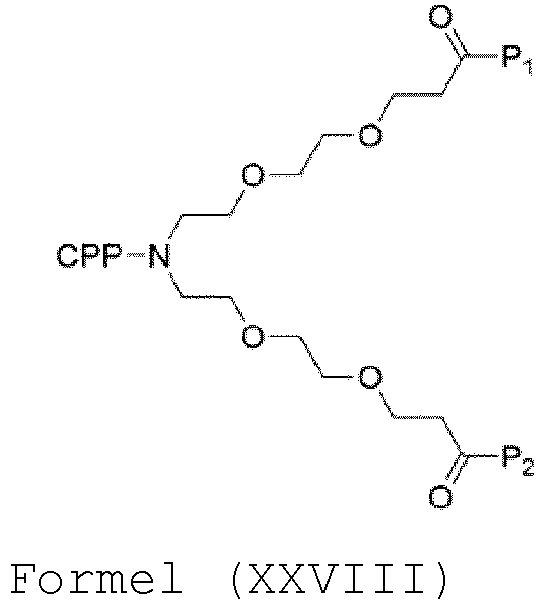 wobei P1, P2 und CPP Folgendes sind:
P1 P2 CPP i. KETLV (SEQ ID NO: 2) KETLV (SEQ ID NO: 2) L-Arg9 RRRRRRRRR (SEQ ID NO: 12) ii. KETLV (SEQ ID NO: 2) KETLV (SEQ ID NO: 2) L-Arg7 RRRRRRR (SEQ ID NO: 58) iii. KETLV (SEQ ID NO: 2) KETLV (SEQ ID NO: 2) L-Arg6 RRRRRR (SEQ ID NO: 59) iv. KETLV (SEQ ID NO: 2) KETLV (SEQ ID NO: 2) L-Arg5 RRRRR (SEQ ID NO: 60) V. KETLV (SEQ ID NO: 2) KETLV (SEQ ID NO: 2) L-Arg4 RRRR (SEQ ID NO: 61) vi. KETLV (SEQ ID NO: 2) KETLV (SEQ ID NO: 2) L-Arg3 RRR vii. KETTV (SEQ ID NO: 3) KETTV (SEQ ID NO: 3) L-Arg9 RRRRRRRRR (SEQ ID NO: 12) viii. KETVV (SEQ ID NO: 4) KETVV (SEQ ID NO: 4) L-Arg9 RRRRRRRRR (SEQ ID NO: 12) ix. KETRV (SEQ ID NO: 5) KETRV (SEQ ID NO: 5) L-Arg9 RRRRRRRRR (SEQ ID NO: 12) x. ISTDV (SEQ ID NO: 6) ISTDV (SEQ ID NO: 6) L-Arg9 RRRRRRRRR (SEQ ID NO: 12) xi. VETVV (SEQ ID NO: 7) VETVV (SEQ ID NO: 7) L-Arg9 RRRRRRRRR (SEQ ID NO: 12) xii. IETDV (SEQ ID NO: 1) IETDV (SEQ ID NO: 1) L-Arg9 RRRRRRRRR (SEQ ID NO: 12) xiii. IETDV (SEQ ID NO: 1) IETDV (SEQ ID NO: 1) L-Arg7 RRRRRRR (SEQ ID NO: 58) xiv. IETDV (SEQ ID NO: 1) IETDV (SEQ ID NO: 1) L-Arg5 RRRRR (SEQ ID NO: 60) xv. IETDV (SEQ ID NO: 1) IETDV (SEQ ID NO: 1) L-Arg3 RRR und wobei der N-Terminus des CPP optional acetyliert ist
oderwobei der PSD-95-Inhibitor die allgemeine Struktur der Formel (XXVIII) aufweist,wobei P1 und P2 aus der Aminosäuresequenz IETDV (SEQ ID NO: 1) bestehen und das CPP ausgewählt ist aus der Gruppe, bestehend aus rqikiwfqnrrmkwkk (SEQ ID NO: 15, D-Pen); LLIILRRRIRKQAHAHSK (SEQ ID NO: 18, L-pVEC); PLIYLRLLRGQF (SEQ ID NO: 19, L-TP2); |(Dap)KAPETALD| (SEQ ID NO: 21, MiniAp4); und |Ff(Nal2)RrRrQ|GABA-K (SEQ ID NO: 22, CPP12). - PSD-95-Inhibitor nach Anspruch 1, wobei der PSD-95-Inhibitor ausgewählt ist aus der Gruppe, bestehend aus den Formeln (X) bis (XXIII):

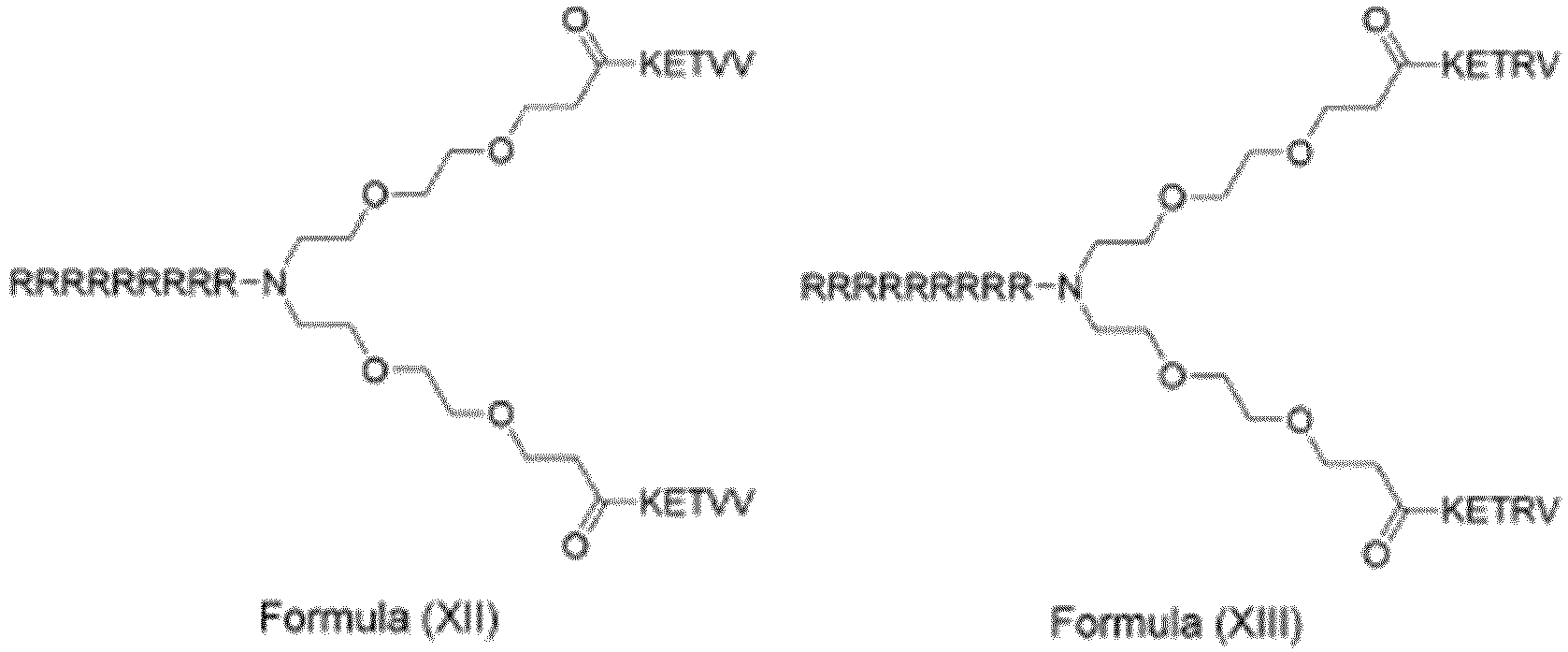


- PSD-95-Inhibitor nach einem der Ansprüche 1 bis 3, 5, 9 oder 10, wobei P1 und P2 aus der Aminosäuresequenz IETDV (SEQ ID NO: 1) bestehen und das CPP ausgewählt ist aus der Gruppe, bestehend aus rqikiwfqnrrmkwkk (SEQ ID NO: 15, D-Pen); LLIILRRRIRKQAHAHSK (SEQ ID NO: 18, L-pVEC); PLIYLRLLRGQF (SEQ ID NO: 19, L-TP2); |(Dap)KAPETALD| (SEQ ID NO: 21, MiniAp4); und |Ff(Nal2)RrRrQ|GABA-K (SEQ ID NO: 22, CPP12).
- PSD-95-Inhibitor nach einem der vorhergehenden Ansprüche zur Verwendung als Arzneimittel.
- PSD-95-Inhibitor nach einem der Ansprüche 1 bis 12 zur Verwendung bei der Behandlung, Vorbeugung, Verringerung und/oder Verzögerung der Entwicklung einer exzitotoxisch-bedingten Erkrankung wie z. B. Schlaganfall, beispielsweise ausgewählt aus akutem ischämischem Schlaganfall und Subarachnoidalblutung.
- Verfahren zum Herstellen des PSD-95-Inhibitors nach einem der Ansprüche 1 bis 12, umfassend die folgenden allgemeinen Schritte:i.a) Synthetisieren eines Peptids P1/P2;b) Dimerisieren des Peptids von a) mit einem OPEGn- oder NPEGn-Linker, wobei "n" die Anzahl der PEG-Einheiten ist; undc) Anbringen eines CPP-Tags an dem N-Terminus des NPEG-Linkers, beispielsweise unter Verwendung eines automatisierten Peptidsynthesizers;oderii.a) Bereitstellen eines Ns-NPEG-Disäure-Linkers;b) Zubereiten eines Peptids P1/P2 unter Verwendung einer Fmocbasierten Festphasen-Peptidsynthese;c) Dimerisieren des Fmoc-deprotectierten Peptids P1/P2 mit dem Ns-NPEG-Disäure-Linker, der ein Linker-Dimer-Konjugat bildet; undd) Anbringen eines CPP an das N des NPEG-Linkers des Linker-Dimer-Konjugats, beispielsweise unter Verwendung eines automatisierten Peptidsynthesizers.
Applications Claiming Priority (2)
| Application Number | Priority Date | Filing Date | Title |
|---|---|---|---|
| EP21173587 | 2021-05-12 | ||
| PCT/EP2022/062893 WO2022238530A1 (en) | 2021-05-12 | 2022-05-12 | Psd-95 inhibitors and uses thereof |
Publications (3)
| Publication Number | Publication Date |
|---|---|
| EP4337673A1 EP4337673A1 (de) | 2024-03-20 |
| EP4337673B1 true EP4337673B1 (de) | 2025-07-09 |
| EP4337673C0 EP4337673C0 (de) | 2025-07-09 |
Family
ID=75914418
Family Applications (1)
| Application Number | Title | Priority Date | Filing Date |
|---|---|---|---|
| EP22728608.5A Active EP4337673B1 (de) | 2021-05-12 | 2022-05-12 | Psd-95-inhibitoren und verwendungen davon |
Country Status (16)
| Country | Link |
|---|---|
| US (1) | US20240245793A1 (de) |
| EP (1) | EP4337673B1 (de) |
| JP (1) | JP2024520234A (de) |
| KR (1) | KR20240007140A (de) |
| CN (1) | CN117295755A (de) |
| AU (1) | AU2022274309A1 (de) |
| BR (1) | BR112023021410A2 (de) |
| CA (1) | CA3218073A1 (de) |
| ES (1) | ES3040762T3 (de) |
| IL (1) | IL307244A (de) |
| MX (1) | MX2023013313A (de) |
| PL (1) | PL4337673T3 (de) |
| SA (1) | SA523451347B1 (de) |
| TW (1) | TW202306965A (de) |
| WO (1) | WO2022238530A1 (de) |
| ZA (1) | ZA202308712B (de) |
Families Citing this family (4)
| Publication number | Priority date | Publication date | Assignee | Title |
|---|---|---|---|---|
| EP4706670A1 (de) * | 2023-04-26 | 2026-03-11 | Shenzhen Salubris Pharmaceuticals Co., Ltd. | Psd-95-domäneninhibitor und herstellungsverfahren dafür und verwendung davon |
| WO2025009503A1 (ja) * | 2023-07-03 | 2025-01-09 | メスキュージェナシス株式会社 | 細胞膜透過性を有するペプチドおよびそのスクリーニング方法 |
| WO2025051130A1 (zh) * | 2023-09-07 | 2025-03-13 | 湖南中晟全肽生物科技股份有限公司 | 作为神经保护剂的药用化合物及其应用 |
| CN117164725B (zh) * | 2023-09-07 | 2024-05-10 | 湖南中晟全肽生物科技股份有限公司 | 一种突触后密度蛋白-95抑制剂多肽 |
Family Cites Families (3)
| Publication number | Priority date | Publication date | Assignee | Title |
|---|---|---|---|---|
| PL2320927T3 (pl) | 2008-07-09 | 2016-02-29 | Univ Copenhagen | Modyfikowane peptydy jako potencjalne inhibitory w reakcjach receptorów PSD 95 i NMD |
| KR102046830B1 (ko) | 2011-05-13 | 2019-11-20 | 코벤하븐스 유니버시테트 | 허혈성 뇌 손상에 대한 효과적인 신경보호제이며 통증의 치료를 위한 psd-95의 고-친화성, 이량체 저해제 |
| WO2020083905A1 (en) * | 2018-10-22 | 2020-04-30 | University Of Copenhagen | Inhibitors of pick1 and uses thereof |
-
2022
- 2022-05-11 TW TW111117679A patent/TW202306965A/zh unknown
- 2022-05-12 CA CA3218073A patent/CA3218073A1/en active Pending
- 2022-05-12 BR BR112023021410A patent/BR112023021410A2/pt unknown
- 2022-05-12 PL PL22728608.5T patent/PL4337673T3/pl unknown
- 2022-05-12 KR KR1020237037930A patent/KR20240007140A/ko active Pending
- 2022-05-12 JP JP2023569757A patent/JP2024520234A/ja active Pending
- 2022-05-12 IL IL307244A patent/IL307244A/en unknown
- 2022-05-12 WO PCT/EP2022/062893 patent/WO2022238530A1/en not_active Ceased
- 2022-05-12 ES ES22728608T patent/ES3040762T3/es active Active
- 2022-05-12 AU AU2022274309A patent/AU2022274309A1/en not_active Abandoned
- 2022-05-12 EP EP22728608.5A patent/EP4337673B1/de active Active
- 2022-05-12 MX MX2023013313A patent/MX2023013313A/es unknown
- 2022-05-12 US US18/559,157 patent/US20240245793A1/en active Pending
- 2022-05-12 CN CN202280033562.9A patent/CN117295755A/zh active Pending
-
2023
- 2023-09-12 ZA ZA2023/08712A patent/ZA202308712B/en unknown
- 2023-10-30 SA SA523451347A patent/SA523451347B1/ar unknown
Also Published As
| Publication number | Publication date |
|---|---|
| KR20240007140A (ko) | 2024-01-16 |
| IL307244A (en) | 2023-11-01 |
| CA3218073A1 (en) | 2022-11-17 |
| US20240245793A1 (en) | 2024-07-25 |
| TW202306965A (zh) | 2023-02-16 |
| BR112023021410A2 (pt) | 2023-12-19 |
| AU2022274309A1 (en) | 2023-09-28 |
| MX2023013313A (es) | 2023-12-04 |
| CN117295755A (zh) | 2023-12-26 |
| SA523451347B1 (ar) | 2024-08-27 |
| AU2022274309A9 (en) | 2024-01-25 |
| EP4337673A1 (de) | 2024-03-20 |
| ZA202308712B (en) | 2025-02-26 |
| WO2022238530A1 (en) | 2022-11-17 |
| PL4337673T3 (pl) | 2026-01-05 |
| ES3040762T3 (en) | 2025-11-04 |
| JP2024520234A (ja) | 2024-05-23 |
| EP4337673C0 (de) | 2025-07-09 |
Similar Documents
| Publication | Publication Date | Title |
|---|---|---|
| US20240245793A1 (en) | Psd-95 inhibitors and uses thereof | |
| US11807674B2 (en) | Hepcidin analogues and uses thereof | |
| KR100679576B1 (ko) | 수용체에 결합하는 펩티드 및 화합물 | |
| EP4263586B1 (de) | Polypeptide und verwendungen davon | |
| KR102046830B1 (ko) | 허혈성 뇌 손상에 대한 효과적인 신경보호제이며 통증의 치료를 위한 psd-95의 고-친화성, 이량체 저해제 | |
| EP3074032B1 (de) | Fettsäurederivate von dimeren psd-95-inhibitoren | |
| JP2014062127A (ja) | 長期間作用性ペプチド類似体のための組成物 | |
| WO2022212698A1 (en) | Conjugated hepcidin mimetics | |
| CA3247142A1 (en) | CRF2 RECEPTOR AGONISTS AND THEIR USE IN THERAPY | |
| JP2011523634A (ja) | ペプチド、ペプチド模倣物およびそれらの誘導体、それらの製造、ならびに治療および/または予防活性のある医薬組成物を調製するためのそれらの使用 | |
| EP1756160B1 (de) | Oligomere peptide und deren verwendung zur behandlung von hiv-infektionen | |
| US20170246311A1 (en) | Peptides for binding alternatively activated macrophages | |
| EP2896402A1 (de) | Aktivierte Neurotensinmoleküle und Verwendungen dafür | |
| HK40108323A (en) | Psd-95 inhibitors and uses thereof | |
| HK40108323B (en) | Psd-95 inhibitors and uses thereof | |
| CN116157140A (zh) | 具有肾酶促效剂活性的稳定胜肽 | |
| WO2026058014A1 (en) | Peptide conjugates comprising blood brain barrier penetrating oligopeptides for use in therapeutic and diagnostic methods | |
| HK40095414A (en) | Crf2 receptor agonists and their use in therapy | |
| CN115317622A (zh) | 一种抗肿瘤多肽偶联药物的制备及其应用 | |
| HK1229227B (en) | Fatty acid derivatives of dimeric inhibitors of psd-95 |
Legal Events
| Date | Code | Title | Description |
|---|---|---|---|
| STAA | Information on the status of an ep patent application or granted ep patent |
Free format text: STATUS: UNKNOWN |
|
| STAA | Information on the status of an ep patent application or granted ep patent |
Free format text: STATUS: THE INTERNATIONAL PUBLICATION HAS BEEN MADE |
|
| PUAI | Public reference made under article 153(3) epc to a published international application that has entered the european phase |
Free format text: ORIGINAL CODE: 0009012 |
|
| STAA | Information on the status of an ep patent application or granted ep patent |
Free format text: STATUS: REQUEST FOR EXAMINATION WAS MADE |
|
| 17P | Request for examination filed |
Effective date: 20231207 |
|
| AK | Designated contracting states |
Kind code of ref document: A1 Designated state(s): AL AT BE BG CH CY CZ DE DK EE ES FI FR GB GR HR HU IE IS IT LI LT LU LV MC MK MT NL NO PL PT RO RS SE SI SK SM TR |
|
| DAV | Request for validation of the european patent (deleted) | ||
| DAX | Request for extension of the european patent (deleted) | ||
| REG | Reference to a national code |
Ref country code: DE Ref legal event code: R079 Ipc: C07K0014470000 Ref country code: DE Ref legal event code: R079 Ref document number: 602022017333 Country of ref document: DE Free format text: PREVIOUS MAIN CLASS: C07K0005103000 Ipc: C07K0014470000 |
|
| GRAP | Despatch of communication of intention to grant a patent |
Free format text: ORIGINAL CODE: EPIDOSNIGR1 |
|
| STAA | Information on the status of an ep patent application or granted ep patent |
Free format text: STATUS: GRANT OF PATENT IS INTENDED |
|
| RIC1 | Information provided on ipc code assigned before grant |
Ipc: A61P 9/10 20060101ALI20240827BHEP Ipc: A61K 38/00 20060101ALI20240827BHEP Ipc: A61K 47/64 20170101ALI20240827BHEP Ipc: C07K 14/47 20060101AFI20240827BHEP |
|
| INTG | Intention to grant announced |
Effective date: 20240913 |
|
| REG | Reference to a national code |
Ref country code: HK Ref legal event code: DE Ref document number: 40108323 Country of ref document: HK |
|
| GRAJ | Information related to disapproval of communication of intention to grant by the applicant or resumption of examination proceedings by the epo deleted |
Free format text: ORIGINAL CODE: EPIDOSDIGR1 |
|
| STAA | Information on the status of an ep patent application or granted ep patent |
Free format text: STATUS: REQUEST FOR EXAMINATION WAS MADE |
|
| GRAP | Despatch of communication of intention to grant a patent |
Free format text: ORIGINAL CODE: EPIDOSNIGR1 |
|
| STAA | Information on the status of an ep patent application or granted ep patent |
Free format text: STATUS: GRANT OF PATENT IS INTENDED |
|
| INTC | Intention to grant announced (deleted) | ||
| INTG | Intention to grant announced |
Effective date: 20250207 |
|
| GRAS | Grant fee paid |
Free format text: ORIGINAL CODE: EPIDOSNIGR3 |
|
| GRAA | (expected) grant |
Free format text: ORIGINAL CODE: 0009210 |
|
| STAA | Information on the status of an ep patent application or granted ep patent |
Free format text: STATUS: THE PATENT HAS BEEN GRANTED |
|
| AK | Designated contracting states |
Kind code of ref document: B1 Designated state(s): AL AT BE BG CH CY CZ DE DK EE ES FI FR GB GR HR HU IE IS IT LI LT LU LV MC MK MT NL NO PL PT RO RS SE SI SK SM TR |
|
| REG | Reference to a national code |
Ref country code: GB Ref legal event code: FG4D |
|
| REG | Reference to a national code |
Ref country code: CH Ref legal event code: EP |
|
| REG | Reference to a national code |
Ref country code: IE Ref legal event code: FG4D |
|
| REG | Reference to a national code |
Ref country code: DE Ref legal event code: R096 Ref document number: 602022017333 Country of ref document: DE |
|
| U01 | Request for unitary effect filed |
Effective date: 20250805 |
|
| U07 | Unitary effect registered |
Designated state(s): AT BE BG DE DK EE FI FR IT LT LU LV MT NL PT RO SE SI Effective date: 20250813 |
|
| REG | Reference to a national code |
Ref country code: ES Ref legal event code: FG2A Ref document number: 3040762 Country of ref document: ES Kind code of ref document: T3 Effective date: 20251104 |
|
| PG25 | Lapsed in a contracting state [announced via postgrant information from national office to epo] |
Ref country code: IS Free format text: LAPSE BECAUSE OF FAILURE TO SUBMIT A TRANSLATION OF THE DESCRIPTION OR TO PAY THE FEE WITHIN THE PRESCRIBED TIME-LIMIT Effective date: 20251109 |
|
| PG25 | Lapsed in a contracting state [announced via postgrant information from national office to epo] |
Ref country code: NO Free format text: LAPSE BECAUSE OF FAILURE TO SUBMIT A TRANSLATION OF THE DESCRIPTION OR TO PAY THE FEE WITHIN THE PRESCRIBED TIME-LIMIT Effective date: 20251009 |
|
| PG25 | Lapsed in a contracting state [announced via postgrant information from national office to epo] |
Ref country code: HR Free format text: LAPSE BECAUSE OF FAILURE TO SUBMIT A TRANSLATION OF THE DESCRIPTION OR TO PAY THE FEE WITHIN THE PRESCRIBED TIME-LIMIT Effective date: 20250709 |
|
| PG25 | Lapsed in a contracting state [announced via postgrant information from national office to epo] |
Ref country code: GR Free format text: LAPSE BECAUSE OF FAILURE TO SUBMIT A TRANSLATION OF THE DESCRIPTION OR TO PAY THE FEE WITHIN THE PRESCRIBED TIME-LIMIT Effective date: 20251010 |
|
| PG25 | Lapsed in a contracting state [announced via postgrant information from national office to epo] |
Ref country code: RS Free format text: LAPSE BECAUSE OF FAILURE TO SUBMIT A TRANSLATION OF THE DESCRIPTION OR TO PAY THE FEE WITHIN THE PRESCRIBED TIME-LIMIT Effective date: 20251009 |
|
| PG25 | Lapsed in a contracting state [announced via postgrant information from national office to epo] |
Ref country code: SM Free format text: LAPSE BECAUSE OF FAILURE TO SUBMIT A TRANSLATION OF THE DESCRIPTION OR TO PAY THE FEE WITHIN THE PRESCRIBED TIME-LIMIT Effective date: 20250709 |
|
| PG25 | Lapsed in a contracting state [announced via postgrant information from national office to epo] |
Ref country code: CZ Free format text: LAPSE BECAUSE OF FAILURE TO SUBMIT A TRANSLATION OF THE DESCRIPTION OR TO PAY THE FEE WITHIN THE PRESCRIBED TIME-LIMIT Effective date: 20250709 |
|
| PG25 | Lapsed in a contracting state [announced via postgrant information from national office to epo] |
Ref country code: SK Free format text: LAPSE BECAUSE OF FAILURE TO SUBMIT A TRANSLATION OF THE DESCRIPTION OR TO PAY THE FEE WITHIN THE PRESCRIBED TIME-LIMIT Effective date: 20250709 |
|
| PLBE | No opposition filed within time limit |
Free format text: ORIGINAL CODE: 0009261 |
|
| STAA | Information on the status of an ep patent application or granted ep patent |
Free format text: STATUS: NO OPPOSITION FILED WITHIN TIME LIMIT |
|
| REG | Reference to a national code |
Ref country code: CH Ref legal event code: L10 Free format text: ST27 STATUS EVENT CODE: U-0-0-L10-L00 (AS PROVIDED BY THE NATIONAL OFFICE) Effective date: 20260521 |
|
| REG | Reference to a national code |
Ref country code: CH Ref legal event code: U11 Free format text: ST27 STATUS EVENT CODE: U-0-0-U10-U11 (AS PROVIDED BY THE NATIONAL OFFICE) Effective date: 20260601 |
|
| 26N | No opposition filed |
Effective date: 20260410 |
|
| U20 | Renewal fee for the european patent with unitary effect paid |
Year of fee payment: 5 Effective date: 20260512 |
|
| PGFP | Annual fee paid to national office [announced via postgrant information from national office to epo] |
Ref country code: ES Payment date: 20260609 Year of fee payment: 5 |
|
| PGFP | Annual fee paid to national office [announced via postgrant information from national office to epo] |
Ref country code: GB Payment date: 20260512 Year of fee payment: 5 Ref country code: PL Payment date: 20260424 Year of fee payment: 5 |
|
| PGFP | Annual fee paid to national office [announced via postgrant information from national office to epo] |
Ref country code: IE Payment date: 20260512 Year of fee payment: 5 Ref country code: CH Payment date: 20260601 Year of fee payment: 5 |