EP4336784A1 - Verfahren und vorrichtung zur steuerung einer umgebungsanpassungsvorrichtung und intelligentes umgebungsanpassungssystem - Google Patents
Verfahren und vorrichtung zur steuerung einer umgebungsanpassungsvorrichtung und intelligentes umgebungsanpassungssystem Download PDFInfo
- Publication number
- EP4336784A1 EP4336784A1 EP22798919.1A EP22798919A EP4336784A1 EP 4336784 A1 EP4336784 A1 EP 4336784A1 EP 22798919 A EP22798919 A EP 22798919A EP 4336784 A1 EP4336784 A1 EP 4336784A1
- Authority
- EP
- European Patent Office
- Prior art keywords
- environment
- users
- adjustment device
- positions
- parameters
- Prior art date
- Legal status (The legal status is an assumption and is not a legal conclusion. Google has not performed a legal analysis and makes no representation as to the accuracy of the status listed.)
- Withdrawn
Links
Images






Classifications
-
- F—MECHANICAL ENGINEERING; LIGHTING; HEATING; WEAPONS; BLASTING
- F24—HEATING; RANGES; VENTILATING
- F24F—AIR-CONDITIONING; AIR-HUMIDIFICATION; VENTILATION; USE OF AIR CURRENTS FOR SCREENING
- F24F11/00—Control or safety arrangements
- F24F11/62—Control or safety arrangements characterised by the type of control or by internal processing, e.g. using fuzzy logic, adaptive control or estimation of values
- F24F11/63—Electronic processing
-
- H—ELECTRICITY
- H04—ELECTRIC COMMUNICATION TECHNIQUE
- H04L—TRANSMISSION OF DIGITAL INFORMATION, e.g. TELEGRAPHIC COMMUNICATION
- H04L12/00—Data switching networks
- H04L12/28—Data switching networks characterised by path configuration, e.g. LAN [Local Area Networks] or WAN [Wide Area Networks]
- H04L12/2803—Home automation networks
- H04L12/2807—Exchanging configuration information on appliance services in a home automation network
- H04L12/2814—Exchanging control software or macros for controlling appliance services in a home automation network
-
- F—MECHANICAL ENGINEERING; LIGHTING; HEATING; WEAPONS; BLASTING
- F24—HEATING; RANGES; VENTILATING
- F24F—AIR-CONDITIONING; AIR-HUMIDIFICATION; VENTILATION; USE OF AIR CURRENTS FOR SCREENING
- F24F2110/00—Control inputs relating to air properties
-
- F—MECHANICAL ENGINEERING; LIGHTING; HEATING; WEAPONS; BLASTING
- F24—HEATING; RANGES; VENTILATING
- F24F—AIR-CONDITIONING; AIR-HUMIDIFICATION; VENTILATION; USE OF AIR CURRENTS FOR SCREENING
- F24F2120/00—Control inputs relating to users or occupants
- F24F2120/10—Occupancy
- F24F2120/12—Position of occupants
-
- F—MECHANICAL ENGINEERING; LIGHTING; HEATING; WEAPONS; BLASTING
- F24—HEATING; RANGES; VENTILATING
- F24F—AIR-CONDITIONING; AIR-HUMIDIFICATION; VENTILATION; USE OF AIR CURRENTS FOR SCREENING
- F24F2120/00—Control inputs relating to users or occupants
- F24F2120/10—Occupancy
- F24F2120/14—Activity of occupants
Definitions
- the present invention relates to the field of environment adjustment devices, and in particular to a control method and device for an environment adjustment device and an intelligent environment adjustment system.
- an "environment adjustment device” As the levels of economy improves, the intelligence of an "environment adjustment device" has become a research direction in the industry. People's demands with respect to living in an indoor environment are increasing. For example, the demand for air conditioning in a large area or an office area is not limited to the simple cooling and heating function, but includes the pursuit of a more comfortable, healthy, and less fatiguing indoor environment.
- an office environment desired is an environment that enables energy-saving and can improve work efficiency while maintaining the quality and comfort level of the indoor environment.
- Desensitization control is a technology that has been studied in recent years and is gaining attention, wherein, during execution of an intelligent environment adjustment system, the involvement of the hand of man is reduced as much as possible, and the habits of use and preferences of a user are automatically captured by the system so as to finally reach the goal of integrating the human and a home system.
- PTL 1 discloses a desensitization control method for air-conditioning temperature based on online learning whereby the indoor air temperature is intelligently controlled and the needs of the user for an optimal comfort level are satisfied by: building a human body thermal comfort level prediction model for an individual user; obtaining an optimal indoor air temperature prediction model by solving the prediction model; using an online learning scheme to collect recent historical data recorded by an intelligent environment adjustment system; continuously fitting the prediction model; adjusting model parameters; predicting an optimal indoor air temperature that meets the preference of the individual user in different time periods; and achieving non-inductive control with respect to the air-conditioning temperature using the optimal indoor air temperature as a setting value of the air-conditioning temperature.
- PTL 1 that is a technique according to the related art has the following problems.
- the method can only meet the preference of an individual user in a small spatial area, and cannot ensure the comfort level for a plurality of users in a large-scale area where there are many users and a lot of traffic.
- the optimal indoor temperature value output by the method is a final target value and belongs to an ideal indoor temperature value
- the ambient temperature of a person and the distribution of the indoor temperature both vary at different times every day, and a user state optimized for all weathers cannot be obtained.
- examples of the present invention provide a control method and device for an environment adjustment device and an intelligent environment adjustment system, wherein an environment parameter distribution model is determined based on a plurality of environment parameters at different positions.
- environment parameters corresponding to the positions of a plurality of users are determined based on the environment parameter distribution model, the environment state of the entire space is accurately reflected based on the environment parameters collected at the limited positions, and accurate environment parameters corresponding to the positions of the plurality of users can be easily acquired, so that an environment parameter distribution of the entire space is acquired at a low cost.
- Examples of the present invention can be applied to many large spatial areas, such as schools, office places, department stores, schools, exhibition areas, or multi-functional halls, and can also be applied to homes.
- respective state parameters of a plurality of users are calculated based on accurate environment parameters corresponding to the positions of the plurality of users, and a state parameter overall value of the users is determined based on the state parameters of the plurality of users, so that the state parameter overall value reflects an overall state of the plurality of users.
- a target parameter distribution of the environment adjustment device is acquired by using a first prediction model from the state parameter overall value reflecting the overall state of the plurality of users, whereby the target parameter distribution can be accurately adapted to the plurality of users as a whole.
- a device is controlled based on the target parameter distribution, so that the plurality of users can all be in a comfortable state, thereby improving the performance of the device and user experience.
- a control method for an environment adjustment device including: acquiring a plurality of environment parameters at different positions in a room; determining an environment parameter distribution model based on the plurality of environment parameters at the different positions; determining a plurality of environment parameters corresponding to located positions of a plurality of users based on the environment parameter distribution model; calculating respective state parameters of the plurality of users based on the plurality of environment parameters corresponding to the located positions of the plurality of users, and determining a state parameter overall value of the users based on the state parameters of the plurality of users; and inputting the state parameter overall value into a first prediction model and outputting a target parameter distribution of the environment adjustment device.
- a control device for an environment adjustment device including: an acquisition unit that acquires a plurality of environment parameters at different positions in a room; a first determination unit that determines an environment parameter distribution model based on the plurality of environment parameters at the different positions; a second determination unit that determines a plurality of environment parameters corresponding to located positions of a plurality of users based on the environment parameter distribution model; a third determination unit that calculates respective state parameters of the plurality of users based on the plurality of environment parameters corresponding to the located positions of the plurality of users, and determines a state parameter overall value of the users based on the state parameters of the plurality of users; and a fourth determination unit that inputs the state parameter overall value into a first prediction model and outputs a target parameter distribution of the environment adjustment device.
- an intelligent environment adjustment system including: an environment adjustment device that regulates an indoor environment; and the control device for an environment adjustment device according to the second aspect of the example of the present invention, the control device controlling the environment adjustment device.
- An environment parameter distribution model is determined based on a plurality of environment parameters at different positions, environment parameters corresponding to the positions of a plurality of users are determined based on the environment parameter distribution model, an environment state of an entire space is accurately reflected based on the environment parameters collected at the limited positions, and accurate environment parameters corresponding to the positions of the plurality of users can be easily acquired.
- an environment parameter distribution of an entire space can be acquired at a low cost and applied to many large spatial areas such as schools, office places, department stores, schools, exhibition areas, or multi-functional halls, and can also be applied to homes.
- respective state parameters of the plurality of users are calculated based on the accurate environment parameters corresponding to the positions of the plurality of users, and a state parameter overall value of the users is determined based on the state parameters of the plurality of users, so that the state parameter overall value reflects an overall state of the plurality of users.
- a target parameter distribution of the environment adjustment device is acquired by using a first prediction model from the state parameter overall value reflecting the overall state of the plurality of users, whereby the target parameter distribution can be accurately adapted to the plurality of users as a whole.
- Characteristic information described and illustrated with respect to one embodiment may be used in one or more other embodiments in the same or similar form, may be combined with characteristic information in other embodiments, or may replace characteristic information in other embodiments.
- Example 1 of the present invention provides a control method for an environment adjustment device.
- Fig. 1 is a flowchart of the control method for an environment adjustment device according to Example 1 of the present invention. As shown in Fig. 1 , the method includes:
- the environment adjustment device can be controlled based on the target parameter distribution of the environment adjustment device.
- an environment parameter distribution model is determined based on a plurality of environment parameters at different positions, environment parameters corresponding to the positions of a plurality of users are determined based on the environment parameter distribution model, and the environment state of the entire space is accurately reflected based on the environment parameters collected at the limited positions, so that accurate environment parameters corresponding to the positions of the plurality of users can be easily acquired. Accordingly, the environment parameter distribution of the entire space can be acquired at a low cost and applied to many large spatial areas such as schools, office places, department stores, schools, exhibition areas, or multi-functional halls, and can also be applied to homes.
- Respective state parameters of the plurality of users are calculated based on the accurate environment parameters corresponding to the positions of the plurality of users, and the state parameter overall value of the users is determined based on the state parameters of the plurality of users, so that the state parameter overall value reflects the overall state of the plurality of users.
- the target parameter distribution of the environment adjustment device is acquired by using a first prediction model from a state parameter overall value reflecting the overall state of the plurality of users, whereby the target parameter distribution can be accurately adapted to the plurality of users as a whole.
- the device is controlled based on the target parameter distribution, whereby the plurality of users can all be in a comfortable state, thereby improving the performance of the device and user experience.
- the environment adjustment device may be various types of environment adjustment devices.
- the environment adjustment device is at least one of an air conditioner, an air purifier, a fresh air device, a humidifier, a disinfector, a lighting device, and an acoustic device.
- the environment adjustment device may be used for homes, or for commercial or public use.
- the environment adjustment device may be used in a home environment, a commercial environment such as an office, an office building, and a department store, or a public environment such as a school.
- an air conditioner is exemplarily described by way of example.
- the air conditioner may be a separate type or a multi-type air conditioner, or may be a central air-conditioning system.
- the environment parameter may be various parameters characterizing the indoor environment.
- the environment parameter includes at least one of temperature, humidity, wind direction, air volume, sound volume, audio frequency, luminance, color temperature, and air quality.
- the air quality includes, for example, an oxygen content, a PM2.5 content, a PM10 content, and a toxic gas (e.g., VOC) content.
- the environment parameter may further include a physiological parameter of the user, such as a sensible temperature and a heart rate. For example, if the sensible temperature of the user is higher than a normal value, a reminder or an early warning is issued.
- a physiological parameter of the user such as a sensible temperature and a heart rate. For example, if the sensible temperature of the user is higher than a normal value, a reminder or an early warning is issued.
- the plurality of environment parameters at the different positions in the room may be acquired by a plurality of sensors, or may be acquired by a single movable sensor.
- the plurality of environment parameters at the different positions are acquired from a plurality of sensors distributed at different positions in the room, wherein the plurality of sensors may be randomly distributed in the room, or the plurality of environment parameters at the different positions are acquired from a sensor movable in the room.
- one type of environment parameter may be acquired or a plurality of types of environment parameters may also be acquired, and, with respect to an air conditioner, for example, a plurality of temperatures and humidities at different positions in a room are acquired.
- sensors for collecting corresponding parameters may be provided, and, for example, a plurality of temperature sensors and a plurality of humidity sensors are disposed at different positions in the room.
- the environment parameter that needs to be acquired is related to a parameter that needs to be set or adjusted for the environment adjustment device, and, for example, if the temperature and humidity of the air conditioner need to be set, the temperature and humidity may be collected.
- Which parameter needs to be set or adjusted by the environment adjustment device may be determined according to the object to be adjusted. For example, if the human comfort level is the main concern, the setting of the air conditioner is mainly the setting of temperature, and if the human fatigue level is the main concern, the setting of the air conditioner is mainly the setting of humidity.
- the system may be such that one indoor unit is attached to one outdoor unit, a plurality of indoor units are attached to one outdoor unit, or a plurality of indoor units are attached to a plurality of outdoor units, in which cases the temperature, humidity, air volume, and air speed can be separately adjusted or preferentially adjusted; or, with respect to a water system device, the system may be such that a plurality of ventilation openings are attached to a single outdoor unit, in which case the total temperature and the air volume of the individual ventilation openings can be preferentially adjusted without adjusting the humidity.
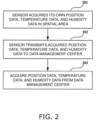
- the data collected by the sensor may be collected by various schemes.
- acquisition of temperature and humidity will be described by way of example.
- Fig. 2 is a flowchart of a method for implementing step 101 according to Example 1 of the present invention. As shown in Fig. 2 , the method includes:
- Fig. 3 is another flowchart of a method for implementing step 101 according to Example 1 of the present invention. As shown in Fig. 3 , the method includes:
- an environment parameter distribution model is determined in step 102 based on the plurality of environment parameters at the different positions.
- Fig. 4 is a flowchart of a method for implementing step 102 according to Example 1 of the present invention. As shown in Fig. 4 , the method includes:
- the machine learning model may be various types of machine learning models, such as, a Support Vector Machine (SVM) regression model or a model based on a neural network.
- SVM Support Vector Machine
- the process of training using the data collected in step 402 is also a process of fitting.
- the environment parameter distribution model may include at least one of a temperature distribution model, a humidity distribution model, a wind direction distribution model, an air volume distribution model, a sound volume distribution model, an audio frequency distribution model, a luminance distribution model, a color temperature distribution model, and an air quality distribution model.
- the environment parameters include temperature and humidity
- a temperature distribution model and a humidity distribution model are acquired.
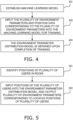
- Fig. 5 is a flowchart of a method for implementing step 103 according to Example 1 of the present invention. As shown in Fig. 5 , the method includes:
- the positions of the plurality of users in the room may be determined by various methods.
- the positions of the plurality of users in the room are identified by detecting an image captured by an indoor camera, or the positions of the plurality of users in the room are identified by emitting an ultrasonic signal, a radar signal, or an infrared signal into the room, or the positions of the plurality of users in the room are identified by detecting a wireless signal transmitted from terminals carried by the plurality of users in the room.
- the positions of the plurality of users may be two dimensional positions not including a height, or three dimensional positions including a height.
- the positions of the plurality of users are represented by two dimensional coordinates f(x, y) or three dimensional coordinates f(x, y, z).
- the height may differ due to differences in height or sitting manners of the users. For example, not only the comfort level of a body part of the user can be ensured, but also it can be ensured that the head of the user is in a comfortable state, whereby the comfort level of the user can be maximized, the overall comfort level of the users in the area can be improved, and their fatigue level can be reduced.
- the height may be set to a fixed value by a user command. For example, the height is 1.5 meters, that is, temperature data and humidity data at the located positions of the users on a horizontal plane at a height of 1.5 meters only needs to be acquired.
- the positions of the plurality of users may include positions of the plurality of users themselves and positions around the plurality of users.
- the data of the environment parameter obtained based on the position data can be made more complete, and the comfort level of the users after the control can be further improved.
- step 502 the positions of the plurality of users are input into the environment parameter distribution model, and a plurality of environment parameters corresponding to the positions of the located plurality of users are output; that is, the positions and the environment parameters have a specific corresponding relationship in the environment parameter distribution model, so that the plurality of environment parameters corresponding to the located positions of the plurality of users can be acquired based on the positions of the plurality of users.
- step 104 respective state parameters of the plurality of users are calculated based on the plurality of environment parameters corresponding to the located positions of the plurality of users, and a state parameter overall value of the users is determined based on the state parameters of the plurality of users.
- the state parameters of the users may be various parameters for representing the state of the user, for example, a comfort level and a fatigue level.
- Fig. 6 is a flowchart of a method for implementing step 104 according to Example 1 of the present invention. As shown in Fig. 6 , the method includes:
- the calculation of the comfort level and/or the fatigue level of the user based on the temperature and humidity may be acquired by using a model.
- a multi-layer perceptron regression model is trained based on temperature and humidity training data, and the comfort level and/or the fatigue level of the user is output.
- the model may be trained based on the gender of the user, so that the comfort level and/or the fatigue level of users with different genders can be acquired by applying the model.
- step 602 for example, a sum, an average value, a variance, or a standard deviation of the comfort levels of the plurality of users is calculated, and/or a sum, an average value, a variance, or a standard deviation of the fatigue levels of the plurality of users is calculated, to obtain a comfort level overall value and/or a fatigue level overall value of the users.
- the comfort level overall value and/or the fatigue level overall value that has been calculated based on a desired result may be selected.
- an overall value is calculated by adding the respective comfort levels and fatigue levels of all the users. If the overall value is small, this indicates that the comfort level and the fatigue level of all the users in the entire area are generally small, that is, the comfort level is high and the fatigue level is low; and if the overall value is large, this indicates that the comfort level and the fatigue level of all the users in the entire area are generally large, that is, the comfort level is low and the fatigue level is high.
- the comfort levels and the fatigue levels of all the users may be added based on expressions (1) and (2) below to obtain the comfort level overall value and the fatigue level overall value.
- f f_sum indicates that the comfort level overall value is the sum of the comfort levels of the users, feeling indicates the comfort level of each user, f t_sum indicates that the fatigue level overall value is the sum of the fatigue levels of the users, tiredness indicates the fatigue level of each user, and N is the number of the users.
- the overall value is calculated by determining respective average values with respect to the comfort level and fatigue level of all the users. If the overall value is small, this indicates that the balance is small for both the comfort level and the fatigue level of all the users in the entire area, and the influence of particularly small data is not excluded. If the overall value is large, this indicates that the balance is large for both the comfort level and the fatigue level of all the users in the entire area, and the influence of particularly large data is not excluded.
- average values of the comfort levels and the fatigue levels of all the users may be obtained based on expressions (3) and (4) below, and used as the comfort level overall value and the fatigue level overall value.
- f f_average indicates that the comfort level overall value is an average value of the comfort levels of the users
- feeling indicates the comfort level of each user
- f t_average indicates that the fatigue level overall value is an average value of the fatigue levels of the users
- tiredness indicates the fatigue level of each user
- N is the number of the users.
- the method of calculating the overall value is to obtain respective variances or standard deviations with respect to the comfort level and fatigue level of all the users. If the overall value is small, this indicates that the difference in comfort level and fatigue level between the users in the area is not large. If the overall value is large, this indicates that the comfort levels and fatigue levels of the users in the area vary greatly.
- the variance may be determined with respect to the comfort levels and fatigue levels of all the users based on expressions (5) and (6) below, to obtain a comfort level overall value and a fatigue level overall value.
- f f_ var indicates that the comfort level overall value is the variance of the comfort levels of the users, and feeling indicates the comfort level of each user.
- f t _var indicates that the fatigue level overall value is the variance of the fatigue levels of the users. tiredness indicates the fatigue level of each user.
- f f _ average indicates the average value of the comfort levels of the users.
- f t_average indicates the average value of the fatigue levels of the users.
- N is the number of the users.
- the method may further include:
- steps 101 to 104 may be cyclically performed at a certain periodicity, so as to obtain an optimal state parameter overall value.
- the periodic detection by the sensor enables the user to set a detection periodicity to collect data and perform processing based on the collected data, making it possible to not only save energy but also ensure that the users are in an optimal user state in all weathers.
- the state parameter overall value of the users is determined, the state parameter overall value is input into the first prediction model in step 105, and a target parameter distribution of the environment adjustment device is output.
- the target parameter distribution is a distribution of the target values of setting parameters of the environment adjustment device in the indoor space.
- the parameters correspond to the collected environment parameters.
- the target values are idealized setting values. That is, the target parameters obtained by the example of the present invention are not a single target parameter, but are target parameters related to different positions in the indoor space; that is, the target parameters represent the indoor space as a whole.
- the target parameter distribution that is output includes a target temperature distribution which is the distribution of the target values of temperature in the indoor space and a target humidity distribution which is the distribution of the target values of humidity in the indoor space.
- the target parameter distribution that is output includes a target luminance distribution which is the distribution of the target values of luminance in the indoor space.
- a plurality of types of target parameter distributions can be acquired by using a first prediction model that has been trained with the plurality of types of target parameters.
- each of a plurality of first prediction models may be trained based on the type of the target parameter.
- Each of the first prediction models corresponds to one type of target parameter and outputs one type of target parameter distribution.
- the first prediction model may be a trained multi-layer perceptron model or a deep neural network.
- the training data includes, for example, historical data of state parameter overall values of the user.
- the environment adjustment device may be controlled based on the target parameter distribution.
- the environment adjustment device is directly set based on the target parameter distribution.
- the target parameter distribution may be further processed to further improve the accuracy of the setting value.
- the method may further includes:
- the target parameter distribution is further input into the second prediction model to obtain the parameter setting value to control the device
- the characteristics of the device itself and other factors are taken into consideration so that the parameter setting value is more suitable for the actual environment, thereby further improving the device performance and user experience.
- the target parameter distribution of the environment adjustment device is output, the target parameter distribution is input into the second prediction model in step 106, and the parameter setting value of the environment adjustment device is output.
- the target parameter distribution is an ideal setting value for the environment adjustment device; however, the environment adjustment device cannot quickly or accurately reach the state of the target parameter distribution due to some practical factors of the application scene of the environment adjustment device, such as the building, the room type, and the design of the environment adjustment device.
- an actual parameter setting value of the environment adjustment device that is the parameter setting value of the environment adjustment device can be determined based on the actual factors as well as the target parameter distribution.
- the characteristics of the device itself and other factors are taken into consideration so that the parameter setting value is more suitable for the actual environment, thereby enabling the environment to quickly reach the parameter setting value, and improving the device performance and user experience.
- the parameter setting value corresponds to the target parameter distribution.
- the parameter setting value that is output by the second prediction model includes a temperature setting value and a humidity setting value.
- a plurality of types of parameter setting values may be acquired by using a second prediction model trained on the plurality of types of target parameter distributions.
- each of a plurality of second prediction models may be trained based on the type of the target parameter distribution.
- Each of the second prediction models corresponds to one type of target parameter distribution and outputs one type of parameter setting value.
- the second prediction model may be a trained multi-layer perceptron model or a deep neural network
- the training data includes, for example, historical data of the target parameter distribution and actual factors of the application scene of the environment adjustment device.
- a time-related environment parameter may also be input into the second prediction model as input data.
- Fig. 7 is a flowchart of another method for implementing step 106 according to Example 1 of the present invention. As shown in Fig. 7 , the method includes:
- the actual environment parameter distribution in the room is changed, which affects the actual adjustment by the environment adjustment device and degrades user experience.
- a sudden situation such as a sudden start of wind blowing outdoors or a breakdown of air conditioning changes the actual temperature distribution in the room, affects the actual adjustment by air conditioning, and further affects the precision of the comfort level, thereby degrading user experience.
- the spatial data of the indoor distribution at a later time is acquired by using the third prediction model, whereby, when an actual temperature setting value is further calculated based on the temperature distribution and the target temperature distribution at the second time when the prediction has been completed, a setting value that is closest to the actual temperature distribution in the room can be calculated.
- the air conditioning is adjusted with such a setting value, the adjustment result by the air conditioning can be made closer to the real condition and the adjustment accuracy is further improved, thereby improving user experience.
- the output of the environment parameter distribution model is not only used to determine the plurality of environment parameters corresponding to the located positions of the plurality of users in step 103, but also used to obtain the sequence of the time-related environment parameter distribution in step 701.
- environment parameters include different types of environment parameters, respective sequences of different types of environment parameter distributions are acquired.
- step 701 respective sequences of time-related temperature distribution and time-related humidity distribution are acquired.
- step 702 the sequence of time-related environment parameter distribution is input into a third prediction model to obtain an environment parameter distribution at a second time after the certain period, i.e., to predict a future environment parameter distribution.
- the third prediction model may be a trained deep neural network including a long short-term memory (LSTM) structure or a gated regression unit (GRU) structure.
- the training data includes, for example, historical data of environment parameters acquired at the same interval time point.
- step 107 the environment adjustment device is controlled based on the parameter setting value of the environment adjustment device.
- the temperature setting value of the air conditioner is adjusted to the acquired temperature setting value.
- Fig. 8 is a schematic diagram of a data processing process of the control method for the environment adjustment device according to Example 1 of the present invention.
- at least one sensor 801 collects a plurality of environment parameters at different positions in a room and provides the environment parameters to a machine learning model 802.
- an environment parameter distribution model 803 is acquired.
- the environment parameter distribution model 803 Based on positions of a plurality of users, the environment parameter distribution model 803 outputs a plurality of environment parameters corresponding to the located positions of the plurality of users to a state parameter calculation module 804.
- the state parameter calculation module 804 outputs a state parameter overall value of the users.
- the state parameter overall value is input into a first prediction model 805, and a target parameter distribution of the environment adjustment device is output.
- the environment parameter distribution model 803 further outputs the sequence of a time-related environment parameter distribution within a certain period to a third prediction model 806.
- the third prediction model 806 outputs the environment parameter distribution at a second time after the certain period.
- the target parameter distribution output by the first prediction model 805 and the environment parameter distribution at the second time output by the third prediction model 806 are both input into the second prediction model 807 to obtain the parameter setting value of the environment adjustment device.
- air conditioning will be illustratively described by way of example.
- Fig. 9 is a flowchart of an air-conditioning control method according to Example 1 of the present invention. As shown in Fig. 9 , the method includes:
- steps 909 and 910 and steps 903 to 908 there is no restrictions on the order of execution between steps 909 and 910 and steps 903 to 908, and steps 909 and 910 and steps 903 to 908 may be each independently executed in parallel or sequentially.
- the present invention is not limited to the scheme in which the target parameter distribution of the environment adjustment device is acquired by using a prediction model.
- the target parameter distribution of the environment adjustment device can be determined by a lookup table method.
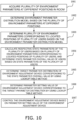
- Fig. 10 is another flowchart of the control method for the environment adjustment device according to Example 1 of the present invention. As shown in Fig. 10 , the method includes:
- step 1001 to step 1004 are the same as those of step 101 to step 104, and the description will not be repeated here.
- step 1005 the target parameter distribution of the environment adjustment device can be determined by a simple scheme using a lookup table method instead of using the first prediction model in step 105.
- a correspondence table between the state parameter overall value and the target parameter distribution may be established in advance.
- the state parameter overall value may include at least one of a comfort level overall value and a fatigue level overall value.
- a target parameter distribution table corresponding to the comfort level overall value may be established, a target parameter distribution table corresponding to the fatigue level overall value may be established, or a target parameter distribution table corresponding to both the comfort level overall value and the fatigue level overall value may be established.
- the target parameter distribution may include a temperature distribution and/or a humidity distribution.
- Fig. 11 is a schematic diagram of the corresponding relationship between the state parameter overall value and the target parameter distribution according to Example 1 of the present invention.
- the discomfort can be reduced by reducing the humidity in the room temperature range of 26 to 30°C
- fatigue level overall value fatigue is obviously reduced at 28°C with a humidity of 40%, and fatigue also tends to be reduced at a humidity of 55% or less. That is, within a certain temperature range, a high comfort level overall value corresponds to low humidity, and a low fatigue level overall value corresponds to high humidity.
- Fig. 11 is merely an example, and does not restrict the correspondence relationship between the state parameter overall value and the target parameter distribution.
- the method further includes:
- step 1006 the parameter setting value of the environment adjustment device can be determined by a simple scheme using a lookup table method instead of the method using the second prediction model in step 106.
- the target parameter distribution may include a temperature distribution and/or a humidity distribution.
- the parameter setting value may include a temperature setting value and/or a humidity setting value.
- Step 1006 and step 1007 are optional steps. Steps 105 and 106 may be used in place of steps 1006 and 1007.
- an environment parameter distribution model is determined based on a plurality of environment parameters at different positions, and environment parameters corresponding to the positions of a plurality of users are determined based on the environment parameter distribution model, so that the environment state of the entire space can be accurately reflected based on the environment parameters collected at the limited positions, and accurate environment parameters corresponding to the positions of the plurality of users can be easily acquired. Accordingly, the environment parameter distribution of the entire space can be acquired at a low cost and applied to many large spatial areas such as schools, office places, department stores, schools, exhibition areas or multi-functional halls, and can also be applied to homes.
- Respective state parameters of the plurality of users are calculated based on the accurate environment parameters corresponding to the positions of the plurality of users, and the state parameter overall value of the users is determined based on the state parameters of the plurality of users, whereby the state parameter overall value can reflect the overall state of the plurality of users.
- the target parameter distribution of the environment adjustment device is acquired by using the first prediction model from the state parameter overall value reflecting the overall state of the plurality of users, whereby it is possible to accurately adapt the target parameter distribution to the plurality of users as a whole.
- the device is controlled based on the target parameter distribution, whereby the plurality of users can all be in a comfortable state, thereby improving the performance of the device and user experience.
- Example 2 of the present invention provides a control device for an environment adjustment device that corresponds to the control method for the environment adjustment device as described in Example 1, and for the specific implementation of the control device, reference may be made to the implementation of the method described in Example 1; hence, the descriptions of the similar or related contents will not be repeated.
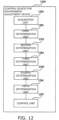
- Fig. 12 is a schematic diagram of the control device for the environment adjustment device according to Example 2 of the present invention, and as shown in Fig. 12 , a control device 1200 for the environment adjustment device includes:
- the device 1200 may further include:
- an environment parameter distribution model is determined based on a plurality of environment parameters at different positions, and environment parameters corresponding to the positions of a plurality of users are determined based on the environment parameter distribution model, the environment state of the entire space is accurately reflected based on the environment parameters collected at the limited positions, and accurate environment parameters corresponding to the positions of the plurality of users can be easily acquired. Accordingly, the environment parameter distribution of the entire space can be acquired at a low cost and applied to many large spatial areas such as schools, office places, department stores, schools, exhibition areas or multi-functional halls, and can also be applied to homes.
- Respective state parameters of the plurality of users are calculated based on the accurate environment parameters corresponding to the positions of the plurality of users, and the state parameter overall value of the users is determined based on the state parameters of the plurality of users, whereby the state parameter overall value can reflect the overall state of the plurality of users.
- a target parameter distribution of the environment adjustment device is acquired by using a first prediction model from the state parameter overall value reflecting the overall state of the plurality of users, whereby the target parameter distribution can be accurately adapted to the plurality of users as a whole.
- the device is controlled based on the target parameter distribution, whereby the plurality of users can all be in a comfortable state, thereby improving the performance of the device and user experience.
- Example 3 of the present invention provides an intelligent environment adjustment system, including the control device for the environment adjustment device as described in Example 2, and for the implementation of the intelligent environment adjustment system, reference may be made to the implementations of the device described in Example 2 and the method described in Example 1; hence, where the contents are similar or related, the description will not be repeated.
- Fig. 13 is a structural diagram of the intelligent environment adjustment system according to Example 3 of the present invention, and, as shown in Fig. 13 , an intelligent environment adjustment system 1300 includes:
- control device 1000 for the environment adjustment device may be a separate device, or may be integrated into the environment adjustment device 2000.
- the environment adjustment device may be various types of furniture devices, and, for example, the environment adjustment device is at least one of an air conditioner, an air purifier, a fresh air device, a humidifier, a disinfector, a lighting device, and an acoustic device.
- the intelligent environment adjustment system 1300 may be used for homes, or for commercial or public use.
- the intelligent environment adjustment system 1300 may be used in a home environment, a commercial environment such as an office, an office building, or a department store, or a public environment such as a school.
- control device 1200 of the environment adjustment device for the specific structure and function of the control device 1200 of the environment adjustment device, reference may be made to the device described in Example 2 and the method described in Example 1; hence, the description will not be repeated here.
- control device 1200 for the environment adjustment device may further include other control functions, such as switch control and timing control.
- an environment parameter distribution model is determined based on a plurality of environment parameters at different positions, and environment parameters corresponding to positions of a plurality of users are determined based on the environment parameter distribution model, the environment state of the entire space is accurately reflected based on the environment parameters collected at the limited positions, and accurate environment parameters corresponding to the positions of the plurality of users can be easily acquired. Accordingly, the environment parameter distribution of the entire space can be acquired at a low cost and applied to many large spatial areas such as schools, office places, department stores, schools, exhibition areas or multi-functional halls, and can also be applied to homes.
- Respective state parameters of the plurality of users are calculated based on the accurate environment parameters corresponding to the positions of the plurality of users, and the state parameter overall value of the users is determined based on the state parameters of the plurality of users, whereby the state parameter overall value can reflect the overall state of the plurality of users.
- a target parameter distribution of the environment adjustment device is acquired by using a first prediction model from the state parameter overall value reflecting the overall state of the plurality of users, whereby the target parameter distribution can be accurately adapted to the plurality of users as a whole.
- the device is controlled based on the target parameter distribution, whereby the plurality of users can all be in a comfortable state, thereby improving the performance of the device and user experience.
- the above device and method according to the examples of the present invention may be implemented by hardware, or may be implemented by hardware in combination with software.
- the present invention relates to a computer-readable program which, when executed by a logic component, can cause the logic component to implement the above device or constituent components, or cause the logic component to implement the above various methods or steps.
- An example of the present invention further relates to a storage medium for storing the above program, such as a hard disk, a magnetic disk, an optical disc, a DVD, or a flash memory.
- a storage medium for storing the above program such as a hard disk, a magnetic disk, an optical disc, a DVD, or a flash memory.
- each step according to the present solution does not limit the temporal order of the steps, on the premise that it does not affect the implementation of the specific solution, and the steps written earlier may be executed first, or may be executed later, or may be executed at the same time, all of which belong to the scope of protection of the present application as long as the present solution can be implemented.
Landscapes
- Engineering & Computer Science (AREA)
- Signal Processing (AREA)
- Physics & Mathematics (AREA)
- Fuzzy Systems (AREA)
- Mathematical Physics (AREA)
- Chemical & Material Sciences (AREA)
- Combustion & Propulsion (AREA)
- Mechanical Engineering (AREA)
- General Engineering & Computer Science (AREA)
- Automation & Control Theory (AREA)
- Computer Networks & Wireless Communication (AREA)
- Air Conditioning Control Device (AREA)
Applications Claiming Priority (3)
| Application Number | Priority Date | Filing Date | Title |
|---|---|---|---|
| CN202110495536.5A CN115307281A (zh) | 2021-05-07 | 2021-05-07 | 环境调节设备的控制方法及装置、智能环境调节系统 |
| CN202210157646.5A CN116661527A (zh) | 2022-02-21 | 2022-02-21 | 环境调节设备的控制方法及装置、智能环境调节系统 |
| PCT/JP2022/019291 WO2022234814A1 (ja) | 2021-05-07 | 2022-04-28 | 環境調整装置の制御方法及び装置、知能環境調整システム |
Publications (2)
| Publication Number | Publication Date |
|---|---|
| EP4336784A1 true EP4336784A1 (de) | 2024-03-13 |
| EP4336784A4 EP4336784A4 (de) | 2025-04-30 |
Family
ID=83932736
Family Applications (1)
| Application Number | Title | Priority Date | Filing Date |
|---|---|---|---|
| EP22798919.1A Withdrawn EP4336784A4 (de) | 2021-05-07 | 2022-04-28 | Verfahren und vorrichtung zur steuerung einer umgebungsanpassungsvorrichtung und intelligentes umgebungsanpassungssystem |
Country Status (4)
| Country | Link |
|---|---|
| US (1) | US20240060673A1 (de) |
| EP (1) | EP4336784A4 (de) |
| JP (1) | JP7648943B2 (de) |
| WO (1) | WO2022234814A1 (de) |
Families Citing this family (4)
| Publication number | Priority date | Publication date | Assignee | Title |
|---|---|---|---|---|
| CN118383590B (zh) * | 2024-05-09 | 2025-02-11 | 深圳市天元奇境科技有限公司 | 基于智能手环集群的温控方法、装置、设备及存储介质 |
| CN118463348B (zh) * | 2024-07-11 | 2024-11-12 | 格力电器(赣州)有限公司 | 一种基于Prompt的空调控制方法 |
| CN119005008B (zh) * | 2024-10-21 | 2025-02-11 | 浙江微风智能科技有限公司 | 基于分布式架构的楼宇环境自控方法及装置 |
| TWI909918B (zh) * | 2025-01-02 | 2025-12-21 | 財團法人工業技術研究院 | 溫度與氣流預測系統及其方法 |
Family Cites Families (10)
| Publication number | Priority date | Publication date | Assignee | Title |
|---|---|---|---|---|
| JP2702683B2 (ja) * | 1995-07-20 | 1998-01-21 | 工業技術院長 | 疲労特性評価装置及び疲労計測装置 |
| JP2002065650A (ja) * | 2000-09-04 | 2002-03-05 | Nissan Motor Co Ltd | 疲労度判定装置 |
| WO2007008835A2 (en) * | 2005-07-10 | 2007-01-18 | Adaptive Spectrum And Signal Alignment, Inc. | Dsl system estimation |
| KR20080074129A (ko) * | 2005-12-05 | 2008-08-12 | 마츠시타 덴끼 산교 가부시키가이샤 | 환경 제어 장치, 환경 제어 방법, 환경 제어 프로그램 및환경 제어 시스템 |
| JP2015148410A (ja) * | 2014-02-07 | 2015-08-20 | 株式会社東芝 | 空調制御装置、空調制御システム、空調制御方法及びプログラム |
| CN110081563B (zh) * | 2014-02-17 | 2021-01-26 | 松下电器产业株式会社 | 记录有冷热感推断程序的记录介质 |
| WO2018179750A1 (ja) * | 2017-03-28 | 2018-10-04 | パナソニックIpマネジメント株式会社 | 環境制御システム、及び、環境制御方法 |
| KR102830583B1 (ko) * | 2017-08-02 | 2025-07-07 | 스트롱 포스 아이오티 포트폴리오 2016, 엘엘씨 | 대규모 데이터 세트들을 갖는 산업 사물 인터넷 데이터 수집 환경에서의 검출을 위한 방법들 및 시스템들 |
| JP7071307B2 (ja) * | 2019-03-13 | 2022-05-18 | ダイキン工業株式会社 | 空調制御システム、及び、空調制御方法 |
| US12437042B2 (en) * | 2019-09-20 | 2025-10-07 | Micron Technology, Inc. | Methods and apparatus for persistent biometric profiling |
-
2022
- 2022-04-28 WO PCT/JP2022/019291 patent/WO2022234814A1/ja not_active Ceased
- 2022-04-28 JP JP2023518679A patent/JP7648943B2/ja active Active
- 2022-04-28 EP EP22798919.1A patent/EP4336784A4/de not_active Withdrawn
-
2023
- 2023-10-30 US US18/385,309 patent/US20240060673A1/en not_active Abandoned
Also Published As
| Publication number | Publication date |
|---|---|
| US20240060673A1 (en) | 2024-02-22 |
| JP7648943B2 (ja) | 2025-03-19 |
| WO2022234814A1 (ja) | 2022-11-10 |
| JPWO2022234814A1 (de) | 2022-11-10 |
| EP4336784A4 (de) | 2025-04-30 |
Similar Documents
| Publication | Publication Date | Title |
|---|---|---|
| US20240060673A1 (en) | Control method and device for environment adjustment device, and intelligent environment adjustment system | |
| CN108488987B (zh) | 空气调节设备的控制方法、存储介质和设备 | |
| US12405018B2 (en) | System and method for controlling indoor air quality | |
| CN114838470B (zh) | 一种暖通空调的控制方法和系统 | |
| US9504386B2 (en) | Controlling devices based on physiological measurements | |
| CN118396780A (zh) | 一种基于数字孪生的建筑环境和能源耦合智能调控系统和方法 | |
| KR20160024814A (ko) | 온도 조절 방법 및 장치 | |
| CN109751742B (zh) | 预定空间区域的生物体统计和设备控制 | |
| CN110749051A (zh) | 智能空调控制方法及智能空调 | |
| JP2007107871A (ja) | 設備制御システムおよび設備制御装置 | |
| CN105004012A (zh) | 基于体征参数的空调控制方法及装置 | |
| WO2022227775A1 (zh) | 用于空调控制的方法、装置和空调 | |
| CN110513835B (zh) | 提高空调舒适性的控制方法、装置及空调 | |
| CN114488837B (zh) | 智能家居设备的控制方法、装置、存储介质及设备 | |
| CN115307281A (zh) | 环境调节设备的控制方法及装置、智能环境调节系统 | |
| JP2015040693A (ja) | 空調制御システムおよび空調制御装置 | |
| CN108592316A (zh) | 空调器的控制方法、空调器和计算机可读存储介质 | |
| CN114442697B (zh) | 一种温度控制方法、设备、介质及产品 | |
| CN109883016B (zh) | 一种空气舒适度调节方法和设备 | |
| CN111459214A (zh) | 一种基于智慧环境的控制管理系统及其方法 | |
| CN117872786A (zh) | 智能家居控制方法、装置、设备及存储介质 | |
| CN107883520B (zh) | 基于空调设备的提醒方法及装置、终端 | |
| CN116734419A (zh) | 一种空调的控制方法、装置、存储介质及空调 | |
| CN116095569A (zh) | 一种音响参数调整方法 | |
| JP2017227437A (ja) | 空調制御システムおよび空調制御装置 |
Legal Events
| Date | Code | Title | Description |
|---|---|---|---|
| STAA | Information on the status of an ep patent application or granted ep patent |
Free format text: STATUS: THE INTERNATIONAL PUBLICATION HAS BEEN MADE |
|
| PUAI | Public reference made under article 153(3) epc to a published international application that has entered the european phase |
Free format text: ORIGINAL CODE: 0009012 |
|
| STAA | Information on the status of an ep patent application or granted ep patent |
Free format text: STATUS: REQUEST FOR EXAMINATION WAS MADE |
|
| 17P | Request for examination filed |
Effective date: 20231115 |
|
| AK | Designated contracting states |
Kind code of ref document: A1 Designated state(s): AL AT BE BG CH CY CZ DE DK EE ES FI FR GB GR HR HU IE IS IT LI LT LU LV MC MK MT NL NO PL PT RO RS SE SI SK SM TR |
|
| P01 | Opt-out of the competence of the unified patent court (upc) registered |
Free format text: CASE NUMBER: APP_38469/2024 Effective date: 20240627 |
|
| DAV | Request for validation of the european patent (deleted) | ||
| DAX | Request for extension of the european patent (deleted) | ||
| A4 | Supplementary search report drawn up and despatched |
Effective date: 20250327 |
|
| RIC1 | Information provided on ipc code assigned before grant |
Ipc: H04L 12/28 20060101AFI20250321BHEP |
|
| STAA | Information on the status of an ep patent application or granted ep patent |
Free format text: STATUS: THE APPLICATION IS DEEMED TO BE WITHDRAWN |
|
| 18D | Application deemed to be withdrawn |
Effective date: 20251016 |