EP4332991B1 - Verfahren zur entfernung von uran(vi) und einem aktinid(iv) aus einer organischen lösung durch oxalsäurefällung - Google Patents
Verfahren zur entfernung von uran(vi) und einem aktinid(iv) aus einer organischen lösung durch oxalsäurefällung Download PDFInfo
- Publication number
- EP4332991B1 EP4332991B1 EP23189246.4A EP23189246A EP4332991B1 EP 4332991 B1 EP4332991 B1 EP 4332991B1 EP 23189246 A EP23189246 A EP 23189246A EP 4332991 B1 EP4332991 B1 EP 4332991B1
- Authority
- EP
- European Patent Office
- Prior art keywords
- uranium
- actinide
- mol
- solution
- aqueous solution
- Prior art date
- Legal status (The legal status is an assumption and is not a legal conclusion. Google has not performed a legal analysis and makes no representation as to the accuracy of the status listed.)
- Active
Links
Images
Classifications
-
- G—PHYSICS
- G21—NUCLEAR PHYSICS; NUCLEAR ENGINEERING
- G21C—NUCLEAR REACTORS
- G21C19/00—Arrangements for treating, for handling, or for facilitating the handling of, fuel or other materials which are used within the reactor, e.g. within its pressure vessel
- G21C19/42—Reprocessing of irradiated fuel
-
- G—PHYSICS
- G21—NUCLEAR PHYSICS; NUCLEAR ENGINEERING
- G21F—PROTECTION AGAINST X-RADIATION, GAMMA RADIATION, CORPUSCULAR RADIATION OR PARTICLE BOMBARDMENT; TREATING RADIOACTIVELY CONTAMINATED MATERIAL; DECONTAMINATION ARRANGEMENTS THEREFOR
- G21F9/00—Treating radioactively contaminated material; Decontamination arrangements therefor
- G21F9/04—Treating liquids
- G21F9/06—Processing
- G21F9/12—Processing by absorption; by adsorption; by ion-exchange
- G21F9/125—Processing by absorption; by adsorption; by ion-exchange by solvent extraction
-
- C—CHEMISTRY; METALLURGY
- C22—METALLURGY; FERROUS OR NON-FERROUS ALLOYS; TREATMENT OF ALLOYS OR NON-FERROUS METALS
- C22B—PRODUCTION AND REFINING OF METALS; PRETREATMENT OF RAW MATERIALS
- C22B3/00—Extraction of metal compounds from ores or concentrates by wet processes
- C22B3/04—Extraction of metal compounds from ores or concentrates by wet processes by leaching
- C22B3/06—Extraction of metal compounds from ores or concentrates by wet processes by leaching in inorganic acid solutions, e.g. with acids generated in situ; in inorganic salt solutions other than ammonium salt solutions
- C22B3/065—Nitric acids or salts thereof
-
- C—CHEMISTRY; METALLURGY
- C22—METALLURGY; FERROUS OR NON-FERROUS ALLOYS; TREATMENT OF ALLOYS OR NON-FERROUS METALS
- C22B—PRODUCTION AND REFINING OF METALS; PRETREATMENT OF RAW MATERIALS
- C22B3/00—Extraction of metal compounds from ores or concentrates by wet processes
- C22B3/20—Treatment or purification of solutions, e.g. obtained by leaching
- C22B3/26—Treatment or purification of solutions, e.g. obtained by leaching by liquid-liquid extraction using organic compounds
- C22B3/38—Treatment or purification of solutions, e.g. obtained by leaching by liquid-liquid extraction using organic compounds containing phosphorus
- C22B3/384—Pentavalent phosphorus oxyacids, esters thereof
- C22B3/3846—Phosphoric acid, e.g. (O)P(OH)3
-
- C—CHEMISTRY; METALLURGY
- C22—METALLURGY; FERROUS OR NON-FERROUS ALLOYS; TREATMENT OF ALLOYS OR NON-FERROUS METALS
- C22B—PRODUCTION AND REFINING OF METALS; PRETREATMENT OF RAW MATERIALS
- C22B3/00—Extraction of metal compounds from ores or concentrates by wet processes
- C22B3/20—Treatment or purification of solutions, e.g. obtained by leaching
- C22B3/44—Treatment or purification of solutions, e.g. obtained by leaching by chemical processes
-
- C—CHEMISTRY; METALLURGY
- C22—METALLURGY; FERROUS OR NON-FERROUS ALLOYS; TREATMENT OF ALLOYS OR NON-FERROUS METALS
- C22B—PRODUCTION AND REFINING OF METALS; PRETREATMENT OF RAW MATERIALS
- C22B60/00—Obtaining metals of atomic number 87 or higher, i.e. radioactive metals
- C22B60/02—Obtaining thorium, uranium, or other actinides
- C22B60/0204—Obtaining thorium, uranium, or other actinides obtaining uranium
- C22B60/0217—Obtaining thorium, uranium, or other actinides obtaining uranium by wet processes
- C22B60/0252—Obtaining thorium, uranium, or other actinides obtaining uranium by wet processes treatment or purification of solutions or of liquors or of slurries
- C22B60/026—Obtaining thorium, uranium, or other actinides obtaining uranium by wet processes treatment or purification of solutions or of liquors or of slurries liquid-liquid extraction with or without dissolution in organic solvents
-
- C—CHEMISTRY; METALLURGY
- C22—METALLURGY; FERROUS OR NON-FERROUS ALLOYS; TREATMENT OF ALLOYS OR NON-FERROUS METALS
- C22B—PRODUCTION AND REFINING OF METALS; PRETREATMENT OF RAW MATERIALS
- C22B60/00—Obtaining metals of atomic number 87 or higher, i.e. radioactive metals
- C22B60/02—Obtaining thorium, uranium, or other actinides
- C22B60/0291—Obtaining thorium, uranium, or other actinides obtaining thorium
-
- C—CHEMISTRY; METALLURGY
- C22—METALLURGY; FERROUS OR NON-FERROUS ALLOYS; TREATMENT OF ALLOYS OR NON-FERROUS METALS
- C22B—PRODUCTION AND REFINING OF METALS; PRETREATMENT OF RAW MATERIALS
- C22B60/00—Obtaining metals of atomic number 87 or higher, i.e. radioactive metals
- C22B60/02—Obtaining thorium, uranium, or other actinides
- C22B60/04—Obtaining plutonium
-
- G—PHYSICS
- G21—NUCLEAR PHYSICS; NUCLEAR ENGINEERING
- G21C—NUCLEAR REACTORS
- G21C19/00—Arrangements for treating, for handling, or for facilitating the handling of, fuel or other materials which are used within the reactor, e.g. within its pressure vessel
- G21C19/42—Reprocessing of irradiated fuel
- G21C19/44—Reprocessing of irradiated fuel of irradiated solid fuel
- G21C19/46—Aqueous processes, e.g. by using organic extraction means, including the regeneration of these means
-
- Y—GENERAL TAGGING OF NEW TECHNOLOGICAL DEVELOPMENTS; GENERAL TAGGING OF CROSS-SECTIONAL TECHNOLOGIES SPANNING OVER SEVERAL SECTIONS OF THE IPC; TECHNICAL SUBJECTS COVERED BY FORMER USPC CROSS-REFERENCE ART COLLECTIONS [XRACs] AND DIGESTS
- Y02—TECHNOLOGIES OR APPLICATIONS FOR MITIGATION OR ADAPTATION AGAINST CLIMATE CHANGE
- Y02E—REDUCTION OF GREENHOUSE GAS [GHG] EMISSIONS, RELATED TO ENERGY GENERATION, TRANSMISSION OR DISTRIBUTION
- Y02E30/00—Energy generation of nuclear origin
- Y02E30/30—Nuclear fission reactors
-
- Y—GENERAL TAGGING OF NEW TECHNOLOGICAL DEVELOPMENTS; GENERAL TAGGING OF CROSS-SECTIONAL TECHNOLOGIES SPANNING OVER SEVERAL SECTIONS OF THE IPC; TECHNICAL SUBJECTS COVERED BY FORMER USPC CROSS-REFERENCE ART COLLECTIONS [XRACs] AND DIGESTS
- Y02—TECHNOLOGIES OR APPLICATIONS FOR MITIGATION OR ADAPTATION AGAINST CLIMATE CHANGE
- Y02W—CLIMATE CHANGE MITIGATION TECHNOLOGIES RELATED TO WASTEWATER TREATMENT OR WASTE MANAGEMENT
- Y02W30/00—Technologies for solid waste management
- Y02W30/50—Reuse, recycling or recovery technologies
Definitions
- the invention relates to the field of treatment of spent nuclear fuels.
- it relates to a process for back-extracting, from an organic solution comprising uranium(VI) and an actinide(IV), all or almost all of the actinide(IV), together with a fraction of the uranium(VI), in a controlled U(VI)/actinide(IV) ratio, by oxalic precipitation.
- It also relates to a method for treating an aqueous solution resulting from the dissolution of spent nuclear fuel in nitric acid, in which this de-extraction process is implemented.
- MOX fuel enables the recycling of plutonium from the processing of used nuclear fuel.
- COEX TM process A significant evolution of the PUREX process, called the COEX TM process, has been proposed in the international application PCT WO-A-2007/135178 , hereinafter reference [2].
- the COEX TM process allows, after dissolution and separation steps similar to those of the PUREX process, to partition the uranium(VI) and plutonium(IV) such that it leads to obtaining a first aqueous stream which comprises a mixture of uranium and plutonium, and a second aqueous stream which only comprises uranium.
- oxalic (co)precipitation is carried out in aqueous solution with, in the case of the COEX TM process, a prior reduction of uranium(VI) and plutonium(IV), respectively to oxidation state IV and oxidation state III.
- plutonium(IV) alone or in a mixture with uranium(VI) or americium(III), from an organic solution by oxalic precipitation.
- the aqueous phase containing the plutonium oxalate is withdrawn and subjected to filtration to recover this oxalate.
- the organic phase is washed with water, in an O/A ratio of 4, to remove from this phase the plutonium oxalate likely to be dissolved or suspended in said phase. and to combine it, after filtration, with the previously recovered plutonium oxalate. According to the authors of this reference, plutonium(IV) would precipitate at 99.4%.
- the organic phase is first diluted to bring its plutonium concentration below 10 g/L and, in the case where it also comprises uranium, its total plutonium and uranium concentration below 45 g/L, then it is brought into contact with an aqueous solution comprising 1 mol/L of nitric acid and 0.5 mol/L of oxalic acid.
- an aqueous solution comprising 1 mol/L of nitric acid and 0.5 mol/L of oxalic acid.
- the precipitation of plutonium(IV) in oxalate form would be quantitative or quasi-quantitative.
- uranium is present in the organic phase, a greater or lesser amount of uranium oxalate is also found in the precipitate.
- aqueous solution and “aqueous phase” are equivalent and interchangeable as are the terms “organic solution” and “organic phase”.
- organic diluent means any apolar hydrocarbon or mixture of apolar hydrocarbons, aliphatic and/or aromatic, whose use has been proposed for putting TBP into solution.
- examples of such a diluent include: in particular, cite n-dodecane, hydrogenated tetrapropylene (or TPH), kerosene and isoparaffinic diluents such as those marketed by TotalEnergies under the references Isane TM IP-185 and Isane TM IP-175.
- the sum of the concentrations of uranium(VI) and actinide(IV) nitrates in the organic solution is preferably greater than or equal to 70 g/L.
- this organic solution preferably comprises from 25% to 35% (v/v) and more preferably 30% (v/v) of tri -n -butyl phosphate.
- the aqueous solution preferably has an oxalic acid concentration greater than or equal to 20 g/L and, even better, greater than or equal to 22 g/L.
- the O/A ratio it is preferably greater than or equal to 1.5.
- the precipitate comprising actinide(IV) in oxalate form and uranium(VI) in oxalate form has a U(VI)/actinide(IV) mass ratio of between 1 and 3 and, preferably, equal to 1.
- the aqueous solution preferably has a molar concentration of oxalic acid 5 times to 10 times higher than the molar concentration of actinide(IV), it being understood that a person skilled in the art, seeking to obtain a precipitate having a given U(VI)/actinide(IV) mass ratio, will be able to perfectly adjust, as a function of the other operating parameters (nitric acid concentration in particular), the molar concentration of oxalic acid to be used to achieve this mass ratio.
- the separation of the precipitate from the organic and aqueous solutions can be carried out in a single step by filtration.
- the filtration can be carried out continuously using a drum filter, or discontinuously using a filter press.
- the recovered filtrate consists of a mixture of the residual aqueous and organic phases which can then be separated and treated independently according to the conventional techniques used in liquid-liquid extraction separation processes.
- the process further comprises, once the precipitate has been separated from the organic and aqueous solutions, one or more washes of this precipitate which are carried out either with an aqueous solution comprising nitric acid, or with an organic solution comprising the diluent, each wash being followed by a separation of the precipitate from the aqueous or organic washing solution.
- a single wash is carried out with an aqueous solution of nitric acid.
- Actinide(IV) can be plutonium(IV) or thorium(IV), with preference given to plutonium(IV).
- the de-extraction process which has just been described is of particular interest for the treatment of an organic solution comprising a mixture composed of 75% to 95% by mass of uranium(VI) and 5% to 25% by mass of an actinide(IV) and, in particular, plutonium(IV).
- This treatment method may further comprise, between steps a) and b), washing the organic solution obtained at the end of step a), the washing comprising at least one contacting of the organic solution obtained at the end of step a) with an aqueous solution comprising from 0.5 mol/L to 6 mol/L, preferably from 4 mol/L to 6 mol/L, of nitric acid, then a separation of the organic solution from the aqueous solution.
- it may further comprise a regeneration of the organic solution obtained at the end of step c) with a view to its reuse in step a), this regeneration preferably comprising at least one washing of the organic solution obtained at the end of step c) with a basic aqueous solution, followed by at least one washing of the organic solution with an aqueous nitric acid solution.
- it may further comprise a conversion of the precipitate obtained at the end of step b) into a mixed oxide of uranium(VI) and actinide(IV), this conversion preferably comprising a calcination of the precipitate at a temperature ranging from 600°C to 800°C under an oxidizing atmosphere, typically air.
- the actinide(IV) is preferably plutonium(IV).
- this aqueous solution is brought into contact in a 5 mL tube with the solvent pre-equilibrated at room temperature (21°C + 2°C), in an O/A ratio of 1; the tube is placed in an orbital shaker thermostatically controlled at 20 °C, at a speed of 1000 rpm, for 10 minutes. After decantation by gravity, the aqueous and organic phases are separated from each other by sampling the organic phase.
- a powder of oxalic acid dihydrate, C 2 O 4 H 2 .2H 2 O, 99.5% pure is dissolved in an aqueous solution of HNO 3 .
- the contents of the pillbox are aspirated and transferred into a tube which is subjected to centrifugation at 12,500 rpm for 5 minutes to separate the suspended solid phase from the liquid phases, respectively organic and aqueous.
- This solid is washed by adding 250 ⁇ L of ethanol to the tube, trituration using a pipette tip, vortexing for a few seconds, centrifugation at 12,500 rpm for 5 minutes, and removal of the ethanol.
- the tube is placed in an oven heated to 40 °C overnight to dry the solid.
- uranium content and, in the case of test 2 are (are) determined by inductively coupled plasma atomic emission spectrometry (or ICP-AES).
- the aqueous phase is pipetted and diluted in a matrix solution which is a mixture of HNO 3 /HCl 2% (90/10, v/v).
- the typical dilution is a factor of 1000 obtained by cascade dilution: 50 ⁇ L of solution is added to 4.95 mL of solution matrix, then the solution thus obtained is diluted again by adding 500 ⁇ L of this solution to 4.5 mL of matrix solution.
- the wavelengths (nm) used for the quantification of uranium and thorium by ICP-AES are as follows: U: 279,394 367,007 385,958 409,014; Th: 274,716 283,231 283,730 401,913.
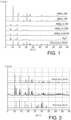
- uranyl oxalate is the compound crystalline which is largely in the majority while, for 2 mol/L of nitric acid, it is the only crystalline compound detected.
- the X-ray powder diffractogram of the solid obtained at the end of this test is presented on the Figure 2 , where it is denoted S, together with the X-ray powder diffractograms of uranyl oxalate trihydrate, UO 2 (C 2 O 4 ) 2 .3H 2 O, and thorium oxalate hexahydrate, Th(C 2 O 4 ) 2 .6H 2 O, serving as references.
- the only crystalline compounds present in the solid are uranyl oxalate and thorium oxalate.
- ICP-AES analysis of organic and aqueous supernatants does not detect thorium in these supernatants, which means that all the thorium is present in the solid.
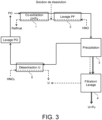
- Figure 3 represents a schematic diagram of a method of implementing the process for treating an aqueous solution for dissolving spent nuclear fuel in nitric acid in accordance with the invention.
- the first of these steps aims to jointly extract uranium and plutonium, the first at oxidation state +VI and the second at oxidation state +IV, from the aqueous nitric solution dissolving spent nuclear fuel.
- Such a solution typically comprises from 3 mol/L to 6 mol/L of HNO 3 , uranium, plutonium, minor actinides (americium and curium), fission products (La, Ce, Pr, Nd, Sm, Eu, Gd, Mo, Zr, Ru, Tc, Rh, Pd, Y, Cs, ...) as well as some corrosion products such as iron.
- the “U+Pu Co-extraction” step is carried out by circulating, in extractor 1, the dissolution solution counter-currently to an organic phase, denoted “PO” on the Figure 3 , which comprises TBP, advantageously at a level of 30% (v/v), in an organic diluent, for example n- dodecane.
- the second step of the process aims to extract from the organic phase resulting from the “U+Pu co-extraction” step the fraction of fission products likely to have been extracted from the dissolution solution, together with the uranium and plutonium.
- the organic phase leaving the extractor 1 is circulated, in the extractor 2, against the current of an aqueous nitric solution whose concentration can range from 0.5 mol/L to 6 mol/L of HNO 3 but is preferably from 4 mol/L to 6 mol/L of HNO 3 so as to facilitate the back-extraction of ruthenium and technetium.
- the third step of the process aims to extract from the organic phase resulting from the “PF Washing” step all of the plutonium present in this phase, together with a fraction of the uranium, by oxalic precipitation.
- the organic phase leaving the extractor 2 is directed towards a precipitation unit, denoted 3, where it is brought into contact with an aqueous solution comprising from 2 mol/L to 6 mol/L of HNO 3 and oxalic acid at a concentration at least equal to 20 g/L, in an O/A ratio at least equal to 1 and, preferably, at least equal to 1.5, the concentration of oxalic acid in the aqueous solution and the O/A ratio being however chosen so that oxalic acid is lacking in relation to the stoichiometric conditions for complete precipitation of uranium and plutonium.
- a precipitation unit denoted 3
- this organic phase is advantageously brought into contact with an aqueous solution comprising 2 mol/L of HNO 3 and 0.24 mol/L (i.e. 22 g/L) of oxalic acid in an O/A ratio of 1.
- the use of the operating conditions mentioned above leads to obtaining a solid phase, an aqueous phase and an organic phase which respectively comprise around 33%, 15.60% and 51.40% by mass of the uranium which was present in the organic phase resulting from the “PF Washing” step.
- the U/Pu mass ratio in the solid phase is 2.7.
- the solid and aqueous phases from the “Precipitation” step are directed towards a unit, noted 4 on the Figure 3 , devoted to the fourth stage of the process, noted “Filtration/Washing” in this figure, which aims to separate these phases from each other by filtration and to wash, preferably once, the solid phase with an aqueous nitric solution comprising at most 2 mol/L of nitric acid, the washing being followed by filtration.
- the organic phase from the “Precipitation” step is directed to extractor 3 in which the fifth step of the process is carried out, noted “De-extraction U” on the Figure 3 , which aims to extract the uranium it contains from this organic phase.
- the organic phase leaving unit 3 is circulated, in extractor 5, against the current of an aqueous nitric solution whose HNO 3 concentration can range from 0.005 mol/L to 0.05 mol/L.
- the sixth step of the process aims to regenerate this organic phase by subjecting it to one or more washes with a basic aqueous solution, for example a first wash with an aqueous solution at 0.3 mol/L of sodium carbonate, followed by a second wash with an aqueous solution at 0.1 mol/L of sodium hydroxide, then to one or more washes with an aqueous solution of nitric acid allowing it to be reacidified, for example an aqueous solution comprising 2 mol/L of HNO 3 , each wash being carried out by circulating said organic phase, in an extractor, against the current of the aqueous washing solution.
- a basic aqueous solution for example a first wash with an aqueous solution at 0.3 mol/L of sodium carbonate
- a second wash with an aqueous solution at 0.1 mol/L of sodium hydroxide
- an aqueous solution of nitric acid allowing it to be reacidified, for example an
- the organic phase thus regenerated can then be returned to extractor 1 for reuse in the treatment process.
Landscapes
- Engineering & Computer Science (AREA)
- Chemical & Material Sciences (AREA)
- General Life Sciences & Earth Sciences (AREA)
- Life Sciences & Earth Sciences (AREA)
- Manufacturing & Machinery (AREA)
- Materials Engineering (AREA)
- Organic Chemistry (AREA)
- Metallurgy (AREA)
- Mechanical Engineering (AREA)
- Environmental & Geological Engineering (AREA)
- Geology (AREA)
- Physics & Mathematics (AREA)
- High Energy & Nuclear Physics (AREA)
- General Engineering & Computer Science (AREA)
- Geochemistry & Mineralogy (AREA)
- Plasma & Fusion (AREA)
- General Chemical & Material Sciences (AREA)
- Chemical Kinetics & Catalysis (AREA)
- Inorganic Chemistry (AREA)
- Extraction Or Liquid Replacement (AREA)
- Inorganic Compounds Of Heavy Metals (AREA)
- Compounds Of Alkaline-Earth Elements, Aluminum Or Rare-Earth Metals (AREA)
- Manufacture And Refinement Of Metals (AREA)
Claims (14)
- Verfahren zur Desextraktion von Uran(VI) und einem Aktinid(IV) aus einer organischen Lösung, in der das Uran(VI) und das Aktinid(IV) in Form von Nitraten in solchen Konzentrationen vorliegen, dass die Konzentration des Uran(VI)-Nitrats höher ist als die Konzentration des Aktinid(IV)-Nitrats, und die Summe der Konzentrationen von Uran(VI)- und Aktinid(IV)-Nitrat größer oder gleich 55 g/L ist, wobei die organische Lösung Tri-n-Butylphosphat in einem organischen Verdünnungsmittel umfasst, wobei das Verfahren Folgendes umfasst:- mindestens ein Inkontaktbringen der organischen Lösung mit einer wässrigen Lösung von 2 mol/L bis 6 mol/L Salpetersäure und Oxalsäure in einer Konzentration von mindestens 18 g/L in einem Volumenverhältnis organische Lösung/wässrige Lösung von 1 oder mehr, die Konzentration der Oxalsäure in der wässrigen Lösung und das Volumenverhältnis organische Lösung/wässrige Lösung so gewählt werden, dass die Oxalsäure den stöchiometrischen Bedingungen einer vollständigen Ausfällung von Uran(VI) und Aktinid(IV) nicht entspricht, wodurch man ein Präzipitat erhält, das Aktinid(IV) in Form von Oxalat und Uran(VI) als Oxalat im Massenverhältnis U(VI)/Aktinid(IV) zwischen 0,5 und 5 enthält; dann- ein Abtrennen des Präzipitats von organischen und wässrigen Lösungen.
- Verfahren nach Anspruch 1, wobei die organische Lösung 25% bis 35% (v/v) Tri-n-Butylphosphat umfasst.
- Verfahren nach Anspruch 2, wobei die organische Lösung 30% (v/v) Tri-n-Butylphosphat umfasst.
- Verfahren nach einem der Ansprüche 1 bis 3, wobei die Konzentration der Oxalsäure in der wässrigen Lösung größer oder gleich 20 g/L ist.
- Verfahren nach Anspruch 4, wobei die Konzentration der Oxalsäure in der wässrigen Lösung größer oder gleich 22 g/L ist.
- Verfahren nach einem der Ansprüche 1 bis 5, wobei das Volumenverhältnis organische Lösung/wässrige Lösung größer oder gleich 1,5 ist.
- Verfahren nach einem der Ansprüche 1 bis 6, das ferner eine oder mehrere Waschungen des Ausfällungsmaterials mit einer wässrigen Lösung, die Salpetersäure umfasst, oder mit einer organischen Lösung, die das organische Verdünnungsmittel umfasst, umfasst, wobei auf jede Waschung ein Abtrennen des Ausfällungsmaterials von der wässrigen oder organischen Waschlösung folgt.
- Verfahren nach einem der Ansprüche 1 bis 7, wobei das Aktinid(IV) Plutonium(IV) oder Thorium(IV) ist.
- Verfahren nach Anspruch 8, wobei das Aktinid(IV) Plutonium(IV) ist.
- Verfahren zur Behandlung einer wässrigen Lösung aus der Auflösung eines verbrauchten Kernbrennstoffs in Salpetersäure, wobei die wässrige Lösung mindestens Uran(VI) und ein Aktinid(IV) umfasst, wobei das Verfahren mindestens folgende Schritte umfasst:a) eine Koextraktion des Urans(VI) und des Aktinids(IV) der wässrigen Lösung, wobei die Koextraktion mindestens ein Inkontaktbringen der wässrigen Lösung mit einer organischen Lösung umfasst, die Tri-n-Butylphosphat als Lösung in einem organischen Verdünnungsmittel umfasst, und anschließend ein Abtrennen der wässrigen Lösung von der organischen Lösung;b) eine Desextraktion des Aktinids(IV) und einer Uranfraktion(VI) der aus Schritt a) gewonnenen organischen Lösung, wobei die Desextraktion die Durchführung eines Verfahrens nach einem der Ansprüche 1 bis 9 umfasst; undc) eine Desextraktion von Uran(VI), das nicht in Schritt b) aus der organischen Lösung deextrahiert wurde, wobei die Desextraktion mindestens ein Inkontaktbringen der organischen Lösung mit einer wässrigen Lösung, die 0,005 mol/L bis 0,05 mol/L Salpetersäure enthält, und dann ein Abtrennen der organischen Lösung von der wässrigen Lösung umfasst.
- Verfahren zur Behandlung nach Anspruch 10, das ferner zwischen den Schritten a) und b) ein Waschen der nach Schritt a) erhaltenen organischen Lösung umfasst, das Waschen umfassend mindestens ein Inkontaktbringen der nach Schritt a) erhaltenen organischen Lösung mit einer wässrigen Lösung von 0,5 mol/L bis 6 mol/L, vorzugsweise 4 mol/L bis 6 mol/L, Salpetersäure und anschließendes Abtrennen der organischen Lösung von der wässrigen Lösung.
- Verfahren zur Behandlung nach Anspruch 10 oder Anspruch 11, das ferner eine Regeneration der nach Schritt c) erhaltenen organischen Lösung zur Wiederverwendung in Schritt a) umfasst.
- Verfahren nach einem der Ansprüche 10 bis 12, das ferner eine Umwandlung des aus Schritt b) gewonnenen Präzipitats in ein gemischtes Uranoxid(VI) und Aktinid(IV) umfasst.
- Verfahren nach einem der Ansprüche 10 bis 13, wobei das Aktinid(IV) Plutonium(IV) ist.
Applications Claiming Priority (1)
| Application Number | Priority Date | Filing Date | Title |
|---|---|---|---|
| FR2208845A FR3139408B1 (fr) | 2022-09-02 | 2022-09-02 | Procédé de désextraction d’uranium(vi) et d’un actinide(iv) d’une solution organique par précipitation oxalique |
Publications (2)
| Publication Number | Publication Date |
|---|---|
| EP4332991A1 EP4332991A1 (de) | 2024-03-06 |
| EP4332991B1 true EP4332991B1 (de) | 2025-05-21 |
Family
ID=83996740
Family Applications (1)
| Application Number | Title | Priority Date | Filing Date |
|---|---|---|---|
| EP23189246.4A Active EP4332991B1 (de) | 2022-09-02 | 2023-08-02 | Verfahren zur entfernung von uran(vi) und einem aktinid(iv) aus einer organischen lösung durch oxalsäurefällung |
Country Status (5)
| Country | Link |
|---|---|
| US (1) | US20240079157A1 (de) |
| EP (1) | EP4332991B1 (de) |
| JP (1) | JP2024035832A (de) |
| CN (1) | CN117646125A (de) |
| FR (1) | FR3139408B1 (de) |
Families Citing this family (1)
| Publication number | Priority date | Publication date | Assignee | Title |
|---|---|---|---|---|
| CN121294898B (zh) * | 2025-12-15 | 2026-03-24 | 清华大学 | 使锕系元素各自分离开的固相萃取分离方法和成套件 |
Family Cites Families (5)
| Publication number | Priority date | Publication date | Assignee | Title |
|---|---|---|---|---|
| GB834531A (en) | 1954-12-11 | 1960-05-11 | Atomic Energy Authority Uk | Improvements in or relating to the recovery of plutonium from organic solvents |
| LU84016A1 (de) * | 1982-03-15 | 1982-07-08 | Euratom | Verfahren zur rueckgewinnung von plutonium aus salpetersauren waessrigen loesungen |
| US4574072A (en) * | 1983-07-26 | 1986-03-04 | The United States Of America As Represented By The United States Department Of Energy | Method for extracting lanthanides and actinides from acid solutions by modification of purex solvent |
| EP0251399A1 (de) | 1986-06-23 | 1988-01-07 | "Centre d'Etude de l'Energie Nucléaire", "C.E.N." | Verfahren zum Trennen oder zum Rückgewinnen von Plutonium und nach diesem Verfahren erzeugtes Plutonium |
| FR2901627B1 (fr) | 2006-05-24 | 2009-05-01 | Commissariat Energie Atomique | Procede de retraitement d'un combustible nucleaire use et de preparation d'un oxyde mixte d'uranium et de plutonium |
-
2022
- 2022-09-02 FR FR2208845A patent/FR3139408B1/fr active Active
-
2023
- 2023-08-02 EP EP23189246.4A patent/EP4332991B1/de active Active
- 2023-08-30 US US18/458,241 patent/US20240079157A1/en active Pending
- 2023-08-30 CN CN202311105037.6A patent/CN117646125A/zh active Pending
- 2023-09-01 JP JP2023142237A patent/JP2024035832A/ja active Pending
Also Published As
| Publication number | Publication date |
|---|---|
| JP2024035832A (ja) | 2024-03-14 |
| US20240079157A1 (en) | 2024-03-07 |
| FR3139408B1 (fr) | 2024-09-13 |
| EP4332991A1 (de) | 2024-03-06 |
| CN117646125A (zh) | 2024-03-05 |
| FR3139408A1 (fr) | 2024-03-08 |
Similar Documents
| Publication | Publication Date | Title |
|---|---|---|
| EP2095372B1 (de) | Gruppierte trennung von actiniden aus einer stark sauren wässrigen zusammensetzung unter verwendung eines lösenden extraktionsmittels in einem salzungsmedium | |
| EP2449559B1 (de) | Verbessertes verfahren zum behandeln von abgebranntem kernbrennstoff | |
| FR2901627A1 (fr) | Procede de retraitement d'un combustible nucleaire use et de preparation d'un oxyde mixte d'uranium et de plutonium | |
| EP0559537B1 (de) | Verfahren zur Trennung von Elementen aus wässrigen Lösungen entstehend bei der Wiederaufarbeitung von Kernbrennstoffen | |
| FR3039696A1 (fr) | Procede de traitement en un cycle, exempt d'operation de desextraction reductrice du plutonium, d'une solution aqueuse nitrique de dissolution d'un combustible nucleaire use | |
| CA2785001C (fr) | Procede d'extraction liquide - liquide pour la purification de l'uranium issu de la dissolution nitrique d'un concentre d'uranium naturel | |
| FR2936348A1 (fr) | Procede de preparation d'un combustible mixte comprenant de l'uranium et au moins un actinide et/ou lanthanide mettant en oeuvre une resine echangeuse de cations. | |
| FR2948384A1 (fr) | Augmentation du facteur de separation entre l'americium et le curium et/ou entre des lanthanides dans une operation d'extraction liquide-liquide | |
| EP1685573B1 (de) | Verfahren zum trennen von uran (vi) von aktiniden (iv) und/oder (vi) und verwendung dafür | |
| EP3084773A1 (de) | Verfahren zur verarbeitung von verbrauchtem kernbrennstoff umfassend einen schritt der dekontamination von uran (vi) in mindestens ein aktinid (iv) durch komplexierung dieses aktinids (iv) | |
| FR3039547A1 (fr) | Nouveaux n,n-dialkylamides dissymetriques, leur synthese et leurs utilisations | |
| WO2011147871A1 (fr) | Procede de traitement de combustibles nucleaires uses ne necessitant pas d'operation de desextraction reductrice du plutonium | |
| EP4332991B1 (de) | Verfahren zur entfernung von uran(vi) und einem aktinid(iv) aus einer organischen lösung durch oxalsäurefällung | |
| FR3062128A1 (fr) | N,n-dialkylamides dissymetriques, utiles notamment pour separer l'uranium(vi) du plutonium(iv), leur synthese et leurs utilisations | |
| FR2551745A1 (fr) | Procede pour la separation de neptunium se formant a partir d'une phase organique au cours du retraitement de matieres combustibles et/ou fertiles irradiees | |
| CN116200599A (zh) | 一种降低乏燃料后处理purex流程铀产品溶液中钚及镎含量的方法 | |
| US2882124A (en) | Solvent extraction process for plutonium | |
| EP0527685B1 (de) | Verfahren zur Trennung der Aktiniden von Lanthaniden durch selektive Extraktion der Aktinide in einem Propandiamid-enthaltenden organischen Lösungsmittel | |
| EP1454326A2 (de) | Verfahren zur überwachung der valenzzustände | |
| EP0251399A1 (de) | Verfahren zum Trennen oder zum Rückgewinnen von Plutonium und nach diesem Verfahren erzeugtes Plutonium | |
| RU2219131C2 (ru) | Способ извлечения урана из твердых отходов сублиматного производства | |
| RU2490735C2 (ru) | Способ подготовки растворов переработки оят, содержащих комплексообразующие вещества, для экстракционного извлечения многовалентных актинидов | |
| FR2485510A1 (fr) | Procede d'extraction du palladium a partir de solutions nitriques et son application a la separation palladium-ruthenium | |
| WO2026083032A1 (fr) | Procede d'elimination de l'actinium contenu dans une solution de terres rares par un solvant derive d'acide carboxylique et composition de terres rares obtenue par ce procede | |
| JPS5847040B2 (ja) | プルトニウムの分離方法 |
Legal Events
| Date | Code | Title | Description |
|---|---|---|---|
| PUAI | Public reference made under article 153(3) epc to a published international application that has entered the european phase |
Free format text: ORIGINAL CODE: 0009012 |
|
| STAA | Information on the status of an ep patent application or granted ep patent |
Free format text: STATUS: REQUEST FOR EXAMINATION WAS MADE |
|
| 17P | Request for examination filed |
Effective date: 20230802 |
|
| AK | Designated contracting states |
Kind code of ref document: A1 Designated state(s): AL AT BE BG CH CY CZ DE DK EE ES FI FR GB GR HR HU IE IS IT LI LT LU LV MC ME MK MT NL NO PL PT RO RS SE SI SK SM TR |
|
| RBV | Designated contracting states (corrected) |
Designated state(s): AL AT BE BG CH CY CZ DE DK EE ES FI FR GB GR HR HU IE IS IT LI LT LU LV MC ME MK MT NL NO PL PT RO RS SE SI SK SM TR |
|
| RAP3 | Party data changed (applicant data changed or rights of an application transferred) |
Owner name: ECOLE NATIONALE SUPERIEURE DE CHIMIE DEMONTPELLIER Owner name: UNIVERSITE DE MONTPELLIER Owner name: CENTRE NATIONAL DE LA RECHERCHE SCIENTIFIQUE Owner name: COMMISSARIAT A L'ENERGIE ATOMIQUE ET AUX ENERGIESALTERNATIVES |
|
| GRAP | Despatch of communication of intention to grant a patent |
Free format text: ORIGINAL CODE: EPIDOSNIGR1 |
|
| STAA | Information on the status of an ep patent application or granted ep patent |
Free format text: STATUS: GRANT OF PATENT IS INTENDED |
|
| RIC1 | Information provided on ipc code assigned before grant |
Ipc: G21C 19/46 20060101ALI20241205BHEP Ipc: C22B 60/04 20060101ALI20241205BHEP Ipc: C22B 60/02 20060101ALI20241205BHEP Ipc: C22B 3/38 20060101ALI20241205BHEP Ipc: C22B 3/06 20060101ALI20241205BHEP Ipc: G21C 19/42 20060101AFI20241205BHEP |
|
| INTG | Intention to grant announced |
Effective date: 20241220 |
|
| GRAS | Grant fee paid |
Free format text: ORIGINAL CODE: EPIDOSNIGR3 |
|
| GRAA | (expected) grant |
Free format text: ORIGINAL CODE: 0009210 |
|
| STAA | Information on the status of an ep patent application or granted ep patent |
Free format text: STATUS: THE PATENT HAS BEEN GRANTED |
|
| AK | Designated contracting states |
Kind code of ref document: B1 Designated state(s): AL AT BE BG CH CY CZ DE DK EE ES FI FR GB GR HR HU IE IS IT LI LT LU LV MC ME MK MT NL NO PL PT RO RS SE SI SK SM TR |
|
| REG | Reference to a national code |
Ref country code: GB Ref legal event code: FG4D Free format text: NOT ENGLISH |
|
| REG | Reference to a national code |
Ref country code: CH Ref legal event code: EP |
|
| REG | Reference to a national code |
Ref country code: DE Ref legal event code: R096 Ref document number: 602023003586 Country of ref document: DE |
|
| REG | Reference to a national code |
Ref country code: IE Ref legal event code: FG4D Free format text: LANGUAGE OF EP DOCUMENT: FRENCH |
|
| REG | Reference to a national code |
Ref country code: NL Ref legal event code: MP Effective date: 20250521 |
|
| PG25 | Lapsed in a contracting state [announced via postgrant information from national office to epo] |
Ref country code: FI Free format text: LAPSE BECAUSE OF FAILURE TO SUBMIT A TRANSLATION OF THE DESCRIPTION OR TO PAY THE FEE WITHIN THE PRESCRIBED TIME-LIMIT Effective date: 20250521 Ref country code: ES Free format text: LAPSE BECAUSE OF FAILURE TO SUBMIT A TRANSLATION OF THE DESCRIPTION OR TO PAY THE FEE WITHIN THE PRESCRIBED TIME-LIMIT Effective date: 20250521 Ref country code: PT Free format text: LAPSE BECAUSE OF FAILURE TO SUBMIT A TRANSLATION OF THE DESCRIPTION OR TO PAY THE FEE WITHIN THE PRESCRIBED TIME-LIMIT Effective date: 20250922 |
|
| REG | Reference to a national code |
Ref country code: LT Ref legal event code: MG9D |
|
| PG25 | Lapsed in a contracting state [announced via postgrant information from national office to epo] |
Ref country code: NO Free format text: LAPSE BECAUSE OF FAILURE TO SUBMIT A TRANSLATION OF THE DESCRIPTION OR TO PAY THE FEE WITHIN THE PRESCRIBED TIME-LIMIT Effective date: 20250821 Ref country code: GR Free format text: LAPSE BECAUSE OF FAILURE TO SUBMIT A TRANSLATION OF THE DESCRIPTION OR TO PAY THE FEE WITHIN THE PRESCRIBED TIME-LIMIT Effective date: 20250822 |
|
| PG25 | Lapsed in a contracting state [announced via postgrant information from national office to epo] |
Ref country code: NL Free format text: LAPSE BECAUSE OF FAILURE TO SUBMIT A TRANSLATION OF THE DESCRIPTION OR TO PAY THE FEE WITHIN THE PRESCRIBED TIME-LIMIT Effective date: 20250521 Ref country code: PL Free format text: LAPSE BECAUSE OF FAILURE TO SUBMIT A TRANSLATION OF THE DESCRIPTION OR TO PAY THE FEE WITHIN THE PRESCRIBED TIME-LIMIT Effective date: 20250521 |
|
| PG25 | Lapsed in a contracting state [announced via postgrant information from national office to epo] |
Ref country code: BG Free format text: LAPSE BECAUSE OF FAILURE TO SUBMIT A TRANSLATION OF THE DESCRIPTION OR TO PAY THE FEE WITHIN THE PRESCRIBED TIME-LIMIT Effective date: 20250521 |
|
| PG25 | Lapsed in a contracting state [announced via postgrant information from national office to epo] |
Ref country code: HR Free format text: LAPSE BECAUSE OF FAILURE TO SUBMIT A TRANSLATION OF THE DESCRIPTION OR TO PAY THE FEE WITHIN THE PRESCRIBED TIME-LIMIT Effective date: 20250521 |
|
| PGFP | Annual fee paid to national office [announced via postgrant information from national office to epo] |
Ref country code: FR Payment date: 20250821 Year of fee payment: 3 Ref country code: AT Payment date: 20251020 Year of fee payment: 3 |
|
| PG25 | Lapsed in a contracting state [announced via postgrant information from national office to epo] |
Ref country code: RS Free format text: LAPSE BECAUSE OF FAILURE TO SUBMIT A TRANSLATION OF THE DESCRIPTION OR TO PAY THE FEE WITHIN THE PRESCRIBED TIME-LIMIT Effective date: 20250821 |
|
| PG25 | Lapsed in a contracting state [announced via postgrant information from national office to epo] |
Ref country code: IS Free format text: LAPSE BECAUSE OF FAILURE TO SUBMIT A TRANSLATION OF THE DESCRIPTION OR TO PAY THE FEE WITHIN THE PRESCRIBED TIME-LIMIT Effective date: 20250921 |
|
| PG25 | Lapsed in a contracting state [announced via postgrant information from national office to epo] |
Ref country code: LV Free format text: LAPSE BECAUSE OF FAILURE TO SUBMIT A TRANSLATION OF THE DESCRIPTION OR TO PAY THE FEE WITHIN THE PRESCRIBED TIME-LIMIT Effective date: 20250521 |
|
| REG | Reference to a national code |
Ref country code: AT Ref legal event code: MK05 Ref document number: 1797524 Country of ref document: AT Kind code of ref document: T Effective date: 20250521 |
|
| PG25 | Lapsed in a contracting state [announced via postgrant information from national office to epo] |
Ref country code: DK Free format text: LAPSE BECAUSE OF FAILURE TO SUBMIT A TRANSLATION OF THE DESCRIPTION OR TO PAY THE FEE WITHIN THE PRESCRIBED TIME-LIMIT Effective date: 20250521 Ref country code: AT Free format text: LAPSE BECAUSE OF FAILURE TO SUBMIT A TRANSLATION OF THE DESCRIPTION OR TO PAY THE FEE WITHIN THE PRESCRIBED TIME-LIMIT Effective date: 20250521 Ref country code: SM Free format text: LAPSE BECAUSE OF FAILURE TO SUBMIT A TRANSLATION OF THE DESCRIPTION OR TO PAY THE FEE WITHIN THE PRESCRIBED TIME-LIMIT Effective date: 20250521 |
|
| PG25 | Lapsed in a contracting state [announced via postgrant information from national office to epo] |
Ref country code: CZ Free format text: LAPSE BECAUSE OF FAILURE TO SUBMIT A TRANSLATION OF THE DESCRIPTION OR TO PAY THE FEE WITHIN THE PRESCRIBED TIME-LIMIT Effective date: 20250521 |
|
| PG25 | Lapsed in a contracting state [announced via postgrant information from national office to epo] |
Ref country code: EE Free format text: LAPSE BECAUSE OF FAILURE TO SUBMIT A TRANSLATION OF THE DESCRIPTION OR TO PAY THE FEE WITHIN THE PRESCRIBED TIME-LIMIT Effective date: 20250521 |
|
| PG25 | Lapsed in a contracting state [announced via postgrant information from national office to epo] |
Ref country code: SK Free format text: LAPSE BECAUSE OF FAILURE TO SUBMIT A TRANSLATION OF THE DESCRIPTION OR TO PAY THE FEE WITHIN THE PRESCRIBED TIME-LIMIT Effective date: 20250521 |
|
| PG25 | Lapsed in a contracting state [announced via postgrant information from national office to epo] |
Ref country code: IT Free format text: LAPSE BECAUSE OF FAILURE TO SUBMIT A TRANSLATION OF THE DESCRIPTION OR TO PAY THE FEE WITHIN THE PRESCRIBED TIME-LIMIT Effective date: 20250521 |
|
| REG | Reference to a national code |
Ref country code: DE Ref legal event code: R097 Ref document number: 602023003586 Country of ref document: DE |
|
| REG | Reference to a national code |
Ref country code: DE Ref legal event code: R119 Ref document number: 602023003586 Country of ref document: DE |
|
| PG25 | Lapsed in a contracting state [announced via postgrant information from national office to epo] |
Ref country code: RO Free format text: LAPSE BECAUSE OF FAILURE TO SUBMIT A TRANSLATION OF THE DESCRIPTION OR TO PAY THE FEE WITHIN THE PRESCRIBED TIME-LIMIT Effective date: 20250521 |
|
| PLBE | No opposition filed within time limit |
Free format text: ORIGINAL CODE: 0009261 |
|
| STAA | Information on the status of an ep patent application or granted ep patent |
Free format text: STATUS: NO OPPOSITION FILED WITHIN TIME LIMIT |
|
| PG25 | Lapsed in a contracting state [announced via postgrant information from national office to epo] |
Ref country code: MC Free format text: LAPSE BECAUSE OF FAILURE TO SUBMIT A TRANSLATION OF THE DESCRIPTION OR TO PAY THE FEE WITHIN THE PRESCRIBED TIME-LIMIT Effective date: 20250521 |
|
| REG | Reference to a national code |
Ref country code: CH Ref legal event code: L10 Free format text: ST27 STATUS EVENT CODE: U-0-0-L10-L00 (AS PROVIDED BY THE NATIONAL OFFICE) Effective date: 20260402 |
|
| PG25 | Lapsed in a contracting state [announced via postgrant information from national office to epo] |
Ref country code: LU Free format text: LAPSE BECAUSE OF NON-PAYMENT OF DUE FEES Effective date: 20250802 |
|
| 26N | No opposition filed |
Effective date: 20260224 |