EP4328179A1 - Schwefel-kohlenstoff-verbindungen mittels mikrowellen - Google Patents
Schwefel-kohlenstoff-verbindungen mittels mikrowellen Download PDFInfo
- Publication number
- EP4328179A1 EP4328179A1 EP23184341.8A EP23184341A EP4328179A1 EP 4328179 A1 EP4328179 A1 EP 4328179A1 EP 23184341 A EP23184341 A EP 23184341A EP 4328179 A1 EP4328179 A1 EP 4328179A1
- Authority
- EP
- European Patent Office
- Prior art keywords
- sulfur
- carbon
- microwaves
- composite
- composites
- Prior art date
- Legal status (The legal status is an assumption and is not a legal conclusion. Google has not performed a legal analysis and makes no representation as to the accuracy of the status listed.)
- Withdrawn
Links
Images

Classifications
-
- C—CHEMISTRY; METALLURGY
- C01—INORGANIC CHEMISTRY
- C01B—NON-METALLIC ELEMENTS; COMPOUNDS THEREOF; METALLOIDS OR COMPOUNDS THEREOF NOT COVERED BY SUBCLASS C01C
- C01B32/00—Carbon; Compounds thereof
- C01B32/05—Preparation or purification of carbon not covered by groups C01B32/15, C01B32/20, C01B32/25, C01B32/30
-
- C—CHEMISTRY; METALLURGY
- C01—INORGANIC CHEMISTRY
- C01B—NON-METALLIC ELEMENTS; COMPOUNDS THEREOF; METALLOIDS OR COMPOUNDS THEREOF NOT COVERED BY SUBCLASS C01C
- C01B32/00—Carbon; Compounds thereof
-
- H—ELECTRICITY
- H01—ELECTRIC ELEMENTS
- H01M—PROCESSES OR MEANS, e.g. BATTERIES, FOR THE DIRECT CONVERSION OF CHEMICAL ENERGY INTO ELECTRICAL ENERGY
- H01M4/00—Electrodes
- H01M4/02—Electrodes composed of, or comprising, active material
- H01M4/36—Selection of substances as active materials, active masses, active liquids
- H01M4/38—Selection of substances as active materials, active masses, active liquids of elements or alloys
-
- H—ELECTRICITY
- H01—ELECTRIC ELEMENTS
- H01M—PROCESSES OR MEANS, e.g. BATTERIES, FOR THE DIRECT CONVERSION OF CHEMICAL ENERGY INTO ELECTRICAL ENERGY
- H01M4/00—Electrodes
- H01M4/02—Electrodes composed of, or comprising, active material
- H01M4/36—Selection of substances as active materials, active masses, active liquids
- H01M4/58—Selection of substances as active materials, active masses, active liquids of inorganic compounds other than oxides or hydroxides, e.g. sulfides, selenides, tellurides, halogenides or LiCoFy; of polyanionic structures, e.g. phosphates, silicates or borates
- H01M4/583—Carbonaceous material, e.g. graphite-intercalation compounds or CFx
-
- H—ELECTRICITY
- H01—ELECTRIC ELEMENTS
- H01M—PROCESSES OR MEANS, e.g. BATTERIES, FOR THE DIRECT CONVERSION OF CHEMICAL ENERGY INTO ELECTRICAL ENERGY
- H01M8/00—Fuel cells; Manufacture thereof
- H01M8/10—Fuel cells with solid electrolytes
- H01M8/1004—Fuel cells with solid electrolytes characterised by membrane-electrode assemblies [MEA]
-
- C—CHEMISTRY; METALLURGY
- C01—INORGANIC CHEMISTRY
- C01B—NON-METALLIC ELEMENTS; COMPOUNDS THEREOF; METALLOIDS OR COMPOUNDS THEREOF NOT COVERED BY SUBCLASS C01C
- C01B32/00—Carbon; Compounds thereof
- C01B32/70—Compounds containing carbon and sulfur, e.g. thiophosgene
-
- H—ELECTRICITY
- H01—ELECTRIC ELEMENTS
- H01M—PROCESSES OR MEANS, e.g. BATTERIES, FOR THE DIRECT CONVERSION OF CHEMICAL ENERGY INTO ELECTRICAL ENERGY
- H01M10/00—Secondary cells; Manufacture thereof
- H01M10/05—Accumulators with non-aqueous electrolyte
- H01M10/052—Li-accumulators
Definitions
- the subject of the invention is a method for producing a sulfur-carbon composite, in which sulfur is covalently bound with carbon through the reaction of elemental sulfur and airgel in a microwave reactor, as well as a corresponding composite.
- the melt viscosity increases suddenly due to radical ring-opening polymerization.
- the viscosity decreases again from a temperature of 243°C and short (S n , n ⁇ 6) sulfur chains form.
- the boiling temperature is 444 °C.
- sulfur molecules are in the form of S 2-8 , with the equilibrium shifting towards shorter S 2 species as temperatures increase.
- sulfur is present in the form of S 6 (about 58.8%) and about 16.4% in the form of S 2 radicals.
- These sulfur radicals can react with carbon (e.g.
- Covalently bound sulfur in a carbon matrix is also of great importance in the removal of toxic mercury from water, as well as in metal-sulfur batteries.
- sulfur serves as the active material, which is in the form of a sulfur-carbon composite.
- sulfur is an electrochemically active material.
- the object of the present invention is to simplify the aforementioned processes for producing sulfur-carbon composites and in particular to shorten the process time by reacting sulfur covalently bound with carbon by reacting elemental sulfur and airgel in a microwave reactor.
- the present invention provides a method in which microwaves serve as a heat source for the reaction of sulfur with carbon. Surprisingly, it was found that corresponding composites can be significantly simplified and produced in a shortened period of time through the use of microwave radiation.
- the invention relates to a method for producing a sulfur-carbon composite, in which sulfur is covalently bound to carbon by reaction of elemental sulfur and airgel in a microwave reactor.
- the task was solved by producing sulfur-carbon composites using microwaves as a heat source. This significantly reduces the duration and energy consumption.
- sulfur-carbon composites can be successfully produced within a few minutes, for example 10 to 30 minutes, at an elevated temperature, for example from 200 to 250 ° C, which is significantly faster than with known methods (infiltration in the gas phase).
- Microwaves are known to be high-frequency electromagnetic waves with a frequency of 300 MHz to 300 GHz, which have a thermal effect on materials due to the frequency.
- Carbon materials such as activated carbon or carbon aerogels are heated by dielectric losses.
- the charge-carrying carbon atoms try to align themselves in the direction of the changing field.
- the free electrons of the carbon material can induce electrical currents through microwaves, which is why the activated carbon heats up [ Zhu FI, Yang Z, Zhao Jp, Zhao X (2016) Microwave assisted preparation of expanded graphite/sulfur composites as cathodes for Li-S batteries. New Carbon Materials 31: 199. DOI: https://doi.org/10.1016/S1872-5805(16)60011-2 ].
- the publication examines a graphitic material that has been infiltrated with different amounts of sulfur.
- the thermogravimetric analysis shows a one-step behavior, indicating a sulfur loading predominantly in the mesopores (2 to 50 nm).
- the electrochemical studies show a "two-plateau behavior": initially sulfur dissolves on the surface and in the The second step is the sulfur reduction. This indicates that the polysulfide shuttle was not sufficiently suppressed.
- the microwave infiltration method was successfully implemented with amorphous carbon aerogels and loading was achieved both in micropores (less than 2 nm) and in mesopores.
- the direct binding of sulfur with carbon is achieved during sulfur infiltration. It is therefore not a sulfur-polymer composite that is created during composite production.
- sulfur-carbon composites are treated according to the invention with microwaves under pressure, sulfur is quickly melted by the heat generated and partially converted into the gas phase. Sulfur can react with the carbon.
- the surface of the aerogels is not modified and does not contain any functionalization groups, while in the above-mentioned prior art a different concept for suppressing the polysulfide shuttle is proposed.
- the prior art methods require additional steps in the synthesis: activation or oxidation; functionalization; Washing and drying. Only two final process steps are similar: mixing with sulfur; Sulfur infiltration.
- Fig. 1 The thermal treatment of sulfur-carbon composites with microwaves (0.23h) and in an inert gas oven (12h) are compared.
- the amount of sulfur in a sulfur-carbon composite could be determined using thermogravimetric analysis ( Fig. 2 ) to be examined.
- the Fig. 2 shows that the amount of sulfur in both composites differs slightly.
- the thermogravimetric analysis of sulfur-carbon composites using microwaves (0.23h, red) is different from that in an inert gas oven (12h, black).
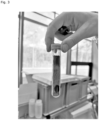
- the Fig. 3 shows a sulfur-carbon composite that was treated with microwaves for about 0.2 hours.
- Fig. 4 microwave
- Fig. 5 Inert gas oven
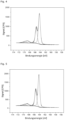
- XPS spectra in the range from 158 to 172 eV.
- Sulfur bonds can be analyzed using the spectra.
- the peak at 163.8 eV corresponds to the carbon-sulfur bond and at 165.8 eV to the sulfur-sulfur bonds.
- the spectra from both methods do not differ.
Landscapes
- Chemical & Material Sciences (AREA)
- Organic Chemistry (AREA)
- Chemical Kinetics & Catalysis (AREA)
- Electrochemistry (AREA)
- General Chemical & Material Sciences (AREA)
- Inorganic Chemistry (AREA)
- Life Sciences & Earth Sciences (AREA)
- Engineering & Computer Science (AREA)
- Manufacturing & Machinery (AREA)
- Sustainable Development (AREA)
- Sustainable Energy (AREA)
- Carbon And Carbon Compounds (AREA)
Abstract
Gegenstand der Erfindung ist ein Verfahren zur Herstellung von einem Schwefel-Kohlenstoff-Komposit, in dem Schwefel mit Kohlenstoff kovalent gebunden durch Reaktion von elementarem Schwefel und Aerogel in einem Mikrowellenreaktor ist sowie ein entsprechendes Komposit.
Description
- Gegenstand der Erfindung ist ein Verfahren zur Herstellung von einem Schwefel-Kohlenstoff-Komposit, in dem Schwefel mit Kohlenstoff kovalent gebunden durch Reaktion von elementarem Schwefel und Aerogel in einem Mikrowellenreaktor ist sowie ein entsprechendes Komposit.
- Bei Raumtemperatur liegt Schwefel als kronenförmiger Cyclooctaschwefel (α - S 8) vor. Bei 95,5°C findet eine Umwandlung des orthorhombischen Schwefels (α - S 8) in monoklinen β - Schwefel statt, dieser schmilzt bei 119,6°C [Meyer B (1976) Elemental sulfur. Chem. Rev. 76: 367. DOI:10.1021/cr60301a003].
- Oberhalb von 120°C liegen in der Schwefelschmelze Schwefelringe verschiedener Größe (Sn, n=5-33) vor. Bei Temperaturen oberhalb von 159°C steigt die Schmelzviskosität aufgrund der radikalischen Ringöffnungspolymerisation schlagartig an. Beim weiteren Erhitzen nimmt die Viskosität ab einer Temperatur von 243°C wieder ab und es bilden sich kurze (Sn, n<6) Schwefelketten. Die Siedetemperatur liegt bei 444 °C. Im gasförmigen Zustand liegen Schwefelmoleküle in Form von S2-8 vor, wobei sich das Gleichgewicht bei steigenden Temperaturen hin zu kürzeren S2-Spezien verschiebt. Im gasförmigen Zustand bei 600°C liegt Schwefel in Form von S6- (etwa 58,8%) und etwa 16,4% in Form von S2-Radikale vor. Diese Schwefel-Radikale können bei höheren Temperaturen mit Kohlenstoff (beispielsweise Aktivkohle) reagieren und mit ihm kovalente Bindungen bilden [Korpiel JA, Vidic RD (1997) Effect of Sulfur Impregnation Method on Activated Carbon Uptake of Gas-Phase Mercury. Environmental Science & Technology 31: 2319. DOI: 10.1021/es9609260].
- Kovalent gebundener Schwefel in einer Kohlenstoff-Matrix (Komposit) ist auch bei der Entfernung vom giftigen Quecksilber aus Wasser, sowie in Metall-Schwefel-Batterien von großer Bedeutung. In beiden Anwendungen dient Schwefel als Aktivmaterial, welcher in Form eines Schwefel-Kohlenstoff-Komposit vorliegt. In der Metall-Schwefel-Batterie ist Schwefel ein elektrochemisch aktives Material.
- Die Herstellung von solchen Kompositen, oft Infiltration oder Imprägnierung genannt, findet in der Regel bei 400 bis 600°C statt und dauert etwa zwei bis sechs Stunden [Liu W, Vidić RD, Brown TD (1998) Optimization of Sulfur Impregnation Protocol for Fixed-Bed Application of Activated Carbon-Based Sorbents for Gas-Phase Mercury Removal. Environmental Science & Technology 32: 531. DOI:10.1021/es970630; Nojabaee M, Sievert B, Schwan M, et al. (2021) Ultramicroporous carbon aerogels encapsulating sulfur as the cathode for lithium-sulfur batteries. J. Mater.Chem. A 9: 6508. DOI:10.1039/D0TA11332H]. Dabei kann der Gesamtprozess mit Heiz- und Kühlphasen über 10 Stunden dauern und ist somit sehr zeit- und energieintensiv. Die wichtigsten Nachteile der Herstellung von Schwefel-Kohlenstoff-Kompositen durch Gasinfiltration sind die lange Dauer und hoher Energieverbrauch.
-
US 2015/0155549 A1 beschreibt die Funktionalisierung von Kohlenstoff-Materialien, in welchen Schwefel aufgrund einer hohen Affinität zu Polysulfiden gebunden werden kann. - In
DE 10 2015 210 402 A1 wird ein Schwefel-Polymer-Komposit beschrieben, wobei als Polymer cyclisiertes Polyacrylnitril (cPAN), oder Polypyrrol, oder Polythiophen, oder Polyphenylen dient. Schwefel wird dabei kovalent oder ionisch mit cPAN verbunden. - Die Aufgabe der vorliegenden Erfindung besteht darin, die vorgenannten Verfahren zur Herstellung von Schwefel-Kohlenstoff-Komposit zu vereinfachen und insbesondere die Verfahrensdauer zu verkürzen, in dem Schwefel mit Kohlenstoff kovalent gebunden durch Reaktion von elementarem Schwefel und Aerogel in einem Mikrowellenreaktor umgesetzt wird. Insbesondere ist es Aufgabe der vorliegenden Erfindung, die Herstellung von Schwefel-Kohlenstoff-Kompositen zu optimieren, insbesondere dessen Dauer und Energieverbrauch zu verbessern.
- Zur Lösung der vorgenannten Aufgabe stellt die vorliegende Erfindung ein Verfahren bereit, bei der Mikrowellen als Hitzequelle für die Reaktion von Schwefel mit Kohlenstoff dienen. Überraschenderweise wurde gefunden, dass entsprechende Komposite durch den Einsatz von Mikrowellenstrahlung deutlich vereinfacht und in einer verkürzten Zeitdauer hergestellt werden können.
- Die Erfindung betrifft in einer ersten Ausführungsform ein Verfahren zur Herstellung von einem Schwefel-Kohlenstoff-Komposit, in dem Schwefel mit Kohlenstoff kovalent gebunden durch Reaktion von elementarem Schwefel und Aerogel in einem Mikrowellenreaktor.
- Die Aufgabe wurde gelöst, indem Schwefel-Kohlenstoff-Komposite mit Hilfe von Mikrowellen als Hitzequelle hergestellt werden. Dadurch werden die Dauer und der Energieverbrauch signifikant reduziert.
- Mit Hilfe von Mikrowellen können Schwefel-Kohlenstoff-Komposite innerhalb von wenigen Minuten, beispielsweise 10 bis 30 Minuten bei einer erhöhten Temperatur, beispielsweise von 200 bis 250°C erfolgreich hergestellt werden, was deutlich schneller erfolgt als mit bekannten Methoden (Infiltration in Gasphase).
- Mikrowellen sind bekanntermaßen hochfrequente elektromagnetische Wellen mit einer Frequenz von 300 MHz bis 300 GHz, welche aufgrund der Frequenz thermische Wirkung auf Materialien haben. Kohlenstoff-Materialien, wie Aktivkohle oder Kohlenstoff-Aerogele werden durch dielektrische Verluste erwärmt. Im elektromegnetischen Feld der Mikrowellen versuchen sich die ladungstragenden Kohlenstoffatome in Richtung des wechselnden Feldes auszurichten. Durch die freien Elektronen des Kohlenstoff-Materials können elektrische Ströme durch Mikrowellen induziert werden, weshalb es zur Erhitzung der Aktivkohle kommt [Zhu F-I, Yang Z, Zhao J-p, Zhao X (2016) Microwave assisted preparation of expanded graphite/sulfur composites as cathodes for Li-S batteries. New Carbon Materials 31: 199. DOI:https://doi.org/10.1016/S1872-5805(16)60011-2]. In der Publikation wird ein graphitisches Material untersucht, welches mit unterschiedlichen Schwefelmengen infiltriert wurde. Die thermogravimetrische Analyse (dort
Fig. 4 ) zeigt ein einstufiges Verhalten, was auf eine Schwefelbeladung überwiegend in den Mesoporen (2 bis 50 nm) hinweist. Die elektrochemischen Untersuchungen zeigen ein "Zwei-Plateau-Verhalten": zunächst löst sich Schwefel an der Oberfläche und im zweiten Schritt findet die Schwefelreduktion statt. Das weist darauf hin, dass der Polysulfid-Shuttle nicht ausreichend unterdrückt wurde. Erfindungsgemäß konnte jedoch gezeigt werden, dass bei amorphen Kohlenstoff-Aerogelen die Mikrowellen-Infiltrationsmethode erfolgreich umgesetzt und eine Beladung sowohl in Mikro- (kleiner 2 nm), als auch in Mesoporen erzielt wurde. Dabei wurde mittels XPS-Analyse festgestellt, dass der Schwefel mit Kohlenstoff hier kovalent gebunden ist. Dadurch wird das Lösen des Schwefels in dem Elektrolyten verhindert und der Verlust des Aktivmaterials reduziert. Die Autoren beschreiben ein graphitisches, nicht amorphes Material. Die elektrochemischen Untersuchungen zeigen ein "Zwei-Plateau-Verhalten". - Erfindungsgemäß wird die direkte Anbindung von Schwefel mit Kohlenstoff während der Schwefelinfiltration erreicht. Es handelt sich damit nicht um ein Schwefel-Polymer-Komposit, der bei Kompositherstellung entsteht.
- Bei einer erfindungsgemäßen Behandlung von Schwefel-Kohlenstoff-Kompositen mit Mikrowellen unter Druck wird Schwefel rasch durch die entstehende Wärme geschmolzen und teilweise in die Gasphase überführt. Dabei kann Schwefel mit dem Kohlenstoff reagieren.
- Erfindungsgemäß wird die Oberfläche der Aerogele nicht modifiziert und enthält keine Funktionalisierungsgruppen, während in dem oben genannten Stand der Technik ein anderes Konzept zur Unterdrückung des Polysulfid-Schuttles vorgeschlagen. Die Verfahren des Stands der Technik Methode erfordern zusätzliche Schritte in der Synthese: Aktivierung oder Oxidierung; Funktionalisierung; Waschen und Trocknung. Lediglich zwei letzte Verfahrensschritte sind ähnlich: Vermischen mit Schwefel; Schwefelinfiltration.
- Herstellung von Schwefel-Kohlenstoff-Kompositen:
- Das getrocknete, wasserfreie ein handelsübliche Kohlenstoff-Aerogel ((Schwan Marina; Lorenz Ratke (DE) (2019) Verfahren zur Herstellung flexibler Aerogele auf Basis von Resorcin-Formaldehyd sowie mit diesem Verfahren erhältliche Aerogele
DE102012218548 )) wurde mit wasserfreiem Schwefel vermengt. Die Schwefelmenge (m s ) wurde so berechnet, dass das Mikro- und Mesoporenvolumen (V Pore ), ermittelt mittels Physisorption, komplett gefüllt wird.
- Um Verluste auszugleichen, wurde die berechnete Menge um 10% erhöht.
- Das Kohlenstoff-Schwefel-Gemisch wird in einer Schwingmühle unter Inertatmosphäre (Ar, N2), um Bildung von Schwefeloxiden zu vermeiden, bei 30 Hz für 30 sec gemahlen.
- Mikrowellenbehandlung:
- Das Schwefel-Kohlenstoff-Gemisch wurde in spezielle mikrowellengeeignete Behältnisse unter Inertatmosphäre (Ar, N2) überführt und dicht verschlossen.
- Die Mikrowellenbehandlung bei einer Leistung 1 bis 50 W dauerte insgesamt 10 bis 30 Minuten bei 200 bis 250°C. Die Mikrowelle-Anlage wurde temperatur- und nicht leistungs-gesteuert gefahren. Die Leistung variierte während des Versuchs abhängig von der Temperatur.
- In
Fig. 1 wird die thermische Behandlung von Schwefel-Kohlenstoff-Kompositen mit Mikrowellen (0,23h) und in einem Inertgasofen (12h) gegenübergestellt. - Die Schwefelmenge in einem Schwefel-Kohlenstoff-Komposit konnte mit Hilfe von thermogravimetrischer Analyse (
Fig. 2 ) untersucht werden. DieFig. 2 zeigt, dass sich die Schwefelmenge in beiden Kompositen leicht unterscheidet. Die thermogravimetrische Analyse von Schwefel-Kohlenstoff-Kompositen mit Mikrowellen (0,23h, rot) unterscheidet sich von derjenigen in einem Inertgasofen (12h, schwarz). - Die
Fig. 3 zeigt einen Schwefel-Kohlenstoff-Komposit, welcher etwa 0,2h mit den Mikrowellen behandelt wurde. - Die
Fig. 4 (Mikrowelle) undFig. 5 (Inertgasofen) zeigen XPS-Spektren im Bereich von 158 bis 172 eV. Anhand der Spektren können Schwefelbindungen analysiert werden. Der Peak bei 163,8 eV entspricht der Kohlenstoff-Schwefel Bindung und bei 165,8 eV den Schwefel-Schwefel Bindungen. Die Spektren von beiden Verfahren unterscheiden sich nicht.
Claims (4)
- Verfahren zur Herstellung von einem Schwefel-Kohlenstoff-Komposit, in dem Schwefel mit Kohlenstoff kovalent gebunden durch Reaktion von elementarem Schwefel und Aerogel in einem Mikrowellenreaktor.
- Verfahren nach Anspruch 1, dadurch gekennzeichnet, dass man einen Mikrowellenreaktor mit einer Leistung von 0,1 bis 100 Watt einsetzt.
- Verfahren nach Anspruch 1 oder 2. Dadurch gekennzeichnet, dass man die Reaktion im Verlauf von 10 bis 30 min und/ oder bei einer Temperatur im Bereich von 200 bis 250°C durchführt.
- Schwefel-Kohlenstoff-Komposit, in dem Schwefel mit Kohlenstoff kovalent gebunden erhältlich nach einem Verfahren gemäß einem der Ansprüche 1 bis 3.
Applications Claiming Priority (1)
| Application Number | Priority Date | Filing Date | Title |
|---|---|---|---|
| DE102022121579.2A DE102022121579A1 (de) | 2022-08-25 | 2022-08-25 | Schwefel-Kohlenstoff-Verbindungen mittels Mikrowellen |
Publications (1)
| Publication Number | Publication Date |
|---|---|
| EP4328179A1 true EP4328179A1 (de) | 2024-02-28 |
Family
ID=87201961
Family Applications (1)
| Application Number | Title | Priority Date | Filing Date |
|---|---|---|---|
| EP23184341.8A Withdrawn EP4328179A1 (de) | 2022-08-25 | 2023-07-10 | Schwefel-kohlenstoff-verbindungen mittels mikrowellen |
Country Status (2)
| Country | Link |
|---|---|
| EP (1) | EP4328179A1 (de) |
| DE (1) | DE102022121579A1 (de) |
Citations (5)
| Publication number | Priority date | Publication date | Assignee | Title |
|---|---|---|---|---|
| DE102012218548A1 (de) | 2012-10-11 | 2014-04-17 | Deutsches Zentrum für Luft- und Raumfahrt e.V. | Flexible Aerogele |
| US20150155549A1 (en) | 2013-10-18 | 2015-06-04 | NOHMs Technologies, Inc. | Functionalized carbons for lithium-sulfur batteries |
| DE102015210402A1 (de) | 2015-06-05 | 2016-12-08 | Robert Bosch Gmbh | Kathodenmaterial für Lithium-Schwefel-Zelle |
| US20200303723A1 (en) * | 2019-03-22 | 2020-09-24 | Aspen Aerogels, Inc. | Carbon aerogel-based cathodes for lithium-sulfur batteries |
| CN114792777A (zh) * | 2022-04-28 | 2022-07-26 | 西安交通大学 | 一种超细化硫/碳复合材料及其制备方法和应用 |
Family Cites Families (3)
| Publication number | Priority date | Publication date | Assignee | Title |
|---|---|---|---|---|
| CN103474633A (zh) * | 2012-06-07 | 2013-12-25 | 中国人民解放军63971部队 | 一种具有网络双核壳结构的碳-硫-外壳物复合材料及其制备方法 |
| KR102303443B1 (ko) * | 2016-07-11 | 2021-09-23 | 오씨아이 주식회사 | 황-탄소 복합체 및 이의 제조방법 |
| DE102018123285A1 (de) * | 2018-09-21 | 2020-03-26 | Deutsches Zentrum für Luft- und Raumfahrt e.V. | Elastisch verformbare Kohlenstoffaerogele als Matrixmaterial in Schwefelelektroden |
-
2022
- 2022-08-25 DE DE102022121579.2A patent/DE102022121579A1/de not_active Ceased
-
2023
- 2023-07-10 EP EP23184341.8A patent/EP4328179A1/de not_active Withdrawn
Patent Citations (5)
| Publication number | Priority date | Publication date | Assignee | Title |
|---|---|---|---|---|
| DE102012218548A1 (de) | 2012-10-11 | 2014-04-17 | Deutsches Zentrum für Luft- und Raumfahrt e.V. | Flexible Aerogele |
| US20150155549A1 (en) | 2013-10-18 | 2015-06-04 | NOHMs Technologies, Inc. | Functionalized carbons for lithium-sulfur batteries |
| DE102015210402A1 (de) | 2015-06-05 | 2016-12-08 | Robert Bosch Gmbh | Kathodenmaterial für Lithium-Schwefel-Zelle |
| US20200303723A1 (en) * | 2019-03-22 | 2020-09-24 | Aspen Aerogels, Inc. | Carbon aerogel-based cathodes for lithium-sulfur batteries |
| CN114792777A (zh) * | 2022-04-28 | 2022-07-26 | 西安交通大学 | 一种超细化硫/碳复合材料及其制备方法和应用 |
Non-Patent Citations (4)
| Title |
|---|
| KORPIEL JAVIDIC RD: "ffect of Sulfur Impregnation Method on Activated Carbon Uptake of Gas-Phase Mercury", ENVIRONMENTAL SCIENCE & TECHNOLOGY, vol. 31, 1997, pages 2319 |
| LIU WVIDIC RDBROWN TD: "Optimization of Sulfur Impregnation Protocol for Fixed-Bed Application of Activated Carbon-Based Sorbents for Gas-Phase Mercury Removal", ENVIRONMENTAL SCIENCE & TECHNOLOGY, vol. 32, 1998, pages 531, XP002561158, DOI: 10.1021/es970630+ |
| MEYER B, ELEMENTAL SULFUR. CHEM. REV, vol. 76, 1976, pages 367 |
| NOJABAEE MSIEVERT BSCHWAN M ET AL.: "Ultramicroporous carbon aerogels encapsulating sulfur as the cathode for lithium-sulfur batteries", J. MATER.CHEM. A, vol. 9, 2021, pages 6508 |
Also Published As
| Publication number | Publication date |
|---|---|
| DE102022121579A1 (de) | 2024-03-07 |
Similar Documents
| Publication | Publication Date | Title |
|---|---|---|
| Cao et al. | Chemical synthesis of 3D graphene‐like cages for sodium‐ion batteries applications | |
| Zhang et al. | One-step synthesis of branched sulfur/polypyrrole nanocomposite cathode for lithium rechargeable batteries | |
| EP2705059B1 (de) | Polyacrylnitril-schwefel-kompositwerkstoff | |
| EP2859033B1 (de) | Verfahren zum herstellen eines polyacrylnitril-schwefel-kompositwerkstoffs | |
| EP2017910B1 (de) | Aktives Element und Batterie sowie Verfahren zur Herstellung derselben | |
| Rangappa et al. | Size and shape controlled LiMnPO 4 nanocrystals by a supercritical ethanol process and their electrochemical properties | |
| DE102012209642A1 (de) | Verfahren zum Herstellen eines Polyacrylnitril-Schwefel-Kompositwerkstoffs | |
| WO2008138990A1 (de) | Verfahren zur herstellung eines latentwärme-speichermaterials | |
| EP2678891A1 (de) | Elektrodenmaterial mit hoher kapazität | |
| EP3626678A1 (de) | Elastisch verformbare kohlenstoffaerogele als matrixmaterial in schwefelelektroden | |
| DE112015003870T5 (de) | Herstellungsverfahren für Kohlenstoff-beschichtetes Siliciummaterial | |
| DE102011075053A1 (de) | Polyacrylnitril-Schwefel-Kompositwerkstoff | |
| EP2664019A1 (de) | Kathodenzusammensetzung | |
| WO2013182362A1 (de) | Verfahren zum herstellen eines polyacrylnitril-schwefel-kompositwerkstoffs | |
| EP2997621B1 (de) | Aktives lithiumreservoir für lithiumionenbatterien | |
| Örnek | Influences of different reaction mediums on the properties of high-voltage LiNiPO4@ C cathode material in terms of dielectric heating efficiency | |
| Zeng et al. | In situ electrochemical activation enabling high-performance cathodes for aqueous zinc-ion batteries | |
| RU2723638C1 (ru) | Способ создания однородного углеродного покрытия с контролируемой толщиной на поверхности катодного материала для металл-ионных аккумуляторов и катодный материал, полученный указанным способом | |
| DE102022121579A1 (de) | Schwefel-Kohlenstoff-Verbindungen mittels Mikrowellen | |
| US10305098B2 (en) | Negative active material for sodium secondary battery, method for preparing thereof and sodium secondary battery using the same | |
| EP3615708A1 (de) | Verfahren zur herstellung eines halbleiter- oder leiter-materials und dessen verwendung | |
| JP2013161653A (ja) | 硫黄系正極活物質及び非水系二次電池 | |
| KR102628025B1 (ko) | 할로우 스피어 구조 이산화 몰리브덴 황 나노 복합체 합성 방법 및 상기 나노 복합체 | |
| Jia et al. | Building ultrastable carbon nanotube/vanadium oxide electrodes via a crosslinking strategy | |
| DE102008033280A1 (de) | Verfahren zur Modifizierung von expandiertem Graphit und Verwendung des modifizierten expandierten Graphits |
Legal Events
| Date | Code | Title | Description |
|---|---|---|---|
| PUAI | Public reference made under article 153(3) epc to a published international application that has entered the european phase |
Free format text: ORIGINAL CODE: 0009012 |
|
| STAA | Information on the status of an ep patent application or granted ep patent |
Free format text: STATUS: THE APPLICATION HAS BEEN PUBLISHED |
|
| AK | Designated contracting states |
Kind code of ref document: A1 Designated state(s): AL AT BE BG CH CY CZ DE DK EE ES FI FR GB GR HR HU IE IS IT LI LT LU LV MC ME MK MT NL NO PL PT RO RS SE SI SK SM TR |
|
| TPAC | Observations filed by third parties |
Free format text: ORIGINAL CODE: EPIDOSNTIPA |
|
| STAA | Information on the status of an ep patent application or granted ep patent |
Free format text: STATUS: THE APPLICATION IS DEEMED TO BE WITHDRAWN |
|
| 18D | Application deemed to be withdrawn |
Effective date: 20240829 |