EP4327331B1 - Unterhaltungsinhaltsanbieter - Google Patents
Unterhaltungsinhaltsanbieter Download PDFInfo
- Publication number
- EP4327331B1 EP4327331B1 EP22721788.2A EP22721788A EP4327331B1 EP 4327331 B1 EP4327331 B1 EP 4327331B1 EP 22721788 A EP22721788 A EP 22721788A EP 4327331 B1 EP4327331 B1 EP 4327331B1
- Authority
- EP
- European Patent Office
- Prior art keywords
- entertainment
- content
- medical procedure
- procedural
- patient
- Prior art date
- Legal status (The legal status is an assumption and is not a legal conclusion. Google has not performed a legal analysis and makes no representation as to the accuracy of the status listed.)
- Active
Links
Images


Classifications
-
- G—PHYSICS
- G16—INFORMATION AND COMMUNICATION TECHNOLOGY [ICT] SPECIALLY ADAPTED FOR SPECIFIC APPLICATION FIELDS
- G16H—HEALTHCARE INFORMATICS, i.e. INFORMATION AND COMMUNICATION TECHNOLOGY [ICT] SPECIALLY ADAPTED FOR THE HANDLING OR PROCESSING OF MEDICAL OR HEALTHCARE DATA
- G16H40/00—ICT specially adapted for the management or administration of healthcare resources or facilities; ICT specially adapted for the management or operation of medical equipment or devices
- G16H40/60—ICT specially adapted for the management or administration of healthcare resources or facilities; ICT specially adapted for the management or operation of medical equipment or devices for the operation of medical equipment or devices
- G16H40/63—ICT specially adapted for the management or administration of healthcare resources or facilities; ICT specially adapted for the management or operation of medical equipment or devices for the operation of medical equipment or devices for local operation
-
- H—ELECTRICITY
- H04—ELECTRIC COMMUNICATION TECHNIQUE
- H04N—PICTORIAL COMMUNICATION, e.g. TELEVISION
- H04N21/00—Selective content distribution, e.g. interactive television or video on demand [VOD]
- H04N21/40—Client devices specifically adapted for the reception of or interaction with content, e.g. set-top-box [STB]; Operations thereof
- H04N21/45—Management operations performed by the client for facilitating the reception of or the interaction with the content or administrating data related to the end-user or to the client device itself, e.g. learning user preferences for recommending movies, resolving scheduling conflicts
- H04N21/458—Scheduling content for creating a personalised stream, e.g. by combining a locally stored advertisement with an incoming stream; Updating operations, e.g. for OS modules ; time-related management operations
-
- G—PHYSICS
- G16—INFORMATION AND COMMUNICATION TECHNOLOGY [ICT] SPECIALLY ADAPTED FOR SPECIFIC APPLICATION FIELDS
- G16H—HEALTHCARE INFORMATICS, i.e. INFORMATION AND COMMUNICATION TECHNOLOGY [ICT] SPECIALLY ADAPTED FOR THE HANDLING OR PROCESSING OF MEDICAL OR HEALTHCARE DATA
- G16H10/00—ICT specially adapted for the handling or processing of patient-related medical or healthcare data
- G16H10/60—ICT specially adapted for the handling or processing of patient-related medical or healthcare data for patient-specific data, e.g. for electronic patient records
-
- G—PHYSICS
- G16—INFORMATION AND COMMUNICATION TECHNOLOGY [ICT] SPECIALLY ADAPTED FOR SPECIFIC APPLICATION FIELDS
- G16H—HEALTHCARE INFORMATICS, i.e. INFORMATION AND COMMUNICATION TECHNOLOGY [ICT] SPECIALLY ADAPTED FOR THE HANDLING OR PROCESSING OF MEDICAL OR HEALTHCARE DATA
- G16H20/00—ICT specially adapted for therapies or health-improving plans, e.g. for handling prescriptions, for steering therapy or for monitoring patient compliance
- G16H20/70—ICT specially adapted for therapies or health-improving plans, e.g. for handling prescriptions, for steering therapy or for monitoring patient compliance relating to mental therapies, e.g. psychological therapy or autogenous training
-
- G—PHYSICS
- G16—INFORMATION AND COMMUNICATION TECHNOLOGY [ICT] SPECIALLY ADAPTED FOR SPECIFIC APPLICATION FIELDS
- G16H—HEALTHCARE INFORMATICS, i.e. INFORMATION AND COMMUNICATION TECHNOLOGY [ICT] SPECIALLY ADAPTED FOR THE HANDLING OR PROCESSING OF MEDICAL OR HEALTHCARE DATA
- G16H30/00—ICT specially adapted for the handling or processing of medical images
- G16H30/20—ICT specially adapted for the handling or processing of medical images for handling medical images, e.g. DICOM, HL7 or PACS
-
- G—PHYSICS
- G16—INFORMATION AND COMMUNICATION TECHNOLOGY [ICT] SPECIALLY ADAPTED FOR SPECIFIC APPLICATION FIELDS
- G16H—HEALTHCARE INFORMATICS, i.e. INFORMATION AND COMMUNICATION TECHNOLOGY [ICT] SPECIALLY ADAPTED FOR THE HANDLING OR PROCESSING OF MEDICAL OR HEALTHCARE DATA
- G16H40/00—ICT specially adapted for the management or administration of healthcare resources or facilities; ICT specially adapted for the management or operation of medical equipment or devices
- G16H40/60—ICT specially adapted for the management or administration of healthcare resources or facilities; ICT specially adapted for the management or operation of medical equipment or devices for the operation of medical equipment or devices
- G16H40/67—ICT specially adapted for the management or administration of healthcare resources or facilities; ICT specially adapted for the management or operation of medical equipment or devices for the operation of medical equipment or devices for remote operation
-
- G—PHYSICS
- G16—INFORMATION AND COMMUNICATION TECHNOLOGY [ICT] SPECIALLY ADAPTED FOR SPECIFIC APPLICATION FIELDS
- G16H—HEALTHCARE INFORMATICS, i.e. INFORMATION AND COMMUNICATION TECHNOLOGY [ICT] SPECIALLY ADAPTED FOR THE HANDLING OR PROCESSING OF MEDICAL OR HEALTHCARE DATA
- G16H50/00—ICT specially adapted for medical diagnosis, medical simulation or medical data mining; ICT specially adapted for detecting, monitoring or modelling epidemics or pandemics
- G16H50/30—ICT specially adapted for medical diagnosis, medical simulation or medical data mining; ICT specially adapted for detecting, monitoring or modelling epidemics or pandemics for calculating health indices; for individual health risk assessment
Definitions
- the present invention generally relates to an entertainment content provider and corresponding method and computer program product for providing an entertainment sequence to a patient during a medical procedure.
- MRI Magnetic Resonance Imaging
- non-tomographic diagnostic imaging scans e.g. X-ray imaging, computed tomography, positron emission tomography, single-photon emission computed tomography, ultrasound imaging, etc.
- image-guided treatment or therapies e.g. radiotherapy procedures, proton therapy or some interventional procedures
- entertainment may be provided during the medical procedure, such as audio (music, audiobooks), calming images or a movie, for example, on an entertainment screen or through goggles.
- audio music, audiobooks
- calming images or a movie for example, on an entertainment screen or through goggles.
- this entertainment content is not adapted to facilitate, or optimize, the medical procedure that the patient is undergoing.
- Uncurated content is often problematic, e.g. online videos or commercial movies, as it tends to induce motion via arousing content, laughter, distress or sudden visual onset that may cause body or eye movements. These can be detrimental to the medical procedure, e.g. by worsening medical image quality or it may negatively affect a treatment, especially when they occur at sensitive times during the procedure, for example in image-guided therapy.
- Curated content like for instance movies for patients during a medical procedure, overcome this issue partially, as they are designed to be overall relaxing, not causing any arousal or undesired motion. Yet, this still has several disadvantages. For instance, this type of content may not be optimally engaging (e.g., it can be perceived as boring or uninteresting). Also, it may be difficult for patients to remain perfectly still during an entire exam or treatment. As such, providing them with opportunities to take a break/move at times, may reduce overall motion during the procedure, especially during long procedures. Furthermore, content that facilitates a continuously relaxed state during the examination may not be optimal in all parts of the examination. After all, not all procedures or procedural steps (e.g. individual MRI sequences) are the same. Curated content does not facilitate, motivate or prevent any behavior that is (un)desired for the outcome measures of the procedure at any given time.
- US2020/233485A1 discloses a VR system for use during a medical procedure that offers entertainment to a patient.
- EP3575812A1 discloses matching entertainment sounds provided to a patient to pulse sequences of an MRI procedure.
- Embodiments according to the present invention are directed to an entertainment content provider for providing an entertainment sequence to a patient during a medical procedure, wherein the medical procedure comprises a succession of procedural steps.
- the entertainment content provider comprises a procedural step database comprises a catalogue of procedural steps associated with the medical procedure and wherein each procedural step in the catalogue includes procedural step metadata including a procedural step identifier; a procedural step length; and at least one risk factor that is based on a previously determined detrimental effect of patient behavior on the outcome of the medical procedure.
- the entertainment content provider further comprises a curated content database, comprising a catalogue of entertainment blocks, wherein each entertainment block includes: entertainment content; and metadata including: an entertainment block length; and predetermined expected effect data on one or more procedural steps from the procedural step database.
- the entertainment content provider further comprises a content scheduler, configured to receive medical procedure data of the medical procedure, comprising data relating to the procedural steps in the succession of procedural steps, including an order of the procedural steps in the succession of procedural steps; consult the procedural step database and select the procedural step options corresponding with the successive procedural steps of the medical procedure; consult the curated content database and select entertainment blocks by matching the risk factor of the selected procedural options with a most suitable predetermined expected effect data of an entertainment block; create an entertainment content schedule by listing the selected entertainment blocks based on the order of the procedural steps in the succession of procedural steps; and the entertainment content provider comprises a content executor, configured to: receive the entertainment content schedule from the content scheduler; retrieve the selected entertainment blocks in the content schedule from the curated content database; provide entertainment content to the patient during the medical procedure by presenting the retrieved entertainment blocks according to the entertainment content schedule.
- a content scheduler configured to receive medical procedure data of the medical procedure, comprising data relating to the procedural steps in the succession of procedural steps, including an order
- an entertainment sequence may be created that fits the medical procedure in length and will provide a satisfying complete entertainment experience to the patient.
- the content scheduler is further configured to also select entertainment blocks by matching or adapting an entertainment block length to a procedural step length. As such there is more freedom to choose between entertainment blocks as they don't need to exactly fit the procedural step length.
- the entertainment blocks further comprise metadata relating to storyline priority and wherein the content scheduler is further configured to also select entertainment blocks based on the storyline priority metadata.
- the entertainment block length is fixed, adaptable or dynamic.
- the entertainment block further includes patient target group information indicating for which patient target group the entertainment content is most suitable, for instance a patient target group based on age or age group, gender, cognitive ability, eye sight, hearing, literacy, diagnosis, special interests and the like and the content scheduler is further configured to also select entertainment blocks based on the patient target group information.
- the entertainment content may be selected that is most suitable and applicable for each patient that is undergoing the medical procedure.
- the content scheduler is further configured to: receive updated medical procedure data before or during the medical procedure, comprising updated data relating to the procedural steps in the succession of procedural steps; compare the updated medical procedure data with the medical procedure data; and in case any of the procedural steps has changed, has been removed and/or added: consult the procedural step database and select the procedural step options relating to the successive procedural steps of the updated medical procedure; consult the curated content database and select entertainment blocks based on the selected procedural options; update the entertainment content schedule by listing the selected entertainment blocks based on the order of the procedural steps in the succession of procedural steps of the updated medical procedure.
- the entertainment sequence may be updated, in real-time, to adjust to the updated medical procedure. This ensures that the entire entertainment sequence remains satisfying to the patient and is not ended prematurely or is not finished or is not matching the procedural steps anymore.
- the entertainment content provider further comprises a patient behavior module, comprising: a patient behavior data receiver configured to receive patient behavior data relating to the medical procedure; a patient behavior data provider for providing the patient behavior data to the content scheduler; and wherein the content scheduler is further configured to receive the patient behavior data from the patient behavior module and to consult the curated content database and select entertainment blocks also based on the patient behavior data.
- the patient behavior data is previously obtained patient behavior data, library patient data, modeled patient behavior and/or real-time acquired patient behavior data.
- the patient behavior data may be obtained from various sources that are available.
- a neural network is configured to analyze the previously obtained patient behavior data, library patient data, modeled patient behavior data and/or real-time acquired patient behavior data to generate expected patient behavior data forming or replacing the patient behavior data.
- the neural network will learn with each new entertainment selection session and will therefore improve over time to create an increasingly better entertainment sequence with each additional patient.
- the content executor is further configured to receive updated medical procedure data; adapt the entertainment schedule by adapting, removing or adding at least one entertainment content blocks; and provide the adapted entertainment content.
- the medical procedure is a magnetic resonance imaging (MRI) procedure and the succession of procedural steps includes at least one MRI sequence.
- MRI magnetic resonance imaging
- the invention is particularly useful for MRI procedures as they are often perceived to be intimidating and/or claustrophobic. Therefore providing an engaging entertainment sequence helps the patient to be more relaxed, resulting in better results.
- the present invention is further directed towards a corresponding method and computer program product.
- the invention may take form in various components and arrangements of components, and in various process operations and arrangements of process operations.
- the drawings are only for the purpose of illustrating preferred embodiments and are not to be construed as limiting the invention. To better visualize certain features may be omitted or dimensions may be not be according to scale.
- the presently claimed invention improves medical procedures, such as MRI imaging, by adapting the entertainment content to the specific risks and timing of the medical procedure steps (e.g. sequences in a scan or examination) to increase the chance that a patient behaves in such a way that the procedure is successful (or in other words, decrease risk of detrimental patient behavior). While doing so, the claimed invention takes certain characteristics of human behavior in the bore into account, e.g. that there is a maximum time limit people can hold their breath or hold still otherwise, that over time attention decreases while the risk for motion increases, that certain people prefer certain content over others etc.
- Another example is when high or slow cardiac activity is a risk to a particular cardiac scan or interventional procedure, content is selected that is either very likely or not likely at all to cause an adrenaline rush.
- content can be selected that clearly fixes eye gaze / focus on one point, leading to minimal eye motion and thereby enlarging the chance of a successful scan.
- the presently claimed and described invention is directed towards an adaptive entertainment content providing system and method to stimulate behavior of the patient during a medical scan, examination or treatment that increases the chance of a successful medical procedure with as little as patient discomfort as possible.
- the presently claimed invention focuses on scheduling content in isolation, leading to optimal behavior for each part of the scan. From a patient experience perspective, it is desired to schedule content that embeds an engaging, immersive narrative storyline instead of non-curated content with unpredictable effects on a patient or with generic curated content without a storyline. Also, it would be undesirable to provide entertainment content with a storyline that won't complete during the procedure or that would complete prematurely, as this may have adverse effects on a patient's mood and compliance to obtain an optimal scan or therapy result.
- the invention is certainly not limited to this or other types of medical scans, diagnostic or therapeutic procedures. It is suitable for any medical procedure in which motion and/or patient comfort may influence the outcome of the procedure, such as other medical diagnostic imaging such as computed tomography, x-ray, ultrasound, positron emission tomography, single photon emission spectroscopy. Further the claimed invention is suitable for other medical procedures that require a patient to be not, locally or mildly sedated, such as (minimally) invasive therapeutic or diagnostic medical procedures, such as catheterizations or (minimally) invasive surgery or for radiation treatment, such as radiation therapy using focused radiation beams.
- medical diagnostic imaging such as computed tomography, x-ray, ultrasound, positron emission tomography, single photon emission spectroscopy.
- the claimed invention is suitable for other medical procedures that require a patient to be not, locally or mildly sedated, such as (minimally) invasive therapeutic or diagnostic medical procedures, such as catheterizations or (minimally) invasive surgery or for radiation treatment, such as radiation therapy
- Fig. 1 depicts an example of an in-bore entertainment device for patients undergoing an MRI scan.
- an MRI device 90 a patient on a patient support 92 is placed in the bore 91 of the MRI device 90, which uses strong magnetic fields, magnetic field gradients and radio waves (picked up by receiving coils 93) and a processing unit (not shown) to generate images of the organs in the patient's body.
- a schematic set-up is shown in Fig. 1a and photograph of a patient inside a bore 91 is shown in Fig. 1b .
- the bore 91 is relatively small and the head coil 93 is placed closely over the patient's head, creating a very narrow space that may induce claustrophobic feelings in the patient.
- the MRI scan may take between a few minutes to even an hour and a half or more in which the patient has to lie still, while the procedure involves regular and irregular loud noises close to the patient's ears. All these factors contribute to the patient feeling uncomfortable, claustrophobic, impatient or even scared. This is particularly relevant for pediatric, psychiatric and dementia patients.
- an in-bore entertainment system 10 that provides entertainment to the patient during the scan may be used.
- the entertainment system may for instance be an in-bore display or a mirror or screen onto which the entertainment content is projected.
- the entertainment system 10 usually includes headphones (not shown), which also reduce ambient noises and may be used to communicate with the patient 20.
- the entertainment system 10 may also include means for providing visual information and entertainment, such as an (MRI-compatible) in-bore screen, a screen placed outside of the bore that is seen through a mirror (as shown in Fig.
- a screen on the ceiling of the imaging room 2D or 3D (MRI-compatible) (virtual reality) goggles, a projected screen and the like, which again also may be used to provide the patient with instructions and/or information relating to the scan (e.g. time left, a scan progress bar) as well as entertainment.
- 2D or 3D MRI-compatible
- 3D virtual reality
- goggles a projected screen and the like, which again also may be used to provide the patient with instructions and/or information relating to the scan (e.g. time left, a scan progress bar) as well as entertainment.
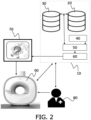
- FIG. 2 shows simplified schematic overview of components of the presently claimed entertainment content provider 10.
- a scan plan, or Exam Card is prepared and/or received by an MRI operator 80, e.g. a qualified radiologist, technologist, physician or nurse.
- the scan plan comprises various procedural steps, i.e. MRI sequences, that are selected to provide an optimal scan result imaging (a part of) a patient.
- the scan plan is input in a control unit of the MRI device 90 and, in the presently claimed invention, is also input in the entertainment content provider10. Further input to the entertainment content provider 10 may be patient specific information, such as a patient target group based on age or age group, gender, cognitive ability, special interests of the patient and the like.
- the entertainment content provider 10 comprises a procedural step database 20 that comprises a catalogue of, preferably all, procedural steps (MRI sequences) that the MRI device 90 may perform.
- Each procedural step (MRI sequence) in the procedural step database comprises metadata relating to a procedural step identifier that identifies the procedural step (for instance a sequence name or other identifier).
- the metadata further includes a length of the procedural step (sequence), preferably as precise as possible.
- the procedural step length may be adaptable and the MRI operator 80 may provide such suitable additional input to the entertainment content provider 10.
- the length is a suitable metric to include in the metadata.
- adaptive e.g.
- the length parameter stored in the metadata is an indicative length, for instance based on an average, minimum or maximum length that was previously determined for said procedure.
- an indicative length for instance based on an average, minimum or maximum length that was previously determined for said procedure.
- the metadata includes at least one risk factor.
- This risk factor is based on a previously determined detrimental effect of patient behavior on the outcome of the procedural step. For instance, the risk factor may be based on sensitivity to slow and/or fast patient motion.
- a procedural step may have more than one risk factor associated with it and the value of the risk factor may vary over the step length (e.g. for MRI sequences this could be related to the k-lines being acquired; k-line 0 is more sensitive to motion than k-line 100).
- MRI sequence For each type of procedural step (MRI sequence), the degree to which certain behavior is detrimental to the image quality is determined and annotated (manually by experts or automatically deduced from scan specifics, for instance using A.I. technology). These annotations are then translated into risk factors that may, for instance, be expressed in different granularity or types (e.g. low, mid, high vs. 10%, 30%, 50% vs. 0.01 mm, 0.1 mm).
- the annotation may hold for a full procedural step (sequence) or be further specified to parts of the procedural step (sequence), e.g. patient motion delivers a high risk during a specific timeslot, but only low risk during the rest of the sequence.
- Each procedural step may have the most suitable risk factor and they do not require to be the same type or range for all procedural steps.
- the entertainment content provider 10 further comprises a curated content database 30 that comprises a catalogue of entertainment blocks.
- An entertainment block contains part of an entertainment storyline, for instance a movie scene or part thereof, and a sequence of entertainment blocks form a full entertainment sequence with, preferably, a storyline that is optimized to the procedural steps of the medical procedure and is engaging to the patient undergoing the MRI exam.
- Entertainment blocks may comprise content that only is relevant to a storyline, but may also comprise functional information, such as breathing guidance or content that is intended to calm a patient or evoke an action, or warn that a part of the procedure (e.g.
- a scan or sequence starts, a reminder to stay still, etc., preferably embedded as part of the entertainment storyline, for instance a character may speak directly to the viewer and provide information or instructions or it may be induced by visuals and/or audio, for instance a calming movie and/or quiet music or an object that the viewer follows with his eyes.
- An engaging entertainment sequence may also consist of shorter individual sequences that transition into each other directly or through intermediate blocks or sequences (for instance to provide the patient with instructions for the next procedural step) or give the patient time to recover from the previous step).
- Each entertainment block further contains metadata that includes length of the entertainment block (for instance in seconds or minutes) and if this length is adaptable or not and if so, preferably the metadata comprises a minimum and maximum length.
- Each entertainment block further includes predetermined expected effect data on one or more procedural steps form the procedural step database 20.
- the predetermined expected effect data comprises data specifying what effect a specific entertainment block is expected to have on the patient (i.e. calming the patient down, regulate breathing, provoke an action, etc.).
- the curated content may either be of fixed, adaptable or dynamic length (within practical and content-determined boundaries).
- fixed length it is meant that the entertainment block has a non-adaptable length, for instance because it would have a large (negative) impact on the flow of an overall storyline or may fully contain essential information for the storyline.
- adaptable or dynamic length it is meant that an entertainment block may be shortened or extended, for instance by excising or attaching entertainment content from or to the entertainment block.
- an entertainment block may have two or more sub-sections that contain parts of a full scene. Each or some of these sub-sections may be marked as essential to the storyline and others may be considered optional. Of course the sub-sections may alternatively be separate blocks altogether.
- the entertainment block may be matched to a desired length to correspond as closely with a procedural step length that is performed simultaneously with said entertainment block.
- the length of an entertainment block may be played (slightly) faster or slower to match the desired length of the entertainment block. In that case care must be taken to make sure the entertainment content is not overly noticeable influenced by the change in playback speed, as this may solicit an undesired reaction from the patient.
- a further example may be an entertainment block having an end scene (e.g. driving away in the distance) that may last 5 or 30 seconds and anytime in between to adapt to the procedure step length.
- the predetermined expected effect data is obtained by curating the content manually by experts or learned by observing people's behaviors in response to the content.
- the content of the entertainment blocks is annotated with a degree in which it is (un)likely to cause certain behavior.
- the expected effect data for each procedural step in the procedural step database can be deduced.
- such entertainment blocks may include, in their metadata, predetermined expected effect data for each procedural step in the procedural step database. This may in some cases be general (i.e. an entertainment block is expected to calm a patient down, cause laughter, etc.) or very specifically related to a certain procedural step (i.e. focus the gaze to a certain area).
- the predetermined expected effect data preferably matches the risk factor types used for relevant entertainment blocks as this will make matching entertainment blocks with procedural step risk factors more efficient. This matching process is preferably performed by an algorithm, most preferably an A.I. algorithm.
- the entertainment blocks further comprise metadata relating to storyline priority.
- the entertainment blocks are to be played in a logical sequence (e.g. set-up, development, conclusion of the storyline) and the storyline metadata may indicate that the entertainment, for instance, starts or ends a storyline, should be played (directly) before or after another entertainment block, contains information essential to the storyline or is an optional entertainment block that may be used to expand the main storyline (e.g. a character moment, a side-adventure, an ambient moment, etc.) during a procedure that is longer than only the entertainment blocks that are essential to the storyline.
- a character moment e.g. a character moment, a side-adventure, an ambient moment, etc.
- the entertainment blocks in the curated content database 30 are searchable by or include information relating to patient target group information that indicates for which patient target group the entertainment content is most suitable.
- a patient target group may be based on age or age group, gender, cognitive ability, eyesight, hearing, literacy, diagnosis, psychiatric issues, cognitive issues, special interests and the like.
- the MRI operator 80 is aware of the patient's relevant characteristics and preferences (for instance by discussing this with the patient and provide the patient with selectable options) and can as such make a first selection between main storyline options. This reduces the manual and/or computational effort to match entertainment blocks with procedural steps as many of the entertainment blocks not suited to the patient target group or the selected storyline may be disregarded.
- the entertainment content provider comprises a content scheduler 50 that selects the most suitable entertainment blocks for a medical procedure and provides a schedule of the entertainment blocks to match the medical procedure (in this example an MRI scan) and its steps (in this example the MRI sequences).
- a content scheduler 50 that selects the most suitable entertainment blocks for a medical procedure and provides a schedule of the entertainment blocks to match the medical procedure (in this example an MRI scan) and its steps (in this example the MRI sequences).
- the content scheduler 50 analyzes the medical procedure and its successive procedural steps and all other relevant input, such as content preferences for a patient target group as mentioned or an individual preference selected by the patient. Furthermore, the content scheduler 50 may optionally receive relevant information from a patient behavior module 40, which provides further relevant data that may be relevant for selecting specific entertainment blocks.
- the patient behavior module 40 may use patient-specific information received from a medical specialist (e.g. the MRI operator 80) or from the patient through a (digital) input questionnaire.
- the patient specific information may comprise a patient risk factor indicating a likeliness for a patient to have patient behavior that is expected or not to be problematic in various levels.
- the patient behavior may also be obtained from library patient data from which (averaged) patient behavior data from similar patients is retrieved (e.g. based on similar patient target groups as mentioned previously).
- the patient behavior data may be modeled based on patient specific, library data or a combination of both. And, preferably, real-time patient data may be used to determine (or update) the patient behavior data.
- cardiac information, sweat detection, optical camera observations, movement sensors and the like may be used by the patient behavior module 40 to determine and predict stress or movement with the patient.
- observations by medical personnel may be used by the patient behavior module 40 to determine and predict patient behavior data.
- the patient behavior module 40 preferably makes use of a recommender system to efficiently determine and/or predict patient behavior data and preferably has machine learning capabilities to improve the patient behavior data determination or prediction when more data from more patients is processed over time
- the content scheduler 50 consults the procedural step database 30 and selects the procedural steps from the catalogue that correspond with the successive procedural steps (sequences) in the medical procedure (MRI scan) that is to be performed.
- the content scheduler 50 is configured to read and analyze the metadata of the procedural steps in the procedural step database 20 and the entertainment blocks in the curated content database 30.
- the content scheduler 50 consults the curated content database 30 to select the most suitable entertainment block for each procedural step.
- the content scheduler 50 takes into account the risk factor of each procedural step and tries to find and select an entertainment block with predetermined expected effect data that is most suited to reduce the risk of detrimental patient behavior. For instance, in case a procedural step is particularly sensitive to motion, then an entertainment block that is expected to have a particularly engaging or calming effect may be selected. Or, if a patient is required to have his eyes fixed in a certain direction, then an entertainment block may be selected that draws the eyes to the desired direction.
- the order of the procedural steps is taken into account and a preferred storyline is known, such that the content scheduler 50 efficiently can pick entertainment blocks from a limited pool of entertainment blocks.
- the content scheduler 50 preferably takes entertainment block storyline metadata into account to create an engaging storyline with a beginning and a satisfying ending.
- Each selected entertainment block must match the length of its corresponding procedural step. If no suitable entertainment block of the correct length can be selected, then, preferably the entertainment block length is adapted, for instance by changing the playback speed, or two or more successive entertainment blocks are selected to cover one procedural step, provided that the additional blocks obviously are not detrimental, or preferably, actually are particularly suitable to achieve the desired effect on patient behavior.
- ⁇ open ended' entertainment blocks that have a variable length, for instance a scene in which a landscape or other non-storyline specific scene or a scene in which a character moves (e.g. dances, walks, flies, travels, etc.) is shown for a certain amount of time and which can be easily shortened or lengthened without affecting the storyline.
- a character moves e.g. dances, walks, flies, travels, etc.
- the curated content database 30 comprises multiple interchangeable entertain blocks to achieve a certain effect (within and matching with a single storyline), such that the content scheduler 50 has an option to select the most suitable entertainment block for the desired effect and matches most optimally with the procedural step length.
- the content scheduler 50 creates an entertainment content schedule which lists the selected entertainment blocks in the order which they will be played during the medical procedure. This order is directly based on the order of the successive procedural steps to be performed during the medical procedure.
- the content scheduler may provide multiple schedules if there are multiple options with the same or similar expected results and that fit with the medical procedure and patient preferences. In such cases the patient and/or medical operator 80 may indicate which schedule should be selected by the content scheduler 50.
- the content scheduler 50 also indicates the length of each entertainment block on the schedule.
- MRI sequence database In an exemplary, specific and non-limiting example of a planned MRI scan procedure the following plan call of the MRI scanner, a so-called ExamCard in the form of a JSON string, is retrieved from the medical procedure database, in this case an MRI sequence database:
- the content scheduler 50 consults the procedural step (sequence) database 30 to retrieve the risk factor that indicates information on the behaviors whose chances of occurrences should be minimized during particular moments of the scan/examination.
- the content scheduler 50 selects entertainment blocks from the curated content database 20 that match these requirements by matching entertainment blocks that have expected effect data that reduces the risk as indicated in the risk factors. In case of multiple options it may select the entertainment block that is expected to reduce the risk the most (e.g. if the risk factor or expected effect data has several ranges of risk or effect).
- the scheduler also takes into account that the duration of the content matches that of the sequence as closely as possible. This means for example that content scheduled for dynamic scans whose duration is influenced by e.g. heart rate or breathing rate, is long enough and can be cut short at any moment without causing an unexpected or unpleasant experience.
- the content scheduler 50 embeds knowledge about MRI examinations, e.g. it knows that there are moments between the sequences that can also be used to display content to the patient. In the context of this invention such pauses between medical steps (also for non-MRI procedures) are considered to be a medical procedure step as well.
- the content scheduler 50 uses a patient behavior module 40 that uses received information of a patient to provide additional input to the content scheduler 50 and/or models expected in-bore behavior of the patient to further optimize the scheduled content by consulting patient-specific data, library data of similar subjects as the patient, previously modeled patient behavior or real-time patient behavior measured or observed during the procedure.
- the patient behavior module 40 may use deep learning neural networks or other artificial intelligence algorithms to model or predict the patient's behavior.
- a particular, non-limiting example of modeled patient behavior comprises two elements: First: Information on the chance of certain behavior occurring simply from the perspective of the human body (manually crafted and curated by experts or learned by observing people's behaviors). For example, the chance that a person will breathe in increases the longer they have to hold their breath. Similarly, the chance that a person blinks is increases as the time increases since the last blink. Another example is that the longer a person lies in the bore, the higher the chance of motion is. Second: Information on how a patient can be best engaged from the perspective of the human psyche. For example, repetition of the same content is likely to be less engaging, content that forms a storyline is more engaging. As an example, content that includes princesses, unicorns, mermaids, (elephant) astronauts or firemen is more likely to engage many children of age 3 to 7 then it would engage older patients.
- a content executor 60 receives the entertainment content schedule from the content scheduler 50. Next the content executor accesses the curated content databases and retrieves, for instance by downloading, all entertainment blocks listed on the entertainment content schedule.
- the content executor 60 When the medical procedure starts, the content executor 60, triggered automatically or manually, plays the retrieved entertainment blocks in the order as listed on the entertainment content schedule.
- the content executor 60 may supply the entertainment content by having video content played on display device 70, such as a screen (directly or via a mirror) or goggles and audio content through speakers or a headphone.
- the content executor 60 adapts the entertainment block such that it is extended or shortened, for instance by adapting the playback speed or adding or removing sub-scenes.
- the content executor 60 may show the scheduled content that matches with risks of a current moment in the medical procedure on the screen. For this it can use specific "prepare”, “start” and “stop” calls that are send by the MRI scanner for each individual sequence and may be used to synchronize the shown content with the MRI sequences and/or pauses, in addition to the "plan" call that provides information about the status of the complete exam card.
- Fig. 3 shows a timeline (t) diagram of for an exemplary scan sequence named 'id'.
- the API (Application Programming Interface) command string is shown on the left and the MRI scanner events following the successive API strings is shown on the right.
- Ph-1 indicates a phase that has an (auto-voice) announcement
- Ph-2 indicates steps in a preparation phase
- Ph-3 is the acquisition phase in which the image data is acquired. Note: The darker blocks occur always, while the white blocks are optional depending on scanner settings and status.
- the procedural step database 20, the curated content database 30 and the patient behavior module 40 may be part of the entertainment content provider 10, as shown in Fig. 1 , but one or more elements may also be separate modules running on the same or different processors or storage mediums.
- phase 1 content is scheduled based on a scan or examination plan.
- the content scheduler 50 receives planned sequences (sequence names are known in the field of MR imaging), see Table 1.
- Table 1 Example of MRI examination ExamCard with several sequences including durations.
- ID MRI Sequence Duration (min) 1 Localizer 2 2 T1 7 3 Fieldmap fMRI 0.5 4 resting-state fMRI 10 5 Fieldmap diffusion 0.5 6 Diffusion-weighted MRI 10 7 T2 5 8 Task-based fMRI 10-30
- the content scheduler 50 determines the specific procedural steps content should be scheduled for, see Table 2.
- the content scheduler 50 consults the procedural step dataset 20 and from the metadata of each of the procedural steps retrieves the risk factors of certain behavior for each of these procedural steps, see Table 3.
- the content scheduler 50 schedules content for each of defined procedural steps by consulting the curated content database 30 and match the best entertainment block for each procedural step using the metadata relating to predetermined expected effect data and comparing it to the risk factor of the entertainment block.
- the content scheduler 50 finds a balance between at the one hand minimizing the chance of behavior that is risky for the entertainment blocks, while at the other hand optimizing patient engagement.
- Table 4 shows the example shown in table3, but now procedural steps are matched optimal entertainment blocks. For the latter the content scheduler using input from a patient behavior model provided by a patient behavior module 40.
- CSP constraint satisfaction problem
- a CSP is defined by:
- a constraint satisfaction problem is solved when there is a complete consistent instantiation of variables, also referred to as a solution.
- a solution is generally found by inference and search.
- Preferences can be explicitly represented by a cost for each variable assignment or implicitly by structuring the search in such a way that preferred options are found first.
- phase 2 the entertainment content schedule is executed in real-time in interaction with the MRI scanner and, if needed, the content blocks are adapted in the timescale seconds to half a minute.
- the actual execution of scheduled moments is steered by the content executor 60, which may be a console (computer) of the MRI scanner.
- the content executor 60 which may be a console (computer) of the MRI scanner.
- a 'start' signal is received and selected content matching the medical procedure is played according to the entertainment content schedule as provided by the content scheduler 50.
- a 'stop' signal is send by the scanner. Three events may occur; the stop signal is received before, at the exact moment, or after the moment the scheduled content is finished.
- a step may take longer or shorter than expected, new information may be obtained during the medical procedure that causes new actions to be undertaken, for instance by adding new procedural steps or replacing originally scanned procedural steps or a patient's behavior may cause a medical procedure to run longer or shorter, e.g. because instructions need to be repeated or patient motion is more or less than originally expected, e.g. because a patient is more stressed than expected or if a patient falls asleep during a medical procedure (which is not uncommon in for instance MRI scans).
- the originally planned entertainment content schedule is not relevant anymore as beginning and ending of entertainment blocks is unlikely to be synchronous with the updated procedural steps or the effect of the entertainment blocks on the patient behavior is not suitable, necessary or even detrimental for one or more procedural steps.
- an eye gaze behavior was planned at a certain moment in the medical procedure, now the patient, including his eyes, should be completely still or an entertainment block that was supposed to provide relief or even laughter in a noncritical procedural step (e.g. during a procedural step which is a waiting period while a medical professional prepares next procedural step) may now occur during a moment in the procedure in which movement would be very detrimental to the outcome of the medical procedure.
- the entertainment content provided to the patient is updated during the medical procedure to fit the new or changed procedural step(s).
- the entertainment content provider 10 receives updated medical procedure data after the original entertainment schedule was created. This may be before or during the execution of the medical procedure.
- the updated medical procedure data is provided manually by the operator 80.
- the entertainment content provider 10 comprises logic that (semi-)automatically determines if the medical procedure has changed or predicts if it will change. This may be facilitated by (for instance, camera-based) monitoring of the medical procedure and/or the patient or by analyzing measured data or images obtained during the medical procedure.
- the content scheduler 50 compares the updated medical procedure data with the original medical procedural data.
- the content scheduler 50 preferably checks which procedural steps are added, removed or changed and from what procedural step the original schedule needs to be adapted.
- the content scheduler 50 updates the entertainment content schedule by removing, adding, replacing, reordering or adapting entertainment blocks in a similar manner as with the original selection by matching metadata relating to the risk factor and the expected effect data.
- the original entertainment block may be replaced if the procedure requires a very different response during the entertainment block (for instance lying still instead of moving a body part or vice versa) or if the length is extended or shortened beyond what it is possible with the original entertainment block (for instance, slowing the playback speed may cause the entertainment content to become unnatural and therefore distracting to the patient).
- the content executor 60 receives the updated entertainment content schedule from the content scheduler 50. This may be triggered manually or automatically, for instance by an update signal sent by the content scheduler 50 or because the content executor 60 regularly or continuously checks for updated information from the content scheduler 50.
- the content executor adapts currently scheduled entertainment blocks to conform to the updated entertainment schedule, removes any entertainment blocks that are not in the updated entertainment schedule and/or retrieves new entertainment blocks from the curated entertainment content database and plays the entertainment blocks according to the order required by the updated entertainment schedule.
- the medical procedure may be updated more than once, therefore the entertainment schedule may need to be updated several times as well.
- the entertainment block's content can either be aborted (and preferably smoothly transition into the next, in-between or next sequence, entertainment content), or continue to run and transition into the next, for instance in-between or next sequence, entertainment content upon finishing.
- the selection depends on the need for the in-between content based on a patient (in-bore) behavior model. If the in-between content includes an actual function, e.g. show instruction for the next sequence, or actively encouraging swallowing to prevent that from happening during the next sequence, it should not be compromised such that its objective and/or function is lost. This may be determined by checking the relevant step for the two situations with and without the in-between sequence content and the final 'preference' score for the two options.
- the content schedule is updated in real-time based on changes in the ExamCard or sequence during the medical procedure.
- the content scheduler 50 may be activated multiple times (on demand, automatically, regularly or continuously) during an examination to update the scheduled content of the entertainment sequence due to changes in the ExamCard or sequences, or due to (manual) operations by the MRI technician 80 or patient behavior that cause an unexpected amount of additional time.
- the MRI scan is extended with further sequences, which leads to an addition of content to the content schedule at the correct moment.
- a removal of a sequence which only leads to a check by the content scheduler 50 to determine whether the complete schedule still aligns with constraints posed by the human model or if there need to be adaptations (which then may be implemented on-the-fly).
- interaction between the MRI scanner 90 and content executor 60 goes both ways.
- the MRI scanner 90 (through the MR technologist 80) is fully in charge of when to start a MRI sequence
- the content scheduler 60 also has control over when sequences are started.
- the main benefit of this embodiment is that when it is determined that, for instance, the chance of detrimental patient behavior is decreased, and the chance of higher patient engagement is increased when certain scheduled entertainment content is fully shown (i.e. not cut short) in the in between sequences time slot, it can force the next sequence to wait although from the MR workflow perspective it could already start.
- the content schedule is updated in real-time based on changes in a (personalized) patient-specific model of in-scanner behavior.
- This model is updated via information from one or more additional motion or behavior sensors.
- Such sensor(s) make measurements of the patient, either directly via additional hardware (e.g. an optical or infra-red camera, eye-tracking, heart-rate ECG, a respiratory belt, PPU, pressure sensors, etc.) or indirectly via measurement made by the MRI scanner (e.g. realignment of images, reconstruction of K-space, etc.).
- additional hardware e.g. an optical or infra-red camera, eye-tracking, heart-rate ECG, a respiratory belt, PPU, pressure sensors, etc.
- MRI scanner e.g. realignment of images, reconstruction of K-space, etc.
- These measurements quantify patient-specific in-bore behavior. This may include voluntary behavior such as motion of the head, limbs, chest, legs or facial expressions, as well as in-voluntary in-bore behavior, such as blinking, coughing and swallowing, an/or patient-specific physiology, including heart rate, breathing patterns and galvanic skin conduction.
- the sensory-derived measurements of in-bore behaviors are incorporated by a patient behavior module 40.
- This module 40 can use a patient-specific model that can detect, or even predict, relevant behavioral changes of the patient in real-time and in a relatively straightforward manner. This is done by implementing a limited number of crude rules to specify behavior. For example, the patient behavior module 40 can estimate an amount of patient motion during scan acquisition using alignment of consecutive MRI images, using a video camera or pressure sensors. If a patient shows a relatively large amount of head motion, this data may be transmitted to the content scheduler 50, which could prioritize content that helps focus the eyes and reduce head motion. Or, if the breathing-rate keeps increasing during the initial part of the scans, the module 40 could provide the content scheduler 50 with this information, which then could prioritize content that helps relax and reduce the breathing rate.
- the patient behavior module 40 also may receive prior behavior patient data from the operator or patient before or during the medical procedure.
- This prior or in-procedure behavior information data may comprises normative in-scanner behavior data and places measured behavior in context of a reference.
- the prior information helps to correctly interpret in-scanner behavior and detect what is normal or abnormal.
- This comparison can be done relative to static reference or stratified to age, weight, BMI, gender or a patient group. For example, head motion is best quantified relative to age, as young children tend to move more. This stratification relative to age, is then also explicitly passed to the content scheduler to help select content from the annotated content database.
- a more sophisticated, machine learning-based model of patient specific in-bore behavior could also be deployed by the patient behavior module 40.
- a machine-learning based model would need to be trained to directly map sensory measurement to content, and thereby include the prior information. When deployed after training, this model would directly suggest content based on sensory information.
- this knowledge may come from a specific separate component.
- This component may, besides this global knowledge, also embed more specific, personalized knowledge (from expert knowledge, library data or learned from such data). For instance, this component is aware that technologist X takes on average x minutes to plan an examination type a, while tech Y takes y minutes on average.
- the components of the adaptive entertainment scheduler may be integrated into one processor or other computing device or may be spread over various processors or computing devices connected wired or wirelessly.
- the medical procedure database 20 and the curated content database 30 may be on a remote data storage device, for instance a separate on-site or off-site data station or it may be in a cloud-based data storage.
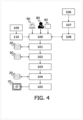
- Fig. 4 depicts a flowchart of an embodiment of a method for providing an entertainment sequence to a patient during a medical procedure according to the presently claimed invention.
- medical procedure data of the medical procedure is received 100 from medical equipment 90, an operator or physician 80 and/or a patient behavior module 40.
- the curated content database 30 is consulted 102 to select entertainment blocks by matching the risk factor of the selected procedural options with a most suitable predetermined expected effect data of an entertainment block.
- the entertainment content schedule is created 103 by listing the selected entertainment blocks based on the order of the procedural steps in the succession of procedural steps.
- the selected entertainment blocks in the content schedule are retrieved 104 from the curated content database 20.
- entertainment content is provided 105 to the patient on a content delivery device 70 (e.g. a display, goggles, headphones and the like) during the medical procedure by presenting the retrieved entertainment blocks according to the entertainment content schedule.
- a content delivery device 70 e.g. a display, goggles, headphones and the like
- patient behavior data relating to the medical procedure is taken into account 109 prior to the procedure, this may be manually input by the patient, operator/physician 80 or the patient behavior module 40. This patient behavior data is then used 110 to decide which entertainment blocks are selected.
- a computer program may be stored/distributed on a suitable medium, such as an optical storage medium or a solid-state medium supplied together with or as part of other hardware, but may also be distributed in other forms, such as via the Internet or other wired or wireless telecommunication systems. Any reference signs in the claims should not be construed as limiting the scope.
Landscapes
- Engineering & Computer Science (AREA)
- Health & Medical Sciences (AREA)
- Medical Informatics (AREA)
- Public Health (AREA)
- Epidemiology (AREA)
- General Health & Medical Sciences (AREA)
- Primary Health Care (AREA)
- Biomedical Technology (AREA)
- Databases & Information Systems (AREA)
- Business, Economics & Management (AREA)
- General Business, Economics & Management (AREA)
- Data Mining & Analysis (AREA)
- Pathology (AREA)
- Multimedia (AREA)
- Signal Processing (AREA)
- Hospice & Palliative Care (AREA)
- Psychiatry (AREA)
- Psychology (AREA)
- Social Psychology (AREA)
- Nuclear Medicine, Radiotherapy & Molecular Imaging (AREA)
- Radiology & Medical Imaging (AREA)
- Developmental Disabilities (AREA)
- Child & Adolescent Psychology (AREA)
- Magnetic Resonance Imaging Apparatus (AREA)
Claims (15)
- Anbieter von Unterhaltungsinhalten zum Bereitstellen einer Unterhaltungssequenz an einen Patienten während einer medizinischen Prozedur, wobei die medizinische Prozedur eine Abfolge von Prozedurschritten umfasst, umfassend:- eine Prozedurschrittdatenbank, die einen Katalog von Prozedurschritten umfasst, die der medizinischen Prozedur zugeordnet sind, und wobei jeder Prozedurschritt in dem Katalog Prozedurschritt-Metadaten beinhaltet, beinhaltend:- eine Prozedurschrittkennung;- eine Prozedurschrittlänge; und- mindestens einen Risikofaktor, der auf einer zuvor festgestellten nachteiligen Wirkung von Patientenverhalten auf das Ergebnis der medizinischen Prozedur beruht;- eine kuratierte Inhaltsdatenbank, die einen Katalog von Unterhaltungsblöcken umfasst, wobei jeder Unterhaltungsblock Folgendes beinhaltet:- Unterhaltungsinhalte; und- Metadaten, beinhaltend:- eine Unterhaltungsblocklänge; und- vorbestimmte Daten zu der erwarteten Wirkung auf einen oder mehrere Prozedurschritte aus der Prozedurschrittdatenbank;- einen Inhaltsplaner, der dazu eingerichtet ist,- medizinische Prozedurdaten der medizinischen Prozedur zu empfangen, die Daten in Bezug auf die Prozedurschritte in der Abfolge von Prozedurschritten umfassen, beinhaltend eine Reihenfolge der Prozedurschritte in der Abfolge von Prozedurschritten;- die Prozedurschrittdatenbank einzusehen und Prozedurschrittoptionen auszuwählen, die den aufeinanderfolgenden Prozedurschritten der medizinischen Prozedur entsprechen;- die kuratierte Inhaltsdatenbank einzusehen und Unterhaltungsblöcke auszuwählen, indem der Risikofaktor der ausgewählten Prozeduroptionen mit am besten geeigneten vorbestimmten Daten zu der erwarteten Wirkung eines Unterhaltungsblocks abgestimmt wird;- eine Unterhaltungsinhaltsplanung anzulegen, indem die ausgewählten Unterhaltungsblöcke basierend auf der Reihenfolge der Prozedurschritte in der Abfolge von Prozedurschritten aufgelistet werden; und- einen Inhaltsausführer, der dazu eingerichtet ist:- die Unterhaltungsinhaltsplanung von dem Inhaltsplaner zu erhalten;- die ausgewählten Unterhaltungsblöcke in die Inhaltsplanung aus der kuratierten Inhaltsdatenbank abzurufen;- Unterhaltungsinhalte an den Patienten während der medizinischen Prozedur durch Präsentieren der abgerufenen Unterhaltungsblöcke gemäß der Unterhaltungsinhaltsplanung bereitzustellen.
- Anbieter von Unterhaltungsinhalten nach Anspruch 1, wobei der Inhaltsplaner weiter dazu eingerichtet ist, auch Unterhaltungsblöcke auszuwählen, indem er eine Unterhaltungsblocklänge auf eine Prozedurschrittlänge abstimmt oder daran anpasst.
- Anbieter von Unterhaltungsinhalten nach Anspruch 1 oder 2, wobei die Unterhaltungsblöcke weiter Metadaten in Bezug auf die Handlungspriorität umfassen, und wobei der Inhaltsplaner weiter dazu eingerichtet ist, auch Unterhaltungsblöcke basierend auf den Handlungspriorität-Metadaten auszuwählen.
- Anbieter von Unterhaltungsinhalten nach einem der vorstehenden Ansprüche, wobei die Unterhaltungsblocklänge fest, anpassbar oder dynamisch ist.
- Anbieter von Unterhaltungsinhalten nach einem der vorstehenden Ansprüche, wobei der Unterhaltungsblock weiter Patientenzielgruppen-Informationen beinhaltet, die angeben, für welche Patientenzielgruppe der Unterhaltungsinhalt am besten geeignet ist, beispielsweise eine Patientenzielgruppe basierend auf Alter oder Altersgruppe, Geschlecht, kognitiven Fähigkeiten, Sehvermögen, Gehör, Lese- und Schreibfähigkeit, Diagnose, besonderen Interessen und dergleichen, und wobei der Inhaltsplaner weiter dazu eingerichtet ist, auch Unterhaltungsblöcke basierend auf den Patientenzielgruppen-Informationen auszuwählen.
- Anbieter von Unterhaltungsinhalten nach einem der vorstehenden Ansprüche, wobei der Inhaltsplaner weiter dazu eingerichtet ist:- vor oder während der medizinischen Prozedur aktualisierte Daten zu der medizinischen Prozedur zu erhalten, die aktualisierte Daten in Bezug auf die Prozedurschritte in der Abfolge von Prozedurschritten umfassen;- die aktualisierten Daten zu der medizinischen Prozedur mit den Daten zu der medizinischen Prozedur zu vergleichen; und- falls sich einer der Prozedurschritte geändert hat, entfernt und/oder hinzugefügt wurde:- die Datenbank mit den Prozedurschritten einzusehen und die Prozedurschrittoptionen in Bezug auf die aufeinanderfolgenden Prozedurschritte der aktualisierten medizinischen Prozedur auszuwählen;- die kuratierte Inhaltsdatenbank einzusehen und Unterhaltungsblöcke basierend auf den ausgewählten Prozeduroptionen auszuwählen;- die Unterhaltungsinhaltplanung durch Auflisten der ausgewählten Unterhaltungsblöcke basierend auf der Reihenfolge der Prozedurschritte in der Abfolge von Prozedurschritten der aktualisierten medizinischen Prozedur zu aktualisieren.
- Anbieter von Unterhaltungsinhalten nach einem der vorstehenden Ansprüche, weiter umfassend:- ein Patientenverhaltensmodul, das Folgendes umfasst:- einen Patientenverhaltensdatenempfänger, der dazu eingerichtet ist, Patientenverhaltensdaten in Bezug auf die medizinische Prozedur zu empfangen, wobei die Patientenverhaltensdaten bevorzugt zuvor erhaltene Patientenverhaltensdaten, Bibliothekpatientendaten, modelliertes Patientenverhalten und/oder in Echtzeit erhobene Daten zum Patientenverhalten sind;- einen Patientenverhaltensdatenanbieter zum Bereitstellen der Patientenverhaltensdaten an den Inhaltsplaner; und wobei der Inhaltsplaner weiter dazu eingerichtet ist, die Patientenverhaltensdaten von dem Patientenverhaltensmodul zu empfangen und die kuratierte Inhaltsdatenbank einzusehen und Unterhaltungsblöcke ebenfalls basierend auf den Patientenverhaltensdaten auszuwählen.
- Anbieter von Unterhaltungsinhalten nach Anspruch 7 oder 8, wobei ein neuronales Netzwerk dazu eingerichtet ist, die zuvor erhaltenen Patientenverhaltensdaten, Bibliothekpatientendaten, modellierten Patientenverhaltensdaten und/oder in Echtzeit erhobenen Patientenverhaltensdaten zu analysieren, um erwartete Patientenverhaltensdaten, die die Patientenverhaltensdaten bilden oder ersetzen, zu erzeugen.
- Anbieter von Unterhaltungsinhalten nach einem der vorstehenden Ansprüche, wobei der Inhaltsausführer weiter dazu eingerichtet ist,- aktuelle Daten zur medizinischen Prozedur zu empfangen;- die Unterhaltungsinhaltsplanung durch Anpassen, Entfernen oder Hinzufügen mindestens eines Unterhaltungsinhaltsblocks anzupassen; und- angepasste Unterhaltungsinhalte bereitzustellen.
- Anbieter von Unterhaltungsinhalten nach einem der Ansprüche 1 bis 10, wobei die medizinische Prozedur eine Magnetresonanztomographie- (MRT) Prozedur ist und die Abfolge der Prozedurschritte mindestens eine MRT-Sequenz beinhaltet.
- Verfahren zum Bereitstellen einer Unterhaltungssequenz an einen Patienten während einer medizinischen Prozedur, wobei die medizinische Prozedur eine Abfolge von Prozedurschritten umfasst, wobei das Verfahren Folgendes umfasst:- Empfangen (100) medizinischer Prozedurdaten der medizinischen Prozedur, die Daten in Bezug auf die Prozedurschritte in der Abfolge von Prozedurschritten umfassen, beinhaltend eine Reihenfolge der Prozedurschritte in der Abfolge von Prozedurschritten;- Einsehen (101) einer Prozedurschrittdatenbank und Auswählen der Prozedurschrittoptionen, die den aufeinanderfolgenden Prozedurschritten der medizinischen Prozedur entsprechen, wobei die Prozedurschrittdatenbank Folgendes umfasst:- einen Katalog von Prozedurschritten, die der medizinischen Prozedur zugeordnet sind, und wobei jeder Prozedurschritt in dem Katalog Prozedurschritt-Metadaten beinhaltet, beinhaltend:- eine Prozedurschrittkennung;- eine Prozedurschrittlänge; und- mindestens einen Risikofaktor, der auf einer zuvor festgestellten nachteiligen Wirkung von Patientenverhalten auf das Ergebnis der medizinischen Prozedur beruht;- Einsehen (102) einer kuratierten Inhaltsdatenbank zum Auswählen von Unterhaltungsblöcken durch Abstimmen des Risikofaktors der ausgewählten Prozeduroptionen mit den am besten geeigneten vorbestimmten erwarteten Wirkungsdaten eines Unterhaltungsblocks, wobei die kuratierte Inhaltsdatenbank Folgendes umfasst:- einen Katalog von Unterhaltungsblöcken, wobei jeder Unterhaltungsblock Folgendes beinhaltet:- Unterhaltungsinhalte; und- Metadaten, beinhaltend:- eine Unterhaltungsblocklänge; und- vorbestimmte Daten zu der erwarteten Wirkung auf einen oder mehrere Prozedurschritte aus der Prozedurschrittdatenbank;- Anlegen (103) einer Unterhaltungsinhaltsplanung durch Auflisten der ausgewählten Unterhaltungsblöcke basierend auf der Reihenfolge der Prozedurschritte in der Abfolge von Prozedurschritten;- Abrufen (104) der ausgewählten Unterhaltungsblöcke in der Inhaltsplanung aus der kuratierten Inhaltsdatenbank;- Bereitstellen (105) von Unterhaltungsinhalten an den Patienten während der medizinischen Prozedur durch Präsentieren der abgerufenen Unterhaltungsblöcke gemäß der Unterhaltungsinhaltsplanung.
- Verfahren nach Anspruch 11, das weiter die folgenden Schritte umfasst:- Empfangen (107) aktualisierter medizinischer Prozedurdaten vor oder während der medizinischen Prozedur, die aktualisierte Daten in Bezug auf die Prozedurschritte in der Abfolge von Prozedurschritten umfassen;- Vergleichen (108) der aktualisierten medizinischen Prozedurdaten mit den medizinischen Prozedurdaten; und- falls sich einer der Prozedurschritte geändert hat, entfernt und/oder hinzugefügt wurde:- Einsehen (101) der Prozedurschrittdatenbank und Auswählen der Prozedurschrittoptionen in Bezug auf die aufeinanderfolgenden Prozedurschritte der aktualisierten medizinischen Prozedur;- Einsehen (102) der kuratierten Inhaltsdatenbank und Auswählen von Unterhaltungsblöcken basierend auf den ausgewählten Prozeduroptionen;- Aktualisieren (103) der Unterhaltungsinhaltsplanung durch Auflisten der ausgewählten Unterhaltungsblöcke basierend auf der Reihenfolge der Prozedurschritte in der Abfolge von Prozedurschritten der aktualisierten medizinischen Prozedur.
- Verfahren nach Anspruch 11 oder 12, das weiter die folgenden Schritte umfasst:- Empfangen (109) von Patientenverhaltensdaten in Bezug auf die medizinische Prozedur;- zusätzlich Verwenden (110) der Patientenverhaltensdaten zum Auswählen von Unterhaltungsblöcken.
- Verfahren zum Bereitstellen adaptiver Unterhaltungsinhalte nach einem der Ansprüche 11 bis 13, wobei die medizinische Prozedur eine Magnetresonanztomographie- (MRT) Prozedur ist und die Abfolge der Prozedurschritte mindestens eine MRT-Sequenz beinhaltet.
- Computerprogrammprodukt, das dazu eingerichtet ist, die Schritte eines Verfahrens nach einem der Ansprüche 11 bis 13 auszuführen.
Applications Claiming Priority (2)
| Application Number | Priority Date | Filing Date | Title |
|---|---|---|---|
| NL2028017A NL2028017B1 (en) | 2021-04-20 | 2021-04-20 | Entertainment content provider |
| PCT/EP2022/059668 WO2022223355A1 (en) | 2021-04-20 | 2022-04-12 | Entertainment content provider |
Publications (2)
| Publication Number | Publication Date |
|---|---|
| EP4327331A1 EP4327331A1 (de) | 2024-02-28 |
| EP4327331B1 true EP4327331B1 (de) | 2024-10-30 |
Family
ID=77627442
Family Applications (1)
| Application Number | Title | Priority Date | Filing Date |
|---|---|---|---|
| EP22721788.2A Active EP4327331B1 (de) | 2021-04-20 | 2022-04-12 | Unterhaltungsinhaltsanbieter |
Country Status (6)
| Country | Link |
|---|---|
| US (1) | US20250287067A1 (de) |
| EP (1) | EP4327331B1 (de) |
| JP (1) | JP7654109B2 (de) |
| CN (1) | CN117203712A (de) |
| NL (1) | NL2028017B1 (de) |
| WO (1) | WO2022223355A1 (de) |
Families Citing this family (1)
| Publication number | Priority date | Publication date | Assignee | Title |
|---|---|---|---|---|
| EP4531049A1 (de) * | 2023-09-29 | 2025-04-02 | Koninklijke Philips N.V. | Verfahren zur auswahl von patientenerfahrungsinhalt und maschine zur auswahl von patientenerfahrungsinhalten |
Citations (1)
| Publication number | Priority date | Publication date | Assignee | Title |
|---|---|---|---|---|
| US10783799B1 (en) * | 2016-12-17 | 2020-09-22 | Sproutel, Inc. | System, apparatus, and method for educating and reducing stress for patients with illness or trauma using an interactive location-aware toy and a distributed sensor network |
Family Cites Families (7)
| Publication number | Priority date | Publication date | Assignee | Title |
|---|---|---|---|---|
| US8363861B2 (en) * | 2009-03-20 | 2013-01-29 | Brian Hughes | Entertainment system for use during the operation of a magnetic resonance imaging device |
| WO2012069979A1 (en) * | 2010-11-25 | 2012-05-31 | Koninklijke Philips Electronics N.V. | System and method for distraction of patient during scanning |
| US10083363B2 (en) * | 2015-05-26 | 2018-09-25 | Nbcuniversal Media, Llc | System and method for customizing content for a user |
| JP2017140182A (ja) * | 2016-02-09 | 2017-08-17 | 株式会社日立製作所 | 磁気共鳴イメージング装置、方法及び検査プロトコル実装プログラム |
| WO2019010545A1 (en) * | 2017-07-13 | 2019-01-17 | Smileyscope Pty. Ltd. | VIRTUAL REALITY DEVICE |
| JP7062408B2 (ja) * | 2017-11-02 | 2022-05-16 | キヤノンメディカルシステムズ株式会社 | 磁気共鳴イメージング装置 |
| EP3575812A1 (de) * | 2018-05-28 | 2019-12-04 | Koninklijke Philips N.V. | Verfahren, computerprogrammprodukt und vorrichtung zum klassifizieren von schall in der mrt und zum trainieren eines patienten |
-
2021
- 2021-04-20 NL NL2028017A patent/NL2028017B1/en not_active IP Right Cessation
-
2022
- 2022-04-12 EP EP22721788.2A patent/EP4327331B1/de active Active
- 2022-04-12 WO PCT/EP2022/059668 patent/WO2022223355A1/en not_active Ceased
- 2022-04-12 US US18/286,633 patent/US20250287067A1/en active Pending
- 2022-04-12 JP JP2023563963A patent/JP7654109B2/ja active Active
- 2022-04-12 CN CN202280029815.5A patent/CN117203712A/zh active Pending
Patent Citations (1)
| Publication number | Priority date | Publication date | Assignee | Title |
|---|---|---|---|---|
| US10783799B1 (en) * | 2016-12-17 | 2020-09-22 | Sproutel, Inc. | System, apparatus, and method for educating and reducing stress for patients with illness or trauma using an interactive location-aware toy and a distributed sensor network |
Also Published As
| Publication number | Publication date |
|---|---|
| EP4327331A1 (de) | 2024-02-28 |
| JP7654109B2 (ja) | 2025-03-31 |
| JP2024517632A (ja) | 2024-04-23 |
| WO2022223355A1 (en) | 2022-10-27 |
| CN117203712A (zh) | 2023-12-08 |
| US20250287067A1 (en) | 2025-09-11 |
| NL2028017B1 (en) | 2022-10-31 |
Similar Documents
| Publication | Publication Date | Title |
|---|---|---|
| US11660419B2 (en) | Systems, devices, and methods for generating and manipulating objects in a virtual reality or multi-sensory environment to maintain a positive state of a user | |
| US11672478B2 (en) | Hypnotherapy system integrating multiple feedback technologies | |
| CN104244842B (zh) | 用于诊断和治疗情绪障碍的方法、设备以及系统 | |
| CN108882875A (zh) | 用于神经血管刺激的设备 | |
| US12465275B2 (en) | Molecularly-initiated, experientially-delivered treatments and systems for practicing same | |
| CN112996431A (zh) | 用于影响呼吸参数的呼吸适配系统和方法 | |
| US20250287067A1 (en) | Entertainment content provider | |
| CN116709985A (zh) | 神经活动受控的虚拟现实系统 | |
| EP4524985A1 (de) | Vorrichtung, system und verfahren zum trainieren eines patienten, der geplant ist, einem medizinischen verfahren zu unterzogen zu werden | |
| CN116157059A (zh) | Emdr治疗分析 | |
| US20240277228A1 (en) | System for Providing Stimulation | |
| JP2023115768A (ja) | 治療支援システム、治療支援システムの制御方法、及び治療支援システムの制御プログラム | |
| EP4531049A1 (de) | Verfahren zur auswahl von patientenerfahrungsinhalt und maschine zur auswahl von patientenerfahrungsinhalten | |
| EP4621792A1 (de) | Vorrichtung, system und verfahren zur personalisierten vorbereitung eines patienten, der geplant ist, einen medizinischen eingriff zu durchlaufen | |
| US20260029497A1 (en) | Adjusting a media signal to an mri examination via a generative ai system | |
| EP4564367A1 (de) | Vorrichtung, system und verfahren zur bestimmung des bedarfsniveaus eines patienten | |
| EP4517771A1 (de) | Verfahren zur bereitstellung von erfahrungsdaten | |
| CN117251045A (zh) | 基于虚拟现实的医学扫描陪护方法、装置和计算机设备 | |
| WO2026099869A1 (en) | Digital therapeutics and combination therapy for the treatment of parkinson's disease |
Legal Events
| Date | Code | Title | Description |
|---|---|---|---|
| STAA | Information on the status of an ep patent application or granted ep patent |
Free format text: STATUS: UNKNOWN |
|
| STAA | Information on the status of an ep patent application or granted ep patent |
Free format text: STATUS: THE INTERNATIONAL PUBLICATION HAS BEEN MADE |
|
| PUAI | Public reference made under article 153(3) epc to a published international application that has entered the european phase |
Free format text: ORIGINAL CODE: 0009012 |
|
| STAA | Information on the status of an ep patent application or granted ep patent |
Free format text: STATUS: REQUEST FOR EXAMINATION WAS MADE |
|
| 17P | Request for examination filed |
Effective date: 20231120 |
|
| AK | Designated contracting states |
Kind code of ref document: A1 Designated state(s): AL AT BE BG CH CY CZ DE DK EE ES FI FR GB GR HR HU IE IS IT LI LT LU LV MC MK MT NL NO PL PT RO RS SE SI SK SM TR |
|
| GRAP | Despatch of communication of intention to grant a patent |
Free format text: ORIGINAL CODE: EPIDOSNIGR1 |
|
| STAA | Information on the status of an ep patent application or granted ep patent |
Free format text: STATUS: GRANT OF PATENT IS INTENDED |
|
| RIC1 | Information provided on ipc code assigned before grant |
Ipc: G16H 40/67 20180101ALI20240510BHEP Ipc: G16H 40/63 20180101ALI20240510BHEP Ipc: G16H 30/20 20180101ALI20240510BHEP Ipc: G16H 40/20 20180101ALI20240510BHEP Ipc: A61B 5/16 20060101ALI20240510BHEP Ipc: G16H 20/70 20180101AFI20240510BHEP |
|
| INTG | Intention to grant announced |
Effective date: 20240528 |
|
| DAV | Request for validation of the european patent (deleted) | ||
| DAX | Request for extension of the european patent (deleted) | ||
| GRAS | Grant fee paid |
Free format text: ORIGINAL CODE: EPIDOSNIGR3 |
|
| GRAA | (expected) grant |
Free format text: ORIGINAL CODE: 0009210 |
|
| STAA | Information on the status of an ep patent application or granted ep patent |
Free format text: STATUS: THE PATENT HAS BEEN GRANTED |
|
| AK | Designated contracting states |
Kind code of ref document: B1 Designated state(s): AL AT BE BG CH CY CZ DE DK EE ES FI FR GB GR HR HU IE IS IT LI LT LU LV MC MK MT NL NO PL PT RO RS SE SI SK SM TR |
|
| REG | Reference to a national code |
Ref country code: GB Ref legal event code: FG4D |
|
| REG | Reference to a national code |
Ref country code: CH Ref legal event code: EP |
|
| REG | Reference to a national code |
Ref country code: IE Ref legal event code: FG4D |
|
| REG | Reference to a national code |
Ref country code: DE Ref legal event code: R096 Ref document number: 602022007295 Country of ref document: DE |
|
| REG | Reference to a national code |
Ref country code: DE Ref legal event code: R084 Ref document number: 602022007295 Country of ref document: DE |
|
| REG | Reference to a national code |
Ref country code: LT Ref legal event code: MG9D |
|
| REG | Reference to a national code |
Ref country code: NL Ref legal event code: MP Effective date: 20241030 |
|
| PG25 | Lapsed in a contracting state [announced via postgrant information from national office to epo] |
Ref country code: IS Free format text: LAPSE BECAUSE OF FAILURE TO SUBMIT A TRANSLATION OF THE DESCRIPTION OR TO PAY THE FEE WITHIN THE PRESCRIBED TIME-LIMIT Effective date: 20250228 Ref country code: PT Free format text: LAPSE BECAUSE OF FAILURE TO SUBMIT A TRANSLATION OF THE DESCRIPTION OR TO PAY THE FEE WITHIN THE PRESCRIBED TIME-LIMIT Effective date: 20250228 Ref country code: HR Free format text: LAPSE BECAUSE OF FAILURE TO SUBMIT A TRANSLATION OF THE DESCRIPTION OR TO PAY THE FEE WITHIN THE PRESCRIBED TIME-LIMIT Effective date: 20241030 |
|
| PG25 | Lapsed in a contracting state [announced via postgrant information from national office to epo] |
Ref country code: FI Free format text: LAPSE BECAUSE OF FAILURE TO SUBMIT A TRANSLATION OF THE DESCRIPTION OR TO PAY THE FEE WITHIN THE PRESCRIBED TIME-LIMIT Effective date: 20241030 Ref country code: NL Free format text: LAPSE BECAUSE OF FAILURE TO SUBMIT A TRANSLATION OF THE DESCRIPTION OR TO PAY THE FEE WITHIN THE PRESCRIBED TIME-LIMIT Effective date: 20241030 |
|
| REG | Reference to a national code |
Ref country code: AT Ref legal event code: MK05 Ref document number: 1737771 Country of ref document: AT Kind code of ref document: T Effective date: 20241030 |
|
| PG25 | Lapsed in a contracting state [announced via postgrant information from national office to epo] |
Ref country code: BG Free format text: LAPSE BECAUSE OF FAILURE TO SUBMIT A TRANSLATION OF THE DESCRIPTION OR TO PAY THE FEE WITHIN THE PRESCRIBED TIME-LIMIT Effective date: 20241030 |
|
| PG25 | Lapsed in a contracting state [announced via postgrant information from national office to epo] |
Ref country code: ES Free format text: LAPSE BECAUSE OF FAILURE TO SUBMIT A TRANSLATION OF THE DESCRIPTION OR TO PAY THE FEE WITHIN THE PRESCRIBED TIME-LIMIT Effective date: 20241030 |
|
| PG25 | Lapsed in a contracting state [announced via postgrant information from national office to epo] |
Ref country code: NO Free format text: LAPSE BECAUSE OF FAILURE TO SUBMIT A TRANSLATION OF THE DESCRIPTION OR TO PAY THE FEE WITHIN THE PRESCRIBED TIME-LIMIT Effective date: 20250130 |
|
| PG25 | Lapsed in a contracting state [announced via postgrant information from national office to epo] |
Ref country code: AT Free format text: LAPSE BECAUSE OF FAILURE TO SUBMIT A TRANSLATION OF THE DESCRIPTION OR TO PAY THE FEE WITHIN THE PRESCRIBED TIME-LIMIT Effective date: 20241030 Ref country code: GR Free format text: LAPSE BECAUSE OF FAILURE TO SUBMIT A TRANSLATION OF THE DESCRIPTION OR TO PAY THE FEE WITHIN THE PRESCRIBED TIME-LIMIT Effective date: 20250131 Ref country code: LV Free format text: LAPSE BECAUSE OF FAILURE TO SUBMIT A TRANSLATION OF THE DESCRIPTION OR TO PAY THE FEE WITHIN THE PRESCRIBED TIME-LIMIT Effective date: 20241030 |
|
| PG25 | Lapsed in a contracting state [announced via postgrant information from national office to epo] |
Ref country code: PL Free format text: LAPSE BECAUSE OF FAILURE TO SUBMIT A TRANSLATION OF THE DESCRIPTION OR TO PAY THE FEE WITHIN THE PRESCRIBED TIME-LIMIT Effective date: 20241030 |
|
| PG25 | Lapsed in a contracting state [announced via postgrant information from national office to epo] |
Ref country code: RS Free format text: LAPSE BECAUSE OF FAILURE TO SUBMIT A TRANSLATION OF THE DESCRIPTION OR TO PAY THE FEE WITHIN THE PRESCRIBED TIME-LIMIT Effective date: 20250130 |
|
| PG25 | Lapsed in a contracting state [announced via postgrant information from national office to epo] |
Ref country code: SM Free format text: LAPSE BECAUSE OF FAILURE TO SUBMIT A TRANSLATION OF THE DESCRIPTION OR TO PAY THE FEE WITHIN THE PRESCRIBED TIME-LIMIT Effective date: 20241030 |
|
| PGFP | Annual fee paid to national office [announced via postgrant information from national office to epo] |
Ref country code: DE Payment date: 20250428 Year of fee payment: 4 |
|
| PG25 | Lapsed in a contracting state [announced via postgrant information from national office to epo] |
Ref country code: DK Free format text: LAPSE BECAUSE OF FAILURE TO SUBMIT A TRANSLATION OF THE DESCRIPTION OR TO PAY THE FEE WITHIN THE PRESCRIBED TIME-LIMIT Effective date: 20241030 |
|
| PG25 | Lapsed in a contracting state [announced via postgrant information from national office to epo] |
Ref country code: EE Free format text: LAPSE BECAUSE OF FAILURE TO SUBMIT A TRANSLATION OF THE DESCRIPTION OR TO PAY THE FEE WITHIN THE PRESCRIBED TIME-LIMIT Effective date: 20241030 |
|
| PGFP | Annual fee paid to national office [announced via postgrant information from national office to epo] |
Ref country code: FR Payment date: 20250424 Year of fee payment: 4 |
|
| PG25 | Lapsed in a contracting state [announced via postgrant information from national office to epo] |
Ref country code: RO Free format text: LAPSE BECAUSE OF FAILURE TO SUBMIT A TRANSLATION OF THE DESCRIPTION OR TO PAY THE FEE WITHIN THE PRESCRIBED TIME-LIMIT Effective date: 20241030 |
|
| PG25 | Lapsed in a contracting state [announced via postgrant information from national office to epo] |
Ref country code: SK Free format text: LAPSE BECAUSE OF FAILURE TO SUBMIT A TRANSLATION OF THE DESCRIPTION OR TO PAY THE FEE WITHIN THE PRESCRIBED TIME-LIMIT Effective date: 20241030 |
|
| PG25 | Lapsed in a contracting state [announced via postgrant information from national office to epo] |
Ref country code: CZ Free format text: LAPSE BECAUSE OF FAILURE TO SUBMIT A TRANSLATION OF THE DESCRIPTION OR TO PAY THE FEE WITHIN THE PRESCRIBED TIME-LIMIT Effective date: 20241030 |
|
| PG25 | Lapsed in a contracting state [announced via postgrant information from national office to epo] |
Ref country code: IT Free format text: LAPSE BECAUSE OF FAILURE TO SUBMIT A TRANSLATION OF THE DESCRIPTION OR TO PAY THE FEE WITHIN THE PRESCRIBED TIME-LIMIT Effective date: 20241030 |
|
| REG | Reference to a national code |
Ref country code: DE Ref legal event code: R097 Ref document number: 602022007295 Country of ref document: DE |
|
| PLBE | No opposition filed within time limit |
Free format text: ORIGINAL CODE: 0009261 |
|
| STAA | Information on the status of an ep patent application or granted ep patent |
Free format text: STATUS: NO OPPOSITION FILED WITHIN TIME LIMIT |
|
| PG25 | Lapsed in a contracting state [announced via postgrant information from national office to epo] |
Ref country code: SE Free format text: LAPSE BECAUSE OF FAILURE TO SUBMIT A TRANSLATION OF THE DESCRIPTION OR TO PAY THE FEE WITHIN THE PRESCRIBED TIME-LIMIT Effective date: 20241030 |
|
| 26N | No opposition filed |
Effective date: 20250731 |
|
| REG | Reference to a national code |
Ref country code: CH Ref legal event code: H13 Free format text: ST27 STATUS EVENT CODE: U-0-0-H10-H13 (AS PROVIDED BY THE NATIONAL OFFICE) Effective date: 20251125 |
|
| PG25 | Lapsed in a contracting state [announced via postgrant information from national office to epo] |
Ref country code: LU Free format text: LAPSE BECAUSE OF NON-PAYMENT OF DUE FEES Effective date: 20250412 |
|
| PG25 | Lapsed in a contracting state [announced via postgrant information from national office to epo] |
Ref country code: MC Free format text: LAPSE BECAUSE OF FAILURE TO SUBMIT A TRANSLATION OF THE DESCRIPTION OR TO PAY THE FEE WITHIN THE PRESCRIBED TIME-LIMIT Effective date: 20241030 |
|
| REG | Reference to a national code |
Ref country code: BE Ref legal event code: MM Effective date: 20250430 |
|
| PG25 | Lapsed in a contracting state [announced via postgrant information from national office to epo] |
Ref country code: BE Free format text: LAPSE BECAUSE OF NON-PAYMENT OF DUE FEES Effective date: 20250430 |
|
| PG25 | Lapsed in a contracting state [announced via postgrant information from national office to epo] |
Ref country code: CH Free format text: LAPSE BECAUSE OF NON-PAYMENT OF DUE FEES Effective date: 20250430 |
|
| PG25 | Lapsed in a contracting state [announced via postgrant information from national office to epo] |
Ref country code: IE Free format text: LAPSE BECAUSE OF NON-PAYMENT OF DUE FEES Effective date: 20250412 |