EP4326582B1 - Verfahren zum anpassen einer beleuchtung und system zum anpassen einer beleuchtung - Google Patents
Verfahren zum anpassen einer beleuchtung und system zum anpassen einer beleuchtung Download PDFInfo
- Publication number
- EP4326582B1 EP4326582B1 EP22761535.8A EP22761535A EP4326582B1 EP 4326582 B1 EP4326582 B1 EP 4326582B1 EP 22761535 A EP22761535 A EP 22761535A EP 4326582 B1 EP4326582 B1 EP 4326582B1
- Authority
- EP
- European Patent Office
- Prior art keywords
- image
- sounds
- lighting
- motor vehicle
- lighting module
- Prior art date
- Legal status (The legal status is an assumption and is not a legal conclusion. Google has not performed a legal analysis and makes no representation as to the accuracy of the status listed.)
- Active
Links
Images

Classifications
-
- B—PERFORMING OPERATIONS; TRANSPORTING
- B60—VEHICLES IN GENERAL
- B60Q—ARRANGEMENT OF SIGNALLING OR LIGHTING DEVICES, THE MOUNTING OR SUPPORTING THEREOF OR CIRCUITS THEREFOR, FOR VEHICLES IN GENERAL
- B60Q3/00—Arrangement of lighting devices for vehicle interiors; Lighting devices specially adapted for vehicle interiors
- B60Q3/80—Circuits; Control arrangements
-
- H—ELECTRICITY
- H05—ELECTRIC TECHNIQUES NOT OTHERWISE PROVIDED FOR
- H05B—ELECTRIC HEATING; ELECTRIC LIGHT SOURCES NOT OTHERWISE PROVIDED FOR; CIRCUIT ARRANGEMENTS FOR ELECTRIC LIGHT SOURCES, IN GENERAL
- H05B47/00—Circuit arrangements for operating light sources in general, i.e. where the type of light source is not relevant
- H05B47/10—Controlling the light source
- H05B47/105—Controlling the light source in response to determined parameters
-
- B—PERFORMING OPERATIONS; TRANSPORTING
- B60—VEHICLES IN GENERAL
- B60Q—ARRANGEMENT OF SIGNALLING OR LIGHTING DEVICES, THE MOUNTING OR SUPPORTING THEREOF OR CIRCUITS THEREFOR, FOR VEHICLES IN GENERAL
- B60Q3/00—Arrangement of lighting devices for vehicle interiors; Lighting devices specially adapted for vehicle interiors
- B60Q3/70—Arrangement of lighting devices for vehicle interiors; Lighting devices specially adapted for vehicle interiors characterised by the purpose
-
- B—PERFORMING OPERATIONS; TRANSPORTING
- B60—VEHICLES IN GENERAL
- B60Q—ARRANGEMENT OF SIGNALLING OR LIGHTING DEVICES, THE MOUNTING OR SUPPORTING THEREOF OR CIRCUITS THEREFOR, FOR VEHICLES IN GENERAL
- B60Q3/00—Arrangement of lighting devices for vehicle interiors; Lighting devices specially adapted for vehicle interiors
- B60Q3/70—Arrangement of lighting devices for vehicle interiors; Lighting devices specially adapted for vehicle interiors characterised by the purpose
- B60Q3/78—Arrangement of lighting devices for vehicle interiors; Lighting devices specially adapted for vehicle interiors characterised by the purpose for generating luminous strips, e.g. for marking trim component edges
-
- H—ELECTRICITY
- H04—ELECTRIC COMMUNICATION TECHNIQUE
- H04R—LOUDSPEAKERS, MICROPHONES, GRAMOPHONE PICK-UPS OR LIKE ACOUSTIC ELECTROMECHANICAL TRANSDUCERS; ELECTRIC HEARING AIDS; PUBLIC ADDRESS SYSTEMS
- H04R1/00—Details of transducers, loudspeakers or microphones
- H04R1/02—Casings; Cabinets ; Supports therefor; Mountings therein
- H04R1/028—Casings; Cabinets ; Supports therefor; Mountings therein associated with devices performing functions other than acoustics, e.g. electric candles
-
- H—ELECTRICITY
- H05—ELECTRIC TECHNIQUES NOT OTHERWISE PROVIDED FOR
- H05B—ELECTRIC HEATING; ELECTRIC LIGHT SOURCES NOT OTHERWISE PROVIDED FOR; CIRCUIT ARRANGEMENTS FOR ELECTRIC LIGHT SOURCES, IN GENERAL
- H05B47/00—Circuit arrangements for operating light sources in general, i.e. where the type of light source is not relevant
- H05B47/10—Controlling the light source
- H05B47/155—Coordinated control of two or more light sources
-
- H—ELECTRICITY
- H05—ELECTRIC TECHNIQUES NOT OTHERWISE PROVIDED FOR
- H05B—ELECTRIC HEATING; ELECTRIC LIGHT SOURCES NOT OTHERWISE PROVIDED FOR; CIRCUIT ARRANGEMENTS FOR ELECTRIC LIGHT SOURCES, IN GENERAL
- H05B47/00—Circuit arrangements for operating light sources in general, i.e. where the type of light source is not relevant
- H05B47/10—Controlling the light source
- H05B47/165—Controlling the light source following a pre-assigned programmed sequence; Logic control [LC]
-
- H—ELECTRICITY
- H04—ELECTRIC COMMUNICATION TECHNIQUE
- H04R—LOUDSPEAKERS, MICROPHONES, GRAMOPHONE PICK-UPS OR LIKE ACOUSTIC ELECTROMECHANICAL TRANSDUCERS; ELECTRIC HEARING AIDS; PUBLIC ADDRESS SYSTEMS
- H04R2499/00—Aspects covered by H04R or H04S not otherwise provided for in their subgroups
- H04R2499/10—General applications
- H04R2499/13—Acoustic transducers and sound field adaptation in vehicles
Definitions
- the invention relates to a method for adjusting lighting and a system for adjusting lighting.
- the lighting of an interior of a motor vehicle can be individually adjusted by a driver.
- the publication DE 10 2017 131 029 A1 describes a control of a sound output for a vehicle.
- a lighting arrangement for a vehicle ambient lighting is known from the publication DE 10 2019 121 019 A1 known.
- a control for a lighting device is described in the publication DE 10 2020 002 832 A1 described.
- the publication DE 10 2005 041 261 A1 describes a greeting system for greeting a user of a motor vehicle.
- a method for controlling an air conditioning device of a motor vehicle, an air conditioning device and a motor vehicle are known from the publication DE 10 2014 019 158 B3 known.
- the publication DE 10 2013 011 188 A1 describes ambient lighting for the interior of a motor vehicle.
- a lighting system for the interior of a vehicle is known from the publication EP 3 300 953 A1 known.
- the method according to the invention is intended for adapting the lighting of at least one lighting module of a motor vehicle to sounds that are generated by a sound system, usually by at least one loudspeaker of the motor vehicle, and emitted or output into the interior of the motor vehicle, wherein at least one image or photo, possibly also a sequence of several images, is assigned to the sounds as an optical identification feature, which is automatically dynamically displayed or shown at least in sections by the at least one lighting module, taking the sounds into account, and is usually emitted into the interior in a time-correlated manner with the sounds emitted. It is possible that a display of the at least an image shown at least in sections is varied, which is also possible depending on a sequence of sounds.
- the at least one image is read in by a selection module.
- the at least one image is animated and dynamically displayed by the at least one lighting module based on at least one acoustic parameter, e.g. a frequency and/or volume, i.e. an amplitude or a level of the sounds.
- a representation e.g. a color and/or brightness
- the at least one image i.e. the at least one section of the at least one image, is automatically and/or dynamically optically varied or changed depending on the acoustic sounds, i.e. depending on the acoustic parameters.
- the at least one image is depicted or represented as the at least one optical identification feature on a cover for a sound carrier that contains the sounds.
- the sound carrier e.g. a CD or compact disc or a record (LP) contains or stores the sounds.
- the at least one image is assigned to an audio source that contains the sounds or from which the sounds are emitted. It is possible that the audio source is designed as a sound carrier. An audio source can also be designed as an audio file or sound file. It is therefore possible that the at least one image is also assigned to the audio or sound file, e.g. a music file and/or an audio book. Such an audio file is available, for example, in mp3 format.
- the audio file and the at least one image associated with the audio file are stored as a tuple in a database and are retrieved from the database via a live stream and thus via real-time transmission, whereby the sounds of the audio file are emitted into the interior and played, whereby the image associated with the audio file is displayed in sections and with a dynamic depending on the sequence of the sounds. the sounds or a dynamic of the sounds is represented accordingly.
- the at least one image can depict or represent at least one creator, e.g. at least one musician who produced the sounds.
- the sounds include music, voices and/or noises.
- the sounds also have a certain artistic, e.g. musical, style and/or rhythm as additional acoustic parameters to which the representation of the at least one image is automatically and/or dynamically adapted.
- the at least one section is selected using a selection module.
- the selection module is designed to scan or read the image in sections. It is possible for the selection module to be moved relative to the image, whereby the selection module and/or its movement is controlled by the data processing unit. One section of the image is selected and read in by the selection module.
- the image is dynamically scanned in sections by the selection module and a respective scanned section is displayed using the lighting module.
- the at least one image it is also possible for the at least one image to be displayed completely and, for example, dynamically animated and/or optically changed, whereby it is automatically and/or dynamically adapted to the sounds and displayed accordingly.
- the at least one image is displayed row by row, whereby the sequence of rows displayed one after the other, e.g. rows or columns, to which the sequence of sounds is or will be assigned.
- the system according to the invention is designed to adapt the lighting of at least one lighting module of a motor vehicle to sounds that are generated by a sound system, usually by at least one loudspeaker of the motor vehicle, wherein the sound system is designed to emit or output the sounds into an interior of the motor vehicle and to play the sounds in the process.
- the system has a data processing unit, wherein at least one image, for example a sequence of several images, is assigned to the sounds as an optical identification feature.
- the data processing unit is designed to usually control the at least one lighting module and to automatically and/or dynamically cause a display of the at least one image from the at least one lighting module depending on the sounds. This takes place in particular in a temporal and/or dynamically correlated manner with the sounds output, for example played.
- the system also has an optical selection module, e.g. a camera, which can also be designed or referred to as a scanner and is designed to read or scan the image at least section by section or continuously section by section. It is possible for the selection module to only capture one section of the image at a time. In addition, the selection module is moved relative to the image at an adjustable speed, and it is captured section by section and dynamically, with the image being displayed section by section continuously and dynamically by the at least one lighting module. It is also possible for the image to be displayed dynamically relative to sections, e.g. rows or columns, of the image depending on the adjustable or set speed of the selection module, with this speed being varied in the design.
- an optical selection module e.g. a camera
- the selection module is moved relative to the image at an adjustable speed, and it is captured section by section and dynamically, with the image being displayed section by section continuously and dynamically by the at least one lighting module. It is also possible for the image to be displayed dynamically relative to sections, e.g. rows or columns,
- the data processing unit is designed to retrieve the at least one image from a database as a possible further component of the system and/or to scan at least sections of it using a sensory and/or optical scanner of the system. This is also possible while the sounds are being generated.
- the at least one lighting module is designed as a display or display panel, e.g. of the sound system, and/or as interior lighting, e.g. as at least one light element, of the motor vehicle.
- the at least one lighting module has, for example, several light-emitting diodes (LEDs) that light up in different colors, e.g. simultaneously.
- LEDs light-emitting diodes
- the sound system has a playback device for the sounds, e.g. a player for a sound carrier, e.g. a CD, and/or an audio source, whereby the sound system can be designed as a component of the system.
- the playback device can be designed as a computer program, for example, with which the audio source is loaded from a database, e.g. via the Internet, and the sounds are played as a live stream or real-time transmission.
- the at least one lighting module can also be designed as a component of the system.
- the method and the system it is possible to dynamically adapt both the interior lighting and the exterior lighting of the motor vehicle with the at least one lighting module to information that is shown on the image or with the image, wherein such an adaptation is dependent on the information in the image. It is also possible to dynamically adapt a color of the lighting module to the sounds. This makes it possible, among other things, to dynamically illuminate the interior of the motor vehicle and thereby provide an association with the sounds currently being heard, for example with the music currently being heard. This thus includes an association between light provided by the at least one lighting module and the sounds heard, usually the music heard, wherein occupants of the motor vehicle are provided with and/or conveyed a connection between the music heard and the lighting shown.
- the at least one lighting module can be part of the interior lighting, for example, as a lamp or as exterior lighting, for example as a headlight, of the motor vehicle. It is also possible that the at least one lighting module is designed as part of an instrument cluster in the interior of the motor vehicle.
- This relates, for example, to at least one image on a cover or sleeve of a sound carrier, e.g. a CD or record, wherein the sounds are mechanically or digitally recorded, e.g. stored, on this sound carrier.
- At least one audio file and the at least one image can be stored in a database as a tuples, with the at least one audio file comprising the sounds, with the at least one image being assigned to the at least one audio file within the database.
- the cover or sleeve of the CD to be read line by line with the selection module to match a piece of music being played, e.g. song, and/or artist, and to be displayed with an interior communication light (ICL) as the at least one lighting module, e.g. display, depending on the sounds.
- ICL interior communication light
- the light emitted by the at least one lighting module is associated with the music usually played by the sound system.
- the sounds are provided via a radio or a radio station, it is possible for a logo and/or symbol of this radio station to be used as the at least one image, whereby this is a radio station that is received terrestrially, by radio, or digitally.
- the at least one audio file and the at least one image assigned to the audio file can be provided via a playlist, for example as a function on demand.
- the at least one image can also represent or display sung and/or spoken texts of the sounds, for example the music and/or an audio book or radio play, whereby it is possible to select a sung and/or spoken line of text synchronously in the at least one, for example, linear lighting module.
- any image e.g. also a work of art, can be assigned to the sounds, whereby it is possible that such an image is individually produced, created or provided by a user of the method and the system.
- Reading or scanning information from the image using the selection module can be carried out in different ways. It is possible for the image or its information to be read out by the selection module in sections, for example at different angles, in changing directions and/or at changing speeds. This makes it possible to provide greater variety in the lighting when listening to the music several times. It is possible to dynamically adapt the speed at which the at least one image is read out or scanned to a tempo and/or rhythm of the sounds, in particular the music. It is also possible for an image to be completely read in by the selection module within a definable or adjustable period of time, e.g. one minute, and to be displayed or shown synchronously by the at least one lighting module.
- a definable or adjustable period of time e.g. one minute
- any of your own photos as the image, which is automatically and dynamically displayed at least in sections by the at least one lighting module depending on the sounds being played.
- Such an image or photo can also be a private recording.
- the method can also use several lighting modules in the interior of the motor vehicle, making it possible to display the image depending on the sounds with complete lighting of the interior of the motor vehicle.
- a passenger in the vehicle can dynamically experience and even design a combination of sounds, e.g. music, and a color design of the interior lighting.
- a media object e.g. a graphic for an album on a CD.
- the at least one lighting module with which the at least one image is automatically and/or dynamically displayed depending on the sounds, is, for example, linear, slit-shaped, rectangular and/or elongated and accordingly has a linear, slit-shaped, rectangular and/or elongated display field or display. In one possible embodiment, it has at least one row of LEDs arranged next to one another in a line. Depending on the embodiment, this can be just one row or several rows of LEDs.
- a linear lighting module is, for example, designed as part or as a component of a multi-instrument of the motor vehicle and integrated into such.
- the selection module for capturing and/or scanning the image can be designed or referred to as a camera, for example, wherein the selection module, e.g. the camera, has a linear, slit-shaped, rectangular and/or elongated detection area with which it is possible to capture, e.g. read in or scan the image row by row, e.g. line by line or column by column.
- the display field of the at least one for example, linear lighting module and the detection area of the selection module have the same proportions. It is possible that the section of the at least one image of which at least one lighting module is shown to scale.
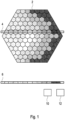
- the in Figure 1 The schematically illustrated embodiment of the system according to the invention is designed for a motor vehicle that has at least one lighting module 6 that is designed to illuminate an interior of the motor vehicle.
- the motor vehicle has a sound system 10 with at least one loudspeaker that is designed to emit sounds and thus also music into the interior of the motor vehicle.
- the rectangular and linear lighting module 6 and the sound system 10, which are only shown schematically here, are also designed as components of the system presented.
- This also includes a data processing unit 12 as a further component, for example a computing unit.
- An additional component of the system is designed as a selection module 4, here as an optical scanner, and is integrated in the Figures 1 and 2 shown schematically in each case.
- This selection module 4 is also rectangular and linear and has the same proportions as the lighting module 6.
- the lighting module 6 is designed here as a component of a multi-instrument of the motor vehicle, which is integrated into a dashboard.
- the lighting of the lighting module 6 is adapted to sounds, for example music, which are generated and/or played by the sound system 10. It is provided that the sounds played are given a Figures 1 and 2 schematically represented image 2 is assigned. This image 2 is displayed automatically and/or dynamically at least in sections by the lighting module 6 during playback of the sounds by the sound system 10, wherein the image 2 displayed at least in sections visually accompanies and/or underlines the sounds of the sound system 10.
- the image 2 is associated with the sounds, e.g. with the music, and/or represents the sounds, whereby it is possible that the image 2 represents a cover or a cover of a CD.
- This image 2 is in the Figures 1 and 2 represented by several pixels that are arranged in rows and columns in image 2, with each pixel representing an example of a color from a color spectrum.
- image 2 is hexagonal here, it can also have other shapes and be square, for example rectangular, especially square.
- the selection module 4 is moved relative to the image 2, whereby the selection module 4 is controlled by the data processing unit 12.
- the selection module 4 is only one elongated, linear and/or slit-shaped section or detail of the image 2 is captured at any one time. Furthermore, those pixels within a row and/or column of the image 2 that are selected and/or captured by the selection module 4 at that time are displayed synchronously on the lighting module 6.
- the selection module 4 is moved relative to the image 2 line by line, whereby only one line of the image 2 is captured by the selection module 4 at a time.
- the selection module 4 is moved at an angle, e.g. an acute angle, to an outer edge of the image 2 or to lines of the image 2, ie is shifted, and in the process is rotated, for example.
- different patterns 8a, 8b, 8c can be taken into account, according to which the selection module 4 is moved relative to the image 2.
- a first such pattern 8a is shown in Figure 3a , whereby this pattern 8a is elliptical.
- the selection module 4 is rotated relative to the image 2 in an elliptical, e.g. circular, manner.
- a second pattern 8b from Figure 3b shows, it is still possible to move, here to shift, the selection module 4 in only one direction relative to the image 2.
- a third pattern 8c, which in Figure 3c is shown schematically, has two arrows that are parallel to and oriented in opposite directions. In this case, the selection module 4 is moved back and forth relative to the image 2, for example shifted. It is also possible to move the selection module 4 relative to the image 2 in different directions and at different angles.
- the selection module 4 moves relative to the image 2 at different speeds, wherein it is also possible, among other things, to change or vary a respective speed currently and/or dynamically, wherein this speed is or is adapted, for example, to a rhythm and/or a tempo of a temporal sequence of the sounds. Furthermore, when the selection module 4 is moved relative to the image 2, it is possible to read or scan different sections or extracts of the image 2 with different frequencies.
Landscapes
- Engineering & Computer Science (AREA)
- Mechanical Engineering (AREA)
- Physics & Mathematics (AREA)
- Acoustics & Sound (AREA)
- Signal Processing (AREA)
- Arrangements Of Lighting Devices For Vehicle Interiors, Mounting And Supporting Thereof, Circuits Therefore (AREA)
Description
- Die Erfindung betrifft ein Verfahren zum Anpassen einer Beleuchtung und ein System zum Anpassen einer Beleuchtung.
- Eine Beleuchtung eines Innenraums eines Kraftfahrzeugs kann von einem Fahrer individuell angepasst werden.
- Die Druckschrift
DE 10 2017 131 029 A1 beschreibt eine Steuerung einer Tonausgabe für ein Fahrzeug. - Eine Beleuchtungsanordnung für eine Fahrzeugambientebeleuchtung ist aus der Druckschrift
DE 10 2019 121 019 A1 bekannt. - Eine Steuerung für eine Beleuchtungsvorrichtung ist in der Druckschrift
DE 10 2020 002 832 A1 beschrieben. - Die Druckschrift
DE 10 2005 041 261 A1 beschreibt ein Begrüßungssystem zum Begrüßen eines Nutzers eines Kraftfahrzeugs. - Ein Verfahren zum Steuern einer Klimatisierungsvorrichtung eines Kraftfahrzeugs, eine Klimatisierungsvorrichtung sowie ein Kraftfahrzeug sind aus der Druckschrift
DE 10 2014 019 158 B3 bekannt. - Die Druckschrift
DE 10 2013 011 188 A1 beschreibt eine Ambiente-Beleuchtung für einen Innenraum eines Kraftfahrzeugs. - Aus der Druckschrift
DE 10 2017 128 896 A1 ist eine Anordnung zur Beleuchtung eines Innenraums eines Kraftfahrzeugs bekannt. - Eine Steuerung einer Innenraumbeleuchtung ist aus der Druckschrift
DE 10 2019 001 332 A1 bekannt. - Ein Display für ein Fahrzeugrad ist aus der Druckschrift
EP 1 544 036 A2 bekannt. - Eine Beleuchtung für einen Innenraum eines Fahrzeugs ist aus der Druckschrift
EP 3 300 953 A1 bekannt. - In der Druckschrift
JP H09-73274 A - Vor diesem Hintergrund war es eine Aufgabe, eine Beleuchtung eines Innenraums eines Kraftfahrzeugs zu gestalten.
- Diese Aufgabe wird durch ein Verfahren und ein System mit den Merkmalen der unabhängigen Patentansprüche gelöst. Ausführungsformen des Verfahrens und des Systems gehen aus den abhängigen Patentansprüchen und der Beschreibung hervor.
- Das erfindungsgemäße Verfahren ist zum Anpassen einer Beleuchtung von mindestens einem Beleuchtungsmodul eines Kraftfahrzeugs an Klänge vorgesehen, die von einer Soundanlage, in der Regel von mindestens einem Lautsprecher des Kraftfahrzeugs, erzeugt und in einen Innenraum des Kraftfahrzeugs emittiert bzw. ausgegeben werden, wobei den Klängen mindestens ein Bild bzw. Foto, ggf. auch eine Abfolge von mehreren Bildern, als optisches Identifikationsmerkmal zugeordnet ist, das von dem mindestens einen Beleuchtungsmodul, unter Berücksichtigung der Klänge, zumindest abschnittsweise automatisch dynamisch dargestellt bzw. angezeigt und üblicherweise zeitlich korreliert mit den ausgegebenen Klängen in den Innenraum emittiert wird. Dabei ist es möglich, dass eine Anzeige des mindestens einen zumindest abschnittsweise dargestellten Bilds variiert wird, was auch abhängig von einer Abfolge der Klänge möglich ist. Das mindestens eine Bild wird von einem Auswahlmodul eingelesen.
- In Ausgestaltung wird das mindestens eine Bild von dem mindestens einen Beleuchtungsmodul anhand mindestens eines akustischen Parameters, bspw. einer Frequenz und/oder Lautstärke, d. h. einer Amplitude bzw. eines Pegels, der Klänge bspw. animiert und dynamisch dargestellt. Hierbei wird eine Darstellung, bspw. eine Farbe und/oder Helligkeit, des mindestens einen Bilds automatisch und/oder dynamisch angepasst, wobei diese Darstellung mit dem mindestens einen akustischen Parameter korreliert ist bzw. wird. Das mindestens eine Bild, d. h. der mindestens eine Abschnitt des mindestens einen Bilds, wird abhängig von den akustischen Klängen, d. h. abhängig von den akustischen Parametern, automatisch und/oder dynamisch optisch variiert bzw. verändert.
- Es ist möglich, dass das mindestens eine Bild als das mindestens eine optische Identifikationsmerkmal auf einer Hülle für einen Tonträger, der die Klänge umfasst, abgebildet bzw. dargestellt ist bzw. wird. Der Tonträger, bspw. eine CD bzw. Compact Disc oder eine Schallplatte (LP), umfasst bzw. speichert die Klänge. Generell wird das mindestens eine Bild einer Audioquelle, die die Klänge umfasst bzw. von der ausgehend die Klänge ausgegeben werden, zugeordnet. Dabei ist es möglich, dass die Audioquelle als Tonträger ausgebildet ist. Eine Audioquelle kann auch als Audiodatei bzw. Klangdatei ausgebildet sein. Somit ist es möglich, dass das mindestens eine Bild auch der Audio- bzw. Klangdatei, bspw. einer Musikdatei und/oder einem Hörbuch, zugordnet ist. Eine derartige Audiodatei liegt bspw. im mp3-Format vor. Es ist möglich, dass die Audiodatei und das mindestens eine der Audiodatei zugeordnete Bild als Tupel in einer Datenbank hinterlegt sind und aus der Datenbank über einen Livestream und somit über Echtzeitübertragung abgerufen werden, wobei die Klänge der Audiodatei in den Innenraum emittiert und abgespielt werden, wobei das der Audiodatei zugeordnete Bild in Abhängigkeit der Abfolge der Klänge abschnittsweise und mit einer Dynamik der Klänge bzw. einer Dynamik der Klänge entsprechend dargestellt wird.
- Mit dem mindestens einen Bild kann mindestens ein Schöpfer, bspw. mindestens ein Musiker, der die Klänge produziert hat, abgebildet bzw. dargestellt sein bzw. werden.
- Es ist möglich, dass die Klänge Musik, Stimmen und/oder Geräusche umfassen. Die Klänge weisen weiterhin einen bestimmten künstlerischen, bspw. musikalischen, Stil und/oder einen Rhythmus als zusätzliche akustische Parameter auf, an die die Darstellung des mindestens einen Bilds automatisch und/oder dynamisch angepasst wird.
- Zu einem Zeitpunkt wird jeweils mindestens ein Ausschnitt des mindestens einen Bilds, in Ausgestaltung jeweils nur ein einziger Ausschnitt, dargestellt, wobei es möglich ist, dass der mindestens eine Ausschnitt bzw. ein entsprechender Abschnitt des Bilds als Reihe, bspw. als Zeile oder Spalte, des Bilds ausgebildet bzw. zu bezeichnen ist. Dabei ist es möglich, dass mehrere, in der Regel verschiedene, Abschnitte des mindestens einen Bilds nacheinander, bspw. zeilenweise oder spaltenweise, dargestellt werden. Dabei wird der mindestens eine Abschnitt mit einem Auswahlmodul ausgewählt. Das Auswahlmodul ist dazu ausgebildet, das Bild auch abschnittsweise zu scannen bzw. einzulesen. Dabei ist es möglich, dass das Auswahlmodul relativ zu dem Bild bewegt wird, wobei das Auswahlmodul und/oder seine Bewegung von der Datenverarbeitungseinheit gesteuert wird bzw. werden. Hierbei wird jeweils ein Abschnitt des Bilds von dem Auswahlmodul ausgewählt und eingelesen. Bei einer derartigen Bewegung wird das Bild von dem Auswahlmodul abschnittsweise dynamisch eingescannt und ein jeweilig eingescannter Abschnitt mit dem Beleuchtungsmodul dargestellt. In einem nicht erfindungsgemäßen Ausführungsbeispiel, ist es jedoch auch möglich, dass das mindestens eine Bild jeweils komplett dargestellt und dabei bspw. dynamisch animiert und/oder optisch verändert wird, wobei es an die Klänge automatisch und/oder dynamisch angepasst und entsprechend angepasst dargestellt wird. In Ausgestaltung wird das mindestens eine Bild reihenweise dargestellt, wobei die Abfolge von nacheinander dargestellten Reihen, bspw. Zeilen oder Spalten, der Abfolge der Klänge zugeordnet ist bzw. wird.
- Das erfindungsgemäße System ist zum Anpassen einer Beleuchtung von mindestens einem Beleuchtungsmodul eines Kraftfahrzeugs an Klänge ausgebildet, die von einer Soundanlage, in der Regel von mindestens einem Lautsprecher, des Kraftfahrzeugs, erzeugt werden, wobei die Soundanlage dazu ausgebildet ist, die Klänge in einen Innenraum des Kraftfahrzeugs zu emittieren bzw. auszugeben und dabei die Klänge abzuspielen. Das System weist eine Datenverarbeitungseinheit auf, wobei den Klängen mindestens ein Bild, bspw. eine Abfolge von mehreren Bildern, als optisches Identifikationsmerkmal zugeordnet ist. Die Datenverarbeitungseinheit ist dazu ausgebildet, das mindestens eine Beleuchtungsmodul üblicherweise anzusteuern und eine Darstellung des mindestens einen Bilds von dem mindestens einen Beleuchtungsmodul abhängig von den Klängen automatisch und/oder dynamisch zu veranlassen. Dies erfolgt insbesondere zeitlich und/oder dynamisch korreliert mit den ausgegebenen, bspw. abgespielten, Klängen.
- Weiterhin weist das System ein optisches Auswahlmodul, bspw. eine Kamera, auf, das auch als Scanner ausgebildet sein bzw. bezeichnet werden kann und dazu ausgebildet ist, das Bild zumindest abschnittweise bzw. kontinuierlich Abschnitt für Abschnitt einzulesen bzw. einzuscannen. Dabei ist es möglich, dass von dem Auswahlmodul jeweils immer nur ein Abschnitt des Bilds erfasst wird. Außerdem wird das Auswahlmodul relativ zu dem Bild mit einer einstellbaren Geschwindigkeit bewegt, wobei es entsprechend abschnittsweise und dynamisch erfasst wird, wobei das Bild von dem mindestens einen Beleuchtungsmodul abschnittsweise kontinuierlich und dynamisch dargestellt wird. Es ist auch möglich, dass das Bild abhängig von der einstellbaren bzw. eingestellten Geschwindigkeit des Auswahlmoduls relativ zu Abschnitten, bspw. Zeilen oder Spalten, des Bilds dynamisch dargestellt wird, wobei diese Geschwindigkeit in Ausgestaltung variiert wird.
- Die Datenverarbeitungseinheit ist dazu ausgebildet, das mindestens eine Bild aus einer Datenbank als möglicher weiterer Komponente des Systems zu übernehmen und/oder über einen sensorischen und/oder optischen Scanner des Systems zumindest abschnittsweise einzuscannen. Dies ist auch dann möglich, während die Klänge erzeugt werden.
- Das mindestens eine Beleuchtungsmodul ist als Display bzw. Anzeigefeld, bspw. der Soundanlage, und/oder als Innenraumbeleuchtung, bspw. als mindestens ein Lichtelement, des Kraftfahrzeugs ausgebildet. Das mindestens eine Beleuchtungsmodul weist bspw. mehrere Leuchtdioden (LEDs) auf, die, bspw. auch gleichzeitig, in unterschiedlichen Farben leuchten.
- Die Soundanlage weist ein Wiedergabegerät für die Klänge auf, bspw. ein Abspielgerät für einen Tonträger, bspw. eine CD, und/oder eine Audioquelle, wobei die Soundanlage als Komponente des Systems ausgebildet sein kann. Dabei ist es möglich, dass das Wiedergabegerät bspw. auch als Computerprogramm ausgebildet ist, mit dem die Audioquelle aus einer Datenbank, bspw. über das Internet, geladen, und die Klänge als Livestream bzw. Echtzeitübertragung abgespielt werden. Das mindestens eine Beleuchtungsmodul kann ebenfalls als Komponente des Systems ausgebildet sein.
- Mit dem Verfahren und dem System ist es möglich, sowohl eine Innenraumbeleuchtung als auch eine Außenraumbeleuchtung des Kraftfahrzeugs mit dem mindestens einen Beleuchtungsmodul dynamisch an Informationen, die auf dem Bild bzw. mit dem Bild dargestellt werden, anzupassen, wobei eine derartige Anpassung abhängig von den Informationen des Bilds ist. Hierbei ist es auch möglich, eine Farbe des Beleuchtungsmoduls an die Klänge dynamisch anzupassen. Somit ist es u. a. möglich, den Innenraum des Kraftfahrzeugs dynamisch zu beleuchten und dabei eine Assoziation mit jeweils aktuell gehörten Klängen, bspw. mit jeweils aktuell gehörter Musik, bereitzustellen. Dies umfasst somit eine Assoziation zwischen Licht, das von dem mindestens einen Beleuchtungsmodul bereitgestellt wird, und den gehörten Klängen, üblicherweise der gehörten Musik, wobei Insassen des Kraftfahrzeugs ein Zusammenhang zwischen gehörter Musik und dargestellter Beleuchtung bereitgestellt und/oder vermittelt wird. Dabei ist es möglich, dass das mindestens eine Beleuchtungsmodul als Teil der Innenraumbeleuchtung, bspw. als Lampe, oder der Außenraumbeleuchtung, bspw. als Scheinwerfer, des Kraftfahrzeugs ausgebildet ist. Es ist auch möglich, dass das mindestens eine Beleuchtungsmodul als Teil eines Kombiinstruments in dem Innenraum des Kraftahrzeugs ausgebildet ist.
- In Ausgestaltung ist es möglich, das mindestens eine Bild einer Audioquelle, auf der Klänge, bspw. Musik, gespeichert sind, in einem Display bzw. Anzeigefeld des mindestens einen Beleuchtungsmoduls abhängig von den Klängen darzustellen. Dies betrifft bspw. mindestens ein Bild auf einem Cover bzw. einer Hülle eines Tonträgers, bspw. einer CD oder Schallplatte, wobei die Klänge auf diesem Tonträger mechanisch oder digital festgehalten, bspw. gespeichert, sind.
- Es ist auch möglich, dass mindestens eine Audiodatei und das mindestens eine Bild in einer Datenbank als Tupel hinterlegt sind, wobei die mindestens eine Audiodatei die Klänge umfasst, wobei das mindestens eine Bild innerhalb der Datenbank der mindestens einen Audiodatei zugeordnet ist. Dabei ist es weiterhin möglich, dass das Cover bzw. die Hülle der CD passend zu einem jeweils gespielten Stück, bspw. Lied, und/oder Interpreten, mit dem Auswahlmodul bspw. zeilenweise gelesen und mit einem inneren Kommunikationslicht (ICL, Interior Communication Light) als das mindestens eine Beleuchtungsmodul, bspw. Display, abhängig von den Klängen dargestellt wird. Dabei wird das von dem mindestens einen Beleuchtungsmodul ausgestrahlte Licht mit der üblicherweise von der Soundanlage gespielten Musik assoziiert. Falls die Klänge über ein Radio bzw. eine Radiostation bereitgestellt werden ist es möglich, dass als das mindestens eine Bild ein Logo und/oder Symbol dieser Radiostation verwendet wird, wobei es sich um eine Radiostation handelt, die terrestrisch bzw. per Funk, oder digital empfangen wird. Es ist auch möglich, dass die mindestens eine Audiodatei und das mindestens eine der Audiodatei definiert zugeordnete Bild über eine Abspielliste bzw. Playlist bereitgestellt werden, bspw. als Funktion auf Abruf (function on demand). Das mindestens eine Bild kann bspw. auch gesungene und/oder gesprochene Texte der Klänge, bspw. der Musik und/oder eines Hörbuchs bzw. Hörspiels, darstellen bzw. anzeigen, wobei es möglich ist, jeweils eine gesungene und/oder gesprochene Zeile an Text synchron in den dem mindestens einen bspw. linienförmigen Beleuchtungsmodul darzustellen. In der Regel kann jedes Bild, bspw. auch ein Kunstwerk, den Klängen zugeordnet sein bzw. werden, wobei es möglich ist, dass ein derartiges Bild von einem Nutzer des Verfahrens und des Systems individuell hergestellt bzw. geschaffen bzw. bereitgestellt wird.
- Ein Auslesen bzw. Scannen von Informationen des Bilds mit dem Auswahlmodul kann in unterschiedlichen Varianten durchgeführt werden. Dabei ist es möglich, dass das Bild bzw. dessen Informationen von dem Auswahlmodul bspw. unter unterschiedlichen Winkeln, in wechselnden Richtungen und/oder bei wechselnder Geschwindigkeit jeweils abschnittsweise ausgelesen wird bzw. werden. Somit ist es möglich, bei mehrmaligem Hören der Musik für die Beleuchtung eine größere Abwechslung einzubringen. Hierbei ist es möglich, die Geschwindigkeit, mit der das mindestens eine Bild ausgelesen bzw. gescannt wird, an ein Tempo und/oder einen Rhythmus der Klänge, insbesondere der Musik, dynamisch anzupassen. Es ist auch möglich, dass ein Bild von dem Auswahlmodul innerhalb einer definierbaren bzw. einstellbaren Zeitspanne, bspw. von eine Minute, vollständig eingelesen und entsprechend von dem mindestens einen Beleuchtungsmodul synchron dargestellt bzw. angezeigt wird.
- Es ist auch möglich, dass als das Bild bspw. ein beliebiges eigenes Foto verwendet wird, das von dem mindestens einen Beleuchtungsmodul abhängig von den jeweils gespielten Klängen zumindest abschnittsweise automatisch und dynamisch dargestellt wird. Bei einem derartigen Bild bzw. Foto kann es sich auch um eine private Aufnahme handeln.
- Bei dem Verfahren können auch mehrere Beleuchtungsmodule im Innenraum des Kraftfahrzeugs verwendet werden, wobei es möglich, das Bild abhängig von den Klängen mit einer kompletten Beleuchtung des Innenraums des Kraftfahrzeugs darzustellen.
- Somit kann ein Insasse des Fahrzeugs als Kunde eine Kombination aus Klängen, bspw. Musik, und einer farblichen Gestaltung einer Beleuchtung des Innenraums dynamisch erleben und auch selbst gestalten.
- In Ausgestaltung ist es u. a. möglich, Farben, die von dem mindestens einen Beleuchtungsmodul dargestellt werden, abhängig von Klängen zu steuern, wobei Informationen des Bilds als Medienobjekt, bspw. einer Grafik für ein Album einer CD, dargestellt werden.
- Das mindestens eine Beleuchtungsmodul, mit dem das mindestens eine Bild abhängig von den Klängen automatisch und/oder dynamisch dargestellt wird, ist bspw. linienförmigen, schlitzförmig, rechteckig und/oder länglich ausgebildet und weist entsprechend ein linienförmiges, schlitzförmiges, rechteckiges und/oder längliches Anzeigefeld bzw. Display auf. Dabei weist es in möglicher Ausgestaltung mindestens eine Reihe an Leuchtdioden auf, die nebeneinander linienförmig angeordnet ist. Hier kann es sich, ja nach Ausgestaltung um lediglich eine Reihe oder mehrere Reihen an Leuchtdioden handeln. Ein derartiges linienförmiges Beleuchtungsmodul ist bspw. als Teil bzw. als Komponente eines Multiinstruments des Kraftfahrzeugs ausgebildet und in ein solches integriert.
- Das Auswahlmodul zum Erfassen und/oder Scannen des Bilds, das begleitend zu den Klängen zumindest abschnittsweise automatisch und/oder dynamisch dargestellt wird, kann bspw. als Kamera ausgebildet sein bzw. bezeichnet werden, wobei das Auswahlmodul, bspw. die Kamera, einen linienförmigen, schlitzförmigen, rechteckigen und/oder länglichen Erfassungsbereich aufweist, mit dem es möglich ist, das Bild reihenweise, bspw. zeilenweise oder spaltenweise, zu erfassen, bspw. einzulesen bzw. zu scannen.
- Es ist möglich, dass das Anzeigefeld von dem mindestens einen bspw. linienförmigen Beleuchtungsmodul und der Erfassungsbereich des Auswahlmoduls dieselben Proportionen aufweisen. Dabei ist es möglich, dass der von dem Auswahlmodul eingelesene und/oder ausgewählte Abschnitt des mindestens einen Bilds von dem mindestens einen Beleuchtungsmodul maßstabsgerecht dargestellt wird.
- Die Erfindung ist anhand von Ausführungsformen in der Zeichnung schematisch dargestellt und wird unter Bezugnahme auf die Zeichnung schematisch und ausführlich beschrieben.
-
Figur 1 zeigt in schematischer Darstellung Details einer Ausführungsform des erfindungsgemäßen Systems bei Durchführung einer ersten Ausführungsform des erfindungsgemäßen Verfahrens. -
Figur 2 zeigt in schematischer Darstellung Details ausFigur 1 bei Durchführung einer zweiten Ausführungsform des erfindungsgemäßen Verfahrens. -
Figur 3 zeigt in schematischer Darstellung Details zum Durchführen einer dritten Ausführungsform des erfindungsgemäßen Verfahrens. - Die Figuren werden zusammenhängend und übergreifend beschrieben. Gleichen Bezugszeichen sind dieselben Komponenten zugeordnet.
- Die in
Figur 1 schematisch dargestellte Ausführungsform des erfindungsgemäßen Systems ist für ein Kraftfahrzeug ausgebildet, das mindestens ein Beleuchtungsmodul 6 aufweist, das zum Beleuchten eines Innenraums des Kraftfahrzeugs ausgebildet ist. Außerdem weist das Kraftfahrzeug eine Soundanlage 10 mit mindestens einem Lautsprecher auf, die dazu ausgebildet ist, Klänge und somit auch Musik in den Innenraum des Kraftfahrzeugs zu emittieren. - Das hier rechteckige und linienförmige Beleuchtungsmodul 6 und die Soundanlage 10, die hier lediglich in schematisch dargestellt sind, sind zugleich auch als Komponenten des vorgestellten Systems ausgebildet. Dieses umfasst als weitere Komponente auch eine Datenverarbeitungseinheit 12, bspw. eine Recheneinheit. Eine zusätzliche Komponente des Systems ist als Auswahlmodul 4, hier als optischer Scanner, ausgebildet und in den
Figuren 1 und2 jeweils schematisch dargestellt. Dieses Auswahlmodul 4 ist hier ebenfalls rechteckig und linienförmig ausgebildet und weist dieselben Proportionen wie das Beleuchtungsmodul 6 auf. Das Beleuchtungsmodul 6 ist hier als Komponente eines Multiinstruments des Kraftfahrzeugs ausgebildet, das in ein Armaturenbrett integriert ist. - Bei der Ausführungsform des Verfahrens wird eine Beleuchtung des Beleuchtungsmoduls 6 an Klänge, bspw. an Musik, angepasst, die von der Soundanlage 10 erzeugt und/oder gespielt werden. Dabei ist vorgesehen, dass den gespielten Klängen ein in den
Figuren 1 und2 schematisch dargestelltes Bild 2 zugeordnet ist. Dieses Bild 2 wird während eines Abspielens der Klänge durch die Soundanlage 10 von dem Beleuchtungsmodul 6 zumindest abschnittsweise automatisch und/oder dynamisch dargestellt, wobei das zumindest abschnittsweise dargestellte Bild 2 die Klänge der Soundanlage 10 dabei optisch begleitet und/oder untermalt. - Hierbei ist vorgesehen, dass das Bild 2 mit den Klängen, bspw. mit der Musik, assoziiert ist und/oder die Klänge repräsentiert, wobei es möglich ist, dass das Bild 2 eine Hülle bzw. ein Cover einer CD darstellt. Dieses Bild 2 ist in den
Figuren 1 und2 anhand mehrerer Pixel dargestellt, die in dem Bild 2 zeilenweise und spaltenweise angeordnet sind, wobei jedes Pixel hier exemplarisch eine Farbe eines Farbspektrums darstellt. Zwar ist das Bild 2 hier sechseckig bzw. hexagonal, es kann jedoch auch andere Formen aufweisen und u. a. viereckig, bspw. rechteckig, insbesondere quadratisch, sein. - Bei der Ausführungsform des Verfahrens wird das Auswahlmodul 4 relativ zu dem Bild 2 bewegt, wobei das Auswahlmodul 4 hierzu von der Datenverarbeitungseinheit 12 gesteuert wird. Hierbei wird von dem Auswahlmodul 4 zu einem Zeitpunkt jeweils nur ein länglicher, linienförmiger und/oder schlitzförmiger Abschnitt bzw. Ausschnitt des Bilds 2 erfasst. Weiterhin werden jene Pixel innerhalb einer Zeile und/oder Spalte des Bilds 2, die von dem Auswahlmodul 4 zu dem Zeitpunkt ausgewählt und/oder erfasst werden, auf dem Beleuchtungsmodul 6 synchron dargestellt.
- Hierbei ist in
Figur 1 vorgesehen, dass das Auswahlmodul 4 relativ zu dem Bild 2 zeilenweise bewegt wird, wobei jeweils nur eine Zeile des Bilds 2 von dem Auswahlmodul 4 erfasst wird. Dagegen ist inFigur 2 gezeigt, dass das Auswahlmodul 4 unter einem Winkel, bspw. einem spitzen Winkel, zu einer Außenkante des Bilds 2 bzw. zu Zeilen des Bilds 2 bewegt, d. h. verschoben, und dabei bspw. auch gedreht wird. In Ausgestaltung können unterschiedliche Muster 8a, 8b, 8c berücksichtigt werden, gemäß derer das Auswahlmodul 4 relativ zu dem Bild 2 bewegt wird. Dabei ist ein erstes derartiges Muster 8a inFigur 3a dargestellt, wobei dieses Muster 8a ellipsenförmig ausgebildet ist. In diesem Fall wird das Auswahlmodul 4 relativ zu dem Bild 2 ellipsenförmig, bspw. kreisförmig, gedreht. Wie ein zweites Muster 8b ausFigur 3b zeigt, ist es weiterhin möglich, das Auswahlmodul 4 in lediglich einer Richtung relativ zu dem Bild 2 zu bewegen, hier zu verschieben. Ein drittes Muster 8c, das inFigur 3c schematisch dargestellt ist, weist zwei zueinander parallele und entgegengesetzt orientierte Pfeile auf. In diesem Fall wird das Auswahlmodul 4 relativ zu dem Bild 2 hin und her bewegt, bspw. verschoben. Weiterhin ist es möglich, das Auswahlmodul 4 relativ zu dem Bild 2 in unterschiedlichen Richtungen und unter unterschiedlichen Winkeln zu bewegen. Dabei ist es auch möglich, das Auswahlmodul 4 relativ zu dem Bild 2 in unterschiedlichen Geschwindigkeiten zu bewegen, wobei es u. a. auch möglich ist, eine jeweilige Geschwindigkeit aktuell und/oder dynamisch zu ändern bzw. zu variieren, wobei diese Geschwindigkeit bspw. an einen Rhythmus und/oder ein Tempo einer zeitlichen Abfolge der Klänge angepasst wird bzw. ist. Weiterhin ist es möglich, bei einer Bewegung des Auswahlmoduls 4 relativ zu dem Bild 2 unterschiedliche Abschnitte bzw. Ausschnitte des Bilds 2 unterschiedlich häufig einzulesen bzw. einzuscannen. -
- 2
- Bild
- 4
- Auswahlmodul
- 6
- Beleuchtungsmodul
- 8a, 8b, 8c
- Muster
- 10
- Soundanlage
- 12
- Datenverarbeitungseinheit
Claims (8)
- Verfahren zum Anpassen einer Beleuchtung von mindestens einem Beleuchtungsmodul (6) eines Kraftfahrzeugs an Klänge, die von einer Soundanlage (10) des Kraftfahrzeugs erzeugt und ausgegeben werden, wobei den Klängen mindestens ein Bild (2) zugeordnet ist, das von dem mindestens einen Beleuchtungsmodul (6) zumindest abschnittsweise und zeitlich korreliert mit den ausgegebenen Klängen automatisch dargestellt wird, wobei jeweils ein Abschnitt des mindestens einen Bilds (2) von einem Auswahlmodul (4) ausgewählt und eingelesen wird, dadurch gekennzeichnet, dass jeweils nur ein ausgewählter linienförmiger und/oder schlitzförmiger Abschnitt des mindestens einen Bilds (2) dargestellt wird.
- Verfahren nach Anspruch 1, bei dem das mindestens eine Bild (2) von dem mindestens einen Beleuchtungsmodul (6) anhand mindestens eines akustischen Parameters der Klänge dynamisch dargestellt wird.
- Verfahren nach Anspruch 1 oder 2, bei dem das mindestens eine Bild (2) auf einer Hülle für einen Tonträger, der die Klänge umfasst, dargestellt wird, und/oder bei dem das mindestens eine Bild einer Audioquelle, die die Klänge umfasst, zugeordnet wird.
- Verfahren nach einem der voranstehenden Ansprüche, bei dem die Klänge Musik, Stimmen und/oder Geräusche umfassen.
- System zum Anpassen einer Beleuchtung von mindestens einem Beleuchtungsmodul (6) eines Kraftfahrzeugs an Klänge, die von einer Soundanlage (10) des Kraftfahrzeugs erzeugt und ausgegeben werden, wobei das System eine Datenverarbeitungseinheit (12) aufweist, wobei den Klängen mindestens ein Bild (2) zugeordnet ist, wobei die Datenverarbeitungseinheit (12) dazu ausgebildet ist, eine zumindest abschnittsweise Darstellung des mindestens einen Bilds (2) von dem mindestens einen Beleuchtungsmodul (6) zeitlich korreliert mit den ausgegebenen Klängen automatisch zu veranlassen, wobei das System ein Auswahlmodul (4) aufweist, das dazu ausgebildet ist, jeweils einen Abschnitt des mindestens einen Bilds (2) auszuwählen und einzulesen, dadurch gekennzeichnet, dass jeweils nur ein ausgewählter linienförmiger und/oder schlitzförmiger Abschnitt des mindestens einen Bilds (2) dargestellt wird.
- System nach Anspruch 5, bei dem die Datenverarbeitungseinheit (12) dazu ausgebildet ist, das mindestens eine Bild (2) aus einer Datenbank zu übernehmen und/oder einzuscannen.
- System nach Anspruch 5 oder 6, bei dem das mindestens eine Beleuchtungsmodul (6) als Display und/oder als Innenraumbeleuchtung des Kraftfahrzeugs ausgebildet ist.
- System nach einem der Ansprüche 5 bis 7, bei dem das mindestens eine Beleuchtungsmodul (6) linienförmig ausgebildet ist.
Applications Claiming Priority (2)
| Application Number | Priority Date | Filing Date | Title |
|---|---|---|---|
| DE102021121776.8A DE102021121776A1 (de) | 2021-08-23 | 2021-08-23 | Verfahren zum Anpassen einer Beleuchtung |
| PCT/EP2022/072263 WO2023025581A1 (de) | 2021-08-23 | 2022-08-08 | Verfahren zum anpassen einer beleuchtung und system zum anpassen einer beleuchtung |
Publications (2)
| Publication Number | Publication Date |
|---|---|
| EP4326582A1 EP4326582A1 (de) | 2024-02-28 |
| EP4326582B1 true EP4326582B1 (de) | 2024-10-09 |
Family
ID=83149568
Family Applications (1)
| Application Number | Title | Priority Date | Filing Date |
|---|---|---|---|
| EP22761535.8A Active EP4326582B1 (de) | 2021-08-23 | 2022-08-08 | Verfahren zum anpassen einer beleuchtung und system zum anpassen einer beleuchtung |
Country Status (5)
| Country | Link |
|---|---|
| US (1) | US12513802B2 (de) |
| EP (1) | EP4326582B1 (de) |
| CN (1) | CN117677538B (de) |
| DE (1) | DE102021121776A1 (de) |
| WO (1) | WO2023025581A1 (de) |
Families Citing this family (2)
| Publication number | Priority date | Publication date | Assignee | Title |
|---|---|---|---|---|
| IT202300004044A1 (it) * | 2023-03-06 | 2024-09-06 | Fca Italy Spa | "veicolo elettrico comprendente un sistema audio per riprodurre segnali audio e procedimento corrispondente" |
| DE102023118991B3 (de) | 2023-07-18 | 2024-07-18 | Cariad Se | Verfahren zum Bereitstellen eines Raumerlebnisses sowie Fahrzeug |
Family Cites Families (15)
| Publication number | Priority date | Publication date | Assignee | Title |
|---|---|---|---|---|
| JPH0973274A (ja) * | 1995-09-06 | 1997-03-18 | Ichiro Chiba | 移動式表示器 |
| US7079042B2 (en) * | 2003-12-19 | 2006-07-18 | Michelin Recherche Et Technique S.A. | System for providing illuminated displays on a vehicle tire or wheel assembly |
| JP4419758B2 (ja) | 2004-08-31 | 2010-02-24 | 株式会社デンソー | 自動車用ユーザもてなしシステム |
| DE102010049204A1 (de) * | 2010-10-20 | 2012-04-26 | G. Fleischhauer Ingenieurbüro Cottbus GmbH | Verfahren und Anordnung zur Optimierung der Raumparameter Beschallung, Beleuchtung und Klimatisierung |
| DE102013011188A1 (de) * | 2013-07-04 | 2014-02-27 | Daimler Ag | Kraftfahrzeug und Verfahren zur Einstellung einer Lichtfarbe und/oder -intensität einer Ambiente-Beleuchtung eines Kraftfahrzeuges |
| DE102014019158B3 (de) | 2014-12-19 | 2016-04-07 | Audi Ag | Verfahren zum Steuern einer Klimatisierungsvorrichtung eines Kraftfahrzeugs, Klimatisierungsvorrichtung sowie Kraftfahrzeug |
| CN106131475A (zh) * | 2016-07-28 | 2016-11-16 | 努比亚技术有限公司 | 一种视频处理方法、装置及终端 |
| FR3056500B1 (fr) * | 2016-09-28 | 2020-09-04 | Valeo Vision | Systeme d'eclairage interieur pour vehicule automobile autonome |
| US10324683B2 (en) | 2016-12-27 | 2019-06-18 | Harman International Industries, Incorporated | Control for vehicle sound output |
| FR3066155B1 (fr) * | 2017-05-10 | 2020-08-28 | Peugeot Citroen Automobiles Sa | Dispositif de fourniture d’informations a un usager d’un vehicule, par projection d’image(s) sur le sol |
| DE102017128896A1 (de) | 2017-12-05 | 2019-06-06 | Automotive Lighting Reutlingen Gmbh | Anordnung zur Beleuchtung des Innenraums eines Kraftfahrzeugs und Kraftfahrzeug mit einer solchen Anordnung |
| US10882398B2 (en) * | 2019-02-13 | 2021-01-05 | Xevo Inc. | System and method for correlating user attention direction and outside view |
| DE102019001332A1 (de) * | 2019-02-25 | 2019-07-25 | Daimler Ag | Verfahren zur Steuerung einer ambienten lnnenraumbeleuchtung |
| DE102019121019A1 (de) | 2019-08-02 | 2021-02-04 | OSRAM CONTINENTAL GmbH | Beleuchtungsanordnung, Fahrzeug und Verfahren |
| DE102020002832A1 (de) | 2020-05-11 | 2020-08-13 | Daimler Ag | Vorrichtung und Verfahren zur Ansteuerung einer Beleuchtungsvorrichtung |
-
2021
- 2021-08-23 DE DE102021121776.8A patent/DE102021121776A1/de active Pending
-
2022
- 2022-08-08 CN CN202280049800.5A patent/CN117677538B/zh active Active
- 2022-08-08 EP EP22761535.8A patent/EP4326582B1/de active Active
- 2022-08-08 US US18/685,025 patent/US12513802B2/en active Active
- 2022-08-08 WO PCT/EP2022/072263 patent/WO2023025581A1/de not_active Ceased
Also Published As
| Publication number | Publication date |
|---|---|
| WO2023025581A1 (de) | 2023-03-02 |
| EP4326582A1 (de) | 2024-02-28 |
| CN117677538A (zh) | 2024-03-08 |
| DE102021121776A1 (de) | 2023-02-23 |
| US12513802B2 (en) | 2025-12-30 |
| CN117677538B (zh) | 2026-04-17 |
| US20240349410A1 (en) | 2024-10-17 |
Similar Documents
| Publication | Publication Date | Title |
|---|---|---|
| EP4326582B1 (de) | Verfahren zum anpassen einer beleuchtung und system zum anpassen einer beleuchtung | |
| DE69524828T2 (de) | Vorrichtung zur Wiedergabe von Video- und Audiosignalen | |
| DE102011110978B4 (de) | Verfahren zum Bedienen einer elektronischen Einrichtung oder einer Applikation und entsprechende Vorrichtung | |
| DE4325035A1 (de) | Vorrichtung und Verfahren zur Titelanzeige von Musikstücken | |
| DE102021132695A1 (de) | Verfahren und Vorrichtung zur Beleuchtungssteuerung | |
| DE102017100512A1 (de) | Innenausstattungsteil mit integriertem bildschirm | |
| DE19814646A1 (de) | Verfahren zum Kombinieren zweier digital erzeugter Bilder | |
| DE102008034173A1 (de) | Anzeigevorrichtung für Gitarrenstimmvorrichtungen und Verfahren zum Anzeigen des Stimmzustands von Gitarrensaiten bei deren Einsatz | |
| EP1579406A1 (de) | Interaktive lehr-und lernvorrichtung mit dreidimensionalem modell | |
| DE102021109954A1 (de) | Kraftfahrzeug mit einer Vielzahl von Innenraum-Lichtmodulen | |
| DE102023101187A1 (de) | Verfahren zum Betreiben eines Unterhaltungssystems in einem Kraftfahrzeug sowie Kraftfahrzeug | |
| Callaghan | Children's judgments of emotions portrayed in museum art | |
| EP3958036B1 (de) | Verfahren und vorrichtung zum erzeugen eines übersichtskontrastbildes eines probenträgers in einem mikroskop | |
| DE102006004731B4 (de) | Verfahren und Einrichtung zur Bestimmung der Position und/oder Orientierung einer Kamera bezüglich eines realen Objektes | |
| EP1050995B1 (de) | Steuerbefehl zur Anzeige von Bildern in lokalem, ringförmigen Netzwerk | |
| DE10304098B4 (de) | Verfahren und Vorrichtung zur Steuerung eines Tonfolge gekoppelten Bildfolgeablaufs sowie zugehöriges Programm | |
| DE102018218790B4 (de) | Verfahren zum Ausgeben zumindest einer Textinformation zu einem zugehörigen Informationssymbol in einem Fahrzeug, sowie ein Informationssystem | |
| DE102020102354A1 (de) | Beleuchtungssystem zur Illumination eines Dachhimmels eines Fahrzeugs, Fahrzeug mit einem derartigen Beleuchtungssystem sowie Verfahren zur Illumination eines Dachhimmels | |
| DE19737553A1 (de) | Verfahren und Vorrichtung zur Notendarstellung | |
| DE102011102709B4 (de) | Einrichtung zur simulierenden Erzeugung von Betriebsgeräuschen eines Fahrzeuges, insbesondere eines Kraftfahrzeuges | |
| EP3718810A1 (de) | Verfahren und vorrichtung zur bedienung von elektronisch ansteuerbaren komponenten eines fahrzeugs | |
| DE102004044718A1 (de) | Augmented Reality Autoren System | |
| DE10348318A1 (de) | Vorrichtung und Verfahren, das eine Eingangsreferenzposition liefert | |
| DE102019114005A1 (de) | Flüssigkristallanzeigevorrichtung für ein Kraftfahrzeug und Verfahren zu deren Betrieb | |
| DE112023005087T5 (de) | Informationsverarbeitungsvorrichtung, Informationsverarbeitungsverfahren und Programm |
Legal Events
| Date | Code | Title | Description |
|---|---|---|---|
| STAA | Information on the status of an ep patent application or granted ep patent |
Free format text: STATUS: UNKNOWN |
|
| STAA | Information on the status of an ep patent application or granted ep patent |
Free format text: STATUS: THE INTERNATIONAL PUBLICATION HAS BEEN MADE |
|
| PUAI | Public reference made under article 153(3) epc to a published international application that has entered the european phase |
Free format text: ORIGINAL CODE: 0009012 |
|
| STAA | Information on the status of an ep patent application or granted ep patent |
Free format text: STATUS: REQUEST FOR EXAMINATION WAS MADE |
|
| 17P | Request for examination filed |
Effective date: 20231120 |
|
| AK | Designated contracting states |
Kind code of ref document: A1 Designated state(s): AL AT BE BG CH CY CZ DE DK EE ES FI FR GB GR HR HU IE IS IT LI LT LU LV MC MK MT NL NO PL PT RO RS SE SI SK SM TR |
|
| GRAP | Despatch of communication of intention to grant a patent |
Free format text: ORIGINAL CODE: EPIDOSNIGR1 |
|
| STAA | Information on the status of an ep patent application or granted ep patent |
Free format text: STATUS: GRANT OF PATENT IS INTENDED |
|
| RIC1 | Information provided on ipc code assigned before grant |
Ipc: H05B 47/155 20200101ALI20240513BHEP Ipc: H05B 47/165 20200101ALI20240513BHEP Ipc: F21V 33/00 20060101ALI20240513BHEP Ipc: H05B 47/105 20200101ALI20240513BHEP Ipc: B60Q 3/78 20170101ALI20240513BHEP Ipc: H04R 1/02 20060101ALI20240513BHEP Ipc: B60Q 3/80 20170101AFI20240513BHEP |
|
| DAV | Request for validation of the european patent (deleted) | ||
| DAX | Request for extension of the european patent (deleted) | ||
| INTG | Intention to grant announced |
Effective date: 20240613 |
|
| GRAS | Grant fee paid |
Free format text: ORIGINAL CODE: EPIDOSNIGR3 |
|
| GRAA | (expected) grant |
Free format text: ORIGINAL CODE: 0009210 |
|
| STAA | Information on the status of an ep patent application or granted ep patent |
Free format text: STATUS: THE PATENT HAS BEEN GRANTED |
|
| P01 | Opt-out of the competence of the unified patent court (upc) registered |
Free format text: CASE NUMBER: APP_45122/2024 Effective date: 20240805 |
|
| AK | Designated contracting states |
Kind code of ref document: B1 Designated state(s): AL AT BE BG CH CY CZ DE DK EE ES FI FR GB GR HR HU IE IS IT LI LT LU LV MC MK MT NL NO PL PT RO RS SE SI SK SM TR |
|
| REG | Reference to a national code |
Ref country code: CH Ref legal event code: EP |
|
| REG | Reference to a national code |
Ref country code: DE Ref legal event code: R096 Ref document number: 502022001870 Country of ref document: DE |
|
| REG | Reference to a national code |
Ref country code: IE Ref legal event code: FG4D Free format text: LANGUAGE OF EP DOCUMENT: GERMAN |
|
| REG | Reference to a national code |
Ref country code: LT Ref legal event code: MG9D |
|
| REG | Reference to a national code |
Ref country code: NL Ref legal event code: MP Effective date: 20241009 |
|
| PG25 | Lapsed in a contracting state [announced via postgrant information from national office to epo] |
Ref country code: NL Free format text: LAPSE BECAUSE OF FAILURE TO SUBMIT A TRANSLATION OF THE DESCRIPTION OR TO PAY THE FEE WITHIN THE PRESCRIBED TIME-LIMIT Effective date: 20241009 |
|
| PG25 | Lapsed in a contracting state [announced via postgrant information from national office to epo] |
Ref country code: NL Free format text: LAPSE BECAUSE OF FAILURE TO SUBMIT A TRANSLATION OF THE DESCRIPTION OR TO PAY THE FEE WITHIN THE PRESCRIBED TIME-LIMIT Effective date: 20241009 |
|
| PG25 | Lapsed in a contracting state [announced via postgrant information from national office to epo] |
Ref country code: IS Free format text: LAPSE BECAUSE OF FAILURE TO SUBMIT A TRANSLATION OF THE DESCRIPTION OR TO PAY THE FEE WITHIN THE PRESCRIBED TIME-LIMIT Effective date: 20250209 Ref country code: PT Free format text: LAPSE BECAUSE OF FAILURE TO SUBMIT A TRANSLATION OF THE DESCRIPTION OR TO PAY THE FEE WITHIN THE PRESCRIBED TIME-LIMIT Effective date: 20250210 Ref country code: HR Free format text: LAPSE BECAUSE OF FAILURE TO SUBMIT A TRANSLATION OF THE DESCRIPTION OR TO PAY THE FEE WITHIN THE PRESCRIBED TIME-LIMIT Effective date: 20241009 |
|
| PG25 | Lapsed in a contracting state [announced via postgrant information from national office to epo] |
Ref country code: FI Free format text: LAPSE BECAUSE OF FAILURE TO SUBMIT A TRANSLATION OF THE DESCRIPTION OR TO PAY THE FEE WITHIN THE PRESCRIBED TIME-LIMIT Effective date: 20241009 |
|
| PG25 | Lapsed in a contracting state [announced via postgrant information from national office to epo] |
Ref country code: BG Free format text: LAPSE BECAUSE OF FAILURE TO SUBMIT A TRANSLATION OF THE DESCRIPTION OR TO PAY THE FEE WITHIN THE PRESCRIBED TIME-LIMIT Effective date: 20241009 |
|
| PG25 | Lapsed in a contracting state [announced via postgrant information from national office to epo] |
Ref country code: ES Free format text: LAPSE BECAUSE OF FAILURE TO SUBMIT A TRANSLATION OF THE DESCRIPTION OR TO PAY THE FEE WITHIN THE PRESCRIBED TIME-LIMIT Effective date: 20241009 |
|
| PG25 | Lapsed in a contracting state [announced via postgrant information from national office to epo] |
Ref country code: NO Free format text: LAPSE BECAUSE OF FAILURE TO SUBMIT A TRANSLATION OF THE DESCRIPTION OR TO PAY THE FEE WITHIN THE PRESCRIBED TIME-LIMIT Effective date: 20250109 |
|
| PG25 | Lapsed in a contracting state [announced via postgrant information from national office to epo] |
Ref country code: GR Free format text: LAPSE BECAUSE OF FAILURE TO SUBMIT A TRANSLATION OF THE DESCRIPTION OR TO PAY THE FEE WITHIN THE PRESCRIBED TIME-LIMIT Effective date: 20250110 Ref country code: LV Free format text: LAPSE BECAUSE OF FAILURE TO SUBMIT A TRANSLATION OF THE DESCRIPTION OR TO PAY THE FEE WITHIN THE PRESCRIBED TIME-LIMIT Effective date: 20241009 |
|
| PG25 | Lapsed in a contracting state [announced via postgrant information from national office to epo] |
Ref country code: PL Free format text: LAPSE BECAUSE OF FAILURE TO SUBMIT A TRANSLATION OF THE DESCRIPTION OR TO PAY THE FEE WITHIN THE PRESCRIBED TIME-LIMIT Effective date: 20241009 |
|
| PG25 | Lapsed in a contracting state [announced via postgrant information from national office to epo] |
Ref country code: RS Free format text: LAPSE BECAUSE OF FAILURE TO SUBMIT A TRANSLATION OF THE DESCRIPTION OR TO PAY THE FEE WITHIN THE PRESCRIBED TIME-LIMIT Effective date: 20250109 |
|
| PG25 | Lapsed in a contracting state [announced via postgrant information from national office to epo] |
Ref country code: SM Free format text: LAPSE BECAUSE OF FAILURE TO SUBMIT A TRANSLATION OF THE DESCRIPTION OR TO PAY THE FEE WITHIN THE PRESCRIBED TIME-LIMIT Effective date: 20241009 |
|
| PG25 | Lapsed in a contracting state [announced via postgrant information from national office to epo] |
Ref country code: DK Free format text: LAPSE BECAUSE OF FAILURE TO SUBMIT A TRANSLATION OF THE DESCRIPTION OR TO PAY THE FEE WITHIN THE PRESCRIBED TIME-LIMIT Effective date: 20241009 |
|
| REG | Reference to a national code |
Ref country code: DE Ref legal event code: R097 Ref document number: 502022001870 Country of ref document: DE |
|
| PG25 | Lapsed in a contracting state [announced via postgrant information from national office to epo] |
Ref country code: EE Free format text: LAPSE BECAUSE OF FAILURE TO SUBMIT A TRANSLATION OF THE DESCRIPTION OR TO PAY THE FEE WITHIN THE PRESCRIBED TIME-LIMIT Effective date: 20241009 |
|
| PG25 | Lapsed in a contracting state [announced via postgrant information from national office to epo] |
Ref country code: RO Free format text: LAPSE BECAUSE OF FAILURE TO SUBMIT A TRANSLATION OF THE DESCRIPTION OR TO PAY THE FEE WITHIN THE PRESCRIBED TIME-LIMIT Effective date: 20241009 |
|
| PG25 | Lapsed in a contracting state [announced via postgrant information from national office to epo] |
Ref country code: SK Free format text: LAPSE BECAUSE OF FAILURE TO SUBMIT A TRANSLATION OF THE DESCRIPTION OR TO PAY THE FEE WITHIN THE PRESCRIBED TIME-LIMIT Effective date: 20241009 |
|
| PG25 | Lapsed in a contracting state [announced via postgrant information from national office to epo] |
Ref country code: CZ Free format text: LAPSE BECAUSE OF FAILURE TO SUBMIT A TRANSLATION OF THE DESCRIPTION OR TO PAY THE FEE WITHIN THE PRESCRIBED TIME-LIMIT Effective date: 20241009 |
|
| PG25 | Lapsed in a contracting state [announced via postgrant information from national office to epo] |
Ref country code: IT Free format text: LAPSE BECAUSE OF FAILURE TO SUBMIT A TRANSLATION OF THE DESCRIPTION OR TO PAY THE FEE WITHIN THE PRESCRIBED TIME-LIMIT Effective date: 20241009 |
|
| PLBE | No opposition filed within time limit |
Free format text: ORIGINAL CODE: 0009261 |
|
| STAA | Information on the status of an ep patent application or granted ep patent |
Free format text: STATUS: NO OPPOSITION FILED WITHIN TIME LIMIT |
|
| PG25 | Lapsed in a contracting state [announced via postgrant information from national office to epo] |
Ref country code: SE Free format text: LAPSE BECAUSE OF FAILURE TO SUBMIT A TRANSLATION OF THE DESCRIPTION OR TO PAY THE FEE WITHIN THE PRESCRIBED TIME-LIMIT Effective date: 20241009 |
|
| 26N | No opposition filed |
Effective date: 20250710 |
|
| PGFP | Annual fee paid to national office [announced via postgrant information from national office to epo] |
Ref country code: DE Payment date: 20250831 Year of fee payment: 4 |
|
| PGFP | Annual fee paid to national office [announced via postgrant information from national office to epo] |
Ref country code: FR Payment date: 20250821 Year of fee payment: 4 Ref country code: AT Payment date: 20251020 Year of fee payment: 4 |
|
| REG | Reference to a national code |
Ref country code: CH Ref legal event code: H13 Free format text: ST27 STATUS EVENT CODE: U-0-0-H10-H13 (AS PROVIDED BY THE NATIONAL OFFICE) Effective date: 20260324 |
|
| PG25 | Lapsed in a contracting state [announced via postgrant information from national office to epo] |
Ref country code: MC Free format text: LAPSE BECAUSE OF FAILURE TO SUBMIT A TRANSLATION OF THE DESCRIPTION OR TO PAY THE FEE WITHIN THE PRESCRIBED TIME-LIMIT Effective date: 20241009 |
|
| PG25 | Lapsed in a contracting state [announced via postgrant information from national office to epo] |
Ref country code: LU Free format text: LAPSE BECAUSE OF NON-PAYMENT OF DUE FEES Effective date: 20250808 |
|
| PG25 | Lapsed in a contracting state [announced via postgrant information from national office to epo] |
Ref country code: CH Free format text: LAPSE BECAUSE OF NON-PAYMENT OF DUE FEES Effective date: 20250831 |