EP4317318A1 - Polycarbonate resin composition - Google Patents
Polycarbonate resin composition Download PDFInfo
- Publication number
- EP4317318A1 EP4317318A1 EP22779946.7A EP22779946A EP4317318A1 EP 4317318 A1 EP4317318 A1 EP 4317318A1 EP 22779946 A EP22779946 A EP 22779946A EP 4317318 A1 EP4317318 A1 EP 4317318A1
- Authority
- EP
- European Patent Office
- Prior art keywords
- group
- carbon atoms
- polycarbonate resin
- resin composition
- compound
- Prior art date
- Legal status (The legal status is an assumption and is not a legal conclusion. Google has not performed a legal analysis and makes no representation as to the accuracy of the status listed.)
- Withdrawn
Links
- 229920005668 polycarbonate resin Polymers 0.000 title claims abstract description 278
- 239000004431 polycarbonate resin Substances 0.000 title claims abstract description 278
- 239000000203 mixture Substances 0.000 title claims abstract description 147
- 125000004432 carbon atom Chemical group C* 0.000 claims abstract description 258
- -1 alicyclic hydrocarbon Chemical class 0.000 claims abstract description 87
- 150000001875 compounds Chemical class 0.000 claims abstract description 80
- 150000003464 sulfur compounds Chemical class 0.000 claims abstract description 30
- 125000005587 carbonate group Chemical group 0.000 claims abstract description 13
- 239000004215 Carbon black (E152) Substances 0.000 claims abstract description 12
- 239000000470 constituent Substances 0.000 claims abstract description 12
- 229930195733 hydrocarbon Natural products 0.000 claims abstract description 12
- 239000004793 Polystyrene Substances 0.000 claims abstract description 11
- 229920002223 polystyrene Polymers 0.000 claims abstract description 11
- 238000001542 size-exclusion chromatography Methods 0.000 claims abstract description 7
- 125000003545 alkoxy group Chemical group 0.000 claims description 77
- 125000000217 alkyl group Chemical group 0.000 claims description 77
- 125000003118 aryl group Chemical group 0.000 claims description 73
- 125000001072 heteroaryl group Chemical group 0.000 claims description 73
- 125000003710 aryl alkyl group Chemical group 0.000 claims description 70
- 125000003342 alkenyl group Chemical group 0.000 claims description 45
- 125000000753 cycloalkyl group Chemical group 0.000 claims description 45
- 125000004185 ester group Chemical group 0.000 claims description 38
- NBIIXXVUZAFLBC-UHFFFAOYSA-N Phosphoric acid Chemical group OP(O)(O)=O NBIIXXVUZAFLBC-UHFFFAOYSA-N 0.000 claims description 34
- 125000003277 amino group Chemical group 0.000 claims description 34
- 125000002887 hydroxy group Chemical group [H]O* 0.000 claims description 34
- 125000004435 hydrogen atom Chemical group [H]* 0.000 claims description 33
- 230000009477 glass transition Effects 0.000 claims description 32
- 125000002947 alkylene group Chemical group 0.000 claims description 29
- 125000004450 alkenylene group Chemical group 0.000 claims description 21
- BVKZGUZCCUSVTD-UHFFFAOYSA-L Carbonate Chemical compound [O-]C([O-])=O BVKZGUZCCUSVTD-UHFFFAOYSA-L 0.000 claims description 19
- 125000002252 acyl group Chemical group 0.000 claims description 9
- 150000002430 hydrocarbons Chemical group 0.000 claims description 6
- 125000003903 2-propenyl group Chemical group [H]C([*])([H])C([H])=C([H])[H] 0.000 claims description 5
- 125000006165 cyclic alkyl group Chemical group 0.000 claims description 5
- 125000004122 cyclic group Chemical group 0.000 claims description 5
- 125000000391 vinyl group Chemical group [H]C([*])=C([H])[H] 0.000 claims description 5
- 125000002915 carbonyl group Chemical group [*:2]C([*:1])=O 0.000 claims description 4
- IJGRMHOSHXDMSA-UHFFFAOYSA-N Atomic nitrogen Chemical compound N#N IJGRMHOSHXDMSA-UHFFFAOYSA-N 0.000 description 51
- 230000000052 comparative effect Effects 0.000 description 46
- 238000000197 pyrolysis Methods 0.000 description 43
- 238000012360 testing method Methods 0.000 description 33
- 238000000034 method Methods 0.000 description 32
- 239000000654 additive Substances 0.000 description 29
- CSCPPACGZOOCGX-UHFFFAOYSA-N Acetone Chemical compound CC(C)=O CSCPPACGZOOCGX-UHFFFAOYSA-N 0.000 description 26
- 230000000996 additive effect Effects 0.000 description 24
- 229910052757 nitrogen Inorganic materials 0.000 description 24
- WYURNTSHIVDZCO-UHFFFAOYSA-N Tetrahydrofuran Chemical compound C1CCOC1 WYURNTSHIVDZCO-UHFFFAOYSA-N 0.000 description 20
- 238000005259 measurement Methods 0.000 description 20
- 230000000694 effects Effects 0.000 description 18
- 238000002156 mixing Methods 0.000 description 17
- CURLTUGMZLYLDI-UHFFFAOYSA-N Carbon dioxide Chemical compound O=C=O CURLTUGMZLYLDI-UHFFFAOYSA-N 0.000 description 16
- 238000000746 purification Methods 0.000 description 15
- 239000000243 solution Substances 0.000 description 13
- OAKJQQAXSVQMHS-UHFFFAOYSA-N Hydrazine Chemical compound NN OAKJQQAXSVQMHS-UHFFFAOYSA-N 0.000 description 10
- 238000011088 calibration curve Methods 0.000 description 10
- 238000004519 manufacturing process Methods 0.000 description 10
- YLQBMQCUIZJEEH-UHFFFAOYSA-N tetrahydrofuran Natural products C=1C=COC=1 YLQBMQCUIZJEEH-UHFFFAOYSA-N 0.000 description 10
- 229910002092 carbon dioxide Inorganic materials 0.000 description 9
- 230000002708 enhancing effect Effects 0.000 description 9
- 239000003054 catalyst Substances 0.000 description 8
- 230000000704 physical effect Effects 0.000 description 8
- 229920000642 polymer Polymers 0.000 description 8
- 238000006116 polymerization reaction Methods 0.000 description 8
- 239000001569 carbon dioxide Substances 0.000 description 7
- 230000003287 optical effect Effects 0.000 description 7
- 229910052782 aluminium Inorganic materials 0.000 description 6
- XAGFODPZIPBFFR-UHFFFAOYSA-N aluminium Chemical compound [Al] XAGFODPZIPBFFR-UHFFFAOYSA-N 0.000 description 6
- 239000003963 antioxidant agent Substances 0.000 description 6
- 230000003078 antioxidant effect Effects 0.000 description 6
- 239000004611 light stabiliser Substances 0.000 description 6
- OJMIONKXNSYLSR-UHFFFAOYSA-N phosphorous acid Chemical compound OP(O)O OJMIONKXNSYLSR-UHFFFAOYSA-N 0.000 description 6
- HVLLSGMXQDNUAL-UHFFFAOYSA-N triphenyl phosphite Chemical compound C=1C=CC=CC=1OP(OC=1C=CC=CC=1)OC1=CC=CC=C1 HVLLSGMXQDNUAL-UHFFFAOYSA-N 0.000 description 6
- 125000002723 alicyclic group Chemical group 0.000 description 5
- 230000008859 change Effects 0.000 description 5
- 238000007334 copolymerization reaction Methods 0.000 description 5
- 238000001938 differential scanning calorimetry curve Methods 0.000 description 5
- 229910001873 dinitrogen Inorganic materials 0.000 description 5
- 238000010438 heat treatment Methods 0.000 description 5
- 238000004128 high performance liquid chromatography Methods 0.000 description 5
- 229910052743 krypton Inorganic materials 0.000 description 5
- DNNSSWSSYDEUBZ-UHFFFAOYSA-N krypton atom Chemical compound [Kr] DNNSSWSSYDEUBZ-UHFFFAOYSA-N 0.000 description 5
- 239000000463 material Substances 0.000 description 5
- 239000012071 phase Substances 0.000 description 5
- 229920000515 polycarbonate Polymers 0.000 description 5
- 239000004417 polycarbonate Substances 0.000 description 5
- 239000002685 polymerization catalyst Substances 0.000 description 5
- 238000001556 precipitation Methods 0.000 description 5
- 230000008569 process Effects 0.000 description 5
- 125000001501 propionyl group Chemical group O=C([*])C([H])([H])C([H])([H])[H] 0.000 description 5
- 238000007151 ring opening polymerisation reaction Methods 0.000 description 5
- 239000002904 solvent Substances 0.000 description 5
- 238000001757 thermogravimetry curve Methods 0.000 description 5
- MZZYGYNZAOVRTG-UHFFFAOYSA-N 2-hydroxy-n-(1h-1,2,4-triazol-5-yl)benzamide Chemical compound OC1=CC=CC=C1C(=O)NC1=NC=NN1 MZZYGYNZAOVRTG-UHFFFAOYSA-N 0.000 description 4
- LJBNEMPXFPBBFI-UHFFFAOYSA-N 3-amino-3-(3,5-dichloropyridin-4-yl)propanoic acid Chemical compound OC(=O)CC(N)C1=C(Cl)C=NC=C1Cl LJBNEMPXFPBBFI-UHFFFAOYSA-N 0.000 description 4
- GHKOFFNLGXMVNJ-UHFFFAOYSA-N Didodecyl thiobispropanoate Chemical compound CCCCCCCCCCCCOC(=O)CCSCCC(=O)OCCCCCCCCCCCC GHKOFFNLGXMVNJ-UHFFFAOYSA-N 0.000 description 4
- 238000011156 evaluation Methods 0.000 description 4
- 229910052751 metal Inorganic materials 0.000 description 4
- 239000002184 metal Substances 0.000 description 4
- 238000000465 moulding Methods 0.000 description 4
- 239000003381 stabilizer Substances 0.000 description 4
- 239000007858 starting material Substances 0.000 description 4
- 238000005809 transesterification reaction Methods 0.000 description 4
- MZHULIWXRDLGRR-UHFFFAOYSA-N tridecyl 3-(3-oxo-3-tridecoxypropyl)sulfanylpropanoate Chemical compound CCCCCCCCCCCCCOC(=O)CCSCCC(=O)OCCCCCCCCCCCCC MZHULIWXRDLGRR-UHFFFAOYSA-N 0.000 description 4
- SSADPHQCUURWSW-UHFFFAOYSA-N 3,9-bis(2,6-ditert-butyl-4-methylphenoxy)-2,4,8,10-tetraoxa-3,9-diphosphaspiro[5.5]undecane Chemical compound CC(C)(C)C1=CC(C)=CC(C(C)(C)C)=C1OP1OCC2(COP(OC=3C(=CC(C)=CC=3C(C)(C)C)C(C)(C)C)OC2)CO1 SSADPHQCUURWSW-UHFFFAOYSA-N 0.000 description 3
- KXDAEFPNCMNJSK-UHFFFAOYSA-N Benzamide Chemical compound NC(=O)C1=CC=CC=C1 KXDAEFPNCMNJSK-UHFFFAOYSA-N 0.000 description 3
- OKKJLVBELUTLKV-UHFFFAOYSA-N Methanol Chemical compound OC OKKJLVBELUTLKV-UHFFFAOYSA-N 0.000 description 3
- MUBZPKHOEPUJKR-UHFFFAOYSA-N Oxalic acid Chemical compound OC(=O)C(O)=O MUBZPKHOEPUJKR-UHFFFAOYSA-N 0.000 description 3
- JKIJEFPNVSHHEI-UHFFFAOYSA-N Phenol, 2,4-bis(1,1-dimethylethyl)-, phosphite (3:1) Chemical compound CC(C)(C)C1=CC(C(C)(C)C)=CC=C1OP(OC=1C(=CC(=CC=1)C(C)(C)C)C(C)(C)C)OC1=CC=C(C(C)(C)C)C=C1C(C)(C)C JKIJEFPNVSHHEI-UHFFFAOYSA-N 0.000 description 3
- HCHKCACWOHOZIP-UHFFFAOYSA-N Zinc Chemical compound [Zn] HCHKCACWOHOZIP-UHFFFAOYSA-N 0.000 description 3
- CGRTZESQZZGAAU-UHFFFAOYSA-N [2-[3-[1-[3-(3-tert-butyl-4-hydroxy-5-methylphenyl)propanoyloxy]-2-methylpropan-2-yl]-2,4,8,10-tetraoxaspiro[5.5]undecan-9-yl]-2-methylpropyl] 3-(3-tert-butyl-4-hydroxy-5-methylphenyl)propanoate Chemical compound CC(C)(C)C1=C(O)C(C)=CC(CCC(=O)OCC(C)(C)C2OCC3(CO2)COC(OC3)C(C)(C)COC(=O)CCC=2C=C(C(O)=C(C)C=2)C(C)(C)C)=C1 CGRTZESQZZGAAU-UHFFFAOYSA-N 0.000 description 3
- BGYHLZZASRKEJE-UHFFFAOYSA-N [3-[3-(3,5-ditert-butyl-4-hydroxyphenyl)propanoyloxy]-2,2-bis[3-(3,5-ditert-butyl-4-hydroxyphenyl)propanoyloxymethyl]propyl] 3-(3,5-ditert-butyl-4-hydroxyphenyl)propanoate Chemical compound CC(C)(C)C1=C(O)C(C(C)(C)C)=CC(CCC(=O)OCC(COC(=O)CCC=2C=C(C(O)=C(C=2)C(C)(C)C)C(C)(C)C)(COC(=O)CCC=2C=C(C(O)=C(C=2)C(C)(C)C)C(C)(C)C)COC(=O)CCC=2C=C(C(O)=C(C=2)C(C)(C)C)C(C)(C)C)=C1 BGYHLZZASRKEJE-UHFFFAOYSA-N 0.000 description 3
- 125000001931 aliphatic group Chemical group 0.000 description 3
- TVIDDXQYHWJXFK-UHFFFAOYSA-L dodecanedioate(2-) Chemical compound [O-]C(=O)CCCCCCCCCCC([O-])=O TVIDDXQYHWJXFK-UHFFFAOYSA-L 0.000 description 3
- DMEGYFMYUHOHGS-UHFFFAOYSA-N heptamethylene Natural products C1CCCCCC1 DMEGYFMYUHOHGS-UHFFFAOYSA-N 0.000 description 3
- 230000007246 mechanism Effects 0.000 description 3
- 239000000178 monomer Substances 0.000 description 3
- SSDSCDGVMJFTEQ-UHFFFAOYSA-N octadecyl 3-(3,5-ditert-butyl-4-hydroxyphenyl)propanoate Chemical compound CCCCCCCCCCCCCCCCCCOC(=O)CCC1=CC(C(C)(C)C)=C(O)C(C(C)(C)C)=C1 SSDSCDGVMJFTEQ-UHFFFAOYSA-N 0.000 description 3
- 239000002243 precursor Substances 0.000 description 3
- 238000007363 ring formation reaction Methods 0.000 description 3
- 239000011701 zinc Substances 0.000 description 3
- 229910052725 zinc Inorganic materials 0.000 description 3
- KBPLFHHGFOOTCA-UHFFFAOYSA-N 1-Octanol Chemical compound CCCCCCCCO KBPLFHHGFOOTCA-UHFFFAOYSA-N 0.000 description 2
- BBMCTIGTTCKYKF-UHFFFAOYSA-N 1-heptanol Chemical compound CCCCCCCO BBMCTIGTTCKYKF-UHFFFAOYSA-N 0.000 description 2
- PQJZHMCWDKOPQG-UHFFFAOYSA-N 2-anilino-2-oxoacetic acid Chemical compound OC(=O)C(=O)NC1=CC=CC=C1 PQJZHMCWDKOPQG-UHFFFAOYSA-N 0.000 description 2
- PZRWFKGUFWPFID-UHFFFAOYSA-N 3,9-dioctadecoxy-2,4,8,10-tetraoxa-3,9-diphosphaspiro[5.5]undecane Chemical compound C1OP(OCCCCCCCCCCCCCCCCCC)OCC21COP(OCCCCCCCCCCCCCCCCCC)OC2 PZRWFKGUFWPFID-UHFFFAOYSA-N 0.000 description 2
- YCLSOMLVSHPPFV-UHFFFAOYSA-N 3-(2-carboxyethyldisulfanyl)propanoic acid Chemical compound OC(=O)CCSSCCC(O)=O YCLSOMLVSHPPFV-UHFFFAOYSA-N 0.000 description 2
- RGSFGYAAUTVSQA-UHFFFAOYSA-N Cyclopentane Chemical compound C1CCCC1 RGSFGYAAUTVSQA-UHFFFAOYSA-N 0.000 description 2
- RTZKZFJDLAIYFH-UHFFFAOYSA-N Diethyl ether Chemical compound CCOCC RTZKZFJDLAIYFH-UHFFFAOYSA-N 0.000 description 2
- LFQSCWFLJHTTHZ-UHFFFAOYSA-N Ethanol Chemical compound CCO LFQSCWFLJHTTHZ-UHFFFAOYSA-N 0.000 description 2
- ZLHNYIHIHQEHJQ-UHFFFAOYSA-N N,N'-Diacetylhydrazine Chemical compound CC(=O)NNC(C)=O ZLHNYIHIHQEHJQ-UHFFFAOYSA-N 0.000 description 2
- LRHPLDYGYMQRHN-UHFFFAOYSA-N N-Butanol Chemical compound CCCCO LRHPLDYGYMQRHN-UHFFFAOYSA-N 0.000 description 2
- AMQJEAYHLZJPGS-UHFFFAOYSA-N N-Pentanol Chemical compound CCCCCO AMQJEAYHLZJPGS-UHFFFAOYSA-N 0.000 description 2
- PMDCZENCAXMSOU-UHFFFAOYSA-N N-ethylacetamide Chemical compound CCNC(C)=O PMDCZENCAXMSOU-UHFFFAOYSA-N 0.000 description 2
- MOABYHZDQQELLG-UHFFFAOYSA-N OP(O)OP(O)O.C(CCCCCCCCCCCC)C(O)(C(CO)(CO)CO)CCCCCCCCCCCCC Chemical compound OP(O)OP(O)O.C(CCCCCCCCCCCC)C(O)(C(CO)(CO)CO)CCCCCCCCCCCCC MOABYHZDQQELLG-UHFFFAOYSA-N 0.000 description 2
- 229910052783 alkali metal Inorganic materials 0.000 description 2
- 150000008044 alkali metal hydroxides Chemical class 0.000 description 2
- 150000001340 alkali metals Chemical class 0.000 description 2
- 150000004703 alkoxides Chemical class 0.000 description 2
- 239000012298 atmosphere Substances 0.000 description 2
- 239000002585 base Substances 0.000 description 2
- 239000003795 chemical substances by application Substances 0.000 description 2
- MWKFXSUHUHTGQN-UHFFFAOYSA-N decan-1-ol Chemical compound CCCCCCCCCCO MWKFXSUHUHTGQN-UHFFFAOYSA-N 0.000 description 2
- 235000014113 dietary fatty acids Nutrition 0.000 description 2
- 229930195729 fatty acid Natural products 0.000 description 2
- 239000000194 fatty acid Substances 0.000 description 2
- 150000004665 fatty acids Chemical class 0.000 description 2
- ZSIAUFGUXNUGDI-UHFFFAOYSA-N hexan-1-ol Chemical compound CCCCCCO ZSIAUFGUXNUGDI-UHFFFAOYSA-N 0.000 description 2
- 239000003999 initiator Substances 0.000 description 2
- 125000001997 phenyl group Chemical group [H]C1=C([H])C([H])=C(*)C([H])=C1[H] 0.000 description 2
- 150000008301 phosphite esters Chemical class 0.000 description 2
- 239000003505 polymerization initiator Substances 0.000 description 2
- 230000001376 precipitating effect Effects 0.000 description 2
- 229920005989 resin Polymers 0.000 description 2
- 239000011347 resin Substances 0.000 description 2
- 238000003756 stirring Methods 0.000 description 2
- QEDNBHNWMHJNAB-UHFFFAOYSA-N tris(8-methylnonyl) phosphite Chemical compound CC(C)CCCCCCCOP(OCCCCCCCC(C)C)OCCCCCCCC(C)C QEDNBHNWMHJNAB-UHFFFAOYSA-N 0.000 description 2
- FCKXGFANXSHGAW-DTXPUJKBSA-N (2s)-n,n'-bis[(2s)-1-(2-chloro-4-nitroanilino)-1-oxo-3-phenylpropan-2-yl]-2-hydroxybutanediamide Chemical compound C([C@H](NC(=O)C[C@H](O)C(=O)N[C@@H](CC=1C=CC=CC=1)C(=O)NC=1C(=CC(=CC=1)[N+]([O-])=O)Cl)C(=O)NC=1C(=CC(=CC=1)[N+]([O-])=O)Cl)C1=CC=CC=C1 FCKXGFANXSHGAW-DTXPUJKBSA-N 0.000 description 1
- OXDXXMDEEFOVHR-CLFAGFIQSA-N (z)-n-[2-[[(z)-octadec-9-enoyl]amino]ethyl]octadec-9-enamide Chemical compound CCCCCCCC\C=C/CCCCCCCC(=O)NCCNC(=O)CCCCCCC\C=C/CCCCCCCC OXDXXMDEEFOVHR-CLFAGFIQSA-N 0.000 description 1
- OPNUROKCUBTKLF-UHFFFAOYSA-N 1,2-bis(2-methylphenyl)guanidine Chemical compound CC1=CC=CC=C1N\C(N)=N\C1=CC=CC=C1C OPNUROKCUBTKLF-UHFFFAOYSA-N 0.000 description 1
- XZZWOTQMUOIIFX-UHFFFAOYSA-N 1-(2-diphenoxyphosphanyloxypropoxy)propan-2-yl diphenyl phosphite Chemical compound C=1C=CC=CC=1OP(OC=1C=CC=CC=1)OC(C)COCC(C)OP(OC=1C=CC=CC=1)OC1=CC=CC=C1 XZZWOTQMUOIIFX-UHFFFAOYSA-N 0.000 description 1
- DVGGZCXEGWXMKZ-UHFFFAOYSA-N 1-(2-hydroxy-4-methoxyphenyl)-2-(4-methoxyphenyl)ethanone Chemical compound C1=CC(OC)=CC=C1CC(=O)C1=CC=C(OC)C=C1O DVGGZCXEGWXMKZ-UHFFFAOYSA-N 0.000 description 1
- RNFJDJUURJAICM-UHFFFAOYSA-N 2,2,4,4,6,6-hexaphenoxy-1,3,5-triaza-2$l^{5},4$l^{5},6$l^{5}-triphosphacyclohexa-1,3,5-triene Chemical compound N=1P(OC=2C=CC=CC=2)(OC=2C=CC=CC=2)=NP(OC=2C=CC=CC=2)(OC=2C=CC=CC=2)=NP=1(OC=1C=CC=CC=1)OC1=CC=CC=C1 RNFJDJUURJAICM-UHFFFAOYSA-N 0.000 description 1
- IVVLFHBYPHTMJU-UHFFFAOYSA-N 2,2,4,4-tetramethyl-7-oxa-3,20-diazadispiro[5.1.11^{8}.2^{6}]henicosan-21-one Chemical compound C1C(C)(C)NC(C)(C)CC21C(=O)NC1(CCCCCCCCCCC1)O2 IVVLFHBYPHTMJU-UHFFFAOYSA-N 0.000 description 1
- IMQFZQVZKBIPCQ-UHFFFAOYSA-N 2,2-bis(3-sulfanylpropanoyloxymethyl)butyl 3-sulfanylpropanoate Chemical compound SCCC(=O)OCC(CC)(COC(=O)CCS)COC(=O)CCS IMQFZQVZKBIPCQ-UHFFFAOYSA-N 0.000 description 1
- BXYWKXBAMJYTKP-UHFFFAOYSA-N 2-[2-[2-[2-(3-sulfanylpropanoyloxy)ethoxy]ethoxy]ethoxy]ethyl 3-sulfanylpropanoate Chemical compound SCCC(=O)OCCOCCOCCOCCOC(=O)CCS BXYWKXBAMJYTKP-UHFFFAOYSA-N 0.000 description 1
- UUYDPHCMCYSNAY-UHFFFAOYSA-N 2-amino-n-methylacetamide Chemical compound CNC(=O)CN UUYDPHCMCYSNAY-UHFFFAOYSA-N 0.000 description 1
- LBVZINOLAFTARU-UHFFFAOYSA-N 2-bromo-n-methylacetamide Chemical compound CNC(=O)CBr LBVZINOLAFTARU-UHFFFAOYSA-N 0.000 description 1
- BVOITXUNGDUXRW-UHFFFAOYSA-N 2-chloro-1,3,2-benzodioxaphosphinin-4-one Chemical compound C1=CC=C2OP(Cl)OC(=O)C2=C1 BVOITXUNGDUXRW-UHFFFAOYSA-N 0.000 description 1
- YUJYEGDMJZHLMY-UHFFFAOYSA-N 2-chloro-1,3,2-benzodioxaphosphole Chemical compound C1=CC=C2OP(Cl)OC2=C1 YUJYEGDMJZHLMY-UHFFFAOYSA-N 0.000 description 1
- HOZLOOPIXHWKCI-UHFFFAOYSA-N 2-chloro-n-methylacetamide Chemical compound CNC(=O)CCl HOZLOOPIXHWKCI-UHFFFAOYSA-N 0.000 description 1
- SUODCTNNAKSRHB-UHFFFAOYSA-N 2-ethylhexyl 3-sulfanylpropanoate Chemical compound CCCCC(CC)COC(=O)CCS SUODCTNNAKSRHB-UHFFFAOYSA-N 0.000 description 1
- WFAFGNCZWMJZCK-UHFFFAOYSA-N 2-hydroxy-n-methylacetamide Chemical compound CNC(=O)CO WFAFGNCZWMJZCK-UHFFFAOYSA-N 0.000 description 1
- DXPLUGSEYNNZQT-UHFFFAOYSA-N 2-methyltetradecanethioic s-acid Chemical compound CCCCCCCCCCCCC(C)C(S)=O DXPLUGSEYNNZQT-UHFFFAOYSA-N 0.000 description 1
- MSXXDBCLAKQJQT-UHFFFAOYSA-N 2-tert-butyl-6-methyl-4-[3-(2,4,8,10-tetratert-butylbenzo[d][1,3,2]benzodioxaphosphepin-6-yl)oxypropyl]phenol Chemical compound CC(C)(C)C1=C(O)C(C)=CC(CCCOP2OC3=C(C=C(C=C3C=3C=C(C=C(C=3O2)C(C)(C)C)C(C)(C)C)C(C)(C)C)C(C)(C)C)=C1 MSXXDBCLAKQJQT-UHFFFAOYSA-N 0.000 description 1
- ODJQKYXPKWQWNK-UHFFFAOYSA-N 3,3'-Thiobispropanoic acid Chemical compound OC(=O)CCSCCC(O)=O ODJQKYXPKWQWNK-UHFFFAOYSA-N 0.000 description 1
- DKIDEFUBRARXTE-UHFFFAOYSA-N 3-mercaptopropanoic acid Chemical compound OC(=O)CCS DKIDEFUBRARXTE-UHFFFAOYSA-N 0.000 description 1
- DITPLXUFWDEMDN-UHFFFAOYSA-N 4-methoxybutyl 3-sulfanylpropanoate Chemical compound COCCCCOC(=O)CCS DITPLXUFWDEMDN-UHFFFAOYSA-N 0.000 description 1
- FBUBGSMMGGNFFF-UHFFFAOYSA-N 4-oxo-4-[2-(thiophene-2-carbonyl)hydrazinyl]butanoic acid Chemical compound OC(=O)CCC(=O)NNC(=O)C1=CC=CS1 FBUBGSMMGGNFFF-UHFFFAOYSA-N 0.000 description 1
- ADRNSOYXKABLGT-UHFFFAOYSA-N 8-methylnonyl diphenyl phosphite Chemical compound C=1C=CC=CC=1OP(OCCCCCCCC(C)C)OC1=CC=CC=C1 ADRNSOYXKABLGT-UHFFFAOYSA-N 0.000 description 1
- 239000002028 Biomass Substances 0.000 description 1
- OKTJSMMVPCPJKN-UHFFFAOYSA-N Carbon Chemical group [C] OKTJSMMVPCPJKN-UHFFFAOYSA-N 0.000 description 1
- XDTMQSROBMDMFD-UHFFFAOYSA-N Cyclohexane Chemical compound C1CCCCC1 XDTMQSROBMDMFD-UHFFFAOYSA-N 0.000 description 1
- 102000004190 Enzymes Human genes 0.000 description 1
- 108090000790 Enzymes Proteins 0.000 description 1
- MDIAKIHKBBNYHF-UHFFFAOYSA-N Ethyl 2-(methylthio)acetate Chemical compound CCOC(=O)CSC MDIAKIHKBBNYHF-UHFFFAOYSA-N 0.000 description 1
- LXXNWCFBZHKFPT-UHFFFAOYSA-N Ethyl 2-mercaptopropionate Chemical compound CCOC(=O)C(C)S LXXNWCFBZHKFPT-UHFFFAOYSA-N 0.000 description 1
- CJQWLNNCQIHKHP-UHFFFAOYSA-N Ethyl 3-mercaptopropanoic acid Chemical compound CCOC(=O)CCS CJQWLNNCQIHKHP-UHFFFAOYSA-N 0.000 description 1
- OKOBUGCCXMIKDM-UHFFFAOYSA-N Irganox 1098 Chemical compound CC(C)(C)C1=C(O)C(C(C)(C)C)=CC(CCC(=O)NCCCCCCNC(=O)CCC=2C=C(C(O)=C(C=2)C(C)(C)C)C(C)(C)C)=C1 OKOBUGCCXMIKDM-UHFFFAOYSA-N 0.000 description 1
- KLDXJTOLSGUMSJ-JGWLITMVSA-N Isosorbide Chemical compound O[C@@H]1CO[C@@H]2[C@@H](O)CO[C@@H]21 KLDXJTOLSGUMSJ-JGWLITMVSA-N 0.000 description 1
- HZYCAKGEXXKCDM-UHFFFAOYSA-N Methyl 2-(methylthio)acetate Chemical compound COC(=O)CSC HZYCAKGEXXKCDM-UHFFFAOYSA-N 0.000 description 1
- DMMJVMYCBULSIS-UHFFFAOYSA-N Methyl 3-(methylthio)propanoate Chemical compound COC(=O)CCSC DMMJVMYCBULSIS-UHFFFAOYSA-N 0.000 description 1
- FXHOOIRPVKKKFG-UHFFFAOYSA-N N,N-Dimethylacetamide Chemical compound CN(C)C(C)=O FXHOOIRPVKKKFG-UHFFFAOYSA-N 0.000 description 1
- QYFACSDTKGXDDM-UHFFFAOYSA-N OC.OC.C1CCCCCCCCCCCCCC1.C1CCCCCCCCCCCCCC1.C1CCCCCCCCCCCCCC1.C1CCCCCCCCCCCCCC1.C1CCCCCCCCCCCCCC1 Chemical compound OC.OC.C1CCCCCCCCCCCCCC1.C1CCCCCCCCCCCCCC1.C1CCCCCCCCCCCCCC1.C1CCCCCCCCCCCCCC1.C1CCCCCCCCCCCCCC1 QYFACSDTKGXDDM-UHFFFAOYSA-N 0.000 description 1
- YGYAWVDWMABLBF-UHFFFAOYSA-N Phosgene Chemical compound ClC(Cl)=O YGYAWVDWMABLBF-UHFFFAOYSA-N 0.000 description 1
- NINIDFKCEFEMDL-UHFFFAOYSA-N Sulfur Chemical compound [S] NINIDFKCEFEMDL-UHFFFAOYSA-N 0.000 description 1
- 239000007983 Tris buffer Substances 0.000 description 1
- VSVVZZQIUJXYQA-UHFFFAOYSA-N [3-(3-dodecylsulfanylpropanoyloxy)-2,2-bis(3-dodecylsulfanylpropanoyloxymethyl)propyl] 3-dodecylsulfanylpropanoate Chemical compound CCCCCCCCCCCCSCCC(=O)OCC(COC(=O)CCSCCCCCCCCCCCC)(COC(=O)CCSCCCCCCCCCCCC)COC(=O)CCSCCCCCCCCCCCC VSVVZZQIUJXYQA-UHFFFAOYSA-N 0.000 description 1
- JOBBTVPTPXRUBP-UHFFFAOYSA-N [3-(3-sulfanylpropanoyloxy)-2,2-bis(3-sulfanylpropanoyloxymethyl)propyl] 3-sulfanylpropanoate Chemical compound SCCC(=O)OCC(COC(=O)CCS)(COC(=O)CCS)COC(=O)CCS JOBBTVPTPXRUBP-UHFFFAOYSA-N 0.000 description 1
- YAAUVJUJVBJRSQ-UHFFFAOYSA-N [3-(3-sulfanylpropanoyloxy)-2-[[3-(3-sulfanylpropanoyloxy)-2,2-bis(3-sulfanylpropanoyloxymethyl)propoxy]methyl]-2-(3-sulfanylpropanoyloxymethyl)propyl] 3-sulfanylpropanoate Chemical compound SCCC(=O)OCC(COC(=O)CCS)(COC(=O)CCS)COCC(COC(=O)CCS)(COC(=O)CCS)COC(=O)CCS YAAUVJUJVBJRSQ-UHFFFAOYSA-N 0.000 description 1
- 239000003377 acid catalyst Substances 0.000 description 1
- 230000009471 action Effects 0.000 description 1
- 239000005456 alcohol based solvent Substances 0.000 description 1
- 229910000288 alkali metal carbonate Inorganic materials 0.000 description 1
- 150000008041 alkali metal carbonates Chemical class 0.000 description 1
- 150000001412 amines Chemical class 0.000 description 1
- 239000002216 antistatic agent Substances 0.000 description 1
- 230000008901 benefit Effects 0.000 description 1
- 125000001797 benzyl group Chemical group [H]C1=C([H])C([H])=C(C([H])=C1[H])C([H])([H])* 0.000 description 1
- 229920001400 block copolymer Polymers 0.000 description 1
- 238000006243 chemical reaction Methods 0.000 description 1
- 239000003086 colorant Substances 0.000 description 1
- 238000007796 conventional method Methods 0.000 description 1
- 229920001577 copolymer Polymers 0.000 description 1
- 150000005676 cyclic carbonates Chemical class 0.000 description 1
- LMGZGXSXHCMSAA-UHFFFAOYSA-N cyclodecane Chemical compound C1CCCCCCCCC1 LMGZGXSXHCMSAA-UHFFFAOYSA-N 0.000 description 1
- ZWAJLVLEBYIOTI-UHFFFAOYSA-N cyclohexene oxide Chemical compound C1CCCC2OC21 ZWAJLVLEBYIOTI-UHFFFAOYSA-N 0.000 description 1
- FWFSEYBSWVRWGL-UHFFFAOYSA-N cyclohexene oxide Natural products O=C1CCCC=C1 FWFSEYBSWVRWGL-UHFFFAOYSA-N 0.000 description 1
- 125000000113 cyclohexyl group Chemical group [H]C1([H])C([H])([H])C([H])([H])C([H])(*)C([H])([H])C1([H])[H] 0.000 description 1
- GPTJTTCOVDDHER-UHFFFAOYSA-N cyclononane Chemical compound C1CCCCCCCC1 GPTJTTCOVDDHER-UHFFFAOYSA-N 0.000 description 1
- WJTCGQSWYFHTAC-UHFFFAOYSA-N cyclooctane Chemical compound C1CCCCCCC1 WJTCGQSWYFHTAC-UHFFFAOYSA-N 0.000 description 1
- 239000004914 cyclooctane Substances 0.000 description 1
- PAZHOQPRMVOBDD-RMRYJAPISA-N cyclopenta-1,3-diene;(1s)-1-(2-diphenylphosphanylcyclopenta-1,4-dien-1-yl)-n,n-dimethylethanamine;iron(2+) Chemical compound [Fe+2].C=1C=C[CH-]C=1.[CH-]1C=CC(P(C=2C=CC=CC=2)C=2C=CC=CC=2)=C1[C@@H](N(C)C)C PAZHOQPRMVOBDD-RMRYJAPISA-N 0.000 description 1
- 230000003247 decreasing effect Effects 0.000 description 1
- GLOQRSIADGSLRX-UHFFFAOYSA-N decyl diphenyl phosphite Chemical compound C=1C=CC=CC=1OP(OCCCCCCCCCC)OC1=CC=CC=C1 GLOQRSIADGSLRX-UHFFFAOYSA-N 0.000 description 1
- 238000011161 development Methods 0.000 description 1
- IEJIGPNLZYLLBP-UHFFFAOYSA-N dimethyl carbonate Chemical compound COC(=O)OC IEJIGPNLZYLLBP-UHFFFAOYSA-N 0.000 description 1
- ROORDVPLFPIABK-UHFFFAOYSA-N diphenyl carbonate Chemical compound C=1C=CC=CC=1OC(=O)OC1=CC=CC=C1 ROORDVPLFPIABK-UHFFFAOYSA-N 0.000 description 1
- 239000012769 display material Substances 0.000 description 1
- PWWSSIYVTQUJQQ-UHFFFAOYSA-N distearyl thiodipropionate Chemical compound CCCCCCCCCCCCCCCCCCOC(=O)CCSCCC(=O)OCCCCCCCCCCCCCCCCCC PWWSSIYVTQUJQQ-UHFFFAOYSA-N 0.000 description 1
- 230000008030 elimination Effects 0.000 description 1
- 238000003379 elimination reaction Methods 0.000 description 1
- 229920006351 engineering plastic Polymers 0.000 description 1
- UAUDZVJPLUQNMU-KTKRTIGZSA-N erucamide Chemical compound CCCCCCCC\C=C/CCCCCCCCCCCC(N)=O UAUDZVJPLUQNMU-KTKRTIGZSA-N 0.000 description 1
- TVCSSJHLVLMADJ-UHFFFAOYSA-N ethyl 2-(2-ethoxy-2-oxoethyl)sulfanylacetate Chemical compound CCOC(=O)CSCC(=O)OCC TVCSSJHLVLMADJ-UHFFFAOYSA-N 0.000 description 1
- YZAKTJAACUTISQ-UHFFFAOYSA-N ethyl 2-ethoxycarbonylsulfanylacetate Chemical compound CCOC(=O)CSC(=O)OCC YZAKTJAACUTISQ-UHFFFAOYSA-N 0.000 description 1
- UAYKGOMDUQLCJS-UHFFFAOYSA-N ethylsulfanyl acetate Chemical compound CCSOC(C)=O UAYKGOMDUQLCJS-UHFFFAOYSA-N 0.000 description 1
- 230000002349 favourable effect Effects 0.000 description 1
- 239000003063 flame retardant Substances 0.000 description 1
- 239000012760 heat stabilizer Substances 0.000 description 1
- 150000002391 heterocyclic compounds Chemical class 0.000 description 1
- 229910052739 hydrogen Inorganic materials 0.000 description 1
- 239000001257 hydrogen Substances 0.000 description 1
- DCQHTUPOWLBQSF-UHFFFAOYSA-N imidazolidin-4-one;hydrochloride Chemical compound Cl.O=C1CNCN1 DCQHTUPOWLBQSF-UHFFFAOYSA-N 0.000 description 1
- 230000006872 improvement Effects 0.000 description 1
- 230000003993 interaction Effects 0.000 description 1
- 229960002479 isosorbide Drugs 0.000 description 1
- 238000004898 kneading Methods 0.000 description 1
- 239000000314 lubricant Substances 0.000 description 1
- 239000012567 medical material Substances 0.000 description 1
- 150000002739 metals Chemical class 0.000 description 1
- JTAORRCPKZLYSU-UHFFFAOYSA-N methyl 2-(2-ethoxy-2-oxoethyl)sulfanylacetate Chemical compound CCOC(=O)CSCC(=O)OC JTAORRCPKZLYSU-UHFFFAOYSA-N 0.000 description 1
- HYUFQFLUDXBUOU-UHFFFAOYSA-N methyl 2-ethylsulfanylacetate Chemical compound CCSCC(=O)OC HYUFQFLUDXBUOU-UHFFFAOYSA-N 0.000 description 1
- QMPSBIWJVUCDKV-UHFFFAOYSA-N methyl 2-methylsulfanylpropanoate Chemical compound COC(=O)C(C)SC QMPSBIWJVUCDKV-UHFFFAOYSA-N 0.000 description 1
- MKIJJIMOAABWGF-UHFFFAOYSA-N methyl 2-sulfanylacetate Chemical compound COC(=O)CS MKIJJIMOAABWGF-UHFFFAOYSA-N 0.000 description 1
- SNWKNPMDQONHKK-UHFFFAOYSA-N methyl 2-sulfanylpropanoate Chemical compound COC(=O)C(C)S SNWKNPMDQONHKK-UHFFFAOYSA-N 0.000 description 1
- XNDKLLFGXIEGKL-UHFFFAOYSA-N methyl 3-(2-methoxy-2-oxoethyl)sulfanylpropanoate Chemical compound COC(=O)CCSCC(=O)OC XNDKLLFGXIEGKL-UHFFFAOYSA-N 0.000 description 1
- LDTLDBDUBGAEDT-UHFFFAOYSA-N methyl 3-sulfanylpropanoate Chemical compound COC(=O)CCS LDTLDBDUBGAEDT-UHFFFAOYSA-N 0.000 description 1
- TXJXPZVVSLAQOQ-UHFFFAOYSA-N methyl chlorosulfanylformate Chemical compound COC(=O)SCl TXJXPZVVSLAQOQ-UHFFFAOYSA-N 0.000 description 1
- NYCZNDFWFCCTPA-UHFFFAOYSA-N methyl diphenyl phosphite Chemical compound C=1C=CC=CC=1OP(OC)OC1=CC=CC=C1 NYCZNDFWFCCTPA-UHFFFAOYSA-N 0.000 description 1
- LCUMNXCSNFGGGH-UHFFFAOYSA-N methylsulfanylmethyl acetate Chemical compound CSCOC(C)=O LCUMNXCSNFGGGH-UHFFFAOYSA-N 0.000 description 1
- 238000012986 modification Methods 0.000 description 1
- 230000004048 modification Effects 0.000 description 1
- 239000003607 modifier Substances 0.000 description 1
- 239000006082 mold release agent Substances 0.000 description 1
- YIMHRDBSVCPJOV-UHFFFAOYSA-N n'-(2-ethoxyphenyl)-n-(2-ethylphenyl)oxamide Chemical compound CCOC1=CC=CC=C1NC(=O)C(=O)NC1=CC=CC=C1CC YIMHRDBSVCPJOV-UHFFFAOYSA-N 0.000 description 1
- YAKHRCSPOPKWRP-UHFFFAOYSA-N n,n-diethylprop-2-ynamide Chemical compound CCN(CC)C(=O)C#C YAKHRCSPOPKWRP-UHFFFAOYSA-N 0.000 description 1
- NYABMBZLFIIBCU-UHFFFAOYSA-N n,n-dimethylprop-2-ynamide Chemical compound CN(C)C(=O)C#C NYABMBZLFIIBCU-UHFFFAOYSA-N 0.000 description 1
- HWJHZLJIIWOTGZ-UHFFFAOYSA-N n-(hydroxymethyl)acetamide Chemical compound CC(=O)NCO HWJHZLJIIWOTGZ-UHFFFAOYSA-N 0.000 description 1
- FTQWRYSLUYAIRQ-UHFFFAOYSA-N n-[(octadecanoylamino)methyl]octadecanamide Chemical compound CCCCCCCCCCCCCCCCCC(=O)NCNC(=O)CCCCCCCCCCCCCCCCC FTQWRYSLUYAIRQ-UHFFFAOYSA-N 0.000 description 1
- RKISUIUJZGSLEV-UHFFFAOYSA-N n-[2-(octadecanoylamino)ethyl]octadecanamide Chemical compound CCCCCCCCCCCCCCCCCC(=O)NCCNC(=O)CCCCCCCCCCCCCCCCC RKISUIUJZGSLEV-UHFFFAOYSA-N 0.000 description 1
- RQAKESSLMFZVMC-UHFFFAOYSA-N n-ethenylacetamide Chemical compound CC(=O)NC=C RQAKESSLMFZVMC-UHFFFAOYSA-N 0.000 description 1
- QJQAMHYHNCADNR-UHFFFAOYSA-N n-methylpropanamide Chemical compound CCC(=O)NC QJQAMHYHNCADNR-UHFFFAOYSA-N 0.000 description 1
- YJFCFSVVFTZXBL-UHFFFAOYSA-N o-[3-henicosanethioyloxy-2,2-bis(henicosanethioyloxymethyl)propyl] henicosanethioate Chemical compound CCCCCCCCCCCCCCCCCCCCC(=S)OCC(COC(=S)CCCCCCCCCCCCCCCCCCCC)(COC(=S)CCCCCCCCCCCCCCCCCCCC)COC(=S)CCCCCCCCCCCCCCCCCCCC YJFCFSVVFTZXBL-UHFFFAOYSA-N 0.000 description 1
- QJXZDBOIVBLYSJ-UHFFFAOYSA-N o-[3-heptadecanethioyloxy-2,2-bis(heptadecanethioyloxymethyl)propyl] heptadecanethioate Chemical compound CCCCCCCCCCCCCCCCC(=S)OCC(COC(=S)CCCCCCCCCCCCCCCC)(COC(=S)CCCCCCCCCCCCCCCC)COC(=S)CCCCCCCCCCCCCCCC QJXZDBOIVBLYSJ-UHFFFAOYSA-N 0.000 description 1
- LYRFLYHAGKPMFH-UHFFFAOYSA-N octadecanamide Chemical compound CCCCCCCCCCCCCCCCCC(N)=O LYRFLYHAGKPMFH-UHFFFAOYSA-N 0.000 description 1
- UCUPUEARJPTGKU-UHFFFAOYSA-N octadecyl 3-sulfanylpropanoate Chemical compound CCCCCCCCCCCCCCCCCCOC(=O)CCS UCUPUEARJPTGKU-UHFFFAOYSA-N 0.000 description 1
- LWNSNYBMYBWJDN-UHFFFAOYSA-N octyl 3-sulfanylpropanoate Chemical compound CCCCCCCCOC(=O)CCS LWNSNYBMYBWJDN-UHFFFAOYSA-N 0.000 description 1
- FATBGEAMYMYZAF-KTKRTIGZSA-N oleamide Chemical compound CCCCCCCC\C=C/CCCCCCCC(N)=O FATBGEAMYMYZAF-KTKRTIGZSA-N 0.000 description 1
- 235000006408 oxalic acid Nutrition 0.000 description 1
- 239000003208 petroleum Substances 0.000 description 1
- 239000004014 plasticizer Substances 0.000 description 1
- 238000012667 polymer degradation Methods 0.000 description 1
- 230000000379 polymerizing effect Effects 0.000 description 1
- 230000002265 prevention Effects 0.000 description 1
- 238000012545 processing Methods 0.000 description 1
- BDERNNFJNOPAEC-UHFFFAOYSA-N propan-1-ol Chemical compound CCCO BDERNNFJNOPAEC-UHFFFAOYSA-N 0.000 description 1
- 229920005604 random copolymer Polymers 0.000 description 1
- 230000009257 reactivity Effects 0.000 description 1
- 230000009467 reduction Effects 0.000 description 1
- 238000007142 ring opening reaction Methods 0.000 description 1
- 229920006395 saturated elastomer Polymers 0.000 description 1
- 125000003808 silyl group Chemical group [H][Si]([H])([H])[*] 0.000 description 1
- 239000007790 solid phase Substances 0.000 description 1
- 125000001424 substituent group Chemical group 0.000 description 1
- 229910052717 sulfur Inorganic materials 0.000 description 1
- 239000011593 sulfur Substances 0.000 description 1
- LVEOKSIILWWVEO-UHFFFAOYSA-N tetradecyl 3-(3-oxo-3-tetradecoxypropyl)sulfanylpropanoate Chemical compound CCCCCCCCCCCCCCOC(=O)CCSCCC(=O)OCCCCCCCCCCCCCC LVEOKSIILWWVEO-UHFFFAOYSA-N 0.000 description 1
- UVZICZIVKIMRNE-UHFFFAOYSA-N thiodiacetic acid Chemical compound OC(=O)CSCC(O)=O UVZICZIVKIMRNE-UHFFFAOYSA-N 0.000 description 1
- XTTGYFREQJCEML-UHFFFAOYSA-N tributyl phosphite Chemical compound CCCCOP(OCCCC)OCCCC XTTGYFREQJCEML-UHFFFAOYSA-N 0.000 description 1
- IVIIAEVMQHEPAY-UHFFFAOYSA-N tridodecyl phosphite Chemical compound CCCCCCCCCCCCOP(OCCCCCCCCCCCC)OCCCCCCCCCCCC IVIIAEVMQHEPAY-UHFFFAOYSA-N 0.000 description 1
- BDZBKCUKTQZUTL-UHFFFAOYSA-N triethyl phosphite Chemical compound CCOP(OCC)OCC BDZBKCUKTQZUTL-UHFFFAOYSA-N 0.000 description 1
- CYTQBVOFDCPGCX-UHFFFAOYSA-N trimethyl phosphite Chemical compound COP(OC)OC CYTQBVOFDCPGCX-UHFFFAOYSA-N 0.000 description 1
- CNUJLMSKURPSHE-UHFFFAOYSA-N trioctadecyl phosphite Chemical compound CCCCCCCCCCCCCCCCCCOP(OCCCCCCCCCCCCCCCCCC)OCCCCCCCCCCCCCCCCCC CNUJLMSKURPSHE-UHFFFAOYSA-N 0.000 description 1
- SJHCUXCOGGKFAI-UHFFFAOYSA-N tripropan-2-yl phosphite Chemical compound CC(C)OP(OC(C)C)OC(C)C SJHCUXCOGGKFAI-UHFFFAOYSA-N 0.000 description 1
- LUVCTYHBTXSAMX-UHFFFAOYSA-N tris(2-chloroethyl) phosphite Chemical compound ClCCOP(OCCCl)OCCCl LUVCTYHBTXSAMX-UHFFFAOYSA-N 0.000 description 1
- ILLOBGFGKYTZRO-UHFFFAOYSA-N tris(2-ethylhexyl) phosphite Chemical compound CCCCC(CC)COP(OCC(CC)CCCC)OCC(CC)CCCC ILLOBGFGKYTZRO-UHFFFAOYSA-N 0.000 description 1
- FEVFLQDDNUQKRY-UHFFFAOYSA-N tris(4-methylphenyl) phosphite Chemical compound C1=CC(C)=CC=C1OP(OC=1C=CC(C)=CC=1)OC1=CC=C(C)C=C1 FEVFLQDDNUQKRY-UHFFFAOYSA-N 0.000 description 1
- KJWHEZXBZQXVSA-UHFFFAOYSA-N tris(prop-2-enyl) phosphite Chemical compound C=CCOP(OCC=C)OCC=C KJWHEZXBZQXVSA-UHFFFAOYSA-N 0.000 description 1
- VMZOBROUFBEGAR-UHFFFAOYSA-N tris(trimethylsilyl) phosphite Chemical compound C[Si](C)(C)OP(O[Si](C)(C)C)O[Si](C)(C)C VMZOBROUFBEGAR-UHFFFAOYSA-N 0.000 description 1
- PEXOFOFLXOCMDX-UHFFFAOYSA-N tritridecyl phosphite Chemical compound CCCCCCCCCCCCCOP(OCCCCCCCCCCCCC)OCCCCCCCCCCCCC PEXOFOFLXOCMDX-UHFFFAOYSA-N 0.000 description 1
- 239000006097 ultraviolet radiation absorber Substances 0.000 description 1
- 238000010792 warming Methods 0.000 description 1
- XLYOFNOQVPJJNP-UHFFFAOYSA-N water Substances O XLYOFNOQVPJJNP-UHFFFAOYSA-N 0.000 description 1
Classifications
-
- C—CHEMISTRY; METALLURGY
- C08—ORGANIC MACROMOLECULAR COMPOUNDS; THEIR PREPARATION OR CHEMICAL WORKING-UP; COMPOSITIONS BASED THEREON
- C08G—MACROMOLECULAR COMPOUNDS OBTAINED OTHERWISE THAN BY REACTIONS ONLY INVOLVING UNSATURATED CARBON-TO-CARBON BONDS
- C08G64/00—Macromolecular compounds obtained by reactions forming a carbonic ester link in the main chain of the macromolecule
- C08G64/02—Aliphatic polycarbonates
- C08G64/0208—Aliphatic polycarbonates saturated
-
- C—CHEMISTRY; METALLURGY
- C08—ORGANIC MACROMOLECULAR COMPOUNDS; THEIR PREPARATION OR CHEMICAL WORKING-UP; COMPOSITIONS BASED THEREON
- C08K—Use of inorganic or non-macromolecular organic substances as compounding ingredients
- C08K5/00—Use of organic ingredients
- C08K5/16—Nitrogen-containing compounds
- C08K5/20—Carboxylic acid amides
-
- C—CHEMISTRY; METALLURGY
- C08—ORGANIC MACROMOLECULAR COMPOUNDS; THEIR PREPARATION OR CHEMICAL WORKING-UP; COMPOSITIONS BASED THEREON
- C08G—MACROMOLECULAR COMPOUNDS OBTAINED OTHERWISE THAN BY REACTIONS ONLY INVOLVING UNSATURATED CARBON-TO-CARBON BONDS
- C08G64/00—Macromolecular compounds obtained by reactions forming a carbonic ester link in the main chain of the macromolecule
- C08G64/16—Aliphatic-aromatic or araliphatic polycarbonates
- C08G64/1691—Aliphatic-aromatic or araliphatic polycarbonates unsaturated
-
- C—CHEMISTRY; METALLURGY
- C08—ORGANIC MACROMOLECULAR COMPOUNDS; THEIR PREPARATION OR CHEMICAL WORKING-UP; COMPOSITIONS BASED THEREON
- C08K—Use of inorganic or non-macromolecular organic substances as compounding ingredients
- C08K5/00—Use of organic ingredients
- C08K5/16—Nitrogen-containing compounds
- C08K5/22—Compounds containing nitrogen bound to another nitrogen atom
- C08K5/24—Derivatives of hydrazine
- C08K5/25—Carboxylic acid hydrazides
-
- C—CHEMISTRY; METALLURGY
- C08—ORGANIC MACROMOLECULAR COMPOUNDS; THEIR PREPARATION OR CHEMICAL WORKING-UP; COMPOSITIONS BASED THEREON
- C08K—Use of inorganic or non-macromolecular organic substances as compounding ingredients
- C08K5/00—Use of organic ingredients
- C08K5/36—Sulfur-, selenium-, or tellurium-containing compounds
- C08K5/37—Thiols
-
- C—CHEMISTRY; METALLURGY
- C08—ORGANIC MACROMOLECULAR COMPOUNDS; THEIR PREPARATION OR CHEMICAL WORKING-UP; COMPOSITIONS BASED THEREON
- C08K—Use of inorganic or non-macromolecular organic substances as compounding ingredients
- C08K5/00—Use of organic ingredients
- C08K5/36—Sulfur-, selenium-, or tellurium-containing compounds
- C08K5/37—Thiols
- C08K5/372—Sulfides, e.g. R-(S)x-R'
-
- C—CHEMISTRY; METALLURGY
- C08—ORGANIC MACROMOLECULAR COMPOUNDS; THEIR PREPARATION OR CHEMICAL WORKING-UP; COMPOSITIONS BASED THEREON
- C08K—Use of inorganic or non-macromolecular organic substances as compounding ingredients
- C08K5/00—Use of organic ingredients
- C08K5/49—Phosphorus-containing compounds
- C08K5/51—Phosphorus bound to oxygen
- C08K5/52—Phosphorus bound to oxygen only
- C08K5/524—Esters of phosphorous acids, e.g. of H3PO3
-
- C—CHEMISTRY; METALLURGY
- C08—ORGANIC MACROMOLECULAR COMPOUNDS; THEIR PREPARATION OR CHEMICAL WORKING-UP; COMPOSITIONS BASED THEREON
- C08L—COMPOSITIONS OF MACROMOLECULAR COMPOUNDS
- C08L69/00—Compositions of polycarbonates; Compositions of derivatives of polycarbonates
-
- C—CHEMISTRY; METALLURGY
- C08—ORGANIC MACROMOLECULAR COMPOUNDS; THEIR PREPARATION OR CHEMICAL WORKING-UP; COMPOSITIONS BASED THEREON
- C08K—Use of inorganic or non-macromolecular organic substances as compounding ingredients
- C08K5/00—Use of organic ingredients
- C08K5/0008—Organic ingredients according to more than one of the "one dot" groups of C08K5/01 - C08K5/59
- C08K5/005—Stabilisers against oxidation, heat, light, ozone
Definitions
- the present invention relates to a polycarbonate resin composition.
- Aliphatic polycarbonates have heretofore been known to be useful as medical materials, engineering plastics, and the like because of having excellent characteristics such as impact resistance and lightweight properties and however, have a problem of a low glass transition temperature.
- aliphatic polycarbonates having an alicyclic structure in the backbone structure thereof exhibit a higher glass transition temperature than that of the other aliphatic polycarbonates and are therefore under active development.
- a polycyclic alicyclic polycarbonate resin which has pentacyclopentadecane dimethanol as a skeleton and is excellent in transparency, heat resistance, and color (see, for example, Patent Document 1).
- a polycarbonate resin which is obtained using not only a petroleum starting material but a biomass-derived starting material and using, as a starting material, isosorbide excellent in balance among transparency, heat resistance, water absorbability, surface hardness, low birefringence, and the like (see, for example, Patent Document 2).
- poly(1,2-cyclohexene carbonate) having a cyclohexane skeleton is the simplest alicyclic polycarbonate having a saturated 6-membered carbon ring corresponding to a benzene ring. It is widely known that poly(1,2-cyclohexene carbonate) can be synthesized by the copolymerization of cyclohexene oxide and carbon dioxide, the ring-opening polymerization of 1,2-cyclohexene carbonate, or the like (see, for example, Patent Document 3 and Non Patent Document 1). The poly(1,2-cyclohexene carbonate) thus obtained has transparency and a property of being completely decomposed at a predetermined temperature and is thus expected to be exploited in optical materials, pyrolytic materials, and the like.
- Non Patent Document 1 Yonghang Xu, Tao Zhang, Yiluan Zhou, Danmin Zhou, Zixin Shen, Limiao Lin, Polymer Degradation and Stability 168, 2019, 108957
- poly(1,2-cyclohexene carbonate) is excellent in transparency and on the other hand, is still susceptible to improvement because pyrolysis during molding processing or the resulting reduction in mechanical strength may occur.
- pyrolysis during molding processing or the resulting reduction in mechanical strength may occur.
- An object of the present invention is to provide a polycarbonate resin composition having excellent heat stability.
- the present inventors have conducted diligent studies to attain the object and consequently completed the present invention by finding that the heat stability of a polycarbonate resin composition is markedly improved by using one or two or more compounds selected from the group consisting of a compound having an amide bond, a sulfur compound, and a phosphite ester compound.
- the present invention is as follows.
- the present invention can provide an alicyclic polycarbonate resin composition having excellent heat stability.
- the polycarbonate resin composition of the present embodiment comprises: a polycarbonate resin comprising a constituent unit having an alicyclic hydrocarbon site where a carbonate group is linked to two carbon atoms that constitute a ring and are adjacent to each other; and one or two or more compounds selected from the group consisting of a compound having an amide bond, a sulfur compound, and a phosphite ester compound, wherein weight-average molecular weight Mw of the polycarbonate resin measured by size-exclusion chromatography using polystyrene as a standard sample is 50,000 or larger and 500,000 or smaller.
- the polycarbonate resin composition of the present embodiment is excellent in heat stability by having the feature as described above.
- the pyrolysis mechanism of the polycarbonate resin used in the present embodiment is not clear, the pyrolysis is presumably due to the elimination of a monomer through the ring-closing reaction of a carbonate group at a polymer end. Particularly, the presence of an alicyclic hydrocarbon site where a carbonate group is linked to two adjacent carbon atoms of alicyclic hydrocarbon accelerates the ring-closing reaction.
- the mechanism mentioned above is a presumption, and the mechanism is not limited thereto.
- the polycarbonate resin for use in the polycarbonate resin composition of the present embodiment comprises a constituent unit having an alicyclic hydrocarbon site where a carbonate group is linked to two carbon atoms that constitute a ring and are adjacent to each other (hereinafter, also simply referred to as a "constituent unit having an alicyclic hydrocarbon site").
- the constituent unit having an alicyclic hydrocarbon site is preferably represented by the following formula (1) : wherein n represents an integer of 1 to 6; and R 1 to R 6 are each independently a hydrogen atom, a hydroxy group, a phosphoric acid group, an amino group, a vinyl group, an allyl group, an alkoxy group having 1 to 20 carbon atoms (preferably having 1 to 12 carbon atoms, more preferably having 1 to 10 carbon atoms), an ester group having 1 to 20 carbon atoms (preferably having 1 to 12 carbon atoms, more preferably having 1 to 11 carbon atoms), an acyl group having 1 to 20 carbon atoms (preferably having 1 to 12 carbon atoms, more preferably having 1 to 11 carbon atoms), or a linear, branched, or cyclic alkyl group having 1 to 20 carbon atoms (preferably having 1 to 12 carbon atoms, more preferably having 1 to 10 carbon atoms), and are optionally bonded to each other via an alkylene group or a carbonate
- the ring structure when n is 1, the ring structure means cyclopentane; when n is 2, the ring structure means cyclohexane; when n is 3, the ring structure means cycloheptane; when n is 4, the ring structure means cyclooctane; when n is 5, the ring structure means cyclononane; and when n is 6, the ring structure means cyclodecane.
- two wavy line portions are binding moieties of repeat units.
- n is preferably an integer of 1 to 4, more preferably an integer of 1 to 3, from the viewpoint of the easy availability of a starting material.
- each of R 4 to R 6 may be a hydrogen atom.
- the polycarbonate resin used in the present embodiment preferably comprises a constituent unit represented by the following formula (5) having terminal structures represented by A 1 and A 2 : wherein A 1 and A 2 are each independently a hydrogen atom, a hydroxy group, a phosphoric acid group, an amino group, a vinyl group, an allyl group, a phenyl group, a benzyl group, an alkoxy group having 1 to 10 carbon atoms, a silyl group having 1 to 30 carbon atoms, a silylalkoxy group having 1 to 30 carbon atoms, an ester group having 1 to 11 carbon atoms, an acyl group having 1 to 11 carbon atoms, or a linear, branched, or cyclic alkyl group having 1 to 10 carbon atoms, or A 1 and A 2 are optionally bonded to each other to form a cyclic structure, i.e., the terminal structures represented by A 1 and A 2 are optionally absent; and n and R 1 to R 6 are as defined in
- the number of repeats of the constituent unit represented by the formula (5) is, for example, 300 to 3500.
- each of R 4 to R 6 may be a hydrogen atom.
- the polycarbonate resin used in the present embodiment is preferably poly(1,2-cyclohexene carbonate).
- the polycarbonate resin composition of the present embodiment tends to be excellent in both heat stability and transparency when the polycarbonate resin is poly(1,2-cyclohexene carbonate).
- the polycarbonate resin used in the present embodiment has weight-average molecular weight Mw of 50,000 or larger and 500,000 or smaller measured by size-exclusion chromatography using polystyrene as a standard sample.
- Mw weight-average molecular weight
- the polycarbonate resin of the present embodiment having Mw that falls within the range described above is easy to process by molding.
- Such a polycarbonate resin has much better heat resistance, optical characteristics, and mold releasability.
- Mw is more preferably 80,000 or larger and 400,000 or smaller, further preferably 100,000 or larger and 300,0000 or smaller.
- the number-average molecular weight Mn of the polycarbonate resin used in the present embodiment measured by size-exclusion chromatography using polystyrene as a standard sample is preferably 50,000 or larger and 500,000 or smaller, more preferably 80,000 or larger and 400,000 or smaller, further preferably 100,000 or larger and 300,0000 or smaller.
- the weight-average molecular weight and the number-average molecular weight of the polycarbonate resin in size-exclusion chromatography can specifically be measured by a method described in Examples.
- the proportions of a polymerizable monomer, a polymerization initiator, and an additive can be appropriately adjusted, or the polycarbonate resin can be produced by a production method mentioned later.
- Mw and Mn tend to be able to be increased by decreasing the ratio of the polymerization initiator to the polymerizable monomer.
- Mw and Mn tend to be able to be increased by stirring using a stirring blade or a flow mixer.
- the glass transition temperature Tg of the polycarbonate resin used in the present embodiment measured with differential scanning calorimeter is preferably 80°C or higher and 180°C or lower, more preferably 90°C or higher and 180°C or lower, further preferably 100°C or higher and 180°C or lower.
- the polycarbonate resin composition of the present embodiment tends to have much better heat stability when the glass transition temperature Tg of the polycarbonate resin falls within the range described above.
- Examples of the method for controlling the glass transition temperature Tg of the polycarbonate resin to within the range described above include, but are not particularly limited to, a method of controlling the weight-average molecular weight and the number-average molecular weight of the polycarbonate resin.
- the polycarbonate resin comprises plural types of constituent units having an alicyclic hydrocarbon site
- examples of the molecular sequence of the polycarbonate resin used in the present embodiment include random copolymers, alternate copolymers, and block copolymers.
- the polycarbonate resin may have two or more types of polymer sequences.
- the stereoregularity of the polycarbonate resin used in the present embodiment includes an isotactic structure, a syndiotactic structure, and an atactic structure.
- An atactic structure which becomes amorphous is preferred from the viewpoint of more improving transparency.
- Examples of the method for producing the polycarbonate resin used in the present embodiment include, but are not particularly limited to, conventional methods such as the ring-opening polymerization of alicyclic cyclic carbonate represented by the following formula (6), the copolymerization of alicyclic cyclic oxide represented by the following formula (7) with carbon dioxide, and the transesterification method of alicyclic diol represented by the following formula (8) with a carbonate precursor: wherein n represents an integer of 1 to 5; and R 1 to R 6 are each independently a hydrogen atom, a hydroxy group, a phosphoric acid group, an amino group, a vinyl group, an allyl group, an alkoxy group having 1 to 20 carbon atoms (preferably having 1 to 12 carbon atoms, more preferably having 1 to 10 carbon atoms), an ester group having 1 to 20 carbon atoms (preferably having 1 to 12 carbon atoms, more preferably having 1 to 11 carbon atoms), an acyl group having 1 to 20 carbon atoms (preferably having
- one type of alicyclic cyclic carbonate may be used singly as the cyclic carbonate for use in ring-opening polymerization, or two or more types of arbitrary alicyclic cyclic carbonates differing in R 1 to R 6 in the formula (6) may be used in combination.
- Examples of the initiator for ring-opening polymerizing the alicyclic cyclic carbonate include, but are not particularly limited to, acid catalysts, base catalysts, and enzyme catalysts.
- Examples of the base catalyst include, but are not particularly limited to, alkali metals, metal alkoxide, organic acid salts of metals, cyclic amine, triamine compounds, and heterocyclic compounds. Among them, an alkali metal or metal alkoxide is preferred.
- the method for reacting the alicyclic cyclic carbonate in the presence of the initiator in ring-opening polymerization is not particularly limited, and any method may be used as long as the method is a polymerization method usually used, for example, batch polymerization, semi-batch polymerization, or flow polymerization.
- one type of alicyclic cyclic oxide may be used singly as the alicyclic cyclic oxide for use in copolymerization with carbon dioxide, or two or more types of arbitrary alicyclic cyclic oxides differing in R 1 to R 6 in the formula (7) may be used in combination.
- Examples of the polymerization catalyst for copolymerizing the alicyclic cyclic oxide with carbon dioxide include, but are not particularly limited to, metal catalysts such as aluminum catalysts and zinc catalysts. Among them, a zinc catalyst is preferred, and an organic zinc catalyst is more preferred, because of the reactivity between the alicyclic cyclic oxide and carbon dioxide.
- Examples of the method for reacting the alicyclic cyclic oxide with carbon dioxide in the presence of the polymerization catalyst in CO 2 copolymerization include, but are not particularly limited to, a method of mixing the alicyclic cyclic oxide with the polymerization catalyst in an autoclave, and press-fitting carbon dioxide thereinto for reaction.
- one type of alicyclic cyclic diol may be used singly as the alicyclic cyclic diol for use in the transesterification method, or two or more types of arbitrary alicyclic cyclic diols differing in R 1 to R 6 in the formula (8) may be used in combination.
- the carbonate precursor is not particularly limited, and, for example, carbonate ester or carbonyl halide is used. Specific examples thereof include, but are not particularly limited to, diphenyl carbonate, dimethyl carbonate, and phosgene.
- Examples of the polymerization catalyst for the alicyclic cyclic diol include, but are not particularly limited to, alkali metal hydroxide, alkali metal carbonate, and organic amine. Among them, alkali metal hydroxide is preferred.
- the method for reacting the alicyclic cyclic diol with the carbonate precursor in the presence of the polymerization catalyst in the transesterification method is not particularly limited, and any method may be used as long as the method is a polymerization method usually used, for example, melt polymerization or solid-phase polymerization.
- the method for producing the polycarbonate resin used in the present embodiment preferably comprises a purification step.
- the purification method include, but are not particularly limited to, devolatilization purification by warming under reduced pressure, and precipitation purification using a precipitating solvent.
- the purification step one type of method may be used singly, or two or more of methods may be used in combination.
- devolatilization purification may or may not be used.
- the devolatilization purification conditions are not particularly limited as long as the polycarbonate resin used in the present embodiment can be purified.
- the devolatilization temperature is preferably 0 to 300°C, more preferably 0 to 270°C, further preferably 100 to 270°C.
- the devolatilization pressure is preferably 0 to 80 kPaA, more preferably 0 to 50 kPaA, further preferably 0 to 10 kPaA.
- precipitation purification may or may not be used.
- the precipitation purification conditions are not particularly limited as long as the polycarbonate resin used in the present embodiment can be purified.
- Preferred examples of the precipitating solvent include alcohol solvents such as methanol, ethanol, propanol, butanol, pentanol, hexanol, heptanol, octanol, and decanol.
- the polycarbonate resin composition of the present embodiment preferably contains a compound having an amide bond, particularly, from the viewpoint of markedly enhancing heat stability in nitrogen.
- the compound having an amide bond used in the present embodiment is not particularly limited as long as the compound has an amide bond in the molecule. Examples thereof include fatty acid amide, phenylamide-based stabilizers, and oxalic acid anilide-based stabilizers.
- the compound having an amide bond is preferably a compound having a structure represented by the following formula (2), a compound having a structure represented by the following formula (3), or a compound having a structure represented by the following formula (4): wherein R 11 and R 12 are each independently a hydrogen atom, an alkyl group having 1 to 20 carbon atoms, an alkenyl group having 2 to 20 carbon atoms, an alkoxy group having 1 to 20 carbon atoms, a cycloalkyl group having 3 to 20 carbon atoms, an aralkyl group having 7 to 20 carbon atoms, an aryl group having 6 to 20 carbon atoms, or a heteroaryl group having 2 to 20 carbon atoms, wherein the alkyl group, the alkenyl group, the alkoxy group, the cycloalkyl group, the aralkyl group, the aryl group, and the heteroaryl group are each optionally substituted by a hydroxy group, a phosphoric acid group, an amino group, an al
- R 13 is an alkylene group having 1 to 20 carbon atoms, an alkenylene group having 2 to 20 carbon atoms, or an alkoxylene group having 1 to 20 carbon atoms; and R 11 and R 12 are each independently a hydrogen atom, an alkyl group having 1 to 20 carbon atoms, an alkenyl group having 2 to 20 carbon atoms, an alkoxy group having 1 to 20 carbon atoms, a cycloalkyl group having 3 to 20 carbon atoms, an aralkyl group having 7 to 20 carbon atoms, an aryl group having 6 to 20 carbon atoms, or a heteroaryl group having 2 to 20 carbon atoms, wherein the alkylene group, the alkenylene group, the alkoxylene group, the alkyl group, the alkenyl group, the alkoxy group, the cycloalkyl group, the aralkyl group, the aryl group, and the heteroaryl group are each optionally substituted by a hydroxy group,
- R 11 and R 12 are each independently a hydrogen atom, an alkyl group having 1 to 20 carbon atoms, an alkenyl group having 2 to 20 carbon atoms, an alkoxy group having 1 to 20 carbon atoms, a cycloalkyl group having 3 to 20 carbon atoms, an aralkyl group having 7 to 20 carbon atoms, an aryl group having 6 to 20 carbon atoms, or a heteroaryl group having 2 to 20 carbon atoms, wherein the alkylene group, the alkenylene group, the alkoxylene group, the alkyl group, the alkenyl group, the alkoxy group, the cycloalkyl group, the aralkyl group, the aryl group, and the heteroaryl group are each optionally substituted by a hydroxy group, a phosphoric acid group, an amino group, an alkoxy group, or an ester group, the aryl group and the heteroaryl group are each optionally substituted by an alkyl group having 1
- fatty acid amide examples include, but are not particularly limited to, N-vinylacetamide, N,N-dimethylacetamide, N-ethylacetamide, N-methylpropionamide, 2-amino-N-methylacetamide, 2-hydroxy-N-methylacetamide, N-hydroxymethylacetamide, 2-chloro-N-methylacetamide, 2-bromo-N-methylacetamide, imidazolidin-4-one hydrochloride, N,N-dimethylprop-2-ynamide, N,N-diethylprop-2-ynamide, 1,2-diacetylhydrazine, 4-oxo-4-[N'-(thiophene-2-carbonyl)-hydrazino]butyric acid, stearic acid amide, oleic acid amide, erucic acid amide, ethylenebis(stearic acid amide), methylenebis(stearic acid amide), and ethylenebis(oleic acid amide).
- phenylamide-based stabilizer examples include, but are not particularly limited to, N-(2H-1,2,4-triazol-5-yl)salicylamide, bis[N2-(2-hydroxybenzoyl)hydrazide] dodecanedioate, 2',3'-bis[3-(3,5-di-tert-butyl-4-hydroxyphenyl)propionyl]hydrazine, N,N'-hexamethylenebis[3-(3,5-di-tert-butyl-4-hydroxyphenyl)propanamide], and N,N'-bis-2,2,6,6-tetramethyl-4-piperidinyl-1,3-benzenedicarboxyamide.
- oxalic acid anilide-based heat stabilizer examples include, but are not particularly limited to, 2-ethoxy-2'-ethyl oxalic acid bisanilide, N-(2-ethylphenyl)-N'-(2-ethoxyphenyl)oxalic acid diamide, and 2,2,4,4-tetramethyl-7-oxa-3,20-diazadispiro[5.1.11.2]henicosan-21-one.
- the compound having an amide bond used in the present embodiment is preferably a phenylamide-based stabilizer, more preferably a compound having a structure represented by the formula (4), further preferably 2',3'-bis[3-(3,5-di-tert-butyl-4-hydroxyphenyl)propionyl]hydrazine, from the viewpoint of more effectively and reliably exerting the advantageous effects of the present invention, particularly, from the viewpoint of markedly enhancing heat stability in nitrogen.
- One type of these compounds may be used singly, or two or more thereof may be used in combination.
- the enhancement of heat stability in nitrogen tends to improve, for example, heat stability in a solvent devolatilization process in resin production and a molding process, and product heat stability in a deoxidized atmosphere such as vacuum.
- the compound having an amide bond used in the present embodiment is preferably a compound having a structure represented by the formula (2) or a compound having a structure represented by the formula (3), more preferably N-(2H-1,2,4-triazol-5-yl)salicylamide or bis[N2-(2-hydroxybenzoyl)hydrazide] dodecanedioate, from the viewpoint of markedly enhancing heat stability in nitrogen and in air.
- the enhancement of heat stability in air tends to improve, for example, product heat stability under air.
- the content of the compound having an amide bond for use in the polycarbonate resin composition of the present embodiment is preferably 500 ppm by mass to 10000 ppm by mass, more preferably 500 ppm by mass to 5000 ppm by mass, further preferably 1000 ppm by mass to 5000 ppm by mass, based on the total mass of the polycarbonate resin composition from the viewpoint of the amount of the compound added which sufficiently produces the advantageous effects of the present invention, and cost.
- the polycarbonate resin composition of the present embodiment preferably contains a sulfur compound from the viewpoint of markedly enhancing heat stability in air.
- the sulfur compound is not particularly limited as long as the compound has sulfur in the molecule.
- Examples thereof include methyl mercaptoacetate, ethyl mercaptoacetate, ethyl 2-(methylthio)acetate, cysteinemethyl, methoxycarbonylsulfenyl chloride, methyl 2-ethylsulfanylacetate, methylthiomethyl acetate, 2-mercaptopropionic acid methyl ester, methyl 3-mercaptopropionate, ethyl 3-mercaptopropanoate, ethyl 2-mercaptopropionate, ⁇ -mercaptopropionic acid, methoxybutyl-3-mercaptopropionate, stearyl-3-mercaptopropionate, trimethylolpropane-tris(3-mercaptopropionate), methyl methylthioacetate, methyl 2-methylthiopropionate, methyl 3-methylthiopropionate, 2-ethylhexyl-3-mercapto
- a compound having a structure represented by the formula (2-1) given below, or a compound having a structure represented by the formula (3-1) given below is preferred, and ditridecyl 3,3'-thiobispropionate or pentaerythritol tetrakis[3-(dodecylthio)propionate] is more preferred, particularly, from the viewpoint of markedly enhancing heat stability in air.
- R 13 and R 14 are each independently an alkylene group having 1 to 20 carbon atoms, an alkenylene group having 2 to 20 carbon atoms, or an alkoxylene group having 1 to 20 carbon atoms; and R 11 and R 12 are each independently a hydrogen atom, an alkyl group having 1 to 30 carbon atoms, an alkenyl group having 2 to 30 carbon atoms, a cycloalkyl group having 3 to 30 carbon atoms, an aralkyl group having 7 to 20 carbon atoms, an aryl group having 6 to 30 carbon atoms, or a heteroaryl group having 2 to 30 carbon atoms, wherein the alkylene group, the alkenylene group, the alkoxylene group, the alkyl group, the alkenyl group, the alkoxy group, the cycloalkyl group, the
- each R 12 is independently an alkylene group having 1 to 20 carbon atoms, an alkenylene group having 2 to 20 carbon atoms, or an alkoxylene group having 1 to 20 carbon atoms
- each R 11 is independently a hydrogen atom, an alkyl group having 1 to 30 carbon atoms, an alkenyl group having 2 to 30 carbon atoms, a cycloalkyl group having 3 to 30 carbon atoms, an aralkyl group having 7 to 20 carbon atoms, an aryl group having 6 to 30 carbon atoms, or a heteroaryl group having 2 to 30 carbon atoms
- R 13 is an m-valent hydrocarbon group optionally having an alkoxy group, wherein the alkylene group, the alkenylene group, the alkoxylene group, the alkyl group, the alkenyl group, the alkoxy group, the cycloalkyl group, the aralkyl group, the aryl group, and the heteroary
- the content of the sulfur compound is preferably 500 ppm by mass to 10000 ppm by mass, more preferably 500 ppm by mass to 5000 ppm by mass, further preferably 1000 ppm by mass to 5000 ppm by mass, based on the total mass of the polycarbonate resin composition from the viewpoint of the amount of the compound added which sufficiently produces the advantageous effects of the present invention, and cost.
- the polycarbonate resin composition of the present embodiment preferably contains the compound having an amide bond and the sulfur compound from the viewpoint of markedly enhancing heat stability in air and in nitrogen.
- the contents of the compound having an amide bond and the sulfur compound are each preferably 500 ppm by mass to 10000 ppm by mass, more preferably 500 ppm by mass to 5000 ppm by mass, further preferably 1000 ppm by mass to 5000 ppm by mass, based on the total mass of the polycarbonate resin composition from the viewpoint of the amounts of the compounds added which sufficiently produce the advantageous effects of the present invention, and cost.
- the polycarbonate resin composition of the present embodiment preferably contains a phosphite ester compound from the viewpoint of markedly enhancing heat stability in nitrogen.
- the phosphite ester compound can be a compound that has phosphite ester in the molecule, and has no bulky substituent near ether in the phosphite ester compound from the viewpoint of causing sufficient interaction between carbonate and the phosphite ester.
- phosphite ester compound examples include, but are not limited to, trimethyl phosphite, triethyl phosphite, triallyl phosphite, triisopropyl phosphite, tributyl phosphite, trihexyl phosphite, tri(2-ethylhexyl) phosphite, triisodecyl phosphite, trilauryl phosphite, tris(tridecyl) phosphite, trioleyl phosphite, tristearyl phosphite, 1,2-phenylene phosphorochloridite, 2-chloro-4H-1,3,2-benzodioxaphosphorin-4-one, tris( ⁇ -chloroethyl) phosphite, diphenylmethyl phosphite, triphenyl phosphite, ethylhexyl
- a compound having a structure represented by the formula (2-2) given below, or a compound having a structure represented by the formula (3-2) given below is preferred, and trisnonylphenyl phosphite or tetraalkyl(C12-15)-4,4'-isopropylidene diphenyl diphosphite is more preferred, particularly, from the viewpoint of markedly enhancing heat stability in nitrogen.
- One type of these compounds may be used singly, or two or more thereof may be used in combination.
- the enhancement of heat stability in nitrogen improves, for example, heat stability in a solvent devolatilization process in resin production and a molding process, and product heat stability in a deoxidized atmosphere such as vacuum.
- m represents an integer of 0 to 3; and R 11 to R 14 are each independently a hydrogen atom, an alkyl group having 1 to 20 carbon atoms, an alkenyl group having 2 to 20 carbon atoms, an alkoxy group having 1 to 20 carbon atoms, a cycloalkyl group having 3 to 20 carbon atoms, an aralkyl group having 7 to 20 carbon atoms, an aryl group having 6 to 20 carbon atoms, or a heteroaryl group having 2 to 20 carbon atoms, wherein the alkyl group, the alkenyl group, the alkoxy group, the cycloalkyl group, the aralkyl group, the aryl group, and the heteroaryl group are each optionally substituted by a hydroxy group, a phosphoric acid group
- R 11 and R 12 are each independently a hydrogen atom, an alkyl group having 1 to 20 carbon atoms, an alkenyl group having 2 to 20 carbon atoms, an alkoxy group having 1 to 20 carbon atoms, a cycloalkyl group having 3 to 20 carbon atoms, an aralkyl group having 7 to 20 carbon atoms, an aryl group having 6 to 20 carbon atoms, or a heteroaryl group having 2 to 20 carbon atoms;
- R 13 and R 14 are each independently a hydrogen atom, an alkyl group having 1 to 30 carbon atoms, an alkenyl group having 2 to 30 carbon atoms, a cycloalkyl group having 3 to 30 carbon atoms, an aralkyl group having 7 to 20 carbon atoms, an aryl group having 6 to 30 carbon atoms, or a heteroaryl group having 2 to 30 carbon atoms; and
- R 15 is an m-valent hydrocarbon group, wherein
- the content of the phosphite ester compound is preferably 500 ppm by mass to 10000 ppm by mass, more preferably 500 ppm by mass to 5000 ppm by mass, further preferably 1000 ppm by mass to 5000 ppm by mass, based on the total mass of the polycarbonate resin composition from the viewpoint of the amount of the compound added which sufficiently produces the advantageous effects of the present invention, and cost.
- the polycarbonate resin composition of the present embodiment preferably contains the compound having an amide bond and the phosphite ester compound from the viewpoint of markedly enhancing heat stability in nitrogen.
- the contents of the compound having an amide bond and the phosphite ester compound are each preferably 500 ppm by mass to 10000 ppm by mass, more preferably 500 ppm by mass to 5000 ppm by mass, further preferably 1000 ppm by mass to 5000 ppm by mass, based on the total mass of the polycarbonate resin composition from the viewpoint of the amounts of the compounds added which sufficiently produce the advantageous effects of the present invention, and cost.
- the polycarbonate resin composition of the present embodiment may be supplemented with other additives such as a neutralizer, an ultraviolet absorber, a mold release agent, a colorant, an antistatic agent, a lubricant, a sliding agent, a plasticizer, a compatibilizer, a flame retardant a bluing agent, and a fluidity modifier.
- additives such as a neutralizer, an ultraviolet absorber, a mold release agent, a colorant, an antistatic agent, a lubricant, a sliding agent, a plasticizer, a compatibilizer, a flame retardant a bluing agent, and a fluidity modifier.
- the one or two or more compounds selected from the group consisting of a compound having an amide bond, a sulfur compound, and a phosphite ester compound to be blended into the polycarbonate resin (hereinafter, also simply referred to as a "compound to be added")
- the timing of mixing is, for example, preferably after addition of a polymerization terminator or after precipitation purification from the viewpoint of pyrolysis prevention.
- examples of the method for blending the compound to be added into the polycarbonate resin include, but are not particularly limited to, a kneading method using a kneader, a tumbler mixer, a V-type mixer, a NAUTA mixer, a Banbury mixer, a roll, or an extruder, and a solution blend method of performing mixing in a state dissolved in a common good solvent such as acetone. Any method may be used as long as the method is a blend method usually used.
- a solution of 2.0 g of tetrahydrofuran added to 0.02 g of the polycarbonate resin was used as a measurement sample.
- the weight-average molecular weight of the polycarbonate resin was measured using a HPLC apparatus (manufactured by Tosoh Corp., product name "HLC-8420GPC”).
- the column used was TSK guard column SuperH-H, TSKgel SuperHM-H, TSKgel SuperHM-H, TSKgel SuperH2000, and TSKgel SuperH1000 manufactured by Tosoh Corp. (all are product names manufactured by Tosoh Corp.) connected in series.
- the column temperature was set to 40°C, and the sample was analyzed at a rate of 0.60 mL/min with tetrahydrofuran as a mobile phase.
- the detector used was a RI detector.
- a calibration curve was prepared using polystyrene standard samples manufactured by PSS Polymer Standards Service GmbH (molecular weight: 2520000, 1240000, 552000, 277000, 130000, 66000, 34800, 19700, 8680, 3470, 1306, and 370) as standard samples. The number-average molecular weight and the weight-average molecular weight of the polycarbonate resin were determined on the basis of the calibration curve thus prepared.
- the glass transition temperature Tg of the polycarbonate resin was measured under conditions involving a nitrogen gas flow rate of 20 mL/min using a differential scanning calorimeter manufactured by PerkinElmer Co., Ltd. (product name "DSC8500"). More specifically, the sample was kept at 40°C for 3 minutes and then heated from 40°C to 200°C at 20°C/min to completely melt the sample. Then, the sample was cooled from 200°C to 40°C at 50°C/min and kept at 40°C for 5 minutes.
- the point of intersection between a curve at a step-like change portion and a straight line equidistant in the ordinate direction from the respective extended lines of tangents (intermediate-point glass transition temperature) in a DSC curve drawn in secondary heating from 40°C to 190°C at 10°C/min was regarded as the glass transition temperature (Tg).
- the polycarbonate resin or the polycarbonate resin composition was heated at a rate of 10°C/min in a nitrogen current and in an air current using a TG-DTA apparatus manufactured by Shimadzu Corp. (product name: DTG-60A) and an aluminum krypton cell.
- the pyrolysis (TGA) of the polycarbonate resin or the polycarbonate resin composition was measured, and a pyrolysis start temperature was obtained from the point of intersection between tangents in a TGA curve.
- Example 1 Each polycarbonate resin composition was obtained in the same manner as in Example 1 except that the blending of the additive (compound having an amide bond) was changed as shown in Table 1.
- the obtained polycarbonate resin composition was molded into a test specimen in the same manner as in Example 1 and then evaluated. The results are shown in Table 1.
- Each polycarbonate resin composition was obtained in the same manner as in Example 1 except that the blending of the additive (antioxidant or light stabilizer) was changed as shown in Table 1.
- the obtained polycarbonate resin composition was molded into a test specimen in the same manner as in Example 1 and then evaluated. The results are shown in Table 1. [Table 1] Ex. 1 Ex. 2 Ex. 3 Comp. Ex. 1 Comp. Ex. 2 Comp. Ex. 3 Comp. Ex. 4 Comp. Ex. 5 Comp. Ex. 6 Comp. Ex.
- the polycarbonate resin compositions of Examples 1 to 3 were found to have a higher pyrolysis start temperature and better heat stability than those of the polycarbonate resin and the polycarbonate resin compositions of Comparative Examples 1 to 7.
- the physical properties and characteristics of a polycarbonate resin and a polycarbonate resin composition were measured as follows.
- the column used was TSK guard column SuperH-H, TSKgel SuperHM-H, TSKgel SuperHM-H, TSKgel SuperH2000, and TSKgel SuperH1000 manufactured by Tosoh Corp. (all are product names manufactured by Tosoh Corp.) connected in series.
- the column temperature was set to 40°C, and the sample was analyzed at a rate of 0.60 mL/min with tetrahydrofuran as a mobile phase.
- the detector used was a RI detector.
- a calibration curve was prepared using polystyrene standard samples manufactured by PSS Polymer Standards Service GmbH (molecular weight: 2520000, 1240000, 552000, 277000, 130000, 66000, 34800, 19700, 8680, 3470, 1306, and 370) as standard samples.
- the weight-average molecular weight of the polycarbonate resin was determined on the basis of the calibration curve thus prepared.
- the glass transition temperature Tg of the polycarbonate resin was measured under conditions involving a nitrogen gas flow rate of 20 mL/min using a differential scanning calorimeter manufactured by PerkinElmer Co., Ltd. (product name "DSC8500").
- the sample was kept at 40°C for 3 minutes and then heated from 40°C to 200°C at 20°C/min to completely melt the sample. Then, the sample was cooled from 200°C to 40°C at 50°C/min and kept at 40°C for 5 minutes. Subsequently, the point of intersection between a curve at a step-like change portion and a straight line equidistant in the ordinate direction from the respective extended lines of tangents (intermediate-point glass transition temperature) in a DSC curve drawn in secondary heating from 40°C to 190°C at 10°C/min was regarded as the glass transition temperature (Tg).
- Tg glass transition temperature
- the polycarbonate resin or the polycarbonate resin composition was heated at a rate of 10°C/min in an air current using a TG-DTA apparatus manufactured by Shimadzu Corp. (product name: DTG-60A) and an aluminum krypton cell.
- the pyrolysis (TGA) of the polycarbonate resin or the polycarbonate resin composition was measured, and a pyrolysis start temperature was obtained from the point of intersection between tangents in a TGA curve.
- the obtained polycarbonate resin composition was pressure-molded at 20 MPaG in a hydraulic press to obtain a plate-like test specimen of the polycarbonate resin composition.
- a polycarbonate resin composition was obtained in the same manner as in Example 4 except that the blending of the additive (sulfur compound) was changed as shown in Table 2.
- the obtained polycarbonate resin composition was prepared into a test specimen in the same manner as in Example 4 and then measured and evaluated. The results are shown in Table 2.
- the obtained polycarbonate resin was measured and evaluated in the same manner as in Example 4. The results are shown in Table 2.
- Each polycarbonate resin composition was obtained in the same manner as in Example 4 except that the blending of the additive (antioxidant or light stabilizer) was changed as shown in Table 2.
- the obtained polycarbonate resin composition was prepared into a test specimen in the same manner as in Example 4 and then measured and evaluated. The results are shown in Table 2. [Table 2] Ex. 4 Ex. 5 Comp. Ex. 8 Comp. Ex. 9 Comp. Ex. 10 Comp. Ex. 11 Comp. Ex. 12 Comp. Ex. 13 Comp. Ex.
- the physical properties and characteristics of a polycarbonate resin and a polycarbonate resin composition were measured as follows.
- the column used was TSK guard column SuperH-H, TSKgel SuperHM-H, TSKgel SuperHM-H, TSKgel SuperH2000, and TSKgel SuperH1000 manufactured by Tosoh Corp. (all are product names manufactured by Tosoh Corp.) connected in series.
- the column temperature was set to 40°C, and the sample was analyzed at a rate of 0.60 mL/min with tetrahydrofuran as a mobile phase.
- the detector used was a RI detector.
- a calibration curve was prepared using polystyrene standard samples manufactured by PSS Polymer Standards Service GmbH (molecular weight: 2520000, 1240000, 552000, 277000, 130000, 66000, 34800, 19700, 8680, 3470, 1306, and 370) as standard samples.
- the weight-average molecular weight of the polycarbonate resin was determined on the basis of the calibration curve thus prepared.
- the glass transition temperature Tg of the polycarbonate resin was measured under conditions involving a nitrogen gas flow rate of 20 mL/min using a differential scanning calorimeter manufactured by PerkinElmer Co., Ltd. (product name "DSC8500").
- the sample was kept at 40°C for 3 minutes and then heated from 40°C to 200°C at 20°C/min to completely melt the sample. Then, the sample was cooled from 200°C to 40°C at 50°C/min and kept at 40°C for 5 minutes. Subsequently, the point of intersection between a curve at a step-like change portion and a straight line equidistant in the ordinate direction from the respective extended lines of tangents (intermediate-point glass transition temperature) in a DSC curve drawn in secondary heating from 40°C to 190°C at 10°C/min was regarded as the glass transition temperature (Tg).
- Tg glass transition temperature
- the polycarbonate resin or the polycarbonate resin composition was heated at a rate of 10°C/min in a nitrogen current or in an air current using a TG-DTA apparatus manufactured by Shimadzu Corp. (product name: DTG-60A) and an aluminum krypton cell.
- the pyrolysis (TGA) of the polycarbonate resin or the polycarbonate resin composition was measured, and a pyrolysis start temperature was obtained from the point of intersection between tangents in a TGA curve.
- the obtained polycarbonate resin composition was pressure-molded at 20 MPaG in a hydraulic press to obtain a plate-like test specimen of the polycarbonate resin composition.
- Each polycarbonate resin composition was obtained in the same manner as in Example 6 except that the blending of the additives was changed as shown in Table 4.
- the obtained polycarbonate resin composition was molded into a test specimen in the same manner as in Example 6 and then evaluated. The results are shown in Table 4.
- Example 6 Each polycarbonate resin composition was obtained in the same manner as in Example 6 except that the blending of the additives was changed as shown in Table 3 or 4.
- the obtained polycarbonate resin composition was molded into a test specimen in the same manner as in Example 6 and then evaluated. The results are shown in Table 3 or 4.
- Example 6 Comparative Example 15 Comparative Example 16 Comparative Example 19 Polycarbonate resin (A-1) (% by mass) 99.6 100 99.6 99.8 Type of additive 1 Type of additive B-1 - B-1 C-2 Amount added (% by mass) 0.2 - 0.4 0.2 Type of additive 2 Type of additive C-2 - - - Amount added (% by mass) 0.2 - - - Pyrolysis start temperature (°C) In nitrogen current 285 267 285 269 In air current 299 287 286 292 Effect of improving heat stability In nitrogen current ⁇ - - - In air current ⁇ - - - -
- Example 7 Example 8 Comparative Example 15 Comparative Example 17 Comparative Example 18 Comparative Example 19 Polycarbonate resin (A-1) (% by mass) 99.6 99.6 100 99.6 99.8 99.8 Type of additive 1 Type of additive B-2 B-2 - B-2 C-1 C-2 Amount added (% by mass) 0.2 0.2 - 0.4 0.2 0.2 Type of additive 2 Type of additive C-1 C-2 - - - - Amount added (% by mass) 0.2 0.2 - - - - Pyrolysis start temperature (°C) In nitrogen current 295 306 267 293 266 269 In air current 304 304 287 295 294 292 Effect of improving heat stability In nitrogen current ⁇ ⁇ - - - - In air current ⁇ ⁇ - - - - - -
- the physical properties and characteristics of a polycarbonate resin and a polycarbonate resin composition were measured as follows.
- the column used was TSK guard column SuperH-H, TSKgel SuperHM-H, TSKgel SuperHM-H, TSKgel SuperH2000, and TSKgel SuperH1000 manufactured by Tosoh Corp. (all are product names manufactured by Tosoh Corp.) connected in series.
- the column temperature was set to 40°C, and the sample was analyzed at a rate of 0.60 mL/min with tetrahydrofuran as a mobile phase.
- the detector used was a RI detector.
- a calibration curve was prepared using polystyrene standard samples manufactured by PSS Polymer Standards Service GmbH (molecular weight: 2520000, 1240000, 552000, 277000, 130000, 66000, 34800, 19700, 8680, 3470, 1306, and 370) as standard samples.
- the weight-average molecular weight of the polycarbonate resin was determined on the basis of the calibration curve thus prepared.
- the glass transition temperature Tg of the polycarbonate resin was measured under conditions involving a nitrogen gas flow rate of 20 mL/min using a differential scanning calorimeter manufactured by PerkinElmer Co., Ltd. (product name "DSC8500").
- the sample was kept at 40°C for 3 minutes and then heated from 40°C to 200°C at 20°C/min to completely melt the sample. Then, the sample was cooled from 200°C to 40°C at 50°C/min and kept at 40°C for 5 minutes. Subsequently, the point of intersection between a curve at a step-like change portion and a straight line equidistant in the ordinate direction from the respective extended lines of tangents (intermediate-point glass transition temperature) in a DSC curve drawn in secondary heating from 40°C to 190°C at 10°C/min was regarded as the glass transition temperature (Tg).
- Tg glass transition temperature
- the polycarbonate resin or the polycarbonate resin composition was heated at a rate of 10°C/min in a nitrogen current using a TG-DTA apparatus manufactured by Shimadzu Corp. (product name: DTG-60A) and an aluminum krypton cell.
- the pyrolysis (TGA) of the polycarbonate resin or the polycarbonate resin composition was measured, and a pyrolysis start temperature was obtained from the point of intersection between tangents in a TGA curve.
- the obtained polycarbonate resin composition was pressure-molded at 20 MPaG in a hydraulic press to obtain a plate-like test specimen of the polycarbonate resin composition.
- Each polycarbonate resin composition was obtained in the same manner as in Example 9 except that the blending of the additive (phosphite ester compound) was changed as shown in Table 5.
- the obtained polycarbonate resin composition was molded into a test specimen in the same manner as in Example 9 and then measured and evaluated. The results are shown in Table 5.
- the obtained polycarbonate resin was measured and evaluated in the same manner as in Example 9. The results are shown in Table 5.
- Each polycarbonate resin composition was obtained in the same manner as in Example 9 except that the blending of the additive (antioxidant or light stabilizer) was changed as shown in Table 5.
- the obtained polycarbonate resin composition was molded into a test specimen in the same manner as in Example 9 and then measured and evaluated. The results are shown in Table 5. [Table 5] Ex. 9 Ex. 10 Ex. 11 Comp. Ex. 20 Comp. Ex. 21 Comp. Ex. 22 Comp. Ex. 23 Comp. Ex. 24 Comp. Ex. 25 Comp. Ex.
- the polycarbonate resin compositions of Examples 9 to 11 were found to have a higher pyrolysis start temperature and better heat stability than those of the polycarbonate resin and the polycarbonate resin compositions of Comparative Examples 20 to 26.
- the physical properties and characteristics of a polycarbonate resin and a polycarbonate resin composition were measured as follows.
- the column used was TSK guard column SuperH-H, TSKgel SuperHM-H, TSKgel SuperHM-H, TSKgel SuperH2000, and TSKgel SuperH1000 manufactured by Tosoh Corp. (all are product names manufactured by Tosoh Corp.) connected in series.
- the column temperature was set to 40°C, and the sample was analyzed at a rate of 0.60 mL/min with tetrahydrofuran as a mobile phase.
- the detector used was a RI detector.
- a calibration curve was prepared using polystyrene standard samples manufactured by PSS Polymer Standards Service GmbH (molecular weight: 2520000, 1240000, 552000, 277000, 130000, 66000, 34800, 19700, 8680, 3470, 1306, and 370) as standard samples.
- the weight-average molecular weight of the polycarbonate resin was determined on the basis of the calibration curve thus prepared.
- the glass transition temperature Tg of the polycarbonate resin was measured under conditions involving a nitrogen gas flow rate of 20 mL/min using a differential scanning calorimeter manufactured by PerkinElmer Co., Ltd. (product name "DSC8500").
- the sample was kept at 40°C for 3 minutes and then heated from 40°C to 200°C at 20°C/min to completely melt the sample. Then, the sample was cooled from 200°C to 40°C at 50°C/min and kept at 40°C for 5 minutes. Subsequently, the point of intersection between a curve at a step-like change portion and a straight line equidistant in the ordinate direction from the respective extended lines of tangents (intermediate-point glass transition temperature) in a DSC curve drawn in secondary heating from 40°C to 190°C at 10°C/min was regarded as the glass transition temperature (Tg).
- Tg glass transition temperature
- the polycarbonate resin or the polycarbonate resin composition was heated at a rate of 10°C/min in a nitrogen current using a TG-DTA apparatus manufactured by Shimadzu Corp. (product name: DTG-60A) and an aluminum krypton cell.
- the pyrolysis (TGA) of the polycarbonate resin or the polycarbonate resin composition was measured, and a pyrolysis start temperature was obtained from the point of intersection between tangents in a TGA curve.
- the obtained polycarbonate resin composition was pressure-molded at 20 MPaG in a hydraulic press to obtain a plate-like test specimen of the polycarbonate resin composition.
- Example 12 Each polycarbonate resin composition was obtained in the same manner as in Example 12 except that the blending of the additives was changed as shown in Table 6.
- the obtained polycarbonate resin composition was molded into a test specimen in the same manner as in Example 12 and then measured and evaluated. The results are shown in Table 6.
- the obtained polycarbonate resin was measured and evaluated in the same manner as in Example 12. The results are shown in Table 6.
- Example 12 Each polycarbonate resin composition was obtained in the same manner as in Example 12 except that the blending of the additives was changed as shown in Table 6.
- the obtained polycarbonate resin composition was molded into a test specimen in the same manner as in Example 12 and then measured and evaluated. The results are shown in Table 6. [Table 6] Ex. 12 Ex. 13 Ex. 14 Comp. Ex. 27 Comp. Ex. 28 Comp. Ex. 29 Comp. Ex. 30 Comp. Ex.
- the polycarbonate resin composition of the present invention has excellent heat stability and favorable moldability and tends to be excellent in optical characteristics such as hue and transparency, and thus has industrial applicability in fields such as various optical materials, for example, optical lens materials, optical devices, materials for optical components, and display materials.
Landscapes
- Chemical & Material Sciences (AREA)
- Health & Medical Sciences (AREA)
- Chemical Kinetics & Catalysis (AREA)
- Medicinal Chemistry (AREA)
- Polymers & Plastics (AREA)
- Organic Chemistry (AREA)
- Compositions Of Macromolecular Compounds (AREA)
Abstract
Description
- The present invention relates to a polycarbonate resin composition.
- Aliphatic polycarbonates have heretofore been known to be useful as medical materials, engineering plastics, and the like because of having excellent characteristics such as impact resistance and lightweight properties and however, have a problem of a low glass transition temperature. Among the aliphatic polycarbonates, alicyclic polycarbonates having an alicyclic structure in the backbone structure thereof exhibit a higher glass transition temperature than that of the other aliphatic polycarbonates and are therefore under active development. For example, a polycyclic alicyclic polycarbonate resin is disclosed which has pentacyclopentadecane dimethanol as a skeleton and is excellent in transparency, heat resistance, and color (see, for example, Patent Document 1). Also, a polycarbonate resin is disclosed which is obtained using not only a petroleum starting material but a biomass-derived starting material and using, as a starting material, isosorbide excellent in balance among transparency, heat resistance, water absorbability, surface hardness, low birefringence, and the like (see, for example, Patent Document 2).
- Among such alicyclic polycarbonate resins, poly(1,2-cyclohexene carbonate) having a cyclohexane skeleton is the simplest alicyclic polycarbonate having a saturated 6-membered carbon ring corresponding to a benzene ring. It is widely known that poly(1,2-cyclohexene carbonate) can be synthesized by the copolymerization of cyclohexene oxide and carbon dioxide, the ring-opening polymerization of 1,2-cyclohexene carbonate, or the like (see, for example, Patent Document 3 and Non Patent Document 1). The poly(1,2-cyclohexene carbonate) thus obtained has transparency and a property of being completely decomposed at a predetermined temperature and is thus expected to be exploited in optical materials, pyrolytic materials, and the like.
-
- Patent Document 1:
Japanese Patent No. 4774610 - Patent Document 2:
Japanese Patent No. 6507495 - Patent Document 3:
Japanese Patent No. 5403537 - Non Patent Document 1: Yonghang Xu, Tao Zhang, Yiluan Zhou, Danmin Zhou, Zixin Shen, Limiao Lin, Polymer Degradation and Stability 168, 2019, 108957
- As mentioned above, poly(1,2-cyclohexene carbonate) is excellent in transparency and on the other hand, is still susceptible to improvement because pyrolysis during molding processing or the resulting reduction in mechanical strength may occur. However, there is no previous report on sufficiently improving the heat stability of poly(1,2-cyclohexene carbonate) while maintaining its transparency.
- The present invention has been made in light of these circumstances. An object of the present invention is to provide a polycarbonate resin composition having excellent heat stability.
- The present inventors have conducted diligent studies to attain the object and consequently completed the present invention by finding that the heat stability of a polycarbonate resin composition is markedly improved by using one or two or more compounds selected from the group consisting of a compound having an amide bond, a sulfur compound, and a phosphite ester compound.
- Specifically, the present invention is as follows.
- [1] A polycarbonate resin composition comprising:
- a polycarbonate resin comprising a constituent unit having an alicyclic hydrocarbon site where a carbonate group is linked to two carbon atoms that constitute a ring and are adjacent to each other; and
- one or two or more compounds selected from the group consisting of a compound having an amide bond, a sulfur compound, and a phosphite ester compound, wherein
- weight-average molecular weight Mw of the polycarbonate resin measured by size-exclusion chromatography using polystyrene as a standard sample is 50,000 or larger and 500,000 or smaller.
- [2] The polycarbonate resin composition according to [1], wherein the constituent unit having an alicyclic hydrocarbon site is represented by the following formula (1) :

- [3] The polycarbonate resin composition according to [2], wherein in the formula (1), each of R4 to R6 is a hydrogen atom.
- [4] The polycarbonate resin composition according to any of [1] to [3], wherein the polycarbonate resin is poly(1,2-cyclohexene carbonate).
- [5] The polycarbonate resin composition according to any of [1] to [4], wherein glass transition temperature Tg of the polycarbonate resin measured with a differential scanning calorimeter is 80°C or higher and 180°C or lower.
- [6] The polycarbonate resin composition according to any of [1] to [5], wherein a content of the compound having an amide bond is 500 ppm by mass to 10000 ppm by mass.
- [7] The polycarbonate resin composition according to any of [1] to [6], wherein the compound having an amide bond comprises a structure represented by the following formula (2):

- [8] The polycarbonate resin composition according to any of [1] to [6], wherein the compound having an amide bond comprises a structure represented by the following formula (3):

- [9] The polycarbonate resin composition according to any of [1] to [6], wherein the compound having an amide bond comprises a structure represented by the following formula (4):

- [10] The polycarbonate resin composition according to any of [1] to [9], wherein
a content of the sulfur compound is 500 ppm by mass to 10000 ppm by mass. - [11] The polycarbonate resin composition according to any of [1] to [10], wherein
the sulfur compound comprises a structure represented by the following formula (2-1):
- [12] The polycarbonate resin composition according to any of [1] to [10], wherein
the sulfur compound comprises a structure represented by the following formula (3-1):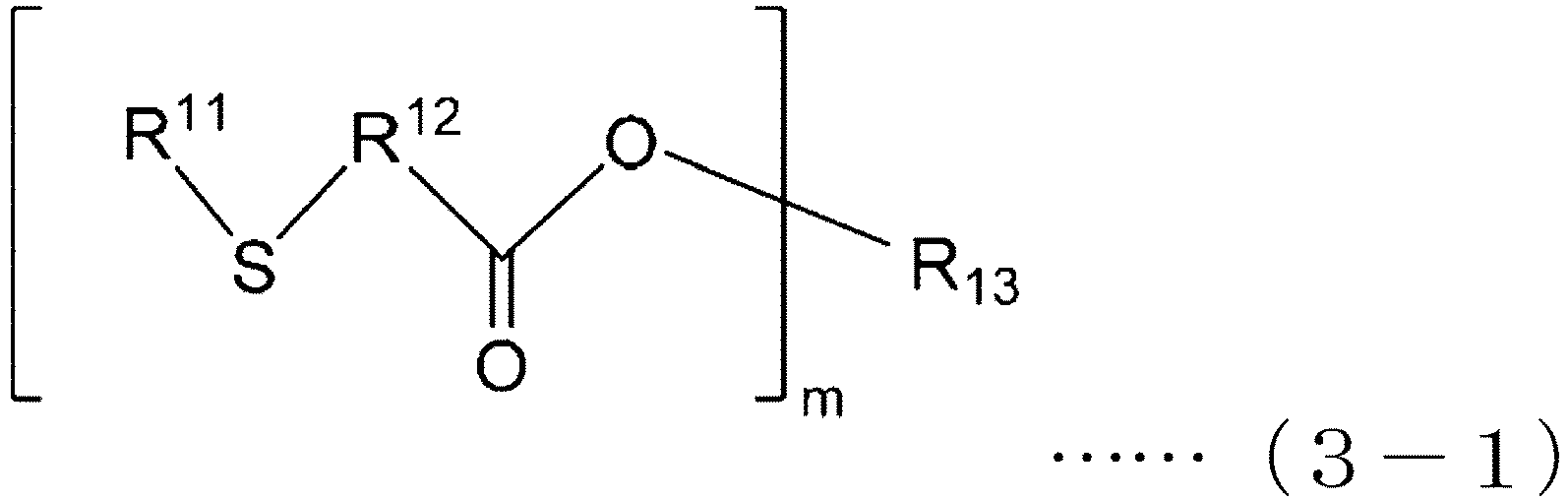
- [13] The polycarbonate resin composition according to any of [1] to [12], wherein
the polycarbonate resin composition comprises the compound having an amide bond and the sulfur compound. - [14] The polycarbonate resin composition according to any of [1] to [13], wherein
contents of the compound having an amide bond and the sulfur compound are each 500 ppm by mass to 10000 ppm by mass. - [15] The polycarbonate resin composition according to any of [1] to [14], wherein
a content of the phosphite ester compound is 500 ppm by mass to 10000 ppm by mass. - [16] The polycarbonate resin composition according to any of [1] to [15], wherein
the phosphite ester compound comprises a structure represented by the following formula (2-2):
- [17] The polycarbonate resin composition according to any of [1] to [15], wherein
the phosphite ester compound comprises a structure represented by the following formula (3-2):
- [18] The polycarbonate resin composition according to any of [1] to [17], wherein
the polycarbonate resin composition comprises the compound having an amide bond and the phosphite ester compound. - [19] The polycarbonate resin composition according to any of [1] to [18], wherein
contents of the compound having an amide bond and the phosphite ester compound are each 500 ppm by mass to 10000 ppm by mass. - The present invention can provide an alicyclic polycarbonate resin composition having excellent heat stability.
- Hereinafter, a mode for carrying out the present invention (hereinafter, simply referred to as the "present embodiment") will be described in detail. The present embodiment given below is an illustration for describing the present invention and does not intend to limit the present invention by the contents given below. The present invention can be carried out through various changes or modifications without departing from the spirit of the present invention.
- The polycarbonate resin composition of the present embodiment comprises: a polycarbonate resin comprising a constituent unit having an alicyclic hydrocarbon site where a carbonate group is linked to two carbon atoms that constitute a ring and are adjacent to each other; and one or two or more compounds selected from the group consisting of a compound having an amide bond, a sulfur compound, and a phosphite ester compound, wherein weight-average molecular weight Mw of the polycarbonate resin measured by size-exclusion chromatography using polystyrene as a standard sample is 50,000 or larger and 500,000 or smaller. The polycarbonate resin composition of the present embodiment is excellent in heat stability by having the feature as described above.
- Although the pyrolysis mechanism of the polycarbonate resin used in the present embodiment is not clear, the pyrolysis is presumably due to the elimination of a monomer through the ring-closing reaction of a carbonate group at a polymer end. Particularly, the presence of an alicyclic hydrocarbon site where a carbonate group is linked to two adjacent carbon atoms of alicyclic hydrocarbon accelerates the ring-closing reaction. When one or two or more compounds selected from the group consisting of a compound having an amide bond, a sulfur compound, and a phosphite ester compound are added to the polycarbonate resin, hydrogen bond action is presumed to occur between the carbonate group at the polymer end and the added compound, suppressing the ring-closing reaction of the carbonate group.
- The mechanism mentioned above is a presumption, and the mechanism is not limited thereto.
- The polycarbonate resin for use in the polycarbonate resin composition of the present embodiment comprises a constituent unit having an alicyclic hydrocarbon site where a carbonate group is linked to two carbon atoms that constitute a ring and are adjacent to each other (hereinafter, also simply referred to as a "constituent unit having an alicyclic hydrocarbon site").
- The constituent unit having an alicyclic hydrocarbon site is preferably represented by the following formula (1) :

- In the formula (1), when n is 1, the ring structure means cyclopentane; when n is 2, the ring structure means cyclohexane; when n is 3, the ring structure means cycloheptane; when n is 4, the ring structure means cyclooctane; when n is 5, the ring structure means cyclononane; and when n is 6, the ring structure means cyclodecane. In the formula (1), two wavy line portions are binding moieties of repeat units.
- In the formula (1), n is preferably an integer of 1 to 4, more preferably an integer of 1 to 3, from the viewpoint of the easy availability of a starting material.
- In the formula (1), each of R4 to R6 may be a hydrogen atom.
- The polycarbonate resin used in the present embodiment preferably comprises a constituent unit represented by the following formula (5) having terminal structures represented by A1 and A2:

- The number of repeats of the constituent unit represented by the formula (5) is, for example, 300 to 3500.
- In the formula (5), each of R4 to R6 may be a hydrogen atom.
- The polycarbonate resin used in the present embodiment is preferably poly(1,2-cyclohexene carbonate). The polycarbonate resin composition of the present embodiment tends to be excellent in both heat stability and transparency when the polycarbonate resin is poly(1,2-cyclohexene carbonate).
- The polycarbonate resin used in the present embodiment has weight-average molecular weight Mw of 50,000 or larger and 500,000 or smaller measured by size-exclusion chromatography using polystyrene as a standard sample. The polycarbonate resin of the present embodiment having Mw that falls within the range described above is easy to process by molding. Such a polycarbonate resin has much better heat resistance, optical characteristics, and mold releasability. From a similar viewpoint, Mw is more preferably 80,000 or larger and 400,000 or smaller, further preferably 100,000 or larger and 300,0000 or smaller.
- The number-average molecular weight Mn of the polycarbonate resin used in the present embodiment measured by size-exclusion chromatography using polystyrene as a standard sample is preferably 50,000 or larger and 500,000 or smaller, more preferably 80,000 or larger and 400,000 or smaller, further preferably 100,000 or larger and 300,0000 or smaller.
- The weight-average molecular weight and the number-average molecular weight of the polycarbonate resin in size-exclusion chromatography can specifically be measured by a method described in Examples.
- In order to control the weight-average molecular weight Mw and the number-average molecular weight Mn of the polycarbonate resin used in the present embodiment to within the range described above, the proportions of a polymerizable monomer, a polymerization initiator, and an additive can be appropriately adjusted, or the polycarbonate resin can be produced by a production method mentioned later. Mw and Mn tend to be able to be increased by decreasing the ratio of the polymerization initiator to the polymerizable monomer. Mw and Mn tend to be able to be increased by stirring using a stirring blade or a flow mixer.
- The glass transition temperature Tg of the polycarbonate resin used in the present embodiment, measured with differential scanning calorimeter is preferably 80°C or higher and 180°C or lower, more preferably 90°C or higher and 180°C or lower, further preferably 100°C or higher and 180°C or lower. The polycarbonate resin composition of the present embodiment tends to have much better heat stability when the glass transition temperature Tg of the polycarbonate resin falls within the range described above.
- Examples of the method for controlling the glass transition temperature Tg of the polycarbonate resin to within the range described above include, but are not particularly limited to, a method of controlling the weight-average molecular weight and the number-average molecular weight of the polycarbonate resin.
- When the polycarbonate resin comprises plural types of constituent units having an alicyclic hydrocarbon site, examples of the molecular sequence of the polycarbonate resin used in the present embodiment include random copolymers, alternate copolymers, and block copolymers. The polycarbonate resin may have two or more types of polymer sequences.
- The stereoregularity of the polycarbonate resin used in the present embodiment includes an isotactic structure, a syndiotactic structure, and an atactic structure. An atactic structure which becomes amorphous is preferred from the viewpoint of more improving transparency.
- Examples of the method for producing the polycarbonate resin used in the present embodiment include, but are not particularly limited to, conventional methods such as the ring-opening polymerization of alicyclic cyclic carbonate represented by the following formula (6), the copolymerization of alicyclic cyclic oxide represented by the following formula (7) with carbon dioxide, and the transesterification method of alicyclic diol represented by the following formula (8) with a carbonate precursor:


- In the method for producing the polycarbonate resin used in the present embodiment, one type of alicyclic cyclic carbonate may be used singly as the cyclic carbonate for use in ring-opening polymerization, or two or more types of arbitrary alicyclic cyclic carbonates differing in R1 to R6 in the formula (6) may be used in combination.
- Examples of the initiator for ring-opening polymerizing the alicyclic cyclic carbonate include, but are not particularly limited to, acid catalysts, base catalysts, and enzyme catalysts. Examples of the base catalyst include, but are not particularly limited to, alkali metals, metal alkoxide, organic acid salts of metals, cyclic amine, triamine compounds, and heterocyclic compounds. Among them, an alkali metal or metal alkoxide is preferred.
- The method for reacting the alicyclic cyclic carbonate in the presence of the initiator in ring-opening polymerization is not particularly limited, and any method may be used as long as the method is a polymerization method usually used, for example, batch polymerization, semi-batch polymerization, or flow polymerization.
- In the method for producing the polycarbonate resin used in the present embodiment, one type of alicyclic cyclic oxide may be used singly as the alicyclic cyclic oxide for use in copolymerization with carbon dioxide, or two or more types of arbitrary alicyclic cyclic oxides differing in R1 to R6 in the formula (7) may be used in combination.
- Examples of the polymerization catalyst for copolymerizing the alicyclic cyclic oxide with carbon dioxide include, but are not particularly limited to, metal catalysts such as aluminum catalysts and zinc catalysts. Among them, a zinc catalyst is preferred, and an organic zinc catalyst is more preferred, because of the reactivity between the alicyclic cyclic oxide and carbon dioxide.
- Examples of the method for reacting the alicyclic cyclic oxide with carbon dioxide in the presence of the polymerization catalyst in CO2 copolymerization include, but are not particularly limited to, a method of mixing the alicyclic cyclic oxide with the polymerization catalyst in an autoclave, and press-fitting carbon dioxide thereinto for reaction.
- In the method for producing the polycarbonate resin used in the present embodiment, one type of alicyclic cyclic diol may be used singly as the alicyclic cyclic diol for use in the transesterification method, or two or more types of arbitrary alicyclic cyclic diols differing in R1 to R6 in the formula (8) may be used in combination.
- The carbonate precursor is not particularly limited, and, for example, carbonate ester or carbonyl halide is used. Specific examples thereof include, but are not particularly limited to, diphenyl carbonate, dimethyl carbonate, and phosgene.
- Examples of the polymerization catalyst for the alicyclic cyclic diol include, but are not particularly limited to, alkali metal hydroxide, alkali metal carbonate, and organic amine. Among them, alkali metal hydroxide is preferred.
- The method for reacting the alicyclic cyclic diol with the carbonate precursor in the presence of the polymerization catalyst in the transesterification method is not particularly limited, and any method may be used as long as the method is a polymerization method usually used, for example, melt polymerization or solid-phase polymerization.
- The method for producing the polycarbonate resin used in the present embodiment preferably comprises a purification step. Examples of the purification method include, but are not particularly limited to, devolatilization purification by warming under reduced pressure, and precipitation purification using a precipitating solvent. In the purification step, one type of method may be used singly, or two or more of methods may be used in combination.
- In the purification step of the polycarbonate resin used in the present embodiment, devolatilization purification may or may not be used. The devolatilization purification conditions are not particularly limited as long as the polycarbonate resin used in the present embodiment can be purified. The devolatilization temperature is preferably 0 to 300°C, more preferably 0 to 270°C, further preferably 100 to 270°C. The devolatilization pressure is preferably 0 to 80 kPaA, more preferably 0 to 50 kPaA, further preferably 0 to 10 kPaA.
- In the purification step of the polycarbonate resin used in the present embodiment, precipitation purification may or may not be used. The precipitation purification conditions are not particularly limited as long as the polycarbonate resin used in the present embodiment can be purified. Preferred examples of the precipitating solvent include alcohol solvents such as methanol, ethanol, propanol, butanol, pentanol, hexanol, heptanol, octanol, and decanol.
- The polycarbonate resin composition of the present embodiment preferably contains a compound having an amide bond, particularly, from the viewpoint of markedly enhancing heat stability in nitrogen. The compound having an amide bond used in the present embodiment is not particularly limited as long as the compound has an amide bond in the molecule. Examples thereof include fatty acid amide, phenylamide-based stabilizers, and oxalic acid anilide-based stabilizers.
- The compound having an amide bond is preferably a compound having a structure represented by the following formula (2), a compound having a structure represented by the following formula (3), or a compound having a structure represented by the following formula (4):


- Examples of the fatty acid amide include, but are not particularly limited to, N-vinylacetamide, N,N-dimethylacetamide, N-ethylacetamide, N-methylpropionamide, 2-amino-N-methylacetamide, 2-hydroxy-N-methylacetamide, N-hydroxymethylacetamide, 2-chloro-N-methylacetamide, 2-bromo-N-methylacetamide, imidazolidin-4-one hydrochloride, N,N-dimethylprop-2-ynamide, N,N-diethylprop-2-ynamide, 1,2-diacetylhydrazine, 4-oxo-4-[N'-(thiophene-2-carbonyl)-hydrazino]butyric acid, stearic acid amide, oleic acid amide, erucic acid amide, ethylenebis(stearic acid amide), methylenebis(stearic acid amide), and ethylenebis(oleic acid amide).
- Examples of the phenylamide-based stabilizer include, but are not particularly limited to, N-(2H-1,2,4-triazol-5-yl)salicylamide, bis[N2-(2-hydroxybenzoyl)hydrazide] dodecanedioate, 2',3'-bis[3-(3,5-di-tert-butyl-4-hydroxyphenyl)propionyl]hydrazine, N,N'-hexamethylenebis[3-(3,5-di-tert-butyl-4-hydroxyphenyl)propanamide], and N,N'-bis-2,2,6,6-tetramethyl-4-piperidinyl-1,3-benzenedicarboxyamide.
- Examples of the oxalic acid anilide-based heat stabilizer include, but are not particularly limited to, 2-ethoxy-2'-ethyl oxalic acid bisanilide, N-(2-ethylphenyl)-N'-(2-ethoxyphenyl)oxalic acid diamide, and 2,2,4,4-tetramethyl-7-oxa-3,20-diazadispiro[5.1.11.2]henicosan-21-one.
- The compound having an amide bond used in the present embodiment is preferably a phenylamide-based stabilizer, more preferably a compound having a structure represented by the formula (4), further preferably 2',3'-bis[3-(3,5-di-tert-butyl-4-hydroxyphenyl)propionyl]hydrazine, from the viewpoint of more effectively and reliably exerting the advantageous effects of the present invention, particularly, from the viewpoint of markedly enhancing heat stability in nitrogen. One type of these compounds may be used singly, or two or more thereof may be used in combination. The enhancement of heat stability in nitrogen tends to improve, for example, heat stability in a solvent devolatilization process in resin production and a molding process, and product heat stability in a deoxidized atmosphere such as vacuum.
- The compound having an amide bond used in the present embodiment is preferably a compound having a structure represented by the formula (2) or a compound having a structure represented by the formula (3), more preferably N-(2H-1,2,4-triazol-5-yl)salicylamide or bis[N2-(2-hydroxybenzoyl)hydrazide] dodecanedioate, from the viewpoint of markedly enhancing heat stability in nitrogen and in air. The enhancement of heat stability in air tends to improve, for example, product heat stability under air.
- The content of the compound having an amide bond for use in the polycarbonate resin composition of the present embodiment is preferably 500 ppm by mass to 10000 ppm by mass, more preferably 500 ppm by mass to 5000 ppm by mass, further preferably 1000 ppm by mass to 5000 ppm by mass, based on the total mass of the polycarbonate resin composition from the viewpoint of the amount of the compound added which sufficiently produces the advantageous effects of the present invention, and cost.
- The polycarbonate resin composition of the present embodiment preferably contains a sulfur compound from the viewpoint of markedly enhancing heat stability in air.
- The sulfur compound is not particularly limited as long as the compound has sulfur in the molecule. Examples thereof include methyl mercaptoacetate, ethyl mercaptoacetate, ethyl 2-(methylthio)acetate, cysteinemethyl, methoxycarbonylsulfenyl chloride, methyl 2-ethylsulfanylacetate, methylthiomethyl acetate, 2-mercaptopropionic acid methyl ester, methyl 3-mercaptopropionate, ethyl 3-mercaptopropanoate, ethyl 2-mercaptopropionate, β-mercaptopropionic acid, methoxybutyl-3-mercaptopropionate, stearyl-3-mercaptopropionate, trimethylolpropane-tris(3-mercaptopropionate), methyl methylthioacetate, methyl 2-methylthiopropionate, methyl 3-methylthiopropionate, 2-ethylhexyl-3-mercaptopropionate, n-octyl-3-mercaptopropionate, pentaerythritol-tetrakis(3-mercaptopropionate), tetraethylene glycol-bis(3-mercaptopropionate), dipentaerythritol-hexakis(3-mercaptopropionate), 3,3'-thiodipropionic acid, dithiodipropionic acid, dodecylthiopropionic acid, thiodiglycolic acid, dimethyl 3-thiaadipate, ethyl 2-[(2-methoxy-2-oxoethyl)sulfanyl]acetate, ethyl [(ethoxycarbonyl)thio]acetate, diethyl 2,2'-thiodiacetate, methyl 3-[(2-methoxy-2-oxoethyl)thio]butanoate, dilauryl-3,3'-thiodipropionate, ditridecyl 3,3'-thiobispropionate, dimyristyl-3,3'-thiodipropionate, distearyl-3,3'-thiodipropionate, pentaerythritol-tetrakis(3-laurylthiopropionate), pentaerythritol-tetrakis(3-myristylthiopropionate), pentaerythritol-tetrakis(3-stearylthiopropionate), pentaerythritol tetrakis[3-(dodecylthio)propionate], ethyl 2-[(2-methoxy-2-oxoethyl)sulfanyl]propanoate, thioglycolic acid-ammonium, thioglycolic acid-monoethanolamine, dithiodiglycolic acid-diammonium, 2,5-thiacylenemethyl, and tris[2-t-butyl-4-thio(2'-methyl-4'-hydroxy-5'-t-butyl)phenyl-5-methyl]-phenyl phosphite.
- Among them, a compound having a structure represented by the formula (2-1) given below, or a compound having a structure represented by the formula (3-1) given below is preferred, and ditridecyl 3,3'-thiobispropionate or pentaerythritol tetrakis[3-(dodecylthio)propionate] is more preferred, particularly, from the viewpoint of markedly enhancing heat stability in air.
- One type of these compounds may be used singly, or two or more thereof may be used in combination. The enhancement of heat stability in air improves, for example, product heat stability under air.


- When the polycarbonate resin composition of the present embodiment contains the sulfur compound, the content of the sulfur compound is preferably 500 ppm by mass to 10000 ppm by mass, more preferably 500 ppm by mass to 5000 ppm by mass, further preferably 1000 ppm by mass to 5000 ppm by mass, based on the total mass of the polycarbonate resin composition from the viewpoint of the amount of the compound added which sufficiently produces the advantageous effects of the present invention, and cost.
- The polycarbonate resin composition of the present embodiment preferably contains the compound having an amide bond and the sulfur compound from the viewpoint of markedly enhancing heat stability in air and in nitrogen.
- When the polycarbonate resin composition of the present embodiment contains the compound having an amide bond and the sulfur compound, the contents of the compound having an amide bond and the sulfur compound are each preferably 500 ppm by mass to 10000 ppm by mass, more preferably 500 ppm by mass to 5000 ppm by mass, further preferably 1000 ppm by mass to 5000 ppm by mass, based on the total mass of the polycarbonate resin composition from the viewpoint of the amounts of the compounds added which sufficiently produce the advantageous effects of the present invention, and cost.
- The polycarbonate resin composition of the present embodiment preferably contains a phosphite ester compound from the viewpoint of markedly enhancing heat stability in nitrogen.
- The phosphite ester compound can be a compound that has phosphite ester in the molecule, and has no bulky substituent near ether in the phosphite ester compound from the viewpoint of causing sufficient interaction between carbonate and the phosphite ester. Examples of the phosphite ester compound include, but are not limited to, trimethyl phosphite, triethyl phosphite, triallyl phosphite, triisopropyl phosphite, tributyl phosphite, trihexyl phosphite, tri(2-ethylhexyl) phosphite, triisodecyl phosphite, trilauryl phosphite, tris(tridecyl) phosphite, trioleyl phosphite, tristearyl phosphite, 1,2-phenylene phosphorochloridite, 2-chloro-4H-1,3,2-benzodioxaphosphorin-4-one, tris(β-chloroethyl) phosphite, diphenylmethyl phosphite, triphenyl phosphite, ethylhexyldiphenyl phosphite, decyldiphenyl phosphite, tris(p-methylphenyl) phosphite, trimethylolpropane phosphite, tris(trimethylsilyl) phosphite, 3,9-bis(octadecyloxy)-2,4,8,10-tetraoxa-3,9-diphosphaspiro[5.5]undecane, trisnonylphenyl phosphite, tetraalkyl(C12-15)-4,4'-isopropylidene diphenyl diphosphite, diphenylisodecyl phosphite, tetraphenyl dipropylene glycol diphosphite, bis(tridecyl)pentaerythritol diphosphite, bis(tridecyl)pentaerythritol diphosphite, distearylpentaerythritol diphosphite, and 2-tert-butyl-6-methyl-4-{3-[(2,4,8,10-tetra-tert-butyldibenzo[d,f][1,3,2]dioxaphosphepin-6-yl)oxy]propyl}phenol.
- For example, a compound having a structure represented by the formula (2-2) given below, or a compound having a structure represented by the formula (3-2) given below is preferred, and trisnonylphenyl phosphite or tetraalkyl(C12-15)-4,4'-isopropylidene diphenyl diphosphite is more preferred, particularly, from the viewpoint of markedly enhancing heat stability in nitrogen.
- One type of these compounds may be used singly, or two or more thereof may be used in combination.
- The enhancement of heat stability in nitrogen improves, for example, heat stability in a solvent devolatilization process in resin production and a molding process, and product heat stability in a deoxidized atmosphere such as vacuum.
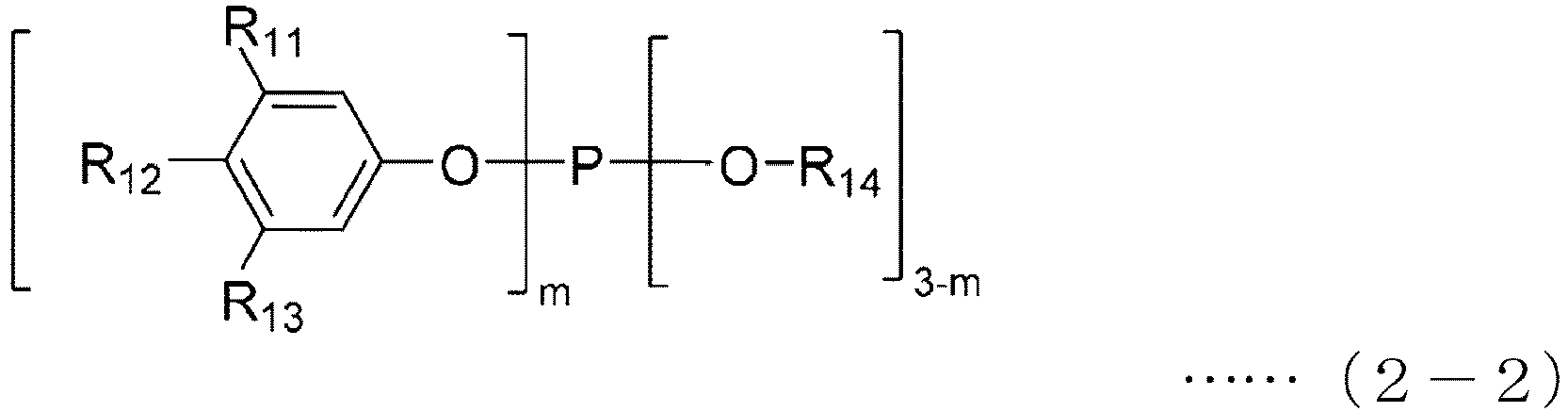

- When the polycarbonate resin composition of the present embodiment contains the phosphite ester compound, the content of the phosphite ester compound is preferably 500 ppm by mass to 10000 ppm by mass, more preferably 500 ppm by mass to 5000 ppm by mass, further preferably 1000 ppm by mass to 5000 ppm by mass, based on the total mass of the polycarbonate resin composition from the viewpoint of the amount of the compound added which sufficiently produces the advantageous effects of the present invention, and cost.
- The polycarbonate resin composition of the present embodiment preferably contains the compound having an amide bond and the phosphite ester compound from the viewpoint of markedly enhancing heat stability in nitrogen.
- When the polycarbonate resin composition of the present embodiment contains the compound having an amide bond and the phosphite ester compound, the contents of the compound having an amide bond and the phosphite ester compound are each preferably 500 ppm by mass to 10000 ppm by mass, more preferably 500 ppm by mass to 5000 ppm by mass, further preferably 1000 ppm by mass to 5000 ppm by mass, based on the total mass of the polycarbonate resin composition from the viewpoint of the amounts of the compounds added which sufficiently produce the advantageous effects of the present invention, and cost.
- The polycarbonate resin composition of the present embodiment may be supplemented with other additives such as a neutralizer, an ultraviolet absorber, a mold release agent, a colorant, an antistatic agent, a lubricant, a sliding agent, a plasticizer, a compatibilizer, a flame retardant a bluing agent, and a fluidity modifier.
- In the present embodiment, the one or two or more compounds selected from the group consisting of a compound having an amide bond, a sulfur compound, and a phosphite ester compound to be blended into the polycarbonate resin (hereinafter, also simply referred to as a "compound to be added"), the timing of mixing, and the mixing method are not particularly limited. The timing of mixing is, for example, preferably after addition of a polymerization terminator or after precipitation purification from the viewpoint of pyrolysis prevention.
- In the present embodiment, examples of the method for blending the compound to be added into the polycarbonate resin include, but are not particularly limited to, a kneading method using a kneader, a tumbler mixer, a V-type mixer, a NAUTA mixer, a Banbury mixer, a roll, or an extruder, and a solution blend method of performing mixing in a state dissolved in a common good solvent such as acetone. Any method may be used as long as the method is a blend method usually used.
- The present invention will be described further specifically with reference to Examples and Comparative Examples. However, the present invention is not limited by these Examples, etc. by any means.
- In the present specification, the heat stability of a polycarbonate resin and a polycarbonate resin composition was measured as follows.
- A solution of 2.0 g of tetrahydrofuran added to 0.02 g of the polycarbonate resin was used as a measurement sample. The weight-average molecular weight of the polycarbonate resin was measured using a HPLC apparatus (manufactured by Tosoh Corp., product name "HLC-8420GPC"). The column used was TSK guard column SuperH-H, TSKgel SuperHM-H, TSKgel SuperHM-H, TSKgel SuperH2000, and TSKgel SuperH1000 manufactured by Tosoh Corp. (all are product names manufactured by Tosoh Corp.) connected in series. The column temperature was set to 40°C, and the sample was analyzed at a rate of 0.60 mL/min with tetrahydrofuran as a mobile phase. The detector used was a RI detector. A calibration curve was prepared using polystyrene standard samples manufactured by PSS Polymer Standards Service GmbH (molecular weight: 2520000, 1240000, 552000, 277000, 130000, 66000, 34800, 19700, 8680, 3470, 1306, and 370) as standard samples. The number-average molecular weight and the weight-average molecular weight of the polycarbonate resin were determined on the basis of the calibration curve thus prepared.
- The glass transition temperature Tg of the polycarbonate resin was measured under conditions involving a nitrogen gas flow rate of 20 mL/min using a differential scanning calorimeter manufactured by PerkinElmer Co., Ltd. (product name "DSC8500"). More specifically, the sample was kept at 40°C for 3 minutes and then heated from 40°C to 200°C at 20°C/min to completely melt the sample. Then, the sample was cooled from 200°C to 40°C at 50°C/min and kept at 40°C for 5 minutes. Subsequently, the point of intersection between a curve at a step-like change portion and a straight line equidistant in the ordinate direction from the respective extended lines of tangents (intermediate-point glass transition temperature) in a DSC curve drawn in secondary heating from 40°C to 190°C at 10°C/min was regarded as the glass transition temperature (Tg).
- The polycarbonate resin or the polycarbonate resin composition was heated at a rate of 10°C/min in a nitrogen current and in an air current using a TG-DTA apparatus manufactured by Shimadzu Corp. (product name: DTG-60A) and an aluminum krypton cell. The pyrolysis (TGA) of the polycarbonate resin or the polycarbonate resin composition was measured, and a pyrolysis start temperature was obtained from the point of intersection between tangents in a TGA curve. Based on the pyrolysis start temperature of a test specimen of the polycarbonate resin of Comparative Example 1, the effect of improving heat stability was determined as being present (indicated by "○" in Table 1) when the pyrolysis start temperature was higher, and as being absent (indicated by "×" in Table 1) when the pyrolysis start temperature was lower.
- The abbreviations of compounds used in Examples and Comparative Examples given below are as follows.
- (A) Polycarbonate resin
A-1: polycarbonate resin that is constituted by 100 mol% of a structural unit derived from poly(1,2-cyclohexene carbonate), and has a weight-average molecular weight of 211,000 and glass transition temperature Tg of 120°C - (B) Compound having amide bond
- B-1: 2',3'-bis[3-(3,5-di-tert-butyl-4-hydroxyphenyl)propionyl]hydrazine
- B-2: N-(2H-1,2,4-triazol-5-yl)salicylamide
- B-3: bis[N2-(2-hydroxybenzoyl)hydrazide] dodecanedioate
- (C) Antioxidant
- C-1: hindered phenol compound (Irganox 1010 manufactured by BASF SE)
- C-2: hindered phenol compound (Irganox 1076 manufactured by BASF SE)
- C-3: hindered phenol compound (SUMILIZER GA-80 manufactured by Sumitomo Chemical Co., Ltd.)
- C-4: phosphite ester compound (Irgafos 168 manufactured by BASF SE)
- C-5: phosphite ester compound (ADEKASTAB PEP-36 manufactured by ADEKA Corp.)
- (D) Light stabilizer
D-1: hindered amine compound (ADEKASTAB LA-81 manufactured by ADEKA Corp.) - 1.0 g of the polycarbonate resin (A-1) and 2.0 g of an acetone solution containing 1000 ppm of the compound (B-1) having an amide bond were mixed using a magnetic stirrer so as to have the composition shown in Table 1, and dried in vacuum at 100°C for 2 hours to obtain a polycarbonate resin composition. The obtained polycarbonate resin composition was pressure-molded at 20 MPaG in a hydraulic press to obtain a plate-like test specimen of the polycarbonate resin composition. Results of measuring heat stability evaluated using the obtained test specimen are shown in Table 1.
- Each polycarbonate resin composition was obtained in the same manner as in Example 1 except that the blending of the additive (compound having an amide bond) was changed as shown in Table 1. The obtained polycarbonate resin composition was molded into a test specimen in the same manner as in Example 1 and then evaluated. The results are shown in Table 1.
- 2.0 g of acetone was added to 1.0 g of the polycarbonate resin (A-1), which was dissolved using a magnetic stirrer, dried in vacuum at 100°C for 2 hours, and pressure-molded at 20 MPaG in a hydraulic press to obtain a plate-like test specimen of the polycarbonate resin. The obtained polycarbonate resin was molded into a test specimen in the same manner as in Example 1 and then evaluated. The results are shown in Table 1.
- Each polycarbonate resin composition was obtained in the same manner as in Example 1 except that the blending of the additive (antioxidant or light stabilizer) was changed as shown in Table 1. The obtained polycarbonate resin composition was molded into a test specimen in the same manner as in Example 1 and then evaluated. The results are shown in Table 1.
[Table 1] Ex. 1 Ex. 2 Ex. 3 Comp. Ex. 1 Comp. Ex. 2 Comp. Ex. 3 Comp. Ex. 4 Comp. Ex. 5 Comp. Ex. 6 Comp. Ex. 7 Polycarbonate resin (A-1) (% by mass) 99.8 99.9 99.8 100 100.0 99.8 99.8 99.8 99.8 99.8 Type of additive B-1 B-2 B-3 - C-1 C-2 C-3 C-4 C-5 0-1 Amount added (% by mass) 0.2 0.07 0.17 - 0.2 0.17 0.2 0.2 0.2 0.2 Pyrolysis start temperature (°C) In nitrogen current 281 279 277 267 266 265 268 259 266 259 In air current 284 294 294 287 267 268 267 285 268 285 Effect of improving heat stability In nitrogen current ○ ○ ○ - × × × × × × In air current × ○ ○ - × × × × × × - From Table 1, the polycarbonate resin compositions of Examples 1 to 3 were found to have a higher pyrolysis start temperature and better heat stability than those of the polycarbonate resin and the polycarbonate resin compositions of Comparative Examples 1 to 7.
- Hereinafter, the present embodiment will be described with reference to other specific Examples and Comparative Examples. However, the present embodiment is not limited by the following Examples, etc. by any means.
- The physical properties and characteristics of a polycarbonate resin and a polycarbonate resin composition were measured as follows.
- A solution of 2.0 g of tetrahydrofuran added to 0.02 g of the polycarbonate resin was used as a measurement sample. The weight-average molecular weight of the polycarbonate resin was measured using a HPLC apparatus (manufactured by Tosoh Corp., product name "HLC-8420GPC").
- The column used was TSK guard column SuperH-H, TSKgel SuperHM-H, TSKgel SuperHM-H, TSKgel SuperH2000, and TSKgel SuperH1000 manufactured by Tosoh Corp. (all are product names manufactured by Tosoh Corp.) connected in series.
- The column temperature was set to 40°C, and the sample was analyzed at a rate of 0.60 mL/min with tetrahydrofuran as a mobile phase.
- The detector used was a RI detector.
- A calibration curve was prepared using polystyrene standard samples manufactured by PSS Polymer Standards Service GmbH (molecular weight: 2520000, 1240000, 552000, 277000, 130000, 66000, 34800, 19700, 8680, 3470, 1306, and 370) as standard samples.
- The weight-average molecular weight of the polycarbonate resin was determined on the basis of the calibration curve thus prepared.
- The glass transition temperature Tg of the polycarbonate resin was measured under conditions involving a nitrogen gas flow rate of 20 mL/min using a differential scanning calorimeter manufactured by PerkinElmer Co., Ltd. (product name "DSC8500").
- More specifically, the sample was kept at 40°C for 3 minutes and then heated from 40°C to 200°C at 20°C/min to completely melt the sample. Then, the sample was cooled from 200°C to 40°C at 50°C/min and kept at 40°C for 5 minutes. Subsequently, the point of intersection between a curve at a step-like change portion and a straight line equidistant in the ordinate direction from the respective extended lines of tangents (intermediate-point glass transition temperature) in a DSC curve drawn in secondary heating from 40°C to 190°C at 10°C/min was regarded as the glass transition temperature (Tg).
- The polycarbonate resin or the polycarbonate resin composition was heated at a rate of 10°C/min in an air current using a TG-DTA apparatus manufactured by Shimadzu Corp. (product name: DTG-60A) and an aluminum krypton cell. The pyrolysis (TGA) of the polycarbonate resin or the polycarbonate resin composition was measured, and a pyrolysis start temperature was obtained from the point of intersection between tangents in a TGA curve.
- Based on the pyrolysis start temperature of a test specimen of the polycarbonate resin of Comparative Example 8, the effect of improving heat stability was evaluated as being present (indicated by "○" in Table 2) when the pyrolysis start temperature was +3°C or more, and as being absent (indicated by "×" in Table 2) when the pyrolysis start temperature was less than +3°C.
- The abbreviations of compounds used in Examples and Comparative Examples given below are as follows.
- ((A) Polycarbonate resin)
A-1: polycarbonate resin that is constituted by 100 mol% of a structural unit derived from poly(1,2-cyclohexene carbonate), and has a weight-average molecular weight of 211,000 and glass transition temperature Tg of 120°C - ((B) Sulfur compound)
- B-1: ditridecyl 3,3'-thiobispropionate
- B-2: pentaerythritol tetrakis[3-(dodecylthio)propionate]
- ((C) Antioxidant)
- C-1: hindered phenol compound (Irganox 1010 manufactured by BASF SE)
- C-2: hindered phenol compound (Irganox 1076 manufactured by BASF SE)
- C-3: hindered phenol compound (SUMILIZER GA-80 manufactured by Sumitomo Chemical Co., Ltd.)
- C-4: phosphite ester compound (Irgafos 168 manufactured by BASF SE)
- C-5: phosphite ester compound (ADEKASTAB PEP-36 manufactured by ADEKA Corp.)
- ((D) Light stabilizer)
D-1: hindered amine compound (ADEKASTAB LA-81 manufactured by ADEKA Corp.) - 1.0 g of the polycarbonate resin (A-1) and 2.0 g of an acetone solution containing 1000 ppm of the sulfur compound (B-1) were mixed using a magnetic stirrer so as to have the composition shown in Table 2, and dried in vacuum at 100°C for 2 hours to obtain a polycarbonate resin composition.
- The obtained polycarbonate resin composition was pressure-molded at 20 MPaG in a hydraulic press to obtain a plate-like test specimen of the polycarbonate resin composition.
- Results of measuring and evaluating heat stability using the obtained test specimen are shown in Table 2.
- A polycarbonate resin composition was obtained in the same manner as in Example 4 except that the blending of the additive (sulfur compound) was changed as shown in Table 2. The obtained polycarbonate resin composition was prepared into a test specimen in the same manner as in Example 4 and then measured and evaluated. The results are shown in Table 2.
- 2.0 g of acetone was added to 1.0 g of the polycarbonate resin (A-1), which was dissolved using a magnetic stirrer, dried in vacuum at 100°C for 2 hours, and pressure-molded at 20 MPaG in a hydraulic press to obtain a plate-like test specimen of the polycarbonate resin.
- The obtained polycarbonate resin was measured and evaluated in the same manner as in Example 4. The results are shown in Table 2.
- Each polycarbonate resin composition was obtained in the same manner as in Example 4 except that the blending of the additive (antioxidant or light stabilizer) was changed as shown in Table 2. The obtained polycarbonate resin composition was prepared into a test specimen in the same manner as in Example 4 and then measured and evaluated. The results are shown in Table 2.
[Table 2] Ex. 4 Ex. 5 Comp. Ex. 8 Comp. Ex. 9 Comp. Ex. 10 Comp. Ex. 11 Comp. Ex. 12 Comp. Ex. 13 Comp. Ex. 14 Polycarbonate resin (A-1) (wt%) 99.8 99.8 100 99.8 99.8 99.8 99.8 99.8 99.8 Additive (wt%) 0.2 0.2 - 0.2 0.2 0.2 0.2 0.2 0.2 Type of additive B-1 B-2 - C-1 C-2 C-3 C-4 C-5 0-1 Pyrolysis start temperature (°C) In air current 292 294 287 267 268 267 285 268 285 Effect of improving heat stability In air current ○ ○ - × × × × × × - From Table 2, the polycarbonate resin compositions of Examples 4 and 5 were found to have a higher pyrolysis start temperature and better heat stability than those of the polycarbonate resin and the polycarbonate resin compositions of Comparative Examples 8 to 14.
- Hereinafter, the present embodiment will be described with reference to other specific Examples and Comparative Examples. However, the present embodiment is not limited by the following Examples, etc. by any means.
- The physical properties and characteristics of a polycarbonate resin and a polycarbonate resin composition were measured as follows.
- A solution of 2.0 g of tetrahydrofuran added to 0.02 g of the polycarbonate resin was used as a measurement sample. The weight-average molecular weight of the polycarbonate resin was measured using a HPLC apparatus (manufactured by Tosoh Corp., product name "HLC-8420GPC").
- The column used was TSK guard column SuperH-H, TSKgel SuperHM-H, TSKgel SuperHM-H, TSKgel SuperH2000, and TSKgel SuperH1000 manufactured by Tosoh Corp. (all are product names manufactured by Tosoh Corp.) connected in series.
- The column temperature was set to 40°C, and the sample was analyzed at a rate of 0.60 mL/min with tetrahydrofuran as a mobile phase.
- The detector used was a RI detector.
- A calibration curve was prepared using polystyrene standard samples manufactured by PSS Polymer Standards Service GmbH (molecular weight: 2520000, 1240000, 552000, 277000, 130000, 66000, 34800, 19700, 8680, 3470, 1306, and 370) as standard samples.
- The weight-average molecular weight of the polycarbonate resin was determined on the basis of the calibration curve thus prepared.
- The glass transition temperature Tg of the polycarbonate resin was measured under conditions involving a nitrogen gas flow rate of 20 mL/min using a differential scanning calorimeter manufactured by PerkinElmer Co., Ltd. (product name "DSC8500").
- More specifically, the sample was kept at 40°C for 3 minutes and then heated from 40°C to 200°C at 20°C/min to completely melt the sample. Then, the sample was cooled from 200°C to 40°C at 50°C/min and kept at 40°C for 5 minutes. Subsequently, the point of intersection between a curve at a step-like change portion and a straight line equidistant in the ordinate direction from the respective extended lines of tangents (intermediate-point glass transition temperature) in a DSC curve drawn in secondary heating from 40°C to 190°C at 10°C/min was regarded as the glass transition temperature (Tg).
- The polycarbonate resin or the polycarbonate resin composition was heated at a rate of 10°C/min in a nitrogen current or in an air current using a TG-DTA apparatus manufactured by Shimadzu Corp. (product name: DTG-60A) and an aluminum krypton cell. The pyrolysis (TGA) of the polycarbonate resin or the polycarbonate resin composition was measured, and a pyrolysis start temperature was obtained from the point of intersection between tangents in a TGA curve.
- The abbreviations of compounds used in Examples and Comparative Examples given below are as follows.
- ((A) Polycarbonate resin)
A-1: polycarbonate resin that is constituted by 100 mol% of a structural unit derived from poly(1,2-cyclohexene carbonate), and has a weight-average molecular weight of 211,000 and glass transition temperature Tg of 120°C - ((B) Compound having amide bond)
- B-1: 2',3'-bis[3-(3,5-di-tert-butyl-4-hydroxyphenyl)propionyl]hydrazine
- B-2: N-(2H-1,2,4-triazol-5-yl)salicylamide
- ((C) Sulfur compound)
- C-1: pentaerythritol tetrakis[3-(dodecylthio)propionate]
- C-2: ditridecyl 3,3'-thiobispropionate
- 1.0 g of the polycarbonate resin (A-1), 2.0 g of an acetone solution containing 1000 ppm of the compound (B-1) having an amide bond, and 2.0 g of an acetone solution containing 1000 ppm of the sulfur compound (C-1) were mixed using a magnetic stirrer so as to have the composition shown in Table 3, and dried in vacuum at 100°C for 2 hours to obtain a polycarbonate resin composition.
- The obtained polycarbonate resin composition was pressure-molded at 20 MPaG in a hydraulic press to obtain a plate-like test specimen of the polycarbonate resin composition.
- Results of measuring heat stability evaluated using the obtained test specimen are shown in Table 3.
- Based on the highest pyrolysis start temperature among the results of measuring the heat stability of test specimens of polycarbonate resin compositions of Comparative Example 15, Comparative Example 16, and Comparative Example 19, the effect of improving heat stability was determined as being present (indicated by " ○" in Table 3) when the pyrolysis start temperature was +3°C or more, and as being absent (indicated by "×" in Table 3) when the pyrolysis start temperature was less than +3°C.
- Each polycarbonate resin composition was obtained in the same manner as in Example 6 except that the blending of the additives was changed as shown in Table 4.
- The obtained polycarbonate resin composition was molded into a test specimen in the same manner as in Example 6 and then evaluated. The results are shown in Table 4.
- Based on the highest pyrolysis start temperature among the results of measuring the heat stability of test specimens of polycarbonate resin compositions of Comparative Example 15 and Comparative Example 17 to Comparative Example 19, the effect of improving heat stability was determined as being present (indicated by " ○" in Table 4) when the pyrolysis start temperature was +3°C or more, and as being absent (indicated by "×" in Table 4) when the pyrolysis start temperature was less than +3°C.
- 4.0 g of acetone was added to 1.0 g of the polycarbonate resin (A-1), which was dissolved using a magnetic stirrer, dried in vacuum at 100°C for 2 hours, and pressure-molded at 20 MPaG in a hydraulic press to obtain a plate-like test specimen of the polycarbonate resin. The obtained polycarbonate resin was molded into a test specimen in the same manner as in Example 6 and then evaluated. The results are shown in Tables 3 and 4.
- Each polycarbonate resin composition was obtained in the same manner as in Example 6 except that the blending of the additives was changed as shown in Table 3 or 4. The obtained polycarbonate resin composition was molded into a test specimen in the same manner as in Example 6 and then evaluated. The results are shown in Table 3 or 4.
[Table 3] Example 6 Comparative Example 15 Comparative Example 16 Comparative Example 19 Polycarbonate resin (A-1) (% by mass) 99.6 100 99.6 99.8 Type of additive 1 Type of additive B-1 - B-1 C-2 Amount added (% by mass) 0.2 - 0.4 0.2 Type of additive 2 Type of additive C-2 - - - Amount added (% by mass) 0.2 - - - Pyrolysis start temperature (°C) In nitrogen current 285 267 285 269 In air current 299 287 286 292 Effect of improving heat stability In nitrogen current × - - - In air current ○ - - - - From Table 3, the polycarbonate resin composition of Example 6 was found to have better heat stability than that of the polycarbonate resin and the polycarbonate resin compositions of Comparative Example 15, Comparative Example 16, and Comparative Example 19.
[Table 4] Example 7 Example 8 Comparative Example 15 Comparative Example 17 Comparative Example 18 Comparative Example 19 Polycarbonate resin (A-1) (% by mass) 99.6 99.6 100 99.6 99.8 99.8 Type of additive 1 Type of additive B-2 B-2 - B-2 C-1 C-2 Amount added (% by mass) 0.2 0.2 - 0.4 0.2 0.2 Type of additive 2 Type of additive C-1 C-2 - - - - Amount added (% by mass) 0.2 0.2 - - - - Pyrolysis start temperature (°C) In nitrogen current 295 306 267 293 266 269 In air current 304 304 287 295 294 292 Effect of improving heat stability In nitrogen current × ○ - - - - In air current ○ ○ - - - - - From Table 4, the polycarbonate resin compositions of Examples 7 to 8 were found to have a higher pyrolysis start temperature and better heat stability than those of the polycarbonate resin and the polycarbonate resin compositions of Comparative Example 15, and Comparative Examples 17 to 19.
- Hereinafter, the present embodiment will be described with reference to other specific Examples and Comparative Examples. However, the present embodiment is not limited by the following Examples, etc. by any means.
- The physical properties and characteristics of a polycarbonate resin and a polycarbonate resin composition were measured as follows.
- A solution of 2.0 g of tetrahydrofuran added to 0.02 g of the polycarbonate resin was used as a measurement sample. The weight-average molecular weight of the polycarbonate resin was measured using a HPLC apparatus (manufactured by Tosoh Corp., product name "HLC-8420GPC").
- The column used was TSK guard column SuperH-H, TSKgel SuperHM-H, TSKgel SuperHM-H, TSKgel SuperH2000, and TSKgel SuperH1000 manufactured by Tosoh Corp. (all are product names manufactured by Tosoh Corp.) connected in series.
- The column temperature was set to 40°C, and the sample was analyzed at a rate of 0.60 mL/min with tetrahydrofuran as a mobile phase.
- The detector used was a RI detector.
- A calibration curve was prepared using polystyrene standard samples manufactured by PSS Polymer Standards Service GmbH (molecular weight: 2520000, 1240000, 552000, 277000, 130000, 66000, 34800, 19700, 8680, 3470, 1306, and 370) as standard samples.
- The weight-average molecular weight of the polycarbonate resin was determined on the basis of the calibration curve thus prepared.
- The glass transition temperature Tg of the polycarbonate resin was measured under conditions involving a nitrogen gas flow rate of 20 mL/min using a differential scanning calorimeter manufactured by PerkinElmer Co., Ltd. (product name "DSC8500").
- More specifically, the sample was kept at 40°C for 3 minutes and then heated from 40°C to 200°C at 20°C/min to completely melt the sample. Then, the sample was cooled from 200°C to 40°C at 50°C/min and kept at 40°C for 5 minutes. Subsequently, the point of intersection between a curve at a step-like change portion and a straight line equidistant in the ordinate direction from the respective extended lines of tangents (intermediate-point glass transition temperature) in a DSC curve drawn in secondary heating from 40°C to 190°C at 10°C/min was regarded as the glass transition temperature (Tg).
- The polycarbonate resin or the polycarbonate resin composition was heated at a rate of 10°C/min in a nitrogen current using a TG-DTA apparatus manufactured by Shimadzu Corp. (product name: DTG-60A) and an aluminum krypton cell. The pyrolysis (TGA) of the polycarbonate resin or the polycarbonate resin composition was measured, and a pyrolysis start temperature was obtained from the point of intersection between tangents in a TGA curve.
- Based on the pyrolysis start temperature of a test specimen of the polycarbonate resin of Comparative Example 20, the effect of improving heat stability was evaluated as being present (indicated by "○" in Table 5) when the pyrolysis start temperature was +3°C or more, and as being absent (indicated by "×" in Table 5) when the pyrolysis start temperature was less than +3°C.
- The abbreviations of compounds used in Examples and Comparative Examples given below are as follows.
- ((A) Polycarbonate resin)
A-1: polycarbonate resin that is constituted by 100 mol% of a structural unit derived from poly(1,2-cyclohexene carbonate), and has a weight-average molecular weight of 211,000 and glass transition temperature Tg of 120°C - ((B) Phosphite ester compound)
- B-1: triphenyl phosphite
- B-2: tetraalkyl(C12-15)-4,4'-isopropylidene diphenyl diphosphite
- B-3: trisnonylphenyl phosphite
- ((C) Antioxidant)
- C-1: hindered phenol compound (Irganox 1010 manufactured by BASF SE)
- C-2: hindered phenol compound (Irganox 1076 manufactured by BASF SE)
- C-3: hindered phenol compound (SUMILIZER GA-80 manufactured by Sumitomo Chemical Co., Ltd.)
- C-4: phosphite ester compound (Irgafos 168 manufactured by BASF SE)
- C-5: phosphite ester compound (ADEKASTAB PEP-36 manufactured by ADEKA Corp.)
- ((D) Light stabilizer)
D-1: hindered amine compound (ADEKASTAB LA-81 manufactured by ADEKA Corp.) - 1.0 g of the polycarbonate resin (A-1) and 2.0 g of an acetone solution containing 1000 ppm of the phosphite ester compound (B-1) were mixed using a magnetic stirrer so as to have the composition shown in Table 5, and dried in vacuum at 100°C for 2 hours to obtain a polycarbonate resin composition.
- The obtained polycarbonate resin composition was pressure-molded at 20 MPaG in a hydraulic press to obtain a plate-like test specimen of the polycarbonate resin composition.
- Results of measuring and evaluating heat stability using the obtained test specimen are shown in Table 5.
- Each polycarbonate resin composition was obtained in the same manner as in Example 9 except that the blending of the additive (phosphite ester compound) was changed as shown in Table 5. The obtained polycarbonate resin composition was molded into a test specimen in the same manner as in Example 9 and then measured and evaluated. The results are shown in Table 5.
- 2.0 g of acetone was added to 1.0 g of the polycarbonate resin (A-1), which was dissolved using a magnetic stirrer, dried in vacuum at 100°C for 2 hours, and pressure-molded at 20 MPaG in a hydraulic press to obtain a plate-like test specimen of the polycarbonate resin.
- The obtained polycarbonate resin was measured and evaluated in the same manner as in Example 9. The results are shown in Table 5.
- Each polycarbonate resin composition was obtained in the same manner as in Example 9 except that the blending of the additive (antioxidant or light stabilizer) was changed as shown in Table 5. The obtained polycarbonate resin composition was molded into a test specimen in the same manner as in Example 9 and then measured and evaluated. The results are shown in Table 5.
[Table 5] Ex. 9 Ex. 10 Ex. 11 Comp. Ex. 20 Comp. Ex. 21 Comp. Ex. 22 Comp. Ex. 23 Comp. Ex. 24 Comp. Ex. 25 Comp. Ex. 26 Polycarbonate resin (A-1) (wt%) 99.8 99.8 99.8 100 99.8 99.8 99.8 99.8 99.8 99.8 Additive (wt%) 0.2 0.2 0.2 - 0.2 0.2 0.2 0.2 0.2 0.2 Type of additive B-1 B-2 B-3 - C-1 C-2 C-3 C-4 C-5 0-1 Pyrolysis start temperature (°C) In nitrogen current 273 271 273 267 266 265 268 264 266 259 Effect of improving heat stability In nitrogen current ○ ○ ○ - × × × × × × - From Table 5, the polycarbonate resin compositions of Examples 9 to 11 were found to have a higher pyrolysis start temperature and better heat stability than those of the polycarbonate resin and the polycarbonate resin compositions of Comparative Examples 20 to 26.
- Hereinafter, the present embodiment will be described with reference to other specific Examples and Comparative Examples. However, the present embodiment is not limited by the following Examples, etc. by any means.
- The physical properties and characteristics of a polycarbonate resin and a polycarbonate resin composition were measured as follows.
- A solution of 2.0 g of tetrahydrofuran added to 0.02 g of the polycarbonate resin was used as a measurement sample. The weight-average molecular weight of the polycarbonate resin was measured using a HPLC apparatus (manufactured by Tosoh Corp., product name "HLC-8420GPC").
- The column used was TSK guard column SuperH-H, TSKgel SuperHM-H, TSKgel SuperHM-H, TSKgel SuperH2000, and TSKgel SuperH1000 manufactured by Tosoh Corp. (all are product names manufactured by Tosoh Corp.) connected in series.
- The column temperature was set to 40°C, and the sample was analyzed at a rate of 0.60 mL/min with tetrahydrofuran as a mobile phase.
- The detector used was a RI detector.
- A calibration curve was prepared using polystyrene standard samples manufactured by PSS Polymer Standards Service GmbH (molecular weight: 2520000, 1240000, 552000, 277000, 130000, 66000, 34800, 19700, 8680, 3470, 1306, and 370) as standard samples.
- The weight-average molecular weight of the polycarbonate resin was determined on the basis of the calibration curve thus prepared.
- The glass transition temperature Tg of the polycarbonate resin was measured under conditions involving a nitrogen gas flow rate of 20 mL/min using a differential scanning calorimeter manufactured by PerkinElmer Co., Ltd. (product name "DSC8500").
- More specifically, the sample was kept at 40°C for 3 minutes and then heated from 40°C to 200°C at 20°C/min to completely melt the sample. Then, the sample was cooled from 200°C to 40°C at 50°C/min and kept at 40°C for 5 minutes. Subsequently, the point of intersection between a curve at a step-like change portion and a straight line equidistant in the ordinate direction from the respective extended lines of tangents (intermediate-point glass transition temperature) in a DSC curve drawn in secondary heating from 40°C to 190°C at 10°C/min was regarded as the glass transition temperature (Tg).
- The polycarbonate resin or the polycarbonate resin composition was heated at a rate of 10°C/min in a nitrogen current using a TG-DTA apparatus manufactured by Shimadzu Corp. (product name: DTG-60A) and an aluminum krypton cell. The pyrolysis (TGA) of the polycarbonate resin or the polycarbonate resin composition was measured, and a pyrolysis start temperature was obtained from the point of intersection between tangents in a TGA curve.
- Based on the highest pyrolysis start temperature among results of measuring the heat stability of test specimens of Comparative Examples 27 to 31, the effect of improving heat stability was evaluated as being present (indicated by "○" in Table 6) when the pyrolysis start temperature was +3°C or more, and as being absent (indicated by "×" in Table 6) when the pyrolysis start temperature was less than +3°C.
- The abbreviations of compounds used in Examples and Comparative Examples given below are as follows.
- ((A) Polycarbonate resin)
A-1: polycarbonate resin that is constituted by 100 mol% of a structural unit derived from poly(1,2-cyclohexene carbonate), and has a weight-average molecular weight of 211,000 and glass transition temperature Tg of 120°C - ((B) Compound having amide bond)
B-1: 2',3'-bis[3-(3,5-di-tert-butyl-4-hydroxyphenyl)propionyl]hydrazine - ((C) Phosphite ester compound)
- C-1: triphenyl phosphite
- C-2: trisnonylphenyl phosphite
- C-3: triisodecyl phosphite
- 1.0 g of the polycarbonate resin (A-1), 2.0 g of an acetone solution containing 1000 ppm of the compound (B-1) having an amide bond, and 2.0 g of an acetone solution containing 1000 ppm of the phosphite ester compound (C-1) were mixed using a magnetic stirrer so as to have the composition shown in Table 6, and dried in vacuum at 100°C for 2 hours to obtain a polycarbonate resin composition.
- The obtained polycarbonate resin composition was pressure-molded at 20 MPaG in a hydraulic press to obtain a plate-like test specimen of the polycarbonate resin composition.
- Results of measuring and evaluating heat stability using the obtained test specimen are shown in Table 6.
- Each polycarbonate resin composition was obtained in the same manner as in Example 12 except that the blending of the additives was changed as shown in Table 6. The obtained polycarbonate resin composition was molded into a test specimen in the same manner as in Example 12 and then measured and evaluated. The results are shown in Table 6.
- 4.0 g of acetone was added to 1.0 g of the polycarbonate resin (A-1), which was dissolved using a magnetic stirrer, dried in vacuum at 100°C for 2 hours, and pressure-molded at 20 MPaG in a hydraulic press to obtain a plate-like test specimen of the polycarbonate resin.
- The obtained polycarbonate resin was measured and evaluated in the same manner as in Example 12. The results are shown in Table 6.
- Each polycarbonate resin composition was obtained in the same manner as in Example 12 except that the blending of the additives was changed as shown in Table 6. The obtained polycarbonate resin composition was molded into a test specimen in the same manner as in Example 12 and then measured and evaluated. The results are shown in Table 6.
[Table 6] Ex. 12 Ex. 13 Ex. 14 Comp. Ex. 27 Comp. Ex. 28 Comp. Ex. 29 Comp. Ex. 30 Comp. Ex. 31 Polycarbonate resin (A-1) (% by mass) 99.6 99.6 99.6 100 99.6 99.8 99.8 99.8 Type of additive 1 Type of additive B-1 B-1 B-1 - B-1 C-1 C-2 C-3 Amount added (% by mass) 0.2 0.2 0.2 - 0.4 0.2 0.2 0.2 Type of additive 2 Type of additive C-1 C-2 C-3 - - - - - Amount added (% by mass) 0.2 0.2 0.2 - - - - - Pyrolysis start temperature (°C) In nitrogen current 289 290 289 267 285 273 273 266 Effect of improving heat stability In nitrogen current ○ ○ ○ - - - - - - From Table 6, the polycarbonate resin compositions of Examples 12 to 14 were found to have a higher pyrolysis start temperature and better heat stability than those of the polycarbonate resin and the polycarbonate resin compositions of Comparative Examples 27 to 31.
- The present specification is based on
Japanese Patent Application No. 2021-058235 filed on March 30, 2021 Japanese Patent Application No. 2021-144709 filed on September 6, 2021 Japanese Patent Application No. 2021-145175 filed on September 7, 2021 Japanese Patent Application No. 2021-145177 filed on September 7, 2021 Japanese Patent Application No. 2021-145178 filed on September 7, 2021 Japanese Patent Application No. 2021-145189 filed on September 7, 2021 - The polycarbonate resin composition of the present invention has excellent heat stability and favorable moldability and tends to be excellent in optical characteristics such as hue and transparency, and thus has industrial applicability in fields such as various optical materials, for example, optical lens materials, optical devices, materials for optical components, and display materials.
Claims (19)
- A polycarbonate resin composition comprising:a polycarbonate resin comprising a constituent unit having an alicyclic hydrocarbon site where a carbonate group is linked to two carbon atoms that constitute a ring and are adjacent to each other; andone or two or more compounds selected from the group consisting of a compound having an amide bond, a sulfur compound, and a phosphite ester compound, whereinweight-average molecular weight Mw of the polycarbonate resin measured by size-exclusion chromatography using polystyrene as a standard sample is 50,000 or larger and 500,000 or smaller.
- The polycarbonate resin composition according to claim 1, wherein the constituent unit having an alicyclic hydrocarbon site is represented by the following formula (1) :

- The polycarbonate resin composition according to claim 2, wherein in the formula (1), each of R4 to R6 is a hydrogen atom.
- The polycarbonate resin composition according to any one of claims 1 to 3, wherein the polycarbonate resin is poly(1,2-cyclohexene carbonate).
- The polycarbonate resin composition according to any one of claims 1 to 4, wherein glass transition temperature Tg of the polycarbonate resin measured with a differential scanning calorimeter is 80°C or higher and 180°C or lower.
- The polycarbonate resin composition according to any one of claims 1 to 5, wherein a content of the compound having an amide bond is 500 ppm by mass to 10000 ppm by mass.
- The polycarbonate resin composition according to any one of claims 1 to 6, wherein the compound having an amide bond comprises a structure represented by the following formula (2):

- The polycarbonate resin composition according to any one of claims 1 to 6, wherein the compound having an amide bond comprises a structure represented by the following formula (3):

- The polycarbonate resin composition according to any one of claims 1 to 6, wherein the compound having an amide bond comprises a structure represented by the following formula (4):

- The polycarbonate resin composition according to any one of claims 1 to 9, wherein
a content of the sulfur compound is 500 ppm by mass to 10000 ppm by mass. - The polycarbonate resin composition according to any one of claims 1 to 10, wherein
the sulfur compound comprises a structure represented by the following formula (2-1):
- The polycarbonate resin composition according to any one of claims 1 to 10, wherein
the sulfur compound comprises a structure represented by the following formula (3-1):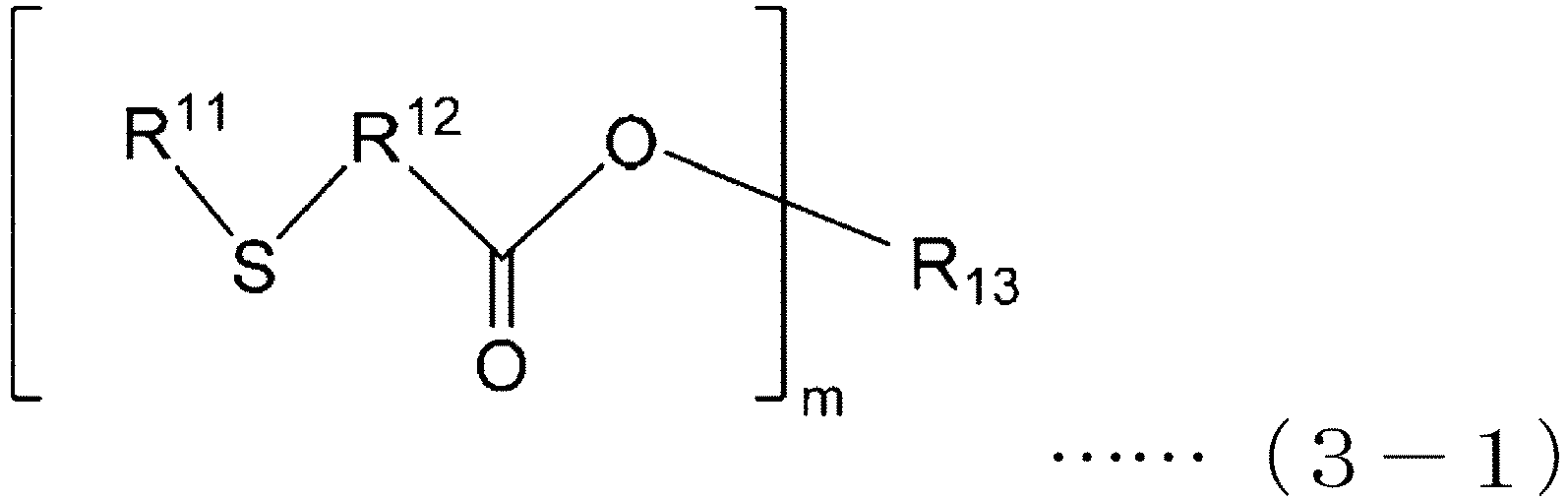
- The polycarbonate resin composition according to any one of claims 1 to 12, wherein
the polycarbonate resin composition comprises the compound having an amide bond and the sulfur compound. - The polycarbonate resin composition according to any one of claims 1 to 13, wherein
contents of the compound having an amide bond and the sulfur compound are each 500 ppm by mass to 10000 ppm by mass. - The polycarbonate resin composition according to any one of claims 1 to 14, wherein
a content of the phosphite ester compound is 500 ppm by mass to 10000 ppm by mass. - The polycarbonate resin composition according to any one of claims 1 to 15, wherein
the phosphite ester compound comprises a structure represented by the following formula (2-2):
- The polycarbonate resin composition according to any one of claims 1 to 15, wherein
the phosphite ester compound comprises a structure represented by the following formula (3-2):
- The polycarbonate resin composition according to any one of claims 1 to 17, wherein
the polycarbonate resin composition comprises the compound having an amide bond and the phosphite ester compound. - The polycarbonate resin composition according to any one of claims 1 to 18, wherein
contents of the compound having an amide bond and the phosphite ester compound are each 500 ppm by mass to 10000 ppm by mass.
Applications Claiming Priority (7)
| Application Number | Priority Date | Filing Date | Title |
|---|---|---|---|
| JP2021058235 | 2021-03-30 | ||
| JP2021144709 | 2021-09-06 | ||
| JP2021145177 | 2021-09-07 | ||
| JP2021145189 | 2021-09-07 | ||
| JP2021145175 | 2021-09-07 | ||
| JP2021145178 | 2021-09-07 | ||
| PCT/JP2022/010792 WO2022209725A1 (en) | 2021-03-30 | 2022-03-11 | Polycarbonate resin composition |
Publications (2)
| Publication Number | Publication Date |
|---|---|
| EP4317318A1 true EP4317318A1 (en) | 2024-02-07 |
| EP4317318A4 EP4317318A4 (en) | 2024-07-31 |
Family
ID=83456126
Family Applications (1)
| Application Number | Title | Priority Date | Filing Date |
|---|---|---|---|
| EP22779946.7A Withdrawn EP4317318A4 (en) | 2021-03-30 | 2022-03-11 | POLYCARBONATE RESIN COMPOSITION |
Country Status (6)
| Country | Link |
|---|---|
| US (1) | US20240199803A1 (en) |
| EP (1) | EP4317318A4 (en) |
| JP (1) | JP7607745B2 (en) |
| KR (1) | KR20230143168A (en) |
| TW (1) | TWI806518B (en) |
| WO (1) | WO2022209725A1 (en) |
Family Cites Families (22)
| Publication number | Priority date | Publication date | Assignee | Title |
|---|---|---|---|---|
| US3305520A (en) * | 1965-04-06 | 1967-02-21 | Bayer Ag | Polycarbonates stabilized by phosphites |
| JPS543537U (en) | 1977-06-09 | 1979-01-11 | ||
| JPS57210542A (en) | 1981-06-22 | 1982-12-24 | Hitachi Ltd | Electron gun sealing process for cathode-ray tube |
| JP4774610B2 (en) | 2001-03-13 | 2011-09-14 | 三菱瓦斯化学株式会社 | Method for producing polycarbonate |
| JP3385594B1 (en) * | 2001-09-10 | 2003-03-10 | 東北ムネカタ株式会社 | Heat stabilization method for polycarbonate resin or polyester resin |
| JP2006265395A (en) * | 2005-03-24 | 2006-10-05 | Toray Ind Inc | Polyalkylene carbonate resin composition and method for producing the same |
| JP2007297447A (en) * | 2006-04-28 | 2007-11-15 | Sumitomo Dow Ltd | Fire resistant polycarbonate resin composition excellent in molding process workability |
| JP5403537B2 (en) | 2008-03-11 | 2014-01-29 | 国立大学法人 東京大学 | Polycarbonate production catalyst and polycarbonate production method |
| KR20100136006A (en) * | 2009-06-18 | 2010-12-28 | 에스케이에너지 주식회사 | Oxygen and moisture blocking resin composition and sheet using same |
| GB201111929D0 (en) * | 2011-07-12 | 2011-08-24 | Norner As | Polycarbonat blends |
| JP6507495B2 (en) * | 2014-06-12 | 2019-05-08 | 三菱ケミカル株式会社 | Polycarbonate resin composition |
| JP6006833B1 (en) * | 2015-05-21 | 2016-10-12 | ロッテケミカルコーポレーション | Polycarbonate resin composition and molded product |
| US10597524B2 (en) * | 2015-11-20 | 2020-03-24 | Asahi Kasei Kabushiki Kaisha | Methacrylic resin, methacrylic resin composition, film, and production method |
| CN109072035A (en) * | 2016-05-09 | 2018-12-21 | 雷普索尔公司 | The adhesive formulation of heat and bond properties with improvement |
| JPWO2021029341A1 (en) * | 2019-08-09 | 2021-02-18 | ||
| JP7094637B2 (en) | 2019-10-02 | 2022-07-04 | 株式会社大一商会 | Pachinko machine |
| EP4092068B1 (en) * | 2020-01-16 | 2025-10-22 | Asahi Kasei Kabushiki Kaisha | Polycarbonate resin, polycarbonate resin composition, optical molded body containing these, and cyclic carbonate |
| JP2021145177A (en) | 2020-03-10 | 2021-09-24 | 株式会社Jvcケンウッド | Portable terminal device, notification method, and program |
| JP7490397B2 (en) | 2020-03-10 | 2024-05-27 | キヤノン株式会社 | IMAGE PROCESSING APPARATUS, DETECTION METHOD, AND PROGRAM |
| JP7367569B2 (en) | 2020-03-10 | 2023-10-24 | 株式会社リコー | Sensor control device, program and sensor control method |
| JP2021145189A (en) | 2020-03-10 | 2021-09-24 | ソニーグループ株式会社 | Head-mounted device |
| TWI764106B (en) | 2020-03-11 | 2022-05-11 | 凌通科技股份有限公司 | Method for radio frequency identification with low power consumption and device thereof |
-
2022
- 2022-03-11 US US18/284,879 patent/US20240199803A1/en active Pending
- 2022-03-11 KR KR1020237030386A patent/KR20230143168A/en active Pending
- 2022-03-11 WO PCT/JP2022/010792 patent/WO2022209725A1/en not_active Ceased
- 2022-03-11 EP EP22779946.7A patent/EP4317318A4/en not_active Withdrawn
- 2022-03-11 JP JP2023510808A patent/JP7607745B2/en active Active
- 2022-03-24 TW TW111111167A patent/TWI806518B/en not_active IP Right Cessation
Also Published As
| Publication number | Publication date |
|---|---|
| WO2022209725A1 (en) | 2022-10-06 |
| KR20230143168A (en) | 2023-10-11 |
| TWI806518B (en) | 2023-06-21 |
| TW202300559A (en) | 2023-01-01 |
| JPWO2022209725A1 (en) | 2022-10-06 |
| EP4317318A4 (en) | 2024-07-31 |
| US20240199803A1 (en) | 2024-06-20 |
| JP7607745B2 (en) | 2024-12-27 |
Similar Documents
| Publication | Publication Date | Title |
|---|---|---|
| US6593434B1 (en) | Preparing polyester block copolymer with excess unreacted lactones to be removed | |
| CN106883575B (en) | Polycarbonate resin composition and molded article | |
| CN102585193B (en) | Hyperbranched polycarbonates of high functionality and its production and use | |
| KR102287397B1 (en) | Polycarbonate-based resin composition and molded article thereof | |
| EP3795632B1 (en) | Methacrylic resin composition and molded body | |
| KR102358066B1 (en) | Polycarbonate-based resin composition and molded article thereof | |
| EP3255101A1 (en) | Polycarbonate resin composition and article molded therefrom | |
| EP3279259A1 (en) | Resin composition and molded object obtained therefrom | |
| TW201725239A (en) | Polycarbonate-based resin composition and molded article thereof | |
| CN1890284A (en) | Stabilization of polyether polyols, polyester polyols and polyurethanes | |
| EP4317318A1 (en) | Polycarbonate resin composition | |
| JP2015189905A (en) | aromatic polycarbonate resin composition | |
| JPWO2020095981A1 (en) | Aromatic polycarbonate resin composition | |
| CN116507671A (en) | polycarbonate resin composition | |
| EP4194510B1 (en) | Polycarbonate compound composition and method for preparing same | |
| US20060183829A1 (en) | Polytrimethylene terephthalate composition and process for producing the same | |
| JP4344970B2 (en) | Polyurethane composition, polyurethane fiber, and method for producing polyurethane fiber | |
| CN101568594A (en) | Polyacetal resin composition | |
| US20070173614A1 (en) | Polyether composition | |
| JP2003231803A (en) | Polycarbonate resin composition and molded article | |
| JP2021028350A (en) | Polycarbonate-based resin composition and molded product thereof | |
| US20240368403A1 (en) | Polycarbonate resin composition and molded article | |
| JPH07126481A (en) | Weather resistant polyacetal resin composition | |
| JP2023528932A (en) | Polycarbonate composition and molded article thereof | |
| EP3778722A1 (en) | Polycarbonate resin composition pellet, pellet production method and molded acticle thereof |
Legal Events
| Date | Code | Title | Description |
|---|---|---|---|
| STAA | Information on the status of an ep patent application or granted ep patent |
Free format text: STATUS: THE INTERNATIONAL PUBLICATION HAS BEEN MADE |
|
| PUAI | Public reference made under article 153(3) epc to a published international application that has entered the european phase |
Free format text: ORIGINAL CODE: 0009012 |
|
| STAA | Information on the status of an ep patent application or granted ep patent |
Free format text: STATUS: REQUEST FOR EXAMINATION WAS MADE |
|
| 17P | Request for examination filed |
Effective date: 20231017 |
|
| AK | Designated contracting states |
Kind code of ref document: A1 Designated state(s): AL AT BE BG CH CY CZ DE DK EE ES FI FR GB GR HR HU IE IS IT LI LT LU LV MC MK MT NL NO PL PT RO RS SE SI SK SM TR |
|
| STAA | Information on the status of an ep patent application or granted ep patent |
Free format text: STATUS: EXAMINATION IS IN PROGRESS |
|
| DAV | Request for validation of the european patent (deleted) | ||
| DAX | Request for extension of the european patent (deleted) | ||
| A4 | Supplementary search report drawn up and despatched |
Effective date: 20240627 |
|
| RIC1 | Information provided on ipc code assigned before grant |
Ipc: C08K 5/524 20060101ALI20240621BHEP Ipc: C08K 5/372 20060101ALI20240621BHEP Ipc: C08K 5/37 20060101ALI20240621BHEP Ipc: C08K 5/25 20060101ALI20240621BHEP Ipc: C08K 5/20 20060101ALI20240621BHEP Ipc: C08L 69/00 20060101AFI20240621BHEP |
|
| 17Q | First examination report despatched |
Effective date: 20240709 |
|
| STAA | Information on the status of an ep patent application or granted ep patent |
Free format text: STATUS: THE APPLICATION IS DEEMED TO BE WITHDRAWN |
|
| 18D | Application deemed to be withdrawn |
Effective date: 20241112 |