EP4299752A1 - System und verfahren zur herstellung von zelluloseethanol mittels verzuckerung und fermentation von biomasse - Google Patents
System und verfahren zur herstellung von zelluloseethanol mittels verzuckerung und fermentation von biomasse Download PDFInfo
- Publication number
- EP4299752A1 EP4299752A1 EP22897056.2A EP22897056A EP4299752A1 EP 4299752 A1 EP4299752 A1 EP 4299752A1 EP 22897056 A EP22897056 A EP 22897056A EP 4299752 A1 EP4299752 A1 EP 4299752A1
- Authority
- EP
- European Patent Office
- Prior art keywords
- reactor
- fermentation
- enzymatic hydrolysis
- pipe
- cellulosic ethanol
- Prior art date
- Legal status (The legal status is an assumption and is not a legal conclusion. Google has not performed a legal analysis and makes no representation as to the accuracy of the status listed.)
- Withdrawn
Links
Images

Classifications
-
- C—CHEMISTRY; METALLURGY
- C12—BIOCHEMISTRY; BEER; SPIRITS; WINE; VINEGAR; MICROBIOLOGY; ENZYMOLOGY; MUTATION OR GENETIC ENGINEERING
- C12P—FERMENTATION OR ENZYME-USING PROCESSES TO SYNTHESISE A DESIRED CHEMICAL COMPOUND OR COMPOSITION OR TO SEPARATE OPTICAL ISOMERS FROM A RACEMIC MIXTURE
- C12P7/00—Preparation of oxygen-containing organic compounds
- C12P7/02—Preparation of oxygen-containing organic compounds containing a hydroxy group
- C12P7/04—Preparation of oxygen-containing organic compounds containing a hydroxy group acyclic
- C12P7/06—Ethanol, i.e. non-beverage
- C12P7/08—Ethanol, i.e. non-beverage produced as by-product or from waste or cellulosic material substrate
- C12P7/10—Ethanol, i.e. non-beverage produced as by-product or from waste or cellulosic material substrate substrate containing cellulosic material
-
- C—CHEMISTRY; METALLURGY
- C12—BIOCHEMISTRY; BEER; SPIRITS; WINE; VINEGAR; MICROBIOLOGY; ENZYMOLOGY; MUTATION OR GENETIC ENGINEERING
- C12M—APPARATUS FOR ENZYMOLOGY OR MICROBIOLOGY; APPARATUS FOR CULTURING MICROORGANISMS FOR PRODUCING BIOMASS, FOR GROWING CELLS OR FOR OBTAINING FERMENTATION OR METABOLIC PRODUCTS, i.e. BIOREACTORS OR FERMENTERS
- C12M21/00—Bioreactors or fermenters specially adapted for specific uses
- C12M21/04—Bioreactors or fermenters specially adapted for specific uses for producing gas, e.g. biogas
-
- C—CHEMISTRY; METALLURGY
- C12—BIOCHEMISTRY; BEER; SPIRITS; WINE; VINEGAR; MICROBIOLOGY; ENZYMOLOGY; MUTATION OR GENETIC ENGINEERING
- C12M—APPARATUS FOR ENZYMOLOGY OR MICROBIOLOGY; APPARATUS FOR CULTURING MICROORGANISMS FOR PRODUCING BIOMASS, FOR GROWING CELLS OR FOR OBTAINING FERMENTATION OR METABOLIC PRODUCTS, i.e. BIOREACTORS OR FERMENTERS
- C12M21/00—Bioreactors or fermenters specially adapted for specific uses
- C12M21/12—Bioreactors or fermenters specially adapted for specific uses for producing fuels or solvents
-
- C—CHEMISTRY; METALLURGY
- C12—BIOCHEMISTRY; BEER; SPIRITS; WINE; VINEGAR; MICROBIOLOGY; ENZYMOLOGY; MUTATION OR GENETIC ENGINEERING
- C12M—APPARATUS FOR ENZYMOLOGY OR MICROBIOLOGY; APPARATUS FOR CULTURING MICROORGANISMS FOR PRODUCING BIOMASS, FOR GROWING CELLS OR FOR OBTAINING FERMENTATION OR METABOLIC PRODUCTS, i.e. BIOREACTORS OR FERMENTERS
- C12M21/00—Bioreactors or fermenters specially adapted for specific uses
- C12M21/18—Apparatus specially designed for the use of free, immobilized or carrier-bound enzymes
-
- C—CHEMISTRY; METALLURGY
- C12—BIOCHEMISTRY; BEER; SPIRITS; WINE; VINEGAR; MICROBIOLOGY; ENZYMOLOGY; MUTATION OR GENETIC ENGINEERING
- C12M—APPARATUS FOR ENZYMOLOGY OR MICROBIOLOGY; APPARATUS FOR CULTURING MICROORGANISMS FOR PRODUCING BIOMASS, FOR GROWING CELLS OR FOR OBTAINING FERMENTATION OR METABOLIC PRODUCTS, i.e. BIOREACTORS OR FERMENTERS
- C12M23/00—Constructional details, e.g. recesses, hinges
- C12M23/40—Manifolds; Distribution pieces
-
- C—CHEMISTRY; METALLURGY
- C12—BIOCHEMISTRY; BEER; SPIRITS; WINE; VINEGAR; MICROBIOLOGY; ENZYMOLOGY; MUTATION OR GENETIC ENGINEERING
- C12M—APPARATUS FOR ENZYMOLOGY OR MICROBIOLOGY; APPARATUS FOR CULTURING MICROORGANISMS FOR PRODUCING BIOMASS, FOR GROWING CELLS OR FOR OBTAINING FERMENTATION OR METABOLIC PRODUCTS, i.e. BIOREACTORS OR FERMENTERS
- C12M23/00—Constructional details, e.g. recesses, hinges
- C12M23/58—Reaction vessels connected in series or in parallel
-
- C—CHEMISTRY; METALLURGY
- C12—BIOCHEMISTRY; BEER; SPIRITS; WINE; VINEGAR; MICROBIOLOGY; ENZYMOLOGY; MUTATION OR GENETIC ENGINEERING
- C12M—APPARATUS FOR ENZYMOLOGY OR MICROBIOLOGY; APPARATUS FOR CULTURING MICROORGANISMS FOR PRODUCING BIOMASS, FOR GROWING CELLS OR FOR OBTAINING FERMENTATION OR METABOLIC PRODUCTS, i.e. BIOREACTORS OR FERMENTERS
- C12M41/00—Means for regulation, monitoring, measurement or control, e.g. flow regulation
- C12M41/12—Means for regulation, monitoring, measurement or control, e.g. flow regulation of temperature
-
- C—CHEMISTRY; METALLURGY
- C12—BIOCHEMISTRY; BEER; SPIRITS; WINE; VINEGAR; MICROBIOLOGY; ENZYMOLOGY; MUTATION OR GENETIC ENGINEERING
- C12M—APPARATUS FOR ENZYMOLOGY OR MICROBIOLOGY; APPARATUS FOR CULTURING MICROORGANISMS FOR PRODUCING BIOMASS, FOR GROWING CELLS OR FOR OBTAINING FERMENTATION OR METABOLIC PRODUCTS, i.e. BIOREACTORS OR FERMENTERS
- C12M41/00—Means for regulation, monitoring, measurement or control, e.g. flow regulation
- C12M41/12—Means for regulation, monitoring, measurement or control, e.g. flow regulation of temperature
- C12M41/18—Heat exchange systems, e.g. heat jackets or outer envelopes
-
- C—CHEMISTRY; METALLURGY
- C12—BIOCHEMISTRY; BEER; SPIRITS; WINE; VINEGAR; MICROBIOLOGY; ENZYMOLOGY; MUTATION OR GENETIC ENGINEERING
- C12M—APPARATUS FOR ENZYMOLOGY OR MICROBIOLOGY; APPARATUS FOR CULTURING MICROORGANISMS FOR PRODUCING BIOMASS, FOR GROWING CELLS OR FOR OBTAINING FERMENTATION OR METABOLIC PRODUCTS, i.e. BIOREACTORS OR FERMENTERS
- C12M45/00—Means for pre-treatment of biological substances
- C12M45/09—Means for pre-treatment of biological substances by enzymatic treatment
-
- C—CHEMISTRY; METALLURGY
- C12—BIOCHEMISTRY; BEER; SPIRITS; WINE; VINEGAR; MICROBIOLOGY; ENZYMOLOGY; MUTATION OR GENETIC ENGINEERING
- C12M—APPARATUS FOR ENZYMOLOGY OR MICROBIOLOGY; APPARATUS FOR CULTURING MICROORGANISMS FOR PRODUCING BIOMASS, FOR GROWING CELLS OR FOR OBTAINING FERMENTATION OR METABOLIC PRODUCTS, i.e. BIOREACTORS OR FERMENTERS
- C12M47/00—Means for after-treatment of the produced biomass or of the fermentation or metabolic products, e.g. storage of biomass
- C12M47/10—Separation or concentration of fermentation products
-
- C—CHEMISTRY; METALLURGY
- C12—BIOCHEMISTRY; BEER; SPIRITS; WINE; VINEGAR; MICROBIOLOGY; ENZYMOLOGY; MUTATION OR GENETIC ENGINEERING
- C12M—APPARATUS FOR ENZYMOLOGY OR MICROBIOLOGY; APPARATUS FOR CULTURING MICROORGANISMS FOR PRODUCING BIOMASS, FOR GROWING CELLS OR FOR OBTAINING FERMENTATION OR METABOLIC PRODUCTS, i.e. BIOREACTORS OR FERMENTERS
- C12M47/00—Means for after-treatment of the produced biomass or of the fermentation or metabolic products, e.g. storage of biomass
- C12M47/12—Purification
-
- C—CHEMISTRY; METALLURGY
- C12—BIOCHEMISTRY; BEER; SPIRITS; WINE; VINEGAR; MICROBIOLOGY; ENZYMOLOGY; MUTATION OR GENETIC ENGINEERING
- C12N—MICROORGANISMS OR ENZYMES; COMPOSITIONS THEREOF; PROPAGATING, PRESERVING, OR MAINTAINING MICROORGANISMS; MUTATION OR GENETIC ENGINEERING; CULTURE MEDIA
- C12N9/00—Enzymes; Proenzymes; Compositions thereof; Processes for preparing, activating, inhibiting, separating or purifying enzymes
- C12N9/14—Hydrolases (3)
- C12N9/24—Hydrolases (3) acting on glycosyl compounds (3.2)
- C12N9/2402—Hydrolases (3) acting on glycosyl compounds (3.2) hydrolysing O- and S- glycosyl compounds (3.2.1)
- C12N9/2405—Glucanases
- C12N9/2434—Glucanases acting on beta-1,4-glucosidic bonds
- C12N9/2437—Cellulases (3.2.1.4; 3.2.1.74; 3.2.1.91; 3.2.1.150)
-
- C—CHEMISTRY; METALLURGY
- C12—BIOCHEMISTRY; BEER; SPIRITS; WINE; VINEGAR; MICROBIOLOGY; ENZYMOLOGY; MUTATION OR GENETIC ENGINEERING
- C12P—FERMENTATION OR ENZYME-USING PROCESSES TO SYNTHESISE A DESIRED CHEMICAL COMPOUND OR COMPOSITION OR TO SEPARATE OPTICAL ISOMERS FROM A RACEMIC MIXTURE
- C12P19/00—Preparation of compounds containing saccharide radicals
- C12P19/14—Preparation of compounds containing saccharide radicals produced by the action of a carbohydrase (EC 3.2.x), e.g. by alpha-amylase, e.g. by cellulase, hemicellulase
-
- C—CHEMISTRY; METALLURGY
- C12—BIOCHEMISTRY; BEER; SPIRITS; WINE; VINEGAR; MICROBIOLOGY; ENZYMOLOGY; MUTATION OR GENETIC ENGINEERING
- C12P—FERMENTATION OR ENZYME-USING PROCESSES TO SYNTHESISE A DESIRED CHEMICAL COMPOUND OR COMPOSITION OR TO SEPARATE OPTICAL ISOMERS FROM A RACEMIC MIXTURE
- C12P7/00—Preparation of oxygen-containing organic compounds
- C12P7/02—Preparation of oxygen-containing organic compounds containing a hydroxy group
- C12P7/04—Preparation of oxygen-containing organic compounds containing a hydroxy group acyclic
- C12P7/06—Ethanol, i.e. non-beverage
- C12P7/14—Multiple stages of fermentation; Multiple types of microorganisms or re-use of microorganisms
-
- C—CHEMISTRY; METALLURGY
- C12—BIOCHEMISTRY; BEER; SPIRITS; WINE; VINEGAR; MICROBIOLOGY; ENZYMOLOGY; MUTATION OR GENETIC ENGINEERING
- C12Y—ENZYMES
- C12Y302/00—Hydrolases acting on glycosyl compounds, i.e. glycosylases (3.2)
- C12Y302/01—Glycosidases, i.e. enzymes hydrolysing O- and S-glycosyl compounds (3.2.1)
- C12Y302/01004—Cellulase (3.2.1.4), i.e. endo-1,4-beta-glucanase
-
- C—CHEMISTRY; METALLURGY
- C12—BIOCHEMISTRY; BEER; SPIRITS; WINE; VINEGAR; MICROBIOLOGY; ENZYMOLOGY; MUTATION OR GENETIC ENGINEERING
- C12M—APPARATUS FOR ENZYMOLOGY OR MICROBIOLOGY; APPARATUS FOR CULTURING MICROORGANISMS FOR PRODUCING BIOMASS, FOR GROWING CELLS OR FOR OBTAINING FERMENTATION OR METABOLIC PRODUCTS, i.e. BIOREACTORS OR FERMENTERS
- C12M41/00—Means for regulation, monitoring, measurement or control, e.g. flow regulation
- C12M41/26—Means for regulation, monitoring, measurement or control, e.g. flow regulation of pH
-
- C—CHEMISTRY; METALLURGY
- C12—BIOCHEMISTRY; BEER; SPIRITS; WINE; VINEGAR; MICROBIOLOGY; ENZYMOLOGY; MUTATION OR GENETIC ENGINEERING
- C12M—APPARATUS FOR ENZYMOLOGY OR MICROBIOLOGY; APPARATUS FOR CULTURING MICROORGANISMS FOR PRODUCING BIOMASS, FOR GROWING CELLS OR FOR OBTAINING FERMENTATION OR METABOLIC PRODUCTS, i.e. BIOREACTORS OR FERMENTERS
- C12M41/00—Means for regulation, monitoring, measurement or control, e.g. flow regulation
- C12M41/30—Means for regulation, monitoring, measurement or control, e.g. flow regulation of concentration
- C12M41/32—Means for regulation, monitoring, measurement or control, e.g. flow regulation of concentration of substances in solution
-
- C—CHEMISTRY; METALLURGY
- C12—BIOCHEMISTRY; BEER; SPIRITS; WINE; VINEGAR; MICROBIOLOGY; ENZYMOLOGY; MUTATION OR GENETIC ENGINEERING
- C12M—APPARATUS FOR ENZYMOLOGY OR MICROBIOLOGY; APPARATUS FOR CULTURING MICROORGANISMS FOR PRODUCING BIOMASS, FOR GROWING CELLS OR FOR OBTAINING FERMENTATION OR METABOLIC PRODUCTS, i.e. BIOREACTORS OR FERMENTERS
- C12M41/00—Means for regulation, monitoring, measurement or control, e.g. flow regulation
- C12M41/46—Means for regulation, monitoring, measurement or control, e.g. flow regulation of cellular or enzymatic activity or functionality, e.g. cell viability
-
- C—CHEMISTRY; METALLURGY
- C12—BIOCHEMISTRY; BEER; SPIRITS; WINE; VINEGAR; MICROBIOLOGY; ENZYMOLOGY; MUTATION OR GENETIC ENGINEERING
- C12P—FERMENTATION OR ENZYME-USING PROCESSES TO SYNTHESISE A DESIRED CHEMICAL COMPOUND OR COMPOSITION OR TO SEPARATE OPTICAL ISOMERS FROM A RACEMIC MIXTURE
- C12P2201/00—Pretreatment of cellulosic or lignocellulosic material for subsequent enzymatic treatment or hydrolysis
-
- Y—GENERAL TAGGING OF NEW TECHNOLOGICAL DEVELOPMENTS; GENERAL TAGGING OF CROSS-SECTIONAL TECHNOLOGIES SPANNING OVER SEVERAL SECTIONS OF THE IPC; TECHNICAL SUBJECTS COVERED BY FORMER USPC CROSS-REFERENCE ART COLLECTIONS [XRACs] AND DIGESTS
- Y02—TECHNOLOGIES OR APPLICATIONS FOR MITIGATION OR ADAPTATION AGAINST CLIMATE CHANGE
- Y02E—REDUCTION OF GREENHOUSE GAS [GHG] EMISSIONS, RELATED TO ENERGY GENERATION, TRANSMISSION OR DISTRIBUTION
- Y02E50/00—Technologies for the production of fuel of non-fossil origin
- Y02E50/10—Biofuels, e.g. bio-diesel
Definitions
- the present disclosure relates to a technical field of cellulosic ethanol production, and in particular to systems and methods for producing cellulosic ethanol by biomass saccharification and fermentation.
- lignocellulosic waste such as straw and corncobs are produced every year in agricultural production.
- Main components in lignocellulosic material are cellulose, hemicellulose, lignin, and a small amount of ash.
- the cellulose may be hydrolyzed by cellulase to obtain glucose.
- the glucose may be used to produce cellulosic ethanol through biological fermentation.
- the cellulosic ethanol may be used as a clean fuel.
- the process of producing cellulosic ethanol mainly includes pretreatment of the biomass feedstock, cellulase enzymatic hydrolysis, and glucose fermentation.
- the challenge is an inhibitory effect of produced glucose in a process of increasing a high solid content of an enzymatic hydrolysis system, especially in a later stage of enzymatic hydrolysis, a concentration of released monomeric glucose increases, which exerts a stronger inhibitory effect on cellulase activity, thereby leading to a decrease in overall enzymatic hydrolysis efficiency and in conversion efficiency of cellulose by enzymatic hydrolysis.
- SSF simultaneous saccharification and fermentation
- the SSF process cannot ensure the optimal conditions for the enzymatic saccharification and the fermentation at the same time.
- the produced cellulosic ethanol has a certain inhibitory effect on the cellulase, thereby affecting the enzymatic hydrolysis and fermentation efficiency.
- the technical problem that the present disclosure aims to solve is to provide a system and a method for producing cellulosic ethanol by biomass saccharification and fermentation, which integrates the cellulase hydrolysis process and the ethanol fermentation process into an intermittent hydrolysis and fermentation process to address the issue of the activity inhibition of the cellulase caused by the produced glucose, thereby improving the production of the cellulosic ethanol.
- the present disclosure provides a system for producing cellulosic ethanol by biomass saccharification and fermentation.
- the system includes a reactor A, a reactor B, and a collection tank.
- the reactor A is configured to carry out an enzymatic hydrolysis reaction of a biomass feedstock.
- the reactor B is configured to carry out a fermentation reaction of the biomass feedstock.
- the collection tank is configured to collect the cellulosic ethanol produced from the fermentation reaction of the biomass feedstock.
- An enzymatic hydrolysis dosing pipe and a fermentation dosing pipe are respectively provided on the reactor A and the reactor B.
- An outlet of the reactor A is connected to an inlet of the reactor B through a fermentation pipe, and a diaphragm pump A is provided on the fermentation pipe.
- An outlet of the reactor B is connected to an inlet of the reactor A through a discharge pipe, a diaphragm pump B and a first discharge pipe are provided on the discharge pipe, and the first discharge pipe is located behind the diaphragm pump B.
- An upper part of the reactor A is connected to an inlet of the collection tank through an ethanol pipe.
- An insulation layer is provided outside the reactor A for heating and insulation.
- a coil insulation device is provided at a connection of the ethanol pipe and the reactor A, the coil insulation device and the insulation layer are respectively connected to a hot water tank through a hot water pipe, and a centrifugal pump is provided on the hot water pipe.
- the enzymatic hydrolysis dosing pipe is configured to add a hydrolyzable biomass feedstock, acid, and hydrolysis material etc., to the reactor A.
- the fermentation dosing pipe is configured to add fermentation material such as fermentation strains to the reactor B.
- the biomass feedstock includes straw and agricultural residues, and common biomass feedstock include corn straw, corn cob, bagasse, etc.
- the ethanol pipe is configured to transport cellulosic ethanol vapors evaporated from fermented biomass feedstock in the reactor A.
- a storage tank, a diaphragm pump C, and a second discharge pipe are provided on the discharge pipe.
- the storage tank is located behind the first discharge pipe and configured to store material discharged from the reactor B, and the second discharge pipe is located behind diaphragm pump C.
- the present disclosure provides a method for producing cellulosic ethanol by biomass saccharification and fermentation.
- the method is implemented by the system for producing cellulosic ethanol by biomass saccharification and fermentation as described above.
- the method includes the following steps 1-5.
- step 1 the biomass feedstock with 15%-20% of a dry substrate is added to a citric acid buffer solution with a concentration of 0.1 mol/L, and then cellulase with 4% -6% of the dry substrate is added to form a mixture.
- a pH of the citric acid buffer solution is maintained at 5.0 ⁇ 6.0. Further, the prepared mixture is dosed to the reactor A through the enzymatic hydrolysis dosing pipe.
- step 2 a temperature of the reactor A is maintained at an enzymatic hydrolysis reaction temperature T, the pH value of the material (i.e., the mixture) in the reactor A is maintained, and a first enzymatic hydrolysis reaction of the material is carried out in the reactor A for 10 ⁇ 14 hours under stirring.
- step 3 the material after the enzymatic hydrolysis reaction in the reactor A is transported to the reactor B through the fermentation pipe, and then fermentation strains with a mass ratio of 0.1% - 1% are added to the reactor B through the fermentation dosing pipe. Further, a fermentation temperature is maintained at a suitable fermentation temperature for the fermentation strains, and a first fermentation reaction of the material is carried out in the reactor B for 10 ⁇ 14 hours under stirring.
- step 4 after the first fermentation reaction is completed, the material after the fermentation reaction in the reactor B is transported to the reactor A through the discharge pipe.
- the cellulosic ethanol in the material produced by the fermentation is evaporated into cellulosic ethanol vapors in the reactor A, and the cellulosic ethanol vapors flow into the collection tank through the ethanol pipe and are condensed into the cellulosic ethanol.
- step 5 the steps 2-4 are repeated.
- a same batch of material is carried out a single-circulation for 4 ⁇ 6 cycles respectively in the reactor A and the reactor B, and after the circulation is completed in the reactor B, the material is discharged from the system through the first discharge pipe.
- the present disclosure provides another method for producing cellulosic ethanol by biomass saccharification and fermentation.
- the method is implemented by the system for producing cellulosic ethanol by biomass saccharification and fermentation as described above.
- the method includes the following steps I-V.
- step I the biomass feedstock with 15%-20% of a dry substrate is added to a citric acid buffer solution with a concentration of 0.1 mol/L, and then cellulase with 4% -6% of the dry substrate is added to form a mixture.
- a pH of the citric acid buffer solution is maintained at 5.0 ⁇ 6.0.
- the prepared first batch of material i.e., the mixture
- step II a temperature of the reactor A is maintained at an enzymatic hydrolysis reaction temperature T, the pH value of the material in the reactor A is maintained, and a first enzymatic hydrolysis reaction of the first batch of material is carried out in the reactor A for 10 ⁇ 14 hours under stirring.
- step III the first batch of material after the enzymatic hydrolysis reaction in the reactor A is transported to the reactor B through the fermentation pipe, and then fermentation strains with a mass ratio of 0.1 % - 1% are added to the reactor B through the fermentation dosing pipe. Further, a fermentation temperature is maintained at a suitable fermentation temperature for the fermentation strains, and a first fermentation reaction of the first batch of material is carried out in the reactor B for 10 ⁇ 14 hours under stirring.
- step IV after the first fermentation reaction is completed, the first batch of material in the reactor B is transported to the storage tank through the discharge pipe for temporary storage, and after the first batch of material in the reactor B is emptied, the step III is repeated to transport the second batch of material in the reactor A to the reactor B through the fermentation pipe for the fermentation reaction.
- step V after the second batch of material in the reactor A is emptied, the first batch of material in the storage tank is transported to the reactor A through the discharge pipe, and the step II is repeated.
- the cellulosic ethanol in the first batch of material produced by the fermentation is evaporated into the cellulosic ethanol vapors in the reactor A, and the cellulosic ethanol vapors are transported into the collection tank through the ethanol pipe and condensed into the cellulosic ethanol.
- step IV is repeated to transport the second batch of material in the reactor B to the storage tank through the discharge pipe for temporary storage.
- step VI the steps II-V are repeated.
- the two batches of material are carried out a double-circulation, the circulation of each of the two batches of material is carried out for 4 ⁇ 6 cycles respectively in the reactor A and the reactor B, and after the circulations of the two batches of material are completed in the reactor B in sequence, the two batches of material are discharged from the system in sequence through the first discharge pipe.
- the system and the methods for producing cellulosic ethanol by biomass saccharification and fermentation in the present disclosure have the following features.
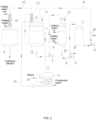
- FIG. 1 shows a first embodiment of a system for producing cellulosic ethanol by biomass saccharification and fermentation in the present disclosure.
- Arrows in the figure indicate directions of travel of materials in the system, e.g., a biomass feedstock, steam, chilled water, condensed water, strains, ethanol, etc.
- the system includes a reactor A1, a reactor B, and a collection tank 4.
- the reactor A1 is configured to carry out an enzymatic hydrolysis reaction of a biomass feedstock.
- the reactor B is configured to carry out a fermentation reaction of the biomass feedstock.
- the collection tank 4 is configured to collect the cellulosic ethanol produced from the fermentation reaction of the biomass feedstock.
- An enzymatic hydrolysis dosing pipe 11 and a fermentation dosing pipe 21 are respectively provided on the reactors A1 and on the reactor B2, and an outlet of the reactor A1 is connected to an inlet of the reactor B2 through a fermentation pipe 6.
- a diaphragm pump A7 is provided on the fermentation pipe 6, and an outlet of the reactor B2 is connected to an inlet of the reactor A1 through a discharge pipe 8.
- a diaphragm pump B9 and a first discharge pipe 16 are provided on the discharge pipe 8, and the first discharge pipe 16 is located behind the diaphragm pump B9.
- An upper part of the reactor A is connected to an inlet of the collection tank 4 through an ethanol pipe 10.
- An insulation layer 12 for heating and insulation of the reactor A1 is provided outside the reactor A1, and a coil insulation device 13 is provided at a connection of the reactor A1 and the ethanol pipe 10 located at the upper part of the reactor A1.
- the coil insulation device 13 and the insulation layer 12 are respectively connected to a hot water tank 5 through a hot water pipe 14, and a centrifugal pump 15 is provided on the hot water pipe 14.
- the coil insulation device 13 is configured to ensure that the cellulosic ethanol vapors evaporated in the reactor A1 do not condense and are transported to the collection tank 4.
- Hot water in the hot water tank 5 enters the coil insulation device 13 located at the upper part of the reactor A1 and the insulation layer 12 outside the reactor A1 through the centrifugal pump 15 to control the temperatures of the reactor A1 and the coil insulation device 13.
- An ethanol freezing device 19 configured to condense the cellulosic ethanol vapors is provided at a connection of the collection tank 4 and the ethanol pipe 10 located at a top of the collection tank 4.
- the ethanol freezing device 19 facilitates the condensation and collection of the cellulosic ethanol vapors passing through the ethanol pipe 10 by chilled water.
- a fermentation cooling device 20 configured to cool fermentation material inside the reactor B2 is provided outside the reactor B2.
- a stirring device (not shown in the figure) is provided in the reactors A1 and in the B2, respectively.
- a same batch of biomass material is carried out a single-circulation flow between the reactor A1 and the reactor B2.
- FIG. 2 shows a second embodiment of the system for producing cellulosic ethanol by biomass saccharification and fermentation in the present disclosure.
- a storage tank 3 a diaphragm pump C17, and a second discharge pipe 18 are provided on the discharge pipe 8.
- the storage tank 3 is located behind the first discharge pipe 16 and is configured to store material discharged from the reactor B2.
- the second discharge pipe 18 is located behind the diaphragm pump C17.
- Other structures are the same as in the first embodiment, which are not be repeated here.
- two batches of biomass material may be allowed to circulate simultaneously in the system. That is, the two batches of biomass material are carried out a double-circulation flow in the reactor A1 and in the reactor B2 in sequence.
- the present disclosure also discloses a method for producing cellulosic ethanol by biomass saccharification and fermentation.
- the method is implemented by the system for producing cellulosic ethanol by biomass saccharification and fermentation as described above.
- the method includes the following steps 1-5.
- step 1 the biomass feedstock with 15%-20% (w/w) of a dry substrate is added to a citric acid buffer solution with a concentration of 0.1 mol/L, and then cellulase with 4% -6% (w/w) of the dry substrate is added to form a mixture.
- a pH of the citric acid buffer solution is maintained at 5.0 ⁇ 6.0.
- the prepared mixture is dosed to the reactor A1 through the enzymatic hydrolysis dosing pipe 11.
- step 2 a temperature of the reactor A1 is maintained at an enzymatic hydrolysis reaction temperature T, the pH value of the material (i.e., the mixture) in the reactor A is maintained, and a first enzymatic hydrolysis reaction of the material in the reactor A is carried out for 10 ⁇ 14 hours under stirring.
- step 3 the material after the enzymatic hydrolysis reaction in the reactor A1 is transported to the reactor B2 through the fermentation pipe 6, and then fermentation strains with a mass ratio of 0.1% - 1% are added to the reactor B2 through the fermentation dosing pipe 21. Further, a fermentation temperature is maintained at a suitable fermentation temperature for the fermentation strains, and a first fermentation reaction of the material is carried out in the reactor B2 for 10 ⁇ 14 hours under stirring.
- step 4 after the first fermentation reaction is completed, the material after the fermentation reaction in the reactor B2 is transported to the reactor A1 through the discharge pipe 8.
- the cellulosic ethanol in the material produced by the fermentation is evaporated into cellulosic ethanol vapors in the reactor A, and the cellulosic ethanol vapors flow into the collection tank through the ethanol pipe and are condensed into the cellulosic ethanol.
- step 5 the steps 2-4 are repeated.
- a same batch of material is carried out a single-circulation for 4 ⁇ 6 cycles respectively in the reactor A1 and the reactor B2 in which the enzymatic hydrolysis reaction and the fermentation reaction are respectively carried out 4 ⁇ 6 times, and after the circulation is completed in the reactor B2, the material is discharged from the system through the first discharge pipe 16.
- the enzymatic hydrolysis reaction temperature T is a highest temperature at which a survival rate of the fermentation strains is above 80%.
- the enzymatic hydrolysis reaction temperature T is determined by preparing a test system by using the citric acid buffer solution with a concentration of 0.1 mol/L, adding glucose with a concentration of 100 g/L and the fermentation strains with a mass ratio of 1% in the test system, incubating the test system for 12h at 40°C, 41°C, 42°C, 43°C, 44°C, 45°C, 46°C, 47°C, 48°C, 49°C, 50°C, respectively, for the test system incubated at each of the 40°C, 41°C, 42°C, 43°C, 44°C, 45°C, 46°C, 47°C, 48°C, 49°C, and 50°C, measuring a count of viable bacteria of the fermentation strains using a plate counting technique, and selecting a highest temperature at which the survival rate of the viable bacteria is 80% after the 12
- the cellulase in the enzymatic hydrolysis reaction is Cellic CTec 2.
- the present disclosure also discloses another method for producing cellulosic ethanol by biomass saccharification and fermentation.
- the method is implemented by the system for producing cellulosic ethanol by biomass saccharification and fermentation as described above.
- the method includes the following steps I-V.
- step I the biomass feedstock with 15%-20% of a dry substrate is added to a citric acid buffer solution with a concentration of 0.1 mol/L, and then cellulase with 4% -6% of the dry substrate is added to form a mixture.
- a pH of the citric acid buffer solution is maintained at 5.0 ⁇ 6.0.
- the prepared first batch of material i.e., the mixture
- step II a temperature of the reactor A1 is maintained at an enzymatic hydrolysis reaction temperature T, the pH value of the material in the reactor A1 is maintained, and a first enzymatic hydrolysis reaction of the first batch of material is carried out in the reactor A1 for 10 ⁇ 14 hours under stirring.
- step III the first batch of material after the enzymatic hydrolysis reaction in the reactor A1 is transported to the reactor B2 through the fermentation pipe 6, and then fermentation strains with a mass ratio of 0.1 % -1 % are added to the reactor B2 through the fermentation dosing pipe 21. Further, a fermentation temperature is maintained at a suitable fermentation temperature for the fermentation strains, and a first fermentation reaction of the first batch of material is carried out in the reactor B2 for 10 ⁇ 14 hours under stirring.
- step IV after the first fermentation reaction is completed, the first batch of material in the reactor B2 is transported to the storage tank 3 through the discharge pipe 8 for temporary storage, and after the first batch of material in the reactor B2 is emptied, the step III is repeated to transport the second batch of material in the reactor A1 to the reactor B2 through the fermentation pipe 6 for the fermentation reaction.
- step V after the second batch of material in the reactor A1 is emptied, the first batch of material in the storage tank 3 is transported to the reactor A1 through the discharge pipe 8, and the step II is repeated.
- the cellulosic ethanol in the first batch of material produced by the fermentation is evaporated into the cellulosic ethanol vapors in the reactor A, and the cellulosic ethanol vapors are transported into the collection tank through the ethanol pipe and condensed into the cellulosic ethanol.
- step IV is repeated to transport the second batch of material in the reactor B2 to the storage tank 3 through the discharge pipe 8 for temporary storage.
- step VI the steps II-V are repeated.
- the two batches of material are carried out a double-circulation, the circulation of each of the two batches of material is carried out for 4 ⁇ 6 cycles respectively in the reactor A1 and the reactor B2, and after the circulations of the two batches of material are completed in the reactor B2 in sequence, the two batches of material are discharged from the system in sequence through the first discharge pipe 16.
- a reaction system was prepared using a citric acid buffer solution with a concentration of 0.1 mol/L.
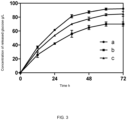
- the citric acid buffer solution was added to a corn cob waste system in which a content of the biomass feedstock was 15% of a dry substrate, a pH of the mixture was maintained at 5.0 ⁇ 6.0, and cellulase Cellic CTec 2 with a content of 4% of the dry substrate was added to the mixture to prepare three groups of 1L reaction systems.
- the three reaction systems were subjected to enzymatic hydrolysis at 50°C for 72 hours under a condition of stirring at 300rpm. Samples were taken from each reaction system every 12 hours to measure an amount of glucose released by the enzymatic hydrolysis, and results are shown in FIG. 3 .
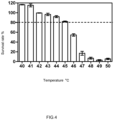
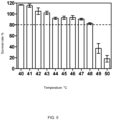
- a heat resistance experiment was carried out on Angel brewing yeast and Zymomonas mobilis to determine the enzymatic hydrolysis reaction temperature T.
- the method in the present disclosure is applicable to a variety of ethanol fermentation strains. This experiment is illustrated by taking two common ethanol fermentation strains: Angel brewing yeast and Zymomonas mobilis as examples.
- a 100g/L glucose solution was prepared using a citric acid buffering solution. The solution was divided into two portions. One portion was mixed with 1% mass concentration of Angel brewing yeast powder, and the other portion was mixed with 1% mass concentration of Zymomonas mobilis bacteria liquid. Samples were then taken from each portion. The samples were incubated at different temperatures (multiple temperatures within the range of 40°C ⁇ 50°C, with an interval of 1 degree between adjacent temperatures) for 12 hours. For the sample incubated at each temperature, a count of viable bacteria before and after the incubation was measured using a plate counting technique, and a change in the count of viable bacteria before and after incubation was determined, and results are shown in FIG. 4 and FIG. 5 .
- enzymatic hydrolysis reaction temperature T a highest temperature at which a survival rate of the fermentation strains is above 80% was selected as the enzymatic hydrolysis reaction temperature T.
- the enzymatic hydrolysis reaction temperature T corresponding to the Angel brewing yeast was 45°C
- the enzymatic hydrolysis reaction temperature T corresponding to the Zymomonas mobilis was 48°C.
- a first single-circulation embodiment of the method for producing cellulosic ethanol by biomass saccharification and fermentation in the present disclosure includes steps 11-17.
- step 11 the enzymatic hydrolysis reaction temperature T was determined according to the above Embodiment 2.
- step 12 material of the reaction system was prepared by adding corn cob waste with a dry substrate content of 15kg (w/w) to an aqueous solution containing a citric acid buffer system to make the mixture reach 100kg, a pH of the mixture was maintained at 5.0 ⁇ 6.0, 0.6kg cellulase Cellic CTec 2 was added to the mixture, and the mixture was stirred evenly. Further, the prepared material was added into the first reactor A1 through the enzymatic hydrolysis dosing pipe 11.
- step 13 a temperature of the first reactor A1 was set to and maintained at 45°C, and the enzymatic hydrolysis reaction was carried out for 10-14 hours under stirring of 300rpm.
- a temperature of the second reactor B2 was set to 35°C (an optimal fermentation temperature of the brewing yeast), after the material after the enzymatic hydrolysis reaction in step 13 was transported from the first reactor A1 to the second reactor B2 through the diaphragm pump A7, 1kg of Angel brewing yeast powder was inoculated into the second reactor B2 through the fermentation dosing pipe 21 of the second reactor B2, and the fermentation reaction was carried out for 10 ⁇ 14 hours under stirring of 100rpm to complete a reaction cycle.
- step 15 after the material after the fermentation reaction in step 140 was transported from the second reactor B2 to the first reactor A1, a second enzymatic hydrolysis reaction was carried out under constant stirring, and produced cellulosic ethanol was evaporated and collected in the collection tank 4.
- step 16 the material after the second enzymatic hydrolysis in step 150 was transported from the first reactor A1 to the second reactor B2.
- step 17 steps 14 to 16 were repeated for 5 cycles.
- a second single-circulation embodiment of the method for producing cellulosic ethanol by biomass saccharification and fermentation in the present disclosure includes steps 21-27.
- step 21 the enzymatic hydrolysis reaction temperature T was determined according to the above Embodiment 2.
- step 22 material of the reaction system was prepared by adding corn cob waste with a dry substrate content of 20kg (w/w) to an aqueous solution containing a citric acid buffer system to make the mixture reach 100kg, a pH of the mixture was maintained at 5.0 ⁇ 6.0, 0.8kg cellulase Cellic CTec 2 was added to the mixture, and the mixture was stirred evenly. Further, the prepared material was added into the first reactor A1 through the enzymatic hydrolysis dosing pipe 11.
- step 23 a temperature of the first reactor A1 was set to and maintained at 45°C, and the enzymatic hydrolysis reaction was carried out for 10-14 hours under stirring of 300rpm.
- step 24 a temperature of the second reactor B2 was set to 35°C, after the material after the enzymatic hydrolysis reaction in step 23 was transported from the first reactor A1 to the second reactor B2 through the diaphragm pump A7, 1kg of Angel brewing yeast powder was inoculated into the second reactor B2 through the fermentation dosing pipe 21 of the second reactor B2, and the fermentation reaction was carried out for 10 ⁇ 14 hours under stirring of 100rpm to complete a reaction cycle.
- step 25 after the material after the fermentation reaction in step 24 was transported from the second reactor B2 to the first reactor A1, a second enzymatic hydrolysis reaction was carried out under constant stirring, and produced cellulosic ethanol was evaporated and collected in the collection tank 4.
- step 26 the material after the second enzymatic hydrolysis in step 25 was transported from the first reactor A1 to the second reactor B2.
- step 27 steps 24 to 26 were repeated for 6 cycles.
- a third single-circulation embodiment of the method for producing cellulosic ethanol by biomass saccharification and fermentation in the present disclosure includes steps 31-37.
- step 31 the enzymatic hydrolysis reaction temperature T was determined according to the above Embodiment 2.
- step 32 material of the reaction system was prepared by adding corn cob waste with a dry substrate content of 20kg (w/w) to an aqueous solution containing a citric acid buffer system to make the mixture reach 100kg, a pH of the mixture was maintained at 5.0 ⁇ 6.0, 0.8kg cellulase Cellic CTec 2 was added to the mixture, and the mixture was stirred evenly. Further, the prepared material was added into the first reactor A1 through the enzymatic hydrolysis dosing pipe 11.
- step 33 a temperature of the first reactor A1 was set to and maintained at 48°C, and the enzymatic hydrolysis reaction was carried out for 10-14 hours under stirring of 300rpm.
- step 34 a temperature of the second reactor B2 was set to 35°C, after the material after the enzymatic hydrolysis reaction in step 33 was transported from the first reactor A1 to the second reactor B2 through the diaphragm pump A7, 1kg of activated Zymomonas mobilis bacteria liquid was inoculated into the second reactor B2 through the fermentation dosing pipe 21 of the second reactor B2, and the fermentation reaction was carried out for 10 ⁇ 14 hours under stirring of 100rpm to complete a reaction cycle.
- step 35 after the material after the fermentation reaction in step 34 was transported from the second reactor B2 to the first reactor A1, a second enzymatic hydrolysis reaction was carried out under constant stirring, and produced cellulosic ethanol was evaporated and collected in the collection tank 4.
- step 36 the material after the second enzymatic hydrolysis in step 35 was transported from the first reactor A1 to the second reactor B2.
- step 37 steps 34 to 36 were repeated for 6 cycles.
- a first double-circulation embodiment of the method for producing cellulosic ethanol by biomass saccharification and fermentation in the present disclosure includes steps 41-48.
- step 41 the enzymatic hydrolysis reaction temperature T was determined according to the above Embodiment 2.
- a first batch of material of the reaction system was prepared by adding corn cob waste a dry substrate content of 20kg (w/w) to an aqueous solution containing a citric acid buffer system to make the mixture reach 100kg, a pH of the mixture was maintained at 5.0 ⁇ 6.0, 0.8kg cellulase Cellic CTec 2 was added to the mixture, and the mixture was stirred evenly. Further, the prepared first batch of material was added into the first reactor A1 through the enzymatic hydrolysis dosing pipe 11.
- step 43 a temperature of the first reactor A1 was set to and maintained at 45°C, and the enzymatic hydrolysis reaction was carried out for 10-14 hours under stirring of 300rpm.
- a temperature of the second reactor B2 was set to 35°C, after the first batch of material after the enzymatic hydrolysis reaction in step 43 was transported from the first reactor A1 to the second reactor B2 through the diaphragm pump A7, 1kg of Angel brewing yeast powder was inoculated into the second reactor B2 through the fermentation dosing pipe 21 of the second reactor B2, and the fermentation reaction was carried out for 10 ⁇ 14 hours under stirring of 100rpm to complete a reaction cycle of the first batch of material.
- a second batch of material of the reaction system was prepared according to the preparation manner in step 42, and the second batch of material of the reaction system was processed according to step 43, i.e., the second batch of material prepared according to step 42 was added to the first reactor A1 through the enzymatic hydrolysis dosing pipe 11, and the enzymatic hydrolysis reaction was carried out for 10 ⁇ 14 hours under stirring of 300rpm.
- step 45 the first batch of material in the second reactor B2 was transported to the storage tank 3 through the diaphragm pump B9, and then the second batch of material in the first reactor A1 was transported to the second reactor B2, and step 44 is performed on the second batch of material to complete a reaction cycle of the second batch of material.
- step 46 the first batch of material in the storage tank 3 was transported to the first reactor A1 through the discharge pipe 8 and continuously stirred, and produced cellulosic ethanol was evaporated and collected in the collection tank 4, while the second batch of material was transported from the second reactor B2 to the storage tank 3.
- step 47 the first batch of material was again transported from the first reactor A1 to the second reactor B2.
- the second batch of material was always one container behind the first batch of material.
- step 48 steps 44-46 were repeated for 6 cycles.
- the enzymatic effect of the method for producing cellulosic ethanol by biomass saccharification and fermentation in the present disclosure was compared with the enzymatic effect of the simultaneous saccharification and fermentation process.
- Embodiment 4 and Embodiment 5 were collected to calculate the ethanol conversion rate of the corn cob waste with 20% dry substrate according to the method in the present disclosure.
- corn cob waste with a dry substrate content of 20kg (w/w) was added to an aqueous solution containing a citric acid buffer system to make the mixture reach 100kg, a pH of the mixture was maintained at 5.0 ⁇ 6.0, 0.8kg cellulase Cellic CTec 2 was added to the mixture, the mixture was stirred evenly, and 1 kg of Angel yeast powder was inoculated into the mixture. Under the stirring of 300 rpm, the mixture was reacted at 35°C for 6 days to obtain 100.5 kg of material in which a content of the cellulosic ethanol was 5.2% and a conversion rate of the cellulosic ethanol was 76.9%.
- the conversion rate of cellulosic ethanol of the method in the present disclosure was increased from 76.9% to more than 80%, and the conversion rate improvement effect is obvious.
Landscapes
- Life Sciences & Earth Sciences (AREA)
- Chemical & Material Sciences (AREA)
- Organic Chemistry (AREA)
- Engineering & Computer Science (AREA)
- Health & Medical Sciences (AREA)
- Wood Science & Technology (AREA)
- Zoology (AREA)
- Bioinformatics & Cheminformatics (AREA)
- Genetics & Genomics (AREA)
- Biotechnology (AREA)
- General Health & Medical Sciences (AREA)
- General Engineering & Computer Science (AREA)
- Biochemistry (AREA)
- Microbiology (AREA)
- Biomedical Technology (AREA)
- Sustainable Development (AREA)
- Molecular Biology (AREA)
- General Chemical & Material Sciences (AREA)
- Chemical Kinetics & Catalysis (AREA)
- Clinical Laboratory Science (AREA)
- Physics & Mathematics (AREA)
- Analytical Chemistry (AREA)
- Medicinal Chemistry (AREA)
- Thermal Sciences (AREA)
- Oil, Petroleum & Natural Gas (AREA)
- Preparation Of Compounds By Using Micro-Organisms (AREA)
- Apparatus Associated With Microorganisms And Enzymes (AREA)
- Processing Of Solid Wastes (AREA)
Applications Claiming Priority (2)
| Application Number | Priority Date | Filing Date | Title |
|---|---|---|---|
| CN202111416152.6A CN113913471B (zh) | 2021-11-25 | 2021-11-25 | 一种生物质糖化发酵生产纤维素乙醇的系统及方法 |
| PCT/CN2022/092087 WO2023092956A1 (zh) | 2021-11-25 | 2022-05-10 | 一种生物质糖化发酵生产纤维素乙醇的系统及方法 |
Publications (2)
| Publication Number | Publication Date |
|---|---|
| EP4299752A1 true EP4299752A1 (de) | 2024-01-03 |
| EP4299752A4 EP4299752A4 (de) | 2026-01-28 |
Family
ID=79248301
Family Applications (1)
| Application Number | Title | Priority Date | Filing Date |
|---|---|---|---|
| EP22897056.2A Withdrawn EP4299752A4 (de) | 2021-11-25 | 2022-05-10 | System und verfahren zur herstellung von zelluloseethanol mittels verzuckerung und fermentation von biomasse |
Country Status (5)
| Country | Link |
|---|---|
| US (1) | US20230348940A1 (de) |
| EP (1) | EP4299752A4 (de) |
| JP (1) | JP7671360B2 (de) |
| CN (1) | CN113913471B (de) |
| WO (1) | WO2023092956A1 (de) |
Families Citing this family (1)
| Publication number | Priority date | Publication date | Assignee | Title |
|---|---|---|---|---|
| CN113913471B (zh) * | 2021-11-25 | 2023-12-15 | 浙江华康药业股份有限公司 | 一种生物质糖化发酵生产纤维素乙醇的系统及方法 |
Family Cites Families (13)
| Publication number | Priority date | Publication date | Assignee | Title |
|---|---|---|---|---|
| SE7908105L (sv) * | 1979-10-01 | 1981-04-02 | Alfa Laval Ab | Forfarande for framstellning av etanol genom kontinuerlig forjesning av polysackaridhaltiga ravaror |
| US4321328A (en) | 1980-12-05 | 1982-03-23 | Hoge William H | Process for making ethanol and fuel product |
| JP4620805B2 (ja) * | 2009-03-27 | 2011-01-26 | 三井造船株式会社 | 糖原料からのアルコール連続発酵方法及び装置 |
| EP2246437A1 (de) * | 2009-04-28 | 2010-11-03 | Sekab E-Technology AB | Fermentierung |
| CN101899478B (zh) * | 2010-07-26 | 2013-07-17 | 安徽丰原发酵技术工程研究有限公司 | 一种秸秆类木质纤维素高效糖化半酶解同步发酵产乙醇的方法 |
| FR2997093B1 (fr) * | 2012-10-18 | 2016-03-11 | IFP Energies Nouvelles | Procede de production d'alcools et/ou de solvants a partir de biomasse avec recyclage d'un flux interne comprenant des alcools et/ou des solvants en amont ou au sein du pretraitement |
| CN104611381B (zh) * | 2013-11-05 | 2018-10-12 | 中国石油化工股份有限公司 | 一种木质纤维素连续酶解发酵产乙醇的方法 |
| CN105624205A (zh) * | 2014-11-08 | 2016-06-01 | 华东理工大学 | 一种纤维素乙醇生产中纤维素酶的循环利用方法 |
| CN105713931B (zh) * | 2014-12-05 | 2024-05-10 | 中国石油化工股份有限公司 | 一种木质纤维素连续酶解发酵产乙醇的方法 |
| DK3411490T3 (da) | 2016-02-04 | 2021-01-18 | Lanzatech New Zealand Ltd | Lavtryksseparator med en indvendig deler og anvendelser dertil |
| CN105624206A (zh) * | 2016-03-30 | 2016-06-01 | 辽宁石油化工大学 | 一种木质纤维素高温酶解发酵产乙醇的方法 |
| CN113913471B (zh) * | 2021-11-25 | 2023-12-15 | 浙江华康药业股份有限公司 | 一种生物质糖化发酵生产纤维素乙醇的系统及方法 |
| CN216378252U (zh) * | 2021-11-25 | 2022-04-26 | 浙江华康药业股份有限公司 | 一种生物质糖化发酵生产纤维素乙醇的系统 |
-
2021
- 2021-11-25 CN CN202111416152.6A patent/CN113913471B/zh active Active
-
2022
- 2022-05-10 EP EP22897056.2A patent/EP4299752A4/de not_active Withdrawn
- 2022-05-10 WO PCT/CN2022/092087 patent/WO2023092956A1/zh not_active Ceased
- 2022-05-10 JP JP2023549920A patent/JP7671360B2/ja active Active
-
2023
- 2023-07-06 US US18/348,319 patent/US20230348940A1/en active Pending
Also Published As
| Publication number | Publication date |
|---|---|
| US20230348940A1 (en) | 2023-11-02 |
| CN113913471B (zh) | 2023-12-15 |
| WO2023092956A1 (zh) | 2023-06-01 |
| CN113913471A (zh) | 2022-01-11 |
| JP7671360B2 (ja) | 2025-05-01 |
| EP4299752A4 (de) | 2026-01-28 |
| JP2024506737A (ja) | 2024-02-14 |
Similar Documents
| Publication | Publication Date | Title |
|---|---|---|
| CN101387084A (zh) | 蒸汽爆破含纤维素的原料的方法 | |
| CN103667110A (zh) | 一株凝结芽孢杆菌及使用该菌同步糖化共发酵木质纤维素生产乳酸的集成工艺 | |
| CN103627644B (zh) | 一种酿酒酵母变异菌株及其应用 | |
| Li et al. | Periodic peristalsis increasing acetone–butanol–ethanol productivity during simultaneous saccharification and fermentation of steam-exploded corn straw | |
| CN104946516B (zh) | 一种利用木质纤维素连续发酵生产丁醇的装置及方法 | |
| EP4299752A1 (de) | System und verfahren zur herstellung von zelluloseethanol mittels verzuckerung und fermentation von biomasse | |
| Tang et al. | Evaluation of hydrogen production from corn cob with the mesophilic bacterium Clostridium hydrogeniproducens HR-1 | |
| CN106119289A (zh) | 一种复合菌群协同降解秸秆纤维素和发酵产氢的联合预处理方法 | |
| CN216378252U (zh) | 一种生物质糖化发酵生产纤维素乙醇的系统 | |
| CN108504584A (zh) | 一种适于提高葡萄糖木糖共发酵酿酒酵母耐受多种预处理抑制物的培养基及应用 | |
| CN101353629B (zh) | 单一菌种对木质纤维素水解产物的原位脱毒乙醇发酵方法 | |
| CN103789354A (zh) | 一种采用含纤维素原料制备乙醇的方法 | |
| CN107760753B (zh) | 一种利用热解糖高温厌氧菌和丙酮丁醇梭菌共培养发酵生产丁醇的方法 | |
| CN101386872B (zh) | 采用含纤维素的原料制备乙醇的方法 | |
| CN104946506A (zh) | 一种木质纤维素原料发酵生产丁醇的装置及方法 | |
| CN105624205A (zh) | 一种纤维素乙醇生产中纤维素酶的循环利用方法 | |
| CN104046542A (zh) | 用残次红枣浓醪高温发酵生产食用酒精的方法 | |
| CN102174590B (zh) | 一种玉米连续固态发酵-产物气提耦合分离的方法 | |
| CN115181681A (zh) | 一种用于制备生物乙醇的微生物菌剂、制备方法及其应用 | |
| CN101525636B (zh) | 采用含纤维素的原料制备乙醇的方法 | |
| CN101381072A (zh) | 一种用甜高粱秸秆厌氧发酵制氢的方法 | |
| CN101407829A (zh) | 采用糖蜜制备乙醇的方法 | |
| CN105400830A (zh) | 一种利用木质纤维素原料生产乙醇的方法 | |
| CN105002128B (zh) | 一种耐高浓度乙酸的运动发酵单胞菌及其应用 | |
| CN103074407A (zh) | 一种提高稻草制燃料乙醇产率的新方法 |
Legal Events
| Date | Code | Title | Description |
|---|---|---|---|
| STAA | Information on the status of an ep patent application or granted ep patent |
Free format text: STATUS: THE INTERNATIONAL PUBLICATION HAS BEEN MADE |
|
| PUAI | Public reference made under article 153(3) epc to a published international application that has entered the european phase |
Free format text: ORIGINAL CODE: 0009012 |
|
| STAA | Information on the status of an ep patent application or granted ep patent |
Free format text: STATUS: REQUEST FOR EXAMINATION WAS MADE |
|
| 17P | Request for examination filed |
Effective date: 20230928 |
|
| AK | Designated contracting states |
Kind code of ref document: A1 Designated state(s): AL AT BE BG CH CY CZ DE DK EE ES FI FR GB GR HR HU IE IS IT LI LT LU LV MC MK MT NL NO PL PT RO RS SE SI SK SM TR |
|
| DAV | Request for validation of the european patent (deleted) | ||
| DAX | Request for extension of the european patent (deleted) | ||
| A4 | Supplementary search report drawn up and despatched |
Effective date: 20260105 |
|
| RIC1 | Information provided on ipc code assigned before grant |
Ipc: C12P 7/10 20060101AFI20251219BHEP Ipc: C12M 1/40 20060101ALI20251219BHEP Ipc: C12M 1/00 20060101ALI20251219BHEP Ipc: C12M 1/02 20060101ALI20251219BHEP |
|
| STAA | Information on the status of an ep patent application or granted ep patent |
Free format text: STATUS: THE APPLICATION HAS BEEN WITHDRAWN |
|
| 18W | Application withdrawn |
Effective date: 20260129 |