EP4294470B1 - Strukturierte oberflächen biokompatibler polymermaterialien - Google Patents
Strukturierte oberflächen biokompatibler polymermaterialien Download PDFInfo
- Publication number
- EP4294470B1 EP4294470B1 EP22706421.9A EP22706421A EP4294470B1 EP 4294470 B1 EP4294470 B1 EP 4294470B1 EP 22706421 A EP22706421 A EP 22706421A EP 4294470 B1 EP4294470 B1 EP 4294470B1
- Authority
- EP
- European Patent Office
- Prior art keywords
- template
- polymeric material
- textured
- textured surface
- biocompatible polymeric
- Prior art date
- Legal status (The legal status is an assumption and is not a legal conclusion. Google has not performed a legal analysis and makes no representation as to the accuracy of the status listed.)
- Active
Links
Images






Classifications
-
- A—HUMAN NECESSITIES
- A61—MEDICAL OR VETERINARY SCIENCE; HYGIENE
- A61L—METHODS OR APPARATUS FOR STERILISING MATERIALS OR OBJECTS IN GENERAL; DISINFECTION, STERILISATION OR DEODORISATION OF AIR; CHEMICAL ASPECTS OF BANDAGES, DRESSINGS, ABSORBENT PADS OR SURGICAL ARTICLES; MATERIALS FOR BANDAGES, DRESSINGS, ABSORBENT PADS OR SURGICAL ARTICLES
- A61L27/00—Materials for grafts or prostheses or for coating grafts or prostheses
- A61L27/28—Materials for coating prostheses
- A61L27/34—Macromolecular materials
-
- A—HUMAN NECESSITIES
- A61—MEDICAL OR VETERINARY SCIENCE; HYGIENE
- A61L—METHODS OR APPARATUS FOR STERILISING MATERIALS OR OBJECTS IN GENERAL; DISINFECTION, STERILISATION OR DEODORISATION OF AIR; CHEMICAL ASPECTS OF BANDAGES, DRESSINGS, ABSORBENT PADS OR SURGICAL ARTICLES; MATERIALS FOR BANDAGES, DRESSINGS, ABSORBENT PADS OR SURGICAL ARTICLES
- A61L27/00—Materials for grafts or prostheses or for coating grafts or prostheses
- A61L27/14—Macromolecular materials
-
- A—HUMAN NECESSITIES
- A61—MEDICAL OR VETERINARY SCIENCE; HYGIENE
- A61F—FILTERS IMPLANTABLE INTO BLOOD VESSELS; PROSTHESES; DEVICES PROVIDING PATENCY TO, OR PREVENTING COLLAPSING OF, TUBULAR STRUCTURES OF THE BODY, e.g. STENTS; ORTHOPAEDIC, NURSING OR CONTRACEPTIVE DEVICES; FOMENTATION; TREATMENT OR PROTECTION OF EYES OR EARS; BANDAGES, DRESSINGS OR ABSORBENT PADS; FIRST-AID KITS
- A61F2/00—Filters implantable into blood vessels; Prostheses, i.e. artificial substitutes or replacements for parts of the body; Appliances for connecting them with the body; Devices providing patency to, or preventing collapsing of, tubular structures of the body, e.g. stents
- A61F2/0077—Special surfaces of prostheses, e.g. for improving ingrowth
-
- A—HUMAN NECESSITIES
- A61—MEDICAL OR VETERINARY SCIENCE; HYGIENE
- A61F—FILTERS IMPLANTABLE INTO BLOOD VESSELS; PROSTHESES; DEVICES PROVIDING PATENCY TO, OR PREVENTING COLLAPSING OF, TUBULAR STRUCTURES OF THE BODY, e.g. STENTS; ORTHOPAEDIC, NURSING OR CONTRACEPTIVE DEVICES; FOMENTATION; TREATMENT OR PROTECTION OF EYES OR EARS; BANDAGES, DRESSINGS OR ABSORBENT PADS; FIRST-AID KITS
- A61F2/00—Filters implantable into blood vessels; Prostheses, i.e. artificial substitutes or replacements for parts of the body; Appliances for connecting them with the body; Devices providing patency to, or preventing collapsing of, tubular structures of the body, e.g. stents
- A61F2/02—Prostheses implantable into the body
- A61F2/12—Mammary prostheses
-
- A—HUMAN NECESSITIES
- A61—MEDICAL OR VETERINARY SCIENCE; HYGIENE
- A61L—METHODS OR APPARATUS FOR STERILISING MATERIALS OR OBJECTS IN GENERAL; DISINFECTION, STERILISATION OR DEODORISATION OF AIR; CHEMICAL ASPECTS OF BANDAGES, DRESSINGS, ABSORBENT PADS OR SURGICAL ARTICLES; MATERIALS FOR BANDAGES, DRESSINGS, ABSORBENT PADS OR SURGICAL ARTICLES
- A61L27/00—Materials for grafts or prostheses or for coating grafts or prostheses
- A61L27/02—Inorganic materials
- A61L27/12—Phosphorus-containing materials, e.g. apatite
-
- A—HUMAN NECESSITIES
- A61—MEDICAL OR VETERINARY SCIENCE; HYGIENE
- A61L—METHODS OR APPARATUS FOR STERILISING MATERIALS OR OBJECTS IN GENERAL; DISINFECTION, STERILISATION OR DEODORISATION OF AIR; CHEMICAL ASPECTS OF BANDAGES, DRESSINGS, ABSORBENT PADS OR SURGICAL ARTICLES; MATERIALS FOR BANDAGES, DRESSINGS, ABSORBENT PADS OR SURGICAL ARTICLES
- A61L27/00—Materials for grafts or prostheses or for coating grafts or prostheses
- A61L27/14—Macromolecular materials
- A61L27/18—Macromolecular materials obtained otherwise than by reactions only involving carbon-to-carbon unsaturated bonds
-
- A—HUMAN NECESSITIES
- A61—MEDICAL OR VETERINARY SCIENCE; HYGIENE
- A61L—METHODS OR APPARATUS FOR STERILISING MATERIALS OR OBJECTS IN GENERAL; DISINFECTION, STERILISATION OR DEODORISATION OF AIR; CHEMICAL ASPECTS OF BANDAGES, DRESSINGS, ABSORBENT PADS OR SURGICAL ARTICLES; MATERIALS FOR BANDAGES, DRESSINGS, ABSORBENT PADS OR SURGICAL ARTICLES
- A61L27/00—Materials for grafts or prostheses or for coating grafts or prostheses
- A61L27/50—Materials characterised by their function or physical properties, e.g. injectable or lubricating compositions, shape-memory materials, surface modified materials
-
- A—HUMAN NECESSITIES
- A61—MEDICAL OR VETERINARY SCIENCE; HYGIENE
- A61L—METHODS OR APPARATUS FOR STERILISING MATERIALS OR OBJECTS IN GENERAL; DISINFECTION, STERILISATION OR DEODORISATION OF AIR; CHEMICAL ASPECTS OF BANDAGES, DRESSINGS, ABSORBENT PADS OR SURGICAL ARTICLES; MATERIALS FOR BANDAGES, DRESSINGS, ABSORBENT PADS OR SURGICAL ARTICLES
- A61L31/00—Materials for other surgical articles, e.g. stents, stent-grafts, shunts, surgical drapes, guide wires, materials for adhesion prevention, occluding devices, surgical gloves, tissue fixation devices
- A61L31/04—Macromolecular materials
-
- A—HUMAN NECESSITIES
- A61—MEDICAL OR VETERINARY SCIENCE; HYGIENE
- A61L—METHODS OR APPARATUS FOR STERILISING MATERIALS OR OBJECTS IN GENERAL; DISINFECTION, STERILISATION OR DEODORISATION OF AIR; CHEMICAL ASPECTS OF BANDAGES, DRESSINGS, ABSORBENT PADS OR SURGICAL ARTICLES; MATERIALS FOR BANDAGES, DRESSINGS, ABSORBENT PADS OR SURGICAL ARTICLES
- A61L31/00—Materials for other surgical articles, e.g. stents, stent-grafts, shunts, surgical drapes, guide wires, materials for adhesion prevention, occluding devices, surgical gloves, tissue fixation devices
- A61L31/14—Materials characterised by their function or physical properties, e.g. injectable or lubricating compositions, shape-memory materials, surface modified materials
-
- A—HUMAN NECESSITIES
- A61—MEDICAL OR VETERINARY SCIENCE; HYGIENE
- A61F—FILTERS IMPLANTABLE INTO BLOOD VESSELS; PROSTHESES; DEVICES PROVIDING PATENCY TO, OR PREVENTING COLLAPSING OF, TUBULAR STRUCTURES OF THE BODY, e.g. STENTS; ORTHOPAEDIC, NURSING OR CONTRACEPTIVE DEVICES; FOMENTATION; TREATMENT OR PROTECTION OF EYES OR EARS; BANDAGES, DRESSINGS OR ABSORBENT PADS; FIRST-AID KITS
- A61F2/00—Filters implantable into blood vessels; Prostheses, i.e. artificial substitutes or replacements for parts of the body; Appliances for connecting them with the body; Devices providing patency to, or preventing collapsing of, tubular structures of the body, e.g. stents
- A61F2/0077—Special surfaces of prostheses, e.g. for improving ingrowth
- A61F2002/0086—Special surfaces of prostheses, e.g. for improving ingrowth for preferentially controlling or promoting the growth of specific types of cells or tissues
-
- A—HUMAN NECESSITIES
- A61—MEDICAL OR VETERINARY SCIENCE; HYGIENE
- A61F—FILTERS IMPLANTABLE INTO BLOOD VESSELS; PROSTHESES; DEVICES PROVIDING PATENCY TO, OR PREVENTING COLLAPSING OF, TUBULAR STRUCTURES OF THE BODY, e.g. STENTS; ORTHOPAEDIC, NURSING OR CONTRACEPTIVE DEVICES; FOMENTATION; TREATMENT OR PROTECTION OF EYES OR EARS; BANDAGES, DRESSINGS OR ABSORBENT PADS; FIRST-AID KITS
- A61F2/00—Filters implantable into blood vessels; Prostheses, i.e. artificial substitutes or replacements for parts of the body; Appliances for connecting them with the body; Devices providing patency to, or preventing collapsing of, tubular structures of the body, e.g. stents
- A61F2/0077—Special surfaces of prostheses, e.g. for improving ingrowth
- A61F2002/009—Special surfaces of prostheses, e.g. for improving ingrowth for hindering or preventing attachment of biological tissue
-
- A—HUMAN NECESSITIES
- A61—MEDICAL OR VETERINARY SCIENCE; HYGIENE
- A61F—FILTERS IMPLANTABLE INTO BLOOD VESSELS; PROSTHESES; DEVICES PROVIDING PATENCY TO, OR PREVENTING COLLAPSING OF, TUBULAR STRUCTURES OF THE BODY, e.g. STENTS; ORTHOPAEDIC, NURSING OR CONTRACEPTIVE DEVICES; FOMENTATION; TREATMENT OR PROTECTION OF EYES OR EARS; BANDAGES, DRESSINGS OR ABSORBENT PADS; FIRST-AID KITS
- A61F2240/00—Manufacturing or designing of prostheses classified in groups A61F2/00 - A61F2/26 or A61F2/82 or A61F9/00 or A61F11/00 or subgroups thereof
- A61F2240/001—Designing or manufacturing processes
- A61F2240/005—Templates
-
- A—HUMAN NECESSITIES
- A61—MEDICAL OR VETERINARY SCIENCE; HYGIENE
- A61L—METHODS OR APPARATUS FOR STERILISING MATERIALS OR OBJECTS IN GENERAL; DISINFECTION, STERILISATION OR DEODORISATION OF AIR; CHEMICAL ASPECTS OF BANDAGES, DRESSINGS, ABSORBENT PADS OR SURGICAL ARTICLES; MATERIALS FOR BANDAGES, DRESSINGS, ABSORBENT PADS OR SURGICAL ARTICLES
- A61L2400/00—Materials characterised by their function or physical properties
- A61L2400/18—Modification of implant surfaces in order to improve biocompatibility, cell growth, fixation of biomolecules, e.g. plasma treatment
-
- A—HUMAN NECESSITIES
- A61—MEDICAL OR VETERINARY SCIENCE; HYGIENE
- A61L—METHODS OR APPARATUS FOR STERILISING MATERIALS OR OBJECTS IN GENERAL; DISINFECTION, STERILISATION OR DEODORISATION OF AIR; CHEMICAL ASPECTS OF BANDAGES, DRESSINGS, ABSORBENT PADS OR SURGICAL ARTICLES; MATERIALS FOR BANDAGES, DRESSINGS, ABSORBENT PADS OR SURGICAL ARTICLES
- A61L2430/00—Materials or treatment for tissue regeneration
- A61L2430/04—Materials or treatment for tissue regeneration for mammary reconstruction
-
- A—HUMAN NECESSITIES
- A61—MEDICAL OR VETERINARY SCIENCE; HYGIENE
- A61L—METHODS OR APPARATUS FOR STERILISING MATERIALS OR OBJECTS IN GENERAL; DISINFECTION, STERILISATION OR DEODORISATION OF AIR; CHEMICAL ASPECTS OF BANDAGES, DRESSINGS, ABSORBENT PADS OR SURGICAL ARTICLES; MATERIALS FOR BANDAGES, DRESSINGS, ABSORBENT PADS OR SURGICAL ARTICLES
- A61L2430/00—Materials or treatment for tissue regeneration
- A61L2430/16—Materials or treatment for tissue regeneration for reconstruction of eye parts, e.g. intraocular lens, cornea
-
- A—HUMAN NECESSITIES
- A61—MEDICAL OR VETERINARY SCIENCE; HYGIENE
- A61L—METHODS OR APPARATUS FOR STERILISING MATERIALS OR OBJECTS IN GENERAL; DISINFECTION, STERILISATION OR DEODORISATION OF AIR; CHEMICAL ASPECTS OF BANDAGES, DRESSINGS, ABSORBENT PADS OR SURGICAL ARTICLES; MATERIALS FOR BANDAGES, DRESSINGS, ABSORBENT PADS OR SURGICAL ARTICLES
- A61L2430/00—Materials or treatment for tissue regeneration
- A61L2430/20—Materials or treatment for tissue regeneration for reconstruction of the heart, e.g. heart valves
-
- A—HUMAN NECESSITIES
- A61—MEDICAL OR VETERINARY SCIENCE; HYGIENE
- A61L—METHODS OR APPARATUS FOR STERILISING MATERIALS OR OBJECTS IN GENERAL; DISINFECTION, STERILISATION OR DEODORISATION OF AIR; CHEMICAL ASPECTS OF BANDAGES, DRESSINGS, ABSORBENT PADS OR SURGICAL ARTICLES; MATERIALS FOR BANDAGES, DRESSINGS, ABSORBENT PADS OR SURGICAL ARTICLES
- A61L2430/00—Materials or treatment for tissue regeneration
- A61L2430/22—Materials or treatment for tissue regeneration for reconstruction of hollow organs, e.g. bladder, esophagus, urether, uterus
Definitions
- the invention is directed to a biocompatible polymeric material having a textured surface.
- implants for the human and animal body are known and frequently used to repair damage caused by an accident or by degeneration, to treat a disease, or for cosmetic reasons. Many of these implants are either in part or wholly made from polymeric materials, as opposed to metals or ceramic materials. The implants may be required to remain in the body for a long or short period of time, but in either case, the use of polymeric materials that are biocompatible is required.
- the human or animal body will react with an immune response to any medical implant, defined as the foreign body response .
- the foreign body response begins with protein deposition on the implant surface, is followed by inflammatory cell infiltration, and culminates in a thick fibrous capsule, principally composed of collagen surrounding the implant. Fibrous encapsulation of implants is therefore thought of as the end-result of an aberrant, undesirable immune response to the implant material.
- the formed fibrous capsule-also defined as implant fibrosis- may prevent the desired interaction between the implant surface and healthy, normal tissue. Since the inception of medical implants, the problem of fibrous tissue encapsulation due to the foreign body response has plagued long-term device functionality across most therapeutic areas.
- subcutaneous continuous glucose sensors used by patients with diabetes must be replaced every 14 days because fibrous encapsulation of the sensor by the body prevents the sensors from properly detecting blood-glucose levels of the patient (DOI: 10.1021/cr300387j).
- Cardiac pacing leads implanted in patients with cardiac arrhythmia must routinely be replaced but are often not removed because fibrous encapsulation of the lead makes removal extremely risky for the patient (DOI: 10.1016/j.jjcc.2017.01.011).
- Breast implants can deform after the formation and contracture of a fibrous capsule, defined as capsular contracture (DOI: 10.5999/aps.2015.42.5.532), which requires surgical revision.
- implant surface texture also, surface structure, surface architecture, topography
- implant surface texture may influence this foreign body response and can reduce the formation of fibrous tissue as well as prevent implant migration.
- the cellular mechanism driving these effects of surface texture are still largely unknown.
- the specific type of surface texture - in terms of geometric scale, form of features, arrangement, regularity, etc - necessary to most desirably influence the foreign body response is still not understood.
- there is a universal surface structure that can be applied to various materials in scalable ways to reduce or positively influence the foreign body response to a variety of implant types and compositions.
- WO2019/118983 describes laminated elastomeric articles comprising a first film laminated onto an elastomeric sheet.
- the first film has a certain surface roughness which is studied with a Keyence 3D scanning confocal microscope according to ISO 25178.
- WO2018/213390 describes an implantable medical device with na-nopatterned surface modifications which can mimic a natural environment and thereby reduce an immune foreign body response.
- WO2016/185186 describes a metal object having a micro-rough surface comprising microscale protrusions.
- the rough surface of the metal object has an average roughness (Ra) of up to 3 ⁇ m.
- US2013190699 describes an intravascular catheter having a surface profile to prevent biofilm formation.
- the patent document mentions polyurethane, polyethylene and silicones as possible biocompatible materials.
- No specific range of directive surface texture parameters such as developed interfacial ratio or peaks density are disclosed and are expectedly low for the disclosed surfaces.
- no methods enabling scaling to other polymer materials are provided.
- US2010226943 describes articles with spaced features on the surface for non-toxic bio-adhesion control.
- the spaced features within a grouping being spaced apart at an average distance of about 1 nanometer to about 500 micrometers and each feature having a surface that is substantially parallel to a surface on a neighboring feature.
- the articles can be applied in biomedical applications and can be made of, for example organic polymers, thermoplastic polymers, thermoset polymers and biodegradable polymers.
- the features are highly ordered with highly aligned parallel groupings of features. Such alignment may be deleterious for capsular contracture because a high degree of fibrous tissue alignment oriented parallel with the implant surface is associated with high contractility of the capsule.
- US20060219143 describes a surface coating for resisting or enhancing bio-adhesion.
- the surface coating comprises a polymer and has a pattern defined by a plurality of spaced apart features attached to or projected into a base surface.
- the features each have at least one microscale dimension and the spacing between adjacent features is between 0.5 and 5 micron.
- Features are organized in highly ordered, repeating units; however, the literature suggests that in certain instances, disordered arrangement of features may be more preferable for a given cell and tissue response (DOI: 10.1038/nmat2013).
- US09775933 describes improved medical surfaces for a variety of medical purposes.
- the biocompatible surface has a unique tight microstructure that demonstrates enhanced cellular response in the body, particularly when placed in contact with blood and can be employed in a wide variety of implantable devices.
- the polymers used to prepare these surfaces preferably are fluoropolymers, like polytetrafluoroethylene (PTFE).
- PTFE polytetrafluoroethylene
- the disclosed surface texture is a product of the given production process of PTFE coinciding with the specific material properties of PTFE itself. Whether this surface texture could be feasibly applied to other polymeric material surfaces for other purposes is not disclosed.
- US2011257623 describes implantable medical devices having micro- and macro-porous surface layers that reduce the foreign body response.
- the surface layer is coated on the medical device like, for example, biosensors, breast implants, prosthesis, surgical mesh implants, catheters and neuromodulation leads.
- the surface coating has an open-cell structure with a macrotopography that is defined by a plurality of peaks and valleys.
- the coating can comprise various polymers or metals. Given the relatively large size of spherical pores created, average surface roughness values on the order of ⁇ 5 micron are not expected or disclosed. Moreover, creating such a network of interconnected spherical pores requires extensive revision of the manufacturing process of embodying medical implants.
- US2015238306 describes a vascular graft comprising a blood-contacting layer formed of a textured microporous biomaterial.
- the blood-contacting layer reduces fibrotic capsular formation.
- the textured microporous surface layer comprises peaks and valleys with feature sizes ranging from 5 to 100s of microns.
- US10532131 describes osteoinductive calcium phosphates with a porosity comprising micropores in a size range of 0.1-1.50 micron. These calcium phosphates have better osteoinductive properties and this results in faster and more profound bone formation. No description of polymers with similar surface features are provided, nor is an expected functionality related to foreign body response disclosed.
- US20200253738 describes an object, comprising a surface part provided with a regular pattern of protrusions defined by their height, distance and top surface area.
- the surface topography is capable of modulating the morphology, proliferation, biochemical functioning, differentiation, attachment, migration, signaling, and/or cell death of a cell population by physical stimulation; i.e. the surface topography is capable of regulating the foreign body response.
- the objects can be made of a metal, polymeric, composite or ceramic material and is used during cell culture.
- the disclosed topography does not include pores and is highly ordered.
- US20200268499 describes an implant material having an implant surface comprising a plurality of tissue-contacting members arranged in a regular or irregular two-dimensional array, each tissue-contacting member having a convex curved tissue-contacting surface.
- the implant material is used preferably in breast implants and the surface structure improves the foreign body response and therefore also the capsular contracture around the implant material.
- the disclosed surface is entirely composed of convex features and no reciprocating pores.
- US10595979 describes an implant comprising a textured surface.
- the textured surface of the implants is based on the surface structure of acellular dermal matrix material.
- the surface texture is described as 'smooth' and has an influence on the foreign body response.
- the surface texture is irregular and is analyzed in detail according to ISO 25178-2 (2012) (col. 12, l. 30) via different methods.
- the textured surface described in this patent publication is used in breast implants that are marketed by Establishment Labs under the tradename Motiva ® .
- the breast implants have a textured surface according to this patent publication and also corresponding to the academic publication from the same inventors (DOI: 10.1016/j.biomaterials.2015.02.003).
- the textured surface has the tradenames SilkSurface ® and SmoothSilk TM ,
- the SilkSurface ® implants show less encapsulation compared with implants having a completely flat surface, however there is still a need for improvement.
- textured surfaces on implants may in certain circumstances have a positive effect on the foreign body response, and thus on the formation of fibrous tissue and encapsulation, there is still is a need to provide a more universal surface architecture that can be applied to a wide array of different polymer materials with superior potency to reduce or positively influence the foreign body response.
- Such a universal surface texture could be advantageously applied to other medical implant surfaces that also suffer from adverse foreign body response including but not limited to subcutaneous glucose sensors, cardiac devices, surgical meshes, neural stimulation leads and sensors, ophthalmic implants, urinary implants, and breast implants.
- the invention is directed to a biocompatible polymeric material having a textured surface with an arithmetical mean height value (Sa) below 3.0 ⁇ m and a developed interfacial area ratio (Sdr) above 1.0, determined according to ISO 25178 using a Gaussian low pass S-filter with a nesting index value of 0.25 ⁇ m.
- Sa arithmetical mean height value
- Sdr developed interfacial area ratio
- Another advantage is that a reduced capsular fibrous density is observed around the biocompatible polymeric material according to the invention.
- a further advantage is that healthy fibroblast viability is promoted.
- the biocompatible polymeric material according to the invention can be a natural or a synthetic material. It can be a biodegradable or a permanent material.
- a biocompatible material is a material that has the ability to perform with an appropriate host response in a specific application. In particular, for an implant material this is the ability of the implanted material to perform its intended function, with the desired degree of incorporation in the host, without eliciting any undesirable local or systemic effects in that host.
- the biocompatible polymeric material can be a thermoplastic or a thermoset material.
- biocompatible polymeric materials are chitosan; cellulose; collagen; hyaluronic acid; PVC; polyolefins, like polypropylene (PP), polyethylene (PE), (ultra) high molecular weight polyethylene ((U)HMWPE) and polystyrene (PS); polymethylmethacrylate (PMMA); acrylonitrile butadiene styrene (ABS); polycarbonate (PC); polyesters, like polylactic acid (PLA); poly(lactic-glycolic) acid (PLGA); polyethylene terephthalate (PET) and polybutylene terephthalate (PBT); polyvinylalcohol (PVA); polyvinylpyrrolidone (PVP); polycaprolactone (PCL); perfluoropolyethylene (PFPE), polytetrafluoroethylene (PTFE); polyurethane (PU); polyamide (PA); polyethersulfone (PES); polyetheretherketone (PEEK); polyetherimide
- the biocompatible polymeric materials can comprise fillers, fibers and the usual polymer additives, like antioxidants and colorants.
- the biocompatible polymeric materials can also contain biologically active ingredients such as pharmacological agents, chemical agents, small molecules, proteins, growth factors, or other components that can elute from the material or remain bound to the material surface. These active ingredients can further elicit a desired biological response in combination with the surface texture.
- the biocompatible material is chosen from a polyester, a polyurethane, an organosilicon or a polyolefin.
- the textured surface of the biocompatible polymeric material can be further defined by the use of the methods described in ISO 25178.
- the surface roughness and shape can be determined using contact-type measuring instruments and non-contact type measuring instruments.
- contact-type measuring instruments a surface roughness tester and atomic force microscope are mentioned and as non-contact type measuring instruments a white light interferometer and laser scanning microscope.
- the textured surface of the biocompatible polymeric material according to the invention has a surface with a texture in the micron and submicron range made up of textural features comprising both grains and pores (e.g. peaks and valleys) having dimensionality also on the micron and submicron range.
- a feature is defined as a 3D structure that can be quantified via surface metrological techniques. Therefore, a laser microscope is chosen to determine the surface texture and other areal surface texture parameters. By using the laser microscope and dedicated software the surface texture of the biocompatible polymeric material according to the invention can be characterized in detail by parameters as further explained in ISO 25178.
- the roughness of a surface area is determined. This is in contrast with earlier developed methods, like ISO 13565-1, wherein the roughness of a cross-sectional profile, a line on the surface, is determined.
- the ISO 25178 method therefore yields a more complete and detailed view on a textured surface.
- the developed interfacial area ratio (Sdr) is expressed as the percentage of the definition area's additional surface area contributed by the texture as compared to the planar definition area.
- the Sdr of a completely level surface is equal to 0.
- An Sdr value equal to 1 means that the measured surface possesses 100% more surface area compared to a perfectly flat surface.
- the density of peaks represents the number of peaks per unit area. A large number indicates more peaks in a certain area.
- the autocorrelation length (Sal) represents the horizontal distance in the direction in which the auto-correlation function decays to the value[s] (0.2 by default) the fastest. Since Sal determines the distance at which the auto-correlation decreases the fastest, it can be used to determine whether there is a point at which the surface height changes abruptly
- the texture aspect ratio (Str) is a measure of uniformity and isotropy of the surface texture.
- the value is obtained by dividing the horizontal distance in the direction in which the auto-correlation function decays to the value[s] (0.2 by default) the fastest (equivalent to Sal) by the horizontal distance in the direction of the slowest decay of auto-correlation function to the value[s].
- Str determines the ratio of distances at which the auto-correlation decreases the fastest and slowest, so it can be used to determine the presence of lay or orientation of texture.
- the root mean square gradient (Sdq) can also describe the surface texture.
- Sdq is calculated as a root mean square of slopes at all points in the definition area.
- the Sdq of a completely level surface is 0.
- Sdq value becomes larger. Sdq can be used to differentiate surfaces with similar Sa but different feature spacing.
- the maximum height value (Sz) is defined as the sum of the largest peak height value and the largest pit depth value within the defined area.
- the root mean square height (Sq), the skewness (Ssk) and the kurtosis (Sku) can further define the height distribution of features of the textured surface.
- the textured surface according to the invention can be further characterized by an autocorrelation length (Sal) above 3 ⁇ m, preferably above 4 ⁇ m, more preferably above 5 ⁇ m.
- the Sal preferably is below 25 ⁇ m, more preferably below 20 ⁇ m, most preferably below 15 ⁇ m.
- Sal can, for example, be in a range between 1.0 to 25 ⁇ m or in a range of 2.0 to 20 ⁇ m.
- the textured surface according to the invention can be further characterized by a texture aspect ratio (Str) above 0.6, preferably above 0.7, more preferably above 0.8.
- Str can, for example, be in a range of 0.4 to 1.0 or in a range of 0.5 to 1.0.
- the textured surface according to the invention preferably has a Sku below 7.0, more preferably below 6.5, most preferably below 6.0.
- Sku can, for example, be in a range of 2.0 to 5.0 or in a range of 3.0 to 5.0.
- the textured surface according to the invention preferably has a Sdq above 0.1, more preferably above 0.2, most preferably above 0.3.
- the Sdq preferably is below 3.8, more preferably below 3.5, most preferably below 3.0.
- Sdq can, for example, be in a range of 0.1 to 10 or in a range of 0.2 to 8.0.
- the textured surface according to the invention preferably has a Spc above 5,000, more preferably above 10,000.
- the Spc preferably is below 150,000, more preferably below 100,000.
- Embodiments of the invention have a surface texture that can be characterized by up to eleven of the textural parameters (Sa, Sdr, Spd, Sal, Str, Sz, Sq, Ssk, Sku, Sdq and Spc) as described above.
- a microstructured template may include both the positive and the negative form of microstructured surface features making up its surface texture, of which texture constitutes all or a portion of the template surface.
- a single template may transfer either or both the positive and negative form of the surface texture to a surface of another material over all or just a portion of a surface of another material, for instance a biocompatible polymeric material such as one incorporated into a medical device.
- a process is illustrated 1400 to from a texturized biocompatible polymeric material from a microstructured template with positive features 1402 or negative features 1403.
- the template with negative features 1403 represents the voids of the template with positive features 1402.
- the features of the template are illustrate for example at 1401' (peaks) and 1401'' (valleys). Therefore, a template may possess the positive or negative form of microstructured features making up its surface texture, of which the surface texture constitutes all or a portion of the template surface.
- a template can be used to directly transfer the inverse form of its surface texture to a surface of another material, for instance a biocompatible polymeric material 1405 or 1407 which may be used in the formation of a medical device.
- the polymeric material 1407 or 1405 is applied to a respective template 1402 or 1403.
- the biocompatible polymeric material conforms to the textured template contours with or without the assistance of one or more of elevated temperature, pressure or vacuum when the polymeric material is applied as a liquid or solid.
- the polymeric material is separated from the template at step 1406 as is shown in the void between the textured template surface and the textured surface of the polymeric material.
- the resulting texturized polymeric material 1408 or 1409 represents a textured surface that is the inverse of the texturized surface of the template.
- the resulting texturized polymeric surface 1408 or 1409 has a surface texture on a portion or all of at least one of its surfaces that is the inverse replicated form of the template surface texture.
- the template is applied as a mold to conform a material to the contours of the surface texture of the textured template surface, leaving an imprinted replication of the inverse form of the template surface texture on a material surface.
- the words 'template' and 'mold' are thus used interchangeably throughout this disclosure.
- the microstructured template can, for example, be made from a ceramic material, a metal or a polymeric material.
- a microstructured template can be obtained in various ways.
- a template can be obtained by common additive manufacturing techniques, like, for example sintering and selective laser melting.
- lithography methods can be used to create a microstructured template.
- Lithography can be used to create templates from silicon, germanium, TCP, other ceramics, polymers, and metals.
- Lithography methods that can be used are, for example, photo lithography or UV lithography; electron beam lithography, grayscale lithography and soft lithography.
- a sequential combination of sintering and soft lithography is a preferred method by which a microstructured template can be created.
- a ceramic template can, for example, further be obtained according to a method described in the prior art(DOI: 10.22203/ecm.v027a20).
- the method can be summarized by the following description; calcium phosphate powders are synthesized by mixing calcium hydroxide and phosphoric acid at a Ca/P molar ratio of 1.50. Grain size differences in the final ceramics are produced by carefully controlling the component reaction rates of the ceramic powder. The powders are mixed with diluted hydrogen peroxide and dried at room temperature to get microporous green bodies.
- the dry green bodies are subsequently sintered at temperatures ranging from 900 - 1200 °C for 8 h to achieve variable microstructures ranging from relatively small (e.g., ⁇ 1 ⁇ m) at lower temperatures to relatively large (e.g., > 1 ⁇ m) at higher temperatures.
- the resulting microstructured ceramic produced by sintering possesses surface grains and pores ranging from the micron scale to the submicron scale.
- a microstructured template made up of a polymer can be prepared.
- a flowable, low viscosity polymer such as silicone elastomer (e.g., Sylgard 184, Dow Corning), natural rubber (ZA22, Zhermack), or perflouropolyether (Fluorolink ® , Solvay) can be used to create a preferred microstructured template.
- the flowable polymer fluid is poured over a pre-prepared microstructured template possessing a textured surface, for instance a microstructured ceramic as prepared above.
- the polymer fluid is allowed to seep into the contours of the textured surface of the microstructured template by the force of gravity, or with the addition of pressure and/or vacuum.
- the polymer fluid is solidified via chemical crosslinking at room temperature, elevated temperature, or using UV light, thus creating a solidified polymer film or slab on top of the textured template surface.
- the solidified polymer material is peeled away from the textured template surface, thereby producing a polymer material having a textured surface on a surface of the polymeric material that conformed to the textured surface of the template.
- the textured surface of the polymeric material is the inverse replicated surface texture of the textured template surface.
- a microstructured template is created by electroforming (also, Galvano forming). Electroforming is a well-known method in the art for replicating nano- and microstructures.
- a microstructured ceramic material is used as microstructured template substrate having the positive form of a textured surface to be replicated.
- the microstructured ceramic template is sputter coated with a thin layer (e.g., ⁇ 20 nm) of nickel vanadium using plasma vapor deposition.
- the sputter coated template is then mounted in a electroforming bath, typically consisting of boric acid and nickel chloride. A negative voltage is applied to the coated template which causes the nickel ions to condense atom by atom on the surface of the exposed template.
- the template surface is deposited with a nickel layer, built up atom by atom on the surface of the template to a total thickness of 300 - 500 ⁇ m.
- the template and resulting electroformed nickel layer referred to as a shim, is removed from the electroforming batch and the nickel shim is mechanically detached from the microstructured template surface.
- ultrasonication in a weak acid may be applied.
- the electroformed nickel shim is cleaned and dried.
- the electroformed nickel shim possesses a surface texture replicating with high fidelity the inverse form of the textured template surface.
- the obtained electroformed nickel shim with textured surface can be used as a template for production of polymeric materials having textured surfaces with equivalent and inverse form of the textured nickel mold surface via a process as illustrated in Figure. 14 .
- the advantage of this template preparation method is a robust, scalable way of producing microstructured templates that can be readily applied in large-scale manufacturing processes to obtain a textured polymeric material such as one making up a medical device.
- Preferred large-scale manufacturing processes include nanoimprinting, roll embossing (roll-to-roll and roll-to-plate), hot embossing, dip coating, spray coating, and injection molding.
- the template material has a textured surface that is replicated with good fidelity in the surface of the biocompatible polymeric material which is then used to form a medical device or implant according to an embodiment of the present invention.
- the surface parameters of the template material are comparable with the surface parameters of the biocompatible polymeric material.
- the template material has a textured surface with an arithmetical mean height value (Sa) below 3.0 ⁇ m and a developed interfacial area ratio (Sdr) above 1.0, determined according to ISO 25178 using a Gaussian low pass S-filter with a nesting index value of at least 0.25 ⁇ m.
- the textured surface of the template material has a density of peaks (Spd) above about 1x10 6 peaks/mm 2 .
- the textured surface of the template material also has a texture aspect ratio (Str) above 0.6 and/or the textured surface has a maximum height value (Sz) below 40 ⁇ m.
- Embodiments of the template material have a surface texture that can be characterized by up to eleven of the textural parameters (Sa, Sdr, Spd, Sal, Str, Sz, Sq, Ssk, Sku, Sdq and Spc) as described above.
- the ceramic material when ceramic material is used as a template material, the ceramic material preferably is tricalcium phosphate (TCP), hydroxyapatite, aluminum oxide (alumina), zirconium oxide (zirconia), titanium oxide, more preferably tricalcium phosphate.
- TCP tricalcium phosphate
- hydroxyapatite aluminum oxide (alumina), zirconium oxide (zirconia), titanium oxide, more preferably tricalcium phosphate.
- Tricalcium phosphate can be alpha or beta tricalcium phosphate, preferably, beta tricalcium phosphate.
- the ceramic material can contain fibers such as alumina, mullite, silicon carbide (SiC), zirconia or carbon. Fiber-reinforced ceramics do not have the major disadvantages of conventional ceramics, namely brittleness and low fracture toughness, and limited thermal shock resistance. In this respect, ceramic materials can be made in large volumes and can be machined without cracking, e.g. for template production via machining methods known in the art.
- the template material is covered with a biocompatible polymeric material as a solid or as a liquid for the purpose of replicating the template surface texture onto a surface of the biocompatible polymeric material such as one incorporated into a medical device.
- a biocompatible polymeric material as a solid or as a liquid for the purpose of replicating the template surface texture onto a surface of the biocompatible polymeric material such as one incorporated into a medical device.
- a liquid polymeric mixture is for example a solution or mixture comprising a polymer dissolved in one or more solvents; or for example, a mixture of a polymer base component with a polymer catalyst component; or for example, a a mixture of a polymer base component with a curing agent component; or for example, any combination of these examples.
- the terms "liquid polymeric material”, “polymeric mixture”, and “polymeric solution” can all be used interchangeably throughout this disclosure.
- the biocompatible polymeric material is conformed to the textural contours of the template or mold using, in combination or separately, elevated temperature, pressure, or vacuum.
- elevated temperature, pressure, or vacuum it is possible to bring the polymeric material above the glass transition temperature and cover the template or mold material with the molten thermoplastic polymer material to create intimate contact between the template material and the molten thermoplastic material.
- pressure or vacuum is applied to drive the molten thermoplastic material into the contours of the textured template surface. In this way, the inverse form of the textured template surface is transferred onto a surface of the thermoplastic material and replicated with good fidelity.
- thermoset polymeric materials For thermoset polymeric materials the surface of the textured template is covered with the thermoset polymeric material in the form of a liquid at room temperature.
- the liquid polymeric mixture flows into the contours of the textured template surface provided the viscosity of the mixture is suitably low.
- the monomers and the other components in the liquid polymeric mixture react and solidify to form the thermoset polymeric material.
- the solidification of the liquid polymeric mixture may occur at about room temperature or at elevated temperature depending on the nature of the polymer, for example room temperature silicone rubber and high temperature silicone rubber.
- a UV-curable polymer can be used in place of the thermoset polymeric material, for example perfluoropolyether.
- UV light is applied to polymerize and solidify the liquid polymeric mixture while it is in direct contact with the textured template surface.
- the inverse form of the surface texture of the template material is transferred to the surface of the polymeric material in direct contact with the template. Elevated pressure or vacuum facilitate the reliable transfer of the texture.
- a resorbable synthetic or resorbable natural polymer is used in place of a thermoset polymeric material.
- Preferred synthetic resorbable polymers include polycaprolactone, polyethylene glycol, polyurethane, polydioxanone, polymethyl methacrylate, polyglycolic acid / polyglycolide, polylactic acid / polylactide, polylactic-co-glycolic acid, polyhydroxybutyrate, polycyanoacrylates, and polyvinylpyrrolidone.
- Preferred natural resorbable polymers include: cellulose, chitin, collagen, chitosan, gelatin, carrageenan, hyaluronic acid, xanthan gum, acacia gum, fibrin, and alginate.
- a resorbable polymer is dissolved in a suitable solvent to create a liquid polymerizable mixture of a suitably low viscosity, for instance less than 4,000 mPa ⁇ s.
- the microstructured template is covered with the liquid polymerizable mixture and optionally pressure or vacuum is applied to force the mixture into the contours of the textured template surface. Elevated temperature is applied to evaporate the solvent, thereby solidifying the polymer. In this way, the inverse form of the textured template surface is transferred onto a surface of a resorbable polymer and replicated with good fidelity.
- elevated pressure or vacuum improve the fidelity of replication from the surface texture of the textured template surface to a surface of a polymeric material.
- pressure is applied to a flowable polymer in direct contact with a textured template surface using centrifugal force.
- a centrifuge can easily apply pressures many times the force of gravity while having a self-leveling effect of the polymeric material on top of the template surface thereby producing a uniform polymer thickness or depending on the application a polymer with variable thickness.
- Other preferred methods for applying pressure include using a heated press and piston to drive a flowable polymeric material into the contours of the textured template surface.
- thermoplastic polymeric material When the thermoplastic polymeric material is cooled to below the glass transition temperature it solidifies. After solidification it can be removed from the surface of the template material by peeling. The resulting polymeric material possesses a textured surface equivalent to the inverse of the textured surface of the template; this texture is present on the surface of the polymeric material that was in direct contact with the template.
- thermoset polymeric material can be removed from the surface of the template by, for instance, peeling. If elevated temperature was applied to cure the polymer, it is preferable to let the polymer cool down to room temperature prior to removal from the template surface.
- the resulting polymeric material possesses a textured surface equivalent to the inverse of the textured surface of the template; this texture is present on the surface of the polymeric material that was in direct contact with the template.
- FIG. 15 another embodiment of the present invention is provided for forming the textured polymeric material 1500.
- a template 1503 is covered with a polymeric material in the form of a liquid polymeric mixture 1504 poured from 1501.
- a liquid polymeric mixture 1501 is flowed onto a textured template 1503.
- the addition of one or more volatile solvents to a liquid polymeric mixture also may improve the fidelity of surface texture replication from the textured template surface to the polymeric material surface by lowering the viscosity and resistance to flow.
- the liquid polymeric mixture is allowed to solidify on the textured template surface in the presence or absence of pressure such as centrifugation or vacuum, after which the solidified texturized polymeric material 1505 can be separated from the template 1503, by for instance peeling it away from the template.
- a template 1502 is covered with a solid polymeric material 1507, preferably a thermoplastic material.
- the polymeric material conforms to the template structure with or without the aid of the application of heat, pressure, vacuum.
- a piston or platen 1506 provides direct pressure onto the surface of the polymeric material 1507 that is in contact with the textured template surface wherein pressure is applied in the direction of the arrow as shown.
- pressure is applied while the polymeric material is heated above its glass transition temperature to ensure it can flow into the contours of the textured template surface.
- an additional texture is added to a surface of the polymeric material (e.g.
- thermoplastic material for example by applying another textured template surface to the side of the piston or platen coming into direct contact with the polymeric material. In other embodiments, it may be preferred to prevent this effect, by providing a piston or platen with a smooth contact surface.
- the polymeric material is solidified, by for example, in the case of a thermoplastic polymer, cooling it to below its glass transition temperature while on the surface of the template 1502. After solidification, the solidified polymeric material 1508 can be removed from the surface of the template 1502 by, for instance, peeling it away from the template.
- the resulting surface features of the textured polymeric material are illustrated in SEM micrographs 1509 and 1510, specifically a medical grade silicone material.
- the features from the textured template surface are illustrated in SEM micrographs 1512 and 1511, specifically microstructured nickel shims.
- the resulting polymeric materials possess surface textures 1509 and 1510 equivalent to the inverse of surface textures 1512 and 1511 of the templates; this texture is present on the surface of the polymeric material that was in direct contact with the template.
- the scalebar in all SEM micrographs is 5 ⁇ m.
- the ceramic material can be dissolved in a strong acid to aid in the removal of the textured polymeric material. During dissolving ultrasonication can be applied.
- thermoset polymeric material can be removed from the surface of the metal template by the use of a demolding release agent.
- Preferred release agents lower the surface energy of the template material, thereby reducing the force required to peel the textured polymer away from the template surface.
- Such preferred release agents can be applied to the template surface in the form of a thin surface coating via various ways such as vapor deposition or sputter coating.
- Preferred release agents are biocompatible and medical grade.
- Preferred release agents include fluoropolymers such as polytetrafluoroethylene, akylphosphonic acids such as n-octylphosphonic acid, and carbon.
- a digital scan of the surface of a ceramic template material using for example nano-CT or atomic force microscopy, to produce a 3-D digital reconstruction of template surface.
- a digital 3-D scan can be used as input for lithographic creation of the template or mold microstructure in various other materials and form factors.
- a digital 3-D scan could be used to fabricate the desired surface texture directly on the biocompatible material surface without the need for a physical template or mold, using for example maskless lithography or photon polymerization techniques.
- the invention is also directed to a microstructured template for use in the process of preparing the biocompatible polymeric material, wherein the template has a textured surface with an arithmetical mean height value (Sa) below 3.0 ⁇ m and a developed interfacial area ratio (Sdr) above 1.0, determined according to ISO 25178 using a Gaussian low pass S-filter with a nesting index value of 0.25 ⁇ m.
- the microstructured template can be used in the process for preparing the biocompatible polymeric material.
- the template has a textured surface which has a density of peaks (Spd) above 1x10 6 peaks/mm 2 and/or a texture aspect ratio (Str) above 0.6 and/or a maximum height value (Sz) below 40 ⁇ m.
- the invention is further directed to the use of the biocompatible polymeric material for at least part of the surface of a medical device.
- the medical device preferably is an implant for a mammal, more preferably a human.
- the invention is also directed to a medical device comprising the biocompatible polymeric implant material having a textured surface according to the invention.
- the entire surface of the medical implant comprises a biocompatible polymeric implant material having a textured surface. More preferably, the textured surface is on an outer surface of the medical device.
- the medical device can be any device that can be used in conjunction with a mammal. Medical devices are placed inside or on the surface of the body. Many devices are prosthetics, intended to replace missing body parts. Other devices deliver medication, monitor body functions, or provide support to organs and tissues.
- Medical devices can be made from metal, plastic, ceramic or other materials including natural materials.
- Medical devices can be placed permanently or they can be removed once they are no longer needed.
- stents or hip implants are intended to be permanent. But chemotherapy ports or screws to repair broken bones can be removed when they no longer needed.
- medical devices are cochlear implants, breast implants, hip implants, cardiac implant, surgical meshes, stents, (bio) sensors, intraocular lenses and birth control devices.
- a medical device as defined herein may come in contact with biological systems such as biological fluid, tissue, and cells, whether vital or nonvital, in vitro or in vivo.
- biological systems such as biological fluid, tissue, and cells, whether vital or nonvital, in vitro or in vivo.
- Contact of the medical device with biological systems may be permanent, as in the example case of a heart valve which when in use in the body is not intended to be removed, or temporary as in the case of a urinary catheter.
- Medical devices as used herein include biomedical implants and prostheses for both hard and soft tissue, including breast implants, heart valves, vascular and urological stents, ocular implants, artificial joints, and films for example drug delivery films but not limited thereto.
- Medical devices as defined herein may also include urological catheters, central venous catheters, endotracheal tubes, and others which may be inserted into bodily orifices rather than surgically implanted.
- the textured surfaces described herein may possess additional functionality in reducing biological adhesion of cells, viruses, bacteria and/or biofilm and/or the proliferation thereof on the textured surface of the medical device when the medical device is exposed to an environment in which the cells, bacteria or biofilm exist.
- medical device is a film applied to a surface to resist pathogen transmission, such as biological fluid, tissue, cells, bacteria or viruses.
- pathogen transmission such as biological fluid, tissue, cells, bacteria or viruses.
- medical device can also include biomedical packaging containing biomedical equipment, tools, or other products.
- medical device is a film applied to highly contacted hospital surfaces such as door handles, furniture, desks, computers, keyboards, and the like. Film can be replaced between surgeries to prevent infection.
- a film can be applied to clean room surfaces, for instance in the biomedical industry. Film can be applied in food packaging, to deter pathogen adhesion and proliferation. Film can also be applied elsewhere in the food industry including surfaces inside food processing plants. Film can be applied in the toy industry, such as for children's toys. Film can be applied in the transportation industry, such as on surfaces on and inside public transit, such as buses, trams, and trains. Film can be applied to consumer electronics such as the surface of cell phones, keyboards, touch screens, and mouses.
- Medical devices as defined here may incorporate the disclosed textures on all or part of the surfaces of the medical device.
- the described textured surface may be on a surface of medical device the is proximal (nearest) the patient while the described textured surface is not on the surface that is distal to the patient for example in the case of a biosensor placed onto the skin surface.
- the texturized surfaces may be on the inside and/or an outside of the medical device, depending on the specific function of the device and where the medical devices comes in contact with biological systems.
- the medical device is formed from a polymer sheet having a textured surface, the textured surface includes one or more areas comprising an arithmetical mean height value (Sa) below 3.0 ⁇ m, a developed interfacial area ratio (Sdr) above 1.0, a density of peaks (Spd) above 1 ⁇ 10 6 peaks/mm 2 as determined according to ISO 25178 using a Gaussian low pass S-filter with a nesting index value of 0.25 ⁇ m.
- a medical device such as a film may be exposed to the environment of a biological system on both sides of the film which first side may be described as top side and a second side may be described as a bottom side of the film.
- the medical device may be a breast implant having a polymer shell with a top side of the polymer designed to be exposed to the environment of the biological system on an exterior side of the implant and the second side (equivalent to a bottom side of the film) of the implant is designed to be on an interior side of the implant which is not exposed to the biological environment but instead exposed to the interior portion of the implant shell.
- Medical devices as defined herein, when in use, may be fully encapsulated by or within the biological system or only in contact with the biological system on one side of the medical device.
- a medical device can be applied externally or internally to a living organism.
- a medical device that is a sensor/biosensor can be fully or partially implanted in the subcutaneous space or a sensor can be adhered on the skin without penetrating the skin.
- the medical device having a textured surface may include plasters applied to superficial wounds or granuloma repair prevention of granuloma formation for skin wounds or granuloma repair prevention of granuloma formation for skin wounds.
- Medical devices as defined herein also include medical instruments that come in contact with biological systems such as endotracheal tubes, stethoscopes, and stents.
- medical devices as defined herein do not include syringe stoppers, seals, or containers used to contain drugs which do not come in direct contact with biological systems.
- the dry green bodies were subsequently sintered at temperatures ranging from 900 - 1,200 °C for 8 h to achieve variable microstructures ranging from relatively small at lower temperatures to relatively large at higher temperatures.
- Microporous discs (9 mm diameter x 1 mm thickness) were machined from the ceramic bodies using a lathe and a diamond-coated saw microtome (Leica SP1600; Leica, Solms, Germany), then ultrasonically cleaned in deionized water and ethanol.
- Molds of the desired template surface architecture were prepared using a soft-lithography PDMS casting approach.
- PDMS Sylgard ® 184; Dow Corning
- PDMS was prepared at a ratio of 10:1 (w/w) base to curing agent, degassed under vacuum, then poured over the template ceramic discs.
- Cast PDMS was further degassed under vacuum to fully impregnate the template architecture with PDMS.
- the PDMS was cured at 70 - 80 °C for at least 2 hours, then carefully removed from the template disc.
- the PDMS was cured at lower temperatures for longer periods of time-e.g. room temperature for one week-to increase the elasticity and toughness of the cured PDMS mold and improve demolding characteristics.
- thermoplastic polymers such as the following: polycarbonate-based (poly)urethane (PCU; e.g. Carbothane ® PC-3595A, Lubrizol Corporation), siliconized polycarbonate urethane (SPCU; e.g. ChronoSil ® 85 AL 10% silicone, AdvanSource Biomaterials company), and polypropylene (e.g. Alfa Aesar).
- PCU polycarbonate-based (poly)urethane
- SPCU siliconized polycarbonate urethane
- SPCU siliconized polycarbonate urethane
- Polypropylene e.g. Alfa Aesar
- Samples were also prepared via casting methods using biocompatible thermoset polymers, such as silicone (e.g. Sylgard ® 184 PDMS).
- silicone e.g. Sylgard ® 184 PDMS
- pre-treatment of the microstructured mold was necessary to allow for demolding of the cast replica.
- surface treatment and passivation of the mold was achieved by first plasma activating the surface of the PDMS mold in a commercially available plasma coater (e.g. Femto PCCE plasma coater, Dienter Electronic company) using the following settings: O 2 gas, 0.5 mbar pressure, 100 W power, 60 seconds). After plasma activation, the textured PDMS mold was passivated in 100% ethanol under vacuum until fully evaporated.
- a commercially available plasma coater e.g. Femto PCCE plasma coater, Dienter Electronic company
- PDMS solution Sylgard ® 184, 10:1 w/w base to curing agent
- a vacuum was applied, for example using a pressure chamber or weights, and cured at room temperature for 1 week.
- a strong vacuum could be applied and maintained during room temperature curing.
- Cured PDMS replicas were easily demolded from the textured PDMS molds using these methods with no adverse cytotoxic demolding agents.
- the outer textured PDMS shell of a SilkSurface ® breast implant (SS) (Motiva ® , Establishment Labs) was used.
- Implant shell material was glued together using PDMS (Sylgard ® 184, 10:1 w/w base to curing agent), with the textured side of the shell facing outward, and cured at 70 °C for at least 2 hours.
- Discs were punched out with approximate dimensions 8 mm diameter and 1 mm thickness. In this way, textured reference samples similarly possessed surface texture on both sides of the sample disc.
- 3DLSCM 3-D Laser Scanning Confocal Microscopy
- VK-X210 series 3D Laser Scanning Confocal Microscope consisting of a VK-X250K controller and a VK-X210 Measuring Unit.
- the controller emitted a measurement laser light source of 408nm at 0.95 mW.
- the instrument manufacturer's software was used for data collection ("VK Viewer” version 2.8.1.0) and data analysis (“VK Analyzer” and “MultiFile Analyzer” version 1.3.1.120).
- VK Analyzer and MultiFile Analyzer software was capable of computing extracted characterization parameters in compliance with ISO 25178-2:2012.
- the 3D surface Laser Scanning Confocal Microscope measured the surface heights of a specimen, and produced a map of surface height (z-directional or z-axis) versus displacement in the x-y plane.
- the surface map was then analyzed in the software according to ISO 25178-2:2012, from which the various areal surface texture parameters-e.g. Sa, Sq, Sdr, Str, etc - were calculated. These parameters described key characteristics of the embodied surface textures.
- the instrument was periodically calibrated according to the manufacturer's specifications.
- Measurement mode was set to Surface Profile, Area set to Super-Fine (High-resolution), and images were collected with a resolution of 2048 x 1536 pixels.
- the Z-step size setting in the manufacturer's measurement software corresponds to the optical measurement resolution in the z-direction (i.e., depth / height of the sample surface). As the z-step size decreases, more variation in the height / depth of the sample surface texture can be resolved resulting in higher Sdr and Spd values. However, some of this signal may be generated by optical noise rather than actual depth / height variations in the surface texture.
- the manufacturer advises to use a minimum Z-step size of 0.08 ⁇ m when the 150x objective and super-fine resolution are selected.
- the Height Cut Level function is a proprietary feature in the manufacturer's analysis software that eliminates optical noise from the surface measurement. The manufacturer advises that Height Cut Level should always be set to medium when applying the 150x objective. When the Height Cut Level is off or set to low, optical noise can create artificially high Sdr and Spd values. However, when the Height Cut Level is too high (e.g., higher than medium), signal from actual surface features can be eliminated along with more optical noise, thereby lowering Sdr and Spd values.
- captured high-resolution images comprised a field of view of approximately 96 x 72 ⁇ m, resulting in an x-y resolution of approximately 0.05 ⁇ m/pixel.
- Measurements using the 150x objective were collected using assembly mode, stitching together 9 individual images (3x3 format), resulting in a total image size of approximately 192 x 264 ⁇ m.
- the measurement file in MultiFile Analyzer software was opened. Manufacturer recommended image processing filters were applied in the Process Image software module to minimize measurement noise and maximize the quality of the surface data: (1) Reference Plane Settings, selecting All Areas; (2) Height Cut Level, medium setting. The surface height image in the surface texture analysis software was opened and S, F, and L filters were applied.
- the S-filter nesting index (cut-off) value for optical surfaces is user-defined and should be at least three times greater than the lateral (x-y) measurement resolution. In the case of the equipment and objective used, this measurement resolution is 0.05 ⁇ m; therefore an S-filter greater than 0.15 ⁇ m is appropriate. The nearest value possible in the manufacturer's analysis software is 0.25 ⁇ m, so this value was selected for all analyses. As the S-filter nesting index value is increased, calculated areal parameters such as Sdr and Spd generally decrease because a greater amount of the high-frequency signal is filtered out of the measurement.
- the L-filter nesting index (cut-off) value for optical surfaces is also user-defined and should be five times as large as the coarsest surface feature to be quantified in the roughness measurement. Therefore, this value was set to at least 0.1 mm, to eliminate waviness from the roughness measurements.
- Filters were applied with end effect correction. This filtering procedure produced the S-L surface from which the areal surface texture parameters were calculated. The entire field of view was selected for measurement, and the areal surface roughness parameters were calculated by the Multifile Analyzer software based on the S-L surface. Filtering and parameter calculation was performed according to the according to ISO 25178-2:2012 and explanatory literature (DOI: 10.1007/978-3-642-36458-7_4). The mathematical derivations and descriptions of the surface texture parameters-e.g. Sa, Sz, Sq, Ssk, Sku, Sdr, Spd, Sdq, Sal, and Str - are published in ISO 25178-2:2012.
- the surface textures of at least three different locations were scanned and analyzed.
- the texture values were averaged together and reported to the nearest 0.01 unit.
- Samples were sputter-coated with a nanolayer of gold, approximately 10 nm thick, and then imaged using a scanning electron microscope (SEM, e.g. Philips XL-30, JEOL IT200). Micrographs were captured at various magnification levels ranging from 500x to 5,000x with typical acceleration voltage of 10 - 15 keV.
- SEM scanning electron microscope
- the water contact angle of produced samples was measured using a commercially available Drop Shape Analyzer instrument (Kruss). A droplet (4 ⁇ l) of deionized water was dispensed by the instrument onto the sample surface and allowed to equilibrate for 30 seconds. The contact angle of the droplet was optically calculated via a 2-tangent algorithm in the software according to the manufacturer's instructions. Replicate samples were measured to confirm the results. Measurements were averaged and reported to the nearest 0.1 unit.
- Table A shows the surface characteristics of the TCP template materials and the PDMS template materials; the areal surface texture values were measured using 3DLSCM equipped with a 150x objective.
- Arithmetic Mean Height (Sa) of the ceramic templates TCP1, TCP2, and TCP3 ranges from 0.77 to 2.65 ⁇ m mean values, illustrating that this parameter can be controlled by tuning the process conditions of the ceramic template production. Of particular importance is the capability of achieving low Sa values ⁇ 1 ⁇ m.
- Root Mean Square Height (Sq) of TCP1, TCP2, and TCP3 ranges from 0.99 to 3.46 ⁇ m mean values.
- Maximum peak-to-valley height (Sz) of TCP1, TCP2, and TCP3 ranges from 10.98 to 34.51 ⁇ m mean values.
- mean Sa, Sq, and Sz values of SS are 2.11 ⁇ m, 2.68 ⁇ m, and 21.56 ⁇ m, showing in particular that TCP1 presents substantially lower mean values for these parameters versus SilkSurface ® .
- ADM BM acellular dermal matrix basal membrane
- ADM BM and the Silksurface ® material which is the replica thereof, would not possess sufficiently complex surface architecture on the microscale to embody or produce via replication Sdr values greater than 1.0 or Spd values greater than 1x10 6 peaks / mm 2 while maintaining an Sa value of less than 3.0 ⁇ m as described in the current invention.
- the first two lines in Table 1 show the surface roughness of samples A and B that were determined using no filter.
- the Sdr values for samples A and B are below 1.0.
- Ssk Surface skewness of the ceramic templates TCP1, TCP2, and TCP3 ranges from -0.35 to -0.66 indicating a negative skew of surface features. This means that the surfaces comprise relatively more valleys (i.e. pores) than peaks. When Ssk is > 0, this means the surface comprises relatively more peaks than valleys.
- Surface kurtosis (Sku) of the templates TCP1, TCP2, and TCP3 ranges from 3.40 to 4.68 indicating a surface of relatively sharp sloping peaks rather than gradual bumps. This is meaningful in reducing tribological friction of a surface.
- the literature teaches that when Sku increases and Ssk becomes more negative, the coefficient of friction is minimized. Comparatively, Ssk and Sku of SilkSurface ® are 0.16 and 3.28, suggesting relatively higher coefficient of friction versus the ceramic templates according to the literature (DOI: 10.1080/10402004.2016.1159358).
- the surface developed interfacial ratio (Sdr) of the ceramic templates TCP1, TCP2, and TCP3 ranges from 1.57 to 21.10 mean values, indicating an increase of surface area ranging from 157% to 2,110% for the TCP templates versus a perfectly flat surface.
- Sdr is the quantification of the percentage of additional surface area contributed by the texture as compared to an ideal plane the size of the measurement region, and in this way relates to the complexity of the surface.
- An Sdr value of 1.00 means a measured surface exhibits 100% more surface area than a perfectly flat material of the same measurement area.
- the surface peak density (Spd) of the ceramic templates TCP1, TCP2, and TCP3 ranges from, on average, 2.09 x 10 6 to 3.03 x 10 6 peaks/mm 2 , showing the extremely high density of surface peaks of the templates.
- Spd surface peak density
- a low Spd may result in higher localized contact stresses resulting in possible pitting and debris generation.
- a high density of surface peaks are needed to reduce friction while maintaining a reasonable load distribution.
- the surface root mean square gradient (Sdq) of the ceramic templates TCP1, TCP2, and TCP3 ranges from, on average, 2.03 to 8.07. Sdq is a general measurement of the slopes which comprise the surface and may be used to differentiate surfaces with similar average roughness.
- Sdq The Sdq of a perfectly flat surface is 0. Sdq is affected both by texture amplitude and spacing. Thus for a given Sa, a wider spaced texture will result in a lower Sdq value than a surface with the same Sa but finer spaced features.
- Sdr, Spd, and Sdq collectively represent the complexity of the surface.
- the mean Sdr, Spd, and Sdq values of SilkSurface ® are 0.77, 0.73 x 10 6 peaks/mm 2 , and 1.45-all substantially lower than any of the ceramic templates. Collectively, these values show that the SilkSurface ® surface is substantially less complex than the ceramic templates.
- the determined values for Sdr are below 1.0 and the determined values for Spd are below 1.00 x 10 6 peaks / mm 2 when a filter is applied during the performance of the surface roughness test using a Keyence 3D surface Laser Scanning Confocal Microscope according to ISO 25178-2:2012.
- the results of the tests are given in Table 1 at p.15 of WO2019/118983 .
- the first two lines in Table 1 show the surface roughness of samples A and B that were determined using no filter.
- the Sdr and Spd values for samples A and B are below 1.0 and 1.00 x 10 6 peaks/mm 2 , respectively.
- Sal Surface autocorrelation length of the ceramic templates TCP1, TCP2, and TCP3 ranges from, on average, 7.48-11.57 ⁇ m.
- Sal is a quantitative measurement of the minimum distance along the surface between two locations whose textures that are statistically different from each other, i.e. minimal correlation.
- the surface texture aspect ratio (Str) of the ceramic templates TCP1, TCP2, and TCP3 ranged from, on average, 0.66 to 0.85, indicative of isotropic surface textures.
- the mean Sal and Str values of SilkSurface ® are 21.73 and 0.78.
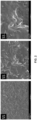
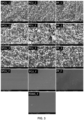
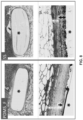
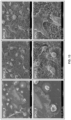
- FIG. 1 Representative SEM micrographs of ceramic templates, as shown in Fig. 1 , demonstrate that these surfaces comprise an isotropic distribution of interconnected, spheroidal grains and pores arising from the specific conditions of the production process.
- TCP1 possesses the smallest features-both grains and pores - versus TCP2 and TCP3, which are substantially smaller than 1 ⁇ m on average.
- the surface textures all visually appear to be uniformly distributed and structured at lower magnifications, evident of high production purity and consistency.
- the high complexity, peak density, and specific surface area can also be appreciated for all ceramic templates, particularly in high magnification micrographs.
- microstructured ceramic and flat template surface structures are replicated in various medical polymers including SPCU, PCU, PP, and PDMS using both hot-embossing and casting methods.
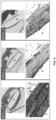
- SEM micrographs Fig. 3 , 4
- replication of ceramic template surface microstructure - in terms of feature size, shape, and arrangement - occurs consistently across the various polymers with good fidelity.
- the template ceramic surface microstructures are particularly well replicated in PDMS ( Fig. 4 ).
- Replication of microstructured templates is enabled by high-fidelity PDMS molds produced by soft lithography; similar grain and pore feature sizes are observed with the inverse form of the originating templates ( Fig. 5 ).
- Discs were implanted in the dorsal subcutaneous fat layer of Bama minipigs.
- general anesthesia with intravenous injection of pentobarbital sodium, 30mg/kg body weight
- longitudinal skin incisions were made on the back beside the spine, and subcutaneous tissue pouches, spaced > 2 cm apart, were subsequently made in the fat layer using a scalpel on both sides of the skin incision.
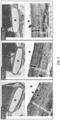
- the harvested samples with implanted durations of 4 weeks and 17 weeks were fixed in 10% buffered formalin, dehydrated in a graded ethanol series, embedded in poly(methyl methacrylate) (PMMA, Cool-Set, Aorigin, Chengdu, China). Sections ( ⁇ 20 ⁇ m thick), oriented cross-sectionally through the discs, were made with histological diamond saw (SAT-001, Aorigin, Chengdu, China) and stained with methylene blue/basic fuchsin or hematoxylin/eosin. The stained sections were then digitized with scanning microscopy (Austar43, AiMco, Xiamen, China) at 10x magnification for histological evaluation and histomorphometry. To view the collagen, sections were scanned to polarized overview images using a slide scanner (Konica Minolta Elite 5400 II, Japan) and polarized film.
- SAT-001 histological diamond saw
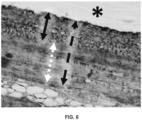
- the thickness of the fibrous capsules and comprising capsule tissue layers at 4 and 17 weeks was measured using AxioVision software (Carl Zeis, version 4.9.1) at a magnification level of 5x. Thickness measurements were made at 15 different locations surrounding each implant from a representative section, arising from three histological sections per implant. Generally, two distinct tissue layers were evident within the capsule: the inflammatory layer, mainly made up of mononuclear leukocytes (e.g. macrophages), and the denser fibrous layer, mainly made up of fibrous tissue oriented in a parallel direction to the surface of the implant. Total capsule thickness measurements were made perpendicular from the material surface outward to the point where the capsule ceased and native tissue such as fat or dermal tissue began.
- AxioVision software Carl Zeis, version 4.9.1
- Thickness measurements were made at 15 different locations surrounding each implant from a representative section, arising from three histological sections per implant. Generally, two distinct tissue layers were evident within the capsule: the inflammatory
- Inflammatory layer thickness measurements were similarly made but only to the transition point between the loose inflammatory layer and the denser fibrous layer of the capsule.
- the dense fibrous layer was calculated as the difference between the total capsule thickness and the inflammatory layer thickness (e.g. total capsule thickness minus inflammatory layer thickness).
- the tissue density of the fibrous capsules formed at 4 and 17 weeks was characterized by measuring the chromatic saturation levels in the histological sections corresponding to stained collagenous tissue.
- ImageJ software was used for all image processing and analysis. Similar methods have been previously described in the literature ( Chen Y, et al. Int J Clin Exp Med 2017;10(10):14904-14910 ).
- the chromatic saturation of a particular histologically stained tissue section (e.g. using a chromogenic dye) can be linked to the areal density of that tissue given that more densely packed tissue will bind more chromogen than less densely packed tissue of the same area and thickness.
- Representative images of the fibrous capsule were captured at 22x digital magnification at three different locations around the implant surface.
- Representative images of the dermal tissue were similarly captured at 22x magnification at three locations in the same histological section as a reference for the standard chromatic saturation of collagenous tissue.
- Image acquisition was conducted using standard digital slide scanner software (e.g. HD Scanner software) and exported in 24-bit RGB TIFF format.
- Acquired images were imported into ImageJ and color deconvoluted into RGB channels using the Color Deconvolution plugin (version 2). In this way, the red color channel corresponding to fuchsin-stained collagenous tissue could be independently analyzed.
- the deconvoluted red-channel of each image was first converted into HSB (hue-saturation-brightness) format so the saturation values of each image could then be measured using the Measure function in ImageJ.
- the Measure function provides a measured output of mean (average) pixel intensity on a scale from 0 to 255, corresponding to standard 8-bit 256 shade grayscale; in this context, a pixel intensity of 255 represents complete saturation and 0 represents complete unsaturation.
- Mean saturation levels of replicate locations within the same capsule were averaged and normalized against the average of mean saturation levels measured in the dermal tissue of the same histological section. In this way, differences in section thickness as well as differences in animal tissue structure were normalized in the measurements.
- Microstructured and flat polymeric sample discs were implanted in the dorsal subcutaneous tissue of Bama mini-pigs to study their tissue response, according to the study design outlined in Table C.
- the study was designed to evaluate the biological response to ceramic surface microstructure replicated in different polymers, made up of different material chemistries.
- sample groups comprised either TCP1, TCP3, or a flat surface structure.
- the subcutis located below the dermis, is principally made up of vascularized adipose tissue and is a relevant location to study the foreign body response to biomaterials.
- the Bama minipig is a well-accepted species model for understanding the human immune system. Implanted samples were recovered after 4 and 17 weeks implantation and processed for histology as described in the methods. The fibrous capsule formed around the implants was measured in stained histological tissue sections using specialized software. The fibrous capsule formed around the implants due to the foreign body response is generally found to comprise two distinct tissue layers, as depicted in Fig.
- the inflammatory layer principally composed of mononuclear leukocytes and occasional multinucleated giant cells immediately apposed to the implant surface
- the fibrous layer principally composed of fibroblastic cells oriented in a parallel manner to the surface of the implant.
- the inflammatory layer is well vascularized and more densely populated by cells, while the fibrous layer is less vascularized, and less densely populated by cells.
- the fibrous capsule was quantified in terms of total thickness, as well as constituent inflammatory and fibrous layers as shown in Fig. 6 to characterize the capsule tissue morphology as well as composition.
- the thickness of capsules formed around microstructured and flat polymeric samples were approximately similar within the same polymer compositional groups (e.g. SCPU_1 vs. SPCU_3 vs. SPCU_F) (Table C). Comparison between SS and PDMS_F were also made because SS is also composed of PDMS. In agreement with the other polymer groups, there was no apparent difference in average capsule thickness between SS and PDMS_F groups.
- capsule composition as defined by inflammatory and fibrous layer thicknesses, in response to the surface structure.
- sample groups incorporating microstructured surfaces exhibited substantially higher mean inflammatory layer thickness versus the respective flat reference groups (e.g. from Table C: the mean inflammatory layer thickness of PCU_1 and PCU_3 was roughly 100% greater than PCU_F).
- This systematic effect of surface structure demonstrated across all evaluated polymer chemistries, points to a powerful, universal role of surface microstructure directing the immune response.
- a similar relationship in inflammatory layer thickness was observed for SilkSurface, which was ⁇ 83% greater than flat PDMS (Table C).
- Figures 7 and 8 present representative micrographs of histological sections stained with basic fuchsin/methylene blue, which depict these global differences in inflammatory layer thickness at 4 weeks.
- mean fibrous layer thickness decreased by up to ⁇ 45% in response to surface microstructure at 4 weeks for all polymer clusters (e.g. SPCU, PCU, and PP).
- mean fibrous layer thickness for SPCU_1 and SPCU_3 ranged from 152-161 microns versus 252 microns for SPCU_F (Table C).
- mean fibrous layer thickness of SS implants decreased by ⁇ 15% versus flat PDMS_F.
- Figures 7 and 8 present representative micrographs of histological sections stained with basic fuchsin/methylene blue, which depict these global differences in fibrous layer thickness at 4 weeks.
- the inflammatory layer thickness systematically decreased for all microstructured groups by similar proportions relative to their 4 week values, illustrating healthy restitution of temporal inflammation to a lower, equilibrium state. Fibrous layer thickness also equilibrated to similar levels within polymer groups, irrespective of surface structure as shown in Table C.
- capsule thickness alone may not be a determining factor of maladies such as capsular contracture.
- Compositional characteristics of the capsule such as capsular collagen density and alignment may also play important roles.
- chromatic saturation measurement was conducted using image analysis software and corresponds to the amount of histologic stain taken up by the tissue section during staining.
- densely organized dermal tissue which is principally composed of collagen, stains deep fuchsia following staining with basic fuchsin and methylene blue dyes.
- the relative collagen content of the capsule can be quantitatively measured from density of chromatic saturation.
- polarized light microscopy is often used in the art to analyze collagen density and alignment, based on the birefringence properties of collagen's morphology. Under polarized light, collagen reflects the polarized light and can therefore be visualized.
- Human CD14+ monocytes (Cat. # 2W-400A, Poeitics TM Lonza) were cultured on the surface of microstructured and flat sample discs for up to 25 days. Discs were placed in suspension culture 48-well plates (one disc per well) and fixed to the bottom of the well using silicone O-rings. Immediately prior to seeding cells, discs were incubated in 500 ⁇ l culture medium for up to 2 hours at 37 C, 5% CO 2 to equilibrate the discs to culture conditions. For the purpose of this macrophage study, the culture medium consisted of the following ingredients: 25 ng/mL human recombinant macrophage colony stimulating factor (M-CSF; Cat.
- M-CSF human recombinant macrophage colony stimulating factor
- human dermal fibroblasts (Cat #: CC-2511 Lonza) were cultured in tissue culture treated 96-well plates for up to 7 days.
- Culture medium used for fibroblast cultures consisted of 10% FCS, 1% P-S, and MEM- ⁇ .
- FCS fetal calf serum
- P-S fetal calf serum
- MEM- ⁇ fetal calf serum
- culture media was completely removed and replaced with 50 ⁇ l fresh, prewarmed culture media per culture well.
- An additional 50 ⁇ l of prewarmed macrophage-derived conditioned media was supplemented to each culture well.
- an additional 50 ⁇ l of prewarmed macrophage-derived conditioned media was supplemented to each culture well.
- an additional 50 ⁇ l of prewarmed macrophage-derived conditioned media and 50 ⁇ l of prewarmed fresh culture media was supplemented to each culture well, without any media removal.
- the culture was maintained through 7 days culture. In this way, human fibroblasts were exposed to a sustained dose of secreted paracrine factors produced by macrophages cultured on the sample discs in the experiment described above. Cells were cultured in incubators maintained at 37 °C, 5% CO 2 .
- PrestoBlue Cell Viability assay (Cat. # A13261, Invitrogen) following the manufacturer's instructions. On the day of measurement, culture media was removed from the culture well and replaced with 250 ⁇ l 5% (v/v) PrestoBlue prewarmed media, diluted in fresh culture medium (10% FCS, 1% P-S, MEM- ⁇ ). Cells were incubated in PrestoBlue media for 2 hours at 37 °C, 5% CO 2 to ensure sufficient signal. The incubated PrestoBlue media was then individually sampled to the wells of a black, opaque 96-well plate (100 ⁇ l sample per well) for fluorescent measurement using a Clariostar Plus multimode plate reader (560 nm/590 nm, excitation/emission wavelengths). Duplicate samples per culture well were measured, and averaged across replicate cell-culture wells. Mean relative fluorescent unit values, rounded to the nearest 1 unit, were reported.
- May-Grünwald-Giemsa (MGG) staining is a Romanowsky-type, polychromatic stain routinely used for hematology and diagnostic cytopathology.
- cell culture media was fully removed, cells were washed with neutral phosphate buffered saline (PBS) containing calcium and magnesium (Cat. # 14040141, Gibco), and fixed in 2.5% glutaraldehyde diluted in neutral PBS for at least one hour at room temperature (RT). Fixative was removed, and cells were further fixed and permeabilized by incubating in methanol for 10 minutes at RT.
- PBS neutral phosphate buffered saline
- RT room temperature
- Methanol was removed, and cells were stained according to the following protocol: 5 minute incubation in May-Grünwald solution (diluted 1:1 v/v in pH 6.8 PBS; Cat. # MG500, Sigma-Aldrich); 3 minute incubation in pH 6.8 PBS buffer; 30 minute incubation in Giemsa solution (diluted 1:9 v/v in pH 6.8 PBS buffer; Cat. # 48900, Sigma-Aldrich); washed 3 minutes in pH 6.8 PBS buffer; dried. All staining steps were conducted at RT. Imaging of the stained cells was conducted using a Nikon SMZ25 stereomicroscope.
- SEM Scanning electron microscopy
- Samples were sputter-coated with a nanolayer of gold, approximately 10 nm thick, and then imaged using a scanning electron microscope (SEM, e.g. Philips XL-30, JEOL IT200). Micrographs were captured at various magnification levels ranging from 500x to 5,000x with typical acceleration voltage of 10 - 15 keV.
- SEM scanning electron microscope
- human macrophages cultured on the surface of microstructured and flat polymeric discs was characterized in vitro.
- Human CD14+ monocytes were used as a relevant model for studying the foreign body response, in that monocytes differentiate into macrophages upon adhesion with a substrate, and macrophages are the body's primary line of defense against foreign bodies such as medical implants. Macrophages exist in nearly every tissue of the body and are the progeny of monocytes arising from the bone marrow.
- Microstructured and flat polymer discs were prepared as described in the methods and used for the in vitro study according to Tables D and E. Culture on microstructured samples was shown to profoundly change the macrophage morphology at 21 days based on MGG staining ( Fig. 12 ) and SEM ( Fig. 13 ). From MGG staining, it was observed that macrophage shape on flat samples was predominantly roundish, and well spread; in comparison, macrophages cultured on microstructured surfaces were more irregularly shaped, less round, and generally less spread. It is particularly noted that macrophages cultured on microstructured surfaces - especially surfaces with TCP1 microstructure, e.g.
- SPCU_1, PCU_1, and PP_1 - tended to create more cell-cell junctions, linked by cellular filopodia connections. This resembled a more activated state. In SEM, differences were also noted. Specifically, macrophages cultured on flat tended to be round and well spread, sometimes 100s of microns in length, suggesting cells have fused to form giant cells. It is typical for macrophages cultured on flat surfaces to have a spheroid apical morphology resembling a doorknob. In comparison, macrophages cultured on micro structured surfaces appeared generally less spread out. On TCP1 microstructured surfaces (e.g.
- Macrophage viability after culture for 3, 10, and 21 days on microstructured and flat polymeric discs was measured using the PrestoBlue assay (Table D). No consistent differential effects of the surface structure on cell viability across the various polymers tested were discernible. These results indicate that microstructured polymeric surfaces are not cytotoxic to cells, nor do they promote more or less cell adhesion than respective flat surfaces.
- Fibroblasts are the principal constructor and resident of the fibrous capsule that forms around a foreign body; moreover, given the relevant paracrine signals, fibroblasts can differentiate into myofibroblasts which are the main contractile agent causing capsular contracture.
- Fibroblast viability was measured after culture for 7 days using the PrestoBlue assay (Table E). During the culture period, fibroblasts were exposed to macrophage-derived conditioned medium (MP CM) as described here above in the methods. Cell viability is considered to be a proxy measure of cell proliferation because higher cell viability correlates with higher cell proliferation. After treatment with MP CM derived from microstructured polymer surfaces, mean fibroblast viability was generally higher than from MP CM treatment derived from flat surfaces. This effect was evident for all polymer groups, illustrating a conserved response irrespective of material chemistry. This effect was also consistent for MP CM collected at various macrophage culture time points, e.g. after 3 days, 10 days, 17 days, or 21 days.
Landscapes
- Health & Medical Sciences (AREA)
- Life Sciences & Earth Sciences (AREA)
- Veterinary Medicine (AREA)
- Public Health (AREA)
- General Health & Medical Sciences (AREA)
- Animal Behavior & Ethology (AREA)
- Transplantation (AREA)
- Oral & Maxillofacial Surgery (AREA)
- Epidemiology (AREA)
- Chemical & Material Sciences (AREA)
- Heart & Thoracic Surgery (AREA)
- Vascular Medicine (AREA)
- Dermatology (AREA)
- Medicinal Chemistry (AREA)
- Engineering & Computer Science (AREA)
- Biomedical Technology (AREA)
- Cardiology (AREA)
- Surgery (AREA)
- Inorganic Chemistry (AREA)
- Chemical Kinetics & Catalysis (AREA)
- Prostheses (AREA)
Claims (15)
- Biokompatibles Polymermaterial mit einer texturierten Oberfläche mit einem arithmetischen Mittelwert der Höhe (Sa) unter 3,0 µm und einem Verhältnis der entwickelten Grenzflächen (Sdr) über 1,0, bestimmt gemäß ISO 25178 unter Verwendung eines Gauß'schen Tiefpass-S-Filters mit einem Nesting-Index-Wert von mindestens 0,25 µm.
- Material nach Anspruch 1, wobei die texturierte Oberfläche eine Peakdichte (Spd) von über 1×10⁶ Peaks/mm2 aufweist.
- Material nach einem der vorstehenden Ansprüche, wobei die texturierte Oberfläche ein Textur-Seitenverhältnis (Str) von über 0,6 aufweist.
- Material nach einem der vorstehenden Ansprüche, wobei die texturierte Oberfläche einen maximalen Höhenwert (Sz) unter 40 µm aufweist.
- Material nach einem der vorstehenden Ansprüche, wobei das biokompatible Polymermaterial aus einem Polyester, einem Polyurethan, einem Organosilizium oder einem Polyolefin ausgewählt ist.
- Verfahren zur Herstellung eines biokompatiblen Polymermaterials nach einem der vorstehenden Ansprüche, das die folgenden Schritte umfasst:a. Bereitstellung einer mikrostrukturierten Schablone, wobei die Schablone eine texturierte Oberfläche mit einem arithmetischen Mittelwert der Höhe (Sa) unter 3,0 µm und einem Verhältnis der entwickelten Grenzflächen (Sdr) über 1,0 aufweist, bestimmt gemäß ISO 25178 unter Verwendung eines Gaußschen Tiefpass-S-Filters mit einem Nesting-Index-Wert von mindestens 0,25 µm,b. Bedecken der Schablonenoberfläche mit einem biokompatiblen Polymermaterial als Feststoff oder mit einer flüssigen polymerisierbaren Mischung,c. Anpassen des biokompatiblen Polymermaterials an die Texturkonturen der Schablone unter Verwendung von erhöhter Temperatur, Druck oder Vakuum, in Kombination oder separat,d. Verfestigung des biokompatiblen Polymermaterials, unde. Trennen des biokompatiblen Polymermaterials und der Schablone.
- Mikrostrukturierte Schablone zur Verwendung in dem Verfahren zur Vorbereitung des biokompatiblen Polymermaterials nach einem der Ansprüche 1 bis 5, wobei die Schablone eine texturierte Oberfläche mit einem arithmetischen Mittelwert der Höhe (Sa) unter 3,0 µm und einem Verhältnis der entwickelten Grenzflächen (Sdr) über 1,0 aufweist, bestimmt gemäß ISO 25178 unter Verwendung eines Gaußschen Tiefpass-S-Filters mit einem Nesting-Index-Wert von mindestens 0,25 µm.
- Schablone nach Anspruch 7, wobei die texturierte Oberfläche eine Peakdichte (Spd) von über 1×10⁶ Spitzen/mm2 aufweist und/oder wobei die texturierte Oberfläche ein Textur-Seitenverhältnis (Str) von über 0,6 aufweist.
- Schablone nach einem der vorstehenden Ansprüche, wobei die strukturierte Oberfläche einen maximalen Höhenwert (Sz) unter 40 µm aufweist.
- Schablone nach einem der vorstehenden Ansprüche, wobei das Schablonenmaterial ein gesintertes keramisches Material, vorzugsweise Tricalciumphosphat (TCP), ist.
- Verwendung des biokompatiblen Polymermaterials nach einem der Ansprüche 1 bis 5 zur Bildung mindestens eines Teils der Oberfläche einer medizinischen Vorrichtung.
- Verwendung nach Anspruch 11, wobei die medizinische Vorrichtung ein Implantat für ein Säugetier, vorzugsweise einen Menschen, ist und/oder wobei die medizinische Vorrichtung ein Brustimplantat, ein Herz- oder kardiovaskuläres Implantat, ein chirurgisches Netz, eine Neurostimulationsleitung, ein ophthalmisches Implantat, ein urologisches Implantat, ein Film oder ein Biosensor ist.
- Medizinische Vorrichtung, die ein biokompatibles Polymermaterial mit einer texturierten Oberfläche nach einem der Ansprüche 1 bis 5 umfasst.
- Medizinische Vorrichtung nach Anspruch 13, wobei sich die texturierte Oberfläche auf einer Außenfläche befindet und/oder wobei die texturierte Oberfläche eine gesamte Oberfläche der medizinischen Vorrichtung ist.
- Medizinische Vorrichtung nach Anspruch 13 oder Anspruch 14, wobei die medizinische Vorrichtung ein Brustimplantat für einen Menschen ist.
Applications Claiming Priority (2)
| Application Number | Priority Date | Filing Date | Title |
|---|---|---|---|
| NL2027599A NL2027599B1 (en) | 2021-02-19 | 2021-02-19 | Biocompatible polymeric implant material having a textured surface |
| PCT/NL2022/050086 WO2022177431A1 (en) | 2021-02-19 | 2022-02-18 | Textured surfaces of biocompatible polymeric materials |
Publications (3)
| Publication Number | Publication Date |
|---|---|
| EP4294470A1 EP4294470A1 (de) | 2023-12-27 |
| EP4294470B1 true EP4294470B1 (de) | 2025-03-26 |
| EP4294470C0 EP4294470C0 (de) | 2025-03-26 |
Family
ID=75439403
Family Applications (1)
| Application Number | Title | Priority Date | Filing Date |
|---|---|---|---|
| EP22706421.9A Active EP4294470B1 (de) | 2021-02-19 | 2022-02-18 | Strukturierte oberflächen biokompatibler polymermaterialien |
Country Status (4)
| Country | Link |
|---|---|
| US (2) | US20240138974A1 (de) |
| EP (1) | EP4294470B1 (de) |
| NL (1) | NL2027599B1 (de) |
| WO (1) | WO2022177431A1 (de) |
Families Citing this family (6)
| Publication number | Priority date | Publication date | Assignee | Title |
|---|---|---|---|---|
| NL2027599B1 (en) * | 2021-02-19 | 2022-09-19 | Instructure Labs B V | Biocompatible polymeric implant material having a textured surface |
| CR20250036A (es) * | 2021-03-12 | 2025-03-03 | Zeus Company Inc | Conjuntos de tubo/mandril (divisional 2023-0461) |
| CN116061354B (zh) * | 2023-03-31 | 2023-07-21 | 山东瑞安泰医疗技术有限公司 | 一种医用导管及其制备方法 |
| WO2025029721A2 (en) * | 2023-08-03 | 2025-02-06 | Corning Incorporated | Antiglare surfaces with abrasion-resistant properties |
| US20250049545A1 (en) * | 2023-08-09 | 2025-02-13 | Rtrs Investment, Llc | Implants, functionalized implant surfaces and related systems, devices, computer program products, and methods |
| WO2025179056A1 (en) * | 2024-02-22 | 2025-08-28 | Jarrett Industries, Inc. | Cleanroom packaging materials |
Citations (1)
| Publication number | Priority date | Publication date | Assignee | Title |
|---|---|---|---|---|
| EP3738620A1 (de) * | 2018-01-09 | 2020-11-18 | Nidek Co., Ltd. | Intraokulare linse |
Family Cites Families (27)
| Publication number | Priority date | Publication date | Assignee | Title |
|---|---|---|---|---|
| US4960425A (en) | 1987-05-27 | 1990-10-02 | Mentor Corporation | Textured surface frosthesis implants |
| EP0637229B1 (de) * | 1992-04-24 | 2002-11-20 | Osteotech, Inc., | Vorrichtung zum vermeiden von gewebeadhäsionen |
| SE523288C2 (sv) | 2002-07-19 | 2004-04-06 | Astra Tech Ab | Ett implantat och ett förfarande för behandling av en implantatyta |
| JP4408714B2 (ja) * | 2004-02-12 | 2010-02-03 | 株式会社ツチヨシ産業 | 鋳造用鋳型及びその製造方法 |
| US7143709B2 (en) | 2004-02-17 | 2006-12-05 | University Of Florida Research Foundation, Inc. | Surface topography for non-toxic bioadhesion control |
| US9016221B2 (en) | 2004-02-17 | 2015-04-28 | University Of Florida Research Foundation, Inc. | Surface topographies for non-toxic bioadhesion control |
| AU2007215625B2 (en) | 2006-02-17 | 2012-06-28 | Progentix Orthobiology B.V. | Osteoinductive calcium phosphates |
| US20090011117A1 (en) * | 2007-07-03 | 2009-01-08 | Endotronix, Inc. | Methods for texturing a surface of an endovascular implant |
| US20090093879A1 (en) | 2007-10-04 | 2009-04-09 | Debra Wawro | Micro- and nano-patterned surface features to reduce implant fouling and regulate wound healing |
| US8313527B2 (en) * | 2007-11-05 | 2012-11-20 | Allergan, Inc. | Soft prosthesis shell texturing method |
| US20110276134A1 (en) | 2010-05-10 | 2011-11-10 | Allergan, Inc. | Silicone implant with imprinted texture |
| WO2011097499A1 (en) | 2010-02-05 | 2011-08-11 | Allergan, Inc. | Biocompatible structures and compositions |
| WO2011127395A1 (en) | 2010-04-08 | 2011-10-13 | Healionics Corporation | Implantable medical devices having microporous surface layers and method for reducing foreign body response to the same |
| KR20140079429A (ko) * | 2011-10-27 | 2014-06-26 | 킴벌리-클라크 월드와이드, 인크. | 생체활성 제제를 전달하기 위한 이식형 기구 |
| US8992619B2 (en) | 2011-11-01 | 2015-03-31 | Titan Spine, Llc | Microstructured implant surfaces |
| US8641686B2 (en) | 2012-01-20 | 2014-02-04 | Rabie Stephan | Anti-biofilm intravascular catheter |
| US9775933B2 (en) | 2012-03-02 | 2017-10-03 | W. L. Gore & Associates, Inc. | Biocompatible surfaces and devices incorporating such surfaces |
| GB201402804D0 (en) | 2014-02-17 | 2014-04-02 | Univ Manchester | Implants |
| JP2017506921A (ja) | 2014-02-21 | 2017-03-16 | ヒーリオニクス・コーポレイションHealionics Corporation | 血管移植片およびその開存性を維持する方法 |
| WO2015176014A1 (en) | 2014-05-16 | 2015-11-19 | Allergan, Inc. | Soft filled prosthesis shell with variable texture |
| NL2013016B1 (en) | 2014-06-17 | 2016-07-05 | Academisch Ziekenhuis Leiden | In situ tissue engineering. |
| GB201508385D0 (en) * | 2015-05-15 | 2015-07-01 | Accentus Medical Ltd | Metal treatment |
| GB201521474D0 (en) | 2015-12-04 | 2016-01-20 | Univ Manchester | Textured surfaces for implants |
| US11744708B2 (en) | 2016-02-16 | 2023-09-05 | Koninklijke Philips N.V. | Surface topographies for altering the physiology of living cells |
| WO2018213390A1 (en) * | 2017-05-17 | 2018-11-22 | Case Western Reserve University | Nanopatterned surface modifications on implantable medical device |
| US11325367B2 (en) * | 2017-12-15 | 2022-05-10 | West Pharmaceutical Services, Inc. | Smooth film laminated elastomer articles |
| NL2027599B1 (en) * | 2021-02-19 | 2022-09-19 | Instructure Labs B V | Biocompatible polymeric implant material having a textured surface |
-
2021
- 2021-02-19 NL NL2027599A patent/NL2027599B1/en not_active IP Right Cessation
-
2022
- 2022-02-18 US US18/546,287 patent/US20240138974A1/en active Pending
- 2022-02-18 US US17/675,326 patent/US11890394B2/en active Active
- 2022-02-18 WO PCT/NL2022/050086 patent/WO2022177431A1/en not_active Ceased
- 2022-02-18 EP EP22706421.9A patent/EP4294470B1/de active Active
Patent Citations (1)
| Publication number | Priority date | Publication date | Assignee | Title |
|---|---|---|---|---|
| EP3738620A1 (de) * | 2018-01-09 | 2020-11-18 | Nidek Co., Ltd. | Intraokulare linse |
Also Published As
| Publication number | Publication date |
|---|---|
| NL2027599A (en) | 2022-09-19 |
| EP4294470A1 (de) | 2023-12-27 |
| WO2022177431A1 (en) | 2022-08-25 |
| US20220265897A1 (en) | 2022-08-25 |
| NL2027599B1 (en) | 2022-09-19 |
| US11890394B2 (en) | 2024-02-06 |
| EP4294470C0 (de) | 2025-03-26 |
| US20240138974A1 (en) | 2024-05-02 |
Similar Documents
| Publication | Publication Date | Title |
|---|---|---|
| EP4294470B1 (de) | Strukturierte oberflächen biokompatibler polymermaterialien | |
| Antmen et al. | The role of biomaterials and scaffolds in immune responses in regenerative medicine: macrophage phenotype modulation by biomaterial properties and scaffold architectures | |
| Dorozhkin | Calcium orthophosphate-containing biocomposites and hybrid biomaterials for biomedical applications | |
| Chen et al. | Characterization of topographical effects on macrophage behavior in a foreign body response model | |
| Topsakal et al. | Study on the cytocompatibility, mechanical and antimicrobial properties of 3D printed composite scaffolds based on PVA/Gold nanoparticles (AuNP)/Ampicillin (AMP) for bone tissue engineering | |
| Xia et al. | Emerging polymeric biomaterials and manufacturing techniques in regenerative medicine | |
| ES2923523T3 (es) | Implantes corporales de tejidos blandos | |
| US9763788B2 (en) | Bone regeneration using biodegradable polymeric nanocomposite materials and applications of the same | |
| Kim et al. | Cell adhesion and proliferation evaluation of SFF-based biodegradable scaffolds fabricated using a multi-head deposition system | |
| Gao et al. | Chitosan-vancomycin hydrogel incorporated bone repair scaffold based on staggered orthogonal structure: a viable dually controlled drug delivery system | |
| JP2018512959A (ja) | 治癒向上のための二層デバイス | |
| Goonoo et al. | Improved multicellular response, biomimetic mineralization, angiogenesis, and reduced foreign body response of modified polydioxanone scaffolds for skeletal tissue regeneration | |
| Jokanović et al. | Extraordinary biological properties of a new calcium hydroxyapatite/poly (lactide-co-glycolide)-based scaffold confirmed by in vivo investigation | |
| CA2964107C (en) | Bone regeneration using biodegradable polymeric nanocomposite materials and applications of the same | |
| Bhat et al. | Biomaterials in regenerative medicine | |
| Sachdev IV et al. | A review on techniques and biomaterials used in 3D bioprinting | |
| Forgacs et al. | Biofabrication: micro-and nano-fabrication, printing, patterning and assemblies | |
| Stanciuc et al. | Human primary osteoblast behaviour on microrough zirconia-toughened alumina and on selectively etched microrough zirconia-toughened alumina | |
| Kanwar et al. | Additively manufactured stochastic and gyroid scaffold design towards osseointegration and bone regeneration in a rabbit femur model | |
| Jokanović et al. | In Vivo Investigation of ALBO‐OS Scaffold Based on Hydroxyapatite and PLGA | |
| Mota et al. | 3D fiber deposited polymeric scaffolds for external auditory canal wall | |
| Najman et al. | Applications of biomaterials in regenerative medicine and tissue engineering–concepts and perspective | |
| Peng et al. | Progress of Degradable Synthetic Polymers in Adipose Tissue Engineering-A Review | |
| Ankita IV et al. | A review on techniques and biomaterials used in 3D bioprinting | |
| Joshi et al. | Drug-releasing nano-bioimplants: from basics to current progress |
Legal Events
| Date | Code | Title | Description |
|---|---|---|---|
| STAA | Information on the status of an ep patent application or granted ep patent |
Free format text: STATUS: UNKNOWN |
|
| STAA | Information on the status of an ep patent application or granted ep patent |
Free format text: STATUS: THE INTERNATIONAL PUBLICATION HAS BEEN MADE |
|
| PUAI | Public reference made under article 153(3) epc to a published international application that has entered the european phase |
Free format text: ORIGINAL CODE: 0009012 |
|
| STAA | Information on the status of an ep patent application or granted ep patent |
Free format text: STATUS: REQUEST FOR EXAMINATION WAS MADE |
|
| 17P | Request for examination filed |
Effective date: 20230906 |
|
| AK | Designated contracting states |
Kind code of ref document: A1 Designated state(s): AL AT BE BG CH CY CZ DE DK EE ES FI FR GB GR HR HU IE IS IT LI LT LU LV MC MK MT NL NO PL PT RO RS SE SI SK SM TR |
|
| DAV | Request for validation of the european patent (deleted) | ||
| DAX | Request for extension of the european patent (deleted) | ||
| GRAP | Despatch of communication of intention to grant a patent |
Free format text: ORIGINAL CODE: EPIDOSNIGR1 |
|
| STAA | Information on the status of an ep patent application or granted ep patent |
Free format text: STATUS: GRANT OF PATENT IS INTENDED |
|
| RIC1 | Information provided on ipc code assigned before grant |
Ipc: A61L 31/14 20060101ALI20240925BHEP Ipc: A61L 31/04 20060101ALI20240925BHEP Ipc: A61L 27/50 20060101ALI20240925BHEP Ipc: A61F 2/00 20060101ALI20240925BHEP Ipc: A61L 27/14 20060101AFI20240925BHEP |
|
| INTG | Intention to grant announced |
Effective date: 20241008 |
|
| GRAS | Grant fee paid |
Free format text: ORIGINAL CODE: EPIDOSNIGR3 |
|
| GRAA | (expected) grant |
Free format text: ORIGINAL CODE: 0009210 |
|
| STAA | Information on the status of an ep patent application or granted ep patent |
Free format text: STATUS: THE PATENT HAS BEEN GRANTED |
|
| AK | Designated contracting states |
Kind code of ref document: B1 Designated state(s): AL AT BE BG CH CY CZ DE DK EE ES FI FR GB GR HR HU IE IS IT LI LT LU LV MC MK MT NL NO PL PT RO RS SE SI SK SM TR |
|
| REG | Reference to a national code |
Ref country code: GB Ref legal event code: FG4D |
|
| REG | Reference to a national code |
Ref country code: CH Ref legal event code: EP |
|
| REG | Reference to a national code |
Ref country code: DE Ref legal event code: R096 Ref document number: 602022012247 Country of ref document: DE |
|
| REG | Reference to a national code |
Ref country code: IE Ref legal event code: FG4D |
|
| U01 | Request for unitary effect filed |
Effective date: 20250417 |
|
| U07 | Unitary effect registered |
Designated state(s): AT BE BG DE DK EE FI FR IT LT LU LV MT NL PT RO SE SI Effective date: 20250425 |
|
| PG25 | Lapsed in a contracting state [announced via postgrant information from national office to epo] |
Ref country code: RS Free format text: LAPSE BECAUSE OF FAILURE TO SUBMIT A TRANSLATION OF THE DESCRIPTION OR TO PAY THE FEE WITHIN THE PRESCRIBED TIME-LIMIT Effective date: 20250626 |
|
| PG25 | Lapsed in a contracting state [announced via postgrant information from national office to epo] |
Ref country code: NO Free format text: LAPSE BECAUSE OF FAILURE TO SUBMIT A TRANSLATION OF THE DESCRIPTION OR TO PAY THE FEE WITHIN THE PRESCRIBED TIME-LIMIT Effective date: 20250626 |
|
| PG25 | Lapsed in a contracting state [announced via postgrant information from national office to epo] |
Ref country code: HR Free format text: LAPSE BECAUSE OF FAILURE TO SUBMIT A TRANSLATION OF THE DESCRIPTION OR TO PAY THE FEE WITHIN THE PRESCRIBED TIME-LIMIT Effective date: 20250326 |
|
| PG25 | Lapsed in a contracting state [announced via postgrant information from national office to epo] |
Ref country code: GR Free format text: LAPSE BECAUSE OF FAILURE TO SUBMIT A TRANSLATION OF THE DESCRIPTION OR TO PAY THE FEE WITHIN THE PRESCRIBED TIME-LIMIT Effective date: 20250627 |
|
| PG25 | Lapsed in a contracting state [announced via postgrant information from national office to epo] |
Ref country code: SM Free format text: LAPSE BECAUSE OF FAILURE TO SUBMIT A TRANSLATION OF THE DESCRIPTION OR TO PAY THE FEE WITHIN THE PRESCRIBED TIME-LIMIT Effective date: 20250326 |
|
| PG25 | Lapsed in a contracting state [announced via postgrant information from national office to epo] |
Ref country code: ES Free format text: LAPSE BECAUSE OF FAILURE TO SUBMIT A TRANSLATION OF THE DESCRIPTION OR TO PAY THE FEE WITHIN THE PRESCRIBED TIME-LIMIT Effective date: 20250326 |
|
| PG25 | Lapsed in a contracting state [announced via postgrant information from national office to epo] |
Ref country code: PL Free format text: LAPSE BECAUSE OF FAILURE TO SUBMIT A TRANSLATION OF THE DESCRIPTION OR TO PAY THE FEE WITHIN THE PRESCRIBED TIME-LIMIT Effective date: 20250326 |
|
| PG25 | Lapsed in a contracting state [announced via postgrant information from national office to epo] |
Ref country code: SK Free format text: LAPSE BECAUSE OF FAILURE TO SUBMIT A TRANSLATION OF THE DESCRIPTION OR TO PAY THE FEE WITHIN THE PRESCRIBED TIME-LIMIT Effective date: 20250326 |
|
| PG25 | Lapsed in a contracting state [announced via postgrant information from national office to epo] |
Ref country code: IS Free format text: LAPSE BECAUSE OF FAILURE TO SUBMIT A TRANSLATION OF THE DESCRIPTION OR TO PAY THE FEE WITHIN THE PRESCRIBED TIME-LIMIT Effective date: 20250726 |
|
| PG25 | Lapsed in a contracting state [announced via postgrant information from national office to epo] |
Ref country code: CZ Free format text: LAPSE BECAUSE OF FAILURE TO SUBMIT A TRANSLATION OF THE DESCRIPTION OR TO PAY THE FEE WITHIN THE PRESCRIBED TIME-LIMIT Effective date: 20250326 |
|
| PLBE | No opposition filed within time limit |
Free format text: ORIGINAL CODE: 0009261 |
|
| STAA | Information on the status of an ep patent application or granted ep patent |
Free format text: STATUS: NO OPPOSITION FILED WITHIN TIME LIMIT |
|
| REG | Reference to a national code |
Ref country code: CH Ref legal event code: L10 Free format text: ST27 STATUS EVENT CODE: U-0-0-L10-L00 (AS PROVIDED BY THE NATIONAL OFFICE) Effective date: 20260211 |
|
| 26N | No opposition filed |
Effective date: 20260105 |
|
| U20 | Renewal fee for the european patent with unitary effect paid |
Year of fee payment: 5 Effective date: 20260224 |