EP4286965B1 - Agv-versandsteuerungssystem und -verfahren - Google Patents
Agv-versandsteuerungssystem und -verfahren Download PDFInfo
- Publication number
- EP4286965B1 EP4286965B1 EP22871149.5A EP22871149A EP4286965B1 EP 4286965 B1 EP4286965 B1 EP 4286965B1 EP 22871149 A EP22871149 A EP 22871149A EP 4286965 B1 EP4286965 B1 EP 4286965B1
- Authority
- EP
- European Patent Office
- Prior art keywords
- agv
- virtual
- real
- scheduling
- server
- Prior art date
- Legal status (The legal status is an assumption and is not a legal conclusion. Google has not performed a legal analysis and makes no representation as to the accuracy of the status listed.)
- Active
Links
Images


Classifications
-
- G—PHYSICS
- G05—CONTROLLING; REGULATING
- G05B—CONTROL OR REGULATING SYSTEMS IN GENERAL; FUNCTIONAL ELEMENTS OF SUCH SYSTEMS; MONITORING OR TESTING ARRANGEMENTS FOR SUCH SYSTEMS OR ELEMENTS
- G05B19/00—Program-control systems
- G05B19/02—Program-control systems electric
- G05B19/418—Total factory control, i.e. centrally controlling a plurality of machines, e.g. direct or distributed numerical control [DNC], flexible manufacturing systems [FMS], integrated manufacturing systems [IMS] or computer integrated manufacturing [CIM]
- G05B19/41865—Total factory control, i.e. centrally controlling a plurality of machines, e.g. direct or distributed numerical control [DNC], flexible manufacturing systems [FMS], integrated manufacturing systems [IMS] or computer integrated manufacturing [CIM] characterised by job scheduling, process planning, material flow
-
- G—PHYSICS
- G05—CONTROLLING; REGULATING
- G05B—CONTROL OR REGULATING SYSTEMS IN GENERAL; FUNCTIONAL ELEMENTS OF SUCH SYSTEMS; MONITORING OR TESTING ARRANGEMENTS FOR SUCH SYSTEMS OR ELEMENTS
- G05B19/00—Program-control systems
- G05B19/02—Program-control systems electric
- G05B19/418—Total factory control, i.e. centrally controlling a plurality of machines, e.g. direct or distributed numerical control [DNC], flexible manufacturing systems [FMS], integrated manufacturing systems [IMS] or computer integrated manufacturing [CIM]
- G05B19/41885—Total factory control, i.e. centrally controlling a plurality of machines, e.g. direct or distributed numerical control [DNC], flexible manufacturing systems [FMS], integrated manufacturing systems [IMS] or computer integrated manufacturing [CIM] characterised by modeling, simulation of the manufacturing system
-
- G—PHYSICS
- G05—CONTROLLING; REGULATING
- G05B—CONTROL OR REGULATING SYSTEMS IN GENERAL; FUNCTIONAL ELEMENTS OF SUCH SYSTEMS; MONITORING OR TESTING ARRANGEMENTS FOR SUCH SYSTEMS OR ELEMENTS
- G05B19/00—Program-control systems
- G05B19/02—Program-control systems electric
- G05B19/418—Total factory control, i.e. centrally controlling a plurality of machines, e.g. direct or distributed numerical control [DNC], flexible manufacturing systems [FMS], integrated manufacturing systems [IMS] or computer integrated manufacturing [CIM]
- G05B19/4189—Total factory control, i.e. centrally controlling a plurality of machines, e.g. direct or distributed numerical control [DNC], flexible manufacturing systems [FMS], integrated manufacturing systems [IMS] or computer integrated manufacturing [CIM] characterised by the transport system
- G05B19/41895—Total factory control, i.e. centrally controlling a plurality of machines, e.g. direct or distributed numerical control [DNC], flexible manufacturing systems [FMS], integrated manufacturing systems [IMS] or computer integrated manufacturing [CIM] characterised by the transport system using automatic guided vehicles [AGV]
-
- G—PHYSICS
- G06—COMPUTING OR CALCULATING; COUNTING
- G06Q—INFORMATION AND COMMUNICATION TECHNOLOGY [ICT] SPECIALLY ADAPTED FOR ADMINISTRATIVE, COMMERCIAL, FINANCIAL, MANAGERIAL OR SUPERVISORY PURPOSES; SYSTEMS OR METHODS SPECIALLY ADAPTED FOR ADMINISTRATIVE, COMMERCIAL, FINANCIAL, MANAGERIAL OR SUPERVISORY PURPOSES, NOT OTHERWISE PROVIDED FOR
- G06Q10/00—Administration; Management
- G06Q10/04—Forecasting or optimisation specially adapted for administrative or management purposes, e.g. linear programming or "cutting stock problem"
-
- G—PHYSICS
- G06—COMPUTING OR CALCULATING; COUNTING
- G06Q—INFORMATION AND COMMUNICATION TECHNOLOGY [ICT] SPECIALLY ADAPTED FOR ADMINISTRATIVE, COMMERCIAL, FINANCIAL, MANAGERIAL OR SUPERVISORY PURPOSES; SYSTEMS OR METHODS SPECIALLY ADAPTED FOR ADMINISTRATIVE, COMMERCIAL, FINANCIAL, MANAGERIAL OR SUPERVISORY PURPOSES, NOT OTHERWISE PROVIDED FOR
- G06Q10/00—Administration; Management
- G06Q10/06—Resources, workflows, human or project management; Enterprise or organisation planning; Enterprise or organisation modelling
- G06Q10/063—Operations research, analysis or management
- G06Q10/0631—Resource planning, allocation, distributing or scheduling for enterprises or organisations
- G06Q10/06311—Scheduling, planning or task assignment for a person or group
- G06Q10/063114—Status monitoring or status determination for a person or group
-
- G—PHYSICS
- G06—COMPUTING OR CALCULATING; COUNTING
- G06Q—INFORMATION AND COMMUNICATION TECHNOLOGY [ICT] SPECIALLY ADAPTED FOR ADMINISTRATIVE, COMMERCIAL, FINANCIAL, MANAGERIAL OR SUPERVISORY PURPOSES; SYSTEMS OR METHODS SPECIALLY ADAPTED FOR ADMINISTRATIVE, COMMERCIAL, FINANCIAL, MANAGERIAL OR SUPERVISORY PURPOSES, NOT OTHERWISE PROVIDED FOR
- G06Q10/00—Administration; Management
- G06Q10/06—Resources, workflows, human or project management; Enterprise or organisation planning; Enterprise or organisation modelling
- G06Q10/063—Operations research, analysis or management
- G06Q10/0631—Resource planning, allocation, distributing or scheduling for enterprises or organisations
- G06Q10/06316—Sequencing of tasks or work
-
- H—ELECTRICITY
- H04—ELECTRIC COMMUNICATION TECHNIQUE
- H04L—TRANSMISSION OF DIGITAL INFORMATION, e.g. TELEGRAPHIC COMMUNICATION
- H04L69/00—Network arrangements, protocols or services independent of the application payload and not provided for in the other groups of this subclass
- H04L69/16—Implementation or adaptation of Internet protocol [IP], of transmission control protocol [TCP] or of user datagram protocol [UDP]
-
- G—PHYSICS
- G05—CONTROLLING; REGULATING
- G05B—CONTROL OR REGULATING SYSTEMS IN GENERAL; FUNCTIONAL ELEMENTS OF SUCH SYSTEMS; MONITORING OR TESTING ARRANGEMENTS FOR SUCH SYSTEMS OR ELEMENTS
- G05B2219/00—Program-control systems
- G05B2219/30—Nc systems
- G05B2219/50—Machine tool, machine tool null till machine tool work handling
- G05B2219/50393—Floor conveyor, AGV automatic guided vehicle
Definitions
- the present application relates to the field of industrial manufacturing, and particular to an AGV scheduling control system and method.
- CN 113 867 295 A discloses a manufacturing workshop AGV dynamic scheduling method, system and device based on digital twinning and a storage medium.
- the method mainly comprises six steps of building a manufacturing workshop AGV digital twinborn model, building an AGV scheduling model, generating an initial scheduling scheme, simulating and verifying the scheduling scheme based on the digital twinborn model, predicting AGV availability based on a dynamic energy consumption model, and performing charging scheduling.
- the present application provides an AGV scheduling control system, including: a real AGV scheduling controller, the real AGV scheduling controller is configured to generate an AGV scheduling instruction; a real AGV, the real AGV configured to execute a task according to the AGV scheduling instruction; and a server, the server is communicatively coupled with the real AGV and the real AGV scheduling controller respectively, wherein the server is configured to: receive the AGV scheduling instruction from the real AGV scheduling controller and transmit the same to the corresponding real AGV; and receive status feedback from the real AGV.
- a real AGV scheduling controller the real AGV scheduling controller is configured to generate an AGV scheduling instruction
- a real AGV the real AGV configured to execute a task according to the AGV scheduling instruction
- a server the server is communicatively coupled with the real AGV and the real AGV scheduling controller respectively, wherein the server is configured to: receive the AGV scheduling instruction from the real AGV scheduling controller and transmit the same to the corresponding real AGV; and receive status feedback from the real AGV.
- the AGV scheduling control system further includes: a virtual AGV and a virtual AGV scheduling controller that are constructed based on simulation software and serve respectively as digital twins of the real AGV and the real AGV scheduling controller, wherein the virtual AGV and the virtual AGV scheduling controller are communicatively coupled with the server.
- the simulation of the real AGV scheduling control system can be provided during the planning phase of the production line, and the status monitoring of the real AGV scheduling control system can be provided during the operation phase of the production line.
- the program used in the simulation software for controlling the virtual AGV and the virtual AGV scheduling controller is equivalently exchangable with the program for controlling the corresponding real AGV and real AGV scheduling controller.
- the present application can directly apply the optimized AGV scheduling logic and algorithm obtained after simulating the virtual entity to the real entity, thereby significantly shortening the time for planning and optimization processes, and realizing rapid deployment and operation of production lines.
- the real AGV, the real AGV scheduling controller, the virtual AGV and the virtual AGV scheduling controller have respective IP addresses and ports, and communicate with the server through the TCP/IP protocol.
- the AGV scheduling controller can globally grasp the task requirements and AGV status, comprehensively consider various factors, and determine the most suitable AGV for executing tasks, which is conducive to improving the overall efficiency of the production line.
- the real AGV is schedulable by the virtual AGV scheduling controller in the same manner as the virtual AGV.
- the fusion operation of the real entity and the virtual entity is realized, which can significantly simplify the planning and optimization process of the AGV system, thereby realizing the rapid deployment of the production line, reducing the time spent on downtime and debugging, and improving the overall production efficiency of the production line.
- the present application integrates the material calling system into the architecture of the AGV scheduling control system in a manner similar to the AGV scheduling controller and AGV, and the material calling system can communicate with other entities in a unified form, thus it can have a more comprehensive control over the material handling work, realize a more efficient scheduling algorithm, and improve the overall production efficiency of the production line.
- the method provided by the present application can simplify the process from planning to operation of the AGV scheduling control system, and significantly speed up the deployment of production lines. At the same time, it is also convenient for continuous optimization after operation by virtue of the equivalent exchange between virtual entities and real entities.
- the real AGV, the real AGV scheduling controller, the virtual AGV and the virtual AGV scheduling controller have respective IP addresses and ports, and communicate with the server through the TCP/IP protocol.
- the peer-to-peer and unified control of the real entity and the virtual entity is realized, and the real entity and the virtual entity can be in the system at the same time without causing conflicts.
- simulating the AGV scheduling process further includes: configuring the virtual AGV scheduling controller to generate an AGV scheduling instruction; configuring the virtual AGV to execute a task according to the AGV scheduling instruction; and configuring the server to: receive the AGV scheduling instruction from the virtual AGV scheduling controller and transmit the same to corresponding virtual AGV; and receive the status feedback from the virtual AGV.
- the AGV scheduling planning algorithm and program can be tested and debugged in the planning phase, so as to reduce the time spent on planning and optimization process.
- the virtual AGV scheduling controller is further configured to: monitor the status fed back by the AGV during task execution and send an alarm signal when the status is inconsistent with the expectation.
- the operating status of the real entity can be monitored in real time and an alarm can be sent in time to remind operators to pay attention.
- the virtual AGV scheduling controller is capable of scheduling the real AGV in the same manner as scheduling the virtual AGV.
- an AGV scheduling control method including: an AGV scheduling controller receiving a task via a server; the AGV scheduling controller determining an AGV for executing the task; the AGV scheduling controller sending a scheduling instruction for the AGV to the server; the server converting the scheduling instruction into a message format suitable for the AGV; and the server sending the converted scheduling instruction to the AGV.
- the method further includes: monitoring the operating status of the corresponding object through the virtual AGV and the virtual AGV scheduling controller that are digital twins of the AGV and the AGV scheduling controller respectively.
- the method further includes: simulating the AGV scheduling process through the virtual AGV, the virtual AGV scheduling controller, and the server; and optimizing the AGV scheduling algorithm based on the simulation results.
- the material calling system can be included in the simulation and testing in the planning phase, and a similar virtual-real fusion operation can be realized, which speeds up the deployment of the production line.
- interactions between the AGV scheduling controller and AGV model, the device end loading and unloading model, and the material calling system can be rapidly simulated and implemented in the planning phase, and the logic of the AGV scheduling system can be verified; in the AGV operation phase, different AGV scheduling architectures from different AGV manufacturers may be adapted, and AGV communication interfaces from different AGV manufacturers may be adapted, so as to reduce the interface adaptation time between the AGV scheduling controller and the AGV; in the AGV operation phase, a digital twin of the AGV scheduling control system may be constructed by using the real entities and the corresponding virtual entities of the AGV scheduling controller, the AGV, and the material calling system, through communicating the synchronization status in real time, and based on this, continuous analysis and optimization of AGV scheduling strategy can be performed.
- the term "and/or" is only an association relationship for describing associated objects, indicating that three relationships may exist.
- a and/or B may represent three situations: A exists alone, both A and B exist, and B exists alone.
- the character "/" herein generally means that the associated objects before and after it are in an "or" relationship.
- AGV scheduling controllers from manufacturer A cannot schedule an AGV from manufacturer B.
- the common reasons for inability to schedule are that the AGV scheduling instruction formats from different manufacturers are not compatible, the communication protocols are not compatible, etc.
- the AGV systems from different manufacturers may have different architectures, for example, AGV scheduling controllers from some manufacturers are called as server, and AGVs are called as client, while AGV scheduling systems from some other manufacturers are just opposite. This causes the manufacturers to be unable to overall manage and control all AGV systems in the production line, including overall task scheduling, route planning, status monitoring, feedback optimization, etc.
- the scheduling program of the current AGV scheduling system is usually written according to actual deployment and requirements of the production line, then testing is performed through actual operation, and the scheduling program is modified according to the test results. This kind of program writing and optimization process of the AGV scheduling is cumbersome and not efficient.
- the present application provides an improved AGV scheduling control system and method, and an implement method of the AGV scheduling control system. More specifically, the present application provides a brand new AGV scheduling control system architecture.
- a communication server is added between the AGV scheduling controller and the AGV, which is responsible for adaptation between AGV systems from different manufacturers, so that the AGV scheduling controller can schedule all AGVs deployed in a production line.
- access to a material calling system can also be supported, so that the working status of the material calling system can also be included in management and control, and used for scheduling and optimization of the whole production line.
- the scheduling and control programs of the virtual AGV system can be written based on industrial simulation software, and these programs are equivalently exchangeable with programs used to control a real AGV system.
- the AGV system can be simulated and optimized in the planning and design phase of a production line, and the optimized program can be equivalently and rapidly applied to the real AGV system, on the other hand, a digital twin of the AGV system can be realized, and the operating status of the real AGV system can be synchronously monitored.
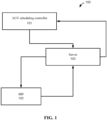
- Fig. 1 is an example architectural diagram of an AGV scheduling control system 100 according to an embodiment of the present application.
- the AGV scheduling control system 100 includes: a real AGV scheduling controller 101, the real AGV scheduling controller 101 may be configured to generate an AGV scheduling instruction; a real AGV 102, the real AGV 102 may be configured to execute a task according to the AGV scheduling instruction; and a server 103, the server 103 may be communicatively coupled with the real AGV 102 and the real AGV scheduling controller 101 respectively.
- the server 103 may be configured to receive the AGV scheduling instruction from the real AGV scheduling controller 101 and transmit the same to the corresponding real AGV 102, and receive status feedback from the real AGV 102.
- the "virtual” entity refers to a simulation model which is corresponding to the "real” entity and is established in a simulation environment, for example, a virtual AGV scheduling controller and a virtual AGV is respectively corresponding to a real AGV scheduling controller and a real AGV.
- the AGV scheduling controller is a decision-making unit (also referred to as the decision-making layer) of the AGV scheduling control system, and is responsible for scheduling and controlling the AGV. More specifically, the AGV scheduling controller may maintain an AGV status list that records the latest status of all AGVs managed by the AGV scheduling controller.
- the AGV scheduling controller may receive a task request from other entities, such as a material calling task request from a material calling system, a charging task request from an AGV, and so on. According to the received task request, the AGV scheduling controller may decide an AGV to execute the corresponding task and generate an AGV scheduling instruction for the AGV.
- the AGV scheduling controller 101 and the AGV 102 may be communicatively coupled with the server 103, respectively.
- an AGV scheduling instruction generated by the AGV scheduling controller 101 is first sent to the server 103, and then the server 103 forwards the instruction to the corresponding AGV 102.
- the status feedback of the AGV 102 is also sent to the server 103 and forwarded to the AGV scheduling controller 101 or other entities, such as the material calling system by the server 103.
- an intermediate layer is added between the AGV decision-making layer and the AGV execution layer, and the intermediate layer is responsible for the transmission of messages, which significantly improves the communication processing capabilities of message transmission and distribution.
- this architecture allows integrating multiple independent AGV systems that may exist previously into a total AGV system, and scheduling and controlling all AGVs by an AGV scheduling controller to achieve overall management and control.
- the real AGV 102 includes AGVs from a plurality of AGV manufacturers
- the server 103 has a plurality of adapters corresponding to the plurality of AGV manufacturers for providing adaptation between the real AGV and the real AGV scheduling controller.
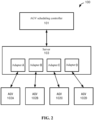
- Fig. 2 is an example architectural diagram illustrating an AGV scheduling control system involving AGVs from different manufacturers according to an embodiment of the present application.
- Fig. 2 shows that a system including AGVs from four manufacturers, respectively, manufacturer A, manufacturer B, manufacturer C, and manufacturer D, labeled as 102A, 102B, 102C, and 102D. These manufacturers may have different instruction sets, message formats, communication protocols, etc.
- the server 103 provides adaptation of instructions and messages for AGVs from different manufacturers. As shown in Fig.
- the server 103 has adapters in one-to-one correspondence with the manufacturers, including adapter A, adapter B, adapter C, and adapter D.
- Each adapter may be responsible for conversion adaptation of messages between the AGV and the AGV scheduling controller, e.g., converting the AGV scheduling instruction in a common format issued by the AGV scheduling controller into a particular format of the respective manufacturer AGV system, and converting the feedback message of the AGV back to the common format used by the AGV scheduling controller.
- the problem that architectures of the AGV system adopted by different manufacturers are different is also solved in the adaptation process. For example, the original definition of client and server of the AGV system by different manufacturers may be opposite.
- Digital twin is a simulation process that integrates multi-disciplinary, multi-physical quantity, multi-scale and multi-probability by using data such as physical model, sensor update and operation history, which completes mapping in a virtual space so as to reflect an entire life cycle process of a corresponding physical equipment, and is often used in the field of intelligent manufacturing in recent years.
- the real objects can be simulated, and the real-time status of the real objects can also be synchronized and used as monitoring for the real objects.
- Fig. 3 shows an example architectural diagram of an AGV scheduling control system 100 according to another embodiment of the present application.
- a virtual AGV scheduling controller 101' corresponding to the real AGV scheduling controller 101 and a virtual AGV 102' corresponding to the real AGV 102 may be constructed in the simulation software.
- the virtual AGV scheduling controller 101' and the virtual AGV 102' are coupled to the server 103 in the same manner as the real AGV scheduling controller 101 and the real AGV 102.
- the program used in the simulation software for controlling the virtual AGV and the virtual AGV scheduling controller is equivalently exchangeable with the program for controlling the corresponding real AGV and real AGV scheduling controller.
- the conventional digital twin virtual AGV does not need to further simulate the internal execution process thereof, only needs to be presented as moving forward by 10 meters in the virtual environment. Therefore, after performing simulating and optimization for the production line, it is still necessary to rewrite specific programs for the real entity to implement the control logic and algorithm obtained from the simulation process.
- the present application can directly apply the optimized AGV scheduling logic and algorithm obtained after simulating the virtual entity to the real entity, thereby significantly shortening the time for planning and optimization processes, and realizing rapid deployment and operation of production lines.
- the real AGV, the real AGV scheduling controller, the virtual AGV and the virtual AGV scheduling controller have respective IP addresses and ports, and communicate with the server through the TCP/IP protocol.
- the real AGV 102, the real AGV scheduling controller 101, the virtual AGV 102' and the virtual AGV scheduling controller 101' are communicatively coupled to the server 103, respectively.
- a common TCP/IP protocol can be used between each entity and the server 103, and each entity has a unique IP address, and a communication connection with the server 103 may be established through the Socket connection.
- the AGV scheduling controller 101 may maintain the task table.
- the task table may store all the to-be-executed tasks received by the AGV scheduling controller 101, for example, a material calling task from a material calling system, including loading and unloading tasks.
- each task in the task table has various information related to the task, including but not limited to: issuer of the task, release time, requested execution time, urgency degree, importance degree, task description, and the like.
- the AGV scheduling controller 101 may maintain an AGV status list at the same time.
- the latest statuses of all AGVs are stored in the status list, and the status may include at least two statuses of idle and task execution.
- the status may further include task execution progress, remaining power of AGV, current position of AGV, and the like.
- the AGV status in the AGV status list may be updated in time with the real-time status feedback of the AGV.
- the AGV scheduling controller 101 allocates tasks in the task table based on the AGV status in the AGV status list. For example, the AGV scheduling controller 101 may determine the next task to be performed from the task table based on release time of the task, urgency degree, importance degree, and the like.
- An AGV suitable for executing the task is determined from the currently idle AGVs according to various properties of this task, such as which type of AGV is needed, starting point position, etc. According to an embodiment, it is possible to determine that to which AGV the task is assigned under the principle of improving the overall efficiency of the production line.
- candidate AGVs meeting the task requirements may be selected from the idle AGV list first, then the AGV whose current position is closest to the starting point of the task is selected from the candidate AGVs that meet the requirements to execute the task.
- AGVs that are about to complete the current task may also be taken into consideration, because there may also be some AGVs, the time required to perform the next task after completing the current task is less than the time required for all the currently idle AGVs to perform this task, for example, the destination position of the AGV that is about to complete the current task is the start position of this task.
- the factors that may be considered in the process of determining an AGV also including remaining power of an AGV, the traffic congestion situation on the way of an AGV to the starting point of the task, and so on.
- the real AGV is schedulable by the virtual AGV scheduling controller in the same manner as the virtual AGV.
- the virtual AGV and the virtual AGV scheduling controller of the present application are modeled as digital twins of the corresponding real entities, and are implemented to be able to controlled by the same program.
- the virtual entity and the real entity being communicatively coupled with the server in the same manner including having respective IP addresses and ports thereof.
- the real entity and the virtual entity may be online at the same time, and moreover, the real entity and the virtual entity are equivalently exchangeable.
- the fusion operation of the real entity and the virtual entity is realized, which can significantly simplify the planning and optimization process of the AGV system, thereby realizing the rapid deployment of the production line, reducing the time spent on downtime and debugging, and improving the overall production efficiency of the production line.
- the AGV scheduling control system further includes: a real material calling system, wherein the real material calling system is communicatively coupled with a server, and the server is further configured to: receive tasks issued by the real material calling system and transmit the same to the real AGV scheduling controller; and transmit the status fed back by the real AGV to the real material calling system.
- Fig. 4 shows an example architectural diagram of an AGV scheduling control system 100 according to still another embodiment of the present application.
- the AGV scheduling control system 100 further includes a real material calling system 104.
- the real material calling system 104 may also be communicatively coupled with a server 103 as an entity.
- the real material calling system 104 may send an issued task to the server 103, which is forwarded by the server 103 according to the message receiver specified in the task.
- the real material calling system 104 issues a material calling task to the AGV scheduling controller 101 in a conventional manner, then, a request message containing this material calling task is sent to the server 103, in which the real AGV scheduling controller 101 is designated as the message receiver.
- the server 103 forwards the task request message to the real AGV scheduling controller 101.
- the real AGV 102 will feed back the status in real time during task execution, and the status feedback message may also be forwarded to the real material calling system 104 via the server 103.
- the present application integrates the material calling system into the architecture of the AGV scheduling control system in a manner similar to the AGV scheduling controller and AGV, and the material calling system can communicate with other entities in a unified form, thus it can have a more comprehensive control over the material handling work, realize a more efficient scheduling algorithm, and improve the overall production efficiency of the production line.
- the AGV scheduling control system further includes: a virtual material calling system constructed based on simulation software as a digital twin of the real material calling system, and the virtual material calling system is communicatively coupled with the server.
- the real material calling system 104 may also be modeled in the simulation software, a virtual material calling system 104' may be constructed as a digital twin of the real material calling system 104. Similarly, all aspects of the virtual material calling system 104' are the same as the real material calling system 104, and may be equivalently replaced with the real material calling system 104, including the fusion operation of the real and virtual entities.
- the material calling system can be included in the simulation and testing in the planning phase, and a similar virtual-real fusion operation can be realized, which speeds up the deployment of the production line.
- the AGV scheduling algorithm and the control program of each entity may be optimized. Optimization can be performed repeatedly by modifying the scheduling algorithm, relevant parameters, thresholds, rules, routes, etc., or a combination thereof with the purpose of improving the overall production efficiency of the production line. After the expected production efficiency of the production line is obtained, the virtual AGV scheduling controller and the virtual AGV control program may be fixed and transplanted to the corresponding real entity.
- the real AGV comprises AGVs from a plurality of AGV manufacturers
- constructing the server further comprises: constructing a plurality of adapters corresponding to the plurality of AGV manufacturers for providing adaptation between the real AGV and the real AGV scheduling controller.
- generating the AGV scheduling instruction further includes: storing a received task into a task table; obtaining an idle AGV from a AGV status list; and assigning the task to the idle AGV.
- the virtual AGV scheduling controller is capable of scheduling the real AGV in the same manner as scheduling the virtual AGV.
- the present application also constructs a virtual material calling system corresponding to the real material calling system, and the two are also equivalently exchangeable.
- the material calling system can be included into the simulation and the test in the planning phase, so that it is possible to test and find a more efficient AGV scheduling algorithm.
- the AGV scheduling control method in the present application may be performed on the AGV scheduling control system in the present application.
- the AGV scheduling control system of the present application includes an AGV scheduling controller, a server, and an AGV, and the AGV scheduling controller and the AGV are communicatively coupled with the server.
- the AGV scheduling controller may control and schedule AGVs from different manufacturers, the AGV scheduling controller may generate a scheduling instruction in a common format, and then the scheduling instruction may be adapted by a server, converted into a message format suitable for the AGV, and then forwarded to the corresponding AGV.
- virtual entities corresponding to real entities are constructed first, including a virtual AGV and a virtual AGV scheduling controller, where the virtual entity and the real entity may constitute a digital twin.
- the virtual AGV and the virtual AGV scheduling controller may synchronize the status of the corresponding entity, so that the operation status monitoring for the real entity object may be realized.
- the virtual AGV and the virtual AGV scheduling controller may realize equivalent replacement with corresponding real entities, and therefore in the planning phase, the scheduling process of the AGV system (including task generation, task allocation, path planning, etc., which may also be collectively referred to as AGV scheduling algorithm, etc.) may be simulated through the virtual AGV, the virtual AGV scheduling controller, and the server. Based on the simulation result, the AGV scheduling algorithm may be optimized.
- the task includes material calling tasks issued by the material calling system via the server.
- the material calling system may be added to an AGV scheduling control system so as to realize more efficient AGV scheduling and improve overall production efficiency of the production line.
- Fig. 7 shows an example architectural diagram of an AGV scheduling control system according to an embodiment of the present application.
- the system is composed of four parts: a server, an AGV controller, an AGV, and a material calling system.
- the AGV controller, the AGV and the material calling system each have a corresponding virtual entity PS AGV controller, PS AGV and PS material calling system, which are modeled by the PlantSimulation simulation software.
- Each real entity and virtual entity are communicatively connected to a server, and the server serves as an intermediary for communication between the entities.
- each real entity and the virtual entity merely lies in that the program of the real entity runs in a hardware device, while the program of the virtual entity runs in the PlantSimulation simulation environment, and there is no substantive difference between the real entity and the virtual entity from the perspective of software. Therefore, for ease of description, unless otherwise specified below, when an entity is mentioned, it refers to both of the real entity and the virtual entity.
- an AGV controller refers to both the real AGV controller and the virtual AGV controller, because there is no difference between them in terms of function and program.
- AGV is a trolley used to execute handling tasks.
- AGVs from four different manufacturers are used in the system.
- the verification of AGV needs to be performed in a simulation environment; in the operation phase, the real AGV may replace the PS AGV for real AGV movement and control.
Landscapes
- Business, Economics & Management (AREA)
- Engineering & Computer Science (AREA)
- Human Resources & Organizations (AREA)
- Strategic Management (AREA)
- Economics (AREA)
- Entrepreneurship & Innovation (AREA)
- Physics & Mathematics (AREA)
- Quality & Reliability (AREA)
- General Physics & Mathematics (AREA)
- Theoretical Computer Science (AREA)
- Operations Research (AREA)
- Tourism & Hospitality (AREA)
- Development Economics (AREA)
- General Business, Economics & Management (AREA)
- Marketing (AREA)
- Game Theory and Decision Science (AREA)
- Educational Administration (AREA)
- Manufacturing & Machinery (AREA)
- General Engineering & Computer Science (AREA)
- Automation & Control Theory (AREA)
- Computer Security & Cryptography (AREA)
- Computer Networks & Wireless Communication (AREA)
- Signal Processing (AREA)
- Management, Administration, Business Operations System, And Electronic Commerce (AREA)
- Stored Programmes (AREA)
Claims (15)
- AGV-Ablaufplanungs-Steuersystem (100), umfassend:eine reelle AGV-Ablaufplanungssteuerung (101), wobei die reelle AGV-Ablaufplanungssteuerung (101) dazu konfiguriert ist, eine AGV-Ablaufsplanungsinstruktion zu erzeugen;ein reelles AGV (102), wobei das reelle AGV (102) dazu konfiguriert ist, eine Aufgabe gemäß der AGV-Ablaufplanungsinstruktion auszuführen; undeinen Server (103), wobei der Server (103) kommunikativ jeweils mit dem reellen AGV (102) und der reellen AGV-Ablaufplanungssteuerung (101) gekoppelt ist, wobei der Server (103) zu Folgendem konfiguriert ist:Empfangen einer AGV-Ablaufplanungsinstruktion von der reellen AGV-Ablaufplanungssteuerung (101) und Übertragen derselben an ein entsprechendes reelles AGV (102); undEmpfangen von Zustandsrückmeldungen vom reellen AGV (102);wobei das AGV-Ablaufplanungs-Steuersystem (101) dadurch gekennzeichnet ist, dass es ferner Folgendes umfasst:
ein virtuelles AGV (102') und eine virtuelle AGV-Ablaufplanungssteuerung (101'), die auf der Basis von Simulationssoftware aufgebaut sind und jeweils als digitale Zwillinge des reellen AGV (102) und der reellen AGV-Ablaufplanungssteuerung (101) dienen, wobei das virtuelle AGV (102') und die virtuelle AGV-Ablaufplanungssteuerung (101') kommunikativ mit dem Server (103) gekoppelt sind und wobei das AGV-Ablaufplanungs-Steuersystem (101) ferner durch Folgendes gekennzeichnet ist:Simulieren eines AGV-Ablaufplanungsprozesses durch Verwendung des virtuellen AGV (102'), der virtuellen AGV-Ablaufplanungssteuerung (101') und des Servers (103);Optimieren des von dem virtuellen AGV (102'), der virtuellen AGV-Ablaufplanungssteuerung (101') und dem Server (103) benutzten Programms auf der Basis des Simulationsergebnisses;Anwenden des optimierten Programms auf das entsprechende reelle AGV (102) und auf die entsprechende reelle AGV-Ablaufplanungssteuerung (101). - AGV-Ablaufplanungs-Steuersystem (100) nach Anspruch 1, wobei das reelle AGV (102) AGVs von einer Mehrzahl von AGV-Herstellern (102A, 102B, 102C, 103D) umfasst und der Server (103) eine Mehrzahl von Adaptern entsprechend der Mehrzahl von AGV-Herstellern zum Bereitstellen von Anpassungen zwischen dem reellen AGV (102) und der reellen AGV-Ablaufplanungssteuerung (101) aufweist.
- AGV-Ablaufplanungs-Steuersystem (100) nach Anspruch 1 oder 2, wobei das in der Simulationssoftware zum Steuern des virtuellen AGV (102') und der virtuellen AGV-Ablaufplanungssteuerung (101') benutzte Programm mit dem zum Steuern des entsprechenden reellen AGV (102) und der entsprechenden reellen AGV-Ablaufplanungssteuerung (101) benutzten Programm äquivalent austauschbar ist.
- AGV-Ablaufplanungs-Steuersystem (100) nach einem der Ansprüche 1 bis 3, wobei das reelle AGV (102), die reelle AGV-Ablaufplanungssteuerung (101), das virtuelle AGV (102') und die virtuelle AGV-Ablaufplanungssteuerung (101') jeweilige IP-Adressen und - Ports aufweisen und mit dem Server über das TCP/IP-Protokoll kommunizieren.
- AGV-Ablaufplanungs-Steuersystem (100) nach einem der Ansprüche 1 bis 4, wobei das Erzeugen der AGV-Ablaufplanungsinstruktion ferner Folgendes umfasst:Speichern einer empfangenen Aufgabe in eine Aufgabentabelle;Aufgreifen eines unbeschäftigten AGV aus einer AGV-Zustandsliste; undZuweisen der Aufgabe an das unbeschäftigte AGV; und/oderwobei die reelle AGV-Ablaufplanungssteuerung (101) ferner zu Folgendem konfiguriert ist:
Überwachen des durch ein AGV zurückgemeldeten Zustands während der Ausführung von Aufgaben und Senden eines Alarmsignals, wenn der Zustand inkonsistent mit der Erwartung ist. - AGV-Ablaufplanungs-Steuersystem (100) nach einem der Ansprüche 1 bis 5, wobei das reelle AGV (102) durch die virtuelle AGV-Ablaufplanungssteuerung (101') in derselben Art und Weise wie das virtuelle AGV (102') im Ablaufplan eingesetzt werden kann.
- AGV-Ablaufplanungs-Steuersystem (100) nach einem der Ansprüche 1 bis 6, wobei das AGV-Ablaufplanungs-Steuersystem (100) ferner Folgendes umfasst:ein reelles Materialabrufsystem (104), wobei das reelle Materialabrufsystem (104) kommunikativ mit dem Server (103) gekoppelt ist, undwobei der Server (103) ferner zu Folgendem konfiguriert ist:Empfangen von vom reellen Materialabrufsystem (104) ausgegebenen Aufgaben und Übertragen derselben an die reelle AGV-Ablaufplanungssteuerung (101); undÜbertragen des durch das reelle AGV (102) an das reelle Materialabrufsystem (104) zurückgemeldeten Zustands; optionalwobei das AGV-Ablaufplanungs-Steuersystem (100) ferner Folgendes umfasst: ein virtuelles Materialabrufsystem (104'), das auf der Basis von Simulationssoftware als ein digitaler Zwilling des reellen Materialabrufsystems aufgebaut ist, und wobei das virtuelle Materialabrufsystem kommunikativ mit der Server gekoppelt ist.
- Verfahren zum Implementieren eines AGV-Ablaufplanungs-Steuersystems (100), umfassend:Aufbauen, auf der Basis von Simulationssoftware, eines virtuellen AGV (102') und einer virtuellen AGV-Ablaufplanungssteuerung (101') jeweils als digitale Zwillinge eines reellen AGV (102) und einer reellen AGV-Ablaufplanungssteuerung (101), sodass das Programm zum Steuern des virtuellen AGV (102') und der virtuellen AGV-Ablaufplanungssteuerung (101') mit dem Programm zum Steuern des entsprechenden reellen AGV (102) und der entsprechenden reellen AGV-Ablaufplanungssteuerung (101) äquivalent austauschbar ist;Aufbauen eines Servers (103) derart, dass der Server mit dem virtuellen AGV (102'), der virtuellen AGV-Ablaufplanungssteuerung (101'), dem reellen AGV (102) und der virtuellen AGV-Ablaufplanungssteuerung (101) jeweils kommunikativ gekoppelt ist;Simulieren eines AGV-Ablaufplanungsprozesses durch Verwendung des virtuellen AGV (102'), der virtuellen AGV-Ablaufplanungssteuerung (101') und des Servers (103);Optimieren des von dem virtuellen AGV (102'), der virtuellen AGV-Ablaufplanungssteuerung (101') und dem Server (103) benutzten Programms auf der Basis des Simulationsergebnisses; undAnwenden des optimierten Programms auf das entsprechende reelle AGV (102) und auf die entsprechende reelle AGV-Ablaufplanungssteuerung (101).
- Verfahren nach Anspruch 8, wobei das reelle AGV (102) AGVs von einer Mehrzahl von AGV-Herstellern (102A, 102B, 102C, 102D) umfasst, wobei Aufbauen des Servers (103) ferner Folgendes umfasst:Aufbauen einer Mehrzahl von Adaptern entsprechend der Mehrzahl von AGV-Herstellern zum Bereitstellen von Anpassungen zwischen dem reellen AGV (102) und der reellen AGV-Ablaufplanungssteuerung (101); und/oderwobei das reelle AGV (102), die reelle AGV-Ablaufplanungssteuerung (101), das virtuelle AGV (102') und die virtuelle AGV-Ablaufplanungssteuerung (101') jeweilige IP-Adressen und -Ports aufweisen und mit dem Server (103) über das TCP/IP-Protokoll kommunizieren.
- Verfahren nach einem der Ansprüche 8 bis 9, wobei das Simulieren des AGV-Ablaufplanungsprozesses ferner Folgendes umfasst:Konfigurieren der virtuellen AGV-Ablaufplanungssteuerung (101') zum Erzeugen einer AGV-Ablaufplanungsinstruktion;Konfigurieren des virtuellen AGV (102'), eine Aufgabe gemäß der AGV-Ablaufplanungsinstruktion auszuführen; undKonfigurieren des Servers (103) zu Folgendem:Empfangen einer AGV-Ablaufplanungsinstruktion von der virtuellen AGV-Ablaufplanungssteuerung (101') und Übertragen derselben an ein entsprechendes virtuelles AGV (102'); undEmpfangen von Zustandsrückmeldungen vom virtuellen AGV (102'); optionalwobei das Erzeugen der AGV-Ablaufplanungsinstruktion ferner Folgendes umfasst:Speichern einer empfangenen Aufgabe in eine Aufgabentabelle;Aufgreifen eines unbeschäftigten virtuellen AGV (102') aus einer AGV-Zustandsliste;und Zuweisen der Aufgabe an das unbeschäftigte virtuelle AGV (102').
- Verfahren nach Anspruch 10, wobei die virtuelle AGV-Ablaufplanungssteuerung (101') ferner zu Folgendem konfiguriert ist:
Überwachen des durch ein AGV zurückgemeldeten Zustands während der Ausführung von Aufgaben und Senden eines Alarmsignals, wenn der Zustand inkonsistent mit der Erwartung ist. - Verfahren nach einem der Ansprüche 8 bis 11, wobei die virtuelle AGV-Ablaufplanungssteuerung (101') befähigt ist, ein reelles AGV (102) in derselben Art und Weise im Ablaufplan einzusetzen, wie das virtuelle AGV (102') im Ablaufplan eingesetzt wird.
- Verfahren nach einem der Ansprüche 8 bis 12, wobei das Verfahren ferner Folgendes umfasst:Aufbauen eines virtuellen Materialabrufsystems (104') als ein digitaler Zwilling eines reellen Materialabrufsystems (104) auf der Basis von Simulationssoftware, sodass das Programm zum Steuern des virtuellen Materialabrufsystems (104') mit dem Programm zum Steuern des entsprechenden reellen Materialabrufsystems (104) äquivalent austauschbar ist und das reelle Materialabrufsystem (104) und das virtuelle Materialabrufsystem (104') jeweils kommunikativ mit dem Server (103) gekoppelt sind, undwobei das Simulieren des AGV-Ablaufplanungsprozesses ferner Folgendes umfasst:Empfangen einer vom virtuellen Materialabrufsystem (104') ausgegebenen Aufgabe und Übertragen derselben an die virtuelle AGV-Ablaufplanungssteuerung (101'); undÜbertragen des durch das virtuelle AGV (102') an das virtuelle Materialabrufsystem (104') zurückgemeldeten Zustands.
- AGV-Ablaufplanungs-Steuerverfahren, umfassend:Empfangen, durch eine AGV-Ablaufplanungssteuerung, einer Aufgabe über einen Server (103);Bestimmen, durch die AGV-Ablaufplanungssteuerung, eines AGV zum Ausführen der Aufgabe;Senden, durch die AGV-Ablaufplanungssteuerung, einer Ablaufplanungsinstruktion für das AGV an den Server (103);Umwandeln, durch den Server (103), der Ablaufplanungsinstruktion in ein für das AGV geeignetes Mitteilungsformat; undSenden, durch den Server (103), der umgewandelten Ablaufplanungsinstruktion an das AGV, wobei das Verfahren dadurch gekennzeichnet ist, dass es ferner Folgendes umfasst:Überwachen eines Laufzustands eines entsprechenden Objekts durch ein virtuelles AGV (102') und eine virtuelle AGV-Ablaufplanungssteuerung (101'), die jeweils als digitale Zwillinge des AGV und der AGV-Ablaufplanungssteuerung dienen,Simulieren eines AGV-Ablaufplanungsprozesses durch Verwendung des virtuellen AGV (102'), der virtuellen AGV-Ablaufplanungssteuerung (101') und des Servers (103);Optimieren des von dem virtuellen AGV (102'), der virtuellen AGV-Ablaufplanungssteuerung (101') und dem Server (103) benutzten Programms auf der Basis des Simulationsergebnisses;Anwenden des optimierten Programms auf das entsprechende reelle AGV (102) und auf die entsprechende reelle AGV-Ablaufplanungssteuerung (101).
- Verfahren nach Anspruch 14, ferner umfassend:Simulieren eines AGV-Ablaufplanungsprozesses durch das virtuelle AGV (102'), die virtuelle AGV-Ablaufplanungssteuerung (101') und den Server (103); undOptimieren des AGV-Ablaufplanungsalgorithmus auf der Basis des Simulationsergebnisses; und/oderwobei die Aufgabe eine Materialabrufaufgabe umfasst, die von einem Materialabrufsystem über den Server (103) ausgegeben wird.
Priority Applications (1)
| Application Number | Priority Date | Filing Date | Title |
|---|---|---|---|
| HUE22871149A HUE071856T2 (hu) | 2022-04-11 | 2022-04-11 | AGV ütemezésvezérlõ rendszer és eljárás |
Applications Claiming Priority (1)
| Application Number | Priority Date | Filing Date | Title |
|---|---|---|---|
| PCT/CN2022/086179 WO2023197119A1 (zh) | 2022-04-11 | 2022-04-11 | Agv调度控制系统及方法 |
Publications (4)
| Publication Number | Publication Date |
|---|---|
| EP4286965A1 EP4286965A1 (de) | 2023-12-06 |
| EP4286965A4 EP4286965A4 (de) | 2024-05-01 |
| EP4286965B1 true EP4286965B1 (de) | 2025-04-09 |
| EP4286965C0 EP4286965C0 (de) | 2025-04-09 |
Family
ID=88239500
Family Applications (1)
| Application Number | Title | Priority Date | Filing Date |
|---|---|---|---|
| EP22871149.5A Active EP4286965B1 (de) | 2022-04-11 | 2022-04-11 | Agv-versandsteuerungssystem und -verfahren |
Country Status (6)
| Country | Link |
|---|---|
| US (1) | US12039476B2 (de) |
| EP (1) | EP4286965B1 (de) |
| CN (1) | CN117222952A (de) |
| ES (1) | ES3034361T3 (de) |
| HU (1) | HUE071856T2 (de) |
| WO (1) | WO2023197119A1 (de) |
Families Citing this family (5)
| Publication number | Priority date | Publication date | Assignee | Title |
|---|---|---|---|---|
| US20240393778A1 (en) * | 2023-05-24 | 2024-11-28 | International Business Machines Corporation | Optimizing a target automated ecosystem using digital twin simulations |
| US20250370480A1 (en) * | 2024-05-31 | 2025-12-04 | Industrial Technology Research Institute | Multi-mobile vehicle control system and method |
| CN119047806B (zh) * | 2024-11-01 | 2025-02-18 | 华芯(嘉兴)智能装备有限公司 | 协同任务中天车运行异常处理方法及装置 |
| CN119417181B (zh) * | 2025-01-03 | 2025-04-08 | 中国科学院福建物质结构研究所 | 一种基于多agv协同搬运的生产线自动补料方法 |
| CN121481170A (zh) * | 2026-01-07 | 2026-02-06 | 江苏唯睿芯路科技有限公司 | 一种细纱断头捻接机器人多agv协同调度方法和系统 |
Family Cites Families (14)
| Publication number | Priority date | Publication date | Assignee | Title |
|---|---|---|---|---|
| PL2791748T3 (pl) * | 2012-02-08 | 2021-04-06 | Omron Robotics And Safety Technologies, Inc. | System zarządzania zadaniami dla floty autonomicznych robotów mobilnych |
| CN106210093B (zh) * | 2016-07-18 | 2019-06-18 | 珠海创智科技有限公司 | 基于物流仿真软件的3d智能调度方法 |
| US10782668B2 (en) * | 2017-03-16 | 2020-09-22 | Siemens Aktiengesellschaft | Development of control applications in augmented reality environment |
| US11797011B2 (en) * | 2018-02-13 | 2023-10-24 | Seiko Epson Corporation | Traveling control system for transport vehicle and traveling control method for transport vehicle |
| US11084410B1 (en) * | 2018-08-07 | 2021-08-10 | Staples, Inc. | Automated guided vehicle for transporting shelving units |
| CN110989506A (zh) * | 2019-11-02 | 2020-04-10 | 温州大学 | 一种断路器自动化装配数字孪生车间的管理平台 |
| WO2022023797A1 (en) * | 2020-07-31 | 2022-02-03 | Siemens Industry Software Ltd. | Method and apparatus for emulating automated guided vehicle (agv) system |
| DE102020212301A1 (de) * | 2020-09-29 | 2022-03-31 | Robert Bosch Gesellschaft mit beschränkter Haftung | Vorrichtung und Verfahren zur Bewertung eines Zustands eines Funkkanals |
| EP4264518A4 (de) * | 2020-12-18 | 2024-12-11 | Strong Force VCN Portfolio 2019, LLC | Roboterflottenverwaltung und additive fertigung für wertkettennetzwerke |
| CN113315780A (zh) * | 2021-06-10 | 2021-08-27 | 苏州威联加信息科技有限公司 | 一种单系统与多种agv的连接及控制方法和装置 |
| CN113792406B (zh) | 2021-07-15 | 2024-01-05 | 意欧斯物流科技(上海)有限公司 | 一种基于数字孪生的agv小车仿真系统 |
| CN113759909A (zh) * | 2021-09-02 | 2021-12-07 | 上海上实龙创智能科技股份有限公司 | 自动化导航车辆的控制方法、装置、系统及存储介质 |
| CN113867295B (zh) * | 2021-10-11 | 2024-11-26 | 西安交通大学 | 一种基于数字孪生的制造车间agv动态调度方法、系统、设备及存储介质 |
| CN114137917B (zh) * | 2021-11-19 | 2024-07-16 | 北京京东乾石科技有限公司 | 设备控制方法、装置、电子设备、系统和存储介质 |
-
2022
- 2022-04-11 CN CN202280006417.1A patent/CN117222952A/zh active Pending
- 2022-04-11 ES ES22871149T patent/ES3034361T3/es active Active
- 2022-04-11 WO PCT/CN2022/086179 patent/WO2023197119A1/zh not_active Ceased
- 2022-04-11 EP EP22871149.5A patent/EP4286965B1/de active Active
- 2022-04-11 HU HUE22871149A patent/HUE071856T2/hu unknown
-
2023
- 2023-04-20 US US18/137,366 patent/US12039476B2/en active Active
Also Published As
| Publication number | Publication date |
|---|---|
| EP4286965A4 (de) | 2024-05-01 |
| ES3034361T3 (en) | 2025-08-18 |
| US20230325746A1 (en) | 2023-10-12 |
| EP4286965A1 (de) | 2023-12-06 |
| US12039476B2 (en) | 2024-07-16 |
| HUE071856T2 (hu) | 2025-09-28 |
| CN117222952A (zh) | 2023-12-12 |
| EP4286965C0 (de) | 2025-04-09 |
| WO2023197119A1 (zh) | 2023-10-19 |
Similar Documents
| Publication | Publication Date | Title |
|---|---|---|
| US12039476B2 (en) | AGV scheduling control system and method | |
| CN114193447A (zh) | 多机器人控制方法、电子设备及存储介质 | |
| CN111898908B (zh) | 一种基于多智体的生产线调度系统及方法 | |
| JP7578168B2 (ja) | ロボットステージングエリア管理 | |
| CN109857074A (zh) | 智能物流系统及车间管理系统 | |
| CN109884996A (zh) | 生产控制系统、方法及生产管理系统 | |
| CN110134081B (zh) | 一种基于机器人能力模型的控制系统 | |
| da Silva et al. | Plug & Produce robot assistants as shared resources: A simulation approach | |
| Firme et al. | Agent-based hybrid tabu-search heuristic for dynamic scheduling | |
| KR20240000240A (ko) | 차량 생산 관리 시스템 및 그 방법 | |
| CN120676390A (zh) | 基于大模型的核心网运维系统构建方法及核心网运维系统 | |
| JP2008530705A (ja) | 適応型機械プログラミングのためのシステム及び方法 | |
| Lavendelis et al. | Multi-agent robotic system architecture for effective task allocation and management | |
| CN119536271A (zh) | 基于深度学习的多机器人智能调度系统 | |
| CN117950803A (zh) | 算网协同感知的数据中心容器调度仿真系统 | |
| CN118519399B (zh) | 工厂产线生产虚拟调试方法、系统及存储介质 | |
| CN117170993A (zh) | 一种自动化物流调度系统的虚拟调试方法 | |
| CN114036835A (zh) | 一种在轨加注操作技能训练虚拟仿真方法及系统 | |
| CN117055511A (zh) | 基于数字孪生技术的多品牌agv调度系统及方法 | |
| CN113867288B (zh) | 一种即插即用手机线快速设计及换线方法 | |
| Makris | Flexible Cooperating Robots for Reconfigurable Shop Floor | |
| CN121581551A (zh) | 基于数字孪生的卡车车架多车型混线柔性生产系统 | |
| Migallón Ramírez et al. | Integration of proprietary automated guided vehicle (AGV) systems with VDA 5050 for a standardised communications interface | |
| CN120572521A (zh) | 机器人的数据采集方法及系统、机器人控制器、相关产品 | |
| Firme et al. | Industry 5.0 and Smart Scheduling: Operation Concept of PlanARa |
Legal Events
| Date | Code | Title | Description |
|---|---|---|---|
| STAA | Information on the status of an ep patent application or granted ep patent |
Free format text: STATUS: UNKNOWN |
|
| STAA | Information on the status of an ep patent application or granted ep patent |
Free format text: STATUS: THE INTERNATIONAL PUBLICATION HAS BEEN MADE |
|
| PUAI | Public reference made under article 153(3) epc to a published international application that has entered the european phase |
Free format text: ORIGINAL CODE: 0009012 |
|
| STAA | Information on the status of an ep patent application or granted ep patent |
Free format text: STATUS: REQUEST FOR EXAMINATION WAS MADE |
|
| 17P | Request for examination filed |
Effective date: 20230331 |
|
| AK | Designated contracting states |
Kind code of ref document: A1 Designated state(s): AL AT BE BG CH CY CZ DE DK EE ES FI FR GB GR HR HU IE IS IT LI LT LU LV MC MK MT NL NO PL PT RO RS SE SI SK SM TR |
|
| REG | Reference to a national code |
Ref country code: DE Ref legal event code: R079 Ref country code: DE Ref legal event code: R079 Ref document number: 602022013066 Country of ref document: DE Free format text: PREVIOUS MAIN CLASS: H99Z9999999999 Ipc: G05B0019418000 |
|
| A4 | Supplementary search report drawn up and despatched |
Effective date: 20240405 |
|
| RIC1 | Information provided on ipc code assigned before grant |
Ipc: H04L 69/16 20220101ALI20240328BHEP Ipc: G06Q 10/0631 20230101ALI20240328BHEP Ipc: G06Q 10/04 20230101ALI20240328BHEP Ipc: G05B 19/418 20060101AFI20240328BHEP |
|
| RAP1 | Party data changed (applicant data changed or rights of an application transferred) |
Owner name: CONTEMPORARY AMPEREX TECHNOLOGY(HONG KONG) LIMITED |
|
| GRAP | Despatch of communication of intention to grant a patent |
Free format text: ORIGINAL CODE: EPIDOSNIGR1 |
|
| STAA | Information on the status of an ep patent application or granted ep patent |
Free format text: STATUS: GRANT OF PATENT IS INTENDED |
|
| RIC1 | Information provided on ipc code assigned before grant |
Ipc: H04L 69/16 20220101ALI20241203BHEP Ipc: G06Q 10/0631 20230101ALI20241203BHEP Ipc: G06Q 10/04 20230101ALI20241203BHEP Ipc: G05B 19/418 20060101AFI20241203BHEP |
|
| DAV | Request for validation of the european patent (deleted) | ||
| DAX | Request for extension of the european patent (deleted) | ||
| INTG | Intention to grant announced |
Effective date: 20250103 |
|
| GRAS | Grant fee paid |
Free format text: ORIGINAL CODE: EPIDOSNIGR3 |
|
| GRAA | (expected) grant |
Free format text: ORIGINAL CODE: 0009210 |
|
| STAA | Information on the status of an ep patent application or granted ep patent |
Free format text: STATUS: THE PATENT HAS BEEN GRANTED |
|
| AK | Designated contracting states |
Kind code of ref document: B1 Designated state(s): AL AT BE BG CH CY CZ DE DK EE ES FI FR GB GR HR HU IE IS IT LI LT LU LV MC MK MT NL NO PL PT RO RS SE SI SK SM TR |
|
| REG | Reference to a national code |
Ref country code: GB Ref legal event code: FG4D |
|
| REG | Reference to a national code |
Ref country code: CH Ref legal event code: EP |
|
| REG | Reference to a national code |
Ref country code: DE Ref legal event code: R096 Ref document number: 602022013066 Country of ref document: DE |
|
| REG | Reference to a national code |
Ref country code: IE Ref legal event code: FG4D |
|
| U01 | Request for unitary effect filed |
Effective date: 20250505 |
|
| U07 | Unitary effect registered |
Designated state(s): AT BE BG DE DK EE FI FR IT LT LU LV MT NL PT RO SE SI Effective date: 20250509 |
|
| U20 | Renewal fee for the european patent with unitary effect paid |
Year of fee payment: 4 Effective date: 20250522 |
|
| PGFP | Annual fee paid to national office [announced via postgrant information from national office to epo] |
Ref country code: ES Payment date: 20250506 Year of fee payment: 4 |
|
| PGFP | Annual fee paid to national office [announced via postgrant information from national office to epo] |
Ref country code: HU Payment date: 20250430 Year of fee payment: 4 |
|
| REG | Reference to a national code |
Ref country code: ES Ref legal event code: FG2A Ref document number: 3034361 Country of ref document: ES Kind code of ref document: T3 Effective date: 20250818 |
|
| REG | Reference to a national code |
Ref country code: HU Ref legal event code: AG4A Ref document number: E071856 Country of ref document: HU |
|
| PG25 | Lapsed in a contracting state [announced via postgrant information from national office to epo] |
Ref country code: GR Free format text: LAPSE BECAUSE OF FAILURE TO SUBMIT A TRANSLATION OF THE DESCRIPTION OR TO PAY THE FEE WITHIN THE PRESCRIBED TIME-LIMIT Effective date: 20250710 Ref country code: NO Free format text: LAPSE BECAUSE OF FAILURE TO SUBMIT A TRANSLATION OF THE DESCRIPTION OR TO PAY THE FEE WITHIN THE PRESCRIBED TIME-LIMIT Effective date: 20250709 |
|
| PG25 | Lapsed in a contracting state [announced via postgrant information from national office to epo] |
Ref country code: PL Free format text: LAPSE BECAUSE OF FAILURE TO SUBMIT A TRANSLATION OF THE DESCRIPTION OR TO PAY THE FEE WITHIN THE PRESCRIBED TIME-LIMIT Effective date: 20250409 |
|
| PG25 | Lapsed in a contracting state [announced via postgrant information from national office to epo] |
Ref country code: HR Free format text: LAPSE BECAUSE OF FAILURE TO SUBMIT A TRANSLATION OF THE DESCRIPTION OR TO PAY THE FEE WITHIN THE PRESCRIBED TIME-LIMIT Effective date: 20250409 |
|
| PG25 | Lapsed in a contracting state [announced via postgrant information from national office to epo] |
Ref country code: RS Free format text: LAPSE BECAUSE OF FAILURE TO SUBMIT A TRANSLATION OF THE DESCRIPTION OR TO PAY THE FEE WITHIN THE PRESCRIBED TIME-LIMIT Effective date: 20250709 |
|
| PG25 | Lapsed in a contracting state [announced via postgrant information from national office to epo] |
Ref country code: IS Free format text: LAPSE BECAUSE OF FAILURE TO SUBMIT A TRANSLATION OF THE DESCRIPTION OR TO PAY THE FEE WITHIN THE PRESCRIBED TIME-LIMIT Effective date: 20250809 |
|
| REG | Reference to a national code |
Ref country code: CH Ref legal event code: H13 Free format text: ST27 STATUS EVENT CODE: U-0-0-H10-H13 (AS PROVIDED BY THE NATIONAL OFFICE) Effective date: 20251125 |
|
| PG25 | Lapsed in a contracting state [announced via postgrant information from national office to epo] |
Ref country code: SM Free format text: LAPSE BECAUSE OF FAILURE TO SUBMIT A TRANSLATION OF THE DESCRIPTION OR TO PAY THE FEE WITHIN THE PRESCRIBED TIME-LIMIT Effective date: 20250409 |
|
| PG25 | Lapsed in a contracting state [announced via postgrant information from national office to epo] |
Ref country code: CH Free format text: LAPSE BECAUSE OF NON-PAYMENT OF DUE FEES Effective date: 20250430 |
|
| PG25 | Lapsed in a contracting state [announced via postgrant information from national office to epo] |
Ref country code: CZ Free format text: LAPSE BECAUSE OF FAILURE TO SUBMIT A TRANSLATION OF THE DESCRIPTION OR TO PAY THE FEE WITHIN THE PRESCRIBED TIME-LIMIT Effective date: 20250409 |
|
| PG25 | Lapsed in a contracting state [announced via postgrant information from national office to epo] |
Ref country code: SK Free format text: LAPSE BECAUSE OF FAILURE TO SUBMIT A TRANSLATION OF THE DESCRIPTION OR TO PAY THE FEE WITHIN THE PRESCRIBED TIME-LIMIT Effective date: 20250409 |
|
| PG25 | Lapsed in a contracting state [announced via postgrant information from national office to epo] |
Ref country code: MC Free format text: LAPSE BECAUSE OF FAILURE TO SUBMIT A TRANSLATION OF THE DESCRIPTION OR TO PAY THE FEE WITHIN THE PRESCRIBED TIME-LIMIT Effective date: 20250409 |
|
| PLBE | No opposition filed within time limit |
Free format text: ORIGINAL CODE: 0009261 |
|
| STAA | Information on the status of an ep patent application or granted ep patent |
Free format text: STATUS: NO OPPOSITION FILED WITHIN TIME LIMIT |
|
| REG | Reference to a national code |
Ref country code: CH Ref legal event code: L10 Free format text: ST27 STATUS EVENT CODE: U-0-0-L10-L00 (AS PROVIDED BY THE NATIONAL OFFICE) Effective date: 20260218 |
|
| 26N | No opposition filed |
Effective date: 20260112 |
|
| PG25 | Lapsed in a contracting state [announced via postgrant information from national office to epo] |
Ref country code: IE Free format text: LAPSE BECAUSE OF NON-PAYMENT OF DUE FEES Effective date: 20250411 |