EP4276485B1 - Batteriesystem, detektionsverfahren dafür und screening-verfahren und vorrichtung für eine batterieeinheit - Google Patents
Batteriesystem, detektionsverfahren dafür und screening-verfahren und vorrichtung für eine batterieeinheit Download PDFInfo
- Publication number
- EP4276485B1 EP4276485B1 EP22183858.4A EP22183858A EP4276485B1 EP 4276485 B1 EP4276485 B1 EP 4276485B1 EP 22183858 A EP22183858 A EP 22183858A EP 4276485 B1 EP4276485 B1 EP 4276485B1
- Authority
- EP
- European Patent Office
- Prior art keywords
- battery
- discharge
- determining
- difference
- battery units
- Prior art date
- Legal status (The legal status is an assumption and is not a legal conclusion. Google has not performed a legal analysis and makes no representation as to the accuracy of the status listed.)
- Active
Links
Images


Classifications
-
- G—PHYSICS
- G01—MEASURING; TESTING
- G01R—MEASURING ELECTRIC VARIABLES; MEASURING MAGNETIC VARIABLES
- G01R31/00—Arrangements for testing electric properties; Arrangements for locating electric faults; Arrangements for electrical testing characterised by what is being tested not provided for elsewhere
- G01R31/36—Arrangements for testing, measuring or monitoring the electrical condition of accumulators or electric batteries, e.g. capacity or state of charge [SoC]
- G01R31/385—Arrangements for measuring battery or accumulator variables
-
- G—PHYSICS
- G01—MEASURING; TESTING
- G01R—MEASURING ELECTRIC VARIABLES; MEASURING MAGNETIC VARIABLES
- G01R31/00—Arrangements for testing electric properties; Arrangements for locating electric faults; Arrangements for electrical testing characterised by what is being tested not provided for elsewhere
- G01R31/36—Arrangements for testing, measuring or monitoring the electrical condition of accumulators or electric batteries, e.g. capacity or state of charge [SoC]
- G01R31/385—Arrangements for measuring battery or accumulator variables
- G01R31/3865—Arrangements for measuring battery or accumulator variables related to manufacture, e.g. testing after manufacture
-
- G—PHYSICS
- G01—MEASURING; TESTING
- G01R—MEASURING ELECTRIC VARIABLES; MEASURING MAGNETIC VARIABLES
- G01R31/00—Arrangements for testing electric properties; Arrangements for locating electric faults; Arrangements for electrical testing characterised by what is being tested not provided for elsewhere
- G01R31/36—Arrangements for testing, measuring or monitoring the electrical condition of accumulators or electric batteries, e.g. capacity or state of charge [SoC]
- G01R31/396—Acquisition or processing of data for testing or for monitoring individual cells or groups of cells within a battery
-
- G—PHYSICS
- G01—MEASURING; TESTING
- G01R—MEASURING ELECTRIC VARIABLES; MEASURING MAGNETIC VARIABLES
- G01R31/00—Arrangements for testing electric properties; Arrangements for locating electric faults; Arrangements for electrical testing characterised by what is being tested not provided for elsewhere
- G01R31/36—Arrangements for testing, measuring or monitoring the electrical condition of accumulators or electric batteries, e.g. capacity or state of charge [SoC]
- G01R31/3644—Constructional arrangements
- G01R31/3646—Constructional arrangements for indicating electrical conditions or variables, e.g. visual or audible indicators
-
- G—PHYSICS
- G01—MEASURING; TESTING
- G01R—MEASURING ELECTRIC VARIABLES; MEASURING MAGNETIC VARIABLES
- G01R31/00—Arrangements for testing electric properties; Arrangements for locating electric faults; Arrangements for electrical testing characterised by what is being tested not provided for elsewhere
- G01R31/36—Arrangements for testing, measuring or monitoring the electrical condition of accumulators or electric batteries, e.g. capacity or state of charge [SoC]
- G01R31/3644—Constructional arrangements
- G01R31/3648—Constructional arrangements comprising digital calculation means, e.g. for performing an algorithm
-
- G—PHYSICS
- G01—MEASURING; TESTING
- G01R—MEASURING ELECTRIC VARIABLES; MEASURING MAGNETIC VARIABLES
- G01R31/00—Arrangements for testing electric properties; Arrangements for locating electric faults; Arrangements for electrical testing characterised by what is being tested not provided for elsewhere
- G01R31/36—Arrangements for testing, measuring or monitoring the electrical condition of accumulators or electric batteries, e.g. capacity or state of charge [SoC]
- G01R31/382—Arrangements for monitoring battery or accumulator variables, e.g. SoC
- G01R31/3835—Arrangements for monitoring battery or accumulator variables, e.g. SoC involving only voltage measurements
-
- Y—GENERAL TAGGING OF NEW TECHNOLOGICAL DEVELOPMENTS; GENERAL TAGGING OF CROSS-SECTIONAL TECHNOLOGIES SPANNING OVER SEVERAL SECTIONS OF THE IPC; TECHNICAL SUBJECTS COVERED BY FORMER USPC CROSS-REFERENCE ART COLLECTIONS [XRACs] AND DIGESTS
- Y02—TECHNOLOGIES OR APPLICATIONS FOR MITIGATION OR ADAPTATION AGAINST CLIMATE CHANGE
- Y02E—REDUCTION OF GREENHOUSE GAS [GHG] EMISSIONS, RELATED TO ENERGY GENERATION, TRANSMISSION OR DISTRIBUTION
- Y02E60/00—Enabling technologies; Technologies with a potential or indirect contribution to GHG emissions mitigation
- Y02E60/10—Energy storage using batteries
Definitions
- the disclosure relates to the field of battery technology, in particular to a battery device, a detection method thereof, and a screening method and device of a battery unit.
- the single batteries with good consistency of indicators such as battery voltage, internal resistance, and capacity are usually selected for grouping.
- the single batteries with good consistency are screened out through indicators such as battery voltage, internal resistance, and capacity, and are assembled into battery groups, there is usually a period of storage and shelving before the batteries are loaded onto vehicles.
- the storage process usually ranges from a few months to a year. During the storage process, a series of electrochemical changes spontaneously occur inside the single batteries, causing the consistency between the single batteries to worsen again.
- CN 112 505 551 A and WEGMANN RAPHAEL ET AL "Assessing the potential of a hybrid battery system to reduce battery aging in an electric vehicle by studying the cycle life of a graphite
- CN 107 020 251 A refers to analysing the ageing of a battery using differential voltage analysis curves.
- Embodiments of the disclosure provide a battery device, a detection method thereof, and a screening method and device of a battery unit, which are used to improve the consistency between single batteries in a battery module, and after a period of storage and shelving, there is still good consistency between the single batteries.
- an embodiment of the disclosure provides a battery device, which includes at least two battery units. A difference between characteristic values of any two of the battery units is within a preset range.
- the preset range is 0.5% to 40%.
- an embodiment of the disclosure provides a screening method of a battery unit, which includes the following.
- a characteristic value of each of multiple battery units to be selected is determined.
- the characteristic value is determined according to a minimum value of a discharge DVA curve of the battery unit.
- a difference between the characteristic values of any two of the battery units is calculated.
- the battery unit with the difference between the characteristic values of any two of the battery units within a preset range is selected for grouping.
- Determining the characteristic value of each of the battery units specifically includes the following.
- any one of the battery units is respectively discharged to obtain N corresponding discharge DVA curves, where N is an integer greater than 1.
- the characteristic value of one of the battery unit is determined.
- an embodiment of the disclosure provides a detection method of a battery device, which includes the following.
- a characteristic value of each of the battery units is determined.
- the characteristic value is determined according to a minimum value of a discharge DVA curve of the battery unit.
- a difference between the characteristic values of any two of the battery units is calculated.
- a consistency of the battery device is determined.
- Determining the characteristic value of each of the battery units specifically includes the following.
- any one of the battery units is respectively discharged to obtain N corresponding discharge DVA curves, where N is an integer greater than 1.
- the characteristic value of one of the battery units is determined.
- an embodiment of the disclosure provides a screening device of a battery unit, which includes the following.
- a memory is used to store a program instruction.
- a processor is used to call the program instruction stored in the memory to execute the screening method provided by the embodiment of the disclosure according to an obtained program.
- an embodiment of the disclosure provides a detection device of a battery device, which includes the following.
- a memory is used to store a program instruction.
- a processor is used to call the program instruction stored in the memory to execute the detection method provided by the embodiment of the disclosure according to an obtained program.
- the battery device, the detection method thereof, and the screening method and device of a battery unit provided by the embodiments of the disclosure have the following advantages.
- the difference between the characteristic values of any two battery units is small, so that there is good consistency between the battery units. Also, the battery groups screened in this way still have good consistency after storage and shelving, such that the consistency between the battery units does not deteriorate after a certain period of storage, so that the battery device can have an excellent performance.
- the characteristic value is determined according to the minimum value of the discharge DVA curve of the battery unit, so that the characteristic value reflects the difference between polarization internal resistances of different battery units, which can reflect the consistency difference between different battery units.
- the battery units are screened based on the characteristic values, there can be good consistency between the screened out battery units.
- the solution can dynamically monitor the consistency of each battery unit in the battery device, which can reflect the consistency of the battery unit during the usage process to implement the online monitoring of the battery unit, thereby providing guidance for the subsequent use of the battery device.
- connection In particular, a reference to “the” object or “a” and “an” object is intended to denote also one of a possible plurality of such objects.
- the terms “connect”, “fix” should be broadly interpreted, for example, the term “connect” can be “fixedly connect”, “detachably connect”, “integrally connect”, “electrically connect” or “signal connect”.
- the term “connect” also can be “directly connect” or “indirectly connect via a medium”.
- charge and discharge tests may be continuously performed on the battery units under multiple simulated usage states to obtain a differential curve of a differential result of power and voltage (may be expressed as dQ/dV) and voltage, and then screened based on a peak value in the differential curve.
- the screening method has the following issues.
- the embodiments of the disclosure provide a battery device, a detection method thereof, and a screening method and device of a battery unit, which are used to perform simple, fast, and effective screening and grouping of battery units under simple test conditions.
- An embodiment of the disclosure provides a battery device, which includes at least two battery units. A difference between characteristic values of any two of the battery units is within a preset range.
- the preset range is 0.5% to 40%.
- the characteristic value is obtained by adopting the following test.
- the number of battery units included in the battery device may be set according to actual requirements, which is not limited herein.
- the difference between the characteristic values of any two battery units is small, so that there is good consistency between the battery units.
- the battery groups screened in this way still have good consistency after storage and shelving, such that the consistency between the battery units does not deteriorate after a certain period of storage, so that the battery device can have an excellent performance.
- the characteristic value is determined according to the minimum value of the discharge DVA curve, so that the characteristic value reflects the difference between polarization internal resistances of different battery units, thereby reflecting the consistency difference between different battery units.
- the characteristic value is determined under a simple test condition according to the obtained discharge DVA curve, which is easier to implement and is less time consuming. Also, the consistency of the battery units after grouping is also good.
- C in the discharge rate represents the discharge current of the battery unit and 1C in the discharge rate represents 1 time of the capacity of the battery unit. If the capacity of the battery unit is 2.5Ah, 1C is 2.5A.
- the discharge rate of 1C is adopted for discharge, that is, the discharge current of 2.5A is adopted for discharge.
- the capacity of the battery unit may be obtained by adopting, but not limited to, the following manner.
- Step 1 Adopt a discharge current of 5A to discharge the battery unit with constant current and discharge to 2.8V.
- Step 2 Let the battery unit stand for 5 minutes.
- Step 3 Adopt a charging current of 5A to charge with constant current to 4.2V, and then charge with constant voltage until the current is less than or equal to 1A.
- Step 4 Let the battery unit stand for 5 minutes.
- Step 5 Adopt a discharge current of 5A to discharge the battery unit with constant current and discharge to 2.8V.
- Step 6 Record a discharge capacity when completing Step 5, and use the discharge capacity as the capacity of the battery unit.
- the above process does not need to be adopted to confirm the capacity again.
- the preset range may further be set to 2% to 25%.
- the consistency difference of the battery units caused by defects of a manufacturing process can reduce the available capacity of the battery device, and reduce the cycle life and the safety of the battery device. Therefore, further setting the preset range to be 2% to 25% can effectively prevent the consistency difference of the battery units caused by the defects of the manufacturing process, such that the consistency difference of each battery unit is smaller, so that each battery unit can have good consistency.
- the corresponding difference may be understood as a relative difference.
- the difference between the characteristic values is not limited to the relative difference between the characteristic values.
- the said difference may also be an absolute difference, and the preset range at this time may be set according to the difference between the characteristic values of normal battery units (or conventional battery units with good consistency), which is not limited herein.
- the characteristic value may be set to be in a range of 0.01 to 0.15.
- the battery unit adopts different discharge rates during discharge and adopts the same discharge voltage interval for discharge twice, two corresponding discharge DVA curves may be obtained. If the polarization internal resistance of the battery unit remains unchanged, the difference between the two discharge DVA curves may come from the difference in discharge rate.
- the characteristic value is determined based on the difference between the minimum values of the two discharge DVA curves, the smaller the said difference, the smaller the change in polarization internal resistance of the battery unit, and the better the stability of the battery unit.
- the characteristic value is in a range of 0.01 to 0.15, it means that the polarization internal resistance of the battery unit does not change greatly, and the stability of the battery unit is good.
- the characteristic value may be set to be in a range of 0.04 to 0.1.
- voltage data, capacity data, power data, and time data may be obtained, thereby obtaining the differential result (that is, dV/dQ) of voltage and power. Then, the corresponding relationship between the differential result and capacity is established to obtain the discharge DVA curve.
- an embodiment of the disclosure provides a screening method of a battery unit, as shown in FIG. 1 , which includes the following.
- a characteristic value of each of multiple battery units to be selected is determined, wherein the characteristic value is determined according to a minimum value of a discharge DVA curve of the battery unit during a discharge process.
- the battery unit with the difference between the characteristic values of any two battery units within a preset range is selected.
- Determining the characteristic value of each of the battery units specifically includes the following.
- any one of the battery units is respectively discharged to obtain N corresponding discharge DVA curves, where N is an integer greater than 1.
- the characteristic value of the one of the battery unit is determined.
- a solid line 1 and a solid line 2 respectively represents the two discharge DVA curves.
- Minimum values (as shown by points A and B in FIG. 2 ) in the two discharge DVA curves are respectively found and a difference between the two minimum values is calculated. The calculated difference is used as a characteristic value of the battery unit M1.
- -dV/dQ represents a differential of voltage and power.
- Selected battery units may be used to assemble a battery device.
- the characteristic value is determined according to the minimum value of the discharge DVA curve during a discharge process of the battery unit, so that the characteristic value reflects the difference between polarization internal resistances of different battery units, thereby reflecting the consistency difference between different battery units.
- the battery units are screened out based on the characteristic values, there can be good consistency between the screened battery units.
- N is an integer greater than 2
- a mean of the said differences may be calculated, and the mean may be used as the characteristic value of the battery unit.
- a maximum value may be selected from the differences between the minimum values as the characteristic value of the battery unit.
- a minimum value may be selected from the differences between the minimum values as the characteristic value of the battery unit.
- the characteristic value of the battery unit may be determined based on the discharge DVA curve obtained during discharge to screen out the battery unit with good consistency based on the characteristic value of each battery unit, such that the assembled battery device has excellent consistency, so that the battery device has excellent charging and discharging performances, and adverse effects caused by a wooden barrel are effectively eliminated.
- the characteristic value may also be determined according to, but not limited to, the following method.
- a ratio of any two minimum values in the discharge DVA curve may be calculated. Then, based on a mean of the ratios (or a maximum value or a minimum value in the ratios) in the discharge DVA curve, the characteristic value of the battery unit is determined.
- only one preset discharge condition is adopted to discharge the battery unit.
- One corresponding discharge DVA curve is obtained.
- a minimum value and a second minimum value in the discharge DVA curve are found.
- the characteristic value of the battery unit is determined.
- the method for determining the characteristic value of the battery unit may be selected according to actual requirements to meet the requirements of different application scenarios and improve the flexibility of design.
- the preset discharge condition includes the following.
- a discharge voltage interval is determined.
- the preset discharge rates in the different preset discharge conditions are different, and the discharge voltage intervals in the different preset discharge conditions are the same.
- the discharge rate may be set according to actual requirements, for example, but not limited to, 0.05C or 1C, which is not limited herein.
- determining the discharge voltage interval may specifically include the following.
- a fully charged battery unit (denoted as a battery unit M2) is selected.
- the battery unit M2 is discharged to obtain a corresponding discharge DVA curve, such as a curve (denoted as a curve 1) represented by the solid line 1 in FIG. 2 .
- a discharge capacity interval (between a dashed line 3 and a dashed line 4 in FIG. 2 ) including a minimum value is selected from the curve 1.
- a discharge voltage corresponding to the selected discharge capacity interval is determined as a discharge voltage interval.
- the discharge voltage interval is U1 to U2.
- the discharge voltage interval may be adopted when the battery unit is subsequently discharged.
- the difference between the minimum values of the discharge DVA curves is controlled within the preset range, that is, the electrochemical polarization and the concentration polarization of the battery unit are controlled to be small, thereby reducing the probability of spontaneous electrochemistry of the battery unit to reduce phenomenon such as self-discharge of the battery unit and redox decomposition of electrolyte, so that the consistency between the battery units is still good.
- the method for determining the preset range specifically includes the following.
- M battery unit samples are determined, where M is an integer greater than 1.
- a characteristic value of each battery unit sample is determined.
- a mean and a variance of the characteristic values are calculated respectively.
- the preset range is determined.
- the preset range may be [a-xb, a+xb], and x may be set to 1, 2, 3, or a greater value and may be set according to actual requirements, which is not limited herein.
- the preset range determined in the above manner has a more reliable reference and is closer to the real situation.
- Using the preset range to screen out the battery units can be beneficial to improving the consistency of the screened battery units.
- the preset range may also be determined based on the following method.
- the preset range is set according to experience.
- [a-w, a+w] is taken as the preset range, where a represents the mean of the characteristic values and w represents the allowable error determined according to experience.
- the method for determining the preset range may be selected according to actual requirements to meet the requirements of different application scenarios and improve the flexibility of design.
- any single battery is discharged at two discharge rates of 0.05C and 1C respectively between 3.4V and 3.7V to obtain two discharge DVA curves. Minimum values in the two discharge DVA curves are found. A difference between the two minimum values found is used as a characteristic value of the single battery.
- the obtained characteristic values may respectively be 0.0501, 0.05075, 0.04849, 0.04764, 0.04798 whil
- a mean of the characteristic values is calculated to be 0.05125 and a variance is 0.00295.
- a-3b is 0.0424 and a+3b is 0.0601, so the preset range is [0.0424, 0.0601].
- Each single battery to be selected is discharged at two discharge rates of 0.05C and 1C respectively between 3.4V and 3.7V to obtain two discharge DVA curves. Minimum values in the two discharge DVA curves are found. A difference between the two minimum values found is used as a characteristic value of the single battery.
- single batteries with characteristic values between [0.0424, 0.0601] are screened out to be assembled into a battery device.
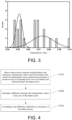
- the abscissa represents the characteristic value
- the ordinate represents the number
- each bar represents the number of single batteries corresponding to the characteristic value.
- the single batteries with the characteristic values between [0.0424, 0.0601] may be regarded as single batteries with good consistency, and single batteries with characteristic values outside [0.0424, 0.0601] may be regarded as single batteries with poor consistency.
- the battery device of a ternary system is selected as an example for illustration.
- the specific results may be seen in Table 1.
- a represents the mean mentioned in the above content
- b represents the variance mentioned in the above content
- k represents the maximum value in relative differences of characteristic values of any two battery units when the battery device includes multiple (that is, two or more) battery units
- the number of turns represents the number of usage cycles of the battery device when the battery device adopts step charging at 25°C and the battery health state of the battery unit decays from 100% to 80%.
- Example 1#, Example 2#, and Example 3# it can be determined from Example 1#, Example 2#, and Example 3# that with the increase in k, the number of turns gradually decreases, that is, with the increase of the maximum value in the relative differences between the characteristic values of any two battery units, the number of usage cycles gradually decreases when the battery device reaches a target state (that is, the state when the battery health state of the battery unit decays from 100% to 80%). Also, the smaller the k, the better the consistency, and the better the consistency. The greater the number of usage cycles of the battery device when reaching the target state, the more stable the performance of the battery device, and the longer the service life.
- Example 1# and Comparative Example 4# it can be determined from Example 1# and Comparative Example 4# that k of Comparative Example 4# is obviously much greater than k of Example 1#.
- the number of usage cycles of the battery device of Comparative Example 4# when reaching the target state is correspondingly much less, which also confirms that the better the consistency, the more stable the performance of the battery device, and the longer the service life, while the worse the consistency, the more unstable the performance of the battery device, the faster the decay speed, and the shorter the service life.
- the peak of the discharge DVA curve represents the phase transition of an active material during intercalation and deintercalation processes, and the process of phase transition reflects the change in polarization internal resistance.
- the characteristic value determined based on the minimum value of the discharge DVA curve of the battery unit obtained during the discharge process may reflect the difference in polarization internal resistance of the battery unit, thereby reflecting the consistency difference between the battery units.
- V represents the voltage of the battery unit under load
- OCV represents the open-circuit voltage of the battery unit
- I represents the current in the battery unit during discharge
- t represents the discharge time
- DCR represents the direct current internal resistance of the battery unit
- ⁇ represents the polarization voltage of the battery unit
- Q represents the power of the battery unit during discharge.
- the change in polarization internal resistance of the battery unit during the discharge process may be reflected. Therefore, through discharging at different discharge rates, the difference in polarization internal resistance during the discharge process may be reflected, thereby judging the consistency difference between the battery units based on the difference between the characteristic values.
- the polarization resistance of the battery unit may include ohmic polarization internal resistance, electrochemical polarization internal resistance, and concentration polarization internal resistance.
- the magnitude of the polarization internal resistance determines the magnitude of the polarization voltage. If the polarization internal resistance is too large, it means that the internal resistance of the battery unit is too large, and that ion migration in the battery unit is difficult, which seriously affects the rate and the cycle performance of the battery unit.
- the polarization internal resistance may be used as a parameter that reflects the comprehensive performance of internal electrolyte, cathode and anode active materials, and diaphragm matching of the battery unit, thereby evaluating the performance of the battery unit, so that through testing the polarization internal resistances of the battery units, the battery units with good performance consistency can be quickly screened out to control the consistency of the battery group.
- an embodiment of the disclosure provides a detection method of a battery device, as shown in FIG. 4 , which includes the following.
- a characteristic value of each battery unit is determined, wherein the characteristic value is determined according to a minimum value of a discharge DVA curve of the battery unit obtained during a discharge process.
- Determining the characteristic value of each battery unit includes the following.
- any one of the battery units is respectively discharged to obtain N corresponding discharge DVA curves, where N is an integer greater than 1.
- a minimum value in each of the discharge DVA curves is determined.
- the characteristic value of the one of the battery unit is determined.
- the solution can dynamically monitor the consistency of each battery unit in the battery device, which can reflect the consistency of the battery unit during the usage process to implement the online monitoring of the battery unit, thereby providing guidance for the subsequent use of the battery device.
- the detection method takes a short time, and the test cost is low, so that low cost, fast, and effective detection can be implemented.
- determining the consistency of the battery device specifically includes the following.
- a maximum value in all the differences between the characteristic values of the battery units is determined.
- a consistency level corresponding to a difference range where the maximum value is located is determined.
- the corresponding relationship between the difference range and the consistency level is not limited to that shown in Table 2.
- Table 2 is used as an example for illustration. In actual situations, the corresponding relationship between the difference range and the consistency level may be preset according to actual requirements, which is not limited herein.
- the consistency of the battery device may be determined based on the maximum value in all the differences between the characteristic values of the battery units and the corresponding relationship between the difference range and the consistency level to provide a reference for the use of the battery device.
- determining the consistency may also include the following.
- a mean of all differences between the characteristic values of the battery units is calculated, and a consistency level corresponding to a difference range where the said mean is located is determined.
- the method also includes the following.
- a maximum value in all the differences between the characteristic values of the battery units is determined.
- an early warning level corresponding to a difference range where the maximum value is located is determined.
- Table 3 Difference range Early warning level [c5, c6) Level 1 [c7, c8) Level 2 [c9, c10) Level 3
- Level 2 the early warning level of the battery device is Level 2. If Level 1 represents the lowest level and Level 3 represents the highest level, it can be determined that the current battery device has a relatively large safety hazard, but the degree of safety hazard is neither high nor low and needs attention. If the battery device continues to be used, the possibility of danger is very high.
- the determined difference range where the maximum value is located is [c5, c6)
- the early warning level of the battery device is Level 1. It can be determined that the current battery device has certain safety hazard, but the degree of safety hazard is small to remind the user of the battery device to pay attention to the usage situation of the battery device at any time.
- the determined difference range where the maximum value is located is [c9, c10), it means that the early warning level of the battery device is Level 3. It can be determined that the current battery device has a very large safety hazard and the use of the battery device needs to be immediately stopped.
- the corresponding relationship between the difference range and the early warning level is not limited to that shown in Table 3.
- Table 3 is used as an example for illustration. In actual situations, the corresponding relationship between the difference range and the early warning level may be preset according to actual requirements, which is not limited herein.
- the early warning level of the battery device may be determined, which provides a reference for the subsequent use and maintenance of the battery device, and prevents danger from happening.
- determining the early warning level of the battery device may also include the following.
- a mean of all differences between the characteristic values is calculated, and an early warning level corresponding to a difference range where the mean of the characteristic values is located is determined.
- the battery unit when the battery device is a battery pack, the battery unit is a battery module or a battery group.
- the battery unit is a single battery.
- the battery unit is a battery pack.
- the detection method may judge the consistency difference of the three levels of the containerized battery system, the battery pack, and the battery module (or the battery group), which has a wide range of application fields and strong practicability.
- early warning, display, and recording may also be performed based on the determined consistency of the battery device to provide data reference for subsequent improvement and analysis of battery performance, and to provide the user with more intuitive data, so that the user can pay attention to the performance change of the battery device at any time, and prepare for the occurrence of danger in advance, which improves the safety of the battery device during the usage process.
- an embodiment of the disclosure provides a screening device of a battery unit.
- the implementation principle of the screening device is similar to the implementation principle of the screening method.
- an embodiment of the disclosure provides a screening device of a battery unit, as shown in FIG. 5 , which includes the following.
- a memory 501 is used to store a program instruction.
- a processor 502 is used to call the program instruction stored in the memory 501 to execute the screening method provided by the embodiment of the disclosure according to an obtained program.
- an embodiment of the disclosure provides a detection device of a battery device.
- the implementation principle of the detection device is similar to the implementation principle of the detection method.
- an embodiment of the disclosure provides a detection device of a battery device, as shown in FIG. 6 , which includes the following.
- a memory 601 is used to store a program instruction.
- a processor 602 is used to call the program instruction stored in the memory 601 to execute the detection method provided by the embodiment of the disclosure according to an obtained program.
- the detection device may be a certain module in a battery management system, and the module may be an existing module in the battery management system or a newly added module in the battery management system, as long as a detection function is integrated into the battery management system.
Landscapes
- Physics & Mathematics (AREA)
- General Physics & Mathematics (AREA)
- Engineering & Computer Science (AREA)
- Manufacturing & Machinery (AREA)
- Secondary Cells (AREA)
Claims (15)
- Batterievorrichtung, die mindestens zwei Batterieeinheiten umfasst, wobei eine Differenz zwischen charakteristischen Werten einer der mindestens zwei Batterieeinheiten innerhalb eines voreingestellten Bereichs liegt,dadurch gekennzeichnet, dass der voreingestellte Bereich 0,5% bis 40% beträgt,wobei jeder der charakteristischen Werte durch Anwenden eines folgenden Tests erhalten wird:
wenn eine der mindestens zwei Batterieeinheiten mit einer Entladerate von 0,05 Kapazität (C) bzw. einer Entladerate von 1C in einem Entladespannungsintervall von 2,8 Volt (V) bis 4,2 V entladen wird, Erhalten von zwei Entladungs-Differenzspannungs-Analyse (DVA)-Kurven, und Bestimmen einer Differenz zwischen den Mindestwerten der zwei Entladungs-DVA-Kurven. - Batterievorrichtung gemäß Anspruch 1, wobei der voreingestellte Bereich 2 % bis 25 % beträgt.
- Batterievorrichtung gemäß Anspruch 1, wobei einer der charakteristischen Werte in einem Bereich von 0,01 bis 0,15 liegt.
- Batterievorrichtung gemäß Anspruch 3, wobei einer der charakteristischen Werte in einem Bereich von 0,04 bis 0,1 liegt.
- Screening-Verfahren für eine Batterieeinheit, umfassend:Bestimmen eines charakteristischen Wertes von jeder aus einer Vielzahl von auszuwählenden Batterieeinheiten, wobei der charakteristische Wert gemäß einem Mindestwert einer Entlade-DVA-Kurve der Batterieeinheit bestimmt wird, die während eines Entladevorgangs (S101) erhalten wird;Berechnen einer Differenz zwischen den charakteristischen Werten von zwei aus der Vielzahl von Batterieeinheiten (S102); undAuswählen der Batterieeinheit, bei der die Differenz zwischen den charakteristischen Werten von zwei Batterieeinheiten aus der Vielzahl von Batterieeinheiten innerhalb eines voreingestellten Bereichs liegt (S103);wobei Bestimmen des charakteristischen Wertes jeder der Vielzahl von auszuwählenden Batterieeinheiten umfasst:
für eine aus der Vielzahl von Batterieeinheiten, Ausführen eines folgenden Prozesses:gemäß N verschiedenen voreingestellten Entladebedingungen, jeweiliges Entladen einer der Vielzahl von Batterieeinheiten, um N entsprechende Entlade-DVA-Kurven zu erhalten, wobei N eine ganze Zahl größer als 1 ist;Bestimmen eines Mindestwertes in jeder der Entlade-DVA-Kurven;Berechnen einer Differenz zwischen zwei Mindestwerten; undBestimmen des charakteristischen Wertes der einen aus der Vielzahl der Batterieeinheiten entsprechend der berechneten Differenz zwischen den Mindestwerten. - Screening-Verfahren gemäß Anspruch 5, wobei jede der N verschiedenen voreingestellten Entladebedingungen umfasst:eine voreingestellte Entladerate; undBestimmen eines Entladespannungsintervalls gemäß einer Entlade-DVA-Kurve, die durch Entladen einer vollständig geladenen Batterieeinheit erhalten wird,wobei die voreingestellten Entladeraten in den verschiedenen voreingestellten Entladebedingungen unterschiedlich sind und die Entladespannungsintervalle in den verschiedenen voreingestellten Entladebedingungen gleich sind.
- Screening-Verfahren gemäß Anspruch 5, wobei ein Verfahren zum Bestimmen des voreingestellten Bereichs umfasst:Bestimmen von M Batterieeinheitsproben, wobei M eine ganze Zahl größer als 1 ist;Bestimmen eines charakteristischen Wertes für jede der Batterieeinheitsproben;Berechnen eines Mittelwertes bzw. einer Varianz der charakteristischen Werte; und Bestimmen des voreingestellten Bereichs entsprechend dem Mittelwert und der Varianz der charakteristischen Werte.
- Screening-Verfahren gemäß Anspruch 6, wobei ein Verfahren zur Bestimmung des voreingestellten Bereichs umfasst:Bestimmen von M Batterieeinheitsproben, wobei M eine ganze Zahl größer als 1 ist;Bestimmen eines charakteristischen Wertes jeder der Batterieeinheitsproben;Berechnen eines Mittelwertes bzw. einer Varianz der charakteristischen Werte; undBestimmen des voreingestellten Bereichs entsprechend dem Mittelwert und der Varianz der charakteristischen Werte.
- Detektionsverfahren für eine Batterievorrichtung, die eine Vielzahl von Batterieeinheiten umfasst, umfassend:Bestimmen eines charakteristischen Wertes jeder der Vielzahl von Batterieeinheiten, wobei der charakteristische Wert gemäß einem Mindestwert einer Entladungs-DVA-Kurve der Batterieeinheit bestimmt wird, die während eines Entladungsprozesses (S401) erhalten wird;Berechnen einer Differenz zwischen den charakteristischen Werten von zwei aus der Vielzahl von Batterieeinheiten (S402); undBestimmen einer Konsistenz der Batterievorrichtung (S403) gemäß der Differenz zwischen den charakteristischen Werten von zwei der Vielzahl von Batterieeinheiten;wobei Bestimmen des charakteristischen Wertes von jeder der Vielzahl von Batterieeinheiten umfasst:
für eine aus der Vielzahl von Batterieeinheiten, Ausführen eines folgenden Prozesses:gemäß N verschiedenen voreingestellten Entladebedingungen, jeweiliges Entladen einer der Vielzahl von Batterieeinheiten, um N entsprechende Entlade-DVA-Kurven zu erhalten, wobei N eine ganze Zahl größer als 1 ist;Bestimmen eines Mindestwertes in jeder der Entlade-DVA-Kurven;Berechnen einer Differenz zwischen zwei Mindestwerten; undBestimmen des charakteristischen Wertes der einen aus der Vielzahl von Batterieeinheiten gemäß der berechneten Differenz zwischen den Mindestwerten. - Detektionsverfahren gemäß Anspruch 9, wobei gemäß der Differenz zwischen den charakteristischen Werten von zwei aus der Vielzahl von Batterieeinheiten, Bestimmen der Konsistenz der Batterievorrichtung umfasst:Bestimmen eines Maximalwertes in allen Differenzen zwischen den charakteristischen Werten der Vielzahl von Batterieeinheiten; undBestimmen eines Konsistenzniveaus, das einem Differenzbereich entspricht, in dem sich der Maximalwert befindet, gemäß einer voreingestellten entsprechenden Beziehung zwischen einem Differenzbereich und einem Konsistenzniveau.
- Detektionsverfahren gemäß Anspruch 9, ferner umfassend:Bestimmen eines Maximalwertes aller Differenzen; undBestimmen eines Frühwarnpegels, der einem Differenzbereich entspricht, in dem sich der Maximalwert befindet, gemäß einer voreingestellten entsprechenden Beziehung zwischen einem Differenzbereich und einem Frühwarnpegel.
- Detektionsverfahren gemäß Anspruch 10, ferner umfassend:Bestimmen eines Maximalwertes aller Differenzen; undBestimmen eines Frühwarnpegels, der einem Differenzbereich entspricht, in dem sich der Maximalwert befindet, gemäß einer voreingestellten entsprechenden Beziehung zwischen einem Differenzbereich und einem Frühwarnpegel.
- Screening-Vorrichtung einer Batterieeinheit, umfassend:einen Speicher (501), der zum Speichern eines Programmbefehls verwendet wird; undeinen Prozessor (502), der zum Aufrufen des in dem Speicher gespeicherten Programmbefehls verwendet wird, um das Screening-Verfahren gemäß Anspruch 5 gemäß einem erhaltenen Programm auszuführen.
- Screening-Vorrichtung einer Batterieeinheit, umfassend:einen Speicher (501), der zum Speichern eines Programmbefehls verwendet wird; undeinen Prozessor (502), der zum Aufrufen des in dem Speicher gespeicherten Programmbefehls verwendet wird, um das Screening-Verfahren gemäß Anspruch 6 gemäß einem erhaltenen Programm auszuführen.
- Detektionsvorrichtung einer Batterievorrichtung, umfassend:einen Speicher (601), der zum Speichern eines Programmbefehls verwendet wird; undeinen Prozessor (602), der zum Aufrufen des in dem Speicher gespeicherten Programmbefehls verwendet wird, um das Detektionsverfahren gemäß Anspruch 9 gemäß einem erhaltenen Programm auszuführen.
Applications Claiming Priority (1)
| Application Number | Priority Date | Filing Date | Title |
|---|---|---|---|
| CN202210515569.6A CN114636943B (zh) | 2022-05-12 | 2022-05-12 | 电池装置、其检测方法、电池单元的筛选方法及装置 |
Publications (2)
| Publication Number | Publication Date |
|---|---|
| EP4276485A1 EP4276485A1 (de) | 2023-11-15 |
| EP4276485B1 true EP4276485B1 (de) | 2024-12-25 |
Family
ID=81953204
Family Applications (1)
| Application Number | Title | Priority Date | Filing Date |
|---|---|---|---|
| EP22183858.4A Active EP4276485B1 (de) | 2022-05-12 | 2022-07-08 | Batteriesystem, detektionsverfahren dafür und screening-verfahren und vorrichtung für eine batterieeinheit |
Country Status (3)
| Country | Link |
|---|---|
| US (1) | US12222403B2 (de) |
| EP (1) | EP4276485B1 (de) |
| CN (1) | CN114636943B (de) |
Families Citing this family (4)
| Publication number | Priority date | Publication date | Assignee | Title |
|---|---|---|---|---|
| CN115808632B (zh) * | 2022-11-03 | 2025-08-05 | 宁德时代新能源科技股份有限公司 | 电池一致性检测方法、检测装置、计算机设备及存储介质 |
| CN117420457B (zh) * | 2023-11-07 | 2025-07-01 | 江苏正力新能电池技术股份有限公司 | 一种电池的一致性挑选方法及装置 |
| CN117783887B (zh) * | 2024-02-28 | 2024-05-14 | 深圳市神通天下科技有限公司 | 一种锂离子电池电芯配组筛选方法 |
| CN117930064B (zh) * | 2024-03-21 | 2024-06-14 | 四川新能源汽车创新中心有限公司 | 一种无损检测析锂的方法、系统、计算设备及介质 |
Family Cites Families (14)
| Publication number | Priority date | Publication date | Assignee | Title |
|---|---|---|---|---|
| JP4561859B2 (ja) * | 2008-04-01 | 2010-10-13 | トヨタ自動車株式会社 | 二次電池システム |
| CN102097657A (zh) * | 2010-12-19 | 2011-06-15 | 重庆美尔安电子有限公司 | 一种动力锂离子二次电池配组方法 |
| JP5662968B2 (ja) * | 2012-06-19 | 2015-02-04 | 株式会社日立製作所 | 二次電池の検査システム、充放電機、及び検査方法 |
| WO2016132586A1 (ja) * | 2015-02-17 | 2016-08-25 | 三菱電機株式会社 | 電力変換システム |
| JP6380417B2 (ja) * | 2016-01-21 | 2018-08-29 | 横河電機株式会社 | 二次電池容量測定システム及び二次電池容量測定方法 |
| CN107020251B (zh) | 2017-03-23 | 2019-03-26 | 苏州协鑫集成储能科技有限公司 | 电池及电池组的筛选方法 |
| US20210359347A1 (en) * | 2018-08-06 | 2021-11-18 | The Regents Of The University Of Michigan | Electrode Diagnostics For Lithium Ion Battery |
| KR102537607B1 (ko) * | 2019-05-14 | 2023-05-25 | 주식회사 엘지에너지솔루션 | 배터리의 퇴화도를 결정하기 위한 장치, 방법 및 배터리 팩 |
| KR102766401B1 (ko) * | 2019-09-19 | 2025-02-10 | 주식회사 엘지에너지솔루션 | 배터리 관리 장치, 배터리 관리 방법, 배터리 팩 및 전기 차량 |
| CN110579716B (zh) * | 2019-10-22 | 2022-06-03 | 东软睿驰汽车技术(沈阳)有限公司 | 一种电池检测方法及装置 |
| CN111090053B (zh) * | 2019-11-29 | 2022-04-22 | 力神(青岛)新能源有限公司 | 一种用于动力电池分档的方法 |
| CN112186278B (zh) * | 2020-09-23 | 2021-10-19 | 珠海冠宇动力电池有限公司 | 一种锂离子电池配组方法 |
| CN112505551B (zh) | 2020-12-16 | 2023-01-10 | 北方工业大学 | 一种面向退役动力电池的筛选方法 |
| JP7235790B2 (ja) * | 2021-03-18 | 2023-03-08 | 本田技研工業株式会社 | 劣化セルの内部劣化状態推定方法、及び測定システム |
-
2022
- 2022-05-12 CN CN202210515569.6A patent/CN114636943B/zh active Active
- 2022-07-01 US US17/855,810 patent/US12222403B2/en active Active
- 2022-07-08 EP EP22183858.4A patent/EP4276485B1/de active Active
Also Published As
| Publication number | Publication date |
|---|---|
| US12222403B2 (en) | 2025-02-11 |
| CN114636943A (zh) | 2022-06-17 |
| US20230366949A1 (en) | 2023-11-16 |
| CN114636943B (zh) | 2022-08-30 |
| EP4276485A1 (de) | 2023-11-15 |
Similar Documents
| Publication | Publication Date | Title |
|---|---|---|
| EP4276485A1 (de) | Batteriesystem, detektionsverfahren dafür und screening-verfahren und vorrichtung für eine batterieeinheit | |
| US12455326B2 (en) | Method and apparatus for detecting lithium plating, and method and apparatus for obtaining polarization proportion | |
| JP5818878B2 (ja) | リチウムイオン電池充電状態の算出方法 | |
| CN102468521B (zh) | 用于估计蓄电池健康状态的方法和装置 | |
| CN102565710B (zh) | 用于估计蓄电池健康状态的方法和装置 | |
| EP4350373A1 (de) | Batterievorrichtung, detektionsverfahren dafür, verfahren und vorrichtung zum screening von batteriezellen | |
| CN104607395A (zh) | 锂离子电池分选方法 | |
| US20250180662A1 (en) | Battery health state assessment method, device, computer apparatus and storage medium | |
| CN110632529A (zh) | 一种锂电池自放电测试工艺 | |
| Bose et al. | Battery state of health estimation through coup de fouet | |
| EP4390423B1 (de) | Verfahren und vorrichtung zur erkennung des gesundheitszustands einer batterie | |
| US20230366948A1 (en) | Battery device, detection method thereof, and screening method and device of battery unit | |
| CN117092543A (zh) | 一种光伏储能电池老化测试方法、系统及介质 | |
| CN1879251B (zh) | 电池浮充管理 | |
| CN117233637A (zh) | 锂电池容量跳水监控方法、装置、计算机设备和存储介质 | |
| CN119716615B (zh) | 一种soh标定方法、装置、设备及介质 | |
| CN121142329A (zh) | 一种用于储能系统的soc动态校准方法、系统及存储介质 | |
| CN117849633A (zh) | 一种电池漏电评估方法、装置、介质及bms系统 | |
| CN116487676A (zh) | 一种单片电池及电池材料的筛选方法 | |
| CN119438954B (zh) | 一种长寿命锂离子电池寿命预测评价方法 | |
| RU2860325C2 (ru) | Способ и система для предварительного оповещения об аномальном саморазряде батареи, а также электронное устройство и носитель данных | |
| EP4495616A1 (de) | Berechnung des effektiven ladezustandes | |
| CN120065031A (zh) | 一种析锂检测方法以及析锂检测系统 | |
| CN120381995A (zh) | 一种提升自放电筛选能力的方法 | |
| CN121164955A (zh) | 二次电池老化检测方法、二次电池管理系统和电子设备 |
Legal Events
| Date | Code | Title | Description |
|---|---|---|---|
| PUAI | Public reference made under article 153(3) epc to a published international application that has entered the european phase |
Free format text: ORIGINAL CODE: 0009012 |
|
| STAA | Information on the status of an ep patent application or granted ep patent |
Free format text: STATUS: REQUEST FOR EXAMINATION WAS MADE |
|
| 17P | Request for examination filed |
Effective date: 20220708 |
|
| AK | Designated contracting states |
Kind code of ref document: A1 Designated state(s): AL AT BE BG CH CY CZ DE DK EE ES FI FR GB GR HR HU IE IS IT LI LT LU LV MC MK MT NL NO PL PT RO RS SE SI SK SM TR |
|
| GRAP | Despatch of communication of intention to grant a patent |
Free format text: ORIGINAL CODE: EPIDOSNIGR1 |
|
| STAA | Information on the status of an ep patent application or granted ep patent |
Free format text: STATUS: GRANT OF PATENT IS INTENDED |
|
| RIC1 | Information provided on ipc code assigned before grant |
Ipc: G01R 31/385 20190101AFI20240731BHEP |
|
| INTG | Intention to grant announced |
Effective date: 20240823 |
|
| GRAS | Grant fee paid |
Free format text: ORIGINAL CODE: EPIDOSNIGR3 |
|
| GRAA | (expected) grant |
Free format text: ORIGINAL CODE: 0009210 |
|
| STAA | Information on the status of an ep patent application or granted ep patent |
Free format text: STATUS: THE PATENT HAS BEEN GRANTED |
|
| AK | Designated contracting states |
Kind code of ref document: B1 Designated state(s): AL AT BE BG CH CY CZ DE DK EE ES FI FR GB GR HR HU IE IS IT LI LT LU LV MC MK MT NL NO PL PT RO RS SE SI SK SM TR |
|
| REG | Reference to a national code |
Ref country code: GB Ref legal event code: FG4D |
|
| REG | Reference to a national code |
Ref country code: CH Ref legal event code: EP |
|
| REG | Reference to a national code |
Ref country code: DE Ref legal event code: R096 Ref document number: 602022009023 Country of ref document: DE |
|
| REG | Reference to a national code |
Ref country code: IE Ref legal event code: FG4D |
|
| REG | Reference to a national code |
Ref country code: LT Ref legal event code: MG9D |
|
| PG25 | Lapsed in a contracting state [announced via postgrant information from national office to epo] |
Ref country code: HR Free format text: LAPSE BECAUSE OF FAILURE TO SUBMIT A TRANSLATION OF THE DESCRIPTION OR TO PAY THE FEE WITHIN THE PRESCRIBED TIME-LIMIT Effective date: 20241225 |
|
| PG25 | Lapsed in a contracting state [announced via postgrant information from national office to epo] |
Ref country code: FI Free format text: LAPSE BECAUSE OF FAILURE TO SUBMIT A TRANSLATION OF THE DESCRIPTION OR TO PAY THE FEE WITHIN THE PRESCRIBED TIME-LIMIT Effective date: 20241225 |
|
| PG25 | Lapsed in a contracting state [announced via postgrant information from national office to epo] |
Ref country code: BG Free format text: LAPSE BECAUSE OF FAILURE TO SUBMIT A TRANSLATION OF THE DESCRIPTION OR TO PAY THE FEE WITHIN THE PRESCRIBED TIME-LIMIT Effective date: 20241225 |
|
| PG25 | Lapsed in a contracting state [announced via postgrant information from national office to epo] |
Ref country code: NO Free format text: LAPSE BECAUSE OF FAILURE TO SUBMIT A TRANSLATION OF THE DESCRIPTION OR TO PAY THE FEE WITHIN THE PRESCRIBED TIME-LIMIT Effective date: 20250325 |
|
| PG25 | Lapsed in a contracting state [announced via postgrant information from national office to epo] |
Ref country code: LV Free format text: LAPSE BECAUSE OF FAILURE TO SUBMIT A TRANSLATION OF THE DESCRIPTION OR TO PAY THE FEE WITHIN THE PRESCRIBED TIME-LIMIT Effective date: 20241225 Ref country code: GR Free format text: LAPSE BECAUSE OF FAILURE TO SUBMIT A TRANSLATION OF THE DESCRIPTION OR TO PAY THE FEE WITHIN THE PRESCRIBED TIME-LIMIT Effective date: 20250326 |
|
| PG25 | Lapsed in a contracting state [announced via postgrant information from national office to epo] |
Ref country code: RS Free format text: LAPSE BECAUSE OF FAILURE TO SUBMIT A TRANSLATION OF THE DESCRIPTION OR TO PAY THE FEE WITHIN THE PRESCRIBED TIME-LIMIT Effective date: 20250325 |
|
| REG | Reference to a national code |
Ref country code: NL Ref legal event code: MP Effective date: 20241225 |
|
| PG25 | Lapsed in a contracting state [announced via postgrant information from national office to epo] |
Ref country code: NL Free format text: LAPSE BECAUSE OF FAILURE TO SUBMIT A TRANSLATION OF THE DESCRIPTION OR TO PAY THE FEE WITHIN THE PRESCRIBED TIME-LIMIT Effective date: 20241225 |
|
| REG | Reference to a national code |
Ref country code: AT Ref legal event code: MK05 Ref document number: 1754595 Country of ref document: AT Kind code of ref document: T Effective date: 20241225 |
|
| PG25 | Lapsed in a contracting state [announced via postgrant information from national office to epo] |
Ref country code: SM Free format text: LAPSE BECAUSE OF FAILURE TO SUBMIT A TRANSLATION OF THE DESCRIPTION OR TO PAY THE FEE WITHIN THE PRESCRIBED TIME-LIMIT Effective date: 20241225 |
|
| PG25 | Lapsed in a contracting state [announced via postgrant information from national office to epo] |
Ref country code: PL Free format text: LAPSE BECAUSE OF FAILURE TO SUBMIT A TRANSLATION OF THE DESCRIPTION OR TO PAY THE FEE WITHIN THE PRESCRIBED TIME-LIMIT Effective date: 20241225 |
|
| PG25 | Lapsed in a contracting state [announced via postgrant information from national office to epo] |
Ref country code: ES Free format text: LAPSE BECAUSE OF FAILURE TO SUBMIT A TRANSLATION OF THE DESCRIPTION OR TO PAY THE FEE WITHIN THE PRESCRIBED TIME-LIMIT Effective date: 20241225 |
|
| PG25 | Lapsed in a contracting state [announced via postgrant information from national office to epo] |
Ref country code: IS Free format text: LAPSE BECAUSE OF FAILURE TO SUBMIT A TRANSLATION OF THE DESCRIPTION OR TO PAY THE FEE WITHIN THE PRESCRIBED TIME-LIMIT Effective date: 20250425 |
|
| PG25 | Lapsed in a contracting state [announced via postgrant information from national office to epo] |
Ref country code: PT Free format text: LAPSE BECAUSE OF FAILURE TO SUBMIT A TRANSLATION OF THE DESCRIPTION OR TO PAY THE FEE WITHIN THE PRESCRIBED TIME-LIMIT Effective date: 20250428 |
|
| PG25 | Lapsed in a contracting state [announced via postgrant information from national office to epo] |
Ref country code: EE Free format text: LAPSE BECAUSE OF FAILURE TO SUBMIT A TRANSLATION OF THE DESCRIPTION OR TO PAY THE FEE WITHIN THE PRESCRIBED TIME-LIMIT Effective date: 20241225 |
|
| PG25 | Lapsed in a contracting state [announced via postgrant information from national office to epo] |
Ref country code: AT Free format text: LAPSE BECAUSE OF FAILURE TO SUBMIT A TRANSLATION OF THE DESCRIPTION OR TO PAY THE FEE WITHIN THE PRESCRIBED TIME-LIMIT Effective date: 20241225 Ref country code: RO Free format text: LAPSE BECAUSE OF FAILURE TO SUBMIT A TRANSLATION OF THE DESCRIPTION OR TO PAY THE FEE WITHIN THE PRESCRIBED TIME-LIMIT Effective date: 20241225 |
|
| PG25 | Lapsed in a contracting state [announced via postgrant information from national office to epo] |
Ref country code: SK Free format text: LAPSE BECAUSE OF FAILURE TO SUBMIT A TRANSLATION OF THE DESCRIPTION OR TO PAY THE FEE WITHIN THE PRESCRIBED TIME-LIMIT Effective date: 20241225 |
|
| PG25 | Lapsed in a contracting state [announced via postgrant information from national office to epo] |
Ref country code: CZ Free format text: LAPSE BECAUSE OF FAILURE TO SUBMIT A TRANSLATION OF THE DESCRIPTION OR TO PAY THE FEE WITHIN THE PRESCRIBED TIME-LIMIT Effective date: 20241225 |
|
| PG25 | Lapsed in a contracting state [announced via postgrant information from national office to epo] |
Ref country code: IT Free format text: LAPSE BECAUSE OF FAILURE TO SUBMIT A TRANSLATION OF THE DESCRIPTION OR TO PAY THE FEE WITHIN THE PRESCRIBED TIME-LIMIT Effective date: 20241225 |
|
| PG25 | Lapsed in a contracting state [announced via postgrant information from national office to epo] |
Ref country code: SE Free format text: LAPSE BECAUSE OF FAILURE TO SUBMIT A TRANSLATION OF THE DESCRIPTION OR TO PAY THE FEE WITHIN THE PRESCRIBED TIME-LIMIT Effective date: 20241225 |
|
| REG | Reference to a national code |
Ref country code: DE Ref legal event code: R097 Ref document number: 602022009023 Country of ref document: DE |
|
| PG25 | Lapsed in a contracting state [announced via postgrant information from national office to epo] |
Ref country code: DK Free format text: LAPSE BECAUSE OF FAILURE TO SUBMIT A TRANSLATION OF THE DESCRIPTION OR TO PAY THE FEE WITHIN THE PRESCRIBED TIME-LIMIT Effective date: 20241225 |
|
| PGFP | Annual fee paid to national office [announced via postgrant information from national office to epo] |
Ref country code: DE Payment date: 20250722 Year of fee payment: 4 |
|
| PGFP | Annual fee paid to national office [announced via postgrant information from national office to epo] |
Ref country code: FR Payment date: 20250725 Year of fee payment: 4 |
|
| PLBE | No opposition filed within time limit |
Free format text: ORIGINAL CODE: 0009261 |
|
| STAA | Information on the status of an ep patent application or granted ep patent |
Free format text: STATUS: NO OPPOSITION FILED WITHIN TIME LIMIT |
|
| REG | Reference to a national code |
Ref country code: CH Ref legal event code: L10 Free format text: ST27 STATUS EVENT CODE: U-0-0-L10-L00 (AS PROVIDED BY THE NATIONAL OFFICE) Effective date: 20251105 |
|
| 26N | No opposition filed |
Effective date: 20250926 |
|
| REG | Reference to a national code |
Ref country code: CH Ref legal event code: H13 Free format text: ST27 STATUS EVENT CODE: U-0-0-H10-H13 (AS PROVIDED BY THE NATIONAL OFFICE) Effective date: 20260224 |
|
| PG25 | Lapsed in a contracting state [announced via postgrant information from national office to epo] |
Ref country code: LU Free format text: LAPSE BECAUSE OF NON-PAYMENT OF DUE FEES Effective date: 20250708 |
|
| REG | Reference to a national code |
Ref country code: BE Ref legal event code: MM Effective date: 20250731 |
|
| PG25 | Lapsed in a contracting state [announced via postgrant information from national office to epo] |
Ref country code: BE Free format text: LAPSE BECAUSE OF NON-PAYMENT OF DUE FEES Effective date: 20250731 |
|
| PG25 | Lapsed in a contracting state [announced via postgrant information from national office to epo] |
Ref country code: CH Free format text: LAPSE BECAUSE OF NON-PAYMENT OF DUE FEES Effective date: 20250731 |