EP4255873B1 - Herstellung von 2,2,4,4-tetramethylcyclobutan-1,3-diol aus isobutanol unter verwendung eines homogenen katalysators - Google Patents
Herstellung von 2,2,4,4-tetramethylcyclobutan-1,3-diol aus isobutanol unter verwendung eines homogenen katalysators Download PDFInfo
- Publication number
- EP4255873B1 EP4255873B1 EP21835026.2A EP21835026A EP4255873B1 EP 4255873 B1 EP4255873 B1 EP 4255873B1 EP 21835026 A EP21835026 A EP 21835026A EP 4255873 B1 EP4255873 B1 EP 4255873B1
- Authority
- EP
- European Patent Office
- Prior art keywords
- isobutanol
- tetramethylcyclobutanedione
- bio
- diol
- tetramethylcyclobutane
- Prior art date
- Legal status (The legal status is an assumption and is not a legal conclusion. Google has not performed a legal analysis and makes no representation as to the accuracy of the status listed.)
- Active
Links
Images
Classifications
-
- C—CHEMISTRY; METALLURGY
- C07—ORGANIC CHEMISTRY
- C07C—ACYCLIC OR CARBOCYCLIC COMPOUNDS
- C07C67/00—Preparation of carboxylic acid esters
-
- B—PERFORMING OPERATIONS; TRANSPORTING
- B01—PHYSICAL OR CHEMICAL PROCESSES OR APPARATUS IN GENERAL
- B01J—CHEMICAL OR PHYSICAL PROCESSES, e.g. CATALYSIS OR COLLOID CHEMISTRY; THEIR RELEVANT APPARATUS
- B01J31/00—Catalysts comprising hydrides, coordination complexes or organic compounds
- B01J31/16—Catalysts comprising hydrides, coordination complexes or organic compounds containing coordination complexes
- B01J31/20—Carbonyls
-
- B—PERFORMING OPERATIONS; TRANSPORTING
- B01—PHYSICAL OR CHEMICAL PROCESSES OR APPARATUS IN GENERAL
- B01J—CHEMICAL OR PHYSICAL PROCESSES, e.g. CATALYSIS OR COLLOID CHEMISTRY; THEIR RELEVANT APPARATUS
- B01J31/00—Catalysts comprising hydrides, coordination complexes or organic compounds
- B01J31/16—Catalysts comprising hydrides, coordination complexes or organic compounds containing coordination complexes
- B01J31/22—Organic complexes
- B01J31/2282—Unsaturated compounds used as ligands
- B01J31/2295—Cyclic compounds, e.g. cyclopentadienyls
-
- C—CHEMISTRY; METALLURGY
- C07—ORGANIC CHEMISTRY
- C07C—ACYCLIC OR CARBOCYCLIC COMPOUNDS
- C07C29/00—Preparation of compounds having hydroxy or O-metal groups bound to a carbon atom not belonging to a six-membered aromatic ring
- C07C29/09—Preparation of compounds having hydroxy or O-metal groups bound to a carbon atom not belonging to a six-membered aromatic ring by hydrolysis
- C07C29/095—Preparation of compounds having hydroxy or O-metal groups bound to a carbon atom not belonging to a six-membered aromatic ring by hydrolysis of esters of organic acids
-
- C—CHEMISTRY; METALLURGY
- C07—ORGANIC CHEMISTRY
- C07C—ACYCLIC OR CARBOCYCLIC COMPOUNDS
- C07C29/00—Preparation of compounds having hydroxy or O-metal groups bound to a carbon atom not belonging to a six-membered aromatic ring
- C07C29/132—Preparation of compounds having hydroxy or O-metal groups bound to a carbon atom not belonging to a six-membered aromatic ring by reduction of an oxygen containing functional group
- C07C29/136—Preparation of compounds having hydroxy or O-metal groups bound to a carbon atom not belonging to a six-membered aromatic ring by reduction of an oxygen containing functional group of >C=O containing groups, e.g. —COOH
- C07C29/14—Preparation of compounds having hydroxy or O-metal groups bound to a carbon atom not belonging to a six-membered aromatic ring by reduction of an oxygen containing functional group of >C=O containing groups, e.g. —COOH of a —CHO group
-
- C—CHEMISTRY; METALLURGY
- C07—ORGANIC CHEMISTRY
- C07C—ACYCLIC OR CARBOCYCLIC COMPOUNDS
- C07C29/00—Preparation of compounds having hydroxy or O-metal groups bound to a carbon atom not belonging to a six-membered aromatic ring
- C07C29/132—Preparation of compounds having hydroxy or O-metal groups bound to a carbon atom not belonging to a six-membered aromatic ring by reduction of an oxygen containing functional group
- C07C29/136—Preparation of compounds having hydroxy or O-metal groups bound to a carbon atom not belonging to a six-membered aromatic ring by reduction of an oxygen containing functional group of >C=O containing groups, e.g. —COOH
- C07C29/143—Preparation of compounds having hydroxy or O-metal groups bound to a carbon atom not belonging to a six-membered aromatic ring by reduction of an oxygen containing functional group of >C=O containing groups, e.g. —COOH of ketones
-
- C—CHEMISTRY; METALLURGY
- C07—ORGANIC CHEMISTRY
- C07C—ACYCLIC OR CARBOCYCLIC COMPOUNDS
- C07C29/00—Preparation of compounds having hydroxy or O-metal groups bound to a carbon atom not belonging to a six-membered aromatic ring
- C07C29/132—Preparation of compounds having hydroxy or O-metal groups bound to a carbon atom not belonging to a six-membered aromatic ring by reduction of an oxygen containing functional group
- C07C29/136—Preparation of compounds having hydroxy or O-metal groups bound to a carbon atom not belonging to a six-membered aromatic ring by reduction of an oxygen containing functional group of >C=O containing groups, e.g. —COOH
- C07C29/143—Preparation of compounds having hydroxy or O-metal groups bound to a carbon atom not belonging to a six-membered aromatic ring by reduction of an oxygen containing functional group of >C=O containing groups, e.g. —COOH of ketones
- C07C29/145—Preparation of compounds having hydroxy or O-metal groups bound to a carbon atom not belonging to a six-membered aromatic ring by reduction of an oxygen containing functional group of >C=O containing groups, e.g. —COOH of ketones with hydrogen or hydrogen-containing gases
-
- C—CHEMISTRY; METALLURGY
- C07—ORGANIC CHEMISTRY
- C07C—ACYCLIC OR CARBOCYCLIC COMPOUNDS
- C07C45/00—Preparation of compounds having >C = O groups bound only to carbon or hydrogen atoms; Preparation of chelates of such compounds
- C07C45/45—Preparation of compounds having >C = O groups bound only to carbon or hydrogen atoms; Preparation of chelates of such compounds by condensation
- C07C45/455—Preparation of compounds having >C = O groups bound only to carbon or hydrogen atoms; Preparation of chelates of such compounds by condensation with carboxylic acids or their derivatives
-
- C—CHEMISTRY; METALLURGY
- C07—ORGANIC CHEMISTRY
- C07C—ACYCLIC OR CARBOCYCLIC COMPOUNDS
- C07C45/00—Preparation of compounds having >C = O groups bound only to carbon or hydrogen atoms; Preparation of chelates of such compounds
- C07C45/61—Preparation of compounds having >C = O groups bound only to carbon or hydrogen atoms; Preparation of chelates of such compounds by reactions not involving the formation of >C = O groups
- C07C45/64—Preparation of compounds having >C = O groups bound only to carbon or hydrogen atoms; Preparation of chelates of such compounds by reactions not involving the formation of >C = O groups by introduction of functional groups containing oxygen only in singly bound form
-
- C—CHEMISTRY; METALLURGY
- C07—ORGANIC CHEMISTRY
- C07C—ACYCLIC OR CARBOCYCLIC COMPOUNDS
- C07C51/00—Preparation of carboxylic acids or their salts, halides or anhydrides
- C07C51/09—Preparation of carboxylic acids or their salts, halides or anhydrides from carboxylic acid esters or lactones
-
- B—PERFORMING OPERATIONS; TRANSPORTING
- B01—PHYSICAL OR CHEMICAL PROCESSES OR APPARATUS IN GENERAL
- B01J—CHEMICAL OR PHYSICAL PROCESSES, e.g. CATALYSIS OR COLLOID CHEMISTRY; THEIR RELEVANT APPARATUS
- B01J2231/00—Catalytic reactions performed with catalysts classified in B01J31/00
- B01J2231/60—Reduction reactions, e.g. hydrogenation
- B01J2231/64—Reductions in general of organic substrates, e.g. hydride reductions or hydrogenations
- B01J2231/641—Hydrogenation of organic substrates, i.e. H2 or H-transfer hydrogenations, e.g. Fischer-Tropsch processes
- B01J2231/643—Hydrogenation of organic substrates, i.e. H2 or H-transfer hydrogenations, e.g. Fischer-Tropsch processes of R2C=O or R2C=NR (R= C, H)
-
- B—PERFORMING OPERATIONS; TRANSPORTING
- B01—PHYSICAL OR CHEMICAL PROCESSES OR APPARATUS IN GENERAL
- B01J—CHEMICAL OR PHYSICAL PROCESSES, e.g. CATALYSIS OR COLLOID CHEMISTRY; THEIR RELEVANT APPARATUS
- B01J2531/00—Additional information regarding catalytic systems classified in B01J31/00
- B01J2531/02—Compositional aspects of complexes used, e.g. polynuclearity
- B01J2531/0202—Polynuclearity
- B01J2531/0208—Bimetallic complexes, i.e. comprising one or more units of two metals, with metal-metal bonds but no all-metal (M)n rings, e.g. Cr2(OAc)4
-
- B—PERFORMING OPERATIONS; TRANSPORTING
- B01—PHYSICAL OR CHEMICAL PROCESSES OR APPARATUS IN GENERAL
- B01J—CHEMICAL OR PHYSICAL PROCESSES, e.g. CATALYSIS OR COLLOID CHEMISTRY; THEIR RELEVANT APPARATUS
- B01J2531/00—Additional information regarding catalytic systems classified in B01J31/00
- B01J2531/80—Complexes comprising metals of Group VIII as the central metal
- B01J2531/82—Metals of the platinum group
- B01J2531/821—Ruthenium
-
- C—CHEMISTRY; METALLURGY
- C07—ORGANIC CHEMISTRY
- C07C—ACYCLIC OR CARBOCYCLIC COMPOUNDS
- C07C2601/00—Systems containing only non-condensed rings
- C07C2601/04—Systems containing only non-condensed rings with a four-membered ring
Definitions
- This disclosure generally relates to a homogeneous catalytic process for preparing 2,2,4,4-tetramethylcyclobutane-1,3-diol by reacting 2,2,4,4 - tetramethylcyclobutanedione with isobutanol.
- TMCD 2,2,4,4-tetramethylcyclobutane-1,3-diol
- TMCD 2,2,4,4-tetramethylcyclobutane-1,3-diol
- TMCD can be produced by (i) conversion of isobutyric acid to isobutyric anhydride, (ii) converting isobutyric anhydride to dione, and (iii) hydrogenation of dione to TMCD.
- a new process is disclosed that converts 2,2,4,4 -tetramethylcyclobutanedione to 2,2,4,4-tetramethylcyclobutane-1,3-diol using isobutanol in place of hydrogen with the coproduction of isobutyl isobutyrate (IBIB).
- IBIB isobutyl isobutyrate
- This new process is hydrogen free and eliminates the safety concerns associated with the use of hydrogen.
- This new process is a highly efficient method for the single-step production of both TMCD and IBIB. Hydrogen transfer from isobutanol to dione replaces the H 2 -dependent reduction of dione to diol while at the same time isobutanol is converted to IBIB.
- One embodiment of the present disclosure is a process for producing 2,2,4,4-tetramethylcyclobutane-1,3-diol which comprises: (1) contacting 2,2,4,4-tetramethylcyclobutanedione with isobutanol in the presence of a tandem transfer hydrogenation and Tischenko reaction catalyst to produce isobutyl isobutyrate and 2,2,4,4-tetramethylcyclobutane-1,3-diol and 3-hydroxy - 2,2,4,4-tetramethylcyclobutanone; (2) optionally hydrogenating any unreacted 2,2,4,4-tetramethylcyclobutanedione and 3-hydroxy - 2,2,4,4-tetramethylcyclobutanone to produce 2,2,4,4-tetramethylcyclobutane-1,3-diol; (3) hydrolyzing the isobutyl isobutyrate optionally in the presence of an acid catalyst to produce isobutyric acid and isobutanol, and optionally wherein the isobutan
- One embodiment of the present disclosure is a process for producing 2,2,4,4-tetramethylcyclobutane-1,3-diol which comprises: (1) contacting 2,2,4,4-tetramethylcyclobutanedione with isobutanol in the presence of a tandem ruthenium transfer hydrogenation and Tischenko reaction catalyst comprising one or more of H 2 Ru(PPh 3 ) 4 , Ru 3 (CO) 12 , (Ar 4 C 4 CO)Ru(CO) 3 and (Ar 4 C 4 CO) 2 H( ⁇ -H )(CO) 4 Ru 2 , to produce isobutyl isobutyrate and 2,2,4,4-tetramethylcyclobutane-1,3-diol and 3-hydroxy - 2,2,4,4-tetramethylcyclobutanone,
- One embodiment of the present disclosure is a process for producing 2,2,4,4-tetramethylcyclobutane-1,3-diol which comprises: A process for the producing 2,2,4,4-tetramethylcyclobutane-1,3-diol comprising: (1) contacting 2,2,4,4-tetramethylcyclobutanedione with isobutanol in the presence of a tandem ruthenium transfer hydrogenation and Tischenko reaction catalyst selected from ((Ph 4 C 4 CO) 2 H( ⁇ -H) (CO) 4 Ru 2 ).
- One embodiment of the present disclosure is a process for producing 2,2,4,4-tetramethylcyclobutane-1 ,3-diol which comprises:
- One embodiment of the present disclosure is a process for producing 2,2,4,4-tetramethylcyclobutane-1 ,3-diol which comprises:
- One embodiment of the present disclosure is a process for the producing 2,2,4,4-tetramethylcyclobutane-1 ,3-diol which comprises:
- tandem ruthenium transfer hydrogenation and Tischenko reaction catalyst is ((Ph 4 C 4 CO) 2 H( ⁇ -H)(CO) 4 Ru 2 ).
- the conversion of the 2,2,4,4-tetramethylcyclobutanedione is at least 50% or at least 70% or at least 90%.
- the selectivity of 2,2,4,4-tetramethylcyclobutane-1 ,3-diol is at least 30%, or at least 60%.
- TMCD can be formed from a dione and isobutanol.
- the isobutanol-to-TMCD process of the present disclosure also converts isobutyric acid to isobutyric anhydride (IBAN) and IBAN to dione.
- This process enables the single-step production of both TMCD and isobutyl isobutyrate (IBIB). Hydrogen transfer from isobutanol to dione replaces the H 2 -dependent reduction of dione to diol while at the same time isobutanol is oxidized to the carboxylic acid level as needed for its conversion to dimethyl ketene.
- the present disclosure is for a single process step in which 2,2,4,4-tetramethylcyclobutane-1,3-diol (TMCD) is formed from 2,2,4,4-tetramethylcyclobutanedione (dione) and isobutanol.
- TMCD 2,2,4,4-tetramethylcyclobutane-1,3-diol
- the dione and the isobutanol is oxidized to the acid oxidation state under mild conditions with essentially quantitative yield.
- the IBIB is hydrolyzed in a separate step due to the need for acid catalysis of this hydrolysis and the acid sensitivity of TMCD product.
- the present disclosure provides a process for preparing 2,2,4,4-tetramethylcyclobutane-1,3-diol.
- the process comprises contacting 2,2,4,4-tetramethylcyclobutanedione with isobutanol in the presence of a tandem transfer hydrogenation and Tischenko reaction catalyst.
- One embodiment of this disclosure is a process which utilizes isobutanol as the raw material for production of TMCD.
- bio-isobutanol may be used as the Isobutanol source in this disclosure, thus producing a bio-TMCD. If an isobutanol with partial bio-content is employed, then a bio-TMCD with a corresponding partial bio-content is produced. Likewise, where bio-isobutanol with 25-100% bio-content is employed in the four-step process shown below, then intermediates such as bio-IBIB, bio-isobutyric acid, and bio-IBAN may also be produced.
- the isobutanol comprises at least 25% bio-isobutanol. In one embodiment of the present disclosure, the isobutanol comprises at least 50% bio-isobutanol. In one embodiment of the present disclosure, the isobutanol comprises at least 75% bio-isobutanol. In one embodiment of the present disclosure, the isobutanol comprises 100% bio-isobutanol.
- the process requires the following:
- the process is as follows:
- the isobutanol-to-TMCD process of this disclosure requires the conversion isobutyric acid to IBAN and IBAN to dione. Hydrogen transfer from isobutanol to dione replaces the H 2 -dependent reduction of dione to diol while at the same time isobutanol is oxidized to the carboxylic acid level as needed for its conversion to dimethyl ketene.
- the efficiency of the mild dehydrogenative coupling of isobutanol to IBIB provides higher yield of isobutyric acid and does not suffer from the coproduction of isopropyl formate (or the associated isopropanol).
- the process of the present disclosure comprises contacting 2,2,4,4-tetramethylcyclobutanedione with isobutanol in the presence of a tandem transfer hydrogenation and Tischenko reaction catalyst to produce isobutyl isobutyrate and 2,2,4,4-tetramethylcyclobutane-1 ,3-diol and 3-hydroxy - 2,2,4,4-tetramethylcyclobutanone.
- the present disclosure provides a process for preparing 2,2,4,4-tetramethylcyclobutane-1,3-diol by reacting 2,2,4,4-tetramethylcyclobutanedione with isobutanol in the presence of a tandem transfer hydrogenation and Tischenko reaction catalyst.
- One embodiment of the present disclosure is a process for producing 2,2,4,4-tetramethylcyclobutane-1 ,3-diol which comprises:
- One embodiment of the present disclosure is a process for the producing 2,2,4,4-tetramethylcyclobutane-1 ,3-diol which comprises:
- the process of the present disclosure comprises contacting a dione with an alcohol at a alcohol-to-dione molar ratio of greater than 1:1 and up to 50:1 in the presence of a tandem transfer hydrogenation and Tischenko reaction catalyst at conditions effective to produce the diol.
- the process of the present disclosure is performed with a isobutanol to 2,2,4,4-tetramethylcyclobutanedione molar ratio of greater than 1:1 and up to 50:1.
- an excess of the alcohol or isobutanol is used to maximize selectivity and to minimize formation of by-products.
- the isobutanol to 2,2,4,4-tetramethylcyclobutanedione molar ratios include 1:1 to 50:1, 2:1 to 25:1, 3:1 to 25:1, 4:1 to 25:1, 8:1 to 25:1, 12:1 to 25:1, 16:1 to 25:1, 2:1 to 24:1, 3:1 to 24:1, 4:1 to 24:1, 8:1 to 24:1, 12:1 to 24:1, 16:1 to 24:1, 2:1 to 20:1, 3:1 to 20:1, 4:1 to 20:1, 8:1 to 20:1, 12:1 to 20:1, 16:1 to 20:1, 2:1 to 16:1, 3:1 to 16:1, 4:1 to 16:1, 8:1 to 16:1, 8:1 to 16:1, and 12:1 to 16:1.
- the tandem ruthenium transfer hydrogenation and Tischenko reaction catalyst is (Ph 4 C 4 CO)2H( ⁇ -H)(CO) 4 Ru 2 . It is known in the literature as Shvo's catalyst and is sometimes written as [Ru 2 (CO) 4 ( ⁇ -H)(C 4 Ph 4 COHOCC 4 Ph 4 )]. Shvo's catalyst is a cyclopentadienone-ligated diruthenium complex having the structure 1:
- ruthenium complex compound or "RuCC,” it is meant a complex compound containing one or more ruthenium atoms and one or more ligands linked by direct metal-ligand bonding.
- the formal oxidation number of the ruthenium atom, and the type and quantity of groups serving as the ligand are not particularly limiting.
- examples of such ligands include carbon monoxide, phosphines, hydrides, and substituted cyclopentadienones. Substituted cyclopentadienones are preferred ligands.
- examples of suitable RuCCs include H 2 Ru(PPh 3 ) 4 , Ru 3 (CO) 12 , (Ar4C4CO)Ru(CO)3 and (Ar4C4CO)2H( ⁇ -H)(CO) 4 Ru 2 , (Ph 4 C 4 CO)Ru(CO) 3 , [(4-ClC 6 H 4 ) 4 C 4 CO]Ru(CO) 3 , [2,5-(C 6 H 4 ) 2 -3,4-(4-MeOC 6 H 4 ) 2 C 4 CO]Ru(CO) 3 , [2,5-(C 6 H 4 ) 2 -3,4-(4-FC 6 H 4 ) 2 C 4 CO]Ru(CO) 3 , (Ph 4 C 4 CO) 2 H( ⁇ -H)(CO) 4 Ru 2 , [(4-ClC 6 H 4 ) 4 C 4 CO] 2 H( ⁇ -H)(CO) 4 Ru 2 , [2,5-(C 6 H 5 ) 2 -3,
- the (Ar 4 C 4 CO)Ru(CO) 3 is represented by the general formula: and Ar is represented by the general formula: and the groups R are the same or different and are selected from H, methyl, ethyl, or a linear or branched alkyl group containing from 3 to 10 carbon atoms, substituted or unsubstituted aromatic group, a carbonyl- containing group such as aldehyde, ketone or ester with 2-10 carbon atoms, trifluoromethyl or fluorinated hydrocarbon group such as perfluorobutyl or pentaflurophenyl;
- (Ar 4 C 4 CO) 2 H( ⁇ -H)(CO) 4 Ru 2 is represented by the general formula: and Ar is represented by the general formula: and the groups R are the same or different and are selected from H, methyl, ethyl, or a linear or branched alkyl group containing from 3 to 10 carbon atoms, substituted or unsubstituted aromatic group, a carbonyl- containing group such as aldehyde, ketone or ester with 2-10 carbon atoms, trifluoromethyl or fluorinated hydrocarbon group such as perfluorobutyl or pentaflurophenyl.
- the amount of catalyst used can range from 10 -7 :1 to 1:1 (molar ratio) with respect to the dione. In one embodiment, the amount of catalyst used can range from 10 -3 :1 to 0.01:1 (molar ratio) with respect to the dione. In one embodiment, the catalyst concentration is from about 0.001 mole percent to 10 mol percent based on the concentration of the 2,2,4,4-tetramethylcyclobutanedione.
- the catalyst concentration based on the concentration of the 2,2,4,4-tetramethylcyclobutanedione, is from about 0.001 mole percent to about 9 mol percent, or is from about 0.001 mole percent to about 5 mol percent, or is from about 0.001 mole percent to about 1 mol percent, or is from about 0.01 mole percent to about 10 mol percent or is from about 0.01 mole percent to about 5 mol percent, or is from about 0.01 mole percent to about 1 mol percent, or is from about 0.1 mole percent to about 10 mol percent, or is from about 0.1 mole percent to about 5 mol percent, or is from about 0.1 mole percent to about 1 mol percent.
- the catalyst can be separated from the products by distillation, extraction, adsorption, or other ordinary methods, and reused.
- the process of the present disclosure can be carried out without a solvent. But if the RuCC has low solubility in the reaction medium comprising the dione and the alcohol, the reaction can be carried out in a suitable solvent in order to dissolve the RuCC, or as otherwise needed.
- suitable solvents include hydrocarbons such as hexane, benzene, and toluene; ethers such as diethyl ether, dimethoxyethane, tetrahydrofuran, and dioxanes; and esters such as ethyl acetate, butyl acetate, and 2-ethylhexyl acetate.
- the reaction is typically carried out by introducing the dione, the isobutanol, and the catalyst into a vessel, and then mixing the contents.
- the reaction is carried out by introducing the 2,2,4,4-tetramethylcyclobutanedione, the isobutanol, and a tandem transfer hydrogenation and Tischenko reaction catalyst into a vessel, and then mixing the contents.
- the reaction temperature can range from 50 to 300oC, or from 50 to 200oC, or from 60 to 200oC, or from 70 to 200oC, or from 80 to 200oC, or from 90 to 200oC, or from 100 to 200oC, or from 150 to 200oC, or from 50 to 150oC, or from 100 to 150oC, or from 50 to 100oC.
- the process temperature ranges from about 50°C to about 300°C. In one embodiment, the process temperature ranges from about 50°C to about 200°C.
- the reaction pressure and atmosphere are not particularly limiting.
- the reaction may be carried out at less than atmospheric pressure, at atmospheric pressure, or at elevated pressure.
- the reaction is carried out in an inert atmosphere, such as nitrogen or argon.
- the reaction is carried out in an inert atmosphere, such as nitrogen or argon.
- the reaction is carried out under nitrogen pressure to the keep the alcohol in a liquid state.
- the reaction is carried out under at least 14 bar (200 psig) of nitrogen pressure .
- the reaction time depends on the reaction temperature and catalyst concentration, and the reaction time can range, for example, from 0.1 to 10 hours, or from 0.5 to 3 hours, or from 5 minutes to 5 hours, or from 5 minutes to 4 hours, or from 5 minutes to 3 hours, or from 5 minutes to 2 hours, or from 5 minutes to 1 hour, or from 5 minutes to 30 minutes, or from 30 minutes to 5 hours, or from 30 minutes to 4 hours, or from 30 minutes to 2 hours, or from 30 minutes to 1 hour.
- the process of the present disclosure is carried at an isobutanol to dione molar ratio of greater than 1:1 and up to 50:1 in the presence of a tandem transfer hydrogenation and Tischenko reaction catalyst at conditions effective to produce isobutyl isobutyrate and 2,2,4,4-tetramethylcyclobutane-1,3-diol and 3-hydroxy - 2,2,4,4-tetramethylcyclobutanone.
- the concentration of the isobutanol to 2,2,4,4-tetramethylcyclobutanedione is from a mole ratio of 1:1 to 50:1.
- the concentration of the isobutanol to 2,2,4,4-tetramethylcyclobutanedione is from a mole ratio of 1:1 to 40:1. In one embodiment, the concentration of the isobutanol to 2,2,4,4-tetramethylcyclobutanedione is from a mole ratio of 1:1 to 30:1.
- the concentration of the isobutanol to 2,2,4,4-tetramethylcyclobutanedione is from a mole ratio of 1:1 to 20:1.
- the concentration of the isobutanol to 2,2,4,4-tetramethylcyclobutanedione is from a mole ratio of 1:1 to 10:1. In one embodiment, the concentration of the isobutanol to 2,2,4,4-tetramethylcyclobutanedione is from a mole ratio of 1:1 to 5:1. In one embodiment, the concentration of the isobutanol to 2,2,4,4-tetramethylcyclobutanedione is from a mole ratio of 1:1 to 2.5:1.
- the process of the disclosure is capable of converting the 2,2,4,4-tetramethylcyclobutanedione at a degree of conversion of at least 50%; or at least 55%, or at least 60%, or at least 65%, or at least 70%, or at least 75%, or at least 80%, or at least 85%, or at least 90%, or at least 95%.
- the conversion of the 2,2,4,4-tetramethylcyclobutanedione is at least 70%.
- the conversion of the 2,2,4,4-tetramethylcyclobutanedione is at least 80%.
- the conversion of the 2,2,4,4-tetramethylcyclobutanedione is at least 90%.
- the process of the present disclosure can have selectivity of 2,2,4,4-tetramethylcyclobutane-1,3-diol of at least 30%, or at least 40%, or at least 50%, or at least 60%, or at least 70%, or at least 80% or at least 90% or at least 95%.
- the selectivity of 2,2,4,4-tetramethylcyclobutane-1,3-diol is at least 30%.
- the selectivity of 2,2,4,4-tetramethylcyclobutane-1,3-diol is at least 50%.
- the selectivity of 2,2,4,4-tetramethylcyclobutane-1,3-diol is at least 60%.
- the present disclosure includes and expressly contemplates any and all combinations of embodiments, features, characteristics, parameters, and/or ranges disclosed herein. That is, the present disclosure may be defined by any combination of embodiments, features, characteristics, parameters, and/or ranges mentioned herein.
- the term "and/or,” when used in a list of two or more items, means that any one of the listed items can be employed by itself, or any combination of two or more of the listed items can be employed.
- the composition can contain A alone; B alone; C alone; A and B in combination; A and C in combination; B and C in combination; or A, B, and C in combination.
- the column temperature was programmed as follows: The initial oven temperature was set at 40 °C and was held for 3 minutes, the oven was ramped up to 200 °C at 8°C/minute and was held at 200 °C for 2 minutes (the total run time was 25 mins). 0.5- ⁇ l of the prepared sample solution was injected with a split ratio of 75:1. EZ-Chrom Elite chromatography data system software was used for data acquisition and data processing. The sample preparation was done by weighing 0.1 g (accurate to 0.1 mg) of sample in a GC vial and adding 1.0 mL ISTD solution (1% by volume of diethylene glycol dimethyl either in acetonitrile) to the GC vial. The GC components of this method are shown below. Chemical structures of GC components analyzed by the method.
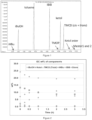
- Example 1 A 100 mL titanium autoclave was charged with 20.0 g (269.2 mmol) of iBuOH, 10.7 g (76.3 mmol) of dione and 0.09 g (0.077 mmol) of Shvo catalyst. The autoclave was pressurized with about 7 bar (100 psig) of N 2 and then vented two times. Then it was pressurized with 14 bar (200 psig) of N 2 again and the closed autoclave was heated to 150 °C and kept at reaction temperature for 3 h. It was then cooled to room temperature and depressurized. The liquid product was analyzed by GC/MS chromatography ( Figure 1 ).
Landscapes
- Chemical & Material Sciences (AREA)
- Organic Chemistry (AREA)
- Chemical Kinetics & Catalysis (AREA)
- Engineering & Computer Science (AREA)
- Inorganic Chemistry (AREA)
- Materials Engineering (AREA)
- Oil, Petroleum & Natural Gas (AREA)
- Organic Low-Molecular-Weight Compounds And Preparation Thereof (AREA)
Claims (15)
- Ein Verfahren zum Herstellen von 2,2,4,4-Tetramethylcyclobutan-1,3-diol aufweisend:(1) Kontaktieren von 2,2,4,4,-Tetramethylcyclobutadion mit Isobutanol in Gegenwart eines Tandem-Transferhydrierungs- und Tischenko-Reaktionskatalysator zum Herstellen von Isobutylisobutyrat und 2,2,4,4-Tetramethylcyclobutan-1,3-diol und 3-Hydroxy-2,2,4,4-tetramethylcyclobutanon;(2) Optional Hydrieren von jeglichem unreagiertem 2,2,4,4-Tetramethylcyclobutadion und 3-Hydroxy-2,2,4,4-tetramethylcyclobutanone zum Herstellen von 2,2,4,4-Tetramethylcyclobutan-1,3-diol(3) Hydrolysieren des Isobutylisobutyrates optional in Gegenwart eines Säurekatalysators zum Herstellen von Isobuttersäure und Isobutanol, und wobei optional das Isobutanol optional zu Schritt (1) recycliert wird;(4) Umsetzen der Isobuttersäure zu 2,2,4,4-Tetramethylcyclobutandion wobei das 2,2,4,4-Tetramethylcyclobutadion optional zu Schritt (1) recycliert wird.
- Verfahren nach Anspruch 1, wobei der Tandem-Transferhydrierungs- und Tischenko-Reaktionskatalysator verwendet in Schritt (1), ein Ruthenium Tandem-Transferhydrierungs- und Tischenko-Reaktionskatalysator ist, aufweisend einen oder mehreren von H2Ru(PPh3)4, Ru3(CO)12, (Ar4C4CO)Ru(CO)3 und (Ar4C4CO)2H(µ-H)(CO)4Ru2, wobei (Ar4C4CO)Ru(CO)3 dargestellt ist durch die allgemeine Struktur:
 und Ar dargestellt ist durch die allgemeine Struktur:
 und die R-Gruppen gleich oder verschieden sind und ausgewählt sind aus H, Methyl, Ethyl, oder einer linearen oder verzweigten Alkylgruppe umfassend von 3 bis 10 Kohlenstoffatomen, substituierten oder unsubstituierten aromatischen Gruppen, einer Carbonyl-umfassenden Gruppe wie Aldehyde, Ketone oder Ester mit 2 - 10 Kohlenstoffatomen, Trifluormethyl oder fluorierten Kohlenwasserstoffgruppen wie Perfluorbutyl oder Pentafluorphenyl; und wobei (Ar4C4CO)2H(µ-H)(CO)4Ru2 dargestellt ist durch die allgemeine Struktur:
 und Ar dargestellt ist durch die allgemeine Struktur:
 und die R-Gruppen gleich oder verschieden sind und ausgewählt sind aus H, Methyl, Ethyl, oder einer linearen oder verzweigten Alkylgruppe umfassend von 3 bis 10 Kohlenstoffatomen, substituierten oder unsubstituierten aromatischen Gruppen, einer Carbonyl-umfassenden Gruppe wie Aldehyde, Ketone oder Ester mit 2 - 10 Kohlenstoffatomen, Trifluormethyl oder fluorierten Kohlenwasserstoffgruppen wie Perfluorbutyl oder Pentafluorphenyl.
 - Verfahren nach Anspruch 1 oder 2, wobei in Schritt (1) der Ruthenium Tandem-Transferhydrierungs- und Tischenko-Reaktionskatalysator ausgewählt ist aus ((Ph4C4CO)2H(µ-H)(CO)4Ru2), (Ph4C4CO)2H(µ-H)(CO)4Ru2, [(4-ClC6H4)4C4CO]2H(µ-H)(CO)4Ru2, [2,5-(C6H5)2-3,4-(4-MeOC6H4)2C4CO]2H(µ-H)(CO)4Ru2, oder [2,5-(C6H5)2-3,4-(4-FC6H4)2C4CO]2H(µ-H)(CO)4Ru2.
- Verfahren nach irgendeinem der Ansprüche 1 - 3, wobei der Transferhydrierungskatalysator ((Ph4C4CO)2H(µ-H)(CO)4Ru2) ist.
- Verfahren nach irgendeinem der Ansprüche 1 - 4, wobei der Umsatz an 2,2,4,4-Tetramethylcyclobutadion mindestens 50% ist; oder
wobei der Umsatz an 2,2,4,4-Tetramethylcyclobutadion mindestens 70% ist; oder wobei der Umsatz an 2,2,4,4-Tetramethylcyclobutadion mindestens 90% ist. - Verfahren nach irgendeinem der Ansprüche 1 - 5, wobei die Selektivität zu 2,2,4,4-Tetramethylcyclobutan-1,3-diol mindestens 30% ist; oder
wobei die Selektivität zu 2,2,4,4-Tetramethylcyclobutan-1,3-diol mindestens 60% ist. - Verfahren nach irgendeinem der Ansprüche 1 - 6, wobei die Verfahrenstemperatur von etwa 50°C bis etwa 300°C reicht; oder
wobei die Verfahrenstemperatur von etwa 50°C bis etwa 200°C reicht. - Verfahren nach irgendeinem der Ansprüche 1 - 7, wobei das Verfahren unter mindestens 14 bar (200psig) Stickstoffdruck ist.
- Verfahren nach irgendeinem der Ansprüche 1 - 8, wobei die Verfahrenszeit von 5 Minuten bis 5 Stunden ist.
- Verfahren nach irgendeinem der Ansprüche 1 - 9, wobei die Katalysatorkonzentration von etwa 0,001 Molprozent bis 10 Molprozent ist, basierend auf der Konzentration des 2,2,4,4-Tetramethylcyclobutadions.
- Verfahren nach irgendeinem der Ansprüche 1 - 10, wobei die Konzentration von Isobutanol zu 2,2,4,4-Tetramethylcyclobutadion von einem Molverhältnis von 1:1 bis 50:1 ist.
- Verfahren nach irgendeinem der Ansprüche 1 - 10, wobei die Konzentration von Isobutanol zu 2,2,4,4-Tetramethylcyclobutadion von einem Molverhältnis von 1:1 bis 20:1 ist.
- Verfahren nach irgendeinem der Ansprüche 1 - 10, wobei die Konzentration von Isobutanol zu 2,2,4,4-Tetramethylcyclobutadion von einem Molverhältnis von 1:1 bis 10:1 ist; oder
wobei die Konzentration des Isobutanols zu 2,2,4,4-Tetramethylcyclobutadion von einem Molverhältnis von 1:1 bis 5:1 ist. - Das Verfahren nach Anspruch 1 zum Herstellen von 2,2,4,4-Tetramethylcyclobutan-1,3-diol mit einem Biogehalt aufweisend:(1) Kontaktieren von 2,2,4,4,-Tetramethylcyclobutadion mit Isobutanol aufweisend Bio-Isobutanol in Gegenwart eines Tandem-Transferhydrierungs- und Tischenko-Reaktionskatalysator zum Herstellen von Bio-Isobutylisobutyrat und Bio-2,2,4,4-Tetramethylcyclobutan-1,3-diol und Bio-3-Hydroxy-2,2,4,4-tetramethylcyclobutanon;(2) Optional Hydrieren von jeglichem unreagiertem Bio-2,2,4,4-Tetramethylcyclobutadion und Bio-3-Hydroxy-2,2,4,4-tetramethylcyclobutanone zum Herstellen von Bio-2,2,4,4-Tetramethylcyclobutan-1,3-diol(3) Hydrolysieren des Bio-Isobutylisobutyrates optional in Gegenwart eines Säurekatalysators zum Herstellen von Bio-Isobuttersäure und Bio-Isobutanol, und wobei optional das Bio-Isobutanol optional zu Schritt (1) recycliert wird;(4) Umsetzen der Bio-Isobuttersäure zu Bio-2,2,4,4-Tetramethylcyclobutandion wobei das Bio-2,2,4,4-Tetramethylcyclobutadion optional zu Schritt (1) recycliert wird.
- Verfahren nach Anspruch 14, wobei das Isobutanol mindestens 25% Bio-Isobutanol; oder mindestens 50% Bio-Isobutanol; oder mindestens 75% Bio-Isobutanol aufweist.
Applications Claiming Priority (2)
| Application Number | Priority Date | Filing Date | Title |
|---|---|---|---|
| US202063199051P | 2020-12-04 | 2020-12-04 | |
| PCT/US2021/061083 WO2022119792A1 (en) | 2020-12-04 | 2021-11-30 | Production of 2,2,4,4-tetramethylcyclobutane-1, 3-diol from isobutanol using a homogeneous catalyst |
Publications (2)
| Publication Number | Publication Date |
|---|---|
| EP4255873A1 EP4255873A1 (de) | 2023-10-11 |
| EP4255873B1 true EP4255873B1 (de) | 2024-12-18 |
Family
ID=79164720
Family Applications (1)
| Application Number | Title | Priority Date | Filing Date |
|---|---|---|---|
| EP21835026.2A Active EP4255873B1 (de) | 2020-12-04 | 2021-11-30 | Herstellung von 2,2,4,4-tetramethylcyclobutan-1,3-diol aus isobutanol unter verwendung eines homogenen katalysators |
Country Status (4)
| Country | Link |
|---|---|
| US (1) | US12577184B2 (de) |
| EP (1) | EP4255873B1 (de) |
| CN (1) | CN116507599A (de) |
| WO (1) | WO2022119792A1 (de) |
Family Cites Families (22)
| Publication number | Priority date | Publication date | Assignee | Title |
|---|---|---|---|---|
| US7560600B2 (en) | 2006-12-02 | 2009-07-14 | Eastman Chemical Company | Process for the preparation of a tetraalkylcyclobutane-1,3-diol using a promoted nickel-based catalyst |
| FR2963619B1 (fr) * | 2010-08-04 | 2013-03-29 | Rhodia Operations | Procede de transfert d'hydrure pour la preparation de cetone |
| US8420868B2 (en) * | 2010-12-09 | 2013-04-16 | Eastman Chemical Company | Process for the preparation of 2,2,4,4-tetraalkylcyclobutane-1,3-diols |
| US9120732B2 (en) | 2010-12-31 | 2015-09-01 | California Institute Of Technology | Catalytic anti-markovnikov oxidation and hydration of olefins |
| CN103694083A (zh) | 2013-12-05 | 2014-04-02 | 南京东纳生物科技有限公司 | 2,2,4,4-四甲基-1,3-环丁二醇的合成方法 |
| US9238603B1 (en) | 2014-12-10 | 2016-01-19 | Eastman Chemical Company | Batch process for the preparation of cis-2,2,4,4-tetramethylcyclobutane-1,3-diol |
| CN105732329B (zh) | 2014-12-10 | 2018-10-16 | 中国石油天然气股份有限公司 | 一种2,2,4,4-四甲基-1,3-环丁二醇的合成方法 |
| US9238602B1 (en) | 2014-12-10 | 2016-01-19 | Eastman Chemical Company | Process for the preparation of cis-2,2,4,4-tetramethylcyclobutane-1,3-diol |
| CN107398273B (zh) * | 2016-05-19 | 2019-12-24 | 财团法人工业技术研究院 | 氢化环丁烷二酮化合物的触媒与方法 |
| US9988329B1 (en) | 2017-02-08 | 2018-06-05 | Eastman Chemical Company | Transfer-hydrogenation process |
| CN110170280B (zh) | 2019-05-14 | 2022-09-02 | 浙江恒逸石化研究院有限公司 | 高温裂解反应器和高温裂解反应系统以及烯酮类化合物的制备方法 |
| CN110105186B (zh) | 2019-05-14 | 2022-04-01 | 浙江恒澜科技有限公司 | 一种制备烯酮类化合物的方法 |
| CN110124674A (zh) | 2019-06-03 | 2019-08-16 | 浙江恒澜科技有限公司 | 催化剂及其制备方法以及制备2,2,4,4-四甲基-1,3-环丁二醇的装置和方法 |
| CN111423307A (zh) * | 2020-05-19 | 2020-07-17 | 上海卫希医药科技有限公司 | 一种2,2,4,4-四甲基环丁二酮还原方法 |
| CN111875487A (zh) | 2020-07-15 | 2020-11-03 | 浙江恒澜科技有限公司 | 一种四甲基环丁二酮的制备方法 |
| CN111905755B (zh) | 2020-07-16 | 2022-07-05 | 浙江恒逸石化研究院有限公司 | 一种用于2,2,4,4-四甲基-1,3-环丁二酮加氢的催化剂及其制备方法、应用 |
| CN112023919B (zh) | 2020-07-30 | 2022-07-08 | 浙江恒逸石化研究院有限公司 | 用于制备高顺反比2,2,4,4-四甲基-1,3-环丁二醇的催化剂、装置及方法 |
| CN112023939B (zh) | 2020-07-30 | 2022-07-08 | 浙江恒逸石化研究院有限公司 | 用于制备2,2,4,4-四甲基-1,3-环丁二醇的磁性核壳型加氢催化剂及方法 |
| CN112047834A (zh) | 2020-08-11 | 2020-12-08 | 浙江恒澜科技有限公司 | 一种连续制备异丁酸酐的装置及方法 |
| CN112174797B (zh) | 2020-08-18 | 2022-12-16 | 浙江恒逸石化研究院有限公司 | 一种二甲基乙烯酮的高效分离方法 |
| CN112047813B (zh) | 2020-08-18 | 2022-12-16 | 浙江恒逸石化研究院有限公司 | 一种2,2,4,4-四甲基-1,3-环丁二醇的生产方法 |
| CN112079700B (zh) | 2020-08-31 | 2023-03-21 | 浙江恒逸石化研究院有限公司 | 一种以异丁酸酐为原料制备二甲基乙烯酮快速分离产物的方法 |
-
2021
- 2021-11-30 CN CN202180081447.4A patent/CN116507599A/zh active Pending
- 2021-11-30 US US18/250,587 patent/US12577184B2/en active Active
- 2021-11-30 EP EP21835026.2A patent/EP4255873B1/de active Active
- 2021-11-30 WO PCT/US2021/061083 patent/WO2022119792A1/en not_active Ceased
Also Published As
| Publication number | Publication date |
|---|---|
| US12577184B2 (en) | 2026-03-17 |
| WO2022119792A1 (en) | 2022-06-09 |
| CN116507599A (zh) | 2023-07-28 |
| EP4255873A1 (de) | 2023-10-11 |
| US20230399278A1 (en) | 2023-12-14 |
Similar Documents
| Publication | Publication Date | Title |
|---|---|---|
| US9493395B2 (en) | Production of two esters using homogeneous catalyst | |
| US7582804B2 (en) | Process for the preparation of a tetraalkycyclobutane-1,3-diol using a promoted-copper catalyst | |
| US8420868B2 (en) | Process for the preparation of 2,2,4,4-tetraalkylcyclobutane-1,3-diols | |
| US7560600B2 (en) | Process for the preparation of a tetraalkylcyclobutane-1,3-diol using a promoted nickel-based catalyst | |
| US7838707B2 (en) | Process for the preparation of a tetraalkylcyclobutane-1,3-diol using an ruthenium-promoted cobalt-based catalyst | |
| US4221918A (en) | Preparation of diesters | |
| FR2496643A1 (fr) | Procede et catalyseur de carbonylation en phase liquide pour produire un acide carboxylique a partir d'un alcool | |
| US9388105B2 (en) | Production of hydroxy ether hydrocarbons by liquid phase hydrogenolysis of cyclic acetals or cyclic ketals | |
| US7521583B2 (en) | Process for the preparation of tetraalkylcyclobutane-1,3-diol in the presence of a cobalt-based catalyst | |
| US7524994B2 (en) | Process for the preparation of a tetraalkylcyclobutane-1,3-diol using an iridium-promoted cobalt-based catalyst | |
| US4405821A (en) | Process for preparing glycolaldehyde and/or ethylene glycol | |
| EP4255873B1 (de) | Herstellung von 2,2,4,4-tetramethylcyclobutan-1,3-diol aus isobutanol unter verwendung eines homogenen katalysators | |
| US3963754A (en) | 2-Vinyl-5-methyl-1,3-dioxane | |
| WO1994012457A1 (en) | Process for preparing tertiary alkynols | |
| JP3482371B2 (ja) | エポキシド誘導体のカルボニル化方法 | |
| US6521801B2 (en) | Process for preparing 1,3-alkanediol from epoxide derivative | |
| EP1122235B1 (de) | Verfahren zur Herstellung von 1,3-Alkandiol aus einem Epoxidderivat | |
| EP4255881B1 (de) | Herstellung von 2,2,4,4-tetramethylcyclobutan-1,3-diol aus sekundären alkoholen und 2,2,4,4-tetramethylcyclobutandion unter verwendung homogener katalysatoren | |
| US4663488A (en) | Oppenauer oxidation of geraniol/nerol | |
| JP2675156B2 (ja) | 1,1,2―トリアルコキシエタンの製造法 | |
| EP3468943B1 (de) | Verfahren zur herstellung von alkoholen aus alpha, beta-ungesättigten ketonen und aldehyden | |
| JPH03391B2 (de) | ||
| JP2003183225A (ja) | エポキシドから3−ヒドロキシエステルを製造する方法 | |
| JPH06305998A (ja) | 1,4−ブタンジオールの製造方法 | |
| KR20030032844A (ko) | 에폭사이드 유도체로부터 3-하이드록시에스테르를제조하는 방법 |
Legal Events
| Date | Code | Title | Description |
|---|---|---|---|
| STAA | Information on the status of an ep patent application or granted ep patent |
Free format text: STATUS: UNKNOWN |
|
| STAA | Information on the status of an ep patent application or granted ep patent |
Free format text: STATUS: THE INTERNATIONAL PUBLICATION HAS BEEN MADE |
|
| PUAI | Public reference made under article 153(3) epc to a published international application that has entered the european phase |
Free format text: ORIGINAL CODE: 0009012 |
|
| STAA | Information on the status of an ep patent application or granted ep patent |
Free format text: STATUS: REQUEST FOR EXAMINATION WAS MADE |
|
| 17P | Request for examination filed |
Effective date: 20230418 |
|
| AK | Designated contracting states |
Kind code of ref document: A1 Designated state(s): AL AT BE BG CH CY CZ DE DK EE ES FI FR GB GR HR HU IE IS IT LI LT LU LV MC MK MT NL NO PL PT RO RS SE SI SK SM TR |
|
| DAV | Request for validation of the european patent (deleted) | ||
| DAX | Request for extension of the european patent (deleted) | ||
| GRAP | Despatch of communication of intention to grant a patent |
Free format text: ORIGINAL CODE: EPIDOSNIGR1 |
|
| STAA | Information on the status of an ep patent application or granted ep patent |
Free format text: STATUS: GRANT OF PATENT IS INTENDED |
|
| INTG | Intention to grant announced |
Effective date: 20240712 |
|
| GRAS | Grant fee paid |
Free format text: ORIGINAL CODE: EPIDOSNIGR3 |
|
| GRAA | (expected) grant |
Free format text: ORIGINAL CODE: 0009210 |
|
| STAA | Information on the status of an ep patent application or granted ep patent |
Free format text: STATUS: THE PATENT HAS BEEN GRANTED |
|
| P01 | Opt-out of the competence of the unified patent court (upc) registered |
Free format text: CASE NUMBER: APP_55915/2024 Effective date: 20241011 |
|
| AK | Designated contracting states |
Kind code of ref document: B1 Designated state(s): AL AT BE BG CH CY CZ DE DK EE ES FI FR GB GR HR HU IE IS IT LI LT LU LV MC MK MT NL NO PL PT RO RS SE SI SK SM TR |
|
| REG | Reference to a national code |
Ref country code: CH Ref legal event code: EP |
|
| REG | Reference to a national code |
Ref country code: DE Ref legal event code: R096 Ref document number: 602021023686 Country of ref document: DE |
|
| REG | Reference to a national code |
Ref country code: IE Ref legal event code: FG4D |
|
| REG | Reference to a national code |
Ref country code: LT Ref legal event code: MG9D |
|
| PG25 | Lapsed in a contracting state [announced via postgrant information from national office to epo] |
Ref country code: HR Free format text: LAPSE BECAUSE OF FAILURE TO SUBMIT A TRANSLATION OF THE DESCRIPTION OR TO PAY THE FEE WITHIN THE PRESCRIBED TIME-LIMIT Effective date: 20241218 |
|
| PG25 | Lapsed in a contracting state [announced via postgrant information from national office to epo] |
Ref country code: FI Free format text: LAPSE BECAUSE OF FAILURE TO SUBMIT A TRANSLATION OF THE DESCRIPTION OR TO PAY THE FEE WITHIN THE PRESCRIBED TIME-LIMIT Effective date: 20241218 |
|
| PG25 | Lapsed in a contracting state [announced via postgrant information from national office to epo] |
Ref country code: BG Free format text: LAPSE BECAUSE OF FAILURE TO SUBMIT A TRANSLATION OF THE DESCRIPTION OR TO PAY THE FEE WITHIN THE PRESCRIBED TIME-LIMIT Effective date: 20241218 |
|
| PG25 | Lapsed in a contracting state [announced via postgrant information from national office to epo] |
Ref country code: NO Free format text: LAPSE BECAUSE OF FAILURE TO SUBMIT A TRANSLATION OF THE DESCRIPTION OR TO PAY THE FEE WITHIN THE PRESCRIBED TIME-LIMIT Effective date: 20250318 |
|
| REG | Reference to a national code |
Ref country code: NL Ref legal event code: MP Effective date: 20241218 |
|
| PG25 | Lapsed in a contracting state [announced via postgrant information from national office to epo] |
Ref country code: LV Free format text: LAPSE BECAUSE OF FAILURE TO SUBMIT A TRANSLATION OF THE DESCRIPTION OR TO PAY THE FEE WITHIN THE PRESCRIBED TIME-LIMIT Effective date: 20241218 Ref country code: GR Free format text: LAPSE BECAUSE OF FAILURE TO SUBMIT A TRANSLATION OF THE DESCRIPTION OR TO PAY THE FEE WITHIN THE PRESCRIBED TIME-LIMIT Effective date: 20250319 |
|
| PG25 | Lapsed in a contracting state [announced via postgrant information from national office to epo] |
Ref country code: RS Free format text: LAPSE BECAUSE OF FAILURE TO SUBMIT A TRANSLATION OF THE DESCRIPTION OR TO PAY THE FEE WITHIN THE PRESCRIBED TIME-LIMIT Effective date: 20250318 |
|
| PG25 | Lapsed in a contracting state [announced via postgrant information from national office to epo] |
Ref country code: NL Free format text: LAPSE BECAUSE OF FAILURE TO SUBMIT A TRANSLATION OF THE DESCRIPTION OR TO PAY THE FEE WITHIN THE PRESCRIBED TIME-LIMIT Effective date: 20241218 |
|
| REG | Reference to a national code |
Ref country code: AT Ref legal event code: MK05 Ref document number: 1752163 Country of ref document: AT Kind code of ref document: T Effective date: 20241218 |
|
| PG25 | Lapsed in a contracting state [announced via postgrant information from national office to epo] |
Ref country code: SM Free format text: LAPSE BECAUSE OF FAILURE TO SUBMIT A TRANSLATION OF THE DESCRIPTION OR TO PAY THE FEE WITHIN THE PRESCRIBED TIME-LIMIT Effective date: 20241218 |
|
| PG25 | Lapsed in a contracting state [announced via postgrant information from national office to epo] |
Ref country code: PL Free format text: LAPSE BECAUSE OF FAILURE TO SUBMIT A TRANSLATION OF THE DESCRIPTION OR TO PAY THE FEE WITHIN THE PRESCRIBED TIME-LIMIT Effective date: 20241218 |
|
| PG25 | Lapsed in a contracting state [announced via postgrant information from national office to epo] |
Ref country code: ES Free format text: LAPSE BECAUSE OF FAILURE TO SUBMIT A TRANSLATION OF THE DESCRIPTION OR TO PAY THE FEE WITHIN THE PRESCRIBED TIME-LIMIT Effective date: 20241218 |
|
| PG25 | Lapsed in a contracting state [announced via postgrant information from national office to epo] |
Ref country code: IS Free format text: LAPSE BECAUSE OF FAILURE TO SUBMIT A TRANSLATION OF THE DESCRIPTION OR TO PAY THE FEE WITHIN THE PRESCRIBED TIME-LIMIT Effective date: 20250418 |
|
| PG25 | Lapsed in a contracting state [announced via postgrant information from national office to epo] |
Ref country code: PT Free format text: LAPSE BECAUSE OF FAILURE TO SUBMIT A TRANSLATION OF THE DESCRIPTION OR TO PAY THE FEE WITHIN THE PRESCRIBED TIME-LIMIT Effective date: 20250421 |
|
| PG25 | Lapsed in a contracting state [announced via postgrant information from national office to epo] |
Ref country code: EE Free format text: LAPSE BECAUSE OF FAILURE TO SUBMIT A TRANSLATION OF THE DESCRIPTION OR TO PAY THE FEE WITHIN THE PRESCRIBED TIME-LIMIT Effective date: 20241218 |
|
| PG25 | Lapsed in a contracting state [announced via postgrant information from national office to epo] |
Ref country code: RO Free format text: LAPSE BECAUSE OF FAILURE TO SUBMIT A TRANSLATION OF THE DESCRIPTION OR TO PAY THE FEE WITHIN THE PRESCRIBED TIME-LIMIT Effective date: 20241218 Ref country code: AT Free format text: LAPSE BECAUSE OF FAILURE TO SUBMIT A TRANSLATION OF THE DESCRIPTION OR TO PAY THE FEE WITHIN THE PRESCRIBED TIME-LIMIT Effective date: 20241218 |
|
| PG25 | Lapsed in a contracting state [announced via postgrant information from national office to epo] |
Ref country code: SK Free format text: LAPSE BECAUSE OF FAILURE TO SUBMIT A TRANSLATION OF THE DESCRIPTION OR TO PAY THE FEE WITHIN THE PRESCRIBED TIME-LIMIT Effective date: 20241218 |
|
| PG25 | Lapsed in a contracting state [announced via postgrant information from national office to epo] |
Ref country code: CZ Free format text: LAPSE BECAUSE OF FAILURE TO SUBMIT A TRANSLATION OF THE DESCRIPTION OR TO PAY THE FEE WITHIN THE PRESCRIBED TIME-LIMIT Effective date: 20241218 |
|
| PG25 | Lapsed in a contracting state [announced via postgrant information from national office to epo] |
Ref country code: IT Free format text: LAPSE BECAUSE OF FAILURE TO SUBMIT A TRANSLATION OF THE DESCRIPTION OR TO PAY THE FEE WITHIN THE PRESCRIBED TIME-LIMIT Effective date: 20241218 |
|
| PG25 | Lapsed in a contracting state [announced via postgrant information from national office to epo] |
Ref country code: SE Free format text: LAPSE BECAUSE OF FAILURE TO SUBMIT A TRANSLATION OF THE DESCRIPTION OR TO PAY THE FEE WITHIN THE PRESCRIBED TIME-LIMIT Effective date: 20241218 |
|
| REG | Reference to a national code |
Ref country code: DE Ref legal event code: R097 Ref document number: 602021023686 Country of ref document: DE |
|
| PG25 | Lapsed in a contracting state [announced via postgrant information from national office to epo] |
Ref country code: DK Free format text: LAPSE BECAUSE OF FAILURE TO SUBMIT A TRANSLATION OF THE DESCRIPTION OR TO PAY THE FEE WITHIN THE PRESCRIBED TIME-LIMIT Effective date: 20241218 |
|
| PLBE | No opposition filed within time limit |
Free format text: ORIGINAL CODE: 0009261 |
|
| STAA | Information on the status of an ep patent application or granted ep patent |
Free format text: STATUS: NO OPPOSITION FILED WITHIN TIME LIMIT |
|
| 26N | No opposition filed |
Effective date: 20250919 |
|
| PGFP | Annual fee paid to national office [announced via postgrant information from national office to epo] |
Ref country code: DE Payment date: 20251118 Year of fee payment: 5 |
|
| PGFP | Annual fee paid to national office [announced via postgrant information from national office to epo] |
Ref country code: FR Payment date: 20251125 Year of fee payment: 5 |