EP4255545B1 - Packaged catheter assembly - Google Patents
Packaged catheter assembly Download PDFInfo
- Publication number
- EP4255545B1 EP4255545B1 EP21827207.8A EP21827207A EP4255545B1 EP 4255545 B1 EP4255545 B1 EP 4255545B1 EP 21827207 A EP21827207 A EP 21827207A EP 4255545 B1 EP4255545 B1 EP 4255545B1
- Authority
- EP
- European Patent Office
- Prior art keywords
- catheter
- pouch
- fluid
- assembly
- channel
- Prior art date
- Legal status (The legal status is an assumption and is not a legal conclusion. Google has not performed a legal analysis and makes no representation as to the accuracy of the status listed.)
- Active
Links
Images





Classifications
-
- A—HUMAN NECESSITIES
- A61—MEDICAL OR VETERINARY SCIENCE; HYGIENE
- A61M—DEVICES FOR INTRODUCING MEDIA INTO, OR ONTO, THE BODY; DEVICES FOR TRANSDUCING BODY MEDIA OR FOR TAKING MEDIA FROM THE BODY; DEVICES FOR PRODUCING OR ENDING SLEEP OR STUPOR
- A61M25/00—Catheters; Hollow probes
- A61M25/002—Packages specially adapted therefor ; catheter kit packages
-
- A—HUMAN NECESSITIES
- A61—MEDICAL OR VETERINARY SCIENCE; HYGIENE
- A61M—DEVICES FOR INTRODUCING MEDIA INTO, OR ONTO, THE BODY; DEVICES FOR TRANSDUCING BODY MEDIA OR FOR TAKING MEDIA FROM THE BODY; DEVICES FOR PRODUCING OR ENDING SLEEP OR STUPOR
- A61M25/00—Catheters; Hollow probes
- A61M25/01—Introducing, guiding, advancing, emplacing or holding catheters
- A61M25/0105—Steering means as part of the catheter or advancing means; Markers for positioning
- A61M25/0111—Aseptic insertion devices
Definitions
- the present invention relates to packaged catheter assemblies.
- packaged catheter assemblies In particular to packaged urinary catheter assemblies, and most particularly to packaged intermittent male urinary catheter assemblies.
- Intermittent catheter assemblies can provide a convenient and portable solution to this problem as a user is able to self-catheterise to relieve themselves as required. This reduces the effect of their urinary condition on their life and allows them to enjoy a relatively normal lifestyle.
- Intermittent catheters are typically single-use devices that are carried by the user then unpackaged and used as required. To reduce the risk of damage to the urinary tract and improve comfort while using the catheter, it is important they are lubricated before use. However, lubricating a catheter in a public place, for example a public bathroom, can be difficult and inconvenient. This increases the risk that he catheter is not suitably lubricated prior to use which can result in discomfort and injury.
- Male intermittent catheters are generally several centimetres longer than female catheters, typically at least 20cm long, with ISO 20696:2018 setting a minimal effective length of 275mm. This can make them difficult to carry in a discreet manner. The additional length can also make them more difficult to adequately lubricate and use.
- US10226594B1 discloses a sterile closed intermittent urinary catheter system which has a shape designed to facilitate easier advancement and retrieval of the catheter from the collection bag.
- a hole through the bag is arranged adjacent to one edge of the bag to create a narrow channel through which the catheter extends. The user may thereby grasp the catheter from outside the bag to urge it forwards or backward and alternately extend or retract it from the bag.
- the channel may have a flexible gripper to facilitate catheter advancement.
- a packaged catheter assembly according to claim 1.
- the present invention provides for a packaged catheter that can be easily removed from its packaging and simultaneously lubricated ready for use.
- the join provides the advantage that as the catheter is removed, it is drawn through the channel, in which the fluid is provided.
- the fluid is typically an activating liquid, such as water, which activates a hydrophilic coating to render it slippery, or may be a lubricant. Either way, drawing the catheter through the channel (in which it is preferably provided) ensures the catheter is properly lubricated.
- the channel of fluid increases the coating of fluid to the surface of the catheter as the fluid is held in a pool through which the catheter is forced to travel, rather than being potentially pulled out of the package without adequately wetting it.
- the distal end, by which the catheter can be pulled out should not pass through the pool of fluid, rendering it easy to handle.
- the deliberate formation of a pool at the bottom means that fluid may be held within the package at all times, which makes the device more convenient to use and reduces the chance of spillages, as may occur where for example a reservoir of fluid is intended to be opened into the pouch, then the pouch shaken to distribute the fluid.
- the pouch can also be reduced in size due to the curve of the catheter when inside the pouch.
- the use of the join creating a channel also facilitates using less fluid as it is applied in a targeted manner to the part of the catheter that needs to be wetted, not distributed over the entire catheter.
- the invention also provides the advantage that the proximal end is the last part of the catheter to be wetted and therefore is least likely to dry up before it is introduced into the urethra.
- the volume of the channel is controlled by the position of the join permitting the use of flexible and soft pouch walls which are more user-friendly when carrying/using the pouch.
- the packaged catheter assembly may comprise a fluid reservoir.
- the method may comprise providing a fluid reservoir.
- the fluid reservoir may be configured to release fluid into the pouch to form a pool of fluid in the channel.
- the volume of the fluid reservoir is preferably sufficient to completely fill the channel, i.e. with the pouch held with its base lowermost, the fluid may extend to at least the level of the bottom of the join, so that the fill level of the channel is 100% or more, for example at least 150%, at least 200% or even at least 300%.
- the fill level of the channel may be: at least 70%, at least 80%, at least 90%; or at least 95% the volume of the channel.
- the present invention provides for an assembly with a reservoir that is able to deliver fluid into the channel.
- the size of the reservoir is selected to ensure sufficient fluid is delivered and the catheter can be adequately lubricated on removal.
- the fluid reservoir may be arranged within the (sealed) pouch.
- the fluid reservoir may be provided as a separate device, or incorporated into the pouch material.
- the method may comprise arranging the fluid reservoir within the pouch and sealing the fluid reservoir within the pouch with the catheter.
- the fluid reservoir may comprise a deformable, frangible or burstable sachet.
- a deformable, frangible or burstable reservoir enhances the convenience for a user as fluid can be easily released without additional tools and before the pouch is unsealed, thus reducing the chances of accidental wetting of the user.
- a sachet in particular can be easily handled on an assembly line and introduced more simply than attempting to handle fluid, so as to it into the package during manufacture.
- the catheter may be a urinary catheter.
- the catheter may be a male urinary catheter.
- the catheter may be an intermittent catheter.
- the catheter is an intermittent male urinary catheter.
- the catheter is arranged between the join and the internal base of the peripheral seal.
- the method comprises arranging the catheter between the join and the internal base of the peripheral seal.
- the join is separate from the base of the peripheral seal.
- the channel may be an open-ended channel.
- the catheter is held within the pouch in the open-ended channel formed by the join and the internal base of the peripheral seal. As such, when withdrawn, the catheter is drawn through the channel and is adequately lubricated.
- the join and the peripheral seal may be independent.
- the join may be provided in a spot.
- the join is preferably provided by a weld, e.g. a spot weld.
- a weld may be provided after the catheter (and optionally the sachet) have been arranged between the walls, and can be achieved from outside of the pouch.
- the join may be provided by any of a: mechanical seal; heat seal; pressure seal; adhesive; solvent bond; ultraviolet bond; ultrasonic weld; laser weld; impulse weld; or friction weld.
- the peripheral seal be provided by any one or more of a weld; mechanical seal; heat seal; pressure seal; adhesive; solvent bond; ultraviolet bond; ultrasonic weld; laser weld; impulse weld; or friction weld.
- At least part of the peripheral seal may be formed by a fold.
- a single sheet may be folded, for example at the base or one of two sides, to form two opposing walls of the pouch.
- the join can be provided in a single location allowing the peripheral seal and join to be formed separately.
- the weld forming the join may be provided at the same time as the peripheral seal.
- the join and peripheral seal are a single continuous seal. The manufacturing process of the join can thus be very convenient and avoid major modification of a typical packaged catheter assembly production line.
- the catheter may comprise a surface which is activated by the fluid in the channel.
- the catheter may comprise a hydrophilic surface, formed for example by a hydrophilic coating.
- the fluid may be polar or water-based.
- the catheter may comprise a hydrophobic surface, which is activated by the fluid in the channel.
- the catheter may comprise a hydrophobic coating.
- the fluid may be non-polar.
- the pouch may comprise an interaction region defining a first point of contact for a user of the packaged catheter assembly.
- the interaction region may facilitate user access to the contents of the pouch. Actuation of the interaction region may create an opening in or near an upper edge of the peripheral seal. The catheter may be withdrawn through the opening.
- access to the pouch is provided at or near an upper edge of the pouch and as such, the fluid in the channel (at the bottom of the pouch) is retained in the pouch while the catheter is withdrawn reducing the risk of spilling fluid outside the pouch.
- the interaction region may comprise a breakable region of the peripheral seal.
- the method may comprise forming a breakable region in the peripheral seal.
- the breakable region may comprise a tear-away region which may comprise a tear line defining a line along which the pouch may be torn to at least partially separate the tear-away region from the remainder of the pouch, thereby creating an opening in the peripheral seal.
- the tear-away region may comprise a tear start.
- the tear start may be provided at a first end of the tear away region.
- the tear start may comprise a notch, or area of weakness, in one or both of the walls of the pouch.
- the tear start may define the first part of the pouch to be torn.
- the tear-away region may comprise a tear stop.
- the tear stop may be provided at a second end of the tear-away region.
- the tear stop may act to prevent or reduce the likelihood of the tear-away region being completely separated from the remainder of the packaging.
- a tear line may be defined between the tear start and the tear stop.
- the tear line may be configured to preferentially tear.
- the tear line may comprise a weakened region of the pouch.
- the tear line may be formed by any suitable means, such as laser scoring.
- the tear-away region may be substantially triangular in shape having a sloped upper edge. Thus the breakable region provides a convenient and easy means to open the pouch with minimal effort and no additional equipment/tools.
- the interaction region may comprise a sealing arrangement.
- the sealing arrangement may comprise one or more sealing members operable to provide a user-sealable seal between the two walls of the pouch, so as to close the pouch.
- first and second sealing members are provided on an interior surface of the two walls of the pouch.
- the sealing arrangement may provide a watertight and/or fluid impermeable seal when closed.
- the sealing arrangement may come pre-sealed. In such embodiments, user access to the contents of the pouch may be provided by opening the sealing arrangement.
- the sealing arrangement may be resealable.
- the sealing arrangement may be any of: a zip-lock seal; hook and loop seal; hook and hook seal; or adhesive layer. Therefore, the sealing arrangement can be used to ensure the contents of the pouch remain inside until the sealing arrangement is opened, and the pouch can still be resealed after use. This can help if the breakable region requires force to be applied to the pouch to be opened, as the pouch may move or jerk in position while being opened causing fluid or the catheter to exit the pouch.
- the interaction region may comprise a breakable region and a sealing arrangement.
- the interaction region comprises a tear-away region corresponding to the upper edge of the peripheral seal, and a resealable arrangement below the tear-away region.
- the peripheral seal may have an upper edge.
- the peripheral seal may be substantially rectangular in shape with two lateral edges between the base and upper edge.
- the peripheral seal may have a height from the base to the upper edge of at least 10 cm, 15 cm, or 20 cm; and/or a height of no more than 10 cm, 15 cm, 20 cm or 25 cm, such as between 15 cm and 20 cm.
- the peripheral seal may have a width between the lateral edges of at least 5 cm, 10 cm; or 15 cm; and/or a width of no more than 10 cm or 15 cm, or 20 cm such as between 5 cm and 15 cm.
- the catheter may have a length of at least: 20 cm; 25 cm; 30 cm; 35 cm; 40 cm; 45 cm; or 50 cm, for example between 35 and 45cm.
- the peripheral seal has a height 10-25 cm and a width of 6-11 cm, and the catheter has a length of at least 30 cm.
- the peripheral seal defines a "pocket-sized" pouch that can store a catheter within in a curved configuration to reduce the apparent size of the catheter and enable convenient and discreet storage.
- the distal end of the catheter may be arranged closer to an upper edge of the peripheral seal than the base of the peripheral seal.
- the method may comprise arranging the distal end of the catheter closer to an upper edge of the peripheral seal than the base of the peripheral seal.
- the distal end of the catheter may be arranged in the upper half of the pouch, or the upper quarter of the pouch.
- the distal end of the catheter may be arranged above the join.
- the distal end of the catheter may be arranged above the fill level of the fluid.
- the distal end of the catheter may be provided with a handling sleeve, which may be arranged closer to an upper edge of the peripheral seal than the base of the peripheral seal.
- the method may comprise arranging a handling sleeve at the distal end of the catheter, at least partially closer to an upper edge of the peripheral seal than the base of the peripheral seal. At least part of the handling sleeve may be arranged in the upper half of the pouch or the upper quarter of the pouch. At least part of the handling sleeve may be arranged above the join. The entire handling sleeve may be above the join. The handling sleeve may be further from the join than the base of the pouch. At least part of the handling sleeve may be arranged above the fill level of the fluid.
- the entire handling sleeve may be arranged above the fill level of the fluid.
- the handling sleeve is easy to access so that it may be withdrawn before the proximal end of the catheter as required by the invention. It is also positioned so as not to be pulled through the fluid, so at least part of it will not be wetted and will remain easy to handle, providing a dry surface that can be gripped and used to manoeuvre the catheter.
- any one or more of the distal end of the catheter, the funnel, and the handling sleeve may be arranged centrally with respect to an opening formed in the pouch.
- the term arranged centrally may correspond to a position closer to a middle of the opening than an edge of the opening.
- the term arranged centrally may correspond to a position in a middle portion of the opening.
- the middle portion may be the middle 70%, 60%, 50%, 40%, or 30% of the opening.
- Any one or more of the distal end of the catheter, the funnel, and the handling sleeve may be arranged centrally within the pouch. Any one or more of the distal end of the catheter, the funnel, and the handling sleeve may be closer to a middle of the pouch then the left lateral edge and/or right lateral edge. As such, when the pouch is opened, the distal end/funnel/handling sleeve is more easily accessible as it is central and located at a point across the width of the pouch which opens widest.
- the distal end of the catheter may be above the rest of the catheter within the pouch.
- the handling sleeve and/or funnel may extend across an opening formed in the pouch.
- the handling sleeve and/or funnel may extend from the distal end to a point adjacent to the left lateral edge or right lateral edge.
- the funnel may not be aligned parallel to the left lateral edge and/or right lateral edge.
- At least part of the handling sleeve may not be aligned parallel to the left lateral edge and/or right lateral edge.
- An end of the fluid reservoir may correspond to the position of the distal end of the catheter.
- the fluid reservoir may be adjacent to the right lateral edge or left lateral edge. Where the handling sleeve extends adjacent to one lateral edge (e.g.
- the fluid reservoir may be adjacent to the other lateral edge (e.g. the right lateral edge or the left lateral edge).
- the distal end may be arranged adjacent to one lateral edge (e.g. the left lateral edge or right lateral edge) and the handling sleeve and/or funnel may extend to a point adjacent to the other lateral edge (e.g. the right lateral edge or the left lateral edge).
- the position of the distal end, funnel, handling sleeve and fluid reservoir protects the rest of the catheter from inadvertent direct contact with the user as they take the catheter out of the pouch. This reduces the risk of infection when using the catheter as it is less likely to become dirty before use.
- the distal end of the catheter may be arranged closer to one (e.g. a left) lateral edge of the peripheral seal than another (e.g. a right) lateral edge of the peripheral seal.
- the method may comprise arranging the distal end of the catheter closer to one (e.g. a left) lateral edge of the peripheral seal than another (e.g. a right) lateral edge of the peripheral seal.
- the join may be provided at a point equidistant from each lateral edge. Alternatively it may be offset.
- the method may comprise providing the join at a point equidistant from each lateral edge. Alternatively it may comprise proving the join in an offset lateral position. For example it may be arranged anywhere between 25% and 75% of the width of the pouch.
- the distance between the left and right lateral edges of the peripheral seal may be the width of the pouch.
- the distal end of the catheter may be provided at a distance from one left edge that is no more than 20%, 10%, 5% or 1% of the width of the pouch.
- the join and distal end are provided in locations that make the catheter easy to withdraw and lubricate without spilling lubricant.
- the provision of a join that is equidistant between the edges ensures the channel volume is restricted and that the fluid level within it is optimised for lubricating the catheter.
- actuation of the interaction region may preferentially first create an opening in a first (e.g. left) lateral edge of the peripheral seal.
- the distal end of the catheter may be arranged closer to the first (e.g. left) lateral edge.
- the location of the tear start may correspond to a lateral edge of the peripheral seal.
- the distal end of the catheter may be arranged closer to the lateral edge of the peripheral seal corresponding to the location of the tear start.
- the distal end is located next to the first part of the pouch to be opened and is easier to withdraw.
- the join may be provided closer to the base of the peripheral seal than an upper edge of the peripheral seal.
- the distance between the base and the upper edge of the peripheral seal may define the height of the pouch.
- the distance between the join and base may be at least: 10%; 15%; 20%; 25%; 30%; 35%; 40% or 45% of the height of the pouch.
- the distance between the join and base may be less than: 50%; 45%; 40%; 35%; 30%; 25%; 20%; or 15% of the height of the pouch.
- the join can be arranged at between 20% and 30% of the height of the pouch.
- the join may be circular.
- the join may have a radius equivalent less than 15%; 10%; 5%; or 1% the height of the pouch.
- the join has a radius of 5% the height of the pouch.
- the join can be arranged to ensure the catheter is adequately lubricated and that it defines a channel of suitable size to allow easy withdrawal of the catheter without excessive bending of the catheter or excessive force to be applied.
- the join is provided at a point equidistant from each lateral edge of the pouch and at a distance from the base that is 20-30% of the height of the pouch.
- the distal end of the catheter may be provided with a funnel arranged so as not to pass through the channel during withdrawal of the catheter.
- the handling sleeve may also be arranged so as not to pass through the channel during withdrawal of the catheter.
- the sleeve may be no more than: 25%; 20%; 15%; 10%; or 5% of the length of the catheter, but could be longer, even up to the full length of the catheter.
- Embodiments of the present invention provide a funnel and sleeve to allow easy handling of the catheter. These elements, or at least part of them, do not pass through the channel and so are not coated in fluid during withdrawal.
- the sleeve may not extend below the height of the join within the pouch.
- the sleeve may be further from the join than the base of the pouch.
- the catheter is more convenient to use as the fluid is only applied to the necessary parts of the catheter. It also facilitates using less fluid as it is applied in a targeted manner to the catheter.
- the angle subtended by the ends of the catheter when curved in the pouch may be at least: 180; 210; 240; 270; 300; 330; or 360 degrees; it may even be at least 420; 480 or 540 degrees. It may be less than 720; 630 or 540 degrees.
- the catheter may be arranged within the pouch in a curled or coiled configuration.
- the join may be provided within an area defined by the curl or coil of the catheter.
- the peripheral seal may confine the catheter in its curved configuration. As such, the catheter is curved, curved or coiled to reduce the size of the pouch and ensure that long catheters can be conveniently and discreetly stored ready for use.
- the catheter may be arranged such that during withdrawal at least: 30%; 40%; 50%; 60%; 70% or 80% of the length of the catheter passes through the channel. In one embodiment, 70-80% of the length of the catheter passes through the channel during withdrawal.
- only the part of the catheter intended to enter the body is lubricated and therefore fluid is not wasted and the catheter is easier to use.
- the walls may be formed of any suitable material, such as film materials.
- the walls may be impermeable to fluids.
- the walls may be made of a plastics material.
- the walls may be made from any one or more of: polypropylene (PP), polyethylene terephthalate (PET), low density polyethylene (LDPE), polyethylene terephthalate polyester (MET PET) or orientated polypropylene (OPP), for example.
- PP polypropylene
- PET polyethylene terephthalate
- LDPE low density polyethylene
- MET PET polyethylene terephthalate polyester
- OPP orientated polypropylene
- the walls may comprise a laminate of two or more layers.
- Each wall may comprise an inner layer and an outer layer.
- Each wall may comprise inner and outer layers of polypropylene.
- Each wall may comprise an inner layer of orientated polypropylene and an outer layer of polypropylene.
- Each wall may comprise an inner layer of polypropylene and an outer layer of polyethylene
- the inner layer and outer layer may have the same thickness. In other embodiments, the inner layer and outer layer may have different thicknesses.
- the inner layer may have a smaller thickness than the outer layer.
- the inner layer may have a thickness of between 5-20 microns, or between 10-10 microns, or between 10-15 microns, and the outer layer may have a thickness of between 10-50 microns, or between 20-40 microns, or between 35-45 microns.
- the inner layer may have a thickness of approximately 12 microns and the outer layer may have a thickness of approximately 40 microns.
- the packaged catheter assembly may be a packaged catheter assembly as defined in general terms, or according to the first aspect set out above or one manufactured by the method of the second aspect set out above, optionally including any of the optional features set out above. Indeed it may comprise any of the optional features without necessarily including all the features set out in the first to second aspects above.
- the step of releasing fluid may comprise forming a pool in the channel that is at least 60%; 70%; 80% of the volume of the channel; in particular it may be at least 90%; or at least 100% the volume of the channel, even up to at least 150%, 200% or 300%.
- the method provides for creation of a pool of fluid that is adequate to lubricate the catheter without excess lubricant being used.
- the method may further comprise releasing urine through a funnel at the distal end of the catheter.
- the method may further comprise removing the catheter.
- the method may further comprise coiling or folding the catheter up and introducing it back into the pouch for disposal.
- the method may further comprise sealing the used catheter in the pouch prior to disposal.
- the step of releasing fluid may comprise forming a pool in the channel that is at least 60%; 70%; 80% of the volume of the channel; in particular at least 90%; or 100% and even up to at least 150%, 200% or 300% of the volume of the channel.
- the method provides for creation of a pool of fluid that is adequate to lubricate the catheter without excess lubricant being used.
- the packaged catheter assembly may be a packaged catheter assembly as defined in general terms, or according to the first aspect set out above or one manufactured by the method of the second aspect set out above, optionally including any of the optional features set out above. Indeed it may comprise any of the optional features without necessarily including all the features set out in the two aspects above.
- the pouch of the first aspect may be configured to hide the catheter from view, but allow a user to view the fluid reservoir and/or view fluid released from the reservoir.
- the pouch of the first aspect may comprise a transparent or translucent window (preferably corresponding to the position of the fluid reservoir in the pouch and/or a wetting region into which fluid is intended to flow from the fluid reservoir).
- the method of the second aspect may comprise arranging the catheter within the pouch so as to be hidden from view; and configuring the pouch so as to allow a user to view the fluid reservoir and/or view fluid released from the reservoir.
- the method of the second aspect may comprise: providing two opaque walls to define the pouch; providing a fluid reservoir within the pouch; arranging the catheter within the pouch; forming a peripheral seal between the walls to seal the catheter and fluid reservoir within the pouch; and providing a transparent or translucent window in at least one wall of the pouch, (the window preferably corresponding to the position of the fluid reservoir in the pouch and/or a wetting region into which fluid is intended to flow from the fluid reservoir).
- the present invention provides for a packaged catheter assembly that is discreet as the contents of the assembly are hidden.
- the window provides a visual guide so that during use of the catheter, the user can easily identify the fluid reservoir, and/or easily identify that fluid has been successfully released from the reservoir into a wetting region of the pouch to lubricate the catheter prior to use. Whilst the provision of a transparent/translucent window is the preferred approach for allowing a user to view whether fluid has been successfully released from the reservoir, alternative approaches are considered feasible.
- the functionality could be achieved by providing a transparent/translucent pouch wall, but including an intervening opaque wall, within the pouch provided between the transparent/translucent pouch wall and the catheter (and optionally the reservoir).
- the intervening wall could include a window, or fluid released from the reservoir could flow between the outer transparent/translucent wall and the intervening wall, providing an indication of successful release.
- the pouch may comprise two opaque walls.
- the window may be provided in one of the opaque walls.
- the window may be spaced from at least one edge of the pouch or the wall it is provided in.
- the window may be spaced from all edges of the pouch.
- the window may be less than: 25%; 20%; 15%; 10% or 5% the total area of the pouch and/or the wall it is provided in.
- the window may correspond to the size and/or shape of the fluid reservoir.
- the window may be a smaller size than the fluid reservoir.
- the window is the same shape but a smaller size than the fluid reservoir.
- the window advantageously corresponds to the size, shape and position of the fluid reservoir and is provided in a discrete manner, separated from the edges of the pouch and only provided in a section of the pouch's wall.
- the window may correspond to the position of the fluid reservoir.
- the window may correspond to the position of an indicator region of the pouch.
- the indicator region may correspond to a wetting region, which may extend from the base of the pouch to a level at which sufficient fluid has escaped from the pouch to wet the catheter.
- the indicator region may be configured to indicate successful release of fluid from the reservoir.
- the indicator region may comprise a fill-level marker indicating sufficient fluid is in the wetting region.
- the window also provides a visual guide to ensure fluid released from the reservoir has been delivered to a specific area of the pouch (e.g. a channel) or that it has successfully lubricated the catheter.
- the pouch may be substantially rectangular in shape with two lateral edges, a base, and an upper edge.
- the height of the pouch may be defined as the distance between the base and upper edge.
- the width of the pouch may be defined as the distance between the lateral edges of the pouch.
- the window may span at least: 20%, 30%; 40%; 50%; 60%; 70%; 80% or 90% the height of the pouch. In one embodiment, the window spans at least 30-40% of the height of the pouch and the window is between 15-20% of the width of the pouch.
- the pouch is described as opaque, but includes a transparent or translucent window, it is predominantly opaque, but for the window; for example, entirely opaque apart from the window. It will also be understood that more than one window may be provided, for example a window may be provided on each of two otherwise predominantly or entirely opaque opposing walls, or indeed two windows may be provided on one (or more) otherwise opaque wall.
- the catheter in the pouch is preferably hidden.
- the catheter may be hidden by the opaque walls of the pouch.
- the catheter may be hidden by the fluid reservoir. This is particularly advantageous from the point of view of discretion -the catheter is likely to appear to observers as some kind of medical device, even if they are not aware of its precise nature; hiding it, either by ensuring that it is arranged out of register with the window, or by hiding it behind another object, for example the fluid reservoir (but optionally a dedicated sheet material, for example) obscures this.
- the fluid reservoir may be opaque, and may have a colour that corresponds to, or contrasts with that of the walls of the pouch.
- the reservoir (or other obscuring object) may be in the same colour, but a different shade to that of the pouch, or where the opaque pouch has multiple colours, may be a shade of one of those colours.
- a grey or silver is considered particularly preferable for the reservoir (or other obscuring object) from the point of view of discretion.
- the window may be patterned; i.e. at least part of the window may be provided with a pattern thereon, such as a pattern formed by opaque regions, such as spots, stripes or the like.
- the pattern may provide a graduated appearance to the window.
- the pattern may provide a graduated appearance to one or more of the edges the window.
- the pattern may blend the window into the surrounding packaging of the pouch.
- a retaining seal may be provided between the two walls to restrict the movement of the fluid reservoir (which may of course be a sachet as defined above) in the pouch.
- the method of the second aspect may comprise the step of forming a retaining seal between the two walls to restrict the movement of the fluid reservoir in the pouch.
- the retaining seal may be provided outside the curvature of the catheter.
- the retaining seal may be closer to an upper edge of a peripheral seal of the pouch than a base of the pouch.
- the retaining seal may extend from an upper edge of a peripheral seal of the pouch.
- the method of the third aspect may include inspecting the interior of the pouch (e.g. through a (transparent or translucent) window in (an opaque wall of) the pouch), either to identify the reservoir to release the fluid or to confirm that the reservoir has released fluid into the pouch (or both), and removing the catheter from the pouch, optionally opening the pouch after confirming release of the fluid and optionally pulling the catheter out by a distal end of the catheter.
- inspecting the interior of the pouch e.g. through a (transparent or translucent) window in (an opaque wall of) the pouch
- removing the catheter from the pouch optionally opening the pouch after confirming release of the fluid and optionally pulling the catheter out by a distal end of the catheter.
- a portion of window may correspond to location that is lower than the join in the pouch.
- the join may act as the retaining seal to restrict movement of the fluid reservoir.
- the fluid reservoir may be arranged between the join and a lateral edge of the peripheral seal.
- the fluid reservoir may be arranged adjacent to a first lateral edge of the peripheral seal and the join may be provided closer to the first lateral edge than the other (second) lateral edge of the peripheral seal.
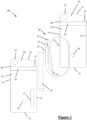
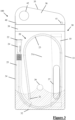
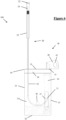
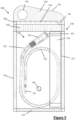
- FIG. 1-7 a first embodiment of a packaged catheter assembly 100 is shown.
- the assembly 100 comprises a fluid reservoir 10, a male intermittent single-use urinary catheter 20, and a pouch 30.
- the pouch 30 comprises a front opaque wall 31a, a rear opaque wall 31b opaque wall, and a peripheral seal joining the periphery of the walls 31a, 31b together to form the pouch.
- the peripheral seal comprises a base 32, a right lateral edge 33, a left lateral edge 34, and an upper edge 35.
- the left lateral edge 34 and right lateral edge 33 being defined as the left and right sides of the pouch when viewing the pouch 30 with the rear wall 31b behind the front wall 31a, the base 32 at the bottom of the pouch 30 and the upper edge 35 at the top of the pouch 30.
- the peripheral seal thus defines a pouch 30 that is generally rectangular and suitably has a width between the lateral edges of between 60-110 mm, for example about 100mm, e.g. 95 mm, and a height from the base 32 to the upper edge 35 of between 100 to 250 mm, for example about 200 mm, e.g. 197 mm.
- the base 32 defines the bottom of the pouch in use, and the upper edge 35 the top.
- alternative shapes and sizes could be conceived, such as an elliptical or circular pouch.
- the pouch also comprises a join 36 between the two walls 31a, 31b.
- the join 36 is a circular weld provided at point equidistant between the lateral edges 33, 34 of the peripherals seal and at a distance above the base 32 extending from 45 to 55mm.
- the join 36 may have a radius between 1% and 10% the height of the pouch, for example 5%. In other embodiments the join may be provided in different shapes and sizes, at different locations, or could potentially even be integrated into a continuous seal with the peripheral seal.
- the pouch also comprises a window 37 in one of the walls, which allows a user to see inside the pouch.
- the window 37 is transparent elongate and generally rectangular with a length between 20-50% the height of the pouch 30, for example 33%, and width between 5-25% the width of the pouch 30, for example 12.5%.
- the window 37 has semi-circular ends, but in other embodiments they may be any suitable shape, such as flat ends or irregularly shaped ends.
- the window 37 is arranged parallel to the right lateral edge 33, and a gap is provided between the edge of the window 37 and right lateral edge 33 equivalent to between 5- 20% the width of the pouch, for example 10%.
- the bottom of the window 37 is separated from the base of the peripheral seal 32 by a distance equal to between 5-20% the height of the pouch, for example 10%.
- translucent windows may be used and additionally alternative shapes, sizes and positions or angles of the window are contemplated (for example say at an angle of up to 20 degrees with respect to the edges.
- each wall 31a, 31b comprises a plurality of layers of foil; in one specific embodiment a 97 micron 2-layer foil of 12 micron PET and 60 micron LLDPE.
- the walls 31a, 31b may only comprise a single layer, and different plastics materials may be used interchangeably.
- the walls 31a, 31b are opaque. This may be achieved by forming each wall 31a, 31b from one or more opaque layers of material or printing an opaque pattern onto one of the layers.
- the window 37 in the front wall 31a may be formed by laminating an opaque layer of material onto a transparent wall, wherein the opaque layer has an aperture corresponding to the window 37.
- a transparent wall may be printed on to block light from passing through the wall, rendering it opaque in all places except for the location of the window 37.
- the pouch also comprises an interaction region.
- the interaction region forms the top part of the pouch 30 and spans between the right lateral edge 33 and left lateral edge 34.
- the interaction region is used to provide access to the pouch through/near to the upper edge 35 .
- the interaction region comprises a tapered tear away region 38 and a sealing arrangement 39.
- the tear away region 38 comprises a tear start 40 on the left lateral edge, about 2cm below at the point the upper edge 35 and left lateral edge 34 meet, and a tear stop 41 at a point in the pouch 30 about 1cm below where the upper 35 and right lateral 33 edges meet.
- the distance from the tear stop 41 and the right lateral edge 33 being between 1-10% the width of the pouch, for example 5%.
- the tear start 40 comprises a notch to provide an area of weakness in the walls 31a, 31b allowing the tear away region 38 to be separated from the pouch 30 by tearing the walls apart from the tear start 40 to the tear stop 41.
- the tear stop 41 comprises a small aperture in the walls 31a, 31b to prevent further tearing of the pouch 30 and separation of the tear away region 38 from the pouch 30.
- the tear away region 38 extends upwards on the left side approximately 50% more than it does on the right side.
- the left side of the tear away region 38 comprises a circular aperture 42 sized to allow a finger to pass through and grip the tear away region 38.
- the front wall 31a and rear wall 31b are sealed to one another around the periphery of the tear stop 41 and circular aperture 42.
- other seals such as a zip-lock arrangement may be used to provide access to the pouch, and of course, the sizes and shapes set out above are exemplary.
- the sealing arrangement 39 extends between the left lateral edge 34 and right lateral edge 33 of the peripheral seal just below the tear away region 38.
- the sealing arrangement 39 comprises first and second sealing members (not shown) provided on an interior surface of the walls 31a, 31b of the pouch 30.
- the sealing members comprise corresponding sealing grooves and ridges to allow the sealing members to be press-fit together to form a water-tight seal and pulled apart again if necessary.
- a single adhesive sealing member may be used, or a sealing member may be provided on the outside of the pouch to allow the pouch to be folded or rolled and sealed accordingly and of course, alternative sealing mechanisms like a hook-and-loop or hook-and-hook seal or zip-lock could be used.
- the fluid reservoir 10 is an elongate rectangular burstable sachet of water, but in other embodiments any suitable reservoir may be used.
- the fluid reservoir 10 has a height equal to between 60-90% the height of the pouch 30, for example 80%, and a width between 5-25% the width of the pouch 30, for example 15%.
- the fluid contained within the reservoir 10 is water.
- many other types of reservoir would be suitable including different shapes and sizes of reservoir, or non-burstable reservoirs and other external sources of fluid.
- other fluids could be used, for example lubricants, gels, oils or the like.
- the catheter 20 comprises a proximal end 21 for insertion into the body, a distal end 22, and a flexible tube 23 connecting the two ends 21, 22.
- the distal end 22 comprises a funnel 24 to guide urine from the bladder out of the tube 23 in use.
- a handling sleeve 25 is also provided around the tube 23 adjacent to the distal end 22.
- the catheter has a length of between 30-50 cm, for example 40 cm, and the handling sleeve is between 10 and 30% the length of the catheter, for example 20-25%, e.g. 11 cm.
- the catheter 20 is provided with a hydrophilic coating, this is activated when it contacts the fluid held in the reservoir 10. In other embodiments, any suitable catheter length or type may be used.
- the catheter 20 is arranged within the pouch 30 in a curved and coiled configuration, with the distal end 21 adjacent to the inner left lateral edge 33 near the upper 35 edge of the pouch 30, just beneath the sealing arrangement 39.
- the catheter 20 extends down the inside of the pouch 30 into a broadly elliptical anti-clockwise coil (as viewed with left lateral edge 34 on the left, and upper edge 35 at the top).
- the coil having a single turn around the inner perimeter of the left lateral edge 34, base 23, and right lateral edge 33 of the pouch, with the proximal end 21 of the catheter 20 resting on the inside of the catheter's coil, adjacent to the left lateral edge 34 and base 32 of the pouch.
- the catheter 20 is coiled (or curled) around the join 36 (albeit not tightly coiled).
- the position of the catheter 20 may be different, in particular, the catheter 20 may not coil or curl but may simply curve within the pouch 30.
- embodiments of the invention may have a catheter 20 that has multiple turns of coil.
- the pouch 30 is formed by first providing the two walls 31a, 31b which are to define the pouch 30 itself, and the front wall 31a comprising the transparent window 37 as described above and produced by one of the techniques described above.
- the walls 31a, 31b are sized to correspond to the final shape of the pouch 30, however in other embodiments, the walls may extend outside the pouch 30 as required.
- the base 32, right lateral edge 33 and left lateral edge 34 are the first to be formed by welding the two walls 31a, 31b together, leaving the pouch 30 with an open upper edge 35.
- the catheter 20 is then arranged within the pouch 30 in a curved and coiled configuration, as set out above
- the fluid reservoir 10 is also placed within the pouch 30 at a position corresponding to the window 37.
- the catheter 20 is therefore hidden in the pouch 30, as the reservoir 10 is placed over the catheter 20 so that the reservoir 10 is visible through the window 37 and the reservoir 10 obstructs any view of the catheter 20 through the window 37.
- the reservoir 10 may not need to be placed over the catheter 20 as the position of the catheter 20 in the pouch 30 may not correspond to the window 37.
- the first and second sealing elements are then attached to the inside of the walls 31a, 31b just above the coiled catheter 20, and the peripheral seal is completed by forming its upper edge 35 by welding the walls 31a, 31b together along the upper edge 35. This seals the catheter 20 and reservoir 10 within the pouch.
- the sealing elements may be provided to the walls prior to any other assembly of the pouch 30, or sealing of the peripheral seal.
- the join 36 is then formed by welding the walls 31a, 31b together. Because the catheter 20 is coiled around the inner perimeter of the pouch 30, the join 36 is located within the coil of the catheter 20. Therefore, part of the catheter tube 23 passes between the join 36 and the base 32 of the pouch. In other embodiments, the join 36 may be provided before the peripheral seal, or at any point of the assembly process.
- the tear-start 40, tear-stop 41, and aperture 42 may be formed by cutting out the appropriate sections of the pouch 30.
- Use of a hot punch can simultaneously bond the walls 31a, 31b around the periphery of the cut-out regions to ensure the pouch 30 remains fully sealed.
- the pouch 30 may be formed in different ways with the steps performed in different orders.
- the bottom could be open and the catheter and water reservoir introduced from the bottom before the base seal is provided.
- two webs of wall material may have one half of the sealing arrangement applied to (an interior surface of) each of them, the catheter 20 and reservoir 10 may be arranged between opposing interior surfaces of the webs of wall material, then potentially in a single action, a hot die may join and form the walls 31a, 31b by forming the peripheral seals 32, 33, 34, 35, simultaneously forming the tear start 40, forming the join 36 and punching out and sealing the aperture 42 and tear stop 41 in the tear away region 38.
- the peripheral seal and join 36 have been described as formed by a weld, any suitable means of joining the walls could be used, for example, an adhesive may be used.
- this first embodiment of a packaged catheter assembly 100 may be unpackaged as described below.
- the fluid reservoir 10 is located within the pouch 30 with the assistance of the window 37, though which the reservoir 10 can be seen. Fluid is then released from the reservoir 10 into the pouch 30.
- the reservoir 10 is a burstable sachet and fluid may be released from it by applying manual pressure to the reservoir 10.
- the window 37 provides a visual reference to show when the reservoir 10 has been successfully burst and fluid released into the pouch 30. In particular, it can be seen that sufficient fluid has been released to fill the channel defined by the weld 36 and the internal base 32 of the peripheral seal. In other embodiments, the fluid may be released from other means.
- the fluid released from the reservoir 10 collects in a pool at the bottom of the pouch 30, as shown by the hashing.
- the fluid fills the pouch 30 up to a fill level corresponding to the join 36.
- the join 36 and base 32 define a channel that is completely full of fluid.
- the fluid may only partially fill the channel, for example filling the channel between 60-95%, preferably at least 90%, or may fill the pouch above the level of the join 36.
- the released fluid is also visible through the window 37, as the base of the window 37 corresponds to a location on the pouch 30 that is slightly lower than the join 36.
- the window may comprise an indicator region that shows the presence of fluid in the pouch.
- a fluid-sensitive colour changing strip such that direct visualisation of the fluid is not required.
- a fill-level marker could also be provided to show that sufficient fluid has been released.
- the contents of the pouch 30 are then accessed by tearing the top of the pouch 30 using the tear away region 38.
- the aperture 42 is grasped in one hand, and the rest of the pouch 30 in another, and the tear away region 38 is torn from the tear start 40 to the tear stop 41.
- the pouch is torn between the left lateral edge 34 and right lateral edge 33 at a location below the upper edge 35, as such, an opening is formed in the pouch 30 that may be used to access its contents.
- the tear away region 38 is not fully separated from the pouch 30 which reduces the number of separate parts and makes the pouch 30 easier to handle.
- Other embodiments may feature other ways to access the pouch for example a zip-lock seal.
- the catheter 20 may then be withdrawn from the pouch 30.
- the catheter 20 is coiled in the pouch 30, and the distal end 21 is provided adjacent the upper edge 35 of the pouch 30.
- the distal end 21 is above the fill line of the fluid released into the pouch 30 and is not wetted by the fluid.
- the distal end 21 therefore provides a dry and easy to access point which may be used to withdraw the catheter 20 from the pouch 30.
- the majority of the handling sleeve 25, i.e. at least 50% and preferably between 60-100%, for example 70% of the sleeve 25 is also above the fill line and is not wetted.
- the sleeve 25 also provides a convenient dry surface to handle the catheter 20.
- the distal end 21 is pulled upwards through the opening in the upper edge 35 of the pouch 30.
- the catheter tube 23 is uncoiled and also pulled upwards towards the upper edge 35 of the pouch 30.
- the join 36 is arranged within the coil of the catheter 20, the tube 23 is prevented from moving directly upwards by the join 36.
- the join 36 therefore causes the tube 23 to be withdrawn from the pouch 30 along a path that includes passing through the channel defined by the join 36 and base 32. As such, the entire remainder of the tube 23 to the proximal tip 21 passes though the pool of fluid in the channel and the hydrophilic coating of the catheter 20 is activated by the fluid.
- the proximal end 21 of the catheter 20 is the final part of the catheter 20 to pass through the channel and be withdrawn from the pouch 30.
- the catheter 20 is activated by the fluid as it is withdrawn and the withdrawal is convenient and easy as only a dry part of the catheter 20 needs to be touched during withdrawal.
- the catheter 20 need not be withdrawn directly upwards but may be pulled out to sideways from the pouch, for example from an opening provided at the side of the pouch, but, of course, above the weld, so as to reduce the prospect of spillage.
- the catheter 20 may not directly touch the join 36 and may instead be prevented from moving upwards by the convergence of the walls 31a, 31b as they approach the join 36.
- the catheter may be used by inserting the proximal end 21 into the urethra until urine begins to flow through the catheter 20.
- the (largely dry) handling sleeve 25 assists in the insertion.
- the urine may then be directed out of the catheter 20 by the funnel 24.
- the catheter 20 may be placed back inside the pouch 30 in a coiled configuration after use.
- the handling sleeve 25 and funnel 24 provide for dry surfaces that can be used to re-coil the catheter 20 and place it into the pouch 30.
- the sealing arrangement 39 can then be used to reseal the pouch 30 between the left lateral edge 34 and right lateral edge 33 by pressing together the two corresponding sealing elements (not shown). This provides for a more convenient disposal of the catheter 20 after use and ensures the fluid released into the pouch 30 does not subsequently leak out of the pouch 30.
- alternative sealing arrangements may be used, such as an external flap with adhesive that allows the top of the pouch 30 to be rolled or folded and sealed. Alternatively, no sealing arrangement may be used where the pouch 30 is intended to be disposed of immediately after use.
- FIG. 8 a second embodiment of a packaged catheter assembly 200 is shown.
- the second embodiment shares many of the features of the first embodiment described above, and so only differences in the features are described below, and like numerals are used to denote like features.
- the join 236 is provided a location offset from the midpoint between the right lateral edge 233 and left lateral edge 234. In particular, the join is provided at a distance from the right lateral edge 234 that is 20-45% the width of the pouch 230, for example, 35%.
- the join 236 provides a second function as a retaining seal to restrict the movement of the reservoir 210 in the pouch 230, sandwiching the reservoir 210 between the join 236 and the right lateral edge 234.
- the join 236 therefore ensures the window 237 corresponds to the position of the reservoir 210 regardless of the movement of the pouch 230 as it is carried around by a user, ensuring both that the catheter 223 remains hidden and that the reservoir 210 can be identified easily to release its fluid.
- the function of the retaining seal may be provided by a separate seal between the walls 231a, 231b. For example, a separate seal extending downwards from the sealing arrangement 239, or up from the base 232.
- the front wall 231a also comprises a pattern 243 that corresponds to the edge of the window 237.
- the pattern 243 is only shown on part of the window, but may of course extend over the entirety of it and comprises a graduated appearance that softens the boundary between the transparent window 237 and the rest of the opaque front wall 231a.
- the pattern is a series of evenly spaced opaque lines with graduated thicknesses, getting thinner as they approach the centre of the window 237.
- the pattern 243 makes the window 237 less visually obvious and therefore makes the pouch 230 more discreet.
- the pattern 243 could be any suitable pattern, for example opaque circles of graduated size, and may be complemented by or integrate with surface patterns or colour applied to the reservoir 210.
- FIG. 9 a third embodiment of a packaged catheter assembly 300 is shown.
- the third embodiment shares many of the features of the first embodiment described above, and so only differences in the features are described below, and like numerals are used to denote like features.
- Figure 9 shows a cut-away front view of the assembly 300 and as such, front wall 331a and window 337 are not shown.
- Diagonal hashing shows the locations in which the front wall 331a is bonded to the rear wall 331b, for example at the left lateral edge 334, base 322, right lateral edge 333, upper edge 335, tear off region 338 and join 336.
- the tear away region 338 comprises a tear line 343 spanning between the tear start 340 and tear stop 341.
- the tear line 344 is a line of weakness that preferentially tears to allow the tear away region 338. This makes it easier to remove the tear away region 338 in a consistent manner.
- the tear line 344 is formed by weakening of the pouch 330 by laser scoring but in other embodiments other techniques could be used such as thinning of the pouch 330 material along the tear line 344.
- the sealing arrangement 339 comprises a zip-lock seal to allow the user to reseal the pouch 330 closed.
- the location in which the sealing arrangement 339 can be used to seal the front wall 331a and rear wall 331b together is denoted in Figure 9 by vertical hashing. This corresponds to a strip of the pouch 330 just below the tear line 344.
- the catheter 320 is arranged within the pouch 330 in a similar manner to the first embodiment in that it is coiled.
- the distal end 322 of the catheter 320 and funnel 324 are arranged centrally with respect to the opening formed by the tear away region 338.
- the distal end 322 and funnel 324 are approximately equidistant from the left lateral edge 334 and right lateral edge 333 rather than closer to either lateral edge 333, 334.
- the distal end 322 including funnel 324 and handling sleeve 324 are more easily accessible as it is central and located at a point across the width of the pouch 330 which opens widest.
- the handling sleeve 325 extends from the distal end 322 to a positing adjacent the left lateral edge 334.
- the distal end 322 together with the fluid reservoir 310 which is positioned adjacent to the right lateral edge 33, the distal end 322, handling sleeve 325 and fluid reservoir 310 protect the rest of the catheter 323 from inadvertent direct contact with the user as they withdraw the catheter 320 from the pouch 330. This reduces the risk of infection when using the catheter 320 as it is less likely to become dirty before use.
- the sleeve 325 is configured so that it does not extend below the height of the join 336 within the pouch 330, in particular, the sleeve 325 is further from the join 336 than the base 332 of the pouch 330. This reduces the likelihood that the sleeve 325 is wetted during release of fluid into the channel from the fluid reservoir 310. As such, the sleeve 325 is easier for the user to handle.
Landscapes
- Health & Medical Sciences (AREA)
- Life Sciences & Earth Sciences (AREA)
- Biophysics (AREA)
- Pulmonology (AREA)
- Engineering & Computer Science (AREA)
- Anesthesiology (AREA)
- Biomedical Technology (AREA)
- Heart & Thoracic Surgery (AREA)
- Hematology (AREA)
- Animal Behavior & Ethology (AREA)
- General Health & Medical Sciences (AREA)
- Public Health (AREA)
- Veterinary Medicine (AREA)
- External Artificial Organs (AREA)
- Infusion, Injection, And Reservoir Apparatuses (AREA)
- Bag Frames (AREA)
- Materials For Medical Uses (AREA)
Applications Claiming Priority (3)
| Application Number | Priority Date | Filing Date | Title |
|---|---|---|---|
| GBGB2019180.5A GB202019180D0 (en) | 2020-12-04 | 2020-12-04 | Packaged catheter assembly |
| GBGB2019943.6A GB202019943D0 (en) | 2020-12-04 | 2020-12-17 | Packaged catheter assembly |
| PCT/GB2021/053128 WO2022118010A1 (en) | 2020-12-04 | 2021-12-01 | Packaged catheter assembly |
Publications (3)
| Publication Number | Publication Date |
|---|---|
| EP4255545A1 EP4255545A1 (en) | 2023-10-11 |
| EP4255545B1 true EP4255545B1 (en) | 2024-08-07 |
| EP4255545C0 EP4255545C0 (en) | 2024-08-07 |
Family
ID=86850794
Family Applications (1)
| Application Number | Title | Priority Date | Filing Date |
|---|---|---|---|
| EP21827207.8A Active EP4255545B1 (en) | 2020-12-04 | 2021-12-01 | Packaged catheter assembly |
Country Status (6)
| Country | Link |
|---|---|
| EP (1) | EP4255545B1 (pl) |
| JP (1) | JP7818598B2 (pl) |
| CN (1) | CN116547032B (pl) |
| AU (1) | AU2021391995A1 (pl) |
| CA (1) | CA3203915A1 (pl) |
| PL (1) | PL4255545T3 (pl) |
Family Cites Families (13)
| Publication number | Priority date | Publication date | Assignee | Title |
|---|---|---|---|---|
| US5178267A (en) * | 1990-12-20 | 1993-01-12 | Abbott Laboratories | Packaging system for a sterilizable calbratable medical device |
| JP4262376B2 (ja) * | 1999-11-15 | 2009-05-13 | テルモ株式会社 | 包装体 |
| JP3987680B2 (ja) * | 2000-09-06 | 2007-10-10 | テルモ株式会社 | 包装体 |
| US20040074794A1 (en) * | 2002-10-18 | 2004-04-22 | Conway Anthony J. | Catheter wetting system and method |
| ATE406188T1 (de) * | 2004-07-14 | 2008-09-15 | Terumo Corp | Verpackung für medizinische schläuche |
| EP2106821B1 (en) * | 2008-03-31 | 2019-04-17 | Dentsply IH AB | Catheter assembly comprising a tubular member having pleated regions, and methods of activating and manufacturing the same |
| DK2838596T3 (da) * | 2012-04-20 | 2020-03-16 | Hollister Inc | Intermitterende katetersamling |
| US9192741B1 (en) * | 2014-06-06 | 2015-11-24 | Sasan Najibi | Catheter and wire holding device |
| US10052456B1 (en) * | 2014-08-01 | 2018-08-21 | Seisa Soparfi S.A.R.L. | Flexible catheter |
| CN115025364B (zh) * | 2017-01-10 | 2024-12-31 | 92号医疗公司 | 在脑血管中执行医疗手术的系统和血管内前进系统 |
| US10226594B1 (en) * | 2018-02-22 | 2019-03-12 | Cure Medical Llc | Closed system with intermittent urinary catheter feed |
| CN116583318A (zh) * | 2020-12-04 | 2023-08-11 | 康沃特克有限公司 | 包装式导管组件 |
| CN117202960A (zh) * | 2021-04-27 | 2023-12-08 | 康沃特克有限公司 | 包装的导管组件 |
-
2021
- 2021-12-01 EP EP21827207.8A patent/EP4255545B1/en active Active
- 2021-12-01 CN CN202180081495.3A patent/CN116547032B/zh active Active
- 2021-12-01 JP JP2023534047A patent/JP7818598B2/ja active Active
- 2021-12-01 AU AU2021391995A patent/AU2021391995A1/en active Pending
- 2021-12-01 CA CA3203915A patent/CA3203915A1/en active Pending
- 2021-12-01 PL PL21827207.8T patent/PL4255545T3/pl unknown
Also Published As
| Publication number | Publication date |
|---|---|
| EP4255545A1 (en) | 2023-10-11 |
| JP2023551959A (ja) | 2023-12-13 |
| CA3203915A1 (en) | 2022-06-09 |
| AU2021391995A1 (en) | 2023-06-22 |
| CN116547032B (zh) | 2026-02-13 |
| EP4255545C0 (en) | 2024-08-07 |
| AU2021391995A9 (en) | 2024-09-12 |
| CN116547032A (zh) | 2023-08-04 |
| JP7818598B2 (ja) | 2026-02-20 |
| PL4255545T3 (pl) | 2024-10-14 |
Similar Documents
| Publication | Publication Date | Title |
|---|---|---|
| EP4255546B1 (en) | Packaged catheter assembly | |
| US20220176069A1 (en) | Packaged catheter assembly | |
| WO2022118010A1 (en) | Packaged catheter assembly | |
| WO2022118011A1 (en) | Packaged catheter assembly | |
| EP4329851B1 (en) | Packaged catheter assembly | |
| US11730557B2 (en) | Packages for medical devices and medical device assemblies | |
| WO2023180728A1 (en) | A catheter assembly | |
| EP4255545B1 (en) | Packaged catheter assembly | |
| WO2023180707A1 (en) | A catheter assembly | |
| US20250010028A1 (en) | Catheter assembly | |
| CN116583318A (zh) | 包装式导管组件 | |
| WO2022229620A1 (en) | Packaged catheter assembly | |
| WO2023180702A1 (en) | A catheter assembly | |
| US20250152912A1 (en) | Packaged catheter assembly and method of manufacturing same | |
| US20250010023A1 (en) | Catheter assembly | |
| US20250010024A1 (en) | Catheter assembly | |
| WO2023180698A1 (en) | A catheter assembly | |
| WO2023180709A1 (en) | A catheter assembly | |
| WO2023180708A1 (en) | A catheter assembly | |
| WO2023180721A1 (en) | A catheter assembly | |
| WO2023180712A1 (en) | A catheter assembly | |
| WO2023180705A1 (en) | A catheter assembly | |
| WO2023180720A1 (en) | A catheter assembly |
Legal Events
| Date | Code | Title | Description |
|---|---|---|---|
| STAA | Information on the status of an ep patent application or granted ep patent |
Free format text: STATUS: UNKNOWN |
|
| STAA | Information on the status of an ep patent application or granted ep patent |
Free format text: STATUS: THE INTERNATIONAL PUBLICATION HAS BEEN MADE |
|
| PUAI | Public reference made under article 153(3) epc to a published international application that has entered the european phase |
Free format text: ORIGINAL CODE: 0009012 |
|
| STAA | Information on the status of an ep patent application or granted ep patent |
Free format text: STATUS: REQUEST FOR EXAMINATION WAS MADE |
|
| STAA | Information on the status of an ep patent application or granted ep patent |
Free format text: STATUS: EXAMINATION IS IN PROGRESS |
|
| 17P | Request for examination filed |
Effective date: 20230622 |
|
| AK | Designated contracting states |
Kind code of ref document: A1 Designated state(s): AL AT BE BG CH CY CZ DE DK EE ES FI FR GB GR HR HU IE IS IT LI LT LU LV MC MK MT NL NO PL PT RO RS SE SI SK SM TR |
|
| 17Q | First examination report despatched |
Effective date: 20230915 |
|
| GRAP | Despatch of communication of intention to grant a patent |
Free format text: ORIGINAL CODE: EPIDOSNIGR1 |
|
| STAA | Information on the status of an ep patent application or granted ep patent |
Free format text: STATUS: GRANT OF PATENT IS INTENDED |
|
| GRAJ | Information related to disapproval of communication of intention to grant by the applicant or resumption of examination proceedings by the epo deleted |
Free format text: ORIGINAL CODE: EPIDOSDIGR1 |
|
| STAA | Information on the status of an ep patent application or granted ep patent |
Free format text: STATUS: EXAMINATION IS IN PROGRESS |
|
| RIC1 | Information provided on ipc code assigned before grant |
Ipc: A61M 25/01 20060101ALI20240105BHEP Ipc: A61M 25/00 20060101AFI20240105BHEP |
|
| DAV | Request for validation of the european patent (deleted) | ||
| DAX | Request for extension of the european patent (deleted) | ||
| INTG | Intention to grant announced |
Effective date: 20240124 |
|
| INTC | Intention to grant announced (deleted) | ||
| GRAP | Despatch of communication of intention to grant a patent |
Free format text: ORIGINAL CODE: EPIDOSNIGR1 |
|
| STAA | Information on the status of an ep patent application or granted ep patent |
Free format text: STATUS: GRANT OF PATENT IS INTENDED |
|
| GRAS | Grant fee paid |
Free format text: ORIGINAL CODE: EPIDOSNIGR3 |
|
| GRAA | (expected) grant |
Free format text: ORIGINAL CODE: 0009210 |
|
| STAA | Information on the status of an ep patent application or granted ep patent |
Free format text: STATUS: THE PATENT HAS BEEN GRANTED |
|
| INTG | Intention to grant announced |
Effective date: 20240628 |
|
| AK | Designated contracting states |
Kind code of ref document: B1 Designated state(s): AL AT BE BG CH CY CZ DE DK EE ES FI FR GB GR HR HU IE IS IT LI LT LU LV MC MK MT NL NO PL PT RO RS SE SI SK SM TR |
|
| REG | Reference to a national code |
Ref country code: GB Ref legal event code: FG4D |
|
| REG | Reference to a national code |
Ref country code: CH Ref legal event code: EP |
|
| REG | Reference to a national code |
Ref country code: IE Ref legal event code: FG4D |
|
| REG | Reference to a national code |
Ref country code: DE Ref legal event code: R096 Ref document number: 602021017013 Country of ref document: DE |
|
| U01 | Request for unitary effect filed |
Effective date: 20240807 |
|
| U07 | Unitary effect registered |
Designated state(s): AT BE BG DE DK EE FI FR IT LT LU LV MT NL PT SE SI Effective date: 20240814 |
|
| U20 | Renewal fee for the european patent with unitary effect paid |
Year of fee payment: 4 Effective date: 20241121 |
|
| PG25 | Lapsed in a contracting state [announced via postgrant information from national office to epo] |
Ref country code: NO Free format text: LAPSE BECAUSE OF FAILURE TO SUBMIT A TRANSLATION OF THE DESCRIPTION OR TO PAY THE FEE WITHIN THE PRESCRIBED TIME-LIMIT Effective date: 20241107 |
|
| PG25 | Lapsed in a contracting state [announced via postgrant information from national office to epo] |
Ref country code: GR Free format text: LAPSE BECAUSE OF FAILURE TO SUBMIT A TRANSLATION OF THE DESCRIPTION OR TO PAY THE FEE WITHIN THE PRESCRIBED TIME-LIMIT Effective date: 20241108 |
|
| PG25 | Lapsed in a contracting state [announced via postgrant information from national office to epo] |
Ref country code: IS Free format text: LAPSE BECAUSE OF FAILURE TO SUBMIT A TRANSLATION OF THE DESCRIPTION OR TO PAY THE FEE WITHIN THE PRESCRIBED TIME-LIMIT Effective date: 20241207 |
|
| PG25 | Lapsed in a contracting state [announced via postgrant information from national office to epo] |
Ref country code: HR Free format text: LAPSE BECAUSE OF FAILURE TO SUBMIT A TRANSLATION OF THE DESCRIPTION OR TO PAY THE FEE WITHIN THE PRESCRIBED TIME-LIMIT Effective date: 20240807 |
|
| PG25 | Lapsed in a contracting state [announced via postgrant information from national office to epo] |
Ref country code: RS Free format text: LAPSE BECAUSE OF FAILURE TO SUBMIT A TRANSLATION OF THE DESCRIPTION OR TO PAY THE FEE WITHIN THE PRESCRIBED TIME-LIMIT Effective date: 20241107 Ref country code: ES Free format text: LAPSE BECAUSE OF FAILURE TO SUBMIT A TRANSLATION OF THE DESCRIPTION OR TO PAY THE FEE WITHIN THE PRESCRIBED TIME-LIMIT Effective date: 20240807 |
|
| PG25 | Lapsed in a contracting state [announced via postgrant information from national office to epo] |
Ref country code: RS Free format text: LAPSE BECAUSE OF FAILURE TO SUBMIT A TRANSLATION OF THE DESCRIPTION OR TO PAY THE FEE WITHIN THE PRESCRIBED TIME-LIMIT Effective date: 20241107 Ref country code: NO Free format text: LAPSE BECAUSE OF FAILURE TO SUBMIT A TRANSLATION OF THE DESCRIPTION OR TO PAY THE FEE WITHIN THE PRESCRIBED TIME-LIMIT Effective date: 20241107 Ref country code: IS Free format text: LAPSE BECAUSE OF FAILURE TO SUBMIT A TRANSLATION OF THE DESCRIPTION OR TO PAY THE FEE WITHIN THE PRESCRIBED TIME-LIMIT Effective date: 20241207 Ref country code: HR Free format text: LAPSE BECAUSE OF FAILURE TO SUBMIT A TRANSLATION OF THE DESCRIPTION OR TO PAY THE FEE WITHIN THE PRESCRIBED TIME-LIMIT Effective date: 20240807 Ref country code: GR Free format text: LAPSE BECAUSE OF FAILURE TO SUBMIT A TRANSLATION OF THE DESCRIPTION OR TO PAY THE FEE WITHIN THE PRESCRIBED TIME-LIMIT Effective date: 20241108 Ref country code: ES Free format text: LAPSE BECAUSE OF FAILURE TO SUBMIT A TRANSLATION OF THE DESCRIPTION OR TO PAY THE FEE WITHIN THE PRESCRIBED TIME-LIMIT Effective date: 20240807 |
|
| PG25 | Lapsed in a contracting state [announced via postgrant information from national office to epo] |
Ref country code: SM Free format text: LAPSE BECAUSE OF FAILURE TO SUBMIT A TRANSLATION OF THE DESCRIPTION OR TO PAY THE FEE WITHIN THE PRESCRIBED TIME-LIMIT Effective date: 20240807 |
|
| PG25 | Lapsed in a contracting state [announced via postgrant information from national office to epo] |
Ref country code: CZ Free format text: LAPSE BECAUSE OF FAILURE TO SUBMIT A TRANSLATION OF THE DESCRIPTION OR TO PAY THE FEE WITHIN THE PRESCRIBED TIME-LIMIT Effective date: 20240807 |
|
| PG25 | Lapsed in a contracting state [announced via postgrant information from national office to epo] |
Ref country code: SK Free format text: LAPSE BECAUSE OF FAILURE TO SUBMIT A TRANSLATION OF THE DESCRIPTION OR TO PAY THE FEE WITHIN THE PRESCRIBED TIME-LIMIT Effective date: 20240807 |
|
| PLBE | No opposition filed within time limit |
Free format text: ORIGINAL CODE: 0009261 |
|
| STAA | Information on the status of an ep patent application or granted ep patent |
Free format text: STATUS: NO OPPOSITION FILED WITHIN TIME LIMIT |
|
| PG25 | Lapsed in a contracting state [announced via postgrant information from national office to epo] |
Ref country code: MC Free format text: LAPSE BECAUSE OF FAILURE TO SUBMIT A TRANSLATION OF THE DESCRIPTION OR TO PAY THE FEE WITHIN THE PRESCRIBED TIME-LIMIT Effective date: 20240807 |
|
| 26N | No opposition filed |
Effective date: 20250508 |
|
| REG | Reference to a national code |
Ref country code: CH Ref legal event code: PL |
|
| PG25 | Lapsed in a contracting state [announced via postgrant information from national office to epo] |
Ref country code: CH Free format text: LAPSE BECAUSE OF NON-PAYMENT OF DUE FEES Effective date: 20241231 |
|
| PG25 | Lapsed in a contracting state [announced via postgrant information from national office to epo] |
Ref country code: IE Free format text: LAPSE BECAUSE OF NON-PAYMENT OF DUE FEES Effective date: 20241201 |
|
| PG25 | Lapsed in a contracting state [announced via postgrant information from national office to epo] |
Ref country code: RO Free format text: LAPSE BECAUSE OF FAILURE TO SUBMIT A TRANSLATION OF THE DESCRIPTION OR TO PAY THE FEE WITHIN THE PRESCRIBED TIME-LIMIT Effective date: 20240807 |
|
| U20 | Renewal fee for the european patent with unitary effect paid |
Year of fee payment: 5 Effective date: 20251119 |
|
| PGFP | Annual fee paid to national office [announced via postgrant information from national office to epo] |
Ref country code: GB Payment date: 20251119 Year of fee payment: 5 |
|
| PGFP | Annual fee paid to national office [announced via postgrant information from national office to epo] |
Ref country code: PL Payment date: 20251125 Year of fee payment: 5 |