EP4249477A1 - Verbindung und organische lichtemittierende vorrichtung damit - Google Patents
Verbindung und organische lichtemittierende vorrichtung damit Download PDFInfo
- Publication number
- EP4249477A1 EP4249477A1 EP21894841.2A EP21894841A EP4249477A1 EP 4249477 A1 EP4249477 A1 EP 4249477A1 EP 21894841 A EP21894841 A EP 21894841A EP 4249477 A1 EP4249477 A1 EP 4249477A1
- Authority
- EP
- European Patent Office
- Prior art keywords
- group
- substituted
- unsubstituted
- compound
- light emitting
- Prior art date
- Legal status (The legal status is an assumption and is not a legal conclusion. Google has not performed a legal analysis and makes no representation as to the accuracy of the status listed.)
- Pending
Links
Images

Classifications
-
- C—CHEMISTRY; METALLURGY
- C07—ORGANIC CHEMISTRY
- C07D—HETEROCYCLIC COMPOUNDS
- C07D307/00—Heterocyclic compounds containing five-membered rings having one oxygen atom as the only ring hetero atom
- C07D307/77—Heterocyclic compounds containing five-membered rings having one oxygen atom as the only ring hetero atom ortho- or peri-condensed with carbocyclic rings or ring systems
-
- C—CHEMISTRY; METALLURGY
- C07—ORGANIC CHEMISTRY
- C07C—ACYCLIC OR CARBOCYCLIC COMPOUNDS
- C07C211/00—Compounds containing amino groups bound to a carbon skeleton
- C07C211/43—Compounds containing amino groups bound to a carbon skeleton having amino groups bound to carbon atoms of six-membered aromatic rings of the carbon skeleton
- C07C211/57—Compounds containing amino groups bound to a carbon skeleton having amino groups bound to carbon atoms of six-membered aromatic rings of the carbon skeleton having amino groups bound to carbon atoms of six-membered aromatic rings being part of condensed ring systems of the carbon skeleton
- C07C211/61—Compounds containing amino groups bound to a carbon skeleton having amino groups bound to carbon atoms of six-membered aromatic rings of the carbon skeleton having amino groups bound to carbon atoms of six-membered aromatic rings being part of condensed ring systems of the carbon skeleton with at least one of the condensed ring systems formed by three or more rings
-
- C—CHEMISTRY; METALLURGY
- C07—ORGANIC CHEMISTRY
- C07D—HETEROCYCLIC COMPOUNDS
- C07D307/00—Heterocyclic compounds containing five-membered rings having one oxygen atom as the only ring hetero atom
- C07D307/77—Heterocyclic compounds containing five-membered rings having one oxygen atom as the only ring hetero atom ortho- or peri-condensed with carbocyclic rings or ring systems
- C07D307/91—Dibenzofurans; Hydrogenated dibenzofurans
-
- C—CHEMISTRY; METALLURGY
- C07—ORGANIC CHEMISTRY
- C07D—HETEROCYCLIC COMPOUNDS
- C07D333/00—Heterocyclic compounds containing five-membered rings having one sulfur atom as the only ring hetero atom
- C07D333/50—Heterocyclic compounds containing five-membered rings having one sulfur atom as the only ring hetero atom condensed with carbocyclic rings or ring systems
-
- C—CHEMISTRY; METALLURGY
- C07—ORGANIC CHEMISTRY
- C07D—HETEROCYCLIC COMPOUNDS
- C07D333/00—Heterocyclic compounds containing five-membered rings having one sulfur atom as the only ring hetero atom
- C07D333/50—Heterocyclic compounds containing five-membered rings having one sulfur atom as the only ring hetero atom condensed with carbocyclic rings or ring systems
- C07D333/76—Dibenzothiophenes
-
- C—CHEMISTRY; METALLURGY
- C07—ORGANIC CHEMISTRY
- C07D—HETEROCYCLIC COMPOUNDS
- C07D407/00—Heterocyclic compounds containing two or more hetero rings, at least one ring having oxygen atoms as the only ring hetero atoms, not provided for by group C07D405/00
- C07D407/02—Heterocyclic compounds containing two or more hetero rings, at least one ring having oxygen atoms as the only ring hetero atoms, not provided for by group C07D405/00 containing two hetero rings
- C07D407/04—Heterocyclic compounds containing two or more hetero rings, at least one ring having oxygen atoms as the only ring hetero atoms, not provided for by group C07D405/00 containing two hetero rings directly linked by a ring-member-to-ring-member bond
-
- C—CHEMISTRY; METALLURGY
- C07—ORGANIC CHEMISTRY
- C07D—HETEROCYCLIC COMPOUNDS
- C07D407/00—Heterocyclic compounds containing two or more hetero rings, at least one ring having oxygen atoms as the only ring hetero atoms, not provided for by group C07D405/00
- C07D407/02—Heterocyclic compounds containing two or more hetero rings, at least one ring having oxygen atoms as the only ring hetero atoms, not provided for by group C07D405/00 containing two hetero rings
- C07D407/12—Heterocyclic compounds containing two or more hetero rings, at least one ring having oxygen atoms as the only ring hetero atoms, not provided for by group C07D405/00 containing two hetero rings linked by a chain containing hetero atoms as chain links
-
- C—CHEMISTRY; METALLURGY
- C07—ORGANIC CHEMISTRY
- C07D—HETEROCYCLIC COMPOUNDS
- C07D409/00—Heterocyclic compounds containing two or more hetero rings, at least one ring having sulfur atoms as the only ring hetero atoms
- C07D409/02—Heterocyclic compounds containing two or more hetero rings, at least one ring having sulfur atoms as the only ring hetero atoms containing two hetero rings
- C07D409/04—Heterocyclic compounds containing two or more hetero rings, at least one ring having sulfur atoms as the only ring hetero atoms containing two hetero rings directly linked by a ring-member-to-ring-member bond
-
- C—CHEMISTRY; METALLURGY
- C07—ORGANIC CHEMISTRY
- C07D—HETEROCYCLIC COMPOUNDS
- C07D409/00—Heterocyclic compounds containing two or more hetero rings, at least one ring having sulfur atoms as the only ring hetero atoms
- C07D409/02—Heterocyclic compounds containing two or more hetero rings, at least one ring having sulfur atoms as the only ring hetero atoms containing two hetero rings
- C07D409/12—Heterocyclic compounds containing two or more hetero rings, at least one ring having sulfur atoms as the only ring hetero atoms containing two hetero rings linked by a chain containing hetero atoms as chain links
-
- C—CHEMISTRY; METALLURGY
- C07—ORGANIC CHEMISTRY
- C07D—HETEROCYCLIC COMPOUNDS
- C07D411/00—Heterocyclic compounds containing two or more hetero rings, at least one ring having oxygen and sulfur atoms as the only ring hetero atoms
- C07D411/02—Heterocyclic compounds containing two or more hetero rings, at least one ring having oxygen and sulfur atoms as the only ring hetero atoms containing two hetero rings
- C07D411/10—Heterocyclic compounds containing two or more hetero rings, at least one ring having oxygen and sulfur atoms as the only ring hetero atoms containing two hetero rings linked by a carbon chain containing aromatic rings
-
- C—CHEMISTRY; METALLURGY
- C07—ORGANIC CHEMISTRY
- C07D—HETEROCYCLIC COMPOUNDS
- C07D411/00—Heterocyclic compounds containing two or more hetero rings, at least one ring having oxygen and sulfur atoms as the only ring hetero atoms
- C07D411/02—Heterocyclic compounds containing two or more hetero rings, at least one ring having oxygen and sulfur atoms as the only ring hetero atoms containing two hetero rings
- C07D411/12—Heterocyclic compounds containing two or more hetero rings, at least one ring having oxygen and sulfur atoms as the only ring hetero atoms containing two hetero rings linked by a chain containing hetero atoms as chain links
-
- H—ELECTRICITY
- H10—SEMICONDUCTOR DEVICES; ELECTRIC SOLID-STATE DEVICES NOT OTHERWISE PROVIDED FOR
- H10K—ORGANIC ELECTRIC SOLID-STATE DEVICES
- H10K50/00—Organic light-emitting devices
- H10K50/10—OLEDs or polymer light-emitting diodes [PLED]
- H10K50/14—Carrier transporting layers
- H10K50/15—Hole transporting layers
-
- H—ELECTRICITY
- H10—SEMICONDUCTOR DEVICES; ELECTRIC SOLID-STATE DEVICES NOT OTHERWISE PROVIDED FOR
- H10K—ORGANIC ELECTRIC SOLID-STATE DEVICES
- H10K50/00—Organic light-emitting devices
- H10K50/10—OLEDs or polymer light-emitting diodes [PLED]
- H10K50/18—Carrier blocking layers
- H10K50/181—Electron blocking layers
-
- H—ELECTRICITY
- H10—SEMICONDUCTOR DEVICES; ELECTRIC SOLID-STATE DEVICES NOT OTHERWISE PROVIDED FOR
- H10K—ORGANIC ELECTRIC SOLID-STATE DEVICES
- H10K85/00—Organic materials used in the body or electrodes of devices covered by this subclass
- H10K85/60—Organic compounds having low molecular weight
- H10K85/615—Polycyclic condensed aromatic hydrocarbons, e.g. anthracene
-
- H—ELECTRICITY
- H10—SEMICONDUCTOR DEVICES; ELECTRIC SOLID-STATE DEVICES NOT OTHERWISE PROVIDED FOR
- H10K—ORGANIC ELECTRIC SOLID-STATE DEVICES
- H10K85/00—Organic materials used in the body or electrodes of devices covered by this subclass
- H10K85/60—Organic compounds having low molecular weight
- H10K85/615—Polycyclic condensed aromatic hydrocarbons, e.g. anthracene
- H10K85/622—Polycyclic condensed aromatic hydrocarbons, e.g. anthracene containing four rings, e.g. pyrene
-
- H—ELECTRICITY
- H10—SEMICONDUCTOR DEVICES; ELECTRIC SOLID-STATE DEVICES NOT OTHERWISE PROVIDED FOR
- H10K—ORGANIC ELECTRIC SOLID-STATE DEVICES
- H10K85/00—Organic materials used in the body or electrodes of devices covered by this subclass
- H10K85/60—Organic compounds having low molecular weight
- H10K85/615—Polycyclic condensed aromatic hydrocarbons, e.g. anthracene
- H10K85/624—Polycyclic condensed aromatic hydrocarbons, e.g. anthracene containing six or more rings
-
- H—ELECTRICITY
- H10—SEMICONDUCTOR DEVICES; ELECTRIC SOLID-STATE DEVICES NOT OTHERWISE PROVIDED FOR
- H10K—ORGANIC ELECTRIC SOLID-STATE DEVICES
- H10K85/00—Organic materials used in the body or electrodes of devices covered by this subclass
- H10K85/60—Organic compounds having low molecular weight
- H10K85/615—Polycyclic condensed aromatic hydrocarbons, e.g. anthracene
- H10K85/626—Polycyclic condensed aromatic hydrocarbons, e.g. anthracene containing more than one polycyclic condensed aromatic rings, e.g. bis-anthracene
-
- H—ELECTRICITY
- H10—SEMICONDUCTOR DEVICES; ELECTRIC SOLID-STATE DEVICES NOT OTHERWISE PROVIDED FOR
- H10K—ORGANIC ELECTRIC SOLID-STATE DEVICES
- H10K85/00—Organic materials used in the body or electrodes of devices covered by this subclass
- H10K85/60—Organic compounds having low molecular weight
- H10K85/631—Amine compounds having at least two aryl rest on at least one amine-nitrogen atom, e.g. triphenylamine
- H10K85/633—Amine compounds having at least two aryl rest on at least one amine-nitrogen atom, e.g. triphenylamine comprising polycyclic condensed aromatic hydrocarbons as substituents on the nitrogen atom
-
- H—ELECTRICITY
- H10—SEMICONDUCTOR DEVICES; ELECTRIC SOLID-STATE DEVICES NOT OTHERWISE PROVIDED FOR
- H10K—ORGANIC ELECTRIC SOLID-STATE DEVICES
- H10K85/00—Organic materials used in the body or electrodes of devices covered by this subclass
- H10K85/60—Organic compounds having low molecular weight
- H10K85/631—Amine compounds having at least two aryl rest on at least one amine-nitrogen atom, e.g. triphenylamine
- H10K85/636—Amine compounds having at least two aryl rest on at least one amine-nitrogen atom, e.g. triphenylamine comprising heteroaromatic hydrocarbons as substituents on the nitrogen atom
-
- H—ELECTRICITY
- H10—SEMICONDUCTOR DEVICES; ELECTRIC SOLID-STATE DEVICES NOT OTHERWISE PROVIDED FOR
- H10K—ORGANIC ELECTRIC SOLID-STATE DEVICES
- H10K85/00—Organic materials used in the body or electrodes of devices covered by this subclass
- H10K85/60—Organic compounds having low molecular weight
- H10K85/649—Aromatic compounds comprising a hetero atom
- H10K85/657—Polycyclic condensed heteroaromatic hydrocarbons
- H10K85/6574—Polycyclic condensed heteroaromatic hydrocarbons comprising only oxygen in the heteroaromatic polycondensed ring system, e.g. cumarine dyes
-
- H—ELECTRICITY
- H10—SEMICONDUCTOR DEVICES; ELECTRIC SOLID-STATE DEVICES NOT OTHERWISE PROVIDED FOR
- H10K—ORGANIC ELECTRIC SOLID-STATE DEVICES
- H10K85/00—Organic materials used in the body or electrodes of devices covered by this subclass
- H10K85/60—Organic compounds having low molecular weight
- H10K85/649—Aromatic compounds comprising a hetero atom
- H10K85/657—Polycyclic condensed heteroaromatic hydrocarbons
- H10K85/6576—Polycyclic condensed heteroaromatic hydrocarbons comprising only sulfur in the heteroaromatic polycondensed ring system, e.g. benzothiophene
-
- C—CHEMISTRY; METALLURGY
- C07—ORGANIC CHEMISTRY
- C07C—ACYCLIC OR CARBOCYCLIC COMPOUNDS
- C07C2603/00—Systems containing at least three condensed rings
- C07C2603/02—Ortho- or ortho- and peri-condensed systems
- C07C2603/04—Ortho- or ortho- and peri-condensed systems containing three rings
- C07C2603/06—Ortho- or ortho- and peri-condensed systems containing three rings containing at least one ring with less than six ring members
- C07C2603/10—Ortho- or ortho- and peri-condensed systems containing three rings containing at least one ring with less than six ring members containing five-membered rings
- C07C2603/12—Ortho- or ortho- and peri-condensed systems containing three rings containing at least one ring with less than six ring members containing five-membered rings only one five-membered ring
- C07C2603/18—Fluorenes; Hydrogenated fluorenes
-
- C—CHEMISTRY; METALLURGY
- C07—ORGANIC CHEMISTRY
- C07C—ACYCLIC OR CARBOCYCLIC COMPOUNDS
- C07C2603/00—Systems containing at least three condensed rings
- C07C2603/02—Ortho- or ortho- and peri-condensed systems
- C07C2603/40—Ortho- or ortho- and peri-condensed systems containing four condensed rings
-
- C—CHEMISTRY; METALLURGY
- C07—ORGANIC CHEMISTRY
- C07C—ACYCLIC OR CARBOCYCLIC COMPOUNDS
- C07C2603/00—Systems containing at least three condensed rings
- C07C2603/93—Spiro compounds
- C07C2603/94—Spiro compounds containing "free" spiro atoms
Definitions
- the present specification relates to a compound, and an organic light emitting device including the same.
- An electroluminescent device is one type of self-emissive display devices, and has an advantage of having a wide viewing angle, and a high response speed as well as having an excellent contrast.
- An organic light emitting device has a structure disposing an organic thin film between two electrodes. When a voltage is applied to an organic light emitting device having such a structure, electrons and holes injected from the two electrodes bind and pair in the organic thin film, and light emits as these annihilate.
- the organic thin film may be formed in a single layer or a multilayer as necessary.
- a material of the organic thin film may have a light emitting function as necessary.
- compounds capable of forming a light emitting layer themselves alone may be used, or compounds capable of performing a role of a host or a dopant of a host-dopant-based light emitting layer may also be used.
- compounds capable of performing roles of hole injection, hole transfer, electron blocking, hole blocking, electron transfer, electron injection and the like may also be used as a material of the organic thin film.
- the present specification is directed to providing a compound, and an organic light emitting device including the same.
- One embodiment of the present specification provides a compound of the following Chemical Formula 1. in Chemical Formula 1,
- an organic light emitting device including a first electrode; a second electrode provided opposite to the first electrode; and an organic material layer provided between the first electrode and the second electrode, wherein the organic material layer includes the compound of Chemical Formula 1.
- a compound described in the present specification can be used as a material of an organic material layer of an organic light emitting device.
- the compound is capable of acting as a hole injection material, a hole transfer material, a light emitting material, an electron transfer material, an electron injection material, a charge generation material or the like.
- the compound can be used as a material of a hole transfer layer or an electron blocking layer of an organic light emitting device.
- an organic light emitting device having superior properties in terms of driving voltage and lifetime can be provided.
- the unshared electron pair of the amine improves the flow of holes when used as a hole transfer layer enhancing a hole transfer ability of the hole transfer layer through adjusting band gap and T1 (energy level value in a triplet state) values, and when used as an electron blocking layer, deterioration of a hole transfer material caused by electrons invading the hole transfer layer can be suppressed, and as a result, an effect of providing an organic light emitting device having excellent efficiency can be obtained.
- planarity and glass transition temperature of the compound increases improving thermal stability of the compound.
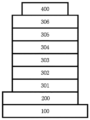
- FIG. 1 to FIG. 4 are diagrams each illustrating a lamination structure of an organic light emitting device according to one embodiment of the present specification.
- substitution means a hydrogen atom bonding to a carbon atom of a compound being changed to another substituent, and the position of substitution is not limited as long as it is a position at which the hydrogen atom is substituted, that is, a position at which a substituent is capable of substituting, and when two or more substituents substitute, the two or more substituents may be the same as or different from each other.
- substituted or unsubstituted means being substituted with one or more substituents selected from the group consisting of deuterium; a halogen group; a cyano group; a C1 to C60 alkyl group; a C2 to C60 alkenyl group; a C2 to C60 alkynyl group; a C3 to C60 cycloalkyl group; a C2 to C60 heterocycloalkyl group; a C6 to C60 aryl group; and a C2 to C60 heteroaryl group, or a substituent linking two or more substituents selected from among the substituents illustrated above, or being unsubstituted.
- a "case of a substituent being not indicated in a chemical formula or compound structure” means that a hydrogen atom bonds to a carbon atom.
- deuterium ( 2 H) is an isotope of hydrogen, some hydrogen atoms may be deuterium.
- a "case of a substituent being not indicated in a chemical formula or compound structure” may mean that positions that may come as a substituent may all be hydrogen or deuterium.
- positions that may come as a substituent may all be hydrogen or deuterium.
- deuterium is an isotope of hydrogen
- some hydrogen atoms may be deuterium that is an isotope, and herein, a content of the deuterium may be from 0% to 100%.
- hydrogen and deuterium may be mixed in compounds when deuterium is not explicitly excluded such as a deuterium content being 0%, a hydrogen content being 100% or substituents being all hydrogen.
- deuterium is one of isotopes of hydrogen, is an element having deuteron formed with one proton and one neutron as a nucleus, and may be expressed as hydrogen-2, and the elemental symbol may also be written as D or 2 H.
- an isotope means an atom with the same atomic number (Z) but with a different mass number (A), and may also be interpreted as an element with the same number of protons but with a different number of neutrons.
- having a deuterium content of 20% in a phenyl group represented by means that the total number of substituents that the phenyl group may have is 5 (T1 in the formula), and the number of deuterium among these is 1 (T2 in the formula).
- having a deuterium content of 20% in a phenyl group may be represented by the following structural formulae.
- a phenyl group having a deuterium content of 0% may mean a phenyl group that does not include a deuterium atom, that is, a phenyl group that has 5 hydrogen atoms.
- the halogen may be fluorine, chlorine, bromine or iodine.
- the alkyl group includes linear or branched, and may be further substituted with other substituents.
- the number of carbon atoms of the alkyl group may be from 1 to 60, specifically from 1 to 40 and more specifically from 1 to 20.
- Specific examples thereof may include a methyl group, an ethyl group, a propyl group, an n-propyl group, an isopropyl group, a butyl group, an n-butyl group, an isobutyl group, a tert-butyl group, a sec-butyl group, a 1-methyl-butyl group, a 1-ethyl-butyl group, a pentyl group, an n-pentyl group, an isopentyl group, a neopentyl group, a tert-pentyl group, a hexyl group, an n-hexyl group, a 1-methylpentyl group, a 2-methylp
- the alkenyl group includes linear or branched, and may be further substituted with other substituents.
- the number of carbon atoms of the alkenyl group may be from 2 to 60, specifically from 2 to 40 and more specifically from 2 to 20.
- Specific examples thereof may include a vinyl group, a 1-propenyl group, an isopropenyl group, a 1-butenyl group, a 2-butenyl group, a 3-butenyl group, a 1-pentenyl group, a 2-pentenyl group, a 3-pentenyl group, a 3-methyl-1-butenyl group, a 1,3-butadienyl group, an allyl group, a 1-phenylvinyl-1-yl group, a 2-phenylvinyl-1-yl group, a 2,2-diphenylvinyl-1-yl group, a 2-phenyl-2-(naphthyl-1-yl)vinyl-1-yl group, a 2,2-bis(diphenyl-1-yl)vinyl-1-yl group, a stilbenyl group, a styrenyl group and the like, but are not limited thereto.
- the alkynyl group includes linear or branched, and may be further substituted with other substituents.
- the number of carbon atoms of the alkynyl group may be from 2 to 60, specifically from 2 to 40 and more specifically from 2 to 20.
- the cycloalkyl group includes monocyclic or polycyclic having 3 to 60 carbon atoms, and may be further substituted with other substituents.
- the polycyclic means a group in which the cycloalkyl group is directly linked to or fused with other cyclic groups.
- the other cyclic groups may be a cycloalkyl group, but may also be different types of cyclic groups such as a heterocycloalkyl group, an aryl group and a heteroaryl group.
- the number of carbon groups of the cycloalkyl group may be from 3 to 60, specifically from 3 to 40 and more specifically from 5 to 20.
- Specific examples thereof may include a cyclopropyl group, a cyclobutyl group, a cyclopentyl group, a 3-methylcyclopentyl group, a 2,3-dimethylcyclopentyl group, a cyclohexyl group, a 3-methylcyclohexyl group, a 4-methylcyclohexyl group, a 2,3-dimethylcyclohexyl group, a 3,4,5-trimethylcyclohexyl group, a 4-tert-butylcyclohexyl group, a cycloheptyl group, a cyclooctyl group and the like, but are not limited thereto.
- the heterocycloalkyl group includes O, S, Se, N or Si as a heteroatom, includes monocyclic or polycyclic having 2 to 60 carbon atoms, and may be further substituted with other substituents.
- the polycyclic means a group in which the heterocycloalkyl group is directly linked to or fused with other cyclic groups.
- the other cyclic groups may be a heterocycloalkyl group, but may also be different types of cyclic groups such as a cycloalkyl group, an aryl group and a heteroaryl group.
- the number of carbon atoms of the heterocycloalkyl group may be from 2 to 60, specifically from 2 to 40 and more specifically from 3 to 20.
- the aryl group includes monocyclic or polycyclic having 6 to 60 carbon atoms, and may be further substituted with other substituents.
- the polycyclic means a group in which the aryl group is directly linked to or fused with other cyclic groups.
- the other cyclic groups may be an aryl group, but may also be different types of cyclic groups such as a cycloalkyl group, a heterocycloalkyl group and a heteroaryl group.
- the aryl group includes a spiro group.
- the number of carbon atoms of the aryl group may be from 6 to 60, specifically from 6 to 40 and more specifically from 6 to 25.
- the number of carbon atoms may be from 8 to 60, from 8 to 40 or from 8 to 30.
- the aryl group may include a phenyl group, a biphenyl group, a terphenyl group, a naphthyl group, an anthryl group, a chrysenyl group, a phenanthrenyl group, a perylenyl group, a fluoranthenyl group, a triphenylenyl group, a phenalenyl group, a pyrenyl group, a tetracenyl group, a pentacenyl group, a fluorenyl group, an indenyl group, an acenaphthylenyl group, a benzofluorenyl group, a spirobifluorenyl group, a 2,3-dihydro-1H-indenyl group, a fused
- the terphenyl group may be selected from among the following structures.
- the fluorenyl group may be substituted, and adjacent substituents may bond to each other to form a ring.
- the heteroaryl group includes O, S, SO 2 , Se, N or Si as a heteroatom, includes monocyclic or polycyclic, and may be further substituted with other substituents.
- the polycyclic means a group in which the heteroaryl group is directly linked to or fused with other cyclic groups.
- the other cyclic groups may be a heteroaryl group, but may also be different types of cyclic groups such as a cycloalkyl group, a heterocycloalkyl group and an aryl group.
- the number of carbon atoms of the heteroaryl group may be from 2 to 60, specifically from 2 to 40 and more specifically from 3 to 25.
- the number of carbon atoms may be from 4 to 60, 4 to 40 or 4 to 25.
- Specific examples of the heteroaryl group may include a pyridyl group, a pyrrolyl group, a pyrimidyl group, a pyridazinyl group, a furanyl group, a thiophene group, an imidazolyl group, a pyrazolyl group, an oxazolyl group, an isoxazolyl group, a thiazolyl group, an isothiazolyl group, a triazolyl group, a furazanyl group, an oxadiazolyl group, a thiadiazolyl group, a dithiazolyl group, a tetrazolyl group, a pyranyl group, a thiopyranyl group, a diazinyl group, an oxazinyl group, a thiazin
- the examples of the aryl group described above may be applied to the arylene group except that the arylene group is a divalent group.
- heteroaryl group described above may be applied to the heteroarylene group except that the heteroarylene group is a divalent group.
- X may be O.
- X may be S.
- X is CR'R", and R' and R" may be each independently a substituted or unsubstituted C1 to C60 alkyl group; or a substituted or unsubstituted C6 to C60 aryl group.
- X is CR'R", and R' and R" may be each independently a C1 to C60 alkyl group; or a C6 to C60 aryl group.
- X is CR'R", and R' and R" may be each independently a C1 to C30 alkyl group; or a C6 to C30 aryl group.
- X is CR'R", and R' and R" may be each independently a C1 to C10 alkyl group; or a C6 to C10 aryl group.
- X is CR'R", and R' and R" may be each independently a C1 to C5 alkyl group; or a C6 to C10 aryl group.
- X is CR'R", and R' and R" may be each independently a methyl group; or a phenyl group.
- Chemical Formula 1 may be represented by any one of the following Chemical Formulae 1-1 to 1-3. in Chemical Formulae 1-1 to 1-3,
- R21 and R22 of Chemical Formula 1-3 are each independently a substituted or unsubstituted C1 to C5 alkyl group; or a substituted or unsubstituted C6 to C10 aryl group.
- R21 and R22 are each independently a C1 to C5 alkyl group; or a C6 to C10 aryl group.
- R21 and R22 are each independently a methyl group; or a phenyl group.
- L1 and L2 may be each independently a direct bond; or a C6 to C60 arylene group.
- L1 and L2 may all be a direct bond.
- L1 is a C6 to C60 arylene group
- L2 may be a direct bond
- L1 is a C6 to C30 arylene group
- L2 may be a direct bond
- L1 is a phenylene group
- L2 may be a direct bond
- L1 is a direct bond
- L2 may be a C6 to C30 arylene group.
- L1 is a direct bond
- L2 may be a phenylene group
- L11 and L12 may be each independently a direct bond; or a C6 to C60 arylene group.
- L11 and L12 may all be a direct bond.
- L11 is a C6 to C60 arylene group
- L12 may be a direct bond
- L11 is a C6 to C30 arylene group
- L12 may be a direct bond
- L11 is a phenylene group
- L12 may be a direct bond
- L11 and L12 may be each independently a C6 to C60 arylene group.
- L11 and L12 may be each independently a C6 to C30 arylene group.
- L11 and L12 may be each independently a C6 to C10 arylene group.
- L11 and L12 may all be a phenylene group.
- R11 and R12 are each independently a substituted or unsubstituted C6 to C60 aryl group; or a substituted or unsubstituted C2 to C60 heteroaryl group.
- R11 and R12 are each independently a substituted or unsubstituted C6 to C40 aryl group; or a substituted or unsubstituted C2 to C40 heteroaryl group.
- R11 and R12 are each independently a substituted or unsubstituted C6 to C30 aryl group; or a substituted or unsubstituted C2 to C20 heteroaryl group.
- R11 and R12 are each independently a substituted or unsubstituted phenyl group; a substituted or unsubstituted biphenyl group; a substituted or unsubstituted terphenyl group; a substituted or unsubstituted naphthyl group; a substituted or unsubstituted fluorenyl group; a substituted or unsubstituted dibenzofuran group; or a substituted or unsubstituted dibenzothiophene group.
- R11 and R12 are each independently a phenyl group; a biphenyl group; a terphenyl group; a naphthyl group; a fluorenyl group unsubstituted or substituted with an alkyl group or an aryl group; 9,9'-spirobi[fluorene]; a dibenzofuran group; or a dibenzothiophene group.
- R11 is a substituted or unsubstituted C6 to C60 aryl group
- R12 may be a substituted or unsubstituted C6 to C60 aryl group; or a C2 to C60 heteroaryl group substituted or unsubstituted and including O or S.
- R11 is a substituted or unsubstituted C6 to C30 aryl group
- R12 may be a substituted or unsubstituted C6 to C30 aryl group; or a C2 to C20 heteroaryl group substituted or unsubstituted and including O or S.
- R11 is a C6 to C30 aryl group unsubstituted or substituted with an alkyl group or an aryl group
- R12 may be a C6 to C30 aryl group unsubstituted or substituted with an alkyl group or an aryl group; or a C2 to C20 heteroaryl group including O or S.
- R11 is a substituted or unsubstituted phenyl group; a substituted or unsubstituted biphenyl group; a substituted or unsubstituted terphenyl group; a substituted or unsubstituted naphthyl group; or a substituted or unsubstituted fluorenyl group.
- R11 is a phenyl group; a biphenyl group; a terphenyl group; a naphthyl group; a fluorenyl group unsubstituted or substituted with an alkyl group or an aryl group; or 9,9'-spirobi[fluorene].
- R12 is a substituted or unsubstituted phenyl group; a substituted or unsubstituted biphenyl group; a substituted or unsubstituted terphenyl group; a substituted or unsubstituted naphthyl group; a substituted or unsubstituted fluorenyl group; a substituted or unsubstituted dibenzofuran group; or a substituted or unsubstituted dibenzothiophene group.
- R12 is a phenyl group; a biphenyl group; a terphenyl group; a naphthyl group; a fluorenyl group unsubstituted or substituted with an alkyl group or an aryl group; 9,9'-spirobi[fluorene]; a dibenzofuran group; or a dibenzothiophene group.
- Ar is a substituted or unsubstituted C6 to C60 aryl group; or a substituted or unsubstituted C2 to C60 heteroaryl group.
- Ar is a substituted or unsubstituted C6 to C40 aryl group; or a substituted or unsubstituted C2 to C40 heteroaryl group.
- Ar is a substituted or unsubstituted C6 to C20 aryl group; or a substituted or unsubstituted C2 to C20 heteroaryl group.
- Ar is a C6 to C20 aryl group; or a C2 to C20 heteroaryl group.
- Ar is a C6 to C20 aryl group; or a C2 to C20 heteroaryl group including O or S.
- Ar is a phenyl group; a biphenyl group; a terphenyl group; a naphthyl group; a triphenylenyl group; a dibenzofuran group; or a dibenzothiophene group.
- Ar is not substituted with an amine group.
- the amine group may include -NH 2 ; a monoalkylamine group; a monoarylamine group; a monoheteroarylamine group; a dialkylamine group; a diarylamine group; a diheteroarylamine group; an alkylarylamine group; an alkylheteroarylamine group; an arylheteroarylamine group and the like.
- R1 is hydrogen; deuterium; a substituted or unsubstituted C1 to C60 alkyl group; a substituted or unsubstituted C6 to C60 aryl group; or a substituted or unsubstituted C2 to C60 heteroaryl group.
- R1 is hydrogen; or deuterium.
- Chemical Formula 1 may be represented by the following Chemical Formula 2.
- Chemical Formula 2 each substituent has the same definition as in Chemical Formula 1.
- Chemical Formula 1 may be represented by any one of the following compounds, but is not limited thereto.
- the energy band gap may be finely controlled, and meanwhile, properties at interfaces between organic materials are enhanced, and material applications may become diverse.
- One embodiment of the present specification provides an organic light emitting device including a first electrode; a second electrode; and one or more organic material layers provided between the first electrode and the second electrode, wherein one or more layers of the organic material layers include the compound of Chemical Formula 1.
- the first electrode may be an anode
- the second electrode may be a cathode
- the first electrode may be a cathode
- the second electrode may be an anode
- the organic light emitting device may be a blue organic light emitting device, and the compound of Chemical Formula 1 may be used as a material of the blue organic light emitting device.
- the compound of Chemical Formula 1 may be included in a hole transfer layer or an electron blocking layer of the blue organic light emitting device.
- the organic light emitting device may be a green organic light emitting device, and the compound of Chemical Formula 1 may be used as a material of the green organic light emitting device.
- the compound of Chemical Formula 1 may be included in a hole transfer layer or an electron blocking layer of the green organic light emitting device.
- the organic light emitting device may be a red organic light emitting device, and the compound of Chemical Formula 1 may be used as a material of the red organic light emitting device.
- the compound of Chemical Formula 1 may be included in a hole transfer layer or an electron blocking layer of the red organic light emitting device.
- the organic light emitting device of the present specification may be manufactured using common organic light emitting device manufacturing methods and materials except that one or more organic material layers are formed using the compound described above.
- the compound may be formed into an organic material layer using a solution coating method as well as a vacuum deposition method when manufacturing the organic light emitting device.
- the solution coating method means spin coating, dip coating, inkjet printing, screen printing, a spray method, roll coating and the like, but is not limited thereto.
- the organic material layer of the organic light emitting device of the present specification may be formed in a single layer structure, but may be formed in a multilayer structure in which two or more organic material layers are laminated.
- the organic light emitting device of the present disclosure may have a structure including a hole injection layer, a hole transfer layer, a light emitting layer, an electron transfer layer, an electron injection layer and the like as the organic material layer.
- the structure of the organic light emitting device is not limited thereto, and may include a smaller number of organic material layers.
- the organic material layer includes a hole transfer layer, and the hole transfer layer may include the compound of Chemical Formula 1.
- the organic material layer includes an electron blocking layer, and the electron blocking layer may include the compound of Chemical Formula 1.
- the organic light emitting device of the present disclosure may further include one, two or more layers selected from the group consisting of a light emitting layer, a hole injection layer, a hole transfer layer, an electron injection layer, an electron transfer layer, an electron blocking layer and a hole blocking layer.
- FIG. 1 to FIG. 4 illustrate a lamination order of electrodes and organic material layers of the organic light emitting device according to one embodiment of the present specification.
- the scope of the present application is not limited to these diagrams, and structures of organic light emitting devices known in the art may also be used in the present application.
- FIG. 1 illustrates an organic light emitting device in which an anode (200), an organic material layer (300) and a cathode (400) are consecutively laminated on a substrate (100).
- the structure is not limited to such a structure, and as illustrated in FIG. 2 , an organic light emitting device in which a cathode, an organic material layer and an anode are consecutively laminated on a substrate may also be obtained.
- FIG. 3 and FIG. 4 illustrate cases of the organic material layer being a multilayer.
- the organic light emitting device according to FIG. 3 includes a hole injection layer (301), a hole transfer layer (302), a light emitting layer (304), an electron transfer layer (305) and an electron injection layer (306)
- the organic light emitting device according to FIG. 4 includes a hole injection layer (301), a hole transfer layer (302), an electron blocking layer (303), a light emitting layer (304), an electron transfer layer (305) and an electron injection layer (306).
- the scope of the present application is not limited to such a lamination structure, and as necessary, the layers other than the light emitting layer may not be included, and other necessary functional layers may be further added.
- the organic material layer including the compound of Chemical Formula 1 may further include other materials as necessary.
- anode material materials having relatively large work function may be used, and transparent conductive oxides, metals, conductive polymers or the like may be used.
- the anode material include metals such as vanadium, chromium, copper, zinc and gold, or alloys thereof; metal oxides such as zinc oxide, indium oxide, indium tin oxide (ITO) and indium zinc oxide (IZO); combinations of metals and oxides such as ZnO:Al or SnO 2 :Sb; conductive polymers such as poly(3-methylthiophene), poly[3,4-(ethylene-1,2-dioxy)thiophene] (PEDOT), polypyrrole and polyaniline, and the like, but are not limited thereto.
- metals such as vanadium, chromium, copper, zinc and gold, or alloys thereof
- metal oxides such as zinc oxide, indium oxide, indium tin oxide (ITO) and indium zinc oxide (IZO); combinations of metals and oxides such as ZnO:A
- the cathode material materials having relatively small work function may be used, and metals, metal oxides, conductive polymers or the like may be used.
- specific examples of the cathode material include metals such as magnesium, calcium, sodium, potassium, titanium, indium, yttrium, lithium, gadolinium, aluminum, silver, tin and lead, or alloys thereof; multilayer structure materials such as LiF/Al or LiO 2 /Al, and the like, but are not limited thereto.
- hole injection material known hole injection materials may be used, and for example, phthalocyanine compounds such as copper phthalocyanine disclosed in US Patent No. 4,356,429 , or starburst-type amine derivatives such as tris(4-carbazoyl-9-ylphenyl)amine (TCTA), 4,4',4"-tri[phenyl(m-tolyl)amino]triphenylamine (m-MTDATA) or 1,3,5-tris[4-(3-methylphenylphenylamino)phenyl]benzene (m-MTDAPB) described in the literature [ Advanced Material, 6, p.677 (1994 )], polyaniline/dodecylbenzene sulfonic acid, poly(3,4-ethylenedioxythiophene)/poly(4-styrenesulfonate), polyaniline/camphor sulfonic acid or polyaniline/poly(4-styrenesulfonate) that are TCTA
- hole transfer material pyrazoline derivatives, arylamine-based derivatives, stilbene derivatives, triphenyldiamine derivatives and the like may be used, and low molecular or high molecular materials may also be used.
- LiF is typically used in the art, however, the present application is not limited thereto.
- red, green or blue light emitting materials may be used, and as necessary, two or more light emitting materials may be mixed and used.
- the two or more light emitting materials may be deposited with individual sources of supply or premixed and deposited with one source of supply when used.
- fluorescent materials may also be used as the light emitting material, however, phosphorescent materials may also be used.
- materials emitting light by bonding holes and electrons injected from an anode and a cathode, respectively may be used alone, however, materials having a host material and a dopant material involving together in light emission may also be used.
- a compound including anthracene may be used as the host material, however, the host material is not limited thereto.
- a pyrene derivative including diamine may be used as the dopant material, however, the dopant material is not limited thereto.
- same series hosts may be mixed, or different series hosts may be mixed.
- any two or more types of materials among N-type host materials or P-type host materials may be selected and used as a host material of a light emitting layer.
- the organic light emitting device may be a top-emission type, a bottom-emission type or a dual-emission type depending on the materials used.
- the compound according to one embodiment of the present specification may also be used in an organic electronic device including an organic solar cell, an organic photo conductor, an organic transistor and the like under a similar principle used in the organic light emitting device.
- NMP methyl pyrrolidone
- A 4-phenylnaphthalen-2-ol
- B 1,3-dichloro-2-fluorobenzene
- K 2 CO 3 25 g, 0.181 mol, 2 eq.
- the reaction was terminated by introducing water thereto, and the result was extracted using methylene chloride (MC) and water. After that, moisture was removed with MgSO 4 .
- the result was separated using a silica gel column to obtain Compound 2-2 (14 g) in a 42% yield.
- Dimethylacetamide (DMA) 140 ml was introduced to Compound 2-2 (14 g, 0.038 mol, 1 eq.), K 2 CO 3 (7.9 g, 0.057 mol, 1.5 eq.), Pd(OAc) 2 (palladium(II) acetate) (0.4 g, 0.0019 mol, 0.05 eq.) and PCy 3 HBF 4 (tricyclohexylphosphine-tetrafluoroborate) (1.4 g, 0.0038 mol, 0.1 eq.), and the mixture was stirred for 12 hours at 140°C. The reaction was terminated by introducing water thereto, and the result was extracted using MC and water. After that, moisture was removed with MgSO 4 . The result was separated using a silica gel column to obtain Compound 2-3 (8 g) in a 63% yield.
- DMA Dimethylacetamide
- P(t-Bu) 3 tri-tert-butylphosphine (0.5 g, 0.0024 mol, 0.1 eq.) and toluene (80 ml) were introduced to Compound 2-3 (8 g, 0.024 mol, 1 eq.), N-phenyl-[1,1'-biphenyl]-4-amine (D) (6.3 g, 0.025 mol, 1.05 eq.), NaOt-Bu (sodium tert-butoxide) (3.4 g, 0.036 mol, 1.5 eq.) and Pd 2 (dba) 3 (tris(dibenzylideneacetone)dipalladium(0)) (1.1 g, 0.0012 mol, 0.05 eq.), and the mixture was stirred for 8 hours at 100°C.
- 1,4-Dioxane (150 ml) and H 2 O (45 ml) were introduced to 1-phenylnaphthalen-2-yl trifluoromethanesulfonate (A) (15 g, 0.042 mol, 1 eq.), (3-chloro-2-(methoxycarbonyl)phenyl)boronic acid (B) (10 g, 0.046 mol, 1.1 eq.), K 2 CO 3 (12.9 g, 0.094 mol, 2.2 eq.) and Pd(PPh 3 ) 4 (tetrakis(triphenylphosphine)palladium(0)) (2.4 g, 0.0021 mol, 0.005 eq.), and the mixture was stirred for 6 hours at 100°C.
- A 1-phenylnaphthalen-2-yl trifluoromethanesulfonate
- B (3-chloro-2-(methoxycarbonyl)phenyl)boronic acid
- Table 2 shows measurement values of 1 H NMR (CDCl 3 , 200 Mz), and Table 3 shows measurement values of FD-mass spectrometry (FD-Mass: field desorption mass spectrometry).
- ITO indium tin oxide
- OLED manufactured by Samsung-Corning Co., Ltd.
- trichloroethylene, acetone, ethanol and distilled water consecutively for 5 minutes each, stored in isopropanol, and used.
- the ITO substrate was installed in a substrate folder of a vacuum deposition apparatus, and the following 4,4',4"-tris(N,N-(2-naphthyl)-phenylamino)triphenyl amine (2-TNATA) was introduced to a cell in the vacuum deposition apparatus.
- the chamber was evacuated until the degree of vacuum therein reached 10 -6 torr, and then 2-TNATA was evaporated by applying a current to the cell to deposit a hole injection layer having a thickness of 600 ⁇ on the ITO substrate.
- 2-TNATA was evaporated by applying a current to the cell to deposit a hole injection layer having a thickness of 600 ⁇ on the ITO substrate.
- NPB N,N'-bis( ⁇ -naphthyl)-N,N'-diphenyl-4,4'-diamine
- a blue light emitting material having a structure as below was deposited thereon as a light emitting layer.
- H1 a blue light emitting host material
- D1 a blue light emitting dopant material
- lithium fluoride LiF
- Al cathode As an electron injection layer, lithium fluoride (LiF) was deposited to a thickness of 10 ⁇ , and an Al cathode was employed to a thickness of 1,000 ⁇ , and as a result, an OLED was manufactured. Meanwhile, all the organic compounds required to manufacture the OLED were vacuum sublimation purified under 10 -8 torr to 10 -6 torr by each material to be used in the OLED manufacture.
- Organic electroluminescent devices were manufactured in the same manner as in Comparative Example 1 except that compounds shown in the following Table 4 were used instead of NPB used when forming the hole transfer layer in Comparative Example 1.
- electroluminescent (EL) properties were measured using M7000 manufactured by McScience Inc., and with the measurement results, T 95 was measured when standard luminance was 6000 cd/m 2 through a lifetime measurement system (M6000) manufactured by McScience Inc..
- M6000 lifetime measurement system
- Example 7 144 4.83 6.63 (0.134, 0.101) 44 Example 8 194 4.78 6.73 (0.134, 0.100) 49 Example 9 202 4.81 6.70 (0.134, 0.100) 49 Example 10 212 4.84 6.68 (0.134, 0.100) 46 Example 11 240 4.79 6.60 (0.134, 0.100) 47 Example 12 256 4.76 6.81 (0.134, 0.101) 49 Example 13 268 4.88 6.74 (0.134, 0.101) 50 Example 14 272 4.83 6.70 (0.134, 0.100) 46 Example 15 277 4.75 6.69 (0.134, 0.100) 44 Example 16 289 4.69 6.68 (0.134, 0.101) 46 Example 17 294 4.82 6.70 (0.134, 0.100) 47 Example 18 340 4.76 6.71 (0.134, 0.100) 45 Example 19 420 4.77 6.68 (0.134, 0.100) 45 Example 20 454 4.80 6.73 (0.134, 0.101) 48 Example 21 464 4.81 6.66 (0.134, 0.100) 49 Example 22 473 4.79 6.68 (0.134, 0.100
- ITO indium tin oxide
- OLED manufactured by Samsung-Corning Co., Ltd.
- trichloroethylene, acetone, ethanol and distilled water consecutively for 5 minutes each, stored in isopropanol, and used.
- the ITO substrate was installed in a substrate folder of a vacuum deposition apparatus, and the following 4,4',4"-tris(N,N-(2-naphthyl)-phenylamino)triphenyl amine (2-TNATA) was introduced to a cell in the vacuum deposition apparatus.
- the chamber was evacuated until the degree of vacuum therein reached 10 -6 torr, and then 2-TNATA was evaporated by applying a current to the cell to deposit a hole injection layer having a thickness of 600 ⁇ on the ITO substrate.
- 2-TNATA was evaporated by applying a current to the cell to deposit a hole injection layer having a thickness of 600 ⁇ on the ITO substrate.
- NPB N,N'-bis( ⁇ -naphthyl)-N,N'-diphenyl-4,4'-diamine
- a blue light emitting material having a structure as below was deposited thereon as a light emitting layer.
- H1 a blue light emitting host material
- D1 a blue light emitting dopant material
- lithium fluoride LiF
- Al cathode As an electron injection layer, lithium fluoride (LiF) was deposited to a thickness of 10 ⁇ , and an Al cathode was employed to a thickness of 1,000 ⁇ , and as a result, an OLED was manufactured. Meanwhile, all the organic compounds required to manufacture the OLED were vacuum sublimation purified under 10 -8 torr to 10 -6 torr by each material to be used in the OLED manufacture.
- Organic electroluminescent devices were manufactured in the same manner as in Comparative Example 8 except that an electron blocking layer having a thickness of 50 ⁇ was formed on the hole transfer layer using compounds described in the following Table 5 after forming the hole transfer layer NPB to a thickness of 250 ⁇ in Comparative Example 8.
- electroluminescent (EL) properties were measured using M7000 manufactured by McScience Inc., and with the measurement results, T 95 was measured when standard luminance was 6000 cd/m 2 through a lifetime measurement system (M6000) manufactured by McScience Inc..
- M6000 lifetime measurement system
- the organic light emitting device using the electron blocking layer material of the blue organic light emitting device of the present disclosure had lower driving voltage, and significantly improved light emission efficiency and lifetime compared to the comparative examples.
- the unshared electron pair of the amine improved the flow of holes enhancing a hole transfer ability of the hole transfer layer, and when used as the electron blocking layer, deterioration of the hole transfer material caused by electrons invading the hole transfer layer was suppressed, and in addition, planarity and glass transition temperature of the amine derivative increased by the substituent with strengthened hole properties and the amine site bonding to each other, which increased thermal stability of the compound.
Landscapes
- Chemical & Material Sciences (AREA)
- Organic Chemistry (AREA)
- Physics & Mathematics (AREA)
- Spectroscopy & Molecular Physics (AREA)
- Engineering & Computer Science (AREA)
- Materials Engineering (AREA)
- Optics & Photonics (AREA)
- Electroluminescent Light Sources (AREA)
- Organic Low-Molecular-Weight Compounds And Preparation Thereof (AREA)
- Heterocyclic Carbon Compounds Containing A Hetero Ring Having Oxygen Or Sulfur (AREA)
Applications Claiming Priority (2)
| Application Number | Priority Date | Filing Date | Title |
|---|---|---|---|
| KR1020200155675A KR102531630B1 (ko) | 2020-11-19 | 2020-11-19 | 화합물 및 이를 포함하는 유기 발광 소자 |
| PCT/KR2021/012353 WO2022108068A1 (ko) | 2020-11-19 | 2021-09-10 | 화합물 및 이를 포함하는 유기 발광 소자 |
Publications (2)
| Publication Number | Publication Date |
|---|---|
| EP4249477A1 true EP4249477A1 (de) | 2023-09-27 |
| EP4249477A4 EP4249477A4 (de) | 2024-09-18 |
Family
ID=81709036
Family Applications (1)
| Application Number | Title | Priority Date | Filing Date |
|---|---|---|---|
| EP21894841.2A Pending EP4249477A4 (de) | 2020-11-19 | 2021-09-10 | Verbindung und organische lichtemittierende vorrichtung damit |
Country Status (7)
| Country | Link |
|---|---|
| US (1) | US20230391740A1 (de) |
| EP (1) | EP4249477A4 (de) |
| JP (1) | JP2023550882A (de) |
| KR (1) | KR102531630B1 (de) |
| CN (1) | CN116529245A (de) |
| TW (1) | TW202229509A (de) |
| WO (1) | WO2022108068A1 (de) |
Families Citing this family (2)
| Publication number | Priority date | Publication date | Assignee | Title |
|---|---|---|---|---|
| EP4510291A1 (de) | 2022-06-07 | 2025-02-19 | LG Energy Solution, Ltd. | Lithiumsekundärbatterie und herstellungsverfahren dafür |
| WO2024157890A1 (ja) | 2023-01-26 | 2024-08-02 | 出光興産株式会社 | 化合物、有機エレクトロルミネッセンス素子用材料、有機エレクトロルミネッセンス素子及び電子機器 |
Family Cites Families (9)
| Publication number | Priority date | Publication date | Assignee | Title |
|---|---|---|---|---|
| US4356429A (en) | 1980-07-17 | 1982-10-26 | Eastman Kodak Company | Organic electroluminescent cell |
| KR101939552B1 (ko) * | 2013-12-06 | 2019-01-17 | 롬엔드하스전자재료코리아유한회사 | 유기 전계 발광 화합물 및 이를 포함하는 유기 전계 발광 소자 |
| CN104672126B (zh) * | 2014-12-31 | 2017-07-18 | 固安鼎材科技有限公司 | 一种苯并萘并五元杂环衍生物及其应用 |
| KR102847917B1 (ko) * | 2016-05-03 | 2025-08-20 | 듀폰스페셜티머터리얼스코리아 유한회사 | 유기 전계 발광 화합물 및 이를 포함하는 유기 전계 발광 소자 |
| CN109791989B (zh) * | 2016-10-11 | 2022-01-18 | 罗门哈斯电子材料韩国有限公司 | 有机电致发光装置 |
| CN110317195A (zh) * | 2018-03-29 | 2019-10-11 | 北京鼎材科技有限公司 | 有机化合物及其在有机电致发光器件中的应用 |
| CN109265450A (zh) * | 2018-10-23 | 2019-01-25 | 上海道亦化工科技有限公司 | 一种含苯并萘并呋喃的有机电致发光化合物及发光器件 |
| KR102716917B1 (ko) * | 2019-05-03 | 2024-10-14 | 덕산네오룩스 주식회사 | 유기전기 소자용 화합물을 포함하는 유기전기소자 및 그 전자 장치 |
| KR102729204B1 (ko) * | 2019-05-14 | 2024-11-12 | 덕산네오룩스 주식회사 | 유기전기 소자용 화합물을 포함하는 유기전기소자 및 그 전자 장치 |
-
2020
- 2020-11-19 KR KR1020200155675A patent/KR102531630B1/ko active Active
-
2021
- 2021-09-10 WO PCT/KR2021/012353 patent/WO2022108068A1/ko not_active Ceased
- 2021-09-10 US US18/032,221 patent/US20230391740A1/en active Pending
- 2021-09-10 CN CN202180075604.0A patent/CN116529245A/zh active Pending
- 2021-09-10 EP EP21894841.2A patent/EP4249477A4/de active Pending
- 2021-09-10 JP JP2023523067A patent/JP2023550882A/ja active Pending
- 2021-09-28 TW TW110135924A patent/TW202229509A/zh unknown
Also Published As
| Publication number | Publication date |
|---|---|
| KR102531630B1 (ko) | 2023-05-15 |
| WO2022108068A1 (ko) | 2022-05-27 |
| KR20220069165A (ko) | 2022-05-27 |
| EP4249477A4 (de) | 2024-09-18 |
| US20230391740A1 (en) | 2023-12-07 |
| CN116529245A (zh) | 2023-08-01 |
| TW202229509A (zh) | 2022-08-01 |
| JP2023550882A (ja) | 2023-12-06 |
Similar Documents
| Publication | Publication Date | Title |
|---|---|---|
| EP3243820B1 (de) | Heterocyclische verbindung und organische leuchtdiode damit | |
| KR102585738B1 (ko) | 헤테로고리 화합물 및 이를 이용한 유기 발광 소자 | |
| EP4249478A1 (de) | Verbindung und organische lichtemittierende vorrichtung damit | |
| EP4212526A1 (de) | Heterocyclische verbindung und organische lichtemittierende vorrichtung damit | |
| EP4050001B1 (de) | Heterocyclische verbindung und organische lichtemittierende vorrichtung damit | |
| EP4137488A1 (de) | Heterozyklische verbindung, organische lichtemittierende vorrichtung damit und zusammensetzung für eine organische schicht einer organischen lichtemittierenden vorrichtung | |
| EP4043454A1 (de) | Heterocyclische verbindung, organische lichtemittierende diode damit, zusammensetzung für die organische schicht einer organischen lichtemittierenden diode und verfahren zur herstellung einer organischen lichtemittierenden diode | |
| EP4212519A1 (de) | Heterocyclische verbindung und organisches lichtemittierendes element damit | |
| KR102821970B1 (ko) | 헤테로 고리 화합물 및 이를 포함하는 유기 발광 소자 | |
| KR102626318B1 (ko) | 화합물 및 이를 이용한 유기 발광 소자 | |
| EP4174060B1 (de) | Verbindung und organische lichtemittierende vorrichtung damit | |
| US20230320201A1 (en) | Compound and organic light-emitting device including same | |
| EP4169912A1 (de) | Heterocyclische verbindung und organische lichtemittierende vorrichtung damit | |
| KR102589223B1 (ko) | 헤테로고리 화합물 및 이를 이용한 유기 발광 소자 | |
| EP4249477A1 (de) | Verbindung und organische lichtemittierende vorrichtung damit | |
| KR102574328B1 (ko) | 헤테로고리 화합물, 및 이를 포함하는 유기 발광 소자 | |
| JP7632914B2 (ja) | ヘテロ環化合物およびこれを含む有機発光素子 | |
| KR102476835B1 (ko) | 헤테로고리 화합물 및 이를 포함하는 유기 발광 소자 | |
| EP4261210A1 (de) | Heterocyclische verbindung und organische lichtemittierende vorrichtung damit | |
| EP4049995A1 (de) | Heterocyclische verbindung und organische lichtemittierende vorrichtung damit | |
| EP4269414A1 (de) | Heterocyclische verbindung und organische lichtemittierende vorrichtung damit | |
| KR20220125770A (ko) | 헤테로 고리 화합물, 이를 포함하는 유기 발광 소자, 이의 제조방법 및 유기물층용 조성물 | |
| KR102927241B1 (ko) | 헤테로 고리 화합물, 이를 포함하는 유기 발광 소자 및 유기물층용 조성물 | |
| KR102873997B1 (ko) | 헤테로고리 화합물 및 이를 포함하는 유기 발광 소자 | |
| KR102509974B1 (ko) | 헤테로고리 화합물 및 이를 포함하는 유기 발광 소자 |
Legal Events
| Date | Code | Title | Description |
|---|---|---|---|
| STAA | Information on the status of an ep patent application or granted ep patent |
Free format text: STATUS: THE INTERNATIONAL PUBLICATION HAS BEEN MADE |
|
| PUAI | Public reference made under article 153(3) epc to a published international application that has entered the european phase |
Free format text: ORIGINAL CODE: 0009012 |
|
| STAA | Information on the status of an ep patent application or granted ep patent |
Free format text: STATUS: REQUEST FOR EXAMINATION WAS MADE |
|
| 17P | Request for examination filed |
Effective date: 20230511 |
|
| AK | Designated contracting states |
Kind code of ref document: A1 Designated state(s): AL AT BE BG CH CY CZ DE DK EE ES FI FR GB GR HR HU IE IS IT LI LT LU LV MC MK MT NL NO PL PT RO RS SE SI SK SM TR |
|
| DAV | Request for validation of the european patent (deleted) | ||
| DAX | Request for extension of the european patent (deleted) | ||
| A4 | Supplementary search report drawn up and despatched |
Effective date: 20240821 |
|
| RIC1 | Information provided on ipc code assigned before grant |
Ipc: H10K 85/60 20230101ALI20240814BHEP Ipc: C07C 211/61 20060101ALI20240814BHEP Ipc: C07D 333/76 20060101ALI20240814BHEP Ipc: C07D 333/50 20060101ALI20240814BHEP Ipc: C07D 409/12 20060101ALI20240814BHEP Ipc: C07D 407/12 20060101ALI20240814BHEP Ipc: C07D 307/77 20060101AFI20240814BHEP |