EP4249470B1 - Verfahren zur herstellung von alpha-aminosäuren - Google Patents
Verfahren zur herstellung von alpha-aminosäuren Download PDFInfo
- Publication number
- EP4249470B1 EP4249470B1 EP22163544.4A EP22163544A EP4249470B1 EP 4249470 B1 EP4249470 B1 EP 4249470B1 EP 22163544 A EP22163544 A EP 22163544A EP 4249470 B1 EP4249470 B1 EP 4249470B1
- Authority
- EP
- European Patent Office
- Prior art keywords
- nmr
- mhz
- hexane
- carbamate
- trichloroethyl
- Prior art date
- Legal status (The legal status is an assumption and is not a legal conclusion. Google has not performed a legal analysis and makes no representation as to the accuracy of the status listed.)
- Active
Links
Images



Classifications
-
- C—CHEMISTRY; METALLURGY
- C07—ORGANIC CHEMISTRY
- C07B—GENERAL METHODS OF ORGANIC CHEMISTRY; APPARATUS THEREFOR
- C07B59/00—Introduction of isotopes of elements into organic compounds ; Labelled organic compounds per se
- C07B59/001—Acyclic or carbocyclic compounds
-
- C—CHEMISTRY; METALLURGY
- C07—ORGANIC CHEMISTRY
- C07B—GENERAL METHODS OF ORGANIC CHEMISTRY; APPARATUS THEREFOR
- C07B43/00—Formation or introduction of functional groups containing nitrogen
- C07B43/04—Formation or introduction of functional groups containing nitrogen of amino groups
-
- C—CHEMISTRY; METALLURGY
- C07—ORGANIC CHEMISTRY
- C07C—ACYCLIC OR CARBOCYCLIC COMPOUNDS
- C07C269/00—Preparation of derivatives of carbamic acid, i.e. compounds containing any of the groups, the nitrogen atom not being part of nitro or nitroso groups
- C07C269/06—Preparation of derivatives of carbamic acid, i.e. compounds containing any of the groups, the nitrogen atom not being part of nitro or nitroso groups by reactions not involving the formation of carbamate groups
-
- C—CHEMISTRY; METALLURGY
- C07—ORGANIC CHEMISTRY
- C07C—ACYCLIC OR CARBOCYCLIC COMPOUNDS
- C07C319/00—Preparation of thiols, sulfides, hydropolysulfides or polysulfides
- C07C319/14—Preparation of thiols, sulfides, hydropolysulfides or polysulfides of sulfides
- C07C319/20—Preparation of thiols, sulfides, hydropolysulfides or polysulfides of sulfides by reactions not involving the formation of sulfide groups
-
- C—CHEMISTRY; METALLURGY
- C07—ORGANIC CHEMISTRY
- C07D—HETEROCYCLIC COMPOUNDS
- C07D209/00—Heterocyclic compounds containing five-membered rings, condensed with other rings, with one nitrogen atom as the only ring hetero atom
- C07D209/02—Heterocyclic compounds containing five-membered rings, condensed with other rings, with one nitrogen atom as the only ring hetero atom condensed with one carbocyclic ring
- C07D209/04—Indoles; Hydrogenated indoles
- C07D209/10—Indoles; Hydrogenated indoles with substituted hydrocarbon radicals attached to carbon atoms of the hetero ring
- C07D209/18—Radicals substituted by carbon atoms having three bonds to hetero atoms with at the most one bond to halogen, e.g. ester or nitrile radicals
- C07D209/20—Radicals substituted by carbon atoms having three bonds to hetero atoms with at the most one bond to halogen, e.g. ester or nitrile radicals substituted additionally by nitrogen atoms, e.g. tryptophane
-
- C—CHEMISTRY; METALLURGY
- C07—ORGANIC CHEMISTRY
- C07D—HETEROCYCLIC COMPOUNDS
- C07D209/00—Heterocyclic compounds containing five-membered rings, condensed with other rings, with one nitrogen atom as the only ring hetero atom
- C07D209/02—Heterocyclic compounds containing five-membered rings, condensed with other rings, with one nitrogen atom as the only ring hetero atom condensed with one carbocyclic ring
- C07D209/04—Indoles; Hydrogenated indoles
- C07D209/10—Indoles; Hydrogenated indoles with substituted hydrocarbon radicals attached to carbon atoms of the hetero ring
- C07D209/18—Radicals substituted by carbon atoms having three bonds to hetero atoms with at the most one bond to halogen, e.g. ester or nitrile radicals
- C07D209/26—Radicals substituted by carbon atoms having three bonds to hetero atoms with at the most one bond to halogen, e.g. ester or nitrile radicals with an acyl radical attached to the ring nitrogen atom
- C07D209/28—1-(4-Chlorobenzoyl)-2-methyl-indolyl-3-acetic acid, substituted in position 5 by an oxygen or nitrogen atom; Esters thereof
-
- C—CHEMISTRY; METALLURGY
- C07—ORGANIC CHEMISTRY
- C07D—HETEROCYCLIC COMPOUNDS
- C07D209/00—Heterocyclic compounds containing five-membered rings, condensed with other rings, with one nitrogen atom as the only ring hetero atom
- C07D209/56—Ring systems containing three or more rings
- C07D209/80—[b, c]- or [b, d]-condensed
- C07D209/82—Carbazoles; Hydrogenated carbazoles
- C07D209/88—Carbazoles; Hydrogenated carbazoles with hetero atoms or with carbon atoms having three bonds to hetero atoms with at the most one bond to halogen, e.g. ester or nitrile radicals, directly attached to carbon atoms of the ring system
-
- C—CHEMISTRY; METALLURGY
- C07—ORGANIC CHEMISTRY
- C07D—HETEROCYCLIC COMPOUNDS
- C07D215/00—Heterocyclic compounds containing quinoline or hydrogenated quinoline ring systems
- C07D215/02—Heterocyclic compounds containing quinoline or hydrogenated quinoline ring systems having no bond between the ring nitrogen atom and a non-ring member or having only hydrogen atoms or carbon atoms directly attached to the ring nitrogen atom
- C07D215/12—Heterocyclic compounds containing quinoline or hydrogenated quinoline ring systems having no bond between the ring nitrogen atom and a non-ring member or having only hydrogen atoms or carbon atoms directly attached to the ring nitrogen atom with substituted hydrocarbon radicals attached to ring carbon atoms
- C07D215/14—Radicals substituted by oxygen atoms
-
- C—CHEMISTRY; METALLURGY
- C07—ORGANIC CHEMISTRY
- C07D—HETEROCYCLIC COMPOUNDS
- C07D313/00—Heterocyclic compounds containing rings of more than six members having one oxygen atom as the only ring hetero atom
- C07D313/02—Seven-membered rings
- C07D313/06—Seven-membered rings condensed with carbocyclic rings or ring systems
- C07D313/10—Seven-membered rings condensed with carbocyclic rings or ring systems condensed with two six-membered rings
- C07D313/12—[b,e]-condensed
-
- C—CHEMISTRY; METALLURGY
- C07—ORGANIC CHEMISTRY
- C07D—HETEROCYCLIC COMPOUNDS
- C07D317/00—Heterocyclic compounds containing five-membered rings having two oxygen atoms as the only ring hetero atoms
- C07D317/08—Heterocyclic compounds containing five-membered rings having two oxygen atoms as the only ring hetero atoms having the hetero atoms in positions 1 and 3
- C07D317/44—Heterocyclic compounds containing five-membered rings having two oxygen atoms as the only ring hetero atoms having the hetero atoms in positions 1 and 3 ortho- or peri-condensed with carbocyclic rings or ring systems
- C07D317/46—Heterocyclic compounds containing five-membered rings having two oxygen atoms as the only ring hetero atoms having the hetero atoms in positions 1 and 3 ortho- or peri-condensed with carbocyclic rings or ring systems condensed with one six-membered ring
- C07D317/48—Methylenedioxybenzenes or hydrogenated methylenedioxybenzenes, unsubstituted on the hetero ring
- C07D317/50—Methylenedioxybenzenes or hydrogenated methylenedioxybenzenes, unsubstituted on the hetero ring with only hydrogen atoms, hydrocarbon or substituted hydrocarbon radicals, directly attached to atoms of the carbocyclic ring
- C07D317/60—Radicals substituted by carbon atoms having three bonds to hetero atoms with at the most one bond to halogen, e.g. ester or nitrile radicals
-
- C—CHEMISTRY; METALLURGY
- C07—ORGANIC CHEMISTRY
- C07D—HETEROCYCLIC COMPOUNDS
- C07D333/00—Heterocyclic compounds containing five-membered rings having one sulfur atom as the only ring hetero atom
- C07D333/02—Heterocyclic compounds containing five-membered rings having one sulfur atom as the only ring hetero atom not condensed with other rings
- C07D333/04—Heterocyclic compounds containing five-membered rings having one sulfur atom as the only ring hetero atom not condensed with other rings not substituted on the ring sulphur atom
- C07D333/06—Heterocyclic compounds containing five-membered rings having one sulfur atom as the only ring hetero atom not condensed with other rings not substituted on the ring sulphur atom with only hydrogen atoms, hydrocarbon or substituted hydrocarbon radicals, directly attached to the ring carbon atoms
- C07D333/24—Radicals substituted by carbon atoms having three bonds to hetero atoms with at the most one bond to halogen, e.g. ester or nitrile radicals
-
- C—CHEMISTRY; METALLURGY
- C07—ORGANIC CHEMISTRY
- C07J—STEROIDS
- C07J41/00—Normal steroids containing one or more nitrogen atoms not belonging to a hetero ring
- C07J41/0033—Normal steroids containing one or more nitrogen atoms not belonging to a hetero ring not covered by C07J41/0005
- C07J41/0055—Normal steroids containing one or more nitrogen atoms not belonging to a hetero ring not covered by C07J41/0005 the 17-beta position being substituted by an uninterrupted chain of at least three carbon atoms which may or may not be branched, e.g. cholane or cholestane derivatives, optionally cyclised, e.g. 17-beta-phenyl or 17-beta-furyl derivatives
-
- B—PERFORMING OPERATIONS; TRANSPORTING
- B01—PHYSICAL OR CHEMICAL PROCESSES OR APPARATUS IN GENERAL
- B01J—CHEMICAL OR PHYSICAL PROCESSES, e.g. CATALYSIS OR COLLOID CHEMISTRY; THEIR RELEVANT APPARATUS
- B01J2531/00—Additional information regarding catalytic systems classified in B01J31/00
- B01J2531/80—Complexes comprising metals of Group VIII as the central metal
- B01J2531/82—Metals of the platinum group
- B01J2531/821—Ruthenium
-
- B—PERFORMING OPERATIONS; TRANSPORTING
- B01—PHYSICAL OR CHEMICAL PROCESSES OR APPARATUS IN GENERAL
- B01J—CHEMICAL OR PHYSICAL PROCESSES, e.g. CATALYSIS OR COLLOID CHEMISTRY; THEIR RELEVANT APPARATUS
- B01J2531/00—Additional information regarding catalytic systems classified in B01J31/00
- B01J2531/80—Complexes comprising metals of Group VIII as the central metal
- B01J2531/84—Metals of the iron group
- B01J2531/842—Iron
-
- B—PERFORMING OPERATIONS; TRANSPORTING
- B01—PHYSICAL OR CHEMICAL PROCESSES OR APPARATUS IN GENERAL
- B01J—CHEMICAL OR PHYSICAL PROCESSES, e.g. CATALYSIS OR COLLOID CHEMISTRY; THEIR RELEVANT APPARATUS
- B01J31/00—Catalysts comprising hydrides, coordination complexes or organic compounds
- B01J31/16—Catalysts comprising hydrides, coordination complexes or organic compounds containing coordination complexes
- B01J31/18—Catalysts comprising hydrides, coordination complexes or organic compounds containing coordination complexes containing nitrogen, phosphorus, arsenic or antimony as complexing atoms, e.g. in pyridine ligands, or in resonance therewith, e.g. in isocyanide ligands C=N-R or as complexed central atoms
- B01J31/1805—Catalysts comprising hydrides, coordination complexes or organic compounds containing coordination complexes containing nitrogen, phosphorus, arsenic or antimony as complexing atoms, e.g. in pyridine ligands, or in resonance therewith, e.g. in isocyanide ligands C=N-R or as complexed central atoms the ligands containing nitrogen
- B01J31/181—Cyclic ligands, including e.g. non-condensed polycyclic ligands, comprising at least one complexing nitrogen atom as ring member, e.g. pyridine
- B01J31/1815—Cyclic ligands, including e.g. non-condensed polycyclic ligands, comprising at least one complexing nitrogen atom as ring member, e.g. pyridine with more than one complexing nitrogen atom, e.g. bipyridyl, 2-aminopyridine
-
- B—PERFORMING OPERATIONS; TRANSPORTING
- B01—PHYSICAL OR CHEMICAL PROCESSES OR APPARATUS IN GENERAL
- B01J—CHEMICAL OR PHYSICAL PROCESSES, e.g. CATALYSIS OR COLLOID CHEMISTRY; THEIR RELEVANT APPARATUS
- B01J31/00—Catalysts comprising hydrides, coordination complexes or organic compounds
- B01J31/16—Catalysts comprising hydrides, coordination complexes or organic compounds containing coordination complexes
- B01J31/22—Organic complexes
- B01J31/2265—Carbenes or carbynes, i.e.(image)
- B01J31/2269—Heterocyclic carbenes
- B01J31/2273—Heterocyclic carbenes with only nitrogen as heteroatomic ring members, e.g. 1,3-diarylimidazoline-2-ylidenes
-
- C—CHEMISTRY; METALLURGY
- C07—ORGANIC CHEMISTRY
- C07B—GENERAL METHODS OF ORGANIC CHEMISTRY; APPARATUS THEREFOR
- C07B2200/00—Indexing scheme relating to specific properties of organic compounds
- C07B2200/05—Isotopically modified compounds, e.g. labelled
-
- C—CHEMISTRY; METALLURGY
- C07—ORGANIC CHEMISTRY
- C07B—GENERAL METHODS OF ORGANIC CHEMISTRY; APPARATUS THEREFOR
- C07B2200/00—Indexing scheme relating to specific properties of organic compounds
- C07B2200/07—Optical isomers
-
- C—CHEMISTRY; METALLURGY
- C07—ORGANIC CHEMISTRY
- C07C—ACYCLIC OR CARBOCYCLIC COMPOUNDS
- C07C2601/00—Systems containing only non-condensed rings
- C07C2601/06—Systems containing only non-condensed rings with a five-membered ring
- C07C2601/08—Systems containing only non-condensed rings with a five-membered ring the ring being saturated
-
- C—CHEMISTRY; METALLURGY
- C07—ORGANIC CHEMISTRY
- C07C—ACYCLIC OR CARBOCYCLIC COMPOUNDS
- C07C2601/00—Systems containing only non-condensed rings
- C07C2601/12—Systems containing only non-condensed rings with a six-membered ring
- C07C2601/14—The ring being saturated
-
- C—CHEMISTRY; METALLURGY
- C07—ORGANIC CHEMISTRY
- C07C—ACYCLIC OR CARBOCYCLIC COMPOUNDS
- C07C2602/00—Systems containing two condensed rings
- C07C2602/02—Systems containing two condensed rings the rings having only two atoms in common
- C07C2602/04—One of the condensed rings being a six-membered aromatic ring
- C07C2602/10—One of the condensed rings being a six-membered aromatic ring the other ring being six-membered, e.g. tetraline
-
- C—CHEMISTRY; METALLURGY
- C07—ORGANIC CHEMISTRY
- C07C—ACYCLIC OR CARBOCYCLIC COMPOUNDS
- C07C2603/00—Systems containing at least three condensed rings
- C07C2603/02—Ortho- or ortho- and peri-condensed systems
- C07C2603/04—Ortho- or ortho- and peri-condensed systems containing three rings
- C07C2603/06—Ortho- or ortho- and peri-condensed systems containing three rings containing at least one ring with less than six ring members
- C07C2603/10—Ortho- or ortho- and peri-condensed systems containing three rings containing at least one ring with less than six ring members containing five-membered rings
- C07C2603/12—Ortho- or ortho- and peri-condensed systems containing three rings containing at least one ring with less than six ring members containing five-membered rings only one five-membered ring
- C07C2603/18—Fluorenes; Hydrogenated fluorenes
-
- Y—GENERAL TAGGING OF NEW TECHNOLOGICAL DEVELOPMENTS; GENERAL TAGGING OF CROSS-SECTIONAL TECHNOLOGIES SPANNING OVER SEVERAL SECTIONS OF THE IPC; TECHNICAL SUBJECTS COVERED BY FORMER USPC CROSS-REFERENCE ART COLLECTIONS [XRACs] AND DIGESTS
- Y02—TECHNOLOGIES OR APPLICATIONS FOR MITIGATION OR ADAPTATION AGAINST CLIMATE CHANGE
- Y02P—CLIMATE CHANGE MITIGATION TECHNOLOGIES IN THE PRODUCTION OR PROCESSING OF GOODS
- Y02P20/00—Technologies relating to chemical industry
- Y02P20/50—Improvements relating to the production of bulk chemicals
- Y02P20/55—Design of synthesis routes, e.g. reducing the use of auxiliary or protecting groups
Definitions
- the present invention relates to a method for preparing non-racemic ⁇ -amino acids and the use of a chiral non-racemic catalyst for carrying out this method.
- this invention can be used for the preparation of racemic ⁇ -amino acids by using achiral or racemic catalysts.
- ⁇ -Amino acids are essential building blocks of life. It is therefore not surprising that there is a high demand for all kinds of unnatural and non-proteinogenic ⁇ -amino acids to modulate the chemical, physical, and pharmaceutical properties of peptides, proteins and other bioactive molecules. Beyond biological applications, chiral ⁇ -amino acids are also used as chiral building blocks for chiral catalysts, chiral auxiliaries and diverse (macro)molecules. Synthetic chemistry have therefore developed many powerful methods to satisfy the increasing demand for optically active ⁇ -amino acids. However, an efficient and economical catalytic enantioselective method is still thought after.
- a direct and straightforward strategy for the synthesis of optically active ⁇ -amino acids is the catalytic enantioselective introduction of an amino group in ⁇ -position of readily available carboxylic acids.
- 1,2 A number of methods for direct asymmetric C(sp 3 )-H aminations have been reported and typically exploit the acidity of the C-H group next to a carbonyl functionality for electrophilic aminations via enolate intermediates. 3-7
- most existing methods use aldehydes, ketones or dicarbonyl compounds as starting materials instead of more desirable but less acidic carboxylic acid derivatives.
- the electrophilic amination reagents employed are usually diazo compounds, which lead to amination products that cannot be easily converted to the target ⁇ -amino acids.
- the technical problem underlying the present invention is to provide a method for preparing in particular non-racemic amino acids in an efficient way without producing undesired side products at low prices in a fast process.
- a method for preparing in particular non-racemic ⁇ -amino acids and non-racemic ⁇ -deuterated ⁇ -amino acids comprising the following steps:
- the protected N-atom of the azanyl ester is migrated from the O-atom to the ⁇ -C-atom of the carbonyl group.
- Azanyl ester of carboxylic acids are known in the prior art. Therefore, the skilled person knows methods and materials for preparing the carboxylic acid azanyl esters employed in the method according to the present invention.
- the carboxylic acid azanyl ester is prepared by reacting the carboxylic acid with the compound OH-NH-PG, wherein PG is the protecting group.
- This reaction can be carried out, for example, as a coupling reaction by employing DCC (N,N'-dicyclohexylcarbodiimide) or EDCI (1-ethyl-3-(3-dimethylaminopropyl)carbodiimide) as coupling reagent.
- the protecting group PG can remain in the obtained ⁇ -amino acid or it can be later removed depending on the particular further use of the ⁇ -amino acid.
- the protecting group can be remained. If the protective group is cleaved, this can be carried out in a manner known in the prior art.
- the protecting group is an electron withdrawing protecting group, preferably a carbamate moiety.
- the electron withdrawing protecting group is selected from the group consisting of the CO 2 Me group, the CO 2 CH 2 CCl 3 (Troc) group, the tert-butyloxycarbonyl (Boc) group, the benzyloxycarbonyl (Cbz) group, the allyloxycarbonyl (Alloc) group, among other amine protecting group that form a carbamate.
- the method according to the present invention is applicable to a wide range of carboxylic acids having at least one hydrogen at the ⁇ -C-atom and one or two groups, also called substituents, bound to the ⁇ -C-atom.
- carboxylic acids can be formally represented by the general formula R-CH 2 -C(O)OH (a single group R bound to the ⁇ -C-atom) or R 1 R 2 CH-C(O)OH (two groups R 1 and R 2 bound to the ⁇ -C-atom, also called a ⁇ -branched carboxylic acid).
- the carboxylic acid has a side chain R at the ⁇ -C-atom containing a residue selected from the group consisting of aryl, allyl, vinyl, propargyl, alkyl moieties, or other typical side chains.
- the carboxylic acid is branched in ⁇ -position and has two side chains R 1 and R 2 consisting of aryl, allyl, vinyl, propargyl, alkyl moieties, or other typical side chains.
- residue R, R 1 and R 2 in this formula has a group derivable from aryl, allyl, vinyl, propargyl, alkyl moieties, or other typical side chains, wherein further groups, atoms and substituent can be present depending on the intended further use of the obtained ⁇ -amino acids.
- the method according to the present invention is carried out in the presence of a catalyst.
- Every catalyst can be employed in the method according to the present invention, which can provide the above mentioned 1,3-nitrogen migration to generate ⁇ -amino acids.
- every chiral non-racemic catalyst can be employed in the method according to the present invention, which can provide the above mentioned 1,3-nitrogen migration in a stereocontrolled fashion to generate non-racemic ⁇ -amino acids.
- the catalyst is a chiral non-racemic ruthenium catalyst or a chiral non-racemic iron catalyst.
- the chiral non-racemic ruthenium catalyst is a chiral non-racemic ruthenium(II) catalyst containing organic ligands or the chiral non-racemic iron catalyst is a chiral non-racemic iron(II) catalyst containing organic ligands.
- the central metal has six coordination sites to which ligands can bind.
- the catalyst contains two mondodentate ligands, in particular wherein the monodentate ligands are selected from the group consisting of acetonitrile, triflate or other sulfonates, acetate or other carboxylates, chloride, bromide, iodide, other pseudohalides, and other potentially labile monodentate ligands.
- the two monodentate ligands can be identical or different from each other. These two monodentate ligands, which can be removable from the catalyst, provide two binding sites at the catalyst so that after the cleavage of the azanyl ester both obtained fragments can bind to the catalyst for providing the 1,3-nitrogen migration.
- the catalyst can contain either two bidentate ligands or one tetradentate ligand, wherein the bidentate ligand contains one C-atom and one N-atom to bind to the central metal, in particular Ru, while the tetradentate ligand can contain four N-atoms to bind to the central atom, in particular Fe. Further, the catalyst can contain cyclic organic residue in which these N-atoms are contained as heteroatoms.
- chiral non-racemic transition metal catalysts which are known in the prior art are also suitable for catalyzing the stereocontrolled 1,3-nitrogen migration, such as catalysts with the metals manganese, cobalt, nickel, copper, rhodium and iridium in various oxidation states with monodentate, bidentate, tridentate, and/or tetradentate ligands or a combination thereof.
- transition metal catalysts which are known in the prior art are suitable for catalyzing the 1,3-nitrogen migration in a non-stereocontrolled fashion, thereby providing racemic ⁇ -amino acids.
- the catalyst selected from the group consisting of RuDMP, RuTMS, RuCF 3 , RuH, ⁇ -Fe1, (R,R) -Fe2, (R,R)-Fe3 and (R,R) -FeBIP.
- the reaction conditions for carrying out the method according to the present invention are chosen so that the stereocontrolled 1,3-migration can be provided.
- the amount of catalyst can be below 10 mol%, referred to the amount of the carboxylic acid azanyl ester), for example in the range of 1 mol% to 8 mol%. Lower amounts of catalyst are also feasible.
- the reaction temperature is chosen so that the reaction is sufficiently completed, the amount of side products is not too high and the enatioselectivity is sufficient.
- the reaction temperature can for example be in the range of 0 °C to 40 °C.
- the method according to the present invention can be carried out in a solvent.
- Suitable solvents are halogenated hydrocarbons such as methylene chloride, 1,2-dichloroethane, chloroform, chlorobenzene, 1,2-dichlorobenzene, and 1,2-difluorobenzene.
- Other solvents are tetrahydrofuran, toluene, ethyl acetate, acetone, acetonitrile, dimethylformamide, among others.
- the method according to the present invention can be carried out in the presence of a base, for example K 2 CO 3 , KHCO 3 , piperidine, 2,2,6,6-tetramethyl piperidine.
- the amount of the base employed in the method according to the present invention is 0,5 to 3 equivalents of the base to 1 equivalent of the carboxylic acid azanyl ester. Other amounts of base are also feasible.
- the ⁇ -amino acid obtained by the method according to the present invention contains the protecting group, which is introduced into it by using a protected hydroxylamine compound in the reaction forming the carboxylic acid azanyl ester. If required depending on the further use of the ⁇ -amino acid the protecting group can be cleaved off.
- ⁇ -amino acid which may contain the protecting group
- An example of a solvent to be used in the recrystallization can be a mixture of ethanol and n-hexane.
- Subject-matter of the present invention is further the use of a catalyst, in particular the catalyst as defined above, for carrying out a 1,3-nitrogen migration of carboxylic acid azanyl esters, wherein the N-atom of the azanyl ester group is protected by a protecting group, to provide chiral non-racemic ⁇ -amino acids, wherein the 1,3-nitrogen migration is carried out in the presence of the catalyst.
- a catalyst in particular the catalyst as defined above, for carrying out a 1,3-nitrogen migration of carboxylic acid azanyl esters, wherein the N-atom of the azanyl ester group is protected by a protecting group, to provide chiral non-racemic ⁇ -amino acids, wherein the 1,3-nitrogen migration is carried out in the presence of the catalyst.
- the catalyst is chiral non-racemic, this 1,3-nitrogen migration is stereocontrolled and affords chiral non-racemic ⁇ -amino acids.
- the catalyst is achi
- Fig. 1 shows the stereocontrolled nitrene C(sp 3 )-H insertions for the synthesis of ⁇ -amino acids.
- TS transition state
- PG protecting group
- Fig. 2 provides an overview of the invented method for the synthesis of non-racemic ⁇ -amino acids. Briefly, carboxylic acids which possess at least one C-H group in ⁇ -position are first converted to azanyl esters. Then, a chiral catalyst catalyzes a stereocontrolled 1,3-nitrogen migration to obtain nitrogen-protected ⁇ -amino acids in a non-racemic fashion.
- TS transition state
- PG protecting group.
- R 1 Alkyl, aryl, alkenyl, vinyl, and other side chains.
- R 2 H or alkyl, aryl, alkenyl, vinyl, and other side chains.
- Fig. 3 shows the proposed simplified mechanism for a non- ⁇ -branched carboxylic acid as the starting material.
- the azanyl ester substrate is first activated by N-O cleavage to provide intermediate A after deprotonation.
- a subsequent hydrogen atom transfer then affords the diradical B, followed by a radical rebound to yield the chelate complex C.
- Protonation of the carboxylate induces product dissociation and concludes the catalytic cycle.
- the net result of the N-O bond fragmentation and subsequent stepwise C-H insertion is a novel asymmetric 1,3-nitrogen shift to provide non-racemic chiral ⁇ -amino acids.
- Fig. 4 shows the recrystallization of a N-Troc protected ⁇ -amino acid which was synthesized by a stereocontrolled 1,3-nitrogen migration.
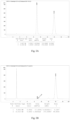
- Fig. 5A-C show the HPLC chromatograms of 23 in the recrystallization method.
- Fig. 5B HPLC of 23 derived from the first recrystallization (>99% e.e.);
- Fig. 5C HPLC of 23 derived from the second recrystallization (99% e.e.).
- the present invention provides a method for the economical and practical synthesis of non-racemic (optically active) ⁇ -amino acids based on an unprecedented stereocontrolled 1,3-nitrogen shift.
- the presented invention provides a method for the economical and practical synthesis of racemic ⁇ -amino acids by performing the 1,3-nitrogen shift in a non-stereocontrolled fashion.
- the method according to the present invention employs abundant and easily accessible carboxylic acids as starting materials, which are first connected to a nitrogenation reagent, followed by a highly regio- and enantioselective for example ruthenium- or iron-catalyzed C(sp 3 )-H amination.
- This straightforward method displays a very broad scope, providing rapid access to optically active ⁇ -amino acids with aryl, allyl, vinyl, propargyl, and alkyl side chains, and also permits stereocontrolled late-stage amination of carboxylic acid-containing drugs and natural products.
- the method according to the present invention combines the advantages of intramolecular (regio- and stereocontrol via intramolecular cyclic transition state) and intermolecular C-H nitrene insertion chemistry (more general, acyclic products) by covalently connecting a nitrene precursor to a carboxylic acid functionality.
- a cyclic transition state facilitates a C(sp 3 )-H amination.
- the 1,3-nitrogen shift is stereocontrolled and provides non-racemic ⁇ -amino acids. This reaction constitutes an unprecedented stereocontrolled 1,3-nitrogen shift and is applied to the catalytic asymmetric synthesis of ⁇ -amino acids ( Figure 1b ). If the catalyst is achiral or racemic, the 1,3-nitrogen shift is non-stereocontrolled and provides racemic ⁇ -amino acids, which are also of interest.
- the carboxylic acid azanyl esters 1a,b are provided in which the nitrogen bears different electron-withdrawing protecting groups, which is established to be beneficial for generating electrophilic nitrene intermediates.
- the catalysts used were "chiral-at-metal" ruthenium complexes in which two bidentate N-(2-pyridyl)-substituted N-heterocyclic carbenes and two acetonitrile ligands are coordinated to a central ruthenium in a C 2 -symmetric fashion (Table 1). 27 Despite all ligands being achiral, the overall chirality required for asymmetric catalysis originates from the stereogenic ruthenium center.
- this class of catalysts feature two vacant coordination sites adjacent to each other (coordination sites of the two labile acetonitrile), which is suitable for the method according to the present invention.
- N N' -Dicyclohexylcarbodiimide (DCC)-induced coupling of readily available carboxylic acids with N- Troc-protected hydroxylamine provided rapid access to a variety of azanyl esters, which were then subjected to the rearrangement under the above reaction conditions (Table 2).
- DCC N' -Dicyclohexylcarbodiimide
- phenyl moiety of phenylacetic acid azanyl ester 1e was functionalized and it was found that the method according to the present invention tolerates a large variety of different substituents in the phenyl ring, affording the corresponding chiral ⁇ -amino acids 3-21 in up to 96% yield and with up to 98% ee (Table 2a).
- Electron-donating functional groups in the phenyl moiety such as methyl ( ⁇ -amino acid 3), methoxy ( ⁇ -amino acids 5), 1,3-dioxole ( ⁇ -amino acid 8), a Fmoc-protected alcohol ( ⁇ -amino acid 9), hydroxymethyl ( ⁇ -amino acid 10), and N -pivaloylamide ( ⁇ -amino acid 19) are tolerated, as are electron-withdrawing substituents such as halogens ( ⁇ -amino acid 11-14), trifluoromethyl ( ⁇ -amino acid 15), nitro ( ⁇ -amino acid 16), acetyl ( ⁇ -amino acid 17), and methoxycarbonyl ( ⁇ -amino acid 18).
- the method according to the present invention also enables the synthesis of the azido ⁇ -amino acid 20 (95% yield and 97% ee) and the alkynyl ⁇ -amino acid 21 (88% yield, 94% ee), both of which are building blocks of interest for click chemistry.
- the stereocontrolled 1,3-nitrogen shift was also applied to the synthesis of ⁇ -aryl amino acids with benzannulated aromatic and heteroaromatic systems ( ⁇ -amino acids 22-25) in 77-92% yield and with 90-96% ee.
- the reaction could be readily scaled up to afford the naphthyl ⁇ -amino acid 23 in gram quantities with high yield (91%) and enantiopurity (95% ee, increased to 99% ee after crystallization protocol, see Figure 3 ).
- the stereocontrolled 1,3-nitrogen shift can also be applied to the late-stage functionalization of bioactive compounds.
- isoxepac, 31 an arylacetic acid derivative with anti-inflammatory and analgesic activity, was converted to the corresponding ⁇ -amino acid 26 in 87% yield and with 98% ee.
- Diclofenac, 32 a pain medication for the treatment of inflammatory diseases, was converted into its azanyl ester and then rearranged to afford ⁇ -amino acid 27 in 54% yield and with 96% ee, which is remarkable considering the presence of an unprotected and sterically hindered aniline moiety in the ortho-position.
- the azanyl ester of the nonsteroidal anti-inflammatory drug naproxen which contains an ( S )-configured stereocenter, was converted to the corresponding ⁇ -amino acid 39 in 86% yield and 99% ee, with virtually complete stereoretention.
- the C-H amination is also applicable to completely non-activated tertiary C(sp 3 )-H bonds, as demonstrated by ⁇ -amino acids 41 and 42.
- Iron catalysis 33 was investigated which has additional economic and environmental benefits. Iron-catalyzed C-H bond aminations through nitrenoid intermediates have been reported, including the (racemic) amination of non-activated aliphatic C(sp 3 )-H bonds. 34 The conversion of azanyl ester 1e to the A-Troc-protected phenylglycine 2e as the initial model reaction to identify an iron catalyst (Table 3).
- the chiral-at-iron complex ⁇ - Fe1 , 35 a lighter homolog of the chiral-at-ruthenium complexes used above (Table 1) and non-heme iron complexes with linear tetradentate N4-donor ligands coordinated in a cis - ⁇ -topological configuration.
- the overall helical topology is similar to the ruthenium catalysts, including the presence of two adjacent labile ligands.
- Substrates with primary (43-50), secondary (51), and tertiary (36) aliphatic side chains underwent amination in 48-75% yield and 85-92% ee.
- the method is also suitable for the late-stage amination of more complex molecules. Accordingly, azanylester formation followed by iron-catalyzed stereocontrolled 1,3-nitrogen shift converted lithocholic acid to amino acid 52 (77% yield, 23:1 dr).
- ⁇ , ⁇ -Disubstituted ⁇ -amino acids are interesting due to their restricted conformational flexibility, increase in hydrophobicity, increased metabolic stability, and increased stability towards racemization and this has been used to develop peptides and proteins with enhanced properties as well as natural product antibiotics.
- the iron-catalyzed protocol can also be used for the amination of tertiary C(sp 3 )-H bonds, which provides non-racemic ⁇ , ⁇ -disubstituted ⁇ -amino acids as shown in Table 4 for the stereocontrolled synthesis of the ⁇ , ⁇ -disubstituted ⁇ -amino acids 53-83 in up to 88% ee.
- the method starts from racemic ⁇ -branched carboxylic acids. After conversion to the respective racemic azanyl esters via a DCC/EDCI-coupling, the iron-catalyzed rearrangement provides in an enantioconvergent 1,3-nitrogen shift the respective enantioenriched ⁇ , ⁇ -disubstituted ⁇ -amino acids.
- the method according to the present invention is not limited to the Troc-protection group.
- Table 5 demonstrates that the method according to the present invention can be applied to the known Boc-protection group. 41
- the base 2,2,6,6-tetramethylpiperidine (0.5 equiv.) is used instead of K 2 CO 3 .
- the method can be applied to the synthesis of ⁇ -deuterated ⁇ -amino acids as shown for one example in the following equation showing the iron-catalyzed synthesis of a Boc-protected ⁇ -deuterated ⁇ -amino acid ( 122 ⁇ 123 ).
- the ⁇ -amino acid which may contain the protecting group can be recrystallized so that the enantiopurity can bee increased.
- a solvent to be used in the recrystallization can be a mixture of ethanol and n-hexane.
- An example of a recrystallization protocol is represented in Fig. 5 .
- the method according to the present invention provides the catalytic enantioselective synthesis of chiral ⁇ -amino acids by nitrene C(sp 3 )-H insertion.
- the method is based on a unique stereocontrolled 1,3-nitrogen shift from one carboxylic acid oxygen to the ⁇ -carbon.
- the method according to the present invention employs abundant and easily accessible carboxylic acids as starting materials. Ligation to a nitrene precursor, followed by intramolecular C-H cleavage through a cyclic transition state, ensures high regio- and stereocontrol in the synthesis of non-racemic chiral ⁇ -amino acids.
- Chiral ruthenium and iron catalysis jointly provide a very broad scope, enabling rapid access to optically active ⁇ -amino acids with aryl, allyl, propargyl (ruthenium catalysis), and non-activated alkyl (iron catalysis) side chains, including ⁇ , ⁇ -disubstituted amino acids by stereoretentive (ruthenium catalysis) or enantioconvergent (iron catalysis) C-H amination.
- the high functional group tolerance of this method also permits the enantioselective late-stage amination of carboxylic acid-containing drugs and natural products.
- this new 1,3-nitrogen migration method is also suitable for synthesizing racemic ⁇ -amino acids in a practical and economical fashion by using inexpensive achiral or racemic catalysts.
- This method according to the present invention will expedite the synthesis of unnatural ⁇ -amino acids, which are important building blocks of peptidomimetic drugs, as well as engineered proteins and enzymes with modulated properties. 42-44
- Boc-protected azanyl esters were prepared by EDCI coupling of carboxylic acids with BocNHOH. The data of three representatives are shown below.
- Enantiopure ⁇ -amino acid 23 could be obtained by recrystallization of the corresponding ammonium salt following a modified literature procedure. 4
- the ammonium salt (166 mg) was mixed with 6 mL n- hexane, and the suspension was heated to gentle reflux. Ethanol was added in 1 mL portions until the solid completely dissolved (3 mL ethanol in total) and then another 6 mL n -hexane was added in one portion under heating. The solution was placed in a -20 °C refrigerator for 16 hours, during which white needles formed. The crystal was collected by filtration and was washed with n -hexane and dried under reduced pressure (47 mg with >99% e.e.).
Landscapes
- Chemical & Material Sciences (AREA)
- Organic Chemistry (AREA)
- Chemical Kinetics & Catalysis (AREA)
- Health & Medical Sciences (AREA)
- General Health & Medical Sciences (AREA)
- Organic Low-Molecular-Weight Compounds And Preparation Thereof (AREA)
Claims (14)
- Verfahren zur Herstellung von α-Aminosäuren und α-deuterierten α-Aminosäuren, umfassend die folgenden Schritte:Bereitstellen von Carbonsäure-Azanylestern, bei denen das N-Atom der Azanylestergruppe durch eine Schutzgruppe geschützt ist, undDurchführen einer 1,3-Stickstoffmigration in Gegenwart eines Katalysators, um die α-Aminosäuren und die α-deuterierten α-Aminosäuren bereitzustellen.
- Verfahren nach Anspruch 1, wobei der Carbonsäure-Azanylester durch Umsetzen der Carbonsäure mit der Verbindung OH-NH-PG hergestellt wird, wobei PG die Schutzgruppe ist.
- Verfahren nach einem der vorhergehenden Ansprüche, wobei die Schutzgruppe eine elektronenziehende Schutzgruppe ist.
- Verfahren nach Anspruch 3, wobei die Schutzgruppe ausgewählt ist aus der Gruppe bestehend aus der CO2Me-Gruppe, der CO2CH2CCl3-Gruppe (Troc) und der Butyloxycarbonylgruppe (Boc), der Benzyloxycarbonylgruppe (Cbz), der Allyloxycarbonylgruppe und anderen Aminschutzgruppen, die ein Carbamat bilden.
- Verfahren nach einem der vorhergehenden Ansprüche, wobei die Carbonsäure mindestens ein Wasserstoffatom am α-C-Atom und eine oder zwei an das α-C-Atom gebundene Gruppen aufweist.
- Verfahren nach einem der vorhergehenden Ansprüche, wobei der Katalysator ein chiraler nicht-racemischer Katalysator ist, der chirale nicht-racemische α-Aminosäuren und chirale nicht-racemische α-deuterierte Aminosäuren in einer stereokontrollierten 1,3-Stickstoffmigration bereitstellt, oder wobei der Katalysator ein achiraler oder racemischer Katalysator ist, der racemische α-Aminosäuren und racemische α-deuterierte Aminosäuren in einer nichtstereokontrollierten 1,3-Stickstoffmigration bereitstellt.
- Verfahren nach Anspruch 6, wobei der chirale nicht-racemische Katalysator ein chiraler nicht-racemischer Rutheniumkatalysator oder ein chiraler nicht-racemischer Eisenkatalysator ist.
- Verfahren nach Anspruch 7, wobei der chirale nicht-racemische Rutheniumkatalysator ein chiraler nicht-racemischer Ruthenium(II)-Katalysator ist oder wobei der chirale nicht-racemische Eisenkatalysator ein chiraler nicht-racemischer Eisen(II)-Katalysator ist.
- Verfahren nach einem der Ansprüche 6 bis 8, wobei der Katalysator zwei monodentate Liganden enthält.
- Verfahren nach Anspruch 9, wobei der monodentate Ligand ausgewählt ist aus der Gruppe bestehend aus Acetonitril, Triflat oder anderen Sulfaten, Acetat oder anderen Carboxylaten, Chlorid, Bromid, Iodid, Pseudohaliden und anderen potentiell labilen monodentaten Liganden.
- Verfahren nach einem der Ansprüche 6 bis 10, wobei der Katalysator entweder zwei bidentate Liganden oder einen tetradentaten Liganden enthält.
- Verfahren nach Anspruch 11, wobei der bidentate Ligand ein C-Atom und ein N-Atom enthält, um an ein Zentralatom zu binden, und der tetradentate Ligand vier N-Atome enthält, um an ein Zentralatom zu binden.
- Verfahren nach einem der Ansprüche 6 bis 12, wobei der Katalysator ausgewählt ist aus der Gruppe bestehend aus RuDMP, RuTMS, RuCF3, RuH, Δ-Fe1, (R,R)-Fe2, (R,R)-Fe3 und (R,R)-FeBIP.
- Verwendung eines Katalysators in dem Verfahren nach einem der Ansprüche 1 bis 13.
Priority Applications (1)
| Application Number | Priority Date | Filing Date | Title |
|---|---|---|---|
| EP22163544.4A EP4249470B1 (de) | 2022-03-22 | 2022-03-22 | Verfahren zur herstellung von alpha-aminosäuren |
Applications Claiming Priority (1)
| Application Number | Priority Date | Filing Date | Title |
|---|---|---|---|
| EP22163544.4A EP4249470B1 (de) | 2022-03-22 | 2022-03-22 | Verfahren zur herstellung von alpha-aminosäuren |
Publications (2)
| Publication Number | Publication Date |
|---|---|
| EP4249470A1 EP4249470A1 (de) | 2023-09-27 |
| EP4249470B1 true EP4249470B1 (de) | 2024-11-13 |
Family
ID=81385105
Family Applications (1)
| Application Number | Title | Priority Date | Filing Date |
|---|---|---|---|
| EP22163544.4A Active EP4249470B1 (de) | 2022-03-22 | 2022-03-22 | Verfahren zur herstellung von alpha-aminosäuren |
Country Status (1)
| Country | Link |
|---|---|
| EP (1) | EP4249470B1 (de) |
-
2022
- 2022-03-22 EP EP22163544.4A patent/EP4249470B1/de active Active
Also Published As
| Publication number | Publication date |
|---|---|
| EP4249470A1 (de) | 2023-09-27 |
Similar Documents
| Publication | Publication Date | Title |
|---|---|---|
| CN102177170B (zh) | 具有三齿配体的新型羰基钌配合物、其制备方法和用途 | |
| WO2007122847A1 (ja) | 有機合成用試薬、及び当該試薬を用いた有機合成反応方法 | |
| CN103080072A (zh) | 制备可用于生产nep抑制剂的中间体的新方法 | |
| US8222452B2 (en) | Method for producing optically active amines | |
| JP4913077B2 (ja) | 光学活性ホモアリルヒドラジノエステル類の製造方法 | |
| Huang et al. | Chiral (phosphine)-(imidazoline) PCN pincer palladium (ii) complexes: Synthesis and application in asymmetric hydrophosphination of 2-alkenoylpyridines with diphenylphosphine | |
| CN101538226A (zh) | 一种具有光学活性的α-羟基-β-苄基-β-氨基酸衍生物的合成方法 | |
| KR101130818B1 (ko) | 이작용성 비스 신코나 알칼로이드 티오우레아 유기 키랄 촉매 화합물을 이용한 아즈락톤으로부터의 키랄 아미노산 제조방법 | |
| Han et al. | Chiral ferrocenyl P, S-ligands for highly efficient copper-catalyzed asymmetric [3+ 2] cycloaddition of azomethine ylides | |
| EP4249470A1 (de) | Verfahren zur herstellung von alpha-aminosäuren | |
| EP1870403A1 (de) | Optisch aktives quaternäres ammoniumsalz mit axialer asymetrie und verfahren zur herstellung einer alpha-aminosäure und eines derivats davon unter anwendung desselben | |
| JP2012082155A (ja) | トリアゾリウム塩及びその製造方法、アジドアルコール並びに不斉反応によるアルキル化オキシインドールの製造方法 | |
| JP5929767B2 (ja) | 窒素原子又は酸素原子を含む環構造を有する芳香族化合物の製造方法 | |
| CN113754605B (zh) | 一种含氮配体及其制备方法和应用 | |
| JP2008253987A (ja) | 金属触媒、及び光学活性α−アミノ酸誘導体の製造方法 | |
| KR102590897B1 (ko) | 키랄 감마-락탐 화합물의 제조방법 및 이를 위한 금속 착체 | |
| EP2269979B1 (de) | Diaminosäurederivat-ausgangsmaterial, verfahren zu dessen herstellung und verfahren zur herstellung eines diaminosäurederivats | |
| EP3705479A1 (de) | Neue amidderivate von cinchona-alkaloiden, verfahren zu ihrer herstellung und ihre verwendung in asymmetrischen phasentransferreaktionen | |
| CN114160206B (zh) | 一种催化合成光学活性吲哚类化合物的催化剂、应用、合成方法及光学活性吲哚类化合物 | |
| CN119874550B (zh) | 一种还原亚胺合成α-氨基酸类化合物的方法及其应用 | |
| JP5344523B2 (ja) | 立体選択的にストレッカー反応を進行させ得る触媒、およびそれを用いたα−アミノニトリル誘導体を立体選択的に製造するための方法 | |
| EP4332089A1 (de) | Verfahren zur herstellung von aminosäuren | |
| JP2015172024A (ja) | 水素結合形成アミド基を持つキラル二環式ジエン配位子 | |
| JP4962924B2 (ja) | 光学活性アルコールの製造方法 | |
| CN114057668B (zh) | 一种氨基保护基手性2-氨基-3-(4-吗啉基苯基)丙酸的合成方法 |
Legal Events
| Date | Code | Title | Description |
|---|---|---|---|
| PUAI | Public reference made under article 153(3) epc to a published international application that has entered the european phase |
Free format text: ORIGINAL CODE: 0009012 |
|
| STAA | Information on the status of an ep patent application or granted ep patent |
Free format text: STATUS: THE APPLICATION HAS BEEN PUBLISHED |
|
| AK | Designated contracting states |
Kind code of ref document: A1 Designated state(s): AL AT BE BG CH CY CZ DE DK EE ES FI FR GB GR HR HU IE IS IT LI LT LU LV MC MK MT NL NO PL PT RO RS SE SI SK SM TR |
|
| STAA | Information on the status of an ep patent application or granted ep patent |
Free format text: STATUS: REQUEST FOR EXAMINATION WAS MADE |
|
| 17P | Request for examination filed |
Effective date: 20240222 |
|
| RBV | Designated contracting states (corrected) |
Designated state(s): AL AT BE BG CH CY CZ DE DK EE ES FI FR GB GR HR HU IE IS IT LI LT LU LV MC MK MT NL NO PL PT RO RS SE SI SK SM TR |
|
| GRAP | Despatch of communication of intention to grant a patent |
Free format text: ORIGINAL CODE: EPIDOSNIGR1 |
|
| STAA | Information on the status of an ep patent application or granted ep patent |
Free format text: STATUS: GRANT OF PATENT IS INTENDED |
|
| RIC1 | Information provided on ipc code assigned before grant |
Ipc: B01J 31/22 20060101ALI20240606BHEP Ipc: B01J 31/18 20060101ALI20240606BHEP Ipc: C07B 59/00 20060101ALI20240606BHEP Ipc: C07B 43/04 20060101ALI20240606BHEP Ipc: C07J 41/00 20060101ALI20240606BHEP Ipc: C07D 333/24 20060101ALI20240606BHEP Ipc: C07D 317/60 20060101ALI20240606BHEP Ipc: C07D 313/12 20060101ALI20240606BHEP Ipc: C07D 215/14 20060101ALI20240606BHEP Ipc: C07D 209/88 20060101ALI20240606BHEP Ipc: C07D 209/28 20060101ALI20240606BHEP Ipc: C07D 209/20 20060101ALI20240606BHEP Ipc: C07C 323/63 20060101ALI20240606BHEP Ipc: C07C 319/20 20060101ALI20240606BHEP Ipc: C07C 271/22 20060101ALI20240606BHEP Ipc: C07C 269/06 20060101AFI20240606BHEP |
|
| INTG | Intention to grant announced |
Effective date: 20240621 |
|
| GRAS | Grant fee paid |
Free format text: ORIGINAL CODE: EPIDOSNIGR3 |
|
| GRAA | (expected) grant |
Free format text: ORIGINAL CODE: 0009210 |
|
| STAA | Information on the status of an ep patent application or granted ep patent |
Free format text: STATUS: THE PATENT HAS BEEN GRANTED |
|
| REG | Reference to a national code |
Ref country code: DE Ref legal event code: R081 Ref document number: 602022007607 Country of ref document: DE Owner name: PHILIPPS-UNIVERSITAET MARBURG, KOERPERSCHAFT D, DE Free format text: FORMER OWNER: ANMELDERANGABEN UNKLAR / UNVOLLSTAENDIG, 80297 MUENCHEN, DE |
|
| AK | Designated contracting states |
Kind code of ref document: B1 Designated state(s): AL AT BE BG CH CY CZ DE DK EE ES FI FR GB GR HR HU IE IS IT LI LT LU LV MC MK MT NL NO PL PT RO RS SE SI SK SM TR |
|
| REG | Reference to a national code |
Ref country code: GB Ref legal event code: FG4D |
|
| REG | Reference to a national code |
Ref country code: CH Ref legal event code: EP |
|
| REG | Reference to a national code |
Ref country code: IE Ref legal event code: FG4D |
|
| REG | Reference to a national code |
Ref country code: DE Ref legal event code: R096 Ref document number: 602022007607 Country of ref document: DE |
|
| P01 | Opt-out of the competence of the unified patent court (upc) registered |
Free format text: CASE NUMBER: APP_62289/2024 Effective date: 20241121 |
|
| REG | Reference to a national code |
Ref country code: LT Ref legal event code: MG9D |
|
| REG | Reference to a national code |
Ref country code: NL Ref legal event code: MP Effective date: 20241113 |
|
| PG25 | Lapsed in a contracting state [announced via postgrant information from national office to epo] |
Ref country code: HR Free format text: LAPSE BECAUSE OF FAILURE TO SUBMIT A TRANSLATION OF THE DESCRIPTION OR TO PAY THE FEE WITHIN THE PRESCRIBED TIME-LIMIT Effective date: 20241113 Ref country code: IS Free format text: LAPSE BECAUSE OF FAILURE TO SUBMIT A TRANSLATION OF THE DESCRIPTION OR TO PAY THE FEE WITHIN THE PRESCRIBED TIME-LIMIT Effective date: 20250313 Ref country code: PT Free format text: LAPSE BECAUSE OF FAILURE TO SUBMIT A TRANSLATION OF THE DESCRIPTION OR TO PAY THE FEE WITHIN THE PRESCRIBED TIME-LIMIT Effective date: 20250313 |
|
| PG25 | Lapsed in a contracting state [announced via postgrant information from national office to epo] |
Ref country code: NL Free format text: LAPSE BECAUSE OF FAILURE TO SUBMIT A TRANSLATION OF THE DESCRIPTION OR TO PAY THE FEE WITHIN THE PRESCRIBED TIME-LIMIT Effective date: 20241113 Ref country code: FI Free format text: LAPSE BECAUSE OF FAILURE TO SUBMIT A TRANSLATION OF THE DESCRIPTION OR TO PAY THE FEE WITHIN THE PRESCRIBED TIME-LIMIT Effective date: 20241113 |
|
| REG | Reference to a national code |
Ref country code: AT Ref legal event code: MK05 Ref document number: 1741612 Country of ref document: AT Kind code of ref document: T Effective date: 20241113 |
|
| PG25 | Lapsed in a contracting state [announced via postgrant information from national office to epo] |
Ref country code: BG Free format text: LAPSE BECAUSE OF FAILURE TO SUBMIT A TRANSLATION OF THE DESCRIPTION OR TO PAY THE FEE WITHIN THE PRESCRIBED TIME-LIMIT Effective date: 20241113 |
|
| PG25 | Lapsed in a contracting state [announced via postgrant information from national office to epo] |
Ref country code: ES Free format text: LAPSE BECAUSE OF FAILURE TO SUBMIT A TRANSLATION OF THE DESCRIPTION OR TO PAY THE FEE WITHIN THE PRESCRIBED TIME-LIMIT Effective date: 20241113 |
|
| PG25 | Lapsed in a contracting state [announced via postgrant information from national office to epo] |
Ref country code: NO Free format text: LAPSE BECAUSE OF FAILURE TO SUBMIT A TRANSLATION OF THE DESCRIPTION OR TO PAY THE FEE WITHIN THE PRESCRIBED TIME-LIMIT Effective date: 20250213 |
|
| PG25 | Lapsed in a contracting state [announced via postgrant information from national office to epo] |
Ref country code: GR Free format text: LAPSE BECAUSE OF FAILURE TO SUBMIT A TRANSLATION OF THE DESCRIPTION OR TO PAY THE FEE WITHIN THE PRESCRIBED TIME-LIMIT Effective date: 20250214 Ref country code: AT Free format text: LAPSE BECAUSE OF FAILURE TO SUBMIT A TRANSLATION OF THE DESCRIPTION OR TO PAY THE FEE WITHIN THE PRESCRIBED TIME-LIMIT Effective date: 20241113 Ref country code: LV Free format text: LAPSE BECAUSE OF FAILURE TO SUBMIT A TRANSLATION OF THE DESCRIPTION OR TO PAY THE FEE WITHIN THE PRESCRIBED TIME-LIMIT Effective date: 20241113 |
|
| PG25 | Lapsed in a contracting state [announced via postgrant information from national office to epo] |
Ref country code: PL Free format text: LAPSE BECAUSE OF FAILURE TO SUBMIT A TRANSLATION OF THE DESCRIPTION OR TO PAY THE FEE WITHIN THE PRESCRIBED TIME-LIMIT Effective date: 20241113 |
|
| PG25 | Lapsed in a contracting state [announced via postgrant information from national office to epo] |
Ref country code: RS Free format text: LAPSE BECAUSE OF FAILURE TO SUBMIT A TRANSLATION OF THE DESCRIPTION OR TO PAY THE FEE WITHIN THE PRESCRIBED TIME-LIMIT Effective date: 20250213 |
|
| PG25 | Lapsed in a contracting state [announced via postgrant information from national office to epo] |
Ref country code: SM Free format text: LAPSE BECAUSE OF FAILURE TO SUBMIT A TRANSLATION OF THE DESCRIPTION OR TO PAY THE FEE WITHIN THE PRESCRIBED TIME-LIMIT Effective date: 20241113 |
|
| PG25 | Lapsed in a contracting state [announced via postgrant information from national office to epo] |
Ref country code: DK Free format text: LAPSE BECAUSE OF FAILURE TO SUBMIT A TRANSLATION OF THE DESCRIPTION OR TO PAY THE FEE WITHIN THE PRESCRIBED TIME-LIMIT Effective date: 20241113 |
|
| PG25 | Lapsed in a contracting state [announced via postgrant information from national office to epo] |
Ref country code: EE Free format text: LAPSE BECAUSE OF FAILURE TO SUBMIT A TRANSLATION OF THE DESCRIPTION OR TO PAY THE FEE WITHIN THE PRESCRIBED TIME-LIMIT Effective date: 20241113 |
|
| PG25 | Lapsed in a contracting state [announced via postgrant information from national office to epo] |
Ref country code: RO Free format text: LAPSE BECAUSE OF FAILURE TO SUBMIT A TRANSLATION OF THE DESCRIPTION OR TO PAY THE FEE WITHIN THE PRESCRIBED TIME-LIMIT Effective date: 20241113 |
|
| PG25 | Lapsed in a contracting state [announced via postgrant information from national office to epo] |
Ref country code: SK Free format text: LAPSE BECAUSE OF FAILURE TO SUBMIT A TRANSLATION OF THE DESCRIPTION OR TO PAY THE FEE WITHIN THE PRESCRIBED TIME-LIMIT Effective date: 20241113 |
|
| PG25 | Lapsed in a contracting state [announced via postgrant information from national office to epo] |
Ref country code: CZ Free format text: LAPSE BECAUSE OF FAILURE TO SUBMIT A TRANSLATION OF THE DESCRIPTION OR TO PAY THE FEE WITHIN THE PRESCRIBED TIME-LIMIT Effective date: 20241113 |
|
| PG25 | Lapsed in a contracting state [announced via postgrant information from national office to epo] |
Ref country code: IT Free format text: LAPSE BECAUSE OF FAILURE TO SUBMIT A TRANSLATION OF THE DESCRIPTION OR TO PAY THE FEE WITHIN THE PRESCRIBED TIME-LIMIT Effective date: 20241113 |
|
| REG | Reference to a national code |
Ref country code: DE Ref legal event code: R097 Ref document number: 602022007607 Country of ref document: DE |
|
| PG25 | Lapsed in a contracting state [announced via postgrant information from national office to epo] |
Ref country code: SE Free format text: LAPSE BECAUSE OF FAILURE TO SUBMIT A TRANSLATION OF THE DESCRIPTION OR TO PAY THE FEE WITHIN THE PRESCRIBED TIME-LIMIT Effective date: 20241113 |
|
| PLBE | No opposition filed within time limit |
Free format text: ORIGINAL CODE: 0009261 |
|
| STAA | Information on the status of an ep patent application or granted ep patent |
Free format text: STATUS: NO OPPOSITION FILED WITHIN TIME LIMIT |
|
| PG25 | Lapsed in a contracting state [announced via postgrant information from national office to epo] |
Ref country code: MC Free format text: LAPSE BECAUSE OF FAILURE TO SUBMIT A TRANSLATION OF THE DESCRIPTION OR TO PAY THE FEE WITHIN THE PRESCRIBED TIME-LIMIT Effective date: 20241113 |
|
| 26N | No opposition filed |
Effective date: 20250814 |
|
| PG25 | Lapsed in a contracting state [announced via postgrant information from national office to epo] |
Ref country code: LU Free format text: LAPSE BECAUSE OF NON-PAYMENT OF DUE FEES Effective date: 20250322 |
|
| REG | Reference to a national code |
Ref country code: BE Ref legal event code: MM Effective date: 20250331 |
|
| PG25 | Lapsed in a contracting state [announced via postgrant information from national office to epo] |
Ref country code: BE Free format text: LAPSE BECAUSE OF NON-PAYMENT OF DUE FEES Effective date: 20250331 |
|
| PG25 | Lapsed in a contracting state [announced via postgrant information from national office to epo] |
Ref country code: IE Free format text: LAPSE BECAUSE OF NON-PAYMENT OF DUE FEES Effective date: 20250322 |
|
| REG | Reference to a national code |
Ref country code: CH Ref legal event code: U11 Free format text: ST27 STATUS EVENT CODE: U-0-0-U10-U11 (AS PROVIDED BY THE NATIONAL OFFICE) Effective date: 20260401 |
|
| PGFP | Annual fee paid to national office [announced via postgrant information from national office to epo] |
Ref country code: GB Payment date: 20260324 Year of fee payment: 5 |
|
| PGFP | Annual fee paid to national office [announced via postgrant information from national office to epo] |
Ref country code: DE Payment date: 20260216 Year of fee payment: 5 |
|
| PGFP | Annual fee paid to national office [announced via postgrant information from national office to epo] |
Ref country code: FR Payment date: 20260324 Year of fee payment: 5 |
|
| PG25 | Lapsed in a contracting state [announced via postgrant information from national office to epo] |
Ref country code: CY Free format text: LAPSE BECAUSE OF FAILURE TO SUBMIT A TRANSLATION OF THE DESCRIPTION OR TO PAY THE FEE WITHIN THE PRESCRIBED TIME-LIMIT Effective date: 20241113 |
|
| PG25 | Lapsed in a contracting state [announced via postgrant information from national office to epo] |
Ref country code: LT Free format text: LAPSE BECAUSE OF FAILURE TO SUBMIT A TRANSLATION OF THE DESCRIPTION OR TO PAY THE FEE WITHIN THE PRESCRIBED TIME-LIMIT Effective date: 20241113 |
|
| PG25 | Lapsed in a contracting state [announced via postgrant information from national office to epo] |
Ref country code: TR Free format text: LAPSE BECAUSE OF FAILURE TO SUBMIT A TRANSLATION OF THE DESCRIPTION OR TO PAY THE FEE WITHIN THE PRESCRIBED TIME-LIMIT Effective date: 20241113 |
|
| PGFP | Annual fee paid to national office [announced via postgrant information from national office to epo] |
Ref country code: CH Payment date: 20260401 Year of fee payment: 5 |