EP4240580B1 - Verfahren zum einbauen einer nachführvorrichtung in einen körper aus elastomerem material und nach diesem verfahren hergestellter nachführkörper - Google Patents
Verfahren zum einbauen einer nachführvorrichtung in einen körper aus elastomerem material und nach diesem verfahren hergestellter nachführkörper Download PDFInfo
- Publication number
- EP4240580B1 EP4240580B1 EP21737162.4A EP21737162A EP4240580B1 EP 4240580 B1 EP4240580 B1 EP 4240580B1 EP 21737162 A EP21737162 A EP 21737162A EP 4240580 B1 EP4240580 B1 EP 4240580B1
- Authority
- EP
- European Patent Office
- Prior art keywords
- insert
- trackable
- semi
- finished product
- providing
- Prior art date
- Legal status (The legal status is an assumption and is not a legal conclusion. Google has not performed a legal analysis and makes no representation as to the accuracy of the status listed.)
- Active
Links
Images

Classifications
-
- A—HUMAN NECESSITIES
- A63—SPORTS; GAMES; AMUSEMENTS
- A63B—APPARATUS FOR PHYSICAL TRAINING, GYMNASTICS, SWIMMING, CLIMBING, OR FENCING; BALL GAMES; TRAINING EQUIPMENT
- A63B37/00—Solid balls; Rigid hollow balls; Marbles
- A63B37/0003—Golf balls
- A63B37/005—Cores
- A63B37/0051—Materials other than polybutadienes; Constructional details
- A63B37/0055—Materials other than polybutadienes; Constructional details with non-spherical insert(s)
-
- A—HUMAN NECESSITIES
- A63—SPORTS; GAMES; AMUSEMENTS
- A63B—APPARATUS FOR PHYSICAL TRAINING, GYMNASTICS, SWIMMING, CLIMBING, OR FENCING; BALL GAMES; TRAINING EQUIPMENT
- A63B37/00—Solid balls; Rigid hollow balls; Marbles
- A63B37/0003—Golf balls
- A63B37/007—Characteristics of the ball as a whole
- A63B37/0072—Characteristics of the ball as a whole with a specified number of layers
- A63B37/0074—Two piece balls, i.e. cover and core
-
- A—HUMAN NECESSITIES
- A63—SPORTS; GAMES; AMUSEMENTS
- A63B—APPARATUS FOR PHYSICAL TRAINING, GYMNASTICS, SWIMMING, CLIMBING, OR FENCING; BALL GAMES; TRAINING EQUIPMENT
- A63B43/00—Balls with special arrangements
- A63B43/004—Balls with special arrangements electrically conductive, e.g. for automatic arbitration
-
- A—HUMAN NECESSITIES
- A63—SPORTS; GAMES; AMUSEMENTS
- A63B—APPARATUS FOR PHYSICAL TRAINING, GYMNASTICS, SWIMMING, CLIMBING, OR FENCING; BALL GAMES; TRAINING EQUIPMENT
- A63B45/00—Apparatus or methods for manufacturing balls
-
- B—PERFORMING OPERATIONS; TRANSPORTING
- B29—WORKING OF PLASTICS; WORKING OF SUBSTANCES IN A PLASTIC STATE IN GENERAL
- B29C—SHAPING OR JOINING OF PLASTICS; SHAPING OF MATERIAL IN A PLASTIC STATE, NOT OTHERWISE PROVIDED FOR; AFTER-TREATMENT OF THE SHAPED PRODUCTS, e.g. REPAIRING
- B29C70/00—Shaping composites, i.e. plastics material comprising reinforcements, fillers or preformed parts, e.g. inserts
- B29C70/04—Shaping composites, i.e. plastics material comprising reinforcements, fillers or preformed parts, e.g. inserts comprising reinforcements only, e.g. self-reinforcing plastics
- B29C70/06—Fibrous reinforcements only
- B29C70/10—Fibrous reinforcements only characterised by the structure of fibrous reinforcements, e.g. hollow fibres
- B29C70/16—Fibrous reinforcements only characterised by the structure of fibrous reinforcements, e.g. hollow fibres using fibres of substantial or continuous length
- B29C70/22—Fibrous reinforcements only characterised by the structure of fibrous reinforcements, e.g. hollow fibres using fibres of substantial or continuous length oriented in at least two directions forming a two-dimensional [2D] structure
-
- B—PERFORMING OPERATIONS; TRANSPORTING
- B29—WORKING OF PLASTICS; WORKING OF SUBSTANCES IN A PLASTIC STATE IN GENERAL
- B29C—SHAPING OR JOINING OF PLASTICS; SHAPING OF MATERIAL IN A PLASTIC STATE, NOT OTHERWISE PROVIDED FOR; AFTER-TREATMENT OF THE SHAPED PRODUCTS, e.g. REPAIRING
- B29C70/00—Shaping composites, i.e. plastics material comprising reinforcements, fillers or preformed parts, e.g. inserts
- B29C70/68—Shaping composites, i.e. plastics material comprising reinforcements, fillers or preformed parts, e.g. inserts by incorporating or moulding on preformed parts, e.g. inserts or layers, e.g. foam blocks
- B29C70/681—Component parts, details or accessories; Auxiliary operations
- B29C70/682—Preformed parts characterised by their structure, e.g. form
-
- B—PERFORMING OPERATIONS; TRANSPORTING
- B29—WORKING OF PLASTICS; WORKING OF SUBSTANCES IN A PLASTIC STATE IN GENERAL
- B29C—SHAPING OR JOINING OF PLASTICS; SHAPING OF MATERIAL IN A PLASTIC STATE, NOT OTHERWISE PROVIDED FOR; AFTER-TREATMENT OF THE SHAPED PRODUCTS, e.g. REPAIRING
- B29C70/00—Shaping composites, i.e. plastics material comprising reinforcements, fillers or preformed parts, e.g. inserts
- B29C70/88—Shaping composites, i.e. plastics material comprising reinforcements, fillers or preformed parts, e.g. inserts characterised primarily by possessing specific properties, e.g. electrically conductive or locally reinforced
-
- B—PERFORMING OPERATIONS; TRANSPORTING
- B29—WORKING OF PLASTICS; WORKING OF SUBSTANCES IN A PLASTIC STATE IN GENERAL
- B29D—PRODUCING PARTICULAR ARTICLES FROM PLASTICS OR FROM SUBSTANCES IN A PLASTIC STATE
- B29D99/00—Subject matter not provided for in other groups of this subclass
- B29D99/0042—Producing plain balls
-
- D—TEXTILES; PAPER
- D04—BRAIDING; LACE-MAKING; KNITTING; TRIMMINGS; NON-WOVEN FABRICS
- D04B—KNITTING
- D04B1/00—Weft knitting processes for the production of fabrics or articles not dependent on the use of particular machines; Fabrics or articles defined by such processes
- D04B1/14—Other fabrics or articles characterised primarily by the use of particular thread materials
- D04B1/16—Other fabrics or articles characterised primarily by the use of particular thread materials synthetic threads
-
- D—TEXTILES; PAPER
- D04—BRAIDING; LACE-MAKING; KNITTING; TRIMMINGS; NON-WOVEN FABRICS
- D04B—KNITTING
- D04B1/00—Weft knitting processes for the production of fabrics or articles not dependent on the use of particular machines; Fabrics or articles defined by such processes
- D04B1/22—Weft knitting processes for the production of fabrics or articles not dependent on the use of particular machines; Fabrics or articles defined by such processes specially adapted for knitting goods of particular configuration
-
- D—TEXTILES; PAPER
- D04—BRAIDING; LACE-MAKING; KNITTING; TRIMMINGS; NON-WOVEN FABRICS
- D04B—KNITTING
- D04B21/00—Warp knitting processes for the production of fabrics or articles not dependent on the use of particular machines; Fabrics or articles defined by such processes
- D04B21/14—Fabrics characterised by the incorporation by knitting, in one or more thread, fleece, or fabric layers, of reinforcing, binding, or decorative threads; Fabrics incorporating small auxiliary elements, e.g. for decorative purposes
- D04B21/16—Fabrics characterised by the incorporation by knitting, in one or more thread, fleece, or fabric layers, of reinforcing, binding, or decorative threads; Fabrics incorporating small auxiliary elements, e.g. for decorative purposes incorporating synthetic threads
-
- D—TEXTILES; PAPER
- D04—BRAIDING; LACE-MAKING; KNITTING; TRIMMINGS; NON-WOVEN FABRICS
- D04B—KNITTING
- D04B21/00—Warp knitting processes for the production of fabrics or articles not dependent on the use of particular machines; Fabrics or articles defined by such processes
- D04B21/20—Warp knitting processes for the production of fabrics or articles not dependent on the use of particular machines; Fabrics or articles defined by such processes specially adapted for knitting articles of particular configuration
-
- A—HUMAN NECESSITIES
- A63—SPORTS; GAMES; AMUSEMENTS
- A63B—APPARATUS FOR PHYSICAL TRAINING, GYMNASTICS, SWIMMING, CLIMBING, OR FENCING; BALL GAMES; TRAINING EQUIPMENT
- A63B2225/00—Miscellaneous features of sport apparatus, devices or equipment
- A63B2225/50—Wireless data transmission, e.g. by radio transmitters or telemetry
-
- A—HUMAN NECESSITIES
- A63—SPORTS; GAMES; AMUSEMENTS
- A63B—APPARATUS FOR PHYSICAL TRAINING, GYMNASTICS, SWIMMING, CLIMBING, OR FENCING; BALL GAMES; TRAINING EQUIPMENT
- A63B2225/00—Miscellaneous features of sport apparatus, devices or equipment
- A63B2225/50—Wireless data transmission, e.g. by radio transmitters or telemetry
- A63B2225/54—Transponders, e.g. RFID
-
- B—PERFORMING OPERATIONS; TRANSPORTING
- B29—WORKING OF PLASTICS; WORKING OF SUBSTANCES IN A PLASTIC STATE IN GENERAL
- B29K—INDEXING SCHEME ASSOCIATED WITH SUBCLASSES B29B, B29C OR B29D, RELATING TO MOULDING MATERIALS OR TO MATERIALS FOR MOULDS, REINFORCEMENTS, FILLERS OR PREFORMED PARTS, e.g. INSERTS
- B29K2021/00—Use of unspecified rubbers as moulding material
-
- B—PERFORMING OPERATIONS; TRANSPORTING
- B29—WORKING OF PLASTICS; WORKING OF SUBSTANCES IN A PLASTIC STATE IN GENERAL
- B29K—INDEXING SCHEME ASSOCIATED WITH SUBCLASSES B29B, B29C OR B29D, RELATING TO MOULDING MATERIALS OR TO MATERIALS FOR MOULDS, REINFORCEMENTS, FILLERS OR PREFORMED PARTS, e.g. INSERTS
- B29K2301/00—Use of unspecified macromolecular compounds as reinforcement
- B29K2301/12—Thermoplastic materials
-
- B—PERFORMING OPERATIONS; TRANSPORTING
- B29—WORKING OF PLASTICS; WORKING OF SUBSTANCES IN A PLASTIC STATE IN GENERAL
- B29K—INDEXING SCHEME ASSOCIATED WITH SUBCLASSES B29B, B29C OR B29D, RELATING TO MOULDING MATERIALS OR TO MATERIALS FOR MOULDS, REINFORCEMENTS, FILLERS OR PREFORMED PARTS, e.g. INSERTS
- B29K2313/00—Use of textile products or fabrics as reinforcement
-
- B—PERFORMING OPERATIONS; TRANSPORTING
- B29—WORKING OF PLASTICS; WORKING OF SUBSTANCES IN A PLASTIC STATE IN GENERAL
- B29L—INDEXING SCHEME ASSOCIATED WITH SUBCLASS B29C, RELATING TO PARTICULAR ARTICLES
- B29L2031/00—Other particular articles
- B29L2031/54—Balls
- B29L2031/546—Golf balls
-
- D—TEXTILES; PAPER
- D10—INDEXING SCHEME ASSOCIATED WITH SUBLASSES OF SECTION D, RELATING TO TEXTILES
- D10B—INDEXING SCHEME ASSOCIATED WITH SUBLASSES OF SECTION D, RELATING TO TEXTILES
- D10B2401/00—Physical properties
- D10B2401/18—Physical properties including electronic components
-
- D—TEXTILES; PAPER
- D10—INDEXING SCHEME ASSOCIATED WITH SUBLASSES OF SECTION D, RELATING TO TEXTILES
- D10B—INDEXING SCHEME ASSOCIATED WITH SUBLASSES OF SECTION D, RELATING TO TEXTILES
- D10B2507/00—Sport; Military
- D10B2507/08—Balls
Definitions
- the present invention relates to a method for incorporating a tracking device within a body of elastomeric material, in particular rubber, making such a body trackable.
- the present invention further relates to a generic trackable body, made with such a method, and in particular a trackable golf ball also made with the aforesaid method.
- elastomeric material body means a generic artefact, or a portion thereof, of elastomeric material which, in use, needs to be tracked.
- the issue of trackability is important for reconstructing the history of the artefact and/or for determining the origin of the raw materials and/or for reconstructing the processes used to obtain it.
- Such a need mainly arises from the intention to prevent safety problems related to the possible non-conformity of large-scale manufactured items as well as from the need to maintain useful information associated with the product during the useful life thereof.
- labels are applied, generally with adhesives, on the surface of the artefact on which the aforementioned barcode is obtained.
- a further system to associate the information with the product is to incorporate an RFID tag within the product.
- the RFID tags are inserted within the artefact during the production process. This operation ensures durability over time but is not applicable to artefacts made of elastomeric materials which, in use, are subject to mechanical stresses and/or deformations.
- the RFID tag In fact, in the event of strong and/or prolonged mechanical stresses and/or deformations, the RFID tag, and in particular the antenna of the RFID tag, are subject to possible damage and breakage.
- the artefact into which the RFID tag is inserted is also subject to possible damage and breakage, as the RFID tag causes discontinuities therein.
- EP1547824 A2 discloses a method for incorporating a tracking device within a tire of elastomeric material, comprising the steps of providing a semi-finished tire made of a raw rubber, providing a tracking device, providing an insert, joining by means of textile technique said tracking device and said insert so as to obtain a trackable insert, providing a mould, inserting said semi-finished tire and said trackable insert into said mould, obtaining a trackable body by moulding said semi-finished tire together with said trackable insert and a curing procedure.
- the technical task of the present invention is to propose a method for incorporating a tracking device within a body of elastomeric material as well as a trackable body, and in particular a golf ball, in which a tracking device is incorporated by means of such a method, which overcome at least some of the drawbacks of the prior art mentioned above.
- an object of the present invention is to provide a method for incorporating a tracking device inside a body of elastomeric material as well as a trackable body and a trackable golf ball such as to resist mechanical stresses and/or deformations to which they are normally subjected, in use, during the useful life thereof in order to maintain the integrity of a tracking device contained within the trackable body.
- a further object of the present invention is to provide a method for incorporating a tracking device within a body of elastomeric material as well as a trackable body and a trackable golf ball, such as to make the tracking device capable of resisting the mechanical stresses and/or deformations to which it is subject during the useful life thereof.
- a further object of the present invention is to provide a method for incorporating a tracking device within a body of elastomeric material as well as a trackable body and a trackable golf ball, such as not to alter the performance and/or technical features of the trackable body or the trackable golf ball.
- reference numeral 1 globally indicates a method for incorporating a tracking device 200 within a body of elastomeric material, in accordance with the present invention.
- the method 1 comprises a step "a" which includes providing a semi-finished product made of a raw elastomeric material.
- thermoplastic polymer means one or more portions of a given amount of raw elastomeric material, preferably rubber or a thermoplastic polymer.
- the term "semi-finished product” means one or more portions of such a given amount of raw elastomeric material already pre-shaped to be inserted into a mould, as will be seen in the following description.
- the method 1 comprises a step "b" of providing a tracking device 200.
- the step "b” includes providing an RFID tag, comprising a chip 201 and an antenna 202, associated with the chip 201, in which said antenna 202 is made of a ductile material and in a threadlike shape.
- step "b" includes providing a tracking device 200 of technology equivalent to the RFID tag.
- the tracking device 200 may be a passive or an active type device. In other words, the tracking device 200 can operate only as a receiver or transceiver.
- the method 1 further includes a step "c" which includes providing an insert 100.
- the step “c” includes providing an insert 100 consisting at least partially of raw elastomeric material.
- the step “c” includes providing an insert 100 entirely consisting of raw elastomeric material.
- the step "c" includes providing an insert 100 consisting at least partially or entirely of the same material with which the aforementioned semi-finished product is made.
- the method 1 includes a step "d" of joining the tracking device 200 and the insert 100 so as to obtain a trackable insert 300 by means of textile technique.
- textile technique refers to a technique for joining and/or uniting two or more bodies having relevance to the textile arts, such as sewing, weaving and the like.
- Such joining and/or uniting of two or more bodies may further require a further means adapted to mutually fix the two or more bodies, such as occurs in sewing with threads.
- the method 1 includes that in step "c" an insert 100 comprising a support in raw elastomeric material, preferably rubber or a thermoplastic polymer, is provided.
- the step “c” includes providing a support having a substantially planar shape while the step “d” includes sewing the RFID tag on the aforesaid support.
- the step "d" includes sewing the RFID tag on the aforesaid support by using thermoplastic threads, preferably made of rubber, even more preferably made of the same material as the support.
- the RFID tag is sewn on the support so that the chip 201 and the antenna 202 are arranged on one face of the support and so as to be substantially coplanar to the support itself.
- At least one of the antenna 202 and chip 201 is sewn to the support.
- only the antenna 202 may be sewn or only the chip 201 may be sewn.
- both antenna 2020 and chip 201 may be sewn
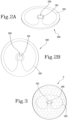
- the chip 201 is arranged in the centre of the support and is at least partially incorporated in a seat made on the support itself while the antenna 202 may be arranged so as to be positioned in a peripheral portion of the support, as clearly visible in the appended drawings.
- the step "c" includes providing a plurality of thermoplastic threads while the step “d” includes weaving the plurality of thermoplastic threads with the antenna 202 of the RFID tag to obtain a knit thermoplastic fabric in which one fibre is formed by the antenna 202 of the RFID tag.
- thermoplastic fabric into which the RFID tag is inserted is obtained.
- the chip 201 may be arranged in the centre of the fabric, which extends around or to cover the chip 201 itself.
- the step "c" includes providing a plurality of thermoplastic threads while the step “d” includes weaving the plurality of thermoplastic threads to obtain a knit thermoplastic fabric on which the RFID tag is sewn.
- thermoplastic fabric onto which the RFID tag is sewn is obtained.
- At least one of antenna 202 and chip 201 is sewn to the knit thermoplastic.
- only the antenna 202 may be sewn or only the chip 201 may be sewn.
- both antenna 2020 and chip 201 may be sewn
- the chip 201 may be arranged in the centre of the fabric.
- the method 1 includes a step "e" of providing a mould.
- the step "e” includes providing a compression mould.
- the method 1 includes a step "f" of inserting the semi-finished product and the trackable insert 300 into the mould.
- step "f" the semi-finished product and the trackable insert 300 are arranged in the mould according to a mutual positioning which depends on the shape of the semi-finished product and/or the shape of the trackable insert 300.
- the step "b" of providing a semi-finished product may include providing a semi-finished product of substantially rough shape and obtaining a cavity and/or a cut in the semi-finished product itself.
- the step "f" of inserting the semi-finished product and the trackable insert 300 into the mould may comprise a sub-step in which the trackable insert 300 is inserted into the cavity and/or cut such that the trackable insert 300 is arranged in an inner and preferably central portion of the semi-finished product.
- the step "b" of providing a semi-finished product may include providing a lower portion and an upper portion of the semi-finished product.
- next step "f" of inserting the semi-finished product and the trackable insert 300 into a mould may comprise a sub-step in which the trackable insert 300 is interposed between the bottom portion and the top portion.
- the method 1 includes a step "g" of obtaining a trackable body by moulding the semi-finished product together with the trackable insert 300.
- the semi-finished product together with the trackable insert 300 is compressed into a mould under a certain pressure so as to make the trackable insert 300 integral with the semi-finished product.
- the step “g” comprises a sub-step “g'” of vulcanizing the semi-finished product together with the trackable insert 300.
- the semi-finished product together with the trackable insert 300 are brought and maintained at a temperature between 150°C and 220°C, even more preferably they are brought and maintained at a temperature of 200°C.
- said sub-step “g” has a duration between 1 minute and 60 minutes, preferably said sub-step “g” has a duration of 10 minutes.
- the textile technique used to join the tracking device 200 to an insert 100 consisting substantially of elastomeric material substantially allows the trackable insert 300 to shape itself seamlessly to the semi-finished product in the moulding step "g", and in particular in the vulcanizing sub-step "g"', and at the same time allows the tracking device 200, and in particular the antenna 202, to be uniformly incorporated into the elastomeric material, going to accommodate the deformations of the trackable body during the mechanical stresses and/or during the deformations which the trackable body undergoes during the useful life thereof without the danger of being damaged or broken.
- the present invention also relates to a trackable body comprising a body of elastomeric material into which the tracking device 200 is incorporated by the above-described method 1.
- the trackable body can be a generic artefact, or a portion of an artefact, of elastomeric material which needs to be tracked for any application.
- the trackable body may be a trackable golf ball "P".
- said trackable golf ball “P” comprises a core made by the aforesaid method 1 and an outer shell operatively arranged to cover the core.
- the present invention overcomes the drawbacks of the known art by ensuring a method 1 for incorporating a tracking device 200 within a body of elastomeric material, as well as a trackable body and in particular a trackable golf ball "P" capable of withstanding mechanical stresses to which, normally such an elastomeric body is subjected in use during the useful life thereof.
- Such a result is achieved by using a trackable insert 300 consisting of a base of elastomeric material which during the moulding process becomes an integral part of the semi-finished product in which it is inserted, ensuring the absence of discontinuities and avoiding the aforementioned known problems.
- a further object achieved is that of providing a method 1 for incorporating a tracking device 200 within a body of elastomeric material, as well as a trackable body and in particular a trackable golf ball "P" which ensure the substantial integrity of the tracking device 200 incorporated within the elastomeric body.
- the textile technique ensures a better insertion of the tracking device 200, and in particular of the antenna 202, which seamlessly fits inside the body, going to accommodate the deformations and mechanical stresses which the trackable body undergoes during the useful life thereof.
- a further object achieved is to provide a method 1 for incorporating a tracking device 200 within a body of elastomeric material, as well as a trackable body and in particular a trackable golf ball "P" which ensure the normal operation and performance of the trackable elastomeric body.
- the trackable body does not have internal discontinuities and since the tracking device 200 is substantially positioned in an internal portion thereof, the essential structure of the trackable body is not altered.
Landscapes
- Engineering & Computer Science (AREA)
- Health & Medical Sciences (AREA)
- General Health & Medical Sciences (AREA)
- Physical Education & Sports Medicine (AREA)
- Textile Engineering (AREA)
- Mechanical Engineering (AREA)
- Chemical & Material Sciences (AREA)
- Composite Materials (AREA)
- Materials Engineering (AREA)
- Injection Moulding Of Plastics Or The Like (AREA)
- Casting Or Compression Moulding Of Plastics Or The Like (AREA)
Claims (11)
- Verfahren (1) zum Einbauen einer Nachführvorrichtung (200) in einen Körper aus elastomerem Material, umfassend die folgenden Schritte:a) Bereitstellen eines halbfertigen Produkts aus einem elastomeren Rohmaterial, vorzugsweise Kautschuk oder einem Thermoplast-Polymer;b) Bereitstellen einer Nachführvorrichtung (200);c) Bereitstellen eines Einsatzes (100);d) Zusammenfügen der Nachführvorrichtung (200) und des Einsatzes (100) mittels einer Textiltechnik, sodass ein nachführbarer Einsatz (300) hergestellt wird, wobei der Schritt (c) zum Bereitstellen des Einsatzes (100) das Bereitstellen einer Stütze aus elastomerem Material, umfassend Kautschuk oder einen Thermoplast-Polymer, einschließt;e) Bereitstellen einer Form;f) Einsetzen des halbfertigen Produkts und des nachführbaren Einsatzes (300) in die Form;g) Herstellen eines Nachführkörpers durch Formen des halbfertigen Produkts zusammen mit dem nachführbaren Einsatz (300), indem der nachführbare Einsatz (300) fest mit dem halbfertigen Produkt verbunden wird, wobei der Schritt (g) zum Herstellen eines Nachführkörpers durch Formen des halbfertigen Produkts zusammen mit dem nachführbaren Einsatz (300) einen Unterschritt (g') zum Vulkanisieren des halbfertigen Produkts zusammen mit dem nachführbaren Einsatz (300) umfasst.
- Verfahren (1) nach Anspruch 1, wobei der Schritt (b) zum Bereitstellen einer Nachführvorrichtung (200) das Bereitstellen eines RFID-Tags, umfassend einen Chip (201) und eine Antenne (202), die mit dem Chip (201) assoziiert ist, bestehend aus einem verformbaren Material und in einer fadenähnlichen Form, einschließt.
- Verfahren (1) nach Anspruch 2, wobei der Schritt (d) zum Zusammenfügen der Nachführvorrichtung (200) und des Einsatzes (100) das Heften des RFID-Tags auf den Einsatz (100) einschließt.
- Verfahren (1) nach Anspruch 2, wobei der Schritt (c) zum Bereitstellen des Einsatzes (100) das Bereitstellen einer Vielzahl von Thermoplast-Fäden einschließt.
- Verfahren (1) nach Anspruch 4, wobei der Schritt (d) zum Zusammenfügen der Nachführvorrichtung (200) und des Einsatzes (100) das Verweben der Vielzahl von Thermoplast-Fäden mit der Antenne (202) einschließt, wodurch ein Thermoplast-Strickgewebe hergestellt wird, bei dem eine Faser durch die Antenne (202) geformt ist.
- Verfahren nach Anspruch 4, wobei der Schritt (d) zum Zusammenfügen der Nachführvorrichtung (200) und des Einsatzes (100) das Verweben der Vielzahl von Thermoplast-Fäden einschließt, um ein Thermoplast-Strickgewebe herzustellen, auf das das RFID-Tag geheftet ist.
- Verfahren (1) nach einem der vorhergehenden Ansprüche, wobei der Schritt (a) zum Bereitstellen eines halbfertigen Produkts das Bereitstellen eines halbfertigen Produkts mit einer im Wesentlichen rohen Form und das Herstellen eines Hohlraums und/oder eines Einschnitts im halbfertigen Produkt beinhaltet, und wobei der Schritt (f) zum Einsetzen des halbfertigen Produkts und des nachführbaren Einsatzes (300) in eine Form einen Unterschritt zum Einsetzen des nachführbaren Einsatzes (300) in den Hohlraum und/oder den Einschnitt umfasst, sodass der nachführbare Einsatz (300) in einem internen und vorzugsweise mittleren Abschnitt des halbfertigen Produkts angeordnet ist.
- Verfahren (1) nach einem der vorhergehenden Ansprüche 1 bis 6, wobei der Schritt (a) zum Bereitstellen eines halbfertigen Produkts das Bereitstellen eines unteren Abschnitts und eines oberen Abschnitts des halbfertigen Produkts umfasst und wobei der Schritt (f) zum Einsetzen des halbfertigen Produkts und des nachführbaren Einsatzes (300) in eine Form einen Unterschritt zum Einfügen des nachführbaren Einsatzes (300) zwischen den unteren Abschnitt und den oberen Abschnitt umfasst.
- Verfahren (1) nach einem der vorhergehenden Ansprüche, wobei der Schritt (e) zum Bereitstellen einer Form das Bereitstellen einer Pressform beinhaltet.
- Nachführkörper, umfassend einen Körper aus elastomerem Material, in dem eine Nachführvorrichtung (200) mittels eines Verfahrens nach einem der vorhergehenden Ansprüche 1 bis 9 integriert ist.
- Nachführbarer Golfball (P), umfassend einen Kern, der mittels eines Verfahrens nach einem der Ansprüche 1 bis 9 hergestellt ist, und eine Außenhülle, die betriebswirksam angeordnet ist, um den Kern zu bedecken.
Applications Claiming Priority (2)
| Application Number | Priority Date | Filing Date | Title |
|---|---|---|---|
| IT202000026116 | 2020-11-03 | ||
| PCT/IB2021/055440 WO2022096945A1 (en) | 2020-11-03 | 2021-06-21 | Method for incorporating a tracking device within a body of elastomeric material and trackable body obtained thereby |
Publications (3)
| Publication Number | Publication Date |
|---|---|
| EP4240580A1 EP4240580A1 (de) | 2023-09-13 |
| EP4240580C0 EP4240580C0 (de) | 2024-10-30 |
| EP4240580B1 true EP4240580B1 (de) | 2024-10-30 |
Family
ID=74194913
Family Applications (1)
| Application Number | Title | Priority Date | Filing Date |
|---|---|---|---|
| EP21737162.4A Active EP4240580B1 (de) | 2020-11-03 | 2021-06-21 | Verfahren zum einbauen einer nachführvorrichtung in einen körper aus elastomerem material und nach diesem verfahren hergestellter nachführkörper |
Country Status (4)
| Country | Link |
|---|---|
| US (1) | US20240042284A1 (de) |
| EP (1) | EP4240580B1 (de) |
| ES (1) | ES2995607T3 (de) |
| WO (1) | WO2022096945A1 (de) |
Family Cites Families (2)
| Publication number | Priority date | Publication date | Assignee | Title |
|---|---|---|---|---|
| GB9915331D0 (en) * | 1999-06-30 | 1999-09-01 | World Golf Systems Limited | Golf balls |
| US7104298B2 (en) * | 2003-12-22 | 2006-09-12 | The Goodyear Tire & Rubber Company | Tire having antenna attached to elastic fiber textile strip and method of mounting antenna assembly to tire |
-
2021
- 2021-06-21 EP EP21737162.4A patent/EP4240580B1/de active Active
- 2021-06-21 WO PCT/IB2021/055440 patent/WO2022096945A1/en not_active Ceased
- 2021-06-21 ES ES21737162T patent/ES2995607T3/es active Active
- 2021-06-21 US US18/251,487 patent/US20240042284A1/en not_active Abandoned
Also Published As
| Publication number | Publication date |
|---|---|
| EP4240580C0 (de) | 2024-10-30 |
| WO2022096945A1 (en) | 2022-05-12 |
| EP4240580A1 (de) | 2023-09-13 |
| ES2995607T3 (en) | 2025-02-10 |
| US20240042284A1 (en) | 2024-02-08 |
Similar Documents
| Publication | Publication Date | Title |
|---|---|---|
| EP1799031B1 (de) | Ohrmarkenelement und verfahren zur herstellung eines ohrmarkenelements | |
| US7423523B2 (en) | Composite ply layup using electronically identifiable tags | |
| EP3756909B1 (de) | Reifen versehem mit einer elektronischen gerät und herstellungsverfahren dafür | |
| US8142600B2 (en) | Method for mounting a tag in a tire sidewall | |
| EP3492289B1 (de) | Behälterstruktur zur befestigung von sensoren an reifen und verfahren zur herstellung einer reifenbehälterstruktur | |
| EP2671193B1 (de) | Etikett zur bereitstellung von informationen über ein mit dem etikett assoziiertes objekt und herstellungsverfahren für das etikett | |
| US8439090B2 (en) | Tyre equipped for attaching an object to the wall thereof and fastener therefor | |
| US9470352B2 (en) | RFID and product labelling integrated in knit composite tubes for fluid delivery system | |
| JP5252351B2 (ja) | ゴム製rfidタグの製造方法 | |
| JP4723818B2 (ja) | Icタグ取り付け方法、icタグ付き物品、及びicタグ | |
| EP4240580B1 (de) | Verfahren zum einbauen einer nachführvorrichtung in einen körper aus elastomerem material und nach diesem verfahren hergestellter nachführkörper | |
| JP2008009987A (ja) | カーペットのためのrfidタグシステム | |
| CN1330887C (zh) | 用于万向球接头的轴承套及该轴承套的制造方法 | |
| US11590027B2 (en) | Metal-detectable lens assemblies and protective eyewear including same | |
| JP7706311B2 (ja) | 非空気圧タイヤ | |
| US20240180748A1 (en) | Metal-detectable lens assemblies and protective eyewear including same | |
| EP4255742B1 (de) | Verfahren zur herstellung einer elektronischen vorrichtung für einen gummiartikel | |
| EP0614623A1 (de) | Zehenkappe für Sicherheitsschuhe | |
| US10857743B2 (en) | Method for producing fiber-reinforced plastic components | |
| EP4072840B1 (de) | Verfahren zum zuordnen einer identifikationsinformation mit einem reifen während dessen fertigung, und vorrichtung zu diesem verfahren | |
| CN100562248C (zh) | 耳标元件和用于生产耳标元件的方法 | |
| JP7699531B2 (ja) | タイヤ、及びタイヤ製造方法 | |
| RU2804571C2 (ru) | Способ изготовления электронного устройства для резинового изделия | |
| JP5577066B2 (ja) | コンベヤベルト | |
| WO2025196729A1 (en) | Application method and system for fixing a support for an electronic device to a pneumatic tyre |
Legal Events
| Date | Code | Title | Description |
|---|---|---|---|
| STAA | Information on the status of an ep patent application or granted ep patent |
Free format text: STATUS: UNKNOWN |
|
| STAA | Information on the status of an ep patent application or granted ep patent |
Free format text: STATUS: THE INTERNATIONAL PUBLICATION HAS BEEN MADE |
|
| PUAI | Public reference made under article 153(3) epc to a published international application that has entered the european phase |
Free format text: ORIGINAL CODE: 0009012 |
|
| STAA | Information on the status of an ep patent application or granted ep patent |
Free format text: STATUS: REQUEST FOR EXAMINATION WAS MADE |
|
| 17P | Request for examination filed |
Effective date: 20230421 |
|
| AK | Designated contracting states |
Kind code of ref document: A1 Designated state(s): AL AT BE BG CH CY CZ DE DK EE ES FI FR GB GR HR HU IE IS IT LI LT LU LV MC MK MT NL NO PL PT RO RS SE SI SK SM TR |
|
| DAV | Request for validation of the european patent (deleted) | ||
| DAX | Request for extension of the european patent (deleted) | ||
| GRAP | Despatch of communication of intention to grant a patent |
Free format text: ORIGINAL CODE: EPIDOSNIGR1 |
|
| STAA | Information on the status of an ep patent application or granted ep patent |
Free format text: STATUS: GRANT OF PATENT IS INTENDED |
|
| INTG | Intention to grant announced |
Effective date: 20240628 |
|
| RIC1 | Information provided on ipc code assigned before grant |
Ipc: A63B 45/00 20060101ALI20240617BHEP Ipc: A63B 43/00 20060101ALI20240617BHEP Ipc: A63B 37/00 20060101ALI20240617BHEP Ipc: B29C 70/68 20060101ALI20240617BHEP Ipc: B29D 99/00 20100101AFI20240617BHEP |
|
| GRAS | Grant fee paid |
Free format text: ORIGINAL CODE: EPIDOSNIGR3 |
|
| GRAA | (expected) grant |
Free format text: ORIGINAL CODE: 0009210 |
|
| STAA | Information on the status of an ep patent application or granted ep patent |
Free format text: STATUS: THE PATENT HAS BEEN GRANTED |
|
| AK | Designated contracting states |
Kind code of ref document: B1 Designated state(s): AL AT BE BG CH CY CZ DE DK EE ES FI FR GB GR HR HU IE IS IT LI LT LU LV MC MK MT NL NO PL PT RO RS SE SI SK SM TR |
|
| REG | Reference to a national code |
Ref country code: GB Ref legal event code: FG4D |
|
| REG | Reference to a national code |
Ref country code: CH Ref legal event code: EP |
|
| REG | Reference to a national code |
Ref country code: IE Ref legal event code: FG4D |
|
| REG | Reference to a national code |
Ref country code: DE Ref legal event code: R096 Ref document number: 602021021033 Country of ref document: DE |
|
| U01 | Request for unitary effect filed |
Effective date: 20241106 |
|
| U07 | Unitary effect registered |
Designated state(s): AT BE BG DE DK EE FI FR IT LT LU LV MT NL PT RO SE SI Effective date: 20241114 |
|
| REG | Reference to a national code |
Ref country code: ES Ref legal event code: FG2A Ref document number: 2995607 Country of ref document: ES Kind code of ref document: T3 Effective date: 20250210 |
|
| PG25 | Lapsed in a contracting state [announced via postgrant information from national office to epo] |
Ref country code: IS Free format text: LAPSE BECAUSE OF FAILURE TO SUBMIT A TRANSLATION OF THE DESCRIPTION OR TO PAY THE FEE WITHIN THE PRESCRIBED TIME-LIMIT Effective date: 20250228 Ref country code: HR Free format text: LAPSE BECAUSE OF FAILURE TO SUBMIT A TRANSLATION OF THE DESCRIPTION OR TO PAY THE FEE WITHIN THE PRESCRIBED TIME-LIMIT Effective date: 20241030 |
|
| PG25 | Lapsed in a contracting state [announced via postgrant information from national office to epo] |
Ref country code: NO Free format text: LAPSE BECAUSE OF FAILURE TO SUBMIT A TRANSLATION OF THE DESCRIPTION OR TO PAY THE FEE WITHIN THE PRESCRIBED TIME-LIMIT Effective date: 20250130 |
|
| PG25 | Lapsed in a contracting state [announced via postgrant information from national office to epo] |
Ref country code: GR Free format text: LAPSE BECAUSE OF FAILURE TO SUBMIT A TRANSLATION OF THE DESCRIPTION OR TO PAY THE FEE WITHIN THE PRESCRIBED TIME-LIMIT Effective date: 20250131 |
|
| PG25 | Lapsed in a contracting state [announced via postgrant information from national office to epo] |
Ref country code: PL Free format text: LAPSE BECAUSE OF FAILURE TO SUBMIT A TRANSLATION OF THE DESCRIPTION OR TO PAY THE FEE WITHIN THE PRESCRIBED TIME-LIMIT Effective date: 20241030 |
|
| PG25 | Lapsed in a contracting state [announced via postgrant information from national office to epo] |
Ref country code: RS Free format text: LAPSE BECAUSE OF FAILURE TO SUBMIT A TRANSLATION OF THE DESCRIPTION OR TO PAY THE FEE WITHIN THE PRESCRIBED TIME-LIMIT Effective date: 20250130 |
|
| PG25 | Lapsed in a contracting state [announced via postgrant information from national office to epo] |
Ref country code: SM Free format text: LAPSE BECAUSE OF FAILURE TO SUBMIT A TRANSLATION OF THE DESCRIPTION OR TO PAY THE FEE WITHIN THE PRESCRIBED TIME-LIMIT Effective date: 20241030 |
|
| PG25 | Lapsed in a contracting state [announced via postgrant information from national office to epo] |
Ref country code: SK Free format text: LAPSE BECAUSE OF FAILURE TO SUBMIT A TRANSLATION OF THE DESCRIPTION OR TO PAY THE FEE WITHIN THE PRESCRIBED TIME-LIMIT Effective date: 20241030 |
|
| PG25 | Lapsed in a contracting state [announced via postgrant information from national office to epo] |
Ref country code: CZ Free format text: LAPSE BECAUSE OF FAILURE TO SUBMIT A TRANSLATION OF THE DESCRIPTION OR TO PAY THE FEE WITHIN THE PRESCRIBED TIME-LIMIT Effective date: 20241030 |
|
| U20 | Renewal fee for the european patent with unitary effect paid |
Year of fee payment: 5 Effective date: 20250626 |
|
| PLBE | No opposition filed within time limit |
Free format text: ORIGINAL CODE: 0009261 |
|
| STAA | Information on the status of an ep patent application or granted ep patent |
Free format text: STATUS: NO OPPOSITION FILED WITHIN TIME LIMIT |
|
| 26N | No opposition filed |
Effective date: 20250731 |
|
| REG | Reference to a national code |
Ref country code: CH Ref legal event code: H13 Free format text: ST27 STATUS EVENT CODE: U-0-0-H10-H13 (AS PROVIDED BY THE NATIONAL OFFICE) Effective date: 20260127 |
|
| PG25 | Lapsed in a contracting state [announced via postgrant information from national office to epo] |
Ref country code: MC Free format text: LAPSE BECAUSE OF FAILURE TO SUBMIT A TRANSLATION OF THE DESCRIPTION OR TO PAY THE FEE WITHIN THE PRESCRIBED TIME-LIMIT Effective date: 20241030 |
|
| GBPC | Gb: european patent ceased through non-payment of renewal fee |
Effective date: 20250621 |
|
| U1K | Transfer of rights of the unitary patent after the registration of the unitary effect |
Owner name: ROSMERI S.R.L.; IT |
|
| PG25 | Lapsed in a contracting state [announced via postgrant information from national office to epo] |
Ref country code: GB Free format text: LAPSE BECAUSE OF NON-PAYMENT OF DUE FEES Effective date: 20250621 |
|
| PG25 | Lapsed in a contracting state [announced via postgrant information from national office to epo] |
Ref country code: IE Free format text: LAPSE BECAUSE OF NON-PAYMENT OF DUE FEES Effective date: 20250621 |