EP4239488A1 - Iot-system und steuerverfahren zur datensammlung - Google Patents
Iot-system und steuerverfahren zur datensammlung Download PDFInfo
- Publication number
- EP4239488A1 EP4239488A1 EP21885653.2A EP21885653A EP4239488A1 EP 4239488 A1 EP4239488 A1 EP 4239488A1 EP 21885653 A EP21885653 A EP 21885653A EP 4239488 A1 EP4239488 A1 EP 4239488A1
- Authority
- EP
- European Patent Office
- Prior art keywords
- asset
- communication device
- information
- communication
- data
- Prior art date
- Legal status (The legal status is an assumption and is not a legal conclusion. Google has not performed a legal analysis and makes no representation as to the accuracy of the status listed.)
- Granted
Links
Images











Classifications
-
- H—ELECTRICITY
- H04—ELECTRIC COMMUNICATION TECHNIQUE
- H04L—TRANSMISSION OF DIGITAL INFORMATION, e.g. TELEGRAPHIC COMMUNICATION
- H04L67/00—Network arrangements or protocols for supporting network services or applications
- H04L67/01—Protocols
- H04L67/12—Protocols specially adapted for proprietary or special-purpose networking environments, e.g. medical networks, sensor networks, networks in vehicles or remote metering networks
-
- H—ELECTRICITY
- H04—ELECTRIC COMMUNICATION TECHNIQUE
- H04L—TRANSMISSION OF DIGITAL INFORMATION, e.g. TELEGRAPHIC COMMUNICATION
- H04L67/00—Network arrangements or protocols for supporting network services or applications
- H04L67/01—Protocols
- H04L67/12—Protocols specially adapted for proprietary or special-purpose networking environments, e.g. medical networks, sensor networks, networks in vehicles or remote metering networks
- H04L67/125—Protocols specially adapted for proprietary or special-purpose networking environments, e.g. medical networks, sensor networks, networks in vehicles or remote metering networks involving control of end-device applications over a network
-
- G—PHYSICS
- G06—COMPUTING OR CALCULATING; COUNTING
- G06F—ELECTRIC DIGITAL DATA PROCESSING
- G06F13/00—Interconnection of, or transfer of information or other signals between, memories, input/output devices or central processing units
-
- G—PHYSICS
- G16—INFORMATION AND COMMUNICATION TECHNOLOGY [ICT] SPECIALLY ADAPTED FOR SPECIFIC APPLICATION FIELDS
- G16Y—INFORMATION AND COMMUNICATION TECHNOLOGY SPECIALLY ADAPTED FOR THE INTERNET OF THINGS [IoT]
- G16Y10/00—Economic sectors
- G16Y10/75—Information technology; Communication
-
- H—ELECTRICITY
- H04—ELECTRIC COMMUNICATION TECHNIQUE
- H04L—TRANSMISSION OF DIGITAL INFORMATION, e.g. TELEGRAPHIC COMMUNICATION
- H04L41/00—Arrangements for maintenance, administration or management of data switching networks, e.g. of packet switching networks
- H04L41/50—Network service management, e.g. ensuring proper service fulfilment according to agreements
- H04L41/5041—Network service management, e.g. ensuring proper service fulfilment according to agreements characterised by the time relationship between creation and deployment of a service
- H04L41/5051—Service on demand, e.g. definition and deployment of services in real time
-
- H—ELECTRICITY
- H04—ELECTRIC COMMUNICATION TECHNIQUE
- H04L—TRANSMISSION OF DIGITAL INFORMATION, e.g. TELEGRAPHIC COMMUNICATION
- H04L67/00—Network arrangements or protocols for supporting network services or applications
- H04L67/01—Protocols
- H04L67/02—Protocols based on web technology, e.g. hypertext transfer protocol [HTTP]
-
- H—ELECTRICITY
- H04—ELECTRIC COMMUNICATION TECHNIQUE
- H04L—TRANSMISSION OF DIGITAL INFORMATION, e.g. TELEGRAPHIC COMMUNICATION
- H04L67/00—Network arrangements or protocols for supporting network services or applications
- H04L67/01—Protocols
- H04L67/10—Protocols in which an application is distributed across nodes in the network
-
- H—ELECTRICITY
- H04—ELECTRIC COMMUNICATION TECHNIQUE
- H04L—TRANSMISSION OF DIGITAL INFORMATION, e.g. TELEGRAPHIC COMMUNICATION
- H04L41/00—Arrangements for maintenance, administration or management of data switching networks, e.g. of packet switching networks
- H04L41/22—Arrangements for maintenance, administration or management of data switching networks, e.g. of packet switching networks comprising specially adapted graphical user interfaces [GUI]
Definitions
- JP 2015-87852 A there is a technology as disclosed in JP 2015-87852 A .
- the terminal includes a transmission unit for transmitting management information for a user, which is set in accordance with an input from the user in regard to an industrial machine to be managed.
- the industrial machine management device includes a reception unit for receiving the management information for the user transmitted by the transmission unit, and a storage unit for storing the management information for the user received by the reception unit in association with individual identification information on the industrial machine to be managed.
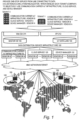
- the device firmware/configuration file storage server 106 manages a device firmware/configuration file database 107 which stores setting (for example, a communication profile and a device manager) for the communication devices 150.
- the data distribution service infrastructure 100 is accessed by a Web graphical user interface (GUI) 211 and an application programming interface (API) 212 from a company.
- GUI Web graphical user interface
- API application programming interface
- the data distribution service infrastructure 100 is connected to the device manager servers 130 to provide device managers provided from a plurality of vendors to the communication devices 150.
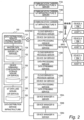
- FIG. 3 is a block diagram of the data distribution service infrastructure control server 101.
- FIG. 4 is a diagram for illustrating a configuration of the master management database 105.
- the data distribution service infrastructure control server 101 is formed of a computer including a processor 201, a memory 202, a nonvolatile storage device 203, an input/output device 204, and an input/output circuit interface 205.
- the memory 202 includes a ROM, which is a nonvolatile storage device, and a RAM, which is a volatile storage device.
- the ROM stores, for example, an invariant program (for example, a BIOS).
- the RAM is a dynamic random access memory (DRAM) or other such high-speed volatile storage device, and temporarily stores a program to be executed by the processor 201 and data to be used at a time of execution of the program.
- DRAM dynamic random access memory
- the input/output device 204 is an interface device to which an input device such as a keyboard and a mouse and an output device such as a display device and a printer are connected.
- the input/output device 204 receives input from an operator, and outputs an execution result of the program in a form visually recognizable by the operator.
- the program to be executed by the processor 201 is provided to the data distribution service infrastructure control server 101 through a removable medium (such as a CD-ROM and a flash memory) or the network, and is stored in the nonvolatile storage device 203 being a non-transitory storage medium.
- the data distribution service infrastructure control server 101 preferably includes an interface which reads data from a removal medium.
- the data distribution service infrastructure control server 101 is a computer system formed on physically one computer or formed on a plurality of computers that are configured logically or physically, and each functional block may operate on separate threads on the same computer, or may operate on a virtual machine built on a plurality of physical computer resources.
- the I/F function 210 includes the Web GUI 211, the API 212, and a DB access module 213.
- the Web GUI 211 is provided by a Web server.
- the API 212 can input and output data in accordance with predetermined rules.
- the DB access module 213 controls reading and writing of data from and to the master management database 105, the device firmware/configuration file database 107, and the loT data lake 109.
- the I/F function 210 enables a user of a tenant and a system operated by the tenant to access the data distribution service infrastructure 100.
- the common event control/history management function 220 refers to "common event control/history management function" use data 300 to control and manage an event common to each function block of the data distribution service infrastructure 100.
- the common event control/history management function 220 refers to event management information 301, to thereby manage events occurring in the data distribution service infrastructure 100 and progresses of processing, and records, in history information 302, histories (logs) of the events occurring in the data distribution service infrastructure 100.
- the "common event control/history management function" use data 300 is accessed from the other function blocks 221 to 233 as required.
- the tenant/user management function 221 refers to "tenant/user management function" use data 310, to thereby manage tenants and users which use the data distribution service infrastructure 100. Specifically, the tenant/user management function 221 refers to tenant/user group/user information 311 to associate tenants, user groups in the tenants, and users in the tenants with each other, to thereby manage attributes and authorities of the tenants, the user groups, and the users.
- the communication carrier IoT infrastructure access function 223 operates in linkage with the line management function 222, and refers to the "line management function" use data 320.
- the line management function 222 uses the communication adaptor 224 to control communication from the communication device 150 to the communication carrier loT infrastructure 110.
- the communication carrier loT infrastructure access function 223 refers to the SIM information 324 and the SIM-device association information 325 to control communication from the communication device 150 to the cloud service 120.
- the communication carrier loT infrastructure access function 223 records charge information 321 in accordance with the communication from the communication device 150 to the communication carrier IoT infrastructure 110.
- the communication adaptor 224 is a file in which information for controlling the communication from the communication device 150 to the communication carrier loT infrastructure 110 is defined.
- the communication adaptor 224 is used by the data distribution service infrastructure 100 to control the communication to the communication carrier IoT infrastructure 110.
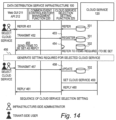
- the cloud service selection setting function 225 refers to "cloud service selection setting function" use data 330 to assist in selection of the cloud services 120 provided by the cloud business operators. Specifically, the cloud service selection setting function 225 presents, to the tenant, available service plans of the cloud business operators from the cloud service selection information 331, registers cloud service setting information 332 corresponding to a cloud business operator and a service plan selected by the tenant, and registers device information 333 shown in FIG. 7 corresponding to the cloud service setting information 332.
- the cloud service access function 226 operates in linkage with the cloud service selection setting function 225.
- the cloud service access function 226 refers to the "cloud service selection setting function" use data 330, and uses the communication adaptor 227 to control the access from the communication device 150 to the cloud service 120.
- the cloud service access function 226 controls the access from the communication device 150 to the cloud service 120 in accordance with the cloud service setting information 332 and the device information 333.
- the communication adaptor 227 is a file in which information for controlling the communication from the communication device 150 to the cloud service 120 is defined.
- the communication adaptor 227 is used by the data distribution service infrastructure 100 to control the communication to the cloud service 120.
- the device provisioning function 228 refers to "device provisioning function" use data 340 to control the data collection from the asset 160. Specifically, the device provisioning function 228 acquires an attribute of the asset 160 being a data source from asset information 343 shown in FIG. 8 and asset type information 344 shown in FIG. 9 , and refers to device-asset association information 345 shown in FIG. 10 to identify the communication device 150 to which the asset 160 is connected.
- the device manager access function 229 operates in linkage with the device provisioning function 228.
- the device manager access function 229 refers to the "device provisioning function" use data 340, and uses a communication adaptor 230 to control delivery of the device manager to the communication device 150.
- the device manager access function 229 determines the device manager server 130 from which a selected device manager is to be distributed in accordance with device manager selection information 341, and records the device manager distributed to the communication device 150 in device distribution file management information 342.
- the IoT data collection/processing/management function 231 refers to "loT data collection/processing/management function" use data 350 to manage data collected from the asset 160.
- the loT data collection/processing/management function 231 performs primary processing on the information on the asset 160 collected from the communication device 150 by the cloud service 120, and stores the processed information in the loT data lake 109.
- the loT data collection/processing/management function 231 refers to processing information 351 to process information collected from the asset 160 (for example, convert data used within the device to a numerical value which can be recognized by the human), determines whether or not to generate an alert in accordance with alert threshold value setting information 352, and issues the alert in accordance with alert notification destination information 353.
- the via-cloud-service loT data function 232 operates in linkage with the IoT data collection/processing/management function 231, and uses an IoT data reception adaptor 233 to control reception of data from the cloud service 120 by the data distribution service infrastructure control server 101.
- the loT data reception adaptor 233 is a file in which information for controlling the access from the data distribution service infrastructure control server 101 to the cloud service 120 is defined, and is used by the data distribution service infrastructure 100 to control the communication to the cloud service 120.
- each piece of data is associated with a tenant, a user group, and a user.
- Each piece of data has data items corresponding thereto, or each piece of data is associated with the data of the tenant/user group/user information 311.
- each piece of data has access authority set to each data item. For example, whether only an infrastructure-side administrator can access or the infrastructure-side administrator and a tenant-side user can access is set.
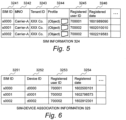
- FIG. 5 is a diagram for illustrating a configuration example of the SIM information 324.
- the SIM information 324 is a table in which information on a subscriber identity module (SIM) installed in the communication device 150 is recorded.
- the SIM information 324 includes SIM IDs 3241, MNOs 3242, tenant IDs 3243, profiles 3244, registered user IDs 3245, and registered dates 3246.
- the SIM information 324 may include, in addition to the shown data items, user group IDs, SIM statuses, updated user IDs, and update dates, for example.
- the SIM ID 3241 is identification information uniquely assigned to a SIM, and, for example, integrated circuit card ID (ICCID) can be used.
- the MNO 3242 is a name of a communication carrier which provides the communication carrier IoT infrastructure 110. In the MNO 3242, identification information formed of a combination of a mobile country code (MCC) and a mobile network code (MNC) may be recorded.
- the tenant ID 3243 is identification information uniquely assigned to a tenant which uses this SIM.
- the profile 3244 is a communication profile (or a pointer specifying this communication profile) installed in the communication device 150 in which this SIM is installed.
- the registered user ID 3245 is an identification information on a user who has registered this SIM.
- the registered date 3246 is a date and time of the registration of this SIM. The registered date 3246 may be a time unique to an operating system as shown in FIG. 5 , or may be a date and time having a form which can be recognized by the human.
- FIG. 6 is a diagram for illustrating a configuration example of the SIM-device association information 325.
- the SIM-device association information 325 is a table in which a correspondence between a SIM and a communication device 150 is recorded, and includes SIM IDs 3251, device IDs 3252, registered user ID 3253, and registered dates 3254.
- the SIM-device association information 325 may include, in addition to the shown data items, updated user IDs and update dates, for example.
- the SIM ID 3251 is identification information uniquely assigned to a SIM. It is preferred to use the same value as the SIM ID 3241 of the SIM information 324.
- the device ID 3252 is identification information uniquely assigned to a communication device 150. It is preferred to use the same value as the device ID 3331 of the device information 333.
- the registered user ID 3253 is an identification information on a user who has registered this correspondence.
- the registered date 3254 is a date and time of the registration of this correspondence. The registered date 3254 may be a time unique to an operating system as shown in FIG. 6 , or may be a date and time having a form which can be recognized by the human.
- the device information 333 is a table in which information on the communication devices 150 is recorded, and includes device IDs 3331, tenant IDs 3332, device groups 3333, device names 3334, device certification 3335, registered user IDs 3336, and registered dates 3337.
- the device information 333 may include, in addition to the shown data items, processing statuses, for example.
- both of identification information for internal management of the data distribution service infrastructure control server 101 and identification information unique to the communication device 150, such as a production number may be recorded in association with each other.
- Information for setting a gateway to the communication device 150 may be recorded.
- the device ID 3331 is identification information uniquely assigned to the communication device 150, and an international mobile equipment identity (IMEI) may be used.
- the tenant ID 3332 is identification information uniquely assigned to a tenant which uses this communication device 150. It is preferred to use the same value as the tenant ID 3243 of the SIM information 324.
- the device group 3333 is identification information on a group formed of a plurality of communication devices 150, and assigned for the convenience of management of the communication devices 150.
- the device name 3334 is a name of this communication device 150. In the device name 3334, the international mobile equipment identity (IMEI) may be recorded.
- the device certification 3335 is information for certifying the communication device 150 (or a pointer for specifying this device certification).
- the registered user ID 3336 is an identification information on a user who has registered this communication device 150.
- the registered date 3337 is a date and time of the registration of this communication device 150.
- the registered date 3337 may be a time unique to an operating system as shown in FIG. 7 , or may be a date and time having a form which can be recognized by the human.
- FIG. 8 is a diagram for illustrating a configuration example of the asset information 343.
- the asset information 343 is a table in which information on the assets 160 are recorded, and includes asset IDs 3431, asset groups 3432, asset serials 3433, asset names 3434, and asset type IDs 3435.
- the asset information 343 may include, in addition to the shown data items, registered user IDs, registered dates, updated user IDs, and update dates, for example.
- the asset ID 3431 is identification information uniquely assigned to an asset 160.
- the asset group 3432 is identification information on a group formed of a plurality of assets 160, and assigned for the convenience of management of the assets 160.
- the asset serial 3433 is a production number assigned to the asset 160.
- the asset name 3434 is a name of the asset 160.
- the asset type ID 3435 is a classification of the asset 160 defined in the asset type information 344.
- FIG. 9 is a diagram for illustrating a configuration example of the asset type information 344.
- the asset type information 344 is a table in which the classifications of assets 160 are defined, and includes asset type IDs 3441, tenants IDs 3442, and asset attributes 3443.
- the asset type information 344 may include, in addition to the shown data items, registered user IDs, registered dates, updated user IDs, and update dates, for example.
- the asset type ID 3441 is identification information uniquely assigned to an asset type.
- the tenant ID 3442 is identification information uniquely assigned to a tenant which uses this asset 160. It is preferred to use the same value as the tenant ID 3243 of the SIM information 324.
- the asset attributes 3443 are detailed information (or a pointer for specifying a file in which this asset type information is recorded) on the asset 160.
- FIG. 10 is a diagram for illustrating a configuration example of the device-asset association information 345.
- the device-asset association information 345 is a table in which a correspondence between a communication device 150 and an asset 160 is recorded, and includes device IDs 3451, asset IDs 3452, registered user IDs 3453, and registration dates 3454.
- the device-asset association information 345 may include, in addition to the shown data items, updated user IDs and update dates, for example.
- the device ID 3451 is identification information uniquely assigned to a communication device 150. It is preferred to use the same value as the device ID 3331 of the device information 333.
- the asset ID 3452 is identification information uniquely assigned to an asset 160. It is preferred to use the same value as the asset ID 3431 of the asset information 343.
- the registered user ID 3453 is identification information on a user who has registered this communication device 150.
- the registered date 3454 is a date and time of the registration of this communication device 150. The registered date 3454 may be a time unique to an operating system as shown in FIG. 10 , or may be a date and time having a form which can be recognized by the human.
- FIG. 11 is a sequence diagram of processing from a line contract to a line connecting.
- the infrastructure-side administrator inputs the tenant information, the user group information, and the user information from the Web GUI 211 or the API 212.
- the input information is transmitted from the Web GUI 211 or the API 212 to the tenant/user management function 221 through the common event control/history management function 220 (Step 401).
- the tenant/user management function 221 registers the input tenant information, user group information, and user information in the tenant/user group/user information 311 (Step 402), and transmits a registration completion reply to the Web GUI 211 or the API 212 (Step 403).
- the infrastructure-side administrator registers tenant information and contract information in the communication carrier loT infrastructure 110, and generates a service plan (Step 404).
- the infrastructure-side administrator inputs the service plan from the Web GUI 211 or the API 212.
- the input information is transmitted from the Web GUI 211 or the API 212 to the line management function 222 through the common event control/history management function 220 (Step 405).
- the line management function 222 registers the input service plan in the service plan information 322 (Step 406), and transmits a registration completion reply to the Web GUI 211 or the API 212 (Step 407).
- the infrastructure-side administrator orders a SIM from a SIM vendor.
- the SIM is registered in the communication carrier IoT infrastructure 110 (Step 408).
- the infrastructure-side administrator refers to the service plan information 322 from the Web GUI 211 or the API 212 (Step 409), and inputs the SIM information.
- the input SIM information is transmitted from the Web GUI 211 or the API 212 to the line management function 222 through the common event control/history management function 220 (Step 410).
- the line management function 222 registers the input information in the SIM information 324 (Step 411), and transmits a registration completion reply to the Web GUI 211 or the API 212 (Step 412).
- the infrastructure-side administrator transmits the SIM and the SIM information to the device vendor, the SIM is installed in the communication device 150 (Step 413).
- the tenant-side user refers to the SIM information 324 and the device information 333 from the Web GUI 211 or the API 212 (Step 414), and inputs the device ID.
- the input device ID is transmitted from the Web GUI 211 or the API 212 to the line management function 222 through the common event control/history management function 220 (Step 415).
- the line management function 222 registers the input device ID in the SIM-device association information 325 and the device information 333, to thereby update the information (Step 416), and transmits an update completion reply to the Web GUI 211 or the API 212 (Step 417).
- the communication device 150 is shipped, and roaming is detected in the communication carrier loT infrastructure 110.
- the profile is then switched (Step 418).
- the communication carrier loT infrastructure 110 notifies the line management function 222 of a profile switching result (Step 419).
- the line management function 222 updates the profile of the SIM information 324 (Step 420), and transmits an update completion reply to the Web GUI 211 or the API 212 (Step 421).
- the infrastructure-side administrator or the tenant-side user inputs a status change in the SIM from the Web GUI 211 or the API 212.
- the input SIM status is transmitted from the Web GUI 211 or the API 212 to the line management function 222 through the common event control/history management function 220 (Step 422).
- the line management function 222 transmits a SIM status change request to the communication carrier IoT infrastructure 110 (Step 423).
- the communication carrier loT infrastructure 110 notifies the line management function 222 of a result of the SIM status change request (Step 424).
- the line management function 222 updates the SIM status of the SIM information 324 (Step 425), and transmits an update completion reply to the Web GUI 211 or the API 212 (Step 426).
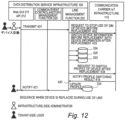
- FIG. 12 is a sequence diagram of processing executed when a device is replaced during use of the line.
- the tenant-side administrator When a communication device 150 is replaced during the use of the line due to a failure of the communication device 150 or the like, the tenant-side administrator notifies the infrastructure-side administrator of the failure of the communication device 150.
- the infrastructure-side administrator inputs information on the communication device 150 before the replacement and information on the communication device 150 after the replacement from the Web GUI 211 or the API 212.
- the input information on the communication devices 150 is transmitted from the Web GUI 211 or the API 212 to the line management function 222 (Step 431).
- the line management function 222 requests the communication carrier IoT infrastructure 110 to stop the use of the SIM of the device before the replacement (Step 432). Moreover, the line management function 222 replaces the information on the SIM of the communication device 150 before the replacement with the information on the SIM of the communication device 150 after the replacement in the SIM information 324, the SIM-device association information 325, and the device information 333 (Step 433). After that, the line management function 222 requests the communication carrier IoT infrastructure 110 for the profile of the device after the replacement (Step 434).
- the communication carrier loT infrastructure 110 notifies the line management function 222 of a profile switching result (Step 419).
- the line management function 222 updates the profile of the SIM information 324 (Step 420), and transmits an update completion reply to the Web GUI 211 or the API 212 (Step 421).
- Step 432 stop of the use of the SIM is requested before the SIM replacement (Step 432), and the SIM information 324 before the replacement and the SIM-device association information 325 are updated with the SIM information 324 after the replacement (Step 433).
- the device-asset association information 345 is not updated.
- the SIM replacement can be achieved while the relationship between the communication device 150 and the asset 160 is maintained through a sequence of from the profile switching request (Step 434) to the profile update (Step 324) via the profile switching result notification (Step 419)
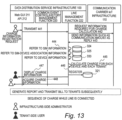
- FIG. 13 is a sequence diagram of charge processing during the line connecting.
- the infrastructure-side administrator requests registration of charge information from the Web GUI 211 or the API 212.
- the charge information registration request is transmitted from the Web GUI 211 or the API 212 to the line management function 222 (Step 441).
- the line management function 222 requests information required for charge calculation from the communication carrier loT infrastructure 110 (Step S442).
- the communication carrier IoT infrastructure 110 sends, as a reply, information such as a communication amount (Step 443).
- the loT data collection/processing/management function 231 refers to the loT data lake 109, the asset information 343, and the device information 333 to transmit, to the Web GUI 211 or the API 212, data for GUI display (for example, information on the asset 160 superimposed on a map or a graph showing an operation state of the asset 160) (Step 513).
- the IoT data collection/processing/management function 231 in a case in which the alert threshold value is set, and the alert notification destination is set, after the IoT data collection/processing/management function 231 stores the loT data on which the primary processing has been performed, the IoT data collection/processing/management function 231 refers to the alert threshold value setting information 352 (Step 521). The loT data collection/processing/management function 231 then determines whether or not the loT data on which the primary processing has been performed exceeds the threshold value (Step 522). When the loT data exceeds the threshold value, the IoT data collection/processing/management function 231 transmits a notification to a notification destination user (Step 523).
- FIG. 17 is a flowchart of common event control processing and history management processing executed by the data distribution service infrastructure control server 101.
- the I/F function 210 is brought into a wait state for waiting for reception of a request (Step S601). After that, the I/F function 210 receives a request (Step S602).
- the common event control/history management function 220 determines whether or not a processing request is received in the I/F function 210 (Step S603). When a processing request is received in the I/F function 210, the common event control/history management function 220 acquires a logic flow corresponding to the received processing request (Step S604).
- the common event control/history management function 220 determines whether or not there exists processing to be executed next in accordance with the logic flow determined in advance (Step S605). When processing to be executed next does not exist, the process returns to Step S601, and the state becomes the wait state. Meanwhile, there is processing to be executed next, the common event control/history management function 220 registers information indicating a progress of the processing in the event management information 301 (Step S606). The common event control/history management function 220 calls corresponding processing (Step S607), and registers the history information 302 (Step S608).
- the common event control/history management function 220 waits for a reply of execution completion of the processing of the destination of the call, and then the process proceeds to a next step. Meanwhile, when processing to be executed asynchronously is to be called, the common event control/history management function 220 starts the processing of the destination of the call, and then the process proceeds to the next step.
- the common event control/history management function 220 determines whether or not the processing request is transmitted from another function (S609).
- the process proceeds to Step S604, and the common event control/history management function 220 acquires a logic flow corresponding to the received processing request.
- the common event control/history management function 220 records an unknown processing request reception error in the history information 302 (Step S610).
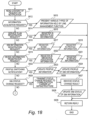
- FIG. 18 and FIG. 19 are flowcharts of line management processing executed by the data distribution service infrastructure control server 101.
- the line management function 222 reads a content of a request or a notification (Step S611).
- the line management function 222 acquires the "line management function" use data 320, and generates presentation data (Step S613).
- the line management function 222 returns a reply for presenting the acquired data (Step S629).
- the line management function 222 registers a service plan the registration of which is requested in the service plan information 322 (Step S615), and returns the registration completion reply (Step S629).
- the line management function 222 registers device information the registration of which is requested in the SIM-device association information 325 and the device information 333 (Step S620 and Step S621), and returns the registration completion reply (Step S629).
- the line management function 222 updates the profile information 323 and the profile 3244 of the SIM information 324 (Step S623 and Step S624), and returns an update completion reply (Step S629).
- the line management function 222 requests information (for example, the communication amount) required for the charge calculation from the communication carrier IoT infrastructure 110 (Step S637), and receives a reply of the information for the charge calculation (Step S638).
- the line management function 222 refers to the SIM information 324, the SIM-device association information 325, and the device information 333 (Step S639, Step S640, and Step S641), and calculates a charge for each device and for each tenant (Step S642).
- the line management function 222 registers the calculated charge amounts in the charge information 321 (Step S643), and returns the registration completion reply (Step S629).
- Step S614 Step S616, Step S619, Step S622, Step S625, Step S630, and Step S636, the line management function 222 records the unknown processing request reception error in the history information 302 (Step S644).
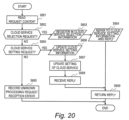
- FIG. 20 is a flowchart of cloud service selection setting processing executed by the data distribution service infrastructure control server 101.
- the cloud service selection setting function 225 reads a content of a request (Step S651). The processing branches subsequently in accordance with the content of the read request.
- the cloud service selection setting function 225 uses a cloud service 120 setting of which is requested to update the cloud service setting information 332 (Step S656), and updates the setting of the specified cloud service 120 (Step S657).
- the cloud service selection setting function 225 receives a reply of setting completion (Step S658), and returns the reply of the setting completion (Step S659).
- Step S660 the cloud service selection setting function 225 records the unknown processing request reception error in the history information 302 (Step S660).
- FIG. 21 is a flowchart of device provisioning processing executed by the data distribution service infrastructure control server 101.
- the device provisioning function 228 reads a content of a request (Step S661).
- the processing branches subsequently in accordance with the content of the read request.
- the device provisioning function 228 acquires the "device provisioning function" use data 340, and generates presentation data (Step S663).
- the device provisioning function 228 returns a reply for presenting the acquired data (Step S681).
- the device provisioning function 228 registers asset type information the registration of which is requested in the asset type information 344 (Step S665), and returns a registration completion reply (Step S681).
- the device provisioning function 228 registers asset information the registration of which is requested in the asset information 343 (Step S667), and returns the registration completion reply (Step S681).
- the device provisioning function 228 registers a selected device manager in the device manager selection information 341 (Step S669), and returns the registration completion reply (Step S681).
- the device provisioning function 228 registers association the registration of which is requested in the device-asset association information 345 (Step S671), and returns the registration completion reply (Step S681).
- Step S682 When the read request is not the asset information specification setting file registration request,. that is, when the case corresponds to none of Step S662, Step S664, Step S666, Step S668, Step S670, Step S672, and Step S676, the device provisioning function 228 records the unknown processing request reception error in the history information 302 (Step S682).
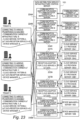
- FIG. 22 is a flowchart of IoT data collection, processing, and management processing executed by the data distribution service infrastructure control server 101.
- the loT data collection/processing/management function 231 reads a content of a received request or loT data (Step S691). The processing branches subsequently in accordance with the content of the read request.
- the loT data collection/processing/management function 231 registers an loT data threshold value the registration of which is requested in the alert threshold value setting information 352 (Step S693), and returns a registration completion reply (Step S705).
- the IoT data collection/processing/management function 231 registers an alert notification destination the setting of which is requested in the alert notification destination information 353 (Step S695), and returns the registration completion reply (Step S705).
- the loT data collection/processing/management function 231 refers to the processing information 351 (Step S697).
- the IoT data collection/processing/management function 231 performs the primary processing on the received loT data (Step S698), and stores the loT data on which the primary processing has been performed in the loT data lake 109 (Step S699).
- the loT data collection/processing/management function 231 refers to the alert threshold value setting information 352 (Step S700), and determines whether or not an alert threshold value is set for a data item of the received IoT data and the received loT data exceeds the threshold value (Step S701).
- the loT data collection/processing/management function 231 When the alert threshold value is not set or the received loT data does not exceed the threshold value, the loT data collection/processing/management function 231 returns a reply of a reception completion (alert is not required) (Step S705). Meanwhile, when the alert threshold value is set, and the received loT data exceeds the threshold value, the loT data collection/processing/management function 231 refers to the alert notification destination information 353 (Step S702), and determines whether or not an alert notification destination is registered (Step S703).
- the IoT data collection/processing/management function 231 When an alert notification destination is registered, the IoT data collection/processing/management function 231 generates data for notifying the user of a threshold-value-exceeding alert (Step S704), and returns a reply of the generated alert (Step S705).
Landscapes
- Engineering & Computer Science (AREA)
- Computer Networks & Wireless Communication (AREA)
- Signal Processing (AREA)
- Computing Systems (AREA)
- Health & Medical Sciences (AREA)
- General Health & Medical Sciences (AREA)
- Medical Informatics (AREA)
- Theoretical Computer Science (AREA)
- Accounting & Taxation (AREA)
- Development Economics (AREA)
- Economics (AREA)
- General Business, Economics & Management (AREA)
- Physics & Mathematics (AREA)
- General Engineering & Computer Science (AREA)
- General Physics & Mathematics (AREA)
- Business, Economics & Management (AREA)
- Management, Administration, Business Operations System, And Electronic Commerce (AREA)
- Computer And Data Communications (AREA)
- Selective Calling Equipment (AREA)
Applications Claiming Priority (2)
| Application Number | Priority Date | Filing Date | Title |
|---|---|---|---|
| JP2020181098A JP7434133B2 (ja) | 2020-10-29 | 2020-10-29 | IoTシステム、及びデータ収集制御方法 |
| PCT/JP2021/030407 WO2022091533A1 (ja) | 2020-10-29 | 2021-08-19 | IoTシステム、及びデータ収集制御方法 |
Publications (3)
| Publication Number | Publication Date |
|---|---|
| EP4239488A1 true EP4239488A1 (de) | 2023-09-06 |
| EP4239488A4 EP4239488A4 (de) | 2024-07-31 |
| EP4239488B1 EP4239488B1 (de) | 2026-04-22 |
Family
ID=81382229
Family Applications (1)
| Application Number | Title | Priority Date | Filing Date |
|---|---|---|---|
| EP21885653.2A Active EP4239488B1 (de) | 2020-10-29 | 2021-08-19 | Iot-system und steuerverfahren zur datensammlung |
Country Status (6)
| Country | Link |
|---|---|
| US (1) | US12047451B2 (de) |
| EP (1) | EP4239488B1 (de) |
| JP (1) | JP7434133B2 (de) |
| CN (1) | CN115803722A (de) |
| AU (1) | AU2021370143B2 (de) |
| WO (1) | WO2022091533A1 (de) |
Family Cites Families (16)
| Publication number | Priority date | Publication date | Assignee | Title |
|---|---|---|---|---|
| US8325614B2 (en) * | 2010-01-05 | 2012-12-04 | Jasper Wireless, Inc. | System and method for connecting, configuring and testing new wireless devices and applications |
| ES2672382T3 (es) * | 2010-03-13 | 2018-06-14 | Able Device, Inc. | Sistemas de control que tienen un SIM para controlar un dispositivo informático |
| US20160335731A1 (en) * | 2010-05-05 | 2016-11-17 | Site 10.01, Inc. | System and method for monitoring and managing information |
| JP2014041493A (ja) * | 2012-08-22 | 2014-03-06 | Fujitsu Ltd | 端末装置を管理する管理装置、管理方法およびプログラム |
| JP6127914B2 (ja) | 2013-10-29 | 2017-05-17 | 株式会社安川電機 | 産業機器管理システム、産業機器管理装置、産業機器管理方法、プログラム、及び情報記憶媒体 |
| US20160065653A1 (en) * | 2014-08-26 | 2016-03-03 | Fujitsu Limited | Internet of things (iot) device configuration construction |
| CN107251530B (zh) * | 2015-01-06 | 2021-07-06 | 阿费罗有限公司 | 用于实现物联网(IoT)远程控制应用的系统和方法 |
| US11062255B2 (en) * | 2015-06-24 | 2021-07-13 | Intel Corporation | Technologies for managing the security and custody of assets in transit |
| US9977415B2 (en) * | 2015-07-03 | 2018-05-22 | Afero, Inc. | System and method for virtual internet of things (IOT) devices and hubs |
| WO2017106224A1 (en) * | 2015-12-14 | 2017-06-22 | Afero, Inc. | System and method for secure internet of things (iot) device provisioning |
| WO2017106258A1 (en) * | 2015-12-14 | 2017-06-22 | Afero, Inc. | System and method for establishing a secondary communication channel to control an internet of things (iot) device |
| US10944753B2 (en) * | 2017-08-17 | 2021-03-09 | Verizon Patent And Licensing Inc. | IoT devices wireless network connectivity policy management |
| US10681002B2 (en) * | 2017-11-30 | 2020-06-09 | Konica Minolta Laboratory U.S.A., Inc. | Internet of Things (IoT) mediation and adaptation secure application gateway |
| CN108401028A (zh) * | 2018-02-28 | 2018-08-14 | 北京华虹集成电路设计有限责任公司 | 一种云端服务器、管控装置以及作业管控系统 |
| JP7251293B2 (ja) | 2019-04-25 | 2023-04-04 | コニカミノルタ株式会社 | 画像形成装置 |
| US11290538B2 (en) * | 2019-10-25 | 2022-03-29 | AT&T Global Network Services Hong Kong LTD | Policy-based programmable internet of things devices |
-
2020
- 2020-10-29 JP JP2020181098A patent/JP7434133B2/ja active Active
-
2021
- 2021-08-19 AU AU2021370143A patent/AU2021370143B2/en active Active
- 2021-08-19 US US17/911,396 patent/US12047451B2/en active Active
- 2021-08-19 WO PCT/JP2021/030407 patent/WO2022091533A1/ja not_active Ceased
- 2021-08-19 EP EP21885653.2A patent/EP4239488B1/de active Active
- 2021-08-19 CN CN202180016847.7A patent/CN115803722A/zh active Pending
Also Published As
| Publication number | Publication date |
|---|---|
| WO2022091533A1 (ja) | 2022-05-05 |
| JP7434133B2 (ja) | 2024-02-20 |
| EP4239488A4 (de) | 2024-07-31 |
| CN115803722A (zh) | 2023-03-14 |
| US12047451B2 (en) | 2024-07-23 |
| JP2022071950A (ja) | 2022-05-17 |
| EP4239488B1 (de) | 2026-04-22 |
| US20230099545A1 (en) | 2023-03-30 |
| AU2021370143B2 (en) | 2023-10-26 |
| AU2021370143A1 (en) | 2022-10-13 |
Similar Documents
| Publication | Publication Date | Title |
|---|---|---|
| CN110311831B (zh) | 基于容器云的系统资源监控方法及相关设备 | |
| EP2418827B1 (de) | Verbindungsverwaltungssystem und Verfahren zur Verknüpfung des Verbindungsverwaltungsservers in Thin-Client-Systemen | |
| JP5416833B2 (ja) | 性能監視装置,方法,プログラム | |
| CN112632029B (zh) | 分布式存储系统的数据管理方法、装置及设备 | |
| CN119166592A (zh) | 基于冷数据迁移的数据管理方法、装置、设备及存储介质 | |
| JP4232357B2 (ja) | 計算機システム | |
| US20090070425A1 (en) | Data processing system, method of updating a configuration file and computer program product | |
| CN101383728B (zh) | 网络设备、网络设备管理方法以及网络设备管理系统 | |
| JP2011248658A (ja) | 仮想サーバデプロイ管理装置及び方法、そのプログラム | |
| CN112202895B (zh) | 监控指标数据的收集方法、系统、电子设备及存储介质 | |
| CN116974857A (zh) | 一种监控代理自动部署更新方法及其系统 | |
| JP2018124935A (ja) | センサネットワーク管理方法およびセンサネットワーク管理システム | |
| GB2481930A (en) | Information management device and information management program | |
| EP4239488B1 (de) | Iot-system und steuerverfahren zur datensammlung | |
| JP6576160B2 (ja) | 管理システム、管理システムの制御方法、およびプログラム | |
| JP2022071950A5 (de) | ||
| US9667815B2 (en) | Information processing system, information processing device, and information processing method | |
| JP3349850B2 (ja) | オンラインデータ配送システム | |
| US20170262439A1 (en) | Information processing apparatus and non-transitory computer readable medium | |
| CN111368039B (zh) | 一种数据管理系统 | |
| CN110933184B (zh) | 一种资源发布平台和资源发布方法 | |
| JP5437952B2 (ja) | 分散構成管理データベースシステム及び分散構成データ管理方法 | |
| JP2006344091A (ja) | システム再構成自動化装置 | |
| JP2001344227A (ja) | 階層型リソース監視システム | |
| CN121433708A (zh) | 一种客户端版本信息管理方法、装置、介质及电子设备 |
Legal Events
| Date | Code | Title | Description |
|---|---|---|---|
| STAA | Information on the status of an ep patent application or granted ep patent |
Free format text: STATUS: THE INTERNATIONAL PUBLICATION HAS BEEN MADE |
|
| PUAI | Public reference made under article 153(3) epc to a published international application that has entered the european phase |
Free format text: ORIGINAL CODE: 0009012 |
|
| STAA | Information on the status of an ep patent application or granted ep patent |
Free format text: STATUS: REQUEST FOR EXAMINATION WAS MADE |
|
| 17P | Request for examination filed |
Effective date: 20230320 |
|
| AK | Designated contracting states |
Kind code of ref document: A1 Designated state(s): AL AT BE BG CH CY CZ DE DK EE ES FI FR GB GR HR HU IE IS IT LI LT LU LV MC MK MT NL NO PL PT RO RS SE SI SK SM TR |
|
| DAV | Request for validation of the european patent (deleted) | ||
| DAX | Request for extension of the european patent (deleted) | ||
| REG | Reference to a national code |
Ref legal event code: R079 Free format text: PREVIOUS MAIN CLASS: G06F0013000000 Ipc: H04L0067020000 Ref country code: DE Ref document number: 602021052819 Country of ref document: DE |
|
| A4 | Supplementary search report drawn up and despatched |
Effective date: 20240702 |
|
| RIC1 | Information provided on ipc code assigned before grant |
Ipc: G16Y 10/75 20200101ALI20240626BHEP Ipc: G06F 13/00 20060101ALI20240626BHEP Ipc: H04L 67/10 20220101ALI20240626BHEP Ipc: H04L 67/125 20220101ALI20240626BHEP Ipc: H04L 67/02 20220101AFI20240626BHEP |
|
| GRAP | Despatch of communication of intention to grant a patent |
Free format text: ORIGINAL CODE: EPIDOSNIGR1 |
|
| STAA | Information on the status of an ep patent application or granted ep patent |
Free format text: STATUS: GRANT OF PATENT IS INTENDED |
|
| INTG | Intention to grant announced |
Effective date: 20251114 |
|
| GRAS | Grant fee paid |
Free format text: ORIGINAL CODE: EPIDOSNIGR3 |
|
| GRAA | (expected) grant |
Free format text: ORIGINAL CODE: 0009210 |
|
| STAA | Information on the status of an ep patent application or granted ep patent |
Free format text: STATUS: THE PATENT HAS BEEN GRANTED |
|
| AK | Designated contracting states |
Kind code of ref document: B1 Designated state(s): AL AT BE BG CH CY CZ DE DK EE ES FI FR GB GR HR HU IE IS IT LI LT LU LV MC MK MT NL NO PL PT RO RS SE SI SK SM TR |
|
| REG | Reference to a national code |
Ref country code: CH Ref legal event code: F10 Free format text: ST27 STATUS EVENT CODE: U-0-0-F10-F00 (AS PROVIDED BY THE NATIONAL OFFICE) Effective date: 20260422 Ref country code: GB Ref legal event code: FG4D |