EP4232828B1 - Verfahren und kits zur diagnose der covid-19-krankheit - Google Patents
Verfahren und kits zur diagnose der covid-19-krankheit Download PDFInfo
- Publication number
- EP4232828B1 EP4232828B1 EP22725531.2A EP22725531A EP4232828B1 EP 4232828 B1 EP4232828 B1 EP 4232828B1 EP 22725531 A EP22725531 A EP 22725531A EP 4232828 B1 EP4232828 B1 EP 4232828B1
- Authority
- EP
- European Patent Office
- Prior art keywords
- covid
- sample
- acute
- clotlets
- anomalous
- Prior art date
- Legal status (The legal status is an assumption and is not a legal conclusion. Google has not performed a legal analysis and makes no representation as to the accuracy of the status listed.)
- Active
Links
Images
Classifications
-
- G—PHYSICS
- G01—MEASURING; TESTING
- G01N—INVESTIGATING OR ANALYSING MATERIALS BY DETERMINING THEIR CHEMICAL OR PHYSICAL PROPERTIES
- G01N33/00—Investigating or analysing materials by specific methods not covered by groups G01N1/00 - G01N31/00
- G01N33/48—Biological material, e.g. blood, urine; Haemocytometers
- G01N33/50—Chemical analysis of biological material, e.g. blood, urine; Testing involving biospecific ligand binding methods; Immunological testing
- G01N33/68—Chemical analysis of biological material, e.g. blood, urine; Testing involving biospecific ligand binding methods; Immunological testing involving proteins, peptides or amino acids
- G01N33/6893—Chemical analysis of biological material, e.g. blood, urine; Testing involving biospecific ligand binding methods; Immunological testing involving proteins, peptides or amino acids related to diseases not provided for elsewhere
-
- G—PHYSICS
- G01—MEASURING; TESTING
- G01N—INVESTIGATING OR ANALYSING MATERIALS BY DETERMINING THEIR CHEMICAL OR PHYSICAL PROPERTIES
- G01N33/00—Investigating or analysing materials by specific methods not covered by groups G01N1/00 - G01N31/00
- G01N33/48—Biological material, e.g. blood, urine; Haemocytometers
- G01N33/483—Physical analysis of biological material
- G01N33/487—Physical analysis of biological material of liquid biological material
- G01N33/49—Blood
-
- G—PHYSICS
- G01—MEASURING; TESTING
- G01N—INVESTIGATING OR ANALYSING MATERIALS BY DETERMINING THEIR CHEMICAL OR PHYSICAL PROPERTIES
- G01N33/00—Investigating or analysing materials by specific methods not covered by groups G01N1/00 - G01N31/00
- G01N33/48—Biological material, e.g. blood, urine; Haemocytometers
- G01N33/50—Chemical analysis of biological material, e.g. blood, urine; Testing involving biospecific ligand binding methods; Immunological testing
- G01N33/53—Immunoassay; Biospecific binding assay; Materials therefor
- G01N33/569—Immunoassay; Biospecific binding assay; Materials therefor for microorganisms, e.g. protozoa, bacteria, viruses
- G01N33/56983—Viruses
-
- G—PHYSICS
- G01—MEASURING; TESTING
- G01N—INVESTIGATING OR ANALYSING MATERIALS BY DETERMINING THEIR CHEMICAL OR PHYSICAL PROPERTIES
- G01N21/00—Investigating or analysing materials by the use of optical means, i.e. using sub-millimetre waves, infrared, visible or ultraviolet light
- G01N21/62—Systems in which the material investigated is excited whereby it emits light or causes a change in wavelength of the incident light
- G01N21/63—Systems in which the material investigated is excited whereby it emits light or causes a change in wavelength of the incident light optically excited
- G01N21/64—Fluorescence; Phosphorescence
- G01N21/645—Specially adapted constructive features of fluorimeters
- G01N21/6456—Spatial resolved fluorescence measurements; Imaging
- G01N21/6458—Fluorescence microscopy
-
- G—PHYSICS
- G01—MEASURING; TESTING
- G01N—INVESTIGATING OR ANALYSING MATERIALS BY DETERMINING THEIR CHEMICAL OR PHYSICAL PROPERTIES
- G01N33/00—Investigating or analysing materials by specific methods not covered by groups G01N1/00 - G01N31/00
- G01N33/48—Biological material, e.g. blood, urine; Haemocytometers
- G01N33/50—Chemical analysis of biological material, e.g. blood, urine; Testing involving biospecific ligand binding methods; Immunological testing
- G01N33/86—Chemical analysis of biological material, e.g. blood, urine; Testing involving biospecific ligand binding methods; Immunological testing involving blood coagulating time or factors, or their receptors
-
- G—PHYSICS
- G01—MEASURING; TESTING
- G01N—INVESTIGATING OR ANALYSING MATERIALS BY DETERMINING THEIR CHEMICAL OR PHYSICAL PROPERTIES
- G01N2333/00—Assays involving biological materials from specific organisms or of a specific nature
- G01N2333/005—Assays involving biological materials from specific organisms or of a specific nature from viruses
- G01N2333/08—RNA viruses
- G01N2333/165—Coronaviridae, e.g. avian infectious bronchitis virus
-
- G—PHYSICS
- G01—MEASURING; TESTING
- G01N—INVESTIGATING OR ANALYSING MATERIALS BY DETERMINING THEIR CHEMICAL OR PHYSICAL PROPERTIES
- G01N2333/00—Assays involving biological materials from specific organisms or of a specific nature
- G01N2333/435—Assays involving biological materials from specific organisms or of a specific nature from animals; from humans
- G01N2333/46—Assays involving biological materials from specific organisms or of a specific nature from animals; from humans from vertebrates
- G01N2333/47—Assays involving proteins of known structure or function as defined in the subgroups
- G01N2333/4701—Details
- G01N2333/4709—Amyloid plaque core protein
-
- G—PHYSICS
- G01—MEASURING; TESTING
- G01N—INVESTIGATING OR ANALYSING MATERIALS BY DETERMINING THEIR CHEMICAL OR PHYSICAL PROPERTIES
- G01N2333/00—Assays involving biological materials from specific organisms or of a specific nature
- G01N2333/90—Enzymes; Proenzymes
- G01N2333/914—Hydrolases (3)
- G01N2333/948—Hydrolases (3) acting on peptide bonds (3.4)
- G01N2333/95—Proteinases, i.e. endopeptidases (3.4.21-3.4.99)
- G01N2333/964—Proteinases, i.e. endopeptidases (3.4.21-3.4.99) derived from animal tissue
- G01N2333/96425—Proteinases, i.e. endopeptidases (3.4.21-3.4.99) derived from animal tissue from mammals
- G01N2333/96427—Proteinases, i.e. endopeptidases (3.4.21-3.4.99) derived from animal tissue from mammals in general
- G01N2333/9643—Proteinases, i.e. endopeptidases (3.4.21-3.4.99) derived from animal tissue from mammals in general with EC number
- G01N2333/96433—Serine endopeptidases (3.4.21)
-
- G—PHYSICS
- G01—MEASURING; TESTING
- G01N—INVESTIGATING OR ANALYSING MATERIALS BY DETERMINING THEIR CHEMICAL OR PHYSICAL PROPERTIES
- G01N2800/00—Detection or diagnosis of diseases
- G01N2800/12—Pulmonary diseases
-
- G—PHYSICS
- G01—MEASURING; TESTING
- G01N—INVESTIGATING OR ANALYSING MATERIALS BY DETERMINING THEIR CHEMICAL OR PHYSICAL PROPERTIES
- G01N2800/00—Detection or diagnosis of diseases
- G01N2800/26—Infectious diseases, e.g. generalised sepsis
Definitions
- This invention relates to a method of diagnosing COVID-19 disease or post-acute COVID-19 syndrome in a subject using a detection method, including a fluorescent or microscopy detection method or any other method to detect for a presence of persistent anomalous (amyloid) clotlets in the sample, wherein the presence of persistent anomalous (or amyloid) clotlets in the sample is indicative of either acute COVID-19 disease or post-acute COVID-19 syndrome in the subject.
- a detection method including a fluorescent or microscopy detection method or any other method to detect for a presence of persistent anomalous (amyloid) clotlets in the sample, wherein the presence of persistent anomalous (or amyloid) clotlets in the sample is indicative of either acute COVID-19 disease or post-acute COVID-19 syndrome in the subject.
- the invention also relates to diagnostic kits for diagnosing acute COVID-19 disease or post-acute COVID-19 syndrome in a subject, comprising fluorescent dyes or fluorescent probes for detecting the presence of persistent clotlets in the sample, wherein the presence of persistent clotlets in the sample is indicative of COVID-19 disease post-acute COVID-19 syndrome in the subject.
- Acute COVID-19 is a contagious disease, caused by severe acute respiratory syndrome coronavirus 2 (SARS-CoV-2). Symptoms of COVID-19 are varied, including fever, cough, fatigue, breathing difficulties, and loss of smell and taste. SARS-CoV-2 spreads mainly through person-to-person contact and infections range from mild to deadly. In addition to various respiratory symptoms, COVID-19 has also been shown to cause various coagulopathies.
- SARS-CoV-2 severe acute respiratory syndrome coronavirus 2
- COVID-19 has also been shown to cause various coagulopathies.
- COVID-19 has had a devastating effect on our society. More so on patients with various cardiovascular co-morbidities, including cancer. Commonalities between patients with COVID-19 and cardiovascular disease include increased circulating inflammatory biomarkers and significant blood clotting abnormalities. In inflammatory conditions, anomalous clotting is known to occur. During acute COVID-19 infection, severed pathological clotting is present. COVID-19 patients and those with severe cardiovascular disease may also suffer from thrombocytopenia, which may be life-threatening.
- LongCOVID presents as a collection of lingering symptoms for 90 days or more after patients have recovered, that may persist in an estimated 25-35%, regardless of infection severity; even after the patient no longer tests positive for the presence of SARS-CoV-2 virus.
- testing for acute COVID-19 has mainly focussed on detecting the presence of SARS-CoV-2 virus, or of antibodies produced in response to infection by SARS-CoV-2 virus.
- Nucleic acid tests target different parts of the SARS-CoV-2 viral genome to amplify and thus detect the presence of viral RNA.
- Antigen tests have also been developed to detect viral proteins present in a sample using antibodies that bind these proteins.
- Antibodies are usually detectable approximately 14 days after the onset of viral infection and form the basis of antibody testing, which provides an indication of a prior SARS-CoV-2 infection.
- none of these testing methods is useful for diagnosing LongCOVID.
- thromboelastography a point of care technique is also used to determine the extent of clotting disfunction in acute COVID-19.
- Pathology laboratories also determine levels of D-dimer and fibrinogen concentrations to relate these concentrations to severity of clotting disfunction during acute COVID-19.
- the inventors of the present invention have developed a method for diagnosing COVID-19, and in particular LongCOVID or post-acute COVID-19 syndrome, based on abnormal clotting, abnormal fibrinolysis and pathological and anomalous clotlets which may persist in patients who have suffered from acute COVID-19, but who have clinically recovered, and are not infectious any more.
- the present invention relates to a method of diagnosing post-acute COVID-19 syndrome in a subject using a fluorescent or microscopy detection method to detect for a presence of persistent anomalous (amyloid) clotlets in the blood (or plasma) sample, wherein the presence of such clotlets in the blood (or plasma) sample is indicative of post-acute COVID-19 syndrome in the subject.
- a fluorescent or microscopy detection method to detect for a presence of persistent anomalous (amyloid) clotlets in the blood (or plasma) sample, wherein the presence of such clotlets in the blood (or plasma) sample is indicative of post-acute COVID-19 syndrome in the subject.
- Disclosed but not forming part of the invention is a diagnostic kit for diagnosing COVID-19 disease or post-acute COVID-19 syndrome in a subject comprising a fluorescent dye or fluorescent probe for detecting a presence of amyloid clotlets in the sample, wherein the presence of persistent anomalous (amyloid) clotlets in the sample is indicative of COVID-19 disease post-acute COVID-19 syndrome in the subject.
- the methods according to the present invention are particularly suitable for point-of-care diagnosis of COVID-19 disease, particularly post-acute COVID-19 syndrome.
- a method of diagnosing post-acute COVID-19 syndrome in a subject comprising:
- the method further comprises treating the sample with a fibrinolytic enzyme prior to the step of using the fluorescent or microscopy detection method to detect for the presence of persistent anomalous (amyloid) clotlets in the sample.
- the fibrinolytic enzyme is selected from the group consisting of trypsin, protein kinases, plasmin, anistreplase, desmoteplase, streptokinase, urokinase, nattokinase, lumbrokinase, serrapeptase, papain, DNase, bromelain, and honokiol.
- the method of diagnosing post-acute COVID-19 syndrome comprises treating the sample with a fluorescent dye or fluorescent probe and detecting the fluorescent dye or fluorescent probe.
- a fluorescent dye or fluorescent probe is a marker dye or probe that binds to protein, in particular anomalous protein, and/or plasma clotting proteins.
- a non-limiting example of such a protein is Thioflavin T (ThT).
- the fluorescent dye or fluorescent probe may further be a labelled antibody that binds to a plasma clotting protein.
- the fluorescent or microscopy detection method is fluorescence microscopy, confocal microscopy, fluorescence spectrofluorometry or flow cytometry.
- Disclosed but not forming part of the invention is a method of diagnosing COVID-19 disease in a subject comprising:
- the COVID-19 disease may be acute COVID-19 disease, but is preferably post-acute COVID-19 syndrome.
- the method may further comprise a step of preparing platelet poor plasma (PPP) from the blood sample.
- PPP platelet poor plasma
- the fibrinolytic enzyme may be an enzyme selected from the group consisting of trypsin, protein kinases, plasmin, anistreplase, desmoteplase, streptokinase, urokinase, nattokinase, lumbrokinase, serrapeptase, papain, DNase, bromelain, and honokiol.
- the fluorescent detection method may comprise treating the sample with a fluorescent dye or fluorescent probe and detecting the fluorescent dye or fluorescent probe.
- a fluorescent dye or fluorescent probe is a marker dye or probe that binds to protein, in particular anomalous protein, and/or plasma clotting proteins.
- a non-limiting example of such a protein is Thioflavin T (ThT).
- the fluorescent dye or fluorescent probe may further be a labelled antibody that binds to a plasma clotting protein.
- the fluorescent or microscopy detection method may be fluorescence microscopy, confocal microscopy, fluorescence spectrofluorometry, or flow cytometry.
- a diagnostic kit for diagnosing post-acute COVID-19 syndrome in a subject comprising:
- the sample may be a blood sample.
- the sample is a platelet poor plasma (PPP) sample.
- PPP platelet poor plasma
- the diagnostic kit may further comprise a fibrinolytic enzyme for treating the sample.
- the fibrinolytic enzyme may be selected from the group consisting of, trypsin, protein kinases, plasmin, anistreplase, desmoteplase, streptokinase, urokinase, nattokinase, lumbrokinase, serrapeptase, papain, DNase, bromelain, and honokiol.
- the fluorescent dye or fluorescent probe may be a fluorescent dye or fluorescent probe that is detected using fluorescence microscopy, confocal microscopy, fluorescence spectrofluorometry, or flow cytometry. It will be appreciated by those of skill in the art that numerous fluorescent dyes or probes are known in the art.
- the fluorescent dye or fluorescent probe is a marker dye or probe that binds to protein, in particular anomalous protein, and/or plasma clotting proteins.
- a non-limiting example of such a protein is Thioflavin T (ThT).
- the fluorescent dye or fluorescent probe may further be a labelled antibody that binds to a plasma clotting protein.
- a diagnostic kit for diagnosing COVID-19 disease in a subject comprising:
- the COVID-19 disease may be acute COVID-19 disease or post-acute COVID-19 syndrome.
- the sample may be a blood sample.
- the sample is a platelet poor plasma (PPP) sample.
- PPP platelet poor plasma
- the fibrinolytic enzyme may be selected from the group consisting of, trypsin, protein kinases, plasmin, anistreplase, desmoteplase, streptokinase, urokinase, nattokinase, lumbrokinase, serrapeptase, papain, DNase, bromelain, and honokiol.
- the fluorescent dye or fluorescent probe may be a fluorescent dye or fluorescent probe that is detected using fluorescence microscopy, confocal microscopy, fluorescence spectrofluorometry, or flow cytometry. It will be appreciated by those of skill in the art that numerous fluorescent dyes or probes are known in the art.
- the fluorescent dye or fluorescent probe is a marker dye or probe that binds to protein, in particular anomalous protein, and/or plasma clotting proteins.
- a non-limiting example of such a protein is Thioflavin T (ThT).
- the fluorescent dye or fluorescent probe may further be a labelled antibody that binds to a plasma clotting protein.
- a diagnostic kit as defined herein for use in a method of diagnosing COVID-19 disease in a subject.
- the diagnostic kit may be for use in a method of diagnosing post-acute COVID-19 syndrome in a subject.
- Disclosed but not forming part of the invention is the use of the diagnostic kit as defined herein in a method of diagnosing COVID-19 disease in a subject, particularly in a method of diagnosing post-acute COVID-19 syndrome in a subject.
- Disclosed but not forming part of the invention is a method of treating a subject diagnosed with post-acute COVID-19 syndrome according to the methods of the invention, by administering to the subject an anti-coagulant and/or an anti-platelet medication to the subject.
- the anti-coagulant may be selected from the group consisting of warfarin, rivaroxaban, dabigatran, apixaban, edoxaban, and heparin.
- therapeutic (not prophylactic) doses of either fondaparinux, unfractionated heparin or Low Molecular Weight (LMW) heparin may be used as the anti-coagulant medication.
- LMW Low Molecular Weight
- the anti-platelet medication may be selected from the group consisting of aspirin, clopidogrel, cangrelor, prasugrel, ticagrelor, ticlopidine. Further, the anti-platelet medication may be a glycoprotein (GP) II ⁇ /III ⁇ inhibitor, such as abciximab, eptifibatide, and/or tirofiban.
- the DAPT dual antiplatelet therapy
- the DAPT may include administration of one or more anti-platelet medications together with an anti-coagulant selected from the group consisting of: LMW heparin, fondaparinux, and direct oral anticoagulants (DOACs). More particularly, the DAPT may be determined on an individualized basis for each subject.
- the present disclosure relates to a method of diagnosing COVID-19, including acute COVID-19, and LongCOVID or post-acute COVID-19, based on the presence of anomalous blood clotlets, particularly anomalous blood clotlets that are resistant to fibrinolysis in a sample.
- the present invention relates to a method of diagnosing post-acute Covid-19 syndrome.
- the disclsoure also relates to a kit, which is not claimed, for diagnosing post-acute COVID-19 comprising a fluorophore that binds to persistent anomalous (amyloid) clotlets (with origin plasma clotting proteins) before or after treatment with a fibrinolytic enzyme or to a kit for diagnosing acute COVID-19 comprising a fibrinolytic enzyme and a fluorophore that binds to persistent anomalous (amyloid) clotlets (with origin plasma clotting proteins).
- abnormal clotting, abnormal fibrinolysis and pathological clotlets may persist in patients who have suffered from acute COVID-19, but who have clinically recovered, and are not infectious any more.
- Such abnormal blood clotting in patients suffering from both COVID-19 and LongCOVID may be resistant to fibrinolysis.
- the presence of these persistent hypofibrinolytic clotlets may be used as diagnostic tool for diagnosis of acute COVID-19, as well as LongCOVID.
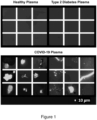
- the inventors have developed a method of diagnosing COVID-19, including acute COVID-19, and LongCOVID or post-acute COVID-19, based on the presence of anomalous blood clotlets, particularly anomalous blood clotlets that are resistant to fibrinolysis in a sample. This method could repeatedly and successfully distinguish between healthy plasma samples, type 2 diabetes and acute COVID-19 and LongCOVID.
- the inventors of the present invention have found that both acute COVID-19 and LongCOVID plasma samples contain large persistent anomalous clotted plasma that are of an amyloid nature.
- the presence of these clotlets are known to cause severe clotting pathologies in acute COVID-19. Further, these clotlets are present in blood plasma both before and after fibrinolytic digestion in LongCOVID, but not after fibrinolytic digestion in healthy individuals or those with inflammatory diseases like type 2 diabetes. Further, no induction of clotting by the addition of a coagulation factor, such as thrombin, is required in the method.
- the presence of these persistent anomalous (amyloid) clotlets may be used to diagnose LongCOVID, which may further be confirmed with fibrinolysis - as the persistent anomalous (amyloid) clotlets are resistant to fibrinolysis. Further, the presence of fibrinolytic persistent anomalous (amyloid) clotlets may be used as the basis of diagnosing acute COVID-19.
- COVID-19 disease refers to a contagious disease caused by severe acute respiratory syndrome coronavirus 2 (SARS-CoV-2) and includes both “acute COVID-19 disease” and “post-acute COVID-19 syndrome”, also referred to as "LongCOVID”.
- SARS-CoV-2 severe acute respiratory syndrome coronavirus 2
- acute COVID-19 disease refers to COVID-19 disease which is characterised by one or more symptoms selected from: fever, dry cough, tiredness, aches and pains, sore throat, diarrhoea, conjunctivitis, headache, loss of taste or smell, a rash on skin, discolouration of fingers or toes, difficulty breathing or shortness of breath, chest pain or pressure, and loss of speech or movement, and which typically lasts for 5 days up to 4 weeks.
- post-acute COVID-19 syndrome and “LongCOVID” refer to a COVID-19 disease characterised by persistent symptoms and/or delayed or long-term complications of SARS-CoV-2 infection beyond 4 weeks from the onset of symptoms.
- Post-acute COVID-9 syndrome may further be divided into two categories, namely: (1) subacute or ongoing symptomatic COVID-19, which includes symptoms and abnormalities present from 4-12 weeks beyond acute COVID-19; and (2) chronic or post-COVID-19 syndrome, which includes symptoms and abnormalities persisting or present beyond 12 weeks of the onset of acute COVID-19 and not attributable to alternative diagnoses.
- the term "persistent anomalous (amyloid) clotlets” refers to an aggregation of plasma clotting proteins that have an amyloid nature that have a diameter of between 1 to 1000 ⁇ m in diameter.
- Amyloids are aggregates of proteins characterised by a fibrillar morphology of 7-13 nm in diameter, a ⁇ -sheet secondary structure and the ability to be stained by particular dyes that bind the plasma clotting proteins.
- anomalous clotlets are a collection of plasma clotting proteins that mainly comprise of the clotting protein fibrin(ogen), but may also contain various of the other known clotting proteins (e.g. prothrombin, thrombin, Factor XIII) as well as various proteins and microparticles that might have an origin from endothelial cells, platelets, erythrocytes or white blood cells.
- sample refers to a sample obtained from a biological source, a “biological sample”, including a blood, blood plasma, lymph, tissue or urine sample.
- biological sample including a blood, blood plasma, lymph, tissue or urine sample.
- said sample is a blood plasma sample.
- detecting includes qualitative and/or quantitative detection or measuring levels of the persistent anomalous (amyloid) clotlets, with or without reference to a control.
- the anomalous (amyloid) clotlets may be detected by a "fluorescent detection method” or by visualizing the clotlets with a light microscope.
- Suitable fluorescent detection methods may include fluorescence microscopy, confocal microscopy, fluorescence spectrofluorometry or flow cytometry of the sample.
- the detection comprises contacting the sample with selective reagents such as probes, dyes or other ligands, and thereby detecting the presence, or measuring the level or amount, of protein of interest present in the sample.
- the contacting may be made under any condition suitable for a detectable complex, formed between the reagent and the nucleic acids or proteins of the sample.
- the sample may be treated with a dye or probe, in particular a fluorescent dye or probe, that can be detected by one or more of the abovementioned fluorescent detection methods when it is bound to anomalous (amyloid) clotlets.
- binding of the fluorescent dye or probe to anomalous (amyloid) clotlets may be visualised with the naked eye.
- the % of anomalous (amyloid) clotting can be calculated using the thresholding method.
- This method allows a measurement of area of amyloid signal.
- the RGB images are opened in imaged or any similar program, each image is calibrated by setting the scale (calculated using the image pixel size and the known size of the scale bar). Each image is then converted to black and white (8 bit, this is adjusted under the image type setting). Thereafter the background intensity is adjusted to white (255) and the black amyloid signal is thresholded.
- the Huang setting may be used during thresholding.
- Huang's method is an optimization method which finds the optimal threshold value by minimizing the measures of fuzziness.
- the black anomalous (amyloid) area is analyzed using the analyze particle setting (wherein the particle size that is measured is from 1 to infinity).
- the particle size setting allows for exclusion of any background signal that might not be true amyloid signal.
- Statistical analysis may be done using Graphpad Prism or any similar statistical program known in the art.
- the methods of the invention may include a step of treating the sample with a fibrinolytic enzyme
- the diagnostic kits of the invention may include a fibrinolytic enzyme for treating a sample.
- fibrinolytic enzyme refers to any enzyme that is capable of stimulating the dissolution of a blood clot and the term “fibrinolysis” refers to the enzymatic breakdown of a blood clot by the action of such fibrinolytic enzyme.
- fibrinolytic enzymes include, trypsin, protein kinases, plasmin, anistreplase, desmoteplase, streptokinase, urokinase, nattokinase, lumbrokinase, serrapeptase, papain, DNase, bromelain, and honokiol.
- the fibrinolytic enzyme is preferably trypsin or protein kinases.
- the methods of the invention may further comprise a step of comparing biomarker levels with a control reference or with a reference value.
- control relates to a healthy subject, or a subject who does not suffer from COVID-19 disease or post-acute COVID-19 syndrome.
- the control may also be a subject with a known or baseline level of anomalous (amyloid) clotlets.
- the control may also be a subject with no detectable persistent anomalous (amyloid) clotlets, after treatment with a fibrinolytic enzyme.
- said control is a healthy subject that does not suffer from systemic long-term inflammation.
- amyloid clotlets range in control samples from a healthy subject are less than 1 ⁇ m and in control samples from subject with an inflammatory condition range from 1 to 5 ⁇ m.
- a “reference value” is determined experimentally, empirically, or theoretically.
- the reference value is a known or baseline level of anomalous (amyloid) clotlets in a healthy individual or a population of healthy individuals, wherein the term "healthy individual” denotes a subject which is known to be healthy, i.e. which does not suffer, and never has suffered, from COVID-19 disease or post-acute COVID-19 syndrome.
- the reference value may be in relation to the level of the anomalous (amyloid) clotlets in a known disease state and is the mean level of the anomalous (amyloid) clotlets in a diseased individual or a population of diseased individuals, wherein the term "diseased individual” denotes a subject which is known to suffer, or have suffered, from COVID-19 disease or post-acute COVID-19 syndrome, or alternatively from another disease that results in anomalous (amyloid) clotlets in blood plasma.
- kits according to the disclosure may be provided together with instructions for use.
- Type 2 Diabetes patients were confirmed by clinician to have suffered from diabetes form at least 6 months prior to blood sample collection.
- Plasma samples were diluted tenfold in 10 mM ammonium bicarbonate buffer and the protein concentration was determined at A280 nm using a nanodrop (Thermo) spectrophotometer. The samples were adjusted to the lowest sample concentration (5mg/mL) and equal volumes of each sample was removed for digestion (40uL). To each sample a total of 4 micrograms of trypsin in 10 ⁇ L was added for a final volume of 50 ⁇ L and at an enzyme to substrate ratio of 1:50. Plasma protein digestion was allowed to proceed at 37 degrees Celsius for 18 hours. After 18 hours, the samples were removed from the heating block and centrifuged at 14 000 x g for 30 min at ambient temperature to pellet the digestion resistant portion. The supernatant was then removed and 10 ⁇ L sample was left at the bottom of the tubes.
- Thermo nanodrop
- Plasma samples of healthy controls and diabetes individuals were fully digested using the above digestion methods.
- the digested plasma was a clear fluid with no visible deposits.
- all of the COVID-19 and LongCOVID samples contained insoluble deposits at the bottom of the tube after trypsin digestion.
- ThT Thioflavin T
- 3 ⁇ L of the sample was placed onto a microscope slide, left for 30 seconds, and a coverslip was placed onto the sample.
- the samples were viewed using a Zeiss Axio Observer 7 fluorescent microscope with a Plan-Apochromat 63x/1.4 Oil DIC M27 objective (Carl Zeiss Microscopy, Kunststoff, Germany).
- the excitation wavelength for ThT was set at 450nm to 488nm and the emission at 499nm to 529nm.
- the % of anomalous (amyloid) clotting can be calculated using the thresholding method. This method was not performed in the present analysis due to sample size and because the fluorescent signal was so significant in the micrographs that such calculations were deemed unnecessary.
- Figures 1 A to C show representative micrographs of plasma smears from healthy individuals, diabetes patients and COVID-19 patients, after fibrinolysis treatment with trypsin fibrinolysis, respectively.
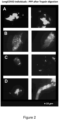
- Figures 2 A to D show representative micrographs of plasma smears, after fibrinolysis treatment with trypsin fibrinolysis from four of the six patients who suffered from acute COVID-19, but who recovered. They are now suffering from LongCOVID two months after their recovery from acute COVID-19.
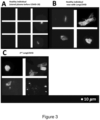
- Figure 3(A) and (B) show plasma samples of the same patent exposed to ThT.
- Figure 3(A) shows the stored plasma sample of patient taken in 2018, before acute COVID-19 infection.
- Figure 3(B) shows the plasma sample of patient, two months after acute COVID-19 recovery - this patient is now suffering from LongCOVID.
- Figure 3(C) shows a plasma sample of 2 nd patient, two months after recovery from acute COVID-19, now suffering from LongCOVID.
- the LongCOVID patients were confirmed to be COVID-positive, when diagnosed with acute COVID-19, by PRC testing at a pathology laboratory.
- ThT Thioflavin T
- 3 ⁇ L of the sample was placed onto a microscope slide, left for 30 seconds, and a coverslip was placed onto the sample.
- the samples were viewed using a Zeiss Axio Observer 7 fluorescent microscope with a Plan-Apochromat 63x/1.4 Oil DIC M27 objective (Carl Zeiss Microscopy, Kunststoff, Germany).
- the excitation wavelength for ThT was set at 450nm to 488nm and the emission at 499nm to 529nm.
- Figure 3 A is a micrograph of a comparative sample from one of the patients before COVID-19 (plasma was collected in 2018, prior to the emergence of SARS-CoV-2) and
- Figure 2 B is a micrograph of a sample collected from the same patient after recovery from acute COVID-19 but during subsistence of enduring symptoms indicative of LongCOVID.
- Figure 3 C shows representative micrographs of plasma smears from a second patient who suffered from acute COVID-19, but who recovered. Persistent anomalous (amyloid) clotlets are still present in their plasma even before fibrinolytic treatment.
Landscapes
- Health & Medical Sciences (AREA)
- Life Sciences & Earth Sciences (AREA)
- Engineering & Computer Science (AREA)
- Hematology (AREA)
- Immunology (AREA)
- Biomedical Technology (AREA)
- Chemical & Material Sciences (AREA)
- Molecular Biology (AREA)
- Urology & Nephrology (AREA)
- Physics & Mathematics (AREA)
- General Health & Medical Sciences (AREA)
- Biochemistry (AREA)
- Pathology (AREA)
- General Physics & Mathematics (AREA)
- Analytical Chemistry (AREA)
- Food Science & Technology (AREA)
- Medicinal Chemistry (AREA)
- Biotechnology (AREA)
- Microbiology (AREA)
- Cell Biology (AREA)
- Virology (AREA)
- Tropical Medicine & Parasitology (AREA)
- Proteomics, Peptides & Aminoacids (AREA)
- Ecology (AREA)
- Biophysics (AREA)
- Nuclear Medicine, Radiotherapy & Molecular Imaging (AREA)
- Investigating Or Analysing Biological Materials (AREA)
Claims (6)
- In-vitro-Verfahren zur Diagnose von postakutem COVID-19-Syndrom bei einem Subjekt, das Folgendes umfasst:(i) Bereitstellen einer Probe, die von dem Subjekt erhalten wurde;(ii) Behandeln der Probe mit einem fluoreszierenden Farbstoff oder einer fluoreszierenden Sonde; und(iii) Verwenden eines Fluoreszenz- oder Mikroskopiedetektionsverfahrens, um den fluoreszierenden Farbstoff oder die fluoreszierende Sonde zu detektieren, wodurch eine Gegenwart von persistenten anomalen amyloiden Gerinnseln, die einen Durchmesser von 1 bis 1000 µm aufweisen, in der Probe detektiert wird,wobei die Gegenwart von persistenten anomalen amyloiden Gerinnseln in der Probe ein postakutes COVID-19-Syndrom bei dem Subjekt anzeigt.
- Verfahren nach Anspruch 1, wobei die Probe eine Blutprobe ist.
- Verfahren nach Anspruch 2, das weiter einen Schritt der Herstellung von plättchenarmem Plasma (PPP) aus der Blutprobe umfasst.
- Verfahren nach einem der Ansprüche 1 bis 3, wobei das Verfahren das Behandeln der Probe mit einem fibrinolytischen Enzym vor dem Schritt der Verwendung des Fluoreszenz- oder Mikroskopiedetektionsverfahrens umfasst, um die Gegenwart von persistenten anomalen amyloiden Gerinnseln in der Probe zu detektieren.
- Verfahren nach Anspruch 4, wobei das fibrinolytische Enzym aus der Gruppe ausgewählt ist, die aus Folgenden besteht: Trypsin, Proteinkinasen, Plasmin, Anistreplase, Desmoteplase, Streptokinase, Urokinase, Nattokinase, Lumbrokinase, Serrapeptase, Papain, DNase, Bromelain und Honokiol.
- Verfahren nach einem der Ansprüche 1 bis 5, wobei das Fluoreszenz- oder Mikroskopiedetektionsverfahren Fluoreszenzmikroskopie, konfokale Mikroskopie, Fluoreszenz-Spektrofluorometrie oder Durchflusszytometrie ist.
Applications Claiming Priority (2)
| Application Number | Priority Date | Filing Date | Title |
|---|---|---|---|
| GB2105644.5A GB2605987B (en) | 2021-04-20 | 2021-04-20 | Methods and kits for diagnosing COVID-19 disease |
| PCT/IB2022/053669 WO2022224148A1 (en) | 2021-04-20 | 2022-04-20 | Methods and kits for diagnosing covid-19 disease |
Publications (3)
| Publication Number | Publication Date |
|---|---|
| EP4232828A1 EP4232828A1 (de) | 2023-08-30 |
| EP4232828C0 EP4232828C0 (de) | 2024-10-09 |
| EP4232828B1 true EP4232828B1 (de) | 2024-10-09 |
Family
ID=76377774
Family Applications (1)
| Application Number | Title | Priority Date | Filing Date |
|---|---|---|---|
| EP22725531.2A Active EP4232828B1 (de) | 2021-04-20 | 2022-04-20 | Verfahren und kits zur diagnose der covid-19-krankheit |
Country Status (6)
| Country | Link |
|---|---|
| US (1) | US20230366880A1 (de) |
| EP (1) | EP4232828B1 (de) |
| CN (1) | CN116648624A (de) |
| GB (1) | GB2605987B (de) |
| WO (1) | WO2022224148A1 (de) |
| ZA (1) | ZA202309817B (de) |
Family Cites Families (1)
| Publication number | Priority date | Publication date | Assignee | Title |
|---|---|---|---|---|
| GB2568297A (en) * | 2017-11-13 | 2019-05-15 | Univ Stellenbosch | Method of Detecting Inflammation |
-
2021
- 2021-04-20 GB GB2105644.5A patent/GB2605987B/en active Active
-
2022
- 2022-04-20 US US18/039,634 patent/US20230366880A1/en active Pending
- 2022-04-20 WO PCT/IB2022/053669 patent/WO2022224148A1/en not_active Ceased
- 2022-04-20 EP EP22725531.2A patent/EP4232828B1/de active Active
- 2022-04-20 CN CN202280008004.7A patent/CN116648624A/zh active Pending
-
2023
- 2023-10-20 ZA ZA2023/09817A patent/ZA202309817B/en unknown
Non-Patent Citations (1)
| Title |
|---|
| MAIER CHERYL L ET AL: "COVID-19 patient plasma demonstrates resistance to tPA-induced fibrinolysis as measured by thromboelastography", JOURNAL OF THROMBOSIS AND THROMBOLYSIS, SPRINGER US, NEW YORK, vol. 52, no. 3, 7 April 2021 (2021-04-07), pages 766 - 771, XP037609630, ISSN: 0929-5305, [retrieved on 20210407], DOI: 10.1007/S11239-021-02438-Y * |
Also Published As
| Publication number | Publication date |
|---|---|
| GB2605987A (en) | 2022-10-26 |
| EP4232828A1 (de) | 2023-08-30 |
| GB2605987B (en) | 2023-12-13 |
| GB202105644D0 (en) | 2021-06-02 |
| ZA202309817B (en) | 2025-03-26 |
| CN116648624A (zh) | 2023-08-25 |
| EP4232828C0 (de) | 2024-10-09 |
| WO2022224148A1 (en) | 2022-10-27 |
| US20230366880A1 (en) | 2023-11-16 |
Similar Documents
| Publication | Publication Date | Title |
|---|---|---|
| WO2011057143A1 (en) | Compositions, methods and uses for simultaneous assay of thrombin and plasmin generation | |
| CN105021827B (zh) | 检测血清血管生成素样蛋白2含量的物质在制备检测肝脏炎症和纤维化程度产品中的应用 | |
| US20140120174A1 (en) | Methods of prognosis and diagnosis of sepsis | |
| Coignion et al. | Interest of antiplatelet drug testing after an acute ischemic stroke | |
| JP4761448B2 (ja) | 血液エンドトキシン測定方法 | |
| Pretorius et al. | Circulating microclots are structurally associated with Neutrophil Extracellular Traps and their amounts are strongly elevated in long COVID patients | |
| JP2019505185A (ja) | 完全長の高分子量キニノーゲン(hmwk)と切断されたhmwkとを区別するためのペプチド定量アッセイ | |
| KR20150140657A (ko) | 자간전증의 진단을 위한 방법 및 조성물 | |
| CN101374956B (zh) | 弥漫性血管内凝血综合征的病态鉴定方法 | |
| EP4232828B1 (de) | Verfahren und kits zur diagnose der covid-19-krankheit | |
| CN104569410B (zh) | 一种快速定量检测d-二聚体的均相荧光免疫试剂组及其制备方法 | |
| JP6864008B2 (ja) | 抗リン脂質抗体症候群に関連するループス抗凝固因子(la)を特定するための方法およびキット | |
| EP3270163B1 (de) | Verfahren zum nachweis von proteinen in menschlichen proben und verwendungen dieser verfahren | |
| US20080213800A1 (en) | Method for Examing Interstitital Cystitis | |
| WO2014160237A2 (en) | Methods of prognosing preeclampsia | |
| JP6625730B2 (ja) | Fviiiインヒビター検出のための新規な自動化スクリーニング法の開発 | |
| CN114341643B (zh) | 用于测量血浆样品中功能性c1-酯酶抑制剂(c1-inh)的侧向流免疫测定 | |
| WO2019027853A1 (en) | DETECTION OF HIGH-RISK ARTERIAL THROMBO-EMBOLIC DISEASES BY COAGULATION AND HEMOSTATIC ACTIVATION MARKERS | |
| CN113959814A (zh) | 红细胞和血小板磷脂酰丝氨酸外翻做为分子标志物在检测血栓形成中的用途 | |
| Janssen et al. | Immunochemical determination of human tear lysozyme (muramidase) in keratoconjunctivitis sicca | |
| CN118641775B (zh) | 一种用于诊断、鉴别诊断和预后评估脑卒中的标志物、试剂盒及药物 | |
| JP2023513371A (ja) | 虚血貧血および急性呼吸窮迫症候群を治療する装置および方法 | |
| JP7522412B2 (ja) | 前立腺癌の診断を補助する方法 | |
| JP5640271B2 (ja) | 新規ペプチド及びその使用 | |
| WO2025257752A1 (en) | Methods for the detection of circulating microclots and neutrophil extracellular traps in inflammatory conditions |
Legal Events
| Date | Code | Title | Description |
|---|---|---|---|
| STAA | Information on the status of an ep patent application or granted ep patent |
Free format text: STATUS: UNKNOWN |
|
| STAA | Information on the status of an ep patent application or granted ep patent |
Free format text: STATUS: THE INTERNATIONAL PUBLICATION HAS BEEN MADE |
|
| PUAI | Public reference made under article 153(3) epc to a published international application that has entered the european phase |
Free format text: ORIGINAL CODE: 0009012 |
|
| STAA | Information on the status of an ep patent application or granted ep patent |
Free format text: STATUS: REQUEST FOR EXAMINATION WAS MADE |
|
| 17P | Request for examination filed |
Effective date: 20230523 |
|
| AK | Designated contracting states |
Kind code of ref document: A1 Designated state(s): AL AT BE BG CH CY CZ DE DK EE ES FI FR GB GR HR HU IE IS IT LI LT LU LV MC MK MT NL NO PL PT RO RS SE SI SK SM TR |
|
| STAA | Information on the status of an ep patent application or granted ep patent |
Free format text: STATUS: EXAMINATION IS IN PROGRESS |
|
| STAA | Information on the status of an ep patent application or granted ep patent |
Free format text: STATUS: REQUEST FOR EXAMINATION WAS MADE |
|
| STAA | Information on the status of an ep patent application or granted ep patent |
Free format text: STATUS: EXAMINATION IS IN PROGRESS |
|
| 17Q | First examination report despatched |
Effective date: 20230928 |
|
| 17Q | First examination report despatched |
Effective date: 20231013 |
|
| GRAP | Despatch of communication of intention to grant a patent |
Free format text: ORIGINAL CODE: EPIDOSNIGR1 |
|
| STAA | Information on the status of an ep patent application or granted ep patent |
Free format text: STATUS: GRANT OF PATENT IS INTENDED |
|
| INTG | Intention to grant announced |
Effective date: 20240502 |
|
| DAV | Request for validation of the european patent (deleted) | ||
| DAX | Request for extension of the european patent (deleted) | ||
| GRAS | Grant fee paid |
Free format text: ORIGINAL CODE: EPIDOSNIGR3 |
|
| GRAA | (expected) grant |
Free format text: ORIGINAL CODE: 0009210 |
|
| STAA | Information on the status of an ep patent application or granted ep patent |
Free format text: STATUS: THE PATENT HAS BEEN GRANTED |
|
| AK | Designated contracting states |
Kind code of ref document: B1 Designated state(s): AL AT BE BG CH CY CZ DE DK EE ES FI FR GB GR HR HU IE IS IT LI LT LU LV MC MK MT NL NO PL PT RO RS SE SI SK SM TR |
|
| REG | Reference to a national code |
Ref country code: CH Ref legal event code: EP |
|
| REG | Reference to a national code |
Ref country code: DE Ref legal event code: R096 Ref document number: 602022006716 Country of ref document: DE |
|
| REG | Reference to a national code |
Ref country code: IE Ref legal event code: FG4D |
|
| REG | Reference to a national code |
Ref country code: DE Ref legal event code: R026 Ref document number: 602022006716 Country of ref document: DE |
|
| PLBI | Opposition filed |
Free format text: ORIGINAL CODE: 0009260 |
|
| U01 | Request for unitary effect filed |
Effective date: 20241023 |
|
| U07 | Unitary effect registered |
Designated state(s): AT BE BG DE DK EE FI FR IT LT LU LV MT NL PT RO SE SI Effective date: 20241106 |
|
| 26 | Opposition filed |
Opponent name: CLINICUM ST. GEORG GMBH & CO. KG Effective date: 20241107 |
|
| U1N | Appointed representative for the unitary patent procedure changed after the registration of the unitary effect |
Representative=s name: WP THOMPSON; GB |
|
| PG25 | Lapsed in a contracting state [announced via postgrant information from national office to epo] |
Ref country code: IS Free format text: LAPSE BECAUSE OF FAILURE TO SUBMIT A TRANSLATION OF THE DESCRIPTION OR TO PAY THE FEE WITHIN THE PRESCRIBED TIME-LIMIT Effective date: 20250209 Ref country code: HR Free format text: LAPSE BECAUSE OF FAILURE TO SUBMIT A TRANSLATION OF THE DESCRIPTION OR TO PAY THE FEE WITHIN THE PRESCRIBED TIME-LIMIT Effective date: 20241009 |
|
| U20 | Renewal fee for the european patent with unitary effect paid |
Year of fee payment: 4 Effective date: 20250310 |
|
| PG25 | Lapsed in a contracting state [announced via postgrant information from national office to epo] |
Ref country code: ES Free format text: LAPSE BECAUSE OF FAILURE TO SUBMIT A TRANSLATION OF THE DESCRIPTION OR TO PAY THE FEE WITHIN THE PRESCRIBED TIME-LIMIT Effective date: 20241009 |
|
| PG25 | Lapsed in a contracting state [announced via postgrant information from national office to epo] |
Ref country code: NO Free format text: LAPSE BECAUSE OF FAILURE TO SUBMIT A TRANSLATION OF THE DESCRIPTION OR TO PAY THE FEE WITHIN THE PRESCRIBED TIME-LIMIT Effective date: 20250109 |
|
| PG25 | Lapsed in a contracting state [announced via postgrant information from national office to epo] |
Ref country code: GR Free format text: LAPSE BECAUSE OF FAILURE TO SUBMIT A TRANSLATION OF THE DESCRIPTION OR TO PAY THE FEE WITHIN THE PRESCRIBED TIME-LIMIT Effective date: 20250110 |
|
| PG25 | Lapsed in a contracting state [announced via postgrant information from national office to epo] |
Ref country code: PL Free format text: LAPSE BECAUSE OF FAILURE TO SUBMIT A TRANSLATION OF THE DESCRIPTION OR TO PAY THE FEE WITHIN THE PRESCRIBED TIME-LIMIT Effective date: 20241009 |
|
| PG25 | Lapsed in a contracting state [announced via postgrant information from national office to epo] |
Ref country code: RS Free format text: LAPSE BECAUSE OF FAILURE TO SUBMIT A TRANSLATION OF THE DESCRIPTION OR TO PAY THE FEE WITHIN THE PRESCRIBED TIME-LIMIT Effective date: 20250109 |
|
| PG25 | Lapsed in a contracting state [announced via postgrant information from national office to epo] |
Ref country code: SM Free format text: LAPSE BECAUSE OF FAILURE TO SUBMIT A TRANSLATION OF THE DESCRIPTION OR TO PAY THE FEE WITHIN THE PRESCRIBED TIME-LIMIT Effective date: 20241009 |
|
| PLAB | Opposition data, opponent's data or that of the opponent's representative modified |
Free format text: ORIGINAL CODE: 0009299OPPO |
|
| PLAX | Notice of opposition and request to file observation + time limit sent |
Free format text: ORIGINAL CODE: EPIDOSNOBS2 |
|
| PG25 | Lapsed in a contracting state [announced via postgrant information from national office to epo] |
Ref country code: SK Free format text: LAPSE BECAUSE OF FAILURE TO SUBMIT A TRANSLATION OF THE DESCRIPTION OR TO PAY THE FEE WITHIN THE PRESCRIBED TIME-LIMIT Effective date: 20241009 |
|
| PG25 | Lapsed in a contracting state [announced via postgrant information from national office to epo] |
Ref country code: CZ Free format text: LAPSE BECAUSE OF FAILURE TO SUBMIT A TRANSLATION OF THE DESCRIPTION OR TO PAY THE FEE WITHIN THE PRESCRIBED TIME-LIMIT Effective date: 20241009 |
|
| R26 | Opposition filed (corrected) |
Opponent name: CLINICUM ST. GEORG GMBH & CO. KG Effective date: 20241107 |
|
| U1N | Appointed representative for the unitary patent procedure changed after the registration of the unitary effect |
Representative=s name: CAMERON INTELLECTUAL PROPERTY LTD; GB |
|
| PLBB | Reply of patent proprietor to notice(s) of opposition received |
Free format text: ORIGINAL CODE: EPIDOSNOBS3 |
|
| REG | Reference to a national code |
Ref country code: CH Ref legal event code: H13 Free format text: ST27 STATUS EVENT CODE: U-0-0-H10-H13 (AS PROVIDED BY THE NATIONAL OFFICE) Effective date: 20251125 |
|
| PG25 | Lapsed in a contracting state [announced via postgrant information from national office to epo] |
Ref country code: MC Free format text: LAPSE BECAUSE OF FAILURE TO SUBMIT A TRANSLATION OF THE DESCRIPTION OR TO PAY THE FEE WITHIN THE PRESCRIBED TIME-LIMIT Effective date: 20241009 |