EP4229784B1 - System und verfahren zur bereitstellung von sprachkommunikationssitzungen zwischen kommunikationsvorrichtungen - Google Patents
System und verfahren zur bereitstellung von sprachkommunikationssitzungen zwischen kommunikationsvorrichtungen Download PDFInfo
- Publication number
- EP4229784B1 EP4229784B1 EP21766533.0A EP21766533A EP4229784B1 EP 4229784 B1 EP4229784 B1 EP 4229784B1 EP 21766533 A EP21766533 A EP 21766533A EP 4229784 B1 EP4229784 B1 EP 4229784B1
- Authority
- EP
- European Patent Office
- Prior art keywords
- communication
- recipient
- communication device
- call
- signal
- Prior art date
- Legal status (The legal status is an assumption and is not a legal conclusion. Google has not performed a legal analysis and makes no representation as to the accuracy of the status listed.)
- Active
Links
Images




Classifications
-
- H—ELECTRICITY
- H04—ELECTRIC COMMUNICATION TECHNIQUE
- H04L—TRANSMISSION OF DIGITAL INFORMATION, e.g. TELEGRAPHIC COMMUNICATION
- H04L65/00—Network arrangements, protocols or services for supporting real-time applications in data packet communication
- H04L65/10—Architectures or entities
- H04L65/1046—Call controllers; Call servers
-
- H—ELECTRICITY
- H04—ELECTRIC COMMUNICATION TECHNIQUE
- H04M—TELEPHONIC COMMUNICATION
- H04M3/00—Automatic or semi-automatic exchanges
- H04M3/42—Systems providing special services or facilities to subscribers
- H04M3/436—Arrangements for screening incoming calls, i.e. evaluating the characteristics of a call before deciding whether to answer it
- H04M3/4365—Arrangements for screening incoming calls, i.e. evaluating the characteristics of a call before deciding whether to answer it based on information specified by the calling party, e.g. priority or subject
-
- H—ELECTRICITY
- H04—ELECTRIC COMMUNICATION TECHNIQUE
- H04L—TRANSMISSION OF DIGITAL INFORMATION, e.g. TELEGRAPHIC COMMUNICATION
- H04L65/00—Network arrangements, protocols or services for supporting real-time applications in data packet communication
- H04L65/10—Architectures or entities
- H04L65/1013—Network architectures, gateways, control or user entities
-
- H—ELECTRICITY
- H04—ELECTRIC COMMUNICATION TECHNIQUE
- H04L—TRANSMISSION OF DIGITAL INFORMATION, e.g. TELEGRAPHIC COMMUNICATION
- H04L65/00—Network arrangements, protocols or services for supporting real-time applications in data packet communication
- H04L65/1066—Session management
- H04L65/1069—Session establishment or de-establishment
-
- H—ELECTRICITY
- H04—ELECTRIC COMMUNICATION TECHNIQUE
- H04M—TELEPHONIC COMMUNICATION
- H04M3/00—Automatic or semi-automatic exchanges
- H04M3/42—Systems providing special services or facilities to subscribers
- H04M3/424—Arrangements for automatic redialling
-
- G—PHYSICS
- G10—MUSICAL INSTRUMENTS; ACOUSTICS
- G10L—SPEECH ANALYSIS TECHNIQUES OR SPEECH SYNTHESIS; SPEECH RECOGNITION; SPEECH OR VOICE PROCESSING TECHNIQUES; SPEECH OR AUDIO CODING OR DECODING
- G10L15/00—Speech recognition
- G10L15/08—Speech classification or search
- G10L15/18—Speech classification or search using natural language modelling
- G10L15/1822—Parsing for meaning understanding
-
- G—PHYSICS
- G10—MUSICAL INSTRUMENTS; ACOUSTICS
- G10L—SPEECH ANALYSIS TECHNIQUES OR SPEECH SYNTHESIS; SPEECH RECOGNITION; SPEECH OR VOICE PROCESSING TECHNIQUES; SPEECH OR AUDIO CODING OR DECODING
- G10L15/00—Speech recognition
- G10L15/22—Procedures used during a speech recognition process, e.g. man-machine dialogue
Definitions
- This invention relates to the field of communication systems, and in particular to a system and method for operating personal devices providing voice communication between users over communication networks.
- Voice communication systems make it possible to connect people everywhere.
- the traditional Public Switched Telephone Networks of the past are usually replaced worldwide by modem mobile and Voice over Internet Protocol (VoIP) communication systems, also called IP telephony, that leverage global communication networks.
- VoIP Voice over Internet Protocol
- Wireless communication devices such as mobile phones, have become almost indispensable for people on the road, at home and at work.
- a simplified schematic block diagram of conventional voice communication system 10 is illustrated.
- the caller in order for a caller user 11 to initiate a voice communication with a recipient user 12 , the caller needs to dial (i.e., to enter) a phone number of the communication device of the target recipient user 14 , so as to provide the phone number to the call switching system 15 of the voice communication system.
- the call switching system 15 finds the communication device of the target recipient user 14 within the communication network and invites the recipient user 14 to participate in the voice communication session by ringing via the communication device of the recipient user 14.
- the present application partially eliminates limitations and inconveniences of conventional telephone systems and methods for providing voice communication sessions between communication devices.
- voice communication session and “call session” both refer to a predetermined voice communication dialogue between the caller and recipient users of the corresponding communication devices. Accordingly, these terms are used hereinbelow interchangeably.
- the communication device of the caller user is also referred to as the "caller communication device”, and is also referred to as the "first communication device”.
- the communication device of the recipient user is also referred to as the "recipient communication device” and is also referred to as the "second communication device”. It should be understood that the same user of the communication device can be either a caller user (when he/she initiates a call) or a recipient user (when he/she receives the call).
- a caller user starts a voice conversation with a remote recipient user, by using his caller communication device, without any preliminary actions, in the same natural manner as if the recipient is located nearby, at arm's distance.
- the system automatically handles all actions and requirements which are necessary for establishment of a remote full-duplex voice communication session between the communicating caller and recipient users.
- the communication devices of the caller and recipient users can, for example, be personal communication devices, such as personal desktop and laptop computers, mobile phones, walkie-talkie handheld transceivers, personal wearable communication devices, etc.
- the system for providing voice communication sessions according to the embodiments of the present invention can be mostly useful and applicable to users who are in close informal relationships with each other, e.g. friends, family members, relatives, and other categories of users.
- a communication system can also be applicable to other categories of users.
- the system for providing voice communication sessions according to the embodiments of the present invention could be used in hospitals for fast and convenient voice communication between patients and their physicians and nurses.
- Another example of application of the system includes, but is not limited to, logistics hubs, such as airports, marine ports, warehouses, etc. In these applications, the system can be helpful for convenient coordination of communications of the working personnel.
- a caller user utters a call initiation phrase in a natural language into his communication device.
- the call initiation phrase is intended for playing back to the recipient user with whom the caller wishes to establish voice communication.
- the system analyses the uttered call initiation phrase and identifies it as a kind of a signal that is used for an attempt to initiate a voice communication session between the caller and the target recipient.
- the system then creates an end-to-end connection from the caller communication device to the recipient communication device and transmits this call initiation phrase to the recipient site.
- the call initiation phrase is played back on the recipient communication device.
- one or more words of the call initiation phrase are required to be indicative of a personal characteristic of the recipient user.
- the call initiation phrase can include at least one of the words pointing to the personality of the recipient user, e.g., recipient's official name, nickname or an alias word by which the recipient user can be identified as a contact of the caller by the system.
- a call initiation phrase can, for example, be any phrase or a sequence of several phrases that a caller user may say to the recipient user to start a conversation, pointing to the recipient user personality that is included in this phrase.
- the call initiation phrase can, for example, be as follows: "Hi Bob, can you talk to me now?" or "Bob, when will you be done today?".
- many other informal phrases can be used that include the recipient user personality "Bob".
- the recipient user may respond to the call initiation phrase, for example, by uttering a recipient user response phrase, which is intended for playing back on the communication device of the caller user.
- the recipient user response phrase is semantically indicative of whether the recipient user accepts or rejects the proposed voice communication at the given moment.
- the recipient user Bob can for example, say: “Sure, let's talk” or “In two hours, I guess” respectively, when the recipient user intends to accept the call invitations.
- the recipient user intends to reject the proposed voice communication he can, for example, but not limited by this example, reply: "Reject", "Cancel”, etc.
- the system analyses the uttered recipient user response phrase and recognizes the semantic indication of the recipient intention to accept or reject the proposal of the caller user to start a conversation. Depending on the semantic indication, the system can either establish or reject voice communication between the caller and recipient users.
- the system establishes a full-duplex voice communication session between the caller and the recipient, and transmits the recipient user response phrase to the caller side of the system, where the recipient user response phrase is played back on the caller communication device.
- the word(s) of the call initiation phrase which is (are) indicative of a personality of the recipient user, can trigger creation of the end-to-end connection from the caller communication device to the recipient communication device.
- This end-to-end connection allows for the other passages uttered by the caller user, which follow the initial call initiation phrase, to be transmitted by the system to the recipient user automatically. These passages do not need to be indicative of the recipient user personality, since the recipient user is already suggested by the context of the initiation phrase.
- the system cancels the procedure of establishment of the voice communication session, and returns to the initial state, which was before the call initiation phrase was uttered by the caller user. In this case, the recipient user response phrase may not be transmitted to the caller user.
- any types of recipient user actions by using his communication device which are indicative of acceptance or rejection of the voice communication, can be utilized by the system as a trigger for establishment or rejection of a full-duplex voice communication session between the caller and the recipient users.
- types of the recipient user actions as pressing a control button of the communication device in a predetermined action pattern (e.g., pressing the control button once, twice, etc., and/or physically shaking the device by the recipient user in a predetermined manner) can be utilized by the system as indication of the recipient's intention to accept or to reject the initiation of a voice communication between the caller and recipient users.
- termination of the established call sessions within the system can be triggered by any kind of system user activities resulting in generation of call termination signals indicative of termination of the call session.
- the call termination signals can be originated either by the recipient user by using his communication device, or by the caller user by using the caller communication device.
- a novel system for providing a call session between one communication device associated with a caller user, and another communication device associated with a recipient user is described.
- the first communication device has first device coordinates in the communication environment and the second communication device has second device coordinates in the communication environment.
- the system for providing a call session includes an automated call controller (ACC) adapted for being coupled to the first communication device via a first communication link and to the second communication device via a second communication link.
- ACC automated call controller
- the automated call controller is configured to couple the first communication device to the automated call controller via the first communication link for receiving a call initiation audio signal from the first communication device via the first communication link.
- the call initiation audio signal is indicative of a call initiation phrase uttered by the caller user.
- the call initiation phrase is indicative of the caller user's intention to establish the call session.
- the call initiation phrase includes one or more personality characteristics of the recipient user.
- the automated call controller is also configured to analyze the call initiation phrase for determining at least one personality characteristic of the recipient user.
- the automated call controller is also configured to find the second device coordinates of the second communication device in the communication environment by using the personality characteristic of the recipient user.
- the automated call controller is also configured to couple the second communication device to the automated call controller via the second communication link by using the second device coordinates.
- the automated call controller is also configured to transmit the call initiation audio signal to the second communication device via the second communication link.
- the automated call controller is configured to receive a recipient user reaction signal from the second communication device provided by the recipient user in response to the call initiation audio signal.
- the recipient user reaction signal is indicative of a recipient user intention that can be either a recipient acceptance intention, when the recipient user intends to accept the call and start a voice communication with the caller user, or a recipient rejection intention of the call session, when the recipient user intends to decline the invitation of the caller user.
- the automated call controller is also configured to analyze the recipient user reaction signal in order to determine indication of the recipient user's intention, and, if the recipient user intention is the recipient acceptance intention of the call session, to establish a full-duplex call session between the first and the second communication devices, and to exchange audio signals between the first and second communication devices during the established call session.
- the recipient user reaction signal is selected from a recipient response audio signal and a recipient response action signal.
- the recipient response audio signal is indicative of a recipient user response phrase.
- the recipient user response phrase is indicative of the recipient user intention either to accept the call session or to reject the call session.
- the automated call controller includes a first communication interface adapted for being coupled to the first communication device via the first communication link, a second communication interface adapted for being coupled to the second communication device via the second communication link, and a voice signal dispatcher coupled to the first communication interface and to the second communication interface.
- the automated call controller also includes a voice utterance interpreter coupled to the first communication interface, and to the second communication interface.
- the automated call controller also includes a voice communication controller coupled to the voice utterance interpreter, to the voice signal dispatcher, to the first communication interface, and to the second communication interface.
- the automated call controller also includes a user registry coupled to the voice communication controller.
- the first communication interface for establishing voice communication between the first and second communication devices, is configured, in the forward direction, to couple the first communication device to the automated call controller via the first communication link, and to receive the call initiation audio signal provided by the caller user via the first communication link.
- the first communication interface is also configured to forward the call initiation audio signal to the voice signal dispatcher and to the voice utterance interpreter.
- the first communication interface is also configured to exchange audio signals between the voice signal dispatcher and the first communication device during the call session. The audio signals are generated during a voice communication of the caller user and the recipient user.
- the second communication interface is configured, in the forward direction, to receive the call initiation audio signal from the voice signal dispatcher, and to forward the call initiation audio signal to the second communication device via the second communication link.
- the second communication interface is also configured to exchange audio signals between the voice signal dispatcher and the second communication device during the call session. Such audio signals are generated during the voice communication of the caller user and the recipient user.
- the forwarding of the call initiation audio signal by the second communication interface to the second communication device includes receiving the call initiation audio signal from the voice signal dispatcher, and receiving a transmission command signal from the voice communication controller. It should be noted that the transmission command signal is indicative of the second device coordinates of the second communication device. Then, the second communication device is coupled to the second communication interface via the second communication link by using the second device coordinates. After the coupling, the call initiation audio signal is transmitted to the second communication device via the second communication link.
- the voice signal dispatcher is configured for exchanging the audio signals between the first communication interface and the second communication interface.
- the exchanging of the audio signals provided by the voice signal dispatcher between the first communication interface and the second communication interface, in the forward direction from the first communication interface to the second communication interface includes receiving the audio signal from the first communication interface, buffering the received audio signal, and forwarding the buffered audio signal to the second communication interface.
- the exchanging of the audio signals provided by the voice signal dispatcher between the first communication interface and the second communication interface, in the backward direction from the second communication interface to the first communication interface includes receiving the audio signal from the second communication interface, buffering the received audio signal, and forwarding the buffered audio signal to the first communication interface.
- the voice utterance interpreter is configured to analyze the call initiation audio signal in order to determine the call initiation phrase, so as to determine the caller user intention to establish the call session.
- the voice utterance interpreter is also configured to determine the at least one personality characteristic of the recipient user from the call initiation phrase.
- the voice utterance interpreter is also configured to generate caller user intention data that includes the personality characteristic of the recipient user, and to relay the caller user intention data to the voice communication controller. It should be noted that in the present description and in the claims, the phrases “"to relay to” and “to forward to” are used interchangeably.
- the voice utterance interpreter is further configured to analyze the recipient response audio signal in order to recognize the recipient user intention, which can be either a recipient acceptance intention or the recipient rejection intention of the call session.
- the voice utterance interpreter is also configured to generate recipient user intention data indicative of the recipient user intention, and to provide the recipient user intention data to the voice communication controller.
- the voice communication controller is configured for establishing full-duplex call sessions between the first and the second communication devices.
- the user registry is configured for storing a contact list of the caller user.
- the contact list includes a set of recipient user records.
- Each recipient user record includes data of the recipient user including recipient user personality characteristics, and coordinates of a corresponding communication device of the recipient user within the communication environment.
- the set of recipient user records includes all potential recipient users of the system associated with the caller user.
- the user registry is also configured for transmitting the data of the recipient user record from the contact list to the voice communication controller upon receipt of a corresponding request from the voice communication controller.
- the recipient user reaction signal provided by the recipient user in response to the call initiation audio signal originated from the caller user, can be either the recipient response audio signal or the recipient response action signal.
- the second communication interface is further configured, in the backward direction from the second communication device to the first communication device, to receive the recipient response audio signal from the second communication link, and then to forward the recipient response audio signal to the voice signal dispatcher and to the voice utterance interpreter.
- the recipient response audio signal is provided by the second communication device and originated from the recipient user.
- the first communication interface is also configured to receive the recipient response audio signal from the voice signal dispatcher.
- the first communication interface is also configured to forward the recipient response audio signal to the first communication device via the first communication link.
- the forwarding of the recipient response audio signal by the first communication interface to the first communication device includes receiving the recipient response audio signal from the voice signal dispatcher, and receiving a transmission command signal from the voice communication controller. It should be noted that the transmission command signal is associated with the established call session between the first communication device and the second communication device.
- the forwarding of the recipient response audio signal by the first communication interface to the first communication device also includes transmitting the recipient response audio signal to the first communication device via the first communication link.
- the recipient response action signal is indicative of a recipient user action pattern.
- the recipient user action pattern is indicative of a recipient user intention.
- the recipient user intention is selected from a recipient acceptance intention and a recipient rejection intention of the call session.
- the second communication interface in the backward direction from the second communication device to the first communication device, is further configured for receiving the recipient response action signal from the second communication device via the second communication link, and forwarding the received recipient response action signal to the voice communication controller.
- the first communication interface in order to terminate the full-duplex call session established between the first and second communication devices, is configured for receiving a call termination signal from the first communication device via the first communication link, and forwarding the received call termination signal to the voice communication controller.
- the call termination signal is indicative of an intention of the caller user to terminate an established full-duplex call session between the first and the second communication devices.
- the voice communication controller is also configured for generating a decoupling signal and for providing the decoupling signal to the second communication interface.
- the second communication interface is further configured for disconnecting the second communication link, thereby decoupling the second communication device from the automated call controller, in response to the decoupling signal.
- the voice communication controller is further configured for generating a resetting signal and for providing the resetting signal to the voice signal dispatcher.
- the voice signal dispatcher is responsive to the resetting signal, and is configured to delete all buffered audio signals.
- the second communication interface in order to terminate the full-duplex call session established between the first and second communication devices, is further configured for receiving a call termination signal from the second communication device via the second communication link, and forwarding the received call termination signal to the voice communication controller.
- the call termination signal is indicative of an intention of the recipient user to terminate an established full-duplex call session between the first and the second communication devices.
- the voice communication controller is further configured for generating a decoupling signal and for providing the decoupling signal to the second communication interface.
- the second communication interface is also configured for disconnecting the second communication link, thereby decoupling the second communication device from the automated call controller in response to the decoupling signal.
- the voice communication controller is further configured for generating a resetting signal and for providing the resetting signal to the voice signal dispatcher.
- the voice signal dispatcher is responsive to the resetting signal to delete all buffered audio signals.
- the first communication interface is further configured for receiving a system activation signal followed by the call initiation audio signal provided by the first communication device via the first communication link, forwarding the received system activation signal to the voice communication controller, and forwarding the received call initiation audio signal to the voice utterance interpreter and to the voice signal dispatcher.
- the voice communication controller is responsive to the system activation signal to generate an utterance analyzing instruction signal and to provide the utterance analyzing instruction signal to the voice utterance interpreter, thereby instructing the voice utterance interpreter to begin analyzing the call initiation audio signal.
- the voice utterance interpreter is responsive to the utterance analyzing instruction signal to begin analyzing the call initiation audio signal followed by the system activation signal.
- a method for providing a call session between a first communication device associated with a caller user and a second communication device associated with a recipient user in a communication environment is based on the system described above, which is deployed for providing the call session.
- the method in a forward direction from the first communication device to the second communication device, starts from the step of coupling the first communication device to the automated call controller via the first communication link.
- the method further includes receiving a call initiation audio signal from the first communication device by the automated call controller.
- the receiving of the call initiation audio signal from the first communication device by the automated call controller includes buffering a copy of the call initiation audio signal in the voice signal dispatcher.
- the method for providing a call session further includes analyzing the call initiation audio signal in order to determine one or more personality characteristics of the recipient user.
- the method for providing call session further includes generating, by the automated call controller, an unrecognition notification signal for the caller user.
- the unrecognition notification signal is transmitted to the first communication device, thereby to inform the caller user that the call initiation signal from the first communication device was not recognized, so as the caller user could retry the initiation of the call session, if desired.
- the method for the providing of a call session further includes finding the second device coordinates of the second communication device in the communication environment by using the personality characteristic(s) of the recipient user.
- the finding of the second device coordinates of the second communication device includes: finding a corresponding recipient user record within the contact list by using the personality characteristic(s) of the recipient user as a search parameter, and extracting the second device coordinates of the corresponding second communication device of the recipient user within the communication environment from the recipient user record.
- the method for the providing of a call session further includes coupling the automated call controller to the second communication device via the second communication link by using the second device coordinates of the second communication device, and forwarding the call initiation audio signal to the second communication device.
- the method for the providing of a call session, in a backward direction from the second communication device to the first communication device includes receiving a recipient user reaction signal from the second communication device by the automated call controller in response to the call initiation audio signal.
- the recipient user reaction signal is indicative of a recipient user intention that is selected from recipient acceptance intention and recipient rejection intention of the call session.
- the recipient user reaction signal is selected from a recipient response audio signal and a recipient response action signal.
- the recipient user reaction signal is the recipient response audio signal that is indicative of at least one recipient user response phrase that is indicative of the recipient user intention to accept the call session, or to reject the call session.
- the receiving of the recipient response audio signal from the second communication device includes buffering a copy of the recipient response audio signal in the voice signal dispatcher.
- the method for providing a call session, in a backward direction from the second communication device to the first communication device also includes analyzing the recipient user reaction signal to determine indication of the recipient user intention.
- a full-duplex call session between the first and the second communication devices is established and exchange of audio signals between the first and the second communication devices is provided during the established call session.
- the audio signals are generated during the voice communication of the caller user and the recipient user.
- the method includes canceling a procedure of establishment of the full-duplex call session between the first and the second communication devices.
- the canceling of the full-duplex call session includes decoupling the second communication device from the automated call controller by disconnecting the second communication link. After disconnection of the second communication link, the recipient user reaction signal can be deleted.
- the method includes generating and transmitting to the automated call controller, by the second communication device, a recipient busy reaction signal.
- the recipient busy reaction signal is indicative of the recipient user intention whether to switch from the other call session to the initiated call session or to remain on the other call session.
- the method also includes analyzing the recipient busy reaction signal, by the automated call controller, so as to determine the intention of the recipient user. Accordingly, if the determined recipient user intention is to switch from the other call session to the initiated call session, then the method includes terminating, by the automated call controller, the other call session, and establishing the initiated call session with the first communication device.
- the method includes generating, by the second communication device, a voice feedback notification signal and transmitting the voice feedback notification signal to the automated call controller.
- the automated call controller receives the voice feedback notification signal from the second communication device, and forwards the voice feedback notification signal to the first communication device for playing the voice feedback notification to the caller user by a voice of the recipient user on the first communication device.
- the recipient user reaction signal is a recipient response action signal that is indicative of recipient user action pattern.
- the recipient user action pattern is indicative of a recipient user intention either to accept the call session, or to reject the call session.
- any types of recipient user actions by using his communication device which are indicative of acceptance or rejection of the voice communication, can be utilized by the system as a trigger for establishment or rejection of a full-duplex call session between the caller and the recipient users.
- a pattern of the recipient user actions as pressing a control button of the communication device in a predetermined action pattern (e.g., pressing the control button once, twice, etc., and/or physically shaking the device by the recipient user in a predetermined manner) can be utilized by the system as indication of the recipient's intention either to accept or to reject the initiation of a voice communication between the caller and recipient users.
- either the caller user or a recipient user may terminate the full-duplex call session that was established between the first and the second communication devices.
- terminating the full-duplex call session by the caller user includes receiving a call termination signal from the first communication device via the first communication link.
- the call termination signal is indicative of the intention of the caller user to terminate the full-duplex call session established between the first and second communication devices.
- the method includes terminating the established full-duplex call session.
- the terminating includes interrupting exchange of the audio signals between the first communication device and the second communication device, and decoupling the second communication device from the automated call controller by disconnecting the second communication link.
- terminating the full-duplex call session by the recipient user includes receiving a call termination signal from the second communication device via the second communication link.
- the call termination signal is indicative of the intention of the recipient user to terminate the full-duplex call session established between the first and second communication devices.
- terminating the established full-duplex call session includes interrupting exchange of the audio signals between the first communication device and the second communication device, and decoupling the second communication device from the automated call controller by disconnecting the second communication link.
- the system and method in accordance with embodiments of the present invention may be applied to any currently available and possible future voice communication technologies and systems, including mobile smartphones (no matter whether are they based on Google Android OS or Apple iOS or any other operating system), walkie-talkie handheld transceivers, personal wearable communication devices, voice communication applications such as Skype, Zoom, Viber, Telegram, WhatsApp, and so on.
- the present application provides a novel voice communication technique for providing call sessions in a communication environment between one communication device associated with a caller user and another communication device associated with a recipient user.
- the term "communication environment” is referred to a combination of various communication networks and radio channels in some radio frequency allocations that enable exchange of communication signals between the caller communication device and the recipient communication device.
- a caller user In order to initiate a voice communication, a caller user, by using his communication device, starts a voice conversation with a remote recipient user via the communication device of the recipient user.
- the voice conversation may start without any preliminary actions, i.e., in the same natural manner, as if the recipient is located near the caller, at arm's distance.
- the system automatically handles all actions and requirements which are necessary for establishment of a full-duplex voice communication session between the communicating caller and recipient users.
- the communication devices of the caller and recipient users can, for example, be personal communication devices, such as personal desktop and laptop computers, mobile phones, walkie-talkie handheld transceivers, personal wearable communication devices, etc.
- the system for providing voice communication sessions according to the embodiments of the present invention can be mostly useful and applicable to users who are in close informal relationships with each other, e.g. friends, family members, relatives and other categories of users.
- a communication system can also be applicable to other categories of users.
- the system for providing voice communication sessions according to the embodiments of the present invention could be applied in hospitals for fast and convenient voice communications between patients and their physicians and nurses.
- Another example of application of the system includes, but is not limited to, logistics hubs, such as airports, marine ports, warehouses, etc. In these applications, the system can be helpful for convenient coordination of communications of the working personnel.
- the communication device of the caller user is also referred to as the "caller communication device” and is also referred to as the "first communication device”.
- the call initiation phrase is indicative of the caller intention to establish a voice communication session with the recipient.
- the call initiation phrase is intended for playing back by recipient's communication device to the recipient user with whom the caller wishes to establish a voice communication.
- the communication device of the recipient user is also referred to as the "recipient communication device” and is also referred to as the "second communication device”. It should be understood that the same user of the communication device can be either a caller user (when he/she initiates a call) or a recipient user (when he/she receives the call).
- the call initiation phrase is required to include at least one personality characteristic of the corresponding recipient user in order to find the recipient user in the communication environment, and to forward the call initiation phrase to the recipient user.
- one or more words of the call initiation phrase can be indicative of a personality characteristic of the recipient user.
- the call initiation phrase can include one or more words including an official name of the recipient user, a nickname of the recipient user within the voice communication system, and/or an alias word by which the recipient user can be identified as a contact of the caller by the system.
- the caller communication device generates a call initiation audio signal which is indicative of the call initiation phrase, and transmits this signal to the system of the present invention via a first communication link that provides coupling of the first communication device to the system within the communication environment.
- the system analyses the call initiation audio signal and determines the intention of the caller user to initiate a call session with the corresponding recipient user. During the analysis, the system extracts the personality characteristic of the intended recipient user from the call initiation phrase, and then finds coordinates of the recipient communication device in the communication environment by using this personality characteristic of the recipient user.
- the system is then coupled to the second communication device via the second communication link, thereby providing an end-to-end connection from the caller communication device to the recipient communication device.
- the system transmits the call initiation audio signal to the recipient site, i.e. to the second communication device.
- the second communication device plays back the call initiation phrase from the call initiation audio signal to the recipient user.
- the recipient user may react to the call initiation phrase, for example, by uttering a recipient user response phrase, which is intended for playing back on the communication device of the caller user, i.e. on the first communication device.
- the recipient user response phrase is semantically indicative of a recipient user intention to accept or to reject the proposed call session at the given moment.
- the recipient communication device i.e. the second communication device
- the recipient communication device can generate a recipient response audio signal, which is indicative of the recipient user response phrase, and transmits the generated signal to the system via the second communication link.
- the system analyses the recipient response audio signal and determines the recipient user intention either to accept or to reject the proposed call session. Depending on the determined recipient user intention, the system can either establish a full-duplex call session between the caller and recipient communication devices, or reject the call session.
- the system after establishing a full-duplex call session, transmits the recipient response audio signal to the caller site, where the recipient user response phrase is played back on the first communication device to the caller user.
- the call initiation phrase can trigger the establishing end-to-end connection from the first communication device to the second communication device. This allows for the other passages uttered by the caller user, which follow the initial call initiation phrase, to be relayed by the system to the recipient user automatically. These passages do not need to be indicative of the recipient user personality, since the recipient user is already suggested by the context of the following voice communication.
- the system cancels the procedure of establishment of the full-duplex call session, and returns to the initial state, which was before the call initiation audio signal is received by the system from the first communication device. In this case, the recipient response audio signal may not be transmitted to the caller user.
- any other kinds of recipient user response action patterns by using his communication device which are indicative of either acceptance or rejection of the call session, can be utilized by the system as a trigger for establishment or rejection of a full-duplex call session between the first and the second communication devices.
- pressing a control button of the communication device in a predetermined manner e.g. pressing once, twice, etc. by the recipient user, or physically shaking the device by the recipient user in a predetermined manner
- pressing a control button of the communication device in a predetermined manner can be utilized by the system as indication of the recipient intention to accept or to reject the initiation of a dialogue between the caller and recipient users.
- termination of the established full-duplex call sessions within the system can be triggered by any kind of system user activities resulting in generation of call termination signals indicative of termination of the call sessions.
- the call termination signals can be originated either by the recipient user by using the second communication device, or by the caller user by using the first communication device.
- a system 20 for providing a call session in a communication environment between a first communication device 13 associated with a caller user 11 and a second communication device 14 associated with a recipient user 12 is illustrated, according to an embodiment of the present invention.
- the first communication device 13 has first device coordinates in the communication environment and the second communication device 14 has second device coordinates in the communication environment.
- the communication environment includes a combination of various communication networks and radio channels in certain radio frequency allocations.
- Such a combination of the communication networks and radio channels enables coupling of the caller communication devices to the recipient communication devices operating in the communication environment.
- Examples of communication networks that can constitute the communication environment include, but are not limited to, Internet Protocol (IP) based communication networks, both wireless and wired, such as Wi-Fi or Ethernet networks, cellular mobile networks, Wi-MAX networks, etc.
- Examples of radio channels in radio frequency allocations include, but are not limited to, PMR446 (Private Mobile Radio, 446 MHz) license-free radio channels and American Family Radio Service (FRS) and General Mobile Radio Service (GMRS) radio channels used for walkie-talkie handheld transceivers.
- IP Internet Protocol
- radio channels in radio frequency allocations include, but are not limited to, PMR446 (Private Mobile Radio, 446 MHz) license-free radio channels and American Family Radio Service (FRS) and General Mobile Radio Service (GMRS) radio channels used for walkie-talkie handheld transceivers.
- PMR446 Primaryvate Mobile Radio, 446 MHz
- FSS American Family Radio Service
- GMRS General Mobile Radio Service
- Examples of coordinates of the first communication device 13 and the second communication device 14 within the communication environment include, but are not limited to at least one of: an IP address in a TCP/IP communication network, a number of a radio channel within a predetermined radio frequency allocation, and a unique identifier in a predetermined voice communication system.
- the system 20 includes an automated call controller (ACC) 18 adapted for being coupled to the first communication device 13 via a first communication link 16 and to the second communication device 14 via a second communication link 17.
- ACC automated call controller
- the first communication device 13 and the second communication device 14 may be embodied in any of a number of forms, such as a smartphone or a computer.
- the computer can be a rack-mounted computer, a desktop computer, a laptop computer, or a tablet computer, as non-limiting examples.
- the first communication device 13 and/or the second communication device may be embedded in a device not generally regarded as a smartphone or computer, but with suitable processing capabilities, including a Personal Digital Assistant (PDA), a walkie-talkie handheld transceiver, a personal wearable communication device, a home smart speaker device, an automobile head unit device, or any other suitable portable or fixed electronic device.
- PDA Personal Digital Assistant
- a walkie-talkie handheld transceiver a walkie-talkie handheld transceiver
- a personal wearable communication device a home smart speaker device
- automobile head unit device or any other suitable portable or fixed electronic device.
- An example of a type of the first communication link 16 and an example of a type of the second communication link 17 include, but are not limited to, a Wi-Fi communication link, a mobile cellular communication link, a Walkie-Talkie radio link, a voice messenger communication link of one of existing voice messengers.
- the first and the second communication links are of the same type.
- the first and the second communication links can be of different types.
- the automated call controller 18 includes electronic components and can be implemented as computer systems including corresponding hardware, software, and/or firmware.
- the automated call controller 18 can be implemented on the basis of a stand-alone computer system having a combination of dedicated hardware and software.
- the hardware of the automated call controller 18 can be configured as a corresponding system including such main component as a central processing unit (CPU), a main memory (RAM), a read only memory (ROM), a non-volatile memory (NVM) or persistent storage device, an external memory, etc.
- the automated call controller 18 can be implemented as a cloud based service.
- various components of the automated call controller 18 described herein can include electrical circuit(s) that can include components and circuitry elements of suitable value in order to implement the embodiments of the subject innovation(s).
- many of the various components can be implemented on one or more integrated circuit (IC) chips.
- IC integrated circuit
- a set of components can be implemented in a single IC chip.
- one or more of respective components are fabricated or implemented on separate IC chips.
- the processor of the automated call controller 18 can be preprogrammed by suitable software models capable of analyzing the corresponding input information during signal exchanges between the caller and recipient communication devices 13 , 14 and the automated call controller 18.
- the software components can be stored in the ROM, a rewritable persistent storage device like a hard disk, a solid state memory device like a flash memory, an external memory device or the like, and when required can be loaded into the RAM, and executed by the processor(s). Accordingly, the processor can perform a number of data processing steps, calculations, or estimating functions, some of which will be discussed hereinbelow.
- the automated call controller 18 in the forward direction from the first communication device 13 to the second communication device 14 , is configured to couple the first communication device 13 to the automated call controller 18 via the first communication link 16 for receiving a call initiation audio signal from the first communication device 13 via the first communication link 16.
- the call initiation audio signal is indicative of a call initiation phrase uttered by the caller user.
- the call initiation phrase is indicative of the caller user intention to establish the call session.
- the call initiation phrase includes one or more personality characteristics of the recipient user. Examples of the personality characteristics include, but are not limited to, a user official name, a user nickname within the voice communication system, a user alias, etc.
- the call initiation phrase can be as follows: "Hey Bob, can you talk to me now?" or "Bob, when will you be done today?", and, alternatively, many other informal phrases can be used that include the recipient user personality "Bob".
- the call initiation audio signal includes a speech signal of the original caller user utterance converted from an acoustic form to a digitized electrical form, and encoded by using one of suitable existing audio codecs.
- audio codecs include, but are not limited to, G.711, G.722, G.723.1, G.726, iLBC, Speex, SILK, etc.
- the automated call controller 18 in the forward direction from the first communication device 13 to the second communication device 14 , is also configured to analyze the call initiation phrase for determining at least one personality characteristic of the recipient user.
- the automated call controller 18 is also configured to find the second device coordinates of the second communication device 14 in the communication environment by using the personality characteristic of the recipient user.
- the automated call controller 18 is also configured to couple the second communication device 14 to the automated call controller 18 via the second communication link 17 by using the second device coordinates.
- the automated call controller 18 is also configured to transmit the call initiation audio signal to the second communication device 14 via the second communication link 16.
- the automated call controller 18 in a backward direction from the second communication device 14 to first communication device 13 , is configured to receive a recipient user reaction signal from the second communication device 14 provided by the recipient user in response to the call initiation audio signal via the second communication link 16.
- the recipient user reaction signal is indicative of a recipient user intention that can be either a recipient acceptance intention, when the recipient user intends to accept the call and start a voice communication with the caller user, or a recipient rejection intention of the call session, when the recipient user intends to decline the invitation of the caller user.
- the automated call controller 18 is also configured to analyze the recipient user reaction signal in order to determine indication of the recipient user intention, and, if the recipient user intention is the recipient acceptance intention of the call session, to establish a full-duplex call session between the first and the second communication devices, and to exchange audio signals between the first and second communication devices during the established call session.
- the audio signals are generated during a voice communication of the caller user and the recipient user.
- the recipient user reaction signal is selected from a recipient response audio signal and a recipient response action signal.
- the recipient response audio signal is indicative of recipient user response phrase.
- the recipient user response phrase is indicative of the recipient user intention either to accept the call session or to reject the call session.
- Bob can for example, say: “Sure, let's talk” or “In two hours, I guess” respectively, when the recipient user intends to accept the call invitations.
- the recipient user if the recipient user intends to reject the proposed voice communication, he can reply, for example, but not limited by this example: "Reject", "Cancel”, etc.
- the recipient response audio signal includes a speech signal of the original recipient user utterance converted from an acoustic form to a digitized electrical form, and encoded by using one of suitable existing audio codecs.
- audio codecs include, but are not limited to, G.711, G.722, G.723.1, G.726, iLBC, Speex, SILK, etc.
- the automated call controller 18 includes a first communication interface 181 adapted for being coupled to the first communication device 13 via the first communication link 16 , a second communication interface 182 adapted for being coupled to the second communication device 14 via the second communication link 17 , and a voice signal dispatcher 183 coupled to the first communication interface 181 and to the second communication interface 182.
- the automated call controller 18 also includes a voice utterance interpreter 184 coupled to the first communication interface 181 , and to the second communication interface 182.
- the automated call controller 18 also includes a voice communication controller 185 coupled to the voice utterance interpreter 184 , to the voice signal dispatcher 183 , to the first communication interface 181 , and to the second communication interface 182.
- the automated call controller 18 also includes a user registry 186 coupled to the voice communication controller 185.
- the first communication interface 181 for establishing voice communication between the first and second communication devices 13 and 14 , is configured, in the forward direction, to couple the first communication device 13 to the automated call controller 18 via the first communication link 16 , and to receive the call initiation audio signal provided by the caller user via the first communication link 16.
- the first communication interface 181 is also configured to forward the call initiation audio signal to the voice signal dispatcher 183 and to the voice utterance interpreter 184.
- the first communication interface 181 is also configured to exchange audio signals between the voice signal dispatcher 183 and the first communication device 13 during the call session. The audio signals are generated during a voice communication of the caller user and the recipient user.
- the second communication interface 182 is configured, in the forward direction, to receive the call initiation audio signal from the voice signal dispatcher 183 , and to forward the call initiation audio signal to the second communication device 14 via the second communication link 16.
- the second communication interface 182 is also configured to exchange audio signals between the voice signal dispatcher 183 and the second communication device 14 during the call session. Such audio signals are generated during a voice communication of the caller user and the recipient user.
- the forwarding of the call initiation audio signal by the second communication interface 182 to the second communication device 14 includes receiving the call initiation audio signal from the voice signal dispatcher 183 , and receiving a transmission command signal from the voice communication controller 185.
- the transmission command signal is indicative of the second device coordinates of the second communication device 14.
- the second communication device 14 is coupled to the second communication interface 182 via the second communication link 17 by using the second device coordinates. After the coupling, the call initiation audio signal is transmitted to the second communication device 14 via the second communication link 17.
- the voice signal dispatcher 183 is configured for exchanging the audio signals between the first communication interface 181 and the second communication interface 182.
- the exchanging of the audio signals provided by the voice signal dispatcher 183 between the first communication interface 181 and the second communication interface 182 , in the forward direction from the first communication interface 181 to the second communication interface 182 includes receiving the audio signal from the first communication interface 181 , buffering the received audio signal, and forwarding the buffered audio signal to the second communication interface 182.
- the exchanging of the audio signals provided by the voice signal dispatcher 183 between the first communication interface 181 and the second communication interface 182 , in the backward direction from the second communication interface 182 to the first communication interface 181 includes receiving the audio signal from the second communication interface 182 , buffering the received audio signal, and forwarding the buffered audio signal to the first communication interface 181.
- the voice utterance interpreter 184 is configured to analyze the call initiation audio signal in order to determine the call initiation phrase, so as to determine the caller user intention to establish the call session.
- the voice utterance interpreter 184 is also configured to determine the at least one personality characteristic of the recipient user from the call initiation phrase.
- the voice utterance interpreter 184 is also configured to generate caller user intention data that includes the personality characteristic of the recipient user, and to relay the caller user intention data to the voice communication controller 185.
- the voice utterance interpreter 184 is further configured to analyze the recipient response audio signal in order to recognize the recipient user intention, which can be either a recipient acceptance intention or the recipient rejection intention of the call session.
- the voice utterance interpreter 184 is also configured to generate recipient user intention data indicative of the recipient user intention, and to provide the recipient user intention data to the voice communication controller 185.
- the voice utterance interpreter 184 includes a speech to text converter 1841 coupled to the first communication interface 181 , and to the second communication interface 182.
- the speech to text converter 1841 is configured for receiving the call initiation audio signal from the first communication interface 181 , and for receiving the recipient response audio signal from the second communication interface 182.
- the speech to text converter 1841 is also configured for extracting the call initiation phrase uttered by the caller user from the call initiation audio signal and for extracting the recipient user response phrase uttered by the recipient user from the recipient response audio signal.
- the speech to text converter 1841 is also configured for converting the call initiation phrase and the recipient user response phrase to a text form.
- the voice utterance interpreter 184 also includes a syntactic analyzer 1842 coupled to the speech to text converter 1841.
- the syntactic analyzer 1842 is configured for performing syntactic analysis of the call initiation phrase and the recipient user response phrase, in order to decompose the phrases into phrase elements.
- the call initiation phrase "Hey, Bob, can you talk to me?” includes the following phrase elements: "hey", “Bob,” "can you talk", "to” and "me”.
- the recipient user response phrase “Sure, let's talk” includes the following phrase elements: "Sure,” and "let's talk”.
- the voice utterance interpreter 184 also includes a semantic interpreter 1843 coupled to the syntactic analyzer 1842.
- the semantic interpreter 1843 is configured for performing semantic interpretation of the phrase elements.
- the semantic interpretation of the phrase elements includes augmenting the phrase elements by a markup data, which indicate an expected meaning of the corresponding phrase elements in the context of the particular application of the system.
- the semantic interpreter 1843 provides augmentation by marking up the phrase element "Hey” as a greeting, and the phrase element "Bob” as a personal characteristic (i.e., the name) of the recipient user.
- the phrase element "can you talk” can be interpreted and marked up as an indication of the caller user intention to start communication. It should be noted that in this example, the phrase elements "to” and "me” can be disregarded by the semantic interpreter 1843.
- the voice utterance interpreter 184 analyses the following call recipient user response phrase: "Sure, let's talk”
- the semantic interpreter 1843 makes augmentation of this phrase by marking up the phrase element "Sure” as an agreement, while the phrase element "let's talk” is marked up as an intention to accept the invitation of the caller user.
- the voice utterance interpreter 184 also includes a user intent recognizer 1844 coupled to the semantic interpreter 1843 , and to the voice communication controller 185.
- the user intent recognizer 1844 is configured to receive semantically interpreted phrase elements from the semantic interpreter 1843 , and to recognize the caller user and the recipient user intentions from the semantically interpreted phrase elements.
- the caller user intention is the intention to initiate a call, while the recipient user intention can be the intention either to accept or reject the call.
- the user intent recognizer 1844 is further configured to extract one or more personality characteristics of the recipient user from the semantically interpreted phrase elements of the call initiation phrase.
- the user intent recognizer 1844 is also configured for generating user intention data that includes the personality characteristic(s) of the recipient user corresponding to the call initiation phrase and the user intention data indicative of the recipient user intentions corresponding to the recipient user response phrase.
- the user intent recognizer 1844 determines the particular kind of intention implied in the particular phrase element. Specifically, the phrase element "can you talk” is recognized as the intention to establish a voice communication.
- the user intent recognizer 1844 determines that the phrase element "let's talk” indicates a recipient user intention to accept the voice communication proposed by the caller user Alice.
- the user intent recognizer 1844 is also configured for providing the generated user intention data to the voice communication controller 185.
- the user intention data can, for example, be represented in any one of known existing formats for data representation, such as JSON (JavaScript Object Notation), XML (Extensible Markup Language), CSV (Comma-Separated Values), etc.
- the voice communication controller 185 is configured for establishing full-duplex call sessions between the first communication device 13 and the second communication device 14.
- the user registry 186 is configured for storing a contact list of the caller user.
- the contact list includes a set of recipient user records.
- Each recipient user record includes recipient user data including recipient user personality characteristics, and coordinates of a corresponding communication device of the recipient user within the communication environment.
- the set of recipient user records includes all potential recipient users of the system associated with the caller user.
- the user registry 186 is also configured for transmitting the data of the recipient user record from the contact list to the voice communication controller 185 upon receipt of a corresponding request from the voice communication controller 185.
- the recipient user reaction signal provided by the recipient user by using the second communication device 14 in response to the call initiation audio signal originated from the caller user can be either the recipient response audio signal or the recipient response action signal.
- the second communication interface 182 is further configured, in the backward direction from the second communication device 14 to the first communication device 13 , to receive the recipient response audio signal from the second communication link 17 , and then to forward the recipient response audio signal to the voice signal dispatcher 183 and to the voice utterance interpreter 184. It should be noted that the recipient response audio signal is provided by the second communication device and originated from the recipient user.
- the first communication interface 181 is also configured to receive the recipient response audio signal from the voice signal dispatcher 183.
- the first communication interface 181 is also configured to forward the recipient response audio signal to the first communication device 13 via the first communication link 16.
- the forwarding of the recipient response audio signal by the first communication interface 181 to the first communication device 13 includes receiving the recipient response audio signal from the voice signal dispatcher 183 , and receiving a transmission command signal from the voice communication controller 185. It should be noted that the transmission command signal is associated with the established call session between the first communication device 13 and the second communication device 14.
- the forwarding of the recipient response audio signal by the first communication interface 181 to the first communication device 13 also includes transmitting the recipient response audio signal to the first communication device 13 via the first communication link 16.
- the recipient response action signal is indicative of a recipient user action pattern.
- the recipient user action pattern is indicative of a recipient user intention.
- the recipient user intention is selected from a recipient acceptance intention and a recipient rejection intention of the call session.
- the second communication interface 182 is further configured for receiving the recipient response action signal from the second communication device 14 via the second communication link 17 , and forwarding the received recipient response action signal to the voice communication controller 185.
- the first communication interface 181 is configured for receiving a call termination signal from the first communication device 13 via the first communication link 16 , and forwarding the received call termination signal to the voice communication controller 185.
- the call termination signal is indicative of an intention of the caller user to terminate an established full-duplex call session between the first and the second communication devices.
- the voice communication controller 185 is also configured for generating a decoupling signal and for providing the decoupling signal to the second communication interface 182.
- the second communication interface 182 is further configured for disconnecting the second communication link, thereby decoupling the second communication device 14 from the automated call controller 18 , in response to the decoupling signal.
- the voice communication controller 185 is further configured for generating a resetting signal and for providing the resetting signal to the voice signal dispatcher 183.
- the voice signal dispatcher 183 is responsive to the resetting signal, and is configured to delete all buffered audio signals.
- the second communication interface 182 is further configured for receiving a call termination signal from the second communication device 14 via the second communication link 17 , and forwarding the received call termination signal to the voice communication controller 185.
- the call termination signal is indicative of an intention of the recipient user to terminate an established full-duplex call session between the first and the second communication devices.
- the voice communication controller 185 is further configured for generating a decoupling signal and for providing the decoupling signal to the second communication interface 182.
- the second communication interface 182 is also configured for disconnecting the second communication link, thereby decoupling the second communication device 14 from the automated call controller 18 in response to the decoupling signal.
- the voice communication controller 185 is further configured for generating a resetting signal and for providing the resetting signal to the voice signal dispatcher 183.
- the voice signal dispatcher is responsive to the resetting signal to delete all buffered audio signals.
- the caller user may perform certain actions in order to provide a system activation signal, which explicitly indicates to the automated call controller 18 that the caller user wishes to initiate a call session.
- the first communication interface 181 is further configured for receiving the system activation signal that is followed by the call initiation audio signal.
- the system activation signal and the call initiation audio signal are provided by the first communication device 13 via the first communication link 16.
- the system activation signal is generated by the communication device 13 of the caller user 11 in response to actions of the caller user, which are performed on his communication device 13.
- the system activation signal is used for activating the automated call controller 18 in order to begin the analyzing of the call initiation audio signal that followed the system activation signal, thereby initiating a process of call session establishment.
- the first communication interface 181 is further configured to forward the received system activation signal to the voice communication controller 185 , and for forwarding the received call initiation audio signal to the voice utterance interpreter 184 and to the voice signal dispatcher 183.
- the first voice communication controller 185 is responsive to the system activation signal in order to generate an utterance analyzing instruction signal and to provide the generated utterance analyzing instruction signal to the voice utterance interpreter 184 , thereby instructing the voice utterance interpreter 184 to begin analyzing of the call initiation audio signal.
- voice utterance interpreter 184 is responsive to the utterance analyzing instruction signal to begin analyzing the call initiation audio signal that is followed by the system activation signal.
- any types of caller user actions by using the communication device 13 can result in generation of the system activation signal by the communication device of the caller user.
- Examples of caller user actions that can result in generation of the system activation signal include, but are not limited to, pressing a control button of the communication device in a predetermined pattern (e.g., pressing the control button once, twice, etc.), and/or physically shaking the device by the caller user in a predetermined manner.
- the caller user 11 clicks the control button (not shown) on his communication device 13 , and then the caller user 11 can utter the call initiation phrase.
- the clicking of the control button in this example, can result in generation of the system activation signal and in transmission of this signal to the first communication interface 181 of the automated call controller 18.
- the call initiation audio signal which is indicative of the uttered call initiation phrase, is generated by the caller communication device 13 and transmitted to the first communication interface 181.
- the call initiation audio signal is followed by the system activation signal.
- FIG. 3 a schematic sequence diagram for a method for providing a call session between a first communication device associated with a caller user and a second communication device associated with a recipient user in a communication environment is illustrated, according to an embodiment of the present invention. The method is based on the system ( 20 in Fig. 2 ) for establishing a call session in a communication environment described above.
- the method in a forward direction from the first communication device 13 to the second communication device 14 , the method starts from the step 301 of coupling the first communication device 13 to the automated call controller 18 via the first communication link 16.
- the method for establishing of a full-duplex call session further includes the step 302 of receiving a call initiation audio signal from the first communication device 13 by the automated call controller 18.
- the call initiation audio signal is indicative of at least one call initiation phrase uttered by the caller user.
- the call initiation phrase is indicative of a caller user intention to establish the call session.
- the call initiation phrase includes at least one personality characteristic of the recipient user.
- the receiving ( Step 302 ) of the call initiation audio signal from the first communication device 13 by the automated call controller 18 includes buffering a copy of the call initiation audio signal.
- the method for establishing of a full-duplex call session further includes the step 303 of analyzing the call initiation audio signal in order to determine one or more personality characteristics of the recipient user.
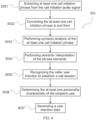
- FIG. 4 a schematic flowchart diagram for the step 303 of analyzing a call initiation audio signal is illustrated.
- the analyzing ( Step 303 ) of the call initiation audio signal includes extracting ( Substep 3031 ) at least one call initiation phrase uttered by the caller user from the call initiation audio signal, and converting ( Substep 3032 ) the call initiation phrase to a text form.
- the analyzing ( Step 303 ) of the call initiation audio signal further includes performing ( Step 3033 ) syntactic analysis of the call initiation phrase, in order to decompose the call initiation phrase into corresponding phrase elements. Then, semantic interpretation of the phrase elements is performed ( Substep 3034 ) .
- the caller user intention to establish a call session is recognized ( Substep 3035 ) and one or more personality characteristics of the recipient user are determined ( Substep 3036 ) from the semantically interpreted phrase elements. Then, a user intention data is generated ( Substep 3037 ) that includes the personality characteristic(s) of the recipient user with whom the caller user intends to establish the call session.
- the method for providing call session further includes generating, by the automated call controller 18 , an unrecognition notification signal for the caller user.
- the unrecognition notification signal is transmitted to the first communication device, thereby to inform the caller user that the call initiation signal from the first communication device was not recognized, so as the caller user could retry the initiation of the call session, if desired.
- the method for providing of a call session further includes the step 304 of finding the second device coordinates of the second communication device in the communication environment by using the personality characteristic(s) of the recipient user.
- the finding ( Step 304 ) of the second device coordinates of the second communication device includes: finding a corresponding recipient user record within the contact list by using the personality characteristic(s) of the recipient user as a search parameter, and extracting the second device coordinates of the corresponding second communication device of the recipient user within the communication environment from the recipient user record.
- the method for providing a call session further includes the step 305 of coupling the automated call controller 18 to the second communication device via the second communication link 17 in the communication environment by using the second device coordinates of the second communication device, and the step 306 of forwarding the call initiation audio signal to the second communication device.
- the method for providing of a call session, in a backward direction from the second communication device 14 to the first communication device 13 includes the step 307 of receiving a recipient user reaction signal from the second communication device by the automated call controller 18 in response to the call initiation audio signal.
- the recipient user reaction signal is indicative of a recipient user intention that is selected from recipient acceptance intention and recipient rejection intention of the call session.
- the recipient user reaction signal is selected from a recipient response audio signal and a recipient response action signal.
- the recipient user reaction signal is the recipient response audio signal that is indicative of at least one recipient user response phrase that is indicative of the recipient user intention to accept the call session, or to reject the call session.
- the receiving of the recipient response audio signal from the second communication device includes buffering a copy of the recipient response audio signal in the voice signal dispatcher 183.
- the method for providing a call session, in a backward direction from the second communication device 14 to the first communication device 13 also includes the step 308 of analyzing the recipient user reaction signal to determine indication of the recipient user intention.
- FIG. 5 a schematic flowchart diagram for the step 308 of analyzing a recipient response audio signal is illustrated.
- the analyzing of the recipient response audio signal includes extracting ( Substep 3081 ) one or more recipient user response phrases uttered by the recipient user from the recipient response audio signal, and converting ( Substep 3082 ) the recipient user response phrases to a text form.
- the analyzing of the recipient response audio signal also includes performing ( Substep 3083 ) syntactic analysis of the recipient user response phrase(s), in order to decompose the recipient user response phrase(s) into corresponding phrase elements. Then, a performing ( Substep 3084 ) semantic interpretation of the phrase elements is performed ( Substep 3084 ) .
- the recipient user intention either to accept or to reject the call session is recognized ( Substep 3085 ) from the semantically interpreted phrase elements, and a user intention data indicative of the recipient user intention is generated ( Substep 3086 ).
- Step 309 a full-duplex call session between the first and the second communication devices is established ( Step 309 ) and exchange of audio signals between the first and the second communication devices is provided ( Step 310 ) during the established call session.
- the audio signals are generated during the voice communication of the caller user and the recipient user.
- the method includes canceling a procedure of the establishment of the full-duplex call session between the first and the second communication devices 13 and 14.
- the canceling of the full-duplex call session includes decoupling the second communication device from the automated call controller by disconnecting the second communication link. After the disconnecting of the second communication link, the recipient user reaction signal can be deleted.
- Fig. 6 illustrates a schematic flowchart diagram for the method scenario when during the providing of the call session of the method of Fig. 3 the second communication device participates in another call session, according to an embodiment of the present invention.
- the method includes generating and transmitting ( Step 61 ) to the automated call controller 18 , by the second communication device 14 , a recipient busy reaction signal.
- the recipient busy reaction signal is indicative of the recipient user intention whether to switch from the other call session to the initiated call session or to remain on the other call session.
- the method also includes analyzing ( Step 62 ) the recipient busy reaction signal, by the automated call controller 18 , so as to determine the intention of the recipient user. Accordingly, if the determined recipient user intention is to switch from the other call session to the initiated call session, then the method includes terminating ( Step 63 ), by the automated call controller 18 , the other call session, and establishing ( Step 64 ) the initiated call session with the first communication device 13.
- the method includes generating ( Step 65 ), by the second communication device 14 , a voice feedback notification signal and transmitting the voice feedback notification signal to the automated call controller 18.
- the automated call controller 18 receives ( Step 66 ) the voice feedback notification signal from the second communication device 14 , and forwards ( Step 67 ) the voice feedback notification signal to the first communication device 13 for playing ( Step 68 ) the voice feedback notification to the caller user by a voice of the recipient user on the first communication device 13.
- the recipient user reaction signal is a recipient response action signal that is indicative of a recipient user action pattern.
- the recipient user action pattern is indicative of a recipient user intention either to accept the call session, or to reject the call session.
- any types of recipient user actions by using his personal communication device which are indicative of acceptance or rejection of the voice communication, can be utilized by the system as a trigger for establishment or rejection of a full-duplex voice communication session between the caller and the recipient users.
- a pattern of the recipient user actions as pressing a control button of the communication device in a predetermined action pattern (e.g., pressing the control button once, twice, etc., and/or physically shaking the device by the recipient user in a predetermined manner) can be utilized by the system as indication of the recipient intention to accept or to reject the initiation of a voice communication between the caller and recipient users.
- either the caller user or a recipient user may terminate the full-duplex call session that was established between the first and the second communication devices 13 and 14.
- terminating the full-duplex call session by the caller user includes receiving a call termination signal from the first communication device 13 via the first communication link 16.
- the call termination signal is indicative of the intention of the caller user to terminate the full-duplex call session established between the first and second communication devices 13 and 14.
- the method includes terminating the established full-duplex call session.
- the terminating includes interrupting exchange of the audio signals between the first communication device 13 and the second communication device 14 , and decoupling the second communication device 14 from the automated call controller 18 by disconnecting the second communication link 17.
- terminating the full-duplex call session by the recipient user includes receiving a call termination signal from the second communication device 14 via the second communication link 17.
- the call termination signal is indicative of the intention of the recipient user to terminate the full-duplex call session established between the first and second communication devices 13 and 14.
- terminating the established full-duplex call session includes interrupting exchange of the audio signals between the first communication device 13 and the second communication device 14 , and decoupling the second communication device from the automated call controller 18 by disconnecting the second communication link 17.
Landscapes
- Engineering & Computer Science (AREA)
- Signal Processing (AREA)
- Multimedia (AREA)
- Computer Networks & Wireless Communication (AREA)
- Business, Economics & Management (AREA)
- General Business, Economics & Management (AREA)
- Telephonic Communication Services (AREA)
Claims (15)
- System zum Bereitstellen einer Anrufsitzung in einer Kommunikationsumgebung zwischen einer ersten Kommunikationsvorrichtung (13), die einem Anrufer-Benutzer zugeordnet ist und erste Vorrichtungskoordinaten in der Kommunikationsumgebung hat, und einer zweiten Kommunikationsvorrichtung (14), die einem Empfänger-Benutzer zugeordnet ist und zweite Vorrichtungskoordinaten in der Kommunikationsumgebung hat, wobei das System eine automatisierte Anrufsteuerung (18) umfasst, wobei die automatisierte Anrufsteuerung (18) angepasst ist, um mit der ersten Kommunikationsvorrichtung (13) über eine erste Kommunikationsverbindung (16) und mit der zweiten Kommunikationsvorrichtung (14) über eine zweite Kommunikationsverbindung (17) gekoppelt zu werden; wobeiin einer Vorwärtsrichtung von der ersten Kommunikationsvorrichtung (13) zur zweiten Kommunikationsvorrichtung (14), ist die automatische Anrufsteuerung (18) so konfiguriert, dass sie:Kopplung der ersten Kommunikationsvorrichtung (13) mit der automatischen Anrufsteuerung (18) über die erste Kommunikationsverbindung (16);Empfangen eines Anrufeinleitungs-Audiosignals von der ersten Kommunikationsvorrichtung (13) über die erste Kommunikationsverbindung (16), wobei das Anrufeinleitungs-Audiosignal mindestens eine Anrufeinleitungsphrase angibt, die vom AnruferBenutzer geäußert wird, wobei die Anrufeinleitungsphrase die Absicht des Anrufer-Benutzers angibt, die Anrufsitzung einzurichten, und zur Wiedergabe auf der zweiten Kommunikationsvorrichtung (14) für den Empfänger-Benutzer bestimmt ist, wobei die Anrufeinleitungsphrase mindestens ein Persönlichkeitsmerkmal des Empfänger-Benutzers enthält;Analysieren des Anrufeinleitungs-Audiosignals, um die mindestens eine Anrufeinleitungsphrase zu bestimmen, wobei das Analysieren des Anrufeinleitungs-Audiosignals umfasst:Extrahieren der von dem Anruferbenutzer gesprochenen Anrufeinleitungsphrase aus dem Anrufeinleitungs-Audiosignal;die Umwandlung der besagten Rufauslösungsphrase in eine Textform;Durchführung einer syntaktischen Analyse der Textform der Anrufeinleitungsphrase, um die Anrufeinleitungsphrase in entsprechende Phrasenelemente zu zerlegen;Durchführen einer semantischen Interpretation der Phrasenelemente, die für die Bestimmung des mindestens einen Persönlichkeitsmerkmals des empfangenden Benutzers erforderlich ist; unddie Bestimmung des mindestens einen Persönlichkeitsmerkmals des Empfängers;Auffinden der zweiten Gerätekoordinaten des zweiten Kommunikationsgeräts (14) in der Kommunikationsumgebung unter Verwendung des mindestens einen Persönlichkeitsmerkmals des empfangenden Benutzers;Kopplung des zweiten Kommunikationsgeräts (14) mit der automatischen Anrufsteuerung (18) über die zweite Kommunikationsverbindung (17) unter Verwendung der zweiten Gerätekoordinaten;Übertragen des Rufeinleitungs-Audiosignals an das zweite Kommunikationsgerät (14) über die zweite Kommunikationsverbindung (16);in einer Rückwärtsrichtung von der zweiten Kommunikationsvorrichtung (14) zur ersten Kommunikationsvorrichtung (13), ist die automatische Anrufsteuerung (18) konfiguriert, um:Empfangen eines Empfänger-Benutzer-Reaktionssignals von der zweiten Kommunikationsvorrichtung (14) über die zweite Kommunikationsverbindung (16), die von dem Empfänger-Benutzer als Reaktion auf das Anrufeinleitungs-Audiosignal bereitgestellt wird, wobei das Empfänger-Benutzer-Reaktionssignal ein Empfänger-Antwort-Audiosignal enthält, wobei das Empfänger-Antwort-Audiosignal eine Empfänger-Benutzer-Antwortphrase anzeigt, die von dem Empfänger-Benutzer geäußert wird, wobei die Empfänger-Benutzer-Antwortphrase die Absicht des Empfänger-Benutzers anzeigt, die Anrufsitzung anzunehmen oder die Anrufsitzung abzulehnen, und zur Wiedergabe auf der ersten Kommunikationsvorrichtung (14) für den AnruferBenutzer vorgesehen ist;Analysieren des Antwort-Audiosignals des Empfängers, um Hinweise auf die Absicht des Empfängers, die Anrufsitzung anzunehmen oder abzulehnen, zu bestimmen, wobei das Analysieren des Antwort-Audiosignals des Empfängers umfasst:Extrahieren der vom Empfängerbenutzer geäußerten Antwortphrase des Empfängers aus dem Antwortaudiosignal des Empfängers;Umwandlung der Antwortphrase des Empfängers in eine Textform;Durchführung einer syntaktischen Analyse der Empfänger-Antwortphrase, um die mindestens eine Empfänger-Antwortphrase in entsprechende Phrasenelemente zu zerlegen;Durchführung einer semantischen Interpretation der besagten Phrasenelemente, die zur Bestimmung der Absicht des Empfängers erforderlich ist;Bestimmen der Absicht des Empfängers, die Anrufsitzung entweder anzunehmen oder abzulehnen, anhand der semantisch interpretierten Phrasenelemente; undwenn die Absicht des Empfängerbenutzers als die Absicht der Annahme der Anrufsitzung durch den Empfänger bestimmt wird, Aufbau einer Vollduplex-Anrufsitzung zwischen der ersten und der zweiten Kommunikationsvorrichtung; und Austausch von Audiosignalen zwischen der ersten und der zweiten Kommunikationsvorrichtung während der aufgebauten Anrufsitzung, wobei die Audiosignale während einer Sprachkommunikation des Anruferbenutzers und des Empfängerbenutzers erzeugt werden.
- System nach Anspruch 1, wobei die automatische Anrufsteuerung (18) umfasst:eine erste Kommunikationsschnittstelle (181), die geeignet ist, über die erste Kommunikationsverbindung (16) mit der ersten Kommunikationsvorrichtung (13) gekoppelt zu werden;eine zweite Kommunikationsschnittstelle (182), die geeignet ist, über die zweite Kommunikationsverbindung (17) mit der zweiten Kommunikationsvorrichtung (14) gekoppelt zu werden;einen Sprachsignal-Dispatcher (183), der mit der ersten Kommunikationsschnittstelle (181) und der zweiten Kommunikationsschnittstelle (182) verbunden ist;einen mit der ersten Kommunikationsschnittstelle (181) und mit der zweiten Kommunikationsschnittstelle (182) gekoppelten Sprachausdrucksinterpretator (184);eine Sprachkommunikationssteuerung (185), die mit dem Sprachäußerungsinterpreter (184), dem Sprachsignalverteiler (183), der ersten Kommunikationsschnittstelle (181) und der zweiten Kommunikationsschnittstelle (182) verbunden ist; undeine Benutzerregistrierung (186), die mit der Sprachkommunikationssteuerung (185) gekoppelt ist;die erste Kommunikationsschnittstelle (181) ist konfiguriert für:in der Vorwärtsrichtung, Koppeln der ersten Kommunikationsvorrichtung (13) mit der automatischen Anrufsteuerung (18) über die erste Kommunikationsverbindung (16); Empfangen des Anrufeinleitungs-Audiosignals, das von der ersten Kommunikationsvorrichtung bereitgestellt wird, von der ersten Kommunikationsverbindung (16) und Weiterleiten des Anrufeinleitungs-Audiosignals an den Sprachsignalverteiler (183) und an den Sprachäußerungsinterpreter (184); undden Austausch der Audiosignale zwischen dem Sprachsignalverteiler (183) und der ersten Kommunikationsvorrichtung (13) während der Anrufsitzung, wobei die Audiosignale während einer Sprachkommunikation des anrufenden Benutzers unter Verwendung der ersten Kommunikationsvorrichtung und des empfangenden Benutzers unter Verwendung der zweiten Kommunikationsvorrichtung erzeugt werden;die zweite Kommunikationsschnittstelle (182) ist konfiguriert für:in der Vorwärtsrichtung, Empfangen des Rufeinleitungs-Audiosignals von dem Sprachsignal-Dispatcher (183) und Weiterleiten des Rufeinleitungs-Audiosignals an die zweite Kommunikationsvorrichtung (14) über die zweite Kommunikationsverbindung (16); undden Austausch der Audiosignale zwischen dem Sprachsignal-Dispatcher (183) und dem zweiten Kommunikationsgerät (14) während der Gesprächssitzung;wobei der Sprachsignal-Dispatcher (183) so konfiguriert ist, dass er:Austauschen der Audiosignale zwischen der ersten Kommunikationsschnittstelle (181) und der zweiten Kommunikationsschnittstelle (182);wobei der Sprachausdrucksinterpreter (184) für konfiguriert ist:Analyse des Anrufeinleitungs-Audiosignals, um die mindestens eine Anrufeinleitungsphrase zu bestimmen, um die Absicht des anrufenden Benutzers, die Anrufsitzung aufzubauen, zu bestimmen; und um das mindestens eine Persönlichkeitsmerkmal des Empfängerbenutzers zu bestimmen;Erzeugen von Anrufer-Benutzer-Intentionsdaten, die das mindestens eine Persönlichkeitsmerkmal des Empfänger-Benutzers enthalten; undBereitstellung der Daten zur Anruferbenutzungsabsicht an die Sprachkommunikationssteuerung (185);die Sprachkommunikationssteuerung (185) für den Aufbau von Vollduplex-Anrufsitzungen zwischen der ersten Kommunikationsvorrichtung (13) und der zweiten Kommunikationsvorrichtung (14) konfiguriert ist; unddie Benutzerregistrierung (186) wird für konfiguriert:Speichern einer Kontaktliste des Anrufer-Benutzers, wobei die Kontaktliste einen Satz von Empfänger-Benutzer-Datensätzen enthält, wobei jeder Empfänger-Benutzer-Datensatz Empfänger-Benutzer-Daten einschließlich Empfänger-Benutzer-Persönlichkeitsmerkmalen und Koordinaten eines entsprechenden Kommunikationsgeräts des Empfänger-Benutzers innerhalb der Kommunikationsumgebung enthält, wobei der Satz von Empfänger-Benutzer-Datensätzen allen potenziellen Empfänger-Benutzern des Systems zugeordnet ist, die mit dem Anrufer-Benutzer verbunden sind; undÜbertragen der Daten des Empfänger-Benutzerdatensatzes aus der Kontaktliste an den Sprachkommunikations-Controller (185) als Reaktion auf eine entsprechende Anforderung vom Sprachkommunikations-Controller.
- System nach Anspruch 2, wobei die Weiterleitung des Rufeinleitungs-Audiosignals durch die zweite Kommunikationsschnittstelle (182) an die zweite Kommunikationsvorrichtung (14) in der Vorwärtsrichtung von der ersten Kommunikationsvorrichtung (13) zur zweiten Kommunikationsvorrichtung (14) umfasst:Empfangen des Rufeinleitungs-Audiosignals von dem Sprachsignalverteiler (183);Empfangen eines Übertragungsbefehlssignals von der Sprachkommunikationssteuerung (185), wobei das Übertragungsbefehlssignal die zweiten Gerätekoordinaten des zweiten Kommunikationsgeräts (14) angibt;Koppeln des zweiten Kommunikationsgeräts (14) mit der zweiten Kommunikationsschnittstelle (182) über die zweite Kommunikationsverbindung (17) unter Verwendung der zweiten Gerätekoordinaten; undÜbertragen des Rufeinleitungs-Audiosignals an das zweite Kommunikationsgerät (14) über die zweite Kommunikationsverbindung (17).
- Das System nach Anspruch 2, wobei:das Empfänger-Benutzer-Reaktionssignal ferner ein Empfänger-Antwortaktionssignal enthält, das ein Empfänger-Benutzer-Aktionsmuster anzeigt, wobei das Empfänger-Benutzer-Aktionsmuster eine Empfänger-Benutzer-Absicht anzeigt, die aus einer Empfänger-Annahmeabsicht und einer Empfänger-Ablehnungsabsicht der Anrufsitzung ausgewählt wird;die zweite Kommunikationsschnittstelle (182) ferner in der Rückwärtsrichtung von der zweiten Kommunikationsvorrichtung zu der ersten Kommunikationsvorrichtung konfiguriert ist, um:Empfangen des Empfänger-Antwort-Audiosignals von der zweiten Kommunikationsverbindung (17), wobei das Empfänger-Antwort-Audiosignal von der zweiten Kommunikationsvorrichtung bereitgestellt wird;Weiterleitung des Audiosignals der Empfängerantwort an den Sprachsignalverteiler (183) und an den Dolmetscher für Sprachäußerungen (184); undEmpfangen des Antwortaktionssignals des Empfängers von der zweiten Kommunikationsvorrichtung (14) über die zweite Kommunikationsverbindung (17);Weiterleitung des empfangenen Empfänger-Antwort-Aktionssignals an den Sprachkommunikations-Controller (185);die erste Kommunikationsschnittstelle (181) ferner in der Rückwärtsrichtung konfiguriert ist, um:Empfangen des Empfänger-Antwort-Audiosignals von dem SprachsignalDispatcher (183), wobei das Empfänger-Antwort-Audiosignal von der zweiten Kommunikationsvorrichtung bereitgestellt wird; undWeiterleiten des Empfänger-Antwort-Audiosignals an das erste Kommunikationsgerät (13) über die erste Kommunikationsverbindung (16), umfassend:Empfang des Antwort-Audiosignals des Empfängers von dem Sprachsignalverteiler (183);Empfangen eines Übertragungsbefehlssignals von der Sprachkommunikationssteuerung (185), wobei das Übertragungsbefehlssignal mit der aufgebauten Anrufsitzung zwischen der ersten Kommunikationsvorrichtung (13) und der zweiten Kommunikationsvorrichtung (14) verbunden ist; undÜbertragen des Empfänger-Antwort-Audiosignals an die erste Kommunikationsvorrichtung (13) über die erste Kommunikationsverbindung (16); und der Sprachäußerungsinterpreter (184) ist ferner so konfiguriert, dass er:Analysieren des Antwort-Audiosignals des Empfängers, um die Absicht des Empfängers zu erkennen, die aus der Absicht des Empfängers, den Anruf anzunehmen, und der Absicht des Empfängers, den Anruf abzulehnen, ausgewählt wurde;Erzeugen von Empfänger-Benutzer-Absichtsdaten, die die Empfänger-BenutzerAbsicht anzeigen; undBereitstellung der Daten über die Benutzerabsicht des Empfängers an die Sprachkommunikationssteuerung (185).
- System nach Anspruch 2, wobei der Austausch von Audiosignalen zwischen der ersten Kommunikationsschnittstelle (181) und der zweiten Kommunikationsschnittstelle (182), die von dem Sprachsignalverteiler (183) bereitgestellt wird, umfasst:in Vorwärtsrichtung von der ersten Kommunikationsschnittstelle (181) zu der zweiten Kommunikationsschnittstelle (182),Empfangen des Audiosignals von der ersten Kommunikationsschnittstelle (181),Pufferung des empfangenen Audiosignals; undWeiterleitung des gepufferten Audiosignals an die zweite Kommunikationsschnittstelle (182); undin Rückwärtsrichtung:Empfangen des Audiosignals von der zweiten Kommunikationsschnittstelle (182);Pufferung des empfangenen Audiosignals; undWeiterleitung des gepufferten Audiosignals an die erste Kommunikationsschnittstelle (181).
- System nach Anspruch 2, wobei der Sprachäußerungsinterpreter (184) umfasst:
einen Sprach-zu-Text-Umsetzer (1841), der mit der ersten Kommunikationsschnittstelle (181) und mit der zweiten Kommunikationsschnittstelle (182) gekoppelt ist, wobei der Sprach-zu-Text-Umsetzer konfiguriert ist für:Empfangen des Rufeinleitungs-Audiosignals von der ersten Kommunikationsschnittstelle (181) und des Empfängerantwort-Audiosignals von der zweiten Kommunikationsschnittstelle (182),Extrahieren der mindestens einen Anrufeinleitungsphrase, die vom Anruferbenutzer geäußert wird, aus dem Anrufeinleitungs-Audiosignal und der mindestens einen Empfängerbenutzer-Antwortphrase, die vom Empfängerbenutzer geäußert wird, aus dem Empfänger-Antwort-Audiosignal; undUmwandlung der mindestens einen Anrufeinleitungsphrase und der mindestens einen Empfänger-Antwortphrase in eine Textform;einen syntaktischen Analysator (1842), der mit dem Sprach-zu-Text-Konverter (1841) gekoppelt und so konfiguriert ist, dass er eine syntaktische Analyse der mindestens einen Anrufeinleitungsphrase und der mindestens einen Empfänger-Benutzerantwortphrase durchführt, um die Phrasen in entsprechende Phrasenelemente zu zerlegen;einen semantischen Interpreter (1843), der mit dem syntaktischen Analysator (1842) gekoppelt und so konfiguriert ist, dass er eine semantische Interpretation der Phrasenelemente durchführt,einen Benutzerabsichtserkenner (1844), der mit dem semantischen Interpreter (1843) und mit der Sprachkommunikationssteuerung (185) gekoppelt ist, wobei der Benutzerabsichtserkenner konfiguriert ist, um:Erkennen der Absichten des Anrufers und des Empfängers aus semantisch interpretierten Phrasenelementen der mindestens einen Anrufeinleitungsphrase und der mindestens einen Empfängerbenutzerantwortphrase;Extrahieren des mindestens einen Persönlichkeitsmerkmals des Empfängers aus den Elementen der Anrufeinleitungsphrase,Erzeugen von Benutzerintentionsdaten, die das mindestens eine Persönlichkeitsmerkmal des Empfängerbenutzers, das dem mindestens einen Anrufeinleitungssatz entspricht, und Benutzerintentionsdaten enthalten, die die Absichten des Empfängerbenutzers, die dem mindestens einen Empfängerbenutzerantwortsatz entsprechen, anzeigen; undBereitstellung der erzeugten Benutzerintentionsdaten an die Sprachkommunikationssteuerung (185). - Das System nach Anspruch 1, wobeiein Typ der ersten Kommunikationsverbindung (16) und ein Typ der zweiten Kommunikationsverbindung (17) ausgewählt sind aus: einer Wi-Fi-Kommunikationsverbindung, einer mobilen zellularen Kommunikationsverbindung, einer Walkie-Talkie-Funkverbindung und einer Voice-Messenger-Kommunikationsverbindung eines der vorhandenen Voice-Messenger;die erste und die zweite Kommunikationsverbindung entweder vom gleichen Typ oder von unterschiedlichen Typen sind, unddie Koordinaten des ersten Kommunikationsgeräts (13) und des zweiten Kommunikationsgeräts (14) innerhalb der Kommunikationsumgebung mindestens eines der folgenden Elemente umfassen: eine IP-Adresse in einem TCP/IP-Kommunikationsnetz, eine Anzahl von Funkkanälen innerhalb einer vorgegebenen Funkfrequenzzuweisung und eine eindeutige Kennung in einem vorgegebenen Sprachkommunikationssystem.
- Das System nach Anspruch 2, wobei:die erste Kommunikationsschnittstelle (181) ist ferner konfiguriert für:Empfangen eines Anrufbeendigungssignals von der ersten Kommunikationsvorrichtung (13) über die erste Kommunikationsverbindung (16), wobei das Anrufbeendigungssignal eine Absicht des anrufenden Benutzers anzeigt, eine aufgebaute Vollduplex-Anrufsitzung zwischen der ersten und der zweiten Kommunikationsvorrichtung zu beenden; undWeiterleiten des empfangenen Anrufbeendigungssignals an den Sprachkommunikationscontroller (185), wobei der Sprachkommunikationscontroller (185) weiterhin zum Erzeugen eines Entkopplungssignals und zum Bereitstellen des Entkopplungssignals an die zweite Kommunikationsschnittstelle (182) konfiguriert ist, wobei die zweite Kommunikationsschnittstelle (182) weiterhin zum Trennen der zweiten Kommunikationsverbindung konfiguriert ist, wodurch die zweite Kommunikationsvorrichtung (14) als Reaktion auf das Entkopplungssignal von dem automatischen Anrufcontroller (18) entkoppelt wird, wobei der Sprachkommunikationscontroller (185) weiterhin zum Erzeugen eines Rücksetzsignals und zum Bereitstellen des Rücksetzsignals an den Sprachsignaldispatcher (183) konfiguriert ist; wobei der Sprachsignal-Dispatcher (183) auf das Rücksetzsignal reagiert, um alle gepufferten Audiosignale zu löschen, unddie zweite Kommunikationsschnittstelle (182) ist ferner konfiguriert für:Empfangen eines Anrufbeendigungssignals von der zweiten Kommunikationsvorrichtung (14) über die zweite Kommunikationsverbindung (17), wobei das Anrufbeendigungssignal eine Absicht des Empfängerbenutzers anzeigt, eine aufgebaute Vollduplex-Anrufsitzung zwischen der ersten und der zweiten Kommunikationsvorrichtung zu beenden; undWeiterleiten des empfangenen Anrufbeendigungssignals an den Sprachkommunikationscontroller (185), wobei der Sprachkommunikationscontroller (185) ferner zum Erzeugen eines Entkopplungssignals und zum Bereitstellen des Entkopplungssignals an die zweite Kommunikationsschnittstelle (182) konfiguriert ist, wobei die zweite Kommunikationsschnittstelle (182) ferner zum Trennen der zweiten Kommunikationsverbindung konfiguriert ist, wobei die zweite Kommunikationsschnittstelle (182) ferner so konfiguriert ist, dass sie die zweite Kommunikationsverbindung trennt und dadurch die zweite Kommunikationsvorrichtung (14) als Reaktion auf das Entkopplungssignal von der automatischen Anrufsteuerung (18) entkoppelt, wobei die Sprachkommunikationssteuerung (185) ferner so konfiguriert ist, dass sie ein Rücksetzsignal erzeugt und das Rücksetzsignal an den Sprachsignalverteiler (183) liefert, wobei der Sprachsignalverteiler (183) auf das Rücksetzsignal reagiert, um alle gepufferten Audiosignale zu löschen.
- Das System nach Anspruch 2, wobei
die erste Kommunikationsschnittstelle (181) ist ferner konfiguriert für:Empfangen eines Systemaktivierungssignals, gefolgt von dem Rufeinleitungs-Audiosignal, das von der ersten Kommunikationsvorrichtung (13) über die erste Kommunikationsverbindung (16) bereitgestellt wird;Weiterleitung des empfangenen Systemaktivierungssignals an die Sprachkommunikationssteuerung (185); undWeiterleiten des empfangenen Anrufeinleitungs-Audiosignals an den Sprachäußerungsinterpreter (184) und an den Sprachsignal-Dispatcher (183), wobei der Sprachkommunikations-Controller (185) auf das Systemaktivierungssignal anspricht, um ein Befehlssignal zur Analyse der Äußerung zu erzeugen und das Befehlssignal zur Analyse der Äußerung an den Sprachäußerungsinterpreter (184) zu liefern, wodurch der Sprachausgangsinterpret (184) angewiesen wird, mit der Analyse des Anrufeinleitungs-Audiosignals zu beginnen, wobei der Sprachausgangsinterpret (184) auf das Befehlssignal zur Analyse der Äußerung anspricht, um mit der Analyse des Anrufeinleitungs-Audiosignals zu beginnen, gefolgt von dem Systemaktivierungssignal. - Verfahren zum Bereitstellen einer Anrufsitzung in einer Kommunikationsumgebung zwischen einer ersten Kommunikationsvorrichtung, die einem Anrufer-Benutzer zugeordnet ist, und einer zweiten Kommunikationsvorrichtung, die einem Empfänger-Benutzer zugeordnet ist, wobei das Verfahren umfasst:Einsatz eines Systems zum Bereitstellen einer Anrufsitzung in einer Kommunikationsumgebung, wobei das System eine automatisierte Anrufsteuerung, ACC, (18) umfasst, die dafür ausgelegt ist, mit der ersten Kommunikationsvorrichtung (13) über eine erste Kommunikationsverbindung (16) und mit der zweiten Kommunikationsvorrichtung (14) über eine zweite Kommunikationsverbindung (17) gekoppelt zu werden, wobei die automatisierte Anrufsteuerung (18) eine Kontaktliste des Anruferbenutzers speichert, die Kontaktliste einen Satz von Empfänger-Benutzer-Datensätzen enthält, wobei jeder Empfänger-Benutzer-Datensatz Empfänger-Benutzer-Daten, die Persönlichkeitsmerkmale des Empfänger-Benutzers anzeigen, und Koordinaten eines entsprechenden Kommunikationsgeräts des Empfänger-Benutzers innerhalb der Kommunikationsumgebung enthält, wobei der Satz von Empfänger-Benutzer-Datensätzen allen potenziellen Empfänger-Benutzern des Systems zugeordnet ist, die mit dem Anrufer-Benutzer verbunden sind;das Verfahren umfasst ferner, in einer Vorwärtsrichtung von der ersten Kommunikationsvorrichtung (13) zur zweiten Kommunikationsvorrichtung (14):Kopplung der ersten Kommunikationsvorrichtung (13) mit der automatischen Anrufsteuerung (18) über die erste Kommunikationsverbindung (16);Empfangen eines Anrufeinleitungs-Audiosignals von der ersten Kommunikationsvorrichtung (13) durch die automatische Anrufsteuerung (18), wobei das Anrufeinleitungs-Audiosignal mindestens eine Anrufeinleitungsphrase anzeigt, die von dem Anrufer-Benutzer geäußert wird, wobei die Anrufeinleitungsphrase eine Absicht des AnruferBenutzers anzeigt, die Anrufsitzung aufzubauen, und zum Abspielen auf der zweiten Kommunikationsvorrichtung (14) für den Empfänger-Benutzer bestimmt ist, wobei die Anrufeinleitungsphrase mindestens ein Persönlichkeitsmerkmal des Empfänger-Benutzers enthält;Analysieren des Anrufeinleitungs-Audiosignals, um die mindestens eine Anrufeinleitungsphrase zu bestimmen, wobei das Analysieren des Anrufeinleitungs-Audiosignals umfasst:Extrahieren der von dem Anruferbenutzer gesprochenen Anrufeinleitungsphrase aus dem Anrufeinleitungs-Audiosignal;die Umwandlung der besagten Rufauslösungsphrase in eine Textform;Durchführung einer syntaktischen Analyse der Textform der Anrufeinleitungsphrase, um die Anrufeinleitungsphrase in entsprechende Phrasenelemente zu zerlegen;Durchführen einer semantischen Interpretation der Phrasenelemente, die für die Bestimmung des mindestens einen Persönlichkeitsmerkmals des empfangenden Benutzers erforderlich ist; unddie Bestimmung des mindestens einen Persönlichkeitsmerkmals des Empfängers;Auffinden der zweiten Gerätekoordinaten des zweiten Kommunikationsgeräts in der Kommunikationsumgebung unter Verwendung des mindestens einen Persönlichkeitsmerkmals des empfangenden Benutzers;Kopplung der automatischen Anrufsteuerung (18) mit der zweiten Kommunikationsvorrichtung über die zweite Kommunikationsverbindung in der Kommunikationsumgebung unter Verwendung der zweiten Gerätekoordinaten der zweiten Kommunikationsvorrichtung;Weiterleitung des Audiosignals zur Anrufeinleitung an das zweite Kommunikationsgerät;das Verfahren umfasst ferner, in einer Rückwärtsrichtung von der zweiten Kommunikationsvorrichtung (14) zur ersten Kommunikationsvorrichtung (13):Empfangen eines Empfänger-Benutzer-Reaktionssignals von der zweiten Kommunikationsvorrichtung durch die automatische Anrufsteuerung (18), die von dem Empfänger-Benutzer als Reaktion auf das Anrufeinleitungs-Audiosignal bereitgestellt wird, wobei das Empfänger-Benutzer-Reaktionssignal ein Empfänger-Antwort-Audiosignal enthält, wobei das Empfänger-Antwort-Audiosignal eine Empfänger-Benutzer-Antwortphrase anzeigt, die von dem Empfänger-Benutzer geäußert wird, wobei die Empfänger-Benutzer-Antwortphrase die Absicht des Empfänger-Benutzers anzeigt, die Anrufsitzung anzunehmen oder die Anrufsitzung abzulehnen, und zur Wiedergabe auf der ersten Kommunikationsvorrichtung (14) für den AnruferBenutzer vorgesehen ist;Analysieren des Antwort-Audiosignals des Empfängers, um Hinweise auf die Absicht des Empfängers, die Anrufsitzung anzunehmen oder abzulehnen, zu bestimmen, wobei das Analysieren des Antwort-Audiosignals des Empfängers umfasst:Extrahieren der vom Empfängerbenutzer geäußerten Antwortphrase aus dem Antwortaudiosignal des Empfängers;Umwandlung der Antwortphrase des Empfängers in eine Textform;Durchführung einer syntaktischen Analyse der Empfänger-Antwortphrase, um die mindestens eine Empfänger-Antwortphrase in entsprechende Phrasenelemente zu zerlegen;Durchführung der semantischen Interpretation der besagten Phrasenelemente, die zur Bestimmung der Absicht des Empfängers erforderlich ist;Bestimmen der Absicht des Empfängers, die Anrufsitzung entweder anzunehmen oder abzulehnen, anhand der semantisch interpretierten Phrasenelemente; undwenn die Absicht des Empfängerbenutzers als Annahme der Anrufsitzung bestimmt wird, Aufbau einer Vollduplex-Anrufsitzung zwischen der ersten und der zweiten Kommunikationsvorrichtung; und Bereitstellen eines Austauschs von Audiosignalen zwischen der ersten und der zweiten Kommunikationsvorrichtung während der aufgebauten Anrufsitzung, wobei die Audiosignale während einer Sprachkommunikation des Anruferbenutzers und des Empfängerbenutzers erzeugt werden.
- Verfahren nach Anspruch 10, wobei, wenn während der Analyse des Rufeinleitungs-Audiosignals die Analyse fehlschlägt, das Verfahren weiterhin umfasstErzeugen eines Nicht-Erkennungs-Benachrichtigungssignals für den anrufenden Benutzer durch die automatische Anrufsteuerung (18); undÜbertragen des Nicht-Erkennungs-Benachrichtigungssignals an das erste Kommunikationsgerät, um dadurch den Anrufer-Benutzer zu informieren, dass das Anrufeinleitungssignal vom ersten Kommunikationsgerät nicht erkannt wurde.
- Verfahren nach Anspruch 10, wobei das Finden der zweiten Gerätekoordinaten des zweiten Kommunikationsgeräts umfasst:Auffinden eines entsprechenden Empfänger-Benutzer-Datensatzes innerhalb der Kontaktliste unter Verwendung des mindestens einen Persönlichkeitsmerkmals des EmpfängerBenutzers als Suchparameter;Extrahieren der zweiten Gerätekoordinaten des entsprechenden zweiten Kommunikationsgeräts des Empfängerbenutzers innerhalb der Kommunikationsumgebung aus dem Empfängerbenutzerdatensatz.
- Verfahren nach Anspruch 10, umfassend:wenn die Absicht des Empfängers als Ablehnung der Anrufsitzung festgestellt wird,Abbrechen einer Prozedur des Aufbaus der Vollduplex-Anrufsitzung zwischen dem ersten und dem zweiten Kommunikationsgerät, wobei das Abbrechen des Aufbaus der Vollduplex-Anrufsitzung beinhaltet:Entkoppeln der zweiten Kommunikationsvorrichtung von der automatischen Anrufsteuerung durch Trennen der zweiten Kommunikationsverbindung; undLöschung des Empfänger-Benutzerreaktionssignals.
- Das Verfahren nach Anspruch 10 umfasst ferner:Empfangen eines Anrufbeendigungssignals von der ersten Kommunikationsvorrichtung (13) über die erste Kommunikationsverbindung (16) oder Empfangen eines Anrufbeendigungssignals von der zweiten Kommunikationsvorrichtung (14) über die zweite Kommunikationsverbindung (17), wobei das Anrufbeendigungssignal die Absicht des anrufenden Benutzers anzeigt, die zwischen der ersten und der zweiten Kommunikationsvorrichtung aufgebaute Vollduplex-Anrufsitzung zu beenden; undals Reaktion auf das Anrufbeendigungssignal die aufgebaute Vollduplex-Anrufsitzung zu beenden; wobei die Beendigung umfasst:Unterbrechung des Austauschs der Audiosignale zwischen der ersten Kommunikationsvorrichtung (13) und der zweiten Kommunikationsvorrichtung (14); undEntkopplung des zweiten Kommunikationsgeräts von der automatischen Anrufsteuerung durch Trennen der zweiten Kommunikationsverbindung.
- Verfahren nach Anspruch 10, wobei, wenn während der Bereitstellung der Anrufsitzung zwischen dem ersten und dem zweiten Kommunikationsgerät das zweite Kommunikationsgerät an einer anderen Anrufsitzung teilnimmt, das Verfahren umfasst:Erzeugen und Übertragen (Schritt 61) eines Besetzt-Reaktionssignals des Empfängers durch die zweite Kommunikationsvorrichtung (14) an die automatische Anrufsteuerung (18), wobei das Besetzt-Reaktionssignal des Empfängers die Absicht des Empfängers anzeigt, von der anderen Anrufsitzung zu der eingeleiteten Anrufsitzung zu wechseln oder in der anderen Anrufsitzung zu bleiben; undAnalysieren (Schritt 62) des Besetzt-Reaktionssignals des Empfängers durch die automatische Anrufsteuerung (18), um die Absicht des Empfängernutzers zu bestimmen; undwenn die ermittelte Empfänger-Benutzerabsicht darin besteht, von der anderen Anrufsitzung zu der eingeleiteten Anrufsitzung zu wechseln, dann Beenden (Schritt 63) der anderen Anrufsitzung durch die automatische Anrufsteuerung (18) und Aufbauen (Schritt 64) der eingeleiteten Anrufsitzung mit dem ersten Kommunikationsgerät (13); undwenn die ermittelte Absicht des Empfängers, in der anderen Anrufsitzung zu verbleiben, besteht, dann umfasst das Verfahren ferner:Erzeugen (Schritt 65), durch das zweite Kommunikationsgerät (14), eines Sprachrückmeldesignals;Übermittlung des Sprachrückmeldesignals an die automatische Anrufsteuerung (18);Empfangen (Schritt 66) des Sprachrückmeldungssignals von der zweiten Kommunikationsvorrichtung (14) durch die automatische Anrufsteuerung (18), undWeiterleiten (Schritt 67) des Sprachrückmeldungs-Benachrichtigungssignals durch die automatische Anrufsteuerung (18) an die erste Kommunikationsvorrichtung (13) zum Abspielen (Schritt 68) der Sprachrückmeldungs-Benachrichtigung an den anrufenden Benutzer durch eine Stimme des empfangenden Benutzers auf der ersten Kommunikationsvorrichtung (13).
Applications Claiming Priority (2)
| Application Number | Priority Date | Filing Date | Title |
|---|---|---|---|
| US17/069,395 US11381681B2 (en) | 2020-10-13 | 2020-10-13 | System and method for providing voice communication sessions between communication devices |
| PCT/IL2021/051054 WO2022079705A1 (en) | 2020-10-13 | 2021-08-29 | System and method for providing voice communication sessions between communication devices |
Publications (3)
| Publication Number | Publication Date |
|---|---|
| EP4229784A1 EP4229784A1 (de) | 2023-08-23 |
| EP4229784B1 true EP4229784B1 (de) | 2024-06-19 |
| EP4229784C0 EP4229784C0 (de) | 2024-06-19 |
Family
ID=77666541
Family Applications (1)
| Application Number | Title | Priority Date | Filing Date |
|---|---|---|---|
| EP21766533.0A Active EP4229784B1 (de) | 2020-10-13 | 2021-08-29 | System und verfahren zur bereitstellung von sprachkommunikationssitzungen zwischen kommunikationsvorrichtungen |
Country Status (3)
| Country | Link |
|---|---|
| US (1) | US11381681B2 (de) |
| EP (1) | EP4229784B1 (de) |
| WO (1) | WO2022079705A1 (de) |
Families Citing this family (1)
| Publication number | Priority date | Publication date | Assignee | Title |
|---|---|---|---|---|
| US12457290B2 (en) * | 2020-10-13 | 2025-10-28 | Echo Smartlab Gmbh | System and method for providing voice communication sessions between communication devices |
Family Cites Families (11)
| Publication number | Priority date | Publication date | Assignee | Title |
|---|---|---|---|---|
| EP2063600B1 (de) | 2007-11-22 | 2015-07-22 | Alcatel Lucent | Verfahren zum Steuern einer Anrufsitzung |
| US8767035B2 (en) | 2011-12-06 | 2014-07-01 | At&T Intellectual Property I, L.P. | In-call command control |
| WO2014178860A1 (en) | 2013-05-01 | 2014-11-06 | Thomson Licensing | Call initiation by voice command |
| KR102265931B1 (ko) | 2014-08-12 | 2021-06-16 | 삼성전자주식회사 | 음성 인식을 이용하는 통화 수행 방법 및 사용자 단말 |
| US10235129B1 (en) * | 2015-06-29 | 2019-03-19 | Amazon Technologies, Inc. | Joining users to communications via voice commands |
| US10074369B2 (en) * | 2016-09-01 | 2018-09-11 | Amazon Technologies, Inc. | Voice-based communications |
| US9571532B1 (en) | 2016-09-09 | 2017-02-14 | Republic Wireless, Inc. | Techniques for integrating voice control into an active telephony call |
| US10574707B1 (en) | 2017-06-23 | 2020-02-25 | Amazon Technologies, Inc. | Reducing latency associated with communications |
| US10154145B1 (en) | 2017-11-03 | 2018-12-11 | Republic Wireless, Inc. | Virtual telephony assistant |
| GB2578121A (en) | 2018-10-16 | 2020-04-22 | Software Hothouse Ltd | System and method for hands-free advanced control of real-time data stream interactions |
| CN111028837B (zh) | 2019-12-16 | 2022-10-04 | 深圳云之家网络有限公司 | 语音会话方法、语音识别系统及计算机存储介质 |
-
2020
- 2020-10-13 US US17/069,395 patent/US11381681B2/en active Active
-
2021
- 2021-08-29 EP EP21766533.0A patent/EP4229784B1/de active Active
- 2021-08-29 WO PCT/IL2021/051054 patent/WO2022079705A1/en not_active Ceased
Also Published As
| Publication number | Publication date |
|---|---|
| US11381681B2 (en) | 2022-07-05 |
| EP4229784C0 (de) | 2024-06-19 |
| EP4229784A1 (de) | 2023-08-23 |
| WO2022079705A1 (en) | 2022-04-21 |
| US20220116499A1 (en) | 2022-04-14 |
Similar Documents
| Publication | Publication Date | Title |
|---|---|---|
| US11811973B2 (en) | Computer-programmed telephone-enabled devices for processing and managing numerous simultaneous voice conversations conducted by an individual over a computer network and computer methods of implementing thereof | |
| EP1922849B1 (de) | Verfahren und vorrichtung zur aktivierung von narichtenantworten auf eingehende anrufe | |
| CN104798031B (zh) | 用于耦合到数据处理设备的免提设备的方法和系统 | |
| US9538348B2 (en) | Method and message server for routing a speech message | |
| US7292872B2 (en) | Mobile phone push-to-talk voice activation | |
| CN111783481A (zh) | 耳机控制方法、翻译方法、耳机和云端服务器 | |
| EP4367868B9 (de) | Sprachkommunikationssystem und verfahren zur bereitstellung von anrufsitzungen zwischen persönlichen kommunikationsvorrichtungen von anruferbenutzern und empfängerbenutzern | |
| US12457290B2 (en) | System and method for providing voice communication sessions between communication devices | |
| US11381681B2 (en) | System and method for providing voice communication sessions between communication devices | |
| JP2016149636A (ja) | 認証装置、電話端末、認証方法および認証プログラム | |
| CN111028837B (zh) | 语音会话方法、语音识别系统及计算机存储介质 | |
| US10735598B2 (en) | System and method for providing voice communication between sender users, recipient users and external network entities | |
| JP2010212860A (ja) | メッセージ送信システム | |
| JP6021663B2 (ja) | 音声呼の確立と同時に、相手方端末におけるコードを確認する方法及びシステム | |
| JP2015231083A (ja) | 音声合成通話システム、通信端末および音声合成通話方法 | |
| WO2018168460A1 (ja) | 管理サーバ | |
| CN105391618A (zh) | 转移即时通信对话的方法及装置 | |
| JP2016158153A (ja) | Ip電話装置、通話制御プログラム及び通話制御方法 | |
| JP2007006238A (ja) | 電話連絡方法、及び記録媒体 | |
| KR20060073296A (ko) | 단문메시징서비스를 이용한 인스턴트 메신저 기능을가지는 무선통신단말기 및 그 방법 | |
| KR20080054713A (ko) | 통신 단말기를 원격 제어하는 방법 및 시스템 | |
| KR101000745B1 (ko) | 개인용 팩스 통신 방법 및 시스템 | |
| CN105357101A (zh) | 即时通信方法、装置及系统 | |
| JP2007226281A (ja) | 携帯情報端末機、チャットプログラムおよびチャット方法 |
Legal Events
| Date | Code | Title | Description |
|---|---|---|---|
| STAA | Information on the status of an ep patent application or granted ep patent |
Free format text: STATUS: UNKNOWN |
|
| STAA | Information on the status of an ep patent application or granted ep patent |
Free format text: STATUS: THE INTERNATIONAL PUBLICATION HAS BEEN MADE |
|
| PUAI | Public reference made under article 153(3) epc to a published international application that has entered the european phase |
Free format text: ORIGINAL CODE: 0009012 |
|
| STAA | Information on the status of an ep patent application or granted ep patent |
Free format text: STATUS: REQUEST FOR EXAMINATION WAS MADE |
|
| 17P | Request for examination filed |
Effective date: 20230331 |
|
| AK | Designated contracting states |
Kind code of ref document: A1 Designated state(s): AL AT BE BG CH CY CZ DE DK EE ES FI FR GB GR HR HU IE IS IT LI LT LU LV MC MK MT NL NO PL PT RO RS SE SI SK SM TR |
|
| DAV | Request for validation of the european patent (deleted) | ||
| DAX | Request for extension of the european patent (deleted) | ||
| REG | Reference to a national code |
Ref country code: DE Ref legal event code: R079 Free format text: PREVIOUS MAIN CLASS: H99Z9999999999 Ipc: H04L0065100000 Ref document number: 602021014631 Country of ref document: DE |
|
| GRAP | Despatch of communication of intention to grant a patent |
Free format text: ORIGINAL CODE: EPIDOSNIGR1 |
|
| STAA | Information on the status of an ep patent application or granted ep patent |
Free format text: STATUS: GRANT OF PATENT IS INTENDED |
|
| RIC1 | Information provided on ipc code assigned before grant |
Ipc: H04L 65/10 20220101AFI20240124BHEP |
|
| INTG | Intention to grant announced |
Effective date: 20240208 |
|
| GRAS | Grant fee paid |
Free format text: ORIGINAL CODE: EPIDOSNIGR3 |
|
| GRAA | (expected) grant |
Free format text: ORIGINAL CODE: 0009210 |
|
| STAA | Information on the status of an ep patent application or granted ep patent |
Free format text: STATUS: THE PATENT HAS BEEN GRANTED |
|
| AK | Designated contracting states |
Kind code of ref document: B1 Designated state(s): AL AT BE BG CH CY CZ DE DK EE ES FI FR GB GR HR HU IE IS IT LI LT LU LV MC MK MT NL NO PL PT RO RS SE SI SK SM TR |
|
| REG | Reference to a national code |
Ref country code: GB Ref legal event code: FG4D |
|
| REG | Reference to a national code |
Ref country code: CH Ref legal event code: EP |
|
| REG | Reference to a national code |
Ref country code: DE Ref legal event code: R096 Ref document number: 602021014631 Country of ref document: DE |
|
| U01 | Request for unitary effect filed |
Effective date: 20240626 |
|
| U07 | Unitary effect registered |
Designated state(s): AT BE BG DE DK EE FI FR IT LT LU LV MT NL PT SE SI Effective date: 20240705 |
|
| U20 | Renewal fee for the european patent with unitary effect paid |
Year of fee payment: 4 Effective date: 20240709 |
|
| PG25 | Lapsed in a contracting state [announced via postgrant information from national office to epo] |
Ref country code: HR Free format text: LAPSE BECAUSE OF FAILURE TO SUBMIT A TRANSLATION OF THE DESCRIPTION OR TO PAY THE FEE WITHIN THE PRESCRIBED TIME-LIMIT Effective date: 20240619 |
|
| PG25 | Lapsed in a contracting state [announced via postgrant information from national office to epo] |
Ref country code: GR Free format text: LAPSE BECAUSE OF FAILURE TO SUBMIT A TRANSLATION OF THE DESCRIPTION OR TO PAY THE FEE WITHIN THE PRESCRIBED TIME-LIMIT Effective date: 20240920 |
|
| PG25 | Lapsed in a contracting state [announced via postgrant information from national office to epo] |
Ref country code: NO Free format text: LAPSE BECAUSE OF FAILURE TO SUBMIT A TRANSLATION OF THE DESCRIPTION OR TO PAY THE FEE WITHIN THE PRESCRIBED TIME-LIMIT Effective date: 20240919 Ref country code: HR Free format text: LAPSE BECAUSE OF FAILURE TO SUBMIT A TRANSLATION OF THE DESCRIPTION OR TO PAY THE FEE WITHIN THE PRESCRIBED TIME-LIMIT Effective date: 20240619 Ref country code: GR Free format text: LAPSE BECAUSE OF FAILURE TO SUBMIT A TRANSLATION OF THE DESCRIPTION OR TO PAY THE FEE WITHIN THE PRESCRIBED TIME-LIMIT Effective date: 20240920 Ref country code: RS Free format text: LAPSE BECAUSE OF FAILURE TO SUBMIT A TRANSLATION OF THE DESCRIPTION OR TO PAY THE FEE WITHIN THE PRESCRIBED TIME-LIMIT Effective date: 20240919 |
|
| PG25 | Lapsed in a contracting state [announced via postgrant information from national office to epo] |
Ref country code: PL Free format text: LAPSE BECAUSE OF FAILURE TO SUBMIT A TRANSLATION OF THE DESCRIPTION OR TO PAY THE FEE WITHIN THE PRESCRIBED TIME-LIMIT Effective date: 20240619 |
|
| PG25 | Lapsed in a contracting state [announced via postgrant information from national office to epo] |
Ref country code: IS Free format text: LAPSE BECAUSE OF FAILURE TO SUBMIT A TRANSLATION OF THE DESCRIPTION OR TO PAY THE FEE WITHIN THE PRESCRIBED TIME-LIMIT Effective date: 20241019 |
|
| PG25 | Lapsed in a contracting state [announced via postgrant information from national office to epo] |
Ref country code: CZ Free format text: LAPSE BECAUSE OF FAILURE TO SUBMIT A TRANSLATION OF THE DESCRIPTION OR TO PAY THE FEE WITHIN THE PRESCRIBED TIME-LIMIT Effective date: 20240619 |
|
| PG25 | Lapsed in a contracting state [announced via postgrant information from national office to epo] |
Ref country code: RO Free format text: LAPSE BECAUSE OF FAILURE TO SUBMIT A TRANSLATION OF THE DESCRIPTION OR TO PAY THE FEE WITHIN THE PRESCRIBED TIME-LIMIT Effective date: 20240619 Ref country code: SK Free format text: LAPSE BECAUSE OF FAILURE TO SUBMIT A TRANSLATION OF THE DESCRIPTION OR TO PAY THE FEE WITHIN THE PRESCRIBED TIME-LIMIT Effective date: 20240619 |
|
| PG25 | Lapsed in a contracting state [announced via postgrant information from national office to epo] |
Ref country code: SM Free format text: LAPSE BECAUSE OF FAILURE TO SUBMIT A TRANSLATION OF THE DESCRIPTION OR TO PAY THE FEE WITHIN THE PRESCRIBED TIME-LIMIT Effective date: 20240619 Ref country code: ES Free format text: LAPSE BECAUSE OF FAILURE TO SUBMIT A TRANSLATION OF THE DESCRIPTION OR TO PAY THE FEE WITHIN THE PRESCRIBED TIME-LIMIT Effective date: 20240619 |
|
| PG25 | Lapsed in a contracting state [announced via postgrant information from national office to epo] |
Ref country code: SM Free format text: LAPSE BECAUSE OF FAILURE TO SUBMIT A TRANSLATION OF THE DESCRIPTION OR TO PAY THE FEE WITHIN THE PRESCRIBED TIME-LIMIT Effective date: 20240619 Ref country code: SK Free format text: LAPSE BECAUSE OF FAILURE TO SUBMIT A TRANSLATION OF THE DESCRIPTION OR TO PAY THE FEE WITHIN THE PRESCRIBED TIME-LIMIT Effective date: 20240619 Ref country code: RO Free format text: LAPSE BECAUSE OF FAILURE TO SUBMIT A TRANSLATION OF THE DESCRIPTION OR TO PAY THE FEE WITHIN THE PRESCRIBED TIME-LIMIT Effective date: 20240619 Ref country code: PL Free format text: LAPSE BECAUSE OF FAILURE TO SUBMIT A TRANSLATION OF THE DESCRIPTION OR TO PAY THE FEE WITHIN THE PRESCRIBED TIME-LIMIT Effective date: 20240619 Ref country code: IS Free format text: LAPSE BECAUSE OF FAILURE TO SUBMIT A TRANSLATION OF THE DESCRIPTION OR TO PAY THE FEE WITHIN THE PRESCRIBED TIME-LIMIT Effective date: 20241019 Ref country code: ES Free format text: LAPSE BECAUSE OF FAILURE TO SUBMIT A TRANSLATION OF THE DESCRIPTION OR TO PAY THE FEE WITHIN THE PRESCRIBED TIME-LIMIT Effective date: 20240619 Ref country code: CZ Free format text: LAPSE BECAUSE OF FAILURE TO SUBMIT A TRANSLATION OF THE DESCRIPTION OR TO PAY THE FEE WITHIN THE PRESCRIBED TIME-LIMIT Effective date: 20240619 |
|
| PG25 | Lapsed in a contracting state [announced via postgrant information from national office to epo] |
Ref country code: MC Free format text: LAPSE BECAUSE OF FAILURE TO SUBMIT A TRANSLATION OF THE DESCRIPTION OR TO PAY THE FEE WITHIN THE PRESCRIBED TIME-LIMIT Effective date: 20240619 |
|
| PLBE | No opposition filed within time limit |
Free format text: ORIGINAL CODE: 0009261 |
|
| STAA | Information on the status of an ep patent application or granted ep patent |
Free format text: STATUS: NO OPPOSITION FILED WITHIN TIME LIMIT |
|
| 26N | No opposition filed |
Effective date: 20250320 |
|
| U20 | Renewal fee for the european patent with unitary effect paid |
Year of fee payment: 5 Effective date: 20250605 |
|
| PGFP | Annual fee paid to national office [announced via postgrant information from national office to epo] |
Ref country code: GB Payment date: 20250609 Year of fee payment: 5 |
|
| PG25 | Lapsed in a contracting state [announced via postgrant information from national office to epo] |
Ref country code: IE Free format text: LAPSE BECAUSE OF NON-PAYMENT OF DUE FEES Effective date: 20240829 |
|
| PGFP | Annual fee paid to national office [announced via postgrant information from national office to epo] |
Ref country code: CH Payment date: 20250901 Year of fee payment: 5 |
|
| PG25 | Lapsed in a contracting state [announced via postgrant information from national office to epo] |
Ref country code: CY Free format text: LAPSE BECAUSE OF FAILURE TO SUBMIT A TRANSLATION OF THE DESCRIPTION OR TO PAY THE FEE WITHIN THE PRESCRIBED TIME-LIMIT; INVALID AB INITIO Effective date: 20210829 |
|
| PG25 | Lapsed in a contracting state [announced via postgrant information from national office to epo] |
Ref country code: HU Free format text: LAPSE BECAUSE OF FAILURE TO SUBMIT A TRANSLATION OF THE DESCRIPTION OR TO PAY THE FEE WITHIN THE PRESCRIBED TIME-LIMIT; INVALID AB INITIO Effective date: 20210829 |