EP4192158B1 - Kommunikationsverfahren, -vorrichtung und -system - Google Patents
Kommunikationsverfahren, -vorrichtung und -system Download PDFInfo
- Publication number
- EP4192158B1 EP4192158B1 EP20948330.4A EP20948330A EP4192158B1 EP 4192158 B1 EP4192158 B1 EP 4192158B1 EP 20948330 A EP20948330 A EP 20948330A EP 4192158 B1 EP4192158 B1 EP 4192158B1
- Authority
- EP
- European Patent Office
- Prior art keywords
- time
- terminal apparatus
- resource
- information
- sidelink
- Prior art date
- Legal status (The legal status is an assumption and is not a legal conclusion. Google has not performed a legal analysis and makes no representation as to the accuracy of the status listed.)
- Active
Links
Images

Classifications
-
- H—ELECTRICITY
- H04—ELECTRIC COMMUNICATION TECHNIQUE
- H04W—WIRELESS COMMUNICATION NETWORKS
- H04W72/00—Local resource management
- H04W72/02—Selection of wireless resources by user or terminal
-
- H—ELECTRICITY
- H04—ELECTRIC COMMUNICATION TECHNIQUE
- H04W—WIRELESS COMMUNICATION NETWORKS
- H04W72/00—Local resource management
- H04W72/04—Wireless resource allocation
- H04W72/044—Wireless resource allocation based on the type of the allocated resource
- H04W72/0446—Resources in time domain, e.g. slots or frames
-
- H—ELECTRICITY
- H04—ELECTRIC COMMUNICATION TECHNIQUE
- H04W—WIRELESS COMMUNICATION NETWORKS
- H04W72/00—Local resource management
- H04W72/20—Control channels or signalling for resource management
- H04W72/23—Control channels or signalling for resource management in the downlink direction of a wireless link, i.e. towards a terminal
-
- H—ELECTRICITY
- H04—ELECTRIC COMMUNICATION TECHNIQUE
- H04W—WIRELESS COMMUNICATION NETWORKS
- H04W72/00—Local resource management
- H04W72/40—Resource management for direct mode communication, e.g. D2D or sidelink
Definitions
- This application relates to the field of mobile communication technologies, and in particular, to a communication methods, apparatuses, and computer program.
- a terminal apparatus at a transmitting end may send sidelink control information (sidelink control information, SCI) and sidelink data to a terminal apparatus at a receiving end, and the terminal apparatus at the receiving end receives the SCI, and receives and decodes the sidelink data based on the SCI.
- sidelink control information sidelink control information
- V2X vehicle to everything
- Mode-1 a base station allocates a resource to the terminal apparatus at the transmitting end, meaning that Mode-1 is a mode in which sidelink communication resource allocation is performed based on scheduling by a base station.
- Mode-2 the terminal apparatus at the transmitting end selects a resource by itself, meaning that Mode-2 is a mode in which a base station is not required to schedule a resource, but the terminal apparatus autonomously determines a resource for sidelink communication instead.
- the terminal apparatus at the transmitting end triggers resource selection in a slot n, and obtains a sensing result in a resource sensing window (sensing window) defined using slots as a time unit.
- the terminal apparatus at the transmitting end filters out, based on the sensing result, unavailable time-frequency resources in the resource selection window defined using slots as a time unit, that is, filters out time-frequency resources already occupied for wireless communication, to obtain available time-frequency resources in the resource selection window, and then determines a time-frequency resource for sidelink communication from these available time-frequency resources, to send sidelink data.
- the terminal apparatus at the transmitting end when determining the time-frequency resource for sidelink communication, the terminal apparatus at the transmitting end considers only the sensing result of the terminal apparatus at the transmitting end, that is, considers only occupation of radio resources in the vicinity of the terminal apparatus at the transmitting end. In this case, sometimes when the terminal apparatus at the transmitting end sends sidelink data to the terminal apparatus at the receiving end, receiving of the sidelink data by the terminal apparatus at the receiving end is interfered with by wireless communication in the vicinity of the terminal apparatus at the receiving end.
- Mode 2b (Mode-2b) is provided as an improvement over Mode-2.
- the terminal apparatus at the transmitting end when determining the time-frequency resource for sidelink communication, the terminal apparatus at the transmitting end considers both a sensing result of the terminal apparatus at the transmitting end and the sensing result of the terminal apparatus at the receiving end. In other words, the terminal apparatus at the transmitting end needs to consider both occupation of radio resources in the vicinity of the terminal apparatus at the transmitting end and occupation of radio resources in the vicinity of the terminal apparatus at the receiving end.
- the terminal apparatus at the receiving end sends, to the terminal apparatus at the transmitting end, coordination information indicating the sensing result of the terminal apparatus at the receiving end to the terminal apparatus at the transmitting end.
- an occasion for sending the coordination information by the terminal apparatus at the receiving end is not limited, and when receiving the coordination information, the terminal apparatus at the transmitting end may have missed an occasion for sending the sidelink information, reducing reliability of sidelink communication.
- Embodiments of this application provide a communication methods, apparatuses, and computer program to improve reliability of sidelink communication.
- Coordination information is information for assisting a first terminal apparatus in determining a transmission resource for sidelink information, and time validity of coordination information is very important.
- sidelink information usually needs to be transmitted in a very timely manner, to ensure that a vehicle can obtain information about a vehicle or a pedestrian nearby in a timely manner. If the first terminal apparatus already misses an occasion for sending sidelink information when coordination information is sent to the first terminal apparatus, the coordination information actually is no longer useful, reducing reliability of sidelink communication. Therefore, in embodiments of this application, a first time is determined, and time validity of the coordination information can be ensured by transmitting the coordination information at the first time and before the first time, thereby improving reliability of sidelink communication.
- a communication method including: determining a first time based on a first reference time and a first time offset; and sending, to a first terminal apparatus at the first time or before the first time, coordination information indicating a first resource.
- the first resource is for determining a second resource for receiving sidelink information from the first terminal apparatus.
- the first reference time includes a second time, a third time, a fourth time, or a fifth time.
- the second time includes a time at which trigger information is received from the first terminal apparatus, and the trigger information is for triggering determining of the first resource.
- the third time includes a start time of a resource selection window.
- the fourth time includes an end time of the resource selection window, and the resource selection window is for determining the second resource for receiving the sidelink information from the first terminal apparatus.
- the fifth time includes a start time of the first resource in time domain.
- a second terminal apparatus sends the coordination information to the first terminal apparatus at the first time or before the first time, and the first time is determined based on the first reference time and the first time offset, that is, a time at which the second terminal apparatus sends the coordination information to the first terminal apparatus is limited. This ensures that the first terminal apparatus has sufficient time to determine, when the first terminal apparatus receives the coordination information, the second resource for sending the sidelink information, thereby improving reliability of sidelink communication.
- the first time offset is determined based on a capability of the first terminal apparatus; or the first time offset is a predefined time offset.
- the first time offset is more targeted, and the offset can be set more flexibly.
- the second time offset is predefined, system complexity is reduced.
- the method further includes: receiving the trigger information from the first terminal apparatus.
- the trigger information includes at least one of the following information: the start time of the resource selection window, the end time of the resource selection window, the first time offset, the capability of the first terminal apparatus, a second time offset, or duration of the resource selection window.
- the second time offset is a time offset between the time at which the trigger information is received from the first terminal apparatus and the start time of the resource selection window.
- the second time offset is for determining the start time of the resource selection window.
- the second time offset and the duration of the resource selection window are for determining the end time of the resource selection window.
- the resource selection window is a resource selection window for the first terminal apparatus.
- the second terminal apparatus may select a resource in a more targeted manner for the resource selection window for determining the sidelink information transmission resource of the first terminal apparatus, thereby improving efficiency of the coordination information.
- the method further includes: receiving control information, sidelink radio resource control PC5-RRC signaling, or a Media Access Control control element MAC CE from the first terminal apparatus, where the control information, the sidelink radio resource control PC5-RRC signaling, or the Media Access Control control element MAC CE indicates the first time offset and/or the capability of the first terminal apparatus.
- the method further includes: receiving, on the second resource, the sidelink information from the first terminal apparatus.
- the start time of the first resource in time domain falls within the resource selection window.
- the first resource includes at least one resource for determining a resource for receiving the sidelink information from the first terminal apparatus, and the start time of the first resource in time domain includes a time domain start time of a resource ranking first in time domain among the at least one resource.
- the first time and the first time offset are measured in milliseconds or slots.
- a communication method including: determining a first time based on a first reference time and a first time offset; and receiving, from a second terminal apparatus at the first time or before the first time, coordination information indicating a first resource.
- the first resource is for determining a second resource for sending sidelink information to the second terminal apparatus.
- the first reference time includes a second time, a third time, a fourth time, or a fifth time.
- the second time includes a time of sending trigger information to the second terminal apparatus, where the trigger information is for triggering determining of the first resource.
- the third time includes a start time of a resource selection window.
- the fourth time includes an end time of the resource selection window, and the resource selection window is for determining the second resource for sending the sidelink information to the second terminal apparatus.
- the fifth time includes a start time of the first resource in time domain.
- a second terminal apparatus sends the coordination information to the first terminal apparatus at the first time or before the first time, and the first time is determined based on the first reference time and the first time offset, that is, a time at which the second terminal apparatus sends the coordination information to the first terminal apparatus is limited. This ensures that the first terminal apparatus has sufficient time to determine, when the first terminal apparatus receives the coordination information, the second resource for sending the sidelink information, thereby improving reliability of sidelink communication.
- the first time offset is determined based on a capability of the first terminal apparatus; or the first time offset is a predefined time offset.
- the first time offset is determined based on the capability of the first terminal apparatus, the first time offset is more targeted, and the offset can be set more flexibly.
- the second time offset is predefined, system complexity is reduced.
- the method further includes: sending the trigger information to the second terminal apparatus, where the trigger information includes at least one of the following information: the start time of the resource selection window, the end time of the resource selection window, the first time offset, the capability of the first terminal apparatus, a second time offset, or duration of the resource selection window.
- the second time offset is a time offset between a time at which the trigger information is sent to the second terminal apparatus and the start time of the resource selection window.
- the second time offset is for determining the start time of the resource selection window.
- the second time offset and the duration of the resource selection window are for determining the end time of the resource selection window.
- the resource selection window is a resource selection window for the first terminal apparatus.
- the second terminal apparatus may select a resource in a more targeted manner for the resource selection window for determining the sidelink information transmission resource of the first terminal apparatus, thereby improving efficiency of the coordination information.
- the method further includes: sending control information, sidelink radio resource control PC5-RRC signaling, or a Media Access Control control element MAC CE to the second terminal apparatus, where the control information, the sidelink radio resource control PC5-RRC signaling, or the Media Access Control control element MAC CE indicates the first time offset and/or the capability of the first terminal apparatus.
- the method further includes: sending, on the second resource, the sidelink information to the second terminal apparatus.
- the start time of the first resource in time domain falls within the resource selection window.
- the first resource includes at least one resource for determining a resource for sending the sidelink information to the second terminal apparatus, and the start time of the first resource in time domain includes a time domain start time of a resource ranking first in time domain among the at least one resource.
- the first time and the first time offset are measured in milliseconds or slots.
- a second terminal apparatus including: a processing module, configured to determine a first time based on a first reference time and a first time offset; and a transceiver module, configured to send, to a first terminal apparatus at the first time or before the first time, coordination information indicating a first resource.
- the first resource is for determining a second resource for receiving sidelink information from the first terminal apparatus.
- the first reference time includes a second time, a third time, a fourth time, or a fifth time.
- the second time includes a time at which trigger information is received from the first terminal apparatus, and the trigger information is for triggering determining of the first resource.
- the third time includes a start time of a resource selection window.
- the fourth time includes an end time of the resource selection window, and the resource selection window is for determining the second resource for receiving the sidelink information from the first terminal apparatus.
- the fifth time includes a start time of the first resource in time domain.
- a second terminal apparatus sends the coordination information to the first terminal apparatus at the first time or before the first time, and the first time is determined based on the first reference time and the first time offset, that is, a time at which the second terminal apparatus sends the coordination information to the first terminal apparatus is limited. This ensures that the first terminal apparatus has sufficient time to determine, when the first terminal apparatus receives the coordination information, the second resource for sending the sidelink information, thereby improving reliability of sidelink communication.
- the first time offset is determined based on a capability of the first terminal apparatus; or the first time offset is a predefined time offset.
- the first time offset is determined based on the capability of the first terminal apparatus, the first time offset is more targeted, and the offset can be set more flexibly.
- the second time offset is predefined, system complexity is reduced.
- the transceiver module is further configured to receive the trigger information from the first terminal apparatus, where the trigger information includes at least one of the following information: the start time of the resource selection window, the end time of the resource selection window, the first time offset, the capability of the first terminal apparatus, a second time offset, or duration of the resource selection window.
- the second time offset is a time offset between the time at which the trigger information is received from the first terminal apparatus and the start time of the resource selection window.
- the second time offset is for determining the start time of the resource selection window.
- the second time offset and the duration of the resource selection window are for determining the end time of the resource selection window.
- the resource selection window is a resource selection window for the first terminal apparatus.
- the second terminal apparatus may select a resource in a more targeted manner for the resource selection window for determining the sidelink information transmission resource of the first terminal apparatus, thereby improving efficiency of the coordination information.
- the transceiver module is further configured to receive control information, sidelink radio resource control PC5-RRC signaling, or a Media Access Control control element MAC CE from the first terminal apparatus, where the control information, the sidelink radio resource control PC5-RRC signaling, or the Media Access Control control element MAC CE indicates the first time offset and/or the capability of the first terminal apparatus.
- the transceiver module is further configured to receive, on the second resource, the sidelink information from the first terminal apparatus.
- the start time of the first resource in time domain falls within the resource selection window.
- the first resource includes at least one resource for determining a resource for receiving the sidelink information from the first terminal apparatus, and the start time of the first resource in time domain includes a time domain start time of a resource ranking first in time domain among the at least one resource.
- the first time and the first time offset are measured in milliseconds or slots.
- a first terminal apparatus including: a processing module, configured to determine a first time based on a first reference time and a first time offset; and a transceiver module, configured to receive, from a second terminal apparatus at the first time or before the first time, coordination information indicating a first resource.
- the first resource is for determining a second resource for sending sidelink information to the second terminal apparatus.
- the first reference time includes a second time, a third time, a fourth time, or a fifth time.
- the second time includes a time of sending trigger information to the second terminal apparatus, where the trigger information is for triggering determining of the first resource.
- the third time includes a start time of a resource selection window.
- the fourth time includes an end time of the resource selection window, and the resource selection window is for determining the second resource for sending the sidelink information to the second terminal apparatus.
- the fifth time includes a start time of the first resource in time domain.
- a second terminal apparatus sends the coordination information to the first terminal apparatus at the first time or before the first time, and the first time is determined based on the first reference time and the first time offset, that is, a time at which the second terminal apparatus sends the coordination information to the first terminal apparatus is limited. This ensures that the first terminal apparatus has sufficient time to determine, when the first terminal apparatus receives the coordination information, the second resource for sending the sidelink information, thereby improving reliability of sidelink communication.
- the first time offset is determined based on a capability of the first terminal apparatus; or the first time offset is a predefined time offset.
- the first time offset is determined based on the capability of the first terminal apparatus, the first time offset is more targeted, and the offset can be set more flexibly.
- the second time offset is predefined, system complexity is reduced.
- the transceiver module is further configured to send the trigger information to the second terminal apparatus, where the trigger information includes at least one of the following information: the start time of the resource selection window, the end time of the resource selection window, the first time offset, the capability of the first terminal apparatus, a second time offset, or duration of the resource selection window.
- the second time offset is a time offset between a time at which the trigger information is sent to the second terminal apparatus and the start time of the resource selection window.
- the second time offset is for determining the start time of the resource selection window.
- the second time offset and the duration of the resource selection window are for determining the end time of the resource selection window.
- the resource selection window is a resource selection window for the first terminal apparatus.
- the second terminal apparatus may select a resource in a more targeted manner for the resource selection window for determining the sidelink information transmission resource of the first terminal apparatus, thereby improving efficiency of the coordination information.
- the transceiver module is further configured to send control information, sidelink radio resource control PC5-RRC signaling, or a Media Access Control control element MAC CE to the second terminal apparatus, where the control information, the sidelink radio resource control PC5-RRC signaling, or the Media Access Control control element MAC CE indicates the first time offset and/or the capability of the first terminal apparatus.
- the transceiver module is further configured to send, on the second resource, the sidelink information to the second terminal apparatus.
- the start time of the first resource in time domain falls within the resource selection window.
- the first resource includes at least one resource for determining a resource for sending the sidelink information to the second terminal apparatus, and the start time of the first resource in time domain includes a time domain start time of a resource ranking first in time domain among the at least one resource.
- the first time and the first time offset are measured in milliseconds or slots.
- a terminal apparatus including a processor.
- the processor is coupled to at least one memory, and the processor is configured to read a computer program stored in the at least one memory, to perform the method according to any implementation of the first aspect, or perform the method according to any implementation of the second aspect.
- a communication apparatus includes a processor and a communication interface, and the communication interface can be configured to communicate with other apparatuses.
- the communication apparatus may further include a memory, configured to store computer instructions.
- the processor and the memory are coupled to each other to perform the method according to the first aspect, or the second aspect, or various possible implementations.
- the first communication apparatus may not include the memory, and the memory may be disposed outside the communication apparatus.
- the processor, the memory, and the communication interface are coupled to each other to perform the method according to various possible implementations of the first aspect or the second aspect.
- the communication apparatus is enabled to perform the method according to any possible implementation of the first aspect or the second aspect.
- the first communication apparatus is a communication apparatus, or a chip or other component arranged in the communication apparatus.
- a computer-readable storage medium configured to store a computer program, and when the computer program is run on a computer, the computer is enabled to perform the method according to any implementation of the first aspect, or the computer is enabled to perform the method according to any implementation of the second aspect.
- a chip or a system on chip including a processor and a communication interface.
- the processor is configured to read instructions to perform the method according to any implementation of the first aspect, or perform the method according to any implementation of the second aspect.
- the chip or the system on chip may further include a memory.
- the processor may read and execute a software program stored in the memory, to perform the method according to any possible design of the first aspect or the second aspect.
- the memory may not be included in the chip but is located outside the chip. This is equivalent to that the processor may read and execute the software program stored in the external memory, to perform the method according to any possible design of the first aspect or the second aspect.
- a computer program product including instructions is provided.
- the computer program product is configured to store a computer program.
- the computer program is run on a computer, the computer is enabled to perform the method according to any possible design of the first aspect or the second aspect.
- a communication system including the terminal apparatus according to any implementation of the third aspect and the terminal apparatus according to any implementation of the fourth aspect.
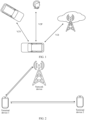
- V2X is a technology for communication between vehicles and the outside world, and is a basis and key technology for intelligent vehicles, autonomous driving, and intelligent transportation systems.
- V2X specifically includes several application requirements, such as direct communication of vehicle-to-vehicle (vehicle-to-vehicle, V2V), vehicle-to-infrastructure (vehicle-to-infrastructure, V2I), and/or vehicle-to-pedestrian (vehicle-to-pedestrian, V2P), and communication interaction of vehicle-to-network (vehicle-to-network, V2N). As shown in FIG.
- V2V refers to communication between vehicles
- V2P refers to communication between a vehicles and a person (including a pedestrian, a cyclist, a driver, or a passenger)
- V2I refers to communication between a vehicle and an infrastructure such as an RSU.
- V2N may be included in V2I.
- V2N refers to communication between vehicles and a base station/network.
- V2P may be used for safety warning for a pedestrian or a non-motor vehicle on a road.
- a vehicle may communicate with a road or even another infrastructure such as a traffic light or a road barrier through V2I, to obtain road management information such as traffic light signal timing.
- V2V may be used for information exchange and warning between vehicles, and a most typical application of V2V is an anti-collision safety system between vehicles.
- V2N is a most widely used form of internet of vehicles currently, and a main function of V2N is to enable a vehicle to connect to a cloud server through a mobile network, to use application functions, such as navigation, entertainment, or anti-theft, provided by the cloud server.
- V2X communication is used as an example for description.
- embodiments of this application may also be applicable to device-to-device (Device to Device, D2D) communication, machine type communication (Machine Type Communication, MTC), Internet of Things (Internet of Things, IoT) communication, and the like.
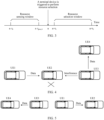
- FIG. 2 shows a network architecture used in an embodiment of this application.
- the network architecture shown in FIG. 2 includes a network apparatus and two terminal apparatuses, namely, a terminal apparatus 1 and a terminal apparatus 2.
- the two terminal apparatuses may both be within coverage of the network apparatus; or among the two terminal apparatuses, only the terminal apparatus 1 is within coverage of the network apparatus, and the terminal apparatus 2 is not within coverage of the network apparatus; or none of the two terminal apparatuses is within coverage of the network apparatus.
- the two terminal apparatuses may communicate with each other through a sidelink.
- FIG. 2 shows an example in which the terminal apparatus 1 is within coverage of the network apparatus and the terminal apparatus 2 is not within coverage of the network apparatus.
- the network apparatus may serve a plurality of terminal apparatuses.
- the network apparatus in FIG. 2 is, for example, an access network apparatus, such as a base station.
- the access network apparatus corresponds to different apparatuses in different systems.
- the access network apparatus corresponds to a 5G access network apparatus in a 5G system, such as a gNB, or is an access network apparatus in a future-generation communication system.
- the terminal apparatus in FIG. 2 is for example, an on-board terminal apparatus or a vehicle, but the terminal apparatus in embodiments of this application is not limited thereto.
- the terminal apparatus may also be a wearable apparatus.
- the wearable apparatus may also be referred to as a wearable intelligent apparatus or an intelligent wearable apparatus, and is a collective term for wearable apparatuses developed by intelligently designing everyday wearables based on a wearable technology, for example, glasses, gloves, watches, bands, helmets, jewelry, clothing, and shoes.
- the wearable apparatus is a portable apparatus that is worn on a human body or integrated into a user's clothing or accessory.
- the wearable apparatus is not merely a hardware apparatus, but can implement powerful functions through software support, data interaction, and cloud interaction.
- the terminal apparatuses described above, when located on a vehicle may be considered as an on-board terminal apparatus.
- the on-board terminal apparatus is also referred to as, for example, an on-board unit (on-board unit, OBU).
- OBU on-board unit
- a network apparatus includes a radio access network (radio access network, RAN) apparatus, for example, a base station or an access point, and may be an apparatus that communicates with a terminal apparatus over an air interface in a radio access network through one or more cells.
- RAN radio access network
- a network apparatus in the vehicle-to-everything (vehicle-to-everything, V2X) technology is a road side unit (road side unit, RSU).
- the RSU may be a stationary infrastructure entity supporting V2X applications, and may exchange a message with another entity supporting V2X applications.
- the network apparatus may include a next generation node B (next generation node B, gNB) in a 5th generation (5th generation, 5G) mobile communication new radio (new radio, NR) system (also referred to as an NR system for short), or may include a central unit (central unit, CU) and a distributed unit (distributed unit, DU) in a cloud radio access network (cloud radio access network, Cloud RAN) system.
- 5G 5th generation
- NR new radio
- NR new radio access network
- Cloud RAN cloud radio access network
- the network apparatus may also include a core network apparatus.
- the core network apparatus may include, for example, an access and mobility management function (access and mobility management function, AMF), a user plane function (user plane function, UPF), or the like.
- an apparatus configured to perform a function of the network apparatus may also be an apparatus that supports the network apparatus in performing the function, for example, a unit, a module, a chip, or a chip system.
- the unit, the module, the chip, or the chip system may be installed in the network apparatus.
- a sidelink information transmission resource allocation manner in Mode-1 is as follows.
- Mode-1 is mainly applied to V2X communication with network coverage, and a network apparatus allocates a sidelink information transmission resource.
- Mode-1 may further include a dynamic grant (dynamic grant, DG) mode and a configured grant (configured grant, CG) mode.
- DG dynamic grant
- CG configured grant
- a base station schedules, based on downlink control information (downlink control information, DCI), a transmission resource to be used by a terminal apparatus at a transmitting end to send sidelink information to a terminal apparatus at a receiving end.
- DCI downlink control information
- the base station configures related transmission resource of the sidelink information by using high-level signaling, such as radio resource control (RRC) signaling.
- RRC radio resource control
- a sidelink information transmission resource allocation manner in Mode-2 is as follows.
- Mode-2 determining of a sidelink information transmission resource by a terminal apparatus at a transmitting end does not rely on a base station.
- This mode is not limited to network coverage.
- the terminal apparatus at the transmitting end can also use this mode for communication.
- the terminal apparatus at the transmitting end continuously monitors a radio resource.
- the terminal apparatus at the transmitting end learns, in a slot n, that there is sidelink information to be sent, the terminal apparatus at the transmitting end obtains a sensing result in a resource sensing window [ n - t 0 ,n - t proc, 0 ), that is, obtains a sensing result obtained by the terminal apparatus at the transmitting end before the slot n by monitoring the radio resource in the sensing window.
- the sensing result may reflect a resource occupation status, and may be determined based on a measured signal strength, or may be determined by decoding detected sidelink control information sent by another terminal apparatus to obtain a sidelink information transmission status of the another terminal apparatus.
- t 0 is a boundary value of the resource sensing window, for example, t 0 may be 1100 ms or 100 ms, or may be another value.
- t proc ,0 is a time for the terminal apparatus at the transmitting end to process the sensing result, and a value of t proc ,0 varies with a capability of the terminal apparatus. t proc ,0 ⁇ 0.
- the terminal apparatus at the transmitting end filters out unavailable time-frequency resources in a resource selection window [ n + t 1 ,n + t 2 ] based on the sensing result, that is, time-frequency resources that have been occupied by other terminal apparatuses for information transmission, so that the terminal apparatus at the transmitting end determines a resource that can be used for sidelink information transmission.
- 0 ⁇ t 1 ⁇ t proc, 1 , t proc ,1 is a time at which the terminal apparatus processes the sensing result, and a value of network architecture is subject to the capability of the terminal apparatus.
- a PDB indicates a maximum delay from a moment at which a data packet is generated at a service layer to a moment at which the data packet is successfully sent.
- a remaining PDB at a moment n is a remaining delay after the moment n starting from the moment at which the data packet is generated at the service layer.
- the PDB may be measured in slots, subframes, or frames, or may be measured by using an absolute time, for example, milliseconds or seconds.
- a specific resource selection manner of the terminal apparatus at the transmitting end is described as follows.
- the time-frequency resource used by the terminal apparatus at the transmitting end to send data is determined based on the sensing result of the terminal apparatus at the transmitting end in the resource sensing window [ n - t 0 ,n - t proc, 0 ).
- the terminal apparatus at the transmitting end does not know a channel status or a resource occupation status in the vicinity of the terminal apparatus at the receiving end. If another terminal apparatus is communicating in the vicinity of the terminal apparatus at the receiving end but is not sensed by the terminal apparatus at the transmitting end, the terminal apparatus at the receiving end may suffer strong interference from sidelink communication of the another terminal apparatus when receiving data from the terminal apparatus at the transmitting end, resulting in poor signal reception quality or even reception failure of the terminal apparatus at the receiving end.
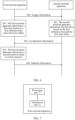
- UE1 selects a time-frequency resource based on a sensing result of the UE1, to send data to UE2. Because UE3 and UE4 are distant from the UE1, the UE1 determines during sensing that no other terminal apparatus performs sidelink communication in the vicinity of UE1, and then the UE1 sends data to the UE2. However, actually, the UE3 is sending data to the UE4.
- the sending of the data by the UE3 to the UE4 causes strong interference to receiving of the data by the UE2 from the UE1.
- the UE2 cannot correctly receive the data from the UE1, and reliability of sidelink communication is reduced.
- the UE1 performs sensing, and can sense that the UE3 sends data to the UE4. In this case, the UE1 considers that data cannot be sent to the UE2 through a time-frequency resource used by the UE3 to send the data to the UE4. In other words, the UE1 determines that the time-frequency resource used by the UE3 to send the data to the UE4 is an unavailable time-frequency resource. However, actually, because the UE1 is distant from the UE4, the UE4 has little interference on the UE1, and the sending of the data by the UE3 to the UE4 does not affect receiving of data by the UE2 from the UE1. For the UE1, this is a case in which resources are excessively filtered out, and some resources that can be used are determined as unavailable time-frequency resources. As a result, time-frequency resources available to the UE1 are reduced.
- the sidelink information transmission resource allocation manner in Mode-2b is provided as an improvement over the sidelink information transmission resource allocation manner in Mode-2.
- the terminal apparatus at the transmitting end when determining the sidelink information transmission resource, the terminal apparatus at the transmitting end needs to consider both a resource sensing result of the terminal apparatus at the transmitting end and a resource sensing result of the terminal apparatus at the receiving end.
- the terminal apparatus at the receiving end performs sensing detection on the terminal apparatus in the vicinity of the terminal apparatus at the receiving end, that is, detects SCI sent by a terminal apparatus in the vicinity of the terminal apparatus at the receiving end.
- the terminal apparatus at the receiving end determines sidelink information transmission resources available or unavailable for the terminal apparatus at the receiving end, and sends coordination information to the terminal apparatus at the transmitting end to notify the terminal apparatus at the receiving end of the available or unavailable sidelink information transmission resources. Then, the terminal apparatus at the receiving end determines, based on the available or unavailable sidelink information determined by the terminal apparatus at the receiving end itself and the available or unavailable sidelink information determined by the terminal apparatus at the receiving end, a resource finally used to send sidelink information to the terminal apparatus at the receiving end.
- FIG. 6 shows a communication method according to an embodiment of this application.
- the communication method may be a coordination information transmission method, and a first terminal apparatus, a second terminal apparatus, and a system are further provided.
- the following first describes the apparatuses involved in the embodiment of FIG. 6 .
- the first terminal apparatus in FIG. 6 includes a processing unit 71 and a transceiver unit 72.
- the transceiver unit 72 may be replaced by a sending unit for sending a signal, and the transceiver unit 72 may be replaced by a receiving unit for receiving a signal.
- the second terminal apparatus in FIG. 6 includes a processing unit 81 and a transceiver unit 82.
- the transceiver unit 82 may be replaced by a sending unit for sending a signal, and the transceiver unit 82 may be replaced by a receiving unit for receiving a signal.
- the processing unit 71 and the processing unit 81 may be processors, and the transceiver unit 72 or the transceiver unit 82 may be a transceiver.
- the sending unit may be a transmitter.
- the transceiver unit 72 or the transceiver unit 82 is replaced with a receiving unit, the receiving unit may be a receiver.
- the transceiver, the transmitter, or the receiver may be a radio frequency circuit.
- the first terminal apparatus or the second terminal apparatus may further include a storage unit or a computer-readable storage medium.
- the storage unit or the computer-readable storage medium may also be disposed outside the first terminal apparatus or the second terminal apparatus.
- the storage unit or the computer-readable storage medium is disposed outside an on-board module, and is in communication connection with the first terminal apparatus or the second terminal apparatus.
- the storage unit or the computer-readable storage medium is configured to store computer instructions.
- the processor is in communication connection with a memory, and the processor executes the computer instructions stored in the memory or the computer-readable storage medium, to enable the first terminal apparatus and the second terminal apparatus to perform the method in the embodiment of FIG. 6 .
- the processor may be a general-purpose central processing unit (CPU), a microprocessor, or an application-specific integrated circuit (Application-Specific Integrated Circuit, ASIC).
- the processing unit 71 or the processing unit 81 may be, for example, a processor, and the transceiver unit 72 or the transceiver unit 82 may be an output interface, pin, or circuit, or the like.
- the transceiver unit 72 or the transceiver unit 82 may be an input interface, pin, or circuit, or the like.
- the transceiver unit 72 or the transceiver unit 82 may be an input/output interface, pin, or circuit, or the like.
- the processing unit 71 or the processing unit 81 may execute computer instructions, to enable the first terminal apparatus or the second terminal apparatus to perform the method in FIG. 6 .
- the computer instructions are stored in a storage unit or a computer-readable storage medium.
- the storage unit or the computer-readable storage medium may be a storage unit in the chip, for example, a register or a cache.
- the storage unit or the computer-readable storage medium may be a storage unit located outside the chip in a terminal device, user equipment, or a vehicle, for example, a read-only memory (Read-Only Memory, ROM), another type of static storage device that can store static information and instructions, or a random access memory (Random Access Memory, RAM).
- ROM read-only memory
- RAM random access memory
- the communication method in the embodiment of FIG. 6 includes the following steps.
- Step S60 The transceiver unit 72 of the first terminal apparatus sends trigger information to the second terminal apparatus, and the transceiver unit 82 of the second terminal apparatus receives the trigger information from the first terminal apparatus.
- the trigger information is control information, and is for triggering the second terminal apparatus to determine a first resource.
- the first resource is used by the first terminal apparatus to determine a resource for sending sidelink information to the second terminal apparatus.
- step S60 is not a necessary step.
- Manners of determining a sidelink information transmission resource in Mode-2b include a trigger manner and a non-trigger manner.
- the first terminal apparatus sends the trigger information to the second terminal apparatus, to trigger the second terminal apparatus to send coordination information to the first terminal apparatus.
- the second terminal apparatus After receiving the trigger information, the second terminal apparatus performs resource selection based on a sensing result.
- the second terminal apparatus performs resource selection in a resource selection window based on the sensing result in a sensing window and reservation information, to determine the first resource.
- the resource selection window may be a resource selection window for the first terminal apparatus indicated by the first terminal apparatus to the second terminal apparatus, to notify the second terminal apparatus that the first terminal apparatus will perform resource selection in the resource selection window to determine a resource for sidelink information transmission. Therefore, the second terminal apparatus may select, in the resource selection window based on the sensing result of the second terminal apparatus in the sensing window and the reservation information, the first resource for assisting the first terminal apparatus in determining the resource to be used by the first terminal apparatus to send the sidelink information.
- the reservation information is carried in sidelink control information of another terminal apparatus received by the second terminal apparatus, and indicates periodicity information based on which the another terminal apparatus periodically transmits sidelink information.
- the second terminal apparatus carries a resource selection result of the second terminal apparatus, that is, the first resource, in the coordination information. Then, the first terminal apparatus determines, based on a resource selection result of the first terminal apparatus and the resource selection result of the second terminal apparatus that is carried in the coordination information, the resource to be used by the first terminal apparatus to send the sidelink information to the second terminal apparatus.
- the first terminal apparatus does not send the trigger information to the second terminal apparatus.
- the second terminal apparatus periodically or aperiodically performs resource sensing, performs resource selection in a resource selection window based on the sensing result and the reservation information, and then notifies the first terminal apparatus of a resource selection result through coordination information.
- the resource selection window may be a resource selection window for the second terminal apparatus, or may be a predefined resource selection window.
- step S60 is not necessary.
- Step S61 The processing unit 71 of the first terminal apparatus determines a first time based on a first reference time and a first time offset, and the processing unit 81 of the second terminal apparatus also determines the first time based on the first reference time and the first time offset.
- the first terminal apparatus and the second terminal apparatus determine the first time in step 61, there is no limitation on a time sequence between the determining of the first time by the first terminal apparatus and the determining of the first time by the second terminal apparatus.
- the first time is subsequently for determining a sending time at which the second terminal apparatus sends the coordination information to the first terminal apparatus.
- the first reference time is a time reference point, that is, a time boundary for the sending of the coordination information, that is, the first time, may be determined based on the time reference point and the first time offset.
- the time boundary may also be referred to as a delay boundary.
- the first reference time and the first time offset may be measured in seconds or milliseconds, or certainly may be slots or symbols.
- a time at which the second terminal apparatus sends the coordination information to the first terminal apparatus is not specified. As a result, when receiving the coordination information, the first terminal apparatus may already miss an occasion for sending the sidelink information, and reliability is reduced.
- the second terminal apparatus needs to send the coordination information to the first terminal apparatus at the first time or before the first time, thereby improving the reliability.
- the first reference time may include four types of reference times: a second time, a third time, a fourth time, and a fifth time.
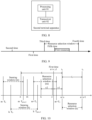
- the second time includes a time at which the trigger information is received from the first terminal apparatus, and the trigger information is for triggering determining of the first resource. That is, the second time is a time at which the first terminal apparatus sends the trigger information to the second terminal apparatus in step S60, and is also a time at which the second terminal apparatus receives the trigger information from the first terminal apparatus. In this case, the first terminal apparatus or the second terminal apparatus determines the first time based on the first time offset and the second time, that is, the time at which the trigger information is sent or received. It can be learned from FIG.
- the first time offset is a time difference between the second time and the first time, that is, the first time at which the second terminal apparatus sends the coordination information is obtained by offsetting the transmission time of the trigger information as a reference time point by the first time offset. Therefore, after receiving the trigger information, the second terminal apparatus learns the second time, and determines, based on the first time offset, a latest time for feeding back the coordination information, that is, the delay boundary.
- the delay boundary for feeding back the coordination information is an offset relative to triggering of the coordination information.
- the third time includes a start time of the resource selection window, and the resource selection window is for determining the second resource for receiving the sidelink information from the first terminal apparatus, that is, the resource selection window is used for determining the second resource for sending the sidelink information to the second terminal apparatus by the first terminal apparatus.
- the resource selection window is a resource selection window for the first terminal apparatus.
- the first terminal apparatus determines, in the resource selection window, a resource for transmitting the sidelink information.
- the resource selection window is indicated by the first terminal apparatus to the second terminal apparatus, so that the second terminal apparatus determines the first resource in the resource selection window.
- the first resource is indicated to the first terminal apparatus through the coordination information sent by the second terminal apparatus to the first terminal apparatus. It can be learned from FIG.
- the first time offset is a time difference between the third time and the first time, that is, the first time is obtained by offsetting the start time of the resource selection window as a reference time point by the first time offset. Therefore, the first terminal apparatus and the second terminal apparatus associate the start time of the resource selection window with the expected first time offset and determine the first time.
- the first time finally determined by using the third time as the first reference time is generally closer to the third time in time domain. This can reduce a quantity of bits for transmitting the first time offset, and is applicable to definition of the delay boundary for sending of the coordination information in the trigger scenario and the non-trigger scenario. As long as the resource selection window exists, the third time can be used as the time reference point, providing higher practicability.
- the fourth time includes an end time of the resource selection window.
- the resource selection window is consistent with the resource selection window described in the example in which the third time is used as the first reference time. Details are not described herein again.
- the first time offset is a time difference between the fourth time and the first time, that is, the first time at which the second terminal apparatus sends the coordination information is obtained by offsetting the end time of the resource selection window as a reference time point by the first time offset. Therefore, the first terminal apparatus and the second terminal apparatus associate the end time of the resource selection window with the expected first time offset.
- the fourth time can be used as the time reference point.
- the resource selection window may be a resource selection window for the first terminal apparatus, that is, a period of time used to select a sidelink information transmission resource and determined by the first terminal apparatus based on a delay requirement of to-be-transmitted sidelink data.
- the first terminal apparatus determines, in the resource selection window, the transmission resource for transmitting the to-be-transmitted sidelink information.
- the trigger information includes some information, and the information includes at least one of the following information: the start time of the resource selection window, the end time of the resource selection window, the first time offset, a capability of the first terminal apparatus or the second terminal apparatus, a second time offset, or duration of the resource selection window.
- the second time offset is a time offset between the time at which the trigger information is received from the first terminal apparatus and the start time of the resource selection window.
- the second time offset is for determining the start time of the resource selection window
- the second time offset and the duration of the resource selection window are for determining the end time of the resource selection window.
- the start time of the resource selection window may be determined based on the time at which the second terminal apparatus receives the trigger information from the first terminal apparatus and the second time offset.
- the end time of the resource selection window may be determined based on the time at which the second terminal apparatus receives the trigger information from the first terminal apparatus, the second time offset, and the duration of the resource selection window.
- some information described above may be indicated by a network apparatus to the first terminal apparatus and/or the second terminal apparatus through control information.
- the transceiver unit 72 of the first terminal apparatus may further send control information, sidelink PC5-radio resource control (PC5-Radio Resource Control, PC5-RRC) signaling, or a Media Access Control control element (Media Access Control Control Element, MAC CE) to the second terminal apparatus, and the transceiver unit 82 of the second terminal apparatus receives the control information, the PC5-RRC signaling, or the MAC CE from the first terminal apparatus.
- the control information, the PC5-RRC signaling, or the MAC CE indicate at least one of the following information: the start time of the resource selection window, the end time of the resource selection window, the first time offset, the capability of the first terminal apparatus or the second terminal apparatus, the second time offset, or the duration of the resource selection window.
- the fifth time includes a start time of the first resource in time domain.
- the case in which the first reference time is the fifth time may correspond to the trigger or non-trigger manner of determining a sidelink information transmission resource in Mode-2b.
- the second terminal apparatus senses a channel environment in the vicinity of the second terminal apparatus.
- the second terminal apparatus may receive sidelink control information sent by a terminal apparatus in the vicinity of the second terminal apparatus, to learn resources on which the terminal apparatus in the vicinity of the second terminal apparatus transmits sidelink information, or the second terminal apparatus may measure a signal strength of a radio resource. Therefore, the second terminal apparatus may determine which resources in the vicinity of the second terminal apparatus are available or unavailable, and notify the first terminal apparatus of the available resources or the unavailable resources through the coordination information.
- the available resources or the unavailable resources obtained by the second terminal apparatus are the first resource.
- the second terminal apparatus also senses the channel environment in the vicinity of the second terminal apparatus periodically or aperiodically when not receiving the trigger information of the first terminal apparatus. For example, the second terminal apparatus may receive sidelink control information sent by a terminal apparatus in the vicinity of the second terminal apparatus, to learn resources on which the terminal apparatus in the vicinity of the second terminal apparatus transmits sidelink information, or the second terminal apparatus may measure a signal strength of a radio resource. Therefore, the second terminal apparatus may determine which resources in the vicinity of the second terminal apparatus are available or unavailable, and notify the first terminal apparatus of the available resources or the unavailable resources through the coordination information.
- the available resources or the unavailable resources obtained by the second terminal apparatus are the first resource.
- the first resource is located in the resource selection window.
- the first terminal apparatus may further indicate, to the second terminal apparatus through trigger information or other sidelink control information, which of the second time to the fifth time is the first reference time.
- the first terminal apparatus may notify, via the trigger information or other sidelink control information, the second terminal apparatus of a specific reference time to be used as the first reference time.
- the first resource includes at least one resource for determining a resource for receiving the sidelink information from the first terminal apparatus, and the start time of the first resource in time domain includes a time domain start time of a resource ranking first in time domain among the at least one resource.
- the first resource is a block including consecutive resources in time domain.
- the first resource may alternatively be a set of a plurality of resources, that is, the first resource includes a plurality of inconsecutive resources in time domain.
- the fifth time is an earliest moment of the available resources or the unavailable resources determined by the second terminal apparatus in time domain, that is, the start time. It can be learned from FIG.
- the first time offset is a time difference between the fifth time and the first time, that is, the first time at which the second terminal apparatus sends the coordination information is obtained by offsetting the start time of the first resource in time domain as a reference time point by the first time offset.
- the first time offset may be determined based on the capability of the first terminal apparatus or the second terminal apparatus.
- the capability of the first terminal apparatus or the second terminal apparatus needs to be considered for the first time at which the second terminal apparatus sends the coordination information.
- a value of the first time offset may be smaller.
- the capability of the first terminal apparatus or the second terminal apparatus may be carried in the trigger information, thereby improving flexibility in determining the first time.
- the first terminal apparatus After receiving the coordination information, the first terminal apparatus has enough time to perform scheduling and encode and send the sidelink information, thereby avoiding a waste of the coordination information caused by an insufficient capability of the first terminal apparatus, and ensuring that the sidelink information of the first terminal apparatus can be sent in a timely manner.
- the first time offset may be determined based on at least one of the following time:
- At least one of the foregoing time may be carried in the trigger information, thereby improving flexibility in determining the first time.
- the first time offset may be a predefined time offset.
- a specific value of the first time offset is specified in a protocol.
- the specific value of the first time offset may be stored in a memory of the first terminal apparatus or the second terminal apparatus, and is invoked by the first terminal apparatus or the second terminal apparatus when the first time needs to be determined.
- system complexity is reduced.
- the value of the first time offset may be n, where n is a negative integer, 0, or a positive integer.
- a measurement unit of the first time offset may be second or millisecond, or certainly, may be slot or symbol.
- Step S62 The transceiver unit 82 of the second terminal apparatus sends the coordination information to the first terminal apparatus at the first time or before the first time, and the transceiver unit 72 of the first terminal apparatus receives the coordination information from the first terminal apparatus at the first time or before the first time.
- the coordination information indicates the first resource, and the first resource is for determining a second resource for receiving the sidelink information from the first terminal apparatus.
- the coordination information may include a bit map (bit map), and the bit map indicates the first resource. For example, if a bit in a bit string of the bit map is 1, it indicates that a resource corresponding to the bit may be used to transmit the sidelink information.
- a possible scenario is that the first terminal apparatus cannot sense a radio resource or another terminal apparatus due to various reasons, and the first terminal apparatus is relatively close to the second terminal apparatus.
- the first terminal apparatus may use the second terminal apparatus to perform sensing in place of the first terminal apparatus.
- the first terminal apparatus may send the trigger information to the second terminal apparatus to trigger the second terminal apparatus to perform sensing in place of the first terminal apparatus, and receive the coordination information sent by the second terminal apparatus.
- the first terminal apparatus receives the coordination information periodically or aperiodically sent by the second terminal apparatus.
- the first resource may be further used by the first terminal apparatus to determine a transmission resource to be used by the first terminal apparatus to send the sidelink information to the second terminal apparatus or a third terminal apparatus, for example, the third resource.
- the third terminal apparatus is a terminal apparatus different from the first terminal apparatus and the second terminal apparatus.
- Step S63 The processing unit 71 of the first terminal apparatus determines the second resource based on the first resource, where the second resource is used by the transceiver unit 72 of the first terminal apparatus to send the sidelink information to the second terminal apparatus.
- the processing unit 71 of the first terminal apparatus determines the third resource based on the first resource, where the third resource is used by the transceiver unit 72 of the first terminal apparatus to send the sidelink information to the third terminal apparatus.
- Step S64 The transceiver unit 72 of the first terminal apparatus sends the sidelink information to the second terminal apparatus on the second resource, and the transceiver unit 82 of the second terminal apparatus receives the sidelink information from the first terminal apparatus on the second resource.
- the sidelink information includes at least one of sidelink control information, sidelink data, and sidelink feedback information.
- the transceiver unit 72 of the first terminal apparatus sends the sidelink information to the third terminal apparatus on the third resource.
- the first terminal apparatus may receive coordination information sent by a plurality of second terminal apparatuses, and the coordination information sent by each second terminal apparatus in the plurality of second terminal apparatuses indicates a sensing result of the second terminal apparatus sending the coordination information. Therefore, the first terminal apparatus may determine, based on a plurality of sensing results of the plurality of second terminal apparatuses, a transmission resource for sending the sidelink information.
- the second terminal apparatus sends the coordination information to the first terminal apparatus at the first time or before the first time, and the first time is determined based on the first reference time and the first time offset, that is, a time at which the second terminal apparatus sends the coordination information to the first terminal apparatus is limited, to ensure that when the first terminal apparatus receives the coordination information, the first terminal apparatus has sufficient time to determine the second resource for sending the sidelink information, thereby improving reliability of sidelink communication.
- FIG. 10 provides a specific example to describe the communication method in the embodiment of FIG. 6 .
- the first terminal apparatus has to-be-sent sidelink data to be sent to the second terminal apparatus.
- the first terminal apparatus sends trigger information to the second terminal apparatus at a time n.
- the trigger information is for triggering the second terminal apparatus to sense a terminal apparatus or resource nearby.
- the trigger information carries at least a second time offset S, duration L of a resource selection window, and a first time offset y1.
- the second time offset is for determining a start time of the resource selection window.
- the second time offset and the duration of the resource selection window are for determining an end time of the resource selection window.
- the first terminal apparatus or the second terminal apparatus may determine, based on the moment n, S, and L, that the start time of the resource selection window for the first terminal apparatus is t 1 , and the end time of the resource selection window for the first terminal apparatus is t 2 .
- determining of the first time is described by using an example in which the first reference time is the third time, that is, the start time t 1 of the resource selection window for the first terminal apparatus.
- the first terminal apparatus determines the first time n+s-y1 based on t 1 and the first time offset y 1, and the second terminal apparatus needs to send the coordination information to the first terminal apparatus at the first time n+s-y1 or before the first time n+s-y1.
- the second terminal apparatus performs resource selection, for example, at a time m, that is, senses a terminal apparatus or a resource in the vicinity of the second terminal apparatus.
- the second terminal apparatus first determines a resource for sending the coordination information. Then the second terminal apparatus determines a sensing window (m) and a resource selection window (m) based on the time m. The sensing window (m) and the resource selection window (m) are for determining a resource to be used by the second terminal apparatus to send the coordination information to the first terminal apparatus.
- a time range of the sensing window (m) is m-T 0 to m-T proc,0
- a time range of the resource selection window (m) is m+T 1 to m+T 2
- T 0 is a start time offset of the sensing window configured for a resource pool
- T proc,0 is a predefined basic capability of a terminal apparatus related to a subcarrier spacing in performing sensing
- T 1 is a start time offset of the resource selection window that is determined by the terminal apparatus based on a device capability, and needs to meet 0 ⁇ T 1 ⁇ T proc, 1
- T proc, 1 is a predefined basic capability of the terminal apparatus related to the subcarrier spacing in encoding and sending the sidelink information
- T 2 is an end time offset of the resource selection window that is determined by the terminal device based on a device capability, and meets T 1 ⁇ T2 ⁇ PDB, where a packet delay budget (packet delay budget, PDB) indicates a time to live of the
- the second terminal apparatus continuously senses a terminal apparatus or a channel resource nearby, and caches the sensing result. Once the second terminal apparatus determines the sensing window (m), the second terminal apparatus obtains, from the cache, the sensing result within the time range m-T 0 to m-T proc,0 corresponding to the sensing window (m). Then, a resource to be used by the second terminal apparatus to send the coordination information is determined in the resource selection window (m) based on the sensing result and/or a resource reservation status of the terminal apparatus nearby. As shown in FIG. 10 , a time domain resource of the resource is a time z.
- the second terminal apparatus sends, to the first terminal apparatus at the time z, the coordination information indicating the first resource, where the first resource may be used by the first terminal apparatus to determine a transmission resource for sending the sidelink information to the second terminal apparatus.
- the time domain resource of the resource that is for sending the coordination information and that is determined within the time range m+T 1 to m+T 2 of the resource selection window (m), that is, the time z, needs to be before or equal to the first time n+s-y1.
- a third step because the second terminal apparatus sends the coordination information to the first terminal apparatus at the time z, the second terminal apparatus needs to perform resource selection at a time k.
- a time interval between the time k and the time z is greater than or equal to a duration y2.
- y2 is a preparation time necessary for the second terminal apparatus to send the coordination information, and the preparation time needs to consider a necessary time for the second terminal apparatus to process the sensing result in a sensing window (k), and/or a time required for the second terminal apparatus to generate the coordination information and carry the sensing result in the coordination information, and encode and send the sidelink information.
- the second terminal apparatus determines the sensing window (k) and a resource selection window (k) based on the time k.
- the sensing window (k) is for determining a resource to be used by the second terminal apparatus to send the coordination information to the first terminal apparatus.
- the resource selection window (k) is not important in this case, because the resource selection window (k) is a resource selection window used by the second terminal apparatus to determine the transmission resource for the second terminal apparatus to send the sidelink information, but is not a resource selection window used by the first terminal apparatus to determine a transmission resource for the first terminal apparatus to send the sidelink information.
- the resource selection window (k) may overlap the resource selection window for the first terminal apparatus in time domain, a time range of the sensing window (k) is k-T 0 to k-T proc,0 , and a time range of the resource selection window (k) is k+T 1 to k+T 2 .
- the second terminal apparatus extracts the sensing result within the time range of the sensing window (k) from the sensing results cached by the second terminal apparatus to determine the first resource, and the second terminal apparatus sends the coordination information to the first terminal apparatus at the time z.
- the coordination information indicates the first resource.
- the first terminal apparatus After receiving the coordination information from the second terminal apparatus, the first terminal apparatus obtains available resources or unavailable resources in the vicinity of the second terminal apparatus determined by the second terminal apparatus, that is, the first resource. Then, the first terminal apparatus determines the second resource based on the first resource and available resources or unavailable resources determined by the first terminal apparatus in the sensing window of the first terminal apparatus.
- the first terminal apparatus sends the sidelink information to the second terminal apparatus on the second resource.
- a time at which the second terminal apparatus sends the coordination information needs to be before the first time n+s-y1 or equal to the first time n+s-y1, that is, a latest time at which the second terminal apparatus sends the coordination information is limited, thereby improving timeliness of the coordination information, ensuring that the first terminal apparatus has sufficient time to determine a sidelink information transmission resource after receiving the coordination information, and improving reliability of sidelink communication.
- the communication apparatus may be a first terminal apparatus or a second terminal apparatus, and the communication apparatus may be a terminal device, or may be a chip or a circuit.
- the communication apparatus may be configured to perform actions performed by the first terminal apparatus or the second terminal apparatus in the above embodiments of this application.
- FIG. 11 is a simplified schematic diagram of a structure of the terminal apparatus.
- the terminal apparatus may be a vehicle, an on-board module, a handheld device, a mobile phone, or the like.
- the terminal apparatus includes a processor, a memory, a radio frequency circuit, an antenna, and an input/output apparatus.
- the processor is mainly configured to process a communication protocol and communication data, control the terminal apparatus, execute a software program, process data of the software program, and so on.
- the memory is mainly configured to store the software program and data.
- the radio frequency circuit is mainly configured to perform conversion between a baseband signal and a radio frequency signal and process the radio frequency signal.
- the antenna is mainly configured to receive and send the radio frequency signal in a form of an electromagnetic wave.
- the input/output apparatus for example, a touchscreen, a display, or a keyboard, is mainly configured to receive data entered by a user and output data to the user. It should be noted that some types of terminal apparatuses may not have an input/output apparatus, and some types of terminal apparatuses, for example, an on-board module, may include only at least one of the processor, the memory, the radio frequency circuit, the antenna, and the input/output apparatus, with the other parts being disposed outside the terminal apparatus and in communication connection with the terminal apparatus.
- the processor When needing to send data, after performing baseband processing on to-be-sent data, the processor outputs a baseband signal to the radio frequency circuit; and the radio frequency circuit performs radio frequency processing on the baseband signal and sends the radio frequency signal to outside in a form of an electromagnetic wave through the antenna.
- the radio frequency circuit receives a radio frequency signal through the antenna, converts the radio frequency signal into a baseband signal, and outputs the baseband signal to the processor.
- the processor converts the baseband signal into data, and processes the data.
- FIG. 11 shows only one memory and one processor. In an actual terminal apparatus product, there may be one or more processors and one or more memories.
- the memory may also be referred to as a storage medium, a storage apparatus, or the like.
- the memory may be disposed independent of the processor, or may be integrated with the processor. This is not limited in this embodiment of this application.
- the antenna and the radio frequency circuit that have receiving and sending functions may be considered as a transceiver unit of the terminal apparatus (where the transceiver unit may be one functional unit, and the functional unit can implement a sending function and a receiving function; or the transceiver unit may include two functional units: a receiving unit that can implement a receiving function and a sending unit that can implement a sending function), and the processor that has a processing function may be considered as a processing unit of the terminal apparatus.
- the terminal apparatus includes a transceiver unit 1110 and a processing unit 1120.
- the transceiver unit may also be referred to as a transceiver, a transceiver machine, a transceiver apparatus, or the like.
- the processing unit may also be referred to as a processor, a processing board, a processing module, a processing apparatus, or the like.
- a component that is in the transceiver unit 1110 and that is configured to implement a receiving function may be considered as a receiving unit
- a component that is in the transceiver unit 1110 and that is configured to implement a sending function may be considered as a sending unit. That is, the transceiver unit 1110 includes the receiving unit and the sending unit.
- the transceiver unit sometimes may also be referred to as a transceiver machine, a transceiver, a transceiver circuit, or the like.
- the receiving unit sometimes may also be referred to as a receiver machine, a receiver, a receiver circuit, or the like.
- the sending unit sometimes may also be referred to as a transmitting machine, a transmitter, a transmit circuit, or the like.
- transceiver unit 1110 is configured to perform a sending step or a receiving operation of the first terminal apparatus or the second terminal apparatus in the foregoing method embodiments
- processing unit 1120 is configured to perform operations other than the sending and receiving operations in the foregoing method embodiments.
- the apparatus may include a transceiver unit and a processing unit.
- the transceiver unit may be an input/output circuit and/or a communication interface.
- the processing unit is an integrated processor, a microprocessor, or an integrated circuit.
- the communication system may include the first terminal apparatus and the second terminal apparatus in the embodiment shown in FIG. 6 .
- An embodiment of this application further provides a computer-readable storage medium.
- the computer-readable storage medium stores a computer program.
- the computer program When the computer program is executed by a computer, the computer may implement the process related to the first terminal apparatus or the second terminal apparatus in the embodiment of FIG. 6 according to the above method embodiments.
- An embodiment of this application further provides a computer program product.
- the computer program product is configured to store a computer program.
- the computer program When the computer program is executed by a computer, the computer may implement the process related to the first terminal apparatus or the second terminal apparatus in the embodiment of FIG. 6 according to the above method embodiments.
- the processor mentioned in embodiments of this application may be a CPU, or may be another general-purpose processor, a digital signal processor (digital signal processor, DSP), an application specific integrated circuit (application specific integrated circuit, ASIC), a field programmable gate array (field programmable gate array, FPGA) or another programmable logic device, a discrete gate, a transistor logic device, a discrete hardware component, or the like.
- the general-purpose processor may be a microprocessor, or the processor may be any conventional processor or the like.
- the memory mentioned in embodiments of this application may be a volatile memory or a non-volatile memory, or may include a volatile memory and a non-volatile memory.
- the non-volatile memory may be a read-only memory (read-only memory, ROM), a programmable read-only memory (programmable ROM, PROM), an erasable programmable read-only memory (erasable PROM, EPROM), an electrically erasable programmable read-only memory (electrically EPROM, EEPROM), or a flash memory.
- the volatile memory may be a random access memory (random access memory, RAM) and is used as an external cache.
- RAMs in many forms may be used, for example, a static random access memory (static RAM, SRAM), a dynamic random access memory (dynamic RAM, DRAM), a synchronous dynamic random access memory (synchronous DRAM, SDRAM), a double data rate synchronous dynamic random access memory (double data rate SDRAM, DDR SDRAM), an enhanced synchronous dynamic random access memory (enhanced SDRAM, ESDRAM), a synchlink dynamic random access memory (synchlink DRAM, SLDRAM), and a direct rambus random access memory (direct rambus RAM, DR RAM).
- static random access memory static random access memory
- DRAM dynamic random access memory
- DRAM dynamic random access memory
- SDRAM synchronous dynamic random access memory
- double data rate SDRAM double data rate SDRAM
- DDR SDRAM double data rate SDRAM
- ESDRAM enhanced synchronous dynamic random access memory
- synchlink dynamic random access memory synchlink dynamic random access memory
- direct rambus RAM direct rambus RAM, DR RAM
- the processor is a general-purpose processor, a DSP, an ASIC, an FPGA, or another programmable logic device, a discrete gate or a transistor logic device, or a discrete hardware component
- the memory is integrated into the processor.
- sequence numbers of the foregoing processes do not mean execution sequences in various embodiments of this application.
- the execution sequences of the processes should be determined according to functions and internal logic of the processes, and should not be construed as any limitation on the implementation processes of embodiments of this application.
- the disclosed system, apparatus, and method may be implemented in another manner.
- the described apparatus embodiment is merely an example.
- division into the units is merely logical function division and may be other division in actual implementations.
- a plurality of units or components may be combined or integrated into another system, or some features may be ignored or not performed.
- the shown or discussed mutual couplings or direct couplings or communication connections may be implemented through some interfaces.
- the indirect couplings or communication connections between the apparatus or units may be implemented in electronic, mechanical, or other forms.
- the units described as separate parts may or may not be physically separate, and parts displayed as units may or may not be physical units, may be located in one position, or may be distributed on a plurality of network units. Some or all of the units may be selected according to actual requirements to achieve the objectives of the solutions of embodiments.
- the functions When the functions are implemented in the form of a software functional unit and sold or used as an independent product, the functions may be stored in a computer-readable storage medium. Based on such an understanding, the technical solutions of this application essentially, or the part contributing to the conventional technology, or some of the technical solutions may be implemented in a form of a software product.
- the computer software product is stored in a storage medium, and includes several instructions for instructing a computer apparatus (which may be a personal computer, a server, or a network apparatus) to perform all or some of the steps of the methods described in embodiments of this application.
- the foregoing computer-readable storage medium may be any available medium that can be accessed by a computer.
- the computer-readable medium may include a random access memory (random access memory, RAM), a read-only memory (read-only memory, ROM), an electrically erasable programmable read-only memory (electrically erasable programmable read-only memory, EEPROM), a compact disc read-only memory (compact disc read-only memory, CD-ROM), a universal serial bus flash disk (universal serial bus flash disk), a removable hard disk or another compact disc storage, a magnetic disk storage medium or another magnetic storage apparatus, or any other medium that can be for carrying or storing expected program code in a form of instructions or a data structure and that can be accessed by a computer.
- RAM random access memory
- ROM read-only memory
- EEPROM electrically erasable programmable read-only memory
- compact disc read-only memory compact disc read-only memory
- CD-ROM compact disc read-only memory
- universal serial bus flash disk universal serial bus flash disk
- removable hard disk or another compact disc storage a magnetic disk storage medium or another magnetic storage apparatus
Landscapes
- Engineering & Computer Science (AREA)
- Computer Networks & Wireless Communication (AREA)
- Signal Processing (AREA)
- Mobile Radio Communication Systems (AREA)
Claims (17)
- Kommunikationsverfahren, umfassend:Senden, zu einem ersten Zeitpunkt oder vor dem ersten Zeitpunkt, von Koordinationsinformationen, die eine erste Ressource angeben, an eine erste Endgerätevorrichtung, wobei der erste Zeitpunkt basierend auf einem ersten Referenzzeitpunkt und einem ersten Zeitversatz bestimmt wird, wobei die erste Ressource zum Bestimmen einer zweiten Ressource zum Empfangen von Sidelink-Informationen von der ersten Endgerätevorrichtung dient; undder erste Referenzzeitpunkt einen zweiten Zeitpunkt, einen dritten Zeitpunkt, einen vierten Zeitpunkt oder einen fünften Zeitpunkt umfasst;der zweite Zeitpunkt einen Zeitpunkt umfasst, zu welchem Trigger-Informationen von der ersten Endgerätevorrichtung empfangen werden und die Trigger-Informationen zum Triggern des Bestimmens der ersten Ressource dienen;der dritte Zeitpunkt einen Startzeitpunkt eines Ressourcenauswahlfensters umfasst;der vierte Zeitpunkt einen Endzeitpunkt des Ressourcenauswahlfensters umfasst und das Ressourcenauswahlfenster zum Bestimmen der zweiten Ressource zum Empfangen der Sidelink-Informationen von der ersten Endgerätevorrichtung dient; undder fünfte Zeitpunkt einen Startzeitpunkt der ersten Ressource in der Zeitdomäne umfasst.
- Verfahren nach Anspruch 1, wobei das Verfahren ferner Folgendes umfasst:
Empfangen von Steuerinformationen, einer Signalisierung der Sidelink-Funkressourcensteuerung, PC5-RRC-Signalisierung, oder eines Media-Access-Control-Steuerelements, MAC CE, von der ersten Endgerätevorrichtung, wobei die Steuerinformationen, die Signalisierung der Sidelink-Funkressourcensteuerung, PC5-RRC-Signalisierung, oder das Media-Access-Control-Steuerelement, MAC CE, den ersten Zeitversatz und/oder die Leistungsfähigkeit der ersten Endgerätevorrichtung angeben. - Verfahren nach Anspruch 1, wobei das Verfahren ferner Folgendes umfasst:
Empfangen, auf der zweiten Ressource, der Sidelink-Informationen von der ersten Endgerätevorrichtung. - Verfahren nach Anspruch 1, wobei
der erste Zeitpunkt und der erste Zeitversatz in Millisekunden oder Zeitschlitzen gemessen werden. - Kommunikationsverfahren, umfassend:Empfangen von Koordinationsinformationen von einer zweiten Endgerätevorrichtung zu einem ersten Zeitpunkt oder vor dem ersten Zeitpunkt, wobei der erste Zeitpunkt basierend auf einem ersten Referenzzeitpunkt und einem ersten Zeitversatz bestimmt wird, wobei die Koordinationsinformationen eine erste Ressource angeben und die erste Ressource zum Bestimmen einer zweiten Ressource zum Senden von Sidelink-Informationen an die zweite Endgerätevorrichtung dient,wobei der erste Referenzzeitpunkt einen zweiten Zeitpunkt, einen dritten Zeitpunkt, einen vierten Zeitpunkt oder einen fünften Zeitpunkt umfasst;der zweite Zeitpunkt einen Zeitpunkt des Sendens von Trigger-Informationen an die zweite Endgerätevorrichtung umfasst, wobei die Trigger-Informationen zum Triggern des Bestimmens der ersten Ressource dienen;der dritte Zeitpunkt einen Startzeitpunkt eines Ressourcenauswahlfensters umfasst;der vierte Zeitpunkt einen Endzeitpunkt des Ressourcenauswahlfensters umfasst und das Ressourcenauswahlfenster zum Bestimmen der zweiten Ressource zum Senden der Sidelink-Informationen an die zweite Endgerätevorrichtung dient; undder fünfte Zeitpunkt einen Startzeitpunkt der ersten Ressource in der Zeitdomäne umfasst.
- Verfahren nach Anspruch 5, wobei das Verfahren ferner Folgendes umfasst:
Senden von Steuerinformationen, einer Signalisierung der Sidelink-Funkressourcensteuerung, PC5-RRC-Signalisierung, oder eines Media-Access-Control-Steuerelements, MAC CE, an die zweite Endgerätevorrichtung, wobei die Steuerinformationen, die Signalisierung der Sidelink-Funkressourcensteuerung, PC5-RRC-Signalisierung, oder das Media-Access-Control-Steuerelement, MAC CE, den ersten Zeitversatz und/oder die Leistungsfähigkeit der ersten Endgerätevorrichtung angeben. - Verfahren nach Anspruch 5, wobei das Verfahren ferner Folgendes umfasst:
Senden, auf der zweiten Ressource, der Sidelink-Informationen an die zweite Endgerätevorrichtung. - Verfahren nach Anspruch 5, wobei
der erste Zeitpunkt und der erste Zeitversatz in Millisekunden oder Zeitschlitzen gemessen werden. - Zweite Endgerätevorrichtung, umfassend:ein Sende-Empfangsmodul, das dazu konfiguriert ist, zu einem ersten Zeitpunkt oder vor dem ersten Zeitpunkt, Koordinationsinformationen, die eine erste Ressource angeben, an eine erste Endgerätevorrichtung zu senden, wobei der erste Zeitpunkt basierend auf einem ersten Referenzzeitpunkt und einem ersten Zeitversatz bestimmt wird, wobei die erste Ressource zum Bestimmen einer zweiten Ressource zum Empfangen von Sidelink-Informationen von der ersten Endgerätevorrichtung dient, und der erste Referenzzeitpunkt einen zweiten Zeitpunkt, einen dritten Zeitpunkt, einen vierten Zeitpunkt oder einen fünften Zeitpunkt umfasst;der zweite Zeitpunkt einen Zeitpunkt umfasst, zu welchem Trigger-Informationen von der ersten Endgerätevorrichtung empfangen werden und die Trigger-Informationen zum Triggern des Bestimmens der ersten Ressource dienen;der dritte Zeitpunkt einen Startzeitpunkt eines Ressourcenauswahlfensters umfasst;der vierte Zeitpunkt einen Endzeitpunkt des Ressourcenauswahlfensters umfasst und das Ressourcenauswahlfenster zum Bestimmen der zweiten Ressource zum Empfangen der Sidelink-Informationen von der ersten Endgerätevorrichtung dient; undder fünfte Zeitpunkt einen Startzeitpunkt der ersten Ressource in der Zeitdomäne umfasst.
- Vorrichtung nach Anspruch 9, wobei
das Sende-Empfangsmodul ferner dazu konfiguriert ist, Steuerinformationen, eine Signalisierung der Sidelink-Funkressourcensteuerung, PC5-RRC-Signalisierung, oder ein Media-Access-Control-Steuerelement, MAC CE, von der ersten Endgerätevorrichtung zu empfangen, wobei die Steuerinformationen, die Signalisierung der Sidelink-Funkressourcensteuerung, PC5-RRC-Signalisierung, oder das Media-Access-Control-Steuerelement, MAC CE, den ersten Zeitversatz und/oder die Leistungsfähigkeit der ersten Endgerätevorrichtung angeben. - Vorrichtung nach Anspruch 9, wobei
das Sende-Empfangsmodul ferner dazu konfiguriert ist, auf der zweiten Ressource die Sidelink-Informationen von der ersten Endgerätevorrichtung zu empfangen. - Vorrichtung nach Anspruch 9, wobei
der erste Zeitpunkt und der erste Zeitversatz in Millisekunden oder Zeitschlitzen gemessen werden. - Erste Endgerätevorrichtung, umfassend:ein Sende-Empfangsmodul, das dazu konfiguriert ist, zu einem ersten Zeitpunkt oder vor dem ersten Zeitpunkt, Koordinationsinformationen, die eine erste Ressource angeben, von einer zweiten Endgerätevorrichtung zu empfangen, wobei der erste Zeitpunkt basierend auf einem ersten Referenzzeitpunkt und einem ersten Zeitversatz bestimmt wird, wobei die erste Ressource zum Bestimmen einer zweiten Ressource zum Senden von Sidelink-Informationen an die zweiten Endgerätevorrichtung dient;der erste Referenzzeitpunkt einen zweiten Zeitpunkt, einen dritten Zeitpunkt, einen vierten Zeitpunkt oder einen fünften Zeitpunkt umfasst;der zweite Zeitpunkt einen Zeitpunkt des Sendens von Trigger-Informationen an die zweite Endgerätevorrichtung umfasst, wobei die Trigger-Informationen zum Triggern des Bestimmens der ersten Ressource dienen;der dritte Zeitpunkt einen Startzeitpunkt eines Ressourcenauswahlfensters umfasst;der vierte Zeitpunkt einen Endzeitpunkt des Ressourcenauswahlfensters umfasst und das Ressourcenauswahlfenster zum Bestimmen der zweiten Ressource zum Senden der Sidelink-Informationen an die zweite Endgerätevorrichtung dient; undder fünfte Zeitpunkt einen Startzeitpunkt der ersten Ressource in der Zeitdomäne umfasst.
- Vorrichtung nach Anspruch 13, wobei
das Sende-Empfangsmodul ferner dazu konfiguriert ist, Steuerinformationen, eine Signalisierung der Sidelink-Funkressourcensteuerung, PC5-RRC-Signalisierung, oder ein Media-Access-Control-Steuerelement, MAC CE, an die zweite Endgerätevorrichtung zu senden, wobei die Steuerinformationen, die Signalisierung der Sidelink-Funkressourcensteuerung, PC5-RRC-Signalisierung, oder das Media-Access-Control-Steuerelement, MAC CE, den ersten Zeitversatz und/oder die Leistungsfähigkeit der ersten Endgerätevorrichtung angeben. - Vorrichtung nach Anspruch 13, wobei
das Sende-Empfangsmodul ferner dazu konfiguriert ist, auf der zweiten Ressource die Sidelink-Informationen an die zweite Endgerätevorrichtung zu senden. - Vorrichtung nach Anspruch 13, wobei
der erste Zeitpunkt und der erste Zeitversatz in Millisekunden oder Zeitschlitzen gemessen werden. - Computerprogramm, umfassend Anweisungen, wobei die Anweisungen bei Ausführung durch eine Kommunikationsvorrichtung bewirken, dass die Kommunikationsvorrichtung das Verfahren nach einem der Ansprüche 1 bis 4 oder der Ansprüche 5 bis 8 durchführt.
Applications Claiming Priority (1)
| Application Number | Priority Date | Filing Date | Title |
|---|---|---|---|
| PCT/CN2020/107924 WO2022027629A1 (zh) | 2020-08-07 | 2020-08-07 | 一种通信方法、装置及系统 |
Publications (4)
| Publication Number | Publication Date |
|---|---|
| EP4192158A1 EP4192158A1 (de) | 2023-06-07 |
| EP4192158A4 EP4192158A4 (de) | 2023-11-15 |
| EP4192158B1 true EP4192158B1 (de) | 2025-03-26 |
| EP4192158C0 EP4192158C0 (de) | 2025-03-26 |
Family
ID=80116831
Family Applications (1)
| Application Number | Title | Priority Date | Filing Date |
|---|---|---|---|
| EP20948330.4A Active EP4192158B1 (de) | 2020-08-07 | 2020-08-07 | Kommunikationsverfahren, -vorrichtung und -system |
Country Status (5)
| Country | Link |
|---|---|
| US (1) | US20230180271A1 (de) |
| EP (1) | EP4192158B1 (de) |
| JP (1) | JP7559218B2 (de) |
| CN (2) | CN116326018B (de) |
| WO (1) | WO2022027629A1 (de) |
Families Citing this family (2)
| Publication number | Priority date | Publication date | Assignee | Title |
|---|---|---|---|---|
| CN116321456B (zh) * | 2020-09-25 | 2024-12-06 | Oppo广东移动通信有限公司 | 资源集合的传输方法和终端 |
| CN115004732B (zh) * | 2022-04-18 | 2025-06-06 | 北京小米移动软件有限公司 | 一种基于辅助资源集进行通信的方法、装置及存储介质 |
Family Cites Families (12)
| Publication number | Priority date | Publication date | Assignee | Title |
|---|---|---|---|---|
| US10064212B2 (en) * | 2015-05-14 | 2018-08-28 | Blackberry Limited | Transmitting a scheduling request for a device-to-device transmission |
| EP4355007A3 (de) * | 2016-10-06 | 2024-07-10 | Samsung Electronics Co., Ltd. | Verfahren zur verwaltung drahtloser kommunikation in einem fahrzeug-zu-anything-kommunikationssystem |
| CN108347781B (zh) * | 2017-01-24 | 2019-09-17 | 电信科学技术研究院 | 一种信息传输方法及装置 |
| CN110392360A (zh) * | 2018-04-17 | 2019-10-29 | 普天信息技术有限公司 | 一种可用资源上报方法及装置 |
| US11711807B2 (en) | 2018-07-09 | 2023-07-25 | Telefonaktiebolaget Lm Ericsson (Publ) | Multi-level indicator of radio resource status for intended D2D transmission |
| WO2020014985A1 (zh) * | 2018-07-17 | 2020-01-23 | Oppo广东移动通信有限公司 | 侧行链路中数据传输的方法和终端设备 |
| EP3821658A1 (de) * | 2018-08-09 | 2021-05-19 | Convida Wireless, Llc | Ressourcenverwaltung für 5g ev2x |
| EP3861771B1 (de) * | 2018-10-05 | 2023-05-10 | Lenovo (Singapore) Pte. Ltd. | Bestimmung von v2x-ressourcen auf der grundlage von interessensangaben für v2x-kommunikation auf mehr als einer funkzugangstechnologie |
| CN111385765B (zh) * | 2018-12-28 | 2022-07-22 | 大唐移动通信设备有限公司 | 信息传输的方法及终端 |
| CN111436152B (zh) | 2019-01-11 | 2024-08-02 | 华为技术有限公司 | 一种数据传输方法及对应的终端 |
| EP4407919A3 (de) * | 2019-01-11 | 2024-10-23 | Guangdong Oppo Mobile Telecommunications Corp., Ltd. | Sidelink-kommunikationsverfahren, endgerätevorrichtung und netzwerkvorrichtung |
| US20200229171A1 (en) | 2019-04-02 | 2020-07-16 | Intel Corporation | Methods of autonomous resource selection in new radio (nr) vehicle-to-everything (v2x) sidelink communication |
-
2020
- 2020-08-07 JP JP2023508586A patent/JP7559218B2/ja active Active
- 2020-08-07 EP EP20948330.4A patent/EP4192158B1/de active Active
- 2020-08-07 WO PCT/CN2020/107924 patent/WO2022027629A1/zh not_active Ceased
- 2020-08-07 CN CN202080104173.1A patent/CN116326018B/zh active Active
- 2020-08-07 CN CN202511342902.8A patent/CN121194305A/zh active Pending
-
2023
- 2023-02-07 US US18/165,769 patent/US20230180271A1/en active Pending
Also Published As
| Publication number | Publication date |
|---|---|
| CN116326018A (zh) | 2023-06-23 |
| WO2022027629A1 (zh) | 2022-02-10 |
| EP4192158A1 (de) | 2023-06-07 |
| CN121194305A (zh) | 2025-12-23 |
| JP2023538290A (ja) | 2023-09-07 |
| CN116326018B (zh) | 2025-10-03 |
| EP4192158A4 (de) | 2023-11-15 |
| US20230180271A1 (en) | 2023-06-08 |
| EP4192158C0 (de) | 2025-03-26 |
| JP7559218B2 (ja) | 2024-10-01 |
Similar Documents
| Publication | Publication Date | Title |
|---|---|---|
| CN109075908B (zh) | 车联网设备之间的反馈信息传输方法、装置及系统 | |
| EP3965508B1 (de) | Kommunikationsverfahren, -vorrichtung und -computerprogrammprodukt | |
| CN109479248B (zh) | 传输数据的方法和装置 | |
| EP4132027B1 (de) | Kommunikationsverfahren und -vorrichtung | |
| CN113518381B (zh) | 一种资源确定的方法、装置及终端设备 | |
| US20230362895A1 (en) | Communication method and system, and terminal apparatus | |
| US20230044818A1 (en) | Communication method, apparatus, and system | |
| US20230180271A1 (en) | Communication method, apparatus, and system | |
| CN115191128A (zh) | 一种通信方法及装置 | |
| EP4216631B1 (de) | Kommunikationsverfahren und kommunikationsvorrichtung | |
| CN116368888B (zh) | 一种传输资源确定方法及装置 | |
| CN114747270A (zh) | 一种侧行数据传输的方法、装置和系统 | |
| CN112689269A (zh) | 一种侧行信息的传输方法、装置及系统 | |
| CN114600525A (zh) | 一种通信方法及装置 | |
| CN115088341B (zh) | 数据传输方法及装置 | |
| WO2023274030A1 (zh) | 一种通信方法及装置 | |
| CN118368717A (zh) | 一种通信方法及装置 |
Legal Events
| Date | Code | Title | Description |
|---|---|---|---|
| STAA | Information on the status of an ep patent application or granted ep patent |
Free format text: STATUS: THE INTERNATIONAL PUBLICATION HAS BEEN MADE |
|
| PUAI | Public reference made under article 153(3) epc to a published international application that has entered the european phase |
Free format text: ORIGINAL CODE: 0009012 |
|
| STAA | Information on the status of an ep patent application or granted ep patent |
Free format text: STATUS: REQUEST FOR EXAMINATION WAS MADE |
|
| 17P | Request for examination filed |
Effective date: 20230227 |
|
| AK | Designated contracting states |
Kind code of ref document: A1 Designated state(s): AL AT BE BG CH CY CZ DE DK EE ES FI FR GB GR HR HU IE IS IT LI LT LU LV MC MK MT NL NO PL PT RO RS SE SI SK SM TR |
|
| REG | Reference to a national code |
Ref country code: DE Free format text: PREVIOUS MAIN CLASS: H04W0072040000 Ref country code: DE Ref legal event code: R079 Ref document number: 602020048561 Country of ref document: DE Free format text: PREVIOUS MAIN CLASS: H04W0072040000 Ipc: H04W0072044600 |
|
| A4 | Supplementary search report drawn up and despatched |
Effective date: 20231012 |
|
| DAV | Request for validation of the european patent (deleted) | ||
| DAX | Request for extension of the european patent (deleted) | ||
| RIC1 | Information provided on ipc code assigned before grant |
Ipc: H04W 72/0446 20230101AFI20231006BHEP |
|
| RIC1 | Information provided on ipc code assigned before grant |
Ipc: H04W 72/02 20090101ALN20240725BHEP Ipc: H04W 72/0446 20230101AFI20240725BHEP |
|
| GRAP | Despatch of communication of intention to grant a patent |
Free format text: ORIGINAL CODE: EPIDOSNIGR1 |
|
| STAA | Information on the status of an ep patent application or granted ep patent |
Free format text: STATUS: GRANT OF PATENT IS INTENDED |
|
| RIC1 | Information provided on ipc code assigned before grant |
Ipc: H04W 72/02 20090101ALN20241003BHEP Ipc: H04W 72/0446 20230101AFI20241003BHEP |
|
| INTG | Intention to grant announced |
Effective date: 20241017 |
|
| GRAS | Grant fee paid |
Free format text: ORIGINAL CODE: EPIDOSNIGR3 |
|
| GRAA | (expected) grant |
Free format text: ORIGINAL CODE: 0009210 |
|
| STAA | Information on the status of an ep patent application or granted ep patent |
Free format text: STATUS: THE PATENT HAS BEEN GRANTED |
|
| AK | Designated contracting states |
Kind code of ref document: B1 Designated state(s): AL AT BE BG CH CY CZ DE DK EE ES FI FR GB GR HR HU IE IS IT LI LT LU LV MC MK MT NL NO PL PT RO RS SE SI SK SM TR |
|
| REG | Reference to a national code |
Ref country code: GB Ref legal event code: FG4D |
|
| REG | Reference to a national code |
Ref country code: CH Ref legal event code: EP |
|
| REG | Reference to a national code |
Ref country code: DE Ref legal event code: R096 Ref document number: 602020048561 Country of ref document: DE |
|
| REG | Reference to a national code |
Ref country code: IE Ref legal event code: FG4D |
|
| U01 | Request for unitary effect filed |
Effective date: 20250326 |
|
| U07 | Unitary effect registered |
Designated state(s): AT BE BG DE DK EE FI FR IT LT LU LV MT NL PT RO SE SI Effective date: 20250401 |
|
| PG25 | Lapsed in a contracting state [announced via postgrant information from national office to epo] |
Ref country code: RS Free format text: LAPSE BECAUSE OF FAILURE TO SUBMIT A TRANSLATION OF THE DESCRIPTION OR TO PAY THE FEE WITHIN THE PRESCRIBED TIME-LIMIT Effective date: 20250626 |
|
| PG25 | Lapsed in a contracting state [announced via postgrant information from national office to epo] |
Ref country code: NO Free format text: LAPSE BECAUSE OF FAILURE TO SUBMIT A TRANSLATION OF THE DESCRIPTION OR TO PAY THE FEE WITHIN THE PRESCRIBED TIME-LIMIT Effective date: 20250626 |
|
| PG25 | Lapsed in a contracting state [announced via postgrant information from national office to epo] |
Ref country code: HR Free format text: LAPSE BECAUSE OF FAILURE TO SUBMIT A TRANSLATION OF THE DESCRIPTION OR TO PAY THE FEE WITHIN THE PRESCRIBED TIME-LIMIT Effective date: 20250326 |
|
| PG25 | Lapsed in a contracting state [announced via postgrant information from national office to epo] |
Ref country code: GR Free format text: LAPSE BECAUSE OF FAILURE TO SUBMIT A TRANSLATION OF THE DESCRIPTION OR TO PAY THE FEE WITHIN THE PRESCRIBED TIME-LIMIT Effective date: 20250627 |
|
| PG25 | Lapsed in a contracting state [announced via postgrant information from national office to epo] |
Ref country code: SM Free format text: LAPSE BECAUSE OF FAILURE TO SUBMIT A TRANSLATION OF THE DESCRIPTION OR TO PAY THE FEE WITHIN THE PRESCRIBED TIME-LIMIT Effective date: 20250326 |
|
| U20 | Renewal fee for the european patent with unitary effect paid |
Year of fee payment: 6 Effective date: 20250901 |
|
| PG25 | Lapsed in a contracting state [announced via postgrant information from national office to epo] |
Ref country code: ES Free format text: LAPSE BECAUSE OF FAILURE TO SUBMIT A TRANSLATION OF THE DESCRIPTION OR TO PAY THE FEE WITHIN THE PRESCRIBED TIME-LIMIT Effective date: 20250326 |
|
| PG25 | Lapsed in a contracting state [announced via postgrant information from national office to epo] |
Ref country code: PL Free format text: LAPSE BECAUSE OF FAILURE TO SUBMIT A TRANSLATION OF THE DESCRIPTION OR TO PAY THE FEE WITHIN THE PRESCRIBED TIME-LIMIT Effective date: 20250326 |
|
| PGFP | Annual fee paid to national office [announced via postgrant information from national office to epo] |
Ref country code: GB Payment date: 20250703 Year of fee payment: 6 |
|
| PG25 | Lapsed in a contracting state [announced via postgrant information from national office to epo] |
Ref country code: SK Free format text: LAPSE BECAUSE OF FAILURE TO SUBMIT A TRANSLATION OF THE DESCRIPTION OR TO PAY THE FEE WITHIN THE PRESCRIBED TIME-LIMIT Effective date: 20250326 |
|
| PG25 | Lapsed in a contracting state [announced via postgrant information from national office to epo] |
Ref country code: IS Free format text: LAPSE BECAUSE OF FAILURE TO SUBMIT A TRANSLATION OF THE DESCRIPTION OR TO PAY THE FEE WITHIN THE PRESCRIBED TIME-LIMIT Effective date: 20250726 |
|
| PG25 | Lapsed in a contracting state [announced via postgrant information from national office to epo] |
Ref country code: CZ Free format text: LAPSE BECAUSE OF FAILURE TO SUBMIT A TRANSLATION OF THE DESCRIPTION OR TO PAY THE FEE WITHIN THE PRESCRIBED TIME-LIMIT Effective date: 20250326 |
|
| PLBE | No opposition filed within time limit |
Free format text: ORIGINAL CODE: 0009261 |
|
| STAA | Information on the status of an ep patent application or granted ep patent |
Free format text: STATUS: NO OPPOSITION FILED WITHIN TIME LIMIT |
|
| REG | Reference to a national code |
Ref country code: CH Ref legal event code: L10 Free format text: ST27 STATUS EVENT CODE: U-0-0-L10-L00 (AS PROVIDED BY THE NATIONAL OFFICE) Effective date: 20260211 |
|
| 26N | No opposition filed |
Effective date: 20260105 |
|
| REG | Reference to a national code |
Ref country code: CH Ref legal event code: H13 Free format text: ST27 STATUS EVENT CODE: U-0-0-H10-H13 (AS PROVIDED BY THE NATIONAL OFFICE) Effective date: 20260324 |
|
| PG25 | Lapsed in a contracting state [announced via postgrant information from national office to epo] |
Ref country code: MC Free format text: LAPSE BECAUSE OF FAILURE TO SUBMIT A TRANSLATION OF THE DESCRIPTION OR TO PAY THE FEE WITHIN THE PRESCRIBED TIME-LIMIT Effective date: 20250326 |