EP4191752B1 - Battery module having cooling structure using insulation coolant, and battery pack and vehicle which include same - Google Patents
Battery module having cooling structure using insulation coolant, and battery pack and vehicle which include same Download PDFInfo
- Publication number
- EP4191752B1 EP4191752B1 EP21856129.8A EP21856129A EP4191752B1 EP 4191752 B1 EP4191752 B1 EP 4191752B1 EP 21856129 A EP21856129 A EP 21856129A EP 4191752 B1 EP4191752 B1 EP 4191752B1
- Authority
- EP
- European Patent Office
- Prior art keywords
- terminal
- battery
- battery module
- bus bar
- bar frame
- Prior art date
- Legal status (The legal status is an assumption and is not a legal conclusion. Google has not performed a legal analysis and makes no representation as to the accuracy of the status listed.)
- Active
Links
Images



Classifications
-
- H—ELECTRICITY
- H01—ELECTRIC ELEMENTS
- H01M—PROCESSES OR MEANS, e.g. BATTERIES, FOR THE DIRECT CONVERSION OF CHEMICAL ENERGY INTO ELECTRICAL ENERGY
- H01M10/00—Secondary cells; Manufacture thereof
- H01M10/60—Heating or cooling; Temperature control
- H01M10/61—Types of temperature control
- H01M10/613—Cooling or keeping cold
-
- H—ELECTRICITY
- H01—ELECTRIC ELEMENTS
- H01M—PROCESSES OR MEANS, e.g. BATTERIES, FOR THE DIRECT CONVERSION OF CHEMICAL ENERGY INTO ELECTRICAL ENERGY
- H01M10/00—Secondary cells; Manufacture thereof
- H01M10/60—Heating or cooling; Temperature control
- H01M10/62—Heating or cooling; Temperature control specially adapted for specific applications
- H01M10/625—Vehicles
-
- H—ELECTRICITY
- H01—ELECTRIC ELEMENTS
- H01M—PROCESSES OR MEANS, e.g. BATTERIES, FOR THE DIRECT CONVERSION OF CHEMICAL ENERGY INTO ELECTRICAL ENERGY
- H01M10/00—Secondary cells; Manufacture thereof
- H01M10/60—Heating or cooling; Temperature control
- H01M10/64—Heating or cooling; Temperature control characterised by the shape of the cells
- H01M10/647—Prismatic or flat cells, e.g. pouch cells
-
- H—ELECTRICITY
- H01—ELECTRIC ELEMENTS
- H01M—PROCESSES OR MEANS, e.g. BATTERIES, FOR THE DIRECT CONVERSION OF CHEMICAL ENERGY INTO ELECTRICAL ENERGY
- H01M10/00—Secondary cells; Manufacture thereof
- H01M10/60—Heating or cooling; Temperature control
- H01M10/65—Means for temperature control structurally associated with the cells
- H01M10/653—Means for temperature control structurally associated with the cells characterised by electrically insulating or thermally conductive materials
-
- H—ELECTRICITY
- H01—ELECTRIC ELEMENTS
- H01M—PROCESSES OR MEANS, e.g. BATTERIES, FOR THE DIRECT CONVERSION OF CHEMICAL ENERGY INTO ELECTRICAL ENERGY
- H01M10/00—Secondary cells; Manufacture thereof
- H01M10/60—Heating or cooling; Temperature control
- H01M10/65—Means for temperature control structurally associated with the cells
- H01M10/655—Solid structures for heat exchange or heat conduction
- H01M10/6553—Terminals or leads
-
- H—ELECTRICITY
- H01—ELECTRIC ELEMENTS
- H01M—PROCESSES OR MEANS, e.g. BATTERIES, FOR THE DIRECT CONVERSION OF CHEMICAL ENERGY INTO ELECTRICAL ENERGY
- H01M10/00—Secondary cells; Manufacture thereof
- H01M10/60—Heating or cooling; Temperature control
- H01M10/65—Means for temperature control structurally associated with the cells
- H01M10/655—Solid structures for heat exchange or heat conduction
- H01M10/6556—Solid parts with flow channel passages or pipes for heat exchange
-
- H—ELECTRICITY
- H01—ELECTRIC ELEMENTS
- H01M—PROCESSES OR MEANS, e.g. BATTERIES, FOR THE DIRECT CONVERSION OF CHEMICAL ENERGY INTO ELECTRICAL ENERGY
- H01M10/00—Secondary cells; Manufacture thereof
- H01M10/60—Heating or cooling; Temperature control
- H01M10/65—Means for temperature control structurally associated with the cells
- H01M10/655—Solid structures for heat exchange or heat conduction
- H01M10/6556—Solid parts with flow channel passages or pipes for heat exchange
- H01M10/6557—Solid parts with flow channel passages or pipes for heat exchange arranged between the cells
-
- H—ELECTRICITY
- H01—ELECTRIC ELEMENTS
- H01M—PROCESSES OR MEANS, e.g. BATTERIES, FOR THE DIRECT CONVERSION OF CHEMICAL ENERGY INTO ELECTRICAL ENERGY
- H01M10/00—Secondary cells; Manufacture thereof
- H01M10/60—Heating or cooling; Temperature control
- H01M10/65—Means for temperature control structurally associated with the cells
- H01M10/656—Means for temperature control structurally associated with the cells characterised by the type of heat-exchange fluid
- H01M10/6567—Liquids
-
- H—ELECTRICITY
- H01—ELECTRIC ELEMENTS
- H01M—PROCESSES OR MEANS, e.g. BATTERIES, FOR THE DIRECT CONVERSION OF CHEMICAL ENERGY INTO ELECTRICAL ENERGY
- H01M10/00—Secondary cells; Manufacture thereof
- H01M10/60—Heating or cooling; Temperature control
- H01M10/65—Means for temperature control structurally associated with the cells
- H01M10/656—Means for temperature control structurally associated with the cells characterised by the type of heat-exchange fluid
- H01M10/6567—Liquids
- H01M10/6568—Liquids characterised by flow circuits, e.g. loops, located externally to the cells or cell casings
-
- H—ELECTRICITY
- H01—ELECTRIC ELEMENTS
- H01M—PROCESSES OR MEANS, e.g. BATTERIES, FOR THE DIRECT CONVERSION OF CHEMICAL ENERGY INTO ELECTRICAL ENERGY
- H01M50/00—Constructional details or processes of manufacture of the non-active parts of electrochemical cells other than fuel cells, e.g. hybrid cells
- H01M50/20—Mountings; Secondary casings or frames; Racks, modules or packs; Suspension devices; Shock absorbers; Transport or carrying devices; Holders
-
- H—ELECTRICITY
- H01—ELECTRIC ELEMENTS
- H01M—PROCESSES OR MEANS, e.g. BATTERIES, FOR THE DIRECT CONVERSION OF CHEMICAL ENERGY INTO ELECTRICAL ENERGY
- H01M50/00—Constructional details or processes of manufacture of the non-active parts of electrochemical cells other than fuel cells, e.g. hybrid cells
- H01M50/20—Mountings; Secondary casings or frames; Racks, modules or packs; Suspension devices; Shock absorbers; Transport or carrying devices; Holders
- H01M50/204—Racks, modules or packs for multiple batteries or multiple cells
-
- H—ELECTRICITY
- H01—ELECTRIC ELEMENTS
- H01M—PROCESSES OR MEANS, e.g. BATTERIES, FOR THE DIRECT CONVERSION OF CHEMICAL ENERGY INTO ELECTRICAL ENERGY
- H01M50/00—Constructional details or processes of manufacture of the non-active parts of electrochemical cells other than fuel cells, e.g. hybrid cells
- H01M50/20—Mountings; Secondary casings or frames; Racks, modules or packs; Suspension devices; Shock absorbers; Transport or carrying devices; Holders
- H01M50/204—Racks, modules or packs for multiple batteries or multiple cells
- H01M50/207—Racks, modules or packs for multiple batteries or multiple cells characterised by their shape
- H01M50/209—Racks, modules or packs for multiple batteries or multiple cells characterised by their shape adapted for prismatic or rectangular cells
-
- H—ELECTRICITY
- H01—ELECTRIC ELEMENTS
- H01M—PROCESSES OR MEANS, e.g. BATTERIES, FOR THE DIRECT CONVERSION OF CHEMICAL ENERGY INTO ELECTRICAL ENERGY
- H01M50/00—Constructional details or processes of manufacture of the non-active parts of electrochemical cells other than fuel cells, e.g. hybrid cells
- H01M50/20—Mountings; Secondary casings or frames; Racks, modules or packs; Suspension devices; Shock absorbers; Transport or carrying devices; Holders
- H01M50/204—Racks, modules or packs for multiple batteries or multiple cells
- H01M50/207—Racks, modules or packs for multiple batteries or multiple cells characterised by their shape
- H01M50/211—Racks, modules or packs for multiple batteries or multiple cells characterised by their shape adapted for pouch cells
-
- H—ELECTRICITY
- H01—ELECTRIC ELEMENTS
- H01M—PROCESSES OR MEANS, e.g. BATTERIES, FOR THE DIRECT CONVERSION OF CHEMICAL ENERGY INTO ELECTRICAL ENERGY
- H01M50/00—Constructional details or processes of manufacture of the non-active parts of electrochemical cells other than fuel cells, e.g. hybrid cells
- H01M50/20—Mountings; Secondary casings or frames; Racks, modules or packs; Suspension devices; Shock absorbers; Transport or carrying devices; Holders
- H01M50/233—Mountings; Secondary casings or frames; Racks, modules or packs; Suspension devices; Shock absorbers; Transport or carrying devices; Holders characterised by physical properties of casings or racks, e.g. dimensions
- H01M50/24—Mountings; Secondary casings or frames; Racks, modules or packs; Suspension devices; Shock absorbers; Transport or carrying devices; Holders characterised by physical properties of casings or racks, e.g. dimensions adapted for protecting batteries from their environment, e.g. from corrosion
-
- H—ELECTRICITY
- H01—ELECTRIC ELEMENTS
- H01M—PROCESSES OR MEANS, e.g. BATTERIES, FOR THE DIRECT CONVERSION OF CHEMICAL ENERGY INTO ELECTRICAL ENERGY
- H01M50/00—Constructional details or processes of manufacture of the non-active parts of electrochemical cells other than fuel cells, e.g. hybrid cells
- H01M50/20—Mountings; Secondary casings or frames; Racks, modules or packs; Suspension devices; Shock absorbers; Transport or carrying devices; Holders
- H01M50/244—Secondary casings; Racks; Suspension devices; Carrying devices; Holders characterised by their mounting method
-
- H—ELECTRICITY
- H01—ELECTRIC ELEMENTS
- H01M—PROCESSES OR MEANS, e.g. BATTERIES, FOR THE DIRECT CONVERSION OF CHEMICAL ENERGY INTO ELECTRICAL ENERGY
- H01M50/00—Constructional details or processes of manufacture of the non-active parts of electrochemical cells other than fuel cells, e.g. hybrid cells
- H01M50/20—Mountings; Secondary casings or frames; Racks, modules or packs; Suspension devices; Shock absorbers; Transport or carrying devices; Holders
- H01M50/249—Mountings; Secondary casings or frames; Racks, modules or packs; Suspension devices; Shock absorbers; Transport or carrying devices; Holders specially adapted for aircraft or vehicles, e.g. cars or trains
-
- H—ELECTRICITY
- H01—ELECTRIC ELEMENTS
- H01M—PROCESSES OR MEANS, e.g. BATTERIES, FOR THE DIRECT CONVERSION OF CHEMICAL ENERGY INTO ELECTRICAL ENERGY
- H01M50/00—Constructional details or processes of manufacture of the non-active parts of electrochemical cells other than fuel cells, e.g. hybrid cells
- H01M50/20—Mountings; Secondary casings or frames; Racks, modules or packs; Suspension devices; Shock absorbers; Transport or carrying devices; Holders
- H01M50/258—Modular batteries; Casings provided with means for assembling
-
- H—ELECTRICITY
- H01—ELECTRIC ELEMENTS
- H01M—PROCESSES OR MEANS, e.g. BATTERIES, FOR THE DIRECT CONVERSION OF CHEMICAL ENERGY INTO ELECTRICAL ENERGY
- H01M50/00—Constructional details or processes of manufacture of the non-active parts of electrochemical cells other than fuel cells, e.g. hybrid cells
- H01M50/20—Mountings; Secondary casings or frames; Racks, modules or packs; Suspension devices; Shock absorbers; Transport or carrying devices; Holders
- H01M50/289—Mountings; Secondary casings or frames; Racks, modules or packs; Suspension devices; Shock absorbers; Transport or carrying devices; Holders characterised by spacing elements or positioning means within frames, racks or packs
-
- H—ELECTRICITY
- H01—ELECTRIC ELEMENTS
- H01M—PROCESSES OR MEANS, e.g. BATTERIES, FOR THE DIRECT CONVERSION OF CHEMICAL ENERGY INTO ELECTRICAL ENERGY
- H01M50/00—Constructional details or processes of manufacture of the non-active parts of electrochemical cells other than fuel cells, e.g. hybrid cells
- H01M50/20—Mountings; Secondary casings or frames; Racks, modules or packs; Suspension devices; Shock absorbers; Transport or carrying devices; Holders
- H01M50/296—Mountings; Secondary casings or frames; Racks, modules or packs; Suspension devices; Shock absorbers; Transport or carrying devices; Holders characterised by terminals of battery packs
-
- H—ELECTRICITY
- H01—ELECTRIC ELEMENTS
- H01M—PROCESSES OR MEANS, e.g. BATTERIES, FOR THE DIRECT CONVERSION OF CHEMICAL ENERGY INTO ELECTRICAL ENERGY
- H01M50/00—Constructional details or processes of manufacture of the non-active parts of electrochemical cells other than fuel cells, e.g. hybrid cells
- H01M50/50—Current conducting connections for cells or batteries
-
- H—ELECTRICITY
- H01—ELECTRIC ELEMENTS
- H01M—PROCESSES OR MEANS, e.g. BATTERIES, FOR THE DIRECT CONVERSION OF CHEMICAL ENERGY INTO ELECTRICAL ENERGY
- H01M50/00—Constructional details or processes of manufacture of the non-active parts of electrochemical cells other than fuel cells, e.g. hybrid cells
- H01M50/50—Current conducting connections for cells or batteries
- H01M50/502—Interconnectors for connecting terminals of adjacent batteries; Interconnectors for connecting cells outside a battery casing
- H01M50/503—Interconnectors for connecting terminals of adjacent batteries; Interconnectors for connecting cells outside a battery casing characterised by the shape of the interconnectors
-
- H—ELECTRICITY
- H01—ELECTRIC ELEMENTS
- H01M—PROCESSES OR MEANS, e.g. BATTERIES, FOR THE DIRECT CONVERSION OF CHEMICAL ENERGY INTO ELECTRICAL ENERGY
- H01M50/00—Constructional details or processes of manufacture of the non-active parts of electrochemical cells other than fuel cells, e.g. hybrid cells
- H01M50/50—Current conducting connections for cells or batteries
- H01M50/502—Interconnectors for connecting terminals of adjacent batteries; Interconnectors for connecting cells outside a battery casing
- H01M50/507—Interconnectors for connecting terminals of adjacent batteries; Interconnectors for connecting cells outside a battery casing comprising an arrangement of two or more busbars within a container structure, e.g. busbar modules
-
- H—ELECTRICITY
- H01—ELECTRIC ELEMENTS
- H01M—PROCESSES OR MEANS, e.g. BATTERIES, FOR THE DIRECT CONVERSION OF CHEMICAL ENERGY INTO ELECTRICAL ENERGY
- H01M50/00—Constructional details or processes of manufacture of the non-active parts of electrochemical cells other than fuel cells, e.g. hybrid cells
- H01M50/50—Current conducting connections for cells or batteries
- H01M50/502—Interconnectors for connecting terminals of adjacent batteries; Interconnectors for connecting cells outside a battery casing
- H01M50/514—Methods for interconnecting adjacent batteries or cells
- H01M50/516—Methods for interconnecting adjacent batteries or cells by welding, soldering or brazing
-
- H—ELECTRICITY
- H01—ELECTRIC ELEMENTS
- H01M—PROCESSES OR MEANS, e.g. BATTERIES, FOR THE DIRECT CONVERSION OF CHEMICAL ENERGY INTO ELECTRICAL ENERGY
- H01M50/00—Constructional details or processes of manufacture of the non-active parts of electrochemical cells other than fuel cells, e.g. hybrid cells
- H01M50/50—Current conducting connections for cells or batteries
- H01M50/543—Terminals
- H01M50/547—Terminals characterised by the disposition of the terminals on the cells
- H01M50/548—Terminals characterised by the disposition of the terminals on the cells on opposite sides of the cell
-
- H—ELECTRICITY
- H01—ELECTRIC ELEMENTS
- H01M—PROCESSES OR MEANS, e.g. BATTERIES, FOR THE DIRECT CONVERSION OF CHEMICAL ENERGY INTO ELECTRICAL ENERGY
- H01M50/00—Constructional details or processes of manufacture of the non-active parts of electrochemical cells other than fuel cells, e.g. hybrid cells
- H01M50/50—Current conducting connections for cells or batteries
- H01M50/543—Terminals
- H01M50/547—Terminals characterised by the disposition of the terminals on the cells
- H01M50/55—Terminals characterised by the disposition of the terminals on the cells on the same side of the cell
-
- H—ELECTRICITY
- H01—ELECTRIC ELEMENTS
- H01M—PROCESSES OR MEANS, e.g. BATTERIES, FOR THE DIRECT CONVERSION OF CHEMICAL ENERGY INTO ELECTRICAL ENERGY
- H01M50/00—Constructional details or processes of manufacture of the non-active parts of electrochemical cells other than fuel cells, e.g. hybrid cells
- H01M50/50—Current conducting connections for cells or batteries
- H01M50/543—Terminals
- H01M50/552—Terminals characterised by their shape
- H01M50/553—Terminals adapted for prismatic, pouch or rectangular cells
-
- H—ELECTRICITY
- H01—ELECTRIC ELEMENTS
- H01M—PROCESSES OR MEANS, e.g. BATTERIES, FOR THE DIRECT CONVERSION OF CHEMICAL ENERGY INTO ELECTRICAL ENERGY
- H01M2220/00—Batteries for particular applications
- H01M2220/20—Batteries in motive systems, e.g. vehicle, ship, plane
-
- Y—GENERAL TAGGING OF NEW TECHNOLOGICAL DEVELOPMENTS; GENERAL TAGGING OF CROSS-SECTIONAL TECHNOLOGIES SPANNING OVER SEVERAL SECTIONS OF THE IPC; TECHNICAL SUBJECTS COVERED BY FORMER USPC CROSS-REFERENCE ART COLLECTIONS [XRACs] AND DIGESTS
- Y02—TECHNOLOGIES OR APPLICATIONS FOR MITIGATION OR ADAPTATION AGAINST CLIMATE CHANGE
- Y02E—REDUCTION OF GREENHOUSE GAS [GHG] EMISSIONS, RELATED TO ENERGY GENERATION, TRANSMISSION OR DISTRIBUTION
- Y02E60/00—Enabling technologies; Technologies with a potential or indirect contribution to GHG emissions mitigation
- Y02E60/10—Energy storage using batteries
Definitions
- the present disclosure relates to a battery module having a cooling structure using an insulation cooling liquid, and a battery pack and a vehicle including the battery module, and more specifically, to a battery module having a structure in which an insulation cooling liquid introduced into a module housing to cool battery cells comes into direct contact with components such as electrode leads and bus bars of the battery cells to realize efficient cooling and also the insulation cooling liquid may efficiently flows through a channel between adjacent battery cells, and a battery pack and a vehicle including the battery module.
- Document US2020/076025 Al discloses a battery module comprising a sub module including a cell stack assembly having a plurality of battery cells.
- the cooling performance is limited because the cooling water does not directly contact battery cells but indirectly contacts the battery cells through a module housing that accommodates the battery cells.
- a cooling device such as a separate heatsink must be provided outside the module housing to form a channel for cooling, the overall volume of the battery module is inevitably increased, which causes a loss in terms of energy density.
- the sealing plate in the case of a battery module having a structure in which the pair of external terminals functioning as high-potential terminals of the battery module are exposed to the outside of the sealing plate and the end plate, for the electrical connection between an external terminal located outside the sealing plate and an internal terminal located inside the sealing plate, the sealing plate must have a structure that is partially perforated. Therefore, there is a risk that the insulation cooling liquid inside the module housing may leak through the perforated portion of the sealing plate, and it is demanded to develop a sealing structure that may effectively prevent such leakage in the perforated portion of the sealing plate.
- the present disclosure is designed to solve the problems of the related art, and therefore the present disclosure is directed to providing a battery module having a structure in which an insulation cooling liquid is introduced into a module housing and comes into direct contact with battery cells and electric connection components to realize efficient cooling and also the cooling liquid introduced into the module housing may smoothly flows.
- the present disclosure is also directed to providing a battery module having a structure in which a pair of external terminals functioning as high-potential terminals of the battery module are exposed to the outside of the sealing plate and the end plate, where it is possible to efficiently prevent the cooling liquid from leaking through a perforated portion of the sealing plate.
- a battery module comprising: a sub module including a cell stack assembly having a plurality of battery cells and a channel spacer interposed between adjacent battery cells, a front bus bar frame assembly coupled to one longitudinal side of the cell stack assembly, and a rear bus bar frame assembly coupled to the other longitudinal side of the cell stack assembly; a module housing configured to accommodate the sub module; a front sealing plate configured to cover an opening at one longitudinal side of the module housing and having an inlet for introducing an insulation cooling liquid; and a rear sealing plate configured to cover an opening at the other longitudinal side of the module housing and having an outlet for discharging the insulation cooling liquid.
- the channel spacer may have a cooling liquid channel through which an insulation cooling liquid supplied into the battery module from the outside flows.
- the cooling liquid channel may be formed through the channel spacer and extend along a longitudinal direction of the channel spacer.
- the insulation cooling liquid flowing through the channel spacer may be in indirect contact with a body of the battery cell.
- the front bus bar frame assembly includes a bus bar frame; and a plurality of bus bars fixed on the bus bar frame and coupled to electrode leads of the battery cells.
- the bus bar frame may have a cooling liquid hole.
- the battery module further comprises a pair of terminal assemblies having an external terminal located at an outer side of the front sealing plate and a stud provided through the front sealing plate to electrically connect the external terminal and the battery cell.
- the front bus bar frame assembly may further include a pair of internal terminals fixed on the bus bar frame and connected to electrode leads of a battery cell located at an outermost side among the battery cells provided in the cell stack assembly.
- the stud may be fixed to the internal terminal.
- the terminal assembly may further include a terminal spacer inserted into a terminal hole formed in the front sealing plate.
- the stud may be provided through the terminal spacer.
- the terminal assembly may further include a fastening nut fastened to the stud provided through the terminal spacer and the external terminal so that the external terminal is closely fixed to the terminal spacer.
- the terminal assembly may further include a first O-ring configured to cover an outer circumferential surface of the terminal spacer and interposed between an inner surface of the front sealing plate and the internal terminal.
- the stud may be press-fitted through the internal terminal.
- the terminal assembly may further include a second O-ring located around the stud and interposed between the internal terminal and the bus bar frame.
- a battery pack and a vehicle according to an embodiment of the present disclosure comprises the battery module according to an embodiment of the present disclosure as described above.
- the insulation cooling liquid may be introduced into the battery module to directly contact the battery cells and electrical connection parts, and the cooling liquid introduced into the battery module may flow smoothly, thereby enabling efficient and rapid cooling.
- the present disclosure it is possible to effectively prevent the insulation cooling liquid flowing inside the module housing for cooling the battery module from leaking.
- the battery module having a structure in which a pair of external terminals functioning as high-potential terminals of the battery module are exposed to the outside of the sealing plate and the end plate, it is possible to effectively prevent the insulation cooling liquid from leaking at the perforated portion of the sealing plate.
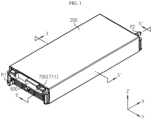
- a battery module includes a sub module 100, a module housing 200, a front sealing plate 300 and a rear sealing plate 400.
- the battery module may further include a front end plate 500 and/or a rear end plate 600 and/or a pair of terminal assemblies 700 in addition to the above components.
- the sub module 100 includes a cell stack assembly 110.
- the sub module 100 may further include a front bus bar frame assembly 120A and a rear bus bar frame assembly 120B coupled to the cell stack assembly 110, in addition to the cell stack assembly 110.
- the cell stack assembly 110 includes a plurality of battery cells 111 and at least one channel spacer 112 interposed between adjacent battery cells 111.
- the cell stack assembly 110 may further include at least one buffer pad 113 interposed between adjacent battery cells 111.
- the battery cells 111, the channel spacer 112 and the buffer pad 113 are stacked in a vertical standing form on the ground (a surface parallel to the X-Y plane) to form a single cell stack assembly 110.
- a pouch-type battery cell having a pair of electrode leads 111a drawn out in opposite directions along a longitudinal direction of the battery cell 111(a direction parallel to the X-axis) may be used.
- the channel spacer 112 includes at least one cooling liquid channel 112a through which an insulation cooling liquid supplied into the battery module from the outside may flow.
- the cooling liquid channel 112a is formed through the channel spacer 112 and extends along a longitudinal direction of the channel spacer 112 (a direction parallel to the X-axis). If a plurality of cooling liquid channels 112a are provided, the plurality of cooling liquid channels 112a are disposed to be spaced apart from each other in a height direction of the channel spacer 112 (a direction parallel to the Z-axis).
- the insulation cooling liquid used for cooling is a cooling liquid with improved insulation, and, for example, an insulation oil may be used.
- the channel spacer 112 may be interposed between adjacent battery cells 111, respectively.
- each battery cell 111 is configured such that both one surface and the other surface thereof are in contact with the channel spacer 112, so the battery cell 111 has an advantage in that the cooling effect is maximized and the flow of the insulation cooling liquid introduced into the battery module becomes smoother.
- the number of the channel spacers 112 may also be applied only by approximately 1/2 of the number of the battery cells 111.
- the plurality of channel spacers 112 may also be arranged such that a pair of battery cells 111 contacting each other is positioned between a pair of adjacent channel spacers 112. In this case, all the battery cells 111 are configured such that only one side thereof is in contact with the channel spacer 112. If the plurality of channel spacers 112 are arranged in this way, both the cooling efficiency of the battery cell 111 and the energy density may be improved.
- the cooling liquid channel 112a has a hole shape formed therethrough along the longitudinal direction of the channel spacer 112 (a direction parallel to the X-axis).
- the cooling liquid channel 112a may be provided in plural.
- the cooling liquid channels 112a may be formed to be spaced apart from each other along a height direction of the channel spacer 112 (a direction parallel to the Z-axis).
- the channel spacer 112 is configured such that both surfaces thereof are entirely in contact with the body of the battery cell 111. Therefore, when the battery cell 111 swells, a uniform pressure may be applied to the body of the battery cell 111 as a whole, and accordingly, a phenomenon that the pressure is applied intensively to only a partial region of the battery cell 111 does not occur, thereby preventing the battery cell 111 from being damaged.
- the channel spacer 112 may be made of, for example, a metal material with excellent thermal conductivity, such as aluminum.
- the battery module of the present disclosure has a structure in which the insulation cooling liquid and the body of the battery cell 111 do not directly contact, the cooling efficiency for the body of the battery cell 111 is practically not inferior, compared to the case where the insulation cooling liquid directly contacts the body of the battery cell 111. That is, the channel spacer 112 of the present disclosure has both a function as a buffer member for stably buffering the battery cell 111 without damage when the battery cell 111 swells, and a function as a cooling member for realizing efficient cooling.
- the insulation cooling liquid is introduced into the battery module through an inlet P1 to cool the electrode lead 111a and a bus bar 122 provided at one side of the battery cell 111 in a longitudinal direction (a direction parallel to the X-axis), and then cools the body of battery cell 111 while passing through the channel spacer 112.
- the insulation cooling liquid cools the electrode lead 111a and a bus bar 122 provided at the other longitudinal side of the battery cell 111 while being discharged to the outside of the battery module through an outlet P2.
- the insulation cooling liquid may also contact the internal terminal 123 to quickly cool the internal terminal 123.
- the insulation cooling liquid may effectively cool the sub module 100 inside the module housing 200 as a whole.
- the place where heat is most intensively generated is the electrode lead 111a. Since the battery module of the present disclosure allows the electrode lead 111a to be efficiently cooled, it is possible to improve the cooling efficiency of the overall battery module. In addition, a lot of heat may also be generated from the bus bar 122 and the internal terminal 123, where currents generated from the plurality of battery cells 111 are collected, and the battery module of the present disclosure may allow these electrically connected components to be efficiently cooled, thereby providing excellent cooling efficiency.
- the buffer pad 113 may be interposed between adjacent battery cells 111 to absorb volume expansion caused by swelling of the battery cells 111.
- the front bus bar frame assembly 120A and the rear bus bar frame assembly 120B are respectively coupled to one side and the other side of the cell stack assembly 110 in the longitudinal direction (a direction parallel to the X-axis) to electrically connect the plurality of battery cells 111.
- the front bus bar frame assembly 120A may have an internal terminal 123
- the rear bus bar frame assembly 120B has substantially the same structure as the front bus bar frame assembly 120A, except that it does not include the internal terminal 123. Accordingly, the specific structure of the rear bus bar frame assembly 120B will not be described in detail, and the specific structure of the front bus bar frame assembly 120A will be intensively described.
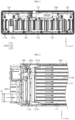
- the front bus bar frame assembly 120A includes a bus bar frame 121 and a plurality of bus bars 122.
- the front bus bar frame assembly 120A may further include a pair of internal terminals 123.
- the bus bar frame 121 covers one side of the cell stack assembly 110 in the longitudinal direction (a direction parallel to the X-axis).
- the bus bar frame 121 has a plurality of cooling liquid holes 121a.
- the cooling liquid hole 121a functions as a passage through which the insulation cooling liquid introduced into the module housing 200 through the inlet P1 provided at the front sealing plate 300 may flow into the cell stack assembly 110 through the bus bar frame 121.
- the cooling liquid hole 121a may be formed at a position corresponding to the channel spacer 112 provided at the cell stack assembly 110. Also, the cooling liquid hole 121a may have a size corresponding to the channel spacer 112.
- the insulation cooling liquid that has moved toward the rear bus bar frame assembly 120B flows into the rear sealing plate 400 through cooling liquid hole 121a formed in the rear bus bar frame assembly 120B, and is discharged to the outside of the battery module through the outlet P2 provided at the rear sealing plate 400.
- the insulation cooling liquid comes into direct contact with electrical connection parts such as the electrode lead 111a of the battery cell 111 and comes into indirect contact with the body of the battery cell 111 to cool the inside of the battery module.
- the bus bar 122 is fixed on the bus bar frame 121 and is coupled to the electrode lead 111a drawn out through a lead slit formed at the bus bar frame 121 to electrically connect the plurality of battery cells 111.
- the internal terminal 123 is fixed on the bus bar frame 121 and is coupled to the electrode lead 111a of a battery cell 111 located at an outermost side among the battery cells 111 provided in the cell stack assembly 110.
- the internal terminal 123 functions as a high-potential terminal.
- the internal terminal 123 located at one side of the bus bar frame 121 in the longitudinal direction (a direction to parallel to the Y-axis) functions as a positive electrode high-potential terminal, and the internal terminal 123 located at the other longitudinal side of the bus bar frame 121 functions as a negative electrode high-potential terminal.
- the internal terminal 123 is electrically connected to an external terminal 710 (see FIGS. 8 and 9 ), explained later.
- the insulation cooling liquid introduced into the battery module may fill the space between the front sealing plate 300 and the front bus bar frame assembly 120A, and may also fill the space between the rear sealing plate 400 and the rear bus bar frame assembly 120B. Accordingly, the insulation cooling liquid comes into contact with the electrode lead 111a, the bus bar 122 and the internal terminal 123, which are components that may generate heat intensively, thereby cooling the battery module efficiently.
- the bus bar frame 121 of the front bus bar frame assembly 120A and the bus bar frame 121 of the rear bus bar frame assembly 120B have a plurality of guide ribs 121b formed at the top and bottom thereof along the longitudinal direction of the bus bar frame 121 (a direction parallel to the Y-axis).
- the guide rib 121b has a shape extending toward the cell stack assembly 110.
- the guide rib 121b is formed at a position corresponding to the channel spacer 112.
- fixing portions 112b having a shape corresponding to the guide ribs 121b and provided at positions corresponding to the guide ribs 121b are formed. Movement of the channel spacer 112 in a vertical direction (a direction parallel to the Z-axis) and a longitudinal direction (a direction parallel to the X-axis) is restricted by the guide ribs 121b and the fixing portions 112b. Accordingly, when the front bus bar frame assembly 120A and the rear bus bar frame assembly 120B are coupled to the cell stack assembly 110, the coupling position may be guided, thereby increasing the convenience of assembly.
- the module housing 200 accommodates the sub module 100 including the cell stack assembly 110, the front bus bar frame assembly 120A and the rear bus bar frame assembly 120B.
- the module housing 200 is configured such that one side and the other side thereof in the longitudinal direction (a direction parallel to the X-axis) are opened.
- the front sealing plate 300 covers the opening formed at one side of the module housing 200 in the longitudinal direction (a direction parallel to the X-axis).
- the front sealing plate 300 has an inlet P1 for introducing the insulation cooling liquid.
- an insulation sealing member G may be interposed between an edge surface of the front sealing plate 300 and an inner surface of the module housing 200 (see FIG. 9 ).
- the sealing member G may be, for example, a gasket.
- the front sealing plate 300 has a pair of terminal holes 300a through which parts for electrical connection between the internal terminal 123 provided at the front bus bar frame assembly 120A and the external terminal 710, explained later, may pass.
- the terminal hole 300a is formed at a position corresponding to the internal terminal 123.
- the rear sealing plate 400 covers the opening at the other side of the module housing 200 in the longitudinal direction (a direction parallel to the X-axis), and has an outlet P2 for discharging the insulation cooling liquid.
- a sealing member G may be interposed between the edge surface of the reat sealing plate 400 and the inner surface of the module housing 200 to prevent the insulation cooling liquid from leaking.
- the sealing member G may be, for example, a gasket.
- the front sealing plate 300 and the rear sealing plate 400 may be made of an insulating resin for electrical insulation.
- the terminal assembly 700 includes an external terminal 710 positioned at an outer side of the front sealing plate 300 and a stud 720 for electrically connecting the external terminal 710 and the battery cell 111.
- the stud 720 is fixed to the internal terminal 123.
- the stud 720 may be fixed to the internal terminal 123 by being press-fitted through the internal terminal 123.
- the stud 720 fixed to the internal terminal 123 is drawn out through the terminal hole 300a formed in the front sealing plate 300 and coupled to the external terminal 710.
- the terminal assembly 700 may further include a ring-shaped terminal spacer 730 inserted into the terminal hole 300a formed in the front sealing plate 300.
- the terminal spacer 730 may be made of a metal material. If the terminal spacer 730 is provided, stud 720 passes through the terminal spacer 730.
- the terminal assembly 700 may further include a fastening nut 740 for fastening the external terminal 710 to the stud 720.
- the fastening nut 740 is fastened to the stud 720 passing through the terminal spacer 730 and the fastening portion 712 of the external terminal 710 so that the fastening portion 712 of the external terminal 710 is closely fixed to the terminal spacer 730. Accordingly, the internal terminal 123 and the external terminal 710 are electrically connected to each other through the terminal spacer 730.
- the terminal assembly 700 may further include a first O-ring 750 that covers an outer circumferential surface of the terminal spacer 730 and is interposed between the inner surface of the front sealing plate 300 and the internal terminal 123.
- the first O-ring 750 prevents the insulation cooling liquid introduced into the space between the front sealing plate 300 and the bus bar frame 121 from leaking to the outside of the front sealing plate 300 through the space between the inner surface of the terminal hole 300a and the terminal spacer 730.
- the terminal assembly 700 may be further include a second O-ring 760 that is located around the stud 720 press-fitted into the internal terminal 123 and exposed to the space between the internal terminal 123 and the bus bar frame 121 and is interposed between the internal terminal 123 and the bus bar frame 121.
- the second O-ring 760 prevents the insulation cooling liquid introduced into the space between the front sealing plate 300 and the bus bar frame 121 from leaking to the outside of the front sealing plate 300 through the space between the internal terminal 123 and the stud 720 and the space between the inner surface of the terminal spacer 730 and the stud 720.
- the front end plate 500 covers the front sealing plate 300 and is fixed to the module housing 200.
- the rear end plate 600 covers the rear sealing plate 400 and is fixed to the module housing 200.
- the front end plate 500 includes a terminal exposing portion 500a for exposing the connection portion 711 of the external terminal 710 to the outside of the front end plate 500 and an inlet exposing portion 500b for exposing the inlet P1 to the outside of the front end plate 500.
- the rear end plate 600 includes an outlet exposing portion 600b for exposing the outlet P2 to the outside of the rear end plate 600.
- a gasket (not shown) may be interposed in the coupling portion between the front end plate 500 and the module housing 200 and in the coupling portion between the rear end plate 600 and the module housing 200 in order to prevent the insulation cooling liquid from leaking.
- a battery pack and a vehicle include the battery module according to the present disclosure as described above.
- the battery pack includes at least one battery module according to the present disclosure and a pack housing for accommodating the at least one battery module.
- the battery module may be fastened to the pack housing through a fastening hole H formed in the front end plate 500 and/or the rear end plate 600. That is, the fastening hole H may provide a space into which a fastening means such as a bolt for fastening the pack housing and the battery module is inserted.
- the battery pack includes a plurality of battery modules, the plurality of battery modules may be fastened to each other through the fastening hole H formed in the front end plate 500 and/or the rear end plate 600.
Landscapes
- Chemical & Material Sciences (AREA)
- Chemical Kinetics & Catalysis (AREA)
- Electrochemistry (AREA)
- General Chemical & Material Sciences (AREA)
- Engineering & Computer Science (AREA)
- Manufacturing & Machinery (AREA)
- Aviation & Aerospace Engineering (AREA)
- Secondary Cells (AREA)
- Battery Mounting, Suspending (AREA)
- Connection Of Batteries Or Terminals (AREA)
Applications Claiming Priority (4)
| Application Number | Priority Date | Filing Date | Title |
|---|---|---|---|
| KR20200101935 | 2020-08-13 | ||
| KR1020200158074A KR102890926B1 (ko) | 2020-08-13 | 2020-11-23 | 절연유를 이용한 냉각 구조를 갖는 배터리 모듈, 그리고 이를 포함하는 배터리 팩 및 자동차 |
| KR1020210074434A KR102856140B1 (ko) | 2020-08-13 | 2021-06-08 | 절연 냉각액을 이용한 냉각 구조를 갖는 배터리 모듈, 그리고 이를 포함하는 배터리 팩 및 자동차 |
| PCT/KR2021/010297 WO2022035123A1 (ko) | 2020-08-13 | 2021-08-04 | 절연 냉각액을 이용한 냉각 구조를 갖는 배터리 모듈, 그리고 이를 포함하는 배터리 팩 및 자동차 |
Publications (3)
| Publication Number | Publication Date |
|---|---|
| EP4191752A1 EP4191752A1 (en) | 2023-06-07 |
| EP4191752A4 EP4191752A4 (en) | 2024-01-24 |
| EP4191752B1 true EP4191752B1 (en) | 2025-03-26 |
Family
ID=80247129
Family Applications (1)
| Application Number | Title | Priority Date | Filing Date |
|---|---|---|---|
| EP21856129.8A Active EP4191752B1 (en) | 2020-08-13 | 2021-08-04 | Battery module having cooling structure using insulation coolant, and battery pack and vehicle which include same |
Country Status (10)
| Country | Link |
|---|---|
| US (1) | US20230299387A1 (https=) |
| EP (1) | EP4191752B1 (https=) |
| JP (2) | JP7585460B2 (https=) |
| CN (2) | CN216288700U (https=) |
| AU (1) | AU2021324445A1 (https=) |
| ES (1) | ES3034273T3 (https=) |
| HU (1) | HUE072371T2 (https=) |
| PL (1) | PL4191752T3 (https=) |
| TW (1) | TWI901738B (https=) |
| WO (1) | WO2022035123A1 (https=) |
Families Citing this family (10)
| Publication number | Priority date | Publication date | Assignee | Title |
|---|---|---|---|---|
| JP7585460B2 (ja) * | 2020-08-13 | 2024-11-18 | エルジー エナジー ソリューション リミテッド | 絶縁冷却液を用いた冷却構造を有するバッテリーモジュール、それを含むバッテリーパック及び自動車 |
| KR102890933B1 (ko) * | 2021-06-08 | 2025-11-24 | 주식회사 엘지에너지솔루션 | 절연 냉각액을 이용한 냉각 구조를 갖는 배터리 모듈, 그리고 이를 포함하는 배터리 팩 및 자동차 |
| CN218586079U (zh) * | 2022-05-26 | 2023-03-07 | 宁德时代新能源科技股份有限公司 | 热管理部件、电池以及用电装置 |
| JP2025518854A (ja) * | 2022-07-20 | 2025-06-19 | エルジー エナジー ソリューション リミテッド | 電池パックおよびこれを含むデバイス |
| KR20240028583A (ko) * | 2022-08-24 | 2024-03-05 | 주식회사 엘지에너지솔루션 | 전지 모듈 및 이를 포함하는 전지팩 |
| KR20240070102A (ko) * | 2022-11-14 | 2024-05-21 | 주식회사 엘지에너지솔루션 | 침냉식 배터리 모듈 및 이를 포함한 배터리 팩 및 차량 |
| KR102851447B1 (ko) * | 2022-11-16 | 2025-08-26 | 주식회사 엘지에너지솔루션 | 전지 모듈 및 이를 포함하는 전지 팩 |
| CN116729487B (zh) * | 2023-04-17 | 2026-03-06 | 一汽解放汽车有限公司 | 一种mtc电池车架和商用电动汽车 |
| WO2025100896A1 (ko) * | 2023-11-07 | 2025-05-15 | 주식회사 엘지에너지솔루션 | 배터리 어셈블리 및 이를 포함하는 배터리 팩 |
| CN118738645B (zh) * | 2024-06-14 | 2025-05-13 | 宁夏宝丰昱能科技有限公司 | 一种电池包 |
Family Cites Families (21)
| Publication number | Priority date | Publication date | Assignee | Title |
|---|---|---|---|---|
| KR20060102851A (ko) * | 2005-03-25 | 2006-09-28 | 삼성에스디아이 주식회사 | 이차 전지 모듈 |
| US9065158B2 (en) * | 2010-05-28 | 2015-06-23 | GM Global Technology Operations LLC | Corrugated fin and frame assembly for battery cooling |
| US8852789B2 (en) | 2010-11-04 | 2014-10-07 | Samsung Sdi Co., Ltd. | Battery module having battery cell holder |
| CN102157715B (zh) | 2011-03-16 | 2016-03-30 | 东莞新能源科技有限公司 | 电池组 |
| KR102024367B1 (ko) * | 2012-09-12 | 2019-09-24 | 에스케이이노베이션 주식회사 | 전지모듈 조립체용 액체 냉각시스템 및 이의 제어방법 |
| JP2014060088A (ja) * | 2012-09-19 | 2014-04-03 | Toshiba Corp | 二次電池装置および二次電池システム |
| CN104795606B (zh) * | 2014-01-21 | 2017-04-26 | 微宏动力系统(湖州)有限公司 | 液冷电池组系统 |
| KR20170010531A (ko) | 2015-07-20 | 2017-02-01 | 현대자동차주식회사 | 배터리 모듈 |
| KR102014462B1 (ko) * | 2015-10-23 | 2019-08-26 | 주식회사 엘지화학 | 이차 전지용 카트리지 및 이를 포함하는 배터리 모듈 |
| KR102034208B1 (ko) | 2016-03-03 | 2019-10-18 | 주식회사 엘지화학 | 배터리 모듈, 이러한 배터리 모듈을 포함하는 배터리 팩 및 이러한 배터리 팩을 포함하는 자동차 |
| CN206524390U (zh) * | 2016-11-01 | 2017-09-26 | 乐视汽车(北京)有限公司 | 电池冷却组件、电池组件及电动汽车 |
| US11355804B2 (en) * | 2016-12-05 | 2022-06-07 | Samsung Sdi Co., Ltd. | Removable battery component carrier, battery system including removable battery component carriers and vehicle including the battery system |
| JP6859896B2 (ja) * | 2017-08-10 | 2021-04-14 | トヨタ自動車株式会社 | 電池システム |
| KR102364283B1 (ko) * | 2017-12-01 | 2022-02-16 | 주식회사 엘지에너지솔루션 | 방열 플레이트를 구비한 배터리 모듈 |
| EP3732131A1 (en) | 2017-12-27 | 2020-11-04 | Rhodia Operations | Silica suspensions |
| KR102637834B1 (ko) * | 2018-05-02 | 2024-02-19 | 에스케이온 주식회사 | 배터리 모듈 |
| KR102731937B1 (ko) * | 2018-10-30 | 2024-11-20 | 삼성전자주식회사 | 배터리 셀을 냉각하기 위한 구조체 및 이를 포함하는 배터리 시스템 |
| JP7104612B2 (ja) * | 2018-11-30 | 2022-07-21 | 株式会社マキタ | バッテリパック |
| KR102918965B1 (ko) * | 2019-04-26 | 2026-01-29 | 에스케이온 주식회사 | 배터리 모듈 |
| KR20210074434A (ko) | 2019-12-11 | 2021-06-22 | 박상훈 | 마그네틱을 이용한 인슐린 주사장치 |
| JP7585460B2 (ja) * | 2020-08-13 | 2024-11-18 | エルジー エナジー ソリューション リミテッド | 絶縁冷却液を用いた冷却構造を有するバッテリーモジュール、それを含むバッテリーパック及び自動車 |
-
2021
- 2021-08-04 JP JP2023509579A patent/JP7585460B2/ja active Active
- 2021-08-04 PL PL21856129.8T patent/PL4191752T3/pl unknown
- 2021-08-04 HU HUE21856129A patent/HUE072371T2/hu unknown
- 2021-08-04 EP EP21856129.8A patent/EP4191752B1/en active Active
- 2021-08-04 AU AU2021324445A patent/AU2021324445A1/en active Pending
- 2021-08-04 WO PCT/KR2021/010297 patent/WO2022035123A1/ko not_active Ceased
- 2021-08-04 US US18/021,101 patent/US20230299387A1/en active Pending
- 2021-08-04 ES ES21856129T patent/ES3034273T3/es active Active
- 2021-08-12 TW TW110129799A patent/TWI901738B/zh active
- 2021-08-13 CN CN202121905452.6U patent/CN216288700U/zh active Active
- 2021-08-13 CN CN202110928939.4A patent/CN114079108A/zh active Pending
-
2024
- 2024-11-06 JP JP2024194436A patent/JP7794928B2/ja active Active
Also Published As
| Publication number | Publication date |
|---|---|
| JP2025015556A (ja) | 2025-01-30 |
| HUE072371T2 (hu) | 2025-11-28 |
| JP2023538291A (ja) | 2023-09-07 |
| AU2021324445A1 (en) | 2023-04-06 |
| WO2022035123A1 (ko) | 2022-02-17 |
| TWI901738B (zh) | 2025-10-21 |
| EP4191752A4 (en) | 2024-01-24 |
| PL4191752T3 (pl) | 2025-11-17 |
| JP7585460B2 (ja) | 2024-11-18 |
| CN114079108A (zh) | 2022-02-22 |
| US20230299387A1 (en) | 2023-09-21 |
| JP7794928B2 (ja) | 2026-01-06 |
| TW202215699A (zh) | 2022-04-16 |
| EP4191752A1 (en) | 2023-06-07 |
| CN216288700U (zh) | 2022-04-12 |
| ES3034273T3 (en) | 2025-08-14 |
Similar Documents
| Publication | Publication Date | Title |
|---|---|---|
| EP4191752B1 (en) | Battery module having cooling structure using insulation coolant, and battery pack and vehicle which include same | |
| EP4203146B1 (en) | Battery module having cooling structure using insulating oil, and battery pack and vehicle comprising same | |
| KR102856140B1 (ko) | 절연 냉각액을 이용한 냉각 구조를 갖는 배터리 모듈, 그리고 이를 포함하는 배터리 팩 및 자동차 | |
| JP2025015556A5 (https=) | ||
| KR102862209B1 (ko) | 절연 냉각액을 이용한 냉각 구조를 갖는 배터리 모듈, 그리고 이를 포함하는 배터리 팩 및 자동차 | |
| EP4216343B1 (en) | Battery module, and battery pack and vehicle including the same | |
| KR102890933B1 (ko) | 절연 냉각액을 이용한 냉각 구조를 갖는 배터리 모듈, 그리고 이를 포함하는 배터리 팩 및 자동차 | |
| KR102934587B1 (ko) | 절연 냉각액을 이용한 냉각 구조를 갖는 배터리 모듈, 그리고 이를 포함하는 배터리 팩 및 자동차 | |
| JP7462828B2 (ja) | 絶縁油を用いた冷却構造を有するバッテリーモジュール、それを含むバッテリーパック及び自動車 |
Legal Events
| Date | Code | Title | Description |
|---|---|---|---|
| STAA | Information on the status of an ep patent application or granted ep patent |
Free format text: STATUS: THE INTERNATIONAL PUBLICATION HAS BEEN MADE |
|
| PUAI | Public reference made under article 153(3) epc to a published international application that has entered the european phase |
Free format text: ORIGINAL CODE: 0009012 |
|
| STAA | Information on the status of an ep patent application or granted ep patent |
Free format text: STATUS: REQUEST FOR EXAMINATION WAS MADE |
|
| 17P | Request for examination filed |
Effective date: 20230227 |
|
| AK | Designated contracting states |
Kind code of ref document: A1 Designated state(s): AL AT BE BG CH CY CZ DE DK EE ES FI FR GB GR HR HU IE IS IT LI LT LU LV MC MK MT NL NO PL PT RO RS SE SI SK SM TR |
|
| DAV | Request for validation of the european patent (deleted) | ||
| DAX | Request for extension of the european patent (deleted) | ||
| A4 | Supplementary search report drawn up and despatched |
Effective date: 20240104 |
|
| RIC1 | Information provided on ipc code assigned before grant |
Ipc: H01M 50/20 20210101ALI20231221BHEP Ipc: H01M 10/613 20140101ALI20231221BHEP Ipc: H01M 10/647 20140101ALI20231221BHEP Ipc: H01M 10/6556 20140101ALI20231221BHEP Ipc: H01M 10/6567 20140101AFI20231221BHEP |
|
| GRAP | Despatch of communication of intention to grant a patent |
Free format text: ORIGINAL CODE: EPIDOSNIGR1 |
|
| STAA | Information on the status of an ep patent application or granted ep patent |
Free format text: STATUS: GRANT OF PATENT IS INTENDED |
|
| INTG | Intention to grant announced |
Effective date: 20241015 |
|
| GRAS | Grant fee paid |
Free format text: ORIGINAL CODE: EPIDOSNIGR3 |
|
| GRAA | (expected) grant |
Free format text: ORIGINAL CODE: 0009210 |
|
| STAA | Information on the status of an ep patent application or granted ep patent |
Free format text: STATUS: THE PATENT HAS BEEN GRANTED |
|
| AK | Designated contracting states |
Kind code of ref document: B1 Designated state(s): AL AT BE BG CH CY CZ DE DK EE ES FI FR GB GR HR HU IE IS IT LI LT LU LV MC MK MT NL NO PL PT RO RS SE SI SK SM TR |
|
| REG | Reference to a national code |
Ref country code: GB Ref legal event code: FG4D |
|
| REG | Reference to a national code |
Ref country code: CH Ref legal event code: EP |
|
| REG | Reference to a national code |
Ref country code: DE Ref legal event code: R096 Ref document number: 602021028283 Country of ref document: DE |
|
| REG | Reference to a national code |
Ref country code: IE Ref legal event code: FG4D |
|
| PG25 | Lapsed in a contracting state [announced via postgrant information from national office to epo] |
Ref country code: RS Free format text: LAPSE BECAUSE OF FAILURE TO SUBMIT A TRANSLATION OF THE DESCRIPTION OR TO PAY THE FEE WITHIN THE PRESCRIBED TIME-LIMIT Effective date: 20250626 |
|
| PG25 | Lapsed in a contracting state [announced via postgrant information from national office to epo] |
Ref country code: FI Free format text: LAPSE BECAUSE OF FAILURE TO SUBMIT A TRANSLATION OF THE DESCRIPTION OR TO PAY THE FEE WITHIN THE PRESCRIBED TIME-LIMIT Effective date: 20250326 |
|
| REG | Reference to a national code |
Ref country code: LT Ref legal event code: MG9D |
|
| PG25 | Lapsed in a contracting state [announced via postgrant information from national office to epo] |
Ref country code: NO Free format text: LAPSE BECAUSE OF FAILURE TO SUBMIT A TRANSLATION OF THE DESCRIPTION OR TO PAY THE FEE WITHIN THE PRESCRIBED TIME-LIMIT Effective date: 20250626 |
|
| REG | Reference to a national code |
Ref country code: SE Ref legal event code: TRGR |
|
| PG25 | Lapsed in a contracting state [announced via postgrant information from national office to epo] |
Ref country code: HR Free format text: LAPSE BECAUSE OF FAILURE TO SUBMIT A TRANSLATION OF THE DESCRIPTION OR TO PAY THE FEE WITHIN THE PRESCRIBED TIME-LIMIT Effective date: 20250326 |
|
| PG25 | Lapsed in a contracting state [announced via postgrant information from national office to epo] |
Ref country code: LV Free format text: LAPSE BECAUSE OF FAILURE TO SUBMIT A TRANSLATION OF THE DESCRIPTION OR TO PAY THE FEE WITHIN THE PRESCRIBED TIME-LIMIT Effective date: 20250326 |
|
| PG25 | Lapsed in a contracting state [announced via postgrant information from national office to epo] |
Ref country code: BG Free format text: LAPSE BECAUSE OF FAILURE TO SUBMIT A TRANSLATION OF THE DESCRIPTION OR TO PAY THE FEE WITHIN THE PRESCRIBED TIME-LIMIT Effective date: 20250326 Ref country code: GR Free format text: LAPSE BECAUSE OF FAILURE TO SUBMIT A TRANSLATION OF THE DESCRIPTION OR TO PAY THE FEE WITHIN THE PRESCRIBED TIME-LIMIT Effective date: 20250627 |
|
| REG | Reference to a national code |
Ref country code: NL Ref legal event code: MP Effective date: 20250326 |
|
| REG | Reference to a national code |
Ref country code: ES Ref legal event code: FG2A Ref document number: 3034273 Country of ref document: ES Kind code of ref document: T3 Effective date: 20250814 |
|
| PG25 | Lapsed in a contracting state [announced via postgrant information from national office to epo] |
Ref country code: NL Free format text: LAPSE BECAUSE OF FAILURE TO SUBMIT A TRANSLATION OF THE DESCRIPTION OR TO PAY THE FEE WITHIN THE PRESCRIBED TIME-LIMIT Effective date: 20250326 |
|
| REG | Reference to a national code |
Ref country code: AT Ref legal event code: MK05 Ref document number: 1779877 Country of ref document: AT Kind code of ref document: T Effective date: 20250326 |
|
| PGFP | Annual fee paid to national office [announced via postgrant information from national office to epo] |
Ref country code: HU Payment date: 20250725 Year of fee payment: 5 |
|
| PG25 | Lapsed in a contracting state [announced via postgrant information from national office to epo] |
Ref country code: SM Free format text: LAPSE BECAUSE OF FAILURE TO SUBMIT A TRANSLATION OF THE DESCRIPTION OR TO PAY THE FEE WITHIN THE PRESCRIBED TIME-LIMIT Effective date: 20250326 |
|
| PG25 | Lapsed in a contracting state [announced via postgrant information from national office to epo] |
Ref country code: PT Free format text: LAPSE BECAUSE OF FAILURE TO SUBMIT A TRANSLATION OF THE DESCRIPTION OR TO PAY THE FEE WITHIN THE PRESCRIBED TIME-LIMIT Effective date: 20250728 |
|
| PGFP | Annual fee paid to national office [announced via postgrant information from national office to epo] |
Ref country code: DE Payment date: 20250812 Year of fee payment: 5 |
|
| PG25 | Lapsed in a contracting state [announced via postgrant information from national office to epo] |
Ref country code: IT Free format text: LAPSE BECAUSE OF FAILURE TO SUBMIT A TRANSLATION OF THE DESCRIPTION OR TO PAY THE FEE WITHIN THE PRESCRIBED TIME-LIMIT Effective date: 20250326 |
|
| PGFP | Annual fee paid to national office [announced via postgrant information from national office to epo] |
Ref country code: GB Payment date: 20250826 Year of fee payment: 5 Ref country code: BE Payment date: 20250826 Year of fee payment: 5 |
|
| PG25 | Lapsed in a contracting state [announced via postgrant information from national office to epo] |
Ref country code: AT Free format text: LAPSE BECAUSE OF FAILURE TO SUBMIT A TRANSLATION OF THE DESCRIPTION OR TO PAY THE FEE WITHIN THE PRESCRIBED TIME-LIMIT Effective date: 20250326 |
|
| PGFP | Annual fee paid to national office [announced via postgrant information from national office to epo] |
Ref country code: FR Payment date: 20250721 Year of fee payment: 5 |
|
| PGFP | Annual fee paid to national office [announced via postgrant information from national office to epo] |
Ref country code: SE Payment date: 20250826 Year of fee payment: 5 |
|
| PG25 | Lapsed in a contracting state [announced via postgrant information from national office to epo] |
Ref country code: EE Free format text: LAPSE BECAUSE OF FAILURE TO SUBMIT A TRANSLATION OF THE DESCRIPTION OR TO PAY THE FEE WITHIN THE PRESCRIBED TIME-LIMIT Effective date: 20250326 |
|
| PG25 | Lapsed in a contracting state [announced via postgrant information from national office to epo] |
Ref country code: RO Free format text: LAPSE BECAUSE OF FAILURE TO SUBMIT A TRANSLATION OF THE DESCRIPTION OR TO PAY THE FEE WITHIN THE PRESCRIBED TIME-LIMIT Effective date: 20250326 |
|
| PG25 | Lapsed in a contracting state [announced via postgrant information from national office to epo] |
Ref country code: SK Free format text: LAPSE BECAUSE OF FAILURE TO SUBMIT A TRANSLATION OF THE DESCRIPTION OR TO PAY THE FEE WITHIN THE PRESCRIBED TIME-LIMIT Effective date: 20250326 |
|
| PG25 | Lapsed in a contracting state [announced via postgrant information from national office to epo] |
Ref country code: IS Free format text: LAPSE BECAUSE OF FAILURE TO SUBMIT A TRANSLATION OF THE DESCRIPTION OR TO PAY THE FEE WITHIN THE PRESCRIBED TIME-LIMIT Effective date: 20250726 |
|
| REG | Reference to a national code |
Ref country code: HU Ref legal event code: AG4A Ref document number: E072371 Country of ref document: HU |
|
| REG | Reference to a national code |
Ref country code: DE Ref legal event code: R097 Ref document number: 602021028283 Country of ref document: DE |
|
| PG25 | Lapsed in a contracting state [announced via postgrant information from national office to epo] |
Ref country code: DK Free format text: LAPSE BECAUSE OF FAILURE TO SUBMIT A TRANSLATION OF THE DESCRIPTION OR TO PAY THE FEE WITHIN THE PRESCRIBED TIME-LIMIT Effective date: 20250326 |
|
| PG25 | Lapsed in a contracting state [announced via postgrant information from national office to epo] |
Ref country code: CZ Free format text: LAPSE BECAUSE OF FAILURE TO SUBMIT A TRANSLATION OF THE DESCRIPTION OR TO PAY THE FEE WITHIN THE PRESCRIBED TIME-LIMIT Effective date: 20250326 |
|
| P01 | Opt-out of the competence of the unified patent court (upc) registered |
Free format text: CASE NUMBER: UPC_APP_0017554_4191752/2025 Effective date: 20251214 |
|
| PGFP | Annual fee paid to national office [announced via postgrant information from national office to epo] |
Ref country code: PL Payment date: 20250722 Year of fee payment: 5 |
|
| PLBE | No opposition filed within time limit |
Free format text: ORIGINAL CODE: 0009261 |
|
| STAA | Information on the status of an ep patent application or granted ep patent |
Free format text: STATUS: NO OPPOSITION FILED WITHIN TIME LIMIT |
|
| REG | Reference to a national code |
Ref country code: CH Ref legal event code: L10 Free format text: ST27 STATUS EVENT CODE: U-0-0-L10-L00 (AS PROVIDED BY THE NATIONAL OFFICE) Effective date: 20260211 |
|
| 26N | No opposition filed |
Effective date: 20260105 |
|
| REG | Reference to a national code |
Ref country code: CH Ref legal event code: H13 Free format text: ST27 STATUS EVENT CODE: U-0-0-H10-H13 (AS PROVIDED BY THE NATIONAL OFFICE) Effective date: 20260324 |
|
| PG25 | Lapsed in a contracting state [announced via postgrant information from national office to epo] |
Ref country code: MC Free format text: LAPSE BECAUSE OF FAILURE TO SUBMIT A TRANSLATION OF THE DESCRIPTION OR TO PAY THE FEE WITHIN THE PRESCRIBED TIME-LIMIT Effective date: 20250326 |
|
| PG25 | Lapsed in a contracting state [announced via postgrant information from national office to epo] |
Ref country code: LU Free format text: LAPSE BECAUSE OF NON-PAYMENT OF DUE FEES Effective date: 20250804 |
|
| PG25 | Lapsed in a contracting state [announced via postgrant information from national office to epo] |
Ref country code: CH Free format text: LAPSE BECAUSE OF NON-PAYMENT OF DUE FEES Effective date: 20250831 |