EP4191709B1 - Sekundärbatterie und vorrichtung in der sekundärbatterie - Google Patents
Sekundärbatterie und vorrichtung in der sekundärbatterie Download PDFInfo
- Publication number
- EP4191709B1 EP4191709B1 EP22216320.6A EP22216320A EP4191709B1 EP 4191709 B1 EP4191709 B1 EP 4191709B1 EP 22216320 A EP22216320 A EP 22216320A EP 4191709 B1 EP4191709 B1 EP 4191709B1
- Authority
- EP
- European Patent Office
- Prior art keywords
- negative electrode
- active material
- secondary battery
- electrode plate
- parameter
- Prior art date
- Legal status (The legal status is an assumption and is not a legal conclusion. Google has not performed a legal analysis and makes no representation as to the accuracy of the status listed.)
- Active
Links
Images

Classifications
-
- H—ELECTRICITY
- H01—ELECTRIC ELEMENTS
- H01M—PROCESSES OR MEANS, e.g. BATTERIES, FOR THE DIRECT CONVERSION OF CHEMICAL ENERGY INTO ELECTRICAL ENERGY
- H01M4/00—Electrodes
- H01M4/02—Electrodes composed of, or comprising, active material
- H01M4/36—Selection of substances as active materials, active masses, active liquids
- H01M4/58—Selection of substances as active materials, active masses, active liquids of inorganic compounds other than oxides or hydroxides, e.g. sulfides, selenides, tellurides, halogenides or LiCoFy; of polyanionic structures, e.g. phosphates, silicates or borates
- H01M4/583—Carbonaceous material, e.g. graphite-intercalation compounds or CFx
-
- H—ELECTRICITY
- H01—ELECTRIC ELEMENTS
- H01M—PROCESSES OR MEANS, e.g. BATTERIES, FOR THE DIRECT CONVERSION OF CHEMICAL ENERGY INTO ELECTRICAL ENERGY
- H01M10/00—Secondary cells; Manufacture thereof
- H01M10/05—Accumulators with non-aqueous electrolyte
- H01M10/052—Li-accumulators
- H01M10/0525—Rocking-chair batteries, i.e. batteries with lithium insertion or intercalation in both electrodes; Lithium-ion batteries
-
- H—ELECTRICITY
- H01—ELECTRIC ELEMENTS
- H01M—PROCESSES OR MEANS, e.g. BATTERIES, FOR THE DIRECT CONVERSION OF CHEMICAL ENERGY INTO ELECTRICAL ENERGY
- H01M4/00—Electrodes
- H01M4/02—Electrodes composed of, or comprising, active material
- H01M4/13—Electrodes for accumulators with non-aqueous electrolyte, e.g. for lithium-accumulators; Processes of manufacture thereof
- H01M4/133—Electrodes based on carbonaceous material, e.g. graphite-intercalation compounds or CFx
-
- H—ELECTRICITY
- H01—ELECTRIC ELEMENTS
- H01M—PROCESSES OR MEANS, e.g. BATTERIES, FOR THE DIRECT CONVERSION OF CHEMICAL ENERGY INTO ELECTRICAL ENERGY
- H01M4/00—Electrodes
- H01M4/02—Electrodes composed of, or comprising, active material
- H01M4/36—Selection of substances as active materials, active masses, active liquids
- H01M4/362—Composites
- H01M4/364—Composites as mixtures
-
- H—ELECTRICITY
- H01—ELECTRIC ELEMENTS
- H01M—PROCESSES OR MEANS, e.g. BATTERIES, FOR THE DIRECT CONVERSION OF CHEMICAL ENERGY INTO ELECTRICAL ENERGY
- H01M4/00—Electrodes
- H01M4/02—Electrodes composed of, or comprising, active material
- H01M4/36—Selection of substances as active materials, active masses, active liquids
- H01M4/362—Composites
- H01M4/366—Composites as layered products
-
- H—ELECTRICITY
- H01—ELECTRIC ELEMENTS
- H01M—PROCESSES OR MEANS, e.g. BATTERIES, FOR THE DIRECT CONVERSION OF CHEMICAL ENERGY INTO ELECTRICAL ENERGY
- H01M4/00—Electrodes
- H01M4/02—Electrodes composed of, or comprising, active material
- H01M4/36—Selection of substances as active materials, active masses, active liquids
- H01M4/48—Selection of substances as active materials, active masses, active liquids of inorganic oxides or hydroxides
- H01M4/50—Selection of substances as active materials, active masses, active liquids of inorganic oxides or hydroxides of manganese
- H01M4/505—Selection of substances as active materials, active masses, active liquids of inorganic oxides or hydroxides of manganese of mixed oxides or hydroxides containing manganese for inserting or intercalating light metals, e.g. LiMn2O4 or LiMn2OxFy
-
- H—ELECTRICITY
- H01—ELECTRIC ELEMENTS
- H01M—PROCESSES OR MEANS, e.g. BATTERIES, FOR THE DIRECT CONVERSION OF CHEMICAL ENERGY INTO ELECTRICAL ENERGY
- H01M4/00—Electrodes
- H01M4/02—Electrodes composed of, or comprising, active material
- H01M4/36—Selection of substances as active materials, active masses, active liquids
- H01M4/48—Selection of substances as active materials, active masses, active liquids of inorganic oxides or hydroxides
- H01M4/52—Selection of substances as active materials, active masses, active liquids of inorganic oxides or hydroxides of nickel, cobalt or iron
- H01M4/525—Selection of substances as active materials, active masses, active liquids of inorganic oxides or hydroxides of nickel, cobalt or iron of mixed oxides or hydroxides containing iron, cobalt or nickel for inserting or intercalating light metals, e.g. LiNiO2, LiCoO2 or LiCoOxFy
-
- H—ELECTRICITY
- H01—ELECTRIC ELEMENTS
- H01M—PROCESSES OR MEANS, e.g. BATTERIES, FOR THE DIRECT CONVERSION OF CHEMICAL ENERGY INTO ELECTRICAL ENERGY
- H01M4/00—Electrodes
- H01M4/02—Electrodes composed of, or comprising, active material
- H01M4/36—Selection of substances as active materials, active masses, active liquids
- H01M4/58—Selection of substances as active materials, active masses, active liquids of inorganic compounds other than oxides or hydroxides, e.g. sulfides, selenides, tellurides, halogenides or LiCoFy; of polyanionic structures, e.g. phosphates, silicates or borates
- H01M4/5825—Oxygenated metallic salts or polyanionic structures, e.g. borates, phosphates, silicates, olivines
-
- H—ELECTRICITY
- H01—ELECTRIC ELEMENTS
- H01M—PROCESSES OR MEANS, e.g. BATTERIES, FOR THE DIRECT CONVERSION OF CHEMICAL ENERGY INTO ELECTRICAL ENERGY
- H01M4/00—Electrodes
- H01M4/02—Electrodes composed of, or comprising, active material
- H01M4/36—Selection of substances as active materials, active masses, active liquids
- H01M4/58—Selection of substances as active materials, active masses, active liquids of inorganic compounds other than oxides or hydroxides, e.g. sulfides, selenides, tellurides, halogenides or LiCoFy; of polyanionic structures, e.g. phosphates, silicates or borates
- H01M4/583—Carbonaceous material, e.g. graphite-intercalation compounds or CFx
- H01M4/587—Carbonaceous material, e.g. graphite-intercalation compounds or CFx for inserting or intercalating light metals
-
- H—ELECTRICITY
- H01—ELECTRIC ELEMENTS
- H01M—PROCESSES OR MEANS, e.g. BATTERIES, FOR THE DIRECT CONVERSION OF CHEMICAL ENERGY INTO ELECTRICAL ENERGY
- H01M4/00—Electrodes
- H01M4/02—Electrodes composed of, or comprising, active material
- H01M2004/021—Physical characteristics, e.g. porosity, surface area
-
- H—ELECTRICITY
- H01—ELECTRIC ELEMENTS
- H01M—PROCESSES OR MEANS, e.g. BATTERIES, FOR THE DIRECT CONVERSION OF CHEMICAL ENERGY INTO ELECTRICAL ENERGY
- H01M4/00—Electrodes
- H01M4/02—Electrodes composed of, or comprising, active material
- H01M2004/026—Electrodes composed of, or comprising, active material characterised by the polarity
- H01M2004/027—Negative electrodes
-
- H—ELECTRICITY
- H01—ELECTRIC ELEMENTS
- H01M—PROCESSES OR MEANS, e.g. BATTERIES, FOR THE DIRECT CONVERSION OF CHEMICAL ENERGY INTO ELECTRICAL ENERGY
- H01M4/00—Electrodes
- H01M4/02—Electrodes composed of, or comprising, active material
- H01M2004/026—Electrodes composed of, or comprising, active material characterised by the polarity
- H01M2004/028—Positive electrodes
-
- H—ELECTRICITY
- H01—ELECTRIC ELEMENTS
- H01M—PROCESSES OR MEANS, e.g. BATTERIES, FOR THE DIRECT CONVERSION OF CHEMICAL ENERGY INTO ELECTRICAL ENERGY
- H01M2220/00—Batteries for particular applications
- H01M2220/20—Batteries in motive systems, e.g. vehicle, ship, plane
-
- H—ELECTRICITY
- H01—ELECTRIC ELEMENTS
- H01M—PROCESSES OR MEANS, e.g. BATTERIES, FOR THE DIRECT CONVERSION OF CHEMICAL ENERGY INTO ELECTRICAL ENERGY
- H01M4/00—Electrodes
- H01M4/02—Electrodes composed of, or comprising, active material
- H01M4/13—Electrodes for accumulators with non-aqueous electrolyte, e.g. for lithium-accumulators; Processes of manufacture thereof
- H01M4/136—Electrodes based on inorganic compounds other than oxides or hydroxides, e.g. sulfides, selenides, tellurides, halogenides or LiCoFy
-
- Y—GENERAL TAGGING OF NEW TECHNOLOGICAL DEVELOPMENTS; GENERAL TAGGING OF CROSS-SECTIONAL TECHNOLOGIES SPANNING OVER SEVERAL SECTIONS OF THE IPC; TECHNICAL SUBJECTS COVERED BY FORMER USPC CROSS-REFERENCE ART COLLECTIONS [XRACs] AND DIGESTS
- Y02—TECHNOLOGIES OR APPLICATIONS FOR MITIGATION OR ADAPTATION AGAINST CLIMATE CHANGE
- Y02E—REDUCTION OF GREENHOUSE GAS [GHG] EMISSIONS, RELATED TO ENERGY GENERATION, TRANSMISSION OR DISTRIBUTION
- Y02E60/00—Enabling technologies; Technologies with a potential or indirect contribution to GHG emissions mitigation
- Y02E60/10—Energy storage using batteries
Definitions
- This application belongs to the technical field of energy storage apparatus, and specifically relates to a secondary battery and an apparatus containing the secondary battery.
- Secondary batteries are wildly used in various types of electronic products and electric apparatus due to their outstanding features such as high energy density, high working voltage, no pollution and no memory effect. For example, with increasing attention to environmental protection issue, and the increasing popularity of new energy vehicles, the demand for power type secondary battery has shown explosive growth.
- D1 ( EP 2413 403 ) relates to, a lithium rechargeable battery including a positive electrode comprising a lithium transition metal composite oxide, e.g., LCO, NMC, LMO, LNO, etc as the active material and a negative electrode comprising an active material with a mixture of carbon material A, i.e., artificial graphite particles A and carbon material B, i.e. spherical natural graphite particles B in a weight ratio of e.g., 20:80 or 30:70.
- the average particle diameter D50 of graphite particles A and B is e.g., 11.6, 15 or 20 ⁇ m and 13.4, 15 or 20 ⁇ m, respectively.
- JP 2005 050822A discloses that a secondary lithium-ion battery with a negative electrode active material comprising graphite, i.e., natural and artificial graphite, and a layered transition metal oxide, e.g., LCO, LMO, positive electrode active material.
- the graphite used has a rhombohedral-crystal structure and hexagonal-crystal structure, and this invention aims at transferring the rhombohedral-crystal structure to hexagonal-crystal structure.
- XRD patterns comprise the region of 44-48 degrees 20 and show all four peaks of the starting material with prominent rhombohedral-crystal structure peaks 3R(101) and 3R(012) and hexagonal-crystal structure peaks, namely 2H (101) and 2H(100), respectively.
- D3 ( US 2004/023115A1 ) provides a lithium rechargeable battery including a negative electrode comprising a copper core material, to which is fixed an active material made by mixing artificial graphite particles A obtained by kneading and granulating a base material of pulverized bulk mesophase pitch with pitch in a softened state and/or thermosetting resin, carbonizing the resulting granules at 700 to 1,500° C. and graphitizing the carbonized granules at 2,500 to 3,000° C.
- D4 discloses a negative active material for a rechargeable lithium battery includes a carbon-based active material including highly crystalline natural graphite and artificial graphite.
- the carbon-based active material has a peak intensity ratio (P2/P4) of about 0.3 to about 0.4, wherein P2 refer to the 101 peak of a rhombohedral crystal grain and P4 refers to the 101 peak of a hexagonal crystal grain, as measured by X-ray diffraction.
- P2/P4 peak intensity ratio
- the secondary battery provided in this application when the positive electrode plate comprises a certain type of positive active material, the negative active material of the negative electrode plate includes both artificial graphite and natural graphite, and I 3R(012) /I 2H(100) of the described negative electrode plate is controlled in a certain range, the active ions transmission performance of the negative plate can be improved, so that the secondary battery can obtain better charging performance with higher energy density, and even better low-temperature charging performance. More preferably, the negative electrode plate also has higher surface stability, so that the secondary battery has a higher high-temperature cycle life.
- the apparatus in this application includes the secondary battery provided in this application and thus has the same advantages as the secondary battery at least.
- any lower limit may be combined with any upper limit to form a range that is not explicitly described; and any lower limit may be combined with other lower limits to form an unspecified range, and any upper limit may be combined with any other upper limit to form an unspecified range.
- each point or single value between the endpoints of the range is included in the range.
- each point or single value can be combined with any other point or single value as its own lower limit or upper limit or combined with other lower limit or upper limit to form a range that is not explicitly specified.
- a first aspect of this application provides a secondary battery.
- the secondary battery comprises a positive electrode plate, a negative electrode plate and an electrolyte.
- active ions intercalate and deintercalate between the positive electrode plate and the negative electrode plate.
- the electrolyte serves as conducting ions between the positive electrode plate and the negative electrode plate.
- a positive electrode plate may include a positive electrode current collector and a positive electrode film disposed on at least one surface of the positive electrode current collector.
- the positive electrode current collector has two opposite surfaces in the direction of its thickness, and the positive electrode film is laminated on either or both of the two surfaces of the positive electrode current collector.
- the positive electrode current collector can adopt materials with good conductivity and mechanical strength, serving as conducting electricity and collecting the current.
- the negative electrode current collector may adopt an aluminum foil.
- the positive electrode film comprises a positive active material.
- the positive active material can adopt positive active materials known for secondary battery in the art.
- the positive active material include one or more of lithium containing phosphates with olivine structure and modified compounds thereof.
- the "modified” in the “modified compounds” means that the material is modified by doping and/or surface coating.
- the positive active material include lithium containing phosphates with olivine structure and modified compound thereof.
- the lithium containing phosphates with olivine structure may include, but not be limited to one or more of lithium iron phosphate, a composite of lithium iron phosphate with carbon, lithium manganese phosphate, a composite of lithium manganese phosphate with carbon and modified compounds thereof.
- the lithium-containing phosphates with olivine structure include one or more of lithium iron phosphate, a composites of lithium iron phosphate with carbon and modified compounds thereof.
- the composite of lithium iron phosphate with carbon can be one or more of a coated composite and an embedded composite.
- the coated composite means that at least part of the surface of lithium iron phosphate particles has a carbon coating layer.
- the carbon coating layer is coated on 80% to 100% (such as from 90% to 100%) of the surface of lithium iron phosphate particles.
- the carbon coating layer may include one or more of graphite, hard carbon, soft carbon, carbon black, coke, and the like.
- the embedded composite means that lithium iron carbonate is dispersed in a carbon carrier.
- the carbon carrier may include one or more of graphite, hard carbon, soft carbon, carbon black, coke, and the like.
- the composite of lithium manganese phosphate with carbon can be one or more of a coated composite and an embedded composite.
- the coated composite means that at least part of the surface of lithium manganese phosphate particles has a carbon coating layer.
- the carbon coating layer is coated on 80% to 100% (such as from 90% to 100%) of the surface of lithium manganese phosphate particles.
- the carbon coating layer may include one or more of graphite, hard carbon, soft carbon, carbon black, coke, and the like.
- the embedded composite means that lithium manganese carbonate is dispersed in a carbon carrier.
- the carbon carrier may include one or more of graphite, hard carbon, soft carbon, carbon black, coke, and the like.
- the positive electrode film may also include an optional binder.
- the type of binder is not specifically limited, and may be chosen by those skilled in the art according to the actual needs.
- the binder for positive electrode film may include one or more of the polyvinylidene fluoride (PVDF) and polytetrafluoroethylene (PTFE).
- the positive electrode film may also include an optional conductive agent.
- the type of the conductive agent is not specifically limited, and may be chosen by those skilled in the art according to the actual needs.
- the conductive agent used for the positive electrode film may include one or more of graphite, superconducting carbon, acetylene black, carbon black, Ketjen black, carbon dots, carbon nanotubes, graphene, and carbon nanofibers.
- the negative electrode plate comprises a negative electrode current collector and a negative electrode film disposed on at least one surface of the negative electrode current collector.
- the negative electrode current collector has two opposite surfaces in the direction of its thickness, and the negative electrode film is laminated on either or both of the two surfaces of the negative electrode current collector.
- the negative electrode current collector can adopt materials with a good conductivity and mechanical strength, serving as conducting electricity and collecting current.
- the negative electrode current collector may adopt a copper foil.
- the negative electrode film comprises a negative active material. It is found surprisingly that when the negative active material includes both artificial graphite and natural graphite and I 3R(012 )/I 2H (100) of the negative electrode plate is controlled in a certain range, the negative electrode plate can have a higher energy density while improving active ions transmission performance of the negative electrode plate, so that the secondary battery adopting it can obtain increased charging performance, even increased low-temperature charging performance while having a higher energy density. More preferably, the negative electrode plate also has a higher surface stability, so that the secondary battery further has a better high-temperature cycle life.
- the I 3R(012) is a peak intensity of an X-ray diffraction peak of a 3R-phase 012 crystal plane of the negative electrode active material in the negative electrode plate
- the I 2H(100) is a peak intensity of an X-ray diffraction peak of a 2H-phase 100 crystal plane of the negative electrode active material in the negative electrode plate.
- I 3R(012) and I 2H(100) can be obtained from an X-ray diffraction pattern test.
- the negative electrode plate satisfies 0.04 ⁇ I 3R(012) /I 2H(100) ⁇ 0.22.
- the negative active material of the negative electrode plate include artificial graphite and natural graphite both, and the negative electrode plate satisfies 0.04 ⁇ I 3R(012) /I 2H(100) ⁇ 0.22, the negative electrode plate have more active ion transmission sites, the dynamic performance of intercalated and deintercalated active ions in the negative electrode plate is apparently improved and even in a low-temperature environment, these ions also can have a higher active ion diffusion rate so that the active ions from positive electrode may be accepted quickly, thereby improving low-temperature charging performance of secondary batteries.
- the negative electrode plate can keep a high surface stability at the same time, which reduce the side reaction of electrolyte, so that the battery also has a longer high-temperature cycle life.
- the secondary battery may have a fast charging capability, and has a significantly reduced probability of lithium precipitation from the negative electrode when it is charged at a high rate.
- I 3R(012) /I 2H(100) preferably 0.06 ⁇ I 3R(012) /I 2H(100) ⁇ 0.18.
- I 3R (012) / I 2H (100) of the negative electrode plate can be 0.07, 0.08, 0.09, 0.10, 0.11, 0.12, 0.13, 0.14, 0.15 or 0.16.
- I 3R(012) /I 2H(100) of the negative electrode plate being within an appropriate range enables the secondary battery to have a desired balance of a low-temperature charging performance and a high-temperature cycle performance.
- the positive active material include one or more of lithium iron phosphate, a composition of lithium iron phosphate with carbon, and its modified compounds. As such, above effects may be achieved well.
- the negative electrode plate also satisfies: 0.04 ⁇ I 3R(011) /I 2H(101) ⁇ 0.22. It was found by inventors that, when the positive active material includes one or more of lithium containing phosphates with olivine structure and modified compounds thereof, the negative active material includes artificial graphite and natural graphite both, and the negative electrode plate satisfies 0.04 ⁇ I 3R(012) /I 2H(100) ⁇ 0.22, the I 3R(101 )/I 2H(101) of the negative electrode plate being within an appropriate range may further balance the ion transmission performance and surface stability of the negative electrode plate, thereby further improving the low-temperature charging performance and high-temperature cycle performance.
- the I 3R(101) /I 2H(101) of negative electrode plate can be 0.07, 0.08, 0.09, 0.10, 0.11, 0.12, 0.13, 0.14, 0.15 or 0.16.
- the positive active material includes one or more of lithium containing phosphates with olivine structure and its modified compounds
- the negative active material includes artificial graphite and natural graphite both, and the negative electrode plate satisfies 0.04 ⁇ I 3R(012) /I 2H(100) ⁇ 0.22
- the performances of batteries can be further improved if the negative active material further satisfies with one or more of following conditions.
- the positive active material include one or more of lithium iron phosphate, a composition of lithium iron phosphate with carbon and its modified compounds.
- the natural graphite constitutes ⁇ 50% by mass of the negative electrode active material, preferably from 20% to 50% by mass.
- the negative active material comprises a proper amount of natural graphite, which can increase the peak intensity of an X-ray diffraction peak of a 3R-phase 101 crystal plane (such as 012 crystal plane and/or 101 crystal plane) of the negative electrode active material in the negative electrode plate, increase active ion transmission sites of negative electrode plate, and ensure that the negative electrode plate has a low side reaction activity, thereby further improving the low-temperature charging performance and high-temperature cycle life of batteries.
- the negative active material contains a proper amount of natural graphite, which can enable the negative active material to have higher gram capacity and can increase the compacted density of the negative electrode film, thereby increasing the energy density of batteries.
- the natural graphite constitutes from 30% to 50%, more preferably from 35% to 50% by mass of the negative electrode active material.
- the natural graphite constitutes 25%, 30%, 35%, 40%, or 45% by mass of the negative electrode active material.
- the average particle size D v 50 of the negative active material is from 15 ⁇ m to 19 ⁇ m, more preferably from 16 ⁇ m to 18 ⁇ m.
- the D v 50 of the negative active material being within a proper range ensures that it has a higher gram capacity while reducing the side reaction on the surface of negative electrode plate, and shortening migration path of active ions and electrons in the particles, so that the active ions and electrons have a higher migration rate in the negative electrode plate, thereby enabling the battery to have a higher energy density and an improved high-temperature cycle life and low-temperature charging performance.
- artificial graphite has a volume average particle size D v 50 of preferably from 14 ⁇ m to 18 ⁇ m, and more preferably from 15 ⁇ m to 17 ⁇ m.
- Natural graphite has a volume average particle size D v 50 of preferably from 15 ⁇ m to 19 ⁇ m, and more preferably from 16 ⁇ m to 18 ⁇ m.
- the D v 50 of natural graphite being within an appropriate range can increase the peak intensity of an X-ray diffraction peak of a 3R-phase 101 crystal plane (such as 012 crystal plane and/or 101 crystal plane) of the negative electrode active material in the negative electrode plate, increase active ion transmission sites of negative electrode plate, and ensure that the negative electrode plate has a lower side reaction activity, thereby further improving the low-temperature charging performance and high-temperature cycle life of batteries.
- a 3R-phase 101 crystal plane such as 012 crystal plane and/or 101 crystal plane
- the tap density of the negative active material is ⁇ 1.1 g/cm 3 and preferably from 1.0g/cm 3 to 1.09 g/cm 3 .
- the tap density of the negative active material within the proper range enables the negative electrode film adopting it to have a higher compacted density and to have a higher active ions and electrons transmission performance, thereby improving the energy density and low-temperature charging performance of batteries.
- the negative electrode plate can also obtain a higher cohesion and adhesion power, which can reduce the volume expansion of batteries during the high-temperature cycle, thereby improving the high-temperature cycle life of batteries.
- the tap density of artificial graphite is from 0.9 g/cm 3 to 1.1 g/cm 3 , preferably from 0.95 g/cm 3 to 1.05 g/cm 3
- the tap density of natural graphite is from 0.90 g/cm 3 to 1.15 g/cm 3 , preferably from 0.9 g/cm 3 to 1.1 g/cm 3 and especially preferably from 1.0 g/cm 3 to 1.1 g/cm 3 .
- the graphitization degree of negative active material is from 92% to 95%, preferably from 93% to 94%.
- the graphitization degree of the negative active material is within a proper range, which can make it have a higher gram capacity, but also have a larger interlayer spacing and thus reduce the diffusion resistance of active ions inside the negative active material.
- the negative electrode plate prepared using the negative active material there is a large contact area between the negative active material particles and between the negative active material and the negative electrode current collector, so that the transmission capacity of active ions and electrons in the negative electrode plate is further improved, thereby further enhancing the low-temperature charging performance of batteries.
- the negative electrode is provided with a higher cohesion and adhesion power, thereby further advancing the high-temperature cycle performance of batteries.
- the graphitization degree of artificial graphite can be from 90% to 95%, preferably from 91% to 93%; the graphitization degree of natural graphite can be from 95% to 98.5%, preferably from 96% to 97%.
- the positive active material includes one or more of lithium containing phosphates with olivine structure and its modified compounds
- the negative active material includes artificial graphite and natural graphite both, and the negative electrode plate satisfies 0.04 ⁇ I 3R(012) /I 2H(100) ⁇ 0.22, the performances of batteries can be further improved if the negative electrode film further satisfies with one or more of following conditions.
- the positive active material include one or more of lithium iron phosphate, a composite of lithium iron phosphate with carbon and its modified compounds.
- the areal density of negative electrode film was from 7 mg/cm 2 to 10 mg/cm 2 , more preferably from 7 mg/cm 2 to 8 mg/cm 2 .
- the battery can obtain a higher energy density.
- the battery further have a better active ions and electrons transmission performance, thereby further improving the low-temperature charging performance of batteries.
- the negative electrode film satisfies the above design, the polarization and side reaction can be reduced, thereby further improving the high-temperature cycle performance of batteries.
- the compacted density of negative electrode film is from 1.5 g/cm 3 to 1.7 g/cm 3 , more preferably from 1.55 g/cm 3 to 1.6 g/cm 3 .
- the battery can be provided with a higher energy density.
- the close contact among the negative active material particles can effectively reduce the resistance of negative electrode film, thereby further elevating the low-temperature charging performance of batteries.
- a proper compacted density can also maintain the structural integrity of negative active material particles, is conducive to improving the cohesion and adhesion power of negative electrode plate and reduces the expansion and side reaction during the battery cycle, thereby further increasing the cycle life and safety performance of the battery.
- the I 3R (012) /I 2H (100) , I 3R (101) /I 2H (101) of negative electrode plate can be provided within the given range by regulating one or more of selection of artificial graphite, selection of natural graphite, the ratio of artificial graphite and natural graphite, particle size of natural graphite, and the like.
- the selection of artificial graphite and natural graphite can include independently but not limited to one or more of their graphitization degree, particle size distribution, tap density and surface coating modification and the like.
- the negative active material may optionally further include one or more of hard carbon, soft carbon, silicon-based materials, tin-based materials.
- the negative electrode film may also include a binder.
- the binder used for the negative electrode film can be one or more selected from polyacrylic acid (PAA), sodium polyacrylate (PAAS), polyacrylamide (PAM), polyvinyl alcohol (PVA), styrene butadiene rubber (SBR), sodium alginate (SA), polymethylacrylic acid (PMAA) and carboxymethyl chitosan (CMCS).
- the negative electrode film may optionally include a thickener.
- the thickener may be sodium carboxymethyl cellulose (CMC-Na).
- the negative electrode film may optionally include a conductive agent.
- the conductive agent for the negative electrode film may be one or more selected from superconducting carbon, acetylene black, carbon black, Ketjen black, carbon dots, carbon nanotubes, graphene, and carbon nanofibers.
- the parameters for negative electrode film given in this application refer to the parameters of single side electrode film.
- the parameters of the negative electrode film on either surfaces satisfying the present application is considered as falling within the protection scope of the present application.
- the range of I 3R(012) / I 2H (100) , I 3R ( 101 )/I 2H(101) , compacted density, areal density and so on mentioned in this application refer to the range of parameters for the electrode films used to assemble secondary batteries after cold pressing.
- the peak intensity of X-ray diffraction peak is expressed by the integral area of the corresponding diffraction peak in the measurement of I 3R (012) /I 2H (100) , l 3R (101) /I 2H (101) of the negative electrode plate.
- the peak intensity I 3R (012) , I 2H (100) , I 3R (101) and I 2H (101) of X-ray diffraction peaks can be determined by instruments and methods known in the art. For example, an X-ray powder diffractometer is used to measure the X-ray diffraction spectrum according to general rule of X-ray diffraction analysis of JIS K0131-1996.
- the 3R phase 012 crystal plane of the negative active material has an 20 angle of from 46.03° to 46.63°, for example, 46.33°;
- the 2H phase 100 crystal plane has an 20 angle of from 42.06 ° to 42.66 ° for example 42.36°;
- the 3R phase 101 crystal plane has an 20 angle of from 43.15 ° to 43.75 °, for example 43.45°;
- the 2H phase 101 crystal plane has an 20 angle of from 44.16 ° to 44.76 ° for example 44.46 °.
- the graphitization degree has the meaning known in the art, and can be measured by instruments and methods known in the art.
- the volume average particle size D v 50 has the meaning known in the art, being referred as to the particle size at which the material reaches 50% of cumulative volume distribution percentage, and can be measured by instruments and methods known in the art.
- D v 50 can be conveniently measured by a laser particle size analyzer, such as Mastersizer 2000E type laser particle size analyzer of Malvern Instruments Co., Ltd., UK, with reference to the GB/T19077-2016 particle size distribution laser diffraction method.
- the tap density has the meaning known in the art, and can be measured by instruments and methods known in the art.
- a powder tap density tester such as Bettersize BT-301 can be used for testing.
- the areal density of the negative electrode film has the meaning known in the art, and can be measured by instruments and methods known in the art. For example, take the negative electrode plate subjected to a single-side coating and cold pressing (if the negative electrode plate is subjected to a double-side coating, one side of the negative electrode film can be wiped off firstly), cut it into small disks with an area of S1, and get the weight recorded as M1. Then the negative electrode film of the weighed negative electrode plate is wiped off and the negative electrode current collector is weighed and recorded as M0. The areal density of the negative electrode film is determined as (weight of negative electrode plate M1 - weight of negative electrode current collector M0)/S1.
- the compacted density of the negative electrode film has the meaning known in the art, and can be measured by instruments and methods known in the art. For example, take the negative electrode plate subjected to a single-side coating and cold pressing, measure the thickness of the negative electrode film and determine the areal density of the negative electrode film according to the above test method.
- the compacted density of negative electrode film areal density of negative electrode film / thickness of negative electrode film.
- Electrolytes act as conducting ions between the positive electrode plate and the negative electrode plate. This application has no specific restrictions on the type of electrolyte, which can be selected according to requirements.
- electrolytes can be at least one selected from a solid electrolyte and a liquid electrolyte, i.e. electrolytic solution.
- the electrolytic solution is used as an electrolyte.
- the electrolytic solution includes electrolyte salts and solvents.
- the electrolyte salt may be one or more selected from LiPF 6 (lithium hexafluorophosphate), LiBF 4 (lithium tetrafluoroborate), LiClO 4 (lithium perchlorate), LiAsF 6 (lithium hexafluoroarsenate), LiFSI (lithium difluorosulfimide), LiTFSI (lithium bistrifluoromethanesulfonimide), LiTFS (lithium trifluoromethanesulfonate), LiDFOB (lithium difluorooxalate), LiBOB (lithium bisoxalate), LiPO 2 F 2 (lithium difluorophosphate), LiDFOP (lithium difluorobisoxalate phosphate), and LiTFOP (lithium tetrafluorooxalate phosphate).
- LiPF 6 lithium hexafluorophosphate
- LiBF 4 lithium tetrafluoroborate
- LiClO 4 lithium perchlorate
- the organic solvent may be one or more selected from ethylene carbonate (EC), propylene carbonate (PC), ethyl methyl carbonate (EMC), diethyl carbonate (DEC), dimethyl carbonate (DMC), dipropyl carbonate (DPC), methyl propyl carbonate (MPC), ethyl propyl carbonate (EPC), butylene carbonate (BC), fluoroethylene carbonate (FEC), methyl formate (MF), methyl acetate (MA), ethyl acetate (EA), propyl acetate (PA), methyl propionate (MP), ethyl propionate (EP), propyl propionate (PP), methyl butyrate (MB), ethyl butyrate (EB), 1,4-butyrolactone (GBL), sulfolane (SF), dimethyl sulfone (MSM), methyl ethyl sulfone (EMS), and diethyl sulfone (
- the electrolytic solution may further optionally include additives.
- the additives may include negative electrode film-forming additives, positive electrode film-forming additives, and additives that can improve some performances of the battery, such as additives that improve overcharge performance of the battery, additives that improve high-temperature performance of the battery, and additives that improve low-temperature performance of the battery.
- Secondary batteries using an electrolytic solution also include a separator.
- the separator is arranged between the positive electrode plate and the negative electrode plate, which acts as isolation.
- This application has no special restrictions on the type of separators, and any well-known porous structure separator with good chemical and mechanical stability can be selected.
- the separator may be one or more selected from fiberglass film, non-woven film, polyethylene (PE) film, polypropylene (PP) film, polyvinylidene fluoride film and their multilayer composite film.
- the present application does not have particular limitation to the shape of the secondary battery.
- the secondary battery may be cylindrical, square, or in other arbitrary shape.
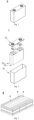
- Fig. 1 shows a secondary battery 5 with a square structure as an example.
- the secondary battery may include an outer package for packaging the positive electrode plate, the negative electrode plate, and the electrolyte.
- the outer package may include a shell 51 and a cover plate 53.
- the shell 51 may include a bottom plate and side plates connected to the bottom plate, and the bottom plate and the side plates enclose a receiving cavity.
- the shell 51 has an opening communicated with the receiving cavity, and the cover plate 53 can cover the opening to close the receiving cavity.
- the positive electrode plate, the negative electrode plate, and the separator may form an electrode assembly 52 by stacking or winding.
- the electrode assembly 52 is packaged in the receiving cavity.
- the electrolyte may adopt an electrolytic solution, and the electrolyte liquid infiltrates the electrode assembly 52.
- the secondary battery 5 includes one or more electrode assemblies 52, which can be adjusted according to requirements.
- the outer package of the secondary battery may be a hard case, such as a hard plastic case, an aluminum case, a steel case, and the like.
- the outer package of the secondary battery may also be a soft bag, such as a pocket type soft bag.
- the material of the soft bag may be plastic, for example, it may include one or more of polypropylene (PP), polybutylene terephthalate (PBT), polybutylene succinate (PBS), and the like.
- the secondary batteries may be assembled into a battery module, the battery module may include a plurality of secondary batteries, and the specific number can be adjusted according to the application and capacity of the battery module.
- Fig. 3 shows a battery module 4 as an example.
- a plurality of secondary batteries 5 may be arranged sequentially in a length direction of the battery module 4. Of course, they may also be arranged in any other way. Further, a plurality of secondary batteries 5 may be fixed by fasteners.
- the battery module 4 may further include a housing having a receiving space, and a plurality of secondary batteries 5 are received in the receiving space.
- the above-mentioned battery module may also be assembled into a battery pack, and the number of battery modules included in the battery pack can be adjusted according to the application and capacity of the battery pack.
- the battery pack 1 may include a battery case and a plurality of battery modules 4 disposed in the battery case.
- the battery case includes an upper case body 2 and a lower case body 3.
- the upper case body 2 can cover the lower case body 3 to form a closed space for receiving the battery modules 4.
- a plurality of battery modules 4 can be arranged in the battery case in any manner.
- the preparation method of the secondary battery may include the step of assembling the negative electrode plate, the positive electrode plate and the electrolyte into a secondary battery.
- the positive electrode plate, the separator and the negative electrode plate are stacked or wound in order in which the separator is disposed between the positive and negative electrode plates to serve as an isolation, thereby obtaining an electrode assembly, i.e. a battery core; and the electrode assembly is placed in a package housing, injected with the electrolyte, and sealed to prepare the secondary battery.
- the preparation of secondary battery may also include the steps of preparing a positive electrode plate.
- the positive electrode plate can be obtained by dispersing a positive active material, a conductive agent and a binder into a solvent (for example, N-methylpyrrolidone, abbreviated as NMP) to form a uniform positive electrode slurry; the positive electrode slurry is coated on the positive electrode current collector followed by drying and cold pressing, thereby obtaining the positive electrode plate.
- a solvent for example, N-methylpyrrolidone, abbreviated as NMP
- the preparation of secondary battery may also include the step of preparing a negative electrode plate.
- the negative electrode plate can be obtained by dispersing a negative active material, a binder, an optional thickener and conductive agent into a solvent in which the solvent is deionized water to form a uniform negative electrode slurry; the negative electrode slurry is coated on the negative electrode current collector followed by drying and cold pressing, thereby obtaining the negative electrode plate.
- the second aspect of the present application provides an apparatus, the apparatus including any one or more secondary batteries according to the first aspect of the present application.
- the secondary battery can be used as a power source of the apparatus, and as an energy storage unit of the apparatus.
- the apparatus may be, but is not limited to, a mobile device (e.g., a mobile phone, a notebook computer, and the like), an electric vehicle (e.g., a pure electric vehicle, a hybrid electric vehicle, a plug-in hybrid electric vehicle, an electric bicycle, an electric scooter, an electric golf vehicle, an electric truck and the like), an electric train, a ship, a satellite, an energy storage system, and the like.
- the apparatus may select the secondary battery, the battery module, or the battery pack according to its usage requirements.
- Fig. 6 shows an apparatus as an example.
- the apparatus is a pure electric vehicle, a hybrid electric vehicle, or a plug-in hybrid electric vehicle.
- a battery pack or a battery module may be used.
- the apparatus may be a mobile phone, a tablet computer, a notebook computer, and the like.
- the apparatus is generally required to be thin and light, and the secondary battery can be used as a power source.
- a positive electrode active material LiNi 0.8 Co 0.1 Mn 0.1 O 2 abbreviated as to NCM 811, a conductive agent Super P and a binder PVDF at a mass ratio of 96.5: 1.5: 2 were dispersed in NMP with stirring to form a uniform positive slurry, and then an aluminum foil as a positive electrode current collector was coated with the positive electrode slurry, thereby obtaining a positive electrode plate after steps of drying, cold pressing and the like.
- Ethylene carbonate (EC), ethyl methyl carbonate (EMC), and diethyl carbonate (DEC) at a volume ratio of 1: 1: 1 were mixed, and then LiPF 6 was dissolved uniformly in the solution to obtain an electrolytic solution, wherein LiPF 6 had a concentration of 1 mol/L.
- the positive electrode plate, the separator and the negative electrode plate were stacked and wound into an electrode assembly, which was put into a package housing, and in which the electrolyte was injected followed by sealing, standing, formation and aging, thereby obtaining a secondary battery
- the preparation method was similar to that of Example 1 with the exception that the parameters for the preparation process of the negative electrode plate were adjusted, as shown in Table 1 and Table 2; and that the positive active material of the Examples 14-27 and Comparative Examples 3 to 4 was replaced with lithium iron phosphate abbreviated as LFP).
- LFP lithium iron phosphate
- the discharge cut-off voltage is 2.8V and the charge cut-off voltage is 4.2V when the positive active material is NCM811, the discharge cut-off voltage is 2.5V and the charge cut-off voltage is 3.65V when the positive active material is lithium iron phosphate LFP.
- the batteries were subjected to the first charge at a charge current of 1.0C (i.e. the current value at which the theoretical capacity is completely discharged within 1 hour) until the charge cut-off voltage, and then were subjected to a constant discharge at a discharge current of 1.0C, until the discharge cut-off voltage, which was a charge and discharge cycle.
- the discharge capacity of this cycle is the discharge capacity for the first cycle.
- the cycle capacity was reduced to 80%, the number of cycles was recorded to characterize the high-temperature cycle performance of batteries.
- the batteries were subjected to discharging at a constant discharge current of 1.0C until the discharge cut-off voltage, then were subjected to charging at a charge current of 1.0C, until the charge cut-off voltage, and continued to charge at a constant voltage to a current of 0.05C.
- the battery was fully charged, that is 100% SOC (State of Charge).
- SOC State of Charge
- the battery was discharged to the discharge cut-off voltage with a constant current of 1.0C.
- the discharge capacity was the actual capacity of the battery under 1.0C, which was recorded as C 0 .
- the battery at a temperature of -10°C was charged with an xC 0 constant current to charge cut-off voltage, then charged at a constant voltage to a current of 0.05 C 0 .
- the battery was disassembled to observe precipitation of lithium. If there is no lithium precipitation on the surface of the negative electrode plate, the rate of charge will be increased for testing again until there is lithium precipitation on the surface of the negative electrode plate. The maximum rate of charge was recorded at which there was no lithium precipitation on the surface of the negative electrode plate to determine the rate of lithium precipitation at low temperature, thereby characterizing the low-temperature charging performance of batteries. Table 1, which is not according to the present application. No.
- the positive active material of batteries was NCM811, and the compacted density of the positive electrode film was 3.5 g/cm 3 .
- the areal density was 17mg/cm 2 .
- Example 15 55 15.0 1.00 92.0 45 19.0 1.05 98.5 0.06 0.55 C 0 1210
- the positive active material of batteries was lithium iron phosphate
- the compacted density of the positive electrode film was 2.3 g/cm 3
- the areal density was 16mg/cm 2 .
- Examples 20-23 showed that the low-temperature charging performance and high-temperature cycle performance of batteries were further improved when the positive electrode plate comprised a specific positive active material, the negative active material of the negative electrode plate included both artificial graphite and natural graphite, and the mass ratio of natural graphite in the negative active material was within a certain range.
- Examples 24-27 showed that the low-temperature charging performance and high-temperature cycle performance of batteries were further improved when positive electrode plate comprised a special positive active material, the negative electrode materials included artificial graphite and natural graphite, and the compacted density and/or areal density of negative electrode films were within a certain range.
Landscapes
- Chemical & Material Sciences (AREA)
- Chemical Kinetics & Catalysis (AREA)
- Electrochemistry (AREA)
- General Chemical & Material Sciences (AREA)
- Engineering & Computer Science (AREA)
- Inorganic Chemistry (AREA)
- Materials Engineering (AREA)
- Composite Materials (AREA)
- Manufacturing & Machinery (AREA)
- Crystallography & Structural Chemistry (AREA)
- Battery Electrode And Active Subsutance (AREA)
- Secondary Cells (AREA)
Claims (14)
- Eine Sekundärbatterie (5), die eine positive Elektrodenplatte und eine negative Elektrodenplatte umfasst, wobei die positive Elektrodenplatte einen positiven Elektrodenstromkollektor und einen positiven Elektrodenfilm umfasst, der auf mindestens einer Oberfläche des positiven Elektrodenstromkollektors angeordnet ist und ein positives Aktivmaterial umfasst, die negative Elektrodenplatte einen negativen Elektrodenstromkollektor und einen negativen Elektrodenfilm umfasst, der auf mindestens einer Oberfläche des negativen Elektrodenstromkollektors angeordnet ist und ein negatives Aktivmaterial umfasst,dadurch gekennzeichnet, dassdas positive aktive Material ein oder mehrere lithiumhaltige Phosphate mit Olivinstruktur und modifizierte Verbindungen davon umfasst,das negative aktive Material eine Mischung aus künstlichem Graphit und natürlichem Graphit umfasst und die negative Elektrodenplatte 0,04≤I3R(012)/I2H(100)≤0,22, vorzugsweise 0,06≤I3R(012)/I2H(100)≤0,18 erfüllt; undwobei I3R(012) eine Spitzenintensität eines Röntgenbeugungspeaks einer 3R-Phase 012-Kristallebene des negativen Elektrodenaktivmaterials in der negativen Elektrodenplatte ist, wie gemäß der Messung jedes Parameters in der Beschreibung gemessen, und I2H(100) eine Spitzenintensität eines Röntgenbeugungspeaks einer 2H-Phase 100-Kristallebene des negativen Elektrodenaktivmaterials in der negativen Elektrodenplatte ist, wie gemäß der Messung jedes Parameters in der Beschreibung gemessen.
- Sekundärbatterie (5) gemäß Anspruch 1, wobei die negative Elektrodenplatte außerdem folgende Bedingungen erfüllt: 0,04≤I3R(101)/I2H(101)≤0,22, vorzugsweise 0,06≤I3R(101)/I2H(101)≤0,18;
wobei I3R(101) eine Spitzenintensität eines Röntgenbeugungspeaks einer 3R-Phase 101-Kristallebene des negativen Elektrodenaktivmaterials in der negativen Elektrodenplatte ist, wie gemäß der Messung jedes Parameters in der Beschreibung gemessen, und I2H(101) eine Spitzenintensität eines Röntgenbeugungspeaks einer 2H-Phase 100-Kristallebene des negativen Elektrodenaktivmaterials in der negativen Elektrodenplatte ist, wie gemäß der Messung jedes Parameters in der Beschreibung gemessen. - Sekundärbatterie (5) gemäß Anspruch 1 oder 2, wobei der natürliche Graphit ≥20 Masse-% des negativen Elektrodenaktivmaterials, vorzugsweise 35 Masse-% bis 50 Masse-% des negativen Elektrodenaktivmaterials, darstellt.
- Sekundärbatterie (5) gemäß einem der Ansprüche 1-3, wobei das negative Elektrodenaktivmaterial eine volumendurchschnittliche Partikelgröße DV50 von 15µm bis 19µm, vorzugsweise 16µm bis 18µm, aufweist, gemessen gemäß der Messung jedes Parameters in der Beschreibung.
- Sekundärbatterie (5) gemäß einem der Ansprüche 1-4, wobei der künstliche Graphit eine volumendurchschnittliche Partikelgröße DV50 von vorzugsweise 14µm bis 18µm, bevorzugter 15µm bis 17µm, aufweist, gemessen gemäß der Messung jedes Parameters in der Beschreibung.
- Sekundärbatterie (5) gemäß einem der Ansprüche 1-5, wobei der natürliche Graphit eine volumendurchschnittliche Partikelgröße DV50 von vorzugsweise 15µm bis 19µm, bevorzugter 16µm bis 18µm aufweist, gemessen gemäß der Messung jedes Parameters in der Beschreibung.
- Sekundärbatterie (5) gemäß einem der Ansprüche 1-6, wobei das negative Elektrodenaktivmaterial eine Schüttdichte von < 1,1 g/cm3, vorzugsweise von 1,0 g/cm3 bis 1,09 g/cm3, aufweist, wie gemäß der Messung jedes Parameters in der Beschreibung gemessen; und/oder
das negative Elektrodenaktivmaterial einen Graphitisierungsgrad von 92% bis 95%, vorzugsweise von 93% bis 94%, aufweist, wie gemäß der Messung jedes Parameters in der Beschreibung gemessen. - Sekundärbatterie (5) gemäß einem der Ansprüche 1-7, wobei der künstliche Graphit eine Klopfdichte von 0,9 g/cm3 bis 1,1 g/cm3, vorzugsweise von 0,95 g/cm3 bis 1,05 g/cm3, aufweist, wie gemäß der Messung jedes Parameters in der Beschreibung gemessen.
- Sekundärbatterie (5) gemäß einem der Ansprüche 1-8, wobei der natürliche Graphit eine Klopfdichte von 0,90 g/cm3 bis 1,15 g/cm3, vorzugsweise von 0,9 g/cm3 bis 1,1g/cm3, bevorzugter von 1,0 g/cm3 bis 1,1 g/cm3 aufweist, gemessen gemäß Messung jedes Parameters in der Beschreibung.
- Die Sekundärbatterie (5) gemäß einem der Ansprüche 1-9, wobei der künstliche Graphit einen Graphitisierungsgrad von 90% bis 95%, vorzugsweise von 91% bis 93%, aufweist, gemessen gemäß der Messung jedes Parameters in der Beschreibung.
- Die Sekundärbatterie (5) gemäß einem der Ansprüche 1-10, wobei der natürliche Graphit einen Graphitisierungsgrad von 95% bis 98,5%, vorzugsweise von 95% bis 98%, bevorzugter von 96% bis 97%, aufweist, gemessen gemäß der Messung jedes Parameters in der Beschreibung.
- Die Sekundärbatterie (5) gemäß einem der Ansprüche 1-11, wobei der negative Elektrodenfilm eine Flächendichte von 7 mg/cm2 bis 10 mg/cm2, vorzugsweise von 7 mg/cm2 bis 8 mg/cm2, aufweist, gemessen gemäß der Messung jedes Parameters in der Beschreibung; und/oder
der negative Elektrodenfilm eine verdichtete Dichte von 1,5 g/cm3 bis 1,7 g/cm3, vorzugsweise von 1,55 g/cm3 bis 1,6 g/cm3, aufweist, gemessen gemäß der Messung jedes Parameters in der Beschreibung. - Die Sekundärbatterie (5) gemäß einem der Ansprüche 1-12, wobei die lithiumhaltigen Phosphate mit Olivinstruktur ein oder mehrere der folgenden Elemente umfassen: Lithiumeisenphosphat, Verbundmaterialien aus Lithiumeisenphosphat und Kohlenstoff und modifizierte Verbindungen davon.
- Eine Vorrichtung, umfassend die Sekundärbatterie (5) gemäß einem der Ansprüche 1-13.
Priority Applications (4)
| Application Number | Priority Date | Filing Date | Title |
|---|---|---|---|
| EP22216320.6A EP4191709B1 (de) | 2020-03-27 | 2020-03-27 | Sekundärbatterie und vorrichtung in der sekundärbatterie |
| ES22216320T ES3023945T3 (en) | 2020-03-27 | 2020-03-27 | Secondary battery and apparatus contained the secondary battery |
| HUE22216320A HUE070954T2 (hu) | 2020-03-27 | 2020-03-27 | Újratölthetõ telep és a újratölthetõ telepet tartalmazó berendezés |
| PL22216320.6T PL4191709T3 (pl) | 2020-03-27 | 2020-03-27 | Bateria wtórna i aparat zawierający baterię wtórną |
Applications Claiming Priority (3)
| Application Number | Priority Date | Filing Date | Title |
|---|---|---|---|
| EP22216320.6A EP4191709B1 (de) | 2020-03-27 | 2020-03-27 | Sekundärbatterie und vorrichtung in der sekundärbatterie |
| EP20927265.7A EP3951943B1 (de) | 2020-03-27 | 2020-03-27 | Sekundärzelle und vorrichtung mit der sekundärzelle |
| PCT/CN2020/081691 WO2021189425A1 (zh) | 2020-03-27 | 2020-03-27 | 二次电池和包含二次电池的装置 |
Related Parent Applications (2)
| Application Number | Title | Priority Date | Filing Date |
|---|---|---|---|
| EP20927265.7A Division EP3951943B1 (de) | 2020-03-27 | 2020-03-27 | Sekundärzelle und vorrichtung mit der sekundärzelle |
| EP20927265.7A Division-Into EP3951943B1 (de) | 2020-03-27 | 2020-03-27 | Sekundärzelle und vorrichtung mit der sekundärzelle |
Publications (2)
| Publication Number | Publication Date |
|---|---|
| EP4191709A1 EP4191709A1 (de) | 2023-06-07 |
| EP4191709B1 true EP4191709B1 (de) | 2025-01-22 |
Family
ID=77890759
Family Applications (3)
| Application Number | Title | Priority Date | Filing Date |
|---|---|---|---|
| EP20927265.7A Active EP3951943B1 (de) | 2020-03-27 | 2020-03-27 | Sekundärzelle und vorrichtung mit der sekundärzelle |
| EP23194553.6A Pending EP4276965A3 (de) | 2020-03-27 | 2020-03-27 | Sekundärzelle und vorrichtung mit der sekundärzelle |
| EP22216320.6A Active EP4191709B1 (de) | 2020-03-27 | 2020-03-27 | Sekundärbatterie und vorrichtung in der sekundärbatterie |
Family Applications Before (2)
| Application Number | Title | Priority Date | Filing Date |
|---|---|---|---|
| EP20927265.7A Active EP3951943B1 (de) | 2020-03-27 | 2020-03-27 | Sekundärzelle und vorrichtung mit der sekundärzelle |
| EP23194553.6A Pending EP4276965A3 (de) | 2020-03-27 | 2020-03-27 | Sekundärzelle und vorrichtung mit der sekundärzelle |
Country Status (9)
| Country | Link |
|---|---|
| US (1) | US11437623B2 (de) |
| EP (3) | EP3951943B1 (de) |
| JP (1) | JP7174863B2 (de) |
| KR (1) | KR102599884B1 (de) |
| CN (2) | CN116247202B (de) |
| ES (2) | ES3023945T3 (de) |
| HU (2) | HUE065042T2 (de) |
| PL (2) | PL3951943T3 (de) |
| WO (1) | WO2021189425A1 (de) |
Families Citing this family (15)
| Publication number | Priority date | Publication date | Assignee | Title |
|---|---|---|---|---|
| KR102937468B1 (ko) * | 2021-07-02 | 2026-03-12 | 에스케이온 주식회사 | 급속 충전 성능이 개선된 이차전지용 음극 및 이를 포함하는 이차전지 |
| CN114447270A (zh) * | 2021-12-28 | 2022-05-06 | 华为数字能源技术有限公司 | 一种负极极片、电池和电子设备 |
| WO2023225857A1 (zh) * | 2022-05-24 | 2023-11-30 | 宁德新能源科技有限公司 | 电化学装置及电子设备 |
| CN117716537B (zh) * | 2022-07-14 | 2026-02-10 | 宁德时代新能源科技股份有限公司 | 正极活性材料及其制备方法、二次电池、电池模块、电池包和用电装置 |
| CN118077072B (zh) * | 2022-07-14 | 2026-02-03 | 宁德时代新能源科技股份有限公司 | 负极极片、二次电池、电池模块、电池包和用电装置 |
| CN119497917B (zh) * | 2022-11-11 | 2026-01-13 | 宁德时代新能源科技股份有限公司 | 正极材料组合物、正极极片及其制备方法、电池及用电装置 |
| EP4517859A4 (de) * | 2022-11-25 | 2025-12-03 | Contemporary Amperex Technology Hong Kong Ltd | Sekundärbatterie und elektrische vorrichtung |
| CN119053954A (zh) * | 2022-11-25 | 2024-11-29 | 宁德时代新能源科技股份有限公司 | 二次电池及用电装置 |
| CN116111040A (zh) * | 2023-01-31 | 2023-05-12 | 珠海冠宇电池股份有限公司 | 电池 |
| CN116646471B (zh) * | 2023-07-27 | 2023-12-19 | 宁德时代新能源科技股份有限公司 | 负极极片及其制备方法、二次电池和用电装置 |
| KR20250104108A (ko) * | 2023-12-29 | 2025-07-08 | 에스케이온 주식회사 | 리튬 이차 전지용 양극 활물질 및 이를 포함하는 이차 전지 |
| CN118248830A (zh) * | 2024-05-29 | 2024-06-25 | 宁德时代新能源科技股份有限公司 | 二次电池和用电装置 |
| WO2026050900A1 (zh) * | 2024-09-03 | 2026-03-12 | 宁德时代新能源科技股份有限公司 | 电池单体、电池装置及用电装置 |
| DE212024000167U1 (de) * | 2024-09-03 | 2025-09-24 | Contemporary Amperex Technology Co., Limited | Batteriezelle, Batterievorrichtung und Verbrauchsvorrichtung |
| CN119181764A (zh) * | 2024-11-19 | 2024-12-24 | 中航锂电(洛阳)有限公司 | 一种高能量密度锂离子电池用负极片、高能量密度锂离子电池 |
Citations (2)
| Publication number | Priority date | Publication date | Assignee | Title |
|---|---|---|---|---|
| US5554462A (en) * | 1993-12-22 | 1996-09-10 | Saft | Carbon anode for a lithium rechargeable electrochemical cell and a process for its production |
| WO1997034330A1 (en) * | 1996-03-15 | 1997-09-18 | Valence Technology, Inc. | Carbon anode for lithium ion electrochemical cell |
Family Cites Families (17)
| Publication number | Priority date | Publication date | Assignee | Title |
|---|---|---|---|---|
| JPH0434491A (ja) * | 1990-05-31 | 1992-02-05 | Minato Electron Kk | アクティブマトリクス基板試験方法及びその試験対向電極基板 |
| JP3069509B2 (ja) * | 1995-04-10 | 2000-07-24 | 株式会社日立製作所 | 非水系二次電池および黒鉛粉末製造方法 |
| JPH11217266A (ja) * | 1998-01-29 | 1999-08-10 | Hitachi Chem Co Ltd | 黒鉛粒子、その製造法、リチウム二次電池用負極及びリチウム二次電池 |
| JP3614734B2 (ja) * | 1999-10-14 | 2005-01-26 | 株式会社日立製作所 | リチウム二次電池用の負極材料 |
| US7052803B2 (en) * | 2002-07-31 | 2006-05-30 | Matsushita Electric Industrial Co., Ltd. | Lithium rechargeable battery |
| JP4516845B2 (ja) * | 2002-10-11 | 2010-08-04 | Fdk株式会社 | 非水電解質二次電池、及びこの非水電解二次電池に用いる正極の製造方法 |
| JP2005050822A (ja) * | 2004-09-27 | 2005-02-24 | Hitachi Ltd | リチウム二次電池 |
| JP5668308B2 (ja) * | 2009-03-27 | 2015-02-12 | 三菱化学株式会社 | 非水電解液二次電池用負極材料及びこれを用いた非水電解液二次電池 |
| CN104969400A (zh) * | 2013-06-05 | 2015-10-07 | 株式会社Lg化学 | 新型二次电池 |
| US10122018B2 (en) * | 2014-03-25 | 2018-11-06 | Hitachi Chemical Company, Ltd. | Negative electrode material for lithium-ion secondary battery,method for manufacturing negative electrode material for lithium-ion secondary battery, negative electrode material slurry for lithium-ion secondary battery, negative electrode for lithium-ion secondary battery, and lithium-ion secondary battery |
| KR102314046B1 (ko) * | 2014-11-28 | 2021-10-18 | 삼성에스디아이 주식회사 | 양극 활물질, 이를 포함하는 양극 및 상기 양극을 채용한 리튬 이차 전지 |
| KR102439850B1 (ko) * | 2015-08-27 | 2022-09-01 | 삼성에스디아이 주식회사 | 리튬 이차 전지용 음극 활물질, 및 이를 포함하는 리튬 이차 전지 |
| CN108155351B (zh) * | 2016-12-06 | 2021-06-22 | 宁德时代新能源科技股份有限公司 | 锂离子电池及其负极材料 |
| KR102425002B1 (ko) * | 2017-11-06 | 2022-07-22 | 삼성에스디아이 주식회사 | 리튬 이차 전지용 음극 활물질 및 이를 포함하는 리튬 이차 전지 |
| CN108079474A (zh) | 2018-01-11 | 2018-05-29 | 苏州瑞奇安机电科技有限公司 | 排烟消防设备及排烟消防机器人 |
| CN108832075B (zh) * | 2018-06-29 | 2019-03-19 | 宁德时代新能源科技股份有限公司 | 锂离子电池 |
| CN108807974B (zh) * | 2018-06-29 | 2021-07-09 | 宁德时代新能源科技股份有限公司 | 锂离子电池 |
-
2020
- 2020-03-27 PL PL20927265.7T patent/PL3951943T3/pl unknown
- 2020-03-27 CN CN202310314181.4A patent/CN116247202B/zh active Active
- 2020-03-27 HU HUE20927265A patent/HUE065042T2/hu unknown
- 2020-03-27 KR KR1020217030668A patent/KR102599884B1/ko active Active
- 2020-03-27 WO PCT/CN2020/081691 patent/WO2021189425A1/zh not_active Ceased
- 2020-03-27 JP JP2021554747A patent/JP7174863B2/ja active Active
- 2020-03-27 EP EP20927265.7A patent/EP3951943B1/de active Active
- 2020-03-27 EP EP23194553.6A patent/EP4276965A3/de active Pending
- 2020-03-27 PL PL22216320.6T patent/PL4191709T3/pl unknown
- 2020-03-27 ES ES22216320T patent/ES3023945T3/es active Active
- 2020-03-27 EP EP22216320.6A patent/EP4191709B1/de active Active
- 2020-03-27 HU HUE22216320A patent/HUE070954T2/hu unknown
- 2020-03-27 CN CN202080005610.4A patent/CN113748539B/zh active Active
- 2020-03-27 ES ES20927265T patent/ES2970511T3/es active Active
-
2021
- 2021-12-06 US US17/542,533 patent/US11437623B2/en active Active
Patent Citations (2)
| Publication number | Priority date | Publication date | Assignee | Title |
|---|---|---|---|---|
| US5554462A (en) * | 1993-12-22 | 1996-09-10 | Saft | Carbon anode for a lithium rechargeable electrochemical cell and a process for its production |
| WO1997034330A1 (en) * | 1996-03-15 | 1997-09-18 | Valence Technology, Inc. | Carbon anode for lithium ion electrochemical cell |
Also Published As
| Publication number | Publication date |
|---|---|
| ES3023945T3 (en) | 2025-06-03 |
| JP2022525592A (ja) | 2022-05-18 |
| EP3951943A4 (de) | 2022-07-20 |
| WO2021189425A1 (zh) | 2021-09-30 |
| CN116247202B (zh) | 2025-09-05 |
| KR20210130780A (ko) | 2021-11-01 |
| EP4276965A3 (de) | 2024-01-03 |
| US11437623B2 (en) | 2022-09-06 |
| CN113748539B (zh) | 2023-05-09 |
| CN116247202A (zh) | 2023-06-09 |
| PL3951943T3 (pl) | 2024-04-02 |
| HUE065042T2 (hu) | 2024-04-28 |
| HUE070954T2 (hu) | 2025-08-28 |
| EP3951943A1 (de) | 2022-02-09 |
| EP4276965A2 (de) | 2023-11-15 |
| ES2970511T3 (es) | 2024-05-29 |
| CN113748539A (zh) | 2021-12-03 |
| KR102599884B1 (ko) | 2023-11-09 |
| US20220093925A1 (en) | 2022-03-24 |
| PL4191709T3 (pl) | 2025-06-02 |
| EP3951943B1 (de) | 2023-11-15 |
| EP4191709A1 (de) | 2023-06-07 |
| JP7174863B2 (ja) | 2022-11-17 |
Similar Documents
| Publication | Publication Date | Title |
|---|---|---|
| EP4191709B1 (de) | Sekundärbatterie und vorrichtung in der sekundärbatterie | |
| US12230800B2 (en) | Secondary battery and apparatus containing the secondary battery | |
| EP3955358B1 (de) | Sekundärbatterie und batteriemodul, batteriepack und vorrichtung damit | |
| JP7367201B2 (ja) | 二次電池、装置、人造黒鉛及び製造方法 | |
| EP3965201B1 (de) | Sekundärbatterie und vorrichtung damit | |
| EP4546444A1 (de) | Sekundärbatterie und elektrische vorrichtung | |
| CN116636050B (zh) | 负极极片及二次电池、电池包、电池模块和用电装置 | |
| EP4117057B1 (de) | Lithium-ionen-sekundärbatterie, batteriemodul, batteriepack und angetriebenes gerät | |
| US11682788B2 (en) | Secondary battery and apparatus containing such secondary battery | |
| EP4564472A1 (de) | Sekundärbatterie und elektrische vorrichtung | |
| EP4611056A1 (de) | Negativelektrodenfolie und elektrodenanordnung damit, batteriezelle, batterie und elektrische vorrichtung | |
| EP4228053A1 (de) | Batteriepack und elektrische vorrichtung damit | |
| CN121726337A (zh) | 负极极片、二次电池和用电装置 | |
| EP4220797A1 (de) | Sekundärbatterie, batteriemodul, batteriepack und elektrische vorrichtung | |
| EP4290612A1 (de) | Sekundärbatterie und batteriemodul, batteriepack und elektrische vorrichtung damit | |
| EP4672365A1 (de) | Positivelektrodenaktivmaterial und herstellungsverfahren dafür sowie batteriezelle und elektrische vorrichtung | |
| EP4645420A1 (de) | Negativelektrodenfolie, sekundärbatterie damit und elektrische vorrichtung | |
| EP4589675A1 (de) | Batteriezelle, batterie und elektrische vorrichtung | |
| EP4318668A1 (de) | Positivelektrodenaktivmaterial, sekundärbatterie, batteriemodul, batteriepack und stromverbrauchende vorrichtung | |
| US20230253548A1 (en) | Cathode Active Material and Lithium Ion Battery Comprising Said Cathode Active Material |
Legal Events
| Date | Code | Title | Description |
|---|---|---|---|
| PUAI | Public reference made under article 153(3) epc to a published international application that has entered the european phase |
Free format text: ORIGINAL CODE: 0009012 |
|
| STAA | Information on the status of an ep patent application or granted ep patent |
Free format text: STATUS: THE APPLICATION HAS BEEN PUBLISHED |
|
| AC | Divisional application: reference to earlier application |
Ref document number: 3951943 Country of ref document: EP Kind code of ref document: P |
|
| AK | Designated contracting states |
Kind code of ref document: A1 Designated state(s): AL AT BE BG CH CY CZ DE DK EE ES FI FR GB GR HR HU IE IS IT LI LT LU LV MC MK MT NL NO PL PT RO RS SE SI SK SM TR |
|
| STAA | Information on the status of an ep patent application or granted ep patent |
Free format text: STATUS: REQUEST FOR EXAMINATION WAS MADE |
|
| 17P | Request for examination filed |
Effective date: 20231128 |
|
| RBV | Designated contracting states (corrected) |
Designated state(s): AL AT BE BG CH CY CZ DE DK EE ES FI FR GB GR HR HU IE IS IT LI LT LU LV MC MK MT NL NO PL PT RO RS SE SI SK SM TR |
|
| STAA | Information on the status of an ep patent application or granted ep patent |
Free format text: STATUS: EXAMINATION IS IN PROGRESS |
|
| 17Q | First examination report despatched |
Effective date: 20240502 |
|
| RAP1 | Party data changed (applicant data changed or rights of an application transferred) |
Owner name: CONTEMPORARY AMPEREX TECHNOLOGY(HONG KONG) LIMITED |
|
| GRAP | Despatch of communication of intention to grant a patent |
Free format text: ORIGINAL CODE: EPIDOSNIGR1 |
|
| STAA | Information on the status of an ep patent application or granted ep patent |
Free format text: STATUS: GRANT OF PATENT IS INTENDED |
|
| RIC1 | Information provided on ipc code assigned before grant |
Ipc: H01M 4/02 20060101ALN20241014BHEP Ipc: H01M 4/58 20100101ALN20241014BHEP Ipc: H01M 4/525 20100101ALN20241014BHEP Ipc: H01M 4/505 20100101ALN20241014BHEP Ipc: H01M 10/0525 20100101ALI20241014BHEP Ipc: H01M 4/36 20060101ALI20241014BHEP Ipc: H01M 4/133 20100101ALI20241014BHEP Ipc: H01M 4/587 20100101AFI20241014BHEP |
|
| RIC1 | Information provided on ipc code assigned before grant |
Ipc: H01M 4/02 20060101ALN20241024BHEP Ipc: H01M 4/58 20100101ALN20241024BHEP Ipc: H01M 4/525 20100101ALN20241024BHEP Ipc: H01M 4/505 20100101ALN20241024BHEP Ipc: H01M 10/0525 20100101ALI20241024BHEP Ipc: H01M 4/36 20060101ALI20241024BHEP Ipc: H01M 4/133 20100101ALI20241024BHEP Ipc: H01M 4/587 20100101AFI20241024BHEP |
|
| INTG | Intention to grant announced |
Effective date: 20241105 |
|
| RIC1 | Information provided on ipc code assigned before grant |
Ipc: H01M 4/02 20060101ALN20241028BHEP Ipc: H01M 4/58 20100101ALN20241028BHEP Ipc: H01M 4/525 20100101ALN20241028BHEP Ipc: H01M 4/505 20100101ALN20241028BHEP Ipc: H01M 10/0525 20100101ALI20241028BHEP Ipc: H01M 4/36 20060101ALI20241028BHEP Ipc: H01M 4/133 20100101ALI20241028BHEP Ipc: H01M 4/587 20100101AFI20241028BHEP |
|
| GRAS | Grant fee paid |
Free format text: ORIGINAL CODE: EPIDOSNIGR3 |
|
| GRAA | (expected) grant |
Free format text: ORIGINAL CODE: 0009210 |
|
| STAA | Information on the status of an ep patent application or granted ep patent |
Free format text: STATUS: THE PATENT HAS BEEN GRANTED |
|
| AC | Divisional application: reference to earlier application |
Ref document number: 3951943 Country of ref document: EP Kind code of ref document: P |
|
| AK | Designated contracting states |
Kind code of ref document: B1 Designated state(s): AL AT BE BG CH CY CZ DE DK EE ES FI FR GB GR HR HU IE IS IT LI LT LU LV MC MK MT NL NO PL PT RO RS SE SI SK SM TR |
|
| REG | Reference to a national code |
Ref country code: GB Ref legal event code: FG4D |
|
| REG | Reference to a national code |
Ref country code: CH Ref legal event code: EP |
|
| REG | Reference to a national code |
Ref country code: IE Ref legal event code: FG4D |
|
| REG | Reference to a national code |
Ref country code: DE Ref legal event code: R096 Ref document number: 602020045405 Country of ref document: DE |
|
| P01 | Opt-out of the competence of the unified patent court (upc) registered |
Free format text: CASE NUMBER: APP_1283/2025 Effective date: 20250109 |
|
| REG | Reference to a national code |
Ref country code: NL Ref legal event code: MP Effective date: 20250122 |
|
| REG | Reference to a national code |
Ref country code: ES Ref legal event code: FG2A Ref document number: 3023945 Country of ref document: ES Kind code of ref document: T3 Effective date: 20250603 |
|
| PG25 | Lapsed in a contracting state [announced via postgrant information from national office to epo] |
Ref country code: NL Free format text: LAPSE BECAUSE OF FAILURE TO SUBMIT A TRANSLATION OF THE DESCRIPTION OR TO PAY THE FEE WITHIN THE PRESCRIBED TIME-LIMIT Effective date: 20250122 |
|
| PG25 | Lapsed in a contracting state [announced via postgrant information from national office to epo] |
Ref country code: RS Free format text: LAPSE BECAUSE OF FAILURE TO SUBMIT A TRANSLATION OF THE DESCRIPTION OR TO PAY THE FEE WITHIN THE PRESCRIBED TIME-LIMIT Effective date: 20250422 |
|
| PG25 | Lapsed in a contracting state [announced via postgrant information from national office to epo] |
Ref country code: FI Free format text: LAPSE BECAUSE OF FAILURE TO SUBMIT A TRANSLATION OF THE DESCRIPTION OR TO PAY THE FEE WITHIN THE PRESCRIBED TIME-LIMIT Effective date: 20250122 |
|
| PGFP | Annual fee paid to national office [announced via postgrant information from national office to epo] |
Ref country code: PL Payment date: 20250225 Year of fee payment: 6 |
|
| PGFP | Annual fee paid to national office [announced via postgrant information from national office to epo] |
Ref country code: ES Payment date: 20250401 Year of fee payment: 6 |
|
| REG | Reference to a national code |
Ref country code: LT Ref legal event code: MG9D |
|
| PG25 | Lapsed in a contracting state [announced via postgrant information from national office to epo] |
Ref country code: NO Free format text: LAPSE BECAUSE OF FAILURE TO SUBMIT A TRANSLATION OF THE DESCRIPTION OR TO PAY THE FEE WITHIN THE PRESCRIBED TIME-LIMIT Effective date: 20250422 Ref country code: IS Free format text: LAPSE BECAUSE OF FAILURE TO SUBMIT A TRANSLATION OF THE DESCRIPTION OR TO PAY THE FEE WITHIN THE PRESCRIBED TIME-LIMIT Effective date: 20250522 |
|
| REG | Reference to a national code |
Ref country code: AT Ref legal event code: MK05 Ref document number: 1762133 Country of ref document: AT Kind code of ref document: T Effective date: 20250122 |
|
| PG25 | Lapsed in a contracting state [announced via postgrant information from national office to epo] |
Ref country code: HR Free format text: LAPSE BECAUSE OF FAILURE TO SUBMIT A TRANSLATION OF THE DESCRIPTION OR TO PAY THE FEE WITHIN THE PRESCRIBED TIME-LIMIT Effective date: 20250122 |
|
| PG25 | Lapsed in a contracting state [announced via postgrant information from national office to epo] |
Ref country code: PT Free format text: LAPSE BECAUSE OF FAILURE TO SUBMIT A TRANSLATION OF THE DESCRIPTION OR TO PAY THE FEE WITHIN THE PRESCRIBED TIME-LIMIT Effective date: 20250522 Ref country code: LV Free format text: LAPSE BECAUSE OF FAILURE TO SUBMIT A TRANSLATION OF THE DESCRIPTION OR TO PAY THE FEE WITHIN THE PRESCRIBED TIME-LIMIT Effective date: 20250122 |
|
| PG25 | Lapsed in a contracting state [announced via postgrant information from national office to epo] |
Ref country code: BG Free format text: LAPSE BECAUSE OF FAILURE TO SUBMIT A TRANSLATION OF THE DESCRIPTION OR TO PAY THE FEE WITHIN THE PRESCRIBED TIME-LIMIT Effective date: 20250122 Ref country code: GR Free format text: LAPSE BECAUSE OF FAILURE TO SUBMIT A TRANSLATION OF THE DESCRIPTION OR TO PAY THE FEE WITHIN THE PRESCRIBED TIME-LIMIT Effective date: 20250423 |
|
| PG25 | Lapsed in a contracting state [announced via postgrant information from national office to epo] |
Ref country code: AT Free format text: LAPSE BECAUSE OF FAILURE TO SUBMIT A TRANSLATION OF THE DESCRIPTION OR TO PAY THE FEE WITHIN THE PRESCRIBED TIME-LIMIT Effective date: 20250122 |
|
| REG | Reference to a national code |
Ref country code: HU Ref legal event code: AG4A Ref document number: E070954 Country of ref document: HU |
|
| PG25 | Lapsed in a contracting state [announced via postgrant information from national office to epo] |
Ref country code: SE Free format text: LAPSE BECAUSE OF FAILURE TO SUBMIT A TRANSLATION OF THE DESCRIPTION OR TO PAY THE FEE WITHIN THE PRESCRIBED TIME-LIMIT Effective date: 20250122 |
|
| PG25 | Lapsed in a contracting state [announced via postgrant information from national office to epo] |
Ref country code: SM Free format text: LAPSE BECAUSE OF FAILURE TO SUBMIT A TRANSLATION OF THE DESCRIPTION OR TO PAY THE FEE WITHIN THE PRESCRIBED TIME-LIMIT Effective date: 20250122 |
|
| PG25 | Lapsed in a contracting state [announced via postgrant information from national office to epo] |
Ref country code: DK Free format text: LAPSE BECAUSE OF FAILURE TO SUBMIT A TRANSLATION OF THE DESCRIPTION OR TO PAY THE FEE WITHIN THE PRESCRIBED TIME-LIMIT Effective date: 20250122 |
|
| PG25 | Lapsed in a contracting state [announced via postgrant information from national office to epo] |
Ref country code: MC Free format text: LAPSE BECAUSE OF FAILURE TO SUBMIT A TRANSLATION OF THE DESCRIPTION OR TO PAY THE FEE WITHIN THE PRESCRIBED TIME-LIMIT Effective date: 20250122 |
|
| PG25 | Lapsed in a contracting state [announced via postgrant information from national office to epo] |
Ref country code: IT Free format text: LAPSE BECAUSE OF FAILURE TO SUBMIT A TRANSLATION OF THE DESCRIPTION OR TO PAY THE FEE WITHIN THE PRESCRIBED TIME-LIMIT Effective date: 20250122 |
|
| PG25 | Lapsed in a contracting state [announced via postgrant information from national office to epo] |
Ref country code: EE Free format text: LAPSE BECAUSE OF FAILURE TO SUBMIT A TRANSLATION OF THE DESCRIPTION OR TO PAY THE FEE WITHIN THE PRESCRIBED TIME-LIMIT Effective date: 20250122 Ref country code: CZ Free format text: LAPSE BECAUSE OF FAILURE TO SUBMIT A TRANSLATION OF THE DESCRIPTION OR TO PAY THE FEE WITHIN THE PRESCRIBED TIME-LIMIT Effective date: 20250122 |
|
| REG | Reference to a national code |
Ref country code: CH Ref legal event code: H13 Free format text: ST27 STATUS EVENT CODE: U-0-0-H10-H13 (AS PROVIDED BY THE NATIONAL OFFICE) Effective date: 20251023 Ref country code: DE Ref legal event code: R097 Ref document number: 602020045405 Country of ref document: DE |
|
| PG25 | Lapsed in a contracting state [announced via postgrant information from national office to epo] |
Ref country code: RO Free format text: LAPSE BECAUSE OF FAILURE TO SUBMIT A TRANSLATION OF THE DESCRIPTION OR TO PAY THE FEE WITHIN THE PRESCRIBED TIME-LIMIT Effective date: 20250122 |
|
| PG25 | Lapsed in a contracting state [announced via postgrant information from national office to epo] |
Ref country code: SK Free format text: LAPSE BECAUSE OF FAILURE TO SUBMIT A TRANSLATION OF THE DESCRIPTION OR TO PAY THE FEE WITHIN THE PRESCRIBED TIME-LIMIT Effective date: 20250122 |
|
| PG25 | Lapsed in a contracting state [announced via postgrant information from national office to epo] |
Ref country code: LU Free format text: LAPSE BECAUSE OF NON-PAYMENT OF DUE FEES Effective date: 20250327 |
|
| PLBE | No opposition filed within time limit |
Free format text: ORIGINAL CODE: 0009261 |
|
| STAA | Information on the status of an ep patent application or granted ep patent |
Free format text: STATUS: NO OPPOSITION FILED WITHIN TIME LIMIT |
|
| REG | Reference to a national code |
Ref country code: BE Ref legal event code: MM Effective date: 20250331 |
|
| 26N | No opposition filed |
Effective date: 20251023 |
|
| PG25 | Lapsed in a contracting state [announced via postgrant information from national office to epo] |
Ref country code: BE Free format text: LAPSE BECAUSE OF NON-PAYMENT OF DUE FEES Effective date: 20250331 |
|
| PG25 | Lapsed in a contracting state [announced via postgrant information from national office to epo] |
Ref country code: CH Free format text: LAPSE BECAUSE OF NON-PAYMENT OF DUE FEES Effective date: 20250331 |
|
| PG25 | Lapsed in a contracting state [announced via postgrant information from national office to epo] |
Ref country code: IE Free format text: LAPSE BECAUSE OF NON-PAYMENT OF DUE FEES Effective date: 20250327 |
|
| PGFP | Annual fee paid to national office [announced via postgrant information from national office to epo] |
Ref country code: GB Payment date: 20260325 Year of fee payment: 7 |
|
| PGFP | Annual fee paid to national office [announced via postgrant information from national office to epo] |
Ref country code: DE Payment date: 20260324 Year of fee payment: 7 |
|
| PGFP | Annual fee paid to national office [announced via postgrant information from national office to epo] |
Ref country code: HU Payment date: 20260316 Year of fee payment: 7 |
|
| PGFP | Annual fee paid to national office [announced via postgrant information from national office to epo] |
Ref country code: FR Payment date: 20260330 Year of fee payment: 7 |