EP4187331B1 - Verfahren und vorrichtung zur bereitstellung einer getränkeherstellungsanalyse - Google Patents
Verfahren und vorrichtung zur bereitstellung einer getränkeherstellungsanalyse Download PDFInfo
- Publication number
- EP4187331B1 EP4187331B1 EP21210311.3A EP21210311A EP4187331B1 EP 4187331 B1 EP4187331 B1 EP 4187331B1 EP 21210311 A EP21210311 A EP 21210311A EP 4187331 B1 EP4187331 B1 EP 4187331B1
- Authority
- EP
- European Patent Office
- Prior art keywords
- ingredient
- relation
- product
- value
- multitude
- Prior art date
- Legal status (The legal status is an assumption and is not a legal conclusion. Google has not performed a legal analysis and makes no representation as to the accuracy of the status listed.)
- Active
Links
Images

Classifications
-
- G—PHYSICS
- G05—CONTROLLING; REGULATING
- G05B—CONTROL OR REGULATING SYSTEMS IN GENERAL; FUNCTIONAL ELEMENTS OF SUCH SYSTEMS; MONITORING OR TESTING ARRANGEMENTS FOR SUCH SYSTEMS OR ELEMENTS
- G05B13/00—Adaptive control systems, i.e. systems automatically adjusting themselves to have a performance which is optimum according to some preassigned criterion
- G05B13/02—Adaptive control systems, i.e. systems automatically adjusting themselves to have a performance which is optimum according to some preassigned criterion electric
- G05B13/0265—Adaptive control systems, i.e. systems automatically adjusting themselves to have a performance which is optimum according to some preassigned criterion electric the criterion being a learning criterion
-
- C—CHEMISTRY; METALLURGY
- C12—BIOCHEMISTRY; BEER; SPIRITS; WINE; VINEGAR; MICROBIOLOGY; ENZYMOLOGY; MUTATION OR GENETIC ENGINEERING
- C12C—BEER; PREPARATION OF BEER BY FERMENTATION; PREPARATION OF MALT FOR MAKING BEER; PREPARATION OF HOPS FOR MAKING BEER
- C12C13/00—Brewing devices, not covered by a single group of C12C1/00 - C12C12/04
Definitions
- the present invention relates to the field of process analysis and control for a beverage manufacturing plant and a brewery for beer in particular.
- Manufacturing of beverages and brewing of beer in particular is a complex process, involving many different steps.
- the process is primarily a chemical and biological process of which the course as well as the result in determined by many factors at each step, each of which may influence an end result.
- trial and error conditions for brewing may be improved, but with many factors that may influence one and the same factor with only very small changes of values of each factor, using trial and error may not be a feasible way to arrive at improved process control parameters.
- US 2017/0089752 discloses a fermentation monitoring system that measures the weight of a fermenting product to determine the progress of fermentation.
- the weight of a fermenting batch may decrease as carbon dioxide is given off, and a continuous or periodic weight measurement may be used as a control input to a fermentation system, which may adjust temperature to control fermentation or detect that fermentation is not progressing as expected.
- Such a system may be to use a weight scale attached to a fermentation vessel and have a control system capable of adjusting the temperature of the fermenting contents.
- One implementation may have a scale mounted inside a temperature controlled fermentation cabinet.
- US 2018/0057778 discloses a beer making system that is arranged to adjust the beer making process based on the age and provenance of hops to achieve a designed flavour profile. Hops may be analysed and packaged, with the analysis stored for recall by a beer making system. When the hops are used during beer making, compensations may be made to the recipe parameters to compensate for estimated changes in the hops performance. In one use case, hops may be analysed and sealed into single use packages, which may be subsequently used with an automated or semi-automated beer making machine. A database lookup may be performed at beer making to adjust a recipe to increase or decrease time, temperature, or other parameters of a beer making process.
- US 2020/0157478 discloses a beer making system that is arranged to modify a beer ingredient/process recipe to adjust sensory characteristics of a desired beer.
- a performance model of a brewing system may be used to generate an updated recipe when given a set of desired sensory characteristics of a desired beer.
- a user interface may permit a user to adjust characteristics such as thin/thick mouthfeel, dryness/maltiness, hops bitterness, hops flavour, hops aroma, and other characteristics.
- An updated recipe may change mashing schedules, boiling schedules, or other programmatically controlled aspects of a brewing system.
- the performance model may include heuristics as well as performance metrics derived from observing previous brewing sessions on one or multiple devices.
- a first aspect provides, a method executable by an electronic process analysis device, of selecting a pre-determined number of at least one of the multitude of process parameters based on determining, for a first product quantity of beer having undergone a first processing step as part of a brewing process, a first relation between a set of process parameters of the first processing step and at least one first product component parameter and/or a second relation between a set of ingredient parameters and at least one first product component parameter.
- the method comprises at least one of obtaining, from a process data acquisition control system, process data comprising a multitude of process parameter values related to the first processing step of the first product quantity and obtaining, from the process data acquisition control system, ingredient data comprising a multitude of ingredient parameter values related to a multitude of ingredients forming a basis for the first product quantity.
- the method further comprises identifying at least one product component potentially present in the first product quantity and obtaining at least one first product component parameter value for the first product quantity related to the first component.
- a first relation score indicative of the first relation between each of multitude of the process parameter values and the first product component parameter value and/or a second relation score indicative of the second relation between each of the multitude of the ingredient parameter values and the first product component parameter value are determined.
- a pre-determined number of at least one of the multitude of process parameters and the multitude of ingredient parameters having relation scores indicating strongest relations with the first product component parameter value is selected.
- Quality of a beverage may be determined largely by particular components present - or not - in the beverage and, if present, on the amount of components present in the beverage, either as a whole or in a unit volume or mass of the beverage. Presence of such components may relate to any process parameters, ingredients, other factors or a combination thereof and with the method according to the first aspect, such relation may be determined. And with information on such relations, process parameters and ingredient parameters may be tweaked for a subsequent batch with an aim to arrive at improved component parameter values, which may provide an improved quality of the beverage.
- a method as that of the first aspect may allow for improved process initialisation and ramp up as well as auto-calibration of beverage manufacturing lines and beverage manufacturing plants.
- information on appropriate process parameters may be obtained by running one or more pilot runs and applying the method of the first aspect.
- this aspect provides direct and compact feedback to a user of the system employing the first aspect.
- the user for example a process control operator or process supervisor - can focus on the most relevant parameters to tinker with.
- no human being is involved and an electronic computing system controls the process based on the most relevant parameters. Therefore, one values of the most relevant parameters are set at or close to an optimum, other parameters may be selected for presentation to the user to allow tweaking of the values of the latter parameters.
- a variation of the first aspect comprises at least one of obtaining, from a process data acquisition control system, process data comprising at least one first process parameter value related to the first processing step of a second product quantity and obtaining , from the process data acquisition control system, ingredient data comprising at least one second ingredient parameter value related to the ingredient forming a basis for the second product quantity.
- the determining of the relation score between the at least one of the process parameter value and the ingredient parameter value on one hand and the first product component parameter value on the other hand is also based on the at least one of the second process parameter value and the second ingredient parameter value.
- relations may be determined more accurately. With more data, analysis may be more fault tolerant. Furthermore, this may allow for determining whether relations between values are linear, quadratic, cubic, exponential, monotonic/non-monotonic, strong/weak, being correlated within particular boundaries or not, other or a combination thereof.
- the brewing process comprises batch processing and the first product quantity comprises at least one batch.
- batches processing quantities of beverages are well separated from one another. This allows for convenient and practical analysis of relations between various parameters on a per-batch analysis.
- At least one of the first process parameter value has a first process parameter timestamp associate therewith, indicative of a starting point of the first processing step; and the first ingredient parameter value has a first ingredient timestamp associated therewith indicative of a moment in time at which the first ingredient is added to the first product quantity.
- Adding an ingredient at a specific moment during the process changing temperature settings at a particular moment or an actual change of that temperature at a particular moment may be relevant to the end result.
- the determining of the relations may be done in a more accurate way and the timing of particular process parameters may be provided at the output of the process.
- the brewing process is a continuous process, further comprising obtaining a throughput time interval of the first processing step indicative of the first product quantity undergoing the first processing step.
- a particular quantity of beverage may be identified and followed by monitoring flow rate through conduits and reactors. With such data, a time may be determined when the defined quantity enters a reactor or a particular processing step and when the defined quantity leaves the reactor or the particular processing step.
- the first process parameter value is one of a control value and a measured value.
- a control value may be a set point for an actuator to be achieved or expected to be achieved by, for example, controlling the actuator with a particular pressure of a gas, a voltage, a current, other, or a combination thereof.
- the measured value may then be an actual value within a reactor or other vessel or conduit in which the beverage is provided.
- a further implementation further comprises obtaining an objective quality relation between numerical or Boolean quality score parameter data related to at least one product component parameter; and determining, based on the quality relation and a value of the at least one product component parameter, an objective quality score value the first product quantity.
- quality of a beverage may be determined by components present, such as esters. Additionally or alternatively, quality may be determined by other features of the beverage, like viscosity, colour, bitterness, transparency, translucency, sweetness, acidity, sourness, other, or any combination of two or more of these features.
- such properties may be determined by components present and quantities thereof, but physical properties like viscosity or firmness of foam may be more convenient to register.
- Again another implementation comprises obtaining a first quality score value for the first product quantity; obtaining a second quality score value for the second product quantity and, based on the first quality score value, the second quality score value, the at least one first product component parameter value of the first product quantity and at least one second product component parameter value of the second product quantity, determining a quality relation between the first product component parameter and a quality score.
- a further implementation further comprises obtaining a first quality score value for the first product quantity, obtaining a second quality score value for the second product quantity and, based on the first quality score value, the second quality score value, at least one process parameter value of the first product quantity and at least one process parameter value of the second product quantity, determining a quality relation between the process parameter and a quality score.
- Another implementation further comprises obtaining a first quality score value for the first product quantity, obtaining a second quality score value for the second product quantity and, based on the first quality score value, the second quality score value, at least one ingredient parameter value of the first product quantity and at least one ingredient parameter value of the second product quantity, determining a quality relation between the ingredient parameter and a quality score.
- a second aspects provides an electronic process analysis device for selecting a pre-determined number of at least one of the multitude of process parameters based on determining, for a first product quantity of beer having undergone a first processing step as part of a brewing process, a first relation a set of process parameters of the first processing step and at least one product component parameter and/or a set of ingredient parameters and at least one product component parameter.
- the device comprises an input, an output and a processing unit.
- the input is arranged to perform at least one of obtaining, from a process data acquisition control system, process data comprising a multitude of first process parameter values related to the first processing step of the first product quantity and obtaining, from the process data acquisition control system, ingredient data comprising a multitude of first ingredient parameter values related to a multitude of ingredients forming a basis for the first product quantity; identifying at least one first product component potentially present in the first product quantity; and obtaining at least one first product component parameter value for the first product quantity related to the first product component.
- the processing unit is arranged to determine, based on the multitude of the first process parameter values, the multitude of first ingredient parameter values and the product component parameter value, a first relation score indicative of the first relation between each of the multitude of the process parameter values and the first product component parameter value and/or a second relation score indicative of the second relation between each of the multitude of the ingredient parameter values and the first product component parameter value.
- the processing unit is further arranged to select a pre-determined number of at least one of the multitude of process parameters and the multitude of ingredient parameters having relation scores indicating strongest relations with the product component parameter value.
- the output is arranged to provide data on at least one of the relation or the relation score indicative of a relation.
- Another aspect provides a computer program product comprising computer executable code arranged to cause a computer, when the executable code is loaded in a memory connected to an electronic processing unit comprised by the computer for programming the electronic processing unit, to execute the method according to the first aspect or any variation thereof or permutations thereof.
- a further aspect provides a non-transitory memory having stored therein or thereon such computer program product.
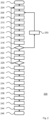
- Figure 1 shows a system 100 for manufacturing of a beverage and for monitoring of the process.
- the process is brewing beer.
- Part of the system is a brewery 110.
- Figure 1 show a mashing tank 112, a boiling tank 114 and a cooler 116.
- a fermentation tank, a bright tank and a filter have been omitted.
- a repository 118 is shown downstream of the cooler.
- the repository 118 may be an intermediate storage prior to fermentation, it may be a fermentation tank, another type of container or a combination thereof.
- a first ingredient supply line 132 is provided, via the first ingredient supply line 132, water and malt is provided to the mashing tank 112.
- the water and malt may be provided through one and the same conduit; in other implementations, the first ingredient supply line 132 comprises multiple conduits, for example one for each type of ingredient.
- the mashing tank 112 is provided with a first rudder 122 as a process actuator, driven by a first electromotor 126. Further process actuators may be provided, like a heater, another mechanical agitator, other, or a combination thereof.
- the mashing tank 112 is connected to the boiling tank 114 via a first brewing conduit 134, debouching in the boiling tank 114.
- the connection between the mashing tank and the first brewing conduit 134 may be controlled by means of a valve.
- wort may be transferred in a batch fashion or in a continuous fashion from the mashing tank 112 to the boiling tank 114.
- a second ingredient supply line 138 is provided with the boiling tank 114.
- the second ingredient supply line 138 is arranged to provide hops to the boing tank 114 and, optionally, further ingredients like spices, herbs, citrus peel, other, or a combination thereof.
- the boiling tank may be provided with a second rudder 124, driven by a second electromotor 128.
- further process actuators may be provided, like a heater, another mechanical agitator, other, or a combination thereof.
- the boiling tank 114 is connected to the cooler 116 via a second brewing conduit 138, debouching in the cooler 116.
- the connection between the boiling tank and the second brewing conduit 138 may be controlled by means of a valve. As such, wort may be transferred in a batch fashion on in a continuous fashion from the boiling tank 114 to the cooler 116.
- the boiled wort preferably passes through the cooler in a continuous way and is provided to the repository 118. From the repository, the rest of the brewing process may be continued, as known by the skilled person.
- a monitoring and control data bus 108 is provided.
- the data bus 108 is connected to a central processing unit 102 of a monitoring and control system.
- the data bus 108 is also connected to various sensors and actuator controllers within the brewery 110.
- the monitoring and control system further comprises a memory 104 as a data storage module and a touchscreen 106 as an input/output module.
- a touchscreen also a separate electronic display screen, a keyboard, a mouse, a tracking ball, a display projector, speakers, other or a combination thereof may be provided for receiving and providing data. Such data may be provided to and/or received from users, other systems or a combination thereof.
- the central processing unit 102 is arranged to control the functionality of the monitoring and control system and in particular the handling of data.
- the memory 104 is arranged to store data received and processed by the monitoring and control system and to store data enabling the central processing unit 102 to be programmed and execute any process or part thereof as described below.
- a first ingredient sensor module 152 is provided on or in the first ingredient supply line 132.
- the first ingredient sensor module 152 is arranged to obtain data, comprising values, on at least one of a type of an ingredient, a quality level of an ingredient, an amount of an ingredient, another value of another ingredient parameter, or a combination thereof, for one or more ingredients added to the mashing tank 112.
- the first sensor module 152 may comprise at least one of optical, magnetic, electrical, mechanical, chemical or other sensor to measure at least one of flow, flow velocity, flow volume, weight, a chemical characteristic, conductivity, temperature, transparency to visible or invisible light, acidity, sugar content, viscosity, colour, other or a combination thereof.
- the first ingredient sensor module 152 may also be arranged to provide a timestamp with any data generated, preferably by means of sensing matter. Data thus obtained is sent to the monitoring and control system via the data bus 108 and preferably stored in the memory 104.
- a second ingredient sensor module 154 is provided on or in the second ingredient supply line 136.
- the second ingredient sensor module 154 is arranged to obtain data on at least one of a type of an ingredient, a quality level of an ingredient, an amount of an ingredient, another value of another ingredient parameter, or a combination thereof, for one or more ingredients added to the boiling tank 114.
- the second sensor module 154 may comprise at least one of optical, magnetic, electrical, mechanical, chemical or other sensor to measure at least one of flow, flow velocity, flow volume, weight, a chemical characteristic, conductivity, temperature, transparency to visible or invisible light, acidity, sugar content, viscosity, colour, other or a combination thereof.
- the second ingredient sensor module 154 may also be arranged to provide a timestamp with any data generated, preferably by means of sensing matter. Data thus obtained is sent to the monitoring and control system via the data bus 108 and preferably stored in the memory 104.
- a first process sensor module 156 is provided in conjunction with the mashing tank 112.
- the first sensor module 156 may comprise at least one of optical, magnetic, electrical, mechanical, chemical or other sensor to measure at least one of flow, flow velocity, flow volume, weight, a chemical characteristic, conductivity, temperature, transparency to visible or invisible light, acidity, sugar content, viscosity, colour, other or a combination thereof.
- the first process sensor module 156 is arranged to obtain various characteristics of the wort in the mashing tank 112.
- the first process sensor module 156 may be arranged to obtain data on energy added to the wort by any heating means, a volume of wort available in the mashing tank 112, a control temperature or set point temperature of the heating means, other, or a combination thereof.
- the first process sensor module 156 may also be arranged to provide a timestamp with any data generated, preferably by means of sensing matter. Data thus obtained is sent to the monitoring and control system via the data bus 108 and preferably stored in the memory 104.
- a second process sensor module 158 is provided in conjunction with the boiling tank 114.
- the second sensor module 158 may comprise at least one of optical, magnetic, electrical, mechanical, chemical or other sensor to measure at least one of flow, flow velocity, flow volume, weight, a chemical characteristic, conductivity, temperature, transparency to visible or invisible light, acidity, sugar content, viscosity, colour, other or a combination thereof.
- the second process sensor module 158 is arranged to obtain various characteristics of the wort in the mashing tank 112.
- the second process sensor module 158 may be arranged to obtain data on energy added to the wort by any heating means, a volume of wort available in the boiling tank 114, a control temperature or set point temperature of the heating means, other, or a combination thereof.
- the second process sensor module 158 may also be arranged to provide a timestamp with any data generated, preferably by means of sensing matter. Data thus obtained is sent to the monitoring and control system via the data bus 108 and preferably stored in the memory 104.
- a first actuator sensor module 162 is provided with the first electromotor 126.
- the first actuator module 162 is arranged to control the first electromotor 126 by providing a particular voltage or current, to control the angular speed, a torque provided, a time period of driving the first rudder 122 with specific parameters, other, or a combination thereof.
- the first actuator sensor module 162 may also be arranged to sense or otherwise obtain data on at least one of the actual voltage or current provided or the actual angular speed or torque provided by the first electromotor.
- the first actuator sensor module 162 may also be arranged to provide a timestamp with any data generated, preferably by means of sensing matter. As indicated, also other actuator may be provided in conjunction with the mashing tank 112. The first actuator sensor module 162 may be arranged to control such actuators and to sense any data relevant to such actuators, like energy added to the wort in the mashing tank 112 by heating means. Data thus obtained is sent to the monitoring and control system via the data bus 108 and preferably stored in the memory 104.
- a second actuator sensor module 164 is provided with the second electromotor 128.
- the second actuator module 164 is arranged to control the second electromotor 128 by providing a particular voltage or current, to control the angular speed, a torque provided, a time period of driving the second rudder 124 with specific parameters, other, or a combination thereof.
- the second actuator module 164 may also be arranged to sense or otherwise obtain data on at least one of the actual voltage or current provided or the actual angular speed or torque provided by the second electromotor.
- the second actuator module 164 may also be arranged to provide a timestamp with any data generated, preferably by means of sensing matter. As indicated, also other actuator may be provided in conjunction with the boiling tank 114. The second actuator module 164 may be arranged to control such actuators and to sense any data relevant to such actuators, like energy added to the wort in the boiling tank 114 by heating means. Data thus obtained is sent to the monitoring and control system via the data bus 108 and preferably stored in the memory 104.
- a first conduit sensor module 166 is provided in conjunction with the first brewing conduit 134.
- the first conduit sensor module 166 may comprise at least one of optical, magnetic, electrical, mechanical, chemical or other sensor to measure at least one of flow, flow velocity, flow volume, weight, a chemical characteristic, conductivity, temperature, transparency to visible or invisible light, acidity, sugar content, viscosity, colour, other or a combination thereof of matter in the first brewing conduit 132.
- the first conduit sensor module 166 may be arranged to sense at least one of physical and chemical properties of wort transported through the first brewing conduit 134.
- the first conduit sensor module 166 may also be arranged to provide a timestamp with any data generated, preferably by means of sensing matter. Data thus obtained is sent to the monitoring and control system via the data bus 108 and preferably stored in the memory 104.
- a second conduit sensor module 168 is provided in conjunction with the second brewing conduit 136.
- the second conduit sensor module 168 may comprise at least one of optical, magnetic, electrical, mechanical, chemical or other sensor to measure at least one of flow, flow velocity, flow volume, weight, a chemical characteristic, conductivity, temperature, transparency to visible or invisible light, acidity, sugar content, viscosity, colour, other or a combination thereof of matter in the second brewing conduit 134.
- the second conduit sensor module 168 may be arranged to sense at least one of physical and chemical properties of wort transported through the second brewing conduit 136.
- the second conduit sensor module 168 may also be arranged to provide a timestamp with any data generated, preferably by means of sensing matter. Data thus obtained is sent to the monitoring and control system via the data bus 108 and preferably stored in the memory 104.
- a cooling sensor module 172 is provided in conjunction with the cooler 116.
- the cooling sensor module 172 may comprise at least one of optical, magnetic, electrical, mechanical, chemical or other sensor to measure at least one of flow, flow velocity, flow volume, weight, a chemical characteristic, conductivity, temperature, transparency to visible or invisible light, acidity, sugar content, viscosity, colour, other or a combination thereof of matter in the cooler 116.
- the cooling sensor module 172 may be arranged to sense at least one of physical and chemical properties of wort transported through the cooler 116.
- the cooling sensor module 172 may also be arranged to control operation of the cooler 116 by controlling flow of coolant, providing a setpoint temperature, a control temperature, other, or a combination thereof. Data thus obtained is sent to the monitoring and control system via the data bus 108 and preferably stored in the memory 104.
- the sample sensor module 174 may be used to determine one or more substances in the sample, such as at least one of ethanol, methanol, sugars and preferably specific sugar molecules, carbon dioxide, particular esters, other, or a combination thereof, preferably including at least one of a weight ratio and volume ratio of the detected substance in relation to a standard measure of at least one of weight and volume. Data thus obtained is sent to the monitoring and control system via the data bus 108 and preferably stored in the memory 104.
- substances in the sample such as at least one of ethanol, methanol, sugars and preferably specific sugar molecules, carbon dioxide, particular esters, other, or a combination thereof, preferably including at least one of a weight ratio and volume ratio of the detected substance in relation to a standard measure of at least one of weight and volume.
- a continuous flow quantity may be defined by monitoring flow - flow velocity as flow speed in distance per time unit, mass per time unit, volume per time unit, or a combination thereof - and a start time and an end time per monitoring point.
- the flow and the progress of central time may be used to determine when the defined quantity arrives at a next processing step - and leaves the next processing step.
- the identified quantity, with which the brewing process starts may be a quantity of water.
- the processing step is started for the defined quantity. If the processing is a batch process, the processing is started for the defined quantity. If the processing step is a continuous process, a first part of the identified quantity enters a processing vessel, a processing conduit, another processing entity or a combination thereof.
- step 208 one or more ingredients are added to the identified quantity.
- malt may be added to the water.
- step 210 the ingredients added are sensed by means of the first ingredient sensor module 152 and data is registered, for example in the memory 104. Each ingredient may be registered as a parameter. With the ingredient parameter, several values sensed or otherwise received, via automated or manual input, may be received and thus associated. The values may relate to quality, sugar content, type, other as specified above, other, or a combination thereof.
- the associated value or values may be a numerical value - discrete, real, rational or complex - a Boolean value, an alphanumerical value, other, or a combination thereof.
- a timestamp may be associated with the ingredient parameter at the moment of acquisition of values.
- individual timestamps may be associated with individual parameters values. The timestamp may, together with throughput speed of matter through the system, be used to assign values of the parameter to a particular defined quantity, in particular in continuous processing.
- step 212 upon or after start of the applicable processing step, the first rudder 122 is started.
- step 214 values of actuator parameters are obtained and registered, for example in the memory 104.
- Such parameter may be activation of the first rudder 122 and associated values may be a sensed rotational speed in revolutions per time unit like seconds or minutes, an angular speed, a torque, other, or combination thereof.
- the value may be an actual value, for example obtained by means of a sensor, or a set point, for example a value of an angular speed at which a processing unit controls the first rudder 122.
- other actuator parameters for example of a heater, may be obtained.
- the associated value or values may be a numerical value - discrete, real, rational or complex - a Boolean value, an alphanumerical value, other, or a combination thereof.
- the Boolean value may for example indicate whether a particular valve is open or closed and an alphanumerical value may relate to a status message or an error message from a machine.
- a timestamp may be associated with the actuator parameter at the moment of acquisition of values.
- individual timestamps may be associated with individual parameters values.
- the timestamp may, together with throughput speed of matter through the system, be used to assign values of the parameter to a particular defined quantity, in particular in continuous processing.
- the values may be registered at a moment a value changes or changes with more than a pre-determined threshold. Alternatively or additionally, the values may be obtained at periodic intervals or continuously.
- process parameters are sensed, for example by means of the first process sensor module 156.
- values obtained through the sensing of process parameters are registered, for example in the memory 104.
- a process parameter may be temperature of wort, transparency, conductivity or any other value or combination thereof as discussed above.
- a process parameter may also be an external parameter, like temperature, humidity, other or a combination thereof in a production hall, outside the production hall, in the open air, other, or a combination thereof.
- a timestamp may be associated with the process parameter at the moment of acquisition of values.
- individual timestamps may be associated with individual parameters values.
- the timestamp may, together with throughput speed of matter through the system, be used to assign values of the parameter to a particular defined quantity, in particular in continuous processing.
- the values may be registered at a moment a value changes or changes with more than a pre-determined threshold. Alternatively or additionally, the values may be obtained at periodic intervals or continuously.
- step 220 it is verified whether the identified quantity has been processed by means of the applicable processing step. If the processing step is a batch process, the processing step may end as an end point has been reached. Such endpoint may be defined as a time interval having lapsed, a temperature value having been reached, another value of a registered value or one or more particular parameters having been reached, other, or a combination thereof. If the processing step is a continuous process the processing step for the identified quantity may be defined as having ended by the full defined quantity has left the applicable reactor in which the processing step takes place or has taken place.
- step 222 it is checked whether the full process has ended for the defined quantity or not. If the full process has not ended, the procedure branches back to step 206 for a subsequent processing step, via step 250 in which the next processing step is defined for the defined quantity.
- step 224 in which the end product of the full process is analysed in step 224.
- Such analysis may be physical, chemical, biological, other, or a combination thereof.
- a physical analysis relates to determining physical parameters of the end product, like transparency, colour, conductivity, foam firmness, other, or a combination thereof.
- a chemical analysis may relate to determining acidity, sugar content, content of particular substances or classes of substances, like esters, acids, other, or a combination thereof, carbon dioxide content, other or a combination thereof.
- a biological analysis may relate to determining presence of an amount of yeast in general, a particular yeast, other or a combination thereof.
- the composition of the end product is determined, i.e. it is determined what amounts of particular components - substances - are in a unit volume or unit mass of the end product.
- the result may be stored in the memory 104 in step 226.
- step 230 the registered values of the various parameters are analysed and optionally processed.
- Such analysis may relate to detection of outliers, comparing to threshold values or threshold bands or interval, other, or a combination thereof.
- Processing may relate to removing outliers, determining derivative or integral values over time, other values or a combination thereof, steps in values over time, as function over values of another parameter, other, or a combination thereof.
- Such analysis and processing may yield additional values of analysed parameters or other parameters.
- step 228 is checked whether all identified quantities have been processed and the parameter values of the identified have been obtained and registered. If this is not the case, the procedure branches back to step 204 or, if further quantities have been defined, back to step 206. If all data to be analysed has been obtained from the identified quantities to be assessed, the procedure continues to step 232.
- quality parameters may be obtained for each quantity.
- quality parameters may be objective parameters, which may relate to physical, chemical or biological parameters. If the firmness of the foam is sufficient, i.e. it holds a particular volume for more than a pre-determined amount of time, the parameter has a first Boolean value and if not, the parameter has a second Boolean value.
- acidity and presence of particular components and amounts thereof per unit or levels of the amount relative to a threshold may constitute objective quality parameters.
- numerical values may be used, for example on a scale from 0 to 9 or from 1 to 10.
- Values of relative quality parameters or subjective quality parameters may for example be obtained through test persons, by tasting the end product, smelling the end product or otherwise evaluate the end product using their senses.
- Step 232 may also be positioned before step 230, but if beverage matter from all process steps is assess for quality and for subjective quality in particular, once all quantities are available, comparing qualities may be more feasible.
- relations between various parameters are assess based on values of the parameters.
- multiple values may be associated with a parameters, indicating values of sub-parameters of particular parameters.
- Such relations may be determined by calculating for example correlation of values of parameters and sub-parameters.
- the values of sub-parameters may relate to the same parameter or other parameters.
- the relations between parameters may be determined within one defined quantity - intra-batch - or over multiple defined quantities - inter-batch.
- ⁇ may be used for determining relations between parameters and, additionally or alternatively, neural networks or other machine learning algorithms may be employed to determine relationships between the various parameters and parameter sets on the input side and input sides, based on various values of the parameters.
- least square methods may be used to fit parameter relations to a curve, which may be a linear, quadratic, cubic, exponential curve, another curve, or a combination thereof.
- relations between component parameters are related to parameters obtained during the process.
- the latter parameters may be process parameters, ingredient parameters, other, or a combination thereof.
- relations between component parameters and parameters of which values are obtained during the process are determined.
- relations between quality parameters - objective, subjective, or both - and component parameters are determined.
- relations between component parameters and actuator parameters are determined. also further relations between parameters of which values are obtained may be assessed and determined.
- a correlation of 0 is a very weak relation and a correlation of 1 or -1 or close to either one of these values is a strong relation -, parameters of which values obtained having the strongest relation to quality parameters are obtained.
- Such parameters may be the actuator parameters, the process parameters, the ingredient parameters, other, or a combination thereof.
- step 246 the result of the processing - relations, strength of relations, most relevant relations, relations most relevant to quality, either objective, subjective or both, statistical values, other, or a combination thereof - are provided to a user or another system for processing of data.
- optimal values of ingredient parameters, actuator parameters, process parameters, other parameters or a combination thereof may be determined and provided to a user or a control device.
- the one or more parameters may be used to automatically optimise the machine setting. Subsequently, the process ends in step 246.
- the process may be implemented as an iterative process that, by means of the iterations, may be fine-tuned and optimised by executing the process as described above to further improve and optimise the process and process parameter, either automatically or manually.
- known or new algorithms or other technologies may be used, including, but not limited to least square methods, regression, interpolation, extrapolation, use of trained neural networks or other artificial intelligence used for machine learning, other, or a combination of two or more of these technologies.
- the procedure and variations thereof may be applied to treatment of waste water, cleaning of the brewery equipment and a bottling process for filling bottles, kegs and cans.
- the above relates to the point that quality of a natural product, like beer, bread, wine and the like, is determined by many parameters.
- Process parameters that may be changed or not, external parameters and parameters of ingredients. With complex processes and many process steps, it is very difficult to relate parameters to quality - if possible at all.
- Data on process control values of product and process related parameters and values that may be interpreted as indicative of quality, substances found in the product - either final or intermediate - and quantities thereof, other parameters or combinations thereof. Between values obtained for the parameters, relations may be determined that may be used for process optimisation. This may be executed for one or more process steps and for one or more parameters in the process and one or more quality parameters.
Landscapes
- Engineering & Computer Science (AREA)
- Artificial Intelligence (AREA)
- Health & Medical Sciences (AREA)
- Computer Vision & Pattern Recognition (AREA)
- Evolutionary Computation (AREA)
- Medical Informatics (AREA)
- Software Systems (AREA)
- Physics & Mathematics (AREA)
- General Physics & Mathematics (AREA)
- Automation & Control Theory (AREA)
- Chemical & Material Sciences (AREA)
- Organic Chemistry (AREA)
- Wood Science & Technology (AREA)
- Life Sciences & Earth Sciences (AREA)
- Bioinformatics & Cheminformatics (AREA)
- General Engineering & Computer Science (AREA)
- General Health & Medical Sciences (AREA)
- Genetics & Genomics (AREA)
- Biochemistry (AREA)
- Zoology (AREA)
- Food Science & Technology (AREA)
- Management, Administration, Business Operations System, And Electronic Commerce (AREA)
- General Factory Administration (AREA)
- General Preparation And Processing Of Foods (AREA)
- Devices For Dispensing Beverages (AREA)
- Investigating Or Analysing Materials By Optical Means (AREA)
- Distillation Of Fermentation Liquor, Processing Of Alcohols, Vinegar And Beer (AREA)
Claims (17)
- Verfahren (200), das von einer elektronischen Prozessanalysevorrichtung (102) durchgeführt wird, umeine vorbestimmte Anzahl von mindestens einem der Vielzahl von Prozessparametern auszuwählen, basierend auf einem Bestimmen einer ersten Beziehung zwischen einem Satz von Prozessparametern des ersten Verarbeitungsschritt und mindestens einem ersten Produktkomponentenparameter und/oder einer zweiten Beziehung zwischen einem Satz von Inhaltsstoffparametern und mindestens einem ersten Produktkomponentenparameter für eine erste Produktmenge von Bier, das einen ersten Verarbeitungsschritt als Teil eines Brauprozesses durchlaufen hat, wobei das Verfahren die Schrittedes Identifizierens (224) der mindestens einen ersten Produktkomponente, die potenziell in der ersten Produktmenge vorhanden ist; unddes Erhaltens (226) mindestens eines ersten Produktkomponentenparameterwerts für die erste Produktmenge in Bezug auf die erste Produktkomponente umfasst;dadurch gekennzeichnet, dass das Verfahren ferner umfasst:mindestens einen Schritt des Erhaltens (214, 216, 218) von Prozessdaten von einem Prozessdatenerfassungs-Kontrollsystem, wobei die Prozessdaten eine Vielzahl von Prozessparameterwerten umfassen, die sich auf den ersten Verarbeitungsschritt der ersten Produktmenge beziehen, und Erhalten (210), von dem Prozessdatenerfassungs-Kontrollsystem, von Inhaltsstoffdaten, die eine Vielzahl von Inhaltsstoffparameterwerten umfassen, die sich auf eine Vielzahl von Inhaltsstoffen beziehen, die eine Basis für die erste Produktmenge bilden; undbasierend auf der Vielzahl von Prozessparameterwerten, der Vielzahl von Inhaltsstoffparameterwerten und dem ersten Produktkomponentenparameterwert, einen Schritt des Bestimmens (234, 240) einer ersten Beziehungsbewertung, die die erste Beziehung zwischen jedem der Vielzahl von Prozessparameterwerten und dem ersten Produktkomponentenparameterwert angibt, und/oder einer zweiten Beziehungsbewertung, die die zweite Beziehung zwischen jedem der Vielzahl von Inhaltsstoffparameterwerten und dem ersten Produktkomponentenparameterwert angibt; undeinen Schritt des Auswählens (242) der vorbestimmten Anzahl von mindestens einem der Vielzahl von Prozessparametern und der Vielzahl von Inhaltsstoffparametern mit Beziehungsbewertungen, die die stärksten Beziehungen mit dem ersten Produktkomponentenparameterwert anzeigen.
- Verfahren (100) nach Anspruch 1, ferner umfassend mindestens einen Schritt aus Erhalten (210, 214, 216, 218), von einem Prozessdatenerfassungs-Kontrollsystem, von Prozessdaten, die mindestens einen zweiten Prozessparameterwert umfassen, der sich auf den ersten Verarbeitungsschritt einer zweiten Produktmenge bezieht, und Erhalten von Inhaltsstoffdaten von dem Prozessdatenerfassungs-Kontrollsystem, die mindestens einen zweiten Inhaltsstoffparameterwert umfassen, der sich auf den Inhaltsstoff bezieht, der eine Grundlage für die zweite Produktmenge bildet;
wobei der Schritt des Bestimmens (234, 240) der ersten Beziehungsbewertung und/oder der zweiten Beziehungsbewertung auch auf mindestens einem vom dem zweiten Prozessparameterwert und dem zweiten Inhaltsstoffparameterwert basiert. - Verfahren (200) nach einem der vorhergehenden Ansprüche, wobei der Brauprozess eine Chargenverarbeitung umfasst und wobei die erste Produktmenge mindestens eine Charge umfasst.
- Verfahren (200) nach einem der vorangehenden Ansprüche, wobei mindestens eines gilt aus Folgendem:dem ersten Prozessparameterwert ist ein erster Prozessparameter-Zeitstempel zugeordnet, der einen Startpunkt des ersten Verarbeitungsschritts anzeigt; undder erste Inhaltsstoffparameterwert weist einen damit verbundenen ersten Inhaltsstoff-Zeitstempel auf, der einen Zeitpunkt angibt, zu dem der erste Inhaltsstoff der ersten Produktmenge hinzugefügt wird.
- Verfahren (200) nach einem der vorhergehenden Ansprüche, wobei der Brauprozess ein kontinuierlicher Prozess ist, der ferner einen Schritt des Erhaltens eines Durchsatzzeitintervalls des ersten
Verarbeitungsschritts umfasst, das die erste Produktmenge angibt, die den ersten Verarbeitungsschritt durchläuft. - Verfahren (200) nach einem der vorhergehenden Ansprüche, wobei der erste Prozessparameterwert entweder ein Kontrollwert oder ein Messwert ist.
- Verfahren (200) nach einem der vorhergehenden Ansprüche, wobei der erste Inhaltsstoffparameterwert einer ist aus dem Gewicht einer Menge des ersten Inhaltsstoffes, dem Volumen des ersten Inhaltsstoffes und der Qualität des ersten Inhaltsstoffes.
- Verfahren (200) nach einem der vorangehenden Ansprüche, ferner umfassend die Schritte aus:Erhalten (236) einer objektiven Qualitätsbeziehung zwischen numerischen oder booleschen Qualitätsbewertungsparameterdaten und mindestens einem Produktkomponentenparameter; undBestimmen eines objektiven Qualitätsbewertungswertes der ersten Produktmenge basierend auf der Qualitätsbeziehung und eines Wertes des mindestens einen Produktkomponentenparameters.
- Verfahren (200) nach einem der Ansprüche 2 bis 8, ferner umfassend die folgenden Schritte:Erhalten (232) eines ersten Qualitätsbewertungswertes für die erste Produktmenge;Erhalten (232) eines zweiten Qualitätsbewertungswerts für die zweite Produktmenge;basierend auf dem ersten Qualitätsbewertungswert, dem zweiten Qualitätsbewertungswert, dem mindestens einen ersten Produktkomponentenparameterwert der ersten Produktmenge und dem mindestens einen zweiten Produktkomponentenparameterwert der zweiten Produktmenge, Bestimmen (238) einer Qualitätsbeziehung zwischen dem ersten Produktkomponentenparameter und einer Qualitätsbewertung.
- Verfahren (200) nach einem der Ansprüche 2 bis 9, das ferner die folgenden Schritte umfasst:Erhalten (232) eines ersten Qualitätsbewertungswertes für die erste Produktmenge;Erhalten (232) eines zweiten Qualitätsbewertungswerts für die zweite Produktmenge;basierend auf dem ersten Qualitätsbewertungswert, dem zweiten Qualitätsbewertungswert, mindestens einem Prozessparameterwert der ersten Produktmenge und mindestens einem Prozessparameterwert der zweiten Produktmenge, Bestimmen (238) einer Qualitätsbeziehung zwischen dem Prozessparameter und einer Qualitätsbewertung.
- Verfahren (200) nach einem der Ansprüche 2 bis 10, das ferner die folgenden Schritte umfasst:Erhalten (232) eines ersten Qualitätsbewertungswertes für die erste Produktmenge;Erhalten (232) eines zweiten Qualitätsbewertungswerts für die zweite Produktmenge;basierend auf dem ersten Qualitätsbewertungswert, dem zweiten Qualitätsbewertungswert, mindestens einem Inhaltsstoffparameterwert der ersten Produktmenge und mindestens einem Inhaltsstoffparameterwert der zweiten Produktmenge, Bestimmen (238) einer Qualitätsbeziehung zwischen dem Inhaltsstoffparameter und einer Qualitätsbewertung.
- Verfahren (200) nach einem der vorhergehenden Ansprüche, wobei die Beziehungsbewertung eine Korrelation zwischen Parametern angibt, zwischen denen die Beziehungsbewertung bestimmt wird.
- Verfahren (200) nach einem der vorhergehenden Ansprüche, wobei der erhaltene erste Prozessparameterwert und der erhaltene erste Inhaltsstoffparameterwert einem neuronalen Netz zugeführt werden und die Beziehungsbewertung von dem neuronalen Netz bereitgestellt wird.
- Verfahren (200) nach einem der vorhergehenden Ansprüche, wobei der erste Prozessparameterwert einer ist von:Temperatur;Leitfähigkeit;Farbe;Durchlässigkeit für sichtbares Licht;relativem Gewicht;Säuregehalt;Zuckergehalt;Viskosität;hinzugefügter Energie;Kontrolle der Temperatur einer Maschine, die den ersten Verarbeitungsschritt ausführt.
- Verfahren (200) nach einem der vorhergehenden Ansprüche, wobei der erste Produktkomponentenparameter mindestens einer ist von:Ethanolgehalt;Methanolgehalt;Zuckergehalt;Kohlendioxidgehalt;
- Elektronische Prozessanalysevorrichtung (102) zum Auswählen einer vorbestimmten Anzahl von mindestens einem der Vielzahl von Prozessparametern, basierend auf dem Bestimmen, für eine erste Produktmenge von Bier, das einen ersten Verarbeitungsschritt als Teil eines Brauprozesses durchlaufen hat, einer Beziehung zwischen mindestens einem von einem Satz von Prozessparametern des ersten Verarbeitungsschritts und einem Satz von Inhaltsstoffparametern einerseits und mindestens einem ersten Produktkomponentenparameter andererseits, wobei die Vorrichtung umfasst:eine Eingabe, die zu Folgendem eingerichtet ist:- Identifizieren mindestens einer ersten Produktkomponente, die möglicherweise in der ersten Produktmenge vorhanden ist; und- Erhalten mindestens eines ersten
Produktkomponentenparameterwerts für die erste Produktmenge in Bezug auf die erste Produktkomponente; unddadurch gekennzeichnet, dassdie Eingabe ferner so eingerichtet ist, dass sie mindestens einen von Folgendem durchführt:Erhalten von Prozessdaten von einem Prozessdatenerfassungs-Kontrollsystem, die eine Vielzahl von ersten Prozessparameterwerten umfassen, die sich auf den ersten Verarbeitungsschritt der ersten Produktmenge beziehen, und Erhalten von Inhaltsstoffdaten von dem Prozessdatenerfassungs-Kontrollsystem, die eine Vielzahl von Inhaltsstoffparameterwerten umfassen, die sich auf eine Vielzahl von Inhaltsstoffen beziehen, die eine Grundlage für die erste Produktmenge bilden; unddie elektronische Prozessanalysevorrichtung eine Verarbeitungseinheit (102) umfasst, die zu Folgendem eingerichtet ist:Bestimmen, basierend auf der Vielzahl von Prozessparameterwerten, der Vielzahl von Inhaltsstoffparameterwerten und dem ersten Produktkomponentenparameterwert, einer ersten Beziehungsbewertung, die die erste Beziehung zwischen jedem der Vielzahl von Prozessparameterwerten und dem ersten Produktkomponentenparameterwert angibt, und/oder einer zweiten Beziehungsbewertung, die die zweite Beziehung zwischen jedem der Vielzahl von Inhaltsstoffparameterwerten und dem ersten Produktkomponentenparameterwert angibt; undAuswählen einer vorbestimmten Anzahl von mindestens einem der Vielzahl von Prozessparametern und der Vielzahl von Inhaltsstoffparametern mit Beziehungsbewertungen, die die stärksten Beziehungen mit dem Produktkomponentenparameterwert anzeigen;wobei die elektronische Prozessanalysevorrichtung ferner eine Ausgabe umfasst, die so eingerichtet ist, dass sie Daten über mindestens eine von der Beziehung oder der Beziehungsbewertung, die eine Beziehung anzeigen, bereitstellt. - Computerprogrammprodukt, das einen computerausführbaren Code umfasst, der, wenn er von einem oder mehreren Prozessoren einer elektronischen Prozessanalysevorrichtung (102) nach Anspruch 16 ausgeführt wird, die Vorrichtung (102) veranlasst, das Verfahren nach einem der Ansprüche 1 bis 15 auszuführen.
Priority Applications (11)
| Application Number | Priority Date | Filing Date | Title |
|---|---|---|---|
| EP21210311.3A EP4187331B1 (de) | 2021-11-24 | 2021-11-24 | Verfahren und vorrichtung zur bereitstellung einer getränkeherstellungsanalyse |
| PL21210311.3T PL4187331T3 (pl) | 2021-11-24 | 2021-11-24 | Sposób i urządzenie do analizy produkcji napojów |
| ES21210311T ES2992102T3 (es) | 2021-11-24 | 2021-11-24 | Método y dispositivo para proporcionar análisis de fabricación de bebidas |
| AU2022395811A AU2022395811A1 (en) | 2021-11-24 | 2022-11-24 | Method and device for providing beverage manufacturing analysis |
| CN202280077796.3A CN118339520A (zh) | 2021-11-24 | 2022-11-24 | 用于提供饮料制造分析的方法和装置 |
| US18/711,931 US20250013210A1 (en) | 2021-11-24 | 2022-11-24 | Method and device for providing beverage manufacturing analysis |
| EP22812839.3A EP4437386A1 (de) | 2021-11-24 | 2022-11-24 | Verfahren und vorrichtung zur analyse der getränkeherstellung |
| JP2024531365A JP2024544173A (ja) | 2021-11-24 | 2022-11-24 | 飲料製造分析を提供するための方法及びデバイス |
| MX2024006249A MX2024006249A (es) | 2021-11-24 | 2022-11-24 | Metodo y dispositivo para proporcionar analisis de fabricacion de bebidas. |
| PCT/NL2022/050679 WO2023096487A1 (en) | 2021-11-24 | 2022-11-24 | Method and device for providing beverage manufacturing analysis |
| CA3238453A CA3238453A1 (en) | 2021-11-24 | 2022-11-24 | Method and device for providing beverage manufacturing analysis |
Applications Claiming Priority (1)
| Application Number | Priority Date | Filing Date | Title |
|---|---|---|---|
| EP21210311.3A EP4187331B1 (de) | 2021-11-24 | 2021-11-24 | Verfahren und vorrichtung zur bereitstellung einer getränkeherstellungsanalyse |
Publications (3)
| Publication Number | Publication Date |
|---|---|
| EP4187331A1 EP4187331A1 (de) | 2023-05-31 |
| EP4187331B1 true EP4187331B1 (de) | 2024-10-09 |
| EP4187331C0 EP4187331C0 (de) | 2024-10-09 |
Family
ID=78844771
Family Applications (2)
| Application Number | Title | Priority Date | Filing Date |
|---|---|---|---|
| EP21210311.3A Active EP4187331B1 (de) | 2021-11-24 | 2021-11-24 | Verfahren und vorrichtung zur bereitstellung einer getränkeherstellungsanalyse |
| EP22812839.3A Pending EP4437386A1 (de) | 2021-11-24 | 2022-11-24 | Verfahren und vorrichtung zur analyse der getränkeherstellung |
Family Applications After (1)
| Application Number | Title | Priority Date | Filing Date |
|---|---|---|---|
| EP22812839.3A Pending EP4437386A1 (de) | 2021-11-24 | 2022-11-24 | Verfahren und vorrichtung zur analyse der getränkeherstellung |
Country Status (10)
| Country | Link |
|---|---|
| US (1) | US20250013210A1 (de) |
| EP (2) | EP4187331B1 (de) |
| JP (1) | JP2024544173A (de) |
| CN (1) | CN118339520A (de) |
| AU (1) | AU2022395811A1 (de) |
| CA (1) | CA3238453A1 (de) |
| ES (1) | ES2992102T3 (de) |
| MX (1) | MX2024006249A (de) |
| PL (1) | PL4187331T3 (de) |
| WO (1) | WO2023096487A1 (de) |
Family Cites Families (8)
| Publication number | Priority date | Publication date | Assignee | Title |
|---|---|---|---|---|
| US2938795A (en) * | 1959-07-02 | 1960-05-31 | Basic Products Corp | Beer and ale and method of preparing the same |
| US8571696B2 (en) * | 2009-06-10 | 2013-10-29 | Fisher-Rosemount Systems, Inc. | Methods and apparatus to predict process quality in a process control system |
| US10377981B2 (en) * | 2015-03-17 | 2019-08-13 | Picobrew, Inc. | Software tuning of recipes for beer brewing system |
| US9932547B2 (en) * | 2015-07-31 | 2018-04-03 | Picobrew, Inc. | Fermentation monitoring and management |
| US20180057778A1 (en) * | 2016-08-29 | 2018-03-01 | Picobrew, Inc., A Delaware Corporation | Process Adjustments for Uniform Beer Making |
| EP3615652A4 (de) * | 2017-04-28 | 2021-03-03 | Limestone Coast Brewing Company Pty Ltd | Brühanordnung und -verfahren |
| JP2022514185A (ja) * | 2018-11-13 | 2022-02-10 | ジャーニー フーズ インコーポレイテッド | ニューラルネットワークに基づくレシピ発生 |
| CN113785042A (zh) * | 2019-04-26 | 2021-12-10 | 三得利控股株式会社 | 饮料的制造方法 |
-
2021
- 2021-11-24 ES ES21210311T patent/ES2992102T3/es active Active
- 2021-11-24 PL PL21210311.3T patent/PL4187331T3/pl unknown
- 2021-11-24 EP EP21210311.3A patent/EP4187331B1/de active Active
-
2022
- 2022-11-24 JP JP2024531365A patent/JP2024544173A/ja active Pending
- 2022-11-24 EP EP22812839.3A patent/EP4437386A1/de active Pending
- 2022-11-24 WO PCT/NL2022/050679 patent/WO2023096487A1/en not_active Ceased
- 2022-11-24 CA CA3238453A patent/CA3238453A1/en active Pending
- 2022-11-24 AU AU2022395811A patent/AU2022395811A1/en active Pending
- 2022-11-24 MX MX2024006249A patent/MX2024006249A/es unknown
- 2022-11-24 US US18/711,931 patent/US20250013210A1/en active Pending
- 2022-11-24 CN CN202280077796.3A patent/CN118339520A/zh active Pending
Also Published As
| Publication number | Publication date |
|---|---|
| US20250013210A1 (en) | 2025-01-09 |
| JP2024544173A (ja) | 2024-11-28 |
| AU2022395811A1 (en) | 2024-06-06 |
| EP4437386A1 (de) | 2024-10-02 |
| ES2992102T3 (es) | 2024-12-09 |
| MX2024006249A (es) | 2024-09-04 |
| EP4187331C0 (de) | 2024-10-09 |
| PL4187331T3 (pl) | 2025-02-03 |
| WO2023096487A1 (en) | 2023-06-01 |
| CN118339520A (zh) | 2024-07-12 |
| EP4187331A1 (de) | 2023-05-31 |
| CA3238453A1 (en) | 2023-06-01 |
Similar Documents
| Publication | Publication Date | Title |
|---|---|---|
| US10479966B2 (en) | Fermentation monitoring and management | |
| US7409311B2 (en) | Method for cooking a cooking load including cooking items of varying size, and cooking device for carrying out such a method | |
| CN111657760B (zh) | 具有监控装置的厨房多用机 | |
| US10531675B2 (en) | Controlling a roasting process of coffee beans | |
| CN116933210B (zh) | 基于多维传感器的食品加工灌装设备监测方法及系统 | |
| EP4187331B1 (de) | Verfahren und vorrichtung zur bereitstellung einer getränkeherstellungsanalyse | |
| US20230129795A1 (en) | Machine learning method, machine learning device, machine learning program, communication method, and control device | |
| CN105636461B (zh) | 控制咖啡豆的烘烤进程 | |
| KR102290106B1 (ko) | 인공지능기반 막걸리 품질 예측을 통한 자동제어시스템 | |
| CN105675787A (zh) | 一种啤酒风味保鲜期的预测方法 | |
| CN104807971A (zh) | 基于电子舌与电子鼻融合检测技术的白酒自动勾兑系统 | |
| EP4635297A1 (de) | Verfahren und haushaltsgerät zur herstellung von brot | |
| US11753610B2 (en) | Self healing controller for beer brewing system | |
| WO2026087754A1 (en) | System and method for fermented food production | |
| US11691865B2 (en) | Liquid dispensing system | |
| JP7822607B2 (ja) | 吸水状態予測装置 | |
| US20210062121A1 (en) | Fermentation Monitoring and Management | |
| CN113741574B (zh) | 基于酸碱度的数据控制方法、系统及电子设备 | |
| JP2024544173A5 (de) | ||
| Heyd et al. | Automated formulation of a beverage based on the optimization of sensory properties | |
| JPH02307411A (ja) | 自動製パン器 | |
| WO2003001184A1 (en) | Method and installation of anticipatory evaluation of paste viscosity and of viscosity controlled paste preparation | |
| Gothard et al. | A computer-controlled micro-malting apparatus | |
| CN120412788A (zh) | 浓香型白酒智能化摘酒方法及装置 | |
| CN119331704A (zh) | 一种用于白酒勾调的控制系统 |
Legal Events
| Date | Code | Title | Description |
|---|---|---|---|
| PUAI | Public reference made under article 153(3) epc to a published international application that has entered the european phase |
Free format text: ORIGINAL CODE: 0009012 |
|
| STAA | Information on the status of an ep patent application or granted ep patent |
Free format text: STATUS: THE APPLICATION HAS BEEN PUBLISHED |
|
| AK | Designated contracting states |
Kind code of ref document: A1 Designated state(s): AL AT BE BG CH CY CZ DE DK EE ES FI FR GB GR HR HU IE IS IT LI LT LU LV MC MK MT NL NO PL PT RO RS SE SI SK SM TR |
|
| STAA | Information on the status of an ep patent application or granted ep patent |
Free format text: STATUS: REQUEST FOR EXAMINATION WAS MADE |
|
| 17P | Request for examination filed |
Effective date: 20230720 |
|
| RBV | Designated contracting states (corrected) |
Designated state(s): AL AT BE BG CH CY CZ DE DK EE ES FI FR GB GR HR HU IE IS IT LI LT LU LV MC MK MT NL NO PL PT RO RS SE SI SK SM TR |
|
| P01 | Opt-out of the competence of the unified patent court (upc) registered |
Effective date: 20230803 |
|
| STAA | Information on the status of an ep patent application or granted ep patent |
Free format text: STATUS: EXAMINATION IS IN PROGRESS |
|
| 17Q | First examination report despatched |
Effective date: 20230921 |
|
| REG | Reference to a national code |
Ref country code: DE Ref legal event code: R079 Free format text: PREVIOUS MAIN CLASS: G05B0013020000 Ipc: C12C0013000000 Ref document number: 602021019876 Country of ref document: DE |
|
| GRAP | Despatch of communication of intention to grant a patent |
Free format text: ORIGINAL CODE: EPIDOSNIGR1 |
|
| STAA | Information on the status of an ep patent application or granted ep patent |
Free format text: STATUS: GRANT OF PATENT IS INTENDED |
|
| RIC1 | Information provided on ipc code assigned before grant |
Ipc: G05B 13/02 20060101ALI20240430BHEP Ipc: C12C 13/00 20060101AFI20240430BHEP |
|
| INTG | Intention to grant announced |
Effective date: 20240517 |
|
| GRAS | Grant fee paid |
Free format text: ORIGINAL CODE: EPIDOSNIGR3 |
|
| GRAA | (expected) grant |
Free format text: ORIGINAL CODE: 0009210 |
|
| STAA | Information on the status of an ep patent application or granted ep patent |
Free format text: STATUS: THE PATENT HAS BEEN GRANTED |
|
| AK | Designated contracting states |
Kind code of ref document: B1 Designated state(s): AL AT BE BG CH CY CZ DE DK EE ES FI FR GB GR HR HU IE IS IT LI LT LU LV MC MK MT NL NO PL PT RO RS SE SI SK SM TR |
|
| REG | Reference to a national code |
Ref country code: CH Ref legal event code: EP |
|
| REG | Reference to a national code |
Ref country code: DE Ref legal event code: R096 Ref document number: 602021019876 Country of ref document: DE |
|
| REG | Reference to a national code |
Ref country code: IE Ref legal event code: FG4D |
|
| REG | Reference to a national code |
Ref country code: ES Ref legal event code: FG2A Ref document number: 2992102 Country of ref document: ES Kind code of ref document: T3 Effective date: 20241209 |
|
| U01 | Request for unitary effect filed |
Effective date: 20241108 |
|
| U07 | Unitary effect registered |
Designated state(s): AT BE BG DE DK EE FI FR IT LT LU LV MT NL PT RO SE SI Effective date: 20241119 |
|
| P04 | Withdrawal of opt-out of the competence of the unified patent court (upc) registered |
Free format text: CASE NUMBER: APP_61237/2024 Effective date: 20241115 |
|
| U20 | Renewal fee for the european patent with unitary effect paid |
Year of fee payment: 4 Effective date: 20241119 |
|
| PG25 | Lapsed in a contracting state [announced via postgrant information from national office to epo] |
Ref country code: HR Free format text: LAPSE BECAUSE OF FAILURE TO SUBMIT A TRANSLATION OF THE DESCRIPTION OR TO PAY THE FEE WITHIN THE PRESCRIBED TIME-LIMIT Effective date: 20241009 Ref country code: IS Free format text: LAPSE BECAUSE OF FAILURE TO SUBMIT A TRANSLATION OF THE DESCRIPTION OR TO PAY THE FEE WITHIN THE PRESCRIBED TIME-LIMIT Effective date: 20250209 |
|
| PG25 | Lapsed in a contracting state [announced via postgrant information from national office to epo] |
Ref country code: NO Free format text: LAPSE BECAUSE OF FAILURE TO SUBMIT A TRANSLATION OF THE DESCRIPTION OR TO PAY THE FEE WITHIN THE PRESCRIBED TIME-LIMIT Effective date: 20250109 |
|
| PG25 | Lapsed in a contracting state [announced via postgrant information from national office to epo] |
Ref country code: GR Free format text: LAPSE BECAUSE OF FAILURE TO SUBMIT A TRANSLATION OF THE DESCRIPTION OR TO PAY THE FEE WITHIN THE PRESCRIBED TIME-LIMIT Effective date: 20250110 |
|
| PG25 | Lapsed in a contracting state [announced via postgrant information from national office to epo] |
Ref country code: RS Free format text: LAPSE BECAUSE OF FAILURE TO SUBMIT A TRANSLATION OF THE DESCRIPTION OR TO PAY THE FEE WITHIN THE PRESCRIBED TIME-LIMIT Effective date: 20250109 |
|
| REG | Reference to a national code |
Ref country code: CH Ref legal event code: PL |
|
| PG25 | Lapsed in a contracting state [announced via postgrant information from national office to epo] |
Ref country code: SM Free format text: LAPSE BECAUSE OF FAILURE TO SUBMIT A TRANSLATION OF THE DESCRIPTION OR TO PAY THE FEE WITHIN THE PRESCRIBED TIME-LIMIT Effective date: 20241009 |
|
| PG25 | Lapsed in a contracting state [announced via postgrant information from national office to epo] |
Ref country code: MC Free format text: LAPSE BECAUSE OF FAILURE TO SUBMIT A TRANSLATION OF THE DESCRIPTION OR TO PAY THE FEE WITHIN THE PRESCRIBED TIME-LIMIT Effective date: 20241009 |
|
| REG | Reference to a national code |
Ref country code: CH Ref legal event code: PL |
|
| PG25 | Lapsed in a contracting state [announced via postgrant information from national office to epo] |
Ref country code: CH Free format text: LAPSE BECAUSE OF NON-PAYMENT OF DUE FEES Effective date: 20241130 |
|
| PG25 | Lapsed in a contracting state [announced via postgrant information from national office to epo] |
Ref country code: SK Free format text: LAPSE BECAUSE OF FAILURE TO SUBMIT A TRANSLATION OF THE DESCRIPTION OR TO PAY THE FEE WITHIN THE PRESCRIBED TIME-LIMIT Effective date: 20241009 |
|
| PG25 | Lapsed in a contracting state [announced via postgrant information from national office to epo] |
Ref country code: CZ Free format text: LAPSE BECAUSE OF FAILURE TO SUBMIT A TRANSLATION OF THE DESCRIPTION OR TO PAY THE FEE WITHIN THE PRESCRIBED TIME-LIMIT Effective date: 20241009 |
|
| PLBE | No opposition filed within time limit |
Free format text: ORIGINAL CODE: 0009261 |
|
| STAA | Information on the status of an ep patent application or granted ep patent |
Free format text: STATUS: NO OPPOSITION FILED WITHIN TIME LIMIT |
|
| 26N | No opposition filed |
Effective date: 20250710 |
|
| PG25 | Lapsed in a contracting state [announced via postgrant information from national office to epo] |
Ref country code: IE Free format text: LAPSE BECAUSE OF NON-PAYMENT OF DUE FEES Effective date: 20241124 |
|
| U20 | Renewal fee for the european patent with unitary effect paid |
Year of fee payment: 5 Effective date: 20251127 |
|
| PGFP | Annual fee paid to national office [announced via postgrant information from national office to epo] |
Ref country code: GB Payment date: 20251121 Year of fee payment: 5 |
|
| PGFP | Annual fee paid to national office [announced via postgrant information from national office to epo] |
Ref country code: PL Payment date: 20251024 Year of fee payment: 5 |
|
| PGFP | Annual fee paid to national office [announced via postgrant information from national office to epo] |
Ref country code: ES Payment date: 20251229 Year of fee payment: 5 |
|
| PG25 | Lapsed in a contracting state [announced via postgrant information from national office to epo] |
Ref country code: HU Free format text: LAPSE BECAUSE OF FAILURE TO SUBMIT A TRANSLATION OF THE DESCRIPTION OR TO PAY THE FEE WITHIN THE PRESCRIBED TIME-LIMIT; INVALID AB INITIO Effective date: 20211124 |
|
| PG25 | Lapsed in a contracting state [announced via postgrant information from national office to epo] |
Ref country code: CY Free format text: LAPSE BECAUSE OF FAILURE TO SUBMIT A TRANSLATION OF THE DESCRIPTION OR TO PAY THE FEE WITHIN THE PRESCRIBED TIME-LIMIT; INVALID AB INITIO Effective date: 20211124 |