EP4181121B1 - Hotword suppression - Google Patents
Hotword suppression Download PDFInfo
- Publication number
- EP4181121B1 EP4181121B1 EP22195235.1A EP22195235A EP4181121B1 EP 4181121 B1 EP4181121 B1 EP 4181121B1 EP 22195235 A EP22195235 A EP 22195235A EP 4181121 B1 EP4181121 B1 EP 4181121B1
- Authority
- EP
- European Patent Office
- Prior art keywords
- audio
- watermark
- speech data
- computing device
- watermarked
- Prior art date
- Legal status (The legal status is an assumption and is not a legal conclusion. Google has not performed a legal analysis and makes no representation as to the accuracy of the status listed.)
- Active
Links
Images




Classifications
-
- G—PHYSICS
- G10—MUSICAL INSTRUMENTS; ACOUSTICS
- G10L—SPEECH ANALYSIS TECHNIQUES OR SPEECH SYNTHESIS; SPEECH RECOGNITION; SPEECH OR VOICE PROCESSING TECHNIQUES; SPEECH OR AUDIO CODING OR DECODING
- G10L15/00—Speech recognition
- G10L15/22—Procedures used during a speech recognition process, e.g. man-machine dialogue
-
- G—PHYSICS
- G06—COMPUTING OR CALCULATING; COUNTING
- G06F—ELECTRIC DIGITAL DATA PROCESSING
- G06F3/00—Input arrangements for transferring data to be processed into a form capable of being handled by the computer; Output arrangements for transferring data from processing unit to output unit, e.g. interface arrangements
- G06F3/16—Sound input; Sound output
- G06F3/167—Audio in a user interface, e.g. using voice commands for navigating, audio feedback
-
- G—PHYSICS
- G10—MUSICAL INSTRUMENTS; ACOUSTICS
- G10L—SPEECH ANALYSIS TECHNIQUES OR SPEECH SYNTHESIS; SPEECH RECOGNITION; SPEECH OR VOICE PROCESSING TECHNIQUES; SPEECH OR AUDIO CODING OR DECODING
- G10L15/00—Speech recognition
- G10L15/06—Creation of reference templates; Training of speech recognition systems, e.g. adaptation to the characteristics of the speaker's voice
- G10L15/063—Training
-
- G—PHYSICS
- G10—MUSICAL INSTRUMENTS; ACOUSTICS
- G10L—SPEECH ANALYSIS TECHNIQUES OR SPEECH SYNTHESIS; SPEECH RECOGNITION; SPEECH OR VOICE PROCESSING TECHNIQUES; SPEECH OR AUDIO CODING OR DECODING
- G10L15/00—Speech recognition
- G10L15/08—Speech classification or search
-
- G—PHYSICS
- G10—MUSICAL INSTRUMENTS; ACOUSTICS
- G10L—SPEECH ANALYSIS TECHNIQUES OR SPEECH SYNTHESIS; SPEECH RECOGNITION; SPEECH OR VOICE PROCESSING TECHNIQUES; SPEECH OR AUDIO CODING OR DECODING
- G10L15/00—Speech recognition
- G10L15/08—Speech classification or search
- G10L15/16—Speech classification or search using artificial neural networks
-
- G—PHYSICS
- G10—MUSICAL INSTRUMENTS; ACOUSTICS
- G10L—SPEECH ANALYSIS TECHNIQUES OR SPEECH SYNTHESIS; SPEECH RECOGNITION; SPEECH OR VOICE PROCESSING TECHNIQUES; SPEECH OR AUDIO CODING OR DECODING
- G10L15/00—Speech recognition
- G10L15/28—Constructional details of speech recognition systems
- G10L15/30—Distributed recognition, e.g. in client-server systems, for mobile phones or network applications
-
- G—PHYSICS
- G10—MUSICAL INSTRUMENTS; ACOUSTICS
- G10L—SPEECH ANALYSIS TECHNIQUES OR SPEECH SYNTHESIS; SPEECH RECOGNITION; SPEECH OR VOICE PROCESSING TECHNIQUES; SPEECH OR AUDIO CODING OR DECODING
- G10L17/00—Speaker identification or verification techniques
-
- G—PHYSICS
- G10—MUSICAL INSTRUMENTS; ACOUSTICS
- G10L—SPEECH ANALYSIS TECHNIQUES OR SPEECH SYNTHESIS; SPEECH RECOGNITION; SPEECH OR VOICE PROCESSING TECHNIQUES; SPEECH OR AUDIO CODING OR DECODING
- G10L17/00—Speaker identification or verification techniques
- G10L17/22—Interactive procedures; Man-machine interfaces
-
- G—PHYSICS
- G10—MUSICAL INSTRUMENTS; ACOUSTICS
- G10L—SPEECH ANALYSIS TECHNIQUES OR SPEECH SYNTHESIS; SPEECH RECOGNITION; SPEECH OR VOICE PROCESSING TECHNIQUES; SPEECH OR AUDIO CODING OR DECODING
- G10L19/00—Speech or audio signals analysis-synthesis techniques for redundancy reduction, e.g. in vocoders; Coding or decoding of speech or audio signals, using source filter models or psychoacoustic analysis
- G10L19/018—Audio watermarking, i.e. embedding inaudible data in the audio signal
-
- G—PHYSICS
- G10—MUSICAL INSTRUMENTS; ACOUSTICS
- G10L—SPEECH ANALYSIS TECHNIQUES OR SPEECH SYNTHESIS; SPEECH RECOGNITION; SPEECH OR VOICE PROCESSING TECHNIQUES; SPEECH OR AUDIO CODING OR DECODING
- G10L25/00—Speech or voice analysis techniques not restricted to a single one of groups G10L15/00 - G10L21/00
- G10L25/48—Speech or voice analysis techniques not restricted to a single one of groups G10L15/00 - G10L21/00 specially adapted for particular use
- G10L25/51—Speech or voice analysis techniques not restricted to a single one of groups G10L15/00 - G10L21/00 specially adapted for particular use for comparison or discrimination
-
- G—PHYSICS
- G10—MUSICAL INSTRUMENTS; ACOUSTICS
- G10L—SPEECH ANALYSIS TECHNIQUES OR SPEECH SYNTHESIS; SPEECH RECOGNITION; SPEECH OR VOICE PROCESSING TECHNIQUES; SPEECH OR AUDIO CODING OR DECODING
- G10L15/00—Speech recognition
- G10L15/08—Speech classification or search
- G10L2015/088—Word spotting
-
- G—PHYSICS
- G10—MUSICAL INSTRUMENTS; ACOUSTICS
- G10L—SPEECH ANALYSIS TECHNIQUES OR SPEECH SYNTHESIS; SPEECH RECOGNITION; SPEECH OR VOICE PROCESSING TECHNIQUES; SPEECH OR AUDIO CODING OR DECODING
- G10L15/00—Speech recognition
- G10L15/22—Procedures used during a speech recognition process, e.g. man-machine dialogue
- G10L2015/223—Execution procedure of a spoken command
Definitions
- This disclosure generally relates to automated speech processing.
- a speech-enabled environment e.g., home, workplace, school, etc.
- a speech-enabled environment can be implemented using a network of connected microphone devices distributed throughout the various rooms or areas of the environment. Through such a network of microphones, a user has the power to orally query the system from essentially anywhere in the environment without the need to have a computer or other device in front of him/her or even nearby.
- a user might ask the system “how many milliliters in three cups?” and, in response, receive an answer from the system, e.g., in the form of synthesized voice output.
- a user might ask the system questions such as "when does my nearest gas station close,” or, upon preparing to leave the house, "should I wear a coat today?"
- a user may ask a query of the system, and/or issue a command, that relates to the user's personal information. For example, a user might ask the system "when is my meeting with John?" or command the system "remind me to call John when I get back home.”
- the users' manner of interacting with the system is designed to be primarily, if not exclusively, by means of voice input. Consequently, the system, which potentially picks up all utterances made in the surrounding environment including those not directed to the system, must have some way of discerning when any given utterance is directed at the system as opposed, e.g., to being directed at an individual present in the environment.
- One way to accomplish this is to use a "hotword", which by agreement among the users in the environment, is reserved as a predetermined word or words that is spoken to invoke the attention of the system.
- the hotword used to invoke the system's attention are the words "OK computer.” Consequently, each time the words "OK computer” are spoken, it is picked up by a microphone, conveyed to the system, which may perform speech recognition techniques or use audio features and neural networks to determine whether the hotword was spoken and, if so, awaits an ensuing command or query. Accordingly, utterances directed at the system take the general form [HOTWORD] [QUERY], where "HOTWORD” in this example is "OK computer” and "QUERY” can be any question, command, declaration, or other request that can be speech recognized, parsed and acted on by the system, either alone or in conjunction with the server via the network.
- This disclosure discusses an audio watermarking based approach to distinguish rerecorded speech, e.g. broadcasted speech or text-to-speech audio, from live speech.
- This distinction enables detection of false hotwords triggers in an input comprising rerecorded speech, and allows the false hotword trigger(s) to be suppressed.
- Live speech input from a user will not, however be watermarked, and hotwords in a speech input that is determined not to be watermarked may be not suppressed.
- the watermark detection mechanisms are robust to noisy and reverberant environments and may use a convolutional neural network based detector which is designed to satisfy the goals of small footprint, both memory and computation, and low latency.
- Hotword based triggering may be a mechanism for activating virtual assistants. Distinguishing hotwords in live speech from those in recorded speech, e.g., advertisements, may be a problem as false hotword triggers lead to unintentional activation of the virtual assistant. Moreover, where a user has virtual assistants installed on multiple devices it is even possible for speech output from one virtual assistant to contain a hotword that unintentionally triggers another virtual assistant. Unintentional activation of a virtual assistant may generally be undesirable.
- unintentional activation of the virtual assistant may for example lead to lighting, heating or air-conditioning equipment being unintentionally turned on, thereby leading to unnecessary energy consumption, as well as being inconvenient for the user.
- a device when a device is turned on it may transmit messages to other devices (for example, to retrieve information from other devices, to signal its status to other devices, to communicate with a search engine to perform a search, etc.) so that unintentionally turning on a device may also lead to unnecessary network traffic and/or unnecessary use of processing capacity, to unnecessary power consumption, etc..
- unintentional activation of equipment such as lighting, heating or air-conditioning equipment, can cause unnecessary wear of the equipment and degrade its reliability.
- unintentional activation of a virtual assistant can cause concerns over privacy.
- a computing device may respond to hotwords included in live speech while not responding to hotwords that are included in recorded media. This can reduce or prevent unintentional activation of the device, and so save battery power and processing capacity of the computing device.
- Network bandwidth may also be preserved with fewer computing devices performing search queries upon receiving hotwords with audio watermarks.
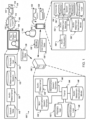
- FIG. 1 illustrates an example system 100 for suppressing hotword triggers when detecting a "hotword” in recorded media.
- the computing device 104 outputs an utterance 108 that includes an audio watermark 116 and an utterance of a predefined hotword 110.
- the computing device 102 detects the utterance 108 and determines that the utterance 108 includes the audio watermark 134 by using an audio watermark identification model 158. Based on the utterance 108 including the audio watermark 134, the computing device 102 does not respond to the predefined hotword 110.
- the computing device 104 is playing a commercial for Nugget World.
- an actor in the commercial says the utterance 108, "Ok computer, what's in a nugget?"
- the utterance 108 includes the hotword 110 "Ok computer” and a query 112 that includes other terms of "what's in a nugget?"
- the computing device 104 outputs the utterance 108 through a loudspeaker. Any computing device in the vicinity with a microphone is able to detect the utterance 108.
- the audio of the utterance 108 includes a speech portion 114 and an audio watermark 116.
- the creator of the commercial adds the audio watermark 116 to ensure computing devices that detect the utterance 108 do not respond to the hotword 110.
- the audio watermark 116 may include audio frequencies that are higher or lower than the human hearing range.
- the audio watermark 116 may include frequencies that are greater than 20 kHz or less than 20 Hz.
- the audio watermark 116 may include audio that is within the human hearing range but is not detectable by humans because of its sounds similar to noise.
- the audio watermark 116 may include a frequency pattern between 8 and 10 kHz.
- the strength of different frequency bands may be imperceptible to a human, but may be detectable by a computing device.
- the utterance 108 includes an audio watermark 116 that is in a higher frequency range than the audible portion 114.
- the computing device 104 may use an audio watermarker 120 to add a watermark to speech data 118.
- the speech data 118 may be the recorded utterance 108 of "Ok computer, what's in a nugget?"
- the audio watermarker 120 may add a watermark at periodic intervals in the speech data 118. For example, the audio watermarker 120 may add a watermark every two hundred milliseconds.
- the computing device 104 may identify the portion of the speech data 118 that includes the hotword 110, for example, by performing speech recognition.
- the audio watermarker 120 may add periodic watermarks over the audio of the hotword 110, before the hotword 110, and/or after the hotword 110. For example, the audio watermarker 120 can add three (or any other number) watermarks at periodic intervals over the audio of "ok computer.”
- each watermark 120 is different for each speech data sample.
- the audio watermarker 120 may add an audio watermark every two or three hundred milliseconds to the audio of utterance 108 and add a different or the same audio watermark every two or three hundred milliseconds to audio of the utterance, "Ok computer, order a cheese pizza.”
- the audio watermarker 120 may generate a watermark for each audio sample such that the watermark minimizes distortion of the audio sample. This may be important because the audio watermarker 120 may add watermarks that are within the frequency range that humans can detect.
- the computing device 104 may store the watermarked audio samples in the watermarked speech 112 for later output by the computing device 104.
- each time the computing device 104 outputs watermarked audio the computing device 104 may store data indicating the outputted audio in the playback logs 124.
- the playback logs 124 may include data identifying any combination of the outputted audio 108, the date and time of outputting the audio 108, the computing device 104, the location of the computing device 104, a transcription of the audio 108, and the audio 108 without the watermark.
- the computing device 102 detects the utterance 108 through a microphone.
- the computing device 102 may be any type of device that is capable of receiving audio.
- computing device 102 can be a desktop computer, laptop computer, a tablet computer, a wearable computer, a cellular phone, a smart phone, a music player, an e-book reader, a navigation system, a smart speaker and home assistant, wireless (e.g., Bluetooth) headset, hearing aid, smart watch, smart glasses, activity tracker, or any other appropriate computing device.
- computing device 102 is a smart phone.
- the computing device 104 can be any device capable of outputting audio such as, for example, a television, a radio, a music player, a desktop computer, laptop computer, a tablet computer, a wearable computer, a cellular phone, or a smart phone. As illustrated in FIG. 1 , the computing device 104 is a television.
- the microphone of computing device 102 may be part of an audio subsystem 150.
- the audio subsystem 150 may include buffers, filters, analog to digital converters that are each designed to initially process the audio received through the microphone.
- the buffer may store the current audio received through the microphone and processed by the audio subsystem 150. For example, the buffer stores the previous five seconds of audio data.
- the computing device 102 includes an audio watermark identifier 152.
- the audio watermark identifier 152 is configured to process the audio received through the microphone and/or stored in the buffer and identify audio watermarks that are included in the audio.
- the audio watermark identifier 152 may be configured to provide the processed audio as an input to the audio watermark identification model 158.
- the audio watermark identification model 158 may be configured to receive audio data and output data indicating whether the audio data includes a watermark.
- the audio watermark identifier 152 may continuously provide audio processed through the audio subsystem 150 to the audio watermark identification model 158. As the audio watermark identifier 152 provides more audio, the accuracy of the audio watermark identification model 158 may increase.
- the audio watermark identification model 158 may have received audio that includes one watermarks. After five hundred milliseconds, the audio watermark identification model 158 may have received audio that includes two watermarks. In an embodiment where the watermarks in any one audio sample are all identical to one another, the audio watermark identification model 158 can improve its accuracy by processing more audio.
- the audio watermark identifier 152 may be configured to remove any detected watermark from the audio received from the audio subsystem 150. After removing the watermark, the audio watermark identifier 152 may provide audio without the watermark to the hotworder 154 and/or the speech recognizer 162. In some implementations, the audio watermark identifier 152 may be configured to pass the audio received from the audio subsystem 150 to the hotworder 154 and/or the speech recognizer 162 without removing the watermark.
- the hotworder 154 is configured to identify hotwords in audio received through the microphone and/or stored in the buffer. In some implementations, the hotworder 154 may be active at any time that the computing device 102 are powered on. The hotworder 154 may continuously analyze the audio data stored in the buffer. The hotworder 154 computes a hotword confidence score that reflects the likelihood that current audio data in the buffer includes a hotword. To compute the hotword confidence score, the hotworder 154 may extract audio features from the audio data such as filterbank energies or mel-frequency cepstral coefficients. The hotworder 154 may use classifying windows to process these audio features such as by using a support vector machine or a neural network.
- the hotworder 154 does not perform speech recognition to determine a hotword confidence score (for example by comparing extracted audio features from the received audio with corresponding audio features for one or more of hotwords, but without using the extracted audio features to perform speech recognition on the audio data).
- the hotworder 154 determines that the audio includes a hotword if the hotword confidence score satisfies a hotword confidence score threshold. For example, the hotworder 154 determines that the audio that corresponds to utterance 108 includes the hotword 110 if the hotword confidence score is 0.8 and the hotword confidence score threshold is 0.7.
- the hotword may be referred to as a wake up word or an attention word.
- the speech recognizer 162 may perform any type of process that generates a transcription based on incoming audio. For example, the speech recognizer 162 may user an acoustic model to identify phonemes in the audio data in the buffer. The speech recognizer 162 may use a language model to determine a transcription that corresponds to the phonemes. As another example, the speech recognizer 162 may use a single model that processes the audio data in the buffer and outputs a transcription.
- the audio watermark identifier 152 may deactivate the speech recognizer 162 and/or the hotworder 154. By deactivating the speech recognizer 162 and/or the hotworder 154, the audio watermark identifier 152 may prevent further processing of the audio that may trigger the computing device 102 to respond to the hotword 110 and/or the query 112. As illustrated in FIG. 1 , the audio watermark identifier 152 sets the hotworder 154 to an inactive state 156 and the speech recognizer 162 to an inactive state 160.
- the default state of the hotworder 154 may be an active state and the default state of the speech recognizer 162 may be an active state.
- the inactive state 156 and the inactive state 160 may expire after a predetermined amount of time. For example, after five seconds (or another predetermined amount of time), the states of both the hotworder 154 and the speech recognizer 162 may return to an active state. The five second period may renew each time the audio watermark identifier 152 detects an audio watermark.
- the hotworder 154 and the speech recognizer 162 may be set to the inactive state 156 and the inactive state 160 and may remain in that state for an additional five seconds after the end of the computing device 104 outputting the utterance 108.
- the hotworder 154 and the speech recognizer 162 may be set to the inactive state 156 and the inactive state 160 and may remain in that state for an additional five seconds after the computing device 104 outputs the hotword 110, which will overlap outputting of the query 112.
- the audio watermark identifier 152 may store data in the identification logs 164 that indicates a date and time that the audio watermark identifier 152 identified a watermark.
- the audio watermark identifier 152 may identify a watermark in the audio of utterance 108 at 3:15pm on June 10, 2019.
- the identification logs 164 may store data identifying any combination of the time and date of receipt of the watermark, the transcription of the utterance that includes the watermark 134, the computing device 102, the watermark 134, the location of the computing device 102 when detecting the watermark, the underlying audio 132, the combined audio and watermark, and any audio detected a period of time before or after the utterance 108 or the watermark 134.
- audio watermark identifier 152 may store data in the identification logs 164 that indicates a date and time that the audio watermark identifier 152 did not identify a watermark and the hotworder 154 identified a hotword. For example, at 7:15pm on June 20, 2019 the audio watermark identifier 152 may not identify a watermark in the audio of an utterance, and the hotworder 154 may identify a hotword in the audio of the utterance.
- the identification logs 164 may store data identifying any combination of the time and date of receipt of the non-watermarked audio and the hotword, the transcription of the utterance, the computing device 102, the location of the computing device, the audio detected a period of time before or after the utterance or the hotword.
- the hotworder 154 may process the audio received from the audio subsystem 150 before, after, or concurrently with the audio watermark identifier 152.
- the audio watermark identifier 152 may determine that the audio of the utterance 108 includes a watermark, and, at the same time, the hotworder 154 may determine that the audio of the utterance 108 includes a hotword.
- the audio watermark identifier 152 may set the state of the speech recognizer 162 to the inactive state 160. The audio watermark identifier 152 may not be able to update the state 156 of the hotworder 154.
- the computing device 106 before the audio watermark identifier 152 uses the audio watermark identification model 158, the computing device 106 generates the watermark identification model 130 and provides the watermark identification data 130 to the computing device 102.
- the computing device 106 uses non-watermarked speech samples 136, an audio watermarker 138, and a trainer 144 that uses machine learning to generate the audio watermark identification models 148.
- the non-watermarked speech samples 136 may include various speech samples collected under various conditions.
- the non-watermarked speech samples 136 may include audio samples of different users saying different terms, saying the same terms, saying terms with different types of background noise, saying terms in different languages, saying terms in different accents, saying terms recorded by different devices, etc.
- the non-watermarked speech samples 136 each include an utterance of a hotword. In some implementations, only some of the non-watermarked speech samples 136 include an utterance of a hotword.
- the audio watermarker 138 may generate a different watermark for each non-watermarked speech sample.
- the audio watermarker 138 may generate one or more watermarked speech samples 140 for each non-watermarked speech sample. Using the same non-watermarked speech sample, the audio watermarker 138 may generate a watermarked speech sample that includes watermarks every two hundred milliseconds and another watermarked speech sample that includes watermarks every three hundred milliseconds.
- the audio watermarker 138 may also generate a watermarked speech sample that includes watermarks only overlapping the hotword, if present.
- the audio watermarker 138 may also generate a watermarked speech sample that includes watermarks that overlap the hotword and precede the hotword.
- the audio watermarker 138 can make four different watermarked speech samples with the same non-watermarked speech sample.
- the audio watermarker 138 can also make more or less than four.
- the audio watermarker 138 may operate similarly to the audio watermarker 120.
- the trainer 144 uses machine learning and training data that includes the non-watermarked speech samples 136 and the watermarked speech samples 140 to generate the audio watermark identification model 148. Because the non-watermarked speech samples 136 and the watermarked speech samples 140 are labeled as including a watermark or not including a watermark, the trainer 148 can use training data that includes the non-watermarked speech samples 136 and labels that indicate that each sample does not include a watermark and the watermarked speech samples 140 and labels that indicate that each sample includes a watermark. The trainer 144, uses machine learning, to generate the audio watermark identification model 148 to be able to receive an audio sample and output whether the audio sample includes a watermark.
- the computing device 106 can access the audio watermark identification model 148 and provide the model 128 to the computing device 102 to use in processing received audio data.
- the computing device 102 can store the model 128 in the audio watermark identification model 158.
- the computing device 106 may update the audio watermark identification model 148 based on the playback logs 142 and the identification logs 146.
- the playback logs 142 may include data such as the playback data 126 received from the computing device 104 and stored in the playback logs 124.
- the playback logs 142 may include playback data from multiple computing devices that have outputted watermarked audio.
- the identification logs 146 may include data such as the identification data 130 received from the computing device 102 and stored in identification logs 164.
- the identification logs 146 may include additional identification data from multiple computing devices that are configured to identify audio watermarks and prevent execution of any command or queries included in the watermarked audio.
- the trainer 144 may compare the playback logs 142 and the identification logs 146 to identify the matching entries that indicate that a computing device outputted watermarked audio and another computing device identified the watermark in the watermarked audio.
- the trainer 144 may also identify watermark identification errors in the identification logs 146 and the playback logs 142.
- a first type of watermark identification error may occur when the identification logs 146 indicate that a computing device identifies a watermark, but the playback logs 142 do not indicate the output of watermarked audio.
- a second type of watermark identification error may occur when the playback logs 142 indicate the output of watermarked audio, but the identification logs 146 indicate that a computing device in the vicinity of the watermarked audio did not identify the watermark.
- the trainer 144 may update the errors and use the corresponding audio data as additional training data to update the audio watermark identification model 148.
- the trainer 144 may also update the audio watermark identification model 148 using the audio where the computing devices properly identified the watermarks.
- the trainer 144 may use both the audio outputted by the computing devices and the audio detected by the computing devices as training data.
- the trainer 144 may update the audio watermark identification model 148 using machine learning and the audio data stored in the playback logs 142 and the identification logs 146.
- the trainer 144 may use the watermarking labels provided in the playback logs 142 and identification logs 146 and the corrected labels from the error identification technique described above as part of the machine learning training process.
- the computing device 102 and several other computing devices may be configured to transmit the audio 115 to a server for processing by a server-based hotworder and/or a server-based speech recognizer that are running on the server.
- the audio watermark identifier 152 may indicate that the audio 115 does not include an audio watermark. Based on that determination, the computing device 102 may transmit the audio to the server for further processing by the server-based hotworder and/or the server-based speech recognizer.
- the audio watermark identifiers of the several other computing devices may also indicate that the audio 115 does not include an audio watermark. Based on those determinations, each of the other computing devices may transmit their respective audio to the server for further processing by the server-based hotworder and/or the server-based speech recognizer.
- the server may determine whether audio from each computing device includes a hotword and/or generate a transcription of the audio and transmit the results back to each computing device.
- the server may receive data indicating a watermark confidence score for each of the watermark decisions.
- the server may determine that the audio received the by the computing device 102 and the other computing devices is from the same source based on the location of the computing device 102 and the other computing devices, characteristics of the received audio, receiving each audio portion at a similar time, and any other similar indicators.
- each of the watermark confidence scores may be within a particular range that includes a watermark confidence score threshold on one end of the range and another confidence score that may be a percentage difference from the watermark confidence score threshold, such as five percent less.
- the range may be the watermark confidence score threshold of 0.80 to 0.76.
- the other end of the range may be a fixed distance from the watermark confidence score threshold, such as 0.05.
- the range may be the watermark confidence score threshold of 0.80 to 0.75.
- the server may determine that the watermark confidence score threshold should be adjusted. In this instance, the server may adjust the watermark confidence score threshold to the lower end of the range.
- the server may update the watermarked speech samples 140 by including the audio received from each computing device in the watermarked speech samples 140.
- the trainer 144 may update the audio watermark identification model 148 using machine learning and the updated watermarked speech samples 140.
- FIG. 1 illustrates three different computing devices performing the different functions described above
- any combination of one or more computing devices can perform any combination of the functions.
- the computing device 102 may train the audio watermark identification model 148 instead of a separate computing device 106 training the audio watermark identification model 148.
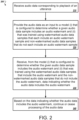
- FIG. 2 illustrates an example process 200 for suppressing hotword triggers when detecting a hotword in recorded media.
- the process 200 processes received audio to determine whether the audio includes an audio watermark. If the audio includes an audio watermark, then the process 200 may suppress further processing of the audio. If the audio does not include an audio watermark, then the process 200 continues to process the audio and execute any query or command included in the audio.
- the process 200 will be described as being performed by a computer system comprising one or more computers, for example, the computing devices 102, 104, and/or 106 as shown in FIG. 1 .
- the system receives audio data corresponding to playback of an utterance (210). For example, a television may be playing a commercial and an actor in the commercial may say, "Ok computer, turn on the lights.”
- the system includes a microphone, and the microphone detects the audio of the commercial including the utterance of the actor.
- the system provides the audio data as an input to a model (i) that is configured to determine whether a given audio data sample includes an audio watermark and (ii) that was trained using watermarked audio data samples that each include an audio watermark sample and non-watermarked audio data samples that do not each include an audio watermark sample (220).
- the system may determine that the audio data includes a hotword. Based on detecting the hotword, the system provides the audio data as an input to the model. For example, the system may determine that the audio data include "ok computer.” Based on detecting "ok computer,” the system provides the audio data to the model. The system may provide the portion of the audio data that included the hotword and the audio received after the hotword. In some instances, the system may provide a portion of audio from before the hotword.
- the system may analyze the audio data to determine whether the audio data includes a hotword. The analysis may occur before or after providing the audio data as an input to the model.
- the system may train the model using machine learning and watermarked audio data samples that each include an audio watermark, non-watermarked audio data samples that do not each include an audio watermark, and data indicating whether each watermarked and non-watermarked audio sample includes an audio watermark. The system may train the model to output data indicating whether audio input to the model includes a watermark or does not include a watermark.
- different watermarked audio signals may include different watermarks from one another (the watermarks in any one audio sample may be all identical to one another, but with watermarks in one audio signal being different to watermarks in another audio signal).
- the system may generate a different watermark for each audio signal to minimize distortion in the audio signal.
- the system may place the watermark at periodic intervals in the audio signal. For example, the system may place the watermark every two hundred milliseconds. In some implementations, the system may place the watermark over the audio that includes the hotword and/or a period of time before the hotword.
- the system receives, from the model (i) that is configured to determine whether the given audio data sample includes the audio watermark and (ii) that was trained using the watermarked audio data samples that include the audio watermark and the non-watermarked audio data samples that do not include the audio watermark, data indicating whether the audio data includes the audio watermark (230).
- the system may receive an indication that the audio data includes a watermark or receive an indication that the audio data does not include a watermark.
- the system continues or ceases processing of the audio data (240).
- the system may cease processing of the audio data if the audio data includes the audio watermark.
- the system may continue processing of the audio data if the audio data does not include an audio watermark.
- the processing of the audio data may include performing speech recognition on the audio data and/or determining whether the audio data includes a hotword.
- the processing may include executing a query or command included in the audio data.
- the system logs the time and date that the system received the audio data.
- the system may compare the time and date to a time and date received from the computing device that output the audio data. If the system determines that the date and time of the receipt of the audio data match the date and time of outputting the audio data, then the system may update the model using the audio data as additional training data. The system may identify whether the model was correct in determining whether the audio data included a watermark, and ensure that the audio data includes the correct watermark label when added to the training data.
- a software agent that can perform tasks for a user is generally referred to as a "virtual assistant".
- a virtual assistant may for example be actuated by voice input from the user - for example may be programmed to recognize one or more trigger words that, when spoken by the user, cause the virtual assistant to be activated and perform a task associated with the trigger word that has been spoken. Such a trigger word is often referred to as a "hotword”.
- a virtual assistant may be provided on, for example, a user's computer mobile telephone or other user device. Alternatively, a virtual assistant may be integrated into another device, such as a so-called “smart speaker” (a type of wireless speaker with an integrated virtual assistant that offers interactive actions and hands-free activation with the help of one or more hotwords).
- DOS denial-of-service
- Two possible mechanisms for filtering of false hotwords are those based on (1) audio fingerprinting, where the fingerprint from the query audio is checked against a database of fingerprints from known audio, like advertisements, to filter out false triggers, and (2) audio watermarking, where the audio is watermarked by the publisher and the query recorded by the virtual assistant is checked for the watermark for filtering.
- This disclosure describes the design of a low-latency, small footprint watermark detector which uses convolutional neural networks.
- This watermark detector is trained to be robust to noisy and reverberant environments which may be frequent in the scenario-of-interest.
- Audio watermarking may be used in copyright protection and second screen applications.
- copyright protection watermark detection generally does not need to be latency sensitive as the entire audio signal is available for detection.
- second screen applications delays introduced due to high latency watermark detection may be tolerable. Unlike these two scenarios watermark detection in virtual assistants is very latency sensitive.
- the embedded message constituting the watermark is typically unknown ahead of time, and the watermark detector has to decode the message sequence before it can determine whether the message sequence includes a watermark and, if so, determine the watermark.
- the watermark detector may be detecting a watermark pattern which is exactly known by the decoder/watermark detector. That is the publisher or provider of rerecorded speech content may watermark this with a watermark, and may make details of the watermark available to, for example, providers of a virtual assistant and/or providers of devices that include a virtual assistant. Similarly, the provider of a virtual assistant may arrange for speech output from the virtual assistant to be provided with a watermark and make details of the watermark available.
- Some implementations for hotword suppression utilize the audio fingerprinting approach.
- This approach requires a fingerprint database of known audio. As maintenance of this database on the device is non-trivial on-device deployment of such solutions are not viable.
- a significant advantage of audio fingerprinting approach is that it may not require modifications to the audio publishing process. Hence, it can tackle even adversarial scenarios where the audio publisher is not a collaborator.
- the hotword suppression mechanism may use an on-device deployment that brings in the design constraints of memory and computation footprints. Further there is a constraint on latency to avoid impact on the user experience.
- Watermark based approaches may require modification of the audio publishing process to add the watermark. Hence, they can sometimes only be used to detect audio published by collaborators. However, they may not require the maintenance of fingerprint databases. This feature enables several advantages.
- a first advantage may be the feasibility of on-device deployment. This can be an advantage during high viewership events when several virtual assistants can get simultaneously triggered. Server based solutions for detecting these false triggers can lead to denial of service due to the scale of simultaneous triggers.
- a second advantage may be detection of unknown audio published by a collaborator, e.g., text-to-speech (TTS) synthesizer output where the publisher can be collaborative, but the audio is not known ahead of time.
- TTS text-to-speech
- a third advantage may be scalability. Entities such as audio/video publishers on online platforms can watermark their audio to avoid triggering the virtual assistants. In some implementations, these platforms host several million hours of content which cannot be practically handled using the audio fingerprinting based approaches.
- the watermark based approach described herein can be combined with the audio fingerprinting based approach which may have the ability to tackle adversarial agents.
- the watermark embedder may be based on spread spectrum based watermarking in the FFT domain.
- the watermark embedder may use a psychoacoustic model to estimate the minimum masking threshold (MMT) which is used to shape the amplitude of watermark signal.
- MMT minimum masking threshold
- regions of the host signal amenable for watermark addition are selected based on a minimum energy criterion.
- Discrete Fourier transform (DFT) coefficients are estimated for every host signal frame (25 ms windows - 12.5 ms hop) in these regions. These DFT coefficients are used to estimate the minimum masking threshold (MMT) using the psychoacoustic model.
- MMT minimum masking threshold
- FIG. 3 presents the estimated MMT, along with the host signal energy and absolute threshold of hearing.
- the phase of the host signal may be used for the watermark signal and the sign of the DFT coefficients is determined from the message payload.
- the message bit payload may be spread over a chunk of frames using multiple scrambling.
- the system may be detecting if a query is watermarked and may not have to transmit any payload.
- the system may randomly choose a sign matrix over a chunk of frames (e.g., 16 frames or 200 ms) and repeat this sign matrix across the watermarking region. This repetition of the sign matrix may be exploited to post-process the watermark detector output and improve the detection performance. Overlap add of the individual watermark frames may generate the watermark signal.
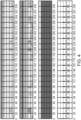
- Subplots (a) and (b) of FIG. 2 represent the magnitude spectra of the host signal and the watermark signal, and subplot (c) represents the sign matrix.
- the vertical lines represent the boundaries between two replications of the matrix.
- the watermark signal may be added to the host signal in the time domain, after scaling it by a factor (e.g., ⁇ ⁇ [0, 1]), to further ensure inaudibility of the watermark.
- ⁇ is determined iteratively using objective evaluation metrics like Perceptual Evaluation of Audio Quality (PEAQ).
- PEAQ Perceptual Evaluation of Audio Quality
- the system may use conservative scaling factors (e.g., ⁇ ⁇ ⁇ 0.1, 0.2, 0.3, 0.4, 0.5 ⁇ ) and evaluate detection performance at each of these scaling factors.
- a design requirement for the watermark detector may be on-device deployment that places significant constraints on both the memory footprint of the model and its computational complexity.
- the description below describes convolutional neural network based model architectures for on-device keyword detection.
- the system may use temporal convolutional neural networks.
- the neural network is trained to estimate the cross-correlation of the embedded watermark sign matrix ( FIG. 4 , subplot (c)) which may be a replication of the same 200 ms pattern with one instance of the 200 ms pattern.
- Subplot (d) in FIG. 4 shows the cross-correlation.
- Cross correlation may encode information about the start of each sign matrix block and may non-zero for the entire duration of the watermark signal within the host signal.
- the system may train the neural network using a multi-task loss function.
- the primary task may be the estimation of the ground truth cross-correlation
- the auxiliary tasks may be the estimation of energy perturbation pattern and/or the watermark magnitude spectra.
- Mean square error may be computed between the ground-truth(s) and network output(s). Some or all of the losses may be interpolated after scaling the auxiliary losses with regularization constants. In some implementations, bounding each network output to just cover the dynamic range of the corresponding ground-truth may improve performance.
- the system may post process network outputs.
- the watermark may not have a payload message and a single sign matrix is replicated throughout the watermarking region. This may result in a cross-correlation pattern which is periodic ( FIG. 4 , subplot (d)). This aspect can be exploited to eliminate spurious peaks in the network outputs.
- the system may use a match-filter created by replicating the cross-correlation pattern (see FIG. 6 ) over band-pass filters isolating the frequency of interest.
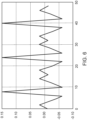
- FIG. 7 compares the network outputs, generated for a non-watermarked signal, before and after match-filtering.
- the ground truth 705 may be approximately 0.0 (e.g., between -0.01 and 0.01) and may track the x-axis more closely than the network output 710 and the match filtered network output 720.
- the network output 710 may vary with respect to the x-axis more than the ground truth 705 and the match filtered network output 720.
- the match filtered network output 720 may track the x-axis more closely than the network output 710 and may not track the x-axis as closely as the ground truth 705.
- the match filtered network output 720 may be smoother than the network output 710.
- the match filtered network output 720 may remain within a smaller range than the network output 710. For example, the match filtered network output 720 may stay between -0.15 and 0.15.
- the network output 710 may stay between -0.30 and 0.60.
- the neural network may be used in a method of determining whether a given audio data sample includes an audio watermark, by applying a model embodying the neural network to an audio data sample.
- the method may include determining a confidence score that reflects a likelihood that the audio data includes the audio watermark; comparing the confidence score that reflects the likelihood that the audio data includes the audio watermark to a confidence score threshold; and based on comparing the confidence score that reflects the likelihood that the audio data includes the audio watermark to the confidence score threshold, determining whether to perform additional processing on the audio data.
- the method comprises: based on comparing the confidence score that reflects the likelihood that the audio data includes the audio watermark to the confidence score threshold, determining that the confidence score satisfies the confidence score threshold, wherein determining whether to perform additional processing on the audio data, comprises determining to suppress performance of the additional processing on the audio data.
- the method comprises: based on comparing the confidence score that reflects the likelihood that the utterance includes the audio watermark to the confidence score threshold, determining that the confidence score does not satisfy the confidence score threshold, wherein determining whether to perform additional processing on the audio data, comprises determining to perform the additional processing on the audio data.
- the method comprises: receiving, from a user, data confirming performance of the additional processing on the audio data; and based on receiving the data confirming performance of the additional processing on the audio data, updating the model.
- the additional processing on the audio data comprises performing an action based on a transcription of the audio data; or determining whether the audio data includes a particular, predefined hotword.
- the method comprises: before applying, to the audio data, the model (i) that is configured to determine whether the given audio data sample includes the audio watermark and (ii) that was trained using the watermarked audio data samples that include the audio watermark and the non-watermarked audio data samples that do not include the audio watermark, determining that the audio data includes a particular, predefined hotword.
- the method comprises: determining that the audio data includes a particular, predefined hotword, wherein applying, to the audio data, the model (i) that is configured to determine whether the given audio data sample includes the audio watermark and (ii) that was trained using watermarked audio data samples that include the audio watermark and non-watermarked audio data samples that do not include the audio watermark is in response to determining that the audio data includes the particular, predefined hotword.
- the method comprises: receiving the watermarked audio data samples that include the audio watermark and the non-watermarked audio data samples that do not include the audio watermark; and training, using machine learning, the model using the watermarked audio data samples that include the audio watermark and the non-watermarked audio data samples that do not include the audio watermark.
- the method comprises: at least a portion of the watermarked audio data samples include the audio watermark at multiple, periodic locations.
- FIG. 8 shows an example of a computing device 800 and a mobile computing device 850 that can be used to implement the techniques described here.
- the computing device 800 is intended to represent various forms of digital computers, such as laptops, desktops, workstations, personal digital assistants, servers, blade servers, mainframes, and other appropriate computers.
- the mobile computing device 850 is intended to represent various forms of mobile devices, such as personal digital assistants, cellular telephones, smart-phones, and other similar computing devices.
- the components shown here, their connections and relationships, and their functions, are meant to be examples only, and are not meant to be limiting.
- the computing device 800 includes a processor 802, a memory 804, a storage device 806, a high-speed interface 808 connecting to the memory 804 and multiple high-speed expansion ports 810, and a low-speed interface 812 connecting to a low-speed expansion port 814 and the storage device 806.
- Each of the processor 802, the memory 804, the storage device 806, the high-speed interface 808, the high-speed expansion ports 810, and the low-speed interface 812 are interconnected using various buses, and may be mounted on a common motherboard or in other manners as appropriate.
- the processor 802 can process instructions for execution within the computing device 800, including instructions stored in the memory 804 or on the storage device 806 to display graphical information for a GUI on an external input/output device, such as a display 816 coupled to the high-speed interface 808.
- an external input/output device such as a display 816 coupled to the high-speed interface 808.
- multiple processors and/or multiple buses may be used, as appropriate, along with multiple memories and types of memory.
- multiple computing devices may be connected, with each device providing portions of the necessary operations (e.g., as a server bank, a group of blade servers, or a multi-processor system).
- the memory 804 stores information within the computing device 800.
- the memory 804 is a volatile memory unit or units.
- the memory 804 is a non-volatile memory unit or units.
- the memory 804 may also be another form of computer-readable medium, such as a magnetic or optical disk.
- the storage device 806 is capable of providing mass storage for the computing device 800.
- the storage device 806 may be or contain a computer-readable medium, such as a floppy disk device, a hard disk device, an optical disk device, or a tape device, a flash memory or other similar solid state memory device, or an array of devices, including devices in a storage area network or other configurations.
- Instructions can be stored in an information carrier.
- the instructions when executed by one or more processing devices (for example, processor 802), perform one or more methods, such as those described above.
- the instructions can also be stored by one or more storage devices such as computer- or machine-readable mediums (for example, the memory 804, the storage device 806, or memory on the processor 802).
- the high-speed interface 808 manages bandwidth-intensive operations for the computing device 800, while the low-speed interface 812 manages lower bandwidth-intensive operations. Such allocation of functions is an example only.
- the high-speed interface 808 is coupled to the memory 804, the display 816 (e.g., through a graphics processor or accelerator), and to the high-speed expansion ports 810, which may accept various expansion cards.
- the low-speed interface 812 is coupled to the storage device 806 and the low-speed expansion port 814.
- the low-speed expansion port 814 which may include various communication ports (e.g., USB, Bluetooth, Ethernet, wireless Ethernet) may be coupled to one or more input/output devices, such as a keyboard, a pointing device, a scanner, or a networking device such as a switch or router, e.g., through a network adapter.
- input/output devices such as a keyboard, a pointing device, a scanner, or a networking device such as a switch or router, e.g., through a network adapter.
- the computing device 800 may be implemented in a number of different forms, as shown in the figure. For example, it may be implemented as a standard server 820, or multiple times in a group of such servers. In addition, it may be implemented in a personal computer such as a laptop computer 822. It may also be implemented as part of a rack server system 824. Alternatively, components from the computing device 800 may be combined with other components in a mobile device, such as a mobile computing device 850. Each of such devices may contain one or more of the computing device 800 and the mobile computing device 850, and an entire system may be made up of multiple computing devices communicating with each other.
- the mobile computing device 850 includes a processor 852, a memory 864, an input/output device such as a display 854, a communication interface 866, and a transceiver 868, among other components.
- the mobile computing device 850 may also be provided with a storage device, such as a micro-drive or other device, to provide additional storage.
- a storage device such as a micro-drive or other device, to provide additional storage.
- Each of the processor 852, the memory 864, the display 854, the communication interface 866, and the transceiver 868, are interconnected using various buses, and several of the components may be mounted on a common motherboard or in other manners as appropriate.
- the processor 852 can execute instructions within the mobile computing device 850, including instructions stored in the memory 864.
- the processor 852 may be implemented as a chipset of chips that include separate and multiple analog and digital processors.
- the processor 852 may provide, for example, for coordination of the other components of the mobile computing device 850, such as control of user interfaces, applications run by the mobile computing device 850, and wireless communication by the mobile computing device 850.
- the processor 852 may communicate with a user through a control interface 858 and a display interface 856 coupled to the display 854.
- the display 854 may be, for example, a TFT (Thin-Film-Transistor Liquid Crystal Display) display or an OLED (Organic Light Emitting Diode) display, or other appropriate display technology.
- the display interface 856 may comprise appropriate circuitry for driving the display 854 to present graphical and other information to a user.
- the control interface 858 may receive commands from a user and convert them for submission to the processor 852.
- an external interface 862 may provide communication with the processor 852, so as to enable near area communication of the mobile computing device 850 with other devices.
- the external interface 862 may provide, for example, for wired communication in some implementations, or for wireless communication in other implementations, and multiple interfaces may also be used.
- the memory 864 stores information within the mobile computing device 850.
- the memory 864 can be implemented as one or more of a computer-readable medium or media, a volatile memory unit or units, or a non-volatile memory unit or units.
- An expansion memory 874 may also be provided and connected to the mobile computing device 850 through an expansion interface 872, which may include, for example, a SIMM (Single In Line Memory Module) card interface.
- SIMM Single In Line Memory Module
- the expansion memory 874 may provide extra storage space for the mobile computing device 850, or may also store applications or other information for the mobile computing device 850.
- the expansion memory 874 may include instructions to carry out or supplement the processes described above, and may include secure information also.
- the expansion memory 874 may be provided as a security module for the mobile computing device 850, and may be programmed with instructions that permit secure use of the mobile computing device 850.
- secure applications may be provided via the SIMM cards, along with additional information, such as placing identifying information on the SIMM card in a non-hackable manner.
- the memory may include, for example, flash memory and/or NVRAM memory (non-volatile random access memory), as discussed below.
- instructions are stored in an information carrier. that the instructions, when executed by one or more processing devices (for example, processor 852), perform one or more methods, such as those described above.
- the instructions can also be stored by one or more storage devices, such as one or more computer- or machine-readable mediums (for example, the memory 864, the expansion memory 874, or memory on the processor 852).
- the instructions can be received in a propagated signal, for example, over the transceiver 868 or the external interface 862.
- the mobile computing device 850 may communicate wirelessly through the communication interface 866, which may include digital signal processing circuitry where necessary.
- the communication interface 866 may provide for communications under various modes or protocols, such as GSM voice calls (Global System for Mobile communications), SMS (Short Message Service), EMS (Enhanced Messaging Service), or MMS messaging (Multimedia Messaging Service), CDMA (code division multiple access), TDMA (time division multiple access), PDC (Personal Digital Cellular), WCDMA (Wideband Code Division Multiple Access), CDMA2000, or GPRS (General Packet Radio Service), among others.
- GSM voice calls Global System for Mobile communications
- SMS Short Message Service
- EMS Enhanced Messaging Service
- MMS messaging Multimedia Messaging Service
- CDMA code division multiple access
- TDMA time division multiple access
- PDC Personal Digital Cellular
- WCDMA Wideband Code Division Multiple Access
- CDMA2000 Code Division Multiple Access
- GPRS General Packet Radio Service
- a GPS (Global Positioning System) receiver module 870 may provide additional
- the mobile computing device 850 may also communicate audibly using an audio codec 860, which may receive spoken information from a user and convert it to usable digital information.
- the audio codec 860 may likewise generate audible sound for a user, such as through a speaker, e.g., in a handset of the mobile computing device 850.
- Such sound may include sound from voice telephone calls, may include recorded sound (e.g., voice messages, music files, etc.) and may also include sound generated by applications operating on the mobile computing device 850.
- the mobile computing device 850 may be implemented in a number of different forms, as shown in the figure. For example, it may be implemented as a cellular telephone 880. It may also be implemented as part of a smart-phone 882, personal digital assistant, or other similar mobile device.
- implementations of the systems and techniques described here can be realized in digital electronic circuitry, integrated circuitry, specially designed ASICs (application specific integrated circuits), computer hardware, firmware, software, and/or combinations thereof.
- ASICs application specific integrated circuits
- These various implementations can include implementation in one or more computer programs that are executable and/or interpretable on a programmable system including at least one programmable processor, which may be special or general purpose, coupled to receive data and instructions from, and to transmit data and instructions to, a storage system, at least one input device, and at least one output device.
- machine-readable medium and computer-readable medium refer to any computer program product, apparatus and/or device (e.g., magnetic discs, optical disks, memory, Programmable Logic Devices (PLDs)) used to provide machine instructions and/or data to a programmable processor, including a machine-readable medium that receives machine instructions as a machine-readable signal.
- machine-readable signal refers to any signal used to provide machine instructions and/or data to a programmable processor.
- the systems and techniques described here can be implemented on a computer having a display device (e.g., a CRT (cathode ray tube) or LCD (liquid crystal display) monitor) for displaying information to the user and a keyboard and a pointing device (e.g., a mouse or a trackball) by which the user can provide input to the computer.
- a display device e.g., a CRT (cathode ray tube) or LCD (liquid crystal display) monitor
- a keyboard and a pointing device e.g., a mouse or a trackball
- Other kinds of devices can be used to provide for interaction with a user as well; for example, feedback provided to the user can be any form of sensory feedback (e.g., visual feedback, auditory feedback, or tactile feedback); and input from the user can be received in any form, including acoustic, speech, or tactile input.
- the systems and techniques described here can be implemented in a computing system that includes a back end component (e.g., as a data server), or that includes a middleware component (e.g., an application server), or that includes a front end component (e.g., a client computer having a graphical user interface or a Web browser through which a user can interact with an implementation of the systems and techniques described here), or any combination of such back end, middleware, or front end components.
- the components of the system can be interconnected by any form or medium of digital data communication (e.g., a communication network). Examples of communication networks include a local area network (LAN), a wide area network (WAN), and the Internet.
- LAN local area network
- WAN wide area network
- the Internet the global information network
- the computing system can include clients and servers.
- a client and server are generally remote from each other and typically interact through a communication network.
- the relationship of client and server arises by virtue of computer programs running on the respective computers and having a client-server relationship to each other.
Landscapes
- Engineering & Computer Science (AREA)
- Human Computer Interaction (AREA)
- Multimedia (AREA)
- Physics & Mathematics (AREA)
- Health & Medical Sciences (AREA)
- Audiology, Speech & Language Pathology (AREA)
- Acoustics & Sound (AREA)
- Computational Linguistics (AREA)
- Signal Processing (AREA)
- Artificial Intelligence (AREA)
- Theoretical Computer Science (AREA)
- Evolutionary Computation (AREA)
- General Health & Medical Sciences (AREA)
- General Engineering & Computer Science (AREA)
- General Physics & Mathematics (AREA)
- Two-Way Televisions, Distribution Of Moving Picture Or The Like (AREA)
- Information Retrieval, Db Structures And Fs Structures Therefor (AREA)
- User Interface Of Digital Computer (AREA)
Applications Claiming Priority (4)
| Application Number | Priority Date | Filing Date | Title |
|---|---|---|---|
| US201862674973P | 2018-05-22 | 2018-05-22 | |
| US16/418,415 US10692496B2 (en) | 2018-05-22 | 2019-05-21 | Hotword suppression |
| EP19730048.6A EP3782151B1 (en) | 2018-05-22 | 2019-05-22 | Hotword suppression |
| PCT/US2019/033571 WO2019226802A1 (en) | 2018-05-22 | 2019-05-22 | Hotword suppression |
Related Parent Applications (2)
| Application Number | Title | Priority Date | Filing Date |
|---|---|---|---|
| EP19730048.6A Division-Into EP3782151B1 (en) | 2018-05-22 | 2019-05-22 | Hotword suppression |
| EP19730048.6A Division EP3782151B1 (en) | 2018-05-22 | 2019-05-22 | Hotword suppression |
Publications (2)
| Publication Number | Publication Date |
|---|---|
| EP4181121A1 EP4181121A1 (en) | 2023-05-17 |
| EP4181121B1 true EP4181121B1 (en) | 2025-02-12 |
Family
ID=68614842
Family Applications (2)
| Application Number | Title | Priority Date | Filing Date |
|---|---|---|---|
| EP22195235.1A Active EP4181121B1 (en) | 2018-05-22 | 2019-05-22 | Hotword suppression |
| EP19730048.6A Active EP3782151B1 (en) | 2018-05-22 | 2019-05-22 | Hotword suppression |
Family Applications After (1)
| Application Number | Title | Priority Date | Filing Date |
|---|---|---|---|
| EP19730048.6A Active EP3782151B1 (en) | 2018-05-22 | 2019-05-22 | Hotword suppression |
Country Status (6)
| Country | Link |
|---|---|
| US (4) | US10692496B2 (https=) |
| EP (2) | EP4181121B1 (https=) |
| JP (2) | JP7395509B2 (https=) |
| KR (2) | KR102572814B1 (https=) |
| CN (2) | CN112154501B (https=) |
| WO (1) | WO2019226802A1 (https=) |
Families Citing this family (20)
| Publication number | Priority date | Publication date | Assignee | Title |
|---|---|---|---|---|
| US10692496B2 (en) * | 2018-05-22 | 2020-06-23 | Google Llc | Hotword suppression |
| US10832671B2 (en) * | 2018-06-25 | 2020-11-10 | Intel Corporation | Method and system of audio false keyphrase rejection using speaker recognition |
| US11412295B2 (en) * | 2018-10-02 | 2022-08-09 | Comcast Cable Communications, Llc | Systems and methods for determining usage information |
| US11100930B1 (en) * | 2018-10-05 | 2021-08-24 | Facebook, Inc. | Avoiding false trigger of wake word from remote device during call |
| US11042611B2 (en) * | 2018-12-10 | 2021-06-22 | XNOR.ai, Inc. | Digital watermarking of machine-learning models |
| CN113168834A (zh) * | 2018-12-18 | 2021-07-23 | 日产自动车株式会社 | 声音识别装置、声音识别装置的控制方法、内容播放装置以及内容发送接收系统 |
| US11676589B2 (en) * | 2019-09-17 | 2023-06-13 | Global Strategies International LLC | Systems and methods for voice search and response retrieval |
| US11138964B2 (en) * | 2019-10-21 | 2021-10-05 | Baidu Usa Llc | Inaudible watermark enabled text-to-speech framework |
| US11341954B2 (en) * | 2019-12-17 | 2022-05-24 | Google Llc | Training keyword spotters |
| CN111091828B (zh) * | 2019-12-31 | 2023-02-14 | 华为技术有限公司 | 语音唤醒方法、设备及系统 |
| US11170793B2 (en) | 2020-02-13 | 2021-11-09 | Adobe Inc. | Secure audio watermarking based on neural networks |
| US11776549B2 (en) | 2020-11-06 | 2023-10-03 | Google Llc | Multi-factor audio watermarking |
| US11600260B1 (en) * | 2020-11-09 | 2023-03-07 | Amazon Technologies, Inc. | Utterance generation and evaluation |
| US11562748B2 (en) * | 2020-12-01 | 2023-01-24 | Google Llc | Detecting and suppressing commands in media that may trigger another automated assistant |
| US11620990B2 (en) * | 2020-12-11 | 2023-04-04 | Google Llc | Adapting automated speech recognition parameters based on hotword properties |
| CN114840824B (zh) * | 2021-02-01 | 2025-12-02 | 阿里巴巴集团控股有限公司 | 一种数据处理方法、装置、终端、云服务及存储介质 |
| CN117223055A (zh) * | 2021-05-08 | 2023-12-12 | 微软技术许可有限责任公司 | 数字音频的鲁棒认证 |
| TWI790718B (zh) * | 2021-08-19 | 2023-01-21 | 宏碁股份有限公司 | 會議終端及用於會議的回音消除方法 |
| US12380883B2 (en) * | 2021-12-02 | 2025-08-05 | Lenovo (Singapore) Pte. Ltd | Methods and devices for preventing a sound activated response |
| US20240296846A1 (en) * | 2023-03-02 | 2024-09-05 | GM Global Technology Operations LLC | Voice-biometrics based mitigation of unintended virtual assistant self-invocation |
Family Cites Families (140)
| Publication number | Priority date | Publication date | Assignee | Title |
|---|---|---|---|---|
| US4363102A (en) | 1981-03-27 | 1982-12-07 | Bell Telephone Laboratories, Incorporated | Speaker identification system using word recognition templates |
| JPS59180599A (ja) | 1983-03-31 | 1984-10-13 | 日本電気ホームエレクトロニクス株式会社 | 車載用音声認識制御装置 |
| US7171016B1 (en) * | 1993-11-18 | 2007-01-30 | Digimarc Corporation | Method for monitoring internet dissemination of image, video and/or audio files |
| US5659665A (en) | 1994-12-08 | 1997-08-19 | Lucent Technologies Inc. | Method and apparatus for including speech recognition capabilities in a computer system |
| JP3674990B2 (ja) | 1995-08-21 | 2005-07-27 | セイコーエプソン株式会社 | 音声認識対話装置および音声認識対話処理方法 |
| US6023676A (en) | 1996-12-12 | 2000-02-08 | Dspc Israel, Ltd. | Keyword recognition system and method |
| SE511418C2 (sv) | 1997-03-13 | 1999-09-27 | Telia Ab | Metod för talarverifiering/identifiering via modellering av typiska icke-typiska egenskaper. |
| US6076055A (en) | 1997-05-27 | 2000-06-13 | Ameritech | Speaker verification method |
| US5897616A (en) | 1997-06-11 | 1999-04-27 | International Business Machines Corporation | Apparatus and methods for speaker verification/identification/classification employing non-acoustic and/or acoustic models and databases |
| JPH1152976A (ja) | 1997-07-29 | 1999-02-26 | Nec Home Electron Ltd | 音声認識装置 |
| JP3524370B2 (ja) | 1998-02-19 | 2004-05-10 | 富士通テン株式会社 | 音声起動システム |
| US6141644A (en) | 1998-09-04 | 2000-10-31 | Matsushita Electric Industrial Co., Ltd. | Speaker verification and speaker identification based on eigenvoices |
| US6744860B1 (en) | 1998-12-31 | 2004-06-01 | Bell Atlantic Network Services | Methods and apparatus for initiating a voice-dialing operation |
| CN1129114C (zh) * | 1999-03-19 | 2003-11-26 | 索尼公司 | 附加信息嵌入方法和设备,以及附加信息解调方法和设备 |
| US6671672B1 (en) | 1999-03-30 | 2003-12-30 | Nuance Communications | Voice authentication system having cognitive recall mechanism for password verification |
| US6408272B1 (en) | 1999-04-12 | 2002-06-18 | General Magic, Inc. | Distributed voice user interface |
| JP3357629B2 (ja) | 1999-04-26 | 2002-12-16 | 旭化成株式会社 | 設備制御システム |
| DE10015960C2 (de) | 2000-03-30 | 2003-01-16 | Micronas Munich Gmbh | Spracherkennungsverfahren und Spracherkennungsvorrichtung |
| US6567775B1 (en) | 2000-04-26 | 2003-05-20 | International Business Machines Corporation | Fusion of audio and video based speaker identification for multimedia information access |
| US6826159B1 (en) | 2000-05-24 | 2004-11-30 | Cisco Technology, Inc. | System and method for providing speaker identification in a conference call |
| EP1168736A1 (en) | 2000-06-30 | 2002-01-02 | Alcatel | Telecommunication system and method with a speech recognizer |
| US7016833B2 (en) | 2000-11-21 | 2006-03-21 | The Regents Of The University Of California | Speaker verification system using acoustic data and non-acoustic data |
| US6973426B1 (en) | 2000-12-29 | 2005-12-06 | Cisco Technology, Inc. | Method and apparatus for performing speaker verification based on speaker independent recognition of commands |
| US6701293B2 (en) | 2001-06-13 | 2004-03-02 | Intel Corporation | Combining N-best lists from multiple speech recognizers |
| KR100552468B1 (ko) | 2001-07-19 | 2006-02-15 | 삼성전자주식회사 | 음성인식에 따른 오동작을 방지 및 음성인식율을 향상 할수 있는 전자기기 및 방법 |
| JP2003263182A (ja) | 2002-03-07 | 2003-09-19 | Nippon Telegraph & Telephone East Corp | 透かし情報埋め込み方法、透かし情報埋め込み装置、透かし情報埋め込みプログラムおよび当該プログラムを記録したコンピュータ読み取り可能な記録媒体 |
| JP4224250B2 (ja) | 2002-04-17 | 2009-02-12 | パイオニア株式会社 | 音声認識装置、音声認識方法および音声認識プログラム |
| US20030231746A1 (en) | 2002-06-14 | 2003-12-18 | Hunter Karla Rae | Teleconference speaker identification |
| TW200409525A (en) | 2002-11-26 | 2004-06-01 | Lite On Technology Corp | Voice identification method for cellular phone and cellular phone with voiceprint password |
| EP1429314A1 (en) | 2002-12-13 | 2004-06-16 | Sony International (Europe) GmbH | Correction of energy as input feature for speech processing |
| US7222072B2 (en) | 2003-02-13 | 2007-05-22 | Sbc Properties, L.P. | Bio-phonetic multi-phrase speaker identity verification |
| US8290603B1 (en) | 2004-06-05 | 2012-10-16 | Sonos, Inc. | User interfaces for controlling and manipulating groupings in a multi-zone media system |
| US7571014B1 (en) | 2004-04-01 | 2009-08-04 | Sonos, Inc. | Method and apparatus for controlling multimedia players in a multi-zone system |
| US20070198262A1 (en) | 2003-08-20 | 2007-08-23 | Mindlin Bernardo G | Topological voiceprints for speaker identification |
| US20050165607A1 (en) | 2004-01-22 | 2005-07-28 | At&T Corp. | System and method to disambiguate and clarify user intention in a spoken dialog system |
| US8214447B2 (en) | 2004-06-08 | 2012-07-03 | Bose Corporation | Managing an audio network |
| US7720012B1 (en) | 2004-07-09 | 2010-05-18 | Arrowhead Center, Inc. | Speaker identification in the presence of packet losses |
| US8412521B2 (en) | 2004-08-20 | 2013-04-02 | Multimodal Technologies, Llc | Discriminative training of document transcription system |
| US8521529B2 (en) | 2004-10-18 | 2013-08-27 | Creative Technology Ltd | Method for segmenting audio signals |
| US20060085199A1 (en) * | 2004-10-19 | 2006-04-20 | Yogendra Jain | System and method for controlling the behavior of a device capable of speech recognition |
| KR100679043B1 (ko) | 2005-02-15 | 2007-02-05 | 삼성전자주식회사 | 음성 대화 인터페이스 장치 및 방법 |
| US8041570B2 (en) | 2005-05-31 | 2011-10-18 | Robert Bosch Corporation | Dialogue management using scripts |
| US8709018B2 (en) | 2005-09-16 | 2014-04-29 | Applied Medical Technology, Inc. | Non-balloon low profile feed device with insertion/removal tool |
| US7603275B2 (en) | 2005-10-31 | 2009-10-13 | Hitachi, Ltd. | System, method and computer program product for verifying an identity using voiced to unvoiced classifiers |
| KR100711094B1 (ko) | 2005-11-29 | 2007-04-27 | 삼성전자주식회사 | 분산 통신 환경에서의 이동체들 간의 자원 할당 방법 |
| JP2006227634A (ja) | 2006-03-29 | 2006-08-31 | Seiko Epson Corp | 音声認識を用いた機器制御方法および音声認識を用いた機器制御システムならびに音声認識を用いた機器制御プログラムを記録した記録媒体 |
| CN1996847B (zh) | 2006-12-27 | 2010-05-19 | 中国科学院上海技术物理研究所 | 基于协作网格的图像及多媒体数据通信与存储系统 |
| US8099288B2 (en) | 2007-02-12 | 2012-01-17 | Microsoft Corp. | Text-dependent speaker verification |
| US20110060587A1 (en) | 2007-03-07 | 2011-03-10 | Phillips Michael S | Command and control utilizing ancillary information in a mobile voice-to-speech application |
| US8838457B2 (en) | 2007-03-07 | 2014-09-16 | Vlingo Corporation | Using results of unstructured language model based speech recognition to control a system-level function of a mobile communications facility |
| US20080252595A1 (en) | 2007-04-11 | 2008-10-16 | Marc Boillot | Method and Device for Virtual Navigation and Voice Processing |
| US8503686B2 (en) | 2007-05-25 | 2013-08-06 | Aliphcom | Vibration sensor and acoustic voice activity detection system (VADS) for use with electronic systems |
| US8385233B2 (en) | 2007-06-12 | 2013-02-26 | Microsoft Corporation | Active speaker identification |
| GB2450886B (en) | 2007-07-10 | 2009-12-16 | Motorola Inc | Voice activity detector and a method of operation |
| US8528033B2 (en) | 2007-10-22 | 2013-09-03 | At&T Intellectual Property I, L.P. | Method and system for providing subscription data |
| GB2458461A (en) | 2008-03-17 | 2009-09-23 | Kai Yu | Spoken language learning system |
| US8805689B2 (en) | 2008-04-11 | 2014-08-12 | The Nielsen Company (Us), Llc | Methods and apparatus to generate and use content-aware watermarks |
| US8504365B2 (en) | 2008-04-11 | 2013-08-06 | At&T Intellectual Property I, L.P. | System and method for detecting synthetic speaker verification |
| US8145482B2 (en) | 2008-05-25 | 2012-03-27 | Ezra Daya | Enhancing analysis of test key phrases from acoustic sources with key phrase training models |
| KR101056511B1 (ko) | 2008-05-28 | 2011-08-11 | (주)파워보이스 | 실시간 호출명령어 인식을 이용한 잡음환경에서의음성구간검출과 연속음성인식 시스템 |
| GB2463231B (en) | 2008-09-01 | 2012-05-30 | Sony Corp | Audio watermarking apparatus and method |
| US8676586B2 (en) | 2008-09-16 | 2014-03-18 | Nice Systems Ltd | Method and apparatus for interaction or discourse analytics |
| US8676904B2 (en) | 2008-10-02 | 2014-03-18 | Apple Inc. | Electronic devices with voice command and contextual data processing capabilities |
| US9922640B2 (en) | 2008-10-17 | 2018-03-20 | Ashwin P Rao | System and method for multimodal utterance detection |
| US8359205B2 (en) * | 2008-10-24 | 2013-01-22 | The Nielsen Company (Us), Llc | Methods and apparatus to perform audio watermarking and watermark detection and extraction |
| KR101519104B1 (ko) | 2008-10-30 | 2015-05-11 | 삼성전자 주식회사 | 목적음 검출 장치 및 방법 |
| US20110066437A1 (en) | 2009-01-26 | 2011-03-17 | Robert Luff | Methods and apparatus to monitor media exposure using content-aware watermarks |
| US8326637B2 (en) | 2009-02-20 | 2012-12-04 | Voicebox Technologies, Inc. | System and method for processing multi-modal device interactions in a natural language voice services environment |
| US8209174B2 (en) | 2009-04-17 | 2012-06-26 | Saudi Arabian Oil Company | Speaker verification system |
| US9858925B2 (en) | 2009-06-05 | 2018-01-02 | Apple Inc. | Using context information to facilitate processing of commands in a virtual assistant |
| CN101923853B (zh) | 2009-06-12 | 2013-01-23 | 华为技术有限公司 | 说话人识别方法、设备和系统 |
| US9197736B2 (en) * | 2009-12-31 | 2015-11-24 | Digimarc Corporation | Intuitive computing methods and systems |
| US8311838B2 (en) | 2010-01-13 | 2012-11-13 | Apple Inc. | Devices and methods for identifying a prompt corresponding to a voice input in a sequence of prompts |
| US8626511B2 (en) | 2010-01-22 | 2014-01-07 | Google Inc. | Multi-dimensional disambiguation of voice commands |
| EP2362385A1 (en) * | 2010-02-26 | 2011-08-31 | Fraunhofer-Gesellschaft zur Förderung der Angewandten Forschung e.V. | Watermark signal provision and watermark embedding |
| JP2010164992A (ja) | 2010-03-19 | 2010-07-29 | Toshiba Tec Corp | 音声対話装置 |
| WO2011140221A1 (en) * | 2010-05-04 | 2011-11-10 | Shazam Entertainment Ltd. | Methods and systems for synchronizing media |
| KR101672212B1 (ko) | 2010-06-15 | 2016-11-04 | 엘지전자 주식회사 | 휴대 단말기 및 그 동작 방법 |
| US8719018B2 (en) | 2010-10-25 | 2014-05-06 | Lockheed Martin Corporation | Biometric speaker identification |
| US9484046B2 (en) * | 2010-11-04 | 2016-11-01 | Digimarc Corporation | Smartphone-based methods and systems |
| CN102741918B (zh) | 2010-12-24 | 2014-11-19 | 华为技术有限公司 | 用于话音活动检测的方法和设备 |
| US9159324B2 (en) | 2011-07-01 | 2015-10-13 | Qualcomm Incorporated | Identifying people that are proximate to a mobile device user via social graphs, speech models, and user context |
| WO2013012112A1 (ko) | 2011-07-21 | 2013-01-24 | 엘지전자 주식회사 | 쿠폰 검색을 수행하는 전자 기기 및 소셜 커머스 서버 |
| US8660847B2 (en) | 2011-09-02 | 2014-02-25 | Microsoft Corporation | Integrated local and cloud based speech recognition |
| CN103918247B (zh) | 2011-09-23 | 2016-08-24 | 数字标记公司 | 基于背景环境的智能手机传感器逻辑 |
| US8340975B1 (en) | 2011-10-04 | 2012-12-25 | Theodore Alfred Rosenberger | Interactive speech recognition device and system for hands-free building control |
| US8868039B2 (en) * | 2011-10-12 | 2014-10-21 | Digimarc Corporation | Context-related arrangements |
| US9031847B2 (en) | 2011-11-15 | 2015-05-12 | Microsoft Technology Licensing, Llc | Voice-controlled camera operations |
| WO2013078388A1 (en) | 2011-11-21 | 2013-05-30 | Robert Bosch Gmbh | Methods and systems for adapting grammars in hybrid speech recognition engines for enhancing local sr performance |
| JP5902457B2 (ja) | 2011-12-07 | 2016-04-13 | ブリヂストンスポーツ株式会社 | ゴルフクラブヘッド |
| US8825020B2 (en) | 2012-01-12 | 2014-09-02 | Sensory, Incorporated | Information access and device control using mobile phones and audio in the home environment |
| US9536528B2 (en) | 2012-07-03 | 2017-01-03 | Google Inc. | Determining hotword suitability |
| JP6131537B2 (ja) | 2012-07-04 | 2017-05-24 | セイコーエプソン株式会社 | 音声認識システム、音声認識プログラム、記録媒体及び音声認識方法 |
| TWI474317B (zh) | 2012-07-06 | 2015-02-21 | Realtek Semiconductor Corp | 訊號處理裝置以及訊號處理方法 |
| US8983836B2 (en) | 2012-09-26 | 2015-03-17 | International Business Machines Corporation | Captioning using socially derived acoustic profiles |
| US9305559B2 (en) | 2012-10-15 | 2016-04-05 | Digimarc Corporation | Audio watermark encoding with reversing polarity and pairwise embedding |
| US8996372B1 (en) | 2012-10-30 | 2015-03-31 | Amazon Technologies, Inc. | Using adaptation data with cloud-based speech recognition |
| WO2014083669A1 (ja) | 2012-11-30 | 2014-06-05 | 日立マクセル株式会社 | 映像表示装置、及びその設定変更方法、設定変更プログラム |
| CN104956436B (zh) * | 2012-12-28 | 2018-05-29 | 株式会社索思未来 | 带有语音识别功能的设备以及语音识别方法 |
| WO2014112110A1 (ja) | 2013-01-18 | 2014-07-24 | 株式会社東芝 | 音声合成装置、電子透かし情報検出装置、音声合成方法、電子透かし情報検出方法、音声合成プログラム及び電子透かし情報検出プログラム |
| US9349386B2 (en) | 2013-03-07 | 2016-05-24 | Analog Device Global | System and method for processor wake-up based on sensor data |
| US9361885B2 (en) | 2013-03-12 | 2016-06-07 | Nuance Communications, Inc. | Methods and apparatus for detecting a voice command |
| US9312826B2 (en) | 2013-03-13 | 2016-04-12 | Kopin Corporation | Apparatuses and methods for acoustic channel auto-balancing during multi-channel signal extraction |
| US8768687B1 (en) | 2013-04-29 | 2014-07-01 | Google Inc. | Machine translation of indirect speech |
| WO2015025330A1 (en) | 2013-08-21 | 2015-02-26 | Kale Aaditya Kishore | A system to enable user to interact with an electronic processing device using voice of the user |
| MY179900A (en) | 2013-08-29 | 2020-11-19 | Panasonic Ip Corp America | Speech recognition method and speech recognition apparatus |
| EP3044787B1 (en) * | 2013-09-12 | 2017-08-09 | Dolby Laboratories Licensing Corporation | Selective watermarking of channels of multichannel audio |
| US8775191B1 (en) | 2013-11-13 | 2014-07-08 | Google Inc. | Efficient utterance-specific endpointer triggering for always-on hotwording |
| US9373321B2 (en) | 2013-12-02 | 2016-06-21 | Cypress Semiconductor Corporation | Generation of wake-up words |
| US9354778B2 (en) * | 2013-12-06 | 2016-05-31 | Digimarc Corporation | Smartphone-based methods and systems |
| US8938394B1 (en) | 2014-01-09 | 2015-01-20 | Google Inc. | Audio triggers based on context |
| CN103747277A (zh) * | 2014-01-10 | 2014-04-23 | 北京酷云互动科技有限公司 | 一种多媒体节目识别方法和装置 |
| CN104978968A (zh) | 2014-04-11 | 2015-10-14 | 鸿富锦精密工业(深圳)有限公司 | 水印加载装置及水印加载的方法 |
| US9368124B2 (en) | 2014-08-12 | 2016-06-14 | Tata Consultancy Services Ltd. | Computer implemented system for audio watermarking |
| US9548053B1 (en) * | 2014-09-19 | 2017-01-17 | Amazon Technologies, Inc. | Audible command filtering |
| US9424841B2 (en) * | 2014-10-09 | 2016-08-23 | Google Inc. | Hotword detection on multiple devices |
| US9318107B1 (en) | 2014-10-09 | 2016-04-19 | Google Inc. | Hotword detection on multiple devices |
| KR20160043267A (ko) | 2014-10-13 | 2016-04-21 | 한국전자통신연구원 | 음향 채널 왜곡에 강인한 워터마크 전송 장치 및 방법 |
| US9721566B2 (en) | 2015-03-08 | 2017-08-01 | Apple Inc. | Competing devices responding to voice triggers |
| US10147433B1 (en) * | 2015-05-03 | 2018-12-04 | Digimarc Corporation | Digital watermark encoding and decoding with localization and payload replacement |
| US10153113B2 (en) | 2015-08-31 | 2018-12-11 | Deako, Inc. | Systems and methods for occupancy prediction |
| JP6463710B2 (ja) * | 2015-10-16 | 2019-02-06 | グーグル エルエルシー | ホットワード認識 |
| US9928840B2 (en) | 2015-10-16 | 2018-03-27 | Google Llc | Hotword recognition |
| US9747926B2 (en) | 2015-10-16 | 2017-08-29 | Google Inc. | Hotword recognition |
| KR20190032557A (ko) * | 2016-09-01 | 2019-03-27 | 아마존 테크놀로지스, 인크. | 음성 기반 통신 |
| US10453449B2 (en) * | 2016-09-01 | 2019-10-22 | Amazon Technologies, Inc. | Indicator for voice-based communications |
| US10304463B2 (en) | 2016-10-03 | 2019-05-28 | Google Llc | Multi-user personalization at a voice interface device |
| JP6616048B1 (ja) * | 2016-11-07 | 2019-12-04 | グーグル エルエルシー | 記録されたメディアホットワードトリガ抑制 |
| US10559309B2 (en) | 2016-12-22 | 2020-02-11 | Google Llc | Collaborative voice controlled devices |
| US10074371B1 (en) | 2017-03-14 | 2018-09-11 | Amazon Technologies, Inc. | Voice control of remote device by disabling wakeword detection |
| US10395650B2 (en) * | 2017-06-05 | 2019-08-27 | Google Llc | Recorded media hotword trigger suppression |
| US10276175B1 (en) | 2017-11-28 | 2019-04-30 | Google Llc | Key phrase detection with audio watermarking |
| US10692496B2 (en) * | 2018-05-22 | 2020-06-23 | Google Llc | Hotword suppression |
| US10950249B2 (en) * | 2018-09-25 | 2021-03-16 | Amazon Technologies, Inc. | Audio watermark encoding/decoding |
| WO2020068401A1 (en) * | 2018-09-25 | 2020-04-02 | Amazon Technologies, Inc. | Audio watermark encoding/decoding |
| US11170793B2 (en) * | 2020-02-13 | 2021-11-09 | Adobe Inc. | Secure audio watermarking based on neural networks |
| WO2024213308A1 (en) * | 2023-04-11 | 2024-10-17 | Deepmind Technologies Limited | Verifying the provenance of a digital object using watermarking and embeddings |
| US12094474B1 (en) * | 2023-04-11 | 2024-09-17 | Deepmind Technologies Limited | Verifying the provenance of a digital object using watermarking and embeddings |
| CA3254055A1 (en) * | 2023-09-14 | 2025-06-03 | Pindrop Security, Inc. | Robust spread-spectrum speech watermarking using linear prediction and deep spectral shaping |
| US20250118319A1 (en) * | 2023-10-04 | 2025-04-10 | Google Llc | Watermarking Output Audio For Alignment With Input Audio |
-
2019
- 2019-05-21 US US16/418,415 patent/US10692496B2/en active Active
- 2019-05-22 KR KR1020237002831A patent/KR102572814B1/ko active Active
- 2019-05-22 CN CN201980034189.7A patent/CN112154501B/zh active Active
- 2019-05-22 KR KR1020207036730A patent/KR102493289B1/ko active Active
- 2019-05-22 CN CN202410371721.7A patent/CN118262717A/zh active Pending
- 2019-05-22 WO PCT/US2019/033571 patent/WO2019226802A1/en not_active Ceased
- 2019-05-22 JP JP2020565375A patent/JP7395509B2/ja active Active
- 2019-05-22 EP EP22195235.1A patent/EP4181121B1/en active Active
- 2019-05-22 EP EP19730048.6A patent/EP3782151B1/en active Active
-
2020
- 2020-05-14 US US16/874,646 patent/US11373652B2/en active Active
-
2022
- 2022-06-24 US US17/849,253 patent/US11967323B2/en active Active
-
2023
- 2023-11-28 JP JP2023200953A patent/JP7711152B2/ja active Active
-
2024
- 2024-03-26 US US18/617,476 patent/US12573400B2/en active Active
Also Published As
| Publication number | Publication date |
|---|---|
| US20240242719A1 (en) | 2024-07-18 |
| JP2021525385A (ja) | 2021-09-24 |
| CN112154501A (zh) | 2020-12-29 |
| US12573400B2 (en) | 2026-03-10 |
| US11967323B2 (en) | 2024-04-23 |
| EP3782151B1 (en) | 2022-10-19 |
| KR20210013140A (ko) | 2021-02-03 |
| US20220319519A1 (en) | 2022-10-06 |
| US20200279562A1 (en) | 2020-09-03 |
| US20190362719A1 (en) | 2019-11-28 |
| KR20230018546A (ko) | 2023-02-07 |
| JP2024026199A (ja) | 2024-02-28 |
| CN118262717A (zh) | 2024-06-28 |
| JP7711152B2 (ja) | 2025-07-22 |
| EP3782151A1 (en) | 2021-02-24 |
| EP4181121A1 (en) | 2023-05-17 |
| KR102493289B1 (ko) | 2023-01-30 |
| KR102572814B1 (ko) | 2023-08-30 |
| JP7395509B2 (ja) | 2023-12-11 |
| US10692496B2 (en) | 2020-06-23 |
| US11373652B2 (en) | 2022-06-28 |
| CN112154501B (zh) | 2024-04-16 |
| WO2019226802A1 (en) | 2019-11-28 |
Similar Documents
| Publication | Publication Date | Title |
|---|---|---|
| US12573400B2 (en) | Hotword suppression | |
| US11798543B2 (en) | Recorded media hotword trigger suppression | |
| US12119014B2 (en) | Joint acoustic echo cancelation, speech enhancement, and voice separation for automatic speech recognition |
Legal Events
| Date | Code | Title | Description |
|---|---|---|---|
| PUAI | Public reference made under article 153(3) epc to a published international application that has entered the european phase |
Free format text: ORIGINAL CODE: 0009012 |
|
| STAA | Information on the status of an ep patent application or granted ep patent |
Free format text: STATUS: THE APPLICATION HAS BEEN PUBLISHED |
|
| AC | Divisional application: reference to earlier application |
Ref document number: 3782151 Country of ref document: EP Kind code of ref document: P |
|
| AK | Designated contracting states |
Kind code of ref document: A1 Designated state(s): AL AT BE BG CH CY CZ DE DK EE ES FI FR GB GR HR HU IE IS IT LI LT LU LV MC MK MT NL NO PL PT RO RS SE SI SK SM TR |
|
| STAA | Information on the status of an ep patent application or granted ep patent |
Free format text: STATUS: REQUEST FOR EXAMINATION WAS MADE |
|
| 17P | Request for examination filed |
Effective date: 20231114 |
|
| RBV | Designated contracting states (corrected) |
Designated state(s): AL AT BE BG CH CY CZ DE DK EE ES FI FR GB GR HR HU IE IS IT LI LT LU LV MC MK MT NL NO PL PT RO RS SE SI SK SM TR |
|
| GRAP | Despatch of communication of intention to grant a patent |
Free format text: ORIGINAL CODE: EPIDOSNIGR1 |
|
| STAA | Information on the status of an ep patent application or granted ep patent |
Free format text: STATUS: GRANT OF PATENT IS INTENDED |
|
| INTG | Intention to grant announced |
Effective date: 20240830 |
|
| RIC1 | Information provided on ipc code assigned before grant |
Ipc: G10L 19/018 20130101ALN20240823BHEP Ipc: G06F 3/16 20060101ALI20240823BHEP Ipc: G10L 15/22 20060101AFI20240823BHEP |
|
| GRAS | Grant fee paid |
Free format text: ORIGINAL CODE: EPIDOSNIGR3 |
|
| GRAA | (expected) grant |
Free format text: ORIGINAL CODE: 0009210 |
|
| STAA | Information on the status of an ep patent application or granted ep patent |
Free format text: STATUS: THE PATENT HAS BEEN GRANTED |
|
| AC | Divisional application: reference to earlier application |
Ref document number: 3782151 Country of ref document: EP Kind code of ref document: P |
|
| AK | Designated contracting states |
Kind code of ref document: B1 Designated state(s): AL AT BE BG CH CY CZ DE DK EE ES FI FR GB GR HR HU IE IS IT LI LT LU LV MC MK MT NL NO PL PT RO RS SE SI SK SM TR |
|
| REG | Reference to a national code |
Ref country code: GB Ref legal event code: FG4D |
|
| REG | Reference to a national code |
Ref country code: CH Ref legal event code: EP |
|
| P01 | Opt-out of the competence of the unified patent court (upc) registered |
Free format text: CASE NUMBER: APP_2386/2025 Effective date: 20250114 |
|
| REG | Reference to a national code |
Ref country code: DE Ref legal event code: R096 Ref document number: 602019066022 Country of ref document: DE |
|
| REG | Reference to a national code |
Ref country code: IE Ref legal event code: FG4D |
|
| REG | Reference to a national code |
Ref country code: NL Ref legal event code: MP Effective date: 20250212 |
|
| PG25 | Lapsed in a contracting state [announced via postgrant information from national office to epo] |
Ref country code: RS Free format text: LAPSE BECAUSE OF FAILURE TO SUBMIT A TRANSLATION OF THE DESCRIPTION OR TO PAY THE FEE WITHIN THE PRESCRIBED TIME-LIMIT Effective date: 20250512 |
|
| PG25 | Lapsed in a contracting state [announced via postgrant information from national office to epo] |
Ref country code: FI Free format text: LAPSE BECAUSE OF FAILURE TO SUBMIT A TRANSLATION OF THE DESCRIPTION OR TO PAY THE FEE WITHIN THE PRESCRIBED TIME-LIMIT Effective date: 20250212 |
|
| PG25 | Lapsed in a contracting state [announced via postgrant information from national office to epo] |
Ref country code: PL Free format text: LAPSE BECAUSE OF FAILURE TO SUBMIT A TRANSLATION OF THE DESCRIPTION OR TO PAY THE FEE WITHIN THE PRESCRIBED TIME-LIMIT Effective date: 20250212 |
|
| PGFP | Annual fee paid to national office [announced via postgrant information from national office to epo] |
Ref country code: DE Payment date: 20250529 Year of fee payment: 7 |
|
| PG25 | Lapsed in a contracting state [announced via postgrant information from national office to epo] |
Ref country code: ES Free format text: LAPSE BECAUSE OF FAILURE TO SUBMIT A TRANSLATION OF THE DESCRIPTION OR TO PAY THE FEE WITHIN THE PRESCRIBED TIME-LIMIT Effective date: 20250212 |
|
| PGFP | Annual fee paid to national office [announced via postgrant information from national office to epo] |
Ref country code: GB Payment date: 20250527 Year of fee payment: 7 |
|
| REG | Reference to a national code |
Ref country code: LT Ref legal event code: MG9D |
|
| PG25 | Lapsed in a contracting state [announced via postgrant information from national office to epo] |
Ref country code: NO Free format text: LAPSE BECAUSE OF FAILURE TO SUBMIT A TRANSLATION OF THE DESCRIPTION OR TO PAY THE FEE WITHIN THE PRESCRIBED TIME-LIMIT Effective date: 20250512 Ref country code: IS Free format text: LAPSE BECAUSE OF FAILURE TO SUBMIT A TRANSLATION OF THE DESCRIPTION OR TO PAY THE FEE WITHIN THE PRESCRIBED TIME-LIMIT Effective date: 20250612 |
|
| PG25 | Lapsed in a contracting state [announced via postgrant information from national office to epo] |
Ref country code: NL Free format text: LAPSE BECAUSE OF FAILURE TO SUBMIT A TRANSLATION OF THE DESCRIPTION OR TO PAY THE FEE WITHIN THE PRESCRIBED TIME-LIMIT Effective date: 20250212 |
|
| PG25 | Lapsed in a contracting state [announced via postgrant information from national office to epo] |
Ref country code: HR Free format text: LAPSE BECAUSE OF FAILURE TO SUBMIT A TRANSLATION OF THE DESCRIPTION OR TO PAY THE FEE WITHIN THE PRESCRIBED TIME-LIMIT Effective date: 20250212 |
|
| PG25 | Lapsed in a contracting state [announced via postgrant information from national office to epo] |
Ref country code: PT Free format text: LAPSE BECAUSE OF FAILURE TO SUBMIT A TRANSLATION OF THE DESCRIPTION OR TO PAY THE FEE WITHIN THE PRESCRIBED TIME-LIMIT Effective date: 20250612 Ref country code: LV Free format text: LAPSE BECAUSE OF FAILURE TO SUBMIT A TRANSLATION OF THE DESCRIPTION OR TO PAY THE FEE WITHIN THE PRESCRIBED TIME-LIMIT Effective date: 20250212 |
|
| PGFP | Annual fee paid to national office [announced via postgrant information from national office to epo] |
Ref country code: FR Payment date: 20250526 Year of fee payment: 7 |
|
| PG25 | Lapsed in a contracting state [announced via postgrant information from national office to epo] |
Ref country code: BG Free format text: LAPSE BECAUSE OF FAILURE TO SUBMIT A TRANSLATION OF THE DESCRIPTION OR TO PAY THE FEE WITHIN THE PRESCRIBED TIME-LIMIT Effective date: 20250212 Ref country code: GR Free format text: LAPSE BECAUSE OF FAILURE TO SUBMIT A TRANSLATION OF THE DESCRIPTION OR TO PAY THE FEE WITHIN THE PRESCRIBED TIME-LIMIT Effective date: 20250513 |
|
| REG | Reference to a national code |
Ref country code: AT Ref legal event code: MK05 Ref document number: 1766870 Country of ref document: AT Kind code of ref document: T Effective date: 20250212 |
|
| PG25 | Lapsed in a contracting state [announced via postgrant information from national office to epo] |
Ref country code: SE Free format text: LAPSE BECAUSE OF FAILURE TO SUBMIT A TRANSLATION OF THE DESCRIPTION OR TO PAY THE FEE WITHIN THE PRESCRIBED TIME-LIMIT Effective date: 20250212 |
|
| PG25 | Lapsed in a contracting state [announced via postgrant information from national office to epo] |
Ref country code: SM Free format text: LAPSE BECAUSE OF FAILURE TO SUBMIT A TRANSLATION OF THE DESCRIPTION OR TO PAY THE FEE WITHIN THE PRESCRIBED TIME-LIMIT Effective date: 20250212 |
|
| PG25 | Lapsed in a contracting state [announced via postgrant information from national office to epo] |
Ref country code: DK Free format text: LAPSE BECAUSE OF FAILURE TO SUBMIT A TRANSLATION OF THE DESCRIPTION OR TO PAY THE FEE WITHIN THE PRESCRIBED TIME-LIMIT Effective date: 20250212 |
|
| PG25 | Lapsed in a contracting state [announced via postgrant information from national office to epo] |
Ref country code: IT Free format text: LAPSE BECAUSE OF FAILURE TO SUBMIT A TRANSLATION OF THE DESCRIPTION OR TO PAY THE FEE WITHIN THE PRESCRIBED TIME-LIMIT Effective date: 20250212 |
|
| PG25 | Lapsed in a contracting state [announced via postgrant information from national office to epo] |
Ref country code: AT Free format text: LAPSE BECAUSE OF FAILURE TO SUBMIT A TRANSLATION OF THE DESCRIPTION OR TO PAY THE FEE WITHIN THE PRESCRIBED TIME-LIMIT Effective date: 20250212 |
|
| PG25 | Lapsed in a contracting state [announced via postgrant information from national office to epo] |
Ref country code: EE Free format text: LAPSE BECAUSE OF FAILURE TO SUBMIT A TRANSLATION OF THE DESCRIPTION OR TO PAY THE FEE WITHIN THE PRESCRIBED TIME-LIMIT Effective date: 20250212 Ref country code: CZ Free format text: LAPSE BECAUSE OF FAILURE TO SUBMIT A TRANSLATION OF THE DESCRIPTION OR TO PAY THE FEE WITHIN THE PRESCRIBED TIME-LIMIT Effective date: 20250212 |
|
| PG25 | Lapsed in a contracting state [announced via postgrant information from national office to epo] |
Ref country code: RO Free format text: LAPSE BECAUSE OF FAILURE TO SUBMIT A TRANSLATION OF THE DESCRIPTION OR TO PAY THE FEE WITHIN THE PRESCRIBED TIME-LIMIT Effective date: 20250212 |
|
| PG25 | Lapsed in a contracting state [announced via postgrant information from national office to epo] |
Ref country code: SK Free format text: LAPSE BECAUSE OF FAILURE TO SUBMIT A TRANSLATION OF THE DESCRIPTION OR TO PAY THE FEE WITHIN THE PRESCRIBED TIME-LIMIT Effective date: 20250212 |
|
| REG | Reference to a national code |
Ref country code: DE Ref legal event code: R097 Ref document number: 602019066022 Country of ref document: DE |
|
| PLBE | No opposition filed within time limit |
Free format text: ORIGINAL CODE: 0009261 |
|
| STAA | Information on the status of an ep patent application or granted ep patent |
Free format text: STATUS: NO OPPOSITION FILED WITHIN TIME LIMIT |
|
| REG | Reference to a national code |
Ref country code: CH Ref legal event code: H13 Free format text: ST27 STATUS EVENT CODE: U-0-0-H10-H13 (AS PROVIDED BY THE NATIONAL OFFICE) Effective date: 20251223 |
|
| REG | Reference to a national code |
Ref country code: CH Ref legal event code: L10 Free format text: ST27 STATUS EVENT CODE: U-0-0-L10-L00 (AS PROVIDED BY THE NATIONAL OFFICE) Effective date: 20251224 |
|
| PG25 | Lapsed in a contracting state [announced via postgrant information from national office to epo] |
Ref country code: LU Free format text: LAPSE BECAUSE OF NON-PAYMENT OF DUE FEES Effective date: 20250522 |
|
| PG25 | Lapsed in a contracting state [announced via postgrant information from national office to epo] |
Ref country code: CH Free format text: LAPSE BECAUSE OF NON-PAYMENT OF DUE FEES Effective date: 20250531 |
|
| 26N | No opposition filed |
Effective date: 20251113 |
|
| REG | Reference to a national code |
Ref country code: BE Ref legal event code: MM Effective date: 20250531 |
|
| PG25 | Lapsed in a contracting state [announced via postgrant information from national office to epo] |
Ref country code: MC Free format text: LAPSE BECAUSE OF FAILURE TO SUBMIT A TRANSLATION OF THE DESCRIPTION OR TO PAY THE FEE WITHIN THE PRESCRIBED TIME-LIMIT Effective date: 20250212 |
|
| PG25 | Lapsed in a contracting state [announced via postgrant information from national office to epo] |
Ref country code: IE Free format text: LAPSE BECAUSE OF NON-PAYMENT OF DUE FEES Effective date: 20250522 |
|
| PG25 | Lapsed in a contracting state [announced via postgrant information from national office to epo] |
Ref country code: BE Free format text: LAPSE BECAUSE OF NON-PAYMENT OF DUE FEES Effective date: 20250531 |