EP4178024A1 - Sammelschiene mit hervorragender wärmeableitungsleistung - Google Patents
Sammelschiene mit hervorragender wärmeableitungsleistung Download PDFInfo
- Publication number
- EP4178024A1 EP4178024A1 EP21869518.7A EP21869518A EP4178024A1 EP 4178024 A1 EP4178024 A1 EP 4178024A1 EP 21869518 A EP21869518 A EP 21869518A EP 4178024 A1 EP4178024 A1 EP 4178024A1
- Authority
- EP
- European Patent Office
- Prior art keywords
- bus bar
- plates
- widthwise
- lengthwise
- layer
- Prior art date
- Legal status (The legal status is an assumption and is not a legal conclusion. Google has not performed a legal analysis and makes no representation as to the accuracy of the status listed.)
- Pending
Links
Images


Classifications
-
- H—ELECTRICITY
- H02—GENERATION; CONVERSION OR DISTRIBUTION OF ELECTRIC POWER
- H02G—INSTALLATION OF ELECTRIC CABLES OR LINES, OR OF COMBINED OPTICAL AND ELECTRIC CABLES OR LINES
- H02G5/00—Installations of bus-bars
- H02G5/10—Cooling
-
- H—ELECTRICITY
- H01—ELECTRIC ELEMENTS
- H01M—PROCESSES OR MEANS, e.g. BATTERIES, FOR THE DIRECT CONVERSION OF CHEMICAL ENERGY INTO ELECTRICAL ENERGY
- H01M50/00—Constructional details or processes of manufacture of the non-active parts of electrochemical cells other than fuel cells, e.g. hybrid cells
- H01M50/50—Current conducting connections for cells or batteries
- H01M50/502—Interconnectors for connecting terminals of adjacent batteries; Interconnectors for connecting cells outside a battery casing
-
- H—ELECTRICITY
- H01—ELECTRIC ELEMENTS
- H01M—PROCESSES OR MEANS, e.g. BATTERIES, FOR THE DIRECT CONVERSION OF CHEMICAL ENERGY INTO ELECTRICAL ENERGY
- H01M50/00—Constructional details or processes of manufacture of the non-active parts of electrochemical cells other than fuel cells, e.g. hybrid cells
- H01M50/50—Current conducting connections for cells or batteries
- H01M50/502—Interconnectors for connecting terminals of adjacent batteries; Interconnectors for connecting cells outside a battery casing
- H01M50/507—Interconnectors for connecting terminals of adjacent batteries; Interconnectors for connecting cells outside a battery casing comprising an arrangement of two or more busbars within a container structure, e.g. busbar modules
-
- B—PERFORMING OPERATIONS; TRANSPORTING
- B23—MACHINE TOOLS; METAL-WORKING NOT OTHERWISE PROVIDED FOR
- B23K—SOLDERING OR UNSOLDERING; WELDING; CLADDING OR PLATING BY SOLDERING OR WELDING; CUTTING BY APPLYING HEAT LOCALLY, e.g. FLAME CUTTING; WORKING BY LASER BEAM
- B23K1/00—Soldering, e.g. brazing, or unsoldering
-
- B—PERFORMING OPERATIONS; TRANSPORTING
- B23—MACHINE TOOLS; METAL-WORKING NOT OTHERWISE PROVIDED FOR
- B23K—SOLDERING OR UNSOLDERING; WELDING; CLADDING OR PLATING BY SOLDERING OR WELDING; CUTTING BY APPLYING HEAT LOCALLY, e.g. FLAME CUTTING; WORKING BY LASER BEAM
- B23K1/00—Soldering, e.g. brazing, or unsoldering
- B23K1/0008—Soldering, e.g. brazing, or unsoldering specially adapted for particular articles or work
- B23K1/0016—Soldering of electronic components
-
- H—ELECTRICITY
- H01—ELECTRIC ELEMENTS
- H01M—PROCESSES OR MEANS, e.g. BATTERIES, FOR THE DIRECT CONVERSION OF CHEMICAL ENERGY INTO ELECTRICAL ENERGY
- H01M10/00—Secondary cells; Manufacture thereof
- H01M10/60—Heating or cooling; Temperature control
- H01M10/61—Types of temperature control
- H01M10/613—Cooling or keeping cold
-
- H—ELECTRICITY
- H01—ELECTRIC ELEMENTS
- H01M—PROCESSES OR MEANS, e.g. BATTERIES, FOR THE DIRECT CONVERSION OF CHEMICAL ENERGY INTO ELECTRICAL ENERGY
- H01M10/00—Secondary cells; Manufacture thereof
- H01M10/60—Heating or cooling; Temperature control
- H01M10/65—Means for temperature control structurally associated with the cells
- H01M10/655—Solid structures for heat exchange or heat conduction
- H01M10/6553—Terminals or leads
-
- H—ELECTRICITY
- H01—ELECTRIC ELEMENTS
- H01M—PROCESSES OR MEANS, e.g. BATTERIES, FOR THE DIRECT CONVERSION OF CHEMICAL ENERGY INTO ELECTRICAL ENERGY
- H01M10/00—Secondary cells; Manufacture thereof
- H01M10/60—Heating or cooling; Temperature control
- H01M10/65—Means for temperature control structurally associated with the cells
- H01M10/655—Solid structures for heat exchange or heat conduction
- H01M10/6556—Solid parts with flow channel passages or pipes for heat exchange
- H01M10/6557—Solid parts with flow channel passages or pipes for heat exchange arranged between the cells
-
- H—ELECTRICITY
- H01—ELECTRIC ELEMENTS
- H01M—PROCESSES OR MEANS, e.g. BATTERIES, FOR THE DIRECT CONVERSION OF CHEMICAL ENERGY INTO ELECTRICAL ENERGY
- H01M50/00—Constructional details or processes of manufacture of the non-active parts of electrochemical cells other than fuel cells, e.g. hybrid cells
- H01M50/30—Arrangements for facilitating escape of gases
-
- H—ELECTRICITY
- H01—ELECTRIC ELEMENTS
- H01M—PROCESSES OR MEANS, e.g. BATTERIES, FOR THE DIRECT CONVERSION OF CHEMICAL ENERGY INTO ELECTRICAL ENERGY
- H01M50/00—Constructional details or processes of manufacture of the non-active parts of electrochemical cells other than fuel cells, e.g. hybrid cells
- H01M50/50—Current conducting connections for cells or batteries
-
- H—ELECTRICITY
- H01—ELECTRIC ELEMENTS
- H01M—PROCESSES OR MEANS, e.g. BATTERIES, FOR THE DIRECT CONVERSION OF CHEMICAL ENERGY INTO ELECTRICAL ENERGY
- H01M50/00—Constructional details or processes of manufacture of the non-active parts of electrochemical cells other than fuel cells, e.g. hybrid cells
- H01M50/50—Current conducting connections for cells or batteries
- H01M50/502—Interconnectors for connecting terminals of adjacent batteries; Interconnectors for connecting cells outside a battery casing
- H01M50/503—Interconnectors for connecting terminals of adjacent batteries; Interconnectors for connecting cells outside a battery casing characterised by the shape of the interconnectors
-
- H—ELECTRICITY
- H01—ELECTRIC ELEMENTS
- H01M—PROCESSES OR MEANS, e.g. BATTERIES, FOR THE DIRECT CONVERSION OF CHEMICAL ENERGY INTO ELECTRICAL ENERGY
- H01M50/00—Constructional details or processes of manufacture of the non-active parts of electrochemical cells other than fuel cells, e.g. hybrid cells
- H01M50/50—Current conducting connections for cells or batteries
- H01M50/502—Interconnectors for connecting terminals of adjacent batteries; Interconnectors for connecting cells outside a battery casing
- H01M50/505—Interconnectors for connecting terminals of adjacent batteries; Interconnectors for connecting cells outside a battery casing comprising a single busbar
-
- H—ELECTRICITY
- H01—ELECTRIC ELEMENTS
- H01M—PROCESSES OR MEANS, e.g. BATTERIES, FOR THE DIRECT CONVERSION OF CHEMICAL ENERGY INTO ELECTRICAL ENERGY
- H01M50/00—Constructional details or processes of manufacture of the non-active parts of electrochemical cells other than fuel cells, e.g. hybrid cells
- H01M50/50—Current conducting connections for cells or batteries
- H01M50/502—Interconnectors for connecting terminals of adjacent batteries; Interconnectors for connecting cells outside a battery casing
- H01M50/514—Methods for interconnecting adjacent batteries or cells
- H01M50/516—Methods for interconnecting adjacent batteries or cells by welding, soldering or brazing
-
- H—ELECTRICITY
- H01—ELECTRIC ELEMENTS
- H01M—PROCESSES OR MEANS, e.g. BATTERIES, FOR THE DIRECT CONVERSION OF CHEMICAL ENERGY INTO ELECTRICAL ENERGY
- H01M50/00—Constructional details or processes of manufacture of the non-active parts of electrochemical cells other than fuel cells, e.g. hybrid cells
- H01M50/50—Current conducting connections for cells or batteries
- H01M50/502—Interconnectors for connecting terminals of adjacent batteries; Interconnectors for connecting cells outside a battery casing
- H01M50/521—Interconnectors for connecting terminals of adjacent batteries; Interconnectors for connecting cells outside a battery casing characterised by the material
- H01M50/522—Inorganic material
-
- H—ELECTRICITY
- H01—ELECTRIC ELEMENTS
- H01M—PROCESSES OR MEANS, e.g. BATTERIES, FOR THE DIRECT CONVERSION OF CHEMICAL ENERGY INTO ELECTRICAL ENERGY
- H01M50/00—Constructional details or processes of manufacture of the non-active parts of electrochemical cells other than fuel cells, e.g. hybrid cells
- H01M50/50—Current conducting connections for cells or batteries
- H01M50/502—Interconnectors for connecting terminals of adjacent batteries; Interconnectors for connecting cells outside a battery casing
- H01M50/521—Interconnectors for connecting terminals of adjacent batteries; Interconnectors for connecting cells outside a battery casing characterised by the material
- H01M50/526—Interconnectors for connecting terminals of adjacent batteries; Interconnectors for connecting cells outside a battery casing characterised by the material having a layered structure
-
- H—ELECTRICITY
- H01—ELECTRIC ELEMENTS
- H01R—ELECTRICALLY-CONDUCTIVE CONNECTIONS; STRUCTURAL ASSOCIATIONS OF A PLURALITY OF MUTUALLY-INSULATED ELECTRICAL CONNECTING ELEMENTS; COUPLING DEVICES; CURRENT COLLECTORS
- H01R13/00—Details of coupling devices of the kinds covered by groups H01R12/70 or H01R24/00 - H01R33/00
- H01R13/02—Contact members
- H01R13/03—Contact members characterised by the material, e.g. plating, or coating materials
-
- H—ELECTRICITY
- H02—GENERATION; CONVERSION OR DISTRIBUTION OF ELECTRIC POWER
- H02G—INSTALLATION OF ELECTRIC CABLES OR LINES, OR OF COMBINED OPTICAL AND ELECTRIC CABLES OR LINES
- H02G5/00—Installations of bus-bars
-
- H—ELECTRICITY
- H02—GENERATION; CONVERSION OR DISTRIBUTION OF ELECTRIC POWER
- H02G—INSTALLATION OF ELECTRIC CABLES OR LINES, OR OF COMBINED OPTICAL AND ELECTRIC CABLES OR LINES
- H02G5/00—Installations of bus-bars
- H02G5/005—Laminated bus-bars
-
- H—ELECTRICITY
- H01—ELECTRIC ELEMENTS
- H01R—ELECTRICALLY-CONDUCTIVE CONNECTIONS; STRUCTURAL ASSOCIATIONS OF A PLURALITY OF MUTUALLY-INSULATED ELECTRICAL CONNECTING ELEMENTS; COUPLING DEVICES; CURRENT COLLECTORS
- H01R11/00—Individual connecting elements providing two or more spaced connecting locations for conductive members which are, or may be, thereby interconnected, e.g. end pieces for wires or cables supported by the wire or cable and having means for facilitating electrical connection to some other wire, terminal, or conductive member, blocks of binding posts
- H01R11/11—End pieces or tapping pieces for wires, supported by the wire and for facilitating electrical connection to some other wire, terminal or conductive member
- H01R11/28—End pieces consisting of a ferrule or sleeve
- H01R11/281—End pieces consisting of a ferrule or sleeve for connections to batteries
- H01R11/288—Interconnections between batteries
-
- Y—GENERAL TAGGING OF NEW TECHNOLOGICAL DEVELOPMENTS; GENERAL TAGGING OF CROSS-SECTIONAL TECHNOLOGIES SPANNING OVER SEVERAL SECTIONS OF THE IPC; TECHNICAL SUBJECTS COVERED BY FORMER USPC CROSS-REFERENCE ART COLLECTIONS [XRACs] AND DIGESTS
- Y02—TECHNOLOGIES OR APPLICATIONS FOR MITIGATION OR ADAPTATION AGAINST CLIMATE CHANGE
- Y02E—REDUCTION OF GREENHOUSE GAS [GHG] EMISSIONS, RELATED TO ENERGY GENERATION, TRANSMISSION OR DISTRIBUTION
- Y02E60/00—Enabling technologies; Technologies with a potential or indirect contribution to GHG emissions mitigation
- Y02E60/10—Energy storage using batteries
Definitions
- the present disclosure relates to a bus bar, and more particularly, to a bus bar having a heat dissipation structure via which heat generated during application of a high current may be effectively dissipated into the atmosphere.
- Examples of currently commercialized secondary batteries include a nickel cadmium battery, a nickel hydrogen battery, a nickel zinc battery, a lithium secondary battery, and among these, the lithium secondary battery hardly have memory effect compared to nickel-based secondary batteries, has a low self-discharge rate and high energy density, and is thus popular for these advantages.
- secondary batteries are used not only in compact devices such as portable electronic devices but also in middle-to-large sized devices such as electric vehicles or energy storage systems (ESS).
- ESS energy storage systems
- a battery pack is configured by connecting large number of battery modules in each of which numerous secondary batteries are electrically connected to each other to increase the energy capacity and output.
- cables or bus bars are used.
- a bus bar 1 is manufactured by using a copper or aluminum material having high electric conductivity, and is formed in a bar shape having a bolt-coupling hole 2 at both ends thereof, as illustrated in FIG. 1 .
- the bus bar 1 has a larger cross-section through which a current may pass, as compared to a coated cable, and thus has low impedance and a high current capacity and is easy to install in a narrow space. Accordingly, a bus bar is used more effectively than a cable in a battery pack through which a high current flows and which has a narrow space.
- the bus bar may be classified into flexible bus bars and rigid bus bars. For varying vibration axes or complicated paths, flexible bus bars are used, and for relatively short or simple paths, rigid bus bars are frequently used.
- a cross-section of a bus bar may also be determined by, in addition to by an allowable amount of current, heat generated when a current flows and temperature of the ambient environment in which the bus bar is to be used. That is, in respect of electrical quality, even when the cross-section of a bus bar is sufficient, the cross-section may have to be additionally increased considering heat generated when a high current flows or temperature inside a sealed battery pack or heat generated in electric parts in the surroundings. This is to reduce heat generation of the bus bar by facilitating heat dissipation from a surface of the bus bar into the atmosphere.
- the present disclosure is designed to solve the problems of the related art, and therefore the present disclosure is directed to providing a bus bar whereby heat dissipation performance may be increased without increasing the width or thickness of the bus bar by no more than necessary, and a method of manufacturing the bus bar.
- a bus bar including a bar-shaped conductor for electrically connecting battery modules or electric parts to each other, the bus bar having a three-dimensional lattice structure to allow air ventilation and including a plurality of ventilation holes provided in a body of the bus bar.
- the body may be provided in a bar shape having a predetermined length, thickness, and width, and the plurality of ventilation holes may be provided in an upper surface, lower surface, left side surface, right side surface, front surface, and back surface of the body and provided to communicate with each other through an inner portion of the body.
- the body may include: a plurality of lengthwise plates arranged side by side with a predetermined interval between each other; and a plurality of widthwise plates arranged in a direction crossing the plurality of lengthwise plates and side by side with a predetermined interval between each other, wherein the plurality of ventilation holes are formed by alternately repeatedly stacking the plurality of lengthwise plates and the plurality of widthwise plates in a vertical direction.
- At least one of the plurality of lengthwise plates and the widthwise plates may be plated with silver (Ag).
- Each of the plurality of lengthwise plates may be formed of a non-plated copper plate, and each of the plurality of widthwise plates may be formed of a copper plate having both sides plated with silver (Ag).
- the plurality of lengthwise plates and the plurality of widthwise plates may be welded by brazing welding.
- a method of manufacturing a bus bar including: preparing a material including a plurality of lengthwise plates having the same length as a length of the bus bar and a plurality of widthwise plates having the same length as a width of the bus bar; forming a bus bar unit layer by arranging the plurality of lengthwise plates side by side with a predetermined interval therebetween, and stacking the plurality of widthwise plates on the plurality of lengthwise plates side by side with a predetermined interval therebetween in a direction crossing the plurality of lengthwise plates; forming a bus bar multi-layer by repeatedly stacking the bus bar unit layer a preset number of times; and welding the bus bar multi-layer to integrate the bus bar multi-layer into a single body.
- the method may further include a hole processing operation of forming holes at both ends of the bus bar in a thickness direction after the welding.
- the lengthwise plates may include a non-plated copper plate, and the widthwise plates may include a silver (Ag)-plated copper layer, and in the welding, brazing welding may be performed, in which the bus bar multi-layer is integrated into a single body by melting a silver component of the widthwise plates without using an additional filler metal.
- a battery pack including the bus bar described above.
- a bus bar having improved heat dissipation performance as compared to the related art may be provided.
- the bus bar according to the present disclosure includes ventilation holes that may contact the atmosphere, between lengthwise plates and widthwise plates constituting a lattice structure. External air may pass through a body of the bus bar through the ventilation holes in all directions including vertical, horizontal, forward and backward directions. That is, according to the bus bar according to the present disclosure, the external air may contact not only the external surface of the bus bar but also the inner side of the bus bar, thereby improving the heat dissipation performance.
- a bus bar formed by stacking lengthwise plates and widthwise plates in a lattice structure and fixing the lengthwise and widthwise plates by brazing welding may be provided.
- silver plating at least one of the lengthwise plates or the widthwise plates an additional filler metal is not necessary during brazing welding, and electrical conductivity of the bus bar may be improved.
- a bus bar described below may be used inside a battery pack, for example, to connect battery modules or to connect a relay device constituting a battery disconnection unit (BDU) to an internal terminal of a battery module.
- the bus bar may also be employed in power distribution boxes of other electronic and electric devices, systems, buildings using large power than battery packs, systems, or buildings.
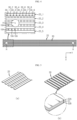
- FIG. 2 is a perspective view of a bus bar according to an embodiment of the present disclosure.
- FIG. 3 is an enlarged perspective view of region A of FIG. 2 .
- FIG. 4 illustrates a plan view and a partial enlarged view of the bus bar of FIG. 2 .
- bus bar A configuration of the bus bar according to an embodiment of the present disclosure will be described in detail with reference to FIGS. 2 through 4 .
- the bus bar according to an embodiment of the present disclosure has a basic shape of a bar formed of a metal material having high electric conductivity, and includes a plurality of ventilation holes 10A, 10B, and 10C in a body thereof.
- the body of the bus bar is formed of a plurality of lengthwise plates 20 and a plurality of widthwise plates 30, which will be described later, and may be provided in a straight rectangular bar shape having a predetermined length, thickness, and width.
- the body of the bus bar in the straight rectangular bar shape described above is an example. That is, the body shape of the bus bar to which the technical idea of the present disclosure may be applied is not limited to the straight rectangular bar shape. That is, the body shape of the bus bar may be provided in other shapes, such as a bar shape bent in multiple directions.
- the plurality of ventilation holes 10A, 10B, and 10C may be provided over the entire area of the body of the bus bar.
- the body of the bus bar may have a three-dimensional lattice structure, and the plurality of ventilation holes 10A, 10B, and 10C may be formed in all of an upper surface, lower surface, left side surface, right side surface, front surface, and rear surface of the body of the bus bar, and each of the ventilation holes 10A, 10B, and 10C may communicate with each other inside the body of the bus bar.
- the bus bar according to the present disclosure is lighter than a bar-shaped bus bar according to the related art (refer to FIG. 1 ) of the same size, and is thus suitable for reducing the weight of a battery pack.
- a bus bar to be used for a battery pack is lightweight as well as excellent in electrical quality and heat dissipation.
- the bus bar according to the present disclosure satisfies all of the above-described conditions.
- the body of the bus bar includes the plurality of lengthwise plates 20 and the plurality of widthwise plates 30.
- Each lengthwise plate 20 may be formed of a non-plated copper plate and may be provided in the form of a band extending as long as the length of the bus bar (Y-axis direction).
- each widthwise plate 30 may be formed of a silver (Ag)-plated copper plate and may be provided in the form of a band extending as long as the width of the bus bar (X-axis direction).
- the widthwise plates 30 include a copper plate layer 31 and silver plating layers 32A and 32B on upper and lower portions of the copper plate layer 31, respectively.
- the silver plating layers 32A and 32B replace a filler metal during brazing welding and contribute to the improvement of the electrical conductivity of the bus bar.
- the plurality of lengthwise plates 20_1, 20_2, 20_3, 20_4, and 20_5 may be arranged to extend in a length direction of the bus bar (Y-axis direction) side by side with a predetermined interval therebetween, and the plurality of the widthwise plates 30_1, 30_2, ... 30_N may be arranged in a direction (X-axis direction) crossing the plurality of lengthwise plates 20_1, 20_2, 20_3, 20_4, and 20_5, and arranged side by side at a predetermined interval from each other. That is, as each lengthwise plate 20_1, 20_2, 20_3, 20_4, and 20_5 and each widthwise plate 30_1, 30_2 ...
- the ventilation holes 10A may be provided between each lengthwise plate 20_1, 20_2, 20_3, 20_4, and 20_5 and each widthwise plate 30_1, 30_2, ... 30_N.
- the plurality of lengthwise plates 20_1, 20_2, 20_3, 20_4, and 20_5 and the plurality of widthwise plates 30_1, 30_2, ... 30_N may be alternately stacked with each other in a vertical direction to form a three-dimensional lattice structure.
- the bus bar in the bus bar according to the present embodiment, five lengthwise plates 20 are arranged at equal intervals along a width direction of the bus bar (X-axis direction) in a lowest layer, and 67 widthwise plates 30 are arranged on the lengthwise plates 20 at equal intervals along the length direction of the bus bar (Y-axis direction). Then, another five lengthwise plates 20 are arranged on the above widthwise plates at equal intervals along the width direction of the bus bar (X-axis direction), and another 67 widthwise plates 30 are arranged thereon at equal intervals in the length direction of the bus bar (Y-axis direction).
- five lengthwise plates 20 are stacked five times, and 67 widthwise plates 30 are stacked between the lengthwise plates 20 four times.
- the five lengthwise plates 20 are located on first, third, fifth, seventh, and ninth layers, respectively, and the 67 widthwise plates 30 are located on second, fourth, sixth, and eighth layers, respectively, thereby forming a stacked structure having a three-dimensional lattice structure including a total of nine layers.
- the body of the bus bar is formed of a stacked structure having a three-dimensional lattice structure as above, empty spaces are provided between the lengthwise plates 20 and the widthwise plates 30 of each layer, and the empty spaces may be provided as the ventilation holes 10A, 10B, and 10C.
- These ventilation holes 10A, 10B, and 10C are regularly provided in the body of the bus bar at predetermined intervals in up, down, left, right, front, and rear directions and communicate with each other inside the body of the bus bar.
- the above-described bus bar has a large heat dissipation area that can come into contact with the atmosphere, and has a structure in which the ventilation holes 10A, 10B, and 10C communicate with each other inside the bus bar, and thus, it may be deemed that the bus bar has better heat dissipation effect than the bus bar according to the related art.
- the cooling air may be passed into and out of the body of the bus bar through the ventilation holes 10A, 10B, and 10C, thereby quickly blocking heat generation of the bus bar.
- the number of layers of the stacked structure may be varied according to a desired thickness of the bus bar or a cross-section SQ of the bus bar.
- a stacked structure having a three-dimensional lattice structure in which the plurality of lengthwise plates 20 are located on a first layer, third layer, ... 2N-1th layer, respectively, and the plurality of widthwise plates 30 are located on a second layer, fourth layer, ..., and 2Mth layer, respectively, may be provided.
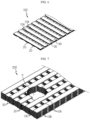
- a method of manufacturing a bus bar according to an embodiment of the present disclosure will be described in detail with reference to FIGS. 5 through 7 .
- the plurality of lengthwise plates 20 and the plurality of widthwise plates 30 are prepared by processing a metal material having high electrical conductivity.
- a length of the bus bar may be determined by a length of the lengthwise plate 20, a width of the bus bar may be determined by a length of the widthwise plate 30, and a thickness of the bus bar may be determined by the number of times of stacking the lengthwise plates 20 and the widthwise plates 30.
- lengthwise plates 20 having a length corresponding to a preset length of the bus bar and widthwise plates 30 having a length corresponding to a preset width of the bus bar are prepared.
- each widthwise plate 30 of the present embodiment includes a copper plate layer 31 and the silver plating layers 32A and 32B on upper and lower surfaces of the copper plate layer 31, respectively.
- a non-plated copper plate layer of each lengthwise plate 20 and the copper plate layer 31 of each widthwise plate 30 are manufactured to have a thickness of about 0.2 mm to 0.25 mm, and the upper silver plating layer 32A and the lower silver plating layer 32B may be each manufactured to have a thickness of 0.05 mm.
- the silver plating layers 32A and 32B may be melted during brazing welding and used to integrally connect the lengthwise plates 20 and the widthwise plates 30.
- a plurality of lengthwise plates 20 are arranged side by side at a predetermined interval, and a plurality of widthwise plates 30 are arranged on the lengthwise plates 20 side by side with a predetermined interval therebetween in a direction crossing the plurality of lengthwise plates 20.
- a plurality of lengthwise plates 20 and a plurality of widthwise plates 30 stacked once in a lattice structure will be defined as a bus bar unit layer 100.
- bus bar unit layer 100 is repeatedly stacked a preset number of times to form a bus bar multi-layer 200 as shown in FIG. 7 .
- the lengthwise plates 20 and the widthwise plates 30 forming the bus bar multi-layer 200 are welded to be integrated into a single body.
- the welding may include ultrasonic welding, resistance welding, brazing welding, and the like.
- the lengthwise plates 20 and the widthwise plates 30 are connected by brazing welding, which is a welding method in which a base material is not melted.
- each widthwise plate 30 is provided with the silver (Ag) plating layers 32A and 32B, and thus, a separate filler metal is not required during brazing welding.
- Silver (Ag) is a metal having a lower melting point than copper (Cu), and thus, heat that is sufficient to melt the silver plating layers 32A and 32B of each widthwise plate 30 may be applied to the bus bar multi-layer 200 to melt the silver plating layers 32A and 32B and integrate the lengthwise plates 20 and the widthwise plates 30 into a single body.
- the bus bar may be completed.
- the battery pack according to the present disclosure may be configured to include at least one of the above-described bus bars.
- the battery pack may further include, in addition to the bus bar, battery modules electrically connected by the bus bar, and various devices for controlling charging and discharging of the battery modules, such as a BMS (Battery Management System), a relay, a current sensor, a fuse, and the like.
- BMS Battery Management System
- the battery pack may be applied to a vehicle such as an electric vehicle or a hybrid vehicle.
- the battery pack may also be applied to a power storage device or other IT products.
Landscapes
- Chemical & Material Sciences (AREA)
- Chemical Kinetics & Catalysis (AREA)
- Electrochemistry (AREA)
- General Chemical & Material Sciences (AREA)
- Engineering & Computer Science (AREA)
- Manufacturing & Machinery (AREA)
- Mechanical Engineering (AREA)
- Inorganic Chemistry (AREA)
- Connection Of Batteries Or Terminals (AREA)
Applications Claiming Priority (2)
| Application Number | Priority Date | Filing Date | Title |
|---|---|---|---|
| KR1020200119917A KR20220037225A (ko) | 2020-09-17 | 2020-09-17 | 우수한 방열 성능을 구비한 버스바 |
| PCT/KR2021/008888 WO2022059894A1 (ko) | 2020-09-17 | 2021-07-12 | 우수한 방열 성능을 구비한 버스바 |
Publications (2)
| Publication Number | Publication Date |
|---|---|
| EP4178024A1 true EP4178024A1 (de) | 2023-05-10 |
| EP4178024A4 EP4178024A4 (de) | 2024-04-10 |
Family
ID=80777083
Family Applications (1)
| Application Number | Title | Priority Date | Filing Date |
|---|---|---|---|
| EP21869518.7A Pending EP4178024A4 (de) | 2020-09-17 | 2021-07-12 | Sammelschiene mit hervorragender wärmeableitungsleistung |
Country Status (6)
| Country | Link |
|---|---|
| US (1) | US20230253682A1 (de) |
| EP (1) | EP4178024A4 (de) |
| JP (1) | JP7533864B2 (de) |
| KR (1) | KR20220037225A (de) |
| CN (1) | CN220189845U (de) |
| WO (1) | WO2022059894A1 (de) |
Cited By (1)
| Publication number | Priority date | Publication date | Assignee | Title |
|---|---|---|---|---|
| EP4421964A4 (de) * | 2022-10-26 | 2025-01-08 | LG Energy Solution, Ltd. | Busschiene zwischen modulen zur verzögerung des übergangs von thermischem durchgehen und batteriepack damit |
Families Citing this family (2)
| Publication number | Priority date | Publication date | Assignee | Title |
|---|---|---|---|---|
| JP7123514B2 (ja) * | 2020-06-17 | 2022-08-23 | 矢崎総業株式会社 | 導電構造体 |
| KR20240020884A (ko) | 2022-08-09 | 2024-02-16 | 한국단자공업 주식회사 | 고전압 대전류용 버스바 |
Family Cites Families (15)
| Publication number | Priority date | Publication date | Assignee | Title |
|---|---|---|---|---|
| JPH0711002U (ja) * | 1993-07-23 | 1995-02-14 | 日本特殊陶業株式会社 | 誘電体フィルタ |
| JPH1186840A (ja) * | 1997-09-08 | 1999-03-30 | Harness Sogo Gijutsu Kenkyusho:Kk | バッテリ用接続具 |
| JPH11250950A (ja) * | 1998-02-27 | 1999-09-17 | Harness Syst Tech Res Ltd | バッテリーの接続構造 |
| US8709636B2 (en) * | 2010-07-27 | 2014-04-29 | GM Global Technology Operations LLC | Repeating frame battery with joining of cell tabs via welded-on male and female slip-fit connectors |
| US20140116211A1 (en) | 2012-10-25 | 2014-05-01 | Shavelogic, Inc. | Dedicated Attachment Systems for Consumer Products |
| DE102015210035A1 (de) * | 2015-06-01 | 2016-12-01 | Robert Bosch Gmbh | Vorrichtung und Verfahren zum Verbinden von Batteriezellen sowie Batteriepack, Batteriemodul und Fahrzeug |
| JP6463550B2 (ja) * | 2016-03-23 | 2019-02-06 | 三菱電機株式会社 | 蓄電池モジュール |
| KR20180011630A (ko) * | 2016-07-25 | 2018-02-02 | 주식회사 엘지화학 | 안전성과 방열 특성이 향상된 버스 바 어셈블리 및 이를 포함하는 전지모듈 |
| CN205846264U (zh) * | 2016-07-28 | 2016-12-28 | 陕西省地方电力(集团)有限公司宝鸡供电分公司 | 一种纳米石墨柔性接地模块 |
| JP6789047B2 (ja) | 2016-09-23 | 2020-11-25 | 矢崎総業株式会社 | 車両アース構造 |
| JP2018181780A (ja) * | 2017-04-21 | 2018-11-15 | 矢崎総業株式会社 | 積層バスバおよび電池モジュール |
| JP2019008892A (ja) | 2017-06-21 | 2019-01-17 | 日立オートモティブシステムズ株式会社 | バスバー及びそれを用いた電池モジュール |
| CN206961946U (zh) * | 2017-07-31 | 2018-02-02 | 山东久力工贸集团有限公司 | 一种新型免维护蓄电池用拉网板栅 |
| US11043720B2 (en) * | 2018-12-14 | 2021-06-22 | Ford Global Technologies, Llc | Mesh busbar and electrical coupling method using same |
| US11488742B2 (en) * | 2019-09-09 | 2022-11-01 | Eaton Intelligent Power Limited | Electrical busbar and method of fabricating the same |
-
2020
- 2020-09-17 KR KR1020200119917A patent/KR20220037225A/ko active Pending
-
2021
- 2021-07-12 CN CN202190000494.7U patent/CN220189845U/zh active Active
- 2021-07-12 WO PCT/KR2021/008888 patent/WO2022059894A1/ko not_active Ceased
- 2021-07-12 EP EP21869518.7A patent/EP4178024A4/de active Pending
- 2021-07-12 JP JP2022572431A patent/JP7533864B2/ja active Active
- 2021-07-12 US US18/010,022 patent/US20230253682A1/en active Pending
Cited By (1)
| Publication number | Priority date | Publication date | Assignee | Title |
|---|---|---|---|---|
| EP4421964A4 (de) * | 2022-10-26 | 2025-01-08 | LG Energy Solution, Ltd. | Busschiene zwischen modulen zur verzögerung des übergangs von thermischem durchgehen und batteriepack damit |
Also Published As
| Publication number | Publication date |
|---|---|
| CN220189845U (zh) | 2023-12-15 |
| EP4178024A4 (de) | 2024-04-10 |
| JP7533864B2 (ja) | 2024-08-14 |
| US20230253682A1 (en) | 2023-08-10 |
| KR20220037225A (ko) | 2022-03-24 |
| JP2023529301A (ja) | 2023-07-10 |
| WO2022059894A1 (ko) | 2022-03-24 |
Similar Documents
| Publication | Publication Date | Title |
|---|---|---|
| US12381250B2 (en) | Bus bars for battery packs | |
| EP3637501B1 (de) | Sammelschienenanordnung zur verbindung von elektrodendrähten und batteriemodul damit | |
| JP7460777B2 (ja) | バッテリーモジュール、それを含むバッテリーパック及び自動車、並びにバッテリーパックを製造する方法 | |
| US9490465B2 (en) | Z-shaped bus bar for a battery pack | |
| EP4178025B1 (de) | Ffc-sammelschiene | |
| JP7354429B2 (ja) | バスバーを備えたバッテリーモジュール、バッテリーパック、及び自動車 | |
| EP4178024A1 (de) | Sammelschiene mit hervorragender wärmeableitungsleistung | |
| CN210120177U (zh) | 电池模块、包含电池模块的电池组和包含电池组的车辆 | |
| KR102926741B1 (ko) | 인쇄회로기판의 단자부와 버스바가 직접 체결된 구조의 전지 모듈 | |
| CN116057773A (zh) | 包括多个并联电池单元的电池模块 | |
| CN111201636A (zh) | 用于电动车辆电池块的带状连接互连件 | |
| US12230838B2 (en) | Battery module using non-welding type structure as connection structure of bus bar and voltage sensing member | |
| EP3951804B1 (de) | Ffc-kabelanordnung | |
| CN119275407A (zh) | 冷板 | |
| US20240047840A1 (en) | Battery pack with improved safety | |
| US20250309486A1 (en) | Multi-layer stack current collector assembly for battery applications | |
| CN220963669U (zh) | 载流排、电池模组及电池包 | |
| US12589642B2 (en) | Carriers for battery cells | |
| US12381291B2 (en) | Collector-plate and wire-bond interconnections for battery module | |
| KR20260013823A (ko) | 전극 리드 용접방법 및 버스바 없이 전극 리드들이 연결된 배터리 모듈 | |
| KR20260014136A (ko) | 배터리 모듈 및 상기 배터리 모듈에 포함되는 배터리 셀들의 전극 리드 용접방법 | |
| KR20260004015A (ko) | 전지팩 및 이를 포함하는 디바이스 | |
| KR20260005616A (ko) | 배터리 팩 및 이를 포함하는 전기 디바이스 |
Legal Events
| Date | Code | Title | Description |
|---|---|---|---|
| STAA | Information on the status of an ep patent application or granted ep patent |
Free format text: STATUS: THE INTERNATIONAL PUBLICATION HAS BEEN MADE |
|
| PUAI | Public reference made under article 153(3) epc to a published international application that has entered the european phase |
Free format text: ORIGINAL CODE: 0009012 |
|
| STAA | Information on the status of an ep patent application or granted ep patent |
Free format text: STATUS: REQUEST FOR EXAMINATION WAS MADE |
|
| 17P | Request for examination filed |
Effective date: 20230206 |
|
| AK | Designated contracting states |
Kind code of ref document: A1 Designated state(s): AL AT BE BG CH CY CZ DE DK EE ES FI FR GB GR HR HU IE IS IT LI LT LU LV MC MK MT NL NO PL PT RO RS SE SI SK SM TR |
|
| DAV | Request for validation of the european patent (deleted) | ||
| DAX | Request for extension of the european patent (deleted) | ||
| A4 | Supplementary search report drawn up and despatched |
Effective date: 20240313 |
|
| RIC1 | Information provided on ipc code assigned before grant |
Ipc: H01M 50/526 20210101ALI20240306BHEP Ipc: H01M 10/613 20140101ALI20240306BHEP Ipc: H01M 10/6553 20140101ALI20240306BHEP Ipc: B23K 1/00 20060101ALI20240306BHEP Ipc: H01R 13/03 20060101ALI20240306BHEP Ipc: H02G 5/00 20060101ALI20240306BHEP Ipc: H02G 5/10 20060101ALI20240306BHEP Ipc: H01M 50/502 20210101AFI20240306BHEP |