EP4177741A1 - Elektronische vorrichtung und steuerungsverfahren dafür - Google Patents
Elektronische vorrichtung und steuerungsverfahren dafür Download PDFInfo
- Publication number
- EP4177741A1 EP4177741A1 EP21876008.0A EP21876008A EP4177741A1 EP 4177741 A1 EP4177741 A1 EP 4177741A1 EP 21876008 A EP21876008 A EP 21876008A EP 4177741 A1 EP4177741 A1 EP 4177741A1
- Authority
- EP
- European Patent Office
- Prior art keywords
- optimal
- feature
- electronic device
- domain
- context
- Prior art date
- Legal status (The legal status is an assumption and is not a legal conclusion. Google has not performed a legal analysis and makes no representation as to the accuracy of the status listed.)
- Pending
Links
Images





Classifications
-
- G—PHYSICS
- G06—COMPUTING OR CALCULATING; COUNTING
- G06N—COMPUTING ARRANGEMENTS BASED ON SPECIFIC COMPUTATIONAL MODELS
- G06N7/00—Computing arrangements based on specific mathematical models
- G06N7/01—Probabilistic graphical models, e.g. probabilistic networks
-
- G—PHYSICS
- G06—COMPUTING OR CALCULATING; COUNTING
- G06F—ELECTRIC DIGITAL DATA PROCESSING
- G06F16/00—Information retrieval; Database structures therefor; File system structures therefor
- G06F16/90—Details of database functions independent of the retrieved data types
- G06F16/903—Querying
- G06F16/9035—Filtering based on additional data, e.g. user or group profiles
-
- G—PHYSICS
- G06—COMPUTING OR CALCULATING; COUNTING
- G06F—ELECTRIC DIGITAL DATA PROCESSING
- G06F11/00—Error detection; Error correction; Monitoring
- G06F11/30—Monitoring
- G06F11/34—Recording or statistical evaluation of computer activity, e.g. of down time, of input/output operation ; Recording or statistical evaluation of user activity, e.g. usability assessment
-
- G—PHYSICS
- G06—COMPUTING OR CALCULATING; COUNTING
- G06F—ELECTRIC DIGITAL DATA PROCESSING
- G06F16/00—Information retrieval; Database structures therefor; File system structures therefor
- G06F16/90—Details of database functions independent of the retrieved data types
- G06F16/903—Querying
- G06F16/9038—Presentation of query results
-
- G—PHYSICS
- G06—COMPUTING OR CALCULATING; COUNTING
- G06F—ELECTRIC DIGITAL DATA PROCESSING
- G06F18/00—Pattern recognition
- G06F18/20—Analysing
- G06F18/21—Design or setup of recognition systems or techniques; Extraction of features in feature space; Blind source separation
- G06F18/211—Selection of the most significant subset of features
- G06F18/2113—Selection of the most significant subset of features by ranking or filtering the set of features, e.g. using a measure of variance or of feature cross-correlation
-
- G—PHYSICS
- G06—COMPUTING OR CALCULATING; COUNTING
- G06F—ELECTRIC DIGITAL DATA PROCESSING
- G06F18/00—Pattern recognition
- G06F18/20—Analysing
- G06F18/24—Classification techniques
- G06F18/241—Classification techniques relating to the classification model, e.g. parametric or non-parametric approaches
- G06F18/2415—Classification techniques relating to the classification model, e.g. parametric or non-parametric approaches based on parametric or probabilistic models, e.g. based on likelihood ratio or false acceptance rate versus a false rejection rate
-
- G—PHYSICS
- G06—COMPUTING OR CALCULATING; COUNTING
- G06F—ELECTRIC DIGITAL DATA PROCESSING
- G06F9/00—Arrangements for program control, e.g. control units
- G06F9/06—Arrangements for program control, e.g. control units using stored programs, i.e. using an internal store of processing equipment to receive or retain programs
- G06F9/44—Arrangements for executing specific programs
- G06F9/451—Execution arrangements for user interfaces
-
- G—PHYSICS
- G06—COMPUTING OR CALCULATING; COUNTING
- G06F—ELECTRIC DIGITAL DATA PROCESSING
- G06F9/00—Arrangements for program control, e.g. control units
- G06F9/06—Arrangements for program control, e.g. control units using stored programs, i.e. using an internal store of processing equipment to receive or retain programs
- G06F9/46—Multiprogramming arrangements
- G06F9/54—Interprogram communication
-
- G—PHYSICS
- G06—COMPUTING OR CALCULATING; COUNTING
- G06N—COMPUTING ARRANGEMENTS BASED ON SPECIFIC COMPUTATIONAL MODELS
- G06N20/00—Machine learning
-
- G—PHYSICS
- G06—COMPUTING OR CALCULATING; COUNTING
- G06N—COMPUTING ARRANGEMENTS BASED ON SPECIFIC COMPUTATIONAL MODELS
- G06N3/00—Computing arrangements based on biological models
- G06N3/02—Neural networks
- G06N3/04—Architecture, e.g. interconnection topology
- G06N3/0464—Convolutional networks [CNN, ConvNet]
-
- G—PHYSICS
- G06—COMPUTING OR CALCULATING; COUNTING
- G06N—COMPUTING ARRANGEMENTS BASED ON SPECIFIC COMPUTATIONAL MODELS
- G06N3/00—Computing arrangements based on biological models
- G06N3/02—Neural networks
- G06N3/04—Architecture, e.g. interconnection topology
- G06N3/0475—Generative networks
-
- G—PHYSICS
- G06—COMPUTING OR CALCULATING; COUNTING
- G06N—COMPUTING ARRANGEMENTS BASED ON SPECIFIC COMPUTATIONAL MODELS
- G06N3/00—Computing arrangements based on biological models
- G06N3/02—Neural networks
- G06N3/08—Learning methods
- G06N3/09—Supervised learning
-
- G—PHYSICS
- G06—COMPUTING OR CALCULATING; COUNTING
- G06N—COMPUTING ARRANGEMENTS BASED ON SPECIFIC COMPUTATIONAL MODELS
- G06N3/00—Computing arrangements based on biological models
- G06N3/02—Neural networks
- G06N3/08—Learning methods
- G06N3/092—Reinforcement learning
-
- G—PHYSICS
- G06—COMPUTING OR CALCULATING; COUNTING
- G06V—IMAGE OR VIDEO RECOGNITION OR UNDERSTANDING
- G06V10/00—Arrangements for image or video recognition or understanding
- G06V10/70—Arrangements for image or video recognition or understanding using pattern recognition or machine learning
- G06V10/768—Arrangements for image or video recognition or understanding using pattern recognition or machine learning using context analysis, e.g. recognition aided by known co-occurring patterns
-
- H—ELECTRICITY
- H04—ELECTRIC COMMUNICATION TECHNIQUE
- H04M—TELEPHONIC COMMUNICATION
- H04M1/00—Substation equipment, e.g. for use by subscribers
- H04M1/72—Mobile telephones; Cordless telephones, i.e. devices for establishing wireless links to base stations without route selection
- H04M1/724—User interfaces specially adapted for cordless or mobile telephones
- H04M1/72448—User interfaces specially adapted for cordless or mobile telephones with means for adapting the functionality of the device according to specific conditions
- H04M1/72454—User interfaces specially adapted for cordless or mobile telephones with means for adapting the functionality of the device according to specific conditions according to context-related or environment-related conditions
-
- H—ELECTRICITY
- H04—ELECTRIC COMMUNICATION TECHNIQUE
- H04N—PICTORIAL COMMUNICATION, e.g. TELEVISION
- H04N23/00—Cameras or camera modules comprising electronic image sensors; Control thereof
- H04N23/60—Control of cameras or camera modules
-
- G—PHYSICS
- G06—COMPUTING OR CALCULATING; COUNTING
- G06F—ELECTRIC DIGITAL DATA PROCESSING
- G06F3/00—Input arrangements for transferring data to be processed into a form capable of being handled by the computer; Output arrangements for transferring data from processing unit to output unit, e.g. interface arrangements
- G06F3/01—Input arrangements or combined input and output arrangements for interaction between user and computer
- G06F3/048—Interaction techniques based on graphical user interfaces [GUI]
- G06F3/0481—Interaction techniques based on graphical user interfaces [GUI] based on specific properties of the displayed interaction object or a metaphor-based environment, e.g. interaction with desktop elements like windows or icons, or assisted by a cursor's changing behaviour or appearance
-
- G—PHYSICS
- G06—COMPUTING OR CALCULATING; COUNTING
- G06F—ELECTRIC DIGITAL DATA PROCESSING
- G06F9/00—Arrangements for program control, e.g. control units
- G06F9/06—Arrangements for program control, e.g. control units using stored programs, i.e. using an internal store of processing equipment to receive or retain programs
- G06F9/44—Arrangements for executing specific programs
- G06F9/451—Execution arrangements for user interfaces
- G06F9/453—Help systems
-
- G—PHYSICS
- G06—COMPUTING OR CALCULATING; COUNTING
- G06N—COMPUTING ARRANGEMENTS BASED ON SPECIFIC COMPUTATIONAL MODELS
- G06N3/00—Computing arrangements based on biological models
- G06N3/02—Neural networks
- G06N3/04—Architecture, e.g. interconnection topology
- G06N3/044—Recurrent networks, e.g. Hopfield networks
-
- G—PHYSICS
- G06—COMPUTING OR CALCULATING; COUNTING
- G06N—COMPUTING ARRANGEMENTS BASED ON SPECIFIC COMPUTATIONAL MODELS
- G06N3/00—Computing arrangements based on biological models
- G06N3/02—Neural networks
- G06N3/04—Architecture, e.g. interconnection topology
- G06N3/045—Combinations of networks
-
- G—PHYSICS
- G06—COMPUTING OR CALCULATING; COUNTING
- G06N—COMPUTING ARRANGEMENTS BASED ON SPECIFIC COMPUTATIONAL MODELS
- G06N3/00—Computing arrangements based on biological models
- G06N3/02—Neural networks
- G06N3/08—Learning methods
-
- H—ELECTRICITY
- H04—ELECTRIC COMMUNICATION TECHNIQUE
- H04M—TELEPHONIC COMMUNICATION
- H04M1/00—Substation equipment, e.g. for use by subscribers
- H04M1/60—Substation equipment, e.g. for use by subscribers including speech amplifiers
- H04M1/6033—Substation equipment, e.g. for use by subscribers including speech amplifiers for providing handsfree use or a loudspeaker mode in telephone sets
- H04M1/6041—Portable telephones adapted for handsfree use
- H04M1/6058—Portable telephones adapted for handsfree use involving the use of a headset accessory device connected to the portable telephone
- H04M1/6066—Portable telephones adapted for handsfree use involving the use of a headset accessory device connected to the portable telephone including a wireless connection
-
- H—ELECTRICITY
- H04—ELECTRIC COMMUNICATION TECHNIQUE
- H04M—TELEPHONIC COMMUNICATION
- H04M2250/00—Details of telephonic subscriber devices
- H04M2250/52—Details of telephonic subscriber devices including functional features of a camera
Definitions
- the disclosure relates to an electronic device capable of recommending a feature to a user and a control method thereof.
- electronic devices may access a large quantity of information and services through an Internet and from other sources. Functionality of the electronic devices are increasing rapidly, and the electronic devices, such as smartphones, tablets, and computers, are capable of running applications that perform different tasks and provide different types of information.
- each application has various features. However, many of features may be hard to learn or overwhelming for users, and difficult to master all the features. In addition, the user may have difficulty even in discovering what features and/or information is available on the electronic devices' applications.
- some of the existing systems provide feature recommendations to the user, but often many features are not recommended when the user needs them or recommended when the user does not need them. There is no mechanism in the existing systems to recognize intention/ behavior of the user and to enhance the probability of recommendation of the optimal feature.
- an aspect of the disclosure is to provide an electronic device capable of analyzing user's current behavior as well as historical behavior so as to enhance a probability of recommendation of features that are contextually relevant and capable of efficiently displaying the features to a user to improve user experience and utilize the enhancement of the features, and a control method thereof.
- an electronic device includes a memory, a user interface, and at least one processor.
- the at least one processor is configured to determine an optimal domain from a plurality of domains based on a current context, configured to combine the current context and a historical context of the optimal domain to determine a combined context, configured to determine an optimal feature from a plurality of features based on the combined context and a parameter of the optimal domain, and configured to control the user interface to output a recommendation message for the optimal feature.
- the at least one processor may be configured to determine a probability of each of the plurality of features based on the combined context and the parameter of the optimal domain, and configured to determine a feature, which has a highest probability among features having a probability higher than a threshold value, as the optimal feature.
- the at least one processor may be configured to determine the parameter of the optimal domain based on the combined context and the optimal domain.
- the at least one processor may be configured to distinguish at least one unused feature that corresponds to the optimal domain from the plurality of features and has no usage history, configured to redistribute a probability of each of the plurality of features to determine a probability of the at least one unused feature, and configured to determine an unused feature, which has a highest probability among unused features having a probability higher than the threshold value, as the optimal feature.
- the at least one processor may be configured to determine the feature, which has the highest probability among the plurality of features, as the optimal feature in response to determining that a probability of at least one feature from the plurality of features is higher than the threshold value, configured to update the probability of each of the plurality of features based on a past optimal feature, which is previously recommended, in response to determining that the plurality of features is lower than the threshold value, and configured to determine the feature having the highest probability as the optimal feature.
- the at least one processor may be configured to determine at least one of an image output mode, a text output mode, or an audio output mode as an optimal mode based on the optimal feature and user-specific parameters, and configured to control the user interface to output a recommendation message for the optimal feature according to the optimal mode.
- the user specific-parameters may include at least one of a history of user action-specific or present behavior of the user.
- the at least one processor may be configured to generate a recommendation message for the optimal feature as at least one of an image, text, or audio by using a machine learning model using the optimal feature and the current context as an input.
- the at least one processor may be configured to control the user interface to output a user's learning process for the optimal feature based on the optimal feature and the user-specific parameter.
- the electronic device may further include a communicator configured to perform communication with an external electronic device.
- the at least one processor may be configured to control the communicator to transmit a recommendation message for the optimal feature to the external electronic device.
- the at least one processor may be configured to determine the optimal domain from the plurality of domains by using a machine learning model using the current context as an input.
- the at least one processor may be configured to, in response to receiving a query from a user, determine a historical context corresponding to the query, and determine a past optimal feature, which is recommended in accordance with the historical context, as the optimal feature.
- a control method of an electronic device includes a user interface, the method including determining an optimal domain from a plurality of domains based on a current context, combining the current context and a historical context of the optimal domain to determine a combined context, determining an optimal feature from a plurality of features based on the combined context and a parameter of the optimal domain, and controlling the user interface to output a recommendation message for the optimal feature.
- the determination of the optimal feature may include determining a probability of each of the plurality of features based on the combined context and the parameter of the optimal domain, and determining a feature, which has a highest probability among features having a probability higher than a threshold value, as the optimal feature.
- the method may further include determining the parameter of the optimal domain based on the combined context and the optimal domain.
- the determination of the optimal feature may include distinguishing at least one unused feature that corresponds to the optimal domain from the plurality of features and has no usage history, redistributing a probability of each of the plurality of features to determine a probability of the at least one unused feature, and determining an unused feature, which has a highest probability among unused features having a probability higher than the threshold value, as the optimal feature.
- the determination of the optimal feature may include determining the feature, which has the highest probability among the plurality of features, as the optimal feature in response to determining that a probability of at least one feature from the plurality of features is higher than the threshold value, updating the probability of each of the plurality of features based on a past optimal feature, which is previously recommended, in response to determining that the plurality of features is lower than the threshold value, and determining the feature having the highest probability as the optimal feature.
- the controlling of the user interface to output the recommendation message for the optimal feature may include determining at least one of an image output mode, a text output mode, or an audio output mode as an optimal mode based on the optimal feature and user-specific parameters, and controlling the user interface to output a recommendation message for the optimal feature according to the optimal mode.
- the user specific-parameters may include at least one of a history of user action-specific or present behavior of the user.
- the controlling of the user interface to output the recommendation message for the optimal feature may include generating a recommendation message for the optimal feature as at least one of an image, text, or audio by using a machine learning model using the optimal feature and the current context as an input.
- the method may further include controlling the user interface to output a user's learning process for the optimal feature based on the optimal feature and the user-specific parameters.
- the electronic device may further include a communicator configured to perform communication with an external electronic device.
- the method may further include controlling the communicator to transmit a recommendation message for the optimal feature to the external electronic device.
- the determination of the optimal feature may include determining the optimal domain from the plurality of domains by using a machine learning model using the current context as an input.
- the method may further, in response to receiving a query from a user, determining a historical context corresponding to the query, and determining a past optimal feature, which is recommended in accordance with the historical context, as the optimal feature.
- first, second, third, or the like may be used herein to describe various elements, but elements are not limited by these terms. These terms are only used to distinguish one element from another element. For example, without departing from the scope of the disclosure, a first element may be termed as a second element, and a second element may be termed as a first element.
- the term of "and / or" includes a plurality of combinations of relevant items or any one item among a plurality of relevant items.
- terms such as “unit”, “part”, “block”, “member”, and “module” indicate a unit for processing at least one function or operation.
- those terms may refer to at least one process processed by at least one hardware, such as a field programmable gate array (FPGA), an application specific integrated circuit (ASIC), at least one software stored in a memory or a processor.
- FPGA field programmable gate array
- ASIC application specific integrated circuit
- Embodiments herein disclose a method for recommending an optimal feature to a user of the electronic device.
- the method includes determining, by the electronic device, a current context of the electronic device and at least one user input on the electronic device. Further, the method includes extracting, by the electronic device, a plurality of domains of the electronic device from the current context and the at least one user input on the electronic device. Further, the method includes applying, by the electronic device, a machine learning model on the current context and the at least one user input on the electronic device to determine an optimal domain from the plurality of domains of the electronic device. Further, the method includes automatically recommending, by the electronic device, the optimal feature from a plurality of features on a display of the electronic device based on the determined optimal domain, the current context, and the at least one user input on the electronic device.
- FIGS. 1 to 8C various embodiments of the disclosure will be described with reference to FIGS. 1 to 8C .
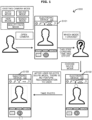
- FIG. 1 is a view illustrating a system 1000 of the related art providing a manual feature selection associated with an application of an electronic device 100 according to an embodiment of the disclosure.
- the electronic device 100 may be a smartphone, a laptop, a desktop, a smart watch, or a smart TV, but is limited thereto.
- a user of the electronic device 100 wants to take a Selfie by using one of camera applications of the electronic device 100.
- the user of the electronic device 100 opens the camera application, and the camera application displays various camera modes associated with the camera application.
- the camera mode may include an auto mode, a selfie mode, a high dynamic range (HDR) mode, a bokeh mode, and a beauty face mode.
- HDR high dynamic range
- the user of the electronic device 100 selects the Selfie mode to take the Selfie, and a process thereof may be manual and time-consuming.
- the system 1000 does not provide any recommendation (best mode to select) to the user of the electronic device 100.
- the user of the electronic device 100 selects the Selfie mode and takes the Selfie with a shutter button of the camera application.
- the electronic device 100 may shake and thus the quality of the Selfie may reduce.
- the system 1000 does not provide any feature recommendation (e.g., use palm Selfie) to the user of the electronic device 100 to avoid shakiness. Therefore, an intelligent solution/method/system capable of providing a better user experience is required.
- FIG. 2 is a block diagram illustrating an electronic device according to an embodiment of the disclosure.
- the electronic device 100 includes a memory 110, a processor 120, a communicator 130, a display 140, an application repository 150, and an optimal feature controller 160.
- the memory 110 stores instructions to be executed by the processor 120.
- the memory 110 may include non-volatile storage elements.
- the non-volatile storage elements may include magnetic hard discs, optical discs, floppy discs, flash memories, or forms of electrical programmable memories (EPROM) or electrical erasable and programmable (EEPROM) memories.
- EPROM electrical programmable memories
- EEPROM electrical erasable and programmable
- the memory 110 may be considered a non-transitory storage medium.
- the term “non-transitory” may indicate that the storage medium is not embodied in a carrier wave or a propagated signal. However, the term “non-transitory” should not be interpreted that the memory 110 is non-movable.
- a non-transitory storage medium may store data that may, over time, change (e.g., in a random access memory (RAM) or cache).
- the memory 110 may be an internal storage unit or may be an external storage unit of the electronic device 100, the application repository 150 (interchangeably used as application 150), a cloud storage, or any other type of external storage.
- the processor 120 communicates with the memory 110, the communicator 130, the display 140, the application 150, and the optimal feature controller 160.
- the processor 120 is configured to execute instructions stored in the memory 110 and to perform various processes.
- the communicator 130 may communicate with an external electronic device.
- the communicator 130 may include a wired communication module and a wireless communication module.
- the display 140 may display a recommendation message for an optimal feature, and for this, the display 140 may be including a known type of display panel. Further, the electronic device 100 may further include a speaker (not shown) configured to output a recommendation message for an optimal feature, and the speaker may operate as a user interface together with the display 140.
- the application 150 may be a camera application, a call application, a game application, a business application, an education application, a lifestyle application, an entertainment application, a utilities application, a travel application, a health-fitness application, or a food application.
- the optimal feature controller 160 includes an event detector 160a, a content recognizer 160b, a machine learning (ML) engine 160c (interchangeably used as “ML model 160c", or “machine learning model 160c)", an intelligent recommendation engine 160d, and a presentation mode controller 160e.
- ML machine learning
- the optimal feature controller 160 may include at least one processor, and may be provided as a separate processor from the processor 120 or integrated with the processor 120.
- Each of the event detector 160a, the content recognizer 160b, the ML engine 160c, the intelligent recommendation engine 160d, and the presentation mode controller 160e may include at least one processor. According to embodiments of the disclosure, the event detector 160a, the content recognizer 160b, the ML engine 160c, the intelligent recommendation engine 160d, and the presentation mode controller 160e may share a processor with a different component.
- the optimal feature controller 160 may determine an optimal domain from a plurality of domains based on the current context.
- the optimal feature controller 160 may determine an optimal domain from a plurality of domains by using a machine learning model using a current context as an input.
- the optimal feature controller 160 may score whether each of the plurality of domains matches the current context of the electronic device 100 using the machine learning model, and determine the domain having the highest score as the optimal domain.
- the optimal feature controller 160 may determine the camera as the optimal domain.
- the optimal feature controller 160 may combine the current context and a historical context of the optimal domain so as to determine the combined context, and the optimal feature controller 160 may determine an optimal feature from the plurality of features based on the combined context and a parameter of the optimal domain.
- the optimal feature controller 160 may consider not only the current context but also a historical context as an analysis target so as to apply a usage history to determining the optimal feature.
- the optimal feature controller 160 may identify a feature that is not used by the user based on the combined context.
- the optimal feature controller 160 may identify a feature capable of improving deteriorated parameters based on the parameter of the optimal domain. For example, the optimal feature controller 160 may determine a required probability for each unused feature based on the parameters of the optimal domain, and may determine the unused feature having a highest probability as the optimal feature.
- the optimal feature controller 160 may control a user interface to output a recommendation message for the optimal feature. Accordingly, the user may be recommended the most necessary feature in the current context, and the utilization of the electronic device 100 may be increased by executing the recommended feature.
- the event detector 160a detects at least one user input on the electronic device 100.
- the content recognizer 160b may determine the current context of the electronic device 100.
- the context may correspond to operation information of the electronic device 100 and may include logs, activity information, or sensor values in text format.
- the content recognizer 160b extracts a plurality of domains of the electronic device 100 from the current context and the at least one user input on the electronic device 100.
- the domain may correspond to different fields of the electronic device 100 classified by an operation content, such as a camera, a phone, a keyboard, and Bluetooth.
- an operation content such as a camera, a phone, a keyboard, and Bluetooth.
- the content recognizer 160b combines the current context and the historical context of the determined optimal domain. Further, the content recognizer 160b determines a plurality of optimal domain-specific parameters based on the combined context and the optimal domain.
- the optimal domain-specific parameter may correspond to a parameter specific to the optimal domain.
- the optimal domain-specific parameter may correspond to a parameter of the optimal domain and may be a parameter associated with the operation content of the optimal domain.
- parameters of the optimal domain may include image blur quality, and a degree of shake during taking a photo.
- the ML engine 160c determines an optimal domain from the plurality of domains of the electronic device 100 based on the current context and the at least one user input on the electronic device 100. Further, the ML engine 160c ranks each domain from the plurality of domains based on the current context and the at least one user input. Further, the ML engine 160c selects at least one domain, which has a value higher than a threshold value, as the optimal domain from the plurality of domains.
- the ML engine 160c may determine the optimal domain from the plurality of domains based on the current context (which may include a user input according to embodiments).
- the optimal domain may be a domain most corresponding to the current context. For example, if the user is taking a Selfie, the camera may be determined as the optimal domain.
- the ML engine 160c may determine the optimal domain from the plurality of domains by using the machine learning model having the current context as an input.
- the ML engine 160c may be implemented through one of linear regression, logistic regression, decision tree, support vector machine (SVM), naive bayes, k- nearest neighbors (kNN), K-Means, random forest, dimensionality reduction algorithms, or gradient boosting algorithms, but is not limited thereto.
- SVM support vector machine
- kNN k- nearest neighbors
- K-Means K-Means
- random forest dimensionality reduction algorithms
- gradient boosting algorithms but is not limited thereto.
- the intelligent recommendation engine 160d determines the probability of each feature from the plurality of features of the electronic device 100 based on the plurality of optimal domain-specific parameters and the combined context.
- the probability of the specific feature may be a probability that the specific feature is required in the current context, and may correspond to a ratio of the necessity of the specific feature based on a plurality of features.
- the intelligent recommendation engine 160d determines at least one unused feature from the plurality of features of the determined optimal domain. Further, the intelligent recommendation engine 160d ranks the probability of each feature from the plurality of features of the electronic device 100 based on the determined optimal domain and the at least one unused feature. Further, the intelligent recommendation engine 160d determines whether the probability of the at least one feature from the plurality of features is higher than the threshold value.
- the intelligent recommendation engine 160d may determine at least one unused feature that corresponds to the optimal domain among the plurality of features and has no usage history, and determine the probability of at least one unused feature by redistributing the probability of each of the plurality of features. Accordingly, the intelligent recommendation engine 160d determines an unused feature, which has the highest probability among unused features having a probability higher than the threshold value, as the optimal feature.
- the intelligent recommendation engine 160d selects at least one feature having the highest rank from the plurality of features as the at least one optimal feature for a recommendation to the user of the electronic device 100. For example, the intelligent recommendation engine 160d may determine a feature, which has the highest probability among features having a probability higher than the threshold value, as the optimal feature.
- the intelligent recommendation engine 160d updates the probability of at least one feature based on at least one past recommendation, and selects at least one feature having the highest probability as the at least one optimal feature for the recommendation to the user of the electronic device 100.
- the intelligent recommendation engine 160d may update the probability of each of the plurality of features based on the past optimal feature, which is previously recommended, and determine a feature having the highest probability as the optimal feature.
- the intelligent recommendation engine 160d automatically recommends the optimal feature associated with at least one of at least one application 150 of the electronic device 100 and at least one-second electronic device 200 based on an optimal mode. For example, when the electronic device 100 determines an optimal feature for the second electronic device 200 corresponding to the external electronic device, the electronic device 100 may control the communicator 130 to transmit a recommendation message for the optimal feature to the second electronic device 200.
- the optimal mode may be at least one of an image output mode, a text output mode, and an audio output mode, and may be determined based on the optimal feature and user-specific parameters.
- the user specific-parameter may include at least one of a history of user action-specific and present behavior of the user.
- the presentation mode controller 160e determines the optimal mode for recommendation to the user of the electronic device 100 using the ML model 160c.
- the presentation mode controller 160e generates a recommendation message for the optimal feature as at least one of an image, text, or audio by using the ML model 160c using the optimal feature and the current context as an input.
- the presentation mode controller 160e generates the image output associated with the at least one of the optimal feature based on the at least one of the optimal feature, and the current context of the electronic device 100.
- the presentation mode controller 160e generates the text output associated with the at least one of the optimal feature based on the at least one of the optimal feature, and the current context of the electronic device 100.
- the presentation mode controller 160e generates the audio output associated with the at least one of the optimal feature based on the at least one of the optimal feature, and the current context of the electronic device 100.
- the presentation mode controller 160e detects at least one of the at least one optimal feature of the at least one application 150 of the electronic device 100 and the at least one optimal feature of the at least one-second electronic device 200.
- the presentation mode controller 160e selects at least one of the image output mode, the text output mode, and the audio output mode as the optimal mode for recommending the optimal feature to the user of the electronic device 100 based on the optimal feature, and user-specific parameters.
- the presentation mode controller 160e selects the at least one of the image output mode, the text output mode, and the audio output mode as the optimal mode so as to enhance the chance of acceptance of the optimal feature present in the electronic device 100.
- the presentation mode controller 160e may determine at least one of the image output mode, the text output mode, or the audio output mode as the optimal mode based on the optimal feature and user-specific parameters, and control the user interface to output a recommendation message for the optimal feature according to the optimal mode.
- the presentation mode controller 160e may control the user interface to output a user's learning process for the optimal feature based on the at least one optimal feature and the user-specific parameters.
- the optimal feature controller 160 is configured to receive at least one query from the at least one application 150 of the electronic device 100. Further, the optimal feature controller 160 is configured to map the at least one query with the historical context of the at least one past recommendation so as to obtain the at least one optimal feature. The optimal feature controller 160 is configured to automatically recommend the at least one optimal feature to the user of the electronic device 100 based on the mapping.
- the optimal feature controller 160 may determine the historical context corresponding to the query, and determine a past optimal feature, which is recommended in accordance with the historical context, as a current optimal feature.
- At least one of the plurality of modules/ components may be implemented through an artificial intelligence (AI) model.
- AI artificial intelligence
- a feature associated with AI may be performed through memory 110 and the processor 120.
- the processor 120 may include one or a plurality of processors.
- one or a plurality of processors may be a general-purpose processor, such as a central processing unit (CPU), an application processor (AP), or the like, a graphics-only processing unit, such as a graphics processing unit (GPU), a visual processing unit (VPU), and/or an AI-dedicated processor, such as a neural processing unit (NPU).
- CPU central processing unit
- AP application processor
- GPU graphics-only processing unit
- GPU graphics processing unit
- VPU visual processing unit
- NPU neural processing unit
- the one or a plurality of processors controls the processing of the input data in accordance with a predefined operating rule or artificial intelligence (AI) model stored in the non-volatile memory and the volatile memory.
- the predefined operating rule or artificial intelligence model is provided through training or learning.
- the learning may be performed in a device itself in which AI according to an embodiment is performed, and/or may be implemented through a separate server/system.
- the AI model may include a plurality of neural network layers. Each layer includes a plurality of weight values and performs a layer operation through calculation of a previous layer and an operation of a plurality of weights.
- Neural networks may include convolutional neural network (CNN), deep neural network (DNN), recurrent neural network (RNN), restricted boltzmann machine (RBM), deep belief network (DBN), bidirectional recurrent deep neural network (BRDNN), generative adversarial networks (GAN), and deep Q-networks, but is not limited thereto.
- the learning process is a method for training a predetermined target device (for example, a robot) using a plurality of learning data to cause, allow, or control the target device to make a determination or prediction.
- Learning processes may include supervised learning, unsupervised learning, semi-supervised learning, or reinforcement learning, but is not limited thereto.
- a target / outcome variable which is to be predicted from a given set of predictors (independent variables) is present.
- a function that map inputs to desired outputs i.e., automatically recommending the optimal feature.
- the training process (optimal mode learning process) continues until the model achieves a desired level of accuracy on the training data.
- Supervised learning may include regression, decision tree, random forest, K-nearest neighbors (KNN), and logistic regression.
- Unsupervised learning processes any target / outcome variable to predict / estimate is not present.
- the unsupervised learning process is used for clustering population in different groups (domain, current context, user input, and features), which is widely used for segmenting in different groups for specific intervention.
- Unsupervised learning may include Apriori algorithm, and K-means.
- a machine (the optimal feature controller 160) is trained to make specific decisions (recommending optimal feature).
- the reinforcement learning process is operated in such a way that the machine is exposed to an environment where the machine trains itself continually using trial and error.
- the machine learns from past experience (historical context) and tries to capture the best possible knowledge to make accurate business decisions (recommending optimal feature).
- Reinforcement learning may include Markov Decision Process.
- FIG. 2 illustrates various hardware components of the electronic device 100, it is to be understood that other embodiments are not limited thereon.
- the electronic device 100 may include less or more number of components.
- the labels or names of the components are used only for illustrative purpose and does not limit the scope of the disclosure.
- One or more components may be combined together to perform same or substantially similar function for recommending the optimal feature to the user of the electronic device 100.
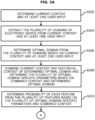
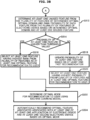
- FIGS. 3A and 3B are flow charts illustrating various operations in which an electronic device 100 recommends an optimal feature to a user according to various embodiments of the disclosure. Operations S302 to S324 are performed by the optimal feature controller 160.
- the electronic device 100 may determine the current context of and the at least one user input at operation S302.
- the electronic device 100 may extract the plurality of domains of the electronic device 100 from the current context and the at least one user input.
- the electronic device 100 may determine the optimal domain from the plurality of domains based on the current context and the at least one user input.
- the current context may include information about the user input.
- the electronic device 100 may determine the optimal feature from the plurality of domains based on the current context.
- the electronic device 100 may combine the current context and the historical context of the determined optimal domain, and determine the plurality of optimal domain-specific parameters based on the combined context and the determined optimal domain. For example, the electronic device 100 may determine the parameter of the optimal feature based on the combined context and the determined optimal domain.
- the electronic device 100 may determine the probability of each feature from the plurality of features based on the plurality of optimal domain-specific parameters and the combined context.
- the electronic device 100 may determine at least one unused feature from the plurality of features of the determined optimal domain, and rank the probability of each feature from the plurality of features of the electronic device 100 based on the determined optimal domain and the at least one unused feature.
- the electronic device 100 may determine whether the probability of the at least one feature from the plurality of features is higher than the threshold value.
- the electronic device 100 may select at least one feature having the highest rank from the plurality of features as the at least one optimal feature for the recommendation to the user in response to determining that at least one feature from the plurality of features is higher than the threshold value. For example, the electronic device 100 may determine a feature, which has the highest probability among features having the probability higher than the threshold value, as the optimal feature.
- the electronic device 100 may update the probability of at least one feature based on at least one past recommendation in response to determining that at least one feature from the plurality of features is lower than the threshold value.
- the electronic device 100 may select at least one feature having the highest probability as the at least one optimal feature for the recommendation to the user.
- the electronic device 100 may determine the optimal mode for recommendation to the user using the ML model 160c.
- the electronic device 100 may automatically recommend the optimal feature associated with at least one of the at least one application 150 of the electronic device 100 and at least one-second electronic device 200 based on the optimal mode.
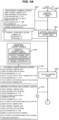
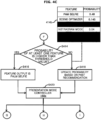
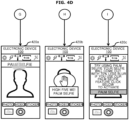
- FIGS. 4A-1 , 4A-2 , 4B , 4C , and 4D are views illustrating an optimal feature controller of an electronic device 100 recommends an optimal feature to a user according to various embodiments of the disclosure.
- the context recognizer 160b includes a context extractor 160ba, a context analyzer and domain mapping engine 160bb, a context merger 160bc, and a domain-specific parameter extraction engine 160bd.
- the intelligent recommendation engine 160d includes a feature recommendation engine 160da, and a feature probability pruning engine 160db.
- the context extractor 160ba tracks the activities, intents, and notifications that are invoked over time and extracts a relevant context from all the available input units and stores the extracted relevant context in a context storage unit (i.e., the memory 110) in form of stacks of text blocks.
- a context storage unit i.e., the memory 110
- the context extractor 160ba determines a current context 402a (i.e., a relevant context from all the available input units) associated with the camera application 150a and the other applications 150b-150n and/or features associated with the electronic device 100 over time, and stores the current context 402a in the memory 110.
- the context analyzer and domain mapping engine 160bb analyses the current context's 402a stacks continuously and classifies the current context's 402a stacks into a set of pre-defined domains 404a (e.g., a camera, BluetoothTM, a keyboard, and music) with a confidence score for each domain and also sends an inference trigger signal whenever a particular domain score exceeds a threshold value (e.g., highest domain score > threshold value (50)). For example, in response to the camera domain confidence score being 60, the context analyzer and domain mapping engine 160bb selects the camera domain as the optimal domain.
- a threshold value e.g., highest domain score > threshold value (50)
- the context analyzer and domain mapping engine 160bb may determine the optimal domain from the plurality of domains by using the machine learning model using the current context as an input.
- the context analyzer and domain mapping engine 160bb may score whether each of the plurality of domains matches the current context of the electronic device 100 using the machine learning model, and determine the domain having the highest score as the optimal domain.
- the context analyzer and domain mapping engine 160bb may determine the camera as the optimal domain
- the context analyzer and domain mapping engine 160bb determines a historical domain-specific context 404c form a historical domain wise context storage 404b (i.e., the memory 110). For example, the context analyzer and domain mapping engine 160bb may determine the historical context 404c corresponding to the optimal domain.
- the context merger 160bc combines the current context 402a and the historical domain-specific context 404c as a combined context 406a.
- the combined context 406a may include a current operation of the electronic device 100 but also a past usage history.
- the domain-specific parameter extraction engine 160bd determines the plurality of optimal domain-specific parameters 408a based on the combined context 406a and the determined optimal domain 404a.
- the optimal domain-specific parameter 408a may correspond to a parameter specific to the optimal domain.
- the optimal domain-specific parameter 408a may correspond to a parameter of the optimal domain and may be a parameter associated with the operation content of the optimal domain.
- parameters of the optimal domain may include image blur quality, and a degree of shake (sensor movement) during taking a photo.
- the domain-specific parameter extraction engine 160bd may extract past and present parameters corresponding to the optimal domain 404a from the combined context 406a.
- the feature recommendation engine 160da determines a probability of each feature 410a from the plurality of features of the electronic device 100 based on the plurality of optimal domain-specific parameters 408a and the combined context 406a.
- the feature recommendation engine 160da may identify a feature capable of improving deteriorated parameters based on the parameter of the optimal domain.
- the optimal feature controller 160 may determine a required probability for each feature in the combined context based on the parameters of the optimal domain.
- the feature probability pruning engine 160db obtains feature usage data 412a and domain scores of the determined optimal domain 404a as an input, and prunes (ranks) the feature probabilities 412b by removing the probabilities that have been used and also those that are from a different domain (not optimal domain) and redistributes the probability in a weighted manner among the unused domain features to increase the probability of prediction.
- the feature probability pruning engine 160db may exclude a feature that does not correspond to the optimal domain and a feature that corresponds to the optimal domain, but the user has already used, from a probability list (pruning), and redistribute a probability of the excluded feature to each of unused features in a weighted manner so as to increase the probability of prediction.
- the feature probability pruning engine 160db may determine at least one unused feature that corresponds to the optimal domain among the plurality of features and has no usage history, and determine the probability of at least one unused feature by redistributing the probability of each of the plurality of features.
- the feature probability pruning engine 160db determines whether the probability of the at least one feature from the plurality of features is higher than the threshold value.
- the feature probability pruning engine 160db selects at least one feature having the highest rank (e.g., palm Selfie (0.71), as shown in FIG. 4B at 412b) from the plurality of features as the at least one optimal feature for the recommendation to the user of the electronic device 100 in response to determining that a probability of at least one feature from the plurality of features is higher than the threshold value.
- the feature probability pruning engine 160db may determine a feature, which has the highest probability among features having a probability higher than the threshold value, as the optimal feature.
- the feature probability pruning engine 160db updates the probability of at least one feature based on at least one past recommendation in response to determining that at least one feature having the highest rank (e.g., palm selfie (0.48), as shown in FIG. 4B at 414b) from the plurality of features is lower than the threshold value, and selects at least one feature having the highest probability (updated probability) as the at least one optimal feature for the recommendation to the user of the electronic device 100.
- at least one feature having the highest rank e.g., palm selfie (0.48), as shown in FIG. 4B at 414b
- the feature probability pruning engine 160db may update the probability of at least one feature based on at least one past recommendation, and select at least one feature having the highest probability as the at least one optimal feature for the recommendation to the user of the electronic device 100.
- the intelligent recommendation engine 160d may update the probability of each of the plurality of features based on the past optimal feature, which is previously recommended, and determine a feature having the highest probability as the optimal feature.
- the presentation mode controller 160e determines the optimal mode for recommendation to the user of the electronic device 100. For example, the presentation mode controller 160e may determine a mode for outputting the recommendation message for the optimal feature, and the electronic device 100 may control the user interface to output the recommendation message for the optimal feature according to the determined optimal mode. In other words, the presentation mode controller 160e may select at least one of the visual output 420a, the image output 420b, the text output 420c, and the audio output as the optimal mode based on the at least one optimal feature, and user-specific parameters. The details of determining the optimal mode will be described again with reference to FIG. 5 .
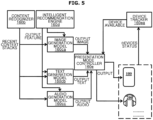
- FIG. 5 is a flow chart illustrating an electronic device 100 outputting a recommendation message for an optimal feature generated by the ML model 160c to a user according to an embodiment of the disclosure.
- the ML model 160c includes an image generation model 160ca, a text generation model 160cb, and an audio generation model 160cc.
- the image generation model 160ca generates the image output associated with the at least one of the optimal feature based on the at least one of the optimal feature recommended by the intelligent recommendation engine 160d, and the current context (e.g., recent context stacks) recognized by the content recognizer 160b.
- the current context e.g., recent context stacks
- the text generation model 160cb generates the text output associated with the at least one of the optimal feature based on the at least one of the optimal feature recommended by the intelligent recommendation engine 160d, and the current context recognized by the content recognizer 160b.
- the audio generation model 160cc generates the audio output associated with the at least one of the optimal feature based on the at least one of the optimal feature recommended by the intelligent recommendation engine 160d, and the current context recognized by the content recognizer 160b.
- image generation model 160ca, the text generation model 160cb, and the audio generation model 160cc correspond to image and graphics interchange format (GIF), text and audio modes which are neural generative models.
- GIF image and graphics interchange format
- the image generation model 160ca determines most recent context text and outputs the image specifying details of the feature in a comprehensible way.
- the image generation model 160ca first takes word embeddings of the recent context text blocks and forward through the stacked convolutional up sampling (transpose convolutional) layers to generate an output image or sequence of images (GIF).
- GIF output image or sequence of images
- the audio generation model 160cc and the text generation model 160cb convert a context text to embeddings and forward through recurrent layers to generate an output audio and an output text respectively.
- the presentation mode controller 160e merges outputs from the generation models 160ca, 160cb, and 160c of the determined optimal modes and provides the merged output to the selected device 100 or 200.
- the presentation mode controller 160e may perform monitoring a device tracker 160ea. Further, the device tracker 160ea detects at least one of the at least one optimal feature of at least one application 150 of the electronic device 100 (e.g., a smart phone) and the at least one optimal feature of the at least one-second electronic device 200 (e.g., a headphone).
- the electronic device 100 e.g., a smart phone
- the at least one optimal feature of the at least one-second electronic device 200 e.g., a headphone
- the presentation mode controller 160e redirects the audio feature to an audio device 200 in response to the connection between the audio device 200 and the electronic device 100.
- the optimal feature is a visual feature (e.g., an image, or a text)
- the presentation mode controller 160e displays the visual feature on the screen of the electronic device 100 in a most efficient manner to enhance the acceptance of the features (e.g., audio feature or visual feature) associated with the electronic device 100 and/or the at least one-second electronic device 200 connected to the electronic device 100.
- the presentation mode controller 160e selects at least one of the image output, the text output, and the audio output as the optimal mode for recommendation to the user of the electronic device 100 based on the at least one optimal feature, and user-specific parameters.
- the device tracker 160ea selects the output terminal device 100 and/or 200 with an output interface to recommend the optimal feature based on recommended type of feature (e.g., audio feature, or visual feature) and interaction behavior of the user of the electronic device 100 with the devices 100 and/or 200. It is based on the selected device 100 and/or 200 and the optimal feature to be recommended by the presentation mode controller 160e.
- recommended type of feature e.g., audio feature, or visual feature
- the electronic device 100 may control the communicator 130 to transmit the recommendation message for the optimal feature to the external electronic device 200 based on the output of the device tracker 160ea.
- FIG. 6 is a view illustrating a state in which an electronic device 100 displays a learning process about a user's optimal feature based on at least one optimal feature, and user-specific parameters according to an embodiment of the disclosure.
- the electronic device 100 may output a user's learning process for the optimal feature based on the optimal feature and the user-specific parameters.
- the optimal feature controller 160 recommends the image output as the optimal feature and displays the image output on the electronic device 100.
- the optimal feature controller 160 detects the same scenario occurs twice but the feature is not recommended again and the user uses the feature once and not the second time. In this case, the optimal feature controller 160 displays an intuitive learning curve (e.g., 20%) on the electronic device 100.
- an intuitive learning curve e.g. 20%
- the optimal feature controller 160 detects that the same scenario repeats.
- the optimal feature controller 160 updates the progress (e.g., 70%) and in response to the corresponding feature reaching a high recall value, the optimal feature controller 160 may not display a progress curve indicator.
- the electronic device 100 may display a learning curve in which the progress increases as the user uses the pre-recommended optimal feature in the same context, and when the user uses the optimal feature to a certain level, the electronic device 100 may not display the learning curve.
- the user can learn the necessary features in a specific context, and can visually confirm his/her learning.
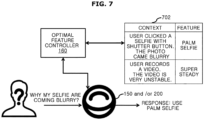
- FIG. 7 is a view illustrating an electronic device 100 determining an optimal feature for recommendation to a user by integrating at least one application 150 according to an embodiment of the disclosure.
- the at least one application 150 e.g., Bixby
- the second electronic device 200 e.g., voice assistance
- the electronic device 100 maps the at least one query with the historical context 702 of the at least one past recommendation to obtain the at least one optimal feature by using the optimal feature controller 160.
- the at least one application 150 and/or the second electronic device 200 automatically recommends the at least one optimal feature to the user of the electronic device 100 based on the mapping.
- the electronic device 100 may determine the historical context corresponding to the query, and determine a past optimal feature, which is recommended in accordance with the historical context, as the optimal feature.
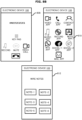
- FIGS. 8A , 8B , and 8C are views illustrating an electronic device 100 recommends an optimal feature to a user according to various embodiments of the disclosure.
- FIG. 8A it illustrates a scenario in which the user of the electronic device 100b (e.g., a mobile phone) is listening music 802 through the second electronic device 200 (e.g., a headphone) and the second electronic device 200 is wirelessly connected to the electronic device 100.
- the user of the electronic device 100b e.g., a mobile phone
- the second electronic device 200 e.g., a headphone
- the user of the electronic device 100 removes the headphone 200 multiple times to listen to outside world, and this event is detected 804 by the optimal feature controller 160.
- the optimal feature controller 160 provides a demo of "ambient sound" feature to the headphone 200.
- the optimal feature controller 160 provides music with ambient sound feature or provides music without ambient sound feature so as to differentiate clarity of ambient sound. Therefore, the proposed system provides better user experience.
- FIG. 8B it illustrates a scenario in which the user of the electronic device 100 communicates over a call 808, and during the calling, the user of the electronic device 100 needs to write down some message for future reference.
- the optimal feature controller 160 automatically recommend the note application 150 on the display of the electronic device 100. Therefore, the proposed system provides better user experience.
- FIG. 8C it illustrates a scenario in which the user of the electronic device 100 is recording a video 814 while walking/running, which leads to shakiness, and thus the quality of the video reduces.
- the user of the electronic device 100 manually searches for a stability feature of the camera application 150.
- the optimal feature controller 160 automatically recommends the stability feature of the camera application 150 on the display of the electronic device 100. Therefore, the proposed system provides better user experience.
- the proposed method is very useful. Furthermore, the optimal feature controller 160 makes recommendations based on the current context also (by extracting problems faced by the user of the electronic device 100/ need of feature) rather than based on the historical context. Therefore, the proposed method is beneficial in recommending features that were never used and are not known to the user of the electronic device 100.
- the optimal feature controller 160 recognizes a scenario/difficulty faced by the user of the electronic device 100, determines need of available functionalities/ features, and recommends the feature at relevant instances. Therefore, the user of the electronic device 100 can feel useful without irritation. Furthermore, the difficulty may not happen exactly as before.
- the proposed disclosure suits in any scenario as there is no hardcoded checking of occurrence of the same scenario.
- the optimal feature controller 160 displays learning progress for the user of the electronic device 100 based on usage of the recommended feature and instances to allow the user of the electronic device 100 to be motivated to use the unused feature and to learn the scenarios.
- the proposed method supports multiple electronic devices 100 and 200 and modes associated with each electronic device 100 and 200. Accordingly, recommendations may be liked by the user of the electronic device 100. Furthermore, the proposed method provides a platform for device assistant (e.g., Bixby, and S Finder) for retrieving features to answer search queries of the user of the electronic device 100. Therefore, the device assistants become more intelligent and requires less computation power and retrieves features faster.
- device assistant e.g., Bixby, and S Finder
- the disclosed embodiments may be embodied in the form of a recording medium storing instructions executable by a computer.
- the instructions may be stored in the form of program code and, when executed by a processor, may generate a program module to perform the operations of the disclosed embodiments.
- the recording medium may be embodied as a computer-readable recording medium.
- the computer- readable recording medium includes all kinds of recording media in which instructions which can be decoded by a computer are stored.
- ROM read only memory
- RAM random access memory
- magnetic tape magnetic tape
- magnetic disk magnetic disk
- flash memory optical data storage device
Landscapes
- Engineering & Computer Science (AREA)
- Theoretical Computer Science (AREA)
- Physics & Mathematics (AREA)
- General Physics & Mathematics (AREA)
- General Engineering & Computer Science (AREA)
- Software Systems (AREA)
- Data Mining & Analysis (AREA)
- Artificial Intelligence (AREA)
- Evolutionary Computation (AREA)
- Computing Systems (AREA)
- Life Sciences & Earth Sciences (AREA)
- Mathematical Physics (AREA)
- Computational Linguistics (AREA)
- General Health & Medical Sciences (AREA)
- Databases & Information Systems (AREA)
- Health & Medical Sciences (AREA)
- Computer Vision & Pattern Recognition (AREA)
- Biomedical Technology (AREA)
- Biophysics (AREA)
- Molecular Biology (AREA)
- Bioinformatics & Cheminformatics (AREA)
- Probability & Statistics with Applications (AREA)
- Bioinformatics & Computational Biology (AREA)
- Evolutionary Biology (AREA)
- Multimedia (AREA)
- Medical Informatics (AREA)
- Signal Processing (AREA)
- Human Computer Interaction (AREA)
- Mathematical Analysis (AREA)
- Algebra (AREA)
- Computational Mathematics (AREA)
- Mathematical Optimization (AREA)
- Pure & Applied Mathematics (AREA)
- Computer Hardware Design (AREA)
- Quality & Reliability (AREA)
- Environmental & Geological Engineering (AREA)
- Computer Networks & Wireless Communication (AREA)
- User Interface Of Digital Computer (AREA)
- Information Retrieval, Db Structures And Fs Structures Therefor (AREA)
Applications Claiming Priority (3)
| Application Number | Priority Date | Filing Date | Title |
|---|---|---|---|
| IN202041042555 | 2020-09-30 | ||
| KR1020210103061A KR20220044091A (ko) | 2020-09-30 | 2021-08-05 | 전자 장치 및 그 제어 방법 |
| PCT/KR2021/013283 WO2022071733A1 (ko) | 2020-09-30 | 2021-09-28 | 전자 장치 및 그 제어 방법 |
Publications (2)
| Publication Number | Publication Date |
|---|---|
| EP4177741A1 true EP4177741A1 (de) | 2023-05-10 |
| EP4177741A4 EP4177741A4 (de) | 2023-12-20 |
Family
ID=80822611
Family Applications (1)
| Application Number | Title | Priority Date | Filing Date |
|---|---|---|---|
| EP21876008.0A Pending EP4177741A4 (de) | 2020-09-30 | 2021-09-28 | Elektronische vorrichtung und steuerungsverfahren dafür |
Country Status (2)
| Country | Link |
|---|---|
| US (1) | US12481901B2 (de) |
| EP (1) | EP4177741A4 (de) |
Family Cites Families (28)
| Publication number | Priority date | Publication date | Assignee | Title |
|---|---|---|---|---|
| US6493702B1 (en) * | 1999-05-05 | 2002-12-10 | Xerox Corporation | System and method for searching and recommending documents in a collection using share bookmarks |
| WO2010047337A1 (ja) | 2008-10-20 | 2010-04-29 | 株式会社キャメロット | 情報処理装置の動作制御システム及び動作制御方法 |
| US8626141B2 (en) | 2009-07-30 | 2014-01-07 | Qualcomm Incorporated | Method and apparatus for customizing a user interface menu |
| US8131848B1 (en) | 2009-09-29 | 2012-03-06 | Jason Adam Denise | Image analysis and communication device control technology |
| KR20130035660A (ko) | 2011-09-30 | 2013-04-09 | 주식회사 케이티 | 추천 시스템 및 추천 방법 |
| KR101812657B1 (ko) * | 2011-11-22 | 2018-01-31 | 삼성전자주식회사 | 컨텍스트 정보에 기초한 애플리케이션 추천 시스템 및 방법 |
| US8799635B2 (en) * | 2012-01-26 | 2014-08-05 | International Business Machines Corporation | Intelligent application recommendation feature |
| US9426232B1 (en) | 2012-08-21 | 2016-08-23 | Google Inc. | Geo-location based content publishing platform |
| JP6161624B2 (ja) | 2012-10-31 | 2017-07-12 | パナソニック インテレクチュアル プロパティ コーポレーション オブ アメリカPanasonic Intellectual Property Corporation of America | ユーザ管理方法、サーバ装置およびユーザ管理システム |
| JP2014164599A (ja) | 2013-02-26 | 2014-09-08 | Nec Saitama Ltd | 情報機器、その制御方法及びプログラム |
| US9218574B2 (en) | 2013-05-29 | 2015-12-22 | Purepredictive, Inc. | User interface for machine learning |
| KR102186455B1 (ko) | 2013-08-13 | 2020-12-03 | 삼성전자주식회사 | 사용자 맞춤 기능 추천 방법 및 이를 실행하기 위한 모바일 디바이스 |
| KR20150068175A (ko) | 2013-12-11 | 2015-06-19 | 엘지전자 주식회사 | 휴대 단말기의 동작 방법 |
| US9974045B2 (en) | 2015-06-29 | 2018-05-15 | Google Llc | Systems and methods for contextual discovery of device functions |
| KR101779034B1 (ko) | 2016-02-12 | 2017-09-18 | 주식회사 에이비일팔공 | 애플리케이션에 관한 프리뷰 페이지를 제공하기 위한 방법, 시스템 및 비일시성의 컴퓨터 판독 가능한 기록 매체 |
| US10430214B2 (en) * | 2016-12-30 | 2019-10-01 | Google Llc | Dynamically generating custom application onboarding tutorials |
| US10552430B2 (en) * | 2017-01-17 | 2020-02-04 | Microsoft Technology Licensing, Llc | Increasing utilization of a computer system |
| JP6907702B2 (ja) | 2017-05-23 | 2021-07-21 | 富士通株式会社 | 情報抽出装置、情報抽出プログラムおよび情報抽出方法 |
| US10536580B2 (en) * | 2017-06-01 | 2020-01-14 | Adobe Inc. | Recommendations based on feature usage in applications |
| US20190129615A1 (en) * | 2017-10-30 | 2019-05-02 | Futurewei Technologies, Inc. | Apparatus and method for simplifying repeat performance of a prior performed task based on a context of a mobile device |
| KR102441336B1 (ko) | 2017-12-12 | 2022-09-08 | 삼성전자주식회사 | 사용자 단말 장치 및 그 제어 방법 |
| WO2020005240A1 (en) * | 2018-06-27 | 2020-01-02 | Google Llc | Adapting a sequence model for use in predicting future device interactions with a computing system |
| US11163617B2 (en) * | 2018-09-21 | 2021-11-02 | Microsoft Technology Licensing, Llc | Proactive notification of relevant feature suggestions based on contextual analysis |
| US11017045B2 (en) * | 2018-11-19 | 2021-05-25 | Microsoft Technology Licensing, Llc | Personalized user experience and search-based recommendations |
| KR102630874B1 (ko) | 2019-02-01 | 2024-01-30 | 삼성전자 주식회사 | 상황에 기반한 사용자 맞춤형 설정 방법 및 장치 |
| KR102832134B1 (ko) * | 2019-09-02 | 2025-07-09 | 엘지전자 주식회사 | 상황 인식에 기반한 어플리케이션 추천을 위한 장치 및 제어 방법 |
| US20210240770A1 (en) * | 2020-01-30 | 2021-08-05 | Microsoft Technology Licensing, Llc | Application search system |
| US11900046B2 (en) * | 2020-08-07 | 2024-02-13 | Microsoft Technology Licensing, Llc | Intelligent feature identification and presentation |
-
2021
- 2021-09-28 EP EP21876008.0A patent/EP4177741A4/de active Pending
- 2021-10-12 US US17/499,257 patent/US12481901B2/en active Active
Also Published As
| Publication number | Publication date |
|---|---|
| US12481901B2 (en) | 2025-11-25 |
| US20220101163A1 (en) | 2022-03-31 |
| EP4177741A4 (de) | 2023-12-20 |
Similar Documents
| Publication | Publication Date | Title |
|---|---|---|
| CN116249991B (zh) | 一种神经网络蒸馏方法以及装置 | |
| US12327197B2 (en) | System and method for providing content based on knowledge graph | |
| US10706237B2 (en) | Contextual language generation by leveraging language understanding | |
| EP3690644B1 (de) | Elektronische vorrichtung und betriebsverfahren dafür | |
| CN118467707B (zh) | 一种医学视觉问答方法、装置、设备及存储介质 | |
| US20130159228A1 (en) | Dynamic user experience adaptation and services provisioning | |
| CN110782043B (zh) | 模型优化方法、装置、存储介质及服务器 | |
| US10679006B2 (en) | Skimming text using recurrent neural networks | |
| KR20200036084A (ko) | 애플리케이션의 번역 정보를 제공하는 디바이스 및 방법 | |
| CN111316662A (zh) | 图像显示设备及其操作方法 | |
| US20190251355A1 (en) | Method and electronic device for generating text comment about content | |
| US20220164071A1 (en) | Method and device for providing user-selection-based information | |
| US20230368003A1 (en) | Adaptive sparse attention pattern | |
| US20250029685A1 (en) | Artificial intelligence device and method for recognizing structural formula image | |
| KR20220040997A (ko) | 전자 장치 및 그 제어 방법 | |
| KR20180075227A (ko) | 전자 장치 및 전자 장치의 검색 서비스 제공 방법 | |
| KR102423754B1 (ko) | 디바이스 사용 문의에 대한 응답을 제공하는 디바이스 및 방법 | |
| US20210304039A1 (en) | Method for calculating the importance of features in iterative multi-label models to improve explainability | |
| US11961512B2 (en) | System and method for providing voice assistance service | |
| US12481901B2 (en) | Electronic device and control method thereof | |
| KR20220044091A (ko) | 전자 장치 및 그 제어 방법 | |
| CN119622081A (zh) | 工作流算子推荐方法、装置、设备、存储介质及产品 | |
| US20220083882A1 (en) | Electronic device and operating method for providing information about why response has changed | |
| US20190236410A1 (en) | Bootstrapping recommendation systems from passive data | |
| US20260044253A1 (en) | Dynamically generating user interface components |
Legal Events
| Date | Code | Title | Description |
|---|---|---|---|
| STAA | Information on the status of an ep patent application or granted ep patent |
Free format text: STATUS: THE INTERNATIONAL PUBLICATION HAS BEEN MADE |
|
| PUAI | Public reference made under article 153(3) epc to a published international application that has entered the european phase |
Free format text: ORIGINAL CODE: 0009012 |
|
| STAA | Information on the status of an ep patent application or granted ep patent |
Free format text: STATUS: REQUEST FOR EXAMINATION WAS MADE |
|
| 17P | Request for examination filed |
Effective date: 20230206 |
|
| AK | Designated contracting states |
Kind code of ref document: A1 Designated state(s): AL AT BE BG CH CY CZ DE DK EE ES FI FR GB GR HR HU IE IS IT LI LT LU LV MC MK MT NL NO PL PT RO RS SE SI SK SM TR |
|
| A4 | Supplementary search report drawn up and despatched |
Effective date: 20231121 |
|
| RIC1 | Information provided on ipc code assigned before grant |
Ipc: G06F 16/9038 20190101ALN20231115BHEP Ipc: G06N 3/08 20230101ALN20231115BHEP Ipc: G06F 16/9035 20190101ALN20231115BHEP Ipc: H04M 1/72454 20210101ALI20231115BHEP Ipc: G06N 20/00 20190101ALI20231115BHEP Ipc: G06F 9/54 20060101ALI20231115BHEP Ipc: G06F 16/332 20190101ALI20231115BHEP Ipc: G06F 11/34 20060101ALI20231115BHEP Ipc: G06F 9/451 20180101AFI20231115BHEP |
|
| DAV | Request for validation of the european patent (deleted) | ||
| DAX | Request for extension of the european patent (deleted) | ||
| STAA | Information on the status of an ep patent application or granted ep patent |
Free format text: STATUS: EXAMINATION IS IN PROGRESS |
|
| 17Q | First examination report despatched |
Effective date: 20240626 |