EP4177369A1 - Austenitic stainless steel and manufacturing method thereof - Google Patents
Austenitic stainless steel and manufacturing method thereof Download PDFInfo
- Publication number
- EP4177369A1 EP4177369A1 EP21864595.0A EP21864595A EP4177369A1 EP 4177369 A1 EP4177369 A1 EP 4177369A1 EP 21864595 A EP21864595 A EP 21864595A EP 4177369 A1 EP4177369 A1 EP 4177369A1
- Authority
- EP
- European Patent Office
- Prior art keywords
- formula
- less
- stainless steel
- austenitic stainless
- present disclosure
- Prior art date
- Legal status (The legal status is an assumption and is not a legal conclusion. Google has not performed a legal analysis and makes no representation as to the accuracy of the status listed.)
- Pending
Links
Images



Classifications
-
- C—CHEMISTRY; METALLURGY
- C21—METALLURGY OF IRON
- C21D—MODIFYING THE PHYSICAL STRUCTURE OF FERROUS METALS; GENERAL DEVICES FOR HEAT TREATMENT OF FERROUS OR NON-FERROUS METALS OR ALLOYS; MAKING METAL MALLEABLE, e.g. BY DECARBURISATION OR TEMPERING
- C21D8/00—Modifying the physical properties of ferrous metals or ferrous alloys by deformation combined with, or followed by, heat treatment
- C21D8/02—Modifying the physical properties of ferrous metals or ferrous alloys by deformation combined with, or followed by, heat treatment during manufacturing of plates or strips
- C21D8/0221—Modifying the physical properties of ferrous metals or ferrous alloys by deformation combined with, or followed by, heat treatment during manufacturing of plates or strips characterised by the working steps
- C21D8/0236—Cold rolling
-
- C—CHEMISTRY; METALLURGY
- C21—METALLURGY OF IRON
- C21D—MODIFYING THE PHYSICAL STRUCTURE OF FERROUS METALS; GENERAL DEVICES FOR HEAT TREATMENT OF FERROUS OR NON-FERROUS METALS OR ALLOYS; MAKING METAL MALLEABLE, e.g. BY DECARBURISATION OR TEMPERING
- C21D1/00—General methods or devices for heat treatment, e.g. annealing, hardening, quenching or tempering
- C21D1/26—Methods of annealing
-
- C—CHEMISTRY; METALLURGY
- C21—METALLURGY OF IRON
- C21D—MODIFYING THE PHYSICAL STRUCTURE OF FERROUS METALS; GENERAL DEVICES FOR HEAT TREATMENT OF FERROUS OR NON-FERROUS METALS OR ALLOYS; MAKING METAL MALLEABLE, e.g. BY DECARBURISATION OR TEMPERING
- C21D6/00—Heat treatment of ferrous alloys
- C21D6/004—Heat treatment of ferrous alloys containing Cr and Ni
-
- C—CHEMISTRY; METALLURGY
- C21—METALLURGY OF IRON
- C21D—MODIFYING THE PHYSICAL STRUCTURE OF FERROUS METALS; GENERAL DEVICES FOR HEAT TREATMENT OF FERROUS OR NON-FERROUS METALS OR ALLOYS; MAKING METAL MALLEABLE, e.g. BY DECARBURISATION OR TEMPERING
- C21D6/00—Heat treatment of ferrous alloys
- C21D6/005—Heat treatment of ferrous alloys containing Mn
-
- C—CHEMISTRY; METALLURGY
- C21—METALLURGY OF IRON
- C21D—MODIFYING THE PHYSICAL STRUCTURE OF FERROUS METALS; GENERAL DEVICES FOR HEAT TREATMENT OF FERROUS OR NON-FERROUS METALS OR ALLOYS; MAKING METAL MALLEABLE, e.g. BY DECARBURISATION OR TEMPERING
- C21D6/00—Heat treatment of ferrous alloys
- C21D6/008—Heat treatment of ferrous alloys containing Si
-
- C—CHEMISTRY; METALLURGY
- C21—METALLURGY OF IRON
- C21D—MODIFYING THE PHYSICAL STRUCTURE OF FERROUS METALS; GENERAL DEVICES FOR HEAT TREATMENT OF FERROUS OR NON-FERROUS METALS OR ALLOYS; MAKING METAL MALLEABLE, e.g. BY DECARBURISATION OR TEMPERING
- C21D8/00—Modifying the physical properties of ferrous metals or ferrous alloys by deformation combined with, or followed by, heat treatment
- C21D8/02—Modifying the physical properties of ferrous metals or ferrous alloys by deformation combined with, or followed by, heat treatment during manufacturing of plates or strips
-
- C—CHEMISTRY; METALLURGY
- C21—METALLURGY OF IRON
- C21D—MODIFYING THE PHYSICAL STRUCTURE OF FERROUS METALS; GENERAL DEVICES FOR HEAT TREATMENT OF FERROUS OR NON-FERROUS METALS OR ALLOYS; MAKING METAL MALLEABLE, e.g. BY DECARBURISATION OR TEMPERING
- C21D8/00—Modifying the physical properties of ferrous metals or ferrous alloys by deformation combined with, or followed by, heat treatment
- C21D8/02—Modifying the physical properties of ferrous metals or ferrous alloys by deformation combined with, or followed by, heat treatment during manufacturing of plates or strips
- C21D8/0221—Modifying the physical properties of ferrous metals or ferrous alloys by deformation combined with, or followed by, heat treatment during manufacturing of plates or strips characterised by the working steps
- C21D8/0226—Hot rolling
-
- C—CHEMISTRY; METALLURGY
- C21—METALLURGY OF IRON
- C21D—MODIFYING THE PHYSICAL STRUCTURE OF FERROUS METALS; GENERAL DEVICES FOR HEAT TREATMENT OF FERROUS OR NON-FERROUS METALS OR ALLOYS; MAKING METAL MALLEABLE, e.g. BY DECARBURISATION OR TEMPERING
- C21D8/00—Modifying the physical properties of ferrous metals or ferrous alloys by deformation combined with, or followed by, heat treatment
- C21D8/02—Modifying the physical properties of ferrous metals or ferrous alloys by deformation combined with, or followed by, heat treatment during manufacturing of plates or strips
- C21D8/0247—Modifying the physical properties of ferrous metals or ferrous alloys by deformation combined with, or followed by, heat treatment during manufacturing of plates or strips characterised by the heat treatment
-
- C—CHEMISTRY; METALLURGY
- C21—METALLURGY OF IRON
- C21D—MODIFYING THE PHYSICAL STRUCTURE OF FERROUS METALS; GENERAL DEVICES FOR HEAT TREATMENT OF FERROUS OR NON-FERROUS METALS OR ALLOYS; MAKING METAL MALLEABLE, e.g. BY DECARBURISATION OR TEMPERING
- C21D8/00—Modifying the physical properties of ferrous metals or ferrous alloys by deformation combined with, or followed by, heat treatment
- C21D8/02—Modifying the physical properties of ferrous metals or ferrous alloys by deformation combined with, or followed by, heat treatment during manufacturing of plates or strips
- C21D8/0247—Modifying the physical properties of ferrous metals or ferrous alloys by deformation combined with, or followed by, heat treatment during manufacturing of plates or strips characterised by the heat treatment
- C21D8/0263—Modifying the physical properties of ferrous metals or ferrous alloys by deformation combined with, or followed by, heat treatment during manufacturing of plates or strips characterised by the heat treatment following hot rolling
-
- C—CHEMISTRY; METALLURGY
- C21—METALLURGY OF IRON
- C21D—MODIFYING THE PHYSICAL STRUCTURE OF FERROUS METALS; GENERAL DEVICES FOR HEAT TREATMENT OF FERROUS OR NON-FERROUS METALS OR ALLOYS; MAKING METAL MALLEABLE, e.g. BY DECARBURISATION OR TEMPERING
- C21D8/00—Modifying the physical properties of ferrous metals or ferrous alloys by deformation combined with, or followed by, heat treatment
- C21D8/02—Modifying the physical properties of ferrous metals or ferrous alloys by deformation combined with, or followed by, heat treatment during manufacturing of plates or strips
- C21D8/0247—Modifying the physical properties of ferrous metals or ferrous alloys by deformation combined with, or followed by, heat treatment during manufacturing of plates or strips characterised by the heat treatment
- C21D8/0273—Final recrystallisation annealing
-
- C—CHEMISTRY; METALLURGY
- C21—METALLURGY OF IRON
- C21D—MODIFYING THE PHYSICAL STRUCTURE OF FERROUS METALS; GENERAL DEVICES FOR HEAT TREATMENT OF FERROUS OR NON-FERROUS METALS OR ALLOYS; MAKING METAL MALLEABLE, e.g. BY DECARBURISATION OR TEMPERING
- C21D9/00—Heat treatment, e.g. annealing, hardening, quenching or tempering, adapted for particular articles; Furnaces therefor
- C21D9/46—Heat treatment, e.g. annealing, hardening, quenching or tempering, adapted for particular articles; Furnaces therefor for sheet metals
-
- C—CHEMISTRY; METALLURGY
- C22—METALLURGY; FERROUS OR NON-FERROUS ALLOYS; TREATMENT OF ALLOYS OR NON-FERROUS METALS
- C22C—ALLOYS
- C22C38/00—Ferrous alloys, e.g. steel alloys
- C22C38/001—Ferrous alloys, e.g. steel alloys containing N
-
- C—CHEMISTRY; METALLURGY
- C22—METALLURGY; FERROUS OR NON-FERROUS ALLOYS; TREATMENT OF ALLOYS OR NON-FERROUS METALS
- C22C—ALLOYS
- C22C38/00—Ferrous alloys, e.g. steel alloys
- C22C38/02—Ferrous alloys, e.g. steel alloys containing silicon
-
- C—CHEMISTRY; METALLURGY
- C22—METALLURGY; FERROUS OR NON-FERROUS ALLOYS; TREATMENT OF ALLOYS OR NON-FERROUS METALS
- C22C—ALLOYS
- C22C38/00—Ferrous alloys, e.g. steel alloys
- C22C38/04—Ferrous alloys, e.g. steel alloys containing manganese
-
- C—CHEMISTRY; METALLURGY
- C22—METALLURGY; FERROUS OR NON-FERROUS ALLOYS; TREATMENT OF ALLOYS OR NON-FERROUS METALS
- C22C—ALLOYS
- C22C38/00—Ferrous alloys, e.g. steel alloys
- C22C38/18—Ferrous alloys, e.g. steel alloys containing chromium
- C22C38/40—Ferrous alloys, e.g. steel alloys containing chromium with nickel
-
- C—CHEMISTRY; METALLURGY
- C22—METALLURGY; FERROUS OR NON-FERROUS ALLOYS; TREATMENT OF ALLOYS OR NON-FERROUS METALS
- C22C—ALLOYS
- C22C38/00—Ferrous alloys, e.g. steel alloys
- C22C38/18—Ferrous alloys, e.g. steel alloys containing chromium
- C22C38/40—Ferrous alloys, e.g. steel alloys containing chromium with nickel
- C22C38/42—Ferrous alloys, e.g. steel alloys containing chromium with nickel with copper
-
- C—CHEMISTRY; METALLURGY
- C22—METALLURGY; FERROUS OR NON-FERROUS ALLOYS; TREATMENT OF ALLOYS OR NON-FERROUS METALS
- C22C—ALLOYS
- C22C38/00—Ferrous alloys, e.g. steel alloys
- C22C38/18—Ferrous alloys, e.g. steel alloys containing chromium
- C22C38/40—Ferrous alloys, e.g. steel alloys containing chromium with nickel
- C22C38/44—Ferrous alloys, e.g. steel alloys containing chromium with nickel with molybdenum or tungsten
-
- C—CHEMISTRY; METALLURGY
- C22—METALLURGY; FERROUS OR NON-FERROUS ALLOYS; TREATMENT OF ALLOYS OR NON-FERROUS METALS
- C22C—ALLOYS
- C22C38/00—Ferrous alloys, e.g. steel alloys
- C22C38/18—Ferrous alloys, e.g. steel alloys containing chromium
- C22C38/40—Ferrous alloys, e.g. steel alloys containing chromium with nickel
- C22C38/46—Ferrous alloys, e.g. steel alloys containing chromium with nickel with vanadium
-
- C—CHEMISTRY; METALLURGY
- C22—METALLURGY; FERROUS OR NON-FERROUS ALLOYS; TREATMENT OF ALLOYS OR NON-FERROUS METALS
- C22C—ALLOYS
- C22C38/00—Ferrous alloys, e.g. steel alloys
- C22C38/18—Ferrous alloys, e.g. steel alloys containing chromium
- C22C38/40—Ferrous alloys, e.g. steel alloys containing chromium with nickel
- C22C38/48—Ferrous alloys, e.g. steel alloys containing chromium with nickel with niobium or tantalum
-
- C—CHEMISTRY; METALLURGY
- C22—METALLURGY; FERROUS OR NON-FERROUS ALLOYS; TREATMENT OF ALLOYS OR NON-FERROUS METALS
- C22C—ALLOYS
- C22C38/00—Ferrous alloys, e.g. steel alloys
- C22C38/18—Ferrous alloys, e.g. steel alloys containing chromium
- C22C38/40—Ferrous alloys, e.g. steel alloys containing chromium with nickel
- C22C38/58—Ferrous alloys, e.g. steel alloys containing chromium with nickel with more than 1.5% by weight of manganese
-
- C—CHEMISTRY; METALLURGY
- C21—METALLURGY OF IRON
- C21D—MODIFYING THE PHYSICAL STRUCTURE OF FERROUS METALS; GENERAL DEVICES FOR HEAT TREATMENT OF FERROUS OR NON-FERROUS METALS OR ALLOYS; MAKING METAL MALLEABLE, e.g. BY DECARBURISATION OR TEMPERING
- C21D2211/00—Microstructure comprising significant phases
- C21D2211/001—Austenite
Definitions
- the present disclosure relates to an austenitic stainless steel which may be utilized as various materials for an outer panel of a vehicle, a component for construction, and the like and a manufacturing method thereof.
- Austenitic stainless steels have been applied for various uses to manufacture components for transportation and construction due to excellent formability, work hardenability, and weldability.
- 304 series stainless steels or 301 series stainless steels which are representative general-use austenitic stainless steels, have low yield strengths of 200 to 350 MPa, and thus there are limits to apply these stainless steels to structural materials due to low strength.
- a skin pass rolling process may additionally be performed as a method for increasing yield strength of austenitic stainless steels, this method causes problems in increasing manufacturing costs due to the additional process and significantly deteriorating elongation of materials.
- Patent Document 1 discloses a method for manufacturing a 300 series stainless steel having a small curvature even after half etching by performing stress relief (SR) heat treatment twice after skin pass rolling a cold-rolled, annealed material for a laser metal mask for photoetching.
- SR stress relief
- Patent Document 1 relates to a manufacturing method to control etchability and curvature after etching. Because an austenitic stability parameter (ASP) value is from 30 to 50, strain-induced martensite transformation rapidly occurs during formation, resulting in deterioration of elongation.
- ASP austenitic stability parameter
- Patent Document 2 relates a nuclear power component.
- heat treatment was performed for a long time over 48 hours at a temperature of 600 to 700°C. According to Patent Document 2, heat treatment is required for a long time, productivity decreases in the case of being implemented in a real production line, and manufacturing costs increase.
- an ultrafine-grained 300 series stainless steel having simultaneously satisfying high yield strength and excellent elongation.
- an austenitic stainless steel includes, in percent by weight (wt%), 0.005 to 0.03% of C, 0.1 to 1% of Si, 0.1 to 2% of Mn, 6 to 9% of Ni, 16 to 19% of Cr, 0.2% or less of N, and the remainder being Fe and unavoidable impurities, wherein assuming that a total thickness of the steel material is t, a value of an average grain size d in a thickness range of 1/4t to 3/4t is 5 ⁇ m or less, an ASP value represented by Formula (1) below is from 10 to 25, a value represented by Formula (2) below is 435 or more, and a value represented by Formula (3) below is 6000 or more.
- [C], [N], [Si], [Mn], [Cr], [Ni], [Cu], [Mo], [Nb], and [V] represent weight percentages (wt%) of respective elements
- YS represents a yield strength (MPa)
- EL represents an elongation (%).
- a value of Formula (4) below may be 200 or more.
- Hv represents a Vickers hardness (Hv) and [Ni] and [Cr] represent weight percentages (wt%) of respective elements.
- the austenitic stainless steel according to the present disclosure may further include, in percent by weight (wt%), at least one of 0.4% or less of Cu, 0.2% or less of Mo, 0.25% or less of Nb, and 0.25% or less of V.
- the t may be from 0.4 to 2.0 mm.
- a pitting potential measured by dipping in a 3.5% NaCl solution at 30°C, may be 250 mV or more.
- a method of manufacturing the austenitic stainless steel includes: hot rolling a slab comprising, in percent by weight (wt%), 0.005 to 0.03% of C, 0.1 to 1% of Si, 0.1 to 2% of Mn, 6 to 9% of Ni, 16 to 19% of Cr, 0.2% or less of N, and the remainder being Fe and unavoidable impurities, and cold rolling the hot-rolled steel material at room temperature with a reduction ratio of 40% or more; and annealing the cold-rolled steel material at a temperature of 700 to 850°C.
- the slab may be hot-rolled and then cold-rolled without being annealed.
- the method of manufacturing the austenitic stainless steel according to the present disclosure may further include skin pass rolling with a reduction ratio of 60% or more.
- the present disclosure may provide an ultrafine-grained 300 series stainless steel simultaneously satisfying high strength and high ductility.
- the present disclosure provides an austenitic stainless steel simultaneously satisfying high strength and high ductility with high economic feasibility by reducing the contents of Ni and Cr which are high-priced alloying elements.
- the present disclosure provides an austenitic stainless steel simultaneously satisfying high strength and high ductility with excellent corrosion resistance.
- An austenitic stainless steel includes, in percent by weight (wt%), 0.005 to 0.03% of C, 0.1 to 1% of Si, 0.1 to 2% of Mn, 6 to 9% of Ni, 16 to 19% of Cr, 0.2% or less of N, and the remainder being Fe and unavoidable impurities, wherein assuming that a total thickness of the steel material is t, a value of an average grain size d in a thickness range of 1/4t to 3/4t is 5 ⁇ m or less, an ASP value represented by Formula (1) below is from 10 to 25, a value represented by Formula (2) below is 435 or more, and a value represented by Formula (3) below is 6000 or more.
- austenitic stainless steels have been used for various uses due to excellent formability, work hardenability, and weldability, yield strength thereof is low. In the case of performing skin pass rolling to increase yield strength, a problem of deteriorating elongation may occur.
- the present inventors have focused on an ultrafine austenitic stainless steel as a steel material simultaneously satisfying high yield strength and excellent elongation. However, not all of ultrafine stainless steels satisfy both high yield strength and excellent elongation.
- Ultrafine grained austenitic stainless steels may have considerably different yield strength and elongation, because the Ni content and the Cr content vary according to steel types, the amount of martensite transformation during cold working may vary according to the stability of the austenite phase, and tensile curve characteristics may vary according to the transformation induced plasticity (TRIP) transformation behavior.
- TRIP transformation induced plasticity
- An austenitic stainless steel includes, in percent by weight (wt%), 0.005 to 0.03% of C, 0.1 to 1% of Si, 0.1 to 2% of Mn, 6 to 9% of Ni, 16 to 19% of Cr, 0.2% or less of N, and the remainder being Fe and unavoidable impurities.
- the austenitic stainless steel may further include at least one of 0.4% or less of Cu, 0.2% or less of Mo, 0.25% or less of Nb, and 0.25% or less of V.
- the content of carbon (C) is from 0.005 to 0.03 wt%.
- C is an austenite phase-stabilizing element.
- C is added in an amount of 0.005 wt% or more.
- the C content is controlled to 0.03 wt% or less in the present disclosure.
- the content of silicon (Si) is from 0.1 to 1 wt%.
- Si is an element added as a deoxidizer during a steel-making process and has an effect on improving corrosion resistance of a steel by forming an Si oxide in a passivated layer in the case of performing a bright annealing process.
- Si is added in an amount of 0.1 wt% or more in the present disclosure.
- the Si content is controlled to 1.0 wt% or less in the present disclosure.
- the content of manganese (Mn) is from 0.1 to 1.0 wt%.
- Mn is an austenite phase-stabilizing element.
- Mn is added in an amount of 0.1 wt% or more in the present disclosure.
- the Mn content is controlled to 1.0 wt% or less in the present disclosure.
- the content of nickel (Ni) is from 6.0 to 9.0 wt%.
- Ni as an austenite phase-stabilizing element, has an effect on softening a steel material.
- Ni is added in an amount of 6.0 wt% or more in the present disclosure.
- the Ni content is controlled to 9.0 wt% or less in the present disclosure.
- the content of chromium (Cr) is from 16.0 to 19.0 wt%.
- Cr is a major element for improving corrosion resistance of a stainless steel.
- Cr is added in an amount of 16.0 wt% or more in the present disclosure.
- the Cr content is controlled to 19.0 wt% or less in the present disclosure.
- the content of nitrogen (N) is 0.2 wt% or less.
- N is an austenite phase-stabilizing element and improves strength of a steel material.
- the N content is controlled to 0.2 wt% or less in the present disclosure.
- the content of copper (Cu) may be from 0.4 wt% or less.
- Cu is an austenite phase-stabilizing element.
- the Cu content is controlled to 0.4 wt% or less in the present disclosure.
- the content of molybdenum (Mo) may be 0.2 wt% or less.
- Mo has an effect on improving corrosion resistance and workability. However, since an excess of Mo causes a problem of increasing costs, the Mo content is controlled to 0.2 wt% or less in the present disclosure.
- niobium (Nb) or vanadium (V) may be 0.25 wt% or less.
- Nb and V have an effect on suppressing the growth of grains by forming (Nb,V)(C,N) precipitates.
- Nb,V contents of Nb and V
- a problem of increasing manufacturing coast may occur, and thus the contents of Nb and V are controlled to 0.25 wt% or less, respectively, in the present disclosure.
- the remaining component of the composition of the present disclosure is iron (Fe).
- the composition may include unintended impurities inevitably incorporated from raw materials or surrounding environments, and thus addition of other alloying elements is not excluded. These impurities are known to any person skilled in the art of manufacturing and details thereof are not specifically mentioned in the present disclosure.
- An Austenitic Stability Parameter (ASP) value represented by Formula (1) below may be from 10 to 25. 551 ⁇ 462 * C + N ⁇ 9.2 * Si ⁇ 8.1 * Mn ⁇ 13.7 * Cr ⁇ 29 * Ni + Cu ⁇ 18.5 * Mo ⁇ 68 * Nb + V
- [C], [N], [Si], [Mn], [Cr], [Ni], [Cu], [Mo], [Nb], and [V] represent weight percentages (wt%) of respective elements. For an element not added, 0 wt% is substituted into Formula (1).
- Formula (1) indicates a temperature at which 50% of austenite is transformed into martensite when a stainless steel is deformed with a true strain of 0.3 and is used as an index of stability of the austenite phase.
- a lower value of Formula (1) means higher stability of the austenite phase indicating a smaller amount of strain-induced martensite during transformation.
- a value of Formula (2) below may be 435 or more. 1600 * N + 700 / d + 4 * ASP ⁇ 20 * Ni + 100
- [N] and [Ni] represent weight percentages (wt%) of respective elements.
- ASP means the ASP value of Formula (1). Assuming that a total thickness of the steel material is t, d indicates an average grain size in a thickness range of 1/4t to 3/4t.
- t may be from 0.4 to 2.0 mm.
- a material having a thickness of 0.4 to 2.0 mm has been widely applied to structural components.
- an austenitic stainless steel having high strength and high ductility may be provided within the above-described thickness range.
- d may be 5 ⁇ m or less.
- Formula (2) is a parameter to obtain high strength, derived in consideration of factors affecting strength, such as the N content, the Ni content, grain size, and austenitic stability parameter. When the value of Formula (2) is less than 435, sufficient strength cannot be obtained.
- a value of Formula (3) below may be 6000 or more.
- YS represents yield strength (MPa)
- EL represents elongation (%)
- [Ni] and [Cr] represent weight percentages (wt%) of respective elements.
- the YS*EL value is considerably affected by the contents of Cr and Ni.
- the contents of Cr and Ni are small, TRIP transformation easily occurs and the YS*EL value tends to increase.
- the value of Formula (3) is less than 6000, high strength and high ductility cannot be satisfied simultaneously.
- a value of Formula (4) below may be 200 or more.
- Hv Vickers hardness (Hv) and [Ni] and [Cr] represent weight percentages (wt%) of respective elements.
- the Hv value is considerably affected by the contents of Cr and Ni.
- the contents of Cr and Ni are small, TRIP transformation easily occurs, and thus an amount of strain-induced martensite transformation increases during cold deformation. As a result, hardness of a steel material increases.
- the value of Formula (4) is less than 200, sufficient hardness cannot be obtained.
- the austenitic stainless steel according to the present disclosure has not only high strength and high ductility but also excellent corrosion resistance.
- the austenitic stainless steel according to an embodiment may have a pitting potential of 250 mV or more when measured by dipping in an 3.5% NaCl solution at 30°C.
- the austenitic stainless steel according to an embodiment of the present disclosure may have a tensile strength of 1750 MPa or more after skin pass rolling.
- a method of manufacturing an austenitic stainless steel according to an embodiment of the present disclosure includes: hot rolling a slab including, in percent by weight (wt%), 0.005 to 0.03% of C, 0.1 to 1% of Si, 0.1 to 2% of Mn, 6 to 9% of Ni, 16 to 19% of Cr, 0.2% or less of N, and the remainder being Fe and unavoidable impurities, and cold rolling the hot-rolled steel material at room temperature with a reduction ratio of 40% or more; and annealing the cold-rolled steel material at a temperature of 700 to 850°C.
- the austenitic stainless steel of the present disclosure having an ASP value of 10 to 25 has a too low amount of TRIP transformation, resulting in a decrease in the fraction of martensite in the cold-rolled steel material and an increase in the fraction of the retained austenite phase.
- the ratio of the reverted austenite phase during the subsequent low-temperature annealing decreases, and the fraction of the retained austenite phase without being transformed into martensite increases, making it difficult to obtain ultrafine grains.
- the hot-rolled material is cold-rolled and annealed at a low temperature of 700 to 850°C.
- the temperature of the low-temperature annealing is below 700°C, recrystallization from the strain-induced martensite phase into the reverted austenite phase does not occur.
- the temperature of the low-temperature annealing is higher than 850°C, the grain size of the reverted austenite may increase, thereby decreasing the yield strength.
- the slab may be hot-rolled and then cold-rolled without conducting annealing.
- the method may further include skin pass rolling with a reduction ratio of 60% or more to further increase strength.
- ASP refers to a value obtained by substituting the contents of alloying elements of Table 1 into Formula (1) below indicating stability of an austenite phase. 551 ⁇ 462 * C + N ⁇ 9.2 * Si ⁇ 8.1 * Mn ⁇ 13.7 * Cr ⁇ 29 * Ni + Cu ⁇ 18.5 * Mo ⁇ 68 * Nb + V
- [C], [N], [Si], [Mn], [Cr], [Ni], [Cu], [Mo], [Nb], and [V] represent weight percentages (wt%) of respective elements.
- Table 1 Composition of alloying element (wt%) ASP C Si Mn Cr Ni Cu Mo N Nb V
- Inventive Example 1 0.023 0.53 1.24 17.5 6.4 0 0 0.17 0 0 21.6
- Inventive Example 2 0.023 0.53 1.24 17.5 6.4 0 0 0.17 0 0 21.6
- Inventive Example 3 0.019 0.3 0.46 17.3 6.3 0.25 0.1 0.15 0.21 0 23.3
- Inventive Example 4 0.019 0.3 0.46 17.3 6.3 0.25 0.1 0.15 0.21 0 23.3
- Inventive Example 5 0.017 0.32 1.79 16.7 6.85 0.25 0.1 0.15 0 0 19.9
- Inventive Example 6 0.017 0.32 1.79 16.7 6.85 0.25 0.1 0.15 0
- Formula (2) of Table 2 means a value obtained by Formula (2) below. 1600 * N + 700 / d + 4 * ASP ⁇ 20 * Ni + 100
- Formula (3) of Table 2 means a value obtained by Formula (3) below.
- the value of Formula (3) was obtained by substituting a yield strength (YS, MPa) and an elongation (EL, %) measured under the conditions described below and the contents (wt%) of [Ni] and [Cr] of Table 1 thereinto.
- the yield strength (YS, MPa) and the elongation (EL, %) were measured after preparing a sample of the cold-rolled, annealed material according to the JIS 13B standards and conducting a tensile test at room temperature in a crosshead range of 10 mm/min to 20 mm/min.
- Formula (4) of Table 2 represents a value obtained by Formula (4) below.
- the value of Formula (4) was derived by substituting a Vickers hardness (Hv) measured under the conditions described below and the contents (wt%) of [Ni] and [Cr] of Table 1 thereinto.
- the Vickers hardness (Hv) is a value measured using a Vickers hardness tester with a load of 2 kgf.
- Inventive Examples 1 to 8 satisfied the ASP values of 10 to 25, the d value of 5 ⁇ m or less, the value of Formula (2) of 435 or more, and the value of Formula (3) of6000 or more, and thus high strength, high ductility, and excellent corrosion resistance were obtained. Also, referring to Table 2, in Inventive Examples 1 to 8, the values of Formula (4) were at least 200 and pitting potentials were at least 250 mV. In Comparative Examples 6 to 18, the ASP values were out of the range defined in the present disclosure. In Comparative Examples 6 to 13 and 18 in which the ASP values exceeded 25, low elongation was observed due to too high TRIP transformation rates during formation. In Comparative Examples 14 to 17 in which the ASP values were less than 10, ultrafine grains could not be obtained due to high fractions of the retained austenite phase.
- FIG. 1 is a graph showing ranges of values of Formulae (2) and (3) of inventive examples and comparative examples. Referring to FIG. 1 , it may be confirmed that all inventive examples satisfied the ranges of Formulae (2) and (3) defined in the present disclosure, and thus austenitic stainless steels simultaneously satisfying the ranges of high strength and high ductility may be provided. On the contrary, in the case of the comparative examples, the values of Formula (2) and/or Formula (3) were not satisfied, and in this case it is difficult to simultaneously satisfy high strength and high ductility characteristics.
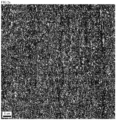
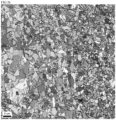
- FIGS. 2A to 2C are views for comparison of average grain size d among the inventive examples and comparative examples.
- FIGS. 2A and 2B show samples according to the present disclosure
- FIG. 2C shows a sample according to a comparative example.
- the austenitic stainless steel according to the present disclosure are in the form of ultrafine grains with a d value of 5 ⁇ m or less.
- FIGS. 3A to 3C are graphs showing Strain (%)-Stress (MPa) curves of the inventive examples.
- FIGS. 4A to 4C are graphs showing Strain (%)-Stress (MPa) curves of the comparative examples.
- the austenitic stainless steel according to an embodiment of the present disclosure may have both high strength and high ductility, be economically feasible by reducing the contents of Ni and Cr which are high-priced alloying elements, have excellent corrosion resistance. Therefore, the austenitic stainless steel may be applied to outer panels of vehicles, components for construction, and the like, as various materials.
Landscapes
- Chemical & Material Sciences (AREA)
- Engineering & Computer Science (AREA)
- Mechanical Engineering (AREA)
- Materials Engineering (AREA)
- Metallurgy (AREA)
- Organic Chemistry (AREA)
- Physics & Mathematics (AREA)
- Thermal Sciences (AREA)
- Crystallography & Structural Chemistry (AREA)
- Heat Treatment Of Steel (AREA)
- Heat Treatment Of Sheet Steel (AREA)
Abstract
Description
- The present disclosure relates to an austenitic stainless steel which may be utilized as various materials for an outer panel of a vehicle, a component for construction, and the like and a manufacturing method thereof.
- Austenitic stainless steels have been applied for various uses to manufacture components for transportation and construction due to excellent formability, work hardenability, and weldability. However, 304 series stainless steels or 301 series stainless steels, which are representative general-use austenitic stainless steels, have low yield strengths of 200 to 350 MPa, and thus there are limits to apply these stainless steels to structural materials due to low strength.
- Although a skin pass rolling process may additionally be performed as a method for increasing yield strength of austenitic stainless steels, this method causes problems in increasing manufacturing costs due to the additional process and significantly deteriorating elongation of materials.
- Patent Document 1 discloses a method for manufacturing a 300 series stainless steel having a small curvature even after half etching by performing stress relief (SR) heat treatment twice after skin pass rolling a cold-rolled, annealed material for a laser metal mask for photoetching. However, Patent Document 1 relates to a manufacturing method to control etchability and curvature after etching. Because an austenitic stability parameter (ASP) value is from 30 to 50, strain-induced martensite transformation rapidly occurs during formation, resulting in deterioration of elongation.
-
Patent Document 2 relates a nuclear power component. In order to manufacture an austenitic stainless steel having an average grain size of 10 µm or less, heat treatment was performed for a long time over 48 hours at a temperature of 600 to 700°C. According toPatent Document 2, heat treatment is required for a long time, productivity decreases in the case of being implemented in a real production line, and manufacturing costs increase. - (Patent Document 1) International Patent Application Publication No.
WO2016-043125A1 (March 14, 2016 ) - (Patent Document 2) Japanese Patent Application Laid-Open No.
JP2020-50940A (April 2, 2020 - To solve the foregoing problems, provided is an ultrafine-grained 300 series stainless steel having simultaneously satisfying high yield strength and excellent elongation.
- In accordance with an aspect of the present disclosure, an austenitic stainless steel includes, in percent by weight (wt%), 0.005 to 0.03% of C, 0.1 to 1% of Si, 0.1 to 2% of Mn, 6 to 9% of Ni, 16 to 19% of Cr, 0.2% or less of N, and the remainder being Fe and unavoidable impurities, wherein assuming that a total thickness of the steel material is t, a value of an average grain size d in a thickness range of 1/4t to 3/4t is 5 µm or less, an ASP value represented by Formula (1) below is from 10 to 25, a value represented by Formula (2) below is 435 or more, and a value represented by Formula (3) below is 6000 or more.


- In Formulae (1), (2), and (3), [C], [N], [Si], [Mn], [Cr], [Ni], [Cu], [Mo], [Nb], and [V] represent weight percentages (wt%) of respective elements, YS represents a yield strength (MPa), and EL represents an elongation (%).
- In addition, in the austenitic stainless steel according to the present disclosure, a value of Formula (4) below may be 200 or more.

- In Formula (4), Hv represents a Vickers hardness (Hv) and [Ni] and [Cr] represent weight percentages (wt%) of respective elements.
- In addition, the austenitic stainless steel according to the present disclosure may further include, in percent by weight (wt%), at least one of 0.4% or less of Cu, 0.2% or less of Mo, 0.25% or less of Nb, and 0.25% or less of V.
- In addition, in the austenitic stainless steel according to the present disclosure, the t may be from 0.4 to 2.0 mm.
- In addition, in the austenitic stainless steel according to the present disclosure, a pitting potential, measured by dipping in a 3.5% NaCl solution at 30°C, may be 250 mV or more.
- In accordance with another aspect of the present disclosure, a method of manufacturing the austenitic stainless steel includes: hot rolling a slab comprising, in percent by weight (wt%), 0.005 to 0.03% of C, 0.1 to 1% of Si, 0.1 to 2% of Mn, 6 to 9% of Ni, 16 to 19% of Cr, 0.2% or less of N, and the remainder being Fe and unavoidable impurities, and cold rolling the hot-rolled steel material at room temperature with a reduction ratio of 40% or more; and annealing the cold-rolled steel material at a temperature of 700 to 850°C.
- In addition, in the method of manufacturing the austenitic stainless steel according to the present disclosure, the slab may be hot-rolled and then cold-rolled without being annealed.
- In addition, the method of manufacturing the austenitic stainless steel according to the present disclosure may further include skin pass rolling with a reduction ratio of 60% or more.
- The present disclosure may provide an ultrafine-grained 300 series stainless steel simultaneously satisfying high strength and high ductility.
- The present disclosure provides an austenitic stainless steel simultaneously satisfying high strength and high ductility with high economic feasibility by reducing the contents of Ni and Cr which are high-priced alloying elements.
- The present disclosure provides an austenitic stainless steel simultaneously satisfying high strength and high ductility with excellent corrosion resistance.
-
-
FIG. 1 is a graph showing ranges of values of Formulae (2) and (3) of inventive examples and comparative examples. -
FIGS. 2A to 2C are views for comparison of average grain size d among the inventive examples and comparative examples. -
FIGS. 3A to 3C are graphs showing Strain (%)-Stress (MPa) curves of inventive examples. -
FIGS. 4A to 4C are graphs showing Strain (%)-Stress (MPa) curves of comparative examples. - An austenitic stainless steel according to an embodiment of the present disclosure includes, in percent by weight (wt%), 0.005 to 0.03% of C, 0.1 to 1% of Si, 0.1 to 2% of Mn, 6 to 9% of Ni, 16 to 19% of Cr, 0.2% or less of N, and the remainder being Fe and unavoidable impurities, wherein assuming that a total thickness of the steel material is t, a value of an average grain size d in a thickness range of 1/4t to 3/4t is 5 µm or less, an ASP value represented by Formula (1) below is from 10 to 25, a value represented by Formula (2) below is 435 or more, and a value represented by Formula (3) below is 6000 or more.


wherein in Formulae (1), (2), and (3), [C], [N], [Si], [Mn], [Cr], [Ni], [Cu], [Mo], [Nb], and [V] represent weight percentages (wt%) of respective elements, YS represents yield strength (MPa), and EL represents elongation (%). - Hereinafter, preferred embodiments of the present disclosure will now be described. However, the present disclosure may be embodied in many different forms and should not be construed as being limited to the embodiments set forth herein. Rather, these embodiments are provided so that this disclosure will be thorough and complete, and will fully convey the scope of the disclosure to those skilled in the art.
- The terms used herein are merely used to describe embodiments. Thus, an expression used in the singular encompasses the expression of the plural, unless it has a clearly different meaning in the context. In addition, it is to be understood that the terms such as "including" or "having" are intended to indicate the existence of features, steps, functions, components, or combinations thereof disclosed in the specification, and are not intended to preclude the possibility that one or more other features, steps, functions, components, or combinations thereof may exist or may be added.
- Meanwhile, unless otherwise defined, all terms used herein have the same meaning as those commonly understood by one of ordinary skill in the art to which this disclosure belongs. Thus, these terms should not be interpreted in an idealized or overly formal sense unless expressly so defined herein. As used herein, the singular forms are intended to include the plural forms as well, unless the context clearly indicates otherwise.
- In addition, the terms "about", "substantially", etc. used throughout the specification mean that when a natural manufacturing and substance allowable error are suggested, such an allowable error corresponds a value or is similar to the value, and such values are intended for the sake of clear understanding of the present disclosure or to prevent an unconscious infringer from illegally using the disclosure of the present disclosure.
- Although austenitic stainless steels have been used for various uses due to excellent formability, work hardenability, and weldability, yield strength thereof is low. In the case of performing skin pass rolling to increase yield strength, a problem of deteriorating elongation may occur. The present inventors have focused on an ultrafine austenitic stainless steel as a steel material simultaneously satisfying high yield strength and excellent elongation. However, not all of ultrafine stainless steels satisfy both high yield strength and excellent elongation. Ultrafine grained austenitic stainless steels may have considerably different yield strength and elongation, because the Ni content and the Cr content vary according to steel types, the amount of martensite transformation during cold working may vary according to the stability of the austenite phase, and tensile curve characteristics may vary according to the transformation induced plasticity (TRIP) transformation behavior. The present inventors have found an ultrafine grained austenitic stainless steel capable of simultaneously satisfying high strength and high ductility in consideration the above-described effects.
- An austenitic stainless steel according to an embodiment of the present disclosure includes, in percent by weight (wt%), 0.005 to 0.03% of C, 0.1 to 1% of Si, 0.1 to 2% of Mn, 6 to 9% of Ni, 16 to 19% of Cr, 0.2% or less of N, and the remainder being Fe and unavoidable impurities. In addition, the austenitic stainless steel may further include at least one of 0.4% or less of Cu, 0.2% or less of Mo, 0.25% or less of Nb, and 0.25% or less of V.
- Hereinafter, reasons for numerical limitations on the contents of alloying elements in the embodiment of the present disclosure will be described.
- The content of carbon (C) is from 0.005 to 0.03 wt%.
- C is an austenite phase-stabilizing element. In consideration thereof, C is added in an amount of 0.005 wt% or more. However, since an excess of C causes a problem of forming a chromium carbide during low-temperature annealing to deteriorate grain boundary corrosion resistance, the C content is controlled to 0.03 wt% or less in the present disclosure.
- The content of silicon (Si) is from 0.1 to 1 wt%.
- Si is an element added as a deoxidizer during a steel-making process and has an effect on improving corrosion resistance of a steel by forming an Si oxide in a passivated layer in the case of performing a bright annealing process. In consideration thereof, Si is added in an amount of 0.1 wt% or more in the present disclosure. However, since an excess of Si causes a problem of deteriorating ductility, the Si content is controlled to 1.0 wt% or less in the present disclosure.
- The content of manganese (Mn) is from 0.1 to 1.0 wt%.
- Mn is an austenite phase-stabilizing element. In consideration thereof, Mn is added in an amount of 0.1 wt% or more in the present disclosure. However, since an excess of Mn causes a problem of deteriorating corrosion resistance, the Mn content is controlled to 1.0 wt% or less in the present disclosure.
- The content of nickel (Ni) is from 6.0 to 9.0 wt%.
- Ni, as an austenite phase-stabilizing element, has an effect on softening a steel material. In consideration thereof, Ni is added in an amount of 6.0 wt% or more in the present disclosure. However, since an excess of Ni causes a problem of increasing costs, the Ni content is controlled to 9.0 wt% or less in the present disclosure.
- The content of chromium (Cr) is from 16.0 to 19.0 wt%.
- Cr is a major element for improving corrosion resistance of a stainless steel. In consideration thereof, Cr is added in an amount of 16.0 wt% or more in the present disclosure. However, since an excess of Cr causes problems of hardening of a steel material and inhibiting strain-induced martensite transformation during cold rolling, the Cr content is controlled to 19.0 wt% or less in the present disclosure.
- The content of nitrogen (N) is 0.2 wt% or less.
- N is an austenite phase-stabilizing element and improves strength of a steel material. However, since an excess of N causes problems of hardening a steel material and deteriorating hot workability, the N content is controlled to 0.2 wt% or less in the present disclosure.
- Hereinafter, reasons for numerical limitations on the contents of optional alloying elements Cu, Mo, Nb, and V will be described in detail.
- The content of copper (Cu) may be from 0.4 wt% or less.
- Cu is an austenite phase-stabilizing element. However, since an excess of Cu causes problems of deteriorating corrosion resistance of a steel material and increasing costs, the Cu content is controlled to 0.4 wt% or less in the present disclosure.
- The content of molybdenum (Mo) may be 0.2 wt% or less.
- Mo has an effect on improving corrosion resistance and workability. However, since an excess of Mo causes a problem of increasing costs, the Mo content is controlled to 0.2 wt% or less in the present disclosure.
- The contents of niobium (Nb) or vanadium (V) may be 0.25 wt% or less.
- Nb and V have an effect on suppressing the growth of grains by forming (Nb,V)(C,N) precipitates. However, when the contents of Nb and V are excessive, a problem of increasing manufacturing coast may occur, and thus the contents of Nb and V are controlled to 0.25 wt% or less, respectively, in the present disclosure.
- The remaining component of the composition of the present disclosure is iron (Fe). However, the composition may include unintended impurities inevitably incorporated from raw materials or surrounding environments, and thus addition of other alloying elements is not excluded. These impurities are known to any person skilled in the art of manufacturing and details thereof are not specifically mentioned in the present disclosure.
- As well as limiting the contents of the alloying elements of the stainless steel according to the present disclosure as described above, the relationships therebetween may further be limited as follows.
- An Austenitic Stability Parameter (ASP) value represented by Formula (1) below may be from 10 to 25.

- In Formula (1) above, [C], [N], [Si], [Mn], [Cr], [Ni], [Cu], [Mo], [Nb], and [V] represent weight percentages (wt%) of respective elements. For an element not added, 0 wt% is substituted into Formula (1).
- Formula (1) indicates a temperature at which 50% of austenite is transformed into martensite when a stainless steel is deformed with a true strain of 0.3 and is used as an index of stability of the austenite phase. A lower value of Formula (1) means higher stability of the austenite phase indicating a smaller amount of strain-induced martensite during transformation.
- When the value of Formula (1) is less than 10, a fraction of martensite in a cold-rolled steel material decreases and a fraction of the retained austenite increases due to a low amount of TRIP transformation, which is transformation from an austenite phase into a martensite phase by cold rolling. As the amount of strain-induced martensite decreases, a ratio of reverted austenite by low-temperature annealing decreases, and the fraction of the retained austenite phase without being transformed into martensite increases, making it difficult to obtain ultrafine grains. When the value of Formula (1) exceeds 25, TRIP transformation by cold rolling is activated, but a problem of decreasing elongation occurs due to a too high TRIP transformation rate.
- A value of Formula (2) below may be 435 or more.

- In Formula (2), [N] and [Ni] represent weight percentages (wt%) of respective elements. ASP means the ASP value of Formula (1). Assuming that a total thickness of the steel material is t, d indicates an average grain size in a thickness range of 1/4t to 3/4t.
- According to an embodiment of the present disclosure, t may be from 0.4 to 2.0 mm. A material having a thickness of 0.4 to 2.0 mm has been widely applied to structural components. According to the present disclosure, an austenitic stainless steel having high strength and high ductility may be provided within the above-described thickness range.
- According to an embodiment of the present disclosure, d may be 5 µm or less.
- When d exceeds 5 µm, a yield strength decreases by Hall-Petch equation, resulting in a decrease in a YS∗El value.
- Formula (2) is a parameter to obtain high strength, derived in consideration of factors affecting strength, such as the N content, the Ni content, grain size, and austenitic stability parameter. When the value of Formula (2) is less than 435, sufficient strength cannot be obtained.
- A value of Formula (3) below may be 6000 or more.

- In Formula (3), YS represents yield strength (MPa), EL represents elongation (%), and [Ni] and [Cr] represent weight percentages (wt%) of respective elements.
- In Formula (3), the YS*EL value is considerably affected by the contents of Cr and Ni. For example, in the case where the contents of Cr and Ni are small, TRIP transformation easily occurs and the YS*EL value tends to increase. When the value of Formula (3) is less than 6000, high strength and high ductility cannot be satisfied simultaneously.
- A value of Formula (4) below may be 200 or more.

- In Formula (4), Hv represents Vickers hardness (Hv) and [Ni] and [Cr] represent weight percentages (wt%) of respective elements.
- In Formula (4), the Hv value is considerably affected by the contents of Cr and Ni. For example, in the case where the contents of Cr and Ni are small, TRIP transformation easily occurs, and thus an amount of strain-induced martensite transformation increases during cold deformation. As a result, hardness of a steel material increases. When the value of Formula (4) is less than 200, sufficient hardness cannot be obtained.
- The austenitic stainless steel according to the present disclosure has not only high strength and high ductility but also excellent corrosion resistance. The austenitic stainless steel according to an embodiment may have a pitting potential of 250 mV or more when measured by dipping in an 3.5% NaCl solution at 30°C.
- The austenitic stainless steel according to an embodiment of the present disclosure may have a tensile strength of 1750 MPa or more after skin pass rolling.
- A method of manufacturing an austenitic stainless steel according to an embodiment of the present disclosure includes: hot rolling a slab including, in percent by weight (wt%), 0.005 to 0.03% of C, 0.1 to 1% of Si, 0.1 to 2% of Mn, 6 to 9% of Ni, 16 to 19% of Cr, 0.2% or less of N, and the remainder being Fe and unavoidable impurities, and cold rolling the hot-rolled steel material at room temperature with a reduction ratio of 40% or more; and annealing the cold-rolled steel material at a temperature of 700 to 850°C.
- When the reduction ratio is less than 40% during cold rolling, the austenitic stainless steel of the present disclosure having an ASP value of 10 to 25 has a too low amount of TRIP transformation, resulting in a decrease in the fraction of martensite in the cold-rolled steel material and an increase in the fraction of the retained austenite phase. As the amount of the strain-induced martensite decreases, the ratio of the reverted austenite phase during the subsequent low-temperature annealing decreases, and the fraction of the retained austenite phase without being transformed into martensite increases, making it difficult to obtain ultrafine grains.
- According to the present disclosure, the hot-rolled material is cold-rolled and annealed at a low temperature of 700 to 850°C. When the temperature of the low-temperature annealing is below 700°C, recrystallization from the strain-induced martensite phase into the reverted austenite phase does not occur. On the contrary, when the temperature of the low-temperature annealing is higher than 850°C, the grain size of the reverted austenite may increase, thereby decreasing the yield strength.
- According to an embodiment of the present disclosure, the slab may be hot-rolled and then cold-rolled without conducting annealing.
- In addition, the method may further include skin pass rolling with a reduction ratio of 60% or more to further increase strength.
- Hereinafter, the present disclosure will be described in more detail through examples. However, it is necessary to note that the following examples are only intended to illustrate the present disclosure in more detail and are not intended to limit the scope of the present disclosure. This is because the scope of the present disclosure is determined by matters described in the claims and able to be reasonably inferred therefrom.
- Slabs having the compositions of alloying elements shown in Table 1 below were hot-rolled and cold-rolled with a total reduction ratio of 40% or more at room temperature without conducting annealing. Subsequently, the resultant was annealed at a temperature of 700 to 850°C to prepare a cold-rolled, annealed material with a thickness of 0.4 to 2.0 mm.
- In Table 1 below, ASP refers to a value obtained by substituting the contents of alloying elements of Table 1 into Formula (1) below indicating stability of an austenite phase.

- In Formula (1), [C], [N], [Si], [Mn], [Cr], [Ni], [Cu], [Mo], [Nb], and [V] represent weight percentages (wt%) of respective elements.
Table 1 Composition of alloying element (wt%) ASP C Si Mn Cr Ni Cu Mo N Nb V Inventive Example 1 0.023 0.53 1.24 17.5 6.4 0 0 0.17 0 0 21.6 Inventive Example 2 0.023 0.53 1.24 17.5 6.4 0 0 0.17 0 0 21.6 Inventive Example 3 0.019 0.3 0.46 17.3 6.3 0.25 0.1 0.15 0.21 0 23.3 Inventive Example 4 0.019 0.3 0.46 17.3 6.3 0.25 0.1 0.15 0.21 0 23.3 Inventive Example 5 0.017 0.32 1.79 16.7 6.85 0.25 0.1 0.15 0 0 19.9 Inventive Example 6 0.017 0.32 1.79 16.7 6.85 0.25 0.1 0.15 0 0 19.9 Inventive Example 7 0.02 0.5 1 18.1 8 0.25 0.1 0.04 0 0.1 14.7 Inventive Example 8 0.02 0.5 1 18.1 8 0.25 0.1 0.04 0 0.1 14.7 Comparative Example 1 0.023 0.53 1.24 17.5 6.4 0 0 0.17 0 0 21.6 Comparative Example 2 0.019 0.3 0.46 17.3 6.3 0.25 0.1 0.15 0.21 0 23.3 Comparative Example 3 0.017 0.32 1.79 16.7 6.85 0.25 0.1 0.15 0 0 19.9 Comparative Example 4 0.02 0.3 0.5 18.1 8.02 0.25 0.1 0.04 0.05 0 23.4 Comparative Example 5 0.02 0.5 1 18.1 8 0.25 0.1 0.04 0 0.1 14.7 Comparative Example 6 0.02 0.51 0.98 17.3 6.3 0 0 0.1 0 0 63.2 Comparative Example 7 0.02 0.51 0.98 17.3 6.3 0 0 0.1 0 0 63.2 Comparative Example 8 0.02 0.29 0.49 16.6 5.98 0.25 0.1 0.18 0 0 42.0 Comparative Example 9 0.02 0.29 0.49 16.6 5.98 0.25 0.1 0.18 0 0 42.0 Comparative Example 10 0.02 0.29 0.49 16.6 5.98 0.25 0.1 0.18 0 0 42.0 Comparative Example 11 0.022 0.31 0.29 18.2 8.09 0.25 0.1 0.02 0 0 33.3 Comparative Example 12 0.022 0.31 0.29 18.2 8.09 0.25 0.1 0.02 0 0 33.3 Comparative Example 13 0.022 0.31 0.29 18.2 8.09 0.25 0.1 0.02 0 0 33.3 Comparative Example 14 0.047 0.57 0.78 18.4 9.13 0.24 0.097 0.029 0 0 -21.3 Comparative Example 15 0.019 0.3 1.5 18.1 8.27 1.27 0.1 0.041 0 0 -18.1 Comparative Example 16 0.016 0.4 1.2 18.7 10.3 0.25 0.1 0.015 0 0 -40.7 Comparative Example 17 0.02 0.6 1.1 16.2 10.1 0.25 2.1 0.02 0 0 -42.8 Comparative Example 18 0.079 0.4 9 15.2 3.5 1.68 0 0.115 0 0 26.3 - In Table 2, assuming that a total thickness of the cold-rolled, annealed material of Table 1 is t, d indicates an average grain size (µm) in a thickness range of 1/4t to 3/4t. Formula (2) of Table 2 means a value obtained by Formula (2) below.

- The value of Formula (2) was obtained by substituting the contents (wt%) of [N] and [Ni] and the ASP value of Table 1 and substituting the d value of Table 2 thereinto.
- Formula (3) of Table 2 means a value obtained by Formula (3) below.

- The value of Formula (3) was obtained by substituting a yield strength (YS, MPa) and an elongation (EL, %) measured under the conditions described below and the contents (wt%) of [Ni] and [Cr] of Table 1 thereinto.
- The yield strength (YS, MPa) and the elongation (EL, %) were measured after preparing a sample of the cold-rolled, annealed material according to the JIS 13B standards and conducting a tensile test at room temperature in a crosshead range of 10 mm/min to 20 mm/min.
- Formula (4) of Table 2 represents a value obtained by Formula (4) below.

- The value of Formula (4) was derived by substituting a Vickers hardness (Hv) measured under the conditions described below and the contents (wt%) of [Ni] and [Cr] of Table 1 thereinto.
- The Vickers hardness (Hv) is a value measured using a Vickers hardness tester with a load of 2 kgf.
- Pitting potential (mV) of Table 2 is a value measured after dipping a cold-rolled, annealed material in a 3.5% NaCl solution at 30°C.
Table 2 Example d (µm) Formula (2) Formula (3) Formula (4) Pitting potential (mV) Inventive Example 1 1.2 969 19131 298 287 Inventive Example 2 4.2 672 16772 267 290 Inventive Example 3 0.5 1297 12463 365 274 Inventive Example 4 2.2 779 19048 329 280 Inventive Example 5 1.2 921 17547 271 254 Inventive Example 6 3.3 668 14699 239 257 Inventive Example 7 1 763 7243 304 291 Inventive Example 8 3.2 454 7835 232 297 Comparative Example 1 25.5 469 9123 193 307 Comparative Example 2 15.5 485 1600 226 360 Comparative Example 3 27.5 416 6689 173 257 Comparative Example 4 28.8 228 8173 138 303 Comparative Example 5 17.5 230 -3712 134 320 Comparative Example 6 3.7 751 5980 252 272 Comparative Example 7 24.5 528 -3514 174 317 Comparative Example 8 1.1 1104 4768 295 255 Comparative Example 9 3.5 811 5890 273 262 Comparative Example 10 26.7 572 735 189 311 Comparative Example 11 1.3 718 3270 217 342 Comparative Example 12 3.4 483 1215 189 325 Comparative Example 13 27.5 237 -4415 125 312 Comparative Example 14 6.5 153 2446 175 311 Comparative Example 15 7.8 178 3037 156 325 Comparative Example 16 8.2 0 -1278 165 320 Comparative Example 17 7.8 9 271 181 425 Comparative Example 18 2.9 730 8882 272 30 - Referring to Tables 1 and 2, Inventive Examples 1 to 8 satisfied the ASP values of 10 to 25, the d value of 5 µm or less, the value of Formula (2) of 435 or more, and the value of Formula (3) of6000 or more, and thus high strength, high ductility, and excellent corrosion resistance were obtained. Also, referring to Table 2, in Inventive Examples 1 to 8, the values of Formula (4) were at least 200 and pitting potentials were at least 250 mV. In Comparative Examples 6 to 18, the ASP values were out of the range defined in the present disclosure. In Comparative Examples 6 to 13 and 18 in which the ASP values exceeded 25, low elongation was observed due to too high TRIP transformation rates during formation. In Comparative Examples 14 to 17 in which the ASP values were less than 10, ultrafine grains could not be obtained due to high fractions of the retained austenite phase.
- In Comparative Examples 1 to 5, 7, 10, and 13 to 17, coarse grains were formed because the d values were out of the range suggested by the present disclosure. As a result, high strength and high ductility could not be satisfied simultaneously.
- The range of Formula (2) suggested by the present disclosure was not satisfied in Comparative Examples 3 to 5 and 13 to 17. As a result, high strength and high ductility could not be satisfied simultaneously.
- The range of Formula (3) suggested by the present disclosure was not satisfied in Comparative Examples 2 and 5 to 17. As a result, high strength and high ductility could not be satisfied simultaneously.
- The range of Formula (4) suggested by the present disclosure was not satisfied in Comparative Examples 1, 3 to 5, 7, 10, 12, and 14 to 17. As a result, sufficient hardness could not be obtained.
- Corrosion resistance deteriorated in Comparative Example 18 due to a large amount of Mn contained therein, and a pitting potential of 30 mV was obtained.
-
FIG. 1 is a graph showing ranges of values of Formulae (2) and (3) of inventive examples and comparative examples. Referring toFIG. 1 , it may be confirmed that all inventive examples satisfied the ranges of Formulae (2) and (3) defined in the present disclosure, and thus austenitic stainless steels simultaneously satisfying the ranges of high strength and high ductility may be provided. On the contrary, in the case of the comparative examples, the values of Formula (2) and/or Formula (3) were not satisfied, and in this case it is difficult to simultaneously satisfy high strength and high ductility characteristics. -
FIGS. 2A to 2C are views for comparison of average grain size d among the inventive examples and comparative examples.FIGS. 2A and2B show samples according to the present disclosure, andFIG. 2C shows a sample according to a comparative example. Upon comparison ofFIGS. 2A and2B with 2C, it may be confirmed that the austenitic stainless steel according to the present disclosure are in the form of ultrafine grains with a d value of 5 µm or less. -
FIGS. 3A to 3C are graphs showing Strain (%)-Stress (MPa) curves of the inventive examples. -
FIGS. 4A to 4C are graphs showing Strain (%)-Stress (MPa) curves of the comparative examples. - While the present disclosure has been particularly described with reference to exemplary embodiments, it should be understood by those of skilled in the art that the scope of the present disclosure is not limited thereby and various changes in form and details may be made without departing from the spirit and scope of the present disclosure.
- The austenitic stainless steel according to an embodiment of the present disclosure may have both high strength and high ductility, be economically feasible by reducing the contents of Ni and Cr which are high-priced alloying elements, have excellent corrosion resistance. Therefore, the austenitic stainless steel may be applied to outer panels of vehicles, components for construction, and the like, as various materials.
Claims (8)
- An austenitic stainless steel comprising, in percent by weight (wt%), 0.005 to 0.03% of C, 0.1 to 1% of Si, 0.1 to 2% of Mn, 6 to 9% of Ni, 16 to 19% of Cr, 0.2% or less of N, and the remainder being Fe and unavoidable impurities,wherein assuming that a total thickness of the steel material is t, a value of an average grain size d in a thickness range of 1/4t to 3/4t is 5 µm or less, an ASP value represented by Formula (1) below is from 10 to 25, a value represented by Formula (2) below is 435 or more, and a value represented by Formula (3) below is 6000 or more:


 (wherein in Formulae (1), (2), and (3), [C], [N], [Si], [Mn], [Cr], [Ni], [Cu], [Mo], [Nb], and [V] represent weight percentages (wt%) of respective elements, YS represents a yield strength (MPa), and EL represents an elongation (%)).
 - The austenitic stainless steel according to claim 1, wherein a value of Formula (4) below is 200 or more:

- The austenitic stainless steel according to claim 1, further comprising, in percent by weight (wt%), at least one of 0.4% or less of Cu, 0.2% or less of Mo, 0.25% or less of Nb, and 0.25% or less of V.
- The austenitic stainless steel according to claim 1, wherein the t is from 0.4 to 2.0 mm.
- The austenitic stainless steel according to claim 1, wherein a pitting potential, measured by dipping in a 3.5% NaCl solution at 30°C, is 250 mV or more.
- A method of manufacturing the austenitic stainless steel according to claim 1, the method comprising:hot rolling a slab comprising, in percent by weight (wt%), 0.005 to 0.03% of C, 0.1 to 1% of Si, 0.1 to 2% of Mn, 6 to 9% of Ni, 16 to 19% of Cr, 0.2% or less of N, and the remainder being Fe and unavoidable impurities, and cold rolling the hot-rolled steel material at room temperature with a reduction ratio of 40% or more; andannealing the cold-rolled steel material at a temperature of 700 to 850°C.
- The method according to claim 6, wherein the slab is hot-rolled and then cold-rolled without being annealed.
- The method according to claim 6, further comprising skin pass rolling with a reduction ratio of 60% or more.
Applications Claiming Priority (2)
| Application Number | Priority Date | Filing Date | Title |
|---|---|---|---|
| KR1020200112382A KR102448735B1 (en) | 2020-09-03 | 2020-09-03 | Austenitic stainless steel and manufacturing method thereof |
| PCT/KR2021/011462 WO2022050635A1 (en) | 2020-09-03 | 2021-08-26 | Austenitic stainless steel and manufacturing method thereof |
Publications (2)
| Publication Number | Publication Date |
|---|---|
| EP4177369A1 true EP4177369A1 (en) | 2023-05-10 |
| EP4177369A4 EP4177369A4 (en) | 2024-07-17 |
Family
ID=80491149
Family Applications (1)
| Application Number | Title | Priority Date | Filing Date |
|---|---|---|---|
| EP21864595.0A Pending EP4177369A4 (en) | 2020-09-03 | 2021-08-26 | AUSTENITIC STAINLESS STEEL AND PRODUCTION METHODS THEREFOR |
Country Status (6)
| Country | Link |
|---|---|
| US (1) | US20230279531A1 (en) |
| EP (1) | EP4177369A4 (en) |
| JP (1) | JP7603147B2 (en) |
| KR (1) | KR102448735B1 (en) |
| CN (1) | CN116075600B (en) |
| WO (1) | WO2022050635A1 (en) |
Families Citing this family (10)
| Publication number | Priority date | Publication date | Assignee | Title |
|---|---|---|---|---|
| KR102463015B1 (en) * | 2020-11-23 | 2022-11-03 | 주식회사 포스코 | High-strength austenitic stainless steel with excellent hot workability |
| KR102497442B1 (en) * | 2020-11-25 | 2023-02-08 | 주식회사 포스코 | Austenitic stainless steel for polymer fuel cell separator with improved contact resistance and manufacturing method thereof |
| KR20230026705A (en) * | 2021-08-18 | 2023-02-27 | 주식회사 포스코 | Austenitic stainless steel and manufacturing method thereof |
| KR20230091618A (en) * | 2021-12-16 | 2023-06-23 | 주식회사 포스코 | Austenitic stainless steel and method for producing the same |
| KR20230153865A (en) * | 2022-04-29 | 2023-11-07 | 주식회사 포스코 | Austenitic stainless steel |
| KR102833726B1 (en) | 2022-11-15 | 2025-07-14 | 한국생산기술연구원 | austenitic stainless steel and method for manufacturing the same |
| KR20240097192A (en) * | 2022-12-20 | 2024-06-27 | 주식회사 포스코 | Austenitic stainless steel and method for manufacturing the same |
| CN117026080B (en) * | 2023-08-04 | 2025-12-26 | 北京科技大学 | A high-strength medium-nitrogen austenitic stainless steel plate and its preparation method |
| CN118326282B (en) * | 2024-06-13 | 2024-08-13 | 浦项(张家港)不锈钢股份有限公司 | Austenitic stainless steel plate belt and manufacturing method thereof |
| CN119265480B (en) * | 2024-09-13 | 2025-08-29 | 山西太钢不锈钢股份有限公司 | A 301L stainless steel chilled plate for high-speed trains and its preparation method |
Family Cites Families (20)
| Publication number | Priority date | Publication date | Assignee | Title |
|---|---|---|---|---|
| JP3068861B2 (en) * | 1990-12-14 | 2000-07-24 | 日新製鋼株式会社 | Stainless steel for engine gasket excellent in moldability and method of manufacturing the same |
| JPH0539549A (en) * | 1991-12-12 | 1993-02-19 | Aichi Steel Works Ltd | High strength stainless steel and its production |
| KR100411286B1 (en) * | 1996-12-24 | 2004-04-03 | 주식회사 포스코 | High strength austenitic stainless steel with excellent corrosion resistance and weather resistance and steel sheet manufacturing method using the same |
| EP1394280A4 (en) * | 2001-04-27 | 2004-07-14 | Sumitomo Metal Ind | METAL TRIM, RAW MATERIAL AND METHODS OF PRODUCING |
| JP3954954B2 (en) * | 2002-10-25 | 2007-08-08 | 新日本製鐵株式会社 | Manufacturing method of austenitic stainless steel and strip slab |
| JP4324509B2 (en) * | 2004-05-10 | 2009-09-02 | 日本冶金工業株式会社 | Stainless steel sheet for photo-etching and method for producing the same |
| WO2008013305A1 (en) * | 2006-07-28 | 2008-01-31 | Sumitomo Metal Industries, Ltd. | Stainless steel sheet for parts and process for manufacturing the same |
| JP5056985B2 (en) * | 2009-11-18 | 2012-10-24 | 住友金属工業株式会社 | Austenitic stainless steel sheet and manufacturing method thereof |
| JP5500960B2 (en) * | 2009-12-01 | 2014-05-21 | 新日鐵住金ステンレス株式会社 | Fine grain austenitic stainless steel sheet with excellent stress corrosion cracking resistance and workability |
| CN102650022A (en) * | 2011-02-24 | 2012-08-29 | 宝山钢铁股份有限公司 | Stainless steel for passenger cars and method for producing same |
| US10329649B2 (en) * | 2012-01-20 | 2019-06-25 | Solu Stainless Oy | Austenitic stainless steel product and a method for manufacturing same |
| WO2014030607A1 (en) * | 2012-08-20 | 2014-02-27 | 新日鐵住金株式会社 | Stainless steel sheet and method for producing same |
| KR101707345B1 (en) * | 2012-09-04 | 2017-02-15 | 신닛테츠스미킨 카부시키카이샤 | Stainless steel sheet for precision machining and method for producing same |
| JP6423138B2 (en) * | 2013-06-14 | 2018-11-14 | 新日鐵住金ステンレス株式会社 | Austenitic stainless steel for fuel reformer with excellent adhesion of oxide film and method for producing the same |
| WO2016043125A1 (en) | 2014-09-17 | 2016-03-24 | 新日鐵住金株式会社 | Austenitic stainless steel plate |
| JP5920555B1 (en) * | 2014-09-25 | 2016-05-18 | 新日鐵住金株式会社 | Austenitic stainless steel sheet and manufacturing method thereof |
| CN108138281B (en) * | 2015-09-30 | 2020-05-01 | 日本制铁株式会社 | Austenitic stainless steel |
| JP2020050940A (en) | 2018-09-28 | 2020-04-02 | 国立研究開発法人日本原子力研究開発機構 | Method for producing austenitic fine-grained stainless steel |
| CN112789362B (en) * | 2018-10-04 | 2022-08-16 | 日本制铁株式会社 | Austenitic stainless steel sheet and method for producing same |
| KR102902789B1 (en) * | 2020-03-30 | 2025-12-22 | 닛테츠 스테인레스 가부시키가이샤 | Austenitic stainless steel |
-
2020
- 2020-09-03 KR KR1020200112382A patent/KR102448735B1/en active Active
-
2021
- 2021-08-26 CN CN202180055929.2A patent/CN116075600B/en active Active
- 2021-08-26 EP EP21864595.0A patent/EP4177369A4/en active Pending
- 2021-08-26 JP JP2023512141A patent/JP7603147B2/en active Active
- 2021-08-26 WO PCT/KR2021/011462 patent/WO2022050635A1/en not_active Ceased
- 2021-08-26 US US18/019,570 patent/US20230279531A1/en active Pending
Also Published As
| Publication number | Publication date |
|---|---|
| JP2023538602A (en) | 2023-09-08 |
| JP7603147B2 (en) | 2024-12-19 |
| US20230279531A1 (en) | 2023-09-07 |
| KR102448735B1 (en) | 2022-09-30 |
| WO2022050635A1 (en) | 2022-03-10 |
| KR20220030722A (en) | 2022-03-11 |
| EP4177369A4 (en) | 2024-07-17 |
| CN116075600B (en) | 2025-03-21 |
| CN116075600A (en) | 2023-05-05 |
Similar Documents
| Publication | Publication Date | Title |
|---|---|---|
| US20230279531A1 (en) | Austenitic stainless steel and manufacturing method thereof | |
| EP3859041A1 (en) | High-strength cold rolled steel sheet having high hole expansion ratio, high-strength hot-dip galvanized steel sheet, and manufacturing methods therefor | |
| EP3450586B1 (en) | Ultrahigh-strength and high-ductility steel sheet having excellent yield ratio and manufacturing method therefor | |
| EP3964600A1 (en) | Ultra-high strength steel sheet having excellent shear workability and method for manufacturing same | |
| EP4361305A1 (en) | Austenitic stainless steel and method for manufacturing same | |
| KR102321269B1 (en) | High strength steel sheet and manufacturing method thereof | |
| EP2527481B1 (en) | Quenched steel sheet having excellent hot press formability, and method for manufacturing same | |
| EP3978643A2 (en) | Austenitic stainless steel having improved strength, and method for manufacturing same | |
| EP4177368A1 (en) | Austenitic stainless steel with improved deep drawability | |
| KR102403849B1 (en) | High strength austenitic stainless steel with excellent productivity and cost saving effect, and method for manufacturing the same | |
| EP3807427B1 (en) | DUPLEX STAINLESS STEEL STRIP AND METHOD FOR MANUFACTURING IT | |
| EP4481081A1 (en) | Austenitic stainless steel | |
| EP4343014A1 (en) | Austenitic stainless steel and manufacturing method thereof | |
| EP4431631A1 (en) | Austenitic stainless steel and manufacturing method therefor | |
| EP4343013A1 (en) | Austenitic stainless steel and manufacturing method thereof | |
| KR102170945B1 (en) | Austenitic stainless steels excellent in fatigue life and manufacturing method thereof | |
| KR20180127435A (en) | Temperature-treated steel intermediate products and manganese steel intermediate products in a corresponding manner | |
| EP4585712A1 (en) | Austenitic stainless steel having excellent low-temperature impact toughness and method for manufacturing same | |
| EP4257719A1 (en) | Ferritic stainless steel with improved grain boundary erosion, and manufacturing method thereof | |
| EP4613907A1 (en) | Austenitic stainless steel and method for manufacturing same | |
| KR102888718B1 (en) | High-strength non-magnetic austentic stainless steel and method for manufacturing the same | |
| EP4397781A1 (en) | Hot-rolled ferritic stainless steel sheet having excellent formability and method for manufacturing same | |
| EP4613904A1 (en) | Ferritic stainless steel for construction applications and method for producing same | |
| EP4606923A1 (en) | High-strength austenitic stainless steel and manufacturing method thereof | |
| JP3033459B2 (en) | Manufacturing method of non-heat treated high strength steel |
Legal Events
| Date | Code | Title | Description |
|---|---|---|---|
| STAA | Information on the status of an ep patent application or granted ep patent |
Free format text: STATUS: THE INTERNATIONAL PUBLICATION HAS BEEN MADE |
|
| PUAI | Public reference made under article 153(3) epc to a published international application that has entered the european phase |
Free format text: ORIGINAL CODE: 0009012 |
|
| STAA | Information on the status of an ep patent application or granted ep patent |
Free format text: STATUS: REQUEST FOR EXAMINATION WAS MADE |
|
| 17P | Request for examination filed |
Effective date: 20230202 |
|
| AK | Designated contracting states |
Kind code of ref document: A1 Designated state(s): AL AT BE BG CH CY CZ DE DK EE ES FI FR GB GR HR HU IE IS IT LI LT LU LV MC MK MT NL NO PL PT RO RS SE SI SK SM TR |
|
| DAV | Request for validation of the european patent (deleted) | ||
| DAX | Request for extension of the european patent (deleted) | ||
| REG | Reference to a national code |
Ref country code: DE Ref legal event code: R079 Free format text: PREVIOUS MAIN CLASS: C22C0038580000 Ipc: C22C0038400000 |
|
| A4 | Supplementary search report drawn up and despatched |
Effective date: 20240617 |
|
| RIC1 | Information provided on ipc code assigned before grant |
Ipc: C21D 1/26 20060101ALI20240611BHEP Ipc: C21D 6/00 20060101ALI20240611BHEP Ipc: C21D 8/02 20060101ALI20240611BHEP Ipc: C21D 9/46 20060101ALI20240611BHEP Ipc: C22C 38/48 20060101ALI20240611BHEP Ipc: C22C 38/46 20060101ALI20240611BHEP Ipc: C22C 38/44 20060101ALI20240611BHEP Ipc: C22C 38/42 20060101ALI20240611BHEP Ipc: C22C 38/00 20060101ALI20240611BHEP Ipc: C22C 38/58 20060101ALI20240611BHEP Ipc: C22C 38/04 20060101ALI20240611BHEP Ipc: C22C 38/02 20060101ALI20240611BHEP Ipc: C22C 38/40 20060101AFI20240611BHEP |