EP4171641B1 - Konjugat aus galnac und saponin, dieses konjugat enthaltende therapeutische zusammensetzung und ein galnac-oligonukleotid-konjugat - Google Patents
Konjugat aus galnac und saponin, dieses konjugat enthaltende therapeutische zusammensetzung und ein galnac-oligonukleotid-konjugat Download PDFInfo
- Publication number
- EP4171641B1 EP4171641B1 EP21734241.9A EP21734241A EP4171641B1 EP 4171641 B1 EP4171641 B1 EP 4171641B1 EP 21734241 A EP21734241 A EP 21734241A EP 4171641 B1 EP4171641 B1 EP 4171641B1
- Authority
- EP
- European Patent Office
- Prior art keywords
- saponin
- xyl
- rha
- galnac
- fuc
- Prior art date
- Legal status (The legal status is an assumption and is not a legal conclusion. Google has not performed a legal analysis and makes no representation as to the accuracy of the status listed.)
- Active
Links
Images














Classifications
-
- A—HUMAN NECESSITIES
- A61—MEDICAL OR VETERINARY SCIENCE; HYGIENE
- A61K—PREPARATIONS FOR MEDICAL, DENTAL OR TOILETRY PURPOSES
- A61K47/00—Medicinal preparations characterised by the non-active ingredients used, e.g. carriers or inert additives; Targeting or modifying agents chemically bound to the active ingredient
- A61K47/50—Medicinal preparations characterised by the non-active ingredients used, e.g. carriers or inert additives; Targeting or modifying agents chemically bound to the active ingredient the non-active ingredient being chemically bound to the active ingredient, e.g. polymer-drug conjugates
- A61K47/51—Medicinal preparations characterised by the non-active ingredients used, e.g. carriers or inert additives; Targeting or modifying agents chemically bound to the active ingredient the non-active ingredient being chemically bound to the active ingredient, e.g. polymer-drug conjugates the non-active ingredient being a modifying agent
- A61K47/54—Medicinal preparations characterised by the non-active ingredients used, e.g. carriers or inert additives; Targeting or modifying agents chemically bound to the active ingredient the non-active ingredient being chemically bound to the active ingredient, e.g. polymer-drug conjugates the non-active ingredient being a modifying agent the modifying agent being an organic compound
- A61K47/549—Sugars, nucleosides, nucleotides or nucleic acids
-
- A—HUMAN NECESSITIES
- A61—MEDICAL OR VETERINARY SCIENCE; HYGIENE
- A61K—PREPARATIONS FOR MEDICAL, DENTAL OR TOILETRY PURPOSES
- A61K47/00—Medicinal preparations characterised by the non-active ingredients used, e.g. carriers or inert additives; Targeting or modifying agents chemically bound to the active ingredient
- A61K47/50—Medicinal preparations characterised by the non-active ingredients used, e.g. carriers or inert additives; Targeting or modifying agents chemically bound to the active ingredient the non-active ingredient being chemically bound to the active ingredient, e.g. polymer-drug conjugates
- A61K47/51—Medicinal preparations characterised by the non-active ingredients used, e.g. carriers or inert additives; Targeting or modifying agents chemically bound to the active ingredient the non-active ingredient being chemically bound to the active ingredient, e.g. polymer-drug conjugates the non-active ingredient being a modifying agent
- A61K47/54—Medicinal preparations characterised by the non-active ingredients used, e.g. carriers or inert additives; Targeting or modifying agents chemically bound to the active ingredient the non-active ingredient being chemically bound to the active ingredient, e.g. polymer-drug conjugates the non-active ingredient being a modifying agent the modifying agent being an organic compound
- A61K47/55—Medicinal preparations characterised by the non-active ingredients used, e.g. carriers or inert additives; Targeting or modifying agents chemically bound to the active ingredient the non-active ingredient being chemically bound to the active ingredient, e.g. polymer-drug conjugates the non-active ingredient being a modifying agent the modifying agent being an organic compound the modifying agent being also a pharmacologically or therapeutically active agent, i.e. the entire conjugate being a codrug, i.e. a dimer, oligomer or polymer of pharmacologically or therapeutically active compounds
-
- A—HUMAN NECESSITIES
- A61—MEDICAL OR VETERINARY SCIENCE; HYGIENE
- A61K—PREPARATIONS FOR MEDICAL, DENTAL OR TOILETRY PURPOSES
- A61K47/00—Medicinal preparations characterised by the non-active ingredients used, e.g. carriers or inert additives; Targeting or modifying agents chemically bound to the active ingredient
- A61K47/50—Medicinal preparations characterised by the non-active ingredients used, e.g. carriers or inert additives; Targeting or modifying agents chemically bound to the active ingredient the non-active ingredient being chemically bound to the active ingredient, e.g. polymer-drug conjugates
- A61K47/51—Medicinal preparations characterised by the non-active ingredients used, e.g. carriers or inert additives; Targeting or modifying agents chemically bound to the active ingredient the non-active ingredient being chemically bound to the active ingredient, e.g. polymer-drug conjugates the non-active ingredient being a modifying agent
- A61K47/54—Medicinal preparations characterised by the non-active ingredients used, e.g. carriers or inert additives; Targeting or modifying agents chemically bound to the active ingredient the non-active ingredient being chemically bound to the active ingredient, e.g. polymer-drug conjugates the non-active ingredient being a modifying agent the modifying agent being an organic compound
- A61K47/554—Medicinal preparations characterised by the non-active ingredients used, e.g. carriers or inert additives; Targeting or modifying agents chemically bound to the active ingredient the non-active ingredient being chemically bound to the active ingredient, e.g. polymer-drug conjugates the non-active ingredient being a modifying agent the modifying agent being an organic compound the modifying agent being a steroid plant sterol, glycyrrhetic acid, enoxolone or bile acid
-
- A—HUMAN NECESSITIES
- A61—MEDICAL OR VETERINARY SCIENCE; HYGIENE
- A61K—PREPARATIONS FOR MEDICAL, DENTAL OR TOILETRY PURPOSES
- A61K47/00—Medicinal preparations characterised by the non-active ingredients used, e.g. carriers or inert additives; Targeting or modifying agents chemically bound to the active ingredient
- A61K47/50—Medicinal preparations characterised by the non-active ingredients used, e.g. carriers or inert additives; Targeting or modifying agents chemically bound to the active ingredient the non-active ingredient being chemically bound to the active ingredient, e.g. polymer-drug conjugates
- A61K47/51—Medicinal preparations characterised by the non-active ingredients used, e.g. carriers or inert additives; Targeting or modifying agents chemically bound to the active ingredient the non-active ingredient being chemically bound to the active ingredient, e.g. polymer-drug conjugates the non-active ingredient being a modifying agent
- A61K47/68—Medicinal preparations characterised by the non-active ingredients used, e.g. carriers or inert additives; Targeting or modifying agents chemically bound to the active ingredient the non-active ingredient being chemically bound to the active ingredient, e.g. polymer-drug conjugates the non-active ingredient being a modifying agent the modifying agent being an antibody, an immunoglobulin or a fragment thereof, e.g. an Fc-fragment
- A61K47/6801—Drug-antibody or immunoglobulin conjugates defined by the pharmacologically or therapeutically active agent
-
- A—HUMAN NECESSITIES
- A61—MEDICAL OR VETERINARY SCIENCE; HYGIENE
- A61P—SPECIFIC THERAPEUTIC ACTIVITY OF CHEMICAL COMPOUNDS OR MEDICINAL PREPARATIONS
- A61P35/00—Antineoplastic agents
Definitions
- the invention relates to a saponin conjugate comprising a saponin covalently linked to a ligand for ASGPR, the ligand comprising at least one GaINAc.
- the invention also relates to a pharmaceutical combination comprising a first pharmaceutical composition comprising the saponin conjugate of the invention and a second pharmaceutical composition comprising a second conjugate of an effector molecule and a ligand for ASGPR, or a third conjugate of an effector molecule and a binding molecule for binding to a cell-surface molecule.
- the invention relates to a pharmaceutical composition comprising the saponin conjugate of the invention and the second conjugate or the third conjugate.
- the invention relates to a pharmaceutical combination or pharmaceutical composition of the invention, for use as a medicament.
- the invention also relates to a pharmaceutical combination or pharmaceutical composition of the invention, for use in the treatment or prophylaxis of a disease or health problem in which an expression product is involved of genes: apoB, TTR, PCSK9, ALAS1, AT3, GO, CC5, X gene of HBV, S gene of HBV, AAT and LDH, and for use in the treatment or prophylaxis of a cancer, an infectious disease, a viral infection, hypercholesterolemia, primary hyperoxaluria, haemophilia A, haemophilia B, AAT related liver disease, acute hepatic porphyria, TTR amyloidosis, complement-mediated disease, hepatitis B infection, or an auto-immune disease.
- the invention relates to an in vitro or ex vivo method for transferring the second conjugate or the third conjugate of the invention from outside a cell to inside said
- Oligonucleotide therapy is a relatively young and fast-developing field which aims to overcome many of the issues encountered with small-molecule drugs or antibody drugs by directly manipulating the genetic transcription and translation pathways.
- the potency and versatility of oligonucleotides in particular the prospect of suppressing genes encoding proteins that are 'undruggable' by classical small molecule drugs, makes them attractive drug candidates.
- the first oligonucleotide drugs were based on antisense technology, whereby single-stranded nucleic acid molecules would bind with sequence specificity to their complementary mRNA target, thus triggering degradation of the duplex by the RNase H system.
- RNAi double-stranded RNAs
- dsRNAs double-stranded RNAs
- PTGS post-transcriptional gene silencing
- RNAi RNA interference
- RNAi pathway through small dsRNAs such as small interfering RNAs (siRNAs) and short hairpin RNA (shRNA) has several theoretical advantages over antisense being notably more efficient (catalytic) and giving longer inhibition of gene expression. This could translate into lower doses and lower cost together with less frequent dosing. Lower exposures could also mean fewer toxicity problems for siRNA.
- siRNAs small interfering RNAs
- shRNA short hairpin RNA
- siRNA Before siRNA reaches its target in vivo, it faces a number of significant barriers that block its pathway to the RNA-Induced Silencing Complex (RISC) machinery. Upon entering the bloodstream, siRNA is vulnerable to degradation by endogenous nucleases, and renal excretion due to its small size and highly anionic character. In addition, before reaching its target cell, the siRNA must navigate the tight endothelial junctions of the blood vessels and diffuse through the extracellular matrix. Due to its numerous negative charges, siRNA does not readily bind to or cross the cell membrane, and once inside cells, it must escape from endosomes to interact with its intracellular protein targets.
- RISC RNA-Induced Silencing Complex
- oligonucleotide such as siRNA
- delivery systems which improve oligonucleotide (such as siRNA) delivery.
- the main methods employed to enhance siRNA (or other oligonucleotides) delivery to the cell employ liposomes, cell-penetrating peptides (CPPs) and their mimics, or nanoparticles ( Gooding, Matt, et al. Chemical biology & drug design 80.6 (2012): 787-809 ).
- Safety concerns such as the possibility of insertion mutagenesis and immunogenesis, are considered to limit the future of viral approaches.
- Liposomes are the most commonly used delivery vector for oligonucleotides such as siRNA, where the oligonucleotide is encapsulated within a lipid bilayer.
- oligonucleotides such as siRNA
- Several problems are encountered with liposomal oligonucleotide delivery, such as oxygen radical-mediated toxicity (typical for of cationic liposomes), cell toxicity, effects on gene regulation and inflammatory responses.
- oxygen radical-mediated toxicity typically of cationic liposomes
- cell toxicity effects on gene regulation and inflammatory responses.
- in vivo delivery using lipids seems to predominantly target the liver and spleen.
- CPP Cell-penetrating peptides
- protein transduction domains are short peptides (usually ⁇ 30 amino-acid residues long) which have the unusual property of being able to cross the cell membrane.
- a CPP may enhance cellular uptake of the oligonucleotide.
- the field of CPP mediated oligonucleotide delivery is extremely complex since it combines the challenges posed by both oligonucleotide technology and peptide technology, two fields which are far from mature, in a single drug.
- Nanoparticles and nanocarriers are nanoscale oligonucleotide delivery systems typically comprised of a polymer, biological stabilizers and cell-targeting ligands complexed with the oligonucleotide.
- An exemplary siRNA nanocarrier system is known under the name siRNA Dynamic Poly-Conjugates. This system is based around an amphipathic polymer linked to polyethylene glycol (PEG) as a biological stabilizer and a hepatocyte-targeting ligand wherein the siRNA is covalently bound to the polymer by a disulfide bond.
- PEG polyethylene glycol
- the targeting moieties and PEG moieties are attached to the polymer via maleamate linkages, forming negatively charged nanoparticles, which do not bind to serum proteins.
- Nanocarriers are also known in the form of cationic polymers such as polyethyleneimines (PEls) (sometimes combined with cyclodextrins), which can form electrostatic complexes with oligonucleotides such as siRNA, affording protection from degradation and aiding internalisation.
- PEls polyethyleneimines
- oligonucleotides such as siRNA
- Lipoproteins that cause cardiovascular disease can be reduced using gene-silencing therapies by targeting apolipoprotein (ApoB), which protein has an important role in production or removal of these lipoproteins.
- ApoB apolipoprotein
- Antisense oligonucleotide-based approaches and short-interference RNA based approaches have been applied.
- Clinical studies have assessed the efficacy of such gene-silencing therapies by targeting the apoB gene.
- Adverse effects of lipid-lowering antisense oligonucleotide and siRNA therapies include injection-site reactions, flu-like symptoms, and low blood platelet counts.
- oligonucleotide such as siRNA
- endosomal escape remains a major barrier to the application of oligonucleotide-based therapeutics such as RNAi-based therapeutics. Only a minuscule portion of endocytosed oligonucleotide escapes into the cytoplasmic space where it can exert its intended function, while the vast majority remains trapped in endocytic compartments and is inactive.
- An emerging strategy entails the conjugation of antisense oligonucleotides (ASOs) to receptor ligands in order to increase oligonucleotide potency and distribution to selected tissues.
- ASOs antisense oligonucleotides
- GaINAc triantennary N-acetyl galactosamine
- GalNAc is found on damaged glycoproteins that have lost terminal sialic acid residues from their pendant oligosaccharides.
- the liver functions to clear these proteins from the systemic circulation by expressing trimeric asialoglycoprotein receptors (ASGPRs) at very high levels (order of 10 5 -10 6 per cell) on the surface of hepatocytes.
- ASGPRs bind specifically to GalNAc at neutral pH for endocytosis of circulating macromolecules from the blood and release GaINAc at acidic pH ( ⁇ 5-6) for cargo drop- off in the early endosome. Freed ASGPRs are then recycled back to the cell surface for reuse.
- RNAi drugs currently in clinical trials are single- molecule, chemically modified RNAi triggers conjugated to multivalent GalNAc ligands targeting the ASGPRs.
- the suitable physiology of the liver, the unique properties of ASGPRs, the non- toxic nature of the GalNAc ligand and the simplicity of GalNAc-siRNA conjugates make this an attractive approach for systemic RNAi delivery to hepatocytes.
- a first aspect of the invention relates to a saponin conjugate comprising at least one saponin covalently linked to a ligand for asialoglycoprotein receptor (ASGPR), wherein the ligand for ASGPR comprises at least one N -acetylgalactosamine (GaINAc) moiety, preferably three or four GalNAc moieties, more preferably the ligand for ASGPR comprises or consists of (GalNAc) 3 Tris, wherein the at least one saponin is selected from monodesmosidictriterpenoid saponins and bidesmosidic triterpenoid saponins.
- ASGPR asialoglycoprotein receptor
- a second aspect of the invention relates to a pharmaceutical combination comprising:
- a third aspect of the invention relates to a pharmaceutical composition
- a pharmaceutical composition comprising:
- a fourth aspect of the invention relates to a pharmaceutical combination of the invention or pharmaceutical composition of the invention, for use as a medicament.
- a fifth aspect of the invention relates to a pharmaceutical combination of the invention or pharmaceutical composition of the invention, for use in the treatment or prophylaxis of a disease or health problem in which an expression product is involved of any one or more of genes: apoB, TTR, PCSK9, ALAS1, AT3, GO, CC5, X gene of HBV, S gene of HBV, AAT and LDH.
- a sixth aspect of the invention relates to an in vitro or ex vivo method for transferring the second conjugate or the third conjugate of the invention from outside a cell to inside said cell, preferably subsequently transferring the effector molecule comprised by the second conjugate or the third conjugate of the invention into the cytosol of said cell, comprising the steps of:
- GaINAc has its regular scientific meaning and here refers to N-acetylgalactosamine and to the IUPAC name thereof: 2-(acetylamino)-2-deoxy-D-galactose.
- (GalNAc) 3 Tris has its regular scientific meaning in for example the field of siRNA-based therapy, and here refers to a moiety comprising three GalNAc units each separately covalently bound to the hydroxyl groups of tris(hydroxymethyl)aminomethane (Tris) (IUPAC name: 2-amino-2-(hydroxymethyl) propane-1,3-diol), preferably via at least one linker.
- Tris tris(hydroxymethyl)aminomethane
- (GalNAc) 3 Tris can exist as a free amine comprising molecule or may be further functionalized via the remaining amine binding site, for example to form the (GalNAc) 3 Tris-moiety comprising conjugates described herein.
- oligonucleotide has its regular scientific meaning and here refers to a string of two or more nucleotides, i.e., an oligonucleotides is a short oligomer composed of ribonucleotides or deoxyribonucleotides.
- RNA and DNA examples are RNA and DNA, and any modified RNA or DNA, such as a string of nucleic acids comprising a nucleotide analogue such as a bridged nucleic acid (BNA), also known as locked nucleic acid (LNA) or a 2'-O,4'-C-aminoethylene or a 2'-O,4'-C-aminomethylene bridged nucleic acid (BNA NC ), wherein the nucleotide is a ribonucleotide or a deoxyribonucleotide.
- BNA bridged nucleic acid
- LNA locked nucleic acid
- BNA NC 2'-O,4'-C-aminoethylene
- BNA NC 2'-O,4'-C-aminomethylene bridged nucleic acid
- RNAi-mediated gene-targeting has its regular scientific meaning and here refers to the in vivo, ex vivo or in vitro approach of influencing functioning of the gene in a cell by transferring into said cell an oligonucleotide, such as a small double-stranded RNA molecule, that targets mRNA involved in transcription of the gene: for example, small double-stranded RNA molecules are capable of efficiently triggering RNAi silencing of specific genes.
- bridged nucleic acid in short, or “locked nucleic acid” or “LNA” in short, has its regular scientific meaning and here refers to a modified RNA nucleotide.
- a BNA is also referred to as 'constrained RNA molecule' or 'inaccessible RNA molecule'.
- a BNA monomer can contain a five-membered, six-membered or even a seven-membered bridged structure with a "fixed” C 3 '-endo sugar puckering. The bridge is synthetically incorporated at the 2', 4'-position of the ribose to afford a 2', 4'-BNA monomer.
- a BNA monomer can be incorporated into an oligonucleotide polymeric structure using standard phosphoramidite chemistry known in the art.
- a BNA is a structurally rigid oligonucleotide with increased binding affinity and stability.
- antisense oligonucleotide has its regular scientific meaning and may be indicated in short in the description as "AON” or "ASO".
- BNA-based antisense oligonucleotide or in short “BNA-AON”, has its regular scientific meaning and here refers to a string of antisense nucleotides wherein at least one of said nucleotides is a BNA.
- proteinaceous has its regular scientific meaning and here refers to a molecule that is protein-like, meaning that the molecule possesses, to some degree, the physicochemical properties characteristic of a protein, is of protein, relating to protein, containing protein, pertaining to protein, consisting of protein, resembling protein, or being a protein.
- proteinaceous as used in for example 'proteinaceous molecule' refers to the presence of at least a part of the molecule that resembles or is a protein, wherein 'protein' is to be understood to include a chain of amino-acid residues at least two residues long, thus including a peptide, a polypeptide and a protein and an assembly of proteins or protein domains.
- the at least two amino-acid residues are for example linked via (an) amide bond(s), such as (a) peptide bond(s).
- the amino-acid residues are natural amino-acid residues and/or artificial amino-acid residues such as modified natural amino-acid residues.
- a proteinaceous molecule is a molecule comprising at least two amino-acid residues, preferably between two and about 2.000 amino-acid residues.
- a proteinaceous molecule is a molecule comprising from 2 to 20 (typical for a peptide) amino acids.
- a proteinaceous molecule is a molecule comprising from 21 to 1.000 (typical for a polypeptide, a protein, a protein domain, such as an antibody, a Fab, an scFv, a ligand for a receptor such as EGF) amino acids.
- the amino-acid residues are (typically) linked via (a) peptide bond(s).
- said amino-acid residues are or comprise (modified) (non-)natural amino acid residues.
- effector molecule when referring to the effector molecule as part of e.g. a covalent conjugate, has its regular scientific meaning and here refers to a molecule that can selectively bind to for example any one or more of the target molecules: a protein, a peptide, a carbohydrate, a saccharide such as a glycan, a (phospho)lipid, a nucleic acid such as DNA, RNA, an enzyme, and regulates the biological activity of such one or more target molecule(s).
- the effector molecule is for example a molecule selected from any one or more of a small molecule such as a drug molecule, a toxin such as a protein toxin, an oligonucleotide such as a BNA, a xeno nucleic acid or an siRNA, an enzyme, a peptide, a protein, or any combination thereof.
- a small molecule such as a drug molecule
- a toxin such as a protein toxin
- an oligonucleotide such as a BNA, a xeno nucleic acid or an siRNA
- an enzyme a peptide, a protein, or any combination thereof.
- an effector molecule or an effector moiety is a molecule or moiety selected from any one or more of a small molecule such as a drug molecule, a toxin such as a protein toxin, an oligonucleotide such as a BNA, a xeno nucleic acid or an siRNA, an enzyme, a peptide, a protein, or any combination thereof, that can selectively bind to any one or more of the target molecules: a protein, a peptide, a carbohydrate, a saccharide such as a glycan, a (phospho)lipid, a nucleic acid such as DNA, RNA, an enzyme, and that upon binding to the target molecule regulates the biological activity of such one or more target molecule(s).
- a small molecule such as a drug molecule
- a toxin such as a protein toxin
- an oligonucleotide such as a BNA
- an effector molecule can exert a biological effect inside a cell such as a mammalian cell such as a human cell, such as in the cytosol of said cell.
- Typical effector molecules are thus drug molecules, plasmid DNA, toxins such as toxins comprised by antibody-drug conjugates (ADCs), oligonucleotides such as siRNA, BNA, nucleic acids comprised by an antibody-oligonucleotide conjugate (AOC).
- ADCs antibody-drug conjugates
- oligonucleotides such as siRNA, BNA
- AOC antibody-oligonucleotide conjugate
- an effector molecule is a molecule which can act as a ligand that can increase or decrease (intracellular) enzyme activity, gene expression, or cell signalling.
- health problem has its regular scientific meaning and here refers to any condition of the body of a subject such as a human patient, or of a part, organ, muscle, vein, artery, skin, limb, blood, cell, etc. thereof, that is suboptimal when compared to the condition of that body or part thereof in a healthy subject, therewith hampering the proper functioning and/or well-being of the subject, e.g. impairs normal functioning of a human body.
- GalNAc-decorated oligonucleotide drug has its regular scientific meaning and here refers to an oligonucleotide for interfering in transcription of a gene, wherein one or more GalNAc units are coupled to the oligonucleotide, e.g., via at least one linker.
- locked nucleic acid in short “LNA” has its regular scientific meaning and here refers to an oligonucleotide that contains one or more nucleotide building blocks in which an additional methylene bridge fixes the ribose moiety either in the C3'-endo conformation (beta-D-LNA) or C2'-endo (alpha-L-LNA) conformation, as is known in the art.
- bridged nucleic acid NC in short “BNA NC” has its regular scientific meaning and here refers to an oligonucleotide that contains one or more nucleotide building blocks in which an additional 2'-O,4'-C-aminoethylene bridged nucleic acid is comprised, with different substitutions at the N atom (of which a methyl group is the most commonly used to date), as is known in the art.
- siRNA has its regular scientific meaning and here refers to an siRNA molecule comprising chemical modifications compared to the RNA oligonucleotide consisting of naturally occurring nucleotides, such that the modified siRNA molecule is more resistant towards metabolic degradation, digestion, enzymatic lysis, etc., i.e., more stable.
- the term "saponin” has its regular scientific meaning and here refers to a group of amphipatic glycosides which comprise one or more hydrophilic glycone moieties combined with a lipophilic aglycon core which is a sapogenin.
- the saponin may be naturally occurring or synthetic ( i.e., non-naturally occurring).
- the term “saponin” includes naturally occurring saponins, derivatives of naturally occurring saponins as well as saponins synthesized de novo through chemical and/or biotechnological synthesis routes.
- saponin derivative (also known as "modified saponin”) has its regular scientific meaning and here refers to a compound corresponding to a naturally-occurring saponin which has been derivatised by one or more chemical modifications, such as the oxidation of a functional group, the reduction of a functional group and/or the formation of a covalent bond with another molecule.
- Preferred modifications include derivatisation of an aldehyde group of the aglycon core; of a carboxyl group of a saccharide chain or of an acetoxy group of a saccharide chain.
- the saponin derivative does not have a natural counterpart, i.e. the saponin derivative is not produced naturally by e.g. plants or trees.
- spontaneous derivative includes derivatives obtained by derivatisation of naturally occurring saponins as well as derivatives synthesized de novo through chemical and/or biotechnological synthesis routes resulting in a compound corresponding to a naturally occurring saponin which has been derivatised by one or more chemical modifications.
- aglycone core structure has its regular scientific meaning and here refers to the aglycone core of a saponin without the one or two carbohydrate antenna or saccharide chains (glycans) bound thereto.
- quillaic acid is the aglycone glycoside core structure for SO1861, QS-7, QS-21.
- saccharide chain has its regular scientific meaning and here refers to any of a glycan, a carbohydrate antenna, a single saccharide moiety (monosaccharide) or a chain comprising multiple saccharide moieties (oligosaccharide, polysaccharide).
- the saccharide chain can consist of only saccharide moieties or may also comprise further moieties such as any one of 4E-Methoxycinnamic acid, 4Z-Methoxycinnamic acid, and 5-O-[5-O-Ara/Api-3,5-dihydroxy-6-methyl-octanoyl]-3,5-dihydroxy-6-methyl-octanoic acid), such as for example present in QS-21.
- Api/Xyl- or "Api- or Xyl-” in the context of the name of a saccharide chain has its regular scientific meaning and here refers to the saccharide chain either comprising an apiose (Api) moiety, or comprising a xylose (Xyl) moiety.
- antibody-drug conjugate has its regular scientific meaning and here refers to any conjugate of an antibody such as an IgG, a Fab, an scFv, an immunoglobulin, an immunoglobulin fragment, one or multiple Vh domains, etc., and any molecule that can exert a therapeutic effect when contacted with cells of a subject such as a human patient, such as an active pharmaceutical ingredient, a toxin, an oligonucleotide, an enzyme, a small molecule drug compound, etc.
- ADC antibody-drug conjugate
- antibody-oligonucleotide conjugate has its regular scientific meaning and here refers to any conjugate of an antibody such as an IgG, a Fab, an scFv, an immunoglobulin, an immunoglobulin fragment, one or multiple Vh domains, etc., with any oligonucleotide molecule that can exert a therapeutic effect when contacted with cells of a subject such as a human patient, such as an oligonucleotide selected from a natural or synthetic string of nucleic acids encompassing DNA, modified DNA, RNA, modified RNA, synthetic nucleic acids, presented as a single-stranded molecule or a double-stranded molecule, such as a BNA, an allele-specific oligonucleotide, a short or small interfering RNA (siRNA; silencing RNA), an anti-sense DNA, anti-sense RNA, etc.
- siRNA silencing RNA
- conjugate has its regular scientific meaning and here refers to at least a first molecule that is covalently bound to at least a second molecule, therewith forming an covalently coupled assembly comprising or consisting of the first molecule and the second molecule.
- Typical conjugates are tris(GalNAc) 3 - siRNA, an ADC, an AOC, and SO1861-EMCH (EMCH linked to the aldehyde group of the aglycone glycoside core structure of the saponin).
- moiety has its regular scientific meaning and here refers to a molecule that is bound, linked, conjugated to a further molecule, linker, assembly of molecules, etc., and therewith forming part of a larger molecule, conjugate, assembly of molecules.
- a moiety is a first molecule that is covalently bound to a second molecule, involving one or more chemical groups initially present on the first and second molecules.
- saporin is a typical effector molecule.
- the saporin is a typical effector moiety in the ADC.
- a BNA or an siRNA is a typical effector moiety in the AOC.
- ⁇ S' as used such as in an antibody-saponin conjugate or construct comprising a linker, represents 'stable linker' which remains intact in the endosome and in the cytosol.
- 'L' as used such as in an antibody-saponin conjugate or construct comprising a linker, represents ⁇ labile linker' which is cleaved under slightly acid conditions in the endosome.
- moiety has its regular scientific meaning and here refers to a molecule that is bound, linked, conjugated to a further molecule, linker, assembly of molecules, etc., and therewith forming part of a larger molecule, conjugate, assembly of molecules.
- a moiety is a first molecule that is covalently bound to a second molecule, involving one or more chemical groups initially present on the first molecule and present on the second molecule.
- saporin is a typical molecule, and is an example of an effector molecule.
- the saporin is a typical effector moiety in the ADC.
- a BNA or an siRNA is a typical effector moiety in the AOC.
- DAR normally stands for Drug Antibody Ratio and refers to the average drug to antibody ratio for a given preparation of antibody drug conjugate (ADC) and here refers to a ratio of the amount of bound SO1861 moieties, or SPT001 , with respect to the conjugate molecule.
- ADC antibody drug conjugate
- compositions comprising components A and B
- the only enumerated components of the composition are A and B, and further the claim should be interpreted as including equivalents of those components.
- indefinite article “a” or “an” does not exclude the possibility that more than one of the element or component are present, unless the context clearly requires that there is one and only one of the elements or components.
- the indefinite article “a” or “an” thus usually means “at least one”.
- a first aspect of the invention relates to a saponin conjugate comprising at least one saponin covalently linked to a ligand for asialoglycoprotein receptor (ASGPR), wherein the ligand for ASGPR comprises at least one N -acetylgalactosamine (GaINAc) moiety, preferably three or four GalNAc moieties, more preferably the ligand for ASGPR comprises or consists of (GalNAc) 3 Tris, wherein the at least one saponin is selected from monodesmosidic triterpenoid saponins and bidesmosidic triterpenoid saponins.
- ASGPR asialoglycoprotein receptor
- Saponins of the triterpene glycoside type have the capacity to stimulate the delivery of effector molecules from outside a target cell to inside said cell, and subsequently into the cytosol of said cell. Saponins facilitate for example receptor mediated uptake of certain effector molecules, such as a protein toxin comprised in an ADC. Endocytosis of the toxin, as part of the ADC, delivers the toxin in the endosome and/or in the lysosome of the target cell. Without wishing to be bound by any theory, subsequent release of the ADC, or at least of the toxin, out of the endosome or lysosome and into the cell cytosol, is stimulated or mediated by the triterpenoid saponin.
- the toxin When a target cell is contacted with the toxin at a toxin dose that is too low for exerting an intracellular effect, co-administration of the toxin, such as part of an ADC, and a free saponin, such that the target cell is contacted with both the ADC and the saponin, can result in efficient toxin mediated killing of the target cell, at the same toxin dose that is ineffective when contacted with the cell in the absence of the saponin.
- the therapeutic window of the toxin is improved.
- the toxin dose required for efficient and sufficient target cell killing can be accompanied by undesired off-target effects, for example when the tumor cell receptor targeted by the ADC is not a truly tumor-cell specific receptor, though is also expressed to some lower extent at the surface of e.g. healthy cells, elsewhere in a patient's body, or on cells that are present in the same organ where the target cells reside.
- the required dose of the free saponin, needed to reach a sufficient extent of toxin activation may be at a level such that the risk for saponin-mediated side effects are apparent.
- saponin is administered systemically, and non-targeted when the target (tumor) cell to be treated with the toxin is considered, a relatively high saponin dose is to be administered to the patient in need of the toxin treatment, in order to reach the local saponin dose at the level of the target cells.
- the inventors now surprisingly found that the saponin dose required for potentiating the effect of a toxin on tumor cells, can be lowered by a factor of about 100 to 1000, when the saponin is provided with a target cell targeting moiety such as a receptor ligand (e.g. EGF or a cytokine), an antibody, or a binding fragment or domain thereof.
- a target cell targeting moiety such as a receptor ligand (e.g. EGF or a cytokine), an antibody, or a binding fragment or domain thereof.
- a target cell targeting moiety such as a receptor ligand (e.g. EGF or a cytokine)
- a series of cell-surface receptors are known for their specific expression on the surface of such aberrant cells.
- Saponins are successfully coupled by the inventors to antibodies and ligands for binding to tumor-cell specific receptors such as anti-CD71 antibody OKT-9, trastuzumab, cetuximab, etc.
- Such targeted saponin conjugates indeed are able to stimulate e.g. the cytotoxic effect of a toxin inside a target cell, though at a 100-fold to 1000-fold lower saponin dose compared to the dose required for the same saponin in free form, not provided with a tumor cell targeting binding molecule.
- the current inventors further invented that target cell specific delivery and subsequent endocytosis of the (targeted) saponin, is also possible for non-aberrant cells or aberrant cells not related to e.g. cancer (tumor cells), auto-immune disease, virally infected cells, etc.
- the inventors found that the ASGPR provides a suitable entrance on cells bearing this receptor, such as liver cells, for entry of saponins provided with a ligand for ASGPR, in particular ASGPR1.
- ligands such as mono-valent GalNAc and tri-valent GalNAc are successfully coupled to one or a multitude (2, 4, 8, etc .) of saponin molecules, providing saponin conjugates comprising the ASGPR ligand and comprising at least one saponin moiety.
- Providing the saponin with a ligand for ASGPR results in effects in the target cell, exerted by a co-administered effector molecule such as a targeted oligonucleotide or toxin (e.g. anti-CD71 antibody or ASGPR ligand coupled to a nucleic acid or to a toxin).
- a co-administered effector molecule such as a targeted oligonucleotide or toxin (e.g. anti-CD71 antibody or ASGPR ligand coupled to a nucleic acid or to a toxin).
- a co-administered effector molecule such as a targeted oligonucleotide or toxin (e.g. anti-CD71 antibody or ASGPR ligand coupled to a nucleic acid or to a toxin).
- the saponin conjugates of the invention improve the therapeutic efficacy of effector molecules when a target cell comprising ASGPR at its surface is considered, and such target cell is contacted with both the saponin-ASGPR ligand of the invention and the (targeted) effector molecule.
- the therapeutic window of the effector molecule is improved: higher therapeutic effect at the same dose, under influence of co-administration of the saponin conjugate; or similar therapeutic effect at lower dose, under influence of co-administration of the saponin conjugate.
- the inventors also found that about a 100-fold to 1000-fold lower dose of the saponin conjugate is required to reach a certain level of therapeutic effect in the target ASGPR expressing cell, such as a liver cell, induced by the co-administered (targeted) effector molecule such as an ASO, an siRNA, a BNA, a toxin such as a protein toxin, when compared to the saponin dose required for reaching the similar effect, when the saponin is not provided with a ligand for ASGPR.
- target ASO co-administered effector molecule
- the inventors now provide for improved therapeutic methods using the ASGPR as a target receptor for saponin-mediated delivery of an effector molecule in the cytosol of ASGPR expressing cells, resulting in similar therapeutic effects induced by the effector molecule at lower doses than possible in the absence of the saponin conjugate of the invention.
- the present invention provides for improved therapeutic use of the stimulatory effect of saponins, when the delivery of an effector molecule into the cytosol of, e.g., liver cells is considered, by providing the saponin - ASGPR ligand conjugate of the invention.
- lower dose required for the effector molecule by co-administration of the (targeted) effector molecule with saponin and lower dose required for the saponin by providing the saponin as a covalent conjugate of a ligand for ASGPR, such as tri-valent GaINAc, and one or more saponin moieties.
- the ligand for ASGPR can be the same in the saponin conjugate and in the targeted effector molecule conjugate, resulting in efficient effector molecule-mediated effects in the target cell, under stimulatory influence of the saponin.
- the saponin conjugate and the effector molecule conjugate both comprising covalently linked ligand for ASGPR such as tri-valent GaINAc, can be co-administered to target cells, such as liver cells exposing the ASGPR at their surface, such that the desired therapeutic effect of the effector molecule is efficiently obtained, while both conjugates target the same receptor and use the same route for endocytosis into the cell.
- target cells such as liver cells exposing the ASGPR at their surface
- liver-cell targeting therapies such as therapies involving cytosolic delivery of a nucleic acid (ASO, BNA, siRNA, to list a few), since liver cells do express the ASGPR, which ASGPR is specific for liver cells, whereas further liver cell receptors specific enough for use in liver cell targeting therapy are virtually absent.
- the current invention thus opens new ways to improve liver-cell directed therapies wherein effector molecules have to be intracellularly delivered and located for their mode of action.
- Targeted saponin provided as the saponin conjugates of the invention widens the therapeutic window of such effector molecules, and at the same time, by providing the saponin with a liver cell targeting binding molecule, also the therapeutic window of the saponin is improved, according to the invention.
- the present invention provides a conjugate of a saponin and a ligand for asialoglycoprotein receptor (ASGPR), referred to herein as "saponin conjugate".
- the ASGPR ligand comprises at least one N- acetylgalactosamine (GaINAc) moiety.
- GaINAc N- acetylgalactosamine
- each GalNAc moiety is bound to the remainder of the ASGPR ligand or - in case the ASGPR ligand consists of a single GaINAc moiety - to the saponin moiety, via a covalent bond to the oxygen on position "1" as indicated in formula (I):
- the ASGPR ligand consists of a single GaINAc moiety bound to the saponin moiety S, preferably via a saponin moiety linker Ls.
- the ASGPR ligand may comprise more than one GalNAc moiety, such as 2, 3, 4, 5 or 6 GaINAc moieties, preferably 3 or 4 GaINAc moieties.
- the GalNAc moieties are each separately covalently bound via the oxygen on position "1" to a central bridging moiety B, which effectively forms a bridge between the GalNAc moieties and the saponin moiety, preferably via a saponin moiety linker Ls.
- the GalNAc moieties may be directly bound to the bridging moiety B as shown in formula (III)s: wherein n is an integer larger than or equal to 2, Ls is a saponin moiety linker and S is the saponin moiety.
- the GalNAc moieties are bound to the bridging moiety B via GalNAc linkers L GAL as shown in formula (IV) S : wherein n is an integer larger than or equal to 2, Ls is a saponin moiety linker and S is the saponin moiety. While each occurrence of L GAL may be independently chosen, the skilled person will appreciate that the synthesis of the saponin conjugate is simplified in case each occurrence of L GAL represents the same moiety.
- the saponin moiety linker Ls represents any chemical moiety suitable for covalently binding a saponin to GalNAc as in formula (II)s or to the bridging moiety B as in formula (III) S and (IV) S .
- the identity and size of the linker is not particularly limited and covalently binding a saponin to GalNAc as in formula (II) S or to the bridging moiety B as in formula (III) S and (IV) S may be effected by means of a ⁇ regular' chemical functional group (e.g. an ester bond) as well as through "click-chemistry" type linkers which typically have a long chain length, resulting in a linker Es comprising e.g. more than 10 or more than 20 carbon atoms.
- Suitable linkers Ls and associated coupling reactions for binding molecules to each other are described in the handbook Hermanson, Greg T. Bioconjugate techniques. Academic press, 2013 .
- the saponin moiety linker Ls will typically be the result of a coupling reaction (e.g. "click-chemistry" type) between at least a first precursor L S1 covalently bound to GalNAc or the bridging moiety B and a second precursor L S2 covalently bound to the saponin moiety.
- a coupling reaction e.g. "click-chemistry" type
- Ls is a saponin moiety linker
- L S1 is a precursor of the saponin moiety linker Ls which is covalently bound to GalNAc or to the bridging moiety B
- L S2 is a precursor of the saponin moiety linker Ls which is covalently bound to the saponin moiety and S is the saponin moiety.
- Ls is a saponin moiety linker
- L S1 is a precursor of the saponin moiety linker Ls which is covalently bound to GalNAc
- L S2 is a precursor of the saponin moiety linker Ls which is covalently bound to the saponin moiety
- n is an integer larger than or equal to 2
- B is a bridging moiety
- S is the saponin moiety.
- Ls is a saponin moiety linker
- L S1 is a precursor of the saponin moiety linker Ls which is covalently bound to GalNAc
- L S2 is a precursor of the saponin moiety linker Ls which is covalently bound to the saponin moiety
- n is an integer larger than or equal to 2
- B is a bridging moiety
- S is the saponin moiety
- L GAL is a GalNAc linker.
- the saponin moiety linker Ls can be the result of a coupling reaction between at least a first precursor L S1 covalently bound to GalNAc orthe bridging moiety B and a second precursor L S2 covalently bound to the saponin moiety, wherein the coupling reaction is for example an azide-alkyne cycloaddition, a thiol maleimide coupling, a Staudinger reaction, a nucleophilic ring-opening of strained heterocyclic electrophiles (such as aziridines, epoxides, cyclic sulfates, aziridinium ions, episulfonium ions), a carbonyl reaction of the non-aldol type (such as urea, thiourea, hydrazon, oxime ether, amide or aromatic heterocycle formation) or an addition to a carbon-carbon double bond (such as epoxidation, aziridination, dihydroxylation, sulfentyl hal
- the saponin moiety linker Ls comprises a hydrazone and/or a 1, 2, 3-triazole, preferably a hydrazone and a 1, 2, 3-triazole. Whenever reference is made to a 1, 2, 3-triazole in the context of the linkers of the present application, this preferably means a 1 H -1, 2, 3-triazole.
- Such a hydrazone is e.g. the result of a coupling between a terminal hydrazide and an aldehyde containing compound (such as an aldehyde containing saponin).
- This hydrazide/aldehyde coupling is a known 'click'-chemistry tool in the field of bioconjugation and is for example described in Hermanson, Greg T. Bioconjugate techniques. Academic press, 2013 .
- Such a 1, 2, 3-triazole is e.g. the result of a coupling between an azide and an alkyne containing compound.
- This azide/alkyne coupling is a commonly known 'click'-chemistry tool in the field of bioconjugation and is for example described in Hermanson, Greg T. Bioconjugate techniques. Academic press, 2013 .
- the saponin moiety linker Ls is the result of a coupling reaction between a first precursor L S1 covalently bound to GalNAc or the bridging moiety B, the first precursor L S1 comprising an azide; and a second precursor L S2 covalently bound to the saponin moiety, the second precursor L S2 comprising an alkyne and preferably comprising a hydrazon resulting from a hydrazide/aldehyde coupling to an aldehyde of the saponin moiety.
- Embodiments of the structure for the precursor L S1 present in the compounds of formula (V)s are the following azides: wherein a represents an integer larger than or equal to 0, preferably a represents an integer selected from 1, 2, and 3, more preferably a represents 2.
- Embodiments of the structure for the precursor L S1 present in the compounds of formula (VII)s or (VIII)s are the following azides: wherein c represents an integer larger than or equal to 0, preferably c represents an integer in the range of 5-15, more preferably c represents 9.
- Embodiments of the structure for the precursor L S2 present in the compounds of formula (VI)s are the following hydrazons: wherein a represents an integer larger than or equal to 0, preferably a represents an integer in the range of 2-6, more preferably a represents 4, and wherein L S2a represents an alkyne-containing moiety.
- a represents an integer larger than or equal to 0, preferably a represents an integer in the range of 2-6, more preferably a represents 4, and wherein L S2a represents an alkyne-containing moiety.
- the hydrazon depicted in formula (XIX) results from a reaction of a hydrazide with an aldehyde of the saponin moiety.
- L S2a preferably comprises less than 20 carbon atoms, more preferably L S2a represents a moiety according to formula (XX):
- the saponin conjugate is a compound of formula (II) S , (III) S or (IV) S as described herein, wherein the saponin moiety linker Ls is the result of a coupling reaction between a compound of formula (V)s, (VII)s or (VIII)s with a compound of formula (VI)s, wherein the first precursor L S1 is an azide, for example an azide of formula (XVII) or formula (XVIII), and wherein the second precursor L S2 is a compound of formula (XIX) comprising an alkyn-containing moiety L S2a , for example the alkyn of formula (XX) and a hydrazon resulting from a reaction of a hydrazide with an aldehyde of the saponin moiety.
- the first precursor L S1 is an azide, for example an azide of formula (XVII) or formula (XVIII)
- the second precursor L S2 is a compound of formula (XIX)
- An aspect of the invention relates to a saponin conjugate comprising at least one saponin covalently linked to a ligand for asialoglycoprotein receptor (ASGPR), wherein the ligand for ASGPR comprises at least one N -acetylgalactosamine (GaINAc) moiety, preferably three or four GalNAc moieties, more preferably the ligand for ASGPR comprises or consists of (GalNAc) 3 Tris, wherein the at least one saponin is selected from monodesmosidictriterpenoid saponins and bidesmosidic triterpenoid saponins.
- ASGPR asialoglycoprotein receptor
- An embodiment is the saponin conjugate of the invention, wherein the saponin comprises an aglycone core structure selected from the group consisting of:
- An embodiment is the saponin conjugate of the invention, wherein the at least one saponin is a monodesmosidic or bi-desmosidic triterpene saponin belonging to the type of a 12,13-dehydrooleanane with the aldehyde group in position C-23 and optionally comprising a glucuronic acid group in a carbohydrate substituent at the C-3beta-OH group of the saponin, preferably a bi-desmosidic triterpene saponin belonging to the type of a 12,13-dehydrooleanane with the aldehyde group in position C-23 and comprising a glucuronic acid group in a carbohydrate substituent at the C-3beta-OH group of the saponin.
- the at least one saponin is a monodesmosidic or bi-desmosidic triterpene saponin belonging to the type of a 12,13-dehydrooleanane with the aldehyde group in position
- An embodiment is the saponin conjugate of the invention, wherein the at least one saponin comprises a first saccharide chain, which is bound to the C 3 atom or the C 28 atom of the aglycone core structure of the at least one saponin, preferably to the C 3 atom, and/or wherein the at least one saponin comprises a second saccharide chain, which is bound to the C 28 atom of the aglycone core structure of the at least one saponin, preferably, the saponin comprises the first and second saccharide chain.
- the saponin comprised by the saponin conjugate of the invention bears two glycans (saccharide chains), the first saccharide chain is bound at position C 3 of the aglycone core structure and the second saccharide chain is bound at position C 28 of the aglycone core structure.
- An embodiment is the saponin conjugate of the invention, wherein
- an aldehyde group or a derivative thereof in the aglycone core structure is beneficial for the capacity of the saponin to stimulate and/or potentiate the endosomal escape of (effector) molecules when such a saponin co-localizes in a cell, in the endosome of said cell, with these (effector) molecules. Therefore, saponin conjugates of the invention comprising saponin which has an aglycone with an aldehyde group is preferred. In quillajic acid and in gypsogenin the aldehyde group is at the C 23 atom of the aglycone.
- An embodiment is the saponin conjugate of the invention, wherein the saponin is selected from the group consisting of: Quillaja bark saponin, dipsacoside B, saikosaponin A, saikosaponin D, macranthoidin A, esculentoside A, phytolaccagenin, aescinate, AS6.2, NP-005236, AMA-1, AMR, alpha-Hederin, NP-012672, NP-017777, NP-017778, NP-017774, NP-018110, NP-017772, NP-018109, NP-017888, NP-017889, NP-018108, SA1641, AE X55, NP-017674, NP-017810, AG1, NP-003881, NP-017676, NP-017677, NP-017706, NP-017705, NP-017773, NP-017775, SA1657, AG2, SO1861, GE1741, SO1542, SO1584, SO165
- Such saponins of the triterpene glycoside type are capable of enhancing the endosomal escape of (effector) molecules that are present in the endosome (or lysosome) of a cell, when the saponin co-localizes with such (effector) molecule inside the cell.
- the inventors established that the endosomal escape enhancing activity of these saponins is about 100 to 1000 times more potent when the saponin is contacted with a cell when the saponin is comprised by the conjugate of the invention.
- the free saponin is capable of stimulating the delivery of (effector) molecules in the cytosol of cells, when such cells are contacted with the (effector) molecules and the saponin, at 100-1000 times higher saponin concentration, compared to the concentration of the same saponin which is comprised by the saponin conjugate of the invention, required to achieve the same extent of delivery of the (effector) molecule from outside the cell to inside the endsome and finally in the cytosol of said cell.
- Saponins which display such endosomal escape enhancing activity are listed in Table A1, as well as saponins with high structural similarity with saponins for which the ability to potentiate the cytosolic delivery of (effector) molecules has been established.
- the targeted delivery of the saponin upon binding of the ligand for ASGPR to the cell-surface binding site on the target cell, on said cell, and after endocytosis, into the endosome of said cell is thus about 100 to 1000 times more effective compared to contacting the same cell with free, untargeted saponin which is not provided with a ligand for ASGPR for binding to ASGPR of a target cell.
- the saponin conjugate comprises at least one saponin, wherein the saponin is a derivative wherein
- Exemplary derivatisations (i) for an aldehyde group of the aglycone core structure include reduction to an alcohol, such as a primary alcohol; transformation into a hydrazone; transformation into a hemiacetal; transformation into an acetal; oxidation to a carboxyl; transformation into an imine; transformation into an oxime; transformation into a ⁇ -hydroxy ketone; or transformation into an enone, preferably reduction to an alcohol, such as a primary alcohol; or transformation into a hydrazone.
- Exemplary derivatisations (ii) for a carboxyl group of a saccharide chain include: reduction to an alcohol, such as a primary alcohol; transformation into an amide; transformation into an ester; transformation into an amine, such as a primary or secondary amine; or decarboxylation, preferably reduction to an alcohol, such as a primary alcohol; transformation into an amide; or transformation into an ester; more preferably transformation into an amide.
- the carboxyl group which is derivatised is part of a glucuronic acid moiety and, preferably, the saccharide chain is selected from group A.
- the saponin is a derivative wherein a saccharide chain, preferably a saccharide chain selected from group A, comprises a carboxyl group, preferably a carboxyl group of a glucuronic acid moiety, which has been derivatised by:
- Exemplary derivatisations (iii) for an acetoxy group of a saccharide chain include: transformation into an alcohol, such as a secondary alcohol, by deacetylation, optionally followed by transformation of the resulting alcohol into an ether; ester or ketone; preferably transformation into an alcohol, such as a secondary alcohol, by deacetylation.
- the acetoxy group which is derivatised is part of a saccharide chain selected from group B.
- the saponin is a derivative wherein a saccharide chain, preferably a saccharide chain selected from group B, comprises an acetoxy group which has been derivatised by:
- the saponin is a derivative wherein:
- An embodiment is the saponin conjugate of the invention, wherein the saponin is a saponin derivative wherein
- An embodiment is the saponin conjugate of the invention, wherein the saponin is any one or more of: SO1861, SA1657, GE1741, SA1641, QS-21, QS-21A, QS-21 A-api, QS-21 A-xyl, QS-21B, QS-21 B-api, QS-21 B-xyl, QS-7-xyl, QS-7-api, QS-17-api, QS-17-xyl, QS1861, QS1862, Quillajasaponin, Saponinum album, QS-18, Quil-A, Gyp1, gypsoside A, AG1, AG2, SO1542, SO1584, SO1658, SO1674, SO1832, SO1904, stereoisomers thereof, derivatives thereof and combinations thereof, preferably the saponin is selected from the group consisting of QS-21, a QS-21 derivative, SO1861, a SO1861 derivative, SA1641, a SA1641 derivative, GE1741, a GE1741 derivative and combinations thereof, more
- An embodiment is the saponin conjugate of the invention, wherein the saponin is a saponin derivative of the quillaic acid saponin or the gypsogenin saponin according to the invention and is represented by Molecule 1: wherein
- An embodiment is the saponin conjugate of the invention, wherein A 1 represents a saccharide chain selected from group A and comprises or consists of a glucuronic acid moiety and wherein the carboxyl group of a glucuronic acid moiety of A 1 has been derivatised and/or wherein A 2 represents a saccharide chain selected from group B and A 2 comprises at least one acetoxy group and wherein at least one acetoxy group of A 2 has been derivatised.
- An embodiment is the saponin conjugate of the invention, wherein the saponin represented by Molecule 1 is a bidesmosidic triterpene saponin.
- An embodiment is the saponin conjugate of the invention, wherein the saponin derivative corresponds to the saponin represented by Molecule 1 wherein at least one, preferably one or two, more preferably one, of the following derivatisations is present:
- An embodiment is the saponin conjugate of the invention, wherein A 1 is Gal-(1 ⁇ 2)-[Xyl-(1 ⁇ 3)]-GlcA and/or A 2 is Glc-(1 ⁇ 3)-Xyl-(1 ⁇ 4)-Rha-(1 ⁇ 2)-[Xyl-(1 ⁇ 3)-4-OAc-Qui-(1 ⁇ 4)]-Fuc, preferably the saponin represented by Molecule 1 is 3-Q-beta-D-galactopyranosyl-(1 ⁇ 2)-[beta-D-xylopyranosyl-(1 ⁇ 73)]-beta-D-glucuronopyranosyl quillaic acid 28-O-beta-D-glucopyranosyl-(1 ⁇ 73)-beta-D-xylopyranosyl-(1 ⁇ 4)- alpha-L-rhamnopyranosyl-(1 ⁇ 2)-[beta-D-xy
- An embodiment is the saponin conjugate of the invention, wherein the saponin is a saponin derivative wherein
- An embodiment is the saponin conjugate of the invention, wherein the saponin is a saponin derivative wherein
- An embodiment is the saponin conjugate of the invention, wherein the saponin derivative comprises an aglycone core structure wherein the aglycone core structure comprises an aldehyde group and wherein the saponin derivative comprises a saccharide chain, preferably a saccharide chain selected from group A, the saccharide chain comprising a carboxyl group, preferably a carboxyl group of a glucuronic acid moiety, which glucuronic acid moiety has been derivatised by transformation into an amide bond through reaction with N -(2-aminoethyl)maleimide (AEM).
- AEM N -(2-aminoethyl)maleimide
- An embodiment is the saponin conjugate of the invention, wherein the saponin derivative is represented by Molecule 2: or wherein the saponin derivative is represented by Molecule 3:
- An embodiment is the saponin conjugate of the invention, wherein the at least one saponin and the ligand for ASGPR are covalently linked directly or via at least one linker.
- An embodiment is the saponin conjugate of the invention, wherein the GalNAc moiety is bound to the saponin S, preferably via a saponin linker L s , as represented in formula (II) S :
- An embodiment is the saponin conjugate of the invention, wherein the GalNAc moieties are each separately covalently bound via the oxygen on position "1" of the GalNAc moiety to a central bridging moiety B, which effectively forms a bridge between the GalNAc moieties and the saponin moiety, preferably via a saponin moiety linker Ls, as shown in formula (III) S : wherein n is an integer larger than or equal to 2, preferably n is 3, Ls is a saponin moiety linker and S is the saponin moiety.
- An embodiment is the saponin conjugate of the invention, wherein the GalNAc moieties are bound to the bridging moiety B via GalNAc linkers L GAL as shown in formula (IV) S : wherein n is an integer larger than or equal to 2, preferably n is 3, Ls is a saponin moiety linker and S is the saponin moiety.
- An embodiment is the saponin conjugate of the invention, wherein the saponin moiety linker Ls represents any chemical moiety suitable for covalently binding a saponin to GalNAc as in formula (II) S or to the bridging moiety B as in formula (III) S and (IV) S .
- An embodiment is the saponin conjugate of the invention, wherein the saponin moiety linker Ls is the result of a coupling reaction between at least a first precursor L S1 covalently bound to GalNAc or the bridging moiety B and a second precursor L S2 covalently bound to the saponin moiety, wherein L S1 is a precursor of the saponin moiety linker Ls which is covalently bound to GalNAc or to the bridging moiety B and L S2 is a precursor of the saponin moiety linker Ls which is covalently bound to the saponin moiety.
- An embodiment is the saponin conjugate of the invention, wherein the saponin moiety linker Ls is the result of a coupling reaction between at least a first precursor L S1 covalently bound to GalNAc or the bridging moiety B and a second precursor L S2 covalently bound to the saponin moiety, wherein the coupling reaction is selected from the group consisting of an azide-alkyne cycloaddition, a thiol maleimide coupling, a Staudinger reaction, a nucleophilic ring-opening of strained heterocyclic electrophiles, a carbonyl reaction of the non-aldol type and an addition to a carbon-carbon double bond, preferably wherein the coupling reaction is an azide-alkyne cycloaddition, a thiol maleimide coupling, a Staudinger reaction, a nucleophilic ring-opening of strained heterocyclic electrophiles, more preferably wherein the coupling reaction is an azi
- An embodiment is the saponin conjugate of the invention, wherein the saponin moiety linker Ls is the result of a coupling reaction between a first precursor L S1 covalently bound to GalNAc or the bridging moiety B, the first precursor L S1 comprising an azide; and a second precursor L S2 covalently bound to the saponin moiety, the second precursor L S2 comprising an alkyne and preferably comprising a hydrazon resulting from a hydrazide/aldehyde coupling to an aldehyde of the saponin moiety.
- An embodiment is the saponin conjugate of the invention, wherein the structure for the precursor L S1 is the following azide of formula (XVII):
- An embodiment is the saponin conjugate of the invention, wherein the structure for the precursor Lsz comprises the following hydrazone with formula (XIX): wherein a represents an integer larger than or equal to 0, preferably a represents an integer in the range of 2-6, more preferably a represents 4, and wherein L S2a represents an alkyne-containing moiety.
- L S2a comprises less than 20 carbon atoms, preferably L S2a represents a moiety according to formula (XX):
- An embodiment is the saponin conjugate of the invention, wherein the bridging moiety is a compound of formula (XV): wherein the oxygen atoms of the compound of formula (XV) are bound to GalNAc or to the GalNAc linkers L GAL , and the nitrogen atom of the compound of formula (XV) is bound to the saponin moiety linker Ls.
- the bridging moiety is a compound of formula (XV): wherein the oxygen atoms of the compound of formula (XV) are bound to GalNAc or to the GalNAc linkers L GAL , and the nitrogen atom of the compound of formula (XV) is bound to the saponin moiety linker Ls.
- An embodiment is the saponin conjugate of the invention, wherein L GAL represents any chemical moiety suitable for covalently binding GalNAc to the bridging moiety B.
- An embodiment is the saponin conjugate of the invention, wherein L GAL comprises 2-25 carbon atoms, preferably 7-15 carbon atoms, more preferably 11 carbon atoms and wherein L GAL comprises at least one, preferably two amide moieties.
- L GAL is a compound according to formula (XVI):
- An embodiment is the saponin conjugate of the invention, wherein the ligand for ASGPR is (GaINAc) 3 Tris represented by Molecule I': or wherein the ligand for ASGPR is mono-GalNAc represented by Molecule II':
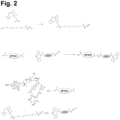
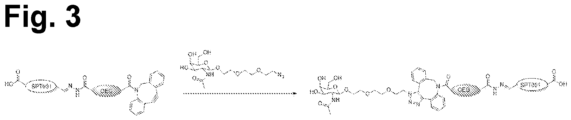
- An embodiment is the saponin conjugate of the invention, wherein the at least one saponin is covalently bound to Molecule I' or Molecule II' of the invention via a linker represented by Molecule III': wherein the hydrazide moiety of Molecule III' formed a covalent hydrazone bond with an aldehyde group in the saponin, and wherein the dibenzocyclooctyne group formed a covalent bond with the azide group of Molecule I' or Molecule II'.
- a linker represented by Molecule III' wherein the hydrazide moiety of Molecule III' formed a covalent hydrazone bond with an aldehyde group in the saponin, and wherein the dibenzocyclooctyne group formed a covalent bond with the azide group of Molecule I' or Molecule II'.
- An embodiment is the saponin conjugate of the invention, wherein the at least one saponin is covalently bound to the ligand for ASGPR via at least one cleavable linker.
- An embodiment is the saponin conjugate of the invention, wherein the cleavable linker is subject to cleavage under acidic conditions, reductive conditions, enzymatic conditions and/or light-induced conditions, and preferably the cleavable linker comprises a cleavable bond selected from a hydrazone bond and a hydrazide bond subject to cleavage under acidic conditions, and/or a bond susceptible to proteolysis, for example proteolysis by Cathepsin B, and/or a bond susceptible for cleavage under reductive conditions such as a disulfide bond.
- An embodiment is the saponin conjugate of the invention, wherein the cleavable linker is subject to cleavage in vivo under acidic conditions such as for example present in endosomes and/or lysosomes of mammalian cells, preferably human cells, preferably the cleavable linker is subject to cleavage in vivo at pH 4.0 - 6.5, and more preferably at pH ⁇ 5.5.
- An embodiment is the saponin conjugate of the invention, wherein the conjugate comprises 1, 2, 3, 4, 5, 6, 8, 10, 16, 32, 64, 128 or 1-100 saponin moieties, or any number of saponin moieties therein between, such as 7, 9, 12 saponin moieties.
- the saponin comprised in the saponin conjugate of the present invention is a compound of formula (II) S , (III) S or (IV) S as described herein wherein the saponin moiety linker Ls is the result of a coupling reaction between a first precursor L S1 covalently bound to GalNAc or the bridging moiety and a second precursor L S2 covalently bound to the saponin moiety, the second precursor L S2 comprising a hydrazone resulting from a hydrazide/aldehyde coupling to an aldehyde of the saponin moiety, as described herein, this means that the aldehyde group is already occupied by the linker, such that suitable saponin derivatives are these wherein saponin is derivatised by (ii) a carboxyl group of a saccharide chain as described herein and/or (iii) an acetoxy group of a saccharide chain as described herein.
- Certain pharmaceutical combinations and certain pharmaceutical compositions of the present invention comprise a second conjugate of an effector molecule and a ligand for asialoglycoprotein receptor (ASGPR), referred to herein as "effector molecule conjugate".
- effector molecule conjugate When the effector molecule is bound to the remainder of the effector molecule conjugate it is referred to herein as an "effector moiety".
- the ASGPR ligand comprises at least one N -acetylgalactosamine (GaINAc) moiety.
- each GalNAc moiety is bound to the remainder of the ASGPR ligand or - in case ASGPR ligand consists of a single GaINAc moiety - to the effector moiety, via a covalent bond to the oxygen on position "1" as indicated in formula (I):
- the ASGPR ligand consists of a single GaINAc moiety bound to the effector moiety E, preferably via an effector moiety linker L E .
- the ASGPR ligand may comprise more than one GalNAc moiety, such as 2, 3, 4, 5 or 6 GaINAc moieties, preferably 3 or 4 GaINAc moieties.
- the GalNAc moieties are each separately covalently bound via the oxygen on position "1" to a central bridging moiety B, which effectively forms a bridge between the GalNAc moieties and the effector moiety, preferably via an effector moiety linker L E .
- the GalNAc moieties may be directly bound to the bridging moiety B as shown in formula (III) E : wherein n is an integer larger than or equal to 2, L E is an effector moiety linker and E is the effector moiety.
- the GalNAc moieties are bound to the bridging moiety B via GalNAc linkers L GAL as shown in formula (IV) E : wherein n is an integer larger than or equal to 2, L E is an effector moiety linker and E is the effector moiety. While each occurrence of L GAL may be independently chosen, the skilled person will appreciate that the synthesis of the conjugate is simplified in case each occurrence of L GAL represents the same moiety.
- the effector moiety linker L E represents any chemical moiety suitable for covalently binding an effector moiety to GalNAc as in formula (II) E or to the bridging moiety B as in formula (III) E and (IV) E .
- the identity and size of the linker is not particularly limited and covalently binding an effector molecule to GalNAc as in formula (II) E or to the bridging moiety B as in formula (III) E and (IV) E may be effected by means of a ⁇ regular' chemical functional group (e.g. an ether bond) as well as through "click-chemistry" type linkers which typically have a long chain length, resulting in a linker E L comprising e.g. more than 10 or more than 20 carbon atoms.
- Suitable effector moiety linkers L E and associated coupling reactions are described in the handbook Hermanson, Greg T. Bioconjugate techniques. Academic press, 2013 .
- the effector moiety linker L E will typically be the result of a coupling reaction (e.g. "click-chemistry" type) between at least a first precursor L E1 covalently bound to GalNAc or the bridging moiety B and a second precursor L E2 covalently bound to the effector moiety.
- This principle is illustrated in the following reaction scheme for the compound of formula (II): wherein L E is an effector moiety linker, L E1 is a precursor of the effector moiety linker L E which is covalently bound to GalNAc and L E2 is a precursor of the effector moiety linker L E which is covalently bound to the effector moiety and E is the effector moiety.
- the effector moiety linker L E can be the result of a coupling reaction between at least a first precursor L E1 covalently bound to GalNAc or the bridging moiety and a second precursor L E2 covalently bound to the effector moiety, wherein the coupling reaction is for example an azide-alkyne cycloaddition, a thiol maleimide coupling, a staudinger reaction, a nucleophilic ring-opening of strained heterocyclic electrophiles (such as aziridines, epoxides, cyclic sulfates, aziridinium ions, episulfonium ions), a carbonyl reaction of the non-aldol type (such as urea, thiourea, hydrazon, oxime ether, amide or aromatic heterocycle formation) or an addition to a carbon-carbon double bond (such as epoxidation, aziridination, dihydroxylation, sulfentyl halide addition,
- the effector moiety linker L E comprises a succinimide thioether moiety.
- a succinimide thioether is e.g. the result of a thiol maleimide coupling between an N-substituted maleimide and a thiol or sulfhydryl containing compound.
- This thiol maleimide coupling is a commonly known 'click'-chemistry tool in the field of bioconjugation and is for example described in Hermanson, Greg T. Bioconjugate techniques. Academic press, 2013 page 289 .
- the effector moiety linker L E is the result of a coupling reaction between a first precursor L E1 covalently bound to GalNAc or the bridging moiety, the first precursor L E1 comprising an N-substituted maleimide; and a second precursor L E2 covalently bound to the effector moiety, the second precursor L E2 comprising a thiol or a precursor thereof.
- a suitable thiol precursor is a disulfide, which may be cleaved ( e.g. in-situ) via reduction to the corresponding thiol.
- a preferred structure for the precursor L E1 present in the compounds of formula (V) E , (VII) E or (VIII) E is the following terminal N-substituted maleimide: wherein X represents any linker suitable for covalently bonding the terminal N-substituted maleimide to GalNAc or the bridging moiety B.
- X may be the result of a coupling reaction between a first moiety covalently bound to GalNAc orthe bridging moiety and a second moiety covalently bound to the maleimide.
- X can comprise a hydrazone and/or a 1, 2, 3-triazole. Whenever reference is made to a 1, 2, 3-triazole in the context of the linkers of the present application, this preferably means a 1 H -1, 2, 3-triazole.
- Embodiments of the structure for the precursor L E1 present in the compounds of formula (V) E , (VII) E or (VIII) E are the following terminal N-substituted maleimides: wherein a and b each independently represent an integer larger than or equal to 0, preferably a and b each independently represent an integer selected from 0, 1, 2, and 3, more preferably a and b represent 2, and wherein L E1a represents a hydrazone and/or a 1, 2, 3-triazole, preferably a 1, 2, 3-triazole and wherein L E1b represents a hydrazone and/or a 1, 2, 3-triazole, preferably a hydrazone; wherein b and c each independently represent an integer larger than or equal to 0, preferably b represents an integer selected from 0, 1, 2, and 3 and c represents an integer in the range of 5-15, more preferably b represents 2, and c represents 9, wherein L E1a represents a hydrazone and/or a 1, 2, 3-triazole, preferably
- L E1a , L E1b and L E1c each preferably comprise less than 20 carbon atoms, more preferably L E1a , L E1b and L E1c each independently represent a moiety according to formula (XIII), (XIV) or (XV), preferably L E1a is the 1,2,3-triazole of formula (XIII), L E1b is the hydrazone of formula (XIV) and L E1c is the 1,2,3-triazole of formula (XV):
- the effector molecule conjugate is a compound of formula (II) E , (III) E or (IV) E as described herein, wherein the effector moiety linker L E is the result of a coupling reaction between a compound of formula (V) E , (VII) E or (VIII) E with a compound of formula (VI) E , wherein the first precursor L E1 is a terminal N-substituted maleimide of formula (X), (XI) or (XII), wherein L E1a is for example the 1 ,2,3-triazole of formula (XIII), L E1b is for example the hydrazone of formula (XIV) and L E1c is for example the 1 ,2,3-triazole of formula (XV).
- An aspect of the invention relates to a pharmaceutical combination comprising:
- An aspect of the invention relates to a pharmaceutical composition
- a pharmaceutical composition comprising:
- an embodiment is the pharmaceutical combination of the invention or the pharmaceutical composition of the invention, wherein the effector molecule comprises or consists of at least one of a small molecule such as a drug molecule, a toxin such as a protein toxin, an oligonucleotide such as a BNA, a xeno nucleic acid or an siRNA, an enzyme, a peptide, a protein, or any combination thereof, preferably, the effector molecule is a toxin, an enzyme or an oligonucleotide.
- a small molecule such as a drug molecule
- a toxin such as a protein toxin
- an oligonucleotide such as a BNA, a xeno nucleic acid or an siRNA
- an enzyme a peptide, a protein, or any combination thereof
- the effector molecule is a toxin, an enzyme or an oligonucleotide.
- An embodiment is the pharmaceutical combination of the invention or the pharmaceutical composition of the invention, wherein the ligand for ASGPR comprises or is (GalNAc) 3 Tris, and/or wherein the ligand for ASGPR and the effector molecule are conjugated via a covalent bond, preferably via at least one linker.
- an embodiment is the pharmaceutical combination of the invention or the pharmaceutical composition of the invention, wherein the effector molecule is an oligonucleotide selected from any one or more of a(n): short interfering RNA (siRNA), short hairpin RNA (shRNA), anti-hairpin-shaped microRNA (miRNA), single-stranded RNA, aptamer RNA, double-stranded RNA (dsRNA), anti-microRNA (anti-miRNA, anti-miR), antisense oligonucleotide (ASO), DNA, antisense DNA, locked nucleic acid (LNA), bridged nucleic acid (BNA), 2'-O,4'-aminoethylene bridged nucleic Acid (BNA NC ), BNA-based siRNA, and BNA-based antisense oligonucleotide (BNA-AON).
- siRNA short interfering RNA
- shRNA short hairpin RNA
- miRNA anti-hairpin-shaped microRNA
- An embodiment is the pharmaceutical combination of the invention or the pharmaceutical composition of the invention, wherein the effector molecule is an oligonucleotide selected from any one or more of a(n): anti-miRNA, a BNA-AON or an siRNA, such as BNA-based siRNA, selected from chemically modified siRNA, metabolically stable siRNA and chemically modified, metabolically stable siRNA.
- the effector molecule is an oligonucleotide selected from any one or more of a(n): anti-miRNA, a BNA-AON or an siRNA, such as BNA-based siRNA, selected from chemically modified siRNA, metabolically stable siRNA and chemically modified, metabolically stable siRNA.
- An embodiment is the pharmaceutical combination of the invention or the pharmaceutical composition of the invention, wherein the effector molecule is an oligonucleotide capable of, for example when present inside a mammalian cell, silencing any one of genes: apolipoprotein B (apoB), HSP27, transthyretin (TTR), proprotein convertase subtilisin/kexin type 9 (PCSK9), delta-aminolevulinate synthase 1 (ALAS1), antithrombin 3 (AT3), glycolate oxidase (GO), complement component C5 (CC5), X gene of hepatitis B virus (HBV), S gene of HBV, alpha-1 antitrypsin (AAT) and lactate dehydrogenase (LDH), and/or is an oligonucleotide capable of, for example when present inside a mammalian cell, targeting an aberrant miRNA.
- apoB apolipoprotein B
- HSP27 transthyretin
- cardiovascular disease is still an important cause of total years of life lost [ B.G. Nordestgaard et al., Advances in lipid-lowering therapy through gene-silencing technologies, Nature Reviews - Cardiology, V 15, May 2018, pp.261-272 ].
- Substantial residual cardiovascular disease risk remains even after optimal lifestyle intervention, antihypertensive treatment, high-dose statin therapy and after treatment with newer classes of lipid-lowering therapy, such as the cholesterol absorption inhibitor ezetimibe, the PCSK9 inhibitors evolocumab and bococizumab, the lipid-lowering fibrate agent bezafibrate, the cholesteryl ester transfer protein inhibitor anacetrapib, and the anti-inflammatory agent canakinumab.
- therapies in development in particular antisense oligonucleotide inhibition or small interfering RNA (siRNA)-based approaches, employ gene-silencing technologies through mRNA degradation.
- gene-silencing drugs are usually injected subcutaneously.
- Gene-silencing technologies inhibit gene expression within the cell nuclei or cytoplasm to reduce protein production, resulting in reduced plasma lipoprotein levels in gram amounts.
- Antisense oligonucleotides and siRNAs are formulated with the aim of achieving much higher concentrations within liver cells than in plasma.
- Gene-silencing therapies target proteins both in plasma and within cells. LDL most likely causes atherosclerosis through intimal deposition of cholesterol. A prerequisite for a myocardial infarction (MI) or an ischaemic stroke event is the development of atherosclerosis within the coronary and other arteries.
- MI myocardial infarction
- Atherosclerotic plaque initiation occurs by infiltration of LDL and remnant lipoproteins from plasma into the intima of arteries, facilitated by a blood-pressure gradient. Atherosclerotic plaque progression can occur if LDL and remnant lipoprotein levels remain elevated in plasma over prolonged periods of time. Endothelial dysfunction, which leads to increased flux of these lipoproteins into the intima, can further enhance the progression of atherosclerosis. Plaque rupture leading to MI or ischaemic stroke typically occurs at sites of unstable atherosclerotic plaques with ongoing local inflammation and no fibrous cap.
- RNA antisense oligonucleotide
- siRNA double strand of RNA
- genes ANGPTL3, APOC3, LPA, and PCSK9 which are active in several lipoprotein pathways, are targets for gene-silencing therapies.
- An example of a lipoprotein gene silencing therapy is Mipomersen, which is an antisense oligonucleotide that binds directly to the mRNA sequence that encodes the apoB protein, which is the predominant protein carried on LDL, remnant lipoproteins, and Lp(a).
- Part of the invention is the pharmaceutical combination of the invention or the pharmaceutical composition of the invention, wherein the effector molecule is an oligonucleotide, preferably an siRNA such as a BNA-based siRNA, or an antisense oligonucleotide such as a BNA-based antisense oligonucleotide, for example an AON based on 2'-O,4'-aminoethylene bridged nucleic acid, capable of, preferably when present inside a mammalian cell, silencing gene apolipoprotein B (apoB).
- siRNA such as a BNA-based siRNA
- an antisense oligonucleotide such as a BNA-based antisense oligonucleotide
- apoB silencing gene apolipoprotein B
- an embodiment is the pharmaceutical combination of the invention or the pharmaceutical composition of the invention, wherein the effector molecule is an oligonucleotide capable of, for example when present inside a mammalian cell, targeting an mRNA involved in expression of any one of proteins: apoB, HSP27, TTR, PCSK9, ALAS1, AT3, GO, CC5, expression product of X gene of HBV, expression product of S gene of HBV, AAT and LDH, or is capable of, for example when present inside a mammalian cell, antagonizing or restoring an miRNA function such as inhibiting an oncogenic miRNA (onco-miR) or suppression of expression of an onco-miR.
- the effector molecule is an oligonucleotide capable of, for example when present inside a mammalian cell, targeting an mRNA involved in expression of any one of proteins: apoB, HSP27, TTR, PCSK9, ALAS1, AT3, GO, CC5, expression product of X gene
- Part of the invention is the pharmaceutical combination of the invention or the pharmaceutical composition of the invention, wherein the effector molecule is an oligonucleotide, preferably an siRNA such as a BNA-based siRNA, or an antisense oligonucleotide such as a BNA-based antisense oligonucleotide, for example an AON based on 2'-O,4'-aminoethylene bridged nucleic acid, capable of, preferably when present inside a mammalian cell, targeting an mRNA involved in expression of protein apoB. That is to say, binding of the oligonucleotide comprised by the effector-moiety comprising conjugate to the apoB mRNA results in silencing of the expression of the protein apolipoprotein B.
- the effector molecule is an oligonucleotide, preferably an siRNA such as a BNA-based siRNA, or an antisense oligonucleotide such as a BNA-
- the inventors now surprisingly established the improved and effective gene silencing of apoB by treatment with a BNA-AON in combination with a conjugate of a ligand for ASGPR, here tri-GaINAc, and a saponin.
- the saponin here SO1861 as an example, is known for its activity to facilitate the endosomal escape of molecule entering the endosome, e.g., via receptor-mediated cellular uptake.
- the gene silencing of apoB resulted in reduced mRNA levels for expressing ApoB protein, lower plasma ApoB level, and resulted in lowered LDL plasma level, after treatment with the therapeutic combination of GalNAc-comprising AON conjugate and GalNAc-comprising saponin conjugate.
- the gene-silencing effect is apparent at 72 h after a single administration of the combination of said two conjugates, and even after over 10 days, e.g., after 14 days.
- an embodiment is the pharmaceutical combination of the invention or the pharmaceutical composition of the invention, wherein the effector molecule is or comprises a toxin which toxin comprises or consists of at least one molecule selected from any one or more of a peptide, a protein, an enzyme such as urease and Cre-recombinase, a proteinaceous toxin, a ribosome-inactivating protein, and/or a bacterial toxin, a plant toxin, more preferably selected from any one or more of a viral toxin such as apoptin; a bacterial toxin such as Shiga toxin, Shiga-like toxin, Pseudomonas aeruginosa exotoxin (PE) or exotoxin A of PE, full-length or truncated diphtheria toxin (DT), cholera toxin; a fungal toxin such as alpha-sarcin; a plant toxin including ribosome-
- the protein toxin is dianthin and/or saporin, and/or comprises or consists of at least one of a toxin targeting ribosome, a toxin targeting elongation factor, a toxin targeting tubulin, a toxin targeting DNA and a toxin targeting RNA, more preferably any one or more of emtansine,
- the bridging moiety B present in the saponin conjugates of formula (III) S or (IV) S and in the effector molecule conjugates of formula as (III) E or (IV) E described herein represents any moiety suitable for covalently binding 2 or more, preferably 3 or 4, more preferably 3 GalNAc moieties and the saponin moiety linker Ls or the effector moiety linker L E .
- the bridging moiety B is a compound of formula (XV): wherein the oxygen atoms of the compound of formula (XV) are bound to GalNAc (corresponding to compounds of formula (III) S or (III) E ) or to the GalNAc linkers L GAL (corresponding to compounds of formula (IV) S or (IV) E ), and the nitrogen atom of the compound of formula (XV) is bound to the saponin moiety linker Ls or the effector moiety linker L E .
- the GalNAc linkers L GAL represent any chemical moiety suitable for covalently binding GalNAc to the bridging moiety as in formula (IV) S or (IV) E .
- the identity and size of the linker is not particularly limited.
- the GalNAc linkers L GAL each comprise 2-25 carbon atoms, preferably 7-15 carbon atoms, more preferably 11 carbon atoms.
- the GalNAc linkers L GAL comprise at least one, preferably two amide moieties.
- a particularly preferred GalNAc linker L GAL is a compound according to formula (XVI):
- An embodiment is the pharmaceutical combination of the invention or the pharmaceutical composition of the invention, wherein the binding molecule comprising a binding site for a cell-surface molecule, comprised by the third conjugate, is a ligand for a cell-surface molecule or an antibody comprising a binding site for a cell-surface molecule or at least one domain or fragment thereof comprising the binding site.
- An embodiment is the pharmaceutical combination of the invention or the pharmaceutical composition of the invention, wherein the third conjugate is any one or more of: an antibody-toxin conjugate, a receptor-ligand - toxin conjugate, an antibody-drug conjugate, a receptor-ligand - drug conjugate, an antibody-nucleic acid conjugate or a receptor-ligand - nucleic acid conjugate.
- An embodiment is the pharmaceutical combination of the invention or the pharmaceutical composition of the invention, wherein the binding molecule comprising a binding site for a cell-surface molecule, comprised by the third conjugate, is capable of binding to any one of cell-surface molecules: CD71, CA125, EpCAM(17-1A), CD52, CEA, CD44v6, FAP, EGF-IR, integrin, syndecan-1, vascular integrin alpha-V beta-3, HER2, EGFR, CD20, CD22, Folate receptor 1, CD146, CD56, CD19, CD138, CD27L receptor, PSMA, CanAg, integrin-alphaV, CA6, CD33, mesothelin, Cripto, CD3, CD30, CD239, CD70, CD123, CD352, DLL3, CD25, ephrinA4, MUC1, Trop2, CEACAM5, CEACAM6, HER3, CD74, PTK7, Notch3, FGF2, C4.4A, FLT3, CD38, FGFR3, CD7,
- an embodiment is the pharmaceutical combination of the invention or the pharmaceutical composition of the invention, wherein the binding molecule comprising a binding site for a cell-surface molecule, comprised by the third conjugate, is or comprises any one of: an antibody, preferably a monoclonal antibody such as a human monoclonal antibody, an IgG, a molecule comprising or consisting of a single-domain antibody, at least one V HH domain, preferable a camelid V H , a variable heavy chain new antigen receptor (V NAR ) domain, a Fab, an scFv, an Fv, a dAb, an F(ab)2 and a Fcab fragment.
- an antibody preferably a monoclonal antibody such as a human monoclonal antibody, an IgG, a molecule comprising or consisting of a single-domain antibody, at least one V HH domain, preferable a camelid V H , a variable heavy chain new antigen receptor (V NAR ) domain, a Fab
- An aspect of the invention relates to the pharmaceutical combination of the invention or to the pharmaceutical composition of the invention, for use as a medicament.
- An aspect of the invention relates to the pharmaceutical combination of the invention or to the pharmaceutical composition of the invention, for use in the treatment or prophylaxis of a disease or health problem in which an expression product is involved of any one or more of genes: apoB, TTR, PCSK9, ALAS1, AT3, GO, CC5, X gene of HBV, S gene of HBV, AAT and LDH.
- Part of the invention is the pharmaceutical combination of the invention or the pharmaceutical composition of the invention, for use in the treatment or prophylaxis of a disease or health problem in which an expression product is involved of gene apoB.
- the expression product of the apoB gene is the lipoprotein apolipoprotein B (ApoB), present as part of LDL, remnant lipoproteins, and Lp(a).
- the disease is a cardiovascular disease, typically related to build-up and presence of an atherosclerotic plaque involving one or more of ApoB comprising LDL, Lp(a) and remnant lipoproteins.
- the inventors now surprisingly established the improved and effective gene silencing of apoB by treatment with a BNA-AON in combination with a conjugate of a ligand for ASGPR, here tri-GaINAc, and a saponin.
- the saponin here SO1861 as an example, is known for its activity to facilitate the endosomal escape of molecule entering the endosome, e.g. via receptor-mediated cellular uptake.
- the gene silencing of apoB resulted in reduced mRNA levels for expressing ApoB protein, reduced plasma ApoB protein level, and resulted in lowered LDL plasma level, after treatment with the therapeutic combination of GaINAc-comprising AON conjugate and GalNAc-comprising saponin conjugate.
- the gene-silencing effect is apparent at 72 h after a single administration of the combination of said two conjugates, and even after over 10 days, e.g. after 14 days.
- An embodiment is the pharmaceutical combination of the invention or the pharmaceutical composition of the invention, or the pharmaceutical combination or pharmaceutical composition for use of the invention, for use in the treatment or prophylaxis of a cancer, an infectious disease, a viral infection, hypercholesterolemia, primary hyperoxaluria, haemophilia A, haemophilia B, AAT related liver disease, acute hepatic porphyria, TTR-mediated amyloidosis, hereditary TTR amyloidosis (hATTR), complement-mediated disease, hepatitis B infection, or an auto-immune disease.
- a cancer an infectious disease, a viral infection, hypercholesterolemia, primary hyperoxaluria, haemophilia A, haemophilia B, AAT related liver disease, acute hepatic porphyria, TTR-mediated amyloidosis, hereditary TTR amyloidosis (hATTR), complement-mediated disease, hepatitis B infection, or an auto-
- An embodiment is the pharmaceutical combination for use of the invention orthe pharmaceutical composition for use of the invention, wherein the saponin is a saponin derivative, preferably a QS-21 derivative or an SO1861 derivative according to the invention.
- An aspect of the invention relates to an in vitro or ex vivo method for transferring the second conjugate or the third conjugate of the invention from outside a cell to inside said cell, preferably subsequently transferring the effector molecule comprised by the second conjugate or the third conjugate according to the invention into the cytosol of said cell, comprising the steps of:
- Trivalent-GalNAc is a targeting ligand that recognizes and binds the ASGPR1 receptor on hepatocytes.
- Trivalent GaINAc was produced ( Figure 1 and Figure 8 ) and SO1861-EMCH was conjugated (labile, in a similar manner as described in Figure 2 and Figure 4 for underivatised SO1861, wherein SPT001 is synonymous to SO1861) to trivalent-GalNAc, with a DAR of 1 with regard to bound SO1861, (trivalent-GalNAc-SO1861).
- SO1861-EMCH refers to SO1861 wherein the aldehyde group is derivatised by transformation into a hydrazone bond through reaction with N- ⁇ -maleimidocaproic acid hydrazide (EMCH), therewith providing SO1861-Ald-EMCH.
- the 'trivalent-GalNAc' as depicted in figures 1 and 8 is a typical (GalNAc) 3 Tris conjugate suitable for coupling to an effector molecule or to saponin.
- As a control SO1861-EMCH was also conjugated (labile) to monovalent-GalNAc ( Figure 3 ), with a DAR 1 with regard to bound SO1861, (GalNAc-SO1861).
- HepG2 (ASGPR1 + ; CD71 + , Table A3) and Huh7 (ASGPR1 +/- ; CD71 + , Table A3) cells were treated with a concentration range of trivalent-GalNAc-L-SO1861 ((GalNAc)3-SO1861) and GalNAc-L-SO1861 (GalNAc-SO1861) in the presence and absence of 10 pM CD71-saporin (monoclonal antibody OKT-9 targeting CD71 conjugated to the protein toxin saporin).
- DAR 1 with regard to bound SO1861.
- Targeted protein toxin mediated cell killing of ASGPR1/CD71 expressing cells was determined.
- CD71-SPRN CD71-Saporin + 1000 nM trivalent-GalNAc
- trivalent-GalNAc-SO1861 (GaINAc)3-SPT) in combination with low concentrations of CD71-Saporin (CD71-SPRN) effectively induce cell killing in ASGPR1/CD71 expressing cells.
- trivalent-GalNAc-SO1861 effectively induces endosomal escape of a protein toxin in ASGPR1 expressing cells.
- HSP27BNA was conjugated to trivalent-GalNAc ( Figure 6-7 ) and HepG2 (ASGPR1 + ) cells or Huh7 (ASPGR1 +/- ) were treated with a range of concentrations of trivalent-GalNAc-L-HSP27BNA (labile conjugation, Figure 6 ) or trivalent-GalNAc-S-HSP27BNA (stable conjugation, Figure 7 ) in combination with a fixed concentration of 4000 nM SO1861-EMCH. HSP27 gene silencing in HepG2 and Huh7 cells was determined.
- ApoBBNA was conjugated in a similar manner ( Figure 6-7 ) to trivalent-GalNAc and HepG2 (ASGPR1 + ) cells or Huh7 (ASPGR1 +/- ) were treated with a range of concentrations of trivalent-GalNAc-L-ApoBBNA (also called (GaINAc)3-L-ApoB) (labile conjugation, Figure 6 , Figure 12 , Figure 13 ) or trivalent GaINAc-S-ApoBBNA (also called (GaINAc)3-S-ApoB) (stable conjugation, Figure 7 , Figure 14 , Figure 15 ) or a trivalent GalNAc-L-ApoB scrambled BNA (also called (GaINAc)3-L-ApoB (Scr.) or trivalent GalNAc-S-ApoB scrambled BNA (also called (GaINAc)3-L-ApoB (Scr.) (where the
- the treatments did not affect the viability of both cell lines ( Figure 13 , Figure 15 ).
- the 'L' refers to a ⁇ labile' linker, which indicates that the linker is cleaved in the cell, i.e., at pH as apparent in the endosome and the lysosome.
- the 'S' refers to a ⁇ stable' linker, which indicates that the linker is not cleaved in the cell, i.e., at pH as apparent in the endosome and the lysosome.
- a conjugate comprising a labile bond between any two molecules forming the conjugate or comprised by the conjugate, will be cleaved at a position in the labile linker, therewith dissociating the two linked or bound molecules.
- An example is the cleavage of a hydrazone bond under acidic conditions as apparent in the endosome and lysosome of mammalian cells such as human cells.
- Treatment with ApoBBNA#02 alone was approximately 100 - 667-fold less potent in ApoB RNA down-modulation (ApoB#02: IC50 20 nM), while (GaINAc)3-ApoB#02 with an IC50 of ca. 2 nM was about 10 - 67-fold less potent.
- the co-administration group of 10-fold less payload ie, 0.1 mg/kg (GaINAc)3-ApoB#02 + 5 mg/kg (GalNAc)3-SO1861 still showed 25% decrease and hence, constitute a 10-fold improved ApoB expression reduction reduction based in administered payload.
- the ApoB RNA down-modulation (shown in Figure 19 ) translated well to ApoB protein level.
- LDL-C LDL-cholesterol
- Targeted (GaINAc)3-ApoB#02 at a dose of 1 mg/kg reduced LDL-C to an average of 2.7 mg/dl within 24 hrs already (n 3 animals), i.e., a 53% reduction compared to vehicle and ApoB#02 BNA groups.
- LDL-C levels were reduced by 40% for 2 mg/kg ApoB#02 BNA, and 48% for 1 mg/kg (GaINAc)3-ApoB#02 and for the co-administration group of 0.1 mg/kg (GaINAc)3-ApoB#02 + 5 mg/kg (GalNAc)3-SO1861, showing a 10-fold improved LDL-C reduction based in administered payload.
- mice in treatment groups gained weight comparable to the mice receiving vehicle.
- Serum ALT levels were determined and results are shown in Figure 22 .
- SO1861-EMCH refers to SO1861 wherein the aldehyde group is derivatised by transformation into a hydrazone bond through reaction with N- ⁇ -maleimidocaproic acid hydrazide (EMCH), therewith providing SO1861-Ald-EMCH.
- the 'trivalent-GalNAc' as depicted in figures 1 and 8 is a typical (GalNAc) 3 Tris conjugate suitable for coupling to an effector molecule or to saponin.
- Primary human hepatocytes were treated with a concentration range of SO1861 (underivatized) or (GaINAc)3-SO1861 in the presence and absence of 10 pM (non-effective concentration) CD71-saporin (monoclonal antibody clone OKT-9 targeting CD71 conjugated to the protein toxin saporin) ( Figure 23 ).
- ApoB BNA (SEQ ID NO: 2) was conjugated to trivalent-GalNAc ((GaINAc)3) to produce (GaINAc)3-ApoBBNA ( Figure 6 ) and tested in combination with 2000 nM SO1861-EMCH or 250 nM (GalNAc)3-SO1861 on primary human hepatocytes for modulation of the ApoB RNA expression ( Figure 24A ) as well as the cell viability ( Figure 24B ).
- SO1861-EMCH refers to SO1861 wherein the aldehyde group is derivatised by transformation into a hydrazone bond through reaction with N- ⁇ -maleimidocaproic acid hydrazide (EMCH), therewith providing SO1861-Ald-EMCH.
- EMCH N- ⁇ -maleimidocaproic acid hydrazide
- the 'trivalent-GalNAc' as depicted in figures 1 and 8 is a typical (GalNAc) 3 Tris conjugate suitable for coupling to an effector molecule or to saponin.
- trivalent-GalNAc-SO1861 and trivalent-GalNAc-(SO1861) 4 in combination with low concentrations of CD71-Saporin effectively induce cell killing in ASGPR1/CD71 expressing cells.
- trivalent-GalNAc-SO1861 effectively induces endosomal escape of a protein toxin in ASGPR1 expressing cells.
- SPT001 and GalNAc targeted SPT001 both increase potency of industry standard GalNAc targeted ASO; SO1861-EMCH with about a factor 10, and both (GN)3-SPT and (GN)3-dSPT4 about 100x, when cell viability of liver cells is considered.
- Trivalent GalNAc was produced ( Figure 1 and Figure 8 ) and SO1861-EMCH was conjugated (labile, in a similar manner as described in Figure 2 and Figure 4 for underivatised SO1861, wherein SPT and SPT001 are synonymous to SO1861) to trivalent-GalNAc, with a DAR 1, (trivalent-GalNAc-SO1861; (GaINAc)3-SPT001); Figure 30C ).
- SO1861-EMCH refers to SO1861 wherein the aldehyde group is derivatised by transformation into a hydrazone bond through reaction with N- ⁇ -maleimidocaproic acid hydrazide (EMCH), therewith providing SO1861-Ald-EMCH.
- trivalent-GalNAc-SO1861 in combination with (GalNAc) 3 -ApoB effectively induces silencing of ApoB gene expression in ASGPR1 expressing cells.
- trivalent-GalNAc-SO1861 effectively induces endosomal escape of a BNA in ASGPR1 expressing cells.
- Example 9 Trivalent GaINAc conjugated with SO1861, or a concentration series of conjugate trivalent GalNAc-(L-SO1861) in the presence of a fixed dose of OKT-9 anti-CD71 monoclonal antibody
- SO1861-EMCH refers to SO1861 wherein the aldehyde group is derivatised by transformation into a hydrazone bond through reaction with N- ⁇ -maleimidocaproic acid hydrazide (EMCH), therewith providing SO1861-Ald-EMCH. See for the outline for preparing the conjugate also the section 'Trivalent-GalNAc-SO1861 and GaINAc-SO1861 synthesis ( Figure 2 , 4 )' here below.
- Trivalent-GalNAc-SO1861 in combination with a low concentration of CD71-Saporin effectively induce cell killing in ASGPR1 expressing cells.
- trivalent-GalNAc-SO1861 effectively induces endosomal escape of a protein toxin in ASGPR1 expressing cells.
- low nM TrivalentGalNAc-SPT001 enhances cytoplasmic delivery of low pM CD71MoAb-saporin in primary hepatocytes; and Hepatocytes that lack ASGPR1 expression are not responsive at low nM concentrations of TrivalentGaINAc-SPT001.
- the conjugate of trivalent GalNAc and the ApoB antisense BNA oligonucleotide ApoB BNA was prepared ( Figure 31C ).
- TrivalentGaINAc-SPT001 is highly effective (-factor 100 more potent) in reducing the ApoB mRNA expression in the primary hepatocytes compared to ApoB mRNA expression in the primary liver cells treated with TrivalentGalNAc- ApoB BNA only ( Figure 31A ).
- TrivalentGaINAc- ApoB BNA nor the combination of TrivalentGalNAc- ApoB BNA and TrivalentGalNAc-SPT001 induce lowering of the ApoB mRNA expression in these liver cells.
- TrivalentGalNAc-SPT001 in combination with TrivalentGalNAc- ApoB BNA effectively induces silencing of ApoB mRNA expression in ASGPR1 expressing cells.
- TrivalentGalNAc-SPT001 effectively induces endosomal escape of a BNA in ASGPR1 expressing cells.
- TrivalentGaINAc-SPT001 is highly effective (with a factor of over 1000 more potency) in reducing the ApoB protein expression in the primary hepatocytes compared to ApoB protein expression in the primary liver cells treated with TrivalentGalNAc- ApoB BNA only ( Figure 32A ).
- TrivalentGalNAc- ApoB BNA, nor the combination of TrivalentGaINAc- ApoB BNA and TrivalentGaINAc-SPT001 induce lowering of the ApoB protein expression in these liver cells ( Figure 32B ).
- TrivalentGalNAc-SPT001 in combination with TrivalentGalNAc- ApoB BNA effectively induces silencing of ApoB protein expression in ASGPR1 expressing cells.
- TrivalentGalNAc-SPT001 effectively induces endosomal escape of a BNA in ASGPR1 expressing cells.
- low nM trivalentGalNAc- ApoB BNA + trivalentGaINAc-SPT001 can enhance endosomal escape and cytoplasmic delivery of ApoB BNA resulting in ApoB mRNA silencing in primary hepatocytes;
- Low nM trivalentGalNAc- ApoB BNA + trivalentGaINAc-SPT001 can enhance endosomal escape and cytoplasmic delivery of ApoB BNA resulting in ApoB protein decay in primary hepatocytes; Cells with lowASGPR1 expression are not responsive for the therapy when ApoB expression is considered.
- Apparatus Waters IClass; Bin. Pump: UPIBSM, SM: UPISMFTN with SO; UPCMA, PDA: UPPDATC, 210-320 nm, SQD: ACQ-SQD2 ESI, mass ranges depending on the molecular weight of the product: neg or neg/pos within in a range of 1500-2400 or 2000-3000; ELSD: gaspressure 40 psi, drift tube temp: 50°C; column: Acquity C18, 50 ⁇ 2.1 mm, 1.7 ⁇ m Temp: 60°C, Flow: 0.6 mL/min, lin. Gradient depending on the polarity of the product:
- MS instrument type Agilent Technologies G6130B Quadrupole
- HPLC instrument type Agilent Technologies 1290 preparative LC
- Column: Waters XSelect TM CSH (C18, 150 ⁇ 19mm, 10 ⁇ m); Flow: 25 ml/min; Column temp: room temperature; Eluent A: 100% acetonitrile; Eluent B: 10 mM ammonium bicarbonate in water pH 9.0; Gradient:
- MS instrument type Agilent Technologies G6130B Quadrupole
- HPLC instrument type Agilent Technologies 1290 preparative LC
- MS instrument type Agilent Technologies G6130B Quadrupole
- HPLC instrument type Agilent Technologies 1290 preparative LC
- SO1861-EMCH synthesis (SO1861-EMCH is also referred to as SO1861-Ald-EMCH)
- MALDI-TOF-MS (RP mode): m / z 2193 Da ([M+K] + , SO1861-EMCH-mercaptoethanol), m / z 2185 Da ([M+K] + , SO1861-EMCH-mercaptoethanol), m / z 2170 Da ([M+Na] + , SO1861-EMCH-mercaptoethanol).
- di-tert-butyl (10-(1-azido-3,6,9,12-tetraoxapentadecan-15-amido)-10-(13,13-dimethyl-5,11-dioxo-2,12-dioxa-6,10-diazatetradecyl)-5,15-dioxo-8,12-dioxa-4,16-diazanonadecane-1,19-diyl)dicarbamate
- Trivalent GaINAc-azide (20.3 mg, 12.0 ⁇ m ⁇ l) and 4- ⁇ 2-azatricyclo[10.4.0.0 4,9 ]hexadeca-1(12),4(9),5,7,13,15-hexaen-10-yn-2-yl ⁇ -N-[2-(2- ⁇ 2-[2-( ⁇ 4-[(E)- ⁇ [6-(2,5-dioxo-2,5-dihydro-1H-pyrrol-1-yl)hexanamido]imino ⁇ methyl]phenyl ⁇ formamido)ethoxy]ethoxy ⁇ ethoxy)ethyl]-4-oxobutanamide (11.8 mg, 14.4 ⁇ mol) were dissolved in a mixture of water/acetonitrile (2:1, v/v, 0.90 mL).
- Trivalent GalNAc-azide (20.3 mg, 12.0 ⁇ mol) and DBCO-maleimide (10.3 mg, 24.0 ⁇ m ⁇ l) were dissolved in a mixture of water/acetonitrile (2:1, v/v, 0.90 mL). The reaction mixture was shaken for 1 min and left standing at room temperature. After 2 hours the reaction mixture was subjected to preparative MP-LC. 2D Fractions corresponding to the product were immediately pooled together, frozen and lyophilized overnight to give the title compound (22.2 mg, 87%) as a white solid. Purity based on LC-MS 85%. Contains 10% of the hydrolysed maleimide.
- the residue solution was diluted with 20 mM ammonium bicarbonate/acetonitrile (3:1, v/v, 1.00 mL) and the resulting solution was directly added to trivalent GaINAc-S-maleimide (3.02 mg, 1.43 ⁇ mol).
- the reaction mixture was shaken for 1 min and left standing at room temperature. After 1.5 hours the reaction mixture was subjected to preparative LC-MS. 4A Fractions corresponding to the product were immediately pooled together, frozen and lyophilized overnight to give the title compound (6.75 mg, quant.) as a white fluffy solid. Purity based on LC-MS 94% (very broad peak).
- the residue solution was diluted with 20 mM ammonium bicarbonate/acetonitrile (3:1, v/v, 1.00 mL) and the resulting solution was directly added to trivalent GaINAc-S-maleimide (3.09 mg, 1.46 ⁇ mol).
- the reaction mixture was shaken for 1 min and left standing at room temperature. After 1.5 hours the reaction mixture was subjected to preparative LC-MS. 4A Fractions corresponding to the product were immediately pooled together, frozen and lyophilized overnight to give the title compound (5.91 mg, 93%) as a white fluffy solid. Purity based on LC-MS 88% (very broad peak).
- the residue solution was diluted with 20 mM ammonium bicarbonate/acetonitrile (3:1, v/v, 1.00 mL) and the resulting solution was directly added to trivalent GaINAc-L-maleimide (3.63 mg, 1.45 ⁇ mol).
- the reaction mixture was shaken for 1 min and left standing at room temperature. After 1.5 hours the reaction mixture was subjected to preparative LC-MS. 4A Fractions corresponding to the product were immediately pooled together, frozen and lyophilized overnight to give the title compound (6.68 mg, quant.) as a white fluffy solid. Purity based on LC-MS 99% (very broad peak).
- the residue solution was diluted with 20 mM ammonium bicarbonate/acetonitrile (3:1, v/v, 1.00 mL) and the resulting solution was directly added to trivalent GaINAc-L-maleimide (3.68 mg, 1.47 ⁇ mol).
- the reaction mixture was shaken for 1 min and left standing at room temperature. After 1.5 hours the reaction mixture was subjected to preparative LC-MS. 4A Fractions corresponding to the product were immediately pooled together, frozen and lyophilized overnight to give the title compound (4.71 mg, 71%) as a white fluffy solid. Purity based on LC-MS 96% (very broad peak).
- Trivalent GaINAc-azide (36.5 mg, 21.6 ⁇ m ⁇ l) was dissolved in a solution of potassium carbonate (5.97 mg, 43.2 ⁇ m ⁇ l) in water (1.00 mL) and acetonitrile (1.00 mL). Next, a 1.0 M trimethylphosphine solution in THF (216 ⁇ L, 216 ⁇ m ⁇ l) was added and the resulting mixture was shaken for 1 min and left standing at room temperature. After 45 min the reaction mixture was evaporated in vacuo and the residue was dissolved in water/acetonitrile (9:1, v/v, 1 mL). The resulting solution was directly subjected to preparative MP-LC. 2B Fractions corresponding to the product were immediately pooled together, frozen and lyophilized overnight to give the title compound (36.1 mg, 98%) as a white solid. Purity based on LC-MS 100%.
- Trivalent GalNAc-amine formate (17.4 mg, 10.2 ⁇ m ⁇ l) and DBCO-NHS (6.14 mg, 15.3 ⁇ m ⁇ l) were dissolved in a solution of NMM (2.24 ⁇ L, 20.3 ⁇ m ⁇ l) in DMF (0.50 mL). The reaction mixture was shaken for 1 min and left standing at room temperature. After 2 hours the reaction mixture was evaporated in vacuo and the residue was dissolved in water/acetonitrile (8:2, v/v, 1 mL). The resulting solution was directly subjected to preparative MP-LC. 2c Fractions corresponding to the product were immediately pooled together, frozen and lyophilized overnight to give the title compound (14.2 mg, 72%) as a white solid. Purity based on LC-MS 96%.
- Dendron(-L-SO1861) 8 -amine (19.6 mg, 1.08 ⁇ m ⁇ l) and 2,5-dioxopyrrolidin-1-yl 1-azido-3,6,9,12-tetraoxapentadecan-15-oate (4.17 mg, 10.8 ⁇ m ⁇ l) were dissolved in DMF (1.50 mL).
- DIPEA (1.87 ⁇ L, 10.8 ⁇ m ⁇ l) was added and the mixture was shaken for 1 min and left standing overnight at room temperature.
- the reaction mixture was subjected to preparative LC-MS. 4B Fractions corresponding to the product were immediately pooled together, frozen and lyophilized overnight to give the title compound (11.7 mg, 59%) as a white fluffy solid. Purity based on LC-MS 92% (very broad peak).
- Dendron(-L-SO1861) 4 -azide (2.50 mg, 0.266 ⁇ mol) and trivalent GaINAc-DBCO (1.56 mg, 0.799 ⁇ m ⁇ l) were dissolved in a mixture of water/acetonitrile (3:1, v/v, 1.00 mL). The reaction mixture was shaken for 1 min and left standing at room temperature. After 2 hours the reaction mixture was subjected to preparative LC-MS. 4B Fractions corresponding to the product were immediately pooled together, frozen and lyophilized overnight to give the title compound (2.74 mg, 91%) as a white fluffy solid. Purity based on LC-MS 86% (very broad peak).
- Dendron(-L-SO1861) 8 -azide (2.50 mg, 0.135 ⁇ mol) and trivalent GaINAc-DBCO (0.79 mg, 0.405 ⁇ m ⁇ l) were dissolved in a mixture of water/acetonitrile (3:1, v/v, 1.00 mL). The reaction mixture was shaken for 1 min and left standing at room temperature. After 2 hours the reaction mixture was subjected to preparative LC-MS. 4B Fractions corresponding to the product were immediately pooled together, frozen and lyophilized overnight to give the title compound (2.03 mg, 74%) as a white fluffy solid. Purity based on LC-MS 100% (very broad peak).
- Trivalent GalNAc-amine formate (18.7 mg, 11.0 ⁇ m ⁇ l) and 4-nitrophenyl 3-(acetylthio)propanoate (5.90 mg, 21.9 ⁇ m ⁇ l) were dissolved in a solution of NMM (2.41 ⁇ L, 21.9 ⁇ m ⁇ l) in DMF (0.50 mL). The reaction mixture was shaken for 1 min and left standing at room temperature. After 2 hours the reaction mixture was evaporated in vacuo and the residue was dissolved in a mixture of 0.1% formic acid in water and 0.1% formic acid in acetonitrile (9:1, v/v, 1 mL). The resulting solution was directly subjected to preparative MP-LC. 2B Fractions corresponding to the product were immediately pooled together, frozen and lyophilized overnight to give the title compound (13.0 mg, 66%) as a white solid. Purity based on LC-MS 100%.
- Trivalent GaINAc-thioacetate 13.0 mg, 7.25 ⁇ m ⁇ l was dissolved in methanol (0.50 mL). Next, a 1 M solution of sodium hydroxide (7.98 ⁇ L, 7.98 ⁇ m ⁇ l) was added. The reaction mixture was shaken for 1 min and left standing at room temperature. After 30 min the reaction mixture was added to a freshly prepared solution of trifunctional linker (Ls-t) (i.e., is an example of a saponin moiety linker Ls) (7.39 mg, 6.13 ⁇ m ⁇ l) in 20 mM ammonium bicarbonate/acetonitrile (3:1, v/v, 2.00 mL).
- Ls-t trifunctional linker
- the trifunctional linker has the IUPAC name: 5,8,11,18,21,24,27-Heptaoxa-2,14,30-triazatritriacontanoic acid, 14-[16-(11,12-didehydrodibenz[ b,f ]azocin-5(6 H )-yl)-13,16-dioxo-3,6,9-trioxa-12-azahexadec-1-yl]-33-(2,5-dihydro-2,5-dioxo-1 H -pyrrol-1-yl)-15,31-dioxo-, (1 R ,4 E )-4-cycloocten-1-yl ester.
- the trifunctional linker has the following formula (XXI):
- reaction mixture was shaken for 1 min and left standing at room temperature. After 30 min the reaction mixture was frozen and lyophilized overnight to yield the crude title product as a pink fluffy solid.
- To the crude product was added a solution of 20 mM ammonium bicarbonate (1.50 mL) and the resulting suspension was filtered over a 0.45 ⁇ m syringe filter. The filtrate was lyophilized overnight to yield the title product (5.44 mg, quant) as a pink fluffy solid. Purity based on LC-MS 90% (very broad peak).
- reaction mixture was shaken for 1 min and left standing at room temperature. After 30 min the reaction mixture was frozen and lyophilized overnight to yield the crude title product as a pink fluffy solid.
- To the crude product was added a solution of 20 mM ammonium bicarbonate (1.50 mL) and the resulting suspension was filtered over a 0.45 ⁇ m syringe filter. The filtrate was lyophilized overnight to yield the title product (5.48 mg, quant) as a pink fluffy solid. Purity based on LC-MS 84% (very broad peak).
- Trivalent GaINAc-thioacetate (16.2 mg, 9.02 ⁇ m ⁇ l) was dissolved in methanol (500 ⁇ L). Next, a 1.00 M solution of sodium hydroxide (11.0 ⁇ L, 11.0 ⁇ m ⁇ l) was added. The reaction mixture was shaken for 1 min and left standing at room temperature. After 30 min the reaction mixture was submitted to preparative MP-LC. 1A Fractions corresponding to the product were immediately pooled together, frozen and lyophilized overnight to give the title compound (13.1 mg, 83%) as a white solid. Purity based on LC-MS 98%.
- Trifunctional linker (15.0 mg, 12.4 ⁇ m ⁇ l) was dissolved in acetonitrile (0.50 mL). Next, a solution of 20 mM ammonium bicarbonate (1.50 mL) was added and the resulting solution was directly transferred to trivalent GalNAc-thiol (22.7 mg, 13.0 ⁇ mol). The reaction mixture was shaken for 1 min and left standing at room temperature. After 1 hour the reaction mixture was frozen and lyophilized overnight to yield the crude title product as a white solid. Purity based on LC-MS 84%.
- N, N'-((9S,19S)-14-(6-aminohexanoyl)-1-mercapto-9-(3-mercaptopropanamido)-3,10,18-trioxo-4,11,14,17-tetraazatricosane-19,23-diyl)bis(3-mercaptopropanamide) formate (2.73 mg, 3.13 ⁇ mol) was dissolved in a mixture of 20 mM NH 4 HCO 3 with 0.5 mM TCEP/acetonitrile (3:1, v/v, 3.00 mL). Next, SO1861-EMCH (29.2 mg, 0.014 mmol) was added and the reaction mixture was stirred at room temperature.
- the dendron(-L-SC1861) 4 -azide is synthesized based on dendron(SPT001) 4 -NH 2 (molecule 15, Figure 33B ) wherein this amine dendron was treated with azido-PEG 4 -NHS ester (molecule 18) in DMF with DIPEA as a base.
- Trivalent GalNAc-azide (36.5 mg, 21.6 ⁇ mol; molecule 21 in Figure 33C ) was dissolved in a solution of potassium carbonate (5.97 mg, 43.2 ⁇ m ⁇ l) in water (1.00 mL) and acetonitrile (1.00 mL). Next, a 1.0 M trimethylphosphine solution in THF (216 ⁇ L, 216 ⁇ m ⁇ l) was added and the resulting mixture was shaken for 1 min and left standing at room temperature. After 45 min the reaction mixture was evaporated in vacuo and the residue was dissolved in water/acetonitrile (9:1, v/v, 1 mL). The resulting solution was directly subjected to preparative MP-LC. 2B Fractions corresponding to the product were immediately pooled together, frozen and lyophilized overnight to give the title compound (36.1 mg, 98%) as a white solid. Purity based on LC-MS 100%.
- Trivalent GalNAc-amine formate (17.4 mg, 10.2 ⁇ mol; molecule 22) and DBCO-NHS (6.14 mg, 15.3 ⁇ mol; molecule 10 in Figure 33C ) were dissolved in a solution of NMM (2.24 ⁇ L, 20.3 ⁇ m ⁇ l) in DMF (0.50 mL). The reaction mixture was shaken for 1 min and left standing at room temperature. After 2 hours the reaction mixture was evaporated in vacuo and the residue was dissolved in water/acetonitrile (8:2, v/v, 1 mL). The resulting solution was directly subjected to preparative MP-LC. 2C Fractions corresponding to the product were immediately pooled together, frozen and lyophilized overnight to give the title compound (14.2 mg, 72%) as a white solid. Purity based on LC-MS 96%.
- Dendron(-L-SO1861) 8 -amine (19.6 mg, 1.08 ⁇ m ⁇ l) and 2,5-dioxopyrrolidin-1-yl 1-azido-3,6,9,12-tetraoxapentadecan-15-oate (4.17 mg, 10.8 ⁇ m ⁇ l) were dissolved in DMF (1.50 mL).
- DIPEA (1.87 ⁇ L, 10.8 ⁇ m ⁇ l) was added and the mixture was shaken for 1 min and left standing overnight at room temperature.
- the reaction mixture was subjected to preparative LC-MS. 4B Fractions corresponding to the product were immediately pooled together, frozen and lyophilized overnight to give the title compound (11.7 mg, 59%) as a white fluffy solid. Purity based on LC-MS 92% (very broad peak).
- Dendron(-L-SO1861) 4 -azide (2.50 mg, 0.266 ⁇ mol; synthesis depicted in Figure 33A-C , molecule 19 in Figure 33C ) and trivalent GaINAc-DBCO (1.56 mg, 0.799 ⁇ mol; molecule 23 in Figure 33C )) were dissolved in a mixture of water/acetonitrile (3:1, v/v, 1.00 mL). The reaction mixture was shaken for 1 min and left standing at room temperature. After 2 hours the reaction mixture was subjected to preparative LC-MS. 4B Fractions corresponding to the product were immediately pooled together, frozen and lyophilized overnight to give the title compound (2.74 mg, 91%) as a white fluffy solid. Purity based on LC-MS 86% (very broad peak).
- Dendron(-L-SO1861) 8 -azide (2.50 mg, 0.135 ⁇ mol) and trivalent GaINAc-DBCO (0.79 mg, 0.405 ⁇ mol; molecule 23 in Figure 33C ) were dissolved in a mixture of water/acetonitrile (3:1, v/v, 1.00 mL). The reaction mixture was shaken for 1 min and left standing at room temperature. After 2 hours the reaction mixture was subjected to preparative LC-MS. 4B Fractions corresponding to the product were immediately pooled together, frozen and lyophilized overnight to give the title compound (2.03 mg, 74%) as a white fluffy solid. Purity based on LC-MS 100% (very broad peak).
- CD71mab-saporin conjugate was produced and purchased from Advanced Targeting Systems (San Diego, CA).
- CD71 monoclonal antibody was purchased from InVivoMab, anti-human CD71 (OKT-9), BioXCell.
- HSP27 (5'-GGCacagccagtgGCG-3') [SEQ ID NO: 1] (The antisense BNA (HSP27) was BNA, more specifically BNA NC , with oligo nucleic acid sequence 5'-GGCacagccagtgGCG-3' according to Zhang et al.
- RNA from cells was isolated and analysed according to standard protocols (Biorad). qPCR primers that were used are indicated in Table A2. Table A2. Primers used in qPCR are shown below: Gene Primer Sequence (5'-3') HSP27 Forward GCAGTCCAACGAGATCACCA [SEQ ID NO: 4] Reverse TAAGGCTTTACTTGGCGGCA [SEQ ID NO: 5] ApoB Forward AGGGTCCGGGAATCTGATGA [SEQ ID NO: 6] Reverse TGGGCACGTTGTCTTTCAGAG [SEQ ID NO: 7] HBMS Forward CACCCACACACAGCCTACTT [SEQ ID NO: 8] Reverse GTACCCACGCGAATCACTCT [SEQ ID NO: 9] GUSB Forward GAAAATACGTGGTTGGAGAGCT [SEQ ID NO: 10] Reverse CCGAGTGAAGATCCCCTTTTTA [SEQ ID NO: 11]
- the cells were incubated for 72 hr at 37°C before the cell viability was determined by an MTS-assay, performed according to the manufacturer's instruction (CellTiter 96 ® AQueous One Solution Cell Proliferation Assay, Promega). Briefly, the MTS solution was diluted 20 ⁇ in DMEM without phenol red (PAN-Biotech GmbH) supplemented with 10% FBS. The cells were washed once with 200 ⁇ L/PBS well, after which 100 ⁇ L diluted MTS solution was added/well. The plate was incubated for approximately 20-30 minutes at 37°C. Subsequently, the OD at 492 nm was measured on a Thermo Scientific Multiskan FC plate reader (Thermo Scientific).
- the background signal of 'medium only' wells was subtracted from all other wells, before the cell viability percentage of treated/untreated cells was calculated, by dividing the background corrected signal of treated wells over the background corrected signal of the untreated wells (x 100).
- the cells were incubated for 72 hr at 37°C before the cell viability was determined by a CTG-assay, performed according to the manufacturer's instruction (CellTiter-Glo ® 2.0 Cell Viability Assay, Promega). Briefly, the cell plate was first equilibarated to RT for 30 minutes. Next, to each well containing 120 ⁇ L treatment media 120 ⁇ L CTG solution was added. The plate briefly mixed (10 sec, 600 rpm) and incubated for approximately 10 minutes in the dark at RT. Subsequently, the luminescence signal was measured on a Spectramax ID5 plate reader (Molecular Devices).
- the background signal of 'medium only' wells was subtracted from all other wells before the cell viability percentage of treated/untreated cells was calculated by dividing the background corrected signal of treated wells over the background corrected signal of the untreated wells (x 100).
- Cells were seeded in DMEM (PAN-Biotech GmbH) supplemented with 10% fetal bovine serum (PAN-Biotech GmbH) and 1% penicillin/streptomycin (PAN-Biotech GmbH), in T75 flasks at appropriate density for each cell-line and incubated for 72-96 hrs (5% CO 2 , 37°C), until a confluency of 90% was reached. Next, the cells were trypsinized (TryplE Express, Gibco Thermo Scientific) to single cells, transferred to a 15 mL falcon tube, and centrifuged (1,400 rpm, 3 min). The supernatant was discarded while leaving the cell pellet submerged.
- DMEM PAN-Biotech GmbH
- PAN-Biotech GmbH fetal bovine serum
- PAN-Biotech GmbH penicillin/streptomycin
- PE anti-human CD71 (#334106, Biolegend) was used to stain the transferrin receptor, PE Mouse IgG2a, ⁇ Isotype Ctrl FC (#400212, Biolegend) was used as its matched isotype control.
- PE anti-human ASGPR1 (#130-122-963, Miltenyi) was used to stain the ASGPR1 receptor and PE Mouse IgG1, Isotype Ctrl (#130-113-762, Miltenyi) was used as its matched isotype control. Samples were incubated for 30 min. at 4°C.
- Cryopreserved primary mouse hepatocytes (PRIMACYT Cell Culture Technology GmbH, Germany) were thawed in hepatocyte thawing media (HTM, PRIMACYT Cell Culture Technology GmbH, Germany) and washed 1x with hepatocyte wash media (HWM, PRIMACYT Cell Culture Technology GmbH, Germany).
- Cells were re-suspended in hepatocyte plating media (HPM Cryo, PRIMACYT Cell Culture Technology GmbH, Germany) at a density of approx. 0.275 ⁇ 10 6 cells/ml.
- Cells were seeded onto collagen-I coated plates at a density of 88.000 cells/well or 26.400 cells/well for the 48 or 96-well plates (Greiner BioOne).
- Plating medium was replaced by 315 ⁇ l or 108 ⁇ l assay media (MHM, PRIMACYT Cell Culture Technology GmbH, Germany), after which conjugates were added from a 10x concentrated stock solution in PBS. Plates were incubated for 72 hr at 37°C being harvested for gene expression and cell viability analysis.
- Cryopreserved primary human hepatocytes (Cytes Biotechnologies S.L., Spain) were thawed in hepatocyte thawing media (Cytes Biotechnologies S.L., Spain). Cells were re-suspended in hepatocyte plating media (Cytes Biotechnologies S.L., Spain). Cells were seeded onto collagen-l coated plates at a density of 215.600 cells/well or 66.600 cells/well for the 48 or 96-well plates (Greiner BioOne). Cells were pre-cultured for 4-6 hrs at 37°C allowing for cell attachment to cell culture plates before the start of treatment.
- Plating medium was replaced by 315 ⁇ l or 108 ⁇ l maintenance media (Cytes Biotechnologies S.L., Spain), after which conjugates were added from a 10x concentrated stock solution in PBS. Plates were incubated for 72 hr at 37°C being harvested for gene expression and cell viability analysis.
- RNA from cells was isolated using TRI Reagent ® Solution (Thermo Scientific) according to the manufacturer's instruction. Conversion into cDNA was performed using iScript TM cDNA Synthesis Kit (BioRad) using standard protocols. ApoB expression levels and levels of specific hepatocyte housekeeping genes were determined using quantitative real-time PCR assays (qRT-PCR) using iTaq TM Universal SYBR ® Green Supermix (BioRad) and the Light Cycler 480 (Roche Diagnostics, Rotnch, Switzerland) with specific DNA primers, listed in Table A4. Analysis was done by the ⁇ Ct method to determine ApoB expression relative to 2 hepatocyte-specific housekeeping control mRNAs. Each analysis reaction was performed in triplicate. Table A4.
- the mRNA was isolated from frozen liver tissue using TRIzol ® Reagent (Thermo Scientific) according to the manufacturer's instruction. Conversion into cDNA was performed using iScript TM cDNA Synthesis Kit (BioRad). ApoB expression levels and levels of specific liver housekeeping genes were determined using quantitative real-time PCR assays (qRT-PCR) using iTaq TM Universal SYBR ® Green Supermix (BioRad) and the Light Cycler 480 (Roche Diagnostics, Rotnch, Switzerland) with specific DNA primers, listed in Table A5. Analysis was done by the ⁇ Ct method to determine ApoB expression relative to 2 liver-specific housekeeping control mRNAs. Each analysis reaction was performed in triplicate. Table A6.
- ApoB protein levels in mouse serum was determined using an ApoB ELISA (ab230932, Abcam, Cambridge, UK), according to the manufacturer's instruction. Note that no samples were analysed from 1 mg/kg ApoB#02 and 0.01 mg/kg (GaINAc)3-ApoB#03 + 5 mg/kg (GalNAc)3-SO861 groups at 336 hours.
- LDL-cholesterol was measured in mouse serum, using an LDL-cholesterol specific two-step AU480 assay kit, respectively, from Beckman Coulter, with a photometric measurement according to the manufacturer's instructions.
- Serum alanine transaminase (ALT) levels was measured using an AU480 assay kit from Beckman Coulter (photometric measurements), according to the manufacturer's instructions.
Landscapes
- Health & Medical Sciences (AREA)
- Life Sciences & Earth Sciences (AREA)
- Chemical & Material Sciences (AREA)
- Bioinformatics & Cheminformatics (AREA)
- Engineering & Computer Science (AREA)
- Veterinary Medicine (AREA)
- Medicinal Chemistry (AREA)
- Pharmacology & Pharmacy (AREA)
- Animal Behavior & Ethology (AREA)
- General Health & Medical Sciences (AREA)
- Public Health (AREA)
- Epidemiology (AREA)
- Biochemistry (AREA)
- Molecular Biology (AREA)
- Botany (AREA)
- Organic Chemistry (AREA)
- Nuclear Medicine, Radiotherapy & Molecular Imaging (AREA)
- General Chemical & Material Sciences (AREA)
- Chemical Kinetics & Catalysis (AREA)
- Immunology (AREA)
- Pharmaceuticals Containing Other Organic And Inorganic Compounds (AREA)
- Saccharide Compounds (AREA)
- Medicines That Contain Protein Lipid Enzymes And Other Medicines (AREA)
- Medicinal Preparation (AREA)
- Peptides Or Proteins (AREA)
Claims (25)
- Saponinkonjugat, umfassend mindestens ein Saponin, das kovalent an einen Liganden für den Asialoglykoproteinrezeptor (ASGPR) gebunden ist, wobei der Ligand für ASGPR mindestens einen N-Acetylgalactosamin (GalNAc)-Teil, bevorzugt drei oder vier GalNAc-Teile, umfasst, wobei der Ligand für ASGPR bevorzugt (GalNAc)3Tris umfasst oder daraus besteht, wobei das mindestens eine Saponin ausgewählt ist aus monodesmosidischen Triterpenoid-Saponinen und bidesmosidischen Triterpenoid-Saponinen.
- Saponin-Konjugat nach Anspruch 1, wobei das Saponin eine Aglyconkernstruktur umfasst, die ausgewählt ist aus der Gruppe bestehend aus:2Alpha-Hydroxy-Oleanolsäure;16Alpha-Hydroxy-Oleanolsäure;Hederagenin (23-Hydroxy-Oleanolsäure);16alpha,23-Dihydroxy-Oleanolsäure;Gypsogenin;Quillajasäure;Protoaescigenin-21(2-methylbut-2-enoat)-22-acetat;23-Oxo-Barringtogenol C-21,22-bis(2-methylbut-2-enoat);23-Oxo-barringtogenol C-21(2-Methylbut-2-enoat)-16,22-diacetat;Digitogenin;3,16,28-Trihydroxyoleleanan-12-en;Gypsogensäure,
undDerivate davon,bevorzugt umfasst das Saponin eine Aglyconkernstruktur, die aus Quillajasäure und Gypsogenin oder Derivaten davon ausgewählt ist, bevorzugter ist die Saponin-Aglyconkernstruktur Quillajasäure oder ein Derivat davon. - Saponin-Konjugat nach Anspruch 1 oder 2, wobei• das Saponin eine an die Aglyconkernstruktur gebundene Saccharidkette umfasst, die aus der Gruppe A ausgewählt ist:GlcA-,Glc-,Gal-,Rha-(1→2)-Ara-,Gal-(1→2)-[Xyl-(1→3)]-GlcA-,Glc-(1→2)-[Glc-(1→4)]-GlcA-,Glc-(1→2)-Ara-(1→3)-[Gal-(1→2)]-GlcA-,Xyl-(1→2)-Ara-(1→3)-[Gal-(1→2)]-GlcA-,Glc-(1→3)-Gal-(1→2)-[Xyl-(1→3)]-Glc-(1→4)-Gal-,Rha-(1→2)-Gal-(1→3)-[Glc-(1→2)]-GlcA-,Ara-(1→4)-Rha-(1→2)-Glc-(1→2)-Rha-(1→2)-GlcA-,Ara-(1→4)-Fuc-(1→2)-Glc-(1→2)-Rha-(1→2)-GlcA-,Ara-(1→4)-Rha-(1→2)-Gal-(1→2)-Rha-(1→2)-GlcA-,Ara-(1→4)-Fuc-(1→2)-Gal-(1→2)-Rha-(1→2)-GlcA-,Ara-(1→4)-Rha-(1→2)-Glc-(1→2)-Fuc-(1→2)-GlcA-,Ara-(1→4)-Fuc-(1→2)-Glc-(1→2)-Fuc-(1→2)-GlcA-,Ara-(1→4)-Rha-(1→2)-Gal-(1→2)-Fuc-(1→2)-GlcA-,Ara-(1→4)-Fuc-(1→2)-Gal-(1→2)-Fuc-(1→2)-GlcA-,Xyl-(1→4)-Rha-(1→2)-Glc-(1→2)-Rha-(1→2)-GlcA-,Xyl-(1→4)-Fuc-(1→2)-Glc-(1→2)-Rha-(1→2)-GlcA-,Xyl-(1→4)-Rha-(1→2)-Gal-(1→2)-Rha-(1→2)-GlcA-,Xyl-(1→4)-Fuc-(1→2)-Gal-(1→2)-Rha-(1→2)-GlcA-,Xyl-(1→4)-Rha-(1→2)-Glc-(1→2)-Fuc-(1→2)-GlcA-,Xyl-(1→4)-Fuc-(1→2)-Glc-(1→2)-Fuc-(1→2)-GlcA-,Xyl-(1→4)-Rha-(1→2)-Gal-(1→2)-Fuc-(1→2)-GlcA-,Xyl-(1→4)-Fuc-(1→2)-Gal-(1→2)-Fuc-(1→2)-GlcA-, undDerivate davon,oder• das Saponin eine an die Aglyconkernstruktur gebundene Saccharidkette umfasst, welche aus der Gruppe B ausgewählt ist:Glc-,Gal-,Rha-(1→2)-[Xyl-(1→4)]-RhaRha-(1→2)-[Ara-(1→3)-Xyl-(1→4)]-RhaAra-,Xyl-,Xyl-(1→4)-Rha-(1→2)-[R1-(→4)]-Fuc- wobei R1 4E-Methoxyzimtsäure ist,Xyl-(1→4)-Rha-(1→2)-[R2-(→4)]-Fuc- wobei R2 4Z-Methoxyzimtsäure ist,Xyl-(1→4)-[Gal-(1→3)]-Rha-(1→2)-4-OAc-Fuc,Xyl-(1→4)-[Glc-(1→3)]-Rha-(1→2)-3,4-di-OAc-Fuc-,Xyl-(1→4)-[Glc-(1→3)]-Rha-(1→2)-[R3-(→4)]-3-OAc-Fuc, wobei R3 4E-Methoxyzimtsäure ist,Glc-(1→3)-Xyl-(1→4)-[Glc-(1→3)]-Rha-(1→2)]-4-OAc-Fuc,Glc-(1→3)-Xyl-(1→4)-Rha-(1→2)-4-OAc-Fuc,(Ara- oder Xyl-)(1→3)-(Ara-oder Xyl-)(1→4)-(Rha-oder Fuc-)(1->2)-[4-OAc-(Rha- oder Fuc)(1→4)]-(Rha-oder Fuc),Xyl-(1→3)-Xyl-(1→4)-Rha-(1→2)-[Qui-(1→4)]-Fuc-,Api-(1→3)-Xyl-(1→4)-[Glc-(1→3)]-Rha-(1→2)-Fuc-,Xyl-(1→4)-[Gal-(1→3)]-Rha-(1→2)-Fuc-,Xyl-(1→4)-[Glc-(1→3)]-Rha-(1→2)-Fuc-,Ara/Xyl-(1→4)-Rha/Fuc(1→4)-[Glc/Gal-(1→2)Fuc-,Api-(1→3)-Xyl-(1→4)-[Glc-(1→3)]-Rha-(1→2)-[R4-(→4)]-Fuc- wobei R4 5-O-[5-O-Ara/Api-3,5-dihydroxy-6-methyl-octanoyl]-3,5-dihydroxy-6-methyl-octansäure ist),Api-(1→3)-Xyl-(1→4)-Rha-(1→2)-[R5-(→4)]-Fuc-, wobei R5 5-O-[5-O-Ara/Api-3,5-dihydroxy-6-methyl-octanoyl]-3,5-dihydroxy-6-methyl-octansäure ist),Api-(1→3)-Xyl-(1→4)-Rha-(1→2)-[Rha-(1→3)]-4-OAc-Fuc-,Api-(1→3)-Xyl-(1→4)-[Glc-(1→3)]-Rha-(1→2)-[Rha-(1→3)]-4-OAc-Fuc-,6-OAc-Glc-(1→3)-Xyl-(1→4)-Rha-(1→2)-[3-OAc-Rha-(1→3)]-Fuc-,Glc-(1→3)-Xyl-(1→4)-Rha-(1→2)-[3-OAc-Rha-(1→3)]-Fuc-,Xyl-(1→3)-Xyl-(1→4)-Rha-(1→2)-[Qui-(1→4)]-Fuc-,Glc-(1→3)-[Xyl-(1→4)]-Rha-(1→2)-[Qui-(1→4)]-Fuc-,Glc-(1→3)-Xyl-(1→4)-Rha-(1→2)-[Xyl-(1→3)-4-OAc-Qui-(1→4)]-Fuc-,Xyl-(1→3)-Xyl-(1→4)-Rha-(1→2)-[3,4-di-OAc-Qui-(1→4)]-Fuc-,Glc-(1→3)-[Xyl-(1→4)]-Rha-(1→2)-Fuc-,6-OAc-Glc-(1→3)-[Xyl-(1→4)]-Rha-(1→2)-Fuc-,Glc-(1→3)-(Xyl-(1→3)-Xyl-(1→4)]-Rha-(1→2)-Fuc-,Xyl-(1→3)-Xyl-(1→4)-Rha-(1→2)-[Xyl-(1→3)-4-OAc-Qui-(1→4)]-Fuc-,Api/Xyl-(1→3)-Xyl-(1→4)-[Glc-(1→3)]-Rha-(1→2)-[Rha-(1→3)]-4OAc-Fuc-,Api-(1→3)-Xyl-(1→4)-[Glc-(1→3)]-Rha-(1→2)-[Rha-(1→3)]-4OAc-Fuc-,Api/Xyl-(1→3)-Xyl-(1→4)-[Glc-(1→3)]-Rha-(1→2)-[R6-(→4)]-Fuc-, wobei R6 5-O-[5-O-Rha-(1--+2)-Ara/Api-3,5-dihydroxy-6-methyl-octanoyl]-3,5-dihydroxy-6-methyl-octansäure ist),Api/Xyl-(1→3)-Xyl-(1→4)-[Glc-(1→3)]-Rha-(1→2)-[R7-(→4)]-Fuc-, wobei R7 5-O-[5-O-Ara/Api-3,5-dihydroxy-6-methyl-octanoyl]-3,5-dihydroxy-6-methyl-octansäure ist),Api/Xyl-(1→3)-Xyl-(1→4)-[Glc-(1→3)]-Rha-(1→2)-[R8-(→4)]-Fuc-, wobei R8 5-O-[5-O-Ara/Api-3,5-dihydroxy-6-methyl-octanoyl]-3,5-dihydroxy-6-methyl-octansäure ist),Api-(1→3)-Xyl-(1→4)-Rha-(1→2)-[R9-(→4)]-Fuc-, wobei R9 5-O-[5-O-Ara/Api-3,5-dihydroxy-6-methyl-octanoyl]-3,5-dihydroxy-6-methyl-octansäure ist),Xyl-(1→3)-Xyl-(1→4)-Rha-(1→2)-[R10-(→4)]-Fuc-, wobei R10 5-O-[5-O-Ara/Api-3,5-dihydroxy-6-methyl-octanoyl]-3,5-dihydroxy-6-methyl-octansäure ist),Api-(1→3)-Xyl-(1→4)-Rha-(1→2)-[R11-(→3)]-Fuc- wobei R11 5-O-[5-O-Ara/Api-3,5-dihydroxy-6-methyl-octanoyl]-3,5-dihydroxy-6-methyl-octansäure ist),Xyl-(1→3)-Xyl-(1→4)-Rha-(1→2)-[R12-(→3)]-Fuc-, wobei R12 5-O-[5-O-Ara/Api-3,5-Dihydroxy-6-methyl-octanoyl]-3,5-Dihydroxy-6-methyl-octansäure ist)Glc-(1→3)-[Glc-(1→6)]-Gal-, undDerivate davon,oder• das Saponin ein bidesmosidisches Triterpenglycosid ist, das eine erste Saccharidkette, die aus der Gruppe A ausgewählt ist, gebunden an die Aglyconkernstruktur, und eine zweite Saccharidkette, die aus der Gruppe B ausgewählt ist, gebunden an die Aglyconkernstruktur, umfasst.
- Saponin-Konjugat nach einem der Ansprüche 1-3, wobei das Saponin- ausgewählt ist aus der Gruppe bestehend aus: Quillajaja-Rindensaponin, Dipsacosid B, Saikosaponin A, Saikosaponin D, Macranthoidin A, Esculentosid A, Phytolaccagenin, Aescinat, AS6.2, NP-005236, AMA-1, AMR, alpha-Hederin, NP-012672, NP-017777, NP-017778, NP-017774, NP-018110, NP-017772, NP-018109, NP-017888, NP-017889, NP-018108, SA1841, AE X55, NP-017674, NP-017810, AG1, NP-003881, NP-017676, NP-017677, NP-017706, NP-017705, NP-017773, NP-017775, SA1657, AG2, SO1861, GE1741, SO1542, SO1584, SO1658, SO1674, SO1832, SO1862, SO1904, QS-7, QS1861, QS-7 api, QS1862, QS-17, QS-18, QS-21 A-apio, QS-21 A-xylo, QS-21 B-apio, QS-21 B-xylo, beta-Aescin, Aescin la, Teesamensaponin I, Teesamensaponin J, Assamsaponin F, Digitonin, Primulasäure 1 und AS64R, Stereoisomere davon, Derivate davon und Kombinationen davon, wobei das Saponin bevorzugt ausgewählt ist aus der Gruppe bestehend aus QS-21, einem QS-21-Derivat, SO1861, einem SO1861-Derivat, SA1641, einem SA1641-Derivat, GE1741, einem GE1741-Derivat und Kombinationen davon, besonders bevorzugt ist das Saponin ausgewählt aus der Gruppe bestehend aus einem QS-21-Derivat, einem SO1861-Derivat und Kombinationen davon, am meisten bevorzugt ist das Saponin ein SO1861-Derivat.- ein Saponinderivat ist, in demi. das Saponinderivat eine Aglyconkernstruktur umfasst, die eine derivatisierte Aldehydgruppe enthält;ii. das Saponinderivat eine Saccharidkette, bevorzugt eine Saccharidkette, ausgewählt aus der Gruppe A, wie in Anspruch 3 definiert, umfasst, wobei die Saccharidkette eine Carboxylgruppe umfasst, die derivatisiert worden ist;iii. das Saponinderivat eine Saccharidkette, bevorzugt eine Saccharidkette, ausgewählt aus der Gruppe B, wie in Anspruch 3 definiert, umfasst, wobei die Saccharidkette eine Acetoxy (Me(CO)O-) -Gruppe umfasst, die derivatisiert wurde; oderiv. das Saponinderivat eine beliebige Kombination der Derivatisierungen i., ii. und iii. umfasst, bevorzugt eine beliebige Kombination von zwei Derivatisierungen der Derivatisierungen i., ii. und iii; und/oder- eines oder mehrere der folgenden Elemente ist: SO1861, SA1657, GE1741, SA1641, QS-21, QS-21A, QS-21 A-api, QS-21 A-xyl, QS-21B, QS-21 B-api, QS-21 B-xyl, QS-7-xyl, QS-7-api, QS-17-api, QS-17-xyl, QS1861, QS1862, Quillajajasaponin, Saponinum album, QS-18, Quil-A, Gyp1, Gypsosid A, AG1, AG2, SO1542, SQ1584, SO1658, SO1674, SO1832, SO1904, Stereoisomere davon, Derivate davon und Kombinationen davon, bevorzugt ist das Saponin ausgewählt aus der Gruppe bestehend aus QS-21, einem QS-21-Derivat, SO1861, einem SO1861-Derivat, SA1641, einem SA1641-Derivat, GE1741, einem GE1741-Derivat und Kombinationen davon, bevorzugter ist das Saponin ausgewählt aus der Gruppe bestehend aus einem QS-21-Derivat, einem SO1861-Derivat und Kombinationen davon, am meisten bevorzugt ist das Saponin ein SO1861-Derivat.
- Saponin-Konjugat nach einem der Ansprüche 1-4, wobei das Saponin ein Saponinderivat des Quillajasäuresaponins oder des Gypsogeninsaponins nach Anspruch 2 ist und durch das Molekül 1 dargestellt wird:
 A1 steht für Wasserstoff, ein Monosaccharid oder ein lineares oder verzweigtes Oligosaccharid, bevorzugt steht A1 für eine Saccharidkette, ausgewählt aus der Gruppe A, wie sie in Anspruch 3 definiert ist, bevorzugter steht A1 für eine Saccharidkette, ausgewählt aus der Gruppe A, wie sie in Anspruch 3 definiert ist, und A1 umfasst oder besteht aus einem Glucuronsäureteil;A2 steht für Wasserstoff, ein Monosaccharid oder ein lineares oder verzweigtes Oligosaccharid, bevorzugt steht A2 für eine Saccharidkette, die aus der Gruppe B, wie in Anspruch 3 definiert, ausgewählt ist, bevorzugter steht A2 für eine Saccharidkette, die aus der Gruppe B, wie in Anspruch 3 definiert, ausgewählt ist, und A2 umfasst mindestens eine Acetoxygruppe (Me(CO)O-), wie eine, zwei, drei oder vier Acetoxygruppen,wobei mindestens eines von A1 und A2 nicht Wasserstoff ist, bevorzugt sind sowohl A1 als auch A2 eine Oligosaccharidkette;
und R ist Wasserstoff in Gypsogenin oder Hydroxyl in Quillajasäure;wobei das Saponinderivat dem durch Molekül 1 dargestellten Saponin entspricht, wobei mindestens eine, bevorzugt eine oder zwei, besonders bevorzugt eine der folgenden Derivatisierungen vorhanden ist:i. die Aldehydgruppe in Position C23 der Quillajasäure oder des Gypsogenins derivatisiert wurde;ii. die Carboxylgruppe eines Glucuronsäureteiles von A1, wenn A1 eine Saccharidkette darstellt, die aus der Gruppe A, wie in Anspruch 3 definiert, ausgewählt ist, und A1 einen Glucuronsäureteil umfasst oder daraus besteht, derivatisiert wurde; undeine oder mehrere, bevorzugt alle, Acetoxygruppe(n) einem Saccharidteil oder von zwei oder mehreren Saccharidteilen von A2, wenn A2 eine Saccharidkette, ausgewählt aus der Gruppe B, wie in Anspruch 3 definiert, darstellt und A2 mindestens eine Acetoxygruppe umfasst, derivatisiert wurde(n);- bevorzugt wobei A1 eine Saccharidkette darstellt, die aus der Gruppe A, wie in Anspruch 3 definiert, ausgewählt ist und einen Glucuronsäureteil umfasst oder daraus besteht, und wobei die Carboxylgruppe eines Glucuronsäureteiles von A1 derivatisiert worden ist und/oder wobei A2 eine Saccharidkette darstellt, die aus der Gruppe B, wie in Anspruch 3 definiert, ausgewählt ist, und A2 mindestens eine Acetoxygruppe umfasst und wobei mindestens eine Acetoxygruppe von A2 derivatisiert worden ist;- bevorzugter, wobei mindestens eine, bevorzugt eine oder zwei, noch bevorzugter eine der folgenden Derivatisierungen vorhanden ist:i. die Aldehydgruppe in Position C23 der Quillajasäure oder des Gypsogenins derivatisiert wurde durch;- Reduktion zu einem Alkohol;- Umwandlung in eine Hydrazonbindung durch Reaktion mit N-ε-Maleimidocapronsäurehydrazid (EMCH), wodurch ein Saponin-Ald-EMCH wie ein SO1861-Ald-EMCH oder ein QS-21-Ald-EMCH entsteht, wobei die Maleimidgruppe des EMCH optional durch Bildung einer Thioetherbindung mit Mercaptoethanol derivatisiert wird;- Umwandlung in eine Hydrazonbindung durch Reaktion mit N-[β-Maleimidopropionsäure]hydrazid (BMPH), wobei die Maleimidgruppe des BMPH gegebenenfalls durch Bildung einer Thioetherbindung mit Mercaptoethanol derivatisiert wird; oder- Umwandlung in eine Hydrazonbindung durch Reaktion mit N-[K-Maleimidoundecansäure]hydrazid (KMUH), wobei die Maleinimidgruppe des KMUH gegebenenfalls durch Bildung einer Thioetherbindung mit Mercaptoethanol derivatisiert ist;ii. die Carboxylgruppe eines Glucuronsäureteiles von A1, wenn A1 eine Saccharidkette darstellt, die aus der Gruppe A, wie in Anspruch 3 definiert, ausgewählt ist, und A1 einen Glucuronsäureteil umfasst oder daraus besteht, durch Umwandlung in eine Amidbindung durch Reaktion mit 2-Amino-2-methyl-1,3-Propandiol (AMPD) oder N-(2-Aminoethyl)maleimid (AEM) derivatisiert wurde, wodurch ein Saponin-Glu-AMPD, wie ein QS-21-Glu-AMPD oder ein SO1861-Glu-AMPD, oder ein Saponin-Glu-AEM, wie ein QS-2 1-Glu-AEM oder ein SO1861-Glu-AEM, bereitgestellt wird; undiii. eine oder mehrere, bevorzugt alle, Acetoxygruppe(n) einer Saccharidteil oder von zwei oder mehreren Saccharidteilen von A2, wenn A2 eine Saccharidkette darstellt, die von der Gruppe B gemäß Anspruch 3 abgetrennt wurde, und A2 mindestens eine Acetoxygruppe umfasst, durch Umwandlung in eine Hydroxylgruppe (HO-) durch Deacetylierung derivatisiert worden ist/sind. - Saponin-Konjugat nach Anspruch 5, wobei A1 Gal-(1→2)-[Xyl-(1→3)]-GlcA ist und/oder A2 Glc-(1→3)-Xyl-(1→4)-Rha-(1→2)-[Xyl-(1→3)-4-OAc-Qui-(1→4)]-Fuc ist, bevorzugt ist das durch das Molekül 1 dargestellte Saponin 3-O-beta-D-Galactopyranosyl-(1→2)-[beta-D-Xylopyranosyl-(1→3)]-beta-D-Glucuronopyranosyl-Quillajainsäure 28-O-beta-D-glucopyranosyl-(1→3)-beta-D-xylopyranosyl-(1→4)-alpha-L-rhamnopyranosyl-(1→2)-[beta-D-xylopyranosyl-(1→3)-4OAc-beta-D-quinovopyranosyl-(1→4)]-beta-D-fucopyranosid, bevorzugter ist das Saponin eines oder mehrere der folgenden: SO1861, GE1741, SA1641 und QS-21, oder ein Derivat davon, am meisten bevorzugt SO1861 oder ein Derivat davon.
- Saponin-Konjugat nach einem der Ansprüche 4-6, wobei das Saponin ein Saponin-Derivat ist, in demi. das Saponinderivat eine Aglyconkernstruktur umfasst, die eine Aldehydgruppe umfasst, die derivatisiert wurde durch:- Reduktion zu einem Alkohol;- Umwandlung in eine Hydrazonbindung durch Reaktion mit N-ε-Maleimidocapronsäurehydrazid (EMCH), wodurch ein Saponin-Ald-EMCH wie ein SO1861-Ald-EMCH oder ein QS-21-Ald-EMCH entsteht, wobei die Maleimidgruppe des EMCH gegebenenfalls durch Bildung einer Thioetherbindung mit Mercaptoethanol derivatisiert ist;- Umwandlung in eine Hydrazonbindung durch Reaktion mit N-[β-Maleimidopropionsäure]hydrazid (BMPH), wobei die Maleimidgruppe des BMPH gegebenenfalls durch Bildung einer Thioetherbindung mit Mercaptoethanol derivatisiert wird; oder- Umwandlung in eine Hydrazonbindung durch Reaktion mit N-[K-Maleimidoundecansäure]hydrazid (KMUH), wobei die Maleinimidgruppe des KMUH gegebenenfalls durch Bildung einer Thioetherbindung mit Mercaptoethanol derivatisiert ist;ii. das Saponinderivat eine Saccharidkette, bevorzugt eine Saccharidkette, ausgewählt aus der Gruppe A, wie in Anspruch 3 definiert, umfasst, wobei die Saccharidkette eine Carboxylgruppe, bevorzugt eine Carboxylgruppe eines Glucuronsäureteiles umfasst, der durch Umwandlung in eine Amidbindung durch Reaktion mit 2-Amino-2-methyl-1,3-Propandiol (AMPD) oder N-(2-Aminoethyl)maleimid (AEM) derivatisiert wurde, wodurch ein Saponin-Glu-AMPD wie ein QS-21-Glu-AMPD oder ein SO1861-Glu-AMPD oder ein Saponin-Glu-AEM wie ein QS-21-Glu-AEM oder ein SO1861-Glu-AEM bereitgestellt wird;iii. das Saponinderivat eine Saccharidkette, bevorzugt eine Saccharidkette, ausgewählt aus der Gruppe B, wie in Anspruch 3 definiert, umfasst, wobei die Saccharidkette eine Acetoxy-(Me(CO)O-)-Gruppe umfasst, die durch Umwandlung in eine Hydroxylgruppe (HO-) durch Deacetylierung derivatisiert wurde; oderiv. das Saponinderivat eine beliebige Kombination der Derivatisierungen i., ii. und iii., bevorzugt eine beliebige Kombination von zwei Derivatisierungen der Derivatisierungen i., ii. und iii. umfasst;bevorzugt umfasst das Saponinderivat eine Aglyconkernstruktur, wobei die Aglyconkernstruktur eine Aldehydgruppe umfasst, die durch Umwandlung in eine Hydrazonbindung durch Reaktion mit EMCH derivatisiert wurde, wobei die Maleinimidgruppe des EMCH gegebenenfalls durch Bildung einer Thioetherbindung mit Mercaptoethanol derivatisiert ist;bevorzugt, wobei das Saponin ein Saponin-Derivat ist, in demi. das Saponinderivat eine Aglyconkernstruktur umfasst, die eine Aldehydgruppe umfasst, die durch Umwandlung in eine Hydrazonbindung durch Reaktion mit N-ε-Maleimidocapronsäurehydrazid (EMCH) derivatisiert wurde, wodurch ein Saponin-Ald-EMCH wie ein SO1861-Ald-EMCH oder ein QS-21-Ald-EMCH bereitgestellt wird;ii. das Saponinderivat eine Saccharidkette umfasst, bevorzugt eine Saccharidkette, die aus der Gruppe A, wie in Anspruch 3 definiert, ausgewählt ist, wobei die Saccharidkette eine Carboxylgruppe umfasst, bevorzugt eine Carboxylgruppe eines Glucuronsäureteiles, der durch Umwandlung in eine Amidbindung durch Reaktion mit N-(2-Aminoethyl)maleimid (AEM) derivatisiert wurde, wodurch ein Saponin-Glu-AEM wie ein QS-21-Glu-AEM oder ein SO1861-Glu-AEM bereitgestellt wird; oderiii. das Saponinderivat eine Kombination der Derivatisierungen i. und ii. umfasst.
- Saponinkonjugat nach einem der Ansprüche 1-7, wobei das Saponin ein Saponinderivat ist, das durch Molekül 2 dargestellt wird:


- Saponin-Konjugat nach einem der Ansprüche 1-8, wobei das mindestens eine Saponin und der Ligand für ASGPR direkt oder über mindestens einen Linker kovalent verbunden sind.
- Saponinkonjugat nach einem der Ansprüche 1-9, wobei der GalNAc-Teil an das Saponin S gebunden ist, bevorzugt über einen Saponinlinker Ls, wie in der Formel (II)s gezeigt:
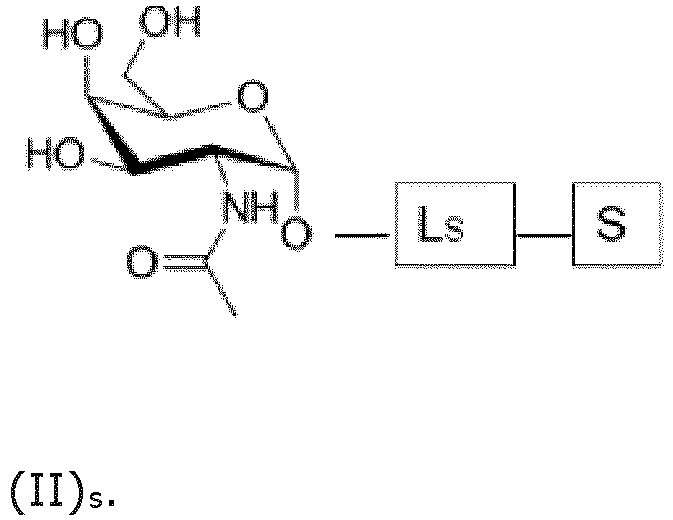
- Saponin-Konjugat nach einem der Ansprüche 1-9, wobei die GalNAc-Teile jeweils getrennt über den Sauerstoff an Position "1" der GalNAc-Teil kovalent an eine zentrale Brückenteil B gebunden sind, die effektiv eine Brücke zwischen den GalNAc-Teilen und der Saponinteil bildet, bevorzugt über einen Saponinteil-Linker Ls, wie in der Formel (III)s gezeigt:
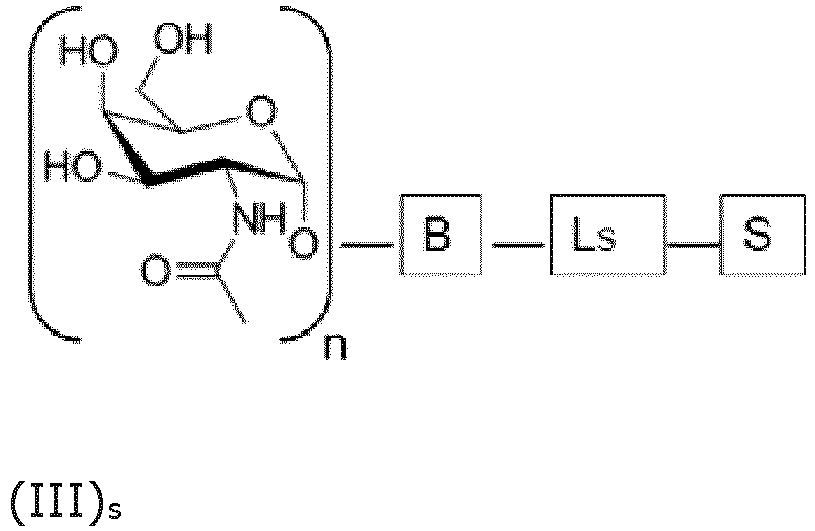
 wobei die Sauerstoffatome der Verbindung der Formel (XV) an GalNAc oder an die GalNAc-Linker LGAL gebunden sind, und das Stickstoffatom der Verbindung der Formel (XV) an den Saponinteil-Linker Ls gebunden ist,bevorzugter, wobei die GalNAc-Gruppierungen über GalNAc-Linker LGAL an die verbrückende Gruppierung B gebunden sind, wie in der Formel (IV)s dargestellt:
 wobei n eine ganze Zahl größer oder gleich 2, bevorzugt n gleich 3 ist, Ls ein Linker für einen Saponinteil ist und S der Saponinteil ist;wobei, bevorzugt:- LGAL einen beliebigen chemischen Teil darstellt, die geeignet ist, GalNAc kovalent an den verbrückenden Teil B zu binden;- LGAL 2-25 Kohlenstoffatome, bevorzugt 7-15 Kohlenstoffatome, besonders bevorzugt 11 Kohlenstoffatome umfasst und wobei LGAL mindestens eine, bevorzugt zwei Amideteile umfasst; und/oder- LGAL eine Verbindung gemäß der Formel (XVI) ist:
- Saponin-Konjugat nach Anspruch 10 oder 11, wobei der Saponinteil-Linker Ls:- einen beliebigen chemischen Teil darstellt, der geeignet ist, ein Saponin kovalent an GalNAc wie in Formel (II)s oder an den verbrückenden Teil B wie in Formel (II)s und (IV)s zu binden;- das Ergebnis einer Kupplungsreaktion ist zwischen mindestens einem ersten Vorläufer Ls1, der kovalent an GalNAc oder der verbrückende Teil B gebunden ist, und einem zweiten Vorläufer Ls2, der kovalent an die Saponinteil gebunden ist, wobei Ls1 ein Vorläufer des Saponinteil-Linkers Ls ist, der kovalent an GalNAc oder an den verbrückenden Teil B gebunden ist, und Ls2 ein Vorläufer des Saponinteil-Linkers Ls ist, der kovalent an den Saponinteil gebunden ist;- das Ergebnis einer Kupplungsreaktion zwischen mindestens einem ersten Vorläufer Ls1, der kovalent an GalNAc oder den verbrückenden Teil B gebunden ist, und einem zweiten Vorläufer Ls2, der kovalent an den Saponinteil gebunden ist, ist, wobei die Kupplungsreaktion ausgewählt ist aus der Gruppe bestehend aus einer Azid-Alkin-Cycloaddition, einer Thiol-Maleimid-Kupplung, einer Staudinger-Reaktion, einer nukleophilen Ringöffnung von gespannten heterocyclischen Elektrophilen, eine Carbonylreaktion vom Nicht-Aldol-Typ und eine Addition an eine Kohlenstoff-Kohlenstoff-Doppelbindung, wobei die Kupplungsreaktion bevorzugt eine Azid-Alkin-Cydoaddition, eine Thiol-Maleimid-Kupplung, eine Staudinger-Reaktion, eine nukleophile Ringöffnung von gespannten heterocyclischen Elektrophilen ist, wobei die Kupplungsreaktion bevorzugt eine Azid-Alkin-Cydoaddition oder eine Thiol-Maleimid-Kupplung ist;- das Ergebnis einer Kupplungsreaktion zwischen einem ersten Vorläufer LS1, der kovalent an GalNAc oder den Brückenteil B gebunden ist, wobei der erste Vorläufer Ls1 ein Azid umfasst; und einem zweiten Vorläufer Ls2, der kovalent an den Saponinteil gebunden ist, wobei der zweite Vorläufer Ls2 ein Alkin umfasst und bevorzugt ein Hydrazon umfasst, das aus einer Hydrazid/Aldehyd-Kupplung an einen Aldehyd des Saponinteils resultiert; wobei bevorzugt:- die Struktur für den Vorläufer Lsi das folgende Azid der Formel (XVII) ist:
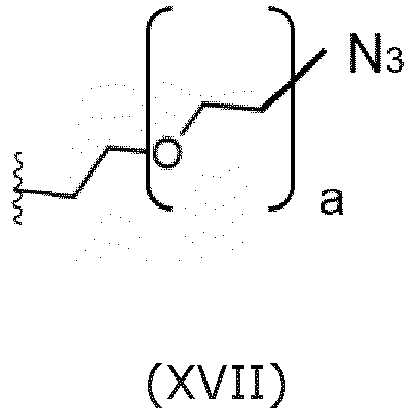 - die Struktur für den Vorläufer Lsi das folgende Azid der Formel (XVIII) umfasst:
 - die Struktur für den Vorläufer Ls2 umfasst das folgende Hydrazon mit der Formel (XIX):
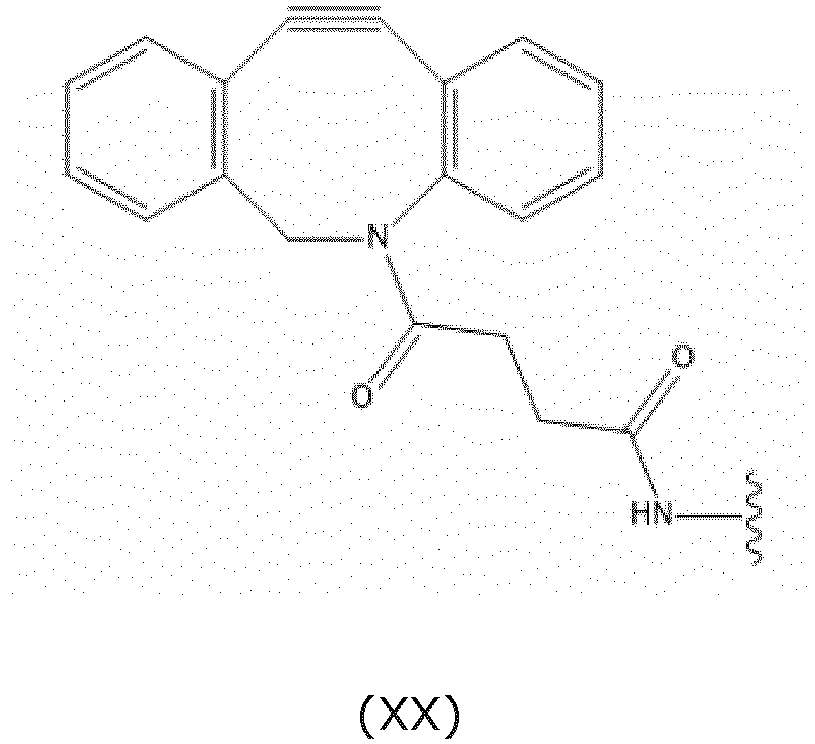
- Saponin-Konjugat nach einem der Ansprüche 10-12, wobei der Ligand für ASGPR das durch Molekül I' dargestellte (GalNAc)3 Tris ist:
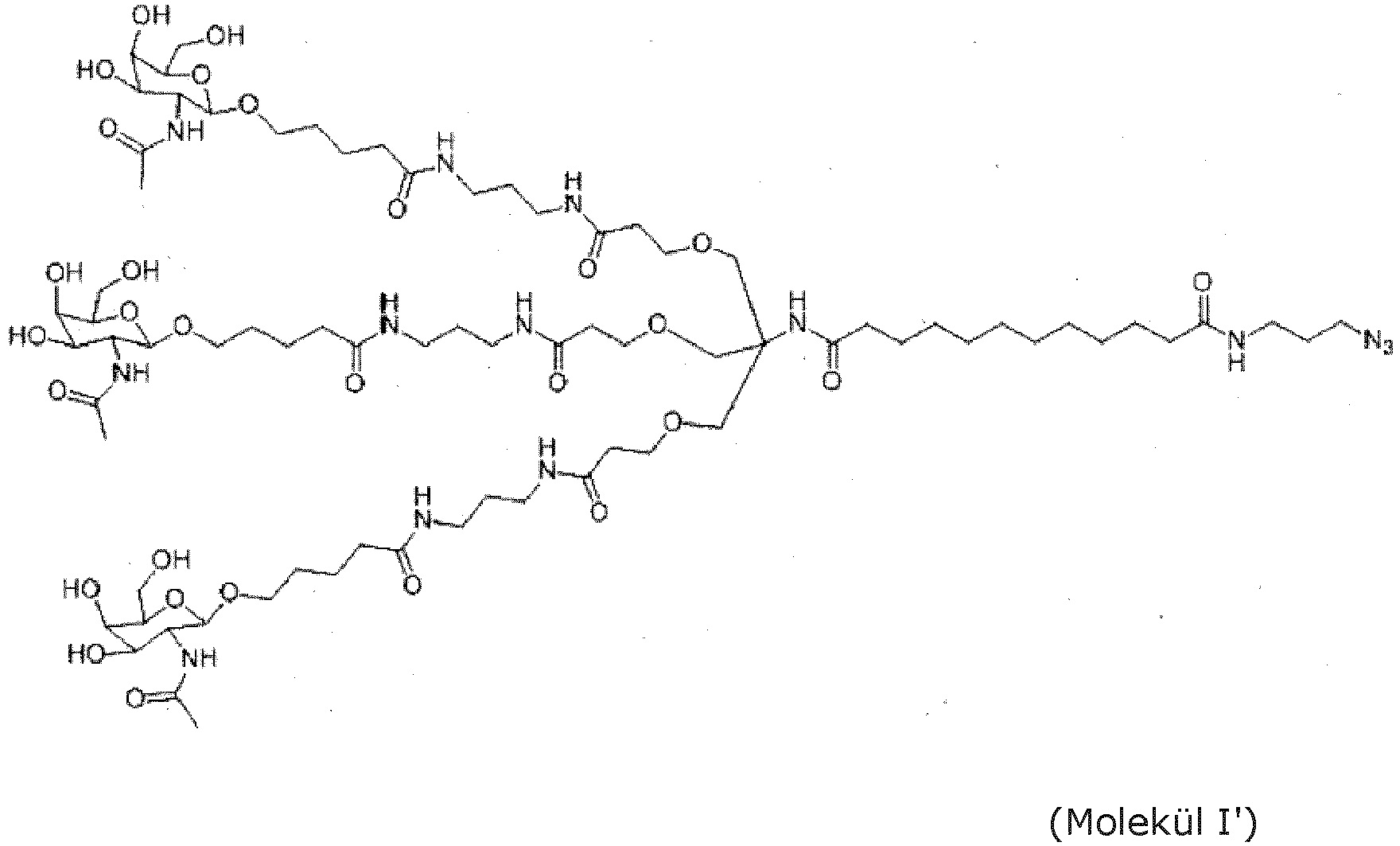

- Saponin-Konjugat nach einem der Ansprüche 1-13, wobei das mindestens eine Saponin über einen durch Molekül III' dargestellten Linker kovalent an Molekül I' oder Molekül II' von Anspruch 31 gebunden ist:

- Saponin-Konjugat nach einem der Ansprüche 1-14, wobei das mindestens eine Saponin über mindestens einen spaltbaren Linker kovalent an den Liganden für ASGPR gebunden ist, bevorzugt einen spaltbaren Linker, der unter sauren Bedingungen, reduktiven Bedingungen, enzymatischen Bedingungen und/oder lichtinduzierten Bedingungen spaltbar ist, und bevorzugt umfasst der spaltbare Linker eine spaltbare Bindung, die aus einer Hydrazonbindung und einer Hydrazidbindung, die unter sauren Bedingungen spaltbar ist, abgespalten wird, und/oder eine Bindung, die für Proteolyse zugänglich ist, zum Beispiel Proteolyse durch Cathepsin B, und/oder eine Bindung, die für Spaltung unter reduktiven Bedingungen zugänglich ist, wie eine Disulfidbindung, besonders bevorzugt einen spaltbaren Linker, der in vivo unter sauren Bedingungen, wie sie beispielsweise in Endosomen und/oder Lysosomen von Säugetierzellen, bevorzugt menschlichen Zellen, vorliegen, spaltbar ist, wobei der spaltbare Linker bevorzugt in vivo bei einem pH-Wert von 4,0 - 6,5 und besonders bevorzugt bei einem pH-Wert ≤ 5,5 spaltbar ist.
- Saponin-Konjugat nach einem der Ansprüche 1-15, wobei das Konjugat 1, 2, 3, 4, 5, 6, 8, 10, 16, 32, 64, 128 oder 1-100 Saponinteile oder eine beliebige Anzahl von Saponinteilen dazwischen umfasst, wie beispielsweise 7, 9, 12 Saponinteile.
- Pharmazeutische Kombination, umfassend:- eine erste pharmazeutische Zusammensetzung, die das Saponin-Konjugat nach einem der Ansprüche 1-16 und gegebenenfalls einen pharmazeutisch annehmbaren Hilfsstoff und/oder ein pharmazeutisch annehmbares Verdünnungsmittel enthält; und- eine zweite pharmazeutische Zusammensetzung, umfassend ein zweites Konjugat eines Effektormoleküls und eines Liganden für ASGPR, wobei der Ligand für ASGPR bevorzugt mindestens eine GalNAc-Teil, bevorzugt drei oder vier GalNAc-Teile umfasst, noch bevorzugter umfasst der Ligand für ASGPR (GalNAc)3Tris oder ein drittes Konjugat eines Effedormoleküls und eines Bindungsmoleküls, das eine Bindungsstelle für ein Zelloberflächenmolekül umfasst, und gegebenenfalls einen pharmazeutisch annehmbaren Hilfsstoff und/oder ein pharmazeutisch annehmbares Verdünnungsmittel umfasst.
- Pharmazeutische Zusammensetzung umfassend:- das Saponin-Konjugat nach einem der Ansprüche 1-16;- ein zweites Konjugat eines Effektor-Moleküls und eines Liganden für ASGPR, wobei der Ligand für ASGPR bevorzugt mindestens einen GalNAc-Teil, bevorzugt drei oder vier GalNAc-Teile umfasst, wobei der Ligand für ASGPR bevorzugt (GalNAc)3Tris umfasst oder daraus besteht, oder ein drittes Konjugat eines Effektor-Moleküls und eines Bindungsmoleküls, das eine Bindungsstelle für ein Zelloberflächenmolekül umfasst, und gegebenenfalls einen pharmazeutisch akzeptablen Hilfsstoff und/oder ein pharmazeutisch akzeptables Verdünnungsmittel umfasst.
- Pharmazeutische Kombination nach Anspruch 17 oder pharmazeutische Zusammensetzung nach Anspruch 18, wobei das Effektormolekül mindestens ein kleines Molekül, wie ein Arzneimittelmolekül, ein Toxin, wie ein Proteintoxin, ein Oligonukleotid, wie eine BNA, eine Xenonukleinsäure oder eine siRNA, ein Enzym, ein Peptid, ein Protein oder eine beliebige Kombination davon umfasst oder daraus besteht, wobei das Effektormolekül bevorzugt ein Toxin, ein Enzym oder ein Oligonukleotid ist.
- Pharmazeutische Kombination nach Anspruch 17 oder 19 oder pharmazeutische Zusammensetzung nach Anspruch 18 oder 19, wobei das Effektormolekül- ein Oligonukleotid ist, ausgewählt aus einem oder mehreren von einer: short interfering RNA (siRNA), short hairpin RNA (shRNA), anti-hairpinshaped microRNA (mIRNA), einzelsträngigen RNA, aptamer RNA, doppelsträngigen RNA (dsRNA), anti-microRNA (anti-miRNA, anti-miR), Antisense-Oligonukleotid (ASO), DNA, Antisense-DNA, locked Nukleinsäure (LNA), verbrückte Nukleinsäure (BNA), verbrückte 2'-0,4'-Aminoethylen-Nukleinsäure (BNANC), BNA-basierte siRNA und BNA-basiertes Antisense-Oligonukleotid (BNA-AON);- ein Oligonukleotid ist, das aus einem oder mehreren der folgenden Oligonukleotide ausgewählt ist: anti-miRNA, BNA-AON oder siRNA, wie BNA-basierte siRNA, ausgewählt aus chemisch modifizierter siRNA, metabolisch stabiler siRNA und chemisch modifizierter, metabolisch stabiler siRNA;- ein Oligonukleotid ist, das, wenn es zum Beispiel in einer Säugetierzelle vorhanden ist, eines der folgenden Gene zum Schweigen bringen kann: Apolipoprotein B (apoB), HSP27, Transthyretin (TTR), Proprotein-Convertase-Subtilisin/Kexin Typ 9 (PCSK9), Delta-Aminolävulinat-Synthase 1 (ALAS1), Antithrombin 3 (AT3), Glykolat-Oxidase (GO), Komplementkomponente C5 (CC5), X-Gen des Hepatitis-B-Virus (HBV), S-Gen des HBV, Alpha-1-Antitrypsin (AAT) und Laktatdehydrogenase (LDH), und/oder ein Oligonukleotid ist, das in der Lage ist, zum Beispiel, wenn es in einer Säugetierzelle vorhanden ist, eine aberrante miRNA anzugreifen;- ein Oligonukleotid ist, bevorzugt eine siRNA, wie eine siRNA auf BNA-Basis, oder ein Antisense-Oligonukleotid, wie ein Antisense-Oligonukleotid auf BNA-Basis, zum Beispiel ein AON auf der Basis einer 2'-O,4'-Aminoethylen-verbrückten Nukleinsäure, das in der Lage ist, bevorzugt, wenn es in einer Säugetierzelle vorhanden ist, das Gen für Apolipoprotein B (apoB) zum Schweigen zu bringen;- ein Oligonukleotid ist, das in der Lage ist, wenn es beispielsweise in einer Säugetierzelle vorhanden ist, auf eine mRNA zu zielen, die an der Expression eines der folgenden Proteine beteiligt ist: apoB, HSP27, TTR, PCSK9, ALAS 1, AT3, GO, CC5, Expressionsprodukt des X-Gens von HBV, Expressionsprodukt des S-Gens von HBV, AAT und LDH, oder in der Lage ist, zum Beispiel, wenn es in einer Säugetierzelle vorhanden ist, eine miRNA-Funktion zu antagonisieren oder wiederherzustellen, wie die Hemmung einer onkogenen miRNA (onco-miR) oder die Unterdrückung der Expression einer onco-miR;- ein Oligonukleotid ist, bevorzugt eine siRNA, wie eine siRNA auf BNA-Basis, oder ein Antisense-Oligonukleotid, wie ein Antisense-Oligonukleotid auf BNA-Basis, beispielsweise ein AON auf der Basis einer 2'-0,4'-Aminoethylen-verbrückten Nukleinsäure, ist, das in der Lage ist, bevorzugt, wenn es in einer Säugetierzelle vorhanden ist, auf eine mRNA zu zielen, die an der Expression des Proteins apoB beteiligt ist; oder- ein Toxin ist oder umfasst, wobei das Toxin mindestens ein Molekül umfasst oder aus mindestens einem Molekül besteht, das ausgewählt ist aus einem oder mehreren von einem Peptid, einem Protein, einem Enzym wie Urease und Cre-Rekombinase, einem proteinartigen Toxin, einem Ribosomen-inaktivierenden Protein und/oder einem bakteriellen Toxin, einem Pflanzentoxin, bevorzugt ausgewählt aus einem oder mehreren von einem viralen Toxin wie Apoptin; einem Bakterientoxin wie Shiga-Toxin, Shiga-ähnlichem Toxin, Pseudomonas aeruginosa-Exotoxin (PE) oder Exotoxin A von PE, Diphtherietoxin (DT) in voller Länge oder verkürzt, Choleratoxin; einem Pilztoxin wie Alpha-Sarcin; einem Pflanzentoxin, das Ribosom-inaktivierende Proteine und die A-Kette von Ribosominaktivierenden Proteinen des Typs 2 einschließt, wie Dianthin, z. B. Dianthin-30 oder z.B., Dianthin-30 oder Dianthin-32, Saporin z. B. Saporin-S3 oder Saporin-S6, das Bouganin-Debouganin-Derivat von Bouganin, das Shiga-ähnliche Toxin A, das antivirale Protein der Kermesbeere, Ricin, die Ricin-A-Kette, Modeccin, die Modecdn-A-Kette, Abrin, die Abrin-A-Kette, Volkensin, die Volkensin-A-Kette, Viscumin, die Viscumin-A-Kette oder ein tierisches oder menschliches Toxin, wie z.B. Frosch-RNase, Granzym B oder Angiogenin vom Menschen, oder ein Fragment oder Derivat davon; bevorzugt handelt es sich bei dem Protein-Toxin um Dianthin und/oder Saporin und/oder es umfasst mindestens eines der folgenden Toxine: ein Toxin, das auf das Ribosom abzielt, ein Toxin, das auf den Elongationsfaktor abzielt, ein Toxin, das auf Tubulin abzielt, ein Toxin, das auf die DNA abzielt, und ein Toxin, das auf die RNA abzielt, oder besteht daraus, bevorzugt eines oder mehrere von Emtansin, Pasudotox, dem Maytansinoid-Derivat DM 1, dem Maytansinoid-Derivat DM4, Monomethyl-Auristatin E (MMAE, Vedotin), Monomethyl-Auristatin F (MMAF, Mafodotin), Calicheamicin, N-Acetyl-γ-calicheamicin, ein Pyrrolobenzodiazepin (PBD)-Dimer, ein Benzodiazepin, ein CC-1065-Analogon, ein Duocarmycin, Doxorubicin, Paclitaxel, Docetaxel, Cisplatin, Cyclophosphamid, Etoposid, Docetaxel, 5-Fluorouracyl (5-FU), Mitoxantron, ein Tubulysin, ein Indolinobenzodiazepin, AZ13599185, ein Cryptophycin, Rhizoxin, Methotrexat, ein Anthracyclin, ein Camptothecin-Analogon, SN-38, DX-8951f, Exatecanmesylat, eine verkürzte Form des Exotoxins von Pseudomonas aeruginosa (PE38), ein Duocarmycin-Derivat, ein Amanitin, α-Amanitin, ein Spliceostatin, ein Thailanstatin, Ozogamicin, Tesirin, Amberstatin269 und Soravtansin oder ein Derivat davon.
- Pharmazeutische Kombination nach einem der Ansprüche 17, 19 oder 20 oder pharmazeutische Zusammensetzung nach einem der Ansprüche 18-20, wobei das Bindungsmolekül, das eine Bindungsstelle für ein Zelloberflächenmolekül umfasst, das von dem dritten Konjugat umfasst wird, ein Ligand für ein Zelloberflächenmolekül oder ein Antikörper ist, der eine Bindungsstelle für ein Zelloberflächenmolekül oder mindestens eine Domäne oder ein Fragment davon umfasst, die/das die Bindungsstelle umfasst.
- Pharmazeutische Kombination nach einem der Ansprüche 17 oder 19-21 oder pharmazeutische Zusammensetzung nach einem der Ansprüche 18-21, wobei das dritte Konjugat eines oder mehrere der folgenden ist: ein Antikörper-Toxin-Konjugat, ein Rezeptor-Ligand-Toxin-Konjugat, ein Antikörper-Wirkstoff-Konjugat, ein Rezeptor-Ligand-Wirkstoff-Konjugat, ein Antikörper-Nukleinsäure-Konjugat oder ein Rezeptor-Ligand-Nukleinsäure-Konjugat.
- Pharmazeutische Kombination nach einem der Ansprüche 17 oder 19-22 oder pharmazeutische Zusammensetzung nach einem der Ansprüche 18-22, wobei das Bindemolekül, das eine Bindungsstelle für ein Zelloberflächenmolekül umfasst, das von dem dritten Konjugat umfasst wird, in der Lage ist, an eines der folgenden Zelloberflächenmoleküle zu binden: CD71, CA125, EpCAM(17-1A), CD52, CEA, CD44v6, FAP, EGF-IR, Integrin, Syndecan-1, vaskuläres Integrin alpha-V beta-3, HER2, EGFR, CD20, CD22, Folatrezeptor 1, CD146, CD56, CD19, CD138, CD27L-Rezeptor, PSMA, CanAg, Integrin-alphaV, CA6, CD33, Mesothelin, Cripto, CD3, CD30, CD239, CD70, CD123, CD352, DLL3, CD25, ephrinA4, MUC1, Trop2, CEACAM5, CEACAM6, HER3, CD74, PTK7, Notch3, FGF2, C4.4A, FLT3, CD38, FGFR3, CD7, PD-L1, CTLA4, CD52, PDGFRA, VEGFR1, VEGFR2, Asialoglykoproteinrezeptor (ASGPR), bevorzugt einer von: HER2, CD71, ASGPR und EGFR, bevorzugter CD71.
- Pharmazeutische Kombination nach einem der Ansprüche 17 oder 19-22 oder pharmazeutische Zusammensetzung nach einem der Ansprüche 18-23, wobei das bindende Molekül, das eine Bindungsstelle für ein Zelloberflächenmolekül umfasst, das von dem dritten Konjugat umfasst wird, eines der folgenden ist oder umfasst: einem Antikörper, bevorzugt einem monoklonalen Antikörper, wie einem humanen monoklonalen Antikörper, einem IgG, einem Molekül, das einen Single-Domain-Antikörper, mindestens eine VHH-Domäne, bevorzugt eine camelide VH, eine variable schwere Kette eines neuen Antigenrezeptors (VNAR), eine Fab, eine scFv, eine Fv, eine dAb, eine F(ab)2 und ein Fcab-Fragment umfasst oder daraus besteht.
- Pharmazeutische Kombination nach einem der Ansprüche 17 oder 19-24 oder pharmazeutische Zusammensetzung nach einem der Ansprüche 18-24, zur Verwendung:- als ein Medikament;- bei der Behandlung oder Prophylaxe einer Krankheit oder eines Gesundheitsproblems, an dem ein Expressionsprodukt eines oder mehrerer der folgenden Gene beteiligt ist: apoB, TTR, PCSK9, ALAS1, AT3, GO, CC5, X-Gen von HBV, S-Gen von HBV, AAT und LDH;- zur Behandlung oder Prophylaxe einer Krankheit oder eines Gesundheitsproblems, an dem ein Expressionsprodukt des Gens apoB beteiligt ist; oder- zur Behandlung oder Prophylaxe einer Krebserkrankung, einer Infektionskrankheit, einer Virusinfektion, einer Hypercholesterinämie, einer primären Hyperoxalurie, einer Hämophilie A, einer Hämophilie B, einer AATbezogenen Lebererkrankung, einer akuten hepatischen Porphyrie, einer TTR-vermittelten Amyloidose, einer hereditären TTR-Amyloidose (hATTR), einer komplementvermittelten Krankheit, einer Hepatitis-B-Infektion oder einer Autoimmunerkrankung.
Priority Applications (1)
| Application Number | Priority Date | Filing Date | Title |
|---|---|---|---|
| EP24190153.7A EP4438125A3 (de) | 2020-06-24 | 2021-06-18 | Konjugat aus galnac und saponin, therapeutische zusammensetzung mit diesem konjugat und ein galnac-oligonukleotidkonjugat |
Applications Claiming Priority (3)
| Application Number | Priority Date | Filing Date | Title |
|---|---|---|---|
| NL2025899 | 2020-06-24 | ||
| NL2026442 | 2020-09-10 | ||
| PCT/NL2021/050384 WO2021261992A1 (en) | 2020-06-24 | 2021-06-18 | Conjugate of galnac and saponin, therapeutic composition comprising said conjugate and a galnac-oligonucleotide conjugate |
Related Child Applications (2)
| Application Number | Title | Priority Date | Filing Date |
|---|---|---|---|
| EP24190153.7A Division-Into EP4438125A3 (de) | 2020-06-24 | 2021-06-18 | Konjugat aus galnac und saponin, therapeutische zusammensetzung mit diesem konjugat und ein galnac-oligonukleotidkonjugat |
| EP24190153.7A Division EP4438125A3 (de) | 2020-06-24 | 2021-06-18 | Konjugat aus galnac und saponin, therapeutische zusammensetzung mit diesem konjugat und ein galnac-oligonukleotidkonjugat |
Publications (3)
| Publication Number | Publication Date |
|---|---|
| EP4171641A1 EP4171641A1 (de) | 2023-05-03 |
| EP4171641B1 true EP4171641B1 (de) | 2024-10-30 |
| EP4171641C0 EP4171641C0 (de) | 2024-10-30 |
Family
ID=85176234
Family Applications (2)
| Application Number | Title | Priority Date | Filing Date |
|---|---|---|---|
| EP24190153.7A Pending EP4438125A3 (de) | 2020-06-24 | 2021-06-18 | Konjugat aus galnac und saponin, therapeutische zusammensetzung mit diesem konjugat und ein galnac-oligonukleotidkonjugat |
| EP21734241.9A Active EP4171641B1 (de) | 2020-06-24 | 2021-06-18 | Konjugat aus galnac und saponin, dieses konjugat enthaltende therapeutische zusammensetzung und ein galnac-oligonukleotid-konjugat |
Family Applications Before (1)
| Application Number | Title | Priority Date | Filing Date |
|---|---|---|---|
| EP24190153.7A Pending EP4438125A3 (de) | 2020-06-24 | 2021-06-18 | Konjugat aus galnac und saponin, therapeutische zusammensetzung mit diesem konjugat und ein galnac-oligonukleotidkonjugat |
Country Status (10)
| Country | Link |
|---|---|
| US (1) | US20230263897A1 (de) |
| EP (2) | EP4438125A3 (de) |
| JP (1) | JP2023532040A (de) |
| KR (1) | KR20230043114A (de) |
| CN (2) | CN116234582A (de) |
| AU (1) | AU2021295358B2 (de) |
| CA (1) | CA3183885A1 (de) |
| ES (1) | ES3002193T3 (de) |
| IL (1) | IL299357A (de) |
| MX (1) | MX2023000092A (de) |
Families Citing this family (5)
| Publication number | Priority date | Publication date | Assignee | Title |
|---|---|---|---|---|
| JP7463410B2 (ja) * | 2019-07-02 | 2024-04-08 | アルゴノート アールエヌエー リミテッド | アポリポタンパク質bアンタゴニスト |
| WO2025016444A1 (en) * | 2023-07-20 | 2025-01-23 | Shanghai Argo Biopharmaceutical Co., Ltd. | Compositions and methods for inhibiting expression of pd-l1 |
| CN116655715B (zh) * | 2023-07-27 | 2023-10-20 | 北京炫景瑞医药科技有限公司 | 一种GalNAc衍生物、缀合物、组合物以及它们的用途 |
| CN117563009B (zh) * | 2023-09-01 | 2025-07-01 | 杭州天龙药业有限公司 | 一种含有核糖环或其衍生结构的GalNAc化合物及其寡核苷酸缀合物 |
| WO2025090612A1 (en) * | 2023-10-27 | 2025-05-01 | Wisconsin Alumni Research Foundation | Lipid nanoparticles formed by lipidoids for efficient delivery of nucleotide drugs and biologics |
Citations (1)
| Publication number | Priority date | Publication date | Assignee | Title |
|---|---|---|---|---|
| WO2011054811A1 (en) | 2009-11-03 | 2011-05-12 | Santaris Pharma A/S | Rna antagonists targeting hsp27 combination therapy |
Family Cites Families (8)
| Publication number | Priority date | Publication date | Assignee | Title |
|---|---|---|---|---|
| AU2003275954A1 (en) * | 2002-11-08 | 2004-06-07 | Danmarks Fodevareforskning | Preparation of chemically well-defined carbohydrate dendrimer conjugates |
| ES2395818T3 (es) * | 2004-07-13 | 2013-02-15 | Charite - Universitatsmedizin Berlin | Composición que comprende un agente farmacológicamente activo acoplado a un componente específico de célula diana, y una saponina |
| WO2008007941A1 (en) * | 2006-07-10 | 2008-01-17 | Vereniging Voor Christelijk Wetenschappelijk Onderwijs | Gainac specific binding molecules and uses thereof |
| KR20160002977A (ko) * | 2013-05-01 | 2016-01-08 | 아이시스 파마수티컬즈 인코포레이티드 | 조성물 및 방법 |
| AR100516A1 (es) * | 2014-05-19 | 2016-10-12 | Pfizer | Compuestos de 6,8-dioxabiciclo[3.2.1]octano-2,3-diol sustituidos como agentes de direccionamiento al asgpr |
| BR112017005938A2 (pt) * | 2014-10-10 | 2017-12-12 | Hoffmann La Roche | compostos, processo de preparação de composto, processo de preparação de conjugado de galnac e ácido nucleico e usos de composto |
| EP3514240A1 (de) * | 2018-01-18 | 2019-07-24 | Freie Universität Berlin | Neuartige verwendungen eines saponins und verfahren zu dessen isolierung |
| CN113498350A (zh) * | 2018-12-21 | 2021-10-12 | 萨普雷米科技有限公司 | 皂苷缀合物 |
-
2021
- 2021-06-18 EP EP24190153.7A patent/EP4438125A3/de active Pending
- 2021-06-18 IL IL299357A patent/IL299357A/en unknown
- 2021-06-18 CN CN202180051254.4A patent/CN116234582A/zh active Pending
- 2021-06-18 CN CN202510833809.0A patent/CN120586078A/zh active Pending
- 2021-06-18 EP EP21734241.9A patent/EP4171641B1/de active Active
- 2021-06-18 JP JP2022580236A patent/JP2023532040A/ja active Pending
- 2021-06-18 AU AU2021295358A patent/AU2021295358B2/en active Active
- 2021-06-18 US US18/012,769 patent/US20230263897A1/en active Pending
- 2021-06-18 CA CA3183885A patent/CA3183885A1/en active Pending
- 2021-06-18 KR KR1020237002660A patent/KR20230043114A/ko active Pending
- 2021-06-18 ES ES21734241T patent/ES3002193T3/es active Active
- 2021-06-18 MX MX2023000092A patent/MX2023000092A/es unknown
Patent Citations (1)
| Publication number | Priority date | Publication date | Assignee | Title |
|---|---|---|---|---|
| WO2011054811A1 (en) | 2009-11-03 | 2011-05-12 | Santaris Pharma A/S | Rna antagonists targeting hsp27 combination therapy |
Non-Patent Citations (30)
| Title |
|---|
| AARON D. SPRINGER, STEVEN F. DOWDY: "GalNAc-siRNA Conjugates: Leading the Way for Delivery of RNAi Therapeutics", NUCLEIC ACID THERAPEUTICS, MARY ANN LIEBERT, INC. PUBLISHERS, US, vol. 28, no. 3, 1 June 2018 (2018-06-01), US , pages 109 - 118, XP055555952, ISSN: 2159-3337, DOI: 10.1089/nat.2018.0736 |
| ALBERTO DAL CORSO; LUCA PIGNATARO; LAURA BELVISI; CESARE GENNARI: "Innovative Linker Strategies for Tumor‐Targeted Drug Conjugates", CHEMISTRY - A EUROPEAN JOURNAL, JOHN WILEY & SONS, INC, DE, vol. 25, no. 65, 20 September 2019 (2019-09-20), DE, pages 14740 - 14757, XP071850847, ISSN: 0947-6539, DOI: 10.1002/chem.201903127 |
| ALEXANDER WENG ET AL.: "Saponins modulate the intracellular trafficking of protein toxins", J CONTROLLED RELEASE, vol. 164, 10 October 2012 (2012-10-10), pages 74 - 86, XP055428873, DOI: 10.1016/j.jconrel.2012.10.002 |
| ALEXANDER WENG ET AL.: "The toxin component of targeted anti-tumor toxins determines their efficacy increase by saponins", MOL ONCOL, vol. 6, 12 January 2012 (2012-01-12), pages 3, XP028508748, DOI: 10.1016/j.molonc.2012.01.004 |
| BACHRAN CHRISTOPHER, BACHRAN SILKE, SUTHERLAND MARK, BACHRAN DIANA, FUCHS HENDRIK, : "Saponins in Tumor Therapy", MEDICINAL CHEMISTRY, 31 December 2008 (2008-12-31), pages 575 - 584, XP093128536 |
| BIESSEN E.A.L.,ET AL.: "Design of a targeted peptide nucleic acid prodrug to inhibit hepatic human microsomal triglyceride transfer protein expression in hepatocytes", BIOCONJUGATE CHEMISTRY - AUTHOR MANUSCRIPT, AMERICAN CHEMICAL SOCIETY, US, vol. 13, 1 January 2002 (2002-01-01), US , pages 295 - 302, XP002290397, ISSN: 1043-1802, DOI: 10.1021/bc015550g |
| BO HU, ET AL.: "Therapeutic siRNA: state of the art", SIGNAL TRANSDUCT TARGET THER, vol. 5, 19 June 2020 (2020-06-19), pages 1, XP093147548, DOI: 10.1038/s41392-020-0207-x |
| CAO XUE-WEI, WANG FU-JUN, LIEW OI-WAH, LU YE-ZHOU, ZHAO JIAN: "Analysis of Triterpenoid Saponins Reveals Insights into Structural Features Associated with Potent Protein Drug Enhancement Effects", MOLECULAR PHARMACEUTICS, AMERICAN CHEMICAL SOCIETY, US, US , XP093304078, ISSN: 1543-8384, DOI: 10.1021/acs.molpharmaceut.9b01158 |
| CHEENU BHARGAVA ET AL.: "Targeted dianthin is a powerful toxin to treat pancreatic carcinoma when applied in combination with the glycosylated triterpene SO1861", MOL ONCOL, vol. 11, no. 11, 15 September 2017 (2017-09-15), pages 1527 - 1543, XP055677214, DOI: 10.1002/1878-0261.12115 |
| D16a - Supplementary Information from D16 8 January 2020 |
| D17A - ONLINE SUPPLEMENTARY TABLE FROM D17 |
| DAVID B. ROZEMA, ET AL.: "Dynamic PolyConjugates for targeted in vivo delivery of siRNA to hepatocytes", PNAS, vol. 104, no. 32, 7 August 2007 (2007-08-07), pages 12982 - 12987, XP055014142, DOI: 10.1073/pnas.0703778104 |
| GREG T HERMANSON: "Bioconjugate Techniques", 17 September 2013, ELSEVIER SCIENCE & TECHNOLOGY , NL , ISBN: 978-0-12-382239-0, article GREG T. HERMANSON: "2. Functional Targets for Bioconjugation", pages: 127 - 228, XP009562911, DOI: 10.1016/B978-0-12-382239-0.00002-9 |
| GREG T HERMANSON: "Bioconjugate Techniques", 17 September 2013, ELSEVIER SCIENCE & TECHNOLOGY , NL , ISBN: 978-0-12-382239-0, article GREG T. HERMANSON: "3. The Reactions of Bioconjugation", pages: 229 - 258, XP009562910, DOI: 10.1016/B978-0-12-382239-0.00003-0 |
| GREG T HERMANSON: "Bioconjugate Techniques", 17 September 2013, ELSEVIER SCIENCE & TECHNOLOGY , NL , ISBN: 978-0-12-382239-0, article GREG T. HERMANSON: "Chapter 17 - Chemoselective Ligation; Bioorthogonal Reagents", pages: 757 - 786, XP009562912, DOI: 10.1016/B978-0-12-382239-0.00017-0 |
| HENDRIK FUCHS, ET AL.: "Glycosylated triterpenoids as endosomal escape enhancers in targeted tumor therapies", BIOMEDICINES, vol. 5, no. 2, 29 March 2017 (2017-03-29), pages 14, XP055429235, DOI: 10.3390/biomedicines5020014 |
| JAN-PHILIP MEYER ET AL.: "Click chemistry and radiochemistry: the First 10 years", BIOCONJUG CHEM, vol. 27, no. 12, 27 October 2016 (2016-10-27), pages 2791 - 2807, XP055407064, DOI: 10.1021/acs.bioconjchem.6b00561 |
| JORINE M. EEFTENS, JACO VAN DER TORRE, DANIEL R. BURNHAM, CEES DEKKER: "Copper-free click chemistry for attachment of biomolecules in magnetic tweezers", BMC BIOPHYSICS, PHYSMED CENTRAL, vol. 8, no. 1, 25 December 2015 (2015-12-25), XP055432659, DOI: 10.1186/s13628-015-0023-9 |
| POTACZEK DANIEL P.; GARN HOLGER; UNGER SEBASTIAN D.; RENZ HARALD: "Antisense molecules: A new class of drugs", JOURNAL OF ALLERGY AND CLINICAL IMMUNOLOGY, ELSEVIER, AMSTERDAM, NL, vol. 137, no. 5, 4 May 2016 (2016-05-04), AMSTERDAM, NL , pages 1334 - 1346, XP029531137, ISSN: 0091-6749, DOI: 10.1016/j.jaci.2015.12.1344 |
| ROGER GILABERT-ORIOL ET AL.: "Combinatorial approach to increase efficacy of Cetuximab, Panitumumab and Trastuzumab by dianthin conjugation and co-application of SO1861", BIOCHEM PHARMACOL, vol. 97, no. 3, 1 October 2015 (2015-10-01), pages 247 - 255, XP055677222, DOI: 10.1016/j.bcp.2015.07.040 |
| ROGER GILABERT-ORIOL ET AL.: "Dianthin-30 or gelonin versus monomethyl auristatin E, each configured with an anti-calcitonin receptor antibody, are differentially potent in vitro in high-grade glioma cell lines derived from glioblastoma", CANCER IMMUNOL IMMUNOTHER., vol. 66, no. 9, 13 May 2017 (2017-05-13), pages 1217 - 1228, XP036309505, DOI: 10.1007/s00262-017-2013-z |
| ROGER GILABERT-ORIOL ET AL.: "Modified trastuzumab and cetuximab mediate efficient toxin delivery while retaining antibody-dependent cell-mediated cytotoxicity in target cells", MOL PHARM, vol. 10, no. 11, 7 October 2013 (2013-10-07), pages 4347 - 4357, XP055677139, DOI: 10.1021/mp400444q |
| RUDOLPH L. JULIANO: "The delivery of therapeutic oligonucleotides", NUCLEIC ACID RES, vol. 44, no. 14, 15 April 2016 (2016-04-15), pages 6518 - 6548, XP055491290, DOI: 10.1093/nar/gkw236 |
| SABINE SEWING ET AL.: "GalNAc conjugation attenuated the cytotoxicity of antisense oligonucleotide drugs in renal tubular cells", MOL THER NUCLEIC ACIDS, vol. 14, 1 March 2019 (2019-03-01), XP055762603, DOI: 10.1016/j.omtn.2018.11.005 |
| SO C WONG, KLEIN JASON J, HAMILTON HOLLY L, CHU QILI, FREY CHRISTINA L, TRUBETSKOY VLADIMIR S, HEGGE JULIA, WAKEFIELD DARREN, ROZE: "Co-Injection of a Targeted, Reversibly Masked Endosomolytic Polymer Dramatically Improves the Efficacy of Cholesterol-Conjugated Small Interfering RNAs In Vivo", NUCLEIC ACID THERAPEUTICS, MARY ANN LIEBERT, INC, UNITED STATES, 1 December 2012 (2012-12-01), United States , pages 380 - 390, XP055261447, Retrieved from the Internet <URL:http://online.liebertpub.com/doi/pdf/10.1089/nat.2012.0389> [retrieved on 20160330], DOI: 10.1089/nat.2012.0389 |
| VAN ROSSENBERG SABINE, SLIEDREGT-BOL KAREN M., MEEUWENOORD NICO J., VAN BERKEL THEO J.C., VAN BOOM JACQUES H., VAN DER MAREL GIJS : "Targeted Lysosome Disruptive Elements for Improvement of Parenchymal Liver Cell-specific Gene Delivery", JOURNAL OF BIOLOGICAL CHEMISTRY, AMERICAN SOCIETY FOR BIOCHEMISTRY AND MOLECULAR BIOLOGY, US, vol. 277, no. 48, 1 November 2002 (2002-11-01), US , pages 45803 - 45810, XP093304075, ISSN: 0021-9258, DOI: 10.1074/jbc.M203510200 |
| WAKEFIELD DARREN H., KLEIN JASON J., WOLFF JON A., ROZEMA DAVID B.: "Membrane Activity and Transfection Ability of Amphipathic Polycations as a Function of Alkyl Group Size", BIOCONJUGATE CHEMISTRY - AUTHOR MANUSCRIPT, AMERICAN CHEMICAL SOCIETY, US, vol. 16, no. 5, 1 September 2005 (2005-09-01), US , pages 1204 - 1208, XP093304077, ISSN: 1043-1802, DOI: 10.1021/bc050067h |
| XIN MING, LAING BRIAN: "Bioconjugates for targeted delivery of therapeutic oligonucleotides", ADVANCED DRUG DELIVERY REVIEWS, ELSEVIER, AMSTERDAM , NL, vol. 87, 29 June 2015 (2015-06-29), Amsterdam , NL , pages 81 - 89, XP055346329, ISSN: 0169-409X, DOI: 10.1016/j.addr.2015.02.002 |
| YANGBO FENG ET AL.: "Lactate dehydrogenase A: A key player in carcinogenesis and potential target in cancer therapy", CANCER MED. , vol. 7, 6 November 2018 (2018-11-06), pages 6124 - 6136, XP093027357, DOI: 10.1002/cam4.1820 |
| YUANYU HUANG: "Preclinical and Clinical Advances of GalNAc-Decorated Nucleic Acid Therapeutics", MOLECULAR THERAPY-NUCLEIC ACIDS, CELL PRESS, US, vol. 6, 1 March 2017 (2017-03-01), US , pages 116 - 132, XP055485332, ISSN: 2162-2531, DOI: 10.1016/j.omtn.2016.12.003 |
Also Published As
| Publication number | Publication date |
|---|---|
| IL299357A (en) | 2023-02-01 |
| US20230263897A1 (en) | 2023-08-24 |
| ES3002193T3 (en) | 2025-03-06 |
| JP2023532040A (ja) | 2023-07-26 |
| CN120586078A (zh) | 2025-09-05 |
| MX2023000092A (es) | 2023-04-20 |
| AU2021295358A9 (en) | 2023-06-29 |
| EP4438125A2 (de) | 2024-10-02 |
| AU2021295358A1 (en) | 2023-02-16 |
| EP4171641C0 (de) | 2024-10-30 |
| EP4171641A1 (de) | 2023-05-03 |
| CN116234582A (zh) | 2023-06-06 |
| CA3183885A1 (en) | 2021-12-30 |
| AU2021295358B2 (en) | 2026-01-22 |
| KR20230043114A (ko) | 2023-03-30 |
| EP4438125A3 (de) | 2024-12-25 |
Similar Documents
| Publication | Publication Date | Title |
|---|---|---|
| EP4171641B1 (de) | Konjugat aus galnac und saponin, dieses konjugat enthaltende therapeutische zusammensetzung und ein galnac-oligonukleotid-konjugat | |
| EP4355369B1 (de) | Konjugat aus saponin, oligonukleotid und galnac | |
| WO2022055351A1 (en) | Conjugate of saponin, oligonucleotide and galnac | |
| WO2021261992A1 (en) | Conjugate of galnac and saponin, therapeutic composition comprising said conjugate and a galnac-oligonucleotide conjugate | |
| EP4171643B1 (de) | Therapeutische kombination aus galnac-oligonukleotid-konjugat und saponin und verwendungen davon | |
| EP4210760B1 (de) | Konjugat aus saponin, oligonukleotid und galnac | |
| HK40116734A (en) | Conjugate of galnac and saponin, therapeutic composition comprising said conjugate and a galnac oligonucleotide conjugate | |
| HK40124033A (en) | Conjugate of saponin, oligonucleotide and galnac | |
| HK40110483A (en) | Conjugate of saponin, oligonucleotide and galnac | |
| HK40110483B (en) | Conjugate of saponin, oligonucleotide and galnac | |
| HK40091234A (en) | Conjugate of saponin, oligonucleotide and galnac | |
| HK40091234B (en) | Conjugate of saponin, oligonucleotide and galnac | |
| CN117881427A (zh) | 皂苷、寡核苷酸和galnac的缀合物 |
Legal Events
| Date | Code | Title | Description |
|---|---|---|---|
| STAA | Information on the status of an ep patent application or granted ep patent |
Free format text: STATUS: UNKNOWN |
|
| STAA | Information on the status of an ep patent application or granted ep patent |
Free format text: STATUS: THE INTERNATIONAL PUBLICATION HAS BEEN MADE |
|
| PUAI | Public reference made under article 153(3) epc to a published international application that has entered the european phase |
Free format text: ORIGINAL CODE: 0009012 |
|
| STAA | Information on the status of an ep patent application or granted ep patent |
Free format text: STATUS: REQUEST FOR EXAMINATION WAS MADE |
|
| 17P | Request for examination filed |
Effective date: 20230119 |
|
| AK | Designated contracting states |
Kind code of ref document: A1 Designated state(s): AL AT BE BG CH CY CZ DE DK EE ES FI FR GB GR HR HU IE IS IT LI LT LU LV MC MK MT NL NO PL PT RO RS SE SI SK SM TR |
|
| DAV | Request for validation of the european patent (deleted) | ||
| DAX | Request for extension of the european patent (deleted) | ||
| GRAP | Despatch of communication of intention to grant a patent |
Free format text: ORIGINAL CODE: EPIDOSNIGR1 |
|
| STAA | Information on the status of an ep patent application or granted ep patent |
Free format text: STATUS: GRANT OF PATENT IS INTENDED |
|
| INTG | Intention to grant announced |
Effective date: 20240216 |
|
| GRAS | Grant fee paid |
Free format text: ORIGINAL CODE: EPIDOSNIGR3 |
|
| GRAA | (expected) grant |
Free format text: ORIGINAL CODE: 0009210 |
|
| STAA | Information on the status of an ep patent application or granted ep patent |
Free format text: STATUS: THE PATENT HAS BEEN GRANTED |
|
| AK | Designated contracting states |
Kind code of ref document: B1 Designated state(s): AL AT BE BG CH CY CZ DE DK EE ES FI FR GB GR HR HU IE IS IT LI LT LU LV MC MK MT NL NO PL PT RO RS SE SI SK SM TR |
|
| REG | Reference to a national code |
Ref country code: GB Ref legal event code: FG4D |
|
| REG | Reference to a national code |
Ref country code: CH Ref legal event code: EP |
|
| REG | Reference to a national code |
Ref country code: DE Ref legal event code: R096 Ref document number: 602021021029 Country of ref document: DE |
|
| REG | Reference to a national code |
Ref country code: IE Ref legal event code: FG4D |
|
| U01 | Request for unitary effect filed |
Effective date: 20241127 |
|
| U07 | Unitary effect registered |
Designated state(s): AT BE BG DE DK EE FI FR IT LT LU LV MT NL PT RO SE SI Effective date: 20241204 |
|
| REG | Reference to a national code |
Ref country code: ES Ref legal event code: FG2A Ref document number: 3002193 Country of ref document: ES Kind code of ref document: T3 Effective date: 20250306 |
|
| PG25 | Lapsed in a contracting state [announced via postgrant information from national office to epo] |
Ref country code: IS Free format text: LAPSE BECAUSE OF FAILURE TO SUBMIT A TRANSLATION OF THE DESCRIPTION OR TO PAY THE FEE WITHIN THE PRESCRIBED TIME-LIMIT Effective date: 20250228 Ref country code: HR Free format text: LAPSE BECAUSE OF FAILURE TO SUBMIT A TRANSLATION OF THE DESCRIPTION OR TO PAY THE FEE WITHIN THE PRESCRIBED TIME-LIMIT Effective date: 20241030 |
|
| PG25 | Lapsed in a contracting state [announced via postgrant information from national office to epo] |
Ref country code: NO Free format text: LAPSE BECAUSE OF FAILURE TO SUBMIT A TRANSLATION OF THE DESCRIPTION OR TO PAY THE FEE WITHIN THE PRESCRIBED TIME-LIMIT Effective date: 20250130 |
|
| PG25 | Lapsed in a contracting state [announced via postgrant information from national office to epo] |
Ref country code: GR Free format text: LAPSE BECAUSE OF FAILURE TO SUBMIT A TRANSLATION OF THE DESCRIPTION OR TO PAY THE FEE WITHIN THE PRESCRIBED TIME-LIMIT Effective date: 20250131 |
|
| PG25 | Lapsed in a contracting state [announced via postgrant information from national office to epo] |
Ref country code: PL Free format text: LAPSE BECAUSE OF FAILURE TO SUBMIT A TRANSLATION OF THE DESCRIPTION OR TO PAY THE FEE WITHIN THE PRESCRIBED TIME-LIMIT Effective date: 20241030 |
|
| PG25 | Lapsed in a contracting state [announced via postgrant information from national office to epo] |
Ref country code: RS Free format text: LAPSE BECAUSE OF FAILURE TO SUBMIT A TRANSLATION OF THE DESCRIPTION OR TO PAY THE FEE WITHIN THE PRESCRIBED TIME-LIMIT Effective date: 20250130 |
|
| PG25 | Lapsed in a contracting state [announced via postgrant information from national office to epo] |
Ref country code: SM Free format text: LAPSE BECAUSE OF FAILURE TO SUBMIT A TRANSLATION OF THE DESCRIPTION OR TO PAY THE FEE WITHIN THE PRESCRIBED TIME-LIMIT Effective date: 20241030 |
|
| PGFP | Annual fee paid to national office [announced via postgrant information from national office to epo] |
Ref country code: GB Payment date: 20250617 Year of fee payment: 5 |
|
| PG25 | Lapsed in a contracting state [announced via postgrant information from national office to epo] |
Ref country code: SK Free format text: LAPSE BECAUSE OF FAILURE TO SUBMIT A TRANSLATION OF THE DESCRIPTION OR TO PAY THE FEE WITHIN THE PRESCRIBED TIME-LIMIT Effective date: 20241030 |
|
| PG25 | Lapsed in a contracting state [announced via postgrant information from national office to epo] |
Ref country code: CZ Free format text: LAPSE BECAUSE OF FAILURE TO SUBMIT A TRANSLATION OF THE DESCRIPTION OR TO PAY THE FEE WITHIN THE PRESCRIBED TIME-LIMIT Effective date: 20241030 |
|
| U20 | Renewal fee for the european patent with unitary effect paid |
Year of fee payment: 5 Effective date: 20250626 |
|
| PLBI | Opposition filed |
Free format text: ORIGINAL CODE: 0009260 |
|
| PLAX | Notice of opposition and request to file observation + time limit sent |
Free format text: ORIGINAL CODE: EPIDOSNOBS2 |
|
| 26 | Opposition filed |
Opponent name: STRAWMAN LIMITED Effective date: 20250729 |
|
| PGFP | Annual fee paid to national office [announced via postgrant information from national office to epo] |
Ref country code: ES Payment date: 20250710 Year of fee payment: 5 |
|
| PGFP | Annual fee paid to national office [announced via postgrant information from national office to epo] |
Ref country code: CH Payment date: 20250701 Year of fee payment: 5 |
|
| PGFP | Annual fee paid to national office [announced via postgrant information from national office to epo] |
Ref country code: IE Payment date: 20250917 Year of fee payment: 5 |
|
| PLBB | Reply of patent proprietor to notice(s) of opposition received |
Free format text: ORIGINAL CODE: EPIDOSNOBS3 |
|
| PG25 | Lapsed in a contracting state [announced via postgrant information from national office to epo] |
Ref country code: MC Free format text: LAPSE BECAUSE OF FAILURE TO SUBMIT A TRANSLATION OF THE DESCRIPTION OR TO PAY THE FEE WITHIN THE PRESCRIBED TIME-LIMIT Effective date: 20241030 |