EP4170664A1 - Programmerzeugungsunterstützungssystem zur unterstützung der erzeugung eines analyseprogramms für klinische versuche - Google Patents
Programmerzeugungsunterstützungssystem zur unterstützung der erzeugung eines analyseprogramms für klinische versuche Download PDFInfo
- Publication number
- EP4170664A1 EP4170664A1 EP21829208.4A EP21829208A EP4170664A1 EP 4170664 A1 EP4170664 A1 EP 4170664A1 EP 21829208 A EP21829208 A EP 21829208A EP 4170664 A1 EP4170664 A1 EP 4170664A1
- Authority
- EP
- European Patent Office
- Prior art keywords
- data
- analysis
- image
- variable
- pattern
- Prior art date
- Legal status (The legal status is an assumption and is not a legal conclusion. Google has not performed a legal analysis and makes no representation as to the accuracy of the status listed.)
- Pending
Links
Images












Classifications
-
- G—PHYSICS
- G06—COMPUTING OR CALCULATING; COUNTING
- G06V—IMAGE OR VIDEO RECOGNITION OR UNDERSTANDING
- G06V30/00—Character recognition; Recognising digital ink; Document-oriented image-based pattern recognition
- G06V30/40—Document-oriented image-based pattern recognition
- G06V30/41—Analysis of document content
- G06V30/413—Classification of content, e.g. text, photographs or tables
-
- G—PHYSICS
- G16—INFORMATION AND COMMUNICATION TECHNOLOGY [ICT] SPECIALLY ADAPTED FOR SPECIFIC APPLICATION FIELDS
- G16H—HEALTHCARE INFORMATICS, i.e. INFORMATION AND COMMUNICATION TECHNOLOGY [ICT] SPECIALLY ADAPTED FOR THE HANDLING OR PROCESSING OF MEDICAL OR HEALTHCARE DATA
- G16H10/00—ICT specially adapted for the handling or processing of patient-related medical or healthcare data
- G16H10/20—ICT specially adapted for the handling or processing of patient-related medical or healthcare data for electronic clinical trials or questionnaires
-
- G—PHYSICS
- G06—COMPUTING OR CALCULATING; COUNTING
- G06V—IMAGE OR VIDEO RECOGNITION OR UNDERSTANDING
- G06V10/00—Arrangements for image or video recognition or understanding
- G06V10/70—Arrangements for image or video recognition or understanding using pattern recognition or machine learning
- G06V10/82—Arrangements for image or video recognition or understanding using pattern recognition or machine learning using neural networks
-
- G—PHYSICS
- G06—COMPUTING OR CALCULATING; COUNTING
- G06V—IMAGE OR VIDEO RECOGNITION OR UNDERSTANDING
- G06V30/00—Character recognition; Recognising digital ink; Document-oriented image-based pattern recognition
- G06V30/10—Character recognition
- G06V30/19—Recognition using electronic means
- G06V30/19007—Matching; Proximity measures
- G06V30/19093—Proximity measures, i.e. similarity or distance measures
-
- G—PHYSICS
- G06—COMPUTING OR CALCULATING; COUNTING
- G06V—IMAGE OR VIDEO RECOGNITION OR UNDERSTANDING
- G06V30/00—Character recognition; Recognising digital ink; Document-oriented image-based pattern recognition
- G06V30/10—Character recognition
- G06V30/19—Recognition using electronic means
- G06V30/191—Design or setup of recognition systems or techniques; Extraction of features in feature space; Clustering techniques; Blind source separation
- G06V30/19173—Classification techniques
Definitions
- the present disclosure relates to a program generation assisting system for assisting generation of a program for analyzing a clinical trial during pharmaceutical development.
- Pharmaceutical companies perform various types of programming to prepare data sets and materials. Examples include programming for analyzing clinical data to create a prescribed data set and programming for creating, from the prescribed data set, another data set. In addition, the pharmaceutical companies also perform programming for preparing analysis materials from other data sets.
- each data set is partially or entirely standardized within the pharmaceutical industry.
- programming may be generally automated.
- the format of each analysis material is not standardized, and programming with the analysis material has not been automated. Only restriction is that the analysis material should correctly reflect the analysis results. Therefore, each pharmaceutical company as well as each programmer in the pharmaceutical company has great discretion about the format of the analysis material.
- Clinical data obtained in one clinical trial may be used to conduct numerous analyses, for example, 100 or more analyses. There is a room for improvement in operation efficiency in the current situation where individual programmers perform programming for preparing analysis materials at their discretion for each analysis.
- the purpose of the present disclosure is to assist automation of programming for automatic generation of an analysis material prepared by analysis work in a clinical trial during pharmaceutical development.
- a first program generation assisting system for assisting generation of a program for analyzing a clinical trial includes: an interface device configured to acquire text data and image data created from an image/table analysis plan that specifies a method of analyzing a clinical trial and an output format of an analysis result; and a storage device configured to store the text data and the image data; and a processing circuit configured to execute each of a first candidate prediction method using the text data and a second candidate prediction method using the image data to classify the image/table analysis plan into at least one pattern among a plurality of predetermined patterns, and then to output a result as a classification candidate.
- the plurality of patterns are classified in advance according to the clinical trial analyzing method and the analysis result output format.
- the first program generation assisting system is provided in advance with a determination rule that defines a relationship of how each of a plurality of text strings corresponds to a pattern in which each text string is classified.
- a trained artificial neural network constructed by training with, as labeled training data, image data of each image/table analysis plan from a plurality of past clinical trials and ground truth patterns obtained by classifying the image data of each image/table analysis plan.
- the processing circuit uses the text strings included in the text data of the image/table analysis plan and the determination rule to output data indicating the first pattern among the plurality of patterns by executing the first candidate prediction method.
- the processing circuit inputs the image data of the image/table analysis plan into the artificial neural network to acquire data indicating the second pattern output from the artificial neural network by executing the second candidate prediction method. Further, the processing circuit outputs the first pattern and the second pattern as classification candidates for the analysis material.
- a second program generation assisting system for assisting generation of a program for analyzing a clinical trial includes: a storage device configured to store a database; an interface device configured to acquire data about an image/table analysis plan that specifies a method of analyzing a clinical trial and an output format of an analysis result; and a processing circuit configure to output, as a candidate, a name of at least one model data to be used for analyzing the clinical trial with reference to the database and the data about the image/table analysis plan.
- the image/table analysis plan includes one or more forms, and each form specifies analysis content for each type of analysis of the clinical trial.
- the database stores each form of analysis materials in past clinical trials and a name of model data used in each form, namely a name of model data that is a collection of a data set and metadata for analysis.
- the processing circuit uses a given similarity evaluation function to calculate, for each form of the image/table analysis plan obtained, a similarity between description in the form and description in each form of analysis materials in past clinical trials. Further, the calculated similarity is used to extract a name of at least one piece of model data used in the form of analysis materials in past clinical trials, which name corresponds to the former description in the form, and then output the extracted model data name.
- An analysis program generation system for generating a program for analyzing a clinical trial includes an interface device, a storage device, and a processing circuit.
- the interface device is configured to acquire the first pattern and the second pattern output from the first program generation assisting system, and acquire the name and the variable of the model data output from the second program generation assisting system. It is possible to acquire correction data for correcting the first pattern, the second pattern, the name, and/or the variable.
- the storage device is configured to store a template program corresponding to each of the plurality of patterns and capable of specifying the method of analyzing the clinical trial and the output format of the analysis result.
- the processing circuit creates metadata including pattern-specifying data that specifies one of the plurality of patterns, based on the corrected first pattern, second pattern, name and/or variable and the text data.
- the processing circuit when the correction data is not acquired, the processing circuit creates metadata including pattern-specifying data that specifies one of the plurality of patterns, based on the acquired first pattern, second pattern, name and/or variable and the text data. Further, the processing circuit reads a template program corresponding to each pattern specified by the pattern-specifying data, and uses the metadata to generate an analysis program from the template program.
- An embodiment of the present invention makes it possible to assist automation of programming for automatic generation of an analysis material prepared by analysis work in a clinical trial during pharmaceutical development, and further to automatically generate a program for preparing an analysis material.
- SDTM is a standard model for a clinical trial data set to be submitted at the time of application to the authorities (PMDA/FDA/EMA).
- ADaM is an analysis data model for the clinical trial data set to be submitted at the time of application to the authorities (PMDA/FDA/EMA).
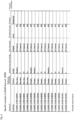
- Fig. 3 is a table illustrating a specific example (part) of an ADaM data set.
- Examples of the programming include programming for creating an SDTM from EDC Raw data or programming for creating an ADaM from the SDTM. Further, programming for preparing an analysis material from the ADaM is also performed. The analysis material is used for preparing, for instance, an attached document to be submitted when pharmaceutical approval review is requested.
- the SDTM-related data set is standardized by a global standard development organization, and further, there is a guidance document for preparation. Accordingly, programming for preparing the data set fits automatic generation.
- Part of the ADaM-related data set is standardized by a global standard development organization, and there is also a guidance document for preparation.
- programming for preparing the data set can also be said to partially fit automatic generation.
- the data set can be prepared relatively freely by an analyst, provided that the correctness of the results of analyzing the analysis material is ensured.
- the present disclosure makes it possible to overcome these problems and to provide a program generation assisting system for assisting automation of programming for automatic generation of an analysis material prepared by analysis work in a clinical trial during pharmaceutical development. Further, the present disclosure provides an analysis program generation system that automatically generates a program for preparing an analysis material.
- a system of automatically generating a program for preparing an analysis material is a system for assisting automation of programming for automatic generation of an analysis material prepared by analysis work in a clinical trial during pharmaceutical development so as to automatically generate a program for preparing an analysis material.
- Fig. 1 is a system configuration diagram of a system 2 of automatically generating a program for preparing an analysis material according to an embodiment of the present invention.
- system 2 the "system 2 of automatically generating a program for preparing an analysis material"
- the system 2 includes a computer device 4 and a storage device 12.
- the computer device 4 and the storage device 12 are connected by a wired or wireless communication line, and can transmit and receive data to and from each other.
- the system 2 may be further connected to an external network 14, and data may be exchanged with another computer system connected to the external network 14.
- the computer device 4 is, for example, a PC, a tablet computer, or a workstation computer equipped with one or more processors.
- the storage device 12 is a storage device (e.g., a disk drive, a flash memory) provided outside the computer device 4, and stores various databases 16, various data sets, and various computer programs used for the computer device 4.
- the various databases 16 store, for example, data acquired by the computer device 4 via the interface device 6 of the computer device 4 and various data created by the system 2, which will be described later.
- the external network 14 is, for example, the Internet, and is connected to the computer device 4 via the interface device 6 such as a network terminal.
- the computer device 4 further includes the interface device 6, a processing circuit 8, and a memory 10.
- the interface device 6 is an interface unit capable of acquiring data from the outside, including, for example, a network terminal, a video input terminal, a USB terminal, a keyboard, and/or a mouse.
- Various data is acquired from the outside via the interface device 6.
- the data is, for example, image/table analysis plan data of a target clinical trial and image/table analysis plan data of past clinical trials, which will be described later.
- Other examples of the data include form preparation-related specifications (TFL specifications) and/or model specifications, namely ADaM data set specifications (ADaM specifications), in accumulated past clinical trials. After acquisition, these data may be stored in the storage device 12.
- Data stored in the storage device 12 may be acquired, if appropriate, in the computer device 4 via the interface device 6.
- various data created by the system 2 is stored, if appropriate, in the storage device 12.
- the various data is, for example, text data (format information and layout information) prepared from an image/table analysis plan, which will be described later.
- Other examples of the various data include image data of the image/table analysis plan, a table indicating how a form and description of the form correspond to model data (ADaM data), extracted "ADaM specification information", and/or model data/variable association information (ADaM/variable association information).
- Various data created by such a system 2 and stored, if appropriate, in the storage device 12 may be re-acquired in the computer device 4 via the interface device 6.
- the processing circuit 8 includes a processor.
- the processor includes a central processing unit (CPU) and/or a graphics processing unit (GPU).
- CPU central processing unit
- GPU graphics processing unit
- Various functions of the system 2 according to this embodiment are implemented while the processing circuit 8 executes various programs. Note that the various functions may be implemented by, for instance, an application specific integrated circuit (ASIC), or may be implemented by a combination therewith.
- ASIC application specific integrated circuit
- the processing circuit 8 in the present disclosure may include a plurality of signal processing circuits.
- each signal processing circuit includes a central processing unit (CPU) and/or a graphics processing unit (GPU), and may be called a "processor".
- a certain processor may execute part of various processes in the system 2 according to this embodiment, and another processor may execute another part of the processes.
- "micro rule-based prediction” and "macro CNN-based prediction” to be described later may be performed by different processors. That is, for example, a certain CPU may execute the "micro rule-based prediction” and a certain GPU may execute the "macro CNN-based prediction”.
- CNN means a convolutional neural network. The term is herein abbreviated as "CNN”.
- the memory 10 is a data rewritable storage unit inside the computer device 4, and includes, for example, a random access memory (RAM) including a large number of semiconductor storage elements.
- the memory 10 temporarily stores, for instance, specific computer programs, variables, and/or parameter values used when the processing circuit 8 executes various processes.
- the memory 10 may include what is called a read only memory (ROM).
- the ROM pre-stores a computer program for implementing processing of the system 2 described below.
- the processing circuit 8 reads the computer program from the ROM and deploys the computer program in the RAM, so that the processing circuit 8 can execute the computer program.
- the system 2 according to the present disclosure is constructed using a computer language such as Python or the SAS language of the SAS institute in the US.
- the computer language that can be used for constructing the system of automatically generating a program for preparing an analysis material according to the present disclosure is not limited thereto, and of course, other computer languages may be used.
- Fig. 2 is a block diagram schematically illustrating all functions and how processing flows in the system 2 according to an embodiment of the present disclosure.
- the system 2 according to this embodiment can be roughly divided into the following three functions.
- a group of functions is referred to as a "function unit" for convenience.
- system 2 is generally constructed by the following three subsystems.
- the first and second subsystems correspond to the training function unit that uses the processing results of the recognition function unit
- the third subsystem corresponds to the implementation function unit that uses the processing results of the training function unit.
- model data is, for example, ADaM data, and is a set of data and metadata for analysis.
- the variables are variables in the model data (ADaM data).
- recognition function unit, the training function unit, and the implementation function unit described above do not need to be realized by one, that is, common hardware.
- Each of the recognition function unit, the training function unit, and the implementation function unit may be realized using separate and independent hardware.
- system 2 does not always need to include all of the first to third subsystems described above.
- the system 2 includes the first and second subsystems, but does not necessarily include the third subsystem.
- the third subsystem may be realized by a separate computer system.
- a computer system including only the third subsystem is also within the scope of the system 2 according to this embodiment.
- the first and second subsystems may also be implemented by separate computer systems.
- the first subsystem is based on the "format information and layout information" and the "image data" of the image/table analysis plan to predict a form pattern by using two approaches including the first candidate prediction method “micro rule-based prediction” and the second candidate prediction method “macro CNN-based prediction”. This system leads to ground truth (i.e., corrected) input assistance by a person.
- the second subsystem performs model data/variable prediction by using "text data (format information and layout information)" of the image/table analysis plan, "ADaM specification information” of the ADaM data set specification, which is a model specification, and "model data/variable association information (ADaM/variable association information)" of link information between model data (ADaM data) and variables in past clinical trial forms.
- the second subsystem then presents a combination of model data/variable prediction and pattern prediction. This system leads to ground truth (i.e., corrected) input assistance by a person.
- correction data is input, by a human system user, to information predicted and searched by the first subsystem and the second subsystem. Subsequently, the third subsystem creates metadata for automatic generation on the basis of the predicted and searched information containing correction data and the information acquired from the image/table analysis plan of the target clinical trial, and further generates an analysis program from a template program while using the metadata created for automatic generation.
- ADaM data set specification in the present disclosure is a model specification about a data model.
- the ADaM data set specification (ADaM specification) is a specification indispensable when the ADaM data is created by programming, and includes the definition of each variable.
- Fig. 13 is part of an ADaM data set specification (ADaM specification).
- Fig. 13 (1) is a definition part of the data set
- Fig. 13 (2) is a definition part of the variables
- Fig. 13 (3) is a definition part of the code list.
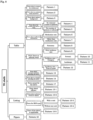
- Fig. 8 is a diagram illustrating a pattern classification example in each analysis material form.
- Each pattern is basically classified focusing on the content (properties and attributes) indicated by the material. For example, they are classified according to the following viewpoints (a) to (e).
- the patterns are hierarchically classified into 21 patterns (pattern 1 to pattern 16).
- the patterns in the form of the analysis material are classified in advance according to the method of analyzing the clinical trial and the output format of the analysis result.
- the first program generation assisting system predicts a classification candidate as to which of 21 patterns a form pattern of interest fits.
- Fig. 5 is a diagram illustrating how data flows generally in the recognition function unit.
- the recognition function unit extracts information necessary for generating a program for preparing an analysis material from the provided image/table analysis plan of the target clinical trial, and creates text data (format information and layout information) 52 (see processing (1) of Fig. 5 ).
- the first program generation assisting system acquires the text data (format information and layout information) 52 and executes subsequent processing. Note that the first program generation assisting system may perform processing of creating the text data (format information and layout information) 52.
- the recognition function unit creates image data 58 for use in the CNN from the provided image/table analysis plan of the target clinical trial and the image/table analysis plans of the past clinical trials (see processing (2) of Fig. 5 ).
- the first program generation assisting system acquires the image data 58 and executes subsequent processing.
- the text data 52 created in (processing (1)) includes "format information” and "layout information”.
- Figs. 9A and 9B illustrate part of an example of the text data.
- Fig. 9A represents a "cell _ info sheet”, which is “format information”
- Fig. 9B represents a "layout _ info sheet”, which is "layout information”.
- TITLE Form title FOOTNOTE: Form footnote (not every form has a footnote)
- PROGRAMMING Notes on programming
- POPULATION Analysis target group (information described in the second line of each form)
- COLUMNS_WIDTH Width of column in the table (unit: cm)
- COLUMNS_ALIGN Output position of characters and others in a column of the table (L: left adjustment, C: center adjustment)
- SECTION_ORIENT Orientation of paper at the time of output (landscape: horizontal, portrait: vertical)
- Figs. 11(1) and ( 2 ) exemplify image data created in (processing (2)).
- the format of the image data here may be, for example, png.
- the text character strings are also imaged.
- Fig. 6 is a diagram illustrating how data flows generally in the training function unit.
- the first program generation assisting system performs micro rule-based prediction processing by using the acquired text data (format information and layout information) 52, and predicts a form pattern as a classification candidate.
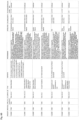
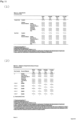
- Fig. 10 is a table and collectively provides an example (part) of determination rules for the micro rule-based prediction.
- 25 conditions for determination (a - 1, a -2 • • • up to s) are provided.
- a table number ("form number" in Tables 1 and 2) and a title (“form title” in Table 2) satisfy individual conditions, "Y" is filled in the column of a pattern to be possibly determined.
- the processing circuit 8 ( Fig. 1 ) determines whether or not the text character string included in the acquired text data (format information and layout information) 52 corresponds to the character string included in the above-described determination rule.
- the processing circuit 8 outputs a pattern prediction result (hereinafter, referred to as a "pattern (Main) prediction result”) as a classification candidate.
- a pattern prediction result hereinafter, referred to as a "pattern (Main) prediction result
- the determination rule defines how each of the plurality of text strings corresponds to the pattern candidate to be classified for each text string. That is, the determination rule defines how the pattern to be classified for each text string corresponds to each of two or more text strings among respective text strings that indicate the reason for withdrawal from the clinical trial, the analysis target population, the patient background, the medication, the adverse event, and/or the efficacy (see Fig. 10 ).
- determination rules for micro rule-based prediction in the table of Fig. 10 are exemplary, and they may vary.
- the first program generation assisting system performs the macro CNN-based prediction processing by using the acquired image data 58 (see Fig. 11 ) of the image/table analysis plan, and predicts a form pattern as a classification candidate.
- prediction is performed by the following procedure.
- the above-described procedures (1) to (3) are processes of training a CNN by using, as labeled training data, image data of each image/table analysis plan of a plurality of past clinical trials and ground truth patterns where the image data of each image/table analysis plan is classified as labelled training data.
- the procedure (4) is a process for causing a trained artificial neural network constructed on the system as the result of training to classify which form pattern is relevant and infer a classification candidate by using, as the input, the image data (see Fig. 11 ) of the image/table analysis plan to be classified.
- the first program generation assisting system performs at least inference processing. That is, the processing circuit 8 ( Fig. 1 ) inputs image data of the image/table analysis plan to the CNN, acquires a form pattern output from the CNN, and outputs the acquired form pattern as a classification candidate. However, the first program generation assisting system may perform the above-described training process. Here, the processing circuit 8 outputs a pattern prediction result (hereinafter, referred to as the "pattern (Vari) prediction result”) as a classification candidate.
- a pattern prediction result hereinafter, referred to as the "pattern (Vari) prediction result
- Fig. 15 illustrates an example of prediction results in the micro rule-based prediction processing and the macro CNN-based prediction processing.
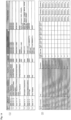
- Fig. 15 illustrates an example of the form preparation-related specification (TFL specification) before correction input.
- the second program generation assisting system predicts which variable of which model data is used in each form of the analysis material.
- Fig. 5 is a diagram illustrating how data flows generally in the recognition function unit.
- the recognition function unit creates a table 60 indicating how the form and the form description correspond to model data (ADaM data) from a form preparation-related specification (TFL specification) in accumulated past clinical trials (see processing (3) of Fig. 5 ).
- ADaM data model data
- TNL specification form preparation-related specification
- the form preparation-related specification in the present disclosure is a specification describing, for example, model data, variables, and/or data extraction conditions used during form preparation, and is usually used in programming for preparing a form.
- Fig. 14 is part of a form preparation-related specification (TFL specification).
- Fig. 14 (1) illustrates a portion of the specification
- Fig. 14 (2) illustrates a portion of the contents.
- the recognition function unit extracts information necessary for generating a program for preparing an analysis material from an ADaM data set specification (ADaM specification), which is a provided model specification, and creates "ADaM specification information" 54 (see processing (4) of Fig. 5 ).
- ADaM data set specification which is a model specification to be provided, includes not only a target clinical trial but also past clinical trials.
- the "ADaM specification information" 54 is not necessarily created particularly if, for example, the data volume of the ADaM data set specification (ADaM specification) is small.
- the recognition function unit creates model data/variable association information (ADaM/variable association information) 56 from a form preparation-related specification (TFL specification) in past clinical trials and an ADaM data set specification (ADaM specification), which is a model specification, in past clinical trials (see processing (5) of Fig. 5 ).
- the model data/variable association information (ADaM/variable association information) 56 is link information obtained by linking model data (ADaM data) used in forms of analysis materials of past clinical trials and variables that are each an item describing the model data (ADaM data) and used in the corresponding form.
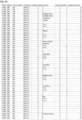
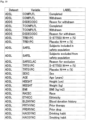
- Fig. 19 illustrates an example of the model data/variable association information ("ADaM/variable association information") 56.
- the data set (Dataset) indicates the name of the model data (ADaM data), the variable (Variable) indicates a variable name, and the label (LABEL) indicates information included in each cell.
- Fig. 6 is a diagram illustrating how data flows generally in the training function unit. Among them, the second program generation assisting system first outputs prediction of the model data (ADaM data).
- ADaM data model data
- the second program generation assisting system calculates the similarity between the description of each form in the image/table analysis plan of the target clinical trial and the description of each form in the analysis materials of the past clinical trials. Further, the second program generation assisting system extracts and recommends, in response to the calculated similarity, names of one or more pieces of model data (ADaM data) used in each form in the analysis materials of the past clinical trials, which form corresponds to each form in the image/table analysis plan of the target clinical trial (see "prediction by recommendation" in Fig. 6 ).
- ADaM data pieces of model data
- the "description of each form in the image/table analysis plan of the target clinical trial” is data included in the "format information" of the text data 52 as illustrated in Figs. 5 , 6 , and 9A .
- the "description of each form in the analysis materials of the past clinical trials” is included in the "table 60 indicating how the form and the description of form correspond to ADaM" as illustrated in Figs. 5 and 6 .
- the names of one or more pieces of model data (ADaM data) used in each form in the analysis materials of the past clinical trials are also included in the "table 60 indicating how the form and the description of form correspond to ADaM" as illustrated in Figs. 5 and 6 .
- the above-described similarity between the description of each form in the image/table analysis plan of the target clinical trial and the description of each form in the analysis materials of the past clinical trials may be calculated using a given similarity evaluation function.
- the given similarity evaluation function is, for example, a Tanimoto coefficient or a Jaccard coefficient.
- the description in each form may be, for example, the title of each form.
- Fig. 17 is a flowchart illustrating an example of an algorithm of prediction by recommendation for ADaM data.
- the processing circuit 8 splits the title of a form (e.g., a table) of the target clinical trial (step S1702). Since the title is normally written in English, in this embodiment, the processing circuit 8 separates the title at the position of blank (blank space) and splits the title into words.
- the processing circuit 8 vectorizes the split result (step S1704).
- the processing circuit 8 generates a vector as in the following Expression 1. Summary of adverse events
- the processing circuit 8 obtains a Tanimoto coefficient between the split result and the title of another form of another past clinical trial, which title has been vectorized (step S1706).
- the sum and the average are determined for each ADaM data used in the other forms (step S1708).
- the ADaM data where the average is not zero is extracted and recommended together with the average. Note that the larger the average, the higher the degree of recommendation of the ADaM data.
- Tanimoto coefficient related to the title in the form “table A” and the form “table B” is usually calculated as follows.
- Tanimoto coefficient (T) for Table A and Table B n 11 The number of words included in both the title of Table A and the title of Table B n 10
- the number of words included only in the title of Table B T n 11 n 11 + n 10 + n 01
- the second program generation assisting system outputs prediction of variables.
- Each variable prediction is performed according to the following three algorithms. All the variables predicted by the respective three algorithms are output as candidates for the prediction result.
- Fig. 18 is a flowchart illustrating an algorithm (1) for predicting a variable.
- the processing circuit 8 extracts data in which the "variable CELL of the cell information in the form" in the "format information" of the text data 52 matches the variable LABEL in the model data/variable association information (ADaM/variable association information) 56 (see processing (5) of Fig. 5 )) prepared from the past clinical trials.
- the processing circuit 8 creates an associated form obtained by associating the two data sets through the two data matched (step S1802).
- the cell information in the form of the target clinical trial, the model data (ADaM data), and the variable are associated.
- the processing circuit 8 compares the associated form created in the previous step (step S1802) with the prediction result (see Fig. 6 ) of the model data (ADaM data) for each form (form number). Then, the processing circuit 8 extracts only data that matches the prediction result of the model data (ADaM data) from the comparison result, and finalizes the variable prediction result (step S1804). That is, the processing circuit 8 ( Fig. 1 ) compares the prediction result of the model data (ADaM data) with the prediction result of the variable, and narrows and recommends the variable. At this time, the adopted variable, in addition to the name of the extracted model data (ADaM data), is output as a candidate.
- Fig. 20 is a flowchart illustrating an algorithm (2) for predicting a variable.
- the processing circuit 8 measures the degree of match between the "variable CELL of the cell information in a form" in the "format information" of the text data 52 and a given item indicating the variable described in the "ADaM specification information" 54, and extracts a variable of which the degree of match exceeds a threshold (step S2002).
- the threshold is, for example, 0.7.
- the given item only needs to indicate a variable, and here, the given item is label information of the variable.
- the label indicates the name of the variable, and for example, in the case of a variable SITEID, the label is "Study Site Identifier".
- a variable SITEID the label is "Study Site Identifier".
- Fig. 13 showing part of the ADaM data set specification (ADaM specification)
- Fig. 13 (2) shows part of the variable definition portion "variable sheet ", and the fourth column shows the variable name, and the fifth column shows the label.
- the degree of match only needs to indicate the degree of matching between two words, and may be calculated using, for example, an N-gram.
- the following [Expression 2] is a character string group of "SAFFL", and [Expression 3] is a character string group of "COMPFL".
- the processing circuit 8 extracts only data that matches the prediction result of the model data (ADaM data) from the data set extracted in the previous step (step S2002) for each form (form number), and finalizes the variable prediction result (step S2004). That is, the processing circuit 8 compares the prediction result of the model data (ADaM data) with the prediction result of the variable, and narrows and recommends the variable. At this time, the adopted variable, in addition to the name of the extracted model data (ADaM data), is output as a candidate.
- Fig. 21 is a flowchart illustrating an algorithm (3) for predicting a variable.
- the processing circuit 8 measures the degree of match between the "variable CELL of the cell information in a form" in the "format information" of the text data 52 and a second given item indicating the variable described in the "ADaM specification information" 54, and extracts a variable of which the degree of match exceeds a threshold (step S2102).
- the threshold is, for example, 0.7.
- the second given item also only needs to indicate a variable, and here, the second given item is format information of the variable.
- the format indicates each category of the categorical variable, and for example, in the case of variable SEX, the format is "Male” or "Female".
- cell information in a form of the target clinical trial includes information with a high degree of match with "Male” or "Female”, it is predicted that the probability of using the variable SEX is high in the form.
- Fig. 13 showing part of the ADaM data set specification (ADaM specification)
- Fig. 13 (3) shows part of the code list definition portion "Codelist sheet”
- the first column shows the variable name
- the seventh column shows the format.
- the degree of match here only needs to indicate the degree of matching between two words, and may be calculated using, for example, an N-gram as described above.
- the processing circuit 8 extracts only data that matches the prediction result of the model data (ADaM data) from the data set extracted in the previous step (step S2102) for each form (form number), and finalizes the variable prediction result (step S2104). That is, the processing circuit 8 compares the prediction result of the model data (ADaM data) with the prediction result of the variable, and narrows and recommends the variable. At this time, the adopted variable, in addition to the name of the extracted model data (ADaM data), is output as a candidate.
- the prediction by algorithm (1), (2) the prediction by algorithm (2), and (3) the prediction by algorithm (3) have been each described above.
- all the algorithms are not necessarily used for prediction.
- the prediction may be performed by at least one algorithm among the three algorithms.
- the analysis program generation system presents, as a form of the form preparation-related specification (TFL specification) before correction input as illustrated in Fig. 15 to system users, the pattern (Main) prediction result, the pattern (Vari) prediction result, the ADaM model data prediction result, and the variable prediction result (see Fig. 6 .), which are information predicted and searched by the first program generation assisting system and the second program generation assisting system.
- TTL specification form preparation-related specification
- Fig. 7 is a diagram illustrating how data flows from "training" to creation of metadata for automatic generation.
- Fig. 15 is an example of the form preparation-related specification (TFL specification) before correction input.
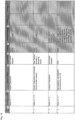
- Fig. 16 is an example of the form preparation-related specification (TFL specification) after correction input. Note that there may be no points to be corrected. In this case, no correction data is input, and data of the form preparation-related specification (TFL specification) before correction input is used as it is.
- the analysis program generation system creates metadata 70 for automatic generation on the basis of the form preparation-related specification (TFL specification) with correction data reflected and "layout information" for specifying the output format of the analysis result in the text data (format information and layout information) 52 for a form of the target clinical test (see Fig. 7 ).
- Fig. 22 is an example of metadata 70 for automatic generation.
- the metadata 70 for automatic generation includes pattern-specifying data for specifying a pattern in a form of the analysis material.
- the analysis program generation system uses a template program that is stored in the storage device 12 and corresponds to each of the plurality of patterns in the form of the analysis material, the template program being capable of specifying the method of analyzing the clinical trial and the output format of the analysis result. That is, the analysis program generation system reads the template program corresponding to each pattern specified by the pattern-specifying data in the metadata 70 for automatic generation. Further, the analysis program generation system automatically generates an analysis program from the read template program by using the metadata 70 for automatic generation.
- Fig. 23 is an example of the template program.
- the text data (format information and layout information) 52 for the target clinical test form includes an instruction of the output format of the analysis result as described above.
- the analysis program generation system instructs, to the corresponding template program, the output format of the analysis result on the basis of the text data 52, and automatically generates an analysis program capable of outputting the analysis result in the layout according to the instructed output format.
- the first program generation assisting system for assisting generation of a program for analyzing a clinical trial includes: the interface device 6 configured to acquire text data and image data created from an image/table analysis plan that specifies a method of analyzing a clinical trial and an output format of an analysis result; and the storage device 12 configured to store the text data and the image data; and the processing circuit 8 configured to execute each of a first candidate prediction method using the text data and a second candidate prediction method using the image data to classify the image/table analysis plan into at least one pattern among a plurality of predetermined patterns, and then to output a result as a classification candidate.
- the plurality of patterns are classified in advance according to the clinical trial analyzing method and the analysis result output format.
- the first program generation assisting system is provided in advance with a determination rule that defines a relationship of how each of a plurality of text strings corresponds to a pattern in which each text string is classified. Also, provided is a trained artificial neural network constructed by training with, as labeled training data, image data of each image/table analysis plan from a plurality of past clinical trials and ground truth patterns obtained by classifying the image data of each image/table analysis plan.
- the processing circuit 8 uses the text strings included in the text data of the image/table analysis plan and the determination rule to output data indicating the first pattern among the plurality of patterns by executing the first candidate prediction method.
- the processing circuit 8 inputs the image data of the image/table analysis plan into the artificial neural network to acquire data indicating the second pattern output from the artificial neural network by executing the second candidate prediction method. Further, the processing circuit 8 outputs the first pattern and the second pattern as classification candidates for the analysis material.
- the second program generation assisting system for assisting generation of a program for analyzing a clinical trial includes: the storage device 12 configured to store the database 16; the interface device 6 configured to acquire data about an image/table analysis plan that specifies a method of analyzing a clinical trial and an output format of an analysis result; and the processing circuit 8 configure to output, as a candidate, a name of at least one model data to be used for analyzing the clinical trial with reference to the database 16 and the data about the image/table analysis plan.
- the image/table analysis plan includes one or more forms, and each form specifies analysis content for each type of analysis of the clinical trial.
- the database 16 stores each form of analysis materials in past clinical trials and a name of model data used in each form, namely a name of model data that is a collection of a data set and metadata for analysis.
- the processing circuit 8 uses a given similarity evaluation function to calculate, for each form of the image/table analysis plan obtained, a similarity between description in the form and description in each form of analysis materials in past clinical trials. Further, the calculated similarity is used to extract a name of at least one piece of the model data used in the form of analysis materials in past clinical trials, which name corresponds to the former description in the form, and then output the extracted model data name.
- the database 16 stores link information in which model data used in a form of analysis materials of past clinical trials and a variable that is an item describing the model data and used in the form are linked.
- the processing circuit 8 compares the first item of the text data in each form of the image/table analysis plan with the second item of the variable in the link information. In the case of match, the processing circuit 8 creates an associated form in which the first item of the text data in each form of the image/table analysis plan and the second item of the variable in the link information are used for association.
- the associated form may include model data having the same name of the extracted model data.
- the processing circuit 8 adopts, as a variable of the extracted model data, a variable that is an item describing the model data having the same name in the associated form. Then, the processing circuit 8 outputs, in addition to the name of the extracted model data, the adopted variable as a candidate.
- the interface device 6 further acquires data about the model specification in which the model data prepared in the clinical trial and the definition of the variable describing the model data are associated and described.
- the processing circuit 8 calculates the degree of match between the first item of text data in each form of the image/table analysis plan and the third item indicating a variable described in the model specification by using a given algorithm.
- the processing circuit 8 selects, from the model specification, model data associated with a variable with a larger degree of match calculated than a predetermined threshold.
- the selected model data may match the extracted model data.
- the processing circuit 8 adopts a variable larger than the threshold as a variable of the extracted model data.
- the processing circuit 8 outputs, in addition to the name of the extracted model data, the adopted variable as a candidate.
- the analysis program generation system for generating a program for analyzing a clinical trial includes the interface device 6, the storage device 12, and the processing circuit 8.
- the interface device 6 is configured to acquire the first pattern and the second pattern output from the first program generation assisting system, and acquire the name and the variable of the model data output from the second program generation assisting system.
- the interface device 6 may acquire correction data for correcting the first pattern, the second pattern, the name, and/or the variable.
- the storage device 12 is configured to store a template program corresponding to each of the plurality of patterns and capable of specifying the method of analyzing the clinical trial and the output format of the analysis result.
- the processing circuit 8 uses the corrected first pattern, second pattern, name and/or variable and the text data.
- the processing circuit 8 uses the acquired first pattern, second pattern, name and/or variable, and the text data. Based on these data, the processing circuit 8 creates metadata including pattern-specifying data that specifies one of the plurality of patterns. Further, the processing circuit 8 reads a template program corresponding to each pattern specified by the pattern-specifying data, and uses the metadata to generate an analysis program from the template program.
- the system of automatically generating a program for preparing an analysis system includes the first program generation assisting system, the second program generation assisting system, and the analysis program generation system according to embodiments of the present invention as described above.
- This system can assist automated programing for automatic generation of an analysis material prepared by analysis work in a clinical trial during pharmaceutical development, and makes it possible to automatically generate a program for preparing an analysis material.
- the analysis program generation system uses the pattern (Main) prediction result, the pattern (Vari) prediction result, the ADaM model data prediction result, and the variable prediction result (see Fig. 6 .), which are information predicted and searched by the first program generation assisting system and the second program generation assisting system.
- clinical trial-related data using ADaM which data accurately complies with the CDISC standard, may be sufficiently accumulated and provided as training data. In this case, the ADaM model data and variable predictions become unnecessary.
- the output data of the first program generation assisting system and the ADaM and variable search results may be used, resulting in creation of the metadata 70 for automatic generation. That is, the metadata 70 for automatic generation may be created from the pattern (Main) prediction result, the pattern (Vari) prediction result, and the ADaM and variable search results.
Landscapes
- Engineering & Computer Science (AREA)
- Computer Vision & Pattern Recognition (AREA)
- Theoretical Computer Science (AREA)
- Physics & Mathematics (AREA)
- General Physics & Mathematics (AREA)
- Multimedia (AREA)
- Medical Informatics (AREA)
- Health & Medical Sciences (AREA)
- General Health & Medical Sciences (AREA)
- Artificial Intelligence (AREA)
- Evolutionary Computation (AREA)
- Epidemiology (AREA)
- Primary Health Care (AREA)
- Public Health (AREA)
- Computing Systems (AREA)
- Databases & Information Systems (AREA)
- Software Systems (AREA)
- Medical Treatment And Welfare Office Work (AREA)
Applications Claiming Priority (2)
| Application Number | Priority Date | Filing Date | Title |
|---|---|---|---|
| JP2020108248 | 2020-06-23 | ||
| PCT/JP2021/023524 WO2021261468A1 (ja) | 2020-06-23 | 2021-06-22 | 臨床試験の解析プログラムの生成を補助するためのプログラム生成補助システム |
Publications (2)
| Publication Number | Publication Date |
|---|---|
| EP4170664A1 true EP4170664A1 (de) | 2023-04-26 |
| EP4170664A4 EP4170664A4 (de) | 2024-07-17 |
Family
ID=79281184
Family Applications (1)
| Application Number | Title | Priority Date | Filing Date |
|---|---|---|---|
| EP21829208.4A Pending EP4170664A4 (de) | 2020-06-23 | 2021-06-22 | Programmerzeugungsunterstützungssystem zur unterstützung der erzeugung eines analyseprogramms für klinische versuche |
Country Status (5)
| Country | Link |
|---|---|
| US (1) | US12400468B2 (de) |
| EP (1) | EP4170664A4 (de) |
| JP (1) | JP7181439B2 (de) |
| CN (1) | CN115917658A (de) |
| WO (1) | WO2021261468A1 (de) |
Families Citing this family (2)
| Publication number | Priority date | Publication date | Assignee | Title |
|---|---|---|---|---|
| CN116225455B (zh) * | 2023-04-24 | 2023-08-11 | 广东杰纳医药科技有限公司 | 一种统计分析报表快速生成方法 |
| CN118248271A (zh) * | 2024-04-08 | 2024-06-25 | 壹纬科技(北京)有限公司 | 基于智能标记的临床试验报表自动产出方法、设备及介质 |
Family Cites Families (8)
| Publication number | Priority date | Publication date | Assignee | Title |
|---|---|---|---|---|
| JP2002058650A (ja) * | 2000-08-17 | 2002-02-26 | Mochida Pharmaceut Co Ltd | 臨床試験のデータ解析用sasプログラムの作成方法 |
| JP2011159176A (ja) * | 2010-02-02 | 2011-08-18 | Jikko Data Science Kk | 臨床試験デザインの特徴マップ表示方法及び表示装置 |
| JP6596879B2 (ja) * | 2015-03-31 | 2019-10-30 | 富士通株式会社 | 臨床試験用データフォーマット作成支援プログラム、臨床試験用データフォーマット作成支援方法および情報処理装置 |
| JP6334803B1 (ja) * | 2017-12-26 | 2018-05-30 | 中條 淳博 | 臨床検査結果編集装置 |
| US10740866B2 (en) * | 2018-06-26 | 2020-08-11 | International Business Machines Corporation | Determining appropriate medical image processing pipeline based on machine learning |
| JP7068106B2 (ja) * | 2018-08-28 | 2022-05-16 | 株式会社日立製作所 | 試験計画策定支援装置、試験計画策定支援方法及びプログラム |
| US11257571B2 (en) * | 2019-02-05 | 2022-02-22 | International Business Machines Corporation | Identifying implied criteria in clinical trials using machine learning techniques |
| CN111292821B (zh) | 2020-01-21 | 2024-02-13 | 上海联影智能医疗科技有限公司 | 一种医学诊疗系统 |
-
2021
- 2021-06-22 CN CN202180044729.7A patent/CN115917658A/zh active Pending
- 2021-06-22 EP EP21829208.4A patent/EP4170664A4/de active Pending
- 2021-06-22 JP JP2022531991A patent/JP7181439B2/ja active Active
- 2021-06-22 WO PCT/JP2021/023524 patent/WO2021261468A1/ja not_active Ceased
- 2021-06-22 US US18/012,539 patent/US12400468B2/en active Active
Also Published As
| Publication number | Publication date |
|---|---|
| CN115917658A (zh) | 2023-04-04 |
| JP7181439B2 (ja) | 2022-11-30 |
| US20230267757A1 (en) | 2023-08-24 |
| WO2021261468A1 (ja) | 2021-12-30 |
| US12400468B2 (en) | 2025-08-26 |
| EP4170664A4 (de) | 2024-07-17 |
| JPWO2021261468A1 (de) | 2021-12-30 |
Similar Documents
| Publication | Publication Date | Title |
|---|---|---|
| EP4211591B1 (de) | Verfahren und system zur identifizierung von zitaten in regulatorischen inhalten | |
| CN110021439B (zh) | 基于机器学习的医疗数据分类方法、装置和计算机设备 | |
| US10818397B2 (en) | Clinical content analytics engine | |
| CN111695439A (zh) | 图像结构化数据提取方法、电子装置及存储介质 | |
| CN114026651A (zh) | 结构化患者数据记录的自动生成 | |
| US20240029848A1 (en) | Systems and methods for generating a text report and simulating health care journey | |
| CN115293161A (zh) | 基于自然语言处理和药品知识图谱的合理用药系统及方法 | |
| CN112732946A (zh) | 一种医学文献的模块化数据分析和数据库建立方法 | |
| US12400468B2 (en) | Program generation assisting system for assisting generation of program for analyzing clinical trial | |
| CN112735584A (zh) | 一种恶性肿瘤诊疗辅助决策生成方法及装置 | |
| CN120542432A (zh) | 基于语义分析的智能纠正方法、装置、设备及介质 | |
| CN120565123B (zh) | 一种基于多模态大模型的疾病预测与辅助诊断系统构建方法及系统 | |
| KR102799924B1 (ko) | 인공지능을 이용한 자동화된 포뮬레이션 데이터베이스 구축 방법, 전자 장치 및 프로그램 | |
| CN111045716A (zh) | 一种基于异构数据的相关补丁推荐方法 | |
| US20240378385A1 (en) | Image processing techniques for generating predictions | |
| CN116913549A (zh) | 不良反应事件预警方法、装置、系统和电子设备 | |
| CN116911300A (zh) | 语言模型预训练方法、实体识别方法和装置 | |
| WO2025165252A1 (en) | Automated and semi-automated extraction of data from tables and graphs in scientific literature | |
| CN119479971A (zh) | 一种医疗文档自动生成与归档系统及方法 | |
| CA3199880A1 (en) | Deep technology innovation management by cross-pollinating innovations dataset | |
| US20250245259A1 (en) | Systems and methods for text data processing and chunk distribution | |
| WO2024018269A1 (en) | Systems and methods for generating a text report and simulating health care journey | |
| Khaleghi | Improving or Operations Using Machine Learning Techniques | |
| CN121413728A (zh) | 基于领域知识学习的工业品参数提取方法 | |
| CN119541902A (zh) | 一种基于医学知识图谱的用药安全大模型方法及系统 |
Legal Events
| Date | Code | Title | Description |
|---|---|---|---|
| STAA | Information on the status of an ep patent application or granted ep patent |
Free format text: STATUS: THE INTERNATIONAL PUBLICATION HAS BEEN MADE |
|
| PUAI | Public reference made under article 153(3) epc to a published international application that has entered the european phase |
Free format text: ORIGINAL CODE: 0009012 |
|
| STAA | Information on the status of an ep patent application or granted ep patent |
Free format text: STATUS: REQUEST FOR EXAMINATION WAS MADE |
|
| 17P | Request for examination filed |
Effective date: 20221221 |
|
| AK | Designated contracting states |
Kind code of ref document: A1 Designated state(s): AL AT BE BG CH CY CZ DE DK EE ES FI FR GB GR HR HU IE IS IT LI LT LU LV MC MK MT NL NO PL PT RO RS SE SI SK SM TR |
|
| DAV | Request for validation of the european patent (deleted) | ||
| DAX | Request for extension of the european patent (deleted) | ||
| A4 | Supplementary search report drawn up and despatched |
Effective date: 20240619 |
|
| RIC1 | Information provided on ipc code assigned before grant |
Ipc: G16H 10/40 20180101AFI20240613BHEP |