EP4166405B1 - Verfahren und vorrichtung zur steuerung eines interferenzdrehmoments, steuerung, vorrichtung, programm und medium - Google Patents
Verfahren und vorrichtung zur steuerung eines interferenzdrehmoments, steuerung, vorrichtung, programm und medium Download PDFInfo
- Publication number
- EP4166405B1 EP4166405B1 EP21822776.7A EP21822776A EP4166405B1 EP 4166405 B1 EP4166405 B1 EP 4166405B1 EP 21822776 A EP21822776 A EP 21822776A EP 4166405 B1 EP4166405 B1 EP 4166405B1
- Authority
- EP
- European Patent Office
- Prior art keywords
- torque
- motor
- engine
- interference
- arbitrated
- Prior art date
- Legal status (The legal status is an assumption and is not a legal conclusion. Google has not performed a legal analysis and makes no representation as to the accuracy of the status listed.)
- Active
Links
Images

Classifications
-
- B—PERFORMING OPERATIONS; TRANSPORTING
- B60—VEHICLES IN GENERAL
- B60W—CONJOINT CONTROL OF VEHICLE SUB-UNITS OF DIFFERENT TYPE OR DIFFERENT FUNCTION; CONTROL SYSTEMS SPECIALLY ADAPTED FOR HYBRID VEHICLES; ROAD VEHICLE DRIVE CONTROL SYSTEMS FOR PURPOSES NOT RELATED TO THE CONTROL OF A PARTICULAR SUB-UNIT
- B60W10/00—Conjoint control of vehicle sub-units of different type or different function
- B60W10/04—Conjoint control of vehicle sub-units of different type or different function including control of propulsion units
- B60W10/06—Conjoint control of vehicle sub-units of different type or different function including control of propulsion units including control of combustion engines
-
- B—PERFORMING OPERATIONS; TRANSPORTING
- B60—VEHICLES IN GENERAL
- B60W—CONJOINT CONTROL OF VEHICLE SUB-UNITS OF DIFFERENT TYPE OR DIFFERENT FUNCTION; CONTROL SYSTEMS SPECIALLY ADAPTED FOR HYBRID VEHICLES; ROAD VEHICLE DRIVE CONTROL SYSTEMS FOR PURPOSES NOT RELATED TO THE CONTROL OF A PARTICULAR SUB-UNIT
- B60W10/00—Conjoint control of vehicle sub-units of different type or different function
- B60W10/04—Conjoint control of vehicle sub-units of different type or different function including control of propulsion units
- B60W10/08—Conjoint control of vehicle sub-units of different type or different function including control of propulsion units including control of electric propulsion units, e.g. motors or generators
-
- B—PERFORMING OPERATIONS; TRANSPORTING
- B60—VEHICLES IN GENERAL
- B60W—CONJOINT CONTROL OF VEHICLE SUB-UNITS OF DIFFERENT TYPE OR DIFFERENT FUNCTION; CONTROL SYSTEMS SPECIALLY ADAPTED FOR HYBRID VEHICLES; ROAD VEHICLE DRIVE CONTROL SYSTEMS FOR PURPOSES NOT RELATED TO THE CONTROL OF A PARTICULAR SUB-UNIT
- B60W20/00—Control systems specially adapted for hybrid vehicles
- B60W20/10—Controlling the power contribution of each of the prime movers to meet required power demand
-
- B—PERFORMING OPERATIONS; TRANSPORTING
- B60—VEHICLES IN GENERAL
- B60W—CONJOINT CONTROL OF VEHICLE SUB-UNITS OF DIFFERENT TYPE OR DIFFERENT FUNCTION; CONTROL SYSTEMS SPECIALLY ADAPTED FOR HYBRID VEHICLES; ROAD VEHICLE DRIVE CONTROL SYSTEMS FOR PURPOSES NOT RELATED TO THE CONTROL OF A PARTICULAR SUB-UNIT
- B60W20/00—Control systems specially adapted for hybrid vehicles
- B60W20/10—Controlling the power contribution of each of the prime movers to meet required power demand
- B60W20/15—Control strategies specially adapted for achieving a particular effect
-
- B—PERFORMING OPERATIONS; TRANSPORTING
- B60—VEHICLES IN GENERAL
- B60W—CONJOINT CONTROL OF VEHICLE SUB-UNITS OF DIFFERENT TYPE OR DIFFERENT FUNCTION; CONTROL SYSTEMS SPECIALLY ADAPTED FOR HYBRID VEHICLES; ROAD VEHICLE DRIVE CONTROL SYSTEMS FOR PURPOSES NOT RELATED TO THE CONTROL OF A PARTICULAR SUB-UNIT
- B60W30/00—Purposes of road vehicle drive control systems not related to the control of a particular sub-unit, e.g. of systems using conjoint control of vehicle sub-units
- B60W30/02—Control of vehicle driving stability
-
- B—PERFORMING OPERATIONS; TRANSPORTING
- B60—VEHICLES IN GENERAL
- B60W—CONJOINT CONTROL OF VEHICLE SUB-UNITS OF DIFFERENT TYPE OR DIFFERENT FUNCTION; CONTROL SYSTEMS SPECIALLY ADAPTED FOR HYBRID VEHICLES; ROAD VEHICLE DRIVE CONTROL SYSTEMS FOR PURPOSES NOT RELATED TO THE CONTROL OF A PARTICULAR SUB-UNIT
- B60W30/00—Purposes of road vehicle drive control systems not related to the control of a particular sub-unit, e.g. of systems using conjoint control of vehicle sub-units
- B60W30/18—Propelling the vehicle
- B60W30/188—Controlling power parameters of the driveline, e.g. determining the required power
- B60W30/1882—Controlling power parameters of the driveline, e.g. determining the required power characterised by the working point of the engine, e.g. by using engine output chart
-
- B—PERFORMING OPERATIONS; TRANSPORTING
- B60—VEHICLES IN GENERAL
- B60W—CONJOINT CONTROL OF VEHICLE SUB-UNITS OF DIFFERENT TYPE OR DIFFERENT FUNCTION; CONTROL SYSTEMS SPECIALLY ADAPTED FOR HYBRID VEHICLES; ROAD VEHICLE DRIVE CONTROL SYSTEMS FOR PURPOSES NOT RELATED TO THE CONTROL OF A PARTICULAR SUB-UNIT
- B60W50/00—Details of control systems for road vehicle drive control not related to the control of a particular sub-unit, e.g. process diagnostic or vehicle driver interfaces
- B60W50/08—Interaction between the driver and the control system
- B60W50/087—Interaction between the driver and the control system where the control system corrects or modifies a request from the driver
-
- B—PERFORMING OPERATIONS; TRANSPORTING
- B60—VEHICLES IN GENERAL
- B60K—ARRANGEMENT OR MOUNTING OF PROPULSION UNITS OR OF TRANSMISSIONS IN VEHICLES; ARRANGEMENT OR MOUNTING OF PLURAL DIVERSE PRIME-MOVERS IN VEHICLES; AUXILIARY DRIVES FOR VEHICLES; INSTRUMENTATION OR DASHBOARDS FOR VEHICLES; ARRANGEMENTS IN CONNECTION WITH COOLING, AIR INTAKE, GAS EXHAUST OR FUEL SUPPLY OF PROPULSION UNITS IN VEHICLES
- B60K6/00—Arrangement or mounting of plural diverse prime-movers for mutual or common propulsion, e.g. hybrid propulsion systems comprising electric motors and internal combustion engines
- B60K6/20—Arrangement or mounting of plural diverse prime-movers for mutual or common propulsion, e.g. hybrid propulsion systems comprising electric motors and internal combustion engines the prime-movers consisting of electric motors and internal combustion engines, e.g. HEVs
-
- B—PERFORMING OPERATIONS; TRANSPORTING
- B60—VEHICLES IN GENERAL
- B60W—CONJOINT CONTROL OF VEHICLE SUB-UNITS OF DIFFERENT TYPE OR DIFFERENT FUNCTION; CONTROL SYSTEMS SPECIALLY ADAPTED FOR HYBRID VEHICLES; ROAD VEHICLE DRIVE CONTROL SYSTEMS FOR PURPOSES NOT RELATED TO THE CONTROL OF A PARTICULAR SUB-UNIT
- B60W2510/00—Input parameters relating to a particular sub-units
- B60W2510/08—Electric propulsion units
- B60W2510/083—Torque
-
- B—PERFORMING OPERATIONS; TRANSPORTING
- B60—VEHICLES IN GENERAL
- B60W—CONJOINT CONTROL OF VEHICLE SUB-UNITS OF DIFFERENT TYPE OR DIFFERENT FUNCTION; CONTROL SYSTEMS SPECIALLY ADAPTED FOR HYBRID VEHICLES; ROAD VEHICLE DRIVE CONTROL SYSTEMS FOR PURPOSES NOT RELATED TO THE CONTROL OF A PARTICULAR SUB-UNIT
- B60W2540/00—Input parameters relating to occupants
- B60W2540/10—Accelerator pedal position
-
- B—PERFORMING OPERATIONS; TRANSPORTING
- B60—VEHICLES IN GENERAL
- B60W—CONJOINT CONTROL OF VEHICLE SUB-UNITS OF DIFFERENT TYPE OR DIFFERENT FUNCTION; CONTROL SYSTEMS SPECIALLY ADAPTED FOR HYBRID VEHICLES; ROAD VEHICLE DRIVE CONTROL SYSTEMS FOR PURPOSES NOT RELATED TO THE CONTROL OF A PARTICULAR SUB-UNIT
- B60W2710/00—Output or target parameters relating to a particular sub-units
- B60W2710/06—Combustion engines, Gas turbines
- B60W2710/0666—Engine torque
-
- B—PERFORMING OPERATIONS; TRANSPORTING
- B60—VEHICLES IN GENERAL
- B60W—CONJOINT CONTROL OF VEHICLE SUB-UNITS OF DIFFERENT TYPE OR DIFFERENT FUNCTION; CONTROL SYSTEMS SPECIALLY ADAPTED FOR HYBRID VEHICLES; ROAD VEHICLE DRIVE CONTROL SYSTEMS FOR PURPOSES NOT RELATED TO THE CONTROL OF A PARTICULAR SUB-UNIT
- B60W2710/00—Output or target parameters relating to a particular sub-units
- B60W2710/08—Electric propulsion units
- B60W2710/083—Torque
-
- B—PERFORMING OPERATIONS; TRANSPORTING
- B60—VEHICLES IN GENERAL
- B60W—CONJOINT CONTROL OF VEHICLE SUB-UNITS OF DIFFERENT TYPE OR DIFFERENT FUNCTION; CONTROL SYSTEMS SPECIALLY ADAPTED FOR HYBRID VEHICLES; ROAD VEHICLE DRIVE CONTROL SYSTEMS FOR PURPOSES NOT RELATED TO THE CONTROL OF A PARTICULAR SUB-UNIT
- B60W2720/00—Output or target parameters relating to overall vehicle dynamics
- B60W2720/40—Torque distribution
-
- Y—GENERAL TAGGING OF NEW TECHNOLOGICAL DEVELOPMENTS; GENERAL TAGGING OF CROSS-SECTIONAL TECHNOLOGIES SPANNING OVER SEVERAL SECTIONS OF THE IPC; TECHNICAL SUBJECTS COVERED BY FORMER USPC CROSS-REFERENCE ART COLLECTIONS [XRACs] AND DIGESTS
- Y02—TECHNOLOGIES OR APPLICATIONS FOR MITIGATION OR ADAPTATION AGAINST CLIMATE CHANGE
- Y02T—CLIMATE CHANGE MITIGATION TECHNOLOGIES RELATED TO TRANSPORTATION
- Y02T10/00—Road transport of goods or passengers
- Y02T10/60—Other road transportation technologies with climate change mitigation effect
- Y02T10/62—Hybrid vehicles
Definitions
- the present invention relates to the field of vehicle control technology, and in particular, to a method and a device for controlling an interference torque, a controller, an equipment, a program and a medium.
- the electronic stability program is an important component of current vehicles, which improves handling performance while preventing the vehicle from reaching its dynamic limits.
- an interference torque is sent by the ESP through a sub-function of the ESP, such as a traction control system (TCS), to assist the vehicle in moving from an unstable to a stable state.
- TCS traction control system
- an objective of the present invention is to provide a method for controlling an interference torque of a vehicle, to solve the problem that the stability of the vehicle cannot be guaranteed by relying solely on the engine to respond to the interference torque from the ESP.
- a method for controlling an interference torque of a vehicle is provided, which is applied to a new energy vehicle including an electric motor and an engine.
- the method for controlling an interference torque of the vehicle includes steps of: arbitrating between a pedal torque of a driver and an interference torque required by an ESP and outputting an arbitrated torque; performing an initial allocation on the motor and/or the engine in response to the pedal torque when the vehicle is in a hybrid drive mode, to meet a torque request of the engine while ensuring that the engine is operated at an optimum operation point; and determining, based on the initial allocation, whether the motor is capable of fully responding to the arbitrated torque, controlling the motor to respond to the arbitrated torque in priority when it is determined that the motor is capable of fully responding to the arbitrated torque, and controlling the engine and the motor to cooperatively respond to the arbitrated torque when it is determined that the motor is incapable of fully responding to the arbitrated torque.
- the step of arbitrating between a pedal torque of a driver and an interference torque required by an ESP includes steps of: determining, as for the interference torque when the ESP requires the torque to increase, that a greater one of the interference torque and the pedal torque is the arbitrated torque; or determining, as for the interference torque when the ESP requires the torque to decrease, that a smaller one of the interference torque and the pedal torque is the arbitrated torque.
- the method for controlling an interference torque of a vehicle also includes a step of controlling the motor to respond to the arbitrated torque when the vehicle is in the pure electric mode.
- Fem3 is equal to Fem2, it is determined that the motor is capable of fully responding to the arbitrated torque, otherwise, it is determined that the motor is incapable of fully responding to the arbitrated torque.
- the torque request of the engine includes a fire path request and an air path request
- the method for controlling an interference torque of a vehicle also includes a step of adjusting the fire path request and the air path request of the engine to keep torques in the fire path request and the air path request to be in consistent when it is determined that the engine and the motor are controlled to respond to the arbitrated torque, cooperatively.
- the interference torque required by the ESP is a torque required in case of activation of a function of a traction control system (TCS) of the vehicle.
- TCS traction control system
- the method for controlling an interference torque of a vehicle described in the present invention has the following advantages.
- Another objective of the present invention is to provide a device for controlling an interference torque of a vehicle, to solve the problem that the stability of the vehicle cannot be guaranteed by relying solely on the engine to respond to the interference torque from the ESP.
- a device for controlling an interference torque of a vehicle is provided, which is applied to a new energy vehicle including an electric motor and an engine.
- the device for controlling an interference torque of a vehicle includes: a torque arbitration module, a first torque allocation module, and a second torque allocation module.
- the torque arbitration module is configured to arbitrate a pedal torque of a driver and an interference torque required by an electronic stability program (ESP), and to output an arbitrated torque.
- the first torque allocation module is configured to perform an initial allocation on the motor and/or the engine in response to the pedal torque when the vehicle is in a hybrid drive mode, to meet the torque request of the engine while ensuring that the engine is operated at an optimum operation point.
- the device for controlling an interference torque of the vehicle has the same advantages as that of the method for controlling an interference torque of the vehicle with respect to the existing technologies, which will not be repeated herein.
- Another objective of the present invention is to provide a vehicle controller, to solve the problem that the stability of the vehicle cannot be guaranteed by relying solely on the engine to respond to the interference torque from the ESP.
- the vehicle controller has the same advantages as that of the method for controlling an interference torque of the vehicle with respect to the existing technologies, which will not be repeated herein.
- Another objective of the present invention is to provide a machine-readable storage medium, to solve the problem that the stability of the vehicle cannot be guaranteed by relying solely on the engine to respond to the interference torque from the ESP.
- solutions of the present invention may be implemented as follows: A machine-readable storage medium is provided, on which instructions are stored, the instructions cause the machine to perform the method for controlling an interference torque as described in any of the foregoing.
- the machine-readable storage medium has the same advantages as that of the method for controlling an interference torque of the vehicle with respect to the existing technologies, which will not be repeated herein.
- the present invention also provides a computer program, which includes a computer readable code, that, when being run on a computing processing device, causes the computing processing equipment to perform the above method for controlling an interference torque of a vehicle as provided in the present invention.
- the present invention also provides a computer readable storage medium in which the computer program provided by the present invention is stored.
- FIG. 1 is a flow diagram of a method for controlling an interference torque of a vehicle in accordance with an embodiment of the present invention.
- the method is applicable to a new energy vehicle that includes a motor and an engine, such as a P2 model having a P2 motor.
- the method for controlling an interference torque according to an embodiment of the present invention may include steps S100 to S300.
- step S100 an arbitration is performed on a pedal torque of a driver and an interference torque required by an ESP, and an arbitrated torque is output.
- the interference torque required by the ESP is, for example, a torque required for activation of a TCS function of the vehicle.
- the step S100 may include that, a greater one of the interference torque and the pedal torque is determined to be the arbitrated torque as for the interference torque when the ESP requires the torque to increase , or a smaller one of the interference torque and the pedal torque is determined to be the arbitrated torque as for the interference torque when the ESP requires the torque to decrease .
- the interference torque from the ESP requires for an increase in torque is denoted as an increasing torque Fesp1 and when the interference torque from the ESP requires for a decrease in torque is denoted as a decreasing torque Fesp2, while the pedal torque of the driver is denoted as F 1 and the output arbitrated torque is denoted as F2.
- the pedal torque F1 when being arbitrated with Fesp1, a greater one is taken, and when being arbitrated with Fesp2, a smaller one is taken, which can be expressed as the following equation.
- F2 Max Min F1 ,Fesp2 , Fesp1
- Min indicates a smaller value of the two and Max indicates a greater value of the two.
- this equation also illustrates a determination of whether F 1 is equal to F2. When the two are equal, it is indicated that no ESP interference is occurred, and when the two are not equal, it is indicated that an ESP interference is occurred, i.e., an interference torque is presented. Understandably, subsequent steps in the embodiment of the present invention are performed in the event that the ESP interference is occurred
- step S200 when the vehicle is in a hybrid drive mode, an initial allocation is performed to the motor and/or the engine in response to the pedal torque to meet a torque request of the engine while ensuring that the engine is operated at an optimum operation point.
- a drive mode of the vehicle is first determined.
- three possible drive modes may be included. That is, A, engine drive with motor generation; B, engine and motor drive together; and C, motor drive alone.
- the A and B drive modes are collectively referred to as the hybrid drive mode and the C drive mode is referred to as the pure electric mode.
- a front-axle-torque allocation requires a determination of whether the current drive mode is hybrid or pure electric.
- the front axle torque is required to be distributed to both the engine and motor, while for the pure electric mode, the front axle torque can be distributed directly to the motor.
- the method for controlling an interference torque in an optional embodiment of the present invention may also include a step of determining a drive mode of the vehicle based on an actual state of the engine.
- the motor is controlled to respond to the arbitrated torque when the vehicle is in the pure electric mode.
- the current drive mode is the hybrid drive mode and step S200 is performed.
- the current drive mode is the pure electric mode (EV) and the motor responds directly to the arbitrated torque F2 as described above.
- the engine and the motor both respond to the interference torque.
- the torque allocation between the engine and the motor is influenced by a torque demand of the driver, a torque limit of the engine torque, an actual torque of the engine, a speed of the engine and other factors.
- the basic principle is that when the engine has the ability to take on the full torque demand of the driver, then the drive mode is engine driven with motor generation, and when the engine cannot take on the full torque demand of the driver, then the engine and motor need to drive together.
- the torque allocation between the engine and the motor is required to be able to meet the torque request of the engine to ensure that the engine is always operated at the optimum operation point.
- the engine load-point-shift strategy may be expressed as that a torque allocation to the motor and the engine is performed based on the universal characteristics of the engine, to ensure that the engine is operated at the optimum operation point and to save fuel consumption.
- Fem1 represents the torque contributed by the motor in meeting torque request of the engine and F1 represents the pedal torque of the driver.
- this equation (2) shows that the embodiment of this invention also involves an "initial allocation" to ensure that the "engine is operated at the optimum operation point" before the response of the motor and/or engine, here, a load-point-shift strategy is used for the engine that allows the engine to be always operated at the optimum operation point regardless of the response to the interference torque, thus ensuring the efficiency of the engine and contributing to saving fuel consumption.
- the torque request of the engine includes a fire path request and an air path request.
- the fire path request is a request for torque to adjust an ignition angle of the engine
- the air path request is a request for torque to adjust a throttle of the engine.
- the fire path request and the air path request are simultaneously sent to the engine and the engine will respond to the smaller one of the two if the engine is able to respond.
- the effect of the fire path request and the air path request on the ability of the engine to respond to torque will be further described below with reference to specific embodiments, and will not be discussed here.
- step S300 it is determined, based on the initial allocation, whether the motor is capable of fully responding to the arbitrated torque, if the motor is capable of fully responding to the arbitrated torque, then the motor is controlled to respond to the arbitrated torque in priority; and if the motor is incapable of fully responding to the arbitrated torque, then the engine and the motor are controlled to respond to the arbitrated torque, cooperatively.
- the step S300 is provided with respect to a scenario where the vehicle is in the hybrid drive mode.
- Fem represents the torque contributed by the motor in pure electric mode, i.e., this equation (3) shows that the interference torque in pure electric mode is fully responded to by the motor.
- the motor should respond rapidly enough at this point to ensure that no torque filtering is occurred, for example, a filter module will be triggered by an ESP interference activation condition to not perform a filtering.
- the step S300 is directed to the scenario where the vehicle is in the hybrid drive mode, under a condition that the engine is guaranteed to be operated at the optimum operation point, the following step may be further included to determine whether the motor is capable of fully responding to the arbitrated torque.
- the engine is controlled to release the ignition angle in rapid response to the determined torque Feng2.
- a flag bit of the ignition angle is activated to control the ignition angle to be released based on the determination that Fem3 is not equal to Fem2. At this time, the engine is responded rapidly and no torque filtering is occurred.
- the fire path request and the air path request of the engine should be adjusted to match the torques in the two requests while calculating the torque that the engine needs to respond in the cooperated response.
- the engine when the engine is controlled to respond to the interference torque from the ESP, if only the fire path is adjusted without adjusting the air path, the ignition angle will be pushed while the air path of the engine remains unchanged, thus the reduction in torque of the engine is limited, which is not fast enough to reduce to the torque request of the engine required by Feng1, therefore, the fire path request and the air path request need to be adjusted simultaneously. If the ignition angle is not released, then the torque in the fire path request of the engine is equal to the calculated torque of the last air path request, and if the ignition angle is released, the torque in the air path request of the engine is equal to the calculated torque of the last fire path request.
- the embodiment of the present invention does not require an urgency level treatment for ESP interference, when the engine is cooperated with the motor to make a response, the engine is guaranteed to respond as rapidly as possible (ignition angle guarantee) by requesting a release of the ignition angle and requesting an equal torque for the fire and air paths through simultaneous adjustment of the fire path request and the air path request, moreover, and when the ignition angle cannot meet the fire path request, the requested torque is achieved through the throttle, thus enabling an accurate response (where fire and air path torque are in consistent).
- the method in the embodiment of this invention is applied such that the P2 motor responds preferentially in the vast majority of cases where interference occurs, and that P2 motor is able to fully respond to the interference torque generated by the TCS, etc., on its own capability, and the response time and torque accuracy of the motor are more outstanding compared to the engine.
- a capacity of the motor is limited due to the characteristics of the motor in low temperature, high SOC, etc.
- the application of the method in an embodiment of the present invention allows the motor and engine to be controlled to respond to the interference in cooperation while ensuring that the interference torque generated by the TCS, etc., is met.
- the first torque allocation module 220 is configured to perform an initial allocation on the motor and/or the engine in response to the pedal torque when the vehicle is in a hybrid drive mode, to meet the torque request of the engine and to ensure that the engine is operated at an optimal operation point.
- the second torque allocation module 230 is configured to determine, based on the initial allocation, whether the motor is capable of fully responding to the arbitrated torque, and is configured to control the motor in priority to respond to the arbitrated torque when it is determined that the motor is capable of fully responding to the arbitrated torque, and to control the engine and the motor to cooperatively respond to the arbitrated torque when it is determined that the motor is incapable of fully responding to the arbitrated torque.
- the device for controlling an interference torque has the same or similar implementation details and effects as that of the method for controlling an interference torque in the above embodiment, which will not be repeated herein.
- a vehicle controller which is configured to run a program.
- the program when being run on the vehicle controller, causes the method for controlling an interference torque of a vehicle described in the above embodiment to be implemented.
- the vehicle controller may be a separately configured controller or may be an electronic control unit (ECU) etc. that the vehicle itself has, the embodiments of the present invention are not limited in this respect.
- ECU electronice control unit
- vehicle controller has the same or similar implementation details and effects as that of the method for controlling an interference torque in the above embodiment, which will not be repeated herein.
- the present invention also provides a computing processing equipment, which includes: a memory in which a computer readable code is stored; and one or more processors.
- the computer readable code when being executed by the one or more processors, causes the computing processing equipment to perform the method for controlling an interference torque of a vehicle as above-described.
- the computing processing equipment may be implemented as a vehicle controller.
- the present invention also provides a computer program, which includes a computer readable code that, when being run on the computing processing equipment, causes the computing processing equipment to perform the method for controlling an interference torque of a vehicle as above-described.
- the present invention also provides a computer readable storage medium, in which the aforementioned computer program is stored.
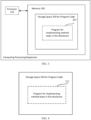
- FIG. 3 provides a schematic structural diagram of the computing processing equipment according to an embodiment of the present invention.
- the computing processing equipment typically includes a processor 310 and a computer program product or computer-readable medium in the form of a memory 330.
- Memory 330 may be an electronic memory such as a flash memory, an electrically erasable programmable read-only memory (EEPROM), an EPROM, a hard disk, or a ROM.
- Memory 330 has a storage space 350 for program code 351, the program code is used for implementing any of the steps in the method as described above.
- the storage space 350 for program code may include individual program codes 351 for implementing various steps in the above-described method. These program codes may be read from or written to one or more computer program products.
- Such computer program products include program code carriers such as hard disks, compact disks (CDs), memory cards or floppy disks.
- Such a computer program product is typically a portable or fixed storage unit as shown in FIG. 4 .
- the storage unit may have storage segments, storage space etc. similarly arranged to the memory 330 in the server of FIG. 3 .
- the program code may, for example, be compressed in an appropriate form.
- the storage unit includes computer readable code 351', i.e., code which can be read by, for example, a processor such as 310 which, when run by a server, causes that server to perform the various steps in the method as described above.
- embodiments of the present application may be provided as methods, systems, or computer program products. Accordingly, the present application may be presented in the form of an entirely hardware embodiment, an entirely software embodiment, or an embodiment combining software and hardware aspects. Further, the present application may be presented in the form of a computer program product implemented on one or more computer-readable storage media (including, but not limited to, disk memory, CD-ROM, optical memory, etc.) containing computer-readable program code therein.
- computer-readable storage media including, but not limited to, disk memory, CD-ROM, optical memory, etc.
- These computer program instructions may also be stored in a computer readable storage capable of directing the computer or other programmable data processing equipment to operate in a particular manner such that the instructions stored in the computer readable storage generate an article of manufacture including an instruction device that implements the function specified in one or more processes of the flowchart and/or one or more blocks of the block diagram.
- These computer program instructions may also be loaded onto a computer or other programmable data processing equipment such that a series of operational steps are performed on the computer or other programmable equipment to produce computer-implemented processing such that the instructions executable on the computer or other programmable equipment provide steps for implementing the functions specified in one process or a plurality of processes in the flowchart and/or one block or a plurality of blocks in the block diagram.
- the computing equipment includes one or more processors (CPUs), input/output interfaces, network interfaces, and memory.
- processors CPUs
- input/output interfaces network interfaces
- memory volatile and non-volatile memory
- Memory may include non-permanent memory, random access memory (RAM) and/or non-volatile memory in computer readable media, such as read-only memory (ROM) or flash memory (flash RAM). Memory is an example of a computer readable medium.
- RAM random access memory
- ROM read-only memory
- flash RAM flash memory
- Computer readable media include permanent and non-permanent, removable and non-removable media that are capable of being implemented by any method or technology to store information.
- the information may be computer readable instructions, data structures, modules of a program or other data.
- Examples of storage media for computers include, but are not limited to, a phase change memory (PRAM), a static random access memory (SRAM), a dynamic random access memory (DRAM), other types of random access memory (RAM), a read-only memory (ROM), an electrically erasable programmable read-only memory (EEPROM), a flash memory or other memory technologies, a compact-disc read only memory (CD-ROM), a digital versatile disc (DVD) or other optical storage, magnetic cartridge tape, magnetic tape disk storage or other magnetic storage equipment or any other non-transport medium that can be used to store information that can be accessed by a computing equipment.
- computer readable media does not include transitory computer readable media (transitory media), such as modulated data signals and carriers.
Landscapes
- Engineering & Computer Science (AREA)
- Chemical & Material Sciences (AREA)
- Combustion & Propulsion (AREA)
- Transportation (AREA)
- Mechanical Engineering (AREA)
- Automation & Control Theory (AREA)
- Human Computer Interaction (AREA)
- Electric Propulsion And Braking For Vehicles (AREA)
- Hybrid Electric Vehicles (AREA)
- Control Of Vehicle Engines Or Engines For Specific Uses (AREA)
Claims (11)
- Verfahren zur Steuerung eines Stördrehmoments eines Fahrzeugs, angewandt auf ein Fahrzeug mit einem Elektromotor und einem Verbrennungsmotor, wobei das Verfahren zur Steuerung eines Stördrehmoments eines Fahrzeugs aufweist:Arbitrieren (S100) zwischen einem Pedaldrehmoment eines Fahrers und einem Stördrehmoment, das von einem elektronischen Stabilitätsprogramm, ESP, gefordert wird, und Ausgeben eines arbitrierten Drehmoments;Durchführen (S200) einer initialen Zuweisung an den Motor und/oder den Verbrennungsmotor in Reaktion auf das Pedaldrehmoment, wenn das Fahrzeug in einem Hybridantriebsmodus ist, um eine Drehmomentanforderung des Verbrennungsmotors zu erfüllen und gleichzeitig sicherzustellen, dass der Verbrennungsmotor in einem optimalen Betriebspunkt betrieben wird; undBestimmen (S300), basierend auf der initialen Zuweisung, ob der Motor in der Lage ist, vollständig auf das arbitrierte Drehmoment zu reagieren, Steuern des Motors, um auf das arbitrierte Drehmoment vorrangig zu reagieren, wenn bestimmt wird, dass der Motor in der Lage ist, vollständig auf das arbitrierte Drehmoment zu reagieren, und Steuern des Verbrennungsmotors und des Motors, um kooperativ auf das arbitrierte Drehmoment zu reagieren, wenn bestimmt wird, dass der Motor nicht in der Lage ist, vollständig auf das arbitrierte Drehmoment zu reagieren.
- Verfahren zur Steuerung eines Stördrehmoments eines Fahrzeugs nach Anspruch 1, wobei das Arbitrieren (S100) zwischen einem Pedaldrehmoment eines Fahrers und einem von einem ESP geforderten Stördrehmoment aufweist:Bestimmen, beim Stördrehmoment, wenn das ESP eine Erhöhung des Drehmoments verlangt, dass ein größeres von Stördrehmoment und Pedaldrehmoment das arbitrierte Drehmoment ist; oderBestimmen, beim Stördrehmoment, wenn das ESP eine Verringerung des Drehmoments verlangt, dass ein kleineres von Stördrehmoment und Pedaldrehmoment das willkürliche Drehmoment ist.
- Verfahren zur Steuerung eines Stördrehmoments eines Fahrzeugs nach Anspruch 1 oder 2, wobei das Verfahren zur Steuerung eines Stördrehmoments eines Fahrzeugs weiter aufweist, bevor die initiale Zuweisung durchgeführt wird:
Bestimmen, basierend auf einem aktuellen Zustand des Verbrennungsmotors, eines Antriebsmodus des Fahrzeugs, wobei der Antriebsmodus den Hybridantriebsmodus und einen rein elektrischen Modus aufweist. - Verfahren zur Steuerung eines Stördrehmoments eines Fahrzeugs nach Anspruch 3, ferner aufweisend:
Steuern des Motors, um auf das arbitrierte Drehmoment zu reagieren, wenn das Fahrzeug im reinen Elektromodus liegt. - Verfahren zur Steuerung eines Stördrehmoments eines Fahrzeugs nach einem der Ansprüche 1-4, wobei das Bestimmen, ob der Motor in der Lage ist, vollständig auf das arbitrierte Drehmoment zu reagieren, aufweist:Bestimmen eines Motordrehmoments Fem2, nachdem der Motor voraussichtlich auf das arbitrierte Drehmoment ansprechen wird, unter Verwendung einer Formel von: Fem2 = Fem1 + F2 - F1,wobei Fem1 das Motordrehmoment ist, bevor der Motor so gesteuert wird, dass er auf das arbitrierte Drehmoment reagiert, F2 das arbitrierte Drehmoment ist und F1 das Pedaldrehmoment ist;Bestimmen eines Drehmoments Fem3, auf das der Motor reagieren kann, unter Verwendung einer Formel von: Fem3=Max [Min (Fem2, FUL),FLL],wobei FUL ein maximales Grenzdrehmoment des Motors ist, FLL ein minimales Grenzdrehmoment des Motors ist, Max ein größeres der beiden anzeigt und Min ein kleineres der beiden anzeigt; undBestimmen, dass der Motor in der Lage ist, auf das arbitrierte Drehmoment vollständig zu reagieren, wenn Fem3 gleich Fem2 ist, und Bestimmen, dass der Motor nicht in der Lage ist, auf das arbitrierte Drehmoment vollständig zu reagieren, wenn Fem3 nicht gleich Fem2 ist.
- Verfahren zur Steuerung eines Stördrehmoments eines Fahrzeugs nach Anspruch 5, wobei die Steuerung des Verbrennungsmotors und des Motors zur kooperativen Reaktion auf das arbitrierte Drehmoment aufweist:Bestimmen eines Drehmoments Feng2, auf das der Verbrennungsmotor reagieren soll, gemäß einer Gleichung von: Feng2 = F2 - Fem3; undSteuern des Verbrennungsmotors, um einen Zündwinkel in schneller Reaktion auf das bestimmte Drehmoment Feng2 freizugeben.
- Verfahren zur Steuerung eines Stördrehmoments eines Fahrzeugs nach einem der Ansprüche 1 bis 6, wobei die Drehmomentanforderung des Verbrennungsmotors eine Feuerweganforderung und eine Luftweganforderung aufweist, und das Verfahren zur Steuerung eines Stördrehmoments eines Fahrzeugs weiter umfasst:
Einstellen der Feuerweganforderung und der Luftweganforderung des Verbrennungsmotors, um die Drehmomente in der Feuerweganforderung und der Luftweganforderung konsistent zu halten, wenn bestimmt wird, dass der Verbrennungsmotor und der Motor gesteuert werden, um auf das arbitrierte Drehmoment zu reagieren, wobei die Feuerweganforderung eine Drehmomentanforderung ist, um einen Zündwinkel des Verbrennungsmotors einzustellen, und die Luftweganforderung eine Drehmomentanforderung ist, um eine Drossel des Verbrennungsmotors einzustellen. - Verfahren zur Steuerung eines Stördrehmoments eines Fahrzeugs nach einem der Ansprüche 1-7, wobei das vom ESP geforderte Stördrehmoment ein Drehmoment ist, das im Falle der Aktivierung einer Funktion eines Traktionskontrollsystems (TCS) des Fahrzeugs erforderlich ist.
- Vorrichtung zur Steuerung eines Stördrehmoments eines Fahrzeugs, angewendet auf ein Fahrzeug, das einen Elektromotor und einen Verbrennungsmotor aufweist, wobei die Vorrichtung zur Steuerung eines Stördrehmoments eines Fahrzeugs aufweist:ein Drehmoment-Arbitrierungsmodul (210), das konfiguriert ist, um ein Pedaldrehmoment eines Fahrers und ein Stördrehmoment, das von einem elektronischen Stabilitätsprogramm (ESP) benötigt wird, zu arbitrieren und ein arbitriertes Drehmoment auszugeben;ein erstes Drehmomentzuweisungsmodul (220), das so konfiguriert ist, dass es eine initiale Zuweisung an den Motor und/oder den Verbrennungsmotor in Reaktion auf das Pedaldrehmoment durchführt, wenn das Fahrzeug in einem Hybridantriebsmodus ist, um die Drehmomentanforderung des Verbrennungsmotors zu erfüllen und gleichzeitig sicherzustellen, dass der Verbrennungsmotor in einem optimalen Betriebspunkt betrieben wird; undein zweites Drehmomentzuweisungsmodul (230), das so konfiguriert ist, dass es auf der Grundlage der initialen Zuweisung bestimmt, ob der Motor in der Lage ist, vollständig auf das arbitrierte Drehmoment zu reagieren, und so konfiguriert ist, dass es den Motor so steuert, dass er vorrangig auf das arbitrierte Drehmoment reagiert, wenn bestimmt wird, dass der Motor in der Lage ist, vollständig auf das arbitrierte Drehmoment zu reagieren, und dass es den Verbrennungsmotor und den Motor so steuert, dass sie gemeinsam auf das arbitrierte Drehmoment reagieren, wenn bestimmt wird, dass der Motor nicht in der Lage ist, vollständig auf das arbitrierte Drehmoment zu reagieren.
- Computerprogramm, aufweisend: einen computerlesbaren Code, der, wenn er auf einem Computerverarbeitungsgerät ausgeführt wird, das Computerverarbeitungsgerät veranlasst, das Verfahren zur Steuerung eines Stördrehmoments eines Fahrzeugs nach einem der Ansprüche 1-8 durchzuführen.
- Computerlesbares Speichermedium, in dem ein Computerprogramm nach Anspruch 10 gespeichert ist.
Applications Claiming Priority (2)
| Application Number | Priority Date | Filing Date | Title |
|---|---|---|---|
| CN202010536563.8A CN112758080B (zh) | 2020-06-12 | 2020-06-12 | 车辆的干涉扭矩控制方法、装置、控制器及存储介质 |
| PCT/CN2021/099848 WO2021249556A1 (zh) | 2020-06-12 | 2021-06-11 | 干涉扭矩控制方法、装置、控制器、设备、程序、介质 |
Publications (3)
| Publication Number | Publication Date |
|---|---|
| EP4166405A1 EP4166405A1 (de) | 2023-04-19 |
| EP4166405A4 EP4166405A4 (de) | 2023-11-29 |
| EP4166405B1 true EP4166405B1 (de) | 2025-01-29 |
Family
ID=75693037
Family Applications (1)
| Application Number | Title | Priority Date | Filing Date |
|---|---|---|---|
| EP21822776.7A Active EP4166405B1 (de) | 2020-06-12 | 2021-06-11 | Verfahren und vorrichtung zur steuerung eines interferenzdrehmoments, steuerung, vorrichtung, programm und medium |
Country Status (4)
| Country | Link |
|---|---|
| US (1) | US12233844B2 (de) |
| EP (1) | EP4166405B1 (de) |
| CN (1) | CN112758080B (de) |
| WO (1) | WO2021249556A1 (de) |
Families Citing this family (8)
| Publication number | Priority date | Publication date | Assignee | Title |
|---|---|---|---|---|
| CN112758080B (zh) | 2020-06-12 | 2022-07-05 | 长城汽车股份有限公司 | 车辆的干涉扭矩控制方法、装置、控制器及存储介质 |
| CN114954426B (zh) * | 2021-07-22 | 2025-04-15 | 长城汽车股份有限公司 | 混动车辆控制方法、装置、存储介质及混动车辆 |
| CN115675440A (zh) * | 2021-07-22 | 2023-02-03 | 长城汽车股份有限公司 | 混动车辆驱动电机控制方法、装置、介质及混动车辆 |
| CN114954425B (zh) * | 2021-07-22 | 2025-05-02 | 长城汽车股份有限公司 | 混动车辆发动机控制方法、装置、介质及混动车辆 |
| CN113911097B (zh) * | 2021-10-12 | 2023-04-07 | 东风越野车有限公司 | 一种具有单isg电机的混动车辆的控制系统及控制方法 |
| CN114771281B (zh) * | 2022-05-19 | 2023-11-17 | 北京京深深向科技有限公司 | 扭矩分配架构、分配方法 |
| CN115123374B (zh) * | 2022-07-25 | 2023-07-21 | 中汽创智科技有限公司 | 电机扭矩的确定方法、装置、车辆及存储介质 |
| CN116118523B (zh) * | 2023-02-15 | 2026-02-27 | 北京新能源汽车股份有限公司 | 一种扭矩控制方法、装置和车辆 |
Family Cites Families (18)
| Publication number | Priority date | Publication date | Assignee | Title |
|---|---|---|---|---|
| CN101602362A (zh) | 2009-06-08 | 2009-12-16 | 奇瑞汽车股份有限公司 | 一种混合动力车的辅助驱动扭矩分配方法 |
| US8521349B2 (en) * | 2010-06-10 | 2013-08-27 | Ford Global Technologies | Vehicle steerability and stability control via independent wheel torque control |
| JP5807907B2 (ja) | 2011-09-20 | 2015-11-10 | ダイムラー・アクチェンゲゼルシャフトDaimler AG | ハイブリッド車両の制御装置 |
| US20130297107A1 (en) * | 2012-05-07 | 2013-11-07 | Ford Global Technologies, Llc | Traction control system for a hybrid vehicle |
| CN103847729B (zh) * | 2012-12-05 | 2016-05-18 | 上海汽车集团股份有限公司 | 新能源汽车混合动力系统中控制干涉扭矩的方法和装置 |
| US9421968B2 (en) * | 2013-12-18 | 2016-08-23 | Hyundai Motor Company | System and method for controlling torque for hybrid vehicle |
| KR101534749B1 (ko) * | 2014-05-15 | 2015-07-07 | 현대자동차 주식회사 | 하이브리드 차량의 토크 저감 제어 방법 |
| CN104828068B (zh) | 2014-12-19 | 2018-01-19 | 北汽福田汽车股份有限公司 | 四驱混合动力汽车及其驱动防滑控制方法、装置 |
| KR101684535B1 (ko) * | 2015-06-19 | 2016-12-08 | 현대자동차 주식회사 | 하이브리드 차량의 토크 저감 제어 장치 및 방법 |
| CN106347352B (zh) | 2015-07-14 | 2019-01-22 | 上汽通用汽车有限公司 | 混合动力能量管理系统及其控制方法 |
| KR101776523B1 (ko) * | 2016-08-22 | 2017-09-07 | 현대자동차주식회사 | 하이브리드 차량의 tcs 작동 중 엔진 구동력 제어 방법 |
| CN106274883A (zh) | 2016-08-29 | 2017-01-04 | 北京新能源汽车股份有限公司 | 混合动力汽车的控制方法、装置和汽车 |
| CN108263246B (zh) * | 2016-12-30 | 2020-01-03 | 长城汽车股份有限公司 | 车辆的扭矩滤波控制方法、系统及车辆 |
| US10486681B2 (en) * | 2017-01-13 | 2019-11-26 | Ford Global Technologies, Llc | Method and system for torque management in hybrid vehicle |
| CN109291916B (zh) * | 2017-07-25 | 2020-09-04 | 长城汽车股份有限公司 | 混合动力汽车的扭矩控制系统及车辆 |
| US10543739B1 (en) * | 2018-07-25 | 2020-01-28 | Fca Us Llc | Mode transition control techniques for an electrically all-wheel drive hybrid vehicle |
| US10875521B2 (en) * | 2018-09-07 | 2020-12-29 | Ford Global Technologies, Llc | Methods and system for operating an off-road vehicle |
| CN112758080B (zh) | 2020-06-12 | 2022-07-05 | 长城汽车股份有限公司 | 车辆的干涉扭矩控制方法、装置、控制器及存储介质 |
-
2020
- 2020-06-12 CN CN202010536563.8A patent/CN112758080B/zh active Active
-
2021
- 2021-06-11 US US18/009,380 patent/US12233844B2/en active Active
- 2021-06-11 EP EP21822776.7A patent/EP4166405B1/de active Active
- 2021-06-11 WO PCT/CN2021/099848 patent/WO2021249556A1/zh not_active Ceased
Also Published As
| Publication number | Publication date |
|---|---|
| US20230219552A1 (en) | 2023-07-13 |
| WO2021249556A1 (zh) | 2021-12-16 |
| CN112758080A (zh) | 2021-05-07 |
| CN112758080B (zh) | 2022-07-05 |
| EP4166405A4 (de) | 2023-11-29 |
| EP4166405A1 (de) | 2023-04-19 |
| US12233844B2 (en) | 2025-02-25 |
Similar Documents
| Publication | Publication Date | Title |
|---|---|---|
| EP4166405B1 (de) | Verfahren und vorrichtung zur steuerung eines interferenzdrehmoments, steuerung, vorrichtung, programm und medium | |
| US12017557B2 (en) | Torque control method for vehicle, vehicle controller, and non-transitory machine-readable storage medium | |
| CN110015212B (zh) | 用于燃料电池车辆中的电力需求分配的设备和方法 | |
| US11628747B2 (en) | Apparatus for controlling fuel cell of environment-friendly vehicle, system including the same, and method thereof | |
| US10562517B2 (en) | System and method of controlling driving of vehicle when battery charging is limited | |
| US9475489B2 (en) | Method and system for controlling running mode change for hybrid vehicle | |
| CN116533974A (zh) | 一种增程器功率跟随控制方法及装置 | |
| US9610937B2 (en) | Apparatus and method for controlling torque reduction of hybrid electric vehicle | |
| CN113561781A (zh) | 一种车辆能量回收方法、装置及电子设备 | |
| CN116442985A (zh) | 一种车辆增程器发电功率的确定方法及装置 | |
| CN111114525B (zh) | 增程式汽车的怠速控制方法及装置 | |
| US11208005B2 (en) | Automatic APS map generating method and system | |
| CN116507538A (zh) | 混合动力车辆的控制方法以及混合动力车辆 | |
| WO2026067683A1 (zh) | 车辆的扭矩控制方法、装置、车辆和存储介质 | |
| CN112810599B (zh) | 车辆驱动控制方法、系统 | |
| CN116677507B (zh) | 发动机的停机控制方法、装置和电子设备 | |
| US9425474B2 (en) | Method and system for controlling air intake of fuel cell vehicle | |
| CN116001768A (zh) | 混合动力系统的控制方法 | |
| JP6259312B2 (ja) | 昇圧コンバータの制御装置及び昇圧コンバータの制御方法 | |
| CN115352322A (zh) | 用于氢燃料电池车辆的控制方法、处理器及装置 | |
| CN121608726B (zh) | 车辆扭矩控制方法及车辆 | |
| CN121989908A (zh) | 增程式车辆的控制方法、控制系统及增程式车辆 | |
| CN118769886B (zh) | 单踏板模式下加速踏板扭矩的调控方法及装置 | |
| JP7524986B1 (ja) | 発電制御装置、発電制御方法及びプログラム | |
| US12583466B2 (en) | Vehicle control modules including containerized orchestration and resource management for mixed criticality systems |
Legal Events
| Date | Code | Title | Description |
|---|---|---|---|
| STAA | Information on the status of an ep patent application or granted ep patent |
Free format text: STATUS: THE INTERNATIONAL PUBLICATION HAS BEEN MADE |
|
| PUAI | Public reference made under article 153(3) epc to a published international application that has entered the european phase |
Free format text: ORIGINAL CODE: 0009012 |
|
| STAA | Information on the status of an ep patent application or granted ep patent |
Free format text: STATUS: REQUEST FOR EXAMINATION WAS MADE |
|
| 17P | Request for examination filed |
Effective date: 20221228 |
|
| AK | Designated contracting states |
Kind code of ref document: A1 Designated state(s): AL AT BE BG CH CY CZ DE DK EE ES FI FR GB GR HR HU IE IS IT LI LT LU LV MC MK MT NL NO PL PT RO RS SE SI SK SM TR |
|
| DAV | Request for validation of the european patent (deleted) | ||
| DAX | Request for extension of the european patent (deleted) | ||
| A4 | Supplementary search report drawn up and despatched |
Effective date: 20231102 |
|
| RIC1 | Information provided on ipc code assigned before grant |
Ipc: B60W 30/02 20120101AFI20231026BHEP |
|
| STAA | Information on the status of an ep patent application or granted ep patent |
Free format text: STATUS: EXAMINATION IS IN PROGRESS |
|
| 17Q | First examination report despatched |
Effective date: 20240424 |
|
| GRAP | Despatch of communication of intention to grant a patent |
Free format text: ORIGINAL CODE: EPIDOSNIGR1 |
|
| STAA | Information on the status of an ep patent application or granted ep patent |
Free format text: STATUS: GRANT OF PATENT IS INTENDED |
|
| INTG | Intention to grant announced |
Effective date: 20240923 |
|
| GRAS | Grant fee paid |
Free format text: ORIGINAL CODE: EPIDOSNIGR3 |
|
| GRAA | (expected) grant |
Free format text: ORIGINAL CODE: 0009210 |
|
| STAA | Information on the status of an ep patent application or granted ep patent |
Free format text: STATUS: THE PATENT HAS BEEN GRANTED |
|
| AK | Designated contracting states |
Kind code of ref document: B1 Designated state(s): AL AT BE BG CH CY CZ DE DK EE ES FI FR GB GR HR HU IE IS IT LI LT LU LV MC MK MT NL NO PL PT RO RS SE SI SK SM TR |
|
| REG | Reference to a national code |
Ref country code: GB Ref legal event code: FG4D |
|
| REG | Reference to a national code |
Ref country code: CH Ref legal event code: EP |
|
| REG | Reference to a national code |
Ref country code: DE Ref legal event code: R096 Ref document number: 602021025570 Country of ref document: DE |
|
| REG | Reference to a national code |
Ref country code: IE Ref legal event code: FG4D |
|
| P01 | Opt-out of the competence of the unified patent court (upc) registered |
Free format text: CASE NUMBER: APP_3864/2025 Effective date: 20250123 |
|
| REG | Reference to a national code |
Ref country code: NL Ref legal event code: MP Effective date: 20250129 |
|
| PG25 | Lapsed in a contracting state [announced via postgrant information from national office to epo] |
Ref country code: NL Free format text: LAPSE BECAUSE OF FAILURE TO SUBMIT A TRANSLATION OF THE DESCRIPTION OR TO PAY THE FEE WITHIN THE PRESCRIBED TIME-LIMIT Effective date: 20250129 |
|
| PG25 | Lapsed in a contracting state [announced via postgrant information from national office to epo] |
Ref country code: RS Free format text: LAPSE BECAUSE OF FAILURE TO SUBMIT A TRANSLATION OF THE DESCRIPTION OR TO PAY THE FEE WITHIN THE PRESCRIBED TIME-LIMIT Effective date: 20250429 |
|
| PG25 | Lapsed in a contracting state [announced via postgrant information from national office to epo] |
Ref country code: FI Free format text: LAPSE BECAUSE OF FAILURE TO SUBMIT A TRANSLATION OF THE DESCRIPTION OR TO PAY THE FEE WITHIN THE PRESCRIBED TIME-LIMIT Effective date: 20250129 |
|
| PG25 | Lapsed in a contracting state [announced via postgrant information from national office to epo] |
Ref country code: PL Free format text: LAPSE BECAUSE OF FAILURE TO SUBMIT A TRANSLATION OF THE DESCRIPTION OR TO PAY THE FEE WITHIN THE PRESCRIBED TIME-LIMIT Effective date: 20250129 |
|
| PGFP | Annual fee paid to national office [announced via postgrant information from national office to epo] |
Ref country code: DE Payment date: 20250617 Year of fee payment: 5 |
|
| PG25 | Lapsed in a contracting state [announced via postgrant information from national office to epo] |
Ref country code: ES Free format text: LAPSE BECAUSE OF FAILURE TO SUBMIT A TRANSLATION OF THE DESCRIPTION OR TO PAY THE FEE WITHIN THE PRESCRIBED TIME-LIMIT Effective date: 20250129 |
|
| PGFP | Annual fee paid to national office [announced via postgrant information from national office to epo] |
Ref country code: GB Payment date: 20250625 Year of fee payment: 5 |
|
| REG | Reference to a national code |
Ref country code: LT Ref legal event code: MG9D |
|
| PG25 | Lapsed in a contracting state [announced via postgrant information from national office to epo] |
Ref country code: NO Free format text: LAPSE BECAUSE OF FAILURE TO SUBMIT A TRANSLATION OF THE DESCRIPTION OR TO PAY THE FEE WITHIN THE PRESCRIBED TIME-LIMIT Effective date: 20250429 Ref country code: IS Free format text: LAPSE BECAUSE OF FAILURE TO SUBMIT A TRANSLATION OF THE DESCRIPTION OR TO PAY THE FEE WITHIN THE PRESCRIBED TIME-LIMIT Effective date: 20250529 |
|
| REG | Reference to a national code |
Ref country code: AT Ref legal event code: MK05 Ref document number: 1763182 Country of ref document: AT Kind code of ref document: T Effective date: 20250129 |
|
| PG25 | Lapsed in a contracting state [announced via postgrant information from national office to epo] |
Ref country code: HR Free format text: LAPSE BECAUSE OF FAILURE TO SUBMIT A TRANSLATION OF THE DESCRIPTION OR TO PAY THE FEE WITHIN THE PRESCRIBED TIME-LIMIT Effective date: 20250129 |
|
| PG25 | Lapsed in a contracting state [announced via postgrant information from national office to epo] |
Ref country code: PT Free format text: LAPSE BECAUSE OF FAILURE TO SUBMIT A TRANSLATION OF THE DESCRIPTION OR TO PAY THE FEE WITHIN THE PRESCRIBED TIME-LIMIT Effective date: 20250529 Ref country code: LV Free format text: LAPSE BECAUSE OF FAILURE TO SUBMIT A TRANSLATION OF THE DESCRIPTION OR TO PAY THE FEE WITHIN THE PRESCRIBED TIME-LIMIT Effective date: 20250129 |
|
| PGFP | Annual fee paid to national office [announced via postgrant information from national office to epo] |
Ref country code: FR Payment date: 20250630 Year of fee payment: 5 |
|
| PG25 | Lapsed in a contracting state [announced via postgrant information from national office to epo] |
Ref country code: GR Free format text: LAPSE BECAUSE OF FAILURE TO SUBMIT A TRANSLATION OF THE DESCRIPTION OR TO PAY THE FEE WITHIN THE PRESCRIBED TIME-LIMIT Effective date: 20250430 Ref country code: BG Free format text: LAPSE BECAUSE OF FAILURE TO SUBMIT A TRANSLATION OF THE DESCRIPTION OR TO PAY THE FEE WITHIN THE PRESCRIBED TIME-LIMIT Effective date: 20250129 |
|
| PG25 | Lapsed in a contracting state [announced via postgrant information from national office to epo] |
Ref country code: AT Free format text: LAPSE BECAUSE OF FAILURE TO SUBMIT A TRANSLATION OF THE DESCRIPTION OR TO PAY THE FEE WITHIN THE PRESCRIBED TIME-LIMIT Effective date: 20250129 |
|
| PG25 | Lapsed in a contracting state [announced via postgrant information from national office to epo] |
Ref country code: SE Free format text: LAPSE BECAUSE OF FAILURE TO SUBMIT A TRANSLATION OF THE DESCRIPTION OR TO PAY THE FEE WITHIN THE PRESCRIBED TIME-LIMIT Effective date: 20250129 |
|
| PG25 | Lapsed in a contracting state [announced via postgrant information from national office to epo] |
Ref country code: SM Free format text: LAPSE BECAUSE OF FAILURE TO SUBMIT A TRANSLATION OF THE DESCRIPTION OR TO PAY THE FEE WITHIN THE PRESCRIBED TIME-LIMIT Effective date: 20250129 |
|
| PG25 | Lapsed in a contracting state [announced via postgrant information from national office to epo] |
Ref country code: DK Free format text: LAPSE BECAUSE OF FAILURE TO SUBMIT A TRANSLATION OF THE DESCRIPTION OR TO PAY THE FEE WITHIN THE PRESCRIBED TIME-LIMIT Effective date: 20250129 |
|
| PG25 | Lapsed in a contracting state [announced via postgrant information from national office to epo] |
Ref country code: IT Free format text: LAPSE BECAUSE OF FAILURE TO SUBMIT A TRANSLATION OF THE DESCRIPTION OR TO PAY THE FEE WITHIN THE PRESCRIBED TIME-LIMIT Effective date: 20250129 |
|
| PG25 | Lapsed in a contracting state [announced via postgrant information from national office to epo] |
Ref country code: CZ Free format text: LAPSE BECAUSE OF FAILURE TO SUBMIT A TRANSLATION OF THE DESCRIPTION OR TO PAY THE FEE WITHIN THE PRESCRIBED TIME-LIMIT Effective date: 20250129 Ref country code: EE Free format text: LAPSE BECAUSE OF FAILURE TO SUBMIT A TRANSLATION OF THE DESCRIPTION OR TO PAY THE FEE WITHIN THE PRESCRIBED TIME-LIMIT Effective date: 20250129 |
|
| PG25 | Lapsed in a contracting state [announced via postgrant information from national office to epo] |
Ref country code: RO Free format text: LAPSE BECAUSE OF FAILURE TO SUBMIT A TRANSLATION OF THE DESCRIPTION OR TO PAY THE FEE WITHIN THE PRESCRIBED TIME-LIMIT Effective date: 20250129 |
|
| PG25 | Lapsed in a contracting state [announced via postgrant information from national office to epo] |
Ref country code: SK Free format text: LAPSE BECAUSE OF FAILURE TO SUBMIT A TRANSLATION OF THE DESCRIPTION OR TO PAY THE FEE WITHIN THE PRESCRIBED TIME-LIMIT Effective date: 20250129 |
|
| REG | Reference to a national code |
Ref country code: DE Ref legal event code: R097 Ref document number: 602021025570 Country of ref document: DE |
|
| PLBE | No opposition filed within time limit |
Free format text: ORIGINAL CODE: 0009261 |
|
| STAA | Information on the status of an ep patent application or granted ep patent |
Free format text: STATUS: NO OPPOSITION FILED WITHIN TIME LIMIT |
|
| REG | Reference to a national code |
Ref country code: CH Ref legal event code: L10 Free format text: ST27 STATUS EVENT CODE: U-0-0-L10-L00 (AS PROVIDED BY THE NATIONAL OFFICE) Effective date: 20251210 |
|
| 26N | No opposition filed |
Effective date: 20251030 |
|
| REG | Reference to a national code |
Ref country code: CH Ref legal event code: H13 Free format text: ST27 STATUS EVENT CODE: U-0-0-H10-H13 (AS PROVIDED BY THE NATIONAL OFFICE) Effective date: 20260127 |
|
| PG25 | Lapsed in a contracting state [announced via postgrant information from national office to epo] |
Ref country code: MC Free format text: LAPSE BECAUSE OF FAILURE TO SUBMIT A TRANSLATION OF THE DESCRIPTION OR TO PAY THE FEE WITHIN THE PRESCRIBED TIME-LIMIT Effective date: 20250129 |
|
| PG25 | Lapsed in a contracting state [announced via postgrant information from national office to epo] |
Ref country code: LU Free format text: LAPSE BECAUSE OF NON-PAYMENT OF DUE FEES Effective date: 20250611 |
|
| REG | Reference to a national code |
Ref country code: BE Ref legal event code: MM Effective date: 20250630 |
|
| PG25 | Lapsed in a contracting state [announced via postgrant information from national office to epo] |
Ref country code: IE Free format text: LAPSE BECAUSE OF NON-PAYMENT OF DUE FEES Effective date: 20250611 |
|
| PG25 | Lapsed in a contracting state [announced via postgrant information from national office to epo] |
Ref country code: BE Free format text: LAPSE BECAUSE OF NON-PAYMENT OF DUE FEES Effective date: 20250630 |
|
| PG25 | Lapsed in a contracting state [announced via postgrant information from national office to epo] |
Ref country code: CH Free format text: LAPSE BECAUSE OF NON-PAYMENT OF DUE FEES Effective date: 20250630 |