EP4159682A1 - Bariumverbindungsstruktur und herstellungsverfahren dafür - Google Patents
Bariumverbindungsstruktur und herstellungsverfahren dafür Download PDFInfo
- Publication number
- EP4159682A1 EP4159682A1 EP21813222.3A EP21813222A EP4159682A1 EP 4159682 A1 EP4159682 A1 EP 4159682A1 EP 21813222 A EP21813222 A EP 21813222A EP 4159682 A1 EP4159682 A1 EP 4159682A1
- Authority
- EP
- European Patent Office
- Prior art keywords
- compound
- barium
- particles
- compound particles
- compound structure
- Prior art date
- Legal status (The legal status is an assumption and is not a legal conclusion. Google has not performed a legal analysis and makes no representation as to the accuracy of the status listed.)
- Pending
Links
- 150000001553 barium compounds Chemical group 0.000 title claims abstract description 136
- 238000004519 manufacturing process Methods 0.000 title claims description 21
- 150000001875 compounds Chemical class 0.000 claims abstract description 180
- 239000002245 particle Substances 0.000 claims abstract description 149
- TZCXTZWJZNENPQ-UHFFFAOYSA-L barium sulfate Chemical compound [Ba+2].[O-]S([O-])(=O)=O TZCXTZWJZNENPQ-UHFFFAOYSA-L 0.000 claims abstract description 58
- 229910052710 silicon Inorganic materials 0.000 claims abstract description 22
- 239000010703 silicon Substances 0.000 claims abstract description 18
- 239000000843 powder Substances 0.000 claims description 47
- 239000000203 mixture Substances 0.000 claims description 29
- 238000000034 method Methods 0.000 claims description 23
- QAOWNCQODCNURD-UHFFFAOYSA-L Sulfate Chemical compound [O-]S([O-])(=O)=O QAOWNCQODCNURD-UHFFFAOYSA-L 0.000 claims description 21
- DQBAOWPVHRWLJC-UHFFFAOYSA-N barium(2+);dioxido(oxo)zirconium Chemical compound [Ba+2].[O-][Zr]([O-])=O DQBAOWPVHRWLJC-UHFFFAOYSA-N 0.000 claims description 19
- 229910021523 barium zirconate Inorganic materials 0.000 claims description 18
- 239000007864 aqueous solution Substances 0.000 claims description 16
- 238000010438 heat treatment Methods 0.000 claims description 11
- 229910052788 barium Inorganic materials 0.000 claims description 9
- 229910002113 barium titanate Inorganic materials 0.000 claims description 9
- 238000002156 mixing Methods 0.000 claims description 9
- JRPBQTZRNDNNOP-UHFFFAOYSA-N barium titanate Chemical compound [Ba+2].[Ba+2].[O-][Ti]([O-])([O-])[O-] JRPBQTZRNDNNOP-UHFFFAOYSA-N 0.000 claims description 8
- DSAJWYNOEDNPEQ-UHFFFAOYSA-N barium atom Chemical compound [Ba] DSAJWYNOEDNPEQ-UHFFFAOYSA-N 0.000 claims description 6
- 238000012360 testing method Methods 0.000 description 25
- 239000011148 porous material Substances 0.000 description 18
- VYPSYNLAJGMNEJ-UHFFFAOYSA-N Silicium dioxide Chemical compound O=[Si]=O VYPSYNLAJGMNEJ-UHFFFAOYSA-N 0.000 description 17
- 230000000052 comparative effect Effects 0.000 description 17
- XUIMIQQOPSSXEZ-UHFFFAOYSA-N Silicon Chemical compound [Si] XUIMIQQOPSSXEZ-UHFFFAOYSA-N 0.000 description 14
- XLYOFNOQVPJJNP-UHFFFAOYSA-N water Substances O XLYOFNOQVPJJNP-UHFFFAOYSA-N 0.000 description 12
- 238000001878 scanning electron micrograph Methods 0.000 description 11
- BFNBIHQBYMNNAN-UHFFFAOYSA-N ammonium sulfate Chemical compound N.N.OS(O)(=O)=O BFNBIHQBYMNNAN-UHFFFAOYSA-N 0.000 description 9
- 229910052921 ammonium sulfate Inorganic materials 0.000 description 9
- 235000011130 ammonium sulphate Nutrition 0.000 description 9
- 238000002441 X-ray diffraction Methods 0.000 description 8
- 239000000919 ceramic Substances 0.000 description 7
- 239000000463 material Substances 0.000 description 7
- 239000011159 matrix material Substances 0.000 description 7
- 239000000243 solution Substances 0.000 description 7
- 239000000126 substance Substances 0.000 description 7
- 238000000724 energy-dispersive X-ray spectrum Methods 0.000 description 6
- 229910052814 silicon oxide Inorganic materials 0.000 description 6
- 239000002904 solvent Substances 0.000 description 6
- 229910044991 metal oxide Inorganic materials 0.000 description 5
- 150000004706 metal oxides Chemical class 0.000 description 5
- 239000011812 mixed powder Substances 0.000 description 5
- 239000004566 building material Substances 0.000 description 4
- 229910052760 oxygen Inorganic materials 0.000 description 4
- 239000002994 raw material Substances 0.000 description 4
- 239000000376 reactant Substances 0.000 description 4
- 239000000377 silicon dioxide Substances 0.000 description 4
- 239000010936 titanium Substances 0.000 description 4
- 229910052719 titanium Inorganic materials 0.000 description 4
- RTAQQCXQSZGOHL-UHFFFAOYSA-N Titanium Chemical compound [Ti] RTAQQCXQSZGOHL-UHFFFAOYSA-N 0.000 description 3
- 229910052782 aluminium Inorganic materials 0.000 description 3
- XAGFODPZIPBFFR-UHFFFAOYSA-N aluminium Chemical compound [Al] XAGFODPZIPBFFR-UHFFFAOYSA-N 0.000 description 3
- 239000003990 capacitor Substances 0.000 description 3
- 239000013078 crystal Substances 0.000 description 3
- 238000000921 elemental analysis Methods 0.000 description 3
- 230000008595 infiltration Effects 0.000 description 3
- 238000001764 infiltration Methods 0.000 description 3
- 230000009257 reactivity Effects 0.000 description 3
- 239000002210 silicon-based material Substances 0.000 description 3
- 239000000758 substrate Substances 0.000 description 3
- CSCPPACGZOOCGX-UHFFFAOYSA-N Acetone Chemical compound CC(C)=O CSCPPACGZOOCGX-UHFFFAOYSA-N 0.000 description 2
- QGZKDVFQNNGYKY-UHFFFAOYSA-N Ammonia Chemical compound N QGZKDVFQNNGYKY-UHFFFAOYSA-N 0.000 description 2
- 229910018557 Si O Inorganic materials 0.000 description 2
- QAOWNCQODCNURD-UHFFFAOYSA-N Sulfuric acid Chemical compound OS(O)(=O)=O QAOWNCQODCNURD-UHFFFAOYSA-N 0.000 description 2
- GWEVSGVZZGPLCZ-UHFFFAOYSA-N Titan oxide Chemical compound O=[Ti]=O GWEVSGVZZGPLCZ-UHFFFAOYSA-N 0.000 description 2
- 239000002253 acid Substances 0.000 description 2
- 238000004458 analytical method Methods 0.000 description 2
- QFFVPLLCYGOFPU-UHFFFAOYSA-N barium chromate Chemical compound [Ba+2].[O-][Cr]([O-])(=O)=O QFFVPLLCYGOFPU-UHFFFAOYSA-N 0.000 description 2
- 229940083898 barium chromate Drugs 0.000 description 2
- 229910001422 barium ion Inorganic materials 0.000 description 2
- RCMWGBKVFBTLCW-UHFFFAOYSA-N barium(2+);dioxido(dioxo)molybdenum Chemical compound [Ba+2].[O-][Mo]([O-])(=O)=O RCMWGBKVFBTLCW-UHFFFAOYSA-N 0.000 description 2
- SJPVUFMOBDBTHQ-UHFFFAOYSA-N barium(2+);dioxido(dioxo)tungsten Chemical compound [Ba+2].[O-][W]([O-])(=O)=O SJPVUFMOBDBTHQ-UHFFFAOYSA-N 0.000 description 2
- QKYBEKAEVQPNIN-UHFFFAOYSA-N barium(2+);oxido(oxo)alumane Chemical compound [Ba+2].[O-][Al]=O.[O-][Al]=O QKYBEKAEVQPNIN-UHFFFAOYSA-N 0.000 description 2
- 230000005540 biological transmission Effects 0.000 description 2
- 238000002149 energy-dispersive X-ray emission spectroscopy Methods 0.000 description 2
- 239000010408 film Substances 0.000 description 2
- 239000010419 fine particle Substances 0.000 description 2
- 238000007542 hardness measurement Methods 0.000 description 2
- 239000005416 organic matter Substances 0.000 description 2
- TWNQGVIAIRXVLR-UHFFFAOYSA-N oxo(oxoalumanyloxy)alumane Chemical compound O=[Al]O[Al]=O TWNQGVIAIRXVLR-UHFFFAOYSA-N 0.000 description 2
- 239000004065 semiconductor Substances 0.000 description 2
- LIVNPJMFVYWSIS-UHFFFAOYSA-N silicon monoxide Inorganic materials [Si-]#[O+] LIVNPJMFVYWSIS-UHFFFAOYSA-N 0.000 description 2
- 229940071182 stannate Drugs 0.000 description 2
- OGIDPMRJRNCKJF-UHFFFAOYSA-N titanium oxide Inorganic materials [Ti]=O OGIDPMRJRNCKJF-UHFFFAOYSA-N 0.000 description 2
- 229910052726 zirconium Inorganic materials 0.000 description 2
- 229910002012 Aerosil® Inorganic materials 0.000 description 1
- LFQSCWFLJHTTHZ-UHFFFAOYSA-N Ethanol Chemical compound CCO LFQSCWFLJHTTHZ-UHFFFAOYSA-N 0.000 description 1
- 230000002378 acidificating effect Effects 0.000 description 1
- 239000003513 alkali Substances 0.000 description 1
- 229910021529 ammonia Inorganic materials 0.000 description 1
- 229910021417 amorphous silicon Inorganic materials 0.000 description 1
- 238000005452 bending Methods 0.000 description 1
- 238000010586 diagram Methods 0.000 description 1
- 238000011156 evaluation Methods 0.000 description 1
- PCHJSUWPFVWCPO-UHFFFAOYSA-N gold Chemical compound [Au] PCHJSUWPFVWCPO-UHFFFAOYSA-N 0.000 description 1
- 239000010931 gold Substances 0.000 description 1
- 229910052737 gold Inorganic materials 0.000 description 1
- 150000002484 inorganic compounds Chemical class 0.000 description 1
- 229910010272 inorganic material Inorganic materials 0.000 description 1
- 238000005259 measurement Methods 0.000 description 1
- 230000015654 memory Effects 0.000 description 1
- 229910052751 metal Inorganic materials 0.000 description 1
- 239000002184 metal Substances 0.000 description 1
- 239000002923 metal particle Substances 0.000 description 1
- 238000012986 modification Methods 0.000 description 1
- 230000004048 modification Effects 0.000 description 1
- 239000004570 mortar (masonry) Substances 0.000 description 1
- 238000000465 moulding Methods 0.000 description 1
- 230000003287 optical effect Effects 0.000 description 1
- 239000003960 organic solvent Substances 0.000 description 1
- 238000000634 powder X-ray diffraction Methods 0.000 description 1
- 238000002360 preparation method Methods 0.000 description 1
- 238000003825 pressing Methods 0.000 description 1
- 238000010298 pulverizing process Methods 0.000 description 1
- 239000011347 resin Substances 0.000 description 1
- 229920005989 resin Polymers 0.000 description 1
- 230000004044 response Effects 0.000 description 1
- 238000004381 surface treatment Methods 0.000 description 1
- 239000010409 thin film Substances 0.000 description 1
- 238000013519 translation Methods 0.000 description 1
- 230000000007 visual effect Effects 0.000 description 1
Images

Classifications
-
- C—CHEMISTRY; METALLURGY
- C04—CEMENTS; CONCRETE; ARTIFICIAL STONE; CERAMICS; REFRACTORIES
- C04B—LIME, MAGNESIA; SLAG; CEMENTS; COMPOSITIONS THEREOF, e.g. MORTARS, CONCRETE OR LIKE BUILDING MATERIALS; ARTIFICIAL STONE; CERAMICS; REFRACTORIES; TREATMENT OF NATURAL STONE
- C04B35/00—Shaped ceramic products characterised by their composition; Ceramics compositions; Processing powders of inorganic compounds preparatory to the manufacturing of ceramic products
- C04B35/01—Shaped ceramic products characterised by their composition; Ceramics compositions; Processing powders of inorganic compounds preparatory to the manufacturing of ceramic products based on oxide ceramics
- C04B35/48—Shaped ceramic products characterised by their composition; Ceramics compositions; Processing powders of inorganic compounds preparatory to the manufacturing of ceramic products based on oxide ceramics based on zirconium or hafnium oxides, zirconates, zircon or hafnates
-
- C—CHEMISTRY; METALLURGY
- C01—INORGANIC CHEMISTRY
- C01G—COMPOUNDS CONTAINING METALS NOT COVERED BY SUBCLASSES C01D OR C01F
- C01G25/00—Compounds of zirconium
-
- C—CHEMISTRY; METALLURGY
- C01—INORGANIC CHEMISTRY
- C01G—COMPOUNDS CONTAINING METALS NOT COVERED BY SUBCLASSES C01D OR C01F
- C01G23/00—Compounds of titanium
-
- C—CHEMISTRY; METALLURGY
- C04—CEMENTS; CONCRETE; ARTIFICIAL STONE; CERAMICS; REFRACTORIES
- C04B—LIME, MAGNESIA; SLAG; CEMENTS; COMPOSITIONS THEREOF, e.g. MORTARS, CONCRETE OR LIKE BUILDING MATERIALS; ARTIFICIAL STONE; CERAMICS; REFRACTORIES; TREATMENT OF NATURAL STONE
- C04B35/00—Shaped ceramic products characterised by their composition; Ceramics compositions; Processing powders of inorganic compounds preparatory to the manufacturing of ceramic products
- C04B35/01—Shaped ceramic products characterised by their composition; Ceramics compositions; Processing powders of inorganic compounds preparatory to the manufacturing of ceramic products based on oxide ceramics
- C04B35/48—Shaped ceramic products characterised by their composition; Ceramics compositions; Processing powders of inorganic compounds preparatory to the manufacturing of ceramic products based on oxide ceramics based on zirconium or hafnium oxides, zirconates, zircon or hafnates
- C04B35/486—Fine ceramics
-
- C—CHEMISTRY; METALLURGY
- C04—CEMENTS; CONCRETE; ARTIFICIAL STONE; CERAMICS; REFRACTORIES
- C04B—LIME, MAGNESIA; SLAG; CEMENTS; COMPOSITIONS THEREOF, e.g. MORTARS, CONCRETE OR LIKE BUILDING MATERIALS; ARTIFICIAL STONE; CERAMICS; REFRACTORIES; TREATMENT OF NATURAL STONE
- C04B35/00—Shaped ceramic products characterised by their composition; Ceramics compositions; Processing powders of inorganic compounds preparatory to the manufacturing of ceramic products
- C04B35/01—Shaped ceramic products characterised by their composition; Ceramics compositions; Processing powders of inorganic compounds preparatory to the manufacturing of ceramic products based on oxide ceramics
- C04B35/48—Shaped ceramic products characterised by their composition; Ceramics compositions; Processing powders of inorganic compounds preparatory to the manufacturing of ceramic products based on oxide ceramics based on zirconium or hafnium oxides, zirconates, zircon or hafnates
- C04B35/486—Fine ceramics
- C04B35/488—Composites
-
- C—CHEMISTRY; METALLURGY
- C04—CEMENTS; CONCRETE; ARTIFICIAL STONE; CERAMICS; REFRACTORIES
- C04B—LIME, MAGNESIA; SLAG; CEMENTS; COMPOSITIONS THEREOF, e.g. MORTARS, CONCRETE OR LIKE BUILDING MATERIALS; ARTIFICIAL STONE; CERAMICS; REFRACTORIES; TREATMENT OF NATURAL STONE
- C04B35/00—Shaped ceramic products characterised by their composition; Ceramics compositions; Processing powders of inorganic compounds preparatory to the manufacturing of ceramic products
- C04B35/622—Forming processes; Processing powders of inorganic compounds preparatory to the manufacturing of ceramic products
- C04B35/626—Preparing or treating the powders individually or as batches ; preparing or treating macroscopic reinforcing agents for ceramic products, e.g. fibres; mechanical aspects section B
- C04B35/62605—Treating the starting powders individually or as mixtures
- C04B35/62625—Wet mixtures
-
- C—CHEMISTRY; METALLURGY
- C04—CEMENTS; CONCRETE; ARTIFICIAL STONE; CERAMICS; REFRACTORIES
- C04B—LIME, MAGNESIA; SLAG; CEMENTS; COMPOSITIONS THEREOF, e.g. MORTARS, CONCRETE OR LIKE BUILDING MATERIALS; ARTIFICIAL STONE; CERAMICS; REFRACTORIES; TREATMENT OF NATURAL STONE
- C04B35/00—Shaped ceramic products characterised by their composition; Ceramics compositions; Processing powders of inorganic compounds preparatory to the manufacturing of ceramic products
- C04B35/622—Forming processes; Processing powders of inorganic compounds preparatory to the manufacturing of ceramic products
- C04B35/626—Preparing or treating the powders individually or as batches ; preparing or treating macroscopic reinforcing agents for ceramic products, e.g. fibres; mechanical aspects section B
- C04B35/628—Coating the powders or the macroscopic reinforcing agents
- C04B35/62802—Powder coating materials
- C04B35/62805—Oxide ceramics
- C04B35/6281—Alkaline earth metal oxides
-
- C—CHEMISTRY; METALLURGY
- C04—CEMENTS; CONCRETE; ARTIFICIAL STONE; CERAMICS; REFRACTORIES
- C04B—LIME, MAGNESIA; SLAG; CEMENTS; COMPOSITIONS THEREOF, e.g. MORTARS, CONCRETE OR LIKE BUILDING MATERIALS; ARTIFICIAL STONE; CERAMICS; REFRACTORIES; TREATMENT OF NATURAL STONE
- C04B35/00—Shaped ceramic products characterised by their composition; Ceramics compositions; Processing powders of inorganic compounds preparatory to the manufacturing of ceramic products
- C04B35/622—Forming processes; Processing powders of inorganic compounds preparatory to the manufacturing of ceramic products
- C04B35/626—Preparing or treating the powders individually or as batches ; preparing or treating macroscopic reinforcing agents for ceramic products, e.g. fibres; mechanical aspects section B
- C04B35/628—Coating the powders or the macroscopic reinforcing agents
- C04B35/62844—Coating fibres
- C04B35/62881—Coating fibres with metal salts, e.g. phosphates
-
- C—CHEMISTRY; METALLURGY
- C04—CEMENTS; CONCRETE; ARTIFICIAL STONE; CERAMICS; REFRACTORIES
- C04B—LIME, MAGNESIA; SLAG; CEMENTS; COMPOSITIONS THEREOF, e.g. MORTARS, CONCRETE OR LIKE BUILDING MATERIALS; ARTIFICIAL STONE; CERAMICS; REFRACTORIES; TREATMENT OF NATURAL STONE
- C04B35/00—Shaped ceramic products characterised by their composition; Ceramics compositions; Processing powders of inorganic compounds preparatory to the manufacturing of ceramic products
- C04B35/622—Forming processes; Processing powders of inorganic compounds preparatory to the manufacturing of ceramic products
- C04B35/626—Preparing or treating the powders individually or as batches ; preparing or treating macroscopic reinforcing agents for ceramic products, e.g. fibres; mechanical aspects section B
- C04B35/63—Preparing or treating the powders individually or as batches ; preparing or treating macroscopic reinforcing agents for ceramic products, e.g. fibres; mechanical aspects section B using additives specially adapted for forming the products, e.g.. binder binders
- C04B35/6303—Inorganic additives
-
- C—CHEMISTRY; METALLURGY
- C04—CEMENTS; CONCRETE; ARTIFICIAL STONE; CERAMICS; REFRACTORIES
- C04B—LIME, MAGNESIA; SLAG; CEMENTS; COMPOSITIONS THEREOF, e.g. MORTARS, CONCRETE OR LIKE BUILDING MATERIALS; ARTIFICIAL STONE; CERAMICS; REFRACTORIES; TREATMENT OF NATURAL STONE
- C04B35/00—Shaped ceramic products characterised by their composition; Ceramics compositions; Processing powders of inorganic compounds preparatory to the manufacturing of ceramic products
- C04B35/622—Forming processes; Processing powders of inorganic compounds preparatory to the manufacturing of ceramic products
- C04B35/626—Preparing or treating the powders individually or as batches ; preparing or treating macroscopic reinforcing agents for ceramic products, e.g. fibres; mechanical aspects section B
- C04B35/63—Preparing or treating the powders individually or as batches ; preparing or treating macroscopic reinforcing agents for ceramic products, e.g. fibres; mechanical aspects section B using additives specially adapted for forming the products, e.g.. binder binders
- C04B35/6303—Inorganic additives
- C04B35/6316—Binders based on silicon compounds
-
- C—CHEMISTRY; METALLURGY
- C04—CEMENTS; CONCRETE; ARTIFICIAL STONE; CERAMICS; REFRACTORIES
- C04B—LIME, MAGNESIA; SLAG; CEMENTS; COMPOSITIONS THEREOF, e.g. MORTARS, CONCRETE OR LIKE BUILDING MATERIALS; ARTIFICIAL STONE; CERAMICS; REFRACTORIES; TREATMENT OF NATURAL STONE
- C04B2235/00—Aspects relating to ceramic starting mixtures or sintered ceramic products
- C04B2235/02—Composition of constituents of the starting material or of secondary phases of the final product
- C04B2235/30—Constituents and secondary phases not being of a fibrous nature
- C04B2235/32—Metal oxides, mixed metal oxides, or oxide-forming salts thereof, e.g. carbonates, nitrates, (oxy)hydroxides, chlorides
- C04B2235/3205—Alkaline earth oxides or oxide forming salts thereof, e.g. beryllium oxide
- C04B2235/3215—Barium oxides or oxide-forming salts thereof
-
- C—CHEMISTRY; METALLURGY
- C04—CEMENTS; CONCRETE; ARTIFICIAL STONE; CERAMICS; REFRACTORIES
- C04B—LIME, MAGNESIA; SLAG; CEMENTS; COMPOSITIONS THEREOF, e.g. MORTARS, CONCRETE OR LIKE BUILDING MATERIALS; ARTIFICIAL STONE; CERAMICS; REFRACTORIES; TREATMENT OF NATURAL STONE
- C04B2235/00—Aspects relating to ceramic starting mixtures or sintered ceramic products
- C04B2235/02—Composition of constituents of the starting material or of secondary phases of the final product
- C04B2235/30—Constituents and secondary phases not being of a fibrous nature
- C04B2235/32—Metal oxides, mixed metal oxides, or oxide-forming salts thereof, e.g. carbonates, nitrates, (oxy)hydroxides, chlorides
- C04B2235/3231—Refractory metal oxides, their mixed metal oxides, or oxide-forming salts thereof
- C04B2235/3232—Titanium oxides or titanates, e.g. rutile or anatase
-
- C—CHEMISTRY; METALLURGY
- C04—CEMENTS; CONCRETE; ARTIFICIAL STONE; CERAMICS; REFRACTORIES
- C04B—LIME, MAGNESIA; SLAG; CEMENTS; COMPOSITIONS THEREOF, e.g. MORTARS, CONCRETE OR LIKE BUILDING MATERIALS; ARTIFICIAL STONE; CERAMICS; REFRACTORIES; TREATMENT OF NATURAL STONE
- C04B2235/00—Aspects relating to ceramic starting mixtures or sintered ceramic products
- C04B2235/02—Composition of constituents of the starting material or of secondary phases of the final product
- C04B2235/30—Constituents and secondary phases not being of a fibrous nature
- C04B2235/32—Metal oxides, mixed metal oxides, or oxide-forming salts thereof, e.g. carbonates, nitrates, (oxy)hydroxides, chlorides
- C04B2235/3231—Refractory metal oxides, their mixed metal oxides, or oxide-forming salts thereof
- C04B2235/3244—Zirconium oxides, zirconates, hafnium oxides, hafnates, or oxide-forming salts thereof
- C04B2235/3248—Zirconates or hafnates, e.g. zircon
-
- C—CHEMISTRY; METALLURGY
- C04—CEMENTS; CONCRETE; ARTIFICIAL STONE; CERAMICS; REFRACTORIES
- C04B—LIME, MAGNESIA; SLAG; CEMENTS; COMPOSITIONS THEREOF, e.g. MORTARS, CONCRETE OR LIKE BUILDING MATERIALS; ARTIFICIAL STONE; CERAMICS; REFRACTORIES; TREATMENT OF NATURAL STONE
- C04B2235/00—Aspects relating to ceramic starting mixtures or sintered ceramic products
- C04B2235/02—Composition of constituents of the starting material or of secondary phases of the final product
- C04B2235/30—Constituents and secondary phases not being of a fibrous nature
- C04B2235/34—Non-metal oxides, non-metal mixed oxides, or salts thereof that form the non-metal oxides upon heating, e.g. carbonates, nitrates, (oxy)hydroxides, chlorides
- C04B2235/3418—Silicon oxide, silicic acids or oxide forming salts thereof, e.g. silica sol, fused silica, silica fume, cristobalite, quartz or flint
-
- C—CHEMISTRY; METALLURGY
- C04—CEMENTS; CONCRETE; ARTIFICIAL STONE; CERAMICS; REFRACTORIES
- C04B—LIME, MAGNESIA; SLAG; CEMENTS; COMPOSITIONS THEREOF, e.g. MORTARS, CONCRETE OR LIKE BUILDING MATERIALS; ARTIFICIAL STONE; CERAMICS; REFRACTORIES; TREATMENT OF NATURAL STONE
- C04B2235/00—Aspects relating to ceramic starting mixtures or sintered ceramic products
- C04B2235/02—Composition of constituents of the starting material or of secondary phases of the final product
- C04B2235/30—Constituents and secondary phases not being of a fibrous nature
- C04B2235/44—Metal salt constituents or additives chosen for the nature of the anions, e.g. hydrides or acetylacetonate
- C04B2235/448—Sulphates or sulphites
-
- C—CHEMISTRY; METALLURGY
- C04—CEMENTS; CONCRETE; ARTIFICIAL STONE; CERAMICS; REFRACTORIES
- C04B—LIME, MAGNESIA; SLAG; CEMENTS; COMPOSITIONS THEREOF, e.g. MORTARS, CONCRETE OR LIKE BUILDING MATERIALS; ARTIFICIAL STONE; CERAMICS; REFRACTORIES; TREATMENT OF NATURAL STONE
- C04B2235/00—Aspects relating to ceramic starting mixtures or sintered ceramic products
- C04B2235/02—Composition of constituents of the starting material or of secondary phases of the final product
- C04B2235/50—Constituents or additives of the starting mixture chosen for their shape or used because of their shape or their physical appearance
- C04B2235/54—Particle size related information
- C04B2235/5418—Particle size related information expressed by the size of the particles or aggregates thereof
- C04B2235/5436—Particle size related information expressed by the size of the particles or aggregates thereof micrometer sized, i.e. from 1 to 100 micron
-
- C—CHEMISTRY; METALLURGY
- C04—CEMENTS; CONCRETE; ARTIFICIAL STONE; CERAMICS; REFRACTORIES
- C04B—LIME, MAGNESIA; SLAG; CEMENTS; COMPOSITIONS THEREOF, e.g. MORTARS, CONCRETE OR LIKE BUILDING MATERIALS; ARTIFICIAL STONE; CERAMICS; REFRACTORIES; TREATMENT OF NATURAL STONE
- C04B2235/00—Aspects relating to ceramic starting mixtures or sintered ceramic products
- C04B2235/02—Composition of constituents of the starting material or of secondary phases of the final product
- C04B2235/50—Constituents or additives of the starting mixture chosen for their shape or used because of their shape or their physical appearance
- C04B2235/54—Particle size related information
- C04B2235/5418—Particle size related information expressed by the size of the particles or aggregates thereof
- C04B2235/5445—Particle size related information expressed by the size of the particles or aggregates thereof submicron sized, i.e. from 0,1 to 1 micron
-
- C—CHEMISTRY; METALLURGY
- C04—CEMENTS; CONCRETE; ARTIFICIAL STONE; CERAMICS; REFRACTORIES
- C04B—LIME, MAGNESIA; SLAG; CEMENTS; COMPOSITIONS THEREOF, e.g. MORTARS, CONCRETE OR LIKE BUILDING MATERIALS; ARTIFICIAL STONE; CERAMICS; REFRACTORIES; TREATMENT OF NATURAL STONE
- C04B2235/00—Aspects relating to ceramic starting mixtures or sintered ceramic products
- C04B2235/02—Composition of constituents of the starting material or of secondary phases of the final product
- C04B2235/50—Constituents or additives of the starting mixture chosen for their shape or used because of their shape or their physical appearance
- C04B2235/54—Particle size related information
- C04B2235/5418—Particle size related information expressed by the size of the particles or aggregates thereof
- C04B2235/5454—Particle size related information expressed by the size of the particles or aggregates thereof nanometer sized, i.e. below 100 nm
-
- C—CHEMISTRY; METALLURGY
- C04—CEMENTS; CONCRETE; ARTIFICIAL STONE; CERAMICS; REFRACTORIES
- C04B—LIME, MAGNESIA; SLAG; CEMENTS; COMPOSITIONS THEREOF, e.g. MORTARS, CONCRETE OR LIKE BUILDING MATERIALS; ARTIFICIAL STONE; CERAMICS; REFRACTORIES; TREATMENT OF NATURAL STONE
- C04B2235/00—Aspects relating to ceramic starting mixtures or sintered ceramic products
- C04B2235/60—Aspects relating to the preparation, properties or mechanical treatment of green bodies or pre-forms
- C04B2235/604—Pressing at temperatures other than sintering temperatures
-
- C—CHEMISTRY; METALLURGY
- C04—CEMENTS; CONCRETE; ARTIFICIAL STONE; CERAMICS; REFRACTORIES
- C04B—LIME, MAGNESIA; SLAG; CEMENTS; COMPOSITIONS THEREOF, e.g. MORTARS, CONCRETE OR LIKE BUILDING MATERIALS; ARTIFICIAL STONE; CERAMICS; REFRACTORIES; TREATMENT OF NATURAL STONE
- C04B2235/00—Aspects relating to ceramic starting mixtures or sintered ceramic products
- C04B2235/70—Aspects relating to sintered or melt-casted ceramic products
- C04B2235/74—Physical characteristics
- C04B2235/77—Density
-
- C—CHEMISTRY; METALLURGY
- C04—CEMENTS; CONCRETE; ARTIFICIAL STONE; CERAMICS; REFRACTORIES
- C04B—LIME, MAGNESIA; SLAG; CEMENTS; COMPOSITIONS THEREOF, e.g. MORTARS, CONCRETE OR LIKE BUILDING MATERIALS; ARTIFICIAL STONE; CERAMICS; REFRACTORIES; TREATMENT OF NATURAL STONE
- C04B2235/00—Aspects relating to ceramic starting mixtures or sintered ceramic products
- C04B2235/70—Aspects relating to sintered or melt-casted ceramic products
- C04B2235/80—Phases present in the sintered or melt-cast ceramic products other than the main phase
-
- C—CHEMISTRY; METALLURGY
- C04—CEMENTS; CONCRETE; ARTIFICIAL STONE; CERAMICS; REFRACTORIES
- C04B—LIME, MAGNESIA; SLAG; CEMENTS; COMPOSITIONS THEREOF, e.g. MORTARS, CONCRETE OR LIKE BUILDING MATERIALS; ARTIFICIAL STONE; CERAMICS; REFRACTORIES; TREATMENT OF NATURAL STONE
- C04B2235/00—Aspects relating to ceramic starting mixtures or sintered ceramic products
- C04B2235/70—Aspects relating to sintered or melt-casted ceramic products
- C04B2235/80—Phases present in the sintered or melt-cast ceramic products other than the main phase
- C04B2235/85—Intergranular or grain boundary phases
Definitions
- the present invention relates to a barium compound structure and a method for manufacturing the barium compound structure.
- Barium compounds are widely used as materials for electronic components.
- barium compounds such as barium titanate (BaTiO 3 ) and barium zirconate (BaZrO 3 ) are known as ferroelectrics and are used as materials for electronic components, such as capacitors. These barium compounds are used as ceramics in electronic components.
- Patent Literature 1 discloses a method for manufacturing ceramics from a porous matrix.
- the method includes a step of bringing a porous matrix containing a first reactant into contact with an infiltration medium carrying a second reactant.
- the method also includes a step of infiltrating the infiltration medium into at least part of the interstitial space of the porous matrix under conditions with which the reaction between the first and second reactants is promoted, and producing a first product free of barium titanate.
- the method also includes a step of allowing the first product to occur and fill at least part of the interstitial space of the porous matrix, and thus manufacturing ceramics.
- Patent Literature 1 Japanese Translation of PCT International Application Publication No. 2011-520739
- an infiltration medium is brought into contact with a porous matrix to promote the reaction between the first and second reactants.
- the porous matrix can be molded by pressurizing a powder of a metal oxide, for example.
- the porous matrix contains many pores, which may become fragile parts. Thus, a molded body made through such a method may not have enough mechanical strength.
- An object of the present invention is to provide a barium compound structure having high mechanical strength and a method for manufacturing the barium compound structure.
- a barium compound structure includes a plurality of first compound particles, a binding part, and a plurality of second compound particles.
- the plurality of first compound particles contains a barium compound that is crystalline and is different from barium sulfate.
- the binding part covers a surface of each of the plurality of first compound particles and contains barium sulfate that is crystalline.
- the plurality of second compound particles contains a compound that contains silicon. The first compound particles are bound to each other through at least one of the binding part or the plurality of second compound particles.
- a method for manufacturing a barium compound structure according to a second aspect of the present invention includes a step of obtaining a mixture through mixing a first compound powder containing a barium compound that is crystalline and is different from barium sulfate, a second compound powder containing a compound containing silicon, and an aqueous solution containing sulfate ions.
- the method includes a step of pressurizing and heating the mixture under conditions of a pressure of 10 to 600 MPa and a temperature of 50 to 300 °C.
- a barium compound structure 1 includes multiple first compound particles 2, a binding part 3, and multiple second compound particles 4.
- multiple pores 5 are present among the first compound particles 2 and are surrounded by the binding part 3.
- the multiple first compound particles 2 are bound through at least one of the binding part 3 or the multiple second compound particles 4. That is, the multiple first compound particles 2 may be bound through the binding part 3, through the second compound particles 4, or through the binding part 3 and the second compound particles 4.
- the multiple first compound particles 2 are bound through these to form the barium compound structure 1, which is an aggregate of the multiple first compound particles 2.
- the barium compound structure 1 may have a part in which some of the first compound particles 2 are directly bound to each other without the binding part 3 or the second compound particles 4 being interposed therebetween.
- the binding part 3 covers the surface of each of the multiple first compound particles 2.
- the binding part 3 may cover part or the entirety of the surface of each of the first compound particles 2.
- Each of the second compound particles 4 is arranged between the first compound particles 2, for example.
- Each of the second compound particles 4 is arranged inside the binding part 3, for example.
- the barium compound structure 1 contains the multiple second compound particles 4, the second compound particles 4 are closely filled in between each of the first compound particles 2, which enables the structure of the barium compound structure 1 to be made dense. It is thus possible to improve the mechanical strength of the barium compound structure 1.
- the surface of each of the multiple second compound particles 4 may be covered with the binding part 3. Part of the surface or the entirety of the surface of each of the multiple second compound particles 4 may be covered with the binding part 3.
- the barium compound structure 1 may include the multiple first compound particles 2, the binding part 3, and the multiple second compound particles 4 as a main component.
- the main component means that the total amount of the multiple first compound particles 2, the binding part 3, and the multiple second compound particles 4 to the barium compound structure 1 is 50 vol% or more, for example.
- the total amount of the multiple first compound particles 2, the binding part 3, and the second compound particles 4 to the barium compound structure 1 may be 80 vol% or more, or 90 vol% or more.
- the multiple first compound particles 2 contain a barium compound that is different from barium sulfate.
- the barium compound may be a complex metal oxide, for example.
- the complex metal oxide include barium aluminate, barium molybdate, barium niobate, barium chromate, barium titanate, barium tungstate, barium zirconate, and barium stannate. These may be used individually or in combination.
- the barium compound that is different from barium sulfate may be at least one of barium titanate or barium zirconate. These barium compounds are ferroelectric and can be used as materials for electronic components, such as capacitors.
- the barium compound that is different from barium sulfate is crystalline.
- the barium compound is crystalline, it is possible to improve the dielectric constant of the barium compound structure 1.
- each of the first compound particles 2 is not limited but can be spherical, for example.
- Each of the first compound particles 2 may have a whisker shape (needle shape) or a scale shape. Particles having a whisker shape or a scale shape have a higher degree of contact with other particles compared to particles having a spherical shape, and thus it is possible to increase the strength of the entire barium compound structure 1.
- the average particle size of the multiple first compound particles 2 is not limited.
- the average particle size of the multiple first compound particles 2 is preferably 50 nm to 100 ⁇ m, more preferably 100 nm to 50 ⁇ m, particularly preferably 300 nm to 20 ⁇ m.
- the average particle size of the first compound particles 2 is within these ranges, the rigidity of the barium compound structure 1 is maintained and the percentage of the pores 5 present inside the barium compound structure 1 is reduced, which makes it possible to improve the mechanical strength of the barium compound structure 1.
- the "average particle size" is, unless otherwise mentioned, a value calculated as an average of the particle sizes observed in several to several tens of visual fields using observation means such as a scanning electron microscope (SEM) or a transmission electron microscope (TEM).
- the binding part 3 contains barium sulfate that is crystalline.
- Barium sulfate that is crystalline has high chemical stability.
- barium titanate and barium zirconate have acid-soluble properties, and thus covering the surface of each of the multiple first compound particles 2 with the binding part 3 enables the first compound particles 2 to be effectively protected from the external environment. It is thus possible to improve the chemical stability of the barium compound structure 1. Since each of the first compound particles 2 and the binding parts 3 contain a barium element, interdiffusion tends to occur between the multiple first compound particles 2 and the binding parts 3, and thus it is possible to improve the mechanical strength of the barium compound structure 1.
- the binding part 3 may contain an element contained in the multiple second compound particles 4. That is, the binding part 3 may contain at least one or more elements selected from the group consisting of silicon, aluminum, and titanium, which is described below. When the binding part 3 and the multiple second compound particles 4 have the same element, interdiffusion tends to occur between them, and thus it is possible to improve the mechanical strength of the barium compound structure 1.
- the multiple second compound particles 4 contain a compound containing silicon. Such second compound particles 4 are bound with at least one of the first compound particles 2 or the binding part 3, which makes it possible to enhance the mechanical strength of the barium compound structure 1.
- the multiple second compound particles 4 may contain an oxide containing silicon. That is, the compound containing silicon may be silicon oxide. Although silicon oxide is described, not only silicon oxide but also aluminum oxide and titanium oxide have similar reactivity. Thus, the multiple second compound particles 4 may contain a compound containing at least one or more elements selected from the group consisting of silicon, aluminum, and titanium.
- the compound contained in the multiple second compound particles 4 is preferably amorphous.
- the second compound particles 4 containing an amorphous compound have high reactivity and thus the binding with the binding part 3 becomes strong, which makes it possible to improve the mechanical strength of the barium compound structure 1.
- amorphous means that no diffraction peaks are observed in the compound contained in the multiple second compound particles 4 when an X-ray diffraction pattern of the barium compound structure 1 is measured.
- the barium compound structure 1 preferably contains the multiple second compound particles 4 containing amorphous silicon oxide.
- the barium compound structure 1 may contain a Ba-Si-O based compound, and a metal-Si-O based compound or the like, the metal is contained in each of the first compound particles 2, such as Ti or Zr.
- each of the second compound particles 4 is not limited, and the second compound particles 4 may have a spherical shape, a whisker shape (needle shape), or a scale shape, for example.
- the average particle size of the multiple second compound particles 4 is preferably 0.1 or more to 100 nm or less. Since the multiple second compound particles 4 having the average particle size as described above are closely packed to fill the space between each of the multiple first compound particles 2, it is possible to make the structure of the barium compound structure 1 dense and to improve the mechanical strength of the barium compound structure 1.
- the volume ratio of the multiple first compound particles 2 to the multiple second compound particles 4 is preferably 1 or more.
- the above-described volume ratio of the multiple first compound particles 2 is preferably 2 or more, more preferably 4 or more.
- the volume ratio of the multiple first compound particles 2 is not limited as long as the barium compound structure 1 has high mechanical strength, but may be 100 or less, for example.
- the average particle size ratio of the multiple first compound particles 2 to the multiple second compound particles 4 is preferably 1 or more.
- the second compound particles 4 are closely filled between the multiple first compound particles 2, and thus it is possible to make the barium compound structure 1 dense. It is thus possible to further improve the mechanical strength of the barium compound structure 1.
- the above-described average particle size ratio is more preferably 2 or more, even more preferably 5 or more.
- the above-described average particle size ratio is not limited as long as the barium compound structure 1 has high mechanical strength, but may be 100 or less, for example.
- the volume ratio of the multiple first compound particles 2 to the binding part 3 is preferably 1 or more.
- the above-described volume ratio of the multiple first compound particles 2 is preferably 2 or more, more preferably 4 or more.
- the volume ratio of the multiple first compound particles 2 is not limited as long as the barium compound structure 1 has high mechanical strength, but may be 100 or less, for example.
- the percentage of the multiple first compound particles 2 to the total of the multiple first compound particles 2, the binding part 3, and the multiple second compound particles 4 is preferably 50 vol% or more. By setting the percentage of the multiple first compound particles 2 to 50 vol% or more, it is possible to improve the mechanical strength and dielectric constant of the barium compound structure 1.
- the above-described percentage of the multiple first compound particles 2 is more preferably 60 vol% or more.
- the molar ratio of barium to silicon is preferably 1 or more.
- the molar ratio of barium to 1 or more it is possible to promote the binding of each of the first compound particles 2 through the binding part 3, and thus it is possible to increase the mechanical strength of the barium compound structure 1.
- the porosity of the barium compound structure 1 is preferably 30% or less. That is, when the cross section of the barium compound structure 1 is observed, the average value of the percentage of the pores 5 per unit area is preferably 30% or less. When the porosity is 30% or less, the barium compound structure 1 becomes dense and has increased strength. When the porosity is 30% or less, the occurrence of cracks starting from the pores 5 in the barium compound structure 1 is prevented, and thus it is possible to increase the bending strength of the barium compound structure 1. Note that the porosity is more preferably 20% or less, even more preferably 10% or less.
- the porosity can be determined as follows. First, a cross section of the barium compound structure 1 is observed to discriminate between the pores 5 and parts other than the pores 5 such as the multiple first compound particles 2, the binding part 3, and the multiple second compound particles 4. Then, the unit area and the area of the pores 5 in that unit area are measured to obtain the percentage of the pores 5 per unit area, which is defined as the porosity. Note that it is more preferable to obtain the percentage of the pores 5 per unit area at multiple points in a cross section of the barium compound structure 1 and then to define the average value of the percentage of the pores 5 per unit as the porosity.
- an optical microscope When a cross section of the barium compound structure 1 is observed, an optical microscope, a scanning electron microscope (SEM), and a transmission electron microscope (TEM) are usable.
- SEM scanning electron microscope
- TEM transmission electron microscope
- the unit area and the area of the pores 5 in that unit area may be measured through binarizing an image observed using a microscope.
- the size of the pore 5 present inside the barium compound structure 1 is not limited but is preferably as small as possible. When the size of pores is small, cracks starting from the pores 5 are prevented, which makes it possible to increase the strength of the barium compound structure 1 and to improve the machinability of the barium compound structure 1. Note that the size of pores in the barium compound structure 1 is preferably 5 ⁇ m or less, more preferably 1 ⁇ m or less, even more preferably 100 nm or less. The size of the pores 5 inside the barium compound structure 1 is determined by observing a cross section of the barium compound structure 1 using a microscope in the same manner as the porosity described above.
- the shape of the barium compound structure 1 is not limited, and the barium compound structure 1 can have, for example, a plate shape, a film shape, a rectangular shape, a lumpy shape, a rod shape, or a spherical shape.
- its thickness is not limited but can be 50 ⁇ m or more, for example.
- the barium compound structure 1 according to the present embodiment is formed by using a pressure heating method as described below. It is thus possible to easily obtain the barium compound structure 1 having a large thickness.
- the thickness of the barium compound structure 1 may be 1 mm or more, or also 1 cm or more.
- the upper limit of the thickness for the barium compound structure 1 is not limited but can be 50 cm, for example.
- the barium compound structure 1 preferably has a Vickers hardness of 1 GPa or more measured according to JIS R 1610:2003 (hardness testing method for fine ceramics). In this case, the barium compound structure 1 has excellent mechanical strength and thus can be easily used for building materials, for example.
- the barium compound structure 1 includes the multiple first compound particles 2, the binding part 3, and the multiple second compound particles 4.
- the multiple first compound particles 2 contain a barium compound that is crystalline and is different from barium sulfate.
- the binding part 3 covers the surface of each of the multiple first compound particles 2 and contains barium sulfate that is crystalline.
- the multiple second compound particles 4 contain a compound containing silicon.
- the multiple first compound particles 2 are bound through at least one of the binding part 3 or the multiple second compound particles 4.
- the barium compound structure 1 contains the multiple second compound particles 4 and has a dense structure, and thus the percentage of the pores 5 is small.
- the multiple first compound particles 2 are bound through at least one of the binding part 3 or the multiple second compound particles 4.
- the barium compound structure 1 according to the present embodiment has high mechanical strength.
- each of the first compound particles 2 is covered with the binding part 3 having water resistance, acid resistance, and alkali resistance, and thus the barium compound structure 1 has high chemical stability.
- the barium compound structure 1 is obtained by being pressurized while being heated at a temperature of 50 to 300 °C as described below, which makes it possible to add a member having low heat resistance to the barium compound structure 1.
- the barium compound structure 1 may contain organic matter or resin particles in addition to the multiple first compound particles 2, the binding part 3, and the multiple second compound particles 4.
- a member added to the barium compound structure 1 is not limited to one having low heat resistance, such as organic matter, and the barium compound structure 1 may include particles made from metal particles or an inorganic compound.
- the mixture is prepared by first mixing the first compound powder, which is used as a raw material for the multiple first compound particles 2, the second compound powder, which is used as a raw material for the multiple second compound particles 4, and the aqueous solution containing sulfate ions.
- the member having low heat resistance is added to the barium compound structure 1, the member having low heat resistance is added to the above-described mixture.
- the first compound powder contains a barium compound that is crystalline and is different from barium sulfate.
- the barium compound may be a complex metal oxide, for example.
- the complex metal oxide include barium aluminate, barium molybdate, barium niobate, barium chromate, barium titanate, barium tungstate, barium zirconate, and barium stannate, as described above. These may be used individually or in combination.
- the barium compound that is different from barium sulfate may be at least one of barium titanate or barium zirconate.
- the second compound powder contains a compound containing silicon.
- the second compound powder may contain an oxide containing silicon as described above. That is, the compound containing silicon may be silicon oxide. Although silicon oxide is described, not only silicon oxide but also aluminum oxide and titanium oxide have similar reactivity. Thus, the second compound powder may contain a compound containing at least one or more elements selected from the group consisting of silicon, aluminum, and titanium. The compound contained in the second compound powder may be amorphous.
- an aqueous solution containing sulfate ions by mixing at least one of sulfuric acid or sulfate with a water-containing solvent.
- the sulfate is not limited as long as it is possible to dissolve the sulfate in a water-containing solvent to form sulfate ions, and examples of the sulfate include ammonium sulfate.
- the water-containing solvent is preferably pure water or ion-exchanged water.
- the water-containing solvent may contain an acid or alkaline substance in addition to water. It is enough for the water-containing solvent to contain water as the main component, and an organic solvent, such as alcohol, may be included.
- the water-containing solvent may contain ammonia.
- the concentration of the aqueous solution containing sulfate ions is preferably an amount enough to form barium sulfate on the surface of each of the first compound particles 2.
- concentration of the aqueous ammonium sulfate solution is preferably between 20 and 60 mass%.
- the amount of the first compound powder added to the total of the first compound powder and the second compound powder is not limited as long as it is possible to improve the mechanical strength of the barium compound structure 1.
- the amount of the first compound powder added is preferably 50 mass% or more, more preferably 60 mass% or more, even more preferably 70 mass% or more to the total of the first compound powder and the second compound powder.
- the above-described amount of the first compound powder added is preferably 99 mass% or less, more preferably 95 mass% or less.
- the proportion of the aqueous solution containing sulfate ions to the above-described mixture is preferably an amount enough to form barium sulfate on the surface of each of the first compound particles 2.
- the above proportion is preferably 5 to 90 mass%, more preferably 20 to 80 mass%.
- the mixture of the first compound powder, the second compound powder, and the aqueous solution containing sulfate ions is filled in a die.
- the die includes a lower die 11 having a concave part and an upper die 12 having a convex part, and pressing the mixture placed in the concave part with the convex part enables the mixture to be pressurized.
- the mixture may be prepared by placing the mixed powder containing the first compound powder and the second compound powder in the concave part of the lower die 11 and then adding the aqueous solution containing sulfate ions to the mixed powder.
- a mixture prepared by mixing in advance the first compound powder, the second compound powder, and the aqueous solution containing sulfate ions may be placed in the concave part of the lower die 11. After placing the mixture in the die, the die is heated as necessary. The upper die 12 is then lowered toward the lower die 11, which is fixed, and the mixture is pressurized to bring the inside of the die into a high-pressure state.
- barium ions are eluted from the barium compound onto each surface of particles 2a that make up the first compound powder.
- the barium ions react with sulfate ions in an aqueous solution 6 to form barium sulfate, resulting in the binding part 3.
- the filling proportion of the particles 2a making up the first compound powder and particles 4a making up the second compound powder becomes large.
- the multiple first compound particles 2 are bound through at least one of the binding part 3 or the multiple second compound particles 4.
- the heating and pressurizing conditions for the mixture obtained by mixing the first compound powder, the second compound powder, and the aqueous solution containing sulfate ions are not limited as long as it is possible to obtain the barium compound structure 1 described above.
- the temperature for heating the above-described mixture is more preferably 80 to 250 °C, even more preferably 100 to 200 °C.
- the pressure for pressurizing the above-described mixture is more preferably 50 to 600 MPa, more preferably 200 to 600 MPa.
- the mixture obtained by mixing the first compound powder, the second compound powder, and the aqueous solution containing sulfate ions is heated and pressurized, and thus it is possible to obtain the barium compound structure 1 having excellent density and excellent strength.
- the structure is obtained by being pressurized while heated at the temperature of 50 to 300 °C, which makes it possible to eliminate precise temperature control and to reduce the manufacturing cost.
- the method for manufacturing the barium compound structure 1 includes a step of obtaining a mixture by mixing a first compound powder containing a barium compound that is crystalline and is different from barium sulfate, a second compound powder containing a compound containing silicon, and an aqueous solution containing sulfate ions.
- the method for manufacturing the barium compound structure 1 includes a step of pressurizing and heating the mixture.
- the heating and pressurizing conditions for the mixture are preferably a pressure of 10 to 600 MPa and a temperature of 50 to 300 °C.
- the manufacturing method according to the present embodiment makes it possible to obtain the barium compound structure 1 having high mechanical strength even when the heating temperature is low. Thus, it is also possible to add a member having low heat resistance to the barium compound structure 1.
- the barium compound structure 1 is usable as a member having excellent dielectricity.
- the above-described member is usable for electronic components, such as capacitors, piezoelectric elements, and memories.
- the above-described member is usable as a substrate for a thin film circuit, a substrate for a sensor member and a substrate for a semiconductor process, a ceramic member of a semiconductor manufacturing apparatus, and a housing of general electronic equipment.
- the barium compound structure 1 is formable into a plate shape having a large thickness and has excellent chemical stability.
- the barium compound structure 1 has high mechanical strength, and thus can be cut in the same manner as a general ceramic member and can undergo a surface treatment.
- the barium compound structure 1 is also suitably used as a building material.
- the building material is not limited, and possible examples include an exterior wall material (siding) and a roof material. Road materials and outer groove materials are also possible examples of the building material.
- an amount of 7.4 g of an ammonium sulfate powder (manufactured by FUJIFILM Wako Pure Chemical Corporation) was dissolved in an amount of 15 ml of ion-exchanged water to obtain an aqueous ammonium sulfate solution.
- the above-described mixture was put in the molding die, an amount of 312 ⁇ l of the aqueous ammonium sulfate solution was added thereto, and these were mixed using a plastic spatula.
- the aqueous ammonium sulfate solution corresponds to the aqueous solution containing sulfate ions.
- the mixed powder containing the aqueous ammonium sulfate solution was heated and pressurized under conditions of 120 °C, 400 MPa, and 20 minutes, and a cylindrical test sample was obtained.
- a cylindrical test sample was obtained following the same procedure as in the example 1 except that only an amount of 0.78 g of the barium zirconate powder described above was used instead of the mixed powder.
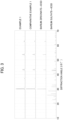
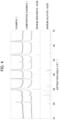
- XRD powder X-ray diffraction
- the main phase is barium zirconate in both the test samples of the example 1 and the comparative example 1.
- both the test samples of the example 1 and the comparative example 1 contain barium sulfate. There was no significant difference in the XRD patterns between the example 1 and the comparative example 1, and thus the silicon-containing compound in the test sample of the example 1 is not crystalline and is considered to be amorphous.
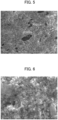
- FIG. 5 is an SEM image of the test sample of the example 1 observed at a magnification of 1,000.
- Fig. 6 is an SEM image of the test sample of the example 1 observed at a magnification of 10,000.
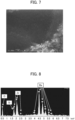
- Fig. 7 is an SEM image of the test sample of the example 1 observed at a magnification of 10,000 at a different position from Fig. 6 .
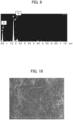
- Fig. 8 is an EDX spectrum at position 1 in Fig. 5 .
- Fig. 9 is an EDX spectrum at position 2 in Fig. 5 .
- Fig. 10 is an SEM image of the test sample of the comparative example 1 observed at a magnification of 1,000.
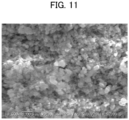
- Fig. 11 is an SEM image of the test sample of the comparative example 1 observed at a magnification of 10,000.
- the comparative example 1 has a structure in which many particles are linked.
- the example 1 had a dense part that was observed as black (position 2) in addition to a part having the structure of many linked particles (position 1) as seen in the comparative example 1.
- barium sulfate was contained at position 1, but the amount of S contained at position 1 was too small to be detected.
- Barium sulfate is formed through a reaction of barium zirconate particles with an aqueous ammonium sulfate solution, and thus barium sulfate is considered to bind respective barium zirconate particles to form a structure in which the barium zirconate particles are linked.
- test sample of the example 1 contains barium zirconate, barium sulfate, and the silicon-containing compound. It can also be seen that barium zirconate and barium sulfate are crystalline and the silicon-containing compound is amorphous.
- the Vickers hardness of the test sample of the example 1 and the comparative example 1 was measured according to JIS R1610. As a result of measurement, the Vickers hardness of the test sample of the example 1 was 1.4 GPa and that of the test sample of the comparative example 1 was 0.45 GPa, which indicates that the test sample of the example 1 had a higher hardness.
- the present disclosure makes it possible to provide a barium compound structure having high mechanical strength and a method for manufacturing the barium compound structure.
Landscapes
- Chemical & Material Sciences (AREA)
- Engineering & Computer Science (AREA)
- Ceramic Engineering (AREA)
- Manufacturing & Machinery (AREA)
- Organic Chemistry (AREA)
- Inorganic Chemistry (AREA)
- Structural Engineering (AREA)
- Materials Engineering (AREA)
- Composite Materials (AREA)
- Life Sciences & Earth Sciences (AREA)
- Environmental & Geological Engineering (AREA)
- General Life Sciences & Earth Sciences (AREA)
- Geology (AREA)
- Compounds Of Alkaline-Earth Elements, Aluminum Or Rare-Earth Metals (AREA)
- Inorganic Compounds Of Heavy Metals (AREA)
- Compositions Of Oxide Ceramics (AREA)
Applications Claiming Priority (2)
| Application Number | Priority Date | Filing Date | Title |
|---|---|---|---|
| JP2020092471 | 2020-05-27 | ||
| PCT/JP2021/018579 WO2021241300A1 (ja) | 2020-05-27 | 2021-05-17 | バリウム化合物構造体及びその製造方法 |
Publications (2)
| Publication Number | Publication Date |
|---|---|
| EP4159682A1 true EP4159682A1 (de) | 2023-04-05 |
| EP4159682A4 EP4159682A4 (de) | 2023-12-13 |
Family
ID=78745292
Family Applications (1)
| Application Number | Title | Priority Date | Filing Date |
|---|---|---|---|
| EP21813222.3A Pending EP4159682A4 (de) | 2020-05-27 | 2021-05-17 | Bariumverbindungsstruktur und herstellungsverfahren dafür |
Country Status (4)
| Country | Link |
|---|---|
| EP (1) | EP4159682A4 (de) |
| JP (1) | JP7496523B2 (de) |
| CN (1) | CN115667151B (de) |
| WO (1) | WO2021241300A1 (de) |
Family Cites Families (18)
| Publication number | Priority date | Publication date | Assignee | Title |
|---|---|---|---|---|
| GB460410A (en) * | 1936-06-17 | 1937-01-27 | Camille Deguide | Improvements in and relating to the treatment of silicate ores |
| JP2831452B2 (ja) * | 1990-08-31 | 1998-12-02 | 日本化学工業株式会社 | 防錆顔料およびその製造方法 |
| JPH0517703A (ja) * | 1991-07-08 | 1993-01-26 | Nippon Chem Ind Co Ltd | 防錆顔料およびその製造方法 |
| US6673274B2 (en) * | 2001-04-11 | 2004-01-06 | Cabot Corporation | Dielectric compositions and methods to form the same |
| JP4836509B2 (ja) * | 2004-11-26 | 2011-12-14 | 京セラ株式会社 | 誘電体磁器 |
| KR20130038695A (ko) * | 2011-10-10 | 2013-04-18 | 삼성전기주식회사 | 페롭스카이트 분말, 이의 제조방법 및 이를 이용한 적층 세라믹 전자부품 |
| JP6058883B2 (ja) * | 2011-11-14 | 2017-01-11 | 恵和株式会社 | 放射能防護シート及び放射能防護シートの製造方法 |
| JP5910090B2 (ja) * | 2012-01-10 | 2016-04-27 | 堺化学工業株式会社 | 複合粉体、化粧料及びインキ |
| CN104246929B (zh) * | 2012-06-29 | 2017-10-20 | 太阳诱电株式会社 | 层叠陶瓷电容器 |
| WO2014148036A1 (ja) * | 2013-03-19 | 2014-09-25 | ソニー株式会社 | セパレータ、電池、電池パック、電子機器、電動車両、蓄電装置および電力システム |
| KR101539851B1 (ko) * | 2013-09-23 | 2015-07-27 | 삼성전기주식회사 | 복합 페롭스카이트 분말, 그 제조방법 및 이를 포함하는 내부전극용 페이스트 조성물 |
| KR102618605B1 (ko) * | 2015-03-27 | 2023-12-26 | 니폰 제온 가부시키가이샤 | 비수계 이차전지 기능층용 조성물 및 그 제조 방법, 비수계 이차전지용 기능층 및 비수계 이차전지 |
| CN105130423B (zh) * | 2015-07-15 | 2017-05-24 | 中国电子科技集团公司第四十六研究所 | 一种基于钛酸钡类陶瓷粉的微波复合介质基板的制备工艺 |
| US9881747B2 (en) * | 2016-01-29 | 2018-01-30 | The United States Of America As Represented By The Administrator Of The National Aeronautics And Space Administration | Solid state ultracapacitor |
| CN106855504B (zh) * | 2016-11-07 | 2019-12-27 | 中国林业科学研究院热带林业实验中心 | 一种快速测定硫酸根含量的方法 |
| JP6959751B2 (ja) * | 2017-03-31 | 2021-11-05 | 株式会社クレハ | フッ化ビニリデン共重合体粒子及びその利用 |
| JP6864523B2 (ja) * | 2017-03-31 | 2021-04-28 | 株式会社クレハ | コアシェル型粒子ならびにその用途および製造方法 |
| JP7101604B2 (ja) | 2018-12-03 | 2022-07-15 | フォスター電機株式会社 | 振動アクチュエータ |
-
2021
- 2021-05-17 WO PCT/JP2021/018579 patent/WO2021241300A1/ja not_active Ceased
- 2021-05-17 JP JP2022526904A patent/JP7496523B2/ja active Active
- 2021-05-17 EP EP21813222.3A patent/EP4159682A4/de active Pending
- 2021-05-17 CN CN202180037779.2A patent/CN115667151B/zh active Active
Also Published As
| Publication number | Publication date |
|---|---|
| CN115667151B (zh) | 2024-03-12 |
| JPWO2021241300A1 (de) | 2021-12-02 |
| WO2021241300A1 (ja) | 2021-12-02 |
| CN115667151A (zh) | 2023-01-31 |
| EP4159682A4 (de) | 2023-12-13 |
| US20230183089A1 (en) | 2023-06-15 |
| JP7496523B2 (ja) | 2024-06-07 |
Similar Documents
| Publication | Publication Date | Title |
|---|---|---|
| EP3974386A1 (de) | Böhmitstruktur und verfahren zur herstellung davon | |
| Wu et al. | Influence of Non‐stoichiometry on the structure and properties of Ba (Zn1/3Nb2/3) O3 microwave dielectrics: I. Substitution of Ba3W2O9 | |
| Espinosa et al. | Influence of the BaTiO3 addition to K0. 5Na0. 5NbO3 lead-free ceramics on the vacancy-like defect structure and dielectric properties | |
| Yang et al. | A systematic study of lanthanide titanates (A2Ti2O7) chemical durability: corrosion mechanisms and control parameters | |
| EP2006263A1 (de) | Keramikpulver und herstellungsverfahren dafür | |
| US12595187B2 (en) | Barium compound structure and manufacturing method therefor | |
| EP4159682A1 (de) | Bariumverbindungsstruktur und herstellungsverfahren dafür | |
| CN109467432B (zh) | 一种Mg-Ti-Ta基微波介质陶瓷材料及其制备方法 | |
| Liu et al. | Piezoelectric properties of 3-1 type porous PMN-PZT ceramics doped with strodium | |
| Beltrán et al. | Sol− Gel Synthesis and Characterization of Pb (Mg1/3Nb2/3) O3 (PMN) Ferroelectric Perovskite | |
| EP4129900B1 (de) | Aluminiumnitridstruktur und verfahren zu ihrer herstellung | |
| JP7462243B2 (ja) | 複合部材 | |
| EP4292993A1 (de) | Anorganische struktur und verfahren zur herstellung davon | |
| EP4159676A1 (de) | Anorganische struktur und verfahren zur herstellung davon | |
| EP4159679A1 (de) | Anorganische struktur und verfahren zur herstellung davon | |
| Potong et al. | Compressive Strength, Acoustic and Aging Piezoelectric Properties of 1–3 and 2–2 Connectivity Lead-Free BNBT Piezoelectric Ceramic/Portland Cement Composites for Structural Health Monitoring Applications | |
| Ichangi et al. | Chemical modification of lead zirconate titanate piezoceramics through cold-sintering process | |
| EP4159393A1 (de) | Anorganische struktur und verfahren zur herstellung davon | |
| EP4450475A1 (de) | Verbundelement | |
| BARIYO et al. | TO STUDY STRUCTURAL AND TEMPERATURE DEPENDENCE OF AC CONDUCTIVITY OF 0.75 PMN-0.25 BT CERAMIC NANOPOWDER | |
| Khuong et al. | Study on the composition, microstructure, and technological orientation for the fabrication of piezoelectric ceramics used in special transducers for underwater acoustics | |
| Weichelt et al. | Surface Modification of Sol–Gel Synthesized Ba0. 85Ca0. 15Zr0. 1Ti0. 9O3 using Stearic Acid Additives | |
| Gong et al. | Chemical prepared niobium modified PZT-95/5 antiferroelectric ceramics and the field-induced phase transformation properties | |
| Goel et al. | Structural and dielectric properties of phosphorous-doped PLZT ceramics | |
| Kriven | Deposition of Ceramic Coatings by the Changed Liquid Beam Cluster Technique |
Legal Events
| Date | Code | Title | Description |
|---|---|---|---|
| STAA | Information on the status of an ep patent application or granted ep patent |
Free format text: STATUS: THE INTERNATIONAL PUBLICATION HAS BEEN MADE |
|
| PUAI | Public reference made under article 153(3) epc to a published international application that has entered the european phase |
Free format text: ORIGINAL CODE: 0009012 |
|
| STAA | Information on the status of an ep patent application or granted ep patent |
Free format text: STATUS: REQUEST FOR EXAMINATION WAS MADE |
|
| 17P | Request for examination filed |
Effective date: 20221124 |
|
| AK | Designated contracting states |
Kind code of ref document: A1 Designated state(s): AL AT BE BG CH CY CZ DE DK EE ES FI FR GB GR HR HU IE IS IT LI LT LU LV MC MK MT NL NO PL PT RO RS SE SI SK SM TR |
|
| DAV | Request for validation of the european patent (deleted) | ||
| DAX | Request for extension of the european patent (deleted) | ||
| A4 | Supplementary search report drawn up and despatched |
Effective date: 20231113 |
|
| RIC1 | Information provided on ipc code assigned before grant |
Ipc: C04B 35/63 20060101ALI20231107BHEP Ipc: C04B 35/628 20060101ALI20231107BHEP Ipc: C04B 35/626 20060101ALI20231107BHEP Ipc: C04B 35/488 20060101ALI20231107BHEP Ipc: C04B 35/486 20060101ALI20231107BHEP Ipc: C01G 25/00 20060101AFI20231107BHEP |